Impacts of Mining
Introduced| English | Meaning |
|---|---|
| mining/ˈmaɪnɪŋ/ | Extracting useful minerals or other geological materials from the Earth. |
| surface mining/ˈsɜːfɪs ˈmaɪnɪŋ/ | surface mining |
| subsurface mining/ˈsʌbsəfɪs ˈmaɪnɪŋ/ | Extracting mineral deposits below the Earth's surface through underground shafts, tunnels or other workings. |
| tailings/ˈteɪlɪŋz/ | tailings |
Digging up resources
- Metals, minerals, and coal all come from the ground.
- To get them, we dig — sometimes on a colossal scale.
- Mining supplies the materials for modern life.
- But it can scar the land and pollute for generations.
Two ways to mine
- Mining 采矿 extracts minerals, metals, and fuels from the Earth.
- Surface mining 露天开采 strips away soil and rock to reach deposits near the top.
- It is cheaper but destroys the land above, leaving huge open pits and scars.
- Subsurface mining 地下开采 tunnels deep underground instead.
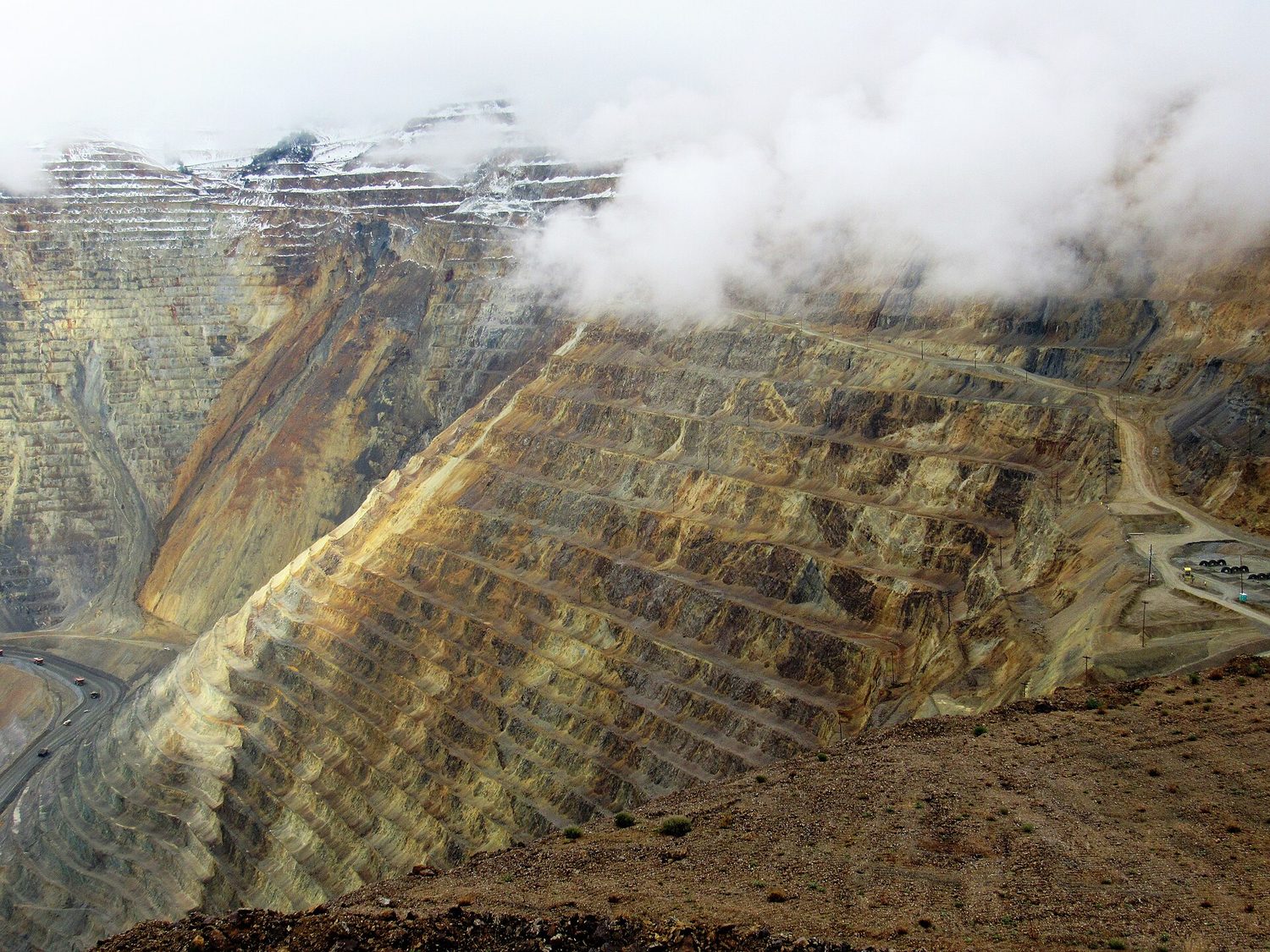
An open-pit mine: benches are cut ever wider and deeper to reach the ore, destroying habitat and exposing rock that pollutes water
Mining is…
Difficulty 1/5 · 100 coins + a small bonus on first completion today
Mining extracts valuable minerals, metals, and fuels like coal from the Earth.
Waste and pollution
- Getting metal from ore leaves behind toxic waste rock called tailings 尾矿.
- Tailings can leak acids and heavy metals into soil and water for decades.
- Mining also uses huge amounts of water and energy.
- And it destroys the habitat that once covered the site.
Surface mining causes which impact?
Difficulty 1/5 · 100 coins + a small bonus on first completion today
Surface mining strips away the land above, destroying habitat and leaving big scars.
The leftover toxic waste rock from processing ore is called ____.
Difficulty 1/5 · 100 coins + a small bonus on first completion today
Tailings are toxic waste from mining that can pollute soil and water for a long time.
Repairing the damage
- After mining, a site can be restored — a process called reclamation.
- The land is reshaped, covered with soil, and replanted.
- Reclamation helps habitat and soil slowly return.
- It cannot undo all the damage, but it makes recovery possible.
Surface or subsurface mining?
Sort each feature by whether it describes surface mining or underground (subsurface) mining.
Once land has been mined, nothing can help it recover.
Difficulty 1/5 · 100 coins + a small bonus on first completion today
False. Reclamation reshapes, covers and replants a mine site, helping soil and habitat slowly return.
Select all true statements about mining.
Difficulty 2/5 · 140 coins + a small bonus on first completion today
Mining has serious environmental impacts. The other three are correct.
Mining's damage does not end when the mine closes. Tailings and exposed rock can keep leaking toxic acids and metals into rivers for decades — long after the last mineral is taken. The pollution outlasts the profit unless the site is carefully cleaned up.
Acid drainage from an old mine:
- A closed mine leaves behind piles of tailings and exposed rock.
- Rain reacts with the rock to form acid, which washes heavy metals into a stream.
- Fish and plants die downstream for years — a long-lasting cost from mining that ended long ago.
Mining extracts minerals and fuels from the Earth. Surface mining scars the land and removes habitat; subsurface mining tunnels underground. Both leave toxic tailings that can pollute water for decades. Reclamation — reshaping and replanting a mine site — helps the land recover.