Pest Control Methods
Introduced| English | Meaning |
|---|---|
| pests/pests/ | A constant battle. |
| pesticide/ˈpestɪsaɪd/ | A chemical that kills pests. |
| resistance/rɪˈzɪstəns/ | The ability to withstand a harmful agent, environmental condition or treatment. |
| biological control/ˌbaɪəˈlɒdʒɪkl kənˈtrəʊl/ | biological control |
Fighting the pests
- Insects, weeds, and fungi can destroy a farmer's crop.
- Controlling these pests is a constant battle.
- There are two broad approaches: chemical and natural.
- Each has real strengths and serious drawbacks.
Chemical control: pesticides
- A pesticide 农药 is a chemical that kills pests 害虫.
- Insecticides kill insects; herbicides kill weeds; fungicides kill fungi.
- They are fast, cheap, and easy to spray over large fields.
- But they bring problems that grow over time.
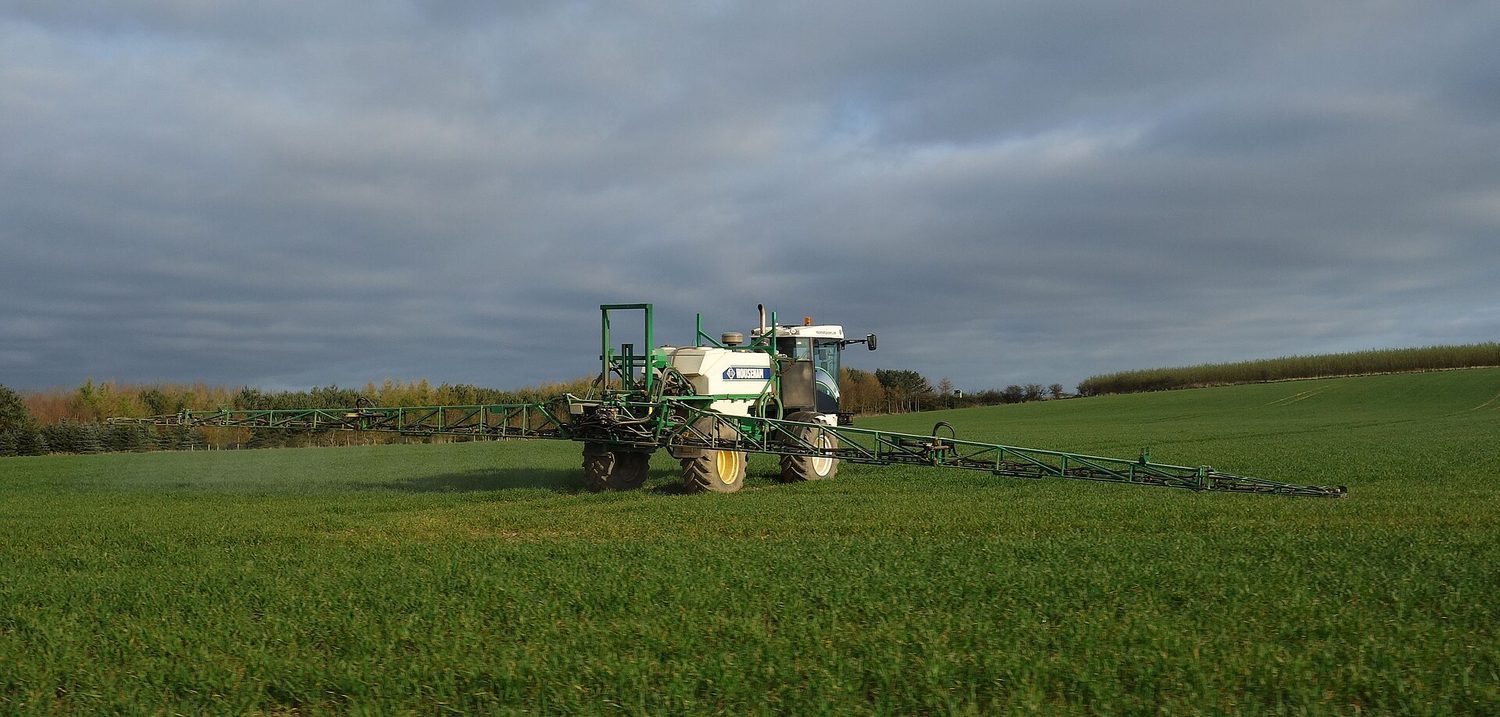
Aerial pesticide spraying: chemical pest control can protect yields but also harm non-target species and create resistant pests
A pesticide is a chemical used to…
Difficulty 1/5 · 100 coins + a small bonus on first completion today
A pesticide kills pests — insects, weeds, or fungi that damage crops.
The resistance problem
- A few pests always survive a spray by chance.
- These survivors breed and pass on their resistance 抗性.
- Over generations the whole pest population becomes resistant.
- The pesticide stops working, and stronger ones are needed — a losing race.
Why do pesticides become less effective over time?
Difficulty 1/5 · 100 coins + a small bonus on first completion today
A few pests survive by chance, breed, and pass on resistance — so the pesticide stops working.
Using a pest's natural enemy, like a predator, to control it is called ____ control.
Difficulty 1/5 · 100 coins + a small bonus on first completion today
Biological control uses natural enemies (predators or parasites) instead of chemicals.
Biological control
- Biological control 生物防治 uses a pest's natural enemies instead of chemicals.
- Releasing ladybirds to eat aphids is a classic example.
- It avoids chemical pollution and does not build resistance.
- But it must be done carefully — the wrong introduced species can itself become a pest.
Chemical or natural control?
Sort each pest control method into chemical (pesticides) or natural (biological) approaches.
Broad pesticides can harm helpful insects like bees, not just the target pest.
Difficulty 1/5 · 100 coins + a small bonus on first completion today
Many pesticides kill helpful species too, damaging pollinators and the pest's natural enemies.
Select all true statements about pest control.
Difficulty 2/5 · 140 coins + a small bonus on first completion today
Pesticides often harm helpful species too, not only the target. The other three are correct.
Broad chemical pesticides do not only kill the target pest. They also kill helpful insects — bees that pollinate crops and the natural predators that keep pests in check. Wiping out those predators can even let the pests bounce back stronger. Powerful pesticides can make the problem worse.
The treadmill of resistance:
- A farmer sprays an insecticide, and it wipes out most of the pest.
- But a few naturally resistant insects survive and multiply.
- Soon the spray barely works, so the farmer uses more, or a stronger chemical — an escalating "pesticide treadmill" driven by resistance.
Pests can be fought with chemical or natural methods. A pesticide kills pests but pollutes, harms helpful species, and drives resistance as survivors breed. Biological control uses natural enemies instead, avoiding pollution and resistance — though introduced species must be chosen with care.