Clearcutting
Introduced| English | Meaning |
|---|---|
| clearcutting/ˈklɪəkʌtɪŋ/ | cutting down all the trees in an area at once |
| erosion/ɪˈrəʊʒn/ | The removal and transport of soil or rock material by agents such as flowing water, wind, ice or gravity. |
Taking every tree
- Sometimes loggers remove not just some trees, but all of them.
- A whole hillside of forest becomes bare ground in days.
- This method is fast and cheap for the timber industry.
- But it leaves the land badly damaged. This is clearcutting.
What clearcutting is
- Clearcutting 皆伐 removes every tree in an area at once.
- It is the cheapest, fastest way to harvest timber.
- The short-term benefit is a quick, large profit from the wood.
- But the long-term costs to the land are severe.

Deforestation lowers biodiversity and causes erosion 侵蚀, flooding, and higher CO2
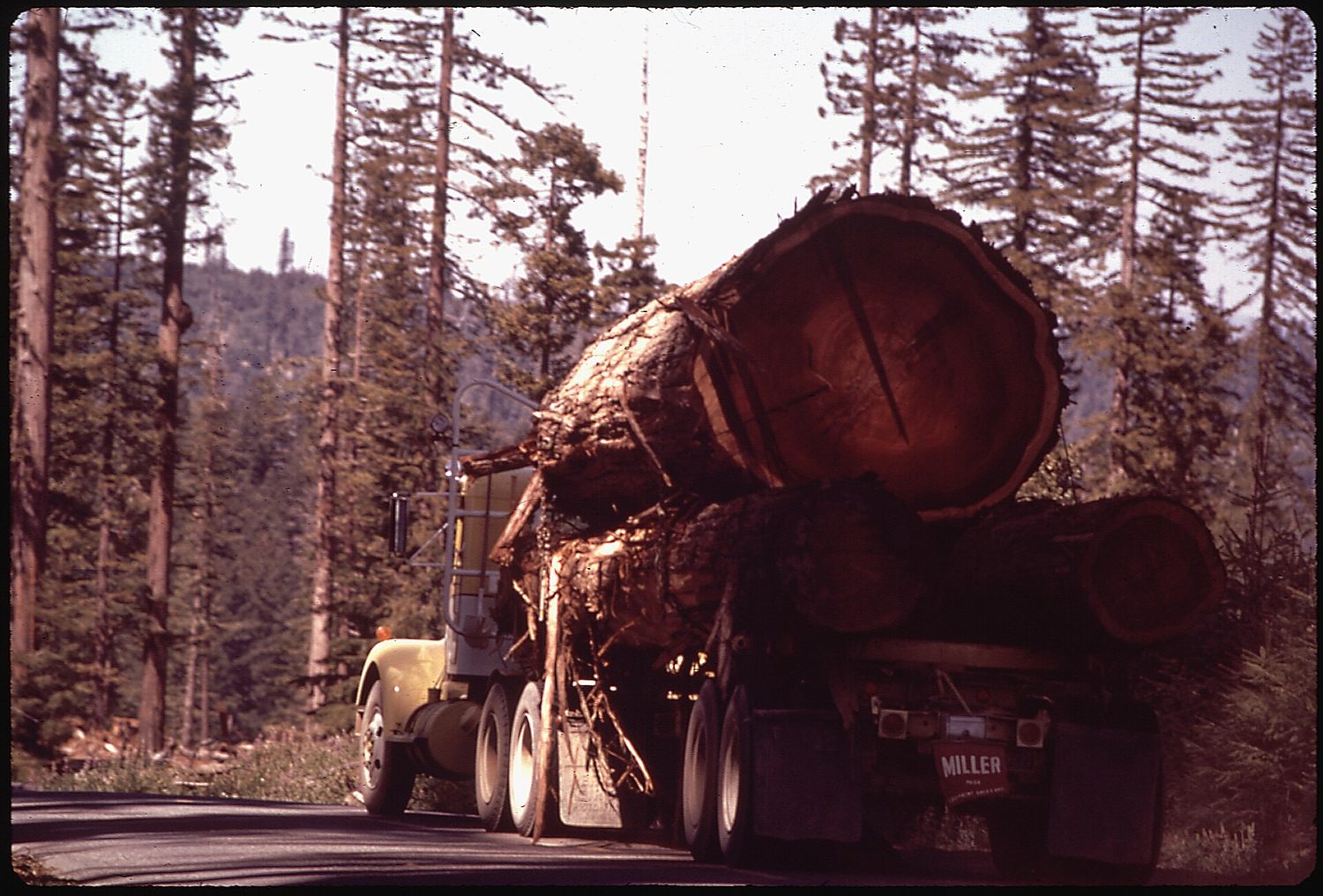
A fresh clearcut on a hillside: every tree in the strip is taken at once, leaving bare soil that erodes and washes into streams
Clearcutting is…
Difficulty 1/5 · 100 coins + a small bonus on first completion today
Clearcutting removes every tree in an area — fast and cheap, but very damaging.
Bare soil erodes
- With every tree gone, nothing holds the soil in place.
- Rain washes the exposed topsoil away — severe erosion.
- The eroded soil silts up rivers and can cause flooding.
- Without its fertile topsoil, the land struggles to recover.
A major harm of clearcutting is that the bare soil…
Difficulty 1/5 · 100 coins + a small bonus on first completion today
With no tree roots to hold it, the soil erodes fast, silting rivers and causing floods.
Clearcutting destroys habitat, causing a loss of ____.
Difficulty 1/5 · 100 coins + a small bonus on first completion today
Removing a whole forest destroys the homes of countless species, lowering biodiversity.
Habitat and biodiversity lost
- A forest is home to countless species of plants and animals.
- Clearcutting destroys that whole habitat at once.
- Many species lose their food and shelter, lowering biodiversity.
- Gentler methods, like selective cutting, harm the forest far less.
Benefit or harm of clearcutting?
Sort each effect of clearcutting into a short-term benefit or a long-term harm.
Selective cutting, which removes only some trees, is gentler on the forest than clearcutting.
Difficulty 1/5 · 100 coins + a small bonus on first completion today
Selective cutting leaves most trees standing, protecting soil, habitat, and the forest's recovery.
Select all true statements about clearcutting.
Difficulty 2/5 · 140 coins + a small bonus on first completion today
Clearcutting has serious long-term downsides. The other three are correct.
Clearcutting trades a short-term gain for long-term damage. The quick timber profit is real, but so are the lasting costs: eroded soil, silted rivers, floods, and lost biodiversity. Weigh both sides — the benefit is fast and visible, while the harm builds slowly.
A cleared hillside after the rains:
- Loggers clearcut a steep, forested slope for its timber.
- The next heavy rains hit bare soil with no roots to hold it.
- The topsoil washes down into the river, muddying the water and flooding the valley below — the true cost of the quick harvest.
Clearcutting removes every tree in an area, giving a fast, cheap timber harvest. But it causes severe soil erosion, silts rivers, worsens flooding, and destroys habitat, lowering biodiversity. It trades a short-term profit for long-term damage; selective cutting is a gentler alternative.