Soil Formation and Erosion
Introduced| English | Meaning |
|---|---|
| weathering/ˈweðərɪŋ/ | The physical breakdown or chemical alteration of rock at or near the Earth's surface, without transport being required. |
| erosion/ɪˈrəʊʒn/ | The removal and transport of soil or rock material by agents such as flowing water, wind, ice or gravity. |
| humus/ˈhjuːməs/ | Dark, decomposed organic matter in soil. |
The thin skin that feeds us
- Almost all our food grows in a thin layer of soil.
- Soil is not just dirt — it is a living mix of rock, air, water, and life.
- It takes centuries to build, but can wash away in a day.
- Understanding how soil forms shows why we must protect it.
From rock to soil
- Soil begins as solid parent rock.
- Weathering 风化 slowly breaks the rock into ever-smaller pieces.
- Wind, water, freezing ice, and plant roots all do the breaking.
- Over long times, this produces the mineral grains of soil.
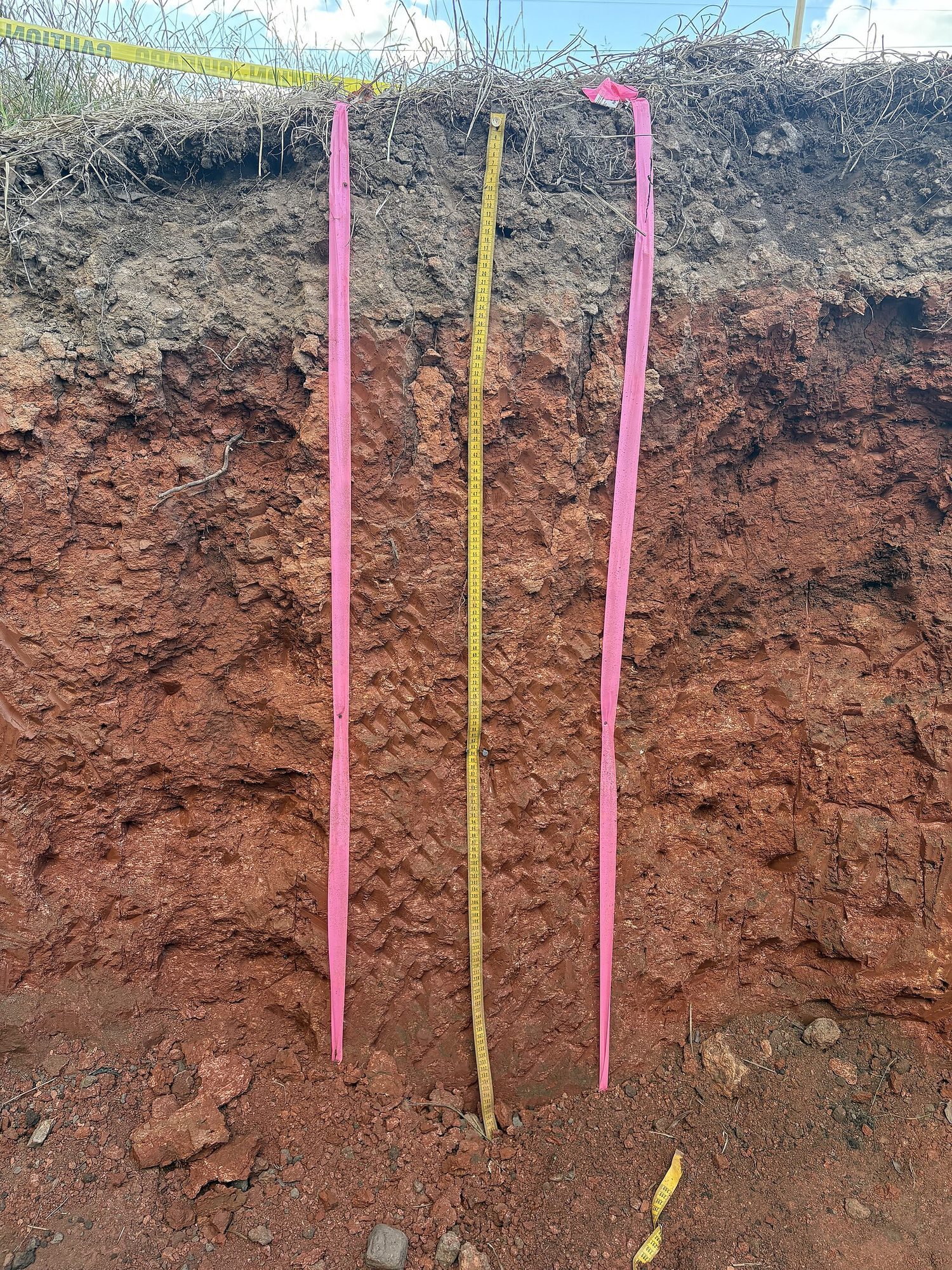
Soil horizons form over time as parent rock weathers; erosion 侵蚀 can strip topsoil and reverse that progress
Soil forms when weathering breaks down…
Difficulty 1/5 · 100 coins + a small bonus on first completion today
Soil starts as weathered rock — broken down over long times into mineral particles.
Adding life
- Dead plants and animals decay and mix into the mineral grains.
- This dark, decayed organic matter is called humus 腐殖质.
- Humus holds water and nutrients, making the soil fertile.
- Living things — worms, fungi, bacteria — keep the soil healthy.
How soil forms
Step through soil formation - rock is broken down and mixed with organic matter over long times.
The dark, decayed organic matter in soil is called…
Difficulty 1/5 · 100 coins + a small bonus on first completion today
Humus is decayed plant and animal matter; it makes soil dark and fertile.
Erosion strips it away
- Erosion is the removal of soil by wind or water.
- Bare, ploughed, or deforested land erodes fastest.
- Erosion carries away the fertile top layer, leaving poor ground.
- Because soil forms so slowly, erosion is a serious threat.
The removal of soil by wind or water is called ____.
Difficulty 1/5 · 100 coins + a small bonus on first completion today
Erosion carries soil away — and it happens far faster than soil forms.
Soil forms quickly, so erosion is easily replaced within a few years.
Difficulty 1/5 · 100 coins + a small bonus on first completion today
False. It can take centuries to build a few centimetres of soil, but erosion can strip it in a single storm, so soil is effectively a limited resource.
Select all true statements about soil formation and erosion.
Difficulty 2/5 · 140 coins + a small bonus on first completion today
Soil forms slowly, over centuries. The other three are correct.
Soil is a slowly renewable resource, close to non-renewable on human timescales. It can take centuries to form an inch of fertile soil, but a single storm on bare ground can erode it away. Once the fertile topsoil is gone, it is effectively lost for generations.
The Dust Bowl:
- In the 1930s, farmers ploughed up huge areas of dry grassland in the US.
- With no roots to hold it, the bare soil dried out.
- Great winds lifted the topsoil into towering dust storms, ruining the land — a disaster of soil erosion caused by removing the plants that protected it.
Soil forms slowly: weathering breaks parent rock into mineral grains, and decayed organic matter (humus) makes it fertile. Erosion by wind and water removes soil far faster than it forms. Because soil builds over centuries but erodes in days, it is a precious, easily lost resource.