K-Selected and r-Selected Species
Introduced| English | Meaning |
|---|---|
| r-selected/ɑː sɪˈlektɪd/ | r-selected |
| K-selected/keɪ sɪˈlektɪd/ | K-selected |
Two ways to have young
- Some animals have thousands of young and abandon them.
- Others have one or two and care for them for years.
- These are two opposite reproductive strategies.
- Each works well in different conditions.
r-selected: many and fast
- An r-selected r对策 species produces many offspring, fast.
- It gives little or no parental care.
- Most young die, but a few survive to keep the population going.
- Frogs, insects, and weeds are classic r-strategists.
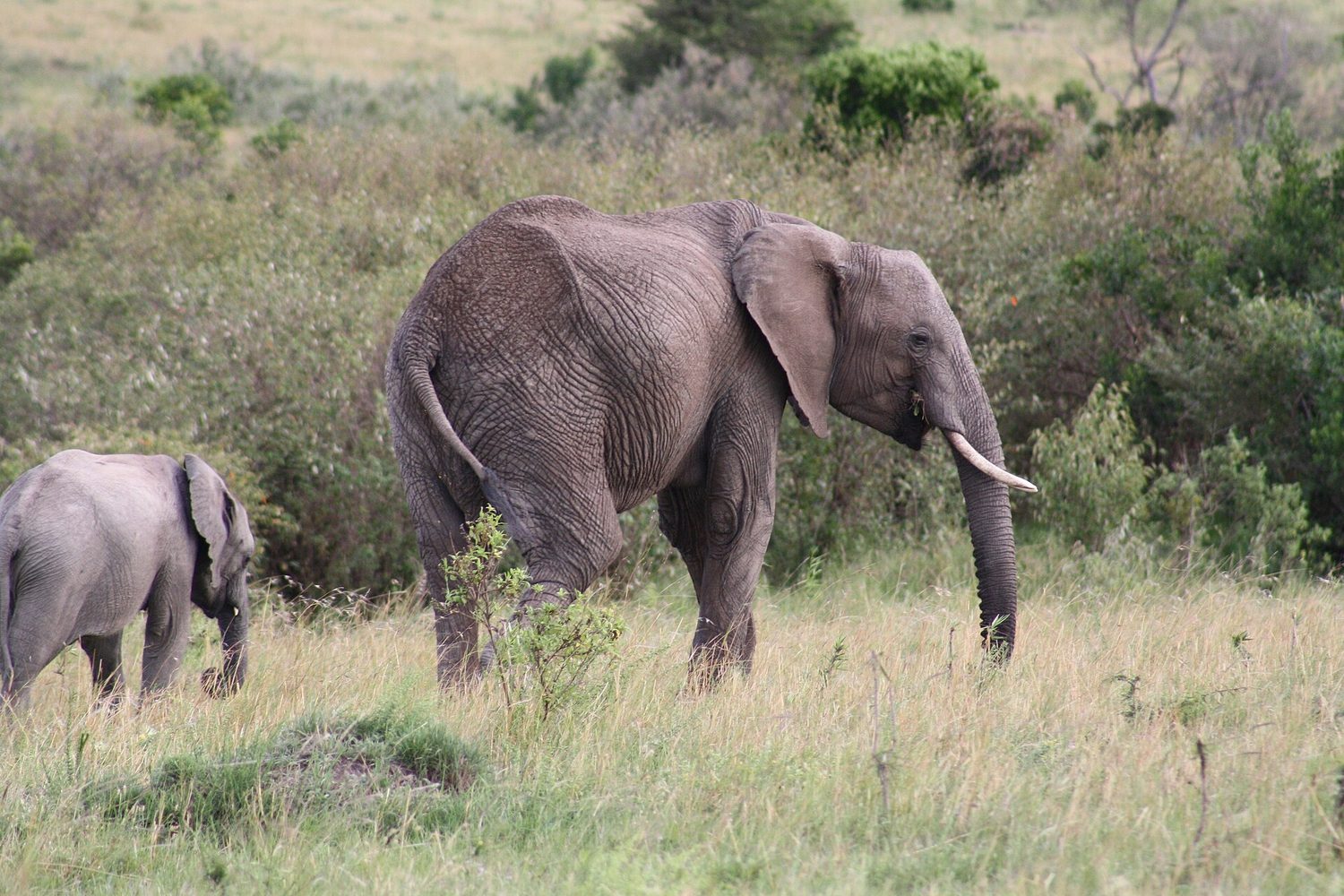
An elephant with its single calf: a K-selected K对策 species has few young but invests heavily in each one

A young rabbit: r-selected species produce many offspring quickly with little parental investment
An r-selected species tends to…
Difficulty 1/5 · 100 coins + a small bonus on first completion today
r-selected species have many offspring quickly and give little care — most young die, but some survive.
K-selected: few and cared for
- A K-selected species produces few offspring.
- It invests heavily in each one, with lots of care.
- Because they are protected, most young survive to adulthood.
- Elephants, whales, and humans are K-strategists.
A K-selected species tends to…
Difficulty 1/5 · 100 coins + a small bonus on first completion today
K-selected species have few offspring but invest heavily in each, so most survive.
A species that reproduces fast and colonises new areas quickly is usually ____-selected.
Difficulty 1/5 · 100 coins + a small bonus on first completion today
r-selected species reproduce fast and are good at colonising disturbed or new habitats.
Different strategies, different homes
- r-strategists thrive in unstable, changing, or new habitats.
- They colonise disturbed ground quickly, like weeds after a fire.
- K-strategists thrive in stable, crowded habitats near carrying capacity.
- There they compete by quality, not quantity, of offspring.
Many offspring or few?
Sort each species by its reproductive strategy - lots of offspring with little care (r), or few with heavy care (K).
r-selected species are often the first to colonise a disturbed habitat.
Difficulty 1/5 · 100 coins + a small bonus on first completion today
Fast-breeding r-strategists move in quickly after a disturbance, like weeds on bare soil.
Select all true statements about r and K strategies.
Difficulty 2/5 · 140 coins + a small bonus on first completion today
K-selected species have few offspring, not thousands. The other three are correct.
Neither strategy is "better" — each suits its environment. r-selection wins where conditions change fast and habitats open up. K-selection wins in stable, crowded habitats where careful investment in a few strong offspring pays off. The best strategy depends on the situation.
After a wildfire:
- The bare ground is first colonised by fast-breeding r-strategists — weeds and insects.
- They flood the area with offspring and grab the open space.
- Later, as the habitat stabilises, slower K-strategists like trees and large animals move in and dominate.
Species follow two reproductive strategies. r-selected species have many offspring with little care (frogs, weeds) and colonise new habitats fast. K-selected species have few offspring with lots of care (elephants, humans) and thrive in stable, crowded habitats. Each strategy suits different conditions.