Unity and Variety
Introduced| English | Meaning |
|---|---|
| unity/ˈjuːnɪti/ | The sense that all parts of a work belong together. |
| variety/vəˈraɪəti/ | Differences among the parts, so a picture is not monotonous. |
| proximity/prɒkˈsɪmɪti/ | Placing things near each other so they read as a group. |
| harmony/ˈhɑːməni/ | harmony |
Wholeness and interest
- Unity 统一 is the sense that all parts of a work belong together.
- Variety 变化 is difference that adds interest.
- Good design balances the two — order that still surprises.
The sense that all parts of a work belong together is called...
Difficulty 1/5 · 100 coins + a small bonus on first completion today
Unity is wholeness; variety is difference.
Building unity
- Unity comes from repetition, proximity 邻近 (grouping), and a limited palette.
- Harmony 和谐 comes from elements that are similar.
- Alignment and continuity also tie a work together.
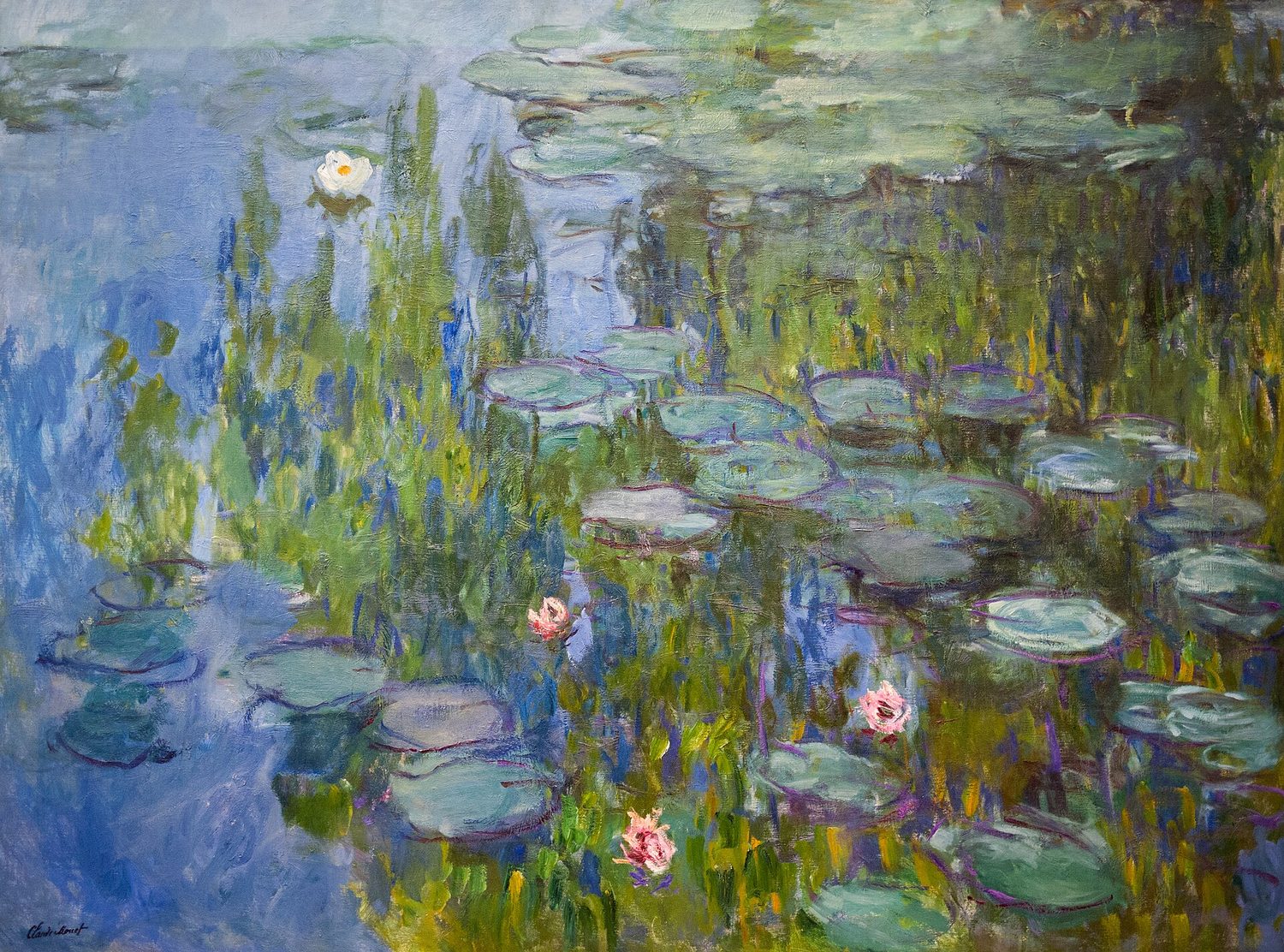
Monet, Water Lilies: one limited palette holds the canvas together (unity) while varied strokes and shapes keep the eye moving (variety)
Builds unity or adds variety?
Sort each choice by whether it builds unity or adds variety.
Grouping related elements close together builds unity through ____.
Difficulty 1/5 · 100 coins + a small bonus on first completion today
Proximity (closeness) groups elements to build unity.
Select all ways to build unity.
Difficulty 2/5 · 140 coins + a small bonus on first completion today
Repetition, proximity, and a limited palette build unity; chaos destroys it.
Match each term to its role.
Difficulty 2/5 · 140 coins + a small bonus on first completion today
Unity = whole; variety = interest; harmony = similarity.
Adding variety
- Too much unity is dull; variety prevents monotony.
- Variety comes from contrast, difference, and surprise.
- The best works achieve unity with variety.
The strongest works have total unity and no variety at all.
Difficulty 1/5 · 100 coins + a small bonus on first completion today
False. Total unity with no variety can feel monotonous; the best works balance unity with variety.
Unity and variety pull in opposite directions, and both are needed. All unity and no variety is monotonous; all variety and no unity is chaos. The goal is a work that holds together and keeps the eye interested — order with surprise.
A painting uses one limited palette of blues (unity) but varies the shapes, sizes, and brushwork within it (variety). It feels whole and lively — unity holds it together while variety keeps the eye exploring.
Unity makes parts feel like a whole (through repetition, proximity, harmony, a limited palette); variety adds interest through difference. All unity is dull, all variety is chaos — the best works achieve unity with variety.
Write from 4 blue squares and 1 yellow triangle
- Four blue squares repeat.
- One yellow triangle breaks the repeat.
A design repeats 4 blue squares and then adds 1 yellow triangle. What do the squares give the design, and what does the triangle add?
Repeat holds a design together. One difference keeps it interesting.
What does the yellow triangle add?
Difficulty 1/5 · 100 coins + a small bonus on first completion today
The triangle differs in shape and colour, so it adds variety.