Movement and Rhythm
Introduced| English | Meaning |
|---|---|
| movement/ˈmuːvmənt/ | movement |
| rhythm/ˈrɪðəm/ | A pattern of timing, stress or beats in speech, music or movement. |
| progressive/prəˈɡresɪv/ | Changing step by step, as a size or a colour grows. |
| variation/ˌveərɪˈeɪʃn/ | Differences or changes in features, forms or arrangements, which can create variety within an artwork. |
Leading the eye
- Movement 动感 leads the viewer's eye through a work.
- It is the path the eye takes, guided by line, edges, colour, and placement.
- Good movement keeps the eye travelling, not stuck.
The path the viewer's eye takes through a work is called...
Difficulty 1/5 · 100 coins + a small bonus on first completion today
Movement is the visual path the eye follows.
Match each term to its meaning.
Difficulty 2/5 · 140 coins + a small bonus on first completion today
Movement = path; rhythm = beat; progressive = gradual.
Visual rhythm
- Rhythm 节奏 is the repetition that creates a visual beat.
- Types: regular (even), flowing (curving), progressive 渐进 (gradual change), and random.
- Rhythm makes the eye move in a pattern, like a drumbeat.
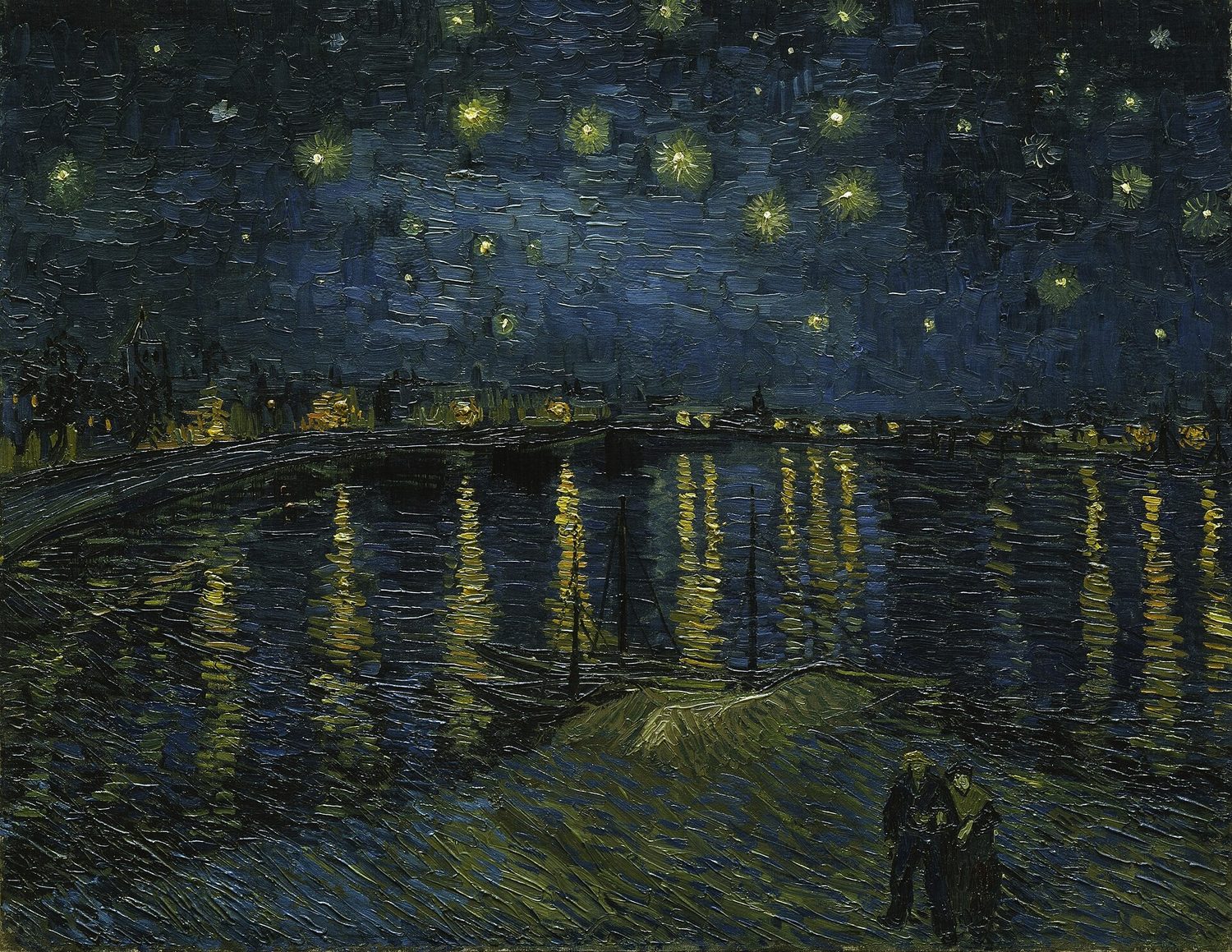
Van Gogh's The Starry Night: swirling brushstrokes sweep the eye across the sky (movement), and the repeated curls give it a rolling rhythm
Which kind of rhythm?
Sort each example by its type of rhythm.
Rhythm that changes gradually, like shapes getting bigger, is called ____ rhythm.
Difficulty 1/5 · 100 coins + a small bonus on first completion today
Progressive rhythm changes an element gradually.
Select all things that create movement.
Difficulty 2/5 · 140 coins + a small bonus on first completion today
Lines, repetition, and gaze create movement; a blank area does not.
Repetition with variation
- Rhythm is built by repeating elements with regular or varied spacing.
- Repetition with variation keeps rhythm interesting, not monotonous.
- Directional forces (leading lines, gazes) create implied motion.
Repetition with gradual variation is more interesting than identical repetition.
Difficulty 1/5 · 100 coins + a small bonus on first completion today
Repetition with variation keeps rhythm alive.
Rhythm needs repetition and variation. Pure repetition with no change becomes monotonous; pure variation with no repeat becomes chaos. The best rhythm repeats an element while gradually changing its size, colour, or spacing.
A row of arches that slowly grow larger draws your eye down the row — that gradual change is progressive rhythm, and it creates strong movement toward the biggest arch. Pure identical arches would feel static by comparison.
Movement leads the eye through a work along a path. Rhythm is repetition creating a visual beat (regular, flowing, progressive, random). Rhythm needs repetition with variation to stay interesting; directional forces create implied motion.
Write from 6 repeated diagonals
- Six diagonal marks repeat across the page and point toward a door.
- Say how the eye is led.
Six diagonal marks repeat across a page and all lean toward a door. How do they move the eye?
Repeated diagonals act like arrows.
What do the 6 diagonals do?
Difficulty 1/5 · 100 coins + a small bonus on first completion today
A repeated direction carries the eye along the page.