Storage and peripheral devices
| English | Chinese | Pinyin |
|---|---|---|
| magnetic hard disk | 磁盘 | cí pán |
| tracks | 磁道 | cí dào |
| sectors | 扇区 | shàn qū |
| solid-state drive | 固态硬盘 | gù tài yìng pán |
| floating-gate transistor | 浮栅晶体管 | fú zhà jīng tǐ guǎn |
| optical disc | 光盘 | guāng pán |
| laser printer | 激光打印机 | jī guāng dǎ yìn jī |
| drum | 感光鼓 | gǎn guāng gǔ |
| toner | 墨粉 | mò fěn |
| fuser | 定影器 | dìng yǐng qì |
| 3D printer | 3D打印机 | 3D dǎ yìn jī |
| filament | 塑料丝 | sù liào sī |
| microphone | 麦克风 | mài kè fēng |
| diaphragm | 膜片 | mó piàn |
| ADC | 模数转换器 | mó shù zhuǎn huàn qì |
| touchscreen | 触摸屏 | chù mō píng |
| capacitive | 电容式 | diàn róng shì |
| resistive | 电阻式 | diàn zǔ shì |
| virtual reality headset | 虚拟现实头显 | xū nǐ xiàn shí tóu xiǎn |
Five megabytes that weighed a tonne
- In 1956 IBM shipped the first hard disk drive. It stored 5 megabytes on fifty spinning platters, each 24 inches across, and the unit weighed about a tonne.
- A 2.5-inch drive today holds a million times as much, using exactly the same idea: magnetise tiny regions of a spinning disc and read them back.
- The exam asks you to describe how each principal device works, step by step, in the order the mark scheme lists.
- This lesson takes them one at a time: the three kinds of storage, then the peripherals.
Magnetic hard disk
- A magnetic hard disk 磁盘 (HDD) stores data as magnetised regions on spinning platters coated with magnetic material.
- Each surface is divided into concentric tracks 磁道, and each track into sectors 扇区. A read/write head on an actuator arm moves across the platter to the right track and waits for the sector to pass under it.
- Cheap per gigabyte and large, but the moving parts make it slower, noisier and easier to damage by a knock.
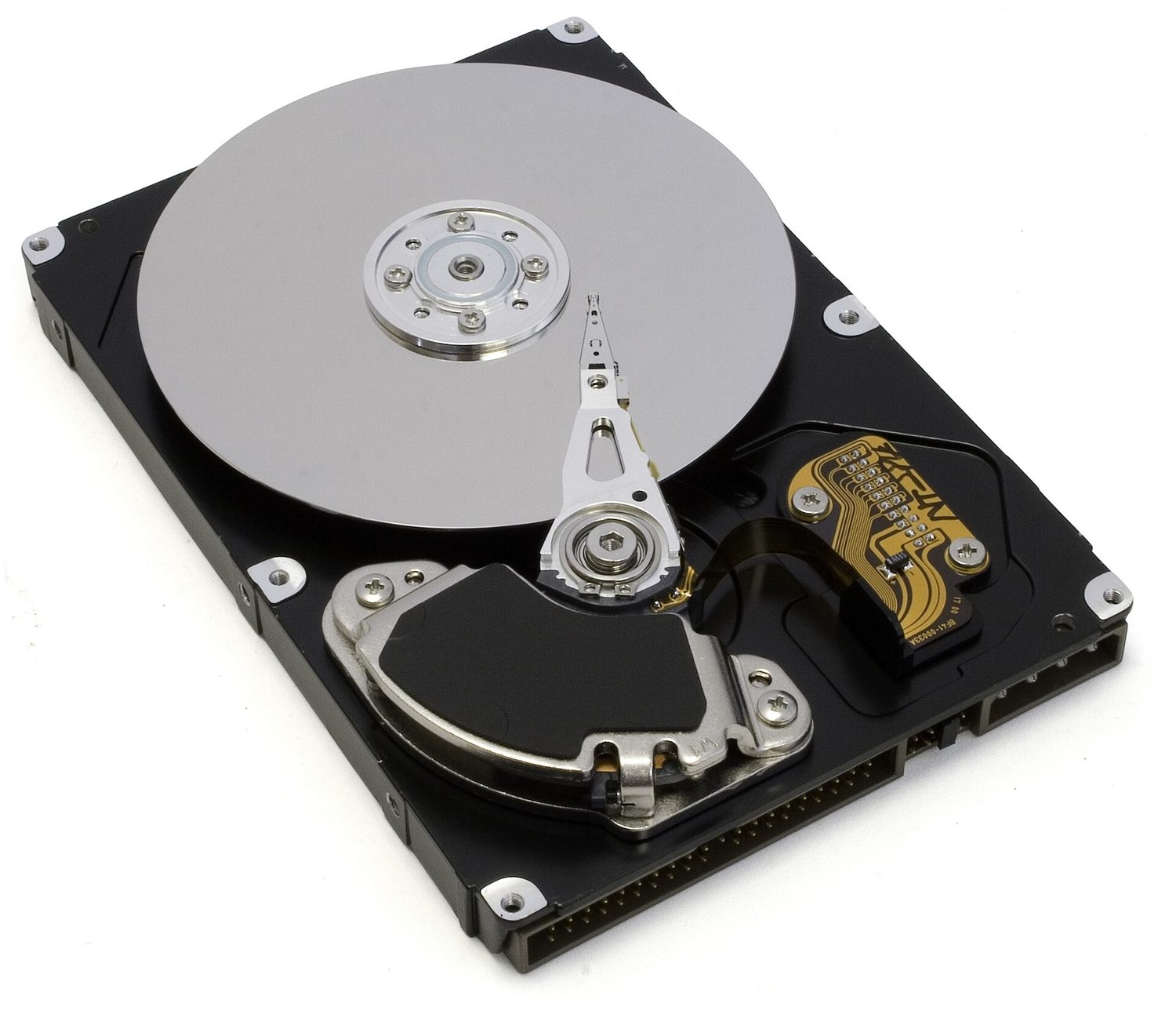
The actuator arm swings the read/write head across the spinning platter

A platter stores data in concentric tracks, each divided into sectors
Put the steps of reading a sector from a hard disk in order.
Spin, seek the track, wait for the sector, read the magnetisation: the two waits are why a hard disk is slower than an SSD.
Solid-state (flash) memory
- A solid-state drive 固态硬盘 (SSD) stores data as electric charge trapped in floating-gate transistors 浮栅晶体管 inside NAND flash chips. No moving parts.
- So it is faster to access, silent, uses less power and survives being dropped. It costs more per gigabyte, and each cell can only be rewritten a limited number of times.
- The same flash memory is in USB sticks and memory cards.

Inside an SSD: rows of flash memory chips and a controller, nothing that moves
How does an SSD differ from a magnetic hard disk?
SSDs store charge in flash transistors — no moving parts, faster and tougher, but dearer per GB and cells wear out.
Optical disc reader and writer
- An optical disc 光盘 (CD, DVD, Blu-ray) stores data along one long spiral track as pits and lands. A laser shines on the track and a sensor measures how much light is reflected: a change in reflectivity is read as a bit.
- A writer uses a stronger laser to change the surface, burning a dye layer or altering a phase-change layer, so the reflectivity pattern is created.
- Blu-ray uses a shorter-wavelength laser than DVD, so its pits are smaller and it holds more.
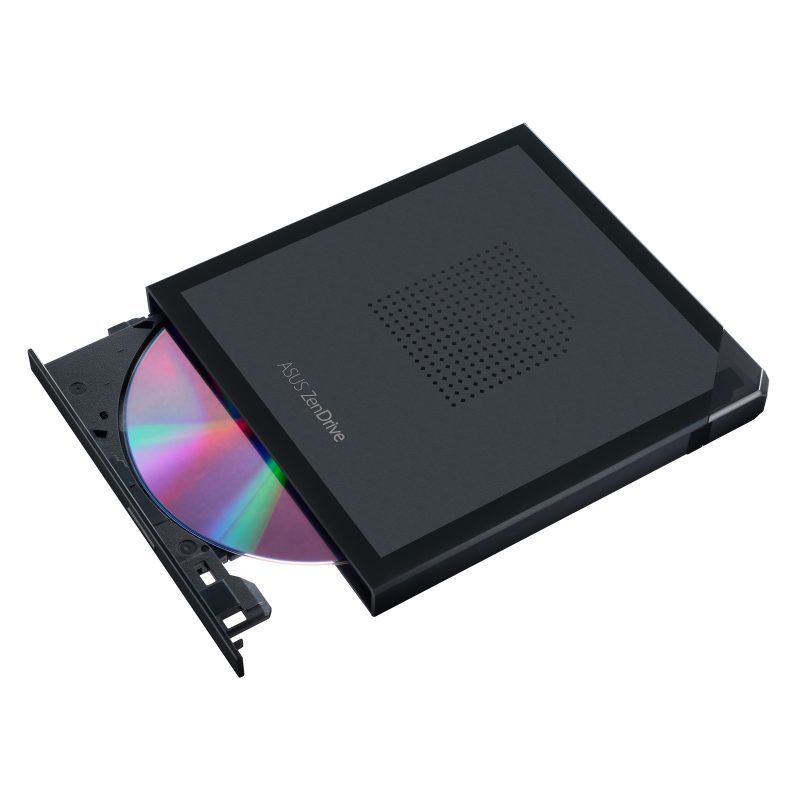
A laser reads the pits and lands of the spiral track
How does an optical disc (CD/DVD) store and read data?
A laser reads the pattern of pits; writing uses a stronger laser to change reflectivity.
Match each secondary-storage type to how it stores data.
The three storage technologies — magnetic, solid-state and optical — differ in the physics they use to hold a bit.
Worked example: choosing a storage device
- Always give the device and the reason that fits the scenario.
- A student's laptop: an SSD, because it has no moving parts, so it survives being carried, starts quickly and draws little power from the battery.
- A family's photo and video archive: a magnetic hard disk, because it is the cheapest per gigabyte for several terabytes that are read only occasionally.
- A film sold in shops: an optical disc, because discs are cheap to press in volume and the customer cannot overwrite them.
Match each scenario to the best storage device.
The device is only half the answer; the reason that fits the scenario is the other half.
Laser printer
- A laser printer 激光打印机 works in the steps the mark scheme lists. The page data goes to the printer's buffer. The drum 感光鼓 is given a uniform electrostatic charge.
- A laser, reflected off a rotating mirror, scans the image onto the drum and removes the charge where it strikes, so the charge left matches the page.
- Toner 墨粉, a charged powder, is attracted only to the charged parts of the drum. The paper is given the opposite charge and the toner transfers onto it.
- The fuser 定影器, a pair of heated rollers, melts the toner into the paper. The drum is discharged and cleaned for the next page.
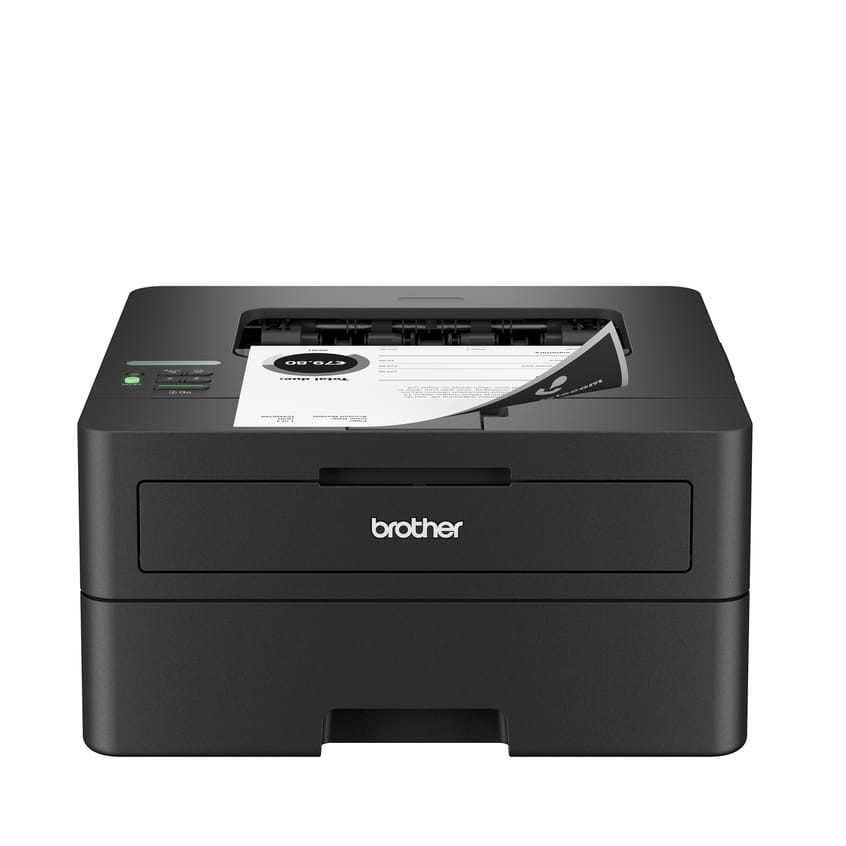
A laser printer: charge, laser, toner, transfer, fuse
How a laser printer prints a page
Step through the five stages in the order the mark scheme lists them — charge, laser, toner, transfer, fuse.
Put the stages of laser printing in order.
Charge, laser, toner, transfer, fuse. The mark scheme gives the steps in this order, and so should you.
3D printer
- A 3D printer 3D打印机 builds a solid object layer by layer from a digital model.
- The model is designed in CAD software or scanned; slicing software cuts it into thin horizontal layers and produces the instructions for each.
- An FDM printer melts plastic filament 塑料丝 and lays it down through a moving nozzle; a resin printer cures liquid resin with UV light; a powder printer fuses powder with a laser. Each layer bonds to the one below.
- Uses: prototypes, custom medical parts such as prosthetics, spare parts made on demand.

An FDM 3D printer melts filament and builds the object one layer at a time
A 3D printer builds an object one ____ at a time, each bonding to the one below.
Slicing software cuts the model into thin horizontal layers; the printer deposits, cures or fuses one layer at a time.
Microphone and speakers
- In a microphone 麦克风, sound waves make a diaphragm 膜片 vibrate. The diaphragm moves a coil in a magnetic field (or changes the gap of a capacitor), producing a varying electrical signal.
- That signal is analogue, so an ADC 模数转换器 (analogue-to-digital converter) samples it and turns it into binary before it can be stored.
- A speaker runs the process backwards: a DAC produces a varying current, the current in a coil makes it move in a magnetic field, and the attached cone pushes the air to make sound.
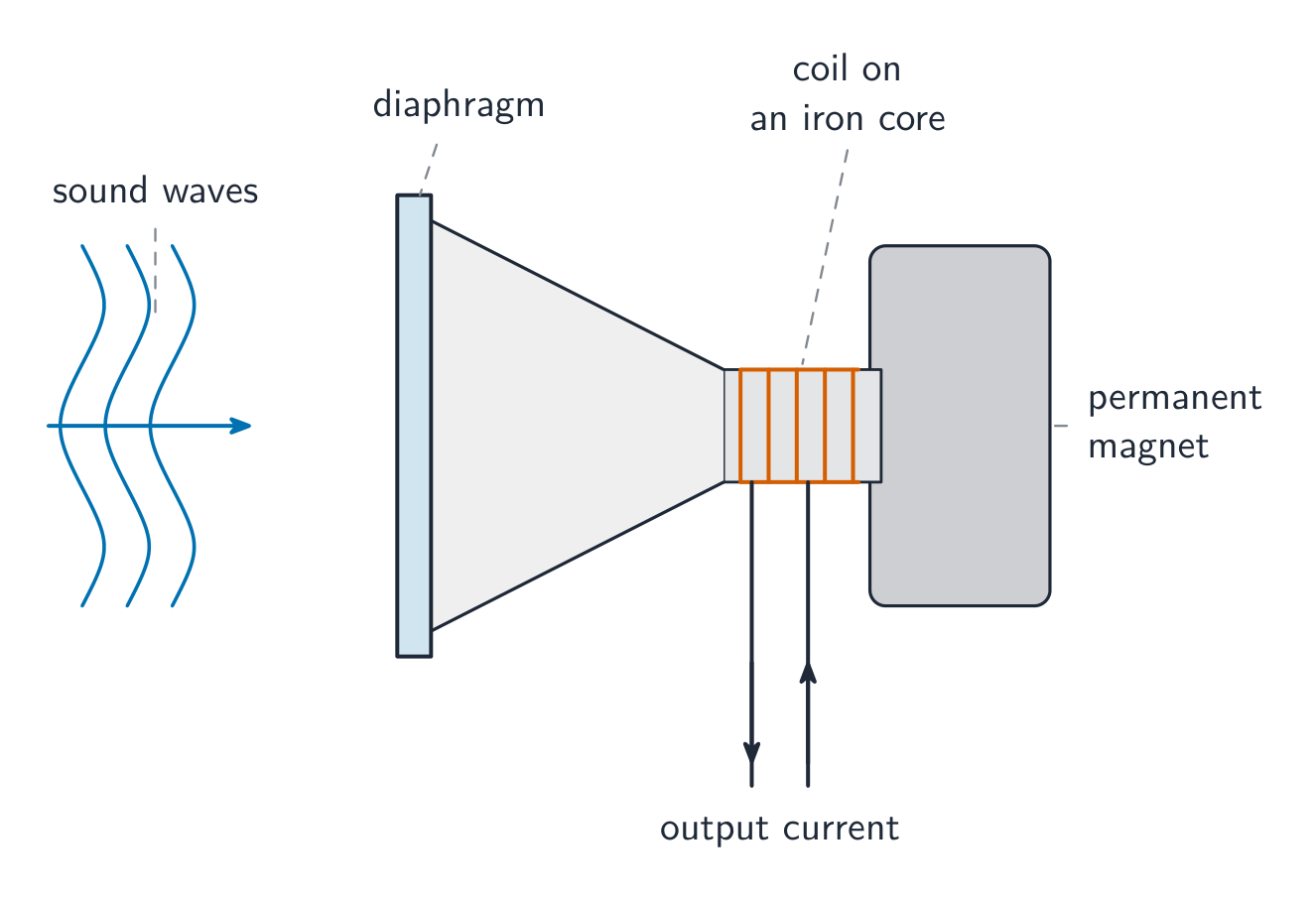
Inside a microphone: sound vibrates the diaphragm and coil to produce a current
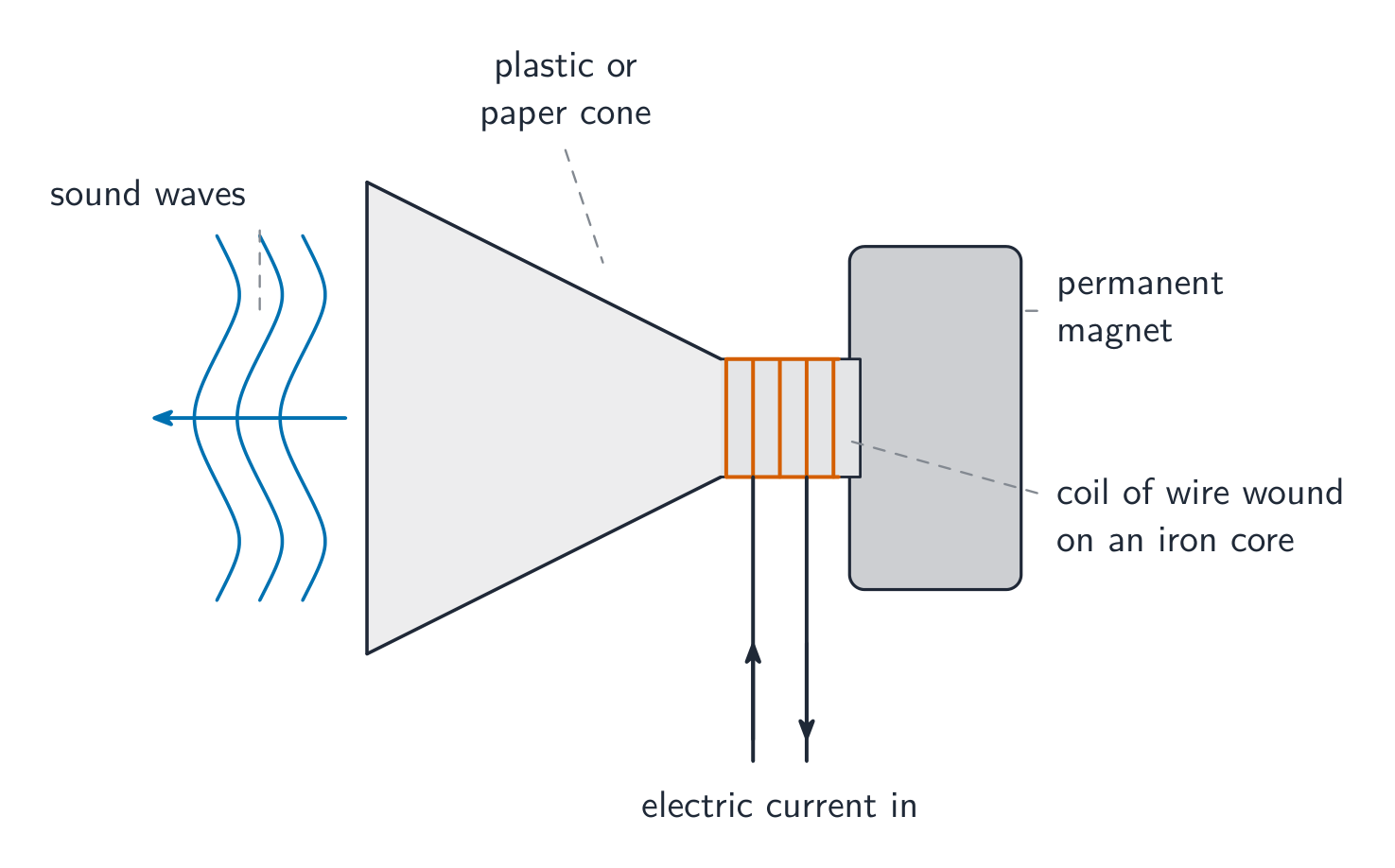
A speaker is a microphone in reverse: current moves the coil, the cone moves the air
A microphone's analogue signal must pass through which component to be stored digitally?
An ADC converts the continuous analogue signal into digital samples the computer can store.
Put the steps of recording sound digitally in order.
A microphone is a transducer (sound → voltage); the ADC then turns that analogue signal into storable digital samples.
Touchscreen
- A touchscreen 触摸屏 is both an input device and an output device.
- Capacitive 电容式: the glass carries a layer that stores charge. A finger touching it changes the charge at that point, and sensors at the corners work out the coordinates. Accurate, bright, supports multi-touch, but needs a conductive touch.
- Resistive 电阻式: two flexible layers separated by a small gap. Pressing them together completes a circuit at the touch point and the voltage gives the coordinates. Works with a stylus or a gloved hand, but is dimmer and cannot do multi-touch.

Capacitive touchscreens respond to the charge of a fingertip
A capacitive touchscreen supports multi-touch and responds to a conductive finger, while a resistive one needs physical pressure.
Capacitive screens sense a finger disturbing a charge field (multi-touch, accurate); resistive screens work by pressing two layers together.
Virtual reality headset
- A virtual reality headset 虚拟现实头显 shows each eye a slightly different image on its own display (or half of one screen), so the brain sees depth.
- A gyroscope and an accelerometer sense how the head turns and tilts; the images are redrawn many times a second to match, so the scene appears fixed while the user looks around.
- Headphones supply sound that changes with head position, and external cameras or infrared sensors may track where the user is standing.

A VR headset: two images, motion sensors and sound that follows the head
Which of these are features of a virtual reality headset? Select all that apply.
Two images give depth, the motion sensors keep the scene fixed as the head turns, and the audio follows. Pits and lands belong to optical discs.
Worked example: "describe the principal operation"
- Task: describe how a magnetic hard disk stores and reads data. [4]
- Platters coated with magnetic material spin at high speed. The surface is divided into tracks and sectors. A read/write head on an actuator arm moves to the correct track. Data is stored as magnetised regions representing 1s and 0s, and the head detects the magnetisation as the sector passes beneath it.
- Four separate steps, in order, each naming a part. That is how the four marks are given.
Marks that slip away
- "An SSD is faster" is not an operation. Say what stores the data (charge in transistors) and why it is fast (no moving parts).
- Toner sticks to the charged parts of the drum, and the fuser melts it. Leaving out either the charge or the heat loses the sequence.
- A microphone needs an ADC before the sound can be stored; a speaker needs a DAC. Name the converter.
- Capacitive and resistive are not two words for one thing. Capacitive detects a change in charge; resistive detects two layers pressed together.
You've got it
- HDD: magnetised regions on spinning platters, tracks and sectors, moving head; SSD: charge in flash transistors, no moving parts; optical: laser reads pits and lands
- laser printer: charge the drum → laser draws the page → toner sticks to the charge → transfers to paper → fuser melts it
- 3D printer builds layer by layer from a sliced model; microphone diaphragm + coil + ADC; speaker is the reverse
- touchscreen: capacitive (charge, multi-touch) or resistive (pressed layers); VR headset: two images, motion sensors, head-tracked sound