| Core | Supplement |
|---|---|
| 1 State that carbon dioxide is excreted through the lungs | |
| 2 State that the kidneys excrete urea and excess water and ions | |
| 3 Identify in diagrams and images the kidneys, ureters, bladder and urethra | 4 Identify in diagrams and images the structure of the kidney, limited to the cortex and medulla |
| 5 Outline the structure and function of a nephron and its associated blood vessels, limited to: (a) the role of the glomerulus in the filtration from the blood of water, glucose, urea and ions (b) the role of the nephron in the reabsorption of all of the glucose, some of the ions and most of the water back into the blood (c) the formation of urine containing urea, excess water and excess ions (details of these processes are not required) | |
| 6 Describe the role of the liver in the assimilation of amino acids by converting them to proteins | |
| 7 State that urea is formed in the liver from excess amino acids | |
| 8 Describe deamination as the removal of the nitrogen-containing part of amino acids to form urea | |
| 9 Explain the importance of excretion, limited to toxicity of urea |
Excretion in humans
IGCSE Biology · Topic 13
 4:50
Excretion in Humans
Your kidneys filter your entire blood supply about thirty times a day. But here is the clever part: they do not pick out the rubbish. They throw almost…
English narration · English + 中文 subtitles burned in
13.1
Excretion
Syllabus
Source: Cambridge International syllabus
Excretion 排泄 is the removal of the waste products of metabolism, and of substances the body has in excess. Two main wastes are removed:
- carbon dioxide 二氧化碳 — made during respiration, and breathed out through the lungs.
- urea 尿素 — made in the liver 肝脏, and removed by the kidneys together with excess water and ions 离子.
Explore
Excretion and the kidneys
The kidneys clean the blood, removing urea and adjusting water, and make urine.
Vocabulary
Train
| English |
|---|
| excretion/ekˈskreʃn/ |
| carbon dioxide/ˈkɑːbən daɪˈɒksaɪd/ |
| urea/juːˈrɪə/ |
| liver/ˈlɪvə/ |
| ions/ˈaɪɒnz/ |
13.1
The urinary system
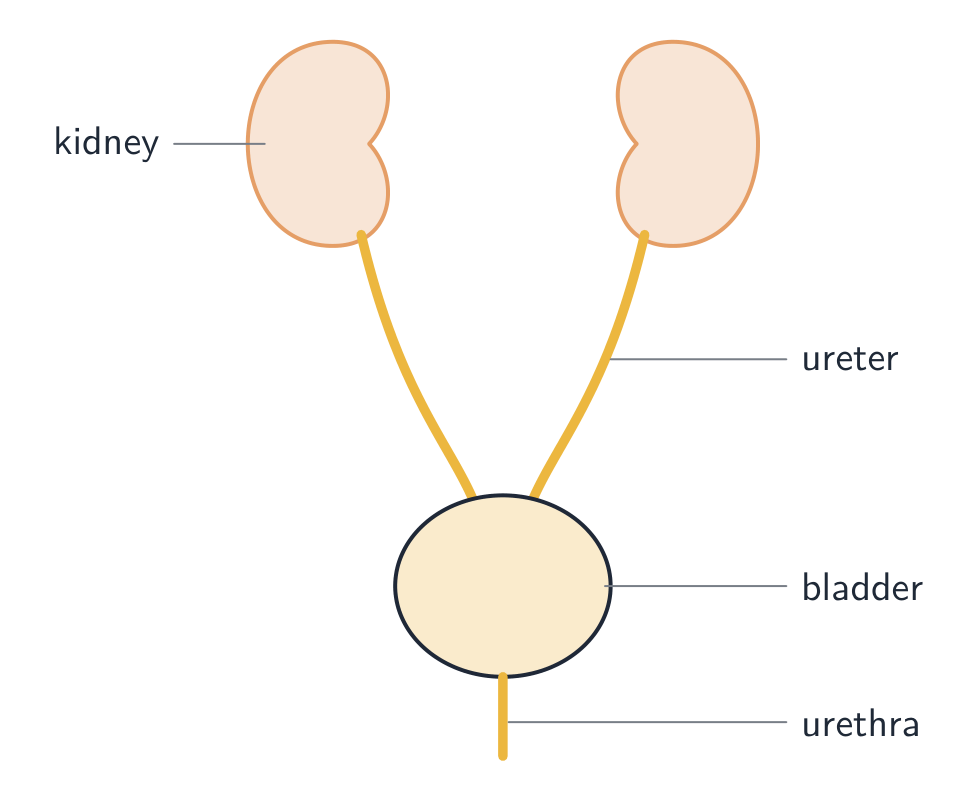
The kidneys 肾脏 clean the blood and make urine 尿液. The urine then passes through:
- the ureters 输尿管 — tubes from the kidneys to the bladder.
- the bladder 膀胱 — stores the urine.
- the urethra 尿道 — carries the urine out of the body.
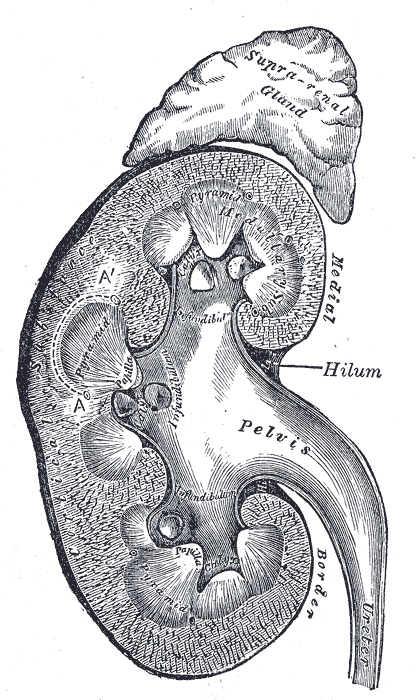
Blood reaches each kidney in the renal artery 肾动脉 and leaves, cleaned, in the renal vein 肾静脉. So blood in the renal vein has less urea than blood in the renal artery, and less than in any other blood vessel. (It also has less oxygen and more carbon dioxide, because kidney cells respire.)
Identifying the parts. On a diagram of the whole system, the kidneys are the two bean-shaped organs at the back of the abdomen; the two long tubes leading down from them are the ureters; the bag they join is the bladder; the single short tube leading out of the bladder is the urethra.
How much urine?
The kidneys control the amount of water in the blood, so the volume and colour of urine change with the conditions:
| Condition | Volume of urine | Urine is |
|---|---|---|
| drinking a lot of water | large | pale and dilute |
| a hot day, or exercise (much water lost in sweat) | small | dark and concentrated |
| eating a lot of salt | small at first (water is kept to dilute the salt) | concentrated, with many ions |
| eating a lot of protein | normal | more urea (more excess amino acids deaminated) |
Worked example. On a hot day a student plays football for two hours and drinks very little. Explain why their urine is small in volume and dark yellow. They lose a lot of water in sweat to keep cool, so their blood has less water. The kidneys respond by reabsorbing more water back into the blood, so less water is left in the urine. The same amount of urea is dissolved in less water, so the urine is more concentrated and darker.
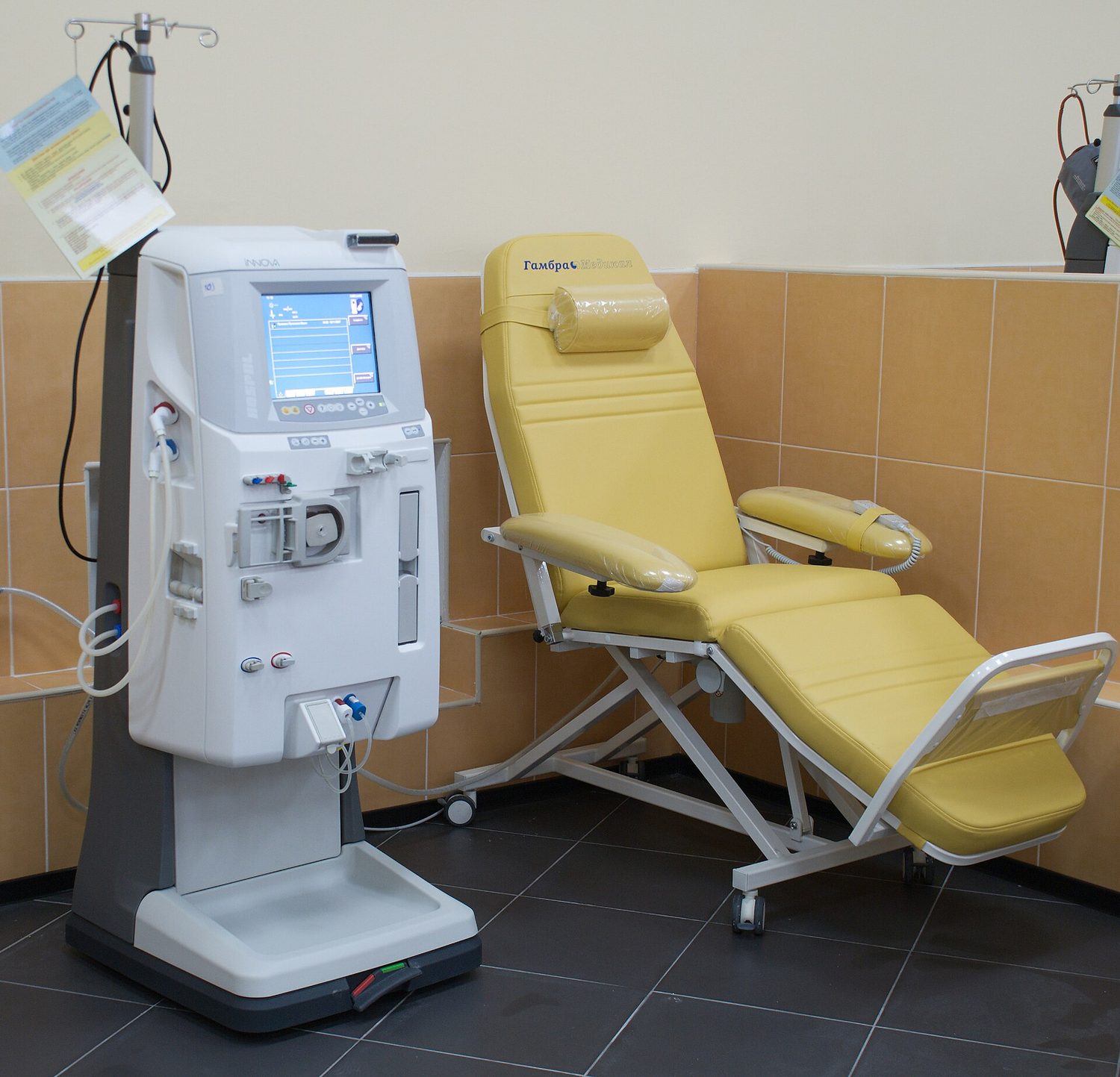
If the kidneys stop working, a dialysis 透析 machine can do their job. The patient's blood flows through the machine, where waste and excess water pass out across a thin membrane, and the clean blood returns to the body.
Vocabulary
Train
| English |
|---|
| kidneys/ˈkɪdniz/ |
| urine/ˈjʊərɪn/ |
| ureters/ˈjʊəretəz/ |
| bladder/ˈblædə/ |
| urethra/jʊəˈriːθrə/ |
| renal artery/ˈriːnl ˈɑːtəri/ |
| renal vein/ˈriːnl veɪn/ |
| dialysis/daɪˈæləsɪs/ |
| renal cortex/ˈriːnl ˈkɔːteks/ |
13.1
Inside the kidney (Supplement)
A kidney has two regions: an outer cortex 皮质 and an inner medulla 髓质.
The nephron
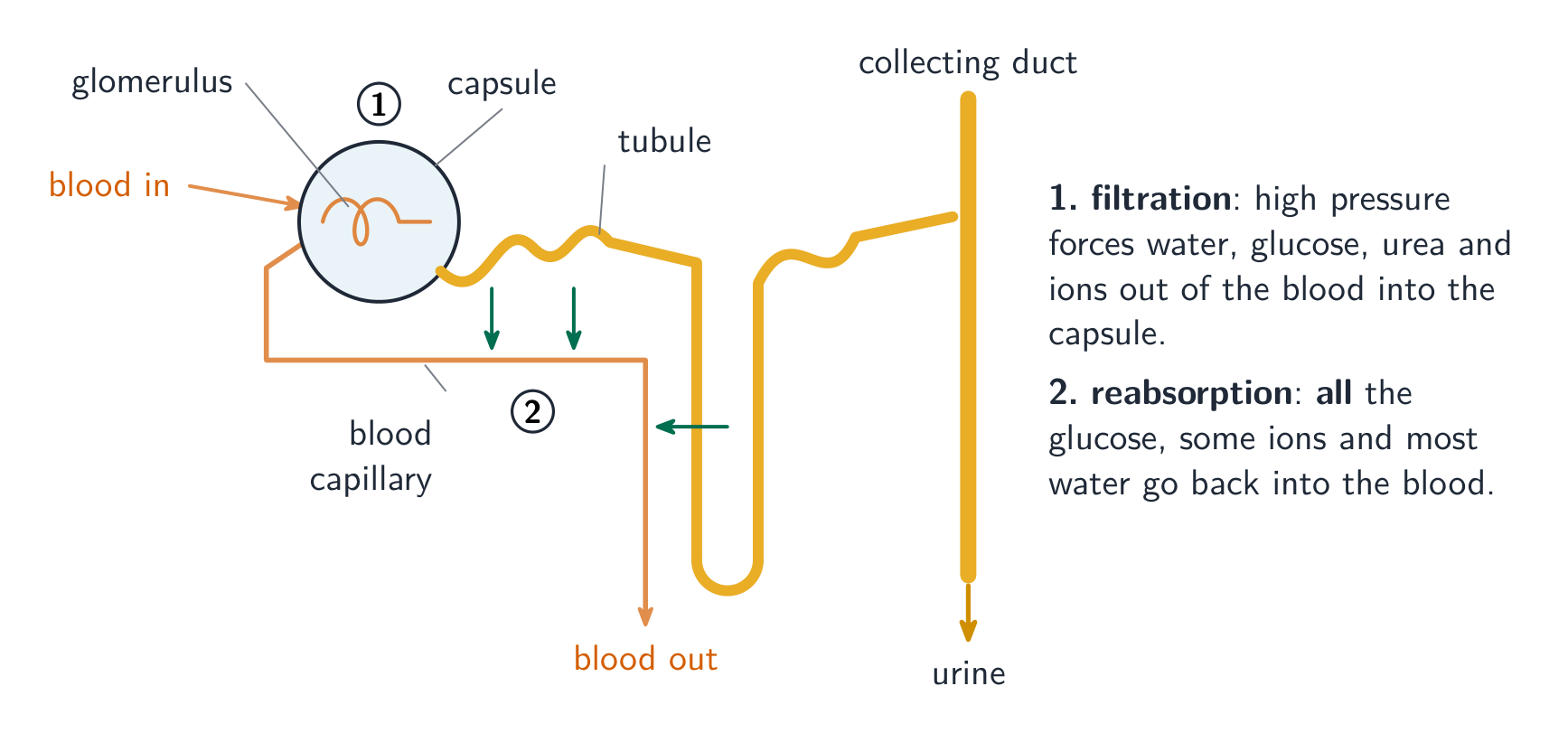
Each kidney holds millions of tiny tubes called nephrons 肾单位. A nephron cleans the blood in two steps:
- Filtration 过滤: at the glomerulus 肾小球 (a knot of capillaries), high pressure forces water, glucose 葡萄糖, urea and ions out of the blood and into the nephron.
- Reabsorption 重吸收: in healthy kidneys, as the liquid flows along the nephron, the blood takes back all of the glucose, some of the ions, and most of the water.
What is left behind — urea, excess water and excess ions — becomes the urine.
Worked example. A healthy person's urine contains urea and ions but no glucose, even though glucose is forced out of the blood at the glomerulus. Explain. Filtration does not choose: high pressure pushes water, glucose, urea and ions into the nephron together. The choosing happens at the next step - during reabsorption the blood takes back all of the glucose, so none is left to reach the urine. Glucose does appear in the urine of someone with untreated diabetes, because there is more of it than the nephron can reabsorb. Filtration removes; reabsorption selects.
Reading data on plasma, filtrate and urine
Exam questions often give a table like this and ask you to explain the numbers. Filtrate 滤液 is the liquid just after the glomerulus.
| Substance | Blood plasma / g per dm³ | Filtrate / g per dm³ | Urine / g per dm³ |
|---|---|---|---|
| water | 900 | 900 | 950 |
| protein | 80 | 0 | 0 |
| glucose | 1.0 | 1.0 | 0 |
| ions (such as sodium) | 7.2 | 7.2 | 6.0 |
| urea | 0.3 | 0.3 | 20 |
How to explain each row:
- protein: in the plasma but not in the filtrate. Protein molecules are too large to be forced out through the walls of the glomerulus, so they stay in the blood (as do the blood cells).
- glucose: the same in plasma and filtrate, because small molecules are filtered freely; zero in urine, because all of it is reabsorbed.
- ions: only some are reabsorbed; the rest, the excess, stays in the urine.
- urea: about 67 times more concentrated in urine than in filtrate (20 ÷ 0.3 ≈ 67). Urea is not reabsorbed, but most of the water around it is, so the same urea is left in a much smaller volume.
Worked example. Glucose is found in the urine of a person with untreated diabetes, and protein in the urine of a person with damaged kidneys. Explain each. In diabetes the blood glucose concentration is so high that the nephrons cannot reabsorb it all, so some is left in the urine. Protein in the urine means the glomerulus is damaged: large protein molecules, which should stay in the blood, are leaking into the filtrate.
Vocabulary
Train
| English |
|---|
| medulla/ˈmedʌlə/ |
| nephrons/ˈnefrɒnz/ |
| filtration/fɪlˈtreɪʃn/ |
| glomerulus/ˈɡlɒmərjʊləs/ |
| glucose/ˈɡluːkəʊs/ |
| reabsorption/riːbˈsɔːpʃn/ |
| filtrate/ˈfɪltreɪt/ |
13.1
The liver, amino acids and urea (Supplement)

The liver carries out the assimilation 同化 of amino acids 氨基酸: it joins them together into the proteins 蛋白质 that the body needs.
The body cannot store extra amino acids. The liver breaks the excess down by deamination 脱氨基作用 — it removes the nitrogen 氮-containing part of each amino acid. This part is then turned into urea.
Urea must be excreted because it is toxic 有毒 (poisonous) if it is allowed to build up in the blood.
Putting it together. Follow one excess amino acid from a meal to the toilet: it is absorbed from the small intestine into the blood → carried to the liver in the hepatic portal vein → deaminated in the liver, and its nitrogen part made into urea → urea is carried by the blood to the kidneys → filtered out at the glomerulus and not reabsorbed → leaves in the urine, down the ureter, stored in the bladder, out through the urethra. The rest of the amino acid (without its nitrogen) can be respired for energy or turned into glycogen or fat.
Common mistakes.
- Calling the removal of undigested food (faeces) excretion. That food was never part of the body's metabolism, so it is not excretion; excretion removes waste made by cells, such as carbon dioxide and urea.
- Saying the kidneys make urea. Urea is made in the liver; the kidneys only remove it from the blood.
- Mixing up the ureter and the urethra. The two ureters carry urine from the kidneys to the bladder; the one urethra carries it out of the body.
- Saying the glomerulus filters out only the waste. Filtration is not selective: water, glucose, urea and ions are all forced out. The useful substances are taken back later, by reabsorption.
- Saying "some glucose" is reabsorbed. In a healthy person all of the glucose is reabsorbed, so there is none in the urine.
- Saying deamination makes urea directly from proteins. The liver deaminates excess amino acids; the nitrogen part removed is then turned into urea.
Vocabulary
Train
| English |
|---|
| assimilation/əˌsɪmɪˈleɪʃn/ |
| amino acids/əˈmiːnəʊ ˈæsɪdz/ |
| proteins/ˈprəʊtiːnz/ |
| deamination/ˌdiːmɪˈneɪʃn/ |
| nitrogen/ˈnaɪtrədʒn/ |
| toxic/ˈtɒksɪk/ |
13.1
Exam tips
- Excretion removes metabolic wastes. Carbon dioxide leaves through the lungs; urea, excess water and excess ions leave through the kidneys.
- Urine path: kidney → ureter → bladder → urethra.
- Nephron: the glomerulus filters the blood; the nephron reabsorbs all the glucose, some ions and most of the water. What is left is urine.
- Urea is made in the liver from excess amino acids by deamination.
- We must excrete urea because it is toxic to the body.
- Proteins and blood cells are too large to be filtered, so they are not in the filtrate or the urine.
- The renal vein has the lowest urea concentration of any blood vessel.
- Less water drunk, or more sweating → more water reabsorbed → less, more concentrated urine.
Interactive lessons on this topic
Work through it step by step, with instant-check exercises.