Scope and prerequisites
IB literature and performance first assessment 2024; English focus; SL only. This supplemental reference covers only the listed preparation outcomes. School selections, full-guide procedures and required live or recorded performance are separate.
- Transform a non-dramatic extract through purposeful theatre choices
- Explain and evaluate the transformation 转化 in an individual oral
Prerequisites: Literary analysis; source-to-stage choices; critical reflection.
Explain and choose the method
Transformation creates theatre from non-dramatic literature, integrating literary understanding with performance craft.
Explain what is retained, changed or omitted and how those decisions affect meaning for an audience.
Transformation makes theatre from non-dramatic literature. Map a source feature to a practical choice and explain what is retained or changed. For Text B, two cup positions can become two marked spaces, while the final refusal becomes a deliberate stillness. A storyboard, script or commentary prepares a performance; it does not fulfil the required live performance or individual oral.
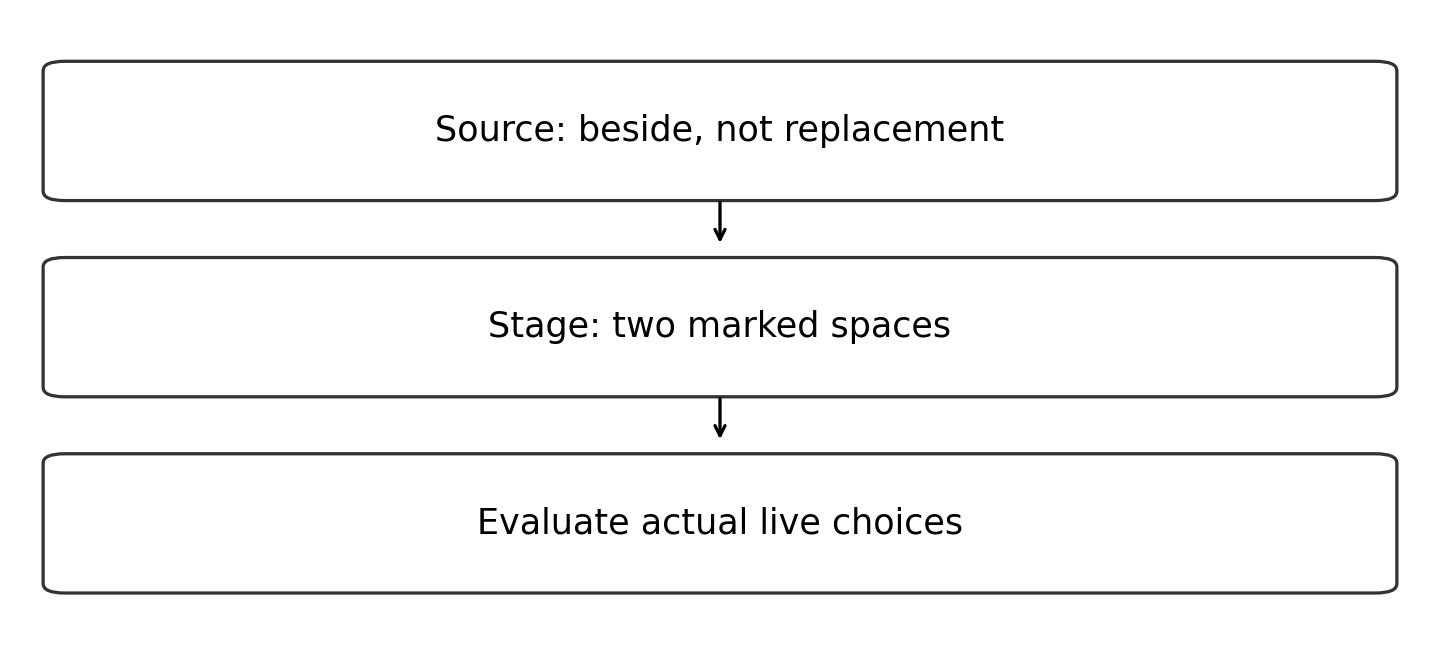
Existing worked example: Take an approved non-dramatic extract and map a recurring image to a repeated spatial pattern. Test whether viewers can perceive the intended relation. After live performance, use the oral to explain your choices, evidence 证据 and limitations.
Complete original context
Original classroom texts, written for this supplement. They are not school-selected assessed works.
Text A — The label Every morning I polished the brass plate beside the door. It carried my father's name, and visitors asked for him even after I took charge of the shop. I answered their questions, found the parts, and wrapped each purchase. Still, at the door, they thanked the name on the plate. One afternoon I put a small card below it: “Ask for Leila.” The next visitor read the card aloud, hesitated, and then asked me where the hinges were. I left the brass plate shining. The card stayed too.
Text B — A space on the shelf (original poem) I cleared a place beside the cup, not where the cup had been. The shelf kept its old circle; the new wood still looked clean. By evening, two rings darkened it. I did not rub them out.
Context supplied for this exercise: both texts are contemporary original classroom writing in English. No author biography, translation 翻译 history or evidence about a real society is supplied. Compare what the wording permits; do not invent historical facts. A real course comparison must use the school's eligible studied works.
Independent practice and checked reasoning
Transfer 1
Propose a complete short transformation of Text B with beginning, development and ending. Explain one retained feature, one change and one omission.
Reasoning: Begin with one performer guarding a marked circle. A second performer clears a neighbouring space while the first remains. Both place cups; end with the second reaching to wipe a ring, then leaving both visible. Retain beside-versus-replacement through two spaces. Change first-person narration into shared visible action. Omit literal shelf description while retaining its spatial relationship. This is a short rehearsal 排练 proposal 提案, not a ten-minute assessed performance.
Transfer 2
Give two alternative voice or movement choices and a question for observers that would test the intended meaning without leading them.
Reasoning: Speak the poem once with stillness, or distribute its lines between performers with a repeated movement. Ask “What relationship did you notice between the two spaces, and what made you think that?” rather than “Did you understand our perfect message of coexistence?” Record ambiguous or contrary responses as evidence too.
Transfer 3
Outline an individual oral evaluating the transformation after live work. Identify the evidence still absent now.
Reasoning: Explain the source reading, precise retained/changed/omitted features, personal choices, actual rehearsal revisions, live audience evidence and remaining limitations. Current text supplies a plan only; school-approved source selection, real rehearsal, required live duration and supervised oral remain absent. A typed commentary cannot certify those performances.
Limits and next use
A script or recording without the required live performance and oral is not equivalent. Teacher verifies ten-minute performance and fifteen-minute oral procedures and the current text-selection rules.
All tasks here are public original practice with authored guidance. They are not official questions or fresh diagnostics. Existing protected tests and mocks remain separate.