Skip to content
Subjects

International Baccalaureate · IB Diploma · Literature and Performance · SL

  • 1

    Literary analysis; comparative essay · Reading literature for performance possibilities

    Learning program coming soon

    Handout

    Scope and prerequisites

    IB literature and performance first assessment 2024; English focus; SL only. This supplemental reference covers only the listed preparation outcomes. School selections, full-guide procedures and required live or recorded performance are separate.

    • Analyse voice, imagery 意象 and structure
    • Compare two literary works through a focused argument 论证

    Prerequisites: Close reading 细读; comparative claim; context versus biography.

    Explain and choose the method

    Literary analysis 文学分析 examines how choices create meaning; performance later translates some effects into embodied and spatial choices.

    The comparative essay remains an argument about two studied literary works, not a review of your performance.

    A comparative argument 比较论证 explains a relationship through both texts. Use a shared question, then analyse a distinct choice in each text. “Both concern belonging” is a start, not a developed comparison. The original classroom context supplies no biography; analyse wording before suggesting a broader interpretation.
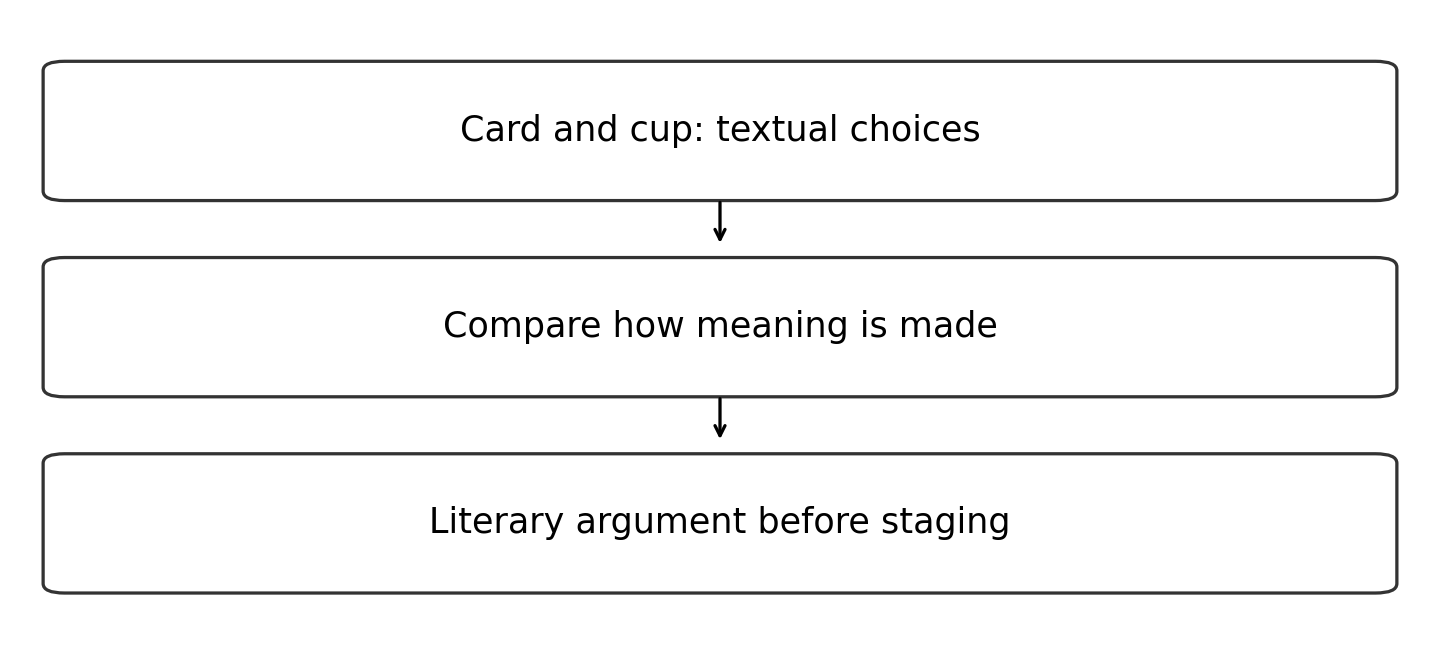
    Original diagram of the worked relationship; read the full wording and qualifications.
    Original diagram of the worked relationship; read the full wording and qualifications.

    Existing worked example: For an original line the clock sounded louder after the door closed, analyse sound, absence and perception. Compare a similar concern in the school's actual texts using precise evidence 证据 and a question-led thesis.

    Complete original context

    Original classroom texts, written for this supplement. They are not school-selected assessed works.

    Text A — The label Every morning I polished the brass plate beside the door. It carried my father's name, and visitors asked for him even after I took charge of the shop. I answered their questions, found the parts, and wrapped each purchase. Still, at the door, they thanked the name on the plate. One afternoon I put a small card below it: “Ask for Leila.” The next visitor read the card aloud, hesitated, and then asked me where the hinges were. I left the brass plate shining. The card stayed too.

    Text B — A space on the shelf (original poem) I cleared a place beside the cup, not where the cup had been. The shelf kept its old circle; the new wood still looked clean. By evening, two rings darkened it. I did not rub them out.

    Context supplied for this exercise: both texts are contemporary original classroom writing in English. No author biography, translation 翻译 history or evidence about a real society is supplied. Compare what the wording permits; do not invent historical facts. A real course comparison must use the school's eligible studied works.

    Independent practice and checked reasoning

    Transfer 1

    Compare how both texts represent making a place for a new identity. Write a complete comparative paragraph with quotations.

    Reasoning: Both texts make identity visible through a small addition rather than complete replacement. In A, “Ask for Leila” gives the worker a public name beside the inherited brass plate, turning unnamed labour into recognition. In B, “beside” rather than “where” preserves the old cup's place while creating another. A's hesitation before a visitor speaks Leila's name stages a social adjustment; B's two darkened rings make coexistence visible without a visitor. The difference is between recognition through language and belonging through shared space, not a simple opposition between keeping and destroying the past.

    Transfer 2

    Identify one contrasting reading that complicates a wholly optimistic interpretation of A, without inventing biography.

    Reasoning: Leila must add a request to be recognised, and the visitor hesitates, so recognition is not automatic. Keeping the shining plate may suggest respect, but could also show the inherited name retains authority. Both readings need the supplied details and should remain interpretations, not claims about the author's family.

    Transfer 3

    Explain how you would transfer this method to two actual studied works and what must be verified before making historical-context claims.

    Reasoning: Choose a question-led comparison, select precise scenes and authorial choices from both works, and test a counter-reading. Verify editions, eligible works, reliable contextual evidence and the relevance 相关性 of that context to textual details. A general biography cannot replace analysis.

    Limits and next use

    The original line is practice, not one of the five studied works. Do not treat every literary feature as a stage instruction or replace textual analysis with performance description.

    All tasks here are public original practice with authored guidance. They are not official questions or fresh diagnostics. Existing protected tests and mocks remain separate.
    Vocabulary
    English
    comparative argument
    literary analysis/ˈlɪtərəri əˈnæləsɪs/
    close reading/kləʊs ˈriːdɪŋ/
    translation/trænˈsleɪʃn/
    relevance/ˈrelɪvəns/
    evidence/ˈevɪdəns/
    argument/ˈɑːɡjuːmənt/
    imagery/ˈɪmɪdʒri/
  • 2

    Dramatic text; written assignment · Individual performance choices and analysis

    Learning program coming soon

    Handout

    Scope and prerequisites

    IB literature and performance first assessment 2024; English focus; SL only. This supplemental reference covers only the listed preparation outcomes. School selections, full-guide procedures and required live or recorded performance are separate.

    • Explore a dramatic extract through rehearsal 排练
    • Analyse how personal performance choices communicate its dramatic features

    Prerequisites: Close reading 细读; voice, gesture 姿态动作, pace and space; observation versus intention.

    Explain and choose the method

    Explore voice, gesture, pace and space in relation to the dramatic text.

    Analyse a specific choice, its reason and its observed effect 观察效果, connecting text and practical experience.

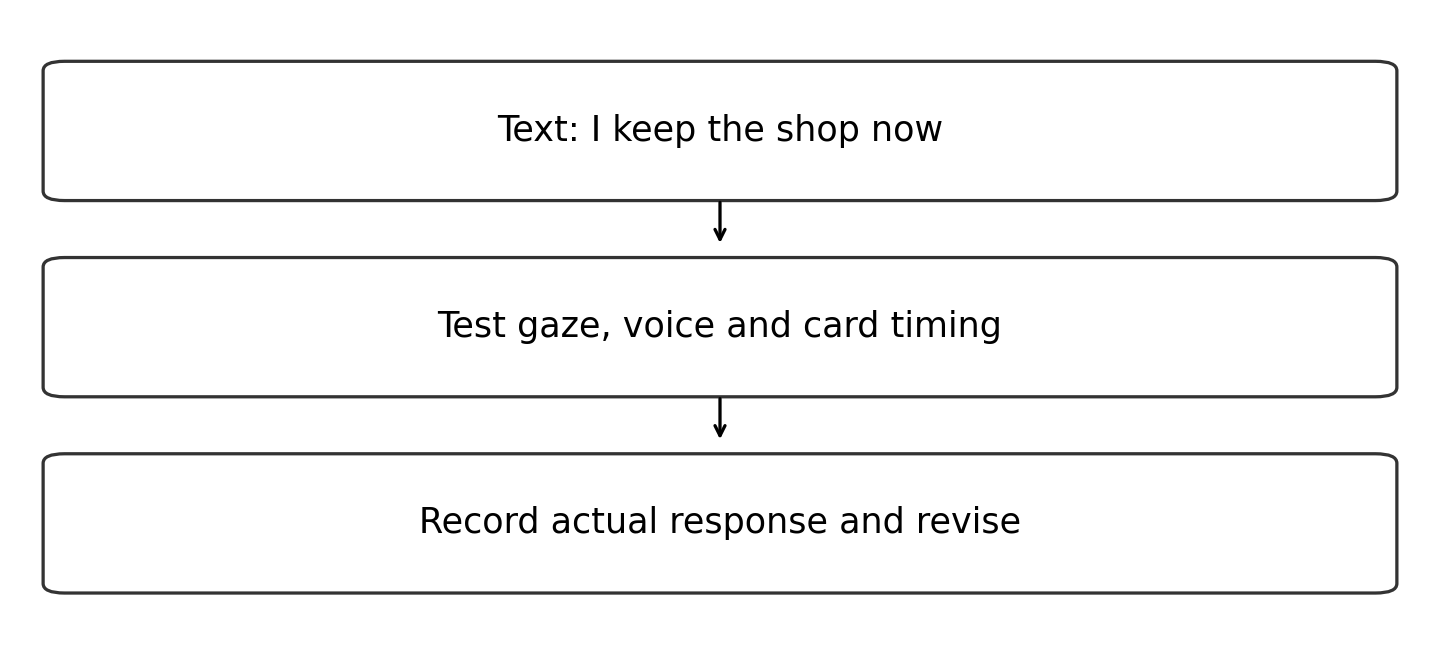
    Rehearsal tests how a practical choice communicates a dramatic feature 戏剧特征. Change one choice at a time and keep a dated record of what actually happened. Intended effect 预期效果 is what you hoped; observed effect is what a viewer or recording can support. A written assignment needs your personal performance evidence 证据, not an invented report of success.

    Original diagram of the worked relationship; read the full wording and qualifications.
    Original diagram of the worked relationship; read the full wording and qualifications.

    Existing worked example: Rehearse two versions of an approved extract with one spatial choice changed. Record the trials with consent and evaluate how the relation between characters changes. Use the stronger version as evidence for a focused analytical paragraph.

    Complete original context

    Original dramatic extract: LEILA (beside the door): You asked for the keeper. VISITOR (looking at the brass plate): Is he here? LEILA: I keep the shop now. (A pause. LEILA places a card below the plate.) VISITOR: Then may I ask you about this hinge?

    Two rehearsal proposals, not reports of completed performance: A: Leila speaks softly toward the plate and leaves a long pause before placing the card. B: Leila turns toward the visitor, speaks clearly, and places the card during “now”.

    Independent practice and checked reasoning

    Transfer 1

    Explain how A and B could communicate different relationships. Link voice, gaze or timing to specific words rather than declaring one universally better.

    Reasoning: A's gaze toward the inherited name and pause may make hesitation or continuing dependence visible. B's turn, clearer voice and card on “now” may assert present authority. Both can be defensible interpretations of the exchange; actual reception must be tested, not assumed.

    Transfer 2

    Design a fair rehearsal comparison and a record template. What would count as personal performance evidence?

    Reasoning: Perform the same extract with the same partner, space and text, varying the chosen gaze/timing package or one element at a time. Record date, exact choice, textual reason, observer response and revision, with consent for recordings. Actual participation and specific observed effects count; a plan or invented positive reaction does not.

    Transfer 3

    Write an analytical paragraph in conditional language using a proposed choice, and explain what must replace that language after actual rehearsal.

    Reasoning: “Placing the card during ‘now’ could align visible action with Leila's assertion of present authority. Turning toward the visitor may make the address more direct, but could reduce the hesitation implied by the pause. I would compare whether viewers notice both assertion and uncertainty.” After rehearsal, add what was actually done, observed evidence, limitations and a justified revision. Do not report unperformed choices as completed work.

    Limits and next use

    The assignment concerns a dramatic work explored through performance, not a purely literary essay. School supervises actual rehearsal and authorship; commentary on an imagined performance is insufficient.

    All tasks here are public original practice with authored guidance. They are not official questions or fresh diagnostics. Existing protected tests and mocks remain separate.

    Vocabulary
    English
    dramatic feature/drəˈmætɪk ˈfiːtʃə/
    intended effect
    observed effect
    close reading/kləʊs ˈriːdɪŋ/
    rehearsal/rɪˈhɜːsl/
    evidence/ˈevɪdəns/
    gesture/ˈdʒestʃə/
  • 3

    Transformation; individual oral · From non-dramatic literature to live theatre

    Learning program coming soon

    Handout

    Scope and prerequisites

    IB literature and performance first assessment 2024; English focus; SL only. This supplemental reference covers only the listed preparation outcomes. School selections, full-guide procedures and required live or recorded performance are separate.

    • Transform a non-dramatic extract through purposeful theatre choices
    • Explain and evaluate the transformation 转化 in an individual oral

    Prerequisites: Literary analysis; source-to-stage choices; critical reflection.

    Explain and choose the method

    Transformation creates theatre from non-dramatic literature, integrating literary understanding with performance craft.

    Explain what is retained, changed or omitted and how those decisions affect meaning for an audience.

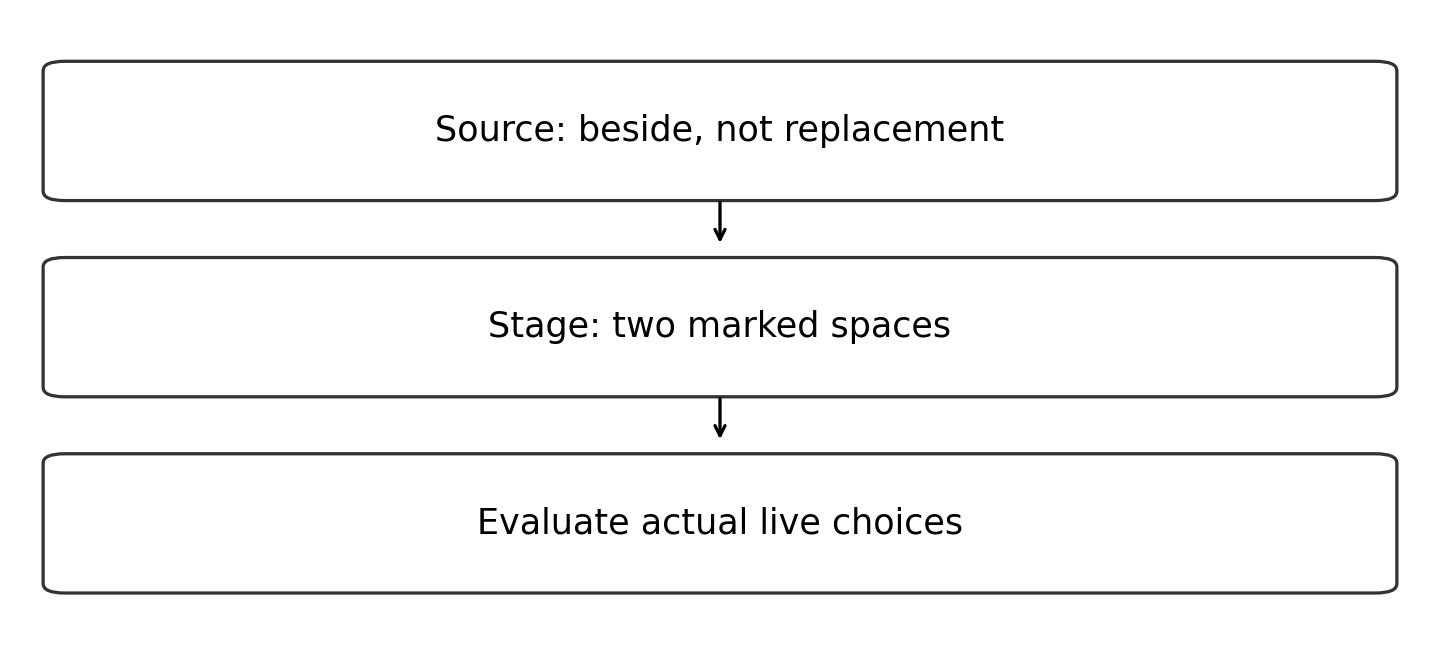
    Transformation makes theatre from non-dramatic literature. Map a source feature to a practical choice and explain what is retained or changed. For Text B, two cup positions can become two marked spaces, while the final refusal becomes a deliberate stillness. A storyboard, script or commentary prepares a performance; it does not fulfil the required live performance or individual oral.

    Original diagram of the worked relationship; read the full wording and qualifications.
    Original diagram of the worked relationship; read the full wording and qualifications.

    Existing worked example: Take an approved non-dramatic extract and map a recurring image to a repeated spatial pattern. Test whether viewers can perceive the intended relation. After live performance, use the oral to explain your choices, evidence 证据 and limitations.

    Complete original context

    Original classroom texts, written for this supplement. They are not school-selected assessed works.

    Text A — The label Every morning I polished the brass plate beside the door. It carried my father's name, and visitors asked for him even after I took charge of the shop. I answered their questions, found the parts, and wrapped each purchase. Still, at the door, they thanked the name on the plate. One afternoon I put a small card below it: “Ask for Leila.” The next visitor read the card aloud, hesitated, and then asked me where the hinges were. I left the brass plate shining. The card stayed too.

    Text B — A space on the shelf (original poem) I cleared a place beside the cup, not where the cup had been. The shelf kept its old circle; the new wood still looked clean. By evening, two rings darkened it. I did not rub them out.

    Context supplied for this exercise: both texts are contemporary original classroom writing in English. No author biography, translation 翻译 history or evidence about a real society is supplied. Compare what the wording permits; do not invent historical facts. A real course comparison must use the school's eligible studied works.

    Independent practice and checked reasoning

    Transfer 1

    Propose a complete short transformation of Text B with beginning, development and ending. Explain one retained feature, one change and one omission.

    Reasoning: Begin with one performer guarding a marked circle. A second performer clears a neighbouring space while the first remains. Both place cups; end with the second reaching to wipe a ring, then leaving both visible. Retain beside-versus-replacement through two spaces. Change first-person narration into shared visible action. Omit literal shelf description while retaining its spatial relationship. This is a short rehearsal 排练 proposal 提案, not a ten-minute assessed performance.

    Transfer 2

    Give two alternative voice or movement choices and a question for observers that would test the intended meaning without leading them.

    Reasoning: Speak the poem once with stillness, or distribute its lines between performers with a repeated movement. Ask “What relationship did you notice between the two spaces, and what made you think that?” rather than “Did you understand our perfect message of coexistence?” Record ambiguous or contrary responses as evidence too.

    Transfer 3

    Outline an individual oral evaluating the transformation after live work. Identify the evidence still absent now.

    Reasoning: Explain the source reading, precise retained/changed/omitted features, personal choices, actual rehearsal revisions, live audience evidence and remaining limitations. Current text supplies a plan only; school-approved source selection, real rehearsal, required live duration and supervised oral remain absent. A typed commentary cannot certify those performances.

    Limits and next use

    A script or recording without the required live performance and oral is not equivalent. Teacher verifies ten-minute performance and fifteen-minute oral procedures and the current text-selection rules.

    All tasks here are public original practice with authored guidance. They are not official questions or fresh diagnostics. Existing protected tests and mocks remain separate.

    Vocabulary
    English
    transformation/trænsfɔːˈmeɪʃn/
    translation/trænˈsleɪʃn/
    rehearsal/rɪˈhɜːsl/
    evidence/ˈevɪdəns/
    proposal/prəˈpəʊzl/

Log in or create account

IGCSE, A-Level & AP