Scope and prerequisites
IB Language B first assessment 2020; English B focus. This supplemental reference covers only the listed preparation outcomes. School selections, full-guide procedures and required live or recorded performance are separate.
- Interpret an extract from one of two studied literary works
- Connect character, voice and situation to sustained English discussion
Prerequisites: Stated facts; supported inference 推断; communicative explanation in English.
Explain and choose the method
Use the extract's language and situation to interpret the character, then explain the reading in clear English.
HL English B assesses communicative command as well as understanding of the extract; it is not a Language A technique catalogue.
HL English B extract work uses clear language to explain character, voice and situation. In Text A, the first-person speaker carries out the work while visitors credit her father's name. The new card supports an inference that she wants recognition. Keeping the plate complicates a simple rejection of her father. This original extract is practice only; actual HL study needs two eligible school-selected literary works.
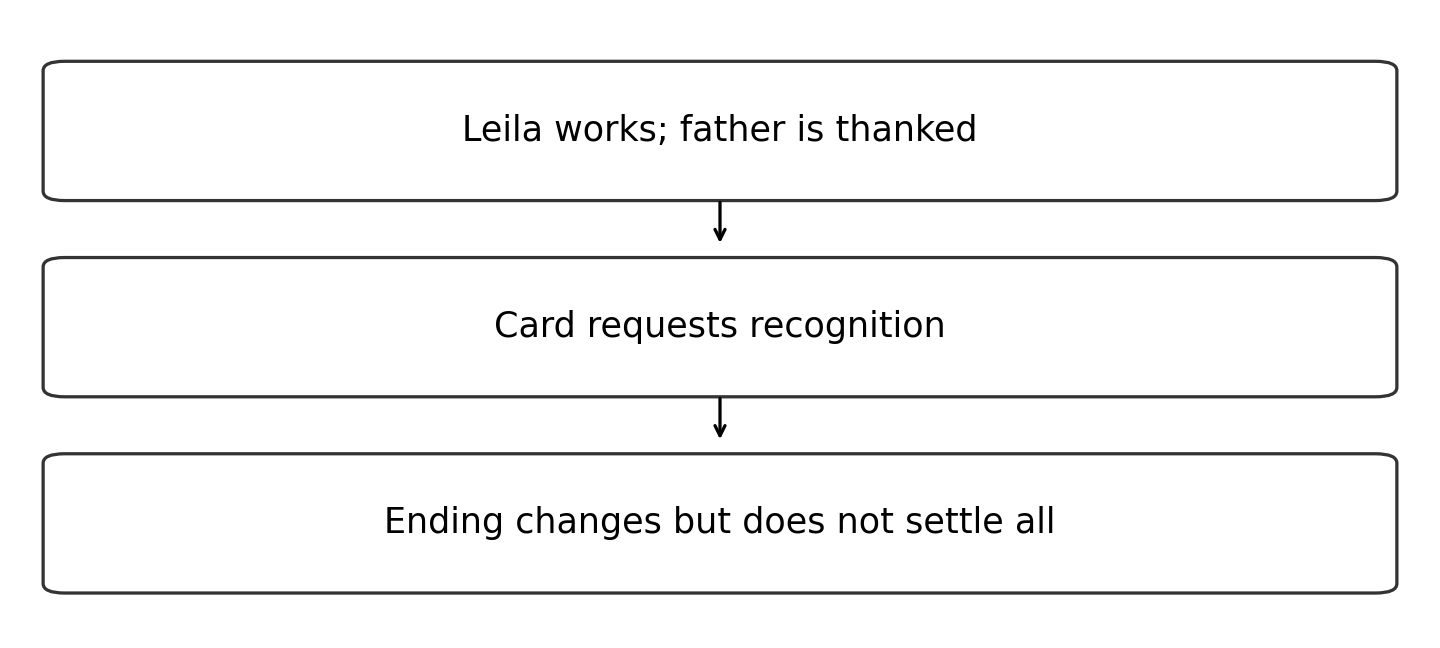
Existing worked example: In the original classroom vignette, the mismatch between words and behaviour may suggest unease. Explain this as a possibility supported by both details. For assessment, replace the vignette with an extract from the school's studied work and connect it to that work.
Complete original context
Original classroom texts, written for this supplement. They are not school-selected assessed works.
Text A — The label Every morning I polished the brass plate beside the door. It carried my father's name, and visitors asked for him even after I took charge of the shop. I answered their questions, found the parts, and wrapped each purchase. Still, at the door, they thanked the name on the plate. One afternoon I put a small card below it: “Ask for Leila.” The next visitor read the card aloud, hesitated, and then asked me where the hinges were. I left the brass plate shining. The card stayed too.
Text B — A space on the shelf (original poem) I cleared a place beside the cup, not where the cup had been. The shelf kept its old circle; the new wood still looked clean. By evening, two rings darkened it. I did not rub them out.
Context supplied for this exercise: both texts are contemporary original classroom writing in English. No author biography, translation 翻译 history or evidence 证据 about a real society is supplied. Compare what the wording permits; do not invent historical facts. A real course comparison must use the school's eligible studied works.
Independent practice and checked reasoning
Transfer 1
Explain Leila's situation and one supported feeling or motive, using two details. Do not list techniques without meaning.
Reasoning: Leila has taken charge and serves visitors, but they still thank the name on her father's plate. Her “Ask for Leila” card suggests a wish to be recognised. Keeping the polished plate may show respect or continuing influence, so anger or total rejection cannot be asserted as the only motive.
Transfer 2
Give a sustained spoken-rehearsal 排练 response to “Does the ending solve Leila's problem?” Include evidence on both sides.
Reasoning: “The ending shows a small change because a visitor reads Leila's name and asks her for help. However, the visitor hesitates and the old plate stays. I think the story presents recognition beginning rather than a complete solution. Keeping both labels could allow continuity, but it may also leave the father's authority visible.” Extend with relevant details and respond to a teacher; typed rehearsal does not certify delivery.
Transfer 3
Explain how to connect an approved extract to its whole studied work and what this short original text cannot establish.
Reasoning: Refer to an earlier or later episode, recurring voice or changing relationship in the actual work, with accurate evidence. This short original text cannot establish study of either required literary work, the official extract procedure or live oral ability. School selection and supervised performance remain held.
Limits and next use
Do not claim an invented vignette satisfies the two-literary-work requirement. Teacher selects eligible works and verifies the oral procedure and timing; no generic literature lesson covers every language.
All tasks here are public original practice with authored guidance. They are not official questions or fresh diagnostics. Existing protected tests and mocks remain separate.