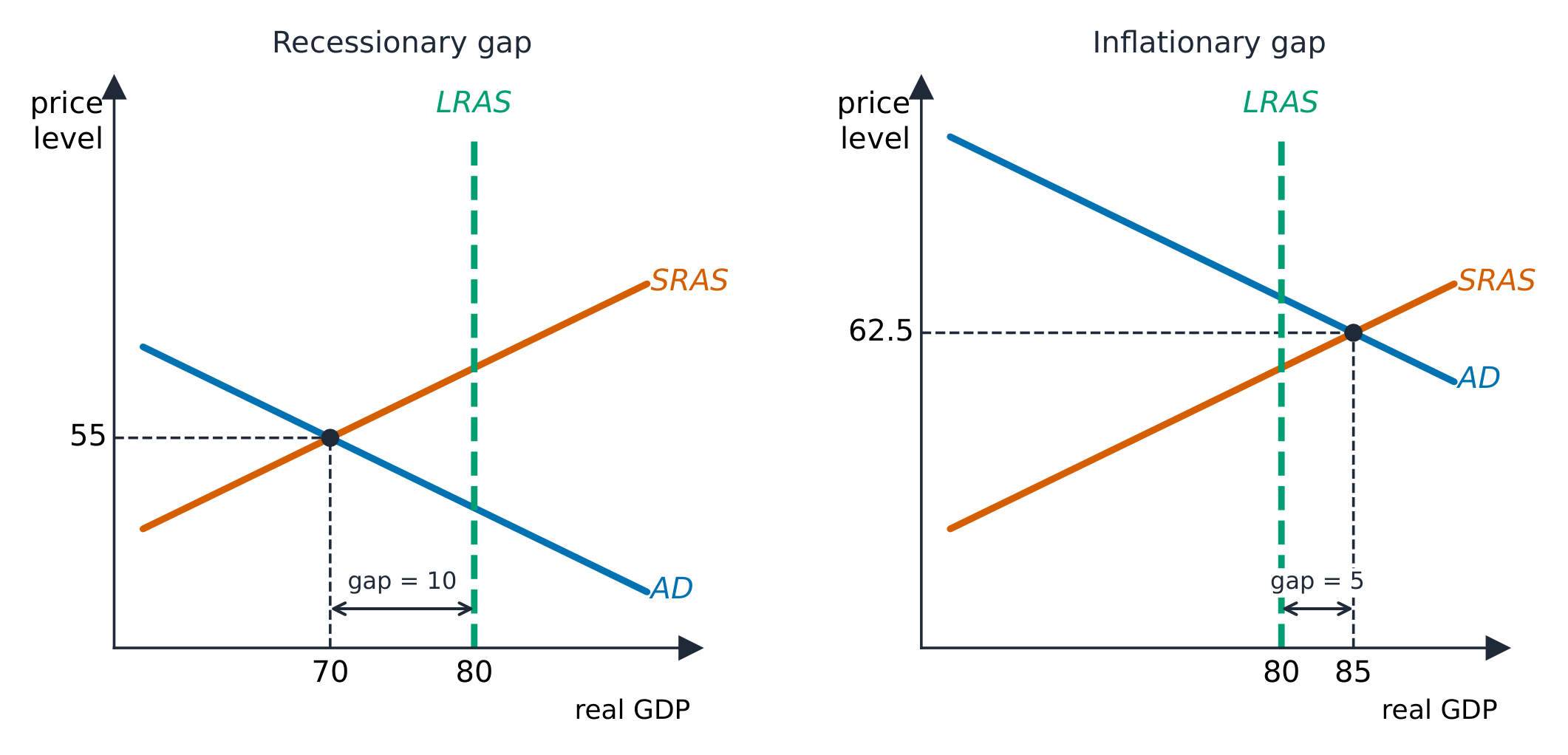
IB Diploma Programme Economics SL, Unit 3 Macroeconomics (first assessment 2022). This topic covers the SL content of sections 3.1 to 3.7: measuring the economy, its ups and downs, aggregate demand and supply, the government's goals, inequality and poverty, and the three kinds of policy (monetary, fiscal and supply-side). One model runs through the worked examples: real GDP in $billion, aggregate demand$P = 90 - Y/2$, short-run aggregate supply$P = 20 + Y/2$ and full-employment output 80. All numbers are original. The multiplier, the Phillips curves, government debt and the calculations are HL extensions, so they are left out here.
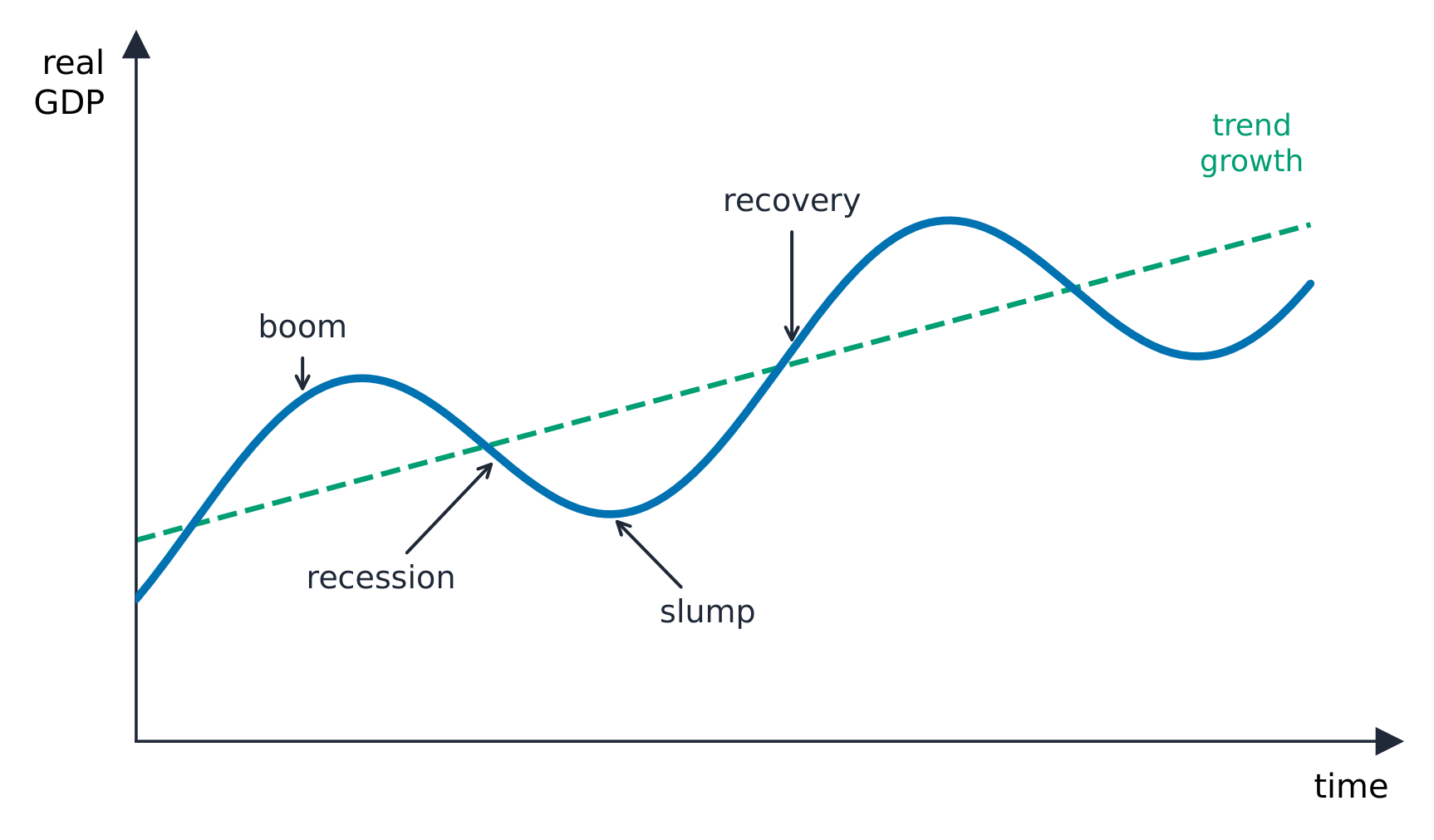
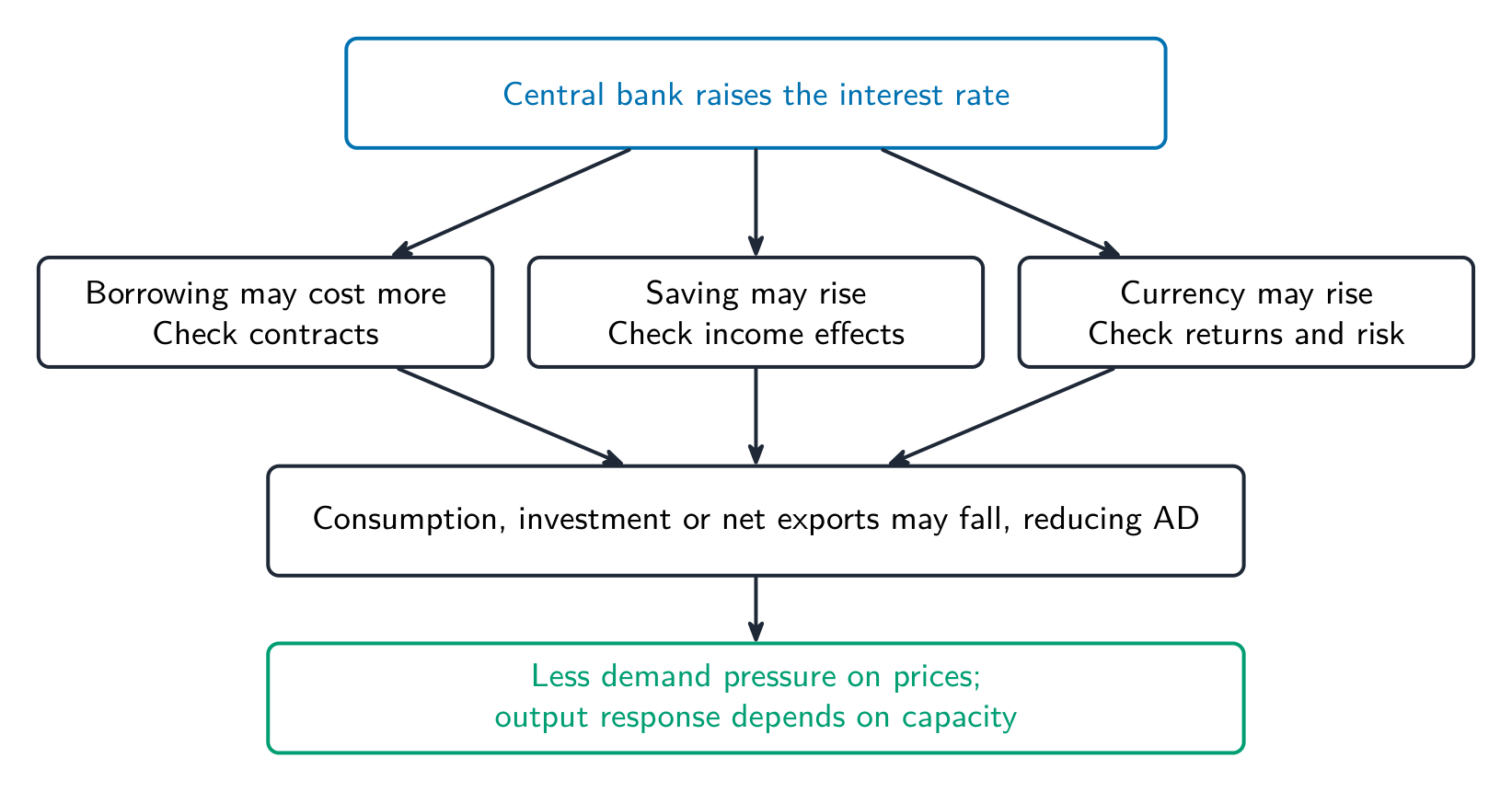
In 2020 many countries saw output fall faster than at any time since the 1930s. Shops closed, workers lost hours, and governments spent huge sums to support incomes. Central banks cut interest rates close to zero. Two years later, inflation in many rich countries reached its highest level in about 40 years, and the same central banks raised rates quickly. Macroeconomics explains why output, jobs and prices move together like this, and what policy can do about it.
Must-know for this topic:
| Idea | Key relationship |
|---|---|
| GDP | output = income = expenditure; real GDP removes price changes |
| aggregate demand | AD $= C + I + G + (X - M)$ |
| equilibrium | AD meets SRAS at $Y = 70$, $P = 55$; full employment 80, so a recessionary gap of 10 |
| objectives | low unemployment, low and stable inflation, growth, equity |
| policy | monetary (interest rates), fiscal (G and T), supply-side (LRAS) |