IB Diploma Programme Business Management HL, Unit 5 Operations management (first assessment 2024). This topic covers sections 5.1 to 5.9: the role of operations, operations methods, lean production and quality (HL), location, break-even analysis, production planning (HL), crisis management (HL), research and development (HL) and management information systems (HL). The worked examples use the course's repair business, and the numbers fit Unit 3: each repair sells for 25 on average, uses 15 of parts and direct labour, and fixed costs are 12,500 a month.
In March 2011 a huge earthquake and tsunami hit north-east Japan. Many of Toyota's suppliers stopped work. Toyota was famous for holding very little stock, so within days some of its factories in Japan and abroad had no parts, and output stayed low for months. Toyota did not give up its low-stock system. Instead it built a database of every supplier behind its suppliers, so it could act faster next time. This topic is about how a business makes its products, and the choices behind that: how much stock to hold, where to produce, and how to plan for things going wrong.
Must-know for this topic:
| Idea | Key content |
|---|---|
| operations | inputs → process → outputs; links to finance, HR and marketing |
| methods | job, batch, mass/flow, mass customisation |
| lean and quality (HL) | kaizen, JIT, kanban, andon; cradle to cradle; quality control against quality assurance; TQM |
| location | reasons; outsourcing, offshoring, insourcing, reshoring |
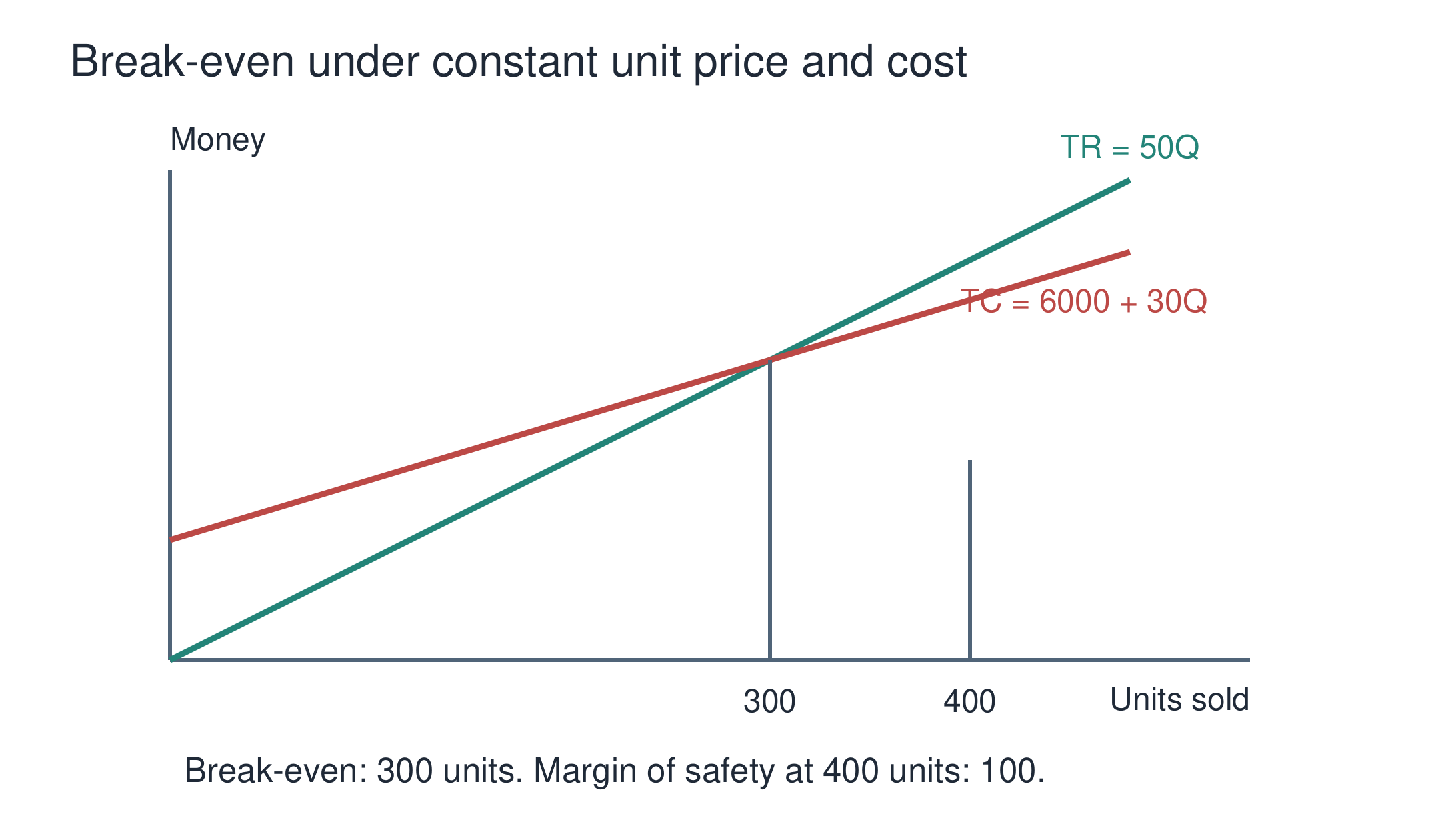
| break-even | contribution 10; break-even 1,250 repairs; margin of safety 750 |
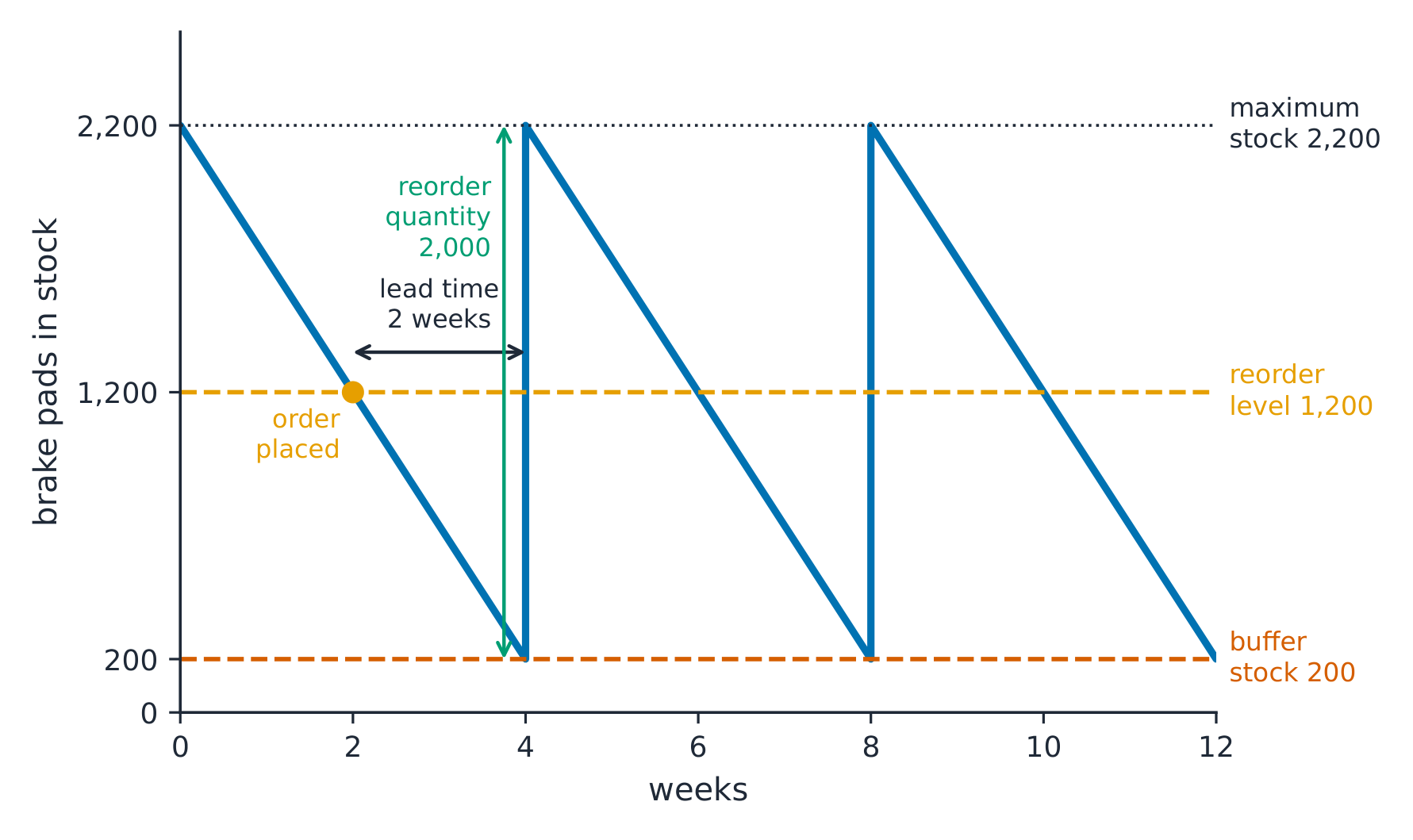
| planning (HL) | JIT and JIC; reorder level 1,200; capacity 80%; defect rate 2.5%; make or buy |
| crisis, R&D, MIS (HL) | contingency planning; four types of innovation; data and ethics |