English
Learning Objective 1.1.A: Represent patterns and algorithms found in everyday life using written language or diagrams.
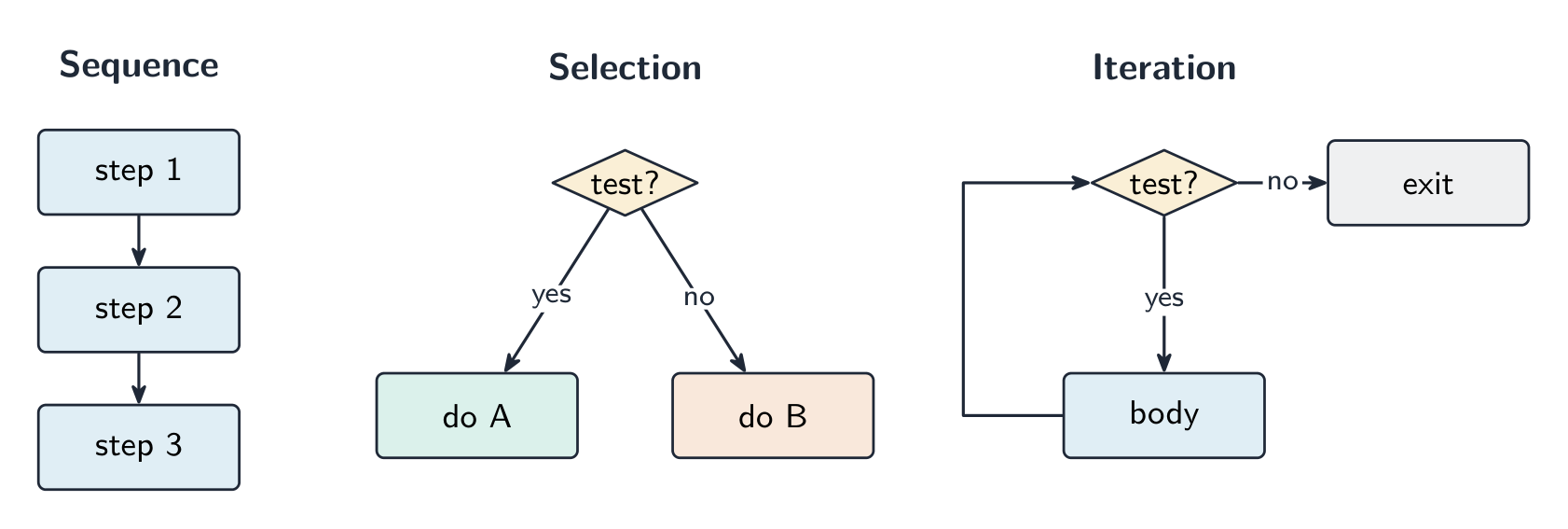
- 1.1.A.1 Algorithms define step-by-step processes to follow when completing a task or solving a problem. These algorithms can be represented using written language or diagrams.
- 1.1.A.2 Sequencing defines an order for when steps in a process are completed. Steps in a process are completed one at a time.
Learning Objective 1.1.B: Explain the code compilation and execution process.
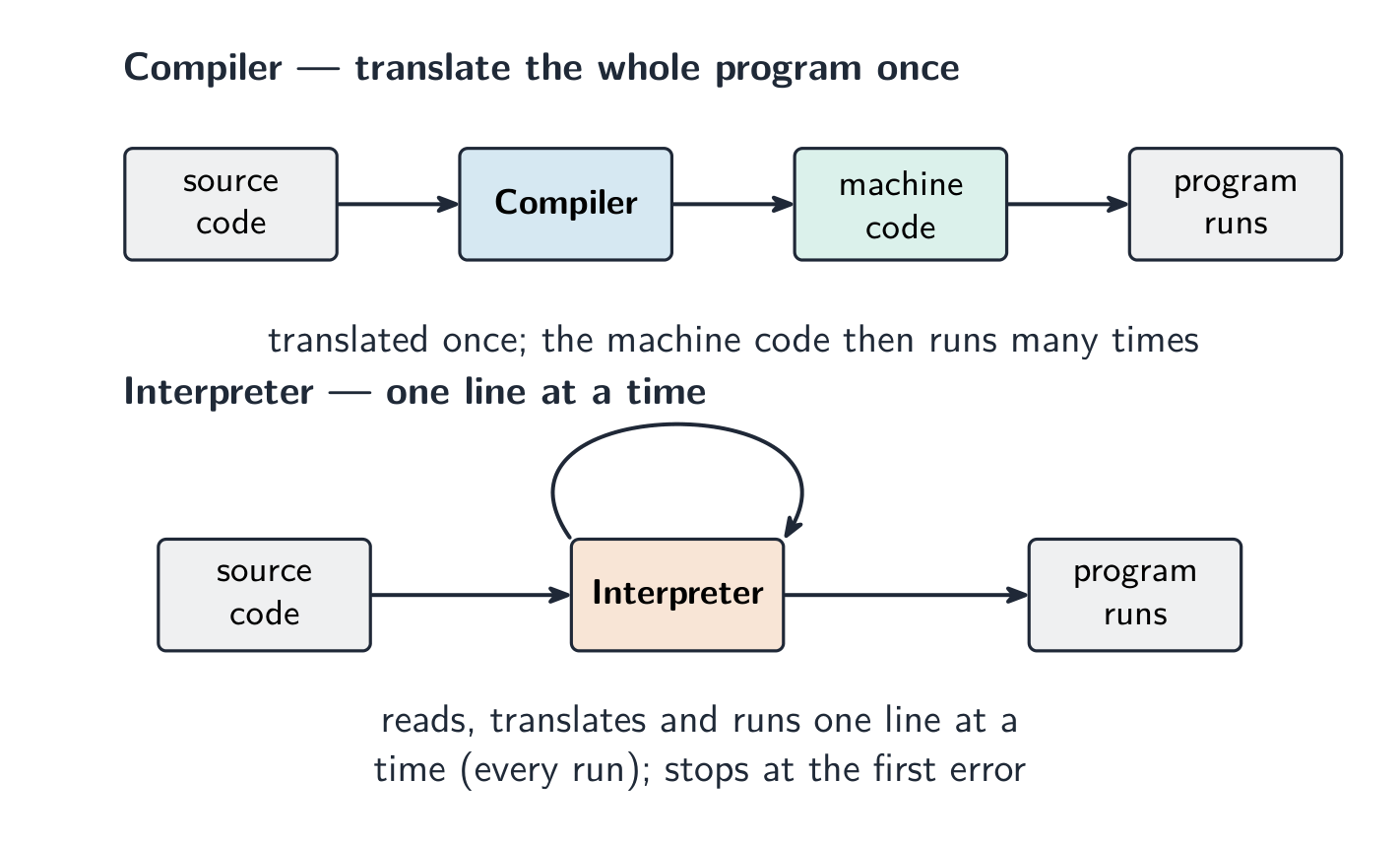
- 1.1.B.1 Code can be written in any text editor; however, an integrated development environment (IDE) is often used to write programs because it provides tools for a programmer to write, compile, and run code.
- 1.1.B.2 A compiler checks code for some errors. Errors detectable by the compiler need to be fixed before the program can be run.
Learning Objective 1.1.C: Identify types of programming errors.
- 1.1.C.1 A syntax error is a mistake in the program where the rules of the programming language are not followed. These errors are detected by the compiler.
- 1.1.C.2 A logic error is a mistake in the algorithm or program that causes it to behave incorrectly or unexpectedly. These errors are detected by testing the program with specific data to see if it produces the expected outcome.
- 1.1.C.3 A run-time error is a mistake in the program that occurs during the execution of a program. Run-time errors typically cause the program to terminate abnormally.
- 1.1.C.4 An exception is a type of run-time error that occurs as a result of an unexpected error that was not detected by the compiler. It interrupts the normal flow of the program's execution.
日本語
学習目標 1.1.A: 日常に見られるパターンやアルゴリズムを、言語表現または図表を用いて表現せよ。
- 1.1.A.1 アルゴリズム は、タスクの実行や問題解決の際に行うべき手順を段階的に定義する。これらのアルゴリズムは、言語表現または図表で表すことができる。
- 1.1.A.2 シーケンシング は、プロセス中のステップが完了される順序を定義する。プロセス中のステップは、1つずつ順に完了される。
学習目標 1.1.B: コードのコンパイルおよび実行プロセスを説明せよ。
- 1.1.B.1 コードはどのようなテキストエディタでも書けるが、統合開発環境 (IDE) がよく用いられるのは、プログラマがコードを書き、コンパイルし、実行するためのツールを提供するからである。
- 1.1.B.2 コンパイラ は、コードに何らかのエラーが含まれているかチェックする。コンパイラによって検出可能なエラーは、プログラムを実行する前に修正されなければならない。
学習目標 1.1.C: プログラミングエラーの種類を識別せよ。
- 1.1.C.1 構文エラー は、プログラミング言語のルールに従っていないため、プログラム中に生じるミスである。これらのエラーはコンパイラによって検出される。
- 1.1.C.2 論理エラー は、アルゴリズムまたはプログラムに含まれるミスであり、予期しない、あるいは誤った振る舞いを引き起こす。これらのエラーは、特定のデータでプログラムをテストして、期待される結果が得られるかどうかを確認することで検出される。
- 1.1.C.3 ランタイムエラー は、プログラムの実行中に生じるプログラムのミスである。ランタイムエラーは通常、プログラムが異常に終了することを引き起こす。
- 1.1.C.4 例外 は、コンパイラによって検出されない予期せぬエラーの結果として生じるランタイムエラーの一種である。これはプログラムの通常の実行フローを中断する。