A-Level Physics (9702) mencakup mulai dari pengukuran dan gerak hingga fisika kuantum. Lonjakan terbesar dari IGCSE adalah aljabar: Anda harus menyusun ulang dan menggabungkan persamaan, bukan hanya menghafalnya.
Tahun AS: mekanika, gelombang, listrik, dan awal fisika partikel. Tahun A2: gerak melingkar, gravitasi, listrik dan medan magnet, osilasi, termodinamika, dan fisika nuklir.
Baca satu topik, lalu kerjakan soal-soal tentangnya segera. Fisika tidak melekat hanya dengan membaca. Ketika jawaban salah, tanyakan pada diri sendiri: apakah itu fisika atau aljabar? Keduanya memerlukan perbaikan yang berbeda.
understand that all physical quantities consist of a numerical magnitude and a unit
make reasonable estimates of physical quantities included within the syllabus
Bahasa Indonesia
pahami bahwa semua besaran fisik terdiri dari besar numerik dan satuan
buat perkiraan yang masuk akal untuk besaran fisik yang termasuk dalam silabus
Source: Cambridge International syllabus · Sumber: Silabus Cambridge International
A physical quantity 物理量 has two parts: a number (its magnitude 大小) and a unit 单位. The number on its own tells you nothing. You must also say what is measured and in which unit.
Example: "the length is 1.5" is not complete. "The length is 1.5 m" is a physical quantity.
Making estimates
You should be able to estimate 估算 the size of the physical quantities in this syllabus. Paper 1 usually opens with a question like this. Learn these rough values:
mass 质量 of an adult human: $\sim 70\ \text{kg}$; of a car: $\sim 1000\ \text{kg}$; of an apple: $\sim 0.1\ \text{kg}$
weight 重力 of an adult human: $\sim 700\ \text{N}$; of an apple: $\sim 1\ \text{N}$
height of an adult human: $\sim 1.7\ \text{m}$; height of a room: $\sim 3\ \text{m}$
walking speed: $\sim 1.5\ \text{m s}^{-1}$; a car on a fast road: $\sim 30\ \text{m s}^{-1}$
speed of sound in air: $\sim 340\ \text{m s}^{-1}$; speed of light in a vacuum 真空: $3.0 \times 10^{8}\ \text{m s}^{-1}$
acceleration 加速度 of free fall 自由落体: $g \approx 9.81\ \text{m s}^{-2}$
density 密度 of water: $1000\ \text{kg m}^{-3}$; of air: $\sim 1.2\ \text{kg m}^{-3}$; of steel: $\sim 8000\ \text{kg m}^{-3}$
power of a kettle: $\sim 2\ \text{kW}$; of a person climbing stairs: $\sim 300\ \text{W}$
wavelength of visible light: $\sim 5 \times 10^{-7}\ \text{m}$; diameter of an atom: $\sim 10^{-10}\ \text{m}$; of a nucleus: $\sim 10^{-15}\ \text{m}$
A good estimate has the right order of magnitude 数量级 (the right power of ten). For a human, 70 kg is a good guess; 7 kg is not.
To estimate a quantity that is not in the list, build it from ones that are. The kinetic energy of a moving car is $\tfrac{1}{2}mv^{2} \approx \tfrac{1}{2} \times 1000 \times 30^{2} \approx 5 \times 10^{5}\ \text{J}$. The pressure under a standing person is $700\ \text{N} / 0.02\ \text{m}^{2} \approx 4 \times 10^{4}\ \text{Pa}$. Always check that the power of ten looks sensible before you move on.
recall the following SI base quantities and their units: mass (kg), length (m), time (s), current (A), temperature (K)
express derived units as products or quotients of the SI base units and use the derived units for quantities listed in this syllabus as appropriate
use SI base units to check the homogeneity of physical equations
recall and use the following prefixes and their symbols to indicate decimal submultiples or multiples of both base and derived units: pico (p), nano (n), micro (\mu), milli (m), centi (c), deci (d), kilo (k), mega (M), giga (G), tera (T)
Bahasa Indonesia
ingat kembali besaran dasar SI berikut dan satuannya: massa (kg), panjang (m), waktu (s), arus (A), suhu (K)
nyatakan satuan turunan sebagai hasil kali atau hasil bagi dari satuan dasar SI dan gunakan satuan turunan untuk besaran yang terdaftar dalam silabus ini secukupnya
gunakan satuan dasar SI untuk memeriksa homogenitas persamaan fisika
ingat kembali dan gunakan awalan berikut beserta simbolnya untuk menunjukkan submultiples atau multiples desimal dari baik satuan dasar maupun turunan: pico (p), nano (n), mikro (\mu), mili (m), senti (c), desisi (d), kilo (k), mega (M), giga (G), tera (T)
Source: Cambridge International syllabus · Sumber: Silabus Cambridge International
Base units
The SI system has seven base quantities 基本量; five of them are used in this topic. You must know these five and their units:
mass — kilogram, $\text{kg}$
length 长度 — metre, $\text{m}$
time — second, $\text{s}$
current 电流 — ampere 安培, $\text{A}$
temperature 温度 — kelvin 开尔文, $\text{K}$
Every other unit in this syllabus is built from these five.
Derived units
A derived unit 导出单位 is made by multiplying or dividing base units. You should be able to write any quantity in this syllabus in base units.
Build a derived unit from the equation that defines it:
speed 速率 = distance / time, so its unit is $\text{m s}^{-1}$
acceleration = change in velocity 速度 / time, so its unit is $\text{m s}^{-2}$
force 力 = mass × acceleration, so its unit is $\text{kg m s}^{-2}$. The newton 牛顿 is $1\ \text{N} = 1\ \text{kg m s}^{-2}$.
work 功 and energy 能量 = force × distance, so the unit is $\text{kg m}^{2}\ \text{s}^{-2}$. The joule 焦耳 is $1\ \text{J} = 1\ \text{kg m}^{2}\ \text{s}^{-2}$.
power 功率 = energy / time, so the unit is $\text{kg m}^{2}\ \text{s}^{-3}$. The watt 瓦特 is $1\ \text{W} = 1\ \text{kg m}^{2}\ \text{s}^{-3}$.
pressure 压强 and stress 应力 = force / area, so the unit is $\text{kg m}^{-1}\ \text{s}^{-2}$. The pascal 帕斯卡 is $1\ \text{Pa} = 1\ \text{kg m}^{-1}\ \text{s}^{-2}$.
When a question asks for the SI base units of a quantity, replace each named unit with its base units, then simplify. Example: the SI base units of the watt are $\text{kg m}^{2}\ \text{s}^{-3}$.
Checking that the units match
An equation is homogeneous 量纲一致 when both sides have the same base units. In plain words: the units on both sides match.
Write each side in base units and compare. Take the equation $v^{2} = u^{2} + 2as$:
left side: $(\text{m s}^{-1})^{2} = \text{m}^{2}\ \text{s}^{-2}$
right side, first term: $(\text{m s}^{-1})^{2} = \text{m}^{2}\ \text{s}^{-2}$
right side, second term: $\text{m s}^{-2} \cdot \text{m} = \text{m}^{2}\ \text{s}^{-2}$
Both sides give $\text{m}^{2}\ \text{s}^{-2}$, so the units match.
Be careful: matching units do not prove the whole equation is correct. It could still have a wrong number, or a missing factor of 2. But if the units do not match, the equation is wrong for sure.
Worked example. The drag force on a falling ball is given by $F = kv^{2}$, where $v$ is the speed. Find the SI base units of the constant $k$.
Rearrange: $k = F / v^{2}$. In base units, $F$ is $\text{kg m s}^{-2}$ and $v^{2}$ is $\text{m}^{2}\ \text{s}^{-2}$, so
$$k:\ \frac{\text{kg m s}^{-2}}{\text{m}^{2}\ \text{s}^{-2}} = \text{kg m}^{-1}.$$
A multiple-choice question often asks "which equation could be correct?". Check the base units of each option; only a homogeneous equation can be correct. A pure number (like 2, $\pi$ or $\tfrac{1}{2}$) has no unit, so it never changes the check.
Prefixes
A prefix 词头 is a letter put in front of a unit to make it bigger or smaller by powers of ten. You must know these:
The SI prefixes climb in steps of a thousand, from pico to giga
Prefix
Symbol
Factor
tera
T
$10^{12}$
giga
G
$10^{9}$
mega
M
$10^{6}$
kilo
k
$10^{3}$
deci
d
$10^{-1}$
centi
c
$10^{-2}$
milli
m
$10^{-3}$
micro
$\mu$
$10^{-6}$
nano
n
$10^{-9}$
pico
p
$10^{-12}$
To change a prefixed unit into base units, replace the prefix with its factor, then simplify. Example: change $0.25\ \text{kN mm}^{-2}$ into $\text{N m}^{-2}$:
Take special care with squared units like $\text{mm}^{2}$: you must square the factor too.
Explore · Jelajahi
Base or derived? · Dasar atau turunan?
Only seven quantities are base quantities. Everything else is built from them, and its unit can be written in base units. · Hanya tujuh besaran yang merupakan besaran dasar. Segala sesuatu lainnya dibangun darinya, dan satuannya dapat ditulis dalam satuan dasar.
understand and explain the effects of systematic errors (including zero errors) and random errors in measurements
understand the distinction between precision and accuracy
assess the uncertainty in a derived quantity by simple addition of absolute or percentage uncertainties
Bahasa Indonesia
pahami dan jelaskan efek kesalahan sistematis (termasuk kesalahan nol) dan kesalahan acak dalam pengukuran
pahami perbedaan antara presisi dan ketepatan
periksa ketidakpastian pada besaran turunan dengan penjumlahan sederhana ketidakpastian absolut atau persentase
Source: Cambridge International syllabus · Sumber: Silabus Cambridge International
A vernier caliper measures length precisely, with a small uncertainty.
Every measurement 测量 has some uncertainty 不确定度 — we are never fully sure of the value. A good experimenter knows where the uncertainty comes from, makes a fair estimate of it, and carries it through to the final answer.
The main parts of a real micrometer screw gauge, which measures to the nearest 0.01 mmReading a micrometer: add the main scale reading to the thimble readingReading a real micrometer: read the mm and half-mm on the sleeve, then add the thimble scaleVernier calipers measure to the nearest 0.1 mm — the sliding scale gives the extra digitReading a vernier caliper: whole millimetres from the main scale, plus the tenths from the vernier line that lines up
Systematic and random errors
A systematic error 系统误差 changes every reading by the same amount, in the same direction. You cannot find it by repeating the measurement. Common causes:
a zero error 零点误差 (the scale does not read zero when the true value is zero)
a calibration 校准 error (the scale itself is wrong)
parallax 视差 (your eye is always to one side of the scale)
An ammeter with a zero error: the needle reads below zero before any current flowsParallax error: different viewing angles give different scale readings
A systematic error makes the accuracy 准确度 worse, but it does not change the precision 精密度.
A random error 随机误差 makes readings jump above and below the true value, with no pattern. Causes include how carefully you read the scale, changing conditions, and the smallest step the instrument 仪器 can show. If you repeat the measurement many times and take the mean 平均值 (the average), random errors partly cancel out.
A random error makes the precision worse. But with enough repeats, the mean can still be accurate.
On a graph the two errors look different. A systematic error moves every point by the same amount, so the line of best fit keeps its gradient but no longer passes through the origin: the intercept 截距 changes. Random errors scatter the points above and below the line; a best-fit line drawn through the middle of the scatter still gives a reliable gradient.
A systematic error shifts the whole line, so the intercept moves; random errors scatter the points about the line
Error
How to reduce it
systematic
check for a zero error and subtract it; calibrate the instrument against a known standard; read the scale from directly in front
random
repeat the reading and take the mean; use an instrument with smaller divisions; time many oscillations instead of one
Precision and accuracy
Precision is how close repeated readings are to each other. Precise readings are grouped very close together.
Accuracy is how close a reading (or the mean of several readings) is to the true value.
Precision: how narrow the distribution is around the true value T
A set of readings can be:
precise and accurate — close together and near the true value
precise but not accurate — close together, but away from the true value (a systematic error)
accurate but not precise — spread out, but the mean is near the true value
neither — spread out and away from the true value
Accuracy: whether the peak of the distribution is centred on the true value T
When a question gives a table of repeated readings, look at the spread (precision) and the mean (accuracy) separately.
Estimating the uncertainty in a reading
Before you combine uncertainties, you need a sensible uncertainty for each raw reading:
A single reading on an analogue scale: half the smallest division 分度 (a metre rule reads to $1\ \text{mm}$, so one reading is $\pm 0.5\ \text{mm}$). A length needs two readings, one at each end, so its uncertainty is $\pm 1\ \text{mm}$.
A digital meter: $\pm 1$ in the last digit shown (a stopwatch showing $2.47\ \text{s}$ is $\pm 0.01\ \text{s}$).
A hand-timed measurement: your reaction time 反应时间 matters more than the display. Allow about $\pm 0.1$ to $0.2\ \text{s}$, and time many oscillations instead of one, so the same uncertainty is shared between all of them.
Repeated readings: the uncertainty is half the range 极差的一半. Three timings of $2.42$, $2.48$ and $2.45\ \text{s}$ have a mean of $2.45\ \text{s}$ and a range of $0.06\ \text{s}$, so $t = (2.45 \pm 0.03)\ \text{s}$.
Be honest. If the edge of a shadow is hard to see, the uncertainty in its position is several millimetres, however fine the scale. Examiners do not accept "the smallest division" as the uncertainty of a difficult reading.
Uncertainty in a derived quantity
A measurement is often written as $x \pm \Delta x$. Here $\Delta x$ is the absolute uncertainty 绝对不确定度. The percentage uncertainty 百分比不确定度 is
$$\text{percentage uncertainty in } x = \frac{\Delta x}{|x|} \times 100\%.$$
A derived quantity 导出量 is one you calculate from measured values. Its uncertainty is found by simple rules:
Adding or subtracting — add the absolute uncertainties. If $y = a + b$ or $y = a - b$, then $\Delta y = \Delta a + \Delta b$.
Multiplying or dividing — add the percentage uncertainties. If $y = \dfrac{a \cdot b}{c}$, then
Powers — multiply the percentage uncertainty by the power. If $y = a^{n}$, then $\dfrac{\Delta y}{|y|} = |n| \cdot \dfrac{\Delta a}{|a|}$.
Worked example. A ball's diameter 直径 is measured as $d = (5.26 \pm 0.02)\ \text{cm}$. The volume 体积 of a sphere is $V = \tfrac{4}{3}\pi r^{3} = \tfrac{4}{3}\pi (d/2)^{3}$, so $V \propto d^{3}$ ($V$ depends on $d$ cubed).
Because $V \propto d^{3}$, the percentage uncertainty in $V$ is three times this, about $1.14\%$. The volume is $\tfrac{4}{3}\pi(2.63)^{3} \approx 76.2\ \text{cm}^{3}$. So the absolute uncertainty is $0.0114 \times 76.2 \approx 0.87\ \text{cm}^{3}$. The final answer is $V = (76.2 \pm 0.9)\ \text{cm}^{3}$.
Do two values agree? Practical questions often ask whether two calculated values of a constant support a suggested relationship. Do not just say "they are close". Work out the percentage difference 百分比差异 between them,
$$\text{percentage difference} = \frac{|k_{1} - k_{2}|}{\text{mean of } k_{1} \text{ and } k_{2}} \times 100\%,$$
and compare it with the percentage uncertainty in $k$ (or with the criterion the question gives, often 10%). If the difference is smaller, the two values agree within the uncertainty and the relationship is supported. If it is larger, they do not.
Significant figures
When you write a calculated quantity, give it the same number of significant figures 有效数字 as the least precise measurement you used — usually two or three in this syllabus. Too many significant figures makes the answer look more exact than it really is. Too few loses useful information.
Practical papers ask you to justify the number you chose. Name the raw readings: "$a$ is given to 2 significant figures because $L$ and $t$ were each measured to 2 significant figures." The phrase "because of the raw data" on its own does not earn the mark. In a table of results, judge each row from the least precise raw reading in that row; do not force every row to the same number of figures.
Uncertainties on a graph
Paper 5 asks you to carry uncertainties through a graph:
Plot each point with an error bar 误差棒 whose length shows the absolute uncertainty in that value.
Draw the line of best fit 最佳拟合直线 through the points, then the worst acceptable line 最差可接受直线: the steepest (or shallowest) straight line that still passes through every error bar.
The uncertainty in the gradient is the difference between the two gradients, $\Delta m = |m_{\text{best}} - m_{\text{worst}}|$. The uncertainty in the intercept is found the same way.
When you plot a logarithm, the absolute uncertainty in $\ln x$ is $\Delta x / x$ (and in $\lg x$ it is $0.434\,\Delta x / x$). Work it out for the largest and smallest values of $x$ separately.
The worst acceptable line still passes through every error bar; the gradient uncertainty is the difference between the two gradients
A percentage uncertainty in the gradient then flows into any quantity you calculate from it, using the rules above.
Explore · Jelajahi
Systematic or random? · Sistematis atau acak?
A systematic error shifts every reading the same way and survives repetition; a random error scatters the readings and shrinks when you average. · Kesalahan sistematis menggeser setiap pembacaan dengan jumlah yang sama dan tetap ada meskipun diulang; kesalahan acak menyebarkan pembacaan dan mengecil saat dirata-ratakan.
understand the difference between scalar and vector quantities and give examples of scalar and vector quantities included in the syllabus
add and subtract coplanar vectors
represent a vector as two perpendicular components
Bahasa Indonesia
pahami perbedaan antara besaran skalar dan vektor dan berikan contoh besaran skalar dan vektor yang termasuk dalam silabus
tambahkan dan kurangkan vektor koplanar
representasikan vektor sebagai dua komponen tegak lurus
Source: Cambridge International syllabus · Sumber: Silabus Cambridge International
Resolving a force into components
A scalar 标量 has size only. A vector 矢量 has both size and direction.
Examples from the syllabus:
scalars: mass, time, temperature, energy, work, power, distance, speed, pressure, density, electric charge 电荷
vectors: displacement 位移, velocity, acceleration, force (including weight), momentum 动量
Quick test: if it makes sense to ask "in which direction?", the quantity is a vector. You cannot ask "in which direction is the temperature?", so temperature is a scalar. You can ask "in which direction is the velocity?", so velocity is a vector.
Adding and subtracting vectors
A vector is drawn as an arrow: the direction of the arrow gives the direction of the quantity, and the length of the arrow (drawn to scale) gives the magnitude.
Vectors represented as arrows drawn to scale
To add two coplanar 共面 vectors (vectors in the same flat plane), draw them tip to tail. The resultant 合矢量 goes from the tail of the first arrow to the tip of the second.
To find $\vec{X} - \vec{Y}$, add the reverse of $\vec{Y}$: $\vec{X} + (-\vec{Y})$. The reverse of $\vec{Y}$ has the same size as $\vec{Y}$ but points the opposite way.
Adding and subtracting parallel vectors
If the two vectors are at right angles (90°), the size of the resultant is
$$|\vec{R}| = \sqrt{X^{2} + Y^{2}},$$
and its direction comes from $\tan\theta = Y / X$.
Worked example. A swimmer heads north at $1.2\ \text{m s}^{-1}$ across a river that flows east at $0.5\ \text{m s}^{-1}$. Find the size and direction of the resultant velocity.
at an angle $\tan\theta = 0.5/1.2$, giving $\theta \approx 23°$ east of north.
Two perpendicular vectors add to a resultant of size $\sqrt{X^2+Y^2}$ at angle $\theta$
If two vectors have the same size $F$ with an angle $2\alpha$ between them, the resultant has size $2F\cos\alpha$ and lies along the line that cuts the angle in half.
Worked example. Two forces of $6.0\ \text{N}$ act on an object with $60°$ between them. Find the resultant.
Here $2\alpha = 60°$, so $\alpha = 30°$ and $R = 2 \times 6.0 \times \cos 30° = 10.4\ \text{N}$, along the line halfway between the two forces. Resolving gives the same answer: each force has a component $6.0\cos 30°$ along that line, and their components at right angles to it cancel.
For two vectors at any other angle, either make a scale drawing 按比例作图 of the vector triangle and measure the resultant, or resolve both vectors into perpendicular components, add the components, and recombine with $\sqrt{X^{2} + Y^{2}}$.
Worked example. A ball moving east at $5.0\ \text{m s}^{-1}$ is hit so that it moves north at $5.0\ \text{m s}^{-1}$. Find its change in velocity.
A change in velocity is a vector subtraction: $\Delta\vec{v} = \vec{v}_{\text{final}} - \vec{v}_{\text{initial}}$. Draw $5.0\ \text{m s}^{-1}$ north, then add the reverse of the initial velocity, $5.0\ \text{m s}^{-1}$ west. The two are perpendicular, so $|\Delta\vec{v}| = \sqrt{5.0^{2} + 5.0^{2}} = 7.1\ \text{m s}^{-1}$, pointing north-west. The speed did not change, but the velocity did. That is why a force must have acted on the ball (topic 3).
Splitting a vector into perpendicular parts
Any vector can be split into two perpendicular 垂直 (at right angles) components 分量. Usually these are horizontal 水平 and vertical 竖直, or along and across a surface. For a vector $\vec{v}$ at angle $\theta$ to the horizontal:
Resolving a vector into horizontal and vertical components
Choose the directions that make the problem easiest. On a slope (an inclined plane 斜面), split the weight into one part along the slope and one part at right angles to it:
where $\theta$ is the angle of the slope to the horizontal.
On a slope the weight splits into $W\sin\theta$ down the slope and $W\cos\theta$ into the slope; the angle between $W$ and the perpendicular is the slope angle $\theta$
You split a vector into components whenever you need to know how much of it acts in one direction. For example: the part of a force that acts along a slope, or the horizontal and vertical parts of a ball's velocity after it is thrown.
Explore · Jelajahi
Adding two vectors · Menjumlahkan dua vektor
resultant = a + b · resultan = a + b
Vectors add tip to tail. The resultant runs from the start of the first arrow to the tip of the second, and its length is found from a scale drawing or by Pythagoras, never by adding the two magnitudes. · Vektor dijumlahkan ujung ke pangkal. Vektor resultan membentang dari pangkal anak panah pertama hingga ujung anak panah kedua, dan panjangnya ditentukan dari gambar berskala atau menggunakan teorema Pythagoras, bukan dengan menjumlahkan kedua magnitudenya.
A definition question is marked against fixed wording. Learn these exactly, and give one answer only.
Term
Definition
physical quantity
a numerical magnitude together with a unit
homogeneous equation
an equation in which every term has the same base units
systematic error
an error that shifts every reading in the same direction by the same amount; not reduced by repeating
random error
an error that scatters readings above and below the true value; reduced by repeating and averaging
zero error
the reading an instrument shows when the true value is zero
precision
how close repeated readings are to each other
accuracy
how close a reading, or the mean of several readings, is to the true value
absolute uncertainty
the range within which the true value is expected to lie, in the units of the quantity
percentage uncertainty
the absolute uncertainty divided by the value, multiplied by 100%
scalar
a quantity with magnitude only
vector
a quantity with magnitude and direction
1.4
Exam tips
Give every answer a unit, and check homogeneity — both sides of an equation must have the same base units.
Distinguish random error (reduce by repeating and averaging) from systematic error (a zero or calibration error that repeats do not remove).
Combine uncertainties: add absolute uncertainties when adding/subtracting, add percentage uncertainties when multiplying/dividing (and multiply the % by any power).
Distinguish precision (small spread) from accuracy (close to the true value).
Resolve a vector into perpendicular components ($F\cos\theta$, $F\sin\theta$); add vectors tip-to-tail or by components.
Common mistakes
Substituting 5 cm as 5, or 20 g as 20. Convert the prefix first: 0.05 m, 0.020 kg.
Giving the percentage uncertainty in $T^{2}$ as the same as in $T$. Squaring doubles it; a square root halves it.
Treating the percentage uncertainty and the absolute uncertainty as the same number.
Quoting "the smallest division" as the uncertainty of a reading that was hard to take.
Offering two answers to a definition. Commit to one.
define and use distance, displacement, speed, velocity and acceleration
use graphical methods to represent distance, displacement, speed, velocity and acceleration
determine displacement from the area under a velocity–time graph
determine velocity using the gradient of a displacement–time graph
determine acceleration using the gradient of a velocity–time graph
derive, from the definitions of velocity and acceleration, equations that represent uniformly accelerated motion in a straight line
solve problems using equations that represent uniformly accelerated motion in a straight line, including the motion of bodies falling in a uniform gravitational field without air resistance
describe an experiment to determine the acceleration of free fall using a falling object
describe and explain motion due to a uniform velocity in one direction and a uniform acceleration in a perpendicular direction
Bahasa Indonesia
definisikan dan gunakan jarak, pindah posisi (displacement), kecepatan (speed), kecepatan vektor (velocity) dan percepatan
gunakan metode grafis untuk merepresentasikan jarak, pindah posisi, kecepatan, kecepatan vektor, dan percepatan
tentukan pindah posisi dari luas di bawah grafik kecepatan–waktu
tentukan kecepatan vektor menggunakan gradien dari grafik pindah posisi–waktu
tentukan percepatan menggunakan gradien dari grafik kecepatan–waktu
turunkan, dari definisi kecepatan dan percepatan, persamaan yang merepresentasikan gerak lurus berubah beraturan
selesaikan masalah menggunakan persamaan yang merepresentasikan gerak lurus berubah beraturan, termasuk gerak benda jatuh dalam medan gravitasi seragam tanpa hambatan udara
deskripsikan percobaan untuk menentukan percepatan gravitasi bebas menggunakan benda yang jatuh
jelaskan gerak akibat kecepatan seragam dalam satu arah dan percepatan seragam dalam arah tegak lurus
Source: Cambridge International syllabus · Sumber: Silabus Cambridge International
English
Dropped vs thrown: falling together
These five quantities come up in almost every kinematics 运动学 question. Learn the exact words — the examiner gives marks for precise wording.
distance 距离 — the total length of the path travelled. A scalar 标量.
displacement 位移 — the straight-line distance from the start to the end, with a direction. A vector 矢量.
speed 速率 — the rate of change of distance with time. A scalar.
velocity 速度 — the rate of change of displacement with time. A vector.
acceleration 加速度 — the rate of change of velocity with time. A vector.
The unit of speed and velocity is $\text{m s}^{-1}$; the unit of acceleration is $\text{m s}^{-2}$.
Two more phrases the examiner uses: uniform acceleration 匀加速 means constant acceleration (a straight line on a velocity–time graph), and the acceleration of free fall 自由落体加速度$g$ is the acceleration of an object falling freely in a uniform gravitational field 匀强重力场 when air resistance is negligible 可忽略的 (small enough to ignore).
A common mistake: deceleration 减速度 just means acceleration in the opposite direction to the velocity. It is not a separate quantity.
Speeds are sometimes given in $\text{km h}^{-1}$. Convert before you calculate: $85\ \text{km h}^{-1} = 85 \times 1000 / 3600 = 23.6\ \text{m s}^{-1}$.
Bahasa Indonesia
Dilempar vs dilemparkan: jatuh bersamaanSpeedometer menunjukkan kecepatan: jarak tempuh per satuan waktu.
Lima besaran ini muncul dalam hampir setiap soal kinematika. Hafalkan kata-kata yang tepat — penguji memberikan nilai untuk wording yang presisi.
jarak — total panjang lintasan yang ditempuh. Sebuah skalar.
perpindahan — jarak garis lurus dari awal hingga akhir, dengan arah. Sebuah vektor.
kecepatan — laju perubahan jarak terhadap waktu. Skalar.
kecepatan (velocity) — laju perubahan perpindahan terhadap waktu. Vektor.
percepatan — laju perubahan kecepatan terhadap waktu. Vektor.
Satuan kecepatan dan kecepatan (velocity) adalah $\text{m s}^{-1}$; satuan percepatan adalah $\text{m s}^{-2}$.
Dua frasa lagi yang digunakan penguji: percepatan seragam berarti percepatan konstan (garis lurus pada grafik kecepatan–waktu), dan percepatan jatuh bebas$g$ adalah percepatan benda yang jatuh bebas dalam medan gravitasi seragam ketika hambatan udara dapat diabaikan (cukup kecil untuk diabaikan).
Kesalahan umum: perlambatan hanya berarti percepatan dalam arah berlawanan dengan kecepatan. Ini bukan besaran terpisah.
Kecepatan kadang diberikan dalam $\text{km h}^{-1}$. Konversikan sebelum menghitung: $85\ \text{km h}^{-1} = 85 \times 1000 / 3600 = 23.6\ \text{m s}^{-1}$.
Kamera kecepatan mengukur kecepatan rata-rata atas jarak yang diketahui — perpindahan terhadap waktu, diubah menjadi halus
Explore · Jelajahi
The velocity–time graph · Graf kecepatan–waktu
v = u + at
On a speed–time graph the gradient is the acceleration and the area underneath is the distance travelled. · Pada grafik kecepatan–waktu, gradien adalah percepatan dan luas di bawahnya adalah jarak tempuh.
Many marks come from reading or drawing motion graphs, the graphical methods 图像法 the syllabus names. Two graphs matter.
Displacement–time graph
The gradient 斜率 (steepness) of a displacement–time graph at a point gives the velocity at that moment.
flat line → the object is at rest.
straight sloping line → constant velocity (gradient = velocity).
curved line → changing velocity. Draw a tangent 切线 at the point and find its gradient.
Velocity–time graph
The gradient of a velocity–time graph gives the acceleration at that moment.
The area between the line and the time axis gives the displacement in that time.
flat line → constant velocity (zero acceleration).
straight sloping line → uniform acceleration (constant acceleration).
curved line → changing acceleration.
area above the time axis is positive displacement; area below is negative (the object moved backwards).
To find the displacement, split the area into triangles and rectangles, or count grid squares. Area of a triangle is $\tfrac{1}{2} \times \text{base} \times \text{height}$; area of a rectangle is $\text{base} \times \text{height}$.
Worked example. The graph shows the velocity of a lift. Find the acceleration in each stage and the total distance travelled.
Stage B: the line is flat, so the acceleration is zero.
Stage C: gradient $= \dfrac{0 - 3.0}{2.0} = -1.5\ \text{m s}^{-2}$ (a deceleration of $1.5\ \text{m s}^{-2}$).
Distance: triangle A $= \tfrac{1}{2} \times 4.0 \times 3.0 = 6.0\ \text{m}$, rectangle B $= 6.0 \times 3.0 = 18\ \text{m}$, triangle C $= \tfrac{1}{2} \times 2.0 \times 3.0 = 3.0\ \text{m}$; total $27\ \text{m}$.
When the graph is a curve, the area is still the displacement: count the squares under the curve (half a square or more counts as one) and multiply by the value of one square.
Bahasa Indonesia
Banyak nilai diperoleh dari membaca atau menggambar grafik gerak, metode grafis yang disebut dalam silabus. Dua grafik sangat penting.
Grafik perpindahan–waktu
Gradien (kemiringan) dari grafik perpindahan–waktu pada suatu titik memberikan kecepatan pada momen itu.
garis datar → benda diam.
garis lurus miring → kecepatan konstan (gradien = kecepatan).
garis lengkung → kecepatan berubah. Gambar garis singgung pada titik tersebut dan temukan gradiennya.
Grafik perpindahan–waktu dari sebuah mobil di trek uji
Grafik kecepatan–waktu
Gradien dari grafik kecepatan–waktu memberikan percepatan pada momen itu.
Luas antara garis dan sumbu waktu memberikan perpindahan dalam waktu tersebut.
garis datar → kecepatan konstan (percepatan nol).
garis lurus miring → percepatan seragam (percepatan konstan).
garis lengkung → percepatan berubah.
luas di atas sumbu waktu adalah perpindahan positif; luas di bawah adalah negatif (benda bergerak mundur).
Grafik kecepatan-waktu — gradien memberikan percepatan, area memberikan perpindahanGrafik percepatan–waktu yang diturunkan dari gerakan yang sama
Untuk mencari sesaran, bahagikan kawasan kepada segitiga dan segi empat tepat, atau hitung petak grid. Kawasan segitiga ialah $\tfrac{1}{2} \times \text{base} \times \text{height}$; kawasan segi empat tepat ialah $\text{base} \times \text{height}$.
Contoh berkerja. Graf menunjukkan kelajuan lift. Cari pecutan dalam setiap peringkat dan jarak total yang dilalui.
Graf kelajuan–masa bagi lift: kecerunan memberikan setiap pecutan, kawasan yang diarsir memberikan jarak
Jarak: segitiga A $= \tfrac{1}{2} \times 4.0 \times 3.0 = 6.0\ \text{m}$, persegi panjang B $= 6.0 \times 3.0 = 18\ \text{m}$, segitiga C $= \tfrac{1}{2} \times 2.0 \times 3.0 = 3.0\ \text{m}$; total $27\ \text{m}$.
Apabila graf adalah lengkung, kawasan itu masih merupakan sesaran: hitung petak di bawah lengkung (separuh petak atau lebih dikira sebagai satu) dan darabkan dengan nilai satu petak.
Explore · Jelajahi
Reading a velocity–time graph · Membaca grafik kecepatan–waktu
Change the start velocity u and the acceleration a. The gradient of the line is the acceleration; the area under it is the displacement. · Ubah kecepatan awal u dan percepatan a. Gradien garis menunjukkan percepatan; luas di bawahnya menunjukkan perpindahan.
acceleration of free fall/əkˌseləˈreɪʃn ɒv friː fɔːl/
percepatan jatuh bebas
2.1
The four SUVAT equations · Empat persamaan SUVAT
English
For motion in a straight line with uniform acceleration, we use five symbols: starting velocity $u$, final velocity $v$, acceleration $a$, displacement $s$, and time $t$. Four equations link them:
$$v = u + at$$
$$s = ut + \tfrac{1}{2} a t^{2}$$
$$s = \tfrac{1}{2}(u + v)t$$
$$v^{2} = u^{2} + 2as$$
Each equation uses four of the five symbols. To pick the right one: write down what you know and what you want, then choose the equation with exactly those four.
Worked example. A car accelerates uniformly from $8\ \text{m s}^{-1}$ to $20\ \text{m s}^{-1}$ over a distance of $56\ \text{m}$. Find its acceleration.
We know $u$, $v$ and $s$ and want $a$, so use $v^{2} = u^{2} + 2as$:
You should be able to get these from the definitions of velocity and acceleration. Think of the velocity–time graph of the motion: a straight line from $u$ at $t = 0$ to $v$ at time $t$.
$v = u + at$: acceleration is the gradient, $a = (v - u)/t$, so $v = u + at$.
$s = \tfrac{1}{2}(u + v) t$: displacement is the area under the line, a trapezium 梯形 with parallel sides $u$ and $v$ and width $t$, so $s = \tfrac{1}{2}(u + v)t$.
$s = ut + \tfrac{1}{2}at^{2}$: put $v = u + at$ into the area: $s = \tfrac{1}{2}(u + u + at)t = ut + \tfrac{1}{2}at^{2}$.
$v^{2} = u^{2} + 2as$: from the first equation $t = (v - u)/a$; put this into $s = \tfrac{1}{2}(u + v)t$ to get $2as = (v + u)(v - u) = v^{2} - u^{2}$.
A "derive" question wants exactly these steps, each starting from a definition or an equation already established, with no numbers.
If a question asks "which equation can be found using only the gradient of a velocity–time graph?", the answer is $v = u + at$ (the gradient is the acceleration).
"Show that" questions. When the question gives the answer ("show that the height is 3.2 km"), the marks are for the method. State the equation, substitute every value with its unit, and give the result to one more significant figure than the value quoted ($3.24\ \text{km}$, which rounds to $3.2\ \text{km}$). Reaching the quoted value proves nothing on its own.
Choosing a positive direction
Pick a positive direction at the start and keep it. Anything pointing the other way gets a minus sign. For a ball thrown straight up, if "up" is positive: $u$ is positive, $a = -g$ (gravity 重力 pulls down), and at the highest point the displacement is positive but the velocity is zero.
Bahasa Indonesia
Bagi gerakan dalam garis lurus dengan pecutan seragam, kita menggunakan lima simbol: kelajuan permulaan $u$, kelajuan akhir $v$, pecutan $a$, sesaran $s$, dan masa $t$. Empat persamaan menghubungkannya:
$$v = u + at$$
$$s = ut + \tfrac{1}{2} a t^{2}$$
$$s = \tfrac{1}{2}(u + v)t$$
$$v^{2} = u^{2} + 2as$$
Setiap persamaan menggunakan empat daripada lima simbol. Untuk memilih yang betul: tulis apa yang anda tahu dan apa yang anda mahukan, kemudian pilih persamaan yang mempunyai tepat empat simbol tersebut.
Contoh berkerja. Sebuah kereta memecut secara seragam dari $8\ \text{m s}^{-1}$ kepada $20\ \text{m s}^{-1}$ merentasi jarak $56\ \text{m}$. Cari pecutannya.
Kita tahu $u$, $v$ dan $s$ dan mahu $a$, jadi gunakan $v^{2} = u^{2} + 2as$:
Anda sepatutnya boleh mendapatkan ini daripada definisi kelajuan dan pecutan. Bayangkan graf kelajuan–masa bagi gerakan: garis lurus dari $u$ pada $t = 0$ ke $v$ pada masa $t$.
$v = u + at$: pecutan adalah kecerunan, $a = (v - u)/t$, jadi $v = u + at$.
$s = \tfrac{1}{2}(u + v) t$: sesaran adalah kawasan di bawah garis, sebuah trapizium dengan sisi selari $u$ dan $v$ serta lebar $t$, jadi $s = \tfrac{1}{2}(u + v)t$.
$s = ut + \tfrac{1}{2}at^{2}$: masukkan $v = u + at$ ke dalam kawasan: $s = \tfrac{1}{2}(u + u + at)t = ut + \tfrac{1}{2}at^{2}$.
$v^{2} = u^{2} + 2as$: daripada persamaan pertama $t = (v - u)/a$; masukkan ini ke dalam $s = \tfrac{1}{2}(u + v)t$ untuk mendapat $2as = (v + u)(v - u) = v^{2} - u^{2}$.
Soalan "terbitkan" memerlukan langkah-langkah ini tepat, masing-masing bermula dengan definisi atau persamaan yang telah ditetapkan, tanpa nombor.
Grafik perpindahan–waktu untuk percepatan seragam — kemiringan di titik manapun sama dengan kecepatan sesaat
Jika soalan bertanya "persamaan manakah boleh didapati hanya menggunakan kecerunan graf kelajuan–masa?", jawapannya ialah $v = u + at$ (kecerunan adalah pecutan).
Soalan "Buktikan bahawa". Apabila soalan memberikan jawapan ("buktikan bahawa ketinggian ialah 3.2 km"), markah diberikan untuk kaedah. Nyatakan persamaan, gantikan setiap nilai dengan unitnya, dan berikan hasil dengan satu angka bererti lebih banyak daripada nilai yang dikutip ($3.24\ \text{km}$, yang dibundarkan kepada $3.2\ \text{km}$). Mencapai nilai yang dikutip tidak membuktikan apa-apa sendiri.
Memilih arah positif
Pilih arah positif pada permulaan dan kekalkan ia. Segala sesuatu yang mengarah ke arah lain mendapat tanda negatif. Bagi bola yang dilempar lurus ke atas, jika "atas" adalah positif: $u$ adalah positif, $a = -g$ (graviti menarik ke bawah), dan pada titik tertinggi sesaran adalah positif tetapi kelajuan ialah sifar.
Free fall under gravity · Jatuh bebas di bawah graviti
English
When air resistance 空气阻力 can be ignored, an object in free fall 自由落体 has a constant acceleration $g \approx 9.81\ \text{m s}^{-2}$ downwards. This is the same for every mass.
For a ball dropped from rest and falling a distance $h$:
The equations above assume the only force is the weight. With air resistance, the resultant force on a falling object is smaller than its weight, so the acceleration is less than $g$; and because air resistance grows with speed, the acceleration keeps decreasing as the object speeds up. On a velocity–time graph the line curves, its gradient falling towards zero as the object approaches terminal velocity 收尾速度 (topic 3). For a projectile, air resistance shortens the range and lowers the maximum height, and the path is no longer a symmetrical parabola 抛物线: the object comes down more steeply than it went up. A "state and explain" question wants the force first, then its effect on the acceleration, then the effect on the motion.
Experiment to find $g$
A common method: drop an object from rest, then measure the distance $h$ it falls and the time $t$ it takes. Then
$$g = \frac{2h}{t^{2}}.$$
Repeat for several heights and plot $h$ against $t^{2}$. The gradient of the best straight line is $g/2$, so $g$ is twice the gradient. Repeating reduces random error 随机误差. An electronic timer — using light gates 光电门, or a switch the ball hits — removes reaction-time 反应时间 error.
Bahasa Indonesia
Apabila rintangan udara boleh diabaikan, objek dalam jatuh bebas mempunyai pecutan malar $g \approx 9.81\ \text{m s}^{-2}$ ke bawah. Ini sama untuk setiap jisim.
Bagi bola yang dijatuhkan dari keadaan rehat dan jatuh sejauh $h$:
Bagi bola yang dilempar lurus ke atas dengan kelajuan $u$:
ketinggian maksimum: masukkan $v = 0$ ke dalam $v^{2} = u^{2} - 2gh$, memberi $h = u^{2}/(2g)$.
masa untuk mencapai puncak: masukkan $v = 0$ ke dalam $v = u - gt$, memberi $t = u/g$.
jumlah masa untuk jatuh kembali ke ketinggian permulaan: $2u/g$ (gerakan adalah simetri).
Contoh berkerja. Sebuah bola dilempar lurus ke atas pada $20\ \text{m s}^{-1}$. Cari ketinggian maksimum yang dicapai (ambil $g = 9.81\ \text{m s}^{-2}$).
Pada titik tertinggi $v = 0$, jadi dari $h = u^{2}/(2g)$:
Persamaan di atas mengandaikan daya tunggal ialah berat. Dengan rintangan udara, daya resultan pada objek jatuh adalah kurang daripada beratnya, jadi pecutan adalah kurang daripada $g$; dan kerana rintangan udara bertambah dengan kelajuan, pecutan terus berkurang semasa objek mempercepatkan diri. Pada graf kelajuan–masa, garis melengkung, kecerunannya menurun menuju sifar apabila objek mendekati kelajuan terminal (topik 3). Bagi peluru, rintangan udara memendekkan julat dan menurunkan ketinggian maksimum, dan laluan tidak lagi menjadi parabol simetri: objek datang turun lebih curam daripada bagaimana ia naik. Soalan "nyatakan dan terangkan" memerlukan daya dahulu, kemudian kesannya terhadap pecutan, kemudian kesannya terhadap gerakan.
Eksperimen untuk mencari $g$
Kaedah biasa: jatuhkan objek dari keadaan rehat, kemudian ukur jarak $h$ yang jatuh dan masa $t$ yang diambil. Kemudian
$$g = \frac{2h}{t^{2}}.$$
Ulangi untuk beberapa ketinggian dan plot $h$ terhadap $t^{2}$. Gradien garis lurus terbaik adalah $g/2$, sehingga $g$ adalah dua kali gradien. Pengulangan mengurangi kesalahan acak. Timer elektronik — menggunakan pintu cahaya, atau saklar yang dipukul bola — menghilangkan kesalahan waktu reaksi.
Rangkaian eksperimen untuk mengukur percepatan gravitasi jatuh bebas
When an object moves at constant velocity in one direction (say horizontal 水平) and speeds up in a direction at right angles to it (say vertical 竖直, under gravity), the two motions do not affect each other. Treat each direction on its own, with its own SUVAT equation.
Horizontal throw
An object thrown horizontally with speed $u_{\text{H}}$ from height $h$, with air resistance ignored:
horizontal: constant velocity $u_{\text{H}}$. After time $t$, the horizontal distance is $x = u_{\text{H}} t$.
vertical: starts from rest and speeds up downwards at $g$. After time $t$, it has fallen $y = \tfrac{1}{2} g t^{2}$ and has vertical velocity $v_{\text{V}} = g t$.
The time to reach the ground depends only on the height $h$, not on $u_{\text{H}}$. Solve $h = \tfrac{1}{2} g t^{2}$ for $t$; then the horizontal range 射程 is $u_{\text{H}} t$.
Worked example. A ball is thrown horizontally at $15\ \text{m s}^{-1}$ from the top of a cliff $20\ \text{m}$ high. Find the time it takes to land and how far from the base it lands (take $g = 9.81\ \text{m s}^{-2}$).
Vertical motion gives the time: from $h = \tfrac{1}{2}g t^{2}$,
Horizontal motion then gives the range: $x = u_{\text{H}} t = 15 \times 2.0 \approx 30\ \text{m}.$
The horizontal-velocity graph is a flat line at $u_{\text{H}}$. The vertical-velocity graph is a straight line from the origin with gradient $g$.
Comparing two objects. If object A is dropped and object B is thrown horizontally from the same height at the same moment, both reach the ground at the same time: their vertical motions are identical. If instead B is thrown with an upward component, it takes longer, because it must first rise and come back to the start height before it falls the same distance. Its speed on landing is still found from energy: the kinetic energy gained equals the potential energy lost, whatever the direction of the throw, so a ball launched at any angle with the same speed from the same height lands at the same speed (topic 5).
Projectile at an angle
A projectile 抛体 thrown at speed $u$ at angle $\theta$ above the horizontal:
horizontal component 分量 of the starting velocity: $u_{\text{H}} = u \cos\theta$ (stays constant during the flight).
vertical component of the starting velocity: $u_{\text{V}} = u \sin\theta$ (gets smaller, becomes zero at the top, then grows downwards).
At the highest point, $v_{\text{V}} = 0$, but $v_{\text{H}}$ is still $u\cos\theta$. The time to the top is $t_{\text{up}} = u\sin\theta / g$; the total flight time (back to the start height) is $2t_{\text{up}}$.
Sketching the velocity graphs. Examiners often ask you to sketch $v_{\text{H}}$ and $v_{\text{V}}$ against time on the same axes, taking upwards as positive. The horizontal component is a flat line at $u\cos\theta$ for the whole flight. The vertical component is a straight line of gradient $-g$: it starts at $+u\sin\theta$, crosses zero at the top of the flight, and reaches $-u\sin\theta$ on landing at the start height. Label each line, mark the times where the lines start and stop, and make the crossing sit exactly at $t_{\text{up}}$.
Worked example. A ball leaves the ground at $18\ \text{m s}^{-1}$ at $60°$ to the horizontal. Show that it reaches its maximum height at $t = 1.6\ \text{s}$.
$u_{\text{V}} = 18 \sin 60° = 15.6\ \text{m s}^{-1}$. At the top $v_{\text{V}} = 0$, so from $v = u + at$ with $a = -9.81\ \text{m s}^{-2}$: $t = 15.6 / 9.81 = 1.59\ \text{s} \approx 1.6\ \text{s}$.
Bouncing ball
When a ball bounces, its velocity–time graph is a set of straight sloping lines (constant $g$) with a sudden jump at each bounce (the velocity flips direction, and gets smaller if some energy 能量 is lost). Add up the times and the distances across the bounces.
Read such a graph carefully: the gradient of every sloping line is the same $g$; the ball is at its highest point wherever the line crosses the time axis; and the height of each bounce comes from the area of the triangle above (or below) the axis for that flight.
Bahasa Indonesia
Semburan air dari penyiram melacak lintasan parabola — contoh nyata gerak peluru
Ketika benda bergerak dengan kecepatan konstan dalam satu arah (misalnya horizontal) dan percepatan dalam arah tegak lurus dengannya (misalnya vertikal, akibat gravitasi), kedua gerak tersebut tidak saling mempengaruhi. Perlakukan setiap arah secara terpisah, dengan persamaan SUVAT masing-masing.
Lemparan horizontal
Benda yang dilempar horizontal dengan kecepatan $u_{\text{H}}$ dari ketinggian $h$, dengan pengabaian hambatan udara:
horizontal: kecepatan konstan $u_{\text{H}}$. Setelah waktu $t$, jarak horizontal adalah $x = u_{\text{H}} t$.
vertikal: dimulai dari keadaan diam dan dipercepat ke bawah pada $g$. Setelah waktu $t$, benda telah turun $y = \tfrac{1}{2} g t^{2}$ dan memiliki kecepatan vertikal $v_{\text{V}} = g t$.
Waktu untuk mencapai tanah bergantung hanya pada ketinggian $h$, bukan pada $u_{\text{H}}$. Selesaikan $h = \tfrac{1}{2} g t^{2}$ untuk $t$; kemudian jangkauan horizontal adalah $u_{\text{H}} t$.
Contoh terpecahkan. Sebuah bola dilempar horizontal pada $15\ \text{m s}^{-1}$ dari puncak tebing setinggi $20\ \text{m}$. Tentukan waktu yang dibutuhkan untuk mendarat dan seberapa jauh dari dasar tebing ia mendarat (ambil $g = 9.81\ \text{m s}^{-2}$).
Gerak vertikal memberikan waktu: dari $h = \tfrac{1}{2}g t^{2}$,
Gerak horizontal kemudian memberikan jangkauan: $x = u_{\text{H}} t = 15 \times 2.0 \approx 30\ \text{m}.$
Graf kecepatan horizontal adalah garis datar pada $u_{\text{H}}$. Grafik kecepatan vertikal adalah garis lurus dari titik asal dengan gradien $g$.
Membandingkan dua benda. Jika benda A dijatuhkan dan benda B dilempar horizontal dari ketinggian yang sama pada saat yang sama, keduanya mencapai tanah pada waktu yang sama: gerak vertikal mereka identik. Jika sebaliknya B dilempar dengan komponen ke atas, ia membutuhkan waktu lebih lama, karena harus naik terlebih dahulu dan kembali ke ketinggian awal sebelum jatuh sejauh itu. Kecepatannya saat mendarat tetap ditemukan dari energi: energi kinetik yang didapat sama dengan energi potensial yang hilang, apa pun arah lemparan, sehingga bola yang diluncurkan dengan sudut dan kecepatan yang sama dari ketinggian yang sama akan mendarat dengan kecepatan yang sama (topik 5).
Peluru pada sudut
Peluru yang dilempar dengan kecepatan $u$ pada sudut $\theta$ di atas horizontal:
Proyektil diluncurkan pada sudut $\theta$ — gerak horizontal dan vertikal saling bebas
komponen horizontal dari kecepatan awal: $u_{\text{H}} = u \cos\theta$ (tetap konstan selama penerbangan).
komponen vertikal dari kecepatan awal: $u_{\text{V}} = u \sin\theta$ (menjadi lebih kecil, menjadi nol di puncak, lalu bertambah ke bawah).
Di titik tertinggi, $v_{\text{V}} = 0$, tetapi $v_{\text{H}}$ masih $u\cos\theta$. Waktu untuk mencapai puncak adalah $t_{\text{up}} = u\sin\theta / g$; total waktu penerbangan (kembali ke ketinggian awal) adalah $2t_{\text{up}}$.
Menggambar grafik kecepatan. Penguji sering meminta Anda untuk menggambar $v_{\text{H}}$ dan $v_{\text{V}}$ terhadap waktu pada sumbu yang sama, dengan mengambil arah ke atas sebagai positif. Komponen horizontal adalah garis datar pada $u\cos\theta$ sepanjang penerbangan. Komponen vertikal adalah garis lurus bergradien $-g$: dimulai dari $+u\sin\theta$, memotong nol di puncak penerbangan, dan mencapai $-u\sin\theta$ saat mendarat pada ketinggian awal. Beri label setiap garis, tandai waktu di mana garis dimulai dan berakhir, dan pastikan perpotongan tepat berada di $t_{\text{up}}$.
Sketsa grafik kecepatan–waktu untuk peluru: komponen horizontal tetap konstan; komponen vertikal turun dalam garis lurus melalui nol di puncak
Contoh terpecahkan. Sebuah bola meninggalkan tanah pada $18\ \text{m s}^{-1}$ pada $60°$ terhadap horizontal. Tunjukkan bahwa bola tersebut mencapai ketinggian maksimumnya pada $t = 1.6\ \text{s}$.
$u_{\text{V}} = 18 \sin 60° = 15.6\ \text{m s}^{-1}$. Di puncak $v_{\text{V}} = 0$, jadi dari $v = u + at$ dengan $a = -9.81\ \text{m s}^{-2}$: $t = 15.6 / 9.81 = 1.59\ \text{s} \approx 1.6\ \text{s}$.
Jangkauan $R$ dari peluru yang diluncurkan dan mendarat di tanah datar
Bola memantul
Ketika bola memantul, grafik kecepatan–waktunya terdiri dari serangkaian garis miring (percepatan konstan $g$) dengan loncatan mendadak di setiap pantulan (kecepatan membalik arah, dan menjadi lebih kecil jika ada energi yang hilang). Jumlahkan waktu dan jarak lintas pantulan.
Bola memantul: setiap garis miring memiliki gradien $g$; kecepatan membalik tanda dan mengecil di setiap pantulan
Baca grafik seperti ini dengan teliti: gradien setiap garis miring adalah sama $g$; bola berada pada titik tertingginya di mana pun garis memotong sumbu waktu; dan ketinggian setiap pantulan berasal dari luas segitiga di atas (atau di bawah) sumbu untuk penerbangan tersebut.
Explore · Jelajahi
Launch a projectile · Luncurkan peluru
Fire the ball, then change the angle and speed. The horizontal motion is steady while gravity pulls it down — together they trace a parabola. Find the angle for the longest range, and try the Moon. · Tembak bola, lalu ubah sudut dan kecepatan. Gerak horizontal tetap konstan sementara gravitasi menariknya ke bawah — bersama-sama mereka melacak parabola. Temukan sudut untuk jangkauan terjauh, dan coba di Bulan.
When two objects move along the same line in different ways, write a displacement equation for each. Use the same start time and the same positive direction. Then set the two displacements equal (or set their difference to a given gap).
For a goods train at constant velocity $u_{\text{G}}$ and an express train starting from rest with acceleration $a$, both passing the same point at $t = 0$:
$$s_{\text{G}} = u_{\text{G}} t, \qquad s_{\text{E}} = \tfrac{1}{2} a t^{2}.$$
They are level again when $s_{\text{G}} = s_{\text{E}}$, giving $t = 2 u_{\text{G}} / a$.
Bahasa Indonesia
Ketika dua benda bergerak sepanjang garis yang sama dengan cara berbeda, tulis persamaan perpindahan untuk masing-masing. Gunakan waktu awal yang sama dan arah positif yang sama. Kemudian samakan kedua perpindahan tersebut (atau samakan selisihnya dengan jarak tertentu).
Untuk kereta barang berkecepatan konstan $u_{\text{G}}$ dan kereta ekspres yang mulai diam dengan percepatan $a$, keduanya melewati titik yang sama pada $t = 0$:
$$s_{\text{G}} = u_{\text{G}} t, \qquad s_{\text{E}} = \tfrac{1}{2} a t^{2}.$$
Keduanya sejajar kembali ketika $s_{\text{G}} = s_{\text{E}}$, menghasilkan $t = 2 u_{\text{G}} / a$.
Bertemu di mana grafik perpindahan–waktu bersilangan (s sama pada t yang sama)
2.1
Tips for solving problems · Tips untuk menyelesaikan masalah
English
Draw a diagram and mark the positive direction.
List the SUVAT symbols with their known and unknown values, including signs.
Choose the SUVAT equation with exactly the four symbols you have, plus the one you want.
For projectile motion, split into horizontal and vertical SUVAT problems, linked only by the time $t$.
Always check the units of your answer, and that its size is sensible.
Bahasa Indonesia
Gambarlah diagram dan tandai arah positif.
Daftarkan simbol SUVAT beserta nilai yang diketahui dan tidak diketahui, termasuk tandanya.
Pilih persamaan SUVAT yang memiliki tepat empat simbol yang Anda miliki, ditambah satu yang ingin Anda cari.
Untuk gerak peluru, bagi menjadi masalah SUVAT horizontal dan vertikal, yang hanya terhubung oleh waktu $t$.
Selalu periksa satuan jawaban Anda, dan pastikan ukurannya masuk akal.
2.1
Definitions the examiner accepts · Definisi yang diterima oleh penguji
English
A definition question is marked against fixed wording. Learn these exactly, and give one answer only.
Term
Definition
distance
the total length of the path travelled (a scalar)
displacement
the distance moved in a stated direction, from start to finish (a vector)
speed
the rate of change of distance with time
velocity
the rate of change of displacement with time
acceleration
the rate of change of velocity with time
uniform acceleration
acceleration that is constant in magnitude and direction
acceleration of free fall
the acceleration of an object falling freely under gravity alone, with air resistance negligible
Bahasa Indonesia
Soal definisi dinilai berdasarkan frasa tetap. Hafalkan ini persis, dan berikan hanya satu jawaban.
Istilah
Definisi
jarak
total panjang lintasan yang ditempuh (skalar)
perpindahan
jarak yang berpindah dalam arah yang ditentukan, dari awal hingga akhir (vektor)
kecepatan
laju perubahan jarak terhadap waktu
kecepatan vektor
laju perubahan perpindahan terhadap waktu
percepatan
laju perubahan kecepatan terhadap waktu
percepatan seragam
percepatan yang konstan dalam besaran dan arah
percepatan jatuh bebas
percepatan benda yang jatuh bebas hanya di bawah gravitasi, dengan hambatan udara dapat diabaikan
2.1
Exam tips · Tips ujian
English
Use the SUVAT equations only for constant acceleration; list $s, u, v, a, t$ and pick the equation missing your unknown.
Choose one direction as positive and keep signs consistent (usually $g = -9.81\ \text{m s}^{-2}$).
On a velocity-time graph, gradient $=$ acceleration and area $=$ displacement.
For projectiles, treat horizontal (constant velocity) and vertical ($a = g$) motion separately, linked by the same time.
Common mistakes
Saying the heavier ball hits the ground first, or faster, when air resistance is ignored. Both fall with the same acceleration and land at the same speed.
Taking the gradient of a $v$–$t$ graph when the question wants the area, or the area when it wants the gradient. Gradient is acceleration; area is displacement.
Drawing a curve on a $v$–$t$ graph for a body under constant acceleration. Constant acceleration is a straight line; only the sign of $v$ changes at a bounce.
Using $g = +9.81$ for a ball thrown upwards with "up" as positive. Once up is positive, $a = -9.81\ \text{m s}^{-2}$ for the whole flight, on the way down too.
Using a SUVAT equation when the acceleration is changing (air resistance, a curved graph). Then only the graph methods work.
Bahasa Indonesia
Gunakan persamaan SUVAT hanya untuk percepatan konstan; daftarkan $s, u, v, a, t$ dan pilih persamaan yang belum ada variabel tak diketahuinya.
Pilih satu arah sebagai positif dan jaga konsistensi tanda (biasanya $g = -9.81\ \text{m s}^{-2}$).
Pada grafik kecepatan–waktu, gradien $=$ percepatan dan luas $=$ perpindahan.
Untuk peluru, perlakukan gerak horizontal (kecepatan konstan) dan vertikal ($a = g$) secara terpisah, yang dihubungkan oleh waktu yang sama.
Kesalahan umum
Menyatakan bahwa bola lebih berat mengenai tanah lebih dulu atau lebih cepat ketika hambatan udara diabaikan. Keduanya jatuh dengan percepatan yang sama dan mendarat dengan kecepatan yang sama.
Mengambil gradien dari grafik $v$–$t$ ketika soal meminta luas, atau luas ketika soal meminta gradien. Gradien adalah percepatan; luas adalah perpindahan.
Menggambar kurva pada grafik $v$–$t$ untuk benda dengan percepatan konstan. Percepatan konstan adalah garis lurus; hanya tanda $v$ yang berubah saat pantulan.
Menggunakan $g = +9.81$ untuk bola yang dilempar ke atas dengan "atas" sebagai positif. Setelah atas positif, $a = -9.81\ \text{m s}^{-2}$ berlaku untuk seluruh penerbangan, termasuk saat turun.
Menggunakan persamaan SUVAT ketika percepatan berubah (hambatan udara, grafik melengkung). Maka hanya metode grafik yang bekerja.
understand that mass is the property of an object that resists change in motion
recall $F = ma$ and solve problems using it, understanding that acceleration and resultant force are always in the same direction
define and use linear momentum as the product of mass and velocity
define and use force as rate of change of momentum
state and apply each of Newton’s laws of motion
describe and use the concept of weight as the effect of a gravitational field on a mass and recall that the weight of an object is equal to the product of its mass and the acceleration of free fall
Bahasa Indonesia
pahami bahwa massa adalah sifat benda yang menahan perubahan gerakan
ingat $F = ma$ dan selesaikan masalah dengannya, memahami bahwa percepatan dan gaya resultan selalu berada dalam arah yang sama
definisikan dan gunakan momentum linear sebagai hasil kali massa dan kecepatan
definisikan dan gunakan gaya sebagai laju perubahan momentum
nyatakan dan terapkan setiap hukum gerak Newton
deskripsikan dan gunakan konsep berat sebagai efek medan gravitasi pada suatu massa dan ingat bahwa berat suatu benda sama dengan hasil kali massanya dan percepatan jatuh bebas
Source: Cambridge International syllabus · Sumber: Silabus Cambridge International
Mass
Mass 质量 tells you how hard it is to change an object's motion. The larger the mass, the larger the force 力 needed to give it a certain acceleration 加速度. Mass is measured in kilograms ($\text{kg}$) and is a scalar 标量.
Momentum
Linear momentum 动量 is the product of mass and velocity:
$$p = mv.$$
Momentum is a vector 矢量 — it points the same way as the velocity 速度. Its unit is $\text{kg m s}^{-1}$, which is the same as $\text{N s}$.
Force as the rate of change of momentum
Newton's second law, in its general form: the resultant force 合力 on an object equals the rate of change of its momentum.
Impulse is the area under a force-time graph, equal to the change in momentum
$$F = \frac{\Delta p}{\Delta t}.$$
When the mass is constant this becomes $F = ma$, because $\Delta p = m\,\Delta v$ and $\Delta v / \Delta t = a$. Cambridge questions often want you to use $F = \Delta p / \Delta t$ directly for a collision 碰撞 or an impulse 冲量: the average force equals the change in momentum divided by the contact time.
A ball hits a wall with momentum $p_{1}$ and bounces back with momentum $p_{2}$ in the opposite direction. The change in momentum is $\Delta p = p_{2} - p_{1}$ (give each direction the correct sign). The average force is $\Delta p / \Delta t$, where $\Delta t$ is the contact time.
Worked example. A $0.20\ \text{kg}$ ball hits a wall at $8.0\ \text{m s}^{-1}$ and bounces straight back at $6.0\ \text{m s}^{-1}$. The contact lasts $0.050\ \text{s}$. Find the average force on the ball.
Take the rebound direction as positive, so $u = -8.0\ \text{m s}^{-1}$ and $v = +6.0\ \text{m s}^{-1}$:
$$\Delta p = m(v - u) = 0.20 \times \big(6.0 - (-8.0)\big) = 2.8\ \text{kg m s}^{-1},$$
This comes from $E_{\text{k}} = \tfrac{1}{2} m v^{2} = p^{2} / (2m)$.
Momentum–time graphs
Because $F = \Delta p / \Delta t$, the gradient of a momentum–time graph is the resultant force, just as the gradient of a velocity–time graph is the acceleration. A straight line means a constant resultant force; a horizontal line means zero resultant force; a line sloping down means a force acting against the motion.
The gradient of a momentum–time graph is the resultant force: 500 N while accelerating, zero while the momentum is constant, negative while braking
Worked example. The graph shows the momentum of a motorcycle. Find the resultant force on it during the first $10\ \text{s}$.
Gradient $= \Delta p / \Delta t = 5000 / 10 = 500\ \text{N}$. Between $10\ \text{s}$ and $16\ \text{s}$ the momentum is constant, so the resultant force is zero: the driving force just balances the resistive forces. From $16\ \text{s}$ to $20\ \text{s}$ the momentum falls by $2000\ \text{kg m s}^{-1}$, so the resultant force is $-500\ \text{N}$, acting backwards.
If a question tells you the speed is changing while the resultant force stays constant, that force cannot be air resistance: drag depends on speed, so it would change as the speed changes, and drag always acts against the motion.
A rocket pushes gas down; by Newton's third law the gas pushes the rocket up.
First law
An object stays at rest, or keeps moving at constant velocity in a straight line, unless a resultant external force 外力 acts on it. In short: zero resultant force means zero acceleration.
Second law
The resultant force on an object equals its rate of change of momentum, and acts in the same direction as that change. In SI units,
$$F = \frac{\Delta p}{\Delta t} = ma \quad\text{(for constant mass)}.$$
Acceleration and resultant force always point the same way.
Free-body diagram showing all forces on a block being pulled at an angleWeight and normal contact force on a book resting on a table
Third law
When body A pushes on body B, body B pushes back on body A with an equal and opposite force. The two forces:
act on different objects,
are of the same type (both gravitational, both contact, both electrostatic 静电, and so on),
have the same size and opposite direction.
A common trap: the weight 重力 of a block on a table and the normal contact force 支持力 from the table are not a third-law pair (they act on the same object and are different types). The third-law partner of the block's weight is the pull the block makes on the Earth. The third-law partner of the table's contact force is the push the block makes on the table.
To name a third-law partner, swap the two bodies in the sentence. "The back wheel of a bicycle pushes backwards on the road" pairs with "the road pushes forwards on the back wheel", and that forward push is what drives the bicycle. "The Earth pulls the Moon" pairs with "the Moon pulls the Earth", with the same size of force.
For a rocket: the thrust 推力 on the rocket and the force on the gases are a third-law pair (the engine pushes the gas down, the gas pushes the engine up). Weight and air resistance are not part of this pair.
Newton's third-law pair: R on the book (up) and R′ on the table (down)
Weight is the force on an object from a gravitational field 重力场. Near the Earth's surface,
$$W = mg,$$
where $g \approx 9.81\ \text{m s}^{-2}$ is the acceleration of free fall. Weight is a vector that points towards the centre of the Earth. Do not mix it up with mass: mass is the same everywhere, but weight changes with place.
On the Moon $g$ is about $1.6\ \text{m s}^{-2}$, so an astronaut's mass is unchanged but their weight is about one sixth of its value on Earth. When a multiple-choice question asks which statement describes weight, the answer is the one that says "the force on the object due to a gravitational field", not "mass times acceleration" and not "the resultant force".
Non-uniform motion: friction, drag and terminal velocity
Syllabus · Silabus
English
show a qualitative understanding of frictional forces and viscous/drag forces including air resistance (no treatment of the coefficients of friction and viscosity is required, and a simple model of drag force increasing as speed increases is sufficient)
describe and explain qualitatively the motion of objects in a uniform gravitational field with air resistance
understand that objects moving against a resistive force may reach a terminal (constant) velocity
Bahasa Indonesia
tunjukkan pemahaman kualitatif tentang gaya gesek dan gaya viskos/hambatan termasuk hambatan udara (tidak diperlukan pembahasan mengenai koefisien gesek dan viskositas, dan model sederhana gaya hambatan yang meningkat seiring bertambahnya kecepatan sudah cukup)
deskripsikan dan jelaskan secara kualitatif gerakan benda dalam medan gravitasi seragam dengan hambatan udara
pahami bahwa benda yang bergerak melawan gaya hambat dapat mencapai kecepatan terminal (konstan)
Source: Cambridge International syllabus · Sumber: Silabus Cambridge International
Friction and drag forces
A friction 摩擦力 force between two solid surfaces acts along the surface and opposes the sliding. A viscous 黏性 or drag 阻力 force is the resistive force from a fluid 流体 (a liquid or gas) on an object moving through it; air resistance is the case for air. You do not need to use any coefficient 系数 of friction or viscosity.
A simple model: the drag gets bigger as the speed gets bigger. At zero speed, the drag is zero. Drag also grows with the cross-sectional area 横截面积 of the object and with the density of the fluid; a parachute works by making the area, and so the drag, much larger. These frictional forces and drag forces are all resistive forces: they act against the direction of motion and transfer kinetic energy to thermal energy.
Free-body diagram of a book being pulled on a table
An object falling through air
For an object dropped from rest and falling through air:
At first, only weight acts, so the object speeds up downwards at $g$.
As the speed grows, the upward drag grows. The resultant force gets smaller, so the acceleration gets smaller.
In the end, the drag equals the weight. The resultant force is zero, the acceleration is zero, and the speed stays constant — the terminal velocity 收尾速度.
On a velocity–time graph, the line starts straight with gradient $g$, then bends and flattens at the terminal velocity. This shape (fast start, then slowing acceleration, then constant speed) is how "falling with air resistance" differs from "free fall in a vacuum" in a uniform gravitational field 匀强重力场. On an acceleration–time graph the acceleration starts at $g$ and decreases, curving down to zero.
Two spheres of the same size but different density have different terminal velocities: the denser sphere has the larger weight, so it needs a larger drag to balance it, and drag only reaches that value at a higher speed. That is also why a parachute changes everything: when it opens, the drag suddenly exceeds the weight, the resultant force is upwards, and the skydiver decelerates (the acceleration is upwards while the velocity is still downwards) until the drag has fallen back to equal the weight at a new, much lower terminal velocity.
A skydiver's velocity–time graph: the acceleration falls from $g$ to zero at the first terminal velocity; opening the parachute makes the drag exceed the weight, so the velocity falls to a new, lower terminal velocityVelocity–time graph for an object falling through airForces on a falling object in a fluid
Falling through a liquid: three forces
A ball falling through a liquid has three forces on it: its weight downwards, the upthrust 浮力 upwards, and the viscous drag upwards. The upthrust comes from hydrostatic pressure 流体静压强: the pressure in a liquid increases with depth, so the liquid pushes harder on the bottom of the ball than on the top, and the resultant of these pushes is upwards. Its size is the weight of the liquid the ball displaces, $U = \rho_{\text{liquid}} V g$ (topic 4). The drag grows with speed. When weight $=$ upthrust $+$ drag, the resultant force is zero and the ball falls at its terminal speed. A "draw labelled arrows" question wants exactly these three, with the upthrust and drag both up and the weight down.
Worked example. A steel ball of radius $2.0\ \text{mm}$ and weight $2.56 \times 10^{-3}\ \text{N}$ falls through oil of density $850\ \text{kg m}^{-3}$. The viscous drag on it is $F = 6\pi \eta r v$, where $\eta$ is the viscosity 黏度 of the oil and $v$ the speed. (a) Find the SI base units of $\eta$. (b) Show that the upthrust on the ball is $2.8 \times 10^{-4}\ \text{N}$. (c) Taking $\eta = 0.20$ in SI units, find the terminal speed.
(a) $\eta = F / (6\pi r v)$, so its units are $\text{N} / (\text{m} \cdot \text{m s}^{-1}) = \text{kg m s}^{-2} / (\text{m}^{2}\ \text{s}^{-1}) = \text{kg m}^{-1}\ \text{s}^{-1}$.
(c) At the terminal speed, drag $= W - U = 2.56 \times 10^{-3} - 2.8 \times 10^{-4} = 2.28 \times 10^{-3}\ \text{N}$. So $v = F / (6\pi \eta r) = 2.28 \times 10^{-3} / (6\pi \times 0.20 \times 2.0 \times 10^{-3}) = 0.30\ \text{m s}^{-1}$.
Why the spread-eagle pose? Spreading out gives the largest area, so the most drag. The bigger the drag, the sooner drag balances weight — and the lower the steady terminal velocity they fall at
Energy during a terminal-velocity fall
At terminal velocity, a parachutist 跳伞者 has constant kinetic energy. But the gravitational potential energy 重力势能 keeps falling as they go down. Where does it go? Almost all of it turns into thermal energy 热能 of the air around them. It does not become kinetic energy of the parachutist — that stays constant.
Cyclist or car at constant speed
A vehicle at constant speed on a flat road has zero resultant force. The forward driving force 驱动力 is equal and opposite to the total resistive force (friction, air resistance, and rolling resistance). At higher speed the drag is larger, so the driving force must be larger too — and so the power 功率 must be larger.
On a slope the weight has a component along the road. Going up at constant speed, the driving force must balance the resistive force and the part of the weight that pulls down the slope, $W\sin\theta$; going down, that same component helps the motion.
A car climbing a slope at constant speed: along the slope the driving force balances the resistive force plus the weight's component $W\sin\theta$
Worked example. A car of mass $1500\ \text{kg}$ climbs a road inclined at $12°$ to the horizontal at a constant $30\ \text{m s}^{-1}$. The total resistive force is $1600\ \text{N}$. Find the driving force and the useful output power of the engine.
Constant speed means zero resultant force along the slope: $D = 1600 + 1500 \times 9.81 \times \sin 12° = 1600 + 3060 = 4660\ \text{N} \approx 4700\ \text{N}$. Power is force times velocity (topic 5): $P = Dv = 4660 \times 30 = 1.4 \times 10^{5}\ \text{W}$.
Explore · Jelajahi
Stopping a car · Menghentikan mobil
Friction is what brakes a car. Set a speed and brake — the car keeps moving while the driver reacts, then friction slows it. Double the speed and watch the braking distance quadruple. · Gesekanlah yang memperlambat mobil. Tetapkan kecepatan dan rem — mobil terus bergerak sementara pengemudi bereaksi, lalu gesekan memperlambatnya. Gandakan kecepatan dan perhatikan jarak pengereman menjadi empat kali lipat.
Explore · Jelajahi
Reach terminal velocity · Capai kecepatan terminal
Jump and watch the air-resistance arrow grow until it balances the weight — then the speed is constant. Open the parachute and the much bigger drag drops the diver to a slow, safe terminal velocity. · Lompat dan lihat panang hambatan udara membesar hingga menyeimbangkan berat — lalu kecepatannya tetap. Buka payung terpal dan hambat alir yang jauh lebih besar menurunkan pendakian ke kecepatan terminal yang lambat dan aman.
apply the principle of conservation of momentum to solve simple problems, including elastic and inelastic interactions between objects in both one and two dimensions (knowledge of the concept of coefficient of restitution is not required)
recall that, for an elastic collision, total kinetic energy is conserved and the relative speed of approach is equal to the relative speed of separation
understand that, while momentum of a system is always conserved in interactions between objects, some change in kinetic energy may take place
Bahasa Indonesia
nyatakan prinsip kekekalan momentum
terapkan prinsip kekekalan momentum untuk menyelesaikan masalah sederhana, termasuk interaksi elastis dan inelastis antara benda baik dalam satu maupun dua dimensi (pengetahuan tentang konsep koefisien restitusi tidak diperlukan)
ingat bahwa, untuk tabrakan elastis, total energi kinetik kekal dan kecepatan pendekatan relatif sama dengan kecepatan pemisahan relatif
pahami bahwa, meskipun momentum sistem selalu kekal dalam interaksi antar benda, beberapa perubahan energi kinetik dapat terjadi
Source: Cambridge International syllabus · Sumber: Silabus Cambridge International
Conservation of momentum in a collisionIn a crash, a large force acts over a very short time to change momentum.
The principle
For a system with no resultant external force, the total momentum stays constant. This is conservation of momentum 动量守恒. Stated for the two marks the examiner gives: the total momentum of a system of objects remains constant provided no resultant external force acts on the system. Both halves are needed: "total momentum is constant" alone scores one.
It always holds when there is no outside resultant force — in collisions, explosions 爆炸, and recoil 反冲. In two dimensions, momentum is conserved along each direction on its own.
Worked example. A $2.0\ \text{kg}$ trolley and a $3.0\ \text{kg}$ trolley are held together against a compressed spring, then released from rest. The $2.0\ \text{kg}$ trolley flies off at $6.0\ \text{m s}^{-1}$. Find the speed of the other trolley.
The total momentum stays zero (it started at rest), so
Newton's third law in an isolated two-particle system: equal and opposite forces
Elastic and inelastic collisions
In every collision, momentum is conserved (if there is no outside resultant force).
An elastic collision 弹性碰撞 is one where the total kinetic energy is also conserved. A quick test: in an elastic collision, the relative speed 相对速率 of approach equals the relative speed of separation.
In an inelastic collision 非弹性碰撞, momentum is conserved but kinetic energy goes down — some becomes thermal, sound, or deformation 形变 energy. If the two objects stick together, the collision is perfectly inelastic.
Solving collision problems (one dimension)
Head-on collision: velocities before and after
For two objects with masses $m_{1}, m_{2}$ and starting velocities $u_{1}, u_{2}$ that hit head-on 正面, write
Use signed velocities (positive in one chosen direction). If the collision is elastic, add the relative-speed equation
$$u_{1} - u_{2} = -(v_{1} - v_{2}),$$
or, the same thing, $\tfrac{1}{2} m_{1} u_{1}^{2} + \tfrac{1}{2} m_{2} u_{2}^{2} = \tfrac{1}{2} m_{1} v_{1}^{2} + \tfrac{1}{2} m_{2} v_{2}^{2}$. That gives two equations for two unknowns.
Worked example. A $1500\ \text{kg}$ car moving at $12\ \text{m s}^{-1}$ runs into a stationary $1000\ \text{kg}$ car and they lock together. Find their common velocity just after the collision.
Momentum is conserved (the cars stick, so $v_{1} = v_{2} = v$):
Questions often go on to ask what fraction of the kinetic energy is transferred to other forms. Before: $E_{\text{k}} = \tfrac{1}{2} \times 1500 \times 12^{2} = 1.08 \times 10^{5}\ \text{J}$. After: $\tfrac{1}{2} \times 2500 \times 7.2^{2} = 6.48 \times 10^{4}\ \text{J}$. So $4.3 \times 10^{4}\ \text{J}$, which is $40\%$ of the original kinetic energy, becomes thermal energy, sound and deformation of the cars. Momentum is conserved; kinetic energy is not.
Worked example. A stationary nucleus of mass $222\,u$ decays by emitting an alpha particle α粒子 of mass $4\,u$ at $1.6 \times 10^{7}\ \text{m s}^{-1}$. Find the speed of the remaining nucleus.
Before the decay the total momentum is zero, so afterwards the two momenta are equal and opposite: $218\,u \times v = 4\,u \times 1.6 \times 10^{7}$, giving $v = 2.9 \times 10^{5}\ \text{m s}^{-1}$ in the opposite direction to the alpha particle. The unit $u$ cancels, so its value is never needed. In a decay the momentum, the charge (proton number), the nucleon number and the total mass–energy are all conserved (topic 11).
A useful result for a head-on elastic collision of mass $m$ with a stationary 静止 mass $M$:
If the objects move in two dimensions, split the velocities into perpendicular 垂直components 分量 and apply conservation of momentum along each direction on its own. For a collision where the objects hit at an angle, choose one axis along the first object's motion and one across it. The total momentum is conserved along each axis.
Worked example. On a frictionless surface, ball A has momentum $4.0\ \text{N s}$ due east and ball B has momentum $3.0\ \text{N s}$ due north. They collide and stick together. Find the momentum of the combined object.
Momentum is conserved along each axis: $4.0\ \text{N s}$ east and $3.0\ \text{N s}$ north after the collision, exactly as before. The total momentum is the vector sum, $\sqrt{4.0^{2} + 3.0^{2}} = 5.0\ \text{N s}$ at $\tan^{-1}(3.0 / 4.0) = 37°$ north of east; the combined object moves that way at $5.0\ \text{N s}$ divided by the total mass. A multiple-choice diagram of two momentum arrows is asking exactly this: add the arrows tip to tail.
A glancing collision resolved along two perpendicular axes
Rocket / pushing out mass
A rocket pushes out gas at velocity $u$ (relative to itself) at a mass-flow rate 质量流率$\dot m$ (kg per second). It feels a thrust
$$F = \dot m \cdot u,$$
which comes from $F = \Delta p / \Delta t$. The momentum given to the gas each second equals the thrust on the rocket (Newton's third law: the rocket pushes the gas one way, the gas pushes the rocket the other way). An engine ejecting $90\ \text{kg}$ of gas per second at $190\ \text{m s}^{-1}$ produces a thrust of $90 \times 190 = 1.7 \times 10^{4}\ \text{N}$.
Worked example. A rocket of weight $W$ leaves the ground with an initial acceleration $a$. What thrust does its engine produce?
Take upwards as positive. The resultant force is thrust minus weight, so $T - W = ma$. With $m = W / g$, $T = W + Wa / g = W(1 + a / g)$. A rocket of weight $2.0 \times 10^{6}\ \text{N}$ accelerating at $4.0\ \text{m s}^{-2}$ needs a thrust of $2.0 \times 10^{6} \times (1 + 4.0 / 9.81) = 2.8 \times 10^{6}\ \text{N}$. The thrust must exceed the weight before the rocket moves at all.
Explore · Jelajahi
A collision · Sebuah tabrakan
Set the masses and speeds, then collide them. Total momentum is conserved — the total before equals the total after. · Tetapkan massa dan kecepatan, lalu tabrakkan keduanya. Momentum total kekal — total sebelum tabrakan sama dengan total setelah tabrakan.
understand that the weight of an object may be taken as acting at a single point known as its centre of gravity
define and apply the moment of a force
understand that a couple is a pair of forces that acts to produce rotation only
define and apply the torque of a couple
Bahasa Indonesia
pahami bahwa berat benda dapat dianggap bekerja pada satu titik tunggal yang disebut pusat gravitasi
definisikan dan terapkan torsi gaya
pahami bahwa kopel adalah sepasang gaya yang bekerja untuk menghasilkan rotasi saja
definisikan dan terapkan torsi kopel
Source: Cambridge International syllabus · Sumber: Silabus Cambridge International
English
The principle of moments
Centre of gravity
The weight 重力 of a large object can be treated as acting at one single point, called the centre of gravity 重心 (the same as the centre of mass 质心 in a uniform gravitational field). For a uniform, regular shape — a rectangle, a sphere, a uniform rod — the centre of gravity is at the middle.
When you draw a free-body diagram 受力图, always put the weight arrow at the centre of gravity.
For an irregular shape, find the centre of gravity by experiment. Hang the object freely from a pin: in equilibrium it settles with its centre of gravity vertically below the pin, because only then does the weight have no moment about the pin. A plumb line 铅垂线 hung from the same pin marks that vertical. Hang the object from a second point and draw the second line; the centre of gravity is where the two lines cross. The same fact answers the exam's "explain why the sheet hangs like this": its centre of gravity is directly below the support, so the weight's line of action passes through the pivot and there is no resultant torque.
For a non-uniform 非均匀 bar, the centre of gravity is not at the middle. Find it by balancing the bar on a pivot, or by taking moments: if the bar's weight $W$ balances a known weight, the distance of its centre of gravity from the pivot is the one moment that makes the two sides equal.
Moment of a force
The moment 力矩 of a force about a point is
$$M = F \cdot d,$$
where $F$ is the size of the force 力 and $d$ is the perpendicular distance 垂直距离 from the point to the line of action 作用线 of the force. Unit: $\text{N m}$.
If the force acts at angle $\theta$ to a lever arm 力臂 of length $r$ from the pivot 支点, then $d = r\sin\theta$, so $M = F r\sin\theta$. Only the part of the force perpendicular 垂直 to the lever arm makes it turn.
Worked example. A force of $50\ \text{N}$ is applied to the end of a spanner $0.40\ \text{m}$ long, at $30°$ to the spanner. Find the moment of the force about the nut.
A moment is either clockwise 顺时针 or anticlockwise 逆时针 about the chosen point.
Couple and torque
A couple 力偶 is a pair of forces that are:
equal in size,
opposite in direction,
with their lines of action a perpendicular distance apart.
A couple makes the body turn only — its resultant force is zero, so it gives no straight-line acceleration.
The torque 力偶矩 of a couple is the turning effect it makes:
$$\tau = F \cdot d,$$
where $F$ is the size of one force and $d$ is the perpendicular distance between the two lines of action. Unit: $\text{N m}$. The torque is the same about any point — a special property of couples.
A common multiple-choice trap: two equal forces in the same direction are not a couple (they have a resultant force and cause translation 平动). A couple needs equal size and opposite direction.
Watch the distance in the formula. For a couple of two forces $F$ each acting a distance $d$ from a central pivot, on opposite sides, the perpendicular distance between the two lines of action is $2d$, so the torque is $F \times 2d = 2Fd$. Taking moments about the pivot gives the same answer, $Fd + Fd$. The two-mark definition wants both parts: the product of one of the forces and the perpendicular distance between the lines of action of the forces.
Bahasa Indonesia
Prinsip momen
Pusat gravitasi
Berat benda besar dapat dianggap bekerja pada satu titik tunggal, disebut pusat gravitasi (sama dengan pusat massa dalam medan gravitasi seragam). Untuk bentuk seragam dan teratur — persegi panjang, bola, batang seragam — pusat gravitasinya berada di tengah.
Saat menggambar diagram benda-bebas, selalu letakkan panah berat di pusat gravitasi.
Untuk bentuk tidak beraturan, tentukan pusat gravitasi melalui eksperimen. Gantungkan benda secara bebas dari sebuah pin: dalam kesetimbangan, benda akan stabil dengan pusat gravitasinya secara vertikal tepat di bawah pin, karena hanya dengan demikian berat tidak memiliki momen terhadap pin. Sebuah benang plumb yang digantung dari pin yang sama menandai garis vertikal tersebut. Gantungkan benda dari titik kedua dan gambar garis kedua; pusat gravitasi berada di persimpangan kedua garis. Fakta yang sama menjawab soal ujian "jelaskan mengapa lembaran menggantung seperti itu": pusat gravitasinya berada tepat di bawah penyangga, sehingga garis kerja berat melewati poros dan tidak ada torsi resultan.
Menentukan pusat gravitasi: digantung bebas, benda akan stabil dengan pusat gravitasinya secara vertikal tepat di bawah pin, sehingga dua benang plumb dari dua pin bersilangan di sana
Untuk batang tidak seragam, pusat gravitasinya tidak berada di tengah. Tentukan dengan menyeimbangkan batang pada poros, atau dengan menghitung momen: jika berat batang $W$ menyeimbangkan berat yang diketahui, jarak pusat gravitasinya dari poros adalah momen yang membuat kedua sisi setara.
Momen gaya
Momen gaya terhadap suatu titik adalah
$$M = F \cdot d,$$
di mana $F$ adalah besaran gaya dan $d$ adalah jarak tegak lurus dari titik ke garis kerja gaya. Satuan: $\text{N m}$.
Jika gaya bekerja pada sudut $\theta$ terhadap tongkat pengungkit sepanjang $r$ dari poros, maka $d = r\sin\theta$, sehingga $M = F r\sin\theta$. Hanya komponen gaya yang tegak lurus terhadap tongkat pengungkit yang membuatnya berputar.
Contoh terpecahkan. Gaya sebesar $50\ \text{N}$ diterapkan pada ujung kunci pas sepanjang $0.40\ \text{m}$, pada sudut $30°$ terhadap kunci pas. Hitunglah momen gaya terhadap mur.
Momen bergantung pada jarak tegak lurus $d$ dari titik putar ke garis kerja gaya
Momen bisa searah jarum jam atau berlawanan arah jarum jam terhadap titik yang dipilih.
Pasangan gaya dan torsi
Sepasang gaya adalah sepasang gaya yang:
besarannya sama,
arahnya berlawanan,
dengan garis kerjanya berjarak tegak lurus satu sama lain.
Sepasang gaya menyebabkan benda hanya berputar — resultan gayanya nol, sehingga tidak menghasilkan percepatan linear.
Torsi dari sepasang gaya adalah efek putarannya:
$$\tau = F \cdot d,$$
di mana $F$ adalah besaran salah satu gaya dan $d$ adalah jarak tegak lurus antara kedua garis kerja. Satuan: $\text{N m}$. Torsinya sama terhadap titik manapun — sifat khusus dari pasangan gaya.
*Pasangan gaya: dua gaya yang sama besar dan berlawanan, terpisah jarak, menghasilkan torsi
Jebakan pilihan ganda yang umum: dua gaya yang sama besar dalam arah yang sama bukan merupakan pasangan gaya (karena memiliki resultan gaya dan menyebabkan translasi). Pasangan gaya memerlukan besaran yang sama dan arah berlawanan.
Perhatikan jarak dalam rumus. Untuk pasangan gaya dari dua gaya $F$ masing-masing bekerja pada jarak $d$ dari engsel pusat, di sisi yang berlawanan, jarak tegak lurus antara kedua garis kerja adalah $2d$, sehingga torsinya adalah $F \times 2d = 2Fd$. Mengambil momen tentang engsel memberikan jawaban yang sama, $Fd + Fd$. Definisi bernilai dua poin membutuhkan kedua bagian tersebut: hasil kali salah satu gaya dan jarak tegak lurus antara garis kerja kedua gaya.
Explore · Jelajahi
Balance the see-saw · Seimbangkan ayunan-ayunan
Put a weight on each side and slide it in or out. A small weight far from the pivot can balance a big weight close in — the beam is level when force × distance matches on both sides. · Letakkan beban di masing-masing sisi dan geser masuk atau keluar. Beban kecil yang jauh dari tumpu dapat menyeimbangkan beban besar yang dekat — batang mendatar ketika gaya × jarak seimbang di kedua sisi.
understand that, when there is no resultant force and no resultant torque, a system is in equilibrium
use a vector triangle to represent coplanar forces in equilibrium
Bahasa Indonesia
nyatakan dan terapkan prinsip torsi
pahami bahwa, ketika tidak ada gaya resultan dan tidak ada torsi resultan, suatu sistem berada dalam keseimbangan
gunakan segitiga vektor untuk merepresentasikan gaya koplanar dalam keseimbangan
Source: Cambridge International syllabus · Sumber: Silabus Cambridge International
English
Conditions for equilibrium
A body is in equilibrium 平衡 when:
the resultant force 合力 is zero (no straight-line acceleration), AND
the resultant moment about any point is zero (no angular acceleration 角加速度).
Both must hold. A body with no resultant force can still be turning; a body with no resultant moment can still be moving in a straight line.
The classic multiple-choice case: four forces, two equal pairs pointing in opposite directions but not along the same lines. The resultant force is zero, so the centre of mass does not accelerate, but the pairs form couples with a resultant torque, so the object spins faster and faster while its centre of mass moves at constant velocity. Only when both conditions hold is the body in equilibrium.
Principle of moments
For a body that is not turning, the total clockwise moment about any point equals the total anticlockwise moment about the same point. This is the principle of moments 力矩原理.
To solve a balance problem:
Choose a pivot — usually where an unknown force acts, so that force drops out (its distance is zero).
List every force and its perpendicular distance from the pivot.
Set $\sum M_{\text{clockwise}} = \sum M_{\text{anticlockwise}}$.
Use $\sum F = 0$ if you need a second equation.
A ruler balanced on a pivot with masses on each side is solved this way. For a heavy uniform rod, remember to include its weight acting at its centre of gravity. Stated for the marks: for a body in equilibrium, the sum of the clockwise moments about any point equals the sum of the anticlockwise moments about that same point.
Worked example. A uniform beam of length $4.0\ \text{m}$ is pivoted at its centre. A $40\ \text{N}$ weight hangs $1.5\ \text{m}$ from the pivot on one side. How far from the pivot, on the other side, must a $30\ \text{N}$ weight hang to balance the beam?
The beam's own weight acts at the centre (the pivot), so it has no moment. Setting clockwise $=$ anticlockwise moments:
$$40 \times 1.5 = 30 \times d \quad\Rightarrow\quad d = \frac{60}{30} = 2.0\ \text{m}.$$
Worked example. A uniform rod of length $L$ and weight $W = 28\ \text{N}$ is hinged to a wall at one end and held horizontal by a wire from its other end. The wire makes $40°$ with the rod. Find the tension $T$ in the wire.
Take moments about the hinge, so the unknown hinge force drops out. The weight acts at the centre, a distance $L/2$ from the hinge: its moment is $W \times L/2$, clockwise. The tension acts at the end, but not at right angles to the rod, so its moment is $T\sin 40° \times L$, anticlockwise (only the component of $T$ perpendicular to the rod turns it). Equate them:
$$T \sin 40° \times L = W \times \frac{L}{2} \quad\Rightarrow\quad T = \frac{28}{2 \sin 40°} = 22\ \text{N}.$$
The length $L$ cancels, which is why the question need not give it. If a load hangs from the rod as well, add its moment on the clockwise side. This is the shape of almost every moments question: choose the pivot where the unknown force acts, use the perpendicular component of any angled force, and let unknown lengths cancel.
Worked example. A uniform beam of weight $200\ \text{N}$ and length $9.0\ \text{m}$ rests on two supports, X at $1.0\ \text{m}$ from the left end and Y at $6.5\ \text{m}$. A person of weight $700\ \text{N}$ stands $1.7\ \text{m}$ from Y, beyond it. Find the force from each support.
Two unknown forces, $R_{\text{X}}$ and $R_{\text{Y}}$, so take moments about X to remove $R_{\text{X}}$. The beam's weight acts at its centre, $3.5\ \text{m}$ from X; Y is $5.5\ \text{m}$ from X; the person is $7.2\ \text{m}$ from X:
Then the resultant force is zero: $R_{\text{X}} + R_{\text{Y}} = 200 + 700$, so $R_{\text{X}} = 900 - 1040 = -140\ \text{N}$. A negative answer means the beam would lift off X: with the person that far past Y, X must hold the beam down, not up. Questions often ask where a person can stand before the beam tips; that is the position at which $R_{\text{X}}$ becomes zero.
Vector triangle
Three forces in the same plane that are in equilibrium can be drawn as a closed vector triangle 矢量三角形 — drawn tip-to-tail, the three arrows come back to the start. This is a drawing method instead of splitting into components 分量.
Use the sine rule 正弦定理 or the cosine rule 余弦定理 on the triangle to find unknown sizes or directions, or draw the triangle to scale on graph paper.
You can also split each force into horizontal 水平 and vertical 竖直 components and set $\sum F_{x} = 0$ and $\sum F_{y} = 0$.
To draw the triangle for the marks: draw the weight first (vertical, to scale), then add the other two forces tip to tail in their real directions, so the third arrow closes the triangle; label every side with its force and mark the angles. For a block resting on a slope the three forces are the weight (vertical), the normal contact force (perpendicular to the slope) and friction (along the slope), so the triangle is right-angled with the weight as the hypotenuse. For a picture hanging from a string over a pin, the two equal tensions make an isosceles triangle with the weight. The test of any answer is that the triangle closes; if it does not, the object is not in equilibrium.
Worked example. A pulley of negligible weight is held by a spring. A single cable passes under the pulley, and each side of the cable makes $30°$ with the vertical. The tension in the cable is $T = 60\ \text{N}$. Find the force from the spring and the extension of the spring, given its spring constant is $2000\ \text{N m}^{-1}$.
Because it is one continuous cable, the tension is the same on both sides. The two tensions pull down and outwards; their horizontal components cancel and their vertical components add, so the spring must pull up with $F = 2T\cos 30° = 2 \times 60 \times 0.866 = 104\ \text{N}$. From Hooke's law (topic 6), $x = F / k = 104 / 2000 = 0.052\ \text{m}$. If the angle to the vertical grows, $\cos\theta$ falls, so the spring force and extension fall: the cable is pulling more sideways and less upwards.
Bahasa Indonesia
Syarat keseimbangan
Sebuah benda berada dalam keseimbangan ketika:
resultan gaya adalah nol (tidak ada percepatan linear), DAN
resultan momen tentang titik apa pun adalah nol (tidak ada percepatan sudut).
Keduanya harus terpenuhi. Benda tanpa resultan gaya masih bisa berputar; benda tanpa resultan momen masih bisa bergerak lurus.
Kasus pilihan ganda klasik: empat gaya, dua pasangan sama besar mengarah ke arah berlawanan tetapi tidak pada garis kerja yang sama. Resultan gayanya nol, sehingga pusat massa tidak mengalami percepatan, namun pasangan-pasangan tersebut membentuk pasangan gaya dengan resultan torsi, sehingga benda berputar semakin cepat sementara pusat massanya bergerak dengan kecepatan konstan. Hanya ketika kedua syarat terpenuhi benda tersebut berada dalam keseimbangan.
Prinsip momen
Untuk benda yang tidak berputar, total momen searah jarum jam tentang titik mana pun sama dengan total momen berlawanan arah jarum jam tentang titik yang sama. Ini disebut prinsip momen.
Untuk menyelesaikan masalah kesetimbangan:
Pilih engsel — biasanya di tempat gaya tak diketahui bekerja, sehingga gaya tersebut hilang (jaraknya nol).
Catat setiap gaya dan jarak tegak lurusnya dari engsel.
Gunakan $\sum F = 0$ jika Anda memerlukan persamaan kedua.
Penggaris yang seimbang di atas engsel dengan massa di kedua sisinya diselesaikan dengan cara ini. Untuk batang seragam yang berat, ingatlah untuk menyertakan beratnya yang bekerja di pusat gravitasinya. Ditulis untuk nilai soal: untuk benda dalam keseimbangan, jumlah momen searah jarum jam tentang titik mana pun sama dengan jumlah momen berlawanan arah jarum jam tentang titik yang sama.
Contoh pengerjaan. Balok seragam sepanjang $4.0\ \text{m}$ dipivot di tengahnya. Beban $40\ \text{N}$ digantung $1.5\ \text{m}$ dari pivot di satu sisi. Berapa jauh dari pivot, di sisi lainnya, beban $30\ \text{N}$ harus digantung untuk menyeimbangkan balok?
Berat batang sendiri bekerja di tengah (di engsel), sehingga tidak memiliki momen. Menyetel momen searah jarum jam $=$ momen berlawanan arah jarum jam:
$$40 \times 1.5 = 30 \times d \quad\Rightarrow\quad d = \frac{60}{30} = 2.0\ \text{m}.$$
Beban pada penggaris yang diseimbangkan pada titik tumpu — digunakan untuk menguji prinsip momenKran menara adalah masalah momen: momen balok penyeimbang tentang tiang menyeimbangkan momen beban
Contoh terpecahkan. Batang seragam sepanjang $L$ dan berat $W = 28\ \text{N}$ disambung ke dinding di satu ujung dan dijaga tetap horizontal oleh kawat dari ujung lainnya. Kawat tersebut membentuk sudut $40°$ terhadap batang. Tentukan tegangan $T$ dalam kawat tersebut.
Batang bersambung yang diikat kawat: mengambil momen tentang engsel menghilangkan gaya engsel yang tak diketahui
Ambil momen tentang engsel, sehingga gaya engsel yang tak diketahui hilang. Berat bekerja di tengah, sejauh $L/2$ dari engsel: momennya adalah $W \times L/2$, searah jarum jam. Tegangan bekerja di ujung, tetapi tidak tegak lurus terhadap batang, sehingga momennya adalah $T\sin 40° \times L$, berlawanan arah jarum jam (hanya komponen dari $T$ yang tegak lurus terhadap batang yang memutarkannya). Samakan keduanya:
$$T \sin 40° \times L = W \times \frac{L}{2} \quad\Rightarrow\quad T = \frac{28}{2 \sin 40°} = 22\ \text{N}.$$
Panjang $L$ saling menghilangkan, itulah sebabnya pertanyaan tidak perlu memberikannya. Jika ada beban yang digantung dari batang juga, tambahkan momennya di sisi searah jarum jam. Ini adalah pola hampir setiap soal momen: pilih engsel tempat gaya tak diketahui bekerja, gunakan komponen tegak lurus dari gaya miring apa pun, dan biarkan panjang tak diketahui saling menghilangkan.
Contoh terpecahkan. Balok seragam beratnya $200\ \text{N}$ dan panjangnya $9.0\ \text{m}$ bertumpu pada dua penyangga, X pada $1.0\ \text{m}$ dari ujung kiri dan Y pada $6.5\ \text{m}$. Seseorang beratnya $700\ \text{N}$ berdiri $1.7\ \text{m}$ dari Y, melewati posisinya. Tentukan gaya dari masing-masing penyangga.
Balok pada dua penyangga: momen tentang satu penyangga memberikan gaya penyangga lainnya; jumlah gaya kemudian memberikan yang pertama
Dua gaya tak diketahui, $R_{\text{X}}$ dan $R_{\text{Y}}$, jadi ambil momen terhadap X untuk menghilangkan $R_{\text{X}}$. Berat balok bekerja di tengahnya, $3.5\ \text{m}$ dari X; Y terletak $5.5\ \text{m}$ dari X; orang tersebut terletak $7.2\ \text{m}$ dari X:
Kemudian resultan gayanya nol: $R_{\text{X}} + R_{\text{Y}} = 200 + 700$, sehingga $R_{\text{X}} = 900 - 1040 = -140\ \text{N}$. Jawaban negatif berarti balok akan terangkat dari X: dengan orang itu sedemikian jauh melewati Y, X harus menahan balok ke bawah, bukan ke atas. Soal sering bertanya di mana seseorang bisa berdiri sebelum balok terbalik; itu adalah posisi di mana $R_{\text{X}}$ menjadi nol.
Segitiga vektor
Tiga gaya dalam bidang yang sama dan berada dalam kesetimbangan dapat digambarkan sebagai segitiga vektor tertutup — digambar ujung ke ekor, ketiga panah kembali ke titik awal. Ini adalah metode gambar alih-alih memecahnya menjadi komponen.
Tiga gaya dalam kesetimbangan membentuk segitiga vektor tertutup
Gunakan aturan sinus atau aturan kosinus pada segitiga untuk mencari besaran atau arah yang tidak diketahui, atau gambarlah segitiga dengan skala pada kertas grafik.
Anda juga dapat memecah setiap gaya menjadi komponen horizontal dan vertikal serta menetapkan $\sum F_{x} = 0$ dan $\sum F_{y} = 0$.
Untuk menggambar segitiga untuk soal: gambarlah berat terlebih dahulu (vertikal, sesuai skala), lalu tambahkan dua gaya lainnya ujung ke ekor dalam arah aslinya, sehingga panah ketiga menutup segitiga; beri label setiap sisi dengan gayanya dan tandai sudutnya. Untuk balok yang diam di atas bidang miring, ketiga gayanya adalah berat (vertikal), gaya kontak normal (tegak lurus terhadap bidang miring) dan gesekan (sejajar dengan bidang miring), sehingga segitiganya siku-siku dengan berat sebagai hipotenusa. Untuk lukisan yang tergantung pada tali di atas paku, dua tegangan yang sama membentuk segitiga sama kaki dengan berat. Uji dari setiap jawaban adalah bahwa segitiga tersebut tertutup; jika tidak, benda tersebut tidak dalam kesetimbangan.
Contoh terpecahkan. Katrol dengan berat yang dapat diabaikan dipegang oleh sebuah pegas. Sebuah kabel tunggal melewati bawah katrol, dan masing-masing sisi kabel membuat sudut $30°$ terhadap vertikal. Tegangan dalam kabel adalah $T = 60\ \text{N}$. Tentukan gaya dari pegas dan perpanjangan pegas, given konstanta pegasnya adalah $2000\ \text{N m}^{-1}$.
Katrol yang dipegang oleh pegas: dua tegangan dalam satu kabel adalah sama, dan gaya pegas menyeimbangkan komponen vertikal mereka
Karena ini adalah kabel yang berkelanjutan, tegangan sama di kedua sisi. Dua tegangan menarik ke bawah dan ke luar; komponen horizontalnya saling meniadakan dan komponen vertikalnya menjumlah, sehingga pegas harus menarik ke atas dengan $F = 2T\cos 30° = 2 \times 60 \times 0.866 = 104\ \text{N}$. Dari hukum Hooke (topik 6), $x = F / k = 104 / 2000 = 0.052\ \text{m}$. Jika sudut terhadap vertikal membesar, $\cos\theta$ turun, sehingga gaya pegas dan perpanjangannya turun: kabel menarik lebih banyak ke samping dan kurang ke atas.
Explore · Jelajahi
Forces in equilibrium · Gaya dalam kesetimbangan
When forces are balanced the resultant is zero — the vectors form a closed loop. Drag the arrows to keep them cancelling. · Ketika gaya seimbang, resultannya nol — vektor-vektornya membentuk loop tertutup. Seret panah agar tetap saling meniadakan.
derive, from the definitions of pressure and density, the equation for hydrostatic pressure$\Delta p = \rho g \Delta h$
use the equation $\Delta p = \rho g \Delta h$
understand that the upthrust acting on an object in a fluid is due to a difference in hydrostatic pressure
calculate the upthrust acting on an object in a fluid using the equation $F = \rho g V$ (Archimedes' principle)
Bahasa Indonesia
definisikan dan gunakan kepadatan
definisikan dan gunakan tekanan
turunkan, dari definisi tekanan dan kepadatan, persamaan untuk tekanan hidrostatik$\Delta p = \rho g \Delta h$
gunakan persamaan $\Delta p = \rho g \Delta h$
pahami bahwa gaya apung yang bekerja pada benda dalam fluida disebabkan oleh perbedaan tekanan hidrostatik
hitung gaya apung yang bekerja pada benda dalam fluida menggunakan persamaan $F = \rho g V$ (Prinsip Archimedes)
Source: Cambridge International syllabus · Sumber: Silabus Cambridge International
English
Density 密度 is the mass per unit volume:
$$\rho = \frac{m}{V}.$$
Unit: $\text{kg m}^{-3}$ (or $\text{g cm}^{-3}$; $1\ \text{g cm}^{-3} = 1000\ \text{kg m}^{-3}$). Density is a scalar 标量.
Some useful densities to know:
water: $1000\ \text{kg m}^{-3}$
air at room conditions: $\sim 1.2\ \text{kg m}^{-3}$
iron / steel: $\sim 7800\ \text{kg m}^{-3}$
Measuring density is a practical question in disguise. For a cuboid, measure the mass on a balance and the three side lengths with a rule or calipers, then $\rho = m / (xyz)$. Because density is a product and quotient, the percentage uncertainty in $\rho$ is the sum of the percentage uncertainties in $m$, $x$, $y$ and $z$ (topic 1). A zero error on the balance, or a rule whose end is worn, is a systematic error; repeating the readings does not remove it, but subtracting the zero reading does.
Worked example. A block has mass $(120 \pm 1)\ \text{g}$ and sides $(4.0 \pm 0.1)\ \text{cm}$, $(3.0 \pm 0.1)\ \text{cm}$ and $(2.0 \pm 0.1)\ \text{cm}$. Find its density and the percentage uncertainty.
$\rho = 120 / (4.0 \times 3.0 \times 2.0) = 5.0\ \text{g cm}^{-3} = 5000\ \text{kg m}^{-3}$. The percentage uncertainties are $0.8\%$, $2.5\%$, $3.3\%$ and $5.0\%$, so the density is uncertain by $12\%$, about $\pm 600\ \text{kg m}^{-3}$. The shortest side contributes most, which is why a question asks which measurement to improve first.
Bahasa Indonesia
Gunung es mengapung dengan sebagian besar volumenya tersembunyi: es sedikit kurang padat daripada air.
udara pada kondisi ruang: $\sim 1.2\ \text{kg m}^{-3}$
besi / baja: $\sim 7800\ \text{kg m}^{-3}$
Mengukur kepadatan adalah soal praktik yang disembunyikan. Untuk balok persegi panjang, ukur massanya menggunakan neraca dan tiga panjang sisinya dengan penggaris atau jangka sorong, lalu $\rho = m / (xyz)$. Karena kepadatan adalah hasil kali dan hasil bagi, ketidakpastian persentase dalam $\rho$ adalah jumlah dari ketidakpastian persentase dalam $m$, $x$, $y$ dan $z$ (topik 1). Kesalahan nol pada neraca, atau penggaris yang ujungnya aus, adalah kesalahan sistematis; mengulang pembacaan tidak menghapusnya, tetapi mengurangi pembacaan nol dapat melakukannya.
Contoh terpecahkan. Sebuah balok memiliki massa $(120 \pm 1)\ \text{g}$ dan sisi-sisi $(4.0 \pm 0.1)\ \text{cm}$, $(3.0 \pm 0.1)\ \text{cm}$ dan $(2.0 \pm 0.1)\ \text{cm}$. Temukan kepadatannya dan ketidakpastian persentasenya.
$\rho = 120 / (4.0 \times 3.0 \times 2.0) = 5.0\ \text{g cm}^{-3} = 5000\ \text{kg m}^{-3}$. Ketidakpastian persentasenya adalah $0.8\%$, $2.5\%$, $3.3\%$ dan $5.0\%$, sehingga kepadatannya tidak pasti sebesar $12\%$, sekitar $\pm 600\ \text{kg m}^{-3}$. Sisi terpendek memberikan kontribusi terbesar, itulah sebabnya pertanyaan meminta pengukuran mana yang perlu diperbaiki terlebih dahulu.
Pressure 压强 is the force per unit area, where the force acts at right angles to the surface:
$$p = \frac{F}{A}.$$
Unit: $\text{Pa} = \text{N m}^{-2}$. Pressure is a scalar.
The force is the one pressing at right angles to the surface, and the area is the area of contact. A tree trunk of weight $9.0\ \text{kN}$ standing on a post of diameter $0.28\ \text{m}$ presses with $p = F / A = 9000 / (\pi \times 0.14^{2}) = 1.5 \times 10^{5}\ \text{Pa}$; the same weight on a wider post gives a smaller pressure. Convert diameters to radii, and centimetres to metres, before squaring.
Hydrostatic pressure
Take a column of fluid 流体 with density $\rho$, cross-sectional area 横截面积$A$ and height $\Delta h$. Its weight is
$$W = m g = (\rho \cdot A \cdot \Delta h) \cdot g.$$
This weight presses down on the area $A$ at the bottom, so the extra pressure at the bottom compared with the top is
$$\Delta p = \frac{W}{A} = \rho g \Delta h.$$
This is the hydrostatic pressure 流体静压强 equation. It depends only on the density of the fluid and the depth 深度 — the shape of the container does not matter.
Worked example. Find the extra pressure due to the water at the bottom of a swimming pool $2.5\ \text{m}$ deep. (Water density $1000\ \text{kg m}^{-3}$, $g = 9.81\ \text{m s}^{-2}$.)
$$\Delta p = \rho g \Delta h = 1000 \times 9.81 \times 2.5 \approx 2.5 \times 10^{4}\ \text{Pa}.$$
For a submarine at depth $h$ below the surface, the pressure from the water is $\rho_{\text{seawater}}\, g\, h$. For the total pressure, add the atmospheric pressure 大气压强 at the surface (about $1.0 \times 10^{5}\ \text{Pa}$).
Upthrust and Archimedes' principle
When an object is submerged 浸没 in a fluid, the pressure at the bottom of the object is greater than the pressure at the top (by $\rho g \Delta h$, where $\Delta h$ is the object's height). This difference gives a net upward force called the upthrust 浮力.
For an object of volume $V$ (the volume of fluid displaced 排开), the upthrust is
This is Archimedes' principle 阿基米德原理: the upthrust on a body in a fluid equals the weight of the fluid it pushes aside.
Worked example. A metal block of volume $2.0 \times 10^{-3}\ \text{m}^{3}$ is fully submerged in water. Find the upthrust on it. (Water density $1000\ \text{kg m}^{-3}$, $g = 9.81\ \text{m s}^{-2}$.)
For a fully submerged object, $V$ is its full volume. For a floating 漂浮 object, $V$ is only the volume below the surface — the object floats when the upthrust on the part below the surface equals its weight.
Whether an object floats at all depends on densities: for a fully submerged object the ratio of upthrust to weight is $\rho_{\text{fluid}} V g / \rho_{\text{object}} V g = \rho_{\text{fluid}} / \rho_{\text{object}}$, so it floats if it is less dense than the fluid and sinks if it is denser. Halving the object's density doubles that ratio; changing its volume or the depth changes nothing.
Worked example. A cylinder of mass $11\ \text{kg}$ and diameter $0.78\ \text{m}$ floats upright in water of density $990\ \text{kg m}^{-3}$. Find the depth $y$ of its base below the surface.
Floating means upthrust $=$ weight. The submerged volume is the base area times the depth, $A y$, with $A = \pi \times 0.39^{2} = 0.478\ \text{m}^{2}$:
$$\rho g A y = m g \quad\Rightarrow\quad y = \frac{m}{\rho A} = \frac{11}{990 \times 0.478} = 0.023\ \text{m}.$$
Each extra newton of load on the cylinder needs an extra $1 / (\rho g A)$ of depth, so the depth rises in a straight line with the added weight, wherever on the cylinder it is placed.
Force balance with upthrust
A block held under water by a string tied to the bottom of the container is in equilibrium under three vertical forces: weight (down), tension 张力 (down), upthrust (up). Set $F_{\text{upthrust}} = W + T$ to find the tension.
A submerged block hanging from a newton meter 弹簧测力计 reads less than its weight in air, because of the upthrust: reading $= W - F_{\text{upthrust}}$.
Worked example. A cylinder of weight $25.0\ \text{N}$ hangs from a newton meter fully submerged in water, and the meter reads $10.0\ \text{N}$. Find the volume of the cylinder.
The upthrust is the missing $15.0\ \text{N}$, and upthrust $= \rho g V$, so $V = 15.0 / (1000 \times 9.81) = 1.53 \times 10^{-3}\ \text{m}^{3}$. The same method finds the density of the cylinder: $25.0 / (9.81 \times 1.53 \times 10^{-3}) = 1670\ \text{kg m}^{-3}$.
The upthrust depends on the fluid density and the displaced volume, not on the object's material or depth (for an incompressible 不可压缩 fluid). On a planet with smaller $g$, the upthrust is smaller in the same ratio as the weight, so a floating object still floats with the same fraction below the surface.
Bahasa Indonesia
Tekanan adalah gaya per satuan luas, di mana gaya tersebut bekerja tegak lurus terhadap permukaan:
$$p = \frac{F}{A}.$$
Satuan: $\text{Pa} = \text{N m}^{-2}$. Tekanan adalah besaran skalar.
Gaya adalah gaya yang menekan tegak lurus terhadap permukaan, dan luas adalah area kontak. Batang pohon dengan berat $9.0\ \text{kN}$ berdiri di atas tiang berdiameter $0.28\ \text{m}$ menekan dengan $p = F / A = 9000 / (\pi \times 0.14^{2}) = 1.5 \times 10^{5}\ \text{Pa}$; berat yang sama di atas tiang yang lebih lebar menghasilkan tekanan yang lebih kecil. Ubah diameter menjadi jari-jari, dan sentimeter menjadi meter, sebelum dikuadratkan.
Ambil kolom fluida dengan kepadatan $\rho$, luas penampang$A$ dan tinggi $\Delta h$. Beratnya adalah
$$W = m g = (\rho \cdot A \cdot \Delta h) \cdot g.$$
Berat ini menekan ke bawah pada area $A$ di bagian bawah, sehingga tambahan tekanan di bagian bawah dibandingkan dengan bagian atas adalah
$$\Delta p = \frac{W}{A} = \rho g \Delta h.$$
Ini adalah persamaan tekanan hidrostatik. Ini hanya bergantung pada kepadatan fluida dan kedalaman — bentuk wadah tidak berpengaruh.
Contoh terpecahkan. Temukan tambahan tekanan akibat air di dasar kolam renang $2.5\ \text{m}$ dalam. (Kepadatan air $1000\ \text{kg m}^{-3}$, $g = 9.81\ \text{m s}^{-2}$.)
$$\Delta p = \rho g \Delta h = 1000 \times 9.81 \times 2.5 \approx 2.5 \times 10^{4}\ \text{Pa}.$$
Kolom cairan dengan luas $A$: beratnya menentukan tambahan tekanan pada kedalaman di bawahnya
Untuk kapal selam pada kedalaman $h$ di bawah permukaan, tekanan dari air adalah $\rho_{\text{seawater}}\, g\, h$. Untuk tekanan total, tambahkan tekanan atmosfer di permukaan (sekitar $1.0 \times 10^{5}\ \text{Pa}$).
Gaya apung dan Prinsip Archimedes
Ketika suatu benda tercelup dalam fluida, tekanan di bagian bawah benda lebih besar daripada tekanan di bagian atas (selisih $\rho g \Delta h$, di mana $\Delta h$ adalah tinggi benda). Perbedaan ini menghasilkan gaya bersih ke atas yang disebut gaya apung.
Gaya apung muncul karena tekanan pada bagian bawah benda lebih besar daripada pada bagian atas
Untuk benda dengan volume $V$ (volume fluida yang dipindahkan), gaya apungnya adalah
Ini adalah prinsip Archimedes: gaya apung pada sebuah benda dalam fluida sama dengan berat fluida yang dipindahkannya.
Contoh terpecahkan. Sebuah balok logam dengan volume $2.0 \times 10^{-3}\ \text{m}^{3}$ dicelupkan sepenuhnya dalam air. Tentukan gaya apung yang bekerja padanya. (Kerapatan air $1000\ \text{kg m}^{-3}$, $g = 9.81\ \text{m s}^{-2}$.)
Untuk benda yang tercelup sepenuhnya, $V$ adalah volumenya seluruhnya. Untuk benda yang mengapung, $V$ hanyalah volume di bawah permukaan — benda mengapung ketika gaya apung pada bagian di bawah permukaan sama dengan beratnya.
Apakah suatu benda dapat mengapung atau tidak bergantung pada kerapatan: untuk benda yang tercelup sepenuhnya rasio antara gaya apung terhadap berat adalah $\rho_{\text{fluid}} V g / \rho_{\text{object}} V g = \rho_{\text{fluid}} / \rho_{\text{object}}$, sehingga benda tersebut akan mengapung jika kerapatannya lebih rendah dari fluida dan tenggelam jika lebih tinggi. Mengurangi setengah kerapatan benda menggandakan rasio tersebut; mengubah volumenya atau kedalaman tidak mengubah apa-apa.
Contoh terpecahkan. Sebuah silinder dengan massa $11\ \text{kg}$ dan diameter $0.78\ \text{m}$ mengapung tegak di dalam air dengan kerapatan $990\ \text{kg m}^{-3}$. Tentukan kedalaman $y$ dasar silinder di bawah permukaan.
Mengapung berarti gaya apung $=$ berat. Volume yang tercelup adalah luas alas dikalikan kedalaman, $A y$, dengan $A = \pi \times 0.39^{2} = 0.478\ \text{m}^{2}$:
$$\rho g A y = m g \quad\Rightarrow\quad y = \frac{m}{\rho A} = \frac{11}{990 \times 0.478} = 0.023\ \text{m}.$$
Setiap新增 newton beban pada silinder memerlukan tambahan $1 / (\rho g A)$ kedalaman, sehingga kedalaman meningkat secara linear seiring bertambahnya beban, di mana pun beban tersebut diletakkan pada silinder.
Benda yang mengapung akan tenggelam hingga gaya apung pada bagian yang tercelup sama dengan beratnya
Keseimbangan gaya dengan gaya apung
Sebuah balok yang diikat di bawah air oleh tali yang diikatkan ke dasar wadah berada dalam kesetimbangan di bawah tiga gaya vertikal: berat (ke bawah), tegangan (ke bawah), gaya apung (ke atas). Tetapkan $F_{\text{upthrust}} = W + T$ untuk menemukan tegangan.
Sebuah balok tercelup yang digantung pada neraca pegas menunjukkan bacaan kurang dari beratnya di udara, karena adanya gaya apung: bacaan $= W - F_{\text{upthrust}}$.
Contoh terpecahkan. Sebuah silinder dengan berat $25.0\ \text{N}$ digantung pada neraca pegas dan dicelupkan sepenuhnya dalam air, dan meter menunjukkan $10.0\ \text{N}$. Tentukan volume silinder tersebut.
Gaya apung adalah kekurangan $15.0\ \text{N}$, dan gaya apung $= \rho g V$, sehingga $V = 15.0 / (1000 \times 9.81) = 1.53 \times 10^{-3}\ \text{m}^{3}$. Metode yang sama digunakan untuk mencari kerapatan silinder: $25.0 / (9.81 \times 1.53 \times 10^{-3}) = 1670\ \text{kg m}^{-3}$.
Gaya apung bergantung pada kerapatan fluida dan volume yang dipindahkan, bukan pada material benda atau kedalaman (untuk fluida tak termampatkan). Di planet dengan gravitasi $g$ yang lebih kecil, gaya apung juga lebih kecil dalam rasio yang sama dengan berat, sehingga benda yang mengapung tetap mengapung dengan fraksi yang sama di bawah permukaan.
Explore · Jelajahi
Pressure with depth · Tekanan dengan kedalaman
p = ρg·h
Pressure is proportional to depth — the gradient is ρg. · Tekanan berbanding lurus dengan kedalaman — gradiennya adalah ρg.
Definitions the examiner accepts · Definisi yang diterima oleh penguji
English
A definition question is marked against fixed wording. Learn these exactly, and give one answer only.
Term
Definition
centre of gravity
the point at which the whole weight of an object may be considered to act
moment of a force
the product of the force and the perpendicular distance from the point to the line of action of the force
couple
a pair of equal and opposite forces whose lines of action do not coincide, which produces rotation only
torque of a couple
the product of one of the forces and the perpendicular distance between the lines of action of the forces
principle of moments
for a body in equilibrium, the sum of the clockwise moments about any point equals the sum of the anticlockwise moments about that point
equilibrium
the state of a body on which the resultant force and the resultant torque are both zero
density
mass per unit volume
pressure
force per unit area, where the force acts at right angles to the surface
upthrust
the upward force on a body in a fluid caused by the pressure being greater on its lower surface than on its upper surface
Archimedes' principle
the upthrust on a body in a fluid is equal to the weight of the fluid displaced by the body
Bahasa Indonesia
Soal definisi dinilai berdasarkan frasa tetap. Hafalkan ini persis, dan berikan hanya satu jawaban.
Istilah
Definisi
titik berat
titik di mana seluruh berat benda dapat dianggap bekerja
momen gaya
hasil kali gaya dan jarak tegak lurus dari titik ke garis kerja gaya
sepasang gaya
sepasang gaya yang sama besar dan berlawanan arah whose lines of action do not coincide, which produces rotation only
torsi dari sepasang gaya
hasil kali salah satu gaya dan jarak tegak lurus antara garis kerja kedua gaya tersebut
prinsip momen
untuk benda dalam kesetimbangan, jumlah momen searah jarum jam tentang titik manapun sama dengan jumlah momen berlawanan arah jarum jam tentang titik itu
kesetimbangan
keadaan benda di mana resultan gaya dan resultan torsi keduanya nol
kerapatan
massa per satuan volume
tekanan
gaya per satuan area, di mana gaya bekerja tegak lurus terhadap permukaan
gaya apung
gaya ke atas pada benda dalam fluida yang disebabkan oleh tekanan yang lebih besar pada permukaannya yang bawah dibandingkan permukaannya yang atas
prinsip Archimedes
gaya apung pada benda dalam fluida sama dengan berat fluida yang dipindahkan oleh benda tersebut
4.3
Exam tips · Tips ujian
English
Take moments about a chosen pivot; for equilibrium, total clockwise $=$ total anticlockwise moments and the resultant force is zero.
A body in equilibrium under three forces gives a closed triangle of forces.
Fluid pressure $= \rho g h$; upthrust $=$ weight of fluid displaced (Archimedes).
Distinguish mass, weight and density, and give the base unit each time.
Common mistakes
Resolving with $\cos\theta$ where the geometry needs $\sin\theta$. Draw the triangle and check which side the angle is next to before choosing.
Substituting the weight of the object where the question is about the upthrust on it. Upthrust is the weight of the fluid displaced, $\rho_{\text{fluid}} V g$.
Leaving out the weight of a uniform beam. It acts at the centre, and it has a moment about any pivot that is not at the centre.
Using the distance along the rod for an angled force. The moment needs the perpendicular distance, or the perpendicular component of the force.
Taking the torque of a couple as $Fd$ with $d$ measured from the pivot. The distance is between the two lines of action, so a symmetric couple gives $2Fd$.
Bahasa Indonesia
Ambil torsi terhadap titik tumpu yang dipilih; untuk kesetimbangan, total torsi searah jarum jam $=$ total torsi berlawanan arah jarum jam dan resultan gaya adalah nol.
Benda dalam kesetimbangan di bawah tiga gaya membentuk segitiga gaya tertutup.
Tekanan fluida $= \rho g h$; gaya apung $=$ berat fluida yang dipindahkan (Archimedes).
Bedakan massa, berat, dan kerapatan, serta berikan satuan dasar masing-masing setiap kali.
Kesalahan umum
Resolusi dengan $\cos\theta$ di mana geometri membutuhkan $\sin\theta$. Gambar segitiganya dan periksa sisi mana sudutnya berada sebelum memilih.
Mengganti berat benda di tempat pertanyaan berkaitan dengan gaya apung padanya. Gaya apung adalah berat fluida yang dipindahkan, $\rho_{\text{fluid}} V g$.
Melewatkan berat balok seragam. Beratnya bekerja di tengah, dan memiliki momen tentang titik tumpu manapun yang bukan di tengah.
Menggunakan jarak sepanjang batang untuk gaya miring. Momen memerlukan jarak tegak lurus, atau komponen tegak lurus dari gaya.
Mengambil torsi sepasang gaya sebagai $Fd$ dengan $d$ diukur dari titik tumpu. Jaraknya adalah antara dua garis kerja, jadi sepasang gaya simetris memberikan $2Fd$.
Work, energy and power · Usaha, energi, dan daya
Syllabus · Silabus
English
understand the concept of work, and recall and use $\text{work done} = \text{force} \times \text{displacement in the direction of the force}$
recall and apply the principle of conservation of energy
recall and understand that the efficiency of a system is the ratio of useful energy output from the system to the total energy input
use the concept of efficiency to solve problems
define power as work done per unit time
solve problems using $P = W/t$
derive $P = Fv$ and use it to solve problems
Bahasa Indonesia
pahami konsep usaha, dan ingat serta gunakan $\text{work done} = \text{force} \times \text{displacement in the direction of the force}$
ingat dan terapkan prinsip kekekalan energi
ingat dan pahami bahwa efisiensi suatu sistem adalah rasio energi keluaran berguna dari sistem terhadap total energi masukan
gunakan konsep efisiensi untuk menyelesaikan masalah
definisikan daya sebagai usaha yang dilakukan per satuan waktu
selesaikan masalah menggunakan $P = W/t$
turunkan $P = Fv$ dan gunakan untuk menyelesaikan masalah
Source: Cambridge International syllabus · Sumber: Silabus Cambridge International
English
Work done by a force
Work 功 is done when a force moves its point of contact along the line of the force. For the one-mark definition write: work done is the product of the force and the distance moved in the direction of the force. The work done by a constant force $F$ that causes a displacement 位移$s$ is
$$W = F \cdot s \cdot \cos\theta,$$
where $\theta$ is the angle between the force and the displacement. Only the component 分量 of the force along the displacement does work.
Worked example. A child pulls a sledge $5.0\ \text{m}$ across the snow with a rope, using a force of $20\ \text{N}$ at $60°$ to the ground. Find the work done by the rope.
Unit: $\text{J} = \text{N m}$. Work is a scalar 标量.
Special cases:
force in the same direction as the motion ($\theta = 0$): $W = Fs$, positive work, energy 能量 given to the object.
force at right angles to the motion ($\theta = 90°$): $W = 0$. The normal contact force 支持力 on a car on a flat road does no work.
force opposite to the motion ($\theta = 180°$): $W = -Fs$, negative work, energy taken from the object (for example friction 摩擦力).
For an object moving up a slope at angle $\alpha$ to the horizontal 水平, the work done against gravity in rising a height $h$ is $mgh$, while the work done by a horizontal push over the slope length $L$ uses $\cos\alpha$.
Two multiple-choice tests of the definition: no work is done on an object that slides at constant velocity along a frictionless surface (no force along the motion), or on one that is simply held still (no distance moved); work is done when a force lifts it. And when a box is pushed at constant velocity across a rough floor, the work done by the push is $F \times d$ for the whole distance, however the path is split into stages.
Worked example. A block of mass $4.9\ \text{kg}$ is pushed at constant velocity up a rough slope of length $8.0\ \text{m}$ that rises $1.5\ \text{m}$, by a force of $12\ \text{N}$ acting along the slope. Find the work done against friction.
Constant velocity means no change in kinetic energy, so the work done by the push is shared between the gain in gravitational potential energy and the work done against friction. Work by the push: $12 \times 8.0 = 96\ \text{J}$. Gain in GPE, using the vertical rise: $4.9 \times 9.81 \times 1.5 = 72\ \text{J}$. So the work done against friction is $96 - 72 = 24\ \text{J}$, and the friction force is $24 / 8.0 = 3.0\ \text{N}$. Using the slope length in $mgh$ is the commonest error on this question.
Conservation of energy
Energy is never made or destroyed — it only changes from one form to another, or moves from one object to another. In a closed system 封闭系统, the total energy stays constant. This is conservation of energy 能量守恒, stated for the marks as: energy cannot be created or destroyed; it can only be transferred from one form to another (so the total energy of a closed system is constant).
When you write an energy equation, list every form the energy starts as and ends as. Common forms in this syllabus: kinetic, gravitational potential, elastic potential energy 弹性势能, electrical 电能, thermal, sound, chemical energy 化学能.
A ball rolling down a frictionless 无摩擦ramp 斜坡 turns gravitational potential energy 重力势能 into kinetic energy 动能: $mgh = \tfrac{1}{2} m v^{2}$, so $v = \sqrt{2gh}$. With friction, some of this energy becomes thermal energy 热能 of the ramp and the air.
Worked example. A ball is released from rest at the top of a smooth ramp $1.2\ \text{m}$ high. Find its speed at the bottom (take $g = 9.81\ \text{m s}^{-2}$).
All the gravitational potential energy becomes kinetic energy, so $v = \sqrt{2gh}$ (the mass cancels):
The same idea reads a graph. For a ball falling from height $H$ with air resistance negligible, the GPE falls in a straight line with height ($mgh$), the KE rises in a straight line ($mg(H - h)$), and the two add to the constant $mgH$ at every height.
The energy chain can pass through a spring. A block that hits a spring with kinetic energy $110\ \text{J}$ while sliding a little downhill, so that its GPE falls by a further $20\ \text{J}$ before the spring stops it, stores $110 + 20 = 130\ \text{J}$ of elastic potential energy at the greatest compression, if nothing is lost to friction. The spring's force–compression graph then gives the compression: the energy stored is the area under the line, $\tfrac{1}{2} F_{0} x_{0}$ for a spring that obeys Hooke's law (topic 6), so a maximum force of $2600\ \text{N}$ means $x_{0} = 2 \times 130 / 2600 = 0.10\ \text{m}$. At that instant the resultant force on the block is the spring force minus the component of the weight down the slope, and its acceleration follows from $F = ma$ (topic 3).
Efficiency
The efficiency 效率 of a system is
$$\text{efficiency} = \frac{\text{useful energy output}}{\text{total energy input}} \times 100\%.$$
The same idea with power:
$$\text{efficiency} = \frac{\text{useful power output}}{\text{total power input}} \times 100\%.$$
Efficiency is always less than 100% in a real system, because some input energy becomes "useless" forms — usually thermal energy. If a total energy $E$ is supplied and an amount $Q$ is wasted, the useful output is $E - Q$ and the efficiency is $(E - Q) / E$; a motor rated at $1.7\ \text{kW}$ input with efficiency $53\%$ delivers $0.53 \times 1.7 = 0.90\ \text{kW}$ of useful output.
For an electric motor lifting a load with efficiency $\eta$ at voltage 电压$V$ and current 电流$I$, the useful output power is $\eta V I$. From this you can find a force, a lifting speed, or a tension 张力.
Worked example. An electric motor lifts a $50\ \text{kg}$ load at a steady $0.40\ \text{m s}^{-1}$ while drawing $250\ \text{W}$ of electrical power. Find its efficiency (take $g = 9.81\ \text{m s}^{-2}$).
The useful output power is $P = mgv = 50 \times 9.81 \times 0.40 = 196\ \text{W}$, so
Worked example. A motor raises a block with a force of $240\ \text{N}$ through a vertical distance of $12\ \text{m}$ in $60\ \text{s}$. The input power to the motor is $900\ \text{W}$. Find the useful output power and the efficiency.
Work done on the block: $W = Fd = 240 \times 12 = 2880\ \text{J}$. Useful output power: $P = W / t = 2880 / 60 = 48\ \text{W}$. Efficiency: $48 / 900 \times 100\% = 5.3\%$. Most of the input goes into thermal energy in the motor and its cable. Turned round, a lift motor of useful output $20\ \text{kW}$ raising $1500\ \text{kg}$ through $20\ \text{m}$ takes $t = mgh / P = 1500 \times 9.81 \times 20 / 20\,000 = 15\ \text{s}$.
Bahasa Indonesia
Turbin angin mentransfer energi kinetik angin menjadi energi listrik.
Usaha oleh gaya
Usaha dilakukan ketika sebuah gaya menggeser titik tangkapnya sepanjang garis kerja gayanya. Untuk definisi bernilai satu poin, tuliskan: usaha adalah hasil kali gaya dan jarak yang ditempuh searah dengan gaya. Usaha yang dilakukan oleh gaya konstan $F$ yang menyebabkan perpindahan$s$ adalah
$$W = F \cdot s \cdot \cos\theta,$$
di mana $\theta$ adalah sudut antara gaya dan perpindahan. Hanya komponen gaya yang sejajar dengan perpindahan yang melakukan usaha.
Hanya komponen gaya yang sejajar dengan perpindahan ($F\cos\theta$) yang melakukan usaha
Contoh terlatih. Seorang anak menarik sled $5.0\ \text{m}$ melintasi salju dengan tali, menggunakan gaya sebesar $20\ \text{N}$ pada sudut $60°$ terhadap tanah. Hitunglah usaha yang dilakukan oleh tali tersebut.
Satuan: $\text{J} = \text{N m}$. Usaha adalah besaran skalar.
Kasus khusus:
gaya dalam arah yang sama dengan gerak ($\theta = 0$): $W = Fs$, usaha positif, energi diberikan kepada benda.
gaya tegak lurus terhadap gerak ($\theta = 90°$): $W = 0$. Gaya kontak normal pada mobil di jalan datar tidak melakukan usaha.
gaya berlawanan arah dengan gerak ($\theta = 180°$): $W = -Fs$, usaha negatif, energi diambil dari benda (contohnya gesekan).
Usaha positif ($W = +Fs$): gaya searah gerak (atas). Usaha negatif ($W = -Fs$): gaya berlawanan gerak, mis. gesekan (bawah)
Untuk benda bergerak menaiki lereng dengan sudut $\alpha$ terhadap horizontal, usaha melawan gravitasi saat naik setinggi $h$ adalah $mgh$, sedangkan usaha dari dorongan horizontal sepanjang panjang lereng $L$ menggunakan $\cos\alpha$.
Dua uji pilihan ganda mengenai definisi: tidak ada usaha yang dilakukan pada benda yang meluncur dengan kecepatan konstan di atas permukaan tanpa gesekan (tidak ada gaya searah gerak), atau pada benda yang sekadar dipegang diam (tidak ada jarak yang ditempuh); usaha dilakukan ketika gaya mengangkatnya. Dan ketika kotak didorong dengan kecepatan konstan melintasi lantai kasar, usaha yang dilakukan oleh dorongan adalah $F \times d$ untuk seluruh jarak, terlepas dari bagaimana lintasan dibagi menjadi tahap-tahap.
Contoh terlatih. Sebuah balok bermassa $4.9\ \text{kg}$ didorong dengan kecepatan konstan menaiki lereng kasar sepanjang $8.0\ \text{m}$ yang memiliki ketinggian vertikal $1.5\ \text{m}$, dengan gaya sebesar $12\ \text{N}$ yang bekerja sepanjang lereng. Hitunglah usaha yang dilakukan melawan gesekan.
Kotak didorong naik bidang miring kasar dengan kecepatan konstan: usaha yang dilakukan oleh dorongan membayar keuntungan GPE, yang hanya memerlukan kenaikan vertikal $h$, dan untuk usaha melawan gesekan sepanjang seluruh panjang $L$
Kecepatan konstan berarti tidak ada perubahan energi kinetik, sehingga usaha dari dorongan terbagi antara peningkatan energi potensial gravitasi dan usaha yang dilakukan melawan gesekan. Usaha oleh dorongan: $12 \times 8.0 = 96\ \text{J}$. Peningkatan GPE, menggunakan kenaikan vertikal: $4.9 \times 9.81 \times 1.5 = 72\ \text{J}$. Jadi usaha yang dilakukan melawan gesekan adalah $96 - 72 = 24\ \text{J}$, dan gaya gesek adalah $24 / 8.0 = 3.0\ \text{N}$. Menggunakan panjang lereng dalam $mgh$ adalah kesalahan paling umum pada soal ini.
Kekekalan energi
Energi tidak pernah diciptakan atau dimusnahkan — ia hanya berubah dari satu bentuk ke bentuk lain, atau berpindah dari satu benda ke benda lain. Dalam sistem tertutup, total energi tetap konstan. Ini adalah kekekalan energi, dinyatakan untuk nilai poin sebagai: energi tidak dapat diciptakan atau dimusnahkan; ia hanya dapat ditransfer dari satu bentuk ke bentuk lain (sehingga total energi sistem tertutup adalah konstan).
Saat Anda menulis persamaan energi, daftar setiap bentuk energi mulai dari dan berakhir pada. Bentuk-bentuk umum dalam silabus ini: kinetik, potensial gravitasi, energi potensial elastis, listrik, termal, bunyi, energi kimia.
Bola yang bergulir menuruni ramp tanpa gesekan mengubah energi potensial gravitasi menjadi energi kinetik: $mgh = \tfrac{1}{2} m v^{2}$, sehingga $v = \sqrt{2gh}$. Dengan adanya gesekan, sebagian energi ini menjadi energi termal ramp dan udara.
Di ramp tanpa gesekan, GPE berubah menjadi KE sementara total energi tetap konstan
Contoh terlatih. Sebuah bola dilepas dari keadaan diam di puncak ramp licin $1.2\ \text{m}$ tingginya. Hitunglah kecepatannya di bagian bawah (ambil $g = 9.81\ \text{m s}^{-2}$).
Semua energi potensial gravitasi berubah menjadi energi kinetik, sehingga $v = \sqrt{2gh}$ (massa saling menghilangkan):
Ide yang sama dapat dibaca melalui grafik. Untuk bola jatuh dari ketinggian $H$ dengan hambatan udara diabaikan, GPE turun secara linear terhadap ketinggian ($mgh$), KE naik secara linear ($mg(H - h)$), dan keduanya menjumlahkan ke nilai konstan $mgH$ pada setiap ketinggian.
Bola jatuh: GPE dan KE keduanya berubah secara linear terhadap ketinggian, dan jumlah keduanya konstan
Rantai energi dapat melewati pegas. Sebuah balok yang menabrak pegas dengan energi kinetik $110\ \text{J}$ sambil meluncur sedikit ke bawah, sehingga GPE-nya turun sebesar $20\ \text{J}$ lebih lanjut sebelum pegas menghentikannya, menyimpan $110 + 20 = 130\ \text{J}$ energi potensial elastis pada kompresi terbesar, jika tidak ada energi yang hilang karena gesekan. Grafik gaya–kompresi pegas kemudian memberikan kompresi: energi yang tersimpan adalah luas di bawah garis tersebut, $\tfrac{1}{2} F_{0} x_{0}$ untuk pegas yang mematuhi Hukum Hooke (topik 6), sehingga gaya maksimum $2600\ \text{N}$ berarti $x_{0} = 2 \times 130 / 2600 = 0.10\ \text{m}$. Pada saat itu, resultan gaya pada balok adalah gaya pegas dikurangi komponen berat sepanjang kemiringan, dan percepatannya mengikuti $F = ma$ (topik 3).
Energi yang tersimpan dalam pegas adalah luas di bawah grafik gaya–kompresinya: $\tfrac{1}{2} F_{0} x_{0}$, yang sama dengan $\tfrac{1}{2} k x_{0}^{2}$
Efisiensi
Efisiensi suatu sistem adalah
$$\text{efficiency} = \frac{\text{useful energy output}}{\text{total energy input}} \times 100\%.$$
Konsep yang sama dengan daya:
$$\text{efficiency} = \frac{\text{useful power output}}{\text{total power input}} \times 100\%.$$
Efisiensi selalu kurang dari 100% dalam sistem nyata, karena sebagian energi masukan berubah menjadi bentuk "tidak berguna" — biasanya energi termal. Jika total energi $E$ disuplai dan jumlah $Q$ terbuang, output yang berguna adalah $E - Q$ dan efisiensinya adalah $(E - Q) / E$; sebuah motor dengan rating masukan $1.7\ \text{kW}$ dan efisiensi $53\%$ menghasilkan output yang berguna $0.53 \times 1.7 = 0.90\ \text{kW}$.
Efisiensi: hanya sebagian dari energi masukan keluar sebagai output yang berguna; sisanya terbuang, biasanya sebagai panas
Untuk motor listrik yang mengangkat beban dengan efisiensi $\eta$ pada tegangan$V$ dan arus$I$, daya output yang berguna adalah $\eta V I$. Dari sini Anda dapat menemukan gaya, kecepatan angkat, atau tegangan tali.
Contoh terpecahkan. Motor listrik mengangkat beban $50\ \text{kg}$ dengan kecepatan konstan $0.40\ \text{m s}^{-1}$ sementara menyerap daya listrik $250\ \text{W}$. Tentukan efisiensinya (gunakan $g = 9.81\ \text{m s}^{-2}$).
Daya output yang berguna adalah $P = mgv = 50 \times 9.81 \times 0.40 = 196\ \text{W}$, sehingga
Contoh terpecahkan. Motor mengangkat balok dengan gaya $240\ \text{N}$ melalui jarak vertikal $12\ \text{m}$ dalam waktu $60\ \text{s}$. Daya masukan ke motor adalah $900\ \text{W}$. Tentukan daya output yang berguna dan efisiensinya.
Usaha yang dilakukan pada balok: $W = Fd = 240 \times 12 = 2880\ \text{J}$. Daya output yang berguna: $P = W / t = 2880 / 60 = 48\ \text{W}$. Efisiensi: $48 / 900 \times 100\% = 5.3\%$. Sebagian besar masukan masuk ke energi termal di dalam motor dan kabelnya. Dibalik, motor lift dengan output berguna $20\ \text{kW}$ yang mengangkat $1500\ \text{kg}$ melalui $20\ \text{m}$ membutuhkan $t = mgh / P = 1500 \times 9.81 \times 20 / 20\,000 = 15\ \text{s}$.
Explore · Jelajahi
Energy flow & efficiency · Aliran energi & efisiensi
The input energy divides into useful work and wasted energy; efficiency = useful ÷ input, and useful + wasted always equals the input. · Energi input terbagi menjadi usaha berguna dan energi terbuang; efisiensi = berguna ÷ input, dan berguna + terbuang selalu sama dengan input.
Explore · Jelajahi
Work, energy & power · Usaha, energi & daya
PE + KE = constant · PE + KE = konstan
Work transfers energy; as it falls, PE becomes KE with the total fixed. · Usaha mentransfer energi; saat jatuh, PE berubah menjadi KE dengan total tetap.
Power 功率 is the rate of doing work, or the rate of transferring energy:
$$P = \frac{W}{t} = \frac{\Delta E}{\Delta t}.$$
Unit: $\text{W} = \text{J s}^{-1}$. Power is a scalar.
Power, force and velocity
For an object moving at velocity 速度$v$ with a force $F$ along the direction of motion, in a short time $\Delta t$ the displacement is $v\,\Delta t$ and the work done is $F v\,\Delta t$. Dividing by $\Delta t$:
$$P = F v.$$
This is one of the most useful results in mechanics. A "derive $P = Fv$" answer needs exactly those three lines: $P = W / t$, $W = Fs$ for a force along the motion, and $s / t = v$; then use it to solve problems in which a vehicle or a load moves at constant speed.
Worked example. A car travels at a steady $25\ \text{m s}^{-1}$ against a total resistive force of $600\ \text{N}$. Find the output power of its engine.
At constant speed the driving force equals the resistive force, so
For a car at constant velocity $v$ on a flat road, the engine power must balance the total resistive force: $P = F_{\text{resist}} \cdot v$. If the drag 阻力 grows with $v^{2}$, doubling the speed roughly quadruples the power needed.
For lifting a weight 重力$mg$ straight up at constant speed $v$, the useful output power is $P = mg \cdot v$.
For an aircraft hovering at a fixed height, the lift force equals the weight, and a large power is needed because air must be pushed downwards all the time.
A crane raising $600\ \text{kg}$ at a steady $12\ \text{m}$ per minute lifts at $v = 0.20\ \text{m s}^{-1}$, so its useful output power is $mgv = 600 \times 9.81 \times 0.20 = 1.2\ \text{kW}$. Convert the speed to $\text{m s}^{-1}$ first.
A sailboat pushed by a constant wind force at constant velocity must also feel an equal resistive force from the water: constant velocity means zero resultant force, so the wind's power $Fv$ is all going into work against the water.
Bahasa Indonesia
Daya adalah laju melakukan usaha, atau laju mentransfer energi:
Usaha yang sama dilakukan dalam waktu lebih singkat berarti daya lebih besar
$$P = \frac{W}{t} = \frac{\Delta E}{\Delta t}.$$
Unit: $\text{W} = \text{J s}^{-1}$. Daya adalah besaran skalar.
Daya, gaya, dan kecepatan
Untuk benda yang bergerak dengan kecepatan$v$ dengan gaya $F$ searah arah gerak, dalam waktu singkat $\Delta t$ perpindahannya adalah $v\,\Delta t$ dan usaha yang dilakukan adalah $F v\,\Delta t$. Dibagi dengan $\Delta t$:
$$P = F v.$$
Ini adalah salah satu hasil paling berguna dalam mekanika. Jawaban "turunkan $P = Fv$" memerlukan tepat tiga baris tersebut: $P = W / t$, $W = Fs$ untuk gaya searah gerak, dan $s / t = v$; lalu gunakan untuk menyelesaikan masalah di mana kendaraan atau beban bergerak dengan kecepatan konstan.
Contoh terpecahkan. Mobil berjalan dengan kecepatan konstan $25\ \text{m s}^{-1}$ melawan total gaya hambat $600\ \text{N}$. Tentukan daya output mesinnya.
Pada kecepatan konstan, gaya penggerak sama dengan gaya hambat, sehingga
Untuk mobil dengan kecepatan konstan $v$ di jalan datar, daya mesin harus menyeimbangkan total gaya hambat: $P = F_{\text{resist}} \cdot v$. Jika hambatan udara meningkat seiring dengan $v^{2}$, menggandakan kecepatan kira-kira menggandakan empat kali lipat daya yang dibutuhkan.
Untuk mengangkat berat$mg$ lurus ke atas dengan kecepatan konstan $v$, daya output yang berguna adalah $P = mg \cdot v$.
Untuk pesawat terbang melayang pada ketinggian tetap, gaya angkat sama dengan berat, dan daya besar diperlukan karena udara harus didorong ke bawah terus-menerus.
K crane mengangkat $600\ \text{kg}$ dengan kecepatan konstan $12\ \text{m}$ per menit mengangkat pada $v = 0.20\ \text{m s}^{-1}$, sehingga daya output yang berguna adalah $mgv = 600 \times 9.81 \times 0.20 = 1.2\ \text{kW}$. Ubah kecepatan ke $\text{m s}^{-1}$ terlebih dahulu.
Perahu layar yang didorong oleh angin dengan gaya konstan pada kecepatan konstan juga harus mengalami gaya hambat yang sama dari air: kecepatan konstan berarti resultan gaya nol, sehingga daya angin $Fv$ semuanya digunakan untuk melakukan usaha melawan air.
*Pembangkit hidrolistrik dinilai dalam megawatt: energi air yang disimpan, dibagi dengan waktu yang dibutuhkan untuk melepaskannya
5.2
Gravitational potential energy · Energi potensial gravitasi
Syllabus · Silabus
English
derive, using $W = Fs$, the formula $\Delta E_{\text{P}} = mg\Delta h$ for gravitational potential energy changes in a uniform gravitational field
recall and use the formula $\Delta E_{\text{P}} = mg\Delta h$ for gravitational potential energy changes in a uniform gravitational field
derive, using the equations of motion, the formula for kinetic energy$E_{\text{K}} = \frac{1}{2}mv^2$
recall and use $E_{\text{K}} = \frac{1}{2}mv^2$
Bahasa Indonesia
turunkan, menggunakan $W = Fs$, rumus $\Delta E_{\text{P}} = mg\Delta h$ untuk perubahan energi potensial gravitasi dalam medan gravitasi seragam
ingat dan gunakan rumus $\Delta E_{\text{P}} = mg\Delta h$ untuk perubahan energi potensial gravitasi dalam medan gravitasi seragam
turunkan, menggunakan persamaan gerak, rumus untuk energi kinetik$E_{\text{K}} = \frac{1}{2}mv^2$
mengingat dan menggunakan $E_{\text{K}} = \frac{1}{2}mv^2$
Source: Cambridge International syllabus · Sumber: Silabus Cambridge International
English
Energy exchange in a pendulum
In a uniform gravitational field (close to a planet's surface), the change in gravitational potential energy of mass 质量$m$ rising or falling through a height $\Delta h$ is
$$\Delta E_{\text{P}} = m g \Delta h.$$
Where it comes from
The work done against gravity to raise a mass $m$ slowly (no change in kinetic energy) through height $\Delta h$ equals the gravitational potential energy gained:
the gravitational force on the mass is $mg$ downwards,
the force needed to lift it slowly is $mg$ upwards,
the work done by this force is $W = F \cdot s = mg \cdot \Delta h$,
this work becomes $\Delta E_{\text{P}}$.
So $\Delta E_{\text{P}} = mg \Delta h$. To use it you need $m$ and $\Delta h$ (and $g$). You do not need speed or time. The two-mark derivation wants the same four lines, with the condition stated: the block is raised at constant speed, so the lifting force equals the weight $mg$, and the work done by that force over the vertical distance $\Delta h$ is $mg\Delta h$, which is the gain in gravitational potential energy. A $100\ \text{g}$ object falling $10\ \text{m}$ loses $0.100 \times 9.81 \times 10 = 9.8\ \text{J}$, about $10\ \text{J}$; the mass must be in kilograms.
Bahasa Indonesia
*Pertukaran energi dalam bandul
Dalam medan gravitasi seragam (dekat permukaan planet), perubahan energi potensial gravitasi dari massa$m$ naik atau turun melalui ketinggian $\Delta h$ adalah
$$\Delta E_{\text{P}} = m g \Delta h.$$
Asalnya dari mana
Usaha yang dilakukan melawan gravitasi untuk menaikkan massa $m$ perlahan (tanpa perubahan energi kinetik) melalui ketinggian $\Delta h$ sama dengan energi potensial gravitasi yang diperoleh:
gaya gravitasi pada massa adalah $mg$ ke bawah,
gaya yang diperlukan untuk mengangkatnya perlahan adalah $mg$ ke atas,
usaha yang dilakukan oleh gaya ini adalah $W = F \cdot s = mg \cdot \Delta h$,
usaha ini menjadi $\Delta E_{\text{P}}$.
Jadi $\Delta E_{\text{P}} = mg \Delta h$. Untuk menggunakannya, Anda perlu $m$ dan $\Delta h$ (dan $g$). Anda tidak perlu kecepatan atau waktu. Penurunan nilai dua poin menginginkan empat baris yang sama itu, dengan kondisi yang dinyatakan: balok diangkat dengan kecepatan konstan, sehingga gaya angkat sama dengan berat $mg$, dan usaha yang dilakukan oleh gaya tersebut selama jarak vertikal $\Delta h$ adalah $mg\Delta h$, yang merupakan peningkatan energi potensial gravitasi. Benda $100\ \text{g}$ yang jatuh $10\ \text{m}$ kehilangan $0.100 \times 9.81 \times 10 = 9.8\ \text{J}$, sekitar $10\ \text{J}$; massa harus dalam kilogram.
PE Gravitasi hanya bergantung pada ketinggian yang dinaiki, bukan lintasan yang diambilKereta coaster yang ditarik naik bukit lift: usaha melawan gravitasi disimpan sebagai energi potensial gravitasi
5.2
Kinetic energy · Energi kinetik
English
The kinetic energy of an object of mass $m$ moving at speed $v$ is
$$E_{\text{K}} = \tfrac{1}{2} m v^{2}.$$
Where it comes from
Apply a resultant force $F$ to a mass $m$ that starts at rest. It speeds up evenly from $0$ to $v$ over a displacement $s$. From $v^{2} = u^{2} + 2as$ with $u = 0$,
$$s = \frac{v^{2}}{2a}.$$
The work done on the mass is
$$W = F \cdot s = m a \cdot \frac{v^{2}}{2a} = \tfrac{1}{2} m v^{2}.$$
All this work becomes kinetic energy, so $E_{\text{K}} = \tfrac{1}{2} m v^{2}$. In the exam, state the assumptions as you go: the object starts from rest, the force is constant, so the acceleration is uniform, and $F = ma$ is Newton's second law.
Because $E_{\text{K}} \propto v^{2}$, quadrupling the speed multiplies the kinetic energy by sixteen: an object with $1500\ \text{J}$ at $10\ \text{m s}^{-1}$ has $24\,000\ \text{J}$ at $40\ \text{m s}^{-1}$. The same square is why a stopping force is found from energy: a ball of mass $1.2\ \text{kg}$ moving at $3.0\ \text{m s}^{-1}$ that is stopped by a cushion over $0.020\ \text{m}$ loses $\tfrac{1}{2} \times 1.2 \times 3.0^{2} = 5.4\ \text{J}$, so the average force on it is $5.4 / 0.020 = 270\ \text{N}$: the work done by the cushion equals the kinetic energy lost.
Kinetic energy and momentum
Combining $p = mv$ and $E_{\text{K}} = \tfrac{1}{2} m v^{2}$:
$$E_{\text{K}} = \frac{p^{2}}{2m}.$$
This is handy when the momentum 动量 is given but not the velocity. For a momentum change from $p_{1}$ to $p_{2}$ at constant mass, the change in kinetic energy is $(p_{2}^{2} - p_{1}^{2}) / (2m)$.
Bahasa Indonesia
Energi kinetik dari benda bermassa $m$ bergerak dengan kecepatan $v$ adalah
$$E_{\text{K}} = \tfrac{1}{2} m v^{2}.$$
Asalnya dari mana
Terapkan resultan gaya $F$ pada massa $m$ yang dimulai dari keadaan diam. Benda melaju merata dari $0$ ke $v$ selama perpindahan $s$. Dari $v^{2} = u^{2} + 2as$ dengan $u = 0$,
$$s = \frac{v^{2}}{2a}.$$
Usaha yang dilakukan pada massa tersebut adalah
$$W = F \cdot s = m a \cdot \frac{v^{2}}{2a} = \tfrac{1}{2} m v^{2}.$$
Semua usaha ini menjadi energi kinetik, jadi $E_{\text{K}} = \tfrac{1}{2} m v^{2}$. Dalam ujian, nyatakan asumsi saat Anda berjalan: benda dimulai dari keadaan diam, gayanya konstan, sehingga percepatannya seragam, dan $F = ma$ adalah hukum kedua Newton.
Karena $E_{\text{K}} \propto v^{2}$, menggandakan empat kali kecepatan mengalikan energi kinetik dengan enam belas: benda dengan $1500\ \text{J}$ pada $10\ \text{m s}^{-1}$ memiliki $24\,000\ \text{J}$ pada $40\ \text{m s}^{-1}$. Kuadrat yang sama inilah alasan mengapa gaya pengereman ditemukan dari energi: bola bermassa $1.2\ \text{kg}$ bergerak pada $3.0\ \text{m s}^{-1}$ yang dihentikan oleh bantal di $0.020\ \text{m}$ kehilangan $\tfrac{1}{2} \times 1.2 \times 3.0^{2} = 5.4\ \text{J}$, sehingga gaya rata-rata pada bola adalah $5.4 / 0.020 = 270\ \text{N}$: usaha yang dilakukan bantal sama dengan energi kinetik yang hilang.
Energi kinetik dan momentum
Menggabungkan $p = mv$ dan $E_{\text{K}} = \tfrac{1}{2} m v^{2}$:
$$E_{\text{K}} = \frac{p^{2}}{2m}.$$
Ini berguna ketika momentum diberikan tetapi tidak kecepatannya. Untuk perubahan momentum dari $p_{1}$ ke $p_{2}$ pada massa konstan, perubahan energi kinetik adalah $(p_{2}^{2} - p_{1}^{2}) / (2m)$.
Tongkat peluru: energi kinetik dari lari pendekatan disimpan dalam tongkat yang bengkok, lalu dikembalikan sebagai ketinggian
Explore · Jelajahi
Kinetic & potential energy · Energi kinetik & potensial
PE + KE = constant · PE + KE = konstan
Potential energy turns into kinetic energy — the total never changes. · Potensial energi berubah menjadi kinetik energi — totalnya tidak pernah berubah.
Using energy methods · Menggunakan metode energi
English
A useful plan for problems that mix forces and energy:
Find the start and end states. Write the kinetic and potential energies in each.
List any work done by outside forces (friction, a push). Friction usually takes energy out; a push can add it.
Conservation of energy: $E_{\text{start}} + W_{\text{in}} = E_{\text{end}} + W_{\text{lost as heat etc.}}$.
Examples:
A box pushed at constant velocity up a ramp of length $L$ rising by $h$: $E_{\text{K}}$ does not change, so the work done by the push goes into $\Delta E_{\text{P}}$ plus the work done against friction.
A block sliding into a spring 弹簧 with kinetic energy $E_{\text{K}}$ on a frictionless surface: at greatest compression 压缩$x$, all the kinetic energy has become elastic potential energy $\tfrac{1}{2} k x^{2}$ (where $k$ is the spring constant 劲度系数).
A ball dropped from height $h_{1}$ that bounces to height $h_{2}$: the ratio $h_{2}/h_{1}$ is the fraction of mechanical energy kept, $h_{2}/h_{1} = (v_{\text{up}}/v_{\text{down}})^{2}$.
A projectile 抛体 thrown to the same height at different angles: the final speed is the same (only the height matters); use components to get its direction.
A bungee jumper 蹦极者: from the platform to the point where the cord goes taut, GPE becomes KE; from there the cord stretches and takes energy as elastic potential energy, so the KE reaches its maximum where the cord's pull first equals the weight, then falls to zero at the lowest point, where GPE lost $=$ elastic PE stored (plus any thermal energy).
Bahasa Indonesia
Rencana berguna untuk masalah yang mencampurkan gaya dan energi:
Temukan keadaan awal dan akhir. Tulis energi kinetik dan potensial dalam masing-masing.
Daftarkan semua usaha yang dilakukan oleh gaya luar (gesekan, dorongan). Gesekan biasanya mengeluarkan energi; dorongan dapat menambahkannya.
Kotak didorong dengan kecepatan konstan naik ramp sepanjang $L$ yang naik setinggi $h$: $E_{\text{K}}$ tidak berubah, sehingga usaha oleh dorongan masuk ke $\Delta E_{\text{P}}$ ditambah usaha melawan gesekan.
Balok meluncur ke dalam pegas dengan energi kinetik $E_{\text{K}}$ pada permukaan tanpa gesekan: pada kompresi maksimum$x$, seluruh energi kinetik telah menjadi energi potensial elastis $\tfrac{1}{2} k x^{2}$ (di mana $k$ adalah konstanta pegas).
Bola dijatuhkan dari ketinggian $h_{1}$ yang memantul ke ketinggian $h_{2}$: rasio $h_{2}/h_{1}$ adalah fraksi energi mekanik yang tersisa, $h_{2}/h_{1} = (v_{\text{up}}/v_{\text{down}})^{2}$.
Proyektil dilempar ke ketinggian yang sama pada sudut berbeda: kecepatan akhirnya sama (hanya ketinggian yang penting); gunakan komponen untuk mendapatkan arahnya.
Penyelam bungee: dari platform hingga titik di mana tali tegang, GPE menjadi KE; dari sana tali meregang dan mengambil energi sebagai energi potensial elastis, sehingga KE mencapai maksimumnya di mana tarikan tali pertama kali sama dengan berat, kemudian turun ke nol di titik terendah, di mana GPE hilang $=$ elastis PE disimpan (ditambah energi termal apa pun).
Energi kinetik balok menjadi energi potensial elastis saat ia menekan pegas
Explore · Jelajahi
Conservation of energy · Kekekalan energi
Drop the mass and watch GPE turn into KE. With no friction the total energy stays the same — that's the energy method. · Jatuhkan massa dan perhatikan GPE berubah menjadi KE. Tanpa gesekan, energi total tetap konstan — inilah metode energi.
5.2
Definitions the examiner accepts · Definisi yang diterima oleh penguji
English
A definition question is marked against fixed wording. Learn these exactly, and give one answer only.
Term
Definition
work done by a force
the product of the force and the distance moved in the direction of the force
principle of conservation of energy
energy cannot be created or destroyed, only transferred from one form to another, so the total energy of a closed system is constant
efficiency
the ratio of useful energy (or power) output from a system to the total energy (or power) input, usually as a percentage
power
the work done per unit time, or the rate at which energy is transferred
gravitational potential energy
the energy an object has because of its position in a gravitational field
kinetic energy
the energy an object has because of its motion
elastic potential energy
the energy stored in an object that has been stretched or compressed
Bahasa Indonesia
Soal definisi dinilai berdasarkan frasa tetap. Hafalkan ini persis, dan berikan hanya satu jawaban.
Istilah
Definisi
usaha oleh gaya
hasil kali gaya dan jarak yang ditempuh searah dengan gaya
prinsip kekekalan energi
energi tidak dapat diciptakan atau dimusnahkan, hanya ditransfer dari satu bentuk ke bentuk lain, sehingga total energi sistem tertutup adalah konstan
efisiensi
rasio energi (atau daya) output yang berguna dari suatu sistem terhadap total energi (atau daya) input, biasanya dalam persentase
daya
usaha per satuan waktu, atau laju transfer energi
energi potensial gravitasi
energi yang dimiliki benda karena posisinya dalam medan gravitasi
energi kinetik
energi yang dimiliki benda karena geraknya
energi potensial elastis
energi yang disimpan dalam benda yang telah diregangkan atau ditekan
5.2
Exam tips · Tips ujian
English
Work $=$ force $\times$ distance moved in the direction of the force — use $Fs\cos\theta$ when they are at an angle.
Use conservation of energy: loss in GPE $=$ gain in KE ($+$ work done against resistance).
Power $=$ work $/$ time $= Fv$; efficiency $=$ useful output $\div$ total input.
GPE uses the vertical height gained, not the distance along a slope.
Common mistakes
Giving the change in height as the answer to a change-in-energy question. Finish the calculation: $\Delta E_{\text{P}} = mg\Delta h$.
Using the distance along a slope as the height in $mg\Delta h$, or using mass where weight is needed. Use the vertical height gained, and check whether the quantity wanted is $m$ in kg or $W$ in N.
Putting the resistive force into $P = Fv$ for a car that is accelerating. $F$ is the driving force; only at constant speed does it equal the resistive force.
Efficiency above 100%, or efficiency as output divided by wasted. It is useful output divided by total input, and the total input is always the larger number.
Reading a force–extension graph's gradient when the question wants the energy. Energy stored is the area under the line, not its slope.
Bahasa Indonesia
Usaha $=$ gaya $\times$ jarak yang ditempuh searah dengan gaya — gunakan $Fs\cos\theta$ ketika mereka membentuk sudut.
Gunakan kekekalan energi: kehilangan GPE $=$ gain in KE ($+$ work done against resistance).
Daya $=$ kerja $/$ waktu $= Fv$; efisiensi $=$ useful output $\div$ total input.
GPE menggunakan vertikal ketinggian yang diperoleh, bukan jarak sepanjang lereng.
Kesalahan umum
Memberikan perubahan ketinggian sebagai jawaban untuk pertanyaan perubahan-energi. Selesaikan perhitungan: $\Delta E_{\text{P}} = mg\Delta h$.
Menggunakan jarak sepanjang kemiringan sebagai tinggi dalam $mg\Delta h$, atau menggunakan massa di mana berat diperlukan. Gunakan ketinggian vertikal yang diperoleh, dan periksa apakah kuantiti yang diminta adalah $m$ dalam kg atau $W$ dalam N.
Memasukkan daya rintangan ke dalam $P = Fv$ untuk sebuah kereta yang sedang dipercepatkan. $F$ ialah daya pemacu; hanya pada kelajuan malar ia sama dengan daya rintangan.
Kecekapan melebihi 100%, atau kecekapan sebagai output dibahagikan dengan pembaziran. Ia adalah output berguna dibahagikan dengan jumlah input, dan jumlah input sentiasa nombor yang lebih besar.
Membaca kecerunan graf daya–panjangan apabila soalan meminta tenaga. Tenaga yang disimpan ialah kawasan di bawah garis, bukan kecerunannya.
Forces that cause deformation · Daya yang menyebabkan ubah bentuk
Syllabus · Silabus
English
understand that deformation is caused by tensile or compressive forces (forces and deformations will be assumed to be in one dimension only)
understand and use the terms load, extension, compression and limit of proportionality
recall and use Hooke's law
recall and use the formula for the spring constant$k = F/x$
define and use the terms stress, strain and the Young modulus
describe an experiment to determine the Young modulus of a metal in the form of a wire
Bahasa Indonesia
pahami bahwa deformasi disebabkan oleh gaya tarik atau gaya tekan (gaya dan deformasi akan diasumsikan hanya dalam satu dimensi)
pahami dan gunakan istilah beban, pemanjangan, pemampatan dan batas proporsionalitas
ingat dan gunakan Hukum Hooke
ingat dan gunakan rumus untuk konstanta pegas$k = F/x$
definisikan dan gunakan istilah tegangan, regangan dan modulus Young
deskripsikan eksperimen untuk menentukan modulus Young logam berbentuk kawat
Source: Cambridge International syllabus · Sumber: Silabus Cambridge International
English
Hooke's law & the elastic limit
When a force acts on a solid along its length, the object changes shape (deformation 形变). Two cases (treated as one-dimensional here):
a tensile 拉伸 force stretches the object — it makes an extension 伸长量$x$,
a compressive force squeezes the object — it makes a compression 压缩, treated as a negative extension.
The applied force is the load 负载. The change from the natural length is the extension (or compression).
Both are measured from the natural, unstretched length, never from the loaded length: on a diagram of a spring under a box, the distance the spring has shortened is its compression. A spring's own mass is usually said to be negligible 可忽略的, so the only forces on it are the load and the tension it provides.
Bahasa Indonesia
Hukum Hooke & had anjalik
Apabila daya bertindak pada padatan sepanjang panjangnya, objek berubah bentuk (ubah bentuk). Dua kes (dipertimbangkan sebagai satu dimensi di sini):
tensile daya meregangkan objek — ia membuat panjangan$x$,
compressive daya memampatkan objek — ia membuat pemampatan, dianggap sebagai panjangan negatif.
Daya yang diaplikasikan ialah beban. Perubahan daripada panjang semula jadi ialah panjangan (atau pemampatan).
Keduanya diukur dari panjang semula jadi yang tidak diregangkan, bukan dari panjang yang dibebani: pada rajah spring di bawah kotak, jarak spring telah memendek ialah pemampatannya. Jisim spring sendiri biasanya dikatakan negligible, jadi hanya beban dan ketegangan yang dilakukannya bertindak ke atasnya.
Explore · Jelajahi
Hooke's law spring · Pegas hukum Hooke
Hang a load on the real spring: up to the elastic limit the extension is proportional to the force; beyond it the spring is stretched for good. · Gantungkan beban pada pegas nyata: hingga batas elastis, peregangan sebanding dengan gaya; melebihi itu, pegas meregang permanen.
Hooke's law and the spring constant · Hukum Hooke dan pemalar spring
English
For many materials at small extensions, the extension is proportional to the load — this is Hooke's law 胡克定律. The constant that links them is the spring constant 劲度系数$k$:
$$F = kx \qquad\Longleftrightarrow\qquad k = \frac{F}{x}.$$
Unit of $k$: $\text{N m}^{-1}$.
Worked example. A spring stretches by $4.0\ \text{cm}$ when a $2.0\ \text{N}$ load is hung from it. Find its spring constant.
Converting the extension to metres ($4.0\ \text{cm} = 0.040\ \text{m}$):
For the one-mark "state Hooke's law", write it in words: the extension is directly proportional to the applied force (load), provided the limit of proportionality is not exceeded. The spring constant is the force per unit extension; the multiple-choice distractors are "extension per unit force" (that is $1/k$) and $\tfrac{1}{2}Fx$ (the energy stored).
Reading a graph:
A force–extension ($F$ against $x$) graph has gradient $k$ in the Hooke's-law region.
An extension–force ($x$ against $F$) graph has gradient $1/k$ in the Hooke's-law region.
A common trap: if a graph plots length$L$ against force, you can still find the spring constant from the gradient (since $L = L_{0} + F/k$, the gradient is $1/k$ — read it off carefully).
Worked example. A spring has length $90\ \text{mm}$ under a force of $0.80\ \text{N}$ and $115\ \text{mm}$ under $1.30\ \text{N}$. Find the spring constant and the unstretched length.
The extra force $0.50\ \text{N}$ produces the extra extension $25\ \text{mm} = 0.025\ \text{m}$, so $k = 0.50 / 0.025 = 20\ \text{N m}^{-1}$. At $0.80\ \text{N}$ the extension is $x = F/k = 0.80 / 20 = 0.040\ \text{m}$, so the unstretched length is $90 - 40 = 50\ \text{mm}$. On a graph of length against force the intercept on the length axis is $L_{0}$, the gradient is $1/k$, and the work done in stretching the spring is the triangle between the line and the level $L = L_{0}$, not the whole area down to the force axis: the rectangle below $L_{0}$ is the unstretched length multiplied by the force, which means nothing.
Limit of proportionality
Hooke's law only holds up to the limit of proportionality 比例极限. Past this point the $F$ against $x$ line curves and is no longer straight. The material may still be elastic 弹性 (it returns to its first length when you remove the load) a little further, then it becomes plastic 塑性.
Springs in series and parallel
You may need to combine spring constants:
Series 串联 (one spring hangs from another): the same load passes through both, the total extension is the sum, so $\dfrac{1}{k_{\text{total}}} = \dfrac{1}{k_{1}} + \dfrac{1}{k_{2}}$.
Parallel 并联 (two springs side by side holding the same load): each takes half the load (if they are identical), the extensions are equal, so $k_{\text{total}} = k_{1} + k_{2}$.
Worked example. Springs of spring constant $6.0\ \text{N cm}^{-1}$ and $4.0\ \text{N cm}^{-1}$ are joined end to end and a load of $80\ \text{N}$ hangs from them. Find the total extension.
Each spring carries the full $80\ \text{N}$, so the extensions are $80/6.0 = 13.3\ \text{cm}$ and $80/4.0 = 20\ \text{cm}$: a total of $33\ \text{cm}$ (the same as $k = 2.4\ \text{N cm}^{-1}$ from $1/k = 1/6.0 + 1/4.0$). Three identical springs give the largest combined constant when all three are in parallel ($3k$) and the smallest when all are in series ($k/3$). When a load is shared by two identical springs in parallel, each carries half the force and so stores a quarter of the energy of one spring holding the whole load; the pair together stores half as much as the single spring did. A spring constant in $\text{N cm}^{-1}$ is $100$ times smaller than the same constant in $\text{N m}^{-1}$; give the unit the question asks for.
Bahasa Indonesia
Sebuah spring mematuhi Hukum Hooke: panjangan berkadar terus dengan daya yang diaplikasikan.
Untuk banyak bahan pada panjangan kecil, panjangan berkadar terus dengan beban — ini adalah Hukum Hooke. Pemalar yang menghubungkannya ialah pemalar spring$k$:
$$F = kx \qquad\Longleftrightarrow\qquad k = \frac{F}{x}.$$
Unit bagi $k$: $\text{N m}^{-1}$.
Contoh kerja. Sebuah spring meregang sebanyak $4.0\ \text{cm}$ apabila beban $2.0\ \text{N}$ digantung daripadanya. Cari pemalar springnya.
Menukar panjangan kepada meter ($4.0\ \text{cm} = 0.040\ \text{m}$):
Bagai markah "nyatakan Hukum Hooke", tulis dalam kata-kata: panjangan berkadar terus dengan daya yang diaplikasikan (beban), dengan syarat had perkadaran tidak dilampaui. Pemalar spring ialah daya per unit panjangan; pilihan jawapan salah pelbagai ialah "panjangan per unit daya" (iaitu $1/k$) dan $\tfrac{1}{2}Fx$ (tenaga yang disimpan).
Graf beban–panjangan: lurus sehingga had perkadaran $P$, kemudian melengkung
Membaca graf:
Graf daya–panjangan ($F$ terhadap $x$) mempunyai kecerunan $k$ dalam kawasan Hukum Hooke.
Grafik perpanjangan-gaya ($x$ terhadap $F$) memiliki gradien $1/k$ di daerah hukum Hooke.
Jebakan biasa: jika graf memaparkan panjang$L$ terhadap daya, anda masih boleh mencari pemalar spring dari kecerunan (kerana $L = L_{0} + F/k$, kecerunan adalah $1/k$ — baca dengan teliti).
Contoh kerja. Sebuah spring mempunyai panjang $90\ \text{mm}$ di bawah daya $0.80\ \text{N}$ dan $115\ \text{mm}$ di bawah $1.30\ \text{N}$. Cari pemalar spring dan panjang tidak diregangkan.
Daya tambahan $0.50\ \text{N}$ menghasilkan panjangan tambahan $25\ \text{mm} = 0.025\ \text{m}$, jadi $k = 0.50 / 0.025 = 20\ \text{N m}^{-1}$. Pada $0.80\ \text{N}$ panjangan adalah $x = F/k = 0.80 / 20 = 0.040\ \text{m}$, jadi panjang tidak diregangkan ialah $90 - 40 = 50\ \text{mm}$. Pada graf panjang terhadap daya, pintasan pada paksi panjang ialah $L_{0}$, kecerunan ialah $1/k$, dan kerja dilakukan dalam meregangkan spring ialah segitiga antara garis dan aras $L = L_{0}$, bukan keseluruhan kawasan hingga paksi daya: segi empat tepat di bawah $L_{0}$ ialah panjang tidak diregangan didarabkan dengan daya, yang tiada maksud apa-apa.
Panjang terhadap daya: pintasan ialah $L_{0}$, kecerunan ialah $1/k$, dan hanya segitiga di atas $L_{0}$ ialah kerja dilakukan
Had perkadaran
Hukum Hooke hanya sah sehingga had perkadaran. Melepasi titik ini, garis $F$ terhadap $x$ melengkung dan tidak lagi lurus. Bahan mungkin masih anjalik (kembali ke panjang pertama apabila beban ditanggalkan) sedikit lagi, kemudian menjadi plastik.
Spring dalam siri dan selari
Anda mungkin perlu menggabungkan pemalar spring:
Siri (satu spring tergantung pada spring lain): beban yang sama melalui kedua-duanya, panjangan total ialah hasil tambah, jadi $\dfrac{1}{k_{\text{total}}} = \dfrac{1}{k_{1}} + \dfrac{1}{k_{2}}$.
Selari (dua spring bersebelahan memegang beban yang sama): setiap satu mengambil separuh beban (jika mereka identik), panjangan adalah sama, jadi $k_{\text{total}} = k_{1} + k_{2}$.
Menggabungkan pemalar spring: siri memberikan spring yang lebih lembut, selari memberikan spring yang lebih keras
Contoh kerja. Spring dengan pemalar spring $6.0\ \text{N cm}^{-1}$ dan $4.0\ \text{N cm}^{-1}$ disambung hujung ke hujung dan beban $80\ \text{N}$ digantung daripadanya. Cari panjangan total.
Setiap pegas membawa $80\ \text{N}$ penuh, sehingga perpanjangan adalah $80/6.0 = 13.3\ \text{cm}$ dan $80/4.0 = 20\ \text{cm}$: total $33\ \text{cm}$ (sama dengan $k = 2.4\ \text{N cm}^{-1}$ dari $1/k = 1/6.0 + 1/4.0$). Tiga pegas identik memberikan konstanta gabungan terbesar ketika ketiganya sejajar ($3k$) dan terkecil ketika semuanya seri ($k/3$). Ketika beban dibagi oleh dua pegas identik yang sejajar, masing-masing menahan setengah gaya dan menyimpan seperempat energi dari satu pegas yang menahan seluruh beban; pasangan tersebut bersama-sama menyimpan setengah jumlah energi dari pegas tunggal. Konstanta pegas dalam $\text{N cm}^{-1}$ adalah $100$ kali lebih kecil daripada konstanta yang sama dalam $\text{N m}^{-1}$; berikan satuan yang diminta soal.
Explore · Jelajahi
Hooke's law · Hukum Hooke
F = k·x
Force is proportional to extension — the gradient is the spring constant k. · Gaya berbanding lurus dengan regangan — gradiennya adalah konstanta pegas k.
Explore · Jelajahi
Hooke's law · Hukum Hooke
F = kx
Up to the limit, extension is proportional to force — the gradient is the spring constant k. · Hingga batas, peregangan berbanding lurus dengan gaya — gradien adalah konstanta pegas k.
Explore · Jelajahi
Hooke's law: F = kx · Hukum Hooke: F = kx
F = ax
Drag the spring constant. Force is proportional to extension — a straight line through the origin whose gradient is the spring constant. · Geser konstanta pegas. Gaya berbanding lurus dengan pertambahan panjang — garis lurus melalui titik asal yang gradiennya adalah konstanta pegas.
Stress, strain and the Young modulus · Tegangan, regangan, dan modulus Young
English
For a wire of uniform cross-section under a tensile load:
Stress 应力$\sigma = \dfrac{F}{A}$, where $F$ is the load and $A$ is the cross-sectional area 横截面积. Unit: $\text{Pa}$.
Strain 应变$\varepsilon = \dfrac{x}{L_{0}}$, where $x$ is the extension and $L_{0}$ is the original length. Strain has no unit (it is a ratio of lengths).
For the one-mark definitions: stress is the force per unit cross-sectional area (the force acting normally to the area); strain is the extension per unit original length. The unit of stress, $\text{Pa} = \text{N m}^{-2}$, is $\text{kg m}^{-1}\ \text{s}^{-2}$ in base units. The area of a round wire comes from its diameter $d$: $A = \pi d^{2}/4 = \pi r^{2}$, and using $d$ in place of $r$ makes the area four times too big. Convert $\text{mm}^{2}$ to $\text{m}^{2}$ with $10^{-6}$.
Worked example. A tensile force of $18\ \text{N}$ acts on a wire of cross-sectional area $3.2\ \text{mm}^{2}$. Find the stress.
$\sigma = F/A = 18 / (3.2 \times 10^{-6}) = 5.6 \times 10^{6}\ \text{Pa}$. The same force acts along the whole wire, so a bolt whose diameter is $2d$ at one end and $d$ at the other has four times the stress at the narrow end ($\sigma \propto 1/d^{2}$), and a wire of three times the radius carries one ninth of the stress.
The Young modulus 杨氏模量 is the ratio of stress to strain in the Hooke's-law region:
Unit: $\text{Pa}$ (about $10^{11}$ for metals; e.g. steel $\approx 2.0 \times 10^{11}$ Pa).
Worked example. A steel wire of length $2.0\ \text{m}$ and cross-sectional area $1.5 \times 10^{-7}\ \text{m}^{2}$ stretches by $1.0\ \text{mm}$ under a load of $15\ \text{N}$. Find the Young modulus.
The Young modulus is a property of the material — it does not depend on the wire's shape or size. The spring constant $k$ depends on both the material and the size: $k = EA/L_{0}$.
For the one-mark definition: the Young modulus is the ratio of stress to strain (for a material deformed within its limit of proportionality). Because it belongs to the material, a thicker wire of the same metal has the same Young modulus: it stretches less under the same load because its area is larger, not because the metal is stiffer. A "show that $k = EA/L_{0}$" question wants two lines: $k = F/x$ and $E = FL_{0}/(Ax)$, so $E = kL_{0}/A$. Two things follow: a wire's spring constant stays constant while Hooke's law holds, whatever the force, and a wire of the same metal with twice the diameter has four times the spring constant.
Worked example. A copper wire of length $1.7\ \text{m}$ and diameter $0.64\ \text{mm}$ has Young modulus $1.2 \times 10^{11}\ \text{Pa}$. Find its spring constant.
On a stress–strain graph the gradient of the straight part is $E$, so of two materials drawn on the same axes the steeper line is the stiffer material, and a wire with double the Young modulus is drawn as a line through the origin with twice the gradient. On a force–extension graph the gradient is $EA/L_{0}$ and the Young modulus is the gradient multiplied by $L_{0}/A$; only a stress–strain graph has a gradient equal to $E$ itself.
Experiment to find the Young modulus of a metal wire
A standard setup:
Clamp one end of a long, thin wire to a fixed support. Pass the wire over a pulley 滑轮 at the edge of the bench so it hangs straight down.
Measure the original length $L_{0}$ between the clamp and a marker near the pulley, using a metre rule.
Measure the diameter 直径$d$ of the wire at several places with a micrometer 螺旋测微器 and take the average. Work out $A = \pi d^{2}/4$.
Hang weights one at a time. Record the load $F$ and the extension $x$ (how far the marker moves against a fixed scale).
Plot $F$ against $x$. In the straight region the gradient is $EA/L_{0}$, so $E = \text{gradient} \times L_{0}/A$.
Why a long, thin wire? To make the extension big enough to measure well. Why repeat readings and measure $d$ at several places? To reduce random error 随机误差 and check the wire is uniform.
A "describe an experiment" answer earns its marks for the quantities measured and how ($L_{0}$ with a metre rule; $d$ with a micrometer at several points; the load from the masses or a newton meter; the extension from a marker read against a fixed scale, or a vernier scale), the graph ($F$ against $x$, gradient $EA/L_{0}$, or stress against strain, gradient $E$) and the precautions: safety goggles in case the wire snaps, a small load first to straighten kinks, and readings taken on unloading as well as loading to check the wire stayed elastic.
Bahasa Indonesia
Untuk kawat dengan penampang seragam di bawah beban tarik:
Tegangan$\sigma = \dfrac{F}{A}$, di mana $F$ adalah beban dan $A$ adalah luas penampang. Satuan: $\text{Pa}$.
Regangan$\varepsilon = \dfrac{x}{L_{0}}$, di mana $x$ adalah perpanjangan dan $L_{0}$ adalah panjang awal. Regangan tidak memiliki satuan (merupakan rasio panjang).
Untuk definisi bernilai satu poin: tegangan adalah gaya per satuan luas penampang (gaya yang bekerja tegak lurus terhadap area); regangan adalah perpanjangan per satuan panjang awal. Satuan tegangan, $\text{Pa} = \text{N m}^{-2}$, adalah $\text{kg m}^{-1}\ \text{s}^{-2}$ dalam satuan dasar. Luas kawat bulat berasal dari diameternya $d$: $A = \pi d^{2}/4 = \pi r^{2}$, dan menggunakan $d$ sebagai pengganti $r$ membuat luas empat kali terlalu besar. Konversi $\text{mm}^{2}$ ke $\text{m}^{2}$ dengan $10^{-6}$.
Contoh terpecahkan. Gaya tarik sebesar $18\ \text{N}$作用于 pada kawat dengan luas penampang $3.2\ \text{mm}^{2}$. Temukan tegangannya.
$\sigma = F/A = 18 / (3.2 \times 10^{-6}) = 5.6 \times 10^{6}\ \text{Pa}$. Gaya yang sama bekerja sepanjang kawat, sehingga baut dengan diameter $2d$ di satu ujung dan $d$ di ujung lainnya memiliki empat kali tegangan di ujung sempit ($\sigma \propto 1/d^{2}$), dan kawat dengan tiga kali jari-jari membawa satu per sembilan tegangan.
Tegangan adalah beban per luas penampang; regangan adalah perpanjangan per panjang awal
Modulus Young adalah rasio tegangan terhadap regangan di daerah hukum Hooke:
Satuan: $\text{Pa}$ (sekitar $10^{11}$ untuk logam; misalnya baja $\approx 2.0 \times 10^{11}$ Pa).
Contoh terpecahkan. Kawat baja sepanjang $2.0\ \text{m}$ dan luas penampang $1.5 \times 10^{-7}\ \text{m}^{2}$ meregang sebesar $1.0\ \text{mm}$ di bawah beban $15\ \text{N}$. Tentukan modulus Young.
Graf tegangan–regangan, lurus hingga batas proporsionalitas $P$
Modulus Young adalah sifat bahan—tidak bergantung pada bentuk atau ukuran kawat. Konstanta pegas $k$ bergantung pada kedua bahan dan ukuran: $k = EA/L_{0}$.
Untuk definisi satu nilai: modulus Young adalah rasio tegangan terhadap regangan (untuk material yang terdeformasi dalam batas proporsionalnya). Karena ini merupakan sifat material, kawat yang lebih tebal dari logam yang sama memiliki modulus Young yang sama; ia meregang lebih sedikit di bawah beban yang sama karena luas penampangnya lebih besar, bukan karena logamnya lebih kaku. Soal "buktikan bahwa $k = EA/L_{0}$" membutuhkan dua baris: $k = F/x$ dan $E = FL_{0}/(Ax)$, sehingga $E = kL_{0}/A$. Dua hal berikut berlaku: konstanta pegas kawat tetap konstan selama hukum Hooke berlaku, apa pun gayanya, dan kawat dari logam yang sama dengan diameter dua kali lipat memiliki konstanta pegas empat kali lipatnya.
Contoh terpecahkan. Kawat tembaga sepanjang $1.7\ \text{m}$ dan diameter $0.64\ \text{mm}$ memiliki modulus Young $1.2 \times 10^{11}\ \text{Pa}$. Tentukan konstanta pegasnya.
Pada grafik tegangan-regangan, gradien bagian lurus adalah $E$, jadi dari dua material yang digambar pada sumbu yang sama, garis yang lebih curam adalah material yang lebih kaku, dan kawat dengan modulus Young dua kali lipat digambarkan sebagai garis melalui titik asal dengan gradien dua kali lipat. Pada grafik gaya-perpanjangan, gradiennya adalah $EA/L_{0}$ dan modulus Young adalah gradien dikalikan dengan $L_{0}/A$; hanya grafik tegangan-regangan yang memiliki gradien sama dengan $E$ itu sendiri.
Dua logam pada satu graf tegangan–regangan: garis yang lebih curam memiliki modulus Young yang lebih besar
Eksperimen untuk menemukan modulus Young kawat logam
Pengaturan standar:
Jepit salah satu ujung kawat panjang dan tipis pada penyangga tetap. Lewatkan kawat di atas katrol di tepi meja kerja agar menggantung lurus ke bawah.
Ukur panjang awal $L_{0}$ antara penjepit dan penanda dekat katrol, menggunakan penggaris meteran.
Ukur diameter$d$ kawat di beberapa tempat dengan mikrometer dan ambil rata-ratanya. Hitung $A = \pi d^{2}/4$.
Gantungkan beban satu per satu. Catat beban $F$ dan perpanjangan $x$ (seberapa jauh penanda bergerak melawan skala tetap).
Plot $F$ terhadap $x$. Di daerah lurus, gradiennya adalah $EA/L_{0}$, sehingga $E = \text{gradient} \times L_{0}/A$.
Mengapa kawat panjang dan tipis? Untuk membuat perpanjangan cukup besar untuk diukur dengan baik. Mengapa mengulang pembacaan dan mengukur $d$ di beberapa tempat? Untuk mengurangi kesalahan acak dan memeriksa apakah kawat seragam.
Jawaban "deskripsikan sebuah eksperimen" mendapatkan nilainya untuk besaran yang diukur dan bagaimana ($L_{0}$ dengan penggaris meter; $d$ dengan mikrometer pada beberapa titik; beban dari massa atau newton meter; perpanjangan dari penanda dibaca terhadap skala tetap, atau skala vernier), grafik ($F$ terhadap $x$, gradien $EA/L_{0}$, atau tegangan terhadap regangan, gradien $E$) dan tindakan pencegahan: kacamata pelindung jika kawat patah, beban kecil terlebih dahulu untuk meluruskan bengkokan, dan pembacaan diambil saat pembongkaran maupun penambahan beban untuk memeriksa apakah kawat tetap elastis.
Elastic and plastic behaviour · Perilaku elastis dan plastis
Syllabus · Silabus
English
understand and use the terms elastic deformation, plastic deformation and elastic limit
understand that the area under the force–extension graph represents the work done
determine the elastic potential energy of a material deformed within its limit of proportionality from the area under the force–extension graph
recall and use $E_p = \frac{1}{2}Fx = \frac{1}{2}kx^2$ for a material deformed within its limit of proportionality
Bahasa Indonesia
pahami dan gunakan istilah deformasi elastis, deformasi plastis dan batas elastis
pahami bahwa area di bawah grafik gaya–pemanjangan mewakili usaha yang dilakukan
tentukan energi potensial elastis dari material yang terdeformasi dalam batas proporsionalitas-nya dari area di bawah grafik gaya–pemanjangan
ingat dan gunakan $E_p = \frac{1}{2}Fx = \frac{1}{2}kx^2$ untuk material yang terdeformasi dalam batas proporsionalitasnya
Source: Cambridge International syllabus · Sumber: Silabus Cambridge International
English
As the load grows:
Elastic and straight (Hooke obeyed) — up to the limit of proportionality. Removing the load returns the object to its first length.
Elastic but curved — between the limit of proportionality and the elastic limit 弹性极限. The extension is no longer straight in the load, but on unloading the object still returns to its first length.
Plastic — past the elastic limit. On unloading, the object does not return to its first length; a permanent extension stays.
Hooke's law only holds in the straight, elastic region.
In words: elastic deformation means the object returns to its original length (or shape) when the load is removed; plastic deformation means it does not, and a permanent extension remains; the elastic limit is the maximum load (or extension) for which the deformation is still elastic; the limit of proportionality is the point beyond which the extension is no longer proportional to the load. On a graph the limit of proportionality is where the line stops being straight. The elastic limit lies a little beyond it and cannot be read from a loading line alone. So in a "which statement must be correct" item, the end of the straight part is the limit of proportionality, but whether a later point is the elastic limit or the breaking point cannot be told from the shape of the loading line.
On a force–extension graph for a material taken into the plastic region and then unloaded, the loading line and the unloading line are different. The unloading line is parallel to the first Hooke line but shifted to the right (the permanent extension left when the load reaches zero). The area between the loading and unloading lines is the energy turned into thermal energy 热能 in the material.
A rubber band 橡皮筋 also has different loading and unloading curves, but it returns to its original length: its deformation is elastic. The area between the two curves is again energy dissipated as thermal energy (elastic hysteresis 弹性滞后), and the energy recovered on unloading is the area under the lower curve. The two-mark "explain why the work done in stretching the wire is not equal to the energy recovered when the force is removed" answer says that the wire was taken past its elastic limit, so part of the deformation is plastic and a permanent extension remains, and that part of the work done became thermal energy in the wire.
Bahasa Indonesia
Saat beban bertambah:
Elastis dan lurus (mematuhi Hooke) — hingga batas proporsionalitas. Menghilangkan beban mengembalikan objek ke panjang awalnya.
Elastis tetapi melengkung — antara batas proporsionalitas dan batas elastis. Perpanjangan tidak lagi lurus terhadap beban, namun saat pembongkaran objek masih kembali ke panjang awalnya.
Plastis — melebihi batas elastis. Saat pembongkaran, objek tidak kembali ke panjang awalnya; perpanjangan permanen tetap ada.
Hukum Hooke hanya berlaku di daerah elastis yang lurus.
Dalam kata-kata: deformasi elastis berarti objek kembali ke panjang aslinya (atau bentuknya) ketika beban dihilangkan; deformasi plastis berarti tidak, dan perpanjangan permanen tersisa; batas elastis adalah beban maksimum (atau perpanjangan) untuk mana deformasi masih elastis; batas proporsionalitas adalah titik di mana perpanjangan tidak lagi berbanding lurus dengan beban. Pada grafik, batas proporsionalitas adalah tempat garis berhenti menjadi lurus. Batas elastis terletak sedikit setelahnya dan tidak dapat dibaca hanya dari garis pembebanan. Jadi dalam soal "pernyataan mana yang pasti benar", akhir bagian garis lurus adalah batas proporsionalitas, tetapi apakah titik selanjutnya adalah batas elastis atau titik patah tidak dapat ditentukan hanya dari bentuk garis pembebanan.
Gaya–perpanjangan melewati batas elastis: $P$ dan $E$ ditandai, dengan perpanjangan permanen $B$ tertinggal setelah pembongkaran
*Mesin uji (tarik) universal modern meregangkan sampel dan mencatat gaya dan perpanjangan
Pada grafik gaya–perpanjangan untuk suatu material yang ditarik ke daerah plastis lalu dibongkar, garis pembebanan dan garis pembongkaran berbeda. Garis pembongkaran sejajar dengan garis Hooke pertama tetapi bergeser ke kanan (perpanjangan permanen yang tersisa saat beban mencapai nol). Area antara garis pembebanan dan pembongkaran adalah energi yang diubah menjadi energi termal di dalam material.
Karet gelang juga memiliki kurva pembebanan dan pembongkaran yang berbeda, namun kembali ke panjang aslinya: deformasinya elastis. Area antara kedua kurva tersebut kembali merupakan energi yang terdisipasi sebagai energi termal (histeresis elastis), dan energi yang dipulihkan saat pembongkaran adalah area di bawah kurva bawah. Jawaban dua poin "jelaskan mengapa usaha yang dilakukan dalam meregangkan kawat tidak sama dengan energi yang dipulihkan ketika gaya dihilangkan" menyatakan bahwa kawat telah ditarik melebihi batas elastisnya, sehingga sebagian deformasi bersifat plastis dan perpanjangan permanen tersisa, serta sebagian usaha yang dilakukan berubah menjadi energi termal di dalam kawat.
*Karet gelang kembali ke panjang aslinya, namun area antara pembebanan dan pembongkaran adalah energi yang hilang sebagai energi termal
Energy stored in a stretched material · Energi tersimpan dalam material yang diregangkan
English
The work done in stretching a material from $0$ to extension $x$, as the load grows from $0$ to $F$, is the area under the force–extension graph.
Why the area: work done is force multiplied by the distance moved, but here the force grows as the material stretches, so the work is the sum of $F\,\Delta x$ over many small extensions, which is the area under the line. Within the limit of proportionality the force rises uniformly from $0$ to $F$, so the average force is $\tfrac{1}{2}F$ and the work is $\tfrac{1}{2}Fx$. On a force–extension graph the gradient is the spring constant.
Hooke's-law material
When Hooke's law holds, the $F$ against $x$ graph is a straight line through the origin. The area under it from $0$ to $x$ is a triangle:
$$E_{\text{P}} = \tfrac{1}{2} F x = \tfrac{1}{2} k x^{2}.$$
This is the elastic potential energy 弹性势能 stored in a spring or wire stretched within its limit of proportionality. An equal form:
$$E_{\text{P}} = \frac{F^{2}}{2k}.$$
Worked example. A spring of spring constant $50\ \text{N m}^{-1}$ is stretched by $0.20\ \text{m}$, within its limit of proportionality. Find the elastic potential energy stored.
Worked example. A wire of spring constant $2.0 \times 10^{4}\ \text{N m}^{-1}$ is already extended by $2.0\ \text{mm}$. Find the work done to increase its extension to $3.0\ \text{mm}$.
The stored energy rises from $\tfrac{1}{2} k x_{1}^{2}$ to $\tfrac{1}{2} k x_{2}^{2}$: $W = \tfrac{1}{2} \times 2.0 \times 10^{4} \times \left[(3.0 \times 10^{-3})^{2} - (2.0 \times 10^{-3})^{2}\right] = 0.050\ \text{J}$. This is the trapezium under the line between the two extensions, not $\tfrac{1}{2} k (x_{2} - x_{1})^{2}$. Because $E_{\text{P}} \propto x^{2}$ at fixed $k$, doubling the extension of a wire stores four times the energy ($0.65\ \text{J}$ becomes $2.6\ \text{J}$), and a stored energy gives the extension as $x = \sqrt{2E_{\text{P}}/k}$: a spring of $k = 400\ \text{N m}^{-1}$ storing $0.32\ \text{J}$ is compressed by $\sqrt{2 \times 0.32 / 400} = 0.040\ \text{m}$. For two wires joined end to end the tension is the same in both, so the total energy stored is $\tfrac{1}{2}F x_{1} + \tfrac{1}{2}F x_{2}$ with each wire's own extension.
Non-Hooke material
For a graph that is not a straight line (a stretched rubber band, or a spring past its limit of proportionality), find the area by counting grid squares or by using trapezia 梯形. The same idea holds: the area under the force–extension graph is the work done on the material. To estimate the work done up to the breaking point, count the squares under the whole curve (part squares as halves) and multiply by the energy one square represents, the force step multiplied by the extension step; saying that the area was found by counting squares is the "explain your reasoning" mark.
Comparing stored energy
A common multiple-choice case: two materials are stretched by the same force, or by the same extension. Using $E_{\text{P}} = \tfrac{1}{2} F x$:
same $F$, smaller $k$ (less stiff) → larger $x$ → more energy stored.
same $x$, larger $k$ (stiffer) → larger $F$ → more energy stored.
A sketch of $E_{\text{P}}$ against extension or compression is a curve through the origin that gets steeper ($E_{\text{P}} \propto x^{2}$), not a straight line. Of two wires of the same length and area under the same load, the one with the smaller Young modulus extends more and so stores more energy.
When a stretched spring is released onto a mass, the elastic potential energy becomes kinetic energy 动能 (and gravitational potential energy if the mass rises). Set $\tfrac{1}{2} k x^{2}$ equal to $\tfrac{1}{2} m v^{2}$ (plus any $mgh$) to find the speed or height.
Bahasa Indonesia
Usaha yang dilakukan dalam meregangkan material dari $0$ ke perpanjangan $x$, saat beban bertambah dari $0$ ke $F$, adalah area di bawah grafik gaya–perpanjangan.
*Usaha yang dilakukan meregangkan material adalah area di bawah grafik gaya–perpanjangan
Mengapa area: usaha adalah gaya dikali jarak tempuh, namun di sini gaya bertambah saat material meregang, sehingga usahanya adalah jumlah $F\,\Delta x$ atas banyak perpanjangan kecil, yang merupakan area di bawah garis. Dalam batas proporsionalitas, gaya naik secara seragam dari $0$ ke $F$, sehingga rata-rata gaya adalah $\tfrac{1}{2}F$ dan usahanya adalah $\tfrac{1}{2}Fx$. Pada grafik gaya–perpanjangan, gradien adalah konstanta pegas.
Material Hukum Hooke
Ketika hukum Hooke berlaku, grafik $F$ terhadap $x$ adalah garis lurus melalui titik asal. Area di bawahnya dari $0$ ke $x$ berbentuk segitiga:
$$E_{\text{P}} = \tfrac{1}{2} F x = \tfrac{1}{2} k x^{2}.$$
Ini adalah energi potensial elastis yang tersimpan dalam pegas atau kawat yang diregangkan dalam batas proporsionalitasnya. Bentuk setara:
$$E_{\text{P}} = \frac{F^{2}}{2k}.$$
Contoh dikerjakan. Sebuah pegas dengan konstanta pegas $50\ \text{N m}^{-1}$ diregangkan oleh $0.20\ \text{m}$, dalam batas proporsionalitasnya. Temukan energi potensial elastis yang tersimpan.
Contoh terpecahkan. Sebuah kawat dengan konstanta pegas $2.0 \times 10^{4}\ \text{N m}^{-1}$ sudah diperpanjang sejauh $2.0\ \text{mm}$. Hitung usaha yang diperlukan untuk memperpanjangnya menjadi $3.0\ \text{mm}$.
Energi tersimpan naik dari $\tfrac{1}{2} k x_{1}^{2}$ ke $\tfrac{1}{2} k x_{2}^{2}$: $W = \tfrac{1}{2} \times 2.0 \times 10^{4} \times \left[(3.0 \times 10^{-3})^{2} - (2.0 \times 10^{-3})^{2}\right] = 0.050\ \text{J}$. Ini adalah trapesium di bawah garis antara kedua perpanjangan tersebut, bukan $\tfrac{1}{2} k (x_{2} - x_{1})^{2}$. Karena $E_{\text{P}} \propto x^{2}$ pada $k$ tetap, menggandakan perpanjangan kawat menyimpan empat kali energi ($0.65\ \text{J}$ menjadi $2.6\ \text{J}$), dan energi tersimpan memberikan perpanjangan sebagai $x = \sqrt{2E_{\text{P}}/k}$: sebuah pegas dengan $k = 400\ \text{N m}^{-1}$ yang menyimpan $0.32\ \text{J}$ terkompresi sejauh $\sqrt{2 \times 0.32 / 400} = 0.040\ \text{m}$. Untuk dua kawat yang disambungkan ujung demi ujung, tegangan sama di keduanya, sehingga total energi tersimpan adalah $\tfrac{1}{2}F x_{1} + \tfrac{1}{2}F x_{2}$ dengan perpanjangan masing-masing kawat.
Bahan Non-Hooke
Untuk grafik yang bukan garis lurus (karet yang diregangkan, atau pegas melewati batas proporsionalnya), hitung luas dengan menghitung kotak grid atau menggunakan trapesia. Prinsip yang sama berlaku: luas di bawah grafik gaya–perpanjangan adalah usaha yang dilakukan pada bahan tersebut. Untuk memperkirakan usaha hingga titik putus, hitung kotak di bawah seluruh kurva (kotak parsial dihitung sebagai setengah) dan kalikan dengan energi yang diwakili satu kotak, yaitu langkah gaya dikali langkah perpanjangan; menyatakan bahwa luas ditemukan dengan menghitung kotak adalah poin "jelaskan alasanmu".
Membandingkan energi tersimpan
Kasus pilihan ganda umum: dua bahan diregangkan oleh gaya yang sama, atau oleh perpanjangan yang sama. Menggunakan $E_{\text{P}} = \tfrac{1}{2} F x$:
$F$ sama, $k$ lebih kecil (kurang kaku) → $x$ lebih besar → energi tersimpan lebih banyak.
$x$ sama, $k$ lebih besar (lebih kaku) → $F$ lebih besar → energi tersimpan lebih banyak.
Sketsa $E_{\text{P}}$ terhadap perpanjangan atau kompresi adalah kurva melalui titik asal yang semakin curam ($E_{\text{P}} \propto x^{2}$), bukan garis lurus. Dari dua kawat dengan panjang dan luas penampang yang sama di bawah beban yang sama, yang memiliki modulus Young lebih kecil mengalami perpanjangan lebih besar dan sehingga menyimpan lebih banyak energi.
Ketika pegas yang diregangkan dilepaskan ke atas suatu massa, energi potensial elastis berubah menjadi energi kinetik (dan energi potensial gravitasi jika massa naik). Set $\tfrac{1}{2} k x^{2}$ sama dengan $\tfrac{1}{2} m v^{2}$ (ditambah apa pun $mgh$) untuk menemukan kecepatan atau ketinggian.
6.2
Definitions the examiner accepts · Definisi yang diterima oleh penguji
English
A definition question is marked against fixed wording. Learn these exactly, and give one answer only.
Term
Definition
Hooke's law
the extension is directly proportional to the applied force, provided the limit of proportionality is not exceeded
spring constant
the force per unit extension
limit of proportionality
the point beyond which the extension is no longer proportional to the applied force
elastic limit
the maximum force (or extension) for which the material returns to its original length when the force is removed
elastic deformation
the material returns to its original length (shape) when the force is removed
plastic deformation
the material does not return to its original length when the force is removed; a permanent extension remains
stress
the force per unit cross-sectional area
strain
the extension per unit original length
Young modulus
the ratio of stress to strain (within the limit of proportionality)
elastic potential energy
the energy stored in an object because it has been stretched or compressed
Bahasa Indonesia
Soal definisi dinilai berdasarkan frasa tetap. Hafalkan ini persis, dan berikan hanya satu jawaban.
Istilah
Definisi
Hukum Hooke
perpanjangan berbanding lurus dengan gaya yang diberikan, asalkan batas proporsionalitas tidak dilampaui
Konstanta pegas
gaya per satuan perpanjangan
Batas proporsionalitas
titik di mana perpanjangan不再 lagi berbanding lurus dengan gaya yang diberikan
Batas elastis
gaya maksimum (atau perpanjangan) di mana bahan kembali ke panjang aslinya ketika gaya dilepas
Deformasi elastis
bahan kembali ke panjang aslinya (bentuk) ketika gaya dilepas
Deformasi plastis
bahan tidak kembali ke panjang aslinya ketika gaya dilepas; perpanjangan permanen tersisa
Tegangan
gaya per satuan luas penampang melintang
Regangan
perpanjangan per satuan panjang awal
Modulus Young
rasio tegangan terhadap regangan (dalam batas proporsionalitas)
Energi potensial elastis
energi yang tersimpan dalam benda karena telah diregangkan atau dikompresi
6.2
Exam tips · Tips ujian
English
Hooke's law ($F = kx$) holds only up to the limit of proportionality.
Stress $= F/A$, strain $= x/L$, Young modulus $=$ stress$/$strain (gradient of the straight part of the stress-strain graph) — watch the units (Pa).
Energy stored $=$area under the force-extension graph$= \frac{1}{2}Fx$ in the elastic region.
Distinguish elastic (returns to shape) from plastic (permanent) deformation.
Common mistakes
Using the diameter as the radius in $A = \pi r^{2}$, or leaving an area in $\text{mm}^{2}$. Halve the diameter first; $1\ \text{mm}^{2} = 10^{-6}\ \text{m}^{2}$.
Reading the work done off a length–force graph as the whole area down to the axis. Only the triangle above $L_{0}$ is work.
Treating stored energy as proportional to extension. It goes as $x^{2}$: double the extension, four times the energy; and the work done between two extensions is the difference of two $\tfrac{1}{2}kx^{2}$ values.
Stating Hooke's law without its condition. "Provided the limit of proportionality is not exceeded" is part of the law.
Swapping the limit of proportionality (the end of the straight line) and the elastic limit (the end of elastic behaviour, a little beyond it).
Saying a thicker wire has a larger Young modulus. The modulus is the material's; the thicker wire has a larger spring constant.
Bahasa Indonesia
Hukum Hooke ($F = kx$) hanya berlaku hingga batas proporsionalitas.
Tegangan $= F/A$, regangan $= x/L$, Modulus Young $=$ stress$/$strain (gradien bagian lurus dari grafik tegangan-regangan) — perhatikan satuannya (Pa).
Energi tersimpan $=$luas di bawah grafik gaya-perpanjangan$= \frac{1}{2}Fx$ di daerah elastis.
Bedakan elastis (kembali ke bentuk) dari plastis (permanen) deformasi.
Kesalahan umum
Menggunakan diameter sebagai jari-jari dalam $A = \pi r^{2}$, atau meninggalkan luas dalam $\text{mm}^{2}$. Bagilah diameter terlebih dahulu; $1\ \text{mm}^{2} = 10^{-6}\ \text{m}^{2}$.
Membaca usaha yang dilakukan dari grafik panjang–gaya sebagai seluruh area hingga sumbu. Hanya segitiga di atas $L_{0}$ yang merupakan usaha.
Memperlakukan energi tersimpan sebanding dengan perpanjangan. Hal ini mengikuti $x^{2}$: gandakan perpanjangan, empat kali energi; dan usaha yang dilakukan antara dua perpanjangan adalah selisih dari dua nilai $\tfrac{1}{2}kx^{2}$.
Menyatakan hukum Hooke tanpa kondisinya. "Asalkan batas proporsionalitas tidak dilampaui" adalah bagian dari hukum tersebut.
Menukar batas proporsionalitas (ujung garis lurus) dan batas elastis (ujung perilaku elastis, sedikit melewatinya).
Mengatakan kawat yang lebih tebal memiliki modulus Young yang lebih besar. Modulus adalah sifat material; kawat yang lebih tebal memiliki konstanta pegas yang lebih besar.
describe what is meant by wave motion as illustrated by vibration in ropes, springs and ripple tanks
understand and use the terms displacement, amplitude, phase difference, period, frequency, wavelength and speed
understand the use of the time-base and $y$-gain of a cathode-ray oscilloscope (CRO) to determine frequency and amplitude
derive, using the definitions of speed, frequency and wavelength, the wave equation$v = f\lambda$
recall and use $v = f\lambda$
understand that energy is transferred by a progressive wave
recall and use $\text{intensity} = \text{power}/\text{area}$ and $\text{intensity} \propto (\text{amplitude})^2$ for a progressive wave
Bahasa Indonesia
jelaskan apa yang dimaksud dengan gelombang sebagaimana diilustrasikan oleh getaran pada tali, pegas, dan bak riak
pahami dan gunakan istilah perpindahan, amplitudo, beda fase, periode, frekuensi, panjang gelombang dan kecepatan
pahami penggunaan basis waktu dan $y$-gain dari osiloskop sinar katode (CRO) untuk menentukan frekuensi dan amplitudo
turunkan, menggunakan definisi kecepatan, frekuensi dan panjang gelombang, persamaan gelombang$v = f\lambda$
ingat dan gunakan $v = f\lambda$
pahami bahwa energi ditransfer melalui gelombang maju
ingat dan gunakan $\text{intensity} = \text{power}/\text{area}$ dan $\text{intensity} \propto (\text{amplitude})^2$ untuk gelombang maju
Source: Cambridge International syllabus · Sumber: Silabus Cambridge International
Ripples spreading on water are progressive waves that carry energy outward.Two waves of the same frequency, shifted by a phase difference
A wave 波 carries energy 能量 from one place to another without moving matter overall. The particles of the medium 介质oscillate 振动 about fixed rest positions; only the disturbance (and its energy) propagates 传播. Examples: a transverse wave 横波 on a rope, a longitudinal wave 纵波 on a slinky spring, ripples on water, and sound in air. A wave that travels and carries energy is a progressive wave 行波.
Wave motion 波动 is a series of oscillations of the particles of a medium, each passing the disturbance on to the next: shake one end of a rope, push one end of a spring, or touch the surface of the water in a ripple tank 水波槽, and the oscillation travels away from where it started. For the one-mark definition, a progressive wave transfers energy from one place to another without transferring matter; the particles only oscillate about their rest positions.
Key terms
displacement 位移$y$ — how far a particle has moved from its rest position at a moment. A vector 矢量.
amplitude 振幅$A$ — the largest displacement from the rest position.
wavelength 波长$\lambda$ — the shortest distance along the wave between two points that move in phase 同相 (for example, two next-door crests 波峰).
period 周期$T$ — the time for one full oscillation of a particle.
frequency 频率$f$ — the number of full oscillations per second; $f = 1/T$. Unit: hertz 赫兹, $\text{Hz}$.
speed 速率$v$ — how fast a crest travels along the medium.
phase difference 相位差 — the fraction of a cycle by which one oscillation leads or lags another. Given in radians 弧度 (a full cycle is $2\pi$) or degrees (a full cycle is $360°$).
Two points one wavelength apart are in phase (phase difference 0 or $2\pi$). Two points half a wavelength apart are exactly out of phase (phase difference $\pi$).
To find the phase difference between two points from a displacement–distance graph, divide their separation by the wavelength and multiply by $360°$ (or $2\pi$): two points $0.50\ \text{m}$ apart on a wave of wavelength $2.0\ \text{m}$ ($v = 600\ \text{m s}^{-1}$, $f = 300\ \text{Hz}$) differ in phase by $0.25 \times 360° = 90°$. Only the fraction of a cycle matters, so $450°$ is the same as $90°$. From two displacement–time graphs, read the time shift between the peaks as a fraction of the period. Which way is a point moving at the instant a graph shows? The whole profile moves along, so each point takes up the displacement that its neighbour on the side the wave comes from has now; a point at a crest or a trough is momentarily at rest.
Which way each point moves: towards the displacement its neighbour on the incoming side has now; a crest or trough is momentarily at rest
Worked example. Points R and T on a string are $0.62\ \text{cm}$ apart and a quarter of a cycle out of phase. The wave speed is $0.27\ \text{m s}^{-1}$. Find the frequency.
A quarter of a cycle is a quarter of a wavelength, so $\lambda = 4 \times 0.62 = 2.5\ \text{cm}$ and $f = v / \lambda = 0.27 / 0.025 = 11\ \text{Hz}$.
The wave equation
In one period $T$, the wave moves forward by one wavelength $\lambda$. So speed $= \text{distance} / \text{time} = \lambda / T = \lambda f$:
$$v = f \lambda.$$
This comes straight from the definitions of speed, frequency and wavelength, and works for every progressive wave. For the two-mark derivation write both steps: in one period $T$ the wave travels one wavelength $\lambda$, so $v = \lambda / T$; and $f = 1/T$, so $v = f\lambda$. Because $v$ is fixed by the medium, a higher frequency means a shorter wavelength. A period question is the same equation the other way round: light of wavelength $460\ \text{nm}$ has $f = c / \lambda = 6.5 \times 10^{14}\ \text{Hz}$ and $T = 1/f = 1.5 \times 10^{-15}\ \text{s}$.
Reading a CRO trace
A cathode-ray oscilloscope 示波器 (CRO) draws a voltage signal — for sound, the output of a microphone — against time. Two controls matter:
time-base 时基 (seconds per division across): turns horizontal distance on the screen into time. Read the period $T$ as the distance between two next-door peaks, then $f = 1/T$.
y-gain 垂直增益 (volts per division up): turns vertical distance into voltage. The amplitude in volts is the peak height from the centre line.
If the time-base is $5\ \text{ms}/\text{div}$ and one full cycle takes $4$ divisions, then $T = 4 \times 5\ \text{ms} = 20\ \text{ms}$ and $f = 50\ \text{Hz}$.
The time-base is the time represented by one division (or one centimetre) across the screen, in $\text{s}\ \text{div}^{-1}$. To set it for a given signal, work backwards: a $2000\ \text{Hz}$ sound has $T = 0.50\ \text{ms}$, so for one cycle to span $2.5\ \text{cm}$ the time-base must be $0.50 / 2.5 = 0.20\ \text{ms cm}^{-1}$. For the amplitude, multiply the peak height in divisions by the y-gain: $2.0$ divisions at $3.5\ \text{mV cm}^{-1}$ is $7.0\ \text{mV}$. When the intensity of the sound is reduced to a quarter at the same frequency, the trace keeps its period and its peaks halve in height, because $I \propto A^{2}$.
Reading the period T from a CRO trace using the grid and time-baseA real oscilloscope: the grid lets you read off the period and the amplitude
Intensity of a wave
A wave carries energy. The intensity 强度 at a point is the power 功率 passing through unit area at right angles to the direction of travel:
$$I = \frac{P}{A}.$$
Unit: $\text{W m}^{-2}$.
Intensity is proportional to the square of the amplitude:
$$I \propto A^{2}.$$
For a point source 点源 sending out energy equally in all directions, the wavefronts 波前 are spheres; the surface area at distance $r$ is $4\pi r^{2}$, so
$$I = \frac{P}{4\pi r^{2}}, \qquad I \propto \frac{1}{r^{2}}.$$
Doubling the distance cuts the intensity to a quarter, which means the amplitude is halved (since $I \propto A^{2}$).
Worked example. A lamp emits $60\ \text{W}$ of light equally in all directions. Find the intensity of the light $2.0\ \text{m}$ away.
Worked example. Light of power $750\ \text{W}$ falls at right angles on a square solar panel of side $1.2\ \text{m}$. Find the intensity.
$I = P/A = 750 / 1.2^{2} = 520\ \text{W m}^{-2}$. A smaller panel in the same light receives the same intensity but less power, in proportion to its area. The other way round, a magnifying glass of radius $r$ collects a power $I \times \pi r^{2}$ and concentrates it on a small spot.
Two rules the multiple-choice questions turn on. Because $I \propto A^{2}$, the ratio of two intensities is the square of the ratio of the amplitudes: waves of amplitude $3.0\ \text{cm}$ and $2.0\ \text{cm}$ have intensities in the ratio $2.25$, and when an amplitude falls to a half the intensity falls to a quarter. For a point source, $I \propto 1/r^{2}$ means $A \propto 1/r$, so a sketch of $A/A_{0}$ against $d/x_{0}$ is a curve falling as $1/d$, not a straight line. The one-line statement the scheme wants: intensity is proportional to the amplitude squared.
Explore · Jelajahi
Progressive waves · Gelombang merambat
y = a sin(bx + c)
A wave: a is amplitude, b sets the wavelength, c the phase. · Sebuah gelombang: a adalah amplitudo, b menetapkan panjang gelombang, c fase.
analyse and interpret graphical representations of transverse and longitudinal waves
Bahasa Indonesia
bandingkan gelombang transversal dan gelombang longitudinal
analisis dan interpretasikan representasi grafik dari gelombang transversal dan longitudinal
Source: Cambridge International syllabus · Sumber: Silabus Cambridge International
Transverse vs longitudinal waves
Transverse waves
The particles oscillate perpendicular 垂直 to the direction the energy travels. A wave on a rope, all electromagnetic waves, and S-waves in the Earth are transverse.
Transverse wave on a rope
Longitudinal waves
The particles oscillate parallel to the direction the energy travels. Sound in any medium, P-waves in the Earth, and the squashes on a slinky are longitudinal. The wave is made of compressions 压缩 (higher pressure, particles close together) and rarefactions 稀疏 (lower pressure, particles spread out).
Longitudinal wave on a slinky spring
Graphs of waves
A graph of particle displacement against position at one moment looks like a sine curve 正弦曲线 for both kinds of wave. The difference: for a transverse wave the displacement axis is the real sideways displacement; for a longitudinal wave it is the small back-and-forth displacement along the direction of travel (positive one way, negative the other).
For a longitudinal wave take displacement to the right as positive. Where the graph crosses zero going from positive to negative, the particles on either side have moved towards that point, so it is a compression; where it crosses from negative to positive they have moved apart, a rarefaction. Two neighbouring compressions are one wavelength apart, and a compression and the next rarefaction are half a wavelength apart. The direction of motion of a particle follows the same rule as for a transverse wave: it moves towards the displacement of its neighbour on the side the wave comes from.
The same longitudinal wave as particles and as a graph: a compression where the displacement changes from positive to negative, a rarefaction where it changes from negative to positiveA displacement–distance graph shows the wave's amplitude and wavelength
A graph of particle displacement against time at one point in space is also a sine curve for both kinds. Read the period $T$ from this graph.
A displacement–time graph shows the wave's amplitude and period
The two-mark comparison, with reference to the direction of energy transfer: in a transverse wave the oscillations are perpendicular to the direction of energy transfer; in a longitudinal wave they are parallel to it. Both kinds transfer energy without transferring matter, both can be reflected, refracted and diffracted, and both can form stationary waves (topic 8). Only transverse waves can be polarised, and only electromagnetic waves, which are all transverse, can travel through a vacuum; sound needs a medium. Reading the two graphs together: the displacement–distance graph gives $\lambda$, the displacement–time graph gives $T$, and $v = \lambda / T$.
Explore · Jelajahi
Transverse waves · Gelombang transversal
y = a sin(bx + c)
Change the amplitude and wavelength of the wave. · Ubah amplitudo dan panjang gelombang gelombang tersebut.
understand that when a source of sound waves moves relative to a stationary observer, the observed frequency is different from the source frequency (understanding of the Doppler effect for a stationary source and a moving observer is not required)
use the expression $f_{\text{o}} = f_{\text{s}} v / (v \pm v_{\text{s}})$ for the observed frequency when a source of sound waves moves relative to a stationary observer
Bahasa Indonesia
pahami bahwa ketika sumber gelombang bunyi bergerak relatif terhadap pengamat diam, frekuensi yang diamati berbeda dari frekuensi sumber (pemahaman efek Doppler untuk sumber diam dan pengamat bergerak tidak diperlukan)
gunakan ekspresi $f_{\text{o}} = f_{\text{s}} v / (v \pm v_{\text{s}})$ untuk frekuensi yang diamati ketika sumber gelombang bunyi bergerak relatif terhadap pengamat diam
Source: Cambridge International syllabus · Sumber: Silabus Cambridge International
When the source 波源 of a sound moves relative to a stationary 静止observer 观察者, the heard frequency is different from the source frequency. This is the Doppler effect 多普勒效应.
source moving towards the observer: the wavefronts in front are squashed, so the wavelength is shorter and the heard frequency is higher.
source moving away from the observer: the wavefronts behind are spread out, so the wavelength is longer and the heard frequency is lower.
A moving source squashes the wavefronts ahead of it, raising the observed frequency
The formula (source moving at speed $v_{\text{s}}$ along the line to the observer; wave speed $v$, source frequency $f_{\text{s}}$, heard frequency $f_{\text{o}}$):
minus sign on the bottom when the source moves towards the observer ($f_{\text{o}} > f_{\text{s}}$),
plus sign when the source moves away ($f_{\text{o}} < f_{\text{s}}$).
You only need the case of a stationary observer.
Worked example. A car horn at $f_{\text{s}} = 800\ \text{Hz}$ moves at $30\ \text{m s}^{-1}$ towards a still listener. Speed of sound $v = 340\ \text{m s}^{-1}$:
Moving away at the same speed, the listener hears $340 \times 800 / (340 + 30) = 735\ \text{Hz}$: the frequency is constant while the car approaches, drops as it passes, and is constant again, lower, as it recedes. A sketch of observed frequency against time for a source passing at constant speed is two level lines joined by a fall. Working backwards, a source of $1200\ \text{Hz}$ heard as $960\ \text{Hz}$ is moving away ($f_{\text{o}} < f_{\text{s}}$): $960 = 1200 \times 340 / (340 + v_{\text{s}})$ gives $v_{\text{s}} = 85\ \text{m s}^{-1}$. A buzzer swung in a horizontal circle at $25\ \text{m s}^{-1}$ while emitting $846\ \text{Hz}$ is heard between $846 \times 330 / 355 = 786\ \text{Hz}$ (moving directly away) and $846 \times 330 / 305 = 915\ \text{Hz}$ (moving directly towards), once each per revolution. If the period of a CRO trace of the sound rises continuously, the observed frequency is falling: the source is moving away with increasing speed. The Doppler effect happens for all waves, light included (topic 25); only the sound formula is examined here.
Explore · Jelajahi
Doppler effect · Efek Doppler
Send the source moving and watch the wavefronts bunch up ahead (higher pitch) and stretch out behind — the siren effect, controlled by the source's speed. · Biarkan sumber bergerak dan lihat bagaimana muka gelombang berkumpul di depan (nada lebih tinggi) dan meregang di belakang — efek sirene, dikendalikan oleh kecepatan sumber.
state that all electromagnetic waves are transverse waves that travel with the same speed $c$ in free space
recall the approximate range of wavelengths in free space of the principal regions of the electromagnetic spectrum from radio waves to $\gamma$-rays
recall that wavelengths in the range 400–700 nm in free space are visible to the human eye
Bahasa Indonesia
nyatakan bahwa semua gelombang elektromagnetik adalah gelombang transversal yang merambat dengan kecepatan yang sama $c$ di ruang hampa
ingat rentang panjang gelombang kasar di ruang hampa dari daerah utama spektrum elektromagnetik mulai dari gelombang radio hingga $\gamma$-sinar
ingat bahwa panjang gelombang dalam rentang 400–700 nm di ruang hampa terlihat oleh mata manusia
Source: Cambridge International syllabus · Sumber: Silabus Cambridge International
All electromagnetic waves 电磁波 (EM waves) are transverse and travel in a vacuum 真空 at the same speed:
$$c = 3.00 \times 10^{8}\ \text{m s}^{-1}.$$
The electromagnetic spectrum 电磁波谱 includes radio waves, microwaves 微波, infrared 红外线, visible light, ultraviolet 紫外线, X-rays X射线 and $\gamma$-rays γ射线.
The electromagnetic spectrum
Approximate wavelength ranges in free space (learn the orders of magnitude):
radio waves: $> 10^{-1}\ \text{m}$ (up to many km).
microwaves: $10^{-3}\ \text{m}$ to $10^{-1}\ \text{m}$.
infrared: $\sim 7 \times 10^{-7}\ \text{m}$ to $10^{-3}\ \text{m}$.
visible light: $400\ \text{nm}$ (violet) to $700\ \text{nm}$ (red), i.e. $4 \times 10^{-7}\ \text{m}$ to $7 \times 10^{-7}\ \text{m}$.
ultraviolet: $\sim 10^{-8}\ \text{m}$ to $4 \times 10^{-7}\ \text{m}$.
X-rays: $\sim 10^{-11}\ \text{m}$ to $10^{-8}\ \text{m}$.
$\gamma$-rays: $< 10^{-11}\ \text{m}$.
The boundaries between regions are not sharp. Use $c = f\lambda$ to change between wavelength and frequency. Only light with wavelengths $400$–$700\ \text{nm}$ can be seen.
To identify a region, convert to a wavelength with $\lambda = c / f$ and compare with the ranges: $2.1\ \text{cm}$ is a microwave; $138\ \text{pm} = 1.4 \times 10^{-10}\ \text{m}$ is an X-ray; $30\ \text{THz}$ gives $\lambda = 1.0 \times 10^{-5}\ \text{m}$, infrared; $3.0 \times 10^{16}\ \text{Hz}$ gives $1.0 \times 10^{-8}\ \text{m}$, ultraviolet. Visible light spans frequencies of about $4.3 \times 10^{14}$ to $7.5 \times 10^{14}\ \text{Hz}$, so a wave of $5.0 \times 10^{14}\ \text{Hz}$ can be seen and one of wavelength $5.0 \times 10^{-6}\ \text{m}$ (infrared) cannot. Red light has a longer wavelength and a lower frequency than green. A list "in order of increasing wavelength" runs $\gamma$-rays, X-rays, ultraviolet, visible, infrared, microwaves, radio waves. A pulse of light reflected from a wall $150\ \text{m}$ away returns after $2 \times 150 / (3.00 \times 10^{8}) = 1.0\ \mu\text{s}$.
Explore · Jelajahi
Slide across the spectrum · Geserkan sepanjang spektrum
Radio waves, visible light and gamma rays are all the same wave — only the wavelength changes, and with it the frequency, photon energy and everyday use. · Gelombang radio, cahaya tampak, dan sinar gamma semuanya merupakan gelombang yang sama — hanya panjang gelombangnya yang berubah, beserta frekuensinya, energi foton, dan penggunaannya sehari-hari.
understand that polarisation is a phenomenon associated with transverse waves
recall and use Malus’s law ($I = I_0 \cos^2\theta$) to calculate the intensity of a plane-polarised electromagnetic wave after transmission through a polarising filter or a series of polarising filters (calculation of the effect of a polarising filter on the intensity of an unpolarised wave is not required)
Bahasa Indonesia
pahami bahwa polarisasi adalah fenomena yang terkait dengan gelombang transversal
ingat dan gunakan hukum Malus ($I = I_0 \cos^2\theta$) untuk menghitung intensitas dari gelombang elektromagnetik polari-rata setelah transmisi melalui filter pemolar atau serangkaian filter pemolar (perhitungan efek filter pemolar terhadap intensitas gelombang tak terpolarisasi tidak diperlukan)
Source: Cambridge International syllabus · Sumber: Silabus Cambridge International
Polarisation 偏振 means making a transverse wave oscillate in one plane only.
Only transverse waves can be polarised — the oscillation is perpendicular to the direction of travel, so different perpendicular planes are real choices.
Longitudinal waves (sound) cannot be polarised — the oscillation is along the direction of travel, so there is no other plane.
So polarisation is a test: if a wave can be polarised, it must be transverse.
Unpolarised waves vibrate in many planes; a polarised wave vibrates in one planeA see-through plastic protractor placed between two crossed polarising filters. Light only reaches your eye because the stressed plastic rotates its plane of polarisation — the colours map where the plastic is squeezed most. With ordinary light it would just look clear
Malus's law
Plane-polarised 平面偏振 light of intensity $I_{0}$ passes through a polarising filter 偏振片 whose transmission axis 透光轴 is at angle $\theta$ to the plane of polarisation. The transmitted intensity is given by Malus's law 马吕斯定律:
$$I = I_{0} \cos^{2}\theta.$$
$\theta = 0°$: filter lined up with the polarisation, $I = I_{0}$, all passes through.
$\theta = 90°$: filter at right angles, $I = 0$, all blocked.
Worked example. Plane-polarised light of intensity $12\ \text{W m}^{-2}$ meets a polarising filter whose axis is at $30°$ to the plane of polarisation. Find the transmitted intensity.
Crossed filters (a) block the light; parallel filters (b) let it pass
For two filters in a row, use Malus's law twice with the angle between each pair. Be careful with the angle each time — after the first filter the polarisation is along that filter's axis, and the second filter's angle is measured from there.
(You do not need to work out the effect of a polarising filter on an unpolarised wave.)
When a filter is rotated through $360°$ in front of plane-polarised light, the transmitted intensity varies as $\cos^{2}\theta$: it is a maximum when the transmission axis is parallel to the plane of polarisation ($0°$ and $180°$), zero when perpendicular ($90°$ and $270°$), and never negative. Because $I \propto A^{2}$, the transmitted amplitude is $A_{0}\cos\theta$: at $45°$ the intensity halves and the amplitude falls to $0.71$ of its value. For two filters, the first sets the plane of polarisation along its own axis, so the second filter's angle is measured from that: vertically polarised light through filters at $50°$ and then $80°$ to the vertical keeps $\cos^{2} 50° \times \cos^{2} 30° = 0.31$ of its intensity. The one-mark definitions: polarisation is the oscillation of a transverse wave in a single plane, which contains the direction of travel; sound cannot be polarised because its oscillations are along the direction of travel, so there is no plane to select.
intensity changes with polariser angle · intensitas berubah sesuai sudut polarizer
Rotate a polariser and see why only transverse waves can be polarised. · Putar sebuah polarizer dan lihat mengapa hanya gelombang transversal yang dapat dipolarisasi.
A definition question is marked against fixed wording. Learn these exactly, and give one answer only.
Term
Definition
progressive wave
a wave that transfers energy from one place to another without transferring matter
transverse wave
a wave whose oscillations are perpendicular to the direction of energy transfer
longitudinal wave
a wave whose oscillations are parallel to the direction of energy transfer
displacement
the distance of a particle from its equilibrium (rest) position, in a stated direction
amplitude
the maximum displacement of a particle from its equilibrium position
wavelength
the minimum distance between two points on the wave that are in phase (for example, adjacent crests)
period
the time for one complete oscillation of a particle (or for the wave to travel one wavelength)
frequency
the number of oscillations per unit time (or the number of wavefronts passing a point per unit time)
phase difference
the fraction of a cycle, as an angle, by which one oscillation leads or lags another
intensity
the power per unit area, at right angles to the direction of travel
Doppler effect
the change in the observed frequency of a wave when the source moves relative to the observer
polarisation
the oscillations of a transverse wave are in one plane only, containing the direction of travel
time-base
the time represented by one division across the screen of a CRO
7.5
Exam tips
Define terms precisely (displacement, amplitude, wavelength, period, frequency) and use $v = f\lambda$.
Distinguish transverse (vibration perpendicular to travel) from longitudinal (parallel); only transverse waves can be polarised.
For the Doppler effect, the observed frequency rises as the source approaches and falls as it recedes.
Learn the electromagnetic spectrum order; all its waves travel at $c$ in a vacuum.
Common mistakes
A phase difference bigger than one cycle, or degrees where radians were asked. Only the fraction of a cycle matters: $450°$ is $90°$, and $90°$ is $\pi/2$.
Reading the wavelength from a displacement–time graph. That graph gives the period; the wavelength comes from the displacement–distance graph.
Doubling the amplitude and "doubling" the intensity. Intensity goes as the amplitude squared: four times.
Choosing the Doppler sign by feel. Towards means minus on the bottom (frequency up); away means plus (frequency down). Check that the answer lies on the right side of $f_{\text{s}}$.
Using the first filter's angle for the second. After a filter the light is polarised along that filter's axis, and the next angle is measured from there.
Saying that sound can be polarised. Only transverse waves can.
Principle of superposition · Prinsip superposisi
Syllabus · Silabus
English
explain and use the principle of superposition
show an understanding of experiments that demonstrate stationary waves using microwaves, stretched strings and air columns (it will be assumed that end corrections are negligible; knowledge of the concept of end corrections is not required)
explain the formation of a stationary wave using a graphical method, and identify nodes and antinodes
understand how wavelength may be determined from the positions of nodes or antinodes of a stationary wave
Bahasa Indonesia
jelaskan dan gunakan prinsip superposisi
tunjukkan pemahaman tentang eksperimen yang membuktikan gelombang berdiri menggunakan mikrogelombang, senar tegang, dan kolom udara (akan diasumsikan koreksi ujung dapat diabaikan; pengetahuan mengenai konsep koreksi ujung tidak diperlukan)
jelaskan pembentukan gelombang berdiri menggunakan metode grafik, dan identifikasi simpul dan ant simpul
pahami bagaimana panjang gelombang dapat ditentukan dari posisi simpul atau ant simpul dari gelombang berdiri
Source: Cambridge International syllabus · Sumber: Silabus Cambridge International
English
Two waves make a standing wave
When two or more waves 波 overlap at a point, the displacement 位移 there is the vector sum 矢量和 of the displacements each wave would make on its own. This is the principle of superposition 叠加.
The waves pass through each other and come out unchanged. Superposition is the base of everything in this topic.
For the two-mark statement: when two or more waves meet at a point, the resultant displacement is the sum of the displacements of the individual waves. It is the displacements that add, not the amplitudes or the intensities, and the principle applies whenever waves of the same type overlap; the waves do not have to be coherent or of equal amplitude.
If two waves of amplitude 振幅$A_{1}$ and $A_{2}$ meet:
in phase 同相 (crest 波峰 meets crest): the amplitude is $A_{1} + A_{2}$ (constructive interference 相长干涉).
exactly out of phase (crest meets trough 波谷, phase difference 相位差$\pi$): the amplitude is $|A_{1} - A_{2}|$ (destructive interference 相消干涉).
any other phase difference $\phi$: the amplitude is somewhere between these two.
For intensity 强度, $I \propto A^{2}$. Two equal waves meeting in phase give intensity $(2A)^{2} = 4A^{2}$ — four times the intensity of one wave alone.
Because $I \propto A^{2}$, work in amplitudes first. Two waves of intensities $I$ and $4I$ have amplitudes $A$ and $2A$: superposing in phase gives amplitude $3A$ and intensity $9I$, in antiphase amplitude $A$ and intensity $I$. So two coherent waves of different intensities never cancel completely: the minima have intensity $(A_{2} - A_{1})^{2}$, not zero. A wave of amplitude $2A$ meeting one of amplitude $A/2$ travelling the opposite way gives a resultant that varies between $2.5A$ and $1.5A$, a stationary pattern with no true nodes. Doubling the amplitude of one of two equal waves that meet in phase takes the resultant from $2A$ to $3A$, so the intensity rises from $4A^{2}$ to $9A^{2}$: $2.25$ times.
Bahasa Indonesia
Dua gelombang membentuk gelombang berdiri
Ketika dua atau lebih gelombang tumpang tindih di suatu titik, simpangan di sana adalah jumlah vektor dari simpangan yang akan dibuat masing-masing gelombang jika berdiri sendiri. Ini adalah prinsip superposisi.
Gelombang-gelombang itu saling menembus dan keluar tak berubah. Superposisi adalah dasar dari segala hal dalam topik ini.
Untuk pernyataan dua nilai: ketika dua atau lebih gelombang bertemu di suatu titik, simpangan resultan adalah jumlah dari simpangan-simpangan gelombang individu. Yang dijumlahkan adalah simpangannya, bukan amplitudonya atau intensitasnya, dan prinsip ini berlaku setiap kali gelombang jenis sama tumpang tindih; gelombang tidak harus koheren atau memiliki amplitudo yang sama.
Jika dua gelombang dengan amplitudo$A_{1}$ dan $A_{2}$ bertemu:
sefasa (puncak bertemu puncak): amplitudonya adalah $A_{1} + A_{2}$ (interferensi konstruktif).
tepat tidak sefasa (puncak bertemu lembah, beda fase$\pi$): amplitudonya adalah $|A_{1} - A_{2}|$ (interferensi destruktif).
beda fase lainnya $\phi$: amplitudonya berada di antara keduanya.
Dua gelombang datang sefasa menjumlahkan menjadi amplitudo ganda (konstruktif)Dua gelombang datang tepat antifasa saling membatalkan menjadi nol (destruktif)
Untuk intensitas, $I \propto A^{2}$. Dua gelombang sama yang bertemu sefasa menghasilkan intensitas $(2A)^{2} = 4A^{2}$ — empat kali intensitas satu gelombang saja.
Karena $I \propto A^{2}$, kerjakan dalam amplitudo terlebih dahulu. Dua gelombang dengan intensitas $I$ dan $4I$ memiliki amplitudo $A$ dan $2A$: superposisi sefase menghasilkan amplitudo $3A$ dan intensitas $9I$, berfasa berlawanan menghasilkan amplitudo $A$ dan intensitas $I$. Jadi dua gelombang koheren dengan intensitas berbeda tidak pernah saling membatalkan sepenuhnya: minimumnya memiliki intensitas $(A_{2} - A_{1})^{2}$, bukan nol. Gelombang dengan amplitudo $2A$ yang bertemu dengan gelombang beramplitudo $A/2$ yang merambat ke arah berlawanan menghasilkan resultan yang bervariasi antara $2.5A$ dan $1.5A$, sebuah pola diam tanpa simpul sejati. Menggandakan amplitudo salah satu dari dua gelombang sama yang bertemu sefase mengubah resultan dari $2A$ menjadi $3A$, sehingga intensitas meningkat dari $4A^{2}$ menjadi $9A^{2}$: $2.25$ kali.
Explore · Jelajahi
Adding two waves · Menjumlahkan dua gelombang
Two waves overlap and add. Line them up for constructive interference, or oppose them for destructive — change the phase to see both. · Dua gelombang tumpang tindih dan ditambahkan. Selaraskan untuk interferensi konstruktif, atau lawankan untuk interferensi destruktif — ubah fase untuk melihat keduanya.
Stationary (standing) waves · Gelombang berdiri (stasioner)
English
When two identical progressive waves 行波 travel in opposite directions and overlap, they make a stationary wave 驻波. Examples: a wave on a string reflected 反射 from a fixed end overlapping the incoming wave; sound in an air column reflected from a closed end; microwaves between an emitter and a metal sheet.
Explain how the stationary wave is formed (three or four marks, asked for a string, an air column and microwaves alike): the wave from the source travels to the far end (the wall, the closed end, the metal plate) and is reflected; the incident and reflected waves have the same frequency, wavelength and speed and travel in opposite directions; they superpose where they overlap; at the points where they always meet in phase the displacements add to give the maximum amplitude, an antinode, and at the points where they always meet in antiphase they cancel, a node. For "state the conditions": two waves of the same type, with the same frequency (and wavelength) and speed, travelling in opposite directions along the same line; equal amplitudes are needed only for the nodes to have zero amplitude. The metal plate in the microwave experiment is there to reflect the waves back along their own path.
Nodes and antinodes
In a stationary wave:
node 波节 — a point that is always at zero displacement (the two waves always cancel). The distance between next-door nodes is $\lambda/2$.
antinode 波腹 — a point of largest amplitude (the two waves always add). The distance between next-door antinodes is $\lambda/2$.
a node and the next antinode are $\lambda/4$ apart.
Particles between two nodes oscillate in phase with each other, but with different amplitudes (largest at the antinode, zero at the nodes). Particles on opposite sides of a node oscillate in antiphase 反相 (phase difference $\pi$).
So the phase difference between two points on the same loop (between adjacent nodes) is $0°$; between points on neighbouring loops it is $180°$; and between points on loops separated by one whole loop it is $0°$ again. Every point reaches its maximum displacement at the same instant and passes through zero at the same instant. A sketch of the string a quarter of a cycle after the instant of maximum displacement is a straight line along the rest position; half a cycle later it is the mirror image of the first sketch. In one period a particle at an antinode travels four amplitudes, so a particle that moves $72\ \text{mm}$ in one and a half periods has an amplitude of $12\ \text{mm}$.
Worked example. A string of length $0.80\ \text{m}$ is fixed at both ends and vibrates in its fundamental mode, where the wave speed is $240\ \text{m s}^{-1}$. Find the fundamental frequency.
One loop fits the string, so $\lambda = 2L = 1.60\ \text{m}$. Then
How a stationary wave differs from a progressive wave: it does not carry energy 能量 along its length, the pattern does not move along, and the nodes stay fixed; a progressive wave has the same amplitude everywhere and carries energy. The three differences the scheme lists: a progressive wave transfers energy and a stationary wave does not; in a progressive wave every point has the same amplitude, in a stationary wave the amplitude varies from zero at a node to a maximum at an antinode; in a progressive wave neighbouring points differ in phase, in a stationary wave all the points between two nodes are in phase.
Measuring wavelength from node spacing
Drive a string with a vibrator at frequency $f$ until a stationary pattern appears. Measure the distance between two well-separated nodes and divide by the number of half-wavelengths 波长 between them. Then $\lambda$ is known, and $v = f\lambda$ gives the wave speed.
For a tube closed at one end and open at the other (a resonance tube 共鸣管), the closed end is a displacement node and the open end is a displacement antinode. The fundamental 基频 has $L = \lambda/4$; the next resonance is at $L = 3\lambda/4$; and so on. For a tube open at both ends, both ends are antinodes; the fundamental is at $L = \lambda/2$.
The general rule: a closed end is a node and an open end an antinode, and a string fixed at both ends has a node at each end. So a closed pipe fits an odd number of quarter-wavelengths ($L = \lambda/4, 3\lambda/4, 5\lambda/4, \ldots$), while an open pipe and a fixed string fit whole half-wavelengths ($L = \lambda/2, \lambda, 3\lambda/2, \ldots$); a pipe open at both ends with $n$ nodes has $n + 1$ antinodes. Frequencies follow from $f = v/\lambda$: a closed pipe whose lowest note is $820\ \text{Hz}$ has $\lambda = 4L$, and a corridor $13.2\ \text{m}$ long with a reflecting door at each end resonates lowest at $f = v/2L = 330/26.4 = 12.5\ \text{Hz}$.
Worked example. A loudspeaker at the open end of a tube $0.51\ \text{m}$ long, closed at the other end, sets up a stationary wave with two nodes and two antinodes. Find the wavelength and, with $v = 340\ \text{m s}^{-1}$, the frequency.
Two nodes and two antinodes is the second mode of a closed pipe, $L = 3\lambda/4$, so $\lambda = 4 \times 0.51 / 3 = 0.68\ \text{m}$ and $f = 340 / 0.68 = 500\ \text{Hz}$. The longest wavelength that can resonate in this tube is $4L = 2.0\ \text{m}$.
The experiments the syllabus names all measure $\lambda$ from node or antinode spacing. In the resonance tube, a tube is raised out of water while a loudspeaker or tuning fork sounds at its open end; the sound is suddenly loud at the first resonance, when the air column is $\lambda/4$ long, and again at $3\lambda/4$, so the tube moves $\lambda/2$ between the two (a student needs no equipment to detect the resonance: the note becomes loud). In a dust tube, fine powder settles into heaps at the displacement nodes, $\lambda/2$ apart. With microwaves, a receiver moved along the line between the transmitter and a metal reflecting plate reads a minimum every $\lambda/2$: a receiver that starts at a minimum and passes six more minima in $1.05\ \text{m}$ has crossed $3\lambda$, so $\lambda = 0.35\ \text{m}$ and, with $v = 340\ \text{m s}^{-1}$ for the equivalent sound experiment, $f = 970\ \text{Hz}$. A stationary wave in a microwave oven melts chocolate at the antinodes, $\lambda/2$ apart, so the spot spacing and the oven's frequency ($2.45\ \text{GHz}$) give the speed of light from $c = f\lambda$.
Bahasa Indonesia
Ketika dua gelombang merambat identik bergerak ke arah berlawanan dan tumpang tindih, mereka membentuk gelombang berdiri. Contoh: gelombang pada senar terpantul dari ujung tetap yang tumpang tindih dengan gelombang datang; bunyi dalam kolom udara terpantul dari ujung tertutup; gelombang mikro di antara pemancar dan lembaran logam.
Jelaskan bagaimana gelombang berdiri terbentuk (tiga atau empat poin, ditanyakan untuk senar, kolom udara, dan gelombang mikro serupa): gelombang dari sumber merambat ke ujung jauh (dinding, ujung tertutup, pelat logam) dan terpantul; gelombang datang dan pantul memiliki frekuensi, panjang gelombang, dan kecepatan yang sama serta merambat ke arah berlawanan; mereka superposisi di mana mereka tumpang tindih; pada titik-titik di mana mereka selalu bertemu sefase, perpindahan bertambah untuk memberikan amplitudo maksimum, antinod, dan pada titik-titik di mana mereka selalu bertemu berfasa berlawanan, mereka saling membatalkan, yaitu nod. Untuk "nyatakan kondisi": dua gelombang dari jenis yang sama, dengan frekuensi (dan panjang gelombang) dan kecepatan yang sama, merambat ke arah berlawanan sepanjang garis yang sama; amplitudo yang sama hanya diperlukan agar nod memiliki amplitudo nol. Pelat logam dalam eksperimen gelombang mikro berfungsi untuk memantulkan gelombang kembali sepanjang jalurnya sendiri.
Gelombang berdiri terbentuk di mana dua gelombang berlawanan tumpang tindih (N menandai nod, A menandai antinode)
Nod dan antinode
Dalam gelombang berdiri:
nod — titik yang selalu berada pada perpindahan nol (dua gelombang selalu saling membatalkan). Jarak antara nod tetangga adalah $\lambda/2$.
antinode — titik dengan amplitudo terbesar (dua gelombang selalu saling menjumlahkan). Jarak antara antinode tetangga adalah $\lambda/2$.
sebuah nod dan antinode berikutnya berjarak $\lambda/4$.
Partikel di antara dua nod bergetar sefase satu sama lain, tetapi dengan amplitudo yang berbeda (terbesar di antinode, nol di nod). Partikel di sisi berlawanan dari sebuah nod bergetar berfasa berlawanan (selisih fase $\pi$).
Jadi selisih fase antara dua titik pada loop yang sama (di antara nod berdekatan) adalah $0°$; antara titik pada loop bertetangga adalah $180°$; dan antara titik pada loop yang dipisahkan oleh satu loop penuh adalah $0°$ lagi. Setiap titik mencapai perpindahan maksimumnya pada saat yang sama dan melewati nol pada saat yang sama. Sketsa senar seperempat siklus setelah saat perpindahan maksimum adalah garis lurus sepanjang posisi istirahat; setengah siklus kemudian itu adalah cerminan dari sketsa pertama. Dalam satu periode, partikel di antinode menempuh empat kali amplitudo, sehingga partikel yang bergerak $72\ \text{mm}$ dalam satu setengah periode memiliki amplitudo $12\ \text{mm}$.
Modus fundamental pada senar tegang — satu loop, dengan L sama dengan setengah panjang gelombang
Contoh kerja. Senar sepanjang $0.80\ \text{m}$ dikunci di kedua ujungnya dan bergetar dalam modus fundamentalnya, di mana kecepatan gelombangnya adalah $240\ \text{m s}^{-1}$. Temukan frekuensi fundamental.
Satu loop muat pada senar, jadi $\lambda = 2L = 1.60\ \text{m}$. Maka
Bagaimana gelombang berdiri berbeda dari gelombang merambat: ia tidak membawa energi sepanjang panahnya, polanya tidak bergerak maju, dan nod tetap; gelombang merambat memiliki amplitudo yang sama di semua tempat dan membawa energi. Tiga perbedaan yang disebutkan dalam pedoman: gelombang merambat mentransfer energi dan gelombang berdiri tidak; dalam gelombang merambat setiap titik memiliki amplitudo yang sama, dalam gelombang berdiri amplitudonya bervariasi dari nol di nod hingga maksimum di antinode; dalam gelombang merambat titik-titik tetangga berbeda fasenya, dalam gelombang berdiri semua titik di antara dua nod adalah sefase.
Mengukur panjang gelombang dari jarak nod
Kendalikan senar dengan getaran pada frekuensi $f$ hingga muncul pola diam. Ukur jarak antara dua nod yang terpisah jauh dan bagi dengan jumlah setengah-panjang-gelombang di antaranya. Kemudian $\lambda$ diketahui, dan $v = f\lambda$ memberikan kecepatan gelombang.
Untuk tabung yang tertutup di satu ujung dan terbuka di ujung lainnya (tabung resonansi), ujung tertutup adalah nod perpindahan dan ujung terbuka adalah antinode perpindahan. Fundamental memiliki $L = \lambda/4$; resonansi berikutnya ada pada $L = 3\lambda/4$; dan seterusnya. Untuk tabung yang terbuka di kedua ujungnya, kedua ujungnya adalah antinode; fundamentalnya ada pada $L = \lambda/2$.
Aturan umum: ujung tertutup adalah simpul dan ujung terbuka adalah perut, serta senar yang terikat di kedua ujungnya memiliki simpul di setiap ujungnya. Jadi pipa tertutup sesuai dengan jumlah ganjil seperempat panjang gelombang ($L = \lambda/4, 3\lambda/4, 5\lambda/4, \ldots$), sedangkan pipa terbuka dan senar terikat sesuai dengan kelipatan setengah panjang gelombang penuh ($L = \lambda/2, \lambda, 3\lambda/2, \ldots$); pipa terbuka di kedua ujungnya dengan $n$ simpul memiliki $n + 1$ perut. Frekuensi diturunkan dari $f = v/\lambda$: pipa tertutup yang nada terendahnya adalah $820\ \text{Hz}$ memiliki $\lambda = 4L$, dan lorong $13.2\ \text{m}$ panjang dengan pintu pemantul di setiap ujungnya beresonansi paling rendah pada $f = v/2L = 330/26.4 = 12.5\ \text{Hz}$.
Moda kolom udara: ujung tertutup adalah simpul, ujung terbuka adalah perut
Contoh terpadu. Loudspeaker di ujung terbuka tabung $0.51\ \text{m}$ panjang, tertutup di ujung lainnya, menghasilkan gelombang berdiri dengan dua simpul dan dua perut. Tentukan panjang gelombangnya dan, dengan $v = 340\ \text{m s}^{-1}$, frekuensinya.
Dua simpul dan dua perut adalah moda kedua pipa tertutup, $L = 3\lambda/4$, sehingga $\lambda = 4 \times 0.51 / 3 = 0.68\ \text{m}$ dan $f = 340 / 0.68 = 500\ \text{Hz}$. Panjang gelombang terpanjang yang dapat beresonansi dalam tabung ini adalah $4L = 2.0\ \text{m}$.
Eksperimen yang disebutkan dalam silabus semuanya mengukur $\lambda$ dari jarak antar node atau antinode. Pada tabung resonansi, sebuah tabung dinaikkan keluar dari air sementara speaker atau garpu tala berbunyi di ujung terbuka; suara tiba-tiba keras pada resonansi pertama, ketika kolom udara memiliki panjang $\lambda/4$, dan lagi pada $3\lambda/4$, sehingga tabung bergerak $\lambda/2$ di antara keduanya (siswa tidak memerlukan peralatan untuk mendeteksi resonansi: nada menjadi keras). Pada tabung debu, serbuk halus mengendap membentuk gundukan di node simpangan, $\lambda/2$ terpisah. Dengan gelombang mikro, penerima yang digerakkan sepanjang garis antara pemancar dan pelat pemantul logam membaca nilai minimum setiap $\lambda/2$: jika penerima dimulai dari minimum dan melewati enam minimum lainnya dalam $1.05\ \text{m}$, maka telah melintasi $3\lambda$, sehingga $\lambda = 0.35\ \text{m}$ dan, dengan $v = 340\ \text{m s}^{-1}$ untuk eksperimen bunyi setara, $f = 970\ \text{Hz}$. Gelombang diam dalam oven gelombang mikro mencairkan cokelat di antinode, $\lambda/2$ terpisah, sehingga jarak bintik dan frekuensi oven ($2.45\ \text{GHz}$) memberikan kecepatan cahaya dari $c = f\lambda$.
Moda fundamental dalam pipa tertutup — simpul di ujung tertutup, perut di ujung terbuka
Explore · Jelajahi
Standing waves & harmonics · Gelombang berdiri & harmonik
A string fixed at both ends only resonates at its harmonics. Drag n to see the nodes, antinodes and how the wavelength changes. · Senar yang terikat di kedua ujung hanya beresonansi pada harmoniknya. Seret n untuk melihat simpul, antinod, dan bagaimana panjang gelombang berubah.
Explore · Jelajahi
Stationary waves · Gelombang stasioner
y = y₁ + y₂
Two waves superpose: where they reinforce you get antinodes, where they cancel, nodes. · Dua gelombang superposisi: di mana mereka saling memperkuat Anda mendapatkan antinod, di mana mereka saling meniadakan, simpul.
show an understanding of experiments that demonstrate diffraction including the qualitative effect of the gap width relative to the wavelength of the wave; for example diffraction of water waves in a ripple tank
Bahasa Indonesia
jelaskan arti istilah difraksi
tunjukkan pemahaman tentang eksperimen yang membuktikan difraksi termasuk efek kualitatif dari lebar celah relatif terhadap panjang gelombang dari gelombang; misalnya difraksi gelombang air di bak riak
Source: Cambridge International syllabus · Sumber: Silabus Cambridge International
English
Diffraction 衍射 is the spreading of a wave after it passes through a gap or around an obstacle 障碍物. All waves diffract — water, sound, light, microwaves.
For the two-mark "state what is meant by diffraction": the spreading of a wave as it passes through a gap (an aperture) or around the edge of an obstacle, into the region behind it. Diffraction changes the direction the wave travels in, but not its speed, frequency or wavelength.
The amount of spreading depends on the ratio of wavelength to gap width:
gap much wider than $\lambda$: very little spreading; the wave goes nearly straight through.
gap about the size of$\lambda$: a lot of spreading; the wave fans out.
gap smaller than$\lambda$: very strong spreading; the gap acts almost like a point source.
Show this with water waves in a ripple tank 水波槽: straight waves meet a barrier with a gap, and the waves curve more as the gap is made narrower. The same idea is why you can hear someone around a corner (speech has $\lambda$ near 1 m, close to the gap size) but cannot see them (visible light has $\lambda \sim 500\ \text{nm}$, far smaller than the gap).
For the strongest spreading the gap should be about one wavelength wide. So to increase the diffraction of a given wave, make the gap narrower; for a given gap, use a longer wavelength, which means a lower frequency. Radio waves of wavelength $1.5\ \text{km}$ diffract around a mountain and reach an aerial behind it; microwaves of $1.5\ \text{cm}$ do not. Sound of $0.44\ \text{kHz}$ in air has $\lambda = 330 / 440 = 0.75\ \text{m}$, so features of about $0.75\ \text{m}$ diffract it most, and of the sounds passing through a doorway $0.80\ \text{m}$ wide the low frequencies spread out most. Making the gap many wavelengths wide, or raising the frequency, reduces the spreading.
Bahasa Indonesia
Difraksi adalah penyebaran gelombang setelah melewati celah atau mengelilingi halangan. Semua gelombang mengalami difraksi — air, suara, cahaya, gelombang mikro.
Untuk soal bernilai dua poin "nyatakan apa yang dimaksud dengan difraksi": penyebaran gelombang saat melewati celah ( aperture ) atau di sekitar tepi halangan, ke daerah di belakangnya. Difraksi mengubah arah perjalanan gelombang, tetapi tidak mengubah kecepatannya, frekuensinya, atau panjang gelombangnya.
Jumlah penyebaran bergantung pada rasio panjang gelombang terhadap lebar celah:
celah jauh lebih lebar dari $\lambda$: penyebaran sangat sedikit; gelombang hampir lurus tembus.
celah seukuran$\lambda$: banyak penyebaran; gelombang melebar.
celah lebih kecil dari$\lambda$: penyebaran sangat kuat; celah bertindak hampir seperti sumber titik.
Tunjukkan ini dengan gelombang air di bak riak: gelombang lurus bertemu penghalang dengan celah, dan gelombang melengkung semakin besar saat celah dibuat semakin sempit. Ide yang sama adalah alasan mengapa Anda bisa mendengar seseorang di balik sudut (ucapan memiliki $\lambda$ mendekati 1 m, dekat dengan ukuran celah) tetapi tidak bisa melihat mereka (cahaya tampak memiliki $\lambda \sim 500\ \text{nm}$, jauh lebih kecil dari celah).
Untuk penyebaran terkuat, celah harus selebar satu panjang gelombang. Jadi untuk meningkatkan difraksi gelombang tertentu, buatlah celah lebih sempit; untuk celah tertentu, gunakan panjang gelombang yang lebih panjang, yang berarti frekuensi lebih rendah. Gelombang radio dengan panjang gelombang $1.5\ \text{km}$ difraksi mengelilingi gunung dan mencapai antena di belakangnya; gelombang mikro dengan $1.5\ \text{cm}$ tidak. Suara dengan $0.44\ \text{kHz}$ di udara memiliki $\lambda = 330 / 440 = 0.75\ \text{m}$, sehingga fitur sekitar $0.75\ \text{m}$ memfraksinya paling banyak, dan dari suara yang melewati pintu $0.80\ \text{m}$ lebar, frekuensi rendah menyebar paling luas. Membuat celah selingkaran panjang gelombang atau menaikkan frekuensi mengurangi penyebaran.
Difraksi di bak riak — celah lebar (a) menyebarkan gelombang sedikit, celah sempit (b) jauh lebih banyak
Explore · Jelajahi
Waves adding and cancelling · Penambahan dan pembatalan gelombang
Two overlapping waves add where they are in phase and cancel where out of phase — change the phase to see the result. This is what makes diffraction patterns. · Dua gelombang yang tumpang tindih bertambah di tempat sefasa dan saling meniadakan di tempat berlawanan fasa — ubah fasanya untuk melihat hasilnya. Inilah yang membentuk pola difraksi.
show an understanding of experiments that demonstrate two-source interference using water waves in a ripple tank, sound, light and microwaves
understand the conditions required if two-source interference fringes are to be observed
recall and use $\lambda = ax / D$ for double-slit interference using light
Bahasa Indonesia
pahami istilah interferensi dan koherensi
tunjukkan pemahaman tentang eksperimen yang membuktikan interferensi dua sumber menggunakan gelombang air di bak riak, suara, cahaya dan mikrogelombang
pahami kondisi yang diperlukan jika pita interferensi dua sumber akan diamati
ingat dan gunakan $\lambda = ax / D$ untuk interferensi celah ganda menggunakan cahaya
Source: Cambridge International syllabus · Sumber: Silabus Cambridge International
English
Two-slit interference
Interference 干涉 is the superposition of two coherent 相干 waves to give a steady pattern of high-amplitude regions (constructive) and low-amplitude regions (destructive).
Coherence
Two sources are coherent when they emit waves with a constant phase difference (which also needs the same frequency). Two separate lamps are not coherent — their phase changes randomly, so any pattern flickers too fast to see and you get only an average.
The one-mark definition: coherent waves have a constant phase difference, which requires the same frequency. They need not be in phase with each other: two coherent sources emitting $180°$ apart give a pattern whose central line is a minimum. Two separate lasers, or a lamp and a laser, are not coherent even when their frequencies happen to match, so no steady pattern forms.
To make coherent light from one source, pass it through two slits 狭缝 in a double-slit 双缝 setup. Both slits are lit by the same wavefront, so the two beams keep a fixed phase relationship.
Conditions for a clear pattern
To see two-source fringes you need:
two coherent sources (constant phase difference).
roughly equal amplitudes (or the dark regions are not very dark).
the waves overlap where you look.
for light (a transverse wave), the same plane of polarisation 偏振.
In practice, for light: a single slit (or a laser) makes the two slits coherent; the slits are narrow, so each diffracts the light into the region where the two beams overlap; and the slits are close together with the screen far away, so that the fringes are wide enough to see.
Path difference
For two coherent sources, what happens at a point depends on the path difference 路程差$\Delta x$ between the two waves arriving there:
destructive: $\Delta x = (n + \tfrac{1}{2})\lambda$.
The path difference fixes the phase difference: one wavelength of path is $360°$. Waves that have travelled $100\ \text{cm}$ and $80\ \text{cm}$ from two in-phase sources of wavelength $8.0\ \text{cm}$ arrive with a path difference of $2.5\lambda$, a phase difference of $180°$, and cancel; microwaves of wavelength $4\ \text{cm}$ whose paths differ by $6\ \text{cm}$ ($1.5\lambda$) give a minimum, of zero intensity only if the two amplitudes are equal. Lowering both source frequencies equally lengthens the wavelength, so the same path difference is a smaller number of wavelengths and the point is no longer a minimum.
Double-slit (Young's) experiment
For two slits a distance $a$ apart, with a screen a distance $D$ away (assume $D \gg a$), light of wavelength $\lambda$ makes fringes on the screen.
The fringe spacing 条纹间距$x$ (one fringe 条纹 to the next) is
$$\lambda = \frac{a x}{D}, \qquad x = \frac{\lambda D}{a}.$$
Bright fringes (maximum 极大) are where the path difference is a whole number of $\lambda$; dark fringes (minimum 极小) where it is $(n + \tfrac{1}{2})\lambda$. The fringes are equally spaced.
To make the fringe spacing smaller: increase $a$ (slits further apart), reduce $D$ (screen closer), or use a shorter $\lambda$ (bluer light).
Explain how the pattern of bright and dark fringes is formed (three marks): the light diffracts at each slit; the two diffracted beams overlap and superpose; where the path difference from the two slits is a whole number of wavelengths the waves arrive in phase and interfere constructively, giving a bright fringe, and where it is an odd number of half-wavelengths they arrive in antiphase and interfere destructively, giving a dark fringe. A brighter source makes the bright fringes brighter but does not change their spacing; changing to blue light makes the spacing smaller, so to keep the same spacing the slits must be moved closer together; making each slit narrower increases the diffraction, so fringes appear across a wider region, with the spacing unchanged.
Worked example. In a double-slit experiment the slits are $0.50\ \text{mm}$ apart and lit by light of wavelength $600\ \text{nm}$. The screen is $2.0\ \text{m}$ away. Find the fringe spacing.
Worked example. Red light of wavelength $680\ \text{nm}$ falls on slits $0.16\ \text{mm}$ apart. The distance between the centres of the first and ninth dark fringes is $3.2\ \text{cm}$. Find the distance $D$ to the screen.
Eight fringe spacings make $3.2\ \text{cm}$, so $x = 4.0\ \text{mm}$ and $D = ax / \lambda = (0.16 \times 10^{-3})(4.0 \times 10^{-3}) / (680 \times 10^{-9}) = 0.94\ \text{m}$. On a screen $5.0\ \text{cm}$ wide centred on the pattern, with $x = 2.4\ \text{mm}$, ten bright fringes fit on each side of the central one: $21$ in all. A graph of $x$ against $a$ is a curve falling as $1/a$; a graph of $x$ against $\lambda$ (or against $D$) is a straight line through the origin with gradient $D/a$ (or $\lambda/a$), from which $a$ can be found.
Bahasa Indonesia
Interferensi dua belah celahPerubahan warna pada gelembung sabun berasal dari interferensi cahaya.
Interferensi adalah superposisi dua gelombang koheren untuk menghasilkan pola stabil dari wilayah amplitudo tinggi (konstruktif) dan wilayah amplitudo rendah (destruktif).
Dua sumber koheren menghasilkan garis simpangan maksimum di mana puncak bertemu puncakEfek yang sama dalam bak riak nyata — dua sumber koheren memberikan pola interferensi yang stabil
Koherensi
Dua sumber koheren ketika memancarkan gelombang dengan beda fase konstan (yang juga membutuhkan frekuensi yang sama). Dua lampu terpisah tidak koheren — fase mereka berubah secara acak, sehingga pola apa pun berkedip terlalu cepat untuk dilihat dan Anda hanya mendapatkan rata-rata.
Definisi satu-mata: gelombang koheren memiliki selisih fase yang konstan, yang memerlukan frekuensi yang sama. Mereka tidak perlu sefasa satu sama lain: dua sumber koheren yang memancarkan $180°$ terpisah menghasilkan pola di mana garis tengahnya adalah minimum. Dua laser terpisah, atau sebuah lampu dan sebuah laser, tidak koheren meskipun frekuensinya kebetulan sama, sehingga tidak terbentuk pola yang stabil.
Untuk menghasilkan cahaya koheren dari satu sumber, arahkan melalui dua celah dalam susunan celah ganda. Kedua celah diterangi oleh bidang gelombang yang sama, sehingga kedua berkas mempertahankan hubungan fase yang tetap.
Syarat untuk pola yang jelas
Untuk melihat pita dua-sumber Anda membutuhkan:
dua sumber koheren (selisih fase konstan).
amplitudo kira-kira sama (jika tidak, daerah gelap tidak terlalu gelap).
gelombang saling tumpang tindih di tempat Anda mengamati.
untuk cahaya (gelombang transversal), bidang polarisasi yang sama.
Dalam praktik, untuk cahaya: sebuah celah tunggal (atau laser) membuat kedua celah menjadi koheren; celah-celahnya sempit, sehingga masing-masing mendifraksi cahaya ke wilayah di mana kedua berkas saling tumpang tindih; dan celah-celahnya berdekatan dengan layar jauh, sehingga pita cukup lebar untuk terlihat.
Selisih lintasan
Untuk dua sumber koheren, apa yang terjadi pada suatu titik bergantung pada selisih lintasan$\Delta x$ antara dua gelombang yang tiba di sana:
konstruktif: $\Delta x = n\lambda$ (untuk bilangan bulat $n = 0, 1, 2, \ldots$).
destruktif: $\Delta x = (n + \tfrac{1}{2})\lambda$.
Selisih lintasan menentukan selisih fase: satu panjang gelombang lintasan setara dengan $360°$. Gelombang yang telah menempuh $100\ \text{cm}$ dan $80\ \text{cm}$ dari dua sumber sefasa dengan panjang gelombang $8.0\ \text{cm}$ tiba dengan selisih lintasan $2.5\lambda$, selisih fase $180°$, dan saling membatalkan; gelombang mikro dengan panjang gelombang $4\ \text{cm}$ yang lintasanya berbeda $6\ \text{cm}$ ($1.5\lambda$) menghasilkan minimum, intensitas nol hanya jika kedua amplitudonya sama. Menurunkan kedua frekuensi sumber secara sama memperpanjang panjang gelombang, sehingga selisih lintasan yang sama merupakan jumlah panjang gelombang yang lebih kecil dan titik tersebut bukan lagi minimum.
Apa yang terjadi di Z bergantung pada selisih lintasan XZ − YZ, diukur dalam satuan panjang gelombang
Eksperimen celah ganda (Young)
Untuk dua celah yang berjarak $a$, dengan layar berjarak $D$ (asumsikan $D \gg a$), cahaya dengan panjang gelombang $\lambda$ menghasilkan pita pada layar.
Eksperimen celah ganda Young — celah tunggal membuat dua celah menjadi sumber koheren
Jarak antar-pita$x$ (dari satu pita ke pita berikutnya) adalah
$$\lambda = \frac{a x}{D}, \qquad x = \frac{\lambda D}{a}.$$
Pita terang (maksimum) terjadi ketika selisih lintasan merupakan bilangan bulat $\lambda$; pita gelap (minimum) terjadi ketika selisih lintasan adalah $(n + \tfrac{1}{2})\lambda$. Pita-pita ini berjarak sama.
Untuk membuat jarak antar-pita lebih kecil: tingkatkan $a$ (celah lebih berjauhan), kurangi $D$ (layar lebih dekat), atau gunakan $\lambda$ yang lebih pendek (cahaya lebih biru).
Jelaskan bagaimana pola pita terang dan gelap terbentuk (tiga mata): cahaya terdifraksi di setiap celah; dua berkas terdifraksi saling tumpang tindih dan bersuperposisi; di mana selisih lintasan dari kedua celah merupakan bilangan bulat panjang gelombang, gelombang tiba sefasa dan mengalami interferensi konstruktif, menghasilkan pita terang, dan di mana selisih lintasan merupakan bilangan ganjil setengah panjang gelombang, mereka tiba antifase dan mengalami interferensi destruktif, menghasilkan pita gelap. Sumber yang lebih terang membuat pita terang lebih cerah tetapi tidak mengubah jaraknya; beralih ke cahaya biru membuat jaraknya lebih kecil, sehingga untuk menjaga jarak yang sama, celah harus dipindahkan lebih berdekatan; membuat setiap celah lebih sempit meningkatkan difraksi, sehingga pita muncul di wilayah yang lebih luas, dengan jarak yang tak berubah.
Contoh terpecahkan. Dalam eksperimen celah ganda, celah-celah tersebut berjarak $0.50\ \text{mm}$ dan diterangi cahaya dengan panjang gelombang $600\ \text{nm}$. Layar berada pada jarak $2.0\ \text{m}$. Tentukan jarak antar-pita.
Contoh terpecahkan. Cahaya merah dengan panjang gelombang $680\ \text{nm}$ jatuh pada celah yang berjarak $0.16\ \text{mm}$. Jarak antara pusat pita gelap pertama dan kesembilan adalah $3.2\ \text{cm}$. Tentukan jarak $D$ ke layar.
Delapan jarak antar-pita membentuk $3.2\ \text{cm}$, sehingga $x = 4.0\ \text{mm}$ dan $D = ax / \lambda = (0.16 \times 10^{-3})(4.0 \times 10^{-3}) / (680 \times 10^{-9}) = 0.94\ \text{m}$. Pada layar selebar $5.0\ \text{cm}$ yang berpusat pada pola, dengan $x = 2.4\ \text{mm}$, sepuluh pita terang muat di setiap sisi pita tengah: $21$ total. Grafik $x$ terhadap $a$ adalah kurva menurun saat $1/a$; grafik $x$ terhadap $\lambda$ (atau terhadap $D$) adalah garis lurus melalui titik asal dengan kemiringan $D/a$ (atau $\lambda/a$), dari mana $a$ dapat ditemukan.
describe the use of a diffraction grating to determine the wavelength of light (the structure and use of the spectrometer are not included)
Bahasa Indonesia
ingat dan gunakan $d \sin \theta = n\lambda$
jelaskan penggunaan kisi difraksi untuk menentukan panjang gelombang cahaya (struktur dan penggunaan spektrometer tidak termasuk)
Source: Cambridge International syllabus · Sumber: Silabus Cambridge International
English
A diffraction grating 衍射光栅 has many equally spaced slits — often hundreds or thousands per millimetre. Each slit is a coherent source. A maximum is seen at angle $\theta$ from the normal 法线 to the grating when
$$d \sin\theta = n \lambda,$$
where $d$ is the slit spacing 缝间距 (centre to centre), $n = 0, \pm 1, \pm 2, \ldots$ is the order 级次, and $\lambda$ is the wavelength.
Worked example. A diffraction grating has $500$ lines per mm. Light of wavelength $600\ \text{nm}$ is shone normally on it. Find the angle of the first-order ($n = 1$) maximum.
The slit spacing is $d = \dfrac{1}{500}\ \text{mm} = 2.0 \times 10^{-6}\ \text{m}$, so
Compared with the double slit, a grating gives much sharper maxima, because more slits add together — every other direction is cancelled by many slits.
To describe the diffraction at the grating: the light spreads out (diffracts) at every slit, and the waves from all the slits superpose; in the directions where the path difference between neighbouring slits is a whole number of wavelengths they are all in phase, so sharp maxima form there and almost nothing in between. A graph of intensity against angle is a set of narrow peaks at $\theta = 0$ and at $\pm\theta_{1}, \pm\theta_{2}, \ldots$, where $\sin\theta_{n} = n\lambda/d$: equally spaced in $\sin\theta$, so slightly further apart in $\theta$ at the higher orders.
Worked example. Light of wavelength $680\ \text{nm}$ is incident normally on a grating with $450$ lines per mm. Find the angle between the two second-order maxima.
$d = 1/450\ \text{mm} = 2.22 \times 10^{-6}\ \text{m}$, so $\sin\theta_{2} = 2 \times 680 \times 10^{-9} / (2.22 \times 10^{-6}) = 0.612$ and $\theta_{2} = 37.7°$; the two second-order beams are $2\theta_{2} = 75°$ apart.
Slit spacing from "lines per mm"
If a grating has $N$ lines per millimetre, then $d = 1/N$ millimetres $= 10^{-3}/N$ metres. For $450$ lines per mm, $d = 1/450\ \text{mm} \approx 2.22\ \mu\text{m}$.
Highest order
For a given grating and wavelength, $\sin\theta = n\lambda/d$ cannot be more than $1$, so the highest order seen is
If $d/\lambda = 3.27$, orders up to $n = 3$ exist; $n = 4$ would need $\sin\theta > 1$ and is not seen.
So the total number of maxima on a wide screen is $2n_{\text{max}} + 1$: for $700\ \text{nm}$ light and $400$ lines per mm, $d/\lambda = 3.57$, so $n_{\text{max}} = 3$ and seven beams are seen. A shorter wavelength gives more orders at smaller angles. With white light every order except the zero order is a spectrum, violet nearest the centre and red furthest out, because $\theta$ grows with $\lambda$; the zero order stays white. Two wavelengths give a maximum at the same angle when $n_{1}\lambda_{1} = n_{2}\lambda_{2}$: the third order of $400\ \text{nm}$ coincides with the second order of $600\ \text{nm}$.
Finding $\lambda$ with a grating
Shine parallel light of unknown wavelength straight at the grating. Measure the angle $\theta_{1}$ of the first-order maximum from the centre. Then $\lambda = d \sin\theta_{1}$. Repeating for higher orders and averaging reduces error.
Measure the angle between the first-order maxima on the two sides and halve it, which cancels any error in setting the zero; higher orders give larger angles and so a smaller percentage uncertainty; and plotting $\sin\theta$ against $n$ for several orders gives a straight line through the origin of gradient $\lambda/d$, so $\lambda = Gd$ (or, for a known wavelength, $d = \lambda/G$). Two things must be right: $\theta$ is measured from the normal to the grating, not from its surface, and $d$ is the distance between adjacent lines, so $400$ lines per mm means $d = 2.5\ \mu\text{m}$, never $400$.
Bahasa Indonesia
Sebuah kisi difraksi memiliki banyak celah yang berjarak sama — seringkali ratusan atau ribuan per milimeter. Setiap celah adalah sumber koheren. Maksimum terlihat pada sudut $\theta$ dari garis normal kisi ketika
$$d \sin\theta = n \lambda,$$
di mana $d$ adalah jarak antar-celah (pusat ke pusat), $n = 0, \pm 1, \pm 2, \ldots$ adalah orde, dan $\lambda$ adalah panjang gelombang.
Contoh terpecahkan. Sebuah kisi difraksi memiliki $500$ garis per mm. Cahaya dengan panjang gelombang $600\ \text{nm}$ disorotkan tegak lurus padanya. Tentukan sudut maksimum orde pertama ($n = 1$).
Jarak antar-celah adalah $d = \dfrac{1}{500}\ \text{mm} = 2.0 \times 10^{-6}\ \text{m}$, sehingga
Dibandingkan dengan celah ganda, kisi memberikan maksimum yang jauh lebih tajam, karena lebih banyak celah saling menambah — setiap arah lainnya dibatalkan oleh banyak celah.
Untuk mendiagramkan difraksi pada kisi difraksi: cahaya menyebar (terdifraksi) di setiap celah, dan gelombang dari semua celah saling tumpang tindih; pada arah di mana selisih lintasan antara celah yang berdekatan adalah bilangan bulat keliling gelombang, semuanya berada dalam fase, sehingga maksimum tajam terbentuk di sana dan hampir tidak ada intensitas di antaranya. Grafik intensitas terhadap sudut menunjukkan serangkaian puncak sempit di $\theta = 0$ dan di $\pm\theta_{1}, \pm\theta_{2}, \ldots$, di mana $\sin\theta_{n} = n\lambda/d$: berjarak sama dalam $\sin\theta$, sehingga sedikit lebih jauh satu sama lain dalam $\theta$ pada orde yang lebih tinggi.
Intensitas terhadap sudut untuk kisi: maksimum tajam di mana $d\sin\theta = n\lambda$
Contoh terpecahkan. Cahaya dengan panjang gelombang $680\ \text{nm}$ jatuh tegak lurus pada kisi dengan $450$ garis per mm. Tentukan sudut antara dua maksimum orde kedua.
$d = 1/450\ \text{mm} = 2.22 \times 10^{-6}\ \text{m}$, sehingga $\sin\theta_{2} = 2 \times 680 \times 10^{-9} / (2.22 \times 10^{-6}) = 0.612$ dan $\theta_{2} = 37.7°$; dua berkas orde kedua berjarak $2\theta_{2} = 75°$ satu sama lain.
Kisi difraksi memecah cahaya monokromatik menjadi maksimum tajam di layar
Jarak celah dari "garis per mm"
Jika kisi memiliki $N$ garis per milimeter, maka $d = 1/N$ milimeter $= 10^{-3}/N$ meter. Untuk $450$ garis per mm, $d = 1/450\ \text{mm} \approx 2.22\ \mu\text{m}$.
Orde tertinggi
Untuk kisi dan panjang gelombang tertentu, $\sin\theta = n\lambda/d$ tidak bisa lebih besar dari $1$, sehingga orde tertinggi yang terlihat adalah
Jika $d/\lambda = 3.27$, orde hingga $n = 3$ ada; $n = 4$ akan memerlukan $\sin\theta > 1$ dan tidak terlihat.
Jadi total jumlah maksimum pada layar lebar adalah $2n_{\text{max}} + 1$: untuk cahaya $700\ \text{nm}$ dan $400$ garis per mm, $d/\lambda = 3.57$, sehingga $n_{\text{max}} = 3$ dan tujuh berkas terlihat. Panjang gelombang yang lebih pendek menghasilkan lebih banyak orde pada sudut yang lebih kecil. Dengan cahaya putih, setiap orde kecuali orde nol adalah spektrum, violet terdekat dengan pusat dan merah terjauh keluar, karena $\theta$ bertambah seiring dengan $\lambda$; orde nol tetap putih. Dua panjang gelombang memberikan maksimum pada sudut yang sama ketika $n_{1}\lambda_{1} = n_{2}\lambda_{2}$: orde ketiga dari $400\ \text{nm}$ berimpit dengan orde kedua dari $600\ \text{nm}$.
Menemukan $\lambda$ dengan kisi
Sinarikan cahaya paralel dengan panjang gelombang tak diketahui lurus ke kisi. Ukur sudut $\theta_{1}$ dari maksimum orde pertama dari pusat. Maka $\lambda = d \sin\theta_{1}$. Mengulang untuk orde yang lebih tinggi dan mengambil rata-rata mengurangi kesalahan.
Ukur sudut antara maksimum orde pertama di kedua sisi dan bagi dua, yang mengeliminasi kesalahan apa pun dalam pengaturan nol; orde yang lebih tinggi menghasilkan sudut yang lebih besar dan sehingga ketidakpastian persentase yang lebih kecil; dan memplot $\sin\theta$ terhadap $n$ untuk beberapa orde menghasilkan garis lurus melalui titik asal dengan gradien $\lambda/d$, sehingga $\lambda = Gd$ (atau, untuk panjang gelombang yang diketahui, $d = \lambda/G$). Dua hal harus benar: $\theta$ diukur dari normal kisi, bukan dari permukaannya, dan $d$ adalah jarak antar garis bersebelahan, jadi $400$ garis per mm berarti $d = 2.5\ \mu\text{m}$, bukan $400$.
Explore · Jelajahi
Why the grating gives sharp maxima · Mengapa kisi memberikan maksimum tajam
Two waves add when in phase and cancel when out of phase — change the phase and watch the resultant. A grating's many slits make the bright fringes razor-sharp. · Dua gelombang bertambah saat sefase dan saling membatalkan saat tidak sefase — ubah fase dan saksikan hasil resultannya. Banyaknya celah pada kisi membuat garis terang sangat tajam seperti pisau cukur.
Definitions the examiner accepts · Definisi yang diterima oleh penguji
English
A definition question is marked against fixed wording. Learn these exactly, and give one answer only.
Term
Definition
principle of superposition
when two or more waves meet at a point, the resultant displacement is the sum of the displacements of the individual waves
stationary wave
the pattern formed when two progressive waves of the same frequency and speed travel in opposite directions and superpose, with nodes and antinodes that do not move
node
a point on a stationary wave where the displacement is always zero
antinode
a point on a stationary wave where the amplitude is a maximum
diffraction
the spreading of a wave as it passes through a gap or around the edge of an obstacle
interference
the superposition of waves from coherent sources, giving a steady pattern of maxima and minima
coherence
waves that have a constant phase difference (and so the same frequency)
path difference
the difference between the distances travelled by two waves from their sources to a point
fringe spacing
the distance between the centres of two adjacent bright (or dark) fringes
order of a maximum
the whole number $n$ in $d\sin\theta = n\lambda$, the number of wavelengths of path difference between adjacent slits
Bahasa Indonesia
Soal definisi dinilai berdasarkan frasa tetap. Hafalkan ini persis, dan berikan hanya satu jawaban.
Istilah
Definisi
prinsip superposisi
ketika dua gelombang atau lebih bertemu di suatu titik, simpangan resultan adalah jumlah simpangan dari gelombang-gelombang individu
gelombang diam
pola yang terbentuk ketika dua gelombang merambat dengan frekuensi dan kecepatan yang sama bergerak berlawanan arah dan saling tumpang tindih, dengan nodus dan antinodus yang tidak bergerak
nodus
titik pada gelombang diam di mana simpangannya selalu nol
antinodus
titik pada gelombang diam di mana amplitudonya maksimum
difraksi
penyebaran gelombang saat melewati celah atau mengelilingi tepi penghalang
interferensi
tumpang tindih gelombang dari sumber koheren, menghasilkan pola stabil maksimum dan minimum
koherensi
gelombang yang memiliki beda fase konstan (dan karena itu frekuensi yang sama)
selisih lintasan
perbedaan antara jarak yang ditempuh oleh dua gelombang dari sumbernya ke suatu titik
jarak fringe
jarak antara pusat dua fringe terang (atau gelap) yang bersebelahan
orde maksimum
bilangan bulat $n$ dalam $d\sin\theta = n\lambda$, yaitu jumlah keliling gelombang selisih lintasan antara celah bersebelahan
On a stationary wave mark nodes and antinodes; adjacent nodes are $\lambda/2$ apart; it stores energy but does not transfer it.
A stationary wave needs two waves of the same frequency travelling in opposite directions.
Common mistakes
Adding amplitudes or intensities in the principle of superposition. Displacements add; the intensity then follows from the resultant amplitude squared.
"Adjacent nodes are one wavelength apart." Half a wavelength; a node to the next antinode is a quarter.
Using $d =$ lines per millimetre in $d\sin\theta = n\lambda$. Invert: $d = 10^{-3}/N$ metres.
Measuring $\theta$ from the grating surface, or forgetting that the angle between the two first-order beams is $2\theta_{1}$.
Writing "in phase" for coherent. Coherent means a constant phase difference; the sources may be permanently out of step.
Saying the fringe spacing changes when the source is made brighter, or that narrower slits change the spacing. Brightness and slit width change the contrast and the number of visible fringes, not $x = \lambda D/a$.
Bahasa Indonesia
Interferensi dua sumber: konstruktif ketika selisih lintasan $= n\lambda$, destruktif ketika $= (n + \tfrac{1}{2})\lambda$; sumber-sumber harus koheren.
Pada gelombang diam, tandai nodus dan antinodus; nodus bersebelahan berjarak $\lambda/2$; ini menyimpan energi tetapi tidak mentransfernya.
Gelombang diam membutuhkan dua gelombang dengan frekuensi yang sama yang merambat berlawanan arah.
Kesalahan umum
Menambahkan amplitudo atau intensitas dalam prinsip superposisi. Simpangan ditambah; intensitas kemudian diturunkan dari kuadrat amplitudo resultan.
"Nodus bersebelahan berjarak satu panjang gelombang." Separuh panjang gelombang; dari nodus ke antinodus berikutnya adalah seperempat.
Menggunakan $d =$ garis per milimeter dalam $d\sin\theta = n\lambda$. Balik: $d = 10^{-3}/N$ meter.
Mengukur $\theta$ dari permukaan kisi, atau melupakan bahwa sudut antara dua berkas orde pertama adalah $2\theta_{1}$.
Menulis "dalam fase" untuk koheren. Koheren berarti beda fase konstan; sumber-sumber mungkin secara permanen tidak sefasa.
Menyatakan bahwa jarak fringe berubah ketika sumber dibuat lebih terang, atau bahwa celah yang lebih sempit mengubah jarak. Kecerahan dan lebar celah mengubah kontras dan jumlah fringe yang terlihat, bukan $x = \lambda D/a$.
understand that an electric current is a flow of charge carriers
understand that the charge on charge carriers is quantised
recall and use $Q = It$
use, for a current-carrying conductor, the expression $I = Anvq$, where $n$ is the number density of charge carriers
Bahasa Indonesia
pahami bahwa arus listrik adalah aliran pembawa muatan
pahami bahwa muatan pada pembawa muatan bersifat terkuantisasi
ingat dan gunakan $Q = It$
gunakan, untuk konduktor yang dialiri arus, ekspresi $I = Anvq$, di mana $n$ adalah kerapatan jumlah pembawa muatan
Source: Cambridge International syllabus · Sumber: Silabus Cambridge International
An electric current 电流 is a flow of charge carriers 载流子. In a metal the carriers are negative conduction electrons 电子; in an electrolyte 电解质 they are positive and negative ions 离子; in a semiconductor 半导体 they may be electrons or "holes" 空穴. The conventional current 常规电流 direction is the way positive charge would flow — opposite to the real flow of electrons in a wire.
Charge
Charge is quantised 量子化: the smallest free unit of charge is the elementary charge 基本电荷
$$e = 1.60 \times 10^{-19}\ \text{C}.$$
Every free charge in this syllabus is a whole-number multiple of $e$. The unit of charge is the coulomb 库仑, $\text{C}$.
So a particle can carry $4.8 \times 10^{-19}\ \text{C}$ (three electrons' worth) or $-2.4 \times 10^{-18}\ \text{C}$ (fifteen), but never $1.1 \times 10^{-19}\ \text{C}$ or $6.4 \times 10^{-20}\ \text{C}$; a set of measurements that gives a charge carrier $2.5 \times 10^{-19}\ \text{C}$ cannot be right, because that is not a multiple of $e$. For the one-mark definitions: an electric current is a flow of charge carriers; the coulomb is the charge that passes a point in one second when the current is one ampere (an ampere multiplied by a second); a charge carrier can be an electron, a proton, an ion or an $\alpha$-particle, but never a neutron.
Current as the rate of flow of charge
If charge $Q$ passes a point in time $t$, the current is
$$I = \frac{Q}{t}, \qquad Q = It.$$
Unit of current: ampere, $\text{A}$ ($= \text{C s}^{-1}$). For a changing current, the charge that has flowed in a time is the area under an $I$–$t$ graph.
Worked example. A current of $0.50\ \text{A}$ flows for $2.0$ minutes. Find the charge that passes, and how many electrons this represents. ($e = 1.60 \times 10^{-19}\ \text{C}$.)
The same two lines answer "how many electrons pass in $10$ hours at $4.0\ \text{mA}$" (convert the time to seconds: $N = It/e = 4.0 \times 10^{-3} \times 36\,000 / (1.60 \times 10^{-19}) = 9.0 \times 10^{20}$) and, the other way round, "the average current when $6.0 \times 10^{23}$ electrons pass in $24$ hours" ($I = Ne/t = 1.1\ \text{A}$). A beam of $\alpha$-particles carries a current too: each carries $2e$, so a beam current of $6.9 \times 10^{-9}\ \text{A}$ is $6.9 \times 10^{-9} / (2 \times 1.60 \times 10^{-19}) = 2.2 \times 10^{10}$ particles per second. A lightning strike that transfers $1 \times 10^{20}$ electrons in $30\ \mu\text{s}$ is a current of $Ne/t = 5.3 \times 10^{5}\ \text{A}$.
Drift velocity equation
For a uniform conductor of cross-section area $A$, with $n$ charge carriers per unit volume (the number density 数密度), each carrying charge $q$, moving with average drift velocity 漂移速度$v$:
$$I = A n v q.$$
Charge carriers drifting inside a conductor: positive carriers drift with $I$, electrons against it
Worked example. A copper wire of cross-sectional area $1.0 \times 10^{-6}\ \text{m}^{2}$ carries a current of $5.0\ \text{A}$. Copper has $n = 8.5 \times 10^{28}$ free electrons per $\text{m}^{3}$. Find the drift velocity. ($e = 1.60 \times 10^{-19}\ \text{C}$.)
The electrons drift very slowly — less than a millimetre per second.
Two "show that" steps that often precede this calculation. The number density of a metal with one free electron per atom is $n = \dfrac{\text{density} \times N_{\text{A}}}{\text{molar mass}}$: for copper, $8.9 \times 10^{3} \times 6.02 \times 10^{23} / 0.0635 = 8.5 \times 10^{28}\ \text{m}^{-3}$. And the time for an electron to drift the length of a wire is $t = L / v$: at $3.7 \times 10^{-4}\ \text{m s}^{-1}$ a $2.0\ \text{m}$ wire takes $5\,400\ \text{s}$, an hour and a half, even though the current is established almost instantly. Between them, the equation $I = Anvq$ is used as a ratio far more often than as a calculation:
two wires in series carry the same current; if wire Y has twice the diameter of X (four times the area) and the same metal, its electrons drift at a quarter of the speed. Two wires of the same length and diameter but different metals have drift speeds in the inverse ratio of their number densities.
a wire that narrows (a wedge, a tapered rod, a cable of thick and thin strands) carries the same current at every cross-section, so the drift speed rises where the area falls: $v \propto 1/A \propto 1/r^{2}$. A sketch of $v$ against distance along a tapering wire is a curve that rises more and more steeply towards the narrow end, not a straight line.
the p.d. across a uniform wire is proportional to its length at fixed current, because $V = IR = I\rho L / A$ with $I$, $\rho$ and $A$ constant.
The same current everywhere, so the electrons drift faster where the wire is thinner
Use this to compare currents:
a thinner wire (smaller $A$) at the same $I$ needs a faster drift $v$.
a semiconductor has far fewer free carriers than a metal (smaller $n$), so for the same $I$ the drift velocity is much larger.
in series 串联 components, $I$ is the same everywhere, so if $A$ stays the same but the material changes, $nv$ changes the other way.
Explore · Jelajahi
Current, voltage and resistance · Arus, tegangan, dan hambatan
Current is the rate of flow of charge. Raise the voltage and current rises; raise the resistance and it falls — I = V / R. · Arus adalah laju aliran muatan. Naikkan tegangan dan arus naik; naikkan hambatan dan arus turun — I = V / R.
define the potential difference across a component as the energy transferred per unit charge
recall and use $V = W/Q$
recall and use $P = VI$, $P = I^2R$ and $P = V^2/R$
Bahasa Indonesia
definisikan beda potensial di atas komponen sebagai energi yang ditransfer per satuan muatan
ingat dan gunakan $V = W/Q$
ingat dan gunakan $P = VI$, $P = I^2R$ dan $P = V^2/R$
Source: Cambridge International syllabus · Sumber: Silabus Cambridge International
The potential difference 电势差 (p.d.) across a component is the energy 能量 transferred per unit charge as that charge passes through it:
$$V = \frac{W}{Q}.$$
Unit: volt 伏特, $\text{V}$ ($= \text{J C}^{-1}$).
If $1\ \text{J}$ of electrical energy changes into other forms (thermal, light, kinetic, …) when $1\ \text{C}$ of charge passes through a component, the p.d. across it is $1\ \text{V}$.
The electromotive force 电动势 (e.m.f.) of a source is the energy given per unit charge by the source. The formula is the same as for p.d.; the difference is direction: e.m.f. is energy given to the charge by the change; p.d. is energy given up by the charge to the component.
The definitions the examiner accepts: the potential difference across a component is the energy transferred (from electrical to other forms) per unit charge passing through it; the e.m.f. of a source is the energy transferred from other forms (chemical, in a cell) to electrical energy per unit charge in driving the charge round a complete circuit; one volt is one joule per coulomb. A battery "marked $9.0\ \text{V}$" therefore gives each coulomb $9.0\ \text{J}$ of electrical energy for the whole circuit, and the product of charge and p.d. is the energy transferred.
High-voltage power lines carry electrical energy across the country.
Combining $V = W/Q$ and $I = Q/t$:
$$P = \frac{W}{t} = V I.$$
Using Ohm's law $V = IR$:
$$P = V I = I^{2} R = \frac{V^{2}}{R}.$$
Pick the form with the quantities you know. Examples:
two heaters of equal resistance — the one with the larger current gives more power 功率 ($P = I^{2}R$).
two resistors in parallel 并联 across the same voltage 电压 — the one with smaller $R$ gives more power ($P = V^{2}/R$).
a kettle marked "$2.4\ \text{kW}, 240\ \text{V}$" draws $I = P/V = 10\ \text{A}$ and has resistance $R = V^{2}/P = 24\ \Omega$.
Energy transferred in time $t$ is $E = P t$.
Worked example. Two lamps, P rated $250\ \text{V}$, $50\ \text{W}$ and Q rated $250\ \text{V}$, $200\ \text{W}$, are connected in series to a $250\ \text{V}$ supply. Which is brighter?
Their resistances at the rated p.d. are $R = V^{2}/P$: $1250\ \Omega$ for P and $313\ \Omega$ for Q. In series they carry the same current, so $P = I^{2}R$ makes the larger resistance, lamp P, dissipate more power: the "weaker" lamp is the brighter one. In parallel the p.d. is the same across both and $P = V^{2}/R$ favours the smaller resistance: Q. "State and explain which resistor dissipates more power" is answered by naming the quantity the two share (current in series, p.d. in parallel) and the form of the power equation that uses it.
Worked example. A supply delivers $2.4\ \text{kW}$ at $240\ \text{V}$ to a kettle through two cables of resistance $0.10\ \Omega$ each. Find the power lost in the cables.
The current is $I = P/V = 10\ \text{A}$, so the cables dissipate $I^{2}R = 10^{2} \times 0.20 = 20\ \text{W}$, and the kettle receives $2380\ \text{W}$. The efficiency of a circuit that exists to power one component is that component's power divided by the total power from the supply: with $6.0\ \text{V}$ across a $0.86\ \Omega$ series resistor and $4.5\ \text{V}$ across the component at the same current, the efficiency is $4.5 / (6.0 + 4.5) = 43\%$. A thermistor across a fixed p.d. dissipates $P = V^{2}/R$, so as its temperature rises and $R$ falls, the power rises. A kettle draws about $10\ \text{A}$ from a $250\ \text{V}$ supply; a mobile phone charger a fraction of an ampere.
Explore · Jelajahi
Electrical power · Daya listrik
P = VI
At a fixed voltage, power is proportional to the current it drives. · Pada tegangan tetap, daya berbanding lurus dengan arus yang dialirkannya.
sketch the $I\text{--}V$ characteristics of a metallic conductor at constant temperature, a semiconductor diode and a filament lamp
explain that the resistance of a filament lamp increases as current increases because its temperature increases
state Ohm's law
recall and use $R = \rho L/A$
understand that the resistance of a light-dependent resistor (LDR) decreases as the light intensity increases
understand that the resistance of a thermistor decreases as the temperature increases (it will be assumed that thermistors have a negative temperature coefficient)
Bahasa Indonesia
definisikan resistansi
ingat dan gunakan $V = IR$
sketsa karakteristik $I\text{--}V$ dari konduktor logam pada suhu tetap, dioda semikonduktor dan lampu filamen
jelaskan bahwa resistansi lampu filamen meningkat saat arus meningkat karena suhunya meningkat
nyatakan hukum Ohm
ingat dan gunakan $R = \rho L/A$
pahami bahwa resistansi resistor peka cahaya (LDR) menurun saat intensitas cahaya meningkat
pahami bahwa resistansi termistor menurun saat suhu meningkat (akan diasumsikan termistor memiliki koefisien suhu negatif)
Source: Cambridge International syllabus · Sumber: Silabus Cambridge International
The resistance 电阻$R$ of a component is
$$R = \frac{V}{I}.$$
Unit: ohm 欧姆, $\Omega$ ($= \text{V A}^{-1}$). Resistance depends on the conditions (such as temperature) when it is measured.
Real fixed resistors — the coloured bands code the resistance in ohms
Ohm's law
A conductor obeys Ohm's law 欧姆定律 when the current through it is proportional to the p.d. across it, as long as the conditions (especially temperature) stay constant. For such a conductor $R$ is constant and the $I$–$V$ graph is a straight line through the origin.
Ohm's law is an experimental result, not a definition. The definition $R = V/I$ works for any component; only ohmic ones have constant $R$.
For the marks: resistance is the ratio of the potential difference across a component to the current in it; the ohm is the resistance of a component in which a p.d. of one volt produces a current of one ampere (a volt per ampere); Ohm's law states that the current in a metallic conductor is directly proportional to the potential difference across it, provided that its temperature (and other physical conditions) remains constant. Of several $I$–$V$ graphs, only a straight line through the origin obeys Ohm's law; a straight line that misses the origin, or any curve, does not.
$I$–$V$ characteristics
You should be able to sketch these:
metal wire at constant temperature — a straight line through the origin (constant $R$). Reversing the p.d. drives the current the other way, giving a straight line in both directions.
filament lamp 灯丝灯泡 — through the origin, steep at first, then flatter as $V$ (and $I$) grow. Reason: more current heats the filament, so its resistance rises and the gradient $1/R$ falls.
semiconductor diode 二极管 — almost no current for negative $V$ or small positive $V$. Above a "switch-on" voltage (about $0.7\ \text{V}$ for silicon), the current rises sharply.
Explain the shape of the filament lamp's line (three marks): as the current increases the filament's temperature rises; the lattice ions vibrate with larger amplitude, so the free electrons collide with them more often; each collision takes energy from the electrons, so the resistance increases; on the graph the ratio $V/I$ grows and the gradient falls. Run backwards for "the current decreases": the temperature falls, so the resistance falls. Two things to read off any characteristic. The resistance at a point is $V/I$ for that point, never the gradient of a curve, so a diode's resistance is very large (infinite, in practice) up to the switch-on p.d. and then falls steeply as $V$ rises further, and of four components at the same p.d. the one with the smallest current has the greatest resistance. And when a lamp (or a diode) is in series with a resistor, the two carry the same current and their p.d.s add: read the current from the component's curve at its own p.d., then use $V = IR$ for the resistor, and the supply p.d. is the sum.
$I$–$V$ characteristic of an ohmic conductor (metal wire at constant temperature)$I$–$V$ characteristic of a filament lamp$I$–$V$ characteristic of a semiconductor diode
Resistivity
For a uniform conductor of length $L$ and cross-section area $A$,
$$R = \frac{\rho L}{A}.$$
$\rho$ is the resistivity 电阻率, a property of the material, with unit $\Omega\ \text{m}$. Doubling the length doubles $R$; doubling the area halves it; halving the diameter quarters the area and so makes $R$ four times bigger.
Worked example. A copper wire of length $2.0\ \text{m}$ and cross-sectional area $1.7 \times 10^{-7}\ \text{m}^{2}$ has resistivity $1.7 \times 10^{-8}\ \Omega\ \text{m}$. Find its resistance.
Typical values: copper at room temperature $\rho \sim 1.7 \times 10^{-8}\ \Omega\ \text{m}$; an insulator 绝缘体$\rho \sim 10^{15}\ \Omega\ \text{m}$ or more.
A longer conductor has more resistance — doubling $L$ doubles $R$A wider conductor has less resistance — doubling $A$ halves $R$
The resistivity of a metal rises with temperature (more lattice vibration 晶格振动scatters 散射 the electrons), which is why the filament lamp's $I$–$V$ line curves.
Most resistivity questions are ratios. Stretching a wire keeps its volume ($A \times L$) constant, so if the length becomes $k$ times longer the area becomes $k$ times smaller and $R = \rho L / A$ becomes $k^{2}$ times larger: a wire three times as long (same mass, same metal) has nine times the resistance, and a wire whose diameter falls to $0.940$ of its value has its area multiplied by $0.884$, its length divided by $0.884$, and its resistance multiplied by $1/0.884^{2} = 1.28$.
Stretched at constant volume: twice the length, half the area, four times the resistance
Worked example. A copper lightning rod of resistance $9.6\ \Omega$ and length $20\ \text{m}$ has resistivity $1.7 \times 10^{-8}\ \Omega\ \text{m}$. Find its radius.
$A = \rho L / R = 1.7 \times 10^{-8} \times 20 / 9.6 = 3.5 \times 10^{-8}\ \text{m}^{2}$, and $r = \sqrt{A / \pi} = 1.1 \times 10^{-4}\ \text{m}$. Doubling the radius (same length) quarters the resistance. The other standard ratios: strands in parallel — seven identical strands share the current, so the cable's resistance is one seventh of one strand's; two wires of the same resistance where one metal has twice the resistivity need the second wire to have twice the area (a diameter $\sqrt{2}$ times larger) for the same length; a wire's resistance per unit length, $0.92\ \Omega\ \text{m}^{-1}$, multiplied by its area, $5.3 \times 10^{-7}\ \text{m}^{2}$, is its resistivity, $4.9 \times 10^{-7}\ \Omega\ \text{m}$; and a cylinder of conducting putty $60\ \text{mm}$ long and $20\ \text{mm}$ across, or a cube of side $a$ ($R = \rho a / a^{2} = \rho / a$), uses the same $R = \rho L / A$ with the shape's own length and end area. When the wire is held under tension, $R_{0} = \rho L / A$ still gives its resistance, and a stretch that lengthens it and thins it raises $R$ for both reasons. Because $\rho = RA/L = R\pi d^{2}/(4L)$, the percentage uncertainty in a measured resistivity is the sum of the percentage uncertainties in $R$ and $L$ plus twice that in $d$.
Explore · Jelajahi
What resistance depends on: R = ρL/A · Apa yang bergantung pada hambatan: R = ρL/A
A longer wire has more resistance; a thicker one (bigger area) has less. Change the length, area and metal. · Kawat yang lebih panjang memiliki hambatan lebih besar; kawat yang lebih tebal (luas lebih besar) memiliki hambatan lebih kecil. Ubah panjang, luas, dan jenis logam.
Explore · Jelajahi
Resistance (Ohm's law) · Hambatan (Hukum Ohm)
V = R·I
Ohm's law: voltage is proportional to current — the gradient is the resistance R. · Hukum Ohm: tegangan berbanding lurus dengan arus — gradiennya adalah hambatan R.
Explore · Jelajahi
Ohm's law: V = IR · Hukum Ohm: V = IR
V = aI
Drag the resistance. For an ohmic conductor voltage is proportional to current — a straight line whose gradient is the resistance. · Geser hambatan. Untuk penghantar ohmik, tegangan berbanding lurus dengan arus — garis lurus yang gradiennya adalah hambatan.
A light-dependent resistor 光敏电阻 (LDR) is a semiconductor whose resistance falls as the light intensity rises. In bright light $R$ may be a few hundred $\Omega$; in the dark it can be in the megaohms. LDRs are used in light-sensing circuits (street lamps, camera light meters). Here the light intensity 光强 controls the resistance.
Resistance of an LDR decreases as light intensity increases
In this syllabus a thermistor 热敏电阻 has a negative temperature coefficient 负温度系数: its resistance falls as its temperature rises. This is useful for sensing temperature — put it in a potential divider 分压器 and the output voltage changes with temperature.
Resistance of a thermistor falls as temperature rises
This is the opposite of a metal: in a semiconductor, more thermal energy frees more charge carriers, and this matters more than the extra scattering.
A sketch of a thermistor's resistance against temperature starts at $R_{0}$ at $0\ °\text{C}$ and falls along a curve that flattens: the fall is not linear, which is the disadvantage of a thermistor as a thermometer (its scale is not uniform, so it needs calibrating). When the light on an LDR is increased, or a thermistor is warmed, its resistance falls, the current in its circuit rises, and the p.d. across it (in series with a fixed resistor) falls while the p.d. across the resistor rises; a fixed resistor and a metal wire at constant temperature keep their resistance, and a filament lamp's rises with current.
negative temperature coefficient/ˈneɡətɪv ˈtemprɪtʃə ˌkəʊɪˈfɪʃənt/
koefisien suhu negatif
potential divider/pəˈtenʃl dɪˈvaɪdə/
pembagi potensial
9.3
Definitions the examiner accepts
A definition question is marked against fixed wording. Learn these exactly, and give one answer only.
Term
Definition
electric current
a flow of charge carriers
coulomb
the charge passing a point in one second when the current is one ampere
potential difference
the energy transferred from electrical to other forms per unit charge passing through a component
electromotive force (e.m.f.)
the energy transferred from other forms to electrical energy per unit charge, by a source driving charge round a complete circuit
volt
one joule per coulomb
resistance
the ratio of the potential difference across a component to the current in it
ohm
the resistance of a component in which a potential difference of one volt produces a current of one ampere
Ohm's law
the current in a metallic conductor is directly proportional to the potential difference across it, provided its temperature remains constant
resistivity
the constant $\rho$ in $R = \rho L / A$, a property of the material with unit $\Omega\ \text{m}$
number density
the number of charge carriers per unit volume of the conductor
9.3
Exam tips
Use $I = Q/t$, $V = W/Q$ (energy per unit charge) and $P = VI = I^2 R = V^2/R$.
Ohm's law ($V = IR$) applies only to an ohmic conductor at constant temperature — a filament lamp is non-ohmic.
Sketch and interpret the $I$-$V$ characteristics of a resistor, filament lamp and diode.
An LDR's resistance falls with light; a thermistor's falls as temperature rises.
Common mistakes
Taking the resistance from the gradient of a curved $I$–$V$ graph. Resistance is $V/I$ at the point; only for a straight line through the origin is it the reciprocal of the gradient.
Leaving a time in minutes or hours in $Q = It$. Convert to seconds first.
Saying the filament lamp's resistance rises "because of the voltage". The chain is current, temperature, ion vibration, more collisions, more resistance.
Forgetting that a stretched wire changes in two ways. At constant volume the area falls as the length rises, so $R \propto L^{2}$.
Using the diameter as the radius in $A = \pi r^{2}$, or leaving $\text{mm}^{2}$ unconverted.
Comparing powers with the wrong form. Series components share the current, so use $I^{2}R$; parallel components share the p.d., so use $V^{2}/R$.
recall and use the circuit symbols shown in section 6 of this syllabus
draw and interpret circuit diagrams containing the circuit symbols shown in section 6 of this syllabus
define and use the electromotive force (e.m.f.) of a source as energy transferred per unit charge in driving charge around a complete circuit
distinguish between e.m.f. and potential difference (p.d.) in terms of energy considerations
understand the effects of the internal resistance of a source of e.m.f. on the terminal potential difference
Bahasa Indonesia
ingat kembali dan gunakan simbol rangkaian yang ditunjukkan pada bagian 6 dari silabus ini
gambar dan tafsirkan diagram rangkaian yang mengandung simbol-simbol rangkaian yang ditunjukkan pada bagian 6 dari silabus ini
definisikan dan gunakan gaya gerak listrik (e.m.f.) dari sumber sebagai energi yang ditransfer per satuan muatan dalam mendorong muatan mengelilingi rangkaian lengkap
bedakan antara e.m.f. dan beda potensial (p.d.) berdasarkan pertimbangan energi
pahami efek hambatan dalam dari sumber e.m.f. terhadap beda potensial terminal
Source: Cambridge International syllabus · Sumber: Silabus Cambridge International
e.m.f. and p.d.
The electromotive force 电动势 (e.m.f.) $\varepsilon$ of a source is the energy 能量 given to each unit of charge by the source as it drives the charge around a full circuit. Unit: volt.
The potential difference 电势差 (p.d.) across a component is the energy changed from electrical to other forms by each unit of charge as it passes through that component.
Both are in volts; they differ in energy direction:
e.m.f. — energy put into the circuit by the source (chemical → electrical in a battery, mechanical → electrical in a generator).
p.d. — energy taken out of the electrical form (electrical → thermal in a resistor, → light in a lamp, → kinetic in a motor).
The examiner's wording is fixed. e.m.f. is "the energy transferred per unit charge by the source in driving charge round a complete circuit"; p.d. is "the energy transferred per unit charge from electrical to other forms". Both are energy per charge, so the volt is a joule per coulomb ($1\ \text{V} = 1\ \text{J C}^{-1}$). Statements that are always true of a source: the e.m.f. is the terminal p.d. when no current flows; the total energy it gives to a charge $Q$ is $\varepsilon Q$. The name is a trap: an electromotive "force" is not a force and is not measured in newtons.
Worked example. A cell of e.m.f. $\varepsilon$ and internal resistance $r$ drives a charge $Q$ round a circuit whose terminal p.d. is $V$. Compare the energy transferred by the cell with the energy dissipated outside it.
The cell transfers $\varepsilon Q$ in total; the external circuit receives $VQ$. Since $V = \varepsilon - Ir < \varepsilon$ whenever a current flows, $VQ < \varepsilon Q$ — the difference $(\varepsilon - V)Q = IrQ$ is the energy turned to heat inside the cell.
In the lab you often build a circuit on a breadboard 面包板 (a board with rows of holes that connect components without soldering) and measure currents and p.d.s with a multimeter 万用表.
The bare board: the two long rails carry power, and each short row of holes is joined underneathA real circuit on a breadboard, being measured with a multimeter
Internal resistance
A real source has some internal resistance 内阻$r$ — usually the resistance of the electrolyte 电解质 in a cell 电池, or the wire windings in a generator. When current $I$ flows, an internal p.d. of $Ir$ is "lost" inside the source, so the terminal p.d. 端电压 across the outside circuit is
$$V_{\text{terminal}} = \varepsilon - I r.$$
So:
no current (open circuit 开路, $I = 0$): the terminal p.d. equals the e.m.f.
larger current: the terminal p.d. falls.
short circuit 短路 ($R_{\text{external}} \to 0$): $I = \varepsilon / r$, a large current, with all the energy turned to heat inside the source.
To measure $r$, change the outside resistance and plot $V_{\text{terminal}}$ against $I$: the line has $y$-intercept $\varepsilon$ and gradient $-r$.
Worked example. A cell of e.m.f. $1.5\ \text{V}$ and internal resistance $0.50\ \Omega$ is connected to a $2.5\ \Omega$ resistor. Find the current and the terminal p.d.
The e.m.f. drives the current through both resistances: $I = \dfrac{\varepsilon}{R + r} = \dfrac{1.5}{2.5 + 0.50} = 0.50\ \text{A}$. Then
Circuit for measuring the e.m.f. and internal resistance of a cellTerminal p.d. against current — the intercept is the e.m.f. and the gradient is minus the internal resistance
The power 功率 given to the outside load is $P_{\text{ext}} = (\varepsilon - Ir) I$; the power lost inside is $P_{\text{int}} = I^{2} r$; the total power from the source is $\varepsilon I$.
The efficiency 效率 of the source is $\dfrac{P_{\text{ext}}}{\varepsilon I} = \dfrac{VI}{\varepsilon I} = \dfrac{V}{\varepsilon} = \dfrac{R}{R + r}$: a large load resistance wastes little energy inside the source.
Worked example. A cell of e.m.f. $2.0\ \text{V}$ and internal resistance $0.40\ \Omega$ drives a current of $1.5\ \text{A}$ through a wire. Show that the terminal p.d. is $1.4\ \text{V}$ and find the percentage efficiency with which the cell supplies power to the wire.
$V = \varepsilon - Ir = 2.0 - 1.5 \times 0.40 = 2.0 - 0.60 = 1.40\ \text{V}$. Power to the wire $= VI = 1.4 \times 1.5 = 2.1\ \text{W}$; total power from the cell $= \varepsilon I = 2.0 \times 1.5 = 3.0\ \text{W}$. Efficiency $= 2.1 / 3.0 = 0.70$, i.e. $70\%$. In a "show that" question, write every step and the unrounded value ($1.40\ \text{V}$) before the value you were given.
When the outside circuit changes, argue through the current. Closing a switch that adds a second resistor in parallel lowers the total external resistance, so the current in the cell rises, the internal "lost volts" $Ir$ rise, and the terminal p.d. $\varepsilon - Ir$ falls; the p.d. across the original resistor (which is the terminal p.d.) therefore falls, and so does its current, even though the cell's current rose. This chain — resistance → current in the cell → $Ir$ → terminal p.d. — is the model answer for almost every "state and explain the effect" question in this topic.
Closing S adds a parallel branch: the current in the cell rises, so Ir rises and the terminal p.d. read by the voltmeter falls
Cells joined together. In series, e.m.f.s add and internal resistances add: three cells of e.m.f. $\varepsilon$ and internal resistance $r$ give $3\varepsilon$ and $3r$. A cell connected the wrong way round subtracts its e.m.f. (ten $1.5\ \text{V}$ cells with one reversed give $8 \times 1.5 = 12\ \text{V}$). Identical cells in parallel give the same e.m.f. $\varepsilon$ with a smaller internal resistance $r/N$, so they can supply a larger current.
Circuit symbols
You must recognise and draw the standard symbols in the syllabus: cell, battery, switch, resistor, variable resistor, ammeter 电流表, voltmeter 电压表, lamp, diode (and LED 发光二极管), capacitor 电容器, inductor, thermistor, light-dependent resistor, fuse 保险丝, earth, junction. An ideal ammeter has zero resistance 电阻 and goes in series 串联. An ideal voltmeter has infinite resistance and goes in parallel 并联.
The standard circuit symbols you need to recognise and draw
Drawing a circuit diagram. Marks are lost for symbols, not physics. Use ruler-straight lines and the standard symbols; an ammeter goes in series with the component whose current it measures and a voltmeter in parallel with (across) the component whose p.d. it measures; a cell with internal resistance is drawn as an ideal cell in series with a resistor $r$; and a variable resistor may be used in two ways, shown below. A "complete the circuit diagram" question usually wants exactly this measuring arrangement: source, ammeter and variable resistor in one series loop, voltmeter across the component under test.
A digital multimeter across a resistor bank: the voltmeter goes in parallel, the ammeter in seriesA variable resistor as a rheostat (two connections, sets the current) and as a potential divider (three connections, sets a p.d. from 0 to E)
Explore · Jelajahi
Internal resistance · Hambatan dalam
V = ε − I·r
Terminal p.d. falls with current: it starts at the e.m.f. ε and drops by I·r. · Tegangan terminal turun seiring arus: dimulai dari g.g.b ε dan turun sebesar I·r.
recall Kirchhoff's first law and understand that it is a consequence of conservation of charge
recall Kirchhoff's second law and understand that it is a consequence of conservation of energy
derive, using Kirchhoff's laws, a formula for the combined resistance of two or more resistors in series
use the formula for the combined resistance of two or more resistors in series
derive, using Kirchhoff's laws, a formula for the combined resistance of two or more resistors in parallel
use the formula for the combined resistance of two or more resistors in parallel
use Kirchhoff's laws to solve simple circuit problems
Bahasa Indonesia
ingat kembali hukum Kirchhoff pertama dan pahami bahwa itu merupakan konsekuensi dari kekekalan muatan
ingat kembali hukum Kirchhoff kedua dan pahami bahwa itu merupakan konsekuensi dari kekekalan energi
turunkan, menggunakan hukum Kirchhoff, rumus untuk hambatan gabungan dari dua atau lebih resistor dalam seri
gunakan rumus untuk hambatan gabungan dari dua atau lebih resistor dalam seri
turunkan, menggunakan hukum Kirchhoff, rumus untuk hambatan gabungan dari dua atau lebih resistor dalam paralel
gunakan rumus untuk hambatan gabungan dari dua atau lebih resistor dalam paralel
gunakan hukum Kirchhoff untuk menyelesaikan masalah rangkaian sederhana
Source: Cambridge International syllabus · Sumber: Silabus Cambridge International
First law (junction rule)
At any junction 节点, the total current flowing in equals the total current flowing out. This follows from conservation of charge 电荷守恒 — charge cannot build up at a point in a steady circuit, so charge in per second equals charge out per second.
For a junction with three wires: $I_{1} = I_{2} + I_{3}$ if currents 2 and 3 flow out and current 1 flows in.
Current divides at a junction in a parallel circuit (3 A in equals 2 A plus 1 A)
Two ways the examiner asks it: "state the law" (one mark: the sum of the currents into a junction equals the sum of the currents out of it) and "state the conservation law behind it" (charge). Do not answer "energy" for the first law or "charge" for the second — the pairing is tested in almost every Paper 1.
Second law (loop rule)
Around any closed loop 回路, the total e.m.f. equals the total p.d. across the components in that loop. This follows from conservation of energy 能量守恒: as a unit of charge goes once round a loop, the energy it gains from sources equals the energy it gives up to components.
Pick a direction round the loop. Take an e.m.f. as positive when the loop direction goes from − to + of the source, and a p.d. as positive when the loop direction is the conventional current direction through the resistor.
In symbols, round any closed loop $\sum \varepsilon = \sum IR$. A source you pass from $+$ to $-$ counts as a negative e.m.f. (it is being charged, or opposes the other source), and a resistor you pass against its current counts as a negative p.d.
Worked example. Two batteries are in one loop with their e.m.f.s opposed: $12.0\ \text{V}$ with internal resistance $1.0\ \Omega$, and $8.0\ \text{V}$ with internal resistance $0.50\ \Omega$. Find the current.
Going round the loop, the net e.m.f. is $12.0 - 8.0 = 4.0\ \text{V}$ and the total resistance is $1.0 + 0.50 = 1.5\ \Omega$ (the internal resistances are in series), so $I = 4.0 / 1.5 = 2.7\ \text{A}$. The current flows in the direction driven by the larger e.m.f.
Combining resistors
Resistors in series.Derivation using Kirchhoff's laws: there is no junction between the resistors, so by the first law the same current $I$ passes through each. By the second law the e.m.f. round the loop equals the sum of the p.d.s:
$$\varepsilon = I R_{1} + I R_{2} + \ldots = I (R_{1} + R_{2} + \ldots),$$
so $R_{\text{series}} = R_{1} + R_{2} + \ldots$.
Two resistors in series and their single equivalent resistor
Resistors in parallel.Derivation: by the second law, each resistor forms its own loop with the source, so each has the same p.d. $V$ across it. By the first law the current entering the junction equals the sum of the branch currents:
so $\dfrac{1}{R_{\text{parallel}}} = \dfrac{1}{R_{1}} + \dfrac{1}{R_{2}} + \ldots$.
Two resistors in parallel and their single equivalent resistor
Two equal resistors $R$ in parallel give $R/2$; $N$ equal ones give $R/N$. A parallel combination is always smaller than any of its resistors; a series combination is always larger.
Worked example. A $4.0\ \Omega$ resistor and a $12\ \Omega$ resistor are connected in parallel. Find their combined resistance.
Reduce a mixed network one step at a time: replace each series chain by its sum and each parallel pair by $\dfrac{R_{1}R_{2}}{R_{1} + R_{2}}$ (the "product over sum" form, valid for two resistors only), redraw, and repeat until one resistor is left. Two rules decide which resistor dissipates the most power without any arithmetic: components carrying the same current dissipate more in the larger resistance ($P = I^{2}R$); components with the same p.d. dissipate more in the smaller resistance ($P = V^{2}/R$). In a series–parallel mix the single resistor that carries the whole current usually dissipates the most, because a parallel branch carries only a share of it.
Worked example. Three resistors, each of resistance $R$, are connected with two in series and that pair in parallel with the third. The total resistance between the ends is $8.0\ \Omega$. Find $R$.
The series pair is $2R$; in parallel with $R$: $R_{\text{T}} = \dfrac{2R \times R}{2R + R} = \dfrac{2R}{3}$. So $\dfrac{2R}{3} = 8.0$, giving $R = 12\ \Omega$. Check: the single resistor $R$ carries twice the current of the pair (same p.d., half the resistance), so it dissipates the most power.
Solving a circuit
Label every current with a symbol and a chosen direction.
Use Kirchhoff's first law 基尔霍夫第一定律 at each junction to link the currents.
Use Kirchhoff's second law 基尔霍夫第二定律 around each loop to get equations in the p.d.s.
Use $V = IR$ for each resistor.
Solve the equations together.
For symmetric resistor networks, use the symmetry to spot branches with equal currents — the branch with the most current gives the most power ($P = I^{2}R$).
The standard two-loop circuit: one junction equation and two loop equations fix all three currents
Worked example. In the circuit above $\varepsilon = 12\ \text{V}$ (negligible internal resistance), $R_{1} = 2.0\ \Omega$, $R_{2} = 6.0\ \Omega$ and $R_{3} = 3.0\ \Omega$. Find the three currents.
Reduction check.$6.0\ \Omega$ and $3.0\ \Omega$ in parallel give $2.0\ \Omega$; with $R_{1}$ the total is $4.0\ \Omega$, so $I_{1} = 12 / 4.0 = 3.0\ \text{A}$ and the p.d. across the parallel pair is $3.0 \times 2.0 = 6.0\ \text{V}$, giving $I_{2} = 6.0/6.0 = 1.0\ \text{A}$ and $I_{3} = 6.0/3.0 = 2.0\ \text{A}$. Both methods must agree; a negative answer for a current simply means you guessed its direction the wrong way.
Explore · Jelajahi
Series & parallel circuits · Rangkaian seri & paralel
Switch between series and parallel and add bulbs. In series they share the voltage and one break kills them all; in parallel each gets the full voltage and a break only loses its branch. · Beralih antara seri dan paralel serta tambahkan bohlam. Dalam seri mereka berbagi tegangan dan satu kerusakan mematikan semua; dalam paralel masing-masing mendapat tegangan penuh dan kerusakan hanya kehilangan cabangnya sendiri.
understand the principle of a potential divider circuit
recall and use the principle of the potentiometer as a means of comparing potential differences
understand the use of a galvanometer in null methods
explain the use of thermistors and light-dependent resistors in potential dividers to provide a potential difference that is dependent on temperature and light intensity
Bahasa Indonesia
pahami prinsip sistem pembagi tegangan
ingat dan gunakan prinsip potensiometer sebagai cara untuk membandingkan beda potensial
pahami penggunaan galvanometer dalam metode nol
jelaskan penggunaan termistor dan resistor peka cahaya dalam pembagi tegangan untuk menghasilkan beda potensial yang bergantung pada suhu dan intensitas cahaya
Source: Cambridge International syllabus · Sumber: Silabus Cambridge International
A potential divider 分压器 is two (or more) resistors in series across a source. The p.d. across each resistor is in direct proportion to its resistance:
The output (tapped between $R_{1}$ and $R_{2}$) can be set to any voltage 电压 between $0$ and $V_{\text{in}}$ by choosing the resistances. A potentiometer 电位差计 used with all three of its connections (a slider on a uniform-resistance track) gives a smoothly variable divider; the same component with only two connections is a rheostat 变阻器, which just changes the current.
Worked example. A $6.0\ \text{V}$ supply is connected across a $2.0\ \text{k}\Omega$ resistor in series with a $4.0\ \text{k}\Omega$ resistor. Find the output voltage tapped across the $4.0\ \text{k}\Omega$ resistor.
The same answer comes from the current-first route the mark scheme often lays out: $I = V_{\text{in}} / (R_{1} + R_{2}) = 6.0 / 6000 = 1.0\ \text{mA}$, then $V_{2} = I R_{2} = 1.0 \times 10^{-3} \times 4000 = 4.0\ \text{V}$. Two consequences worth remembering: the larger resistance takes the larger share of the p.d.; and the ratio formula holds only while no current is drawn from the output — a load (or a low-resistance voltmeter) in parallel with $R_{2}$ lowers the effective resistance of $R_{2}$ and so lowers $V_{2}$.
A potential divider — the p.d. splits between R1 and R2 in proportion to their resistances
Sensor circuits
Replace one fixed resistor with a sensor 传感器 whose resistance changes with a physical quantity:
thermistor 热敏电阻 (NTC): $R$ falls as temperature rises. In a divider, the output voltage changes with temperature in a fixed direction.
light-dependent resistor 光敏电阻 (LDR): $R$ falls as light intensity 光强 rises, giving a brightness-dependent output.
Connect the output to a transistor 晶体管 base or a comparator 比较器 to switch a load on or off when the temperature or light passes a threshold 阈值.
A thermistor in a potential divider gives an output voltage that changes with temperature
Which way does the output go? The output can be taken across the sensor or across the fixed resistor, and the two choices respond in opposite directions. Argue through the current, in this order, and you have the full three-mark answer:
the light gets brighter (or the temperature rises), so the resistance of the LDR (or thermistor) falls;
the total resistance of the series circuit falls, so the current rises ($I = \varepsilon / R_{\text{total}}$);
the p.d. across the fixed resistor$= IR$rises, so the p.d. across the sensor$= \varepsilon - IR$falls.
So an output across the fixed resistor rises with light or temperature; an output across the sensor falls. If the source has internal resistance, add one more link: the larger current also increases $Ir$, so the terminal p.d. falls slightly.
Where you take the output decides the direction of the change: across the fixed resistor it rises with light, across the LDR it falls
Worked example. A battery of e.m.f. $9.0\ \text{V}$ and negligible internal resistance is connected in series with an LDR and a $1200\ \Omega$ resistor. In the light the LDR has a resistance of $1800\ \Omega$. Calculate the p.d. across the LDR, and state and explain what happens to it when the light intensity decreases.
$V_{\text{LDR}} = 9.0 \times \dfrac{1800}{1800 + 1200} = 5.4\ \text{V}$. Less light → the resistance of the LDR increases → the total resistance increases and the current decreases → the p.d. across the $1200\ \Omega$ resistor ($IR$) decreases → the p.d. across the LDR ($9.0 - IR$) increases.
Worked example. A thermistor in series with a $5800\ \Omega$ resistor across a $6.0\ \text{V}$ supply gives a p.d. of $2.9\ \text{V}$ across the resistor. Find the resistance of the thermistor.
Current $= 2.9 / 5800 = 5.0 \times 10^{-4}\ \text{A}$. The thermistor takes the remaining $6.0 - 2.9 = 3.1\ \text{V}$, so $R = 3.1 / (5.0 \times 10^{-4}) = 6200\ \Omega$ (or, by ratio, $R = 5800 \times 3.1/2.9$).
Potentiometer and the null method
A potentiometer is a uniform resistance wire of length $L_{0}$ with a sliding contact (jockey 滑动触头). The resistance per unit length is uniform, so the p.d. from one end to the jockey is proportional to the length:
To compare two e.m.f.s (an unknown cell against a standard cell), connect each in turn with the jockey through a galvanometer 检流计. Slide the jockey until the galvanometer reads zero (a null — no current flows through the cell being measured, because the potentiometer's voltage there exactly opposes the cell's e.m.f.). The balance length 平衡长度 — the wire length from the end to the jockey at balance — is proportional to the e.m.f. being measured, so the two lengths are in the ratio of the e.m.f.s:
This is a null method 零点法: you find the balance (zero current) instead of measuring a current's value. Its advantage is that at balance the unknown cell gives no current, so its internal resistance does not affect the result.
A potentiometer comparing two cell e.m.f.s by the null method
Why the null method is better than a voltmeter. At balance no current is drawn from the cell being measured, so there is no $Ir$ drop inside it: the balance point measures the e.m.f., not the terminal p.d. A voltmeter always draws some current, so it reads slightly less than the e.m.f.
Reading the balance point. The p.d. per unit length of the wire is fixed by the driver cell 驱动电池 and the resistance of the wire. Anything that makes the p.d. being balanced larger moves the balance point further along the wire; anything that makes the p.d. per unit length larger (a driver cell of larger e.m.f., or a wire that takes a larger share of the driver's p.d.) makes the balance length shorter. Replacing the wire by one of the same length but greater diameter lowers its resistance ($R = \rho L / A$): if the driver cell has negligible internal resistance and nothing else is in series, the p.d. across the wire is still the full e.m.f. and the balance length does not move; if the driver has internal resistance or a series resistor, the wire's share of the e.m.f. falls, the p.d. per metre falls, and the balance length grows. Say which case you are in.
Worked example. A potentiometer wire XY of length $2.0\ \text{m}$ carries a p.d. of $1.50\ \text{V}$. A cell of e.m.f. $E$ is balanced when the jockey is $1.6\ \text{m}$ from X. Find $E$, and state what happens to the balance length if the driver cell is replaced by one of larger e.m.f.
$E = 1.50 \times \dfrac{1.6}{2.0} = 1.2\ \text{V}$. A larger driver e.m.f. gives a larger p.d. per metre, so the same $1.2\ \text{V}$ is reached at a shorter length: the jockey must move towards X.
Explore · Jelajahi
Sharing voltage in series · Berbagi tegangan dalam seri
In a series loop the same current flows everywhere and the cell's voltage splits across the components — that split is how a potential divider works. · Dalam loop seri arus yang sama mengalir di mana saja dan tegangan sel terbagi di atas komponen — pembagian inilah cara kerja pembagi potensial.
A definition question is marked against fixed wording. Learn these exactly, and give one answer only.
Term
Definition
electromotive force (e.m.f.)
the energy transferred per unit charge by a source in driving charge round a complete circuit
potential difference (p.d.)
the energy transferred per unit charge from electrical energy to other forms of energy
internal resistance
the resistance to current inside a source of e.m.f., which causes a p.d. $Ir$ across the source when a current flows
terminal p.d.
the p.d. across the terminals of a source, equal to e.m.f. $- Ir$
Kirchhoff's first law
the sum of the currents into a junction is equal to the sum of the currents out of the junction (conservation of charge)
Kirchhoff's second law
the sum of the e.m.f.s round a closed loop is equal to the sum of the p.d.s round the loop (conservation of energy)
potential divider
two or more resistors in series across a supply, giving a p.d. across one of them that is a fraction of the supply p.d.
potentiometer
a uniform resistance wire with a sliding contact, used to compare p.d.s by finding the length at which a galvanometer reads zero
null method
a measurement made by adjusting a circuit until a meter reads zero, so no current is drawn from the component being measured
balance length
the length of potentiometer wire between one end and the sliding contact when the galvanometer reads zero
10.3
Exam tips
Apply Kirchhoff's laws: current into a junction $=$ current out (charge conserved); $\sum \text{e.m.f.} = \sum \text{p.d.}$ round a loop (energy conserved). Name the law you are using when a question says "use Kirchhoff's laws".
Combine resistors: series $R = R_1 + R_2$; parallel $1/R = 1/R_1 + 1/R_2$. A parallel combination is always smaller than its smallest resistor.
A potential divider splits voltage in the ratio of the resistances; the larger resistance takes the larger p.d.
Include internal resistance: $\text{e.m.f.} = I(R + r)$ — the "lost volts" are $Ir$. When a circuit changes, argue resistance → current in the cell → $Ir$ → terminal p.d.
"Negligible internal resistance" means the terminal p.d. is the e.m.f., whatever the current. Look for the phrase before you start.
Read a $V$–$I$ graph of a source as $V = \varepsilon - Ir$: intercept $\varepsilon$, gradient $-r$, and the current at $V = 0$ is the maximum (short-circuit) current $\varepsilon / r$.
In Paper 5, rearrange the circuit relation into $y = mx + c$ before plotting: a cell of e.m.f. $\varepsilon$ and internal resistance $r$ feeding $n$ equal resistors $R$ in parallel obeys $\varepsilon = I\left(\dfrac{R}{n} + r\right)$, so $\dfrac{1}{I} = \dfrac{R}{\varepsilon} \cdot \dfrac{1}{n} + \dfrac{r}{\varepsilon}$ — a graph of $1/I$ against $1/n$ has gradient $R/\varepsilon$ and intercept $r/\varepsilon$.
Common mistakes
Writing $V = IR$ with the e.m.f. and the external resistance only, forgetting $r$. Use $\varepsilon = I(R + r)$.
Saying e.m.f. is "the force that pushes the charge". It is energy per unit charge; the volt is a joule per coulomb.
Pairing the laws with the wrong conservation law. First law — charge; second law — energy.
Using "product over sum" for three parallel resistors. It works for two only; otherwise add the reciprocals.
Explaining a sensor circuit by "the resistance changes so the voltage changes". The marks are for the chain: resistance → total resistance → current → $IR$ across the fixed resistor → the rest across the sensor.
Claiming a potentiometer at balance "draws no current from the driver cell". It draws none from the cell being measured; the driver cell always supplies the wire current.
Rounding a "show that" value before the last line — write $1.40\ \text{V}$, then say it is $1.4\ \text{V}$.
infer from the results of the $\alpha$-particle scattering experiment the existence and small size of the nucleus
describe a simple model for the nuclear atom to include protons, neutrons and orbital electrons
distinguish between nucleon number and proton number
understand that isotopes are forms of the same element with different numbers of neutrons in their nuclei
understand and use the notation $_Z^A\text{X}$ for the representation of nuclides
understand that nucleon number and charge are conserved in nuclear processes
describe the composition, mass and charge of $\alpha$-, $\beta$- and $\gamma$-radiations (both $\beta^-$ (electrons) and $\beta^+$ (positrons) are included)
understand that an antiparticle has the same mass but opposite charge to the corresponding particle, and that a positron is the antiparticle of an electron
state that (electron) antineutrinos are produced during $\beta^-$ decay and (electron) neutrinos are produced during $\beta^+$ decay
understand that $\alpha$-particles have discrete energies but that $\beta$-particles have a continuous range of energies because (anti)neutrinos are emitted in $\beta$-decay
represent $\alpha$- and $\beta$-decay by a radioactive decay equation of the form $^{238}_{92}\text{U} \rightarrow ^{234}_{90}\text{Th} + ^4_2\alpha$
use the unified atomic mass unit (u) as a unit of mass
Bahasa Indonesia
inferensikan dari hasil percobaan hamburan $\alpha$-partikel keberadaan dan ukuran kecilnya inti atom
deskripsikan model sederhana atom nuklir yang mencakup proton, neutron, dan elektron orbital
bedakan antara nomor nukleon dan nomor proton
pahami bahwa isotop adalah bentuk unsur yang sama dengan jumlah neutron berbeda di dalam intinya
pahami dan gunakan notasi $_Z^A\text{X}$ untuk representasi nuklida
pahami bahwa nomor nukleon dan muatan kekal dalam proses nuklir
deskripsikan komposisi, massa, dan muatan dari radiasi $\alpha$-, $\beta$- dan $\gamma$- (baik $\beta^-$ (elektron) maupun $\beta^+$ (positron) termasuk)
pahami bahwa antipartikel memiliki massa yang sama tetapi muatan berlawanan dengan partikel yang sesuai, dan bahwa positron adalah antipartikel dari elektron
nyatakan bahwa (elektron) antineutrino dihasilkan selama peluruhan $\beta^-$ dan (elektron) neutrino dihasilkan selama peluruhan $\beta^+$
pahami bahwa $\alpha$-partikel memiliki energi diskrit tetapi $\beta$-partikel memiliki rentang energi kontinu karena (anti)neutrino dipancarkan dalam peluruhan $\beta$
representasikan peluruhan $\alpha$- dan $\beta$- menggunakan persamaan peluruhan radioaktif berbentuk $^{238}_{92}\text{U} \rightarrow ^{234}_{90}\text{Th} + ^4_2\alpha$
gunakan satuan massa atom terpadu (u) sebagai satuan massa
Source: Cambridge International syllabus · Sumber: Silabus Cambridge International
English
Geiger–Marsden α-particle scattering
Alpha particles α粒子 fired at a thin gold foil were seen to:
mostly pass straight through, with very little deflection 偏转,
sometimes deflect through small angles,
rarely (about $1$ in $8000$) deflect through angles greater than $90°$.
From this Rutherford worked out:
the atom is mostly empty space (most α-particles pass straight through),
there is a tiny, dense, positively charged nucleus 原子核 at the centre (the rare large deflections need a concentrated charge to push the α away),
almost all of the atom's mass is in this nucleus.
Order of magnitude: atom diameter $\sim 10^{-10}\ \text{m}$, nucleus diameter $\sim 10^{-15}\ \text{m}$ — the nucleus is about $10^{5}$ times smaller than the atom.
The three results and what each proves — the mark scheme pairs them exactly like this:
Observation
Conclusion
the vast majority pass straight through with little or no deflection
most of the atom is empty space
a small number are deflected through small angles
there is a concentrated positive charge (the nucleus) that repels the positive α-particles
a very small minority (about 1 in 8000) are deflected through more than 90°, some straight back
the nucleus is very small compared with the atom, and contains almost all of the atom's mass
Three details of the experiment are also asked: the foil is thin so that each α-particle meets at most one nucleus (and is not absorbed); the chamber is a vacuum so the α-particles are not stopped or scattered by air; gold is used because it can be beaten into a very thin sheet and has a heavy, highly charged nucleus.
Worked example. Explain why a very small minority of the α-particles are scattered through angles greater than 90°.
Only an α-particle that approaches a nucleus almost head-on is turned back. The nucleus and the α-particle are both positive, so the electrostatic 静电 repulsion is very large at small separation, and the nucleus is much more massive than the α-particle, so it is the α-particle that is turned round. Because the nucleus is tiny, very few α-particles get that close — hence the small minority. As the α-particle approaches, its kinetic energy is converted to electric potential energy; at the point of closest approach it is momentarily at rest and all of its kinetic energy has become potential energy.
The deflection depends on how close the path passes to the nucleus: the smaller the distance, the larger the angle, and the paths are symmetrical about the line through the nucleus.
Simple nuclear model
An atom has:
a central nucleus of protons 质子 (positive, charge $+e$) and neutrons 中子 (no charge),
electrons 电子 (charge $-e$) around the nucleus.
The proton and neutron have almost the same mass ($\approx 1\ \text{u}$); the electron is about $\tfrac{1}{1836}$ of the proton's mass.
Worked example. Describe the structure of an atom of uranium-238, $^{238}_{92}\text{U}$.
A nucleus containing 92 protons and $238 - 92 = 146$ neutrons, with 92 electrons in orbit around it. "Orbital electrons" is the syllabus phrase — the electrons are outside the nucleus, and the neutral atom has as many electrons as protons.
Notation and key numbers
For a nuclide 核素 written $^{A}_{Z}\text{X}$:
proton number 质子数$Z$ (also the atomic number): the number of protons. It fixes the element.
nucleon number 核子数$A$ (also the mass number): the total number of nucleons 核子 (protons + neutrons).
number of neutrons $N = A - Z$.
A neutral atom has the same number of electrons as protons.
Isotopes
Isotopes 同位素 are atoms of the same element (same $Z$) with different numbers of neutrons (different $A$). They behave the same chemically but differently in the nucleus. Example: $^{12}_{6}\text{C}$ and $^{14}_{6}\text{C}$ are isotopes of carbon.
The examiner's wording: isotopes are nuclei (or atoms) with the same number of protons but different numbers of neutrons — equivalently the same proton number $Z$ and different nucleon numbers $A$. Hydrogen has three:
Worked example. Tritium, $^{3}_{1}\text{H}$, is an isotope of hydrogen. State the numbers of protons, neutrons and electrons in a neutral tritium atom, and give the quark composition of its nucleus.
$Z = 1$ proton; $A - Z = 3 - 1 = 2$ neutrons; 1 electron (neutral, so electrons $=$ protons). The nucleus is one proton (uud) and two neutrons (udd, udd): 4 up quarks and 5 down quarks. Charge check: $4 \times \tfrac{2}{3} - 5 \times \tfrac{1}{3} = +1$, the proton number. A "labelled diagram" of the atom is the nucleus (1 p, 2 n) with one electron orbiting outside it.
Conservation laws in nuclear processes
In any nuclear process:
nucleon number $A$ is conserved (total $A$ before $=$ total $A$ after),
charge is conserved (this is conservation of charge 电荷守恒).
These two rules let you balance decay and reaction equations.
Unified atomic mass unit
The unified atomic mass unit 统一原子质量单位, symbol $\text{u}$, is set so that an atom of $^{12}_{6}\text{C}$ has mass exactly $12\ \text{u}$. Numerically,
A proton has mass $\approx 1.007\ \text{u}$; a neutron $\approx 1.009\ \text{u}$; an electron $\approx 5.5 \times 10^{-4}\ \text{u}$.
Worked example. A nucleus X has 14 nucleons and $p$ protons. Its charge-to-mass ratio is $4.1 \times 10^{7}\ \text{C kg}^{-1}$. Find $p$ and identify X.
Charge $= pe$; mass $\approx 14\ \text{u}$. So $\dfrac{pe}{14\text{u}} = 4.1 \times 10^{7}$, giving $p = \dfrac{4.1 \times 10^{7} \times 14 \times 1.66 \times 10^{-27}}{1.60 \times 10^{-19}} = 5.96 \approx 6$. Six protons and 14 nucleons: X is carbon-14, $^{14}_{6}\text{C}$. Keep every figure until the end, then round to the nearest whole number of protons.
Bahasa Indonesia
Pemencaran partikel α Geiger–Marsden
Partikel alfa α ditembakkan ke arah selembar emas tipis dan terlihat:
sebagian besar tembus lurus, dengan sedikit pembelokan,
kadang-kadang membelok melalui sudut kecil,
jarang (sekitar $1$ dari $8000$) membelok melalui sudut lebih besar dari $90°$.
Dari hal ini Rutherford menyimpulkan:
atom adalah sebagian besar ruang kosong (sebagian besar partikel α menembus lurus),
terdapat inti yang sangat kecil, padat, bermuatan positif di tengah (pembelokan besar yang langka memerlukan muatan terkonsentrasi untuk mendorong α menjauh),
hampir seluruh massa atom berada di dalam inti ini.
Orde besaran: diameter atom $\sim 10^{-10}\ \text{m}$, diameter inti $\sim 10^{-15}\ \text{m}$ — inti sekitar $10^{5}$ kali lebih kecil daripada atom.
Tiga hasil dan apa yang dibuktikan masing-masing — kunci jawaban memasangkannya persis seperti ini:
Pengamatan
Kesimpulan
mayoritas besar menembus lurus dengan sedikit atau tanpa pembelokan
sebagian besar atom adalah ruang kosong
sejumlah kecil mengalami pembelokan melalui sudut kecil
terdapat muatan positif terkonsentrasi (inti) yang menolak partikel α positif
sebagian sangat kecil (sekitar 1 dari 8000) membelok lebih dari 90°, beberapa memantul lurus kembali
inti sangat kecil dibandingkan atom, dan mengandung hampir seluruh massa atom
Tiga detail percobaan juga ditanyakan: daun emas tipis sehingga setiap partikel α bertemu paling banyak satu inti (dan tidak diserap); ruang vakum agar partikel α tidak dihentikan atau disebar oleh udara; emas digunakan karena dapat dipalu menjadi lembaran sangat tipis dan memiliki inti berat serta bermuatan tinggi.
Contoh terpecahkan. Jelaskan mengapa sebagian sangat kecil partikel α disebar melalui sudut lebih besar dari 90°.
Hanya partikel α yang mendekati inti hampir head-on yang dipantulkan kembali. Inti dan partikel α keduanya positif, sehingga tolakan elektrostatik sangat besar pada jarak pemisahan yang kecil, dan inti jauh lebih masif daripada partikel α, sehingga partikel αlah yang berbelok balik. Karena inti sangat kecil, sangat sedikit partikel α yang mendekat sedekat itu — karenanya sebagian kecil. Saat partikel α mendekat, energi kinetiknya diubah menjadi energi potensial listrik; pada titik pendekatan terdekat ia berhenti sesaat dan seluruh energi kinetiknya telah menjadi energi potensial.
Pembelokan bergantung pada seberapa dekat lintasan melewati inti: semakin kecil jaraknya, semakin besar sudutnya, dan lintasan simetris terhadap garis yang melalui inti.
Eksperimen hamburan $\alpha$ — partikel $\alpha$ menabrak daun emas tipis dalam vakumSebagian besar partikel $\alpha$ tembus hampir lurus; beberapa dibelokkan tajam oleh inti kecil
Model nuklir sederhana
Atom memiliki:
inti pusat proton (positif, muatan $+e$) dan neutron (tidak bermuatan),
elektron (muatan $-e$) mengelilingi inti.
Proton dan neutron memiliki massa hampir sama ($\approx 1\ \text{u}$); elektron sekitar $\tfrac{1}{1836}$ dari massa proton.
Model sederhana atom helium dan atom litium (tidak sesuai skala)
Contoh terpecahkan. Deskripsikan struktur atom uranium-238, $^{238}_{92}\text{U}$.
Inti berisi 92 proton dan $238 - 92 = 146$ neutron, dengan 92 elektron mengorbitnya. "Elektron orbital" adalah frasa kurikulum — elektron berada di luar inti, dan atom netral memiliki jumlah elektron sebanyak proton.
Notasi dan angka kunci
Untuk nuklida yang ditulis $^{A}_{Z}\text{X}$:
Notasi nuclid: nomor nukleon di atas, nomor proton di bawah
nomor proton$Z$ (juga nomor atom): jumlah proton. Menentukan unsur.
nomor nukleon$A$ (juga nomor massa): total jumlah nukleon (proton + neutron).
jumlah neutron $N = A - Z$.
Atom netral memiliki jumlah elektron yang sama dengan proton.
Isotop
Isotop adalah atom dari unsur yang sama (sama $Z$) dengan jumlah neutron berbeda (berbeda $A$). Mereka berperilaku sama secara kimia tetapi berbeda di dalam inti. Contoh: $^{12}_{6}\text{C}$ dan $^{14}_{6}\text{C}$ adalah isotop karbon.
Kalimat penguji: isotop adalah inti (atau atom) dengan jumlah proton yang sama tetapi jumlah neutron berbeda — ekuivalen dengan nomor proton yang sama $Z$ dan nomor nukleon berbeda $A$. Hidrogen memiliki tiga:
Tiga isotop hidrogen: satu proton yang sama, jumlah neutron berbeda
Contoh terpecahkan. Tritium, $^{3}_{1}\text{H}$, adalah isotop hidrogen. Sebutkan jumlah proton, neutron, dan elektron dalam atom tritium netral, dan berikan komposisi kuark dari intinya.
$Z = 1$ proton; $A - Z = 3 - 1 = 2$ neutron; 1 elektron (netral, sehingga elektron $=$ proton). Inti atom terdiri dari satu proton (uud) dan dua neutron (udd, udd): 4 kuark naik dan 5 kuark turun. Pengecekan muatan: $4 \times \tfrac{2}{3} - 5 \times \tfrac{1}{3} = +1$, nomor proton. "Diagram berlabel" atom adalah inti (1 p, 2 n) dengan satu elektron yang mengorbit di luarnya.
Hukum kekekalan dalam proses nuklir
Dalam setiap proses nuklir:
nomor nukleon $A$ dipertahankan (total $A$ sebelum $=$ total $A$ setelah),
muatan kekal (ini adalah kekekalan muatan).
Dua aturan ini memungkinkan Anda menyetarakan persamaan peluruhan dan reaksi.
Satuan massa atom terpadu
Satuan massa atom terpadu, simbol $\text{u}$, ditetapkan sedemikian rupa sehingga sebuah atom $^{12}_{6}\text{C}$ memiliki massa tepat $12\ \text{u}$. Secara numeris,
$$1\ \text{u} = 1.661 × 10^{-27}\ \text{kg}.$$
Sebuah proton memiliki massa $\approx 1.007\ \text{u}$; sebuah neutron $\approx 1.009\ \text{u}$; sebuah elektron $\approx 5.5 \times 10^{-4}\ \text{u}$.
Contoh soal terpecahkan. Sebuah inti X memiliki 14 nukleon dan $p$ proton. Rasio muatan-terhadap-massanya adalah $4.1 \times 10^{7}\ \text{C kg}^{-1}$. Temukan $p$ dan identifikasi X.
Muatan $= pe$; massa $\approx 14\ \text{u}$. Maka $\dfrac{pe}{14\text{u}} = 4.1 \times 10^{7}$, menghasilkan $p = \dfrac{4.1 \times 10^{7} \times 14 \times 1.66 \times 10^{-27}}{1.60 \times 10^{-19}} = 5.96 \approx 6$. Enam proton dan 14 nukleon: X adalah karbon-14, $^{14}_{6}\text{C}$. Pertahankan setiap angka hingga akhir, lalu bulatkan ke bilangan bulat terdekat untuk jumlah proton.
Explore · Jelajahi
Nuclear atom evidence lab · Laboratorium bukti atom inti
Connect observations to the nuclear model of the atom. · Hubungkan observasi dengan model inti atom.
Explore · Jelajahi
Radioactive decay · Peluruhan radioaktif
A = A₀·bᵗ
Activity decays exponentially — set the base b below 1. · Aktivitas menurun secara eksponensial — atur basis b di bawah 1.
An unstable nucleus rearranges itself and gives out one of three kinds of radiation 辐射. This is radioactive 放射性 decay. Each kind has its own properties.
α-radiation
Made of: a helium-4 nucleus, $^{4}_{2}\alpha$ (two protons + two neutrons).
Mass: $\approx 4\ \text{u}$.
Charge: $+2e$.
Range in air: a few cm. Stopped by a sheet of paper.
Ionising power: strong — it is good at ionising 电离.
Energy spectrum: discrete 分立 (one decay gives α-particles at one or a few sharp energies).
A cloud chamber 云室 makes the tracks visible: each α-particle leaves a short, straight, thick trail of tiny droplets as it ionises the air. The short equal lengths show the α-particles all carry about the same energy.
β-radiation
Two types of beta particle β粒子:
$\beta^{-}$: a fast electron, given out when a neutron turns into a proton.
$\beta^{+}$: a positron 正电子 (the electron's antiparticle), given out when a proton in a proton-rich nucleus turns into a neutron.
Properties (both types):
Mass: $\approx 1/1836\ \text{u}$ (much less than α).
Charge: $-e$ for $\beta^{-}$, $+e$ for $\beta^{+}$.
Range in air: about $1\ \text{m}$. Stopped by a few mm of aluminium.
Energy spectrum: continuous 连续 up to a maximum (see below).
γ-radiation
Made of: a high-energy photon 光子 — part of the electromagnetic spectrum 电磁波谱.
Mass: zero (rest mass).
Charge: zero.
Range in air: large (follows the inverse-square law). Strongly attenuated 衰减 by several cm of lead or about a metre of concrete.
Ionising power: weakest.
Energy spectrum: discrete (a gamma ray γ射线 is given out as the nucleus drops between two nuclear energy levels).
A nucleus often gives out a γ-photon as a "tidy-up" step after an α or β decay leaves the daughter nucleus 子核 in an excited state 激发态.
Mass and charge, side by side — a table question asks for exactly these, in units of $\text{u}$ and $e$:
Worked example. Compare an α-particle with a $\beta^{+}$ particle in terms of their masses and charges (3 marks).
Both are positively charged, but the α-particle's charge ($+2e$) is twice that of the $\beta^{+}$ ($+e$). The α-particle's mass ($4\ \text{u}$) is about $7300$ times the mass of the $\beta^{+}$ ($5.5 \times 10^{-4}\ \text{u}$). Give a ratio, not just "heavier": twice the charge and about 7000 times the mass are the marking points.
Because they carry charge, α- and β-particles are deflected by electric and magnetic fields — in opposite directions for opposite signs, the light β far more than the heavy α — while γ-rays, being uncharged, pass straight through.
Antiparticles, neutrinos and antineutrinos
Every particle has an antiparticle 反粒子 with the same mass but opposite charge. The positron is the antiparticle of the electron.
In β-decay, a third particle is always given out as well:
$\beta^{-}$ decay: an antineutrino 反中微子$\bar{\nu}_{\text{e}}$.
$\beta^{+}$ decay: a neutrino 中微子$\nu_{\text{e}}$.
Neutrinos and antineutrinos have zero charge, very small mass, and barely interact — they are very hard to detect, but they must be there to balance energy, momentum 动量 and other conserved quantities in β-decay.
Why β has a continuous spectrum (and α does not)
In α-decay the energy 能量 released is shared between just two particles (the daughter nucleus and the α). Conservation of momentum and energy then fixes the α's energy to one value (discrete).
In β-decay the energy is shared between three particles (the daughter nucleus, the β, and the (anti)neutrino). The β can take any share from zero up to a maximum, so its energy spectrum is continuous.
Worked example. The energy spectrum of the $\beta^{-}$ particles from a source is continuous, from zero up to a maximum. Explain why (3 marks).
Each decay releases a fixed amount of energy. That energy is shared between the $\beta^{-}$ particle, the antineutrino and the recoiling daughter nucleus. The antineutrino can take any share, so the $\beta^{-}$ particle is left with any energy from zero up to the maximum — the maximum being when the antineutrino carries away almost none. (For an α-particle there are only two bodies, so momentum conservation fixes the share and the energy is discrete.)
Worked example. Uranium-238, $^{238}_{92}\text{U}$, decays by α-emission; carbon-14, $^{14}_{6}\text{C}$, decays by $\beta^{-}$-emission. Find each daughter nuclide.
α-decay lowers $A$ by 4 and $Z$ by 2; $\beta^{-}$-decay leaves $A$ unchanged and raises $Z$ by 1:
Determine quantitatively the changes. α-emission: $A$ decreases by 4, $Z$ decreases by 2. $\beta^{-}$-emission: $A$ unchanged, $Z$ increases by 1. $\beta^{+}$-emission: $A$ unchanged, $Z$ decreases by 1. γ-emission: no change in either. A decay chain that ends at a known nuclide is solved from these: the number of α-decays is $(A_{\text{start}} - A_{\text{end}})/4$, and then the number of $\beta^{-}$-decays makes $Z$ come out right.
Worked example. Thorium-230, $^{230}_{90}\text{Th}$, decays in stages, by α- and $\beta^{-}$-emission, to lead-206, $^{206}_{82}\text{Pb}$. Find the number of each kind of decay.
α-decays: $(230 - 206)/4 = 6$. Six α-decays alone would lower $Z$ by 12, to 78; the final $Z$ is 82, so there are $82 - 78 = 4$$\beta^{-}$-decays.
A nucleus at rest recoils. When a stationary nucleus emits an α-particle, momentum is conserved: the daughter nucleus and the α-particle move off in opposite directions with momenta of equal magnitude. Since $p = mv$, the lighter α-particle moves much faster, and since $E_{\text{k}} = p^{2}/2m$ it also takes most of the kinetic energy — the shares are in inverse proportion to the masses.
Worked example. A stationary nucleus P of mass $243\ \text{u}$ emits an α-particle of mass $4\ \text{u}$ at $1.5 \times 10^{7}\ \text{m s}^{-1}$. Find the speed of the daughter nucleus Q and the ratio of the kinetic energy of the α-particle to that of Q.
Q has mass $243 - 4 = 239\ \text{u}$. Momentum: $239 v_{\text{Q}} = 4 \times 1.5 \times 10^{7}$, so $v_{\text{Q}} = 2.5 \times 10^{5}\ \text{m s}^{-1}$, in the opposite direction to the α-particle. Kinetic energies: $\dfrac{E_{\alpha}}{E_{\text{Q}}} = \dfrac{p^{2}/2m_{\alpha}}{p^{2}/2m_{\text{Q}}} = \dfrac{m_{\text{Q}}}{m_{\alpha}} = \dfrac{239}{4} \approx 60$. The α-particle takes about 98% of the energy released.
Bahasa Indonesia
Inti atom yang tidak stabil mengatur ulang dirinya sendiri dan memancarkan salah satu dari tiga jenis radiasi. Ini adalah peluruhan radioaktif. Setiap jenis memiliki sifatnya masing-masing.
Radiasi α
Terdiri dari: inti helium-4, $^{4}_{2}\alpha$ (dua proton + dua neutron).
Massa: $\approx 4\ \text{u}$.
Muatan: $+2e$.
Jangkauan di udara: beberapa cm. Dihentikan oleh selembar kertas.
Daya ionisasi: kuat — sangat efektif dalam mengionisasi.
Spektrum energi: diskrit (satu peluruhan menghasilkan partikel α pada satu atau beberapa energi tajam).
Awan ruang membuat jejak terlihat: setiap partikel α meninggalkan jejak pendek, lurus, dan tebal berupa tetesan-tetesan kecil saat mengionisasi udara. Panjang kesamaan yang pendek menunjukkan bahwa semua partikel α membawa energi yang hampir sama.
Jejak partikel alfa dalam ruang awan, menyebar dari sumber americium-241
Radiasi β
Dua jenis partikel beta β:
$\beta^{-}$: elektron cepat, dipancarkan ketika neutron berubah menjadi proton.
$\beta^{+}$: positron (antipartikel elektron), dipancarkan ketika proton dalam inti yang kaya proton berubah menjadi neutron.
Sifat (kedua jenis):
Massa: $\approx 1/1836\ \text{u}$ (jauh lebih kecil daripada α).
Muatan: $-e$ untuk $\beta^{-}$, $+e$ untuk $\beta^{+}$.
Jangkauan di udara: sekitar $1\ \text{m}$. Dihentikan oleh beberapa mm aluminium.
Spektrum energi: kontinu hingga maksimum (lihat di bawah).
Radiasi γ
Terdiri dari: foton berenergi tinggi — bagian dari spektrum elektromagnetik.
Massa: nol (massa diam).
Muatan: nol.
Jangkauan di udara: besar (mengikuti hukum kuadrat terbalik). Sangat melemah oleh beberapa cm timah atau sekitar satu meter beton.
Daya ionisasi: terlemah.
Spektrum energi: diskrit (sinar gamma γ dipancarkan ketika inti jatuh antara dua tingkat energi nuklir).
Inti sering memancarkan foton γ sebagai langkah "perapi" setelah peluruhan α atau β meninggalkan inti anak dalam keadaan tereksitasi.
Daya tembus: $\alpha$ dihentikan oleh kertas, $\beta$ oleh aluminium, $\gamma$ hanya melemah oleh timbal
Massa dan muatan, berdampingan — pertanyaan tabel meminta keduanya secara eksplisit, dalam satuan $\text{u}$ dan $e$:
Contoh soal terpecahkan. Bandingkan partikel α dengan partikel $\beta^{+}$ berdasarkan massa dan muatan mereka (3 poin).
Keduanya bermuatan positif, tetapi muatan partikel α ($+2e$) dua kali lipat dari muatan $\beta^{+}$ ($+e$). Massa partikel α ($4\ \text{u}$) sekitar $7300$ kali massa partikel $\beta^{+}$ ($5.5 \times 10^{-4}\ \text{u}$). Berikan rasio, bukan hanya "lebih berat": muatan dua kali lipat dan massa sekitar 7000 kali lipat adalah poin penilaian.
Karena membawa muatan, partikel α dan β dibelokkan oleh medan listrik dan magnetik — dalam arah berlawanan untuk tanda berlawanan, partikel β yang ringan jauh lebih banyak dibelokkan daripada partikel α yang berat — sementara sinar γ, karena tidak bermuatan, menembus lurus.
Antipartikel, neutrino dan antineutrino
Setiap partikel memiliki antipartikel dengan massa yang sama tetapi muatan berlawanan. Positron adalah antipartikel dari elektron.
Dalam peluruhan β, partikel ketiga selalu dipancarkan juga:
Neutrino dan antineutrino memiliki muatan nol, massa sangat kecil, dan hampir tidak berinteraksi — mereka sangat sulit dideteksi, tetapi mereka harus ada untuk menyeimbangkan energi, momentum dan besaran kekal lainnya dalam peluruhan β.
Mengapa β memiliki spektrum kontinu (dan α tidak)
Dalam peluruhan α, energi yang dilepaskan dibagi hanya antara dua partikel (inti anak dan α). Hukum kekekalan momentum dan energi kemudian menetapkan energi α pada satu nilai tertentu (diskrit).
Dalam peluruhan β, energi dibagi antara tiga partikel (inti anak, β, dan (anti)neutrino). Partikel β dapat mengambil sebagian dari nol hingga maksimum, sehingga spektrum energinya bersifat kontinu.
Partikel α dari satu peluruhan memiliki energi tetap (diskrit); partikel β berbagi energi dengan (anti)neutrino, sehingga spektrumnya kontinu hingga mencapai maksimum
Contoh terpecahkan. Spektrum energi dari partikel $\beta^{-}$ dari suatu sumber bersifat kontinu, mulai dari nol hingga maksimum. Jelaskan mengapa (3 poin).
Setiap peluruhan melepaskan sejumlah energi tetap. Energi tersebut dibagi antara partikel $\beta^{-}$, antineutrino, dan inti anak yang memantul balik. Antineutrino dapat mengambil sebagian berapa pun, sehingga partikel $\beta^{-}$ tersisa dengan energi berkisar dari nol hingga maksimum — di mana maksimum terjadi ketika antineutrino membawa hampir tidak ada energi. (Untuk partikel α hanya ada dua badan, sehingga kekekalan momentum menetapkan bagiannya dan energinya bersifat diskrit.)
Tentukan perubahan secara kuantitatif. Pemancaran α: $A$ berkurang 4, $Z$ berkurang 2. Pemancaran $\beta^{-}$: $A$ tak berubah, $Z$ bertambah 1. Pemancaran $\beta^{+}$: $A$ tak berubah, $Z$ berkurang 1. Pemancaran γ: tidak ada perubahan pada keduanya. Rantai peluruhan yang berakhir pada nuclid yang diketahui diselesaikan dari hal ini: jumlah peluruhan α adalah $(A_{\text{start}} - A_{\text{end}})/4$, dan kemudian jumlah peluruhan $\beta^{-}$ membuat $Z$ menjadi tepat.
Contoh terpecahkan. Thorium-230, $^{230}_{90}\text{Th}$, meluruh bertahap melalui pemancaran α dan $\beta^{-}$, menuju timbal-206, $^{206}_{82}\text{Pb}$. Tentukan jumlah masing-masing jenis peluruhan.
Peluruhan α: $(230 - 206)/4 = 6$. Enam peluruhan α saja akan menurunkan $Z$ sebesar 12, menjadi 78; hasil akhir $Z$ adalah 82, jadi terdapat $82 - 78 = 4$ peluruhan $\beta^{-}$.
Nukleus yang diam mengalami pemantulan balik. Ketika nukleus yang diam memancarkan partikel α, momentum kekal: inti anak dan partikel α bergerak menjauh dalam arah berlawanan dengan besar momentum yang sama. Karena $p = mv$, partikel α yang lebih ringan bergerak jauh lebih cepat, dan karena $E_{\text{k}} = p^{2}/2m$ ia juga mengambil sebagian besar energi kinetik — bagian-bagiannya berbanding terbalik dengan massa.
Nukleus yang diam meluruh: anak memantul balik dengan momentum yang sama besar dan berlawanan arah dengan partikel α
Contoh terpecahkan. Nukleus diam P bermassa $243\ \text{u}$ memancarkan partikel α bermassa $4\ \text{u}$ dengan kecepatan $1.5 \times 10^{7}\ \text{m s}^{-1}$. Tentukan kecepatan inti anak Q dan rasio energi kinetik partikel α terhadap energi kinetik Q.
Q memiliki massa $243 - 4 = 239\ \text{u}$. Momentum: $239 v_{\text{Q}} = 4 \times 1.5 \times 10^{7}$, sehingga $v_{\text{Q}} = 2.5 \times 10^{5}\ \text{m s}^{-1}$, ke arah berlawanan dengan partikel α. Energi kinetik: $\dfrac{E_{\alpha}}{E_{\text{Q}}} = \dfrac{p^{2}/2m_{\alpha}}{p^{2}/2m_{\text{Q}}} = \dfrac{m_{\text{Q}}}{m_{\alpha}} = \dfrac{239}{4} \approx 60$. Partikel α mengambil sekitar 98% dari energi yang dilepaskan.
understand that a quark is a fundamental particle and that there are six flavours (types) of quark: up, down, strange, charm, top and bottom
recall and use the charge of each flavour of quark and understand that its respective antiquark has the opposite charge (no knowledge of any other properties of quarks is required)
recall that protons and neutrons are not fundamental particles and describe protons and neutrons in terms of their quark composition
understand that a hadron may be either a baryon (consisting of three quarks) or a meson (consisting of one quark and one antiquark)
describe the changes to quark composition that take place during $\beta^-$ and $\beta^+$ decay
recall that electrons and neutrinos are fundamental particles called leptons
Bahasa Indonesia
pahami bahwa kuark adalah partikel fundamental dan terdapat enam jenis (rasa) kuark: up, down, strange, charm, top, dan bottom
ingat dan gunakan muatan setiap rasa kuark serta pahami bahwa antikuark yang sesuai memiliki muatan berlawanan (tidak diperlukan pengetahuan tentang sifat lain kuark)
ingat bahwa proton dan neutron bukan partikel fundamental dan deskripsikan proton serta neutron berdasarkan komposisi kuark-nya
pahami bahwa hadron dapat berupa baryon (terdiri dari tiga kuark) atau meson (terdiri dari satu kuark dan satu antikuark)
deskripsikan perubahan pada komposisi kuark yang terjadi selama peluruhan $\beta^-$ dan $\beta^+$
ingat bahwa elektron dan neutrino adalah partikel fundamental yang disebut lepton
Source: Cambridge International syllabus · Sumber: Silabus Cambridge International
English
Some particles are fundamental particles 基本粒子 (point-like, with no smaller parts as far as we know); others are built from fundamental ones.
The one-mark definition: a fundamental particle is one that cannot be broken down into smaller particles (it has no internal structure). Electrons, neutrinos and quarks are fundamental; protons and neutrons are not.
Quarks
A quark 夸克 is a fundamental particle. There are six flavours 味:
up (u), charge $+\tfrac{2}{3}e$,
down (d), charge $-\tfrac{1}{3}e$,
charm (c), charge $+\tfrac{2}{3}e$,
strange (s), charge $-\tfrac{1}{3}e$,
top (t), charge $+\tfrac{2}{3}e$,
bottom (b), charge $-\tfrac{1}{3}e$.
Each quark has an antiquark 反夸克 with the same size of charge but the opposite sign: $\bar{u}$ (charge $-\tfrac{2}{3}e$), $\bar{d}$ (charge $+\tfrac{1}{3}e$). No other quark property is tested.
Written as the table a question asks you to complete:
Worked example. By reference to quark composition, show that the charge of a proton is $+1.6 \times 10^{-19}\ \text{C}$.
A proton is uud: charge $= \tfrac{2}{3}e + \tfrac{2}{3}e - \tfrac{1}{3}e = +e = +1.6 \times 10^{-19}\ \text{C}$. Write the three fractions and their sum — the mark is for the arithmetic, not the answer.
Hadrons: baryons and mesons
Particles built from quarks are hadrons 强子. Two types:
baryons 重子 — three quarks. Examples: proton (u u d), neutron (u d d). Charge check: $\tfrac{2}{3} + \tfrac{2}{3} - \tfrac{1}{3} = +1$ for the proton; $\tfrac{2}{3} - \tfrac{1}{3} - \tfrac{1}{3} = 0$ for the neutron.
mesons 介子 — one quark and one antiquark (for example $\pi^{+}$ is u$\bar{\text{d}}$).
Protons and neutrons are not fundamental — they are baryons made of quarks.
"Compare baryons and mesons in terms of their constituent particles" (2 marks): both are hadrons made of quarks; a baryon is three quarks (or three antiquarks, for an antibaryon), a meson is one quark and one antiquark. Any charge you are given must come out of the quark charges:
Worked example. (a) A meson has charge $-1e$. Give a possible quark composition. (b) A meson Q has charge 0. Give a possible composition. (c) A baryon is made of three quarks of different flavours, u, d and s. Find its charge. (d) Give the quark composition of an antineutron and its charge.
(a) d$\bar{\text{u}}$: $-\tfrac{1}{3} - \tfrac{2}{3} = -1$ (s$\bar{\text{u}}$ also works). (b) u$\bar{\text{u}}$: $+\tfrac{2}{3} - \tfrac{2}{3} = 0$ (or d$\bar{\text{d}}$). (c) uds: $\tfrac{2}{3} - \tfrac{1}{3} - \tfrac{1}{3} = 0$. (d) The antineutron is the antiparticle of udd, so it is $\bar{\text{u}}\bar{\text{d}}\bar{\text{d}}$: $-\tfrac{2}{3} + \tfrac{1}{3} + \tfrac{1}{3} = 0$ — the same mass and charge as the neutron, since both have charge zero.
Quark changes in β-decay
In $\beta^{-}$ decay a neutron turns into a proton; in quark terms, one down quark turns into an up quark:
"Describe $\beta^{+}$ decay in terms of the fundamental particles involved" (2 marks): an up quark in a proton changes into a down quark, so the proton becomes a neutron, and a positron and an electron neutrino are emitted — $\text{u} \to \text{d} + \beta^{+} + \nu_{\text{e}}$. For $\beta^{-}$ decay swap the roles: a down quark becomes an up quark, emitting an electron and an electron antineutrino. Name the (anti)neutrino: it is the "other lepton" the question asks for, and it is what makes the β energy continuous.
Leptons
Leptons 轻子 are fundamental particles that are not made of quarks. The leptons you need are the electron and the electron neutrino, with their antiparticles the positron and the electron antineutrino. (Heavier leptons — the muon and tau — exist but are not tested.) Asked for "two different leptons", give electron and neutrino.
Classifying particles
To answer "which are fundamental?": quarks and leptons (electrons, positrons, neutrinos, antineutrinos) are fundamental; protons, neutrons, baryons, mesons and hadrons are not — they are built from quarks.
Worked example. In the list — antineutrino, $\beta^{+}$ particle, neutron, positron, proton — underline the hadrons.
Neutron and proton (three quarks each). The antineutrino and the positron are leptons; the $\beta^{+}$ particle is a positron. The same list asked as "which are not fundamental?" has the same answer: neutron and proton.
Antimatter. Every particle has an antiparticle of the same mass and opposite charge; a positron and an electron are alike in mass (and in the size of their charge) and differ in the sign of their charge. An antihydrogen atom is an antiproton (charge $-e$, made of $\bar{\text{u}}\bar{\text{u}}\bar{\text{d}}$) with a positron in orbit.
Bahasa Indonesia
Ruang gelembung mengungkap jejak melengkung dari partikel bermuatan.Tempat partikel berasal: akselerator linear menggunakan medan listrik untuk mendorong partikel bermuatan cukup cepat guna menyelidiki inti atom
Beberapa partikel adalah partikel fundamental (titik-titik, tanpa komponen lebih kecil sejauh yang kita ketahui); yang lain dibangun dari partikel fundamental.
Definisi bernilai satu poin: partikel fundamental adalah partikel yang tidak dapat diuraikan menjadi partikel yang lebih kecil (tidak memiliki struktur internal). Elektron, neutrino, dan kuark adalah fundamental; proton dan neutron bukan.
Kuark
Kuark adalah partikel fundamental. Ada enam rasa:
up (u), muatan $+\tfrac{2}{3}e$,
down (d), muatan $-\tfrac{1}{3}e$,
charm (c), muatan $+\tfrac{2}{3}e$,
strange (s), muatan $-\tfrac{1}{3}e$,
top (t), muatan $+\tfrac{2}{3}e$,
bottom (b), muatan $-\tfrac{1}{3}e$.
Setiap kuark memiliki antikuark dengan besaran muatan yang sama tetapi tanda berlawanan: $\bar{u}$ (muatan $-\tfrac{2}{3}e$), $\bar{d}$ (muatan $+\tfrac{1}{3}e$). Tidak ada properti kuark lainnya yang diujikan.
Enam kuark: up/charm/top membawa $+\tfrac23 e$, down/strange/bottom membawa $-\tfrac13 e$
Ditulis sebagai tabel yang meminta Anda untuk melengkapi:
Contoh terpecahkan. Dengan merujuk kepada komposisi kuark, tunjukkan bahawa cas proton ialah $+1.6 \times 10^{-19}\ \text{C}$.
Proton ialah uud: cas $= \tfrac{2}{3}e + \tfrac{2}{3}e - \tfrac{1}{3}e = +e = +1.6 \times 10^{-19}\ \text{C}$. Tulis tiga pecahan dan hasil tambah mereka — markah diberikan untuk pengiraan, bukan jawapan.
Hadron: baryon dan meson
Zarah yang dibina daripada kuark dipanggil hadron. Dua jenis:
baryon — tiga kuark. Contoh: proton (u u d), neutron (u d d). Semakan cas: $\tfrac{2}{3} + \tfrac{2}{3} - \tfrac{1}{3} = +1$ bagi proton; $\tfrac{2}{3} - \tfrac{1}{3} - \tfrac{1}{3} = 0$ bagi neutron.
meson — satu kuark dan satu antikuarak (contohnya $\pi^{+}$ ialah u$\bar{\text{d}}$).
Proton dan neutron adalah bukan zarah asas — mereka adalah baryon yang terdiri daripada kuark.
"Bandingkan baryon dan meson dari segi zarah penyusunnya" (2 markah): kedua-duanya adalah hadron yang dibuat daripada kuark; baryon terdiri daripada tiga kuark (atau tiga antikuarak, bagi antibaryon), manakala meson terdiri daripada satu kuark dan satu antikuarak. Sebarang cas yang diberikan mestilah bersumber daripada cas kuark tersebut:
Contoh terpecahkan. (a) Satu meson mempunyai cas $-1e$. Berikan satu kemungkinan komposisi kuark. (b) Satu meson Q mempunyai cas 0. Berikan satu kemungkinan komposisi. (c) Satu baryon terdiri daripada tiga kuark dengan perisa berbeza, iaitu u, d dan s. Cari casnya. (d) Berikan komposisi kuark bagi antineutron dan casnya.
(a) d$\bar{\text{u}}$: $-\tfrac{1}{3} - \tfrac{2}{3} = -1$ (s$\bar{\text{u}}$ juga bisa). (b) u$\bar{\text{u}}$: $+\tfrac{2}{3} - \tfrac{2}{3} = 0$ (atau d$\bar{\text{d}}$). (c) uds: $\tfrac{2}{3} - \tfrac{1}{3} - \tfrac{1}{3} = 0$. (d) Antineutron adalah antipartikel dari udd, jadi ia adalah $\bar{\text{u}}\bar{\text{d}}\bar{\text{d}}$: $-\tfrac{2}{3} + \tfrac{1}{3} + \tfrac{1}{3} = 0$ — massa dan muatan yang sama dengan neutron, karena keduanya memiliki muatan nol.
Perubahan kuark dalam penjejakan β
Dalam penjejakan $\beta^{-}$, neutron bertukar menjadi proton; dalam istilah kuark, satu kuark bawah bertukar menjadi kuark atas:
Penjejakan beta-minus: satu kuark bawah menjadi kuark atas, menukar neutron menjadi proton
"Huraikan penjejakan $\beta^{+}$ dari segi zarah-zarah asas yang terlibat" (2 markah): satu kuark atas dalam proton berubah menjadi kuark bawah, maka proton menjadi neutron, dan positron serta neutrino elektron dipancarkan — $\text{u} \to \text{d} + \beta^{+} + \nu_{\text{e}}$. Untuk penjejakan $\beta^{-}$, tukar peranan: satu kuark bawah menjadi kuark atas, memancarkan elektron dan antineutrino elektron. Nyatakan nama (anti)neutrino: ia adalah "lepton lain" yang diminta oleh soalan, dan ia menyebabkan tenaga β adalah berterusan.
Lepton
Lepton adalah zarah asas yang tidak terdiri daripada kuark. Lepton yang perlu anda tahu ialah elektron dan neutrino elektron, dengan antimaterinya分别是positron dan antineutrino elektron. (Lepton yang lebih berat — muon dan tau — wujud tetapi tidak diuji.) Jika diminta "dua lepton berbeza", nyatakan elektron dan neutrino.
Pengelompokan zarah
Untuk menjawab "yang mana adalah zarah asas": kuark dan lepton (elektron, positron, neutrino, antineutrino) adalah asas; proton, neutron, baryon, meson dan hadron adalah bukan asas — mereka dibina daripada kuark.
Zarah asas (kuark, lepton) berbanding hadron (baryon, meson)
Neutron dan proton (masing-masing tiga kuark). Antineutrino dan positron adalah lepton; zarah $\beta^{+}$merupakan positron. Senarai yang sama jika ditanya "yang mana bukan zarah asas?" mempunyai jawapan yang sama: neutron dan proton.
Antimateri. Setiap zarah mempunyai antimateri dengan jisim yang sama dan cas yang bertentangan; positron dan elektron sepadan dalam jisim (dan saiz cas) dan berbeza dalam tanda cas. Atom antihidrogen ialah antiproton (cas $-e$, terdiri daripada $\bar{\text{u}}\bar{\text{u}}\bar{\text{d}}$) dengan sebuah positron dalam orbit.
Explore · Jelajahi
Fundamental particle lab · Lab partikel fundamental
Sort particles by the family or interaction that defines them. · Urutkan partikel berdasarkan keluarga atau interaksi yang mendefinisikannya.
Definitions the examiner accepts · Definisi yang diterima oleh penguji
English
A definition question is marked against fixed wording. Learn these exactly, and give one answer only.
Term
Definition
proton number $Z$
the number of protons in a nucleus
nucleon number $A$
the total number of protons and neutrons in a nucleus
isotopes
nuclei of the same element (same number of protons) with different numbers of neutrons
nuclide
a nucleus with a particular number of protons and a particular number of neutrons
unified atomic mass unit
one twelfth of the mass of an atom of carbon-12
antiparticle
a particle with the same mass as the corresponding particle but the opposite charge
fundamental particle
a particle that cannot be broken down into smaller particles
hadron
a particle made of quarks: a baryon (three quarks) or a meson (a quark and an antiquark)
lepton
a fundamental particle that is not made of quarks, such as the electron or the neutrino
α-particle
a helium-4 nucleus: two protons and two neutrons, charge $+2e$, mass $4\ \text{u}$
$\beta^{-}$ / $\beta^{+}$ particle
an electron / a positron emitted from a nucleus when a neutron becomes a proton / a proton becomes a neutron
Bahasa Indonesia
Soal definisi dinilai berdasarkan frasa tetap. Hafalkan ini persis, dan berikan hanya satu jawaban.
Istilah
Definisi
nombor proton $Z$
bilangan proton dalam nukleus
nombor nukleon $A$
jumlah bilangan proton dan neutron dalam nukleus
isotop
nukleus unsur yang sama (bilangan proton yang sama) dengan bilangan neutron yang berbeza
nuklid
nukleus dengan bilangan proton tertentu dan bilangan neutron tertentu
unit jisim atom seragam
satu belasan jisim atom karbon-12
antimateri
zarah dengan jisim yang sama seperti zarah berkaitan tetapi cas yang bertentangan
zarah asas
zarah yang tidak boleh dipecahkan kepada zarah yang lebih kecil
hadron
zarah yang terdiri daripada kuark: baryon (tiga kuark) atau meson (satu kuark dan satu antikuarak)
lepton
zarah asas yang tidak terdiri daripada kuark, seperti elektron atau neutrino
zarah α
nukleus helium-4: dua proton dan dua neutron, cas $+2e$, jisim $4\ \text{u}$
zarah $\beta^{-}$ / $\beta^{+}$
elektron / positron yang dipancarkan dari nukleus apabila neutron menjadi proton / proton menjadi neutron
11.2
Exam tips · Tips ujian
English
Describe the nuclear atom (a small, dense, positive nucleus) using the alpha-scattering evidence — pair each observation with its conclusion.
Compare $\alpha$, $\beta$ and $\gamma$ by charge, mass, ionising power and penetration; when asked to compare two particles, give the ratio ("twice the charge", "about 7000 times the mass").
Use quark composition (proton $uud$, neutron $udd$) and check that charge and nucleon number balance in every equation you write.
In $\beta^-$ decay a neutron becomes a proton, an electron and an antineutrino; in $\beta^{+}$ decay a proton becomes a neutron, a positron and a neutrino. Name the (anti)neutrino every time.
A nucleus at rest that decays gives its two products equal and opposite momentum, so the lighter one is faster and carries most of the kinetic energy.
For a decay chain, count the α-decays from the change in $A$ first, then fix $Z$ with $\beta$-decays.
Common mistakes
Concluding "the nucleus is positive" from the straight-through result. That result shows empty space; the large-angle deflections show the concentrated positive charge.
Defining isotopes by "different mass" only. The mark needs same number of protons, different number of neutrons.
Writing $^{0}_{-1}\beta$ for $\beta^{+}$ decay. A positron is $^{0}_{+1}\beta$, and $Z$ goes down by one.
Forgetting the (anti)neutrino in a β-decay equation, or putting a neutrino with $\beta^{-}$. $\beta^{-}$ goes with the antineutrino, $\beta^{+}$ with the neutrino.
Saying protons or neutrons are fundamental. Only quarks and leptons are.
Giving a meson as "two quarks". It is a quark and an antiquark.
Treating an antiquark's charge as the same sign as the quark's. $\bar{\text{u}}$ is $-\tfrac{2}{3}e$, $\bar{\text{d}}$ is $+\tfrac{1}{3}e$.
Bahasa Indonesia
Huraikan atom nuklear (nukleus kecil, padat, positif) menggunakan bukti pemancaran alfa — padankan setiap pemerhatian dengan kesimpulannya.
Bandingkan $\alpha$, $\beta$ dan $\gamma$ melalui cas, jisim, kuasa pengionan dan penembusan; apabila diminta membandingkan dua zarah, berikan nisbahnya ("kas dua kali ganda", "jisim kira-kira 7000 kali ganda").
Gunakan komposisi kuark (proton $uud$, neutron $udd$) dan periksa bahwa muatan dan nomor nukleon seimbang di setiap persamaan yang Anda tulis.
Dalam peluruhan $\beta^-$, sebuah neutron berubah menjadi proton, elektron, dan antineutrino; dalam peluruhan $\beta^{+}$, sebuah proton berubah menjadi neutron, positron, dan neutrino. Sebutkan (anti)neutrino setiap kali.
Nukleus yang diam saat meluruh memberikan dua produknya momentum yang sama besar dan berlawanan arah, sehingga partikel yang lebih ringan bergerak lebih cepat dan membawa sebagian besar energi kinetik.
Untuk rantai peluruhan, hitung jumlah peluruhan α dari perubahan $A$ pertama, lalu sesuaikan $Z$ dengan peluruhan $\beta$.
Kesalahan umum
Menyimpulkan "nukleus bermuatan positif" dari hasil lurus. Hasil ini menunjukkan ruang hampa; defleksi sudut besar menunjukkan muatan positif yang terkonsentrasi.
Mendefinisikan isotop hanya dengan "massa berbeda". Nilai soal memerlukan jumlah proton sama, jumlah neutron berbeda.
Menulis $^{0}_{-1}\beta$ untuk peluruhan $\beta^{+}$. Positron adalah $^{0}_{+1}\beta$, dan $Z$ turun satu satuan.
Melupakan (anti)neutrino dalam persamaan peluruhan β, atau menempatkan neutrino bersama $\beta^{-}$. $\beta^{-}$ disertai antineutrino, $\beta^{+}$ disertai neutrino.
Mengatakan proton atau neutron bersifat fundamental. Hanya kuark dan lepton yang bersifat fundamental.
Memberikan meson sebagai "dua kuark". Seharusnya adalah kuark dan anti-kuark.
Memperlakukan muatan anti-kuark sebagai tanda yang sama dengan kuark. $\bar{\text{u}}$ adalah $-\tfrac{2}{3}e$, $\bar{\text{d}}$ adalah $+\tfrac{1}{3}e$.
define the radian and express angular displacement in radians
understand and use the concept of angular speed
recall and use $\omega = 2\pi / T$ and $v = r\omega$
Bahasa Indonesia
definisikan radian dan nyatakan perpindahan sudut dalam radian
pahami dan gunakan konsep kecepatan sudut
ingat dan gunakan $\omega = 2\pi / T$ dan $v = r\omega$
Source: Cambridge International syllabus · Sumber: Silabus Cambridge International
English
Uniform circular motion: velocity & acceleration
The radian 弧度 is the angle made at the centre of a circle by an arc 弧 whose length equals the radius. For an arc of length $s$ on a circle of radius $r$, the angle in radians is
$$\theta = \frac{s}{r}.$$
Radians have no unit (a ratio of lengths). A full circle has $s = 2\pi r$, so $\theta = 2\pi\ \text{rad}$. A half-circle is $\pi\ \text{rad}$; a quarter is $\pi/2\ \text{rad}$.
To convert: $1\ \text{rad} = 180°/\pi \approx 57.3°$. Set your calculator to radians for this topic; "degree" mode will give wrong answers.
The one-mark definition.The radian is the angle subtended at the centre of a circle by an arc equal in length to the radius of the circle. Give it in words — $\theta = s/r$ on its own is not a definition — and keep $s = r\theta$ ready for turning a distance along the arc into an angle, or back.
Bahasa Indonesia
Gerak melingkar seragam: kecepatan & percepatan
Radian adalah sudut yang terbentuk di pusat lingkaran oleh busur whose panjangnya sama dengan jari-jari. Untuk busur sepanjang $s$ pada lingkaran berjari-jari $r$, sudut dalam radian adalah
$$\theta = \frac{s}{r}.$$
Radian tidak memiliki satuan (rasio panjang). Satu lingkaran penuh memiliki $s = 2\pi r$, jadi $\theta = 2\pi\ \text{rad}$. Setengah lingkaran adalah $\pi\ \text{rad}$; seperempat adalah $\pi/2\ \text{rad}$.
Satu radian adalah sudut yang panjang busurnya sama dengan jari-jari
Untuk konversi: $1\ \text{rad} = 180°/\pi \approx 57.3°$. Atur kalkulator Anda ke mode radian untuk topik ini; mode "derajat" akan menghasilkan jawaban yang salah.
Definisi bernilai satu poin.Radian adalah sudut yang dibentuk di pusat lingkaran oleh busur yang panjangnya sama dengan jari-jari lingkaran. Berikan dalam kata-kata — $\theta = s/r$ sendiri bukan definisi — dan siap gunakan $s = r\theta$ untuk mengubah jarak sepanjang busur menjadi sudut, atau sebaliknya.
An object moves in a circle of radius $r$ at constant speed $v$. Define:
angular displacement 角位移$\theta$ — the angle (in radians) turned through by the radius from a chosen start line.
angular speed 角速度$\omega$ — the rate of change of angular displacement.
For uniform motion $\omega$ is constant and
$$\omega = \frac{\theta}{t}.$$
Unit: $\text{rad s}^{-1}$.
What stays constant and what varies. In uniform circular motion the speed, the angular speed, the period and the magnitude of the acceleration are constant; the velocity, the displacement from the centre and the acceleration all change continuously, because their direction changes. Asked to "state two quantities that vary", give two of velocity, acceleration, displacement and momentum — and say it is the direction that varies.
Period and frequency
If the object goes once round ($2\pi\ \text{rad}$, one revolution 圈) in time $T$ (the period 周期), then
$$\omega = \frac{2\pi}{T} = 2\pi f,$$
where $f = 1/T$ is the frequency 频率 of turning (Hz).
Linear and angular speed
In one period $T$ the object travels a distance $2\pi r$ (the circumference 周长) at constant speed, so
$$v = \frac{2\pi r}{T} = r \omega.$$
This links the linear (tangential 切向) speed $v$ with the angular speed $\omega$. At a larger radius (for the same angular speed) the linear speed is larger — a child on the edge of a merry-go-round moves faster than one near the centre, even though both go round once in the same time.
Worked example. A fairground ride of radius $4.0\ \text{m}$ completes one turn every $8.0\ \text{s}$. Find its angular speed and the linear speed of a rider on the edge.
Worked example. The minute hand of a clock turns once every hour. A piece of modelling clay on the hand moves a total distance of $0.44\ \text{m}$ in $1400\ \text{s}$. Find the angular speed of the hand, the angle the clay turns through in that time, and its distance from the centre of the clock.
$\omega = 2\pi/T = 2\pi/3600 = 1.75 \times 10^{-3}\ \text{rad s}^{-1}$. Angular displacement $\theta = \omega t = 1.75 \times 10^{-3} \times 1400 = 2.44\ \text{rad}$. Distance along the arc $s = r\theta$, so $r = s/\theta = 0.44/2.44 = 0.18\ \text{m}$. Check: $v = s/t = 3.1 \times 10^{-4}\ \text{m s}^{-1}$ and $r\omega = 0.18 \times 1.75 \times 10^{-3} = 3.1 \times 10^{-4}\ \text{m s}^{-1}$ — the same. A common trap in these questions is a radius measured from the rim: a lump $1.2\ \text{cm}$ in from the edge of a $9.3\ \text{cm}$ disc moves in a circle of radius $8.1\ \text{cm}$.
Worked example. A bicycle chain passes round a pedal cog of radius $0.095\ \text{m}$ and a rear-wheel cog of radius $0.038\ \text{m}$. The pedals turn at $1.2$ revolutions per second. Find the speed of the chain and the angular speed of the rear cog. The chain is then moved to a smaller rear cog while the bicycle's speed stays the same; explain, without calculation, what happens to the angular speed of the pedals.
Pedal angular speed $\omega_{1} = 2\pi \times 1.2 = 7.5\ \text{rad s}^{-1}$. Every link of the chain moves at the speed of the rim of the pedal cog: $v = r_{1}\omega_{1} = 0.095 \times 7.5 = 0.72\ \text{m s}^{-1}$. The rear cog's rim moves at the same speed, so $\omega_{2} = v/r_{2} = 0.72/0.038 = 19\ \text{rad s}^{-1}$. With the bicycle's speed unchanged, the rear wheel keeps the same angular speed; the smaller cog's rim therefore moves more slowly ($v = r\omega$ with a smaller $r$), so the chain moves more slowly, and the pedal cog, driven by the same chain, turns at a lower angular speed.
Bahasa Indonesia
*Kuda-kuda berputar: setiap penunggang berputar melalui sudut yang sama setiap detik.
Sebuah benda bergerak dalam lingkaran berjari-jari $r$ dengan kecepatan tetap $v$. Definisikan:
pergeseran sudut$\theta$ — sudut (dalam radian) yang ditempuh oleh jari-jari dari garis awal yang dipilih.
kecepatan sudut$\omega$ — laju perubahan pergeseran sudut.
Untuk gerak seragam, $\omega$ konstan dan
$$\omega = \frac{\theta}{t}.$$
Satuan: $\text{rad s}^{-1}$.
Apa yang tetap konstan dan apa yang berubah. Dalam gerak melingkar seragam, kecepatan, kecepatan sudut, periode, dan besar percepatan adalah konstan; vektornya, perpindahan dari pusat, dan percepatan semuanya berubah terus-menerus karena arah-nya berubah. Jika diminta "nyatakan dua besaran yang berubah", sebutkan dua dari vektor kecepatan, percepatan, perpindahan, dan momentum — dan jelaskan bahwa yang berubah adalah arahnya.
Periode dan frekuensi
Jika benda tersebut menempuh satu putaran penuh ($2\pi\ \text{rad}$, satu putaran) dalam waktu $T$ (periode), maka
$$\omega = \frac{2\pi}{T} = 2\pi f,$$
di mana $f = 1/T$ adalah frekuensi perputaran (Hz).
Kecepatan linear dan sudut
Dalam satu periode $T$, benda menempuh jarak $2\pi r$ (keliling) dengan kecepatan konstan, sehingga
$$v = \frac{2\pi r}{T} = r \omega.$$
Ini menghubungkan kecepatan linear (tangensial) $v$ dengan kecepatan sudut $\omega$. Pada jari-jari yang lebih besar (untuk kecepatan sudut yang sama), kecepatan linear lebih besar — seorang anak di tepi kincir berputar bergerak lebih cepat daripada yang dekat pusat, meskipun keduanya menyelesaikan satu putaran dalam waktu yang sama.
Kecepatan sudut yang sama, tetapi penunggang di jari-jari yang lebih besar memiliki kecepatan linear yang lebih besar ($v = r\omega$)
Contoh dikerjakan. Kuda-kuda berjari-jari $4.0\ \text{m}$ menyelesaikan satu putaran setiap $8.0\ \text{s}$. Temukan kecepatan sudutnya dan kecepatan linear penunggang di tepinya.
Contoh dikerjakan. Jarum menit jam berputar sekali setiap jam. Selembar tanah liat pada jarum tersebut bergerak sejauh total $0.44\ \text{m}$ dalam waktu $1400\ \text{s}$. Temukan kecepatan sudut jarum, sudut yang ditempuh tanah liat dalam waktu itu, dan jaraknya dari pusat jam.
$\omega = 2\pi/T = 2\pi/3600 = 1.75 \times 10^{-3}\ \text{rad s}^{-1}$. Pergeseran sudut $\theta = \omega t = 1.75 \times 10^{-3} \times 1400 = 2.44\ \text{rad}$. Jarak sepanjang busur $s = r\theta$, sehingga $r = s/\theta = 0.44/2.44 = 0.18\ \text{m}$. Cek: $v = s/t = 3.1 \times 10^{-4}\ \text{m s}^{-1}$ dan $r\omega = 0.18 \times 1.75 \times 10^{-3} = 3.1 \times 10^{-4}\ \text{m s}^{-1}$ — sama. jebakan umum dalam pertanyaan ini adalah jari-jari yang diukur dari tepi: gumpalan $1.2\ \text{cm}$ masuk dari tepi cakram $9.3\ \text{cm}$ bergerak dalam lingkaran berjari-jari $8.1\ \text{cm}$.
Dua gigi yang terhubung oleh rantai berbagi kecepatan rantai, bukan kecepatan sudutnya: $v = r_{1}\omega_{1} = r_{2}\omega_{2}$
Contoh terpecahkan. Rantai sepeda melingkari gigi pedal berjari-jari $0.095\ \text{m}$ dan gigi roda belakang berjari-jari $0.038\ \text{m}$. Pedal berputar dengan kecepatan $1.2$ revolusi per detik. Tentukan kecepatan rantai dan kecepatan sudut gigi roda belakang. Kemudian, rantai dipindahkan ke gigi roda belakang yang lebih kecil sementara kecepatan sepeda tetap sama; jelaskan, tanpa perhitungan, apa yang terjadi pada kecepatan sudut pedal.
Kecepatan sudut pedal $\omega_{1} = 2\pi \times 1.2 = 7.5\ \text{rad s}^{-1}$. Setiap mata rantai bergerak dengan kecepatan tepi gigi pedal: $v = r_{1}\omega_{1} = 0.095 \times 7.5 = 0.72\ \text{m s}^{-1}$. Tepi gigi roda belakang bergerak dengan kecepatan yang sama, sehingga $\omega_{2} = v/r_{2} = 0.72/0.038 = 19\ \text{rad s}^{-1}$. Dengan kecepatan sepeda yang tidak berubah, roda belakang mempertahankan kecepatan sudut yang sama; tepi gigi yang lebih kecil tersebut maka bergerak lebih lambat ($v = r\omega$ dengan $r$ yang lebih kecil), sehingga rantai bergerak lebih lambat, dan gigi pedal, yang digerakkan oleh rantai yang sama, berputar dengan kecepatan sudut yang lebih rendah.
Saat jari-jari berputar sejauh $\Delta\theta$, benda bergerak sepanjang busur $\Delta s$ dengan kecepatan $v$
Explore · Jelajahi
Angular speed · Kecepatan sudut
s = rθ
Angular speed turns angle per time; arc length s = rθ. · Kecepatan sudut mengubah sudut per waktu; panjang busur s = rθ.
understand that a force of constant magnitude that is always perpendicular to the direction of motion causes centripetal acceleration
understand that centripetal acceleration causes circular motion with a constant angular speed
recall and use $a = r\omega^2$ and $a = v^2 / r$
recall and use $F = mr\omega^2$ and $F = mv^2 / r$
Bahasa Indonesia
pahami bahwa gaya dengan besaran tetap yang selalu tegak lurus terhadap arah gerak menyebabkan percepatan sentripetal
pahami bahwa percepatan sentripetal menyebabkan gerak melingkar dengan kecepatan sudut konstan
ingat dan gunakan $a = r\omega^2$ dan $a = v^2 / r$
ingat dan gunakan $F = mr\omega^2$ dan $F = mv^2 / r$
Source: Cambridge International syllabus · Sumber: Silabus Cambridge International
English
An object moving in a circle at constant speed still has a changing velocity 速度 — its direction keeps changing, even though its size stays the same. A changing velocity needs an acceleration 加速度. This acceleration points towards the centre and is the centripetal acceleration 向心加速度.
The two-mark description.In uniform circular motion the speed is constant but the velocity is continuously changing, because its direction changes; the acceleration is constant in magnitude and is always directed towards the centre of the circle, perpendicular to the velocity. "State what is meant by centripetal acceleration": the acceleration of an object moving along a circular path, directed towards the centre of the circle.
Size
$$a = \frac{v^{2}}{r} = r\omega^{2}.$$
The two forms are equal because $v = r\omega$. Pick the one with the quantities you have.
The centripetal acceleration is perpendicular 垂直 to the velocity at every instant — never along the direction of motion. (If part of it were along the motion, the speed would change.) Unit: $\text{m s}^{-2}$.
Why the speed does not change. The centripetal force is perpendicular to the displacement at every instant, so it does no work on the object; its kinetic energy, and so its speed, stays constant. Only the direction of the velocity changes — which is exactly what an acceleration perpendicular to the velocity does.
Worked example. The Earth is a sphere of radius $6.37 \times 10^{6}\ \text{m}$ rotating once in $24$ hours. Cambridge is at latitude 纬度$52.2°$ north. Find the radius of the circle in which Cambridge moves, its speed, and its centripetal acceleration. A student of mass $58.6\ \text{kg}$ stands on bathroom scales there; state and explain the effect of the rotation on the reading.
The circle is about the axis, so $r = R\cos\lambda = 6.37 \times 10^{6} \times \cos 52.2° = 3.90 \times 10^{6}\ \text{m}$. $\omega = 2\pi/(24 \times 3600) = 7.27 \times 10^{-5}\ \text{rad s}^{-1}$, so $v = r\omega = 284\ \text{m s}^{-1}$ and $a = r\omega^{2} = 3.90 \times 10^{6} \times (7.27 \times 10^{-5})^{2} = 2.1 \times 10^{-2}\ \text{m s}^{-2}$. The student needs a resultant force $ma = 1.2\ \text{N}$ towards the axis, which can only come from the weight exceeding the upward contact force; so the scales read less than the weight $mg = 575\ \text{N}$ — by about one newton (the acceleration has a component $a\cos\lambda = 0.013\ \text{m s}^{-2}$ along the vertical, i.e. $0.7\ \text{N}$ of the $1.2\ \text{N}$). Small, but the sign and the reason are the marks.
Bahasa Indonesia
Sebuah benda yang bergerak dalam lingkaran dengan kecepatan konstan tetap memiliki kecepatan yang berubah — arahnya terus berubah, meskipun besarnya tetap sama. Perubahan kecepatan memerlukan percepatan. Percepatan ini mengarah menuju pusat dan disebut percepatan sentripetal.
Deskripsi dua nilai.Dalam gerak melingkar beraturan, kecepatannya konstan tetapi kecepatannya terus-menerus berubah karena arahnya berubah; percepatannya konstan dalam besar dan selalu diarahkan menuju pusat lingkaran, tegak lurus terhadap kecepatan. "Nyatakan arti dari percepatan sentripetal": percepatan sebuah benda yang bergerak sepanjang lintasan melingkar, diarahkan menuju pusat lingkaran.
Besar
$$a = \frac{v^{2}}{r} = r\omega^{2}.$$
Kedua bentuk tersebut setara karena $v = r\omega$. Pilihlah salah satu yang memuat besaran yang Anda miliki.
Percepatan sentripetal adalah tegak lurus terhadap kecepatan pada setiap saat — tidak pernah searah dengan arah gerak. (Jika sebagian darinya berada sejajar dengan gerak, kecepatannya akan berubah.) Satuan: $\text{m s}^{-2}$.
Kelajuan menghala sepanjang tangen; daya dan pecutan menghala ke pusat
Mengapa kecepatan tidak berubah. Gaya sentripetal tegak lurus terhadap perpindahan pada setiap saat, sehingga gaya ini tidak melakukan usaha pada benda; energi kinetiknya, dan karenanya kecepatannya, tetap konstan. Hanya arah kecepatan yang berubah — yang merupakan persis apa yang dilakukan oleh percepatan yang tegak lurus terhadap kecepatan.
Titik pada Bumi yang berotasi bergerak dalam lingkaran tentang sumbu, berjari-jari $R\cos\lambda$, bukan tentang pusat Bumi
Contoh terpecahkan. Bumi adalah bola berjari-jari $6.37 \times 10^{6}\ \text{m}$ yang berotasi sekali dalam $24$ jam. Cambridge terletak pada lintang$52.2°$ utara. Tentukan jari-jari lingkaran tempat Cambridge bergerak, kecepatannya, dan percepatan sentripetalnya. Seorang siswa bermassa $58.6\ \text{kg}$ berdiri di atas timbangan mandi di sana; nyatakan dan jelaskan efek rotasi terhadap pembacaan timbangan.
Lingkaran tersebut berada tentang sumbu, sehingga $r = R\cos\lambda = 6.37 \times 10^{6} \times \cos 52.2° = 3.90 \times 10^{6}\ \text{m}$. $\omega = 2\pi/(24 \times 3600) = 7.27 \times 10^{-5}\ \text{rad s}^{-1}$, sehingga $v = r\omega = 284\ \text{m s}^{-1}$ dan $a = r\omega^{2} = 3.90 \times 10^{6} \times (7.27 \times 10^{-5})^{2} = 2.1 \times 10^{-2}\ \text{m s}^{-2}$. Siswa membutuhkan gaya resultan $ma = 1.2\ \text{N}$ menuju sumbu, yang hanya dapat berasal dari berat yang melebihi gaya kontak ke atas; sehingga timbangan menunjukkan lebih sedikit daripada berat $mg = 575\ \text{N}$ — sekitar satu newton (percepatan memiliki komponen $a\cos\lambda = 0.013\ \text{m s}^{-2}$ sepanjang vertikal, yaitu $0.7\ \text{N}$ dari $1.2\ \text{N}$). Kecil, tetapi tanda dan alasannya adalah poin penilaiannya.
By Newton's second law, the resultant force 力 on a body in circular motion at constant speed is
$$F = m a = \frac{m v^{2}}{r} = m r \omega^{2}.$$
This is the centripetal force 向心力. It always points towards the centre — perpendicular to the velocity.
The centripetal force is not a new kind of force — it is the net result of the real forces acting (tension, gravity, friction, electric attraction, normal contact force, …). In a problem, work out which real force(s) provide it.
Worked example. A $0.20\ \text{kg}$ ball on a string is whirled in a horizontal circle of radius $0.50\ \text{m}$ at $3.0\ \text{m s}^{-1}$. Find the centripetal force (the tension in the string).
Ball on a string in a horizontal circle: the tension 张力 in the string.
Car turning a flat corner: the friction 摩擦力 between tyres and road ($F = m v^{2}/r$). If the car goes too fast, friction is not enough and it skids outwards.
Banked corner 倾斜 (no friction): the horizontal part of the normal contact force 支持力; $\tan\theta = v^{2}/(rg)$ for the angle that needs no friction.
A planet or satellite 卫星 in orbit 轨道: the gravitational attraction 引力, $G M m / r^{2} = m v^{2}/r$.
Electron 电子 in a circular orbit (Bohr-style model): the electrostatic 静电 attraction between the electron and the positive nucleus 原子核:
where $k = 1/(4\pi\varepsilon_{0})$ and $Z$ is the nuclear charge. Solve for $v$ to get the orbital speed; then $T = 2\pi r/v$.
The tilted force: conical pendulum, cone and swing-ride
A ball on a string swung in a horizontal circle (a conical pendulum 圆锥摆), a ball rolling round the inside of a smooth cone, a chair on a fairground swing-ride and a car on a banked track are all the same problem: one force (the tension or the normal contact force) is tilted at an angle $\theta$ to the vertical. Resolve it. Its vertical component balances the weight; its horizontal component is the whole centripetal force:
Never add a separate "centripetal force" to the diagram: the two real forces are the weight and the tilted force, and their resultant is horizontal, towards the centre.
Worked example. A steel ball moves in a horizontal circle of radius $0.12\ \text{m}$ on the smooth inside surface of a cone whose surface makes $52°$ with the horizontal. Name the two forces on the ball, state the direction of their resultant, and find the speed of the ball and the period of its motion.
The forces are the weight (vertically down) and the normal contact force from the cone's surface (perpendicular to the surface, so at $52°$ to the vertical); their resultant is horizontal, towards the centre of the circle. Vertically $N\cos 52° = mg$; horizontally $N\sin 52° = mv^{2}/r$. Dividing: $v^{2} = rg\tan 52° = 0.12 \times 9.81 \times 1.28 = 1.51$, so $v = 1.2\ \text{m s}^{-1}$, and $T = 2\pi r/v = 2\pi \times 0.12/1.23 = 0.61\ \text{s}$. The mass cancels — the speed does not depend on it.
Worked example. A sphere of mass $0.29\ \text{kg}$ hangs from a spring of spring constant $40\ \text{N m}^{-1}$ and unstretched length $6.0\ \text{cm}$. It is set moving in a horizontal circle so that the spring makes $30°$ with the vertical. Find the tension, the radius of the circle and the speed.
Vertically $T\cos 30° = mg$, so $T = 0.29 \times 9.81/0.866 = 3.3\ \text{N}$. The extension is $x = T/k = 3.28/40 = 0.082\ \text{m}$, so the spring's length is $0.060 + 0.082 = 0.142\ \text{m}$ and $r = 0.142\sin 30° = 0.071\ \text{m}$. Horizontally $T\sin 30° = mv^{2}/r$: $v^{2} = 3.28 \times 0.5 \times 0.071/0.29 = 0.40$, $v = 0.63\ \text{m s}^{-1}$. Hooke's law supplies the length; the circle supplies the rest.
Vertical circles
When the circle is upright, the speed is not constant (gravity does work) — but at each instant the net force towards the centre still equals $m v^{2}/r$:
at the bottom of a loop: tension up, weight 重力 down, so $T - mg = m v^{2}/r$ — the tension is largest here.
at the top of a loop: tension and weight both point down (towards the centre), so $T + mg = m v^{2}/r$ — the tension is smallest. For the slowest speed at the top with the string just tight, set $T = 0$: $mg = m v_{\text{min}}^{2}/r$, giving $v_{\text{min}} = \sqrt{gr}$.
Worked example. A car goes round a vertical loop of radius $2.0\ \text{m}$. Find the minimum speed at the top for the car to keep contact with the track (take $g = 9.81\ \text{m s}^{-2}$).
At the slowest speed the track force is zero, so gravity alone provides the centripetal force: $mg = m v_{\text{min}}^{2}/r$, giving $v_{\text{min}} = \sqrt{gr}$:
The constant-speed result ($v = r\omega$, $\omega$ constant) holds for horizontal circles, or where the force only bends the path (orbits in gravity, charges in a magnetic field 磁场).
Circles in fields
Worked example. A helium atom is modelled as a nucleus of charge $+2e$ with two electrons in the same circular orbit of radius $170\ \text{pm}$, always on opposite sides of the nucleus. Find the resultant electric force on one electron and its speed.
Each electron is attracted by the nucleus, distance $r$ away, and repelled by the other electron, distance $2r$ away, along the same line: $F = \dfrac{1}{4\pi\varepsilon_{0}}\left(\dfrac{2e^{2}}{r^{2}} - \dfrac{e^{2}}{(2r)^{2}}\right) = \dfrac{e^{2}}{4\pi\varepsilon_{0}r^{2}} \times 1.75 = \dfrac{2.31 \times 10^{-28}}{(1.7 \times 10^{-10})^{2}} \times 1.75 = 1.4 \times 10^{-8}\ \text{N}$. This is the centripetal force: $v = \sqrt{Fr/m} = \sqrt{1.40 \times 10^{-8} \times 1.7 \times 10^{-10}/(9.11 \times 10^{-31})} = 1.6 \times 10^{6}\ \text{m s}^{-1}$.
Worked example. A proton (mass $1.67 \times 10^{-27}\ \text{kg}$) moving at $2.0 \times 10^{6}\ \text{m s}^{-1}$ enters a uniform magnetic field of flux density $0.50\ \text{T}$ at right angles to the field. Find the radius of its path and the time for one revolution.
The magnetic force $Bqv$ is always perpendicular to the velocity, so it is a centripetal force and the speed is constant: $Bqv = mv^{2}/r$ gives $r = \dfrac{mv}{Bq} = \dfrac{1.67 \times 10^{-27} \times 2.0 \times 10^{6}}{0.50 \times 1.60 \times 10^{-19}} = 4.2 \times 10^{-2}\ \text{m}$, and $T = \dfrac{2\pi r}{v} = \dfrac{2\pi m}{Bq} = 1.3 \times 10^{-7}\ \text{s}$ — independent of the speed, which is why a faster proton makes a larger circle in the same time. For a satellite the gravitational force plays the same part: $\dfrac{GMm}{r^{2}} = mr\omega^{2}$, and the orbital speed and period follow from $r$ alone.
Bahasa Indonesia
Roda gergaji: gaya sentripetal menuju pusat menjaga setiap kereta tetap bergerak dalam lingkaran.
Menurut hukum kedua Newton, gaya resultan pada benda dalam gerak melingkar dengan kecepatan konstan adalah
$$F = m a = \frac{m v^{2}}{r} = m r \omega^{2}.$$
Ini adalah gaya sentripetal. Ia selalu mengarah menuju pusat — tegak lurus terhadap kecepatan.
Gaya sentripetal bukanlah jenis gaya baru — ia adalah hasil gabungan dari gaya-gaya nyata yang bekerja (tegangan, gravitasi, gesekan, tarikan listrik, gaya kontak normal, ...). Dalam suatu soal, tentukan gaya nyata mana yang menyediakannya.
Contoh terpecahkan. Bola $0.20\ \text{kg}$ pada tali diputar dalam lingkaran horizontal berjari-jari $0.50\ \text{m}$ pada $3.0\ \text{m s}^{-1}$. Tentukan gaya sentripetal (tegangan pada tali).
Bola pada tali dalam lingkaran horizontal: tegangan pada tali.
Mobil berbelok di tikungan datar: gesekan antara ban dan jalan ($F = m v^{2}/r$). Jika mobil terlalu cepat, gesekan tidak cukup dan mobil tergelincir keluar.
Tikungan miring (tanpa gesekan): komponen horizontal dari gaya kontak normal; $\tan\theta = v^{2}/(rg)$ untuk sudut yang tidak memerlukan gesekan.
Planet atau satelit dalam orbit: tarikan gravitasi, $G M m / r^{2} = m v^{2}/r$.
Elektron dalam orbit melingkar (model gaya Bohr): tarikan elektrostatik antara elektron dan inti positif:
di mana $k = 1/(4\pi\varepsilon_{0})$ dan $Z$ adalah muatan inti. Selesaikan untuk $v$ untuk mendapatkan kecepatan orbit; lalu $T = 2\pi r/v$.
Di laluan condong, komponen mendatar daya jalan menyediakan daya ke pusat
Gaya miring: pendulum kerucut, kerucut, dan wahana ayun-putar
Bola pada tali yang diayunkan dalam lingkaran horizontal (a pendulum kerucut), bola yang berguling di bagian dalam kerucut halus, kursi di wahana ayunan taman hiburan dan mobil di lintasan miring semuanya merupakan masalah yang sama: satu gaya (tegangan atau gaya kontak normal) miring pada sudut $\theta$ terhadap vertikal. Resolusikan. Komponen vertikal-nya menyeimbangkan berat; komponen horizontal-nya adalah seluruh gaya sentripetal:
Jangan pernah menambahkan "gaya sentripetal" terpisah ke dalam diagram: dua gaya nyata adalah berat dan gaya miring, dan resultannya horizontal, menuju pusat.
Contoh terpecahkan. Sebuah bola baja bergerak dalam lingkaran horizontal berjari-jari $0.12\ \text{m}$ pada permukaan bagian dalam kerucut yang halus yang permukaannya membuat sudut $52°$ terhadap horizontal. Sebutkan dua gaya pada bola, nyatakan arah resultannya, dan temukan kecepatan bola serta periode geraknya.
Gaya-gaya tersebut adalah berat (ke bawah secara vertikal) dan gaya kontak normal dari permukaan kerucut (tegak lurus terhadap permukaan, sehingga pada $52°$ terhadap vertikal); resultannya horizontal, menuju pusat lingkaran. Vertikal $N\cos 52° = mg$; horizontal $N\sin 52° = mv^{2}/r$. Membagi: $v^{2} = rg\tan 52° = 0.12 \times 9.81 \times 1.28 = 1.51$, sehingga $v = 1.2\ \text{m s}^{-1}$, dan $T = 2\pi r/v = 2\pi \times 0.12/1.23 = 0.61\ \text{s}$. Massa saling menghilangkan — kecepatan tidak bergantung padanya.
Contoh terpecahkan. Sebuah bola bermassa $0.29\ \text{kg}$ tergantung pada pegas dengan konstanta pegas $40\ \text{N m}^{-1}$ dan panjang tak meregang $6.0\ \text{cm}$. Bola ini digerakkan dalam lingkaran horizontal sehingga pegas membuat sudut $30°$ dengan vertikal. Temukan tegangan, jari-jari lingkaran dan kecepatannya.
Vertikal $T\cos 30° = mg$, sehingga $T = 0.29 \times 9.81/0.866 = 3.3\ \text{N}$. Perpanjangan adalah $x = T/k = 3.28/40 = 0.082\ \text{m}$, sehingga panjang pegas adalah $0.060 + 0.082 = 0.142\ \text{m}$ dan $r = 0.142\sin 30° = 0.071\ \text{m}$. Horizontal $T\sin 30° = mv^{2}/r$: $v^{2} = 3.28 \times 0.5 \times 0.071/0.29 = 0.40$, $v = 0.63\ \text{m s}^{-1}$. Hukum Hooke menyediakan panjang; lingkaran menyediakan sisanya.
Lingkaran vertikal
Ketika lingkaran tegak, kecepatannya tidak konstan (gravitasi melakukan kerja) — tetapi pada setiap saat gaya total menuju pusat tetap sama dengan $m v^{2}/r$:
di bagian bawah lintasan: tegangan ke atas, berat ke bawah, sehingga $T - mg = m v^{2}/r$ — tegangan terbesar di sini.
di bagian atas lintasan: tegangan dan berat keduanya mengarah ke bawah (menuju pusat), sehingga $T + mg = m v^{2}/r$ — tegangan terkecil. Untuk kecepatan terendah di bagian atas dengan tali hanya kencang, tetapkan $T = 0$: $mg = m v_{\text{min}}^{2}/r$, memberikan $v_{\text{min}} = \sqrt{gr}$.
Gaya pada seseorang di bagian atas dan bawah lingkaran vertikal
Contoh terpecahkan. Sebuah mobil melintas di lintasan vertikal berjari-jari $2.0\ \text{m}$. Temukan kecepatan minimum di bagian atas agar mobil tetap bersentuhan dengan lintasan (ambil $g = 9.81\ \text{m s}^{-2}$).
Pada kecepatan terendah gaya lintasan adalah nol, sehingga gravitasi saja menyediakan gaya sentripetal: $mg = m v_{\text{min}}^{2}/r$, memberikan $v_{\text{min}} = \sqrt{gr}$:
Hasil kecepatan konstan ($v = r\omega$, $\omega$ konstan) berlaku untuk lingkaran horizontal, atau di mana gaya hanya membengkokkan lintasan (orbit dalam gravitasi, muatan dalam medan magnet).
Lingkaran dalam medan
Contoh terpecahkan. Atom helium dimodelkan sebagai inti bermuatan $+2e$ dengan dua elektron dalam orbit lingkaran yang sama berjari-jari $170\ \text{pm}$, selalu berada di sisi berlawanan dari inti. Temukan resultan gaya listrik pada satu elektron dan kecepatannya.
Setiap elektron ditarik oleh inti, jarak $r$ menjauh, dan ditolak oleh elektron lain, jarak $2r$ menjauh, sepanjang garis yang sama: $F = \dfrac{1}{4\pi\varepsilon_{0}}\left(\dfrac{2e^{2}}{r^{2}} - \dfrac{e^{2}}{(2r)^{2}}\right) = \dfrac{e^{2}}{4\pi\varepsilon_{0}r^{2}} \times 1.75 = \dfrac{2.31 \times 10^{-28}}{(1.7 \times 10^{-10})^{2}} \times 1.75 = 1.4 \times 10^{-8}\ \text{N}$. Ini adalah gaya sentripetal: $v = \sqrt{Fr/m} = \sqrt{1.40 \times 10^{-8} \times 1.7 \times 10^{-10}/(9.11 \times 10^{-31})} = 1.6 \times 10^{6}\ \text{m s}^{-1}$.
Contoh terpecahkan. Sebuah proton (massa $1.67 \times 10^{-27}\ \text{kg}$) bergerak pada $2.0 \times 10^{6}\ \text{m s}^{-1}$ memasuki medan magnet seragam dengan densitas fluks $0.50\ \text{T}$ secara tegak lurus terhadap medan. Temukan jari-jari lintasannya dan waktu untuk satu revolusi.
Gaya magnet $Bqv$ selalu tegak lurus terhadap kecepatan, sehingga itu adalah gaya sentripetal dan kecepatannya konstan: $Bqv = mv^{2}/r$ memberikan $r = \dfrac{mv}{Bq} = \dfrac{1.67 \times 10^{-27} \times 2.0 \times 10^{6}}{0.50 \times 1.60 \times 10^{-19}} = 4.2 \times 10^{-2}\ \text{m}$, dan $T = \dfrac{2\pi r}{v} = \dfrac{2\pi m}{Bq} = 1.3 \times 10^{-7}\ \text{s}$ — independen dari kecepatan, itulah sebabnya proton yang lebih cepat membuat lingkaran yang lebih besar dalam waktu yang sama. Untuk satelit, gaya gravitasi memainkan peran yang sama: $\dfrac{GMm}{r^{2}} = mr\omega^{2}$, dan kecepatan orbit dan periode mengikuti dari $r$ saja.
Explore · Jelajahi
Centripetal force and speed · Gaya sentripetal dan kecepatan
F = mv²/r
For circular motion the force needed grows with the square of the speed — double v, four times the force. · Untuk gerak melingkar, gaya yang dibutuhkan bertambah seiring dengan kuadrat kecepatan — ganda v, empat kali lipat gayanya.
How to structure a circular-motion answer · Cara menyusun jawaban gerak melingkar
English
Find the radius$r$ and choose $v$ or $\omega$. Use $v = r\omega$ to switch between them.
Find the centripetal acceleration with $a = v^{2}/r$ or $r\omega^{2}$.
List the real forces and write Newton's second law in the radial 径向 direction (towards the centre is positive). Set the net inward force equal to $m v^{2}/r$.
For period or frequency: use $\omega = 2\pi/T$, or $T = 2\pi r / v$.
Check the directions: centripetal force and acceleration point to the centre; the velocity is along the tangent.
Bahasa Indonesia
Temukan jari-jari$r$ dan pilih $v$ atau $\omega$. Gunakan $v = r\omega$ untuk beralih di antara keduanya.
Temukan percepatan sentripetal dengan $a = v^{2}/r$ atau $r\omega^{2}$.
Daftarkan gaya-gaya nyata dan tuliskan hukum kedua Newton dalam arah radial (menuju pusat adalah positif). Tetapkan gaya total inward sama dengan $m v^{2}/r$.
Untuk periode atau frekuensi: gunakan $\omega = 2\pi/T$, atau $T = 2\pi r / v$.
Periksa arah: gaya sentripetal dan percepatan mengarah ke pusat; kecepatan sepanjang garis singgung.
Definitions the examiner accepts · Definisi yang diterima oleh penguji
English
A definition question is marked against fixed wording. Learn these exactly, and give one answer only.
Term
Definition
radian
the angle subtended at the centre of a circle by an arc equal in length to the radius
angular displacement
the angle, in radians, through which the radius has turned from its starting position
angular speed
the angle swept out by the radius per unit time (the rate of change of angular displacement)
period
the time taken for one complete revolution
uniform circular motion
motion in a circle at constant speed, with a velocity that changes continuously in direction and an acceleration of constant magnitude directed towards the centre
centripetal acceleration
the acceleration of an object moving in a circular path, directed towards the centre of the circle and perpendicular to the velocity
centripetal force
the resultant force on an object in circular motion, directed towards the centre, of magnitude $mv^{2}/r$
Bahasa Indonesia
Soal definisi dinilai berdasarkan frasa tetap. Hafalkan ini persis, dan berikan hanya satu jawaban.
Istilah
Definisi
radian
sudut yang dibentuk di pusat lingkaran oleh busur yang panjangnya sama dengan jari-jari
perpindahan sudut
sudut, dalam radian, yang telah diputar oleh jari-jari dari posisi awalnya
kecepatan sudut
sudut yang disapu oleh jari-jari per satuan waktu (laju perubahan perpindahan sudut)
periode
waktu yang diperlukan untuk satu putaran lengkap
gerak melingkar seragam
gerak dalam lingkaran dengan kecepatan konstan, dengan kecepatan yang berubah terus-menerus dalam arah dan percepatan dengan besaran konstan yang mengarah ke pusat
percepatan sentripetal
percepatan suatu benda yang bergerak dalam lintasan melingkar, berarah menuju pusat lingkaran dan tegak lurus terhadap kecepatan
gaya sentripetal
resultan gaya pada benda dalam gerak melingkar, berarah menuju pusat, dengan besaran $mv^{2}/r$
12.2
Exam tips · Tips ujian
English
Work in radians; angular speed $\omega = 2\pi/T = v/r$, and arc length $s = r\theta$ turns a distance along the circle into an angle.
Centripetal acceleration $a = v^2/r = \omega^2 r$; the net force acts towards the centre — it is provided by tension/gravity/friction/a contact force, not an extra force.
Always state what provides the centripetal force in the situation given, and for a tilted force resolve it: vertical component $= mg$, horizontal component $= mv^{2}/r$.
Read the radius carefully: a point measured from the rim moves in a smaller circle; a point on the rotating Earth moves in a circle about the axis, radius $R\cos\lambda$.
Two cogs on one chain share the chain's speed; two points on one rigid wheel share its angular speed.
Common mistakes
Defining the radian as "$180/\pi$ degrees" or as $\theta = s/r$. The mark needs the arc equal in length to the radius.
Saying the velocity is constant in uniform circular motion. The speed is constant; the velocity changes direction, which is why there is an acceleration.
Drawing a "centripetal force" arrow as an extra force alongside the tension or contact force. It is their resultant, not a third force.
Using degrees in $\omega t$ or $v = r\omega$. Every formula in this topic assumes radians.
Forgetting that the force does no work: a force perpendicular to the motion changes direction, not speed, so kinetic energy is constant.
Taking $r$ as the Earth's radius for a point at latitude $\lambda$. The circle is about the axis, so $r = R\cos\lambda$.
Bahasa Indonesia
Kerja dalam radian; kecepatan sudut $\omega = 2\pi/T = v/r$, dan panjang busur $s = r\theta$ mengubah jarak sepanjang lingkaran menjadi sebuah sudut.
Percepatan sentripetal $a = v^2/r = \omega^2 r$; resultan gaya bekerja menuju pusat — gaya ini disediakan oleh tegangan/gravitasi/gesekan/gaya kontak, bukan merupakan gaya tambahan.
Selalu nyatakan apa yang menyediakan gaya sentripetal dalam situasi yang diberikan, dan untuk gaya miring uraikan: komponen vertikal $= mg$, komponen horizontal $= mv^{2}/r$.
Bacalah jari-jari dengan teliti: titik yang diukur dari tepi bergerak dalam lingkaran yang lebih kecil; titik di Bumi yang berputar bergerak dalam lingkaran tentang sumbu, jari-jari $R\cos\lambda$.
Dua roda gigi pada satu rantai berbagi kecepatan rantai; dua titik pada satu roda kaku berbagi kecepatan sudut-nya.
Kesalahan umum
Mendefinisikan radian sebagai "$180/\pi$ derajat" atau sebagai $\theta = s/r$. Nilai penuh memerlukan panjang busur sama dengan jari-jari.
Menyatakan bahwa kecepatan konstan dalam gerak melingkar seragam. Laju-nya konstan; kecepatannya berubah arah, itulah sebabnya terdapat percepatan.
Menggambar anak panah "gaya sentripetal" sebagai gaya tambahan bersama-sama dengan tegangan atau gaya kontak. Gaya tersebut adalah resultan mereka, bukan gaya ketiga.
Menggunakan derajat dalam $\omega t$ atau $v = r\omega$. Setiap rumus dalam topik ini mengasumsikan satuan radian.
Melupakan bahwa gaya tersebut tidak melakukan kerja: gaya yang tegak lurus terhadap gerakan hanya mengubah arah, bukan laju, sehingga energi kinetik tetap konstan.
Mengambil $r$ sebagai jari-jari Bumi untuk titik pada lintang $\lambda$. Lingkaran tersebut berada tentang sumbu, jadi $r = R\cos\lambda$.
understand that a gravitational field is an example of a field of force and define gravitational field as force per unit mass
represent a gravitational field by means of field lines
Bahasa Indonesia
pahami bahwa medan gravitasi adalah contoh medan gaya dan definisikan medan gravitasi sebagai gaya per satuan massa
representasikan medan gravitasi menggunakan garis-garis medan
Source: Cambridge International syllabus · Sumber: Silabus Cambridge International
English
Definition
A gravitational field 重力场 is a region where a mass 质量 feels a force 力 from other masses. The gravitational field strength 重力场强度$g$ at a point is the gravitational force per unit mass on a small test mass 检验质量 placed there:
$$g = \frac{F}{m}.$$
Unit: $\text{N kg}^{-1}$ (the same as $\text{m s}^{-2}$ — the acceleration of free fall in the field). $g$ is a vector 矢量, pointing the way the force acts — towards the source mass.
The examiner's wording. A gravitational field is a region of space in which a mass experiences a force. Gravitational field strength at a point is the gravitational force per unit mass acting on a small test mass placed at the point. The direction of a field line at a point is the direction of the force on a (small test) mass placed there. All three are one-mark definitions; "force per unit mass" is the phrase that scores, "the force on 1 kg" is not.
Field lines
A gravitational field is drawn with field lines 场线 that point the way the force acts on a test mass:
around a point mass 质点 or a uniform sphere (treated as a point mass from outside), the field lines are radial 径向, pointing inwards.
near the Earth's surface over a small area, the field lines are nearly parallel and equally spaced, pointing straight down — a uniform field 匀强场.
Closer lines mean a stronger field.
Why $g$ is constant near the surface, in terms of field lines (a two-mark explanation): over a region whose size is small compared with the Earth's radius, the radial field lines are almost parallel and their spacing hardly changes with height, so the field strength — which the spacing represents — is almost the same at the top of the region as at the bottom. Over the whole planet the lines spread out with distance and the field falls.
Worked example. A point P represents a point mass. Draw lines to represent the gravitational field around P, and state what the direction of a line shows.
Straight radial lines, evenly spaced around P, with arrows pointing inwards towards P. The direction of a line is the direction of the force on a small test mass placed there — always towards the mass that produces the field, because gravity only attracts.
Bahasa Indonesia
Definisi
Medan gravitasi adalah daerah di mana massa merasakan gaya dari massa lainnya. Kekuatan medan gravitasi$g$ pada suatu titik adalah gaya gravitasi per satuan massa pada massa uji kecil yang ditempatkan di sana:
$$g = \frac{F}{m}.$$
Satuan: $\text{N kg}^{-1}$ (sama dengan $\text{m s}^{-2}$ — percepatan jatuh bebas di dalam medan tersebut). $g$ adalah vektor, menunjuk ke arah gaya bekerja — menuju massa sumber.
Istilah penguji. Sebuah medan gravitasi adalah daerah ruang di mana suatu massa mengalami gaya. Kekuatan medan gravitasi di suatu titik adalah gaya gravitasi per satuan massa yang bekerja pada massa uji kecil yang diletakkan di titik tersebut. Arah garis medan di suatu titik adalah arah gaya pada (massa uji) kecil yang diletakkan di sana. Ketiganya adalah definisi bernilai satu poin; "gaya per satuan massa" adalah frasa yang mendapat nilai, "gaya pada 1 kg" tidak mendapatkan nilai penuh.
Garis medan
Medan gravitasi digambar dengan garis medan yang menunjuk ke arah gaya bekerja pada massa uji:
di sekitar massa titik atau bola seragam (diperlakukan sebagai massa titik dari luar), garis medannya radial, menunjuk ke dalam.
dekat permukaan Bumi di atas area kecil, garis medannya hampir paralel dan berjarak sama, menunjuk lurus ke bawah — sebuah medan seragam.
Garis yang lebih rapat menunjukkan medan yang lebih kuat.
Jarak garis medan menunjukkan kekuatan medan — garis yang lebih rapat berarti medan yang lebih kuat
Mengapa $g$ konstan dekat permukaan, dalam istilah garis medan (penjelasan bernilai dua poin): di atas wilayah yang ukurannya kecil dibandingkan jari-jari Bumi, garis medan radial hampir paralel dan jaraknya hampir tidak berubah seiring ketinggian, sehingga kekuatan medan — yang diwakili oleh jarak antar garis — hampir sama di bagian atas wilayah tersebut dibandingkan dengan bagian bawahnya. Di seluruh planet, garis-garis tersebut menyebar menjauh seiring bertambahnya jarak dan medan melemah.
Contoh terpecahkan. Titik P mewakili massa titik. Gambar garis untuk merepresentasikan medan gravitasi di sekitar P, dan nyatakan apa arti arah garis tersebut.
Garis radial lurus, berjarak sama di sekitar P, dengan anak panah menunjuk ke dalam menuju P. Arah garis adalah arah gaya pada massa uji kecil yang diletakkan di sana — selalu menuju massa yang menghasilkan medan, karena gravitasi hanya menarik.
Explore · Jelajahi
A radial field · Medan radial
Change the mass. The field lines point inward and get denser close in, where the field is stronger — a radial field around a point mass. · Ubah massanya. Garis-garis medan mengarah ke dalam dan menjadi lebih rapat di dekat pusat, di mana medan lebih kuat — medan radial di sekitar massa titik.
Newton's law of gravitation · Hukum gravitasi Newton
Syllabus · Silabus
English
understand that, for a point outside a uniform sphere, the mass of the sphere may be considered to be a point mass at its centre
recall and use Newton's law of gravitation$F = Gm_1m_2 / r^2$ for the force between two point masses
analyse circular orbits in gravitational fields by relating the gravitational force to the centripetal acceleration it causes
understand that a satellite in a geostationary orbit remains at the same point above the Earth's surface, with an orbital period of 24 hours, orbiting from west to east, directly above the Equator
Bahasa Indonesia
pahami bahwa, untuk titik di luar bola seragam, massa bola tersebut dapat dianggap sebagai massa titik di pusatnya
ingat dan gunakan hukum gravitasi Newton$F = Gm_1m_2 / r^2$ untuk gaya antara dua massa titik
analisis orbit melingkar dalam medan gravitasi dengan menghubungkan gaya gravitasi ke percepatan sentripetal yang ditimbulkannya
pahami bahwa satelit dalam orbit geostasioner tetap berada pada posisi yang sama di atas permukaan Bumi, dengan periode orbit 24 jam, mengorbit dari barat ke timur, tepat di atas Khatulistiwa
English
derive, from Newton's law of gravitation and the definition of gravitational field, the equation $g = GM/r^2$ for the gravitational field strength due to a point mass
recall and use $g = GM/r^2$
understand why $g$ is approximately constant for small changes in height near the Earth's surface
Bahasa Indonesia
turunkan, dari hukum gravitasi Newton dan definisi medan gravitasi, persamaan $g = GM/r^2$ untuk kekuatan medan gravitasi akibat massa titik
ingat dan gunakan $g = GM/r^2$
pahami mengapa $g$ hampir konstan untuk perubahan ketinggian kecil di dekat permukaan Bumi
Source: Cambridge International syllabus · Sumber: Silabus Cambridge International
English
For two point masses $m_{1}, m_{2}$ a distance $r$ apart, the force on each is
$$F = \frac{G m_{1} m_{2}}{r^{2}},$$
pulling them together along the line joining them. This is Newton's law of gravitation 万有引力定律. The constant $G = 6.67 \times 10^{-11}\ \text{N m}^{2}\ \text{kg}^{-2}$ is the universal gravitational constant 万有引力常量.
In words, as the mark scheme wants it:the gravitational force between two point masses is proportional to the product of their masses and inversely proportional to the square of their separation — both proportionalities, and "point masses". Asked to "state the equation and the meaning of any other symbols", give $F = Gm_{1}m_{2}/r^{2}$ with $G$ the gravitational constant and $r$ the distance between the centres.
Worked example. Two isolated uniform spheres, each of mass $1.0 \times 10^{3}\ \text{kg}$, have their centres $2.0\ \text{m}$ apart. Find the gravitational force between them and comment on its size.
$F = \dfrac{6.67 \times 10^{-11} \times 1.0 \times 10^{3} \times 1.0 \times 10^{3}}{2.0^{2}} = 1.7 \times 10^{-5}\ \text{N}$. This is about $10^{-9}$ of each sphere's weight ($9.8 \times 10^{3}\ \text{N}$): gravity between everyday objects is negligible, and only a planet-sized mass produces a noticeable field. "Isolated" in a question means that no other masses need be considered.
Spheres treated as point masses
For a uniform sphere (such as a planet or star), the field at any point outside is the same as that of a point mass equal to the total mass at the centre. So from above the surface, you can treat the Earth as a point mass at its centre. (Points inside a sphere are different, and are not in the syllabus.)
Between two masses the fields subtract and the potentials add. Field strength is a vector: on the line joining two spheres the two fields point in opposite directions, so there is a point where they cancel and the resultant field is zero. Potential is a scalar: the two potentials simply add, and both are negative, so the potential is least negative (a maximum) at the point where the field is zero.
Worked example. Two identical isolated uniform spheres X and Y, each of mass $M$ and radius $R$, have their centres a distance $L$ apart. Point P lies on the line joining the centres. State where on the line the resultant field strength is zero, and find the gravitational potential there.
By symmetry the fields of X and Y are equal and opposite at the midpoint, $L/2$ from each centre, so the resultant field is zero there. The potential at P is the sum $\phi = -\dfrac{GM}{L/2} - \dfrac{GM}{L/2} = -\dfrac{4GM}{L}$. A mass released at P would stay there; a mass released anywhere else on the line falls towards the nearer sphere.
Field strength from a point mass
Put the gravitational force on a test mass $m$ at distance $r$ from a point mass $M$ into $g = F/m$:
$$F = \frac{G M m}{r^{2}}, \qquad g = \frac{G M}{r^{2}}.$$
So $g$ falls off as $1/r^{2}$ as you move away from the source.
The two-mark derivation. The force on a test mass $m$ at distance $r$ from a point mass $M$ is $F = GMm/r^{2}$ (Newton's law). Field strength is force per unit mass, $g = F/m$, so $g = GM/r^{2}$. Write both lines: the law and the definition are the two marks. Because $g \propto 1/r^{2}$, halving the distance makes the field four times stronger: at distance $x/2$ the field is $4g$, in the same direction, towards $M$.
Worked example. Find the gravitational field strength at the Earth's surface. (Earth's mass $M = 6.0 \times 10^{24}\ \text{kg}$, radius $R = 6.4 \times 10^{6}\ \text{m}$, $G = 6.67 \times 10^{-11}\ \text{N m}^{2}\ \text{kg}^{-2}$.)
Why $g$ is nearly constant near the Earth's surface
The Earth's radius is $R \approx 6.4 \times 10^{6}\ \text{m}$. Rising to height $h$ changes the distance from the centre from $R$ to $R + h$. For $h \ll R$ (any building or mountain), $(R + h)/R \approx 1$, so $g$ barely changes — going from $5\ \text{m}$ to $10\ \text{m}$ high changes $r$ by about one part in a million. In the laboratory, $g$ is effectively constant.
Bahasa Indonesia
Untuk dua massa titik $m_{1}, m_{2}$ yang terpisah sejauh $r$, gaya pada masing-masing adalah
Dua massa saling tarik-menarik sepanjang garis penghubung mereka
$$F = \frac{G m_{1} m_{2}}{r^{2}},$$
menarik mereka bersama sepanjang garis penghubung. Ini adalah hukum gravitasi Newton. Konstanta $G = 6.67 \times 10^{-11}\ \text{N m}^{2}\ \text{kg}^{-2}$ adalah konstanta gravitasi universal.
Dalam kata-kata, sesuai dengan kunci jawaban:gaya gravitasi antara dua massa titik sebanding dengan hasil kali massa mereka dan berbanding terbalik dengan kuadrat jarak pemisahan — kedua proporsionalitas tersebut, serta "massa titik". Jika diminta untuk "nyatakan persamaan dan makna simbol lainnya", berikan $F = Gm_{1}m_{2}/r^{2}$ dengan $G$ sebagai konstanta gravitasi dan $r$ sebagai jarak antara pusat-pusatnya.
Contoh terpecahkan. Dua bola seragam terisolasi, masing-masing bermassa $1.0 \times 10^{3}\ \text{kg}$, memiliki jarak pusat $2.0\ \text{m}$. Hitunglah gaya gravitasi di antara keduanya dan komentari besarnya.
$F = \dfrac{6.67 \times 10^{-11} \times 1.0 \times 10^{3} \times 1.0 \times 10^{3}}{2.0^{2}} = 1.7 \times 10^{-5}\ \text{N}$. Ini sekitar $10^{-9}$ dari berat setiap bola ($9.8 \times 10^{3}\ \text{N}$): gravitasi antara benda sehari-hari dapat diabaikan, dan hanya massa sebesar planet yang menghasilkan medan yang terasa. "Terisolasi" dalam soal berarti tidak perlu mempertimbangkan massa lain.
Bola diperlakukan sebagai massa titik
Untuk bola seragam (seperti planet atau bintang), medan di setiap titik di luar sama dengan yang dari massa titik yang besarnya sama dengan massa total di pusat. Jadi dari atas permukaan, Anda dapat memperlakukan Bumi sebagai massa titik di pusatnya. (Titik di dalam bola berbeda, dan tidak termasuk dalam silabus.)
Di luar bola seragam medannya bersifat radial, persis seperti massa titik di pusat
Antara dua massa medan saling mengurangi dan potensial saling menjumlahkan. Kekuatan medan adalah vektor: pada garis yang menghubungkan dua bola, kedua medan mengarah berlawanan arah, sehingga ada titik di mana mereka saling meniadakan dan medan resultan menjadi nol. Potensial adalah skalar: kedua potensial hanya dijumlahkan, dan keduanya negatif, sehingga potensial paling kurang negatif (maksimum) terjadi di titik di mana medan nol.
Sepanjang garis antara dua massa yang sama, kekuatan medan melewati nol di titik tengah, di mana potensial memiliki nilai maksimum
Contoh terpecahkan. Dua bola seragam terisolasi identik X dan Y, masing-masing bermassa $M$ dan berjari-jari $R$, memiliki jarak antarpusel $L$. Titik P terletak pada garis yang menghubungkan pusat-pusat tersebut. Nyatakan di mana pada garis tersebut kekuatan medan resultan bernilai nol, dan temukan potensial gravitasi di sana.
Berdasarkan simetri, medan X dan Y sama besar dan berlawanan arah di titik tengah, $L/2$ dari setiap pusat, sehingga medan resultan nol di sana. Potensial di P adalah jumlah $\phi = -\dfrac{GM}{L/2} - \dfrac{GM}{L/2} = -\dfrac{4GM}{L}$. Massa yang dilepaskan di P akan tetap di sana; massa yang dilepaskan di tempat lain pada garis tersebut jatuh menuju bola yang lebih dekat.
Kekuatan medan dari massa titik
Masukkan gaya gravitasi pada massa uji $m$ pada jarak $r$ dari massa titik $M$ ke dalam $g = F/m$:
$$F = \frac{G M m}{r^{2}}, \qquad g = \frac{G M}{r^{2}}.$$
Sehingga $g$ menurun sebanding dengan $1/r^{2}$ saat Anda menjauh dari sumber.
Penurunan dua poin. Gaya pada massa uji $m$ pada jarak $r$ dari massa titik $M$ adalah $F = GMm/r^{2}$ (hukum Newton). Kekuatan medan adalah gaya per satuan massa, $g = F/m$, sehingga $g = GM/r^{2}$. Tulis kedua baris: hukum dan definisi adalah dua poin tersebut. Karena $g \propto 1/r^{2}$, menggandakan jarak membuat medan empat kali lebih kuat: pada jarak $x/2$ medan adalah $4g$, dalam arah yang sama, menuju $M$.
Kekuatan medan menurun sebanding dengan $1/r^2$ terhadap jarak dari massa titik
Contoh terpecahkan. Temukan kekuatan medan gravitasi di permukaan Bumi. (Massa Bumi $M = 6.0 \times 10^{24}\ \text{kg}$, jari-jari $R = 6.4 \times 10^{6}\ \text{m}$, $G = 6.67 \times 10^{-11}\ \text{N m}^{2}\ \text{kg}^{-2}$.)
Mengapa $g$ hampir konstan di dekat permukaan Bumi
Jari-jari Bumi adalah $R \approx 6.4 \times 10^{6}\ \text{m}$. Naik ke ketinggian $h$ mengubah jarak dari pusat dari $R$ menjadi $R + h$. Untuk $h \ll R$ (bangunan atau gunung apa pun), $(R + h)/R \approx 1$, sehingga $g$ hampir tidak berubah — naik dari $5\ \text{m}$ ke $10\ \text{m}$ tinggi mengubah $r$ sekitar satu bagian dalam satu juta. Di laboratorium, $g$ efektif konstan.
Explore · Jelajahi
Newton's law of gravitation · Hukum gravitasi Newton
F ∝ Mm / r²
Gravity pulls inward and weakens with the square of the distance. · Gravitasi menarik ke dalam dan melemah dengan kuadrat jarak.
13.2 13.3
Orbital motion in a gravitational field · Gerak orbit dalam medan gravitasi
English
For a satellite 卫星 of mass $m$ in a circular orbit 轨道 of radius $r$ around a body of mass $M$, gravity provides the centripetal force 向心力:
$$\frac{G M m}{r^{2}} = \frac{m v^{2}}{r}.$$
Cancel $m$ (the orbital speed does not depend on the satellite's mass):
$$v = \sqrt{\frac{G M}{r}}.$$
Worked example. A satellite orbits the Earth in a circular orbit of radius $r = 7.0 \times 10^{6}\ \text{m}$. Find its orbital speed. (For the Earth, $GM = 4.0 \times 10^{14}\ \text{m}^{3}\ \text{s}^{-2}$.)
This is Kepler's third law 开普勒第三定律 for circular orbits: $T^{2} \propto r^{3}$. A plot of $T^{2}$ against $r^{3}$ is a straight line through the origin with gradient $4\pi^{2}/(GM)$, so orbital data gives the central mass.
The two-mark derivation, as the exam sets it. For a satellite of mass $m$ in a circular orbit of radius $R$ and period $T$ around a planet of mass $M$: the gravitational force provides the centripetal force, $\dfrac{GMm}{R^{2}} = mR\omega^{2}$, and $\omega = 2\pi/T$; so $\dfrac{GM}{R^{2}} = \dfrac{4\pi^{2}R}{T^{2}}$, giving $T^{2} = \dfrac{4\pi^{2}R^{3}}{GM}$. For an orbit at height $h$ above a planet of radius $R_{\text{p}}$ the orbital radius is $R_{\text{p}} + h$, so $T^{2} = 4\pi^{2}(R_{\text{p}} + h)^{3}/GM$: a graph of $T^{2}$ against $(R_{\text{p}} + h)^{3}$ is a straight line through the origin whose gradient gives $M$.
Worked example. Satellite X, of mass $M_{\text{s}}$, orbits a planet at a distance $4R$ from its centre; satellite Y, of mass $2M_{\text{s}}$, orbits at $3R$. Compare their speeds, periods and kinetic energies.
From $v = \sqrt{GM/r}$, $\dfrac{v_{\text{Y}}}{v_{\text{X}}} = \sqrt{\dfrac{4R}{3R}} = 1.15$: Y moves faster, and the satellite masses do not enter. From $T \propto r^{3/2}$, $\dfrac{T_{\text{Y}}}{T_{\text{X}}} = \left(\dfrac{3}{4}\right)^{3/2} = 0.65$. Kinetic energy $= \tfrac{1}{2}mv^{2} = \dfrac{GMm}{2r}$, so $\dfrac{E_{\text{Y}}}{E_{\text{X}}} = \dfrac{2M_{\text{s}}/3R}{M_{\text{s}}/4R} = \dfrac{8}{3}$. In ratio questions cancel $G$, $M$ and the satellite mass first; only the radii and masses that differ survive.
Binary stars. Two stars of masses $M_{\text{A}}$ and $M_{\text{B}}$ a distance $d$ apart orbit their common centre of mass 质心, always on opposite sides of it, with the same period. The centre of mass divides $d$ in the inverse ratio of the masses, $M_{\text{A}}r_{\text{A}} = M_{\text{B}}r_{\text{B}}$ with $r_{\text{A}} + r_{\text{B}} = d$, and the same gravitational force $GM_{\text{A}}M_{\text{B}}/d^{2}$ is the centripetal force on each star.
Worked example. A binary star consists of star A, mass $4.0 \times 10^{30}\ \text{kg}$, and star B, mass $2.0 \times 10^{30}\ \text{kg}$, with centres $3.3 \times 10^{11}\ \text{m}$ apart. Find the distance of A from the centre of mass and the period of the orbit.
$M_{\text{A}}r_{\text{A}} = M_{\text{B}}r_{\text{B}}$ with $r_{\text{A}} + r_{\text{B}} = 3.3 \times 10^{11}$ gives $r_{\text{A}} = \dfrac{2.0}{6.0} \times 3.3 \times 10^{11} = 1.1 \times 10^{11}\ \text{m}$ (and $r_{\text{B}} = 2.2 \times 10^{11}\ \text{m}$). For star A: $\dfrac{GM_{\text{A}}M_{\text{B}}}{d^{2}} = M_{\text{A}}r_{\text{A}}\omega^{2}$, so $\omega^{2} = \dfrac{GM_{\text{B}}}{d^{2}r_{\text{A}}} = \dfrac{6.67 \times 10^{-11} \times 2.0 \times 10^{30}}{(3.3 \times 10^{11})^{2} \times 1.1 \times 10^{11}} = 1.1 \times 10^{-14}\ \text{s}^{-2}$, $\omega = 1.06 \times 10^{-7}\ \text{rad s}^{-1}$ and $T = 2\pi/\omega = 6.0 \times 10^{7}\ \text{s}$, about $1.9$ years. Using $d$ in the force but $r_{\text{A}}$ in the centripetal term is the whole point of the question.
Geostationary orbit
A geostationary 地球同步 satellite:
stays directly above the same point on the Earth (so a fixed dish always points at it),
has a period of 24 hours (the same as the Earth's rotation),
orbits west to east (the same way the Earth turns),
must be directly above the equator 赤道.
It must have the same angular speed 角速度 as the Earth, in the same direction, in the equatorial plane (or it would drift north–south during the day). From $T = 24\ \text{h}$ and $T^{2} = 4\pi^{2} r^{3}/(GM)$, the radius is $r \approx 4.2 \times 10^{7}\ \text{m}$ (about $3.6 \times 10^{7}\ \text{m}$ above the surface).
Worked example. Calculate the radius of a geostationary orbit around the Earth ($M = 5.98 \times 10^{24}\ \text{kg}$), and explain why a satellite with the same orbital radius and period may still not be geostationary.
$T = 24 \times 3600 = 8.64 \times 10^{4}\ \text{s}$; $r^{3} = \dfrac{GMT^{2}}{4\pi^{2}} = \dfrac{6.67 \times 10^{-11} \times 5.98 \times 10^{24} \times (8.64 \times 10^{4})^{2}}{4\pi^{2}} = 7.5 \times 10^{22}\ \text{m}^{3}$, so $r = 4.2 \times 10^{7}\ \text{m}$ — a height of about $3.6 \times 10^{7}\ \text{m}$ above the surface. A satellite with this period is geostationary only if its orbit is in the plane of the equator and it travels from west to east; with the same period in a tilted orbit (over the poles, say) it returns to the same point each day but is not always above it. Mars turns once in about $25$ hours, so a satellite that stays above one point on Mars has a $25$-hour period and the same two other features.
Bahasa Indonesia
Stasiun Luar Angkasa Internasional mengorbit Bumi, tertahan jalurnya oleh gravitasi.Gravitasi menyediakan gaya sentripetal yang mempertahankan planet dalam orbit melingkarSaturnus, cincin-cincinya (potongan-potongan kecil tak terhitung yang mengorbit) dan bulannya semuanya tertahan dalam orbit oleh gravitasi
Untuk satelit bermassa $m$ dalam orbit melingkar berjari-jari $r$ mengelilingi benda bermassa $M$, gravitasi menyediakan gaya sentripetal:
$$\frac{G M m}{r^{2}} = \frac{m v^{2}}{r}.$$
Coret $m$ (kecepatan orbit tidak bergantung pada massa satelit):
$$v = \sqrt{\frac{G M}{r}}.$$
Contoh terpecahkan. Sebuah satelit mengorbit Bumi dalam orbit melingkar berjari-jari $r = 7.0 \times 10^{6}\ \text{m}$. Temukan kecepatan orbitnya. (Untuk Bumi, $GM = 4.0 \times 10^{14}\ \text{m}^{3}\ \text{s}^{-2}$.)
Ini adalah hukum Kepler ketiga untuk orbit melingkar: $T^{2} \propto r^{3}$. Plot $T^{2}$ terhadap $r^{3}$ adalah garis lurus melalui titik asal dengan gradien $4\pi^{2}/(GM)$, sehingga data orbit memberikan massa pusat.
Hukum Kepler ketiga: $T^2 \propto r^3$, garis lurus melalui titik asal
Penurunan nilai dua poin, sesuai format soal ujian. Untuk satelit bermassa $m$ dalam orbit melingkar berjari-jari $R$ dan periode $T$ mengelilingi planet bermassa $M$: gaya gravitasi menyediakan gaya sentripetal, $\dfrac{GMm}{R^{2}} = mR\omega^{2}$, dan $\omega = 2\pi/T$; sehingga $\dfrac{GM}{R^{2}} = \dfrac{4\pi^{2}R}{T^{2}}$, menghasilkan $T^{2} = \dfrac{4\pi^{2}R^{3}}{GM}$. Untuk orbit pada ketinggian $h$ di atas planet berjari-jari $R_{\text{p}}$, jari-jari orbit adalah $R_{\text{p}} + h$, sehingga $T^{2} = 4\pi^{2}(R_{\text{p}} + h)^{3}/GM$: grafik $T^{2}$ terhadap $(R_{\text{p}} + h)^{3}$ merupakan garis lurus melalui titik asal yang gradiennya memberikan $M$.
Contoh terpecahkan. Satelit X, bermassa $M_{\text{s}}$, mengorbit sebuah planet pada jarak $4R$ dari pusatnya; satelit Y, bermassa $2M_{\text{s}}$, mengorbit pada $3R$. Bandingkan kecepatan, periode, dan energi kinetik keduanya.
Dari $v = \sqrt{GM/r}$, $\dfrac{v_{\text{Y}}}{v_{\text{X}}} = \sqrt{\dfrac{4R}{3R}} = 1.15$: Y bergerak lebih cepat, dan massa satelit tidak masuk dalam persamaan. Dari $T \propto r^{3/2}$, $\dfrac{T_{\text{Y}}}{T_{\text{X}}} = \left(\dfrac{3}{4}\right)^{3/2} = 0.65$. Energi kinetik $= \tfrac{1}{2}mv^{2} = \dfrac{GMm}{2r}$, sehingga $\dfrac{E_{\text{Y}}}{E_{\text{X}}} = \dfrac{2M_{\text{s}}/3R}{M_{\text{s}}/4R} = \dfrac{8}{3}$. Pada soal perbandingan, coret $G$, $M$ dan massa satelit terlebih dahulu; hanya jari-jari dan massa yang berbeda yang tersisa.
Bintang ganda. Dua bintang dengan massa $M_{\text{A}}$ dan $M_{\text{B}}$ berjarak $d$ satu sama lain mengorbit pusat massa bersama mereka, selalu berada di sisi yang berlawanan dari pusat tersebut, dengan periode yang sama. Pusat massa membagi $d$ dalam rasio terbalik dari massa-massa tersebut, $M_{\text{A}}r_{\text{A}} = M_{\text{B}}r_{\text{B}}$ dengan $r_{\text{A}} + r_{\text{B}} = d$, dan gaya gravitasi yang sama $GM_{\text{A}}M_{\text{B}}/d^{2}$ adalah gaya sentripetal pada masing-masing bintang.
Bintang ganda: kedua bintang mengelilingi pusat massa dengan periode yang sama, bintang yang lebih berat berada pada lingkaran yang lebih kecil
Contoh terpecahkan. Sebuah bintang ganda terdiri dari bintang A, bermassa $4.0 \times 10^{30}\ \text{kg}$, dan bintang B, bermassa $2.0 \times 10^{30}\ \text{kg}$, dengan jarak antar pusat $3.3 \times 10^{11}\ \text{m}$. Tentukan jarak A dari pusat massa dan periode orbitnya.
$M_{\text{A}}r_{\text{A}} = M_{\text{B}}r_{\text{B}}$ dengan $r_{\text{A}} + r_{\text{B}} = 3.3 \times 10^{11}$ menghasilkan $r_{\text{A}} = \dfrac{2.0}{6.0} \times 3.3 \times 10^{11} = 1.1 \times 10^{11}\ \text{m}$ (dan $r_{\text{B}} = 2.2 \times 10^{11}\ \text{m}$). Untuk bintang A: $\dfrac{GM_{\text{A}}M_{\text{B}}}{d^{2}} = M_{\text{A}}r_{\text{A}}\omega^{2}$, sehingga $\omega^{2} = \dfrac{GM_{\text{B}}}{d^{2}r_{\text{A}}} = \dfrac{6.67 \times 10^{-11} \times 2.0 \times 10^{30}}{(3.3 \times 10^{11})^{2} \times 1.1 \times 10^{11}} = 1.1 \times 10^{-14}\ \text{s}^{-2}$, $\omega = 1.06 \times 10^{-7}\ \text{rad s}^{-1}$ dan $T = 2\pi/\omega = 6.0 \times 10^{7}\ \text{s}$, sekitar $1.9$ tahun. Menggunakan $d$ dalam suku gaya tetapi $r_{\text{A}}$ dalam suku sentripetal merupakan inti utama dari pertanyaan ini.
Orbit geostasioner
Sebuah satelit geostasioner:
tetap tepat di atas titik yang sama di permukaan Bumi (sehingga antena parabola yang tetap selalu mengarah ke arahnya),
memiliki periode 24 jam (sama dengan rotasi Bumi),
mengorbit dari barat ke timur (sama arah dengan putaran Bumi),
harus berada tepat di atas khatulistiwa.
Satelit tersebut harus memiliki kecepatan sudut yang sama dengan Bumi, dalam arah yang sama, di bidang khatulistiwa (jika tidak, ia akan bergeser ke utara-selatan selama hari). Dari $T = 24\ \text{h}$ dan $T^{2} = 4\pi^{2} r^{3}/(GM)$, jari-jarinya adalah $r \approx 4.2 \times 10^{7}\ \text{m}$ (sekitar $3.6 \times 10^{7}\ \text{m}$ di atas permukaan).
Contoh terpecahkan. Hitung jari-jari orbit geostasioner di sekitar Bumi ($M = 5.98 \times 10^{24}\ \text{kg}$), dan jelaskan mengapa satelit dengan jari-jari dan periode orbit yang sama mungkin saja belum tentu geostasioner.
$T = 24 \times 3600 = 8.64 \times 10^{4}\ \text{s}$; $r^{3} = \dfrac{GMT^{2}}{4\pi^{2}} = \dfrac{6.67 \times 10^{-11} \times 5.98 \times 10^{24} \times (8.64 \times 10^{4})^{2}}{4\pi^{2}} = 7.5 \times 10^{22}\ \text{m}^{3}$, sehingga $r = 4.2 \times 10^{7}\ \text{m}$ — ketinggian sekitar $3.6 \times 10^{7}\ \text{m}$ di atas permukaan. Satelit dengan periode ini bersifat geostasioner hanya jika orbitnya berada di bidang khatulistiwa dan bergerak dari barat ke timur; dengan periode yang sama pada orbit miring (misalnya melewati kutub), ia kembali ke titik yang sama setiap hari tetapi tidak selalu berada tepat di atasnya. Mars berputar sekali dalam waktu sekitar $25$ jam, sehingga satelit yang tetap di atas satu titik di Mars memiliki periode $25$ jam dan dua karakteristik lainnya yang sama.
define gravitational potential at a point as the work done per unit mass in bringing a small test mass from infinity to the point
use $\phi = -GM/r$ for the gravitational potential in the field due to a point mass
understand how the concept of gravitational potential leads to the gravitational potential energy of two point masses and use $E_P = -GMm/r$
Bahasa Indonesia
definisikan potensial gravitasi pada suatu titik sebagai usaha per satuan massa dalam membawa massa uji kecil dari tak hingga ke titik tersebut
gunakan $\phi = -GM/r$ untuk potensial gravitasi dalam medan akibat massa titik
pahami bagaimana konsep potensial gravitasi mengarah pada energi potensial gravitasi dua massa titik dan gunakan $E_P = -GMm/r$
Source: Cambridge International syllabus · Sumber: Silabus Cambridge International
English
Gravitational potential 引力势$\phi$ at a point is the work done per unit mass in bringing a small test mass from infinity 无穷远 to that point:
$$\phi = \frac{W}{m}.$$
Unit: $\text{J kg}^{-1}$.
The potential is taken as zero at infinity. As the test mass falls in towards the source, gravity does the work for you, so $\phi$ is negative everywhere except at infinity. For a point mass $M$ at distance $r$:
$$\phi = -\frac{G M}{r}.$$
$\phi$ is a scalar 标量. For several masses, add the potentials.
The two-mark definition, and why it is negative.Gravitational potential at a point is the work done per unit mass in bringing a small test mass from infinity to the point. Potential is defined as zero at infinity; gravity is attractive, so as the test mass comes in from infinity the field does work on it and the mass gives out energy — the work that an external agent must do is negative. Hence the potential at every finite distance is below zero. (Electric potential near a positive charge is positive for the opposite reason: that field repels, so work must be done to bring a positive test charge in.)
Similarities and differences with electric potential. Both are defined as work done per unit mass or per unit positive charge from infinity, both are scalars, both vary as $1/r$ from a point source and both are zero at infinity. The difference: gravitational potential is always negative, because gravity only attracts, whereas electric potential can be positive or negative depending on the sign of the charge.
Reading a potential graph. Two graphs appear in questions. On $\phi$ against $r$ the curve is $-GM/r$: the surface value $\phi_{\text{s}} = -GM/R$ gives the mass of the planet, and the gradient at any point gives the field strength there, since $g = -\dfrac{\Delta\phi}{\Delta r}$ — field strength is the negative of the potential gradient (this is the "relationship between potential and field strength" a question may ask for). On $\phi$ against $1/r$ the graph is a straight line through the origin with gradient $-GM$, which is the neater way to extract $M$.
Worked example. The Moon is an isolated uniform sphere of mass $7.3 \times 10^{22}\ \text{kg}$ and radius $1.7 \times 10^{6}\ \text{m}$. Calculate the gravitational potential at its surface, and the minimum speed with which a particle must leave the surface to escape.
$\phi = -\dfrac{GM}{R} = -\dfrac{6.67 \times 10^{-11} \times 7.3 \times 10^{22}}{1.7 \times 10^{6}} = -2.9 \times 10^{6}\ \text{J kg}^{-1}$. To escape, the particle's kinetic energy per unit mass must equal the depth of the potential well: $\tfrac{1}{2}v^{2} = 2.9 \times 10^{6}$, so $v = \sqrt{2 \times 2.9 \times 10^{6}} = 2.4 \times 10^{3}\ \text{m s}^{-1}$. The minus sign carries the meaning: energy of $2.9\ \text{MJ}$ per kilogram must be supplied to lift the particle out.
Gravitational potential energy of two point masses
If a test mass $m$ sits where the potential is $\phi$, the gravitational potential energy 重力势能 of the pair is
$$E_{\text{P}} = m \phi = -\frac{G M m}{r}.$$
Like the potential, $E_{\text{P}}$ is negative and reaches zero only at infinite separation. Closer masses have more negative potential energy (more tightly bound).
Link with $\Delta E_{\text{P}} = mg\Delta h$
For small height changes near the surface, $r$ barely changes, so $\Delta E_{\text{P}} \approx mg\Delta h$. For large changes (a satellite moving to a higher orbit) use $-GMm/r$ at each radius and take the difference:
which is positive (energy must be supplied to raise the satellite).
Worked example. A satellite of mass $1200\ \text{kg}$ is moved from a circular orbit of radius $7.0 \times 10^{6}\ \text{m}$ to one of radius $8.0 \times 10^{6}\ \text{m}$ around the Earth ($GM = 4.0 \times 10^{14}\ \text{m}^{3}\ \text{s}^{-2}$). Find the changes in its gravitational potential energy, its kinetic energy and its total energy.
$\Delta E_{\text{P}} = GMm\left(\dfrac{1}{r_{1}} - \dfrac{1}{r_{2}}\right) = 4.0 \times 10^{14} \times 1200 \times \left(\dfrac{1}{7.0 \times 10^{6}} - \dfrac{1}{8.0 \times 10^{6}}\right) = +8.6 \times 10^{9}\ \text{J}$. In a circular orbit $E_{\text{K}} = \tfrac{1}{2}mv^{2} = \dfrac{GMm}{2r}$, so $\Delta E_{\text{K}} = \dfrac{GMm}{2}\left(\dfrac{1}{r_{2}} - \dfrac{1}{r_{1}}\right) = -4.3 \times 10^{9}\ \text{J}$: the higher satellite moves more slowly. The total energy $E_{\text{K}} + E_{\text{P}} = -\dfrac{GMm}{2r}$ rises by $+4.3 \times 10^{9}\ \text{J}$, which is the energy the rocket motor must supply. A satellite's total energy is negative — it is bound — and it becomes less negative as the orbit widens.
Escape velocity (from conservation of energy)
To escape from radius $r$ to infinity, an object's kinetic energy 动能 must equal the size of its gravitational potential energy:
$$\tfrac{1}{2} m v_{\text{esc}}^{2} = \frac{G M m}{r}, \qquad v_{\text{esc}} = \sqrt{\frac{2 G M}{r}}.$$
At the Earth's surface, the escape velocity 逃逸速度 is $\approx 11\ \text{km s}^{-1}$. It does not depend on the object's mass.
Worked example. Find the escape velocity from the Earth's surface. (For the Earth, $GM = 4.0 \times 10^{14}\ \text{m}^{3}\ \text{s}^{-2}$, $R = 6.4 \times 10^{6}\ \text{m}$.)
Worked example. A particle is projected vertically upwards from the surface of an isolated planet of radius $R$, where the gravitational potential is $\phi_{\text{s}}$. Show that it just reaches a distance $r$ from the centre if its launch speed $v$ satisfies $\tfrac{1}{2}v^{2} = -\phi_{\text{s}}\left(1 - \dfrac{R}{r}\right)$, and deduce the escape speed.
Potential varies as $1/r$, so at distance $r$ it is $\phi_{\text{s}}R/r$. When the particle stops, its kinetic energy per unit mass has all become potential energy per unit mass: $\tfrac{1}{2}v^{2} = \phi(r) - \phi_{\text{s}} = \phi_{\text{s}}\dfrac{R}{r} - \phi_{\text{s}} = -\phi_{\text{s}}\left(1 - \dfrac{R}{r}\right)$, which is positive because $\phi_{\text{s}}$ is negative. Letting $r \to \infty$ gives $\tfrac{1}{2}v_{\text{esc}}^{2} = -\phi_{\text{s}} = GM/R$ — the escape-speed result again, now read straight off the potential.
Bahasa Indonesia
Potensial gravitasi$\phi$ di suatu titik adalah usaha per satuan massa untuk memindahkan massa uji kecil dari tak hingga ke titik tersebut:
$$\phi = \frac{W}{m}.$$
Satuan: $\text{J kg}^{-1}$.
Potensial dianggap nol di tak hingga. Saat massa uji jatuh mendekati sumber, gravitasi melakukan usaha untuk Anda, sehingga $\phi$ bernilai negatif di mana pun kecuali di tak hingga. Untuk massa titik $M$ pada jarak $r$:
$$\phi = -\frac{G M}{r}.$$
$\phi$ adalah skalar. Untuk beberapa massa, jumlahkan potensial-potensialnya.
Sumur potensial gravitasi: $\phi = -GM/r$ bernilai negatif, naik menuju nol di tak hingga
Definisi bernilai dua poin, dan mengapa nilainya negatif.Potensial gravitasi di suatu titik adalah usaha per satuan massa untuk memindahkan massa uji kecil dari tak hingga ke titik tersebut. Potensial didefinisikan nol di tak hingga; gravitasi bersifat tarik-menarik, sehingga saat massa uji datang dari tak hingga, medan melakukan usaha padanya dan massa melepaskan energi — usaha yang harus dilakukan oleh agen eksternal adalah negatif. Oleh karena itu, potensial pada setiap jarak berhingga berada di bawah nol. (Potensial listrik di dekat muatan positif bernilai positif karena alasan sebaliknya: medan tersebut menolak, sehingga usaha harus dilakukan untuk mendekatkan muatan uji positif.)
Kesamaan dan perbedaan dengan potensial listrik. Keduanya didefinisikan sebagai usaha per satuan massa atau per satuan muatan positif dari tak hingga, keduanya adalah skalar, keduanya berubah sebanding dengan $1/r$ dari sumber titik, dan keduanya bernilai nol di tak hingga. Perbedaannya: potensial gravitasi selalu negatif, karena gravitasi hanya menarik, sedangkan potensial listrik bisa positif atau negatif tergantung tanda muatannya.
Membaca grafik potensial. Dua grafik muncul dalam soal. Pada $\phi$ terhadap $r$, kurva berbentuk $-GM/r$: nilai permukaan $\phi_{\text{s}} = -GM/R$ memberikan massa planet, dan gradien pada titik manapun memberikan kekuatan medan di sana, karena $g = -\dfrac{\Delta\phi}{\Delta r}$ — kekuatan medan adalah negatif dari gradien potensial (ini adalah "hubungan antara potensial dan kekuatan medan" yang mungkin ditanyakan oleh soal). Pada $\phi$ terhadap $1/r$, grafiknya adalah garis lurus melalui titik asal dengan gradien $-GM$, yang merupakan cara lebih rapi untuk mengekstrak $M$.
Contoh terpecahkan. Bulan adalah bola seragam terisolasi bermassa $7.3 \times 10^{22}\ \text{kg}$ dan jari-jari $1.7 \times 10^{6}\ \text{m}$. Hitung potensial gravitasi di permukaannya, dan kecepatan minimum dengan mana partikel harus meninggalkan permukaan untuk lepas.
$\phi = -\dfrac{GM}{R} = -\dfrac{6.67 \times 10^{-11} \times 7.3 \times 10^{22}}{1.7 \times 10^{6}} = -2.9 \times 10^{6}\ \text{J kg}^{-1}$. Untuk keluar, energi kinetik partikel per satuan massa harus sama dengan kedalaman sumur potensial: $\tfrac{1}{2}v^{2} = 2.9 \times 10^{6}$, sehingga $v = \sqrt{2 \times 2.9 \times 10^{6}} = 2.4 \times 10^{3}\ \text{m s}^{-1}$. Tanda minus membawa makna: energi $2.9\ \text{MJ}$ per kilogram harus disuplai untuk mengangkat partikel keluar.
Energi potensial gravitasi dua massa titik
Jika sebuah massa uji $m$ berada di tempat yang memiliki potensial $\phi$, maka energi potensial gravitasi dari pasangan tersebut adalah
$$E_{\text{P}} = m \phi = -\frac{G M m}{r}.$$
Seperti potensialnya, $E_{\text{P}}$ bernilai negatif dan hanya mencapai nol pada pemisahan tak hingga. Massa yang lebih dekat memiliki energi potensial yang lebih negatif (terikat lebih kuat).
Hubungan dengan $\Delta E_{\text{P}} = mg\Delta h$
Untuk perubahan ketinggian kecil di dekat permukaan, $r$ hampir tidak berubah, sehingga $\Delta E_{\text{P}} \approx mg\Delta h$. Untuk perubahan besar (satelit berpindah ke orbit lebih tinggi) gunakan $-GMm/r$ pada setiap jari-jari dan ambil selisihnya:
yang merupakan nilai positif (energi harus disuplai untuk menaikkan satelit).
Contoh terpecahkan. Sebuah satelit bermassa $1200\ \text{kg}$ dipindahkan dari orbit melingkar berjari-jari $7.0 \times 10^{6}\ \text{m}$ ke orbit berjari-jari $8.0 \times 10^{6}\ \text{m}$ mengelilingi Bumi ($GM = 4.0 \times 10^{14}\ \text{m}^{3}\ \text{s}^{-2}$). Tentukan perubahan energi potensial gravitasinya, energi kinetiknya, dan energinya total.
$\Delta E_{\text{P}} = GMm\left(\dfrac{1}{r_{1}} - \dfrac{1}{r_{2}}\right) = 4.0 \times 10^{14} \times 1200 \times \left(\dfrac{1}{7.0 \times 10^{6}} - \dfrac{1}{8.0 \times 10^{6}}\right) = +8.6 \times 10^{9}\ \text{J}$. Dalam orbit melingkar $E_{\text{K}} = \tfrac{1}{2}mv^{2} = \dfrac{GMm}{2r}$, sehingga $\Delta E_{\text{K}} = \dfrac{GMm}{2}\left(\dfrac{1}{r_{2}} - \dfrac{1}{r_{1}}\right) = -4.3 \times 10^{9}\ \text{J}$: satelit yang lebih tinggi bergerak lebih lambat. Energi total $E_{\text{K}} + E_{\text{P}} = -\dfrac{GMm}{2r}$ meningkat sebesar $+4.3 \times 10^{9}\ \text{J}$, yang merupakan energi yang harus disuplai oleh mesin roket. Energi total satelit bernilai negatif — ia terikat — dan menjadi kurang negatif seiring orbit yang semakin melebar.
Kecepatan lepas (dari kekekalan energi)
Untuk lepas dari jari-jari $r$ menuju tak hingga, energi kinetik suatu benda harus sama dengan besaran energi potensial gravitasinya:
$$\tfrac{1}{2} m v_{\text{esc}}^{2} = \frac{G M m}{r}, \qquad v_{\text{esc}} = \sqrt{\frac{2 G M}{r}}.$$
Di permukaan Bumi, kecepatan lepas adalah $\approx 11\ \text{km s}^{-1}$. Nilai ini tidak bergantung pada massa benda.
Contoh terpecahkan. Tentukan kecepatan lepas dari permukaan Bumi. (Untuk Bumi, $GM = 4.0 \times 10^{14}\ \text{m}^{3}\ \text{s}^{-2}$, $R = 6.4 \times 10^{6}\ \text{m}$.)
Contoh terpecahkan. Sebuah partikel diluncurkan vertikal ke atas dari permukaan planet terisolasi berjari-jari $R$, di mana potensial gravitasinya adalah $\phi_{\text{s}}$. Tunjukkan bahwa partikel itu tepat sampai pada jarak $r$ dari pusat jika kecepatan peluncurannya $v$ memenuhi $\tfrac{1}{2}v^{2} = -\phi_{\text{s}}\left(1 - \dfrac{R}{r}\right)$, dan turunkan kecepatan lepasnya.
Potensial bervariasi sebanding dengan $1/r$, sehingga pada jarak $r$ nilainya adalah $\phi_{\text{s}}R/r$. Ketika partikel berhenti, energi kinetik per satuan massanya seluruhnya telah menjadi energi potensial per satuan massa: $\tfrac{1}{2}v^{2} = \phi(r) - \phi_{\text{s}} = \phi_{\text{s}}\dfrac{R}{r} - \phi_{\text{s}} = -\phi_{\text{s}}\left(1 - \dfrac{R}{r}\right)$, yang bernilai positif karena $\phi_{\text{s}}$ bernilai negatif. Memisalkan $r \to \infty$ menghasilkan $\tfrac{1}{2}v_{\text{esc}}^{2} = -\phi_{\text{s}} = GM/R$ — hasil kecepatan lepas lagi, kali ini langsung dibaca dari grafik potensial.
Explore · Jelajahi
Gravitational potential · Potensial gravitasi
V = −GM / r
Potential ∝ −1/r — deep near the mass, flattening with distance. · Potensial ∝ −1/r — mendalam dekat massa, mendatar seiring jarak.
13.4
Definitions the examiner accepts · Definisi yang diterima oleh penguji
English
A definition question is marked against fixed wording. Learn these exactly, and give one answer only.
Term
Definition
gravitational field
a region of space in which a mass experiences a force
gravitational field strength
the gravitational force per unit mass acting on a small test mass placed at the point
field line (direction)
the direction of the force on a small test mass placed at that point
Newton's law of gravitation
the gravitational force between two point masses is proportional to the product of their masses and inversely proportional to the square of their separation
gravitational potential
the work done per unit mass in bringing a small test mass from infinity to the point
gravitational potential energy (two point masses)
the work done in bringing the two masses from infinity to their separation, $E_{\text{P}} = -GMm/r$
geostationary orbit
an orbit with a period of 24 hours, from west to east, directly above the equator, so the satellite stays above the same point on the surface
escape speed
the minimum speed at which an object must leave the surface to reach infinity with zero kinetic energy
centre of mass (binary star)
the point about which both stars orbit, dividing their separation in the inverse ratio of their masses
Bahasa Indonesia
Soal definisi dinilai berdasarkan frasa tetap. Hafalkan ini persis, dan berikan hanya satu jawaban.
Istilah
Definisi
medan gravitasi
daerah ruang di mana massa mengalami gaya
kekuatan medan gravitasi
gaya gravitasi per satuan massa yang bekerja pada massa uji kecil yang ditempatkan di titik tersebut
garis medan (arah)
arah gaya pada massa uji kecil yang ditempatkan di titik tersebut
hukum gravitasi Newton
gaya gravitasi antara dua massa titik berbanding lurus dengan hasil kali massa mereka dan berbanding terbalik dengan kuadrat jarak pisahnya
potensial gravitasi
usaha per satuan massa dalam memindahkan massa uji kecil dari tak hingga ke titik tersebut
energi potensial gravitasi (dua massa titik)
usaha yang dilakukan untuk membawa kedua massa dari tak hingga ke jarak pisahnya, $E_{\text{P}} = -GMm/r$
orbit geostasioner
orbit dengan periode 24 jam, dari barat ke timur, tepat di atas ekuator, sehingga satelit tetap berada di atas titik yang sama di permukaan
kecepatan lepas
kecepatan minimum yang harus dimiliki benda untuk meninggalkan permukaan dan mencapai tak hingga dengan energi kinetik nol
pusat massa (bintang ganda)
titik di sekitar kedua bintang mengorbit, membagi jarak pisah mereka dalam perbandingan terbalik dari massa masing-masing
13.4
Exam tips · Tips ujian
English
Newton's law of gravitation $F = GMm/r^2$ (inverse-square); field strength $g = GM/r^2$ — and quote the derivation as two lines, the law and the definition of $g$.
Distinguish gravitational potential ($\phi = -GM/r$, always negative, zero at infinity) from field strength; $g$ is the negative gradient of the $\phi$–$r$ graph.
For an orbit set gravity $=$ centripetal force to get $T^2 \propto r^3$; a geostationary orbit has $T = 24\ \text{h}$ plus two more features: above the equator, west to east.
Use the orbital radius (centre to centre, $R_{\text{p}} + h$), never the height, and for a binary star the separation $d$ in the force but the orbit radius $r_{\text{A}}$ in the centripetal term.
Energy changes come from $-GMm/r$ at each radius; for a circular orbit $E_{\text{K}} = GMm/2r$ and the total energy is $-GMm/2r$.
Common mistakes
Defining potential as "force per unit mass" or field strength as "work done per unit mass". Swap them and both marks go.
Saying the potential is negative "because gravity attracts" and stopping there. The mark needs the work argument: zero at infinity, and the field does the work as the mass comes in.
Using the height above the surface as $r$ in $GM/r^{2}$ or $T^{2} \propto r^{3}$. Add the planet's radius first.
Writing Kepler's law as $T \propto r$ or $T^{2} \propto r^{2}$. It is $T^{2} \propto r^{3}$: a straight line only on $T^{2}$ against $r^{3}$.
Making "geostationary" mean only "24-hour period". Without the equatorial plane and the west-to-east direction it is not geostationary.
Forgetting that a satellite's kinetic energy falls when it is raised to a higher orbit, even though energy had to be supplied.
Bahasa Indonesia
Hukum gravitasi Newton $F = GMm/r^2$ (kuadrat terbalik); kekuatan medan $g = GM/r^2$ — dan kutip penurunan rumus sebagai dua baris, yaitu hukum dan definisi $g$.
Bedakan potensial gravitasi ($\phi = -GM/r$, selalu negatif, nol di tak hingga) dari kekuatan medan; $g$ adalah gradien negatif dari grafik $\phi$–$r$.
Untuk orbit, samakan gaya gravitasi $=$ dengan gaya sentripetal untuk mendapatkan $T^2 \propto r^3$; orbit geostasioner memiliki $T = 24\ \text{h}$ ditambah dua ciri lainnya: di atas ekuator, arah barat ke timur.
Gunakan jari-jari orbit (pusat ke pusat, $R_{\text{p}} + h$), jangan pernah ketinggian, dan untuk bintang ganda, jarak pisah $d$ digunakan dalam gaya tetapi jari-jari orbit $r_{\text{A}}$ digunakan dalam suku sentripetal.
Perubahan energi berasal dari $-GMm/r$ pada setiap jari-jari; untuk orbit melingkar $E_{\text{K}} = GMm/2r$ dan energi totalnya adalah $-GMm/2r$.
Kesalahan umum
Mendefinisikan potensial sebagai "gaya per satuan massa" atau kekuatan medan sebagai "usaha per satuan massa". Tukar keduanya dan kedua poin akan hilang.
Mengatakan potensial bernilai negatif "karena gravitasi menarik" dan berhenti di sana. Poin memerlukan argumen usaha: nol di tak hingga, dan medan melakukan usaha saat massa mendekat.
Menggunakan ketinggian di atas permukaan sebagai $r$ dalam $GM/r^{2}$ atau $T^{2} \propto r^{3}$. Tambahkan半径 planet terlebih dahulu.
Menulis hukum Kepler sebagai $T \propto r$ atau $T^{2} \propto r^{2}$. Ini adalah $T^{2} \propto r^{3}$: garis lurus hanya pada $T^{2}$ terhadap $r^{3}$.
Membuat "geostasioner" berarti hanya "periode 24 jam". Tanpa bidang ekuatorial dan arah barat ke timur, itu bukan geostasioner.
Melupakan fakta bahwa energi kinetik satelit turun ketika dinaikkan ke orbit yang lebih tinggi, meskipun energi harus disuplai.
understand that (thermal) energy is transferred from a region of higher temperature to a region of lower temperature
understand that regions of equal temperature are in thermal equilibrium
Bahasa Indonesia
pahami bahwa (termal) energi berpindah dari daerah dengan suhu lebih tinggi ke daerah dengan suhu lebih rendah
pahami bahwa daerah dengan suhu yang sama berada dalam kesetimbangan termal
Source: Cambridge International syllabus · Sumber: Silabus Cambridge International
Heat 热量 (thermal energy) flows from a higher temperature to a lower temperature. When two bodies touch, energy moves until their temperatures are equal — they reach thermal equilibrium 热平衡. At equilibrium there is no net flow of energy.
Two regions at the same temperature 温度 are in thermal equilibrium with each other — no net energy flows, even though particles still exchange energy.
Temperature decides the direction of heat flow. It is not a measure of how much thermal energy 热能 a body holds. A small cup of boiling water (100 °C) holds far less energy than a swimming pool at 25 °C, but a piece of metal put in the cup gains energy while one put in the pool loses it.
Heat flows from hot to cold until both reach the same temperature — thermal equilibrium
The examiner's wording.Two objects are in thermal equilibrium when there is no net transfer of thermal energy between them; that happens when they are at the same temperature. Asked for "the reason why two objects at the same temperature are in thermal equilibrium", the one mark is: there is no net flow of thermal energy between them — energy still passes both ways, but equally. Thermal energy is the energy transferred because of a temperature difference; temperature is what decides the direction.
Worked example. Two metal cuboids P and Q are in thermal contact and in thermal equilibrium. State what this means, and describe what happens when a hotter cuboid is placed against them.
No net thermal energy passes between P and Q, because they are at the same temperature. A hotter cuboid transfers thermal energy to them (from higher to lower temperature) until all three reach one common temperature; then, and only then, is the whole group in thermal equilibrium.
understand that a physical property that varies with temperature may be used for the measurement of temperature and state examples of such properties, including the density of a liquid, volume of a gas at constant pressure, resistance of a metal, e.m.f. of a thermocouple
understand that the scale of thermodynamic temperature does not depend on the property of any particular substance
convert temperatures between kelvin and degrees Celsius and recall that $T/\text{K} = \theta/\text{ }^{\circ}\text{C} + 273.15$
understand that the lowest possible temperature is zero kelvin on the thermodynamic temperature scale and that this is known as absolute zero
Bahasa Indonesia
pahami bahwa sifat fisik yang berubah seiring suhu dapat digunakan untuk pengukuran suhu dan nyatakan contoh sifat-sifat tersebut, termasuk densitas cairan, volume gas pada tekanan konstan, resistansi logam, e.m.f. termokopel
pahami bahwa skala suhu termodinamika tidak bergantung pada sifat zat tertentu
konversi suhu antara kelvin dan derajat Celsius serta ingat bahwa $T/\text{K} = \theta/\text{ }^{\circ}\text{C} + 273.15$
pahami bahwa suhu terendah yang mungkin adalah nol kelvin pada skala suhu termodinamika dan ini dikenal sebagai nol mutlak
Source: Cambridge International syllabus · Sumber: Silabus Cambridge International
A thermometer measures temperature on a defined scale.
Any physical property that changes in a repeatable way with temperature can make a thermometer 温度计. Examples:
volume of a liquid — a liquid-in-glass thermometer (mercury or alcohol). As the temperature rises, the liquid expands and rises up a narrow capillary 毛细管.
volume of a gas at constant pressure — a gas thermometer. The gas volume rises in step with the absolute temperature.
resistance of a metal — a resistance thermometer. A metal's resistance 电阻 rises nearly in step with temperature over a wide range.
e.m.f. of a thermocouple — a thermocouple 热电偶 is two different metals joined at two points; the electromotive force 电动势 it makes depends on the temperature difference between the joins.
Different thermometers can read slightly differently if the property does not change in a straight line; they agree only at the calibration 校准 points.
Fixed points and calibration. A thermometer is calibrated at two fixed points 固定点 that are easy to reproduce — the ice point ($0\ ^{\circ}\text{C}$, pure melting ice) and the steam point ($100\ ^{\circ}\text{C}$, steam above boiling water at standard pressure). The value of the property is measured at each, and the scale between them is drawn assuming the property changes linearly with temperature. That assumption is the weakness: mercury's expansion, a metal's resistance and a thermocouple's e.m.f. all vary slightly differently between the fixed points, so two thermometers that agree at $0$ and $100\ ^{\circ}\text{C}$ can disagree at $50\ ^{\circ}\text{C}$.
Calibrated at two fixed points and assumed linear in between, a thermometer reads a temperature that depends on how its own property really varies
Why a liquid-in-glass thermometer does not measure thermodynamic temperature (the one-mark reason): its reading depends on the property of a particular substance — the expansion of mercury or alcohol — and on the assumption that this expansion is linear between the fixed points. The thermodynamic scale depends on no substance at all.
Why water is a poor thermometric liquid. Its density does not change steadily with temperature: it is greatest at $4\ ^{\circ}\text{C}$, so between $0$ and $8\ ^{\circ}\text{C}$ two different temperatures give the same density and the reading is ambiguous, and the change per degree is small, so the thermometer is insensitive. Mercury's density falls steadily and almost linearly over the whole range, which is why it was chosen.
Worked example. A platinum resistance thermometer is a coil of platinum wire in a glass tube, connected to a circuit that measures its resistance. Explain how it measures temperature, and give one disadvantage compared with a thermocouple.
The resistance of the platinum increases with temperature in a known, almost linear way; the resistance is measured at the ice point and the steam point, and any other temperature is read from where the measured resistance falls on the linear scale between them (or from a calibration graph). Disadvantage: the coil, tube and the fluid around them have a large thermal capacity, so the thermometer responds slowly and cannot follow a rapidly changing temperature; it is also bulky and needs a circuit to read it. (Its advantages: accurate, stable and usable over a very wide range.)
A constant-volume gas thermometer — the gas pressure is found from the height difference h
Worked example. In a constant-volume gas thermometer the pressure of the gas is $1.05 \times 10^{5}\ \text{Pa}$ when the bulb is in melting ice and $1.19 \times 10^{5}\ \text{Pa}$ when it is in a warm room. Find the thermodynamic temperature of the room, and explain why this thermometer, unlike a liquid-in-glass one, gives thermodynamic temperature directly.
For a fixed mass of gas at constant volume the pressure is proportional to the thermodynamic temperature, so $\dfrac{T}{273.15} = \dfrac{1.19 \times 10^{5}}{1.05 \times 10^{5}}$, giving $T = 310\ \text{K}$ ($36\ ^{\circ}\text{C}$). The pressure of a (nearly) ideal gas depends only on its temperature, not on which gas it is, so the reading does not rely on the property of a particular substance — the defining feature of the thermodynamic scale.
A thermal (infrared) camera maps temperature to colour: the hot fries glow bright orange, the cold drink stays dark
Explore · Jelajahi
Temperature scale lab · Laboratorium skala suhu
Kelvin index = Celsius index + 2.73 · Indeks Kelvin = Indeks Celcius + 2.73
Slide Celsius temperature and see the Kelvin scale shift by 273. · Geserkan suhu Celcius dan lihat skala Kelvin bergeser sebesar 273.
The thermodynamic temperature 热力学温度 (or absolute temperature 绝对温度) scale does not depend on any one substance — only on the laws of thermodynamics. Its unit is the kelvin 开尔文 (K).
Absolute zero
The lowest possible temperature is zero kelvin ($0\ \text{K}$), called absolute zero 绝对零度. There a system has its least possible internal energy 内能 — particles have no random motion to speak of. Nothing can be cooled below this.
As the exam asks it. "State the magnitude and unit of absolute zero on the thermodynamic scale": $0\ \text{K}$ (the unit is the kelvin). "State the temperature of absolute zero on the Celsius scale": $-273.15\ ^{\circ}\text{C}$ (accept $-273\ ^{\circ}\text{C}$). "What is absolute zero?": the temperature at which a system has its minimum internal energy — the particles have the least kinetic and potential energy they can have — and below which it is impossible to go. The thermodynamic scale is fixed by absolute zero and by the triple point 三相点 of water, defined as $273.16\ \text{K}$; it does not depend on the property of any particular substance.
Extrapolating the pressure–temperature line back to zero pressure gives absolute zero, about −273 °C
Celsius scale
The Celsius 摄氏度 scale $\theta$ is shifted from the thermodynamic scale by a fixed amount:
So $0\ ^{\circ}\text{C} = 273.15\ \text{K}$ and $100\ ^{\circ}\text{C} = 373.15\ \text{K}$. A kelvin and a degree Celsius are the same size, so a temperature difference of $1\ \text{K}$ equals $1\ ^{\circ}\text{C}$ — but the absolute values differ by $273.15$.
In gas-law calculations you must always use absolute temperatures in kelvin. Using °C gives wrong answers.
define and use specific latent heat and distinguish between specific latent heat of fusion and specific latent heat of vaporisation
Bahasa Indonesia
definisikan dan gunakan kapasitas kalor spesifik
definisikan dan gunakan panas laten spesifik serta bedakan antara panas laten peleburan spesifik dan panas laten penguapan spesifik
Source: Cambridge International syllabus · Sumber: Silabus Cambridge International
The specific heat capacity 比热容$c$ of a substance is the energy 能量 needed to raise the temperature of unit mass by one kelvin:
$$c = \frac{Q}{m \Delta T} \qquad\Longleftrightarrow\qquad Q = m c \Delta T.$$
Unit: $\text{J kg}^{-1}\ \text{K}^{-1}$.
The two-mark definition:specific heat capacity is the energy required per unit mass of the substance to raise its temperature by one kelvin (or by one degree). Both "per unit mass" and "per unit temperature rise" are needed; "the energy to heat 1 kg by 1 K" scores, "the energy to heat the substance" does not.
Examples:
water: $c \approx 4200\ \text{J kg}^{-1}\ \text{K}^{-1}$ (high — why water is a good coolant and why oceans steady the climate).
Water's specific heat capacity is far higher than common solids — why it is such a good coolant
To find an unknown $c$ by experiment: supply known energy $Q$ electrically ($Q = VIt$, from the power 功率), then measure the temperature rise $\Delta T$ of a known mass 质量$m$. Then $c = Q/(m\Delta T)$. Reduce heat loss with insulation 隔热 and use a rise of about 10 K (big enough to measure well, small enough to limit losses).
Worked example. How much energy is needed to heat $0.50\ \text{kg}$ of water from $20\ ^{\circ}\text{C}$ to $100\ ^{\circ}\text{C}$? (Specific heat capacity of water $c = 4200\ \text{J kg}^{-1}\ \text{K}^{-1}$.)
A temperature difference is the same in K and °C, so $\Delta T = 80$:
When two bodies reach thermal equilibrium with no heat lost to the surroundings, the energy gained by the colder one equals the energy lost by the hotter one:
Worked example.$0.20\ \text{kg}$ of water at $80\ ^{\circ}\text{C}$ is mixed with $0.30\ \text{kg}$ of water at $20\ ^{\circ}\text{C}$, with no heat lost. Find the final temperature.
The heat lost by the hot water equals the heat gained by the cold water (the $c$ of water cancels):
Worked example. A beaker of mass $42\ \text{g}$ and specific heat capacity $840\ \text{J kg}^{-1}\ \text{K}^{-1}$ contains $120\ \text{g}$ of a liquid. A heater supplies energy at $810\ \text{W}$ and the temperature of the beaker and liquid rises from $19\ ^{\circ}\text{C}$ to $47\ ^{\circ}\text{C}$ in $15\ \text{s}$. Find the specific heat capacity of the liquid. The experiment is then repeated with water in place of the liquid; state and explain how the temperature rise differs.
Energy supplied $Q = Pt = 810 \times 15 = 1.22 \times 10^{4}\ \text{J}$, $\Delta T = 28\ \text{K}$. It heats both the beaker and the liquid: $Q = m_{\text{b}}c_{\text{b}}\Delta T + m_{\text{l}}c_{\text{l}}\Delta T$, so $1.215 \times 10^{4} = 0.042 \times 840 \times 28 + 0.120 \times c_{\text{l}} \times 28$, i.e. $1.215 \times 10^{4} = 988 + 3.36c_{\text{l}}$, giving $c_{\text{l}} = 3.3 \times 10^{3}\ \text{J kg}^{-1}\ \text{K}^{-1}$. Forgetting the beaker is the usual lost mark. With water ($c = 4200$, higher) the same energy in the same time produces a smaller temperature rise, since $\Delta T = Q/(mc)$ and $mc$ is larger. If energy is lost to the surroundings the true $Q$ absorbed is less than $Pt$, so a value of $c$ found this way is an overestimate.
Worked example. Two metal blocks X and Y are placed in contact and insulated from the surroundings. X (mass $0.50\ \text{kg}$, initially $80\ ^{\circ}\text{C}$, $c = 390\ \text{J kg}^{-1}\ \text{K}^{-1}$) and Y (mass $0.50\ \text{kg}$, initially $20\ ^{\circ}\text{C}$, $c = 900\ \text{J kg}^{-1}\ \text{K}^{-1}$) reach a common final temperature. Explain, in terms of energy, why the final temperature is nearer to Y's starting temperature, and find it.
Thermal energy flows from X (hotter) to Y until they are in thermal equilibrium; the energy lost by X equals the energy gained by Y. Because Y has the larger specific heat capacity, a given amount of energy changes its temperature less than it changes X's, so Y warms by fewer degrees than X cools and the final temperature lies nearer to $20\ ^{\circ}\text{C}$. Numerically: $0.50 \times 390 \times (80 - T) = 0.50 \times 900 \times (T - 20)$, so $390(80 - T) = 900(T - 20)$, $31200 + 18000 = 1290T$, $T = 38\ ^{\circ}\text{C}$.
Worked example. An aluminium block has volume $3.612 \times 10^{-3}\ \text{m}^{3}$ and density $2.70 \times 10^{3}\ \text{kg m}^{-3}$. Find the energy needed to raise its temperature by $40\ \text{K}$ ($c = 900\ \text{J kg}^{-1}\ \text{K}^{-1}$).
Mass $= \rho V = 2.70 \times 10^{3} \times 3.612 \times 10^{-3} = 9.75\ \text{kg}$, so $Q = mc\Delta T = 9.75 \times 900 \times 40 = 3.5 \times 10^{5}\ \text{J}$. A mass hidden behind a density and a volume is a common first step.
Explore · Jelajahi
Energy to heat it: E = mcΔT · Energi untuk memanasinya: E = mcΔT
Pick a material, set the mass and the temperature rise, and read the energy. Water needs far more energy than the metals. · Pilih material, tentukan massa dan kenaikan suhu, lalu baca energinya. Air membutuhkan jauh lebih banyak energi daripada logam.
Explore · Jelajahi
Specific heat capacity · Kapasitas panas spesifik
Q = mcΔT
The heat needed is proportional to the temperature rise — the gradient depends on mass and the material's specific heat capacity. · Pemanasan yang dibutuhkan berbanding lurus dengan kenaikan suhu — gradien tergantung pada massa dan kapasitas panas spesifik material.
When a substance changes state (solid ↔ liquid, or liquid ↔ gas) at constant temperature, energy must be supplied (or removed) with no temperature change. This energy is the latent heat 潜热.
The specific latent heat 比潜热$L$ is the energy to change the state of unit mass at constant temperature:
$$L = \frac{Q}{m} \qquad\Longleftrightarrow\qquad Q = m L.$$
Unit: $\text{J kg}^{-1}$.
The two-mark definition:specific latent heat is the energy required per unit mass to change the state of a substance without a change of temperature. "Without a change in temperature" (or "at constant temperature") is the second mark and the one most often missed. Add "from solid to liquid" for fusion or "from liquid to gas" for vaporisation when a particular one is asked for.
Two kinds:
specific latent heat of fusion 熔化$L_{\text{f}}$ — for melting or freezing (solid ↔ liquid).
specific latent heat of vaporisation 汽化$L_{\text{v}}$ — for boiling or condensing (liquid ↔ gas).
For water at atmospheric pressure: $L_{\text{f}} \approx 3.34 \times 10^{5}\ \text{J kg}^{-1}$ (at $0\ ^{\circ}\text{C}$); $L_{\text{v}} \approx 2.26 \times 10^{6}\ \text{J kg}^{-1}$ (at $100\ ^{\circ}\text{C}$). So $L_{\text{v}}$ is about 7 times $L_{\text{f}}$.
Heating curve: the sloped parts warm the substance ($mc\Delta T$); the flat plateaus are the phase changes ($mL$)
Worked example. A $2.0\ \text{kW}$ heater boils water already at $100\ ^{\circ}\text{C}$. How long does it take to turn $0.10\ \text{kg}$ of this water into steam? ($L_{\text{v}} = 2.26 \times 10^{6}\ \text{J kg}^{-1}$, no heat lost.)
The energy needed is $Q = mL_{\text{v}} = 0.10 \times 2.26 \times 10^{6} = 2.26 \times 10^{5}\ \text{J}$. From $Q = Pt$,
Worked example. Water in a kettle stays at $100\ ^{\circ}\text{C}$ while it boils, even though the element keeps heating it. Explain this with reference to molecular energies (3 marks).
Temperature is a measure of the mean kinetic energy of the molecules. During boiling the energy supplied is used to separate the molecules — to do work against the attractive forces between them and against the atmosphere as the vapour expands — so it increases the potential energy of the molecules, not their kinetic energy. With the mean kinetic energy unchanged, the temperature stays constant until all the water has become steam.
Why $L_{\text{v}} > L_{\text{f}}$
Two reasons, both from the particle picture of matter:
Bonds: in melting, only some of the intermolecular 分子间 bonds break; the particles stay close as a liquid. In boiling, all the bonds must break so the particles can separate. Breaking all of them needs more energy.
Work against the atmosphere: when a liquid turns to gas it expands hugely (vapour has about $10^{3}$ times the liquid's volume 体积), so it does work pushing back the surrounding atmospheric pressure 大气压强. That work comes from the energy supplied.
Write both reasons and name the energies: the marks are for bonds broken (potential energy increased) — some in melting, all in boiling, and work done against the atmosphere in the large expansion. "Boiling needs more energy" restates the question.
Worked example. A dish holds $7.2 \times 10^{-5}\ \text{m}^{3}$ of a liquid of density $710\ \text{kg m}^{-3}$ and specific latent heat of vaporisation $3.6 \times 10^{5}\ \text{J kg}^{-1}$. It evaporates completely. Find the energy absorbed, and suggest, with a reason, whether the substance's specific latent heat of fusion is likely to be smaller or larger than this.
Mass $= \rho V = 710 \times 7.2 \times 10^{-5} = 5.1 \times 10^{-2}\ \text{kg}$, so the energy absorbed is $Q = mL_{\text{v}} = 5.1 \times 10^{-2} \times 3.6 \times 10^{5} = 1.8 \times 10^{4}\ \text{J}$. Its $L_{\text{f}}$ is likely to be smaller: melting breaks only some of the intermolecular bonds and the volume barely changes, whereas vaporising breaks them all and does work against the atmosphere — for water $L_{\text{f}}$ is about a seventh of $L_{\text{v}}$.
Multi-step problems
If a problem mixes temperature change and a phase change 相变 (e.g. ice at $-5\ ^{\circ}\text{C}$ warming to water at $30\ ^{\circ}\text{C}$):
heat the solid from $-5\ ^{\circ}\text{C}$ to $0\ ^{\circ}\text{C}$: $Q_{1} = m c_{\text{ice}} \times 5$.
melt at $0\ ^{\circ}\text{C}$: $Q_{2} = m L_{\text{f}}$.
heat the water from $0\ ^{\circ}\text{C}$ to $30\ ^{\circ}\text{C}$: $Q_{3} = m c_{\text{water}} \times 30$.
Total: $Q_{1} + Q_{2} + Q_{3}$. A phase change is at constant temperature, so use $mL$ there, not $mc\Delta T$.
Split a mixed problem into stages — warm, change state, warm — then add the energies
When a question gives heater power $P$ and asks for the time, use $Q = Pt$ (assuming no heat loss). Insulating (lagging) the container and using a small mass are common ways to improve the experiment.
Worked example. An ice cube of mass $37.0\ \text{g}$ at $0.0\ ^{\circ}\text{C}$ is dropped into $208\ \text{g}$ of water at $26.4\ ^{\circ}\text{C}$ in an insulated beaker. Find the final temperature when all the ice has melted. ($c_{\text{water}} = 4.20\ \text{kJ kg}^{-1}\ \text{K}^{-1}$, $L_{\text{f}} = 334\ \text{kJ kg}^{-1}$.)
The ice gains energy twice — to melt, then to warm from $0$ to $T$ — and the water loses energy cooling from $26.4$ to $T$. Working in grams and kilojoules: $37.0 \times 0.334 + 37.0 \times 4.20 \times 10^{-3}\,T = 208 \times 4.20 \times 10^{-3}\,(26.4 - T)$, i.e. $12.4 + 0.155T = 23.1 - 0.874T$, so $1.03T = 10.7$ and $T = 10\ ^{\circ}\text{C}$. Three energy terms, one equation; the commonest error is to forget that the melted ice must also be warmed.
specific latent heat of fusion/spəˈsɪfɪk ˈleɪtənt hiːt ɒv ˈfjuːʒn/
kalor laten spesifik peleburan
specific latent heat of vaporisation/spəˈsɪfɪk ˈleɪtənt hiːt ɒv ˌveɪpəraɪˈzeɪʃn/
kalor laten spesifik penguapan
atmospheric pressure/ˌætməsˈferɪk ˈpreʃə/
tekanan atmosfer
phase change/feɪz tʃeɪndʒ/
perubahan fase
intermolecular/ˌɪntəməˈlekjʊlə/
antarmolekul
14.3
Definitions the examiner accepts
A definition question is marked against fixed wording. Learn these exactly, and give one answer only.
Term
Definition
thermal equilibrium
the state of two objects between which there is no net transfer of thermal energy; they are at the same temperature
thermal energy
energy transferred from one object to another because of a temperature difference
thermodynamic temperature scale
a temperature scale that does not depend on the property of any particular substance, fixed by absolute zero and the triple point of water
absolute zero
the lowest possible temperature, $0\ \text{K}$ ($-273.15\ ^{\circ}\text{C}$), at which a system has its minimum internal energy
kelvin and Celsius
$T/\text{K} = \theta/^{\circ}\text{C} + 273.15$; a temperature difference is the same number in both
specific heat capacity
the energy required per unit mass of a substance to raise its temperature by one kelvin
specific latent heat
the energy required per unit mass to change the state of a substance without a change of temperature
specific latent heat of fusion
the specific latent heat for the change from solid to liquid
specific latent heat of vaporisation
the specific latent heat for the change from liquid to gas
14.3
Exam tips
Thermal equilibrium means no net flow of thermal energy (equal temperature); the thermodynamic scale does not depend on any particular substance and is fixed by absolute zero and the triple point.
Convert temperatures with $T/\text{K} = \theta/^\circ\text{C} + 273.15$ and use kelvin in energy and gas equations; a temperature difference is the same in K and °C.
Use $Q = mc\Delta T$ for heating and $Q = mL$ for a change of state (no temperature change) — never mix the two, and in a mixing problem write one equation: energy lost $=$ energy gained, with every term.
A container heated with the liquid takes its share of the energy: include $m_{\text{beaker}}c_{\text{beaker}}\Delta T$.
For a "why" about latent heat, name the energies: potential energy of the molecules rises (bonds broken, work against the atmosphere), kinetic energy and hence temperature do not.
Common mistakes
Defining specific heat capacity without "per unit mass" or without "per kelvin". Both are needed; the unit $\text{J kg}^{-1}\ \text{K}^{-1}$ is the reminder.
Leaving "at constant temperature" out of the latent-heat definition. That phrase is what distinguishes latent heat from heating.
Using $mc\Delta T$ across a change of state, or $mL$ for a temperature rise.
Forgetting the beaker, the calorimeter or the melted ice's own warming in an energy equation.
Saying the thermodynamic scale "uses kelvin" as its defining feature. The feature is that it depends on no particular substance.
Adding $273.15$ to a temperature difference. Differences are the same in both scales.
understand that amount of substance is an SI base quantity with the base unit mol
use molar quantities where one mole of any substance is the amount containing a number of particles of that substance equal to the Avogadro constant$N_{\text{A}}$
Bahasa Indonesia
pahami bahwa jumlah zat adalah besaran dasar SI dengan satuan dasar mol
gunakan besaran molar di mana satu mol dari zat apa pun adalah jumlah yang mengandung partikel sejumlah konstanta Avogadro$N_{\text{A}}$
Source: Cambridge International syllabus · Sumber: Silabus Cambridge International
Amount of substance 物质的量 is an SI base quantity. Its unit is the mole 摩尔 (mol) — one of the seven SI base units, with the kilogram, metre, second, ampere and kelvin 开尔文 from Topic 1.
One mole contains the Avogadro number of particles
One mole of any substance has a number of particles equal to the Avogadro constant 阿伏伽德罗常量:
A "particle" means whatever you are counting — atoms 原子 for a monatomic 单原子 element like helium, molecules 分子 for $\text{O}_{2}$ or $\text{H}_{2}\text{O}$. Always say what you are counting.
For $n$ moles, the number of particles is $N = n N_{\text{A}}$.
The molar mass 摩尔质量$M_{\text{m}}$ is the mass of one mole ($\text{kg mol}^{-1}$ or $\text{g mol}^{-1}$). Mass of $n$ moles is $M = n M_{\text{m}}$. Mass of one particle is $m_{0} = M_{\text{m}} / N_{\text{A}}$.
The examiner's wording.The Avogadro constant is the number of atoms (or molecules) in one mole of a substance — one mark; adding "in $0.012\ \text{kg}$ of carbon-12" is accepted but not needed. Asked for "the relationship between $N_{\text{A}}$, $R$ and $k$", write $k = R/N_{\text{A}}$ (or $R = N_{\text{A}}k$).
Worked example. Oxygen has a molar mass of $32\ \text{g mol}^{-1}$. Find the mass of one oxygen molecule, and the number of molecules in $8.0\ \text{g}$ of oxygen.
$m_{0} = \dfrac{M_{\text{m}}}{N_{\text{A}}} = \dfrac{0.032}{6.02 \times 10^{23}} = 5.3 \times 10^{-26}\ \text{kg}$. $8.0\ \text{g}$ is $n = 8.0/32 = 0.25\ \text{mol}$, so $N = nN_{\text{A}} = 1.5 \times 10^{23}$ molecules. Keep molar masses in $\text{kg mol}^{-1}$ when the answer is in kilograms — the factor of $1000$ is the usual slip.
Explore · Jelajahi
Mole particle count lab · Laboratorium jumlah partikel mol
particles = n x Avogadro constant · partikel = n x konstanta Avogadro
Change amount of substance and see particle number scale directly. · Ubah jumlah zat dan lihat nomor partikel berskala langsung.
understand that a gas obeying $pV \propto T$, where $T$ is the thermodynamic temperature, is known as an ideal gas
recall and use the equation of state for an ideal gas expressed as $pV = nRT$, where $n =$ amount of substance (number of moles) and as $pV = NkT$, where $N =$ number of molecules
recall that the Boltzmann constant$k$ is given by $k = R/N_{\text{A}}$
Bahasa Indonesia
pahami bahwa gas yang mematuhi $pV \propto T$, di mana $T$ adalah suhu termodinamika, dikenal sebagai gas ideal
ingat dan gunakan persamaan keadaan untuk gas ideal yang dinyatakan sebagai $pV = nRT$, di mana $n =$ jumlah zat (jumlah mol) dan sebagai $pV = NkT$, di mana $N =$ jumlah molekul
ingat bahwa konstanta Boltzmann$k$ diberikan oleh $k = R/N_{\text{A}}$
Source: Cambridge International syllabus · Sumber: Silabus Cambridge International
Compressed gas cylinders store a fixed mass of gas at high pressure.
An ideal gas 理想气体 obeys $pV \propto T$ exactly, where $T$ is the thermodynamic temperature 热力学温度.
The equation of state 状态方程 can be written two equal ways:
$$p V = n R T \qquad\text{or}\qquad p V = N k T.$$
Here:
$p$ — pressure 压强 (Pa).
$V$ — volume 体积 (m³).
$T$ — thermodynamic temperature in kelvin (never °C).
Since $N = n N_{\text{A}}$, we get $k = R/N_{\text{A}}$: $k$ is the gas constant per molecule, as $R$ is per mole.
The two-mark definition.An ideal gas is one that obeys $pV = nRT$ (or $pV \propto T$, with $T$ the thermodynamic temperature) at all values of pressure, volume and temperature. Both marks need the equation (or the proportionality with $T$ named as thermodynamic) and "at all values" or "for all $p$, $V$ and $T$". Asked to "state the meaning of each symbol in $pV = NkT$": $p$ is the pressure, $V$ the volume, $N$ the number of molecules, $k$ the Boltzmann constant and $T$ the thermodynamic temperature — a real gas is nearly ideal at low pressure and high temperature, where its molecules are far apart.
Using the equation of state
List the variables you have, find the unknown, and choose the form that matches your "amount" (moles → $nRT$; molecules → $NkT$). Always use SI units: Pa, m³, K.
Worked example. A cylinder of volume $0.020\ \text{m}^{3}$ holds gas at $27\ ^{\circ}\text{C}$ and a pressure of $2.0 \times 10^{5}\ \text{Pa}$. How many moles of gas are there? ($R = 8.31\ \text{J mol}^{-1}\ \text{K}^{-1}$.)
Convert to kelvin: $T = 27 + 273 = 300\ \text{K}$. Then from $pV = nRT$,
Worked example. A fixed mass of gas at $300\ \text{K}$ occupies $0.50\ \text{m}^{3}$. It is heated to $450\ \text{K}$ at constant pressure. Find the new volume.
Worked example. A sealed vessel of volume $0.0500\ \text{m}^{3}$ contains $0.0424\ \text{kg}$ of an ideal gas at $227\ ^{\circ}\text{C}$ and $1.37 \times 10^{5}\ \text{Pa}$. Find the amount of gas, the mass of one molecule, and the mean-square speed of its molecules.
$T = 227 + 273 = 500\ \text{K}$. $n = \dfrac{pV}{RT} = \dfrac{1.37 \times 10^{5} \times 0.0500}{8.31 \times 500} = 1.65\ \text{mol}$. The molar mass is $0.0424/1.65 = 0.0257\ \text{kg mol}^{-1}$, so one molecule has mass $0.0257/(6.02 \times 10^{23}) = 4.3 \times 10^{-26}\ \text{kg}$. From $\tfrac{1}{2}m\langle c^{2}\rangle = \tfrac{3}{2}kT$, $\langle c^{2}\rangle = \dfrac{3kT}{m} = \dfrac{3 \times 1.38 \times 10^{-23} \times 500}{4.27 \times 10^{-26}} = 4.8 \times 10^{5}\ \text{m}^{2}\ \text{s}^{-2}$ (an r.m.s. speed of about $700\ \text{m s}^{-1}$).
Worked example. Cylinder X (volume $0.0260\ \text{m}^{3}$, $0.740\ \text{mol}$) and cylinder Y (volume $0.0180\ \text{m}^{3}$, $0.320\ \text{mol}$) contain ideal gas and are in thermal equilibrium with each other at $290\ \text{K}$. Find the pressure in each, and explain what happens to the number of molecules in each cylinder if a tap joining them is opened.
$p_{\text{X}} = \dfrac{nRT}{V} = \dfrac{0.740 \times 8.31 \times 290}{0.0260} = 6.86 \times 10^{4}\ \text{Pa}$ and $p_{\text{Y}} = \dfrac{0.320 \times 8.31 \times 290}{0.0180} = 4.28 \times 10^{4}\ \text{Pa}$. Gas flows from the higher pressure (X) to the lower (Y) until the pressures are equal; the temperature is unchanged, so the final pressure is $p = \dfrac{(n_{\text{X}} + n_{\text{Y}})RT}{V_{\text{X}} + V_{\text{Y}}} = 5.8 \times 10^{4}\ \text{Pa}$, and X ends with $n_{\text{X}} = pV_{\text{X}}/RT = 0.63\ \text{mol}$ — it loses about $0.11\ \text{mol}$ to Y.
A cycle on a $p$–$V$ diagram: a vertical line is constant volume, a horizontal line constant pressure, and $pV/T$ is the same at every state
Worked example. A fixed amount of ideal gas at temperature $T$ is in state X, with pressure $2p$ and volume $V$. It is cooled at constant volume to state Y, where its pressure is $p$; then heated at constant pressure to state Z, where its volume is $2V$; then returned to X. Find the temperatures at Y and Z, and describe how the internal energy changes round the cycle.
X to Y is at constant volume, so $p/T$ is constant: halving the pressure halves the temperature, $T_{\text{Y}} = T/2$. Y to Z is at constant pressure, so $V/T$ is constant: doubling the volume doubles the temperature, $T_{\text{Z}} = T$. The internal energy of an ideal gas depends only on temperature, so it falls from X to Y (by $\tfrac{3}{2}nR \cdot T/2$), rises by the same amount from Y to Z, and is unchanged from Z back to X. Read each leg off the diagram before writing an equation: vertical means constant $V$, horizontal means constant $p$.
Special cases:
constant temperature (Boyle's law 玻意耳定律): $p_{1} V_{1} = p_{2} V_{2}$.
constant pressure (Charles's law 查理定律): $V / T = \text{constant}$.
constant volume (pressure law 气体压强定律): $p / T = \text{constant}$.
A common mistake is using °C instead of K — $pV \propto T$ only holds with $T$ in kelvin.
Boyle's law: at constant temperature $pV$ is constant, so a $p$–$V$ graph is a hyperbolaAt constant pressure the volume of a gas rises linearly with temperature, reaching zero at absolute zero (Charles's law)
Explore · Jelajahi
The ideal gas (Boyle) · Gas ideal (Boyle)
p = k / V
At constant temperature p ∝ 1/V — squeeze the volume and pressure rises. · Pada suhu tetap p ∝ 1/V — tekan volume dan tekanan naik.
state the basic assumptions of the kinetic theory of gases
explain how molecular movement causes the pressure exerted by a gas and derive and use the relationship $pV = \frac{1}{3}Nm\langle c^2 \rangle$, where $\langle c^2 \rangle$ is the mean-square speed (a simple model considering one-dimensional collisions and then extending to three dimensions using $\frac{1}{3}\langle c^2 \rangle = \langle c_x^2 \rangle$ is sufficient)
understand that the root-mean-square speed$c_{\text{r.m.s.}}$ is given by $\sqrt{\langle c^2 \rangle}$
compare $pV = \frac{1}{3}Nm\langle c^2 \rangle$ with $pV = NkT$ to deduce that the average translational kinetic energy of a molecule is $\frac{3}{2}kT$, and recall and use this expression
Bahasa Indonesia
nyatakan asumsi-asumsi dasar dari teori kinetik gas
jelaskan bagaimana gerakan molekuler menyebabkan tekanan yang ditimbulkan oleh gas dan turunkan serta gunakan hubungan $pV = \frac{1}{3}Nm\langle c^2 \rangle$, di mana $\langle c^2 \rangle$ adalah kecepatan rata-rata kuadrat (model sederhana yang mempertimbangkan tumbukan satu dimensi dan kemudian memperluasnya ke tiga dimensi menggunakan $\frac{1}{3}\langle c^2 \rangle = \langle c_x^2 \rangle$ sudah cukup)
pahami bahwa kecepatan akar rata-rata kuadrat$c_{\text{r.m.s.}}$ diberikan oleh $\sqrt{\langle c^2 \rangle}$
bandingkan $pV = \frac{1}{3}Nm\langle c^2 \rangle$ dengan $pV = NkT$ untuk menyimpulkan bahwa energi kinetik translasi rata-rata dari sebuah molekul adalah $\frac{3}{2}kT$, dan ingat serta gunakan ekspresi ini
Source: Cambridge International syllabus · Sumber: Silabus Cambridge International
Kinetic theory: gas pressureA scuba diver breathes compressed gas; its pressure, volume and temperature are all linked.
The kinetic theory 分子动理论 explains a gas's large-scale behaviour from the random motion 无规则运动 of its molecules.
Assumptions
For an ideal gas:
a large number of identical molecules in continuous random motion.
the molecules' own volume is too small to matter compared with the container.
the time of each collision is too short to matter compared with the time between collisions.
intermolecular 分子间 forces are ignored except during collisions (molecules go in straight lines between them).
collisions (with the walls and with each other) are elastic — an elastic collision 弹性碰撞 loses no kinetic energy, so the gas does not cool down by itself.
Newton's laws apply.
The key assumptions of the kinetic theory of an ideal gas
These assumptions become poor at very high pressure (molecular volume matters) or very low temperature (intermolecular forces matter).
As the exam asks it. "State two (or three) basic assumptions of the kinetic theory": choose from the molecules are in continuous random motion; the volume of the molecules is negligible compared with the volume of the gas; there are no forces between the molecules except during collisions; the collisions are perfectly elastic; the time of a collision is negligible compared with the time between collisions. "State what is meant by an elastic collision": one in which the total kinetic energy is conserved (as well as momentum). "Use the assumptions to suggest why the gas at the surface of a star, at very high pressure, is not ideal": the molecules are so close together that their own volume is not negligible compared with the gas volume, and intermolecular forces act between them — the two assumptions that fail when a gas is compressed.
Worked example. A balloon contains $0.40\ \text{mol}$ of hydrogen ($m = 3.34 \times 10^{-27}\ \text{kg}$ per molecule) in $9.8 \times 10^{-3}\ \text{m}^{3}$. Estimate the average separation of the molecules, the gravitational force between neighbouring molecules, and comment on the kinetic-theory assumption this tests.
$N = 0.40 \times 6.02 \times 10^{23} = 2.4 \times 10^{23}$ molecules, so each occupies $V/N = 4.1 \times 10^{-26}\ \text{m}^{3}$ and the average separation is $d = (V/N)^{1/3} = 3.4 \times 10^{-9}\ \text{m}$. The gravitational force between two molecules is $F = \dfrac{Gm^{2}}{d^{2}} = \dfrac{6.67 \times 10^{-11} \times (3.34 \times 10^{-27})^{2}}{(3.4 \times 10^{-9})^{2}} = 6 \times 10^{-47}\ \text{N}$ — some $10^{20}$ times smaller than a molecule's own weight ($mg = 3.3 \times 10^{-26}\ \text{N}$). Forces between molecules really are negligible except during collisions, as the theory assumes.
Pressure of a gas — outline of the derivation
Take a cubic box of side $L$ with $N$ molecules, each of mass $m$. Look at one molecule moving along the $x$-axis with velocity $u_{1}$.
The pressure derivation considers one molecule's velocity component $u_x$ normal to a face of a cube of gas
one collision with the right wall: velocity reverses to $-u_{1}$, change in momentum 动量$\Delta p_{x} = -2 m u_{1}$. By Newton's third law the wall gets an impulse 冲量 of $+2 m u_{1}$.
time between hits on that wall: travel $2L$ there and back, so $\Delta t = 2L/u_{1}$.
average force from this molecule: $F_{1} = \Delta p / \Delta t = m u_{1}^{2} / L$.
add over all molecules: $F = (Nm/L)\langle u_{x}^{2} \rangle$, where $\langle u_{x}^{2} \rangle$ is the mean square 均方 of the $x$-velocity.
pressure: $p = F/L^{2} = N m \langle u_{x}^{2} \rangle / V$.
In 3-D, by symmetry $\langle u_{x}^{2} \rangle = \tfrac{1}{3} \langle c^{2} \rangle$, where $\langle c^{2} \rangle$ is the mean-square speed 均方速率. So
$$p V = \tfrac{1}{3} N m \langle c^{2} \rangle.$$
"Explain how molecular movement causes the pressure exerted by a gas" (3 marks). The molecules move randomly and collide with the walls of the container; at each collision a molecule's momentum changes (it rebounds), so by Newton's second law the wall exerts a force on it, and by the third law it exerts an equal force on the wall; the very many collisions each second produce a steady total force on the wall, and the pressure is that force per unit area. The syllabus phrase "a simple model considering one-dimensional collisions" means the derivation above: it is sufficient to follow one molecule bouncing between two opposite faces and then average.
The density form. Since $Nm$ is the total mass of the gas and $Nm/V$ is its density $\rho$, the same result reads $p = \tfrac{1}{3}\rho\langle c^{2}\rangle$ — the version to use when a question gives a density instead of $N$ and $m$.
Worked example. An ideal gas at a pressure of $1.6 \times 10^{5}\ \text{Pa}$ has a density of $1.9\ \text{kg m}^{-3}$. Show that the r.m.s. speed of its molecules is about $500\ \text{m s}^{-1}$.
$\langle c^{2}\rangle = \dfrac{3p}{\rho} = \dfrac{3 \times 1.6 \times 10^{5}}{1.9} = 2.53 \times 10^{5}\ \text{m}^{2}\ \text{s}^{-2}$, so $c_{\text{r.m.s.}} = \sqrt{2.53 \times 10^{5}} = 503\ \text{m s}^{-1} \approx 500\ \text{m s}^{-1}$. In a "show that", keep an extra figure ($503$) before comparing with the value given.
Root-mean-square speed
The square root of $\langle c^{2} \rangle$ is the root-mean-square 均方根 (r.m.s.) speed:
It is a useful single measure of how fast the molecules move, slightly larger than the mean speed (squaring weights fast molecules more).
Root-mean-square speed: square each speed, take the mean, then the square rootThe spread of molecular speeds: a higher temperature broadens the curve and shifts it to faster speedsThe two graphs the exam asks you to sketch: $\langle c^{2}\rangle \propto T$ is a straight line through the origin, so $c_{\text{r.m.s.}}$ rises as $\sqrt{T}$
Explore · Jelajahi
Boyle's law · Hukum Boyle
p ∝ 1/V
At constant temperature, pressure is inversely proportional to volume — squash the gas and the pressure rises. · Pada suhu tetap, tekanan berbanding terbalik dengan volume — tekan gas dan tekanannya akan naik.
$$p V = N k T \quad\text{and}\quad p V = \tfrac{1}{3} N m \langle c^{2} \rangle.$$
Set them equal, cancel $N$, and multiply by $\tfrac{3}{2}$:
$$\tfrac{3}{2} k T = \tfrac{1}{2} m \langle c^{2} \rangle.$$
The right side is the average translational kinetic energy 平动动能$\langle E_{\text{k}} \rangle$ of one molecule. So
$$\langle E_{\text{k}} \rangle = \tfrac{1}{2} m \langle c^{2} \rangle = \tfrac{3}{2} k T.$$
This is a key result: the average translational kinetic energy of an ideal-gas molecule depends only on the thermodynamic temperature, not on the type of gas or its pressure.
Average molecular KE is proportional to thermodynamic temperature: $\langle E_k \rangle = \tfrac32 kT$
Worked example. Find the root-mean-square speed of oxygen molecules at $300\ \text{K}$. (Mass of one $\text{O}_{2}$ molecule $= 5.3 \times 10^{-26}\ \text{kg}$, $k = 1.38 \times 10^{-23}\ \text{J K}^{-1}$.)
From $\tfrac{1}{2}m\langle c^{2}\rangle = \tfrac{3}{2}kT$, the mean-square speed is $\langle c^{2}\rangle = 3kT/m$:
Worked example. The surface of the Moon reaches about $400\ \text{K}$ in sunlight. Calculate the r.m.s. speed of hydrogen molecules ($m = 3.34 \times 10^{-27}\ \text{kg}$) at this temperature, and use the Moon's escape speed of $2.4\ \text{km s}^{-1}$ to suggest why the Moon has no hydrogen atmosphere.
$c_{\text{r.m.s.}} = \sqrt{\dfrac{3kT}{m}} = \sqrt{\dfrac{3 \times 1.38 \times 10^{-23} \times 400}{3.34 \times 10^{-27}}} = 2.2 \times 10^{3}\ \text{m s}^{-1}$. This r.m.s. speed is close to the escape speed, and the speeds are spread widely about it, so a large fraction of the molecules move faster than $2.4\ \text{km s}^{-1}$ at any moment and escape; over time the hydrogen is lost.
Worked example. The gas at the surface of a star is mainly hydrogen atoms ($m = 1.67 \times 10^{-27}\ \text{kg}$) with an r.m.s. speed of $9300\ \text{m s}^{-1}$. Find the temperature of the surface.
Worked example. For a fixed sample of gas, a graph of $pV$ against $kT$ is a straight line through the origin of gradient $7.2 \times 10^{22}$. When $pV = 270\ \text{J}$ the r.m.s. speed of the molecules is $1900\ \text{m s}^{-1}$. Find the number of molecules and the mass of one molecule in u.
From $pV = NkT$ the gradient is $N = 7.2 \times 10^{22}$. From $pV = \tfrac{1}{3}Nm\langle c^{2}\rangle$: $m = \dfrac{3pV}{N\langle c^{2}\rangle} = \dfrac{3 \times 270}{7.2 \times 10^{22} \times 1900^{2}} = 3.1 \times 10^{-27}\ \text{kg} = \dfrac{3.1 \times 10^{-27}}{1.66 \times 10^{-27}} = 1.9\ \text{u}$ — hydrogen molecules, within the rounding.
Comparing gases and samples. At the same temperature every gas has the same average kinetic energy per molecule, so $\langle c^{2}\rangle \propto 1/m$: hydrogen ($M_{\text{m}} = 2$) and oxygen ($M_{\text{m}} = 32$) have $\dfrac{c_{\text{H}}}{c_{\text{O}}} = \sqrt{\dfrac{32}{2}} = 4$. Two samples at the same $T$ — X with $N$ molecules of mass $m$ in volume $V$, Y with $2N$ molecules of mass $2m$ in volume $2V$ — have the same pressure ($p = NkT/V$ and both $N$ and $V$ double), the same average kinetic energy per molecule, but Y's molecules have half the mean-square speed ($3kT/2m$) and Y has twice the internal energy (twice as many molecules).
Consequences
doubling the absolute temperature doubles the average KE of each molecule, so $\langle c^{2} \rangle$ doubles and $c_{\text{r.m.s.}}$ grows by $\sqrt{2}$.
for two gases at the same temperature, the lighter gas has a larger $\langle c^{2} \rangle$. Hydrogen molecules move faster on average than oxygen molecules in the same room.
total translational KE of $N$ molecules: $\tfrac{3}{2} N k T = \tfrac{3}{2} n R T$.
Internal energy of an ideal gas
For an ideal gas the molecules are point particles with no intermolecular potential energy and (in this simple model) no rotation or vibration. So the internal energy 内能 is just the total kinetic energy 动能:
$$U = \tfrac{3}{2} N k T = \tfrac{3}{2} n R T.$$
So the internal energy of an ideal gas is proportional to the thermodynamic temperature — doubling $T$ doubles $U$.
As the exam asks it. "Use one of the basic assumptions to explain what can be deduced about the potential energy of the molecules": there are no forces between the molecules (except in collisions), so there is no potential energy associated with their separation — the random-motion energy is entirely kinetic. "Explain why the internal energy of an ideal gas is directly proportional to thermodynamic temperature" (2 marks): the internal energy is the sum of the kinetic and potential energies of the molecules; the potential energy is zero (no intermolecular forces), and the average kinetic energy of a molecule is $\tfrac{3}{2}kT$, proportional to $T$; so the total, $U = \tfrac{3}{2}NkT$, is proportional to $T$. "Derive $\tfrac{3}{2}kT$" (2 marks): equate $pV = NkT$ with $pV = \tfrac{1}{3}Nm\langle c^{2}\rangle$, cancel $N$, and rearrange to $\tfrac{1}{2}m\langle c^{2}\rangle = \tfrac{3}{2}kT$ — show the cancelling and the factor of $\tfrac{3}{2}$.
Worked example. A sample of $0.26\ \text{m}^{3}$ of an ideal gas is at $2.0 \times 10^{5}\ \text{Pa}$ and $290\ \text{K}$. Find the number of molecules, the average translational kinetic energy of a molecule, and the internal energy of the gas.
Doubling $p$ at fixed $T$ (by squeezing the gas to half its volume) does not change $\langle E_{\text{k}} \rangle$ — that depends only on $T$. There are more wall collisions per second, but each molecule has the same average kinetic energy.
A definition question is marked against fixed wording. Learn these exactly, and give one answer only.
Term
Definition
mole
the amount of substance containing a number of particles equal to the Avogadro constant
Avogadro constant
the number of atoms or molecules in one mole of a substance, $6.02 \times 10^{23}\ \text{mol}^{-1}$
ideal gas
a gas that obeys $pV = nRT$ (equivalently $pV \propto T$, $T$ thermodynamic) at all values of $p$, $V$ and $T$
Boltzmann constant
the gas constant per molecule, $k = R/N_{\text{A}}$
elastic collision
a collision in which the total kinetic energy is conserved
mean-square speed
the mean of the squares of the speeds of the molecules, $\langle c^{2}\rangle$
root-mean-square speed
the square root of the mean-square speed, $c_{\text{r.m.s.}} = \sqrt{\langle c^{2}\rangle}$
average translational kinetic energy of a molecule
$\tfrac{1}{2}m\langle c^{2}\rangle = \tfrac{3}{2}kT$, depending only on thermodynamic temperature
internal energy of an ideal gas
the total kinetic energy of its molecules, $\tfrac{3}{2}NkT$, since there is no potential energy
15.3
Exam tips
Use $pV = nRT$ ($n$ in mol) or $pV = NkT$ ($N$ molecules), with temperature in kelvin and volume in $\text{m}^{3}$ ($1\ \text{cm}^{3} = 10^{-6}\ \text{m}^{3}$).
Learn the kinetic-theory assumptions word for word (random motion, negligible molecular volume, no intermolecular forces except in collisions, elastic collisions, negligible collision time), and know which two fail at high pressure.
Mean translational KE $= \frac{3}{2}kT$ — it depends only on temperature; at the same $T$ a lighter molecule is faster, $\langle c^{2}\rangle \propto 1/m$.
For a "show that" about pressure, give the chain: collisions with the wall, change of momentum, force (Newton's second and third laws), force per unit area.
$p = \tfrac{1}{3}\rho\langle c^{2}\rangle$ when a density is given; $U = \tfrac{3}{2}NkT = \tfrac{3}{2}pV$ when the internal energy is asked.
Common mistakes
Using °C in $pV = nRT$ or in $\langle E_{\text{k}}\rangle = \tfrac{3}{2}kT$. Convert first; a temperature ratio only works in kelvin.
Defining an ideal gas by "obeys $pV = nRT$" alone. Add "at all values of $p$, $V$ and $T$".
Confusing $n$ (moles) with $N$ (molecules), or $R$ with $k$. $N = nN_{\text{A}}$ and $k = R/N_{\text{A}}$.
Giving "molecules move randomly" as the reason for pressure. The mark is for the change of momentum at the wall and the resulting force per unit area.
Sketching $c_{\text{r.m.s.}}$ against $T$ as a straight line. $\langle c^{2}\rangle$ is linear in $T$; $c_{\text{r.m.s.}}$ rises as $\sqrt{T}$.
Saying a molecule's kinetic energy changes when the pressure is doubled at constant temperature. Only the number of collisions per second changes.
understand that internal energy is determined by the state of the system and that it can be expressed as the sum of a random distribution of kinetic and potential energies associated with the molecules of a system
relate a rise in temperature of an object to an increase in its internal energy
Bahasa Indonesia
pahami bahwa energi dalam ditentukan oleh keadaan sistem dan dapat dinyatakan sebagai jumlah distribusi acak energi kinetik dan potensial yang terkait dengan molekul-molekul suatu sistem
hubungkan kenaikan suhu suatu benda dengan peningkatan energi dalamnya
Source: Cambridge International syllabus · Sumber: Silabus Cambridge International
English
The internal energy 内能$U$ of a system is the sum of:
the random kinetic energies 动能 of its molecules 分子 — they fly through space (translational 平动 motion), and unless they are single atoms they also spin (rotational 转动) and shake (vibrational 振动), and
the potential energies from the forces between the molecules.
For a real solid, liquid or gas, both parts matter. In the ideal-gas 理想气体 model the intermolecular 分子间 forces are ignored, so the molecular potential energy is zero and the internal energy is purely kinetic.
The two-mark definition.The internal energy of a system is the sum of the random distribution of the kinetic and potential energies of its molecules (or atoms). Both marks need "sum of kinetic and potential energies" and "random" (or "of the molecules") — leaving out "random" describes the energy of a moving object, not its internal energy. For an ideal gas, "with reference to kinetic and potential energy": the internal energy is the total kinetic energy of the molecules only, because there are no intermolecular forces and therefore no potential energy.
Two key points:
$U$ depends only on the state of the system (its temperature 温度, pressure 压强, volume 体积, amount of substance 物质的量) — not on the path taken to get there.
$U$ is a sum over the molecules, not the kinetic energy of the whole object moving. A moving train of gas has bulk kinetic energy, but that is separate from $U$ — $U$ is the energy of the random molecular motion.
Temperature and internal energy
Raising an object's temperature raises the random kinetic energy of its molecules, and so raises its internal energy.
For an ideal gas every molecule has average translational kinetic energy $\tfrac{3}{2} k T$ (Topic 15). With zero intermolecular potential energy, the total internal energy is
$$U = \tfrac{3}{2} N k T = \tfrac{3}{2} n R T.$$
So the internal energy of an ideal gas is directly proportional to the thermodynamic temperature 热力学温度. Doubling $T$ doubles $U$. This is only exact for an ideal gas.
During a phase change 相变 (melting or boiling) of a real substance, $U$ rises because the molecular potential energy rises (bonds breaking), even though the temperature stays constant.
Describing a change in internal energy — always name both energies. A three-mark "describe and explain, with reference to molecular kinetic and potential energies" answer says what happens to each:
a gas heated at constant volume: the kinetic energy of the molecules increases, because temperature is a measure of their mean kinetic energy; the potential energy is unchanged (no work is done, the molecules' separation does not change); so the internal energy increases.
a wire stretched within its elastic limit at constant temperature: the kinetic energy of the atoms is unchanged (same temperature); the potential energy increases, because the atoms are pulled further apart against the interatomic forces; so the internal energy increases.
ice melting at $0\ ^{\circ}\text{C}$: the kinetic energy is unchanged (constant temperature); the potential energy increases as the bonds between molecules are broken and the separation grows; so the internal energy increases by the latent heat supplied.
Worked example. A fixed mass of ideal gas is heated at constant pressure. Sketch the variation of its internal energy $U$ with its volume $V$.
At constant pressure $V \propto T$ (Charles's law) and for an ideal gas $U \propto T$, so $U \propto V$: a straight line through the origin. The origin is on the line because at absolute zero both $V$ (extrapolated) and $U$ are zero.
Bahasa Indonesia
Energi dalam$U$ dari suatu sistem adalah jumlah dari:
energi kinetik acak dari molekul-nya — mereka terbang melalui ruang (gerak translasi), dan kecuali jika atom tunggal mereka juga berputar (rotasional) dan bergetar (vibrasional), dan
energi potensial dari gaya antar molekul.
Untuk zat padat, cair atau gas nyata, kedua bagian tersebut penting. Dalam model gas ideal, gaya antarmolekul diabaikan, sehingga energi potensial molekuler nol dan energi dalam murni kinetik.
Definisi dua poin.Energi dalam suatu sistem adalah jumlah distribusi acak dari energi kinetik dan potensial dari molekul-molekulnya (atau atom-atomnya). Kedua poin memerlukan "jumlah energi kinetik dan potensial" dan "acak" (atau "dari molekul-molekulnya") — mengabaikan "acak" menggambarkan energi benda yang bergerak, bukan energi dalamnya. Untuk gas ideal, "dengan referensi ke energi kinetik dan potensial": energi dalam adalah total kinetik molekul saja, karena tidak ada gaya antarmolekul dan karenanya tidak ada energi potensial.
Energi dalam adalah energi kinetik acak molekul (panah) ditambah energi potensial dari gaya antar mereka (pegas)
Dua poin kunci:
$U$ hanya bergantung pada keadaan sistem (suhu, tekanan, volume, jumlah zat) — bukan pada lintasan yang ditempuh untuk mencapainya.
$U$ adalah jumlah atas molekul-molekulnya, bukan energi kinetik seluruh objek yang bergerak. Kereta api gas yang bergerak memiliki energi kinetik massa, tetapi itu terpisah dari $U$ — $U$ adalah energi dari gerak molekul acak.
Suhu dan energi dalam
Menaikkan suhu suatu benda meningkatkan energi kinetik acak molekulnya, dan sehingga menaikkan energi dalamnya.
Untuk gas ideal setiap molekul memiliki energi kinetik translasi rata-rata $\tfrac{3}{2} k T$ (Topik 15). Dengan nol energi potensial antarmolekul, total energi dalam adalah
$$U = \tfrac{3}{2} N k T = \tfrac{3}{2} n R T.$$
Jadi energi dalam gas ideal berbanding lurus dengan suhu termodinamika. Menguatkan $T$ menggandakan $U$. Ini hanya tepat untuk gas ideal.
Selama perubahan fase (melebur atau mendidih) dari zat nyata, $U$ meningkat karena energi potensial molekuler meningkat (pemutusan ikatan), meskipun suhu tetap konstan.
Mendeskripsikan perubahan energi dalam — selalu sebutkan kedua energi. Jawaban tiga poin "deskripsikan dan jelaskan, dengan referensi ke energi kinetik dan potensial molekuler" menyatakan apa yang terjadi pada setiap:
gas dipanaskan pada volume konstan: energi kinetik molekul meningkat, karena suhu adalah ukuran energi kinetik rata-ratanya; energi potensial tidak berubah (tidak ada usaha dilakukan, jarak antar molekul tidak berubah); jadi energi dalam meningkat.
kawat direntangkan dalam batas elastisnya pada suhu konstan: energi kinetik atom tidak berubah (suhu sama); energi potensial meningkat, karena atom ditarik lebih jauh melawan gaya antaratom; jadi energi dalam meningkat.
es melebur pada $0\ ^{\circ}\text{C}$: energi kinetik tidak berubah (suhu konstan); energi potensial meningkat saat ikatan antar molekul putus dan jarak bertambah; jadi energi dalam meningkat sebesar panas laten yang disuplai.
Contoh dikerjakan. Massa tetap gas ideal dipanaskan pada tekanan konstan. Sketsakan variasi energi dalamnya $U$ terhadap volumenya $V$.
Pada tekanan tetap $V \propto T$ (hukum Charles) dan untuk gas ideal $U \propto T$, maka $U \propto V$: garis lurus melalui titik asal. Titik asal berada pada garis kerana pada sifar mutlak kedua-dua $V$ (dilepaskan ke luar) dan $U$ adalah sifar.
Explore · Jelajahi
The spread of molecular energies · Penyebaran energi molekul
Internal energy is the total random kinetic + potential energy of the molecules. Heat the gas and the whole speed distribution shifts to higher energy. · Energi dalam adalah total energi kinetik + potensial acak dari molekul-molekulnya. Panaskan gas dan seluruh distribusi kecepatan bergeser ke energi yang lebih tinggi.
Work done on or by a gas · Usaha pada atau oleh gas
Syllabus · Silabus
English
recall and use $W = p\Delta V$ for the work done when the volume of a gas changes at constant pressure and understand the difference between the work done by the gas and the work done on the gas
recall and use the first law of thermodynamics$\Delta U = q + W$ expressed in terms of the increase in internal energy, the heating of the system (energy transferred to the system by heating) and the work done on the system
Bahasa Indonesia
ingat dan gunakan $W = p\Delta V$ untuk usaha ketika volume gas berubah pada tekanan konstan dan pahami perbedaan antara usaha oleh gas dan usaha pada gas
ingat dan gunakan hukum pertama termodinamika$\Delta U = q + W$ yang dinyatakan dalam hal peningkatan energi dalam, pemanasan sistem (energi yang ditransfer ke sistem melalui pemanasan) dan usaha pada sistem
Source: Cambridge International syllabus · Sumber: Silabus Cambridge International
English
When a gas changes volume against an outside pressure, mechanical work is done. At constant pressure $p$ with a small volume change $\Delta V$, the size of the work is
$$W = p \Delta V.$$
Worked example. A gas at a constant pressure of $1.0 \times 10^{5}\ \text{Pa}$ expands from $2.0 \times 10^{-3}\ \text{m}^{3}$ to $5.0 \times 10^{-3}\ \text{m}^{3}$. Find the work done by the gas.
Worked example. An ideal gas of mass $0.35\ \text{kg}$ is heated at a constant pressure of $2.0 \times 10^{5}\ \text{Pa}$; its internal energy rises by $7600\ \text{J}$ and its volume increases by $1.2 \times 10^{-2}\ \text{m}^{3}$. Find the work done by the gas and the thermal energy supplied. The gas is then heated at constant volume until its internal energy rises by the same $7600\ \text{J}$; explain why less thermal energy is needed.
Work done by the gas $= p\Delta V = 2.0 \times 10^{5} \times 1.2 \times 10^{-2} = 2400\ \text{J}$, so the work done on it is $W = -2400\ \text{J}$. First law: $q = \Delta U - W = 7600 - (-2400) = 1.0 \times 10^{4}\ \text{J}$. At constant volume no work is done ($\Delta V = 0$, $W = 0$), so the whole of the thermal energy goes into internal energy: $q = \Delta U = 7600\ \text{J}$. The extra $2400\ \text{J}$ at constant pressure was the work the gas did pushing back the surroundings as it expanded.
Worked example. An aluminium block of volume $3.612 \times 10^{-3}\ \text{m}^{3}$ is heated from $0\ ^{\circ}\text{C}$ to $40\ ^{\circ}\text{C}$; its volume increases by $1.0 \times 10^{-5}\ \text{m}^{3}$ against atmospheric pressure ($1.0 \times 10^{5}\ \text{Pa}$). Compare the work it does on the atmosphere with the thermal energy it receives ($m = 9.75\ \text{kg}$, $c = 900\ \text{J kg}^{-1}\ \text{K}^{-1}$).
Work done by the block $= p\Delta V = 1.0 \times 10^{5} \times 1.0 \times 10^{-5} = 1.0\ \text{J}$; thermal energy $q = mc\Delta T = 9.75 \times 900 \times 40 = 3.5 \times 10^{5}\ \text{J}$. The work is about $3 \times 10^{-6}$ of the heating, so for a solid $\Delta U \approx q$: solids and liquids barely expand, and $p\Delta V$ only matters for a gas.
Sign convention in this syllabus
This syllabus writes the first law as $\Delta U = q + W$, where $W$ is the work done on the gas and $q$ is the energy put in by heating.
when the gas is compressed, $\Delta V$ is negative and the work done on the gas is positive — the gas gains energy.
when the gas expands, $\Delta V$ is positive and the work done on the gas is negative — the gas loses energy (it does work on the surroundings).
Watch which form a question wants:
"work done on the gas" — positive when compressing.
"work done by the gas" — the opposite sign, positive when expanding.
At constant volume ($\Delta V = 0$), no work is done.
Bahasa Indonesia
Turbin uap melakukan usaha saat uap yang mengembang mendorong bilahnya berputar.Gas yang mendorong piston dengan luas $A$ keluar sejauh $\Delta x$ melakukan usaha $W = p\,\Delta V$ pada lingkungan (volume yang disapu $\Delta V = A\,\Delta x$)
Ketika gas mengubah volume terhadap tekanan luar, kerja mekanik dilakukan. Pada tekanan konstan $p$ dengan perubahan volume kecil $\Delta V$, besar kerjanya adalah
$$W = p \Delta V.$$
Contoh terpecahkan. Gas pada tekanan konstan $1.0 \times 10^{5}\ \text{Pa}$ berekspansi dari $2.0 \times 10^{-3}\ \text{m}^{3}$ ke $5.0 \times 10^{-3}\ \text{m}^{3}$. Hitunglah kerja yang dilakukan oleh gas tersebut.
Contoh terpecahkan. Gas ideal bermassa $0.35\ \text{kg}$ dipanaskan pada tekanan konstan $2.0 \times 10^{5}\ \text{Pa}$; energi dalamnya naik sebesar $7600\ \text{J}$ dan volumenya bertambah $1.2 \times 10^{-2}\ \text{m}^{3}$. Tentukan kerja yang dilakukan oleh gas dan energi termal yang disuplai. Kemudian gas dipanaskan pada volume konstan hingga energi dalamnya naik sebesar $7600\ \text{J}$ yang sama; jelaskan mengapa energi termal yang dibutuhkan lebih sedikit.
Kerja yang dilakukan oleh gas $= p\Delta V = 2.0 \times 10^{5} \times 1.2 \times 10^{-2} = 2400\ \text{J}$, sehingga kerja yang dilakukan padanya adalah $W = -2400\ \text{J}$. Hukum pertama: $q = \Delta U - W = 7600 - (-2400) = 1.0 \times 10^{4}\ \text{J}$. Pada volume konstan tidak ada kerja yang dilakukan ($\Delta V = 0$, $W = 0$), sehingga seluruh energi termal masuk ke energi dalam: $q = \Delta U = 7600\ \text{J}$. Tambahan $2400\ \text{J}$ pada tekanan konstan adalah kerja yang dilakukan gas untuk mendorong lingkungan saat berekspansi.
Contoh terpecahkan. Balok aluminium bervolume $3.612 \times 10^{-3}\ \text{m}^{3}$ dipanaskan dari $0\ ^{\circ}\text{C}$ ke $40\ ^{\circ}\text{C}$; volumenya bertambah $1.0 \times 10^{-5}\ \text{m}^{3}$ melawan tekanan atmosfer ($1.0 \times 10^{5}\ \text{Pa}$). Bandingkan kerja yang dilakukannya pada atmosfer dengan energi termal yang diterimanya ($m = 9.75\ \text{kg}$, $c = 900\ \text{J kg}^{-1}\ \text{K}^{-1}$).
Kerja yang dilakukan balok $= p\Delta V = 1.0 \times 10^{5} \times 1.0 \times 10^{-5} = 1.0\ \text{J}$; energi termal $q = mc\Delta T = 9.75 \times 900 \times 40 = 3.5 \times 10^{5}\ \text{J}$. Kerja ini sekitar $3 \times 10^{-6}$ dari pemanasan, sehingga untuk padatan $\Delta U \approx q$: padat dan cair hampir tidak berekspansi, dan $p\Delta V$ hanya relevan untuk gas.
Pada grafik tekanan–volume, kerja pada tekanan konstan adalah area di bawah garis: $W = p\,\Delta V$
Konvensi tanda dalam silabus ini
Silabus ini menuliskan hukum pertama sebagai $\Delta U = q + W$, di mana $W$ adalah kerja yang dilakukan pada gas dan $q$ adalah energi yang dimasukkan melalui pemanasan.
Kerja yang dilakukan pada gas: positif saat dikompresi, negatif saat berekspansi
ketika gas dikompresi, $\Delta V$ bernilai negatif dan kerja yang dilakukan pada gas adalah positif — gas memperoleh energi.
ketika gas bereksapansi, $\Delta V$ bernilai positif dan kerja yang dilakukan pada gas adalah negatif — gas kehilangan energi (gas melakukan kerja pada lingkungan).
Perhatikan bentuk pertanyaan yang diminta:
"kerja yang dilakukan pada gas" — positif saat kompresi.
"kerja yang dilakukan oleh gas" — tanda berlawanan, positif saat ekspansi.
Pada volume konstan ($\Delta V = 0$), tidak ada kerja yang dilakukan.
First law of thermodynamics · Hukum pertama termodinamika
English
The first law of thermodynamics 热力学第一定律 says that energy is conserved when heat and work pass between a system and its surroundings:
$$\Delta U = q + W,$$
where $\Delta U$ is the rise in internal energy, $q$ is the energy added by heating (positive in, negative out), and $W$ is the work done on the gas (positive when compressed). This is conservation of energy 能量守恒 for a gas.
As the exam asks it. "State the first law of thermodynamics, identifying any symbols" (2 marks): the increase in internal energy of a system, $\Delta U$, is equal to the sum of the thermal energy transferred to the system by heating, $q$, and the work done on the system, $W$: $\Delta U = q + W$. Every symbol must be defined with its direction — "to the system" and "on the system" are what make the signs mean something. "State two ways in which the first law says the internal energy of a system may be changed": by heating (thermal energy transferred into or out of the system) and by doing work on or by the system.
Worked example. A gas absorbs $500\ \text{J}$ of heat while it expands and does $200\ \text{J}$ of work on its surroundings. Find the change in its internal energy.
The gas does work, so the work done on it is $W = -200\ \text{J}$:
$$\Delta U = q + W = 500 + (-200) = 300\ \text{J}.$$
Explaining with the first law. A three-mark "use the first law to explain" answer has three steps: say what $q$ is (and its sign), say what $W$ is (and its sign), then combine them for $\Delta U$ — and, if asked, say what the change in internal energy means for the molecules.
Why a bicycle pump gets hot when used quickly: the air is compressed, so work is done on it ($W > 0$); the compression is fast, so there is no time for thermal energy to leave ($q \approx 0$); therefore $\Delta U = W > 0$ — the internal energy, and so the temperature, of the air rises, and the pump warms up.
A spring stretched at constant temperature within its elastic limit: work is done on the spring by the stretching force ($W > 0$); there is no thermal energy transfer ($q = 0$); so the internal energy increases — stored as the elastic potential energy of the atoms, which are pulled further apart.
Water evaporating from a puddle on a hot day: thermal energy is transferred to the water from the surroundings ($q > 0$); the vapour formed occupies a far larger volume than the liquid, so the system does work on the atmosphere ($W < 0$); the internal energy still increases ($q$ is larger than the work done), and the increase is potential energy — the molecules are separated against the attractive forces between them.
Reading the equation
$\Delta U$ is fixed by the change of state (for an ideal gas, by the change in temperature). The same $\Delta U$ can come from different mixes of $q$ and $W$:
all heat, no work: $\Delta U = q$ (constant-volume heating).
all work, no heat: $\Delta U = W$ (insulated compression or expansion).
Standard processes
For an ideal gas, $\Delta U = \tfrac{3}{2} n R \Delta T$ — it depends only on $\Delta T$.
Process
What stays constant
$\Delta U$
$W$ (on gas)
$q$
Isothermal
$T$
$0$
$W$
$-W$
Constant volume
$V$
$\tfrac{3}{2}n R \Delta T$
$0$
$\Delta U$
Constant pressure
$p$
$\tfrac{3}{2}n R \Delta T$
$-p \Delta V$
$\Delta U - W$
Adiabatic
(no heat)
varies
$W$
$0$
Read each row with the first law $\Delta U = q + W$:
Isothermal 等温 (constant $T$): $\Delta T = 0$, so $\Delta U = 0$. Then $q = -W$ — any heat that goes in comes straight back out as work.
Adiabatic 绝热 (no heat flow): $q = 0$, so $\Delta U = W$. The gas warms up only because work is done on it.
Constant volume (sealed rigid container): no work is done ($\Delta V = 0$), so all the heat goes into internal energy: $q = \Delta U$.
Constant pressure (gas pushing a piston 活塞): the gas does work as it expands, so the heat you supply does two jobs — it raises the internal energy and does the expansion work.
So for the same rise in internal energy, heating at constant pressure needs more thermal energy than heating at constant volume, by exactly the work $p\Delta V$ the gas does while expanding — the constant-volume gas keeps every joule; the constant-pressure gas hands some back to the surroundings.
Worked example: two-step process
A sample of ideal gas at temperature $T$ with internal energy $U$ goes through:
compression to temperature $3T$; work $W$ is done on the gas.
Check: total $\Delta U = 2U - U = U$, taking the gas from $T$ to $2T$ ($U \to 2U$) — consistent.
Worked example: a cycle on a $p$–$V$ diagram
A fixed mass of ideal gas is taken round the cycle ABCDA: A to B at constant volume $V_{1}$ (pressure $p_{1} \to p_{2}$), B to C at constant pressure $p_{2}$ (volume $V_{1} \to V_{2}$), C to D at constant volume, D to A at constant pressure $p_{1}$. Complete a table of the signs of $q$, $W$ and $\Delta U$ for each leg, and explain the internal-energy change from B to C.
Leg
Process
$W$ (on gas)
$\Delta U$
$q$
A → B
constant volume, pressure rises
$0$ (no volume change)
$+$ (temperature rises, $pV$ larger)
$+$ ($q = \Delta U$)
B → C
constant pressure, expands
$-$ (gas does work $p_{2}(V_{2} - V_{1})$)
$+$ ($T \propto V$ at constant $p$)
$+$ (and larger than $\Delta U$)
C → D
constant volume, pressure falls
$0$
$-$
$-$ (thermal energy leaves)
D → A
constant pressure, compressed
$+$ (work done on the gas $p_{1}(V_{2} - V_{1})$)
$-$
$-$ (larger in size than $\Delta U$)
From B to C the gas expands at constant pressure, so its temperature rises ($V/T$ constant) and its internal energy increases; it does work on the surroundings ($W$ negative), so the thermal energy supplied must cover both: $q = \Delta U - W$, larger than the rise in internal energy. Round the whole cycle $\Delta U = 0$ (the gas returns to its starting state), so the net thermal energy in equals the net work done by the gas — the area enclosed by the rectangle, $(p_{2} - p_{1})(V_{2} - V_{1})$.
Heat capacity at constant volume
For constant-volume heating of an ideal gas, $q = \Delta U = \tfrac{3}{2} n R \Delta T$. So the molar heat capacity 热容 at constant volume is $\tfrac{3}{2} R$ for a monatomic 单原子 ideal gas. (You are not required to use the symbol $C_V$, but the result $q = \tfrac{3}{2} n R \Delta T$ for constant-volume heating is.)
Heating without a temperature change
If heat is supplied during a phase change at constant pressure (e.g. boiling water), the temperature stays constant but the internal energy still rises (the latent heat 潜热 separates the molecules), and the gas does expansion work. The first law still holds: $\Delta U = q + W$.
Bahasa Indonesia
Pembangkit listrik adalah mesin panas: ia mengubah panas menjadi kerja yang berguna.
Hukum pertama termodinamika menyatakan bahwa energi kekal ketika panas dan kerja berpindah antara sistem dan lingkungannya:
$$\Delta U = q + W,$$
di mana $\Delta U$ adalah kenaikan energi dalam, $q$ adalah energi yang ditambahkan melalui pemanasan (positif masuk, negatif keluar), dan $W$ adalah kerja yang dilakukan pada gas (positif saat dikompresi). Ini adalah kekekalan energi untuk gas.
Seperti yang diminta dalam ujian. "Nyatakan hukum pertama termodinamika, identifikasi setiap simbol" (2 poin): peningkatan energi dalam suatu sistem, $\Delta U$, sama dengan jumlah energi termal yang ditransfer ke sistem melalui pemanasan, $q$, dan kerja yang dilakukan pada sistem, $W$: $\Delta U = q + W$. Setiap simbol harus didefinisikan beserta arahnya — "ke sistem" dan "pada sistem" adalah hal yang membuat tanda memiliki makna. "Nyatakan dua cara bagaimana hukum pertama menyatakan energi dalam sistem dapat berubah": melalui pemanasan (energi termal ditransfer masuk atau keluar dari sistem) dan melalui melakukan kerja pada atau oleh sistem.
Baik pemanasan ($q$) maupun kerja yang dilakukan pada gas ($W$) memasukkan energi, menaikkan energi dalam sebesar $\Delta U$
Contoh terpecahkan. Gas menyerap $500\ \text{J}$ kalor saat berekspansi dan melakukan $200\ \text{J}$ kerja pada lingkungannya. Tentukan perubahan energi dalamnya.
Gas melakukan kerja, sehingga kerja yang dilakukan padanya adalah $W = -200\ \text{J}$:
$$\Delta U = q + W = 500 + (-200) = 300\ \text{J}.$$
Penjelasan menggunakan hukum pertama. Jawaban "gunakan hukum pertama untuk menjelaskan" bernilai tiga poin memiliki tiga langkah: sebutkan apa itu $q$ (dan tandanya), sebutkan apa itu $W$ (dan tandanya), lalu gabungkan keduanya untuk $\Delta U$ — dan, jika diminta, jelaskan apa arti perubahan energi dalam bagi molekul-molekulnya.
Tiga penjelasan klasik hukum pertama: berikan $q$ dengan tandanya, $W$ dengan tandanya, kemudian $\Delta U$
Mengapa pompa sepeda menjadi panas saat digunakan dengan cepat: udara terkompresi, sehingga kerja dilakukan padanya ($W > 0$); kompresi berlangsung cepat, sehingga tidak ada waktu bagi energi termal untuk keluar ($q \approx 0$); oleh karena itu $\Delta U = W > 0$ — energi dalam, dan akibatnya suhu, udara meningkat, dan pompa menjadi hangat.
Pegas yang diregangkan pada suhu tetap di dalam batas elastisnya: kerja dilakukan pada pegas oleh gaya regangan ($W > 0$); tidak ada perpindahan energi termal ($q = 0$); sehingga energi dalam meningkat — disimpan sebagai energi potensial elastis atom-atom, yang jarak antaratomnya semakin jauh.
Air menguap dari genangan air di hari yang panas: energi termal dipindahkan ke air dari lingkungan ($q > 0$); uap yang terbentuk menempati volume jauh lebih besar daripada cairan, sehingga sistem melakukan kerja pada atmosfer ($W < 0$); energi dalam tetap meningkat ($q$ lebih besar dari kerja yang dilakukan), dan peningkatannya adalah energi potensial — molekul-molekul terpisah melawan gaya tarik-menarik di antara mereka.
Membaca persamaan
$\Delta U$ ditentukan oleh perubahan wujud (untuk gas ideal, oleh perubahan suhu). Nilai $\Delta U$ yang sama dapat berasal dari campuran berbeda $q$ dan $W$:
seluruhnya panas, tanpa kerja: $\Delta U = q$ (pemanasan volume konstan).
seluruhnya kerja, tanpa panas: $\Delta U = W$ (kompresi atau ekspansi terisolasi).
Proses standar
Untuk gas ideal, $\Delta U = \tfrac{3}{2} n R \Delta T$ — ia hanya bergantung pada $\Delta T$.
Empat proses standar, semuanya dimulai dari keadaan yang sama
Proses
Apa yang tetap konstan
$\Delta U$
$W$ (pada gas)
$q$
Isotermal
$T$
$0$
$W$
$-W$
Volume konstan
$V$
$\tfrac{3}{2}n R \Delta T$
$0$
$\Delta U$
Tekanan konstan
$p$
$\tfrac{3}{2}n R \Delta T$
$-p \Delta V$
$\Delta U - W$
Adiabatik
(tanpa panas)
bervariasi
$W$
$0$
Baca setiap baris menggunakan hukum pertama $\Delta U = q + W$:
Isotermal ($T$ konstan): $\Delta T = 0$, sehingga $\Delta U = 0$. Kemudian $q = -W$ — semua panas yang masuk langsung keluar kembali sebagai kerja.
Adiabatik (tanpa aliran panas): $q = 0$, sehingga $\Delta U = W$. Gas memanas hanya karena kerja dilakukan padanya.
Volume konstan (wadah kaku tertutup): tidak ada kerja yang dilakukan ($\Delta V = 0$), sehingga seluruh panas masuk ke energi dalam: $q = \Delta U$.
Tekanan konstan (gas mendorong piston): gas melakukan kerja saat berekspansi, sehingga panas yang Anda berikan memiliki dua tugas — meningkatkan energi dalam dan melakukan kerja ekspansi.
Jadi untuk kenaikan energi dalam yang sama, pemanasan pada tekanan konstan membutuhkan lebih banyak energi termal daripada pemanasan pada volume konstan, tepat sebesar kerja $p\Delta V$ yang dilakukan gas saat berekspansi — gas volume konstan menyimpan setiap joule; gas tekanan konstan mengembalikan sebagian ke lingkungan.
Contoh soal: proses dua tahap
Sebuah sampel gas ideal pada suhu $T$ dengan energi dalam $U$ mengalami:
kompresi hingga suhu $3T$; kerja $W$ dilakukan pada gas.
pendinginan pada volume konstan hingga suhu $2T$.
Energi dalam mengikuti suhu: $U \to 3U$ saat kompresi ke $3T$, kemudian $3U \to 2U$ saat pendinginan ke $2T$
Periksa: total $\Delta U = 2U - U = U$, membawa gas dari $T$ ke $2T$ ($U \to 2U$) — konsisten.
Contoh soal: siklus pada diagram $p$–$V$
Siklus: untuk setiap kaki tentukan $W$ dari perubahan volume dan $\Delta U$ dari perubahan suhu, dan $q$ mengikuti dari hukum pertama
Sejumlah tetap gas ideal dialirkan melalui siklus ABCDA: A ke B pada volume konstan $V_{1}$ (tekanan $p_{1} \to p_{2}$), B ke C pada tekanan konstan $p_{2}$ (volume $V_{1} \to V_{2}$), C ke D pada volume konstan, D ke A pada tekanan konstan $p_{1}$. Lengkapi tabel tanda $q$, $W$, dan $\Delta U$ untuk setiap kaki, dan jelaskan perubahan energi dalam dari B ke C.
Kaki
Proses
$W$ (pada gas)
$\Delta U$
$q$
A → B
volume konstan, tekanan naik
$0$ (tidak ada perubahan volume)
$+$ (suhu naik, $pV$ lebih besar)
$+$ ($q = \Delta U$)
B → C
tekanan konstan, berekspansi
$-$ (gas melakukan kerja $p_{2}(V_{2} - V_{1})$)
$+$ ($T \propto V$ pada $p$ konstan)
$+$ (dan lebih besar dari $\Delta U$)
C → D
volume konstan, tekanan turun
$0$
$-$
$-$ (energi termal keluar)
D → A
tekanan konstan, dikompresi
$+$ (kerja dilakukan pada gas $p_{1}(V_{2} - V_{1})$)
$-$
$-$ (lebih besar ukurannya dari $\Delta U$)
Dari B ke C gas memuai pada tekanan konstan, sehingga suhunya naik ($V/T$ tetap) dan energi dalamnya meningkat; gas melakukan kerja pada lingkungan ($W$ negatif), sehingga energi termal yang disuplai harus menutupi keduanya: $q = \Delta U - W$, lebih besar daripada kenaikan energi dalam. Untuk siklus penuh $\Delta U = 0$ (gas kembali ke keadaan awal), maka energi termal masuk bersih sama dengan kerja yang dilakukan oleh gas — yaitu luas yang terkurung oleh persegi panjang, $(p_{2} - p_{1})(V_{2} - V_{1})$.
Kapasitas kalor pada volume konstan
Untuk pemanasan volume konstan pada gas ideal, $q = \Delta U = \tfrac{3}{2} n R \Delta T$. Maka kapasitas kalor molar pada volume konstan adalah $\tfrac{3}{2} R$ untuk gas ideal monatomik. (Anda tidak diwajibkan menggunakan simbol $C_V$, tetapi hasil $q = \tfrac{3}{2} n R \Delta T$ untuk pemanasan volume konstan berlaku).
Pada volume konstan seluruh panas menaikkan $U$ ($q = \Delta U$); pada tekanan konstan gas juga melakukan kerja
Pemanasan tanpa perubahan suhu
Jika panas disuplai selama perubahan fase pada tekanan konstan (misalnya merebus air), suhu tetap konstan namun energi dalam tetap meningkat (panas latent memisahkan molekul-molekulnya), dan gas melakukan kerja ekspansi. Hukum pertama tetap berlaku: $\Delta U = q + W$.
Explore · Jelajahi
Work done on a gas · Usaha yang dilakukan pada gas
Push the piston in and you do work on the gas (W = pΔV); the first law says that work plus the heat added equals the rise in internal energy. · Dorong piston ke dalam dan Anda melakukan usaha pada gas (W = pΔV); hukum pertama menyatakan bahwa usaha ditambah kalor yang ditambahkan sama dengan kenaikan energi dalam.
16.2
Definitions the examiner accepts · Definisi yang diterima oleh penguji
English
A definition question is marked against fixed wording. Learn these exactly, and give one answer only.
Term
Definition
internal energy
the sum of the random distribution of the kinetic and potential energies of the molecules of a system
internal energy of an ideal gas
the total random kinetic energy of its molecules, since with no intermolecular forces there is no potential energy
first law of thermodynamics
the increase in internal energy of a system equals the thermal energy transferred to the system by heating plus the work done on the system: $\Delta U = q + W$
work done on a gas at constant pressure
$W = p\Delta V$ in size; positive when the gas is compressed, negative when it expands (the gas then does work on its surroundings)
thermal energy transfer (heating)
energy transferred to or from a system because of a temperature difference; $q$ is positive when it enters
isothermal change
a change at constant temperature, so for an ideal gas $\Delta U = 0$ and $q = -W$
adiabatic change
a change with no thermal energy transfer, $q = 0$, so $\Delta U = W$
Bahasa Indonesia
Soal definisi dinilai berdasarkan frasa tetap. Hafalkan ini persis, dan berikan hanya satu jawaban.
Istilah
Definisi
energi dalam
jumlah distribusi acak energi kinetik dan potensial dari molekul-molekul suatu sistem
energi dalam gas ideal
total energi kinetik acak dari molekul-molekulnya, karena tanpa gaya antarmolekul tidak ada energi potensial
hukum pertama termodinamika
kenaikan energi dalam suatu sistem sama dengan energi termal yang ditransfer ke sistem melalui pemanasan ditambah kerja yang dilakukan pada sistem: $\Delta U = q + W$
kerja yang dilakukan pada gas pada tekanan konstan
$W = p\Delta V$ dalam besaran; positif ketika gas dikompresi, negatif ketika memuai (gas kemudian melakukan kerja pada lingkungannya)
perpindahan energi termal (pemanasan)
energi yang ditransfer masuk atau keluar dari suatu sistem karena perbedaan suhu; $q$ bernilai positif ketika masuk
perubahan isothermal
perubahan pada suhu konstan, sehingga untuk gas ideal $\Delta U = 0$ dan $q = -W$
perubahan adiabatik
perubahan tanpa perpindahan energi termal, $q = 0$, sehingga $\Delta U = W$
First law: $\Delta U = q + W$ — define every symbol with its direction: $q$ is energy transferred to the system by heating, $W$ is work done on the system.
For an ideal gas, internal energy depends only on temperature ($\Delta U \propto \Delta T$) and is kinetic energy only; for a solid or liquid the potential energy changes too.
Work done by a gas at constant pressure $= p\Delta V$; read the sign from expansion (by) or compression (on), and remember that at constant volume $W = 0$.
A "describe and explain" answer names both kinetic and potential energy and says what happens to each; an "explain using the first law" answer gives $q$, $W$ and then $\Delta U$, each with its sign.
Round a complete cycle $\Delta U = 0$, so net heating equals net work done by the gas — the area enclosed on the $p$–$V$ diagram.
Common mistakes
Defining internal energy as "the total energy of the molecules" or forgetting "random" or "potential". The mark scheme wants the sum of random kinetic and potential energies.
Using $W = p\Delta V$ with the wrong sign. When the gas expands the work done on it is negative.
Saying the internal energy of an ideal gas rises when it is compressed isothermally. At constant temperature $\Delta U = 0$: the work done on it leaves again as heat.
Treating a phase change as $\Delta U = 0$ because the temperature is constant. The potential energy rises; $\Delta U$ is the latent heat minus any expansion work.
Forgetting that a gas heated at constant pressure does work, so it needs more heating than at constant volume for the same $\Delta U$.
Applying $\Delta U = \tfrac{3}{2}nR\Delta T$ to a real gas, a liquid or a solid. It is the ideal-gas result only.
Bahasa Indonesia
Hukum pertama: $\Delta U = q + W$ — definisikan setiap simbol beserta arahnya: $q$ adalah energi yang ditransfer ke sistem melalui pemanasan, $W$ adalah kerja yang dilakukan pada sistem.
Untuk gas ideal, energi dalam hanya bergantung pada suhu ($\Delta U \propto \Delta T$) dan merupakan energi kinetik saja; untuk zat padat atau cair, energi potensialnya juga berubah.
Kerja yang dilakukan oleh gas pada tekanan konstan $= p\Delta V$; baca tanda dari ekspansi (oleh) atau kompresi (pada), dan ingat bahwa pada volume konstan $W = 0$.
Jawaban "deskripsikan dan jelaskan" menyebutkan energi kinetik dan potensial serta apa yang terjadi pada masing-masing; jawaban "jelaskan menggunakan hukum pertama" memberikan $q$, $W$ dan kemudian $\Delta U$, masing-masing dengan tandanya.
Untuk siklus lengkap $\Delta U = 0$, sehingga pemanasan bersih sama dengan kerja yang dilakukan oleh gas — yaitu luas yang terkurung pada diagram $p$–$V$.
Kesalahan umum
Mendefinisikan energi dalam sebagai "total energi molekul-molekul" atau melupakan kata "acak" atau "potensial". Kunci penilaian menginginkan jumlah energi kinetik acak dan potensial.
Menggunakan $W = p\Delta V$ dengan tanda yang salah. Ketika gas memuai, kerja yang dilakukan pada gas tersebut bernilai negatif.
Menyatakan bahwa energi dalam gas ideal meningkat ketika dikompresi secara isothermal. Pada suhu konstan $\Delta U = 0$: kerja yang dilakukan pada gas akan keluar lagi sebagai panas.
Memperlakukan perubahan fase sebagai $\Delta U = 0$ karena suhunya konstan. Energi potensial meningkat; $\Delta U$ adalah panas latent dikurangi kerja ekspansi apa pun.
Melupakan bahwa gas yang dipanaskan pada tekanan konstan melakukan kerja, sehingga membutuhkan lebih banyak pemanasan dibandingkan volume konstan untuk kenaikan $\Delta U$ yang sama.
Menerapkan $\Delta U = \tfrac{3}{2}nR\Delta T$ pada gas nyata, cairan, atau zat padat. Ini hanyalah hasil untuk gas ideal.
understand and use the terms displacement, amplitude, period, frequency, angular frequency and phase difference in the context of oscillations, and express the period in terms of both frequency and angular frequency
understand that simple harmonic motion occurs when acceleration is proportional to displacement from a fixed point and in the opposite direction
use $a = -\omega^2 x$ and recall and use, as a solution to this equation, $x = x_0 \sin \omega t$
use the equations $v = v_0 \cos \omega t$ and $v = \pm \omega \sqrt{x_0^2 - x^2}$
analyse and interpret graphical representations of the variations of displacement, velocity and acceleration for simple harmonic motion
Bahasa Indonesia
pahami dan gunakan istilah perpindahan, amplitudo, periode, frekuensi, frekuensi sudut dan selisih fase dalam konteks osilasi, dan nyatakan periode dalam bentuk frekuensi maupun frekuensi sudut
pahami bahwa gerak harmonik sederhana terjadi ketika percepatan berbanding lurus dengan perpindahan dari titik tetap dan berlawanan arah
gunakan $a = -\omega^2 x$ dan ingat serta gunakan, sebagai solusi persamaan ini, $x = x_0 \sin \omega t$
analisis dan interpretasikan representasi grafik variasi perpindahan, kecepatan, dan percepatan untuk gerak harmonik sederhana
Source: Cambridge International syllabus · Sumber: Silabus Cambridge International
SHM: spring, circle and graph in phaseA pendulum clock keeps time using simple harmonic motion.
A particle moves with simple harmonic motion 简谐运动 (SHM) when its acceleration 加速度 is:
proportional to its displacement from a fixed equilibrium 平衡 point, and
directed back towards that point — opposite in sign to the displacement.
The defining equation is
$$a = -\omega^{2} x,$$
where $x$ is the displacement 位移 from equilibrium and $\omega$ is a positive constant, the angular frequency 角频率. The minus sign means "directed back towards equilibrium".
The two-mark definition.Simple harmonic motion is motion in which the acceleration is proportional to the displacement from a fixed point and is always directed towards that point (in the opposite direction to the displacement). Both halves are needed. "The significance of the minus sign": the acceleration is in the opposite direction to the displacement — always towards the equilibrium position. "State what is meant by the frequency of the oscillations": the number of complete oscillations per unit time.
Many systems do this near a stable equilibrium: a mass on a spring 弹簧, a pendulum 单摆 (small swing), a floating block pushed down, the charge on a capacitor 电容器 in an LC circuit, atoms in a solid.
Acceleration always points back towards equilibrium, opposite to the displacement
Key terms
displacement$x$ — distance from equilibrium at a moment (a vector along the line of motion).
amplitude 振幅$x_{0}$ — the largest displacement from equilibrium. Always positive.
period 周期$T$ — the time for one full oscillation.
frequency 频率$f$ — the number of oscillations per second; $f = 1/T$. Unit: Hz.
phase difference 相位差 — the fraction of a cycle (in radians) by which one oscillation leads or lags another. A quarter-cycle apart is a phase difference of $\pi/2$.
So $T = 2\pi/\omega$ and $f = \omega/(2\pi)$ — given any one of $\omega$, $f$, $T$ you can find the others.
Worked example. A mass on a spring oscillates with SHM of amplitude $0.050\ \text{m}$ and frequency $2.5\ \text{Hz}$. Find its maximum acceleration.
The angular frequency is $\omega = 2\pi f = 2\pi \times 2.5 = 15.7\ \text{rad s}^{-1}$. The acceleration is largest at the extremes, where $|a| = \omega^{2}x_{0}$:
The exam's favourite four-mark derivation, and the recipe is always the same: (1) displace the object by $x$ from equilibrium; (2) find the resultant restoring force, which comes out as $F = -(\text{constant}) \times x$; (3) apply Newton's second law, $a = F/m = -(\text{constant}/m)\,x$; (4) this has the form $a = -\omega^{2}x$, so the motion is simple harmonic with $\omega^{2} = \text{constant}/m$, and $T = 2\pi/\omega$. Say in words why the force points back towards equilibrium and why it is proportional to $x$ — those are the marks, not the algebra.
Two "show that it is SHM" set-ups: find the extra force when the system is displaced by $x$, and show it is proportional to $x$ and directed back
Worked example. A mass $m$ hangs from a spring of spring constant $k$. Show that, when displaced and released, it moves with simple harmonic motion, and find the period.
At equilibrium the spring tension balances the weight. Displace the mass a distance $x$ downwards: the tension increases by $kx$ (Hooke's law), so there is a resultant force $kx$upwards, towards equilibrium. Newton's second law: $a = -\dfrac{k}{m}x$. This is $a = -\omega^{2}x$ with $\omega^{2} = k/m$, so the motion is simple harmonic and $T = 2\pi/\omega = 2\pi\sqrt{m/k}$. (A trolley held between two identical springs has both pulling it back, $F = -2kx$, so $\omega^{2} = 2k/m$.)
Worked example. A cuboidal block of cross-sectional area $A$ and mass $m$ floats in a liquid of density $\rho$ with its base a depth $h$ below the surface. It is pushed down a small distance $x$ and released. Show that it oscillates with simple harmonic motion and find the period in terms of $h$ and $g$.
When the block is pushed down by $x$ an extra volume $Ax$ is submerged, so the upthrust 浮力 increases by the weight of that extra liquid, $\rho g A x$; this extra force acts upwards, towards the equilibrium position. Hence $a = -\dfrac{\rho g A}{m}x$: proportional to $x$ and opposite in direction, so the motion is simple harmonic with $\omega^{2} = \rho g A/m$. At equilibrium the upthrust on the submerged volume $Ah$ equals the weight, $\rho g A h = mg$, so $m = \rho A h$ and $\omega^{2} = g/h$: $T = 2\pi\sqrt{h/g}$ — the same form as a pendulum of length $h$.
Worked example. A U-tube of cross-sectional area $A$ contains liquid of density $\rho$; the column in each arm has length $L$. The liquid is displaced so that one surface is $x$ above its equilibrium level and the other $x$ below. Show that the liquid oscillates with simple harmonic motion.
The two surfaces now differ in height by $2x$, so a column of liquid of height $2x$ is unbalanced: the restoring force on the liquid is the weight of that column, $2x\rho g A$, directed so as to level the surfaces. The mass being moved is the whole liquid, $2L\rho A$. So $a = -\dfrac{2x\rho g A}{2L\rho A} = -\dfrac{g}{L}x$: simple harmonic, with $\omega^{2} = g/L$ and $T = 2\pi\sqrt{L/g}$. Note that $\rho$ and $A$ cancel — the period depends on neither the liquid nor the tube.
Explore · Jelajahi
Swing a pendulum · Ayunkan pendulum
Set it swinging, then change the start angle — the time for one swing stays the same (that is what makes it a good clock). Now make the string longer, or move to the Moon, and watch the period change. · Biarkan berayun, lalu ubah sudut awal — waktu untuk satu ayunan tetap sama (itulah yang menjadikannya jam yang baik). Sekarang buat tali lebih panjang, atau pindah ke Bulan, dan perhatikan perubahan periodenya.
which is the SHM defining equation again. (If the particle instead starts at the extreme position $x = x_{0}$ at $t = 0$, use $x = x_{0} \cos(\omega t)$. Choose the one that fits the start conditions.)
Velocity in terms of displacement
A useful relation that does not use time:
$$v = \pm \omega \sqrt{x_{0}^{2} - x^{2}}.$$
at equilibrium ($x = 0$): $v = \pm \omega x_{0}$ (maximum speed). Both signs, because the particle passes through equilibrium twice each cycle.
at the extremes ($x = \pm x_{0}$): $v = 0$ (at rest for an instant).
Worked example. The same oscillation has amplitude $x_{0} = 0.050\ \text{m}$ and angular frequency $\omega = 15.7\ \text{rad s}^{-1}$. Find the speed when the displacement is $x = 0.030\ \text{m}$.
Velocity against displacement is an ellipse: $v = 0$ at the extremes and $v = \pm\omega x_{0}$ through equilibrium — read $x_{0}$ and $v_{0}$ from where it cuts the axes, then $\omega = v_{0}/x_{0}$
Reading the $v$–$x$ graph. Its width gives the amplitude ($x = \pm x_{0}$ where $v = 0$) and its height the maximum speed ($v = \pm\omega x_{0}$ at $x = 0$), so $\omega = v_{0}/x_{0}$ and the period follows. Asked to sketch $a$ against $x$ on the same axes, draw the straight line through the origin with negative gradient $-\omega^{2}$, reaching $\mp\omega^{2}x_{0}$ at $x = \pm x_{0}$.
Worked example. The velocity of an oscillating block varies with time as $v = 0.56\sin(5.1t)$, with $v$ in $\text{m s}^{-1}$ and $t$ in seconds. Find the amplitude, the period and the maximum acceleration.
Compare with $v = v_{0}\sin\omega t$: $v_{0} = 0.56\ \text{m s}^{-1}$ and $\omega = 5.1\ \text{rad s}^{-1}$. Since $v_{0} = \omega x_{0}$, the amplitude is $x_{0} = 0.56/5.1 = 0.11\ \text{m}$; $T = 2\pi/\omega = 1.2\ \text{s}$; $a_{\text{max}} = \omega^{2}x_{0} = \omega v_{0} = 5.1 \times 0.56 = 2.9\ \text{m s}^{-2}$. (Because this $v$ is a sine, the block was at an extreme at $t = 0$: its displacement is a cosine.)
SHM as the shadow of circular motion. A ball moving round a circle of radius $R$ at angular speed $\omega$, lit from the side, casts a shadow that moves back and forth with simple harmonic motion of amplitude $R$ and the same $\omega$: the shadow's displacement is $x = R\cos\omega t$ (if it starts at an extreme), its maximum speed is $R\omega$ and its maximum acceleration $R\omega^{2}$. For a circle of diameter $0.46\ \text{m}$ and $\omega = 1.9\ \text{rad s}^{-1}$ the shadow has amplitude $0.23\ \text{m}$, $v_{0} = 0.44\ \text{m s}^{-1}$ and $a_{\text{max}} = 0.83\ \text{m s}^{-2}$ — greatest in size at the two ends of its path and always directed back towards the centre.
Graphs against time
For $x = x_{0}\sin\omega t$:
$x$ vs $t$ — a sine curve, amplitude $x_{0}$, period $T = 2\pi/\omega$.
$v$ vs $t$ — a cosine curve, leading $x$ by $\pi/2$, amplitude $\omega x_{0}$.
$a$ vs $t$ — a negative sine curve, out of phase with $x$ by $\pi$ (180°), amplitude $\omega^{2} x_{0}$.
Displacement varies sinusoidally with time in simple harmonic motionVelocity leads displacement by a quarter cycle; acceleration is exactly out of phase with displacement
Graph of $a$ against $x$
A straight line through the origin with negative gradient$-\omega^{2}$. So you can read $\omega$ from the graph: gradient $= -\omega^{2}$, so $\omega = \sqrt{|\text{gradient}|}$, then $T = 2\pi / \omega$. This is a common exam pattern.
The acceleration–displacement graph is a straight line through the origin with gradient $-\omega^{2}$
Worked example. A graph of the height $h$ of an object of mass $36\ \text{kg}$ undergoing vertical simple harmonic motion shows $h$ varying between $2\ \text{m}$ and $10\ \text{m}$, with one complete oscillation every $4.0\ \text{s}$. Find the amplitude, the angular frequency, the maximum speed, the maximum acceleration and the maximum kinetic energy.
Amplitude $x_{0} = (10 - 2)/2 = 4.0\ \text{m}$ (half the peak-to-peak range; the equilibrium height is $6\ \text{m}$). $\omega = 2\pi/T = 2\pi/4.0 = 1.57\ \text{rad s}^{-1}$. $v_{\text{max}} = \omega x_{0} = 6.3\ \text{m s}^{-1}$; $a_{\text{max}} = \omega^{2}x_{0} = 9.9\ \text{m s}^{-2}$; $E_{\text{K,max}} = \tfrac{1}{2}mv_{\text{max}}^{2} = \tfrac{1}{2} \times 36 \times 6.28^{2} = 7.1 \times 10^{2}\ \text{J}$. Reading the amplitude as the full height range instead of half of it is the commonest slip here.
Worked example. A small object rests on a horizontal platform that oscillates vertically with simple harmonic motion of amplitude $6.0\ \text{mm}$. Find the highest frequency at which the object stays in contact with the platform throughout, and state where in the motion contact is first lost.
The object leaves the platform when the platform's downward acceleration exceeds $g$ — at the top of the oscillation, where the acceleration is greatest and directed downwards: the platform then falls away faster than the object can. The limit is $\omega^{2}x_{0} = g$: $\omega = \sqrt{9.81/0.0060} = 40\ \text{rad s}^{-1}$, so $f = \omega/2\pi = 6.4\ \text{Hz}$. Below this the normal contact force at the top is small but positive; above it, zero.
describe the interchange between kinetic and potential energy during simple harmonic motion
recall and use $E = \frac{1}{2}m\omega^2x_0^2$ for the total energy of a system undergoing simple harmonic motion
Bahasa Indonesia
deskripsikan pertukaran antara energi kinetik dan energi potensial selama gerak harmonik sederhana
ingat dan gunakan $E = \frac{1}{2}m\omega^2x_0^2$ untuk energi total sistem yang mengalami gerak harmonik sederhana
Source: Cambridge International syllabus · Sumber: Silabus Cambridge International
A simple harmonic oscillator keeps swapping energy between two forms:
kinetic energy 动能$E_{\text{K}} = \tfrac{1}{2} m v^{2}$.
potential energy$E_{\text{P}}$ (elastic for a spring, gravitational for a pendulum).
With no damping 阻尼, the total energy is constant (this is conservation of energy 能量守恒).
Maximum and minimum
at equilibrium ($x = 0$): $v$ is largest, so $E_{\text{K}}$ is largest and $E_{\text{P}}$ is smallest (zero, by choice).
at the extremes ($x = \pm x_{0}$): $v = 0$, so $E_{\text{K}} = 0$ and $E_{\text{P}}$ is largest.
Total energy
Using $v_{\text{max}} = \omega x_{0}$:
$$E_{\text{total}} = \tfrac{1}{2} m v_{\text{max}}^{2} = \tfrac{1}{2} m \omega^{2} x_{0}^{2}.$$
Two key facts: the total energy is proportional to the square of the amplitude (doubling $x_{0}$ gives four times the energy), and to $\omega^{2}$.
Energy against displacement
Using $v^{2} = \omega^{2}(x_{0}^{2} - x^{2})$:
$$E_{\text{K}} = \tfrac{1}{2} m \omega^{2} (x_{0}^{2} - x^{2}), \qquad E_{\text{P}} = \tfrac{1}{2} m \omega^{2} x^{2}.$$
So $E_{\text{K}}$ is a downward parabola (peak at $x = 0$, zero at $x = \pm x_{0}$) and $E_{\text{P}}$ is an upward parabola (zero at $x = 0$, largest at $x = \pm x_{0}$). Their sum is constant.
Kinetic and potential energy swap over a cycle while the total energy stays constant
Worked example. A $0.20\ \text{kg}$ mass oscillates with amplitude $x_{0} = 0.050\ \text{m}$ and angular frequency $\omega = 15.7\ \text{rad s}^{-1}$. Find the total energy of the oscillation.
The total energy equals the maximum kinetic energy, as the mass passes through $x = 0$ at $v_{\text{max}} = \omega x_{0}$:
This stays constant, swapping between kinetic and potential form twice each cycle.
Describing the interchange without calculation. At an extreme of the motion the oscillator is momentarily at rest: its kinetic energy is zero and its potential energy is a maximum. As it moves towards equilibrium the restoring force does work on it, so potential energy is converted to kinetic energy; at the equilibrium position the kinetic energy is a maximum and the potential energy a minimum. Beyond it the kinetic energy is converted back to potential energy until the other extreme. The total stays constant, and the exchange happens twice per oscillation, so the energy graphs against time have twice the frequency of the displacement graph.
Worked example. A pendulum bob of mass $0.81\ \text{kg}$ swings with small oscillations of amplitude $32\ \text{mm}$ and period $1.9\ \text{s}$. Find the total energy of the oscillation, and state what happens to it if the amplitude falls to $16\ \text{mm}$.
$\omega = 2\pi/1.9 = 3.31\ \text{rad s}^{-1}$; $E = \tfrac{1}{2}m\omega^{2}x_{0}^{2} = \tfrac{1}{2} \times 0.81 \times 3.31^{2} \times 0.032^{2} = 4.5 \times 10^{-3}\ \text{J}$. Halving the amplitude quarters the energy ($E \propto x_{0}^{2}$), to $1.1 \times 10^{-3}\ \text{J}$; the difference has been dissipated as thermal energy by air resistance.
Explore · Jelajahi
Energy in SHM · Energi dalam GHS
Watch energy swap between kinetic and potential as the oscillator moves — fastest (max KE) at the centre, still (max PE) at the ends. · Perhatikan pertukaran energi antara kinetik dan potensial saat osilator bergerak — tercepat (KE maksimum) di tengah, diam (PE maksimum) di ujung-ujung.
understand that a resistive force acting on an oscillating system causes damping
understand and use the terms light, critical and heavy damping and sketch displacement–time graphs illustrating these types of damping
understand that resonance involves a maximum amplitude of oscillations and that this occurs when an oscillating system is forced to oscillate at its natural frequency
Bahasa Indonesia
pahami bahwa gaya resistif yang bekerja pada sistem berosilasi menyebabkan peredaman
pahami dan gunakan istilah peredaman ringan, peredaman kritis dan peredaman berat serta sketsa grafik perpindahan–waktu yang mengilustrasikan jenis-jenis peredaman ini
pahami bahwa resonansi melibatkan amplitudo maksimum osilasi dan ini terjadi ketika sistem berosilasi dipaksa berosilasi pada frekuensi alaminya
Source: Cambridge International syllabus · Sumber: Silabus Cambridge International
A resistive force (friction 摩擦力, drag 阻力, air resistance 空气阻力) causes damping — the amplitude shrinks over time as energy is lost as heat. Three named cases:
Light damping
The amplitude shrinks slowly over many cycles (a light damping 轻阻尼 case). The system still oscillates near its natural frequency, but each cycle is smaller than the last. A car's suspension is light-to-medium damped, so bumps die away but the ride stays smooth.
In light damping the amplitude dies away slowly over many cycles
Critical damping
The least damping that brings the system back to equilibrium without overshooting and without oscillating — a critical damping 临界阻尼 case. It returns in the shortest time. A galvanometer 检流计 or analogue voltmeter 电压表 is critically damped so the needle settles quickly.
Heavy damping
So much resistance that the system returns slowly, with no oscillation, but more slowly than the critical case — a heavy damping 过阻尼 case. A door with a strong closer is heavily damped.
On a displacement–time graph: light damping is a wave whose size dies away smoothly; critical damping returns quickly with no overshoot; heavy damping returns slowly.
Critical damping returns to equilibrium fastest without overshoot; overdamping returns more slowly
As the exam asks it.Damping is the decrease in the amplitude of an oscillation caused by a resistive force that dissipates the oscillator's energy. In light damping the system oscillates with an amplitude that decreases gradually (exponentially) with time; the period is almost unchanged. In critical damping the system returns to equilibrium in the shortest possible time without oscillating. In heavy damping it returns to equilibrium slowly, without oscillating. Sketching them: the light-damping curve is a sine wave inside a shrinking envelope; the critical and heavy curves both fall to zero without crossing the axis, the heavy one more slowly.
Worked example. A bar magnet hangs from a spring with one pole inside a coil that is connected through a switch to a resistor. The magnet is set oscillating. Explain why the oscillations die away more quickly when the switch is closed.
The moving magnet changes the magnetic flux linking the coil, so an e.m.f. is induced (Faraday's law); with the switch closed a current flows through the resistor and dissipates energy as heat. By Lenz's law the induced current opposes the motion of the magnet — an extra resistive force. That energy comes from the oscillation, so the amplitude decreases faster: the circuit adds damping. With the switch open there is an e.m.f. but no current, so no extra energy loss.
A plucked guitar string vibrates at its resonant frequencies.
A forced oscillation 受迫振动 is driven by an outside periodic force at a frequency $f_{\text{d}}$ chosen by the experimenter. The system then oscillates at this driving frequency 驱动频率$f_{\text{d}}$, not at its own natural frequency. A plot of amplitude against $f_{\text{d}}$ is a resonance curve 共振曲线 with a peak.
Resonance
Resonance 共振 happens when the driving frequency equals the system's natural frequency 固有频率$f_{0}$. At resonance the amplitude is largest and the energy transfer from the driver is most efficient.
The amplitude of a forced oscillation peaks at resonance, when the driving frequency equals the natural frequencyResonance can destroy. In 1940 the wind pushed the Tacoma Narrows Bridge close to its natural frequency; with little damping the twisting grew and grew until the deck ripped apart. Engineers now design bridges and buildings so their natural frequencies avoid such driving forces
Examples:
a swing pushed at the right rate builds up a large amplitude.
a wine glass broken by a sound at its natural ringing frequency.
a building shaken by an earthquake whose frequency matches a natural frequency — engineers design buildings so their natural frequencies avoid the main earthquake range.
The peak's shape depends on damping: lighter damping → a sharper, higher peak; heavier damping → a broader, lower peak, shifted slightly to lower frequency.
The two-mark definition.Resonance is the condition in which a system is forced to oscillate at its natural frequency, and the amplitude of the oscillation is a maximum (the transfer of energy from the driver is greatest). Both parts — driving frequency equal to natural frequency, and maximum amplitude — are needed.
Worked example. A ball on a stretched string has a natural frequency of $4.0\ \text{Hz}$. The string is driven by a vibration generator whose frequency is increased slowly from $0$ to $10\ \text{Hz}$. Sketch the variation of the amplitude of the ball with the driving frequency, and state the effect of adding damping.
The curve starts at a small, non-zero amplitude at low frequency, rises to a sharp peak at $4.0\ \text{Hz}$, and falls away towards zero at high frequency; the peak is at the natural frequency, and only there is the amplitude a maximum. More damping makes the peak lower and broader and shifts it slightly to a lower frequency; the amplitude far from resonance hardly changes.
Explore · Jelajahi
Resonance · Resonansi
Drive the swing at different frequencies. Far from its natural frequency it barely moves; tune them to match and the amplitude explodes — resonance, the same effect that can shake a bridge apart. · Gerakkan ayunan pada berbagai frekuensi. Jauh dari frekuensi alaminya ia hampir tidak bergerak; sesuaikan agar sesuai dan amplitudonya meledak — resonansi, efek yang sama yang dapat menggoyangkan jembatan hingga hancur.
A definition question is marked against fixed wording. Learn these exactly, and give one answer only.
Term
Definition
simple harmonic motion
motion in which the acceleration is proportional to the displacement from a fixed point and is always directed towards that point
amplitude
the maximum displacement from the equilibrium position
period
the time for one complete oscillation
frequency
the number of complete oscillations per unit time
angular frequency
$\omega = 2\pi f = 2\pi/T$; the rate at which the phase of the oscillation changes
phase difference
the fraction of a cycle, expressed as an angle, by which one oscillation leads or lags another
damping
the reduction in amplitude of an oscillation caused by a resistive force that dissipates its energy
critical damping
the damping that returns a displaced system to equilibrium in the shortest time without oscillation
natural frequency
the frequency at which a system oscillates when displaced and left to oscillate freely
resonance
the forced oscillation of a system at its natural frequency, at which the amplitude is a maximum
17.3
Exam tips
The SHM condition is $a = -\omega^2 x$ (acceleration proportional to displacement, directed back to equilibrium); to show a motion is SHM, find the restoring force, show it is proportional to $x$ and directed back, and read off $\omega^{2}$.
Learn $x = x_0\sin\omega t$ (or cos), $v_{max} = \omega x_0$, $a_{max} = \omega^2 x_0$ and $v = \pm\omega\sqrt{x_0^2 - x^2}$; KE and PE interchange with the total energy constant, $E = \tfrac{1}{2}m\omega^{2}x_{0}^{2} \propto x_{0}^{2}$.
Velocity is zero at the extremes and maximum at the centre; acceleration is greatest at the extremes and zero at the centre.
The amplitude is half the peak-to-peak range of a displacement graph; $\omega$ comes from the period, or from the gradient of $a$–$x$, or from $v_{0}/x_{0}$.
Resonance occurs when the driving frequency equals the natural frequency; damping lowers and broadens the peak.
Common mistakes
Defining SHM as "oscillation about an equilibrium position". The mark scheme wants acceleration proportional to displacement and directed towards the fixed point.
Saying the minus sign means the acceleration is negative. It means the acceleration is opposite in direction to the displacement.
Sketching $v$ against $x$ as a straight line. It is an ellipse; $a$ against $x$ is the straight line.
Taking the amplitude as the whole range of the displacement. It is half the range.
Defining resonance as "a large amplitude". It is forced oscillation at the natural frequency, giving the maximum amplitude.
Calling critical damping "no damping", or heavy damping "the fastest return". Critical damping is the fastest return without oscillation; heavy damping is slower.
understand that an electric field is an example of a field of force and define electric field as force per unit positive charge
recall and use $F = qE$ for the force on a charge in an electric field
represent an electric field by means of field lines
Bahasa Indonesia
pahami bahwa medan listrik adalah contoh medan gaya dan definisikan medan listrik sebagai gaya per unit muatan positif
ingat dan gunakan $F = qE$ untuk gaya pada muatan dalam medan listrik
wakili medan listrik melalui garis-garis medan
Source: Cambridge International syllabus · Sumber: Silabus Cambridge International
English
An electric field 电场 is a region where a charge feels a force 力 from other charges. The electric field strength 电场强度$E$ at a point is the force per unit positive charge on a small positive test charge 检验电荷 placed there:
$$E = \frac{F}{q}.$$
Unit: $\text{N C}^{-1}$ (the same as $\text{V m}^{-1}$, as we will see). $E$ is a vector 矢量, pointing the way the force acts on a positive charge. The force on a charge $q$ is
$$F = qE,$$
opposite to the field if $q$ is negative.
The two-mark definition.Electric field strength at a point is the force per unit positive charge acting on a small (test) charge placed at that point. Three words carry the marks: force per unit charge (not "force on a charge"), positive (which fixes the direction), and small or test (so the charge does not disturb the field it is measuring). The multiple-choice version offers "force per unit charge acting on a small mass" and "force per unit mass" as distractors: a field is defined by a charge, never by a mass.
Worked example. A proton accelerates at $2.00\ \text{m s}^{-2}$ in an electric field, with no other force acting. Find the field strength. ($m_{\text{p}} = 1.67 \times 10^{-27}\ \text{kg}$, $e = 1.60 \times 10^{-19}\ \text{C}$.)
The same rearrangement the other way round gives the acceleration of an electron in a field of $1500\ \text{V m}^{-1}$: $a = eE/m_{\text{e}} = (1.60 \times 10^{-19})(1500)/(9.11 \times 10^{-31}) = 2.6 \times 10^{14}\ \text{m s}^{-2}$, enormous because the electron's mass is so small. Gravity ($9.81\ \text{m s}^{-2}$) is negligible beside it, which is why exam questions about electrons between plates ignore weight.
Field lines
field lines 场线 point the way the force acts on a positive test charge.
lines start on positive charges and end on negative charges (or go to infinity).
lines never cross; closer lines mean a stronger field.
every line carries an arrow; lines meet the surface of a conductor at right angles.
What a field line represents. Asked "state what is represented by an electric field line", give both halves: its direction shows the direction of the force on a positive charge placed there, and the spacing of the lines shows the strength of the field (closer lines, stronger field). A sketch is marked on exactly these points: arrows drawn, lines not crossing, even spacing where the field is uniform, and radial lines for a point charge or a sphere.
Examples: a positive point charge 点电荷 has radial lines pointing out; a negative one has lines pointing in; two opposite charges (a dipole 偶极子) have lines curving from + to −; two parallel charged plates give a uniform field 匀强场 of equally spaced parallel lines.
A charged conducting sphere
The charge on an isolated 孤立的conductor 导体 sits on its outer surface, spread evenly when the sphere is on its own. Outside the sphere the field lines are radial, evenly spaced and pointing outwards (for positive charge), exactly the pattern of a point charge at the centre. Inside a hollow (or solid) conductor the field is zero: the fields of all the surface charges cancel everywhere inside, so no field line enters. Two graphs follow, and both are exam favourites. The field strength $E$ is zero out to the radius $R$, jumps to its surface value $E_0$ and then falls as $1/r^{2}$; the potential $V$ is constant inside (a zero field means a zero potential gradient) and then falls as $1/r$.
Reading the graphs. Given an $E$–$x$ graph for a charged sphere, the radius is the distance at which $E$ jumps from zero, and the charge comes from any point on the curve: $Q = 4\pi\varepsilon_{0} r^{2} E$. Given "$E_0$ at the surface", the value at $2R$ is $E_0/4$ and at $3R$ is $E_0/9$: sketch the curve through those points, starting at $E_0$ on the surface line, never from the origin.
Bahasa Indonesia
Petir adalah percikan raksasa yang didorong oleh medan listrik yang sangat besar.
Sebuah medan listrik adalah wilayah di mana muatan merasakan gaya dari muatan lain. Kekuatan medan listrik$E$ pada suatu titik adalah gaya per satuan muatan positif pada sebuah muatan uji positif kecil yang ditempatkan di sana:
$$E = \frac{F}{q}.$$
Satuan: $\text{N C}^{-1}$ (sama dengan $\text{V m}^{-1}$, seperti yang akan kita lihat). $E$ adalah vektor, menunjukkan arah gaya bekerja pada muatan positif. Gaya pada muatan $q$ adalah
$$F = qE,$$
berlawanan dengan medan jika $q$ negatif.
Definisi bernilai dua poin.Kekuatan medan listrik pada suatu titik adalah gaya per satuan muatan positif yang bekerja pada muatan kecil (uji) yang ditempatkan di titik tersebut. Tiga kata membawa nilai: gaya per satuan muatan (bukan "gaya pada muatan"), positif (yang menentukan arah), dan kecil atau uji (agar muatan tidak mengganggu medan yang diukur). Versi pilihan ganda menawarkan "gaya per satuan muatan yang bekerja pada massa kecil" dan "gaya per satuan massa" sebagai pengecoh: medan didefinisikan oleh muatan, bukan oleh massa.
Contoh terpecahkan. Sebuah proton dipercepat pada $2.00\ \text{m s}^{-2}$ dalam medan listrik, tanpa gaya lain yang bekerja. Temukan kuat medan. ($m_{\text{p}} = 1.67 \times 10^{-27}\ \text{kg}$, $e = 1.60 \times 10^{-19}\ \text{C}$.)
Pengaturan ulang yang sama secara terbalik memberikan percepatan elektron dalam medan $1500\ \text{V m}^{-1}$: $a = eE/m_{\text{e}} = (1.60 \times 10^{-19})(1500)/(9.11 \times 10^{-31}) = 2.6 \times 10^{14}\ \text{m s}^{-2}$, sangat besar karena massa elektron sangat kecil. Gravitasi ($9.81\ \text{m s}^{-2}$) dapat diabaikan dibandingkan dengan itu, itulah sebabnya soal ujian tentang elektron antara pelat mengabaikan beratnya.
Garis medan
garis medan menunjukkan arah gaya yang bekerja pada muatan uji positif.
garis dimulai dari muatan positif dan berakhir pada muatan negatif (atau menuju tak hingga).
garis tidak pernah saling berpotongan; garis yang lebih rapat berarti medan yang lebih kuat.
setiap garis membawa panah; garis bertemu permukaan konduktor secara tegak lurus.
Apa yang diwakili oleh garis medan. Saat ditanya "nyatakan apa yang diwakili oleh garis medan listrik", berikan kedua bagian: arah-nya menunjukkan arah gaya pada muatan positif yang diletakkan di sana, dan jarak antar garis menunjukkan kekuatan medan (garis lebih rapat, medan lebih kuat). Sketsa diberi nilai tepat pada poin-poin ini: panah digambar, garis tidak bersilangan, jarak merata di mana medan seragam, dan garis radial untuk muatan titik atau bola.
Contoh: muatan titik positif memiliki garis radial mengarah keluar; yang negatif memiliki garis mengarah masuk; dua muatan berlawanan (dipol) memiliki garis melengkung dari + ke −; dua pelat bermuatan sejajar menghasilkan medan seragam berupa garis sejajar dengan jarak sama.
Pola garis medan untuk pelat sejajar, dipol, muatan titik, dan bola bermuatan di atas pelat bertanahKonduktor berongga bermuatan: medan di luar adalah seperti muatan titik di pusat; di dalam, medannya nol dan potensialnya konstan
Bola konduktor bermuatan
Muatan pada konduktor terisolasi berada di permukaan luarnya, tersebar merata ketika bola tersebut berdiri sendiri. Di luar bola, garis medannya radial, berjarak merata, dan mengarah keluar (untuk muatan positif), persis seperti pola muatan titik di pusat. Di dalam konduktor berongga (atau solid), medannya nol: medan dari semua muatan permukaan saling meniadakan di mana saja di dalam, sehingga tidak ada garis medan yang masuk. Dua grafik mengikuti, dan keduanya merupakan favorit soal ujian. Kuat medan $E$ adalah nol hingga jari-jari $R$, melompat ke nilai permukaannya $E_0$, dan kemudian turun sebagai $1/r^{2}$; potensial $V$ adalah konstan di dalam (medan nol berarti gradien potensial nol) dan kemudian turun sebagai $1/r$.
Membaca grafik. Diberikan grafik $E$–$x$ untuk bola bermuatan, jari-jari adalah jarak di mana $E$ melompat dari nol, dan muatan didapat dari titik manapun pada kurva: $Q = 4\pi\varepsilon_{0} r^{2} E$. Diberikan "$E_0$ di permukaan", nilai pada $2R$ adalah $E_0/4$ dan pada $3R$ adalah $E_0/9$: gambar kurva melalui titik-titik tersebut, dimulai dari $E_0$ pada garis permukaan, bukan dari titik asal.
Generator Van de Graaff menyimpan muatan statis besar pada kubah logamnya, menciptakan medan listrik yang kuat di sekitarnya
Explore · Jelajahi
Electric fields · Medan listrik
E ∝ Q / r²
A charge sets up a radial field — out for +, in for −, obeying the inverse-square law. · Muatan membentuk medan radial — keluar untuk +, masuk untuk −, mematuhi hukum kuadrat terbalik.
recall and use $E = \Delta V / \Delta d$ to calculate the field strength of the uniform field between charged parallel plates
describe the effect of a uniform electric field on the motion of charged particles
Bahasa Indonesia
ingat dan gunakan $E = \Delta V / \Delta d$ untuk menghitung kuat medan dari medan seragam antara pelat paralel bermuatan
deskripsikan efek medan listrik seragam terhadap gerak partikel bermuatan
Source: Cambridge International syllabus · Sumber: Silabus Cambridge International
English
Between two parallel plates a distance $d$ apart with potential difference 电势差$V$ between them, the field is uniform (apart from edge effects) with size
$$E = \frac{V}{d}.$$
It points from the higher-potential plate to the lower one. The unit $\text{V m}^{-1}$ comes straight from this and equals $\text{N C}^{-1}$.
Worked example. Two parallel plates $5.0\ \text{mm}$ apart have a p.d. of $200\ \text{V}$ between them. Find the field strength, and the force on an electron in the gap. ($e = 1.6 \times 10^{-19}\ \text{C}$.)
Which changes the field? Two things only: $E = V/d$ rises if the p.d. is increased or the plates are moved closer. A resistor in series with the supply changes nothing: no current flows once the plates are charged, so there is no p.d. across the resistor and the plates sit at the full supply voltage. Between plates at $+800\ \text{V}$ and $+1300\ \text{V}$ the field points from the higher potential to the lower; two positive potentials change nothing about the direction rule.
A charged particle in a uniform field
A charge $q$ in a uniform field feels a constant force$F = qE$, so a constant acceleration$a = qE/m$ — just like a mass in a uniform gravitational field.
released at rest, it speeds up along the field (positive charge) or against it (negative charge), gaining kinetic energy 动能.
entering at right angles to the field, it follows a parabolic 抛物线 path — like a projectile 抛体 in gravity. This is how a cathode-ray tube 阴极射线管 used to steer its beam.
Two forces, not one. A charged oil drop "held stationary" between horizontal plates is the exam's favourite equilibrium 平衡: both an electric force and its weight act on it (the multiple-choice distractor is "electric force only"), and they are equal and opposite. For a negative drop the electric force is opposite to the field, so the top plate must be positive to hold it up.
Worked example. An oil drop of mass $2.6 \times 10^{-15}\ \text{kg}$ carries a charge of $-4.8 \times 10^{-19}\ \text{C}$ and is held stationary in a vacuum between horizontal plates $2.0\ \text{cm}$ apart. Find the p.d. between the plates, and say which plate is positive.
The drop is negative, so the force on it is against the field; for the force to be upwards the field must point down, so the top plate is positive. Notice that the charge is $3e$, three excess electrons, which is how Millikan showed that charge comes in multiples of $e$.
Worked example. Two parallel plates in a vacuum are $0.041\ \text{m}$ apart with a p.d. of $250\ \text{V}$ between them. An electron is released from rest at the negative plate. Find (a) the field strength, (b) the force on the electron and its acceleration, (c) the time it takes to reach the positive plate, (d) its kinetic energy on arrival. ($m_{\text{e}} = 9.11 \times 10^{-31}\ \text{kg}$.)
Worked example (deflection). An electron travelling horizontally at $2.0 \times 10^{7}\ \text{m s}^{-1}$ enters the field between two horizontal plates $18\ \text{mm}$ apart with a p.d. of $400\ \text{V}$. The plates are $30\ \text{mm}$ long. Find the deflection 偏转 of the electron by the time it leaves the field.
The horizontal motion is unaffected: time in the field $t = 0.030/(2.0 \times 10^{7}) = 1.5 \times 10^{-9}\ \text{s}$. Vertically, $a = eE/m_{\text{e}} = eV/(m_{\text{e}} d) = (1.60 \times 10^{-19})(400)/[(9.11 \times 10^{-31})(0.018)] = 3.9 \times 10^{15}\ \text{m s}^{-2}$, so the deflection is $y = \tfrac{1}{2} a t^{2} = \tfrac{1}{2}(3.9 \times 10^{15})(1.5 \times 10^{-9})^{2} = 4.4 \times 10^{-3}\ \text{m}$, less than the half-gap of $9\ \text{mm}$, so the electron does leave the field. Its vertical velocity on exit is $at = 5.9 \times 10^{6}\ \text{m s}^{-1}$, so it leaves at $\tan\theta = 5.9/20$, about $16°$; the path is a parabola, and after the plates (no field) it travels in a straight line in the direction it had on exit.
Bahasa Indonesia
Antara dua pelat sejajar berjarak $d$ dengan beda potensial$V$ di antaranya, medannya seragam (kecuali efek tepi) dengan ukuran
Antara pelat sejajar medannya seragam, E = V/d
$$E = \frac{V}{d}.$$
Garisnya mengarah dari pelat berpotensial tinggi ke pelat berpotensial rendah. Satuan $\text{V m}^{-1}$ berasal langsung dari hal ini dan setara dengan $\text{N C}^{-1}$.
Contoh terpecahkan. Dua pelat sejajar $5.0\ \text{mm}$ berjarak memiliki beda potensial $200\ \text{V}$ di antaranya. Temukan kuat medan, dan gaya pada elektron di celah. ($e = 1.6 \times 10^{-19}\ \text{C}$.)
Apa yang mengubah medan? Hanya dua hal: $E = V/d$ meningkat jika beda potensial ditingkatkan atau pelat digerakkan lebih dekat. Resistor seri dengan sumber tidak mengubah apa pun: tidak ada arus mengalir setelah pelat terisi, sehingga tidak ada beda potensial melintasi resistor dan pelat berada pada tegangan sumber penuh. Antara pelat pada $+800\ \text{V}$ dan $+1300\ \text{V}$, medan mengarah dari potensi lebih tinggi ke yang lebih rendah; dua potensi positif tidak mengubah aturan arah.
Partikel bermuatan dalam medan seragam
Muatan $q$ dalam medan seragam mengalami gaya konstan$F = qE$, sehingga percepatan konstan$a = qE/m$ — sama seperti massa dalam medan gravitasi seragam.
dilepaskan dari keadaan diam, partikel bertambah cepat searah medan (muatan positif) atau melawan arahnya (muatan negatif), mendapatkan energi kinetik.
masuk tegak lurus terhadap medan, partikel mengikuti lintasan parabolik — seperti proyektil dalam gravitasi. Inilah cara tabung sinar katoda memandu pancarannya.
Muatan yang masuk ke medan seragam tegak lurus mengikuti lintasan parabolik, seperti proyektilTetesan minyak bermuatan yang diam di antara pelat horizontal: gaya listrik menyeimbangkan berat, sehingga q = mgd/V
Dua gaya, bukan satu. Tetesan minyak "diam" di antara pelat horizontal adalah kesetimbangan favorit dalam ujian: kedua gaya listrik dan beratnya bekerja padanya (pilihan pengecoh pilihan ganda adalah "hanya gaya listrik"), dan keduanya sama besar serta berlawanan arah. Untuk tetesan negatif, gaya listrik berlawanan dengan medan, sehingga pelat atas harus positif untuk menahannya agar tetap di atas.
Contoh terarah. Sebuah tetesan minyak bermassa $2.6 \times 10^{-15}\ \text{kg}$ membawa muatan $-4.8 \times 10^{-19}\ \text{C}$ dan diam di ruang hampa di antara dua pelat horizontal $2.0\ \text{cm}$ jaraknya. Tentukan beda potensial antara pelat-pelat tersebut, dan sebutkan pelat mana yang positif.
Tetesan bermuatan negatif, sehingga gayanya berlawanan dengan medan; agar gayanya ke atas, medan harus mengarah ke bawah, sehingga pelat atas positif. Perhatikan bahwa muatannya $3e$, yaitu tiga elektron berlebih, inilah yang ditunjukkan Millikan bahwa muatan datang dalam kelipatan $e$.
Contoh terarah. Dua pelat sejajar dalam ruang hampa berjarak $0.041\ \text{m}$ dengan beda potensial $250\ \text{V}$ di antara keduanya. Sebuah elektron dilepaskan dari keadaan diam di pelat negatif. Tentukan (a) kuat medan, (b) gaya pada elektron dan percepatannya, (c) waktu yang dibutuhkan untuk mencapai pelat positif, (d) energi kinetiknya saat tiba. ($m_{\text{e}} = 9.11 \times 10^{-31}\ \text{kg}$.)
(a) $E = V/d = 250/0.041 = 6.1 \times 10^{3}\ \text{V m}^{-1}$.
(b) $F = eE = (1.60 \times 10^{-19})(6.1 \times 10^{3}) = 9.8 \times 10^{-16}\ \text{N}$; $a = F/m_{\text{e}} = 1.07 \times 10^{15}\ \text{m s}^{-2}$, menuju pelat positif.
(c) Dari keadaan diam dengan percepatan konstan, $d = \tfrac{1}{2} a t^{2}$, sehingga $t = \sqrt{2d/a} = \sqrt{2 \times 0.041 / (1.07 \times 10^{15})} = 8.8 \times 10^{-9}\ \text{s}$.
(d) Metode energi, tidak perlu kinematika: $E_{\text{k}} = qV = (1.60 \times 10^{-19})(250) = 4.0 \times 10^{-17}\ \text{J}$, sehingga $v = \sqrt{2E_{\text{k}}/m_{\text{e}}} = 9.4 \times 10^{6}\ \text{m s}^{-1}$. (Periksa: $v = at = (1.07 \times 10^{15})(8.8 \times 10^{-9}) = 9.4 \times 10^{6}\ \text{m s}^{-1}$.)
Contoh terarah (pembiasan). Sebuah elektron bergerak secara horizontal dengan kecepatan $2.0 \times 10^{7}\ \text{m s}^{-1}$ memasuki medan di antara dua pelat horizontal $18\ \text{mm}$ jaraknya dengan beda potensial $400\ \text{V}$. Pelat-pelat tersebut memiliki panjang $30\ \text{mm}$. Tentukan pembiasan elektron hingga ia meninggalkan medan tersebut.
Gerakan horizontal tidak terpengaruh: waktu di dalam medan $t = 0.030/(2.0 \times 10^{7}) = 1.5 \times 10^{-9}\ \text{s}$. Secara vertikal, $a = eE/m_{\text{e}} = eV/(m_{\text{e}} d) = (1.60 \times 10^{-19})(400)/[(9.11 \times 10^{-31})(0.018)] = 3.9 \times 10^{15}\ \text{m s}^{-2}$, sehingga pembiasannya adalah $y = \tfrac{1}{2} a t^{2} = \tfrac{1}{2}(3.9 \times 10^{15})(1.5 \times 10^{-9})^{2} = 4.4 \times 10^{-3}\ \text{m}$, kurang dari separuh celah $9\ \text{mm}$, sehingga elektron dapat meninggalkan medan. Kecepatan vertikalnya saat keluar adalah $at = 5.9 \times 10^{6}\ \text{m s}^{-1}$, sehingga ia keluar pada sudut $\tan\theta = 5.9/20$, sekitar $16°$; lintasannya berbentuk parabola, dan setelah melewati pelat (tanpa medan) ia bergerak lurus searah dengan arah saat keluar.
Explore · Jelajahi
Uniform electric field lab · Laboratorium medan listrik seragam
Follow how a charge behaves between parallel plates. · Ikuti perilaku muatan antara pelat sejajar.
18.3
Coulomb's law · Hukum Coulomb
Syllabus · Silabus
English
understand that, for a point outside a spherical conductor, the charge on the sphere may be considered to be a point charge at its centre
recall and use Coulomb’s law$F = Q_1Q_2 / (4\pi\varepsilon_0 r^2)$ for the force between two point charges in free space
Bahasa Indonesia
pahami bahwa, untuk titik di luar konduktor bola, muatan pada bola dapat dianggap sebagai muatan titik di pusatnya
ingat dan gunakan hukum Coulomb$F = Q_1Q_2 / (4\pi\varepsilon_0 r^2)$ untuk gaya antara dua muatan titik dalam ruang hampa
Source: Cambridge International syllabus · Sumber: Silabus Cambridge International
English
For two point charges $Q_{1}$ and $Q_{2}$ a distance $r$ apart in free space, each feels a force of size
This is Coulomb's law 库仑定律. Here $\varepsilon_{0} = 8.85 \times 10^{-12}\ \text{F m}^{-1}$ is the permittivity of free space 真空电容率, and $1/(4\pi\varepsilon_{0}) \approx 9.0 \times 10^{9}\ \text{N m}^{2}\ \text{C}^{-2}$. The force is along the line joining the charges: repulsive for like charges, attractive for opposite charges.
Stating the law in words. "State Coulomb's law" wants a sentence, not a formula: the (electric) force between two point charges is directly proportional to the product of the charges and inversely proportional to the square of their separation. Both proportionalities are needed, and the charges must be point charges (or spheres treated as point charges at their centres) in a vacuum.
Worked example. Find the electrostatic force between point charges of $+2.0\ \text{nC}$ and $+3.0\ \text{nC}$ placed $4.0\ \text{cm}$ apart. ($1/(4\pi\varepsilon_{0}) = 9.0 \times 10^{9}\ \text{N m}^{2}\ \text{C}^{-2}$.)
Worked example. In a hydrogen atom the proton and the electron may be treated as point charges $120\ \text{pm}$ apart. Find the electric force between them, and compare it with their gravitational attraction. ($m_{\text{p}} = 1.67 \times 10^{-27}\ \text{kg}$, $m_{\text{e}} = 9.11 \times 10^{-31}\ \text{kg}$, $G = 6.67 \times 10^{-11}\ \text{N m}^{2}\ \text{kg}^{-2}$.)
Gravity: $F_{\text{G}} = G m_{\text{p}} m_{\text{e}}/r^{2} = (6.67 \times 10^{-11})(1.67 \times 10^{-27})(9.11 \times 10^{-31})/(1.20 \times 10^{-10})^{2} = 7.0 \times 10^{-48}\ \text{N}$, about $10^{39}$ times smaller. Inside atoms, gravity is irrelevant.
Worked example. Two identical oil droplets in a vacuum have their centres $3.8 \times 10^{-6}\ \text{m}$ apart. Each carries the same charge, and they repel with a force of $1.0 \times 10^{-15}\ \text{N}$. Find the charge on each droplet, and the number of excess electrons it carries.
that is $1.3 \times 10^{-18}/1.60 \times 10^{-19} \approx 8$ electrons. Identical objects with the same sign of charge always repel; do not write "attract" for the direction.
Worked example. A charged sphere X is fixed on an insulating stand. A second sphere Y, of mass $2.0\ \text{g}$, hangs beside it on an insulating thread and settles in equilibrium with the thread at $12°$ to the vertical, its centre $5.0\ \text{cm}$ from the centre of X on the same horizontal level. Find the electric force on Y and, if the spheres carry equal charges, the charge on each.
Three forces act on Y: its weight $mg$ (down), the tension 张力$T$ (along the thread) and the electric force $F$ (horizontal, away from X because like charges repel). Resolving, $T\cos\theta = mg$ and $T\sin\theta = F$, so
Then $F = Q^{2}/(4\pi\varepsilon_{0} r^{2})$ gives $Q = \sqrt{4\pi\varepsilon_{0} F r^{2}} = \sqrt{(4.2 \times 10^{-3})(0.050)^{2}/(8.99 \times 10^{9})} = 3.4 \times 10^{-8}\ \text{C}$. A closed vector triangle of the three forces is an equally good method; the exam accepts either, but it must show all three forces.
Worked example (helium). A helium atom may be modelled as a nucleus of charge $+2e$ with two electrons in diametrically opposite circular orbits of radius $170\ \text{pm}$. Find the resultant force 合力 on one electron, and hence its orbital speed.
Two forces act on the electron: attraction to the nucleus, at distance $r$, and repulsion from the other electron, at distance $2r$ on the far side:
towards the nucleus. This resultant is the centripetal force, $F = m_{\text{e}} v^{2}/r$, so $v = \sqrt{F r/m_{\text{e}}} = \sqrt{(1.4 \times 10^{-8})(1.70 \times 10^{-10})/(9.11 \times 10^{-31})} = 1.6 \times 10^{6}\ \text{m s}^{-1}$. The trap is to forget the second electron, or to put it at distance $r$ rather than $2r$.
Spheres treated as point charges
A spherical conductor with total charge $Q$ gives, at any point outside, the same field as a point charge $Q$ at its centre (measure $r$ from the centre). Inside a hollow charged conductor the field is zero, so the conductor is an equipotential 等势面.
Bahasa Indonesia
Untuk dua muatan titik $Q_{1}$ dan $Q_{2}$ yang berjarak $r$ di ruang bebas, masing-masing merasakan gaya sebesar
Ini adalah Hukum Coulomb. Di sini $\varepsilon_{0} = 8.85 \times 10^{-12}\ \text{F m}^{-1}$ adalah permitivitas ruang bebas, dan $1/(4\pi\varepsilon_{0}) \approx 9.0 \times 10^{9}\ \text{N m}^{2}\ \text{C}^{-2}$. Gaya ini sepanjang garis penghubung kedua muatan: tolak-menolak untuk muatan sejenis, tarik-menarik untuk muatan berbeda jenis.
Menyatakan hukum dengan kata-kata. "Nyatakan Hukum Coulomb" meminta sebuah kalimat, bukan rumus: gaya (listrik) antara dua muatan titik berbanding lurus dengan hasil kali muatan-muatan tersebut dan berbanding terbalik dengan kuadrat jarak pisahnya. Kedua perbandingan proporsionalitas diperlukan, dan muatan-muatannya harus berupa muatan titik (atau bola yang diperlakukan sebagai muatan titik di pusatnya) dalam ruang hampa.
Muatan sejenis tolak-menolak; muatan berbeda jenis tarik-menarik — gaya sepanjang garis penghubung mereka
Contoh terarah. Tentukan gaya elektrostatik antara dua muatan titik $+2.0\ \text{nC}$ dan $+3.0\ \text{nC}$ yang diletakkan berjarak $4.0\ \text{cm}$. ($1/(4\pi\varepsilon_{0}) = 9.0 \times 10^{9}\ \text{N m}^{2}\ \text{C}^{-2}$.)
Contoh terarah. Dalam atom hidrogen, proton dan elektron dapat diperlakukan sebagai muatan titik $120\ \text{pm}$ jaraknya. Tentukan gaya listrik di antara keduanya, dan bandingkan dengan tarikan gravitasinya. ($m_{\text{p}} = 1.67 \times 10^{-27}\ \text{kg}$, $m_{\text{e}} = 9.11 \times 10^{-31}\ \text{kg}$, $G = 6.67 \times 10^{-11}\ \text{N m}^{2}\ \text{kg}^{-2}$.)
Gravitasi: $F_{\text{G}} = G m_{\text{p}} m_{\text{e}}/r^{2} = (6.67 \times 10^{-11})(1.67 \times 10^{-27})(9.11 \times 10^{-31})/(1.20 \times 10^{-10})^{2} = 7.0 \times 10^{-48}\ \text{N}$, sekitar $10^{39}$ kali lebih kecil. Di dalam atom, gravitasi dapat diabaikan.
Contoh terarah. Dua tetesan minyak identik dalam ruang hampa berjarak $3.8 \times 10^{-6}\ \text{m}$ antar pusatnya. Masing-masing membawa muatan yang sama, dan mereka saling tolak dengan gaya $1.0 \times 10^{-15}\ \text{N}$. Tentukan muatan pada setiap tetesan, dan jumlah elektron berlebih yang dimilikinya.
yaitu $1.3 \times 10^{-18}/1.60 \times 10^{-19} \approx 8$ elektron. Benda identik dengan tanda muatan yang sama selalu tolak-menolak; jangan tulis "tarik-menarik" untuk arahnya.
Contoh terarah. Sebuah bola X bermuatan tetap di atas tiang isolator. Bola Y kedua, bermassa $2.0\ \text{g}$, tergantung di sampingnya pada benang isolator dan setimbang dengan benang membentuk sudut $12°$ terhadap vertikal, pusatnya $5.0\ \text{cm}$ dari pusat X pada ketinggian horizontal yang sama. Tentukan gaya listrik pada Y dan, jika bola-bola tersebut bermuatan sama, muatan pada masing-masing.
Bola bermuatan tergantung dekat bola bermuatan lain: tiga gaya seimbang, tegangan sepanjang benang, berat, dan tolakan listrik horizontal, sehingga tan θ = F/mg
Tiga gaya bekerja pada Y: beratnya $mg$ (ke bawah), tegangan$T$ (sepanjang benang) dan gaya listrik $F$ (horizontal, menjauhi X karena muatan sejenis tolak-menolak). Resolusi komponen, $T\cos\theta = mg$ dan $T\sin\theta = F$, sehingga
Kemudian $F = Q^{2}/(4\pi\varepsilon_{0} r^{2})$ menghasilkan $Q = \sqrt{4\pi\varepsilon_{0} F r^{2}} = \sqrt{(4.2 \times 10^{-3})(0.050)^{2}/(8.99 \times 10^{9})} = 3.4 \times 10^{-8}\ \text{C}$. Segitiga vektor tertutup dari ketiga gaya merupakan metode yang sama baiknya; ujian menerima keduanya, tetapi harus menampilkan semua tiga gaya.
Contoh terarah (helium). Atom helium dapat dimodelkan sebagai inti bermuatan $+2e$ dengan dua elektron dalam orbit melingkar berlawanan diameter berjari-jari $170\ \text{pm}$. Tentukan resultan gaya pada salah satu elektron, dan karenanya kecepatannya dalam orbit.
Dua gaya bekerja pada elektron: tarik-menarik ke inti, pada jarak $r$, dan tolak-menolak dari elektron lain, pada jarak $2r$ di sisi seberang:
menuju inti. Resultan ini adalah gaya sentripetal, $F = m_{\text{e}} v^{2}/r$, sehingga $v = \sqrt{F r/m_{\text{e}}} = \sqrt{(1.4 \times 10^{-8})(1.70 \times 10^{-10})/(9.11 \times 10^{-31})} = 1.6 \times 10^{6}\ \text{m s}^{-1}$. Jebakanannya adalah melupakan elektron kedua, atau meletakkannya pada jarak $r$ bukan $2r$.
Bola diperlakukan sebagai muatan titik
Konduktor bola dengan total muatan $Q$ memberikan, pada setiap titik di luar, medan yang sama dengan muatan titik $Q$ di pusatnya (ukur $r$ dari pusat). Di dalam konduktor berongga bermuatan, medannya nol, sehingga konduktor tersebut adalah equipotensial.
Explore · Jelajahi
Coulomb's law · Hukum Coulomb
F ∝ Qq / r²
Like charges repel, unlike attract — and the force follows 1/r². · Muatan sejenis tolak-menolak, muatan berlawanan tarik-menarik — dan gayanya mengikuti 1/r².
Electric field due to a point charge · Medan listrik akibat muatan titik
Syllabus · Silabus
English
recall and use $E = Q / (4\pi\varepsilon_0 r^2)$ for the electric field strength due to a point charge in free space
Bahasa Indonesia
ingat dan gunakan $E = Q / (4\pi\varepsilon_0 r^2)$ untuk kuat medan listrik akibat muatan titik dalam ruang hampa
Source: Cambridge International syllabus · Sumber: Silabus Cambridge International
English
Coulomb's law gives the force between two charges. Divide it by the test charge ($E = F/q$) and you are left with the field of the source charge $Q$alone. The field at distance $r$ from a point charge $Q$ is
$$E = \frac{Q}{4\pi\varepsilon_{0} r^{2}}.$$
It points out from a positive $Q$, in towards a negative $Q$, and falls as $1/r^{2}$ — just like gravitational field 重力场 strength, except gravity is always attractive. For several charges, add the fields as a vector sum 矢量和.
Worked example. The Earth may be treated as a uniform conducting sphere of radius $6.37 \times 10^{6}\ \text{m}$ carrying a total charge of $-4.80 \times 10^{5}\ \text{C}$ spread over its surface. Find the electric field strength at the surface, and compare it with the gravitational field strength there. ($M_{\text{E}} = 5.98 \times 10^{24}\ \text{kg}$.)
directed towards the centre (the charge is negative). Gravity: $g = GM/R^{2} = 9.83\ \text{N kg}^{-1}$, so $E/g \approx 11$; in symbols $E/g = Q/(4\pi\varepsilon_{0} G M)$, which shows that the ratio depends only on the charge-to-mass ratio of the sphere. A charged sphere of mass $m$ and charge $q$ would need $qE = mg$ to float in this field: $q/m = g/E = 0.093\ \text{C kg}^{-1}$.
Worked example. Point charges of $+4.0\ \text{nC}$ and $+1.0\ \text{nC}$ are $30\ \text{cm}$ apart. Where on the line joining them is the resultant field zero?
Between the charges the two fields point in opposite directions; call the distance from the $4.0\ \text{nC}$ charge $x$. Zero resultant needs equal magnitudes:
twice as far from the larger charge. For opposite charges the fields between them point the same way and never cancel: the zero lies outside, beyond the smaller charge.
Bahasa Indonesia
Hukum Coulomb memberikan gaya antara dua muatan. Bagi dengan muatan uji ($E = F/q$) dan Anda akan mendapatkan medan dari muatan sumber $Q$sendirian. Medan pada jarak $r$ dari muatan titik $Q$ adalah
$$E = \frac{Q}{4\pi\varepsilon_{0} r^{2}}.$$
Medan ini mengarah keluar dari muatan positif $Q$, masuk menuju muatan negatif $Q$, dan berkurang sebanding dengan $1/r^{2}$ — persis seperti kekuatan medan gravitasi, kecuali gravitasi selalu menarik. Untuk beberapa muatan, jumlahkan medan sebagai jumlah vektor.
Contoh terpecahkan. Bumi dapat diperlakukan sebagai bola konduktor seragam berjari-jari $6.37 \times 10^{6}\ \text{m}$ yang membawa total muatan $-4.80 \times 10^{5}\ \text{C}$ yang tersebar di permukaannya. Temukan kekuatan medan listrik di permukaan, dan bandingkan dengan kekuatan medan gravitasi di sana. ($M_{\text{E}} = 5.98 \times 10^{24}\ \text{kg}$.)
terarah menuju pusat (muatannya negatif). Gravitasi: $g = GM/R^{2} = 9.83\ \text{N kg}^{-1}$, sehingga $E/g \approx 11$; dalam simbol $E/g = Q/(4\pi\varepsilon_{0} G M)$, yang menunjukkan bahwa rasio hanya bergantung pada rasio muatan-terhadap-massa bola. Bola bermuatan dengan massa $m$ dan muatan $q$ akan membutuhkan $qE = mg$ untuk melayang di medan ini: $q/m = g/E = 0.093\ \text{C kg}^{-1}$.
Contoh terpecahkan. Muatan titik $+4.0\ \text{nC}$ dan $+1.0\ \text{nC}$ terpisah sejauh $30\ \text{cm}$. Di mana pada garis penghubung keduanya resultan medannya nol?
Antara kedua muatan, kedua medan mengarah berlawanan arah; sebut jarak dari muatan $4.0\ \text{nC}$ adalah $x$. Resultan nol memerlukan besar yang sama:
dua kali lebih jauh dari muatan yang lebih besar. Untuk muatan berlawanan tanda, medan di antara mereka mengarah sama dan tidak pernah saling meniadakan: titik nol berada di luar, melewati muatan yang lebih kecil.
Explore · Jelajahi
Field around a point charge · Medan di sekitar muatan titik
Change the charge. Field lines point away from positive and toward negative, and crowd together where the field is strongest. · Ubah muatannya. Garis-garis medan mengarah jauh dari positif dan menuju negatif, serta merapat di tempat medan paling kuat.
18.5
Electric potential · Potensial listrik
Syllabus · Silabus
English
define electric potential at a point as the work done per unit positive charge in bringing a small test charge from infinity to the point
recall and use the fact that the electric field at a point is equal to the negative of potential gradient at that point
use $V = Q / (4\pi\varepsilon_0 r)$ for the electric potential in the field due to a point charge
understand how the concept of electric potential leads to the electric potential energy of two point charges and use $E_P = Qq / (4\pi\varepsilon_0 r)$
Bahasa Indonesia
definisikan potensial listrik di suatu titik sebagai usaha per unit muatan positif dalam membawa muatan uji kecil dari tak hingga ke titik tersebut
ingat dan gunakan fakta bahwa medan listrik di suatu titik sama dengan negatif dari gradien potensial di titik tersebut
gunakan $V = Q / (4\pi\varepsilon_0 r)$ untuk potensial listrik dalam medan akibat muatan titik
pahami bagaimana konsep potensial listrik mengarah pada energi potensial listrik dari dua muatan titik dan gunakan $E_P = Qq / (4\pi\varepsilon_0 r)$
Source: Cambridge International syllabus · Sumber: Silabus Cambridge International
English
Electric potential 电势$V$ at a point is the work done per unit positive charge in bringing a small positive test charge from infinity 无穷远 to that point:
$$V = \frac{W}{q}.$$
Unit: $\text{V}$. The potential is zero at infinity. For a positive source charge $V > 0$ everywhere outside; for a negative source charge $V < 0$.
The two-mark definition.Electric potential at a point is the work done per unit positive charge in bringing a small test charge from infinity to the point. The marks are for work done per unit (positive) charge and from infinity to the point. The potential of a positive charge is positive because work must be done on a positive test charge to push it in against the repulsion; near a negative charge the field does the work, so the potential is negative. "Explain why the potential near an isolated proton is positive" is answered in exactly those words.
Potential due to a point charge
$$V = \frac{Q}{4\pi\varepsilon_{0} r}.$$
Note the $1/r$ here (compared with $1/r^{2}$ for the field). $V$ is a scalar 标量; for several charges, add the potentials (with sign).
Worked example. Find the electric potential $4.0\ \text{cm}$ from a point charge of $+3.0\ \text{nC}$. ($1/(4\pi\varepsilon_{0}) = 9.0 \times 10^{9}\ \text{N m}^{2}\ \text{C}^{-2}$.)
Because potential is a scalar, the potential from several charges is simply their sum (each with its own sign) — no directions to resolve.
Two charged spheres on a line
The exam's favourite structured question puts two charged spheres X and Y some distance apart and draws the potential $V$ along the line joining their centres (or asks you to reason from it). Everything follows from two facts: potential is a scalar that adds with sign, and the field is the negative gradient of the graph.
Sign of the charges. If $V$ is positive along the whole line, both charges are positive; if $V$ changes sign, the charges are opposite (positive near the positive sphere).
Where the field is zero. Where the curve has a minimum (gradient zero). For like charges this lies between them, closer to the smaller charge: $Q_{\text{X}}/x^{2} = Q_{\text{Y}}/(d - x)^{2}$. For opposite charges there is no such point between them: the curve crosses zero there, but its gradient is not zero, so the field is not.
Ratio of the charges. Where $V = 0$ between opposite charges, $Q_{\text{X}}/x = Q_{\text{Y}}/(d - x)$: the distances give the ratio directly. For like charges use the minimum instead (the square root of the field condition).
Force on a charge placed at P. Read the gradient at P by drawing a tangent 切线; then $E$ is minus the gradient, and $F = qE$.
Worked example. Two isolated charged metal spheres X and Y have their centres $1.2\ \text{m}$ apart in a vacuum. The potential along the line between them is positive everywhere and has a minimum at $x = 0.50\ \text{m}$ from the centre of X. State three conclusions, and then find the force on a proton held at $x = 0.60\ \text{m}$, where the gradient of the graph is $+180\ \text{V m}^{-1}$.
Conclusions: (1) both spheres are positively charged, because the potential is positive everywhere; (2) the electric field is zero at $x = 0.50\ \text{m}$, where the gradient is zero; (3) the charge on Y is larger, because the zero-field point lies closer to X; in fact $Q_{\text{Y}}/Q_{\text{X}} = (0.70/0.50)^{2} = 2.0$. At $x = 0.60\ \text{m}$: $E = -180\ \text{V m}^{-1}$ (pointing towards X, since $V$ rises towards Y), so $F = eE = (1.60 \times 10^{-19})(180) = 2.9 \times 10^{-17}\ \text{N}$ towards X. Released, the proton accelerates towards X, its acceleration increasing as the gradient steepens; it needs an external force to hold it still.
Describing the motion. "A positively charged particle is placed at P and released. Describe and explain its motion." The examiner wants: the direction (towards lower potential, down the slope of the $V$ graph); that the force, and so the acceleration, is not constant (it follows the gradient, which changes along the line); and that the particle speeds up throughout, since the force stays in the direction of motion. If P is the zero-field point the particle stays at rest, in unstable equilibrium: a nudge either way sends it off.
Link between field and potential
The field equals the negative potential gradient 电势梯度:
$$E = -\frac{dV}{dx}.$$
Between parallel plates $V$ changes evenly with position, giving $E = V/d$ as before. The minus sign means the field points towards lower potential. For a point charge, $-\dfrac{dV}{dr} = \dfrac{Q}{4\pi\varepsilon_{0} r^{2}} = E$.
The one-line relationship. "State the relationship between electric field and electric potential": the field strength is equal to the negative of the potential gradient, $E = -\Delta V/\Delta x$. On a $V$–$x$ graph $E$ is minus the gradient of a tangent; on a $V$–$r$ graph for a point charge the gradient is steepest close to the charge, where the field is strongest, and the sign of $E$ is fixed by "the field points towards lower potential". The uniform-field version $E = V/d$ is the same statement with a constant gradient.
Equipotentials. An equipotential surface joins points of equal potential; no work is done moving a charge along it, so the field is always at right angles to it. Around a point charge the equipotentials are concentric spheres, growing further apart as $V$ falls; between parallel plates they are planes parallel to the plates. The surface of a conductor is an equipotential, which is why field lines meet it at right angles.
Electric potential energy
A charge $q$ at a point of potential $V$ has electric potential energy 电势能$E_{\text{P}} = qV$. For two point charges $Q$ and $q$ a distance $r$ apart:
like charges: $E_{\text{P}} > 0$ — stored energy that would be released if they flew apart.
opposite charges: $E_{\text{P}} < 0$ — a bound 束缚 system; energy must be supplied to separate them.
In both cases $E_{\text{P}} \to 0$ as $r \to \infty$.
Worked example. The proton and the electron in a hydrogen atom are $5.3 \times 10^{-11}\ \text{m}$ apart. Find the electric potential energy of the pair.
The negative sign is part of the answer: the charges are opposite, so energy ($4.3 \times 10^{-18}\ \text{J}$) must be supplied to pull them apart to infinity. (The electron also has kinetic energy of half that size, so the energy needed to ionise 电离 the atom is $13.6\ \text{eV}$; the "worked-example pattern" below shows why.)
Charge through a p.d. A charge $q$ moved through a potential difference $V$ changes its potential energy by $qV$, which is why an electron accelerated from rest through $250\ \text{V}$ arrives with $250\ \text{eV}$ of kinetic energy whatever the shape of the field. For an MCQ about "moving P a distance $x$ along the field lines", the work done is $qEx$, and its potential energy falls if it moves the way the force pushes it.
Worked-example pattern
An electron 电子 orbits a nucleus 原子核 of charge $+Ze$ at distance $r$. The Coulomb attraction provides the centripetal force 向心力:
The minus sign in the gravitational potential 引力势 reflects that gravity is always attractive; the electric potential takes the sign of the source charge.
Similarity and difference (a standard two-marker). Both potentials are proportional to $1/r$, both are zero at infinity, and both are scalars; but gravitational potential is always negative (the force is always attractive) whereas electric potential takes the sign of the charge and can be positive. For the fields: both obey an inverse-square law and both are drawn as radial lines around a point source, but gravitational field lines only ever point inwards (attraction), while electric field lines point outwards from a positive charge and inwards to a negative one.
Bahasa Indonesia
Potensial listrik$V$ di suatu titik adalah usaha per satuan muatan positif untuk memindahkan muatan uji positif kecil dari tak hingga ke titik tersebut:
$$V = \frac{W}{q}.$$
Unit: $\text{V}$. Potensial nol di tak hingga. Untuk muatan sumber positif $V > 0$ di mana pun di luar; untuk muatan sumber negatif $V < 0$.
Definisi dua poin.Potensial listrik di suatu titik adalah usaha per satuan muatan positif untuk memindahkan muatan uji kecil dari tak hingga ke titik tersebut. Poin diberikan untuk usaha per satuan (positif) muatan dan dari tak hingga ke titik. Potensial muatan positif bernilai positif karena usaha harus dilakukan pada muatan uji positif untuk mendorongnya masuk melawan tolakan; dekat muatan negatif, medan melakukan usaha, sehingga potensialnya negatif. "Jelaskan mengapa potensial di dekat proton terisolasi bernilai positif" dijawab tepat dengan kata-kata tersebut.
Potensial akibat muatan titik
$$V = \frac{Q}{4\pi\varepsilon_{0} r}.$$
Perhatikan $1/r$ di sini (dibandingkan dengan $1/r^{2}$ untuk medan). $V$ adalah skalar; untuk beberapa muatan, jumlahkan potensialnya (dengan tandanya).
Contoh terpecahkan. Temukan potensial listrik $4.0\ \text{cm}$ dari muatan titik $+3.0\ \text{nC}$. ($1/(4\pi\varepsilon_{0}) = 9.0 \times 10^{9}\ \text{N m}^{2}\ \text{C}^{-2}$.)
Karena potensial adalah skalar, potensial dari beberapa muatan hanyalah jumlah mereka (masing-masing dengan tandanya sendiri) — tidak ada komponen arah yang perlu diuraikan.
Potensial sepanjang garis antara dua bola bermuatan: muatan sejenis menghasilkan minimum (medan nol di sana); muatan berlawanan menghasilkan perpotongan nol
Dua bola bermuatan pada sebuah garis
Soal terstruktur favorit ujian menempatkan dua bola bermuatan X dan Y pada jarak tertentu dan menggambar potensial $V$ sepanjang garis penghubung pusatnya (atau meminta Anda menyimpulkannya). Semua hal mengikuti dari dua fakta: potensial adalah skalar yang dijumlahkan dengan tanda, dan medan adalah gradien negatif dari grafik.
Tanda muatan. Jika $V$ positif sepanjang seluruh garis, kedua muatan positif; jika $V$ berubah tanda, muatannya berlawanan (positif dekat bola positif).
Di mana medan nol. Di mana kurva memiliki minimum (gradien nol). Untuk muatan sejenis, titik ini terletak di antara keduanya, lebih dekat ke muatan yang lebih kecil: $Q_{\text{X}}/x^{2} = Q_{\text{Y}}/(d - x)^{2}$. Untuk muatan berlawanan, tidak ada titik semacam itu di antara mereka: kurva melintasi nol di sana, tetapi gradiennya tidak nol, sehingga medannya juga tidak nol.
Rasio muatan. Di mana $V = 0$ antara muatan berlawanan, $Q_{\text{X}}/x = Q_{\text{Y}}/(d - x)$: jarak memberikan rasio secara langsung. Untuk muatan sejenis gunakan minimum sebagai gantinya (akar kuadrat dari kondisi medan).
Gaya pada muatan yang diletakkan di P. Baca gradien di P dengan menggambar garis singgung; maka $E$ adalah negatif dari gradien, dan $F = qE$.
Contoh terpecahkan. Dua bola logam bermuatan terisolasi X dan Y berjarak $1.2\ \text{m}$ satu sama lain di ruang hampa. Potensial sepanjang garis di antara keduanya positif di mana saja dan memiliki minimum pada $x = 0.50\ \text{m}$ dari pusat X. Nyatakan tiga kesimpulan, lalu temukan gaya pada proton yang dijaga pada $x = 0.60\ \text{m}$, di mana gradien grafiknya adalah $+180\ \text{V m}^{-1}$.
Kesimpulan: (1) kedua bola bermuatan positif, karena potensial positif di mana-mana; (2) medan listrik nol pada $x = 0.50\ \text{m}$, di mana gradiennya nol; (3) muatan pada Y lebih besar, karena titik nol-medan berada lebih dekat ke X; sebenarnya $Q_{\text{Y}}/Q_{\text{X}} = (0.70/0.50)^{2} = 2.0$. Pada $x = 0.60\ \text{m}$: $E = -180\ \text{V m}^{-1}$ (mengarah ke X, karena $V$ naik menuju Y), sehingga $F = eE = (1.60 \times 10^{-19})(180) = 2.9 \times 10^{-17}\ \text{N}$ ke arah X. Jika dilepaskan, proton dipercepat ke arah X, percepatannya meningkat saat gradien semakin curam; diperlukan gaya eksternal untuk menahannya tetap diam.
Mendeskripsikan gerak. "Sebuah partikel bermuatan positif diletakkan di P dan dilepaskan. Jelaskan dan uraikan geraknya." Penilai menginginkan: arah (menuju potensial lebih rendah, menurun sepanjang grafik $V$); bahwa gaya, dan karenanya percepatan, tidak konstan (mengikuti gradien yang berubah sepanjang garis); dan bahwa partikel mempercepat sepanjang waktu, karena gaya tetap searah dengan gerak. Jika P adalah titik nol-medan, partikel tetap diam dalam kesetimbangan tidak stabil: dorongan kecil ke arah manapun akan menjauhkannya.
Potensial di sekitar muatan titik berbanding terbalik dengan 1/r — positif untuk muatan positif, negatif untuk muatan negatif
Hubungan antara medan dan potensial
Medan sama dengan negatif gradien potensial:
$$E = -\frac{dV}{dx}.$$
Di antara pelat sejajar $V$ berubah secara merata terhadap posisi, menghasilkan $E = V/d$ seperti sebelumnya. Tanda minus berarti medan mengarah ke potensial lebih rendah. Untuk muatan titik, $-\dfrac{dV}{dr} = \dfrac{Q}{4\pi\varepsilon_{0} r^{2}} = E$.
Hubungan satu baris. "Nyatakan hubungan antara medan listrik dan potensial listrik": kekuatan medan sama dengan negatif dari gradien potensial, $E = -\Delta V/\Delta x$. Pada grafik $V$–$x$$E$ adalah negatif dari gradien sebuah tangen; pada grafik $V$–$r$ untuk muatan titik, gradien paling curam dekat muatan, di mana medan terkuat, dan tanda $E$ ditentukan oleh "medan mengarah ke potensial lebih rendah". Versi medan seragam $E = V/d$ adalah pernyataan yang sama dengan gradien konstan.
Isipotensial. Permukaan isipotensial menghubungkan titik-titik dengan potensial yang sama; tidak ada usaha yang dilakukan memindahkan muatan di atasnya, sehingga medan selalu tegak lurus terhadapnya. Di sekitar muatan titik, isipotensial berupa bola-bola konsentris yang makin renggang saat $V$ turun; di antara pelat sejajar mereka berupa bidang paralel terhadap pelat. Permukaan konduktor adalah isipotensial, itulah sebabnya garis-garis medan meetinya secara tegak lurus.
Dalam medan seragam, potensial turun terus-menerus terhadap jarak, sehingga kuat medan $V/d$ adalah konstan
Energi potensial listrik
Muatan $q$ pada titik dengan potensial $V$ memiliki energi potensial listrik$E_{\text{P}} = qV$. Untuk dua muatan titik $Q$ dan $q$ yang berjarak $r$:
sama jenis muatan: $E_{\text{P}} > 0$ — energi tersimpan yang akan dilepaskan jika mereka terbang menjauh.
berlawanan jenis muatan: $E_{\text{P}} < 0$ — sistem terikat; energi harus disuplai untuk memisahkan mereka.
Dalam kedua kasus $E_{\text{P}} \to 0$ saat $r \to \infty$.
Contoh terpecahkan. Proton dan elektron dalam atom hidrogen berjarak $5.3 \times 10^{-11}\ \text{m}$. Hitung energi potensial listrik pasangan tersebut.
Tanda negatif merupakan bagian jawaban: muatan berlawanan, sehingga energi ($4.3 \times 10^{-18}\ \text{J}$) harus disuplai untuk menarik mereka hingga tak terhingga. (Elektron juga memiliki energi kinetik setengah besarnya, sehingga energi yang dibutuhkan untuk mengionisasi atom adalah $13.6\ \text{eV}$; pola "contoh terpecahkan" di bawah ini menunjukkan alasannya.)
Muatan melalui beda potensial. Muatan $q$ yang dipindahkan melalui beda potensial $V$ mengubah energi potensialnya sebesar $qV$, inilah mengapa elektron yang dipercepat dari keadaan diam melewati $250\ \text{V}$ tiba dengan $250\ \text{eV}$ energi kinetik apa pun bentuk medannya. Untuk soal pilihan ganda tentang "menggerakkan P sejauh $x$ sepanjang garis-garis medan", usaha yang dilakukan adalah $qEx$, dan energi potensialnya turun jika bergerak searah dorongan gaya.
PE Listrik dua muatan: positif untuk muatan sejenis, sumur negatif untuk muatan berlawanan
Pola contoh terpecahkan
Sebuah elektron mengorbit inti bermuatan $+Ze$ pada jarak $r$. Tarikan Coulomb menyediakan gaya sentripetal:
Tanda minus dalam potensial gravitasi mencerminkan bahwa gravitasi selalu menarik; potensial listrik mengambil tanda dari muatan sumber.
Kesamaan dan perbedaan (soal standar dua poin). Kedua potensial berbanding lurus dengan $1/r$, keduanya nol di tak terhingga, dan keduanya adalah besaran skalar; namun potensial gravitasi selalu negatif (gaya selalu menarik) sedangkan potensial listrik mengambil tanda muatan dan bisa bernilai positif. Untuk medan: keduanya mematuhi hukum kuadrat terbalik dan digambarkan sebagai garis radial di sekitar sumber titik, tetapi garis medan gravitasi hanya pernah mengarah ke dalam (tarikan), sementara garis medan listrik mengarah keluar dari muatan positif dan masuk ke muatan negatif.
Explore · Jelajahi
Electric potential · Potensi elektrik
V = kQ / r
Potential ∝ 1/r around a charge — steep near it, flattening out. · Potensi ∝ 1/r di sekeliling muatan — curam berhampiran itu, rata keluar.
electric potential energy/ɪˈlektrɪk pəˈtenʃl ˈenədʒi/
energi potensial listrik
bound/baʊnd/
terikat
ionise/ˈaɪənaɪz/
ionisasi
gravitational potential/ˌɡrævɪˈteɪʃənl pəˈtenʃl/
potensial gravitasi
18.5
Definitions the examiner accepts · Definisi yang diterima oleh penguji
English
A definition question is marked against fixed wording. Learn these exactly, and give one answer only.
Term
Definition
electric field
a region in which a charge experiences an (electric) force
electric field strength
the force per unit positive charge acting on a small (test) charge placed at the point
electric field line
a line whose direction shows the direction of the force on a positive charge; the spacing of the lines shows the field strength
Coulomb's law
the force between two point charges is directly proportional to the product of the charges and inversely proportional to the square of their separation
electric potential
the work done per unit positive charge in bringing a small test charge from infinity to the point
field and potential
the electric field strength is equal to the negative of the potential gradient: $E = -\Delta V/\Delta x$
electric potential energy (of two charges)
the work done in bringing the charges from infinity to their separation; $Qq/(4\pi\varepsilon_{0} r)$
equipotential
a surface (or line) on which every point has the same potential; the field is at right angles to it
uniform field
a field with the same strength and direction at every point, shown by parallel, evenly spaced field lines
Bahasa Indonesia
Soal definisi dinilai berdasarkan frasa tetap. Hafalkan ini persis, dan berikan hanya satu jawaban.
Istilah
Definisi
medan listrik
daerah di mana sebuah muatan mengalami gaya (listrik)
kuat medan listrik
gaya per satuan muatan positif yang bekerja pada suatu muatan kecil (uji) yang diletakkan pada titik tersebut
garis medan listrik
garis yang arahnya menunjukkan arah gaya pada muatan positif; kerapatan garis menunjukkan kekuatan medan
Hukum Coulomb
gaya antara dua muatan titik berbanding lurus dengan hasil kali muatan-muatan tersebut dan berbanding terbalik dengan kuadrat jarak pisahnya
potensial listrik
usaha yang dilakukan per satuan muatan positif untuk membawa muatan uji kecil dari tak terhingga ke titik tersebut
medan dan potensial
kuat medan listrik sama dengan negatifnya gradien potensial: $E = -\Delta V/\Delta x$
energi potensial listrik (dua muatan)
usaha yang dilakukan untuk membawa muatan-muatan tersebut dari tak terhingga hingga terpisah sejauh tertentu; $Qq/(4\pi\varepsilon_{0} r)$
ekuipotensial
permukaan (atau garis) di mana setiap titiknya memiliki potensial yang sama; medan tegak lurus terhadapnya
medan seragam
medan dengan kekuatan dan arah yang sama di setiap titik, ditunjukkan oleh garis-garis medan yang sejajar dan berjarak sama
18.5
Exam tips · Tips ujian
English
Four formulae, two with $r^{2}$ and two with $r$: $F = Q_1 Q_2 / 4\pi\varepsilon_0 r^{2}$ and $E = Q/4\pi\varepsilon_0 r^{2}$ (inverse square), $V = Q/4\pi\varepsilon_0 r$ and $E_{\text{P}} = Qq/4\pi\varepsilon_0 r$. Decide which one before you write.
Distinguish a uniform field ($E = V/d$, between plates) from a radial field ($E = Q/4\pi\varepsilon_0 r^{2}$, outside a point charge or a sphere); $r$ for a sphere is measured from the centre, not the surface.
The field points from high to low potential and $E$ is minus the potential gradient: draw a tangent on a $V$–$x$ graph to find it.
Field is a vector (add components, subtract opposing ones); potential is a scalar (add with sign). Between like charges there is a zero-field point; between opposite charges a zero-potential point.
A charged particle in a uniform field: $F = qE$, $a = qE/m$, $E_{\text{k}} = qV$; along the field it is the vertical half of projectile motion, and motion at right angles to the field is unaffected.
The data sheet gives both $\varepsilon_0 = 8.85 \times 10^{-12}\ \text{F m}^{-1}$ and $1/(4\pi\varepsilon_0) = 8.99 \times 10^{9}\ \text{m F}^{-1}$; either works, do not mix them up.
Common mistakes
Defining field strength as "the force on a charge" or "force per unit mass". It is the force per unit positive charge on a small positive charge.
Forgetting to square $r$ in Coulomb's law and in the field, or squaring it in the potential ($V \propto 1/r$).
Using the diameter, or the distance from the surface of a sphere, instead of the centre-to-centre distance.
Sketching $E$ for a sphere from the origin. It is zero inside and starts at $E_0$ on the surface; $V$ is constant inside, not zero.
Field lines without arrows, crossing, or unevenly spaced in a uniform field; lines not at right angles to a conductor.
Dropping the negative sign on the potential energy of opposite charges, or taking the direction of $E$ from the sign of $V$ instead of from its gradient.
Forgetting the second electron in the helium atom, or placing it at distance $r$ rather than $2r$.
Using $E = V/d$ for a point charge, or $E = Q/4\pi\varepsilon_0 r^{2}$ between plates.
Giving an electron weight, or using the proton's mass for an electron; in electrons-between-plates questions the weight is negligible.
Leaving out the weight in an "oil drop held stationary" question, or getting the polarity of the top plate backwards.
Bahasa Indonesia
Empat rumus, dua dengan $r^{2}$ dan dua dengan $r$: $F = Q_1 Q_2 / 4\pi\varepsilon_0 r^{2}$ dan $E = Q/4\pi\varepsilon_0 r^{2}$ (kuadrat terbalik), $V = Q/4\pi\varepsilon_0 r$ dan $E_{\text{P}} = Qq/4\pi\varepsilon_0 r$. Tentukan mana yang tepat sebelum menulis.
Membedakan medan seragam ($E = V/d$, antara pelat) dari medan radial ($E = Q/4\pi\varepsilon_0 r^{2}$, di luar muatan titik atau bola); $r$ untuk bola diukur dari pusat, bukan permukaannya.
Medan mengarah dari potensial tinggi ke rendah dan $E$ adalah negatif dari gradien potensial: gambarlah garis singgung pada grafik $V$–$x$ untuk menemukannya.
Medan adalah vektor (jumlahkan komponen, kurangkan yang berlawanan); potensial adalah skalar (jumlahkan dengan tandanya). Antara muatan sejenis terdapat titik dengan medan nol; antara muatan berlawanan terdapat titik dengan potensial nol.
Partikel bermuatan dalam medan seragam: $F = qE$, $a = qE/m$, $E_{\text{k}} = qV$; sepanjang medan merupakan setengah gerak parabola vertikal, dan gerak tegak lurus terhadap medan tidak terpengaruh.
Lembar data memberikan kedua $\varepsilon_0 = 8.85 \times 10^{-12}\ \text{F m}^{-1}$ dan $1/(4\pi\varepsilon_0) = 8.99 \times 10^{9}\ \text{m F}^{-1}$; keduanya bisa digunakan, jangan dicampur aduk.
Kesalahan umum
Mendefinisikan kuat medan sebagai "gaya pada suatu muatan" atau "gaya per satuan massa". Ini adalah gaya per satuan muatan positif pada muatan positif kecil.
Lupa mengkuadratkan $r$ dalam Hukum Coulomb dan dalam medan, atau menguadratkannya dalam potensial ($V \propto 1/r$).
Menggunakan diameter, atau jarak dari permukaan bola, alih-alih jarak pusat-ke-pusat.
Menggambar $E$ untuk bola dari titik asal. Nilainya nol di dalam dan dimulai dari $E_0$ pada permukaan; $V$ konstan di dalam, bukan nol.
Garis medan tanpa panah, saling berpotongan, atau berjarak tidak rata dalam medan seragam; garis tidak tegak lurus terhadap konduktor.
Melewatkan tanda negatif pada energi potensial muatan berlawanan, atau mengambil arah $E$ dari tanda $V$ alih-alih dari gradiennya.
Melupakan elektron kedua dalam atom helium, atau menempatkannya pada jarak $r$ alih-alih $2r$.
Menggunakan $E = V/d$ untuk muatan titik, atau $E = Q/4\pi\varepsilon_0 r^{2}$ antara pelat.
Memberikan berat pada elektron, atau menggunakan massa proton untuk elektron; dalam soal elektron antar pelat, beratnya dapat diabaikan.
Melewatkan berat dalam soal "tetesan minyak diam", atau keliru menentukan polaritas pelat atas.
define capacitance, as applied to both isolated spherical conductors and to parallel plate capacitors
recall and use $C = Q/V$
derive, using $C = Q/V$, formulae for the combined capacitance of capacitors in series and in parallel
use the capacitance formulae for capacitors in series and in parallel
Bahasa Indonesia
definisikan kapasitansi, baik untuk konduktor bola terisolasi maupun untuk kondensor pelat sejajar
ingat dan gunakan $C = Q/V$
turunkan, menggunakan $C = Q/V$, rumus untuk kapasitansi gabungan dari kondensor dalam rangkaian seri dan dalam rangkaian paralel
gunakan rumus-rumus kapasitansi untuk kondensor dalam rangkaian seri dan paralel
Source: Cambridge International syllabus · Sumber: Silabus Cambridge International
English
A capacitor 电容器 stores charge. The simplest one is two parallel conductor 导体 plates with an insulator 绝缘体 (a dielectric 电介质, or just vacuum 真空 / air) between them. Connected to a battery, charge $+Q$ builds up on one plate and $-Q$ on the other, with a potential difference 电势差$V$ across the gap.
How the plates become charged. Connect the plates to a battery and electrons flow, through the battery, from the plate joined to the positive terminal 接线端 to the plate joined to the negative terminal. One plate is left with charge $+Q$ and the other gains $-Q$: the charges are always equal and opposite, so the capacitor as a whole stays neutral. The flow stops when the p.d. between the plates equals the e.m.f. of the battery. Nothing crosses the gap; the insulator is what keeps the charge separated.
The capacitance 电容$C$ of any capacitor (or any isolated conductor) is
$$C = \frac{Q}{V}.$$
This applies to:
an isolated sphere holding charge $Q$ at potential $V$ (zero at infinity). For radius $r$, $V = Q/(4\pi\varepsilon_{0}r)$, so $C = 4\pi\varepsilon_{0} r$.
a parallel-plate capacitor: charges $\pm Q$ on the plates, p.d. $V$ between them.
Unit: farad 法拉 (F) $= \text{C V}^{-1}$. A farad is huge, so real capacitors run from $\text{pF}$ to $\text{mF}$.
Capacitance is constant for a given capacitor (set by its size and dielectric). Doubling the charge doubles the voltage, so $C = Q/V$ stays the same.
The two-mark definitions. For a parallel-plate capacitor: the charge on one plate per unit potential difference between the plates. For an isolated sphere (or any isolated conductor): the charge on the conductor per unit potential. The examiner looks for "charge per unit p.d." (or "per unit potential") and, for the plates, that the charge is the charge on one plate and the p.d. is that between the plates. "The charge stored" is accepted; "the total charge on both plates" is not, because that total is zero.
What sets the capacitance. For parallel plates the capacitance is proportional to the plate area and inversely proportional to the separation$x$ ($C \propto 1/x$: halve the gap and the capacitance doubles), and it rises when a dielectric replaces the air. A question that states "$C$ is inversely proportional to $x$" and then moves the plates apart at constant charge is asking for $V = Q/C \propto x$: the p.d. rises in proportion. At constant p.d. (still connected to the supply) it is the charge that falls instead.
Worked example. A $100\ \mu\text{F}$ capacitor is charged to $12\ \text{V}$. Find the charge stored.
Worked example. An isolated metal sphere of radius $15\ \text{cm}$ is charged to a potential of $9.0 \times 10^{3}\ \text{V}$. Find its capacitance and its charge. It is then discharged to earth through a $120\ \text{M}\Omega$ resistor: find the time constant of the discharge.
The time constant is $RC = (1.2 \times 10^{8})(1.67 \times 10^{-11}) = 2.0 \times 10^{-3}\ \text{s}$: even through an enormous resistance the sphere loses its charge in milliseconds, because its capacitance is so small. Notice that $4\pi\varepsilon_{0} = 1/(8.99 \times 10^{9})$, so $C = r/(8.99 \times 10^{9})$ with $r$ in metres.
Combining capacitors
Capacitors in parallel share the same p.d. $V$. The total charge is the sum:
$$Q_{\text{total}} = C_{1} V + C_{2} V + \ldots, \qquad\text{so}\qquad C_{\text{parallel}} = C_{1} + C_{2} + \ldots$$
A parallel combination has larger capacitance than any one capacitor.
Capacitors in series carry the same charge$Q$. The total p.d. is the sum:
A series combination has smaller capacitance than any one capacitor.
Note: these rules are the opposite of those for resistors (resistors sum in series; capacitors sum in parallel), because $C = Q/V$ has $V$ on the bottom while $R = V/I$ has $I$ on the bottom.
Deriving the two rules
"Derive an expression for the combined capacitance" is a show that question, and the mark scheme wants the physics stated, not just the algebra.
Series. The capacitors carry the same charge$Q$: the plate joined to the positive terminal loses electrons to the far plate of the next capacitor, so every plate in the chain holds $\pm Q$. The p.d.s add: $V = V_{1} + V_{2}$. With $V_{1} = Q/C_{1}$ and $V_{2} = Q/C_{2}$, and the combination defined by $V = Q/C$, dividing through by $Q$ gives $1/C = 1/C_{1} + 1/C_{2}$.
Parallel. The capacitors have the same p.d.$V$, because each is connected directly across the supply. The charges add: $Q = Q_{1} + Q_{2} = C_{1}V + C_{2}V$, and $Q = CV$ for the combination, so $C = C_{1} + C_{2}$.
Two capacitors in series always give less than the smaller one; two equal capacitors $C$ give $C/2$ in series and $2C$ in parallel.
Worked example. A $6.0\ \mu\text{F}$ capacitor is in series with a parallel pair of $2.0\ \mu\text{F}$ and $4.0\ \mu\text{F}$. Find the total capacitance, and the charge on each capacitor when $12\ \text{V}$ is applied across the network.
Parallel pair: $2.0 + 4.0 = 6.0\ \mu\text{F}$. In series with $6.0\ \mu\text{F}$: $1/C = 1/6.0 + 1/6.0$, so $C = 3.0\ \mu\text{F}$. Total charge $Q = CV = (3.0 \times 10^{-6})(12) = 3.6 \times 10^{-5}\ \text{C}$: this is the charge on the $6.0\ \mu\text{F}$ capacitor (series, same charge), and it is shared by the parallel pair in the ratio of their capacitances (same p.d., $6.0\ \text{V}$ across each): the $2.0\ \mu\text{F}$ holds $1.2 \times 10^{-5}\ \text{C}$ and the $4.0\ \mu\text{F}$ holds $2.4 \times 10^{-5}\ \text{C}$. Check: they add to $3.6 \times 10^{-5}\ \text{C}$.
Worked example. Capacitors X and Y, each of capacitance $C$, are connected in series across a supply of voltage $V$; capacitors P and Q, each $C$, are connected in parallel across an identical supply. Compare the charge drawn from each supply and the energy stored in each arrangement.
Series: $C_{\text{s}} = C/2$, charge $Q_{\text{s}} = CV/2$, energy $\tfrac{1}{2} C_{\text{s}} V^{2} = CV^{2}/4$. Parallel: $C_{\text{p}} = 2C$, charge $2CV$, energy $CV^{2}$. The parallel arrangement draws four times the charge and stores four times the energy, because at the same supply voltage the energy is $\tfrac{1}{2} C V^{2}$ and the capacitance is four times larger. Asked which arrangement stores more energy from a given supply, the answer is always parallel.
Bahasa Indonesia
Kapasitor menyimpan muatan listrik dalam rangkaian.
Sebuah kapasitor menyimpan muatan. Yang paling sederhana adalah dua pelat konduktor sejajar dengan isolator (sebuah dielektrik, atau sekadar ruang hampa / udara) di antaranya. Terhubung ke baterai, muatan $+Q$ terkumpul pada satu pelat dan $-Q$ pada pelat lainnya, dengan beda potensial$V$ di celah.
Kapasitor pelat sejajar: muatan sama besar dan berlawanan tanda pada dua pelat dengan beda potensial $V$ di celah
Bagaimana pelat menjadi bermuatan. Hubungkan pelat ke baterai dan elektron mengalir, melalui baterai, dari pelat yang terhubung ke terminal positif ke pelat yang terhubung ke terminal negatif. Satu pelat tertinggal dengan muatan $+Q$ dan pelat lainnya memperoleh $-Q$: muatan-muatannya selalu sama besar dan berlawanan, sehingga kapasitor secara keseluruhan tetap netral. Aliran berhenti ketika beda potensial antara pelat sama dengan GGL baterai. Tidak ada yang melintasi celah; isolator lah yang menjaga muatan tetap terpisah.
Kapasitansi$C$ dari setiap kapasitor (atau konduktor terisolasi apa pun) adalah
$$C = \frac{Q}{V}.$$
Ini berlaku untuk:
bola terisolasi yang memegang muatan $Q$ pada potensial $V$ (nol di tak terhingga). Untuk jari-jari $r$, $V = Q/(4\pi\varepsilon_{0}r)$, sehingga $C = 4\pi\varepsilon_{0} r$.
kapasitor pelat sejajar: muatan $\pm Q$ pada pelat, beda potensial (p.d.) $V$ di antaranya.
Unit: farad (F) $= \text{C V}^{-1}$. Satu farad itu sangat besar, sehingga kapasitor nyata berkisar dari $\text{pF}$ hingga $\text{mF}$.
Kapasitansi adalah konstan untuk sebuah kapasitor tertentu (ditentukan oleh ukuran dan dielektriknya). Menggandakan muatan akan menggandakan tegangan, sehingga $C = Q/V$ tetap sama.
Definisi dua poin. Untuk kapasitor pelat sejajar: muatan pada satu pelat per satuan beda potensial antara pelat-pelat tersebut. Untuk bola terisolasi (atau konduktor terisolasi lainnya): muatan pada konduktor per satuan potensial. Penguji mencari "muatan per satuan p.d." (atau "per satuan potensial") dan, untuk pelat-pelat tersebut, bahwa muatan adalah muatan pada satu pelat dan p.d. adalah yang antara pelat-pelat tersebut. "Muatan yang tersimpan" diterima; "total muatan pada kedua pelat" tidak, karena totalnya adalah nol.
Apa yang menentukan kapasitansi. Untuk pelat sejajar, kapasitansinya berbanding lurus dengan luas pelat dan berbanding terbalik dengan jarak pemisahan$x$ ($C \propto 1/x$: setengahkan celah dan kapasitansinya menjadi dua kali), dan meningkat ketika dielektrik menggantikan udara. Soal yang menyatakan "$C$ berbanding terbalik dengan $x$" lalu memisahkan pelat pada muatan konstan meminta Anda untuk $V = Q/C \propto x$: p.d. naik sebanding. Pada p.d. konstan (masih terhubung ke sumber), justru muatan yang turun.
Contoh terpecahkan. Sebuah kapasitor $100\ \mu\text{F}$ diisi hingga $12\ \text{V}$. Temukan muatan yang tersimpan.
Contoh dikerjakan. Sebuah bola logam terisolasi berjari-jari $15\ \text{cm}$ diberi potensial $9.0 \times 10^{3}\ \text{V}$. Temukan kapasitansinya dan muatannya. Kemudian dibuang ke bumi melalui resistor $120\ \text{M}\Omega$: temukan konstanta waktu pembuangan.
Konstanta waktunya $RC = (1.2 \times 10^{8})(1.67 \times 10^{-11}) = 2.0 \times 10^{-3}\ \text{s}$: bahkan melalui resistansi yang sangat besar, bola kehilangan muatannya dalam milidetik, karena kapasitansinya sangat kecil. Perhatikan bahwa $4\pi\varepsilon_{0} = 1/(8.99 \times 10^{9})$, jadi $C = r/(8.99 \times 10^{9})$ dengan $r$ dalam meter.
Kapasitor nyata berkisar dari kaleng elektrolitik besar (kapasitansi tinggi) hingga jenis film dan keramik yang sangat kecil -- mulai dari pF hingga mF
Menggabungkan kapasitor
Kapasitor paralel memiliki p.d. yang sama $V$. Total muatan adalah jumlah:
$$Q_{\text{total}} = C_{1} V + C_{2} V + \ldots, \qquad\text{so}\qquad C_{\text{parallel}} = C_{1} + C_{2} + \ldots$$
Kombinasi paralel memiliki kapasitansi yang lebih besar daripada salah satu kapasitor pun.
Kapasitor paralel memiliki p.d. yang sama; muatan-muatannya menjumlahkan
Kapasitor seri membawa muatan yang sama$Q$. Total p.d. adalah jumlah:
Kombinasi seri memiliki kapasitansi yang lebih kecil daripada salah satu kapasitor pun.
Kapasitor seri membawa muatan yang sama; p.d.-nya menjumlahkan
Catatan: aturan ini adalah kebalikan dari aturan untuk resistor (resistor menjumlahkan dalam seri; kapasitor menjumlahkan dalam paralel), karena $C = Q/V$ memiliki $V$ di bagian bawah sementara $R = V/I$ memiliki $I$ di bagian bawah.
Menurunkan dua aturan tersebut
"Turunkan ekspresi untuk kapasitansi gabungan" adalah soal buktikan, dan kunci jawaban menginginkan fisika yang dijelaskan, bukan hanya aljabar.
Seri. Kapasitor membawa muatan yang sama$Q$: pelat yang terhubung ke terminal positif kehilangan elektron ke pelat jauh kapasitor berikutnya, sehingga setiap pelat dalam rantai memegang $\pm Q$. p.d.-nya menjumlahkan: $V = V_{1} + V_{2}$. Dengan $V_{1} = Q/C_{1}$ dan $V_{2} = Q/C_{2}$, dan kombinasi didefinisikan oleh $V = Q/C$, membagi seluruh persamaan dengan $Q$ menghasilkan $1/C = 1/C_{1} + 1/C_{2}$.
Paralel. Kapasitor memiliki p.d. yang sama$V$, karena masing-masing terhubung langsung melintasi sumber. Muatan-muatannya menjumlahkan: $Q = Q_{1} + Q_{2} = C_{1}V + C_{2}V$, dan $Q = CV$ untuk kombinasi, sehingga $C = C_{1} + C_{2}$.
Dua kapasitor seri selalu menghasilkan kurang daripada yang terkecil; dua kapasitor identik $C$ menghasilkan $C/2$ dalam seri dan $2C$ dalam paralel.
Jaringan disederhanakan satu langkah pada satu waktu: gabungkan pasangan paralel terlebih dahulu, lalu pasangan seri
Contoh dikerjakan. Sebuah kapasitor $6.0\ \mu\text{F}$ seri dengan pasangan paralel dari $2.0\ \mu\text{F}$ dan $4.0\ \mu\text{F}$. Temukan kapasitansi total, dan muatan pada setiap kapasitor ketika $12\ \text{V}$ diterapkan melintasi jaringan.
Pasangan paralel: $2.0 + 4.0 = 6.0\ \mu\text{F}$. Seri dengan $6.0\ \mu\text{F}$: $1/C = 1/6.0 + 1/6.0$, sehingga $C = 3.0\ \mu\text{F}$. Total muatan $Q = CV = (3.0 \times 10^{-6})(12) = 3.6 \times 10^{-5}\ \text{C}$: ini adalah muatan pada kapasitor $6.0\ \mu\text{F}$ (seri, muatan sama), dan dibagi oleh pasangan paralel sesuai rasio kapasitansinya (p.d. sama, $6.0\ \text{V}$ di setiap satu): kapasitor $2.0\ \mu\text{F}$ memegang $1.2 \times 10^{-5}\ \text{C}$ dan kapasitor $4.0\ \mu\text{F}$ memegang $2.4 \times 10^{-5}\ \text{C}$. Cek: mereka menjumlahkan ke $3.6 \times 10^{-5}\ \text{C}$.
Contoh dikerjakan. Kapasitor X dan Y, masing-masing berkapasitansi $C$, dihubungkan seri melintasi sumber tegangan $V$; kapasitor P dan Q, masing-masing $C$, dihubungkan paralel melintasi sumber yang identik. Bandingkan muatan yang diambil dari setiap sumber dan energi yang tersimpan dalam setiap susunan.
Seri: $C_{\text{s}} = C/2$, muatan $Q_{\text{s}} = CV/2$, energi $\tfrac{1}{2} C_{\text{s}} V^{2} = CV^{2}/4$. Paralel: $C_{\text{p}} = 2C$, muatan $2CV$, energi $CV^{2}$. Susunan paralel menarik empat kali lebih banyak muatan dan menyimpan empat kali lebih banyak energi, karena pada tegangan suplai yang sama energi adalah $\tfrac{1}{2} C V^{2}$ dan kapasitansinya empat kali lebih besar. Ditanya susunan mana yang menyimpan lebih banyak energi dari suplai tertentu, jawabannya selalu paralel.
Explore · Jelajahi
Capacitance · Kapasitansi
Q = C·V
Charge stored is proportional to voltage — the gradient is the capacitance C. · Muatan yang tersimpan berbanding lurus dengan tegangan — gradiennya adalah kapasitansi C.
Energy stored in a capacitor · Energi tersimpan dalam kapasitor
Syllabus · Silabus
English
determine the electric potential energy stored in a capacitor from the area under the potential–charge graph
recall and use $W = \frac{1}{2}QV = \frac{1}{2}CV^2$
Bahasa Indonesia
tentukan energi potensial listrik yang tersimpan dalam sebuah kondensor dari luas di bawah grafik potensial–muatan
ingat dan gunakan $W = \frac{1}{2}QV = \frac{1}{2}CV^2$
Source: Cambridge International syllabus · Sumber: Silabus Cambridge International
English
Charging a capacitor from $0$ to $Q$ needs work, because each extra bit of charge is pushed against the p.d. already there. When the charge is $q$, the p.d. is $V(q) = q/C$, so adding a small charge $dq$ needs work $V\,dq$. The total work is
Worked example. The graph of charge $Q$ against p.d. $V$ for a capacitor is a straight line through the origin passing through $(10\ \text{V},\ 1.2 \times 10^{-3}\ \text{C})$. Find the capacitance and the energy stored at $10\ \text{V}$, and then the extra energy stored when the p.d. is raised to $12\ \text{V}$.
The gradient of $Q$ against $V$ is $C = 1.2 \times 10^{-3}/10 = 1.2 \times 10^{-4}\ \text{F} = 120\ \mu\text{F}$. Energy is the area under the line: $\tfrac{1}{2}QV = \tfrac{1}{2}(1.2 \times 10^{-3})(10) = 6.0 \times 10^{-3}\ \text{J}$. At $12\ \text{V}$: $\tfrac{1}{2}CV^{2} = \tfrac{1}{2}(1.2 \times 10^{-4})(12)^{2} = 8.6 \times 10^{-3}\ \text{J}$, so the extra energy is $2.6 \times 10^{-3}\ \text{J}$. Do not find the extra energy from the extra charge as $\tfrac{1}{2}(\Delta Q)V$: energy is not proportional to charge, so subtract the two areas.
Reading the $Q$–$V$ graph
A plot of $V$ against $Q$ is a straight line through the origin with gradient $1/C$. The energy stored is the area under the line up to a given charge $Q$, which is the triangle $\tfrac{1}{2} Q V$. The factor $\tfrac{1}{2}$ is there because the average p.d. during charging is $V/2$ (it grows from zero to $V$), not $V$.
Why charging is "half efficient"
Connect a capacitor $C$ to an ideal battery of e.m.f. $V$ through a wire. The capacitor stores $\tfrac{1}{2} C V^{2}$, but the battery supplies charge $Q = CV$ at e.m.f. $V$, giving out $QV = CV^{2}$. The other half is lost as heat in the wire — whatever the wire's resistance.
Sharing charge between capacitors
A fully charged capacitor X (capacitance $C$, p.d. $V$, charge $Q = CV$) is disconnected from its supply and connected across an uncharged capacitor Y of capacitance $3C$. Charge flows until the two p.d.s are equal. Two principles settle everything:
Charge is conserved. The total charge is still $Q$, now spread over a parallel pair of total capacitance $4C$, so the common p.d. is $V' = Q/(4C) = V/4$. X keeps $Q/4$ and Y takes $3Q/4$ (charge in the ratio of the capacitances, since the p.d. is the same).
Energy is not conserved. Before: $\tfrac{1}{2} C V^{2}$. After: $\tfrac{1}{2}(4C)(V/4)^{2} = \tfrac{1}{8} C V^{2}$. Three-quarters of the energy has gone: it is dissipated 耗散 as heat in the connecting wires (and as a spark or electromagnetic radiation) while the charge moves, however small the resistance.
Worked example. A $220\ \mu\text{F}$ capacitor charged to $9.0\ \text{V}$ is connected across an uncharged $440\ \mu\text{F}$ capacitor. Find the final p.d. and the energy lost.
$Q = CV = (220 \times 10^{-6})(9.0) = 1.98 \times 10^{-3}\ \text{C}$; total capacitance $660\ \mu\text{F}$, so $V' = 1.98 \times 10^{-3}/(660 \times 10^{-6}) = 3.0\ \text{V}$. Energy before: $\tfrac{1}{2}(220 \times 10^{-6})(9.0)^{2} = 8.9 \times 10^{-3}\ \text{J}$; after: $\tfrac{1}{2}(660 \times 10^{-6})(3.0)^{2} = 3.0 \times 10^{-3}\ \text{J}$; lost: $5.9 \times 10^{-3}\ \text{J}$, two-thirds of the original. A capacitor connected to another of capacitance $kC$ always loses the fraction $k/(k+1)$.
Bahasa Indonesia
Mengisi kapasitor dari $0$ ke $Q$ memerlukan usaha, karena setiap tambahan muatan didorong melawan beda potensial (p.d.) yang sudah ada. Ketika muatan adalah $q$, p.d. adalah $V(q) = q/C$, sehingga menambahkan muatan kecil $dq$ memerlukan usaha $V\,dq$. Total usahanya adalah
Contoh terpecahkan. Grafik muatan $Q$ terhadap p.d. $V$ untuk sebuah kapasitor adalah garis lurus melalui titik asal yang melewati $(10\ \text{V},\ 1.2 \times 10^{-3}\ \text{C})$. Temukan kapasitas dan energi yang tersimpan pada $10\ \text{V}$, lalu cari energi tambahan yang tersimpan ketika p.d. dinaikkan menjadi $12\ \text{V}$.
Gradien $Q$ terhadap $V$ adalah $C = 1.2 \times 10^{-3}/10 = 1.2 \times 10^{-4}\ \text{F} = 120\ \mu\text{F}$. Energi adalah area di bawah garis: $\tfrac{1}{2}QV = \tfrac{1}{2}(1.2 \times 10^{-3})(10) = 6.0 \times 10^{-3}\ \text{J}$. Pada $12\ \text{V}$: $\tfrac{1}{2}CV^{2} = \tfrac{1}{2}(1.2 \times 10^{-4})(12)^{2} = 8.6 \times 10^{-3}\ \text{J}$, sehingga energi tambahan adalah $2.6 \times 10^{-3}\ \text{J}$. Jangan mencari energi tambahan dari muatan tambahan seperti $\tfrac{1}{2}(\Delta Q)V$: energi tidak sebanding dengan muatan, jadi kurangkan kedua area tersebut.
Membaca grafik $Q$–$V$
Plot $V$ terhadap $Q$ adalah garis lurus melalui titik asal dengan gradien $1/C$. Energi yang tersimpan adalah luas di bawah garis hingga muatan tertentu $Q$, yaitu segitiga $\tfrac{1}{2} Q V$. Faktor $\tfrac{1}{2}$ ada karena rata-rata p.d. selama pengisian adalah $V/2$ (meningkat dari nol hingga $V$), bukan $V$.
Energi tersimpan adalah area di bawah garis potensial-muatan (segitiga $\tfrac{1}{2}QV$)
Mengapa pengisian "setengah efisien"
Hubungkan kapasitor $C$ ke baterai ideal dengan g.g.b. $V$ melalui kawat. Kapasitor menyimpan $\tfrac{1}{2} C V^{2}$, tetapi baterai menyediakan muatan $Q = CV$ pada g.g.b. $V$, menghasilkan $QV = CV^{2}$. Setengah lainnya hilang sebagai panas di kawat — berapapun resistansi kawatnya.
Berbagi muatan antar kapasitor
Menghubungkan kapasitor bermuatan ke kapasitor tak bermuatan: muatan terjaga, p.d. setara, dan energi hilang
Kapasitor X yang terisi penuh (kapasitansi $C$, p.d. $V$, muatan $Q = CV$) dilepas dari sumbernya dan dihubungkan melintasi kapasitor Y tak bermuatan dengan kapasitansi $3C$. Muatan mengalir hingga kedua p.d.-nya setara. Dua prinsip menentukan semuanya:
Muatan terjaga. Total muatan tetap $Q$, kini tersebar pada pasangan paralel dengan total kapasitansi $4C$, sehingga p.d. bersama adalah $V' = Q/(4C) = V/4$. X mempertahankan $Q/4$ dan Y mengambil $3Q/4$ (muatan dalam rasio kapasitansinya, karena p.d.-nya sama).
Energi tidak terjaga. Sebelum: $\tfrac{1}{2} C V^{2}$. Sesudah: $\tfrac{1}{2}(4C)(V/4)^{2} = \tfrac{1}{8} C V^{2}$. Tiga perempat energi telah hilang: energi tersebut terdispersipasi sebagai panas di kawat penghubung (dan sebagai percikan atau radiasi elektromagnetik) saat muatan bergerak, bagaimanapun kecilnya resistansinya.
Contoh terpecahkan. Kapasitor $220\ \mu\text{F}$ yang diisi hingga $9.0\ \text{V}$ dihubungkan melintasi kapasitor $440\ \mu\text{F}$ tak bermuatan. Temukan p.d. akhir dan energi yang hilang.
$Q = CV = (220 \times 10^{-6})(9.0) = 1.98 \times 10^{-3}\ \text{C}$; total kapasitansi $660\ \mu\text{F}$, sehingga $V' = 1.98 \times 10^{-3}/(660 \times 10^{-6}) = 3.0\ \text{V}$. Energi sebelum: $\tfrac{1}{2}(220 \times 10^{-6})(9.0)^{2} = 8.9 \times 10^{-3}\ \text{J}$; sesudah: $\tfrac{1}{2}(660 \times 10^{-6})(3.0)^{2} = 3.0 \times 10^{-3}\ \text{J}$; hilang: $5.9 \times 10^{-3}\ \text{J}$, dua pertiga dari awal. Kapasitor yang dihubungkan dengan kapasitor lain berkapasitansi $kC$ selalu kehilangan pecahan $k/(k+1)$.
Explore · Jelajahi
Energy in a capacitor · Energi dalam kapasitor
E = ½C·V²
Stored energy grows with the square of the voltage. · Energi tersimpan tumbuh sesuai dengan kuadrat tegangan.
Capacitor discharging through a resistor · Pengosongan kapasitor melalui resistor
Syllabus · Silabus
English
analyse graphs of the variation with time of potential difference, charge and current for a capacitor discharging through a resistor
recall and use $\tau = RC$ for the time constant for a capacitor discharging through a resistor
use equations of the form $x = x_0 e^{-(t/RC)}$ where $x$ could represent current, charge or potential difference for a capacitor discharging through a resistor
Bahasa Indonesia
analisis grafik perubahan terhadap waktu dari beda potensial, muatan, dan arus untuk kondensor yang melepaskan muatan melalui resistor
ingat dan gunakan $\tau = RC$ untuk konstanta waktu bagi kondensor yang melepaskan muatan melalui resistor
gunakan persamaan berbentuk $x = x_0 e^{-(t/RC)}$ di mana $x$ dapat mewakili arus, muatan, atau beda potensial untuk kondensor yang melepaskan muatan melalui resistor
Source: Cambridge International syllabus · Sumber: Silabus Cambridge International
English
A capacitor $C$ charged to $V_{0}$ is connected through a switch to a resistor 电阻器 of resistance 电阻$R$. When the switch closes at $t = 0$, the capacitor discharges.
Setting up the equation
By Kirchhoff's second law 基尔霍夫第二定律 around the loop, $V_{C} = V_{R}$. Using $V_{C} = Q/C$, $V_{R} = IR$ and $I = -dQ/dt$:
$$\frac{Q}{C} = -R \frac{dQ}{dt}.$$
This is solved by an exponential decay 指数衰减 with time constant $RC$.
Discharge equations
Charge $Q$, p.d. $V$ and current $I$ all decay exponentially with the same time constant:
$$Q = Q_{0} e^{-t / (RC)}, \qquad V = V_{0} e^{-t / (RC)}, \qquad I = I_{0} e^{-t / (RC)},$$
with $I_{0} = V_{0}/R$.
Reading the three graphs. All three curves have the same shape and the same time constant, so one measurement of $\tau$ from any of them gives $RC$. The current is largest the instant the switch closes, $I_{0} = V_{0}/R$, because the full p.d. $V_{0}$ is then across the resistor; it falls as the p.d. falls. The area under the $I$–$t$ graph is the charge that has flowed, so the total area is $Q_{0} = CV_{0}$, and the charge that flows in the first time constant is $Q_{0}(1 - e^{-1}) = 0.63\,Q_{0}$. The gradient of the $Q$–$t$ graph is $-I$: steepest at the start, flattening as the current dies away. (During charging through a resistor the current has the same decaying shape, while $V$ and $Q$ rise as $V_{0}(1 - e^{-t/RC})$, the mirror image of the discharge curve.)
Time constant
$$\tau = RC$$
is the time constant 时间常数 (in seconds: $\Omega \cdot \text{F} = \text{s}$). It is the time for a decaying quantity to fall to $1/e \approx 0.37$ (about 37%) of its starting value. After $2\tau$ it is at about 13.5%; after $5\tau$, below 1%.
Worked example. A $100\ \mu\text{F}$ capacitor charged to $12\ \text{V}$ is discharged through a $47\ \text{k}\Omega$ resistor. Find the time constant and the voltage after one time constant.
After one time constant the voltage falls to $1/e$ of its start: $V = 12 \times 0.37 \approx 4.4\ \text{V}$.
Worked example. A $470\ \mu\text{F}$ capacitor is charged to $24\ \text{V}$ and then discharged through a $5.6\ \text{k}\Omega$ resistor. Find (a) the initial charge and energy, (b) the time constant and the initial current, (c) the p.d. after $4.0\ \text{s}$, (d) the time for the p.d. to fall to $6.0\ \text{V}$.
Keep the time constant unrounded ($2.632\ \text{s}$) inside the calculation and round only the answers. The rearrangement in (d) is the one most often asked and most often botched: $\ln(V/V_{0})$ is negative, so $t$ comes out positive.
Worked example. From a discharge graph, the p.d. across a $2200\ \mu\text{F}$ capacitor falls from $6.0\ \text{V}$ to $2.2\ \text{V}$ in $4.5\ \text{s}$. Find the resistance of the resistor.
$2.2/6.0 = 0.367 \approx 1/e$, so $4.5\ \text{s}$ is one time constant: $R = \tau/C = 4.5/(2200 \times 10^{-6}) = 2.0 \times 10^{3}\ \Omega$. If the fall is not to $1/e$, use $RC = -t/\ln(V/V_{0})$; the answer is the same either way.
To find $\tau$ from a curve: read the time to fall to $1/e$ of the start. Or take logs: $\ln(V/V_{0}) = -t/(RC)$, so a plot of $\ln V$ against $t$ is a straight line with gradient $-1/(RC)$.
Using the logarithmic graph. In an experiment, plot $\ln V$ (or $\ln I$) on the $y$-axis against $t$. The points should lie on a straight line: its gradient is $-1/(RC)$, so $RC = -1/\text{gradient}$, and its intercept 截距 on the $\ln V$ axis is $\ln V_{0}$. A straight line is the test that the decay really is exponential; a curve means it is not. Take the gradient from two points far apart on the best-fit line, not from two data points, and quote $RC$ in seconds.
Reading graphs during discharge
$Q$ against $V_{C}$: since $Q = C V$ always, this is a straight line through the origin with gradient $C$. Discharge moves the point from $(V_{0}, Q_{0})$ down to $(0,0)$.
$I$ against $V_{C}$: since $I = V_{C}/R$, this is a straight line through the origin with gradient $1/R$, so you can find $R$.
Common exam questions
Given a discharge curve $V(t)$ or $Q(t)$:
read the start value $V_{0}$ or $Q_{0}$ at $t = 0$.
read the time to fall to $V_{0}/e$ → time constant $\tau = RC$.
given $R$, find $C = \tau / R$ (or the other way round).
predict a later value with the exponential formula.
A capacitor as a smoothing component
A rectifier 整流器 (Topic 21) turns an alternating voltage into a series of positive humps. A capacitor connected across the load smooths them. Near each peak 峰值 the diodes conduct and the capacitor charges to the peak voltage; as the supply voltage falls away the diodes stop conducting and the capacitor discharges through the load resistor, holding the output up until the next hump rises above it and recharges the capacitor. The output therefore falls only a little between peaks; the rise and fall that remains is the ripple 纹波.
How much it falls depends on the time constant of the discharge, $RC$, compared with the time between peaks. A larger capacitance, or a larger load resistance (a smaller load current), gives a larger $RC$, a slower decay and a smaller ripple; a heavily loaded supply (small $R$) has a larger ripple. Asked to sketch the smoothed output, draw it touching each peak, decaying slightly between them, and never falling to zero.
Bahasa Indonesia
Sebuah kapasitor $C$ yang diisi hingga $V_{0}$ dihubungkan melalui sakelar ke resistor dengan hambatan$R$. Ketika sakelar ditutup pada $t = 0$, kapasitor akan mengosongkan muatannya.
Kapasitor mengisi melalui sakelar A, kemudian mengosong melalui resistor lewat sakelar B
Menetapkan persamaan
Dengan Hukum Kedua Kirchhoff di sekitar loop, $V_{C} = V_{R}$. Menggunakan $V_{C} = Q/C$, $V_{R} = IR$ dan $I = -dQ/dt$:
$$\frac{Q}{C} = -R \frac{dQ}{dt}.$$
Ini diselesaikan oleh peluruhan eksponensial dengan konstanta waktu $RC$.
Persamaan pembuangan
Muatan $Q$, p.d. $V$ dan arus $I$ semuanya meluruh secara eksponensial dengan konstanta waktu yang sama:
$$Q = Q_{0} e^{-t / (RC)}, \qquad V = V_{0} e^{-t / (RC)}, \qquad I = I_{0} e^{-t / (RC)},$$
dengan $I_{0} = V_{0}/R$.
Arus pembuangan dimulai pada $V_0/R$ dan meluruh dengan konstanta waktu yang sama; area di bawah kurva adalah muatan yang telah mengalir
Membaca ketiga grafik. Ketiga kurva memiliki bentuk yang sama dan konstanta waktu yang sama, sehingga satu pengukuran $\tau$ dari salah satunya memberikan $RC$. Arus terbesar pada saat sakelar ditutup, $I_{0} = V_{0}/R$, karena seluruh beda potensial (b.p.) $V_{0}$ berada di atas resistor; arus menurun seiring b.p. menurun. Luas di bawah grafik $I$–$t$ adalah muatan yang telah mengalir, sehingga total luasnya adalah $Q_{0} = CV_{0}$, dan muatan yang mengalir dalam konstanta waktu pertama adalah $Q_{0}(1 - e^{-1}) = 0.63\,Q_{0}$. Gradien dari grafik $Q$–$t$ adalah $-I$: paling curam di awal, melandai saat arus mereda. (Selama pengisian melalui resistor, arus memiliki bentuk peluruhan yang sama, sementara $V$ dan $Q$ naik sebagai $V_{0}(1 - e^{-t/RC})$, cerminan dari kurva pembuangan.)
Muatan meluruh secara eksponensial selama pembuangan, turun ke $Q_0/e$ setelah satu konstanta waktu $RC$
Konstanta waktu
$$\tau = RC$$
adalah konstanta waktu (dalam detik: $\Omega \cdot \text{F} = \text{s}$). Ini adalah waktu untuk besaran yang meluruh turun ke $1/e \approx 0.37$ (sekitar 37%) dari nilainya awal. Setelah $2\tau$ nilainya sekitar 13,5%; setelah $5\tau$, di bawah 1%.
Contoh soal terpecahkan. Kapasitor $100\ \mu\text{F}$ yang diisi hingga $12\ \text{V}$ dibuang melalui resistor $47\ \text{k}\Omega$. Tentukan konstanta waktu dan tegangan setelah satu konstanta waktu.
Setelah satu konstanta waktu, tegangan turun ke $1/e$ dari nilai awalnya: $V = 12 \times 0.37 \approx 4.4\ \text{V}$.
Contoh soal terpecahkan. Kapasitor $470\ \mu\text{F}$ diisi hingga $24\ \text{V}$ lalu dibuang melalui resistor $5.6\ \text{k}\Omega$. Tentukan (a) muatan dan energi awal, (b) konstanta waktu dan arus awal, (c) p.d. setelah $4.0\ \text{s}$, (d) waktu agar p.d. turun ke $6.0\ \text{V}$.
Pertahankan konstanta waktu tanpa pembulatan ($2.632\ \text{s}$) di dalam perhitungan dan bulatkan hanya jawabannya. Penyusunan ulang pada (d) adalah yang paling sering ditanyakan dan paling sering keliru: $\ln(V/V_{0})$ bernilai negatif, sehingga $t$ akan keluar positif.
Contoh soal terpecahkan. Dari grafik pembuangan, p.d. pada kapasitor $2200\ \mu\text{F}$ turun dari $6.0\ \text{V}$ ke $2.2\ \text{V}$ dalam waktu $4.5\ \text{s}$. Tentukan hambatan resistor.
$2.2/6.0 = 0.367 \approx 1/e$, sehingga $4.5\ \text{s}$ adalah satu konstanta waktu: $R = \tau/C = 4.5/(2200 \times 10^{-6}) = 2.0 \times 10^{3}\ \Omega$. Jika penurunan tidak menuju $1/e$, gunakan $RC = -t/\ln(V/V_{0})$; jawabannya tetap sama baik menggunakan cara mana pun.
Untuk menemukan $\tau$ dari kurva: baca waktu untuk turun ke $1/e$ dari nilai awal. Atau ambil logaritma: $\ln(V/V_{0}) = -t/(RC)$, sehingga plot $\ln V$ terhadap $t$ adalah garis lurus dengan gradien $-1/(RC)$.
Grafik $\ln V$ terhadap waktu adalah garis lurus dengan gradien $-1/(RC)$
Menggunakan grafik logaritma. Dalam suatu percobaan, plot $\ln V$ (atau $\ln I$) pada sumbu $y$ terhadap $t$. Titik-titik harus terletak pada garis lurus: gradiennya adalah $-1/(RC)$, sehingga $RC = -1/\text{gradient}$, dan intersepnya pada sumbu $\ln V$ adalah $\ln V_{0}$. Garis lurus adalah uji bahwa peluruhan benar-benar eksponensial; kurva berarti tidak. Ambil gradien dari dua titik yang jauh pada garis fit terbaik, bukan dari dua titik data, dan nyatakan $RC$ dalam satuan detik.
Membaca grafik selama pembuangan
$Q$ terhadap $V_{C}$: karena $Q = C V$ selalu berlaku, ini adalah garis lurus melalui titik asal dengan gradien $C$. Pembuangan menggerakkan titik dari $(V_{0}, Q_{0})$ turun ke $(0,0)$.
$I$ terhadap $V_{C}$: karena $I = V_{C}/R$, ini adalah garis lurus melalui titik asal dengan gradien $1/R$, sehingga Anda dapat menentukan $R$.
Soal ujian umum
Diberikan kurva pembuangan $V(t)$ atau $Q(t)$:
baca nilai awal $V_{0}$ atau $Q_{0}$ pada $t = 0$.
baca waktu untuk turun ke $V_{0}/e$ → konstanta waktu $\tau = RC$.
diberikan $R$, temukan $C = \tau / R$ (atau sebaliknya).
prediksikan nilai selanjutnya dengan rumus eksponensial.
Kapasitor sebagai komponen penyaring
Kapasitor di atas beban penyearah mengisi muatan pada setiap puncak dan membongkar muatan melalui beban di antaranya, mengubah hump menjadi output hampir stabil dengan riak kecil
Sebuah penyearah (Topik 21) mengubah tegangan bolak-balik menjadi serangkaian hump positif. Kapasitor yang dihubungkan melintang di atas beban meratakannya. Dekat setiap puncak, dioda menghantarkan arus dan kapasitor mengisi muatan hingga tegangan puncak; saat tegangan suplai mereda, dioda berhenti menghantarkan dan kapasitor membongkar muatan melalui resistor beban, menjaga output tetap tinggi hingga hump berikutnya naik melebihi level tersebut dan mengisi kembali kapasitor. Oleh karena itu, output hanya turun sedikit di antara puncak-puncak; kenaikan dan penurunan yang tersisa adalah riak.
Berapa banyak penurunan tergantung pada konstanta waktu pembuangan, $RC$, dibandingkan dengan waktu antar puncak. Kapasitansi yang lebih besar, atau hambatan beban yang lebih besar (arus beban yang lebih kecil), menghasilkan $RC$ yang lebih besar, peluruhan yang lebih lambat, dan riak yang lebih kecil; suplai yang dibebani berat ($R$ kecil) memiliki riak yang lebih besar. Saat diminta menggambar output yang diratakan, gambarlah menyentuh setiap puncak, meluruh sedikit di antaranya, dan tidak pernah turun ke nol.
The voltage rises (or decays) exponentially with time constant τ = RC. · Tegangan naik (atau meluruh) secara eksponensial dengan konstanta waktu τ = RC.
Explore · Jelajahi
Discharging a capacitor · Pengosongan kapasitor
Q = Q₀·bᵗ
Charge decays exponentially through the resistor. · Muatan meluruh secara eksponensial melalui resistor.
Definitions the examiner accepts · Definisi yang diterima oleh penguji
English
A definition question is marked against fixed wording. Learn these exactly, and give one answer only.
Term
Definition
capacitance (parallel-plate capacitor)
the charge on one plate per unit potential difference between the plates
capacitance (isolated conductor)
the charge on the conductor per unit potential
farad
one coulomb per volt
capacitors in series
the same charge on each; the p.d.s add; $1/C = 1/C_{1} + 1/C_{2}$
capacitors in parallel
the same p.d. across each; the charges add; $C = C_{1} + C_{2}$
energy stored
the work done in charging the capacitor, equal to the area under the potential–charge graph; $W = \tfrac{1}{2}QV = \tfrac{1}{2}CV^{2}$
time constant
the product $RC$; the time for the charge (or p.d., or current) to fall to $1/e$ of its initial value
Bahasa Indonesia
Soal definisi dinilai berdasarkan frasa tetap. Hafalkan ini persis, dan berikan hanya satu jawaban.
Istilah
Definisi
kapasitansi (kapasitor pelat sejajar)
muatan pada salah satu pelat per beda potensial satuan antar pelat
kapasitansi (konduktor terisolasi)
muatan pada konduktor per potensial satuan
farad
satu coulomb per volt
kapasitor seri
muatan yang sama pada masing-masing; p.d.s menjumlah; $1/C = 1/C_{1} + 1/C_{2}$
kapasitor dalam paralel
tegangan yang sama di setiap kapasitor; muatan dijumlahkan; $C = C_{1} + C_{2}$
energi tersimpan
usaha yang dilakukan saat mengisi kapasitor, sama dengan luas di bawah grafik potensial–muatan; $W = \tfrac{1}{2}QV = \tfrac{1}{2}CV^{2}$
konstanta waktu
hasil kali $RC$; waktu yang dibutuhkan agar muatan (atau tegangan, atau arus) turun menjadi $1/e$ dari nilai awalnya
19.3
Exam tips · Tips ujian
English
$C = Q/V$ defines capacitance; for an isolated sphere $C = 4\pi\varepsilon_{0} r$. Energy stored $W = \tfrac{1}{2}QV = \tfrac{1}{2}CV^{2} = Q^{2}/2C$: pick the form that uses what you know, and remember that energy is not proportional to charge.
Combine capacitors the opposite way to resistors (parallel add, series reciprocal), and reduce a network one step at a time.
Charge sharing: charge is conserved, energy is not. Find the common p.d. from the total charge and the total capacitance first, then the energies.
Discharge: $x = x_{0} e^{-t/RC}$ for $Q$, $V$ and $I$ alike; $t = -RC \ln(x/x_{0})$; $\tau = RC$ is in seconds ($\Omega \cdot \text{F} = \text{s}$) and is the time to fall to $37\%$, not to zero.
Graphs: the initial current is $V_{0}/R$; the area under $I$–$t$ is charge; the gradient of $Q$–$t$ is $-I$; $\ln V$ against $t$ is a straight line of gradient $-1/(RC)$ and intercept $\ln V_{0}$.
Convert $\mu\text{F}$ and $\text{k}\Omega$ before multiplying: $\text{k}\Omega \times \mu\text{F}$ gives milliseconds, not seconds.
Common mistakes
Defining capacitance as "the charge stored" or "the charge on both plates". It is the charge on one plate per unit p.d. between the plates.
Adding capacitors in series as if they were resistors, or forgetting to invert the reciprocal sum at the end.
After charge sharing, using the supply voltage in $\tfrac{1}{2}CV^{2}$ instead of the new common p.d., or claiming the energy is conserved.
Drawing the discharge current starting from zero. It starts at its largest value, $V_{0}/R$.
Treating $\tau$ as the time to discharge completely; after $5\tau$ about $1\%$ remains.
Dropping the minus sign in $t = -RC \ln(V/V_{0})$ and reporting a negative time.
Finding the extra energy on raising the p.d. from the extra charge alone: subtract two areas (or two $\tfrac{1}{2}CV^{2}$ values).
Sketching a smoothed output that falls to zero between peaks, or saying a larger load resistance gives a larger ripple.
Bahasa Indonesia
$C = Q/V$ mendefinisikan kapasitansi; untuk bola terisolasi $C = 4\pi\varepsilon_{0} r$. Energi tersimpan $W = \tfrac{1}{2}QV = \tfrac{1}{2}CV^{2} = Q^{2}/2C$: pilih bentuk yang menggunakan apa yang Anda ketahui, dan ingat bahwa energi tidak berbanding lurus dengan muatan.
Gabungkan kapasitor dengan cara kebalik dari resistor (paralel dijumlahkan, seri resiprokal), dan sederhanakan jaringan satu langkah demi satu langkah.
Pembagian muatan: muatan kekal, energi tidak kekal. Temukan tegangan bersama dari total muatan dan total kapasitansi terlebih dahulu, kemudian hitung energinya.
Pembuangan: $x = x_{0} e^{-t/RC}$ untuk $Q$, $V$ dan $I$ sama; $t = -RC \ln(x/x_{0})$; $\tau = RC$ dalam satuan detik ($\Omega \cdot \text{F} = \text{s}$) dan merupakan waktu untuk turun ke $37\%$, bukan nol.
Grafik: arus awal adalah $V_{0}/R$; luas di bawah $I$–$t$ adalah muatan; gradien dari $Q$–$t$ adalah $-I$; $\ln V$ terhadap $t$ adalah garis lurus dengan gradien $-1/(RC)$ dan intersep $\ln V_{0}$.
Konversi $\mu\text{F}$ dan $\text{k}\Omega$ sebelum dikalikan: $\text{k}\Omega \times \mu\text{F}$ menghasilkan milidetik, bukan detik.
Kesalahan umum
Mendefinisikan kapasitansi sebagai "muatan yang tersimpan" atau "muatan pada kedua pelat". Ini adalah muatan pada satu pelat per satuan tegangan antara pelat.
Menambahkan kapasitor secara seri seolah-olah mereka adalah resistor, atau lupa membalikkan jumlah resiprokal di akhir.
Setelah pembagian muatan, menggunakan tegangan sumber dalam $\tfrac{1}{2}CV^{2}$ alih-alih tegangan bersama baru, atau mengklaim energi kekal.
Menggambar arus pelepasan mulai dari nol. Arus dimulai dari nilainya terbesar, $V_{0}/R$.
Memperlakukan $\tau$ sebagai waktu untuk pengosongan sepenuhnya; setelah $5\tau$ sekitar $1\%$ masih tersisa.
Melewatkan tanda minus dalam $t = -RC \ln(V/V_{0})$ dan melaporkan waktu negatif.
Menemukan energi tambahan saat menaikkan tegangan dari muatan tambahan saja: kurangkan dua area (atau dua nilai $\tfrac{1}{2}CV^{2}$).
Menggambar output yang halus yang turun ke nol di antara puncak, atau mengatakan bahwa resistansi beban yang lebih besar memberikan riak yang lebih besar.
understand that a magnetic field is an example of a field of force produced either by moving charges or by permanent magnets
represent a magnetic field by field lines
Bahasa Indonesia
pahami bahwa medan magnet adalah contoh medan gaya yang dihasilkan oleh muatan bergerak atau oleh magnet permanen
representasikan medan magnet dengan garis-garis medan
Source: Cambridge International syllabus · Sumber: Silabus Cambridge International
Iron filings trace the field lines around bar magnets.
A magnetic field 磁场 is a region where a moving charge (or a current 电流) feels a force 力. It is made by:
moving charges (usually a current in a wire), or
permanent magnets 永磁体 (where it comes from tiny atomic currents).
"State what is meant by a magnetic field."A region in which a force acts on a moving charge, a current-carrying conductor or a magnetic material. The mark scheme wants the word force and one of those three objects; "a region around a magnet" on its own scores nothing.
Field lines
field lines 场线 point from N to S outside a magnet, and S to N inside (so they form closed loops).
lines never cross; closer lines mean a stronger field.
The field of a bar magnet: lines run from N to S, strongest near the polesIron filings around a bar magnet line up along the field, showing its real shape
Patterns to know:
bar magnet 条形磁铁 — curved lines from N to S outside, strongest near the poles.
long straight wire — circles around the wire; the direction comes from the right-hand grip rule 右手定则 (thumb along the current, fingers curl the way the field points).
flat circular coil — the field through the centre is at right angles to the coil; the coil acts like a small bar magnet.
long solenoid 螺线管 — the field inside is nearly uniform along the axis, like a stretched bar magnet; outside it falls off fast.
Field around a long straight wireField of a solenoid
Drawing the wire's field. "Draw four field lines" around a straight wire is marked on three things: the lines are concentric circles centred on the wire; their spacing increases with distance (the field weakens with distance from the wire); and every line carries an arrow in the direction given by the right-hand grip rule (current into the page: clockwise; current out of the page: anticlockwise). Draw them as circles, not free-hand ovals.
A flat circular coil seen edge-on: the field loops around each side of the coil and passes through the centre at right angles to the coil's plane
For a flat circular coil the loops around the two sides of the coil reinforce through the centre, so the field there is at right angles to the plane of the coil and strongest at the centre; seen from one face the coil is a north pole (the field leaves it), from the other a south pole. A long solenoid is many such coils in a row: the field inside is uniform and parallel to the axis, and the lines emerge from one end (its N end) and return outside to the other.
An iron core 铁芯 inside a solenoid greatly increases the field, because the iron's atomic magnets line up and add to it. This is why electromagnets 电磁铁 and transformers 变压器 have iron cores.
The syllabus calls this a ferrous 含铁的 core: iron, steel or another magnetic material. Asked why a core increases the field, say that the core becomes magnetised 被磁化 by the solenoid's field and that its own field adds to the field of the current.
An MRI scanner is built around a very strong, very uniform magnetic field — a solenoid the size of a room
Explore · Jelajahi
Magnetic field lab · Lab medan magnet
Move between magnetic arrangements and see how field patterns change. · Pindah antar susunan magnet dan lihat bagaimana pola medan berubah.
Explore · Jelajahi
Current field rule lab · Laboratorium aturan medan arus
Connect current direction to the circular magnetic field around a wire. · Hubungkan arah arus dengan medan magnet melingkar di sekitar kawat.
understand that a force might act on a current-carrying conductor placed in a magnetic field
recall and use the equation $F = BIL \sin \theta$, with directions as interpreted by Fleming's left-hand rule
define magnetic flux density as the force acting per unit current per unit length on a wire placed at right-angles to the magnetic field
Bahasa Indonesia
pahami bahwa gaya mungkin bekerja pada konduktor bermuatan yang ditempatkan dalam medan magnet
ingat dan gunakan persamaan $F = BIL \sin \theta$, dengan arah sesuai ditafsirkan oleh Aturan Tangan Kiri Fleming
definisikan kerapatan fluks magnet sebagai gaya per satuan arus per satuan panjang pada kawat yang diletakkan tegak lurus terhadap medan magnet
Source: Cambridge International syllabus · Sumber: Silabus Cambridge International
A current $I$ in a wire of length $L$ in a magnetic field of flux density $B$ feels a force
$$F = B I L \sin\theta,$$
where $\theta$ is the angle between the wire and the field. The force is largest when the wire is at right angles to the field ($F = BIL$) and zero when the wire is along the field.
Worked example. A wire of length $0.20\ \text{m}$ carries a current of $3.0\ \text{A}$ at right angles to a magnetic field of flux density $0.50\ \text{T}$. Find the force on it.
Two conditions for a force. A copper wire in a magnetic field feels a force only if (1) it carries a current, and (2) the current is not parallel to the field (some part of the wire is at right angles to $B$). A wire with no current, or one lying along the field lines, feels nothing: $\sin\theta = 0$.
Worked example (the current balance). A horizontal wire of length $5.0\ \text{cm}$ lies at right angles to the field between the poles of a magnet standing on a top-pan balance. With no current the balance reads $102.30\ \text{g}$; with a current of $2.5\ \text{A}$ it reads $102.86\ \text{g}$. Find the flux density.
By Newton's third law the force on the wire is matched by an equal and opposite force on the magnet, so the balance reading changes by the magnetic force: $F = \Delta m\, g = (0.56 \times 10^{-3})(9.81) = 5.5 \times 10^{-3}\ \text{N}$. Then $B = F/(IL) = 5.5 \times 10^{-3}/(2.5 \times 0.050) = 4.4 \times 10^{-2}\ \text{T}$ ($44\ \text{mT}$). The reading rose, so the force on the magnet is downwards and the force on the wire is upwards; reversing the current would make the reading fall by the same amount.
A rectangular coil in a uniform field, seen end-on: the forces on the two sides that cross the field form a couple whose turning effect is largest when the coil's plane is parallel to the field and zero when it is perpendicular
Worked example (forces on a coil). A rectangular coil PQRS with sides PS and QR of length $8.0\ \text{cm}$ carries a current of $1.2\ \text{A}$ in a horizontal field of $0.30\ \text{T}$, with the plane of the coil parallel to the field. Describe the forces on the coil.
Sides PS and QR are at right angles to the field, so each feels $F = BIL = 0.30 \times 1.2 \times 0.080 = 2.9 \times 10^{-2}\ \text{N}$; the currents in them run in opposite directions, so by Fleming's rule the forces are equal and opposite, one up and one down. Sides PQ and SR are parallel to the field and feel no force. The two forces form a couple 力偶 that turns the coil about its axis; as the coil turns the forces stay the same size but their perpendicular separation shrinks, so the turning effect falls to zero when the plane of the coil is at right angles to the field. This is the principle of the electric motor and of the moving-coil meter.
Magnetic flux density
This equation also defines the magnetic flux density 磁通密度$B$:
$$B = \frac{F}{IL} \quad\text{(wire at right angles to the field).}$$
So $B$ is the force per unit current per unit length on a wire at right angles to the field. Unit: tesla 特斯拉, $\text{T} = \text{N A}^{-1}\ \text{m}^{-1}$.
The two-mark definitions.Magnetic flux density is the force per unit current per unit length acting on a (straight) conductor placed at right angles to the field. Both "per unit current" and "per unit length" are needed, and so is "at right angles" (or "perpendicular"): without it the definition is false, because the force also depends on the angle. The tesla is the flux density that produces a force of one newton on one metre of conductor carrying a current of one ampere at right angles to the field: $1\ \text{T} = 1\ \text{N A}^{-1}\ \text{m}^{-1}$.
Direction — Fleming's left-hand rule
Use the left hand (Fleming's left-hand rule 弗莱明左手定则): first finger = Field, second finger = Current, thumb = force (thrust). Hold the three at right angles.
Fleming's left-hand rule: thumb = force, first finger = field, second finger = current
Explore · Jelajahi
Feel the force on the wire · Rasakan gaya pada kawat
A current in a magnetic field feels a force F = BIL at right angles to both — reverse the current or flip the magnet and the force jumps the other way. · Arus dalam medan magnet mengalami gaya F = BIL tegak lurus terhadap keduanya — balikkan arus atau balikkan magnet, dan gaya akan berbalik arah.
determine the direction of the force on a charge moving in a magnetic field
recall and use $F = BQv \sin \theta$
understand the origin of the Hall voltage and derive and use the expression $V_{\text{H}} = BI / (ntq)$, where $t = \text{thickness}$
understand the use of a Hall probe to measure magnetic flux density
describe the motion of a charged particle moving in a uniform magnetic field perpendicular to the direction of motion of the particle
explain how electric and magnetic fields can be used in velocity selection
Bahasa Indonesia
tentukan arah gaya pada muatan yang bergerak dalam medan magnet
ingat dan gunakan $F = BQv \sin \theta$
pahami asal-usul tegangan Hall dan turunkan serta gunakan ekspresi $V_{\text{H}} = BI / (ntq)$, di mana $t = \text{thickness}$
pahami penggunaan probe Hall untuk mengukur kerapatan fluks magnet
deskripsikan gerak partikel bermuatan yang bergerak dalam medan magnet seragam tegak lurus terhadap arah gerak partikel
jelaskan bagaimana medan listrik dan magnet dapat digunakan dalam seleksi kecepatan
Source: Cambridge International syllabus · Sumber: Silabus Cambridge International
A charge $Q$ moving at velocity 速度$v$ through a field feels
$$F = B Q v \sin\theta,$$
with $\theta$ the angle between $v$ and $B$. Same left-hand rule (the second finger is the motion of a positive charge — reverse it for a negative charge). The force is largest when $v$ is at right angles to $B$, and zero when $v$ is along $B$.
Two situations with no force. A charged particle in a magnetic field feels no force when it is stationary (no $v$) or when it moves parallel or antiparallel to the field ($\sin\theta = 0$). Contrast the electric field, which pushes a stationary charge just as hard: that difference is the whole point of the velocity selector below.
Circular motion in a uniform field
A charge moving at right angles to a uniform field 匀强场 feels a force at right angles to both $v$ and $B$. This force does no work (always at right angles to the motion), so the kinetic energy 动能 and speed stay constant — the particle moves in a circle. Set the magnetic force equal to the centripetal force 向心力:
$$B Q v = \frac{m v^{2}}{r}, \qquad r = \frac{m v}{B Q}.$$
Worked example. A proton (mass $1.7 \times 10^{-27}\ \text{kg}$, charge $1.6 \times 10^{-19}\ \text{C}$) moves at $2.0 \times 10^{6}\ \text{m s}^{-1}$ at right angles to a $0.50\ \text{T}$ field. Find the radius of its circular path.
So the radius depends on the momentum 动量$mv$. The period is
$$T = \frac{2\pi m}{B Q},$$
which does not depend on the speed — a faster particle goes in a bigger circle but takes the same time per turn. If $v$ also has a part along $B$, that part is unchanged, and the path is a helix 螺旋.
Circular path of a charged particle in a magnetic field
"Explain why the path is circular." The magnetic force is always at right angles to the velocity, so it changes the direction of motion but not the speed, and its magnitude $BQv$ is constant because $B$, $Q$ and $v$ are constant. A force of constant size that stays perpendicular to the velocity is exactly a centripetal force, so the path is a circle. Give all three ideas: perpendicular, constant magnitude, speed unchanged.
Worked example. Electrons moving at $1.7 \times 10^{7}\ \text{m s}^{-1}$ enter a uniform field of flux density $4.8\ \text{mT}$ at right angles to it. Find the radius of their path. The electrons are then replaced by positrons 正电子 (same mass, charge $+e$) moving at $3.4 \times 10^{7}\ \text{m s}^{-1}$ along the same initial line: describe how the path changes.
The positrons are deflected the opposite way (positive charge, so Fleming's rule with the second finger along the motion gives a force in the opposite direction), and since $r \propto v$ their radius is twice as large, $4.0\ \text{cm}$. Their period is the same ($T = 2\pi m/BQ$ has no $v$ in it): they go round a bigger circle at twice the speed.
Hall effect
A slab of conductor carrying current $I$, in a field $B$ at right angles to the current, develops a voltage across its faces — the Hall voltage 霍尔电压$V_{\text{H}}$ (the Hall effect 霍尔效应).
The moving charges feel a magnetic force $BQv_{\text{d}}$ ($v_{\text{d}}$ is the drift velocity 漂移速度), so they build up on one face, making an electric field 电场$E$ that opposes more build-up. At steady state $eE = Bev_{\text{d}}$, so $E = B v_{\text{d}}$. With $V_{\text{H}} = E w$ and $I = n e v_{\text{d}} w t$:
$$V_{\text{H}} = \frac{B I}{n t q},$$
where $q$ is the carrier charge. A Hall probe 霍尔探头 uses this to measure $B$: pass a known current through a thin semiconductor 半导体 slab and read $V_{\text{H}}$ (largest when the slab is at right angles to $B$).
The Hall effect
Deriving $V_{\text{H}} = BI/(ntq)$ (the exam asks for this in full). Take a slice of width $d$, across which the Hall voltage appears, and thickness $t$ along $B$, so the current passes through a cross-section $A = dt$. (1) At steady state the electric force on a carrier balances the magnetic force: $qE = Bqv$, so $E = Bv$. (2) The Hall field is uniform across the width, so $V_{\text{H}} = Ed = Bvd$. (3) The current is $I = nAvq = n\,dt\,vq$, so $v = I/(n\,dt\,q)$. Substituting: $V_{\text{H}} = Bd \cdot I/(n\,dt\,q) = BI/(ntq)$. Two things to notice: the voltage appears across the faces perpendicular to the magnetic force, not across the ends where the current enters; and it is larger for a semiconductor, whose number density $n$ is millions of times smaller than a metal's, which is why probes use a semiconductor slice.
Using a Hall probe. The reading is proportional to $B$ but also depends on the orientation: it is a maximum when the plane of the slice is at right angles to the field and zero when the field lies in the plane of the slice. So (1) rotate the probe until the reading is largest, and (2) calibrate 校准 it in a known field, since $V_{\text{H}} \propto B$ at fixed current.
Worked example. A Hall probe gives a maximum reading of $24\ \text{mV}$ in a uniform field of $32\ \text{mT}$. In a second field, with the probe again turned for a maximum, the reading is $15\ \text{mV}$. Find the second flux density.
$V_{\text{H}} \propto B$ (same probe, same current): $B = 32 \times 15/24 = 20\ \text{mT}$. If the probe had been left at some other angle the reading would be smaller and $B$ would be underestimated, which is why "rotate for a maximum" is part of the method.
Velocity selector
A velocity selector 速度选择器 uses crossed electric and magnetic fields to let through only one speed. With the electric force $qE$ and magnetic force $qvB$ set to oppose each other, the net force is zero only when
$$qE = qvB \quad\Rightarrow\quad v = \frac{E}{B}.$$
Particles at speed $E/B$ go straight through; faster or slower ones are deflected.
Velocity selector
Deriving and explaining the selector. The magnetic force on a positive ion moving through the crossed fields is $BQv$, at right angles to its motion; the electric field is applied so that the electric force $QE$ is in the opposite direction (the plates must be arranged so that the field points against the magnetic force). For the ion to pass straight through, $QE = BQv$, so $v = E/B$, independent of the charge and the mass. A faster ion has a larger magnetic force and bends towards the magnetic-force side; a slower one is pushed the other way by the unchanged electric force. Asked "explain how an electric field can make the particle reach Z", say which direction the electric force must have, that it must equal the magnetic force in size, and give $E = Bv$. This is velocity selection 速度选择.
Explore · Jelajahi
Force on a moving charge · Gaya pada muatan bergerak
F = BQv
The magnetic force on a charge is proportional to its speed (for a fixed field and charge). · Gaya magnetik pada sebuah muatan berbanding lurus dengan kecepatannya (untuk medan dan muatan tetap).
sketch magnetic field patterns due to the currents in a long straight wire, a flat circular coil and a long solenoid
understand that the magnetic field due to the current in a solenoid is increased by a ferrous core
explain the origin of the forces between current-carrying conductors and determine the direction of the forces
Bahasa Indonesia
sketsakan pola medan magnet akibat arus dalam kawat lurus panjang, kumparan melingkar datar, dan solenoida panjang
pahami bahwa medan magnet akibat arus dalam solenoida diperkuat oleh inti ferrous
jelaskan asal-usul gaya antara konduktor bermuatan dan tentukan arah gayanya
Source: Cambridge International syllabus · Sumber: Silabus Cambridge International
Two long parallel wires each sit in the other's magnetic field. Using Fleming's left-hand rule: parallel currents (same direction) attract; antiparallel currents (opposite directions) repel. This is the basis of the SI definition of the ampere.
Parallel currents attract: each wire sits in the other's field, and Fleming's left-hand rule gives a force towards the other wire
Explaining the force (a standard three-marker). (1) The current in P produces a magnetic field around it (circles centred on P). (2) At Q this field is at right angles to the current in Q, so Q, a current-carrying conductor in a magnetic field, feels a force $BIL$. (3) Fleming's left-hand rule gives its direction: towards P for currents in the same direction, away for opposite currents. By Newton's third law the force on P is equal and opposite, so both wires attract (or both repel) with the same force. Doubling the current in one wire doubles the force on both: the force on Q rises because $I_{\text{Q}}$ has doubled, the force on P because the field it sits in has doubled.
define magnetic flux as the product of the magnetic flux density and the cross-sectional area perpendicular to the direction of the magnetic flux density
recall and use $\Phi = BA$
understand and use the concept of magnetic flux linkage
understand and explain experiments that demonstrate: • that a changing magnetic flux can induce an e.m.f. in a circuit • that the induced e.m.f. is in such a direction as to oppose the change producing it • the factors affecting the magnitude of the induced e.m.f.
recall and use Faraday's and Lenz's laws of electromagnetic induction
Bahasa Indonesia
definisikan fluks magnet sebagai hasil kali kerapatan fluks magnet dan luas penampang tegak lurus terhadap arah kerapatan fluks magnet
ingat dan gunakan $\Phi = BA$
pahami dan gunakan konsep keterkaitan fluks magnet
pahami dan jelaskan percobaan yang membuktikan: • bahwa fluks magnet berubah dapat menginduksi g.g.b. dalam suatu rangkaian • bahwa g.g.b. terinduksi berada dalam arah yang menentang perubahan yang menyebabinya • faktor-faktor yang mempengaruhi besar g.g.b. terinduksi
ingat dan gunakan hukum Faraday dan Lenz mengenai induksi elektromagnetik
Source: Cambridge International syllabus · Sumber: Silabus Cambridge International
The transformer: turns ratioElectromagnetic induction
Magnetic flux
The magnetic flux 磁通量$\Phi$ through a flat area $A$ at right angles to $B$ is
$$\Phi = B A.$$
If the area's normal is at angle $\theta$ to $B$, use $\Phi = B A \cos\theta$. Unit: weber 韦伯, $\text{Wb} = \text{T m}^{2}$. For a coil 线圈 of $N$ turns, the flux linkage 磁链 is $N\Phi = N B A$.
The two-mark definitions.Magnetic flux is the product of the magnetic flux density and the area (of the circuit) perpendicular to the field.Flux linkage is the product of the flux and the number of turns of the coil, $N\Phi$, in weber-turns. Say "perpendicular" (or "normal to the field"): $\Phi = BA$ is only true for the component of the area at right angles to $B$.
Worked example. A small coil of 64 turns and cross-sectional area $0.71\ \text{cm}^{2}$ is placed inside a long solenoid, on its axis, where the flux density is $2.5\ \text{mT}$. Find the flux linkage of the coil.
The flux through the coil uses the coil's own area, not the solenoid's: $\Phi = BA = (2.5 \times 10^{-3})(0.71 \times 10^{-4}) = 1.8 \times 10^{-7}\ \text{Wb}$, so the flux linkage is $N\Phi = 64 \times 1.8 \times 10^{-7} = 1.1 \times 10^{-5}\ \text{Wb}$. When the solenoid's current changes, the e.m.f. induced in the small coil is the rate of change of this linkage.
Faraday's and Lenz's laws
When the flux linkage through a circuit changes, an electromotive force 电动势 (e.m.f.) is induced — this is electromagnetic induction 电磁感应.
Faraday's law 法拉第定律: the induced e.m.f. equals the rate of change of flux linkage:
$$|\varepsilon| = N\frac{d\Phi}{dt}.$$
Worked example. A coil of $200$ turns and area $0.010\ \text{m}^{2}$ sits with its plane at right angles to a $0.50\ \text{T}$ field. The field falls steadily to zero in $0.20\ \text{s}$. Find the average induced e.m.f.
The flux linkage changes from $N\Phi = NBA = 200 \times 0.50 \times 0.010 = 1.0\ \text{Wb}$ to zero, so
Lenz's law 楞次定律: the induced e.m.f. acts to oppose the change that makes it. This is conservation of energy 能量守恒 — if it reinforced the change, energy would come from nothing. Combined:
$$\varepsilon = -\frac{d(N\Phi)}{dt}.$$
What changes the flux?
changing $B$ (moving a magnet near a coil),
changing area$A$ (a rod sliding along rails),
changing orientation (a coil turning in a field — the a.c. generator, next topic).
The induced e.m.f. is minus the gradient of the flux-linkage graph: constant while the flux changes steadily, zero while it is constant, and larger and reversed when the flux falls faster
Reading an e.m.f. off a flux graph. The induced e.m.f. is the gradient of the flux-linkage graph (with a minus sign for Lenz). A steadily rising flux gives a constant e.m.f.; a constant flux gives zero e.m.f. however large the flux is; a faster fall gives a larger e.m.f. of the opposite sign. "Sketch the variation with time of the e.m.f." is answered by differentiating the flux graph by eye, section by section.
Worked example. The 64-turn coil above sits in a solenoid whose flux density rises uniformly from $0$ to $2.5\ \text{mT}$ in $40\ \text{ms}$ and is then held steady. Find the e.m.f. induced in the coil during the rise, and afterwards.
During the rise the flux linkage grows steadily to $1.1 \times 10^{-5}\ \text{Wb}$: $\varepsilon = \Delta(N\Phi)/\Delta t = 1.1 \times 10^{-5}/0.040 = 2.8 \times 10^{-4}\ \text{V}$ ($0.28\ \text{mV}$), constant while the rise lasts. Afterwards the flux linkage is constant, so the e.m.f. is zero, even though the coil is still in a strong field: it is the change that induces.
Worked example (flux cutting). An aircraft with a wingspan 翼展 of $60\ \text{m}$ flies horizontally at $250\ \text{m s}^{-1}$ where the vertical component of the Earth's field is $45\ \mu\text{T}$. Find the e.m.f. between the wingtips.
In time $\Delta t$ the wing sweeps out an area $L v \Delta t$, cutting flux $B L v \Delta t$, so $\varepsilon = BLv = (45 \times 10^{-6})(60)(250) = 0.68\ \text{V}$. Only the component of $B$perpendicular to the swept area counts (here the vertical one). There is a p.d. between the wingtips but no current, because there is no complete circuit; Fleming's rules give which tip is positive.
Demonstrations
moving a bar magnet into a coil deflects a galvanometer 检流计; the deflection reverses when the magnet is pulled out (Lenz's law), and is larger for faster motion (Faraday's law).
Demonstrating electromagnetic induction
a copper disc swinging into a field is quickly slowed — eddy currents 涡流 are induced that oppose the motion.
Eddy-current damping
Electromagnetic braking, explained with Lenz's law. A vehicle's aluminium disc rotates between the poles of an electromagnet. The disc cuts the field lines, so an e.m.f. is induced in it; the disc is a conductor, so eddy currents flow; by Lenz's law these currents produce forces that oppose the motion of the disc, slowing the vehicle. The kinetic energy is converted to thermal energy in the disc. The braking is stronger at high speed (a larger rate of flux cutting, so larger currents) and fades as the vehicle slows; it cannot hold a stationary vehicle, because no motion means no induced current.
A magnet oscillating in a coil. A bar magnet on a spring oscillates in and out of a coil connected to a resistor. The changing flux linkage induces an e.m.f.; with the circuit complete a current flows and, by Lenz's law, the coil's field opposes the magnet's motion, so the oscillation is damped: energy leaves the oscillation as heat in the resistor and the amplitude decays. Open the switch and the e.m.f. is still induced but no current flows, so the coil no longer damps the motion.
What makes the induced e.m.f. larger
From $\varepsilon = N\,d\Phi/dt$ with $\Phi = BA$: more turns $N$, a stronger $B$, a larger area $A$, or a faster change — each gives a larger induced e.m.f.
Finding the direction with Lenz's law. Push the N pole of a magnet towards a coil and the induced current makes the near face of the coil a north pole, to repel the approaching magnet; pull it away and the near face becomes a south pole, to attract it. In each case the person moving the magnet does work against that force, and that work is the source of the electrical energy: Lenz's law is conservation of energy in disguise. Two sentences to learn: the induced e.m.f. acts in such a direction as to produce effects that oppose the change producing it (Lenz), and the induced e.m.f. is proportional to the rate of change of flux linkage (Faraday).
Move the magnet through the coil — a current is induced only while the field is changing. Faster gives more current; flip the magnet to reverse it. · Gerakkan magnet melalui kumparan — arus terinduksi hanya saat medan berubah. Lebih cepat memberikan arus lebih besar; balik magnet untuk membaliknya.
A definition question is marked against fixed wording. Learn these exactly, and give one answer only.
Term
Definition
magnetic field
a region in which a force acts on a moving charge, a current-carrying conductor or a magnetic material
magnetic flux density
the force per unit current per unit length on a straight conductor placed at right angles to the field
tesla
the flux density producing a force of 1 N on 1 m of conductor carrying 1 A at right angles to the field
magnetic flux
the product of the flux density and the area perpendicular to the field, $\Phi = BA$
flux linkage
the product of the flux through a coil and its number of turns, $N\Phi$
weber
one tesla metre squared
Faraday's law
the induced e.m.f. is proportional to the rate of change of flux linkage
Lenz's law
the induced e.m.f. acts in such a direction as to produce effects that oppose the change producing it
Hall voltage
the p.d. that develops across a current-carrying slice in a magnetic field, $V_{\text{H}} = BI/(ntq)$
20.5
Exam tips
Force on a current $F = BIL\sin\theta$; on a moving charge $F = BQv\sin\theta$; direction from Fleming's left-hand rule with the second finger along the conventional current (reverse it for an electron).
A charge moving at right angles to $B$ moves in a circle: $BQv = mv^{2}/r$, so $r = mv/(BQ)$ and $T = 2\pi m/(BQ)$, independent of speed. A component of $v$ along $B$ is unchanged: a helix.
Crossed fields: $v = E/B$ passes undeflected. Hall probe: $V_{\text{H}} = BI/(ntq)$, largest with the slice at right angles to $B$; semiconductor because $n$ is small.
Induction: e.m.f. $=$ rate of change of flux linkage$N\Phi$ (Faraday); its direction opposes the change (Lenz). On a flux–time graph the e.m.f. is the gradient: constant change gives a constant e.m.f., no change gives zero.
Flux cutting: $\varepsilon = BLv$ for a conductor of length $L$ moving at $v$ at right angles to $B$ (area swept per second times $B$).
Definitions carry the words "per unit current per unit length", "at right angles", "area perpendicular to the field" and "rate of change of flux linkage": each is a mark.
Common mistakes
Leaving "at right angles to the field" out of the definition of flux density, or defining the tesla without the 1 N, 1 m, 1 A.
Using the right hand for the force on a current (the left-hand rule), or pointing the second finger along the electron's motion instead of the conventional current.
Saying a stationary charge feels a magnetic force, or that a charge moving along the field lines does.
Explaining circular motion without saying the force is perpendicular to the velocity and constant in size; or claiming the magnetic force changes the speed.
Using the solenoid's area instead of the small coil's when finding its flux linkage.
Saying "a large flux induces an e.m.f.": only a changing flux linkage does. A coil at rest in a steady field has no e.m.f.
Quoting Lenz's law as "the current opposes the magnet" without "the change producing it", or Faraday's law without "rate of change" or without "flux linkage".
Drawing straight-wire field lines as evenly spaced circles or without arrows; drawing a solenoid's field lines crossing inside it.
Forgetting that doubling the current in one of two parallel wires doubles the force on both (Newton's third law).
Alternating current basics · Dasar arus bolak-balik
Syllabus · Silabus
English
understand and use the terms period, frequency and peak value as applied to an alternating current or voltage
use equations of the form $x = x_0 \sin \omega t$ representing a sinusoidally alternating current or voltage
recall and use the fact that the mean power in a resistive load is half the maximum power for a sinusoidal alternating current
distinguish between root-mean-square (r.m.s.) and peak values and recall and use $I_{\text{r.m.s.}} = I_0 / \sqrt{2}$ and $V_{\text{r.m.s.}} = V_0 / \sqrt{2}$ for a sinusoidal alternating current
Bahasa Indonesia
pahami dan gunakan istilah periode, frekuensi, dan nilai puncak yang diterapkan pada arus bolak-balik atau tegangan
gunakan persamaan berbentuk $x = x_0 \sin \omega t$ yang merepresentasikan arus bolak-balik sinusoidal atau tegangan
ingat dan gunakan fakta bahwa daya rata-rata dalam beban resistif adalah setengah dari daya maksimum untuk arus bolak-balik sinusoidal
bedakan antara nilai efektif (r.m.s.) dan nilai puncak, serta ingat dan gunakan $I_{\text{r.m.s.}} = I_0 / \sqrt{2}$ dan $V_{\text{r.m.s.}} = V_0 / \sqrt{2}$ untuk arus bolak-balik sinusoidal
Source: Cambridge International syllabus · Sumber: Silabus Cambridge International
English
An alternating current 交流电 (a.c.) keeps reversing direction. Mains supply is sinusoidal a.c.: $I$ or $V$ follows a sine wave in time:
(For a purely resistive load the voltage 电压 and current 电流 are in phase, which is the case in this syllabus.)
Key terms
period 周期$T$ — the time for one full cycle. Unit: s.
frequency 频率$f$ — cycles per second; $f = 1/T$. Mains is often $50\ \text{Hz}$ or $60\ \text{Hz}$.
angular frequency 角频率$\omega = 2\pi f = 2\pi/T$.
peak value 峰值$I_{0}$ or $V_{0}$ — the largest value in a cycle (also called the amplitude).
peak-to-peak value 峰峰值$2 I_{0}$ — from $+I_{0}$ to $-I_{0}$. Useful when reading an oscilloscope.
The two-mark definitions.The frequency of an alternating current is the number of complete cycles per unit time (say "per second" or "per unit time", and "complete cycles" or "oscillations"). The period is the time for one complete cycle, and the peak value is the maximum value of the current or voltage during a cycle. Note that the mean value of a sinusoidal current over a cycle is zero, which is exactly why the r.m.s. value is needed to describe it.
Reading the equation. In $V = V_{0} \sin(\omega t)$ the number in front is the peak value and the number multiplying $t$ is $\omega = 2\pi f$; the angle $\omega t$ is in radians 弧度, so set the calculator to radians before evaluating. A supply written with $\cos$ instead of $\sin$ is the same wave starting at its peak rather than at zero.
Worked example. The output of a supply is $V = 320 \sin(100\pi t)$ (volts, seconds). Find the peak value, the frequency, the period and the r.m.s. value, and the first time after $t = 0$ at which $V = 160\ \text{V}$.
Peak $V_{0} = 320\ \text{V}$. $\omega = 100\pi\ \text{rad s}^{-1}$, so $f = \omega/2\pi = 50\ \text{Hz}$ and $T = 1/f = 0.020\ \text{s}$. $V_{\text{r.m.s.}} = 320/\sqrt{2} = 226\ \text{V}$. For $V = 160\ \text{V}$: $\sin(100\pi t) = 0.5$, so $100\pi t = \pi/6$ and $t = 1/600 = 1.7 \times 10^{-3}\ \text{s}$. (For $V = 18\cos(40\pi t)$ the same reading gives $V_{0} = 18\ \text{V}$, $f = 20\ \text{Hz}$, $T = 50\ \text{ms}$, and a sketch that starts at $+18\ \text{V}$.)
Reading a CRO trace
Same as for any wave (Topic 7), using a cathode-ray oscilloscope 示波器:
horizontal divisions × time-base 时基 → period $T$, so $f = 1/T$.
vertical divisions × $y$-gain → peak voltage $V_{0}$ (measure centre to peak, or peak-to-peak then halve).
Bahasa Indonesia
Transformator substasi menaikkan atau menurunkan tegangan bolak-balik.
Arus bolak-balik (a.c.) terus-menerus membalik arah. Suplai jaringan menggunakan a.c. sinusoidal: $I$ atau $V$ mengikuti gelombang sinus terhadap waktu:
(Untuk beban murni resistif, tegangan dan arus sefasa, yang merupakan kasus dalam silabus ini.)
Arus searah stabil dibandingkan dengan arus bolak-balik sinusoidal dengan puncak $I_0$ dan periode $T$
Istilah kunci
periode$T$ — waktu untuk satu siklus penuh. Satuan: s.
frekuensi$f$ — siklus per detik; $f = 1/T$. Suplai jaringan sering kali $50\ \text{Hz}$ atau $60\ \text{Hz}$.
frekuensi sudut$\omega = 2\pi f = 2\pi/T$.
nilai puncak$I_{0}$ atau $V_{0}$ — nilai terbesar dalam satu siklus (juga disebut amplitudo).
nilai puncak-ke-puncak$2 I_{0}$ — dari $+I_{0}$ ke $-I_{0}$. Berguna saat membaca osiloskop.
Definisi bernilai dua poin.Frekuensi arus bolak-balik adalah jumlah siklus lengkap per satuan waktu (katakan "per detik" atau "per satuan waktu", dan "siklus lengkap" atau "osilasi"). Periode adalah waktu untuk satu siklus lengkap, dan nilai puncak adalah nilai maksimum arus atau tegangan selama satu siklus. Perhatikan bahwa nilai rata-rata arus sinusoidal selama satu siklus adalah nol, yang tepat menjadi alasan mengapa nilai r.m.s. diperlukan untuk mendeskripsikannya.
Membaca persamaan. Dalam $V = V_{0} \sin(\omega t)$, angka di depan adalah nilai puncak dan angka yang mengalikan $t$ adalah $\omega = 2\pi f$; sudut $\omega t$ berada dalam radian, jadi atur kalkulator ke mode radian sebelum melakukan perhitungan. Suplai yang ditulis dengan $\cos$ alih-alih $\sin$ adalah gelombang yang sama yang dimulai dari puncaknya bukan dari nol.
Contoh terpecahkan. Output suplai adalah $V = 320 \sin(100\pi t)$ (volt, detik). Temukan nilai puncak, frekuensi, periode, dan nilai r.m.s., serta waktu pertama setelah $t = 0$ ketika $V = 160\ \text{V}$.
G.g.b. puncak $V_{0} = 320\ \text{V}$. $\omega = 100\pi\ \text{rad s}^{-1}$, sehingga $f = \omega/2\pi = 50\ \text{Hz}$ dan $T = 1/f = 0.020\ \text{s}$. $V_{\text{r.m.s.}} = 320/\sqrt{2} = 226\ \text{V}$. Untuk $V = 160\ \text{V}$: $\sin(100\pi t) = 0.5$, sehingga $100\pi t = \pi/6$ dan $t = 1/600 = 1.7 \times 10^{-3}\ \text{s}$. (Untuk $V = 18\cos(40\pi t)$ pembacaan yang sama menghasilkan $V_{0} = 18\ \text{V}$, $f = 20\ \text{Hz}$, $T = 50\ \text{ms}$, dan sketsa yang dimulai dari $+18\ \text{V}$.)
Membaca jejak CRO
Sama seperti untuk gelombang apa pun (Topik 7), menggunakan osiloskop sinar katode:
division horizontal × basis waktu → periode $T$, sehingga $f = 1/T$.
division vertikal × $y$-gain → tegangan puncak $V_{0}$ (ukur dari pusat ke puncak, atau dari puncak-ke-puncak lalu bagi dua).
Explore · Jelajahi
Alternating current · Arus bolak-balik
I = a sin(bt)
AC is a sine wave — amplitude is the peak, b sets the frequency. · AC adalah gelombang sinus — amplitudo adalah puncak, b menetapkan frekuensi.
Power delivered to a resistor · Daya yang disalurkan ke resistor
English
For a resistive load $R$, the instant power 功率 is $P(t) = I(t)^{2} R$. With $I = I_{0}\sin(\omega t)$:
$$P(t) = I_{0}^{2} R \sin^{2}(\omega t).$$
This is always positive, with peak $I_{0}^{2} R$ and minimum zero, oscillating at twice the frequency of $I$. The mean of $\sin^{2}(\omega t)$ over a cycle is $\tfrac{1}{2}$, so the average power is
$$\langle P \rangle = \tfrac{1}{2} I_{0}^{2} R = \tfrac{1}{2} P_{\text{peak}}.$$
Average a.c. power in a resistor is half the peak power.
"Show by calculation that the mean power is half the peak power." A supply of peak value $12\ \text{V}$ drives a $680\ \Omega$ resistor. Peak power: $P_{0} = V_{0}^{2}/R = 12^{2}/680 = 0.212\ \text{W}$, the instantaneous power at the moment the voltage is at its peak. Mean power: use the r.m.s. value, $V_{\text{r.m.s.}} = 12/\sqrt{2} = 8.49\ \text{V}$, so $\langle P \rangle = V_{\text{r.m.s.}}^{2}/R = 8.49^{2}/680 = 0.106\ \text{W}$, exactly half. The two calculations must be shown separately; writing "$\tfrac{1}{2}$ of $0.212$" scores nothing, because that is the thing being shown. The $\tfrac{1}{2}$ is $(1/\sqrt{2})^{2}$: squaring the r.m.s. factor.
Bahasa Indonesia
Untuk beban resistif $R$, daya sesaat adalah $P(t) = I(t)^{2} R$. Dengan $I = I_{0}\sin(\omega t)$:
Daya pada resistor berdenyut; rata-ratanya adalah setengah dari daya puncak
$$P(t) = I_{0}^{2} R \sin^{2}(\omega t).$$
Ini selalu positif, dengan puncak $I_{0}^{2} R$ dan minimum nol, bergetar pada dua kali frekuensi $I$. Rata-rata $\sin^{2}(\omega t)$ selama satu siklus adalah $\tfrac{1}{2}$, sehingga daya rata-rata adalah
$$\langle P \rangle = \tfrac{1}{2} I_{0}^{2} R = \tfrac{1}{2} P_{\text{peak}}.$$
Daya a.c. rata-rata pada resistor adalah setengah dari daya puncak.
"Tunjukkan dengan perhitungan bahwa daya rata-rata adalah setengah dari daya puncak." Suplai dengan nilai puncak $12\ \text{V}$ mendorong resistor $680\ \Omega$. Daya puncak: $P_{0} = V_{0}^{2}/R = 12^{2}/680 = 0.212\ \text{W}$, yaitu daya sesaat pada saat tegangan mencapai puncaknya. Daya rata-rata: gunakan nilai r.m.s., $V_{\text{r.m.s.}} = 12/\sqrt{2} = 8.49\ \text{V}$, sehingga $\langle P \rangle = V_{\text{r.m.s.}}^{2}/R = 8.49^{2}/680 = 0.106\ \text{W}$, tepat setengahnya. Kedua perhitungan harus ditunjukkan secara terpisah; menulis "$\tfrac{1}{2}$ dari $0.212$" tidak mendapat poin, karena itu adalah hal yang ingin dibuktikan. Faktor $\tfrac{1}{2}$ adalah $(1/\sqrt{2})^{2}$: kuadratkan faktor r.m.s.
The r.m.s. current $I_{\text{r.m.s.}}$ is the steady direct current that would give the same average power in the same resistance 电阻$R$. From $\langle P \rangle = I_{\text{r.m.s.}}^{2} R = \tfrac{1}{2} I_{0}^{2} R$:
The $\sqrt{2}$ comes from the name root-mean-square 均方根: $I_{\text{r.m.s.}} = \sqrt{\langle I^{2} \rangle}$ and $\langle \sin^{2}\rangle = \tfrac{1}{2}$. (Only the sinusoidal case is needed.)
The two-mark definition.The r.m.s. value of an alternating current is the value of the direct (steady) current that would dissipate the same (mean) power in the same resistor. "By reference to the heating effect" means exactly this sentence: same resistor, same power (or same heating), direct current. A definition that only says "$I_{0}/\sqrt{2}$" scores nothing, because that formula is true only for a sine wave.
Worked example (non-sinusoidal). A current through a resistor is $+2.0\ \text{A}$ for the first half of each cycle and $-1.0\ \text{A}$ for the second half, a square wave 方波. Find its r.m.s. value and the mean power in a $10\ \Omega$ resistor.
Square the current: $4.0\ \text{A}^{2}$ for half the time and $1.0\ \text{A}^{2}$ for the other half, so the mean square is $(4.0 + 1.0)/2 = 2.5\ \text{A}^{2}$ and $I_{\text{r.m.s.}} = \sqrt{2.5} = 1.6\ \text{A}$. Mean power $= I_{\text{r.m.s.}}^{2} R = 2.5 \times 10 = 25\ \text{W}$. The sign of the current does not matter to the heating (it is squared away), and $I_{0}/\sqrt{2}$ would have given the wrong answer, $1.4\ \text{A}$: that shortcut is for sine waves only.
Why r.m.s. matters
Quoted a.c. values are r.m.s. values. "$230\ \text{V}$ mains" means $V_{\text{r.m.s.}} = 230\ \text{V}$, with peak $V_{0} = 230\sqrt{2} \approx 325\ \text{V}$. Components must be rated for the peak, not the r.m.s. Average power then takes the d.c. form:
$$\langle P \rangle = I_{\text{r.m.s.}}^{2} R = V_{\text{r.m.s.}}^{2} / R = V_{\text{r.m.s.}} I_{\text{r.m.s.}}.$$
Worked example. A heater of resistance $50\ \Omega$ is connected to the $230\ \text{V}$ r.m.s. mains. Find the r.m.s. current and the average power dissipated.
Worked example. A sinusoidal supply of r.m.s. value $4.2\ \text{V}$ and frequency $50\ \text{kHz}$ is connected across a $150\ \Omega$ resistor. Find the peak current, the mean power, and write down an equation for the current.
$V_{0} = 4.2\sqrt{2} = 5.9\ \text{V}$, so $I_{0} = V_{0}/R = 5.9/150 = 0.040\ \text{A}$ (or $I_{\text{r.m.s.}} = 4.2/150 = 0.028\ \text{A}$ and then $\times\sqrt{2}$). Mean power $= V_{\text{r.m.s.}}^{2}/R = 4.2^{2}/150 = 0.12\ \text{W}$. With $\omega = 2\pi f = 2\pi \times 5.0 \times 10^{4} = 3.1 \times 10^{5}\ \text{rad s}^{-1}$: $I = 0.040 \sin(3.1 \times 10^{5} t)$ (amps, seconds). Keep the two families apart: peak values go into the equation and into component ratings; r.m.s. values go into power.
Bahasa Indonesia
Arus r.m.s. $I_{\text{r.m.s.}}$ adalah arus searah stabil yang akan menghasilkan daya rata-rata yang sama pada resistansi yang sama $R$. Dari $\langle P \rangle = I_{\text{r.m.s.}}^{2} R = \tfrac{1}{2} I_{0}^{2} R$:
$\sqrt{2}$ berasal dari nama akar-kuadrat-rata: $I_{\text{r.m.s.}} = \sqrt{\langle I^{2} \rangle}$ dan $\langle \sin^{2}\rangle = \tfrac{1}{2}$. (Kasus sinusoidal saja yang dibutuhkan.)
Definisi bernilai dua.Nilai r.m.s. dari arus bolak-balik adalah nilai arus searah (stabil) yang akan menyebarkan daya yang sama (rata-rata) pada resistor yang sama. "Dengan merujuk pada efek pemanasan" berarti persis kalimat ini: resistor yang sama, daya yang sama (atau pemanasan yang sama), arus searah. Definisi yang hanya menyebutkan "$I_{0}/\sqrt{2}$" tidak mendapat nilai, karena rumus itu hanya benar untuk gelombang sinus.
Root-mean-square, secara harfiah: kuadratkan arus, rata-ratakan kuadrat-kuadratnya selama satu siklus, lalu ambil akarnya. Untuk arus non-sinusoidal, ini adalah satu-satunya cara; $I_0/\sqrt{2}$ berlaku hanya untuk gelombang sinus
Contoh terpecahkan (non-sinusoidal). Arus yang mengalir melalui sebuah resistor bernilai $+2.0\ \text{A}$ untuk setengah pertama setiap siklus dan $-1.0\ \text{A}$ untuk setengah keduanya, membentuk gelombang persegi. Temukan nilai r.m.s. dan daya rata-rata pada resistor $10\ \Omega$.
Kuadratkan arus: $4.0\ \text{A}^{2}$ selama separuh waktu dan $1.0\ \text{A}^{2}$ untuk separuh lainnya, sehingga rata-rata kuadrat adalah $(4.0 + 1.0)/2 = 2.5\ \text{A}^{2}$ dan $I_{\text{r.m.s.}} = \sqrt{2.5} = 1.6\ \text{A}$. Daya rata-rata $= I_{\text{r.m.s.}}^{2} R = 2.5 \times 10 = 25\ \text{W}$. Tanda arus tidak berpengaruh terhadap pemanasan (karena dikuadratkan), dan $I_{0}/\sqrt{2}$ akan menghasilkan jawaban yang salah, $1.4\ \text{A}$: jalan pintas itu hanya untuk gelombang sinus.
Mengapa r.m.s. penting
Nilai a.c. yang dikutip adalah nilai r.m.s. "Jaringan listrik $230\ \text{V}$" berarti $V_{\text{r.m.s.}} = 230\ \text{V}$, dengan puncak $V_{0} = 230\sqrt{2} \approx 325\ \text{V}$. Komponen harus dinilai untuk nilai puncak, bukan r.m.s. Daya rata-rata kemudian mengambil bentuk d.c.:
$$\langle P \rangle = I_{\text{r.m.s.}}^{2} R = V_{\text{r.m.s.}}^{2} / R = V_{\text{r.m.s.}} I_{\text{r.m.s.}}.$$
Contoh terpecahkan. Pemanas dengan hambatan $50\ \Omega$ terhubung ke mains r.m.s. $230\ \text{V}$. Temukan arus r.m.s. dan daya rata-rata yang dibuang.
Contoh terpecahkan. Suplai sinusoidal dengan nilai r.m.s. $4.2\ \text{V}$ dan frekuensi $50\ \text{kHz}$ dihubungkan melintasi resistor $150\ \Omega$. Temukan arus puncak, daya rata-rata, dan tuliskan persamaan untuk arus tersebut.
$V_{0} = 4.2\sqrt{2} = 5.9\ \text{V}$, sehingga $I_{0} = V_{0}/R = 5.9/150 = 0.040\ \text{A}$ (atau $I_{\text{r.m.s.}} = 4.2/150 = 0.028\ \text{A}$ dan kemudian $\times\sqrt{2}$). Daya rata-rata $= V_{\text{r.m.s.}}^{2}/R = 4.2^{2}/150 = 0.12\ \text{W}$. Dengan $\omega = 2\pi f = 2\pi \times 5.0 \times 10^{4} = 3.1 \times 10^{5}\ \text{rad s}^{-1}$: $I = 0.040 \sin(3.1 \times 10^{5} t)$ (ampere, detik). Pisahkan kedua keluarga ini: nilai puncak masuk ke dalam persamaan dan penilaian komponen; nilai r.m.s. masuk ke dalam perhitungan daya.
distinguish graphically between half-wave and full-wave rectification
explain the use of a single diode for the half-wave rectification of an alternating current
explain the use of four diodes (bridge rectifier) for the full-wave rectification of an alternating current
analyse the effect of a single capacitor in smoothing, including the effect of the values of capacitance and the load resistance
Bahasa Indonesia
bedakan secara grafis antara rectifikasi gelombang penuh dan setengah gelombang
jelaskan penggunaan satu dioda untuk rectifikasi setengah gelombang arus bolak-balik
jelaskan penggunaan empat dioda (penyearah jembatan) untuk rectifikasi gelombang penuh arus bolak-balik
analisis efek satu kapasitor dalam penghalusan, termasuk efek nilai kapasitansi dan hambatan beban
Source: Cambridge International syllabus · Sumber: Silabus Cambridge International
English
Rectification 整流 turns an alternating voltage into a one-direction (d.c.-like) voltage, using diodes 二极管 (which conduct in only one direction).
"State what is meant by rectification."The conversion of an alternating current (or voltage) into a direct current (or voltage): one that flows in one direction only, however much it varies. A diode conducts only when it is forward-biased 正向偏置, that is, when its anode (the flat end of the symbol's triangle) is more positive than its cathode (the bar); otherwise it is reverse-biased and behaves like an open switch. Treat it as ideal: zero resistance one way, infinite the other.
Half-wave rectification
A single diode in series with the load passes only the positive half of each cycle; in the negative half the diode is reverse-biased 反向偏置 and no current flows. This is half-wave rectification 半波整流.
Output: positive half-waves with flat zero gaps. The mean output is $V_{0}/\pi \approx 0.32 V_{0}$. Drawback: half the input is wasted and the output is very uneven.
Completing the circuit. "Complete the diagram to produce half-wave rectification" needs one diode in series between the supply and the load, with the triangle pointing the way the output current must flow, and $V_{\text{OUT}}$ taken across the load. If a capacitor is to smooth the output it goes across the load (in parallel); a capacitor in series would block the d.c. altogether.
Full-wave rectification (bridge rectifier)
A bridge rectifier 桥式整流器 uses four diodes arranged so the current through the load always flows the same way, whichever a.c. terminal is positive — full-wave rectification 全波整流. On each half-cycle a different pair of diodes conducts, but the load always sees the same direction.
Explaining the bridge (the standard four-marker). When terminal P is positive, current leaves P, passes through the diode pointing away from P to the top of the load, flows down through the load and returns to Q through the diode pointing towards Q; the other two diodes are reverse-biased and carry nothing. When Q is positive the other pair conducts, but they are arranged so that the current still enters the load at the top: the load current is in the same direction in both half-cycles. Name the diodes in each half-cycle and say which end of the load is positive.
Completing a bridge. Given a bridge with diodes missing, remember the rule for every diode: conventional current flows through it in the direction of the triangle. Both diodes joined to the positive output terminal must point towards it; both joined to the negative output terminal must point away from it. A bridge with a diode the wrong way round either short-circuits the supply on one half-cycle or passes nothing.
Output: a continuous run of positive half-waves (no gaps), at twice the input frequency. The mean output is $2V_{0}/\pi \approx 0.64 V_{0}$ — double the half-wave value. It uses all the input and is smoother and easier to filter.
Drawing the diagrams
half-wave: a.c. source — single diode — load $R$, in series.
full-wave bridge: four diodes as the arms of a "diamond"; the a.c. input goes to one pair of opposite corners, the load $R$ across the other pair. The diode directions make the load terminals keep the same polarity for either input polarity.
"State the difference between half-wave and full-wave rectification." In half-wave rectification only one half of each input cycle appears at the output and the other half is blocked (the output is zero for half the time); in full-wave rectification both halves appear, one of them inverted, so there are no gaps and the output has twice the input frequency. A sketch should show, for half-wave, positive humps separated by flat zero sections of equal length; for full-wave, positive humps joined at the zero line.
Bahasa Indonesia
Osiloskop menunjukkan bagaimana tegangan berubah seiring waktu.
Penyearahan mengubah tegangan bolak-balik menjadi tegangan satu arah (mirip d.c.) menggunakan dioda (yang menghantarkan arus hanya dalam satu arah).
"Nyatakan apa yang dimaksud dengan penyearahan."Konversi arus bolak-balik (atau tegangan) menjadi arus searah (atau tegangan): yaitu arus yang mengalir hanya dalam satu arah, seberapa pun perubahannya. Dioda menghantarkan arus hanya ketika bias maju, yaitu ketika anodanya (ujung datar dari simbol segitiga) lebih positif daripada katodnya (garis); jika tidak, ia bias mundur dan berperilaku seperti saklar terbuka. Anggaplah sebagai ideal: hambatan nol satu arah, tak hingga di arah lain.
Penyearahan gelombang setengah
Satu dioda seri dengan beban hanya meneruskan setengah positif dari setiap siklus; pada setengah negatif, dioda tersebut bias mundur dan tidak ada arus yang mengalir. Ini disebut penyearahan gelombang setengah.
Output: gelombang setengah positif dengan celah nol yang datar. Output rata-rata adalah $V_{0}/\pi \approx 0.32 V_{0}$. Kekurangannya: separuh input terbuang dan output sangat tidak merata.
Dalam penyearahan gelombang setengah, satu dioda hanya meneruskan siklus positifPenyearah gelombang setengah yang diminta ujian untuk digambar: sumber, dioda, beban seri, output di atas beban; kapasitor penapis, jika diinginkan, dipasang paralel dengan beban, tidak pernah seri
Melengkapi sirkuit. "Lengkapi diagram untuk menghasilkan penyearahan gelombang setengah" membutuhkan satu dioda seri antara suplai dan beban, dengan segitiga menunjuk ke arah aliran arus output, dan $V_{\text{OUT}}$ diambil di atas beban. Jika kapasitor digunakan untuk menapis output, ia dipasang di atas beban (paralel); kapasitor seri akan memblokir d.c. sepenuhnya.
Penyearahan gelombang penuh (rectifier jembatan)
Rectifier jembatan menggunakan empat dioda yang diatur sedemikian rupa sehingga arus melalui beban selalu mengalir ke satu arah yang sama, terlepas dari terminal a.c. mana yang positif — penyearahan gelombang penuh. Pada setiap setengah siklus, pasangan dioda berbeda yang menghantarkan arus, tetapi beban selalu melihat arah yang sama.
Jembatan empat dioda mengirimkan arus beban ke arah yang sama terlepas dari terminal a.c. mana yang positif
Menjelaskan jembatan (marker standar empat). Ketika terminal P positif, arus keluar dari P, melewati dioda yang menjauh dari P menuju atas beban, mengalir turun melalui beban dan kembali ke Q melalui dioda yang mengarah ke Q; dua dioda lainnya bias mundur dan tidak mengalirkan arus. Ketika Q positif, pasangan lainnya menghantarkan, tetapi mereka diatur sedemikian rupa agar arus tetap memasuki beban dari bagian atas: arus beban berada dalam arah yang sama pada kedua setengah siklus. Sebutkan nama dioda pada setiap setengah siklus dan sebutkan ujung mana dari beban yang positif.
Menyempurnakan jembatan. Diberikan sebuah jembatan dengan dioda yang hilang, ingat aturan untuk setiap dioda: arus konvensional mengalir melaluinya searah dengan segitiga. Kedua dioda yang terhubung ke terminal output positif harus mengarah menuju terminal tersebut; kedua dioda yang terhubung ke terminal output negatif harus mengarah menjauhi terminal tersebut. Jembatan dengan satu dioda terbalik akan menyebabkan korsleting pada sumber pada setengah siklus atau tidak mengalirkan apa pun.
Output: rentetan gelombang positif penuh yang berkelanjutan (tanpa jeda), pada frekuensi input dua kali lipat. Rata-rata output adalah $2V_{0}/\pi \approx 0.64 V_{0}$ — dua kali nilai gelombang separuh. Ini menggunakan seluruh input dan lebih halus serta lebih mudah difilter.
Dalam penyearahan gelombang penuh, setiap setengah siklus digunakan, menghasilkan rentetan hump positif yang berkelanjutan
Menggambar diagram
gelombang separuh: sumber a.c. — dioda tunggal — beban $R$, secara seri.
jembatan gelombang penuh: empat dioda sebagai lengan "berlian"; input a.c. masuk ke sepasang sudut yang berhadapan, beban $R$ dipasangkan melintasi pasangan lainnya. Arah dioda membuat terminal beban mempertahankan polaritas yang sama baik untuk polaritas input mana pun.
"Sebutkan perbedaan antara penyearahan gelombang separuh dan gelombang penuh." Dalam penyearahan gelombang separuh hanya satu setengah dari setiap siklus input yang muncul di output dan setengah lainnya diblokir (output nol selama setengah waktu); dalam penyearahan gelombang penuh kedua setengahnya muncul, salah satunya terbalik, sehingga tidak ada jeda dan output memiliki frekuensi dua kali lipatnya input. Sketsa harus menunjukkan, untuk gelombang separuh, hump positif yang dipisahkan oleh bagian datar nol yang panjangnya sama; untuk gelombang penuh, hump positif yang menyambung di garis nol.
Explore · Jelajahi
Rectifier and smoothing route · Jalur rektifier dan penyingkat
Watch alternating input become a smoother direct output. · Perhatikan input bolak-balik berubah menjadi output searah yang lebih halus.
Smoothing with a capacitor · Penghalusan dengan kapasitor
English
A rectifier's output is still bumpy. To smooth it, put a capacitor 电容器$C$in parallel with the load$R$.
How it works
on the rising part of each pulse, the capacitor charges up to near the peak.
on the falling part (and any gap), the diodes are reverse-biased, so the capacitor discharges through the load, keeping current flowing. The voltage falls with time constant 时间常数$RC$ (Topic 19).
at the next peak, the capacitor charges again, and the cycle repeats.
The output now sits near the peak with small dips. The size of the dips is the ripple 纹波 (this whole step is called smoothing 平滑).
Worked example. A half-wave rectifier fed from a $50\ \text{Hz}$ supply has a $470\ \mu\text{F}$ capacitor across its $1.2\ \text{k}\Omega$load 负载. Estimate the fractional fall in the output between peaks, and say how it changes with a bridge rectifier.
The peaks are $T = 1/50 = 20\ \text{ms}$ apart (half-wave: one peak per cycle). The time constant is $RC = (1.2 \times 10^{3})(470 \times 10^{-6}) = 0.56\ \text{s}$. Between peaks the capacitor discharges to $V_{0} e^{-t/RC} = V_{0} e^{-0.020/0.56} = 0.965\,V_{0}$, a fall of about $3.5\%$. With full-wave rectification the peaks are $10\ \text{ms}$ apart, so the fall is only $1.8\%$; doubling the capacitance would halve it again. Because $t \ll RC$ the fall is approximately $V_{0}\, t/(RC)$: the ripple is proportional to the time between peaks and inversely proportional to both $R$ and $C$. (A network of capacitors across the output combines by the rules of Topic 19 before it is used here.)
What reduces the ripple
larger $C$ → more stored charge → smaller dip between peaks → smaller ripple.
higher rectified frequency (full-wave is twice the input) → less time to discharge between peaks → smaller ripple.
In short, a large $RC$ compared with the time between peaks gives a smoother output.
Sketching the smoothed output. Draw the unsmoothed humps faintly first. The smoothed curve touches each peak, then falls along a gentle curve (steepest just after the peak) until the next hump rises to meet it, where it turns sharply upwards and follows the hump to the peak. It never falls to zero, and it never rises above the peak. For half-wave rectification the decay has to last through the missing half-cycle as well, so the ripple is about twice that of full-wave for the same $RC$. If the question changes $C$ or $R$, redraw on the same axes: a larger $RC$ hugs the peak line more closely; a smaller $RC$ sags further.
Purpose in summary
The smoothing capacitor reduces the ripple, giving a steadier d.c. voltage suitable for sensitive electronics.
Bahasa Indonesia
Output penyearah masih bergelombang. Untuk menghaluskannya, pasanglah kapasitor$C$secara paralel dengan beban$R$.
Cara kerjanya
pada bagian naik dari setiap pulsa, kapasitor mengisi muatan hingga mendekati puncak.
pada bagian turun (dan jeda apa pun), dioda bias negatif, sehingga kapasitor mengosongkan muatan melalui beban, menjaga arus tetap mengalir. Tegangan turun dengan konstanta waktu$RC$ (Topik 19).
pada puncak berikutnya, kapasitor mengisi kembali, dan siklus berulang.
Output sekarang berada di dekat puncak dengan lekukan kecil. Ukuran lekukan tersebut adalah ripar (seluruh langkah ini disebut penghalusan).
Kapasitor melintasi beban menghaluskan output penyearah, meninggalkan hanya ripar kecilSumber penyearahan yang sama yang dihaluskan dengan konstanta waktu berbeda: konstanta waktu $RC$ yang lebih besar (kapasitansi lebih banyak, atau resistansi beban lebih besar) menurun lebih sedikit di antara puncak, sehingga riparnya lebih kecil
Contoh soal terpecahkan. Penyearah gelombang separuh yang dialiri dari sumber $50\ \text{Hz}$ memiliki kapasitor $470\ \mu\text{F}$ yang dipasangkan melintasi beban$1.2\ \text{k}\Omega$. Perkirakan penurunan pecahan pada output antar-puncak, dan jelaskan bagaimana hal itu berubah dengan penyearah jembatan.
Puncak-puncaknya terpisah $T = 1/50 = 20\ \text{ms}$ (gelombang separuh: satu puncak per siklus). Konstanta waktunya adalah $RC = (1.2 \times 10^{3})(470 \times 10^{-6}) = 0.56\ \text{s}$. Antara puncak kapasitor kosong hingga $V_{0} e^{-t/RC} = V_{0} e^{-0.020/0.56} = 0.965\,V_{0}$, penurunan sekitar $3.5\%$. Dengan penyearahan gelombang penuh, puncak-puncaknya terpisah $10\ \text{ms}$, sehingga penurunannya hanya $1.8\%$; menggandakan kapasitansi akan memotongnya menjadi setengah lagi. Karena $t \ll RC$ penurunan tersebut kira-kira $V_{0}\, t/(RC)$: ripar sebanding dengan waktu antar-puncak dan berbanding terbalik dengan keduanya $R$ dan $C$. (Jaringan kapasitor melintasi output digabungkan sesuai aturan Topik 19 sebelum digunakan di sini.)
Apa yang mengurangi ripar
konstanta waktu $C$ yang lebih besar → muatan tersimpan lebih banyak → lekukan antar-puncak lebih kecil → ripar lebih kecil.
resistansi $R$ yang lebih besar → arus beban lebih kecil → pengosongan lebih lambat → ripar lebih kecil.
frekuensi penyearahan yang lebih tinggi (gelombang penuh adalah dua kali input) → lebih sedikit waktu untuk mengosongkan muatan antar-puncak → ripar lebih kecil.
Singkatnya, konstanta waktu $RC$ yang besar dibandingkan dengan waktu antar-puncak menghasilkan output yang lebih halus.
Menggambar sketsa output yang dihaluskan. Gambarlah hump yang belum dihaluskan samar-samar terlebih dahulu. Kurva yang dihaluskan sentuh setiap puncak, lalu turun sepanjang kurva landai (paling curam tepat setelah puncak) hingga hump berikutnya naik untuk menemuinya, di mana ia berbelok tajam ke atas dan mengikuti hump menuju puncak. Ia tidak pernah turun ke nol, dan tidak pernah naik melebihi puncak. Untuk penyearahan gelombang separuh, peluruhan harus berlangsung melalui setengah siklus yang hilang juga, sehingga riparnya sekitar dua kali lipat dari gelombang penuh untuk konstanta waktu $RC$ yang sama. Jika soal mengubah $C$ atau $R$, gambar ulang pada sumbu yang sama: konstanta waktu $RC$ yang lebih besar akan lebih dekat menempel pada garis puncak; konstanta waktu $RC$ yang lebih kecil akan melengkung lebih jauh ke bawah.
Tujuan secara ringkas
Kapasitor penghalus mengurangi ripar, memberikan tegangan d.c. yang lebih stabil yang cocok untuk elektronik sensitif.
Definitions the examiner accepts · Definisi yang diterima oleh penguji
English
A definition question is marked against fixed wording. Learn these exactly, and give one answer only.
Term
Definition
alternating current
a current that reverses its direction periodically (varies sinusoidally with time about zero)
period
the time for one complete cycle
frequency
the number of complete cycles per unit time
peak value
the maximum value of the current or voltage in a cycle
r.m.s. value
the value of the direct (steady) current that would dissipate the same power in the same resistor
rectification
the conversion of an alternating current into a direct (one-direction) current
half-wave rectification
only one half of each cycle is passed to the output; the other half is blocked
full-wave rectification
both halves of each cycle appear at the output in the same direction
smoothing
using a capacitor across the load to reduce the variation (ripple) of a rectified output
Bahasa Indonesia
Soal definisi dinilai berdasarkan frasa tetap. Hafalkan ini persis, dan berikan hanya satu jawaban.
Istilah
Definisi
arus bolak-balik
arus yang membalikkan arahnya secara berkala (bervariasi secara sinusoidal terhadap waktu di sekitar nol)
periode
waktu untuk satu siklus lengkap
frekuensi
jumlah siklus lengkap per satuan waktu
nilai puncak
nilai maksimum dari arus atau tegangan dalam satu siklus
nilai r.m.s.
nilai arus langsung (stabil) yang akan menghamburkan daya yang sama pada resistor yang sama
penyearahan
konversi arus bolak-balik menjadi arus langsung (satu arah)
penyearah gelombang setengah
hanya satu separuh dari setiap siklus yang dilewatkan ke output; separuh lainnya diblokir
penyearah gelombang penuh
kedua separuh dari setiap siklus muncul pada output dalam arah yang sama
penyaringan
menggunakan kapasitor di beban untuk mengurangi variasi (riak) dari output yang telah disearahkan
21.2
Exam tips · Tips ujian
English
$V = V_{0} \sin\omega t$ with $\omega = 2\pi f$ in radians per second: read $V_{0}$ and $\omega$ straight off the equation; radian mode for any time calculation.
$I_{\text{r.m.s.}} = I_{0}/\sqrt{2}$ and $V_{\text{r.m.s.}} = V_{0}/\sqrt{2}$ for a sine wave only; otherwise square, average, root. Quoted mains values are r.m.s.; components are rated for the peak.
Mean power in a resistor is $I_{\text{r.m.s.}}^{2}R = V_{\text{r.m.s.}}^{2}/R = \tfrac{1}{2} I_{0}^{2} R$, half the peak power; the mean current is zero, the mean power is not.
One diode in series gives half-wave rectification; a four-diode bridge gives full-wave, with the load current always in the same direction and the output at twice the input frequency.
Smoothing: capacitor across the load; ripple falls with a larger $C$, a larger $R$ (smaller load current) and a higher rectified frequency, because the decay between peaks is $V_{0}e^{-t/RC}$.
Sketches are marked on shape: humps that touch the peak line, a decay that never reaches zero, flat zero gaps for half-wave, none for full-wave.
Common mistakes
Using the peak value in a power calculation, or the r.m.s. value as the amplitude in $V = V_{0}\sin\omega t$.
Writing $\omega = f$ or $\omega = 2\pi/f$; it is $2\pi f = 2\pi/T$.
Defining the r.m.s. value as "the peak divided by $\sqrt{2}$", or leaving out "same power" and "same resistor".
Applying $I_{0}/\sqrt{2}$ to a square or triangular wave.
Drawing a diode backwards, or a bridge in which two diodes joined to the same output terminal point opposite ways.
Putting the smoothing capacitor in series with the load.
A smoothed output sketched falling to zero between peaks, or rising above the peak.
Saying a larger load resistance gives a larger ripple; a larger $R$ means a smaller current, a slower discharge and a smaller ripple.
Stating that full-wave rectification gives a steady d.c.; without a capacitor it is a series of humps with a large ripple.
Bahasa Indonesia
$V = V_{0} \sin\omega t$ dengan $\omega = 2\pi f$ dalam radian per detik: baca $V_{0}$ dan $\omega$ langsung dari persamaan; mode radian untuk perhitungan waktu apa pun.
$I_{\text{r.m.s.}} = I_{0}/\sqrt{2}$ dan $V_{\text{r.m.s.}} = V_{0}/\sqrt{2}$ hanya untuk gelombang sinus; jika tidak, kuadrat, rata-rata, akar. Nilai jaringan yang dikutip adalah r.m.s.; komponen dinilai untuk nilai puncak.
Daya rata-rata pada resistor adalah $I_{\text{r.m.s.}}^{2}R = V_{\text{r.m.s.}}^{2}/R = \tfrac{1}{2} I_{0}^{2} R$, setengah daya puncak; arus rata-rata adalah nol, tetapi daya rata-rata bukan nol.
Satu dioda seri memberikan penyearahan gelombang setengah; jembatan empat dioda memberikan penyearahan gelombang penuh, dengan arus beban selalu dalam arah yang sama dan output pada frekuensi dua kali frekuensi input.
Penyaringan: kapasitor di atas beban; riak menurun dengan $C$ yang lebih besar, $R$ yang lebih besar (arus beban lebih kecil) dan frekuensi penyearahan yang lebih tinggi, karena peluruhan antara puncak adalah $V_{0}e^{-t/RC}$.
Sketsa ditandai pada bentuk: tonjolan yang menyentuh garis puncak, peluruhan yang tidak pernah mencapai nol, celah nol datar untuk gelombang setengah, tidak ada untuk gelombang penuh.
Kesalahan umum
Menggunakan nilai puncak dalam perhitungan daya, atau nilai r.m.s. sebagai amplitudo dalam $V = V_{0}\sin\omega t$.
Menulis $\omega = f$ atau $\omega = 2\pi/f$; itu adalah $2\pi f = 2\pi/T$.
Mendefinisikan nilai r.m.s. sebagai "puncak dibagi dengan $\sqrt{2}$", atau mengabaikan "daya sama" dan "resistor sama".
Menerapkan $I_{0}/\sqrt{2}$ ke gelombang persegi atau segitiga.
Menggambar dioda terbalik, atau jembatan di mana dua dioda terhubung ke terminal output yang sama mengarah ke arah berlawanan.
Memasang kapasitor penyaring secara seri dengan beban.
Output yang disaring digambar turun ke nol di antara puncak, atau naik melebihi puncak.
Menyatakan bahwa resistansi beban yang lebih besar memberikan riak yang lebih besar; $R$ yang lebih besar berarti arus yang lebih kecil, pembuangan yang lebih lambat dan riak yang lebih kecil.
Menyatakan bahwa penyearahan gelombang penuh menghasilkan d.c. stabil; tanpa kapasitor, ini adalah deretan tonjolan dengan riak yang besar.
Photons: the particle nature of light · Foton: sifat partikel cahaya
Syllabus · Silabus
English
understand that electromagnetic radiation has a particulate nature
understand that a photon is a quantum of electromagnetic energy
recall and use $E = hf$
use the electronvolt (eV) as a unit of energy
understand that a photon has momentum and that the momentum is given by $p = E/c$
Bahasa Indonesia
pahami bahwa radiasi elektromagnetik memiliki sifat partikulat
pahami bahwa foton adalah kuantum energi elektromagnetik
ingat dan gunakan $E = hf$
gunakan elektronvolt (eV) sebagai satuan energi
pahami bahwa foton memiliki momentum dan momentum diberikan oleh $p = E/c$
Source: Cambridge International syllabus · Sumber: Silabus Cambridge International
English
Electromagnetic radiation behaves like particles as well as like a wave. The particles of EM radiation are photons 光子 — small packets ("quanta" 量子) of EM energy that travel at the speed of light.
"State what is meant by a photon" (two marks).A photon is a quantum (a discrete packet) of energy of electromagnetic radiation. Both halves score: quantum or packet (or "discrete amount"), and of electromagnetic radiation (or "of light"). "A particle of light" alone is not enough. That radiation comes in such packets is what the syllabus calls its particulate nature 粒子性: energy is delivered in lumps of $hf$, never in smaller pieces.
Energy of a photon
A photon of frequency 频率$f$ has energy
$$E = h f,$$
where $h = 6.63 \times 10^{-34}\ \text{J s}$ is the Planck constant 普朗克常量. Using $c = f\lambda$:
$$E = \frac{h c}{\lambda}.$$
Worked example. Find the energy of a photon of green light of wavelength $500\ \text{nm}$. ($h = 6.63 \times 10^{-34}\ \text{J s}$, $c = 3.0 \times 10^{8}\ \text{m s}^{-1}$.)
It is the kinetic energy 动能 an electron 电子 gains moving through a potential difference 电势差 of 1 V. For example, a visible photon ($\lambda \approx 500\ \text{nm}$) has energy $\approx 2.5\ \text{eV}$. To go eV → J multiply by $1.60 \times 10^{-19}$; J → eV divide.
Using the electronvolt. Photon energies, work functions and energy levels are all a few eV, so the exam quotes them that way and expects you to move between units without fuss: a $2.0\ \text{eV}$ work function is $2.0 \times 1.60 \times 10^{-19} = 3.2 \times 10^{-19}\ \text{J}$; a photon of $4.0 \times 10^{-19}\ \text{J}$ is $2.5\ \text{eV}$. A useful shortcut for wavelengths: $hc = 1.99 \times 10^{-25}\ \text{J m} = 1240\ \text{eV nm}$, so a $2.0\ \text{eV}$ photon has $\lambda = 1240/2.0 = 620\ \text{nm}$ (red) and a $400\ \text{nm}$ photon carries $3.1\ \text{eV}$.
Momentum of a photon
A photon also carries momentum 动量:
$$p = \frac{E}{c} = \frac{h}{\lambda}.$$
It has zero rest mass but a non-zero momentum $E/c$. Radiation pressure (photons pushing on a surface) follows from this.
"Show that $p = h/\lambda$." Start from the two photon relations: $E = hf$ and $p = E/c$. Then $p = hf/c$, and since $c = f\lambda$, $f/c = 1/\lambda$, so $p = h/\lambda$. Give both starting equations and the wave equation; the mark is for the chain, not the result.
Worked example. A photon in free space has momentum $9.5 \times 10^{-28}\ \text{N s}$. Show that it is a photon of red light.
$\lambda = h/p = 6.63 \times 10^{-34}/9.5 \times 10^{-28} = 7.0 \times 10^{-7}\ \text{m} = 700\ \text{nm}$, which lies at the red end of the visible spectrum ($400$–$700\ \text{nm}$). The energy is $pc = 2.9 \times 10^{-19}\ \text{J} = 1.8\ \text{eV}$.
Radiation pressure 辐射压. A beam of intensity $I$ (power per unit area) falling on area $A$ delivers $IA/(hf)$ photons per second, each with momentum $h/\lambda$. Force is the rate of change of momentum. On a mirror each photon bounces back, so its momentum changes by $2p$ and the force is $F = 2IA/c$ (pressure $2I/c$); on a black surface each photon is absorbed, the change is $p$, and the pressure is $I/c$. Two things follow, and both are examined: the pressure depends on the intensity, not on the colour, because blue light of the same intensity has fewer photons per second but each carries proportionally more momentum; and even sunlight ($I \approx 1\ \text{kW m}^{-2}$) exerts only a few micropascals.
Worked example. Red light of intensity $160\ \text{W m}^{-2}$ falls normally on a plane mirror; each photon has momentum $9.5 \times 10^{-28}\ \text{N s}$. Find the number of photons hitting $1.0\ \text{m}^{2}$ of the mirror per second, and the pressure on it.
Photon energy $E = pc = (9.5 \times 10^{-28})(3.00 \times 10^{8}) = 2.85 \times 10^{-19}\ \text{J}$. Photons per second on $1.0\ \text{m}^{2}$: $160/2.85 \times 10^{-19} = 5.6 \times 10^{20}\ \text{s}^{-1}$. Each is reflected, so the force is $F = 5.6 \times 10^{20} \times 2 \times 9.5 \times 10^{-28} = 1.1 \times 10^{-6}\ \text{N}$ on $1.0\ \text{m}^{2}$: a pressure of $1.1 \times 10^{-6}\ \text{Pa}$ (check: $2I/c = 320/3.00 \times 10^{8} = 1.1 \times 10^{-6}\ \text{Pa}$). Replace the beam with blue light of the same intensity and the pressure is unchanged.
Worked example. A laser emits $2.0\ \text{mW}$ of light of wavelength $650\ \text{nm}$. Find the number of photons it emits per second, and the force on a surface that absorbs the beam completely.
$E = hc/\lambda = (6.63 \times 10^{-34})(3.00 \times 10^{8})/(650 \times 10^{-9}) = 3.06 \times 10^{-19}\ \text{J}$, so the rate is $P/E = 2.0 \times 10^{-3}/3.06 \times 10^{-19} = 6.5 \times 10^{15}\ \text{s}^{-1}$. The force is the momentum delivered per second: $F = P/c = 2.0 \times 10^{-3}/3.00 \times 10^{8} = 6.7 \times 10^{-12}\ \text{N}$ (or $6.5 \times 10^{15} \times h/\lambda$, the same thing).
Bahasa Indonesia
Radiasi elektromagnetik berperilaku seperti partikel serta seperti gelombang. Partikel radiasi EM adalah foton — paket kecil ("kuanta") energi EM yang bergerak dengan kecepatan cahaya.
"Nyatakan arti foton" (dua nilai).Foton adalah kuantum (paket diskrit) energi radiasi elektromagnetik. Kedua bagian bernilai: kuantum atau paket (atau "jumlah diskrit"), dan radiasi elektromagnetik (atau "cahaya"). "Partikel cahaya" saja tidak cukup. Fakta bahwa radiasi datang dalam paket-paket inilah yang disebut kurikulum sebagai sifat partikulat: energivideo diberikan dalam gumpalan $hf$, tidak pernah dalam potongan yang lebih kecil.
Foton adalah paket energi, E = hf
Energi foton
Foton dengan frekuensi$f$ memiliki energi
$$E = h f,$$
di mana $h = 6.63 \times 10^{-34}\ \text{J s}$ adalah konstanta Planck. Menggunakan $c = f\lambda$:
$$E = \frac{h c}{\lambda}.$$
Contoh terpecahkan. Temukan energi foton cahaya hijau dengan panjang gelombang $500\ \text{nm}$. ($h = 6.63 \times 10^{-34}\ \text{J s}$, $c = 3.0 \times 10^{8}\ \text{m s}^{-1}$.)
Foton berfrekuensi lebih tinggi (panjang-gelombang lebih pendek) membawa energi lebih banyak: satu foton sinar-$\gamma$ membawa jauh lebih banyak daripada satu foton radio.
Elektronvolt
Elektronvolt (eV) adalah satuan energi yang berguna pada skala atom:
Ini adalah energi kinetik yang diperoleh elektron bergerak melalui beda potensial sebesar 1 V. Sebagai contoh, foton terlihat ($\lambda \approx 500\ \text{nm}$) memiliki energi $\approx 2.5\ \text{eV}$. Untuk mengubah eV → J kalikan dengan $1.60 \times 10^{-19}$; J → eV bagi.
Menggunakan elektronvolt. Energi foton, fungsi kerja, dan tingkat energi semuanya beberapa eV, sehingga ujian mengutipnya dengan cara tersebut dan mengharapkan Anda berpindah antar satuan tanpa ribet: fungsi kerja $2.0\ \text{eV}$ adalah $2.0 \times 1.60 \times 10^{-19} = 3.2 \times 10^{-19}\ \text{J}$; foton $4.0 \times 10^{-19}\ \text{J}$ adalah $2.5\ \text{eV}$. Singkatan berguna untuk panjang gelombang: $hc = 1.99 \times 10^{-25}\ \text{J m} = 1240\ \text{eV nm}$, sehingga foton $2.0\ \text{eV}$ memiliki $\lambda = 1240/2.0 = 620\ \text{nm}$ (merah) dan foton $400\ \text{nm}$ membawa $3.1\ \text{eV}$.
Momentum foton
Foton juga membawa momentum:
$$p = \frac{E}{c} = \frac{h}{\lambda}.$$
Memiliki massa diam nol namun momentum tak-nol $E/c$. Tekanan radiasi (foton mendorong permukaan) berasal dari hal ini.
"Buktikan bahwa $p = h/\lambda$." Mulai dari dua hubungan foton: $E = hf$ dan $p = E/c$. Kemudian $p = hf/c$, dan karena $c = f\lambda$, $f/c = 1/\lambda$, sehingga $p = h/\lambda$. Berikan kedua persamaan awal dan persamaan gelombang; poin diberikan untuk rantai penalaran, bukan hasilnya.
Contoh terpecahkan. Foton di ruang bebas memiliki momentum $9.5 \times 10^{-28}\ \text{N s}$. Tunjukkan bahwa itu adalah foton cahaya merah.
$\lambda = h/p = 6.63 \times 10^{-34}/9.5 \times 10^{-28} = 7.0 \times 10^{-7}\ \text{m} = 700\ \text{nm}$, yang terletak di ujung merah spektrum tampak ($400$–$700\ \text{nm}$). Energinya adalah $pc = 2.9 \times 10^{-19}\ \text{J} = 1.8\ \text{eV}$.
Tekanan radiasi: gaya sama dengan jumlah foton yang tiba per detik dikali perubahan momentum setiap foton; cermin menggandakan perubahan, penyerap tidak
Tekanan radiasi. Sinar dengan intensitas $I$ (daya per satuan luas) jatuh pada area $A$ mengirimkan $IA/(hf)$ foton per detik, masing-masing dengan momentum $h/\lambda$. Gaya adalah laju perubahan momentum. Pada cermin, setiap foton memantul balik, sehingga perubahan momennya adalah $2p$ dan gayanya adalah $F = 2IA/c$ (tekanan $2I/c$); pada permukaan hitam, setiap foton diserap, perubahannya $p$, dan tekanannya $I/c$. Dua hal mengikuti, dan keduanya diujikan: tekanan bergantung pada intensitas, bukan pada warna, karena cahaya biru dengan intensitas yang sama memiliki lebih sedikit foton per detik tetapi masing-masing membawa momentum proporsional lebih besar; dan bahkan sinar matahari ($I \approx 1\ \text{kW m}^{-2}$) hanya memberikan beberapa mikropascal.
Contoh terpecahkan. Cahaya merah dengan intensitas $160\ \text{W m}^{-2}$ jatuh tegak lurus pada cermin datar; setiap foton memiliki momentum $9.5 \times 10^{-28}\ \text{N s}$. Tentukan jumlah foton yang mengenai $1.0\ \text{m}^{2}$ cermin per detik, dan tekanannya.
Energi foton $E = pc = (9.5 \times 10^{-28})(3.00 \times 10^{8}) = 2.85 \times 10^{-19}\ \text{J}$. Foton per detik pada $1.0\ \text{m}^{2}$: $160/2.85 \times 10^{-19} = 5.6 \times 10^{20}\ \text{s}^{-1}$. Masing-masing dipantulkan, sehingga gayanya $F = 5.6 \times 10^{20} \times 2 \times 9.5 \times 10^{-28} = 1.1 \times 10^{-6}\ \text{N}$ pada $1.0\ \text{m}^{2}$: tekanan $1.1 \times 10^{-6}\ \text{Pa}$ (cek: $2I/c = 320/3.00 \times 10^{8} = 1.1 \times 10^{-6}\ \text{Pa}$). Ganti sinar dengan cahaya biru dengan intensitas yang sama dan tekanannya tidak berubah.
Contoh terpecahkan. Laser memancarkan $2.0\ \text{mW}$ cahaya dengan panjang gelombang $650\ \text{nm}$. Tentukan jumlah foton yang dipancarkan per detik, dan gaya pada permukaan yang menyerap sinar sepenuhnya.
$E = hc/\lambda = (6.63 \times 10^{-34})(3.00 \times 10^{8})/(650 \times 10^{-9}) = 3.06 \times 10^{-19}\ \text{J}$, sehingga lajunya $P/E = 2.0 \times 10^{-3}/3.06 \times 10^{-19} = 6.5 \times 10^{15}\ \text{s}^{-1}$. Gayanya adalah momentum yang disalurkan per detik: $F = P/c = 2.0 \times 10^{-3}/3.00 \times 10^{8} = 6.7 \times 10^{-12}\ \text{N}$ (atau $6.5 \times 10^{15} \times h/\lambda$, hal yang sama).
Explore · Jelajahi
Energy of a photon · Energi foton
E = h·f
Photon energy is proportional to frequency — the gradient is Planck's constant h. · Energi foton berbanding lurus dengan frekuensi — gradiennya adalah konstanta Planck h.
understand that photoelectrons may be emitted from a metal surface when it is illuminated by electromagnetic radiation
understand and use the terms threshold frequency and threshold wavelength
explain photoelectric emission in terms of photon energy and work function energy
recall and use $hf = \Phi + \frac{1}{2}m{v_{\text{max}}}^2$
explain why the maximum kinetic energy of photoelectrons is independent of intensity, whereas the photoelectric current is proportional to intensity
Bahasa Indonesia
memahami bahwa fotoelektron dapat dipancarkan dari permukaan logam ketika diterangi oleh radiasi elektromagnetik
memahami dan menggunakan istilah frekuensi ambang dan panjang gelombang ambang
menjelaskan emis fotoelektrik dalam hal energi foton dan energi fungsi kerja
mengingat dan menggunakan $hf = \Phi + \frac{1}{2}m{v_{\text{max}}}^2$
menjelaskan mengapa energi kinetik maksimum fotoelektron tidak bergantung pada intensitas, sedangkan arus fotoelektrik berbanding lurus dengan intensitas
Source: Cambridge International syllabus · Sumber: Silabus Cambridge International
English
The photoelectric effect, photon by photon
When EM radiation of high enough frequency hits a metal, electrons are emitted. These are photoelectrons 光电子, and the effect is the photoelectric effect 光电效应.
"State what is meant by the photoelectric effect."The emission of electrons from (the surface of) a metal when electromagnetic radiation of high enough frequency is incident on it. Two marks: emission of electrons and from a metal surface illuminated by electromagnetic radiation (or "when light is shone on it"). It is the syllabus's evidence for the particulate nature of radiation, because a wave could not explain what follows.
Threshold frequency and work function
Each metal has a lowest photon frequency, the threshold frequency 极限频率$f_{0}$, below which no electrons come out, however bright the light. The work function 逸出功$\Phi$ is the least energy needed to free an electron from the surface:
$$\Phi = h f_{0}.$$
Different metals have different work functions (about $2$–$5\ \text{eV}$).
The two-mark definitions.The work function energy of a metal is the minimum energy needed to remove an electron from the surface of the metal. Both "minimum" and "from the surface" carry marks: an electron deeper in the metal needs more, which is why the equation gives a maximum kinetic energy. The threshold frequency is the minimum frequency of radiation for which photoelectrons are emitted, and the threshold wavelength 极限波长$\lambda_{0} = c/f_{0} = hc/\Phi$ is the corresponding maximum wavelength: longer wavelengths do nothing.
Worked example. Light of wavelength $400\ \text{nm}$ falls on four metals whose work functions are: caesium $2.1\ \text{eV}$, sodium $2.3\ \text{eV}$, zinc $4.3\ \text{eV}$, platinum $5.6\ \text{eV}$. Which emit photoelectrons, and with what maximum kinetic energy?
The photon energy is $hc/\lambda = 1240/400 = 3.1\ \text{eV}$. Emission needs $hf \geq \Phi$, so caesium ($3.1 - 2.1 = 1.0\ \text{eV}$) and sodium ($0.8\ \text{eV}$) emit; zinc and platinum do not, however intense the light. To make zinc emit, the wavelength must fall below $\lambda_{0} = 1240/4.3 = 290\ \text{nm}$, in the ultraviolet, which is why the electroscope demonstration needs a UV lamp on zinc.
Worked example. A polished magnesium sheet in a vacuum emits electrons only when the ultraviolet frequency is at least $8.8 \times 10^{14}\ \text{Hz}$. It is illuminated at $1.2 \times 10^{15}\ \text{Hz}$. Find the work function and the maximum speed of the photoelectrons.
$\Phi = hf_{0} = (6.63 \times 10^{-34})(8.8 \times 10^{14}) = 5.8 \times 10^{-19}\ \text{J}$ ($3.6\ \text{eV}$). Then $\tfrac{1}{2}mv_{\text{max}}^{2} = h(f - f_{0}) = (6.63 \times 10^{-34})(1.2 \times 10^{15} - 8.8 \times 10^{14}) = 2.1 \times 10^{-19}\ \text{J}$, so $v_{\text{max}} = \sqrt{2 \times 2.1 \times 10^{-19}/9.11 \times 10^{-31}} = 6.8 \times 10^{5}\ \text{m s}^{-1}$. Subtract the frequencies before multiplying by $h$; rounding $hf$ and $\Phi$ separately loses a significant figure in the small difference.
Einstein's photoelectric equation
One photon gives all its energy to one electron. If the photon energy $hf$ is more than the work function, the electron escapes with kinetic energy up to a maximum:
$$h f = \Phi + \tfrac{1}{2} m v_{\text{max}}^{2}, \qquad\text{so}\qquad \tfrac{1}{2} m v_{\text{max}}^{2} = h(f - f_{0}).$$
Worked example. A metal has a work function of $2.0\ \text{eV}$. Light made of photons of energy $3.5\ \text{eV}$ shines on it. Find the maximum kinetic energy of the photoelectrons.
So the maximum KE of photoelectrons depends linearly on frequency, not on brightness.
Reading the graph. Write the equation as $E_{\text{K,max}} = hf - \Phi$: a straight line of gradient $h$, intercept $-\Phi$ on the energy axis and $f_{0} = \Phi/h$ on the frequency axis. So a graph for two metals shows two parallel lines (same gradient $h$ for every metal), the metal with the larger work function cutting the frequency axis further to the right; the intensity of the light moves neither line. This is how the Planck constant is measured, and "sketch the line for metal Y" is marked on exactly those two features.
Measuring the maximum kinetic energy. In a photocell the photoelectrons cross a vacuum to a collector and the current is a count of electrons per second. Make the collector negative and the electrons must climb a potential hill; raise the reverse p.d. until the current just reaches zero, the stopping potential 遏止电势$V_{\text{s}}$, and then $eV_{\text{s}} = E_{\text{K,max}}$. Two results, both examined: at fixed frequency, doubling the intensity doubles the current at low reverse p.d. but leaves $V_{\text{s}}$ unchanged; raising the frequency raises $V_{\text{s}}$ but, at fixed intensity, does not raise the current.
Why the wave model fails
A wave model predicts that brightness should set the electrons' kinetic energy, and that emission should happen at any frequency given enough time. But experiments show:
no emission below the threshold frequency, however bright.
immediate emission at or above the threshold, even when dim.
maximum KE depends on frequency, not brightness.
the number of photoelectrons (the current) depends on brightness.
The photon model explains this: light arrives as photons each of energy $hf$. One photon–electron interaction either has enough energy to free the electron ($hf \geq \Phi$) or it does not.
Why max KE is fixed but current grows with brightness
A brighter beam of the same frequency has more photons per second, but each still carries $hf$. So the maximum KE of any electron is $hf - \Phi$ (set by $f$ only), while the rate of emission (the current) grows with the number of photons, i.e. with brightness. Doubling the brightness doubles the current but does not change the maximum KE.
Writing the explanation (a standard three-marker). (1) Each photon interacts with, and gives all its energy to, one electron. (2) The photon energy $hf$ depends only on the frequency, so the maximum energy an electron can leave with, $hf - \Phi$, is fixed by the frequency. (3) Increasing the intensity at the same frequency increases the number of photons per second, so more electrons are emitted per second (a larger current), but each still receives the same energy. A wave, by contrast, would spread its energy over the surface, so a brighter wave should have given faster electrons and a dim one should have needed a delay to accumulate energy; neither happens.
Bahasa Indonesia
Efek fotolistrik, foton demi fotonSel surya menggunakan efek fotolistrik untuk mengubah cahaya menjadi listrik.
Ketika radiasi EM dengan frekuensi cukup tinggi mengenai logam, elektron dipancarkan. Ini disebut fotoelektron, dan fenomena ini adalah efek fotolistrik.
"Jelaskan makna efek fotolistrik."Pemancaran elektron dari (permukaan) logam ketika radiasi elektromagnetik dengan frekuensi cukup tinggi menyinari permukaannya. Dua nilai: pemancaran elektron dan dari permukaan logam yang diterangi radiasi elektromagnetik (atau "ketika cahaya diarahkan ke sana"). Ini merupakan bukti kurikulum tentang sifat partikel radiasi, karena gelombang tidak dapat menjelaskan apa yang terjadi selanjutnya.
Satu foton memberikan energinya $hf$ kepada satu elektron: sebagian membebaskannya (fungsi kerja $\Phi$), sisanya adalah KE elektronPelat seng bermuatan kehilangan muatannya — daun emas turun — ketika cahaya ultraviolet menyinari pelat tersebut
Frekuensi ambang dan fungsi kerja
Setiap logam memiliki frekuensi foton terendah, yaitu frekuensi ambang$f_{0}$, di bawahnya tidak ada elektron yang keluar, secerah apa pun cahayanya. Fungsi kerja$\Phi$ adalah energi terkecil yang diperlukan untuk membebaskan elektron dari permukaan:
$$\Phi = h f_{0}.$$
Logam berbeda memiliki fungsi kerja yang berbeda (sekitar $2$–$5\ \text{eV}$).
Definisi dua nilai.Fungsi kerja energi suatu logam adalah energi minimum yang diperlukan untuk melepaskan elektron dari permukaan logam tersebut. Kata "minimum" dan "dari permukaan" masing-masing bernilai poin: elektron yang berada lebih dalam dalam logam membutuhkan energi lebih banyak, itulah sebabnya persamaan tersebut menghasilkan energi kinetik maksimum. Frekuensi ambang adalah frekuensi minimum radiasi yang memancarkan fotoelektron, dan panjang gelombang ambang$\lambda_{0} = c/f_{0} = hc/\Phi$ adalah panjang gelombang maksimum yang sesuai: panjang gelombang lebih panjang tidak akan menghasilkan apa-apa.
Contoh terpecahkan. Cahaya dengan panjang gelombang $400\ \text{nm}$ mengenai empat logam dengan fungsi kerja sebagai berikut: caesium $2.1\ \text{eV}$, natrium $2.3\ \text{eV}$, seng $4.3\ \text{eV}$, platinum $5.6\ \text{eV}$. Manakah yang memancarkan fotoelektron, dan dengan energi kinetik maksimum berapa?
Energi foton adalah $hc/\lambda = 1240/400 = 3.1\ \text{eV}$. Emisi memerlukan $hf \geq \Phi$, sehingga sesium ($3.1 - 2.1 = 1.0\ \text{eV}$) dan natrium ($0.8\ \text{eV}$) memancarkan; seng dan platinum tidak, bagaimanapun intensitas cahayanya. Agar seng memancarkan, panjang gelombang harus turun di bawah $\lambda_{0} = 1240/4.3 = 290\ \text{nm}$, di daerah ultraviolet, itulah sebabnya demonstrasi elektroskop memerlukan lampu UV pada seng.
Contoh terpecahkan. Lembar magnesium dipoles dalam vakum memancarkan elektron hanya jika frekuensi ultraviolet setidaknya $8.8 \times 10^{14}\ \text{Hz}$. Lembar tersebut diterangi pada $1.2 \times 10^{15}\ \text{Hz}$. Tentukan fungsi kerja dan kecepatan maksimum fotoelektron.
$\Phi = hf_{0} = (6.63 \times 10^{-34})(8.8 \times 10^{14}) = 5.8 \times 10^{-19}\ \text{J}$ ($3.6\ \text{eV}$). Kemudian $\tfrac{1}{2}mv_{\text{max}}^{2} = h(f - f_{0}) = (6.63 \times 10^{-34})(1.2 \times 10^{15} - 8.8 \times 10^{14}) = 2.1 \times 10^{-19}\ \text{J}$, sehingga $v_{\text{max}} = \sqrt{2 \times 2.1 \times 10^{-19}/9.11 \times 10^{-31}} = 6.8 \times 10^{5}\ \text{m s}^{-1}$. Kurangkan frekuensinya sebelum mengalikannya dengan $h$; pembulatan $hf$ dan $\Phi$ secara terpisah akan menghilangkan satu angka penting dalam selisih kecil.
Persamaan fotolistrik Einstein
Satu foton memberikan seluruh energinya kepada satu elektron. Jika energi foton $hf$ lebih besar dari fungsi kerja, elektron akan melarikan diri dengan energi kinetik hingga mencapai nilai maksimum:
$$h f = \Phi + \tfrac{1}{2} m v_{\text{max}}^{2}, \qquad\text{so}\qquad \tfrac{1}{2} m v_{\text{max}}^{2} = h(f - f_{0}).$$
Contoh terpecahkan. Sebuah logam memiliki fungsi kerja $2.0\ \text{eV}$. Cahaya yang terdiri dari foton dengan energi $3.5\ \text{eV}$ menyinari logam tersebut. Tentukan energi kinetik maksimum fotoelektron.
Sehingga KE maksimum fotoelektron bergantung secara linear pada frekuensi, bukan pada kecerahan.
Energi kinetik maksimum fotoelektron meningkat secara linear dengan frekuensi, mencapai nol pada frekuensi ambang $f_0$Dua logam dalam satu grafik: garis sejajar (gradiennya adalah konstanta Planck untuk keduanya), masing-masing memotong sumbu frekuensi pada ambangnya sendiri dan sumbu energi pada minus fungsi kerjanya sendiri
Membaca grafik. Tulis persamaan sebagai $E_{\text{K,max}} = hf - \Phi$: sebuah garis lurus dengan gradien $h$, intersep $-\Phi$ pada sumbu energi dan $f_{0} = \Phi/h$ pada sumbu frekuensi. Jadi grafik untuk dua logam menunjukkan dua garis sejajar (gradien sama $h$ untuk setiap logam), logam dengan fungsi kerja lebih besar memotong sumbu frekuensi lebih jauh ke kanan; intensitas cahaya tidak menggeser salah satu garis pun. Inilah cara konstanta Planck diukur, dan "sketsa garis untuk logam Y" dinilai tepat pada dua fitur tersebut.
*Menyelidiki efek: arus mengukur laju emisi, dan tegangan balik yang tepat menghentikan elektron tercepat mengukur energi kinetik maksimum mereka
Mengukur energi kinetik maksimum. Dalam sel foto, fotoelektron melintasi vakum menuju pengumpul dan arus adalah jumlah elektron per detik. Buatlah pengumpul negatif dan elektron harus menaiki bukit potensial; naikkan tegangan balik hingga arus tepat mencapai nol, potensial penghentian$V_{\text{s}}$, dan kemudian $eV_{\text{s}} = E_{\text{K,max}}$. Dua hasil, keduanya ditinjau: pada frekuensi tetap, menggandakan intensitas menggandakan arus pada tegangan balik rendah tetapi tidak mengubah $V_{\text{s}}$; menaikkan frekuensi menaikkan $V_{\text{s}}$ tetapi, pada intensitas tetap, tidak menaikkan arus.
Mengapa model gelombang gagal
Model gelombang memprediksi bahwa kecerahan seharusnya menentukan energi kinetik elektron, dan emisi harus terjadi pada frekuensi apa pun jika waktunya cukup. Namun eksperimen menunjukkan:
tidak ada emisi di bawah frekuensi ambang, semahir apa pun.
emisi segera pada atau di atas ambang, bahkan saat redup.
KE maksimum bergantung pada frekuensi, bukan kecerahan.
jumlah fotoelektron (arus) bergantung pada kecerahan.
Model foton menjelaskan hal ini: cahaya datang sebagai foton-foton, masing-masing berenergi $hf$. Satu interaksi foton–elektron memiliki cukup energi untuk melepaskan elektron ($hf \geq \Phi$) atau tidak.
Mengapa KE max tetap tapi arus bertambah dengan kecerahan
Sinar yang lebih terang dari frekuensi yang sama memiliki lebih banyak foton per detik, tetapi masing-masing tetap membawa $hf$. Jadi energi kinetik maksimum setiap elektron adalah $hf - \Phi$ (ditentukan hanya oleh $f$), sementara laju emisi (arus) bertambah seiring jumlah foton, yaitu sebanding dengan kecerahan. Menggandakan kecerahan menggandakan arus tetapi tidak mengubah KE maksimum.
Menulis penjelasan (standar tiga penanda). (1) Setiap foton berinteraksi dengan, dan memberikan seluruh energinya kepada, satu elektron. (2) Energi foton $hf$ hanya bergantung pada frekuensi, sehingga energi maksimum yang dapat dibawa elektron keluar, $hf - \Phi$, ditetapkan oleh frekuensi. (3) Meningkatkan intensitas pada frekuensi yang sama meningkatkan jumlah foton per detik, sehingga lebih banyak elektron teremisikan per detik (arus lebih besar), tetapi masing-masing masih menerima energi yang sama. Sebaliknya, gelombang akan menyebarkan energinya di permukaan, sehingga gelombang yang lebih terang seharusnya menghasilkan elektron lebih cepat dan gelombang redup seharusnya membutuhkan penundaan untuk mengumpulkan energi; kedua hal itu tidak terjadi.
Explore · Jelajahi
The photoelectric effect · Efek fotolistrik
KEmax = h·f − φ
Max KE is a straight line in frequency, with intercept −φ (the work function). · KE maksimum adalah garis lurus terhadap frekuensi, dengan intersep −φ (fungsi kerja).
understand that the photoelectric effect provides evidence for a particulate nature of electromagnetic radiation while phenomena such as interference and diffraction provide evidence for a wave nature
describe and interpret qualitatively the evidence provided by electron diffraction for the wave nature of particles
understand the de Broglie wavelength as the wavelength associated with a moving particle
recall and use $\lambda = h/p$
Bahasa Indonesia
memahami bahwa efek fotoelektrik memberikan bukti akan sifat partikel radiasi elektromagnetik, sementara fenomena seperti interferensi dan difraksi memberikan bukti akan sifat gelombang
menggambarkan dan menafsirkan secara kualitatif bukti yang diberikan oleh difraksi elektron untuk sifat gelombang partikel
memahami panjang gelombang de Broglie sebagai panjang gelombang yang terkait dengan partikel yang bergerak
mengingat dan menggunakan $\lambda = h/p$
Source: Cambridge International syllabus · Sumber: Silabus Cambridge International
English
The photoelectric effect is strong evidence for the particle nature of light. But interference 干涉 (Young's double slit, the diffraction grating 衍射光栅) and diffraction 衍射 show its wave nature. So light has both wave and particle sides — this is wave–particle duality 波粒二象性.
"Describe what is meant by wave–particle duality" (two marks).Electromagnetic radiation (and matter) can exhibit both wave properties, such as interference and diffraction, and particle properties, such as the photoelectric effect (or, for matter, discrete collisions). Asked for one piece of evidence for each nature of radiation, give: particulate, the photoelectric effect (the threshold frequency and the immediate emission); wave, diffraction or interference (Young's slits, a diffraction grating). For matter, the wave evidence is electron diffraction.
De Broglie hypothesis
If a wave can act like particles, perhaps particles can act like waves. De Broglie proposed that any moving particle has a de Broglie wavelength 德布罗意波长:
$$\lambda = \frac{h}{p},$$
where $p = mv$. Example: an electron at $v = 4.9 \times 10^{7}\ \text{m s}^{-1}$ has $p = 4.46 \times 10^{-23}\ \text{kg m s}^{-1}$, so $\lambda = 1.49 \times 10^{-11}\ \text{m} \approx 0.015\ \text{nm}$ — close to atomic spacings.
"State what is meant by the de Broglie wavelength."The wavelength associated with a moving particle, or the wavelength of the wave associated with a particle of momentum $p$, given by $\lambda = h/p$ where $h$ is the Planck constant. In "state the formula and the meaning of any other symbol", name $h$ as the Planck constant and $p$ as the momentum of the particle. The wavelength is small because $h$ is small: a $0.10\ \text{kg}$ ball at $10\ \text{m s}^{-1}$ has $\lambda = 6.6 \times 10^{-34}\ \text{m}$, far below any slit or lattice spacing, which is why everyday objects show no diffraction.
Electron diffraction
When electrons are fired at a crystal lattice 晶格 (e.g. thin graphite), they make a diffraction pattern of bright rings on a screen — exactly what waves of wavelength $\lambda = h/p$ would do. This is direct evidence for the wave nature of particles (electron diffraction 电子衍射): only waves diffract, yet electrons do.
A faster electron has more momentum, so a shorter de Broglie wavelength, which diffracts less — the rings move closer together. Slowing the electrons spreads the rings apart. To calculate: $p = \sqrt{2 m E_{\text{K}}}$, and for an electron accelerated through p.d. $V$, $E_{\text{K}} = eV$, so $\lambda = h/\sqrt{2m_{e} e V}$.
Worked example. An electron is accelerated from rest through a p.d. of $2500\ \text{V}$. Find its de Broglie wavelength. ($m_{e} = 9.11 \times 10^{-31}\ \text{kg}$, $e = 1.6 \times 10^{-19}\ \text{C}$, $h = 6.63 \times 10^{-34}\ \text{J s}$.)
Its kinetic energy is $E_{\text{K}} = eV$, so $\lambda = \dfrac{h}{\sqrt{2 m_{e} e V}}$:
This is close to the spacing between atoms in a crystal, which is why the electrons diffract off the graphite.
Deriving $\lambda$ for an accelerated electron. An electron of mass $m$ and charge $q$ accelerated from rest through a p.d. $V$ gains kinetic energy $qV = \tfrac{1}{2}mv^{2}$, so $v = \sqrt{2qV/m}$ and $p = mv = \sqrt{2mqV}$; hence $\lambda = h/\sqrt{2mqV}$. Two consequences the exam asks for: increasing$V$ increases the momentum and shortens the wavelength, so the diffraction rings shrink towards the centre; halving the wavelength needs four times the p.d.
Describing electron diffraction (four marks). (1) Electrons from a heated filament are accelerated through a high p.d. into a beam. (2) The beam meets a thin polycrystalline 多晶的 graphite film; the regular spacing of the carbon atoms, about $10^{-10}\ \text{m}$, acts as a diffraction grating. (3) On a fluorescent screen the electrons produce a bright central spot surrounded by concentric rings. (4) Rings are a diffraction pattern, and diffraction is a wave property, so the electrons are behaving as waves; the ring radii match a wavelength $h/p$, which confirms de Broglie's relation. Sketch the pattern as rings, not spots or a fringe pattern. A faster beam gives rings of smaller radius.
Bahasa Indonesia
Efek fotolistrik adalah bukti kuat sifat partikel cahaya. Tetapi interferensi (celah ganda Young, kisi difraksi) dan difraksi menunjukkan sifat gelombang-nya. Jadi cahaya memiliki kedua sisi gelombang dan partikel — ini disebut dualisme gelombang–partikel.
"Jelaskan yang dimaksud dengan dualisme gelombang–partikel" (dua nilai).Radiasi elektromagnetik (dan materi) dapat menunjukkan sifat-sifat gelombang, seperti interferensi dan difraksi, serta sifat partikel, seperti efek fotolistrik (atau, untuk materi, tumbukan diskrit). Diminta satu bukti untuk setiap sifat radiasi, berikan: partikel, efek fotolistrik (frekuensi ambang dan emisi segera); gelombang, difraksi atau interferensi (celah Young, kisi difraksi). Untuk materi, bukti gelombangnya adalah difraksi elektron.
Hipotesis de Broglie
Jika gelombang bisa bertindak seperti partikel, mungkin partikel bisa bertindak seperti gelombang. De Broglie mengusulkan bahwa setiap partikel bergerak memiliki panjang gelombang de Broglie:
$$\lambda = \frac{h}{p},$$
di mana $p = mv$. Contoh: elektron pada $v = 4.9 \times 10^{7}\ \text{m s}^{-1}$ memiliki $p = 4.46 \times 10^{-23}\ \text{kg m s}^{-1}$, sehingga $\lambda = 1.49 \times 10^{-11}\ \text{m} \approx 0.015\ \text{nm}$ — mendekati jarak antaratom.
"Nyatakan yang dimaksud dengan panjang gelombang de Broglie."Panjang gelombang yang terkait dengan partikel bergerak, atau panjang gelombang dari gelombang yang terkait dengan partikel bermomentum $p$, diberikan oleh $\lambda = h/p$ di mana $h$ adalah konstanta Planck. Dalam "nyatakan rumus dan arti simbol lainnya", sebut $h$ sebagai konstanta Planck dan $p$ sebagai momentum partikel. Panjang gelombangnya kecil karena $h$ kecil: bola $0.10\ \text{kg}$ pada $10\ \text{m s}^{-1}$ memiliki $\lambda = 6.6 \times 10^{-34}\ \text{m}$, jauh di bawah celah atau jarak kisi manapun, itulah sebabnya benda sehari-hari tidak menunjukkan difraksi.
Difraksi elektron
Ketika elektron ditembakkan ke sebuah kisi kristal (misalnya grafit tipis), mereka menghasilkan pola difraksi berupa cincin-cincin terang pada layar — persis seperti yang akan dilakukan gelombang dengan panjang gelombang $\lambda = h/p$. Ini adalah bukti langsung dari sifat gelombang partikel (difraksi elektron): hanya gelombang yang mengalami difraksi, namun elektron juga melakukannya.
Elektron yang lebih cepat memiliki momentum lebih besar, sehingga panjang gelombang de Broglie yang lebih pendek, yang menyebabkan difraksi kurang — cincin-cincin tersebut bergerak lebih dekat satu sama lain. Memperlambat elektron menyebarkan cincin-cincin tersebut menjauh. Untuk menghitung: $p = \sqrt{2 m E_{\text{K}}}$, dan untuk elektron yang dipercepat melalui beda potensial p.d. $V$, $E_{\text{K}} = eV$, sehingga $\lambda = h/\sqrt{2m_{e} e V}$.
Elektron yang ditembakkan ke grafit membentuk pola difraksi cincin — hanya gelombang yang mengalami difraksi, jadi elektron berperilaku sebagai gelombang
Contoh terpecahkan. Sebuah elektron dipercepat dari keadaan diam melalui beda potensial sebesar $2500\ \text{V}$. Tentukan panjang gelombang de Broglinya. ($m_{e} = 9.11 \times 10^{-31}\ \text{kg}$, $e = 1.6 \times 10^{-19}\ \text{C}$, $h = 6.63 \times 10^{-34}\ \text{J s}$.)
Energi kinetiknya adalah $E_{\text{K}} = eV$, sehingga $\lambda = \dfrac{h}{\sqrt{2 m_{e} e V}}$:
Nilai ini mendekati jarak antar atom dalam sebuah kristal, itulah sebabnya elektron mengalami difraksi oleh grafit.
Menurunkan $\lambda$ untuk elektron yang dipercepat. Elektron bermassa $m$ dan muatan $q$ yang dipercepat dari keadaan diam melalui beda potensial $V$ memperoleh energi kinetik $qV = \tfrac{1}{2}mv^{2}$, sehingga $v = \sqrt{2qV/m}$ dan $p = mv = \sqrt{2mqV}$; oleh karena itu $\lambda = h/\sqrt{2mqV}$. Dua konsekuensi yang diminta dalam ujian: meningkatkan$V$ meningkatkan momentum dan memperpendek panjang gelombang, sehingga cincin difraksi menyusut menuju pusat; memperparah panjang gelombang membutuhkan empat kali beda potensial.
Mendeskripsikan difraksi elektron (empat nilai). (1) Elektron dari filamen yang dipanaskan dipercepat melalui beda potensial tinggi menjadi sebuah sinar. (2) Sinar tersebut mengenai film grafit polikristalin yang tipis; jarak teratur atom karbon, sekitar $10^{-10}\ \text{m}$, bertindak sebagai kisi difraksi. (3) Pada layar fosfor, elektron menghasilkan titik terang di tengah yang dikelilingi oleh cincin konsentris. (4) Cincin merupakan pola difraksi, dan difraksi adalah sifat gelombang, sehingga elektron berperilaku sebagai gelombang; jari-jari cincin sesuai dengan panjang gelombang $h/p$, yang mengonfirmasi hubungan de Broglie. Gambarlah pola tersebut sebagai cincin, bukan titik atau pola interferensi. Sinar yang lebih cepat menghasilkan cincin dengan jari-jari yang lebih kecil.
Explore · Jelajahi
The de Broglie wavelength · Panjang gelombang de Broglie
λ = h/p
A particle's wavelength is inversely proportional to its momentum — faster, heavier particles have shorter waves. · Panjang gelombang partikel berbanding terbalik dengan momentumnya—partikel yang lebih cepat dan berat memiliki gelombang yang lebih pendek.
Energy levels in atoms · Tingkat energi dalam atom
Syllabus · Silabus
English
understand that there are discrete electron energy levels in isolated atoms (e.g. atomic hydrogen)
understand the appearance and formation of emission and absorption line spectra
recall and use $hf = E_1 - E_2$
Bahasa Indonesia
memahami bahwa terdapat tingkat energi elektron diskrit dalam atom terisolasi (misalnya hidrogen atom)
memahami tampilan dan pembentukan spektra garis emisi dan spektra garis absorpsi
ingat dan gunakan $hf = E_1 - E_2$
Source: Cambridge International syllabus · Sumber: Silabus Cambridge International
English
In an isolated atom, electrons can only sit at certain discrete 分立energy levels 能级 — never in between. The lowest is the ground state 基态; the others are excited states 激发态.
By convention, energies are written negative, with $E = 0$ for an electron just free of the atom. For hydrogen the ground state is $E_{1} = -13.6\ \text{eV}$; higher states approach zero.
Emission spectrum
When an electron drops from a higher level $E_{2}$ to a lower level $E_{1}$, it emits one photon of energy
$$h f = E_{2} - E_{1}.$$
(Both energies are negative; their difference is positive.) Because the levels are discrete, only certain photon energies — and so certain wavelengths — come out. The emission spectrum 发射光谱 is a set of sharp bright lines on a dark background, one line per transition 跃迁. The pattern is a "fingerprint" of the element.
Explaining a line spectrum (the standard four-marker). (1) The electrons in an isolated atom can only occupy discrete energy levels. (2) An electron in an excited state falls to a lower level and the energy it loses is emitted as one photon. (3) The photon energy equals the difference between the two levels, $hf = E_{2} - E_{1}$, so only certain frequencies (wavelengths) are emitted. (4) Each possible transition gives one line; the same set of levels gives the same lines every time, which is why a spectrum identifies the element. Asked to match lines to transitions: the largest energy gap gives the line of highest frequency and shortest wavelength.
Absorption spectrum
When white light passes through a cool gas, photons whose energy exactly matches an upward transition are absorbed. The light then shows dark lines on a bright background — the absorption spectrum 吸收光谱. The dark lines sit at the same wavelengths as the emission lines of the same gas.
Explaining the dark lines. Photons whose energy equals the difference between two levels are absorbed, raising an electron to the higher level; the excited electron soon falls back and re-emits a photon of the same energy, but in a random direction, so almost none of that light continues along the original path. The rest of the white light, whose photons match no gap, passes through unchanged. Hence dark lines at exactly the wavelengths the same gas would emit: the Sun's spectrum shows the absorption lines of the cooler gases in its outer layers.
Work in consistent units — convert eV to joules (× $1.60 \times 10^{-19}$) before finding $\lambda$ in metres, or use $hc \approx 1240\ \text{eV nm}$ for a quick estimate.
Worked example. The lowest four energy levels of hydrogen are $-13.6$, $-3.40$, $-1.51$ and $-0.85\ \text{eV}$. Find the wavelengths of the three lines produced by transitions to the ground state, and the number of lines these four levels can produce altogether.
Transition $2 \to 1$: $\Delta E = 13.6 - 3.40 = 10.2\ \text{eV}$, so $\lambda = 1240/10.2 = 122\ \text{nm}$. $3 \to 1$: $12.09\ \text{eV}$, $\lambda = 103\ \text{nm}$. $4 \to 1$: $12.75\ \text{eV}$, $\lambda = 97.3\ \text{nm}$: all ultraviolet, the largest jump giving the shortest wavelength. Four levels allow $4 \to 3$, $4 \to 2$, $4 \to 1$, $3 \to 2$, $3 \to 1$ and $2 \to 1$: six lines. The visible red line of hydrogen is $3 \to 2$: $1.89\ \text{eV}$, $656\ \text{nm}$. (Working in joules: $10.2\ \text{eV} = 1.63 \times 10^{-18}\ \text{J}$, $\lambda = hc/E = 1.99 \times 10^{-25}/1.63 \times 10^{-18} = 1.22 \times 10^{-7}\ \text{m}$.)
Worked example. A laser emits red light of wavelength $650\ \text{nm}$ when electrons drop from one level to another. Find the energy gap between the two levels.
$\Delta E = hc/\lambda = 1240/650 = 1.91\ \text{eV} = 3.1 \times 10^{-19}\ \text{J}$. The gap, not either level, fixes the colour: two atoms with different levels but the same gap emit the same line.
Worked example (annihilation). An electron and a positron, each moving slowly, meet and annihilate 湮灭, producing two identical photons. Find the wavelength of each photon. ($m_{\text{e}} = 9.11 \times 10^{-31}\ \text{kg}$.)
The rest energy of each particle is $E = mc^{2} = (9.11 \times 10^{-31})(3.00 \times 10^{8})^{2} = 8.2 \times 10^{-14}\ \text{J}$ ($0.51\ \text{MeV}$), and momentum conservation shares the energy between two photons moving in opposite directions, so each carries $8.2 \times 10^{-14}\ \text{J}$: $\lambda = hc/E = 1.99 \times 10^{-25}/8.2 \times 10^{-14} = 2.4 \times 10^{-12}\ \text{m}$, a gamma ray. (Any kinetic energy the pair had is added to the photon energies.)
Bahasa Indonesia
Dalam atom terisolasi, elektron hanya dapat berada pada tingkat energi diskrit tertentu — tidak pernah di antaranya. Tingkat terendah disebut keadaan dasar; yang lainnya adalah keadaan tereksitasi.
Berdasarkan konvensi, energi ditulis negatif, dengan $E = 0$ untuk elektron yang tepat bebas dari atom. Untuk hidrogen, keadaan dasarnya adalah $E_{1} = -13.6\ \text{eV}$; tingkat-tingkat yang lebih tinggi mendekati nol.
Tingkat energi elektron hidrogen bersifat diskrit dan negatif, dengan keadaan dasar pada $-13.6\ \text{eV}$
Spektrum emisi
Ketika elektron turun dari tingkat yang lebih tinggi $E_{2}$ ke tingkat yang lebih rendah $E_{1}$, ia memancarkan satu foton dengan energi
$$h f = E_{2} - E_{1}.$$
(Kedua energi bernilai negatif; selisihnya positif.) Karena tingkat-tingkatnya diskrit, hanya energi foton tertentu — dan karena itu panjang gelombang tertentu — yang keluar. Spektrum emisi adalah serangkaian garis terang tajam pada latar belakang gelap, satu garis per transisi. Pola ini adalah "sidik jari" dari elemen tersebut.
Menjelaskan spektrum garis (penanda standar empat). (1) Elektron dalam atom terisolasi hanya dapat menempati tingkat energi diskrit. (2) Elektron dalam keadaan tereksitasi jatuh ke tingkat yang lebih rendah dan energi yang hilangnya dipancarkan sebagai satu foton. (3) Energi foton sama dengan selisih antara kedua tingkat tersebut, $hf = E_{2} - E_{1}$, sehingga hanya frekuensi tertentu (panjang gelombang tertentu) yang dipancarkan. (4) Setiap transisi yang mungkin menghasilkan satu garis; himpunan tingkat yang sama menghasilkan garis yang sama setiap saat, itulah sebabnya spektrum mengidentifikasi elemen. Ditanya mencocokkan garis dengan transisi: celah energi terbesar menghasilkan garis dengan frekuensi tertinggi dan panjang gelombang terpendek.
Spektrum emisi hidrogen adalah serangkaian garis terang tajam pada latar belakang gelapSpektrum emisi asli dari elemen-elemen: masing-masing merupakan himpunan garis terang yang unik — sidik jari dari elemen tersebut
Spektrum absorpsi
Ketika cahaya putih melewati gas dingin, foton-foton yang energinya sesuai persis dengan transisi naik diserap. Cahaya kemudian menampilkan garis gelap pada latar terang — spektrum absorpsi. Garis-garis gelap tersebut berada pada panjang gelombang yang sama dengan garis-garis emisi dari gas yang sama.
Menjelaskan garis-garis gelap. Foton-foton yang energinya sama dengan selisih antara dua tingkat diserap, mengangkat elektron ke tingkat yang lebih tinggi; elektron yang tereksitasi segera jatuh kembali dan memancarkan kembali foton dengan energi yang sama, tetapi dalam arah acak, sehingga hampir tidak ada cahaya itu yang melanjutkan perjalanan sepanjang jalur asli. Sisa cahaya putih, yang foton-fotonnya tidak sesuai dengan celah energi, tembus tanpa berubah. Oleh karena itu terdapat garis-garis gelap pada panjang gelombang yang sama persis dengan yang akan dipancarkan oleh gas yang sama: spektrum Matahari menunjukkan garis-garis absorpsi dari gas-gas dingin di lapisan luarnya.
Garis penyerapan gelap dalam spektrum Matahari menandakan panjang gelombang yang diserap oleh gas yang lebih dingin
Kerjakan dengan unit yang konsisten — ubah eV menjadi joule (× $1.60 \times 10^{-19}$) sebelum mencari $\lambda$ dalam meter, atau gunakan $hc \approx 1240\ \text{eV nm}$ untuk anggaran cepat.
Dari tingkat ke garis: setiap transisi turun menuju keadaan dasar menghasilkan satu garis, dan lompatan terbesar mendarat paling jauh ke arah ujung panjang gelombang pendek
Contoh terpecahkan. Empat tingkat energi terendah hidrogen adalah $-13.6$, $-3.40$, $-1.51$ dan $-0.85\ \text{eV}$. Temukan panjang gelombang dari ketiga garis yang dihasilkan oleh transisi ke keadaan dasar, dan jumlah garis yang dapat dihasilkan keempat tingkat ini secara keseluruhan.
Transisi $2 \to 1$: $\Delta E = 13.6 - 3.40 = 10.2\ \text{eV}$, sehingga $\lambda = 1240/10.2 = 122\ \text{nm}$. $3 \to 1$: $12.09\ \text{eV}$, $\lambda = 103\ \text{nm}$. $4 \to 1$: $12.75\ \text{eV}$, $\lambda = 97.3\ \text{nm}$: semua ultraviolet, lonjakan terbesar memberikan panjang gelombang terpendek. Empat tingkat memungkinkan $4 \to 3$, $4 \to 2$, $4 \to 1$, $3 \to 2$, $3 \to 1$ dan $2 \to 1$: enam garis. Garis merah terlihat pada hidrogen adalah $3 \to 2$: $1.89\ \text{eV}$, $656\ \text{nm}$. (Bekerja dalam joule: $10.2\ \text{eV} = 1.63 \times 10^{-18}\ \text{J}$, $\lambda = hc/E = 1.99 \times 10^{-25}/1.63 \times 10^{-18} = 1.22 \times 10^{-7}\ \text{m}$.)
Contoh terpecahkan. Laser memancarkan cahaya merah dengan panjang gelombang $650\ \text{nm}$ ketika elektron turun dari satu tingkat ke tingkat lain. Temukan celah energi antara kedua tingkat tersebut.
$\Delta E = hc/\lambda = 1240/650 = 1.91\ \text{eV} = 3.1 \times 10^{-19}\ \text{J}$. Celah, bukan salah satu tingkat, menentukan warna: dua atom dengan tingkat berbeda tetapi celah yang sama memancarkan garis yang sama.
Contoh terpecahkan (pembasmian). Sebuah elektron dan sebuah positron, masing-masing bergerak lambat, bertemu dan membasmi, menghasilkan dua foton identik. Temukan panjang gelombang setiap foton. ($m_{\text{e}} = 9.11 \times 10^{-31}\ \text{kg}$.)
Energi diam setiap partikel adalah $E = mc^{2} = (9.11 \times 10^{-31})(3.00 \times 10^{8})^{2} = 8.2 \times 10^{-14}\ \text{J}$ ($0.51\ \text{MeV}$), dan kekekalan momentum membagi energi antara dua foton yang bergerak berlawanan arah, sehingga masing-masing membawa $8.2 \times 10^{-14}\ \text{J}$: $\lambda = hc/E = 1.99 \times 10^{-25}/8.2 \times 10^{-14} = 2.4 \times 10^{-12}\ \text{m}$, sebuah sinar gamma. (Energi kinetik apa pun yang dimiliki pasangan ditambahkan ke energi foton.)
Explore · Jelajahi
Make an element's spectral lines · Membuat garis spektral suatu unsur
An electron dropping between fixed energy levels emits a photon of exactly the gap's energy — a fixed wavelength and colour. Each jump is one line of the element's barcode. · Elektron yang turun antara tingkat energi tetap memancarkan foton dengan energi tepat sebesar selisihnya—panjang gelombang dan warna yang tetap. Setiap lompatan adalah satu garis dari kode batang unsur tersebut.
Definitions the examiner accepts · Definisi yang diterima oleh penguji
English
A definition question is marked against fixed wording. Learn these exactly, and give one answer only.
Term
Definition
photon
a quantum (discrete packet) of energy of electromagnetic radiation
electronvolt
the energy gained by an electron accelerated through a potential difference of one volt; $1.60 \times 10^{-19}\ \text{J}$
photoelectric effect
the emission of electrons from a metal surface when electromagnetic radiation of high enough frequency is incident on it
work function energy
the minimum energy needed to remove an electron from the surface of the metal
threshold frequency
the minimum frequency of radiation that causes photoelectric emission from a metal
threshold wavelength
the maximum wavelength of radiation that causes photoelectric emission, $\lambda_{0} = hc/\Phi$
wave–particle duality
radiation and matter show both wave properties (diffraction, interference) and particle properties (photoelectric effect, discrete collisions)
de Broglie wavelength
the wavelength associated with a moving particle, $\lambda = h/p$
energy level
one of the discrete energies an electron in an isolated atom may have
emission line spectrum
a set of bright lines of definite wavelengths, each from a transition between two energy levels
absorption line spectrum
dark lines on a continuous spectrum at the wavelengths absorbed by transitions to higher levels
Bahasa Indonesia
Soal definisi dinilai berdasarkan frasa tetap. Hafalkan ini persis, dan berikan hanya satu jawaban.
Istilah
Definisi
foton
kuantum (paket diskrit) energi radiasi elektromagnetik
elektronvolt
energi yang diperoleh elektron yang dipercepat melalui beda potensial satu volt; $1.60 \times 10^{-19}\ \text{J}$
efek fotoelektrik
pembebasan elektron dari permukaan logam ketika radiasi elektromagnetik dengan frekuensi cukup tinggi menyinari permukaannya
energi fungsi kerja
energi minimum yang diperlukan untuk melepaskan elektron dari permukaan logam
frekuensi ambang
frekuensi minimum radiasi yang menyebabkan pembebasan fotoelektrik dari suatu logam
panjang gelombang ambang
panjang gelombang maksimum radiasi yang menyebabkan pembebasan fotoelektrik, $\lambda_{0} = hc/\Phi$
dualitas gelombang-partikel
radiasi dan materi menunjukkan sifat gelombang (difraksi, interferensi) dan sifat partikel (efek fotoelektrik, tumbukan diskrit)
panjang gelombang de Broglie
panjang gelombang yang terkait dengan partikel yang bergerak, $\lambda = h/p$
tingkat energi
salah satu energi diskrit yang mungkin dimiliki elektron dalam atom terisolasi
spektrum garis emisi
serangkaian garis terang dengan panjang gelombang tertentu, masing-masing berasal dari transisi antara dua tingkat energi
spektrum garis absorpsi
garis-garis gelap pada spektrum kontinu pada panjang gelombang yang diserap oleh transisi ke tingkat yang lebih tinggi
22.4
Exam tips · Tips ujian
English
Photon: $E = hf = hc/\lambda$, $p = E/c = h/\lambda$. Use $hc = 1240\ \text{eV nm}$ to move between wavelength and energy in eV, then convert to joules only if the answer demands it.
Photoelectric equation $hf = \Phi + \tfrac{1}{2}mv_{\text{max}}^{2}$: maximum energy, one photon to one electron; the graph of $E_{\text{K,max}}$ against $f$ has gradient $h$ and intercepts $f_{0}$ and $-\Phi$.
Intensity changes the number of photons per second (the current); frequency changes the energy of each (the maximum kinetic energy). Keep those two sentences apart and every explanation writes itself.
Evidence: photoelectric effect for particles, diffraction and interference for waves; electron diffraction for the wave nature of matter, with $\lambda = h/p = h/\sqrt{2mqV}$.
Line spectra: discrete levels, one photon per transition, $hf = E_{2} - E_{1}$; the biggest gap gives the shortest wavelength; absorption lines sit where emission lines would, because the absorbed light is re-emitted in all directions.
Radiation pressure: force $=$ photons per second $\times$ momentum change per photon; $2p$ for a mirror, $p$ for an absorber; pressure depends on intensity, not colour.
Common mistakes
Defining a photon as "a particle of light" without "quantum/packet of energy", or the work function without "minimum" and "from the surface".
Saying brighter light gives faster photoelectrons, or that below the threshold frequency emission happens eventually.
Mixing eV and joules in one equation; forgetting to subtract the work function; using $\tfrac{1}{2}mv^{2}$ with the maximum kinetic energy in eV.
Writing the de Broglie wavelength for an accelerated electron as $h/(mv)$ with $v$ guessed, instead of $h/\sqrt{2mqV}$.
Describing electron diffraction as bright fringes or spots; the pattern is concentric rings, and a higher p.d. makes them smaller.
Getting the direction of a transition wrong: emission is a fall to a lower level, absorption a rise; the photon energy is the difference, never the energy of one level.
Claiming the largest energy gap gives the longest wavelength.
Forgetting that a reflected photon changes momentum by $2p$, or that the pressure of blue light of the same intensity is the same as red.
Bahasa Indonesia
Foton: $E = hf = hc/\lambda$, $p = E/c = h/\lambda$. Gunakan $hc = 1240\ \text{eV nm}$ untuk berpindah antara panjang gelombang dan energi dalam eV, lalu ubah ke joule hanya jika jawaban mensyaratkannya.
Persamaan fotoelektrik $hf = \Phi + \tfrac{1}{2}mv_{\text{max}}^{2}$: energi maksimum, satu foton ke satu elektron; grafik $E_{\text{K,max}}$ terhadap $f$ memiliki gradien $h$ dan perpotongan $f_{0}$ dan $-\Phi$.
Intensitas mengubah jumlah foton per detik (arus); frekuensi mengubah energi setiap foton (energi kinetik maksimum). Pisahkan dua kalimat itu dan setiap penjelasan akan menulis dirinya sendiri.
Bukti: efek fotoelektrik untuk partikel, difraksi dan interferensi untuk gelombang; difraksi elektron untuk sifat gelombang materi, dengan $\lambda = h/p = h/\sqrt{2mqV}$.
Spektrum garis: tingkat-tingkat diskrit, satu foton per transisi, $hf = E_{2} - E_{1}$; celah terbesar menghasilkan panjang gelombang terpendek; garis absorpsi berada di tempat garis emisi akan ada, karena cahaya yang diserap dipancarkan kembali ke segala arah.
Tekanan radiasi: gaya $=$ foton per detik $\times$ perubahan momentum per foton; $2p$ untuk cermin, $p$ untuk penyerap; tekanan bergantung pada intensitas, bukan warna.
Kesalahan umum
Mendefinisikan foton sebagai "partikel cahaya" tanpa "kuantum/paket energi", atau fungsi kerja tanpa "minimum" dan "dari permukaan".
Mengatakan cahaya lebih terang menghasilkan fotoelektron lebih cepat, atau bahwa di bawah frekuensi ambang pembebasan terjadi pada akhirnya.
Mencampur eV dan joule dalam satu persamaan; lupa mengurangi fungsi kerja; menggunakan $\tfrac{1}{2}mv^{2}$ dengan energi kinetik maksimum dalam eV.
Menulis panjang gelombang de Broglie untuk elektron yang dipercepat sebagai $h/(mv)$ dengan $v$ ditebak, alih-alih $h/\sqrt{2mqV}$.
Mendeskripsikan difraksi elektron sebagai garis terang atau bintik; polanya adalah cincin konsentris, dan p.d. yang lebih tinggi membuatnya lebih kecil.
Mendapatkan arah transisi salah: emisi adalah penurunan ke tingkat yang lebih rendah, absorpsi adalah kenaikan; energi foton adalah selisihnya, never energi dari satu tingkat.
Mengklaim celah energi terbesar menghasilkan panjang gelombang terpanjang.
Lupa bahwa foton yang dipantulkan berubah momentum sebesar $2p$, atau bahwa tekanan cahaya biru dengan intensitas yang sama adalah sama dengan cahaya merah.
understand the equivalence between energy and mass as represented by $E = mc^2$ and recall and use this equation
represent simple nuclear reactions by nuclear equations of the form $^{14}_{7}\text{N} + ^{4}_{2}\text{He} \rightarrow ^{17}_{8}\text{O} + ^{1}_{1}\text{H}$
define and use the terms mass defect and binding energy
sketch the variation of binding energy per nucleon with nucleon number
explain what is meant by nuclear fusion and nuclear fission
explain the relevance of binding energy per nucleon to nuclear reactions, including nuclear fusion and nuclear fission
calculate the energy released in nuclear reactions using $E = c^2 \Delta m$
Bahasa Indonesia
memahami ekuivalensi antara energi dan massa yang direpresentasikan oleh $E = mc^2$ dan mengingat serta menggunakan persamaan ini
merepresentasikan reaksi nuklir sederhana melalui persamaan nuklir berbentuk $^{14}_{7}\text{N} + ^{4}_{2}\text{He} \rightarrow ^{17}_{8}\text{O} + ^{1}_{1}\text{H}$
mendefinisikan dan menggunakan istilah defek massa dan energi ikat
membuat sketsa variasi energi ikat per nukleon terhadap nomor nukleon
menjelaskan makna fusi nuklir dan fisi nuklir
menjelaskan relevansi energi ikat per nukleon terhadap reaksi nuklir, termasuk fusi nuklir dan fisi nuklir
menghitung energi yang dilepaskan dalam reaksi nuklir menggunakan $E = c^2 \Delta m$
Source: Cambridge International syllabus · Sumber: Silabus Cambridge International
English
Einstein's special relativity gives the famous link (mass-energy equivalence 质能等价):
$$E = m c^{2},$$
where $c = 3.00 \times 10^{8}\ \text{m s}^{-1}$. A mass $m$ matches an energy 能量$E$ — the two can change into each other. For a mass change $\Delta m$:
Worked example. The star Sirius loses mass through nuclear fusion at $1.09 \times 10^{11}\ \text{kg s}^{-1}$. Find the power it radiates.
Every kilogram that disappears leaves as energy: $P = c^{2} \times (\text{mass lost per second}) = (3.00 \times 10^{8})^{2}(1.09 \times 10^{11}) = 9.8 \times 10^{27}\ \text{W}$. This is the star's luminosity 光度 (Topic 25); the Sun's is $3.8 \times 10^{26}\ \text{W}$, so it loses about $4$ million tonnes a second. The same idea in reverse: a power station producing $1\ \text{GW}$ for a year converts $E/c^{2} = 3.2 \times 10^{16}/9.0 \times 10^{16} = 0.35\ \text{kg}$ of mass, which is why the fuel weighs almost the same afterwards.
$$\Delta E = c^{2} \Delta m.$$
In nuclear physics the masses are tiny but $c^{2}$ is huge, so a small mass change means a large energy. A mass change of $1\ \text{u}$ ($1.661 \times 10^{-27}\ \text{kg}$) matches $\Delta E \approx 1.49 \times 10^{-10}\ \text{J}$. This gives a conversion you will use again and again:
Relativitas khusus Einstein memberikan hubungan terkenal (kesetaraan massa-energi):
Massa dan energi ekuivalen dan dapat berubah satu sama lain
$$E = m c^{2},$$
di mana $c = 3.00 \times 10^{8}\ \text{m s}^{-1}$. Satu massa $m$ setara dengan energi$E$ — keduanya dapat berubah menjadi yang lain. Untuk perubahan massa $\Delta m$:
Contoh terpecahkan. Bintang Sirius kehilangan massa melalui fusi nuklir pada $1.09 \times 10^{11}\ \text{kg s}^{-1}$. Temukan daya yang dipancarkannya.
Setiap kilogram yang hilang meninggalkan sebagai energi: $P = c^{2} \times (\text{mass lost per second}) = (3.00 \times 10^{8})^{2}(1.09 \times 10^{11}) = 9.8 \times 10^{27}\ \text{W}$. Ini adalah luminositas bintang (Topik 25); luminositas Matahari adalah $3.8 \times 10^{26}\ \text{W}$, sehingga ia kehilangan sekitar $4$ juta ton per detik. Ide yang sama secara terbalik: pembangkit listrik yang menghasilkan $1\ \text{GW}$ selama satu tahun mengonversi $E/c^{2} = 3.2 \times 10^{16}/9.0 \times 10^{16} = 0.35\ \text{kg}$ massa, itulah sebabnya bahan bakar beratnya hampir sama setelah itu.
$$\Delta E = c^{2} \Delta m.$$
Dalam fisika nuklir, massanya sangat kecil tetapi $c^{2}$ sangat besar, sehingga perubahan massa kecil berarti energi besar. Perubahan massa $1\ \text{u}$ ($1.661 \times 10^{-27}\ \text{kg}$) setara dengan $\Delta E \approx 1.49 \times 10^{-10}\ \text{J}$. Ini memberikan konversi yang akan Anda gunakan lagi dan lagi:
with nucleon number 核子数 conserved (top numbers: $14 + 4 = 17 + 1$) and charge conserved (bottom numbers: $7 + 2 = 8 + 1$) — this is conservation of charge 电荷守恒. Use these to fill in an unknown: identify the species, then balance the top and bottom numbers.
The decay equations. Alpha decay removes $^{4}_{2}\text{He}$, so $A$ falls by 4 and $Z$ by 2: $^{211}_{84}\text{Po} \to {}^{207}_{82}\text{Pb} + {}^{4}_{2}\text{He}$. Beta-minus decay turns a neutron into a proton, emitting an electron and an antineutrino: $^{15}_{6}\text{C} \to {}^{15}_{7}\text{N} + {}^{0}_{-1}\text{e} + \bar{\nu}$ ($A$ unchanged, $Z$ up by 1). Beta-plus decay turns a proton into a neutron, emitting a positron 正电子 and a neutrino 中微子: $^{18}_{9}\text{F} \to {}^{18}_{8}\text{O} + {}^{0}_{+1}\text{e} + \nu$ ($Z$ down by 1). Gamma emission changes neither number. In a chain of decays just keep the books: a nucleus W that emits $\beta^{-}$, then $\alpha$, then $\beta^{-}$ ends with $A - 4$ and $Z + 1 - 2 + 1 = Z$, an isotope of W. Check both lines of every equation you complete, and remember the neutrino: the mark scheme includes it.
dengan nomor nukleon terjaga (angka atas: $14 + 4 = 17 + 1$) dan muatan terjaga (angka bawah: $7 + 2 = 8 + 1$) — ini adalah kekekalan muatan. Gunakan ini untuk mengisi yang tidak diketahui: identifikasi spesiesnya, lalu seimbangkan angka atas dan bawah.
Persamaan peluruhan. Peluruhan alpha melepaskan $^{4}_{2}\text{He}$, sehingga $A$ turun sebesar 4 dan $Z$ turun sebesar 2: $^{211}_{84}\text{Po} \to {}^{207}_{82}\text{Pb} + {}^{4}_{2}\text{He}$. Peluruhan beta-minus mengubah neutron menjadi proton, memancarkan elektron dan antineutrino: $^{15}_{6}\text{C} \to {}^{15}_{7}\text{N} + {}^{0}_{-1}\text{e} + \bar{\nu}$ ($A$ tidak berubah, $Z$ naik 1). Peluruhan beta-plus mengubah proton menjadi neutron, memancarkan positron dan neutrino: $^{18}_{9}\text{F} \to {}^{18}_{8}\text{O} + {}^{0}_{+1}\text{e} + \nu$ ($Z$ turun 1). Emisi gamma tidak mengubah kedua angka tersebut. Dalam rantai peluruhan, cukup catat: inti W yang memancarkan $\beta^{-}$, kemudian $\alpha$, lalu $\beta^{-}$ berakhir dengan $A - 4$ dan $Z + 1 - 2 + 1 = Z$, sebuah isotop dari W. Periksa kedua baris setiap persamaan yang Anda lengkapkan, dan ingat neutrino: kunci jawaban menyertakannya.
Mass defect and binding energy · Defek massa dan energi ikat
English
The mass of a nucleus 原子核 is less than the total mass of its separate protons 质子 and neutrons 中子. The difference is the mass defect 质量亏损$\Delta m$:
$$\Delta m = (Z m_{\text{p}} + N m_{\text{n}}) - m_{\text{nucleus}}.$$
By $E = mc^{2}$, this "missing" mass was released as energy when the nucleus formed. To pull the nucleus fully apart you must put that energy back — the binding energy 结合能$B$:
$$B = \Delta m \cdot c^{2}.$$
Worked example. A helium-4 nucleus has a mass defect of $\Delta m = 0.0304\ \text{u}$. Find its binding energy. ($1\ \text{u}$ corresponds to $931\ \text{MeV}$.)
A more tightly bound nucleus has a larger mass defect and larger binding energy. The binding energy per nucleon 比结合能 is $B/A$ (usually in MeV per nucleon) — a measure of how tightly each nucleon is held, useful for comparing nuclides.
The two-mark definitions.The mass defect of a nucleus is the difference between the total mass of its separate nucleons and the mass of the nucleus.The binding energy is the minimum energy required to separate the nucleus into its individual nucleons (equivalently, the energy released when the nucleus is formed from separate nucleons). Say "separate nucleons" or "individual protons and neutrons"; "the energy holding the nucleus together" scores nothing. Binding energy is released, not stored: the nucleus has less energy than its parts.
Worked example. The masses are: proton $1.007\,276\ \text{u}$, neutron $1.008\,665\ \text{u}$, polonium-212 nucleus $211.945\,4\ \text{u}$. Find the mass defect and the binding energy per nucleon of $^{212}_{84}\text{Po}$.
$Z = 84$ protons and $N = 212 - 84 = 128$ neutrons: total $84 \times 1.007\,276 + 128 \times 1.008\,665 = 84.611\,2 + 129.109\,1 = 213.720\,3\ \text{u}$. Mass defect $\Delta m = 213.720\,3 - 211.945\,4 = 1.774\,9\ \text{u}$. Binding energy $= 1.774\,9 \times 931.5 = 1653\ \text{MeV}$, so per nucleon $1653/212 = 7.80\ \text{MeV}$, on the falling part of the curve. Keep every decimal place until the subtraction: the defect is a small difference of two large numbers.
Binding energy per nucleon vs nucleon number
A graph of $B/A$ against $A$ has a typical shape:
for light nuclei ($A < 20$), $B/A$ rises quickly (with a spike at the very stable $^{4}_{2}\text{He}$).
around $A \sim 56$ (iron), $B/A$ reaches its maximum of about $8.8\ \text{MeV}$. Iron-56 is the most stable nucleus.
for heavy nuclei ($A > 100$), $B/A$ falls slowly, to about $7.5\ \text{MeV}$ for uranium.
So the curve is dome-shaped, rising to iron then falling.
Sketching the curve. The exam gives blank axes ($A$ from 1 to 250, $B/A$ up to about $9\ \text{MeV}$) and marks: a steep rise from near zero at $A = 1$, a maximum near $A = 56$ at about $8.8\ \text{MeV}$, then a slow, gentle fall to about $7.5\ \text{MeV}$ at $A = 238$. Do not start the curve at the origin exactly (hydrogen-1 has no binding energy but is a single point), do not make the fall as steep as the rise, and do not let the curve reach zero on the right. Asked to mark a nucleus that undergoes alpha decay, put X on the far right, $A > 200$; a nucleus that undergoes fusion goes at the far left, $A < 10$; both are at low $B/A$, moving up the curve when they react.
Bahasa Indonesia
Massa intilebih kecil daripada total massa proton dan neutron terpisahnya. Selisihnya adalah defek massa$\Delta m$:
$$\Delta m = (Z m_{\text{p}} + N m_{\text{n}}) - m_{\text{nucleus}}.$$
Berdasarkan $E = mc^{2}$, massa "hilang" ini dilepaskan sebagai energi saat inti terbentuk. Untuk memisahkan inti sepenuhnya, Anda harus memasukkan kembali energi itu — energi ikat$B$:
$$B = \Delta m \cdot c^{2}.$$
*Inti yang berkumpul memiliki massa lebih kecil daripada nukleon-nukleon terpisahnya; massa yang hilang dilepaskan sebagai energi ikat
Contoh terpecahkan. Inti helium-4 memiliki defek massa $\Delta m = 0.0304\ \text{u}$. Temukan energi ikatnya. ($1\ \text{u}$ setara dengan $931\ \text{MeV}$.)
Inti yang terikat lebih kuat memiliki defek massa dan energi ikat yang lebih besar. Energi ikat per nukleon adalah $B/A$ (biasanya dalam MeV per nukleon) — ukuran seberapa kuat setiap nukleon diikat, berguna untuk membandingkan nuklida.
Definisi dua nilai.Defek massa suatu inti adalah selisih antara total massa nukleon-nukleon terpisahnya dan massa intinya.Energi ikat adalah energi minimum yang diperlukan untuk memisahkan inti menjadi nukleon-nukleon individualnya (setara dengan energi yang dilepaskan ketika inti terbentuk dari nukleon-nukleon terpisah). Katakan "nukleon-nukleon terpisah" atau "proton dan neutron individual"; "energi yang mengikat inti bersama" tidak mendapat nilai. Energi ikat dilepaskan, bukan disimpan: inti memiliki energi lebih sedikit daripada bagian-bagiannya.
Contoh terpecahkan. Massanya adalah: proton $1.007\,276\ \text{u}$, neutron $1.008\,665\ \text{u}$, inti polonium-212 $211.945\,4\ \text{u}$. Temukan defek massa dan energi ikat per nukleon dari $^{212}_{84}\text{Po}$.
$Z = 84$ proton dan $N = 212 - 84 = 128$ neutron: total $84 \times 1.007\,276 + 128 \times 1.008\,665 = 84.611\,2 + 129.109\,1 = 213.720\,3\ \text{u}$. Defek massa $\Delta m = 213.720\,3 - 211.945\,4 = 1.774\,9\ \text{u}$. Energi ikat $= 1.774\,9 \times 931.5 = 1653\ \text{MeV}$, sehingga per nukleon $1653/212 = 7.80\ \text{MeV}$, pada bagian menurun kurva. Pertahankan setiap desimal hingga pengurangan: defeknya adalah selisih kecil dari dua bilangan besar.
Energi ikat per nukleon vs nomor nukleon
Grafik $B/A$ terhadap $A$ memiliki bentuk khas:
untuk inti ringan ($A < 20$), $B/A$ naik cepat (dengan puncak pada $^{4}_{2}\text{He}$ yang sangat stabil).
di sekitar $A \sim 56$ (besi), $B/A$ mencapai maksimum sekitar $8.8\ \text{MeV}$. Besi-56 adalah inti paling stabil.
untuk inti berat ($A > 100$), $B/A$ turun perlahan, hingga sekitar $7.5\ \text{MeV}$ untuk uranium.
Jadi kurvanya berbentuk kubah, naik menuju besi lalu turun.
Menggambar sketsa kurva. Ujian menyediakan sumbu kosong ($A$ dari 1 hingga 250, $B/A$ hingga sekitar $9\ \text{MeV}$) dan menandai: kenaikan curam dari dekat nol pada $A = 1$, maksimum di sekitar $A = 56$ pada sekitar $8.8\ \text{MeV}$, kemudian penurunan lambat dan landai hingga sekitar $7.5\ \text{MeV}$ pada $A = 238$. Jangan mulai kurva tepat di titik asal (hidrogen-1 tidak memiliki energi ikat tetapi merupakan titik tunggal), jangan buat penurunan securam kenaikan, dan jangan biarkan kurva mencapai nol di sisi kanan. Diminta untuk menandai inti yang mengalami peluruhan alpha, letakkan X di ujung kanan, $A > 200$; inti yang mengalami fusi diletakkan di ujung kiri, $A < 10$; keduanya berada pada $B/A$ rendah, bergerak naik sepanjang kurva saat bereaksi.
Energi ikat per nukleon mencapai puncaknya di dekat besi ($A \approx 56$); inti yang lebih ringan dan lebih berat terikat kurang kuat
Explore · Jelajahi
Mass defect energy lab · Laboratorium energi kehilangan massa
E = delta m c^2
Change mass defect and see binding energy rise with E = mc^2. · Ubah kehilangan massa dan lihat energi ikat meningkat dengan E = mc^2.
The product has greater binding energy per nucleon than the reactants, so energy is released. Fusion powers stars. It needs very high temperatures (millions of kelvin) so the nuclei have enough kinetic energy 动能 to beat their electrostatic 静电 repulsion and get close enough for the strong nuclear force 强核力 to take over.
Nuclear fission
Nuclear fission 核裂变 splits a heavy nucleus into two lighter ones:
The products have higher binding energy per nucleon than $^{235}$U, so energy is released. The extra neutrons can cause more fissions — a chain reaction 链式反应 in a large enough mass of fuel (the critical mass 临界质量). This is the basis of nuclear power and weapons.
"Describe the differences between fission and fusion." Fission: a heavy nucleus (large $A$) splits into two lighter nuclei of roughly similar mass, usually after absorbing a neutron, releasing further neutrons. Fusion: two light nuclei (small $A$) join to form one heavier nucleus; it needs very high temperature and pressure to overcome the electrostatic repulsion between the nuclei. Both release energy, but per kilogram of fuel fusion releases more.
"Explain, with reference to the curve, why energy is released." In both processes the products lie higher on the binding-energy-per-nucleon curve than the reactants: each nucleon ends up more tightly bound, so the total binding energy increases. The extra binding energy is released (as the kinetic energy of the products and as photons), and the total mass of the products is less than that of the reactants by $\Delta E/c^{2}$. A nucleus near the peak (iron) can release energy by neither process, which is why the stars' fusion stops at iron.
Calculating the energy released
find the total mass of the reactants.
find the total mass of the products.
mass change $\Delta m = m_{\text{reactants}} - m_{\text{products}}$ (positive when energy is released).
energy released $\Delta E = c^{2} \Delta m$.
In kg this gives joules; in atomic mass units use $\Delta E\ (\text{MeV}) = \Delta m\ (\text{u}) \times 931$.
Worked example. In a nuclear reaction the total mass decreases by $0.020\ \text{u}$. Find the energy released.
Worked example (fusion). The mass defect of deuterium $^{2}_{1}\text{H}$ is $0.002\,388\ \text{u}$ and that of helium-4 is $0.030\,377\ \text{u}$. Find the energy released when two deuterium nuclei fuse to form one helium-4 nucleus.
Energy released $=$ (binding energy of the products) $-$ (binding energy of the reactants) $= [0.030\,377 - 2 \times 0.002\,388] \times 931.5 = 0.025\,601 \times 931.5 = 23.8\ \text{MeV}$ ($3.82 \times 10^{-12}\ \text{J}$). Mass defects can be used directly like this because the number of nucleons is the same on both sides; the difference in the defects is the mass converted. Per kilogram of deuterium this is $5.7 \times 10^{14}\ \text{J}$, about a million times a chemical fuel.
Worked example (fission).$^{235}_{92}\text{U} + {}^{1}_{0}\text{n} \to {}^{141}_{56}\text{Ba} + {}^{92}_{36}\text{Kr} + 3\,{}^{1}_{0}\text{n}$. Masses: U-235 $235.043\,9\ \text{u}$, n $1.008\,665\ \text{u}$, Ba-141 $140.914\,4\ \text{u}$, Kr-92 $91.926\,2\ \text{u}$. Find the energy released.
Reactants: $235.043\,9 + 1.008\,665 = 236.052\,6\ \text{u}$. Products: $140.914\,4 + 91.926\,2 + 3 \times 1.008\,665 = 235.866\,6\ \text{u}$. $\Delta m = 0.186\,0\ \text{u}$, so $\Delta E = 0.186\,0 \times 931.5 = 173\ \text{MeV} = 2.8 \times 10^{-11}\ \text{J}$ per fission. Count the three neutrons on the right and the one on the left: forgetting one changes the answer by a whole nucleon mass.
Worked example (alpha decay and momentum). A stationary $^{238}_{92}\text{U}$ nucleus decays to $^{234}_{90}\text{Th}$ by emitting an $\alpha$-particle; the total kinetic energy released is $4.27\ \text{MeV}$. Find the kinetic energy of the $\alpha$-particle.
Momentum is conserved and the parent was at rest, so the $\alpha$ and the thorium nucleus have equal and opposite momenta $p$. With $E_{\text{K}} = p^{2}/2m$, the energies are in the inverse ratio of the masses: $E_{\alpha}/E_{\text{Th}} = m_{\text{Th}}/m_{\alpha} = 234/4$. So $E_{\alpha} = 4.27 \times 234/238 = 4.20\ \text{MeV}$ and the thorium recoil 反冲 takes only $0.07\ \text{MeV}$. The $\alpha$-particles from a given decay are all emitted with this one energy, which is the sign that the energy is shared between just two bodies.
Worked example (a radioactive power source). A space probe is powered by $0.874\ \text{kg}$ of plutonium-238, half-life $87.7$ years, each decay releasing $5.59\ \text{MeV}$. Find the power available at launch.
Number of nuclei: $N = 0.874/(238 \times 1.661 \times 10^{-27}) = 2.21 \times 10^{24}$. Decay constant: $\lambda = 0.693/(87.7 \times 3.156 \times 10^{7}) = 2.50 \times 10^{-10}\ \text{s}^{-1}$. Activity: $A = \lambda N = 5.53 \times 10^{14}\ \text{Bq}$. Power $= A \times E = 5.53 \times 10^{14} \times 5.59 \times 1.60 \times 10^{-13} = 490\ \text{W}$, falling to half after $87.7$ years. A nuclide with a shorter half-life would give more power per kilogram but would not last the mission; polonium-210 ($138$ days) would be far more powerful at first and useless within two years.
Bahasa Indonesia
Pembangkit listrik tenaga nuklir membebaskan energi melalui fisi nuklir.
Energi dilepaskan ketika inti bergerak mendekati puncak besi — dengan menggabungkan inti ringan atau memecah inti berat.
Fusi menggabungkan inti ringan; fisi memecah inti berat — keduanya membebaskan energi dengan bergerak menuju puncak besi
Fusi nuklir
Fusi nuklir menggabungkan dua inti ringan menjadi satu inti lebih berat:
Produk memiliki energi ikat per nukleon lebih besar daripada reaktan, sehingga energi dilepaskan. Fusi menghidupkan bintang-bintang. Proses ini membutuhkan suhu sangat tinggi (jutaan kelvin) agar inti memiliki energi kinetik yang cukup untuk mengatasi elektrostatik tolakan dan mendekat cukup dekat sehingga gaya nuklir kuat mengambil alih.
Fisi nuklir
Fisi nuklir memecah inti berat menjadi dua yang lebih ringan:
Produk memiliki energi ikat per nukleon lebih tinggi daripada $^{235}$U, sehingga energi dilepaskan. Neutron tambahan dapat menyebabkan lebih banyak fisi — sebuah reaksi berantai dalam massa bahan bakar yang cukup besar (massa kritis). Ini adalah dasar dari tenaga nuklir dan senjata.
"Jelaskan perbedaan antara fisi dan fusi." Fisi: inti berat (massa $A$ besar) terpecah menjadi dua inti lebih ringan dengan massa kira-kira sama, biasanya setelah menyerap neutron, melepaskan neutron lebih lanjut. Fusi: dua inti ringan (massa $A$ kecil) bergabung membentuk satu inti lebih berat; proses ini memerlukan suhu dan tekanan sangat tinggi untuk mengatasi tolakan elektrostatik antar inti. Keduanya membebaskan energi, tetapi per kilogram bahan bakar fusi menghasilkan lebih banyak.
"Jelaskan, merujuk pada kurva, mengapa energi dilepaskan." Pada kedua proses, produk terletak lebih tinggi pada kurva energi ikat per nukleon daripada reaktan: setiap nukleon berakhir terikat lebih erat, sehingga total energi ikat meningkat. Energi ikat ekstra tersebut dilepaskan (sebagai energi kinetik produk dan sebagai foton), dan total massa produk lebih sedikit daripada massa reaktan sebesar $\Delta E/c^{2}$. Inti di dekat puncak (besi) tidak dapat membebaskan energi melalui salah satu proses, itulah sebabnya fusi bintang berhenti pada besi.
Dalam reaksi berantai tak terkendali, setiap fisi uranium-235 melepaskan neutron yang menyebabkan lebih banyak fisi
Menghitung energi yang dilepaskan
cari total massa reaktan.
cari total massa produk.
perubahan massa $\Delta m = m_{\text{reactants}} - m_{\text{products}}$ (positif ketika energi dilepaskan).
energi yang dilepaskan $\Delta E = c^{2} \Delta m$.
Dalam kg hasilnya joule; dalam satuan massa atom gunakan $\Delta E\ (\text{MeV}) = \Delta m\ (\text{u}) \times 931$.
Contoh terkerjakan. Dalam reaksi nuklir, total massa berkurang sebesar $0.020\ \text{u}$. Temukan energi yang dilepaskan.
Contoh terkerjakan (fusi). Cacat massa deuterium $^{2}_{1}\text{H}$ adalah $0.002\,388\ \text{u}$ dan cacat massa helium-4 adalah $0.030\,377\ \text{u}$. Temukan energi yang dilepaskan ketika dua inti deuterium menyatu membentuk satu inti helium-4.
Energi yang dilepaskan $=$ (energi ikat produk) $-$ (energi ikat reaktan) $= [0.030\,377 - 2 \times 0.002\,388] \times 931.5 = 0.025\,601 \times 931.5 = 23.8\ \text{MeV}$ ($3.82 \times 10^{-12}\ \text{J}$). Cacat massa dapat digunakan langsung seperti ini karena jumlah nukleon sama di kedua sisi; perbedaan cacatnya adalah massa yang terkonversi. Per kilogram deuterium ini adalah $5.7 \times 10^{14}\ \text{J}$, sekitar satu juta kali bahan bakar kimia.
Contoh terpecah (fisi).$^{235}_{92}\text{U} + {}^{1}_{0}\text{n} \to {}^{141}_{56}\text{Ba} + {}^{92}_{36}\text{Kr} + 3\,{}^{1}_{0}\text{n}$. Massa: U-235 $235.043\,9\ \text{u}$, n $1.008\,665\ \text{u}$, Ba-141 $140.914\,4\ \text{u}$, Kr-92 $91.926\,2\ \text{u}$. Hitung energi yang dilepaskan.
Reaktan: $235.043\,9 + 1.008\,665 = 236.052\,6\ \text{u}$. Produk: $140.914\,4 + 91.926\,2 + 3 \times 1.008\,665 = 235.866\,6\ \text{u}$. $\Delta m = 0.186\,0\ \text{u}$, sehingga $\Delta E = 0.186\,0 \times 931.5 = 173\ \text{MeV} = 2.8 \times 10^{-11}\ \text{J}$ per fisi. Hitung tiga neutron di kanan dan satu di kiri: melupakan satu akan mengubah jawaban sebesar massa satu nukleon utuh.
Peluruhan alfa dari keadaan diam: momentum sama besar dan berlawanan arah, sehingga partikel alfa ringan membawa sekitar 98% energi yang dilepaskan dan inti berat hanya sedikit terpental
Contoh terkerjakan (peluruhan alfa dan momentum). Inti $^{238}_{92}\text{U}$ yang diam meluruh menjadi $^{234}_{90}\text{Th}$ dengan memancarkan partikel $\alpha$; total energi kinetik yang dilepaskan adalah $4.27\ \text{MeV}$. Temukan energi kinetik dari partikel $\alpha$.
Momentum kekal dan induknya berada dalam keadaan diam, sehingga $\alpha$ dan inti thorium memiliki momentum sama besar dan berlawanan arah$p$. Dengan $E_{\text{K}} = p^{2}/2m$, energinya berbanding terbalik dengan massa: $E_{\alpha}/E_{\text{Th}} = m_{\text{Th}}/m_{\alpha} = 234/4$. Jadi $E_{\alpha} = 4.27 \times 234/238 = 4.20\ \text{MeV}$ dan recoil thorium hanya mengambil $0.07\ \text{MeV}$. Partikel-$\alpha$ dari peluruhan tertentu dipancarkan dengan satu energi ini, yang merupakan tanda bahwa energi dibagi antara hanya dua benda.
Contoh terkerjakan (sumber daya radioaktif). Probe luar angkasa digerakkan oleh $0.874\ \text{kg}$ plutonium-238, waktu paruh $87.7$ tahun, setiap peluruhan membebaskan $5.59\ \text{MeV}$. Temukan daya yang tersedia saat peluncuran.
Jumlah inti: $N = 0.874/(238 \times 1.661 \times 10^{-27}) = 2.21 \times 10^{24}$. Konstanta peluruhan: $\lambda = 0.693/(87.7 \times 3.156 \times 10^{7}) = 2.50 \times 10^{-10}\ \text{s}^{-1}$. Aktivitas: $A = \lambda N = 5.53 \times 10^{14}\ \text{Bq}$. Daya $= A \times E = 5.53 \times 10^{14} \times 5.59 \times 1.60 \times 10^{-13} = 490\ \text{W}$, turun menjadi setengah setelah $87.7$ tahun. Nuclida dengan waktu paruh lebih pendek akan menghasilkan daya lebih besar per kilogram tetapi tidak akan bertahan selama misi; polonium-210 ($138$ hari) akan jauh lebih kuat pada awalnya dan tidak berguna dalam dua tahun.
A neutron splits a heavy nucleus, releasing energy and more neutrons — which split more nuclei. · Sebuah neutron memecah inti berat, melepaskan energi dan neutron lebih lanjut — yang kemudian memecah inti lain.
understand that fluctuations in count rate provide evidence for the random nature of radioactive decay
understand that radioactive decay is both spontaneous and random
define activity and decay constant, and recall and use $A = \lambda N$
define half-life
use $\lambda = 0.693 / t_{\frac{1}{2}}$
understand the exponential nature of radioactive decay, and sketch and use the relationship $x = x_0 e^{-\lambda t}$, where $x$ could represent activity, number of undecayed nuclei or received count rate
Bahasa Indonesia
memahami bahwa fluktuasi pada laju hitungan memberikan bukti akan sifat acak dari peluruhan radioaktif
memahami bahwa peluruhan radioaktif bersifat spontan dan acak
mendefinisikan aktivitas dan konstanta peluruhan, serta mengingat dan menggunakan $A = \lambda N$
mendefinisikan waktu paruh
menggunakan $\lambda = 0.693 / t_{\frac{1}{2}}$
memahami sifat eksponensial peluruhan radioaktif, dan membuat sketsa serta menggunakan hubungan $x = x_0 e^{-\lambda t}$, di mana $x$ dapat mewakili aktivitas, jumlah inti yang belum meluruh, atau laju hitungan yang diterima
Source: Cambridge International syllabus · Sumber: Silabus Cambridge International
English
Radioactive decay & half-life
Random and spontaneous
Radioactive decay is:
spontaneous 自发 — it happens with no outside trigger, and the rate is not changed by temperature, pressure or chemical state; and
random 随机 — you cannot predict when a given nucleus will decay, only the probability that it decays in a time.
Evidence for randomness: the count rate fluctuates. A Geiger counter 盖革计数器 next to a source clicks at uneven intervals — never a steady stream — although the long-run mean rate is well-defined.
The two-mark definitions.Radioactive decay is the spontaneous and random emission of a particle ($\alpha$ or $\beta$) or a photon ($\gamma$) from an unstable nucleus.Spontaneous means the decay is not affected by external factors: temperature, pressure, chemical state, or the presence of other nuclei. Random means it is impossible to predict which nucleus will decay next, or when a given nucleus will decay; only a probability can be given. Evidence for randomness: the count rate fluctuates from one interval to the next, even for a source whose activity is not changing over the experiment.
Activity and decay constant
For $N$ undecayed nuclei of a radionuclide 放射性核素, the rate of decay is
$$A = \lambda N.$$
$A$ is the activity 活度 — decays per unit time. Unit: becquerel 贝克勒尔 (Bq) $= \text{s}^{-1}$.
$\lambda$ is the decay constant 衰变常数 — the probability per unit time that a nucleus decays. Unit: $\text{s}^{-1}$.
$\lambda$ is fixed for a nuclide; a larger sample (larger $N$) has proportionally larger activity.
The one-mark definitions.Activity is the number of decays (of nuclei) per unit time, or the rate of decay. The decay constant is the probability per unit time that a (given) nucleus will decay. Not "the rate of decay": that is the activity. Note the units are the same, $\text{s}^{-1}$, but $A$ counts events and $\lambda$ is a probability per second.
Worked example. Fluorine-18 has a half-life of $110$ minutes. Show that its decay constant is $1.05 \times 10^{-4}\ \text{s}^{-1}$, and find the activity of $2.1 \times 10^{-12}\ \text{kg}$ of fluorine-18.
$\lambda = 0.693/(110 \times 60) = 1.05 \times 10^{-4}\ \text{s}^{-1}$. The number of nuclei is the mass divided by the mass of one nucleus: $N = 2.1 \times 10^{-12}/(18 \times 1.661 \times 10^{-27}) = 7.0 \times 10^{13}$. So $A = \lambda N = 1.05 \times 10^{-4} \times 7.0 \times 10^{13} = 7.4 \times 10^{9}\ \text{Bq}$. A tiny mass gives a huge activity because the half-life is short; the same mass of uranium-238 (half-life $4.5 \times 10^{9}$ years) would give about $10^{-5}\ \text{Bq}$.
Exponential decay
Since $\lambda$ is the fractional decay rate, $\dfrac{dN}{dt} = -\lambda N$, whose solution is an exponential decay 指数衰减:
$$N = N_{0} e^{-\lambda t}.$$
Because $A = \lambda N$, the activity (and any count rate 计数率 proportional to it) decays the same way:
$$A = A_{0} e^{-\lambda t}.$$
Why exponential? For each nucleus, $\lambda$ is a fixed probability per unit time, independent of the others and of the nucleus's age. So the same fraction decays in each time interval, which gives exponential decay.
Writing the explanation (three marks). (1) The decay constant is the probability per unit time of decay and is the same for every nucleus of the nuclide, whatever its age. (2) So the rate of decay, the activity, is proportional to the number of undecayed nuclei present: $A = \lambda N$. (3) A rate of change proportional to the quantity itself gives an exponential change; equivalently, the same fraction of the remaining nuclei decays in every equal time interval, so the number never reaches zero but halves in every half-life.
Half-life
The half-life 半衰期$t_{1/2}$ is the time for the number of undecayed nuclei (or the activity, or the count rate) to fall to half. From $N = N_{0} e^{-\lambda t}$ with $N = N_{0}/2$:
A larger decay constant means a shorter half-life. After $n$ half-lives the surviving fraction is $(1/2)^{n}$; after 5 half-lives only about 3% remains.
The definition of half-life.The time taken for the number of undecayed nuclei (or the activity) of a sample to fall to half its initial value. "Half the atoms decay" is accepted; "half the sample disappears" is not, since the decayed nuclei are still there as the daughter product.
Reading a two-isotope graph. When X decays to a stable Y, $N_{\text{Y}} = N_{0} - N_{\text{X}} = N_{0}(1 - e^{-\lambda t})$. The half-life is the time at which the curves cross ($N_{\text{X}} = N_{\text{Y}} = N_{0}/2$), or the time for $N_{\text{X}}$ to halve. If the graph gives the initial number $N_{0}$ and the initial mass $m$, the nucleon number follows from $m = N_{0} A u$: for $m = 7.3 \times 10^{-4}\ \text{kg}$ and $N_{0} = 2.0 \times 10^{21}$, $A = m/(N_{0} u) = 7.3 \times 10^{-4}/(2.0 \times 10^{21} \times 1.661 \times 10^{-27}) = 220$.
Worked example. A sample of a single radioactive isotope has an activity of $180\ \text{Bq}$ at $t = 0$ and $45\ \text{Bq}$ at $t = 8.4$ minutes. Find the half-life and the decay constant, and the activity after a further $8.4$ minutes.
$45/180 = 1/4 = (1/2)^{2}$: two half-lives in $8.4$ minutes, so $t_{1/2} = 4.2\ \text{min} = 252\ \text{s}$ and $\lambda = 0.693/252 = 2.8 \times 10^{-3}\ \text{s}^{-1}$. After another two half-lives the activity is $45/4 = 11\ \text{Bq}$. When the ratio is not a neat power of two, use $t = \ln(A_{0}/A)/\lambda$: for the activity to fall from $180$ to $50\ \text{Bq}$ takes $\ln(3.6)/2.75 \times 10^{-3} = 466\ \text{s}$. Always convert the half-life to seconds before finding $\lambda$ if the activity is in becquerels.
Taking logs of $A = A_{0} e^{-\lambda t}$ gives $\ln A = \ln A_{0} - \lambda t$, so a plot of $\ln A$ against $t$ is a straight line with gradient $-\lambda$. Use this with several data points.
Count rate is not activity. A detector records only the radiation that reaches it and is absorbed in it: a fraction set by the solid angle it covers, by absorption in the air and in the source itself, and by its efficiency. So the measured count rate is smaller than the activity, but proportional to it, and the half-life obtained from a count-rate graph is correct. Subtract the background radiation 本底辐射 (measured with the source removed) from every reading before taking ratios or logarithms; an unsubtracted background makes the curve flatten and the half-life appear too long.
Tracers in medicine. Fluorine-18 and oxygen-15 are $\beta^{+}$ emitters used as tracers 示踪剂 in PET scanning (Topic 24): the positron annihilates with an electron, giving two gamma photons that leave in opposite directions and reveal where the tracer is. A short half-life ($110$ minutes, $2$ minutes) is chosen so that the activity falls quickly after the scan and the dose to the patient stays small, at the price of having to make the isotope close to the hospital and use it at once.
Bahasa Indonesia
Peluruhan radioaktif & waktu paruh
Acak dan spontan
Peluruhan radioaktif adalah:
spontan — hal ini terjadi tanpa pemicu luar, dan lajunya tidak berubah oleh suhu, tekanan, atau keadaan kimia; dan
acak — Anda tidak dapat memprediksi kapan suatu inti tertentu akan meluruh, hanya probabilitas bahwa inti tersebut meluruh dalam suatu rentang waktu.
Bukti kenacakan: tingkat hitung berfluktuasi. Sebuah pembilang Geiger di samping sumber berklik pada interval yang tidak teratur — tidak pernah sebagai aliran yang stabil — meskipun rata-rata jangka panjangnya terdefinisi dengan jelas.
Hitungan dalam interval waktu yang sama dari sumber yang sama tidak pernah sama dua kali: fluktuasi adalah bukti bahwa peluruhan itu acak, sementara rata-rata yang stabil menunjukkan bahwa probabilitasnya konstan
Definisi bernilai dua poin.Peluruhan radioaktif adalah emisi spontan dan acak dari sebuah partikel ($\alpha$ atau $\beta$) atau foton ($\gamma$) dari inti yang tidak stabil.Spontan berarti peluruhan tidak dipengaruhi oleh faktor eksternal: suhu, tekanan, keadaan kimia, atau keberadaan inti lainnya. Acak berarti mustahil untuk memprediksi inti mana yang akan meluruh selanjutnya, atau kapan inti tertentu akan meluruh; hanya probabilitas yang dapat diberikan. Bukti kenacakan: tingkat hitung berfluktuasi dari satu interval ke interval berikutnya, bahkan untuk sumber yang aktivitasnya tidak berubah selama percobaan.
Setiap partikel beta dari sumber meninggalkan jejak tipis di dalam bilik awan -- bukti langsung dari peluruhan terpisah dan acak
Aktivitas dan konstanta peluruhan
Untuk $N$ inti yang belum meluruh dari radionuklida, laju peluruhannya adalah
$$A = \lambda N.$$
$A$ adalah aktivitas — peluruhan per satuan waktu. Satuan: bekquerel (Bq) $= \text{s}^{-1}$.
$\lambda$ adalah konstanta peluruhan — probabilitas per satuan waktu bahwa suatu inti meluruh. Satuan: $\text{s}^{-1}$.
$\lambda$ tetap untuk suatu nuclida; sampel yang lebih besar ($N$ yang lebih besar) memiliki aktivitas yang sebanding lebih besar.
Definisi bernilai satu poin.Aktivitas adalah jumlah peluruhan (inti) per satuan waktu, atau laju peluruhan. Konstanta peluruhan adalah probabilitas per satuan waktu bahwa (suatu) inti akan meluruh. Bukan "laju peluruhan": itu adalah aktivitas. Perhatikan bahwa satuannya sama, $\text{s}^{-1}$, tetapi $A$ menghitung peristiwa dan $\lambda$ adalah probabilitas per detik.
Contoh terpecahkan. Fluorin-18 memiliki waktu paruh $110$ menit. Tunjukkan bahwa konstanta peluruhannya adalah $1.05 \times 10^{-4}\ \text{s}^{-1}$, dan temukan aktivitas dari $2.1 \times 10^{-12}\ \text{kg}$ fluorin-18.
$\lambda = 0.693/(110 \times 60) = 1.05 \times 10^{-4}\ \text{s}^{-1}$. Jumlah inti adalah massa dibagi dengan massa satu inti: $N = 2.1 \times 10^{-12}/(18 \times 1.661 \times 10^{-27}) = 7.0 \times 10^{13}$. Jadi $A = \lambda N = 1.05 \times 10^{-4} \times 7.0 \times 10^{13} = 7.4 \times 10^{9}\ \text{Bq}$. Massa yang sangat kecil menghasilkan aktivitas yang sangat besar karena waktu paruhnya pendek; massa yang sama dari uranium-238 (waktu paruh $4.5 \times 10^{9}$ tahun) akan menghasilkan sekitar $10^{-5}\ \text{Bq}$.
Peluruhan eksponensial
Karena $\lambda$ adalah tingkat peluruhan fraksional, $\dfrac{dN}{dt} = -\lambda N$, yang solusinya adalah peluruhan eksponensial:
$$N = N_{0} e^{-\lambda t}.$$
Karena $A = \lambda N$, aktivitas (dan setiap tingkat hitung yang sebanding dengannya) meluruh dengan cara yang sama:
$$A = A_{0} e^{-\lambda t}.$$
Mengapa eksponensial? Untuk setiap inti, $\lambda$ adalah probabilitas tetap per satuan waktu, independen dari yang lain dan dari usia inti. Jadi fraksi yang sama meluruh dalam setiap interval waktu, yang memberikan peluruhan eksponensial.
Menulis penjelasan (tiga poin). (1) Konstanta peluruhan adalah probabilitas per satuan waktu untuk peluruhan dan sama untuk setiap inti dari nuclida tersebut, terlepas dari usianya. (2) Jadi laju peluruhan, aktivitas, sebanding dengan jumlah inti yang belum meluruh yang ada: $A = \lambda N$. (3) Laju perubahan yang sebanding dengan kuantitas itu sendiri memberikan perubahan eksponensial; setara dengan, fraksi yang sama dari inti yang tersisa meluruh dalam setiap interval waktu yang sama, sehingga jumlahnya tidak pernah mencapai nol tetapi menjadi setengah dalam setiap waktu paruh.
Waktu paruh
Waktu paruh$t_{1/2}$ adalah waktu untuk jumlah inti yang belum meluruh (atau aktivitas, atau tingkat hitung) turun menjadi setengah. Dari $N = N_{0} e^{-\lambda t}$ dengan $N = N_{0}/2$:
Konstanta peluruhan yang lebih besar berarti waktu paruh yang lebih pendek. Setelah $n$ waktu paruh, fraksi yang tersisa adalah $(1/2)^{n}$; setelah 5 waktu paruh hanya sekitar 3% yang tersisa.
Definisi waktu paruh.Waktu yang dibutuhkan agar jumlah inti yang belum meluruh (atau aktivitas) dari suatu sampel turun menjadi setengah nilainya awal. "Setengah atom meluruh" diterima; "setengah sampel menghilang" tidak, karena inti yang telah meluruh masih ada sebagai produk anak.
Induk yang meluruh menjadi anak stabil: apa yang X hilangkan, Y peroleh, sehingga kurva berpotongan setelah satu waktu paruh dan waktu paruh dapat dibaca dari titik potong
Membaca grafik dua isotop. Ketika X meluruh menjadi stabil Y, $N_{\text{Y}} = N_{0} - N_{\text{X}} = N_{0}(1 - e^{-\lambda t})$. Waktu paruh adalah waktu saat kurva berpotongan ($N_{\text{X}} = N_{\text{Y}} = N_{0}/2$), atau waktu agar $N_{\text{X}}$ berkurang setengah. Jika grafik memberikan jumlah awal $N_{0}$ dan massa awal $m$, nomor nukleon mengikuti dari $m = N_{0} A u$: untuk $m = 7.3 \times 10^{-4}\ \text{kg}$ dan $N_{0} = 2.0 \times 10^{21}$, $A = m/(N_{0} u) = 7.3 \times 10^{-4}/(2.0 \times 10^{21} \times 1.661 \times 10^{-27}) = 220$.
Contoh terpecahkan. Sebuah sampel isotop radioaktif tunggal memiliki aktivitas $180\ \text{Bq}$ pada $t = 0$ dan $45\ \text{Bq}$ pada $t = 8.4$ menit. Temukan waktu paruh dan konstanta peluruhan, serta aktivitas setelah $8.4$ menit lagi.
$45/180 = 1/4 = (1/2)^{2}$: dua waktu paruh dalam $8.4$ menit, sehingga $t_{1/2} = 4.2\ \text{min} = 252\ \text{s}$ dan $\lambda = 0.693/252 = 2.8 \times 10^{-3}\ \text{s}^{-1}$. Setelah dua waktu paruh lagi, aktivitasnya menjadi $45/4 = 11\ \text{Bq}$. Ketika rasionya bukan pangkat dua yang bulat, gunakan $t = \ln(A_{0}/A)/\lambda$: untuk aktivitas turun dari $180$ ke $50\ \text{Bq}$ membutuhkan $\ln(3.6)/2.75 \times 10^{-3} = 466\ \text{s}$. Selalu konversi waktu paruh ke detik sebelum mencari $\lambda$ jika aktivitas dalam becquerel.
Jumlah inti tak meluruh berkurang setengah dalam setiap waktu paruh
Mengambil logaritma dari $A = A_{0} e^{-\lambda t}$ menghasilkan $\ln A = \ln A_{0} - \lambda t$, sehingga plot $\ln A$ terhadap $t$ adalah garis lurus dengan kemiringan $-\lambda$. Gunakan ini bersama beberapa titik data.
Tingkat hitung bukanlah aktivitas. Detektor hanya merekam radiasi yang mencapai dan diserap olehnya: sebagian ditentukan oleh sudut pejal yang diliputnya, penyerapan di udara dan sumber itu sendiri, serta efisiensinya. Jadi tingkat hitung yang terukur lebih kecil daripada aktivitas, tetapi sebanding dengannya, dan waktu paruh yang diperoleh dari grafik tingkat hitung adalah benar. Kurangi radiasi latar belakang (diukur tanpa sumber) dari setiap pembacaan sebelum mengambil rasio atau logaritma; latar belakang yang tidak dikurangkan membuat kurva mendatar dan waktu paruh tampak terlalu lama.
Penelusur dalam kedokteran. Fluorin-18 dan oksigen-15 adalah pemancar $\beta^{+}$ yang digunakan sebagai penelusur dalam pemindaian PET (Topik 24): positron annihilate dengan elektron, menghasilkan dua foton gamma yang keluar ke arah berlawanan dan mengungkap lokasi penelusur. Waktu paruh pendek ($110$ menit, $2$ menit) dipilih agar aktivitas cepat menurun setelah pemindaian dan dosis bagi pasien tetap kecil, dengan harga harus membuat isotop dekat rumah sakit dan menggunakannya segera.
Grafik $\ln A$ terhadap waktu adalah garis lurus dengan gradien $-\lambda$
Choose a decay type; the daughter nuclide is fixed so the nucleon number A and the proton number Z both balance. · Pilih jenis peluruhan; nuclid anak tetap sehingga nomor nukleon A dan nomor proton Z seimbang.
Each nucleus has a fixed chance of decaying, at random. Move time forward: about half the remaining nuclei decay every half-life — so the count halves, then halves again. · Setiap inti memiliki peluang tetap untuk meluruh secara acak. Majukan waktu: sekitar setengah inti yang tersisa meluruh setiap waktu paruh — sehingga hitungannya berkurang setengah, lalu berkurang lagi.
Definitions the examiner accepts · Definisi yang diterima oleh penguji
English
A definition question is marked against fixed wording. Learn these exactly, and give one answer only.
Term
Definition
mass defect
the difference between the total mass of the separate nucleons and the mass of the nucleus
binding energy
the minimum energy needed to separate a nucleus into its individual nucleons (the energy released when it forms from them)
nuclear fusion
two light nuclei combine to form a single heavier nucleus
nuclear fission
a heavy nucleus splits into two lighter nuclei of similar mass (usually after absorbing a neutron)
radioactive decay
the spontaneous and random emission of α, β or γ radiation from an unstable nucleus
spontaneous
not affected by external factors such as temperature, pressure or chemical state
random
it cannot be predicted which nucleus will decay, or when a given nucleus will decay
activity
the number of nuclei decaying per unit time
decay constant
the probability per unit time that a nucleus decays
half-life
the time for the number of undecayed nuclei (or the activity) to fall to half its initial value
Bahasa Indonesia
Soal definisi dinilai berdasarkan frasa tetap. Hafalkan ini persis, dan berikan hanya satu jawaban.
Istilah
Definisi
cacah massa
selisih antara total massa nukleon terpisah dan massa inti
energi ikat
energi minimum yang diperlukan untuk memisahkan inti menjadi nukleon-nukleon individualnya (energi yang dilepaskan saat terbentuk darinya)
fusi nuklir
dua inti ringan bergabung membentuk satu inti lebih berat
fisi nuklir
inti berat terbelah menjadi dua inti lebih ringan dengan massa serupa (biasanya setelah menyerap neutron)
peluruhan radioaktif
emisi spontan dan acak radiasi α, β, atau γ dari inti yang tidak stabil
spontan
tidak dipengaruhi faktor eksternal seperti suhu, tekanan, atau keadaan kimia
acak
tidak dapat diprediksi inti mana yang akan meluruh, atau kapan inti tertentu akan meluruh
aktivitas
jumlah inti yang meluruh per satuan waktu
konstanta peluruhan
probabilitas per satuan waktu bahwa sebuah inti meluruh
waktu paruh
waktu agar jumlah inti tak meluruh (atau aktivitas) turun menjadi setengah nilai awalnya
23.2
Exam tips · Tips ujian
English
$E = mc^{2}$ with $1\ \text{u} = 931.5\ \text{MeV}$: work in u and MeV for reactions, then convert to joules only if asked ($1\ \text{MeV} = 1.60 \times 10^{-13}\ \text{J}$).
Energy released $=$ (total mass before $-$ total mass after) $\times c^{2}$, or (binding energy after $-$ binding energy before). Mass defects can be subtracted directly when the nucleon count is unchanged.
The curve: steep rise, peak $8.8\ \text{MeV}$ near $A = 56$, gentle fall. Products higher on the curve means energy released; fusion on the left, fission (and α-decay) on the right.
Balance every equation twice: nucleon numbers along the top, proton numbers along the bottom; β decays carry a neutrino or antineutrino.
$A = \lambda N$, $\lambda = 0.693/t_{1/2}$ with $t_{1/2}$ in seconds; $N$ from mass: $N = m/(A u)$. Ratios of $1/2$, $1/4$, $1/8$ mean whole half-lives; otherwise $t = \ln(x_{0}/x)/\lambda$.
Explanations are marked on the words: constant probability, rate proportional to number, same fraction per interval; fluctuating count rate for randomness; unaffected by external conditions for spontaneous.
Common mistakes
Defining binding energy as "the energy holding the nucleus together" or "the energy stored in the nucleus"; it is the energy to separate the nucleons.
Subtracting masses the wrong way round and reporting a negative energy release, or forgetting the neutron(s) on one side of a fission equation.
Drawing the binding-energy curve falling as steeply as it rises, or reaching zero at large $A$.
Using a half-life in minutes or years with an activity in becquerels; convert to seconds first.
Confusing the decay constant (a probability per second) with the activity (decays per second).
Saying "half the sample disappears" for a half-life, or that after two half-lives nothing is left.
Giving "random" as "it happens at any time" without "cannot predict which nucleus or when", or "spontaneous" without "unaffected by external factors".
Treating the count rate as the activity, or forgetting to subtract background.
Assuming the α-particle and the recoil nucleus share the energy equally; they share the momentum equally.
Bahasa Indonesia
$E = mc^{2}$ dengan $1\ \text{u} = 931.5\ \text{MeV}$: gunakan u dan MeV untuk reaksi, lalu konversi ke joule hanya jika diminta ($1\ \text{MeV} = 1.60 \times 10^{-13}\ \text{J}$).
Energi yang dilepaskan $=$ (total massa sebelum $-$ total massa setelah) $\times c^{2}$, atau (energi ikat setelah $-$ energi ikat sebelum). Cacah massa dapat dikurangkan langsung ketika jumlah nukleon tidak berubah.
Kurva: kenaikan curam, puncak $8.8\ \text{MeV}$ di sekitar $A = 56$, penurunan landai. Produk yang lebih tinggi pada kurva berarti energi dilepaskan; fusi di sebelah kiri, fissi (dan peluruhan α) di sebelah kanan.
Seimbangkan setiap persamaan dua kali: nomor nukleon di atas, nomor proton di bawah; peluruhan β membawa neutrino atau antineutrino.
$A = \lambda N$, $\lambda = 0.693/t_{1/2}$ dengan $t_{1/2}$ dalam detik; $N$ dari massa: $N = m/(A u)$. Rasio $1/2$, $1/4$, $1/8$ berarti waktu paruh utuh; jika tidak, gunakan $t = \ln(x_{0}/x)/\lambda$.
Penjelasan ditandai pada kata-kata: probabilitas konstan, laju sebanding dengan jumlah, fraksi sama per interval; fluktuasi tingkat hitung untuk ketidakteraturan; tidak terpengaruh kondisi eksternal untuk spontanitas.
Kesalahan umum
Mendefinisikan energi ikat sebagai "energi yang mengikat inti" atau "energi yang tersimpan dalam inti"; itu adalah energi untuk memisahkan nukleon-nukleon.
Mengurangkan massa secara terbalik dan melaporkan pelepasan energi negatif, atau melupakan neutron(ton) di salah satu sisi persamaan fissi.
Menggambar kurva energi ikat menurun secanggih naiknya, atau mencapai nol pada $A$ yang besar.
Menggunakan waktu paruh dalam menit atau tahun dengan aktivitas dalam becquerel; ubah ke detik terlebih dahulu.
Membingungkan konstanta peluruhan (probabilitas per detik) dengan aktivitas (peluruhan per detik).
Mengatakan "setengah sampel menghilang" untuk waktu paruh, atau bahwa setelah dua waktu paruh tidak ada yang tersisa.
Memberikan "acak" sebagai "terjadi kapan saja" tanpa "tidak dapat memprediksi inti mana atau kapan", atau "spontan" tanpa "tidak dipengaruhi oleh faktor eksternal".
Memperlakukan laju penghitungan sebagai aktivitas, atau lupa mengurangi latar belakang.
Menganggap partikel α dan inti pantulan membagi energi secara sama; mereka membagi momentum secara sama.
understand that a piezo-electric crystal changes shape when a p.d. is applied across it and that the crystal generates an e.m.f. when its shape changes
understand how ultrasound waves are generated and detected by a piezoelectric transducer
understand how the reflection of pulses of ultrasound at boundaries between tissues can be used to obtain diagnostic information about internal structures
define the specific acoustic impedance of a medium as $Z = \rho c$, where $c$ is the speed of sound in the medium
use $I_{\text{R}} / I_0 = (Z_1 - Z_2)^2 / (Z_1 + Z_2)^2$ for the intensity reflection coefficient of a boundary between two media
recall and use $I = I_0 e^{-\mu x}$ for the attenuation of ultrasound in matter
Bahasa Indonesia
memahami bahwa kristal piezoelektrik berubah bentuk ketika beda potensial diterapkan melaluinya dan kristal menghasilkan g.g.b. ketika bentuknya berubah
memahami bagaimana gelombang ultrasound dihasilkan dan dideteksi oleh transduser piezoelektrik
memahami bagaimana pemantulan pulsa ultrasound di batas antar jaringan dapat digunakan untuk mendapatkan informasi diagnostik tentang struktur internal
mendefinisikan impedansi akustik spesifik suatu medium sebagai $Z = \rho c$, di mana $c$ adalah kecepatan suara dalam medium tersebut
menggunakan $I_{\text{R}} / I_0 = (Z_1 - Z_2)^2 / (Z_1 + Z_2)^2$ untuk koefisien pantulan intensitas dari batas antara dua medium
mengingat dan menggunakan $I = I_0 e^{-\mu x}$ untuk redaman ultrasound dalam materi
Source: Cambridge International syllabus · Sumber: Silabus Cambridge International
English
Piezo-electric effect
A piezo-electric 压电 crystal changes shape a little when a p.d. is put across it, and the reverse: it makes an electromotive force 电动势 (e.m.f.) across itself when its shape is changed. Quartz and PZT are common examples. Two linked effects:
apply a p.d. → the crystal changes shape (used to make vibrations).
change the shape (a wave squeezes it) → an e.m.f. appears (used to detect vibrations).
Piezo-electric transducer
A transducer 换能器 uses this effect to both make and detectultrasound 超声波.
an alternating p.d. (a few MHz) makes the crystal vibrate at the same frequency, sending out longitudinal 纵波 waves above $20\ \text{kHz}$ ($1$–$10\ \text{MHz}$ for medical imaging).
the same crystal then detects: returning ultrasound makes it vibrate and produce an e.m.f.
Generating ultrasound (three marks). (1) An alternating p.d. is applied across the crystal. (2) The crystal changes shape, expanding and contracting at the frequency of the p.d., so it vibrates. (3) The p.d. is chosen at the crystal's resonant frequency, so the vibration is large and the crystal's faces push on the tissue, sending out a longitudinal wave of that frequency. Detecting ultrasound (two marks). The returning wave's pressure variations change the shape of the crystal; a changing shape generates an e.m.f. across it, alternating at the frequency of the wave, which is amplified and recorded. The same crystal is used for both, switched between transmitting and receiving.
So one transducer is both emitter and detector, switching between sending and listening.
Pulse-echo imaging
To see inside the body (pulse-echo 脉冲回波 imaging):
the transducer sends a short pulse into the body.
at each tissue boundary, part of the pulse is reflected and part goes on.
the transducer detects each reflected pulse.
the time delay gives the depth: $d = c t / 2$ (there and back). The echo's amplitude gives the strength of the reflection.
Worked example. An ultrasound pulse returns to the transducer $60\ \mu\text{s}$ after it was sent. The speed of sound in the tissue is $1500\ \text{m s}^{-1}$. Find the depth of the reflecting boundary.
The pulse travels there and back, so $d = \dfrac{ct}{2}$:
A coupling gel 耦合剂 is put between the transducer and the skin to push out the air; without it almost all the ultrasound would reflect at the skin–air boundary and never enter the body.
"Outline the use of ultrasound to obtain diagnostic information" (four marks). (1) A pulse of ultrasound is sent into the body by the transducer, which is coupled to the skin with gel. (2) At each boundary between tissues part of the pulse is reflected; the reflected pulse returns to the transducer and is detected. (3) The time delay between emission and echo, with the speed of sound, gives the depth of the boundary ($d = ct/2$). (4) The intensity of the echo, set by the change in acoustic impedance at the boundary, shows what kind of boundary it is. Sweeping the transducer, or using an array, builds up an image.
Why pulses, and why megahertz. The transducer sends a short pulse and then listens: the echo from every boundary must arrive before the next pulse leaves, otherwise echoes from different pulses could not be told apart, and the crystal cannot transmit and receive at the same moment. The frequency is a compromise: a higher frequency means a shorter wavelength and so finer detail (resolution 分辨率), but it is attenuated more strongly, so a deep organ needs a lower frequency than a shallow one. Typical medical scanning uses $1$–$15\ \text{MHz}$, wavelengths of a fraction of a millimetre in tissue.
Specific acoustic impedance
The specific acoustic impedance 声阻抗 of a medium is
$$Z = \rho c,$$
where $\rho$ is the density 密度 and $c$ the speed of sound. Unit: $\text{kg m}^{-2}\ \text{s}^{-1}$. Bone has large $Z$; air has small $Z$; soft tissue is in between.
Worked example. Find the specific acoustic impedance of soft tissue. (Density $1060\ \text{kg m}^{-3}$, speed of sound $1540\ \text{m s}^{-1}$.)
The definition (two marks).The specific acoustic impedance of a medium is the product of its density and the speed of sound in it. Both quantities must be named; "how hard sound finds it to pass" scores nothing. Because $Z$ combines density and speed, two media with very different densities can still have similar $Z$ (water and soft tissue), and it is $Z$, not density alone, that decides how much sound reflects.
Reflection at a boundary
At a boundary between media of impedance $Z_{1}$ and $Z_{2}$, the intensity reflection coefficient 强度反射系数 (fraction reflected) is
very different impedances: almost all is reflected (skin/air — hence the gel).
very similar impedances: almost nothing is reflected, so the boundary cannot be seen.
best for imaging: different enough to give an echo, but not so different that nothing passes on.
Worked example (why gel). Air: density $1.29\ \text{kg m}^{-3}$, speed of sound $343\ \text{m s}^{-1}$. Gel: $Z = 1.50 \times 10^{6}\ \text{kg m}^{-2}\ \text{s}^{-1}$. Soft tissue: $Z = 1.63 \times 10^{6}\ \text{kg m}^{-2}\ \text{s}^{-1}$. Find the intensity reflection coefficient at an air–tissue boundary and at a gel–tissue boundary.
$Z_{\text{air}} = 1.29 \times 343 = 442\ \text{kg m}^{-2}\ \text{s}^{-1}$. Air–tissue: $\left(\dfrac{442 - 1.63 \times 10^{6}}{442 + 1.63 \times 10^{6}}\right)^{2} = 0.9989$: $99.9\%$ of the intensity reflects and only $0.1\%$ enters the body. Gel–tissue: $\left(\dfrac{1.50 - 1.63}{1.50 + 1.63}\right)^{2} = 0.0017$: only $0.2\%$ reflects. So the gel, whose impedance is close to that of skin, replaces the air layer that would otherwise reflect nearly everything, and almost all of the pulse enters the body (and the echoes can get back out again by the same route).
Worked example. Water: density $1000\ \text{kg m}^{-3}$, speed $1480\ \text{m s}^{-1}$. Glass: density $2500\ \text{kg m}^{-3}$, speed $5600\ \text{m s}^{-1}$. What fraction of the intensity is reflected at a water–glass boundary?
$Z_{\text{water}} = 1.48 \times 10^{6}$, $Z_{\text{glass}} = 1.40 \times 10^{7}\ \text{kg m}^{-2}\ \text{s}^{-1}$. Coefficient $= \left(\dfrac{1.48 - 14.0}{1.48 + 14.0}\right)^{2} = 0.65$: two-thirds reflected, one-third transmitted. Working in units of $10^{6}$ keeps the arithmetic clean, since the ratio is what matters. A steel implant in tissue ($Z_{\text{steel}} = 4.7 \times 10^{7}$) gives $0.87$: nearly all the pulse reflects from its surface, so nothing behind it can be imaged, but the implant itself shows up very brightly.
Attenuation
As ultrasound goes through tissue, its intensity falls with distance:
$$I = I_{0} e^{-\mu x},$$
where $\mu$ is the attenuation coefficient 衰减系数 (unit $\text{m}^{-1}$). The same form applies to X-rays.
Worked example (an echo's intensity). A pulse of intensity $I_{0}$ passes through $4.0\ \text{cm}$ of tissue with attenuation coefficient $0.50\ \text{cm}^{-1}$ to a boundary whose intensity reflection coefficient is $0.010$. Find the intensity of the echo returning to the transducer, as a fraction of $I_{0}$.
To the boundary: $e^{-\mu x} = e^{-0.50 \times 4.0} = 0.135$. Reflected: $\times 0.010$. Back through the same $4.0\ \text{cm}$: $\times 0.135$ again. Echo: $I/I_{0} = 0.135 \times 0.010 \times 0.135 = 1.8 \times 10^{-4}$, about $0.02\%$. Two things the examiner checks: the tissue is crossed twice, and the reflection coefficient multiplies the intensity at the boundary, not $I_{0}$. This is why echoes from deep boundaries are amplified more than shallow ones before display.
Bahasa Indonesia
Efek piezo-elektrik
Kristal piezo-elektrik berubah bentuk sedikit ketika p.d. diterapkan melaluinya, dan sebaliknya: menghasilkan gaya gerak listrik (e.m.l.) di dirinya sendiri saat bentuknya diubah. Kuarsa dan PZT adalah contoh umum. Dua efek yang terkait:
Menerapkan p.d. mendistorsi kristal; menekanannya menghasilkan p.d.
terapkan p.d. → kristal berubah bentuk (digunakan untuk membuat getaran).
ubah bentuk (gelombang menekannya) → muncul e.m.l. (digunakan untuk mendeteksi getaran).
Transduser piezo-elektrik
Sebuah transduser menggunakan efek ini untuk baik membuat maupun mendeteksiultrasonik.
sebuah p.d. bolak-balik (beberapa MHz) membuat kristal bergetar pada frekuensi yang sama, memancarkan gelombang longitudinal di atas $20\ \text{kHz}$ ($1$–$10\ \text{MHz}$ untuk pencitraan medis).
kristal yang sama kemudian mendeteksi: ultrasonik yang kembali membuatnya bergetar dan menghasilkan e.m.l.
Menghasilkan ultrasonik (tiga nilai). (1) Sebuah p.d. bolak-balik diterapkan melintasi kristal. (2) Kristal berubah bentuk, mengembang dan menyusut pada frekuensi p.d., sehingga bergetar. (3) p.d. dipilih pada frekuensi resonansi kristal, sehingga getarannya besar dan wajah kristal mendorong jaringan, memancarkan gelombang longitudinal dengan frekuensi tersebut. Mendeteksi ultrasonik (dua nilai). Variasi tekanan gelombang yang kembali mengubah bentuk kristal; perubahan bentuk menghasilkan e.m.l. melintasinya, bolak-balik pada frekuensi gelombang, yang diperkuat dan direkam. Kristal yang sama digunakan untuk keduanya, beralih antara mengirim dan menerima.
Jadi satu transduser adalah pemancar sekaligus pendetektor, beralih antara mengirim dan mendengarkan.
Transduser piezo-elektrik baik mengirim maupun mendeteksi ultrasonik menggunakan kristal bergetar
Pencitraan pulse-echo
Untuk melihat ke dalam tubuh (pencitraan pulse-echo):
transduser mengirim pulsa pendek ke dalam tubuh.
di setiap batas jaringan, sebagian pulsa dipantulkan dan sebagian terus berjalan.
transduser mendeteksi setiap pulsa yang dipantulkan.
penundaan waktu memberikan kedalaman: $d = c t / 2$ (pergi dan kembali). Amplitudo gema memberikan kekuatan pantulan.
Contoh terpecahkan. Sebuah pulsa ultrasonik kembali ke transduser $60\ \mu\text{s}$ setelah dikirim. Kecepatan bunyi di jaringan adalah $1500\ \text{m s}^{-1}$. Temukan kedalaman batas pemantul.
Pulsa bergerak pergi dan kembali, jadi $d = \dfrac{ct}{2}$:
Gambar ultrasonik nyata — bentuk kipas berasal dari transduser yang menyapu melintasi tubuh. Setiap titik terang adalah gema dari batas antar jaringan, dan kedalamannya dihitung dari penundaan waktu gema, persis seperti contoh terpecahkan di atas
Sebuah gel penghubung diletakkan antara transduser dan kulit untuk mengusir udara; tanpanya hampir seluruh ultrasonik akan dipantulkan di batas kulit-udara dan tidak pernah masuk ke dalam tubuh.
A-scan menunjukkan pulsa transmisi dan gema dari setiap batas jaringan
"Jelaskan penggunaan ultrasonik untuk mendapatkan informasi diagnostik" (empat nilai). (1) Sebuah pulsa ultrasonik dikirim ke dalam tubuh oleh transduser, yang terhubung ke kulit dengan gel. (2) Di setiap batas antar jaringan sebagian pulsa dipantulkan; pulsa yang dipantulkan kembali ke transduser dan dideteksi. (3) Penundaan waktu antara emisi dan gema, dengan kecepatan bunyi, memberikan kedalaman batas ($d = ct/2$). (4) Intensitas gema, ditentukan oleh perubahan impedansi akustik di batas, menunjukkan jenis batas apa itu. Menyapu transduser, atau menggunakan array, membangun gambar.
Mengapa pulsa, dan mengapa megahertz. Transduser mengirim pulsa pendek lalu mendengarkan: gema dari setiap batas harus tiba sebelum pulsa berikutnya keluar, jika tidak gema dari pulsa berbeda tidak dapat dibedakan, dan kristal tidak dapat mengirim dan menerima pada saat yang sama. Frekuensinya adalah kompromi: frekuensi lebih tinggi berarti panjang gelombang lebih pendek sehingga detail lebih halus (resolusi), tetapi mengalami peredaman lebih kuat, sehingga organ dalam membutuhkan frekuensi lebih rendah daripada yang dangkal. Pemindaian medis umum menggunakan $1$–$15\ \text{MHz}$, panjang gelombang se pecahan milimeter di jaringan.
Impedansi akustik spesifik
Impedansi akustik spesifik suatu medium adalah
$$Z = \rho c,$$
di mana $\rho$ adalah densitas dan $c$ kecepatan bunyi. Satuan: $\text{kg m}^{-2}\ \text{s}^{-1}$. Tulang memiliki $Z$ besar; udara memiliki $Z$ kecil; jaringan lunak berada di antaranya.
Contoh terpecahkan. Temukan impedansi akustik spesifik jaringan lunak. (Densitas $1060\ \text{kg m}^{-3}$, kecepatan bunyi $1540\ \text{m s}^{-1}$.)
Definisi (dua nilai).Impedansi akustik spesifik suatu medium adalah hasil kali dari kerapatan dan kecepatan bunyi di dalamnya. Kedua besaran harus disebutkan; "seberapa sulit suara melewatinya" tidak bernilai. Karena $Z$ menggabungkan kerapatan dan kecepatan, dua medium dengan kerapatan yang sangat berbeda masih bisa memiliki $Z$ yang mirip (air dan jaringan lunak), dan ini $Z$, bukan kerapatan saja, yang menentukan berapa banyak suara yang dipantulkan.
Pemantulan pada batas
Pada batas antara medium dengan impedansi $Z_{1}$ dan $Z_{2}$, koefisien pantulan intensitas (fraksi yang dipantulkan) adalah
impedansi sangat berbeda: hampir semuanya dipantulkan (kulit/udara — sehingga perlu gel).
impedansi sangat mirip: hampir tidak ada yang dipantulkan, sehingga batas tidak terlihat.
terbaik untuk pencitraan: berbeda cukup untuk memberikan gema, tetapi tidak terlalu berbeda sehingga sesuatu dapat tembus.
Pada sebuah batas, sebagian pulsa terpantul dan sebagian mentransmisikan — perbedaan impedansi yang lebih besar menghasilkan gema yang lebih besar
Contoh penyelesaian (mengapa menggunakan gel). Udara: kerapatan $1.29\ \text{kg m}^{-3}$, kecepatan bunyi $343\ \text{m s}^{-1}$. Gel: $Z = 1.50 \times 10^{6}\ \text{kg m}^{-2}\ \text{s}^{-1}$. Jaringan lunak: $Z = 1.63 \times 10^{6}\ \text{kg m}^{-2}\ \text{s}^{-1}$. Hitunglah koefisien pantulan intensitas pada batas udara-jaringan dan pada batas gel-jaringan.
$Z_{\text{air}} = 1.29 \times 343 = 442\ \text{kg m}^{-2}\ \text{s}^{-1}$. Batas udara-jaringan: $\left(\dfrac{442 - 1.63 \times 10^{6}}{442 + 1.63 \times 10^{6}}\right)^{2} = 0.9989$: $99.9\%$ dari intensitas terpantul dan hanya $0.1\%$ masuk ke dalam tubuh. Batas gel-jaringan: $\left(\dfrac{1.50 - 1.63}{1.50 + 1.63}\right)^{2} = 0.0017$: hanya $0.2\%$ terpantul. Jadi gel, yang impedansinya dekat dengan kulit, menggantikan lapisan udara yang jika tidak akan memantulkan hampir semua, sehingga hampir seluruh pulsa masuk ke dalam tubuh (dan gema dapat kembali keluar melalui jalur yang sama).
Contoh terpecah. Air: densitas $1000\ \text{kg m}^{-3}$, kecepatan $1480\ \text{m s}^{-1}$. Kaca: densitas $2500\ \text{kg m}^{-3}$, kecepatan $5600\ \text{m s}^{-1}$. Berapa bagian intensitas yang dipantulkan pada batas air–kaca?
$Z_{\text{water}} = 1.48 \times 10^{6}$, $Z_{\text{glass}} = 1.40 \times 10^{7}\ \text{kg m}^{-2}\ \text{s}^{-1}$. Koefisien $= \left(\dfrac{1.48 - 14.0}{1.48 + 14.0}\right)^{2} = 0.65$: dua pertiga terpantul, sepertiga ditransmisikan. Menggunakan satuan $10^{6}$ membuat perhitungan lebih mudah, karena yang penting adalah rasio. Implan baja dalam jaringan ($Z_{\text{steel}} = 4.7 \times 10^{7}$) menghasilkan $0.87$: hampir seluruh pulsa terpantul dari permukaannya, sehingga tidak ada yang berada di belakangnya yang dapat dicita, tetapi implant itu sendiri muncul sangat terang.
Peredaman
Saat gelombang ultrasonik melewati jaringan, intensitasnya menurun seiring jarak:
$$I = I_{0} e^{-\mu x},$$
di mana $\mu$ adalah koefisien peredaman (satuan $\text{m}^{-1}$). Bentuk yang sama berlaku untuk sinar-X.
Intensitas menurun secara eksponensial dengan ketebalan; koefisien peredaman yang lebih besar (tulang) menurun lebih cepat
*Satu gema, tiga faktor: peredaman masuk, pemantulan, peredaman keluar. Jaringan dilintasi dua kali, sehingga eksponennya berlipat ganda
Contoh penyelesaian (intensitas gema). Sebuah pulsa dengan intensitas $I_{0}$ melewati $4.0\ \text{cm}$ jaringan dengan koefisien peredaman $0.50\ \text{cm}^{-1}$ menuju batas yang koefisien pantulannya adalah $0.010$. Hitunglah intensitas gema yang kembali ke transduser, sebagai pecahan dari $I_{0}$.
Menuju batas: $e^{-\mu x} = e^{-0.50 \times 4.0} = 0.135$. Terpantul: $\times 0.010$. Kembali melewati $4.0\ \text{cm}$ yang sama: $\times 0.135$ lagi. Gema: $I/I_{0} = 0.135 \times 0.010 \times 0.135 = 1.8 \times 10^{-4}$, sekitar $0.02\%$. Dua hal yang diperiksa penguji: jaringan dilintasi dua kali, dan koefisien pemantulan mengalikan intensitas pada batas, bukan $I_{0}$. Inilah mengapa gema dari batas yang dalam diperkuat lebih banyak daripada yang dangkal sebelum ditampilkan.
explain that X-rays are produced by electron bombardment of a metal target and calculate the minimum wavelength of X-rays produced from the accelerating p.d.
understand the use of X-rays in imaging internal body structures, including an understanding of the term contrast in X-ray imaging
recall and use $I = I_0 e^{-\mu x}$ for the attenuation of X-rays in matter
understand that computed tomography (CT) scanning produces a 3D image of an internal structure by first combining multiple X-ray images taken in the same section from different angles to obtain a 2D image of the section, then repeating this process along an axis and combining 2D images of multiple sections
Bahasa Indonesia
menjelaskan bahwa sinar-X dihasilkan oleh bombardiran elektron pada target logam dan menghitung panjang gelombang minimum sinar-X yang dihasilkan dari beda potensial percepatan
memahami penggunaan sinar-X dalam pencitraan struktur tubuh bagian dalam, termasuk pemahaman mengenai istilah kontras dalam pencitraan sinar-X
mengingat dan menggunakan $I = I_0 e^{-\mu x}$ untuk redaman sinar-X dalam materi
memahami bahwa pemindaian tomografi komputasi (CT scan) menghasilkan gambar 3D dari struktur internal dengan terlebih dahulu menggabungkan beberapa gambar sinar-X yang diambil pada bidang yang sama dari sudut berbeda untuk mendapatkan gambar 2D dari bidang tersebut, kemudian mengulang proses ini sepanjang sumbu dan menggabungkan gambar 2D dari berbagai bidang
Source: Cambridge International syllabus · Sumber: Silabus Cambridge International
English
Production
X-rays come from an X-ray tube X射线管:
a heated cathode 阴极 emits electrons by thermionic emission 热电子发射.
a high p.d. (tens to hundreds of kV) accelerates the electrons across a vacuum 真空 to a metal target 靶 (the anode 阳极, often tungsten 钨).
the electrons hit the target and slow sharply. Most of their kinetic energy 动能 becomes heat; a small part is emitted as X-ray photons 光子 (Bremsstrahlung 轫致辐射, "braking radiation"). Some electrons knock out inner electrons of the metal atoms, and the refilling emits characteristic 特征 X-ray lines.
"Explain how X-rays are produced" (four marks). (1) Electrons are emitted from a heated filament (cathode) by thermionic emission. (2) They are accelerated through a high potential difference (tens of kV) across an evacuated tube towards a metal target (the anode). (3) They decelerate rapidly when they strike the target, and (4) the kinetic energy lost is emitted as X-ray photons (with most of it becoming heat in the target, which is why the anode is cooled or rotated).
Controlling the beam. The intensity (energy per unit area per second) is set by the number of electrons hitting the target per second, so it is controlled by the filament current (a hotter filament emits more electrons); the hardness 硬度, meaning the penetrating power, is set by the photon energies, so it is controlled by the accelerating p.d.: a larger p.d. gives higher-energy, shorter-wavelength, more penetrating X-rays. A metal filter removes the softest X-rays, which would be absorbed in the patient's skin without reaching the detector.
Worked example (heating of the target). In a tube run at $75\ \text{kV}$ the electron beam current is $30\ \text{mA}$ and $99\%$ of the electrons' energy becomes heat in a tungsten target of mass $15\ \text{g}$ (specific heat capacity $134\ \text{J kg}^{-1}\ \text{K}^{-1}$). Find the rate of temperature rise if no heat were lost.
Power delivered $= IV = 0.030 \times 75\,000 = 2250\ \text{W}$; heating power $= 0.99 \times 2250 = 2230\ \text{W}$. Then $mc\,\Delta\theta/\Delta t = 2230$, so $\Delta\theta/\Delta t = 2230/(0.015 \times 134) = 1.1 \times 10^{3}\ \text{K s}^{-1}$. A target would melt within seconds, which is why exposures are short and anodes rotate to spread the heat.
Minimum wavelength
The most energy one X-ray photon can have is the full kinetic energy of one accelerated electron, lost in a single event. For accelerating p.d. $V$, the KE is $eV$, so
This is the short-wavelength cut-off. The continuous Bremsstrahlung spectrum tails off above $\lambda_{\text{min}}$, with sharp characteristic peaks set by the target metal.
Worked example (minimum wavelength). Electrons are accelerated through $75\ \text{kV}$. Find the maximum photon energy and the minimum wavelength of the X-rays.
Maximum energy $= eV = 75\ \text{keV} = 75\,000 \times 1.60 \times 10^{-19} = 1.2 \times 10^{-14}\ \text{J}$ (or $0.075\ \text{MeV}$). Then $\lambda_{\text{min}} = hc/(eV) = (6.63 \times 10^{-34})(3.00 \times 10^{8})/(1.2 \times 10^{-14}) = 1.7 \times 10^{-11}\ \text{m}$. The maximum photon momentum is $p = E/c = 4.0 \times 10^{-23}\ \text{N s}$. Doubling the p.d. halves the minimum wavelength.
Explaining the shape of the spectrum. The spectrum is continuous because each electron may lose any fraction of its energy in one or several decelerations, so photons of every energy up to the maximum are produced. It has a sharp cut-off at $\lambda_{\text{min}}$ because a photon cannot carry more energy than one electron has, $eV$, and that happens only when an electron loses all its energy in a single event. The peaks are characteristic of the target metal: an incoming electron knocks an inner electron out of a target atom, and an outer electron falls into the vacancy, emitting a photon whose energy is the difference between the two levels (Topic 22).
Imaging with X-rays
X-rays pass through the patient onto a detector. Tissues that attenuate 衰减 more (bone, high $Z$) cast a stronger shadow and look lighter; tissues that attenuate less (soft tissue, lung) look darker.
The contrast 对比度 is the difference in attenuation between tissues. A contrast medium 造影剂 (e.g. a barium meal) can be given to make soft tissues stand out.
Sharpness and contrast.Sharpness 清晰度 is how well defined the edges of structures are in the image: a small X-ray source (a small spot on the target), a stationary patient and a detector close to the patient all improve it. Contrast is the difference in degree of blackening (or brightness) between neighbouring regions of the image, produced by a difference in attenuation. The two are independent: an image can be sharp but have poor contrast, or the reverse.
"Explain why X-ray images of internal structures have good contrast." Bone and soft tissue have very different attenuation coefficients, so equal thicknesses transmit very different intensities and the detector is exposed very differently behind each. Where two soft tissues have similar coefficients (the stomach and its surroundings), a contrast medium with a high attenuation coefficient, such as barium, is swallowed or injected to outline one of them. Using a lower p.d. (softer X-rays) also increases contrast, at the cost of a larger dose.
Worked example. X-rays pass through $3.0\ \text{cm}$ of soft tissue ($\mu = 0.20\ \text{cm}^{-1}$) in one region of the body and $3.0\ \text{cm}$ of bone ($\mu = 0.60\ \text{cm}^{-1}$) in another. Compare the transmitted intensities.
Soft tissue: $I/I_{0} = e^{-0.20 \times 3.0} = e^{-0.60} = 0.55$. Bone: $e^{-0.60 \times 3.0} = e^{-1.80} = 0.17$. The soft-tissue region receives more than three times the exposure of the bone region, so the bone appears white and the tissue dark. The ratio of exposures, $e^{(\mu_{\text{bone}} - \mu_{\text{tissue}})x}$, grows with thickness: contrast improves for thicker structures, but so does the total attenuation.
Attenuation law
$$I = I_{0} e^{-\mu x}.$$
Higher-energy X-rays penetrate further (smaller $\mu$); bone has a much larger $\mu$ than soft tissue. To find the thickness for a given fraction, take logs: $x = \dfrac{1}{\mu} \ln\dfrac{I_{0}}{I}$. The half-value thickness 半值厚度$x_{1/2} = \ln 2 / \mu$ halves the intensity (like half-life in decay).
Worked example. X-rays pass through $3.0\ \text{cm}$ of tissue with attenuation coefficient $\mu = 40\ \text{m}^{-1}$. Find the fraction of the intensity that gets through.
Worked example (percentage absorbed). X-rays pass through $2.8\ \text{cm}$ of a medium with attenuation coefficient $1.4\ \text{cm}^{-1}$. What percentage of the X-ray energy is absorbed?
Transmitted fraction $e^{-1.4 \times 2.8} = e^{-3.92} = 0.020$, so $98\%$ is absorbed. The question asks for what is absorbed, not what gets through: read it twice. The half-value thickness here is $\ln 2/\mu = 0.50\ \text{cm}$, so $2.8\ \text{cm}$ is $5.6$ half-value thicknesses and $(1/2)^{5.6} = 0.02$ checks the answer.
Worked example (two layers). A beam of intensity $I_{0}$ passes through $2.0\ \text{cm}$ of material P ($\mu = 0.35\ \text{cm}^{-1}$) and then $1.5\ \text{cm}$ of material Q ($\mu = 0.90\ \text{cm}^{-1}$). Find the transmitted intensity.
The exponentials multiply: $I = I_{0}\, e^{-0.35 \times 2.0}\, e^{-0.90 \times 1.5} = I_{0}\, e^{-(0.70 + 1.35)} = I_{0}\, e^{-2.05} = 0.13\, I_{0}$. Add the exponents ($\mu_{1}x_{1} + \mu_{2}x_{2}$); never add the thicknesses or the coefficients. The order of the layers makes no difference to the total transmitted intensity.
Computed tomography (CT)
A computed tomography 计算机断层扫描 (CT) scan builds a 3-D image:
the tube and detectors rotate around the patient, taking many images of one thin slice from different angles.
a computer combines these into a 2-D cross-section of the slice.
the patient is moved along, and the next slice is imaged.
the slices are stacked into a 3-D image.
CT shows far more than a single X-ray, because overlapping soft tissues are separated by the many-angle reconstruction.
"Explain how CT scanning produces a three-dimensional image" (five marks). (1) The X-ray tube (and a ring of detectors) rotates around the patient, so that (2) many X-ray images of one slice (section) are taken from different angles. (3) A computer combines them to produce a two-dimensional image of that slice. (4) The patient is moved and the process is repeated for successive slices. (5) The slices are combined to build a 3-D image, which can be rotated and viewed from any angle. Purpose: to image a section of the body without the overlapping of structures that a single X-ray suffers, revealing structures that would be hidden and their positions in depth. The price is a much larger dose than a single X-ray.
Bahasa Indonesia
Produksi
Sinar-X berasal dari tabung sinar-X X:
Katode yang dipanaskan memancarkan elektron melalui emisi termionik.
beda potensial tinggi (puluhan hingga ratusan kV) mempercepat elektron melintasi vakum menuju target logam (anoda, sering kali tungsten).
elektron menabrak target dan melambat secara mendadak. Sebagian besar energi kinetik mereka berubah menjadi panas; sebagian kecil dipancarkan sebagai foton sinar-X (Bremsstrahlung, "radiasi pengereman"). Beberapa elektron menghentikan elektron dalam atom logam, dan pengisian kembali memancarkan garis sinar-X karakteristik.
Dalam tabung sinar-X, elektron dari katode yang dipanaskan dipercepat mengenai anoda target logam
"Jelaskan bagaimana sinar-X diproduksi (empat nilai). (1) Elektron dipancarkan dari filamen yang dipanaskan (katode) melalui emisi termionik. (2) Mereka dipercepat melalui beda potensial tinggi (puluhan kV) melintasi tabung yang dikosongkan menuju target logam (anoda). (3) Mereka melambat secara cepat ketika menabrak target, dan (4) energi kinetik yang hilang dipancarkan sebagai foton sinar-X (dengan sebagian besar berubah menjadi panas di target, itulah sebabnya anoda didinginkan atau diputar).
Mengontrol berkas.Intensitas (energi per satuan luas per detik) ditentukan oleh jumlah elektron yang menabrak target per detik, sehingga dikendalikan oleh arus filamen (filamen yang lebih panas memancarkan lebih banyak elektron); kekerasan, yang berarti daya tembusnya, ditentukan oleh energi foton, sehingga dikendalikan oleh beda potensial percepatan: beda potensial yang lebih besar menghasilkan sinar-X dengan energi lebih tinggi, panjang gelombang lebih pendek, dan daya tembus lebih kuat. Saringan logam menghilangkan sinar-X paling lunak, yang akan terserap oleh kulit pasien tanpa mencapai detektor.
Contoh terpecahkan (pemanasan target). Dalam tabung yang dioperasikan pada $75\ \text{kV}$, arus berkas elektron adalah $30\ \text{mA}$ dan $99\%$ dari energi elektron berubah menjadi panas pada target tungsten bermassa $15\ \text{g}$ (kapasitas kalor spesifik $134\ \text{J kg}^{-1}\ \text{K}^{-1}$). Hitung laju kenaikan suhu jika tidak ada panas yang hilang.
Daya yang disalurkan $= IV = 0.030 \times 75\,000 = 2250\ \text{W}$; daya pemanas $= 0.99 \times 2250 = 2230\ \text{W}$. Maka $mc\,\Delta\theta/\Delta t = 2230$, sehingga $\Delta\theta/\Delta t = 2230/(0.015 \times 134) = 1.1 \times 10^{3}\ \text{K s}^{-1}$. Target akan meleleh dalam hitungan detik, itulah mengapa paparan dilakukan singkat dan anoda berputar untuk menyebarkan panas.
Panjang gelombang minimum
Energi maksimum yang dapat dimiliki satu foton sinar-X adalah seluruh energi kinetik satu elektron dipercepat, hilang dalam satu peristiwa. Untuk beda potensial percepatan $V$, energi kinetiknya (KE) adalah $eV$, sehingga
Ini adalah batas pemotongan panjang gelombang pendek. Spektrum Bremsstrahlung kontinu mereda di atas $\lambda_{\text{min}}$, dengan puncak karakteristik tajam yang ditentukan oleh logam target.
Spektrum sinar-X tipikal — kurva Bremsstrahlung kontinu yang dipotong pada $\lambda_0$, dengan puncak-puncak karakteristik tajam
Contoh terpecahkan (panjang gelombang minimum). Elektron dipercepat melalui $75\ \text{kV}$. Temukan energi foton maksimum dan panjang gelombang minimum sinar-X.
Energi maksimum $= eV = 75\ \text{keV} = 75\,000 \times 1.60 \times 10^{-19} = 1.2 \times 10^{-14}\ \text{J}$ (atau $0.075\ \text{MeV}$). Maka $\lambda_{\text{min}} = hc/(eV) = (6.63 \times 10^{-34})(3.00 \times 10^{8})/(1.2 \times 10^{-14}) = 1.7 \times 10^{-11}\ \text{m}$. Momentum foton maksimum adalah $p = E/c = 4.0 \times 10^{-23}\ \text{N s}$. Menggandakan beda potensial memperparuh panjang gelombang minimum.
Menjelaskan bentuk spektrum. Spektrum ini kontinu karena setiap elektron dapat kehilangan sebagian energinya dalam satu atau beberapa perlambatan, sehingga foton dengan segala energi hingga maksimum dihasilkan. Spektrum memiliki batas pemotongan tajam pada $\lambda_{\text{min}}$ karena foton tidak dapat membawa energi lebih dari apa yang dimiliki satu elektron, $eV$, dan hal itu hanya terjadi ketika elektron kehilangan seluruh energinya dalam satu peristiwa. Puncak-puncaknya khas untuk logam target: elektron masuk menghentakkan elektron dalam dari atom target, dan elektron luar jatuh mengisi kekosongan tersebut, memancarkan foton yang energinya adalah selisih antara kedua tingkat (Topik 22).
Pencitraan dengan sinar-X
Sinar-X menembus pasien menuju detektor. Jaringan yang melemahkan lebih banyak (tulang, $Z$ tinggi) menghasilkan bayangan lebih kuat dan terlihat lebih terang; jaringan yang melemahkan lebih sedikit (jaringan lunak, paru-paru) terlihat lebih gelap.
Kontras adalah perbedaan pelemahan antar jaringan. Media kontras (misalnya barium meal) dapat diberikan agar jaringan lunak menonjol.
*Rontgen dada nyata: tulang padat menyerap lebih banyak sinar-X dan terlihat putih; paru-paru berisi udara meneruskan sinar-X dan terlihat gelap
Ketajaman dan kontras.Ketajaman adalah seberapa jelas tepi struktur dalam gambar: sumber sinar-X kecil (titik kecil pada target), pasien diam, dan detektor dekat dengan pasien semuanya meningkatkan ketajaman. Kontras adalah perbedaan derajat penghitaman (atau kecerahan) antara wilayah tetangga dalam gambar, yang dihasilkan oleh perbedaan pelemahan. Keduanya saling independen: gambar bisa tajam tetapi memiliki kontras buruk, atau sebaliknya.
*Kontras adalah perbedaan pelemahan: tulang melemahkan sekitar tiga kali lebih kuat daripada jaringan lunak per sentimeter, sehingga ketebalan yang sama memberikan eksposur yang sangat berbeda
"Jelaskan mengapa gambar sinar-X struktur internal memiliki kontras yang baik." Tulang dan jaringan lunak memiliki koefisien pelemahan yang sangat berbeda, sehingga ketebalan yang sama mentransmisikan intensitas yang sangat berbeda dan detektor terekspos sangat berbeda di belakang masing-masing. Di mana dua jaringan lunak memiliki koefisien serupa (lambung dan sekitarnya), media kontras dengan koefisien pelemahan tinggi, seperti barium, ditelan atau disuntikkan untuk menggarisbawahi salah satunya. Menggunakan beda potensial yang lebih rendah (sinar-X lebih lunak) juga meningkatkan kontras, dengan biaya dosis yang lebih besar.
Contoh terpecahkan. Sinar-X menembus $3.0\ \text{cm}$ jaringan lunak ($\mu = 0.20\ \text{cm}^{-1}$) di satu bagian tubuh dan $3.0\ \text{cm}$ tulang ($\mu = 0.60\ \text{cm}^{-1}$) di bagian lain. Bandingkan intensitas yang ditransmisikan.
Jaringan lunak: $I/I_{0} = e^{-0.20 \times 3.0} = e^{-0.60} = 0.55$. Tulang: $e^{-0.60 \times 3.0} = e^{-1.80} = 0.17$. Wilayah jaringan lunak menerima lebih dari tiga kali eksposur wilayah tulang, sehingga tulang terlihat putih dan jaringan gelap. Rasio eksposur, $e^{(\mu_{\text{bone}} - \mu_{\text{tissue}})x}$, meningkat seiring ketebalan: kontras membaik untuk struktur yang lebih tebal, namun begitu pula total pelemahannya.
Hukum pelemahan
$$I = I_{0} e^{-\mu x}.$$
Sinar-X berenergi lebih tinggi menembus lebih jauh ($\mu$ lebih kecil); tulang memiliki $\mu$ jauh lebih besar daripada jaringan lunak. Untuk menemukan ketebalan untuk fraksi tertentu, ambil logaritma: $x = \dfrac{1}{\mu} \ln\dfrac{I_{0}}{I}$. Ketebalan nilai setengah$x_{1/2} = \ln 2 / \mu$ mengurangi intensitas menjadi setengah (seperti waktu paruh dalam peluruhan).
Contoh terpecahkan. Sinar-X menembus $3.0\ \text{cm}$ jaringan dengan koefisien redaman $\mu = 40\ \text{m}^{-1}$. Tentukan pecahan intensitas yang berhasil tembus.
Contoh terpecahkan (persentase diserap). Sinar-X menembus $2.8\ \text{cm}$ medium dengan koefisien redaman $1.4\ \text{cm}^{-1}$. Berapa persentase energi sinar-X yang diserap?
Pecahan yang ditransmisikan $e^{-1.4 \times 2.8} = e^{-3.92} = 0.020$, sehingga $98\%$ diserap. Pertanyaan menanyakan apa yang diserap, bukan apa yang tembus: bacalah dua kali. Ketebalan nilai setengah di sini adalah $\ln 2/\mu = 0.50\ \text{cm}$, sehingga $2.8\ \text{cm}$ merupakan $5.6$ ketebalan nilai setengah dan $(1/2)^{5.6} = 0.02$ memeriksa jawaban.
Contoh terpecahkan (dua lapisan). Sebuah berkas dengan intensitas $I_{0}$ menembus $2.0\ \text{cm}$ material P ($\mu = 0.35\ \text{cm}^{-1}$) dan kemudian $1.5\ \text{cm}$ material Q ($\mu = 0.90\ \text{cm}^{-1}$). Temukan intensitas yang ditransmisikan.
Eksponensialnya dikalikan: $I = I_{0}\, e^{-0.35 \times 2.0}\, e^{-0.90 \times 1.5} = I_{0}\, e^{-(0.70 + 1.35)} = I_{0}\, e^{-2.05} = 0.13\, I_{0}$. Tambahkan eksponennya ($\mu_{1}x_{1} + \mu_{2}x_{2}$); jangan pernah menambahkan ketebalan atau koefisiennya. Urutan lapisan tidak memengaruhi total intensitas yang ditransmisikan.
Tomografi terkomputerisasi (CT)
Pemindaian tomografi terkomputerisasi (CT) membangun gambar 3-D:
tabung dan detektor berputar mengelilingi pasien, mengambil banyak gambar dari satu irisan tipis dari sudut-sudut berbeda.
komputer menggabungkan ini menjadi penampang melintang 2-D dari irisan tersebut.
pasien dipindahkan ke depan, dan irisan berikutnya dimindai.
irisan-irisan tersebut ditumpuk menjadi gambar 3-D.
CT menampilkan jauh lebih banyak daripada sinar-X tunggal, karena jaringan lunak yang tumpang tindih dipisahkan oleh rekonstruksi sudut banyak.
*Dalam pemindaian CT, tabung sinar-X dan detektor berputar mengelilingi pasien untuk memindai irisan dari banyak sudut
"Jelaskan bagaimana pemindaian CT menghasilkan gambar tiga dimensi" (lima poin). (1) Tabung sinar-X (dan cincin detektor) berputar mengelilingi pasien, sehingga (2) banyak gambar sinar-X dari satu irisan (potongan) diambil dari sudut-sudut berbeda. (3) Komputer menggabungkan mereka untuk menghasilkan gambar dua dimensi dari irisan tersebut. (4) Pasien dipindahkan dan proses diulang untuk irisan berturut-turut. (5) Irisan-irisan tersebut digabungkan untuk membangun gambar 3-D, yang dapat diputar dan dilihat dari sudut mana pun. Tujuan: untuk memindai bagian tubuh tanpa tumpang tindih struktur yang dialami sinar-X tunggal, mengungkap struktur yang akan tersembunyi dan posisi kedalaman mereka. Harganya adalah dosis yang jauh lebih besar daripada sinar-X tunggal.
Explore · Jelajahi
X-ray production route · Rute produksi sinar-X
Follow electrons from cathode to X-ray photons. · Ikuti elektron dari katode hingga foton sinar-X.
understand that a tracer is a substance containing radioactive nuclei that can be introduced into the body and is then absorbed by the tissue being studied
recall that a tracer that decays by $\beta^+$ decay is used in positron emission tomography (PET scanning)
understand that annihilation occurs when a particle interacts with its antiparticle and that mass–energy and momentum are conserved in the process
explain that, in PET scanning, positrons emitted by the decay of the tracer annihilate when they interact with electrons in the tissue, producing a pair of gamma-ray photons travelling in opposite directions
calculate the energy of the gamma-ray photons emitted during the annihilation of an electron-positron pair
understand that the gamma-ray photons from an annihilation event travel outside the body and can be detected, and an image of the tracer concentration in the tissue can be created by processing the arrival times of the gamma-ray photons
Bahasa Indonesia
memahami bahwa tracer adalah zat yang mengandung inti radioaktif yang dapat dimasukkan ke dalam tubuh dan kemudian diserap oleh jaringan yang sedang diteliti
mengingat bahwa tracer yang meluruh melalui peluruhan $\beta^+$ digunakan dalam tomografi emisi positron (pemindaian PET)
memahami bahwa annihilasi terjadi ketika partikel berinteraksi dengan antipartikel-nya dan massa–energi serta momentum dikonservasikan dalam proses tersebut
menjelaskan bahwa, dalam pemindaian PET, positron yang dipancarkan oleh peluruhan tracer annihilate ketika berinteraksi dengan elektron dalam jaringan, menghasilkan sepasang foton sinar-gamma yang bergerak berlawanan arah
menghitung energi foton sinar-gamma yang dipancarkan selama annihilasi pasangan elektron-positron
memahami bahwa foton sinar-gamma dari peristiwa annihilasi keluar dari tubuh dan dapat dideteksi, dan gambar konsentrasi tracer dalam jaringan dapat dibuat dengan memproses waktu kedatangan foton sinar-gamma
Source: Cambridge International syllabus · Sumber: Silabus Cambridge International
English
Tracer
A tracer 示踪剂 is a substance with radioactive nuclei put into the body. It is taken up more by the tissue being studied (e.g. a tumour takes up more glucose-tagged tracer due to its high metabolism 代谢). Its decay is detected from outside.
In positron emission tomography 正电子发射断层扫描 (PET), the tracer is a $\beta^{+}$ emitter — it gives out a positron 正电子. A common one is fluorine-18 on a glucose analogue (FDG).
"Explain what is meant by a tracer and how it is used" (three marks). A tracer is a substance containing radioactive nuclei (for PET, a $\beta^{+}$ emitter such as fluorine-18) that is introduced into the body (injected or swallowed), usually bound to a molecule such as glucose, and is absorbed by the tissue being studied; the radiation it emits leaves the body and is detected, so its distribution shows where that tissue is active. The nuclide is chosen with a short half-life, so the activity is high during the scan and the patient's dose afterwards is small, but not so short that it decays before it reaches the tissue: fluorine-18 ($110$ minutes) and oxygen-15 ($2$ minutes, made and used on the spot) are typical.
Annihilation
When a particle meets its antiparticle 反粒子 they annihilate 湮灭: their mass turns into electromagnetic energy. In PET:
a positron travels a few mm before meeting an electron 电子.
they annihilate. Energy and momentum 动量 are conserved.
since the total momentum is about zero, two photons are produced going in opposite directions, each $511\ \text{keV}$ ($= m_{e} c^{2}$).
Energy of the annihilation photons
By energy conservation, the total photon energy equals the pair's rest energy 能量:
$$2 h f = 2 m_{e} c^{2}, \qquad h f = m_{e} c^{2}.$$
Each photon has $h f = m_{e} c^{2} \approx 8.2 \times 10^{-14}\ \text{J} \approx 0.51\ \text{MeV}$, with $\lambda \approx 2.4 \times 10^{-12}\ \text{m}$.
Explaining the annihilation (four marks). (1) The positron emitted by the tracer travels a short distance and meets an electron in the tissue. (2) The pair annihilates: their mass is converted to energy, (3) emitted as two gamma-ray photons, since (4) momentum must be conserved: the pair had almost no momentum, so the two photons must travel in opposite directions with equal momenta. Each photon carries the rest energy of one particle, $0.51\ \text{MeV}$; a single photon could not conserve momentum.
Worked example. Find the total energy released when a positron and an electron, each moving slowly, annihilate, and the wavelength of each photon.
$E = 2m_{\text{e}}c^{2} = 2 \times 9.11 \times 10^{-31} \times (3.00 \times 10^{8})^{2} = 1.64 \times 10^{-13}\ \text{J}$ ($1.02\ \text{MeV}$), shared equally: $8.2 \times 10^{-14}\ \text{J}$ each. $\lambda = hc/E = (6.63 \times 10^{-34})(3.00 \times 10^{8})/(8.2 \times 10^{-14}) = 2.4 \times 10^{-12}\ \text{m}$, a gamma ray. If instead the electron and positron each move at $4.9 \times 10^{7}\ \text{m s}^{-1}$ in opposite directions, each has kinetic energy $\tfrac{1}{2}mv^{2} = 1.1 \times 10^{-15}\ \text{J}$, about $1\%$ of its rest energy, and the photons carry $8.3 \times 10^{-14}\ \text{J}$ each: the rest energy dominates, which is why the annihilation photons always have very nearly the same energy.
Reconstructing the image
The two photons leave the body in opposite directions and hit detector rings around the patient. Recording the two simultaneous arrivals (a "coincidence") fixes the line the annihilation happened on. Many coincidences from many angles let the computer build a 3-D map of the tracer — showing tissues with high metabolic activity. Comparing the two arrival times can refine the position along that line (time-of-flight PET).
"Explain how the gamma photons are used to form an image" (four marks). (1) The two photons leave the body in opposite directions and are detected by the ring of detectors. (2) Two photons arriving at (almost) the same time are taken to come from one annihilation, which therefore lies on the line joining the two detectors. (3) The small difference in arrival times gives the position along that line ($d = c\,\Delta t/2$ from the midpoint; a $1\ \text{ns}$ difference is $15\ \text{cm}$, so the timing must be very precise). (4) A computer collects many such events and maps the concentration of tracer in the tissue, producing an image; a higher concentration means more active tissue, such as a tumour. Photons that arrive singly (their partner absorbed in the body) are rejected.
Bahasa Indonesia
Penanda
Sebuah penanda adalah zat dengan inti radioaktif yang dimasukkan ke dalam tubuh. Zat ini lebih banyak diserap oleh jaringan yang sedang dipelajari (misalnya tumor menyerap lebih banyak penanda yang diberi label glukosa karena metabolisme tinggi). Peluruhannya dideteksi dari luar.
Dalam tomografi emisi positron (PET), penandanya adalah pemancar $\beta^{+}$ — ia memancarkan positron. Yang umum adalah fluorin-18 pada analog glukosa (FDG).
"Jelaskan apa yang dimaksud dengan penanda dan bagaimana cara menggunakannya" (tiga poin). Penanda adalah zat yang mengandung inti radioaktif (untuk PET, pemancar $\beta^{+}$ seperti fluorin-18) yang dimasukkan ke dalam tubuh (disuntikkan atau ditelan), biasanya terikat pada molekul seperti glukosa, dan diserap oleh jaringan yang dipelajari; radiasi yang dipancarkannya keluar dari tubuh dan dideteksi, sehingga distribusinya menunjukkan di mana jaringan tersebut aktif. Nuklida dipilih dengan waktu paruh pendek, sehingga aktivitasnya tinggi selama pemindaian dan dosis pasien afterwards kecil, tetapi tidak terlalu pendek sehingga meluruh sebelum mencapai jaringan: fluorin-18 ($110$ menit) dan oksigen-15 ($2$ menit, dibuat dan digunakan di tempat) adalah contoh tipikal.
Annihilasi
Ketika partikel bertemu antipartikelnya, mereka berannihilasi: massa mereka berubah menjadi energi elektromagnetik. Dalam PET:
sebuah positron bergerak beberapa mm sebelum bertemu elektron.
mereka berannihilasi. Energi dan momentum kekal.
karena total momentum hampir nol, dua foton dihasilkan bergerak ke arah berlawanan, masing-masing $511\ \text{keV}$ ($= m_{e} c^{2}$).
*PET: annihilasi menghasilkan dua foton 511 keV ke arah berlawanan; koincidensi menetapkan garis
Energi foton annihilasi
Berdasarkan kekekalan energi, total energi foton sama dengan energi diam pasangan:
$$2 h f = 2 m_{e} c^{2}, \qquad h f = m_{e} c^{2}.$$
Setiap foton memiliki $h f = m_{e} c^{2} \approx 8.2 \times 10^{-14}\ \text{J} \approx 0.51\ \text{MeV}$, dengan $\lambda \approx 2.4 \times 10^{-12}\ \text{m}$.
Menjelaskan annihilasi (empat poin). (1) Positron yang dipancarkan penanda bergerak jarak pendek dan bertemu elektron dalam jaringan. (2) Pasangan itu berannihilasi: massanya diubah menjadi energi, (3) dipancarkan sebagai dua foton sinar-gamma, karena (4) momentum harus kekal: pasangan memiliki hampir tidak ada momentum, jadi dua foton harus bergerak ke arah berlawanan dengan momentum yang sama. Setiap foton membawa energi diam satu partikel, $0.51\ \text{MeV}$; satu foton saja tidak dapat mengkekalkan momentum.
Contoh terpecahkan. Temukan total energi yang dilepaskan ketika sebuah positron dan elektron, masing-masing bergerak lambat, berannihilasi, dan panjang gelombang setiap foton.
$E = 2m_{\text{e}}c^{2} = 2 \times 9.11 \times 10^{-31} \times (3.00 \times 10^{8})^{2} = 1.64 \times 10^{-13}\ \text{J}$ ($1.02\ \text{MeV}$), dibagi sama: $8.2 \times 10^{-14}\ \text{J}$ masing-masing. $\lambda = hc/E = (6.63 \times 10^{-34})(3.00 \times 10^{8})/(8.2 \times 10^{-14}) = 2.4 \times 10^{-12}\ \text{m}$, sinar gamma. Jika sebaliknya elektron dan positron masing-masing bergerak pada $4.9 \times 10^{7}\ \text{m s}^{-1}$ dalam arah berlawanan, masing-masing memiliki energi kinetik $\tfrac{1}{2}mv^{2} = 1.1 \times 10^{-15}\ \text{J}$, sekitar $1\%$ dari energi diamnya, dan foton-foton tersebut membawa $8.3 \times 10^{-14}\ \text{J}$ masing-masing: energi diam mendominasi, itulah sebabnya foton annihilasi selalu memiliki energi yang sangat hampir sama.
Merekonstruksi gambar
Dua foton keluar dari tubuh ke arah yang berlawanan dan mengenai cincin detektor di sekitar pasien. Pencatatan kedatangan dua foton secara bersamaan (sebuah "kecocokan") menentukan garis tempat annihilasi terjadi. Banyak kecocokan dari berbagai sudut memungkinkan komputer membangun peta 3-D pelacak — menunjukkan jaringan dengan aktivitas metabolik tinggi. Membandingkan dua waktu kedatangan dapat mempersempit posisi sepanjang garis tersebut (PET waktu-tempuh).
Gambar PET lengkap otak: warna hangat (merah, kuning) menandai tempat pelacak terkumpul — jaringan yang paling aktif
*Melokalisasi annihilasi: dua foton yang dideteksi bersama-sama menentukan garis, dan perbedaan waktu kedatangannya menentukan di mana pada garis tersebut.
"Jelaskan bagaimana foton gamma digunakan untuk membentuk gambar" (empat nilai). (1) Dua foton meninggalkan tubuh ke arah yang berlawanan dan dideteksi oleh cincin detektor. (2) Dua foton yang tiba pada (hampir) waktu yang sama dianggap berasal dari satu annihilasi, sehingga terletak pada garis yang menghubungkan kedua detektor. (3) Perbedaan waktu kedatangan yang kecil memberikan posisi sepanjang garis itu ($d = c\,\Delta t/2$ dari titik tengah; perbedaan $1\ \text{ns}$ adalah $15\ \text{cm}$, sehingga pengatur waktu harus sangat presisi). (4) Komputer mengumpulkan banyak peristiwa seperti itu dan memetakan konsentrasi pelacak dalam jaringan, menghasilkan gambar; konsentrasi lebih tinggi berarti jaringan lebih aktif, seperti tumor. Foton yang tiba tunggal (pasangannya diserap dalam tubuh) ditolak.
Explore · Jelajahi
PET scan route · jalur pemindaian PET
Follow positron emission to a ring of detected photons. · Ikuti emisi positron hingga cincin foton terdeteksi.
Definitions the examiner accepts · Definisi yang diterima oleh penguji
English
A definition question is marked against fixed wording. Learn these exactly, and give one answer only.
Term
Definition
piezo-electric effect
a crystal changes shape when a p.d. is applied across it, and generates an e.m.f. when its shape is changed
specific acoustic impedance
the product of the density of a medium and the speed of sound in it, $Z = \rho c$
intensity reflection coefficient
the fraction of the incident intensity reflected at a boundary, $(Z_{1} - Z_{2})^{2}/(Z_{1} + Z_{2})^{2}$
attenuation coefficient
the constant $\mu$ in $I = I_{0}e^{-\mu x}$; the larger it is, the faster the intensity falls with thickness
hardness (of X-rays)
the penetrating power of the beam, set by the photon energies (the accelerating p.d.)
contrast
the difference in degree of blackening between neighbouring regions of an image
sharpness
how well defined the edges of structures are in an image
CT scanning
X-ray images of one section taken from many angles are combined by computer into a 2-D image of the slice; successive slices give a 3-D image
tracer
a substance containing radioactive nuclei that is introduced into the body and absorbed by the tissue under study
annihilation
a particle and its antiparticle interact and their mass is converted to energy (photons), with mass–energy and momentum conserved
Bahasa Indonesia
Soal definisi dinilai berdasarkan frasa tetap. Hafalkan ini persis, dan berikan hanya satu jawaban.
Istilah
Definisi
efek piezoelektrik
kristal berubah bentuk ketika beda potensial diterapkan melaluinya, dan menghasilkan ggl ketika bentuknya diubah
impedansi akustik spesifik
hasil kali densitas medium dan kecepatan bunyi di dalamnya, $Z = \rho c$
koefisien pantulan intensitas
pecahan intensitas insiden yang dipantulkan pada batas, $(Z_{1} - Z_{2})^{2}/(Z_{1} + Z_{2})^{2}$
koefisien peredaman
konstanta $\mu$ dalam $I = I_{0}e^{-\mu x}$; semakin besar nilainya, semakin cepat intensitas turun dengan ketebalan
kekerasan (sinar-X)
kemampuan tembus sinar, ditentukan oleh energi foton (beda potensial akselerasi)
kontras
perbedaan tingkat penghitaman antara daerah berdekatan dalam gambar
ketajaman
seberapa jelas didefinisikan tepi struktur dalam gambar
pemindaian CT
gambar sinar-X dari satu irisan yang diambil dari banyak sudut digabungkan oleh komputer menjadi gambar 2-D irisan tersebut; irisan berturut-turut memberikan gambar 3-D
pelacak
zat yang mengandung inti radioaktif yang dimasukkan ke dalam tubuh dan diserap oleh jaringan yang diteliti
annihilasi
partikel dan antipartikelnya berinteraksi dan massanya dikonversi menjadi energi (foton), dengan kekekalan massa-energi dan momentum
24.3
Exam tips · Tips ujian
English
Ultrasound: pulse in, echo back; depth $= ct/2$ (there and back); $Z = \rho c$; reflection coefficient from the two impedances; gel matches impedance to the skin. Attenuation is exponential and an echo crosses the tissue twice.
X-rays: production is heated filament, high p.d., sudden deceleration at the target; intensity by filament current, hardness by p.d.; $\lambda_{\text{min}} = hc/(eV)$; $I = I_{0}e^{-\mu x}$ with exponents added for layers; contrast is a difference in $\mu$.
CT: many angles, one slice, computer, successive slices, 3-D. Say all five.
PET: $\beta^{+}$ tracer, annihilation with an electron, two $0.51\ \text{MeV}$ photons in opposite directions (momentum), coincidence gives the line, timing gives the position.
Know the three "explain" answers word for word: how the crystal generates and detects, how X-rays are produced, how the photons locate the tracer.
Write units with every impedance ($\text{kg m}^{-2}\ \text{s}^{-1}$) and coefficient ($\text{cm}^{-1}$ or $\text{m}^{-1}$), and convert $\text{cm}$ to $\text{m}$ only if $\mu$ is in $\text{m}^{-1}$.
Common mistakes
Forgetting the factor of 2 in the depth of a reflecting boundary, or the second pass through the tissue in an echo's intensity.
Defining acoustic impedance as "the resistance to sound" instead of density times speed of sound.
Quoting the reflection coefficient for gel–skin as "zero"; it is small, and that is the point.
Saying the p.d. controls the intensity of the X-ray beam, or that the filament current controls the hardness; it is the other way round.
Explaining the minimum wavelength without saying that one electron gives all its kinetic energy to a single photon.
Adding thicknesses of different materials before applying $e^{-\mu x}$; add the products $\mu x$ instead.
Describing CT as "an X-ray from several angles" without the computer reconstruction, the slice, or the successive slices.
Giving one photon for annihilation, or two photons in the same direction; momentum conservation demands two in opposite directions.
Confusing the tracer's half-life reasoning: short so that the dose is small, but long enough to reach the tissue and be scanned.
Bahasa Indonesia
Ultrasonik: pulsa masuk, gema kembali; kedalaman $= ct/2$ (ke sana dan kembali); $Z = \rho c$; koefisien pantulan dari dua impedansi; gel menyamakan impedansi dengan kulit. Peredaman bersifat eksponensial dan gema melintasi jaringan dua kali.
Sinar-X: produksi adalah filamen panas, beda potensial tinggi, perlambatan mendadak di target; intensitas oleh arus filamen, kekerasan oleh beda potensial; $\lambda_{\text{min}} = hc/(eV)$; $I = I_{0}e^{-\mu x}$ dengan eksponen ditambahkan untuk lapisan; kontras adalah perbedaan dalam $\mu$.
CT: banyak sudut, satu irisan, komputer, irisan berturut-turut, 3-D. Sebutkan kelima hal tersebut.
PET: $\beta^{+}$ pelacak, annihilasi dengan elektron, dua $0.51\ \text{MeV}$ foton ke arah berlawanan (momentum), kecocokan memberikan garis, waktu memberikan posisi.
Hafalkan tiga jawaban "jelaskan" kata demi kata: bagaimana kristal menghasilkan dan mendeteksi, bagaimana sinar-X diproduksi, bagaimana foton melokalisasi pelacak.
Tulis satuan dengan setiap impedansi ($\text{kg m}^{-2}\ \text{s}^{-1}$) dan koefisien ($\text{cm}^{-1}$ atau $\text{m}^{-1}$), dan konversi $\text{cm}$ ke $\text{m}$ hanya jika $\mu$ ada dalam $\text{m}^{-1}$.
Kesalahan umum
Melupakan faktor 2 pada kedalaman batas pemantul, atau lintasan kedua melalui jaringan dalam intensitas gema.
Mendefinisikan impedansi akustik sebagai "tahanan terhadap bunyi" alih-alih densitas dikali kecepatan bunyi.
Mengutip koefisien pantulan untuk gel–kulit sebagai "nol"; nilainya kecil, dan itulah intinya.
Menyatakan bahwa beda potensial mengontrol intensitas berkas sinar-X, atau bahwa arus filamen mengontrol kekerasan; sebaliknya.
Menjelaskan panjang gelombang minimum tanpa menyatakan bahwa satu elektron memberikan seluruh energi kinetiknya kepada satu foton.
Menambahkan ketebalan bahan berbeda sebelum menerapkan $e^{-\mu x}$; tambahkan hasil kali $\mu x$.
Mendeskripsikan CT sebagai "sinar-X dari beberapa sudut" tanpa rekonstruksi komputer, irisan, atau irisan berturut-turut.
Memberikan satu foton untuk annihilasi, atau dua foton ke arah yang sama; kekekalan momentum mengharuskan dua foton ke arah berlawanan.
Kebingungan penalaran waktu paruh pelacak: pendek agar dosis kecil, tetapi cukup lama untuk mencapai jaringan dan dipindai.
25
Astronomy and cosmology · Astronomi dan kosmologi
understand the term luminosity as the total power of radiation emitted by a star
recall and use the inverse square law for radiant flux intensity$F$ in terms of the luminosity $L$ of the source $F = L / (4\pi d^2)$
understand that an object of known luminosity is called a standard candle
understand the use of standard candles to determine distances to galaxies
Bahasa Indonesia
memahami istilah luminositas sebagai total daya radiasi yang dipancarkan oleh sebuah bintang
mengingat dan menggunakan hukum kuadrat terbalik untuk intensitas fluks pancaran$F$ dalam hal luminositas $L$ dari sumber $F = L / (4\pi d^2)$
memahami bahwa benda dengan luminositas yang diketahui disebut lilin standar
memahami penggunaan lilin standar untuk menentukan jarak ke galaksi
Source: Cambridge International syllabus · Sumber: Silabus Cambridge International
The luminosity 光度$L$ of a star is the total power 功率 of radiation it gives out — the energy 能量 radiated per second in all directions. Unit: watt (W).
The one-mark definition.The luminosity of a star is the total power of radiation emitted by the star (or the total energy emitted per unit time). It is a property of the star alone; how bright it looks from the Earth depends also on how far away it is. Asked for two reasons why some stars appear brighter than others, give exactly those two: a greater luminosity, and a smaller distance (the flux falls as $1/d^{2}$).
At distance $d$, this power has spread over a sphere of area $4\pi d^{2}$. The radiant flux intensity 辐射通量密度$F$ (power per unit area) at distance $d$ is
$$F = \frac{L}{4\pi d^{2}}.$$
Worked example. The Sun's luminosity is $L = 3.8 \times 10^{26}\ \text{W}$. Find the radiant flux intensity at the Earth, a distance $d = 1.5 \times 10^{11}\ \text{m}$ away.
Unit: $\text{W m}^{-2}$. This is the inverse-square law 平方反比定律 for flux: doubling the distance cuts the flux to a quarter. A telescope measures $F$; if $L$ is known, the distance follows:
$$d = \sqrt{\frac{L}{4\pi F}}.$$
The four units of ESO's Very Large Telescope in Chile, used to measure the flux from distant starsThe same power spreads over a larger area as distance grows, so flux falls as $1/d^{2}$Plot $F$ against $1/d^{2}$ and the inverse-square law becomes a straight line through the origin; its gradient is $L/4\pi$
Reading the graph. A graph of $F$ against $1/d^{2}$ for one star is a straight line through the origin with gradient $L/4\pi$, so $L = 4\pi \times \text{gradient}$; a more luminous star gives a steeper line. A star whose galaxy is receding still obeys the inverse-square law, but the light we receive is redshifted, so the flux at each wavelength is shifted along the spectrum, and a detector sensitive to one band may see a different fraction of it.
Worked example. The Sun has radius $6.96 \times 10^{8}\ \text{m}$ and surface temperature $5780\ \text{K}$. A space probe carrying a $2.0\ \text{m}^{2}$ solar panel is $4.5 \times 10^{10}\ \text{m}$ from the Sun's centre. Find the power falling on the panel when it faces the Sun.
Luminosity: $L = 4\pi\sigma r^{2}T^{4} = 4\pi(5.67 \times 10^{-8})(6.96 \times 10^{8})^{2}(5780)^{4} = 3.85 \times 10^{26}\ \text{W}$. Flux at the probe: $F = L/(4\pi d^{2}) = 3.85 \times 10^{26}/[4\pi(4.5 \times 10^{10})^{2}] = 1.5 \times 10^{4}\ \text{W m}^{-2}$, eleven times the flux at the Earth. Power on the panel: $P = FA = 1.5 \times 10^{4} \times 2.0 = 3.0 \times 10^{4}\ \text{W}$. The flux is power per unit area perpendicular to the radiation; a tilted panel receives $FA\cos\theta$.
A standard candle 标准烛光 is an object whose luminosity is known from its type. Once you find one in a distant galaxy and measure the flux $F$ from it, you get its distance from $d = \sqrt{L/(4\pi F)}$.
Examples:
Cepheid variables 造父变星 (pulsating stars) — the pulsation period is tightly linked to the luminosity, so the period gives $L$.
Type Ia supernovae 超新星 — a white dwarf reaching a critical mass and exploding always has about the same peak luminosity.
A standard candle gives $L$ without first knowing the distance, so it reaches galaxies far beyond parallax 视差.
The definition.A standard candle is an object (a star or a supernova) of known luminosity. The luminosity is known because it is fixed by a property that can be measured from any distance: the pulsation period of a Cepheid variable, or the type of a supernova.
The two recipes of this topic: a distance from a standard candle, and a radius from a spectrum and a flux. Every calculation in the exam is one of them, or a step of one
"Explain how a standard candle is used to determine the distance of a galaxy" (three marks). (1) A standard candle in the galaxy is identified (a Cepheid variable, whose period gives its luminosity, or a Type Ia supernova) so that its luminosity$L$ is known. (2) The radiant flux intensity$F$ of its light arriving at the Earth is measured. (3) The distance follows from the inverse-square law, $d = \sqrt{L/(4\pi F)}$. The order matters: the luminosity comes from the candle's type, not from the distance, which is the thing being found.
Worked example. A Type Ia supernova, luminosity $1.0 \times 10^{36}\ \text{W}$ at its peak, is observed with a peak flux of $2.0 \times 10^{-14}\ \text{W m}^{-2}$. How far away is its galaxy?
$d = \sqrt{L/(4\pi F)} = \sqrt{1.0 \times 10^{36}/(4\pi \times 2.0 \times 10^{-14})} = 6.3 \times 10^{24}\ \text{m}$, about $670$ million light years 光年 ($1\ \text{ly} = 9.5 \times 10^{15}\ \text{m}$). A Cepheid, with a luminosity of order $10^{30}\ \text{W}$, could not be seen at that distance; supernovae are the candles for the far Universe.
The Andromeda Galaxy, our nearest large galaxy, about 2.5 million light-years away — Cepheids in it are standard candlesFor Cepheid variables the pulsation period sets the luminosity, making them standard candles
Explore · Jelajahi
Standard candle distance lab · Laboratorium jarak lilin standar
brightness proportional to 1 / distance^2 · kecerahan sebanding dengan 1 / jarak^2
Move distance and see why brightness falls quickly. · Pindahkan jarak dan lihat mengapa kecerahan turun dengan cepat.
recall and use Wien’s displacement law$\lambda_{\text{max}} \propto 1/T$ to estimate the peak surface temperature of a star
use the Stefan–Boltzmann law$L = 4\pi\sigma r^2 T^4$
use Wien’s displacement law and the Stefan–Boltzmann law to estimate the radius of a star
Bahasa Indonesia
mengingat dan menggunakan hukum pergeseran Wien$\lambda_{\text{max}} \propto 1/T$ untuk memperkirakan suhu permukaan puncak sebuah bintang
menggunakan hukum Stefan–Boltzmann$L = 4\pi\sigma r^2 T^4$
gunakan hukum perpindahan Wien dan hukum Stefan–Boltzmann untuk memperkirakan jari-jari sebuah bintang
Source: Cambridge International syllabus · Sumber: Silabus Cambridge International
Wien's displacement law
A hot body gives out a continuous (blackbody 黑体) spectrum with a peak at a wavelength 波长$\lambda_{\text{max}}$ set by its temperature 温度. Wien's displacement law 维恩位移定律:
$$\lambda_{\text{max}} T = \text{constant}, \qquad b \approx 2.90 \times 10^{-3}\ \text{m K}.$$
Worked example. A star's blackbody spectrum peaks at $\lambda_{\text{max}} = 500\ \text{nm}$. Find its surface temperature. ($b = 2.90 \times 10^{-3}\ \text{m K}$.)
Hotter stars peak at shorter wavelengths: a cool red star ($\sim 3000\ \text{K}$) peaks in the infrared; the Sun ($\sim 5800\ \text{K}$) peaks near $500\ \text{nm}$; a hot blue-white star ($\sim 20{,}000\ \text{K}$) peaks in the ultraviolet. Measuring $\lambda_{\text{max}}$ gives the surface temperature.
"State Wien's displacement law" (two marks).The wavelength at which the intensity of the radiation from a black body is a maximum is inversely proportional to its thermodynamic temperature: $\lambda_{\text{max}} \propto 1/T$, or $\lambda_{\text{max}} T = \text{constant}$ ($2.90 \times 10^{-3}\ \text{m K}$). Say "wavelength of maximum intensity", not just "the wavelength", and the temperature must be in kelvin. The law describes the peak of the continuous black-body curve, not the spectral lines.
The Pillars of Creation in the Eagle Nebula — clouds of gas and dust lit by hot, newly formed starsA hotter black body radiates more, and its peak wavelength shifts towards the blue (Wien's law)
Stefan–Boltzmann law
A star, treated as a blackbody sphere of radius $r$ and surface temperature $T$, has luminosity
$$L = 4\pi \sigma r^{2} T^{4},$$
where $\sigma = 5.67 \times 10^{-8}\ \text{W m}^{-2}\ \text{K}^{-4}$ is the Stefan–Boltzmann constant 斯特藩-玻尔兹曼常量 (the Stefan–Boltzmann law 斯特藩-玻尔兹曼定律). Two strong dependences:
$L \propto r^{2}$ — twice the radius, four times the luminosity (same $T$).
$L \propto T^{4}$ — twice the temperature, sixteen times the luminosity (same $r$).
Worked example. A star has radius $r = 7.0 \times 10^{8}\ \text{m}$ and surface temperature $T = 5800\ \text{K}$. Find its luminosity. ($\sigma = 5.67 \times 10^{-8}\ \text{W m}^{-2}\ \text{K}^{-4}$.)
measure $\lambda_{\text{max}}$ → get $T$ from Wien's law.
find $L$ (e.g. from flux $F$ and distance $d$: $L = 4\pi d^{2} F$).
solve the Stefan–Boltzmann law for $r$: $r = \sqrt{L/(4\pi \sigma T^{4})}$.
This is how astronomers estimate radii of stars they cannot see as a disc.
Worked example (the radius of the Sun). The radiant flux intensity of sunlight at the Earth is $1370\ \text{W m}^{-2}$ at a distance of $1.50 \times 10^{11}\ \text{m}$, and the Sun's spectrum peaks at $500\ \text{nm}$. Estimate the radius of the Sun.
Luminosity: $L = 4\pi d^{2}F = 4\pi(1.50 \times 10^{11})^{2}(1370) = 3.87 \times 10^{26}\ \text{W}$. Temperature: $T = b/\lambda_{\text{max}} = 2.90 \times 10^{-3}/(500 \times 10^{-9}) = 5800\ \text{K}$. Radius: $r = \sqrt{L/(4\pi\sigma T^{4})} = \sqrt{3.87 \times 10^{26}/[4\pi(5.67 \times 10^{-8})(5800)^{4}]} = 6.9 \times 10^{8}\ \text{m}$. Three steps, each a one-line formula; keep the full precision of $L$ and $T$ until the end, because $T$ is raised to the fourth power.
Worked example. A star in a distant galaxy has a radiant flux intensity of $2.52 \times 10^{-8}\ \text{W m}^{-2}$ at the Earth, a distance of $4.16 \times 10^{17}\ \text{m}$ away, and a surface temperature of $9500\ \text{K}$. Find its radius.
$L = 4\pi d^{2}F = 4\pi(4.16 \times 10^{17})^{2}(2.52 \times 10^{-8}) = 5.48 \times 10^{28}\ \text{W}$. Then $r = \sqrt{5.48 \times 10^{28}/[4\pi(5.67 \times 10^{-8})(9500)^{4}]} = 3.1 \times 10^{9}\ \text{m}$, about four times the Sun's radius. Check the sense: a star $140$ times as luminous as the Sun but only $1.6$ times as hot must be considerably bigger, since $L \propto r^{2}T^{4}$.
Why $T^{4}$ matters so much. Two stars of the same radius at $3000\ \text{K}$ and $6000\ \text{K}$ differ in luminosity by $2^{4} = 16$ times; a small error in the temperature is a large error in the luminosity, which is why the peak wavelength must be read carefully and, for a receding galaxy, corrected for redshift (below).
Explore · Jelajahi
A star's luminosity and radius · Kecerahan dan jejari sebuah bintang
L ∝ r²
For a given surface temperature, a star's luminosity grows with the SQUARE of its radius (Stefan's law). · Bagi suhu permukaan tertentu, kecerahan sebuah bintang bertambah dengan KUASA DUA jejari-nya (hukum Stefan).
understand that the lines in the emission and absorption spectra from distant objects show an increase in wavelength from their known values
use $\Delta\lambda / \lambda \approx \Delta f / f \approx v / c$ for the redshift of electromagnetic radiation from a source moving relative to an observer
explain why redshift leads to the idea that the Universe is expanding
recall and use Hubble's law$v \approx H_0 d$ and explain how this leads to the Big Bang theory (candidates will only be required to use SI units)
Bahasa Indonesia
pahami bahwa garis-garis pada spektrum emisi dan absorpsi dari objek jauh menunjukkan peningkatan panjang gelombang dari nilai-nilai yang diketahui
gunakan $\Delta\lambda / \lambda \approx \Delta f / f \approx v / c$ untuk redshift radiasi elektromagnetik dari sumber yang bergerak relatif terhadap pengamat
jelaskan mengapa redshift mengarah pada gagasan bahwa Alam Semesta sedang mengembang
ingat dan gunakan Hukum Hubble$v \approx H_0 d$ dan jelaskan bagaimana hal ini mengarah pada teori Big Bang (kandidat hanya diwajibkan menggunakan satuan SI)
Source: Cambridge International syllabus · Sumber: Silabus Cambridge International
Cosmological redshift
The spectral lines 谱线 of light from distant galaxies are seen at longer wavelengths than their known laboratory values — the whole spectrum is stretched towards the red. This is redshift 红移.
The hydrogen absorption lines of a distant star are shifted to longer wavelengths — a redshift
Reading it as a Doppler shift, the galaxy is moving away. For $v \ll c$:
where $\Delta\lambda = \lambda_{\text{observed}} - \lambda_{\text{emitted}}$ and $v$ is the speed of recession 退行. Example: light emitted at $4.62 \times 10^{-7}\ \text{m}$ but seen at $4.91 \times 10^{-7}\ \text{m}$ gives $\Delta\lambda = 0.29 \times 10^{-7}\ \text{m}$ and
$$v \approx \frac{\Delta\lambda}{\lambda_{\text{em}}} c \approx 1.9 \times 10^{7}\ \text{m s}^{-1}.$$
Why redshift means an expanding Universe
Almost every distant galaxy is redshifted (a few near ones are blueshifted 蓝移 by local motion). So galaxies are, on average, moving apart — not just from us but from each other. The Universe is expanding, with the space between galaxies stretching. More distant galaxies are redshifted more.
"State what is meant by redshift."The observed wavelength of the radiation (its spectral lines) from a source is longer than the wavelength emitted, because the source is moving away from the observer. It is the Doppler effect 多普勒效应 for light: the fractional change in wavelength equals the fractional change in frequency and, for $v \ll c$, the ratio $v/c$.
Worked example. A hydrogen line measured in the laboratory at $656.3\ \text{nm}$ is observed in the light from a galaxy at $660.9\ \text{nm}$. Find the galaxy's speed of recession and, using $H_{0} = 2.3 \times 10^{-18}\ \text{s}^{-1}$, its distance.
$\Delta\lambda = 660.9 - 656.3 = 4.6\ \text{nm}$, so $v = c\,\Delta\lambda/\lambda = (3.00 \times 10^{8})(4.6/656.3) = 2.1 \times 10^{6}\ \text{m s}^{-1}$. Distance: $d = v/H_{0} = 2.1 \times 10^{6}/2.3 \times 10^{-18} = 9.1 \times 10^{23}\ \text{m}$ (about $100$ million light years). Divide by the emitted (laboratory) wavelength, and keep the nanometres consistent in the ratio.
Worked example (the other way round). A galaxy in Corona Borealis recedes at $21\,400\ \text{km s}^{-1}$. At what wavelength is its $656.3\ \text{nm}$ hydrogen line observed?
$\Delta\lambda = \lambda v/c = 656.3 \times (2.14 \times 10^{7}/3.00 \times 10^{8}) = 46.8\ \text{nm}$, so the line appears at $703\ \text{nm}$, moved from the red almost into the infrared. Every line and the whole continuous spectrum are stretched by the same factor $(1 + v/c) = 1.071$.
A receding galaxy's continuous spectrum keeps its shape but slides to longer wavelengths. Wien's law applied to the observed peak gives a temperature that is too low
A trap the exam sets. If the peak wavelength of a receding galaxy's spectrum is fed straight into Wien's law, the temperature comes out too low, because the observed $\lambda_{\text{max}}$ is longer than the emitted one. Correct the peak first: $\lambda_{\text{emitted}} = \lambda_{\text{observed}}/(1 + v/c)$. Asked to sketch the observed spectrum on the same axes as the emitted one, draw the same shape shifted to longer wavelengths, peak included.
"Explain how redshift leads to the idea that the Universe is expanding" (three marks). (1) The spectral lines from (almost) all distant galaxies are shifted to longer wavelengths, so (2) by the Doppler effect the galaxies are moving away from us, and (3) the further away a galaxy is, the greater its redshift and so its speed: this is what would be seen from any galaxy if the space between all galaxies were expanding, so the Universe as a whole is expanding, not just moving away from the Earth.
The Hubble Ultra Deep Field — almost every point of light is a whole galaxy, most of them redshifted and receding
Hubble's law
The link between recession speed $v$ and distance $d$ is Hubble's law 哈勃定律:
$$v \approx H_{0} \cdot d,$$
where $H_{0}$ is the Hubble constant 哈勃常数 ($\approx 2.3 \times 10^{-18}\ \text{s}^{-1}$). Always use SI units. Example: a galaxy receding at $1.9 \times 10^{7}\ \text{m s}^{-1}$ is at $d = v/H_{0} \approx 8.3 \times 10^{24}\ \text{m}$.
"State Hubble's law" (two marks).The speed of recession of a galaxy is (directly) proportional to its distance from the Earth (the observer): $v = H_{0}d$, where $v$ is the recession speed, $d$ the distance and $H_{0}$ the Hubble constant. Identify every symbol when asked. The value of $H_{0}$ is quoted in the exam in SI units ($\text{s}^{-1}$), so $v$ must be in $\text{m s}^{-1}$ and $d$ in metres, never kilometres per second per megaparsec.
Worked example. A star in a distant galaxy emits radiation whose intensity peaks at $4.62 \times 10^{-7}\ \text{m}$; the peak in the light received at the Earth is at $4.91 \times 10^{-7}\ \text{m}$. Find the star's surface temperature, the galaxy's recession speed, and its distance ($H_{0} = 2.3 \times 10^{-18}\ \text{s}^{-1}$).
Temperature from the emitted peak: $T = 2.90 \times 10^{-3}/4.62 \times 10^{-7} = 6300\ \text{K}$. Speed: $v = c\,\Delta\lambda/\lambda = (3.00 \times 10^{8})(0.29/4.62) = 1.9 \times 10^{7}\ \text{m s}^{-1}$, about $6\%$ of $c$. Distance: $d = v/H_{0} = 1.9 \times 10^{7}/2.3 \times 10^{-18} = 8.2 \times 10^{24}\ \text{m}$ (about $870$ million light years). Using the observed peak for the temperature would have given $5900\ \text{K}$, $400\ \text{K}$ too low.
Hubble's law: a galaxy's recession speed is proportional to its distance, $v = H_0 d$
From Hubble's law to the Big Bang
Hubble's law means the galaxies were once together. Running the expansion backwards, all distances shrink to zero at $t = -1/H_{0}$ — the Universe was once a tiny, hugely dense, hot point. This is the Big Bang 大爆炸. The age of the Universe (for steady expansion) is about
The expansion, the redshift of galaxies, the cosmic microwave background 宇宙微波背景, and the hydrogen/helium abundances are the main evidence for the Big Bang.
"Explain how Hubble's law leads to the Big Bang theory" (three marks). (1) Galaxies are receding with speeds proportional to their distances, so (2) if time is run backwards, every galaxy, at whatever distance, arrives at the same point at the same time, $t = d/v = 1/H_{0}$ ago; (3) so the Universe must have begun as a single point of enormous density and temperature that has been expanding ever since. The age estimate: $1/H_{0} = 1/(2.3 \times 10^{-18}) = 4.3 \times 10^{17}\ \text{s}$, and dividing by $3.16 \times 10^{7}\ \text{s}$ per year gives $1.4 \times 10^{10}$ years. This assumes the expansion rate has not changed; it is an estimate, not a measurement.
Distance ladder
Astronomers combine methods, each calibrated by the one below:
parallax — for nearby stars.
standard candles (Cepheids, Type Ia supernovae) — for galaxies.
Hubble's law ($d = v/H_{0}$, with $v$ from redshift) — for very distant galaxies.
The distance ladder: each method is calibrated by the one below and reaches further out
Explore · Jelajahi
Hubble's law · Hukum Hubble
v = H₀·d
Recession speed is proportional to distance — the gradient is Hubble's constant. · Kelajuan surut adalah berkadar dengan jarak — kecerunan adalah pemalar Hubble.
A definition question is marked against fixed wording. Learn these exactly, and give one answer only.
Term
Definition
luminosity
the total power of radiation emitted by a star
radiant flux intensity
the power of radiation received per unit area (at right angles to the radiation), $F = L/(4\pi d^{2})$
standard candle
an object of known luminosity, from which a distance can be found by measuring the flux received
Wien's displacement law
the wavelength of maximum intensity of a black body is inversely proportional to its thermodynamic temperature, $\lambda_{\text{max}} T = \text{constant}$
Stefan–Boltzmann law
the luminosity of a black body of radius $r$ is $L = 4\pi\sigma r^{2}T^{4}$
redshift
the increase in the observed wavelength of radiation from a source moving away from the observer
Hubble's law
the speed of recession of a galaxy is proportional to its distance from the observer, $v = H_{0}d$
Hubble constant
the constant of proportionality in Hubble's law, in $\text{s}^{-1}$; $1/H_{0}$ estimates the age of the Universe
Big Bang theory
the Universe began from a single point of very high density and temperature and has been expanding since
25.3
Exam tips
Two recipes: distance = candle's $L$, measured $F$, $d = \sqrt{L/(4\pi F)}$; radius = $T$ from $\lambda_{\text{max}}$, $L$ from $F$ and $d$, $r$ from $L = 4\pi\sigma r^{2}T^{4}$. Write each step as its own formula.
$F$ is a flux (per square metre), $L$ a power; $L = 4\pi d^{2}F$ links them and $4\pi$ is part of both laws.
Wien: $\lambda_{\text{max}}$ in metres, $T$ in kelvin. Stefan–Boltzmann: $r^{2}$ and $T^{4}$; a $10\%$ error in $T$ is a $46\%$ error in $L$.
Redshift: $\Delta\lambda/\lambda_{\text{emitted}} = v/c$; then $d = v/H_{0}$ in SI units. Correct a receding galaxy's peak wavelength before using Wien's law.
The three "explain" answers (standard candle to distance, redshift to expansion, Hubble's law to the Big Bang) are marked point by point: three statements each, in order.
The age of the Universe is $1/H_{0}$, about $14$ billion years; state the assumption of a constant expansion rate.
Common mistakes
Defining luminosity as brightness, or as power per unit area; that is the flux.
Finding a standard candle's luminosity from its distance, which is circular; the luminosity comes from its type.
Using degrees Celsius in Wien's or Stefan's law, or forgetting the fourth power.
Dividing $\Delta\lambda$ by the observed wavelength instead of the emitted one, or mixing nanometres and metres in one ratio.
Using $H_{0}$ with $v$ in $\text{km s}^{-1}$; convert to $\text{m s}^{-1}$.
Feeding a redshifted peak wavelength into Wien's law and reporting a temperature that is too low.
Stating Hubble's law without "proportional" or without saying what $v$ and $d$ are.
Explaining the Big Bang without the backward-in-time argument that all galaxies were together at $t = 1/H_{0}$ ago.
Pick one and the site follows you — notes, papers, videos and practice all open on it. · Pilih satu dan situs mengikuti Anda — catatan, kertas, video, dan latihan semua terbuka di sana.
Type to search notes, lessons, code, vocabulary and past-paper questions across every subject. · Ketik untuk mencari catatan, pelajaran, kode, kosakata, dan pertanyaan soal lama di setiap mata pelajaran.


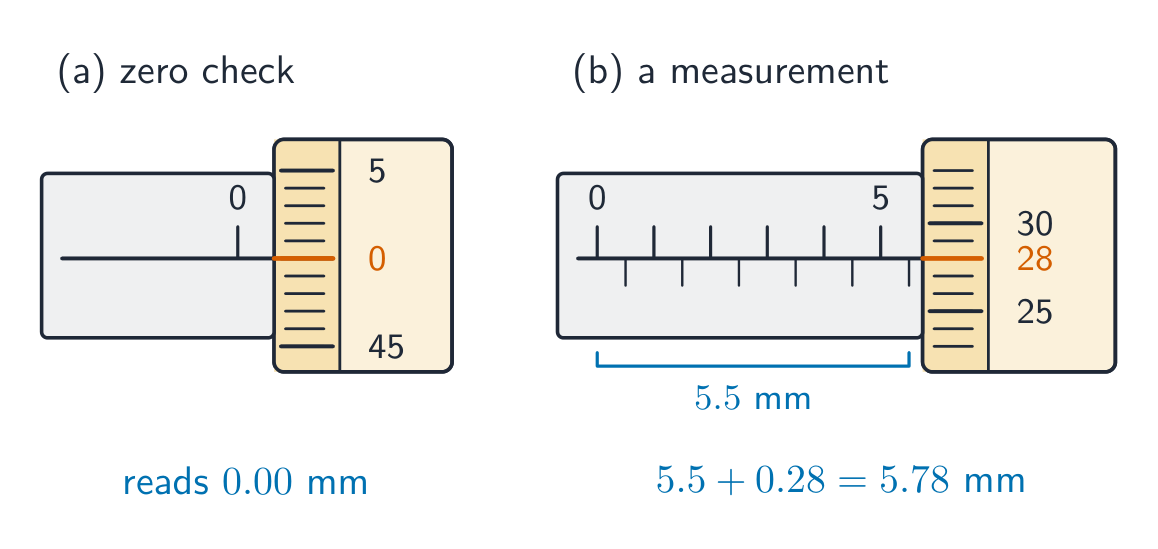
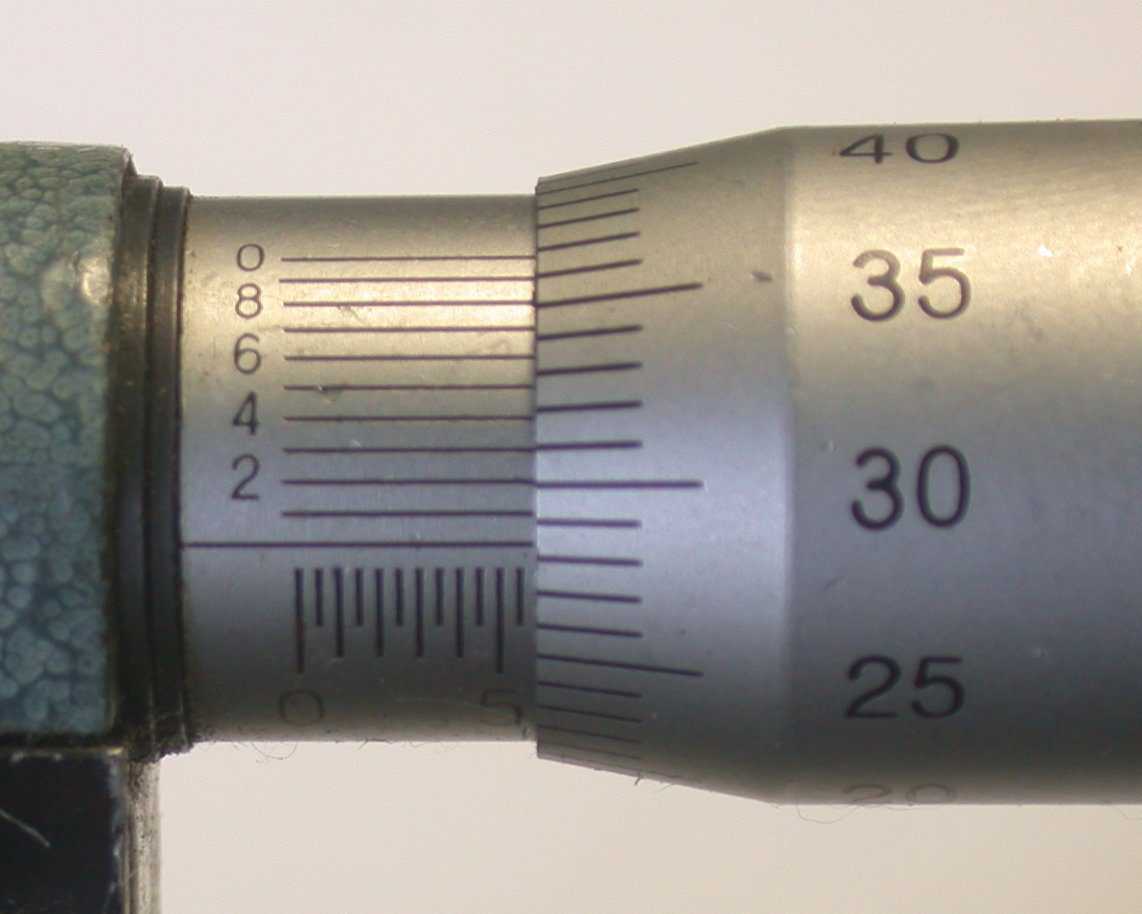
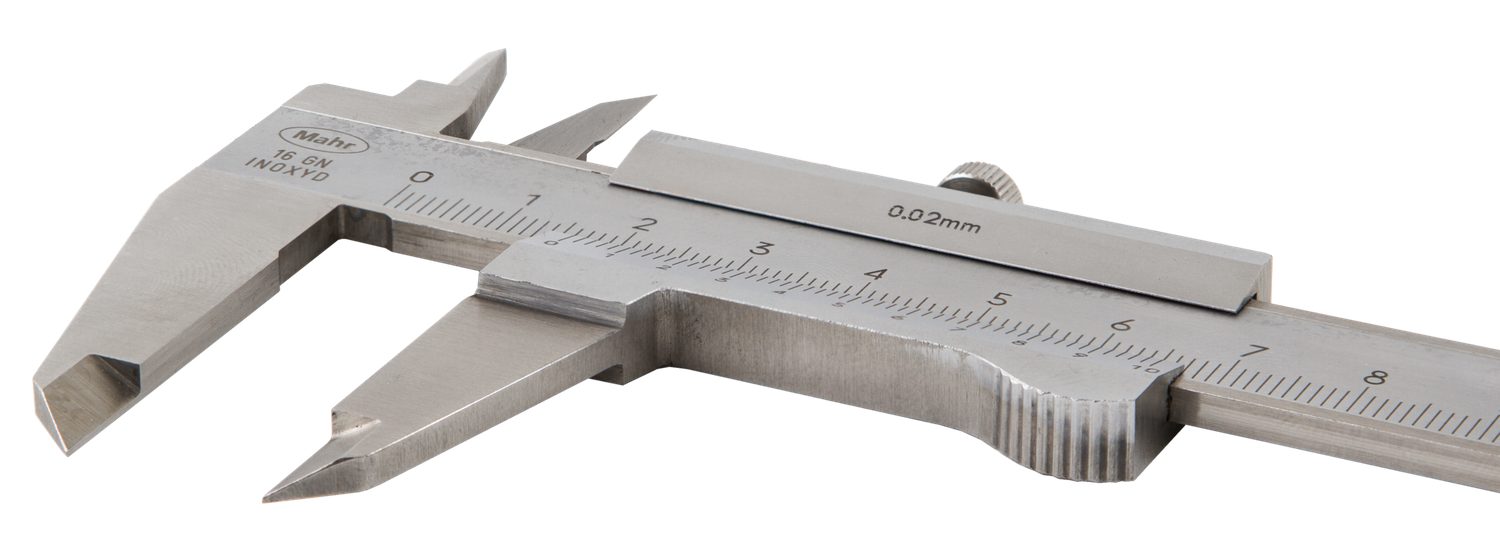

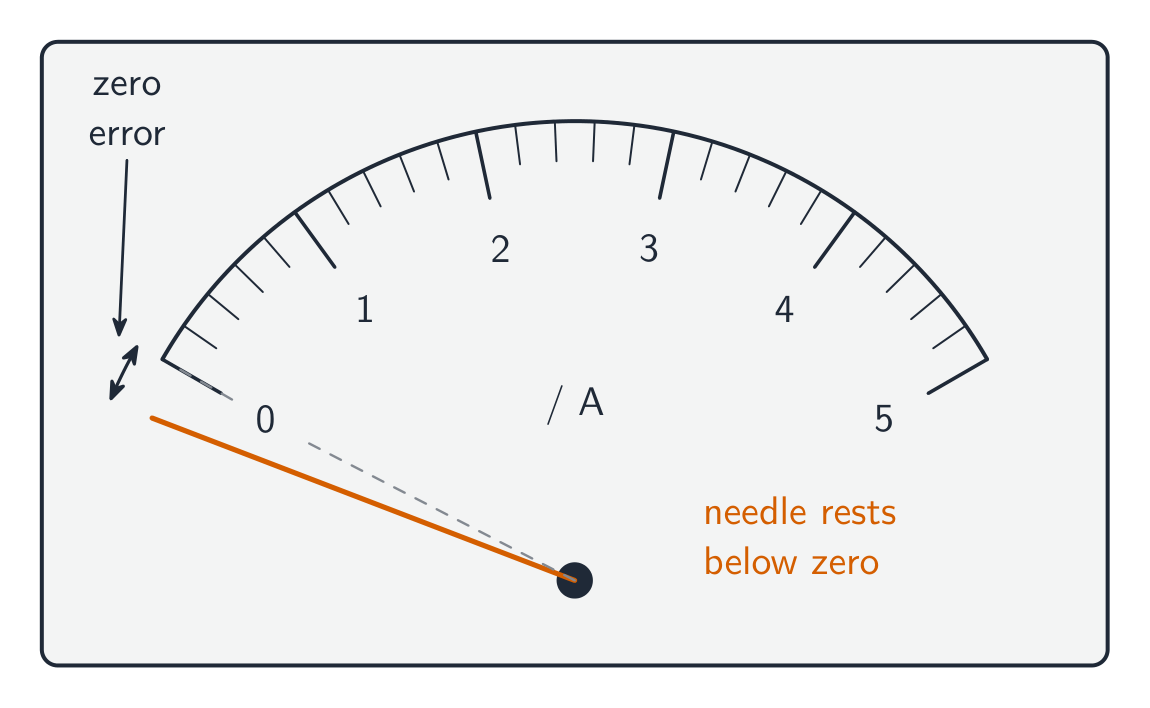

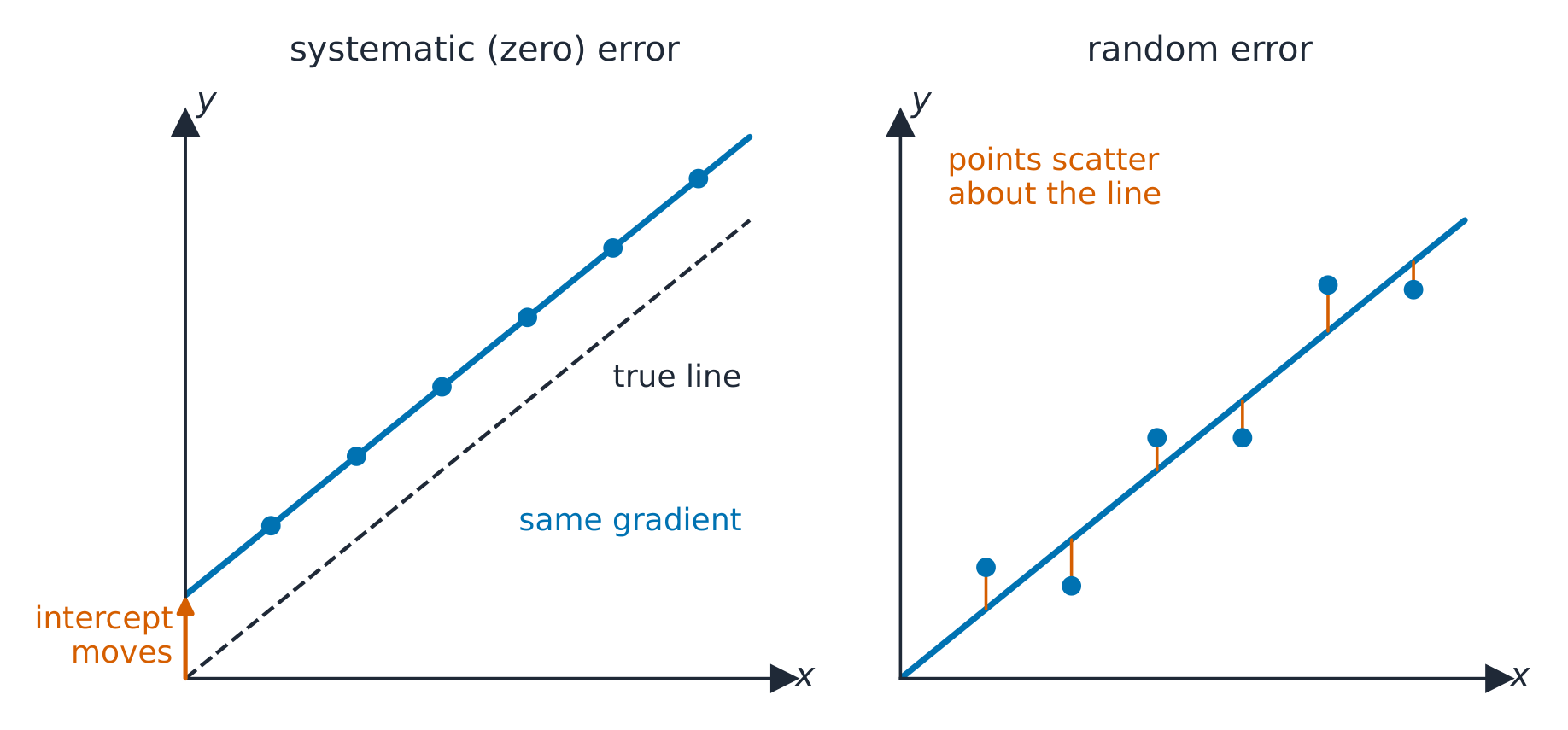

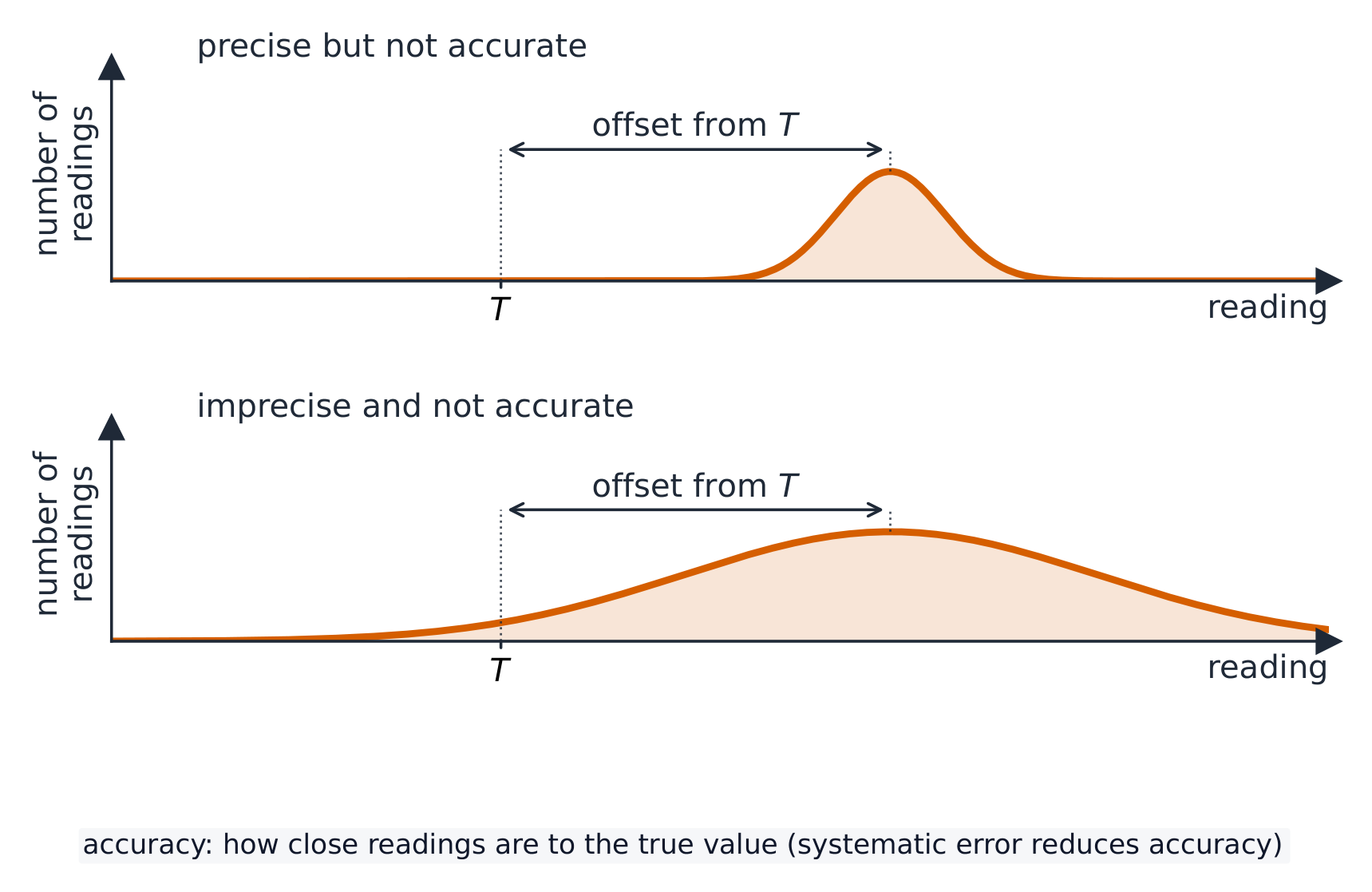
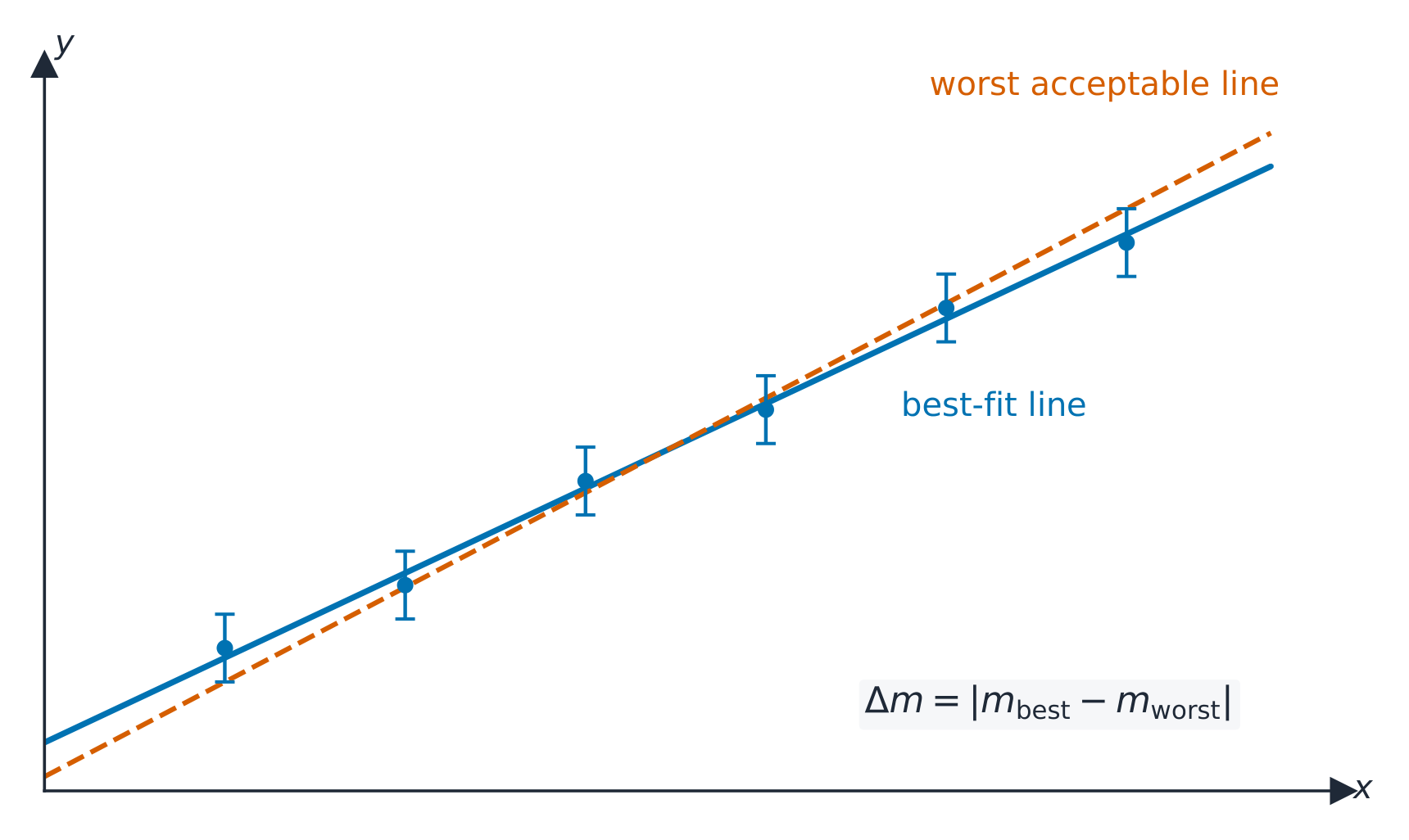

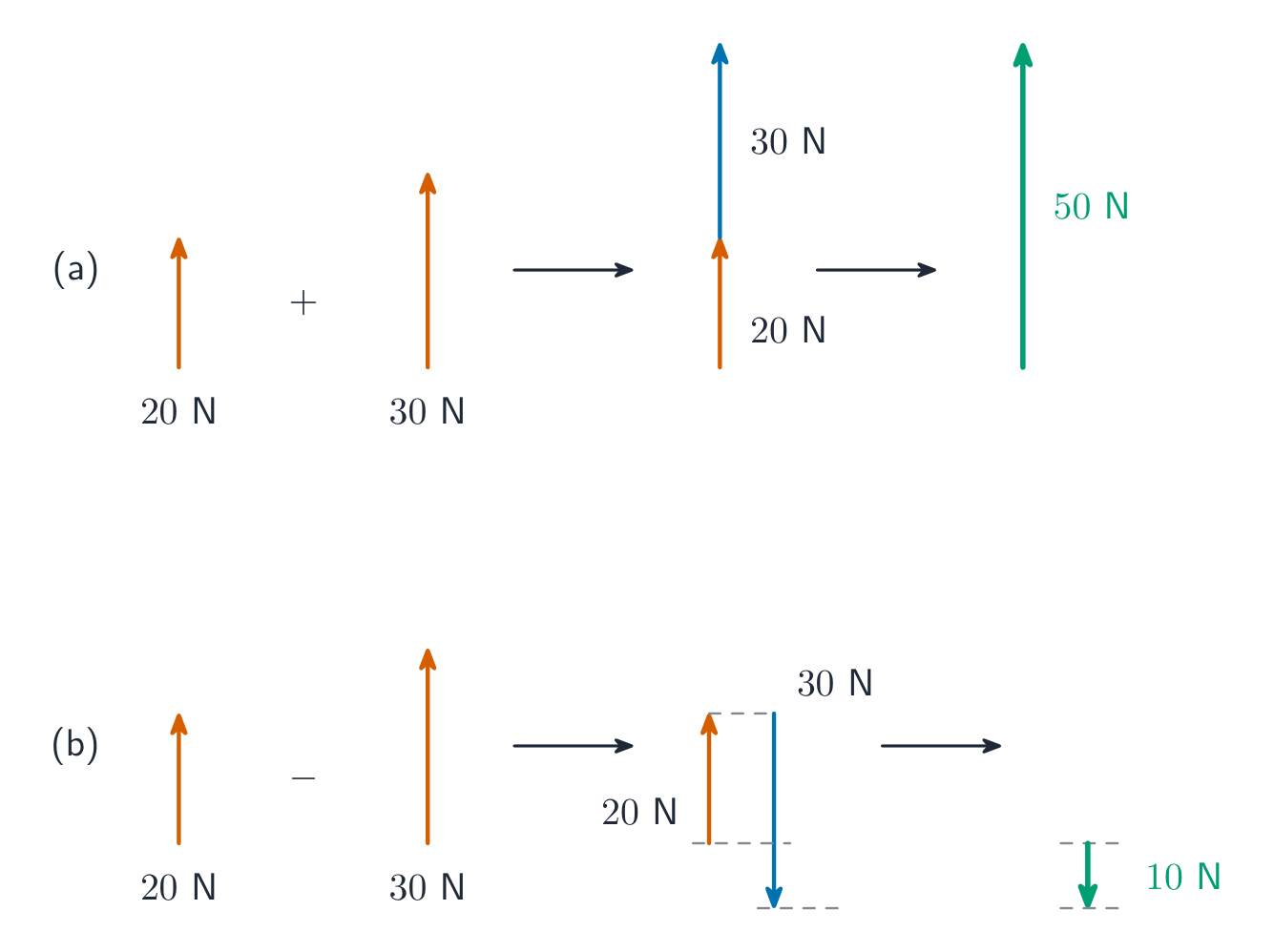
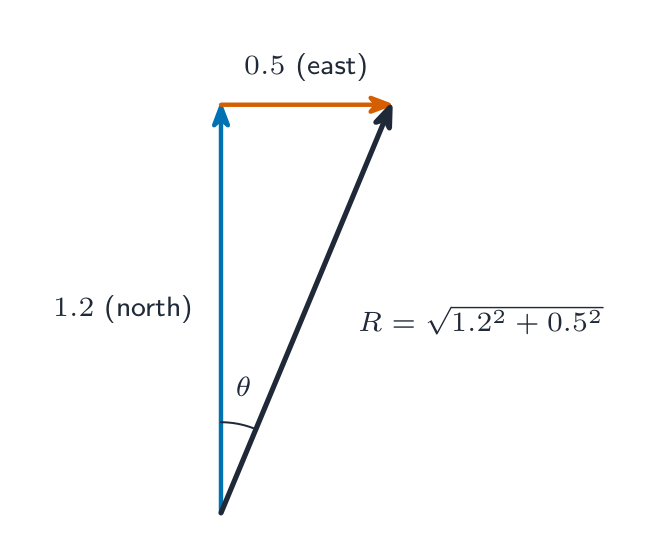
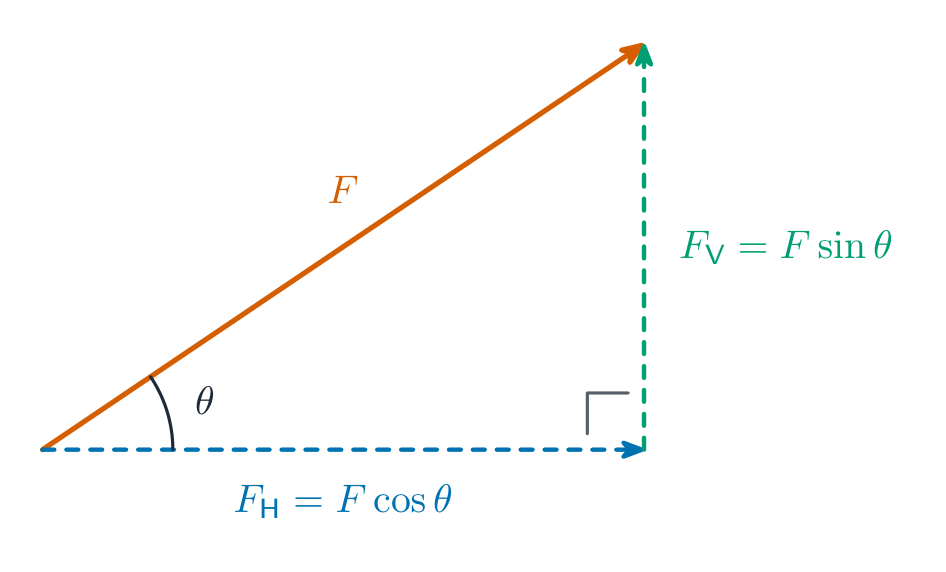
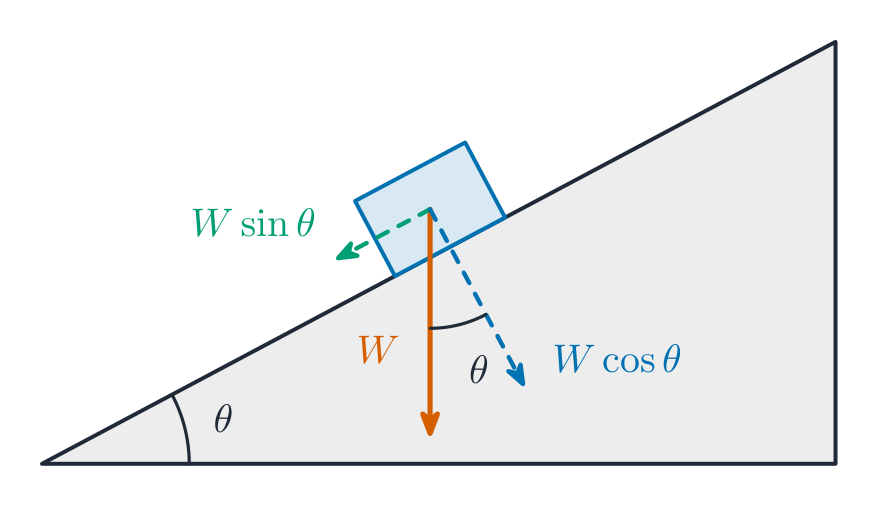

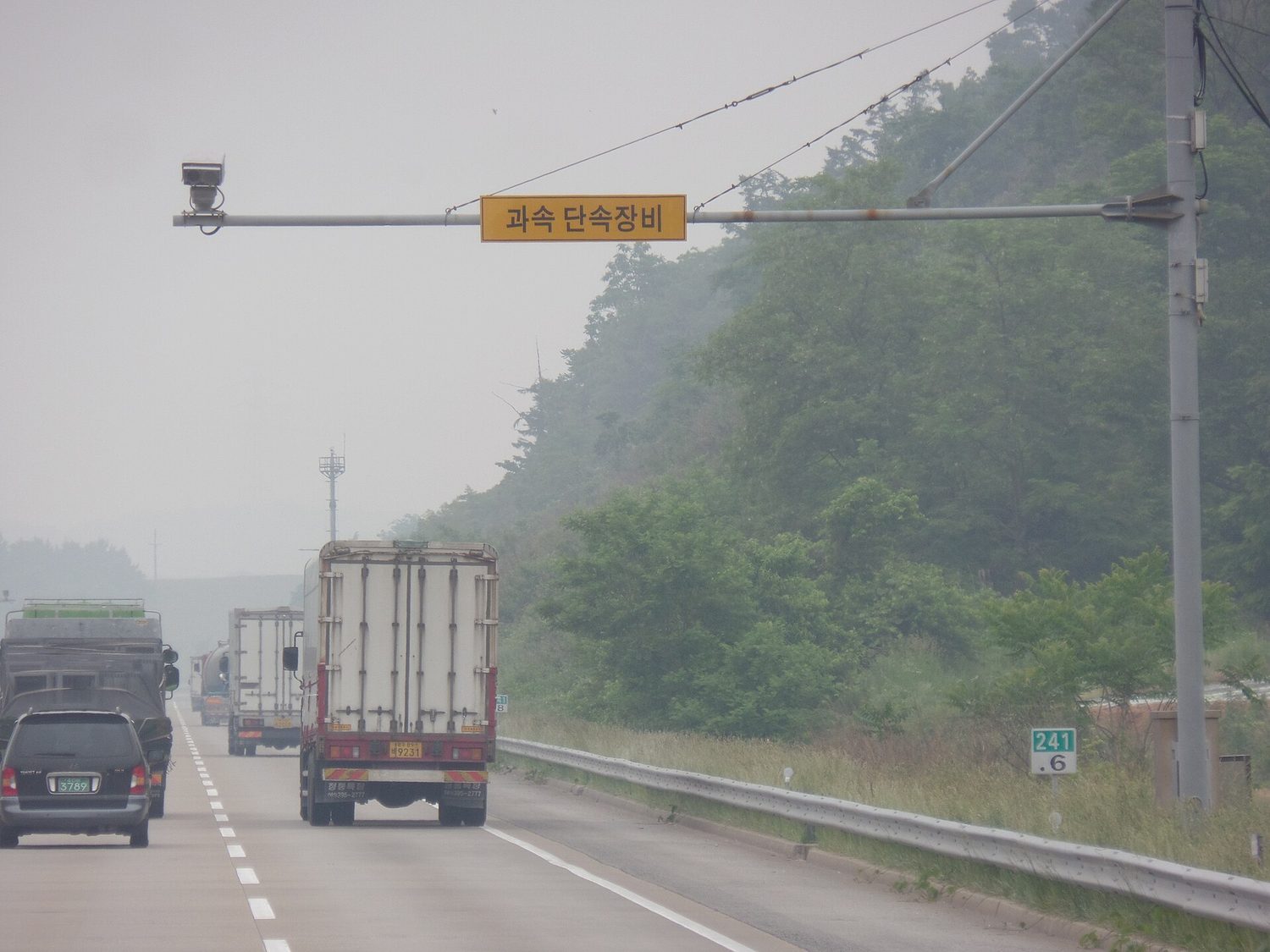


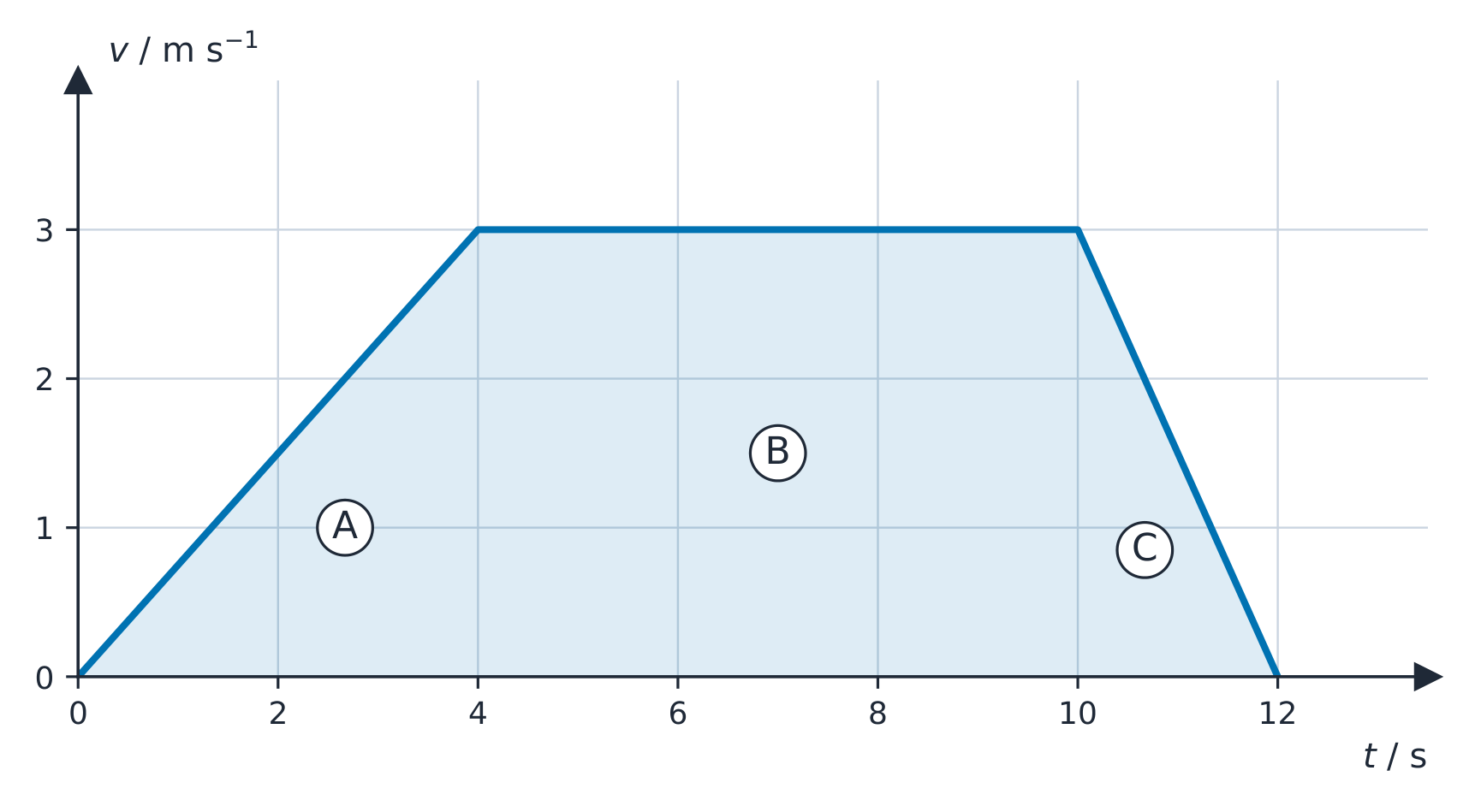


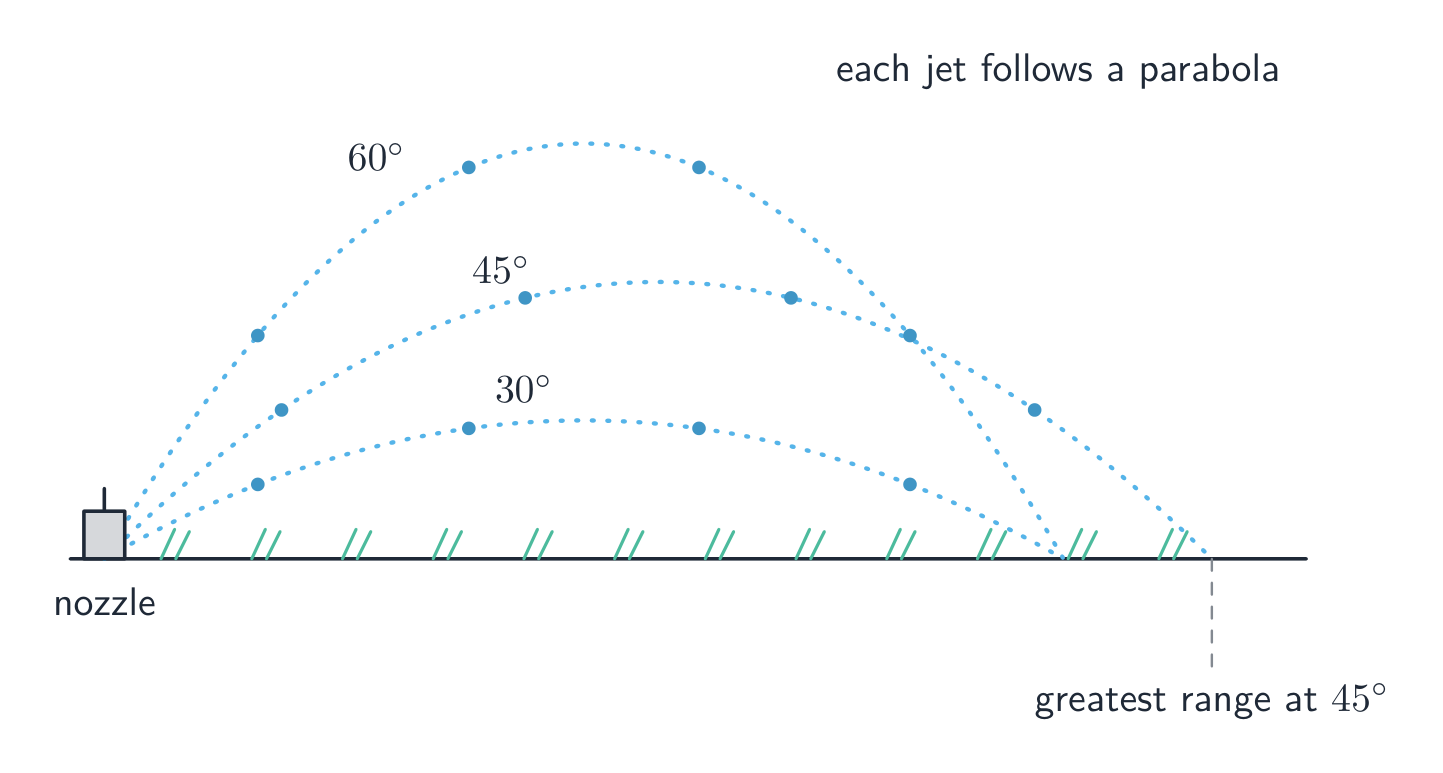

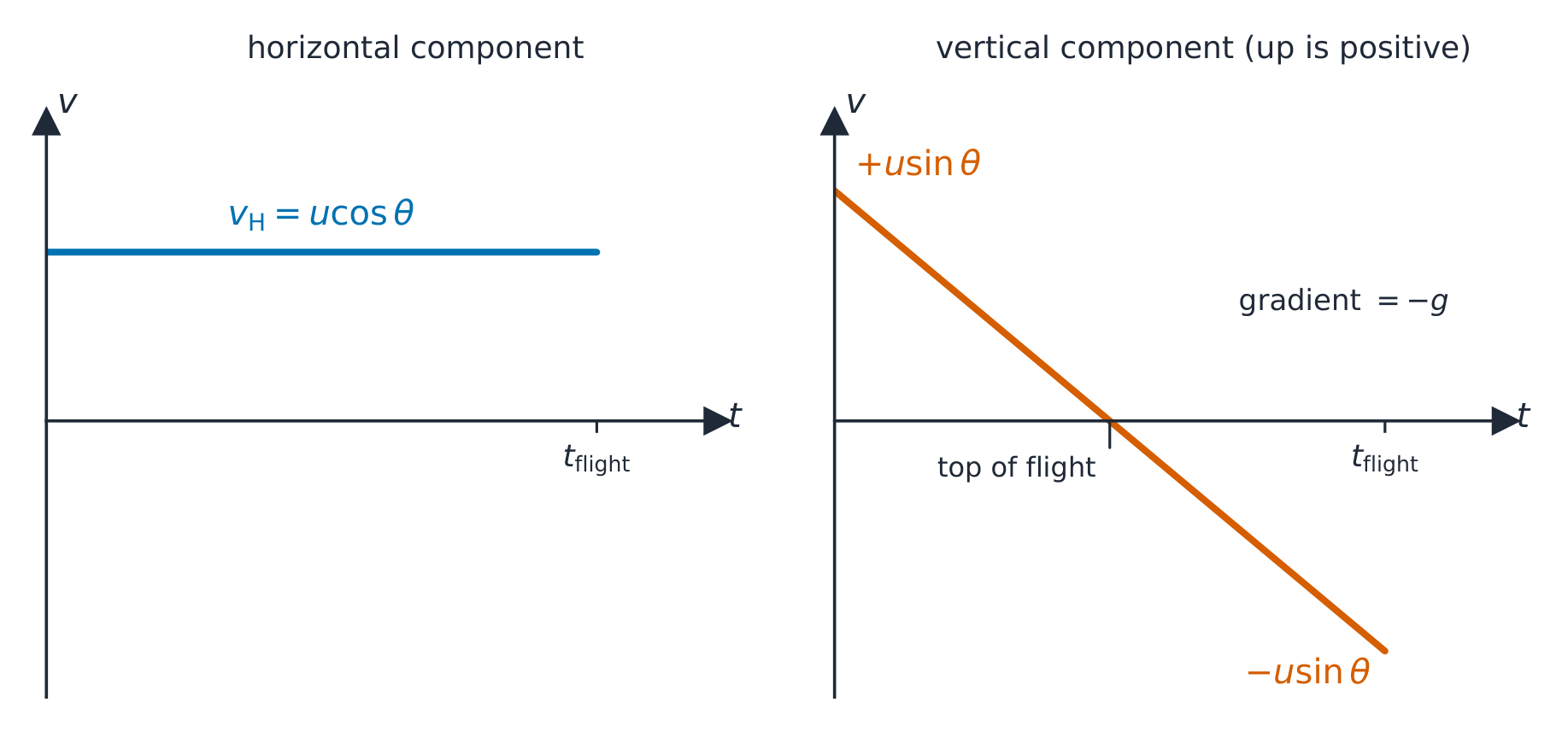
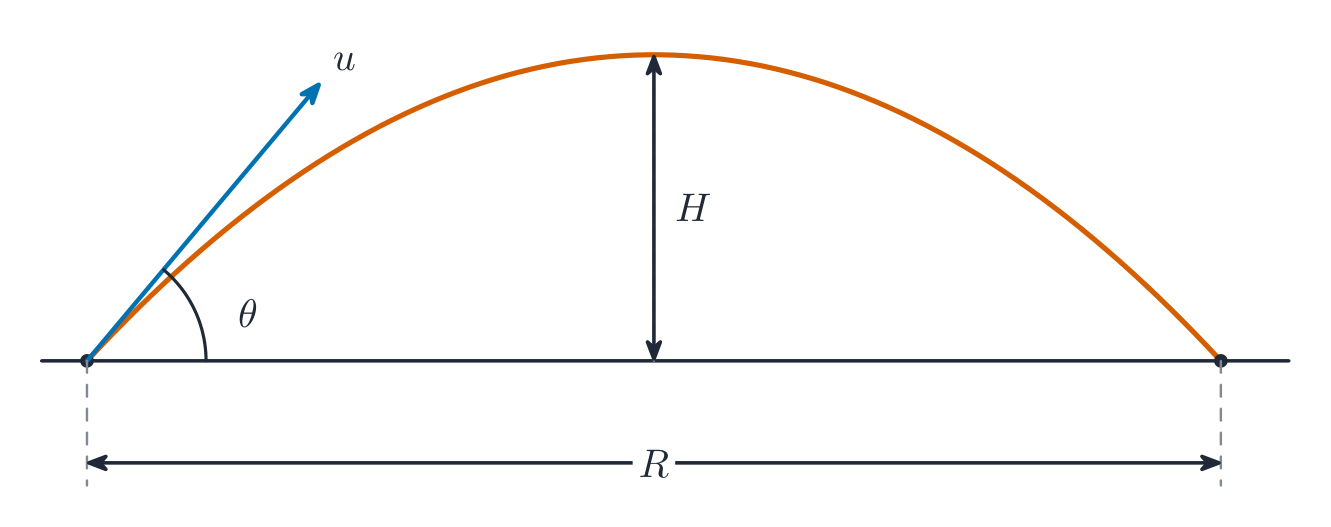
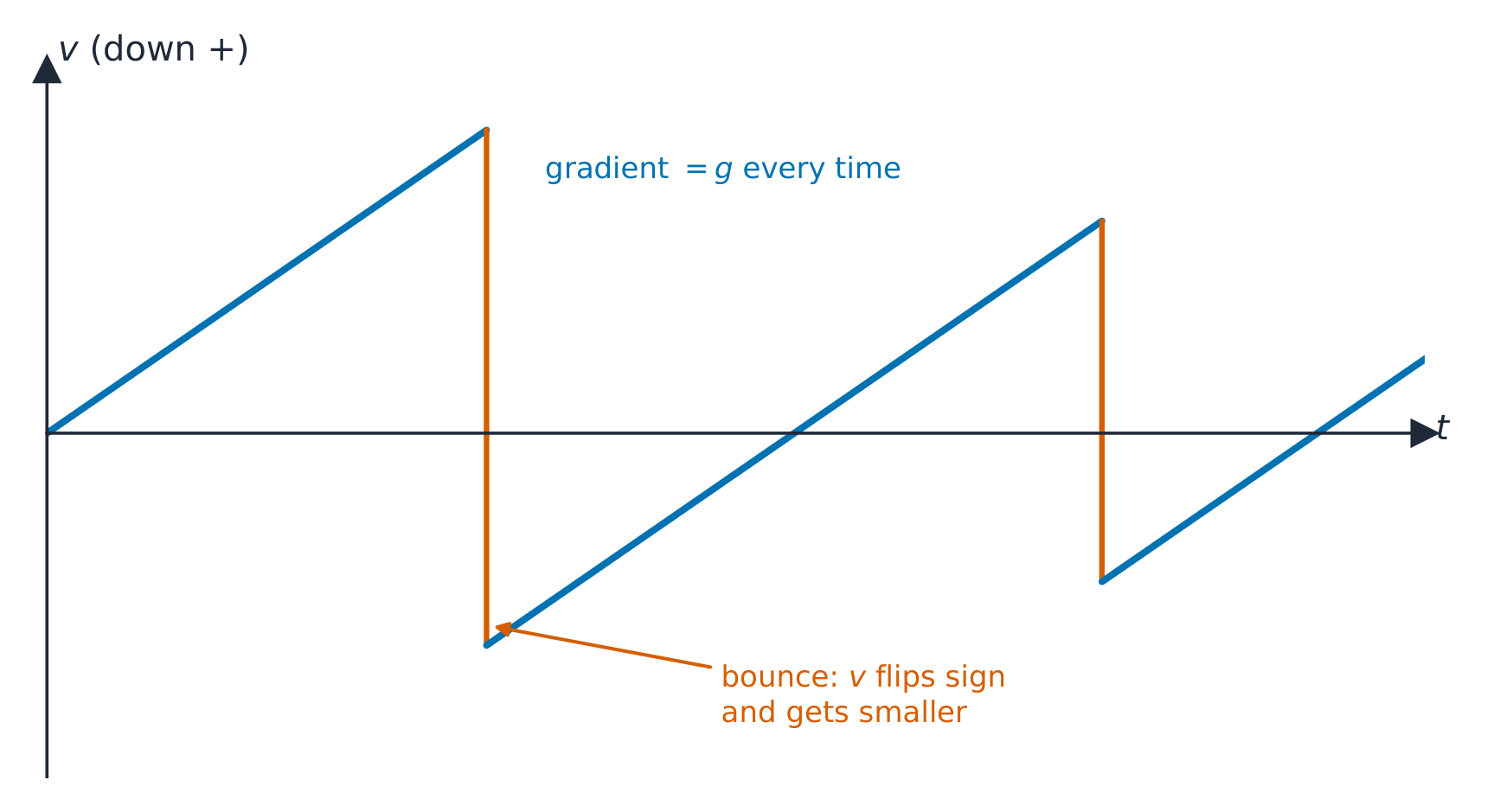
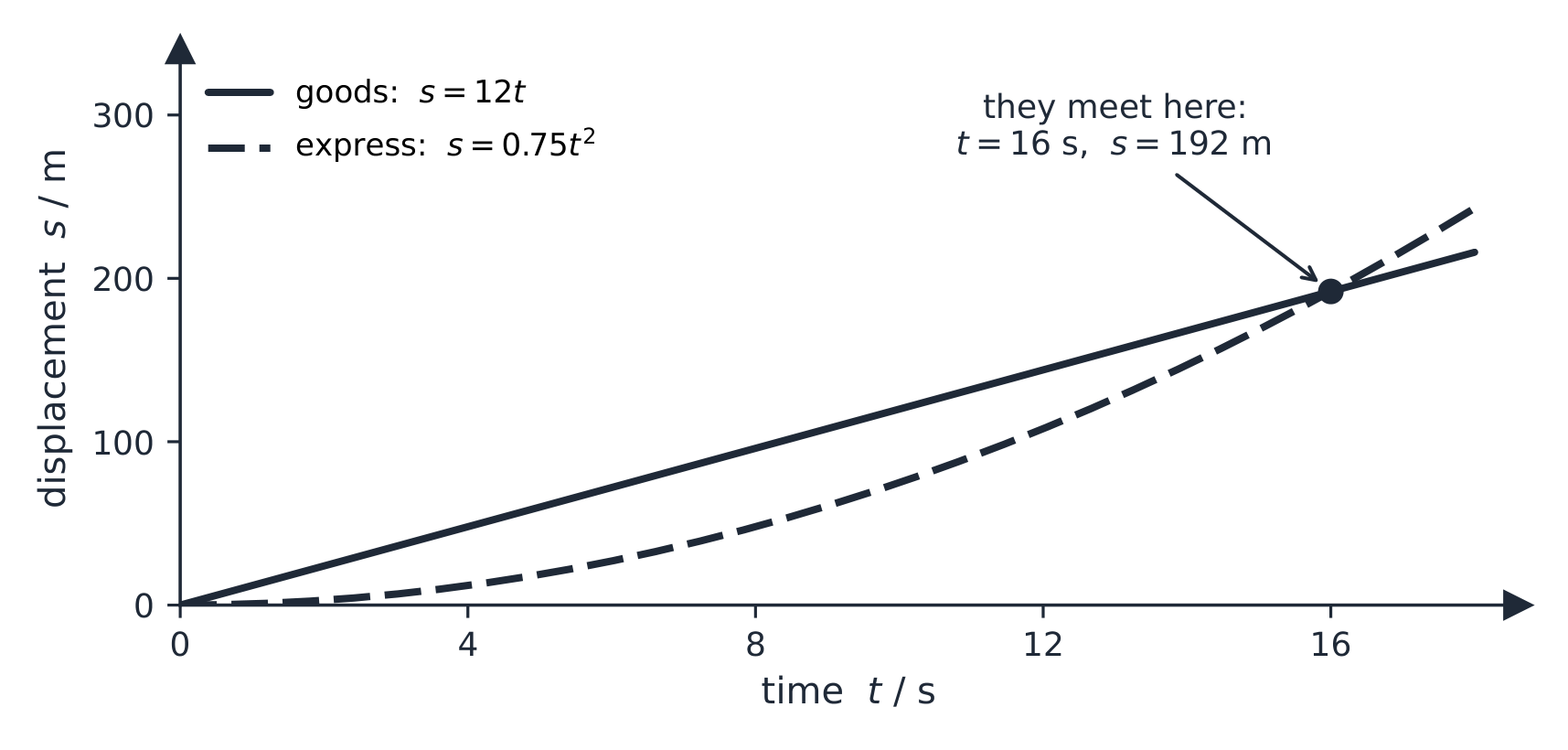
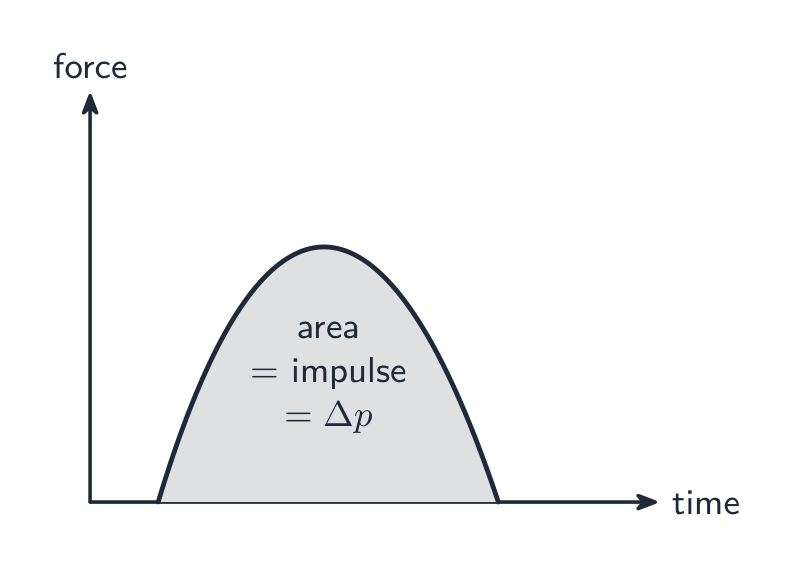
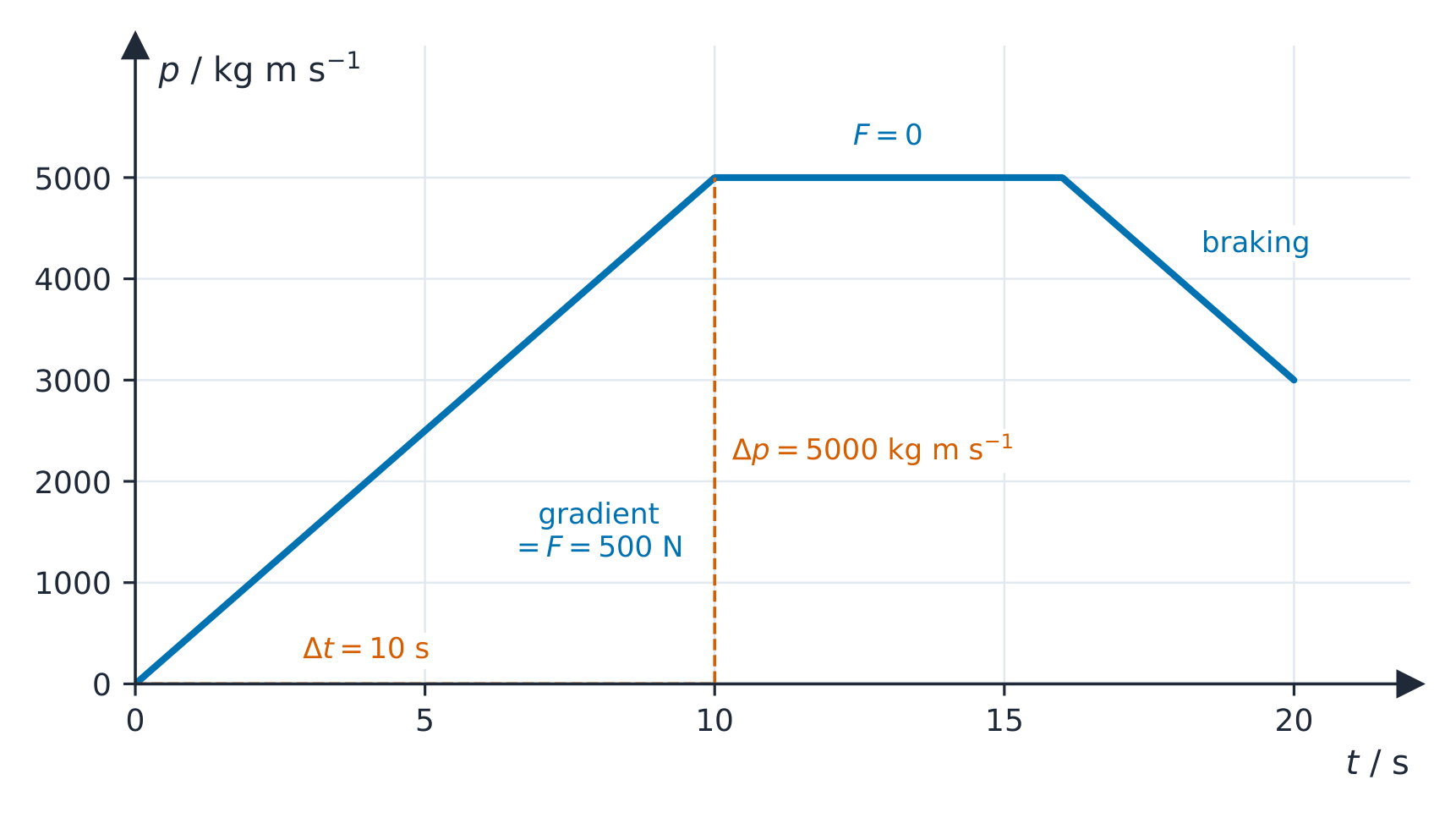


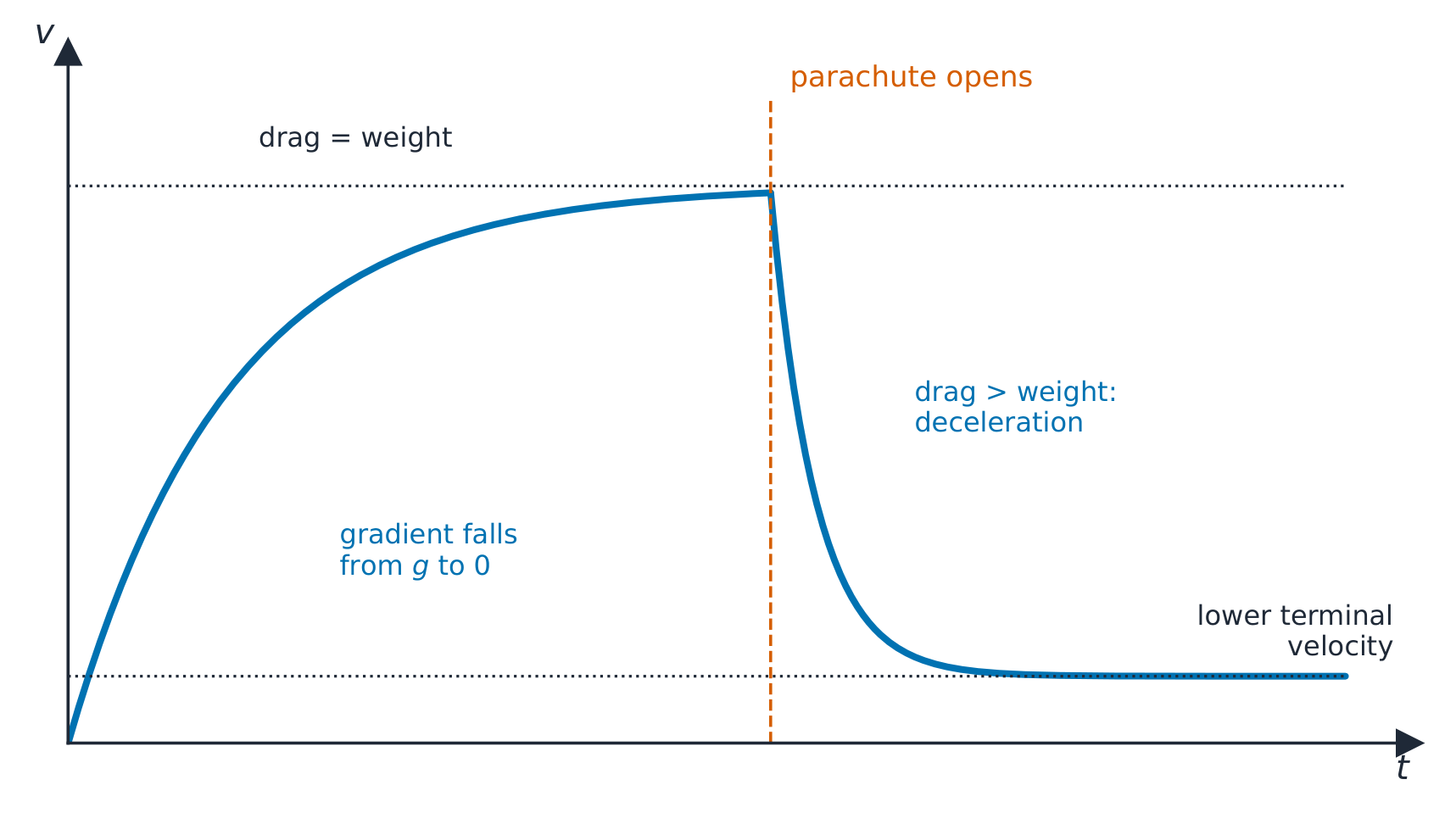




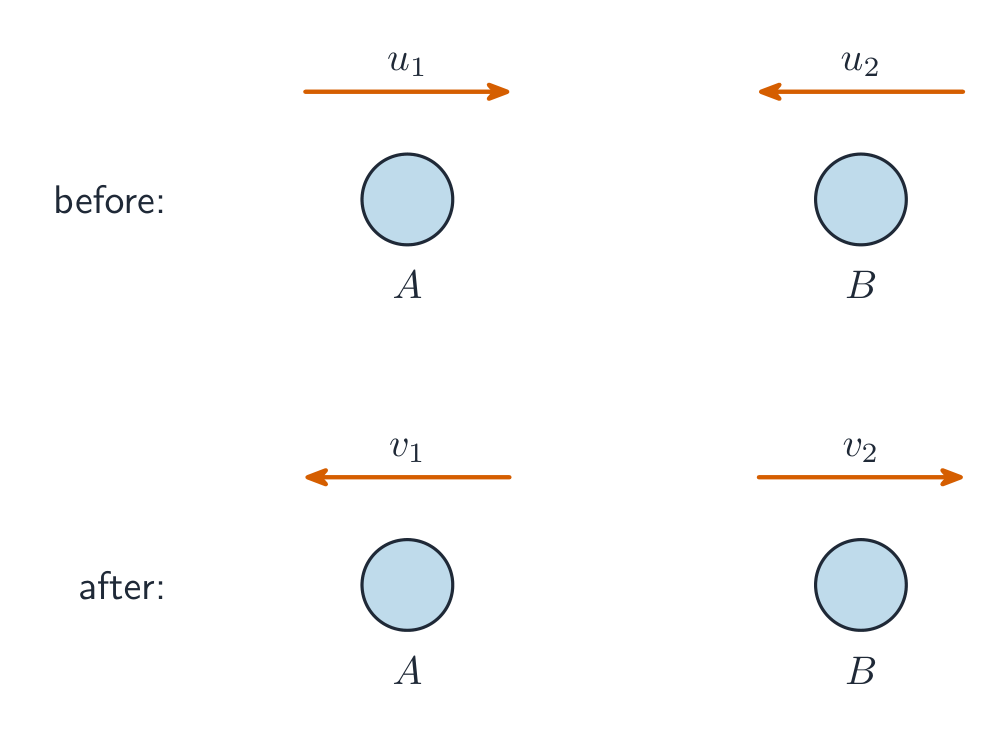

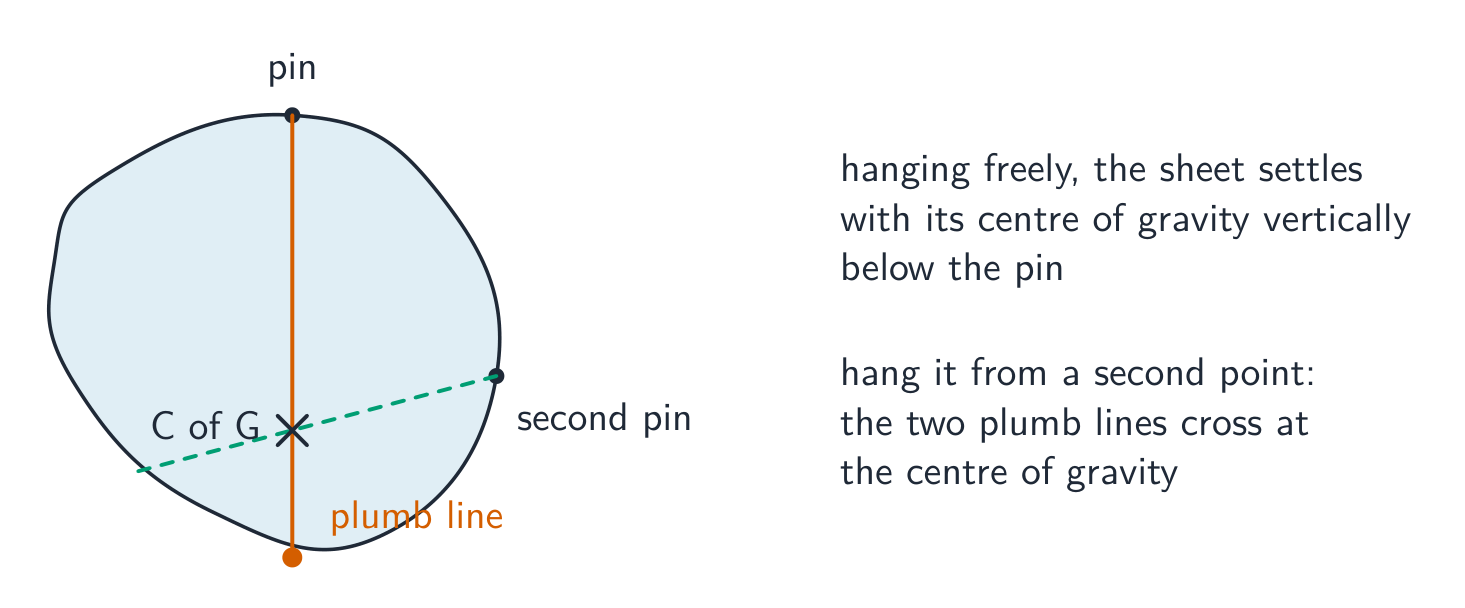

 *Pasangan gaya: dua gaya yang sama besar dan berlawanan, terpisah jarak, menghasilkan torsi
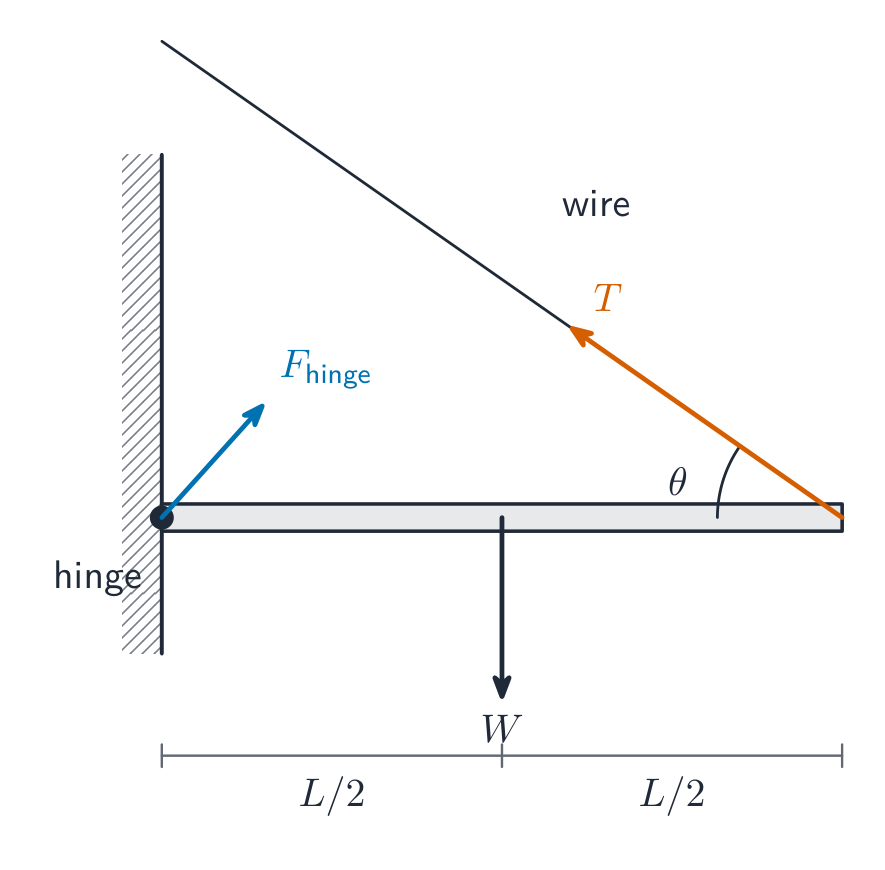
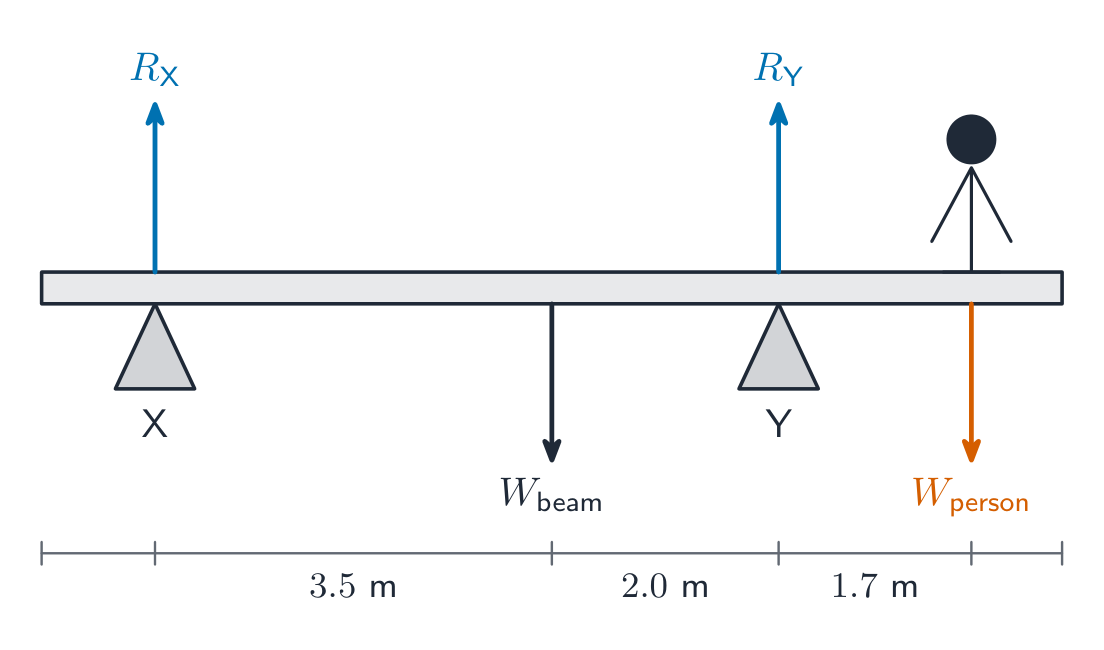
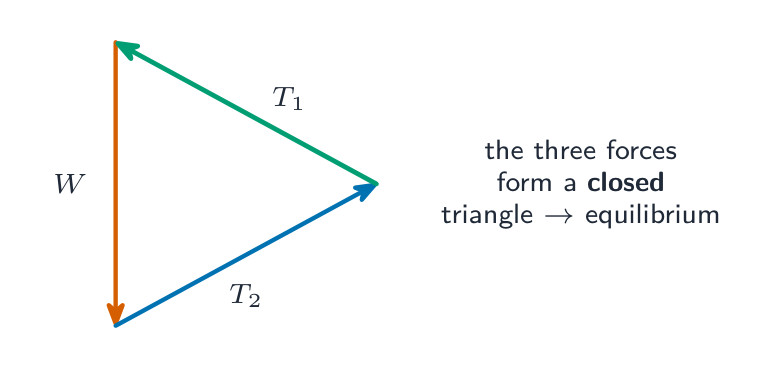
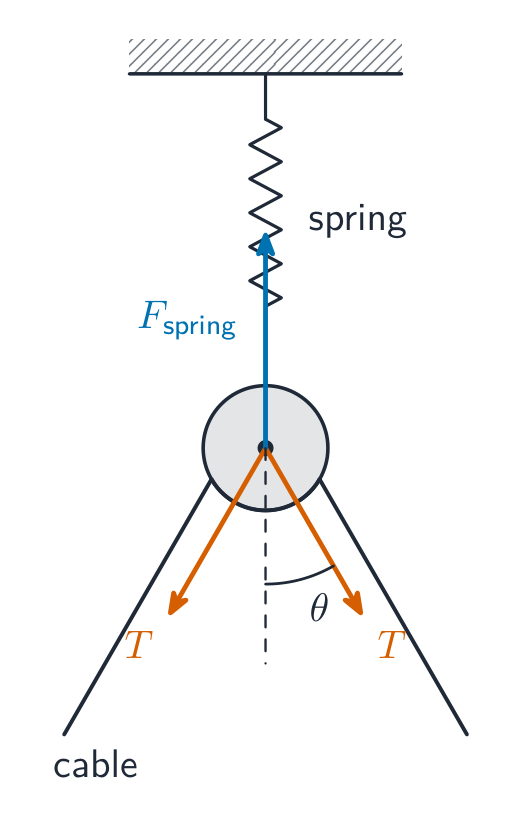


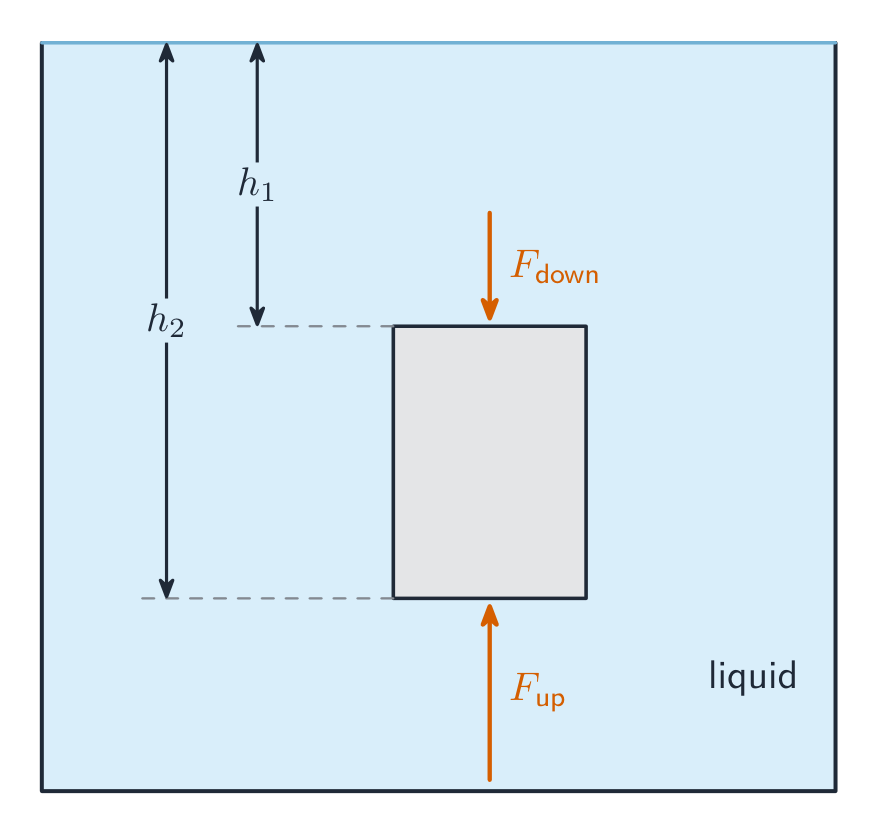
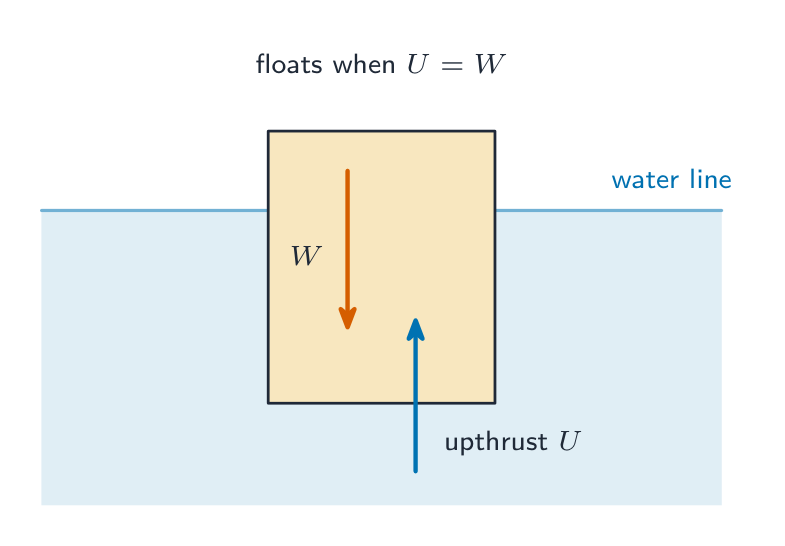


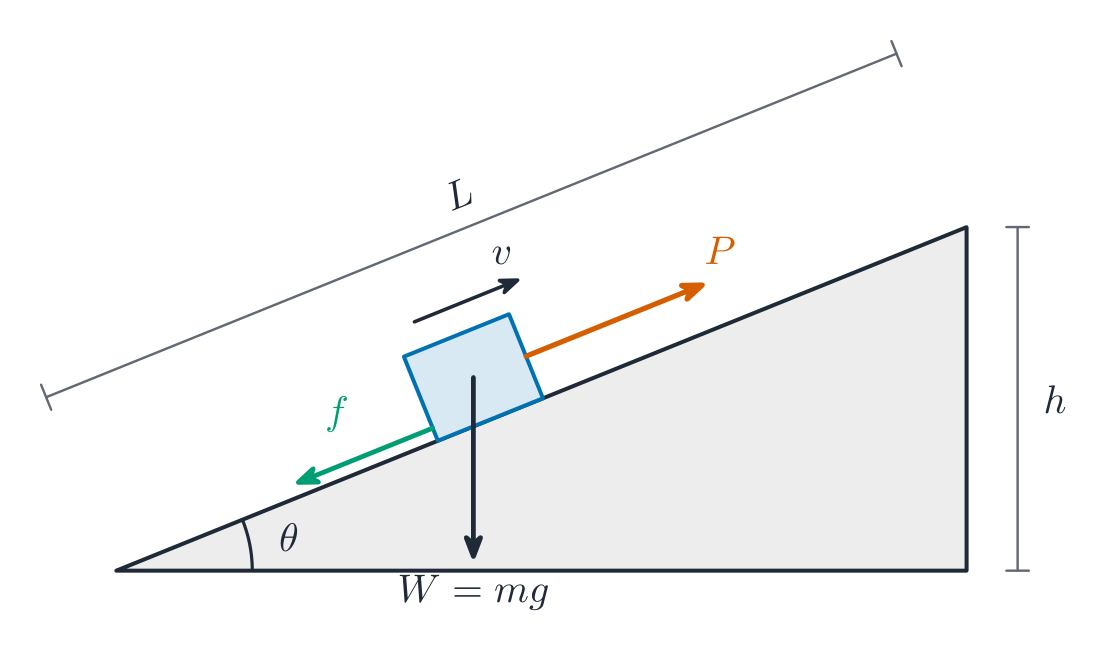
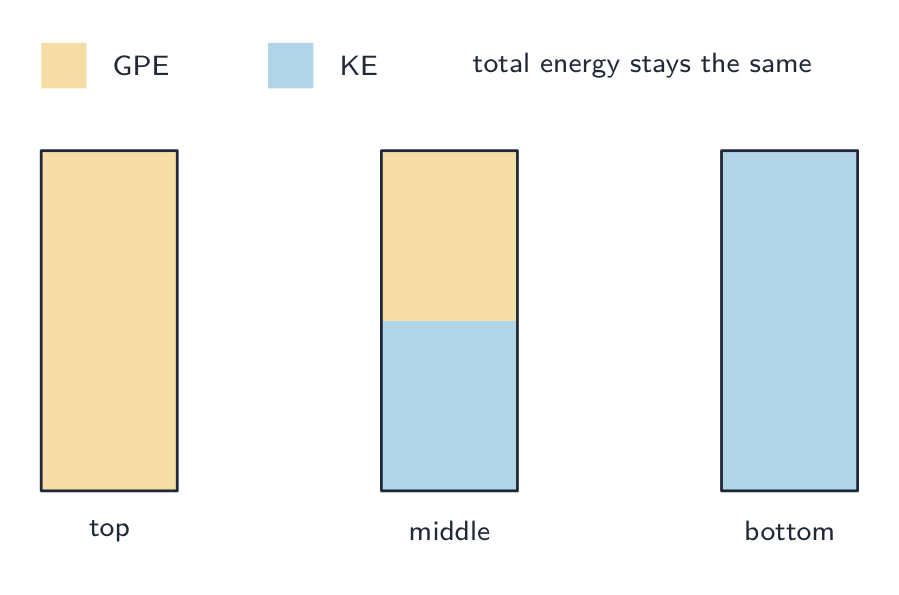
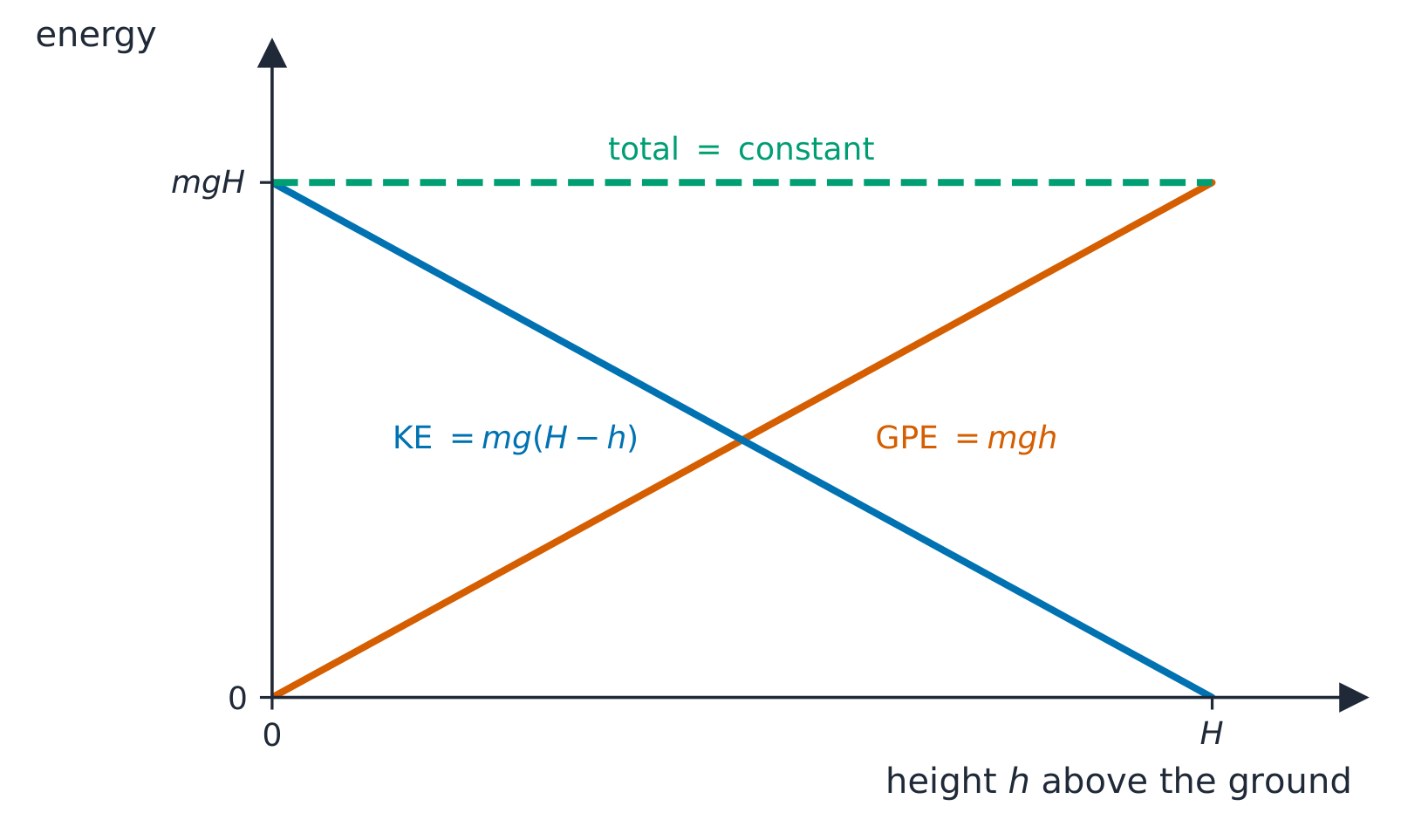
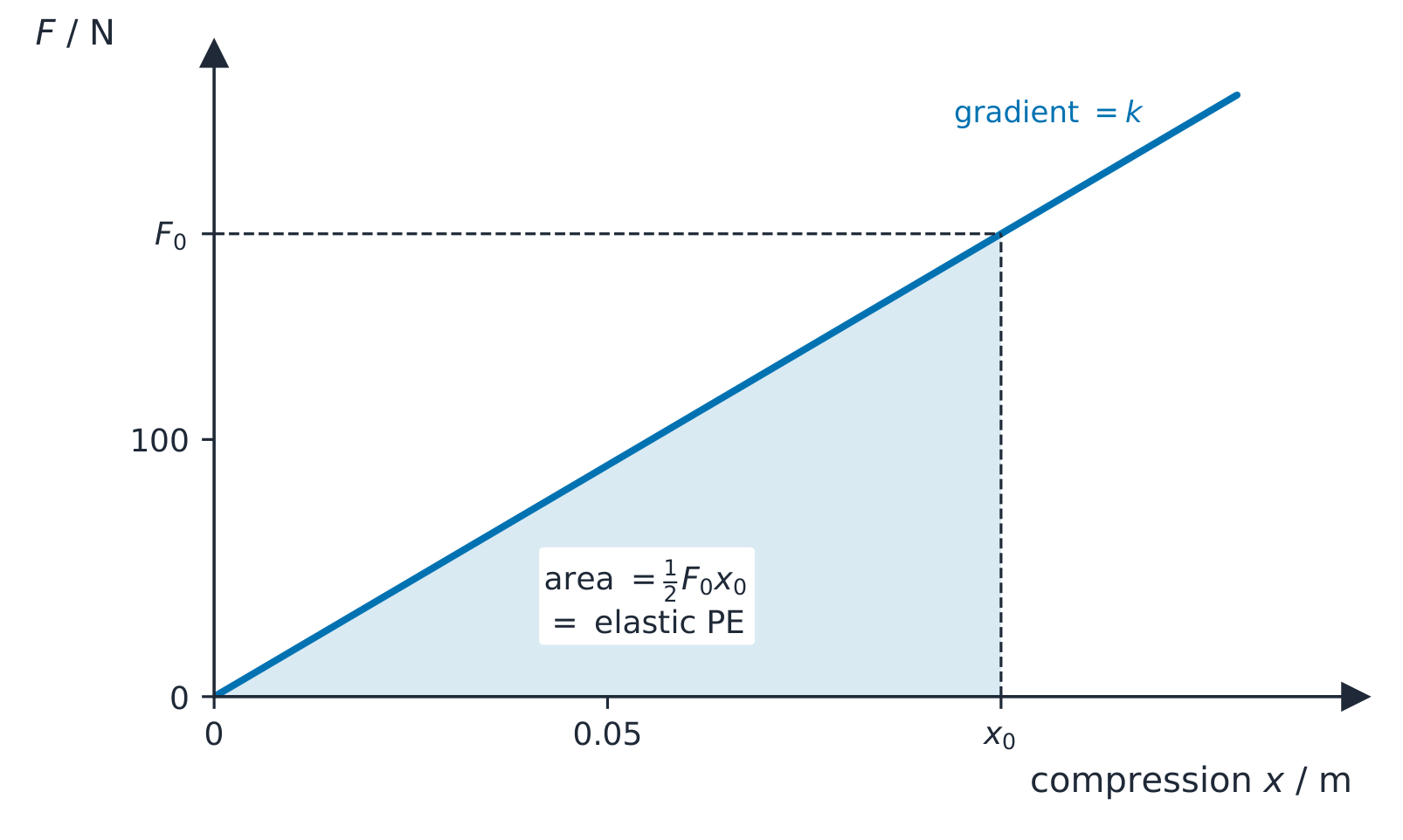
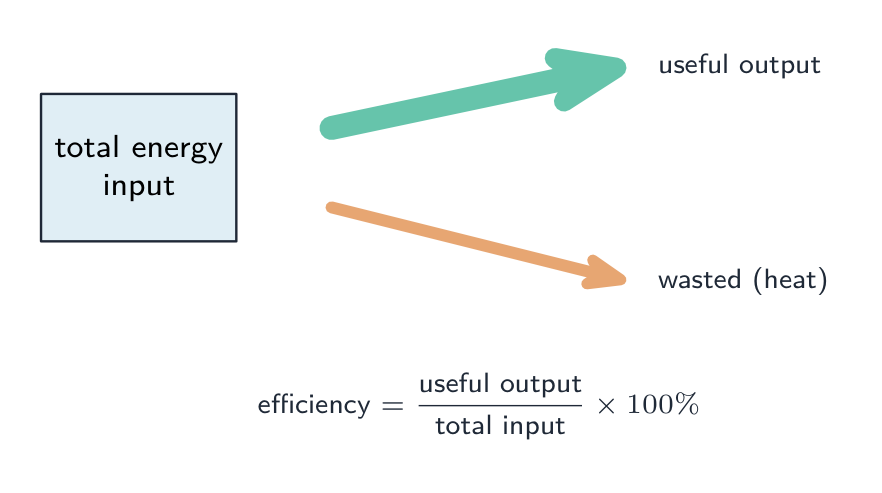

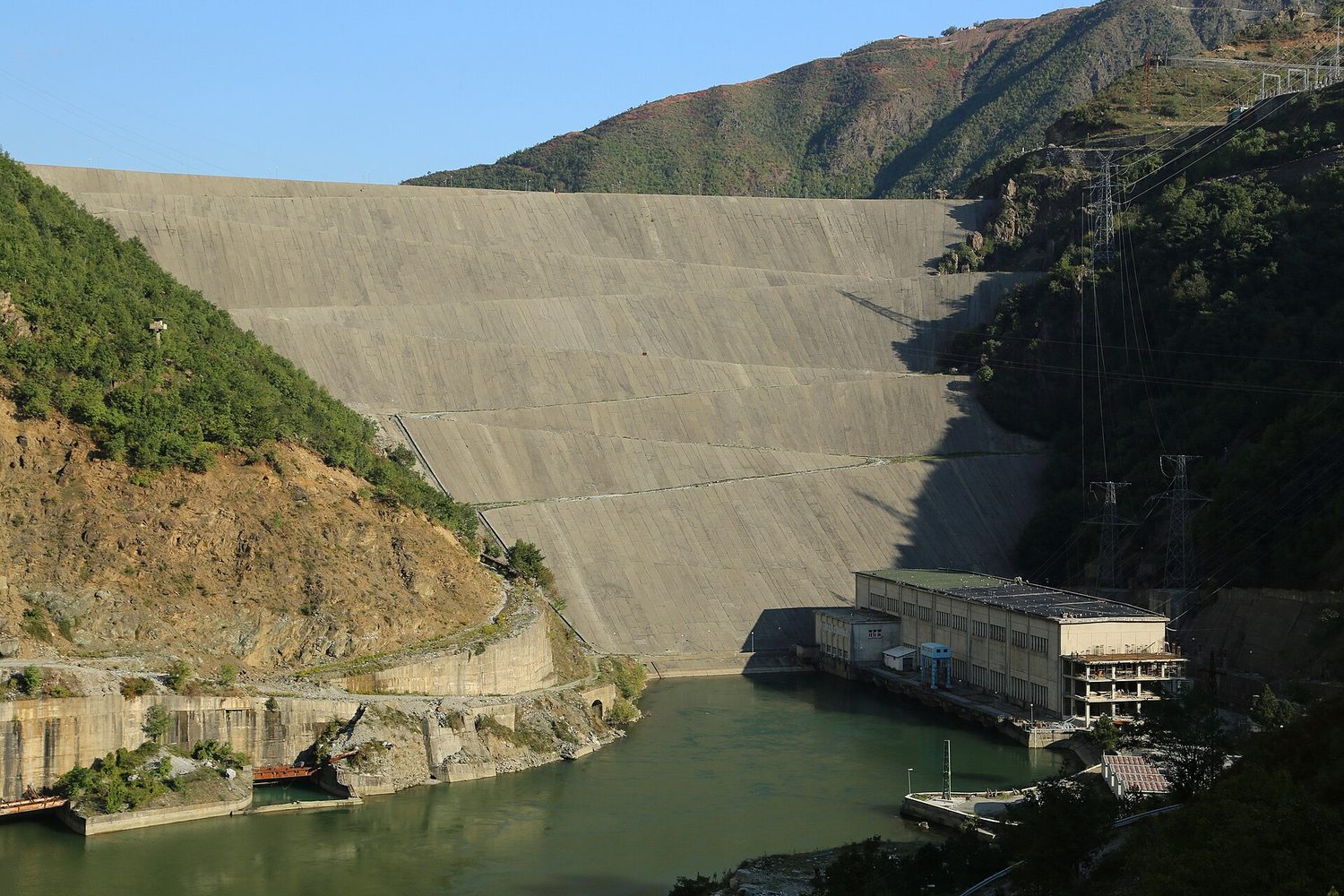 *Pembangkit hidrolistrik dinilai dalam megawatt: energi air yang disimpan, dibagi dengan waktu yang dibutuhkan untuk melepaskannya



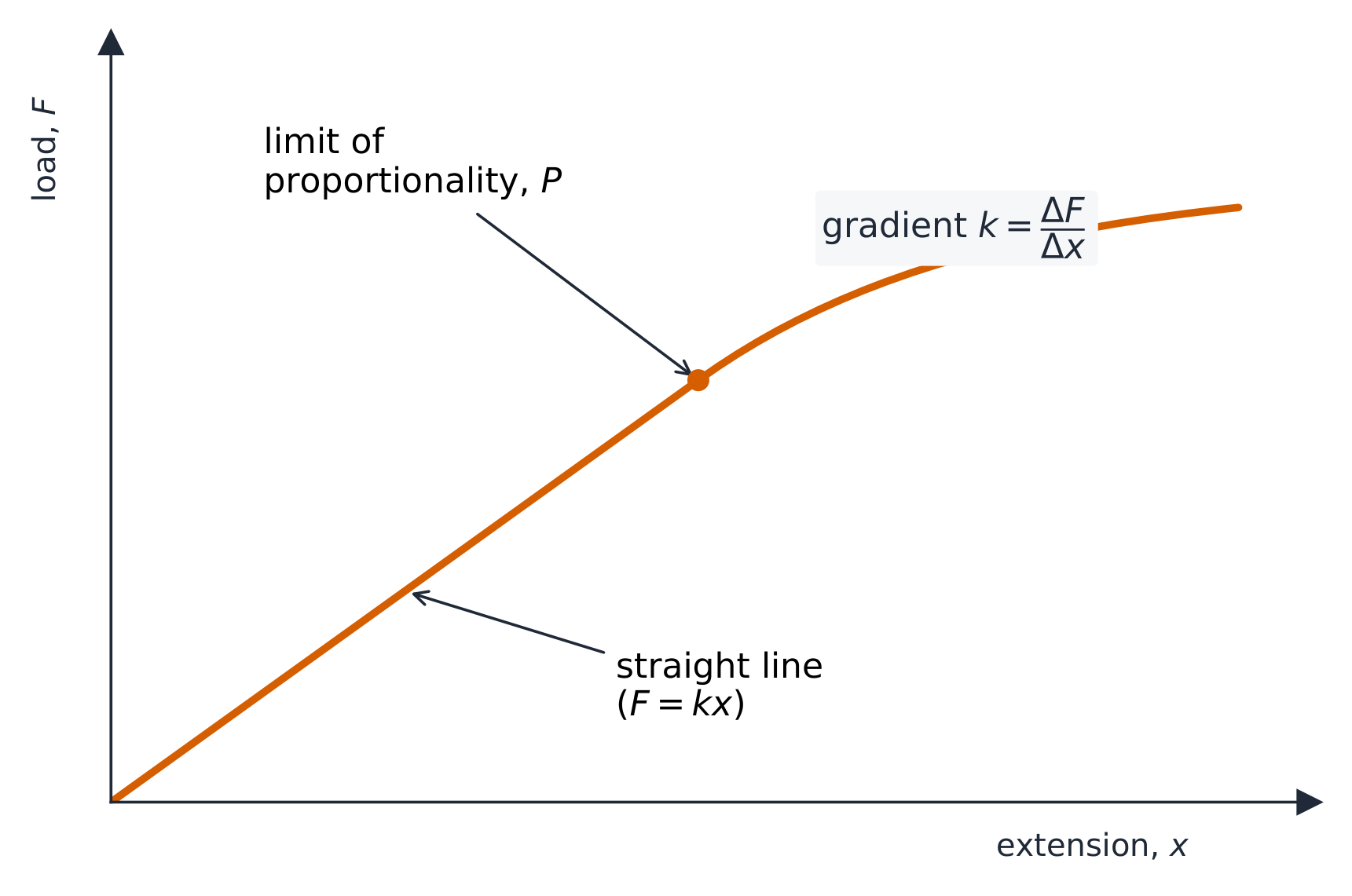
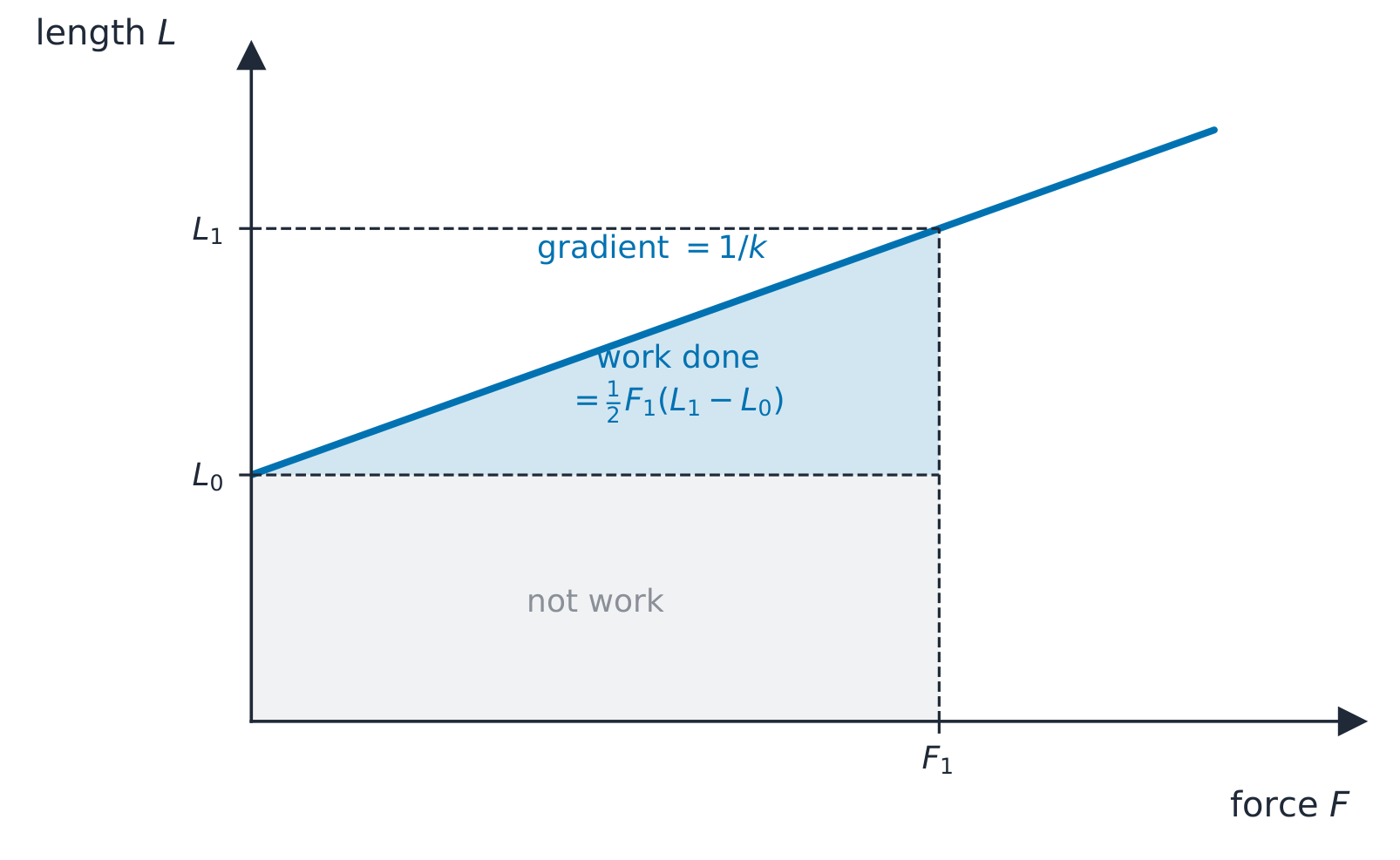

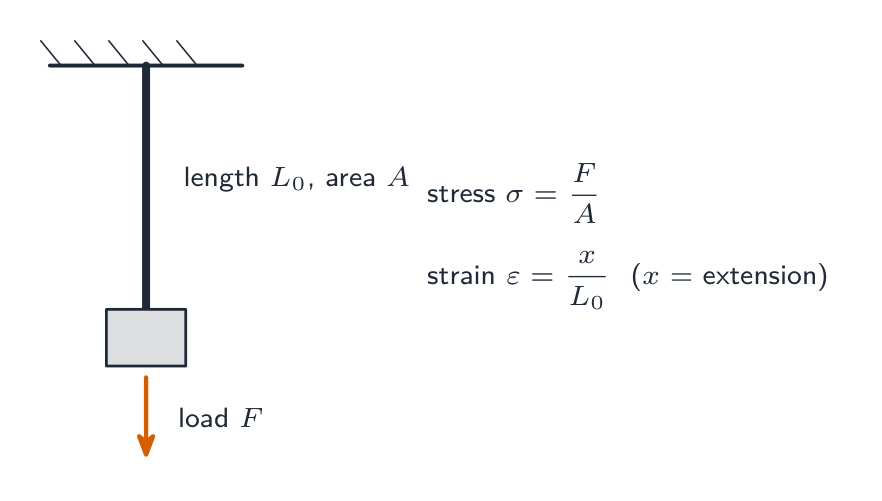

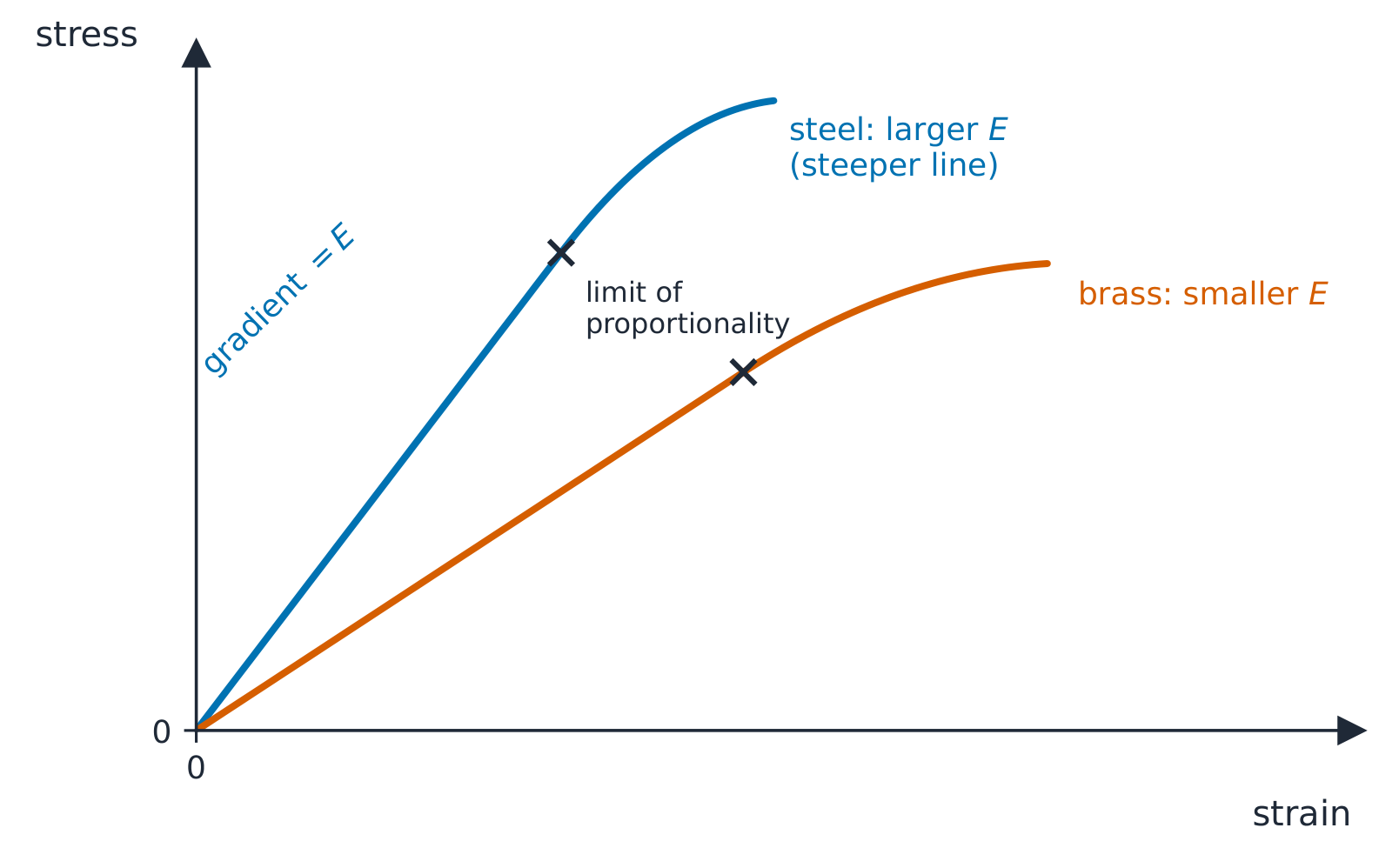


 *Mesin uji (tarik) universal modern meregangkan sampel dan mencatat gaya dan perpanjangan
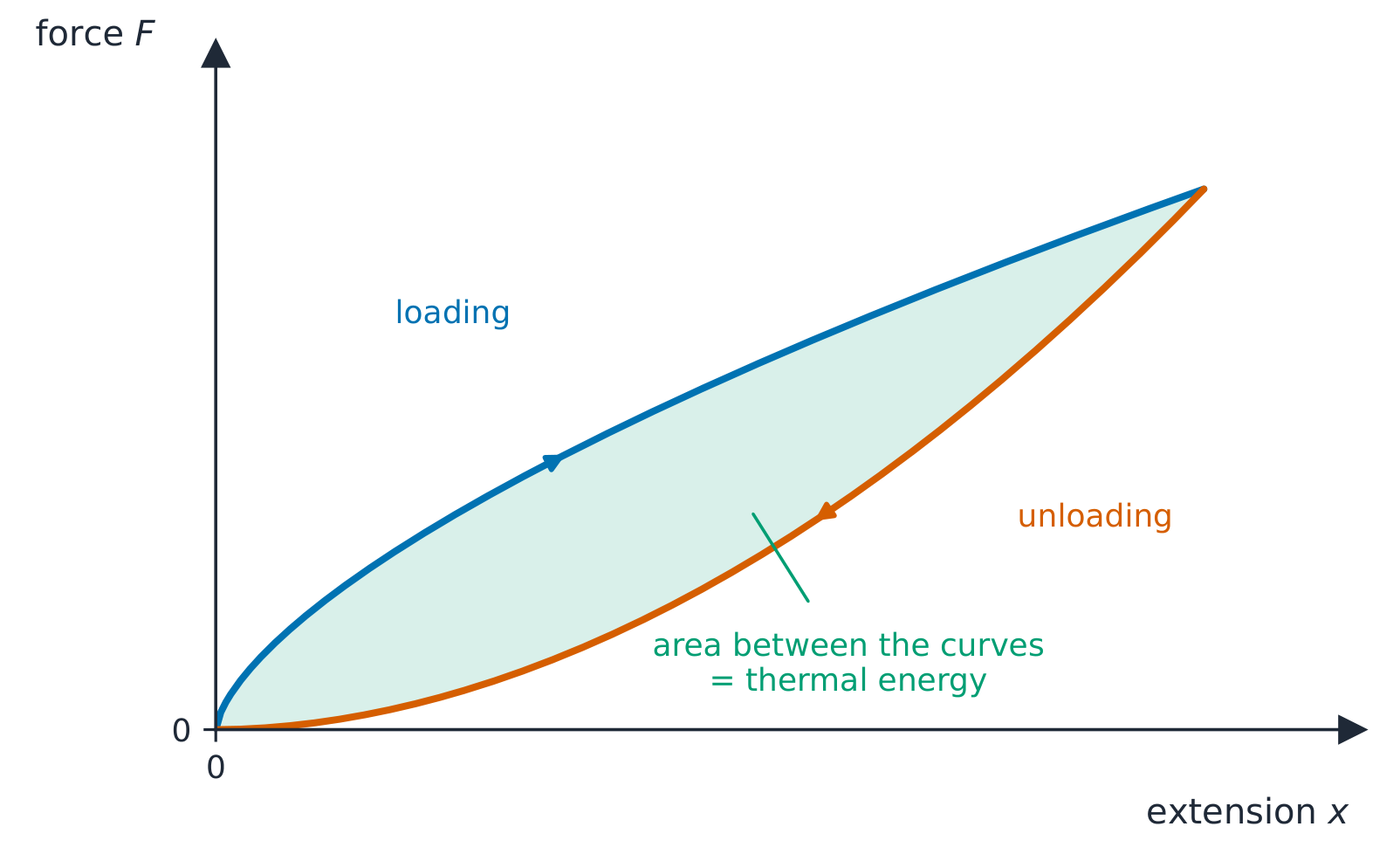 *Karet gelang kembali ke panjang aslinya, namun area antara pembebanan dan pembongkaran adalah energi yang hilang sebagai energi termal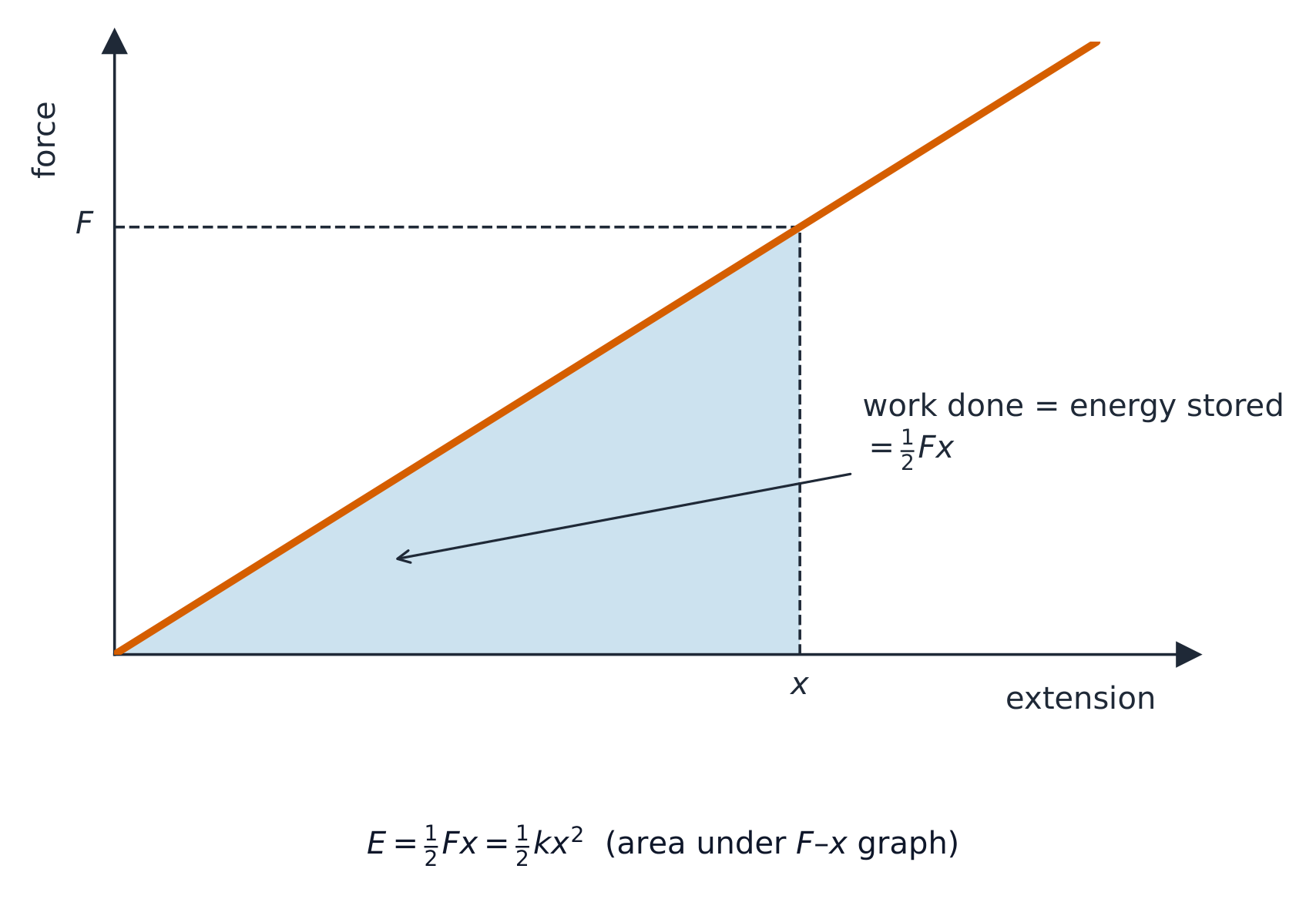

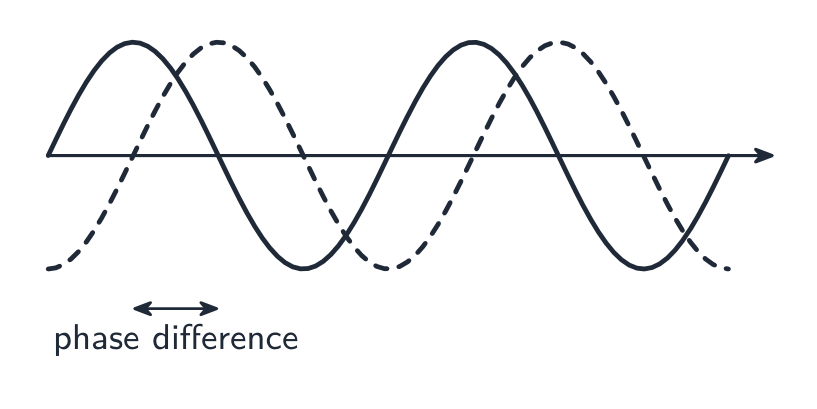
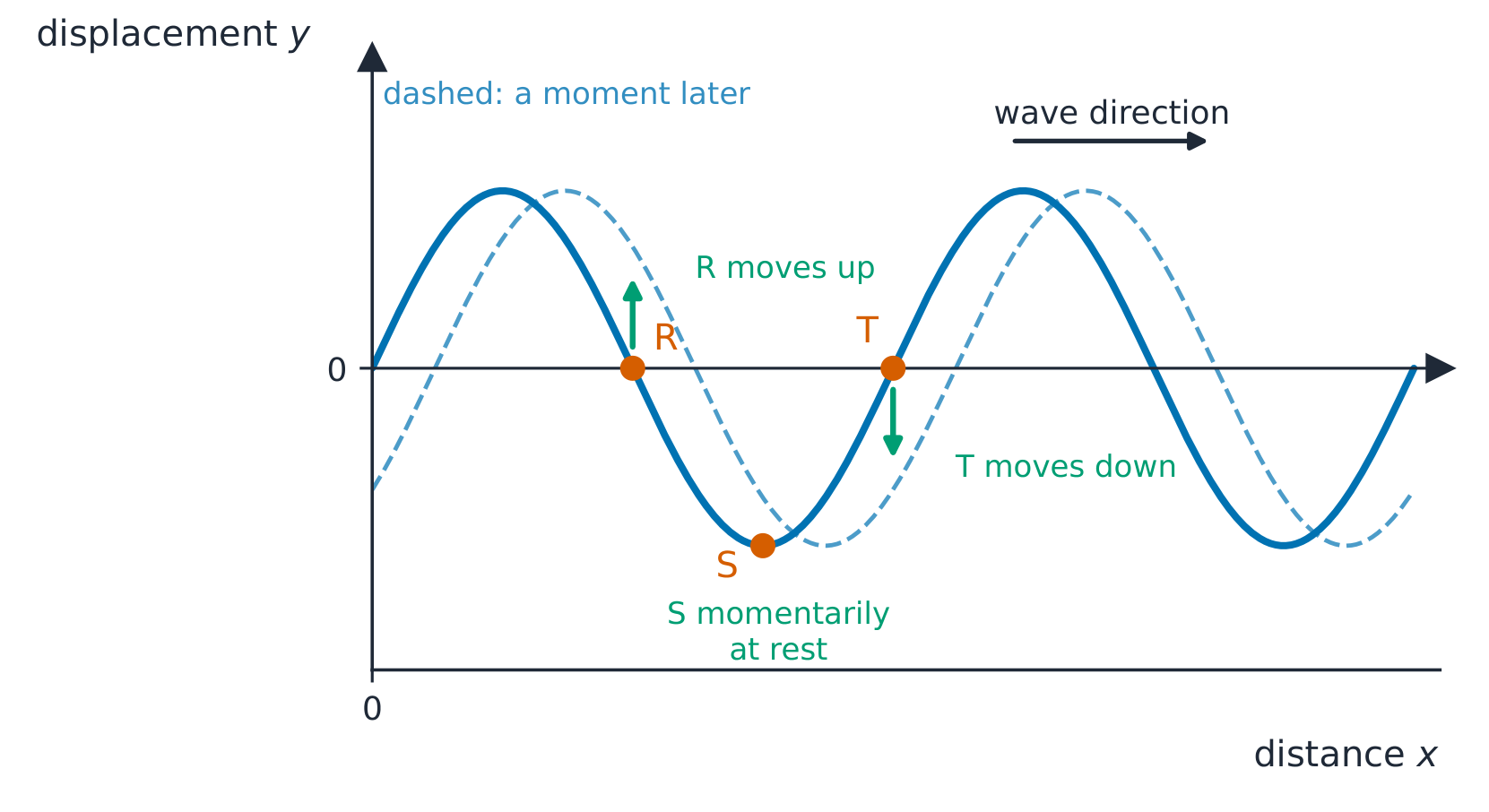
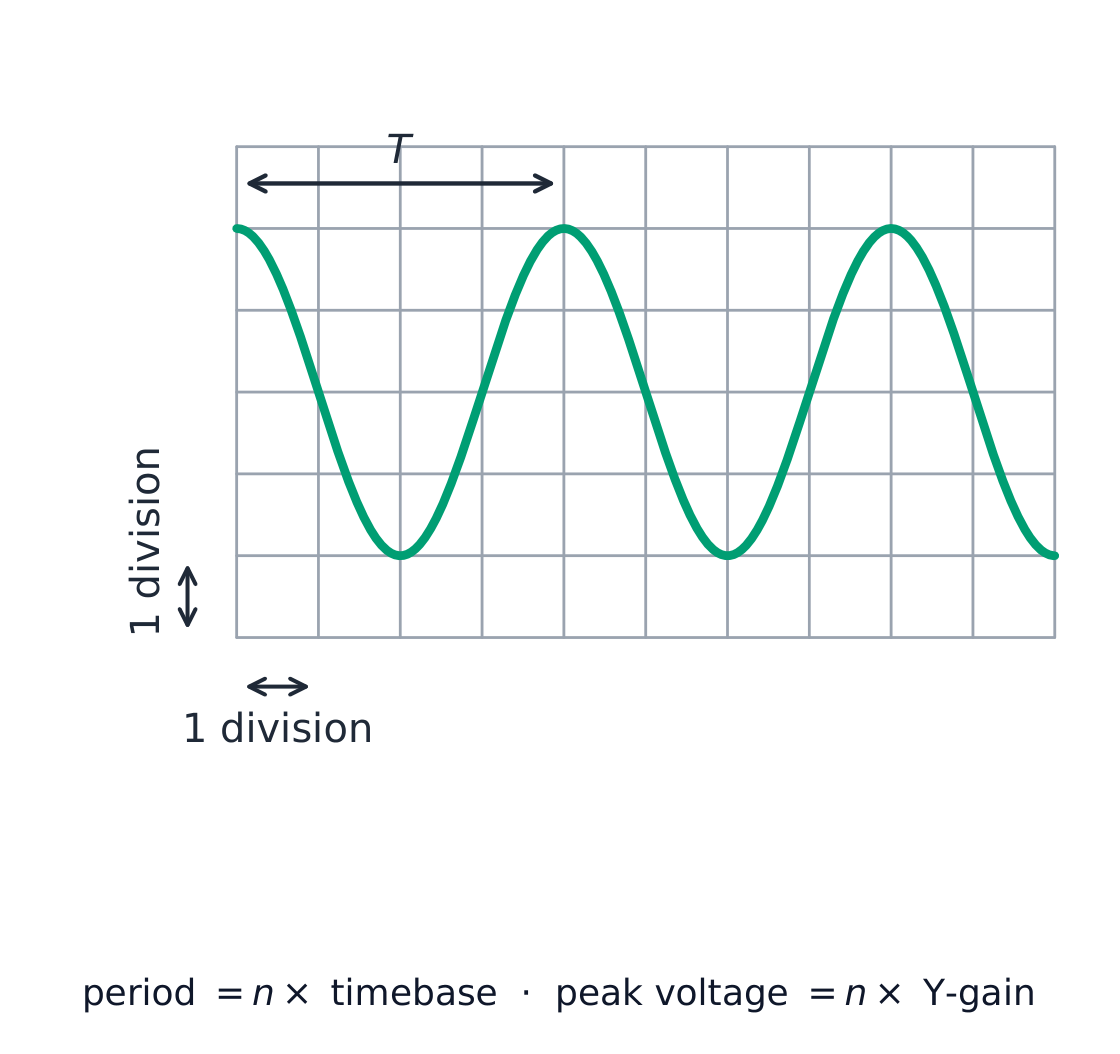


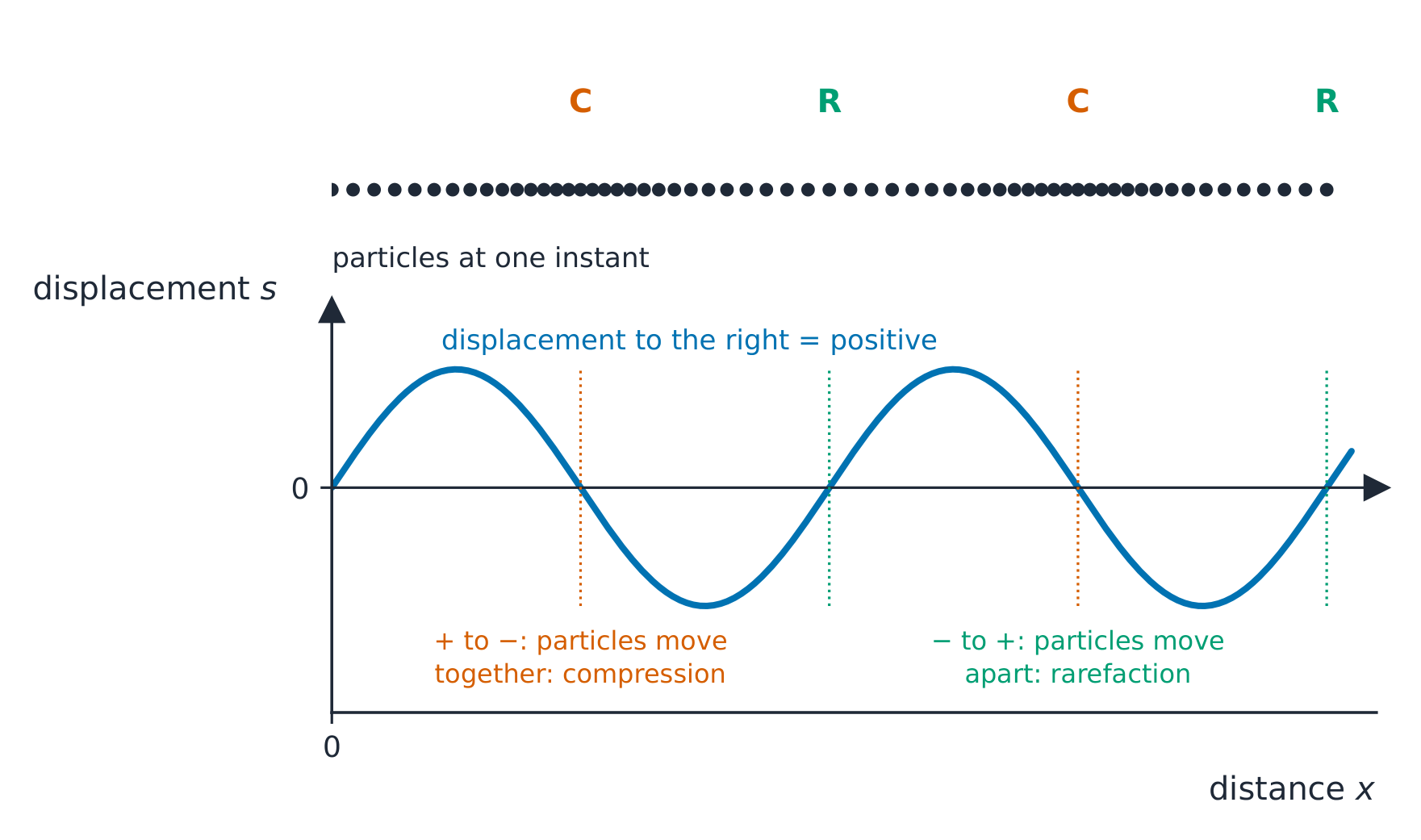


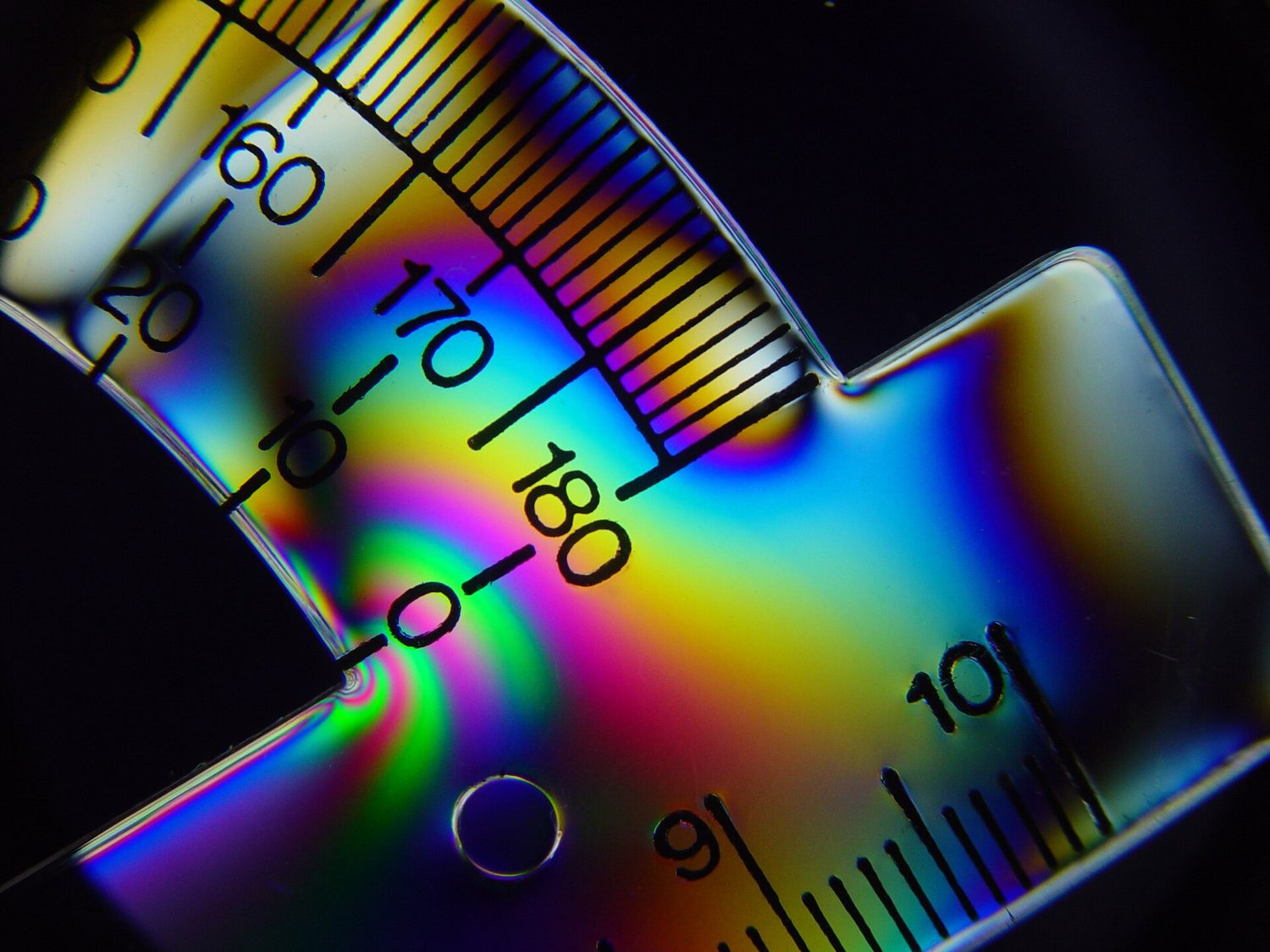


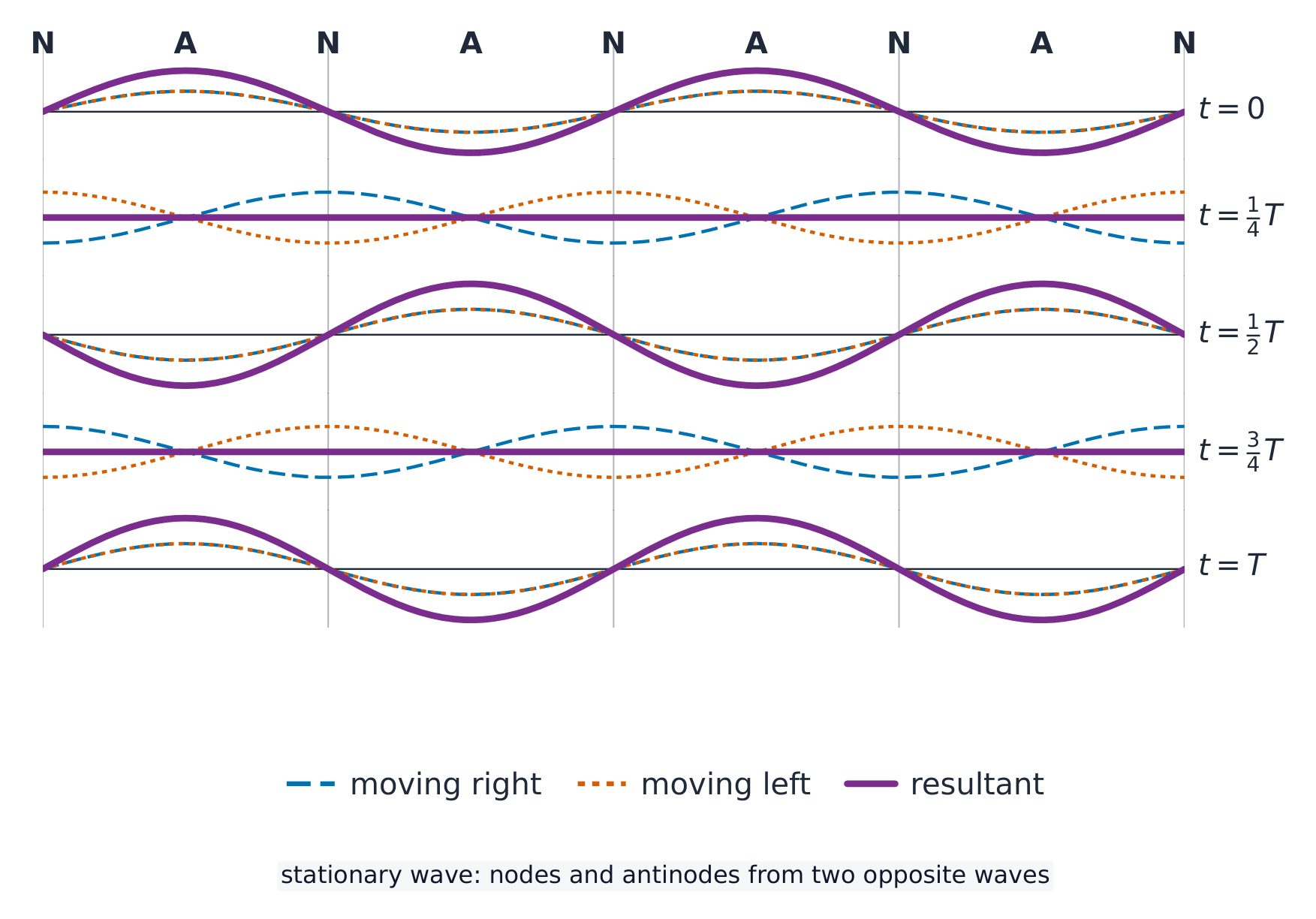
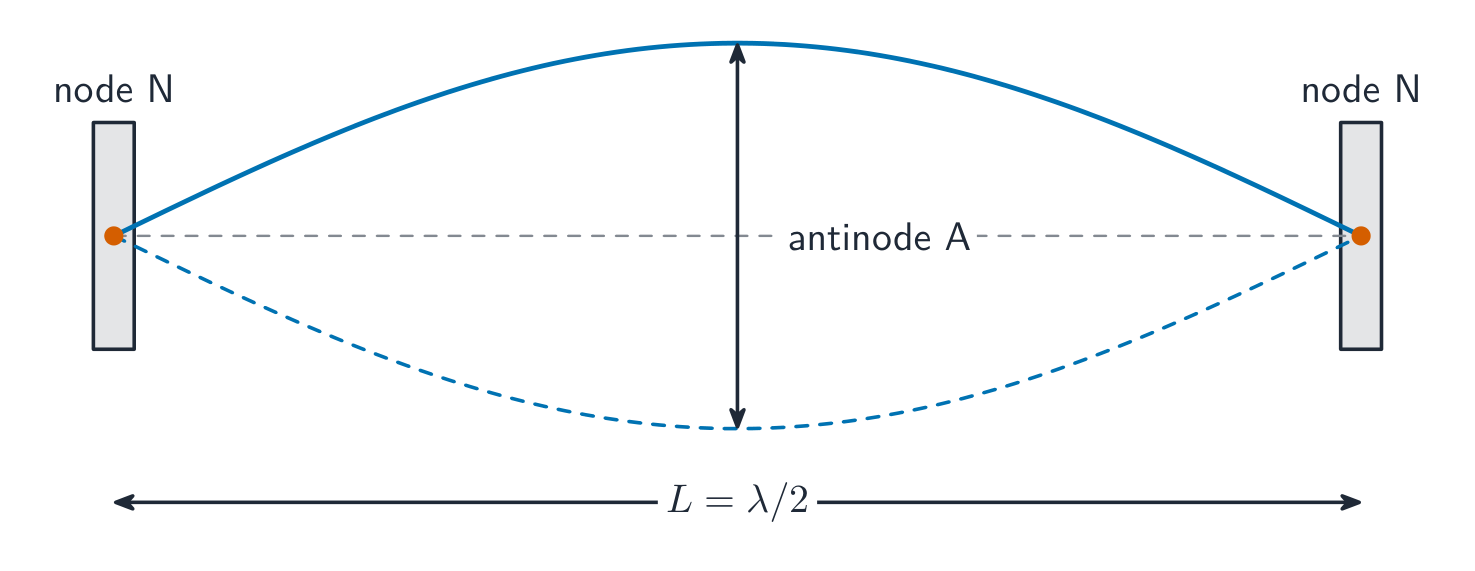
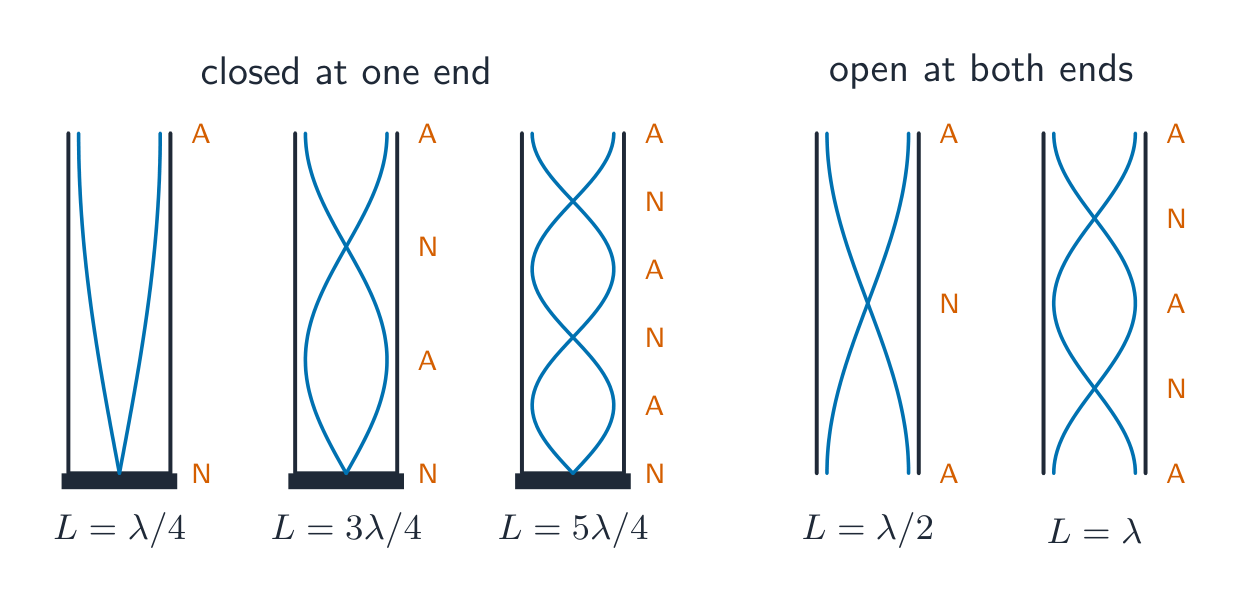
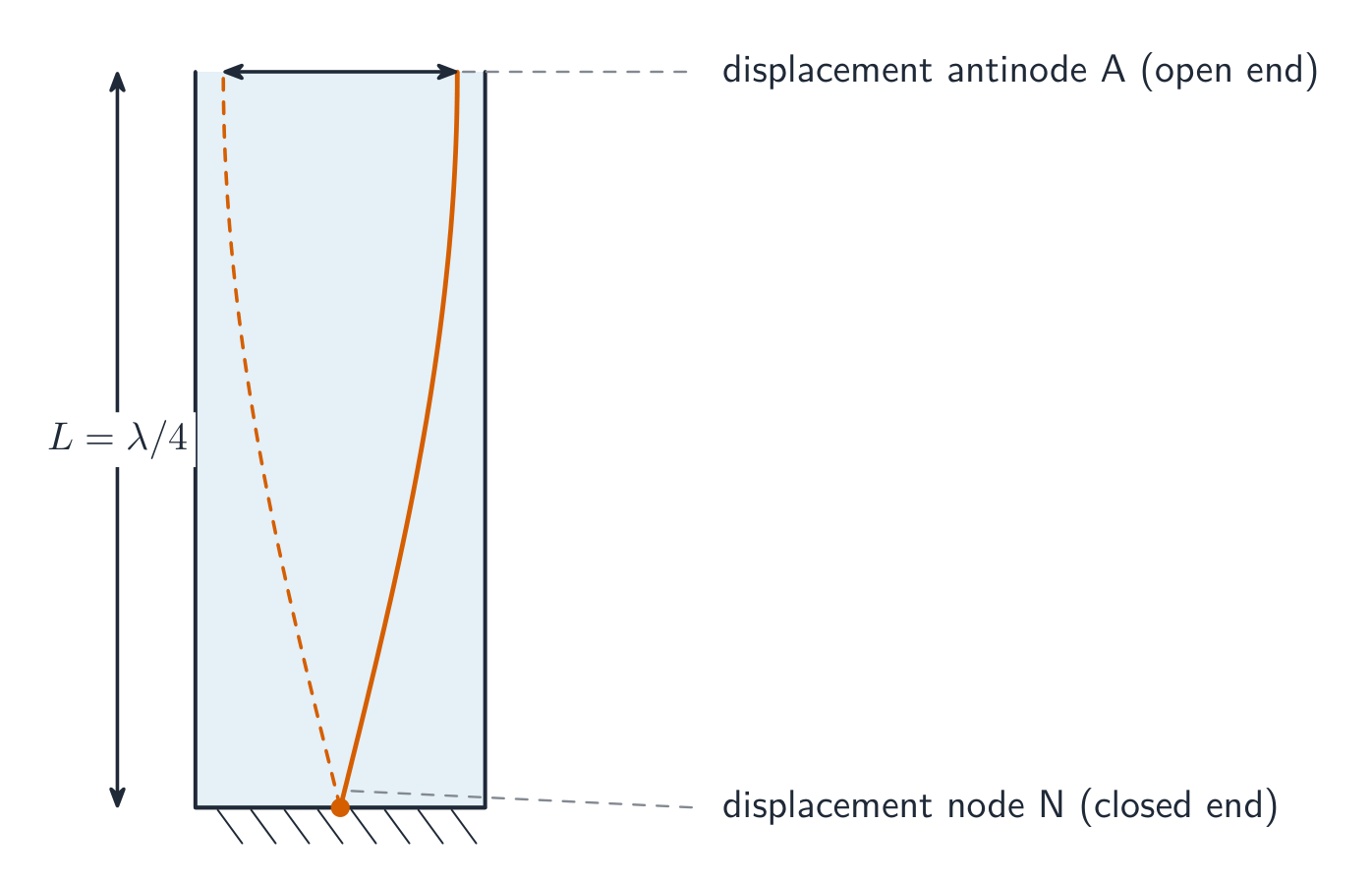
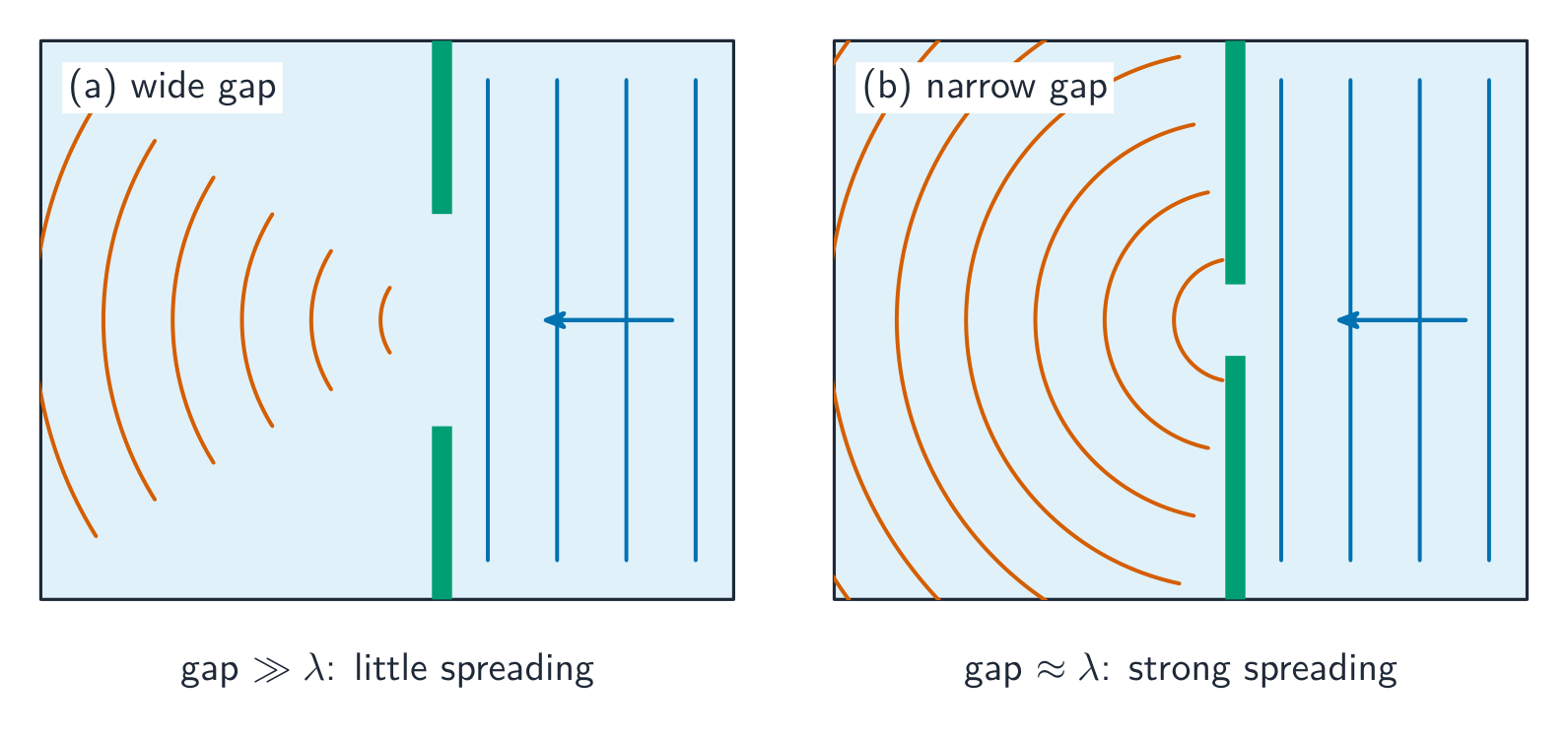

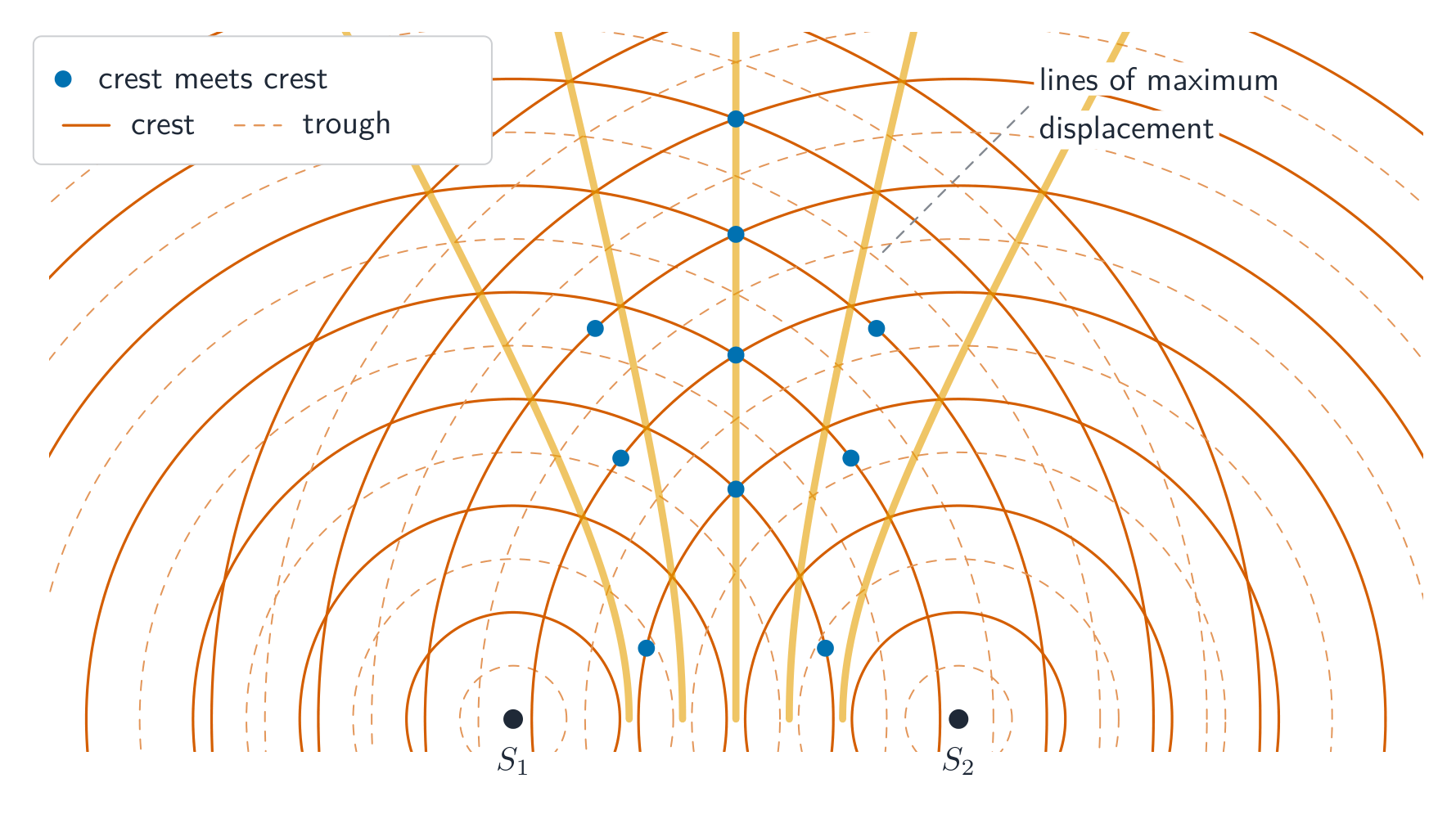

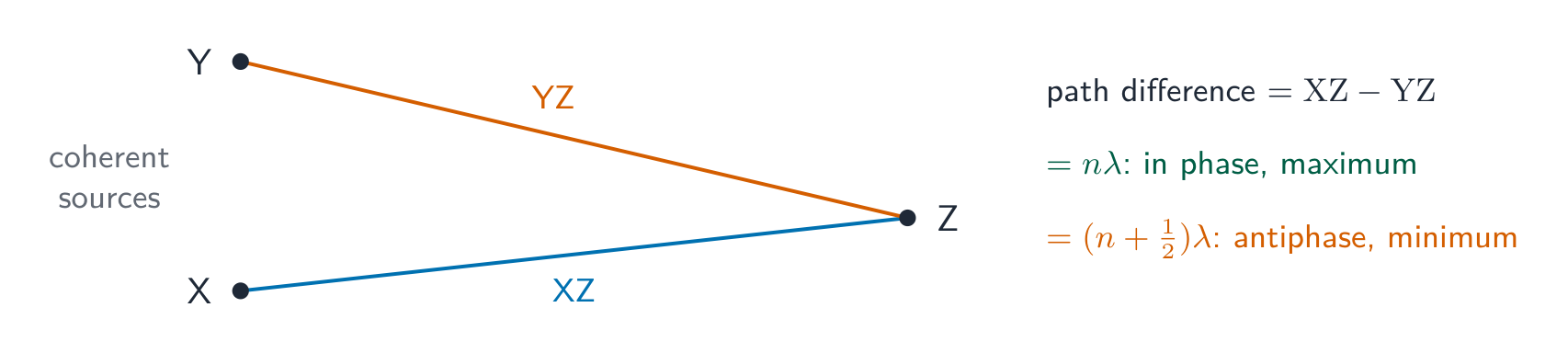

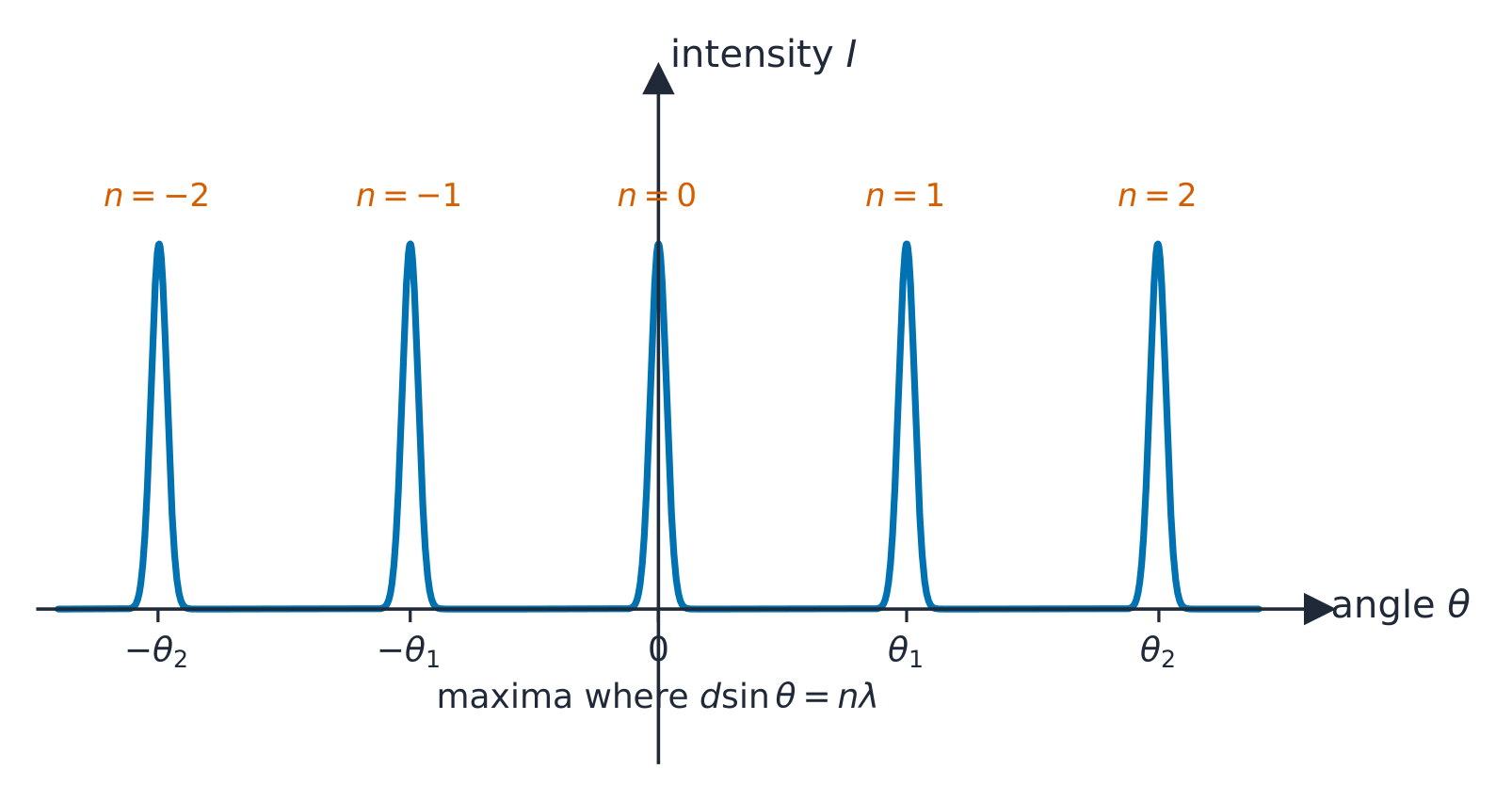
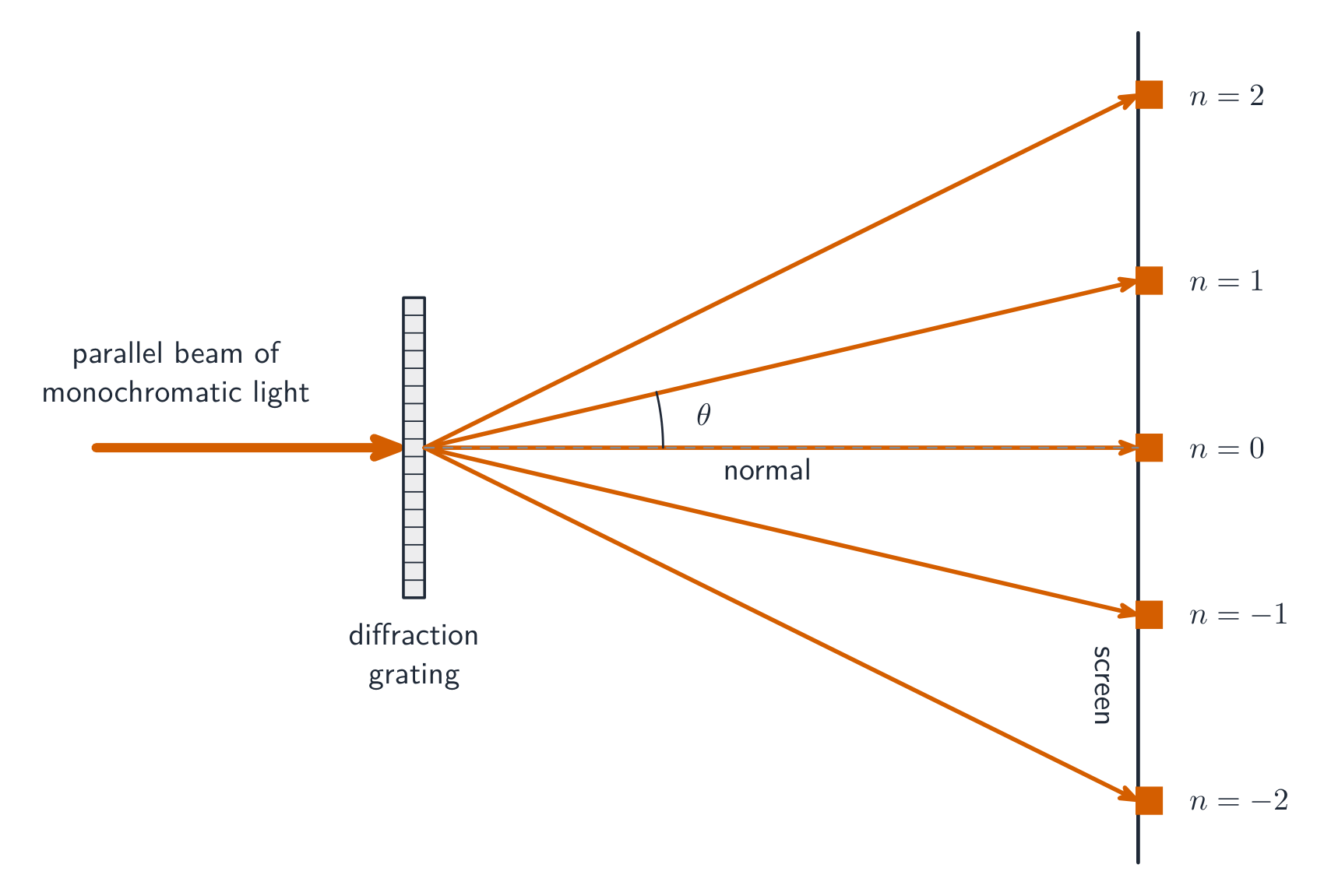

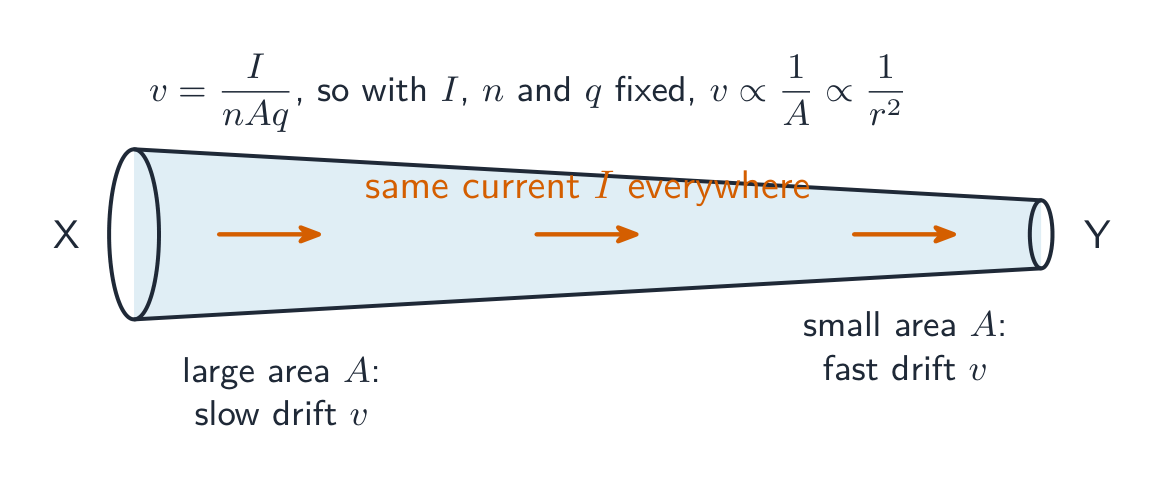

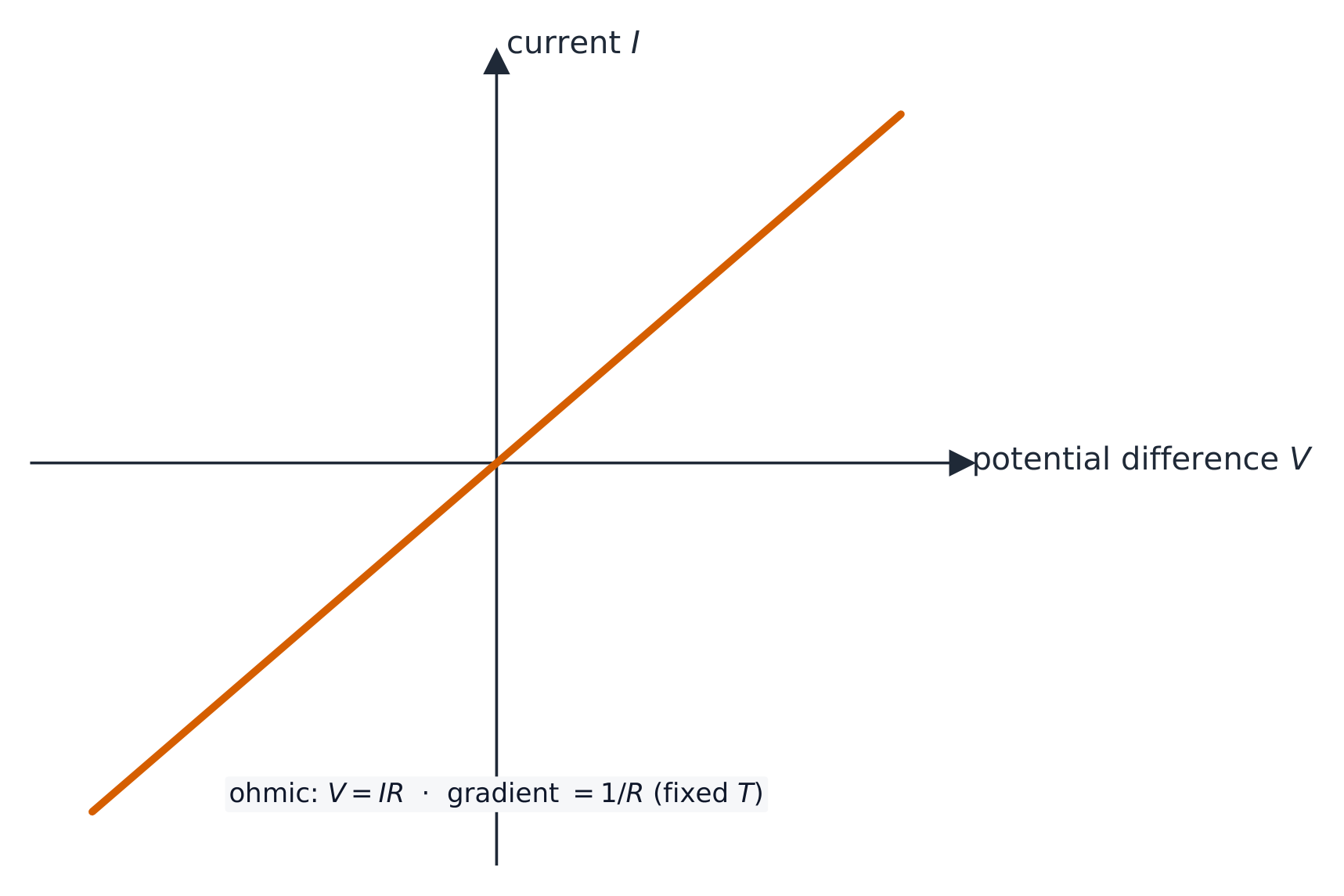
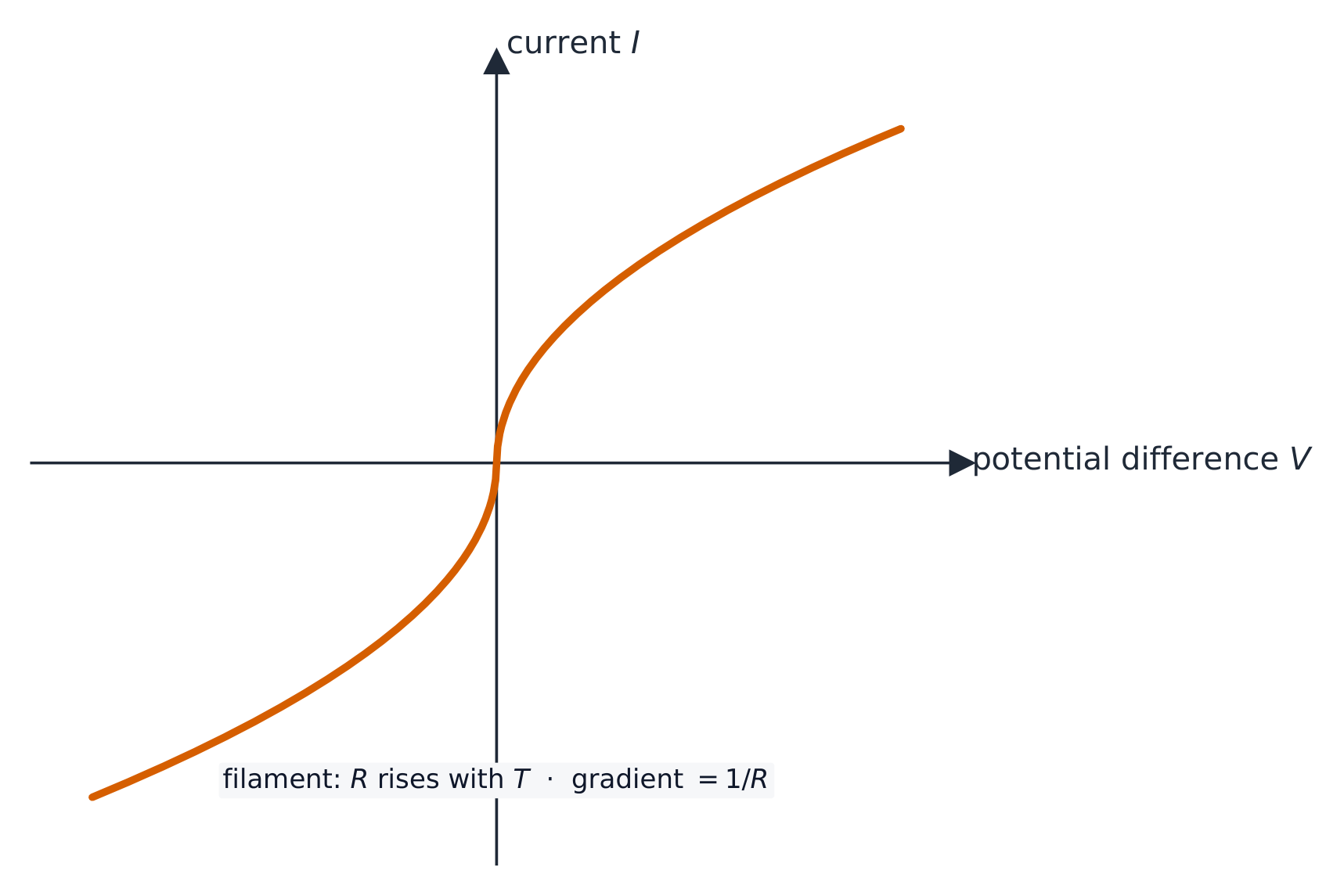


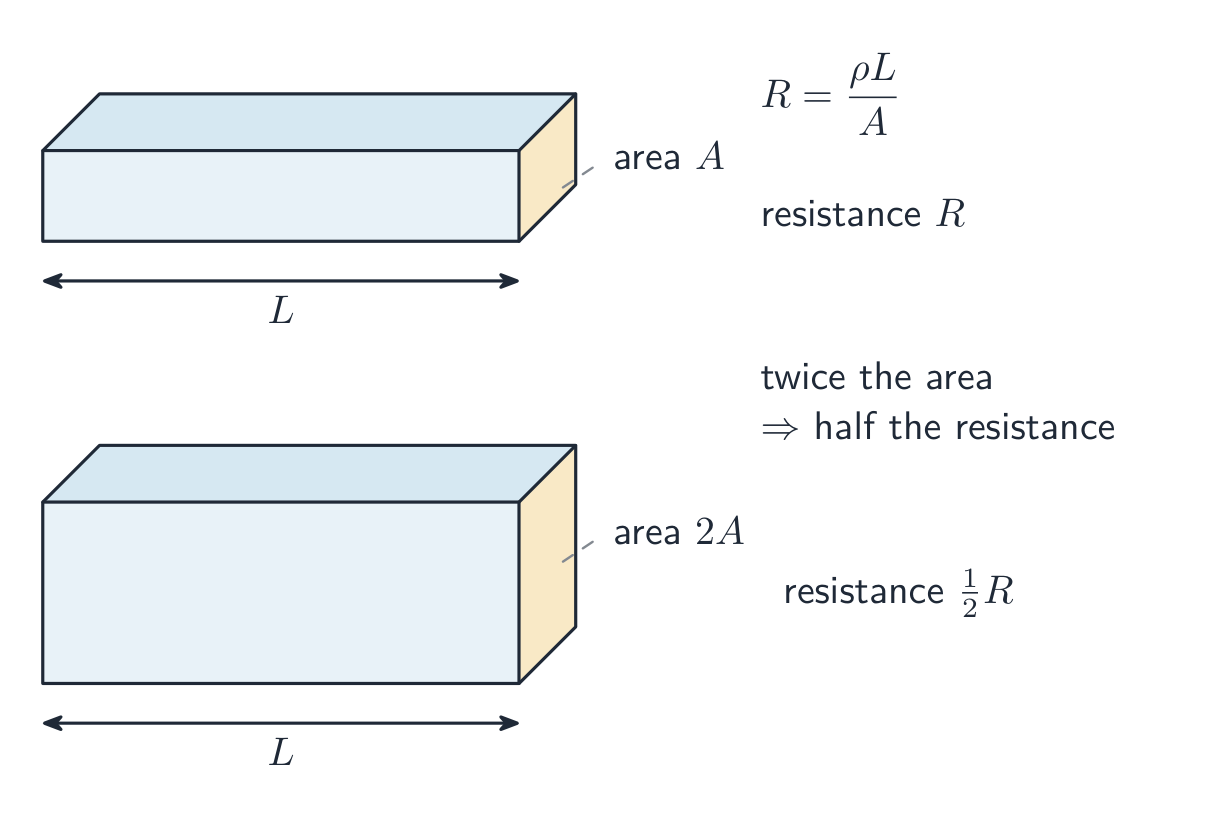
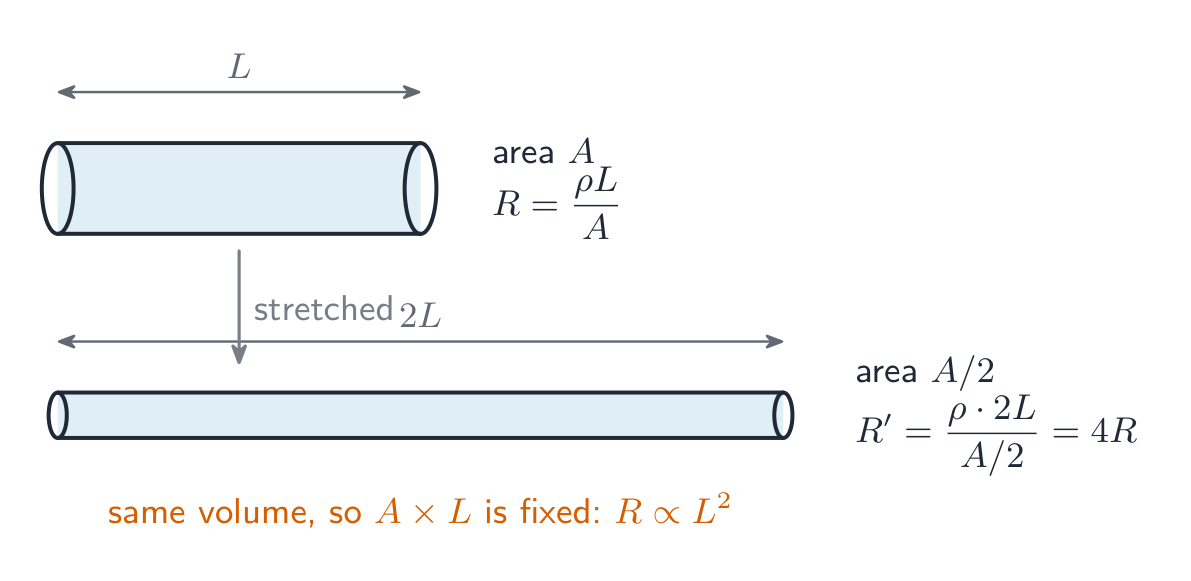
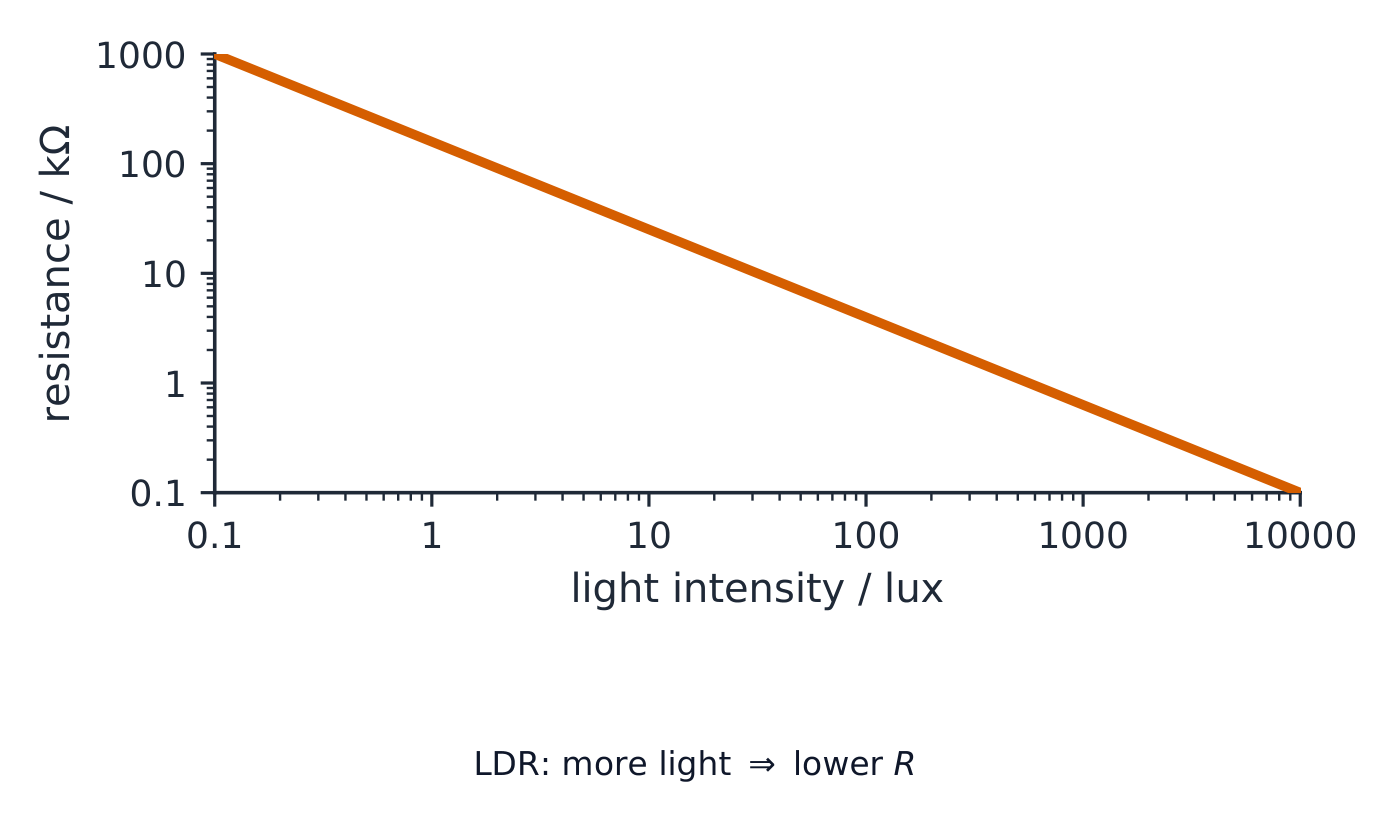


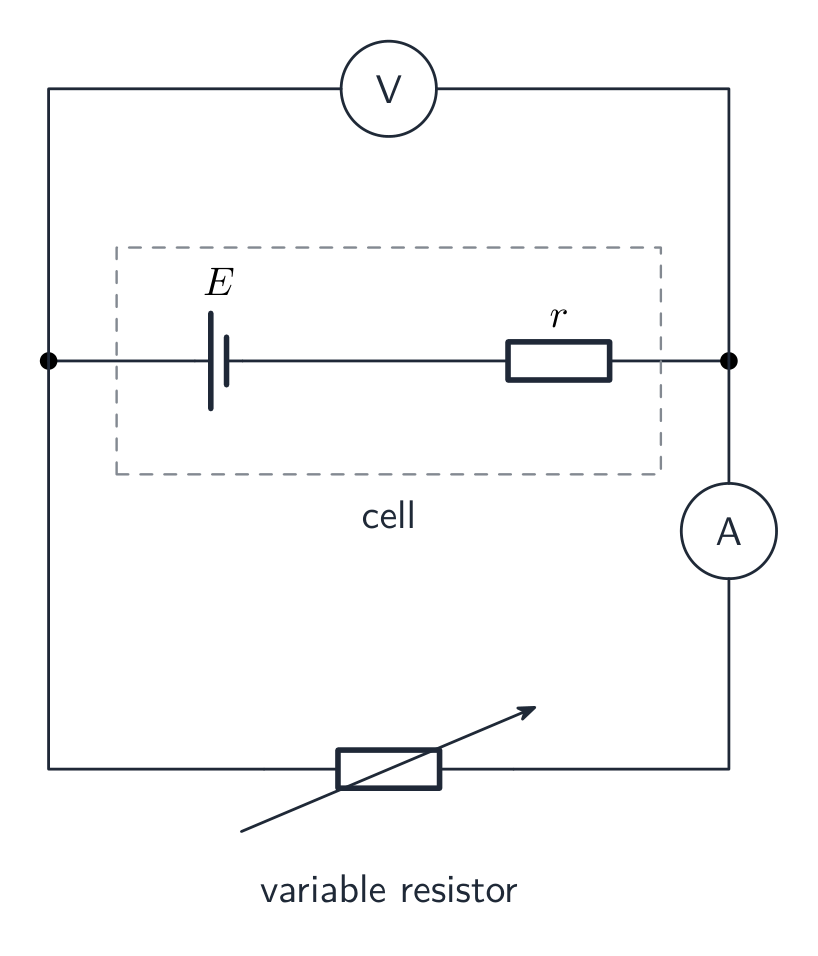
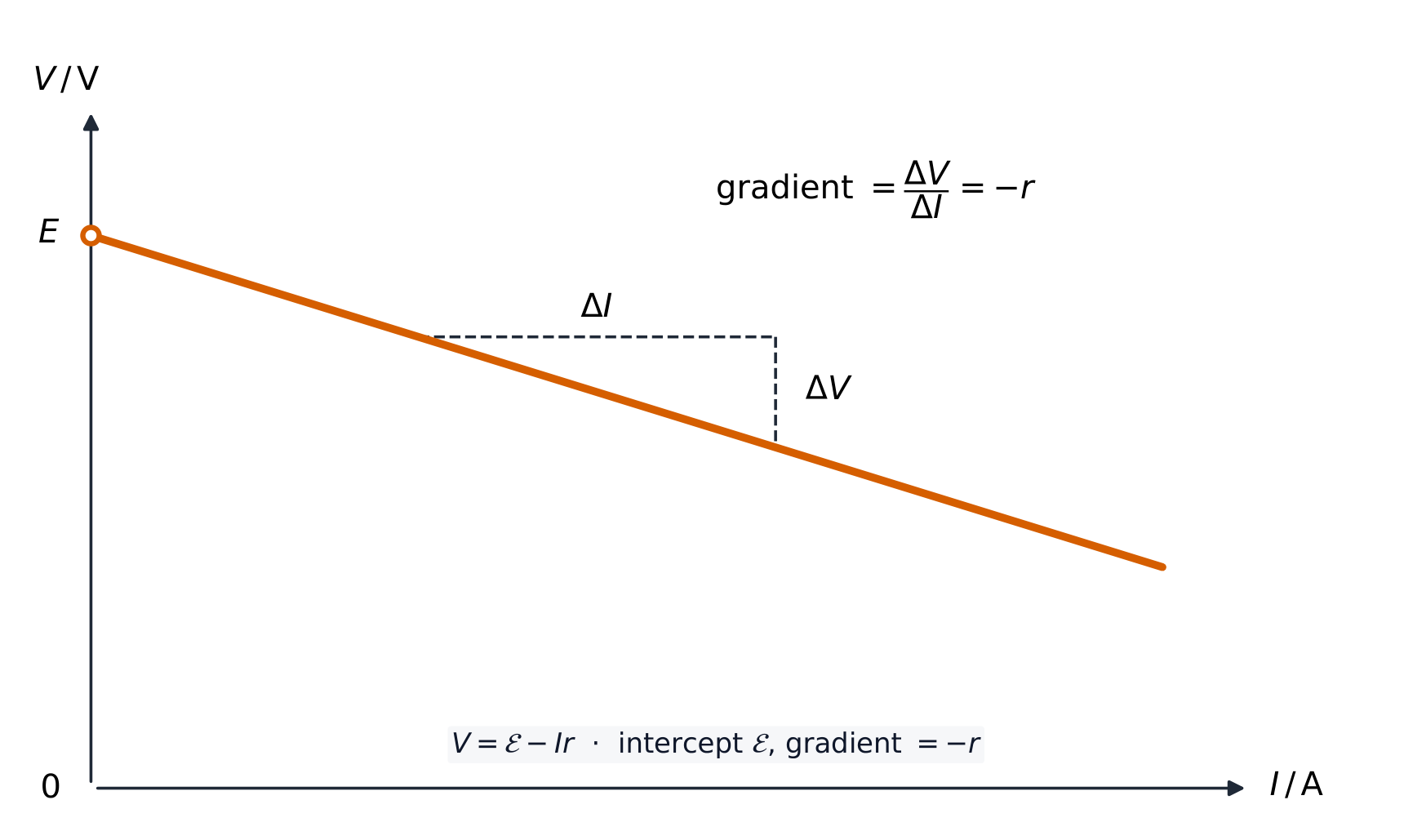
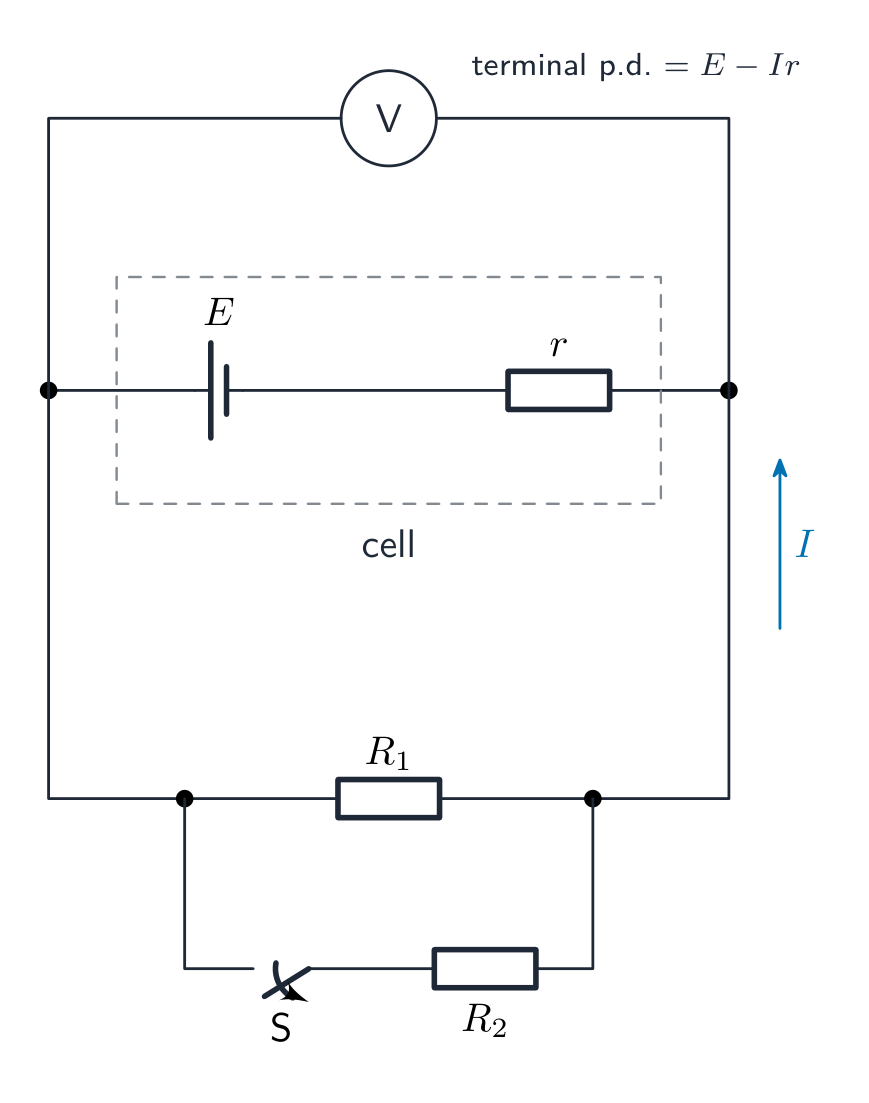

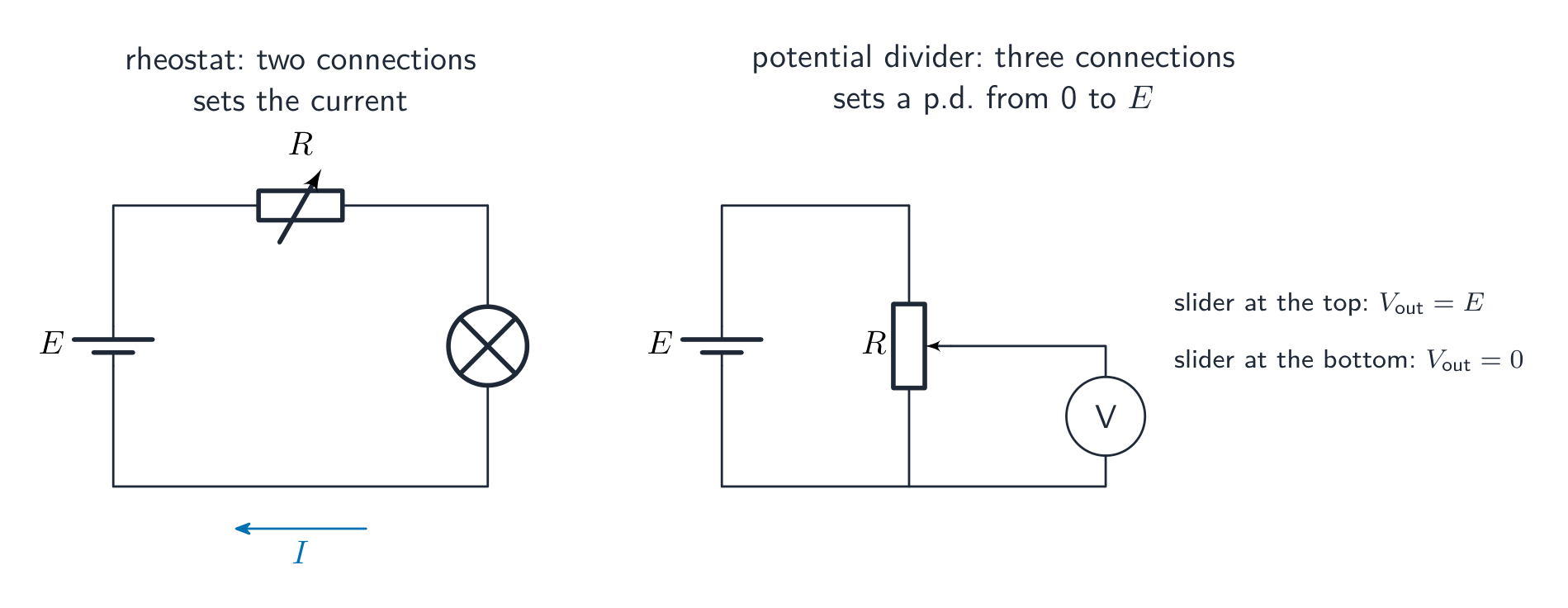
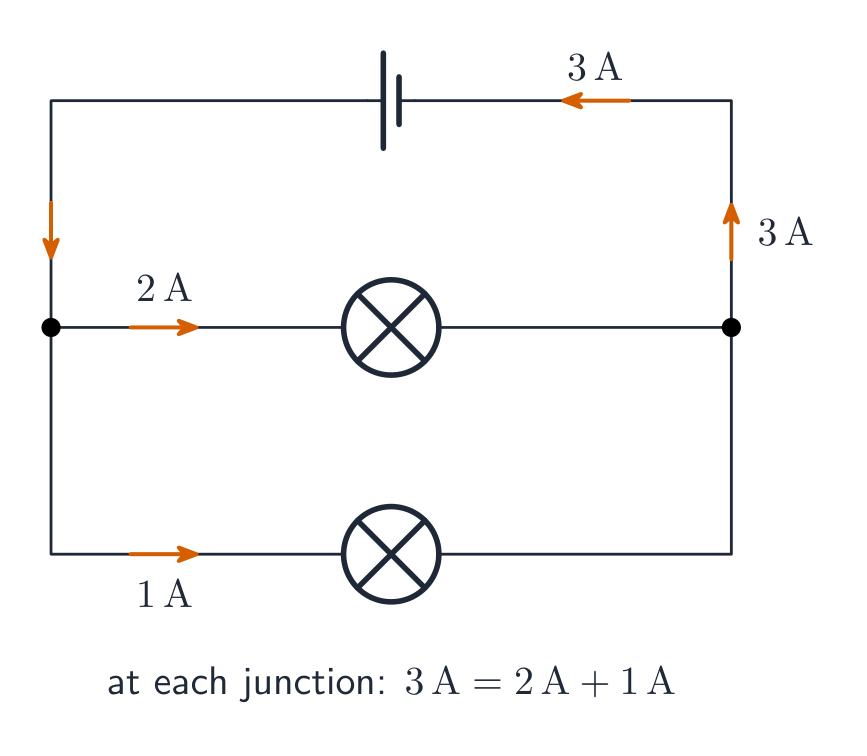

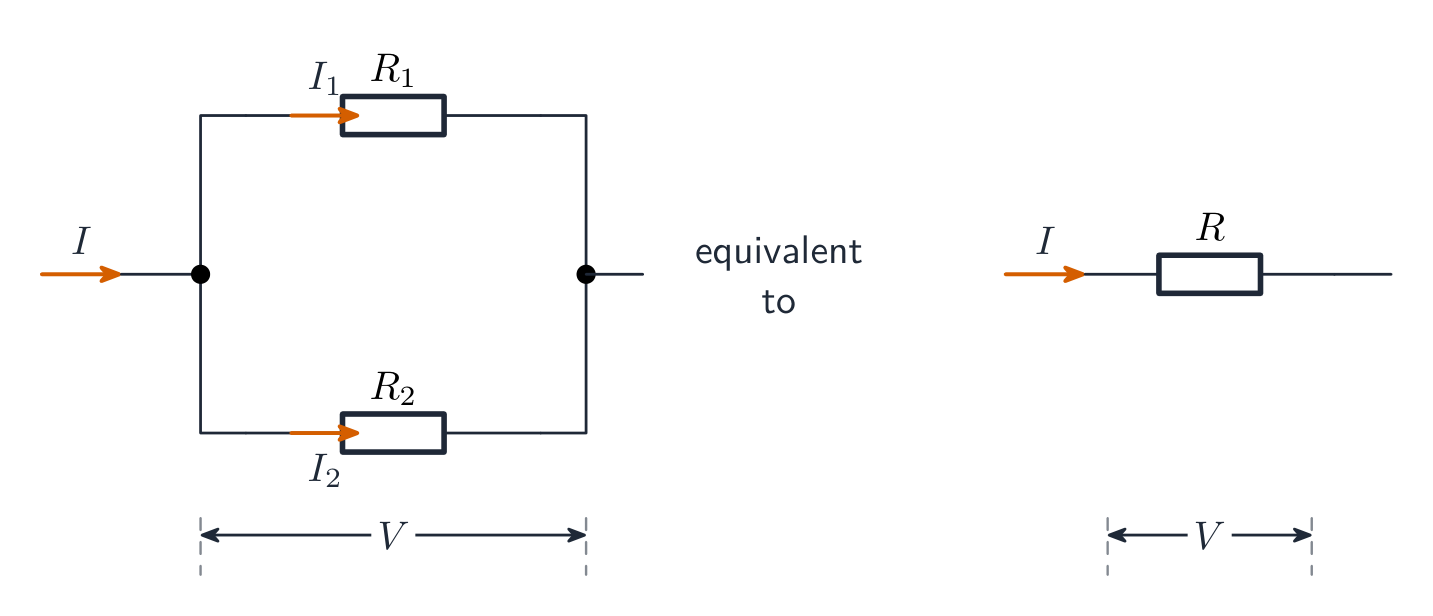
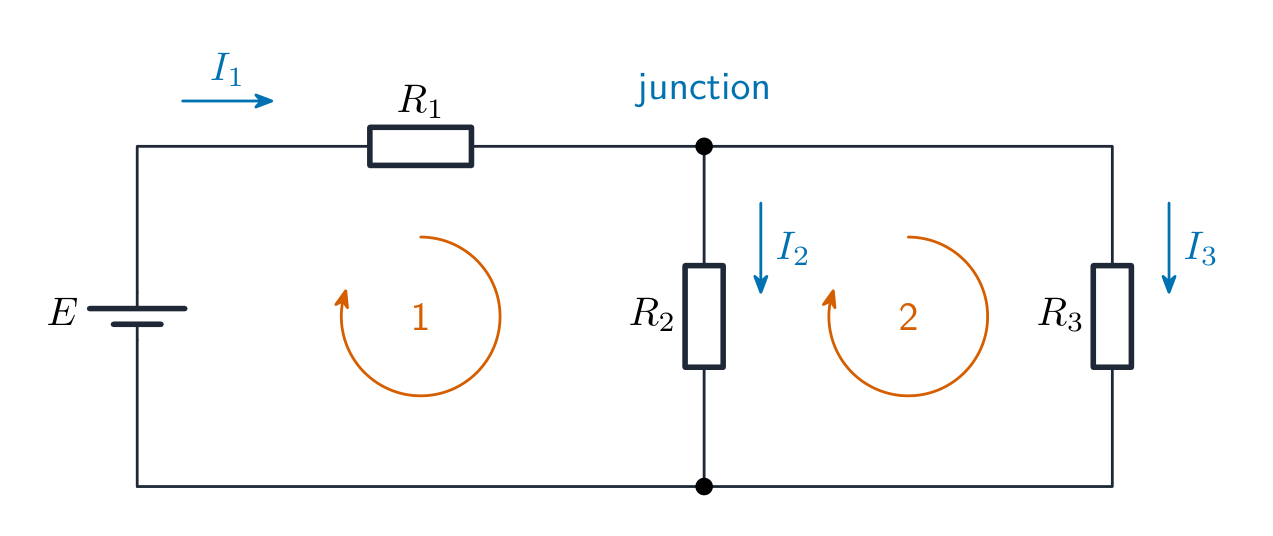
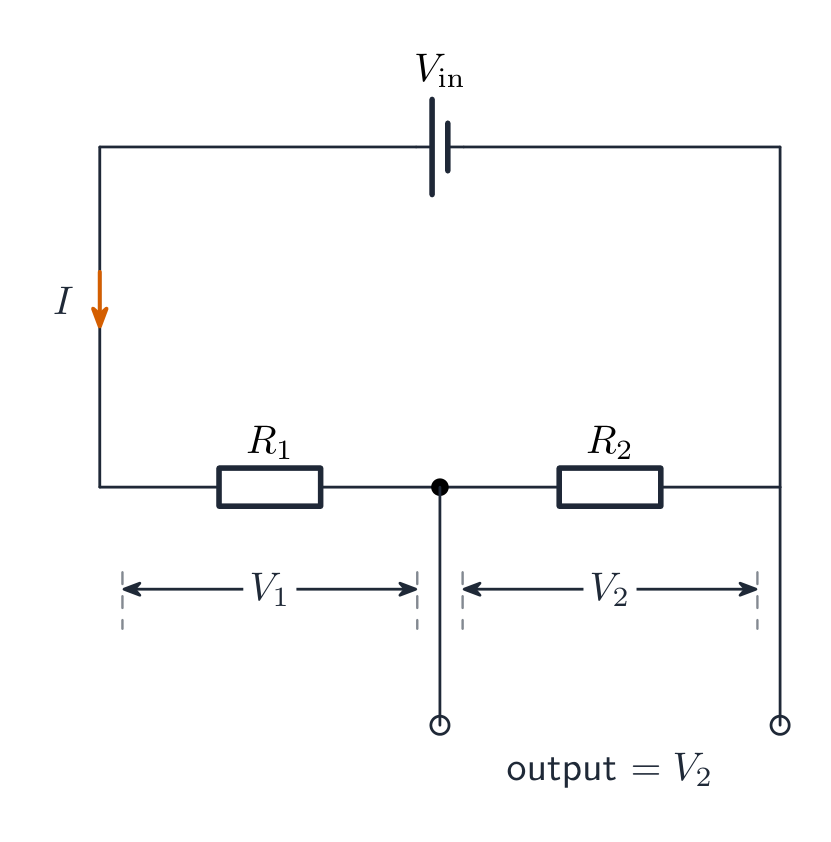

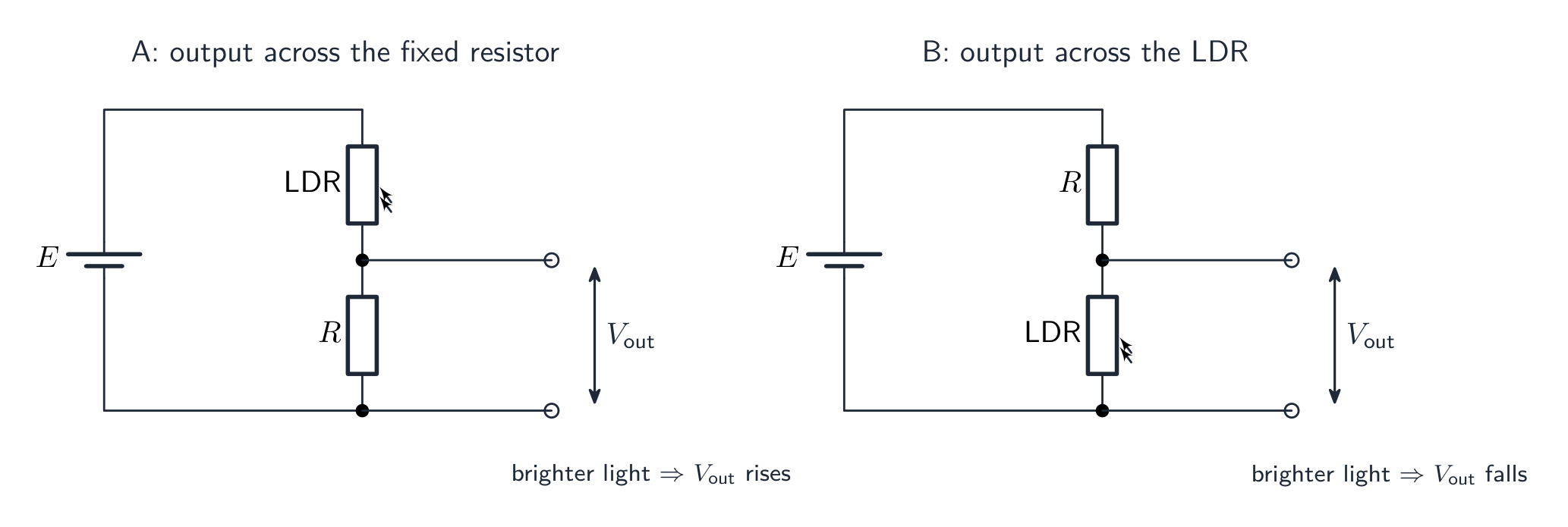

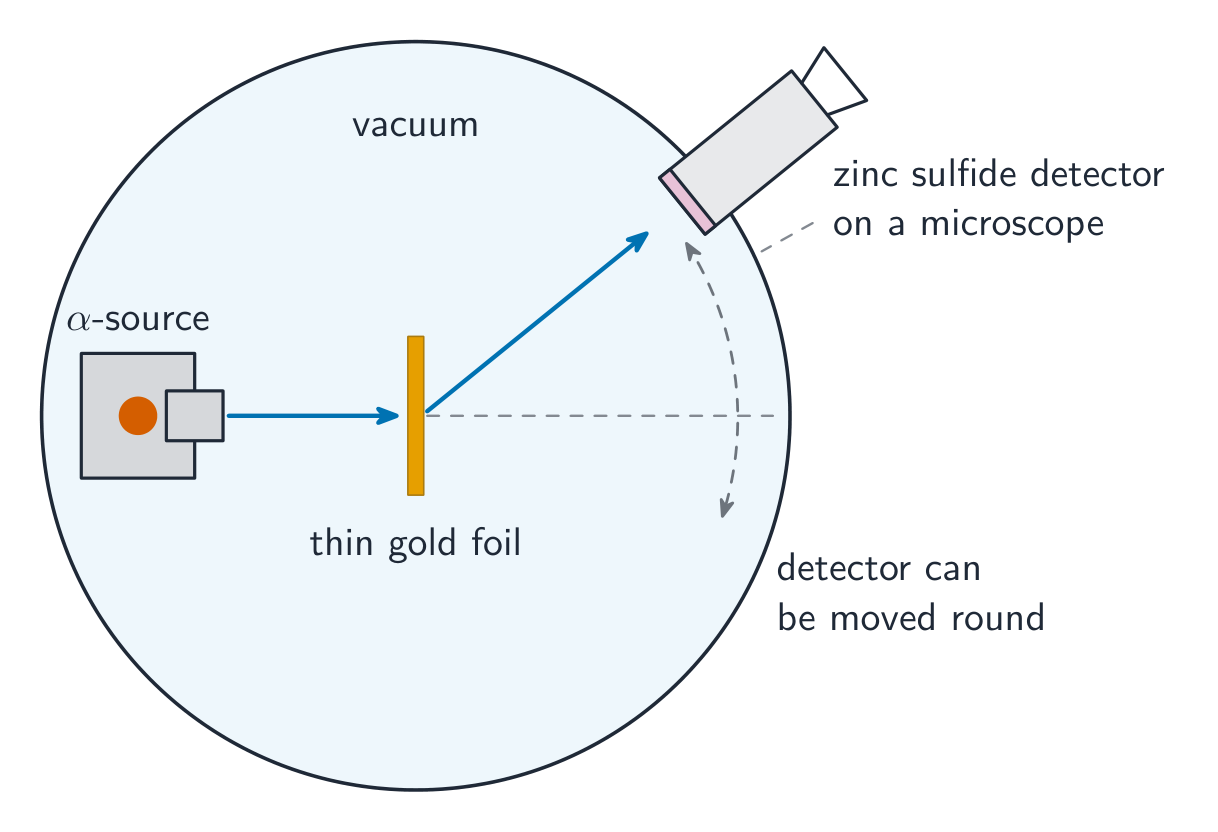


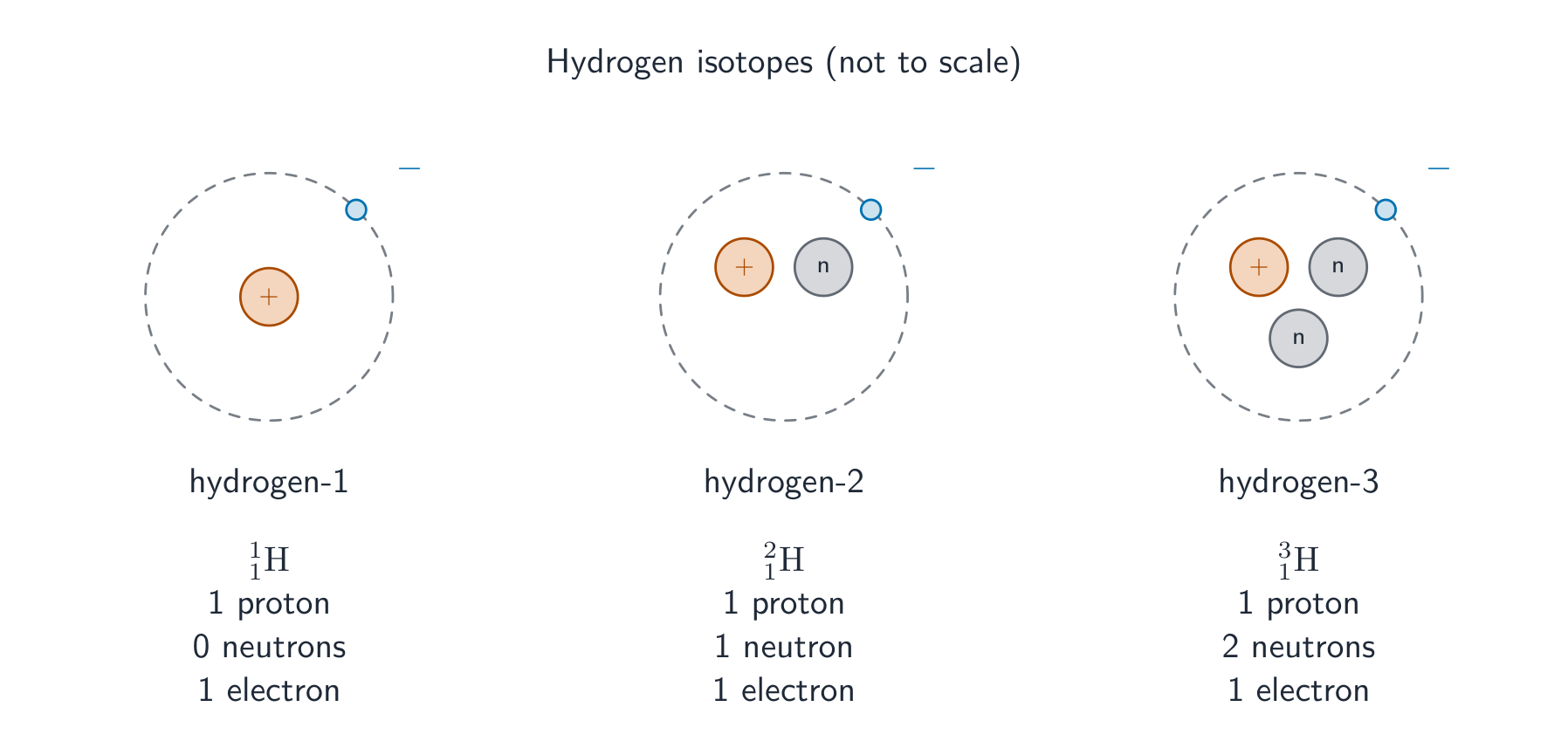
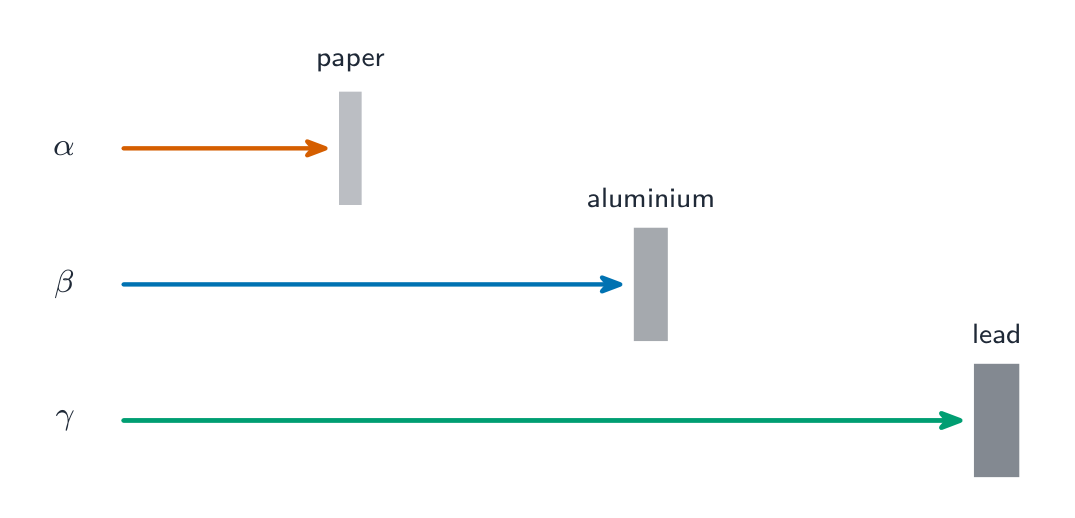
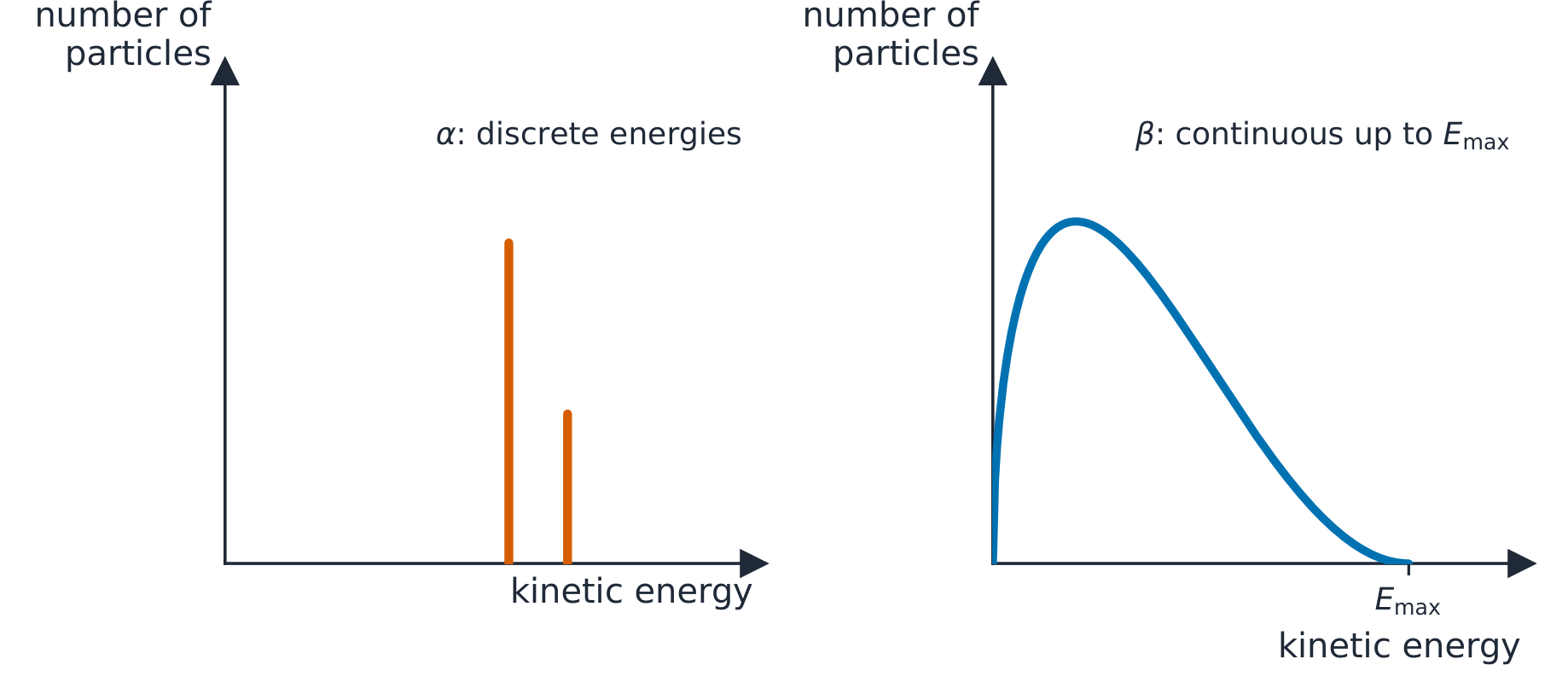
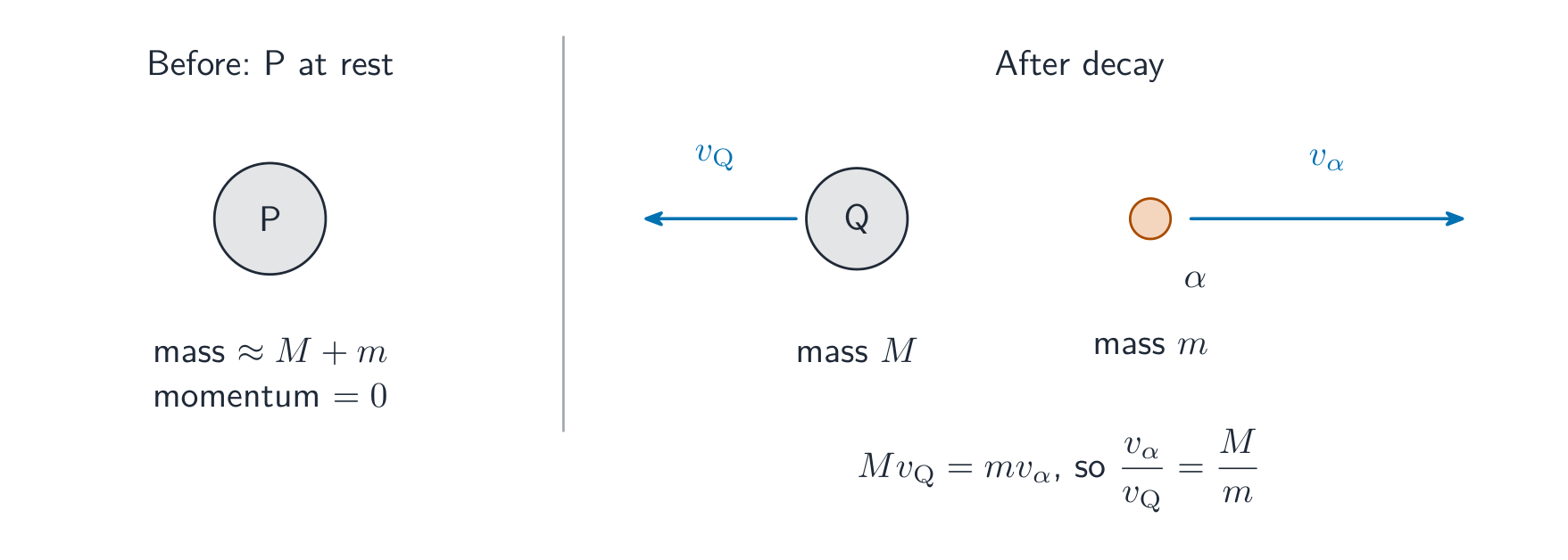
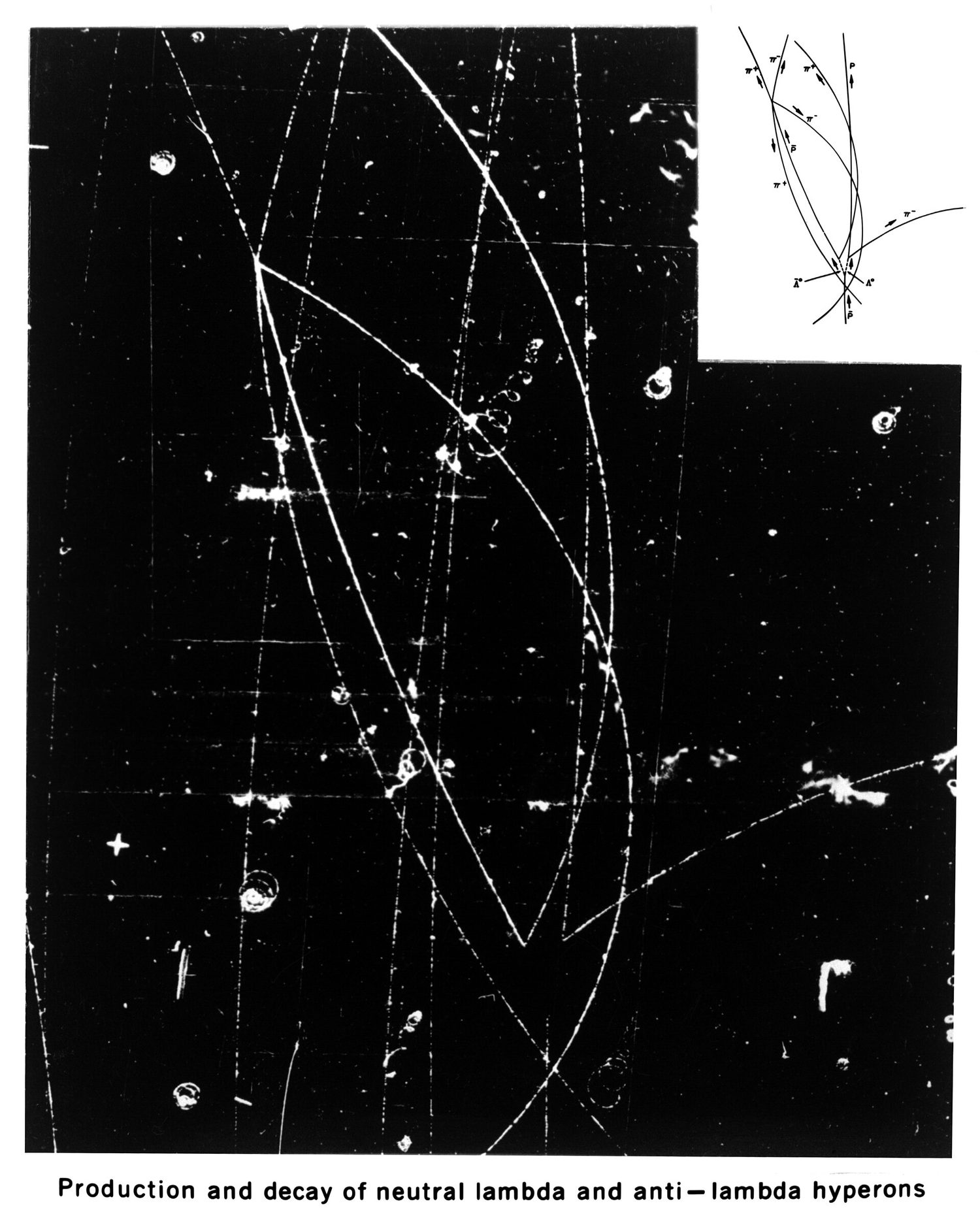


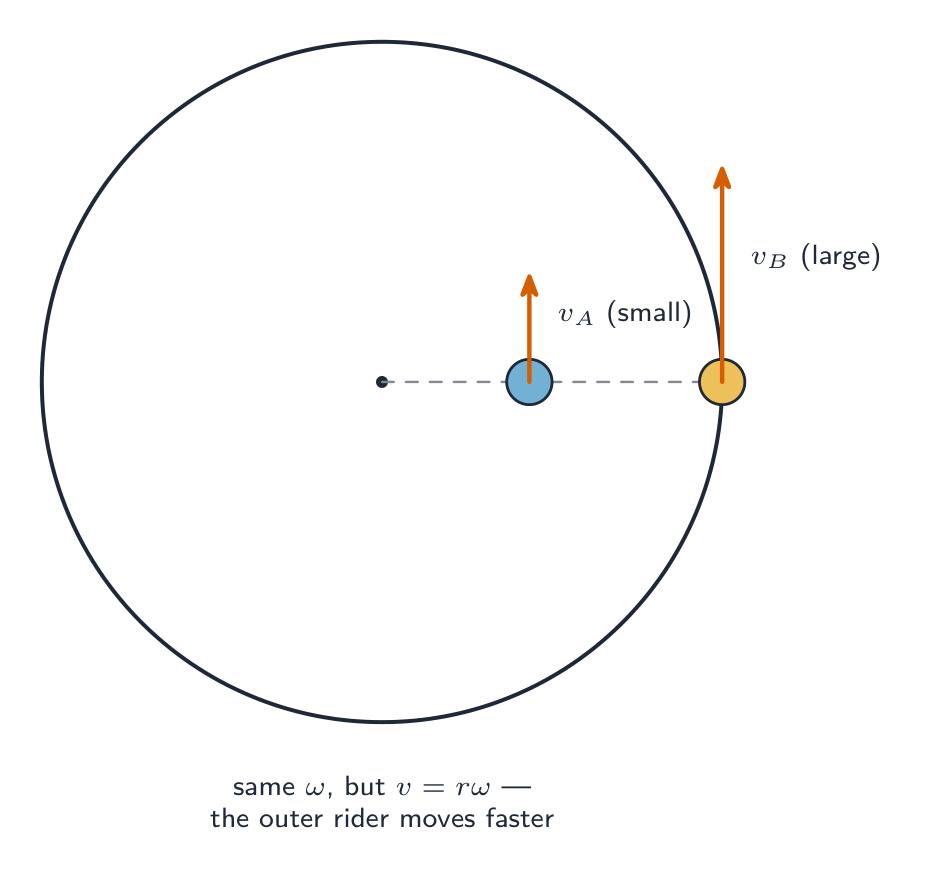
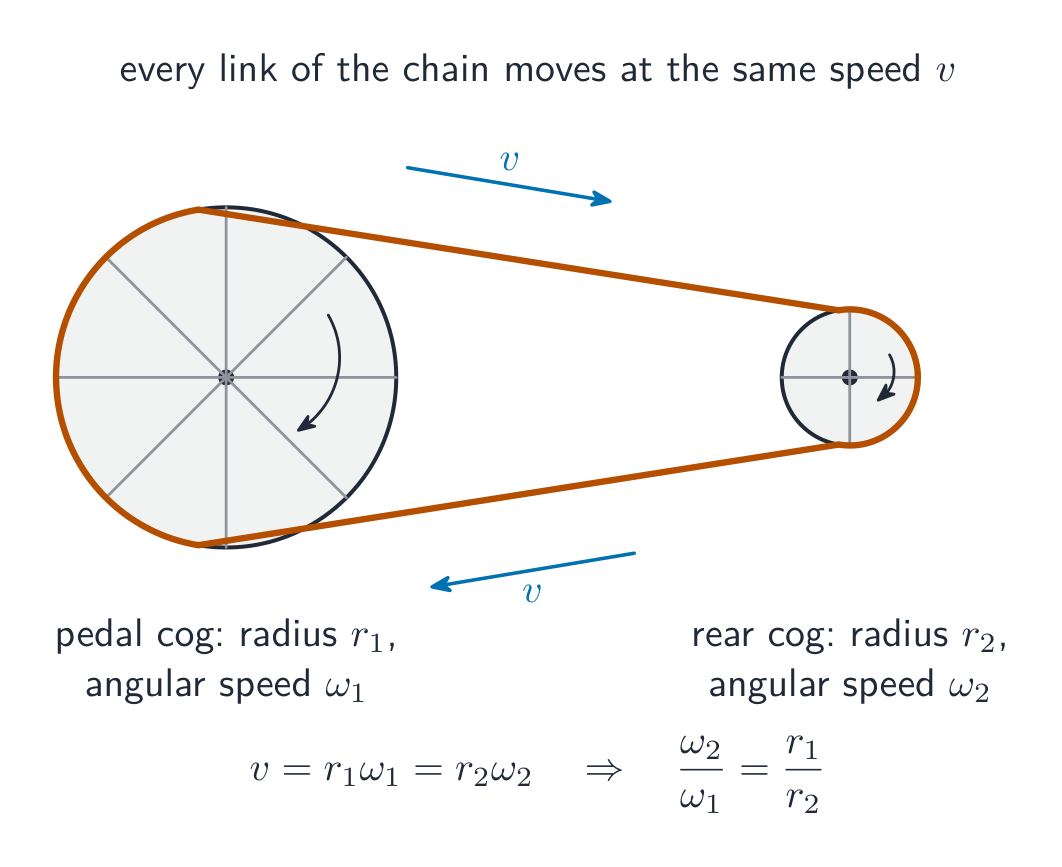


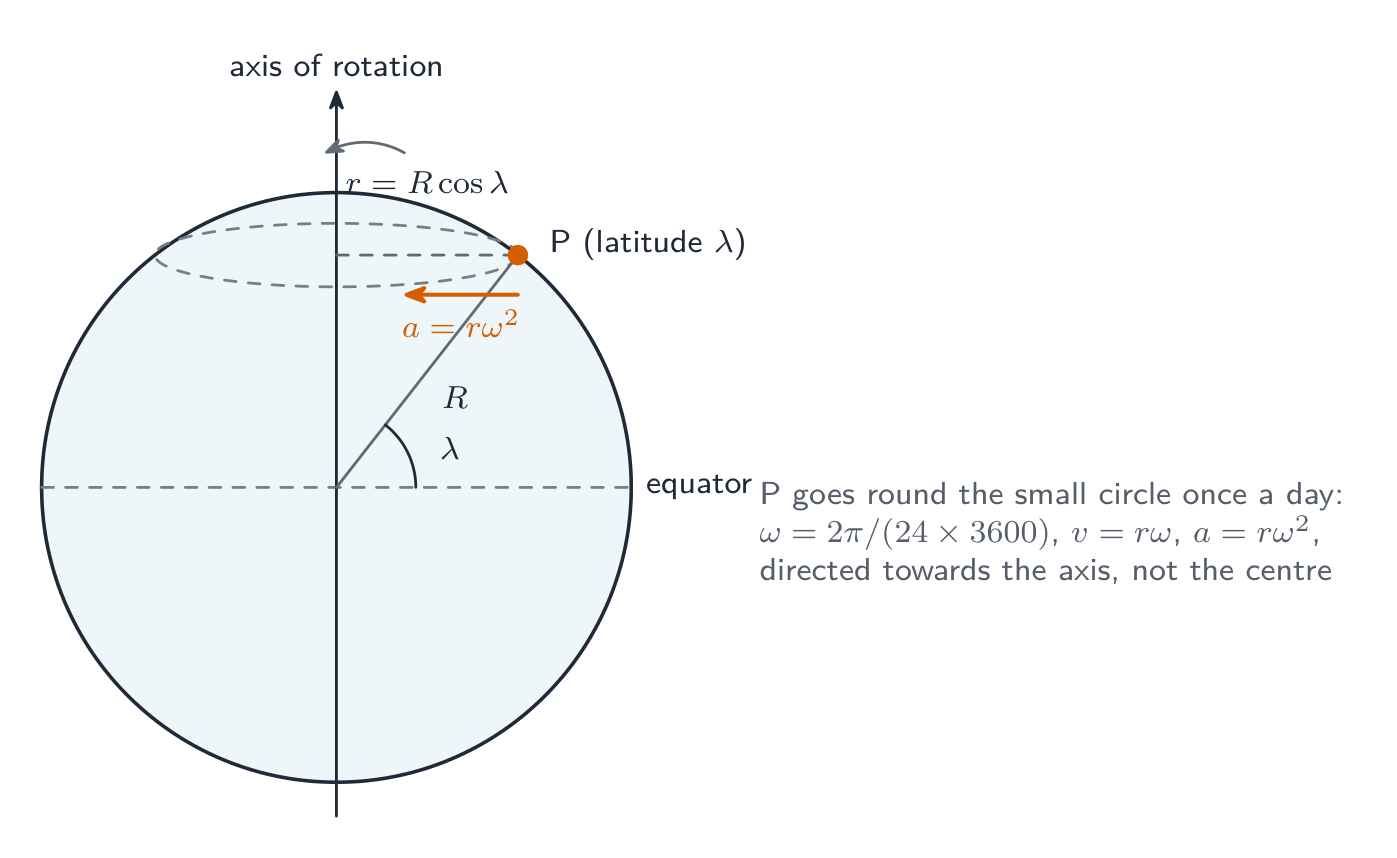


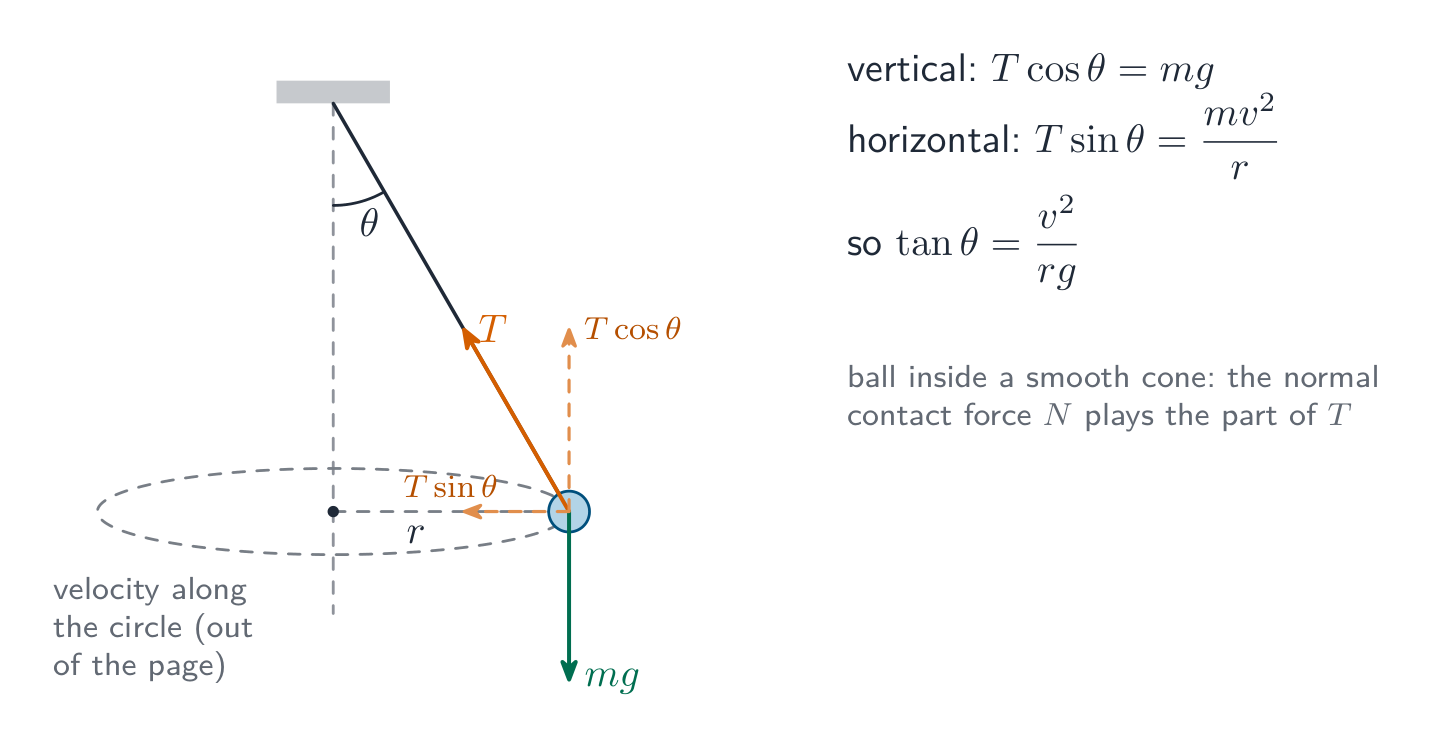


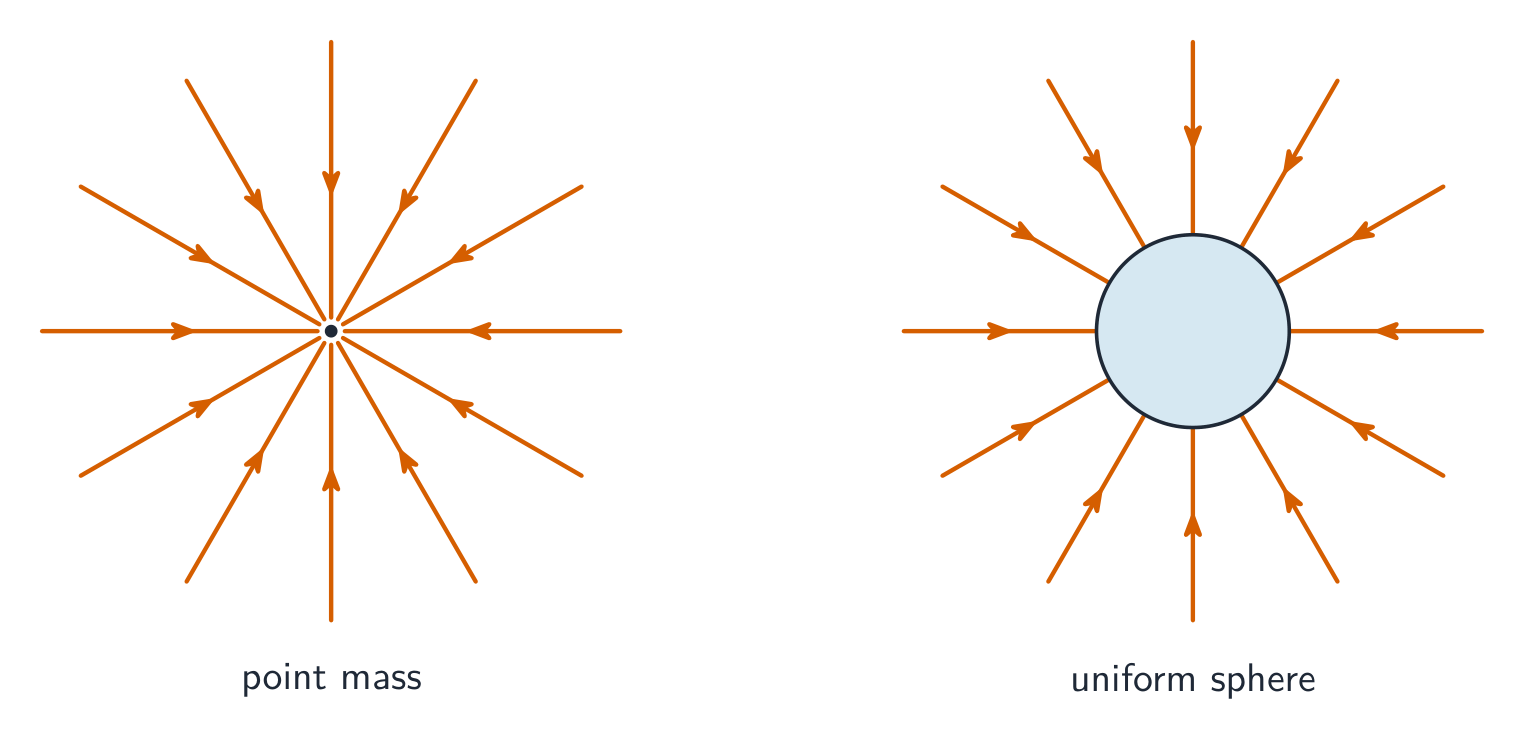
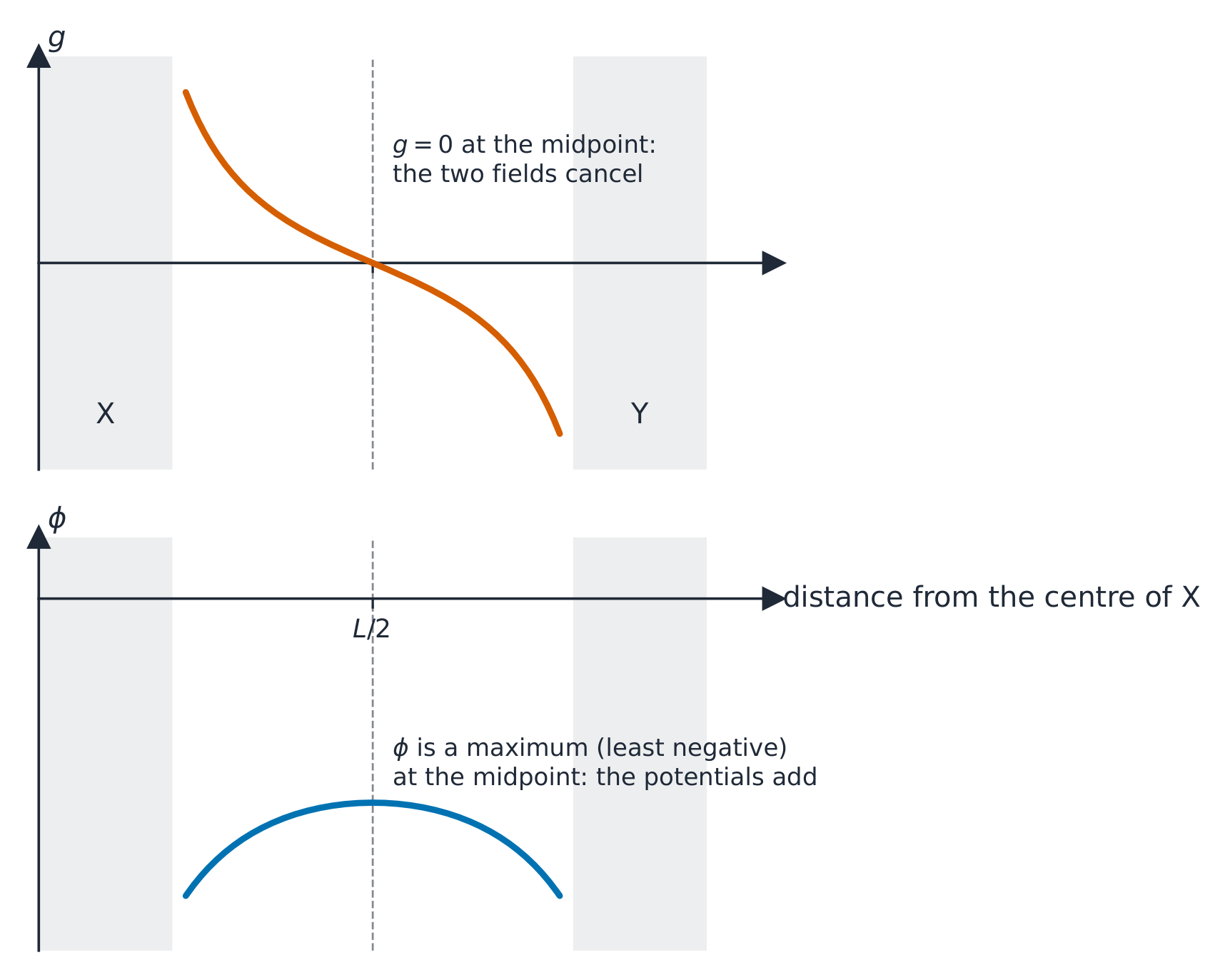


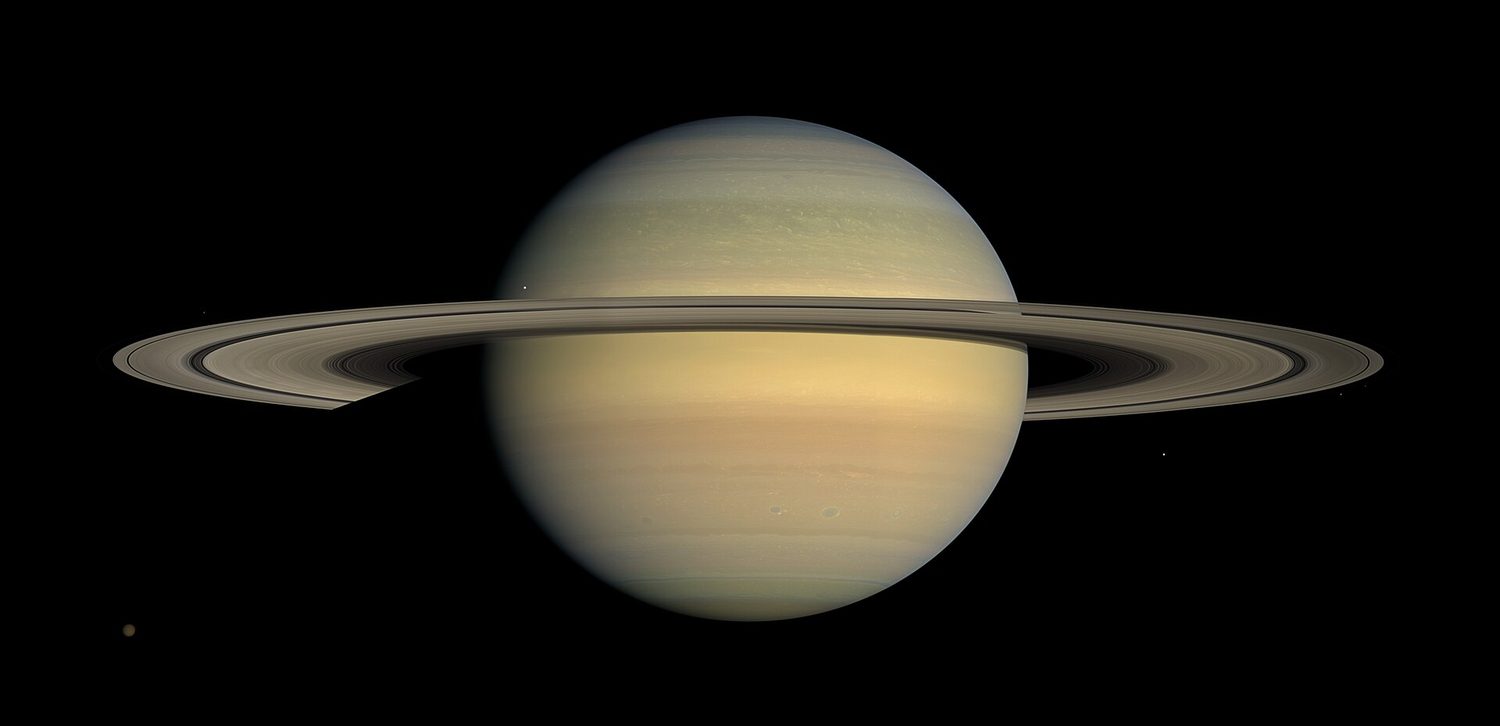

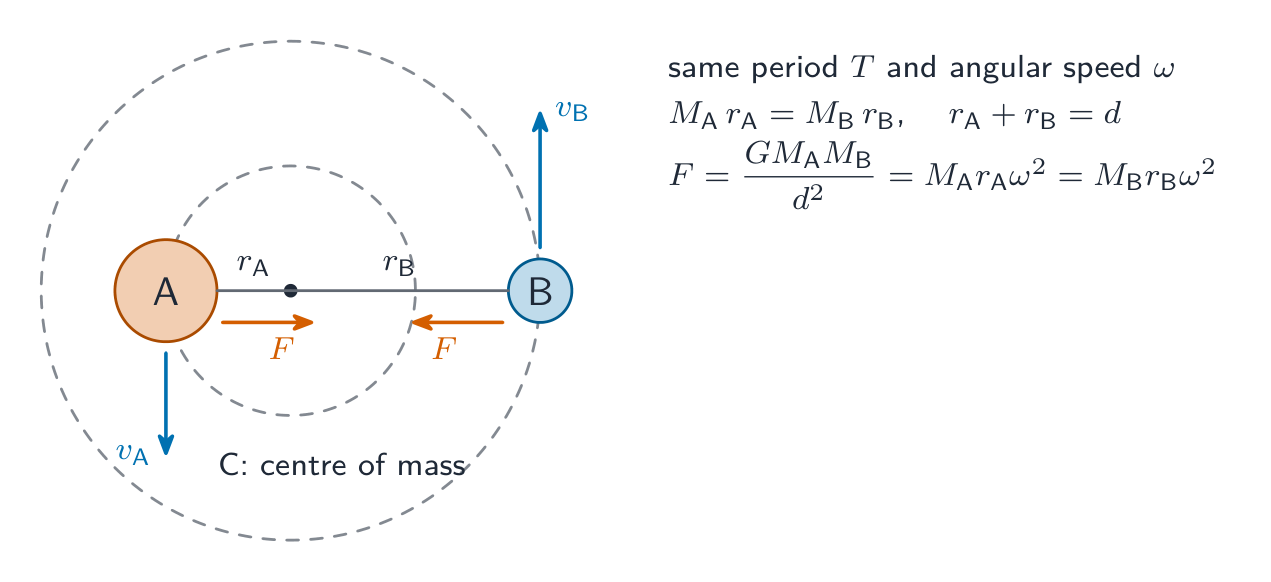
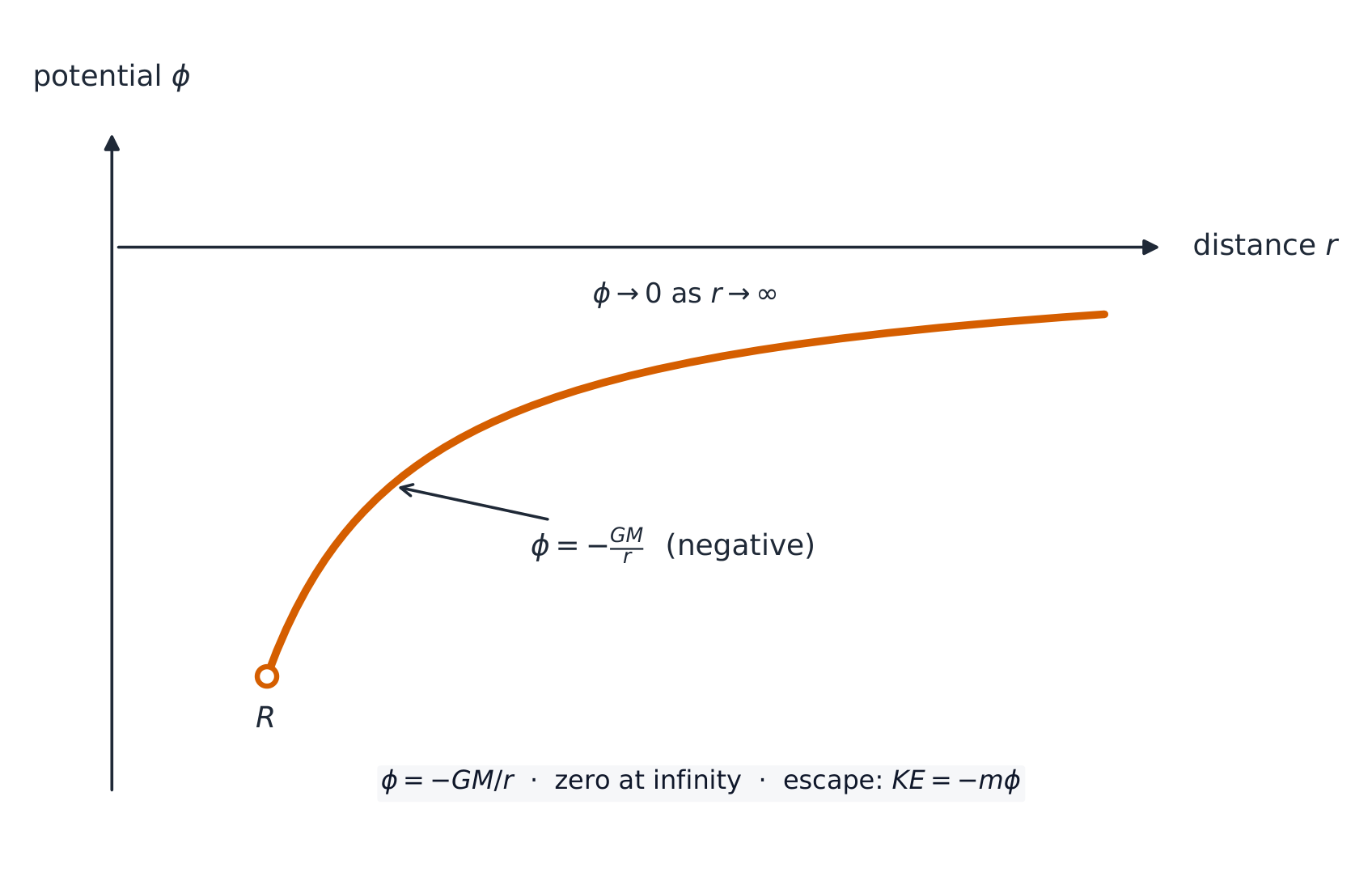
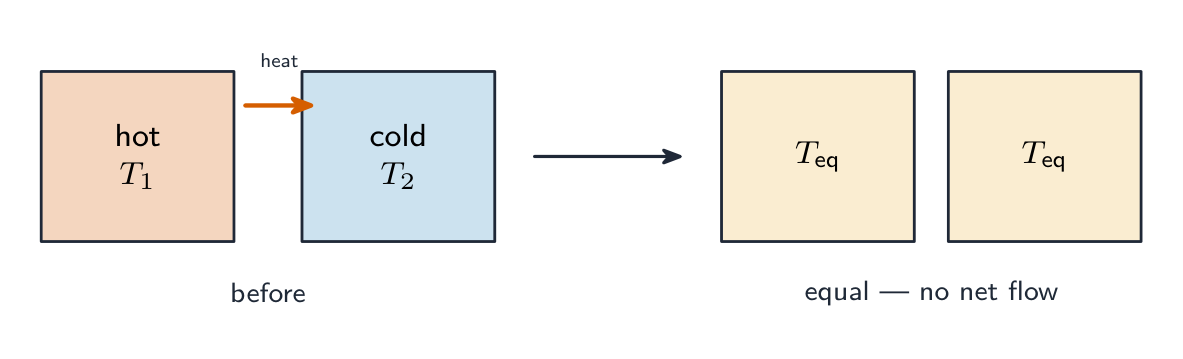

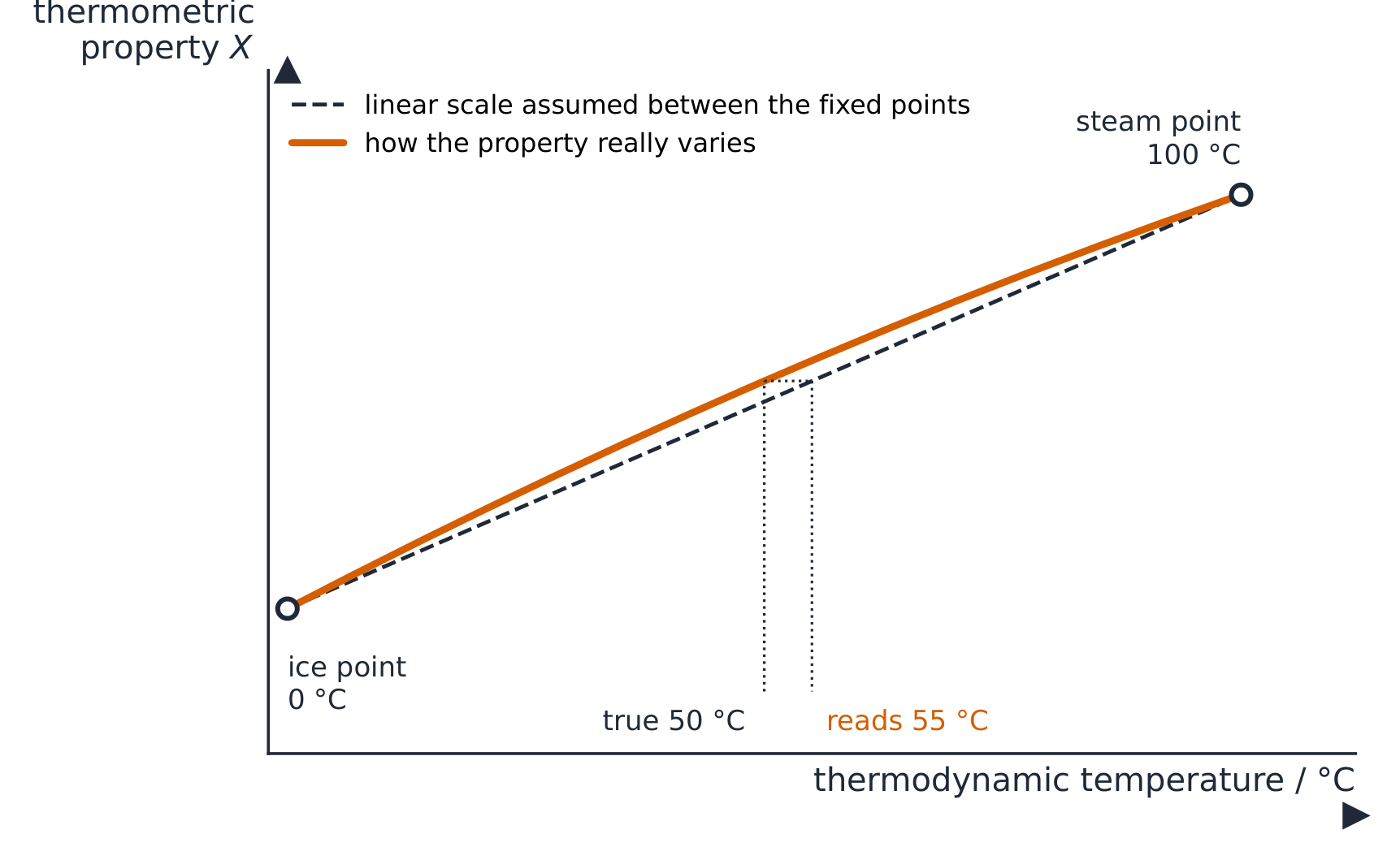
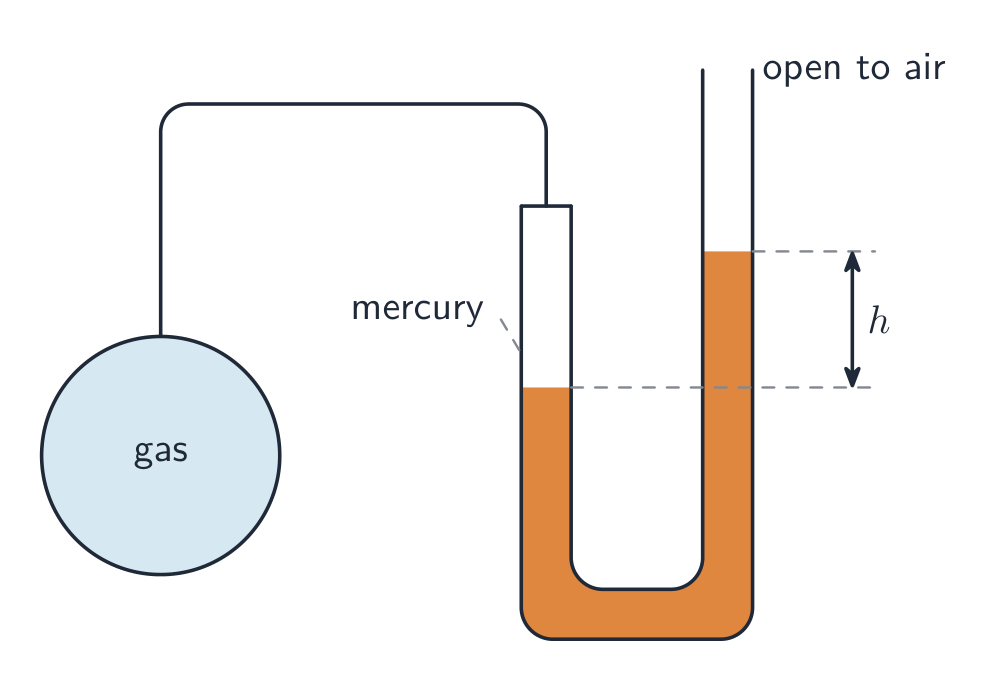


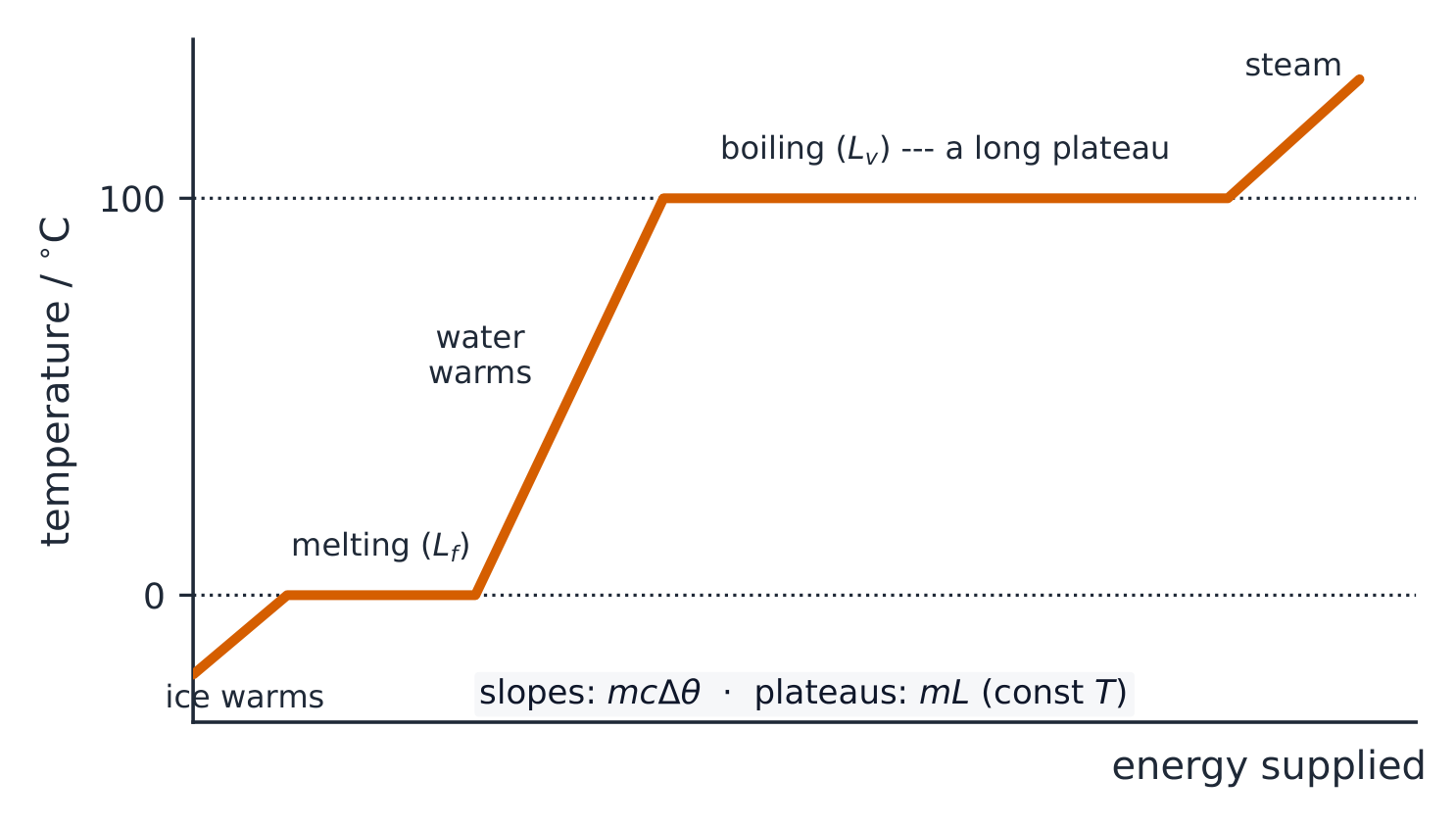


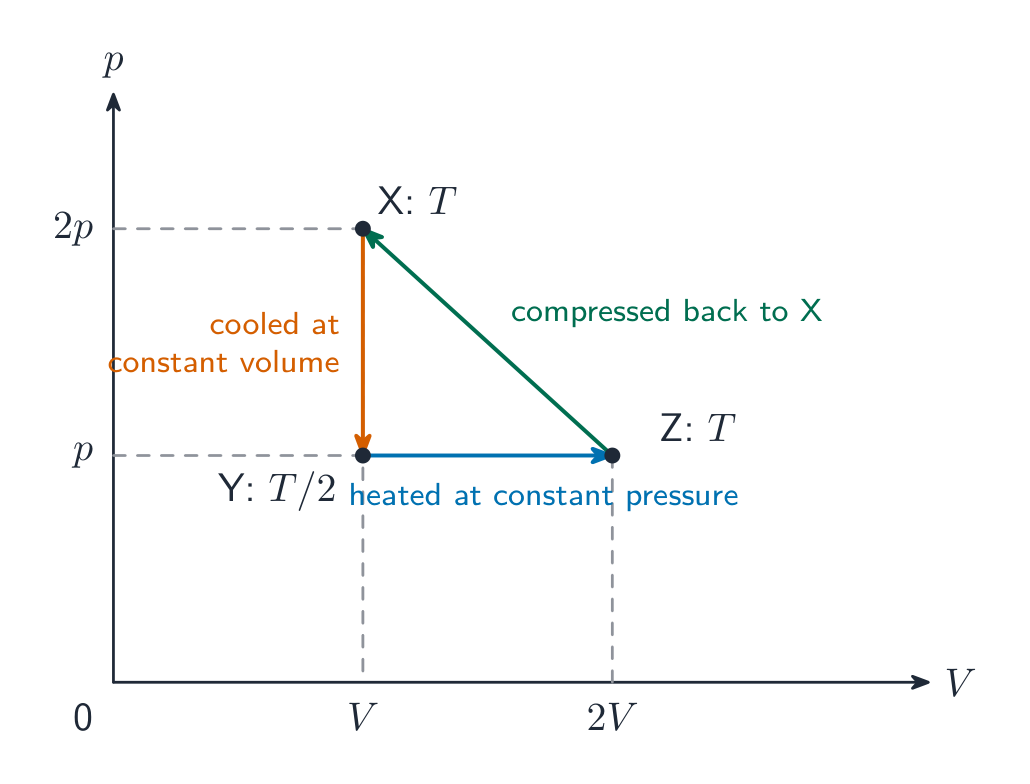
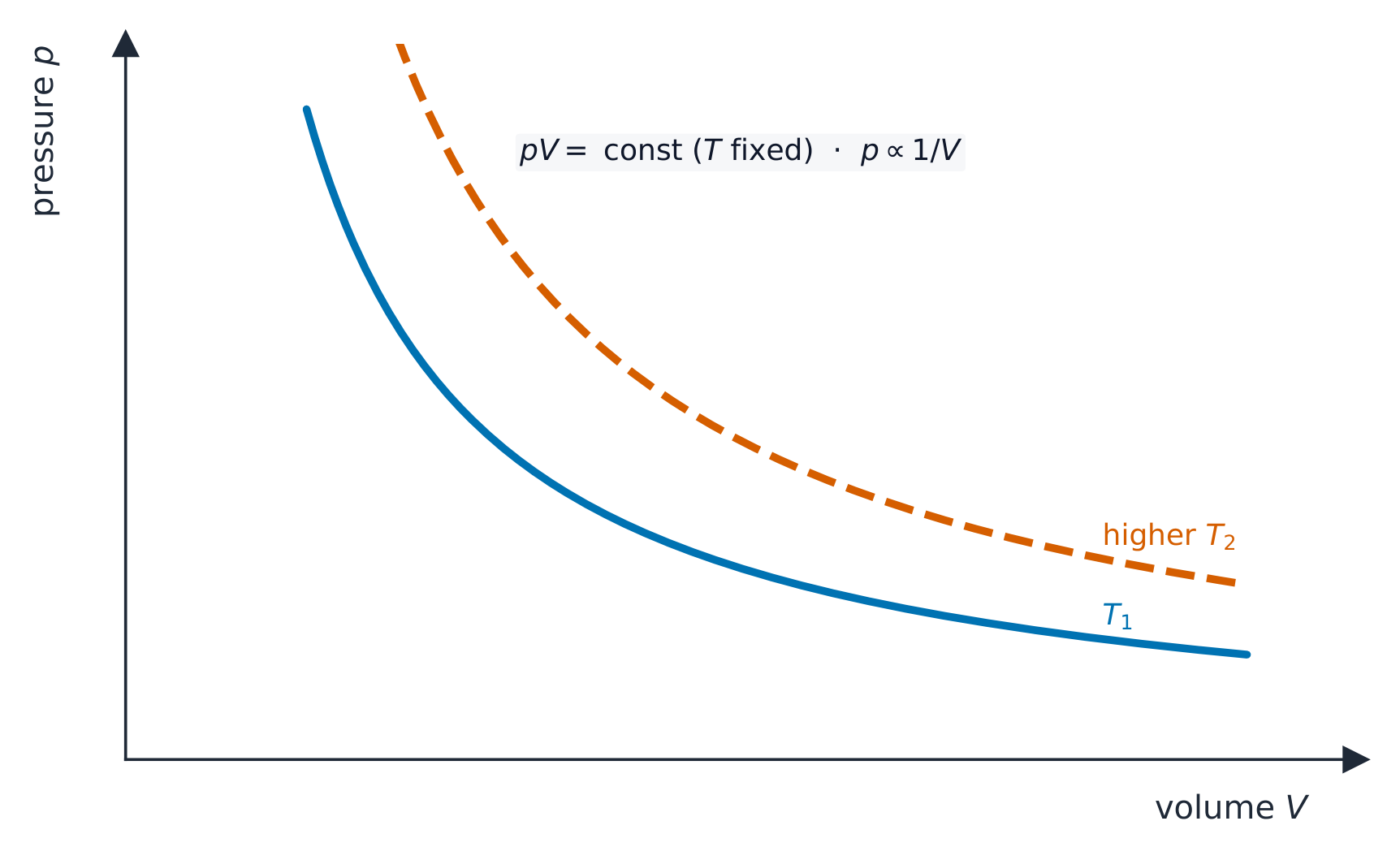

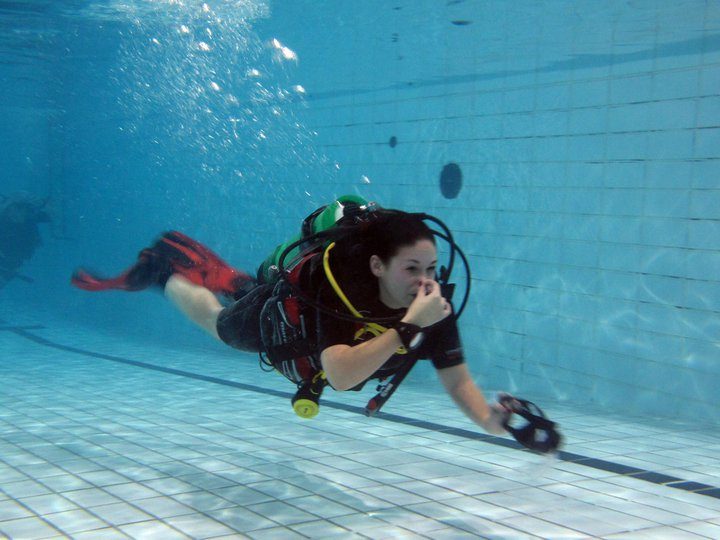
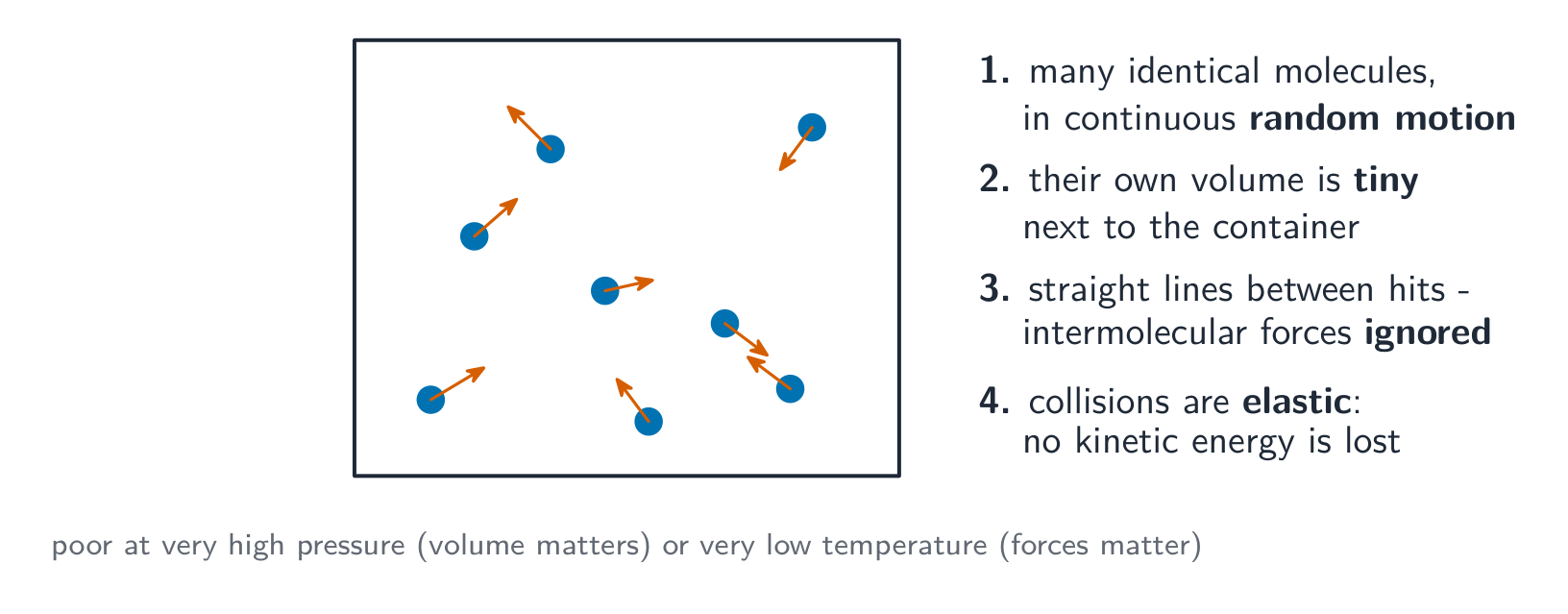
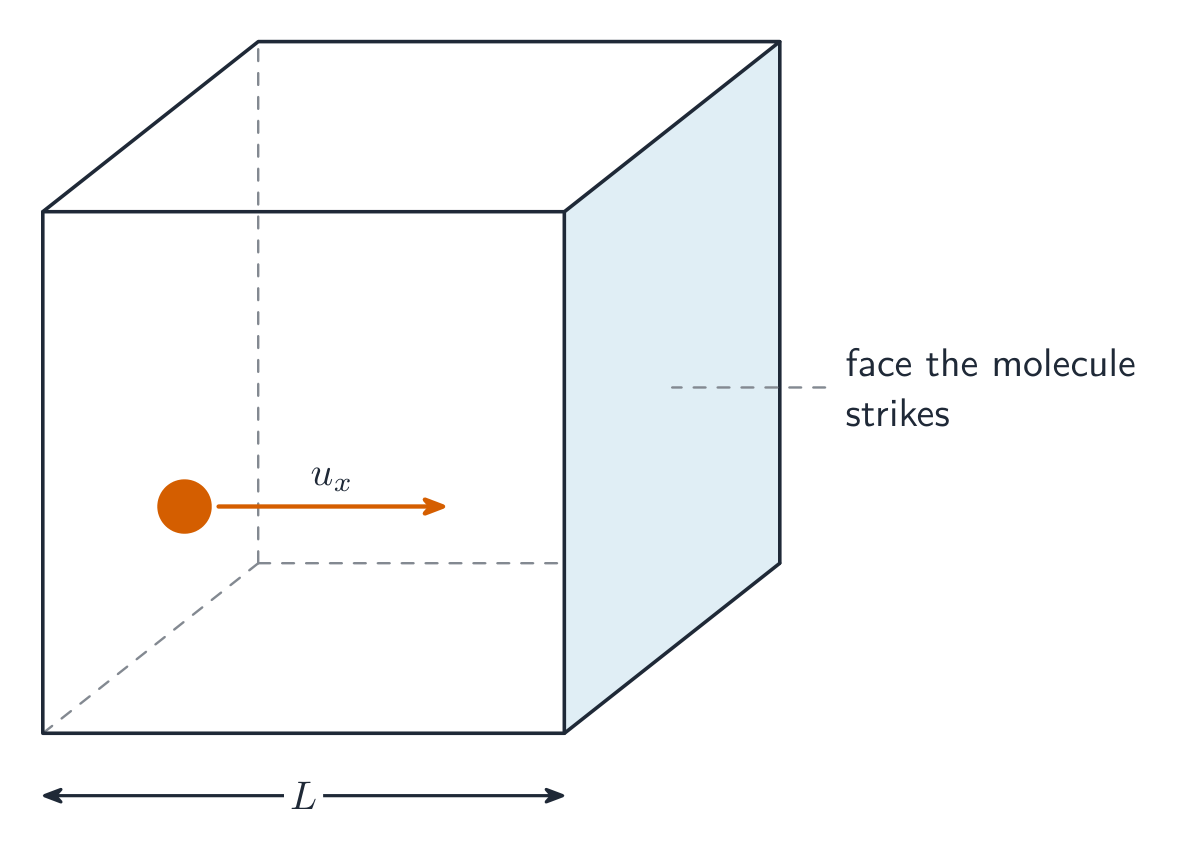
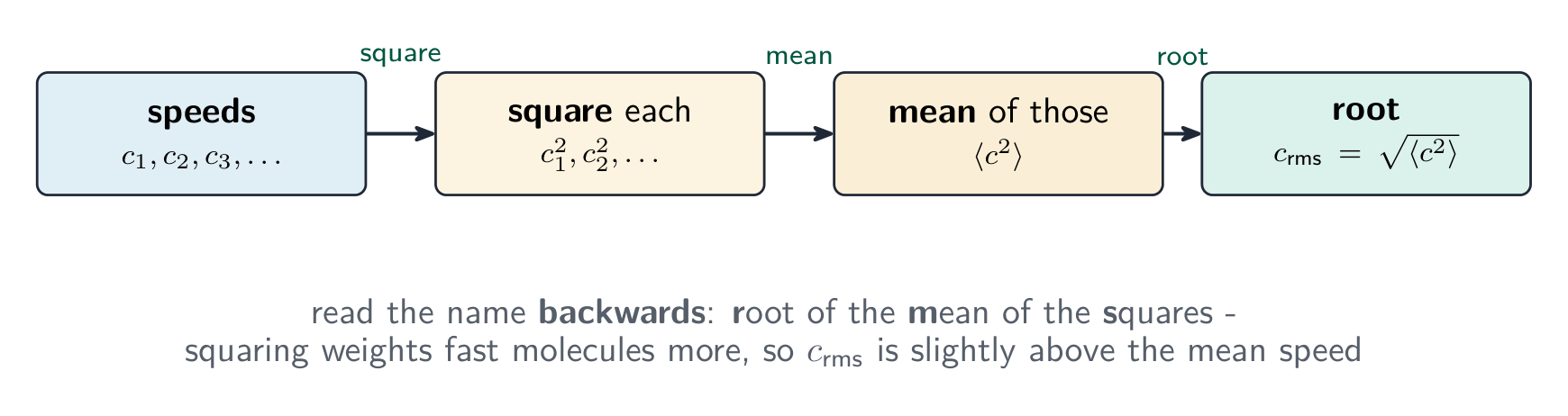
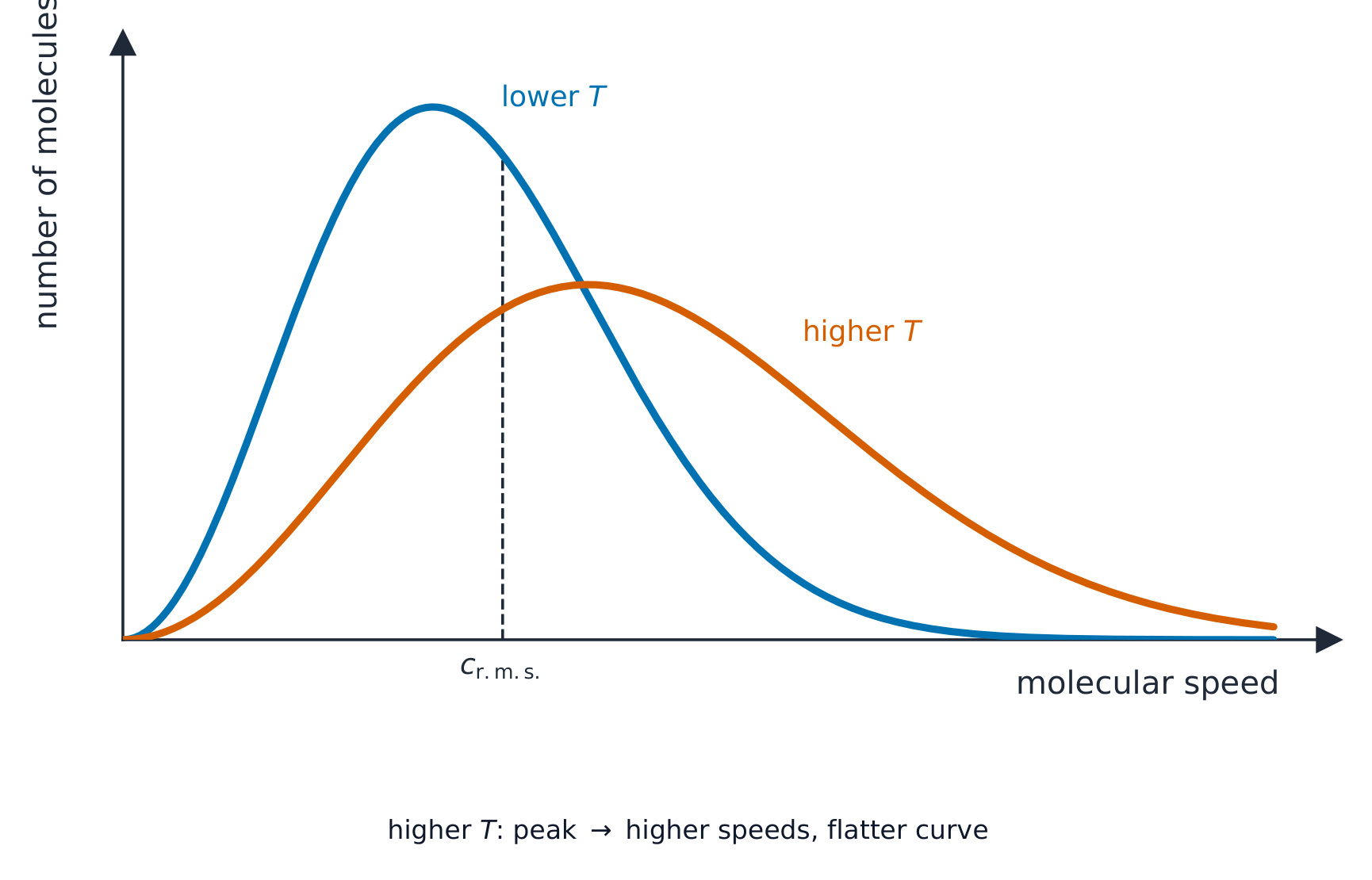
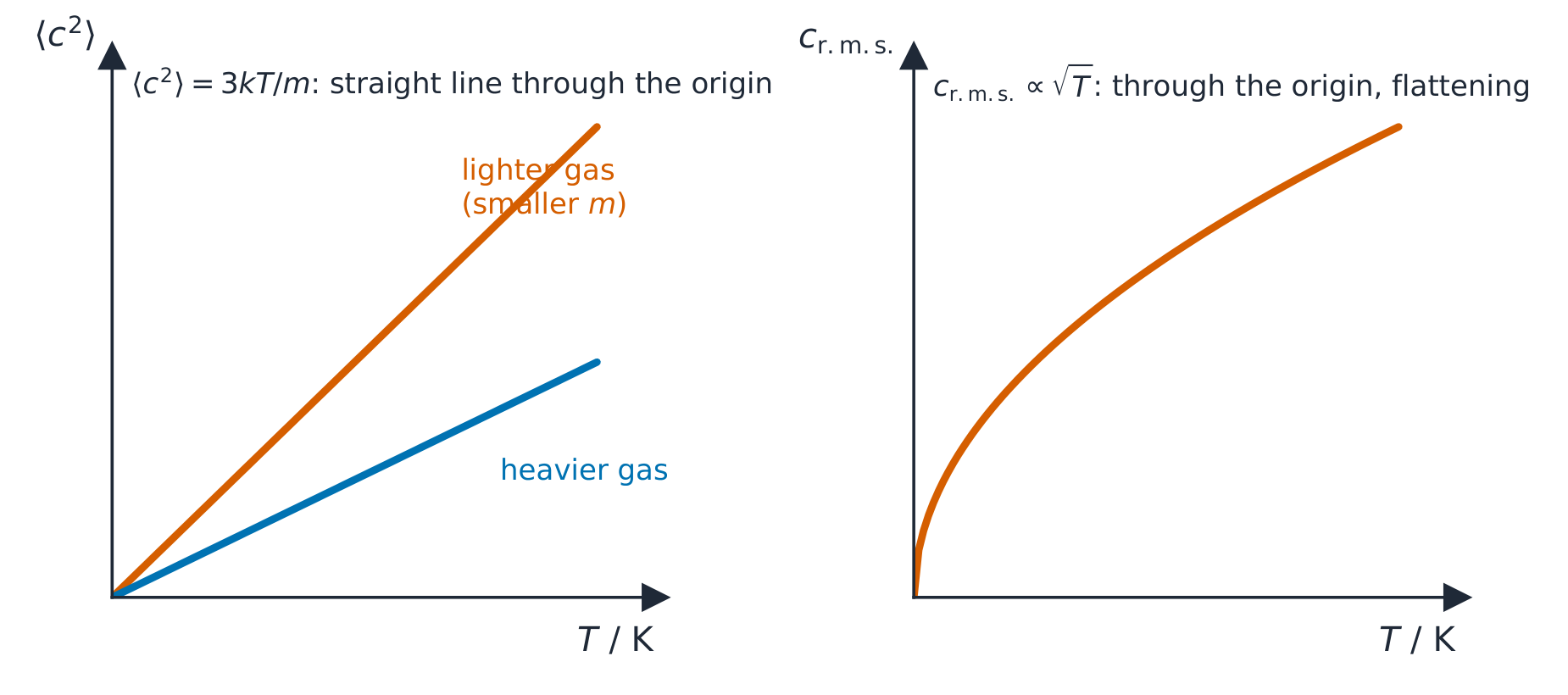
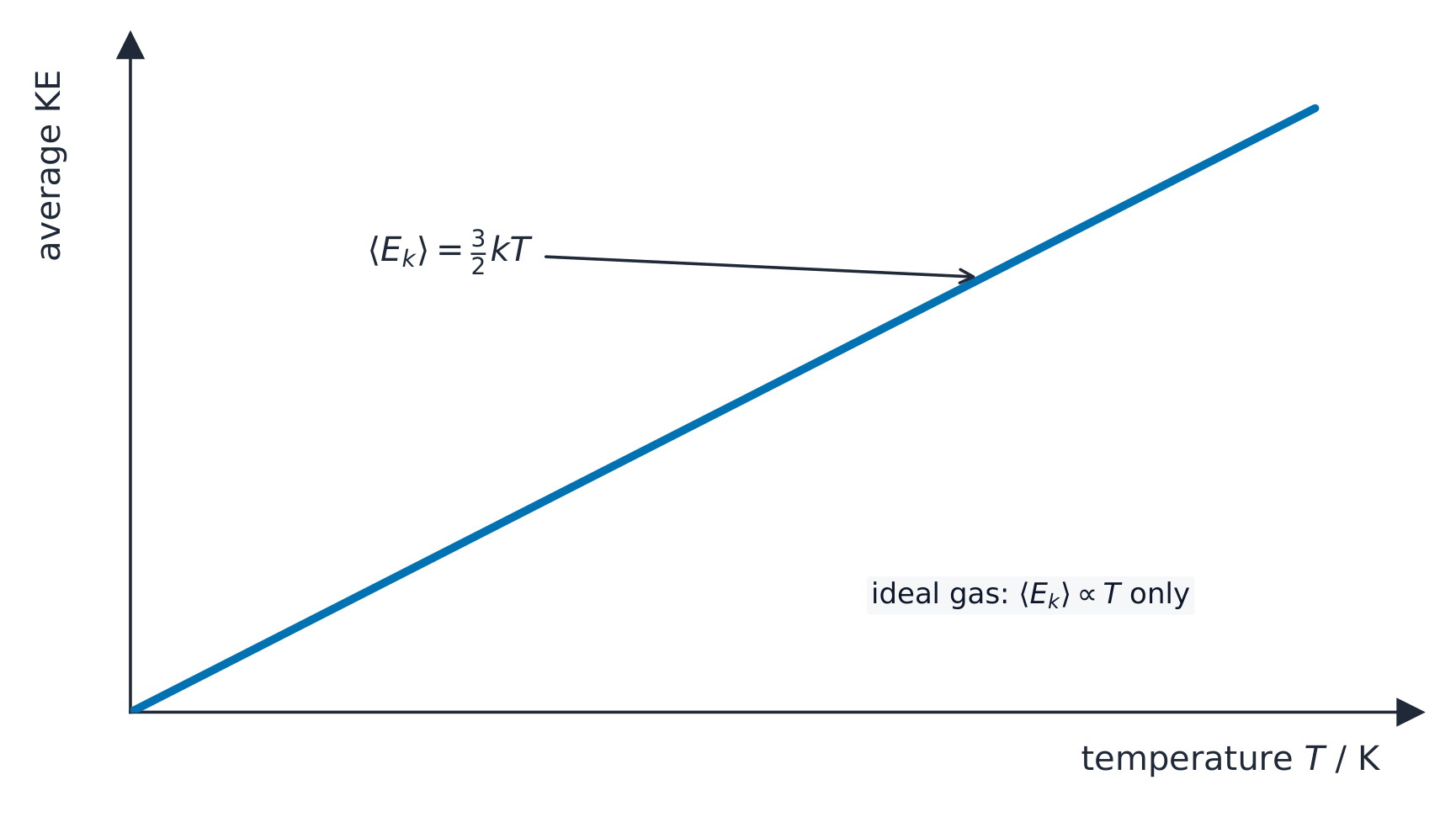


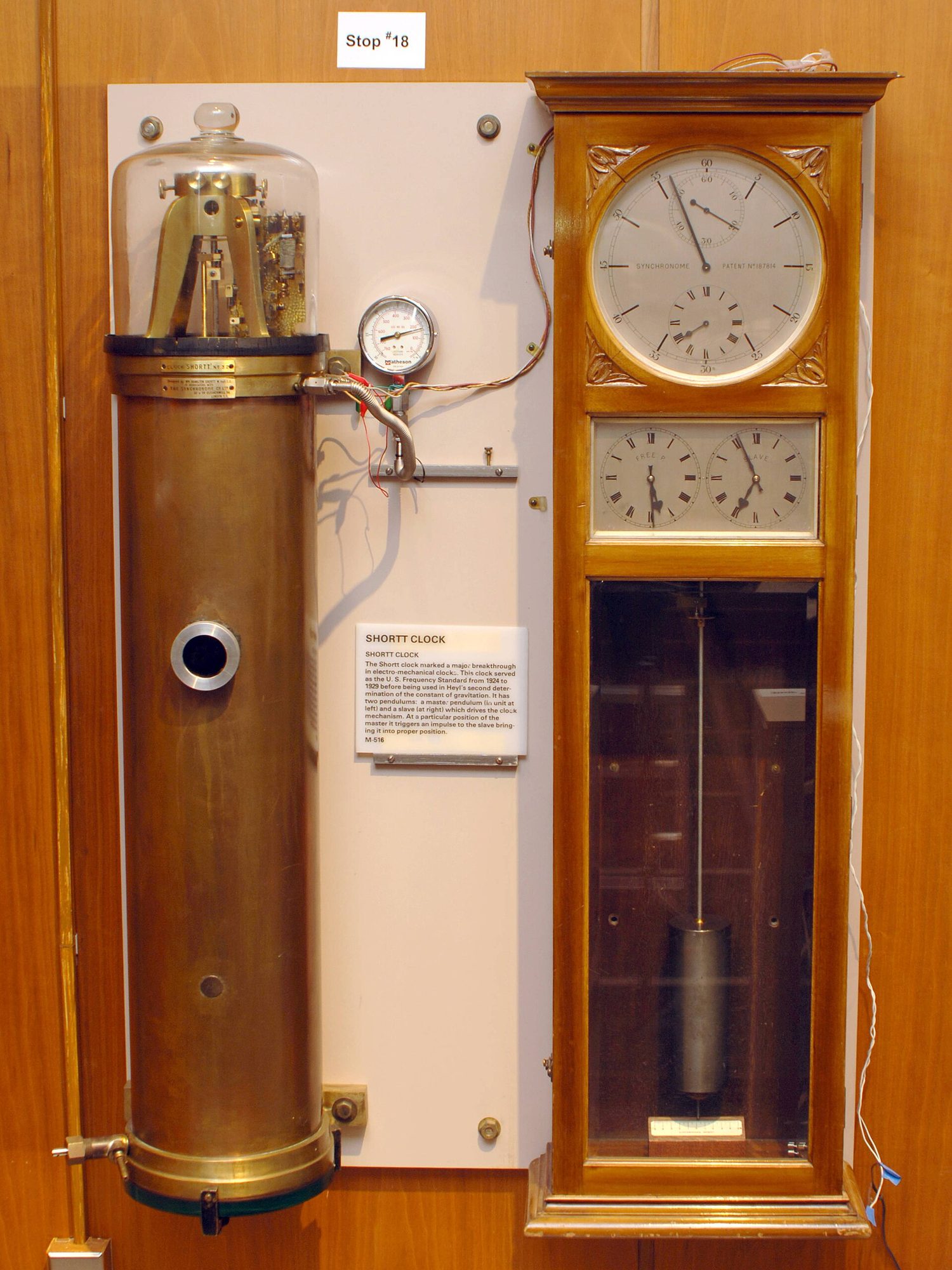
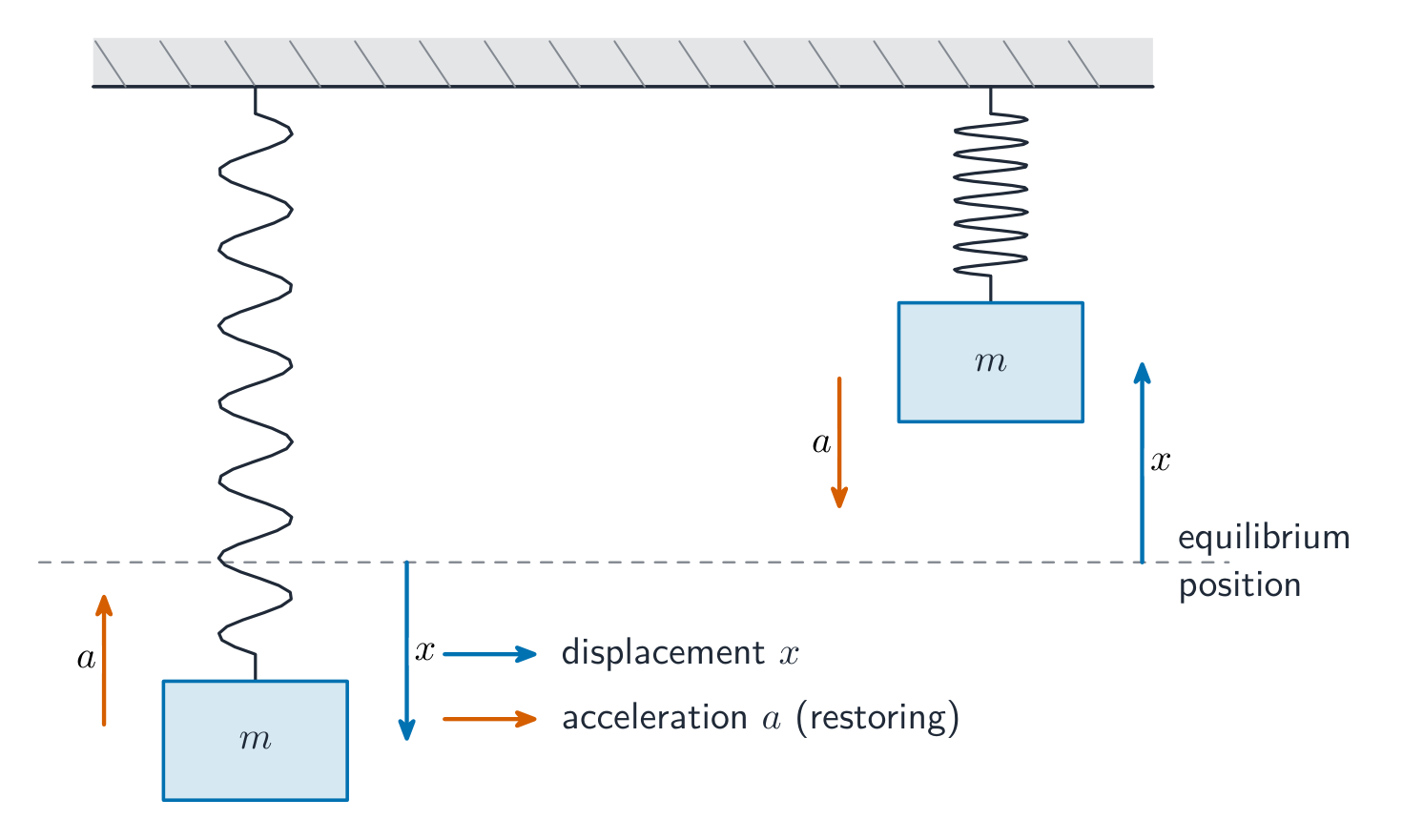
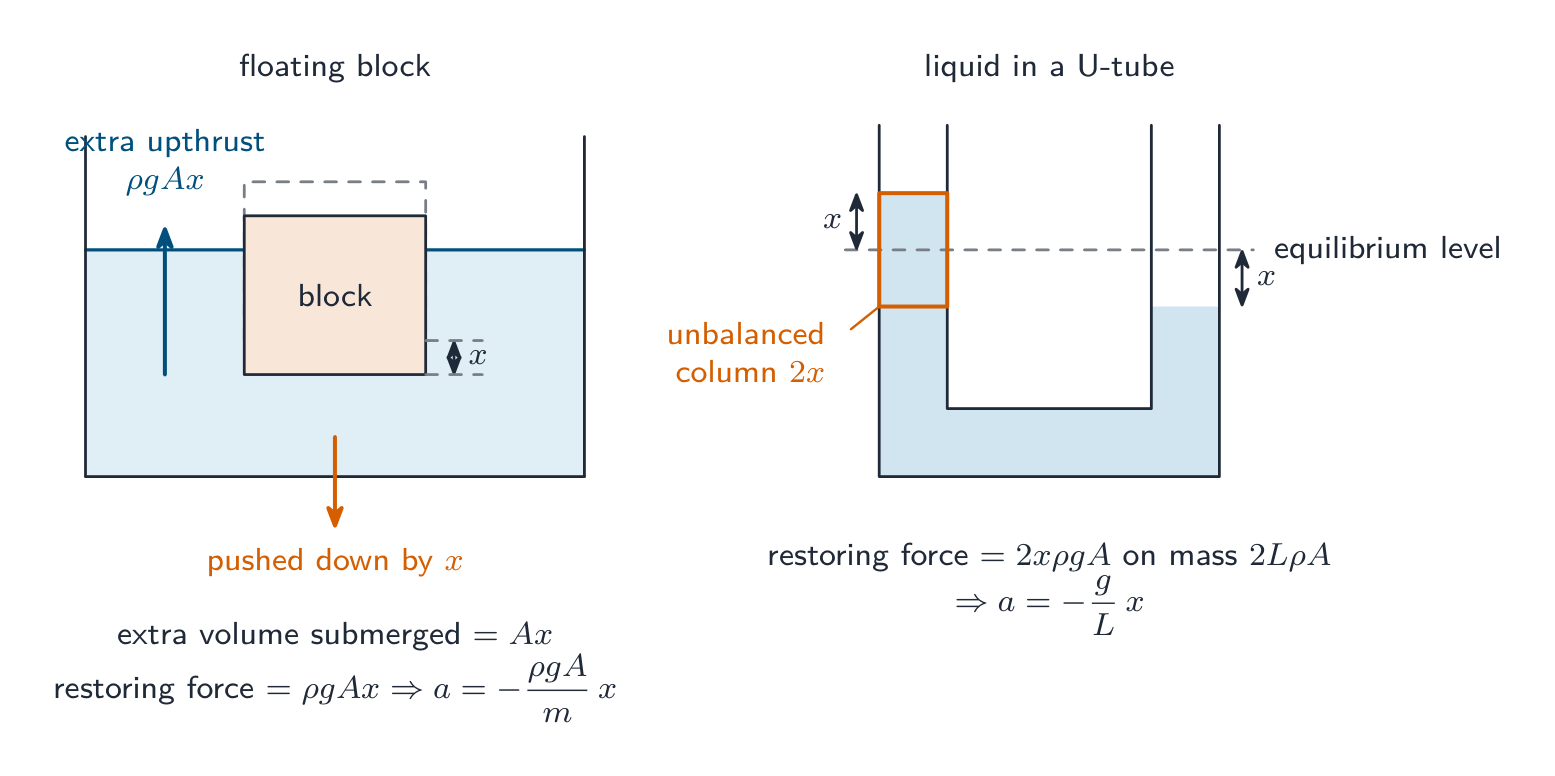
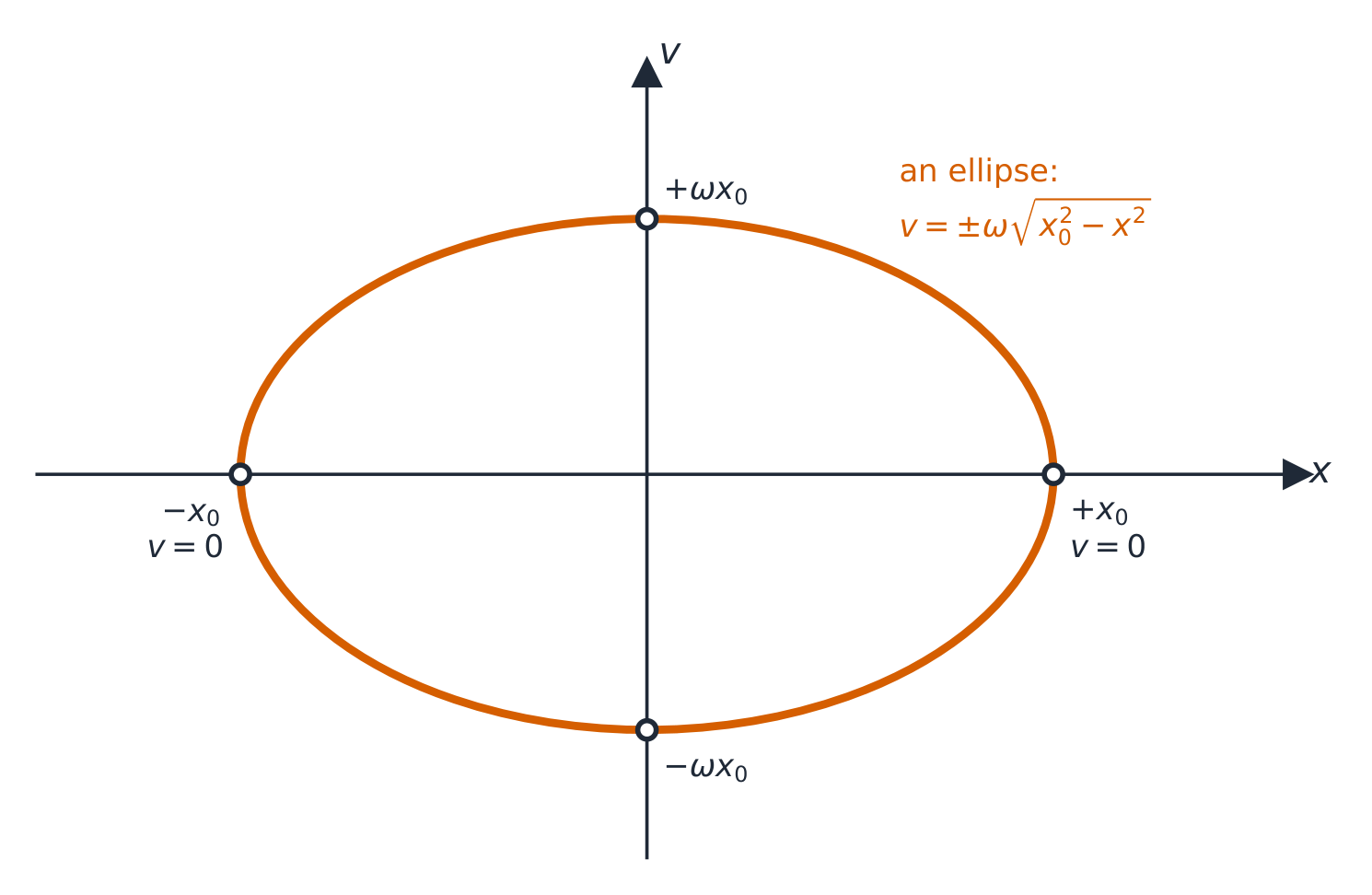
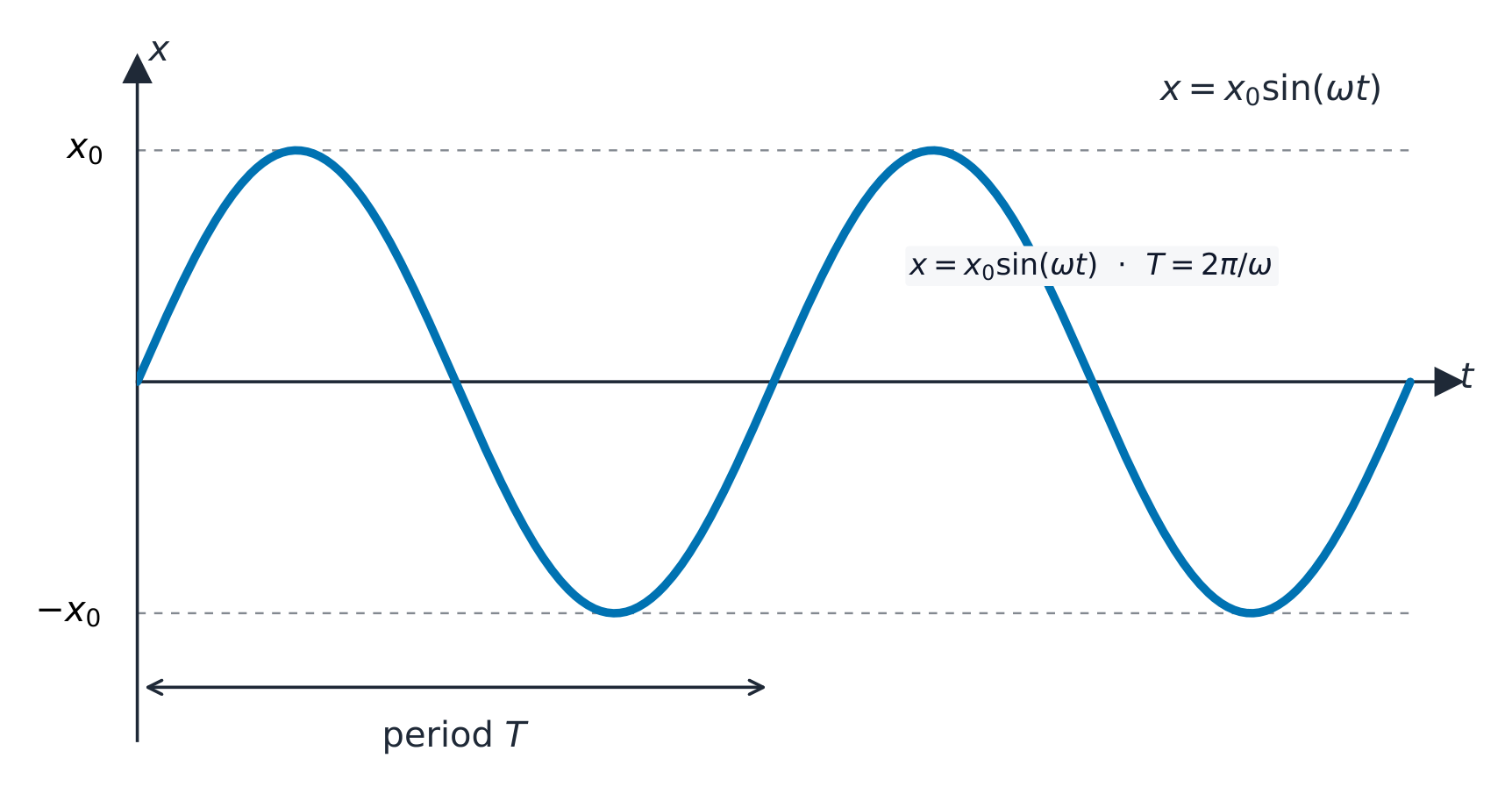
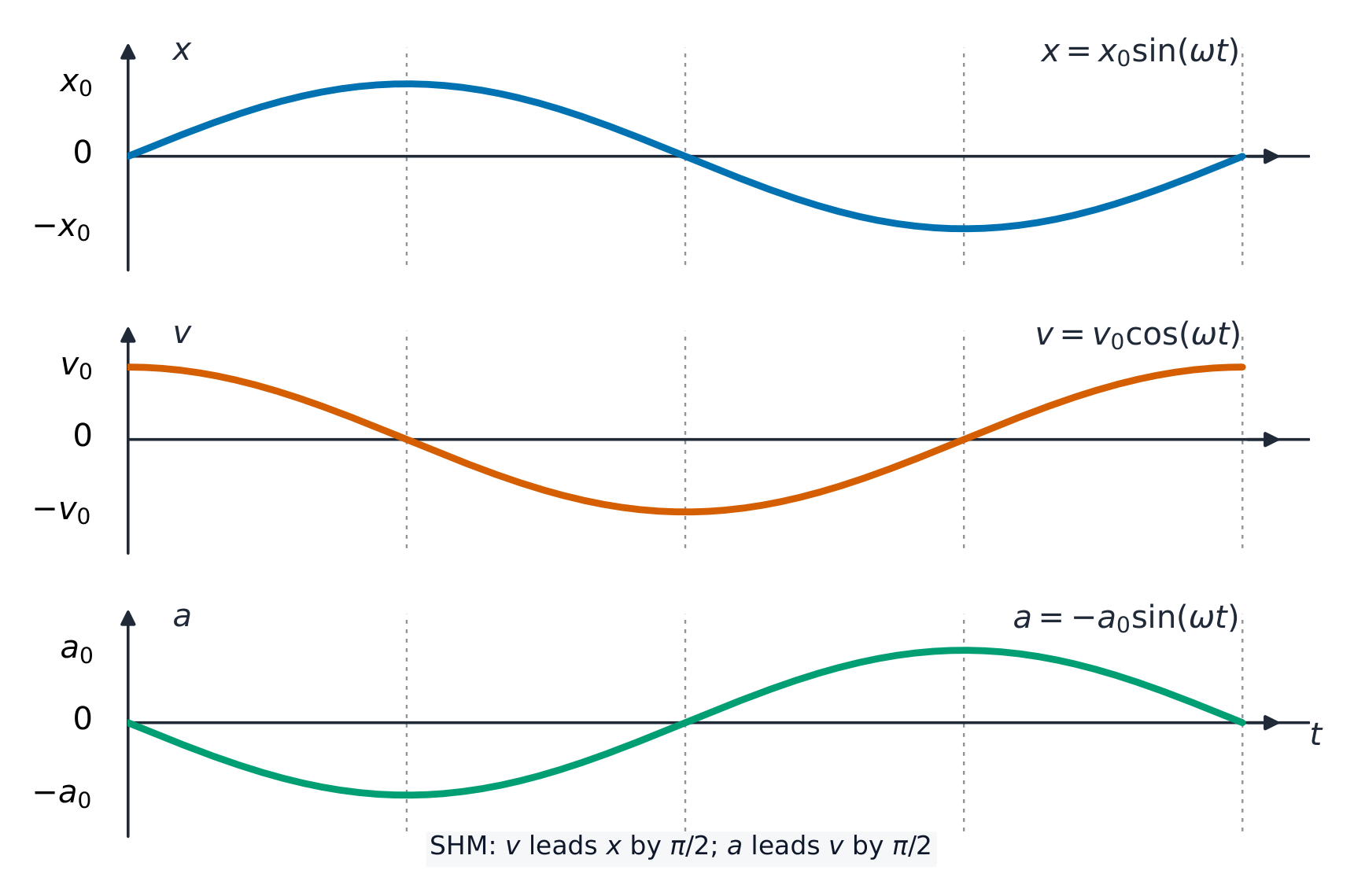
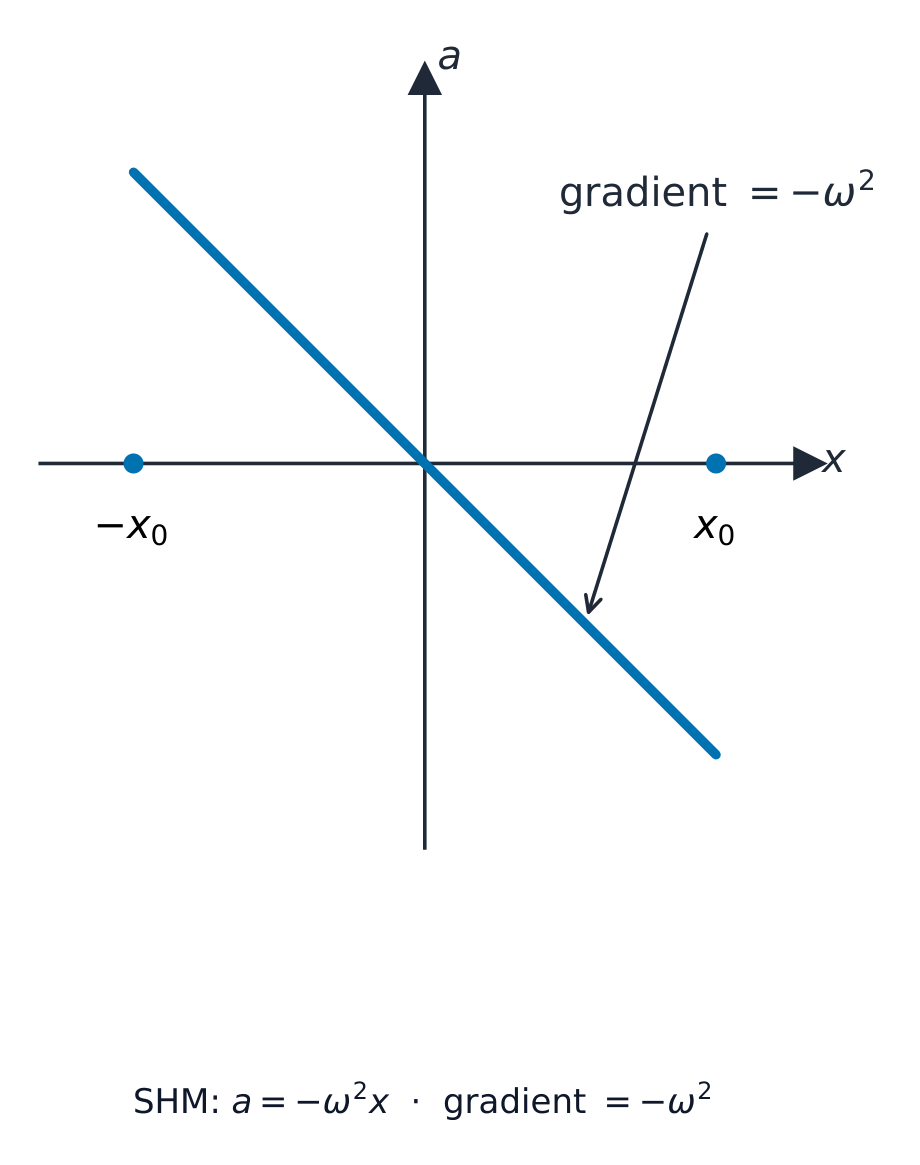

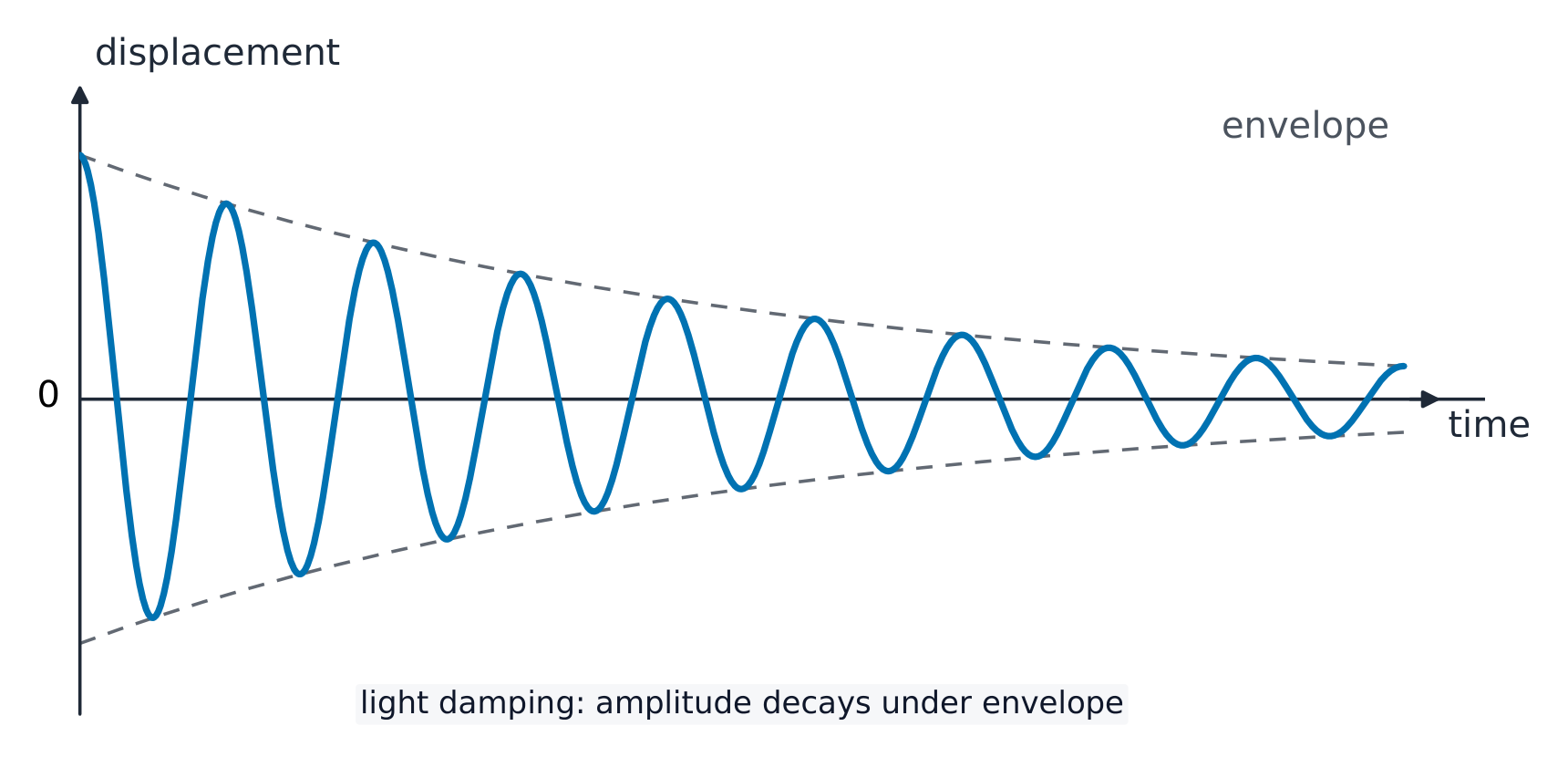


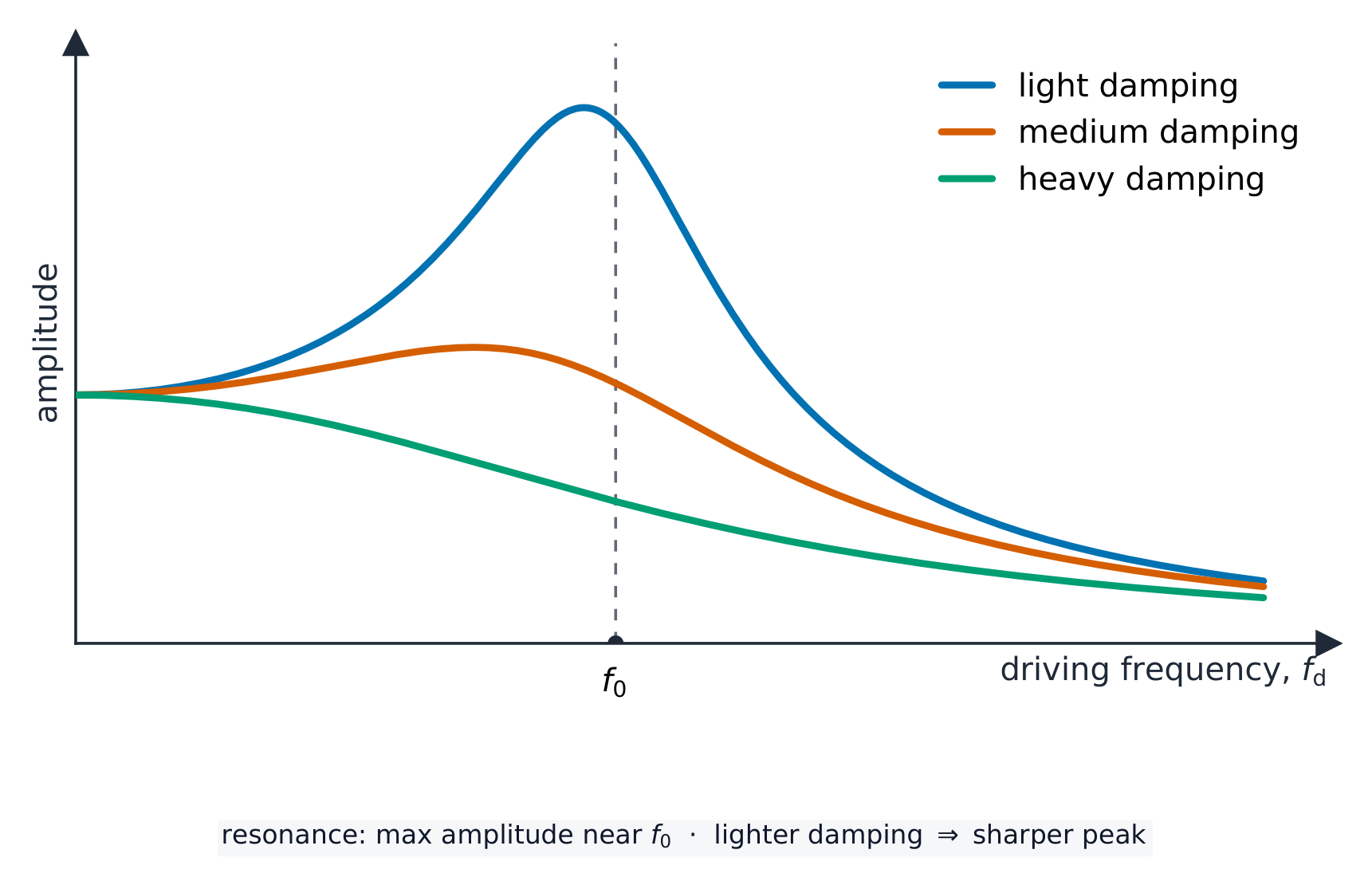
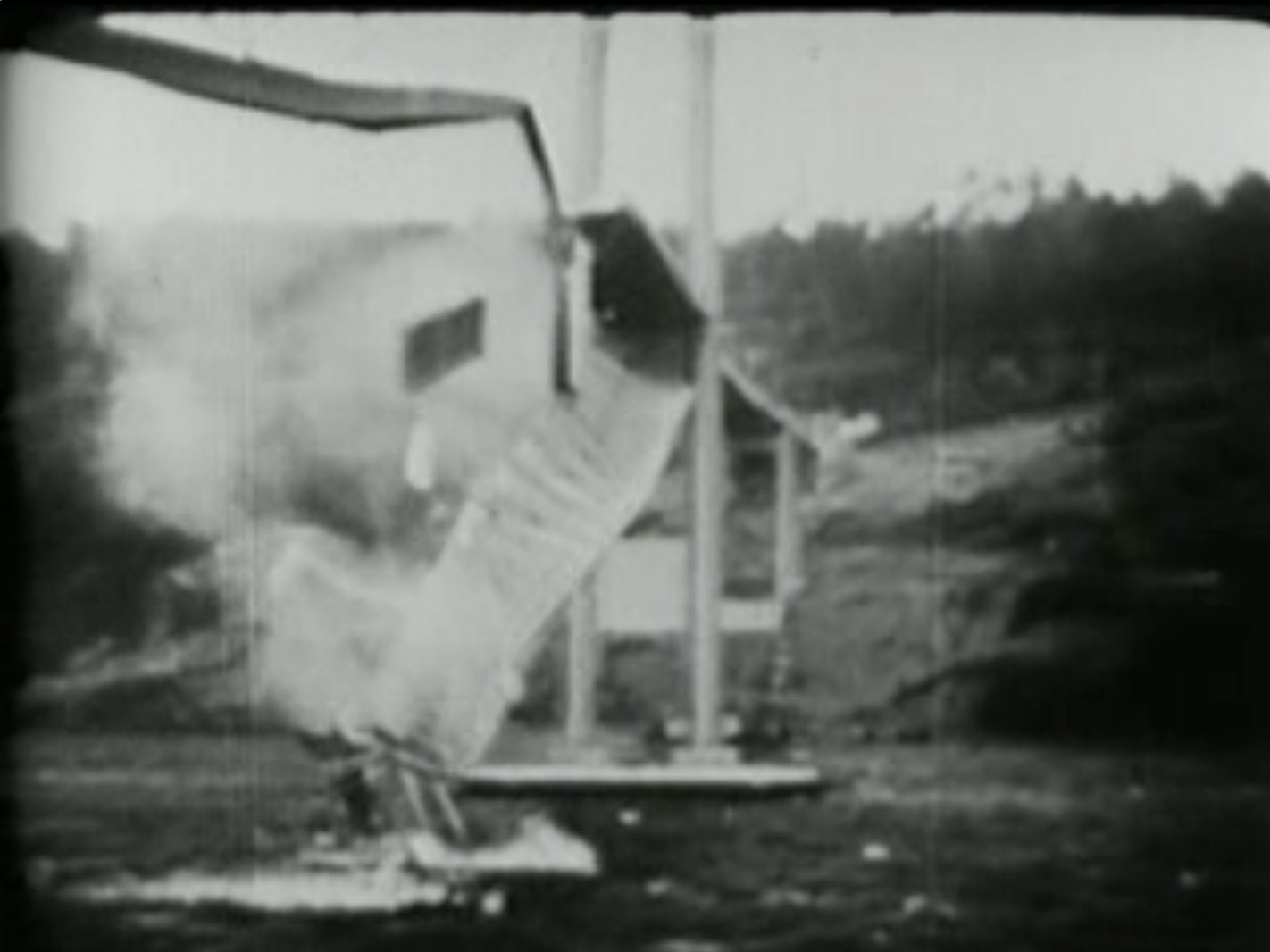


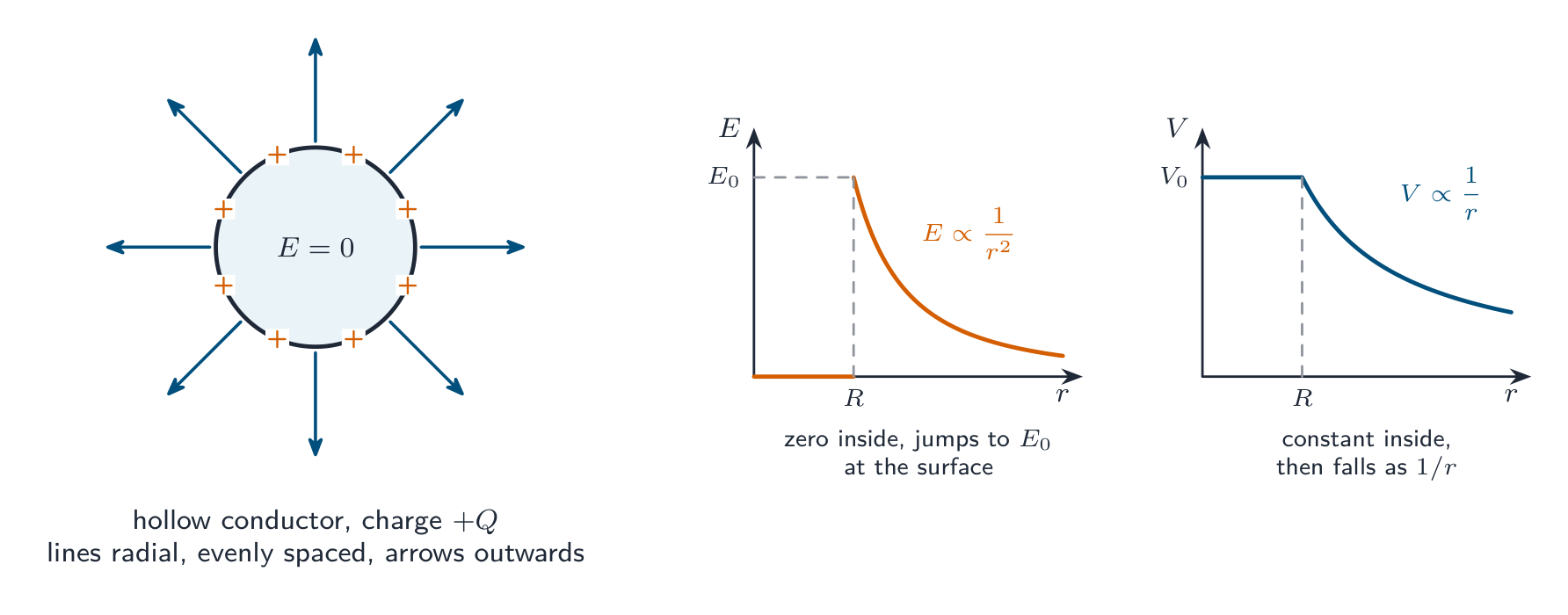


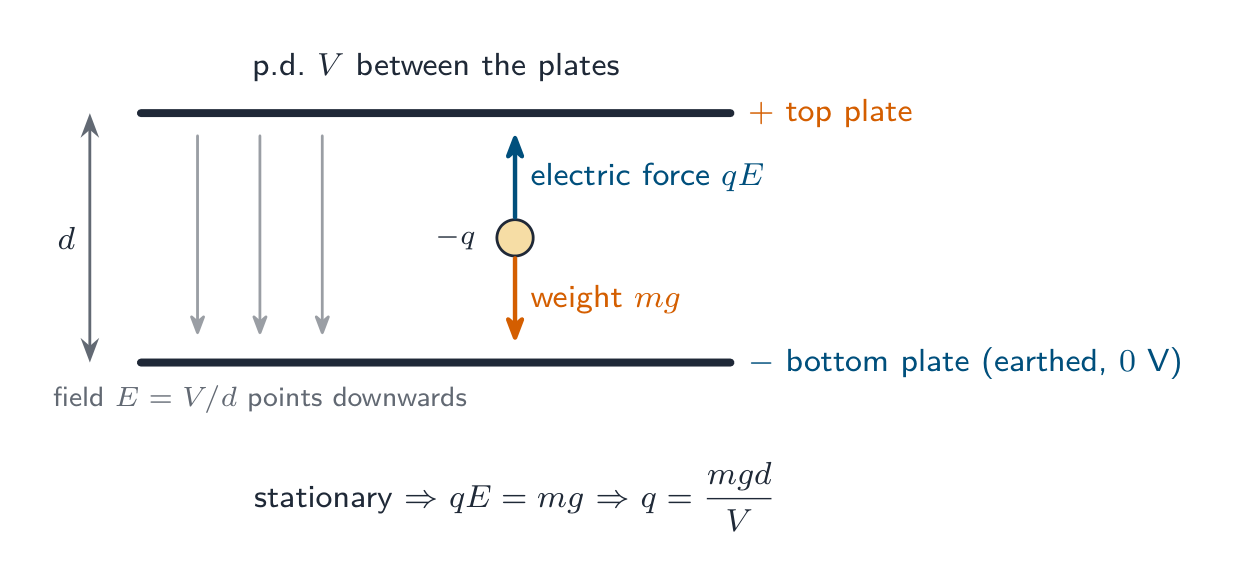
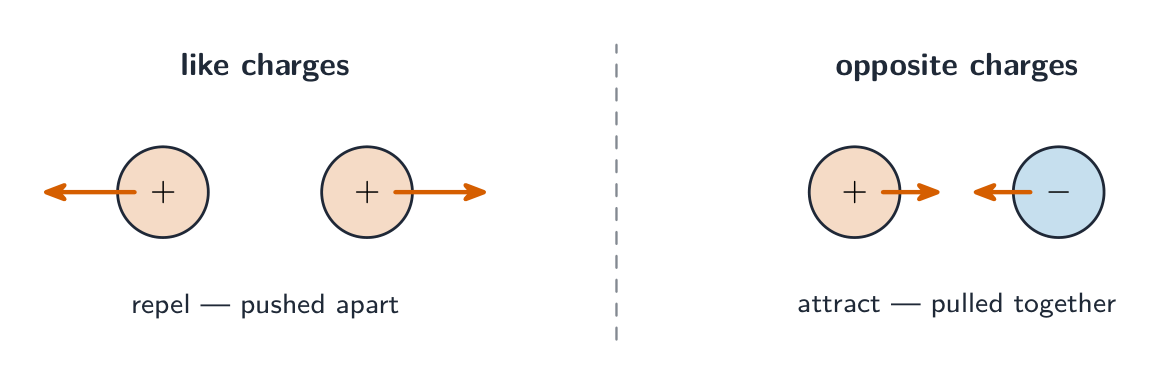
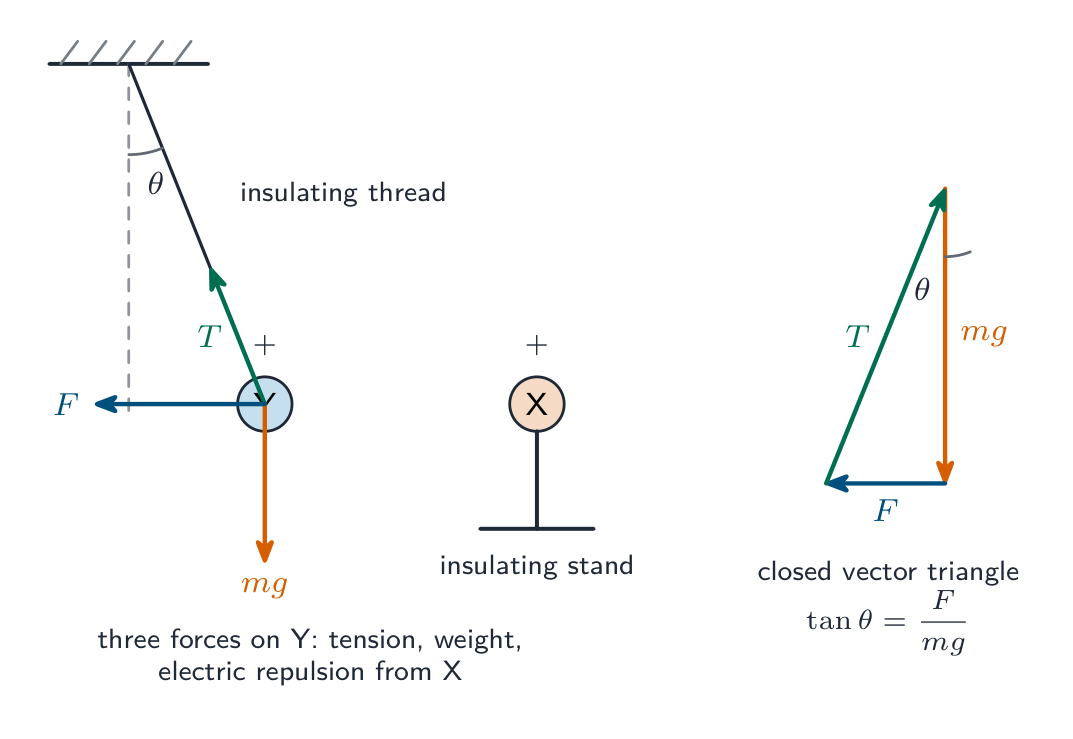



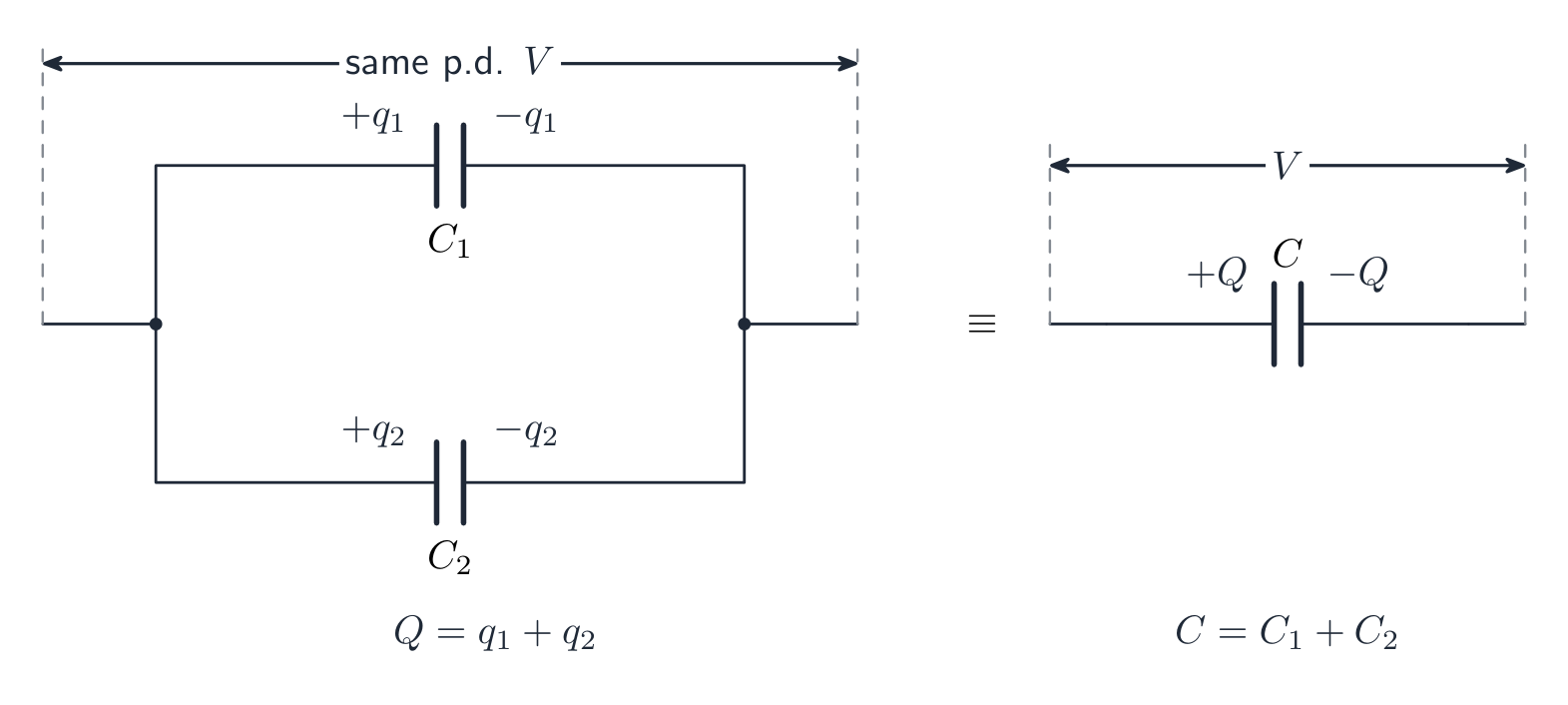
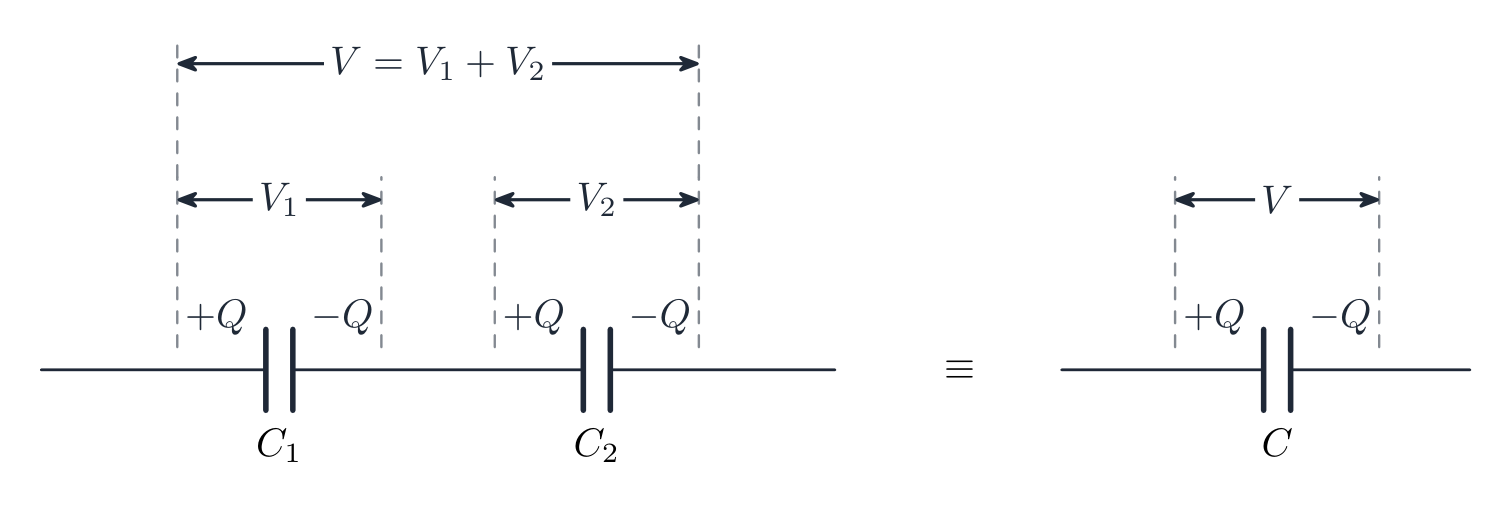
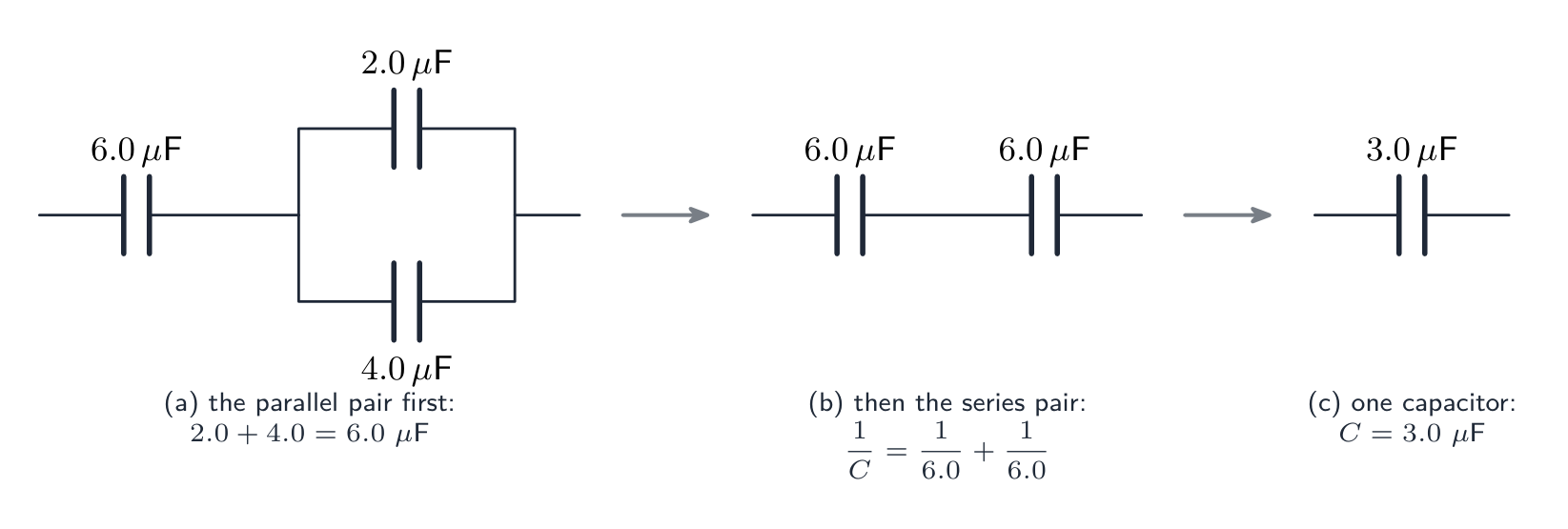

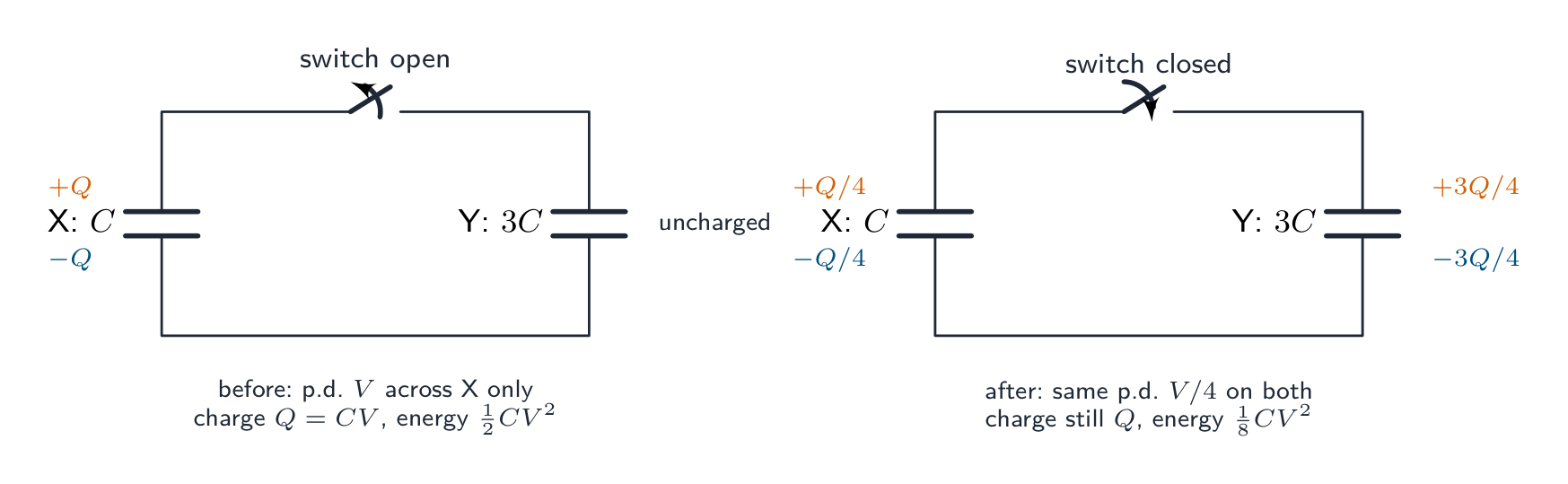
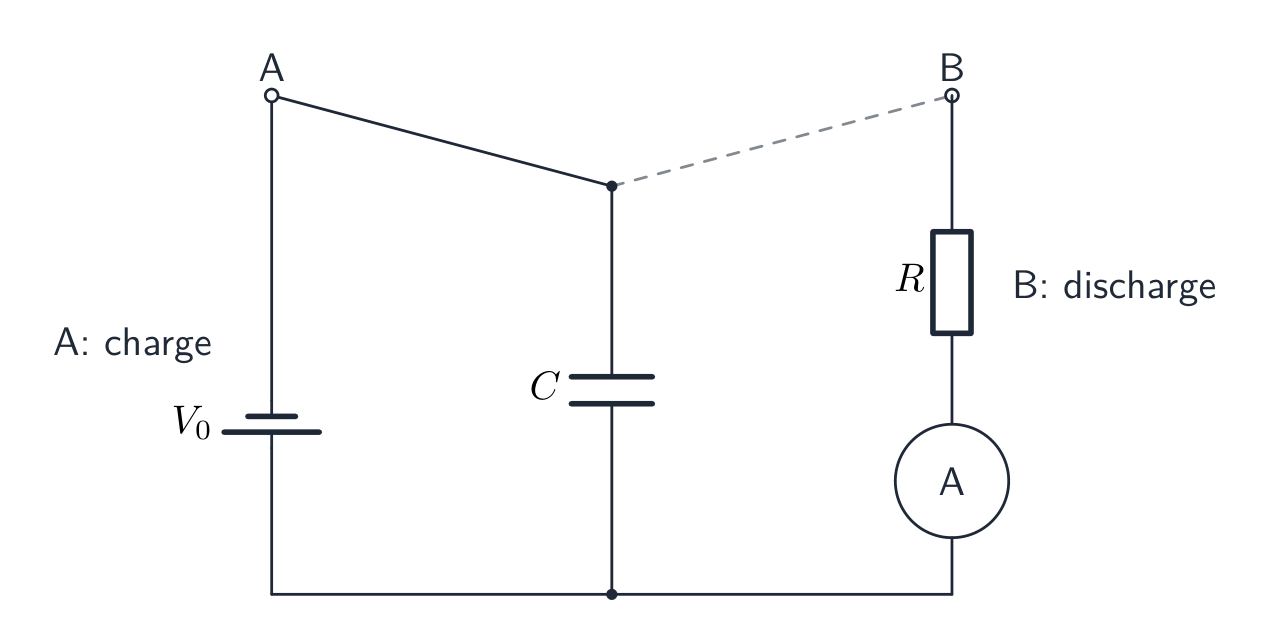
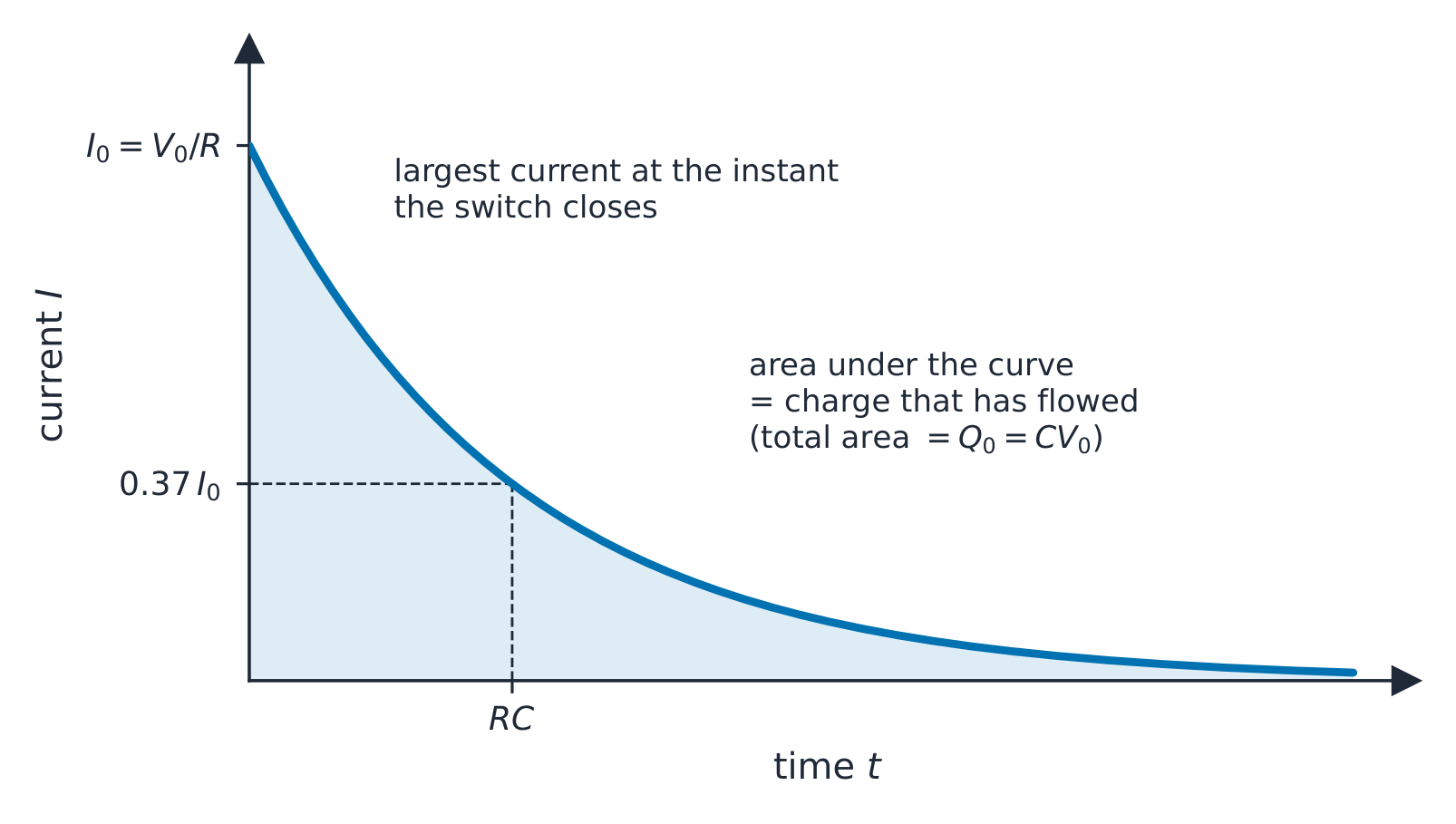

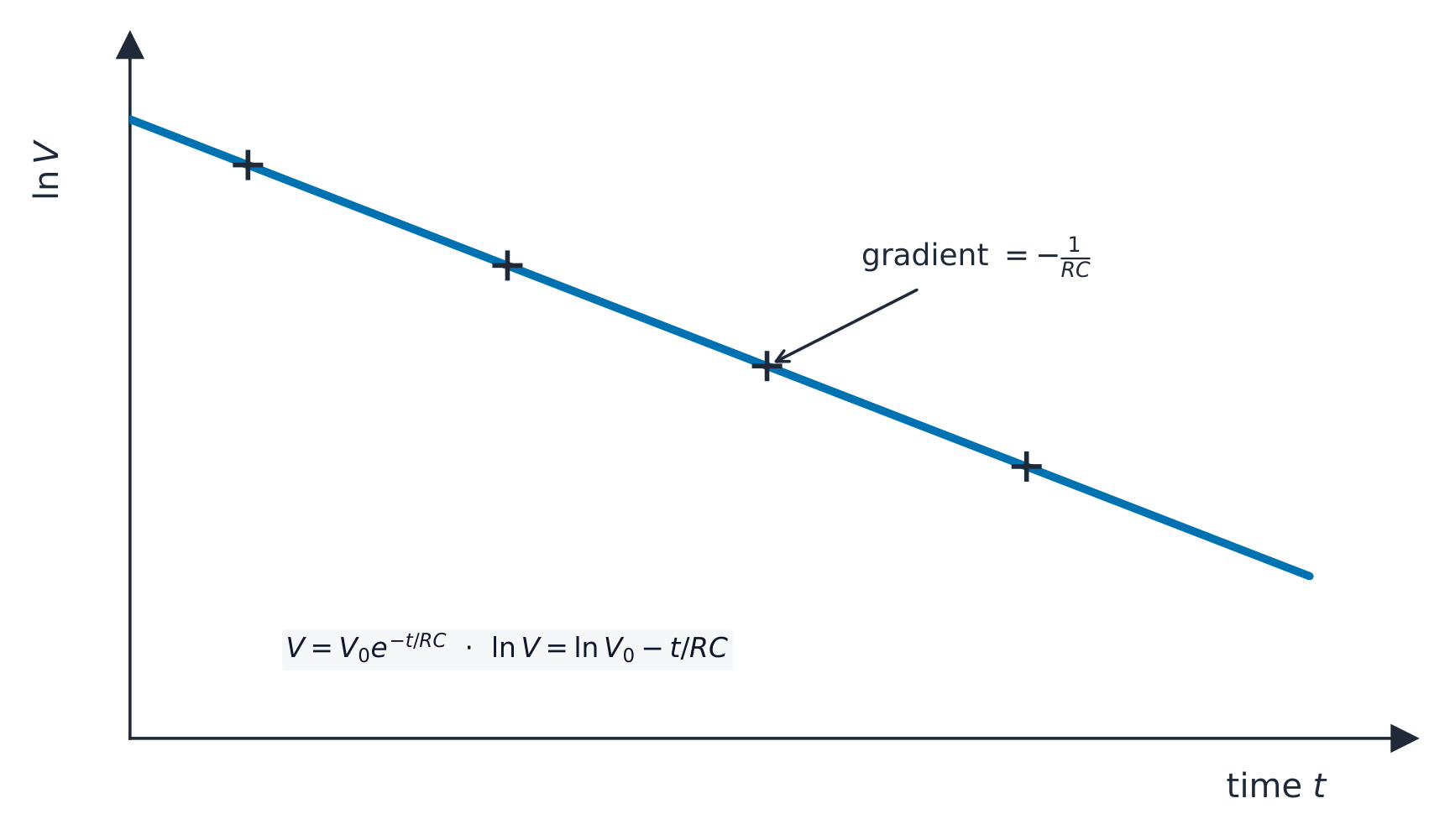
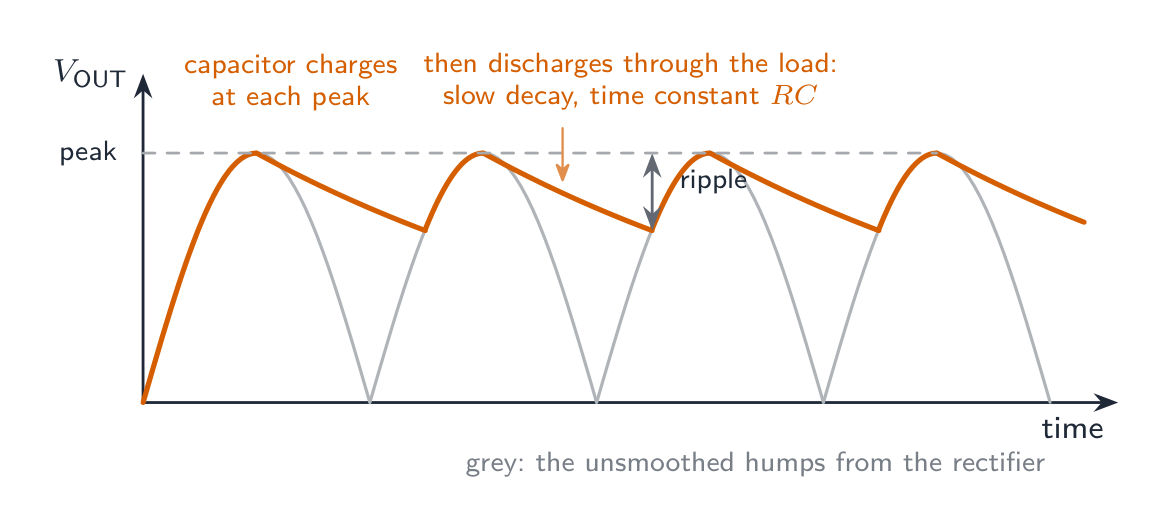



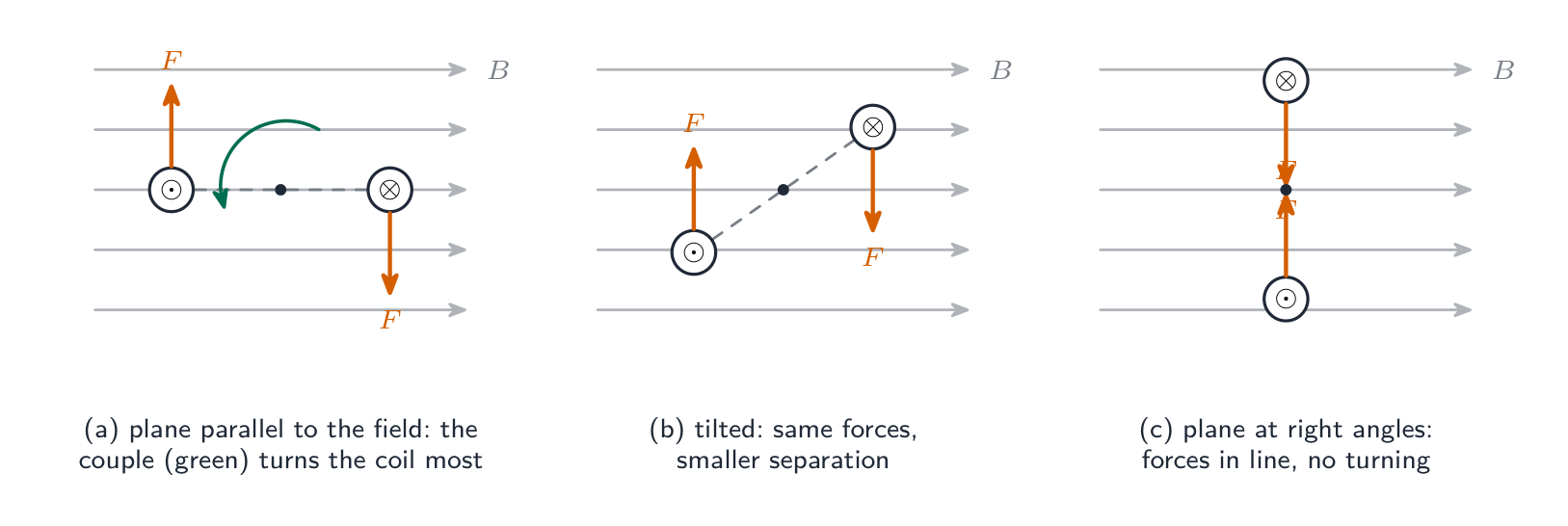


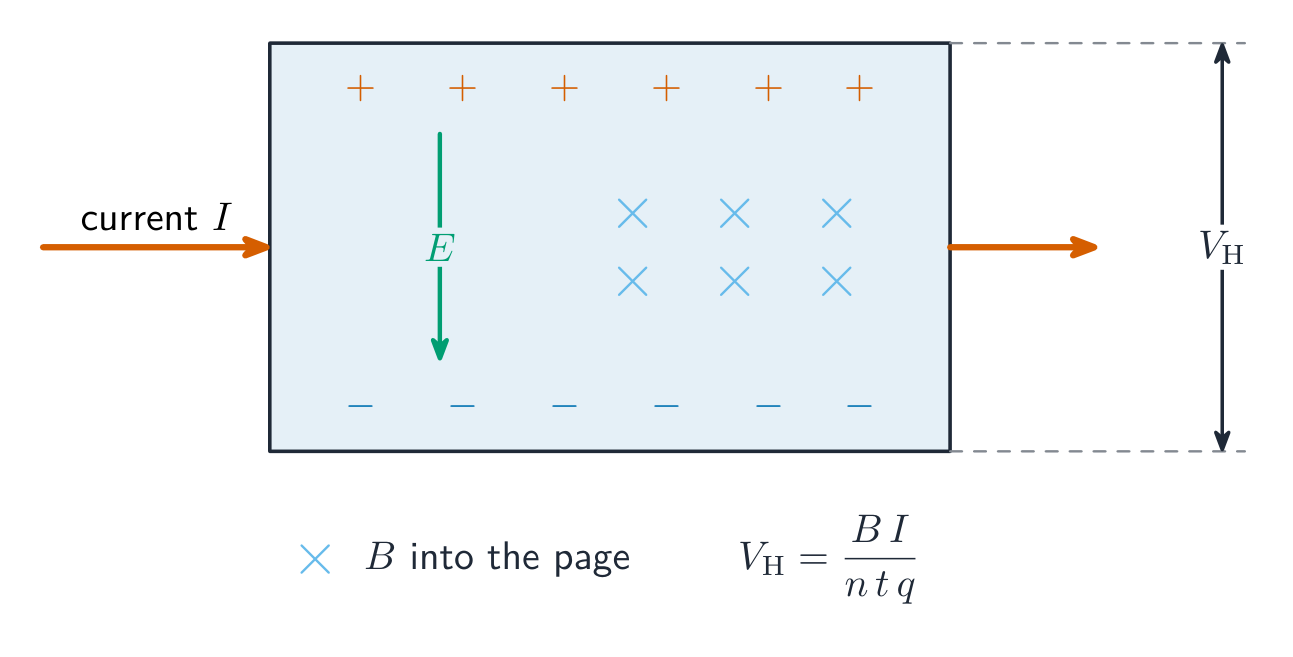

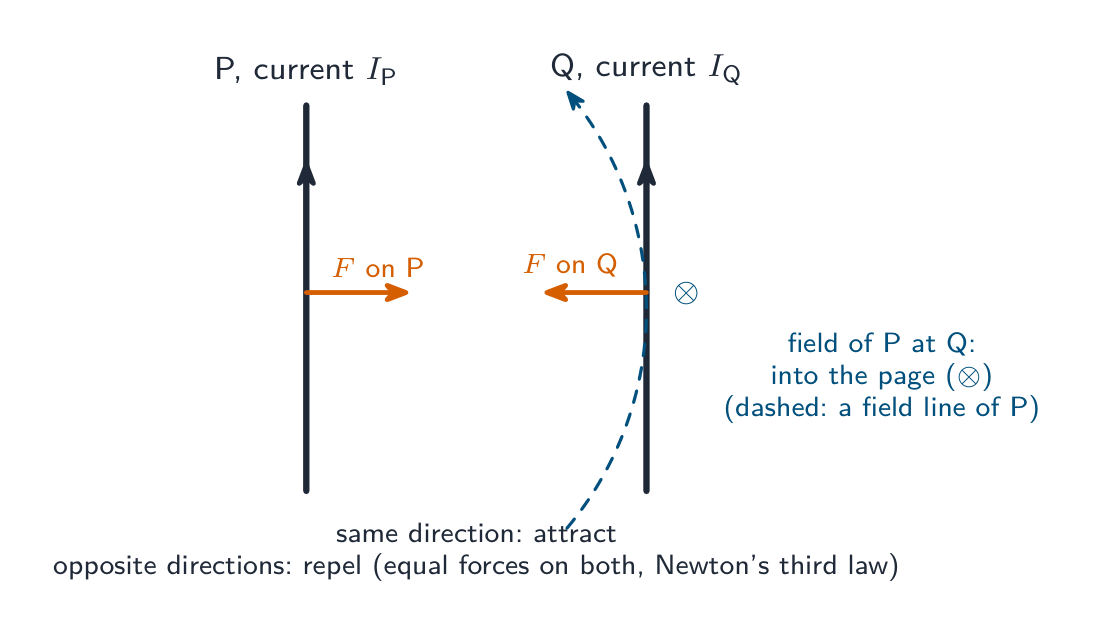
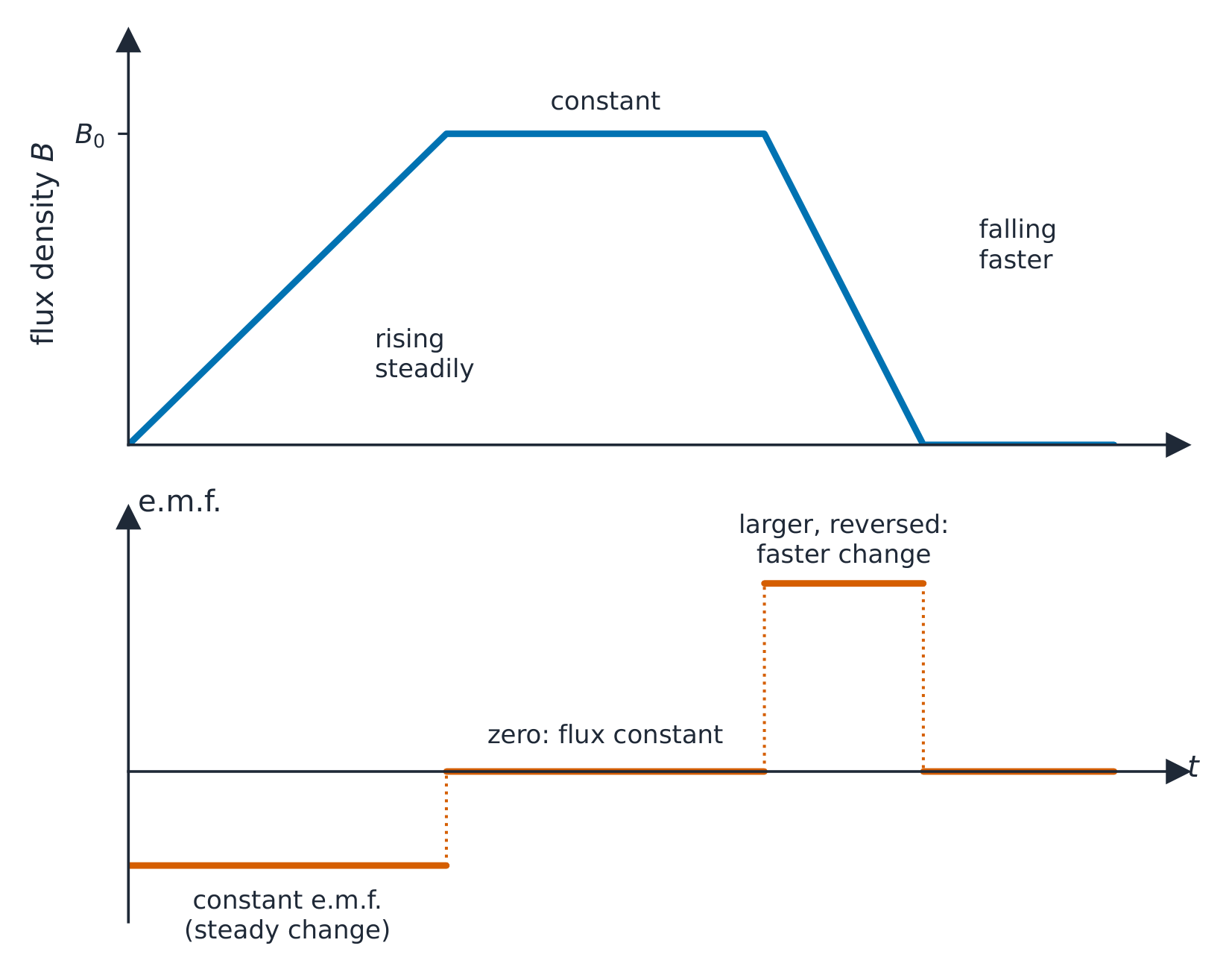

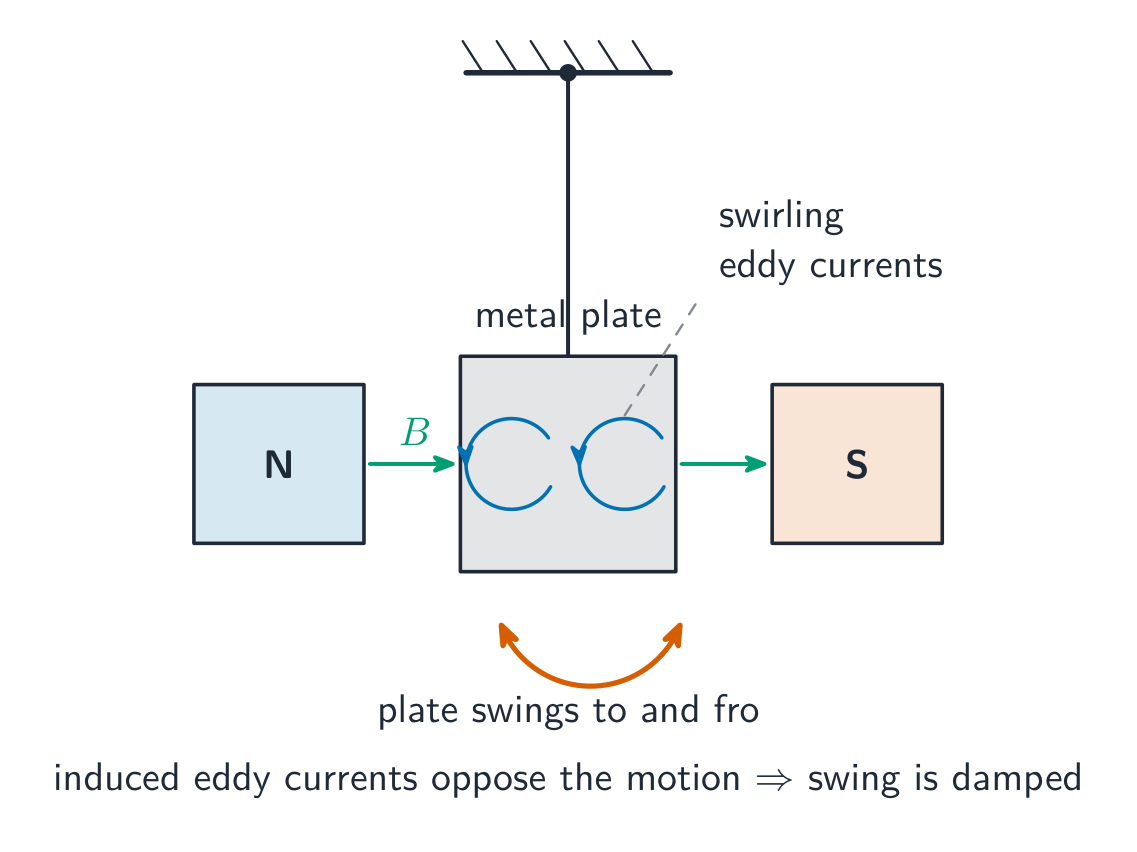


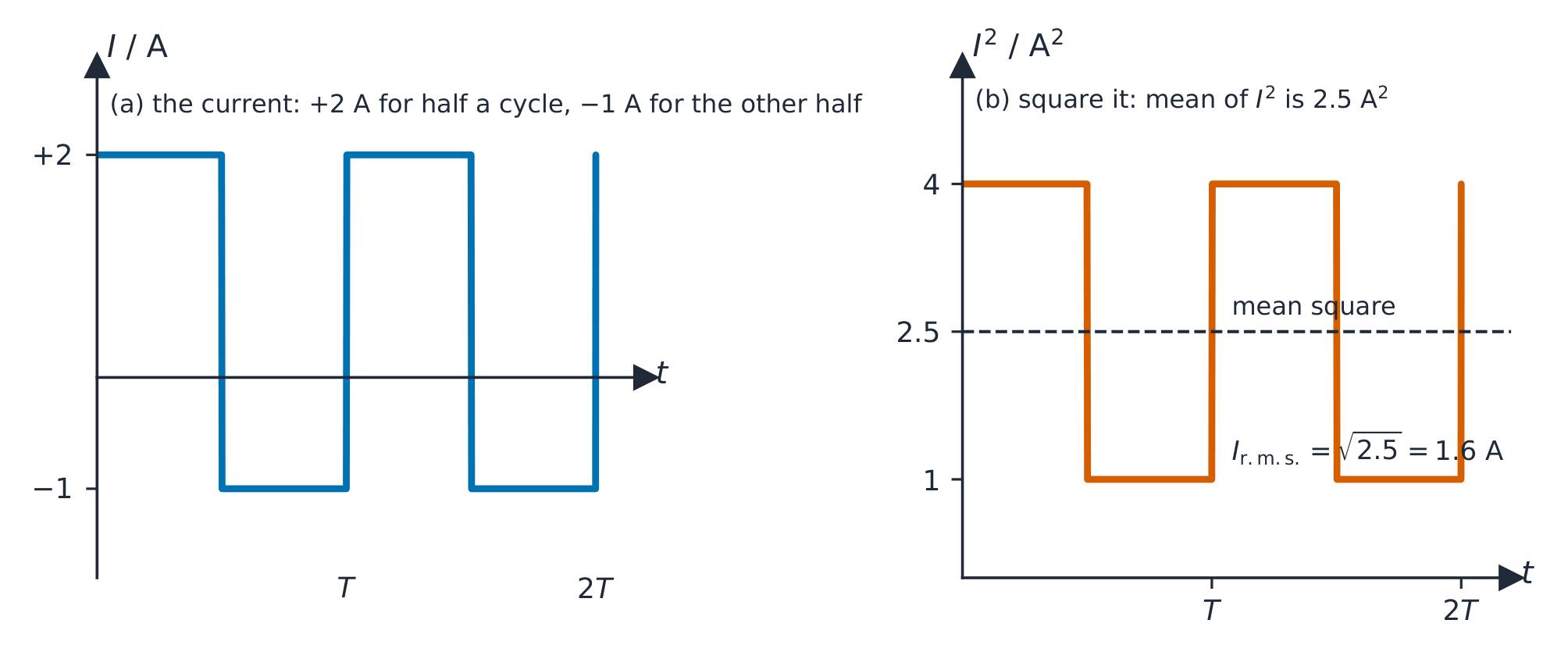
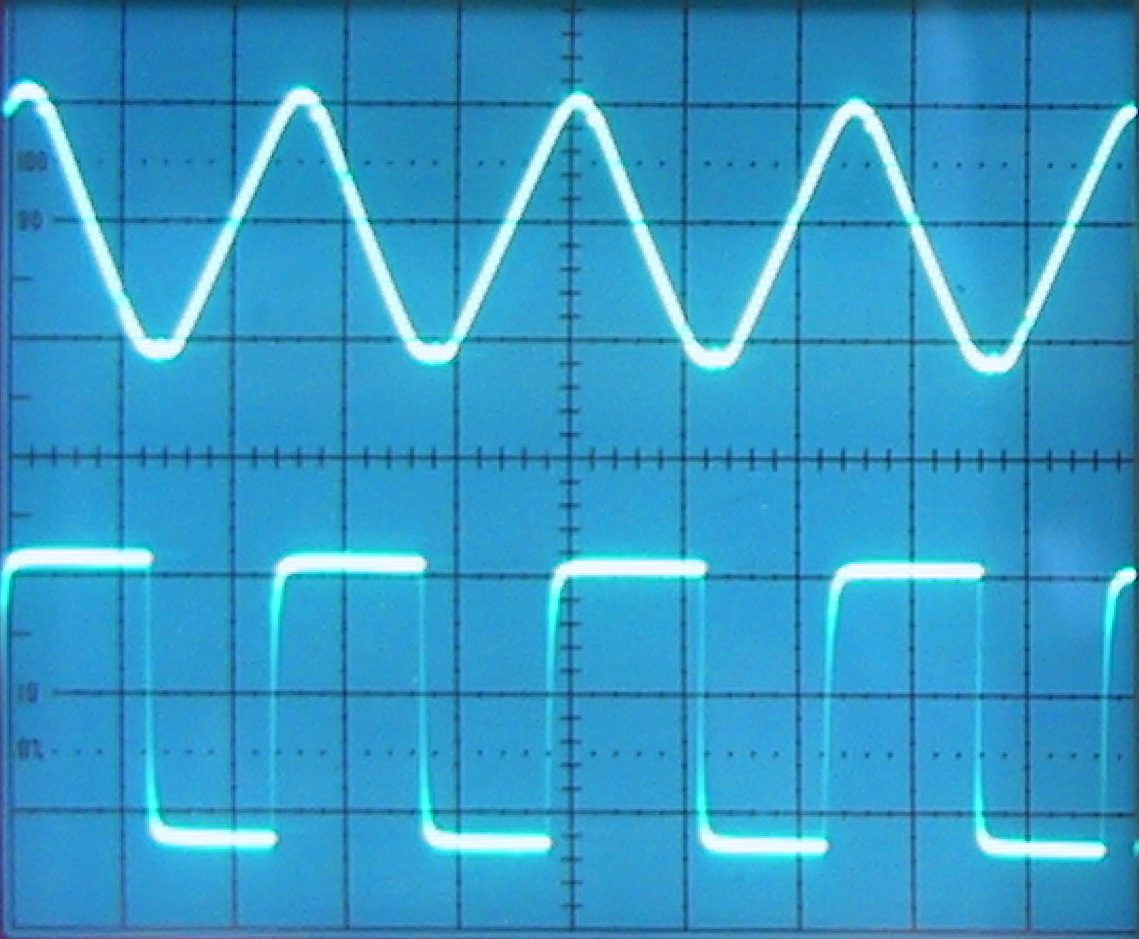




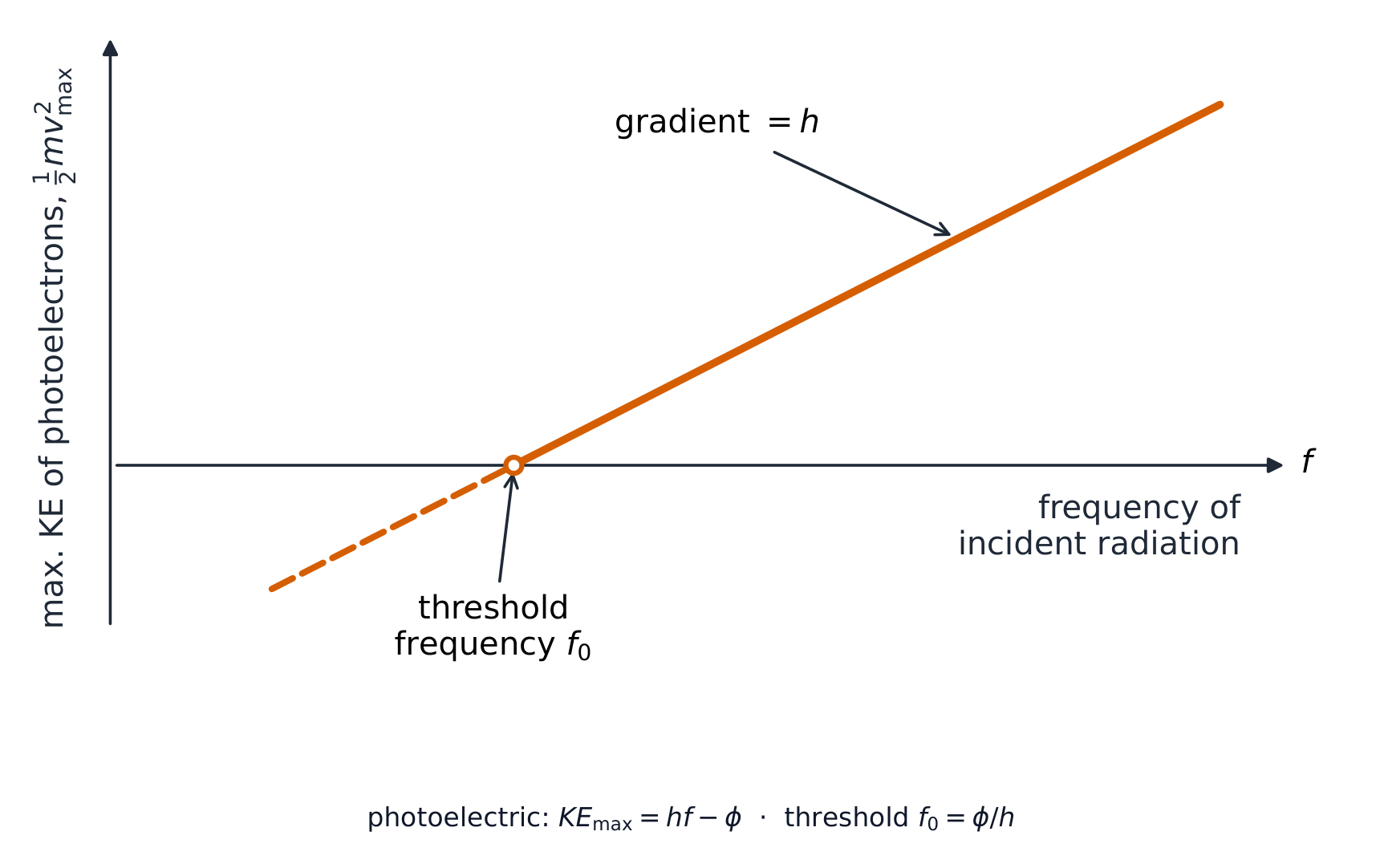

 *Menyelidiki efek: arus mengukur laju emisi, dan tegangan balik yang tepat menghentikan elektron tercepat mengukur energi kinetik maksimum mereka
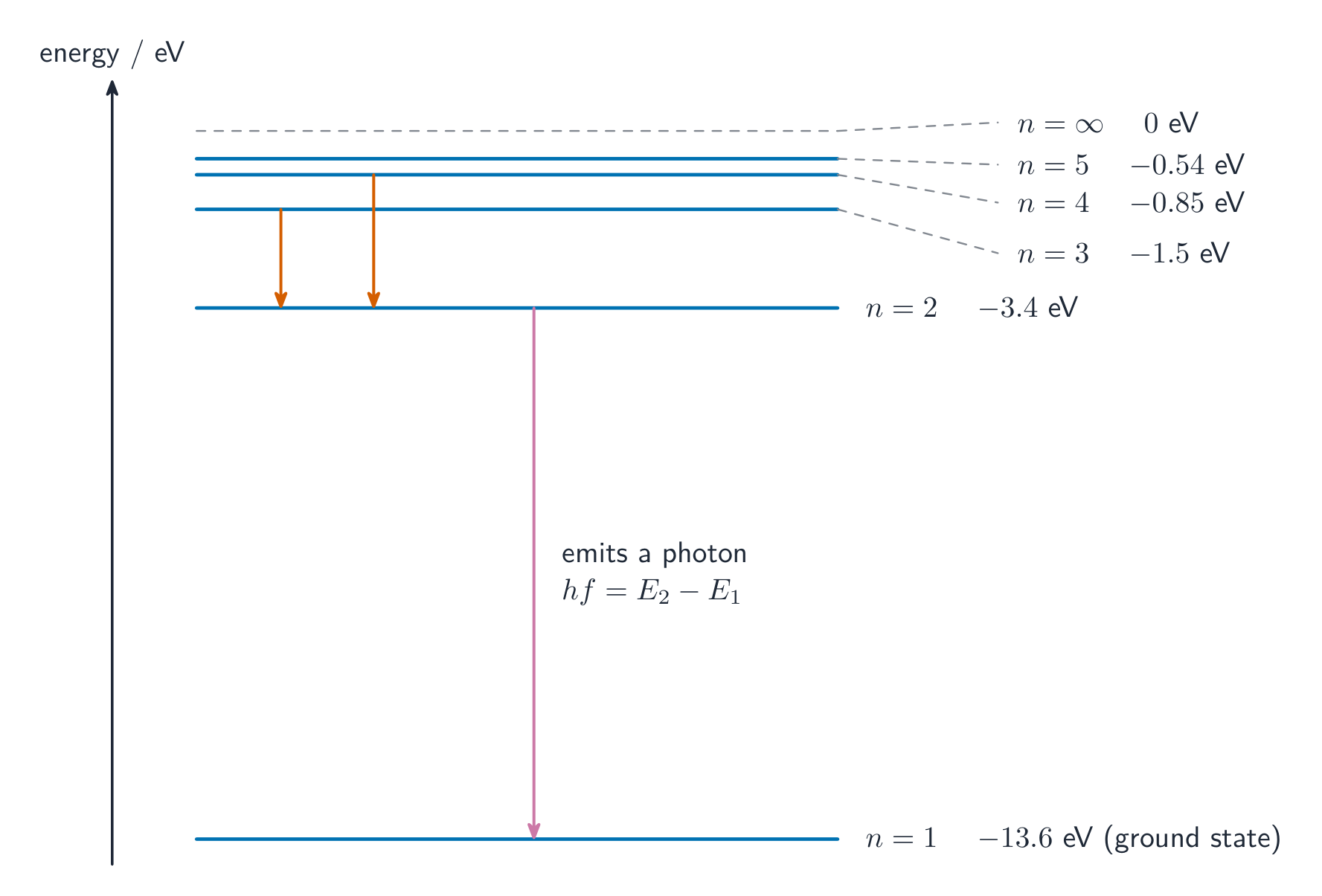
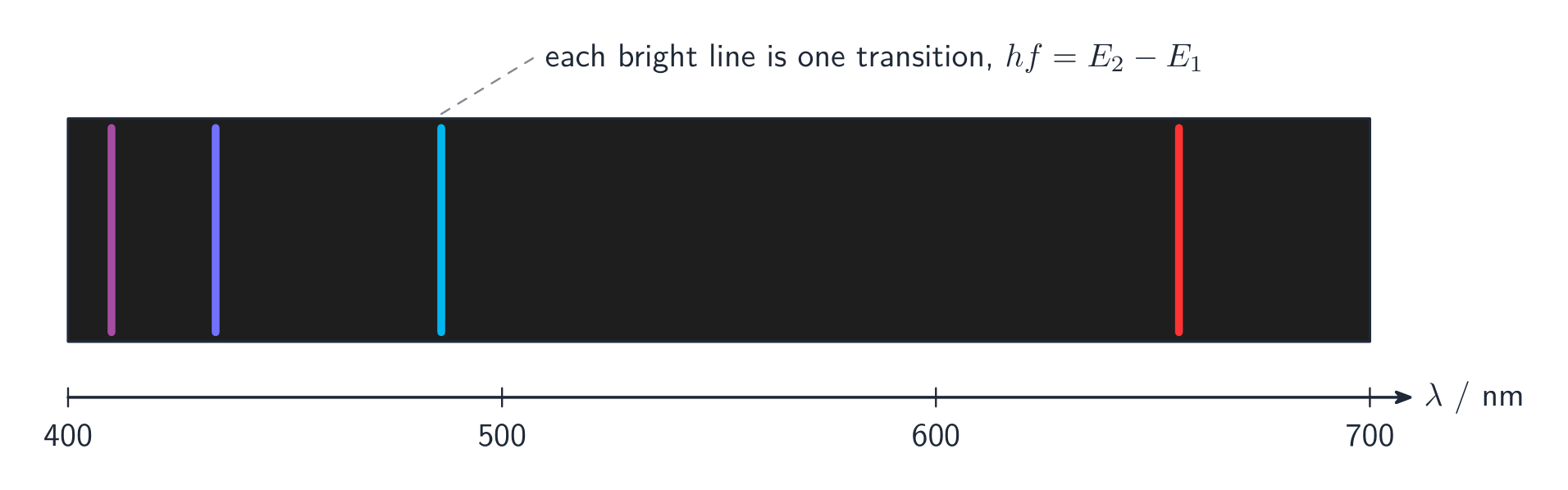




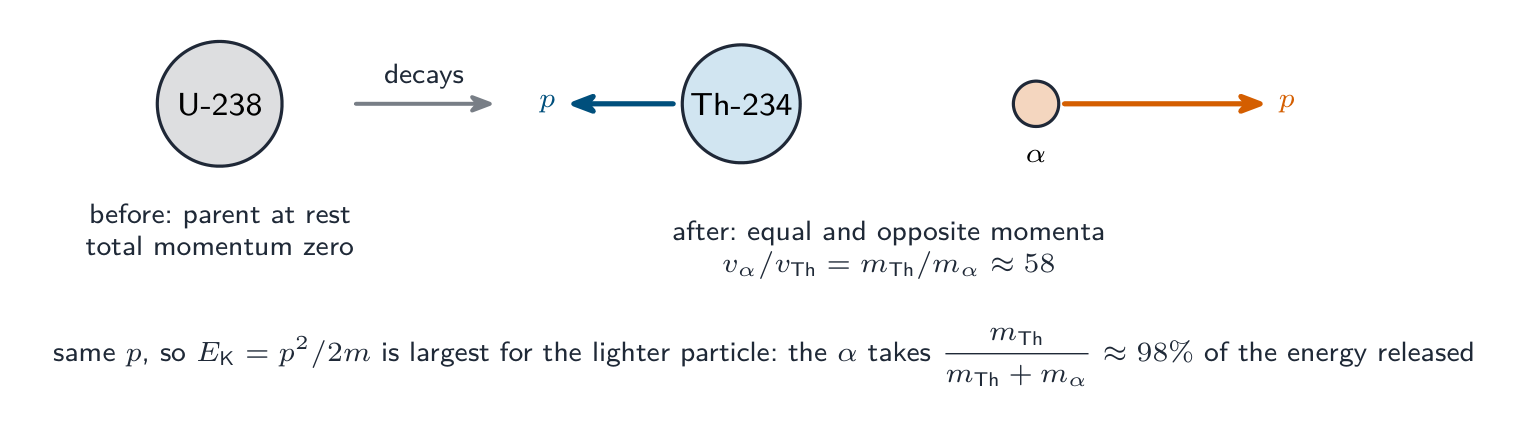
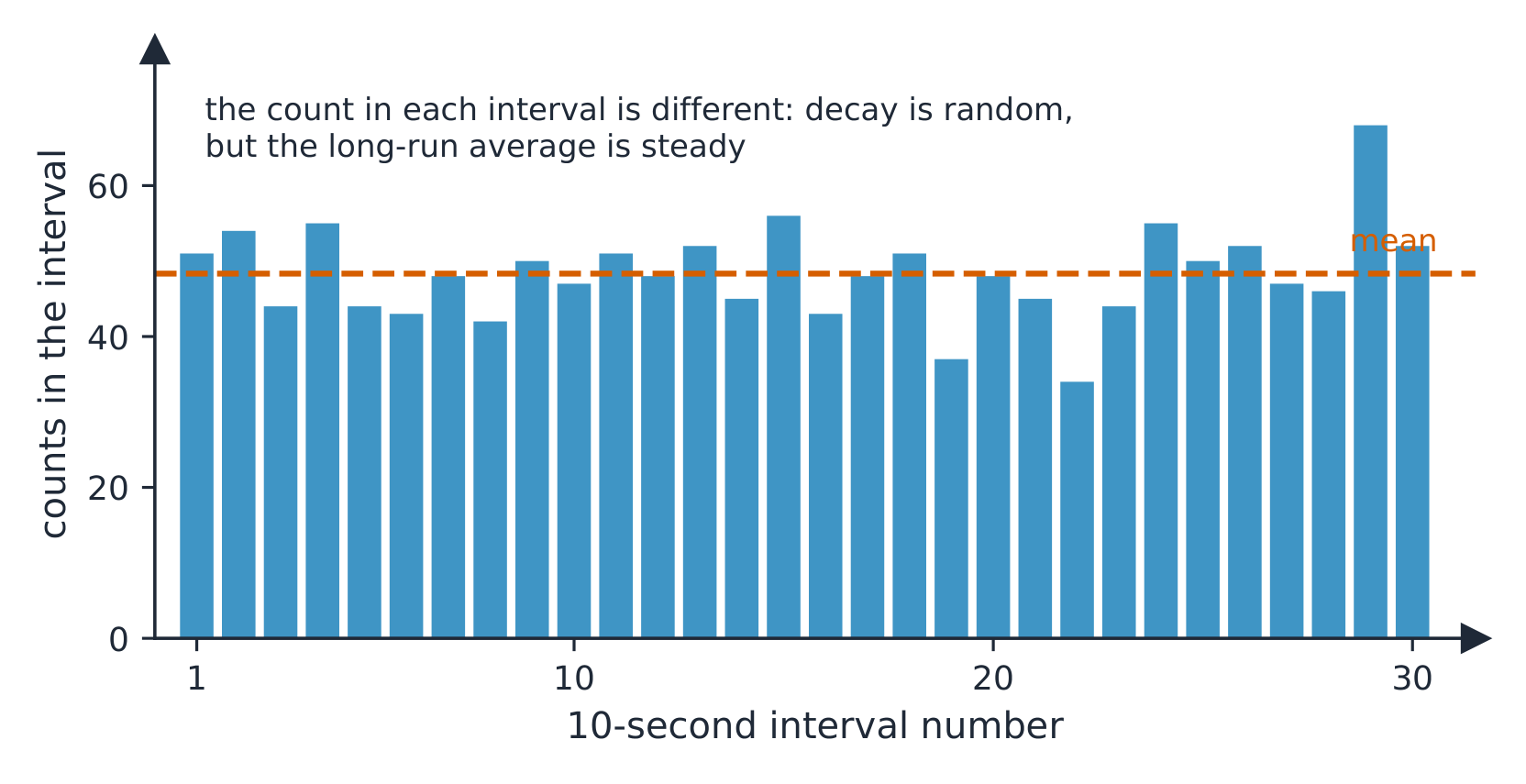
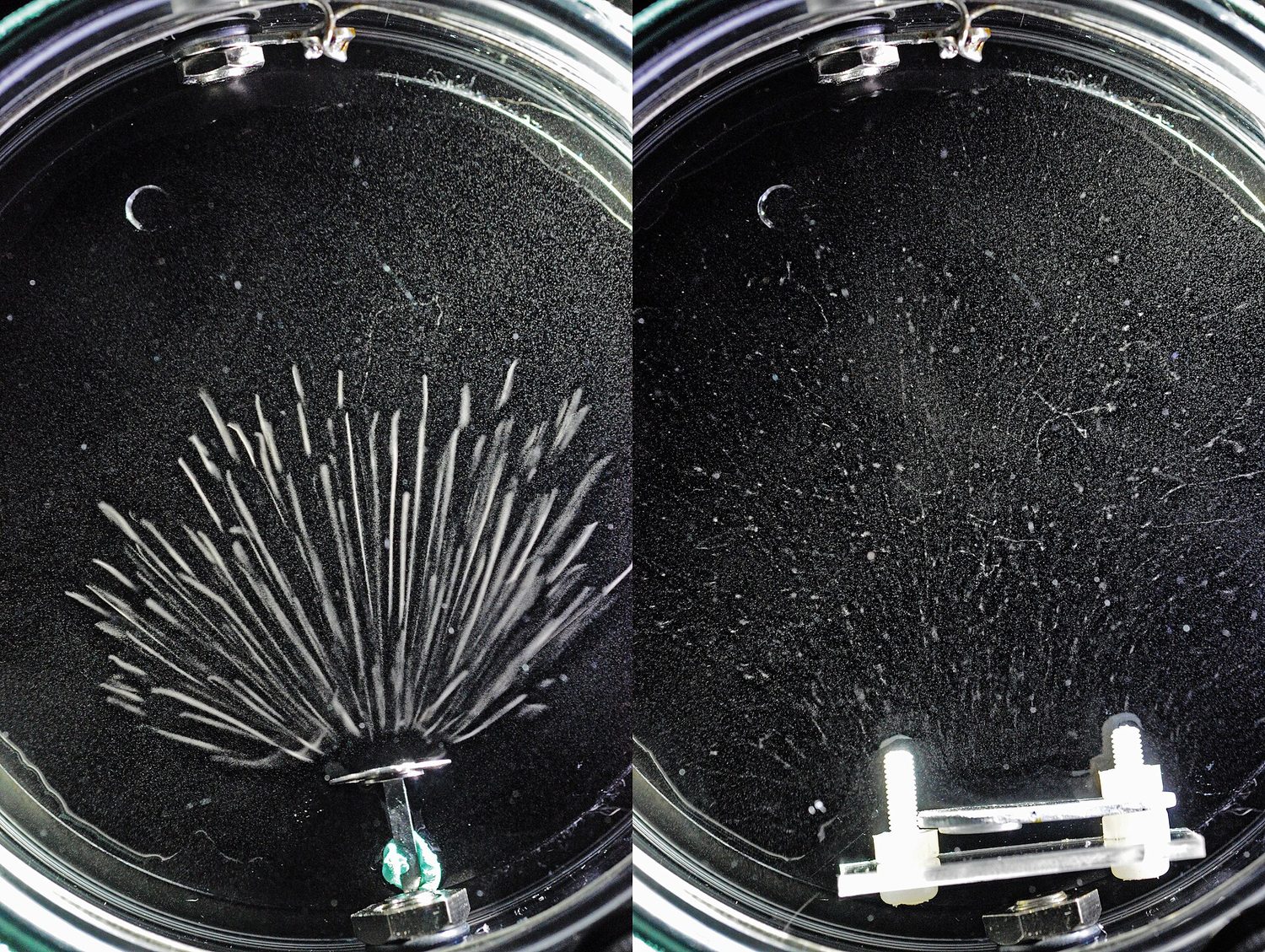
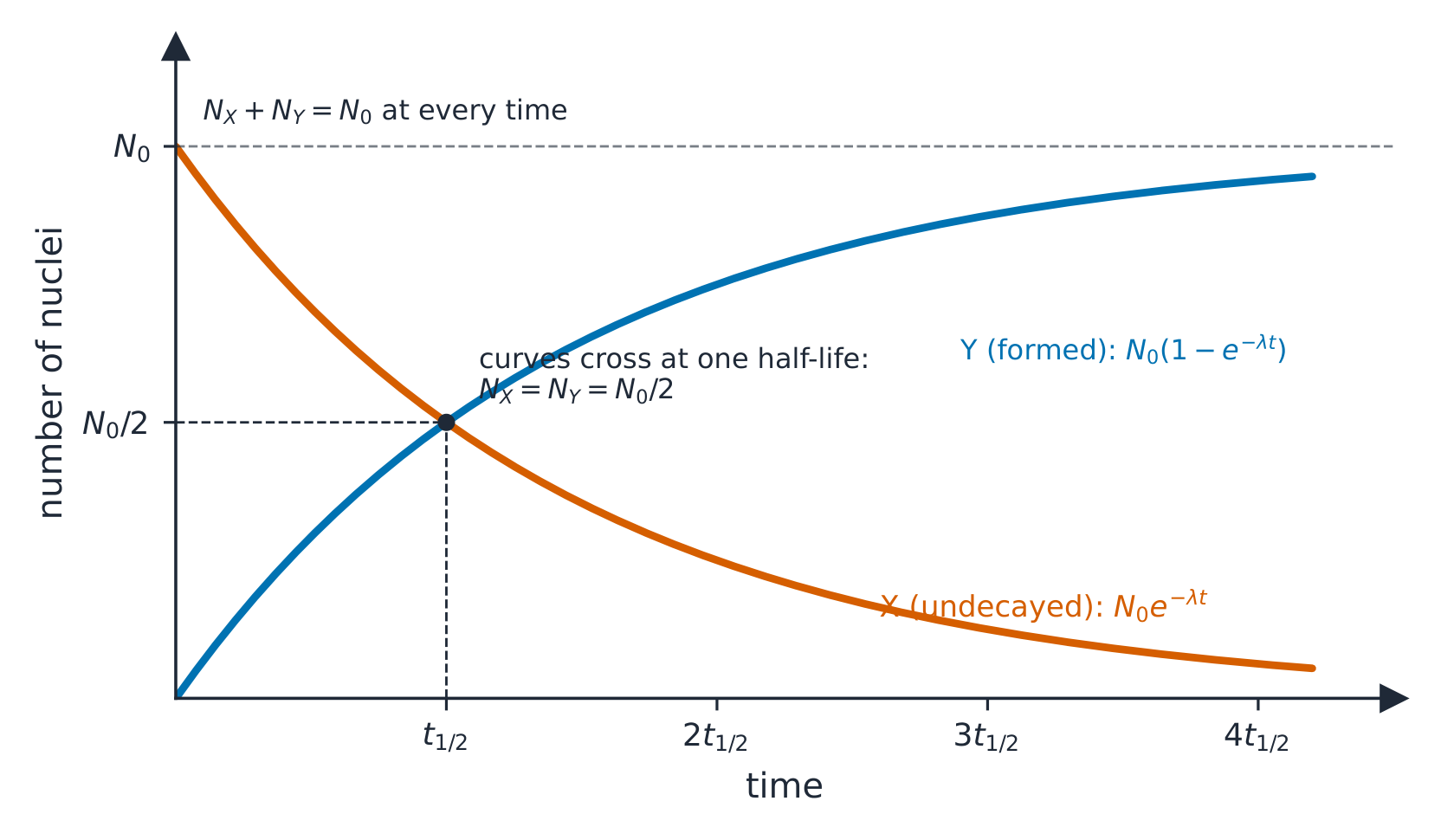
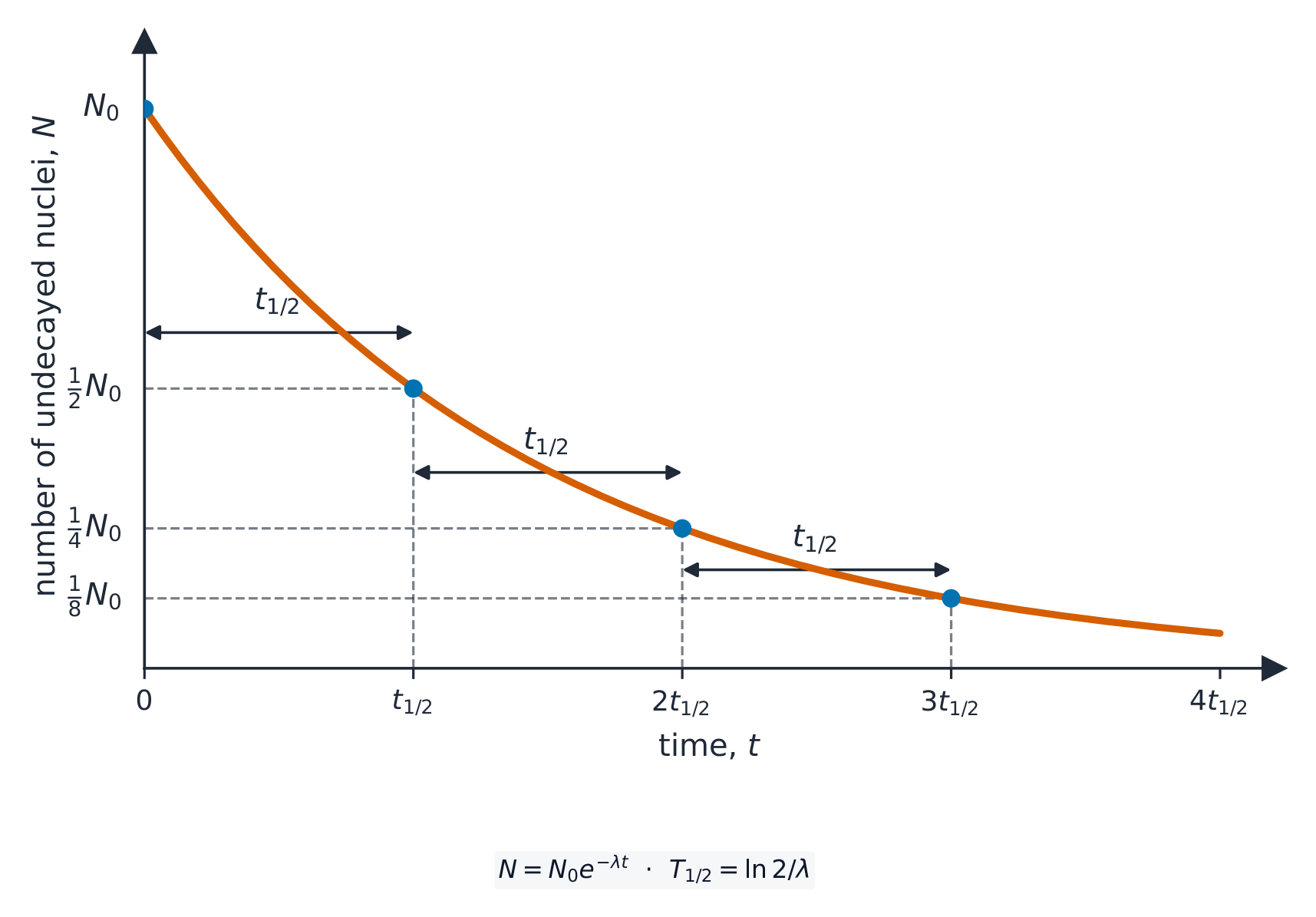
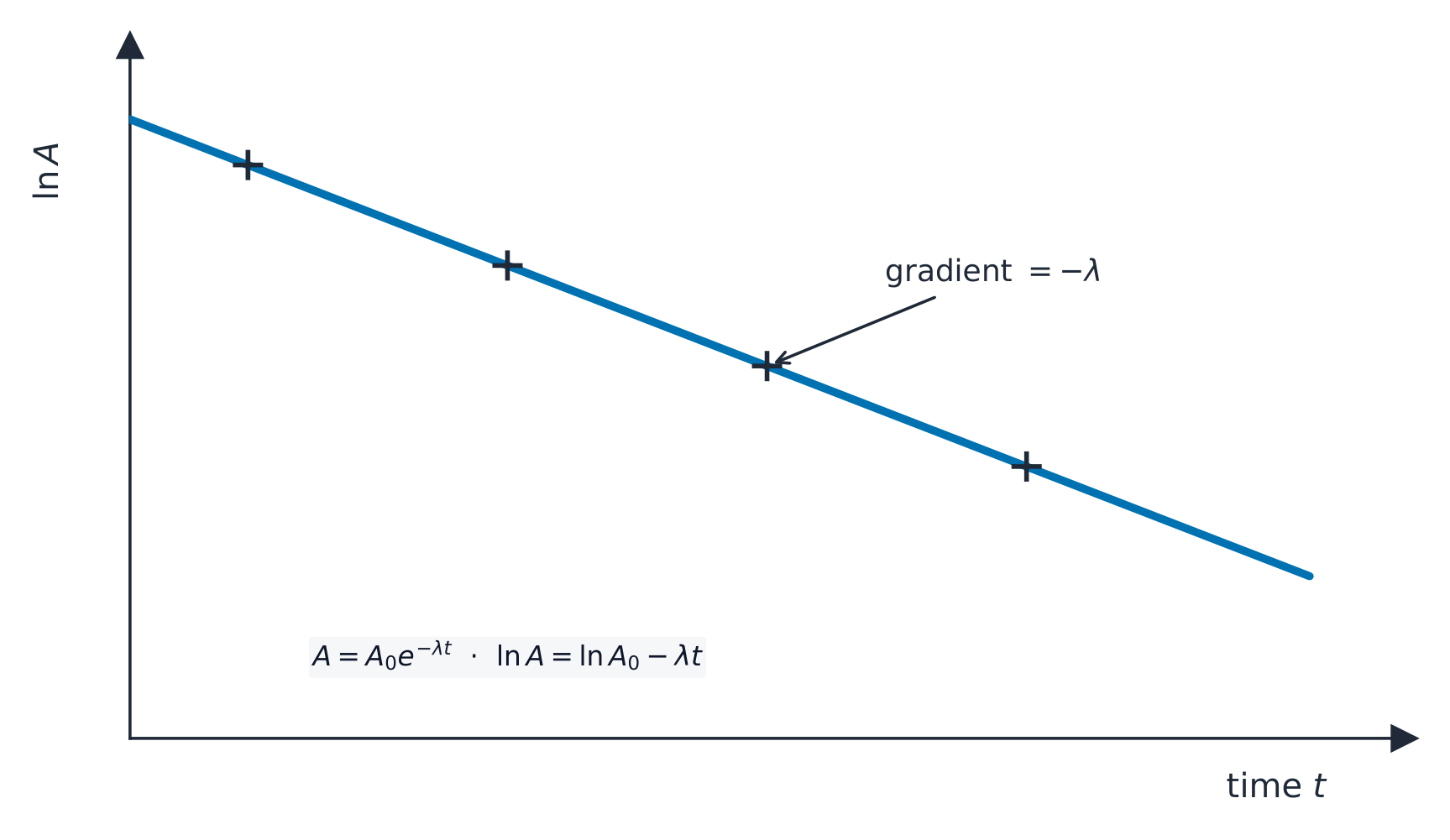


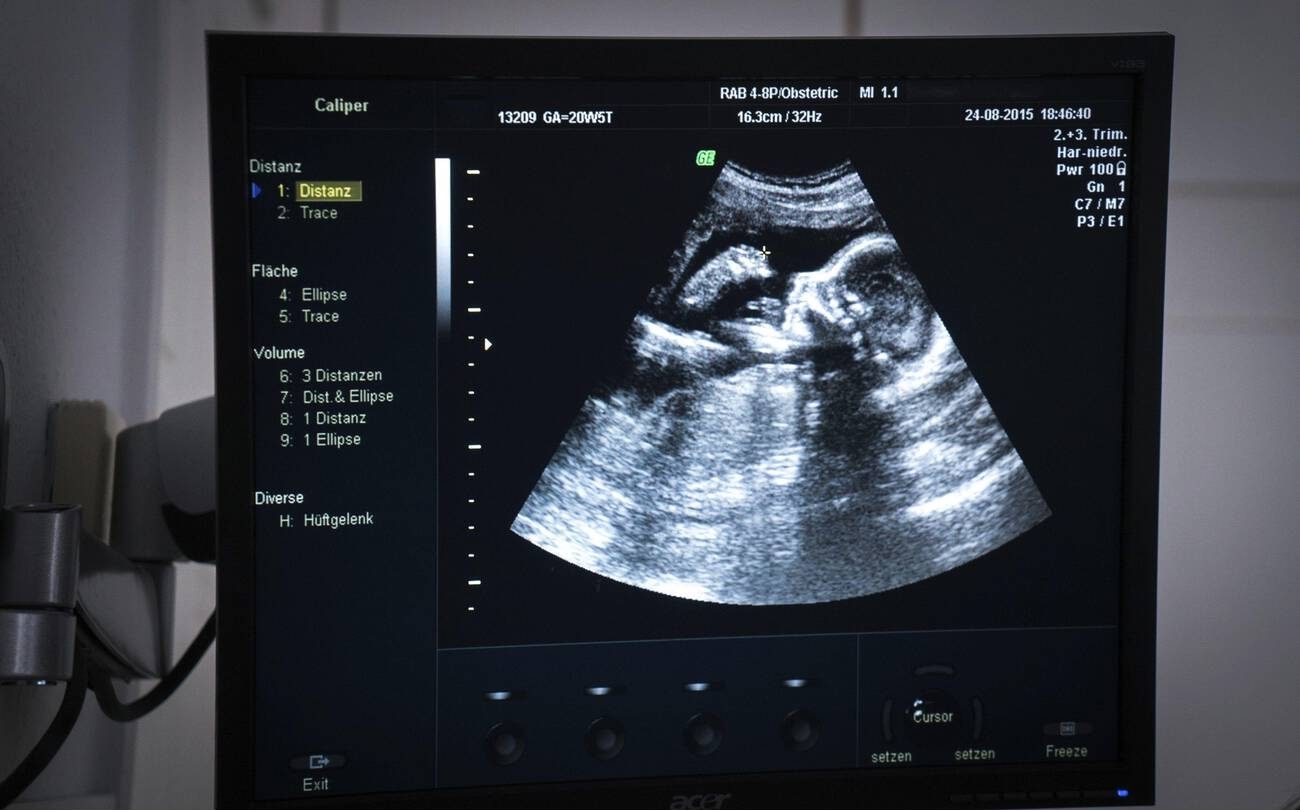


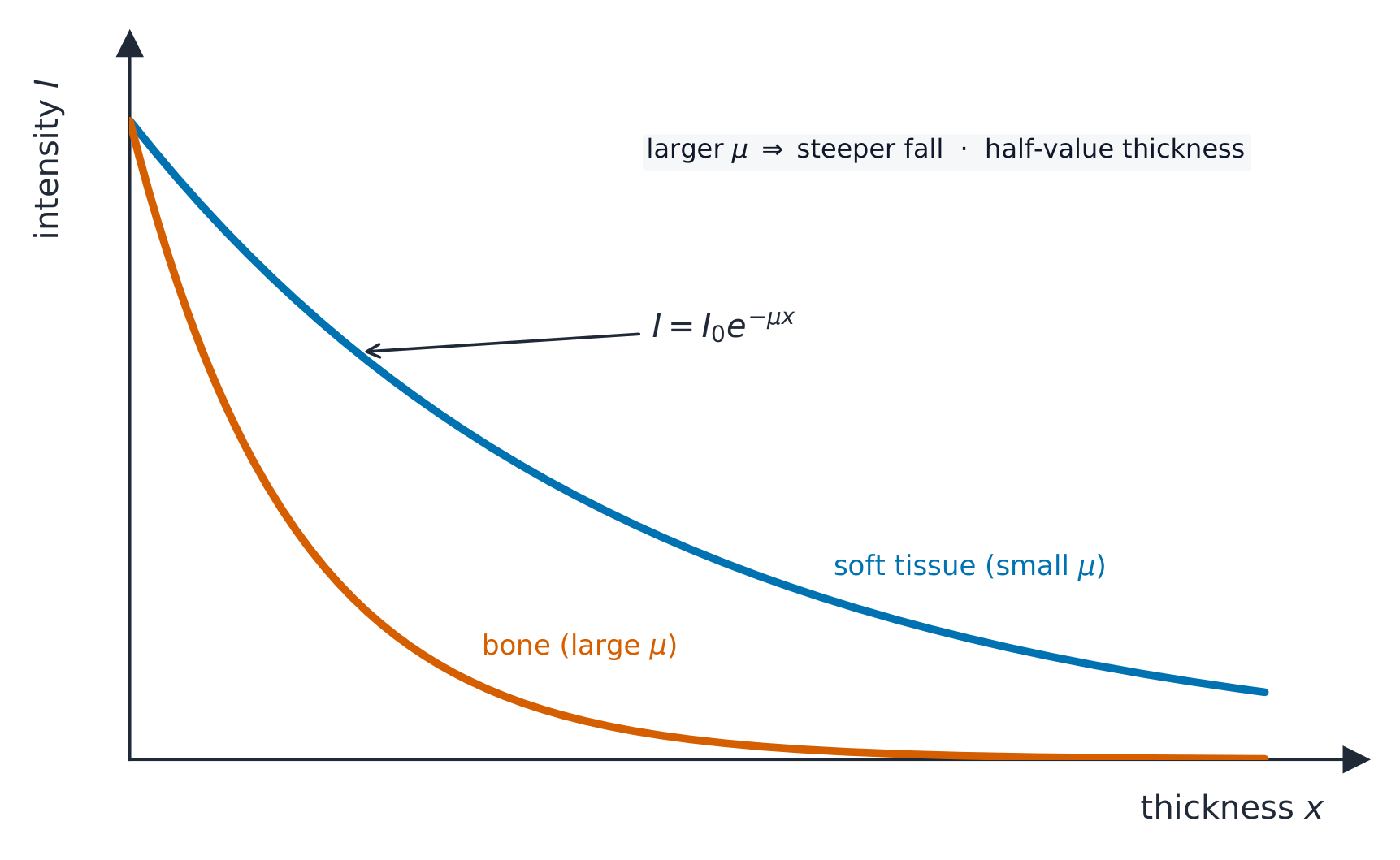
 *Satu gema, tiga faktor: peredaman masuk, pemantulan, peredaman keluar. Jaringan dilintasi dua kali, sehingga eksponennya berlipat ganda

 *Rontgen dada nyata: tulang padat menyerap lebih banyak sinar-X dan terlihat putih; paru-paru berisi udara meneruskan sinar-X dan terlihat gelap
 *Kontras adalah perbedaan pelemahan: tulang melemahkan sekitar tiga kali lebih kuat daripada jaringan lunak per sentimeter, sehingga ketebalan yang sama memberikan eksposur yang sangat berbeda
 *Dalam pemindaian CT, tabung sinar-X dan detektor berputar mengelilingi pasien untuk memindai irisan dari banyak sudut
 *Melokalisasi annihilasi: dua foton yang dideteksi bersama-sama menentukan garis, dan perbedaan waktu kedatangannya menentukan di mana pada garis tersebut.