A battery, a stretched spring and warm water all store energy 能量. Energy can be transferred and stored, but never created or destroyed. This reference covers AQA GCSE Physics 8463, topic 4.1 Energy.
Each paper is 100 marks and 1 h 45 min; energy ideas occur across both papers.
AQA currently supplies a Physics Equations Sheet 物理公式表. Check your series’ insert; practise choosing and rearranging equations and converting units.
Show the equation, substitution and answer with units. Follow the question’s precision instructions; marks depend on the question and scheme.
אגרי אנרגיה ומערכות (הצהרת AQA 8463 statement 4.1.1.1).
מערכת היא חפץ או קבוצת חפצים; כאשר מערכת משתנה, גם הדרך באנרגיה מאוגדת משתנה.
תאר את כל השינויים בדרך בה אנרגיה מאוגדת עבור: חפץ המוטל כלפי מעלה; חפץ נע הפוגע במכשול; חפץ הנאיץ על ידי כוח קבוע; רכב המסתייע; הקצפת מים בקומקום חשמלי.
חשב שינויים באנרגיה כאשר מערכת משתנה עקב חימום, עבודה שנעשה על ידי כוחות, ועבודה שנעשה בזרם חשמלי.
השתמש בחישובים כדי להראות בקנה מידה משותף כיצד האנרגיה הכוללת במערכת מתחלפת כאשר המערכת משתנה.
מקור: הסיילבוס הבינלאומי של קמבריד'ג'
A system 系统 is an object, or a group of objects, that you choose to think about. When a system changes, energy moves between energy stores 能量储存. The stores you must name are:
Store
What it means
Example
kinetic
energy of a moving object
a rolling ball
gravitational potential
energy stored by an object above the ground
water behind a dam
elastic potential
energy stored in a stretched or compressed spring
a drawn bow
thermal (internal)
energy in a hot object
warm soup
chemical
energy stored in bonds
food, petrol, batteries
nuclear
energy stored in an atomic nucleus
uranium fuel
electrostatic
energy stored by separated charges
a charged cloud
magnetic
energy associated with interacting magnets
magnets attracting or repelling
Use the store name requested, such as thermal, gravitational potential or elastic potential. The June 2024 scheme accepts certain symbols in particular parts; this is not a rule that every symbol is accepted in every naming question.
Say which store fills and which store empties.
Describing a change
Energy leaves one store and enters another. Say both halves. Practise these situations, which the specification names:
An object projected upwards: the kinetic store decreases and the gravitational potential store of the object–Earth system increases. For a vertical launch, speed is zero at the highest point.
A moving object hitting an obstacle: kinetic store empties; thermal stores of the object and the obstacle increase; sound can carry energy away.
An object accelerated by a constant force: a source store (for example, the chemical store of a battery) decreases; work transfers energy to the vehicle’s kinetic store. Electrical work is a transfer pathway, not an electrical store.
A vehicle slowing down: kinetic store empties; thermal store of the brakes fills.
Bringing water to the boil in an electric kettle: chemical energy in the power station's fuel (or another resource) ends in the thermal store of the water.
Energy can enter a system three ways: by heating 加热 (a temperature difference drives it), by work done by forces 力做的功 (a force moves something), and by work done when a current flows 电流做的功 (an electrical device transfers energy). Electricity is covered in topic 4.2.
Sankey diagrams
A Sankey diagram 桑基图 shows energy on a common scale. The width of each arrow is drawn in proportion to the energy it carries. The left arrow is the input; it splits into a useful output and wasted outputs.
Width, not length, shows the energy.
The total width out always equals the width in. Energy is conserved.
"Wasted" energy is not destroyed. It is stored in less useful ways, usually thermal.
Guided practice: naming stores and conserving energy
Starter — teacher-written. A motor transfers 60 J in 3.0 s. What is its power?
Worked reasoning. Power is the rate of energy transfer. The equation is $P=E/t$. Substituting gives $P=E/t=60\ \mathrm{J}/(3.0\ \mathrm{s})=20\ \mathrm{W}$. This means 20 joules each second; it does not establish efficiency or useful output.
Exam transfer — adapted from AQA June 2024 Paper 1H Q01.1, Q01.2 and Q06.1. Name the increasing store when water is heated, water is raised into a reservoir, and bungee cords are stretched. Try before checking: thermal/internal, gravitational potential, elastic potential. Explain each name using the temperature, height or extension change. Electrical work may transfer energy into these systems, but electrical is not an energy store.
Teacher-written motor balance. Input is 100 J and useful kinetic energy is 80 J. All the remainder reaches thermal stores. Calculate this remainder and draw proportional Sankey arrows before checking the diagram.
Worked reasoning. Conservation gives $E_{\mathrm{dissipated}}=E_{\mathrm{input}}-E_{\mathrm{useful}}$. Substitution gives $E_{\mathrm{dissipated}}=E_{\mathrm{input}}-E_{\mathrm{useful}}=100\ \mathrm{J}-80\ \mathrm{J}=20\ \mathrm{J}$. Input/useful/dissipated shaft widths have ratio 100:80:20 = 5:4:1. Energy is conserved; the dissipated part is less useful, not destroyed. Arrow lengths and arrowhead sizes do not represent energy.
work done when a current flows/wɜːk dʌn wen ə ˈkʌrənt fləʊz/
עבודה במעבר זרם חשמלי
Sankey diagram/ˈsæŋki ˈdaɪəɡræm/
דיאגרמת סנקי
1.2
Calculating changes in energy
סיילבוס
שינויים באנרגיה (הצהרת AQA 8463 statement 4.1.1.2).
חשב את האנרגיה הקינטית של חפץ נע באמצעות Ek = 0.5 m v^2.
חשב את האנרגיה האלסטית הפוטנציאלית האגודה בקפיץ מופרד באמצעות Ee = 0.5 k e^2, בתנאי שלא הושגה גבול הפרופורציונליות.
חשב את האנרגיה הגרavitational פוטנציאלית שהוספה לחפץ שהוגבה מעל פני הקרקע באמצעות Ep = m g h, עם הערך של g נתון.
חבר את המשוואות הללו כדי למצוא כמות מועברת (למשל, אנרגיית קפיץ למהירות, או אנרגיית מיתר לגובה).
מקור: הסיילבוס הבינלאומי של קמבריד'ג'
Choose the equation for the store that changes. Use mass in kg, speed in m/s, extension and height change in m, and the question’s gravitational field strength $g$ in N/kg.
$$E_k = \tfrac{1}{2} m v^2 \qquad E_e = \tfrac{1}{2} k e^2 \qquad E_p = m g h$$
$E_k$kinetic energy 动能 in J; $m$ mass in kg; $v$ speed in m/s.
$E_e$elastic potential energy 弹性势能 in J; $k$spring constant 劲度系数 in N/m; $e$extension 伸长量 in m.
$E_p$gravitational potential energy 重力势能 in J; $h$ height increase in m; $g$gravitational field strength 重力场强度 in N/kg.
Two warnings the exam tests:
Extension is the change in length: stretched length minus original length. A "7.5 m extension" already means the extra length.
$E_e = \tfrac{1}{2}ke^2$ needs the limit of proportionality 极限伸长量 not exceeded: below it, doubling the extension quadruples the stored energy.
Teacher-written practice — extension and units. A proportional spring is 10 cm long unstretched and 22 cm long stretched, with $k=50$ N/m. Find the extension and stored energy; predict the effect of doubling this extension while the spring remains proportional.
Worked reasoning.$e=L-L_0=22\ \mathrm{cm}-10\ \mathrm{cm}=12\ \mathrm{cm}=0.12\ \mathrm{m}$. Then $E_e=\tfrac12ke^2=\tfrac12\times50\ \mathrm{N/m}\times(0.12\ \mathrm{m})^2=0.36\ \mathrm{J}$. Doubling extension gives $E_{e,2}=\tfrac12k(2e)^2=4E_e=4\times0.36\ \mathrm{J}=1.44\ \mathrm{J}$.
Teacher-written worked example. A 0.020 kg toy plane is launched horizontally by a proportional spring with $k = 50$ N/m and extension $e = 0.12$ m. The spring relaxes to its natural length. Assume no height change and all released elastic energy becomes the plane’s kinetic energy. Find the ideal launch speed.
Known: spring data and mass. At launch the elastic store empties into the kinetic store. For maximum speed, assume all of it arrives.
Why $E_k = E_e$: the stated ideal model excludes energy transferred to other stores. In a real launch, thermal transfers can leave less kinetic energy and a lower speed.
$$E_k = \tfrac{1}{2} m v^2 \quad\Rightarrow\quad v = \sqrt{\frac{2 E_k}{m}} = \sqrt{\frac{2 \times 0.36\ \text{J}}{0.020\ \text{kg}}} = 6.0\ \text{m/s}$$
Check: unit is m/s because $\sqrt{\text{J}/\text{kg}} = \sqrt{\text{m}^2/\text{s}^2}$.
Exam transfer: two cords and height
Adapted from AQA June 2024 Paper 1H Q06.2–06.3. A 240 kg pod is released upwards by two cords behaving as springs, each with $k=735$ N/m and extension 8.0 m. Calculate the ideal height gain ($g=9.8$ N/kg), assuming all initial elastic energy becomes gravitational potential energy. Explain why the actual height is lower.
Known: two identical cords, so the stored energy doubles.
In this ideal model all initial elastic energy becomes gravitational potential energy at the highest point, where vertical speed is zero:
$$E_p = m g h \quad\Rightarrow\quad h = \frac{E_p}{m g} = \frac{47\,040\ \mathrm{J}}{240\ \mathrm{kg}\times9.8\ \mathrm{N/kg}} = 20\ \text{m}$$
Air resistance opposes the upward motion. Some initial elastic energy is transferred to the surroundings instead of increasing gravitational potential energy, so the actual height gain is smaller. “Energy is wasted” alone does not explain the transfer; energy is conserved.
Keep the physical assumption and each calculation stage visible; the allocation of marks depends on the particular question.
gravitational field strength/ˌɡrævɪˈteɪʃənl fiːld streŋθ/
חוזק שדה כבידתי
limit of proportionality/ˈlɪmɪt ɒv prəˌpɔːʃəˈnælɪti/
גבול פרופורציונליות
1.3
Energy changes in systems: specific heat capacity
סיילבוס
שינויי אנרגיה במערכות (הצהרת AQA 8463 statement 4.1.1.3; כמו כן 4.3.2.2).
חשב את כמות האנרגיה האגודה או המשחררת ממערכת כאשר טמפרטורתה משתנה באמצעות dE = m c d(theta).
ציין את ההגדרה של קיבולת חום סגולית והשתמש ביחידה שלה, J/kg °C.
ערה את המשוואה כדי למצאת מסה, קיבולת חום סגולית או שינוי בטמפרטורה, לאחר המרת kJ ל-J קודם.
ניסוי נדרש 1: תאר את החקירה לקביעת קיבולת החום הסגולית של חומר אחד או יותר, כולל מדידת האנרגיה שהוזרמה, בידוד הבlok וניתוח שגיאות.
מקור: הסיילבוס הבינלאומי של קמבריד'ג'
Warm an object and its thermal store grows. The energy needed depends on the mass, the material, and the temperature rise:
$$\Delta E = m\, c\, \Delta\theta$$
$\Delta E$ change in thermal energy in J; $m$ mass in kg; $\Delta\theta$ temperature change in °C.
$c$specific heat capacity 比热容 in J/kg °C: the energy needed to raise the temperature of one kilogram of a substance by one degree Celsius.
For equal masses gaining equal thermal energy, a material with higher $c$ has a smaller temperature rise. Water has $c$ about 4200 J/kg °C; copper about 385 J/kg °C. A spoon’s heating rate also depends on its mass and energy transfer through contact; specific heat capacity alone does not establish the rate.
Teacher-written worked example. A 2.0 kg metal block gains 26 kJ (26 000 J) of thermal energy. The block's temperature rises from 22 °C to 50 °C. Find $c$.
Known: energy, mass, and temperatures. The temperature change is what enters the equation: $\Delta\theta = 50 - 22 = 28$ °C.
Keep units consistent: 10.5 kJ must become 10 500 J; a time in minutes must become seconds; a mass in grams must become kg; a power in kW must become W. Write the conversion as its own line.
Exam transfer: rearranging for temperature change
Adapted from AQA June 2024 Paper 1H Q08.3. Air gains 0.0130 J; its mass is $2.60\times10^{-8}$ kg and $c=1.01$ kJ/kg °C. Find the temperature change before checking.
This is the rise, not the final reading; finding final temperature also needs the initial temperature.
Required practical 1: specific heat capacity
You must know this investigation from memory — the exam asks you to describe or evaluate it at a desk.
The block is lagged to reduce transfer to the surroundings; supplied electrical energy is not automatically all gained by the block.
Method:
Measure the mass $m$ of the metal block with a balance.
Put a little water in the thermometer hole for good thermal contact, and insert the heater and thermometer.
Record the starting temperature. Switch on the power supply.
Record the current $I$ and potential difference $V$, and the time $t$ for which the heater runs. The heater power is $P = VI$ (given in topic 4.2; some questions just give you $P$).
The energy supplied is $\Delta E = P t$.
Record temperature at regular intervals and calculate supplied energy for each time. Plot temperature against supplied energy; the initial part may curve because of thermal lag.
Calculate $c = \dfrac{\Delta E}{m\Delta\theta}$.
Measurement reasoning:
Insulate the block (lagging) to reduce energy transferred to the surroundings. If some supplied energy heats the surroundings, using all the supplied energy as the block’s thermal-energy increase overestimates $c$.
Wait for the thermometer to settle before reading the starting temperature (thermal contact takes time).
Use the straight region of temperature against supplied energy after the initial thermal lag. In the ideal model its gradient is $1/(mc)$. Repeats help assess variation but do not remove systematic heat loss.
State how the error changes the measured energy, mass or temperature rise. Poor thermometer contact alone does not establish an error direction; an underestimated temperature rise gives an overestimated $c$ if energy and mass are unchanged.
RP1 error check: calculate before predicting
Teacher-written. A 1.0 kg block gains 6000 J and warms by 12 °C. Calculate its $c$. A student records only a 10 °C rise with the same energy and mass. Calculate the resulting estimate and explain the direction of the error.
The smaller recorded rise gives a smaller denominator and an overestimate of $c$. Diagnose the recorded temperature change; do not assign an error direction from “poor contact” alone.
הגדר הספק כקצב העברת האנרגיה או כקצב ביצוע העבודה.
השתמש ב-Spower = energy transferred / time וב-power = work done / time.
ציין כי העברת אנרגיה של 1 ג'ול לשנייה שווה להספק של 1 וואט.
הציג דוגמאות הממחישות את הגדרת ההספק, כגון השוואה בין שני מנועים חשמליים המרימים משקל זהה לגובה זהה, אך אחד עושה זאת מהר יותר.
מקור: הסיילבוס הבינלאומי של קמבריד'ג'
Two motors can lift the same load through the same height. The faster one is more powerful 功率强的. Power 功率 is the rate of energy transfer, or the rate of doing work:
$$P = \frac{E}{t} \qquad P = \frac{W}{t}$$
$P$ power in W; $E$ energy transferred in J; $W$work done 做的功 in J; $t$ time in s.
An energy transfer of 1 J per second is a power of 1 watt 瓦特, W.
Conversions to keep at hand: 1 kW = 1000 W, 1 MW = $10^6$ W, 1 GW = $10^9$ W, 1 kJ = 1000 J, 1 MJ = $10^6$ J.
Teacher-written worked example. A 60.0 kg athlete climbs a vertical height of 175 cm in 1.40 s ($g$ = 9.8 N/kg). Find the average useful power associated with gravitational potential gain.
Known: mass, height, time. Height must be converted: $175\ \text{cm} = 1.75\ \text{m}$.
Her gain of gravitational potential energy is the useful energy transferred.
$$E_p = m g h = 60.0\ \mathrm{kg} \times 9.8\ \mathrm{N/kg} \times 1.75\ \mathrm{m} = 1029\ \text{J}$$
Check: this is the rate of gravitational potential gain, not total chemical-energy transfer. Heating and other transfers mean more chemical energy is transferred than the useful gain.
An energy transfer stated per second is already a power: 0.343 J of gravitational potential energy gained each second is 0.343 W of useful power. A value per second is not automatically useful output; read which transfer is described.
Power comparison and exam transfer
Teacher-written practice. Motors A and B each lift 20 kg through 2.0 m ($g=10$ N/kg). A takes 2.0 s; B takes 4.0 s. Find their useful power outputs before checking.
A transfers the same useful energy in half the time: twice the useful power. Efficiency cannot be compared without input data.
Adapted from AQA June 2024 Paper 1H Q02.2–02.3. A power station has output 500 MW. Find its energy output in 3600 s, in joules. Here $P=500\ \mathrm{MW}=5.00\times10^8\ \mathrm{W}$, and $P=E/t$ rearranges to $E=Pt$.
שימור ופיזור אנרגיה (AQA 8463 נקודת ליבה 4.1.2.1).
ציין כי אנרגיה יכולה להיות מעבירה לשימוש, מאוחסת או מפוזרת, אך אינה נוצרת או נהרסת.
תאר, בדוגמאות, העברות אנרגיה במערכת סגורה המראות שאין שינוי נטו בסך האנרגיה.
תאר כיצד אנרגיה מפוזרת בשינויי מערכת כך שהיא מאוחסת בצורות פחות שימושיות.
הסבר דרכים להפחתת העברות אנרגיה רצויות לא רצויות, כולל החלקה ובידוד תרמי.
השתמש ברעיון כי ככל שהמוליכות התרמית של חומר גבוהה יותר, כך קצב העברת האנרגיה על ידי הולכה דרכו גדול יותר, ותאר כיצד קצב הקירור של מבנה תלוי בעובי ובמוליכות התרמית של קירותיו.
ניסוי חובה 2 (פיזיקה בלבד): בחן את יעילותם של חומרים שונים כבידודים תרמיים וגורמים המשפיעים על תכונות הבידוד התרמי של חומר.
מקור: הסיילבוס הבינלאומי של קמבריד'ג'
Energy can be transferred usefully, stored, or dissipated 耗散, but never created or destroyed. Dissipated energy is stored in less useful ways. It is often called "wasted", but it still exists — usually spread into thermal stores of the surroundings.
For this energy balance, a closed system 封闭系统 exchanges no energy with its outside, so its total energy does not change. Name the objects included: gravitational potential energy belongs to the object–Earth interaction, not the ball alone. An ideal fall with negligible resistance transfers gravitational potential energy to kinetic energy; a vacuum by itself does not define the system boundary.
Follow energy through a fall and impact
Teacher-written model. Include a ball, Earth, floor and nearby surroundings. Assume no energy crosses this system’s boundary and ignore air resistance during the fall. The ball starts at rest with 20 J of gravitational potential energy relative to the floor. When that store is 5 J, what is the kinetic energy? After impact and settling, where is the energy?
Stage
Gravitational / J
Kinetic / J
Thermal gain / J
Start
20
0
0
During fall
5
15
0
After settling
0
0
20
Each row totals 20 J. After impact, energy is spread into thermal stores in this simplified model; sound may carry energy within the chosen surroundings before dissipating. Counting the ball alone gives a different system, which can exchange energy with the Earth and floor. Energy that leaves one object has not disappeared.
Explaining a "lower than calculated" answer
Exam questions love this shape: "the real height/speed/temperature is lower than your answer. Explain why." The credited reasoning:
Name the cause: air resistance, friction between moving parts, or energy transferred to the surroundings by heating.
State the consequence: some energy from the input store is dissipated into thermal stores instead of the intended store.
Conclude: so less energy arrives in the useful store.
Reducing unwanted energy transfers
Lubrication 润滑 reduces friction between moving parts, so less energy is dissipated by heating.
Thermal insulation 热绝缘 reduces energy transfer by heating. Thick walls, walls made of a material with low thermal conductivity 热导率, or cavity insulation all slow the cooling of a building.
Compare one factor at a time. With equal wall area, thickness and temperature difference, a higher thermal conductivity gives faster transfer by conduction. With the same material and other conditions, a thicker wall reduces this rate. If both thickness and conductivity change in opposing directions, their descriptions alone do not establish the ranking.
Replotted from the AQA practical handbook’s technician data (PDF page 12, printed page 11). Initial readings are 85 °C for zero layers and 86 °C for the covered runs; check temperature falls and comparison limits.
Investigate the effectiveness of different materials as thermal insulators:
Put a fixed volume of hot water in a beaker with a lid.
Wrap the beaker in one material (bubble wrap, newspaper, foil, cotton wool).
Record the temperature as it cools for a fixed time (or the time to fall by a fixed amount).
Repeat for equal measured thicknesses and covered areas of different materials; equal layer counts need not give equal thicknesses.
Part 2: repeat for different thicknesses (layers) of one material.
Controls: same water volume, starting temperature, beaker, lid, surroundings, covered area and measurement times. Repeat to judge variation. A smaller temperature fall over a fixed time indicates less cooling under those conditions. Keep material fixed when investigating thickness; keep thickness fixed when comparing materials.
RP2: interpret recorded readings
The figure uses the AQA practical handbook, PDF page 12. Points are recorded values joined by lines, not a fitted cooling law. In 15 min, the zero-layer run changes from 85 to 57 °C, two layers from 86 to 62 °C, and six layers from 86 to 66 °C. Calculate the falls before checking.
Six layers cool 4 °C less than two layers over the same time, from the same initial temperature. This supports less cooling with greater newspaper thickness here. The zero-layer run starts 1 °C cooler. Subtracting initial temperatures does not remove all effects of unequal starting conditions; standardise them in a fresh investigation. These runs compare thickness, not different materials.
Teacher-written evaluation. Water in a beaker covered with 20 mm of cotton starts at 90 °C and finishes at 75 °C after 10 min. Water in a beaker covered with 2 mm of foil starts at 80 °C and finishes at 70 °C. Which material is the better insulator? Explain the limits and improve the method before checking.
Reasoning. Cotton falls $90-75=15$ °C; foil falls $80-70=10$ °C. Material, thickness and initial temperature all differ, so neither final readings nor temperature falls isolate the material effect. Use equal measured thickness and covered area, the same starting temperature, water volume, apparatus and surroundings; record at the same times and repeat. Conclude for the tested conditions, taking variation into account.
Calculate energy efficiency using efficiency = useful output energy transfer / total input energy transfer.
Calculate efficiency using efficiency = useful power output / total power input.
Use efficiency values as a decimal or as a percentage.
(HT only) Describe ways to increase the efficiency of an intended energy transfer.
מקור: הסיילבוס הבינלאומי של קמבריד'ג'
The fraction of input energy that ends up somewhere useful is the efficiency 效率:
$$\text{efficiency} = \frac{\text{useful output energy transfer}}{\text{total input energy transfer}} \qquad \text{efficiency} = \frac{\text{useful power output}}{\text{total power input}}$$
Efficiency can be a decimal (0 to 1) or a percentage (0 % to 100 %). The exam may ask for either; a decimal above 1 or a percentage above 100 % is impossible — check your answer against this.
Teacher-written worked example. A lamp takes 4.0 W of electrical power and is 0.85 efficient for useful light transfer. Find its useful light power and the remaining power.
Known: total input and efficiency as a decimal. Rearrange before substituting.
The remainder is $P_{\mathrm{other}}=P_{\mathrm{input}}-P_{\mathrm{useful}}=4.0\ \mathrm{W}-3.4\ \mathrm{W}=0.6\ \mathrm{W}$. Outputs add to input; no energy is destroyed. Efficiency is a ratio without a unit.
Exam transfer — adapted from AQA June 2024 Paper 1H Q01.3. Method A heats water by 80 °C, storing 33 600 kJ per 100 kg, and wastes 40%; installation is possible anywhere in the question. Method B pumps water uphill by 500 m, storing 490 kJ per 100 kg, wastes 25%, and requires high mountains. Compare useful fractions, useful energy and practical constraints before checking.
Method B has useful fraction $f_B=1-0.25=0.75$ and useful energy $E_{\mathrm{useful,B}}=f_BE_B=0.75\times490\ \mathrm{kJ}=367.5\ \mathrm{kJ}$. It is more efficient than A (75% versus 60%), but A provides much more useful energy per 100 kg (20 160 kJ versus 367.5 kJ). Explain both quantities, the stated location restriction and the need to insulate heated water. Use numerical evidence alongside the stated constraints.
Efficiency: compare a clearly defined useful transfer
Teacher-written. Lifting devices A and B each take 2000 W of electrical input. Their useful mechanical outputs are 1700 W and 1500 W. Find both efficiencies and their difference in percentage points.
The gap is $85\%-75\%=10$ percentage points. A transfers a greater fraction to useful lifting; the ratio’s units cancel. Do not confuse a percentage-point difference with a relative percentage change.
Higher Tier reasoning. Lubrication reduces frictional dissipation in a lifting motor; insulation reduces unwanted thermal transfer from hot-water storage. At fixed input, reduced unwanted transfers can leave more useful output and a greater efficiency. At fixed useful output, $E_{\mathrm{input}}=E_{\mathrm{useful}}/\eta$, so greater efficiency means less required input. “Useful” depends on the intended task: heating is useful for warming a room and may be unwanted in a lifting motor.
משאבי אנרגיה לאומיים וגלובליים (AQA 8463 נקודת ליבה 4.1.3).
תאר את מקורות האנרגיה הראשיים הזמינים לשימוש בכדור הארץ: דלקים fossils (פחם, נפט וגז), דלק גרעיני, ביו-דלק, רוח, הידרואלקטריקה, אנרגיה גיאותרמית, גאות ושפל, השמש ומימת גלים.
הבדל בין משאבי אנרגיה מתחדשים ולא מתחדשים, תוך שימוש בהגדרה לפיה משאב מתחדש הוא זה שנמצא (או יכול) להתחדש בזמן השימוש בו.
השווה דרכים שונות שבהן משאבי אנרגיה משמשים: תחבורה, ייצור חשמל וחום.
הבן מדוע some משאבי אנרגיה אמינים יותר מאחרים.
תאר את ההשפעה הסביבתית הנובעת משימוש במשאבי אנרגיה שונים.
הסבר דפוסים ומגמות בשימוש במשאבי אנרגיה.
שקול את הבעיות הסביבתיות הנובעות משימוש במקורות אנרגיה ודון מדוע פתרון בעיות אלו דורש התבוננות פוליטית, חברתית, אתית או כלכלית.
מקור: הסיילבוס הבינלאומי של קמבריד'ג'
The main energy resources are fossil fuels 化石燃料 (coal, oil, gas), nuclear fuel 核燃料, bio-fuel, wind, hydroelectricity, geothermal, tides, the Sun and water waves.
A renewable 可再生的 resource is replenished as it is used. Fossil and nuclear fuels are non-renewable 不可再生的 on a human timescale. Replenishment, availability when needed, and environmental impact are different questions. Renewable does not mean continuous or harmless. Compare uses in transport, electricity generation and heating. Descriptions of generating machinery are not required here.
Fuel resources: uses and trade-offs
Coal, oil and gas: electricity or heating; oil-derived fuels are widely used in transport. Generation depends on fuel supply and maintenance. Combustion releases carbon dioxide; sulfur in fuel can produce sulfur dioxide, contributing to acid rain.
Nuclear fuel: electricity, using a finite fuel. Maintenance and outages affect availability. There is no fuel-combustion CO$_2$ during generation, but radioactive waste needs safe management.
Bio-fuel: transport, heating or electricity. Its biological source can be replaced, but production takes land and time. Burning releases CO$_2$. Regrowth can absorb CO$_2$, but the overall balance also depends on cultivation, processing and land-use change; carbon neutrality is not automatic.
Six other renewable resources
Resource
Availability / example use
wind
electricity; variable wind
Sun
electricity or heating; daylight and clouds matter
hydroelectricity
electricity; stored water helps, but supply is limited
geothermal
heating or electricity; suitable sites matter
tides
electricity; predictable timing, variable output
water waves
electricity; variable sea conditions
Wind turbines can affect wildlife and cause noise; solar installations need space and materials. Reservoirs can flood land and alter river habitats. Geothermal development involves local drilling. Tidal and wave installations can affect marine habitats and are costly to build and maintain. Distinguish environmental impacts from technical constraints and economic costs. Claims about no fuel-combustion emissions during operation do not mean zero impact over manufacture, construction and disposal.
Worked example: actual operating time
AQA GCSE Physics June 2024 Paper 1H Q02.5 gives one nuclear station generating for 92% of a 365-day year. With $f$ the generating fraction:
About 336 days (this question's scheme accepts 335 or 336). The station did not generate all year; do not generalise its percentage to every station. This time fraction alone gives neither electrical energy output nor efficiency.
Interpret a trend: attempt, then check
Teacher-written fictional data, with only two categories contributing to each total:
Period
Fossil / TWh
Renewable / TWh
A
80
20
B
90
60
TWh is an energy unit. Find each total and fossil-fuel share. Did the amount of fossil energy fall?
The share fell by 20 percentage points, but fossil energy rose by 10 TWh. A decreasing share alone cannot establish decreasing emissions.
Make a decision with evidence
Teacher-written task: a clinic needs electricity all night. Solar panels produce no output at night; a maintained gas generator can run when fuel is supplied. Solar generation has no fuel-combustion CO$_2$; gas combustion releases CO$_2$. Explain the trade-off, propose a possible supply and identify missing evidence.
Check: solar alone does not meet the night-time requirement. Solar with charged storage or another backup could work if power and stored energy meet demand. Gas can supply power at night, with fuel and maintenance, but releases CO$_2$. Check demand, storage capacity, charging conditions, fuel supply, costs and the site before choosing. Funding is an economic constraint; access to reliable care is a social concern. Planning rules are political constraints, and sharing costs and benefits fairly raises ethical questions. Science identifies and measures problems; decisions also depend on these constraints. A conclusion should follow the evidence and stated priorities; no stock final sentence guarantees credit.
Teacher-written: a motor takes 5.0 J in 2.0 s. It starts a 0.50 kg cart from rest on a level track. The cart gains 4.0 J of kinetic energy; the remainder heats the system and surroundings. Find final speed, efficiency for accelerating the cart, mean input power, and the remaining energy transfer. Attempt before checking.
Check: because the initial speed is zero, final kinetic energy is 4.0 J.
That 1.0 J is transferred by heating. Energy is conserved.
Retrieval 2: diagnose three claims
RP1: all heater input is used as the block's energy gain, though some heats the room. With mass and measured temperature rise fixed, what happens to calculated specific heat capacity?
RP2: both insulation layers and water volume change. Why is the conclusion about layers insecure? State controls.
Solar panels are called a guaranteed night-time supply because solar is renewable. What is wrong and what extra provision is needed?
Check:
$c=E_{\rm gained}/(m\Delta\theta)$. Using the larger input overestimates $c$ in the stated case.
Two changed variables confound the result. Keep volume, container, starting temperature, timing and surroundings fixed; repeat measurements and compare temperature falls over the same time.
Replenishment does not ensure power when needed. Adequate charged storage or another supply is required at night.
Use the terms requested, show equations and units, and follow the question's precision instruction. A cause and its physical consequence are more useful than a memorised checklist.
Press a switch and a lamp lights. Behind that instant is a chain: charge pushed by a potential difference, through wires and components, transferring energy from power station to bulb. This reference covers AQA GCSE Physics 8463, topic 4.2 Electricity.
Start with a simple question: a cell, switch and lamp form a series loop. Why does opening the switch stop sustained current? When it is closed, does the lamp use up charge?
The switch must complete a conducting path, and the cell provides a potential difference 电势差. In a steady series loop the current is the same before and after the lamp. The lamp transfers energy; charge is not consumed. Later calculations link $Q=It$, $E=QV$, $P=VI$ and $E=Pt$.
This reference uses standard circuit symbols 电路符号 and the Physics Equations Sheet 物理公式表 when supplied for the examination. Use the sheet issued for your examination series; practise choosing and rearranging equations rather than assuming every future paper has the same support. AQA uses “potential difference” in questions and accepts correct use of “voltage”. Static electricity and electric fields are physics-only content.
סמלים במעגל חשמלי, מטען חשמלי וזרם (הצהרות AQA 8463 4.2.1.1-4.2.1.2).
צייר ומפרט תרשימי מעגלים באמצעות סמלים תקניים.
נסח כי המטען החשמלי זורם רק כאשר המעגל סגור וכולל מקור להפרש פוטנציאלים.
השתמש בנוסחת זרימת מטען = זרם × זמן (Q = It), כאשר הזמן בחדרים.
זכור כי הזרם החשמלי הוא זרימת מטען, והזרם זהה בכל נקודה במעגל סגור יחיד.
מקור: הסיילבוס הבינלאומי של קמבריד'ג'
A circuit diagram uses standard symbols. Know these: cell, battery, switch (open, closed), lamp, resistor, variable resistor, ammeter, voltmeter, diode, LED, thermistor, LDR and fuse. Ammeters sit in series 串联; voltmeters sit in parallel 并联 across the component.
Use repeated long/short plate pairs for a battery; light arrows enter an LDR and leave an LED.
For charge to flow, the circuit must be closed and include a source of potential difference. Electric current 电流 is a flow of electrical charge 电荷, and its size is the rate of flow:
$$Q = It$$
$Q$ charge flow in coulombs, C; $I$ current in amperes, A; $t$ time in seconds, s.
Current has the same value at every point of a single series loop.
Conventional current flows from + to −; electrons flow the opposite way.
Worked reasoning: charge is not current
Teacher-written: 4.0 C passes a point in 2.0 s in a steady series circuit. Current is charge flow per second:
One ampere means one coulomb per second. The same 4.0 C passes another point of that steady loop in the same 2.0 s. If the same charge takes 4.0 s instead:
Doubling the time for the same charge halves the current.
Charge-flow practice: attempt before checking
Teacher-written: a charger supplies a constant 0.90 A for 25 minutes. Find charge in coulombs, then predict the effect of doubling the time at the same current.
Check: use seconds, because amperes measure coulombs per second.
This agrees with the official scheme. Teacher extension: treating 400 ms as 400 s would make the denominator 1000 times too large and current 1000 times too small. Check the time unit before substituting.
Required practical 3: resistance of a wire and resistor combinations
Attach a resistance wire (nichrome or constantan) along a metre rule. Measure the selected length between the actual contact points of a fixed clip and a movable clip. The ammeter is in series with that length; the voltmeter is connected across the same two contact points.
Use a low potential difference and switch off between readings to limit heating. Change length only: keep the wire material, cross-sectional area and temperature constant. For each length record the measured potential difference and current, then calculate $R = V/I$. Repeat readings and investigate inconsistent results.
For example, these teacher-written ideal data illustrate the calculation; they are not experimental measurements:
Length / cm
Potential difference / V
Current / A
Resistance / Ω
20
0.60
0.30
2.0
40
0.80
0.20
4.0
60
0.90
0.15
6.0
At constant temperature, for the same material and cross-sectional area, resistance is directly proportional to wire length. Plot calculated resistance against length; a straight line through the origin supports this relationship. The measured potential difference need not be identical at each length, so calculate each resistance from its own paired readings.
A non-zero intercept needs investigation. Check that length was measured between the contact points; contact and lead resistance can also affect results. Do not force the graph through the origin or subtract every intercept as a zero error without identifying its cause.
In the second part of this practical, connect two equal resistors in series, then in parallel. With the ammeter measuring total current and the voltmeter across the whole combination, measure total potential difference and current and calculate total resistance. Compare with one resistor: series has greater total resistance; parallel has smaller total resistance. For two identical 10 Ω resistors, ideal totals are 20 Ω in series and 5 Ω in parallel. The parallel result can be explained from the doubled total current at the same potential difference, without needing a reciprocal-resistance formula.
הסבר כי עבור חלק מהנגדים ההתנגדות נשארת קבועה, בעוד שבאחרים היא משתנה כשהזרם משתנה.
תאר את גרף ה-I-V של מוליך אומי בטמפרטורה קבועה, נורת להב ודיודה.
הסבר על גרף נורת הלהב: הזרם מחמם את הלהב, וההתנגדות עולה.
נסח כי התנגדות הטירמיסטור יורדת כשהטמפרטורה עולה, ותן את יישום תרמוסטט.
נסח כי התנגדות LDR יורדת כשהבהירות האור עולה, ותן את יישום הדלקת תאורה.
ניסוי נדרש 4: חקור את אופייני ה-I-V של רכיבי מעגל, כולל שינוי הפרש הפוטנציאלים, הפכת אספקת המתח והגנה על הדיודה.
מקור: הסיילבוס הבינלאומי של קמבריד'ג'
Required practical 4 measures current through a resistor, filament lamp and diode at a range of measured potential differences across each component. Connect an ammeter in series and a voltmeter in parallel with the component. Vary the pd using a variable dc supply, or a variable resistor in series. Start at zero and stay within component ratings. Record paired readings across a suitable range; repeat and investigate inconsistent readings. Switch off before reversing the supply connections to obtain negative values, using meters that can read the reversed polarity. Plot current vertically against potential difference horizontally.
For the lamp investigation in AQA June 2023 8463/1H Q06.1, Figure 6 covers −6 V to +6 V with readings at 1 V intervals. Collect positive values, then reverse the supply to obtain the negative values; these settings belong to that lamp investigation, rather than every possible component.
For a diode, use a suitable protective resistor in series to limit current and a milliammeter to measure the small current. The protective resistor, not the milliammeter, protects the diode. Measure pd across the diode alone, excluding the protective resistor. Keep the ohmic resistor near constant temperature; the lamp's changing filament temperature is part of the effect being investigated.
Qualitative shapes, not numerical measurement graphs. Current is the vertical axis in all three panels.
Ohmic conductor 欧姆导体 (fixed resistor at constant temperature): current is directly proportional to potential difference; resistance is constant. Straight line through the origin.
Filament lamp 白炽灯: resistance increases as its filament temperature rises. The current increases less than proportionally with pd, so the I–V curve flattens away from the origin in both directions.
Diode 二极管: conducts in the forward direction; reverse current is negligible in this model, so reverse resistance is very high. Do not assume every diode has exactly the same forward voltage.
At a chosen operating point, calculate resistance using $R=V/I$. On a current-against-voltage graph, resistance is not the gradient. For a straight line through the origin, the gradient is $I/V=1/R$; for a curved characteristic use the coordinates of the chosen point, rather than a tangent gradient.
Worked example, adapted from AQA June 2023 8463/1H Q06.2. At +3.0 V, the official lamp graph gives approximately 0.16 A:
The larger resistance is consistent with a hotter filament: increased lattice vibrations make electron motion more difficult. Current still increases, but by a smaller proportion than pd.
Thermistor 热敏电阻: in the type required here, resistance falls as temperature rises — used as a temperature sensor in a thermostat.
LDR 光敏电阻: resistance falls as light intensity rises — used as a light sensor in an automatic lighting circuit.
These are resistance-versus-environment graphs, not I–V characteristics.
A sensor does not by itself specify when an appliance switches on. For example, a controller set to switch a lamp on when LDR resistance is high will turn it on in darkness. A cooling controller can be arranged to switch on as thermistor resistance falls with rising temperature. State the given controller rule and trace the change through it. Only for the same pd across the sensor does falling resistance imply rising current by $I=V/R$; a fixed supply does not guarantee fixed sensor pd in a series circuit.
עבור רכיבים בסדרה: נסח כי הזרם זהה, הפרש הפוטנציאלים מסופק מתחלק, וההתנגדות הכוללת היא סכום ההתנגדויות.
עבור רכיבים מקבילים: ציין שהמתח זהה בכל ענף, הזרם הכולל הוא סכום זרמי הענפים, וההתנגדות הכוללת של שני נגדים היא קטנה מהערכים הפרטיים הקטנים ביותר.
הסבר באופן איכותי מדוע חיבור נגדים בסדר מגדיל את ההתנגדות הכוללת בעוד שחיבורם במקביל מקטין אותה.
חשב זרמים, מתחים והתנגדויות במעגלי DC סדרתיים, תוך שימוש בהתנגדות שקולה.
מקור: הסיילבוס הבינלאומי של קמבריד'ג'
In series, the components share one unbranched loop. In parallel, components are connected on separate branches between the same two junctions. Trace these paths in the diagram before applying the current and potential-difference rules.
Same components, very different rules.
For components in series:
the current is the same through each component;
the supply potential difference is shared between components;
total resistance is the sum: $R_{total} = R_1 + R_2$.
For components in parallel:
the potential difference across each component is the same;
the total current is the sum of the branch currents;
the total resistance of two resistors is less than the smallest single one.
You must explain both directions: adding resistors in series puts extra opposition in the same unbranched conducting path, so total resistance rises; in parallel each resistor opens an extra path for charge, so more current flows for the same potential difference and the total resistance falls.
You are not required to calculate the combined resistance of two parallel resistors — only to compare and explain.
Worked example. A 6.0 V battery drives a lamp in series with a variable resistor set to 6.0 Ω. The lamp has a resistance of 12 Ω at this operating point.
Known: supply pd and both resistances at this operating point. Keep the unrounded current when finding the voltage shares.
The shares add to 6.0 V. Equal shares occur only for equal resistances at the operating point; series components do not always share voltage equally.
Teacher-written comparison with fixed resistors. Two 8.0 Ω resistors are connected to an ideal 12 V supply. In series, $R_{total}=R_1+R_2=16\ \Omega$ and $I=V/R_{total}=0.75\ \text{A}$; each resistor has $V=IR=6.0\ \text{V}$. In parallel, each branch has 12 V, so each branch current is $I=V/R=1.5\ \text{A}$ and $I_{total}=I_1+I_2=3.0\ \text{A}$. Adding another parallel resistor gives another current path and increases total current at the same supply pd. No reciprocal-resistance formula is needed here.
For independent parallel branches on an ideal fixed-pd supply, opening one branch stops current in that branch; the other branch still has the same pd. Opening the only series path stops current through both components. If the supply pd changes under load, do not assume the other branch's current is unchanged.
Integrated worked example, adapted from AQA June 2024 8463/1H Q05.5. At 20 °C the question's thermistor graph gives about 80 Ω. It is in series with a 400 Ω resistor across 12 V. Find the pd across the thermistor.
The fixed resistor has the remaining 10 V. This example uses the graph reading supplied above; the complete exam question also requires reading that resistance from the graph. A fixed supply pd does not make the thermistor pd equal to the supply pd.
2.5
Domestic uses and safety
סיילבוס
שימושים ביתיים ובטיחות (AQA 8463 הצהרה 4.2.3).
ציין שמספק החשמל הביתי הוא אספקה AC בתדר 50 הרץ ומתח כפוף ל-230 וולט בבריטניה.
הסבר ההבדל בין מתח ישיר למתח מתחלף.
זיהוי חוטי הפאזה, האפס והארץ לפי צבע הבידוד וציין את משימתו של כל אחד מהם.
הסבר מדוע חוט פאזה עלול להיות מסוכן גם כאשר מתג במעגל החשמל הביתי פתוח.
הסבר הסיכון שבחיבור כלשהו בין חוט הפאזה לארץ.
מקור: הסיילבוס הבינלאומי של קמבריד'ג'
The UK mains supply is alternating 交流 (ac): the potential difference repeatedly changes polarity. Its frequency is 50 Hz, meaning 50 complete cycles per second, and its quoted potential difference is about 230 V. Batteries provide direct 直流 (dc) potential difference with one polarity. A dc potential difference need not be perfectly constant in magnitude; its direction does not reverse.
Qualitative voltage scale: the curve does not plot 230 V as its peak. One complete 50 Hz cycle lasts 20 ms.
Actual exam recall: AQA June 2024 8463/1H Q05.1 asks for UK mains frequency and pd: 50 Hz and 230 V respectively. Fifty cycles per second does not mean only fifty direction changes per second: a sinusoidal cycle includes a positive and a negative half-cycle.
The insulation colours are named on the leaders.
Wire
Insulation colour
Normal role and potential
live
brown
Supplies alternating pd; about 230 V relative to earth.
neutral
blue
Completes the normal circuit; at or near earth potential, about 0 V.
earth
green and yellow stripes
Protective connection to an exposed metal case; near 0 V in the normal model, carrying no normal load current.
Neutral and earth have different jobs despite both normally being near earth potential. Neutral carries normal load current; the protective earth provides a fault-current path.
Why an open switch does not make all live wiring harmless
The open switch stops the lamp current in this ideal circuit. Point A remains connected to the live supply, at about 230 V relative to earth. A person making a conducting connection from that live point to earth can receive an electric shock. Do not infer from an unlit appliance that every part of the circuit is isolated. This does not mean that point B after a correctly wired open live switch must also remain live.
The danger depends on the current through the body, its path and duration. A human body is not a zero-resistance wire, but a current much smaller than a typical appliance fuse rating can still cause severe injury. An appliance fuse does not guarantee protection against touching live wiring.
Protective earth and fuse in a metal-case fault
For the classroom fault model, suppose the live wire touches an exposed metal case that has a sound protective-earth connection. The earth conductor supplies a low-resistance fault path; the resulting large current heats and melts a suitably rated fuse in the live wire, breaking the live supply. Without that earth connection, a case can become live without enough current to operate the fuse. A fuse's protection against excessive current is different from a claim that every possible shock current will blow it.
Evaluate a broken-neutral fault
Teacher-written ideal model: a lamp is connected to a single-phase live and neutral supply. The neutral connection breaks between the lamp and the supply. The downstream neutral terminal remains connected to live through the lamp; there is no other return path. No normal load current flows, but that downstream terminal can be at live potential.
Condition
Live-to-earth pd
Load-side neutral-to-earth pd
Pd across lamp
normal
about 230 V
about 0 V
about 230 V
neutral return broken
about 230 V
about 230 V
about 0 V
This ideal model explains an unlit lamp with a dangerous downstream terminal. Both lamp terminals are at approximately the same potential, so the lamp pd is near zero; either can still have a large pd relative to earth. It is inconsistent to assign 230 V both across this unlit ideal lamp and from each of its terminals to earth in the stated single-phase model.
הספק והעברות אנרגיה במכשירים (AQA 8463 הצהרות 4.2.4.1-4.2.4.2).
השתמש בנוסחת הספק = מתח × זרם (P = VI) והספק = זרם בריבוע × התנגדות (P = I^2 R).
הסבר כיצד הספק המועבר במכשiroו קשור למתח עליו, לזרם שעובר דרכו ולאנרגיה המועברת לאורך זמן.
השתמש בנוסחת אנרגיה מועברת = הספק × זמן (E = Pt) ואנרגיה מועברת = זרימת מטען × מתח (E = QV), כאשר הזמן נמדד בשניות.
תאר כיצד מכשירים ביתיים מעבירים אנרגיה לאנרגיה קינטית, לחום או לאור, וקשר את דירוג ההספק לשינויים באנרגיה מאוגרת בזמן השימוש.
מקור: הסיילבוס הבינלאומי של קמבריד'ג'
Electrical appliances transfer energy from batteries or the mains. A motor transfers energy mechanically to moving objects; a heater transfers energy to the thermal store of its surroundings. Power is the rate of energy transfer: 1 W means 1 J each second. A rating states this rate at the specified working potential difference; it is not the total energy used.
Known quantities
Equation
Target
pd and current
$P=VI$
power in W
current and resistance
$P=I^2R$
resistive power in W
power and time
$E=Pt$
energy in J
charge and pd
$E=QV$
energy in J
Use seconds with watts to obtain joules. Use amperes, volts, ohms and coulombs with these equations. For a resistive model, substituting $V=IR$ into $P=VI$ gives $P=(IR)I=I^2R$. If current is unknown, rearrange $I^2=P/R$ and take the square root: $I=\sqrt{P/R}$, not $P/R$.
Worked example — AQA June 2023 8463/1H Q06.3. A lamp carries 0.21 A at 6.0 V for 30 minutes. Calculate the energy transferred. Current and pd give power; power and time give energy.
Both routes agree and are accepted in the official scheme. Retain intermediate values until the final answer; write J for energy, not W.
Worked example — AQA June 2025 8463/1H Q09.2. The question gives pump-motor power 4.86 W and resistance 6.0 Ω and asks for charge flow in 30 minutes. Use the question's prescribed $P=I^2R$ model; this is not a general statement that all electrical input to a real running motor is resistance heating. Power and resistance give current; current and time give charge.
Compare power ratings — teacher-written. Two devices transfer the same 120 kJ of input energy at constant powers 1.0 kW and 2.0 kW. Convert 120 kJ to 120 000 J and kW to W before using $t=E/P$.
The steeper line transfers energy faster. The endpoints show equal energy, with different times.
At the same run time, the 2.0 kW device transfers twice the energy. For the stated equal input energy, it takes half the time. A greater rating alone does not prove a greater total energy use or total cost for a job: duration and, for useful output, efficiency matter. For the same material and amount of water, a larger useful heating power raises temperature faster when losses are comparable.
2.7
The National Grid
סיילבוס
הרשת הלאומית (AQA 8463 הצהרה 4.2.4.3).
תאר את הרשת הלאומית כמערכת של כבלים וממירים המקשרת תחנות חשמל לצרכנים.
ציין שממירי הרמה מגדילים את מתח ההעברה וממירי הורדה מקטנים אותו לשימוש ביתי.
הסבר מדוע הרשת הלאומית היא דרך יעילה להעברת אנרגיה, תוך שימוש בנוסחת P = VI וההפסד הספק בכבלים P = I^2 R.
מקור: הסיילבוס הבינלאומי של קמבריד'ג'
The National Grid 国家电网 transfers electrical energy from power stations to consumers through cables and transformers.
Arrows show the system's energy-transfer route, not individual circuit wires.
A step-up transformer 升压变压器 raises the pd before transmission. For the same power entering the line, a higher sending-end pd means a smaller current: $I=P_{\text{in}}/V$. With the same cable resistance, heating loss $P_{\text{loss}}=I^2R$ is smaller. More of the input energy reaches consumers, so efficiency increases. Loss is reduced, not eliminated.
A step-down transformer 降压变压器 lowers the transmission pd for consumers; UK domestic appliances use about 230 V. This is a lower and more suitable value than transmission pd; it can still cause a dangerous electric shock. Transformer construction and operation are taught in topic 4.7; this section explains their system-level roles.
Actual exam explanation — AQA June 2022 8463/1H Q06.1–06.2. The paper places transformer X before the overhead transmission cables and Y before consumers. X raises pd, reduces current, reduces heating transfer to surroundings and increases transmission efficiency. Y lowers pd to a safer value for consumers. Do not replace the X explanation with only “it is more efficient”: state the physical chain.
Compare two sending potential differences
Teacher-written simplified comparison. Hold sending-end input power at 500 kW and total cable resistance at 2.0 Ω. Compare sending-end pd 10 kV with 20 kV. Use a simplified single-line resistive model and ideal transformers; this is not a calculation of the real three-phase UK network. Convert kW and kV to W and V.
Twice the sending pd gives half the current and one quarter of the cable loss. Input power is unchanged; output power increases because less is lost. A current-and-resistance calculation gives the loss, but cannot by itself give efficiency: total input power or energy is also needed.
Sheet2.7 comparison. At 2000 A through 40 Ω, $P_{\text{loss}}=I^2R=(2000\ \text{A})^2\times40\ \Omega=1.6\times10^8\ \text{W}$. At 500 A through the same resistance, $P_{\text{loss}}=I^2R=(500\ \text{A})^2\times40\ \Omega=1.0\times10^7\ \text{W}$. Current is one quarter, so loss is one sixteenth. Without a stated input, do not claim these losses are a small percentage of the total.
Actual efficiency calculation — AQA June 2023 8463/1H Q01.5. Input energy is 34.2 GJ and efficiency is 0.992. Use $\eta=E_{\text{useful}}/E_{\text{in}}$ and rearrange before substituting. Both energies use GJ here, so the ratio needs no conversion to J.
הסבר ששחיקת חומרים מבודדים מעבירה אלקטרונים ומשאירה מטענים שווים והפוכים.
תאר את הכוחות בין גופים טעונים: מטענים זהים דוחפים, מטענים שונים נמשכים, ככוח שאינו נוגע.
תאר יצירת חשמל סטטי ובזקוקים כתוצאה משחיקה של משטחים.
צייר תבנית שדה חשמלי לכדור טעון מבודד.
הסבר את מושג השדה החשמלי ואופן הסברתו של כוח שאינו נוגע בין מטענים ובין בזקוקים.
מקור: הסיילבוס הבינלאומי של קמבריד'ג'
When two insulating materials are rubbed together, electrons — negative charges — are rubbed off one and onto the other:
the material gaining electrons becomes negatively charged;
the material losing electrons is left with an equal positive charge.
Charged objects exert forces without contact: like charges repel; unlike charges attract — a non-contact force. A large potential difference can create a strong electric field 电场 across a small air gap. If the field is strong enough, the air becomes conducting (electrical breakdown), and charge flows briefly across the gap as a spark. An earthed conductor can receive a spark; earthing does not remove a nearby high-voltage source.
A charged object creates an electric field around itself: a region where another charge feels a force.
Electrons move; the field tells the force. The field is strongest close to the object and weaker further away.
You must draw the field pattern for an isolated charged sphere: straight radial lines pointing away from a positive charge (or towards a negative one), spaced wider as they get further from the sphere.
Link the explanation to real exam questions
AQA June2022 8463/1H Q05.1: electrons move from cloth to rod; electrons are negative, so the cloth is left with excess positive charge. Do not describe positive charge transferring. Q05.4: the large pd can cause air breakdown; electrons flow through the air from the negative rod to the earthed conductor.
AQA June2024 8463/1H Q04.1–04.3: electrons transfer to the student, her hairs gain the same negative charge, and like charges repel. The electric field is a region where another charged object experiences a force; its strength decreases with distance.
Q04.4: a spark transfers 0.60 J with 2.0 microcoulombs of charge. Convert $Q=2.0\times10^{-6}\ \mathrm{C}$. Choose $E=QV$ and rearrange:
Neutral-object extension for sheet2.8. A charged rod can attract neutral paper because it slightly separates positive and negative charge within the paper. The nearer opposite charges feel stronger attraction than the repulsion of the further like charges. In an insulating wall, bound charges shift slightly; do not assume electrons flow freely through it. Attraction alone does not prove opposite net charges. In the sheet's rod question, all rods are stated to be charged, so the unlike-charge rule applies.
Why does a metal spoon sink while a huge ship floats? Why does sweat cool you down? Both answers live in the particle model. This reference covers AQA GCSE Physics 8463, topic 4.3 Particle model of matter.
How the exam treats this topic:
Paper 1 (4.1–4.4) carries this topic. Practise choosing and rearranging $\rho = m/V$, $\Delta E = mc\Delta\theta$, $E = mL$ and $pV = \text{constant}$. Use the Physics Equations Sheet supplied for your examination series when one is provided.
Pressure in gases and doing work on a gas are physics only (work on a gas also Higher Tier).
You must interpret heating and cooling graphs that include changes of state.
You must distinguish specific heat capacity from specific latent heat in words and in calculations.
3.1
Density of materials
סיילבוס
צפיפות חומרים (AQA 8463 הצהרה 4.3.1.1).
השתמש בנוסחת צפיפות = מסה / נפח עם היחידות kg/m3 ו-g/cm3, והמרה ביניהן.
השתמש במודל החלקיקים כדי להסביר מצבי צבירה שונים והבדלים בצפיפות ביניהם.
מעשיית חובה 5: קבע את צפיפותם של גופים מוצקים (סדירים ואי-סדירים) ונוזלים, באמצעות מידות מאונכות, משקל ושיטת הדחה.
מקור: הסיילבוס הבינלאומי של קמבריד'ג'
$$\rho = \frac{m}{V}$$
$\rho$density 密度 in kg/m³; $m$ mass in kg; $V$ volume in m³.
Use consistent units. To express a result in kg/m³, convert g/cm³. $1\ \text{g/cm}^3 = 1000\ \text{kg/m}^3$ (multiply by 1000: a cm³ is a millionth of a m³ and a gram is a thousandth of a kg).
The particle model explains the states of matter:
Pattern, contact, spacing.
State
Arrangement
Motion
solid
close, regular
vibrate about fixed positions
liquid
close, irregular
move past each other
gas
far apart
random; straight paths between collisions
Solids and liquids have similar densities because their particles are similarly packed; a gas is mostly empty space.
Ice is unusual: water expands on freezing, so ice is slightly less dense than water.
Worked example. A ring has mass 9.46 g and volume 0.44 cm³. Find its density in kg/m³.
This is the volume passing in each second. AQA June 2024 Q07.5 reverses the ring example: given density 21500 kg/m³ and volume 0.44 cm³, calculate mass. Convert the volume, then use $m=\rho V=21500\ \mathrm{kg/m^3}\times4.4\times10^{-7}\ \mathrm{m^3}=0.00946\ \mathrm{kg}$.
Teacher-written liquid example. The empty cylinder is 42 g; cylinder plus 60 cm³ of liquid is 90 g. Subtract $m=90\ \mathrm{g}-42\ \mathrm{g}=48\ \mathrm{g}$, then $\rho=m/V=48\ \mathrm{g}/60\ \mathrm{cm^3}=0.80\ \mathrm{g/cm^3}$.
Required practical 5: density
Regular shapes from dimensions; irregular shapes by displacement.
Regular solid: measure length, width and thickness with a ruler (or micrometer/Vernier callipers), multiply for $V$; find $m$ on a balance; $\rho = m/V$.
Irregular solid: fill a displacement (eureka) can to the spout, wait for dripping to stop, lower the object in on thin string; the volume of water collected in a measuring cylinder equals the object's volume.
Liquid: find the mass of an empty measuring cylinder, then the mass with a known volume inside; subtract for $m$.
Accuracy points: read the measuring cylinder at eye level on a flat surface (avoid parallax); use thin string so it displaces almost no water; repeat and average.
AQA June 2022 8463/1H Q02.1–02.4: describe a complete rock-density method, then interpret $2.55\pm0.10$g/cm³ as the interval 2.45–2.65 g/cm³. Repeated readings allow a mean and reduce random-error effects; they do not remove a systematic calibration error. In a cylinder-displacement method, subtract initial volume from final volume, fully submerge the rock and avoid trapped bubbles.
הסבר שינויי מצב הם שינויים פיזיקליים המשחזרים תכונות מקוריות בהיפוך התהליך.
הגדר אנרגיה פנימית כסך האנרגיה הקינטית והפוטנציאלית של כל החלקיקים במערכת.
הסבר חימום מגביר את הטמפרטורה או גורם לשינוי מצב.
מקור: הסיילבוס הבינלאומי של קמבריד'ג'
When a substance melts, freezes, boils, evaporates, condenses or sublimates 升华:
Mass is conserved in a closed system: the number of particles does not change. If vapour leaves an open container, the remaining material loses mass, but the total including the escaped vapour is conserved.
Changes of state are physical changes 物理变化: reverse the change and the material recovers its original properties. (A chemical change makes new substances; melting does not.)
Internal energy 内能 is the total kinetic and potential energy of all the particles that make up a system. Heating a system increases the particles' energy, and that energy goes one of two ways:
it raises the temperature — the particles' kinetic energy grows;
it produces melting or boiling — the particles' potential energy increases as their arrangement changes. For a pure substance changing state at constant pressure, temperature stays constant. During freezing or condensation, energy is released and potential energy decreases.
Teacher-written heating-pad example. A 0.20 kg pad with $c=900\ \mathrm{J/(kg\,{}^{\circ}C)}$ warms from 22 °C to 46 °C. First find $\Delta\theta=46-22=24\,{}^{\circ}\mathrm{C}$, then:
חום סגולי להמרה ותרמוגרף (AQA 8463 הצהרה 4.3.2.3).
השתמש בנוסחת אנרגיה לשינוי מצב = מסה × חום סגולי להמרה (E = mL).
הגדר חום ספציפי סתום והבדל בין התמוגות לאידוי.
פרשן גרפים של חימום וקירור הכוללים שינוי מצב צבירה.
הבדל בין קיבולת חום ספציפית לחום ספציפי סתום.
מקור: הסיילבוס הבינלאומי של קמבריד'ג'
For a pure substance melting or boiling at constant pressure, temperature remains constant while energy enters. Freezing and condensation release energy at constant temperature under the same conditions. The energy needed is called latent heat 潜热:
$$E = mL$$
$E$ energy for the change of state in J; $m$ mass that changes state in kg; $L$specific latent heat 比潜热 in J/kg.
Specific latent heat is the energy needed to change the state of one kilogram of a substance with no change of temperature.
Fusion 熔化: solid to liquid. Vaporisation 汽化: liquid to vapour. These are different changes, with different values of $L$. For water, the specific latent heat of vaporisation is much greater than that of fusion; use the value for the stated material and change.
A and C warm single phases; B is melting; D is boiling; E warms the gas. The temperatures are for this generic substance, not water.
Reading the graph:
Rising sections: energy goes into kinetic energy — the temperature climbs ($\Delta E = mc\Delta\theta$).
Flat sections: energy goes into potential energy — the state is changing ($E = mL$). For the same material, change of state and constant net heating power, a longer plateau means more mass changed state. If $L$ or heating power differs, time alone does not identify the mass.
Cooling has the reverse sequence of state changes: flat while a pure substance freezes or condenses at constant pressure, releasing latent heat. Rates and durations need not mirror the heating graph.
Distinguishing the two: specific heat capacity involves a temperature change; specific latent heat involves a change of state at constant temperature.
Teacher-written worked example. A 30 W heater runs for 11 minutes and boils off $6.6\times10^{-3}$ kg of water already at its boiling point. Estimate $L$ assuming all heater energy reaches the boiling water, then explain the effect of heat loss.
During boiling, potential energy increases while average kinetic energy and temperature remain constant; internal energy increases.
AQA June 2022 Q08.3–08.5: beaker-and-water mass falls from 0.080 kg to 0.071 kg while the heater transfers 25200 J. The evaporated mass is 0.009 kg, so $L=E/m=25200\ \mathrm{J}/0.009\ \mathrm{kg}=2.8\times10^6\ \mathrm{J/kg}$. Heat transferred to the surroundings makes the heater-energy estimate of $L$ too high. Conversely, including water lost before boiling overstates the mass associated with the measured boiling energy and makes the estimate too low. Identify which measured quantity is biased before predicting the result.
קשר בין טמפרטורת הגז לבין אנרגיה קינטית ממוצעת של המולקולות.
הסבר ללחץ הגז בהתאם להתנגשויות המולקולות עם דפנות המכל.
הסבר איכותני כיצד לחץ נפח קבוע של גז משתנה עם הטמפרטורה.
מקור: הסיילבוס הבינלאומי של קמבריד'ג'
The molecules of a gas are in constant random motion. Its temperature is related to the average kinetic energy of the molecules: hotter gas, faster particles.
Explain gas pressure using the particle model:
The force on the wall is perpendicular to it; molecules can approach obliquely.
the moving molecules collide with the container walls;
each collision exerts a force at right angles to the wall;
pressure is force per unit area — the total of many tiny collisions spread over the wall.
Temperature up (constant volume) → pressure up: the molecules move faster on average, so they hit the walls more often and harder (larger force each impact), so the force per unit area rises.
Actual explanation — AQA June 2025 8463/1H Q08.3: after the nitrogen has boiled, its gas temperature rises in the sealed fixed-volume container. Mean kinetic energy and mean speed increase; collisions exert greater force and occur more frequently, so pressure increases. State the fixed-volume condition.
3.6
Pressure in gases (physics only)
סיילבוס
לחץ בגזים ועבודה על גז, רק פיזיקה (הצהרות AQA 8463 4.3.3.2-4.3.3.3).
השתמש בלחץ × נפח = קבוע עבור מסה קבועה של גז בטמפרטורה קבועה.
חשב את הלחץ או הנפח החדשים כאשר אחד מהם משתנה.
השתמש בדגם החלקיקים להסבר כיצד הגדלת נפח גז מפחיתה את הלחץ.
(רק ברמה הגבוהה) הסבר כיצד ביצוע עבודה על גז מגדיל את האנרגיה הפנימית שלו ועלול להעלות את הטמפרטורה, לדוגמה במשאבת אופניים.
מקור: הסיילבוס הבינלאומי של קמבריד'ג'
A gas can be compressed or expanded by pressure changes. For a fixed mass of gas at constant temperature:
$$pV = \text{constant}$$
$p$ pressure in pascals, Pa; $V$ volume in m³.
Before/after form: $p_1V_1 = p_2V_2$.
The particle explanation of each direction:
Volume up → pressure down (constant temperature): at the same average speed, molecules collide with each unit area of wall less frequently, so force per unit area falls.
Volume down → pressure up: at the same average speed, molecules collide with each unit area of wall more frequently, so force per unit area rises.
Worked example. A syringe holds 50 cm³ of air at 100 kPa. It is compressed to 20 cm³ at constant temperature.
Convert or keep consistent: volumes in cm³ cancel; pressures must be consistent.
לחץ בגזים ועבודה על גז, רק פיזיקה (הצהרות AQA 8463 4.3.3.2-4.3.3.3).
השתמש בלחץ × נפח = קבוע עבור מסה קבועה של גז בטמפרטורה קבועה.
חשב את הלחץ או הנפח החדשים כאשר אחד מהם משתנה.
השתמש בדגם החלקיקים להסבר כיצד הגדלת נפח גז מפחיתה את הלחץ.
(רק ברמה הגבוהה) הסבר כיצד ביצוע עבודה על גז מגדיל את האנרגיה הפנימית שלו ועלול להעלות את הטמפרטורה, לדוגמה במשאבת אופניים.
מקור: הסיילבוס הבינלאומי של קמבריד'ג'
Work is the transfer of energy by a force. In a rapid compression with little heat transfer to the surroundings, work done on the gas increases its internal energy and can raise its temperature.
The credited chain (bicycle pump): pushing the pump's handle does work on the trapped gas → energy is transferred to the gas's particles → their average kinetic energy rises → the temperature of the gas increases (the pump feels warm).
A gas doing work on its surroundings can cool if energy is not replaced by heating. Compression or expansion does not always change temperature: sufficiently slow changes with heat exchange can be approximately isothermal. Do not apply $pV=\text{constant}$ to a rapid compression that heats the gas unless constant temperature is stated or justified.
3.6
Checklist before you call this topic done
Convert g/cm³ to kg/m³, and cm³ to m³, before using $\rho = m/V$.
Describe RP5 for regular solids, displacement and liquids, with accuracy points.
State that mass is conserved in changes of state and that they are physical changes.
Define internal energy as total kinetic plus potential energy of the particles.
Choose between $\Delta E = mc\Delta\theta$ (temperature changes) and $E = mL$ (state changes).
Radioactivity is over a century old, yet it still treats cancer, powers grids and demands strict safety rules. This reference covers AQA GCSE Physics 8463, topic 4.4 Atomic structure.
How the exam treats this topic:
Paper 1 (4.1–4.4) carries this topic. Equation-sheet support depends on the examination series. Practise notation, balanced equations, graphs and explanations as well as calculations.
Background radiation, half-life hazards, uses and fission/fusion are physics only.
Net-decline ratios after several half-lives are Higher Tier.
You must write balanced nuclear equations for single alpha and beta decay (balance atomic numbers and mass numbers; daughter naming not required).
4.1
The structure of an atom; isotopes
סיילבוס
מבנה האטום; מספר מסה ואיזוטופים (הצהרות AQA 8463 4.4.1.1-4.4.1.2).
תאר את מבנה האטום כגרעין חיובי המורכב מפרוטונים וניטרונים, המוקף באלקטרונים בשכבות אנרגיה שונות.
זכור את סדר הגודל של רדיוס האטום, שהגרעין קטן מ1/10 000 ממנו, ומכיל את רוב המסה.
השתמש במספר אטומי ובמספר מסה כדי למצוא פרוטונים, ניטרונים ואלקטרונים.
הגדר איזוטופים כאטומים מאותו יסוד עם מספר ניטרונים שונה, והסבר יונים חיוביים כאטומים שאבדו אלקטרונים חיצוניים.
מקור: הסיילבוס הבינלאומי של קמבריד'ג'
An atom is very small: radius about $1\times10^{-10}$ m. Its structure:
Nucleus: positively charged, with protons and neutrons; most of the atom's mass, but a radius less than 1/10 000 of the atom's.
Electrons: negative, arranged in energy levels. Absorbing electromagnetic radiation moves an electron to a higher level, further from the nucleus; emission moves it to a lower level, closer.
Notation: $\ ^{A}_{Z}X$ where $Z$ = atomic number (protons) and $A$ = mass number (protons + neutrons). In a neutral atom, electrons = protons; atoms have no overall charge.
Isotopes 同位素: atoms of the same element (same $Z$) with different numbers of neutrons (different $A$).
Neutrons in the nucleus = $A - Z$.
Atoms that lose one or more outer electrons become positive ions.
תאר את הרצף: כדורים בלתי ניתנים לפיצול, דגם עוגת הזיגול, דגם הגרעין, מסלולי בור, פרוטונים, ניטרונים.
הסבר מדוע רכיביות פיזור אלפא הביאה לדגם הגרעיני.
תאר את ההבדל בין דגם עוגת הזיגול לבין הדגם הגרעיני.
מקור: הסיילבוס הבינלאומי של קמבריד'ג'
New experimental evidence can change or replace a scientific model:
Before the electron's discovery: atoms were tiny spheres that could not be divided.
Electron discovered → the plum pudding model: a ball of positive charge with negative electrons embedded in it.
Alpha scattering (Rutherford): most alpha particles passed straight through, a few bounced back → the mass and positive charge must be concentrated in a tiny centre → the nuclear model replaced the plum pudding model.
Bohr adapted it: electrons orbit at specific distances; his calculations agreed with observations.
Further work showed the positive charge comes in whole-number units — the proton; Chadwick's experiments (about 20 years later) proved the neutron.
Explain the evidence that changed the model: if the pudding were right, alpha particles should all pass through with small deflections (B1); some bounced almost straight back (B1), which is only possible if the mass and positive charge sit in a tiny, dense, positive nucleus (B1).
4.3
Radioactive decay and nuclear radiation
סיילבוס
קריעה רדיואקטיבית וקרן גרעינית (AQA 8463 נקודת לימוד 4.4.2.1).
תאר קריעה רדיואקטיבית בתהליך אקראי שבו גרעינים לא יציבים פולטים קרינה.
הגדר פעילות (בקוורל) וקצב ספירה.
ציין את טבע הקרינה האלפא, הבטה, הגמא והנוטרון, כולל חדירות, טווח באוויר ועוצמת יינון.
השתמש בתיאורים כדי לבחור את המקור המותאם ביותר לשימוש נתון.
מקור: הסיילבוס הבינלאומי של קמבריד'ג'
Some nuclei are unstable. They give out radiation as they change to become more stable — a random process called radioactive decay 放射性衰变.
Activity 放射性活度: the rate at which a source decays; unit becquerel 贝克勒尔 (Bq).
Count-rate 计数率: detector counts per second, after allowing for background where needed. A detector usually records only some emissions: its count rate is not automatically the source activity in Bq.
Radiation
Identity
Ionising power
Shielding
alpha α
helium nucleus
strong
paper / skin
beta β
fast electron
medium
mm of aluminium
gamma γ
EM radiation
weak
thick lead reduces it
Alpha contains two protons and two neutrons and travels only a few centimetres in air. Beta is emitted when a neutron changes into a proton; its range in air is longer. Gamma has the greatest range of these three and is reduced, not completely stopped, by thick lead or concrete. A nucleus can also emit a neutron; detailed neutron properties are not required here.
Choose a source for a use by matching these properties: alpha for ionisation smoke alarms (smoke reduces the ionisation current); beta for thickness control (partly absorbed by the sheet); gamma for tracers (escapes the body) and sterilising (penetrates packaging and damages microorganisms). A sealed source reduces contamination risk; it does not justify ignoring handling precautions.
Activity from a graph. On a graph of the number of undecayed nuclei against time, draw a tangent at the stated time. Its downward gradient is the rate of decrease in the number of nuclei; activity is the positive magnitude, in Bq. Read two widely separated points on the tangent, not two arbitrary points on the curve.
Worked example (teacher-written). The approximate tangent passes through $(0\ \text{s},68000)$ and $(200\ \text{s},12000)$.
$$\text{activity} = \frac{\text{decrease in number of nuclei}}{\text{time interval}} = \frac{68000-12000}{200\ \text{s}-0\ \text{s}} = 280\ \text{Bq}$$
This is an estimate from a drawn tangent. AQA June 2024 8463/1H Q09.5 requires the same method on its own graph at 300 s; its official answer is $7.1\times10^{20}$ Bq. Those are different graphs and data.
Check both rows balance ✓ (the daughter's name is not required).
4.4
Half-lives and the random nature of decay
סיילבוס
משוואות גרעיניות, מחצית חיים וטבע אקראי של הקריעה (AQA 8463 נקודות לימוד 4.4.2.2-4.4.2.3).
כתוב משוואות גרעי מאוזנות לקריעה אלפא ובטה בודדת, על ידי איזון מספרים אטומיים ומספרי מסה.
הגדר מחצית חיים כזמן הנדרש לכך שמספר הגרעינים או קצב הספירה יתחצו למחצה.
קבע מחצית חיים מתוך מידע נתון או גרף.
(רק להצלחה גבוהה) חשב את הירידה הנטו, מבויטת כיחס, לאחר מספר נתון של מחציות חיים.
מקור: הסיילבוס הבינלאומי של קמבריד'ג'
Decay is random: it cannot be predicted for any one nucleus; only the average behaviour of many is predictable.
Half-life 半衰期: the time for (a) the number of nuclei of the isotope in a sample to halve, or (b) the net count rate / activity to fall to half its initial level. Subtract background from detector readings first and keep the detector geometry unchanged.
From a graph: read the time for the count rate to halve — repeat over several halvings and average.
After $n$ half-lives, the fraction remaining is $1/2^n$ (HT: express as a ratio).
Worked example. A sample's activity falls from 800 Bq to 200 Bq in 12 years.
Actual AQA demand, June 2025 8463/1H Q07.4: polonium-210 has a half-life of 138 days. The number of atoms falls from 256 000 to 16 000: four halvings, so the time is $4 \times 138 = 552$ days. Q07.5 compares equal numbers of Po-209 and Po-210 atoms: the longer-lived Po-209 has lower activity. The equal-population condition matters.
תאר אמצעי זהירות מתאימים למניעת סיכונים ממקורות רדיואקטיביים.
הסבר את חשיפות פרסום וסקירה בעמיתים של מחקרים על השפעות הקרינה.
מקור: הסיילבוס הבינלאומי של קמבריד'ג'
Contamination 污染: unwanted radioactive atoms on or inside an object or person. The hazard lasts as long as the atoms are there, decaying on or in the body.
Irradiation 辐照: exposing an object to radiation. The irradiated object does not become radioactive.
Contamination can continue to irradiate tissue while the radioactive atoms remain. Exposure from an external source ends when that source is removed or effectively shielded. Compare the source activity, radiation type, distance, exposure time and whether material is inside the body; contamination is not always the larger dose. External alpha has low penetration and is stopped by skin, but internally its strong ionisation can damage nearby living tissue.
Precautions: hold sources with tongs, keep them at a distance, limit time near them, point them away from people, store in lead-lined boxes. Findings on radiation effects are published and peer-reviewed so they can be checked.
Half-life and hazard: for equal numbers of unstable nuclei, a shorter half-life means greater activity. Amount and exposure conditions also matter. A long-lived source may require secure storage for many years. A medical tracer should remain active long enough for the investigation, then decay quickly to reduce further dose. A smoke-alarm source must remain useful for years.
Medical uses (each = exploration or destruction):
Exploration: a gamma-emitting tracer (e.g. technetium-99m) injected so organs show on a scan; gamma escapes the body; a suitable short half-life limits dose after the scan.
Destruction: focused gamma beams or implanted sources kill cancer cells (radiotherapy); beta for skin conditions.
Evaluating risk: compare the dose and consequence of the procedure against the risk of the illness — with numbers from the question.
תיאור סדק גרעיני: נירון שנבלע על ידי גרעין כבד לא יציב, המוצרים והאנרגיה השחררת.
הסבר תגובות שרשרת והפרש בין גרסאות מבוקרות (מסדרון) וללא בקרה (נשק).
ציור ופרשנות דיאגרמות המייצגות סדק וגרעין ותגובות שרשרת.
תיאור לידה גרעינית כתהליך חיבור של שני גרעינים קלים עם המרת מסה לאנרגיית קרינה.
מקור: הסיילבוס הבינלאומי של קמבריד'ג'
Fission 核裂变: the splitting of a large, unstable nucleus (uranium-235, plutonium-239).
Spontaneous fission is rare: the nucleus usually absorbs a neutron first.
It splits into two smaller nuclei of roughly equal size, releasing two or three neutrons and gamma rays; energy is released and all products carry kinetic energy.
The released neutrons can cause further fissions — a chain reaction. A reactor controls it (control rods absorb neutrons); a weapon's explosion is an uncontrolled chain.
You must draw or interpret the diagram: neutron in → two fragments + neutrons out → branching chain.
Fusion 核聚变: two light nuclei join to form a heavier nucleus; some mass converts into the energy of radiation. To join, the positive nuclei must approach closely despite their electrical repulsion. Do not describe fusion as chemical bonding or claim that every fusion system is waste-free.
A bridge, a brake, a bungee cord, a planet in orbit: engineers analyse them all with forces. This reference covers AQA GCSE Physics 8463, topic 4.5 Forces — the largest topic of Paper 2.
How the exam treats this topic:
Paper 2 (4.5–4.8) carries this topic, and it may also draw on energy and electricity ideas. Equation-sheet support depends on the examination series. Practise choosing an equation, rearranging it and using SI units; check the sheet supplied for your examination.
Moments, levers and gears and fluid pressure are physics only. Interpreting terminal-velocity graphs is also physics only. Momentum is Higher Tier; collision calculations and changes in momentum are physics only.
Free-body diagrams, vector diagrams (scale drawing) and resolution of forces are HT only.
Required practicals: RP6 (force–extension of a spring) and RP7 (force and mass effect on acceleration).
5.1
Scalars, vectors and forces
סיילבוס
גודלים סקלריים, וקטורים, כוחות מגע ומשקל (AQA 8463 התייחסויות 4.5.1.1-4.5.1.4).
הבחנה בין גודלים סקלריים ווקטוריים, עם דוגמאות לכל אחד מהם.
ייצוג וקטורים בחצים בעל אורך המייצג הגודל.
סיווג כוחות מגע ולא-מגע עם דוגמאות.
שימוש בנוסחת משקל = מסה × עוצמת שדה כבידה, זיכרון מרכז הכובד ומדידת כוח (ניוטומטר).
חישוב התוצאת של כוחות מקבילים; (HT) שימוש בתרשימי גוף חופשי, פירוק כוחות ומציאת התוצאות באמצעות ציור קנה מידה.
מקור: הסיילבוס הבינלאומי של קמבריד'ג'
Scalar 标量: magnitude only — distance, speed, mass, energy. Vector 矢量: magnitude and direction — displacement, velocity, force, weight, momentum. A vector is drawn as an arrow: length = magnitude, direction = direction.
A force is a push or pull from the interaction with another object:
contact 接触 forces (touching): friction, air resistance, tension, normal contact force;
Gravity: weight 重力 is the force on an object due to gravity; it acts at the centre of mass 质心 and is measured with a calibrated spring-balance (newtonmeter):
$$W = mg$$
$W$ weight in N; $m$ mass in kg; $g$ gravitational field strength in N/kg (given, usually 9.8 near Earth).
Weight and mass are directly proportional ($W \propto m$).
Resultant force 合力: the single force replacing several forces with the same effect. Collinear: add same-direction forces, subtract opposite ones. (HT) Use free-body diagrams 自由体图 (only the forces on the chosen object), resolve a force into perpendicular components, and find resultants by scale drawing.
Worked example. A 65 kg person stands on Mars where $g = 3.7$ N/kg.
Worked scale drawing (HT; teacher-written). Use 1 cm for 10 N. Draw 4.0 cm east, then 3.0 cm north. The resultant joins the first tail to the last head: 5.0 cm represents 50 N, about 37° north of east. The equilibrant has equal magnitude in the opposite direction.
Exam demand. AQA June2025 8463/2H Q05.5 uses 240 N upwards and 200 N left. A scale triangle or parallelogram gives about 310 N, 40° left of vertical (official ranges 300–320 N and 38–42°). The diagram, arrow directions and scale are part of the method.
הסבר מדוע נדרשים יותר מכוח אחד כדי למתוח, לכופף או לדחוס גוף במנוחה.
הבחנה בין עיוות אלסטי ועיוות פלסטי.
השתמש בכוח = קבוע קפיץ × הארכה וב-E = 0.5 k e² מתחת לגבול הפרופורציונליות.
פרשנת נתוני כוח-ארכה וגרפים; חשב קבוע קפיץ כשיפוע.
ניסוי מעשי נדרש 6: בחר את הקשר בין כוח לארכה בקפיץ.
מקור: הסיילבוס הבינלאומי של קמבריד'ג'
More than one force is needed to stretch, bend or compress a stationary object (a single force would just move it). Elastic deformation 弹性形变 is recovered when the forces are removed; inelastic 非弹性 is not.
Below the limit of proportionality:
$$F = ke \qquad E_e = \tfrac12 ke^2$$
$k$ spring constant in N/m (stiff spring → large $k$); $e$ extension = stretched length − original length (or compression).
Work done on the spring = elastic energy stored (if not inelastically deformed).
Required practical 6: hang masses on a spring, measure extension for each (ruler at eye level), plot force against extension. The linear section's gradient is $k$; beyond the limit of proportionality the line curves. Hooke's-law reasoning: doubling the force doubles the extension only below the limit.
Worked example (AQA June2025 Q02.7). A force of 4.0 N produces extension 0.064 m. Choose $F=ke$ in the proportional region, then rearrange:
A plot of total length has a non-zero intercept because the unloaded spring has a non-zero length. A curve away from the proportional line means $F$ and $e$ are no longer proportional; unload the spring to test for permanent deformation. Secure the stand, limit loading, keep the ruler vertical and close, and use a pointer at eye level.
מומנטים, מנופים והילוכים, פיזיקה בלבד (AQA 8463 נקודת מבנה 4.5.4).
השתמש במומנט של כוח = כוח × המרחק האנכי מהציר.
יישם איזון של מומנטים עם כיוון שעון וכיוון הפוך לשעון.
הסבר כיצד מנופים והילוכים ממירים את ההשפעות הסיבוביים של כוחות.
מקור: הסיילבוס הבינלאומי של קמבריד'ג'
$$M = Fd$$
$M$ moment 力矩 in N·m; $d$ is the perpendicular distance from the pivot to the line of action of the force.
Balance: total clockwise moment = total anticlockwise moment.
Levers and gears transmit the rotational effect of a force. A longer lever arm produces a larger moment for the same perpendicular force. In an ideal pair of meshed gears, the teeth exert equal forces at the contact: a larger driven gear turns more slowly with a larger moment. The meshed gears turn in opposite directions.
Worked example. Choose the pivot and equate clockwise and anticlockwise moments:
For AQA June2024 Q02.6, convert the perpendicular distance 7.5 cm to 0.075 m: $M=Fd=2.0\ \text{N}\times0.075\ \text{m}=0.15\ \text{N\,m}$. In a pair of meshed gears, the teeth produce a force and moment on the other gear; adjacent gears rotate in opposite directions.
$p$ pressure in Pa; $F$ force normal to the surface; $A$ area in m².
(HT) $h$ column height in m, $\rho$ liquid density in kg/m³. Pressure grows with depth and density.
A submerged object feels greater pressure on its bottom than its top → a resultant upthrust 浮力. Floating at rest: upthrust = weight. If weight initially exceeds upthrust, a released object accelerates downwards; a sinking object can later move at constant speed when upthrust plus drag balances its weight.
Atmospheric pressure decreases with height: fewer air molecules above a surface as you climb, so less weight of air; the atmosphere gets less dense with altitude.
Worked example (teacher-written; HT). A 2.0 m water column has density 1000 kg/m³; $g=9.8$ N/kg. Its pressure, additional to that at the free surface, is:
Floating at rest requires a complete force balance. A sinking object can reach constant velocity when upthrust + drag = weight; sinking does not always mean downward acceleration.
תיאור תנועה לאורך קו (AQA 8463 נקודת מבנה 4.5.6.1).
הבדל בין מרחק להזזה ובין מהירות למהירות וקטורית.
זכור מהירויות אופייניות להליכה, ריצה, רכיבה על אופניים ולקול באוויר.
השתמש ב-s = vt ובמהירות ממוצעת; קרא גרפי מרחק-זמן לפי שיפוע עם (HT) מגעים.
השתמש ב-a = שינוי במהירות / זמן; שיפועי מהירות-זמן ו-(HT) שטחים; v² - u² = 2as.
תאר תנועה בנוזל שמגיע למהירות סופית.
מקור: הסיילבוס הבינלאומי של קמבריד'ג'
Distance 路程 (scalar): how far. Displacement 位移 (vector): straight-line distance and direction.
Speed 速率 (scalar) — typical values: walking ≈ 1.5 m/s, running ≈ 3 m/s, cycling ≈ 6 m/s, sound in air ≈ 330 m/s. Velocity 速度 (vector): speed in a given direction.
$s = vt$ (constant speed); average speed = total distance ÷ total time.
Distance–time graph: gradient = speed; (HT) a tangent gives instantaneous speed of an accelerating object.
Acceleration 加速度: $a = \Delta v / t$, in m/s²; deceleration means slowing down. With the initial direction chosen positive, its acceleration is negative. Estimate everyday accelerations.
Velocity–time graph: gradient = acceleration; (HT) signed area gives displacement. Add the magnitudes of areas above and below zero to find total distance. If velocity stays positive, area also gives distance.
Uniform acceleration: $v^2 - u^2 = 2as$. Free fall near Earth: $a \approx 9.8$ m/s².
Worked example (graph). A v–t graph rises straight from 0 to 20 m/s in 8 s, then stays flat for 12 s.
(HT) Positive-velocity areas: $s=s_1+s_2=\tfrac12\Delta t_1v+v\Delta t_2=\tfrac12\times8\times20+20\times12=320$ m.
Terminal velocity 末速度: a falling object accelerates (weight > drag 空气阻力); as speed grows, drag grows until resultant force = 0 — constant speed = terminal velocity. Skydiver: fast terminal before the chute, slow after; interpret the v–t curve shape.
Worked tangent example (HT; teacher-written). At a chosen instant, a tangent to a distance–time curve passes through (2 s, 3 m) and (6 s, 15 m):
כוחות, תאוצות וחוקי ניוטון (AQA 8463 נקודת מבנה 4.5.6.2, RP7).
נסח ויישם את החוק הראשון של ניוטון, כולל (HT) אינרציה.
השתמש בכוח השרוי = מסה × תאוצה; (HT) מסה אינרציאלית.
נסח ויישם את החוק השלישי של ניוטון למצבי איזון.
מעשה חובה 7: בדיקת השפעת כוח על התאוצה במסה קבועה, ומסה בכוח קבוע.
מקור: הסיילבוס הבינלאומי של קמבריד'ג'
First law: zero resultant force → stationary stays stationary; moving keeps the same velocity. For motion in a straight line at steady speed, driving force = resistive forces. (HT) Inertia 惯性: the tendency to keep the state of motion.
Second law: $a \propto F$, $a \propto 1/m$, so:
$$F = ma$$
(HT) Inertial mass = force ÷ acceleration — resistance to change of velocity.
Required practical 7: trolley on a runway — vary the driving force by transferring masses from the trolley to its hanging holder, keeping the total moving mass constant. For the combined trolley–hanger system, the driving force is the hanger's weight when resistance is negligible or compensated; the string tension on the trolley is a different force. Then keep hanger mass constant and add mass to the trolley. Measure acceleration with light gates; plot $a$ against driving force at fixed total mass, or $a$ against $1/m$ where $m$ is total moving mass.
Third law: two interacting objects exert equal and opposite forces on each other — same type, opposite directions, on different objects.
Worked uncertainty example (AQA June2024 Q05.4). Three accelerations are 1.36, 1.39 and 1.33 m/s². The range is 0.06 m/s²; using half the range, report uncertainty ±0.03 m/s². Repeats reveal spread; a mean reduces random variation but does not remove a common calibration error.
From rest under uniform acceleration, acceleration can also be found from distance and time: average speed is $s/t$, final speed is twice the average, and acceleration is final speed divided by time. State the rest/uniform-acceleration assumptions.
Thinking (reaction) distance = reaction time × speed. Reaction time 0.2–0.9 s typically; affected by tiredness, drugs, alcohol, distractions. Measure it: drop a ruler between a partner's fingers — distance fallen → time from $s = \tfrac12 at^2$ (or electronic timers).
Braking distance: grows with speed (for a given braking force); wet or icy roads, worn brakes or tyres lengthen it.
Braking physics: friction between brake and wheel does work on the kinetic energy store; the brakes' temperature rises; a higher speed or shorter stop → larger force needed → larger deceleration → overheating brakes, loss of control. (HT) Estimate deceleration forces with $F = ma$.
Worked example. A 1500 kg car brakes from 30 m/s to rest in 60 m.
Choose initial motion positive. From $v^2-u^2=2as$, $a=(v^2-u^2)/(2s)=(0-30^2)/(2\times60)=-7.5$ m/s².
Braking-force magnitude: $|F|=m|a|=1500\times7.5=11250\approx11000$ N, opposite the initial motion.
Worked exam example (AQA June2025 Q06.3). A 1400 kg car slows uniformly from 18 m/s to rest over 24 m of braking. Choose the initial direction positive:
The force has magnitude 9450 N, opposite the initial motion. Do not insert thinking distance into the braking equation.
5.9
Momentum (HT; calculations physics only)
סיילבוס
תנע, רק HT (AQA 8463 ניסוח 4.5.7).
השתמש בתנע = מסה × מהירות.
יישום שימור התנע בהתנגשויות במערכת סגורה.
השתמש בכוח = שינוי בתנע / זמן.
הסבר תכונות בטיחות באמצעות הארכת זמן ההתנגשות המפחיתה את הכוח.
מקור: הסיילבוס הבינלאומי של קמבריד'ג'
$$p = mv \qquad F = \frac{m\Delta v}{\Delta t}$$
$p$ momentum in kg m/s (a vector); conservation: in a closed system, total momentum before = total momentum after an event (collisions).
$F = m\Delta v/\Delta t$: force = rate of change of momentum (this is $F = ma$ restated).
Safety features explained by it: air bags, seat belts, crash mats, cycle helmets, cushioned playgrounds — all increase the time over which momentum changes, so $\Delta v/\Delta t$ falls and the force falls.
Worked example. A 1000 kg car at 20 m/s hits a barrier and stops in 0.25 s.
Magnitude of momentum change: $|\Delta p| = m|\Delta v| = 1000 \times 20 = 20\,000$ kg m/s.
Mean force magnitude: $|\bar F| = |\Delta p| / \Delta t = 20\,000/0.25 = 80\,000$ N, opposite the motion. With a crumple zone ($\Delta t = 0.50$ s), the mean force magnitude halves to 40 000 N for the same momentum change.
Worked collision example (sheet 5.9). A 2.0 kg trolley moving right at 3.0 m/s sticks to a stationary 1.0 kg trolley. With negligible external horizontal impulse, take right positive:
Momentum conservation does not require kinetic energy conservation. For a rebound, keep signed velocities: a 0.16 kg ball changes from +12 to −8.0 m/s, so $\Delta p=m(v-u)=-3.2$ kg m/s. Over 0.020 s, mean force is $\bar F=\Delta p/\Delta t=-160$ N (160 N left). The wall experiences the equal, opposite mean force.
Air-bag explanation (AQA June2025 Q06.2). For the same driver and momentum change, the bag lengthens stopping time, reducing the rate of momentum change and mean force. This reduces injury risk; it does not guarantee a harmless collision.
ראייה שהגל נע ולא החומר: גל עובר על בריכה אך המים עצמם רק זזים למעלה ולמטה (כדור על הפני השטח נשאר במקומו); קול מגיע אליך אך האוויר אינו נע מהמקור לעין.
גלים: מיכל גלים חשוך, מנוע בר יוצר גלים רציפים; צלמו/מדדו את אורך הגל עם סרגל על המסך, ספרו את מספר הגלים העוברים בנקודה במשך 10 שניות לתדר; $v = f\lambda$.
גלים בחומר מוצק: יצר גלובליים שולח גלים לאורך חוט מתוח; כוון את התדר עד שמופיע מספר שלם וברור של לולאות — מדוד את האורך וספור את הלולאות עבור $\lambda$; $f$ נקרא מהיצר הגל.
מהירות קול: עמוד במרחק ידוע מקיר, תרוע ואזן להדהוד למספר רעשים, חלק (או השתמש בשני אנשים עם שעון עצר על מרחק גדול; תזמון אלקטרוני טוב יותר).
(פיזיקה בלבד) שינוי תווך בקול: אם המהירות משתנה, או התדר או האורך-גל (או שניהם) משתנים איתו — $v = f\lambda$ מקשר בין שלושה המושגים.
6.2
החזרה (פיזיקה בלבד)
סיילבוס
Reflection, sound and detection waves, physics only (AQA 8463 statements 4.6.1.3-4.6.1.5, RP9).
Construct ray diagrams for reflection at a surface; describe absorption and transmission at interfaces.
Required practical 9: investigate reflection by different surfaces and refraction by different substances.
(HT) Describe sound conversion to vibrations of solids, the ear, and the 20 Hz to 20 kHz human hearing range.
(HT) Explain ultrasound imaging by partial reflection at boundaries, and seismic P-wave/S-wave exploration.
מקור: הסיילבוס הבינלאומי של קמבריד'ג'
בגבול גל יכול להיות מוחזר, נבלע או מעביר: *
החזרה ספקולרית: מפני חלקה, בכיוון אחד;
החזרה מופצת: מפני מחוספסת, מפוזרת;
בליעה: האנרגיה נשארת בחומר; העברה: עובר דרך.
בנה את דיאגרמת הקרניים ההחזרית: ה-נורמל מאונך למשטח בנקודת ההתנגשות; זווית ההתנגשות שווה לזווית ההחזרה — שתיהם נמדדים מהנורמל.
RP9: פנה קופסת קרניים לעבר מראה חלקה / משטחים מחוספסים; סימן קרניים פוגעות ומוחזרות בעיפרון, מדוד זוויות עם מד-זוויות; עבור שבירה, העבר אור דרך בלוק זכוכית וסימן את הדרך המכופפת בגבולות.
6.2
גלי קול ושומע (פיזיקה בלבד, HT)
סיילבוס
Reflection, sound and detection waves, physics only (AQA 8463 statements 4.6.1.3-4.6.1.5, RP9).
Construct ray diagrams for reflection at a surface; describe absorption and transmission at interfaces.
Required practical 9: investigate reflection by different surfaces and refraction by different substances.
(HT) Describe sound conversion to vibrations of solids, the ear, and the 20 Hz to 20 kHz human hearing range.
(HT) Explain ultrasound imaging by partial reflection at boundaries, and seismic P-wave/S-wave exploration.
מקור: הסיילבוס הבינלאומי של קמבריד'ג'
קול עובר דרך חומרים מוצקים כרעידות. באוזן, גלי קול מרעישים את ממברנת האוזן וחלקים אחרים — התחושה לקול היא רעידה שהוסבה. זה עובד רק בטווח תדרים מוגבל: שמיעת אדם נמשכת מ20 Hz עד 20 kHz. דוגמאות להסבה: ממברנת מיקרופון, עור תוף, חלונות רועמים ליד רמקול בס.
6.2
גלים לגילוי (פיזיקה בלבד, HT)
סיילבוס
Reflection, sound and detection waves, physics only (AQA 8463 statements 4.6.1.3-4.6.1.5, RP9).
Construct ray diagrams for reflection at a surface; describe absorption and transmission at interfaces.
Required practical 9: investigate reflection by different surfaces and refraction by different substances.
(HT) Describe sound conversion to vibrations of solids, the ear, and the 20 Hz to 20 kHz human hearing range.
(HT) Explain ultrasound imaging by partial reflection at boundaries, and seismic P-wave/S-wave exploration.
מקור: הסיילבוס הבינלאומי של קמבריד'ג'
אולטרסאונד: תדר מעל 20 kHz; מוחזר חלקית בגבולות בין תווכים; זמן ההדהוד נותן את המרחק לגבול ($s = vt$, כאשר הדרך לעיתים הלוך-וחזור). שימושים: סריקה רפואית בהריון (בטוח, לא-יונית), גילוי פגמים תעשייתי.
גלי רעידת אדמה: רעידות אדמה מייצרות P-waves (אורכי) ו-S-waves (רוחביים), הנעים במהירויות שונות דרך כדור הארץ; P-waves עוברים נוזלים, S-waves אינם — אזורי הצל מצביעים על מבנה השכבות של כדור הארץ. הדמיית הדו-סונית באמצעות אולטרסאונד/פולסי קול ממופה את קרקעית הים.
6.3
גלים אלקטרומגנטיים
סיילבוס
גלי אלקטרומגנטיים (AQA 8463 נקודות 4.6.2.1-4.6.2.4).
סבר גלי EM כגלים רוחביים, היוצרים ספקטרום רציף, כולם באותה מהירות בוואקום או באוויר.
חזור על סדר הספקטרום מאריות לגמא באורך גל ובתדירות.
תן שימושים בכל פס והסבר התאימותם (HT).
ציין את הסיכונים של קרינה אולטרה-סגולה, רנטגן וגמא; פרשנת נתוני עומס קרינה.
(HT) הסבר כיצד חומרים סופגים, מעבירים, שוברים או משקפים גלי EM בצורה שונה בהתאם לאורך הגל; בנה תרשימי קרניים וקדמת גל לשבירה.
מקור: הסיילבוס הבינלאומי של קמבריד'ג'
כל GEM הם רוחביים, מעבירים אנרגיה מהמקור לסופג. הם יוצרים ספקטרום רציף וכולם נעים באותה מהירות בוואקום או באוויר ($3\times10^8$ m/s). מארוך לקצר:
אורך גל ארוך, מתעקף סביב גבעות; (HT) נוצר על ידי תנודות במעגלים, נבלע כדי לגרות זרמים חלופיים מותאמים
מיקרוגל
טלוויזיה לוויינית, בישול
חודר דרך האטמוספירה; נבלע על ידי המים במזון
אינפרא אדום
מחממים, ראות לילה, שלט רחוק
פולט בגוף חם; נבלע כחום
נראה לעין
ראייה, סיבי אופטי, צילום
מזוהה על ידי העיניים והמצלמות
אולטרה סגול
מנורות זוהרות, שזיף, חיטוי
מעורר כימיקלים;
קרינת X
הצלמות רפואיות של עצמות
חודר בעור, נבלע על ידי עצם
גמא
חיטוי ציוד רפואי, טיפול בסרטן
הורג חיידקים ותאים
סיכונים: UV מזדקן את העור מוקדם ומעלה את הסיכון לסרטן עור; קרינות X וגמא הן יוניזציה — הן יכולות לשנות גנים ולגרום לסרטן. מינון קרינה בסיוולטים מדד את הסיכון לנזק (1000 mSv = 1 Sv; זיכרון היחידה אינו נדרש). גזור מסקנות מהנתונים על המינון.
(HT) חומרים בולעים, מעבירים, מקרנים או משקפים גלי EM בדרכים שתלויות באורך הגל; ההתקממות נובעת מ-שינוי המהירות בין חומרים. הרא התקממות בתרשים קרן (כיפוף כלפי הנורמל כאשר המהירות יורדת) ובתרשימי חזית גל (חזית גל קרובות יותר בחומר האיטי).
6.4
עדשות (פיזיקה בלבד)
סיילבוס
עדשות ואור נראה, פיזיקה בלבד (AQA 8463 נקודות 4.6.2.5-4.6.2.6).
בנה תרשימי קרניים לעדשות קמורות ומשוות; הבדל בין תמונות אמיתיות ומזויפות.
השתמש בהגדלה = גובה התמונה / גובה העצם כחסר יחידות.
הסבר צבע על ידי השתקפות וספיגה דיפרנציאלית; מסננים על ידי העברה; השתקפות ספציפלית מול דפוסה.
מקור: הסיילבוס הבינלאומי של קמבריד'ג'
עדשה יוצרת תמונה על ידי התקממות אור:
קמורה: קרנות מקבילות מתכנסות ב-מיקוד הראשי; אורך מיקוד = מרחק עדשה-מיקוד; תמונות אמיתיות או וירטואליות.
קעורה: קרנות מתפשטות; תמונה תמיד וירטואלית.
כללי תרשים קרן (שתי קרנות ממוקדות את התמונה): קרן מקבילה לציר מתקממת דרך המיקוד (קמורה) או נראית כאילו היא מגיעה ממנו (קעורה); קרן החוצה את מרכז העדשה ממשיכה בקו ישר.
עדשות ואור נראה, פיזיקה בלבד (AQA 8463 נקודות 4.6.2.5-4.6.2.6).
בנה תרשימי קרניים לעדשות קמורות ומשוות; הבדל בין תמונות אמיתיות ומזויפות.
השתמש בהגדלה = גובה התמונה / גובה העצם כחסר יחידות.
הסבר צבע על ידי השתקפות וספיגה דיפרנציאלית; מסננים על ידי העברה; השתקפות ספציפלית מול דפוסה.
מקור: הסיילבוס הבינלאומי של קמבריד'ג'
כל צבע הוא רצועת אורך גל צרה משלושתו (אדום הארוך ביותר, סגול הקצר ביותר ברצועה הנראית).
מסננים בולעים חלק מאורכי הגל ומעבירים את שארם (מסנן אדום מעביר אדום).
צבע של חפץ בלתי שקוף = אורכי הגל שהוא מחזיר בחוזקה; השאר נבלעים. החזרה מלאה → לבן; בליעה מלאה → שחור.
חפצים שקופים/מועברים מעבירים אור.
השוני בין החזר ספקולרי למפוזר (מפרק ההחזר) מסביר מדוע פני אדום חלקים נראים מבריקים בעוד נייר נראה מט.
6.5
קרינת גוף שחור (פיזיקה בלבד)
סיילבוס
קרינת גוף שחור, פיזיקה בלבד (AQA 8463 נקודות 4.6.3.1-4.6.3.2).
ציין כי כל הגופים פולטים וסופגים קרינת אינפרא אדום, יותר כשהם חמים יותר.
הגדר גוף שחור מושלם כסופג מלא ופולט הטוב ביותר.
קשר את העוצמה והחלוקה באורך הגל של הפליטה לטמפרטורה.
(HT) הסבר טמפרטורה קבועה כאיזון בין ספיגה לפליטה, והחל על גורמי הטמפרטורה של כדור הארץ.
מקור: הסיילבוס הבינלאומי של קמבריד'ג'
לכל הגופים, בכל טמפרטורה, יש פליטה וספיגה של אינפרא-אדום. ככל שהגוף חם יותר, כך פולט יותר קרינה בשנייה.
גוף שחור מושלם בולע כל הקרינה הפוגעת בו — ללא החזרה וללא העברה — וכיוון ש(בולע טוב = פולט טוב) הוא גם הפולט הטוב ביותר האפשרי.
העוצמה וחלוקת אורכי הגל של הקרינה הנפלטת תלו בטמפרטורת הגוף: חמים יותר → עוצמה גבוהה יותר, והשיא זז לאורך גל קצר יותר.
(HT) לגוף בטמפרטורה קבועה יש קצב ספיגה זהה לקצב הפליטה שלו.
בליעה מהירה מפליטה → עליית טמפרטורה. טמפרטורת כדור הארץ תלו באיזון בין הקרינה הנבלעת לפולטת ובחיזור אל החלל — השתמש בכך להסבר חימום ומדגמות סגנון אלבידו קרח, וקרא את התרשים הסטנדרטי.
6.5
רשימת בדיקה לפני סיום נושא זה
הגדר משרעת, אורך גל, תדירות, מחזור; השתמש ב$T = 1/f$ ו$v = f\lambda$ עם קידומים.
תאר RP8 במיכל גלים ובחוט; תאר שיטת מדידת מהירות קול.
(פיזיקה בלבד) צייר דיאגרמות קרניים של החזרה ושבירה עם אנכיות; RP9.
חזור על סדר ספקטרום האלקטרומגנטי; התאם שימושים וסיכונים עם סיבות; השוו נתוני מינון.
(פיזיקה בלבד) צייר דיאגרמות קרניים של עדשות (קמורה/כוסה); הגדלה כיחס ללא יחידות.
(פיזיקה בלבד) הסבר צבע על ידי החזרה, מסננים על ידי העברה.
(פיזיקה בלבד) פליטה, ספיגה של גוף שחור ואיזון קרינה של כדור הארץ (HT).
מגנט נע יכול ליצור זרם; זרם יכול ליצור תנועה. כל מנוע, גנרטור, תחנת כוח ורמקול קיים בנושא זה. עמוד זה מכסה AQA GCSE Physics 8463, נושא 4.7 Magntism and electromagnetism.
כיצב המבחן מטפל בנושא זה:
נושא זה מופיע ב-2. $F = BIl$ ושתי נוסחאות המוטר מופיעים בדף הצמוד.
חוק היד השמאלית של פלמינו, מנועים, רמקולים, אפקט הגנרטור, אלטרנטורים/דינמו, מיקרופונים ומוטרים הם רק ל-HT; כל מה שמתחיל מ-4.7.3 הוא גם פיזיקה בלבד.
מגנטיות קבועה ומוגרת, כוחות ושדות מגנטיים (AQA 8463 נוסח 4.7.1).
תאר את המשיכה והדחייה בין קטבי מגנט קבועים ככוח אי-מגע.
הבדל בין מגנטים קבועים למגנטים מוגרים, וזכור שמגנטיות מוגרת גורמת תמיד למשיכה.
תאר את השדה המגנטי וכיוונו; זכור ארבעה חומרים מגנטיים.
הסבר כיצד מצפן ציור מראה כיווני שדה, והוכחות מצפן לשדה של כדור הארץ.
מקור: הסיילבוס הבינלאומי של קמבריד'ג'
קטבים: המקום שבו הכוח המגנטי הוא החזק ביותר.
קטבים זהים דוחים; קטבים שונים נמשכים — כוח שאינו נוגע.
מגנט קבוע מייצר את השדה שלו. מגנט מוגדר הופך למגנט רק כאשר הוא בשדה — והמגנטיות המוגדרת תמיד גוררת (היא מאבדת את המגנטיות שלה כשהיא מוסרת).
השדה המגנטי הוא האזור שבו כוח פועל על מגנט או חומר מגנטי אחר (ברזל, פלדה, קובלט, ניקל). מגנט תמיד גורר חומר מגנטי.
השדה חזק ביותר בקטבים; הכיוון = הכוח על קוטב צפוני בנקודה זו. קווי שדה עוברים צפון → דרום.
מצפן הוא מגנט מוט קטן; הוא מצביע לאורך שדה כדור הארץ — עדות לכך לכדור הארץ יש שדה מגנטי (ליבתו מתנהגת כמו מגנט ענק).
שרטוט שדה: להניח מצפן סימון קטן ליד המגנט, לסמן את קצוות המחט, להזיז את המצפן כך שהזנח ישב על הסימון האחרון, לחזור ולחבר את הנקודות. גרגירי ברזל מראים את התבנית כולה בו-זמנית.
תאר את השדה המגנטי סביב חוט העובר בו זרם ואת השדה המגנטי החזק והאחיד בתוך סולנואיד; הסבר מגנטים אלקטרומגנטיים.
צייר דפוסי שדה לחוט ישר ולסולנואיד עם כיוונים.
הניחו את חוק היד השמאלית של פלמינג ו-F = BIl למוצרים חשמליים בניצב לשדה.
הסבר סיבוב סליל מנוע ותפקיד מחולק הזרם (קומוטטור).
(פיזיקה בלבד) הסבר כיצד רמקולים ואוזניות ממירים תנודות זרם לתנודות לחץ קול.
מקור: הסיילבוס הבינלאומי של קמבריד'ג'
לחוט העובר בו זרם יש שדה מגנטי סביבו (מעגלים קונצנטריים; אחיזת יד ימנית — האגודל עם הזרם, האצבעות מתכווצות עם השדה). השדה חזק יותר ככל שהזרם גדול וחלש יותר ככל שהמרחק מהחוט גדול.
כיפוף החוט ל-סולנואיד:
השדות של הלולאות נוספים — השדה בפנים הוא חזק ואחיד;
בחוץ, הצורה תואמת את מגנט המוט;
הוספת ליבת ברזל מגבירה את החוזק עוד יותר — זהו אלקטרומגנט.
אלקטרומגנט ניתן להפעלה וכיבוי ועוצמתו משתנה עם הזרם — ולכן הוא טוב יותר ממגנט קבוע במפעלי גירעין ובממסרים.
כוכבים נולדים, נשרפים ומתים; גלקסיות נמלטות זו מזו; והאור שהן שולחות אלינו נושא את החדשות. עמוד זה מכסה AQA GCSE Physics 8463, נושא 4.8 פיזיקת החלל.
כיצב המבחן מטפל בנושא זה:
כל הנושא הוא פיזיקה בלבד, מופיע במספר 2.
שלושת ההצהרות על תנועה מסלולית הן רק HT (מסלולים מעגליים, שינוי מהירות במהירות קבועה, שינוי רדיוס מסלול יציב).
העובדות חייבות להיות מדויקות: סדרת מחזור החיים, סיפור ההיתוך של האלמנטים, ושרשרת ההזזה האדומה.
8.1
מערכת השמש והשמש שלנו
סיילבוס
מערכת השמש וחיי הכוכבים, פיזיקה בלבד (AQA 8463 נוסחים 4.8.1.1-4.8.1.2).
תארו את מערכת השמש: כוכב אחד, שמונה כוכבי לכת, כוכבי לכת ננסיים ולווינים טבעיים; חלק מכוכב הדרום (Milky Way).
הסבירו את היווצרות השמש מפנימה שנמשכה על ידי כבידה, ואיזון היתוך באסטרונום מהסדרה הראשית.
תארו את מחזור החיים של כוכב בגודל השמש ושל כוכב בעל מסה גדולה הרבה יותר.
הסבר כיצד תהליכי מיזוג מייצרים את האלמנטים הקיימים בטבע, וכיצד סופרנובה נוצרת ומפיצה אלמנטים כבדים יותר מברזל.
מקור: הסיילבוס הבינלאומי של קמבריד'ג'
מערכת השמש: כוכב אחד (השמש), שמונה כוכבי לכת, כוכבי לכת ננסיים המקיפים את השמש, ולווינים טבעיים (ירח) המקיפים כוכבי לכת. מערכת השמש שלנו היא חלק קטן מהגלקסיה שביל החלב.
יצירת השמש: ענן של אבק וגז (ערבה) נמשך יחד על ידי משיכה כבידתית. כאשר התכווץ:
המרכז הצפוף התחמם עד שהתחילה היתוך — כוכב נדלק;
הלחץ החוצי של ההיתוך מאזן את משיכת הכבידה הפנימה — איזון שנמשך לאורך חיי הסדרה הראשית של הכוכב.
8.1
מחזור חיים של כוכב
סיילבוס
מערכת השמש וחיי הכוכבים, פיזיקה בלבד (AQA 8463 נוסחים 4.8.1.1-4.8.1.2).
תארו את מערכת השמש: כוכב אחד, שמונה כוכבי לכת, כוכבי לכת ננסיים ולווינים טבעיים; חלק מכוכב הדרום (Milky Way).
הסבירו את היווצרות השמש מפנימה שנמשכה על ידי כבידה, ואיזון היתוך באסטרונום מהסדרה הראשית.
תארו את מחזור החיים של כוכב בגודל השמש ושל כוכב בעל מסה גדולה הרבה יותר.
הסבר כיצד תהליכי מיזוג מייצרים את האלמנטים הקיימים בטבע, וכיצד סופרנובה נוצרת ומפיצה אלמנטים כבדים יותר מברזל.
מקור: הסיילבוס הבינלאומי של קמבריד'ג'
מחזור החיים נקבע על ידי גודל הכוכב.
כוכב בגודל השמש: ערפילית → כוכב קדמון → סדרה ראשית (היתוך מימן; איזון) → ענק אדום (מימן נגמר; היתוך של הליום ומרכיבים כבדים יותר; הכוכב מתנפח) → ערפילית לבנה (היתוך נפסק; ליבתו מתכווצת וקרירה) → בסופו של דבר ערפילית שחורה.
כוכב ענק (כבד הרבה מהשמש): ערפילית → כוכב קדמון → סדרה ראשית → ענק-על אדום → סופרנובה (פיצוץ) → כוכב נטרונים, או — עבור הכוכבים הכבדים ביותר — חור שחור.
ממין מגיעים המרכיבים (רצף אהוב):
היתוך בכוכבים יוצר מרכיבים עד לברזל.
מרכיבים כבדים יותר מברזל נוצרים בסופרנובה.
הסופרנובה מפזרת את המרכיבים בכל היקום — החומר שממנו בנויים כוכבי לכת ואנשים.
8.2
תנועה מסלולית ו לווינים
סיילבוס
תנועה orbitית, לוויינים טבעיים ומועשים, פיזיקה בלבד (AQA 8463 הצהרה 4.8.1.3).
תאר את הכבידה ככוח השומר על מסלולים מעגליים של כוכבי לכת ולוויינים.
תאר את הדמיונות וההבדלים בין כוכבי לכת, ירחיהם ולוויינים מלאכותיים.
(רק HT) הסבר באופן איכותי כיצד מסלולים מעגליים כוללים שינוי במהירות אך מהירות קבועה.
(רק HT) הסבר כיצד מסלול יציב חייב לשנות רדיוס כאשר המהירות משתנה.
מקור: הסיילבוס הבינלאומי של קמבריד'ג'
כבידה מספקת את הכוח המרכזי המחזיק כוכבי לכת ולווינים במסלולים מעגליים.
כוכבי לכת: מקיפים את השמש. ירח: לווינים טבעיים המקיפים כוכבי לכת. לווינים מלאכותיים: נוצרו בידי האדם, מקיפים את כדור הארץ. כולם מוחזקים על ידי כבידה, ומובדלים רק לפי מה הם מקיפים ומי יצר אותם.
(HT) למסלול מעגלי יש מהירות משתנה אך קבועה — מהירות היא וקטור, והכיוון משתנה באופן רציף; כוח הכבידה פועל בניצב לתנועה, משנה כיוון אך לא מהירות.
(HT) כדי מסלול יציב במהירות שונה, רדיוסו חייב להשתנות: אם זזה מהר יותר, המסלול חייב להיות קטן (או הכוכב ישאב אותך מכיוונך); אם זזה איטי יותר, הוא חייב להיות גדול יותר.
8.3
הזזה לאדום והמפץ הגדול
סיילבוס
הזזה אדומה, פיזיקה בלבד (AQA 8463 הצהרה 4.8.2).
תאר הזזה אדומה כעלייה נצפית באורך הגל של אור ממקורות גלקטיים רחוקים.
ציין את הקשר בין מרחק, מהירות התרחקות וגודל ההזזה האדומה.
הסבר כיצד ההזזה האדומה היא עדות לקונות היקום ולתיאוריית המה-גדול.
תאר כיצד תצפיות, כולל תוצאות סופרנובת ה1998, מובילות לתיאוריות, וציין חסכים נוכחיים כמו חומר אפל ואנרגיה אפלה.
מקור: הסיילבוס הבינלאומי של קמבריד'ג'
אור מגלקסיות הרחוקות ביותר מראה הגדלה באורך הגל — הזזה לכיוון הקצה האדום: הזזה לאדום.
ככל שהגלקסיה רחוקה יותר, כך היא מתרחקת מהר יותר וההזזה לאדום גדולה יותר.
הזזה לאדום מעידה על כך שהיקום מתרחב. אם נחזיר את זה אחורה, כל הדברים היו פעם באזור קטן מאוד, חם וצפוף מאוד — המפץ הגדול.
שרשרת הברורים: הסטיה אדומה נצפתה → גלקסיות מתרחקות → רחוק יותר = מהירות גבוהה יותר → היקום עצמו מתפשט → המפץ הגדול. ונקודת שיטת המחקר: תצפיות (סקרי סטייה אדומה, ומאז 1998 סופרנובות המראות על התרחקות גלקסיות במהירות הולכת וגוברת) הן העדויות עליהם בנויה התאוריה; הרבה עדיין לא ידוע, למשל חומר חשוך ואנרגיה חשוכה.


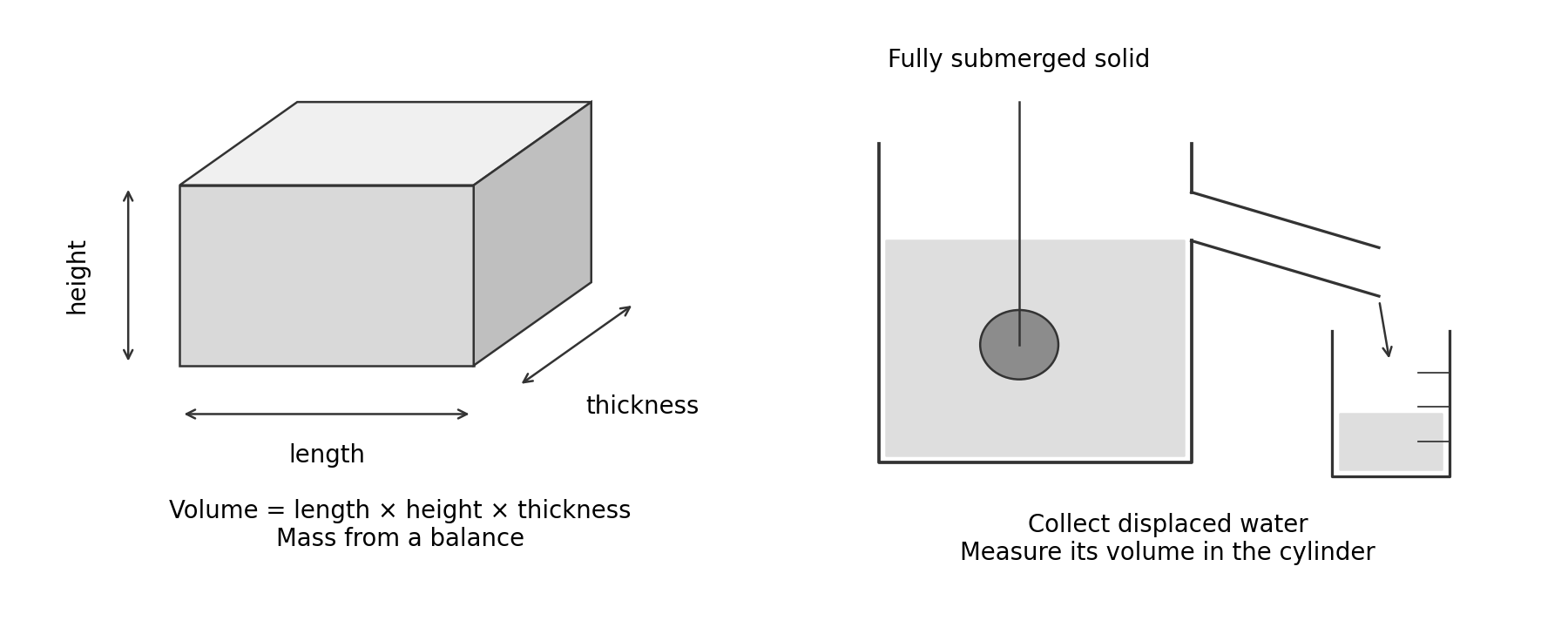


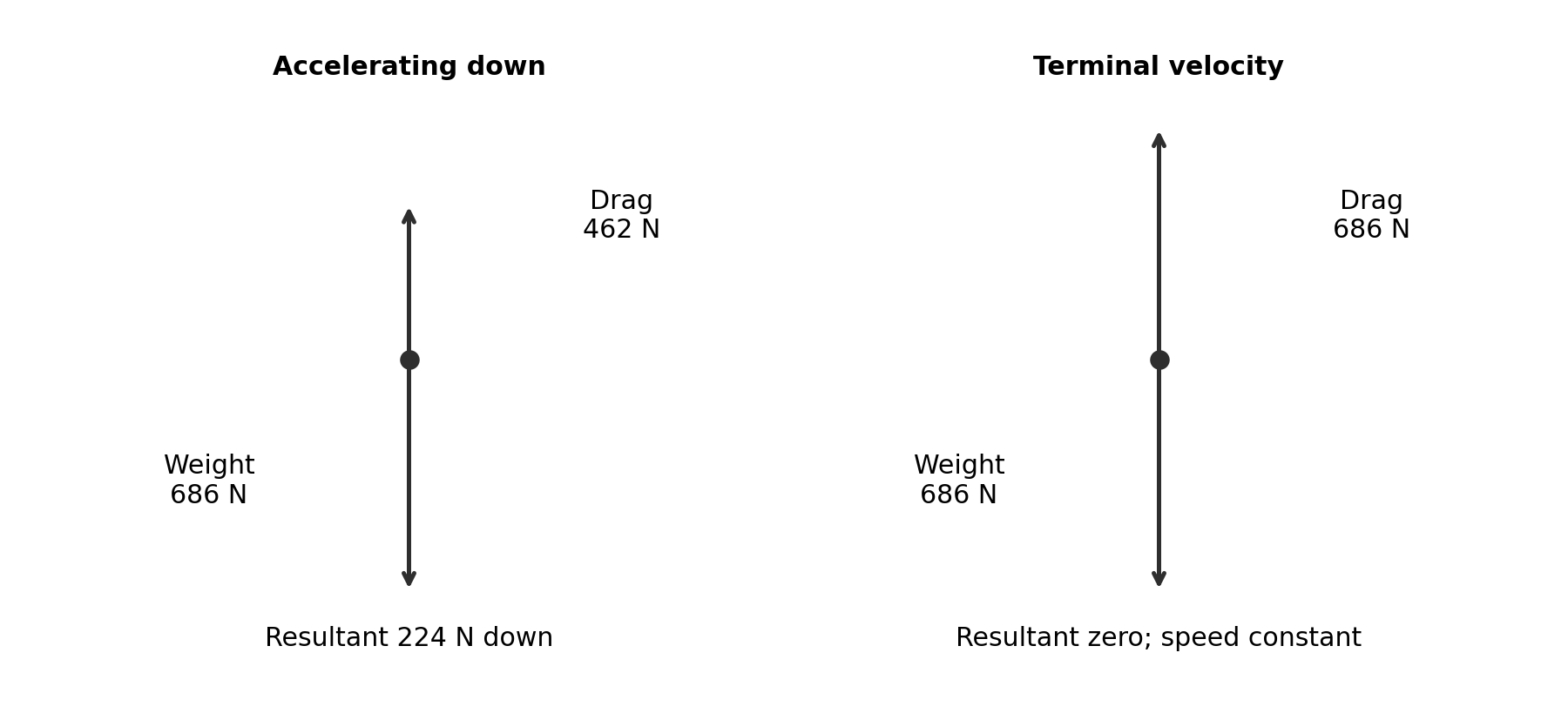


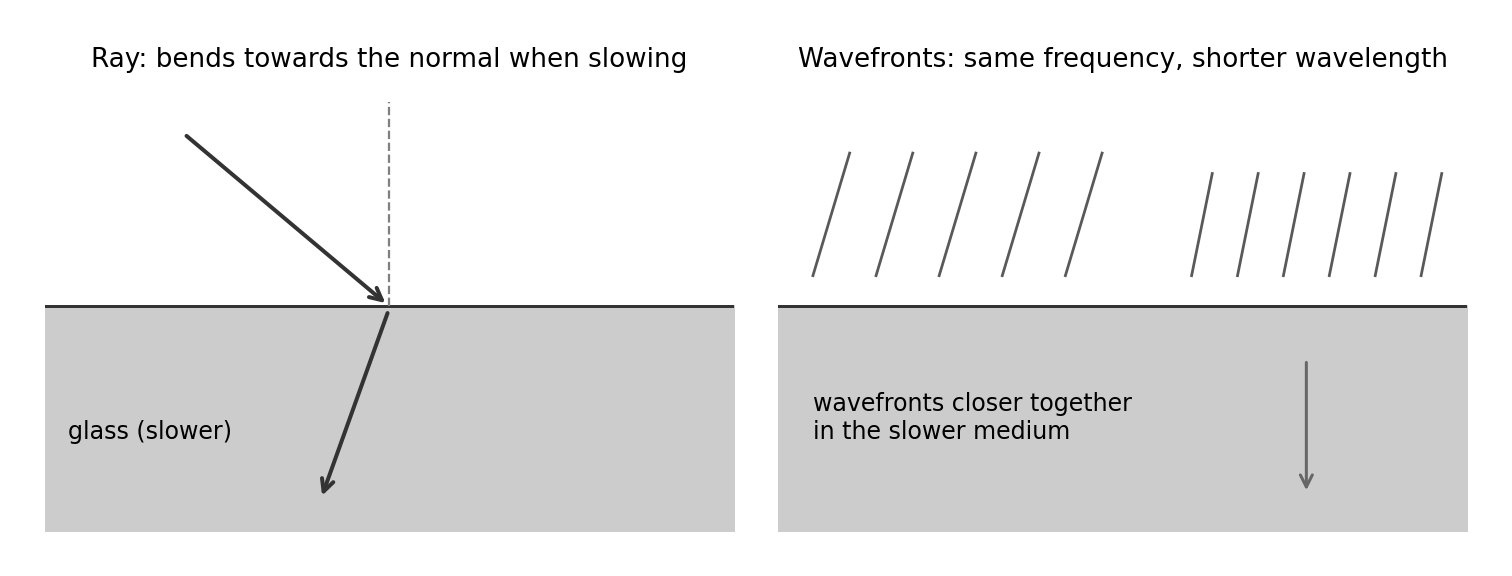


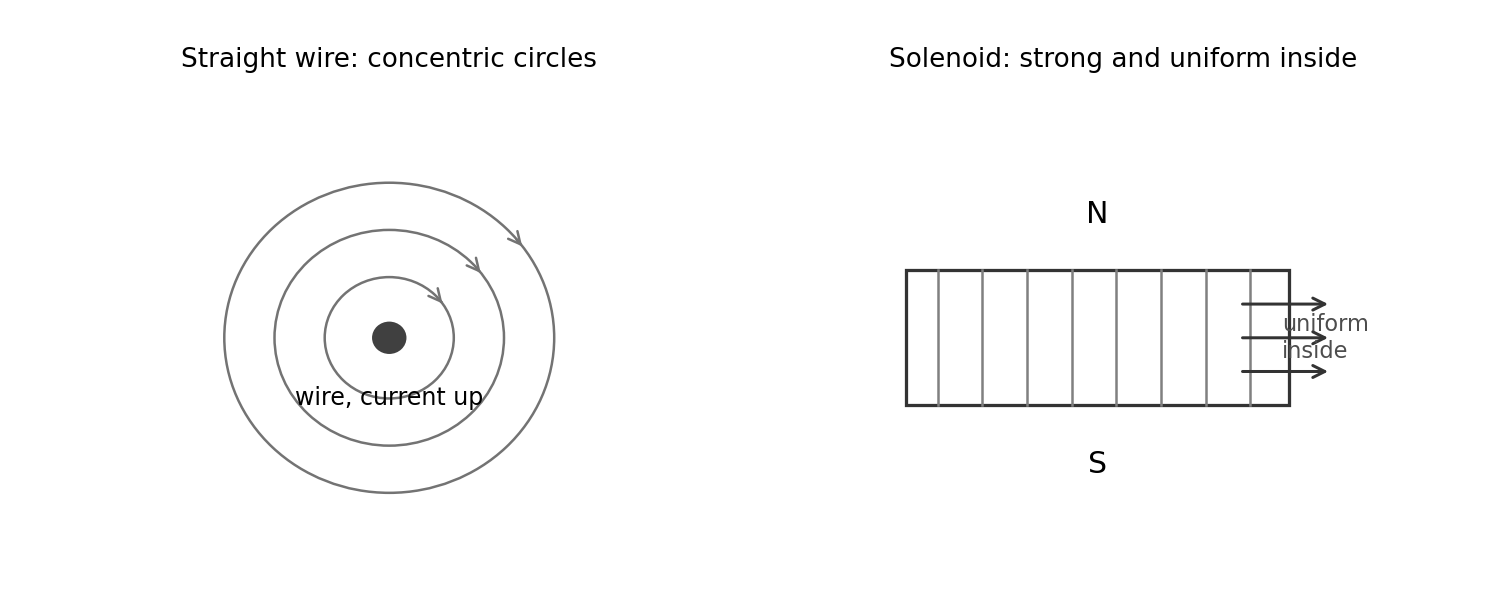
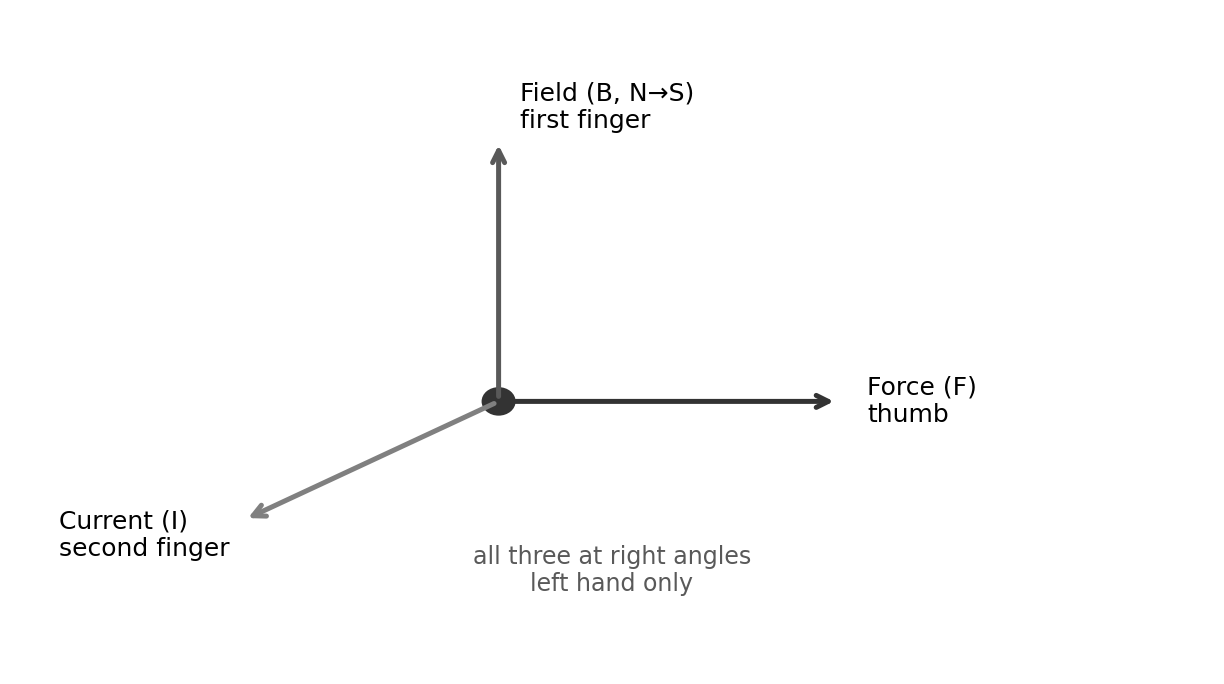
 מחלקת קומוטציה מפנה את הזרם בכל מחצית סיבוב כך שהסיבוק ימשיך.