A-Level Physics (9702) goes from measurement and motion all the way to quantum physics. The biggest jump from IGCSE is the algebra: you must rearrange and combine equations, not just remember them.
AS year: mechanics, waves, electricity, and the start of particle physics. A2 year: circular motion, gravitational, electric and magnetic fields, oscillations, thermodynamics and nuclear physics.
Read one topic, then do questions on it straight away. Physics does not stick from reading. When an answer is wrong, ask yourself: was it the physics or the algebra? The two need different fixes.
understand that all physical quantities consist of a numerical magnitude and a unit
make reasonable estimates of physical quantities included within the syllabus
עברית
להבין שכל הגדלים הפיזיקליים מורכבים מגודל מספרی ויחידת מידה
לבצע הערכות סבירות של גדלים פיזיקליים הכלולים בתוכנית הלימודים
Source: Cambridge International syllabus · מקור: הסיילבוס הבינלאומי של קמבריד'ג'
A physical quantity 物理量 has two parts: a number (its magnitude 大小) and a unit 单位. The number on its own tells you nothing. You must also say what is measured and in which unit.
Example: "the length is 1.5" is not complete. "The length is 1.5 m" is a physical quantity.
Making estimates
You should be able to estimate 估算 the size of the physical quantities in this syllabus. Paper 1 usually opens with a question like this. Learn these rough values:
mass 质量 of an adult human: $\sim 70\ \text{kg}$; of a car: $\sim 1000\ \text{kg}$; of an apple: $\sim 0.1\ \text{kg}$
weight 重力 of an adult human: $\sim 700\ \text{N}$; of an apple: $\sim 1\ \text{N}$
height of an adult human: $\sim 1.7\ \text{m}$; height of a room: $\sim 3\ \text{m}$
walking speed: $\sim 1.5\ \text{m s}^{-1}$; a car on a fast road: $\sim 30\ \text{m s}^{-1}$
speed of sound in air: $\sim 340\ \text{m s}^{-1}$; speed of light in a vacuum 真空: $3.0 \times 10^{8}\ \text{m s}^{-1}$
acceleration 加速度 of free fall 自由落体: $g \approx 9.81\ \text{m s}^{-2}$
density 密度 of water: $1000\ \text{kg m}^{-3}$; of air: $\sim 1.2\ \text{kg m}^{-3}$; of steel: $\sim 8000\ \text{kg m}^{-3}$
power of a kettle: $\sim 2\ \text{kW}$; of a person climbing stairs: $\sim 300\ \text{W}$
wavelength of visible light: $\sim 5 \times 10^{-7}\ \text{m}$; diameter of an atom: $\sim 10^{-10}\ \text{m}$; of a nucleus: $\sim 10^{-15}\ \text{m}$
A good estimate has the right order of magnitude 数量级 (the right power of ten). For a human, 70 kg is a good guess; 7 kg is not.
To estimate a quantity that is not in the list, build it from ones that are. The kinetic energy of a moving car is $\tfrac{1}{2}mv^{2} \approx \tfrac{1}{2} \times 1000 \times 30^{2} \approx 5 \times 10^{5}\ \text{J}$. The pressure under a standing person is $700\ \text{N} / 0.02\ \text{m}^{2} \approx 4 \times 10^{4}\ \text{Pa}$. Always check that the power of ten looks sensible before you move on.
recall the following SI base quantities and their units: mass (kg), length (m), time (s), current (A), temperature (K)
express derived units as products or quotients of the SI base units and use the derived units for quantities listed in this syllabus as appropriate
use SI base units to check the homogeneity of physical equations
recall and use the following prefixes and their symbols to indicate decimal submultiples or multiples of both base and derived units: pico (p), nano (n), micro (\mu), milli (m), centi (c), deci (d), kilo (k), mega (M), giga (G), tera (T)
עברית
לזכור את הגדלים הבסיסיים של SI ואת היחידות שלהם: מסה (kg), אורך (m), זמן (s), זרם (A), טמפרטורה (K)
לבטא יחידות נגזרות כמכפלות או מכסות של יחידות הבסיס של SI ולהשתמש ביחידות הנגזרות עבור הגדלים הרשומים בתוכנית זו כפי שמתאים
להשתמש ביחידות בסיס של SI כדי לבדוק את ההומוגניות של משוואות פיזיקליות
לזכור ולהשתמש בהתקדמויות ובסימניהן הבאות כדי להציג תת-חלקים עשרוניים או כפולות של יחידות בסיס ונגזרות: פיקו (p), ננו (n), מיקרו (\mu), מילי (m), צנטי (c), דצי (d), קילו (k), מגה (M), גיגה (G), טרה (T)
Source: Cambridge International syllabus · מקור: הסיילבוס הבינלאומי של קמבריד'ג'
Base units
The SI system has seven base quantities 基本量; five of them are used in this topic. You must know these five and their units:
mass — kilogram, $\text{kg}$
length 长度 — metre, $\text{m}$
time — second, $\text{s}$
current 电流 — ampere 安培, $\text{A}$
temperature 温度 — kelvin 开尔文, $\text{K}$
Every other unit in this syllabus is built from these five.
Derived units
A derived unit 导出单位 is made by multiplying or dividing base units. You should be able to write any quantity in this syllabus in base units.
Build a derived unit from the equation that defines it:
speed 速率 = distance / time, so its unit is $\text{m s}^{-1}$
acceleration = change in velocity 速度 / time, so its unit is $\text{m s}^{-2}$
force 力 = mass × acceleration, so its unit is $\text{kg m s}^{-2}$. The newton 牛顿 is $1\ \text{N} = 1\ \text{kg m s}^{-2}$.
work 功 and energy 能量 = force × distance, so the unit is $\text{kg m}^{2}\ \text{s}^{-2}$. The joule 焦耳 is $1\ \text{J} = 1\ \text{kg m}^{2}\ \text{s}^{-2}$.
power 功率 = energy / time, so the unit is $\text{kg m}^{2}\ \text{s}^{-3}$. The watt 瓦特 is $1\ \text{W} = 1\ \text{kg m}^{2}\ \text{s}^{-3}$.
pressure 压强 and stress 应力 = force / area, so the unit is $\text{kg m}^{-1}\ \text{s}^{-2}$. The pascal 帕斯卡 is $1\ \text{Pa} = 1\ \text{kg m}^{-1}\ \text{s}^{-2}$.
When a question asks for the SI base units of a quantity, replace each named unit with its base units, then simplify. Example: the SI base units of the watt are $\text{kg m}^{2}\ \text{s}^{-3}$.
Checking that the units match
An equation is homogeneous 量纲一致 when both sides have the same base units. In plain words: the units on both sides match.
Write each side in base units and compare. Take the equation $v^{2} = u^{2} + 2as$:
left side: $(\text{m s}^{-1})^{2} = \text{m}^{2}\ \text{s}^{-2}$
right side, first term: $(\text{m s}^{-1})^{2} = \text{m}^{2}\ \text{s}^{-2}$
right side, second term: $\text{m s}^{-2} \cdot \text{m} = \text{m}^{2}\ \text{s}^{-2}$
Both sides give $\text{m}^{2}\ \text{s}^{-2}$, so the units match.
Be careful: matching units do not prove the whole equation is correct. It could still have a wrong number, or a missing factor of 2. But if the units do not match, the equation is wrong for sure.
Worked example. The drag force on a falling ball is given by $F = kv^{2}$, where $v$ is the speed. Find the SI base units of the constant $k$.
Rearrange: $k = F / v^{2}$. In base units, $F$ is $\text{kg m s}^{-2}$ and $v^{2}$ is $\text{m}^{2}\ \text{s}^{-2}$, so
$$k:\ \frac{\text{kg m s}^{-2}}{\text{m}^{2}\ \text{s}^{-2}} = \text{kg m}^{-1}.$$
A multiple-choice question often asks "which equation could be correct?". Check the base units of each option; only a homogeneous equation can be correct. A pure number (like 2, $\pi$ or $\tfrac{1}{2}$) has no unit, so it never changes the check.
Prefixes
A prefix 词头 is a letter put in front of a unit to make it bigger or smaller by powers of ten. You must know these:
The SI prefixes climb in steps of a thousand, from pico to giga
Prefix
Symbol
Factor
tera
T
$10^{12}$
giga
G
$10^{9}$
mega
M
$10^{6}$
kilo
k
$10^{3}$
deci
d
$10^{-1}$
centi
c
$10^{-2}$
milli
m
$10^{-3}$
micro
$\mu$
$10^{-6}$
nano
n
$10^{-9}$
pico
p
$10^{-12}$
To change a prefixed unit into base units, replace the prefix with its factor, then simplify. Example: change $0.25\ \text{kN mm}^{-2}$ into $\text{N m}^{-2}$:
Take special care with squared units like $\text{mm}^{2}$: you must square the factor too.
Explore · חקור
Base or derived? · בסיס או נגזר?
Only seven quantities are base quantities. Everything else is built from them, and its unit can be written in base units. · רק שבע כמותות הן כמותות בסיס. הכל שאר נבנה מהן, והיחידה שלהן ניתנת לכתיבה ביחידות בסיס.
understand and explain the effects of systematic errors (including zero errors) and random errors in measurements
understand the distinction between precision and accuracy
assess the uncertainty in a derived quantity by simple addition of absolute or percentage uncertainties
עברית
להבין ולהסביר את השפעות שגיאות מערכתיות (כולל שגיאות אפס) ושגיאות מקריות במדידות
להבין את ההבדל בין דיוק לבין דיוקיות
להעריך את חוסר הוודאות בגדל נגזר על ידי חיבור פשוט של חוסרי ודאות מוחלטים או אחוזיים
Source: Cambridge International syllabus · מקור: הסיילבוס הבינלאומי של קמבריד'ג'
A vernier caliper measures length precisely, with a small uncertainty.
Every measurement 测量 has some uncertainty 不确定度 — we are never fully sure of the value. A good experimenter knows where the uncertainty comes from, makes a fair estimate of it, and carries it through to the final answer.
The main parts of a real micrometer screw gauge, which measures to the nearest 0.01 mmReading a micrometer: add the main scale reading to the thimble readingReading a real micrometer: read the mm and half-mm on the sleeve, then add the thimble scaleVernier calipers measure to the nearest 0.1 mm — the sliding scale gives the extra digitReading a vernier caliper: whole millimetres from the main scale, plus the tenths from the vernier line that lines up
Systematic and random errors
A systematic error 系统误差 changes every reading by the same amount, in the same direction. You cannot find it by repeating the measurement. Common causes:
a zero error 零点误差 (the scale does not read zero when the true value is zero)
a calibration 校准 error (the scale itself is wrong)
parallax 视差 (your eye is always to one side of the scale)
An ammeter with a zero error: the needle reads below zero before any current flowsParallax error: different viewing angles give different scale readings
A systematic error makes the accuracy 准确度 worse, but it does not change the precision 精密度.
A random error 随机误差 makes readings jump above and below the true value, with no pattern. Causes include how carefully you read the scale, changing conditions, and the smallest step the instrument 仪器 can show. If you repeat the measurement many times and take the mean 平均值 (the average), random errors partly cancel out.
A random error makes the precision worse. But with enough repeats, the mean can still be accurate.
On a graph the two errors look different. A systematic error moves every point by the same amount, so the line of best fit keeps its gradient but no longer passes through the origin: the intercept 截距 changes. Random errors scatter the points above and below the line; a best-fit line drawn through the middle of the scatter still gives a reliable gradient.
A systematic error shifts the whole line, so the intercept moves; random errors scatter the points about the line
Error
How to reduce it
systematic
check for a zero error and subtract it; calibrate the instrument against a known standard; read the scale from directly in front
random
repeat the reading and take the mean; use an instrument with smaller divisions; time many oscillations instead of one
Precision and accuracy
Precision is how close repeated readings are to each other. Precise readings are grouped very close together.
Accuracy is how close a reading (or the mean of several readings) is to the true value.
Precision: how narrow the distribution is around the true value T
A set of readings can be:
precise and accurate — close together and near the true value
precise but not accurate — close together, but away from the true value (a systematic error)
accurate but not precise — spread out, but the mean is near the true value
neither — spread out and away from the true value
Accuracy: whether the peak of the distribution is centred on the true value T
When a question gives a table of repeated readings, look at the spread (precision) and the mean (accuracy) separately.
Estimating the uncertainty in a reading
Before you combine uncertainties, you need a sensible uncertainty for each raw reading:
A single reading on an analogue scale: half the smallest division 分度 (a metre rule reads to $1\ \text{mm}$, so one reading is $\pm 0.5\ \text{mm}$). A length needs two readings, one at each end, so its uncertainty is $\pm 1\ \text{mm}$.
A digital meter: $\pm 1$ in the last digit shown (a stopwatch showing $2.47\ \text{s}$ is $\pm 0.01\ \text{s}$).
A hand-timed measurement: your reaction time 反应时间 matters more than the display. Allow about $\pm 0.1$ to $0.2\ \text{s}$, and time many oscillations instead of one, so the same uncertainty is shared between all of them.
Repeated readings: the uncertainty is half the range 极差的一半. Three timings of $2.42$, $2.48$ and $2.45\ \text{s}$ have a mean of $2.45\ \text{s}$ and a range of $0.06\ \text{s}$, so $t = (2.45 \pm 0.03)\ \text{s}$.
Be honest. If the edge of a shadow is hard to see, the uncertainty in its position is several millimetres, however fine the scale. Examiners do not accept "the smallest division" as the uncertainty of a difficult reading.
Uncertainty in a derived quantity
A measurement is often written as $x \pm \Delta x$. Here $\Delta x$ is the absolute uncertainty 绝对不确定度. The percentage uncertainty 百分比不确定度 is
$$\text{percentage uncertainty in } x = \frac{\Delta x}{|x|} \times 100\%.$$
A derived quantity 导出量 is one you calculate from measured values. Its uncertainty is found by simple rules:
Adding or subtracting — add the absolute uncertainties. If $y = a + b$ or $y = a - b$, then $\Delta y = \Delta a + \Delta b$.
Multiplying or dividing — add the percentage uncertainties. If $y = \dfrac{a \cdot b}{c}$, then
Powers — multiply the percentage uncertainty by the power. If $y = a^{n}$, then $\dfrac{\Delta y}{|y|} = |n| \cdot \dfrac{\Delta a}{|a|}$.
Worked example. A ball's diameter 直径 is measured as $d = (5.26 \pm 0.02)\ \text{cm}$. The volume 体积 of a sphere is $V = \tfrac{4}{3}\pi r^{3} = \tfrac{4}{3}\pi (d/2)^{3}$, so $V \propto d^{3}$ ($V$ depends on $d$ cubed).
Because $V \propto d^{3}$, the percentage uncertainty in $V$ is three times this, about $1.14\%$. The volume is $\tfrac{4}{3}\pi(2.63)^{3} \approx 76.2\ \text{cm}^{3}$. So the absolute uncertainty is $0.0114 \times 76.2 \approx 0.87\ \text{cm}^{3}$. The final answer is $V = (76.2 \pm 0.9)\ \text{cm}^{3}$.
Do two values agree? Practical questions often ask whether two calculated values of a constant support a suggested relationship. Do not just say "they are close". Work out the percentage difference 百分比差异 between them,
$$\text{percentage difference} = \frac{|k_{1} - k_{2}|}{\text{mean of } k_{1} \text{ and } k_{2}} \times 100\%,$$
and compare it with the percentage uncertainty in $k$ (or with the criterion the question gives, often 10%). If the difference is smaller, the two values agree within the uncertainty and the relationship is supported. If it is larger, they do not.
Significant figures
When you write a calculated quantity, give it the same number of significant figures 有效数字 as the least precise measurement you used — usually two or three in this syllabus. Too many significant figures makes the answer look more exact than it really is. Too few loses useful information.
Practical papers ask you to justify the number you chose. Name the raw readings: "$a$ is given to 2 significant figures because $L$ and $t$ were each measured to 2 significant figures." The phrase "because of the raw data" on its own does not earn the mark. In a table of results, judge each row from the least precise raw reading in that row; do not force every row to the same number of figures.
Uncertainties on a graph
Paper 5 asks you to carry uncertainties through a graph:
Plot each point with an error bar 误差棒 whose length shows the absolute uncertainty in that value.
Draw the line of best fit 最佳拟合直线 through the points, then the worst acceptable line 最差可接受直线: the steepest (or shallowest) straight line that still passes through every error bar.
The uncertainty in the gradient is the difference between the two gradients, $\Delta m = |m_{\text{best}} - m_{\text{worst}}|$. The uncertainty in the intercept is found the same way.
When you plot a logarithm, the absolute uncertainty in $\ln x$ is $\Delta x / x$ (and in $\lg x$ it is $0.434\,\Delta x / x$). Work it out for the largest and smallest values of $x$ separately.
The worst acceptable line still passes through every error bar; the gradient uncertainty is the difference between the two gradients
A percentage uncertainty in the gradient then flows into any quantity you calculate from it, using the rules above.
Explore · חקור
Systematic or random? · שיטתית או מקרית?
A systematic error shifts every reading the same way and survives repetition; a random error scatters the readings and shrinks when you average. · שגיאה שיטתית מזיזה כל הקריאה באותו כיוון ועוברת חזרה על עצמה; שגיאה מקרית מפזרת את הקריאות ומתקטנת כאשר נערכן אותן.
understand the difference between scalar and vector quantities and give examples of scalar and vector quantities included in the syllabus
add and subtract coplanar vectors
represent a vector as two perpendicular components
עברית
להבין את ההבדל בין סקאלרים לוקטורים ולתת דוגמאות לגדלים סקלאריים ווקטוריים הכלולים בתוכנית הלימודים
לחבר ולהחסיר וקטורים קופלנריים
לייצג וקטור כשתי מרכיבים מאונכים
Source: Cambridge International syllabus · מקור: הסיילבוס הבינלאומי של קמבריד'ג'
Resolving a force into components
A scalar 标量 has size only. A vector 矢量 has both size and direction.
Examples from the syllabus:
scalars: mass, time, temperature, energy, work, power, distance, speed, pressure, density, electric charge 电荷
vectors: displacement 位移, velocity, acceleration, force (including weight), momentum 动量
Quick test: if it makes sense to ask "in which direction?", the quantity is a vector. You cannot ask "in which direction is the temperature?", so temperature is a scalar. You can ask "in which direction is the velocity?", so velocity is a vector.
Adding and subtracting vectors
A vector is drawn as an arrow: the direction of the arrow gives the direction of the quantity, and the length of the arrow (drawn to scale) gives the magnitude.
Vectors represented as arrows drawn to scale
To add two coplanar 共面 vectors (vectors in the same flat plane), draw them tip to tail. The resultant 合矢量 goes from the tail of the first arrow to the tip of the second.
To find $\vec{X} - \vec{Y}$, add the reverse of $\vec{Y}$: $\vec{X} + (-\vec{Y})$. The reverse of $\vec{Y}$ has the same size as $\vec{Y}$ but points the opposite way.
Adding and subtracting parallel vectors
If the two vectors are at right angles (90°), the size of the resultant is
$$|\vec{R}| = \sqrt{X^{2} + Y^{2}},$$
and its direction comes from $\tan\theta = Y / X$.
Worked example. A swimmer heads north at $1.2\ \text{m s}^{-1}$ across a river that flows east at $0.5\ \text{m s}^{-1}$. Find the size and direction of the resultant velocity.
at an angle $\tan\theta = 0.5/1.2$, giving $\theta \approx 23°$ east of north.
Two perpendicular vectors add to a resultant of size $\sqrt{X^2+Y^2}$ at angle $\theta$
If two vectors have the same size $F$ with an angle $2\alpha$ between them, the resultant has size $2F\cos\alpha$ and lies along the line that cuts the angle in half.
Worked example. Two forces of $6.0\ \text{N}$ act on an object with $60°$ between them. Find the resultant.
Here $2\alpha = 60°$, so $\alpha = 30°$ and $R = 2 \times 6.0 \times \cos 30° = 10.4\ \text{N}$, along the line halfway between the two forces. Resolving gives the same answer: each force has a component $6.0\cos 30°$ along that line, and their components at right angles to it cancel.
For two vectors at any other angle, either make a scale drawing 按比例作图 of the vector triangle and measure the resultant, or resolve both vectors into perpendicular components, add the components, and recombine with $\sqrt{X^{2} + Y^{2}}$.
Worked example. A ball moving east at $5.0\ \text{m s}^{-1}$ is hit so that it moves north at $5.0\ \text{m s}^{-1}$. Find its change in velocity.
A change in velocity is a vector subtraction: $\Delta\vec{v} = \vec{v}_{\text{final}} - \vec{v}_{\text{initial}}$. Draw $5.0\ \text{m s}^{-1}$ north, then add the reverse of the initial velocity, $5.0\ \text{m s}^{-1}$ west. The two are perpendicular, so $|\Delta\vec{v}| = \sqrt{5.0^{2} + 5.0^{2}} = 7.1\ \text{m s}^{-1}$, pointing north-west. The speed did not change, but the velocity did. That is why a force must have acted on the ball (topic 3).
Splitting a vector into perpendicular parts
Any vector can be split into two perpendicular 垂直 (at right angles) components 分量. Usually these are horizontal 水平 and vertical 竖直, or along and across a surface. For a vector $\vec{v}$ at angle $\theta$ to the horizontal:
Resolving a vector into horizontal and vertical components
Choose the directions that make the problem easiest. On a slope (an inclined plane 斜面), split the weight into one part along the slope and one part at right angles to it:
where $\theta$ is the angle of the slope to the horizontal.
On a slope the weight splits into $W\sin\theta$ down the slope and $W\cos\theta$ into the slope; the angle between $W$ and the perpendicular is the slope angle $\theta$
You split a vector into components whenever you need to know how much of it acts in one direction. For example: the part of a force that acts along a slope, or the horizontal and vertical parts of a ball's velocity after it is thrown.
Explore · חקור
Adding two vectors · חיבור שני וקטורים
resultant = a + b · הכוח השקול = a + b
Vectors add tip to tail. The resultant runs from the start of the first arrow to the tip of the second, and its length is found from a scale drawing or by Pythagoras, never by adding the two magnitudes. · וקטורים מתחברים קצה לקצה. הווקטור התוצא נמתח מהתחלה של החץ הראשון עד הקצה של החץ השני, ואורכו נמצא ממתיחה גרפית או לפי משפט פיתגורס, לעולם לא על ידי חיבור הגדלים שלהם.
A definition question is marked against fixed wording. Learn these exactly, and give one answer only.
Term
Definition
physical quantity
a numerical magnitude together with a unit
homogeneous equation
an equation in which every term has the same base units
systematic error
an error that shifts every reading in the same direction by the same amount; not reduced by repeating
random error
an error that scatters readings above and below the true value; reduced by repeating and averaging
zero error
the reading an instrument shows when the true value is zero
precision
how close repeated readings are to each other
accuracy
how close a reading, or the mean of several readings, is to the true value
absolute uncertainty
the range within which the true value is expected to lie, in the units of the quantity
percentage uncertainty
the absolute uncertainty divided by the value, multiplied by 100%
scalar
a quantity with magnitude only
vector
a quantity with magnitude and direction
1.4
Exam tips
Give every answer a unit, and check homogeneity — both sides of an equation must have the same base units.
Distinguish random error (reduce by repeating and averaging) from systematic error (a zero or calibration error that repeats do not remove).
Combine uncertainties: add absolute uncertainties when adding/subtracting, add percentage uncertainties when multiplying/dividing (and multiply the % by any power).
Distinguish precision (small spread) from accuracy (close to the true value).
Resolve a vector into perpendicular components ($F\cos\theta$, $F\sin\theta$); add vectors tip-to-tail or by components.
Common mistakes
Substituting 5 cm as 5, or 20 g as 20. Convert the prefix first: 0.05 m, 0.020 kg.
Giving the percentage uncertainty in $T^{2}$ as the same as in $T$. Squaring doubles it; a square root halves it.
Treating the percentage uncertainty and the absolute uncertainty as the same number.
Quoting "the smallest division" as the uncertainty of a reading that was hard to take.
Offering two answers to a definition. Commit to one.
define and use distance, displacement, speed, velocity and acceleration
use graphical methods to represent distance, displacement, speed, velocity and acceleration
determine displacement from the area under a velocity–time graph
determine velocity using the gradient of a displacement–time graph
determine acceleration using the gradient of a velocity–time graph
derive, from the definitions of velocity and acceleration, equations that represent uniformly accelerated motion in a straight line
solve problems using equations that represent uniformly accelerated motion in a straight line, including the motion of bodies falling in a uniform gravitational field without air resistance
describe an experiment to determine the acceleration of free fall using a falling object
describe and explain motion due to a uniform velocity in one direction and a uniform acceleration in a perpendicular direction
עברית
הגדר והשתמש במרחק, הזזה, מהירות, מטח ותאוצה
השתמש בשיטות גרפיות כדי לייצג מרחק, הזזה, מהירות, מטח ותאוצה
חשב הזזה מתוך שטח מתחת לגרף מהירות-זמן
חשב מטח באמצעות השיפוע של גרף הזזה-זמן
חשב תאוצה באמצעות השיפוע של גרף מהירות-זמן
נגזר, מתוך ההגדרות של מטח ותאוצה, משוואות המתארות תנועה בתאוצה קבועה בקו ישר
פתר בעיות באמצעות משוואות המתארות תנועה בתאוצה קבועה בקו ישר, כולל תנועת גופים הנופלים בשדה כבידה אחיד ללא התנגדות אוויר
תאר ניסוי לקביעת תאוצת הנפילה החופשית באמצעות גוף הנופל
תאר והסבר תנועה הנובעת ממהירות קבועה בכיוון אחד ותאוצה קבועה בכיוון מאונך
Source: Cambridge International syllabus · מקור: הסיילבוס הבינלאומי של קמבריד'ג'
Dropped vs thrown: falling togetherA speedometer shows speed: the distance travelled per unit time.
These five quantities come up in almost every kinematics 运动学 question. Learn the exact words — the examiner gives marks for precise wording.
distance 距离 — the total length of the path travelled. A scalar 标量.
displacement 位移 — the straight-line distance from the start to the end, with a direction. A vector 矢量.
speed 速率 — the rate of change of distance with time. A scalar.
velocity 速度 — the rate of change of displacement with time. A vector.
acceleration 加速度 — the rate of change of velocity with time. A vector.
The unit of speed and velocity is $\text{m s}^{-1}$; the unit of acceleration is $\text{m s}^{-2}$.
Two more phrases the examiner uses: uniform acceleration 匀加速 means constant acceleration (a straight line on a velocity–time graph), and the acceleration of free fall 自由落体加速度$g$ is the acceleration of an object falling freely in a uniform gravitational field 匀强重力场 when air resistance is negligible 可忽略的 (small enough to ignore).
A common mistake: deceleration 减速度 just means acceleration in the opposite direction to the velocity. It is not a separate quantity.
Speeds are sometimes given in $\text{km h}^{-1}$. Convert before you calculate: $85\ \text{km h}^{-1} = 85 \times 1000 / 3600 = 23.6\ \text{m s}^{-1}$.
A speed camera measures average speed over a known distance — displacement over time, made into a fine
Explore · חקור
The velocity–time graph · גרף המהירות–זמן
v = u + at
On a speed–time graph the gradient is the acceleration and the area underneath is the distance travelled. · על גרף המהירות–זמן, השיפוע הוא התאוצה והשטח מתחת לו הוא המרחק שנעבר.
Many marks come from reading or drawing motion graphs, the graphical methods 图像法 the syllabus names. Two graphs matter.
Displacement–time graph
The gradient 斜率 (steepness) of a displacement–time graph at a point gives the velocity at that moment.
flat line → the object is at rest.
straight sloping line → constant velocity (gradient = velocity).
curved line → changing velocity. Draw a tangent 切线 at the point and find its gradient.
Displacement–time graph of a car on a test track
Velocity–time graph
The gradient of a velocity–time graph gives the acceleration at that moment.
The area between the line and the time axis gives the displacement in that time.
flat line → constant velocity (zero acceleration).
straight sloping line → uniform acceleration (constant acceleration).
curved line → changing acceleration.
area above the time axis is positive displacement; area below is negative (the object moved backwards).
Velocity–time graph — gradient gives acceleration, area gives displacementAcceleration–time graph derived from the same motion
To find the displacement, split the area into triangles and rectangles, or count grid squares. Area of a triangle is $\tfrac{1}{2} \times \text{base} \times \text{height}$; area of a rectangle is $\text{base} \times \text{height}$.
Worked example. The graph shows the velocity of a lift. Find the acceleration in each stage and the total distance travelled.
Velocity–time graph of a lift: gradient gives each acceleration, the shaded area gives the distance
Stage B: the line is flat, so the acceleration is zero.
Stage C: gradient $= \dfrac{0 - 3.0}{2.0} = -1.5\ \text{m s}^{-2}$ (a deceleration of $1.5\ \text{m s}^{-2}$).
Distance: triangle A $= \tfrac{1}{2} \times 4.0 \times 3.0 = 6.0\ \text{m}$, rectangle B $= 6.0 \times 3.0 = 18\ \text{m}$, triangle C $= \tfrac{1}{2} \times 2.0 \times 3.0 = 3.0\ \text{m}$; total $27\ \text{m}$.
When the graph is a curve, the area is still the displacement: count the squares under the curve (half a square or more counts as one) and multiply by the value of one square.
Explore · חקור
Reading a velocity–time graph · קריאה מגרף מהירות–זמן
Change the start velocity u and the acceleration a. The gradient of the line is the acceleration; the area under it is the displacement. · שנו את המהירות ההתחלתית u והתאוצה a. השיפוע של הישר הוא התאוצה; השטח מתחתיו הוא ההזזה.
For motion in a straight line with uniform acceleration, we use five symbols: starting velocity $u$, final velocity $v$, acceleration $a$, displacement $s$, and time $t$. Four equations link them:
$$v = u + at$$
$$s = ut + \tfrac{1}{2} a t^{2}$$
$$s = \tfrac{1}{2}(u + v)t$$
$$v^{2} = u^{2} + 2as$$
Each equation uses four of the five symbols. To pick the right one: write down what you know and what you want, then choose the equation with exactly those four.
Worked example. A car accelerates uniformly from $8\ \text{m s}^{-1}$ to $20\ \text{m s}^{-1}$ over a distance of $56\ \text{m}$. Find its acceleration.
We know $u$, $v$ and $s$ and want $a$, so use $v^{2} = u^{2} + 2as$:
You should be able to get these from the definitions of velocity and acceleration. Think of the velocity–time graph of the motion: a straight line from $u$ at $t = 0$ to $v$ at time $t$.
$v = u + at$: acceleration is the gradient, $a = (v - u)/t$, so $v = u + at$.
$s = \tfrac{1}{2}(u + v) t$: displacement is the area under the line, a trapezium 梯形 with parallel sides $u$ and $v$ and width $t$, so $s = \tfrac{1}{2}(u + v)t$.
$s = ut + \tfrac{1}{2}at^{2}$: put $v = u + at$ into the area: $s = \tfrac{1}{2}(u + u + at)t = ut + \tfrac{1}{2}at^{2}$.
$v^{2} = u^{2} + 2as$: from the first equation $t = (v - u)/a$; put this into $s = \tfrac{1}{2}(u + v)t$ to get $2as = (v + u)(v - u) = v^{2} - u^{2}$.
A "derive" question wants exactly these steps, each starting from a definition or an equation already established, with no numbers.
Displacement–time graph for uniform acceleration — the slope at any point equals the instantaneous velocity
If a question asks "which equation can be found using only the gradient of a velocity–time graph?", the answer is $v = u + at$ (the gradient is the acceleration).
"Show that" questions. When the question gives the answer ("show that the height is 3.2 km"), the marks are for the method. State the equation, substitute every value with its unit, and give the result to one more significant figure than the value quoted ($3.24\ \text{km}$, which rounds to $3.2\ \text{km}$). Reaching the quoted value proves nothing on its own.
Choosing a positive direction
Pick a positive direction at the start and keep it. Anything pointing the other way gets a minus sign. For a ball thrown straight up, if "up" is positive: $u$ is positive, $a = -g$ (gravity 重力 pulls down), and at the highest point the displacement is positive but the velocity is zero.
When air resistance 空气阻力 can be ignored, an object in free fall 自由落体 has a constant acceleration $g \approx 9.81\ \text{m s}^{-2}$ downwards. This is the same for every mass.
For a ball dropped from rest and falling a distance $h$:
The equations above assume the only force is the weight. With air resistance, the resultant force on a falling object is smaller than its weight, so the acceleration is less than $g$; and because air resistance grows with speed, the acceleration keeps decreasing as the object speeds up. On a velocity–time graph the line curves, its gradient falling towards zero as the object approaches terminal velocity 收尾速度 (topic 3). For a projectile, air resistance shortens the range and lowers the maximum height, and the path is no longer a symmetrical parabola 抛物线: the object comes down more steeply than it went up. A "state and explain" question wants the force first, then its effect on the acceleration, then the effect on the motion.
Experiment to find $g$
A common method: drop an object from rest, then measure the distance $h$ it falls and the time $t$ it takes. Then
$$g = \frac{2h}{t^{2}}.$$
Repeat for several heights and plot $h$ against $t^{2}$. The gradient of the best straight line is $g/2$, so $g$ is twice the gradient. Repeating reduces random error 随机误差. An electronic timer — using light gates 光电门, or a switch the ball hits — removes reaction-time 反应时间 error.
Experimental set-up for measuring the acceleration due to free fall
Water jets from a sprinkler trace parabola paths — a real example of projectile motion
When an object moves at constant velocity in one direction (say horizontal 水平) and speeds up in a direction at right angles to it (say vertical 竖直, under gravity), the two motions do not affect each other. Treat each direction on its own, with its own SUVAT equation.
Horizontal throw
An object thrown horizontally with speed $u_{\text{H}}$ from height $h$, with air resistance ignored:
horizontal: constant velocity $u_{\text{H}}$. After time $t$, the horizontal distance is $x = u_{\text{H}} t$.
vertical: starts from rest and speeds up downwards at $g$. After time $t$, it has fallen $y = \tfrac{1}{2} g t^{2}$ and has vertical velocity $v_{\text{V}} = g t$.
The time to reach the ground depends only on the height $h$, not on $u_{\text{H}}$. Solve $h = \tfrac{1}{2} g t^{2}$ for $t$; then the horizontal range 射程 is $u_{\text{H}} t$.
Worked example. A ball is thrown horizontally at $15\ \text{m s}^{-1}$ from the top of a cliff $20\ \text{m}$ high. Find the time it takes to land and how far from the base it lands (take $g = 9.81\ \text{m s}^{-2}$).
Vertical motion gives the time: from $h = \tfrac{1}{2}g t^{2}$,
Horizontal motion then gives the range: $x = u_{\text{H}} t = 15 \times 2.0 \approx 30\ \text{m}.$
The horizontal-velocity graph is a flat line at $u_{\text{H}}$. The vertical-velocity graph is a straight line from the origin with gradient $g$.
Comparing two objects. If object A is dropped and object B is thrown horizontally from the same height at the same moment, both reach the ground at the same time: their vertical motions are identical. If instead B is thrown with an upward component, it takes longer, because it must first rise and come back to the start height before it falls the same distance. Its speed on landing is still found from energy: the kinetic energy gained equals the potential energy lost, whatever the direction of the throw, so a ball launched at any angle with the same speed from the same height lands at the same speed (topic 5).
Projectile at an angle
A projectile 抛体 thrown at speed $u$ at angle $\theta$ above the horizontal:
Projectile launched at angle $\theta$ — horizontal and vertical motions are independent
horizontal component 分量 of the starting velocity: $u_{\text{H}} = u \cos\theta$ (stays constant during the flight).
vertical component of the starting velocity: $u_{\text{V}} = u \sin\theta$ (gets smaller, becomes zero at the top, then grows downwards).
At the highest point, $v_{\text{V}} = 0$, but $v_{\text{H}}$ is still $u\cos\theta$. The time to the top is $t_{\text{up}} = u\sin\theta / g$; the total flight time (back to the start height) is $2t_{\text{up}}$.
Sketching the velocity graphs. Examiners often ask you to sketch $v_{\text{H}}$ and $v_{\text{V}}$ against time on the same axes, taking upwards as positive. The horizontal component is a flat line at $u\cos\theta$ for the whole flight. The vertical component is a straight line of gradient $-g$: it starts at $+u\sin\theta$, crosses zero at the top of the flight, and reaches $-u\sin\theta$ on landing at the start height. Label each line, mark the times where the lines start and stop, and make the crossing sit exactly at $t_{\text{up}}$.
Velocity–time sketches for a projectile: the horizontal component stays constant; the vertical component falls in a straight line through zero at the top
Worked example. A ball leaves the ground at $18\ \text{m s}^{-1}$ at $60°$ to the horizontal. Show that it reaches its maximum height at $t = 1.6\ \text{s}$.
$u_{\text{V}} = 18 \sin 60° = 15.6\ \text{m s}^{-1}$. At the top $v_{\text{V}} = 0$, so from $v = u + at$ with $a = -9.81\ \text{m s}^{-2}$: $t = 15.6 / 9.81 = 1.59\ \text{s} \approx 1.6\ \text{s}$.
Range $R$ of a projectile launched from and landing on level ground
Bouncing ball
When a ball bounces, its velocity–time graph is a set of straight sloping lines (constant $g$) with a sudden jump at each bounce (the velocity flips direction, and gets smaller if some energy 能量 is lost). Add up the times and the distances across the bounces.
A bouncing ball: every sloping line has gradient $g$; the velocity flips sign and shrinks at each bounce
Read such a graph carefully: the gradient of every sloping line is the same $g$; the ball is at its highest point wherever the line crosses the time axis; and the height of each bounce comes from the area of the triangle above (or below) the axis for that flight.
Explore · חקור
Launch a projectile · שחרור פרוגטייל
Fire the ball, then change the angle and speed. The horizontal motion is steady while gravity pulls it down — together they trace a parabola. Find the angle for the longest range, and try the Moon. · שחרר הכדור, ולאחר מכן שינוי הזווית והמהירות. התנועה האופקית היא אחידה בעוד שהכבידה מושכת אותו למטה — יחד הם מתאר们 פרבולה. מצאו את הזווית לקליטת טווח מקסימלית, ונסו את הירח.
When two objects move along the same line in different ways, write a displacement equation for each. Use the same start time and the same positive direction. Then set the two displacements equal (or set their difference to a given gap).
For a goods train at constant velocity $u_{\text{G}}$ and an express train starting from rest with acceleration $a$, both passing the same point at $t = 0$:
$$s_{\text{G}} = u_{\text{G}} t, \qquad s_{\text{E}} = \tfrac{1}{2} a t^{2}.$$
They are level again when $s_{\text{G}} = s_{\text{E}}$, giving $t = 2 u_{\text{G}} / a$.
Meet where the displacement–time graphs cross (same s at same t)
2.1
Tips for solving problems
Draw a diagram and mark the positive direction.
List the SUVAT symbols with their known and unknown values, including signs.
Choose the SUVAT equation with exactly the four symbols you have, plus the one you want.
For projectile motion, split into horizontal and vertical SUVAT problems, linked only by the time $t$.
Always check the units of your answer, and that its size is sensible.
2.1
Definitions the examiner accepts
A definition question is marked against fixed wording. Learn these exactly, and give one answer only.
Term
Definition
distance
the total length of the path travelled (a scalar)
displacement
the distance moved in a stated direction, from start to finish (a vector)
speed
the rate of change of distance with time
velocity
the rate of change of displacement with time
acceleration
the rate of change of velocity with time
uniform acceleration
acceleration that is constant in magnitude and direction
acceleration of free fall
the acceleration of an object falling freely under gravity alone, with air resistance negligible
2.1
Exam tips
Use the SUVAT equations only for constant acceleration; list $s, u, v, a, t$ and pick the equation missing your unknown.
Choose one direction as positive and keep signs consistent (usually $g = -9.81\ \text{m s}^{-2}$).
On a velocity-time graph, gradient $=$ acceleration and area $=$ displacement.
For projectiles, treat horizontal (constant velocity) and vertical ($a = g$) motion separately, linked by the same time.
Common mistakes
Saying the heavier ball hits the ground first, or faster, when air resistance is ignored. Both fall with the same acceleration and land at the same speed.
Taking the gradient of a $v$–$t$ graph when the question wants the area, or the area when it wants the gradient. Gradient is acceleration; area is displacement.
Drawing a curve on a $v$–$t$ graph for a body under constant acceleration. Constant acceleration is a straight line; only the sign of $v$ changes at a bounce.
Using $g = +9.81$ for a ball thrown upwards with "up" as positive. Once up is positive, $a = -9.81\ \text{m s}^{-2}$ for the whole flight, on the way down too.
Using a SUVAT equation when the acceleration is changing (air resistance, a curved graph). Then only the graph methods work.
understand that mass is the property of an object that resists change in motion
recall $F = ma$ and solve problems using it, understanding that acceleration and resultant force are always in the same direction
define and use linear momentum as the product of mass and velocity
define and use force as rate of change of momentum
state and apply each of Newton’s laws of motion
describe and use the concept of weight as the effect of a gravitational field on a mass and recall that the weight of an object is equal to the product of its mass and the acceleration of free fall
עברית
הבנת that מסה היא תכונה של גוף המונעת שינוי במצב התנועה שלו
זכירת $F = ma$ ופתיחת בעיות באמצעותה, בהבנה that תאוצה וכוח נטו תמיד נמצאים באותה כיוון
הגדרה ושימוש ב-תנע קווי כמכפלת מסה ומהירות
הגדרה ושימוש ב-כוח כ-קצב השינוי בתנע
ניסוח והחלה של כל אחד מ-חוקי התנועה של ניוטון
תיאור ושימוש במונח משקל כתוצאה של שדה כבידה על מסה, וזכירה that משקל גוף שווה למכפלת מסתו ב-תאוצת הנפילה החופשית
Source: Cambridge International syllabus · מקור: הסיילבוס הבינלאומי של קמבריד'ג'
Mass
Mass 质量 tells you how hard it is to change an object's motion. The larger the mass, the larger the force 力 needed to give it a certain acceleration 加速度. Mass is measured in kilograms ($\text{kg}$) and is a scalar 标量.
Momentum
Linear momentum 动量 is the product of mass and velocity:
$$p = mv.$$
Momentum is a vector 矢量 — it points the same way as the velocity 速度. Its unit is $\text{kg m s}^{-1}$, which is the same as $\text{N s}$.
Force as the rate of change of momentum
Newton's second law, in its general form: the resultant force 合力 on an object equals the rate of change of its momentum.
Impulse is the area under a force-time graph, equal to the change in momentum
$$F = \frac{\Delta p}{\Delta t}.$$
When the mass is constant this becomes $F = ma$, because $\Delta p = m\,\Delta v$ and $\Delta v / \Delta t = a$. Cambridge questions often want you to use $F = \Delta p / \Delta t$ directly for a collision 碰撞 or an impulse 冲量: the average force equals the change in momentum divided by the contact time.
A ball hits a wall with momentum $p_{1}$ and bounces back with momentum $p_{2}$ in the opposite direction. The change in momentum is $\Delta p = p_{2} - p_{1}$ (give each direction the correct sign). The average force is $\Delta p / \Delta t$, where $\Delta t$ is the contact time.
Worked example. A $0.20\ \text{kg}$ ball hits a wall at $8.0\ \text{m s}^{-1}$ and bounces straight back at $6.0\ \text{m s}^{-1}$. The contact lasts $0.050\ \text{s}$. Find the average force on the ball.
Take the rebound direction as positive, so $u = -8.0\ \text{m s}^{-1}$ and $v = +6.0\ \text{m s}^{-1}$:
$$\Delta p = m(v - u) = 0.20 \times \big(6.0 - (-8.0)\big) = 2.8\ \text{kg m s}^{-1},$$
This comes from $E_{\text{k}} = \tfrac{1}{2} m v^{2} = p^{2} / (2m)$.
Momentum–time graphs
Because $F = \Delta p / \Delta t$, the gradient of a momentum–time graph is the resultant force, just as the gradient of a velocity–time graph is the acceleration. A straight line means a constant resultant force; a horizontal line means zero resultant force; a line sloping down means a force acting against the motion.
The gradient of a momentum–time graph is the resultant force: 500 N while accelerating, zero while the momentum is constant, negative while braking
Worked example. The graph shows the momentum of a motorcycle. Find the resultant force on it during the first $10\ \text{s}$.
Gradient $= \Delta p / \Delta t = 5000 / 10 = 500\ \text{N}$. Between $10\ \text{s}$ and $16\ \text{s}$ the momentum is constant, so the resultant force is zero: the driving force just balances the resistive forces. From $16\ \text{s}$ to $20\ \text{s}$ the momentum falls by $2000\ \text{kg m s}^{-1}$, so the resultant force is $-500\ \text{N}$, acting backwards.
If a question tells you the speed is changing while the resultant force stays constant, that force cannot be air resistance: drag depends on speed, so it would change as the speed changes, and drag always acts against the motion.
Explore · חקור
Free-body diagram (F = ma) · תרשים גוף חופשי (F = ma)
The resultant of the forces, divided by the mass, gives the acceleration. · התוצאתית של הכוחות, חלקה במסה, נותנת את התאוצה.
Explore · חקור
Newton's second law · חוק השני של ניוטון
F = ma (resultant) · F = ma (תוצאתית)
The resultant force sets the acceleration; balanced forces ⇒ none. · הכוח התוצאתי קובע את התאוצה; כוחות מאוזנים ⇒ אין תאוצה.
A rocket pushes gas down; by Newton's third law the gas pushes the rocket up.
First law
An object stays at rest, or keeps moving at constant velocity in a straight line, unless a resultant external force 外力 acts on it. In short: zero resultant force means zero acceleration.
Second law
The resultant force on an object equals its rate of change of momentum, and acts in the same direction as that change. In SI units,
$$F = \frac{\Delta p}{\Delta t} = ma \quad\text{(for constant mass)}.$$
Acceleration and resultant force always point the same way.
Free-body diagram showing all forces on a block being pulled at an angleWeight and normal contact force on a book resting on a table
Third law
When body A pushes on body B, body B pushes back on body A with an equal and opposite force. The two forces:
act on different objects,
are of the same type (both gravitational, both contact, both electrostatic 静电, and so on),
have the same size and opposite direction.
A common trap: the weight 重力 of a block on a table and the normal contact force 支持力 from the table are not a third-law pair (they act on the same object and are different types). The third-law partner of the block's weight is the pull the block makes on the Earth. The third-law partner of the table's contact force is the push the block makes on the table.
To name a third-law partner, swap the two bodies in the sentence. "The back wheel of a bicycle pushes backwards on the road" pairs with "the road pushes forwards on the back wheel", and that forward push is what drives the bicycle. "The Earth pulls the Moon" pairs with "the Moon pulls the Earth", with the same size of force.
For a rocket: the thrust 推力 on the rocket and the force on the gases are a third-law pair (the engine pushes the gas down, the gas pushes the engine up). Weight and air resistance are not part of this pair.
Newton's third-law pair: R on the book (up) and R′ on the table (down)
Weight is the force on an object from a gravitational field 重力场. Near the Earth's surface,
$$W = mg,$$
where $g \approx 9.81\ \text{m s}^{-2}$ is the acceleration of free fall. Weight is a vector that points towards the centre of the Earth. Do not mix it up with mass: mass is the same everywhere, but weight changes with place.
On the Moon $g$ is about $1.6\ \text{m s}^{-2}$, so an astronaut's mass is unchanged but their weight is about one sixth of its value on Earth. When a multiple-choice question asks which statement describes weight, the answer is the one that says "the force on the object due to a gravitational field", not "mass times acceleration" and not "the resultant force".
Non-uniform motion: friction, drag and terminal velocity
Syllabus · סיילבוס
English
show a qualitative understanding of frictional forces and viscous/drag forces including air resistance (no treatment of the coefficients of friction and viscosity is required, and a simple model of drag force increasing as speed increases is sufficient)
describe and explain qualitatively the motion of objects in a uniform gravitational field with air resistance
understand that objects moving against a resistive force may reach a terminal (constant) velocity
עברית
הצגת הבנה איכותנית של כוחות חיכוך וכוחות黏性/התנגדות כולל התנגדות אוויר (אינה נדרשת עיבוד מקדם החיכוך וה黏性, ודגם פשוט של כוח התנגדות העולה עם מהירות מספיק)
תיאור והסבר איכותני של תנועת גופים בשדה כבידה אחיד עם התנגדות אוויר
הבנה that גופים הנעים נגד כוח התנגדות עשויים להגיע למהירות סופית (קבועה)
Source: Cambridge International syllabus · מקור: הסיילבוס הבינלאומי של קמבריד'ג'
Friction and drag forces
A friction 摩擦力 force between two solid surfaces acts along the surface and opposes the sliding. A viscous 黏性 or drag 阻力 force is the resistive force from a fluid 流体 (a liquid or gas) on an object moving through it; air resistance is the case for air. You do not need to use any coefficient 系数 of friction or viscosity.
A simple model: the drag gets bigger as the speed gets bigger. At zero speed, the drag is zero. Drag also grows with the cross-sectional area 横截面积 of the object and with the density of the fluid; a parachute works by making the area, and so the drag, much larger. These frictional forces and drag forces are all resistive forces: they act against the direction of motion and transfer kinetic energy to thermal energy.
Free-body diagram of a book being pulled on a table
An object falling through air
For an object dropped from rest and falling through air:
At first, only weight acts, so the object speeds up downwards at $g$.
As the speed grows, the upward drag grows. The resultant force gets smaller, so the acceleration gets smaller.
In the end, the drag equals the weight. The resultant force is zero, the acceleration is zero, and the speed stays constant — the terminal velocity 收尾速度.
On a velocity–time graph, the line starts straight with gradient $g$, then bends and flattens at the terminal velocity. This shape (fast start, then slowing acceleration, then constant speed) is how "falling with air resistance" differs from "free fall in a vacuum" in a uniform gravitational field 匀强重力场. On an acceleration–time graph the acceleration starts at $g$ and decreases, curving down to zero.
Two spheres of the same size but different density have different terminal velocities: the denser sphere has the larger weight, so it needs a larger drag to balance it, and drag only reaches that value at a higher speed. That is also why a parachute changes everything: when it opens, the drag suddenly exceeds the weight, the resultant force is upwards, and the skydiver decelerates (the acceleration is upwards while the velocity is still downwards) until the drag has fallen back to equal the weight at a new, much lower terminal velocity.
A skydiver's velocity–time graph: the acceleration falls from $g$ to zero at the first terminal velocity; opening the parachute makes the drag exceed the weight, so the velocity falls to a new, lower terminal velocityVelocity–time graph for an object falling through airForces on a falling object in a fluid
Falling through a liquid: three forces
A ball falling through a liquid has three forces on it: its weight downwards, the upthrust 浮力 upwards, and the viscous drag upwards. The upthrust comes from hydrostatic pressure 流体静压强: the pressure in a liquid increases with depth, so the liquid pushes harder on the bottom of the ball than on the top, and the resultant of these pushes is upwards. Its size is the weight of the liquid the ball displaces, $U = \rho_{\text{liquid}} V g$ (topic 4). The drag grows with speed. When weight $=$ upthrust $+$ drag, the resultant force is zero and the ball falls at its terminal speed. A "draw labelled arrows" question wants exactly these three, with the upthrust and drag both up and the weight down.
Worked example. A steel ball of radius $2.0\ \text{mm}$ and weight $2.56 \times 10^{-3}\ \text{N}$ falls through oil of density $850\ \text{kg m}^{-3}$. The viscous drag on it is $F = 6\pi \eta r v$, where $\eta$ is the viscosity 黏度 of the oil and $v$ the speed. (a) Find the SI base units of $\eta$. (b) Show that the upthrust on the ball is $2.8 \times 10^{-4}\ \text{N}$. (c) Taking $\eta = 0.20$ in SI units, find the terminal speed.
(a) $\eta = F / (6\pi r v)$, so its units are $\text{N} / (\text{m} \cdot \text{m s}^{-1}) = \text{kg m s}^{-2} / (\text{m}^{2}\ \text{s}^{-1}) = \text{kg m}^{-1}\ \text{s}^{-1}$.
(c) At the terminal speed, drag $= W - U = 2.56 \times 10^{-3} - 2.8 \times 10^{-4} = 2.28 \times 10^{-3}\ \text{N}$. So $v = F / (6\pi \eta r) = 2.28 \times 10^{-3} / (6\pi \times 0.20 \times 2.0 \times 10^{-3}) = 0.30\ \text{m s}^{-1}$.
Why the spread-eagle pose? Spreading out gives the largest area, so the most drag. The bigger the drag, the sooner drag balances weight — and the lower the steady terminal velocity they fall at
Energy during a terminal-velocity fall
At terminal velocity, a parachutist 跳伞者 has constant kinetic energy. But the gravitational potential energy 重力势能 keeps falling as they go down. Where does it go? Almost all of it turns into thermal energy 热能 of the air around them. It does not become kinetic energy of the parachutist — that stays constant.
Cyclist or car at constant speed
A vehicle at constant speed on a flat road has zero resultant force. The forward driving force 驱动力 is equal and opposite to the total resistive force (friction, air resistance, and rolling resistance). At higher speed the drag is larger, so the driving force must be larger too — and so the power 功率 must be larger.
On a slope the weight has a component along the road. Going up at constant speed, the driving force must balance the resistive force and the part of the weight that pulls down the slope, $W\sin\theta$; going down, that same component helps the motion.
A car climbing a slope at constant speed: along the slope the driving force balances the resistive force plus the weight's component $W\sin\theta$
Worked example. A car of mass $1500\ \text{kg}$ climbs a road inclined at $12°$ to the horizontal at a constant $30\ \text{m s}^{-1}$. The total resistive force is $1600\ \text{N}$. Find the driving force and the useful output power of the engine.
Constant speed means zero resultant force along the slope: $D = 1600 + 1500 \times 9.81 \times \sin 12° = 1600 + 3060 = 4660\ \text{N} \approx 4700\ \text{N}$. Power is force times velocity (topic 5): $P = Dv = 4660 \times 30 = 1.4 \times 10^{5}\ \text{W}$.
Explore · חקור
Stopping a car · עצירת רכב
Friction is what brakes a car. Set a speed and brake — the car keeps moving while the driver reacts, then friction slows it. Double the speed and watch the braking distance quadruple. · חיכוך הוא מה שעוצר רכב. קבע מהירות והפעל בלם — הרכב ממשיך לנוע בזמן שהנהג מגיב, ואז החיכוך מאט אותו. הכפל את המהירות ותראה שהמרחק לעצירה ארבע פעמים ארוך יותר.
Explore · חקור
Reach terminal velocity · להגיע למהירות שפל
Jump and watch the air-resistance arrow grow until it balances the weight — then the speed is constant. Open the parachute and the much bigger drag drops the diver to a slow, safe terminal velocity. · קפוץ ותראה שאות ההתנגדות האווירית גדל עד שהוא מאזן את המשקל — אז המהירות קבועה. פתח את המטריה וההתנגדות הגדולה הרבה מצמצמת את הרוקד למהירות שפל איטית ובטוחה.
apply the principle of conservation of momentum to solve simple problems, including elastic and inelastic interactions between objects in both one and two dimensions (knowledge of the concept of coefficient of restitution is not required)
recall that, for an elastic collision, total kinetic energy is conserved and the relative speed of approach is equal to the relative speed of separation
understand that, while momentum of a system is always conserved in interactions between objects, some change in kinetic energy may take place
עברית
ניסוח עקרון שמירת התנע
יישום עקרון שמירת התנע לפתרון בעיות פשוטות, כולל אינטראקציות אלסטיות ובלתי-אלסטיות בין גופים בממד אחד ושניים (ידע במונח מקדם ההחזר אינו נדרש)
זכירה that עבור התנגשות אלסטית, אנרגיה קינטית כוללת נשמרת ומהירות הקרבה היחסית שווה למהירות ההתרחקות היחסית
הבנה that בעוד that תנע של מערכת נשמר תמיד באינטראקציות בין גופים, ייתכן שינוי באנרגיה קינטית
Source: Cambridge International syllabus · מקור: הסיילבוס הבינלאומי של קמבריד'ג'
Conservation of momentum in a collisionIn a crash, a large force acts over a very short time to change momentum.
The principle
For a system with no resultant external force, the total momentum stays constant. This is conservation of momentum 动量守恒. Stated for the two marks the examiner gives: the total momentum of a system of objects remains constant provided no resultant external force acts on the system. Both halves are needed: "total momentum is constant" alone scores one.
It always holds when there is no outside resultant force — in collisions, explosions 爆炸, and recoil 反冲. In two dimensions, momentum is conserved along each direction on its own.
Worked example. A $2.0\ \text{kg}$ trolley and a $3.0\ \text{kg}$ trolley are held together against a compressed spring, then released from rest. The $2.0\ \text{kg}$ trolley flies off at $6.0\ \text{m s}^{-1}$. Find the speed of the other trolley.
The total momentum stays zero (it started at rest), so
Newton's third law in an isolated two-particle system: equal and opposite forces
Elastic and inelastic collisions
In every collision, momentum is conserved (if there is no outside resultant force).
An elastic collision 弹性碰撞 is one where the total kinetic energy is also conserved. A quick test: in an elastic collision, the relative speed 相对速率 of approach equals the relative speed of separation.
In an inelastic collision 非弹性碰撞, momentum is conserved but kinetic energy goes down — some becomes thermal, sound, or deformation 形变 energy. If the two objects stick together, the collision is perfectly inelastic.
Solving collision problems (one dimension)
Head-on collision: velocities before and after
For two objects with masses $m_{1}, m_{2}$ and starting velocities $u_{1}, u_{2}$ that hit head-on 正面, write
Use signed velocities (positive in one chosen direction). If the collision is elastic, add the relative-speed equation
$$u_{1} - u_{2} = -(v_{1} - v_{2}),$$
or, the same thing, $\tfrac{1}{2} m_{1} u_{1}^{2} + \tfrac{1}{2} m_{2} u_{2}^{2} = \tfrac{1}{2} m_{1} v_{1}^{2} + \tfrac{1}{2} m_{2} v_{2}^{2}$. That gives two equations for two unknowns.
Worked example. A $1500\ \text{kg}$ car moving at $12\ \text{m s}^{-1}$ runs into a stationary $1000\ \text{kg}$ car and they lock together. Find their common velocity just after the collision.
Momentum is conserved (the cars stick, so $v_{1} = v_{2} = v$):
Questions often go on to ask what fraction of the kinetic energy is transferred to other forms. Before: $E_{\text{k}} = \tfrac{1}{2} \times 1500 \times 12^{2} = 1.08 \times 10^{5}\ \text{J}$. After: $\tfrac{1}{2} \times 2500 \times 7.2^{2} = 6.48 \times 10^{4}\ \text{J}$. So $4.3 \times 10^{4}\ \text{J}$, which is $40\%$ of the original kinetic energy, becomes thermal energy, sound and deformation of the cars. Momentum is conserved; kinetic energy is not.
Worked example. A stationary nucleus of mass $222\,u$ decays by emitting an alpha particle α粒子 of mass $4\,u$ at $1.6 \times 10^{7}\ \text{m s}^{-1}$. Find the speed of the remaining nucleus.
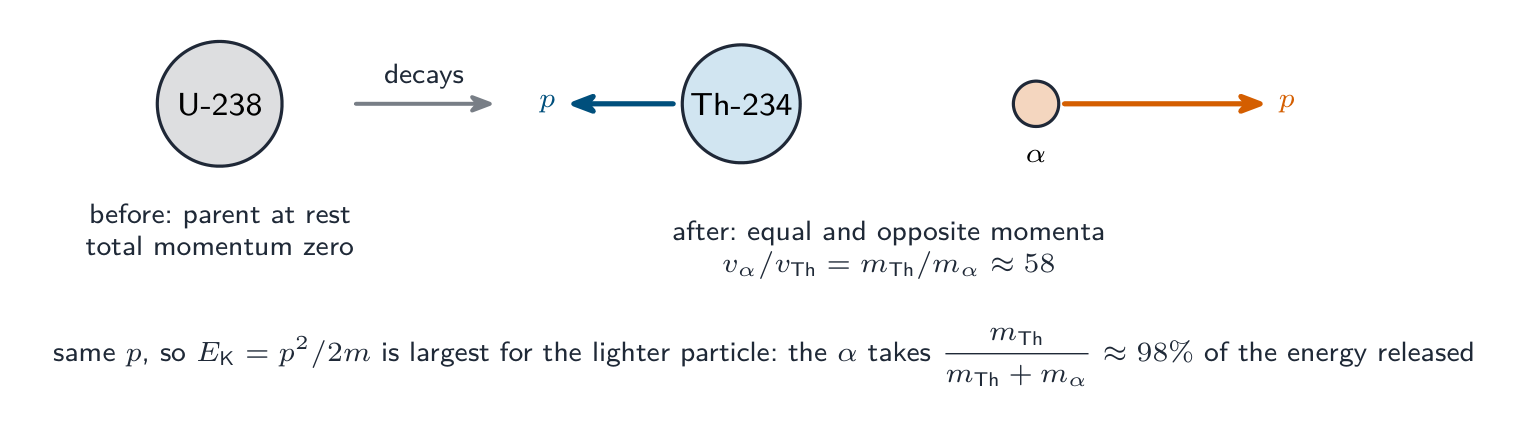
Before the decay the total momentum is zero, so afterwards the two momenta are equal and opposite: $218\,u \times v = 4\,u \times 1.6 \times 10^{7}$, giving $v = 2.9 \times 10^{5}\ \text{m s}^{-1}$ in the opposite direction to the alpha particle. The unit $u$ cancels, so its value is never needed. In a decay the momentum, the charge (proton number), the nucleon number and the total mass–energy are all conserved (topic 11).
A useful result for a head-on elastic collision of mass $m$ with a stationary 静止 mass $M$:
If the objects move in two dimensions, split the velocities into perpendicular 垂直components 分量 and apply conservation of momentum along each direction on its own. For a collision where the objects hit at an angle, choose one axis along the first object's motion and one across it. The total momentum is conserved along each axis.
Worked example. On a frictionless surface, ball A has momentum $4.0\ \text{N s}$ due east and ball B has momentum $3.0\ \text{N s}$ due north. They collide and stick together. Find the momentum of the combined object.
Momentum is conserved along each axis: $4.0\ \text{N s}$ east and $3.0\ \text{N s}$ north after the collision, exactly as before. The total momentum is the vector sum, $\sqrt{4.0^{2} + 3.0^{2}} = 5.0\ \text{N s}$ at $\tan^{-1}(3.0 / 4.0) = 37°$ north of east; the combined object moves that way at $5.0\ \text{N s}$ divided by the total mass. A multiple-choice diagram of two momentum arrows is asking exactly this: add the arrows tip to tail.
A glancing collision resolved along two perpendicular axes
Rocket / pushing out mass
A rocket pushes out gas at velocity $u$ (relative to itself) at a mass-flow rate 质量流率$\dot m$ (kg per second). It feels a thrust
$$F = \dot m \cdot u,$$
which comes from $F = \Delta p / \Delta t$. The momentum given to the gas each second equals the thrust on the rocket (Newton's third law: the rocket pushes the gas one way, the gas pushes the rocket the other way). An engine ejecting $90\ \text{kg}$ of gas per second at $190\ \text{m s}^{-1}$ produces a thrust of $90 \times 190 = 1.7 \times 10^{4}\ \text{N}$.
Worked example. A rocket of weight $W$ leaves the ground with an initial acceleration $a$. What thrust does its engine produce?
Take upwards as positive. The resultant force is thrust minus weight, so $T - W = ma$. With $m = W / g$, $T = W + Wa / g = W(1 + a / g)$. A rocket of weight $2.0 \times 10^{6}\ \text{N}$ accelerating at $4.0\ \text{m s}^{-2}$ needs a thrust of $2.0 \times 10^{6} \times (1 + 4.0 / 9.81) = 2.8 \times 10^{6}\ \text{N}$. The thrust must exceed the weight before the rocket moves at all.
Explore · חקור
A collision · פגישה
Set the masses and speeds, then collide them. Total momentum is conserved — the total before equals the total after. · קבעו את המסות והמהירויות, ולאחר מכן התנגשו ביניהן. תנע כולל שמר — הסכום לפני ההתנגשות שווה לסכום אחריה.
Turning effects of forces · אפקטים סיבוביים של כוחות
Syllabus · סיילבוס
English
understand that the weight of an object may be taken as acting at a single point known as its centre of gravity
define and apply the moment of a force
understand that a couple is a pair of forces that acts to produce rotation only
define and apply the torque of a couple
עברית
הבנה that משקל של גוף יכול להיחשב כפועל בנקודה אחת המכונה מרכז הכובד שלו
הגדרה ויישום ה-מומנט של כוח
הבנה that זוג כוחות הוא זוג כוחות הפועלים כדי ליצור סיבוב בלבד
הגדרה ויישום ה-מומנט של זוג כוחות
Source: Cambridge International syllabus · מקור: הסיילבוס הבינלאומי של קמבריד'ג'
English
The principle of moments
Centre of gravity
The weight 重力 of a large object can be treated as acting at one single point, called the centre of gravity 重心 (the same as the centre of mass 质心 in a uniform gravitational field). For a uniform, regular shape — a rectangle, a sphere, a uniform rod — the centre of gravity is at the middle.
When you draw a free-body diagram 受力图, always put the weight arrow at the centre of gravity.
For an irregular shape, find the centre of gravity by experiment. Hang the object freely from a pin: in equilibrium it settles with its centre of gravity vertically below the pin, because only then does the weight have no moment about the pin. A plumb line 铅垂线 hung from the same pin marks that vertical. Hang the object from a second point and draw the second line; the centre of gravity is where the two lines cross. The same fact answers the exam's "explain why the sheet hangs like this": its centre of gravity is directly below the support, so the weight's line of action passes through the pivot and there is no resultant torque.
For a non-uniform 非均匀 bar, the centre of gravity is not at the middle. Find it by balancing the bar on a pivot, or by taking moments: if the bar's weight $W$ balances a known weight, the distance of its centre of gravity from the pivot is the one moment that makes the two sides equal.
Moment of a force
The moment 力矩 of a force about a point is
$$M = F \cdot d,$$
where $F$ is the size of the force 力 and $d$ is the perpendicular distance 垂直距离 from the point to the line of action 作用线 of the force. Unit: $\text{N m}$.
If the force acts at angle $\theta$ to a lever arm 力臂 of length $r$ from the pivot 支点, then $d = r\sin\theta$, so $M = F r\sin\theta$. Only the part of the force perpendicular 垂直 to the lever arm makes it turn.
Worked example. A force of $50\ \text{N}$ is applied to the end of a spanner $0.40\ \text{m}$ long, at $30°$ to the spanner. Find the moment of the force about the nut.
A moment is either clockwise 顺时针 or anticlockwise 逆时针 about the chosen point.
Couple and torque
A couple 力偶 is a pair of forces that are:
equal in size,
opposite in direction,
with their lines of action a perpendicular distance apart.
A couple makes the body turn only — its resultant force is zero, so it gives no straight-line acceleration.
The torque 力偶矩 of a couple is the turning effect it makes:
$$\tau = F \cdot d,$$
where $F$ is the size of one force and $d$ is the perpendicular distance between the two lines of action. Unit: $\text{N m}$. The torque is the same about any point — a special property of couples.
A common multiple-choice trap: two equal forces in the same direction are not a couple (they have a resultant force and cause translation 平动). A couple needs equal size and opposite direction.
Watch the distance in the formula. For a couple of two forces $F$ each acting a distance $d$ from a central pivot, on opposite sides, the perpendicular distance between the two lines of action is $2d$, so the torque is $F \times 2d = 2Fd$. Taking moments about the pivot gives the same answer, $Fd + Fd$. The two-mark definition wants both parts: the product of one of the forces and the perpendicular distance between the lines of action of the forces.
עברית
עקרון המומנטים
מרכז הכובד
הכובד של גוף גדול יכול להתפרש כאילו הוא פועל בנקודה אחת בלבד, הנקראת מרכז הכובד (זהה למרכז המסה בשדה כבידה אחיד). לגוף בעל צורה סדירה ואחידה — מלבן, כדור, מוט אחיד — מרכז הכובד נמצא במרכז.
כאשר אתה מצייר תרשים גוף חופשי, יש להציב תמיד את חץ הכובד במרכז הכובד.
לגוף בעל צורה לא-סדירה, ניתן למצוא את מרכז הכובד באמצעות ניסוי. תלו את הגוף בחופשיות מעל סיכה: במצב איזון הוא יתייצב כך שמרכז הכובד יהיה מתחת לסיכה בציר אנכי, משום שרק אז לכובד אין מומנט ביחס לסיכה. חוט עיגול (plumb line) התלוי מאותה סיכה מסמן קו אנכי זה. תלו את הגוף מנקודה שנייה ושרטטו את הקו השני; מרכז הכובד נמצא בנקודת החיתוך של שני הקווים. העובדה הזאת עצמה מהווה את התשובה לשאלת המבחן "הסבר מדוע הלוח תלוי如此": מרכז הכובד שלו נמצא בדיוק מתחת לתמיכה, ולכן קו הפעולה של הכובד עובר דרך ציר הסיבוב ואין מומנט נטו.
מציאת מרכז כובד: גוף שתלוי בחופשיות יתייצב כך שמרכז הכובד יהיה מתחת לו בסיכה, ולכן שני חוטי עיגול משני סיכות יחצו זה את זה במרכז הכובד
עבור מוטלא-אחיד, מרכז הכובד אינו נמצא במרכז. ניתן למצוא אותו על ידי איזון המוט על ציר סיבוב, או על ידי חישוב מומנטים: אם כובד המוט $W$ מאזן משקול ידוע, המרחק ממרכז הכובד עד ציר הסיבוב הוא המרחק שעושה את שני המומנטים שווים.
מומנט של כוח
המומנט של כוח ביחס לנקודה נתונה הוא
$$M = F \cdot d,$$
כאן $F$ היא גודל הכוח ו$d$ היא המרחק האנכי מהנקודה ועד קו הפעולה של הכוח. יחידה: $\text{N m}$.
אם הכוח פועל בזווית $\theta$ ביחס לזרוע מנוף באורך $r$ ממערכת הציר, אזי $d = r\sin\theta$, ולכן $M = F r\sin\theta$. רק רכיב הכוח האנכי לזרוע המנוף גורם לה להסתובב.
דוגמה פעילה. כוח בגודל $50\ \text{N}$ מופעל בקצה מפתח ברוך באורך $0.40\ \text{m}$, בזווית $30°$ ביחס למפתח. מצאו את המומנט של הכוח ביחס לאום.
המומנט תלוי במרחק האנכי $d$ מציר הסיבוב עד לקו הפעולה של הכוח
למומנט יש כיוון אחד: או שעון או נגד כיוון השעון ביחס לנקודה הנבחרת.
זוג כוחות ומומנט
זוג כוחות הוא זוג של כוחות שהם:
שווים בגודלם,
מנוגדים בכיוונם,
וקווי הפעולה שלהם נפרדים במרחב אנכי.
זוג כוחות גורם לגוף להסתובב בלבד — הכוח השקיף שלו הוא אפס, ולכן אינו גורם להאצה בקו ישר.
מומנט של זוג כוחות הוא ההשפעה הסיבובית שנוצרת:
$$\tau = F \cdot d,$$
כאשר $F$ הוא גודלו של אחד הכוחות ו$d$ הוא המרחב האנכי בין שני קווי הפעולה. יחידה: $\text{N m}$. למומנט אותו ערך בכל נקודה — תכונה ייחודית של זוגות כוחות.
זוג כוחות: שני כוחות שווים ומנוגדים, במופרדים במרחק, המייצרים מומנט
מלכדת בחירה רבה נפוצה: שני כוחות שווים באותו כיוון אינם מהווים זוג כוחות (יש להם כוח שקיף וגורמים לתנועת העברתית). זוג כוחות דורש שוויון בגודל וגם ניגודיות בכיוון.
שימו לב למרחב בנוסחה. עבור זוג כוחות של שני כוחות $F$ כל אחד הפועל במרחק $d$ מאמצע סיבוב, בצדדים מנוגדים, המרחב האנכי בין שני קווי הפעולה הוא $2d$, ולכן המומנט הוא $F \times 2d = 2Fd$. חישוב מומנטים סביב הציר הסיבובי נותן את אותה תשובה, $Fd + Fd$. הגדרה של שתי נקודות דורשת שתי החלקים: מכפלת אחד הכוחות והמרחב האנכי בין קווי הפעולה של הכוחות.
Explore · חקור
Balance the see-saw · אזנו את גלגל הגלילה
Put a weight on each side and slide it in or out. A small weight far from the pivot can balance a big weight close in — the beam is level when force × distance matches on both sides. · הניחו משקל בצד每个 וזזו אותו פנימה או החוצה. משקל קטן הרחק מהציר יכול לאזן משקל גדול קרוב — הקורה מישורשת כאשר כוח × מרחק מתאים בשני הצדדים.
understand that, when there is no resultant force and no resultant torque, a system is in equilibrium
use a vector triangle to represent coplanar forces in equilibrium
עברית
לנסח ולשמש בעיקרון המומנטים
להבין שכאשר אין כוח תוצאתי ואין מומנט תוצאתי, מערכת נמצאת בשיווי משקל
להשתמש במשולש וקטורים כדי לייצג כוחות קו-פלנריים בשיווי משקל
Source: Cambridge International syllabus · מקור: הסיילבוס הבינלאומי של קמבריד'ג'
English
Conditions for equilibrium
A body is in equilibrium 平衡 when:
the resultant force 合力 is zero (no straight-line acceleration), AND
the resultant moment about any point is zero (no angular acceleration 角加速度).
Both must hold. A body with no resultant force can still be turning; a body with no resultant moment can still be moving in a straight line.
The classic multiple-choice case: four forces, two equal pairs pointing in opposite directions but not along the same lines. The resultant force is zero, so the centre of mass does not accelerate, but the pairs form couples with a resultant torque, so the object spins faster and faster while its centre of mass moves at constant velocity. Only when both conditions hold is the body in equilibrium.
Principle of moments
For a body that is not turning, the total clockwise moment about any point equals the total anticlockwise moment about the same point. This is the principle of moments 力矩原理.
To solve a balance problem:
Choose a pivot — usually where an unknown force acts, so that force drops out (its distance is zero).
List every force and its perpendicular distance from the pivot.
Set $\sum M_{\text{clockwise}} = \sum M_{\text{anticlockwise}}$.
Use $\sum F = 0$ if you need a second equation.
A ruler balanced on a pivot with masses on each side is solved this way. For a heavy uniform rod, remember to include its weight acting at its centre of gravity. Stated for the marks: for a body in equilibrium, the sum of the clockwise moments about any point equals the sum of the anticlockwise moments about that same point.
Worked example. A uniform beam of length $4.0\ \text{m}$ is pivoted at its centre. A $40\ \text{N}$ weight hangs $1.5\ \text{m}$ from the pivot on one side. How far from the pivot, on the other side, must a $30\ \text{N}$ weight hang to balance the beam?
The beam's own weight acts at the centre (the pivot), so it has no moment. Setting clockwise $=$ anticlockwise moments:
$$40 \times 1.5 = 30 \times d \quad\Rightarrow\quad d = \frac{60}{30} = 2.0\ \text{m}.$$
Worked example. A uniform rod of length $L$ and weight $W = 28\ \text{N}$ is hinged to a wall at one end and held horizontal by a wire from its other end. The wire makes $40°$ with the rod. Find the tension $T$ in the wire.
Take moments about the hinge, so the unknown hinge force drops out. The weight acts at the centre, a distance $L/2$ from the hinge: its moment is $W \times L/2$, clockwise. The tension acts at the end, but not at right angles to the rod, so its moment is $T\sin 40° \times L$, anticlockwise (only the component of $T$ perpendicular to the rod turns it). Equate them:
$$T \sin 40° \times L = W \times \frac{L}{2} \quad\Rightarrow\quad T = \frac{28}{2 \sin 40°} = 22\ \text{N}.$$
The length $L$ cancels, which is why the question need not give it. If a load hangs from the rod as well, add its moment on the clockwise side. This is the shape of almost every moments question: choose the pivot where the unknown force acts, use the perpendicular component of any angled force, and let unknown lengths cancel.
Worked example. A uniform beam of weight $200\ \text{N}$ and length $9.0\ \text{m}$ rests on two supports, X at $1.0\ \text{m}$ from the left end and Y at $6.5\ \text{m}$. A person of weight $700\ \text{N}$ stands $1.7\ \text{m}$ from Y, beyond it. Find the force from each support.
Two unknown forces, $R_{\text{X}}$ and $R_{\text{Y}}$, so take moments about X to remove $R_{\text{X}}$. The beam's weight acts at its centre, $3.5\ \text{m}$ from X; Y is $5.5\ \text{m}$ from X; the person is $7.2\ \text{m}$ from X:
Then the resultant force is zero: $R_{\text{X}} + R_{\text{Y}} = 200 + 700$, so $R_{\text{X}} = 900 - 1040 = -140\ \text{N}$. A negative answer means the beam would lift off X: with the person that far past Y, X must hold the beam down, not up. Questions often ask where a person can stand before the beam tips; that is the position at which $R_{\text{X}}$ becomes zero.
Vector triangle
Three forces in the same plane that are in equilibrium can be drawn as a closed vector triangle 矢量三角形 — drawn tip-to-tail, the three arrows come back to the start. This is a drawing method instead of splitting into components 分量.
Use the sine rule 正弦定理 or the cosine rule 余弦定理 on the triangle to find unknown sizes or directions, or draw the triangle to scale on graph paper.
You can also split each force into horizontal 水平 and vertical 竖直 components and set $\sum F_{x} = 0$ and $\sum F_{y} = 0$.
To draw the triangle for the marks: draw the weight first (vertical, to scale), then add the other two forces tip to tail in their real directions, so the third arrow closes the triangle; label every side with its force and mark the angles. For a block resting on a slope the three forces are the weight (vertical), the normal contact force (perpendicular to the slope) and friction (along the slope), so the triangle is right-angled with the weight as the hypotenuse. For a picture hanging from a string over a pin, the two equal tensions make an isosceles triangle with the weight. The test of any answer is that the triangle closes; if it does not, the object is not in equilibrium.
Worked example. A pulley of negligible weight is held by a spring. A single cable passes under the pulley, and each side of the cable makes $30°$ with the vertical. The tension in the cable is $T = 60\ \text{N}$. Find the force from the spring and the extension of the spring, given its spring constant is $2000\ \text{N m}^{-1}$.
Because it is one continuous cable, the tension is the same on both sides. The two tensions pull down and outwards; their horizontal components cancel and their vertical components add, so the spring must pull up with $F = 2T\cos 30° = 2 \times 60 \times 0.866 = 104\ \text{N}$. From Hooke's law (topic 6), $x = F / k = 104 / 2000 = 0.052\ \text{m}$. If the angle to the vertical grows, $\cos\theta$ falls, so the spring force and extension fall: the cable is pulling more sideways and less upwards.
עברית
תנאי איזון
גוף נמצא באיזון כאשר:
הכוח השקיף הוא אפס (אין האצה בקו ישר), AND
המומנט השקיף סביב כל נקודה הוא אפס (אין האצה זוויתית).
שניהם חייבים להתקיים. גוף ללא כוח שקיף עדיין יכול להתהפך; גוף ללא מומנט שקיף עדיין יכול לנוע בקו ישר.
המקרה הקלאסי בבחירה רבה: ארבעה כוחות, שני זוגות שווים המכוונים לכיוונים מנוגדים אך לא לאורך אותם קווים. הכוח השקיף הוא אפס, ולכן מרכז הכובד אינו מאיצ, אך הזוגות יוצרים זוגות כוחות עם מומנט שקיף, ולכן הגוף מסתובב בקצב הולך וגובר בעוד שמרכז הכובד נע במהירות קבועה. רק כאשר שני התנאים מתקיימים יחד הגוף נמצא באיזון.
עקרון המומנטים
עבור גוף שאינו מסתובב, סה"כ המומנטים השעוניים סביב כל נקודה שווה לסה"כ המומנטים נגד-שעוניים סביב אותה נקודה. זהו עקרון המומנטים.
כדי לפתור בעיית איזון:
בחרו נקודת סיבוב — לרוב שם כוח לא ידוע פועל, כך שכוח זה ייעלם (מרחקו אפס).
מדחף מאוזן על נקודת סיבוב עם מסות משני צדדיו פותרים באופן זה. לגבי מוט כבד אחיד, זכרו לכלול את משקלו הפועל במרכז הכובד שלו. כמוצא לציונים: גוף במצב איזון, סכום המומנטים השעוניים סביב כל נקודה שווה לסכום המומנטים נגד השעון סביב אותה נקודה.
דוגמה מפורטת. מוט אחיד באורך $4.0\ \text{m}$ מופעל בנקודת סיבוב במרכזו. משקל של $40\ \text{N}$ תלוי $1.5\ \text{m}$ מנקודת הסיבוב בצד אחד. כמה מנקודת הסיבוב, בצד השני, חייב לתלות משקל של $30\ \text{N}$ כדי לאזן את המוט?
משקל המוט עצמו פועל במרכז (נקודת הסיבוב), ולכן אין לו מומנט. בהגדרת מומנטים שעוניים $=$ מומנטים נגד השעון:
$$40 \times 1.5 = 30 \times d \quad\Rightarrow\quad d = \frac{60}{30} = 2.0\ \text{m}.$$
משקולות על סרגל מאוזן על ציר סיב — משמש לבדיקת עקרון המומנטיםמנוף עמוד הוא בעיית מומנטים: המומנט של משקל הנגד סביב העמודה מאזן את המומנט של העומס
דוגמה מפורטת. מוט אחיד באורך $L$ ומשקל $W = 28\ \text{N}$ מחובר בקרס לקיר בקצה אחד ותלוי אופקית על ידי חוט מהקצה השני. החוט יוצר זווית של $40°$ עם המוט. מצאו את מתח החוט $T$.
מוט מחובר בקרס ותלוי בחוט: קחי מומנטים סביב הקרס מבטלים את כוח הקרס הלא ידוע
קחו מומנטים לגבי הצירן, כך שכוח הצירן הלא ידוע מתבטל. המשקל פועל במרכז, במרחק $L/2$ מהצירן: המומנט שלו הוא $W \times L/2$, לפי כיוון השעון. המתח פועל בקצה, אך לא בניצוב למוט, ולכן המומנט שלו הוא $T\sin 40° \times L$, נגד כיוון השעון (רק הרכיב של $T$ הניצב למוט מסובב אותו). השווו ביניהם:
$$T \sin 40° \times L = W \times \frac{L}{2} \quad\Rightarrow\quad T = \frac{28}{2 \sin 40°} = 22\ \text{N}.$$
האורך $L$ מתבטל, ולכן אין צורך ששאלה תציינה אותו. אם תלוי עומד גם על המוט, הוסיפו את המומנט שלו לצד הפוך לשעון. זהו צורתה של כמעט כל שאלת מומנטים: בחרו בצירן שבו הפועל הלא ידוע, השתמשו ברכיב הניצב לכל כוח אלכסוני, ותנו לאורכים לא ידועים להתבטל.
דוגמה מפורטת. מדחף אחיד במשקל $200\ \text{N}$ ובאורך $9.0\ \text{m}$ נוח על שני תמיכות, X ב-$1.0\ \text{m}$ מקצה השמאלי ו-Y ב-$6.5\ \text{m}$. אדם במשקל $700\ \text{N}$ עומד $1.7\ \text{m}$ מ-Y, מעבר לו. מצאו את הכוח מכל תמיכה.
מדחף על שתי תמיכות: מומנטים סביב תמיכה אחת נותנים את כוח התמיכה השנייה; סכום הכוחות אז נותן את הראשונה
שני כוחות לא ידועים, $R_{\text{X}}$ ו$R_{\text{Y}}$, ולכן נקח מומנטים לגבי X כדי לבטל את $R_{\text{X}}$. משקל הקורה פועל במרכשו, במרחק $3.5\ \text{m}$ מ-X; Y נמצאת במרחק $5.5\ \text{m}$ מ-X; האדם נמצא במרחק $7.2\ \text{m}$ מ-X:
אז הכוח הכולל הוא אפס: $R_{\text{X}} + R_{\text{Y}} = 200 + 700$, ולכן $R_{\text{X}} = 900 - 1040 = -140\ \text{N}$. תשובה שלילית מעידה על כך שהקורה יתרומם מנקודת X: כאשר האדם נמצא כך רחוק מעבר לנקודה Y, נקודת X חייבת להחזיק את הקורה למטה, לא למעלה. שאלות לעיתים שואלות היכן אדם יכול לעמוד לפני שהקורה מתהפכת; זהו המיקום בו $R_{\text{X}}$ הופך לאפס.
משולש וקטורים
שלושה כוחות באותו מישור הנמצאים במצב איזון ניתן לצייר כ-משולש וקטורים סגור — אם משרטטים אותם בקצה-בקצה, שלושת החיצים חוזרים לנקודת ההתחלה. זוהי שיטת ציור במקום פירוק ל-מרכיבים.
שלושה כוחות באיזון יוצרים משולש וקטורים סגור
השתמש ב-חוק הסינוסים או ב-חוק הקוסינוסים במשולש כדי למצאת גדלים או כיוונים לא ידועים, או שרטט את המשולש בקנה מידה בדף גרף.
ניתן גם לפצל כל כוח ל-מרכיבים אופקיים ואנכיים ולהציב $\sum F_{x} = 0$ ו-$\sum F_{y} = 0$.
כדי לשרטט את המשולש עבור הניקודים: שרטט תחילה את המשקל (אנכי, בקנה מידה), ואז הוסף את שני הכוחות האחרים בקצה-בקצה בכיוונם האמיתי, כך שחץ שלישי יסגור את המשולש; סימן כל צד בכוחו ומark את הזוויות. לגוף השקוע על מדרון שלושת הכוחות הם המשקל (אנכי), כוח התמיכה (אנכי למדרון) והחיכוך (לאורך המדרון), ולכן המשולש הוא זווית ישרה עם המשקל כיתרה. לתמונה התלויה על חוט מעל סיכה, שני מתיחות שוות יוצרים משולש שווה שוקיים עם המשקל. הבדיקה לכל תשובה היא שהמשולש נסגר; אם הוא לא נסגר, הגוף אינו במצב איזון.
דוגמה עבודה. גלגלת בעלת משקל זניח נתמכת על ידי קפיץ. חבל אחד עובר מתחת לגלגלת, וכל צד מהחבל יוצר זווית של $30°$ עם האנכי. המתיחה בחבל היא $T = 60\ \text{N}$. מצא את הכוח ממנו הקפיץ וההתארכות של הקפיץ, בהינתן שקבוע הקפיץ הוא $2000\ \text{N m}^{-1}$.
גלגלת נתמכת על ידי קפיץ: שתי המתיחות בחבל אחד שוות, וכוח הקפי מאזן את המרכיבים האנכיים שלהן
מכיוון שזהו חבל רציף אחד, המתיחה זהה בשני הצדדים. שתי המתיחות מושכות כלפי מטה ובחוץ; המרכיבים האופקיים מבטלים זה את זה והמרכיבים האנכיים מחברים, ולכן הקפיץ חייב למשוך כלפי מעלה עם $F = 2T\cos 30° = 2 \times 60 \times 0.866 = 104\ \text{N}$. לפי חוק הוק (נושא 6), $x = F / k = 104 / 2000 = 0.052\ \text{m}$. אם הזווית לאנכי גדלה, $\cos\theta$ יורדת, ולכן כוח הקפיץ וההתארכות יורדים: החבל מושך יותר בצד ופחות למעלה.
Explore · חקור
Forces in equilibrium · איזון כוחות
When forces are balanced the resultant is zero — the vectors form a closed loop. Drag the arrows to keep them cancelling. · כאשר הכוחות מאוזנים, הווקטור הכולל הוא אפס — הווקטורים יוצרים לולאה סגורה. גררו את החצים כדי לשמור על ביטול זה של הכוחות.
derive, from the definitions of pressure and density, the equation for hydrostatic pressure$\Delta p = \rho g \Delta h$
use the equation $\Delta p = \rho g \Delta h$
understand that the upthrust acting on an object in a fluid is due to a difference in hydrostatic pressure
calculate the upthrust acting on an object in a fluid using the equation $F = \rho g V$ (Archimedes' principle)
עברית
להגדיר ולהשתמש בצפיפות
להגדיר ולהשתמש בלחץ
לגזור, מתוך הגדרות הלחץ והצפיפות, את המשוואה ללחץ הידרוסטטי$\Delta p = \rho g \Delta h$
להשתמש במשוואה $\Delta p = \rho g \Delta h$
להבין שהכוח הנושא הפועל על גוף בנוזל נובע ממנוכחות ההפרש בלחץ הידרוסטטי
לחשב את הכוח הנושא הפועל על גוף בנוזל באמצעות המשוואה $F = \rho g V$ (עקרון ארכימדס)
Source: Cambridge International syllabus · מקור: הסיילבוס הבינלאומי של קמבריד'ג'
English
Density 密度 is the mass per unit volume:
$$\rho = \frac{m}{V}.$$
Unit: $\text{kg m}^{-3}$ (or $\text{g cm}^{-3}$; $1\ \text{g cm}^{-3} = 1000\ \text{kg m}^{-3}$). Density is a scalar 标量.
Some useful densities to know:
water: $1000\ \text{kg m}^{-3}$
air at room conditions: $\sim 1.2\ \text{kg m}^{-3}$
iron / steel: $\sim 7800\ \text{kg m}^{-3}$
Measuring density is a practical question in disguise. For a cuboid, measure the mass on a balance and the three side lengths with a rule or calipers, then $\rho = m / (xyz)$. Because density is a product and quotient, the percentage uncertainty in $\rho$ is the sum of the percentage uncertainties in $m$, $x$, $y$ and $z$ (topic 1). A zero error on the balance, or a rule whose end is worn, is a systematic error; repeating the readings does not remove it, but subtracting the zero reading does.
Worked example. A block has mass $(120 \pm 1)\ \text{g}$ and sides $(4.0 \pm 0.1)\ \text{cm}$, $(3.0 \pm 0.1)\ \text{cm}$ and $(2.0 \pm 0.1)\ \text{cm}$. Find its density and the percentage uncertainty.
$\rho = 120 / (4.0 \times 3.0 \times 2.0) = 5.0\ \text{g cm}^{-3} = 5000\ \text{kg m}^{-3}$. The percentage uncertainties are $0.8\%$, $2.5\%$, $3.3\%$ and $5.0\%$, so the density is uncertain by $12\%$, about $\pm 600\ \text{kg m}^{-3}$. The shortest side contributes most, which is why a question asks which measurement to improve first.
עברית
מסה קרחית צפה עם רוב נפחה מוסתר: קרח צפוף מעט פחות ממים.
צפיפות היא המסה ליחידת נפח:
$$\rho = \frac{m}{V}.$$
יחידה: $\text{kg m}^{-3}$ (או $\text{g cm}^{-3}$; $1\ \text{g cm}^{-3} = 1000\ \text{kg m}^{-3}$). צפיפות היא סקלר.
חלק מצפיפויות שימוניות לדעת:
מים: $1000\ \text{kg m}^{-3}$
אוויר בתנאי חום החדר: $\sim 1.2\ \text{kg m}^{-3}$
ברזל / פלדה: $\sim 7800\ \text{kg m}^{-3}$
מדידת צפיפות היא שאלה מעשית במעיל. עבור קובייה, מדדו את המסה באוזן ושלושת אורכי הצלעות עם סרגל או מחוגה, ואז $\rho = m / (xyz)$. מכיוון שצפיפות היא מכפלה ומחלקת, החריגה האחוזית ב$\rho$ היא סכום החריגות האחוזיות ב$m$, $x$, $y$ וב$z$ (נושא 1). טעות אפס באוזן, או סרגל שקצהו שחוק, הם טעויות מערכת; חזרת הקריאות אינה מסירה אותן, אך חיסור קריאת האפס כן.
דוגמה מפורטת. בלוק בעל מסה $(120 \pm 1)\ \text{g}$ וצדדים $(4.0 \pm 0.1)\ \text{cm}$, $(3.0 \pm 0.1)\ \text{cm}$ ו$(2.0 \pm 0.1)\ \text{cm}$. מצאו את הצפיפות והסטייה האחוזית.
$\rho = 120 / (4.0 \times 3.0 \times 2.0) = 5.0\ \text{g cm}^{-3} = 5000\ \text{kg m}^{-3}$. החריגות האחוזיות הן $0.8\%$, $2.5\%$, $3.3\%$ ו$5.0\%$, ולכן לצפיפות יש חריגה של $12\%$, בערך $\pm 600\ \text{kg m}^{-3}$. הצלע הקצרה תורמת הכי הרבה, ולכן שאלה זו שואלת איזה מדיד יש לשפר תחילה.
Pressure 压强 is the force per unit area, where the force acts at right angles to the surface:
$$p = \frac{F}{A}.$$
Unit: $\text{Pa} = \text{N m}^{-2}$. Pressure is a scalar.
The force is the one pressing at right angles to the surface, and the area is the area of contact. A tree trunk of weight $9.0\ \text{kN}$ standing on a post of diameter $0.28\ \text{m}$ presses with $p = F / A = 9000 / (\pi \times 0.14^{2}) = 1.5 \times 10^{5}\ \text{Pa}$; the same weight on a wider post gives a smaller pressure. Convert diameters to radii, and centimetres to metres, before squaring.
Hydrostatic pressure
Take a column of fluid 流体 with density $\rho$, cross-sectional area 横截面积$A$ and height $\Delta h$. Its weight is
$$W = m g = (\rho \cdot A \cdot \Delta h) \cdot g.$$
This weight presses down on the area $A$ at the bottom, so the extra pressure at the bottom compared with the top is
$$\Delta p = \frac{W}{A} = \rho g \Delta h.$$
This is the hydrostatic pressure 流体静压强 equation. It depends only on the density of the fluid and the depth 深度 — the shape of the container does not matter.
Worked example. Find the extra pressure due to the water at the bottom of a swimming pool $2.5\ \text{m}$ deep. (Water density $1000\ \text{kg m}^{-3}$, $g = 9.81\ \text{m s}^{-2}$.)
$$\Delta p = \rho g \Delta h = 1000 \times 9.81 \times 2.5 \approx 2.5 \times 10^{4}\ \text{Pa}.$$
For a submarine at depth $h$ below the surface, the pressure from the water is $\rho_{\text{seawater}}\, g\, h$. For the total pressure, add the atmospheric pressure 大气压强 at the surface (about $1.0 \times 10^{5}\ \text{Pa}$).
Upthrust and Archimedes' principle
When an object is submerged 浸没 in a fluid, the pressure at the bottom of the object is greater than the pressure at the top (by $\rho g \Delta h$, where $\Delta h$ is the object's height). This difference gives a net upward force called the upthrust 浮力.
For an object of volume $V$ (the volume of fluid displaced 排开), the upthrust is
This is Archimedes' principle 阿基米德原理: the upthrust on a body in a fluid equals the weight of the fluid it pushes aside.
Worked example. A metal block of volume $2.0 \times 10^{-3}\ \text{m}^{3}$ is fully submerged in water. Find the upthrust on it. (Water density $1000\ \text{kg m}^{-3}$, $g = 9.81\ \text{m s}^{-2}$.)
For a fully submerged object, $V$ is its full volume. For a floating 漂浮 object, $V$ is only the volume below the surface — the object floats when the upthrust on the part below the surface equals its weight.
Whether an object floats at all depends on densities: for a fully submerged object the ratio of upthrust to weight is $\rho_{\text{fluid}} V g / \rho_{\text{object}} V g = \rho_{\text{fluid}} / \rho_{\text{object}}$, so it floats if it is less dense than the fluid and sinks if it is denser. Halving the object's density doubles that ratio; changing its volume or the depth changes nothing.
Worked example. A cylinder of mass $11\ \text{kg}$ and diameter $0.78\ \text{m}$ floats upright in water of density $990\ \text{kg m}^{-3}$. Find the depth $y$ of its base below the surface.
Floating means upthrust $=$ weight. The submerged volume is the base area times the depth, $A y$, with $A = \pi \times 0.39^{2} = 0.478\ \text{m}^{2}$:
$$\rho g A y = m g \quad\Rightarrow\quad y = \frac{m}{\rho A} = \frac{11}{990 \times 0.478} = 0.023\ \text{m}.$$
Each extra newton of load on the cylinder needs an extra $1 / (\rho g A)$ of depth, so the depth rises in a straight line with the added weight, wherever on the cylinder it is placed.
Force balance with upthrust
A block held under water by a string tied to the bottom of the container is in equilibrium under three vertical forces: weight (down), tension 张力 (down), upthrust (up). Set $F_{\text{upthrust}} = W + T$ to find the tension.
A submerged block hanging from a newton meter 弹簧测力计 reads less than its weight in air, because of the upthrust: reading $= W - F_{\text{upthrust}}$.
Worked example. A cylinder of weight $25.0\ \text{N}$ hangs from a newton meter fully submerged in water, and the meter reads $10.0\ \text{N}$. Find the volume of the cylinder.
The upthrust is the missing $15.0\ \text{N}$, and upthrust $= \rho g V$, so $V = 15.0 / (1000 \times 9.81) = 1.53 \times 10^{-3}\ \text{m}^{3}$. The same method finds the density of the cylinder: $25.0 / (9.81 \times 1.53 \times 10^{-3}) = 1670\ \text{kg m}^{-3}$.
The upthrust depends on the fluid density and the displaced volume, not on the object's material or depth (for an incompressible 不可压缩 fluid). On a planet with smaller $g$, the upthrust is smaller in the same ratio as the weight, so a floating object still floats with the same fraction below the surface.
עברית
לחץ הוא כוח ליחידת שטח, כאשר הכוח פועל מאונך למשטח:
$$p = \frac{F}{A}.$$
יחידה: $\text{Pa} = \text{N m}^{-2}$. לחץ הוא גודל סקלרי.
הכוח הוא זה לוחץ מאונך למשטח, והשטח הוא שטח המגע. עמוד עצם במשקל $9.0\ \text{kN}$ העומד על עמוד בקוטר $0.28\ \text{m}$ לוחץ ב-$p = F / A = 9000 / (\pi \times 0.14^{2}) = 1.5 \times 10^{5}\ \text{Pa}$; אותו משקל על עמוד רחב יותר יניב לחץ נמוך יותר. המירו קוטרים לקרניים, וסנטימטרים למטרים, לפני ההעלאה בריבוע.
ברומטר אנרויד מדויק מודד לחץ אטמוספרי
לחץ הידרוסטטי
קחו עמוד של נוזל בצפיפות $\rho$, שטח חתך$A$ וגובה $\Delta h$. משקלו הוא
$$W = m g = (\rho \cdot A \cdot \Delta h) \cdot g.$$
משקל זה לוחץ מטה על השטח $A$ בתחתית, ולכן הלחץ הנוסף בתחתית לעומת העליון הוא
$$\Delta p = \frac{W}{A} = \rho g \Delta h.$$
זוהי משוואת הלחץ ההידרוסטטי. היא תלויה רק בצפיפות הנוזל וב-עומק — צורת הכלי אינה חשובה.
דוגמה מודגמת. מצאו את הלחץ הנוסף הנגרם על ידי המים בתחתית בריכת שחייה בעומק $2.5\ \text{m}$. (צפיפות המים $1000\ \text{kg m}^{-3}$, $g = 9.81\ \text{m s}^{-2}$.)
$$\Delta p = \rho g \Delta h = 1000 \times 9.81 \times 2.5 \approx 2.5 \times 10^{4}\ \text{Pa}.$$
עמודת נוזלים ששטחה $A$: משקלה קובע את הלחץ הנווסף בעומק שמטה
עבור צוללת בעומק $h$ מתחת לפני המים, הלחץ מהמים הוא $\rho_{\text{seawater}}\, g\, h$. עבור הלחץ הכולל, הוסיפו את הלחץ האטמוספרי בפני המים (בערך $1.0 \times 10^{5}\ \text{Pa}$).
כוח הדחיה ועקרון ארכימדס
כאשר גוף טבול בנוזל, הלחץ בתחתית הגוף גדול מהלחץ בחלקו העליון (על ידי $\rho g \Delta h$, כאשר $\Delta h$ הוא גובה הגוף). הפרש זה יוצר כוח נקי כלפי מעלה הנקרא כוח הדחיה.
כוח הדחיה נובע מכך שהלחץ בתחתית הגוף גדול מהלחץ בחלקו העליון
עבור גוף בנפח $V$ (הנפח של הנוזל המודח), כוח ההדחיה הוא
זהו עקרון ארכימדס: כוח ההדחיה על גוף בנוזל שווה למשקל הנוזל שהגוף דוחה החוצה.
דוגמה מפורשת. בלוק מתכת בנפח $2.0 \times 10^{-3}\ \text{m}^{3}$ טבול לחלוטין במים. מצאו את כוח ההדחיה עליו. (צפיפות המים $1000\ \text{kg m}^{-3}$, $g = 9.81\ \text{m s}^{-2}$.)
עבור גוף טבול לחלוטין, $V$ הוא נפחו המלא. עבור גוף צף, $V$ הוא רק הנפח מתחת לפני המים — הגוף צף כאשר כוח ההדחיה על החלק התחתון שווה למשקלו.
האם גוף צף תלוי בצפיפויות: עבור גוף טבול לחלוטין היחס בין כוח ההדחיה למשקל הוא $\rho_{\text{fluid}} V g / \rho_{\text{object}} V g = \rho_{\text{fluid}} / \rho_{\text{object}}$, ולכן הוא צף אם צפיפותו קטנה מזו של הנוזל וטובע אם היא גדולה. חציית צפיפות הגוף כופלת את היחס; שינוי בנפחו או בעומק אינו משנה דבר.
דוגמה מפורשת. צילינדר במסה $11\ \text{kg}$ ובקוטר $0.78\ \text{m}$ צף אנכית במים בצפיפות $990\ \text{kg m}^{-3}$. מצאו את העומק $y$ של בסיסו מתחת לפני המים.
צפייה פירושה כוח מוביל $=$ משקל. הנפח הטבול הוא שטח הבסיס כפול העומק, $A y$, כאשר $A = \pi \times 0.39^{2} = 0.478\ \text{m}^{2}$:
$$\rho g A y = m g \quad\Rightarrow\quad y = \frac{m}{\rho A} = \frac{11}{990 \times 0.478} = 0.023\ \text{m}.$$
כל ניוטון נוסף של עומס על הצילינדר דורש נוספת של $1 / (\rho g A)$ לעומק, ולכן העומק עולה בקו ישר בהתאם למשקל המוסף, ללא קשר למיקומו על הצילינדר.
גוף צף טובע עד שכוח ההדחיה על החלק הטבול שווה למשקלו
איזון כוחות עם כוח הדחיה
בלוק המוחזק מתחת למים על ידי חוט הקשור לתחתית המיכל נמצא באיזון תחת שלושה כוחות אנכיים: משקל (למטה), מתיחה (למטה), כוח הדחיה (למעלה). השוו $F_{\text{upthrust}} = W + T$ כדי למצוא את המתיחה.
בלוק טבול התלוי ממד כוח מציג קריאה נמוכה ממשקלו באוויר, בשל כוח ההדחיה: קריאה $= W - F_{\text{upthrust}}$.
דוגמה מופתרת. צילינדר במשקל $25.0\ \text{N}$ תלוי מדחוס ניוטון וטבול לחלוטין במים, והמדחוס מראה קריאה של $10.0\ \text{N}$. מצאו את נפח הצילינדר.
הכוח המהדק הוא ה$15.0\ \text{N}$ החסר, והכוח המהדק $= \rho g V$, ולכן $V = 15.0 / (1000 \times 9.81) = 1.53 \times 10^{-3}\ \text{m}^{3}$. אותה שיטה מוצאת את הצפיפות של הצילינדר: $25.0 / (9.81 \times 1.53 \times 10^{-3}) = 1670\ \text{kg m}^{-3}$.
הכוח המדחף תלוי בצפיפות הנוזל ובנפח המדוחה, ולא בחומר או בעומק של הגוף (עבור נוזל בלתי דחוס). בכוכב לכת עם $g$ קטן יותר, הכוח המדחף קטן באותו פרופורציה כמו המשקל, ולכן גוף צף עדיין עם אותה שברית מתחת לפני המים.
Explore · חקור
Pressure with depth · לחץ עם עומק
p = ρg·h
Pressure is proportional to depth — the gradient is ρg. · לחץ פרופורציונלי לעומק — השיפוע הוא ρg.
Definitions the examiner accepts · הגדרות מקובלות בקורס
English
A definition question is marked against fixed wording. Learn these exactly, and give one answer only.
Term
Definition
centre of gravity
the point at which the whole weight of an object may be considered to act
moment of a force
the product of the force and the perpendicular distance from the point to the line of action of the force
couple
a pair of equal and opposite forces whose lines of action do not coincide, which produces rotation only
torque of a couple
the product of one of the forces and the perpendicular distance between the lines of action of the forces
principle of moments
for a body in equilibrium, the sum of the clockwise moments about any point equals the sum of the anticlockwise moments about that point
equilibrium
the state of a body on which the resultant force and the resultant torque are both zero
density
mass per unit volume
pressure
force per unit area, where the force acts at right angles to the surface
upthrust
the upward force on a body in a fluid caused by the pressure being greater on its lower surface than on its upper surface
Archimedes' principle
the upthrust on a body in a fluid is equal to the weight of the fluid displaced by the body
עברית
שאלת הגדרה מוקדמת לפי טקסט קבוע. לימודן במדויק, ותן תשובה אחת בלבד.
מונח
הגדרה
מרכז כובד
הנקודה שבה ניתן להימנת כל משקלו של גוף כפעול עליו
רגע כוח
מכפלת העוצמה של הכוח במרחק האנכי מהנקודה לקו פעולתו של הכוח
זוג כוחות
זוג כוחות שווים ונגדיים שהקווים הפועלים עליהם אינם חופפים, והוא יוצר סיבוב בלבד
מומנט של זוג כוחות
מכפלת אחד מכוחות הזוג במרחק האנכי בין הקווים הפועלים על הכוחות
עקרון המומנטים
לגוף במצב איזון, סך המומנטים השעוניים סביב כל נקודה שווה לסך המומנטים נגד-שעוניים סביב אותה נקודה
איזון
מצבו של גוף שבו הכוח הרוכב וממומנט הרוכב הם שניהם אפס
צפיפות
מסה ליחידת נפח
לחץ
כוח ליחידת שטח, כאשר הכוח פועל מאונך לפני השטח
כוח מדחף
הכוח הפועל כלפי מעלה על גוף בנוזל כתוצאה מכך הלחץ גדול יותר על פני השטח התחתונים שלו מאשר על פני השטח העליונים
עקרון ארכימדס
הכוח המדחף על גוף בנוזל שווה למשקל הנוזל המודחף על ידי הגוף
4.3
Exam tips · טיפים לבחינות
English
Take moments about a chosen pivot; for equilibrium, total clockwise $=$ total anticlockwise moments and the resultant force is zero.
A body in equilibrium under three forces gives a closed triangle of forces.
Fluid pressure $= \rho g h$; upthrust $=$ weight of fluid displaced (Archimedes).
Distinguish mass, weight and density, and give the base unit each time.
Common mistakes
Resolving with $\cos\theta$ where the geometry needs $\sin\theta$. Draw the triangle and check which side the angle is next to before choosing.
Substituting the weight of the object where the question is about the upthrust on it. Upthrust is the weight of the fluid displaced, $\rho_{\text{fluid}} V g$.
Leaving out the weight of a uniform beam. It acts at the centre, and it has a moment about any pivot that is not at the centre.
Using the distance along the rod for an angled force. The moment needs the perpendicular distance, or the perpendicular component of the force.
Taking the torque of a couple as $Fd$ with $d$ measured from the pivot. The distance is between the two lines of action, so a symmetric couple gives $2Fd$.
עברית
לקחת מומנטים סביב ציר סיבוב שנבחר; עבור איזון, סך המומנטים השעוניים $=$ סך המומנטים נגד-שעוניים וגם הכוח הרוכב הוא אפס.
גוף במצב איזון תחת שלושה כוחות נותן משולש כוחות סגור.
לחץ נוזלי $= \rho g h$; כוח מהדק $=$ משקל הנוזל המודחק (ארכימדס).
להבחין בין מסה, משקל וצפיפות, ולהציג את היחידה הבסיסית בכל פעם.
טעויות נפוצות
פירוק עם $\cos\theta$ כאשר הגיאומטריה דורשת $\sin\theta$. יש לשרטט את המשולש ולבדוק לאילו צד זווית נמצאת סמוכה לפני הבחירה.
החלפת משקל הגוף במקום בו השאלה עוסקת בכוח המדחף עליו. כוח מדחף הוא משקל הנוזל המודחף, $\rho_{\text{fluid}} V g$.
להתעלם ממשקל קורה אחיד. הוא פועל במרכזו, ולו יש מומנט סביב כל ציר סיבוב שאינו במרכז.
השימוש במרחק לאורך המוט לכוח בזווית. המומנט דורש את המרחק האנכי, או את הרכב האנכי של הכוח.
חישוב המומנט של זוג כוחות כ$Fd$ כאשר ה$d$ נמדד מהציר. המרחק הוא בין שני קווי הפעולה, ולכן זוג כוחות סימטרי נותן $2Fd$.
understand the concept of work, and recall and use $\text{work done} = \text{force} \times \text{displacement in the direction of the force}$
recall and apply the principle of conservation of energy
recall and understand that the efficiency of a system is the ratio of useful energy output from the system to the total energy input
use the concept of efficiency to solve problems
define power as work done per unit time
solve problems using $P = W/t$
derive $P = Fv$ and use it to solve problems
עברית
להבין את מושג העבודה, ולזכור ולהשתמש ב $\text{work done} = \text{force} \times \text{displacement in the direction of the force}$
לזכור ולשמש בעקרון שימור האנרגיה
לזכור ולהבין כי יעילות של מערכת היא היחס בין האנרגיה המועילה היוצאת ממנה לבין סך האנרגיה הנכנסת אליה
להשתמש במושג היעילות לפתרון בעיות
להגדיר הספק כעבודה שנעשתה ליחידת זמן
לפתור בעיות באמצעות $P = W/t$
לגזור $P = Fv$ ולהשתמש בו לפתרון בעיות
Source: Cambridge International syllabus · מקור: הסיילבוס הבינלאומי של קמבריד'ג'
English
Work done by a force
Work 功 is done when a force moves its point of contact along the line of the force. For the one-mark definition write: work done is the product of the force and the distance moved in the direction of the force. The work done by a constant force $F$ that causes a displacement 位移$s$ is
$$W = F \cdot s \cdot \cos\theta,$$
where $\theta$ is the angle between the force and the displacement. Only the component 分量 of the force along the displacement does work.
Worked example. A child pulls a sledge $5.0\ \text{m}$ across the snow with a rope, using a force of $20\ \text{N}$ at $60°$ to the ground. Find the work done by the rope.
Unit: $\text{J} = \text{N m}$. Work is a scalar 标量.
Special cases:
force in the same direction as the motion ($\theta = 0$): $W = Fs$, positive work, energy 能量 given to the object.
force at right angles to the motion ($\theta = 90°$): $W = 0$. The normal contact force 支持力 on a car on a flat road does no work.
force opposite to the motion ($\theta = 180°$): $W = -Fs$, negative work, energy taken from the object (for example friction 摩擦力).
For an object moving up a slope at angle $\alpha$ to the horizontal 水平, the work done against gravity in rising a height $h$ is $mgh$, while the work done by a horizontal push over the slope length $L$ uses $\cos\alpha$.
Two multiple-choice tests of the definition: no work is done on an object that slides at constant velocity along a frictionless surface (no force along the motion), or on one that is simply held still (no distance moved); work is done when a force lifts it. And when a box is pushed at constant velocity across a rough floor, the work done by the push is $F \times d$ for the whole distance, however the path is split into stages.
Worked example. A block of mass $4.9\ \text{kg}$ is pushed at constant velocity up a rough slope of length $8.0\ \text{m}$ that rises $1.5\ \text{m}$, by a force of $12\ \text{N}$ acting along the slope. Find the work done against friction.
Constant velocity means no change in kinetic energy, so the work done by the push is shared between the gain in gravitational potential energy and the work done against friction. Work by the push: $12 \times 8.0 = 96\ \text{J}$. Gain in GPE, using the vertical rise: $4.9 \times 9.81 \times 1.5 = 72\ \text{J}$. So the work done against friction is $96 - 72 = 24\ \text{J}$, and the friction force is $24 / 8.0 = 3.0\ \text{N}$. Using the slope length in $mgh$ is the commonest error on this question.
Conservation of energy
Energy is never made or destroyed — it only changes from one form to another, or moves from one object to another. In a closed system 封闭系统, the total energy stays constant. This is conservation of energy 能量守恒, stated for the marks as: energy cannot be created or destroyed; it can only be transferred from one form to another (so the total energy of a closed system is constant).
When you write an energy equation, list every form the energy starts as and ends as. Common forms in this syllabus: kinetic, gravitational potential, elastic potential energy 弹性势能, electrical 电能, thermal, sound, chemical energy 化学能.
A ball rolling down a frictionless 无摩擦ramp 斜坡 turns gravitational potential energy 重力势能 into kinetic energy 动能: $mgh = \tfrac{1}{2} m v^{2}$, so $v = \sqrt{2gh}$. With friction, some of this energy becomes thermal energy 热能 of the ramp and the air.
Worked example. A ball is released from rest at the top of a smooth ramp $1.2\ \text{m}$ high. Find its speed at the bottom (take $g = 9.81\ \text{m s}^{-2}$).
All the gravitational potential energy becomes kinetic energy, so $v = \sqrt{2gh}$ (the mass cancels):
The same idea reads a graph. For a ball falling from height $H$ with air resistance negligible, the GPE falls in a straight line with height ($mgh$), the KE rises in a straight line ($mg(H - h)$), and the two add to the constant $mgH$ at every height.
The energy chain can pass through a spring. A block that hits a spring with kinetic energy $110\ \text{J}$ while sliding a little downhill, so that its GPE falls by a further $20\ \text{J}$ before the spring stops it, stores $110 + 20 = 130\ \text{J}$ of elastic potential energy at the greatest compression, if nothing is lost to friction. The spring's force–compression graph then gives the compression: the energy stored is the area under the line, $\tfrac{1}{2} F_{0} x_{0}$ for a spring that obeys Hooke's law (topic 6), so a maximum force of $2600\ \text{N}$ means $x_{0} = 2 \times 130 / 2600 = 0.10\ \text{m}$. At that instant the resultant force on the block is the spring force minus the component of the weight down the slope, and its acceleration follows from $F = ma$ (topic 3).
Efficiency
The efficiency 效率 of a system is
$$\text{efficiency} = \frac{\text{useful energy output}}{\text{total energy input}} \times 100\%.$$
The same idea with power:
$$\text{efficiency} = \frac{\text{useful power output}}{\text{total power input}} \times 100\%.$$
Efficiency is always less than 100% in a real system, because some input energy becomes "useless" forms — usually thermal energy. If a total energy $E$ is supplied and an amount $Q$ is wasted, the useful output is $E - Q$ and the efficiency is $(E - Q) / E$; a motor rated at $1.7\ \text{kW}$ input with efficiency $53\%$ delivers $0.53 \times 1.7 = 0.90\ \text{kW}$ of useful output.
For an electric motor lifting a load with efficiency $\eta$ at voltage 电压$V$ and current 电流$I$, the useful output power is $\eta V I$. From this you can find a force, a lifting speed, or a tension 张力.
Worked example. An electric motor lifts a $50\ \text{kg}$ load at a steady $0.40\ \text{m s}^{-1}$ while drawing $250\ \text{W}$ of electrical power. Find its efficiency (take $g = 9.81\ \text{m s}^{-2}$).
The useful output power is $P = mgv = 50 \times 9.81 \times 0.40 = 196\ \text{W}$, so
Worked example. A motor raises a block with a force of $240\ \text{N}$ through a vertical distance of $12\ \text{m}$ in $60\ \text{s}$. The input power to the motor is $900\ \text{W}$. Find the useful output power and the efficiency.
Work done on the block: $W = Fd = 240 \times 12 = 2880\ \text{J}$. Useful output power: $P = W / t = 2880 / 60 = 48\ \text{W}$. Efficiency: $48 / 900 \times 100\% = 5.3\%$. Most of the input goes into thermal energy in the motor and its cable. Turned round, a lift motor of useful output $20\ \text{kW}$ raising $1500\ \text{kg}$ through $20\ \text{m}$ takes $t = mgh / P = 1500 \times 9.81 \times 20 / 20\,000 = 15\ \text{s}$.
עברית
טורבינות רוח ממירות את האנרגיה הקינטית של הרוח לאנרגיה חשמלית.
עבודה שנעשתה על ידי כוח
עבודה נעשית כאשר כוח מזז את נקודת המגע שלו לאורך קו הפעולה. להגדרה בעלת דירוג אחד יש לכתוב: עבודה היא מכפלת הכוח במרחק שנסע בכיוון הכוח. העבודה שנעשתה על ידי כוח קבוע $F$ הגורם לתזזה$s$ היא
$$W = F \cdot s \cdot \cos\theta,$$
כאן $\theta$ הוא הזווית בין הכוח לבין התזזה. רק ה-מרכיב של הכוח לאורך התזזה מבצע עבודה.
רק המרכיב של הכוח לאורך התזזה ($F\cos\theta$) מבצע עבודה
דוגמה מפורטת. ילד מושל גלישה $5.0\ \text{m}$ מעל השלג באמצעות חבל, בשימוש בכוח של $20\ \text{N}$ בזווית $60°$ כלפי הקרקע. מצאו את העבודה שנעשתה על ידי החבל.
כוח באותו כיוון כמו התנועה ($\theta = 0$): $W = Fs$, עבודה חיובית, אנרגיה ניתנת לגוף.
כוח מאונך לתנועה ($\theta = 90°$): $W = 0$. הכוח תמיכה על רכב בכביש שטוח אינו מבצע עבודה.
כוח נגד התנועה ($\theta = 180°$): $W = -Fs$, עבודה שלילית, אנרגיה נלקחת מהגוף (למשל חיכוך).
עבודה חיובית ($W = +Fs$): כוח לאורך התנועה (למעלה). עבודה שלילית ($W = -Fs$): כוח נגד התנועה, לדוגמה חיכוך (למטה)
לגוף הנע לעלה על מדרון בזווית $\alpha$ כלפיהאופק, העבודה שנעשתה נגד הכבידה בהרמת גובה $h$ היא $mgh$, בעוד שהעבודה שנעשתה על ידי דחיפה אופקית לאורך אורך המדרון $L$ משתמשת ב$\cos\alpha$.
שני מבחנים מרובי-אפשרויות להגדרה: אין עבודה על גוף החולק במהירות קבועה על פני משטח חסר חיכוך (אין כוח לאורך התנועה), או על גוף שנשאר פשוט במקום (לא נע מרחק); עבודה נעשית כאשר כוח מרימ אותו. וכאשר קופסה נדחפת במהירות קבועה על רצפה מחוספסת, העבודה שנעשתה על ידי הדחיפה היא $F \times d$ לכל אורך המרחק, עם זאת המסלול מחולק לשלבים.
דוגמה מפורטת. בלוק המסה שלו $4.9\ \text{kg}$ נדחק במהירות קבועה לעלה על מדרון מחוספס באורך $8.0\ \text{m}$ שמגיע לגובה $1.5\ \text{m}$, על ידי כוח של $12\ \text{N}$ הפועל לאורך המדרון. מצאו את העבודה שנעשתה נגד החיכוך.
תיבה שנדחפה כלפי מעלה במשטח מחוספס במהירות קבועה: העבודה שביצע הכוח הדוחף מכסה את ההפרש באנרגיה פוטנציאלית כבידתית (GPE), שדורש רק את הגובה האנכי $h$, ואת העבודה נגד החיכוך לאורך כל אורך המשטח $L$
מהירות קבועה פירושה שאין שינוי באנרגיה הקינטית, ולכן העבודה שביצע הכוח הדוחף חולקת בין ההפרש באנרגיה פוטנציאלית כבידתית לבין העבודה שביצעה נגד החיכוך. עבודה של הכוח הדוחף: $12 \times 8.0 = 96\ \text{J}$. הפרש ב-GPE, תוך שימוש בגובה האנכי: $4.9 \times 9.81 \times 1.5 = 72\ \text{J}$. לכן, העבודה שביוצאה נגד החיכוך היא $96 - 72 = 24\ \text{J}$, וכוח החיכוך הוא $24 / 8.0 = 3.0\ \text{N}$. שימוש באורך המשטח ב$mgh$ הוא הטעות הנפוצה ביותר בשאלה זו.
שימור אנרגיה
אנרגיה ** לעולם אינה נוצרת או הופכת** — היא רק משנה מצורה לצורה אחרת, או עוברת מאובייקט לאובייקט אחר. במערכת סגורה, האנרגיה הכוללת נשארת קבועה. זהו שימור אנרגיה, המנוסח למטרות ציון כ: אנרגיה לא ניתן ליצור או להרוס; היא יכולה רק לעבור ממצורה למצורה אחרת (ולכן האנרגיה הכוללת של מערכת סגורה היא קבועה).
כשכותבים משוואת אנרגיה, יש לרשום כל צורה בה האנרגיה מתחילה ומסתיימת. צורות נפוצות בסילבוס זה: אנרגיה קינטית, אנרגיה פוטנציאלית כבידתית, אנרגיה פוטנציאלית אלסטית, חשמלית, תרמלית, קולית, אנרגיה כימית.
כדור שמסתובב מטה במדרון ללא חיכוך ממיר אנרגיה פוטנציאלית כבידתית לאנרגיה קינטית: $mgh = \tfrac{1}{2} m v^{2}$, לכן $v = \sqrt{2gh}$. עם חיכוך, חלק מאנרגיה זו הופך לאנרגיה תרמלית של המדרון והאוויר.
*במדרון ללא חיכוך, GPE הופכת לKE בעוד שהאנרגיה הכוללת נשארת קבועה
דוגמה מפורטת. כדור משוחרר ממצב רגע בראש דרך חלקה $1.2\ \text{m}$ גבוהה. מצאו את מהירותו בתחתית (קבלו $g = 9.81\ \text{m s}^{-2}$).
כל האנרגיה הפוטנציאלית הכבידתית הופכת לאנרגיה קינטית, לכן $v = \sqrt{2gh}$ (המסה מתאפסת):
אותו רעיון קריא גם גרף. עבור כדור הצולל מגובה $H$ עם התנגדות אוויר זניחה, ה-GPE יורד בקו ישר לפי הגובה ($mgh$), ה-KE עולה בקו ישר ($mg(H - h)$), ושניהם מתחברים לקבוע $mgH$ בכל גובה.
*כדור הצולל: GPE ו-KE משתנים שניהם בקו ישר לפי הגובה, והסכום שלהם הוא קבוע
שרשרת האנרגיה יכולה לעבור דרך קפיץ. בלוק הפוגע בקפיץ באנרגיה קינטית $110\ \text{J}$ תוך כדי החלקה מעט למטה, כך שהאנרגיה הפוטנציאלית הגרavitational (GPE) שלו יורדת עוד ב$20\ \text{J}$ לפני שהקפיץ עצור אותו, מאחסן $110 + 20 = 130\ \text{J}$ אנרגיה פוטנציאלית אלסטית בדחיסה המקסימלית, אם אין איבוד חיכוך. גרף הכוח-דחיסה של הקפיץ נותן את הדחיסה: האנרגיה המאוחסנת היא השטח מתחת לקו, $\tfrac{1}{2} F_{0} x_{0}$ עבור קפיץ שעומד בחוק הוק (נושא 6), ולכן כוח מקסימלי של $2600\ \text{N}$ פירושו $x_{0} = 2 \times 130 / 2600 = 0.10\ \text{m}$. ברגע זה, הכוח הנתון על הבלוק הוא כוח הקפיץ מינוס הרכיב של המשקל לאורך השיפוע, והתאוצה שלו נובעת מ$F = ma$ (נושא 3).
*האנרגיה המאוחסנת בקפיץ היא השטח מתחת לגרף הכוח–הלחיצה שלו: $\tfrac{1}{2} F_{0} x_{0}$, ששווה ל$\tfrac{1}{2} k x_{0}^{2}$
יעילות
היעילות של מערכת היא
$$\text{efficiency} = \frac{\text{useful energy output}}{\text{total energy input}} \times 100\%.$$
אותה רעיון עם הספק:
$$\text{efficiency} = \frac{\text{useful power output}}{\text{total power input}} \times 100\%.$$
יעילות היא תמיד פחות מ-⟦100%⟧ במערכת אמיתית, מכיוון שחלק מאנרגיית הקלט הופך לצורות "לא שימושיות" — לרוב אנרגיה תרמית. אם סופקה אנרגיה כוללת $E$ וכמות $Q$ אבדה, הפלט השימושי הוא $E - Q$ והיעילות היא $(E - Q) / E$; מנוע המדורג בקלט של $1.7\ \text{kW}$ ועם יעילות של $53\%$ מספק $0.53 \times 1.7 = 0.90\ \text{kW}$ של פלט שימושי.
יעילות: רק חלק מאנרגיית הקלט יוצאת כפלט שימושי; שארית נאבדת, בדרך כלל כחום
למנוע חשמלי המרים עומס עם יעילות $\eta$ במתח$V$ ובזרם$I$, ההסק השימושי הוא $\eta V I$. ממנו ניתן למצוא כוח, מהירות הרמה או מתיחה.
דוגמה פתורה. מנוע חשמלי מרים עומס של $50\ \text{kg}$ במהירות יציבה של $0.40\ \text{m s}^{-1}$ תוך צריכת $250\ \text{W}$ של הסק חשמלי. מצאו את היעילות (קחו $g = 9.81\ \text{m s}^{-2}$).
ההסק השימושי הוא $P = mgv = 50 \times 9.81 \times 0.40 = 196\ \text{W}$, ולכן
דוגמה פתורה. מנוע מרים קובייה בכוח של $240\ \text{N}$ על מרחק אנכי של $12\ \text{m}$ בזמן של $60\ \text{s}$. ההסק הנכנס למנוע הוא $900\ \text{W}$. מצאו את ההסק השימושי ואת היעילות.
עבודה על הקובייה: $W = Fd = 240 \times 12 = 2880\ \text{J}$. הסק שימושי: $P = W / t = 2880 / 60 = 48\ \text{W}$. יעילות: $48 / 900 \times 100\% = 5.3\%$. רוב ההסק הנכנס הופך לאנרגיה תרמית במנוע ובכבל שלו. בהפך, מנוע מעלית עם פלט שימושי של $20\ \text{kW}$ המרים $1500\ \text{kg}$ על מרחק של $20\ \text{m}$ צורך $t = mgh / P = 1500 \times 9.81 \times 20 / 20\,000 = 15\ \text{s}$.
Explore · חקור
Energy flow & efficiency · זרימת אנרגיה ויעילות
The input energy divides into useful work and wasted energy; efficiency = useful ÷ input, and useful + wasted always equals the input. · האנרגיה הנכנסת מתחלקת לעבודה מועילה ואנרגיה מבוזבזת; יעילות = מועיל ÷ נכנס, ועוד מועיל + מבוזבז שווה תמיד לנכנס.
Explore · חקור
Work, energy & power · עבודה, אנרגיה והספק
PE + KE = constant · PE + KE = קבוע
Work transfers energy; as it falls, PE becomes KE with the total fixed. · עבודה מעבירה אנרגיה; כשהיא נופלת, PE הופך ל-KG עם הסך הכל קבוע.
Power 功率 is the rate of doing work, or the rate of transferring energy:
$$P = \frac{W}{t} = \frac{\Delta E}{\Delta t}.$$
Unit: $\text{W} = \text{J s}^{-1}$. Power is a scalar.
Power, force and velocity
For an object moving at velocity 速度$v$ with a force $F$ along the direction of motion, in a short time $\Delta t$ the displacement is $v\,\Delta t$ and the work done is $F v\,\Delta t$. Dividing by $\Delta t$:
$$P = F v.$$
This is one of the most useful results in mechanics. A "derive $P = Fv$" answer needs exactly those three lines: $P = W / t$, $W = Fs$ for a force along the motion, and $s / t = v$; then use it to solve problems in which a vehicle or a load moves at constant speed.
Worked example. A car travels at a steady $25\ \text{m s}^{-1}$ against a total resistive force of $600\ \text{N}$. Find the output power of its engine.
At constant speed the driving force equals the resistive force, so
For a car at constant velocity $v$ on a flat road, the engine power must balance the total resistive force: $P = F_{\text{resist}} \cdot v$. If the drag 阻力 grows with $v^{2}$, doubling the speed roughly quadruples the power needed.
For lifting a weight 重力$mg$ straight up at constant speed $v$, the useful output power is $P = mg \cdot v$.
For an aircraft hovering at a fixed height, the lift force equals the weight, and a large power is needed because air must be pushed downwards all the time.
A crane raising $600\ \text{kg}$ at a steady $12\ \text{m}$ per minute lifts at $v = 0.20\ \text{m s}^{-1}$, so its useful output power is $mgv = 600 \times 9.81 \times 0.20 = 1.2\ \text{kW}$. Convert the speed to $\text{m s}^{-1}$ first.
A sailboat pushed by a constant wind force at constant velocity must also feel an equal resistive force from the water: constant velocity means zero resultant force, so the wind's power $Fv$ is all going into work against the water.
עברית
הסק הוא קצב ביצוע העבודה, או קצב העברת האנרגיה:
אותה עבודה שנעשית בזמן קצר יותר משמעותה הספק גדול יותר
$$P = \frac{W}{t} = \frac{\Delta E}{\Delta t}.$$
יחידה: $\text{W} = \text{J s}^{-1}$. הסק הוא גודל סקלרי.
הסק, כוח ומהירות
לגוף הנע במהירות$v$ בכוח $F$ לאורך כיוון התנועה, בזמן קצר $\Delta t$ ההזזה היא $v\,\Delta t$ והעבודה שנעשתה היא $F v\,\Delta t$. בחילוק ב-$\Delta t$:
$$P = F v.$$
זו אחת התוצאות החשובות ביותר במכניקה. תשובה "הראו כי $P = Fv$" דורשת בדיוק שלושה שורות אלו: $P = W / t$, $W = Fs$ לכוח לאורך התנועה, ו$s / t = v$; לאחר מכן השתמשו בו כדי לפתור בעיות שבהן רכב או עומס נעים במהירות קבועה.
דוגמה פתורה. רכב נוסע במהירות יציבה של $25\ \text{m s}^{-1}$ נגד סך כוחות ההתנגדות של $600\ \text{N}$. מצאו את ההסק של מנועו.
עבור רכב הנע במהירות קבועה $v$ על כביש שטוח, הסק המנוע חייב לאזן את סך כוחות ההתנגדות: $P = F_{\text{resist}} \cdot v$. אם המגנטיה גדלה עם $v^{2}$, הכפלת המהירות מעלה בערך ארבע פעמים את ההסק הנדרש.
להרמת משקל$mg$ ישר למעלה במהירות קבועה $v$, ההספק התפוקתית המיועדת הוא $P = mg \cdot v$.
עבור מטוס תוחם בגובה קבוע, כוח הרמה שווה למשקלו, ונדרש הספק רב משום שאוויר חייב להיות דוחף כלפי מטה באופן מתמיד.
מנוף המרים $600\ \text{kg}$ במהירות יציבה של $12\ \text{m}$ לדקה, עושה זאת ב$v = 0.20\ \text{m s}^{-1}$, ולכן ההספק התפוקתית המיועד שלו הוא $mgv = 600 \times 9.81 \times 0.20 = 1.2\ \text{kW}$. יש להמיר את המהירות ל$\text{m s}^{-1}$ תחילה.
סירה עם מפרשים הנדחפת על ידי כוח רוח קבוע במהירות קבועה חייבת גם להרגיש כוח התנגדות שווה מהמים: מהירות קבועה פירושה אפס כוח נטו, ולכן ההספק של הרוח $Fv$ כולו הופך לעבודה נגד המים.
תחנת כוח הידרואלקטרית מסומנת במגאוואט: אנרגיית המים המאוגרת, מחולקת בזמן הנדרש לשחרורם
5.2
Gravitational potential energy · אנרגיה פוטנציאלית כבידתית
Syllabus · סיילבוס
English
derive, using $W = Fs$, the formula $\Delta E_{\text{P}} = mg\Delta h$ for gravitational potential energy changes in a uniform gravitational field
recall and use the formula $\Delta E_{\text{P}} = mg\Delta h$ for gravitational potential energy changes in a uniform gravitational field
derive, using the equations of motion, the formula for kinetic energy$E_{\text{K}} = \frac{1}{2}mv^2$
recall and use $E_{\text{K}} = \frac{1}{2}mv^2$
עברית
נגזר, באמצעות $W = Fs$, את הנוסחה $\Delta E_{\text{P}} = mg\Delta h$ לשינויים באנרגיה פוטנציאלית כבידתית בשדה כביד אחיד
נגזר, באמצעות משוואות התנועה, את הנוסחה ל-אנרגיה קינטית$E_{\text{K}} = \frac{1}{2}mv^2$
לזכור ולהשתמש ב$E_{\text{K}} = \frac{1}{2}mv^2$
Source: Cambridge International syllabus · מקור: הסיילבוס הבינלאומי של קמבריד'ג'
English
Energy exchange in a pendulum
In a uniform gravitational field (close to a planet's surface), the change in gravitational potential energy of mass 质量$m$ rising or falling through a height $\Delta h$ is
$$\Delta E_{\text{P}} = m g \Delta h.$$
Where it comes from
The work done against gravity to raise a mass $m$ slowly (no change in kinetic energy) through height $\Delta h$ equals the gravitational potential energy gained:
the gravitational force on the mass is $mg$ downwards,
the force needed to lift it slowly is $mg$ upwards,
the work done by this force is $W = F \cdot s = mg \cdot \Delta h$,
this work becomes $\Delta E_{\text{P}}$.
So $\Delta E_{\text{P}} = mg \Delta h$. To use it you need $m$ and $\Delta h$ (and $g$). You do not need speed or time. The two-mark derivation wants the same four lines, with the condition stated: the block is raised at constant speed, so the lifting force equals the weight $mg$, and the work done by that force over the vertical distance $\Delta h$ is $mg\Delta h$, which is the gain in gravitational potential energy. A $100\ \text{g}$ object falling $10\ \text{m}$ loses $0.100 \times 9.81 \times 10 = 9.8\ \text{J}$, about $10\ \text{J}$; the mass must be in kilograms.
עברית
החלפת אנרגיה בפנדול
בשדה כבידה אחיד (קרוב לפני השטח של כוכב לכת), השינוי באנרגיה הפוטנציאלית הכבידתית של מסה$m$ העולה או יורדת בגובה $\Delta h$ הוא
$$\Delta E_{\text{P}} = m g \Delta h.$$
מקורה
העבודה שנעשתה נגד הכבידה להרמת מסה $m$ לאט (ללא שינוי באנרגיה הקינטית) בגובה $\Delta h$ שווה לאנרגיה הפוטנציאלית הכבידתית שהיא רוכשת:
כוח הכבידה על המסה הוא $mg$ כלפי מטה,
הכוח הנדרש להרים אותה לאט הוא $mg$ כלפי מעלה,
העבודה שנעשתה על ידי כוח זה היא $W = F \cdot s = mg \cdot \Delta h$,
עבודה זו הופכת ל$\Delta E_{\text{P}}$.
לכן $\Delta E_{\text{P}} = mg \Delta h$. כדי להשתמש בו יש צורך ב$m$ וב$\Delta h$ (וגם ב$g$). אין צורך במהירות או בזמן. גזירת הניקוד כפול דורשת אותן ארבע שורות, עם ההנחה נקובה: הבלוק מורם במהירות קבועה, ולכן כוח הרמה שווה למשקל $mg$, ועבודת כוח זה על המרחק האנכי $\Delta h$ היא $mg\Delta h$, שזהו העלייה באנרגיה הפוטנציאלית כבדית. גוף בעל $100\ \text{g}$ שנופל מ$10\ \text{m}$ מאבד $0.100 \times 9.81 \times 10 = 9.8\ \text{J}$, בערך $10\ \text{J}$; המסה חייבת להיות בק"ג.
האנרגיה הפוטנציאלית הכבידתית תלויה רק בגובה שהושג, ולא במסלול שהתוהרכבת הרים נמשכת למעלה בגבעת הרמה: העבודה המבוצעת נגד כוח הכבידה מאוחסנת כאנרגיה פוטנציאלית כבידתית
5.2
Kinetic energy · אנרגיה קינטית
English
The kinetic energy of an object of mass $m$ moving at speed $v$ is
$$E_{\text{K}} = \tfrac{1}{2} m v^{2}.$$
Where it comes from
Apply a resultant force $F$ to a mass $m$ that starts at rest. It speeds up evenly from $0$ to $v$ over a displacement $s$. From $v^{2} = u^{2} + 2as$ with $u = 0$,
$$s = \frac{v^{2}}{2a}.$$
The work done on the mass is
$$W = F \cdot s = m a \cdot \frac{v^{2}}{2a} = \tfrac{1}{2} m v^{2}.$$
All this work becomes kinetic energy, so $E_{\text{K}} = \tfrac{1}{2} m v^{2}$. In the exam, state the assumptions as you go: the object starts from rest, the force is constant, so the acceleration is uniform, and $F = ma$ is Newton's second law.
Because $E_{\text{K}} \propto v^{2}$, quadrupling the speed multiplies the kinetic energy by sixteen: an object with $1500\ \text{J}$ at $10\ \text{m s}^{-1}$ has $24\,000\ \text{J}$ at $40\ \text{m s}^{-1}$. The same square is why a stopping force is found from energy: a ball of mass $1.2\ \text{kg}$ moving at $3.0\ \text{m s}^{-1}$ that is stopped by a cushion over $0.020\ \text{m}$ loses $\tfrac{1}{2} \times 1.2 \times 3.0^{2} = 5.4\ \text{J}$, so the average force on it is $5.4 / 0.020 = 270\ \text{N}$: the work done by the cushion equals the kinetic energy lost.
Kinetic energy and momentum
Combining $p = mv$ and $E_{\text{K}} = \tfrac{1}{2} m v^{2}$:
$$E_{\text{K}} = \frac{p^{2}}{2m}.$$
This is handy when the momentum 动量 is given but not the velocity. For a momentum change from $p_{1}$ to $p_{2}$ at constant mass, the change in kinetic energy is $(p_{2}^{2} - p_{1}^{2}) / (2m)$.
עברית
האנרגיה הקינטית של גוף במסה $m$ הנע במהירות $v$ היא
$$E_{\text{K}} = \tfrac{1}{2} m v^{2}.$$
מקורה
יישום כוח נתון $F$ על מסה $m$ שמתחילה ממצב רכינה. היא מאיצה באופן אחיד מ$0$ ל$v$ לאורך תזוזה $s$. מ$v^{2} = u^{2} + 2as$ עם $u = 0$,
$$s = \frac{v^{2}}{2a}.$$
העבודה שנעשתה על המסה היא
$$W = F \cdot s = m a \cdot \frac{v^{2}}{2a} = \tfrac{1}{2} m v^{2}.$$
כל עבודה זו הופכת לאנרגיה קינטית, ולכן $E_{\text{K}} = \tfrac{1}{2} m v^{2}$. במבחן, ציין את ההנחות בזמן ביצוען: הגוף מתחיל ממצב רגיעה, הכוח הוא קבוע, ולכן ההאצה היא אחידה, ו$F = ma$ הוא חוק牛顿 השני.
מכיוון ש$E_{\text{K}} \propto v^{2}$, הכפלת המהירות פי ארבע מגבירה את האנרגיה הקינטית פי שש-עשרה: גוף בעל $1500\ \text{J}$ ב$10\ \text{m s}^{-1}$ יש לו $24\,000\ \text{J}$ ב$40\ \text{m s}^{-1}$. אותו ריבוע הוא הסיבה לכך שכוח עצירה מחושב באמצעות אנרגיה: כדור במסה $1.2\ \text{kg}$ הנע ב$3.0\ \text{m s}^{-1}$ שמופסק על ידי כרית לאורך $0.020\ \text{m}$ מאבד $\tfrac{1}{2} \times 1.2 \times 3.0^{2} = 5.4\ \text{J}$, ולכן הכוח הממוצע עליו הוא $5.4 / 0.020 = 270\ \text{N}$: העבודה שנעשתה על ידי הכרית שווה לאנרגיה הקינטית שהוחרבה.
אנרגיה קינטית ותנע
שילוב $p = mv$ ו$E_{\text{K}} = \tfrac{1}{2} m v^{2}$:
$$E_{\text{K}} = \frac{p^{2}}{2m}.$$
זה יעיל כאשר תנע נתון אך מהירות אינה נתונה. עבור שינוי תנע מ$p_{1}$ ל$p_{2}$ במסה קבועה, השינוי באנרגיה קינטית הוא $(p_{2}^{2} - p_{1}^{2}) / (2m)$.
קפיץ מקל: אנרגיה קינטית מהריצה מאוחסנת במקל המכופף, ולאחר מכן מוחזרת כגובה
Explore · חקור
Kinetic & potential energy · אנרגיה קינטית ואנרגיה פוטנציאלית
PE + KE = constant · PE + KE = קבוע
Potential energy turns into kinetic energy — the total never changes. · אנרגיה פוטנציאלית הופכת ל-אנרגיה קינטית — הסך הכל לעולם אינו משתנה.
5.2
Using energy methods · שימוש בשיטות אנרגטיות
English
A useful plan for problems that mix forces and energy:
Find the start and end states. Write the kinetic and potential energies in each.
List any work done by outside forces (friction, a push). Friction usually takes energy out; a push can add it.
Conservation of energy: $E_{\text{start}} + W_{\text{in}} = E_{\text{end}} + W_{\text{lost as heat etc.}}$.
Examples:
A box pushed at constant velocity up a ramp of length $L$ rising by $h$: $E_{\text{K}}$ does not change, so the work done by the push goes into $\Delta E_{\text{P}}$ plus the work done against friction.
A block sliding into a spring 弹簧 with kinetic energy $E_{\text{K}}$ on a frictionless surface: at greatest compression 压缩$x$, all the kinetic energy has become elastic potential energy $\tfrac{1}{2} k x^{2}$ (where $k$ is the spring constant 劲度系数).
A ball dropped from height $h_{1}$ that bounces to height $h_{2}$: the ratio $h_{2}/h_{1}$ is the fraction of mechanical energy kept, $h_{2}/h_{1} = (v_{\text{up}}/v_{\text{down}})^{2}$.
A projectile 抛体 thrown to the same height at different angles: the final speed is the same (only the height matters); use components to get its direction.
A bungee jumper 蹦极者: from the platform to the point where the cord goes taut, GPE becomes KE; from there the cord stretches and takes energy as elastic potential energy, so the KE reaches its maximum where the cord's pull first equals the weight, then falls to zero at the lowest point, where GPE lost $=$ elastic PE stored (plus any thermal energy).
עברית
תוכנית שימושית לבעיות המשלבות כוחות ואנרגיה:
מצא את המצאים ההתחלתי והסופי. כתוב את האנרגיות הקינטיות והפוטנציאליות בכל אחד.
רשום כל עבודה שנעשתה על ידי כוחות חיצוניים (חיכוך, דחיפה). חיכוך בדרך כלל מוריד אנרגיה; דחיפה יכולה להוסיף אותה.
קופסה שנדחפת במהירות קבועה לאורך מגננה באורך $L$ העולה בגובה $h$: $E_{\text{K}}$ אינו משתנה, ולכן העבודה שנעשתה על ידי הדחיפה הופכת ל$\Delta E_{\text{P}}$ בתוספת העבודה נגד החיכוך.
בלוק שזז לתוך קפיץ עם אנרגיה קinetית $E_{\text{K}}$ על פני שטח ללא חיכוך: בנקודת הצמצום המקסימלי$x$, כל האנרגיה הקינטית הפכה לאנרגיה פוטנציאלית אלסטית $\tfrac{1}{2} k x^{2}$ (כאשר $k$ הוא קבוע הקפיץ).
כדור שמורידים מגובה $h_{1}$ וקופץ לגובה $h_{2}$: היחס $h_{2}/h_{1}$ הוא השבר מהאנרגיה המכנית שנשמרת, $h_{2}/h_{1} = (v_{\text{up}}/v_{\text{down}})^{2}$.
פריל הנורה לגובה זהה בזוויות שונות: מהירות הסיום זהה (רק הגובה חשוב); השתמש במרכיבים כדי למצוא את הכיוון.
קפיץ: מהפלטפורמה עד הנקודה שבה הקבל הופך למתוח, GPE הופך לKE; מכאן הקבל מתמתח וסופח אנרגיה כאנרגיה פוטנציאלית אלסטית, כך שה-KE מגיע לנקודת המקסימום כאשר מתיחת הקבל שווה לראשונה למשקל, ואז יורד לאפס בנקודה הנמוכה ביותר, שבה GPE שאבד $=$ PE אלסטית מאוחסנת (בתוספת אנרגיה תרמית אם קיים).
אנרגיה קינטית של בלוק הופכת לאנרגיה פוטנציאלית אלסטית כאשר הוא מצמצם את הקפיץ
Explore · חקור
Conservation of energy · שימור אנרגיה
Drop the mass and watch GPE turn into KE. With no friction the total energy stays the same — that's the energy method. · הורידו את המסה וצפו בהמרת אנרגיה פוטנציאלית גרavitציונית (GPE) לאנרגיה קינטית (KE). ללא חיכוך, האנרגיה הכוללת נשארת זהה — זוהי השיטה האנרגטית.
5.2
Definitions the examiner accepts · הגדרות מקובלות בקורס
English
A definition question is marked against fixed wording. Learn these exactly, and give one answer only.
Term
Definition
work done by a force
the product of the force and the distance moved in the direction of the force
principle of conservation of energy
energy cannot be created or destroyed, only transferred from one form to another, so the total energy of a closed system is constant
efficiency
the ratio of useful energy (or power) output from a system to the total energy (or power) input, usually as a percentage
power
the work done per unit time, or the rate at which energy is transferred
gravitational potential energy
the energy an object has because of its position in a gravitational field
kinetic energy
the energy an object has because of its motion
elastic potential energy
the energy stored in an object that has been stretched or compressed
עברית
שאלת הגדרה מוקדמת לפי טקסט קבוע. לימודן במדויק, ותן תשובה אחת בלבד.
מונח
הגדרה
עבודה שנעשתה על ידי כוח
מכפלת הכוח והמרחק שנסעה בכיוון הכוח
עקרון שימור האנרגיה
אנרגיה אינה נוצרת או נשללת, אלא רק מועברת מצורה אחת לאחרת, ולכן האנרגיה הכוללת של מערכת סגורה היא קבועה
יעילות
היחס בין האנרגיה (או ההספק) המועילה היוצאת ממערכת לבין האנרגיה (או ההספק) הכולל הנכנסת, בדרך כלל כאחוז
הספק
העבודה שנעשתה ליחידת זמן, או הקצב שבו אנרגיה מועברת
אנרגיה פוטנציאלית כבידתית
האנרגיה שיש לגוף בשל מיקומו בשדה כבידה
אנרגיה קינטית
האנרגיה שיש לגוף בשל תנועתו
אנרגיה פוטנציאלית אלסטית
האנרגיה הארוזה בגוף שנמתח או התכווץ
5.2
Exam tips · טיפים לבחינות
English
Work $=$ force $\times$ distance moved in the direction of the force — use $Fs\cos\theta$ when they are at an angle.
Use conservation of energy: loss in GPE $=$ gain in KE ($+$ work done against resistance).
Power $=$ work $/$ time $= Fv$; efficiency $=$ useful output $\div$ total input.
GPE uses the vertical height gained, not the distance along a slope.
Common mistakes
Giving the change in height as the answer to a change-in-energy question. Finish the calculation: $\Delta E_{\text{P}} = mg\Delta h$.
Using the distance along a slope as the height in $mg\Delta h$, or using mass where weight is needed. Use the vertical height gained, and check whether the quantity wanted is $m$ in kg or $W$ in N.
Putting the resistive force into $P = Fv$ for a car that is accelerating. $F$ is the driving force; only at constant speed does it equal the resistive force.
Efficiency above 100%, or efficiency as output divided by wasted. It is useful output divided by total input, and the total input is always the larger number.
Reading a force–extension graph's gradient when the question wants the energy. Energy stored is the area under the line, not its slope.
עברית
עבודה $=$ כוח $\times$ מרחק שנסעה בכיוון הכוח — השתמש ב$Fs\cos\theta$ כאשר הם בזווית.
השתמש בשימור אנרגיה: הפסד ב-GPE $=$ גAIN ב-KE ($+$ עבודה שנעשתה נגד התנגדות).
הספק $=$ עבודה $/$ זמן $= Fv$; יעילות $=$ תפוקת שימושית $\div$ כניסה כוללת.
GPE משתמש בגובההאנכי שנצבר, ולא במרחק לאורך השיפול.
טעויות נפוצות
מתן השינוי בגובה כתשובה לשאלה על שינוי באנרגיה. השלם את החישוב: $\Delta E_{\text{P}} = mg\Delta h$.
שימוש במרחק לאורך המדרון כגובה ב-$mg\Delta h$, או שימוש במסה במקום משקל. השתמש בגובה האנכי שנצבר, ובדוק האם הכמות הנדרשת היא $m$ בק"ג או $W$ ב-N.
הצבת הכוח ההתנגדותי בתוך $P = Fv$ לרכב המאיץ. $F$ הוא כוח הנהיגה; רק במהירות קבועה הוא שווה לכוח ההתנגדותי.
יעילות מעל 100%, או יעילות כביצוע חלקי לחולף. זהו ביצוע מועיל מחולק בסך כל הקלט, וסך כל הקלט תמיד הוא המספר הגדול יותר.
קריאת שיפוע גרף כוח-מתיחה כאשר השאלה דורשת אנרגיה. האנרגיה המאגרת היא השטח מתחת לקו, ולא השיפוע שלו.
understand that deformation is caused by tensile or compressive forces (forces and deformations will be assumed to be in one dimension only)
understand and use the terms load, extension, compression and limit of proportionality
recall and use Hooke's law
recall and use the formula for the spring constant$k = F/x$
define and use the terms stress, strain and the Young modulus
describe an experiment to determine the Young modulus of a metal in the form of a wire
עברית
הבן ש-עיוות נגרם על ידי כוחות מתיחה או כוחות דחיסה (כוחות ועיוותים יובללו רק בממד אחד)
הבן ושתמש במונחים עומס, התארכות, דחיסה ו-גבול הפרופורציונליות
זכור ושתמש בחוק הוק
זכור ושתמש בנוסחה ל-קבוע הקפיץ$k = F/x$
הגדר ושתמש במונחים מאמץ, עיוות ו-מודול Young
תאר ניסוי לקביעת מודול Young של מתכת בצורת חוט
Source: Cambridge International syllabus · מקור: הסיילבוס הבינלאומי של קמבריד'ג'
Hooke's law & the elastic limit
When a force acts on a solid along its length, the object changes shape (deformation 形变). Two cases (treated as one-dimensional here):
a tensile 拉伸 force stretches the object — it makes an extension 伸长量$x$,
a compressive force squeezes the object — it makes a compression 压缩, treated as a negative extension.
The applied force is the load 负载. The change from the natural length is the extension (or compression).
Both are measured from the natural, unstretched length, never from the loaded length: on a diagram of a spring under a box, the distance the spring has shortened is its compression. A spring's own mass is usually said to be negligible 可忽略的, so the only forces on it are the load and the tension it provides.
Explore · חקור
Hooke's law spring · קפיץ חוק הוק
Hang a load on the real spring: up to the elastic limit the extension is proportional to the force; beyond it the spring is stretched for good. · תלה עומס על הקפיץ האמיתי: עד לגבול האלסטי הארכה פרופורציונלית לכוח; מעבר לו הקפיץ נמתח לצמיתות.
A spring obeys Hooke's law: extension is proportional to the force applied.
For many materials at small extensions, the extension is proportional to the load — this is Hooke's law 胡克定律. The constant that links them is the spring constant 劲度系数$k$:
$$F = kx \qquad\Longleftrightarrow\qquad k = \frac{F}{x}.$$
Unit of $k$: $\text{N m}^{-1}$.
Worked example. A spring stretches by $4.0\ \text{cm}$ when a $2.0\ \text{N}$ load is hung from it. Find its spring constant.
Converting the extension to metres ($4.0\ \text{cm} = 0.040\ \text{m}$):
For the one-mark "state Hooke's law", write it in words: the extension is directly proportional to the applied force (load), provided the limit of proportionality is not exceeded. The spring constant is the force per unit extension; the multiple-choice distractors are "extension per unit force" (that is $1/k$) and $\tfrac{1}{2}Fx$ (the energy stored).
A load–extension graph: straight up to the limit of proportionality $P$, then it curves
Reading a graph:
A force–extension ($F$ against $x$) graph has gradient $k$ in the Hooke's-law region.
An extension–force ($x$ against $F$) graph has gradient $1/k$ in the Hooke's-law region.
A common trap: if a graph plots length$L$ against force, you can still find the spring constant from the gradient (since $L = L_{0} + F/k$, the gradient is $1/k$ — read it off carefully).
Worked example. A spring has length $90\ \text{mm}$ under a force of $0.80\ \text{N}$ and $115\ \text{mm}$ under $1.30\ \text{N}$. Find the spring constant and the unstretched length.
The extra force $0.50\ \text{N}$ produces the extra extension $25\ \text{mm} = 0.025\ \text{m}$, so $k = 0.50 / 0.025 = 20\ \text{N m}^{-1}$. At $0.80\ \text{N}$ the extension is $x = F/k = 0.80 / 20 = 0.040\ \text{m}$, so the unstretched length is $90 - 40 = 50\ \text{mm}$. On a graph of length against force the intercept on the length axis is $L_{0}$, the gradient is $1/k$, and the work done in stretching the spring is the triangle between the line and the level $L = L_{0}$, not the whole area down to the force axis: the rectangle below $L_{0}$ is the unstretched length multiplied by the force, which means nothing.
Length against force: the intercept is $L_{0}$, the gradient is $1/k$, and only the triangle above $L_{0}$ is the work done
Limit of proportionality
Hooke's law only holds up to the limit of proportionality 比例极限. Past this point the $F$ against $x$ line curves and is no longer straight. The material may still be elastic 弹性 (it returns to its first length when you remove the load) a little further, then it becomes plastic 塑性.
Springs in series and parallel
You may need to combine spring constants:
Series 串联 (one spring hangs from another): the same load passes through both, the total extension is the sum, so $\dfrac{1}{k_{\text{total}}} = \dfrac{1}{k_{1}} + \dfrac{1}{k_{2}}$.
Parallel 并联 (two springs side by side holding the same load): each takes half the load (if they are identical), the extensions are equal, so $k_{\text{total}} = k_{1} + k_{2}$.
Combining spring constants: series gives a softer spring, parallel a stiffer one
Worked example. Springs of spring constant $6.0\ \text{N cm}^{-1}$ and $4.0\ \text{N cm}^{-1}$ are joined end to end and a load of $80\ \text{N}$ hangs from them. Find the total extension.
Each spring carries the full $80\ \text{N}$, so the extensions are $80/6.0 = 13.3\ \text{cm}$ and $80/4.0 = 20\ \text{cm}$: a total of $33\ \text{cm}$ (the same as $k = 2.4\ \text{N cm}^{-1}$ from $1/k = 1/6.0 + 1/4.0$). Three identical springs give the largest combined constant when all three are in parallel ($3k$) and the smallest when all are in series ($k/3$). When a load is shared by two identical springs in parallel, each carries half the force and so stores a quarter of the energy of one spring holding the whole load; the pair together stores half as much as the single spring did. A spring constant in $\text{N cm}^{-1}$ is $100$ times smaller than the same constant in $\text{N m}^{-1}$; give the unit the question asks for.
Explore · חקור
Hooke's law · חוק הוק
F = k·x
Force is proportional to extension — the gradient is the spring constant k. · כוח הוא פרופורציונלי להרכישה – השיפוע הוא קבוע הקפיץ k.
Explore · חקור
Hooke's law · חוק הוק
F = kx
Up to the limit, extension is proportional to force — the gradient is the spring constant k. · עד לגבול, הארכה פרופורציונלית לכוח — השיפוע הוא קבוע הקפיץ k.
Explore · חקור
Hooke's law: F = kx · חוק הוק: F = kx
F = ax
Drag the spring constant. Force is proportional to extension — a straight line through the origin whose gradient is the spring constant. · גררו את קבוע הקפיץ. הכוח פרופורציונלי להארכה — ישר דרך נקודת המקור ששיפועו הוא קבוע הקפיץ.
limit of proportionality/ˈlɪmɪt ɒv prəˌpɔːʃəˈnælɪti/
גבול פרופורציונליות
plastic/ˈplæstɪk/
פלסטי
series/ˈsɪəriːz/
סדרתי
parallel/ˈpærəlel/
מקביל
6.1
Stress, strain and the Young modulus
For a wire of uniform cross-section under a tensile load:
Stress 应力$\sigma = \dfrac{F}{A}$, where $F$ is the load and $A$ is the cross-sectional area 横截面积. Unit: $\text{Pa}$.
Strain 应变$\varepsilon = \dfrac{x}{L_{0}}$, where $x$ is the extension and $L_{0}$ is the original length. Strain has no unit (it is a ratio of lengths).
For the one-mark definitions: stress is the force per unit cross-sectional area (the force acting normally to the area); strain is the extension per unit original length. The unit of stress, $\text{Pa} = \text{N m}^{-2}$, is $\text{kg m}^{-1}\ \text{s}^{-2}$ in base units. The area of a round wire comes from its diameter $d$: $A = \pi d^{2}/4 = \pi r^{2}$, and using $d$ in place of $r$ makes the area four times too big. Convert $\text{mm}^{2}$ to $\text{m}^{2}$ with $10^{-6}$.
Worked example. A tensile force of $18\ \text{N}$ acts on a wire of cross-sectional area $3.2\ \text{mm}^{2}$. Find the stress.
$\sigma = F/A = 18 / (3.2 \times 10^{-6}) = 5.6 \times 10^{6}\ \text{Pa}$. The same force acts along the whole wire, so a bolt whose diameter is $2d$ at one end and $d$ at the other has four times the stress at the narrow end ($\sigma \propto 1/d^{2}$), and a wire of three times the radius carries one ninth of the stress.
Stress is the load per cross-sectional area; strain is the extension per original length
The Young modulus 杨氏模量 is the ratio of stress to strain in the Hooke's-law region:
Unit: $\text{Pa}$ (about $10^{11}$ for metals; e.g. steel $\approx 2.0 \times 10^{11}$ Pa).
Worked example. A steel wire of length $2.0\ \text{m}$ and cross-sectional area $1.5 \times 10^{-7}\ \text{m}^{2}$ stretches by $1.0\ \text{mm}$ under a load of $15\ \text{N}$. Find the Young modulus.
A stress–strain graph, straight up to the limit of proportionality $P$
The Young modulus is a property of the material — it does not depend on the wire's shape or size. The spring constant $k$ depends on both the material and the size: $k = EA/L_{0}$.
For the one-mark definition: the Young modulus is the ratio of stress to strain (for a material deformed within its limit of proportionality). Because it belongs to the material, a thicker wire of the same metal has the same Young modulus: it stretches less under the same load because its area is larger, not because the metal is stiffer. A "show that $k = EA/L_{0}$" question wants two lines: $k = F/x$ and $E = FL_{0}/(Ax)$, so $E = kL_{0}/A$. Two things follow: a wire's spring constant stays constant while Hooke's law holds, whatever the force, and a wire of the same metal with twice the diameter has four times the spring constant.
Worked example. A copper wire of length $1.7\ \text{m}$ and diameter $0.64\ \text{mm}$ has Young modulus $1.2 \times 10^{11}\ \text{Pa}$. Find its spring constant.
On a stress–strain graph the gradient of the straight part is $E$, so of two materials drawn on the same axes the steeper line is the stiffer material, and a wire with double the Young modulus is drawn as a line through the origin with twice the gradient. On a force–extension graph the gradient is $EA/L_{0}$ and the Young modulus is the gradient multiplied by $L_{0}/A$; only a stress–strain graph has a gradient equal to $E$ itself.
Two metals on one stress–strain graph: the steeper line has the larger Young modulus
Experiment to find the Young modulus of a metal wire
A standard setup:
Clamp one end of a long, thin wire to a fixed support. Pass the wire over a pulley 滑轮 at the edge of the bench so it hangs straight down.
Measure the original length $L_{0}$ between the clamp and a marker near the pulley, using a metre rule.
Measure the diameter 直径$d$ of the wire at several places with a micrometer 螺旋测微器 and take the average. Work out $A = \pi d^{2}/4$.
Hang weights one at a time. Record the load $F$ and the extension $x$ (how far the marker moves against a fixed scale).
Plot $F$ against $x$. In the straight region the gradient is $EA/L_{0}$, so $E = \text{gradient} \times L_{0}/A$.
Why a long, thin wire? To make the extension big enough to measure well. Why repeat readings and measure $d$ at several places? To reduce random error 随机误差 and check the wire is uniform.
A "describe an experiment" answer earns its marks for the quantities measured and how ($L_{0}$ with a metre rule; $d$ with a micrometer at several points; the load from the masses or a newton meter; the extension from a marker read against a fixed scale, or a vernier scale), the graph ($F$ against $x$, gradient $EA/L_{0}$, or stress against strain, gradient $E$) and the precautions: safety goggles in case the wire snaps, a small load first to straighten kinks, and readings taken on unloading as well as loading to check the wire stayed elastic.
Apparatus for measuring the Young modulus of a wire
understand and use the terms elastic deformation, plastic deformation and elastic limit
understand that the area under the force–extension graph represents the work done
determine the elastic potential energy of a material deformed within its limit of proportionality from the area under the force–extension graph
recall and use $E_p = \frac{1}{2}Fx = \frac{1}{2}kx^2$ for a material deformed within its limit of proportionality
עברית
הבן ושתמש במונחים עיוות אלסטי, עיוות פלאסטי ו-גבול האלסטיות
הבן שהשטח מתחת לגרף כוח–התארכות מייצג עבודה
קבע את אנרגיה הפוטנציאלית האלסטית של חומר שעבר עיוות בתוך גבול הפרופורציונליות מהשטח מתחת לגרף הכוח–התארכות
זכור ושתמש ב$E_p = \frac{1}{2}Fx = \frac{1}{2}kx^2$ לחומר שעבר עיוות בתוך גבול הפרופורציונליות שלו
Source: Cambridge International syllabus · מקור: הסיילבוס הבינלאומי של קמבריד'ג'
As the load grows:
Elastic and straight (Hooke obeyed) — up to the limit of proportionality. Removing the load returns the object to its first length.
Elastic but curved — between the limit of proportionality and the elastic limit 弹性极限. The extension is no longer straight in the load, but on unloading the object still returns to its first length.
Plastic — past the elastic limit. On unloading, the object does not return to its first length; a permanent extension stays.
Hooke's law only holds in the straight, elastic region.
In words: elastic deformation means the object returns to its original length (or shape) when the load is removed; plastic deformation means it does not, and a permanent extension remains; the elastic limit is the maximum load (or extension) for which the deformation is still elastic; the limit of proportionality is the point beyond which the extension is no longer proportional to the load. On a graph the limit of proportionality is where the line stops being straight. The elastic limit lies a little beyond it and cannot be read from a loading line alone. So in a "which statement must be correct" item, the end of the straight part is the limit of proportionality, but whether a later point is the elastic limit or the breaking point cannot be told from the shape of the loading line.
Force–extension past the elastic limit: $P$ and $E$ marked, with a permanent extension $B$ left after unloadingA modern universal (tensile) testing machine stretches a sample and records the force and extension
On a force–extension graph for a material taken into the plastic region and then unloaded, the loading line and the unloading line are different. The unloading line is parallel to the first Hooke line but shifted to the right (the permanent extension left when the load reaches zero). The area between the loading and unloading lines is the energy turned into thermal energy 热能 in the material.
A rubber band 橡皮筋 also has different loading and unloading curves, but it returns to its original length: its deformation is elastic. The area between the two curves is again energy dissipated as thermal energy (elastic hysteresis 弹性滞后), and the energy recovered on unloading is the area under the lower curve. The two-mark "explain why the work done in stretching the wire is not equal to the energy recovered when the force is removed" answer says that the wire was taken past its elastic limit, so part of the deformation is plastic and a permanent extension remains, and that part of the work done became thermal energy in the wire.
A rubber band returns to its original length, but the area between loading and unloading is energy lost as thermal energy
The work done in stretching a material from $0$ to extension $x$, as the load grows from $0$ to $F$, is the area under the force–extension graph.
The work done stretching a material is the area under the force–extension graph
Why the area: work done is force multiplied by the distance moved, but here the force grows as the material stretches, so the work is the sum of $F\,\Delta x$ over many small extensions, which is the area under the line. Within the limit of proportionality the force rises uniformly from $0$ to $F$, so the average force is $\tfrac{1}{2}F$ and the work is $\tfrac{1}{2}Fx$. On a force–extension graph the gradient is the spring constant.
Hooke's-law material
When Hooke's law holds, the $F$ against $x$ graph is a straight line through the origin. The area under it from $0$ to $x$ is a triangle:
$$E_{\text{P}} = \tfrac{1}{2} F x = \tfrac{1}{2} k x^{2}.$$
This is the elastic potential energy 弹性势能 stored in a spring or wire stretched within its limit of proportionality. An equal form:
$$E_{\text{P}} = \frac{F^{2}}{2k}.$$
Worked example. A spring of spring constant $50\ \text{N m}^{-1}$ is stretched by $0.20\ \text{m}$, within its limit of proportionality. Find the elastic potential energy stored.
Worked example. A wire of spring constant $2.0 \times 10^{4}\ \text{N m}^{-1}$ is already extended by $2.0\ \text{mm}$. Find the work done to increase its extension to $3.0\ \text{mm}$.
The stored energy rises from $\tfrac{1}{2} k x_{1}^{2}$ to $\tfrac{1}{2} k x_{2}^{2}$: $W = \tfrac{1}{2} \times 2.0 \times 10^{4} \times \left[(3.0 \times 10^{-3})^{2} - (2.0 \times 10^{-3})^{2}\right] = 0.050\ \text{J}$. This is the trapezium under the line between the two extensions, not $\tfrac{1}{2} k (x_{2} - x_{1})^{2}$. Because $E_{\text{P}} \propto x^{2}$ at fixed $k$, doubling the extension of a wire stores four times the energy ($0.65\ \text{J}$ becomes $2.6\ \text{J}$), and a stored energy gives the extension as $x = \sqrt{2E_{\text{P}}/k}$: a spring of $k = 400\ \text{N m}^{-1}$ storing $0.32\ \text{J}$ is compressed by $\sqrt{2 \times 0.32 / 400} = 0.040\ \text{m}$. For two wires joined end to end the tension is the same in both, so the total energy stored is $\tfrac{1}{2}F x_{1} + \tfrac{1}{2}F x_{2}$ with each wire's own extension.
Non-Hooke material
For a graph that is not a straight line (a stretched rubber band, or a spring past its limit of proportionality), find the area by counting grid squares or by using trapezia 梯形. The same idea holds: the area under the force–extension graph is the work done on the material. To estimate the work done up to the breaking point, count the squares under the whole curve (part squares as halves) and multiply by the energy one square represents, the force step multiplied by the extension step; saying that the area was found by counting squares is the "explain your reasoning" mark.
Comparing stored energy
A common multiple-choice case: two materials are stretched by the same force, or by the same extension. Using $E_{\text{P}} = \tfrac{1}{2} F x$:
same $F$, smaller $k$ (less stiff) → larger $x$ → more energy stored.
same $x$, larger $k$ (stiffer) → larger $F$ → more energy stored.
A sketch of $E_{\text{P}}$ against extension or compression is a curve through the origin that gets steeper ($E_{\text{P}} \propto x^{2}$), not a straight line. Of two wires of the same length and area under the same load, the one with the smaller Young modulus extends more and so stores more energy.
When a stretched spring is released onto a mass, the elastic potential energy becomes kinetic energy 动能 (and gravitational potential energy if the mass rises). Set $\tfrac{1}{2} k x^{2}$ equal to $\tfrac{1}{2} m v^{2}$ (plus any $mgh$) to find the speed or height.
A definition question is marked against fixed wording. Learn these exactly, and give one answer only.
Term
Definition
Hooke's law
the extension is directly proportional to the applied force, provided the limit of proportionality is not exceeded
spring constant
the force per unit extension
limit of proportionality
the point beyond which the extension is no longer proportional to the applied force
elastic limit
the maximum force (or extension) for which the material returns to its original length when the force is removed
elastic deformation
the material returns to its original length (shape) when the force is removed
plastic deformation
the material does not return to its original length when the force is removed; a permanent extension remains
stress
the force per unit cross-sectional area
strain
the extension per unit original length
Young modulus
the ratio of stress to strain (within the limit of proportionality)
elastic potential energy
the energy stored in an object because it has been stretched or compressed
6.2
Exam tips
Hooke's law ($F = kx$) holds only up to the limit of proportionality.
Stress $= F/A$, strain $= x/L$, Young modulus $=$ stress$/$strain (gradient of the straight part of the stress-strain graph) — watch the units (Pa).
Energy stored $=$area under the force-extension graph$= \frac{1}{2}Fx$ in the elastic region.
Distinguish elastic (returns to shape) from plastic (permanent) deformation.
Common mistakes
Using the diameter as the radius in $A = \pi r^{2}$, or leaving an area in $\text{mm}^{2}$. Halve the diameter first; $1\ \text{mm}^{2} = 10^{-6}\ \text{m}^{2}$.
Reading the work done off a length–force graph as the whole area down to the axis. Only the triangle above $L_{0}$ is work.
Treating stored energy as proportional to extension. It goes as $x^{2}$: double the extension, four times the energy; and the work done between two extensions is the difference of two $\tfrac{1}{2}kx^{2}$ values.
Stating Hooke's law without its condition. "Provided the limit of proportionality is not exceeded" is part of the law.
Swapping the limit of proportionality (the end of the straight line) and the elastic limit (the end of elastic behaviour, a little beyond it).
Saying a thicker wire has a larger Young modulus. The modulus is the material's; the thicker wire has a larger spring constant.
Source: Cambridge International syllabus · מקור: הסיילבוס הבינלאומי של קמבריד'ג'
English
A wave 波 carries energy 能量 from one place to another without moving matter overall. The particles of the medium 介质oscillate 振动 about fixed rest positions; only the disturbance (and its energy) propagates 传播. Examples: a transverse wave 横波 on a rope, a longitudinal wave 纵波 on a slinky spring, ripples on water, and sound in air. A wave that travels and carries energy is a progressive wave 行波.
Wave motion 波动 is a series of oscillations of the particles of a medium, each passing the disturbance on to the next: shake one end of a rope, push one end of a spring, or touch the surface of the water in a ripple tank 水波槽, and the oscillation travels away from where it started. For the one-mark definition, a progressive wave transfers energy from one place to another without transferring matter; the particles only oscillate about their rest positions.
Key terms
displacement 位移$y$ — how far a particle has moved from its rest position at a moment. A vector 矢量.
amplitude 振幅$A$ — the largest displacement from the rest position.
wavelength 波长$\lambda$ — the shortest distance along the wave between two points that move in phase 同相 (for example, two next-door crests 波峰).
period 周期$T$ — the time for one full oscillation of a particle.
frequency 频率$f$ — the number of full oscillations per second; $f = 1/T$. Unit: hertz 赫兹, $\text{Hz}$.
speed 速率$v$ — how fast a crest travels along the medium.
phase difference 相位差 — the fraction of a cycle by which one oscillation leads or lags another. Given in radians 弧度 (a full cycle is $2\pi$) or degrees (a full cycle is $360°$).
Two points one wavelength apart are in phase (phase difference 0 or $2\pi$). Two points half a wavelength apart are exactly out of phase (phase difference $\pi$).
To find the phase difference between two points from a displacement–distance graph, divide their separation by the wavelength and multiply by $360°$ (or $2\pi$): two points $0.50\ \text{m}$ apart on a wave of wavelength $2.0\ \text{m}$ ($v = 600\ \text{m s}^{-1}$, $f = 300\ \text{Hz}$) differ in phase by $0.25 \times 360° = 90°$. Only the fraction of a cycle matters, so $450°$ is the same as $90°$. From two displacement–time graphs, read the time shift between the peaks as a fraction of the period. Which way is a point moving at the instant a graph shows? The whole profile moves along, so each point takes up the displacement that its neighbour on the side the wave comes from has now; a point at a crest or a trough is momentarily at rest.
Worked example. Points R and T on a string are $0.62\ \text{cm}$ apart and a quarter of a cycle out of phase. The wave speed is $0.27\ \text{m s}^{-1}$. Find the frequency.
A quarter of a cycle is a quarter of a wavelength, so $\lambda = 4 \times 0.62 = 2.5\ \text{cm}$ and $f = v / \lambda = 0.27 / 0.025 = 11\ \text{Hz}$.
The wave equation
In one period $T$, the wave moves forward by one wavelength $\lambda$. So speed $= \text{distance} / \text{time} = \lambda / T = \lambda f$:
$$v = f \lambda.$$
This comes straight from the definitions of speed, frequency and wavelength, and works for every progressive wave. For the two-mark derivation write both steps: in one period $T$ the wave travels one wavelength $\lambda$, so $v = \lambda / T$; and $f = 1/T$, so $v = f\lambda$. Because $v$ is fixed by the medium, a higher frequency means a shorter wavelength. A period question is the same equation the other way round: light of wavelength $460\ \text{nm}$ has $f = c / \lambda = 6.5 \times 10^{14}\ \text{Hz}$ and $T = 1/f = 1.5 \times 10^{-15}\ \text{s}$.
Reading a CRO trace
A cathode-ray oscilloscope 示波器 (CRO) draws a voltage signal — for sound, the output of a microphone — against time. Two controls matter:
time-base 时基 (seconds per division across): turns horizontal distance on the screen into time. Read the period $T$ as the distance between two next-door peaks, then $f = 1/T$.
y-gain 垂直增益 (volts per division up): turns vertical distance into voltage. The amplitude in volts is the peak height from the centre line.
If the time-base is $5\ \text{ms}/\text{div}$ and one full cycle takes $4$ divisions, then $T = 4 \times 5\ \text{ms} = 20\ \text{ms}$ and $f = 50\ \text{Hz}$.
The time-base is the time represented by one division (or one centimetre) across the screen, in $\text{s}\ \text{div}^{-1}$. To set it for a given signal, work backwards: a $2000\ \text{Hz}$ sound has $T = 0.50\ \text{ms}$, so for one cycle to span $2.5\ \text{cm}$ the time-base must be $0.50 / 2.5 = 0.20\ \text{ms cm}^{-1}$. For the amplitude, multiply the peak height in divisions by the y-gain: $2.0$ divisions at $3.5\ \text{mV cm}^{-1}$ is $7.0\ \text{mV}$. When the intensity of the sound is reduced to a quarter at the same frequency, the trace keeps its period and its peaks halve in height, because $I \propto A^{2}$.
Intensity of a wave
A wave carries energy. The intensity 强度 at a point is the power 功率 passing through unit area at right angles to the direction of travel:
$$I = \frac{P}{A}.$$
Unit: $\text{W m}^{-2}$.
Intensity is proportional to the square of the amplitude:
$$I \propto A^{2}.$$
For a point source 点源 sending out energy equally in all directions, the wavefronts 波前 are spheres; the surface area at distance $r$ is $4\pi r^{2}$, so
$$I = \frac{P}{4\pi r^{2}}, \qquad I \propto \frac{1}{r^{2}}.$$
Doubling the distance cuts the intensity to a quarter, which means the amplitude is halved (since $I \propto A^{2}$).
Worked example. A lamp emits $60\ \text{W}$ of light equally in all directions. Find the intensity of the light $2.0\ \text{m}$ away.
Worked example. Light of power $750\ \text{W}$ falls at right angles on a square solar panel of side $1.2\ \text{m}$. Find the intensity.
$I = P/A = 750 / 1.2^{2} = 520\ \text{W m}^{-2}$. A smaller panel in the same light receives the same intensity but less power, in proportion to its area. The other way round, a magnifying glass of radius $r$ collects a power $I \times \pi r^{2}$ and concentrates it on a small spot.
Two rules the multiple-choice questions turn on. Because $I \propto A^{2}$, the ratio of two intensities is the square of the ratio of the amplitudes: waves of amplitude $3.0\ \text{cm}$ and $2.0\ \text{cm}$ have intensities in the ratio $2.25$, and when an amplitude falls to a half the intensity falls to a quarter. For a point source, $I \propto 1/r^{2}$ means $A \propto 1/r$, so a sketch of $A/A_{0}$ against $d/x_{0}$ is a curve falling as $1/d$, not a straight line. The one-line statement the scheme wants: intensity is proportional to the amplitude squared.
עברית
גלי ריכוז המתפשטים על פני המים הם גלים פרצסיביים המעבירים אנרגיה החוצה.שני גלים באותה תדר, המוזזים בהפרש פאזה
גל מעביר אנרגיה ממקום למקום ללא הזזת מסה כוללת. חלקיקי התווךמתנדדים סביב נקודות איזון קבועות; רק ההפרעה (והאנרגיה שלה) מתפשטת. דוגמאות: גל רוחבי על חבל, גל אורכי על קפיץ סלינקי, גלי ריכוז במים וצליל באוויר. גל הנע ומעביר אנרגיה הוא גל פרצסיבי.
תנועת גל היא סדרת תנודות של חלקיקי תווך, כאשר כל חלקיק מעביר את ההפרעה לחלקיק הבא: לנער קצה אחד של חבל, לדחוף קצה אחד של קפיץ, או לגעת בפני המים בבריכת גלים, והתנודה נעלמת מהמקום בו החלה. עבור הגדרה של סימן אחד, גל פרצסיבי מעביר אנרגיה ממקום למקום ללא העברת מסה; החלקיקים רק מתנדדים סביב נקודות האיזון שלהם.
מונחים מרכזיים
הזזה$y$ — כמה חלקיק זז ממקום האיזון שלו ברגע נתון. ווקטור.
משרעת$A$ — ההסטה הגדולה ביותר מהמנוחה.
אורך גל$\lambda$ — המרחק הקצר ביותר לאורך הגל בין שני נקודות הנעות בפזה (למשל, שני שיאים סמוכים זה לזה).
הפרש פזה — השבר מתוך מחזור על ידי כך שהתנודה האחת מובילה או מאחורי את השנייה. נתון ברדיאנים (מחזור מלא הוא $2\pi$) או במעלות (מחזור מלא הוא $360°$).
שתי נקודות המרוחקות אורך גל אחת זו מזו נמצאות בפזה (הפרש פזה 0 או $2\pi$). שתי נקודות המרוחקות מחצית אורך גל זו מזו נמצאות בדיוק מחוצ לפזה (הפרש פזה $\pi$).
כדי למצוא את הפרש הפזה בין שתי נקודות ממגרף הסטה-מרחק, לחלק את המרווח ביניהן באורך הגל והכפל ב$360°$ (או ב$2\pi$): שתי נקודות המרוחקות $0.50\ \text{m}$ זו מזו בגל בעל אורך גל $2.0\ \text{m}$ ($v = 600\ \text{m s}^{-1}$, $f = 300\ \text{Hz}$) שונות בפזה ב-$0.25 \times 360° = 90°$. רק השבר בתוך המחזור משנה, ולכן $450°$ זהה ל-$90°$. ממגרפי הסטה-זמן, קרא את ההזזת הזמן בין השיאים כשבר מתוך התקופה. באיזה כיוון נעה נקודה ברגע שמגרף מראה זאת? כל הפרופיל זז לאורך, ולכן כל נקודה לוקחת את ההסטה שיש לשכנה בצד ממנו הגל מגיע עכשיו; נקודה בשיא או בקער היא רגעית במנוחה.
כיוון תנועתם של כל נקודה: לעבר ההסטה שיש לשכנה בצד הנכנס עכשיו; שיא או קער הם רגעיים במנוחה
דוגמה מולחנת. הנקודות R ו-T על מיתר נפרדות ב-$0.62\ \text{cm}$ ומפוזות ברבע מחזור זו מזו. מהירות הגל היא $0.27\ \text{m s}^{-1}$. מצא את התדירות.
רבע מחזור הוא רבע מאורך גל, ולכן $\lambda = 4 \times 0.62 = 2.5\ \text{cm}$ ו-$f = v / \lambda = 0.27 / 0.025 = 11\ \text{Hz}$.
משוואת הגל
בתקופה אחת $T$, הגל נע קדימה באורך גל אחד $\lambda$. לכן מהירות $= \text{distance} / \text{time} = \lambda / T = \lambda f$:
$$v = f \lambda.$$
משוואה זו נובעת ישירות מההגדרות של מהירות, תדירות ואורך גל, ועובדת לכל גל קדמי. עבור גזירה של שתי נקודות כתוב את שני השלבים: בתקופה אחת $T$ הגל עובר אורך גל אחד $\lambda$, ולכן $v = \lambda / T$; וגם $f = 1/T$, ולכן $v = f\lambda$. מכיוון ש-$v$ קבוע על ידי התווך, תדירות גבוהה יותר פירושה אורך גל קצר יותר. שאלת תקופה היא אותה משוואה הפוכה: אור בעל אורך גל $460\ \text{nm}$ יש לו $f = c / \lambda = 6.5 \times 10^{14}\ \text{Hz}$ ו-$T = 1/f = 1.5 \times 10^{-15}\ \text{s}$.
קריאת עקב CRO
אוסילוסקופ קרן קטיודה (CRO) מצייר אות מתח — עבור קול, יציאת המיקרופון — מול הזמן. שני בקרים חשובים:
בסיס זמן (שניות לכל חלוקה לאורך): ממיר מרחק אופקי במסך לזמן. קרא את התקופה $T$ כמרחק בין שני שיאים סמוכים זה לזה, ולאחר מכן $f = 1/T$.
הגברת Y (וולט לכל חלוקה למעלה): ממיר מרחק אנכי למתח. המשרעת בוולטים היא גובה השיא מקו המרכז.
אם בסיס הזמן הוא $5\ \text{ms}/\text{div}$ ומחזור מלא לוקח $4$ חלוקות, אזי $T = 4 \times 5\ \text{ms} = 20\ \text{ms}$ ו$f = 50\ \text{Hz}$.
בסיס הזמן הוא הזמן המיוצג על ידי חלוקה אחת (או סנטימטר אחד) לאורך המסך, ב$\text{s}\ \text{div}^{-1}$. כדי להגדיר אותו עבור אות נתון, נעשה בחזרה: צליל בעל תדר $2000\ \text{Hz}$ מתאים לתקופה $T = 0.50\ \text{ms}$, ולכן כדי שמחזור אחד יכסה $2.5\ \text{cm}$, בסיס הזמן חייב להיות $0.50 / 2.5 = 0.20\ \text{ms cm}^{-1}$. עבור האמפליטודה, נכפיל את גובה הפיק בחלוקות במגנון Y: $2.0$ חלוקות ב$3.5\ \text{mV cm}^{-1}$ הן $7.0\ \text{mV}$. כאשר עוצמת הצליל מצטמצמת לרביעית באותו תדר, העקובת משמרת את תקופתה ואת פיקיה מחלקים בגובה, מכיוון ש$I \propto A^{2}$.
קריאת התקופה T מעקובת CRO באמצעות הרשת ובסיס הזמןאוסקילוסקופ אמיתי: הרשת מאפשרת לקרוא את התקופה ואת האמפליטודה
עוצמת גל
גל נושא אנרגיה. העוצמה בנקודה היא ה-הספק העובר דרך יחידת שטח אנכית לכיוון ההתפשטות:
$$I = \frac{P}{A}.$$
יחידה: $\text{W m}^{-2}$.
העוצמה פרופורציונלית לריבוע האמפליטודה:
$$I \propto A^{2}.$$
עבור מקור נקודתי הפולט אנרגיה באופן שווה בכל הכיוונים, חזית הגל היא כדורים; שטח השטח במרחק $r$ הוא $4\pi r^{2}$, לכן
$$I = \frac{P}{4\pi r^{2}}, \qquad I \propto \frac{1}{r^{2}}.$$
הכפלת המרחק מפחיתה את העוצמה לרביעית, מה שאומר שהאמפליטודה מחלקה (מכיוון ש$I \propto A^{2}$).
דוגמה פותרת. נורת ליבה פולטת $60\ \text{W}$ של אור באופן שווה בכל הכיוונים. מצא את עוצמת האור במרחק $2.0\ \text{m}$.
דוגמה פותרת. אור בהספק $750\ \text{W}$ פוגע אנכית בפאנל סולארי מרובע בצד $1.2\ \text{m}$. מצא את העוצמה.
$I = P/A = 750 / 1.2^{2} = 520\ \text{W m}^{-2}$. פאנל קטן יותר באותו אור מקבל את אותה עוצמה אך פחות הספק, ביחס לשטחו. באופן הפוך, עדשת מגדלת ברדיוס $r$ אוספת הספק $I \times \pi r^{2}$ ומרכזת אותו על נקודה קטנה.
שני כללים שעליהם מבוססים השאלות רבות-הבחירה. מכיוון ש$I \propto A^{2}$, היחס בין שתי עוצמות הוא ה-ריבוע של היחס בין האמפליטודות: גלים בעלי אמפליטודה $3.0\ \text{cm}$ ו$2.0\ \text{cm}$ יש להם עוצמות ביחס $2.25$, וכשאמפליטודה יורדת לחצי, העוצמה יורדת לרביעית. עבור מקור נקודתי, $I \propto 1/r^{2}$ פירושו $A \propto 1/r$, ולכן טריס של $A/A_{0}$ מול $d/x_{0}$ הוא עקומה הולכת ויורדת כ$1/d$, ולא קו ישר. הביטוי בקו אחד שהמפתח דורש: עוצמה פרופורציונלית לריבוע האמפליטודה.
Explore · חקור
Progressive waves · גלים קדמיים
y = a sin(bx + c)
A wave: a is amplitude, b sets the wavelength, c the phase. · לגל: a הוא המשרעת, b קובע את אורך הגל, c את הפזה.
Transverse and longitudinal waves · גלים רוחביים וגלאליים
Syllabus · סיילבוס
English
compare transverse and longitudinal waves
analyse and interpret graphical representations of transverse and longitudinal waves
עברית
להשוות בין גלים רוחביים לגלים אורכיים
לנתח ולפרש ייצוגים גרפיים של גלים רוחביים ואורכיים
Source: Cambridge International syllabus · מקור: הסיילבוס הבינלאומי של קמבריד'ג'
English
Transverse vs longitudinal waves
Transverse waves
The particles oscillate perpendicular 垂直 to the direction the energy travels. A wave on a rope, all electromagnetic waves, and S-waves in the Earth are transverse.
Longitudinal waves
The particles oscillate parallel to the direction the energy travels. Sound in any medium, P-waves in the Earth, and the squashes on a slinky are longitudinal. The wave is made of compressions 压缩 (higher pressure, particles close together) and rarefactions 稀疏 (lower pressure, particles spread out).
Graphs of waves
A graph of particle displacement against position at one moment looks like a sine curve 正弦曲线 for both kinds of wave. The difference: for a transverse wave the displacement axis is the real sideways displacement; for a longitudinal wave it is the small back-and-forth displacement along the direction of travel (positive one way, negative the other).
For a longitudinal wave take displacement to the right as positive. Where the graph crosses zero going from positive to negative, the particles on either side have moved towards that point, so it is a compression; where it crosses from negative to positive they have moved apart, a rarefaction. Two neighbouring compressions are one wavelength apart, and a compression and the next rarefaction are half a wavelength apart. The direction of motion of a particle follows the same rule as for a transverse wave: it moves towards the displacement of its neighbour on the side the wave comes from.
A graph of particle displacement against time at one point in space is also a sine curve for both kinds. Read the period $T$ from this graph.
The two-mark comparison, with reference to the direction of energy transfer: in a transverse wave the oscillations are perpendicular to the direction of energy transfer; in a longitudinal wave they are parallel to it. Both kinds transfer energy without transferring matter, both can be reflected, refracted and diffracted, and both can form stationary waves (topic 8). Only transverse waves can be polarised, and only electromagnetic waves, which are all transverse, can travel through a vacuum; sound needs a medium. Reading the two graphs together: the displacement–distance graph gives $\lambda$, the displacement–time graph gives $T$, and $v = \lambda / T$.
עברית
גלים רוחביים מול אורכיים
גלים רוחביים
החלקיקים מתנודדים בניצוב לכיוון שבו האנרגיה עוברת. גל על חבל, כל הגלים האלקטרומגנטיים וגלי S באדמה הם גלים רוחביים.
גל רוחבי על חבל
גלים אורכיים
החלקיקים מתנודדים במקביל לכיוון שבו האנרגיה עוברת. קול בכל תווך, גלי P באדמה והעיסוקים בקפיץ סלנג'י הם גלים אורכיים. הגל מורכב מדחסינות (לחץ גבוה יותר, חלקיקים קרובים זה לזה) ודילולים (לחץ נמוך יותר, חלקיקים פרוסים זה מזה).
גל אורי על ספרינג
גרפים של גלים
גרף של הזזת חלקיקים מול מיקום ברגע נתון נראה כמו עקום סינוס לשני סוגי הגלים. ההבדל: עבור גל רוחבי ציר ההזזה הוא ההזזה הצדדית האמיתית; עבור גל אורכי הוא ההזזה הקטנה ימינה ושמאלה לאורך כיוון התנועה (חיובי בצד אחד, שלילי באחר).
עבור גל אורכי נחשב את ההזזה ימינה לחיובית. שם הגרף חותך אפס מחיובי לשלילי, החלקיקים משני צדיו נעו כלפי הנקודה זו, ולכן מדובר בדחסינות; שם הוא חותך משלילי לחיובי הם התרחקו זה מזה, דילול. שתי דחסינות סמוכות נפרדות במרחק של גל-אחד, ודחסינות ודילול הבאים נפרדים במרחק של מחצית גל-אחד. כיוון התנועה של חלקיק נשלט על ידי אותה כלל כשלגל רוחבי: הוא נע כלפי ההזזה של השכן שלו מצד שבו הגל מגיע.
אותו גל אורכי כחלקיקים וכגרף: דחסינות שם שבה ההזזה משתנה מחיובי לשלילי, דילול שם שהוא משתנה משלילי לחיוביגרף של הזזה-מרחק מראה את המשרעת ואורך הגל
גרף של הזזת חלקיקים מול זמן בנקודה אחת במרחב הוא גם כן עקום סינוס לשני סוגי הגלים. קראו את התקופה $T$ מגרף זה.
גרף של הזזה-זמן מראה את המשרעת והתקופה של הגל
השוואה בשתי נקודות, בהתייחס לכיוון העברת האנרגיה: בגל רוחבי התנודות הן בניצוב לכיוון העברת האנרגיה; בגל אורכי הן במקביל אליו. שני סוגי הגלים מעבירים אנרגיה מבלי להעביר חומר, שניהם יכולים להשתקף, להתעוות ולהסתדר, ושניהם יכולים ליצור גלים עצומים (נושא 8). רק גלים רוחביים יכולים להיות מקוטבים, ורק גלים אלקטרומגנטיים, כולם רוחביים, יכולים לנוע בוואקום; קול זקוק לתווך. קריאה משותפת של שני הגרפים: גרף ההזזה-מרחק נותן $\lambda$, גרף ההזזה-זמן נותן $T$, ו$v = \lambda / T$.
Explore · חקור
Transverse waves · גלי רוחביים
y = a sin(bx + c)
Change the amplitude and wavelength of the wave. · שנו את המשרעת והאורך של הגל.
understand that when a source of sound waves moves relative to a stationary observer, the observed frequency is different from the source frequency (understanding of the Doppler effect for a stationary source and a moving observer is not required)
use the expression $f_{\text{o}} = f_{\text{s}} v / (v \pm v_{\text{s}})$ for the observed frequency when a source of sound waves moves relative to a stationary observer
עברית
להבין שכאשר מקור גלי קול נע ביחס לצופה שרוקן, התדר הנצפה שונה מהתדר המקור (הבנת אפקט דופלר למקור שרוקן ולצופה נע אינה נדרשת)
להשתמש בביטוי $f_{\text{o}} = f_{\text{s}} v / (v \pm v_{\text{s}})$ לתדר הנצפה כאשר מקור גלי קול נע ביחס לצופה שרוקן
Source: Cambridge International syllabus · מקור: הסיילבוס הבינלאומי של קמבריד'ג'
English
When the source 波源 of a sound moves relative to a stationary 静止observer 观察者, the heard frequency is different from the source frequency. This is the Doppler effect 多普勒效应.
source moving towards the observer: the wavefronts in front are squashed, so the wavelength is shorter and the heard frequency is higher.
source moving away from the observer: the wavefronts behind are spread out, so the wavelength is longer and the heard frequency is lower.
The formula (source moving at speed $v_{\text{s}}$ along the line to the observer; wave speed $v$, source frequency $f_{\text{s}}$, heard frequency $f_{\text{o}}$):
minus sign on the bottom when the source moves towards the observer ($f_{\text{o}} > f_{\text{s}}$),
plus sign when the source moves away ($f_{\text{o}} < f_{\text{s}}$).
You only need the case of a stationary observer.
Worked example. A car horn at $f_{\text{s}} = 800\ \text{Hz}$ moves at $30\ \text{m s}^{-1}$ towards a still listener. Speed of sound $v = 340\ \text{m s}^{-1}$:
Moving away at the same speed, the listener hears $340 \times 800 / (340 + 30) = 735\ \text{Hz}$: the frequency is constant while the car approaches, drops as it passes, and is constant again, lower, as it recedes. A sketch of observed frequency against time for a source passing at constant speed is two level lines joined by a fall. Working backwards, a source of $1200\ \text{Hz}$ heard as $960\ \text{Hz}$ is moving away ($f_{\text{o}} < f_{\text{s}}$): $960 = 1200 \times 340 / (340 + v_{\text{s}})$ gives $v_{\text{s}} = 85\ \text{m s}^{-1}$. A buzzer swung in a horizontal circle at $25\ \text{m s}^{-1}$ while emitting $846\ \text{Hz}$ is heard between $846 \times 330 / 355 = 786\ \text{Hz}$ (moving directly away) and $846 \times 330 / 305 = 915\ \text{Hz}$ (moving directly towards), once each per revolution. If the period of a CRO trace of the sound rises continuously, the observed frequency is falling: the source is moving away with increasing speed. The Doppler effect happens for all waves, light included (topic 25); only the sound formula is examined here.
עברית
כאשר המקור של קול נע ביחס לצופהשקט, התדר הנשמע שונה מתדר המקור. זהו אפקט דופלר.
מקור הנע לעבר הצופה: חזית הגל הקדמית צפוץ, ולכן אורך הגל קצר יותר והתדר הנשמע גבוה יותר.
מקור הנע הרחק מהצופה: חזית הגל האחורית מרווחת, ולכן אורך הגל ארוך יותר והתדר הנשמע נמוך יותר.
מקור נע דוחס את חזיתות הגל לפניו, ומרים את התדר הנצפה
הנוסחה (מקור הנע במהירות $v_{\text{s}}$ לאורך הקו אל הצופה; מהירות הגל $v$, תדר המקור $f_{\text{s}}$, תדר הנשמע $f_{\text{o}}$):
בהתרחקות באותה מהירות, המאזין שומע $340 \times 800 / (340 + 30) = 735\ \text{Hz}$: התדר קבוע בזמן שהמכונית מתקרבת, יורד כשהיא עוברת, וקבוע שוב, נמוך יותר, כשהיא מתרחקת. סקיצה של תדר שנצפה כנגד הזמן עבור מקור העובר במהירות קבועה היא שתי קווים אופקיים המחוברים על ידי ירידה. בעבודה הפוכה, מקור ב-$1200\ \text{Hz}$ שנשמע כ-$960\ \text{Hz}$ נע הרחק ($f_{\text{o}} < f_{\text{s}}$): $960 = 1200 \times 340 / (340 + v_{\text{s}})$ נותן $v_{\text{s}} = 85\ \text{m s}^{-1}$. צ'יקר המוסב במעגל אופקי ב-$25\ \text{m s}^{-1}$ ומפליט $846\ \text{Hz}$ נשמע בין $846 \times 330 / 355 = 786\ \text{Hz}$ (נע ישירות הרחק) לבין $846 \times 330 / 305 = 915\ \text{Hz}$ (נע ישירות לעבר), פעם אחת בכל סיבוב. אם תקופת עקומת CRO של הקול עולה ברציפות, התדר הנצפה יורד: המקור נע הרחק במהירות הולכת וגוברת. אפקט דופלר מתרחש לכל הגלים, כולל אור (נושא 25); כאן נבחן רק נוסחת הקול.
Explore · חקור
Doppler effect · אפקט דופלר
Send the source moving and watch the wavefronts bunch up ahead (higher pitch) and stretch out behind — the siren effect, controlled by the source's speed. · שלח את המקור לנוע והצפה את חזית הגלים צופפות קדימה (גובה צלילי גבוה יותר) ומתיחות אחורה — אפקט הסירנה, המבוקר על ידי מהירות המקור.
state that all electromagnetic waves are transverse waves that travel with the same speed $c$ in free space
recall the approximate range of wavelengths in free space of the principal regions of the electromagnetic spectrum from radio waves to $\gamma$-rays
recall that wavelengths in the range 400–700 nm in free space are visible to the human eye
עברית
לציין כי כל הגלים האלקטרומגנטיים הם גלים רוחביים הנעים במהירות זהה $c$ בחלל פנוי
להיזכר בטווח המשוער של אורכי הגל בחלל פנוי של האזורים העיקריים של המבנה האלקטרומגנטי החל מגלי רדיו ועד לקרני $\gamma$
להיזכר שאורכי גל בטווח 400–700 ננומטר בחלל פנוי הם נראים לעין האדם
Source: Cambridge International syllabus · מקור: הסיילבוס הבינלאומי של קמבריד'ג'
English
All electromagnetic waves 电磁波 (EM waves) are transverse and travel in a vacuum 真空 at the same speed:
$$c = 3.00 \times 10^{8}\ \text{m s}^{-1}.$$
The electromagnetic spectrum 电磁波谱 includes radio waves, microwaves 微波, infrared 红外线, visible light, ultraviolet 紫外线, X-rays X射线 and $\gamma$-rays γ射线.
Approximate wavelength ranges in free space (learn the orders of magnitude):
radio waves: $> 10^{-1}\ \text{m}$ (up to many km).
microwaves: $10^{-3}\ \text{m}$ to $10^{-1}\ \text{m}$.
infrared: $\sim 7 \times 10^{-7}\ \text{m}$ to $10^{-3}\ \text{m}$.
visible light: $400\ \text{nm}$ (violet) to $700\ \text{nm}$ (red), i.e. $4 \times 10^{-7}\ \text{m}$ to $7 \times 10^{-7}\ \text{m}$.
ultraviolet: $\sim 10^{-8}\ \text{m}$ to $4 \times 10^{-7}\ \text{m}$.
X-rays: $\sim 10^{-11}\ \text{m}$ to $10^{-8}\ \text{m}$.
$\gamma$-rays: $< 10^{-11}\ \text{m}$.
The boundaries between regions are not sharp. Use $c = f\lambda$ to change between wavelength and frequency. Only light with wavelengths $400$–$700\ \text{nm}$ can be seen.
To identify a region, convert to a wavelength with $\lambda = c / f$ and compare with the ranges: $2.1\ \text{cm}$ is a microwave; $138\ \text{pm} = 1.4 \times 10^{-10}\ \text{m}$ is an X-ray; $30\ \text{THz}$ gives $\lambda = 1.0 \times 10^{-5}\ \text{m}$, infrared; $3.0 \times 10^{16}\ \text{Hz}$ gives $1.0 \times 10^{-8}\ \text{m}$, ultraviolet. Visible light spans frequencies of about $4.3 \times 10^{14}$ to $7.5 \times 10^{14}\ \text{Hz}$, so a wave of $5.0 \times 10^{14}\ \text{Hz}$ can be seen and one of wavelength $5.0 \times 10^{-6}\ \text{m}$ (infrared) cannot. Red light has a longer wavelength and a lower frequency than green. A list "in order of increasing wavelength" runs $\gamma$-rays, X-rays, ultraviolet, visible, infrared, microwaves, radio waves. A pulse of light reflected from a wall $150\ \text{m}$ away returns after $2 \times 150 / (3.00 \times 10^{8}) = 1.0\ \mu\text{s}$.
עברית
כל הגלים האלקטרומגנטיים (גלי EM) הם רוחביים ונסעים בוואקום באותה מהירות:
$$c = 3.00 \times 10^{8}\ \text{m s}^{-1}.$$
הספקטר האלקטרומגנטי כולל גלי רדיו, מיקרוגלים, אינפרא אדום, אור נראה, אולטרה סגול, רנטגן X ו-$\gamma$-קרניים γ.
הספקטרום האלקטרומגנטי
טווחי אורך גל מקורבים בחלל פנוי (למד את סדרות הגודל):
גלי רדיו: $> 10^{-1}\ \text{m}$ (עד למספרים רבים של ק"מ).
גלי מיקרו: $10^{-3}\ \text{m}$ עד $10^{-1}\ \text{m}$.
אינפרא אדום: $\sim 7 \times 10^{-7}\ \text{m}$ עד $10^{-3}\ \text{m}$.
אור נראה: $400\ \text{nm}$ (סגול) עד $700\ \text{nm}$ (אדום), כלומר $4 \times 10^{-7}\ \text{m}$ עד $7 \times 10^{-7}\ \text{m}$.
אולטרה סגול: $\sim 10^{-8}\ \text{m}$ עד $4 \times 10^{-7}\ \text{m}$.
רנטיגן: מ-$\sim 10^{-11}\ \text{m}$ עד ל-$10^{-8}\ \text{m}$.
קרני $\gamma$: $< 10^{-11}\ \text{m}$.
הגבולות בין האזורים אינם חדים. השתמש ב-$c = f\lambda$ כדי להמיר בין אורך גל לתדר. רק לאור בעל אורכי גל $400$–$700\ \text{nm}$ ניתן לראות.
כדי לזהות אזור, המר לאורך גל ב-$\lambda = c / f$ והשווה עם הטווחים: $2.1\ \text{cm}$ הוא גל מיקרו; $138\ \text{pm} = 1.4 \times 10^{-10}\ \text{m}$ היא קרינת X; $30\ \text{THz}$ נותן $\lambda = 1.0 \times 10^{-5}\ \text{m}$, אינפרא אדום; $3.0 \times 10^{16}\ \text{Hz}$ נותן $1.0 \times 10^{-8}\ \text{m}$, אולטרה סגול. אור נראה מכסה תדרים של כ-$4.3 \times 10^{14}$ עד $7.5 \times 10^{14}\ \text{Hz}$, ולכן גל בעל תדר של $5.0 \times 10^{14}\ \text{Hz}$ ניתן לראייה ואחד באורך גל של $5.0 \times 10^{-6}\ \text{m}$ (אינפרא אדום) אינו ניתן לראייה. לאור אדום יש אורך גל ארוך יותר ותדר נמוך יותר מאשר לאור ירוק. רשימה "בהתאם לעליית אורך הגל" היא: קרני $\gamma$, קרני X, אולטרה סגול, אור נראה, אינפרא אדום, גלי מיקרו, גלי רדיו. פולסת אור שנחזרה מקיר הנמצא במרחק $150\ \text{m}$ חוזרת לאחר זמן של $2 \times 150 / (3.00 \times 10^{8}) = 1.0\ \mu\text{s}$.
Explore · חקור
Slide across the spectrum · החלקה לאורך הספקטרום
Radio waves, visible light and gamma rays are all the same wave — only the wavelength changes, and with it the frequency, photon energy and everyday use. · גלי רדיו, אור נראה וגרעיניים הם אותו סוג של גל — רק אורך הגל משתנה, ועמם התדירות, אנרגיית הפוטון והשימוש היומיומי.
7.5
Polarisation · קיטוב
Syllabus · סיילבוס
English
understand that polarisation is a phenomenon associated with transverse waves
recall and use Malus’s law ($I = I_0 \cos^2\theta$) to calculate the intensity of a plane-polarised electromagnetic wave after transmission through a polarising filter or a series of polarising filters (calculation of the effect of a polarising filter on the intensity of an unpolarised wave is not required)
עברית
להבין שקיטוב הוא תופעה הקשורה לגלים רוחביים
להיזכר בחוק מאלוס ($I = I_0 \cos^2\theta$) ולשתמש בו לחישוב העוצמה של גל אלקטרומגנטי קטוב-מיסורי לאחר מעבר דרך מסנן קיטוב או סדרה של מסנני קיטוב (חישוב ההשפעה של מסנן קיטוב על עוצמת גל לא-קטוב אינה נדרשת)
Source: Cambridge International syllabus · מקור: הסיילבוס הבינלאומי של קמבריד'ג'
English
Polarisation 偏振 means making a transverse wave oscillate in one plane only.
Only transverse waves can be polarised — the oscillation is perpendicular to the direction of travel, so different perpendicular planes are real choices.
Longitudinal waves (sound) cannot be polarised — the oscillation is along the direction of travel, so there is no other plane.
So polarisation is a test: if a wave can be polarised, it must be transverse.
Malus's law
Plane-polarised 平面偏振 light of intensity $I_{0}$ passes through a polarising filter 偏振片 whose transmission axis 透光轴 is at angle $\theta$ to the plane of polarisation. The transmitted intensity is given by Malus's law 马吕斯定律:
$$I = I_{0} \cos^{2}\theta.$$
$\theta = 0°$: filter lined up with the polarisation, $I = I_{0}$, all passes through.
$\theta = 90°$: filter at right angles, $I = 0$, all blocked.
Worked example. Plane-polarised light of intensity $12\ \text{W m}^{-2}$ meets a polarising filter whose axis is at $30°$ to the plane of polarisation. Find the transmitted intensity.
For two filters in a row, use Malus's law twice with the angle between each pair. Be careful with the angle each time — after the first filter the polarisation is along that filter's axis, and the second filter's angle is measured from there.
(You do not need to work out the effect of a polarising filter on an unpolarised wave.)
When a filter is rotated through $360°$ in front of plane-polarised light, the transmitted intensity varies as $\cos^{2}\theta$: it is a maximum when the transmission axis is parallel to the plane of polarisation ($0°$ and $180°$), zero when perpendicular ($90°$ and $270°$), and never negative. Because $I \propto A^{2}$, the transmitted amplitude is $A_{0}\cos\theta$: at $45°$ the intensity halves and the amplitude falls to $0.71$ of its value. For two filters, the first sets the plane of polarisation along its own axis, so the second filter's angle is measured from that: vertically polarised light through filters at $50°$ and then $80°$ to the vertical keeps $\cos^{2} 50° \times \cos^{2} 30° = 0.31$ of its intensity. The one-mark definitions: polarisation is the oscillation of a transverse wave in a single plane, which contains the direction of travel; sound cannot be polarised because its oscillations are along the direction of travel, so there is no plane to select.
עברית
קיטוב הוא הופעת גל רוחבי למתנודות במישור בלבד.
רק גלים רוחביים ניתנים לקיטוב — המתנודה מאונכת לכיוון ההתפשטות, ולכן מישורי ניצוב שונים הם אפשרויות אמיתיות.
גלים אורכיים (קול) אינם ניתנים לקיטוב — המתנודה היא לאורך כיוון ההתפשטות, ולכן אין מישור אחר לבחירה.
לכן קיטוב מהווה מבחן: אם גל ניתן לקיטוב, הוא חייב להיות רוחבי.
גלים לא מקוטבים רועמים במספר מישורים; גל מקוטב רועם במישור אחדמדחוק פלסטיק שקוף המוצב בין שני מסנני קיטוב צולבים. אור מגיע לעיניך רק בגלל שהפלסטיק המתוח מסובב את מישור הקיטוב שלו — הצבעים מפתחים את המקומות בהם הפלסטיק לחוץ ביותר. עם אור רגיל זה היה נראה פשוט שקוף
חוק מלוס
אור מקוטב במישור בעוצמת $I_{0}$ עובר דרך מסנן קיטוב whose ציר העברת נמצא בזווית $\theta$ למישור הקיטוב. העוצמה המועברת נתונה על ידי חוק מלוס:
$$I = I_{0} \cos^{2}\theta.$$
$\theta = 0°$: המסנן מיושר עם הכיוון הקיבוצי, $I = I_{0}$, הכל עובר.
*מסננים מצלבים (א) חוסמים את האור; מסננים מקבילים (ב) מאפשרים מעבר
לשני מסננים ברצף, השתמשו בחוק מאלוס פעמיים עם הזווית בין כל זוג. שמרו על הזווית בכל פעם – לאחר המסנן הראשון הקיטוב הוא לאורך ציר המסנן, וזווית המסנן השני נמדדת משם.
(אינכם צריכים לחשב את השפעת מסנן מקטב על גל לא מקוטב.)
כאשר פילטר מסובב בזווית $360°$ מול אור מקוטב מישורית, העוצמה המעבירה משתנה לפי $\cos^{2}\theta$: היא מקסימלית כאשר ציר ההעברה מקביל למישור הקיטוב ($0°$ ו-$180°$), אפס כאשר מאונך ($90°$ ו-$270°$), לעולם לא שלילית. מכיוון שה-$I \propto A^{2}$, ה-אמפליטודה המעבירה היא $A_{0}\cos\theta$: ב-$45°$ העוצמה מחצייה והאמפליטודה יורדת ל-$0.71$ מערכה. בשני פילטרים, הראשון קובע את מישור הקיטוב לאורך צירו, כך שהזווית של הפילטר השני נמדדת ממנו: אור מקוטב אנכית העובר דרך פילטרים ב-$50°$ ואז ב-$80°$ לציר האנכי משמר $\cos^{2} 50° \times \cos^{2} 30° = 0.31$ מעוצמתו. ההגדרות בעלות סימן אחד: קיטוב הוא תנודת גל רוחבי במישור יחיד, המכיל את כיוון ההתפשטות; קול לא יכול להיות מקוטב כי התנודות שלו הן לאורך כיוון ההתפשטות, ולכן אין מישהו לבחור.
intensity changes with polariser angle · העוצמה משתנה בהתאם לזווית הפולריזר
Rotate a polariser and see why only transverse waves can be polarised. · סובבו פולריזר ותראו מדוע רק גלים צולבים יכולים להיות מקוטבים.
7.5
Definitions the examiner accepts · הגדרות מקובלות בקורס
English
A definition question is marked against fixed wording. Learn these exactly, and give one answer only.
Term
Definition
progressive wave
a wave that transfers energy from one place to another without transferring matter
transverse wave
a wave whose oscillations are perpendicular to the direction of energy transfer
longitudinal wave
a wave whose oscillations are parallel to the direction of energy transfer
displacement
the distance of a particle from its equilibrium (rest) position, in a stated direction
amplitude
the maximum displacement of a particle from its equilibrium position
wavelength
the minimum distance between two points on the wave that are in phase (for example, adjacent crests)
period
the time for one complete oscillation of a particle (or for the wave to travel one wavelength)
frequency
the number of oscillations per unit time (or the number of wavefronts passing a point per unit time)
phase difference
the fraction of a cycle, as an angle, by which one oscillation leads or lags another
intensity
the power per unit area, at right angles to the direction of travel
Doppler effect
the change in the observed frequency of a wave when the source moves relative to the observer
polarisation
the oscillations of a transverse wave are in one plane only, containing the direction of travel
time-base
the time represented by one division across the screen of a CRO
עברית
שאלת הגדרה מוקדמת לפי טקסט קבוע. לימודן במדויק, ותן תשובה אחת בלבד.
מונח
הגדרה
גל קדמי
גל המעביר אנרגיה ממקום למקום אחר ללא העברת חומר
גל רוחבי
גל שבו תנודותיו מאונכות לכיוון העברת האנרגיה
גל אורכי
גל שבו תנודותיו מקבילות לכיוון העברת האנרגיה
הסטה
המרחק של חלקיק ממנווח האיזון (המנוחה) שלו, בכיוון נתון
משרעת
ההסטה המקסימלית של חלקיק ממנווח האיזון שלו
אורך גל
המרחק המינימלי בין שתי נקודות בגל הנמצאות בפזה זהה (למשל, שיאים סמוכים)
תקופה
הזמן לתנודה מלאה אחת של חלקיק (או כדי לגל לעבור אורך גל אחד)
תדר
מספר התנודות ליחידת זמן (או מספר חזיתות הגל העוברות נקודה ליחידת זמן)
הפרשי פזה
השבר של מחזור, כזווית, בו תנודה אחת מקדימה או מאחרת אחרת
עוצמה
ההספק ליחידת שטח, בזווית ישרה לכיוון התפשטותו
אפקט דופלר
השינוי בתדר הנצפה של גל כאשר המקור נע ביחס לצופה
קיטוב
תנודות גל רוחבי הן רק במישור אחד, הכולל את כיוון התפשטותו
בסיס זמן
הזמן המיוצג על כל חלוקה באורך מסך CRO
7.5
Exam tips · טיפים לבחינות
English
Define terms precisely (displacement, amplitude, wavelength, period, frequency) and use $v = f\lambda$.
Distinguish transverse (vibration perpendicular to travel) from longitudinal (parallel); only transverse waves can be polarised.
For the Doppler effect, the observed frequency rises as the source approaches and falls as it recedes.
Learn the electromagnetic spectrum order; all its waves travel at $c$ in a vacuum.
Common mistakes
A phase difference bigger than one cycle, or degrees where radians were asked. Only the fraction of a cycle matters: $450°$ is $90°$, and $90°$ is $\pi/2$.
Reading the wavelength from a displacement–time graph. That graph gives the period; the wavelength comes from the displacement–distance graph.
Doubling the amplitude and "doubling" the intensity. Intensity goes as the amplitude squared: four times.
Choosing the Doppler sign by feel. Towards means minus on the bottom (frequency up); away means plus (frequency down). Check that the answer lies on the right side of $f_{\text{s}}$.
Using the first filter's angle for the second. After a filter the light is polarised along that filter's axis, and the next angle is measured from there.
Saying that sound can be polarised. Only transverse waves can.
עברית
הגדירו מושגים במדויק (הסטה, משרעת, אורך גל, תקופה, תדר) והשתמשו ב-$v = f\lambda$.
להבדיל בין צליל רוחבי (רעידה מאונכת לכיוון התפשטות) לבין צליל אורכי (מקביל); רק גלי רוחביים יכולים להיות מקוטבים.
עבור אפקט דופלר, התדר הנצפה עולה כאשר המקור מתקרב ויורד כאשר הוא מתרחק.
ללמוד את סדרת הספקטרום האלקטרומגנטי; כל הגלים בו נעים במהירות $c$ בוואקום.
טעויות נפוצות
הפרש פאזה גדול יותר מחוגה אחת, או מעלות במקום שדרשו רדיאנים. רק השבר של החוגה חשוב: $450°$ שווה ל$90°$, ו$90°$ שווה ל$\pi/2$.
קריאת אורך הגל ממגרף הסטה-זמן. גרף זה נותן את התקופה; אורך הגל מגיע ממגרף ההסה-מרחק.
הכפלת המשרעת והכפלת "העוצמה". העוצמה תלויה בריבוע המשרעת: פי ארבע.
בחירת סימן אפקט דופלר לפי הבנה. לקראת פירושו מינוס בתחתית (תדר עולה); הרחוק פירושו פלוס (תדר יורד). ודאו שהתשובה נמצאת בצד הניצוב של $f_{\text{s}}$.
שימוש בזווית הפילטר הראשון לשני. לאחר פילטר האור מקוטב לאורך ציר הפילטר, והזווית הבאה נמדדת מכאן.
טענה שקול יכול להיות מקוטב. רק גלי רוחביים יכולים.
show an understanding of experiments that demonstrate stationary waves using microwaves, stretched strings and air columns (it will be assumed that end corrections are negligible; knowledge of the concept of end corrections is not required)
explain the formation of a stationary wave using a graphical method, and identify nodes and antinodes
understand how wavelength may be determined from the positions of nodes or antinodes of a stationary wave
עברית
להסביר ולשתמש בעקרון הסופרפוזיציה
להראות הבנה בניסויים המדגימים גלים עומדים באמצעות מיקרוגלים, מיתרים מתוחים ועמודות אוויר (ייחשב כי תיקוני הקצה זניחים; ידע בנושא תיקוני הקצה אינו נדרש)
להסביר את היווצרותו של גל עומד באמצעות שיטה גרפית, ולזהות נקודות קיטוב ונקודות עמידה
הבנת האופן שבו ניתן לקבוע אורך גל מתוך מיקום הצמתים או קודקודי הגל העומד
Source: Cambridge International syllabus · מקור: הסיילבוס הבינלאומי של קמבריד'ג'
English
Two waves make a standing wave
When two or more waves 波 overlap at a point, the displacement 位移 there is the vector sum 矢量和 of the displacements each wave would make on its own. This is the principle of superposition 叠加.
The waves pass through each other and come out unchanged. Superposition is the base of everything in this topic.
For the two-mark statement: when two or more waves meet at a point, the resultant displacement is the sum of the displacements of the individual waves. It is the displacements that add, not the amplitudes or the intensities, and the principle applies whenever waves of the same type overlap; the waves do not have to be coherent or of equal amplitude.
If two waves of amplitude 振幅$A_{1}$ and $A_{2}$ meet:
in phase 同相 (crest 波峰 meets crest): the amplitude is $A_{1} + A_{2}$ (constructive interference 相长干涉).
exactly out of phase (crest meets trough 波谷, phase difference 相位差$\pi$): the amplitude is $|A_{1} - A_{2}|$ (destructive interference 相消干涉).
any other phase difference $\phi$: the amplitude is somewhere between these two.
For intensity 强度, $I \propto A^{2}$. Two equal waves meeting in phase give intensity $(2A)^{2} = 4A^{2}$ — four times the intensity of one wave alone.
Because $I \propto A^{2}$, work in amplitudes first. Two waves of intensities $I$ and $4I$ have amplitudes $A$ and $2A$: superposing in phase gives amplitude $3A$ and intensity $9I$, in antiphase amplitude $A$ and intensity $I$. So two coherent waves of different intensities never cancel completely: the minima have intensity $(A_{2} - A_{1})^{2}$, not zero. A wave of amplitude $2A$ meeting one of amplitude $A/2$ travelling the opposite way gives a resultant that varies between $2.5A$ and $1.5A$, a stationary pattern with no true nodes. Doubling the amplitude of one of two equal waves that meet in phase takes the resultant from $2A$ to $3A$, so the intensity rises from $4A^{2}$ to $9A^{2}$: $2.25$ times.
עברית
שני גלים יוצרים גל עומד
כאשר שניים או יותר גלים חופפים בנקודה מסוימת, ההסה שם היא הסכום הווקטורי של ההסות שכל גל היה גורם לה לבדו. זוהי עקרון החפיפה.
הגלים חודרים זה דרך זה ויוצאים ללא שינוי. עקרון החפיפה הוא בסיס לכל הדבר בנושא זה.
למשפט בעל שתי נקודות: כאשר שניים או יותר גלים פוגעים בנקודה, ההסה הנתונה היא סכום ההסות של הגלים הבודדים. מה שמחושף הוא ההסה, לא המשרעות או העוצמות, ועקרון זה חל בכל פעם שגלים מאותו סוג חופפים; אין צורך שהגלים יהיו קוהרנטיים או בעלי משרעת שווה.
בדיוק מול פאזה (שיא פוגע בשפל, הפרש פאזה$\pi$): המשרעת היא $|A_{1} - A_{2}|$ (התאבקות הורסת).
כל הפרש פאזה אחר $\phi$: המשרעת נמצאת somewhere בין שתי אפשרויות אלו.
שני גלים הנכנסים בשלב נוספים כדי לתת כפול משרעת (בונה)שני גלים הנכנסים בדיוק מולשבים מבטלים זה את זה לאפס (הורסית)
עבור אינטנסיביות, $I \propto A^{2}$. שני גלים שווים הנפגשים בפזה נותנים אינטנסיביות $(2A)^{2} = 4A^{2}$ — ארבע פעמים האינטנסיביות של גל בודד.
מכיוון שה-$I \propto A^{2}$, עובדים עם אפליטודות תחילה. לשני גלים בעלי אינטנסיביות $I$ ו-$4I$ יש אפליטודות $A$ ו-$2A$: חפיפה בפזה נותנת אפליטודה $3A$ ואינטנסיביות $9I$, ובנגד פזה אפליטודה $A$ ואינטנסיביות $I$. לכן שני גלים קורנטים בעלי אינטנסיביות שונות לעולם לא מתאפסים לחלוטין: המינימום הוא בעל אינטנסיביות $(A_{2} - A_{1})^{2}$, ולא אפס. גל בעל אפליטודה $2A$ הנפגש עם גל בעל אפליטודה $A/2$ הנעים בכיוון הפוך נותן תוצאה המשתנה בין $2.5A$ ל-$1.5A$, דוגמה עצמית ללא נקודות קיצון אמיתיות. הכפלת האפליטודה של אחד משני הגלים השווים הנפגשים בפזה מביאה את התוצאה מ-$2A$ ל-$3A$, ולכן האינטנסיביות עולה מ-$4A^{2}$ ל-$9A^{2}$: פי $2.25$.
Explore · חקור
Adding two waves · חיבור שני גלים
Two waves overlap and add. Line them up for constructive interference, or oppose them for destructive — change the phase to see both. · שני גלים חופפים ומתחברים. סדרו אותם להפרעה בונה, או נגדו להפרעה הורסת — שינו את הפאזה כדי לראות את שניהם.
When two identical progressive waves 行波 travel in opposite directions and overlap, they make a stationary wave 驻波. Examples: a wave on a string reflected 反射 from a fixed end overlapping the incoming wave; sound in an air column reflected from a closed end; microwaves between an emitter and a metal sheet.
Explain how the stationary wave is formed (three or four marks, asked for a string, an air column and microwaves alike): the wave from the source travels to the far end (the wall, the closed end, the metal plate) and is reflected; the incident and reflected waves have the same frequency, wavelength and speed and travel in opposite directions; they superpose where they overlap; at the points where they always meet in phase the displacements add to give the maximum amplitude, an antinode, and at the points where they always meet in antiphase they cancel, a node. For "state the conditions": two waves of the same type, with the same frequency (and wavelength) and speed, travelling in opposite directions along the same line; equal amplitudes are needed only for the nodes to have zero amplitude. The metal plate in the microwave experiment is there to reflect the waves back along their own path.
Nodes and antinodes
In a stationary wave:
node 波节 — a point that is always at zero displacement (the two waves always cancel). The distance between next-door nodes is $\lambda/2$.
antinode 波腹 — a point of largest amplitude (the two waves always add). The distance between next-door antinodes is $\lambda/2$.
a node and the next antinode are $\lambda/4$ apart.
Particles between two nodes oscillate in phase with each other, but with different amplitudes (largest at the antinode, zero at the nodes). Particles on opposite sides of a node oscillate in antiphase 反相 (phase difference $\pi$).
So the phase difference between two points on the same loop (between adjacent nodes) is $0°$; between points on neighbouring loops it is $180°$; and between points on loops separated by one whole loop it is $0°$ again. Every point reaches its maximum displacement at the same instant and passes through zero at the same instant. A sketch of the string a quarter of a cycle after the instant of maximum displacement is a straight line along the rest position; half a cycle later it is the mirror image of the first sketch. In one period a particle at an antinode travels four amplitudes, so a particle that moves $72\ \text{mm}$ in one and a half periods has an amplitude of $12\ \text{mm}$.
Worked example. A string of length $0.80\ \text{m}$ is fixed at both ends and vibrates in its fundamental mode, where the wave speed is $240\ \text{m s}^{-1}$. Find the fundamental frequency.
One loop fits the string, so $\lambda = 2L = 1.60\ \text{m}$. Then
How a stationary wave differs from a progressive wave: it does not carry energy 能量 along its length, the pattern does not move along, and the nodes stay fixed; a progressive wave has the same amplitude everywhere and carries energy. The three differences the scheme lists: a progressive wave transfers energy and a stationary wave does not; in a progressive wave every point has the same amplitude, in a stationary wave the amplitude varies from zero at a node to a maximum at an antinode; in a progressive wave neighbouring points differ in phase, in a stationary wave all the points between two nodes are in phase.
Measuring wavelength from node spacing
Drive a string with a vibrator at frequency $f$ until a stationary pattern appears. Measure the distance between two well-separated nodes and divide by the number of half-wavelengths 波长 between them. Then $\lambda$ is known, and $v = f\lambda$ gives the wave speed.
For a tube closed at one end and open at the other (a resonance tube 共鸣管), the closed end is a displacement node and the open end is a displacement antinode. The fundamental 基频 has $L = \lambda/4$; the next resonance is at $L = 3\lambda/4$; and so on. For a tube open at both ends, both ends are antinodes; the fundamental is at $L = \lambda/2$.
The general rule: a closed end is a node and an open end an antinode, and a string fixed at both ends has a node at each end. So a closed pipe fits an odd number of quarter-wavelengths ($L = \lambda/4, 3\lambda/4, 5\lambda/4, \ldots$), while an open pipe and a fixed string fit whole half-wavelengths ($L = \lambda/2, \lambda, 3\lambda/2, \ldots$); a pipe open at both ends with $n$ nodes has $n + 1$ antinodes. Frequencies follow from $f = v/\lambda$: a closed pipe whose lowest note is $820\ \text{Hz}$ has $\lambda = 4L$, and a corridor $13.2\ \text{m}$ long with a reflecting door at each end resonates lowest at $f = v/2L = 330/26.4 = 12.5\ \text{Hz}$.
Worked example. A loudspeaker at the open end of a tube $0.51\ \text{m}$ long, closed at the other end, sets up a stationary wave with two nodes and two antinodes. Find the wavelength and, with $v = 340\ \text{m s}^{-1}$, the frequency.
Two nodes and two antinodes is the second mode of a closed pipe, $L = 3\lambda/4$, so $\lambda = 4 \times 0.51 / 3 = 0.68\ \text{m}$ and $f = 340 / 0.68 = 500\ \text{Hz}$. The longest wavelength that can resonate in this tube is $4L = 2.0\ \text{m}$.
The experiments the syllabus names all measure $\lambda$ from node or antinode spacing. In the resonance tube, a tube is raised out of water while a loudspeaker or tuning fork sounds at its open end; the sound is suddenly loud at the first resonance, when the air column is $\lambda/4$ long, and again at $3\lambda/4$, so the tube moves $\lambda/2$ between the two (a student needs no equipment to detect the resonance: the note becomes loud). In a dust tube, fine powder settles into heaps at the displacement nodes, $\lambda/2$ apart. With microwaves, a receiver moved along the line between the transmitter and a metal reflecting plate reads a minimum every $\lambda/2$: a receiver that starts at a minimum and passes six more minima in $1.05\ \text{m}$ has crossed $3\lambda$, so $\lambda = 0.35\ \text{m}$ and, with $v = 340\ \text{m s}^{-1}$ for the equivalent sound experiment, $f = 970\ \text{Hz}$. A stationary wave in a microwave oven melts chocolate at the antinodes, $\lambda/2$ apart, so the spot spacing and the oven's frequency ($2.45\ \text{GHz}$) give the speed of light from $c = f\lambda$.
עברית
כאשר שני גלים הולכים זהים נעים ב-כיוונים מנוגדים ומתחפים, הם יוצרים גל עצמי. דוגמאות: גל על מיתר הסתפק מקצה קבוע והתחפש עם הגל הנכנס; קול בעמודת אוויר ההסתפק מקצה סגור; גלי מיקרו-גל בין מעביט לצלחת מתכת.
הסבר כיצד נוצר הגל העצמי (שלוש או ארבע נקודות, נשאל למיתר, עמודת אוויר וגלי מיקרו-גל): הגל מהמקור נע לקצה הרחוק (הקיר, הקצה הסגור, הצלחת המתכת) והסתפק; הגל הנכנס והגל המסתפק הם בעלי אותה תדר, אורך גל ומהירות ונעים ב-כיוונים מנוגדים; הם מתחפים במקום בו הם נפגשים; בנקודות בהן הם תמיד נפגשים בפזה ההזחות מחוברות ליצירת אפליטודה מקסימלית, אנטי-נודה, ובנקודות בהן הם תמיד נפגשים בנגד פזה הן מתאפסות, נודה. עבור "ציין את התנאים": שני גלים מאותו סוג, עם אותה תדר (ואורך גל) ומהירות, הנעים בכיוונים מנוגדים לאורך אותו קו; אפליטודות שוות נדרשות רק כדי שהנודות יהיו בעלות אפליטודה אפס. צלחת המתכת בניסוי המיקרו-גל נמצאת שם כדי להסתפק את הגלים בחזרה לאורך מסלולם.
גל עצמי נוצר בשנית שבו שני גלים מנוגדים מתחפים (N מסמנת נודה, A אנטי-נודה)
נודות ואנטי-נודות
בגל עצמי:
נודה — נקודה הנמצאת תמיד באפס הזחה (שני הגלים תמיד מתאפסים). המרחק בין נודות סמוכות הוא $\lambda/2$.
אנטי-נודה — נקודה בעלת אפליטודה מקסימלית (שני הגלים תמיד מחברים). המרחק בין אנטי-נודות סמוכות הוא $\lambda/2$.
נודה ואנטי-נודה הבאה נפרדות ב-$\lambda/4$.
חלקיקים בין שתי נודות רועמים בפזה זה עם זה, אך עם אפליטודות שונות (הגדולה ביותר באנטי-נודה, אפס בנודות). חלקיקים בצדדים מנוגדים של נודה רועמים ב-נגד פזה (הפרש פזה $\pi$).
לכן הפרש הפזה בין שתי נקודות באותו לולאה (בין נודות סמוכות) הוא $0°$; בין נקודות בלולאות סמוכות הוא $180°$; ובין נקודות בלולאות המופרדות על ידי לולאה שלמה אחת הוא שוב $0°$. כל נקודה מגיעה להזחה המקסימלית בזמן זהה ועוברת באפס בזמן זהה. טיוטה של המיתר רבע מחזור לאחר רגע ההזחה המקסימלית היא קו ישר לאורך המצב השקט; מחצית מחזור לאחר מכן היא תמונת הרפלקס של הטיוטה הראשונה. בתקופה אחת, חלקיק באנטי-נודה עובר ארבע אפליטודות, ולכן חלקיק שנע $72\ \text{mm}$ במשך שנה וחצי תקופות יש לו אפליטודה של $12\ \text{mm}$.
מצב היסוד על מיתר מתוח — לולאה אחת, כאשר L שווה לחצי מאורך גל
דוגמה מופעלת. מיתר באורך $0.80\ \text{m}$ קבוע בשני קציו ורועם במצב היסוד שלו, כאשר מהירות הגל היא $240\ \text{m s}^{-1}$. מצא את התדר היסודי.
לולאה אחת מתאימה למיתר, ולכן $\lambda = 2L = 1.60\ \text{m}$. אז
כיצד גל עצמי שונה מגל הולך: הוא אינו מוביל אנרגיה לאורך אורכו, הדגם אינו נע לאורך, והנודות נשארות קבועות; לגל הולך יש אותה אפליטודה בכל מקום והוא מוביל אנרגיה. השלוש הבדלים שמפורטים בסכמת הניקוד: גל הולך מעביר אנרגיה וגל עצמי אינו עושה זאת; בגל הולך לכל נקודה יש אותה אפליטודה, בגל עצמי האפליטודה משתנה מאפס בנודה למקסימום באנטי-נודה; בגל הולך נקודות סמוכות שונות בפזה, בגל עצמי כל הנקודות בין שתי נודות הן בפזה.
מדידת אורך גל ממרווח בין נקודות קיפאון
הנעו מיתר עם רונדן בתדר $f$ עד שנוצר דפוס עומד. מדדו את המרחק בין שתי נקודות קיפאון הרחוקות זו מזו וחלקו במספר חצי-אורכי הגל ביניהן. לאחר מכן $\lambda$ ידוע, ו-$v = f\lambda$ מספק את מהירות הגל.
בורג סגור בקצה אחד ופתוח בקצה השני (בורג תהודה), הקצה הסגור הוא נקודת קיפאון תזוזה והקצה הפתוח הוא נקודת התנגדות תזוזה. ה-בסיסי כולל $L = \lambda/4$; התהודה הבאה היא ב-$L = 3\lambda/4$; וכך הלאה. עבור בורג פתוח בשני קצוותיו, שני הקצוות הם נקודות התנגדות; הבסיסי נמצא ב-$L = \lambda/2$.
הכלל הכללי: קצה סגור הוא נקודת קיפאון וקצה פתוח הוא נקודת התנגדות, ומיתר הקבוע בשני קצוותיו יש נקודת קיפאון בכל קצה. לכן צינור סגור מתאים למספר אי-זוגי של רבעי אורך גל ($L = \lambda/4, 3\lambda/4, 5\lambda/4, \ldots$), בעוד שצינור פתוח ומיתר הקבוע מתאימים לחצי אורכי גל שלמים ($L = \lambda/2, \lambda, 3\lambda/2, \ldots$); צינור פתוח בשני קצוותיו עם $n$ נקודות קיפאון מכיל $n + 1$ נקודות התנגדות. התדרים נובעים מ-$f = v/\lambda$: צינור סגור שהתווית הנמוכה ביותר שלו היא $820\ \text{Hz}$, בעל $\lambda = 4L$, וממ corridor $13.2\ \text{m}$ באורך עם דלת מחזירת קול בכל קצה מתהדה בשפלה ב-$f = v/2L = 330/26.4 = 12.5\ \text{Hz}$.
מצבי עמודת אוויר: קצה סגור הוא נקודת קיפאון, קצה פתוח הוא נקודת התנגדות
דוגמה מופתרת. רמקול בקצה הפתוח של צינור ב-$0.51\ \text{m}$ אורך, סגור בקצה השני, יוצר גל עומד עם שתי נקודות קיפאון ושתי נקודות התנגדות. מצאו את אורך הגל וב-$v = 340\ \text{m s}^{-1}$, את התדר.
שתי נקודות קיפאון ושתי נקודות התנגדות הן המצב השני של צינור סגור, $L = 3\lambda/4$, ולכן $\lambda = 4 \times 0.51 / 3 = 0.68\ \text{m}$ ו-$f = 340 / 0.68 = 500\ \text{Hz}$. אורך הגל הארוך ביותר שיכול להתהדד בצינור זה הוא $4L = 2.0\ \text{m}$.
כל הניסויים שהמסלול מיישם מדדים $\lambda$ מתוך מרווח בין נקודת קיט או נקודת זעזוע. ב-צינור תהודה, צינור מורם מהמים בעוד רמקול או מזמזם פועל בקצה הפתוח שלו; הצלם הופך לפתאום לחזק בתהודה הראשונה, כאשר עמודת האוויר היא $\lambda/4$ באורך, ושוב ב-$3\lambda/4$, כך שהצינור זז $\lambda/2$ בין השתיים (סטודנט אינו זקוק לציוד כדי לזהות תהודה: הצלם הופך לחזק). ב-צינור אבק, אבקה עדינה יושבת על ערימות בנקודות הקיט, מרוחקות $\lambda/2$ זו מזו. עם גלי מיקרו, מקלט שנע לאורך הקו בין המשדר ללוח מתכת מחזיר משתנה כל $\lambda/2$: מקלט שמתחיל במינימום ועובר עוד שישה מינימוסים ב-$1.05\ \text{m}$ עבר $3\lambda$, כך ש-$\lambda = 0.35\ \text{m}$, ועם $v = 340\ \text{m s}^{-1}$ לניסוי הסאונד המקביל, $f = 970\ \text{Hz}$. גל עומד בתנור מיקרו-גלים ממיס שוקולד בנקודות הזעזוע, מרוחקות $\lambda/2$ זו מזו, כך שמרווח הנקודות ותדר התנור ($2.45\ \text{GHz}$) נותנים את מהירות האור מ-$c = f\lambda$.
המצב הבסיסי בצינור סגור — נקודת קיפאון בקצה הסגור, נקודת התנגדות בקצה הפתוח
A string fixed at both ends only resonates at its harmonics. Drag n to see the nodes, antinodes and how the wavelength changes. · מיתר הקבוע בשני קציוויו רזונטי רק בהרמוניות שלו. גרור את ⟦n⟧ כדי לראות את הנקודות הקבועות, הנקודות המשתנות ואיך אורך הגל משתנה.
Explore · חקור
Stationary waves · גלים עומדים
y = y₁ + y₂
Two waves superpose: where they reinforce you get antinodes, where they cancel, nodes. · שני גלים מת叠加ים: במקום שבו הם מחזקים זה את זה מתקבלות נקודות משתנות, ובמקום שבו הם מבטלים זה את זה מתקבלות נקודות קבועות.
show an understanding of experiments that demonstrate diffraction including the qualitative effect of the gap width relative to the wavelength of the wave; for example diffraction of water waves in a ripple tank
עברית
הסבר משמעות המונח עקיפה
הבנת ניסויים המדגימים עקיפה, כולל ההשפעה האיכותית של רוחב הפתח ביחס ל-אורך הגל של הגל; לדוגמה: עקיפת גלי מים באגן תנודות
Source: Cambridge International syllabus · מקור: הסיילבוס הבינלאומי של קמבריד'ג'
English
Diffraction 衍射 is the spreading of a wave after it passes through a gap or around an obstacle 障碍物. All waves diffract — water, sound, light, microwaves.
For the two-mark "state what is meant by diffraction": the spreading of a wave as it passes through a gap (an aperture) or around the edge of an obstacle, into the region behind it. Diffraction changes the direction the wave travels in, but not its speed, frequency or wavelength.
The amount of spreading depends on the ratio of wavelength to gap width:
gap much wider than $\lambda$: very little spreading; the wave goes nearly straight through.
gap about the size of$\lambda$: a lot of spreading; the wave fans out.
gap smaller than$\lambda$: very strong spreading; the gap acts almost like a point source.
Show this with water waves in a ripple tank 水波槽: straight waves meet a barrier with a gap, and the waves curve more as the gap is made narrower. The same idea is why you can hear someone around a corner (speech has $\lambda$ near 1 m, close to the gap size) but cannot see them (visible light has $\lambda \sim 500\ \text{nm}$, far smaller than the gap).
For the strongest spreading the gap should be about one wavelength wide. So to increase the diffraction of a given wave, make the gap narrower; for a given gap, use a longer wavelength, which means a lower frequency. Radio waves of wavelength $1.5\ \text{km}$ diffract around a mountain and reach an aerial behind it; microwaves of $1.5\ \text{cm}$ do not. Sound of $0.44\ \text{kHz}$ in air has $\lambda = 330 / 440 = 0.75\ \text{m}$, so features of about $0.75\ \text{m}$ diffract it most, and of the sounds passing through a doorway $0.80\ \text{m}$ wide the low frequencies spread out most. Making the gap many wavelengths wide, or raising the frequency, reduces the spreading.
עברית
פיזור הוא התפשטותו של גל לאחר שעבר דרך חריץ או סביב מכשול. כל הגלים מתפזרים — מים, קול, אור, גלי מיקרו.
עבור שאלת ה-2 נקודות "ציינו מהו הפיזור": התפשטותו של גל כאשר הוא עובר דרך חריץ (פתח) או סביב קצהו של מכשול, לתוך האזור שמאחוריו. פיזור משנה את הכיוון בו הגל נע, אך לא את מהירותו, תדרו או אורכו.
מידת ההתפשטות תלויה ביחס בין אורך הגל לבין רוחב החריץ:
חריץ רחב יותר משמעותית מ-$\lambda$: מעט מאוד התפשטות; הגל עובר כמעט ישר.
חריץ בגודל דומה ל-$\lambda$: הרבה התפשטות; הגל מתפזר כמו מאוורר.
חריץ קטן מ-$\lambda$: התפשטות חזקה מאוד; החריץ פועל כמעט כמקור נקודתי.
הראו זאת עם גלי מים במיכל גלים: גלים ישרים פוגעים בחוסם עם חריץ, והגלים מתעקמים יותר ככל שהחריץ הופך צר יותר. אותו עיקרון מסביר מדוע ניתן לשמוע מישהו סביב פינה (לדיבור יש $\lambda$ קרוב ל-1 מ', קרוב לגודל החריץ) אך לא לראות אותו (לאור הנראה יש $\lambda \sim 500\ \text{nm}$, קטן משמעותית מהחריץ).
עבור ההתפשטות החזקה ביותר, החריץ צריך להיות רחב כ-אורך גל אחד. לכן כדי להגדיל את הפיזור של גל נתון, הופכים את החריץ לצר יותר; עבור חריץ נתון, משתמשים באורך גל ארוך יותר, מה שמעיד על תדר נמוך יותר. גלי רדיו באורך גל $1.5\ \text{km}$ מתפזרים סביב הר ומגיעים לקלטן מאחוריו; גלי מיקרו באורך $1.5\ \text{cm}$ לא עושים זאת. קול באורך $0.44\ \text{kHz}$ באוויר יש לו $\lambda = 330 / 440 = 0.75\ \text{m}$, ולכן תכונות בגודל כ-$0.75\ \text{m}$ מפזרות אותו הכי טוב, ובין הצלילים העוברים דרך דלת ב-$0.80\ \text{m}$ רוחב, התדרים הנמוכים מתפזרים הכי הרבה. הופעת החריץ לרבות אורכי גל, או העלאת התדר, מפחיתה את ההתפשטות.
התפרקות באגן גלים — פתח רחב (a) מפזר את הגלים מעט, פתח צר (b) הרבה יותר
Explore · חקור
Waves adding and cancelling · גלים שמצטברים ומבידדים
Two overlapping waves add where they are in phase and cancel where out of phase — change the phase to see the result. This is what makes diffraction patterns. · שני גלים המשתלבים מצטברים שם שהם בפאזה ומבידדים שם שהם מחוצה לפאזה – שינוי הפאזה כדי לראות את התוצאה. זה מה שיוצר דפוסי עקיפה.
show an understanding of experiments that demonstrate two-source interference using water waves in a ripple tank, sound, light and microwaves
understand the conditions required if two-source interference fringes are to be observed
recall and use $\lambda = ax / D$ for double-slit interference using light
עברית
הבנת המונחים התאבכות ו-קוהרנטיות
הבנת ניסויים המדגימים התאבכות מקור כפול באמצעות גלי מים באגן תנודות, קול, אור ומיקרוגלים
הבנת התנאים הנדרשים כדי לצפות ב-פסי התאבכות מההתאבכות מקור כפול
זיכרון והשתמש ב-$\lambda = ax / D$ עבור התאבכות סדרי כפולים באמצעות אור
Source: Cambridge International syllabus · מקור: הסיילבוס הבינלאומי של קמבריד'ג'
English
Two-slit interference
Interference 干涉 is the superposition of two coherent 相干 waves to give a steady pattern of high-amplitude regions (constructive) and low-amplitude regions (destructive).
Coherence
Two sources are coherent when they emit waves with a constant phase difference (which also needs the same frequency). Two separate lamps are not coherent — their phase changes randomly, so any pattern flickers too fast to see and you get only an average.
The one-mark definition: coherent waves have a constant phase difference, which requires the same frequency. They need not be in phase with each other: two coherent sources emitting $180°$ apart give a pattern whose central line is a minimum. Two separate lasers, or a lamp and a laser, are not coherent even when their frequencies happen to match, so no steady pattern forms.
To make coherent light from one source, pass it through two slits 狭缝 in a double-slit 双缝 setup. Both slits are lit by the same wavefront, so the two beams keep a fixed phase relationship.
Conditions for a clear pattern
To see two-source fringes you need:
two coherent sources (constant phase difference).
roughly equal amplitudes (or the dark regions are not very dark).
the waves overlap where you look.
for light (a transverse wave), the same plane of polarisation 偏振.
In practice, for light: a single slit (or a laser) makes the two slits coherent; the slits are narrow, so each diffracts the light into the region where the two beams overlap; and the slits are close together with the screen far away, so that the fringes are wide enough to see.
Path difference
For two coherent sources, what happens at a point depends on the path difference 路程差$\Delta x$ between the two waves arriving there:
destructive: $\Delta x = (n + \tfrac{1}{2})\lambda$.
The path difference fixes the phase difference: one wavelength of path is $360°$. Waves that have travelled $100\ \text{cm}$ and $80\ \text{cm}$ from two in-phase sources of wavelength $8.0\ \text{cm}$ arrive with a path difference of $2.5\lambda$, a phase difference of $180°$, and cancel; microwaves of wavelength $4\ \text{cm}$ whose paths differ by $6\ \text{cm}$ ($1.5\lambda$) give a minimum, of zero intensity only if the two amplitudes are equal. Lowering both source frequencies equally lengthens the wavelength, so the same path difference is a smaller number of wavelengths and the point is no longer a minimum.
Double-slit (Young's) experiment
For two slits a distance $a$ apart, with a screen a distance $D$ away (assume $D \gg a$), light of wavelength $\lambda$ makes fringes on the screen.
The fringe spacing 条纹间距$x$ (one fringe 条纹 to the next) is
$$\lambda = \frac{a x}{D}, \qquad x = \frac{\lambda D}{a}.$$
Bright fringes (maximum 极大) are where the path difference is a whole number of $\lambda$; dark fringes (minimum 极小) where it is $(n + \tfrac{1}{2})\lambda$. The fringes are equally spaced.
To make the fringe spacing smaller: increase $a$ (slits further apart), reduce $D$ (screen closer), or use a shorter $\lambda$ (bluer light).
Explain how the pattern of bright and dark fringes is formed (three marks): the light diffracts at each slit; the two diffracted beams overlap and superpose; where the path difference from the two slits is a whole number of wavelengths the waves arrive in phase and interfere constructively, giving a bright fringe, and where it is an odd number of half-wavelengths they arrive in antiphase and interfere destructively, giving a dark fringe. A brighter source makes the bright fringes brighter but does not change their spacing; changing to blue light makes the spacing smaller, so to keep the same spacing the slits must be moved closer together; making each slit narrower increases the diffraction, so fringes appear across a wider region, with the spacing unchanged.
Worked example. In a double-slit experiment the slits are $0.50\ \text{mm}$ apart and lit by light of wavelength $600\ \text{nm}$. The screen is $2.0\ \text{m}$ away. Find the fringe spacing.
Worked example. Red light of wavelength $680\ \text{nm}$ falls on slits $0.16\ \text{mm}$ apart. The distance between the centres of the first and ninth dark fringes is $3.2\ \text{cm}$. Find the distance $D$ to the screen.
Eight fringe spacings make $3.2\ \text{cm}$, so $x = 4.0\ \text{mm}$ and $D = ax / \lambda = (0.16 \times 10^{-3})(4.0 \times 10^{-3}) / (680 \times 10^{-9}) = 0.94\ \text{m}$. On a screen $5.0\ \text{cm}$ wide centred on the pattern, with $x = 2.4\ \text{mm}$, ten bright fringes fit on each side of the central one: $21$ in all. A graph of $x$ against $a$ is a curve falling as $1/a$; a graph of $x$ against $\lambda$ (or against $D$) is a straight line through the origin with gradient $D/a$ (or $\lambda/a$), from which $a$ can be found.
עברית
התאכזבות בשתי חריציםהצבעים המשתנים בסבון הבועה נובעים מהתאכזבות של אור.
התאכזבות היא סופרפוזיציה של שני גלים קוהרנטיים ויוצרת תבנית יציבה של אזורים בעוצמה גבוהה (התאכזבות בונה) ואזורים בעוצמה נמוכה (התאכזבות הורסת).
שני מקורות קוherents נותנים קווים של תזוזה מקסימלית כאשר גבעות פוגעות בגבעותאותה אפקט באמבט גלים אמיתי — שני מקורות קוהרנטיים נותנים תבנית התאכזבות יציבה
קוהרנטיות
שני מקורות הם קוהרנטיים כאשר הם פולטים גלים עם פרש זמן קבוע (שהוא גם זקוק לתדר זהה). שני מנורות נפרדות אינן קוהרנטיות — הפרש הזמן שלהן משתנה אקראית, ולכן כל תבנית מהבהבת במהירות שלא ניתן לראות אותה ואתה מקבל רק ממוצע.
ההגדרה של סימן אחד: גלים קוהרנטיים יש להם פרש זמן קבוע, הדורש את אותו תדר. אין צורך שהם יהיו בזמן זהה זה לזה: שני מקורות קוהרנטיים הפולטים $180°$ זה מזה נותנים תבנית שבה הקו המרכזי הוא מינימום. שני לייזרים נפרדים, או מנורה ולייזר, אינם קוהרנטיים גם כשהתדרים שלהם מתאימים מקרה, ולכן לא נוצרת תבנית יציבה.
כדי ליצור אור קוהרנטי ממקור אחד, העבר אותו דרך שני חריצים בהתקנת דו-חריץ. שני החריצים מוארים על ידי אותו קדמי גל, ולכן שני הקרניים שומרות על יחס פרש זמן קבוע.
תנאים לתבנית ברורה
כדי לראות פסמים של שני מקורות אתה צריך:
שני מקורות קוהרנטיים (פרש זמן קבוע).
עוצמות דומות בערך (או האזורים הכהים אינם כהים מאוד).
הגלים חופפים במקום שבו אתה מסתכל.
עבור אור (גל רוחבי), אותו מישור קוטביות.
בפועל, עבור אור: חריץ בודד (או לייזר) הופך את שני החריצים לקוהרנטיים; החריצים צרים, כך שכל אחד מהם גורם להתפרקות האור לאזור בו הקרניים נפגשות; והחריצים קרובים זה לזה עם המסך רחוק, כך שהפסים רחבים מספיק כדי להיות נראים.
הפרש מסלול
עבור שני מקורות קוהרנטיים, מה שקורה בנקודה תלויה ב-הפרש המסלול$\Delta x$ בין שתי הגלים הגיעו לשם:
הפרש המסלול קובע את הפרש הפאזה: אורך גל אחד במסלול הוא $360°$. גלים שעברו $100\ \text{cm}$ ו-$80\ \text{cm}$ משני מקורות בסכום פאזה בעל אורך גל $8.0\ \text{cm}$ מגיעים עם הפרש מסלול של $2.5\lambda$, הפרש פאזה של $180°$, ומתבטלים; גלי מיקרו בעל אורך גל $4\ \text{cm}$ שבהם הפרש המסלולים הוא $6\ \text{cm}$ ($1.5\lambda$) נותנים מינימום, של עוצמה אפסית רק אם שתי המשרעות שוות. הורדת התדרים של שני המקורות באופן שווה מאריך את אורך הגל, כך שה אותו הפרש מסלול הוא כמות קטנה יותר של אורכי גל והנקודה אינה עוד מינימום.
מה שקורה ב-Z תלוי בהפרש המסלול XZ − YZ, הנמדד באורכי גל
ניסוי החריץ הכפול (ניוס)
עבור שני חריצים במרחק $a$ זה מזה, עם מסך במרחק $D$ (נניח $D \gg a$), אור בעל אורך גל $\lambda$ יוצר פסים על המסך.
ניסוי החריצים הכפול של יאנג — החריץ הבודד הופך את שני החריצים למקורות קוהרנטיים
המרווח בין הפסים$x$ (פס אחד לפס הבא) הוא
$$\lambda = \frac{a x}{D}, \qquad x = \frac{\lambda D}{a}.$$
פסים בהירים (מקסימום) הם שם שהפרש המסלול הוא מספר שלם של $\lambda$; פסים כהים (מינימום) שם שהוא $(n + \tfrac{1}{2})\lambda$. הפסים מפוזרים במרווחים שווים.
כדי להקטין את המרווח בין הפסים: להגדיל $a$ (חריצים רחוקים יותר זה מזה), להקטין $D$ (מסך קרוב יותר), או להשתמש באורך גל קצר יותר ($\lambda$) (אור כחול).
הסבר כיצד נוצרת תבנית הפסים בהירים וכהים (שלוש נקודות): האור מתפרק בכל חריץ; שתי הקרניים המתפרקות נפגשות ומתחברות; שם שהפרש המסלול משני החריצים הוא מספר שלם של אורכי גל הגלים מגיעים בסכום פאזה ומתאבכים בנייה, ויוצרים פס בהיר, ושם שהוא מספר אי-זוגי של מחציות אורך גל הם מגיעים בשלב הפוך ומתאבכים הרסנית, ויוצרים פס כהה. מקור בהיר יותר הופך את הפסים בהירים יותר אך אינו משנה את המרווח ביניהם; מעבר לאור כחול מקטין את המרווח, ולכן כדי לשמור על אותו מרווח יש להזיז את החריצים קרוב יותר זה לזה; הצרת כל חריץ מגבירה את ההתפרקות, כך שפסים מופיעים על פני אזור רחב יותר, עם המרווח unchanged.
דוגמה פותרת. בניסוי החריץ הכפול החריצים נמצאים במרחק $0.50\ \text{mm}$ זה מזה ומאירים באור בעל אורך גל $600\ \text{nm}$. המסך נמצא במרחק $2.0\ \text{m}$. מצאו את המרווח בין הפסים.
דוגמה פותרת. אור אדום בעל אורך גל $680\ \text{nm}$ נוטה על חריצים במרחק $0.16\ \text{mm}$ זה מזה. המרחק בין מרכזי הפס הכה הראשון והתשיעי הוא $3.2\ \text{cm}$. מצאו את המרחק $D$ אל המסך.
שמונה מרווחי פסים עושים $3.2\ \text{cm}$, ולכן $x = 4.0\ \text{mm}$ ו-$D = ax / \lambda = (0.16 \times 10^{-3})(4.0 \times 10^{-3}) / (680 \times 10^{-9}) = 0.94\ \text{m}$. על מסך בעל רוחב $5.0\ \text{cm}$ שמרוכז בתבנית, עם $x = 2.4\ \text{mm}$, עשרה פסים בהירים נכנסים בצד אחד של הפס המרכזי: $21$ בסך הכל. גרף של $x$ כנגד $a$ הוא עקומה הולכת וירודה כאשר $1/a$; גרף של $x$ כנגד $\lambda$ (או כנגד $D$) הוא קו ישר העובר דרך נקודת האפס עם שיפוע $D/a$ (או $\lambda/a$), ממנו ניתן למצוא את $a$.
Explore · חקור
Interference · הפרעה
y = y₁ + y₂
In phase → constructive (bright/loud); antiphase → destructive (dark/quiet). · בפזה → בונה (בהיר/רועש); נגד פזה → הורס (כהה/שקט).
describe the use of a diffraction grating to determine the wavelength of light (the structure and use of the spectrometer are not included)
עברית
זיכרון והשתמש ב-$d \sin \theta = n\lambda$
תיאור השימוש ברשת עקיפה לקביעת אורך גל של אור (המבנה והשימוש בספקטרומטר אינם כלולים)
Source: Cambridge International syllabus · מקור: הסיילבוס הבינלאומי של קמבריד'ג'
English
A diffraction grating 衍射光栅 has many equally spaced slits — often hundreds or thousands per millimetre. Each slit is a coherent source. A maximum is seen at angle $\theta$ from the normal 法线 to the grating when
$$d \sin\theta = n \lambda,$$
where $d$ is the slit spacing 缝间距 (centre to centre), $n = 0, \pm 1, \pm 2, \ldots$ is the order 级次, and $\lambda$ is the wavelength.
Worked example. A diffraction grating has $500$ lines per mm. Light of wavelength $600\ \text{nm}$ is shone normally on it. Find the angle of the first-order ($n = 1$) maximum.
The slit spacing is $d = \dfrac{1}{500}\ \text{mm} = 2.0 \times 10^{-6}\ \text{m}$, so
Compared with the double slit, a grating gives much sharper maxima, because more slits add together — every other direction is cancelled by many slits.
To describe the diffraction at the grating: the light spreads out (diffracts) at every slit, and the waves from all the slits superpose; in the directions where the path difference between neighbouring slits is a whole number of wavelengths they are all in phase, so sharp maxima form there and almost nothing in between. A graph of intensity against angle is a set of narrow peaks at $\theta = 0$ and at $\pm\theta_{1}, \pm\theta_{2}, \ldots$, where $\sin\theta_{n} = n\lambda/d$: equally spaced in $\sin\theta$, so slightly further apart in $\theta$ at the higher orders.
Worked example. Light of wavelength $680\ \text{nm}$ is incident normally on a grating with $450$ lines per mm. Find the angle between the two second-order maxima.
$d = 1/450\ \text{mm} = 2.22 \times 10^{-6}\ \text{m}$, so $\sin\theta_{2} = 2 \times 680 \times 10^{-9} / (2.22 \times 10^{-6}) = 0.612$ and $\theta_{2} = 37.7°$; the two second-order beams are $2\theta_{2} = 75°$ apart.
Slit spacing from "lines per mm"
If a grating has $N$ lines per millimetre, then $d = 1/N$ millimetres $= 10^{-3}/N$ metres. For $450$ lines per mm, $d = 1/450\ \text{mm} \approx 2.22\ \mu\text{m}$.
Highest order
For a given grating and wavelength, $\sin\theta = n\lambda/d$ cannot be more than $1$, so the highest order seen is
If $d/\lambda = 3.27$, orders up to $n = 3$ exist; $n = 4$ would need $\sin\theta > 1$ and is not seen.
So the total number of maxima on a wide screen is $2n_{\text{max}} + 1$: for $700\ \text{nm}$ light and $400$ lines per mm, $d/\lambda = 3.57$, so $n_{\text{max}} = 3$ and seven beams are seen. A shorter wavelength gives more orders at smaller angles. With white light every order except the zero order is a spectrum, violet nearest the centre and red furthest out, because $\theta$ grows with $\lambda$; the zero order stays white. Two wavelengths give a maximum at the same angle when $n_{1}\lambda_{1} = n_{2}\lambda_{2}$: the third order of $400\ \text{nm}$ coincides with the second order of $600\ \text{nm}$.
Finding $\lambda$ with a grating
Shine parallel light of unknown wavelength straight at the grating. Measure the angle $\theta_{1}$ of the first-order maximum from the centre. Then $\lambda = d \sin\theta_{1}$. Repeating for higher orders and averaging reduces error.
Measure the angle between the first-order maxima on the two sides and halve it, which cancels any error in setting the zero; higher orders give larger angles and so a smaller percentage uncertainty; and plotting $\sin\theta$ against $n$ for several orders gives a straight line through the origin of gradient $\lambda/d$, so $\lambda = Gd$ (or, for a known wavelength, $d = \lambda/G$). Two things must be right: $\theta$ is measured from the normal to the grating, not from its surface, and $d$ is the distance between adjacent lines, so $400$ lines per mm means $d = 2.5\ \mu\text{m}$, never $400$.
עברית
לסריג קירוח ישנם חריצים רבים במרווחים שווים — לעיתים מאות או אלפים למילימטר. כל חריץ הוא מקור קוהרנטי. מקסימום נצפה בזווית $\theta$ מהאנך לסריג כאשר
$$d \sin\theta = n \lambda,$$
כאן $d$ היא מרחק החרירים (ממרכז למרכז), $n = 0, \pm 1, \pm 2, \ldots$ היא דרגת הקירוח, ו$\lambda$ הוא האורך הגלי.
דוגמה מפורטת. לסריג קירוח יש $500$ קווים למ"מ. אור באורך גל $600\ \text{nm}$ פונה אנכית אליו. מצאו את הזווית של המקסימום בדרגה הראשונה ($n = 1$).
מרחק החרירים הוא $d = \dfrac{1}{500}\ \text{mm} = 2.0 \times 10^{-6}\ \text{m}$, ולכן
בהשוואה לחריכיים כפולים, לסריג נותן מקסימומים חדים הרבה יותר, מכיוון שמספר גדול יותר של חריכים מתחבר — כל כיוון אחר מבטל על ידי רבות החריכים.
כדי לתאר את הקירוח בסריג: האור מתפשט (מתקירח) בכל חריץ, וגלים מכל החרירים סופרים זה עם זה; בכיוונים שבהם ההפרש במסלול בין חריכים סמוכים הוא מספר שלם של אורכי גל, הם כולם בפאזה, ולכן נוצרים שם מקסימומים חדשים וכמעט אין דבר ביניהם. גרף של עוצמה כנגד זוויות הוא סדרה של שיאים צרים ב$\theta = 0$ וב$\pm\theta_{1}, \pm\theta_{2}, \ldots$, כאשר $\sin\theta_{n} = n\lambda/d$: מרווחים שווים ב$\sin\theta$, ולכן מרווחים מעט יותר ב$\theta$ בדרגות גבוהות יותר.
עוצמה כנגד זוויות לסריג: מקסימומים חדשים כאשר $d\sin\theta = n\lambda$
דוגמה מפורטת. אור באורך גל $680\ \text{nm}$ פוגע אנכית בסריג בעל $450$ קווים למ"מ. מצאו את הזווית בין שני המקסימוסים בדרגה השנייה.
$d = 1/450\ \text{mm} = 2.22 \times 10^{-6}\ \text{m}$, ולכן $\sin\theta_{2} = 2 \times 680 \times 10^{-9} / (2.22 \times 10^{-6}) = 0.612$ ו$\theta_{2} = 37.7°$; שני קרני הדרגה השנייה מרוחקים ב$2\theta_{2} = 75°$ זה מזה.
רשת פיזור מפצלת אור חד-צבעי למקסימומים חדים על מסך
חישוב מרחק החרירים מ-"קווים למ"מ"
אם לסריג יש $N$ קווים למילימטר, אזי $d = 1/N$ מילימטרים שווים ל$= 10^{-3}/N$ מטרים. עבור $450$ קווים למ"מ, מתקבל $d = 1/450\ \text{mm} \approx 2.22\ \mu\text{m}$.
הדרגה הגבוהה ביותר
עבור סריג ואורך גל נתונים, $\sin\theta = n\lambda/d$ לא יכול להיות גדול יותר מ$1$, ולכן הדרגה הגבוהה הנראית היא
אם $d/\lambda = 3.27$, קיימות דרגות עד $n = 3$; $n = 4$ יזדקק ל$\sin\theta > 1$ ולא ייראה.
לכן המספר הכולל של מקסימוסים על מסך רחב הוא $2n_{\text{max}} + 1$: עבור אור ב-$700\ \text{nm}$ ו-sריג עם $400$ קווים למ"מ, מתקבל $d/\lambda = 3.57$, ולכן נראים $n_{\text{max}} = 3$ ושבעה קרניים. אורך גל קצר יותר נותן יותר דרגות בזוויות קטנות יותר. עם אור לבן, כל דרגה פרט לדרגה אפס היא ספקטרום, ויולט קרוב יותר למרכז ואדום הרחוק ביותר, מכיוון ש-$\theta$ גדל עם $\lambda$; הדרגה אפס נשארת לבנה. שני אורכי גל נותנים מקסימום באותה זווית כאשר $n_{1}\lambda_{1} = n_{2}\lambda_{2}$: הדרגה השלישית של $400\ \text{nm}$ חופפת עם הדרגה השנייה של $600\ \text{nm}$.
מציאת $\lambda$ עם סריג קירוח
ברק אור מקביל בעל אורך גל לא ידיון ישירות אל הרשת. מדוד את הזווית $\theta_{1}$ של המקסימום מסדר ראשון מהמרכז. לאחר מכן $\lambda = d \sin\theta_{1}$. חזרה על המדידה לסדרים גבוהים יותר ולקחת את הממוצע מפחית שגיאה.
מדוד את הזווית בין המקסימומים מסדר ראשון בשני הצדדים וחלק אותה ב-2, דבר המבטל כל שגיאת כיונון האפס; סדרים גבוהים יותר נותנים זוויות גדולות יותר ולכן אי-ודאות אחוזית קטנה יותר; וציור $\sin\theta$ כנגד $n$ עבור מספר סדרים נותן ישר העובר דרך הראשית עם שיפוע $\lambda/d$, כך שניתן למצוא $\lambda = Gd$ (או, עבור אורך גל ידוע, $d = \lambda/G$). שני הדברים חייבים להיות נכונים: $\theta$ נמדדת מהנורמל לרשת ולא משטחה, ו$d$ היא המרחק בין קווים סמוכים, כך ש$400$ קווים למ"מ פירושו $d = 2.5\ \mu\text{m}$, לעולם לא $400$.
Explore · חקור
Why the grating gives sharp maxima · למה רשת נותנת מקסימומים חדים
Two waves add when in phase and cancel when out of phase — change the phase and watch the resultant. A grating's many slits make the bright fringes razor-sharp. · שתי גלים מתווספים כאשר הן באותו פאזה ומבטלות זו את זו כאשר הן מולפאזיות — שינוי הפאזה ותצפה בתוצאה. מספר גדול של חריצים ברשת הופך את פסי האור לחדים כמו להב סכין.
Definitions the examiner accepts · הגדרות מקובלות בקורס
English
A definition question is marked against fixed wording. Learn these exactly, and give one answer only.
Term
Definition
principle of superposition
when two or more waves meet at a point, the resultant displacement is the sum of the displacements of the individual waves
stationary wave
the pattern formed when two progressive waves of the same frequency and speed travel in opposite directions and superpose, with nodes and antinodes that do not move
node
a point on a stationary wave where the displacement is always zero
antinode
a point on a stationary wave where the amplitude is a maximum
diffraction
the spreading of a wave as it passes through a gap or around the edge of an obstacle
interference
the superposition of waves from coherent sources, giving a steady pattern of maxima and minima
coherence
waves that have a constant phase difference (and so the same frequency)
path difference
the difference between the distances travelled by two waves from their sources to a point
fringe spacing
the distance between the centres of two adjacent bright (or dark) fringes
order of a maximum
the whole number $n$ in $d\sin\theta = n\lambda$, the number of wavelengths of path difference between adjacent slits
עברית
שאלת הגדרה מוקדמת לפי טקסט קבוע. לימודן במדויק, ותן תשובה אחת בלבד.
מונח
הגדרה
עקרון הסופרפוזיציה
כאשר שתי גלים או יותר פוגשים בנקודה, ההזזה הנתונת היא סכום ההזזות של הגלים הבודדים
גל עומד
הדגם הנוצר כאשר שני גלים הולכים באותו תדר ומהירות נעים בכיוונים הפוכים ומתאחדים, עם נקודות קיבוע ואנט-קיבוע שאינן זזות
נקודת קיבוע
נקודה בגל עומד בה ההזזה היא תמיד אפס
נקודת אנטי-קיבוע
נקודה בגל עומד בה האמפליטודה היא מקסימלית
התפרקות
התפשטות הגל כאשר הוא עובר דרך חריץ או סביב קצה מכשול
התאבכות
הסופרפוזיציה של גלים ממקורות קוהרנטיים, הנותנת דגם יציב של מקסימומים ומינימומים
קוהרנטיות
גלים שיש להם הפרשי פאזה קבועים (ולכן אותו תדר)
הפרש מסלול
ההפרש בין המרחקים שנסעו שני גלים ממקורותיהם לנקודה
מרווח פסים
המרחק בין מרכזים של שני פסים בהירים (או כהים) סמוכים
סדר של מקסימום
המספר השלם $n$ ב$d\sin\theta = n\lambda$, מספר אורכי הגלים של הפרש המסלול בין חריצים סמוכים
8.4
Exam tips · טיפים לבחינות
English
Two-source interference: constructive when path difference $= n\lambda$, destructive when $= (n + \tfrac{1}{2})\lambda$; the sources must be coherent.
On a stationary wave mark nodes and antinodes; adjacent nodes are $\lambda/2$ apart; it stores energy but does not transfer it.
A stationary wave needs two waves of the same frequency travelling in opposite directions.
Common mistakes
Adding amplitudes or intensities in the principle of superposition. Displacements add; the intensity then follows from the resultant amplitude squared.
"Adjacent nodes are one wavelength apart." Half a wavelength; a node to the next antinode is a quarter.
Using $d =$ lines per millimetre in $d\sin\theta = n\lambda$. Invert: $d = 10^{-3}/N$ metres.
Measuring $\theta$ from the grating surface, or forgetting that the angle between the two first-order beams is $2\theta_{1}$.
Writing "in phase" for coherent. Coherent means a constant phase difference; the sources may be permanently out of step.
Saying the fringe spacing changes when the source is made brighter, or that narrower slits change the spacing. Brightness and slit width change the contrast and the number of visible fringes, not $x = \lambda D/a$.
עברית
התאבכות מעטרת מקורות: בונה כאשר הפרש המסלול $= n\lambda$, הורסתית כאשר $= (n + \tfrac{1}{2})\lambda$; המקורות חייבים להיות קוהרנטיים.
חריץ כפול: $\lambda = ax/D$; רשת התפרקות: $d\sin\theta = n\lambda$ – לדעת כל סימן.
על גל עומד סמן נקודות קיבוע ואנטי-קיבוע; נקודות קיבוע סמוכות נמצאות במרחק $\lambda/2$ זו מזו; הגל מאחסן אנרגיה אך אינו מעביר אותה.
גל עומד דורש שני גלים באותו תדר הנעים בכיוונים הפוכים.
טעויות נפוצות
חיבור אמפליטודות או עוצמות בעקרון הסופרפוזיציה. ההזזות מתחברות; העוצמה נובעת מאחר כך מהריבוע של האמפליטודה הנתונה.
"נקודות קיבוע סמוכות נפרדות במרחק של אורך גל." חצי אורך גל; מנקודת קיבוע לאנטי-קיבוע הבא הוא רבע.
שימוש ב$d =$ קווים למ"מ ב$d\sin\theta = n\lambda$. הפוך: $d = 10^{-3}/N$ מטרים.
מדידת $\theta$ משטח הרשת, או שכחון שהזווית בין שני הקרניים מסדר ראשון היא $2\theta_{1}$.
כתיבת "בפזה" עבור מקור קוהרנטי. קוהרנטיות פירושה הפרש פזה קבוע; ייתכן שמקורות המקור יהיו לעולם מחוצים זה מזה.
טענה שהמרווח בין פריזות משתנה כאשר המקור נהיה בהיר יותר, או שצמצומ רחב הפריזות משנה את המרווח. הבהירות ורוחב הפריזות משנים את ניגוד התמונה ומספר הפריזות הנראות, אך לא $x = \lambda D/a$.
understand that an electric current is a flow of charge carriers
understand that the charge on charge carriers is quantised
recall and use $Q = It$
use, for a current-carrying conductor, the expression $I = Anvq$, where $n$ is the number density of charge carriers
עברית
הבנה כי זרם חשמלי הוא זרימה של נושאי מטען
הבנה כי המטען על נושאי המטען הוא כמותני
זיכרון ושימוש ב$Q = It$
שימוש, עבור מוליך הנושא זרם, בביטוי $I = Anvq$, כאשר $n$ הוא צפיפות מספרית של נושאי מטען
Source: Cambridge International syllabus · מקור: הסיילבוס הבינלאומי של קמבריד'ג'
English
An electric current 电流 is a flow of charge carriers 载流子. In a metal the carriers are negative conduction electrons 电子; in an electrolyte 电解质 they are positive and negative ions 离子; in a semiconductor 半导体 they may be electrons or "holes" 空穴. The conventional current 常规电流 direction is the way positive charge would flow — opposite to the real flow of electrons in a wire.
Charge
Charge is quantised 量子化: the smallest free unit of charge is the elementary charge 基本电荷
$$e = 1.60 \times 10^{-19}\ \text{C}.$$
Every free charge in this syllabus is a whole-number multiple of $e$. The unit of charge is the coulomb 库仑, $\text{C}$.
So a particle can carry $4.8 \times 10^{-19}\ \text{C}$ (three electrons' worth) or $-2.4 \times 10^{-18}\ \text{C}$ (fifteen), but never $1.1 \times 10^{-19}\ \text{C}$ or $6.4 \times 10^{-20}\ \text{C}$; a set of measurements that gives a charge carrier $2.5 \times 10^{-19}\ \text{C}$ cannot be right, because that is not a multiple of $e$. For the one-mark definitions: an electric current is a flow of charge carriers; the coulomb is the charge that passes a point in one second when the current is one ampere (an ampere multiplied by a second); a charge carrier can be an electron, a proton, an ion or an $\alpha$-particle, but never a neutron.
Current as the rate of flow of charge
If charge $Q$ passes a point in time $t$, the current is
$$I = \frac{Q}{t}, \qquad Q = It.$$
Unit of current: ampere, $\text{A}$ ($= \text{C s}^{-1}$). For a changing current, the charge that has flowed in a time is the area under an $I$–$t$ graph.
Worked example. A current of $0.50\ \text{A}$ flows for $2.0$ minutes. Find the charge that passes, and how many electrons this represents. ($e = 1.60 \times 10^{-19}\ \text{C}$.)
The same two lines answer "how many electrons pass in $10$ hours at $4.0\ \text{mA}$" (convert the time to seconds: $N = It/e = 4.0 \times 10^{-3} \times 36\,000 / (1.60 \times 10^{-19}) = 9.0 \times 10^{20}$) and, the other way round, "the average current when $6.0 \times 10^{23}$ electrons pass in $24$ hours" ($I = Ne/t = 1.1\ \text{A}$). A beam of $\alpha$-particles carries a current too: each carries $2e$, so a beam current of $6.9 \times 10^{-9}\ \text{A}$ is $6.9 \times 10^{-9} / (2 \times 1.60 \times 10^{-19}) = 2.2 \times 10^{10}$ particles per second. A lightning strike that transfers $1 \times 10^{20}$ electrons in $30\ \mu\text{s}$ is a current of $Ne/t = 5.3 \times 10^{5}\ \text{A}$.
Drift velocity equation
For a uniform conductor of cross-section area $A$, with $n$ charge carriers per unit volume (the number density 数密度), each carrying charge $q$, moving with average drift velocity 漂移速度$v$:
$$I = A n v q.$$
Worked example. A copper wire of cross-sectional area $1.0 \times 10^{-6}\ \text{m}^{2}$ carries a current of $5.0\ \text{A}$. Copper has $n = 8.5 \times 10^{28}$ free electrons per $\text{m}^{3}$. Find the drift velocity. ($e = 1.60 \times 10^{-19}\ \text{C}$.)
The electrons drift very slowly — less than a millimetre per second.
Two "show that" steps that often precede this calculation. The number density of a metal with one free electron per atom is $n = \dfrac{\text{density} \times N_{\text{A}}}{\text{molar mass}}$: for copper, $8.9 \times 10^{3} \times 6.02 \times 10^{23} / 0.0635 = 8.5 \times 10^{28}\ \text{m}^{-3}$. And the time for an electron to drift the length of a wire is $t = L / v$: at $3.7 \times 10^{-4}\ \text{m s}^{-1}$ a $2.0\ \text{m}$ wire takes $5\,400\ \text{s}$, an hour and a half, even though the current is established almost instantly. Between them, the equation $I = Anvq$ is used as a ratio far more often than as a calculation:
two wires in series carry the same current; if wire Y has twice the diameter of X (four times the area) and the same metal, its electrons drift at a quarter of the speed. Two wires of the same length and diameter but different metals have drift speeds in the inverse ratio of their number densities.
a wire that narrows (a wedge, a tapered rod, a cable of thick and thin strands) carries the same current at every cross-section, so the drift speed rises where the area falls: $v \propto 1/A \propto 1/r^{2}$. A sketch of $v$ against distance along a tapering wire is a curve that rises more and more steeply towards the narrow end, not a straight line.
the p.d. across a uniform wire is proportional to its length at fixed current, because $V = IR = I\rho L / A$ with $I$, $\rho$ and $A$ constant.
Use this to compare currents:
a thinner wire (smaller $A$) at the same $I$ needs a faster drift $v$.
a semiconductor has far fewer free carriers than a metal (smaller $n$), so for the same $I$ the drift velocity is much larger.
in series 串联 components, $I$ is the same everywhere, so if $A$ stays the same but the material changes, $nv$ changes the other way.
עברית
זרם חשמלי הוא זרימת נושאי מטען. במתכת הנושאים הם אלקטרונות מוליכים שליליים; באלקטרוליט הם יונים חיוביים ושליליים; במוصע חצי-מוליך הם עשויים להיות אלקטרונים או "חורים". כיוון הזרם המקובל הוא הכיוון שבו זורם מטען חיובי — נגד לכיוון האמיתי של זרימת האלקטרונים בחוט.
מטען
מטען הוא כמותי: היחידה החופשית הקטנה ביותר היא מטען יסודי
$$e = 1.60 \times 10^{-19}\ \text{C}.$$
כל מטען חופשי בסילבוס זה הוא כפל שלם של $e$. יחידת המטען היא קולון, $\text{C}$.
לכן חלקיק יכול לשאת $4.8 \times 10^{-19}\ \text{C}$ (שווה לשלושה אלקטרונים) או $-2.4 \times 10^{-18}\ \text{C}$ (שווה לחמש), אך לעולם לא $1.1 \times 10^{-19}\ \text{C}$ או $6.4 \times 10^{-20}\ \text{C}$; סט מדידות שנותן נושא מטען עם $2.5 \times 10^{-19}\ \text{C}$ אינו נכון, משום שהוא אינו כפל של $e$. להגדרות בעלות נקודה אחת: זרם חשמלי הוא זרימת נושאי מטען; קולון הוא המטען העובר בנקודה בתוך שנייה אחת כאשר הזרם הוא אמפר אחד (אמפר כפול שנייה); נושא מטען יכול להיות אלקטרון, פרוטון, יון או חלקיק $\alpha$, אך לעולם לא נייטרון.
זרם כקצב זרימת המטען
אם מטען $Q$ עובר בנקודה בזמן $t$, הזרם הוא
$$I = \frac{Q}{t}, \qquad Q = It.$$
יחידת זרם: אמפר, $\text{A}$ ($= \text{C s}^{-1}$). עבור זרם משתנה, המטען שעבר בזמן נתון הוא ה-שטח מתחת לגרף של $I$–$t$.
דוגמה פותרת. זרם של $0.50\ \text{A}$ זורם למשך $2.0$ דקות. מצאו את המטען שעבר, וכמה אלקטרונים זה מייצג. ($e = 1.60 \times 10^{-19}\ \text{C}$.)
אותן שתי שורות מענות על השאלה "כמה אלקטרונים עוברים ב$10$ שעות ב$4.0\ \text{mA}$" (ממירים את הזמן לשניות: $N = It/e = 4.0 \times 10^{-3} \times 36\,000 / (1.60 \times 10^{-19}) = 9.0 \times 10^{20}$) ועל השאלה ההפוכה, "הזרם הממוצע כאשר $6.0 \times 10^{23}$ אלקטרונים עוברים ב$24$ שעות" ($I = Ne/t = 1.1\ \text{A}$). קרן חלקיקי $\alpha$ גם כן נשאת זרם: כל חלקיק נושא $2e$, ולכן זרם קרן של $6.9 \times 10^{-9}\ \text{A}$ הוא $6.9 \times 10^{-9} / (2 \times 1.60 \times 10^{-19}) = 2.2 \times 10^{10}$ חלקיקים בשנייה. פגיעת ברק שמעבירה $1 \times 10^{20}$ אלקטרונים ב$30\ \mu\text{s}$ היא זרם של $Ne/t = 5.3 \times 10^{5}\ \text{A}$.
משוואת מהירות הדיפה
עבור מוליך אחיד בעל שטח חתך $A$, עם $n$ נושאי מטען ליחידת נפח (צפיפות מספרית), כל אחד מהם נושא מטען $q$, ונעים בממוצע במהירות דיפה$v$:
$$I = A n v q.$$
נושאי מטען נעים בתוך מוליך: נושאי מטען חיוביים נעים עם $I$, אלקטרונים נגדו
דוגמה פותרת. חוט נחושת בעל שטח חתך $1.0 \times 10^{-6}\ \text{m}^{2}$ נושא זרם של $5.0\ \text{A}$. לנחושת יש $n = 8.5 \times 10^{28}$ אלקטרונים חופשיים ל$\text{m}^{3}$. מצאו את מהירות הדיפה. ($e = 1.60 \times 10^{-19}\ \text{C}$.)
שני שלבי "הראו כי" שמגיעים לעיתים קרובות לפני חישוב זה. צפיפות המספרים של מתכת עם אלקטרון חופשי אחד לסוגרית היא $n = \dfrac{\text{density} \times N_{\text{A}}}{\text{molar mass}}$: עבור נחושת, $8.9 \times 10^{3} \times 6.02 \times 10^{23} / 0.0635 = 8.5 \times 10^{28}\ \text{m}^{-3}$. וה-זמן שאלקטרון לוקח להחליק לאורך חוט הוא $t = L / v$: ב-$3.7 \times 10^{-4}\ \text{m s}^{-1}$ חוט ב-$2.0\ \text{m}$ לוקח $5\,400\ \text{s}$, שעה וחצי, גם אם הזרם מתקיים כמעט מיד. ביניהם, המשוואה $I = Anvq$ משמשת כיחס הרבה יותר מאשר כחישוב:
שני חוטים בסדרה נושאים אותו זרם; אם לחוט Y יש קוטר כפול מזה של X (ארבע פעמים השטח) והוא עשוי מאותו מתכת, האלקטרונים בו ינועו במהירות של רביע מהמהירות. לשני חוטים באותו אורך ואותו קוטר אך מתכות שונות, מהירויות הריחוף יהיו ביחס הפוך לצפיפויות המספר שלהן.
חוט הצר (משולש, מוט מחודד, כבל בעל גידולים עבים ודקים) נושא אותו זרם בכל חתך, ולכן מהירות הריחוף עולה כשהשטח יורד: $v \propto 1/A \propto 1/r^{2}$. תרשים של $v$ כנגד המרחק לאורך חוט צר הוא עקומה העולה בקצב תמיד גדול יותר לכיוון הקצה הצר, ולא קו ישר.
המתח על חוט אחיד פרופורציונלי לאורכו בזרם קבוע, מכיוון ש-$V = IR = I\rho L / A$ עם $I$, $\rho$ ו-$A$ קבועים.
אותו זרם בכל מקום, ולכן האלקטרונים נעים מהר יותר כשהחוט צר
השתמש בזה כדי להשוות זרמים:
חוט צר יותר (שטח $A$ קטן יותר) באותו $I$ דורש מהירות ריחוף $v$ מהירה יותר.
למוליך למחצה יש הרבה פחות נשאים חופשיים מאשר למתכת (שטח $n$ קטן יותר), ולכן עבור אותו $I$, מהירות הריחוף היא הרבה גדולה יותר.
בסדרה רכיבים, $I$ זהה בכל מקום, כך שאם $A$ נשאר זהה אך החומר משתנה, $nv$ משתנה בכיוון ההפוך.
Explore · חקור
Current, voltage and resistance · זרם, מתח והתנגדות
Current is the rate of flow of charge. Raise the voltage and current rises; raise the resistance and it falls — I = V / R. · זרם הוא קצב הזרימת המטען. העלאת המתח מגדילה את הזרם; העלאת ההתנגדות מקטינה אותו — I = V / R.
Source: Cambridge International syllabus · מקור: הסיילבוס הבינלאומי של קמבריד'ג'
English
The potential difference 电势差 (p.d.) across a component is the energy 能量 transferred per unit charge as that charge passes through it:
$$V = \frac{W}{Q}.$$
Unit: volt 伏特, $\text{V}$ ($= \text{J C}^{-1}$).
If $1\ \text{J}$ of electrical energy changes into other forms (thermal, light, kinetic, …) when $1\ \text{C}$ of charge passes through a component, the p.d. across it is $1\ \text{V}$.
The electromotive force 电动势 (e.m.f.) of a source is the energy given per unit charge by the source. The formula is the same as for p.d.; the difference is direction: e.m.f. is energy given to the charge by the change; p.d. is energy given up by the charge to the component.
The definitions the examiner accepts: the potential difference across a component is the energy transferred (from electrical to other forms) per unit charge passing through it; the e.m.f. of a source is the energy transferred from other forms (chemical, in a cell) to electrical energy per unit charge in driving the charge round a complete circuit; one volt is one joule per coulomb. A battery "marked $9.0\ \text{V}$" therefore gives each coulomb $9.0\ \text{J}$ of electrical energy for the whole circuit, and the product of charge and p.d. is the energy transferred.
עברית
הפרש הפוטנציאל (p.d.) על רכיב הוא האנרגיה המועברת ליחידת מטען כאשר מטען זה עובר דרכו:
$$V = \frac{W}{Q}.$$
יחידה: וולט, $\text{V}$ ($= \text{J C}^{-1}$).
אם $1\ \text{J}$ של אנרגיה חשמלית משתנה לצורות אחרות (תרמיות, אור, קינטית, …) כאשר $1\ \text{C}$ של מטען עובר דרך רכיב, המתח עליו הוא $1\ \text{V}$.
כוח אלקטרומגנטי (e.m.f.) של מקור הוא האנרגיה הנתונה ליחידת מטען על ידי המקור. הנוסחה זהה לזו של p.d.; ההבדל הוא בכיוון: e.m.f. הוא אנרגיה הנתונה למטען על ידי השינוי; p.d. הוא אנרגיה הנתונה לעלות על ידי המטען לרכיב.
ההגדרות שקורא הקבלה מקבל: הפרש הפוטנציאל על רכיב הוא האנרגיה המועברת (מחשמל לצורות אחרות) ליחידת מטען העוברת דרכו; הכוח האלקטרומגנטי של מקור הוא האנרגיה המועברת מצורות אחרות (כימית, בתא) לאנרגיה חשמלית ליחידת מטען בדחיפת המטען סביב מעגל שלם; וולט אחד הוא ג'ול אחד לקולון. סוללה "מתווה $9.0\ \text{V}$" לכן נותנת לכל קולון $9.0\ \text{J}$ של אנרגיה חשמלית למעגל כולו, והמכפלה של המטען והמתח היא האנרגיה המועברת.
Pick the form with the quantities you know. Examples:
two heaters of equal resistance — the one with the larger current gives more power 功率 ($P = I^{2}R$).
two resistors in parallel 并联 across the same voltage 电压 — the one with smaller $R$ gives more power ($P = V^{2}/R$).
a kettle marked "$2.4\ \text{kW}, 240\ \text{V}$" draws $I = P/V = 10\ \text{A}$ and has resistance $R = V^{2}/P = 24\ \Omega$.
Energy transferred in time $t$ is $E = P t$.
Worked example. Two lamps, P rated $250\ \text{V}$, $50\ \text{W}$ and Q rated $250\ \text{V}$, $200\ \text{W}$, are connected in series to a $250\ \text{V}$ supply. Which is brighter?
Their resistances at the rated p.d. are $R = V^{2}/P$: $1250\ \Omega$ for P and $313\ \Omega$ for Q. In series they carry the same current, so $P = I^{2}R$ makes the larger resistance, lamp P, dissipate more power: the "weaker" lamp is the brighter one. In parallel the p.d. is the same across both and $P = V^{2}/R$ favours the smaller resistance: Q. "State and explain which resistor dissipates more power" is answered by naming the quantity the two share (current in series, p.d. in parallel) and the form of the power equation that uses it.
Worked example. A supply delivers $2.4\ \text{kW}$ at $240\ \text{V}$ to a kettle through two cables of resistance $0.10\ \Omega$ each. Find the power lost in the cables.
The current is $I = P/V = 10\ \text{A}$, so the cables dissipate $I^{2}R = 10^{2} \times 0.20 = 20\ \text{W}$, and the kettle receives $2380\ \text{W}$. The efficiency of a circuit that exists to power one component is that component's power divided by the total power from the supply: with $6.0\ \text{V}$ across a $0.86\ \Omega$ series resistor and $4.5\ \text{V}$ across the component at the same current, the efficiency is $4.5 / (6.0 + 4.5) = 43\%$. A thermistor across a fixed p.d. dissipates $P = V^{2}/R$, so as its temperature rises and $R$ falls, the power rises. A kettle draws about $10\ \text{A}$ from a $250\ \text{V}$ supply; a mobile phone charger a fraction of an ampere.
עברית
קווי מתח גבוה מובילים אנרגיה חשמלית בכל רחבי הארץ.
שילוב $V = W/Q$ ו$I = Q/t$:
$$P = \frac{W}{t} = V I.$$
שימוש בחוק אום $V = IR$:
$$P = V I = I^{2} R = \frac{V^{2}}{R}.$$
בחר את הצורה עם הכמויות הידועות לך. דוגמאות:
שני מחממים בעלי התנגדות שווה — זה עם הזרם הגדול יותר מספק הספק גבוה יותר ($P = I^{2}R$).
שני נגדים בפנייה על אותו מתח — זה עם התנגדות קטנה יותר $R$ מספק הספק גבוה יותר ($P = V^{2}/R$).
סיר מים המסומן "$2.4\ \text{kW}, 240\ \text{V}$" צורך $I = P/V = 10\ \text{A}$ ויש לו התנגדות $R = V^{2}/P = 24\ \Omega$.
אנרגיה המועברת בזמן $t$ היא $E = P t$.
דוגמה פתרה. שתי נורות, P מדורגת ב-$250\ \text{V}$, $50\ \text{W}$ ו-Q מדורגת ב-$250\ \text{V}$, $200\ \text{W}$, מחוברות בסדרה לספק כוח ב-$250\ \text{V}$. איזו נורה תבהיק יותר?
ההתנגדות שלהן במתח הנורמלי היא $R = V^{2}/P$: $1250\ \Omega$ עבור P ו-$313\ \Omega$ עבור Q. בסדרה הן מעבירות אותו זרם, ולכן $P = I^{2}R$ גורמת להתנגדות הגדולה יותר, נורת P, לפזר יותר הספק: הנורה "החלשה" היא זו שהבהיק יותר. בפנייה המתח זהה בשתי הנורות ו-$P = V^{2}/R$ תורמת להתנגדות הקטנה יותר: Q. השאלה "צין והסבר איזה נגד מפזר יותר הספק" עונה על ידי ציון הכמות המשותפת ביניהן (זרם בסדרה, מתח בפנייה) ובצורת משוואת ההספק שמשתמשת בה.
דוגמה פתרה. ספק מספק $2.4\ \text{kW}$ ב-$240\ \text{V}$ לסיר מים דרך שני כבלים בעלי התנגדות של $0.10\ \Omega$ כל אחד. מצא את ההספק האבוד בכבלים.
הזרם הוא $I = P/V = 10\ \text{A}$, ולכן הכבלים מפזרים $I^{2}R = 10^{2} \times 0.20 = 20\ \text{W}$, וסיר המים מקבל $2380\ \text{W}$. היעילות של מעגל המשמש להפעלת רכיב אחד היא הספק הרכיב חלקי הספק הכולל מהספק: כאשר יש $6.0\ \text{V}$ על נגד בסדרה ב-$0.86\ \Omega$ ו-$4.5\ \text{V}$ על הרכיב באותו זרם, היעילות היא $4.5 / (6.0 + 4.5) = 43\%$. תרמיסטור על מתח קבוע מפזר $P = V^{2}/R$, ולכן כשטמפרטורת עולה והתנגדות $R$ יורדת, ההספק עולה. סיר מים צורך כ-$10\ \text{A}$ מספק ב-$250\ \text{V}$; מטען לטלפון נייד חלק מאמפר.
Explore · חקור
Electrical power · הספק חשמלי
P = VI
At a fixed voltage, power is proportional to the current it drives. · במתח קבוע, ההספק פרופורציונלי לזרם שהוא מדריך.
sketch the $I\text{--}V$ characteristics of a metallic conductor at constant temperature, a semiconductor diode and a filament lamp
explain that the resistance of a filament lamp increases as current increases because its temperature increases
state Ohm's law
recall and use $R = \rho L/A$
understand that the resistance of a light-dependent resistor (LDR) decreases as the light intensity increases
understand that the resistance of a thermistor decreases as the temperature increases (it will be assumed that thermistors have a negative temperature coefficient)
עברית
הגדר התנגדות
תזכור ושימוש ב$V = IR$
שרטט את $I\text{--}V$ המאפיינים של מוליך מתכתי בטמפרטורה קבועה, דיודה למחצית מוליך ונורת להב
הסבר שההתנגדות של נורת להב עולה ככל שהזרם עולה בשל עליית הטמפרטורה שלה
ציין את חוק אוהם
זכור והשתמש ב-$R = \rho L/A$
הבן שההתנגדות של נגד תלוי-אור (LDR) יורדת ככל שהעוצמת האור עולה
הבן שההתנגדות של תרמיסטור יורדת ככל שהטמפרטורה עולה (יהיה מוסכם כי לתרמיסטורים יש מקדם טמפרטורה שלילי)
Source: Cambridge International syllabus · מקור: הסיילבוס הבינלאומי של קמבריד'ג'
English
The resistance 电阻$R$ of a component is
$$R = \frac{V}{I}.$$
Unit: ohm 欧姆, $\Omega$ ($= \text{V A}^{-1}$). Resistance depends on the conditions (such as temperature) when it is measured.
Ohm's law
A conductor obeys Ohm's law 欧姆定律 when the current through it is proportional to the p.d. across it, as long as the conditions (especially temperature) stay constant. For such a conductor $R$ is constant and the $I$–$V$ graph is a straight line through the origin.
Ohm's law is an experimental result, not a definition. The definition $R = V/I$ works for any component; only ohmic ones have constant $R$.
For the marks: resistance is the ratio of the potential difference across a component to the current in it; the ohm is the resistance of a component in which a p.d. of one volt produces a current of one ampere (a volt per ampere); Ohm's law states that the current in a metallic conductor is directly proportional to the potential difference across it, provided that its temperature (and other physical conditions) remains constant. Of several $I$–$V$ graphs, only a straight line through the origin obeys Ohm's law; a straight line that misses the origin, or any curve, does not.
$I$–$V$ characteristics
You should be able to sketch these:
metal wire at constant temperature — a straight line through the origin (constant $R$). Reversing the p.d. drives the current the other way, giving a straight line in both directions.
filament lamp 灯丝灯泡 — through the origin, steep at first, then flatter as $V$ (and $I$) grow. Reason: more current heats the filament, so its resistance rises and the gradient $1/R$ falls.
semiconductor diode 二极管 — almost no current for negative $V$ or small positive $V$. Above a "switch-on" voltage (about $0.7\ \text{V}$ for silicon), the current rises sharply.
Explain the shape of the filament lamp's line (three marks): as the current increases the filament's temperature rises; the lattice ions vibrate with larger amplitude, so the free electrons collide with them more often; each collision takes energy from the electrons, so the resistance increases; on the graph the ratio $V/I$ grows and the gradient falls. Run backwards for "the current decreases": the temperature falls, so the resistance falls. Two things to read off any characteristic. The resistance at a point is $V/I$ for that point, never the gradient of a curve, so a diode's resistance is very large (infinite, in practice) up to the switch-on p.d. and then falls steeply as $V$ rises further, and of four components at the same p.d. the one with the smallest current has the greatest resistance. And when a lamp (or a diode) is in series with a resistor, the two carry the same current and their p.d.s add: read the current from the component's curve at its own p.d., then use $V = IR$ for the resistor, and the supply p.d. is the sum.
Resistivity
For a uniform conductor of length $L$ and cross-section area $A$,
$$R = \frac{\rho L}{A}.$$
$\rho$ is the resistivity 电阻率, a property of the material, with unit $\Omega\ \text{m}$. Doubling the length doubles $R$; doubling the area halves it; halving the diameter quarters the area and so makes $R$ four times bigger.
Worked example. A copper wire of length $2.0\ \text{m}$ and cross-sectional area $1.7 \times 10^{-7}\ \text{m}^{2}$ has resistivity $1.7 \times 10^{-8}\ \Omega\ \text{m}$. Find its resistance.
Typical values: copper at room temperature $\rho \sim 1.7 \times 10^{-8}\ \Omega\ \text{m}$; an insulator 绝缘体$\rho \sim 10^{15}\ \Omega\ \text{m}$ or more.
The resistivity of a metal rises with temperature (more lattice vibration 晶格振动scatters 散射 the electrons), which is why the filament lamp's $I$–$V$ line curves.
Most resistivity questions are ratios. Stretching a wire keeps its volume ($A \times L$) constant, so if the length becomes $k$ times longer the area becomes $k$ times smaller and $R = \rho L / A$ becomes $k^{2}$ times larger: a wire three times as long (same mass, same metal) has nine times the resistance, and a wire whose diameter falls to $0.940$ of its value has its area multiplied by $0.884$, its length divided by $0.884$, and its resistance multiplied by $1/0.884^{2} = 1.28$.
Worked example. A copper lightning rod of resistance $9.6\ \Omega$ and length $20\ \text{m}$ has resistivity $1.7 \times 10^{-8}\ \Omega\ \text{m}$. Find its radius.
$A = \rho L / R = 1.7 \times 10^{-8} \times 20 / 9.6 = 3.5 \times 10^{-8}\ \text{m}^{2}$, and $r = \sqrt{A / \pi} = 1.1 \times 10^{-4}\ \text{m}$. Doubling the radius (same length) quarters the resistance. The other standard ratios: strands in parallel — seven identical strands share the current, so the cable's resistance is one seventh of one strand's; two wires of the same resistance where one metal has twice the resistivity need the second wire to have twice the area (a diameter $\sqrt{2}$ times larger) for the same length; a wire's resistance per unit length, $0.92\ \Omega\ \text{m}^{-1}$, multiplied by its area, $5.3 \times 10^{-7}\ \text{m}^{2}$, is its resistivity, $4.9 \times 10^{-7}\ \Omega\ \text{m}$; and a cylinder of conducting putty $60\ \text{mm}$ long and $20\ \text{mm}$ across, or a cube of side $a$ ($R = \rho a / a^{2} = \rho / a$), uses the same $R = \rho L / A$ with the shape's own length and end area. When the wire is held under tension, $R_{0} = \rho L / A$ still gives its resistance, and a stretch that lengthens it and thins it raises $R$ for both reasons. Because $\rho = RA/L = R\pi d^{2}/(4L)$, the percentage uncertainty in a measured resistivity is the sum of the percentage uncertainties in $R$ and $L$ plus twice that in $d$.
עברית
ההתנגדות$R$ של רכיב היא
$$R = \frac{V}{I}.$$
יחידה: אוהם, $\Omega$ ($= \text{V A}^{-1}$). ההתנגדות תלויה בתנאים (כגון טמפרטורה) בזמן המדידה.
נגדים קבועים אמיתיים — הפסים הצבעוניים מקודדים את ההתנגדות באוהמים
חוק אוהם
מוליך מקיים חוק אוהם כאשר הזרם העובר דרכו ישר פרופורציה ל-B.D.P. (הפרש הפוטנציאלים) לאורךיו, כל עוד התנאים (במיוחד הטמפרטורה) נשארים קבועים. עבור מוליך כזה $R$ הוא קבוע והגרף $I$–$V$ הוא ישר העובר דרך הראשית.
חוק אוהם הוא תוצאה ניסויית, ולא הגדרה. ההגדרה $R = V/I$ עובדת לכל רכיב; רק למוליכים אומיים יש $R$ קבוע.
לעניין הציונים: התנגדות היא היחס בין הפרש הפוטנציאלים על רכיב לבין הזרם העובר דרכו; אום הוא התנגדות של רכיב שבו B.D.P. של וולט אחד גורם לזרם של אמפר אחד (וולט per אמפר); חוק אוהם קובע שהזרם במוליך מתכתי נמצא ביחס ישיר להפרש הפוטנציאלים על פניו, בתנאי שטמפרטורתו (ותנאים פיזיקליים אחרים) נשארת קבועה. מבין מספר גרפי $I$–$V$, רק ישר העובר דרך הראשית מקיים את חוק אוהם; ישר שלא עובר דרך הראשית או כל כיפוף אינם מקיימים אותו.
מאפייני $I$–$V$
עליכם להיות יכולים לערוך סקיצה של אלו:
חוט מתכת בטמפרטורה קבועה – ישר העובר דרך הראשית ($R$ קבוע). הפוך את ה-B.D.P. והזרם יזרום בכיוון השני, מה שמניב ישר בשני הכיוונים.
מנורת להב – עובר דרך הראשית, תחילה תלול ואז משטח יותר ככל שה-$V$ (וגם ה-$I$) גדלים. הסיבה: זרם רב מחמם את הלהב, ולכן התנגדותו עולה והשיפוע $1/R$ יורד.
דיוד מוליך למחצה – כמעט אין זרם עבור $V$ שלילי או $V$ חיובי קטן. מעל מתח "הפעלה" (כ-$0.7\ \text{V}$ לסיליקון), הזרם עולה בחוד.
הסברו את צורת הקו במנורת הלהב (שלושה ציונים): ככל שהזרם עולה, טמפרטורת הלהב עולה; יוני הרשת רוטים עם תנודה בעלת אמפליטודה גדולה יותר, ולכן האלקטרונים החופשיים מתנגשים בהם תדירות רבה יותר; כל התנגשות לוקחת אנרגיה מהאלקטרונים, ולכן התנגדות עולה; בגרף היחס $V/I$ גדל והשיפוע יורד. ניתן לקרוא גם הפוך עבור "כאשר הזרם יורד": הטמפרטורה יורדת, ולכן התנגדות יורדת. שני דברים שקוראים ממאפיין כלשהו. ההתנגדות בנקודה היא $V/I$ עבור הנקודה הזו, לעולם לא השיפוע של הכיפוף, ולכן ההתנגדות של דיוד היא גדולה מאוד (אינסופית בפועל) עד ל-B.D.P. ההפעלה, ואז יורדת בחוד ככל שה-$V$ עולה יותר, ומבין ארבעה רכיבים באותו B.D.P., זה עם הזרם הקטן ביותר הוא בעל ההתנגדות הגדולה ביותר. וכאשר מנורה (או דיוד) מחוברת בסדר עם נגד, לשניהם זרם זהה וה-B.D.P.s שלהם מתחברים: קראו את הזרם מעקומת הרכיב ב-B.D.P. שלו, ואז השתמשו ב-$V = IR$ עבור הנגד, ו-B.D.P. המקור הוא הסכום.
מאפיין $I$–$V$ של מוליך אומי (חוט מתכת בטמפרטורה קבועה)מאפיין $I$–$V$ של מנורת להבמאפיין $I$–$V$ של דיוד מוליך למחצה
התנגדות סגולית
עבור מוליך אחיד באורך $L$ ובשטח חוצה $A$,
$$R = \frac{\rho L}{A}.$$
$\rho$ היא התנגדות סגולית, מאפיין של החומר, עם יחידת מידה $\Omega\ \text{m}$. הכפלת האורך מכפילה את ה-$R$; הכפלת השטח מחציתה אותו; חציית הקוטר מרבע את השטח ולכן גורמת ל-$R$ להיות ארבע פעמים גדול יותר.
דוגמה מפורטת. חוט נחושת באורך $2.0\ \text{m}$ ובשטח חתך $1.7 \times 10^{-7}\ \text{m}^{2}$ בעל התנגדות סגולית $1.7 \times 10^{-8}\ \Omega\ \text{m}$. מצאו את ההתנגדות שלו.
ערכים טיפסיים: נחושת בטמפרטורת החדר $\rho \sim 1.7 \times 10^{-8}\ \Omega\ \text{m}$; מבודד$\rho \sim 10^{15}\ \Omega\ \text{m}$ או יותר.
מוליך ארוך יותר יש לו התנגדות גדולה יותר — הכפלת $L$ מכפילה פי שניים את $R$מוליך רחב יותר יש לו התנגדות פחותה — הכפלת $A$ מפחיתה לחצי את $R$
ההתנגדות הסגולית של מתכת עולה עם הטמפרטורה (יותר תנודות רשתמפיצות את האלקטרונים), והסיבה לכך שהקו $I$–$V$ של נורת להט עקומה.
רוב שאלות ההתנגדות הסגולית הן יחסים. מתיחה של חוט שומר על נפחו ($A \times L$) קבועה, כך שאם האורך הופך ל-$k$ פעמים ארוך יותר, השטח הופך ל-$k$ פעמים קטן יותר וה-$R = \rho L / A$ הופך ל-$k^{2}$ פעמים גדול יותר: חוט ארוך פי שלושה (אותו מסה, אותו מתכת) יש לו התנגדות פי תשע, וחוט שבו הקוטר יורד ל-$0.940$ מערכו יש לו שטח שמוכפל ב-$0.884$, אורך שמחולק ב-$0.884$, והתנגדות שמוכפלת ב-$1/0.884^{2} = 1.28$.
נמתח בנפח קבוע: פי שניים באורך, מחצית בשטח, ארבע פעמים ההתנגדות
דוגמה מפורטת. מקל ברקים מנחושת בהתנגדות $9.6\ \Omega$ ובאורך $20\ \text{m}$ יש לו התנגדות סגולית $1.7 \times 10^{-8}\ \Omega\ \text{m}$. מצאו את הרדיוס שלו.
$A = \rho L / R = 1.7 \times 10^{-8} \times 20 / 9.6 = 3.5 \times 10^{-8}\ \text{m}^{2}$, ו-$r = \sqrt{A / \pi} = 1.1 \times 10^{-4}\ \text{m}$. הכפלת הרדיוס (אותו אורך) מפחיתה את ההתנגדות לרבע. היחסים הסטנדרטיים האחרים: סיבים במקביל — שבעה סיבים זהים מחלקים את הזרם, ולכן ההתנגדות של הכבל היא שביעית מההתנגדות של סיב אחד; שני חוטים באותה התנגדות כאשר אחד מהם עשוי מתכת עם התנגדות סגולית כפולה דורשים מהחוט השני להיות בעל שטח כפול (קוטר $\sqrt{2}$ פעמים גדול יותר) עבור אותו אורך; ההתנגדות ליחידת אורך של חוט, $0.92\ \Omega\ \text{m}^{-1}$, כפול בשטחו, $5.3 \times 10^{-7}\ \text{m}^{2}$, הם ההתנגדות הסגולית שלו, $4.9 \times 10^{-7}\ \Omega\ \text{m}$; וגליל של חומר מוליך אורך $60\ \text{mm}$ וקוטר $20\ \text{mm}$, או קובייה בצד $a$ ($R = \rho a / a^{2} = \rho / a$), משתמש באותה $R = \rho L / A$ עם האורך והשטח של הקצה של הצורה עצמו. כאשר החוט מוחזק במתח, $R_{0} = \rho L / A$ עדיין נותן את ההתנגדות שלו, ומתיחה שמארכת אותו ומדקת אותו מעלה את $R$ משתי הסיבות. מכיוון ש-$\rho = RA/L = R\pi d^{2}/(4L)$, אי-הוודאות האחוזית בהתנגדות סגולית הנמדדת היא סך אי-הוודאויות האחוזיות ב-$R$ ו-$L$ פלוס פי שניים מאותה ב-$d$.
Explore · חקור
What resistance depends on: R = ρL/A · מהי התנגדות תלויה: R = ρL/A
A longer wire has more resistance; a thicker one (bigger area) has less. Change the length, area and metal. · חוט ארוך יותר בעל התנגדות גבוהה יותר; חוט עבה יותר (שטח גדול יותר) בעל התנגדות נמוכה יותר. שינוי האורך, השטח והמתכת.
Explore · חקור
Resistance (Ohm's law) · התנגדות (חוק אוהם)
V = R·I
Ohm's law: voltage is proportional to current — the gradient is the resistance R. · חוק אוהם: המתח פרופורציונלי לזרם — השיפוע הוא ההתנגדות R.
Explore · חקור
Ohm's law: V = IR · חוק אום: V = IR
V = aI
Drag the resistance. For an ohmic conductor voltage is proportional to current — a straight line whose gradient is the resistance. · גרור את ההתנגדות. עבור מוליך אומי מתח פרופורציונלי לזרם — קו ישר שמשיפוע שלו הוא ההתנגדות.
Light-dependent resistor (LDR) · נגד תלוי אור (LDR)
English
A light-dependent resistor 光敏电阻 (LDR) is a semiconductor whose resistance falls as the light intensity rises. In bright light $R$ may be a few hundred $\Omega$; in the dark it can be in the megaohms. LDRs are used in light-sensing circuits (street lamps, camera light meters). Here the light intensity 光强 controls the resistance.
עברית
נגד תלוי אור (LDR) הוא מוליך למחצה שבו ההתנגדות יורדת ככל שהעוצמת האור עולה. באור בהיר $R$ עשויה להיות במאות מעטים $\Omega$; בחושך היא יכולה להיות במגה-אום. LDRs משמשים במעגלי זיהוי אור (מנורות רחוב, מד-אור במצלמות). כאן עוצמת האור שולטת בהתנגדות.
In this syllabus a thermistor 热敏电阻 has a negative temperature coefficient 负温度系数: its resistance falls as its temperature rises. This is useful for sensing temperature — put it in a potential divider 分压器 and the output voltage changes with temperature.
This is the opposite of a metal: in a semiconductor, more thermal energy frees more charge carriers, and this matters more than the extra scattering.
A sketch of a thermistor's resistance against temperature starts at $R_{0}$ at $0\ °\text{C}$ and falls along a curve that flattens: the fall is not linear, which is the disadvantage of a thermistor as a thermometer (its scale is not uniform, so it needs calibrating). When the light on an LDR is increased, or a thermistor is warmed, its resistance falls, the current in its circuit rises, and the p.d. across it (in series with a fixed resistor) falls while the p.d. across the resistor rises; a fixed resistor and a metal wire at constant temperature keep their resistance, and a filament lamp's rises with current.
עברית
במערכת זו תרמיסטור יש לו מקדם טמפרטורה שלילי: ההתנגדות יורדת כשהטמפרטורה שלו עולה. זה שימושי לזיהוי טמפרטורה — יש להכניס אותו למחלקת מתח והמתח ביציאה משתנה לפי הטמפרטורה.
התנגדות של תרמיסטור יורדת כשהטמפרטורה עולה
זוהי ההפוכה למתכת: במחצית מוליך, יותר אנרגיה תרמלית משחררת יותר נשאי מטען, והדבר חשוב יותר מהפיזור הנוסף.
טיוטה של התנגדות טרמיסטור כנגד הטמפרטורה מתחילה ב$R_{0}$ ב$0\ °\text{C}$ ויורדת לאורך עקומה שהופכת לשטוחה: הירידה אינה ליניארית, מה שמייצג את החיסרון של טרמיסטור כמדחום (הסולם שלו אינו אחיד, ולכן הוא זקוק לקליברציה). כאשר האור על LDR מוגבר, או שטרמיסטור מחומם, התנגדותו יורדת, הזרם במעגלו עולה, וההפרש הפוטנציאלי על פיו (בסדרה עם נגד קבוע) יורד בעוד ההפרש הפוטנציאלי על פני הנגד עולה; נגד קבוע וחוט מתכתי בטמפרטורה קבועה שומרים על התנגדותם, והתנגדות נורת להב עולה עם הזרם.
Definitions the examiner accepts · הגדרות מקובלות בקורס
English
A definition question is marked against fixed wording. Learn these exactly, and give one answer only.
Term
Definition
electric current
a flow of charge carriers
coulomb
the charge passing a point in one second when the current is one ampere
potential difference
the energy transferred from electrical to other forms per unit charge passing through a component
electromotive force (e.m.f.)
the energy transferred from other forms to electrical energy per unit charge, by a source driving charge round a complete circuit
volt
one joule per coulomb
resistance
the ratio of the potential difference across a component to the current in it
ohm
the resistance of a component in which a potential difference of one volt produces a current of one ampere
Ohm's law
the current in a metallic conductor is directly proportional to the potential difference across it, provided its temperature remains constant
resistivity
the constant $\rho$ in $R = \rho L / A$, a property of the material with unit $\Omega\ \text{m}$
number density
the number of charge carriers per unit volume of the conductor
עברית
שאלת הגדרה מוקדמת לפי טקסט קבוע. לימודן במדויק, ותן תשובה אחת בלבד.
מונח
הגדרה
זרם חשמלי
זרימת נשאי מטען
קולון
המטען העובר דרך נקודה בשנייה אחת כאשר הזרם הוא אמפר אחד
הפרש פוטנציאלים
האנרגיה המועברת מ电能 לצורות אחרות ליחידת מטען העוברת דרך רכיב
כוח חשמלי (e.m.f.)
האנרגיה המועברת מצורות אחרות לאנרגיה חשמלית ליחידת מטען, על ידי מקור המניע מטענים מסביב למעגל סגור
וולט
ג'ול אחד לכל קולון
התנגדות
היחס בין ההפרש הפוטנציאלי על פני רכיב לבין הזרם שעובר בו
אוהם
התנגדותו של רכיב שבו הפרש פוטנציאלים של וולט אחד מייצר זרם של אמפר אחד
חוק אום
הזרם במוצי מתכתי פרופורציוני ישירות להפרש הפוטנציאלים על פיו, בתנאי שהטמפרטורה נשארת קבועה
התנגדות סגולית
הקבוע $\rho$ ב$R = \rho L / A$, מאפיין של החומר עם יחידת $\Omega\ \text{m}$
צפיפות מספרית
מספר נשאי המטען ליחידת נפח של המוליך
9.3
Exam tips · טיפים לבחינות
English
Use $I = Q/t$, $V = W/Q$ (energy per unit charge) and $P = VI = I^2 R = V^2/R$.
Ohm's law ($V = IR$) applies only to an ohmic conductor at constant temperature — a filament lamp is non-ohmic.
Sketch and interpret the $I$-$V$ characteristics of a resistor, filament lamp and diode.
An LDR's resistance falls with light; a thermistor's falls as temperature rises.
Common mistakes
Taking the resistance from the gradient of a curved $I$–$V$ graph. Resistance is $V/I$ at the point; only for a straight line through the origin is it the reciprocal of the gradient.
Leaving a time in minutes or hours in $Q = It$. Convert to seconds first.
Saying the filament lamp's resistance rises "because of the voltage". The chain is current, temperature, ion vibration, more collisions, more resistance.
Forgetting that a stretched wire changes in two ways. At constant volume the area falls as the length rises, so $R \propto L^{2}$.
Using the diameter as the radius in $A = \pi r^{2}$, or leaving $\text{mm}^{2}$ unconverted.
Comparing powers with the wrong form. Series components share the current, so use $I^{2}R$; parallel components share the p.d., so use $V^{2}/R$.
עברית
השתמש ב$I = Q/t$, $V = W/Q$ (אנרגיה ליחידת מטען) וב$P = VI = I^2 R = V^2/R$.
חוק אום ($V = IR$) חל רק על מוליך אומי בטמפרטורה קבועה — נורת להב היא לא-אומית.
צייר ומפרש את האופייניות $I$-$V$ של נגד, נורת להב ודיודה.
התנגדות LDR יורדת עם האור; התנגדות טרמיסטור יורדת כשהטמפרטורה עולה.
טעויות נפוצות
לקיחת ההתנגדות מהשיפוע של גרף מעוקל $I$–$V$. ההתנגדות היא $V/I$ בנקודה; רק עבור קו ישר העובר דרך הראשית היא ההפוך של השיפוע.
השארת זמן בדקות או שעות ב-$Q = It$. המירו לשניות קודם.
טענה שהתנגדות נורת הלהב עולה "בגלל המתח". הרצף הוא: זרם, טמפרטורה, רעידת יונים, יותר התנגשויות, יותר התנגדות.
לשכוח שחוט מתיחה משתנה בשתי דרכים. בנפח קבוע השטח יורד כאשר האורך עולה, כך ש-$R \propto L^{2}$.
השימוש בקוטר כרדיוס ב$A = \pi r^{2}$, או השארת $\text{mm}^{2}$ ללא המרה.
השוואת הספקים בצורה שגויה. רכיבי סדרה משנים את הזרם, לכן יש להשתמש ב$I^{2}R$; רכיבים מקבילים משנים את ההפרש הפוטנציאלי, לכן יש להשתמש ב$V^{2}/R$.
recall and use the circuit symbols shown in section 6 of this syllabus
draw and interpret circuit diagrams containing the circuit symbols shown in section 6 of this syllabus
define and use the electromotive force (e.m.f.) of a source as energy transferred per unit charge in driving charge around a complete circuit
distinguish between e.m.f. and potential difference (p.d.) in terms of energy considerations
understand the effects of the internal resistance of a source of e.m.f. on the terminal potential difference
עברית
לזכור ולהשתמש בסימולי המעגל המוצגים בסעיף 6 של תוכנית לימודים זו
צייר ופרש תרשימי מעגלים הכוללים את סמלי המעגל המוצגים בסעיף 6 מתוכנית זו
להגדיר ולהשתמש ב-כוח חשמלי (e.m.f.) של מקור כאנרגיה המועברת ליחידת מטען בכדי להניע מטען סביב מעגל מלא
להבחין בין e.m.f. לבין הפרש פוטנציאל (p.d.) מבחינת שיקולי אנרגיה
להבין את השפעת התנגדות פנימית של מקור e.m.f. על הפרש הפוטנציאל בקצוות
Source: Cambridge International syllabus · מקור: הסיילבוס הבינלאומי של קמבריד'ג'
e.m.f. and p.d.
The electromotive force 电动势 (e.m.f.) $\varepsilon$ of a source is the energy 能量 given to each unit of charge by the source as it drives the charge around a full circuit. Unit: volt.
The potential difference 电势差 (p.d.) across a component is the energy changed from electrical to other forms by each unit of charge as it passes through that component.
Both are in volts; they differ in energy direction:
e.m.f. — energy put into the circuit by the source (chemical → electrical in a battery, mechanical → electrical in a generator).
p.d. — energy taken out of the electrical form (electrical → thermal in a resistor, → light in a lamp, → kinetic in a motor).
The examiner's wording is fixed. e.m.f. is "the energy transferred per unit charge by the source in driving charge round a complete circuit"; p.d. is "the energy transferred per unit charge from electrical to other forms". Both are energy per charge, so the volt is a joule per coulomb ($1\ \text{V} = 1\ \text{J C}^{-1}$). Statements that are always true of a source: the e.m.f. is the terminal p.d. when no current flows; the total energy it gives to a charge $Q$ is $\varepsilon Q$. The name is a trap: an electromotive "force" is not a force and is not measured in newtons.
Worked example. A cell of e.m.f. $\varepsilon$ and internal resistance $r$ drives a charge $Q$ round a circuit whose terminal p.d. is $V$. Compare the energy transferred by the cell with the energy dissipated outside it.
The cell transfers $\varepsilon Q$ in total; the external circuit receives $VQ$. Since $V = \varepsilon - Ir < \varepsilon$ whenever a current flows, $VQ < \varepsilon Q$ — the difference $(\varepsilon - V)Q = IrQ$ is the energy turned to heat inside the cell.
In the lab you often build a circuit on a breadboard 面包板 (a board with rows of holes that connect components without soldering) and measure currents and p.d.s with a multimeter 万用表.
The bare board: the two long rails carry power, and each short row of holes is joined underneathA real circuit on a breadboard, being measured with a multimeter
Internal resistance
A real source has some internal resistance 内阻$r$ — usually the resistance of the electrolyte 电解质 in a cell 电池, or the wire windings in a generator. When current $I$ flows, an internal p.d. of $Ir$ is "lost" inside the source, so the terminal p.d. 端电压 across the outside circuit is
$$V_{\text{terminal}} = \varepsilon - I r.$$
So:
no current (open circuit 开路, $I = 0$): the terminal p.d. equals the e.m.f.
larger current: the terminal p.d. falls.
short circuit 短路 ($R_{\text{external}} \to 0$): $I = \varepsilon / r$, a large current, with all the energy turned to heat inside the source.
To measure $r$, change the outside resistance and plot $V_{\text{terminal}}$ against $I$: the line has $y$-intercept $\varepsilon$ and gradient $-r$.
Worked example. A cell of e.m.f. $1.5\ \text{V}$ and internal resistance $0.50\ \Omega$ is connected to a $2.5\ \Omega$ resistor. Find the current and the terminal p.d.
The e.m.f. drives the current through both resistances: $I = \dfrac{\varepsilon}{R + r} = \dfrac{1.5}{2.5 + 0.50} = 0.50\ \text{A}$. Then
Circuit for measuring the e.m.f. and internal resistance of a cellTerminal p.d. against current — the intercept is the e.m.f. and the gradient is minus the internal resistance
The power 功率 given to the outside load is $P_{\text{ext}} = (\varepsilon - Ir) I$; the power lost inside is $P_{\text{int}} = I^{2} r$; the total power from the source is $\varepsilon I$.
The efficiency 效率 of the source is $\dfrac{P_{\text{ext}}}{\varepsilon I} = \dfrac{VI}{\varepsilon I} = \dfrac{V}{\varepsilon} = \dfrac{R}{R + r}$: a large load resistance wastes little energy inside the source.
Worked example. A cell of e.m.f. $2.0\ \text{V}$ and internal resistance $0.40\ \Omega$ drives a current of $1.5\ \text{A}$ through a wire. Show that the terminal p.d. is $1.4\ \text{V}$ and find the percentage efficiency with which the cell supplies power to the wire.
$V = \varepsilon - Ir = 2.0 - 1.5 \times 0.40 = 2.0 - 0.60 = 1.40\ \text{V}$. Power to the wire $= VI = 1.4 \times 1.5 = 2.1\ \text{W}$; total power from the cell $= \varepsilon I = 2.0 \times 1.5 = 3.0\ \text{W}$. Efficiency $= 2.1 / 3.0 = 0.70$, i.e. $70\%$. In a "show that" question, write every step and the unrounded value ($1.40\ \text{V}$) before the value you were given.
When the outside circuit changes, argue through the current. Closing a switch that adds a second resistor in parallel lowers the total external resistance, so the current in the cell rises, the internal "lost volts" $Ir$ rise, and the terminal p.d. $\varepsilon - Ir$ falls; the p.d. across the original resistor (which is the terminal p.d.) therefore falls, and so does its current, even though the cell's current rose. This chain — resistance → current in the cell → $Ir$ → terminal p.d. — is the model answer for almost every "state and explain the effect" question in this topic.
Closing S adds a parallel branch: the current in the cell rises, so Ir rises and the terminal p.d. read by the voltmeter falls
Cells joined together. In series, e.m.f.s add and internal resistances add: three cells of e.m.f. $\varepsilon$ and internal resistance $r$ give $3\varepsilon$ and $3r$. A cell connected the wrong way round subtracts its e.m.f. (ten $1.5\ \text{V}$ cells with one reversed give $8 \times 1.5 = 12\ \text{V}$). Identical cells in parallel give the same e.m.f. $\varepsilon$ with a smaller internal resistance $r/N$, so they can supply a larger current.
Circuit symbols
You must recognise and draw the standard symbols in the syllabus: cell, battery, switch, resistor, variable resistor, ammeter 电流表, voltmeter 电压表, lamp, diode (and LED 发光二极管), capacitor 电容器, inductor, thermistor, light-dependent resistor, fuse 保险丝, earth, junction. An ideal ammeter has zero resistance 电阻 and goes in series 串联. An ideal voltmeter has infinite resistance and goes in parallel 并联.
The standard circuit symbols you need to recognise and draw
Drawing a circuit diagram. Marks are lost for symbols, not physics. Use ruler-straight lines and the standard symbols; an ammeter goes in series with the component whose current it measures and a voltmeter in parallel with (across) the component whose p.d. it measures; a cell with internal resistance is drawn as an ideal cell in series with a resistor $r$; and a variable resistor may be used in two ways, shown below. A "complete the circuit diagram" question usually wants exactly this measuring arrangement: source, ammeter and variable resistor in one series loop, voltmeter across the component under test.
A digital multimeter across a resistor bank: the voltmeter goes in parallel, the ammeter in seriesA variable resistor as a rheostat (two connections, sets the current) and as a potential divider (three connections, sets a p.d. from 0 to E)
Explore · חקור
Internal resistance · התנגדות פנימית
V = ε − I·r
Terminal p.d. falls with current: it starts at the e.m.f. ε and drops by I·r. · מתח קצוות יורד עם הזרם: הוא מתחיל ב-EMF ε ויורד ב-I·r.
recall Kirchhoff's first law and understand that it is a consequence of conservation of charge
recall Kirchhoff's second law and understand that it is a consequence of conservation of energy
derive, using Kirchhoff's laws, a formula for the combined resistance of two or more resistors in series
use the formula for the combined resistance of two or more resistors in series
derive, using Kirchhoff's laws, a formula for the combined resistance of two or more resistors in parallel
use the formula for the combined resistance of two or more resistors in parallel
use Kirchhoff's laws to solve simple circuit problems
עברית
לזכור את החוק הראשון של קירכהוף ולהבין שהוא תוצאה של שימור המטען
לזכור את החוק השני של קירכהוף ולהבין שהוא תוצאה של שימור האנרגיה
להסיק, באמצעות חוקי קירכהוף, נוסחה ל-התנגדות משולבת של שני או יותר נגדים ב-סדרה
להשתמש בנוסחה להתנגדות משולבת של שני או יותר נגדים בסדרה
להסיק, באמצעות חוקי קירכהוף, נוסחה ל-התנגדות משולבת של שני או יותר נגדים ב-מקביל
להשתמש בנוסחה להתנגדות משולבת של שני או יותר נגדים במקביל
להשתמש בחוקי קירכהוף כדי לפתור בעיות מעגל פשוטות
Source: Cambridge International syllabus · מקור: הסיילבוס הבינלאומי של קמבריד'ג'
First law (junction rule)
At any junction 节点, the total current flowing in equals the total current flowing out. This follows from conservation of charge 电荷守恒 — charge cannot build up at a point in a steady circuit, so charge in per second equals charge out per second.
For a junction with three wires: $I_{1} = I_{2} + I_{3}$ if currents 2 and 3 flow out and current 1 flows in.
Current divides at a junction in a parallel circuit (3 A in equals 2 A plus 1 A)
Two ways the examiner asks it: "state the law" (one mark: the sum of the currents into a junction equals the sum of the currents out of it) and "state the conservation law behind it" (charge). Do not answer "energy" for the first law or "charge" for the second — the pairing is tested in almost every Paper 1.
Second law (loop rule)
Around any closed loop 回路, the total e.m.f. equals the total p.d. across the components in that loop. This follows from conservation of energy 能量守恒: as a unit of charge goes once round a loop, the energy it gains from sources equals the energy it gives up to components.
Pick a direction round the loop. Take an e.m.f. as positive when the loop direction goes from − to + of the source, and a p.d. as positive when the loop direction is the conventional current direction through the resistor.
In symbols, round any closed loop $\sum \varepsilon = \sum IR$. A source you pass from $+$ to $-$ counts as a negative e.m.f. (it is being charged, or opposes the other source), and a resistor you pass against its current counts as a negative p.d.
Worked example. Two batteries are in one loop with their e.m.f.s opposed: $12.0\ \text{V}$ with internal resistance $1.0\ \Omega$, and $8.0\ \text{V}$ with internal resistance $0.50\ \Omega$. Find the current.
Going round the loop, the net e.m.f. is $12.0 - 8.0 = 4.0\ \text{V}$ and the total resistance is $1.0 + 0.50 = 1.5\ \Omega$ (the internal resistances are in series), so $I = 4.0 / 1.5 = 2.7\ \text{A}$. The current flows in the direction driven by the larger e.m.f.
Combining resistors
Resistors in series.Derivation using Kirchhoff's laws: there is no junction between the resistors, so by the first law the same current $I$ passes through each. By the second law the e.m.f. round the loop equals the sum of the p.d.s:
$$\varepsilon = I R_{1} + I R_{2} + \ldots = I (R_{1} + R_{2} + \ldots),$$
so $R_{\text{series}} = R_{1} + R_{2} + \ldots$.
Two resistors in series and their single equivalent resistor
Resistors in parallel.Derivation: by the second law, each resistor forms its own loop with the source, so each has the same p.d. $V$ across it. By the first law the current entering the junction equals the sum of the branch currents:
so $\dfrac{1}{R_{\text{parallel}}} = \dfrac{1}{R_{1}} + \dfrac{1}{R_{2}} + \ldots$.
Two resistors in parallel and their single equivalent resistor
Two equal resistors $R$ in parallel give $R/2$; $N$ equal ones give $R/N$. A parallel combination is always smaller than any of its resistors; a series combination is always larger.
Worked example. A $4.0\ \Omega$ resistor and a $12\ \Omega$ resistor are connected in parallel. Find their combined resistance.
Reduce a mixed network one step at a time: replace each series chain by its sum and each parallel pair by $\dfrac{R_{1}R_{2}}{R_{1} + R_{2}}$ (the "product over sum" form, valid for two resistors only), redraw, and repeat until one resistor is left. Two rules decide which resistor dissipates the most power without any arithmetic: components carrying the same current dissipate more in the larger resistance ($P = I^{2}R$); components with the same p.d. dissipate more in the smaller resistance ($P = V^{2}/R$). In a series–parallel mix the single resistor that carries the whole current usually dissipates the most, because a parallel branch carries only a share of it.
Worked example. Three resistors, each of resistance $R$, are connected with two in series and that pair in parallel with the third. The total resistance between the ends is $8.0\ \Omega$. Find $R$.
The series pair is $2R$; in parallel with $R$: $R_{\text{T}} = \dfrac{2R \times R}{2R + R} = \dfrac{2R}{3}$. So $\dfrac{2R}{3} = 8.0$, giving $R = 12\ \Omega$. Check: the single resistor $R$ carries twice the current of the pair (same p.d., half the resistance), so it dissipates the most power.
Solving a circuit
Label every current with a symbol and a chosen direction.
Use Kirchhoff's first law 基尔霍夫第一定律 at each junction to link the currents.
Use Kirchhoff's second law 基尔霍夫第二定律 around each loop to get equations in the p.d.s.
Use $V = IR$ for each resistor.
Solve the equations together.
For symmetric resistor networks, use the symmetry to spot branches with equal currents — the branch with the most current gives the most power ($P = I^{2}R$).
The standard two-loop circuit: one junction equation and two loop equations fix all three currents
Worked example. In the circuit above $\varepsilon = 12\ \text{V}$ (negligible internal resistance), $R_{1} = 2.0\ \Omega$, $R_{2} = 6.0\ \Omega$ and $R_{3} = 3.0\ \Omega$. Find the three currents.
Reduction check.$6.0\ \Omega$ and $3.0\ \Omega$ in parallel give $2.0\ \Omega$; with $R_{1}$ the total is $4.0\ \Omega$, so $I_{1} = 12 / 4.0 = 3.0\ \text{A}$ and the p.d. across the parallel pair is $3.0 \times 2.0 = 6.0\ \text{V}$, giving $I_{2} = 6.0/6.0 = 1.0\ \text{A}$ and $I_{3} = 6.0/3.0 = 2.0\ \text{A}$. Both methods must agree; a negative answer for a current simply means you guessed its direction the wrong way.
Explore · חקור
Series & parallel circuits · מעגלים סדרתיים ומקבילים
Switch between series and parallel and add bulbs. In series they share the voltage and one break kills them all; in parallel each gets the full voltage and a break only loses its branch. · החלפו בין סדרתי למקביל והוסיפו נורות. בסדרתי הן חולקות את המתח ושבירה אחת מכבה אותן כולן; במקביל כל אחת מקבלת את המתח המלא ושבירה מאבדת רק את הערוץ שלה.
understand the principle of a potential divider circuit
recall and use the principle of the potentiometer as a means of comparing potential differences
understand the use of a galvanometer in null methods
explain the use of thermistors and light-dependent resistors in potential dividers to provide a potential difference that is dependent on temperature and light intensity
The output (tapped between $R_{1}$ and $R_{2}$) can be set to any voltage 电压 between $0$ and $V_{\text{in}}$ by choosing the resistances. A potentiometer 电位差计 used with all three of its connections (a slider on a uniform-resistance track) gives a smoothly variable divider; the same component with only two connections is a rheostat 变阻器, which just changes the current.
Worked example. A $6.0\ \text{V}$ supply is connected across a $2.0\ \text{k}\Omega$ resistor in series with a $4.0\ \text{k}\Omega$ resistor. Find the output voltage tapped across the $4.0\ \text{k}\Omega$ resistor.
The same answer comes from the current-first route the mark scheme often lays out: $I = V_{\text{in}} / (R_{1} + R_{2}) = 6.0 / 6000 = 1.0\ \text{mA}$, then $V_{2} = I R_{2} = 1.0 \times 10^{-3} \times 4000 = 4.0\ \text{V}$. Two consequences worth remembering: the larger resistance takes the larger share of the p.d.; and the ratio formula holds only while no current is drawn from the output — a load (or a low-resistance voltmeter) in parallel with $R_{2}$ lowers the effective resistance of $R_{2}$ and so lowers $V_{2}$.
A potential divider — the p.d. splits between R1 and R2 in proportion to their resistances
Sensor circuits
Replace one fixed resistor with a sensor 传感器 whose resistance changes with a physical quantity:
thermistor 热敏电阻 (NTC): $R$ falls as temperature rises. In a divider, the output voltage changes with temperature in a fixed direction.
light-dependent resistor 光敏电阻 (LDR): $R$ falls as light intensity 光强 rises, giving a brightness-dependent output.
Connect the output to a transistor 晶体管 base or a comparator 比较器 to switch a load on or off when the temperature or light passes a threshold 阈值.
A thermistor in a potential divider gives an output voltage that changes with temperature
Which way does the output go? The output can be taken across the sensor or across the fixed resistor, and the two choices respond in opposite directions. Argue through the current, in this order, and you have the full three-mark answer:
the light gets brighter (or the temperature rises), so the resistance of the LDR (or thermistor) falls;
the total resistance of the series circuit falls, so the current rises ($I = \varepsilon / R_{\text{total}}$);
the p.d. across the fixed resistor$= IR$rises, so the p.d. across the sensor$= \varepsilon - IR$falls.
So an output across the fixed resistor rises with light or temperature; an output across the sensor falls. If the source has internal resistance, add one more link: the larger current also increases $Ir$, so the terminal p.d. falls slightly.
Where you take the output decides the direction of the change: across the fixed resistor it rises with light, across the LDR it falls
Worked example. A battery of e.m.f. $9.0\ \text{V}$ and negligible internal resistance is connected in series with an LDR and a $1200\ \Omega$ resistor. In the light the LDR has a resistance of $1800\ \Omega$. Calculate the p.d. across the LDR, and state and explain what happens to it when the light intensity decreases.
$V_{\text{LDR}} = 9.0 \times \dfrac{1800}{1800 + 1200} = 5.4\ \text{V}$. Less light → the resistance of the LDR increases → the total resistance increases and the current decreases → the p.d. across the $1200\ \Omega$ resistor ($IR$) decreases → the p.d. across the LDR ($9.0 - IR$) increases.
Worked example. A thermistor in series with a $5800\ \Omega$ resistor across a $6.0\ \text{V}$ supply gives a p.d. of $2.9\ \text{V}$ across the resistor. Find the resistance of the thermistor.
Current $= 2.9 / 5800 = 5.0 \times 10^{-4}\ \text{A}$. The thermistor takes the remaining $6.0 - 2.9 = 3.1\ \text{V}$, so $R = 3.1 / (5.0 \times 10^{-4}) = 6200\ \Omega$ (or, by ratio, $R = 5800 \times 3.1/2.9$).
Potentiometer and the null method
A potentiometer is a uniform resistance wire of length $L_{0}$ with a sliding contact (jockey 滑动触头). The resistance per unit length is uniform, so the p.d. from one end to the jockey is proportional to the length:
To compare two e.m.f.s (an unknown cell against a standard cell), connect each in turn with the jockey through a galvanometer 检流计. Slide the jockey until the galvanometer reads zero (a null — no current flows through the cell being measured, because the potentiometer's voltage there exactly opposes the cell's e.m.f.). The balance length 平衡长度 — the wire length from the end to the jockey at balance — is proportional to the e.m.f. being measured, so the two lengths are in the ratio of the e.m.f.s:
This is a null method 零点法: you find the balance (zero current) instead of measuring a current's value. Its advantage is that at balance the unknown cell gives no current, so its internal resistance does not affect the result.
A potentiometer comparing two cell e.m.f.s by the null method
Why the null method is better than a voltmeter. At balance no current is drawn from the cell being measured, so there is no $Ir$ drop inside it: the balance point measures the e.m.f., not the terminal p.d. A voltmeter always draws some current, so it reads slightly less than the e.m.f.
Reading the balance point. The p.d. per unit length of the wire is fixed by the driver cell 驱动电池 and the resistance of the wire. Anything that makes the p.d. being balanced larger moves the balance point further along the wire; anything that makes the p.d. per unit length larger (a driver cell of larger e.m.f., or a wire that takes a larger share of the driver's p.d.) makes the balance length shorter. Replacing the wire by one of the same length but greater diameter lowers its resistance ($R = \rho L / A$): if the driver cell has negligible internal resistance and nothing else is in series, the p.d. across the wire is still the full e.m.f. and the balance length does not move; if the driver has internal resistance or a series resistor, the wire's share of the e.m.f. falls, the p.d. per metre falls, and the balance length grows. Say which case you are in.
Worked example. A potentiometer wire XY of length $2.0\ \text{m}$ carries a p.d. of $1.50\ \text{V}$. A cell of e.m.f. $E$ is balanced when the jockey is $1.6\ \text{m}$ from X. Find $E$, and state what happens to the balance length if the driver cell is replaced by one of larger e.m.f.
$E = 1.50 \times \dfrac{1.6}{2.0} = 1.2\ \text{V}$. A larger driver e.m.f. gives a larger p.d. per metre, so the same $1.2\ \text{V}$ is reached at a shorter length: the jockey must move towards X.
Explore · חקור
Sharing voltage in series · חלוקת מתח בסדר
In a series loop the same current flows everywhere and the cell's voltage splits across the components — that split is how a potential divider works. · במעגל סדרתי הזרם זהה זורם בכל מקום והמתח של התא מתחלק על פני הרכיבים — חלוקה זו היא כיצד עובד מחלק המתח.
A definition question is marked against fixed wording. Learn these exactly, and give one answer only.
Term
Definition
electromotive force (e.m.f.)
the energy transferred per unit charge by a source in driving charge round a complete circuit
potential difference (p.d.)
the energy transferred per unit charge from electrical energy to other forms of energy
internal resistance
the resistance to current inside a source of e.m.f., which causes a p.d. $Ir$ across the source when a current flows
terminal p.d.
the p.d. across the terminals of a source, equal to e.m.f. $- Ir$
Kirchhoff's first law
the sum of the currents into a junction is equal to the sum of the currents out of the junction (conservation of charge)
Kirchhoff's second law
the sum of the e.m.f.s round a closed loop is equal to the sum of the p.d.s round the loop (conservation of energy)
potential divider
two or more resistors in series across a supply, giving a p.d. across one of them that is a fraction of the supply p.d.
potentiometer
a uniform resistance wire with a sliding contact, used to compare p.d.s by finding the length at which a galvanometer reads zero
null method
a measurement made by adjusting a circuit until a meter reads zero, so no current is drawn from the component being measured
balance length
the length of potentiometer wire between one end and the sliding contact when the galvanometer reads zero
10.3
Exam tips
Apply Kirchhoff's laws: current into a junction $=$ current out (charge conserved); $\sum \text{e.m.f.} = \sum \text{p.d.}$ round a loop (energy conserved). Name the law you are using when a question says "use Kirchhoff's laws".
Combine resistors: series $R = R_1 + R_2$; parallel $1/R = 1/R_1 + 1/R_2$. A parallel combination is always smaller than its smallest resistor.
A potential divider splits voltage in the ratio of the resistances; the larger resistance takes the larger p.d.
Include internal resistance: $\text{e.m.f.} = I(R + r)$ — the "lost volts" are $Ir$. When a circuit changes, argue resistance → current in the cell → $Ir$ → terminal p.d.
"Negligible internal resistance" means the terminal p.d. is the e.m.f., whatever the current. Look for the phrase before you start.
Read a $V$–$I$ graph of a source as $V = \varepsilon - Ir$: intercept $\varepsilon$, gradient $-r$, and the current at $V = 0$ is the maximum (short-circuit) current $\varepsilon / r$.
In Paper 5, rearrange the circuit relation into $y = mx + c$ before plotting: a cell of e.m.f. $\varepsilon$ and internal resistance $r$ feeding $n$ equal resistors $R$ in parallel obeys $\varepsilon = I\left(\dfrac{R}{n} + r\right)$, so $\dfrac{1}{I} = \dfrac{R}{\varepsilon} \cdot \dfrac{1}{n} + \dfrac{r}{\varepsilon}$ — a graph of $1/I$ against $1/n$ has gradient $R/\varepsilon$ and intercept $r/\varepsilon$.
Common mistakes
Writing $V = IR$ with the e.m.f. and the external resistance only, forgetting $r$. Use $\varepsilon = I(R + r)$.
Saying e.m.f. is "the force that pushes the charge". It is energy per unit charge; the volt is a joule per coulomb.
Pairing the laws with the wrong conservation law. First law — charge; second law — energy.
Using "product over sum" for three parallel resistors. It works for two only; otherwise add the reciprocals.
Explaining a sensor circuit by "the resistance changes so the voltage changes". The marks are for the chain: resistance → total resistance → current → $IR$ across the fixed resistor → the rest across the sensor.
Claiming a potentiometer at balance "draws no current from the driver cell". It draws none from the cell being measured; the driver cell always supplies the wire current.
Rounding a "show that" value before the last line — write $1.40\ \text{V}$, then say it is $1.4\ \text{V}$.
infer from the results of the $\alpha$-particle scattering experiment the existence and small size of the nucleus
describe a simple model for the nuclear atom to include protons, neutrons and orbital electrons
distinguish between nucleon number and proton number
understand that isotopes are forms of the same element with different numbers of neutrons in their nuclei
understand and use the notation $_Z^A\text{X}$ for the representation of nuclides
understand that nucleon number and charge are conserved in nuclear processes
describe the composition, mass and charge of $\alpha$-, $\beta$- and $\gamma$-radiations (both $\beta^-$ (electrons) and $\beta^+$ (positrons) are included)
understand that an antiparticle has the same mass but opposite charge to the corresponding particle, and that a positron is the antiparticle of an electron
state that (electron) antineutrinos are produced during $\beta^-$ decay and (electron) neutrinos are produced during $\beta^+$ decay
understand that $\alpha$-particles have discrete energies but that $\beta$-particles have a continuous range of energies because (anti)neutrinos are emitted in $\beta$-decay
represent $\alpha$- and $\beta$-decay by a radioactive decay equation of the form $^{238}_{92}\text{U} \rightarrow ^{234}_{90}\text{Th} + ^4_2\alpha$
use the unified atomic mass unit (u) as a unit of mass
עברית
היסק מהתוצאות של ניסוי פיזור חלקיקי $\alpha$ קיום וקטנות הגודל של הגרעין
לתאר דגם פשוט לאטום גרעיני המכלול פרוטונים, נוטרונים ואלקטרונים אורביטליים
להבדיל בין מספר נוקלאונים לבין מספר פרוטונים
להבין ש-איזוטופים הם צורות של אותו יסוד עם מספרים שונים של נייטרונים בגרעין שלהם
להבין ולשמש בסימון $_Z^A\text{X}$ לייצוג גרעינים (nuclides)
להבין שמספר נוקלאונים ומטען חשמלי נשמרים בתהליכים גרעینیים
לתאר את ההרכב, המסה והמטען של קרינת $\alpha$-, $\beta$- ו-striker-$\gamma$- (כלל גם $\beta^-$ (אלקטרונים) ו-striker-$\beta^+$ (פוזיטרונים))
להבין ש-אנטיחלק בעל אותה מסה אך מטען הפוך לחלק המתאים לו, וכי פוזיטרון הוא האנטיחלק של אלקטרון
לציין ש-(אלקטרוני) אנטרינו נוצרים במהלך דעיכה של $\beta^-$ ו-(אלקטרוני) ניטרנו נוצרים במהלך דעיכה של $\beta^+$
להבין שקרינה של $\alpha$-בעלת אנרגיות דיסקרטיות אך קרינה של $\beta$-יש לה טווח רציף של אנרגיות משום שה(אנטי)ניטרנו נפלטים בדעיכה של $\beta$-
לייצג דעיכה של $\alpha$-ועבור דעיכה של $\beta$-באמצעות משוואת דעיכה רדיואקטיבית בצורה $^{238}_{92}\text{U} \rightarrow ^{234}_{90}\text{Th} + ^4_2\alpha$
להשתמש ביחידת המסה האטומית המאוחדת (u) כיחידת מסה
Source: Cambridge International syllabus · מקור: הסיילבוס הבינלאומי של קמבריד'ג'
English
Geiger–Marsden α-particle scattering
Alpha particles α粒子 fired at a thin gold foil were seen to:
mostly pass straight through, with very little deflection 偏转,
sometimes deflect through small angles,
rarely (about $1$ in $8000$) deflect through angles greater than $90°$.
From this Rutherford worked out:
the atom is mostly empty space (most α-particles pass straight through),
there is a tiny, dense, positively charged nucleus 原子核 at the centre (the rare large deflections need a concentrated charge to push the α away),
almost all of the atom's mass is in this nucleus.
Order of magnitude: atom diameter $\sim 10^{-10}\ \text{m}$, nucleus diameter $\sim 10^{-15}\ \text{m}$ — the nucleus is about $10^{5}$ times smaller than the atom.
The three results and what each proves — the mark scheme pairs them exactly like this:
Observation
Conclusion
the vast majority pass straight through with little or no deflection
most of the atom is empty space
a small number are deflected through small angles
there is a concentrated positive charge (the nucleus) that repels the positive α-particles
a very small minority (about 1 in 8000) are deflected through more than 90°, some straight back
the nucleus is very small compared with the atom, and contains almost all of the atom's mass
Three details of the experiment are also asked: the foil is thin so that each α-particle meets at most one nucleus (and is not absorbed); the chamber is a vacuum so the α-particles are not stopped or scattered by air; gold is used because it can be beaten into a very thin sheet and has a heavy, highly charged nucleus.
Worked example. Explain why a very small minority of the α-particles are scattered through angles greater than 90°.
Only an α-particle that approaches a nucleus almost head-on is turned back. The nucleus and the α-particle are both positive, so the electrostatic 静电 repulsion is very large at small separation, and the nucleus is much more massive than the α-particle, so it is the α-particle that is turned round. Because the nucleus is tiny, very few α-particles get that close — hence the small minority. As the α-particle approaches, its kinetic energy is converted to electric potential energy; at the point of closest approach it is momentarily at rest and all of its kinetic energy has become potential energy.
The deflection depends on how close the path passes to the nucleus: the smaller the distance, the larger the angle, and the paths are symmetrical about the line through the nucleus.
Simple nuclear model
An atom has:
a central nucleus of protons 质子 (positive, charge $+e$) and neutrons 中子 (no charge),
electrons 电子 (charge $-e$) around the nucleus.
The proton and neutron have almost the same mass ($\approx 1\ \text{u}$); the electron is about $\tfrac{1}{1836}$ of the proton's mass.
Worked example. Describe the structure of an atom of uranium-238, $^{238}_{92}\text{U}$.
A nucleus containing 92 protons and $238 - 92 = 146$ neutrons, with 92 electrons in orbit around it. "Orbital electrons" is the syllabus phrase — the electrons are outside the nucleus, and the neutral atom has as many electrons as protons.
Notation and key numbers
For a nuclide 核素 written $^{A}_{Z}\text{X}$:
proton number 质子数$Z$ (also the atomic number): the number of protons. It fixes the element.
nucleon number 核子数$A$ (also the mass number): the total number of nucleons 核子 (protons + neutrons).
number of neutrons $N = A - Z$.
A neutral atom has the same number of electrons as protons.
Isotopes
Isotopes 同位素 are atoms of the same element (same $Z$) with different numbers of neutrons (different $A$). They behave the same chemically but differently in the nucleus. Example: $^{12}_{6}\text{C}$ and $^{14}_{6}\text{C}$ are isotopes of carbon.
The examiner's wording: isotopes are nuclei (or atoms) with the same number of protons but different numbers of neutrons — equivalently the same proton number $Z$ and different nucleon numbers $A$. Hydrogen has three:
Worked example. Tritium, $^{3}_{1}\text{H}$, is an isotope of hydrogen. State the numbers of protons, neutrons and electrons in a neutral tritium atom, and give the quark composition of its nucleus.
$Z = 1$ proton; $A - Z = 3 - 1 = 2$ neutrons; 1 electron (neutral, so electrons $=$ protons). The nucleus is one proton (uud) and two neutrons (udd, udd): 4 up quarks and 5 down quarks. Charge check: $4 \times \tfrac{2}{3} - 5 \times \tfrac{1}{3} = +1$, the proton number. A "labelled diagram" of the atom is the nucleus (1 p, 2 n) with one electron orbiting outside it.
Conservation laws in nuclear processes
In any nuclear process:
nucleon number $A$ is conserved (total $A$ before $=$ total $A$ after),
charge is conserved (this is conservation of charge 电荷守恒).
These two rules let you balance decay and reaction equations.
Unified atomic mass unit
The unified atomic mass unit 统一原子质量单位, symbol $\text{u}$, is set so that an atom of $^{12}_{6}\text{C}$ has mass exactly $12\ \text{u}$. Numerically,
A proton has mass $\approx 1.007\ \text{u}$; a neutron $\approx 1.009\ \text{u}$; an electron $\approx 5.5 \times 10^{-4}\ \text{u}$.
Worked example. A nucleus X has 14 nucleons and $p$ protons. Its charge-to-mass ratio is $4.1 \times 10^{7}\ \text{C kg}^{-1}$. Find $p$ and identify X.
Charge $= pe$; mass $\approx 14\ \text{u}$. So $\dfrac{pe}{14\text{u}} = 4.1 \times 10^{7}$, giving $p = \dfrac{4.1 \times 10^{7} \times 14 \times 1.66 \times 10^{-27}}{1.60 \times 10^{-19}} = 5.96 \approx 6$. Six protons and 14 nucleons: X is carbon-14, $^{14}_{6}\text{C}$. Keep every figure until the end, then round to the nearest whole number of protons.
עברית
פיזור חלקיקי אלפא בגייגר-מרסדן
חלקיקי אלפא α שיוצרו לעבר דקית זהב נצפו כי:
רובם עברו ישר, עם סטייה מועטה מאוד,
לעיתים סטו בזוויות קטנות,
לעיתים רחוקות (כ-$1$ ב-$8000$) מסתובבים בזוויות גדולות מ-$90°$.
מכאן רת'רפורד הבין:
האטום הוא בעיקר ריק (רוב חלקיקי אלפא עוברים ישר),
קיים גרעין קטן, צפוף וחיובי במרכז (הסטיות הגדולות הנדירות דורשות מטען מרוכז כדי לדחות את אלפא),
כמעט כל מסת האטום נמצאת בגרעין זה.
סדר גודל: קוטר אטום $\sim 10^{-10}\ \text{m}$, קוטר גרעין $\sim 10^{-15}\ \text{m}$ — הגרעין קטן פי-$10^{5}$ מהאטום.
השלושה תוצאות ומה כל אחת מוכיחה – תוכנית הציונים זוג אותן בדיוק כך:
תצפית
מסקנה
רוב הרבים עוברים ישר ללא סטייה או עם סטייה מזערת
חלק רב מהאטום הוא ריק
מספר קטן נסטים בזוויות קטנות
קיים מטען חיובי מרוכז (הגרעין) הדוחה חלקיקי α החיוביים
אחוזים בודדים מאוד (כ-1 ב-8000) מושברים בזווית של יותר מ-90°, חלקם ישירות לאחור
הגרעין קטן מאוד ביחס לסוגר, ומכיל כמעט כל מסת הסוגר
שלושה פרטים נוספים על המערכת גם כן נדרשים: הנייר דק כך שכל חלקיק α פוגע בקורא אחד בלבד (והוא אינו נבלע); התא הוא ריקון כדי שהחלקיקים לא ייעצרו או יתפזרו על ידי אוויר; זהב משמש כי ניתן למתוח אותו לדף דק מאוד והוא מכיל גרעין כבד ובעל מטען גבוה.
דוגמה מופרדת. הסבר מדוע מינימלי מאוד מחלקיקי α מתפזרים בזוויות גדולות מ-90°.
רק חלקיק α שמגיע לגרעין כמעט ראש-ראש יוסח. הגרעין וחלקיק α הם שניהם חיוביים, ולכן הדחייה חשמלית גדולה מאוד במרחק קצר, והגרעין כבד יותר משמעותית מחלקיק α, ולכן החלקיק הוא שנסח. מכיוון שהגרעין זעיר, מעט מאוד חלקיקי α מגיעים לכך קרוב — מכאן המינימליות הקטנה. ככל שהחלקיק מתקרב, אנרגיה הקינטית שלו הופכת לאנרגיה פוטנציאלית חשמלית; בנקודת הקרבה המקסימלית הוא נמצא לרגע בהתראה וכל אנרגייתו הקינטית הפכה לאנרגיה פוטנציאלית.
הסטייה תלויה בכמה הדרך עוברת קרוב לגרעין: ככל שהמרחק קטן יותר, כך הזווית גדולה יותר, והדרך סימטריות ביחס לקו העובר דרך הגרעין.
ניסוי פיזור $\alpha$ — חלקיקי $\alpha$ פוגעים בנייר זהב דק בוואuumרוב חלקיקי $\alpha$ עוברים כמעט ישר; מעט נסטים בחוזקה על ידי הגרעין הזעיר
מודל גרעיני פשוט
לאטום יש:
גרעין מרכזי של פרוטונים (חיוביים, מטען $+e$) ונוטרונים (ללא מטען),
אלקטרונים (מטען $-e$) סביב הגרעין.
לפרוטון ולנוטרון יש כמעט אותה מסה ($\approx 1\ \text{u}$); האלקטרון קל כ-$\tfrac{1}{1836}$ ממסת הפרוטון.
מודלים פשוטים של אטום הליום ואטום ליתיום (לא בקנה מידה)
דוגמה מופרדת. תאר את מבנה אטום של אורניום-238, $^{238}_{92}\text{U}$.
גרעין המכיל 92 פרוטונים ו$238 - 92 = 146$ נוטרונים, עם 92 אלקטרונים המקיפים אותו. "אלקטרונים אורביטליים" הוא הביטוי בסyllabus — האלקטרונים נמצאים מחוץ לגרעין, והאטום הניטרלי מכיל מספר אלקטרונים השווה למספר הפרוטונים.
סימון ומספרים מפתח
עבור ניוקליד הכתוב $^{A}_{Z}\text{X}$:
סימון נוקלידי: מספר מסה למעלה, מספר אטומי למטה
מספר פרוטונים$Z$ (גם המספר האטומי): מספר הפרוטונים. הוא קובע את היסוד.
מספר נוקלאונים$A$ (גם המספר האטומי-משקלי): הסך הכל של נוקלאונים (פרוטונים + נייטרונים).
מספר נייטרונים $N = A - Z$.
אטום ניטרלי יש לו אותו מספר אלקטרונים כמו פרוטונים.
איזוטופים
איזוטופים הם אטומים מאותו יסוד (אותו $Z$) עם מספר שונה של נייטרונים (מספר שונה של $A$). הם מתנהגים זהה כימית אך שונה בגרעין. דוגמה: $^{12}_{6}\text{C}$ ו$^{14}_{6}\text{C}$ הם איזוטופים של פחמן.
ניסוח בוחן: איזוטופים הם גרעינים (או אטומים) עם אותו מספר פרוטונים אך מספר שונה של נייטרונים – כלומר אותה מספר פרוטונים $Z$ ומספרי נוקלאונים שונים $A$. למימן יש שלושה:
שלושת האיזוטופים של המימן: אותו פרוטון אחד, מספרים שונים של נייטרונים
דוגמה מופיעה. טרציום, $^{3}_{1}\text{H}$, הוא איזוטופ של מימן. ציין את מספרי הפרוטונים, הנייטרונים והאלקטרונים באטום טרציום ניטרלי, ותן את הרכב הקווארקיים של הגרעין.
$Z = 1$ פרוטון; $A - Z = 3 - 1 = 2$ נייטרונים; 1 אלקטרון (נטרל, ולכן אלקטרונים $=$ פרוטונים). הגרעין הוא פרוטון אחד (uud) ושני נייטרונים (udd, udd): 4 קווארקים עליונים ו5 קווארקים תחתונים. בדיקת מטען: $4 \times \tfrac{2}{3} - 5 \times \tfrac{1}{3} = +1$, מספר הפרוטונים. "תרשים מסומן" של האטום הוא הגרעין (1 p, 2 n) עם אלקטרון אחד המקיף אותו.
חוקי שימור בתהליכים גרעيني
בכל תהליך גרעיני:
מספר נוקלאונים $A$ שמר (סך $A$ לפני $=$ סך $A$ אחרי),
מטען שמר (זהו שימור מטען).
שתי כללים אלו מאפשרים לאזן משוואיות עיכוב ותגובה.
יחידת מסת אטום מאוחדת
היחידה האטומית המאוחדת, סמל $\text{u}$, מוגדר כך שסוגר של $^{12}_{6}\text{C}$ יש מסת בדיוק $12\ \text{u}$. במספרים,
דוגמה פותרת. גרעין X מכיל 14 נוקלאונים ו$p$ פרוטונים. יחס הטען למסה שלו הוא $4.1 \times 10^{7}\ \text{C kg}^{-1}$. מצאו את $p$ והזהו את X.
טען $= pe$; מסה $\approx 14\ \text{u}$. לכן $\dfrac{pe}{14\text{u}} = 4.1 \times 10^{7}$, מה שמוביל ל-$p = \dfrac{4.1 \times 10^{7} \times 14 \times 1.66 \times 10^{-27}}{1.60 \times 10^{-19}} = 5.96 \approx 6$. שישה פרוטונים ו-14 נוקלאונים: X הוא קרבון-14, $^{14}_{6}\text{C}$. שמרו על כל הספרות עד לסוף, ואז עגלו למספר השלם הקרוב ביותר של פרוטונים.
Explore · חקור
Nuclear atom evidence lab · מעבדה להוכחות האטום הגרעיני
Connect observations to the nuclear model of the atom. · קשרו את התצפיות למודל האטום הגרעיני.
Explore · חקור
Radioactive decay · קריעה רדיואקטיבית
A = A₀·bᵗ
Activity decays exponentially — set the base b below 1. · הפעילות ירידה אקספוננציאלית — הוגדר בסיס b מתחת ל-1.
An unstable nucleus rearranges itself and gives out one of three kinds of radiation 辐射. This is radioactive 放射性 decay. Each kind has its own properties.
α-radiation
Made of: a helium-4 nucleus, $^{4}_{2}\alpha$ (two protons + two neutrons).
Mass: $\approx 4\ \text{u}$.
Charge: $+2e$.
Range in air: a few cm. Stopped by a sheet of paper.
Ionising power: strong — it is good at ionising 电离.
Energy spectrum: discrete 分立 (one decay gives α-particles at one or a few sharp energies).
A cloud chamber 云室 makes the tracks visible: each α-particle leaves a short, straight, thick trail of tiny droplets as it ionises the air. The short equal lengths show the α-particles all carry about the same energy.
β-radiation
Two types of beta particle β粒子:
$\beta^{-}$: a fast electron, given out when a neutron turns into a proton.
$\beta^{+}$: a positron 正电子 (the electron's antiparticle), given out when a proton in a proton-rich nucleus turns into a neutron.
Properties (both types):
Mass: $\approx 1/1836\ \text{u}$ (much less than α).
Charge: $-e$ for $\beta^{-}$, $+e$ for $\beta^{+}$.
Range in air: about $1\ \text{m}$. Stopped by a few mm of aluminium.
Energy spectrum: continuous 连续 up to a maximum (see below).
γ-radiation
Made of: a high-energy photon 光子 — part of the electromagnetic spectrum 电磁波谱.
Mass: zero (rest mass).
Charge: zero.
Range in air: large (follows the inverse-square law). Strongly attenuated 衰减 by several cm of lead or about a metre of concrete.
Ionising power: weakest.
Energy spectrum: discrete (a gamma ray γ射线 is given out as the nucleus drops between two nuclear energy levels).
A nucleus often gives out a γ-photon as a "tidy-up" step after an α or β decay leaves the daughter nucleus 子核 in an excited state 激发态.
Mass and charge, side by side — a table question asks for exactly these, in units of $\text{u}$ and $e$:
Worked example. Compare an α-particle with a $\beta^{+}$ particle in terms of their masses and charges (3 marks).
Both are positively charged, but the α-particle's charge ($+2e$) is twice that of the $\beta^{+}$ ($+e$). The α-particle's mass ($4\ \text{u}$) is about $7300$ times the mass of the $\beta^{+}$ ($5.5 \times 10^{-4}\ \text{u}$). Give a ratio, not just "heavier": twice the charge and about 7000 times the mass are the marking points.
Because they carry charge, α- and β-particles are deflected by electric and magnetic fields — in opposite directions for opposite signs, the light β far more than the heavy α — while γ-rays, being uncharged, pass straight through.
Antiparticles, neutrinos and antineutrinos
Every particle has an antiparticle 反粒子 with the same mass but opposite charge. The positron is the antiparticle of the electron.
In β-decay, a third particle is always given out as well:
$\beta^{-}$ decay: an antineutrino 反中微子$\bar{\nu}_{\text{e}}$.
$\beta^{+}$ decay: a neutrino 中微子$\nu_{\text{e}}$.
Neutrinos and antineutrinos have zero charge, very small mass, and barely interact — they are very hard to detect, but they must be there to balance energy, momentum 动量 and other conserved quantities in β-decay.
Why β has a continuous spectrum (and α does not)
In α-decay the energy 能量 released is shared between just two particles (the daughter nucleus and the α). Conservation of momentum and energy then fixes the α's energy to one value (discrete).
In β-decay the energy is shared between three particles (the daughter nucleus, the β, and the (anti)neutrino). The β can take any share from zero up to a maximum, so its energy spectrum is continuous.
Worked example. The energy spectrum of the $\beta^{-}$ particles from a source is continuous, from zero up to a maximum. Explain why (3 marks).
Each decay releases a fixed amount of energy. That energy is shared between the $\beta^{-}$ particle, the antineutrino and the recoiling daughter nucleus. The antineutrino can take any share, so the $\beta^{-}$ particle is left with any energy from zero up to the maximum — the maximum being when the antineutrino carries away almost none. (For an α-particle there are only two bodies, so momentum conservation fixes the share and the energy is discrete.)
Worked example. Uranium-238, $^{238}_{92}\text{U}$, decays by α-emission; carbon-14, $^{14}_{6}\text{C}$, decays by $\beta^{-}$-emission. Find each daughter nuclide.
α-decay lowers $A$ by 4 and $Z$ by 2; $\beta^{-}$-decay leaves $A$ unchanged and raises $Z$ by 1:
Determine quantitatively the changes. α-emission: $A$ decreases by 4, $Z$ decreases by 2. $\beta^{-}$-emission: $A$ unchanged, $Z$ increases by 1. $\beta^{+}$-emission: $A$ unchanged, $Z$ decreases by 1. γ-emission: no change in either. A decay chain that ends at a known nuclide is solved from these: the number of α-decays is $(A_{\text{start}} - A_{\text{end}})/4$, and then the number of $\beta^{-}$-decays makes $Z$ come out right.
Worked example. Thorium-230, $^{230}_{90}\text{Th}$, decays in stages, by α- and $\beta^{-}$-emission, to lead-206, $^{206}_{82}\text{Pb}$. Find the number of each kind of decay.
α-decays: $(230 - 206)/4 = 6$. Six α-decays alone would lower $Z$ by 12, to 78; the final $Z$ is 82, so there are $82 - 78 = 4$$\beta^{-}$-decays.
A nucleus at rest recoils. When a stationary nucleus emits an α-particle, momentum is conserved: the daughter nucleus and the α-particle move off in opposite directions with momenta of equal magnitude. Since $p = mv$, the lighter α-particle moves much faster, and since $E_{\text{k}} = p^{2}/2m$ it also takes most of the kinetic energy — the shares are in inverse proportion to the masses.
Worked example. A stationary nucleus P of mass $243\ \text{u}$ emits an α-particle of mass $4\ \text{u}$ at $1.5 \times 10^{7}\ \text{m s}^{-1}$. Find the speed of the daughter nucleus Q and the ratio of the kinetic energy of the α-particle to that of Q.
Q has mass $243 - 4 = 239\ \text{u}$. Momentum: $239 v_{\text{Q}} = 4 \times 1.5 \times 10^{7}$, so $v_{\text{Q}} = 2.5 \times 10^{5}\ \text{m s}^{-1}$, in the opposite direction to the α-particle. Kinetic energies: $\dfrac{E_{\alpha}}{E_{\text{Q}}} = \dfrac{p^{2}/2m_{\alpha}}{p^{2}/2m_{\text{Q}}} = \dfrac{m_{\text{Q}}}{m_{\alpha}} = \dfrac{239}{4} \approx 60$. The α-particle takes about 98% of the energy released.
עברית
סוגר לא יציב מתארגן מחדש ושולח אחד משלושת סוגי ה-קרנים. תהליך זה נקרא דעיכה רדיואקטיבית. לכל סוג יש מאפיינים משלו.
קרינת α
מורכבת מ: סוגר הליום-4, $^{4}_{2}\alpha$ (שני פרוטונים + שני ניטרונים).
מסה: $\approx 4\ \text{u}$.
טען: $+2e$.
טווח באוויר: כמה ס"מ. נעצרת על ידי דף נייר.
יכולת יוניזציה: חזקה — היא טובה ב-יוניזציה.
ספקטרום אנרגטי: דיסקרטי (דעיכה אחת מייצרת חלקיקי α בעל אנרגיה אחת או מעט אנרגיות חדות).
חדר ענן הופך את העקבות לנראות: כל חלקיק α משאיר עקבה קצרה, ישרה ועבה של טיפות זעירות כאשר הוא יוניזציה את האוויר. האורכים הקצרים והשווים מראים שכל חלקיקי α נושאים כמעט אותה אנרגיה.
עקבות חלקיקי אלפא בחדר ענן, פואות ממקור אמריציום-241
קרינת β
שני סוגים של חלקיק ביטה β:
$\beta^{-}$: אלקטרון מהיר, הנפלט כאשר ניטרון הופך לפרוטון.
$\beta^{+}$: פוזיטרון (אנטי-חלקיק של האלקטרון), הנפלט כאשר פרוטון בליבה עשירה בפרוטונים הופך לניוטרון.
מאפיינים (שני הסוגים):
מסה: $\approx 1/1836\ \text{u}$ (קטנה משמעותית מ-α).
מטען: $-e$ עבור $\beta^{-}$, $+e$ עבור $\beta^{+}$.
טווח באוויר: כ-$1\ \text{m}$. נעצר על ידי מספר מ"מ אלומיניום.
ספקטרום אנרגיה: רציף עד למקסימום (ראו להלן).
קרינת גاما
מורכב מ: פוטון בעל אנרגיה גבוהה — חלק מהספקטרום האלקטרומגנטי.
מסה: אפס (מסת שוקת).
מטען: אפס.
טווח באוויר: גדול (עוקב אחרי חוק הריבוע ההפוך). מתעמעם בחוזקה על ידי מספר ס"מ עופרת או כמטר בטון.
יכולת יוניזציה: החלשה ביותר.
ספקטרום אנרגיה: דיסקרטי (פוטון גاما γ נפלט כאשר הגרעין עובר בין שתי רמות אנרגיה גרעיניות).
גרעין נוטה לפלוט פוטון γ כ"צעד איסוף" לאחר דעיכה α או β השאירה את הגרעין הבת במצב מעורר.
יכולת חדירה: $\alpha$ נעצר על ידי נייר, $\beta$ על ידי אלומיניום, $\gamma$ מתעמעם רק על ידי עופרת
מסה ומטען, צמוד זה לזה — שאלה בטבלה מבקשת בדיוק אלו, ביחידות של $\text{u}$ ו-$e$:
דוגמה מופת. השווה בין חלקיק α לחלקיק $\beta^{+}$ מבחינת המסה והמטען שלהם (3 נקודות).
שניהם מטענם חיובית, אך מטען חלקיק ה-α ($+2e$) הוא פי שניים ממטען החלקיק $\beta^{+}$ ($+e$). מסת חלקיק ה-α ($4\ \text{u}$) היא כ-$7300$ פעמים ממסת החלקיק $\beta^{+}$ ($5.5 \times 10^{-4}\ \text{u}$). תן יחס, ולא רק "כבד יותר": פי שניים במטען ו-כ-7000 פעמים במסה הם נקודות ההערכה.
בגלל שמטענים, חלקיקי α וחלקיקי β מוטהים על ידי שדות חשמליים ומגנטיים — בכיוונים הפוכים עבור מטענים מנוגדים, כאשר חלקיק ה-β הקל מוטה הרבה יותר מהחלקיק ה-α הכבד — בעוד שקרני γ, שאין להן מטען, עוברות ישר דרך השדה.
אנטי-חלקיקים, נייטרינו ואנטי-נייטרינו
לכל חלקיק יש אנטי-חלקיק עם אותה מסה אך מטען הפוך. הפוזיטרון הוא האנטי-חלקיק של האלקטרון.
לנייטרינו ולאנטי-נייטרינו אין מטען, למסה קטנה מאוד, והם פועלים בידוד רב — קשה מאוד לזהות אותם, אך הם חייבים להיות קיים כדי לאזן אנרגיה, תנע וכמויות אחרות הנשמרות בקריעה β.
מדוע ל-β יש ספקטרום רציף (ול-α אין)
בקריעת α, האנרגיה השחררת מחולקת בין שני חלקיקים בלבד (גרעין הבת וחלקיק ה-α). שימור התנע והאנרגיה קובעים אז את אנרגיית ה-α לערך אחד (דיסקרטי).
בקריעת β, האנרגיה מחולקת בין שלושה חלקיקים (גרעין הבת, החלקיק β, וה(אנטי)נייטרינו). החלקיק β יכול לקבל כל חלק מאפס ועד למקסימום, ולכן הספקטרום האנרגטי שלו הוא רציף.
חלקיקי α מקריעה אחת יש להם אנרגיות קבועות (דיסקרטיות); חלקיקי β מחלקים את האנרגיה עם (אנטי)נייטרינו, ולכן הספקטרום שלהם רציף עד למקסימום
דוגמה מפורטת. ספקטרום האנרגיה של חלקיקי $\beta^{-}$ ממקור הוא רציף, מאפס ועד למקסימום. הסבר מדוע (3 נקודות).
כל דעיכה משחררת כמות קבועה של אנרגיה. אנרגיה זו מתחלקת בין חלקיק ה$\beta^{-}$, האנטי-ניטרינו והגרעין הבת המוחזר לאחור. האנטי-ניטרינו יכול לקבל כל חלק, ולכן חלקיק ה$\beta^{-}$ נשאר עם כל ערך אנרגיה מ-0 ועד למקסימום — המקסימום הוא כאשר האנטי-ניטרינו נושא איתו כמעט כלום. (לחלקיק אלפא ישנם רק שני גופים, ולכן שימור התנע קובע את החלוקה והאנרגיה היא דיסקרטית.)
דוגמה פותרת. אורניום-238, $^{238}_{92}\text{U}$, דועך על ידי פליעת אלפא; פחמן-14, $^{14}_{6}\text{C}$, דועך על ידי פליעת $\beta^{-}$. מצאו כל גרעין בת.
דעיכת אלפא מפחיתה את $A$ ב-4 ואת $Z$ ב-2; דעיכת $\beta^{-}$ משאירה את $A$ ללא שינוי ומגדילה את $Z$ ב-1:
קבעו כמותית את השינויים. פליעת אלפא: $A$ יורד ב-4, $Z$ יורד ב-2. פליעת $\beta^{-}$: $A$ ללא שינוי, $Z$ עולה ב-1. פליעת $\beta^{+}$: $A$ ללא שינוי, $Z$ יורד ב-1. פליעת גמא: אין שינוי באף אחד. שרשרת דעיכה שמסתיימת בגרעין ידוע נפתרת מכך: מספר הדעיכות האלפא הוא $(A_{\text{start}} - A_{\text{end}})/4$, ואז מספר הדעיכות ה$\beta^{-}$ גורם לכך ש$Z$ יצא נכון.
דוגמה מפורטת. תוריום-230, $^{230}_{90}\text{Th}$, מתפרק בשלבים, באמצעות פליעת α ופליעת $\beta^{-}$, לתובע-206, $^{206}_{82}\text{Pb}$. מצאו את מספר כל סוג של פירוק.
דעיכות אלפא: $(230 - 206)/4 = 6$. שש דעיכות אלפא לבדן היו מורידות את $Z$ ב-12, ל-78; הערך הסופי של $Z$ הוא 82, ולכן ישנן $82 - 78 = 4$ דעיכות $\beta^{-}$.
גרעין במנוחה מוחזר לאחור. כאשר גרעין רדיואקטיבי במנוחה פולט חלקיק אלפא, התנע שמר: הגרעין הבת וחלקיק האלפא זזים בכיוונים נגדיים עם תנעים בעלי גודל שווה. מכיוון ש$p = mv$, חלקיק האלפא הקל יותר, נע מהר הרבה יותר, ומכיוון ש$E_{\text{k}} = p^{2}/2m$ הוא גם נושא את רוב האנרגיה הקינטית — החלוקה היא ביחס הפוך למסה.
גרעין במנוחה דועך: הבת מוחזרת לאחור עם תנאי שווה ונגדי לתנאי חלקיק האלפא
דוגמה פותרת. גרעין P במנוחה בקטלת $243\ \text{u}$ פולט חלקיק אלפא בקטלת $4\ \text{u}$ במהירות $1.5 \times 10^{7}\ \text{m s}^{-1}$. מצאו את מהירות הגרעין הבת Q ואת היחס בין האנרגיה הקינטית של חלקיק האלפא לזו של Q.
understand that a quark is a fundamental particle and that there are six flavours (types) of quark: up, down, strange, charm, top and bottom
recall and use the charge of each flavour of quark and understand that its respective antiquark has the opposite charge (no knowledge of any other properties of quarks is required)
recall that protons and neutrons are not fundamental particles and describe protons and neutrons in terms of their quark composition
understand that a hadron may be either a baryon (consisting of three quarks) or a meson (consisting of one quark and one antiquark)
describe the changes to quark composition that take place during $\beta^-$ and $\beta^+$ decay
recall that electrons and neutrinos are fundamental particles called leptons
עברית
להבין ש-קוורק הוא חלקיק יסודי וקיימים שישה טעמים (סוגים) של קוורקים: מעלה, מטה, מוזר, חמוד, כבד ו-תחתון
לזכור ולשמש במטען כל טעם של קוורק ולהבין שהאנטיקוורק המתאים לו בעל מטען הפוך (לא נדרש ידע בכל תכונה אחרת של קוורקים)
לזכור ש-פרוטונים ו-נייטרונים אינם חלקיקים יסודיים ולתאר פרוטונים ונייטרונים באמצעות הרכב הקוורקי שלהם
להבין ש-הדרון עשוי להיות או בריון (המורכב משישה קוורקים) או מזון (המורכב מקוורק אחד ואנטיקוורק אחד)
לתאר את השינויים בהרכב הקוורקי发生的ים במהלך דעיכה של $\beta^-$ ועבור דעיכה של $\beta^+$
לזכור שאלקטרונים וניטרנו הם חלקיקים יסודיים הנקראים לפטונים
Source: Cambridge International syllabus · מקור: הסיילבוס הבינלאומי של קמבריד'ג'
English
Some particles are fundamental particles 基本粒子 (point-like, with no smaller parts as far as we know); others are built from fundamental ones.
The one-mark definition: a fundamental particle is one that cannot be broken down into smaller particles (it has no internal structure). Electrons, neutrinos and quarks are fundamental; protons and neutrons are not.
Quarks
A quark 夸克 is a fundamental particle. There are six flavours 味:
up (u), charge $+\tfrac{2}{3}e$,
down (d), charge $-\tfrac{1}{3}e$,
charm (c), charge $+\tfrac{2}{3}e$,
strange (s), charge $-\tfrac{1}{3}e$,
top (t), charge $+\tfrac{2}{3}e$,
bottom (b), charge $-\tfrac{1}{3}e$.
Each quark has an antiquark 反夸克 with the same size of charge but the opposite sign: $\bar{u}$ (charge $-\tfrac{2}{3}e$), $\bar{d}$ (charge $+\tfrac{1}{3}e$). No other quark property is tested.
Written as the table a question asks you to complete:
Worked example. By reference to quark composition, show that the charge of a proton is $+1.6 \times 10^{-19}\ \text{C}$.
A proton is uud: charge $= \tfrac{2}{3}e + \tfrac{2}{3}e - \tfrac{1}{3}e = +e = +1.6 \times 10^{-19}\ \text{C}$. Write the three fractions and their sum — the mark is for the arithmetic, not the answer.
Hadrons: baryons and mesons
Particles built from quarks are hadrons 强子. Two types:
baryons 重子 — three quarks. Examples: proton (u u d), neutron (u d d). Charge check: $\tfrac{2}{3} + \tfrac{2}{3} - \tfrac{1}{3} = +1$ for the proton; $\tfrac{2}{3} - \tfrac{1}{3} - \tfrac{1}{3} = 0$ for the neutron.
mesons 介子 — one quark and one antiquark (for example $\pi^{+}$ is u$\bar{\text{d}}$).
Protons and neutrons are not fundamental — they are baryons made of quarks.
"Compare baryons and mesons in terms of their constituent particles" (2 marks): both are hadrons made of quarks; a baryon is three quarks (or three antiquarks, for an antibaryon), a meson is one quark and one antiquark. Any charge you are given must come out of the quark charges:
Worked example. (a) A meson has charge $-1e$. Give a possible quark composition. (b) A meson Q has charge 0. Give a possible composition. (c) A baryon is made of three quarks of different flavours, u, d and s. Find its charge. (d) Give the quark composition of an antineutron and its charge.
(a) d$\bar{\text{u}}$: $-\tfrac{1}{3} - \tfrac{2}{3} = -1$ (s$\bar{\text{u}}$ also works). (b) u$\bar{\text{u}}$: $+\tfrac{2}{3} - \tfrac{2}{3} = 0$ (or d$\bar{\text{d}}$). (c) uds: $\tfrac{2}{3} - \tfrac{1}{3} - \tfrac{1}{3} = 0$. (d) The antineutron is the antiparticle of udd, so it is $\bar{\text{u}}\bar{\text{d}}\bar{\text{d}}$: $-\tfrac{2}{3} + \tfrac{1}{3} + \tfrac{1}{3} = 0$ — the same mass and charge as the neutron, since both have charge zero.
Quark changes in β-decay
In $\beta^{-}$ decay a neutron turns into a proton; in quark terms, one down quark turns into an up quark:
"Describe $\beta^{+}$ decay in terms of the fundamental particles involved" (2 marks): an up quark in a proton changes into a down quark, so the proton becomes a neutron, and a positron and an electron neutrino are emitted — $\text{u} \to \text{d} + \beta^{+} + \nu_{\text{e}}$. For $\beta^{-}$ decay swap the roles: a down quark becomes an up quark, emitting an electron and an electron antineutrino. Name the (anti)neutrino: it is the "other lepton" the question asks for, and it is what makes the β energy continuous.
Leptons
Leptons 轻子 are fundamental particles that are not made of quarks. The leptons you need are the electron and the electron neutrino, with their antiparticles the positron and the electron antineutrino. (Heavier leptons — the muon and tau — exist but are not tested.) Asked for "two different leptons", give electron and neutrino.
Classifying particles
To answer "which are fundamental?": quarks and leptons (electrons, positrons, neutrinos, antineutrinos) are fundamental; protons, neutrons, baryons, mesons and hadrons are not — they are built from quarks.
Worked example. In the list — antineutrino, $\beta^{+}$ particle, neutron, positron, proton — underline the hadrons.
Neutron and proton (three quarks each). The antineutrino and the positron are leptons; the $\beta^{+}$ particle is a positron. The same list asked as "which are not fundamental?" has the same answer: neutron and proton.
Antimatter. Every particle has an antiparticle of the same mass and opposite charge; a positron and an electron are alike in mass (and in the size of their charge) and differ in the sign of their charge. An antihydrogen atom is an antiproton (charge $-e$, made of $\bar{\text{u}}\bar{\text{u}}\bar{\text{d}}$) with a positron in orbit.
עברית
תא בועות חושף את המסלולים המעוגלים של חלקיקים טעונים.ממנו מגיעים החלקיקים: מאיץ קווי משתמש בשדות חשמליים כדי להאיץ חלקיקים טעונים למספיק מהירות כדי לחקור את הגרעין.
חלק מהחלקיקים הם חלקיקים יסודיים (נקודתיים, ללא חלקים קטנים יותר ככל שנודע); אחרים בנויים מחלקיקים יסודיים.
ההגדרה לשער אחת: חלקיק יסודי הוא אחד שאינו ניתן לפירוק לחלקיקים קטנים יותר (אין לו מבנה פנימי). אלקטרונים, נייטרינו וקווארקים הם יסודיים; פרוטונים וניוטرونים אינם כאלה.
קווארקים
קווארק הוא חלקיק יסודי. ישנם שישה טעמים:
מעלה (u), מטע $+\tfrac{2}{3}e$,
מטה (d), מטע $-\tfrac{1}{3}e$,
אופק (c), מטע $+\tfrac{2}{3}e$,
מוזר (s), מטע $-\tfrac{1}{3}e$,
עליון (t), מטע $+\tfrac{2}{3}e$,
תחתון (b), מטע $-\tfrac{1}{3}e$.
לכל קווארק יש אנטי-קווארק בעל אותה גודל של מטע אך סימן הפוך: $\bar{u}$ (מטע $-\tfrac{2}{3}e$), $\bar{d}$ (מטע $+\tfrac{1}{3}e$). אין תכונה אחרת של קווארק הנבדקת.
שישת הקווארקים: מעלה/אופק/עליון נושאים $+\tfrac23 e$, מטה/מוזר/תחתון נושאים $-\tfrac13 e$
דוגמה פתורה. באמצעות התייחסות להרכב הקווארקים, הראה כי המטען של פרוטון הוא $+1.6 \times 10^{-19}\ \text{C}$.
פרוטון הוא uud: מטען $= \tfrac{2}{3}e + \tfrac{2}{3}e - \tfrac{1}{3}e = +e = +1.6 \times 10^{-19}\ \text{C}$. כתוב את שלושת השברים ואת הסכום שלהם — הנקודות הן על החישוב האריטמטי, לא התוצאה.
חדרונים: בריאונים ומסונים
חלקיקים הבנויים מקווארקים הם חדרונים. שני סוגים:
בריאונים — שלושה קווארקים. דוגמאות: פרוטון (u u d), נייטרון (u d d). בדיקת מטען: $\tfrac{2}{3} + \tfrac{2}{3} - \tfrac{1}{3} = +1$ לפרוטון; $\tfrac{2}{3} - \tfrac{1}{3} - \tfrac{1}{3} = 0$ לנייטרון.
מסונים — קווארק אחד ואנטי-קווארק אחד (למשל $\pi^{+}$ הוא u$\bar{\text{d}}$).
פרוטונים ונייטרונים אינם יסודיים — הם בריאונים המורכבים מקווארקים.
"השוו בין בריאונים ומסונים בהתבסס על החלקיקים המרכיבים אותם" (2 נקודות): שניהם חדרונים המורכבים מקווארקים; בריאון הוא שלושה קווארקים (או שלושה אנטי-קווארקים, עבור אנטי-בריאון), מסון הוא קווארק אחד ואנטי-קווארק אחד. כל מטען שנתון עליך צריך לצאת ממטעני הקווארקים:
דוגמה פתורה. (א) למסון יש מטען $-1e$. תן הרכב קווארקים אפשרי. (ב) למסון Q יש מטען 0. תן הרכב אפשרי. (ג) בריאון מורכב משלושה קווארקים בעלי טעמים שונים, u, d ו-s. מצא את מטענו. (ד) תן את ההרכב הקווארקי של אנטי-נייטרון ואת מטענו.
(א) d$\bar{\text{u}}$: $-\tfrac{1}{3} - \tfrac{2}{3} = -1$ (s$\bar{\text{u}}$ גם מתאים). (ב) u$\bar{\text{u}}$: $+\tfrac{2}{3} - \tfrac{2}{3} = 0$ (או d$\bar{\text{d}}$). (ג) uds: $\tfrac{2}{3} - \tfrac{1}{3} - \tfrac{1}{3} = 0$. (ד) האנטי-נייטרון הוא האנטי-חלקיק של udd, ולכן הוא $\bar{\text{u}}\bar{\text{d}}\bar{\text{d}}$: $-\tfrac{2}{3} + \tfrac{1}{3} + \tfrac{1}{3} = 0$ — אותו מסה ומטען כמו הנייטרון, שכן לשניהם מטען אפס.
שינויי קווארק בדעיכת β
בדעיכת $\beta^{-}$ נייטרון הופך לפרוטון; במונחי קווארקים, קווארק תחתון אחד הופך לקווארק עליון:
דעיכת מינוס-ביטה: קווארק תחתון הופך לקווארק עליון, מה שהופך נייטרון לפרוטון
"תאר את דעיכת $\beta^{+}$ במונחי החלקיקים היסודיים המעורבים" (2 נקודות): קווארק עליון בפרוטון משתנה לקווארק תחתון, ולכן הפרוטון הופך לנייטרון, ונפלטים פוזיטרון וניטרינו אלקטרוני — $\text{u} \to \text{d} + \beta^{+} + \nu_{\text{e}}$. עבור דעיכת $\beta^{-}$ החלף את התפקידים: קווארק תחתון הופך לקווארק עליון, בפליטת אלקטרון ואנטי-ניטרינו אלקטרוני. קרא את ה(אנטי)ניטרינו: זהו ה"להפטון השני" שהשאלה מבקשת, והוא מה שגורם לאנרגיית הβ להיות רציפה.
להפטונים
להפטונים הם חלקיקים יסודיים שאינם מורכבים מקווארקים. הלהפטונים שאתה צריך הם אלקטרון וניטרינו אלקטרוני, עם האנטי-חלקיקים שלהם פוזיטרון ואנטי-ניטרינו אלקטרוני. (להפטונים כבדים יותר — המיון והטאו — קיימים אך אינם נבדקים.) אם נתבקש לתת "שני להפטונים שונים", תן אלקטרון וניטרينو.
סיווג חלקיקים
כדי לענות על השאלה "אילו מהם בסיסיים": קווארקים ולייטונים (אלקטרונים, פוזיטרונים, נייטרינוזים ואנטי-נייטרינוזים) הם בסיסיים; פרוטונים, נייטרונים, בריונים, מזונים והדרונים אינם — אלא מורכבים מקווארקים.
חלקיקים בסיסיים (קווארקים, לייטונים) מול הדרונים (בריונים, מזונים)
דוגמה מופתרת. ברשימה – אנטי-נייטרינו, חלקיק $\beta^{+}$, נייטרון, פוזיטרון, פרוטון – תחת קו את ההדרונים.
נייטרון ופרוטון (שלושה קווארקים כל אחד). האנטי-נייטרינו והפוזיטרון הם לייטונים; החלקיק $\beta^{+}$הוא פוזיטרון. אותה רשימה שהוצגה בשאלה "אילו מהם אינם בסיסיים?" מתאימה לאותה תשובה: נייטרון ופרוטון.
חומר נגדי. לכל חלקיק יש אנטי-חלקיק באותה מסה ומטען הפוך; פוזיטרון ואלקטרון זהים במסה (ובגודל המטען שלהם) אך שונים בסימן המטען. אטום אנטי-מימן הוא אנטי-פרוטון (מטען $-e$, מורכב מ$\bar{\text{u}}\bar{\text{u}}\bar{\text{d}}$) עם פוזיטרון במסלול.
Explore · חקור
Fundamental particle lab · מעבדת חלקיקים יסודיים
Sort particles by the family or interaction that defines them. · סדר את החלקיקים לפי המשפחה או האינטראקציה שמגדירים אותם.
Definitions the examiner accepts · הגדרות מקובלות בקורס
English
A definition question is marked against fixed wording. Learn these exactly, and give one answer only.
Term
Definition
proton number $Z$
the number of protons in a nucleus
nucleon number $A$
the total number of protons and neutrons in a nucleus
isotopes
nuclei of the same element (same number of protons) with different numbers of neutrons
nuclide
a nucleus with a particular number of protons and a particular number of neutrons
unified atomic mass unit
one twelfth of the mass of an atom of carbon-12
antiparticle
a particle with the same mass as the corresponding particle but the opposite charge
fundamental particle
a particle that cannot be broken down into smaller particles
hadron
a particle made of quarks: a baryon (three quarks) or a meson (a quark and an antiquark)
lepton
a fundamental particle that is not made of quarks, such as the electron or the neutrino
α-particle
a helium-4 nucleus: two protons and two neutrons, charge $+2e$, mass $4\ \text{u}$
$\beta^{-}$ / $\beta^{+}$ particle
an electron / a positron emitted from a nucleus when a neutron becomes a proton / a proton becomes a neutron
עברית
שאלת הגדרה מוקדמת לפי טקסט קבוע. לימודן במדויק, ותן תשובה אחת בלבד.
מונח
הגדרה
מספר אטומי $Z$
מספר הפרוטונים בגרעין
מספר נוקלאוני $A$
הסך הכול של הפרוטונים והנייטרונים בגרעין
איזוטופים
גרעינים של אותו יסוד (אותו מספר פרוטונים) עם מספרים שונים של נייטרונים
נוקליד
גרעין עם מספר ספציפי של פרוטונים ומספר ספציפי של נייטרונים
יחידת מסה אטומית מאוחדת
שני עשר ממסה של אטום של פחמן-12
אנטי-חלקיק
חלקיק בעל אותה מסה כמו החלקיק המתאים לו אך מטען הפוך
חלקיק בסיסי
חלקיק שלא ניתן לפצות לחלקיקים קטנים יותר
הדרון
חלקיק המורכב מקווארקים: בריון (שלושה קווארקים) או מזון (קווארק ואנטי-קווארק)
לייטון
חלקיק בסיסי שאינו מורכב מקווארקים, כגון האלקטרון או הנייטרינו
חלקיק α
גרעין של הליום-4: שני פרוטונים ושני נייטרונים, מטען $+2e$, מסה $4\ \text{u}$
חלקיק $\beta^{-}$ / חלקיק $\beta^{+}$
אלקטרון / פוזיטרון הנפלטים מגרעין כאשר נייטרון הופך לפרוטון / פרוטון הופך לנייטרון
11.2
Exam tips · טיפים לבחינות
English
Describe the nuclear atom (a small, dense, positive nucleus) using the alpha-scattering evidence — pair each observation with its conclusion.
Compare $\alpha$, $\beta$ and $\gamma$ by charge, mass, ionising power and penetration; when asked to compare two particles, give the ratio ("twice the charge", "about 7000 times the mass").
Use quark composition (proton $uud$, neutron $udd$) and check that charge and nucleon number balance in every equation you write.
In $\beta^-$ decay a neutron becomes a proton, an electron and an antineutrino; in $\beta^{+}$ decay a proton becomes a neutron, a positron and a neutrino. Name the (anti)neutrino every time.
A nucleus at rest that decays gives its two products equal and opposite momentum, so the lighter one is faster and carries most of the kinetic energy.
For a decay chain, count the α-decays from the change in $A$ first, then fix $Z$ with $\beta$-decays.
Common mistakes
Concluding "the nucleus is positive" from the straight-through result. That result shows empty space; the large-angle deflections show the concentrated positive charge.
Defining isotopes by "different mass" only. The mark needs same number of protons, different number of neutrons.
Writing $^{0}_{-1}\beta$ for $\beta^{+}$ decay. A positron is $^{0}_{+1}\beta$, and $Z$ goes down by one.
Forgetting the (anti)neutrino in a β-decay equation, or putting a neutrino with $\beta^{-}$. $\beta^{-}$ goes with the antineutrino, $\beta^{+}$ with the neutrino.
Saying protons or neutrons are fundamental. Only quarks and leptons are.
Giving a meson as "two quarks". It is a quark and an antiquark.
Treating an antiquark's charge as the same sign as the quark's. $\bar{\text{u}}$ is $-\tfrac{2}{3}e$, $\bar{\text{d}}$ is $+\tfrac{1}{3}e$.
עברית
תאר את האטום הגרעיני (גרעין קטן, צפוף וחיובי) בהתבסס על עדות פיזור אלפא – התאם כל תצפית למסקנה.
השוו בין $\alpha$, $\beta$ ו$\gamma$ לפי מטען, מסה, כוח ייצור יונים וחדירות; כשנתבקשים להשוות שני חלקיקים, נתנו את היחס ("מטען כפול", "מסה פי 7000 בערך").
השתמש ברכיבות קווארקים (פרוטון $uud$, ניוטרון $udd$) ובדוק שמטען ומספר נוקלאונים מאוזנים בכל משוואה שתכתוב.
בקריעה $\beta^-$ ניוטרון הופך לפרוטון, אלקטרון ואנטי-ניטרינו; בקריעה $\beta^{+}$ פרוטון הופך לניוטרון, פוזיטרון וניטרינו. צין את ה(אנטי)ניטרינו בכל פעם.
גרעין בשקט שמבצע קריעה מעביר לשני המוצרים שלו תנע שווה והפוך, ולכן הקל יותר מהר ונושא את רוב האנרגיה הקינטית.
עבור שרשרת פירוק, ספרו את הפירוקים מ-α מהשינוי ב-$A$ תחילה, ואז קבעו את $Z$ באמצעות פירוקי $\beta$.
טעויות נפוצות
להסיק "לגרעין יש מטען חיובי" מתוצאת המעבר הישר. תוצאה זו מראה על ריק; ההיפוכים בזוויות גדולות מראים על המטען החיובי המרוכז.
הגדרת איזוטופים רק לפי "מסה שונה". הנקודות דורשות אותו מספר פרוטונים, מספר שונה של ניוטרונים.
כתיבת $^{0}_{-1}\beta$ במקום $\beta^{+}$ לקריעה. פוזיטרון הוא $^{0}_{+1}\beta$, ו$Z$ יורד ב-1.
לשכוח את ה(אנטי)ניטרינו במשוואת קריעת β, או להציב ניטרינו עם $\beta^{-}$. $\beta^{-}$ לועד עם האנטי-ניטרינו, $\beta^{+}$ לועד עם הניטרינו.
לומר שפרוטונים או ניוטרונים הם יסודיים. רק קווארקים ולפטונים הם יסודיים.
לתת מזון כ"שני קווארקים". זהו קווארק וגם אנטי-קווארק.
לטפל במטען של אנטי-קווארק כאילו הוא אותו סימן כמו המטען של הקווארק. $\bar{\text{u}}$ הוא $-\tfrac{2}{3}e$, $\bar{\text{d}}$ הוא $+\tfrac{1}{3}e$.
define the radian and express angular displacement in radians
understand and use the concept of angular speed
recall and use $\omega = 2\pi / T$ and $v = r\omega$
עברית
להגדיר את הרדיאן ולבטא הזזה זוויתית ברדיאנים
להבין ולשמש במושג של מהירות זוויתית
תזכור ושימוש ב$\omega = 2\pi / T$ וב$v = r\omega$
Source: Cambridge International syllabus · מקור: הסיילבוס הבינלאומי של קמבריד'ג'
Uniform circular motion: velocity & acceleration
The radian 弧度 is the angle made at the centre of a circle by an arc 弧 whose length equals the radius. For an arc of length $s$ on a circle of radius $r$, the angle in radians is
$$\theta = \frac{s}{r}.$$
Radians have no unit (a ratio of lengths). A full circle has $s = 2\pi r$, so $\theta = 2\pi\ \text{rad}$. A half-circle is $\pi\ \text{rad}$; a quarter is $\pi/2\ \text{rad}$.
One radian is the angle whose arc length equals the radius
To convert: $1\ \text{rad} = 180°/\pi \approx 57.3°$. Set your calculator to radians for this topic; "degree" mode will give wrong answers.
The one-mark definition.The radian is the angle subtended at the centre of a circle by an arc equal in length to the radius of the circle. Give it in words — $\theta = s/r$ on its own is not a definition — and keep $s = r\theta$ ready for turning a distance along the arc into an angle, or back.
A spinning fairground ride: every rider turns through the same angle each second.
An object moves in a circle of radius $r$ at constant speed $v$. Define:
angular displacement 角位移$\theta$ — the angle (in radians) turned through by the radius from a chosen start line.
angular speed 角速度$\omega$ — the rate of change of angular displacement.
For uniform motion $\omega$ is constant and
$$\omega = \frac{\theta}{t}.$$
Unit: $\text{rad s}^{-1}$.
What stays constant and what varies. In uniform circular motion the speed, the angular speed, the period and the magnitude of the acceleration are constant; the velocity, the displacement from the centre and the acceleration all change continuously, because their direction changes. Asked to "state two quantities that vary", give two of velocity, acceleration, displacement and momentum — and say it is the direction that varies.
Period and frequency
If the object goes once round ($2\pi\ \text{rad}$, one revolution 圈) in time $T$ (the period 周期), then
$$\omega = \frac{2\pi}{T} = 2\pi f,$$
where $f = 1/T$ is the frequency 频率 of turning (Hz).
Linear and angular speed
In one period $T$ the object travels a distance $2\pi r$ (the circumference 周长) at constant speed, so
$$v = \frac{2\pi r}{T} = r \omega.$$
This links the linear (tangential 切向) speed $v$ with the angular speed $\omega$. At a larger radius (for the same angular speed) the linear speed is larger — a child on the edge of a merry-go-round moves faster than one near the centre, even though both go round once in the same time.
Same angular speed, but the rider at the larger radius has the larger linear speed ($v = r\omega$)
Worked example. A fairground ride of radius $4.0\ \text{m}$ completes one turn every $8.0\ \text{s}$. Find its angular speed and the linear speed of a rider on the edge.
Worked example. The minute hand of a clock turns once every hour. A piece of modelling clay on the hand moves a total distance of $0.44\ \text{m}$ in $1400\ \text{s}$. Find the angular speed of the hand, the angle the clay turns through in that time, and its distance from the centre of the clock.
$\omega = 2\pi/T = 2\pi/3600 = 1.75 \times 10^{-3}\ \text{rad s}^{-1}$. Angular displacement $\theta = \omega t = 1.75 \times 10^{-3} \times 1400 = 2.44\ \text{rad}$. Distance along the arc $s = r\theta$, so $r = s/\theta = 0.44/2.44 = 0.18\ \text{m}$. Check: $v = s/t = 3.1 \times 10^{-4}\ \text{m s}^{-1}$ and $r\omega = 0.18 \times 1.75 \times 10^{-3} = 3.1 \times 10^{-4}\ \text{m s}^{-1}$ — the same. A common trap in these questions is a radius measured from the rim: a lump $1.2\ \text{cm}$ in from the edge of a $9.3\ \text{cm}$ disc moves in a circle of radius $8.1\ \text{cm}$.
Two cogs joined by a chain share the chain's speed, not its angular speed: $v = r_{1}\omega_{1} = r_{2}\omega_{2}$
Worked example. A bicycle chain passes round a pedal cog of radius $0.095\ \text{m}$ and a rear-wheel cog of radius $0.038\ \text{m}$. The pedals turn at $1.2$ revolutions per second. Find the speed of the chain and the angular speed of the rear cog. The chain is then moved to a smaller rear cog while the bicycle's speed stays the same; explain, without calculation, what happens to the angular speed of the pedals.
Pedal angular speed $\omega_{1} = 2\pi \times 1.2 = 7.5\ \text{rad s}^{-1}$. Every link of the chain moves at the speed of the rim of the pedal cog: $v = r_{1}\omega_{1} = 0.095 \times 7.5 = 0.72\ \text{m s}^{-1}$. The rear cog's rim moves at the same speed, so $\omega_{2} = v/r_{2} = 0.72/0.038 = 19\ \text{rad s}^{-1}$. With the bicycle's speed unchanged, the rear wheel keeps the same angular speed; the smaller cog's rim therefore moves more slowly ($v = r\omega$ with a smaller $r$), so the chain moves more slowly, and the pedal cog, driven by the same chain, turns at a lower angular speed.
As the radius turns through $\Delta\theta$ the object moves an arc $\Delta s$ at speed $v$
Explore · חקור
Angular speed · מהירות זוויתית
s = rθ
Angular speed turns angle per time; arc length s = rθ. · מהירות זוויתית מייצגת זווית ליחידת זמן; אורך קשת s = rθ.
understand that a force of constant magnitude that is always perpendicular to the direction of motion causes centripetal acceleration
understand that centripetal acceleration causes circular motion with a constant angular speed
recall and use $a = r\omega^2$ and $a = v^2 / r$
recall and use $F = mr\omega^2$ and $F = mv^2 / r$
עברית
להבין כי כוח בעל גודל קבוע שתמיד מאונך לכיוון התנועה גורם לתאוצה צנטרפטלית
להבין כי תאוצה צנטרפטלית גורמת לתנועה מעגלית עם מהירות זוויתית קבועה
תזכור ושימוש ב$a = r\omega^2$ וב$a = v^2 / r$
תזכור ושימוש ב$F = mr\omega^2$ וב$F = mv^2 / r$
Source: Cambridge International syllabus · מקור: הסיילבוס הבינלאומי של קמבריד'ג'
An object moving in a circle at constant speed still has a changing velocity 速度 — its direction keeps changing, even though its size stays the same. A changing velocity needs an acceleration 加速度. This acceleration points towards the centre and is the centripetal acceleration 向心加速度.
The two-mark description.In uniform circular motion the speed is constant but the velocity is continuously changing, because its direction changes; the acceleration is constant in magnitude and is always directed towards the centre of the circle, perpendicular to the velocity. "State what is meant by centripetal acceleration": the acceleration of an object moving along a circular path, directed towards the centre of the circle.
Size
$$a = \frac{v^{2}}{r} = r\omega^{2}.$$
The two forms are equal because $v = r\omega$. Pick the one with the quantities you have.
The centripetal acceleration is perpendicular 垂直 to the velocity at every instant — never along the direction of motion. (If part of it were along the motion, the speed would change.) Unit: $\text{m s}^{-2}$.
The velocity points along the tangent; the force and acceleration point to the centre
Why the speed does not change. The centripetal force is perpendicular to the displacement at every instant, so it does no work on the object; its kinetic energy, and so its speed, stays constant. Only the direction of the velocity changes — which is exactly what an acceleration perpendicular to the velocity does.
A point on the rotating Earth moves in a circle about the axis, of radius $R\cos\lambda$, not about the Earth's centre
Worked example. The Earth is a sphere of radius $6.37 \times 10^{6}\ \text{m}$ rotating once in $24$ hours. Cambridge is at latitude 纬度$52.2°$ north. Find the radius of the circle in which Cambridge moves, its speed, and its centripetal acceleration. A student of mass $58.6\ \text{kg}$ stands on bathroom scales there; state and explain the effect of the rotation on the reading.
The circle is about the axis, so $r = R\cos\lambda = 6.37 \times 10^{6} \times \cos 52.2° = 3.90 \times 10^{6}\ \text{m}$. $\omega = 2\pi/(24 \times 3600) = 7.27 \times 10^{-5}\ \text{rad s}^{-1}$, so $v = r\omega = 284\ \text{m s}^{-1}$ and $a = r\omega^{2} = 3.90 \times 10^{6} \times (7.27 \times 10^{-5})^{2} = 2.1 \times 10^{-2}\ \text{m s}^{-2}$. The student needs a resultant force $ma = 1.2\ \text{N}$ towards the axis, which can only come from the weight exceeding the upward contact force; so the scales read less than the weight $mg = 575\ \text{N}$ — by about one newton (the acceleration has a component $a\cos\lambda = 0.013\ \text{m s}^{-2}$ along the vertical, i.e. $0.7\ \text{N}$ of the $1.2\ \text{N}$). Small, but the sign and the reason are the marks.
A Ferris wheel: a centripetal force toward the centre keeps each car moving in a circle.
By Newton's second law, the resultant force 力 on a body in circular motion at constant speed is
$$F = m a = \frac{m v^{2}}{r} = m r \omega^{2}.$$
This is the centripetal force 向心力. It always points towards the centre — perpendicular to the velocity.
The centripetal force is not a new kind of force — it is the net result of the real forces acting (tension, gravity, friction, electric attraction, normal contact force, …). In a problem, work out which real force(s) provide it.
Worked example. A $0.20\ \text{kg}$ ball on a string is whirled in a horizontal circle of radius $0.50\ \text{m}$ at $3.0\ \text{m s}^{-1}$. Find the centripetal force (the tension in the string).
Ball on a string in a horizontal circle: the tension 张力 in the string.
Car turning a flat corner: the friction 摩擦力 between tyres and road ($F = m v^{2}/r$). If the car goes too fast, friction is not enough and it skids outwards.
Banked corner 倾斜 (no friction): the horizontal part of the normal contact force 支持力; $\tan\theta = v^{2}/(rg)$ for the angle that needs no friction.
A planet or satellite 卫星 in orbit 轨道: the gravitational attraction 引力, $G M m / r^{2} = m v^{2}/r$.
Electron 电子 in a circular orbit (Bohr-style model): the electrostatic 静电 attraction between the electron and the positive nucleus 原子核:
where $k = 1/(4\pi\varepsilon_{0})$ and $Z$ is the nuclear charge. Solve for $v$ to get the orbital speed; then $T = 2\pi r/v$.
On a banked track the horizontal part of the road's force provides the centripetal force
The tilted force: conical pendulum, cone and swing-ride
A ball on a string swung in a horizontal circle (a conical pendulum 圆锥摆), a ball rolling round the inside of a smooth cone, a chair on a fairground swing-ride and a car on a banked track are all the same problem: one force (the tension or the normal contact force) is tilted at an angle $\theta$ to the vertical. Resolve it. Its vertical component balances the weight; its horizontal component is the whole centripetal force:
Never add a separate "centripetal force" to the diagram: the two real forces are the weight and the tilted force, and their resultant is horizontal, towards the centre.
Worked example. A steel ball moves in a horizontal circle of radius $0.12\ \text{m}$ on the smooth inside surface of a cone whose surface makes $52°$ with the horizontal. Name the two forces on the ball, state the direction of their resultant, and find the speed of the ball and the period of its motion.
The forces are the weight (vertically down) and the normal contact force from the cone's surface (perpendicular to the surface, so at $52°$ to the vertical); their resultant is horizontal, towards the centre of the circle. Vertically $N\cos 52° = mg$; horizontally $N\sin 52° = mv^{2}/r$. Dividing: $v^{2} = rg\tan 52° = 0.12 \times 9.81 \times 1.28 = 1.51$, so $v = 1.2\ \text{m s}^{-1}$, and $T = 2\pi r/v = 2\pi \times 0.12/1.23 = 0.61\ \text{s}$. The mass cancels — the speed does not depend on it.
Worked example. A sphere of mass $0.29\ \text{kg}$ hangs from a spring of spring constant $40\ \text{N m}^{-1}$ and unstretched length $6.0\ \text{cm}$. It is set moving in a horizontal circle so that the spring makes $30°$ with the vertical. Find the tension, the radius of the circle and the speed.
Vertically $T\cos 30° = mg$, so $T = 0.29 \times 9.81/0.866 = 3.3\ \text{N}$. The extension is $x = T/k = 3.28/40 = 0.082\ \text{m}$, so the spring's length is $0.060 + 0.082 = 0.142\ \text{m}$ and $r = 0.142\sin 30° = 0.071\ \text{m}$. Horizontally $T\sin 30° = mv^{2}/r$: $v^{2} = 3.28 \times 0.5 \times 0.071/0.29 = 0.40$, $v = 0.63\ \text{m s}^{-1}$. Hooke's law supplies the length; the circle supplies the rest.
Vertical circles
When the circle is upright, the speed is not constant (gravity does work) — but at each instant the net force towards the centre still equals $m v^{2}/r$:
at the bottom of a loop: tension up, weight 重力 down, so $T - mg = m v^{2}/r$ — the tension is largest here.
at the top of a loop: tension and weight both point down (towards the centre), so $T + mg = m v^{2}/r$ — the tension is smallest. For the slowest speed at the top with the string just tight, set $T = 0$: $mg = m v_{\text{min}}^{2}/r$, giving $v_{\text{min}} = \sqrt{gr}$.
Forces on a person at the top and bottom of a vertical circle
Worked example. A car goes round a vertical loop of radius $2.0\ \text{m}$. Find the minimum speed at the top for the car to keep contact with the track (take $g = 9.81\ \text{m s}^{-2}$).
At the slowest speed the track force is zero, so gravity alone provides the centripetal force: $mg = m v_{\text{min}}^{2}/r$, giving $v_{\text{min}} = \sqrt{gr}$:
The constant-speed result ($v = r\omega$, $\omega$ constant) holds for horizontal circles, or where the force only bends the path (orbits in gravity, charges in a magnetic field 磁场).
Circles in fields
Worked example. A helium atom is modelled as a nucleus of charge $+2e$ with two electrons in the same circular orbit of radius $170\ \text{pm}$, always on opposite sides of the nucleus. Find the resultant electric force on one electron and its speed.
Each electron is attracted by the nucleus, distance $r$ away, and repelled by the other electron, distance $2r$ away, along the same line: $F = \dfrac{1}{4\pi\varepsilon_{0}}\left(\dfrac{2e^{2}}{r^{2}} - \dfrac{e^{2}}{(2r)^{2}}\right) = \dfrac{e^{2}}{4\pi\varepsilon_{0}r^{2}} \times 1.75 = \dfrac{2.31 \times 10^{-28}}{(1.7 \times 10^{-10})^{2}} \times 1.75 = 1.4 \times 10^{-8}\ \text{N}$. This is the centripetal force: $v = \sqrt{Fr/m} = \sqrt{1.40 \times 10^{-8} \times 1.7 \times 10^{-10}/(9.11 \times 10^{-31})} = 1.6 \times 10^{6}\ \text{m s}^{-1}$.
Worked example. A proton (mass $1.67 \times 10^{-27}\ \text{kg}$) moving at $2.0 \times 10^{6}\ \text{m s}^{-1}$ enters a uniform magnetic field of flux density $0.50\ \text{T}$ at right angles to the field. Find the radius of its path and the time for one revolution.
The magnetic force $Bqv$ is always perpendicular to the velocity, so it is a centripetal force and the speed is constant: $Bqv = mv^{2}/r$ gives $r = \dfrac{mv}{Bq} = \dfrac{1.67 \times 10^{-27} \times 2.0 \times 10^{6}}{0.50 \times 1.60 \times 10^{-19}} = 4.2 \times 10^{-2}\ \text{m}$, and $T = \dfrac{2\pi r}{v} = \dfrac{2\pi m}{Bq} = 1.3 \times 10^{-7}\ \text{s}$ — independent of the speed, which is why a faster proton makes a larger circle in the same time. For a satellite the gravitational force plays the same part: $\dfrac{GMm}{r^{2}} = mr\omega^{2}$, and the orbital speed and period follow from $r$ alone.
Explore · חקור
Centripetal force and speed · כוח מרכזי ומהירות
F = mv²/r
For circular motion the force needed grows with the square of the speed — double v, four times the force. · בתנועה עגולה, הכוח הנדרש גדל לפי ריבוע המהירות — כפול את v, ארבע פעמים הכוח.
Find the radius$r$ and choose $v$ or $\omega$. Use $v = r\omega$ to switch between them.
Find the centripetal acceleration with $a = v^{2}/r$ or $r\omega^{2}$.
List the real forces and write Newton's second law in the radial 径向 direction (towards the centre is positive). Set the net inward force equal to $m v^{2}/r$.
For period or frequency: use $\omega = 2\pi/T$, or $T = 2\pi r / v$.
Check the directions: centripetal force and acceleration point to the centre; the velocity is along the tangent.
A definition question is marked against fixed wording. Learn these exactly, and give one answer only.
Term
Definition
radian
the angle subtended at the centre of a circle by an arc equal in length to the radius
angular displacement
the angle, in radians, through which the radius has turned from its starting position
angular speed
the angle swept out by the radius per unit time (the rate of change of angular displacement)
period
the time taken for one complete revolution
uniform circular motion
motion in a circle at constant speed, with a velocity that changes continuously in direction and an acceleration of constant magnitude directed towards the centre
centripetal acceleration
the acceleration of an object moving in a circular path, directed towards the centre of the circle and perpendicular to the velocity
centripetal force
the resultant force on an object in circular motion, directed towards the centre, of magnitude $mv^{2}/r$
12.2
Exam tips
Work in radians; angular speed $\omega = 2\pi/T = v/r$, and arc length $s = r\theta$ turns a distance along the circle into an angle.
Centripetal acceleration $a = v^2/r = \omega^2 r$; the net force acts towards the centre — it is provided by tension/gravity/friction/a contact force, not an extra force.
Always state what provides the centripetal force in the situation given, and for a tilted force resolve it: vertical component $= mg$, horizontal component $= mv^{2}/r$.
Read the radius carefully: a point measured from the rim moves in a smaller circle; a point on the rotating Earth moves in a circle about the axis, radius $R\cos\lambda$.
Two cogs on one chain share the chain's speed; two points on one rigid wheel share its angular speed.
Common mistakes
Defining the radian as "$180/\pi$ degrees" or as $\theta = s/r$. The mark needs the arc equal in length to the radius.
Saying the velocity is constant in uniform circular motion. The speed is constant; the velocity changes direction, which is why there is an acceleration.
Drawing a "centripetal force" arrow as an extra force alongside the tension or contact force. It is their resultant, not a third force.
Using degrees in $\omega t$ or $v = r\omega$. Every formula in this topic assumes radians.
Forgetting that the force does no work: a force perpendicular to the motion changes direction, not speed, so kinetic energy is constant.
Taking $r$ as the Earth's radius for a point at latitude $\lambda$. The circle is about the axis, so $r = R\cos\lambda$.
understand that a gravitational field is an example of a field of force and define gravitational field as force per unit mass
represent a gravitational field by means of field lines
עברית
להבין ששדה כבידה הוא דוגמה לשד כוח ולהגדיר את שדה הכבידה ככוח ליחידת מסה
לייצג שדה כבידה באמצעותקווי שדה
Source: Cambridge International syllabus · מקור: הסיילבוס הבינלאומי של קמבריד'ג'
Definition
A gravitational field 重力场 is a region where a mass 质量 feels a force 力 from other masses. The gravitational field strength 重力场强度$g$ at a point is the gravitational force per unit mass on a small test mass 检验质量 placed there:
$$g = \frac{F}{m}.$$
Unit: $\text{N kg}^{-1}$ (the same as $\text{m s}^{-2}$ — the acceleration of free fall in the field). $g$ is a vector 矢量, pointing the way the force acts — towards the source mass.
The examiner's wording. A gravitational field is a region of space in which a mass experiences a force. Gravitational field strength at a point is the gravitational force per unit mass acting on a small test mass placed at the point. The direction of a field line at a point is the direction of the force on a (small test) mass placed there. All three are one-mark definitions; "force per unit mass" is the phrase that scores, "the force on 1 kg" is not.
Field lines
A gravitational field is drawn with field lines 场线 that point the way the force acts on a test mass:
around a point mass 质点 or a uniform sphere (treated as a point mass from outside), the field lines are radial 径向, pointing inwards.
near the Earth's surface over a small area, the field lines are nearly parallel and equally spaced, pointing straight down — a uniform field 匀强场.
Closer lines mean a stronger field.
Field-line spacing shows the field strength — closer lines mean a stronger field
Why $g$ is constant near the surface, in terms of field lines (a two-mark explanation): over a region whose size is small compared with the Earth's radius, the radial field lines are almost parallel and their spacing hardly changes with height, so the field strength — which the spacing represents — is almost the same at the top of the region as at the bottom. Over the whole planet the lines spread out with distance and the field falls.
Worked example. A point P represents a point mass. Draw lines to represent the gravitational field around P, and state what the direction of a line shows.
Straight radial lines, evenly spaced around P, with arrows pointing inwards towards P. The direction of a line is the direction of the force on a small test mass placed there — always towards the mass that produces the field, because gravity only attracts.
Explore · חקור
A radial field · שדה רדיאלי
Change the mass. The field lines point inward and get denser close in, where the field is stronger — a radial field around a point mass. · שנה את המסה. קווי השדה מצביעים פנימה והצטופפים בסמוך למרכז, שם השדה חזק יותר — שדה רדיאלי סביב מסה נקודתית.
gravitational field strength/ˌɡrævɪˈteɪʃənl fiːld streŋθ/
חוזק שדה כבידה
test mass/test mæs/
מסה בדיקה
vector/ˈvektə/
מסיר מחלות
field line/fiːld laɪn/
קו שדה
point mass/pɔɪnt mæs/
מסה נקודתית
radial/ˈreɪdɪəl/
רדיאלי
uniform field/ˈjuːnɪfɔːm fiːld/
שדה אחיד
13.2 13.3
Newton's law of gravitation
Syllabus · סיילבוס
English
understand that, for a point outside a uniform sphere, the mass of the sphere may be considered to be a point mass at its centre
recall and use Newton's law of gravitation$F = Gm_1m_2 / r^2$ for the force between two point masses
analyse circular orbits in gravitational fields by relating the gravitational force to the centripetal acceleration it causes
understand that a satellite in a geostationary orbit remains at the same point above the Earth's surface, with an orbital period of 24 hours, orbiting from west to east, directly above the Equator
עברית
להבין כי, עבור נקודה מחוץ לכדור אחיד, ניתן להיחס למסה של הכדור שהיאמסה נקודתית במרכזו
תזכור ושימוש בחוק הכבידה של ניוטון$F = Gm_1m_2 / r^2$ לכוח בין שתי מסות נקודתיות
לנתחמסלולים מעגליים בשדות כבידה על ידי הקשר הכוח הכבידה לתאוצה צנטרפטלית הגורמת לו
להבין שלוויין במסלול גיאוסטציונרי נשאר באותו נקודה מעל פני כדור הארץ, עםתקופת מסלול של 24 שעות, מקיף מכיוון המערב למזרח, ישירות מעל הקו המשווה
English
derive, from Newton's law of gravitation and the definition of gravitational field, the equation $g = GM/r^2$ for the gravitational field strength due to a point mass
recall and use $g = GM/r^2$
understand why $g$ is approximately constant for small changes in height near the Earth's surface
עברית
להסיק, מתוך חוק הכבידה של ניוטון וההגדרה של שדה כבידה, את המשוואה $g = GM/r^2$ לעוצמת השדה הכבידתית עקב מסה נקודתית
תזכור ושימוש ב$g = GM/r^2$
להבין מדוע $g$ הוא בקירוב קבוע לשינויים קטנים בגובה בסמוך לפני כדור הארץ
Source: Cambridge International syllabus · מקור: הסיילבוס הבינלאומי של קמבריד'ג'
For two point masses $m_{1}, m_{2}$ a distance $r$ apart, the force on each is
Two masses attract along the line joining them
$$F = \frac{G m_{1} m_{2}}{r^{2}},$$
pulling them together along the line joining them. This is Newton's law of gravitation 万有引力定律. The constant $G = 6.67 \times 10^{-11}\ \text{N m}^{2}\ \text{kg}^{-2}$ is the universal gravitational constant 万有引力常量.
In words, as the mark scheme wants it:the gravitational force between two point masses is proportional to the product of their masses and inversely proportional to the square of their separation — both proportionalities, and "point masses". Asked to "state the equation and the meaning of any other symbols", give $F = Gm_{1}m_{2}/r^{2}$ with $G$ the gravitational constant and $r$ the distance between the centres.
Worked example. Two isolated uniform spheres, each of mass $1.0 \times 10^{3}\ \text{kg}$, have their centres $2.0\ \text{m}$ apart. Find the gravitational force between them and comment on its size.
$F = \dfrac{6.67 \times 10^{-11} \times 1.0 \times 10^{3} \times 1.0 \times 10^{3}}{2.0^{2}} = 1.7 \times 10^{-5}\ \text{N}$. This is about $10^{-9}$ of each sphere's weight ($9.8 \times 10^{3}\ \text{N}$): gravity between everyday objects is negligible, and only a planet-sized mass produces a noticeable field. "Isolated" in a question means that no other masses need be considered.
Spheres treated as point masses
For a uniform sphere (such as a planet or star), the field at any point outside is the same as that of a point mass equal to the total mass at the centre. So from above the surface, you can treat the Earth as a point mass at its centre. (Points inside a sphere are different, and are not in the syllabus.)
Outside a uniform sphere the field is radial, exactly like a point mass at the centre
Between two masses the fields subtract and the potentials add. Field strength is a vector: on the line joining two spheres the two fields point in opposite directions, so there is a point where they cancel and the resultant field is zero. Potential is a scalar: the two potentials simply add, and both are negative, so the potential is least negative (a maximum) at the point where the field is zero.
Along the line between two equal masses the field strength passes through zero at the midpoint, where the potential has its maximum
Worked example. Two identical isolated uniform spheres X and Y, each of mass $M$ and radius $R$, have their centres a distance $L$ apart. Point P lies on the line joining the centres. State where on the line the resultant field strength is zero, and find the gravitational potential there.
By symmetry the fields of X and Y are equal and opposite at the midpoint, $L/2$ from each centre, so the resultant field is zero there. The potential at P is the sum $\phi = -\dfrac{GM}{L/2} - \dfrac{GM}{L/2} = -\dfrac{4GM}{L}$. A mass released at P would stay there; a mass released anywhere else on the line falls towards the nearer sphere.
Field strength from a point mass
Put the gravitational force on a test mass $m$ at distance $r$ from a point mass $M$ into $g = F/m$:
$$F = \frac{G M m}{r^{2}}, \qquad g = \frac{G M}{r^{2}}.$$
So $g$ falls off as $1/r^{2}$ as you move away from the source.
The two-mark derivation. The force on a test mass $m$ at distance $r$ from a point mass $M$ is $F = GMm/r^{2}$ (Newton's law). Field strength is force per unit mass, $g = F/m$, so $g = GM/r^{2}$. Write both lines: the law and the definition are the two marks. Because $g \propto 1/r^{2}$, halving the distance makes the field four times stronger: at distance $x/2$ the field is $4g$, in the same direction, towards $M$.
Field strength falls off as $1/r^2$ with distance from a point mass
Worked example. Find the gravitational field strength at the Earth's surface. (Earth's mass $M = 6.0 \times 10^{24}\ \text{kg}$, radius $R = 6.4 \times 10^{6}\ \text{m}$, $G = 6.67 \times 10^{-11}\ \text{N m}^{2}\ \text{kg}^{-2}$.)
Why $g$ is nearly constant near the Earth's surface
The Earth's radius is $R \approx 6.4 \times 10^{6}\ \text{m}$. Rising to height $h$ changes the distance from the centre from $R$ to $R + h$. For $h \ll R$ (any building or mountain), $(R + h)/R \approx 1$, so $g$ barely changes — going from $5\ \text{m}$ to $10\ \text{m}$ high changes $r$ by about one part in a million. In the laboratory, $g$ is effectively constant.
Explore · חקור
Newton's law of gravitation · חוק הכבידה של ניוטון
F ∝ Mm / r²
Gravity pulls inward and weakens with the square of the distance. · כבידה מושכת פנימה וחלשה עם ריבוע המרחק.
The International Space Station orbits Earth, held in its path by gravity.Gravity provides the centripetal force that keeps a planet in a circular orbitSaturn, its rings (countless small orbiting pieces) and its moons are all held in orbit by gravity
For a satellite 卫星 of mass $m$ in a circular orbit 轨道 of radius $r$ around a body of mass $M$, gravity provides the centripetal force 向心力:
$$\frac{G M m}{r^{2}} = \frac{m v^{2}}{r}.$$
Cancel $m$ (the orbital speed does not depend on the satellite's mass):
$$v = \sqrt{\frac{G M}{r}}.$$
Worked example. A satellite orbits the Earth in a circular orbit of radius $r = 7.0 \times 10^{6}\ \text{m}$. Find its orbital speed. (For the Earth, $GM = 4.0 \times 10^{14}\ \text{m}^{3}\ \text{s}^{-2}$.)
This is Kepler's third law 开普勒第三定律 for circular orbits: $T^{2} \propto r^{3}$. A plot of $T^{2}$ against $r^{3}$ is a straight line through the origin with gradient $4\pi^{2}/(GM)$, so orbital data gives the central mass.
Kepler's third law: $T^2 \propto r^3$, a straight line through the origin
The two-mark derivation, as the exam sets it. For a satellite of mass $m$ in a circular orbit of radius $R$ and period $T$ around a planet of mass $M$: the gravitational force provides the centripetal force, $\dfrac{GMm}{R^{2}} = mR\omega^{2}$, and $\omega = 2\pi/T$; so $\dfrac{GM}{R^{2}} = \dfrac{4\pi^{2}R}{T^{2}}$, giving $T^{2} = \dfrac{4\pi^{2}R^{3}}{GM}$. For an orbit at height $h$ above a planet of radius $R_{\text{p}}$ the orbital radius is $R_{\text{p}} + h$, so $T^{2} = 4\pi^{2}(R_{\text{p}} + h)^{3}/GM$: a graph of $T^{2}$ against $(R_{\text{p}} + h)^{3}$ is a straight line through the origin whose gradient gives $M$.
Worked example. Satellite X, of mass $M_{\text{s}}$, orbits a planet at a distance $4R$ from its centre; satellite Y, of mass $2M_{\text{s}}$, orbits at $3R$. Compare their speeds, periods and kinetic energies.
From $v = \sqrt{GM/r}$, $\dfrac{v_{\text{Y}}}{v_{\text{X}}} = \sqrt{\dfrac{4R}{3R}} = 1.15$: Y moves faster, and the satellite masses do not enter. From $T \propto r^{3/2}$, $\dfrac{T_{\text{Y}}}{T_{\text{X}}} = \left(\dfrac{3}{4}\right)^{3/2} = 0.65$. Kinetic energy $= \tfrac{1}{2}mv^{2} = \dfrac{GMm}{2r}$, so $\dfrac{E_{\text{Y}}}{E_{\text{X}}} = \dfrac{2M_{\text{s}}/3R}{M_{\text{s}}/4R} = \dfrac{8}{3}$. In ratio questions cancel $G$, $M$ and the satellite mass first; only the radii and masses that differ survive.
Binary stars. Two stars of masses $M_{\text{A}}$ and $M_{\text{B}}$ a distance $d$ apart orbit their common centre of mass 质心, always on opposite sides of it, with the same period. The centre of mass divides $d$ in the inverse ratio of the masses, $M_{\text{A}}r_{\text{A}} = M_{\text{B}}r_{\text{B}}$ with $r_{\text{A}} + r_{\text{B}} = d$, and the same gravitational force $GM_{\text{A}}M_{\text{B}}/d^{2}$ is the centripetal force on each star.
A binary star: both stars circle the centre of mass with the same period, the heavier one on the smaller circle
Worked example. A binary star consists of star A, mass $4.0 \times 10^{30}\ \text{kg}$, and star B, mass $2.0 \times 10^{30}\ \text{kg}$, with centres $3.3 \times 10^{11}\ \text{m}$ apart. Find the distance of A from the centre of mass and the period of the orbit.
$M_{\text{A}}r_{\text{A}} = M_{\text{B}}r_{\text{B}}$ with $r_{\text{A}} + r_{\text{B}} = 3.3 \times 10^{11}$ gives $r_{\text{A}} = \dfrac{2.0}{6.0} \times 3.3 \times 10^{11} = 1.1 \times 10^{11}\ \text{m}$ (and $r_{\text{B}} = 2.2 \times 10^{11}\ \text{m}$). For star A: $\dfrac{GM_{\text{A}}M_{\text{B}}}{d^{2}} = M_{\text{A}}r_{\text{A}}\omega^{2}$, so $\omega^{2} = \dfrac{GM_{\text{B}}}{d^{2}r_{\text{A}}} = \dfrac{6.67 \times 10^{-11} \times 2.0 \times 10^{30}}{(3.3 \times 10^{11})^{2} \times 1.1 \times 10^{11}} = 1.1 \times 10^{-14}\ \text{s}^{-2}$, $\omega = 1.06 \times 10^{-7}\ \text{rad s}^{-1}$ and $T = 2\pi/\omega = 6.0 \times 10^{7}\ \text{s}$, about $1.9$ years. Using $d$ in the force but $r_{\text{A}}$ in the centripetal term is the whole point of the question.
Geostationary orbit
A geostationary 地球同步 satellite:
stays directly above the same point on the Earth (so a fixed dish always points at it),
has a period of 24 hours (the same as the Earth's rotation),
orbits west to east (the same way the Earth turns),
must be directly above the equator 赤道.
It must have the same angular speed 角速度 as the Earth, in the same direction, in the equatorial plane (or it would drift north–south during the day). From $T = 24\ \text{h}$ and $T^{2} = 4\pi^{2} r^{3}/(GM)$, the radius is $r \approx 4.2 \times 10^{7}\ \text{m}$ (about $3.6 \times 10^{7}\ \text{m}$ above the surface).
Worked example. Calculate the radius of a geostationary orbit around the Earth ($M = 5.98 \times 10^{24}\ \text{kg}$), and explain why a satellite with the same orbital radius and period may still not be geostationary.
$T = 24 \times 3600 = 8.64 \times 10^{4}\ \text{s}$; $r^{3} = \dfrac{GMT^{2}}{4\pi^{2}} = \dfrac{6.67 \times 10^{-11} \times 5.98 \times 10^{24} \times (8.64 \times 10^{4})^{2}}{4\pi^{2}} = 7.5 \times 10^{22}\ \text{m}^{3}$, so $r = 4.2 \times 10^{7}\ \text{m}$ — a height of about $3.6 \times 10^{7}\ \text{m}$ above the surface. A satellite with this period is geostationary only if its orbit is in the plane of the equator and it travels from west to east; with the same period in a tilted orbit (over the poles, say) it returns to the same point each day but is not always above it. Mars turns once in about $25$ hours, so a satellite that stays above one point on Mars has a $25$-hour period and the same two other features.
define gravitational potential at a point as the work done per unit mass in bringing a small test mass from infinity to the point
use $\phi = -GM/r$ for the gravitational potential in the field due to a point mass
understand how the concept of gravitational potential leads to the gravitational potential energy of two point masses and use $E_P = -GMm/r$
עברית
להגדירפוטנציאל כבידה בנקודה כעבודה שנעשתה ליחידת מסה בהזזתמסת בדיקה קטנה מאינסוף לנקודה זו
להשתמש ב$\phi = -GM/r$ לפוטנציאל הכבידה בשדה עקב מסה נקודתית
להבין כיצד מושג הפוטנציאל הכבידתי מוביל לאנרגיה פוטנציאלית כבידתית של שני מסות נקודתיות ולשתמש ב$E_P = -GMm/r$
Source: Cambridge International syllabus · מקור: הסיילבוס הבינלאומי של קמבריד'ג'
Gravitational potential 引力势$\phi$ at a point is the work done per unit mass in bringing a small test mass from infinity 无穷远 to that point:
$$\phi = \frac{W}{m}.$$
Unit: $\text{J kg}^{-1}$.
The potential is taken as zero at infinity. As the test mass falls in towards the source, gravity does the work for you, so $\phi$ is negative everywhere except at infinity. For a point mass $M$ at distance $r$:
$$\phi = -\frac{G M}{r}.$$
$\phi$ is a scalar 标量. For several masses, add the potentials.
The gravitational potential well: $\phi = -GM/r$ is negative, rising to zero at infinity
The two-mark definition, and why it is negative.Gravitational potential at a point is the work done per unit mass in bringing a small test mass from infinity to the point. Potential is defined as zero at infinity; gravity is attractive, so as the test mass comes in from infinity the field does work on it and the mass gives out energy — the work that an external agent must do is negative. Hence the potential at every finite distance is below zero. (Electric potential near a positive charge is positive for the opposite reason: that field repels, so work must be done to bring a positive test charge in.)
Similarities and differences with electric potential. Both are defined as work done per unit mass or per unit positive charge from infinity, both are scalars, both vary as $1/r$ from a point source and both are zero at infinity. The difference: gravitational potential is always negative, because gravity only attracts, whereas electric potential can be positive or negative depending on the sign of the charge.
Reading a potential graph. Two graphs appear in questions. On $\phi$ against $r$ the curve is $-GM/r$: the surface value $\phi_{\text{s}} = -GM/R$ gives the mass of the planet, and the gradient at any point gives the field strength there, since $g = -\dfrac{\Delta\phi}{\Delta r}$ — field strength is the negative of the potential gradient (this is the "relationship between potential and field strength" a question may ask for). On $\phi$ against $1/r$ the graph is a straight line through the origin with gradient $-GM$, which is the neater way to extract $M$.
Worked example. The Moon is an isolated uniform sphere of mass $7.3 \times 10^{22}\ \text{kg}$ and radius $1.7 \times 10^{6}\ \text{m}$. Calculate the gravitational potential at its surface, and the minimum speed with which a particle must leave the surface to escape.
$\phi = -\dfrac{GM}{R} = -\dfrac{6.67 \times 10^{-11} \times 7.3 \times 10^{22}}{1.7 \times 10^{6}} = -2.9 \times 10^{6}\ \text{J kg}^{-1}$. To escape, the particle's kinetic energy per unit mass must equal the depth of the potential well: $\tfrac{1}{2}v^{2} = 2.9 \times 10^{6}$, so $v = \sqrt{2 \times 2.9 \times 10^{6}} = 2.4 \times 10^{3}\ \text{m s}^{-1}$. The minus sign carries the meaning: energy of $2.9\ \text{MJ}$ per kilogram must be supplied to lift the particle out.
Gravitational potential energy of two point masses
If a test mass $m$ sits where the potential is $\phi$, the gravitational potential energy 重力势能 of the pair is
$$E_{\text{P}} = m \phi = -\frac{G M m}{r}.$$
Like the potential, $E_{\text{P}}$ is negative and reaches zero only at infinite separation. Closer masses have more negative potential energy (more tightly bound).
Link with $\Delta E_{\text{P}} = mg\Delta h$
For small height changes near the surface, $r$ barely changes, so $\Delta E_{\text{P}} \approx mg\Delta h$. For large changes (a satellite moving to a higher orbit) use $-GMm/r$ at each radius and take the difference:
which is positive (energy must be supplied to raise the satellite).
Worked example. A satellite of mass $1200\ \text{kg}$ is moved from a circular orbit of radius $7.0 \times 10^{6}\ \text{m}$ to one of radius $8.0 \times 10^{6}\ \text{m}$ around the Earth ($GM = 4.0 \times 10^{14}\ \text{m}^{3}\ \text{s}^{-2}$). Find the changes in its gravitational potential energy, its kinetic energy and its total energy.
$\Delta E_{\text{P}} = GMm\left(\dfrac{1}{r_{1}} - \dfrac{1}{r_{2}}\right) = 4.0 \times 10^{14} \times 1200 \times \left(\dfrac{1}{7.0 \times 10^{6}} - \dfrac{1}{8.0 \times 10^{6}}\right) = +8.6 \times 10^{9}\ \text{J}$. In a circular orbit $E_{\text{K}} = \tfrac{1}{2}mv^{2} = \dfrac{GMm}{2r}$, so $\Delta E_{\text{K}} = \dfrac{GMm}{2}\left(\dfrac{1}{r_{2}} - \dfrac{1}{r_{1}}\right) = -4.3 \times 10^{9}\ \text{J}$: the higher satellite moves more slowly. The total energy $E_{\text{K}} + E_{\text{P}} = -\dfrac{GMm}{2r}$ rises by $+4.3 \times 10^{9}\ \text{J}$, which is the energy the rocket motor must supply. A satellite's total energy is negative — it is bound — and it becomes less negative as the orbit widens.
Escape velocity (from conservation of energy)
To escape from radius $r$ to infinity, an object's kinetic energy 动能 must equal the size of its gravitational potential energy:
$$\tfrac{1}{2} m v_{\text{esc}}^{2} = \frac{G M m}{r}, \qquad v_{\text{esc}} = \sqrt{\frac{2 G M}{r}}.$$
At the Earth's surface, the escape velocity 逃逸速度 is $\approx 11\ \text{km s}^{-1}$. It does not depend on the object's mass.
Worked example. Find the escape velocity from the Earth's surface. (For the Earth, $GM = 4.0 \times 10^{14}\ \text{m}^{3}\ \text{s}^{-2}$, $R = 6.4 \times 10^{6}\ \text{m}$.)
Worked example. A particle is projected vertically upwards from the surface of an isolated planet of radius $R$, where the gravitational potential is $\phi_{\text{s}}$. Show that it just reaches a distance $r$ from the centre if its launch speed $v$ satisfies $\tfrac{1}{2}v^{2} = -\phi_{\text{s}}\left(1 - \dfrac{R}{r}\right)$, and deduce the escape speed.
Potential varies as $1/r$, so at distance $r$ it is $\phi_{\text{s}}R/r$. When the particle stops, its kinetic energy per unit mass has all become potential energy per unit mass: $\tfrac{1}{2}v^{2} = \phi(r) - \phi_{\text{s}} = \phi_{\text{s}}\dfrac{R}{r} - \phi_{\text{s}} = -\phi_{\text{s}}\left(1 - \dfrac{R}{r}\right)$, which is positive because $\phi_{\text{s}}$ is negative. Letting $r \to \infty$ gives $\tfrac{1}{2}v_{\text{esc}}^{2} = -\phi_{\text{s}} = GM/R$ — the escape-speed result again, now read straight off the potential.
Explore · חקור
Gravitational potential · פוטנציאל כבידתי
V = −GM / r
Potential ∝ −1/r — deep near the mass, flattening with distance. · פוטנציאל ∝ −1/r — עמוק ליד המסה, ומתשטח עם המרחק.
A definition question is marked against fixed wording. Learn these exactly, and give one answer only.
Term
Definition
gravitational field
a region of space in which a mass experiences a force
gravitational field strength
the gravitational force per unit mass acting on a small test mass placed at the point
field line (direction)
the direction of the force on a small test mass placed at that point
Newton's law of gravitation
the gravitational force between two point masses is proportional to the product of their masses and inversely proportional to the square of their separation
gravitational potential
the work done per unit mass in bringing a small test mass from infinity to the point
gravitational potential energy (two point masses)
the work done in bringing the two masses from infinity to their separation, $E_{\text{P}} = -GMm/r$
geostationary orbit
an orbit with a period of 24 hours, from west to east, directly above the equator, so the satellite stays above the same point on the surface
escape speed
the minimum speed at which an object must leave the surface to reach infinity with zero kinetic energy
centre of mass (binary star)
the point about which both stars orbit, dividing their separation in the inverse ratio of their masses
13.4
Exam tips
Newton's law of gravitation $F = GMm/r^2$ (inverse-square); field strength $g = GM/r^2$ — and quote the derivation as two lines, the law and the definition of $g$.
Distinguish gravitational potential ($\phi = -GM/r$, always negative, zero at infinity) from field strength; $g$ is the negative gradient of the $\phi$–$r$ graph.
For an orbit set gravity $=$ centripetal force to get $T^2 \propto r^3$; a geostationary orbit has $T = 24\ \text{h}$ plus two more features: above the equator, west to east.
Use the orbital radius (centre to centre, $R_{\text{p}} + h$), never the height, and for a binary star the separation $d$ in the force but the orbit radius $r_{\text{A}}$ in the centripetal term.
Energy changes come from $-GMm/r$ at each radius; for a circular orbit $E_{\text{K}} = GMm/2r$ and the total energy is $-GMm/2r$.
Common mistakes
Defining potential as "force per unit mass" or field strength as "work done per unit mass". Swap them and both marks go.
Saying the potential is negative "because gravity attracts" and stopping there. The mark needs the work argument: zero at infinity, and the field does the work as the mass comes in.
Using the height above the surface as $r$ in $GM/r^{2}$ or $T^{2} \propto r^{3}$. Add the planet's radius first.
Writing Kepler's law as $T \propto r$ or $T^{2} \propto r^{2}$. It is $T^{2} \propto r^{3}$: a straight line only on $T^{2}$ against $r^{3}$.
Making "geostationary" mean only "24-hour period". Without the equatorial plane and the west-to-east direction it is not geostationary.
Forgetting that a satellite's kinetic energy falls when it is raised to a higher orbit, even though energy had to be supplied.
understand that (thermal) energy is transferred from a region of higher temperature to a region of lower temperature
understand that regions of equal temperature are in thermal equilibrium
עברית
להבין שאנרגיה (תרמית) מועברת מאזור בעל טמפרטורה גבוהה יותר לאזור בעל טמפרטורה נמוכה יותר
להבין שאזורים בעלי טמפרטורה שווה נמצאים באיזון תרמי
Source: Cambridge International syllabus · מקור: הסיילבוס הבינלאומי של קמבריד'ג'
English
Heat 热量 (thermal energy) flows from a higher temperature to a lower temperature. When two bodies touch, energy moves until their temperatures are equal — they reach thermal equilibrium 热平衡. At equilibrium there is no net flow of energy.
Two regions at the same temperature 温度 are in thermal equilibrium with each other — no net energy flows, even though particles still exchange energy.
Temperature decides the direction of heat flow. It is not a measure of how much thermal energy 热能 a body holds. A small cup of boiling water (100 °C) holds far less energy than a swimming pool at 25 °C, but a piece of metal put in the cup gains energy while one put in the pool loses it.
The examiner's wording.Two objects are in thermal equilibrium when there is no net transfer of thermal energy between them; that happens when they are at the same temperature. Asked for "the reason why two objects at the same temperature are in thermal equilibrium", the one mark is: there is no net flow of thermal energy between them — energy still passes both ways, but equally. Thermal energy is the energy transferred because of a temperature difference; temperature is what decides the direction.
Worked example. Two metal cuboids P and Q are in thermal contact and in thermal equilibrium. State what this means, and describe what happens when a hotter cuboid is placed against them.
No net thermal energy passes between P and Q, because they are at the same temperature. A hotter cuboid transfers thermal energy to them (from higher to lower temperature) until all three reach one common temperature; then, and only then, is the whole group in thermal equilibrium.
עברית
חום (אנרגיה תרמית) זורם מטמפרטורה גבוהה לטמפרטורה נמוכה. כאשר שני גופים נוגעים, האנרגיה זורמת עד שמטמפרטורותיהן מתשווה — הם מגיעים לאיזון תרמי. באיזון אין זרימה נטו של אנרגיה.
שתי אזורות בטמפרטורה זהה נמצאות באיזון תרמי זו עם זו — אין זרימה נטו של אנרגיה, גם אם חלקיקים עדיין מחליפים אנרגיה.
הטמפרטורה קובעת את כיוון זרימת החום. היא אינה מדד לכמות אנרגיה תרמית שגוף מחזיק. כוס קטנה של מים רותחים (100 °C) מחזיקה הרבה פחות אנרגיה מאגן שחייה ב-25 °C, אך חתיכת מתכת שנכנסת לכוס מקבלת אנרגיה בעוד אחת שנכנסת לאגן מאבדת אותה.
חום זורם מחם לקר עד ששניהם מגיעים לאותה טמפרטורה — איזון תרמי
ניסוח המבקר.שני עצמים באיזון תרמי כאשר אין העברת אנרגיה תרמית נטו ביניהם; הדבר קורה כאשר הטמפרטורות שלהן זהות. כששאלו על "הסיבה ששני עצטים בטמפרטורה זהה נמצאים באיזון תרמי", נקודה אחת היא: אין זרימה נטו של אנרגיה תרמית ביניהם — האנרגיה עדיין עוברת בשני הכיוונים, אך באופן שווה. אנרגיה תרמית היא האנרגיה המועברת בשל הפרש טמפרטורות; הטמפרטורה היא מה שקובע את הכיוון.
דוגמה מפורטת. שני בלוקי מתכת P ו-Q נמצאים במגע תרמי ובאיזון תרמי. ציין מה המשמעות, וכלל מה קורה כאשר בלוק חם יותר מונח עליהם.
אין אנרגיה תרמית נטו עוברת בין P ל-Q, כי הטמפרטורות שלהן זהות. בלוק חם יותר מעביר אליהם אנרגיה תרמית (מגבוה לנמוך) עד ששלושתם מגיעים לאותה טמפרטורה משותפת; אז, ואז בלבד, כל הקבוצה נמצאת באיזון תרמי.
Explore · חקור
Thermal equilibrium route · תהליך איזון תרמי
Watch energy transfer until two objects reach the same temperature. · עקבו אחרי העברת האנרגיה עד ששני הגופים מגיעים לאותה טמפרטורה.
understand that a physical property that varies with temperature may be used for the measurement of temperature and state examples of such properties, including the density of a liquid, volume of a gas at constant pressure, resistance of a metal, e.m.f. of a thermocouple
understand that the scale of thermodynamic temperature does not depend on the property of any particular substance
convert temperatures between kelvin and degrees Celsius and recall that $T/\text{K} = \theta/\text{ }^{\circ}\text{C} + 273.15$
understand that the lowest possible temperature is zero kelvin on the thermodynamic temperature scale and that this is known as absolute zero
עברית
להבין שתכונה פיזיקלית המשתנה עם הטמפרטורה עשויה לשמש למדידת טמפרטורה ולציין דוגמאות לתכונות אלו, כגון צפיפות של נוזל, נפח של גז בלחץ קבוע, התנגדות של מתכת, כוח חשמלי (e.m.f.) של זוג חום-חשמלי
להבין שסולם הטמפרטורה התרמודינמית אינו תלוי בתכונה של חומר ספציפי כלשהו
להמיר טמפרטורות בין קלวิน לבין מעלות צלזיוס ולזכור ש$T/\text{K} = \theta/\text{ }^{\circ}\text{C} + 273.15$
להבין שהטמפרטורה הנמוכה ביותר האפשרית היא אפס קלวิน בסולם הטמפרטורה התרמודינמית ושזה ידוע כאפס מוחלט
Source: Cambridge International syllabus · מקור: הסיילבוס הבינלאומי של קמבריד'ג'
English
Any physical property that changes in a repeatable way with temperature can make a thermometer 温度计. Examples:
volume of a liquid — a liquid-in-glass thermometer (mercury or alcohol). As the temperature rises, the liquid expands and rises up a narrow capillary 毛细管.
volume of a gas at constant pressure — a gas thermometer. The gas volume rises in step with the absolute temperature.
resistance of a metal — a resistance thermometer. A metal's resistance 电阻 rises nearly in step with temperature over a wide range.
e.m.f. of a thermocouple — a thermocouple 热电偶 is two different metals joined at two points; the electromotive force 电动势 it makes depends on the temperature difference between the joins.
Different thermometers can read slightly differently if the property does not change in a straight line; they agree only at the calibration 校准 points.
Fixed points and calibration. A thermometer is calibrated at two fixed points 固定点 that are easy to reproduce — the ice point ($0\ ^{\circ}\text{C}$, pure melting ice) and the steam point ($100\ ^{\circ}\text{C}$, steam above boiling water at standard pressure). The value of the property is measured at each, and the scale between them is drawn assuming the property changes linearly with temperature. That assumption is the weakness: mercury's expansion, a metal's resistance and a thermocouple's e.m.f. all vary slightly differently between the fixed points, so two thermometers that agree at $0$ and $100\ ^{\circ}\text{C}$ can disagree at $50\ ^{\circ}\text{C}$.
Why a liquid-in-glass thermometer does not measure thermodynamic temperature (the one-mark reason): its reading depends on the property of a particular substance — the expansion of mercury or alcohol — and on the assumption that this expansion is linear between the fixed points. The thermodynamic scale depends on no substance at all.
Why water is a poor thermometric liquid. Its density does not change steadily with temperature: it is greatest at $4\ ^{\circ}\text{C}$, so between $0$ and $8\ ^{\circ}\text{C}$ two different temperatures give the same density and the reading is ambiguous, and the change per degree is small, so the thermometer is insensitive. Mercury's density falls steadily and almost linearly over the whole range, which is why it was chosen.
Worked example. A platinum resistance thermometer is a coil of platinum wire in a glass tube, connected to a circuit that measures its resistance. Explain how it measures temperature, and give one disadvantage compared with a thermocouple.
The resistance of the platinum increases with temperature in a known, almost linear way; the resistance is measured at the ice point and the steam point, and any other temperature is read from where the measured resistance falls on the linear scale between them (or from a calibration graph). Disadvantage: the coil, tube and the fluid around them have a large thermal capacity, so the thermometer responds slowly and cannot follow a rapidly changing temperature; it is also bulky and needs a circuit to read it. (Its advantages: accurate, stable and usable over a very wide range.)
Worked example. In a constant-volume gas thermometer the pressure of the gas is $1.05 \times 10^{5}\ \text{Pa}$ when the bulb is in melting ice and $1.19 \times 10^{5}\ \text{Pa}$ when it is in a warm room. Find the thermodynamic temperature of the room, and explain why this thermometer, unlike a liquid-in-glass one, gives thermodynamic temperature directly.
For a fixed mass of gas at constant volume the pressure is proportional to the thermodynamic temperature, so $\dfrac{T}{273.15} = \dfrac{1.19 \times 10^{5}}{1.05 \times 10^{5}}$, giving $T = 310\ \text{K}$ ($36\ ^{\circ}\text{C}$). The pressure of a (nearly) ideal gas depends only on its temperature, not on which gas it is, so the reading does not rely on the property of a particular substance — the defining feature of the thermodynamic scale.
עברית
מדחום מודד את הטמפרטורה על סקאלה מוגדרת.
כל תכונה פיזיקלית שנשנית בשינוי חוזר ונשנה בהתאם לטמפרטורה יכולה לשמש כ-מדחום. דוגמאות:
נפח נוזל — מדחום נוזלי-זכוכית (כסף או אלכוהול). כאשר הטמפרטורה עולה, הנוזל מתרחב ועולה בתוך צינור קפיילרי צר.
נפח גז בלחץ קבוע — מדחום גז. נפח הגז עולה בהתאם לטמפרטורה המוחלטת.
התנגדות של מתכת — מדחום התנגדות. ההתנגדות של מתכת עולה בקרבה לטמפרטורה בטווח רחב.
כוח חשמלי (e.m.f.) של זוג חומרים — זוג חומרים הוא שני מתכות שונות המחוברות בשתי נקודות; הכוח החשמלי שמייצר תלוי בהפרש הטמפרטורות בין הנקודות.
מדחומים שונים עשויים לתת קריאות שונות מעט אם התכונה אינה משתנה בקו ישר; הם מסכימים רק בנקודות ה-קייליברציה.
נקודות קבועות וקייליברציה. מדחום מקובל בנקודות קבועות אחת שתיים שקלות לחזור עליהן — נקודת הקרח ($0\ ^{\circ}\text{C}$, קרח טהור נמס) ונקודת האדים ($100\ ^{\circ}\text{C}$, אדים מעל מים רותחים בלחץ סטנדרטי). הערך של התכונה נמדד בכל אחת מהן, והסקאלה ביניהן מצוירת באופן שבו התכונה משתנה ליניארית עם הטמפרטורה. הנחה זו היא הנקודה החלשה: התרחבות הכסף, התנגדות המתכת וכוח החשמלי של זוג החומרים משתנים בצורה שונה מעט בין נקודות הקבועות, כך ששני מדחומים שהסכימו ב$0$ וב$100\ ^{\circ}\text{C}$ עשויים להסתדר ב$50\ ^{\circ}\text{C}$.
מדחום המקובל בנקודות קבועות ומניח ליניאריות ביניהן, מודד טמפרטורה שתלויה בכך כיצד התכונה שלו משתנה בפועל
מדוע מדחום נוזלי-זכוכית אינו מודד טמפרטורה תרמודינמית (הסיבה לניקוד אחד): הקריאה שלו תלויה בתכונה של חומר ספציפי — ההתרחבות של כסף או אלכוהול — ובנחתוך שההתרחבות הזו היא ליניארית בין נקודות הקבועות. הסקאלה התרמודינמית אינה תלויה בחומר כלשהו כלל.
מדוע מים הם נוזל פחות טוב למדידת טמפרטורה. הצפיפות שלהם אינה משתנה באופן אחיד עם הטמפרטורה: היא מקסימלית ב$4\ ^{\circ}\text{C}$, ולכן בין $0$ ל$8\ ^{\circ}\text{C}$ שתי טמפרטורות שונות נותנות אותו צפיפות, והקריאה היא מטעה, והשינוי לכל מעלה הוא קטן, ולכן המדחום הוא לא רגיש. צפיפות הכסף יורדת באופן אחיד וקרוב לליניארי בכל הטווח, ולכן נבחר.
דוגמה מוצעת. מדחום התנגדות פלטינה הוא סליל חוט פלטינה בצינור זכוכית, מחובר למעגל המודד את ההתנגדות שלו. הסבר כיצד הוא מודד טמפרטורה, ותן חיסרון אחד בהשוואה לזוג חומרים.
ההתנגדות של הפלטינה עולה עם הטמפרטורה בדרך ידועה, קרובה לליניארית; ההתנגדות נמדדת בנקודת הקרח ונקודת האדים, וכל טמפרטורה אחרת נקראת מהמיקום שבו ההתנגדות הנמדדת נופלת על הסקאלה הליניארית ביניהם (או מגרף הקייליברציה). חיסרון: לסליל, לצינור ולחומר סביבם יש קיבולת תרמית גדולה, ולכן המדחום מגיב לאט ואינו יכול לעקוב אחר טמפרטורה משתנה במהירות; הוא גם תפוס מקום ודורש מעגל כדי לקרוא אותו. (יתרונותיו: מדויק, יציב ושימושי בטווח רחב מאוד.)
מדחום גז בעל נפח קבוע — לחץ הגז נמצא מהפרש הגובה h
דוגמה מוצעת. במדחום גז בעל נפח קבוע, לחץ הגז הוא $1.05 \times 10^{5}\ \text{Pa}$ כאשר הנורה נמצאת בקרח נמס ו$1.19 \times 10^{5}\ \text{Pa}$ כאשר היא נמצאת בחדר חם. מצא את הטמפרטורה התרמודינמית של החדר, והסבר מדוע מדחום זה, בניגוד למדחום נוזלי-זכוכית, נותן טמפרטורה תרמודינמית ישירות.
למסה קבועה של גז בנפח קבוע, הלחץ פרופורציונלי לטמפרטורה התרמודינמית, ולכן $\dfrac{T}{273.15} = \dfrac{1.19 \times 10^{5}}{1.05 \times 10^{5}}$, מה שנותן $T = 310\ \text{K}$ ($36\ ^{\circ}\text{C}$). הלחץ של גז (קרוב ל) אידיאלי תלוי רק בטמפרטורה שלו, ולא בסוג הגז, ולכן הקריאה אינה תלויה בתכונה של חומר ספציפי — מאפיין המגדיר את הסקאלה התרמודינמית.
Thermodynamic temperature scale · קנה מידה לטמפרטורה תרמודינמית
English
The thermodynamic temperature 热力学温度 (or absolute temperature 绝对温度) scale does not depend on any one substance — only on the laws of thermodynamics. Its unit is the kelvin 开尔文 (K).
Absolute zero
The lowest possible temperature is zero kelvin ($0\ \text{K}$), called absolute zero 绝对零度. There a system has its least possible internal energy 内能 — particles have no random motion to speak of. Nothing can be cooled below this.
As the exam asks it. "State the magnitude and unit of absolute zero on the thermodynamic scale": $0\ \text{K}$ (the unit is the kelvin). "State the temperature of absolute zero on the Celsius scale": $-273.15\ ^{\circ}\text{C}$ (accept $-273\ ^{\circ}\text{C}$). "What is absolute zero?": the temperature at which a system has its minimum internal energy — the particles have the least kinetic and potential energy they can have — and below which it is impossible to go. The thermodynamic scale is fixed by absolute zero and by the triple point 三相点 of water, defined as $273.16\ \text{K}$; it does not depend on the property of any particular substance.
Celsius scale
The Celsius 摄氏度 scale $\theta$ is shifted from the thermodynamic scale by a fixed amount:
So $0\ ^{\circ}\text{C} = 273.15\ \text{K}$ and $100\ ^{\circ}\text{C} = 373.15\ \text{K}$. A kelvin and a degree Celsius are the same size, so a temperature difference of $1\ \text{K}$ equals $1\ ^{\circ}\text{C}$ — but the absolute values differ by $273.15$.
In gas-law calculations you must always use absolute temperatures in kelvin. Using °C gives wrong answers.
עברית
קנה המידה לטמפרטורה תרמודינמית (או טמפרטורה מוחלטת) אינו תלוי בחומר כלשהו — אלא רק בחוקי התרמודינמיקה. היחידה שלו היא קלווין (K).
אפס מוחלט
הטמפרטורה הנמוכה האפשרית היא אפס קלווין ($0\ \text{K}$), הנקראת אפס מוחלט. שם למערכת יש את ה-אנרגיה פנימית המינימלית האפשרית — לחלקיקים אין תנועה אקראית ממש. אין דבר שיכול להתקרר מתחת לזה.
כפי שהבחינה שואלת. "ציינו את הגודל ואת היחידה של אפס מוחלט בקנה המידה התרמודינמי": $0\ \text{K}$ (היחידה היא קלווין). "ציינו את הטמפרטורה של אפס מוחלט בקנה המידה הצלזיוס": $-273.15\ ^{\circ}\text{C}$ (מתקבל גם $-273\ ^{\circ}\text{C}$). "מהו אפס מוחלט?": הטמפרטורה שבה למערכת יש את האנרגיה הפנימית המינימלית — לחלקיקים יש את האנרגיה הקינטית והפוטנציאלית המינימליות האפשריות להם — ומתחת אליה לא ניתן לרדת. קנה המידה התרמודינמי קבוע על ידי אפס מוחלט ועל ידי נקודת השילוב של המים, המוגדרת כ$273.16\ \text{K}$; הוא אינו תלוי בתכונה של חומר כלשהו.
השלכת קו הלחץ-טמפרטורה אחורה לאפס לחץ נותנת את אפס מוחלט, כ-−273 °C
קנה מידה צלזיוס
קנה המידה לצלזיוס$\theta$ מוזז מן הקנה המידה התרמודינמי בשיעור קבוע:
לכן $0\ ^{\circ}\text{C} = 273.15\ \text{K}$ ו$100\ ^{\circ}\text{C} = 373.15\ \text{K}$. קלווין אחד ודרגת צלזיוס אחת הם באותו גודל, ולכן הפרש טמפרטורות של $1\ \text{K}$ שווה ל$1\ ^{\circ}\text{C}$ — אך הערכים המוחלטים שונים ב$273.15$.
בחישובים לפי חוק הגזים יש להשתמש תמיד בטמפרטורות מוחלטות בקלווין. שימוש ב°C נותן תשובות שגויות.
specific latent heat of fusion/spəˈsɪfɪk ˈleɪtənt hiːt ɒv ˈfjuːʒn/
חום ספציפי של התמוגות
specific latent heat of vaporisation/spəˈsɪfɪk ˈleɪtənt hiːt ɒv ˌveɪpəraɪˈzeɪʃn/
חום ספציפי של אידוי
atmospheric pressure/ˌætməsˈferɪk ˈpreʃə/
לחץ אטמוספרי
phase change/feɪz tʃeɪndʒ/
שינוי פאזה
intermolecular/ˌɪntəməˈlekjʊlə/
אינטרא-מולקולרית
14.3
Specific heat capacity · קיבולת חום סגולית
Syllabus · סיילבוס
English
define and use specific heat capacity
define and use specific latent heat and distinguish between specific latent heat of fusion and specific latent heat of vaporisation
עברית
להגדיר ולהשתמש בקיבולת החום הסגולית
להגדיר ולהשתמש בחום הסגולי הלואי ולהבחין בין חום הסגולי הלואי של ליכוס לבין חום הסגולי הלואי של אידוי
Source: Cambridge International syllabus · מקור: הסיילבוס הבינלאומי של קמבריד'ג'
English
The specific heat capacity 比热容$c$ of a substance is the energy 能量 needed to raise the temperature of unit mass by one kelvin:
$$c = \frac{Q}{m \Delta T} \qquad\Longleftrightarrow\qquad Q = m c \Delta T.$$
Unit: $\text{J kg}^{-1}\ \text{K}^{-1}$.
The two-mark definition:specific heat capacity is the energy required per unit mass of the substance to raise its temperature by one kelvin (or by one degree). Both "per unit mass" and "per unit temperature rise" are needed; "the energy to heat 1 kg by 1 K" scores, "the energy to heat the substance" does not.
Examples:
water: $c \approx 4200\ \text{J kg}^{-1}\ \text{K}^{-1}$ (high — why water is a good coolant and why oceans steady the climate).
To find an unknown $c$ by experiment: supply known energy $Q$ electrically ($Q = VIt$, from the power 功率), then measure the temperature rise $\Delta T$ of a known mass 质量$m$. Then $c = Q/(m\Delta T)$. Reduce heat loss with insulation 隔热 and use a rise of about 10 K (big enough to measure well, small enough to limit losses).
Worked example. How much energy is needed to heat $0.50\ \text{kg}$ of water from $20\ ^{\circ}\text{C}$ to $100\ ^{\circ}\text{C}$? (Specific heat capacity of water $c = 4200\ \text{J kg}^{-1}\ \text{K}^{-1}$.)
A temperature difference is the same in K and °C, so $\Delta T = 80$:
When two bodies reach thermal equilibrium with no heat lost to the surroundings, the energy gained by the colder one equals the energy lost by the hotter one:
Worked example.$0.20\ \text{kg}$ of water at $80\ ^{\circ}\text{C}$ is mixed with $0.30\ \text{kg}$ of water at $20\ ^{\circ}\text{C}$, with no heat lost. Find the final temperature.
The heat lost by the hot water equals the heat gained by the cold water (the $c$ of water cancels):
Worked example. A beaker of mass $42\ \text{g}$ and specific heat capacity $840\ \text{J kg}^{-1}\ \text{K}^{-1}$ contains $120\ \text{g}$ of a liquid. A heater supplies energy at $810\ \text{W}$ and the temperature of the beaker and liquid rises from $19\ ^{\circ}\text{C}$ to $47\ ^{\circ}\text{C}$ in $15\ \text{s}$. Find the specific heat capacity of the liquid. The experiment is then repeated with water in place of the liquid; state and explain how the temperature rise differs.
Energy supplied $Q = Pt = 810 \times 15 = 1.22 \times 10^{4}\ \text{J}$, $\Delta T = 28\ \text{K}$. It heats both the beaker and the liquid: $Q = m_{\text{b}}c_{\text{b}}\Delta T + m_{\text{l}}c_{\text{l}}\Delta T$, so $1.215 \times 10^{4} = 0.042 \times 840 \times 28 + 0.120 \times c_{\text{l}} \times 28$, i.e. $1.215 \times 10^{4} = 988 + 3.36c_{\text{l}}$, giving $c_{\text{l}} = 3.3 \times 10^{3}\ \text{J kg}^{-1}\ \text{K}^{-1}$. Forgetting the beaker is the usual lost mark. With water ($c = 4200$, higher) the same energy in the same time produces a smaller temperature rise, since $\Delta T = Q/(mc)$ and $mc$ is larger. If energy is lost to the surroundings the true $Q$ absorbed is less than $Pt$, so a value of $c$ found this way is an overestimate.
Worked example. Two metal blocks X and Y are placed in contact and insulated from the surroundings. X (mass $0.50\ \text{kg}$, initially $80\ ^{\circ}\text{C}$, $c = 390\ \text{J kg}^{-1}\ \text{K}^{-1}$) and Y (mass $0.50\ \text{kg}$, initially $20\ ^{\circ}\text{C}$, $c = 900\ \text{J kg}^{-1}\ \text{K}^{-1}$) reach a common final temperature. Explain, in terms of energy, why the final temperature is nearer to Y's starting temperature, and find it.
Thermal energy flows from X (hotter) to Y until they are in thermal equilibrium; the energy lost by X equals the energy gained by Y. Because Y has the larger specific heat capacity, a given amount of energy changes its temperature less than it changes X's, so Y warms by fewer degrees than X cools and the final temperature lies nearer to $20\ ^{\circ}\text{C}$. Numerically: $0.50 \times 390 \times (80 - T) = 0.50 \times 900 \times (T - 20)$, so $390(80 - T) = 900(T - 20)$, $31200 + 18000 = 1290T$, $T = 38\ ^{\circ}\text{C}$.
Worked example. An aluminium block has volume $3.612 \times 10^{-3}\ \text{m}^{3}$ and density $2.70 \times 10^{3}\ \text{kg m}^{-3}$. Find the energy needed to raise its temperature by $40\ \text{K}$ ($c = 900\ \text{J kg}^{-1}\ \text{K}^{-1}$).
Mass $= \rho V = 2.70 \times 10^{3} \times 3.612 \times 10^{-3} = 9.75\ \text{kg}$, so $Q = mc\Delta T = 9.75 \times 900 \times 40 = 3.5 \times 10^{5}\ \text{J}$. A mass hidden behind a density and a volume is a common first step.
עברית
קיבולת החום הסגולית$c$ של חומר היא האנרגיה הנדרשת להעלות את הטמפרטורה של מסה יחידה בקלווין אחד:
$$c = \frac{Q}{m \Delta T} \qquad\Longleftrightarrow\qquad Q = m c \Delta T.$$
יחידה: $\text{J kg}^{-1}\ \text{K}^{-1}$.
ההגדרה לשתי נקודות:קיבולת החום הסגולית היא האנרגיה הנדרשת למסה יחידה של החומר כדי להעלות את טמפרטורתו בקלווין אחד (או בדרגה אחת). שני הביטויים "למסה יחידה" ו"להעלאת טמפרטורה" נדרשים; "האנרגיה לחמם 1 ק"ג ב-K 1" זוכה לנקודות, "האנרגיה לחמם את החומר" לא.
דוגמאות:
מים: $c \approx 4200\ \text{J kg}^{-1}\ \text{K}^{-1}$ (גבוהה — מדוע מים הם נוזלי קירור טובים ומדוע האוקיינוסים מייצבים את האקלים).
*קיבול החום הספציפי של המים גבוה משמעותית מחומרים מוצרים רגילים — הסיבה לכך שהוא מקרר טוב מאוד
כדי למצוא $c$ לא ידוע באמצעות ניסוי: לספק אנרגיה ידועה $Q$ חשמלית ($Q = VIt$, מתוך ההספק), ולמדוד את עליית הטמפרטורה $\Delta T$ של מסה ידועה $m$. לאחר מכן $c = Q/(m\Delta T)$. להפחית איבוד חום על ידי בידוד ולהשתמש בעלייה של כ-10 K (גדולה מספיק כדי למדוד היטב, קטנה מספיק כדי להגביל את האיבודים).
דוגמה פתורה. כמה אנרגיה נדרשת לחמם $0.50\ \text{kg}$ של מים מ$20\ ^{\circ}\text{C}$ ל$100\ ^{\circ}\text{C}$? (קיבול החום הספציפי של מים $c = 4200\ \text{J kg}^{-1}\ \text{K}^{-1}$.)
הפרש טמפרטורות זהה ביחידות K ו°C, ולכן $\Delta T = 80$:
דוגמה פתורה.$0.20\ \text{kg}$ של מים בטמפרטורה $80\ ^{\circ}\text{C}$ מעורבים עם $0.30\ \text{kg}$ של מים בטמפרטורה $20\ ^{\circ}\text{C}$, ללא איבוד חום. מצאו את הטמפרטורה הסופית.
החום שהושקע על ידי המים החמים שווה לחום שנרכש על ידי המים הקרים (ה-$c$ של המים מתבטל):
דוגמה פתורה. כוס ניסויים בעלת מסה $42\ \text{g}$ וקיבול חום ספציפי $840\ \text{J kg}^{-1}\ \text{K}^{-1}$ מכילה $120\ \text{g}$ של נוזל. מחמם מספק אנרגיה בקצב $810\ \text{W}$ והטמפרטורה של הכוס והנוזל עולה מ$19\ ^{\circ}\text{C}$ ל$47\ ^{\circ}\text{C}$ בתוך זמן $15\ \text{s}$. מצאו את קיבול החום הספציפי של הנוזל. הניסוי חוזר עם מים במקום הנוזל; ציינו והסבירו כיצד עליית הטמפרטורה משתנה.
אנרגיה שהוספקה $Q = Pt = 810 \times 15 = 1.22 \times 10^{4}\ \text{J}$, $\Delta T = 28\ \text{K}$. היא מחממת גם את הבקבוק וגם את הנוזל: $Q = m_{\text{b}}c_{\text{b}}\Delta T + m_{\text{l}}c_{\text{l}}\Delta T$, ולכן $1.215 \times 10^{4} = 0.042 \times 840 \times 28 + 0.120 \times c_{\text{l}} \times 28$, כלומר $1.215 \times 10^{4} = 988 + 3.36c_{\text{l}}$, מה שמוביל ל-$c_{\text{l}} = 3.3 \times 10^{3}\ \text{J kg}^{-1}\ \text{K}^{-1}$. שוכחים את הבקבוק הוא הנקודה האופיינית שאבדים בה. עם מים ($c = 4200$, גבוה יותר) אותה אנרגיה באותו זמן מייצרת עלייה טמפרטורית קטנה יותר, מכיוון ש-$\Delta T = Q/(mc)$ ו-$mc$ גדול יותר. אם אנרגיה מאבדת לסביבה, ה-$Q$ האמיתי שנבלע הוא פחות מ-$Pt$, ולכן ערך של $c$ שנמצא כך הוא הערכת יתר.
דוגמה פתורה. שני בלוקים מתכתיים X ו-Y מונחים במגע ומבודדים מהסביבה. X (מסה $0.50\ \text{kg}$, בהתחלה $80\ ^{\circ}\text{C}$, $c = 390\ \text{J kg}^{-1}\ \text{K}^{-1}$) ו-Y (מסה $0.50\ \text{kg}$, בהתחלה $20\ ^{\circ}\text{C}$, $c = 900\ \text{J kg}^{-1}\ \text{K}^{-1}$) מגיעים לטמפרטורה סופית משותפת. הסבירו, במונחי אנרגיה, מדוע הטמפרטורה הסופית קרובה יותר לטמפרטורת ההתחלה של Y, ומצאו אותה.
אנרגיה תרמית זורמת מ-X (חם יותר) ל-Y עד שהם מגיעים לשיווי משקל תרמי; האנרגיה שהושקעה על ידי X שווה לאנרגיה שנרכשה על ידי Y. מכיוון ש momento Y יש קיבול חום ספציפי גדול יותר, כמות אנרגיה נתונה משנה את טמפרטורתו פחות מאשר את טמפרטורת X, ולכן Y מתחמם בפחות מעלות מאשר X מקרר, והטמפרטורה הסופית נמצאת קרובה יותר ל$20\ ^{\circ}\text{C}$. מספרית: $0.50 \times 390 \times (80 - T) = 0.50 \times 900 \times (T - 20)$, ולכן $390(80 - T) = 900(T - 20)$, $31200 + 18000 = 1290T$, $T = 38\ ^{\circ}\text{C}$.
דוגמה פתורה. בלוק אלומיניום בעל נפח $3.612 \times 10^{-3}\ \text{m}^{3}$ וצפיפות $2.70 \times 10^{3}\ \text{kg m}^{-3}$. מצאו את האנרגיה הנדרשת להעלות את טמפרטורתו ב-$40\ \text{K}$ ($c = 900\ \text{J kg}^{-1}\ \text{K}^{-1}$).
המסה היא $= \rho V = 2.70 \times 10^{3} \times 3.612 \times 10^{-3} = 9.75\ \text{kg}$, ולכן $Q = mc\Delta T = 9.75 \times 900 \times 40 = 3.5 \times 10^{5}\ \text{J}$. חישוב מססה הערוכה מאחורי צפיפות ונפח הוא צעד ראשון נפוץ.
Explore · חקור
Energy to heat it: E = mcΔT · אנרגיה לחימומו: E = mcΔT
Pick a material, set the mass and the temperature rise, and read the energy. Water needs far more energy than the metals. · בחרו חומר, הגדירו את המסה ואת עליית הטמפרטורה, וקראו את האנרגיה. למים נדרשת הרבה יותר אנרגיה מאשר למתכות.
Explore · חקור
Specific heat capacity · חום ספציפי
Q = mcΔT
The heat needed is proportional to the temperature rise — the gradient depends on mass and the material's specific heat capacity. · כמות החום הנדרשת יחסית לעליית הטמפרטורה — השיפוע תלוי במסה ובחום הספציפי של החומר.
14.3
Specific latent heat · חום ספציפי של שינוי מצב
English
When a substance changes state (solid ↔ liquid, or liquid ↔ gas) at constant temperature, energy must be supplied (or removed) with no temperature change. This energy is the latent heat 潜热.
The specific latent heat 比潜热$L$ is the energy to change the state of unit mass at constant temperature:
$$L = \frac{Q}{m} \qquad\Longleftrightarrow\qquad Q = m L.$$
Unit: $\text{J kg}^{-1}$.
The two-mark definition:specific latent heat is the energy required per unit mass to change the state of a substance without a change of temperature. "Without a change in temperature" (or "at constant temperature") is the second mark and the one most often missed. Add "from solid to liquid" for fusion or "from liquid to gas" for vaporisation when a particular one is asked for.
Two kinds:
specific latent heat of fusion 熔化$L_{\text{f}}$ — for melting or freezing (solid ↔ liquid).
specific latent heat of vaporisation 汽化$L_{\text{v}}$ — for boiling or condensing (liquid ↔ gas).
For water at atmospheric pressure: $L_{\text{f}} \approx 3.34 \times 10^{5}\ \text{J kg}^{-1}$ (at $0\ ^{\circ}\text{C}$); $L_{\text{v}} \approx 2.26 \times 10^{6}\ \text{J kg}^{-1}$ (at $100\ ^{\circ}\text{C}$). So $L_{\text{v}}$ is about 7 times $L_{\text{f}}$.
Worked example. A $2.0\ \text{kW}$ heater boils water already at $100\ ^{\circ}\text{C}$. How long does it take to turn $0.10\ \text{kg}$ of this water into steam? ($L_{\text{v}} = 2.26 \times 10^{6}\ \text{J kg}^{-1}$, no heat lost.)
The energy needed is $Q = mL_{\text{v}} = 0.10 \times 2.26 \times 10^{6} = 2.26 \times 10^{5}\ \text{J}$. From $Q = Pt$,
Worked example. Water in a kettle stays at $100\ ^{\circ}\text{C}$ while it boils, even though the element keeps heating it. Explain this with reference to molecular energies (3 marks).
Temperature is a measure of the mean kinetic energy of the molecules. During boiling the energy supplied is used to separate the molecules — to do work against the attractive forces between them and against the atmosphere as the vapour expands — so it increases the potential energy of the molecules, not their kinetic energy. With the mean kinetic energy unchanged, the temperature stays constant until all the water has become steam.
Why $L_{\text{v}} > L_{\text{f}}$
Two reasons, both from the particle picture of matter:
Bonds: in melting, only some of the intermolecular 分子间 bonds break; the particles stay close as a liquid. In boiling, all the bonds must break so the particles can separate. Breaking all of them needs more energy.
Work against the atmosphere: when a liquid turns to gas it expands hugely (vapour has about $10^{3}$ times the liquid's volume 体积), so it does work pushing back the surrounding atmospheric pressure 大气压强. That work comes from the energy supplied.
Write both reasons and name the energies: the marks are for bonds broken (potential energy increased) — some in melting, all in boiling, and work done against the atmosphere in the large expansion. "Boiling needs more energy" restates the question.
Worked example. A dish holds $7.2 \times 10^{-5}\ \text{m}^{3}$ of a liquid of density $710\ \text{kg m}^{-3}$ and specific latent heat of vaporisation $3.6 \times 10^{5}\ \text{J kg}^{-1}$. It evaporates completely. Find the energy absorbed, and suggest, with a reason, whether the substance's specific latent heat of fusion is likely to be smaller or larger than this.
Mass $= \rho V = 710 \times 7.2 \times 10^{-5} = 5.1 \times 10^{-2}\ \text{kg}$, so the energy absorbed is $Q = mL_{\text{v}} = 5.1 \times 10^{-2} \times 3.6 \times 10^{5} = 1.8 \times 10^{4}\ \text{J}$. Its $L_{\text{f}}$ is likely to be smaller: melting breaks only some of the intermolecular bonds and the volume barely changes, whereas vaporising breaks them all and does work against the atmosphere — for water $L_{\text{f}}$ is about a seventh of $L_{\text{v}}$.
Multi-step problems
If a problem mixes temperature change and a phase change 相变 (e.g. ice at $-5\ ^{\circ}\text{C}$ warming to water at $30\ ^{\circ}\text{C}$):
heat the solid from $-5\ ^{\circ}\text{C}$ to $0\ ^{\circ}\text{C}$: $Q_{1} = m c_{\text{ice}} \times 5$.
melt at $0\ ^{\circ}\text{C}$: $Q_{2} = m L_{\text{f}}$.
heat the water from $0\ ^{\circ}\text{C}$ to $30\ ^{\circ}\text{C}$: $Q_{3} = m c_{\text{water}} \times 30$.
Total: $Q_{1} + Q_{2} + Q_{3}$. A phase change is at constant temperature, so use $mL$ there, not $mc\Delta T$.
When a question gives heater power $P$ and asks for the time, use $Q = Pt$ (assuming no heat loss). Insulating (lagging) the container and using a small mass are common ways to improve the experiment.
Worked example. An ice cube of mass $37.0\ \text{g}$ at $0.0\ ^{\circ}\text{C}$ is dropped into $208\ \text{g}$ of water at $26.4\ ^{\circ}\text{C}$ in an insulated beaker. Find the final temperature when all the ice has melted. ($c_{\text{water}} = 4.20\ \text{kJ kg}^{-1}\ \text{K}^{-1}$, $L_{\text{f}} = 334\ \text{kJ kg}^{-1}$.)
The ice gains energy twice — to melt, then to warm from $0$ to $T$ — and the water loses energy cooling from $26.4$ to $T$. Working in grams and kilojoules: $37.0 \times 0.334 + 37.0 \times 4.20 \times 10^{-3}\,T = 208 \times 4.20 \times 10^{-3}\,(26.4 - T)$, i.e. $12.4 + 0.155T = 23.1 - 0.874T$, so $1.03T = 10.7$ and $T = 10\ ^{\circ}\text{C}$. Three energy terms, one equation; the commonest error is to forget that the melted ice must also be warmed.
עברית
כשחומר עובר שינוי מצב (מוצק ↔ נוזל, או נוזל ↔ גז) בטמפרטורה קבועה, יש לספק (أو להסיר) אנרגיה ללא שינוי בטמפרטורה. אנרגיה זו נקראת חום נסתר.
החום הספציפי של שינוי המצב$L$ הוא האנרגיה הנדרשת לשינוי המצב של יחידת מסה בטמפרטורה קבועה:
$$L = \frac{Q}{m} \qquad\Longleftrightarrow\qquad Q = m L.$$
יחידה: $\text{J kg}^{-1}$.
הגדרה בעלת שני נקודות:חום ספציפי של מעבר פאזה הוא הכמות האנרגטית הנדרשת לכל יחידת מסה כדי לשנות את מצב הצורה ללא שינוי בטמפרטורה. "ללא שינוי בטמפרטורה" (או "בטמפרטורה קבועה") היא הנקודה השנייה והיא זו שמעטפת ביותר. יש להוסיף "ממצב מוצק לנוזלי" לגשר או "ממצב נוזלי לגז" לקיטור כאשר מבוקש סוג ספציפי.
שני סוגים:
חום ספציפי של התמרה$L_{\text{f}}$ — עבור המסה או הקיפאון (מוצק ↔ נוזל).
חום ספציפי של קיטור$L_{\text{v}}$ — עבור רתיחה או ערפל (נוזלי ↔ גז).
עבור מים בלחץ אטמוספרי: $L_{\text{f}} \approx 3.34 \times 10^{5}\ \text{J kg}^{-1}$ (בטמפרטורת $0\ ^{\circ}\text{C}$); $L_{\text{v}} \approx 2.26 \times 10^{6}\ \text{J kg}^{-1}$ (בטמפרטורת $100\ ^{\circ}\text{C}$). כלומר, $L_{\text{v}}$ הוא פי 7 לערך מ-$L_{\text{f}}$.
עקומת חימום: החלקים המשיקים מחממים את הצורה ($mc\Delta T$); הצדדים השטוחים הם מעברי הפאזה ($mL$)
דוגמה פתורה. חום חשמלי בעל הספק $2.0\ \text{kW}$ מרתח מים שכבר בטמפרטורת $100\ ^{\circ}\text{C}$. כמה זמן לוקח להפוך $0.10\ \text{kg}$ מהמים הללו לקיטור? ($L_{\text{v}} = 2.26 \times 10^{6}\ \text{J kg}^{-1}$, ללא איבוד חום.)
האנרגיה הנדרשת היא $Q = mL_{\text{v}} = 0.10 \times 2.26 \times 10^{6} = 2.26 \times 10^{5}\ \text{J}$. מכיוון שהספק הוא $Q = Pt$,
דוגמה פתורה. מים בקומקום נשארים בטמפרטורת $100\ ^{\circ}\text{C}$ בזמן הרתיחה, למרות שאלמנט החימום ממשיך לחמם אותם. הסבר תופעה זו בהתייחס לאנרגיות המולקולריות (3 נקודות).
הטמפרטורה היא מדד ל-אנרגיה קינטית הממוצעת של המולקולות. במהלך הרתיחה, האנרגיה המסופקת משמשת להפרדת המולקולות — לבצע עבודה נגד כוחות המשיכה ביניהן ונגד האטמוספירה כאשר הקיטור מתרחב — ולכן היא מגבירה את ה-אנרגיה הפוטנציאלית של המולקולות, ולא את האנרגיה הקינטית שלהן. מכיוון שהאנרגיה הקינטית הממוצעת נשארת ללא שינוי, הטמפרטורה נשארת קבועה עד שכל המים הופכים לקיטור.
למה $L_{\text{v}} > L_{\text{f}}$
שתי סיבות, שתיהן נובעות מתמונת החלקיקים של החומר:
קשרים: בגשר, רק חלק מהקשרים בין-מולקולריים נשברים; החלקיקים נשארים קרובים זה לזה כנוזל. ברתיחה, כל הקשרים חייבים להישבר כדי שהחלקיקים יוכלו להתרחק. שבירת כולם דורשת יותר אנרגיה.
עבודה נגד האטמוספירה: כאשר נוזל הופך לגז, הוא מתרחב באופן משמעותי (לקיטור יש כ-$10^{3}$ פעמים את ה-נפח של הנוזל), ולכן הוא מבצע עבודה בדחיפת לחץ האטמוספרי הסביבתי. עבודה זו נובעת מאנרגיה המסופקת.
כתבו את שתי הסיבות וציינו את האנרגיות: הנקודות הן עבור שבירת קשרים (עלייה באנרגיה פוטנציאלית) — חלקית בגשר, מלאה ברתיחה, ועבור עבודה שנעשתה נגד האטמוספירה בתרחבות הגדולה. המשפט "רתיחה דורשת יותר אנרגיה" הוא פשוט חזרה של השאלה.
דוגמה פתורה. צלחת מכילה $7.2 \times 10^{-5}\ \text{m}^{3}$ של נוזל בצפיפות $710\ \text{kg m}^{-3}$ ובחום ספציפי של קיטור $3.6 \times 10^{5}\ \text{J kg}^{-1}$. הנוזל מתאדים לחלוטין. מצאו את האנרגיה שנבלעה, והציעו, עם נימוק, האם חום הספציפי של גשר של החומר סביר להיות קטן או גדול מהערך הזה.
מסה $= \rho V = 710 \times 7.2 \times 10^{-5} = 5.1 \times 10^{-2}\ \text{kg}$, ולכן האנרגיה שנבלעה היא $Q = mL_{\text{v}} = 5.1 \times 10^{-2} \times 3.6 \times 10^{5} = 1.8 \times 10^{4}\ \text{J}$. ה-$L_{\text{f}}$ שלו ככל הנראה יהיה קטן יותר: ההמסה שוברת רק חלק מהקשרים בין-מולקולריים והנפח משתנה מעט בלבד, בעוד שההידרקות שוברת אותם כולם ועושה עבודה נגד האטמוספירה — עבור מים $L_{\text{f}}$ הוא כשביעית מ-$L_{\text{v}}$.
בעיות רב-שלבים
אם בעיה מערבבת שינוי בטמפרטורה ומעבר פאזה (למשל, קרח בטמפרטורת $-5\ ^{\circ}\text{C}$ המתחמם למים בטמפרטורת $30\ ^{\circ}\text{C}$):
התכה ב-$0\ ^{\circ}\text{C}$: $Q_{2} = m L_{\text{f}}$.
חימום המים מ-$0\ ^{\circ}\text{C}$ ל-$30\ ^{\circ}\text{C}$: $Q_{3} = m c_{\text{water}} \times 30$.
סך הכל: $Q_{1} + Q_{2} + Q_{3}$. שינוי פאזה מתרחש בטמפרטורה קבועה, לכן השתמשו ב-$mL$ במקום ב-$mc\Delta T$.
*חלקו בעיה מעורבת לשלבים — חימום, שינוי מצב, חימום — ולאחר מכן חברו את האנרגיות
כאשר שאלה נותנת הספק מחמם $P$ ושואלת על הזמן, השתמשו ב-$Q = Pt$ (בהנחה שאין איבוד חום). בידוד (בידוד תרמי) המכל ושימוש בכמות חומר קטנה הם דרכים נפוצות לשיפור הניסוי.
דוגמה פתורה. קוביית קרח במסה $37.0\ \text{g}$ בטמפרטורה $0.0\ ^{\circ}\text{C}$ מושלכת לתוך $208\ \text{g}$ מים בטמפרטורה $26.4\ ^{\circ}\text{C}$ בבקבוק בידוד. מצאו את הטמפרטורה הסופית לאחר שהכל הקרח התכה. ($c_{\text{water}} = 4.20\ \text{kJ kg}^{-1}\ \text{K}^{-1}$, $L_{\text{f}} = 334\ \text{kJ kg}^{-1}$.)
הקרח מקבל אנרגיה פעמיים — להתכה, ואז לחמום מ-$0$ ל-$T$ — והמים מאבדים אנרגיה בהתקררות מ-$26.4$ ל-$T$. עבודה בגרמים ובקילו-ג'ול: $37.0 \times 0.334 + 37.0 \times 4.20 \times 10^{-3}\,T = 208 \times 4.20 \times 10^{-3}\,(26.4 - T)$, כלומר $12.4 + 0.155T = 23.1 - 0.874T$, ולכן $1.03T = 10.7$ ו-$T = 10\ ^{\circ}\text{C}$. שלושה איברים באנרגיה, משוואה אחת; הטעות הנפוצה ביותר היא לשכוח שהקרח המותך צריך גם להיות מחומם.
Definitions the examiner accepts · הגדרות מקובלות בקורס
English
A definition question is marked against fixed wording. Learn these exactly, and give one answer only.
Term
Definition
thermal equilibrium
the state of two objects between which there is no net transfer of thermal energy; they are at the same temperature
thermal energy
energy transferred from one object to another because of a temperature difference
thermodynamic temperature scale
a temperature scale that does not depend on the property of any particular substance, fixed by absolute zero and the triple point of water
absolute zero
the lowest possible temperature, $0\ \text{K}$ ($-273.15\ ^{\circ}\text{C}$), at which a system has its minimum internal energy
kelvin and Celsius
$T/\text{K} = \theta/^{\circ}\text{C} + 273.15$; a temperature difference is the same number in both
specific heat capacity
the energy required per unit mass of a substance to raise its temperature by one kelvin
specific latent heat
the energy required per unit mass to change the state of a substance without a change of temperature
specific latent heat of fusion
the specific latent heat for the change from solid to liquid
specific latent heat of vaporisation
the specific latent heat for the change from liquid to gas
עברית
שאלת הגדרה מוקדמת לפי טקסט קבוע. לימודן במדויק, ותן תשובה אחת בלבד.
מונח
הגדרה
איזון תרמי
המצב של שני גופים ביניהם אין העברה נטו של אנרגיה תרמית; הם באותה טמפרטורה
אנרגיה תרמית
אנרגיה המועברת מגוף אחד למשנהו עקב הפרש טמפרטורות
סקאלת טמפרטורה תרמודינמית
סקאלת טמפרטורה שאינה תלויה בתכונה של חומר מסוים, המוגדרת על ידי אפס מוחלט ונקודה משולשת של מים
אפס מוחלט
הטמפרטורה הנמוכה ביותר האפשרית, $0\ \text{K}$ ($-273.15\ ^{\circ}\text{C}$), שבה לגוף יש את האנרגיה הפנימית המינימלית
קלווין וצלזיוס
$T/\text{K} = \theta/^{\circ}\text{C} + 273.15$; הפרש טמפרטורות הוא אותו מספר בשתי סקالات
קיבולת חום סגולית
האנרגיה הנדרשת ליחידת מסה של חומר כדי להרים את טמפרטורתו בקלווין אחד
חום סתרי סגולי
האנרגיה הנדרשת ליחידת מסה כדי לשנות את מצב החומר ללא שינוי בטמפרטורה
חום סתרי התכה סגולי
החום הסתרי עבור השינוי ממצב מוצק לנוזלי
חום סתרי אידוי סגולי
החום הסתרי עבור השינוי ממצב נוזלי לגז
14.3
Exam tips · טיפים לבחינות
English
Thermal equilibrium means no net flow of thermal energy (equal temperature); the thermodynamic scale does not depend on any particular substance and is fixed by absolute zero and the triple point.
Convert temperatures with $T/\text{K} = \theta/^\circ\text{C} + 273.15$ and use kelvin in energy and gas equations; a temperature difference is the same in K and °C.
Use $Q = mc\Delta T$ for heating and $Q = mL$ for a change of state (no temperature change) — never mix the two, and in a mixing problem write one equation: energy lost $=$ energy gained, with every term.
A container heated with the liquid takes its share of the energy: include $m_{\text{beaker}}c_{\text{beaker}}\Delta T$.
For a "why" about latent heat, name the energies: potential energy of the molecules rises (bonds broken, work against the atmosphere), kinetic energy and hence temperature do not.
Common mistakes
Defining specific heat capacity without "per unit mass" or without "per kelvin". Both are needed; the unit $\text{J kg}^{-1}\ \text{K}^{-1}$ is the reminder.
Leaving "at constant temperature" out of the latent-heat definition. That phrase is what distinguishes latent heat from heating.
Using $mc\Delta T$ across a change of state, or $mL$ for a temperature rise.
Forgetting the beaker, the calorimeter or the melted ice's own warming in an energy equation.
Saying the thermodynamic scale "uses kelvin" as its defining feature. The feature is that it depends on no particular substance.
Adding $273.15$ to a temperature difference. Differences are the same in both scales.
עברית
איזון תרמי פירושו זרימת נטו אפסית של אנרגיה תרמית (טמפרטורה שווה); הסקאלה התרמודינמית אינה תלויה בחומר מסוים ומוגדרת על ידי אפס מוחלט ונקודה משולשת.
ממירו טמפרטורות עם $T/\text{K} = \theta/^\circ\text{C} + 273.15$ והשתמשו ב-קלווין במשוואות אנרגיה וגז; הפרש טמפרטורות הוא אותו בערך ב-K וב-°C.
השתמש ב-$Q = mc\Delta T$ לחימום וב-$Q = mL$ לשינוי מצב (ללא שינוי טמפרטורה) — לעולם אל תערבב ביניהם, ובבעיית ערבוב כתוב משוואה אחת: אנרגיה מאבדת $=$ אנרגיה נוספת, עם כל האיברים.
מיכל המחומם עם הנוזל לוקח את חלקו באנרגיה: יש לכלול $m_{\text{beaker}}c_{\text{beaker}}\Delta T$.
עבור "למה" לגבי חום סתרי, ציין את האנרגיות: אנרגיה פוטנציאלית של המולקולות עולה (קשרים נשברים, עבודה נגד האטמוספירה), אנרגיה קינטית ולכן הטמפרטורה אינם משתנים.
טעויות נפוצות
הגדרת קיבולת החום הסגיר ללא "לכל יחידת מסה" או ללא "לכל קלווין". שני הדברים נדרשים; היחידה $\text{J kg}^{-1}\ \text{K}^{-1}$ היא הזכר.
השארת הביטוי " בטמפרטורה קבועה" מחוץ להגדרת החום הסתרי. ביטוי זה הוא מה שמבדיל בין חום סתרי לחימום.
השימוש ב-$mc\Delta T$ במהלך שינוי מצב, או ב-$mL$ עבור עליית טמפרטורה.
לשכוח את הכוס, הקלורימטר או חימומו של הקרח המותך עצמו במשוואת האנרגיה.
לומר שהסולם התרמודינמי "משתמש בקלווין" כמאפיין ההגדרה שלו. המאפיין הוא שהוא אינו תלוי בחומר מסוים.
הוספת $273.15$ להפרש טמפרטורות. הפרשים זהים בשני הסולמות.
understand that amount of substance is an SI base quantity with the base unit mol
use molar quantities where one mole of any substance is the amount containing a number of particles of that substance equal to the Avogadro constant$N_{\text{A}}$
עברית
להבין שכמות חומר היא כמות בסיס במערכת SI עם היחידה הבסיסית מול
להשתמש בכמויות מולריות כאשר מול אחד של כל חומר הוא הכמות המכילה מספר חלקיקים של חומר זה השווה לקבוע אווגדרו$N_{\text{A}}$
Source: Cambridge International syllabus · מקור: הסיילבוס הבינלאומי של קמבריד'ג'
English
Amount of substance 物质的量 is an SI base quantity. Its unit is the mole 摩尔 (mol) — one of the seven SI base units, with the kilogram, metre, second, ampere and kelvin 开尔文 from Topic 1.
One mole of any substance has a number of particles equal to the Avogadro constant 阿伏伽德罗常量:
A "particle" means whatever you are counting — atoms 原子 for a monatomic 单原子 element like helium, molecules 分子 for $\text{O}_{2}$ or $\text{H}_{2}\text{O}$. Always say what you are counting.
For $n$ moles, the number of particles is $N = n N_{\text{A}}$.
The molar mass 摩尔质量$M_{\text{m}}$ is the mass of one mole ($\text{kg mol}^{-1}$ or $\text{g mol}^{-1}$). Mass of $n$ moles is $M = n M_{\text{m}}$. Mass of one particle is $m_{0} = M_{\text{m}} / N_{\text{A}}$.
The examiner's wording.The Avogadro constant is the number of atoms (or molecules) in one mole of a substance — one mark; adding "in $0.012\ \text{kg}$ of carbon-12" is accepted but not needed. Asked for "the relationship between $N_{\text{A}}$, $R$ and $k$", write $k = R/N_{\text{A}}$ (or $R = N_{\text{A}}k$).
Worked example. Oxygen has a molar mass of $32\ \text{g mol}^{-1}$. Find the mass of one oxygen molecule, and the number of molecules in $8.0\ \text{g}$ of oxygen.
$m_{0} = \dfrac{M_{\text{m}}}{N_{\text{A}}} = \dfrac{0.032}{6.02 \times 10^{23}} = 5.3 \times 10^{-26}\ \text{kg}$. $8.0\ \text{g}$ is $n = 8.0/32 = 0.25\ \text{mol}$, so $N = nN_{\text{A}} = 1.5 \times 10^{23}$ molecules. Keep molar masses in $\text{kg mol}^{-1}$ when the answer is in kilograms — the factor of $1000$ is the usual slip.
עברית
כמות חומר היא גודל בסיסי ב-SI. היחידה שלה היא מול (mol) — אחד משבעת יחידות הבסיס ב-SI, לצד הקילוגרם, המטר, השנייה, האמפר וה-קלווין מנושא 1.
מול אחד מכיל את מספר אוגדרו של חלקיקים
למול אחד מכל חומר יש מספר חלקיקים השווה ל-קבוע אוגדרו:
"חלקיק" מתייחס לכל דבר שאתה סופר — אטומים ל-יסוד חד-אטומי כמו הליום, מולקולות ל-$\text{O}_{2}$ או $\text{H}_{2}\text{O}$. תמיד אמור מה אתה סופר.
עבור $n$ מולים, מספר החלקיקים הוא $N = n N_{\text{A}}$.
המסה המולרית$M_{\text{m}}$ היא המסה של מול אחד ($\text{kg mol}^{-1}$ או $\text{g mol}^{-1}$). המסה של $n$ מולים היא $M = n M_{\text{m}}$. המסה של חלקיק אחד היא $m_{0} = M_{\text{m}} / N_{\text{A}}$.
ניסוח המבקר.קבוע אווגדרו הוא המספר של אטומים (או מולקולות) במול אחד של חומר — נקודה אחת; הוספת "ב-$0.012\ \text{kg}$ של פחמן-12" מקובלת אך אינה נדרשת. נשאל על "היחס בין $N_{\text{A}}$, $R$ ו-$k$", כתוב $k = R/N_{\text{A}}$ (או $R = N_{\text{A}}k$).
דוגמה מוצעת. לחמצן יש מסה מולרית של $32\ \text{g mol}^{-1}$. חשב את מספר המולקולות ב-$8.0\ \text{g}$ של חמצן.
$m_{0} = \dfrac{M_{\text{m}}}{N_{\text{A}}} = \dfrac{0.032}{6.02 \times 10^{23}} = 5.3 \times 10^{-26}\ \text{kg}$. $8.0\ \text{g}$ הוא $n = 8.0/32 = 0.25\ \text{mol}$, ולכן $N = nN_{\text{A}} = 1.5 \times 10^{23}$ מולקולות. שמור על מסות מולריות ב-$\text{kg mol}^{-1}$ כאשר התשובה בקילוגרמים — הגורם של $1000$ הוא הטעות הנפוצה ביותר.
Equation of state of an ideal gas · משוואת מצב של גז אידיאלי
Syllabus · סיילבוס
English
understand that a gas obeying $pV \propto T$, where $T$ is the thermodynamic temperature, is known as an ideal gas
recall and use the equation of state for an ideal gas expressed as $pV = nRT$, where $n =$ amount of substance (number of moles) and as $pV = NkT$, where $N =$ number of molecules
recall that the Boltzmann constant$k$ is given by $k = R/N_{\text{A}}$
עברית
להבין שגז המקיים את $pV \propto T$, כאשר $T$ היא הטמפרטורה התרמודינמית, נקרא גז אידיאלי
לזכור ולהשתמש במשוואת המצב לגז אידיאלי המבויאת כ$pV = nRT$, כאשר $n =$ היא כמות החומר (מספר המולים) ובכפוף ל$pV = NkT$, כאשר $N =$ הוא מספר המולקולות
לזכור שקבוע בולצמן$k$ נתון על ידי $k = R/N_{\text{A}}$
Source: Cambridge International syllabus · מקור: הסיילבוס הבינלאומי של קמבריד'ג'
English
An ideal gas 理想气体 obeys $pV \propto T$ exactly, where $T$ is the thermodynamic temperature 热力学温度.
The equation of state 状态方程 can be written two equal ways:
$$p V = n R T \qquad\text{or}\qquad p V = N k T.$$
Here:
$p$ — pressure 压强 (Pa).
$V$ — volume 体积 (m³).
$T$ — thermodynamic temperature in kelvin (never °C).
Since $N = n N_{\text{A}}$, we get $k = R/N_{\text{A}}$: $k$ is the gas constant per molecule, as $R$ is per mole.
The two-mark definition.An ideal gas is one that obeys $pV = nRT$ (or $pV \propto T$, with $T$ the thermodynamic temperature) at all values of pressure, volume and temperature. Both marks need the equation (or the proportionality with $T$ named as thermodynamic) and "at all values" or "for all $p$, $V$ and $T$". Asked to "state the meaning of each symbol in $pV = NkT$": $p$ is the pressure, $V$ the volume, $N$ the number of molecules, $k$ the Boltzmann constant and $T$ the thermodynamic temperature — a real gas is nearly ideal at low pressure and high temperature, where its molecules are far apart.
Using the equation of state
List the variables you have, find the unknown, and choose the form that matches your "amount" (moles → $nRT$; molecules → $NkT$). Always use SI units: Pa, m³, K.
Worked example. A cylinder of volume $0.020\ \text{m}^{3}$ holds gas at $27\ ^{\circ}\text{C}$ and a pressure of $2.0 \times 10^{5}\ \text{Pa}$. How many moles of gas are there? ($R = 8.31\ \text{J mol}^{-1}\ \text{K}^{-1}$.)
Convert to kelvin: $T = 27 + 273 = 300\ \text{K}$. Then from $pV = nRT$,
Worked example. A fixed mass of gas at $300\ \text{K}$ occupies $0.50\ \text{m}^{3}$. It is heated to $450\ \text{K}$ at constant pressure. Find the new volume.
Worked example. A sealed vessel of volume $0.0500\ \text{m}^{3}$ contains $0.0424\ \text{kg}$ of an ideal gas at $227\ ^{\circ}\text{C}$ and $1.37 \times 10^{5}\ \text{Pa}$. Find the amount of gas, the mass of one molecule, and the mean-square speed of its molecules.
$T = 227 + 273 = 500\ \text{K}$. $n = \dfrac{pV}{RT} = \dfrac{1.37 \times 10^{5} \times 0.0500}{8.31 \times 500} = 1.65\ \text{mol}$. The molar mass is $0.0424/1.65 = 0.0257\ \text{kg mol}^{-1}$, so one molecule has mass $0.0257/(6.02 \times 10^{23}) = 4.3 \times 10^{-26}\ \text{kg}$. From $\tfrac{1}{2}m\langle c^{2}\rangle = \tfrac{3}{2}kT$, $\langle c^{2}\rangle = \dfrac{3kT}{m} = \dfrac{3 \times 1.38 \times 10^{-23} \times 500}{4.27 \times 10^{-26}} = 4.8 \times 10^{5}\ \text{m}^{2}\ \text{s}^{-2}$ (an r.m.s. speed of about $700\ \text{m s}^{-1}$).
Worked example. Cylinder X (volume $0.0260\ \text{m}^{3}$, $0.740\ \text{mol}$) and cylinder Y (volume $0.0180\ \text{m}^{3}$, $0.320\ \text{mol}$) contain ideal gas and are in thermal equilibrium with each other at $290\ \text{K}$. Find the pressure in each, and explain what happens to the number of molecules in each cylinder if a tap joining them is opened.
$p_{\text{X}} = \dfrac{nRT}{V} = \dfrac{0.740 \times 8.31 \times 290}{0.0260} = 6.86 \times 10^{4}\ \text{Pa}$ and $p_{\text{Y}} = \dfrac{0.320 \times 8.31 \times 290}{0.0180} = 4.28 \times 10^{4}\ \text{Pa}$. Gas flows from the higher pressure (X) to the lower (Y) until the pressures are equal; the temperature is unchanged, so the final pressure is $p = \dfrac{(n_{\text{X}} + n_{\text{Y}})RT}{V_{\text{X}} + V_{\text{Y}}} = 5.8 \times 10^{4}\ \text{Pa}$, and X ends with $n_{\text{X}} = pV_{\text{X}}/RT = 0.63\ \text{mol}$ — it loses about $0.11\ \text{mol}$ to Y.
Worked example. A fixed amount of ideal gas at temperature $T$ is in state X, with pressure $2p$ and volume $V$. It is cooled at constant volume to state Y, where its pressure is $p$; then heated at constant pressure to state Z, where its volume is $2V$; then returned to X. Find the temperatures at Y and Z, and describe how the internal energy changes round the cycle.
X to Y is at constant volume, so $p/T$ is constant: halving the pressure halves the temperature, $T_{\text{Y}} = T/2$. Y to Z is at constant pressure, so $V/T$ is constant: doubling the volume doubles the temperature, $T_{\text{Z}} = T$. The internal energy of an ideal gas depends only on temperature, so it falls from X to Y (by $\tfrac{3}{2}nR \cdot T/2$), rises by the same amount from Y to Z, and is unchanged from Z back to X. Read each leg off the diagram before writing an equation: vertical means constant $V$, horizontal means constant $p$.
Special cases:
constant temperature (Boyle's law 玻意耳定律): $p_{1} V_{1} = p_{2} V_{2}$.
constant pressure (Charles's law 查理定律): $V / T = \text{constant}$.
constant volume (pressure law 气体压强定律): $p / T = \text{constant}$.
A common mistake is using °C instead of K — $pV \propto T$ only holds with $T$ in kelvin.
עברית
בקבוקי גז דחוסים מאחסנים מסה קבועה של גז בלחץ גבוה.
גז אידיאלי מקיים בדיוק את $pV \propto T$, כאשר $T$ היא ה-טמפרטורה התרמודינמית.
ניתן לכתוב את משוואת המצב בשתי צורות שוות ערך:
$$p V = n R T \qquad\text{or}\qquad p V = N k T.$$
מכיוון ש-$N = n N_{\text{A}}$, אנו מקבלים $k = R/N_{\text{A}}$: $k$ הוא קבוע הגז לכל מולקולה, כמו ש-$R$ הוא למול אחד.
הגדרה בעלת שני נקודות.גז אידיאלי הוא גז המקיים את $pV = nRT$ (או $pV \propto T$, כאשר $T$ היא הטמפרטורה התרמודינמית) בכל ערכי הלחץ, הנפח והטמפרטורה. שתי הנקודות דורשות גם את המשוואה (או את היחס הישר עם $T$ שמכונה תרמודינמית) וגם "בכל ערכי" או "עבור כל $p$, $V$ ו-$T$". כאשר מבקשים ל-"ציין את המשמעות של כל סמל ב-$pV = NkT$": $p$ הוא הלחץ, $V$ הנפח, $N$ ה-מספר המולקולות, $k$ קבוע בולצמן ו-$T$ הטמפרטורה התרמודינמית — גז אמיתי מתנהג כגז אידיאלי כמעט לחלוטין בלחץ נמוך וטמפרטורה גבוהה, שם המולקולות רחוקות זו מזו.
שימוש במשוואת המצב
רשימו את המשתנים שיש לכם, מצאו את הנעלם ובחרו בצורה המתאימה ל-"כמות" שלך (מולים → $nRT$; מולקולות → $NkT$). השתמשו תמיד ביחידות SI: Pa, m³, K.
דוגמה פותרת. בקבוק בנפח $0.020\ \text{m}^{3}$ מכיל גז בטמפרטורה $27\ ^{\circ}\text{C}$ ולחץ של $2.0 \times 10^{5}\ \text{Pa}$. כמה מולים של גז יש? ($R = 8.31\ \text{J mol}^{-1}\ \text{K}^{-1}$.)
המירו לקלווין: $T = 27 + 273 = 300\ \text{K}$. ולאחר מכן מ-$pV = nRT$,
דוגמה פותרת. מיכל סגור בנפח $0.0500\ \text{m}^{3}$ מכיל $0.0424\ \text{kg}$ של גז אידיאלי בטמפרטורה של $227\ ^{\circ}\text{C}$ ולחץ של $1.37 \times 10^{5}\ \text{Pa}$. מצא את כמות הגז, את מסת המולקולה האחת, ואת מהירות הריבוע הממוצע של מולקולותיו.
דוגמה פותרת. צילינדר X (נפח $0.0260\ \text{m}^{3}$, $0.740\ \text{mol}$) וצילינדר Y (נפח $0.0180\ \text{m}^{3}$, $0.320\ \text{mol}$) מכילים גז אידיאלי ונמצאים באיזון תרמי זה עם זה בטמפרטורה של $290\ \text{K}$. מצא את הלחץ בכל אחד, והסבר מה קורה לכמות המולקולות בכל צילינדר כאשר שסתום המרכיב ביניהם נפתח.
$p_{\text{X}} = \dfrac{nRT}{V} = \dfrac{0.740 \times 8.31 \times 290}{0.0260} = 6.86 \times 10^{4}\ \text{Pa}$ ו-$p_{\text{Y}} = \dfrac{0.320 \times 8.31 \times 290}{0.0180} = 4.28 \times 10^{4}\ \text{Pa}$. גז זורם מהלחץ הגבוה (X) לנמוך (Y) עד שהלחצים מתאחדים; הטמפרטורה אינה משתנה, ולכן הלחץ הסופי הוא $p = \dfrac{(n_{\text{X}} + n_{\text{Y}})RT}{V_{\text{X}} + V_{\text{Y}}} = 5.8 \times 10^{4}\ \text{Pa}$, ו-X נותר עם $n_{\text{X}} = pV_{\text{X}}/RT = 0.63\ \text{mol}$ — היא מאבדת כ-$0.11\ \text{mol}$ ל-Y.
מחזור על דיאגרמת $p$–$V$: קו אנכי הוא נפח קבוע, קו אופקי הוא לחץ קבוע, ו-$pV/T$ זהה בכל מצב
דוגמה מופתרת. כמות קבועה של גז אידיאלי בטמפרטורה $T$ נמצאת במצב X, עם לחץ $2p$ ונפח $V$. הקירור בנפח קבוע למצב Y, שבו הלחץ שלו הוא $p$; לאחר מכן חימום בלחץ קבוע למצב Z, שבו הנפח שלו הוא $2V$; ואז חזרה ל-X. מצאו את הטמפרטורות ב-Y וב-Z, וקבלו תיאור כיצד האנרגיה הפנימית משתנה לאורך המחזור.
מ-X ל-Y בנפח קבוע, ולכן $p/T$ נשאר קבוע: הכפל בלחץ מכפיל בהתאם את הטמפרטורה, $T_{\text{Y}} = T/2$. מ-Y ל-Z בלחץ קבוע, ולכן $V/T$ נשאר קבוע: הכפל בנפח מכפיל בהתאם את הטמפרטורה, $T_{\text{Z}} = T$. האנרגיה הפנימית של גז אידיאלי תלויה רק בטמפרטורה, ולכן היא יורדת מ-X ל-Y (על ידי $\tfrac{3}{2}nR \cdot T/2$), עולה באותו סכום מ-Y ל-Z, ואינה משתנה מ-Z חזרה ל-X. קראו כל שלב בגרף לפני כתיבת המשוואה: אנכי מסמן נפח קבוע $V$, אופקי מסמן לחץ קבוע $p$.
טעות נפוצה היא שימוש ב-°C במקום K — $pV \propto T$ תקף רק עם $T$ בקלובין.
חוק בอยל: בטמפרטורה קבועה $pV$ הוא קבוע, ולכן גרף של $p$–$V$ הוא היפרבולהבעקב לחץ קבוע נפח הגז עולה ליניארית עם הטמפרטורה, ומגיע לאפס בטמפרטורה האבסולוטית (חוק צ'ארלס)
Explore · חקור
The ideal gas (Boyle) · הגז האידיאלי (בויל)
p = k / V
At constant temperature p ∝ 1/V — squeeze the volume and pressure rises. · בטמפרטורה קבועה, p ∝ 1/V — צמצום הנפח גורם לעליית הלחץ.
Kinetic theory of gases · התאוריה הקינטית של גזים
Syllabus · סיילבוס
English
state the basic assumptions of the kinetic theory of gases
explain how molecular movement causes the pressure exerted by a gas and derive and use the relationship $pV = \frac{1}{3}Nm\langle c^2 \rangle$, where $\langle c^2 \rangle$ is the mean-square speed (a simple model considering one-dimensional collisions and then extending to three dimensions using $\frac{1}{3}\langle c^2 \rangle = \langle c_x^2 \rangle$ is sufficient)
understand that the root-mean-square speed$c_{\text{r.m.s.}}$ is given by $\sqrt{\langle c^2 \rangle}$
compare $pV = \frac{1}{3}Nm\langle c^2 \rangle$ with $pV = NkT$ to deduce that the average translational kinetic energy of a molecule is $\frac{3}{2}kT$, and recall and use this expression
עברית
נסח את ההנחות הבסיסיות של התיאוריה הקינטית של גזים
הסבר כיצד תנועת המולקולות גורמת ל-לחץ שהגז מפעיל, ונגרם וישתמש בקשר $pV = \frac{1}{3}Nm\langle c^2 \rangle$, כאשר $\langle c^2 \rangle$ הוא מהירות הריבוע הממוצעת (מודל פשוט שמתייחס להתנגשויות חד-ממדיות ולאחר מכן מרחיב לשימוש בשלושה מימדים באמצעות $\frac{1}{3}\langle c^2 \rangle = \langle c_x^2 \rangle$ מספיק)
הבן ש-מהירות השורש-ממוצע-ריבועי$c_{\text{r.m.s.}}$ נתונה על ידי $\sqrt{\langle c^2 \rangle}$
השווה בין $pV = \frac{1}{3}Nm\langle c^2 \rangle$ ל-$pV = NkT$ כדי להסיק כי אנרגיה קינטית תרגולית ממוצעת של מולקולה היא $\frac{3}{2}kT$, וזכור ושתמש בביטוי זה
Source: Cambridge International syllabus · מקור: הסיילבוס הבינלאומי של קמבריד'ג'
English
Kinetic theory: gas pressure
The kinetic theory 分子动理论 explains a gas's large-scale behaviour from the random motion 无规则运动 of its molecules.
Assumptions
For an ideal gas:
a large number of identical molecules in continuous random motion.
the molecules' own volume is too small to matter compared with the container.
the time of each collision is too short to matter compared with the time between collisions.
intermolecular 分子间 forces are ignored except during collisions (molecules go in straight lines between them).
collisions (with the walls and with each other) are elastic — an elastic collision 弹性碰撞 loses no kinetic energy, so the gas does not cool down by itself.
Newton's laws apply.
These assumptions become poor at very high pressure (molecular volume matters) or very low temperature (intermolecular forces matter).
As the exam asks it. "State two (or three) basic assumptions of the kinetic theory": choose from the molecules are in continuous random motion; the volume of the molecules is negligible compared with the volume of the gas; there are no forces between the molecules except during collisions; the collisions are perfectly elastic; the time of a collision is negligible compared with the time between collisions. "State what is meant by an elastic collision": one in which the total kinetic energy is conserved (as well as momentum). "Use the assumptions to suggest why the gas at the surface of a star, at very high pressure, is not ideal": the molecules are so close together that their own volume is not negligible compared with the gas volume, and intermolecular forces act between them — the two assumptions that fail when a gas is compressed.
Worked example. A balloon contains $0.40\ \text{mol}$ of hydrogen ($m = 3.34 \times 10^{-27}\ \text{kg}$ per molecule) in $9.8 \times 10^{-3}\ \text{m}^{3}$. Estimate the average separation of the molecules, the gravitational force between neighbouring molecules, and comment on the kinetic-theory assumption this tests.
$N = 0.40 \times 6.02 \times 10^{23} = 2.4 \times 10^{23}$ molecules, so each occupies $V/N = 4.1 \times 10^{-26}\ \text{m}^{3}$ and the average separation is $d = (V/N)^{1/3} = 3.4 \times 10^{-9}\ \text{m}$. The gravitational force between two molecules is $F = \dfrac{Gm^{2}}{d^{2}} = \dfrac{6.67 \times 10^{-11} \times (3.34 \times 10^{-27})^{2}}{(3.4 \times 10^{-9})^{2}} = 6 \times 10^{-47}\ \text{N}$ — some $10^{20}$ times smaller than a molecule's own weight ($mg = 3.3 \times 10^{-26}\ \text{N}$). Forces between molecules really are negligible except during collisions, as the theory assumes.
Pressure of a gas — outline of the derivation
Take a cubic box of side $L$ with $N$ molecules, each of mass $m$. Look at one molecule moving along the $x$-axis with velocity $u_{1}$.
one collision with the right wall: velocity reverses to $-u_{1}$, change in momentum 动量$\Delta p_{x} = -2 m u_{1}$. By Newton's third law the wall gets an impulse 冲量 of $+2 m u_{1}$.
time between hits on that wall: travel $2L$ there and back, so $\Delta t = 2L/u_{1}$.
average force from this molecule: $F_{1} = \Delta p / \Delta t = m u_{1}^{2} / L$.
add over all molecules: $F = (Nm/L)\langle u_{x}^{2} \rangle$, where $\langle u_{x}^{2} \rangle$ is the mean square 均方 of the $x$-velocity.
pressure: $p = F/L^{2} = N m \langle u_{x}^{2} \rangle / V$.
In 3-D, by symmetry $\langle u_{x}^{2} \rangle = \tfrac{1}{3} \langle c^{2} \rangle$, where $\langle c^{2} \rangle$ is the mean-square speed 均方速率. So
$$p V = \tfrac{1}{3} N m \langle c^{2} \rangle.$$
"Explain how molecular movement causes the pressure exerted by a gas" (3 marks). The molecules move randomly and collide with the walls of the container; at each collision a molecule's momentum changes (it rebounds), so by Newton's second law the wall exerts a force on it, and by the third law it exerts an equal force on the wall; the very many collisions each second produce a steady total force on the wall, and the pressure is that force per unit area. The syllabus phrase "a simple model considering one-dimensional collisions" means the derivation above: it is sufficient to follow one molecule bouncing between two opposite faces and then average.
The density form. Since $Nm$ is the total mass of the gas and $Nm/V$ is its density $\rho$, the same result reads $p = \tfrac{1}{3}\rho\langle c^{2}\rangle$ — the version to use when a question gives a density instead of $N$ and $m$.
Worked example. An ideal gas at a pressure of $1.6 \times 10^{5}\ \text{Pa}$ has a density of $1.9\ \text{kg m}^{-3}$. Show that the r.m.s. speed of its molecules is about $500\ \text{m s}^{-1}$.
$\langle c^{2}\rangle = \dfrac{3p}{\rho} = \dfrac{3 \times 1.6 \times 10^{5}}{1.9} = 2.53 \times 10^{5}\ \text{m}^{2}\ \text{s}^{-2}$, so $c_{\text{r.m.s.}} = \sqrt{2.53 \times 10^{5}} = 503\ \text{m s}^{-1} \approx 500\ \text{m s}^{-1}$. In a "show that", keep an extra figure ($503$) before comparing with the value given.
Root-mean-square speed
The square root of $\langle c^{2} \rangle$ is the root-mean-square 均方根 (r.m.s.) speed:
It is a useful single measure of how fast the molecules move, slightly larger than the mean speed (squaring weights fast molecules more).
עברית
תורת הקינטיקה: לחץ גזצולל נושם גז דחוס; הלחץ, הנפח והטמפרטורה שלו כולם קשורים זה לזה.
התורת הקינטית מסבירה את התנהגות הגז בקנה מידה גדול על בסיס התנועה האקראית של המולקלות שלו.
הנחות יסוד
עבור גז אידיאלי:
מספר רב של מולקלות זהות בתנועה אקראית רציפה.
נפח המולקלות עצמן קטן מדי כדי להיות משמעותי בהשוואה לנפח המיכל.
הזמן של כל התנגשות קצר מדי כדי להיות משמעותי בהשוואה לזמן בין ההתנגשויות.
כוחות בינ-מולקולריים מתעלמים מלבד בזמן ההתנגשויות (המולקלות נעות בקווים ישרים ביניהן).
התנגשויות (עם הקירות ועם עצמן) הן אלסטיות — התנגשות אלסטית אינה מאבדת אנרגיה קינטית, ולכן הגז לא מתקרר מעצמו.
חוקי نیוטון חלים.
ההנחות המרכזיות של תורת הקינטיקה עבור גז אידיאלי
הנחות אלו הופכות ללא מדויקות בלחץ גבוה מאוד (כאשר נפח המולקלות משמעותי) או בטמפרטורה נמוכה מאוד (כאשר כוחות בינ-מולקולריים משמעותיים).
כפי שנשאל במבחן. "ציינו שתי (או שלוש) הנחות יסוד בסיסיות בתורת הקינטיקה": לבחור מתוך המולקלות נעות בתנועה אקראית רציפה; הנפח של המולקלות זניח בהשוואה לנפח הגז; אין כוחות בין המולקלות מלבד בזמן ההתנגשויות; ההתנגשויות הן אלסטיות לחלוטין; זמן ההתנגשות זניח בהשוואה לזמן בין ההתנגשויות. "ציינו מה מכוון בהתנגשות אלסטית": התנגשות שבה האנרגיה הקינטית הכוללת שמורה (כמו גם תנע). "השתמשו בהנחות כדי להציע מדוע הגז בפני השטח של כוכב, בלחץ גבוה מאוד, אינו אידיאלי": המולקלות קרובות מדי זו לזו כך שהנפח העצמי שלהן אינו זניח בהשוואה לנפח הגז, וכוחות בינ-מולקולריים פועלים ביניהן — שתי ההנחות הכושלות כאשר גז נדחס.
דוגמה מוצרת. בלונג' יש $0.40\ \text{mol}$ מימן ($m = 3.34 \times 10^{-27}\ \text{kg}$ למולקולה) ב$9.8 \times 10^{-3}\ \text{m}^{3}$. העריכו את המרחק הממוצע בין המולקלות, את כוח הכבידה בין מולקלות שכנות, ותגלו על ההנחה בתורת הקינטיקה שזו בודקת.
$N = 0.40 \times 6.02 \times 10^{23} = 2.4 \times 10^{23}$ מולקולות, ולכן כל אחת תופסת $V/N = 4.1 \times 10^{-26}\ \text{m}^{3}$ והמרחק הממוצע ביניהן הוא $d = (V/N)^{1/3} = 3.4 \times 10^{-9}\ \text{m}$. הכוח הכבידה בין שתי מולקולות הוא $F = \dfrac{Gm^{2}}{d^{2}} = \dfrac{6.67 \times 10^{-11} \times (3.34 \times 10^{-27})^{2}}{(3.4 \times 10^{-9})^{2}} = 6 \times 10^{-47}\ \text{N}$ — מעט ⋘$10^{20}$ פעמים קטן מהמשקל העצמי של מולקולה ($mg = 3.3 \times 10^{-26}\ \text{N}$). הכוחות בין מולקולות אמתly זניחים למעט בזמן ההתנגשויות, כפי שהתיאוריה מניחה.
לחץ של גז — סיכום החילוץ
קחו קופסה קובית בעלת צלע $L$ המכילה $N$ מולקולות, כל אחת במסה $m$. התבוננו במולקולה אחת הנעה לאורך ציר ה-$x$ עם מהירות $u_{1}$.
הגזירה ללחץ מבחינה את רכיב המהירות $u_x$ של מולקולה אחת, האנכי לפנים של קוביית הגז
התנגשות אחת עם הקיר הימני: המהירות מתהפכת ל-$-u_{1}$, השינוי ב-תנע הוא $\Delta p_{x} = -2 m u_{1}$. לפי חוק השלישי של ניוטון, הקיר מקבל דחיפה (אימפולס) של $+2 m u_{1}$.
הזמן בין פגיעות באותו קיר: המולקולה עוברת מרחק $2L$ ההלוך ושוב, ולכן זמן זה הוא $\Delta t = 2L/u_{1}$.
הכוח הממוצע שמפעילה מולקולה זו: $F_{1} = \Delta p / \Delta t = m u_{1}^{2} / L$.
סיכום לכל המולקולות: $F = (Nm/L)\langle u_{x}^{2} \rangle$, כאשר $\langle u_{x}^{2} \rangle$ הוא הריבוע הממוצע של מהירות ה-$x$.
לחץ: $p = F/L^{2} = N m \langle u_{x}^{2} \rangle / V$.
ב-3-D, על פי סימטריה $\langle u_{x}^{2} \rangle = \tfrac{1}{3} \langle c^{2} \rangle$, כאשר $\langle c^{2} \rangle$ הוא מהירות הריבוע הממוצעת. לכן
$$p V = \tfrac{1}{3} N m \langle c^{2} \rangle.$$
"הסבירו כיצד תנועת מולקולות גורמת ללחץ שמפעיל גז" (3 נקודות). המולקולות נעות אקראית ומתנגדות לקירות המכל; בכל התנגשות, תנע המולקולה משתנה (היא קופצת בחזרה), ולכן לפי החוק השני של ניוטון הקיר מפעיל כוח עליה, ולפי החוק השלישי היא מפעילה כוח שווה על הקיר; מספר רב מאוד של התנגשות בשנייה מייצר כולל יציב על הקיר, והלחץ הוא הכוח הזה ליחידת שטח. הביטוי בסילבוס "מודל פשוט המתבונן בהתנגדויות חד-ממדיות" מתייחס לגזירה למעלה: מספיק לעקוב אחר מולקולה אחת בקפיצה בין שני פנים נגודיים ואז לבצע ממוצע.
הצורה הצפיפות. מכיוון ש-$Nm$ היא המסה הכוללת של הגז ו-$Nm/V$ היא הצפיפות שלו ⟨$\rho$⟩, התוצאה זהה נכתבת כך: $p = \tfrac{1}{3}\rho\langle c^{2}\rangle$ — הגרסה שיש להשתמש בה כאשר שאלה נותנת צפיפות במקום $N$ ו-$m$.
דוגמה מפורטת. גז אידיאלי בלחץ של $1.6 \times 10^{5}\ \text{Pa}$ יש לו צפיפות של $1.9\ \text{kg m}^{-3}$. הוכיחו שהמהירות האפקטיבית (r.m.s.) של מולקולותיו היא כ-$500\ \text{m s}^{-1}$.
$\langle c^{2}\rangle = \dfrac{3p}{\rho} = \dfrac{3 \times 1.6 \times 10^{5}}{1.9} = 2.53 \times 10^{5}\ \text{m}^{2}\ \text{s}^{-2}$, ולכן $c_{\text{r.m.s.}} = \sqrt{2.53 \times 10^{5}} = 503\ \text{m s}^{-1} \approx 500\ \text{m s}^{-1}$. בתרגיל "הוכיחו", שמרו ספרה נוספת ($503$) לפני השוואה עם הערך הנתון.
מהירות הריבוע הממוצע (r.m.s.)
השורש הרבועי של $\langle c^{2} \rangle$ הוא מהירות הריבוע הממוצע (r.m.s.):
זהו מדד יחיד שימושי לכמות המהירות שבה המולקולות נעות, מעט גדול יותר מהמהירות הממוצעת (הריבוע משקלל מולקולות מהירות יותר).
מהירות הריבוע הממוצע: לרבות כל מהירות, לקחת את הממוצע, ולאחר מכן את השורש הרבועיהפיזור במהירויות מולקולריות: טמפרטורה גבוהה מרחיבה את העקומה ומזיזה אותה למהירויות גבוהות יותרהגרפים ששואלים ממך לעלות במבחן: $\langle c^{2}\rangle \propto T$ הוא קו ישר העובר באות, ולכן $c_{\text{r.m.s.}}$ עולה כ$\sqrt{T}$
Explore · חקור
Boyle's law · חוק בואיל
p ∝ 1/V
At constant temperature, pressure is inversely proportional to volume — squash the gas and the pressure rises. · בטמפרטורה קבועה, הלחץ פרופורציוני הפוך לנפח — לחיצת הגז גורמת לעליית הלחץ.
Average translational kinetic energy · אנרגיה קינטית תנועה ממוצעת
English
Compare the two expressions for $pV$:
$$p V = N k T \quad\text{and}\quad p V = \tfrac{1}{3} N m \langle c^{2} \rangle.$$
Set them equal, cancel $N$, and multiply by $\tfrac{3}{2}$:
$$\tfrac{3}{2} k T = \tfrac{1}{2} m \langle c^{2} \rangle.$$
The right side is the average translational kinetic energy 平动动能$\langle E_{\text{k}} \rangle$ of one molecule. So
$$\langle E_{\text{k}} \rangle = \tfrac{1}{2} m \langle c^{2} \rangle = \tfrac{3}{2} k T.$$
This is a key result: the average translational kinetic energy of an ideal-gas molecule depends only on the thermodynamic temperature, not on the type of gas or its pressure.
Worked example. Find the root-mean-square speed of oxygen molecules at $300\ \text{K}$. (Mass of one $\text{O}_{2}$ molecule $= 5.3 \times 10^{-26}\ \text{kg}$, $k = 1.38 \times 10^{-23}\ \text{J K}^{-1}$.)
From $\tfrac{1}{2}m\langle c^{2}\rangle = \tfrac{3}{2}kT$, the mean-square speed is $\langle c^{2}\rangle = 3kT/m$:
Worked example. The surface of the Moon reaches about $400\ \text{K}$ in sunlight. Calculate the r.m.s. speed of hydrogen molecules ($m = 3.34 \times 10^{-27}\ \text{kg}$) at this temperature, and use the Moon's escape speed of $2.4\ \text{km s}^{-1}$ to suggest why the Moon has no hydrogen atmosphere.
$c_{\text{r.m.s.}} = \sqrt{\dfrac{3kT}{m}} = \sqrt{\dfrac{3 \times 1.38 \times 10^{-23} \times 400}{3.34 \times 10^{-27}}} = 2.2 \times 10^{3}\ \text{m s}^{-1}$. This r.m.s. speed is close to the escape speed, and the speeds are spread widely about it, so a large fraction of the molecules move faster than $2.4\ \text{km s}^{-1}$ at any moment and escape; over time the hydrogen is lost.
Worked example. The gas at the surface of a star is mainly hydrogen atoms ($m = 1.67 \times 10^{-27}\ \text{kg}$) with an r.m.s. speed of $9300\ \text{m s}^{-1}$. Find the temperature of the surface.
Worked example. For a fixed sample of gas, a graph of $pV$ against $kT$ is a straight line through the origin of gradient $7.2 \times 10^{22}$. When $pV = 270\ \text{J}$ the r.m.s. speed of the molecules is $1900\ \text{m s}^{-1}$. Find the number of molecules and the mass of one molecule in u.
From $pV = NkT$ the gradient is $N = 7.2 \times 10^{22}$. From $pV = \tfrac{1}{3}Nm\langle c^{2}\rangle$: $m = \dfrac{3pV}{N\langle c^{2}\rangle} = \dfrac{3 \times 270}{7.2 \times 10^{22} \times 1900^{2}} = 3.1 \times 10^{-27}\ \text{kg} = \dfrac{3.1 \times 10^{-27}}{1.66 \times 10^{-27}} = 1.9\ \text{u}$ — hydrogen molecules, within the rounding.
Comparing gases and samples. At the same temperature every gas has the same average kinetic energy per molecule, so $\langle c^{2}\rangle \propto 1/m$: hydrogen ($M_{\text{m}} = 2$) and oxygen ($M_{\text{m}} = 32$) have $\dfrac{c_{\text{H}}}{c_{\text{O}}} = \sqrt{\dfrac{32}{2}} = 4$. Two samples at the same $T$ — X with $N$ molecules of mass $m$ in volume $V$, Y with $2N$ molecules of mass $2m$ in volume $2V$ — have the same pressure ($p = NkT/V$ and both $N$ and $V$ double), the same average kinetic energy per molecule, but Y's molecules have half the mean-square speed ($3kT/2m$) and Y has twice the internal energy (twice as many molecules).
Consequences
doubling the absolute temperature doubles the average KE of each molecule, so $\langle c^{2} \rangle$ doubles and $c_{\text{r.m.s.}}$ grows by $\sqrt{2}$.
for two gases at the same temperature, the lighter gas has a larger $\langle c^{2} \rangle$. Hydrogen molecules move faster on average than oxygen molecules in the same room.
total translational KE of $N$ molecules: $\tfrac{3}{2} N k T = \tfrac{3}{2} n R T$.
Internal energy of an ideal gas
For an ideal gas the molecules are point particles with no intermolecular potential energy and (in this simple model) no rotation or vibration. So the internal energy 内能 is just the total kinetic energy 动能:
$$U = \tfrac{3}{2} N k T = \tfrac{3}{2} n R T.$$
So the internal energy of an ideal gas is proportional to the thermodynamic temperature — doubling $T$ doubles $U$.
As the exam asks it. "Use one of the basic assumptions to explain what can be deduced about the potential energy of the molecules": there are no forces between the molecules (except in collisions), so there is no potential energy associated with their separation — the random-motion energy is entirely kinetic. "Explain why the internal energy of an ideal gas is directly proportional to thermodynamic temperature" (2 marks): the internal energy is the sum of the kinetic and potential energies of the molecules; the potential energy is zero (no intermolecular forces), and the average kinetic energy of a molecule is $\tfrac{3}{2}kT$, proportional to $T$; so the total, $U = \tfrac{3}{2}NkT$, is proportional to $T$. "Derive $\tfrac{3}{2}kT$" (2 marks): equate $pV = NkT$ with $pV = \tfrac{1}{3}Nm\langle c^{2}\rangle$, cancel $N$, and rearrange to $\tfrac{1}{2}m\langle c^{2}\rangle = \tfrac{3}{2}kT$ — show the cancelling and the factor of $\tfrac{3}{2}$.
Worked example. A sample of $0.26\ \text{m}^{3}$ of an ideal gas is at $2.0 \times 10^{5}\ \text{Pa}$ and $290\ \text{K}$. Find the number of molecules, the average translational kinetic energy of a molecule, and the internal energy of the gas.
Doubling $p$ at fixed $T$ (by squeezing the gas to half its volume) does not change $\langle E_{\text{k}} \rangle$ — that depends only on $T$. There are more wall collisions per second, but each molecule has the same average kinetic energy.
עברית
השוו בין שתי הביטויים עבור $pV$:
$$p V = N k T \quad\text{and}\quad p V = \tfrac{1}{3} N m \langle c^{2} \rangle.$$
השוו ביניהם, צמצמו $N$, והכפילו ב$\tfrac{3}{2}$:
$$\tfrac{3}{2} k T = \tfrac{1}{2} m \langle c^{2} \rangle.$$
הצד הימני הוא אנרגיה קינטית תנועה ממוצעת$\langle E_{\text{k}} \rangle$ של מולקולה אחת. לכן
$$\langle E_{\text{k}} \rangle = \tfrac{1}{2} m \langle c^{2} \rangle = \tfrac{3}{2} k T.$$
זוהי תוצאה מרכזית: אנרגיה קינטית תנועה ממוצעת של מולקולת גז אידיאלי תלויה רק בטמפרטורה התרמודינמית, ולא בסוג הגז או בלחצו.
דוגמה פותרת. מצאו את מהירות השרשור הממוצע (r.m.s.) של מולקולות חמצן בטמפרטורה $300\ \text{K}$. (מסה של מולקולה אחת $\text{O}_{2}$ היא $= 5.3 \times 10^{-26}\ \text{kg}$, $k = 1.38 \times 10^{-23}\ \text{J K}^{-1}$.)
דוגמה מופתרת. פני הירח מגיעים לכ-$400\ \text{K}$ באור השמש. חשבו את מהירות ה-r.m.s. של מולקולות מימן ($m = 3.34 \times 10^{-27}\ \text{kg}$) בטמפרטורה זו, והשתמשו במהירות הבריחה של הירח, שהיא $2.4\ \text{km s}^{-1}$, כדי להציע מדוע לירח אין אטמוספתרת מימן.
$c_{\text{r.m.s.}} = \sqrt{\dfrac{3kT}{m}} = \sqrt{\dfrac{3 \times 1.38 \times 10^{-23} \times 400}{3.34 \times 10^{-27}}} = 2.2 \times 10^{3}\ \text{m s}^{-1}$. מהירות זו היא r.m.s. קרובה למהירות הבריחה, והמהירויות מתפזרות רחוק סביבה, כך שחלק גדול מהמולקולים נעים מהר יותר מ$2.4\ \text{km s}^{-1}$ בכל רגע ונוספים; לאורך זמן מימן נאבד.
דוגמא פתורה. הגז במשטח כוכב מורכב בעיקר מאטומי מימן ($m = 1.67 \times 10^{-27}\ \text{kg}$) עם מהירות r.m.s. של $9300\ \text{m s}^{-1}$. מצאו את טמפרטורת המשטח.
דוגמא פתורה. לדוגמה גז נתונה, גרף של $pV$ מול $kT$ הוא קו ישר העובר דרך הראשית עם שיפוע $7.2 \times 10^{22}$. כאשר $pV = 270\ \text{J}$ המהירות ה-r.m.s. של המולקולות היא $1900\ \text{m s}^{-1}$. מצאו את מספר המולקולות ואת מסת מולקולה אחת ב-u.
השוואת גזים ודגימות. באותה טמפרטורה לכל גז יש אותו אנרגיה קינטית ממוצעת למולקולה, ולכן $\langle c^{2}\rangle \propto 1/m$: מימן ($M_{\text{m}} = 2$) וחמצן ($M_{\text{m}} = 32$) יש $\dfrac{c_{\text{H}}}{c_{\text{O}}} = \sqrt{\dfrac{32}{2}} = 4$. שתי דגימות באותה $T$ — X עם $N$ מולקולות של מסה $m$ בנפח $V$, Y עם $2N$ מולקולות של מסה $2m$ בנפח $2V$ — יש לחץ זהה ($p = NkT/V$ ושניהם $N$ ו-$V$ משושים), אותה אנרגיה קינטית ממוצעת למולקולה, אך למולקולות של Y יש מחצית מהמהירות המרובעת הממוצעת ($3kT/2m$) ו-Y יש פי שניים באנרגיה פנימית (פי שניים מולקולות).
השלכות
הכפלת הטמפרטורה המוחלטת מכפילה את האנרגיה הקינטית הממוצעת של כל מולקולה, ולכן $\langle c^{2} \rangle$ כפול ו$c_{\text{r.m.s.}}$ גדל ב$\sqrt{2}$.
עבור שני גזים בטמפרטורה זהה, הגז הקל יותר בעל $\langle c^{2} \rangle$ גדול יותר. מולקולות מימן נעות במהירות ממוצעת גבוהה יותר מאשר מולקולות חמצן באותו חדר.
סך האנרגיה הקינטית התרגולית של $N$ מולקולות: $\tfrac{3}{2} N k T = \tfrac{3}{2} n R T$.
אנרגיה פנימית של גז אידיאלי
עבור גז אידיאלי המולקולות הן חלקיקי נקודה ללא אנרגיה פוטנציאלית בין-מולקולרית ו(במודל הפשוט הזה) ללא סיבוב או רעידה. לכן האנרגיה הפנימית היא סך האנרגיה הקינטית:
$$U = \tfrac{3}{2} N k T = \tfrac{3}{2} n R T.$$
לכן האנרגיה הפנימית של גז אידיאלי פרופורציונלית לטמפרטורה התרמודינמית — הכפלת $T$ מכפילה את $U$.
כפי שהמבחן דורש זאת. "השתמש בהנחה בסיסית אחת כדי להסביר מה ניתן להסיק לגבי האנרגיה הפוטנציאלית של המולקולות": אין כוחות בין המולקולות (מעבר להתנגשויות), ולכן אין אנרגיה פוטנציאלית הקשורה להפרדה ביניהן — אנרגיית התנועה האקראית היא כולה קינטית. "הסבר מדוע האנרגיה הפנימית של גז אידיאלי פרופורציונלית ישירות לטמפרטורה התרמודינמית" (2 נקודות): האנרגיה הפנימית היא סך האנרגיות הקינטיות והפוטנציאליות של המולקולות; האנרגיה הפוטנציאלית היא אפס (אין כוחות בין-מולקולריים), ואנרגיה קינטית ממוצעת של מולקולה היא $\tfrac{3}{2}kT$, פרופורציונלית ל$T$; לכן הסך, $U = \tfrac{3}{2}NkT$, פרופורציונלי ל$T$. "גזור $\tfrac{3}{2}kT$" (2 נקודות): השוו $pV = NkT$ ל$pV = \tfrac{1}{3}Nm\langle c^{2}\rangle$, בצע ביטול על $N$, וסדר מחדש ל$\tfrac{1}{2}m\langle c^{2}\rangle = \tfrac{3}{2}kT$ — הראה את הביטול ואת המקדם $\tfrac{3}{2}$.
דוגמה מוצגת. מדגם של $0.26\ \text{m}^{3}$ של גז אידיאלי נמצא בטמפרטורה $2.0 \times 10^{5}\ \text{Pa}$ ובלחץ $290\ \text{K}$. מצא את מספר המולקולות, את האנרגיה הקינטית התרגולית הממוצעת של מולקולה, ואת האנרגיה הפנימית של הגז.
הכפלת $p$ בטמפרטורה קבועה $T$ (ע ידי צביטת הגז לעומס מחצית הנפח שלו) אינה משנה $\langle E_{\text{k}} \rangle$ — זה תלוי רק ב$T$. ישנם יותר התנגשויות עם הדופן בשנייה, אך לכל מולקולה יש אותה אנרגיה קינטית ממוצעת.
15.3
Definitions the examiner accepts · הגדרות מקובלות בקורס
English
A definition question is marked against fixed wording. Learn these exactly, and give one answer only.
Term
Definition
mole
the amount of substance containing a number of particles equal to the Avogadro constant
Avogadro constant
the number of atoms or molecules in one mole of a substance, $6.02 \times 10^{23}\ \text{mol}^{-1}$
ideal gas
a gas that obeys $pV = nRT$ (equivalently $pV \propto T$, $T$ thermodynamic) at all values of $p$, $V$ and $T$
Boltzmann constant
the gas constant per molecule, $k = R/N_{\text{A}}$
elastic collision
a collision in which the total kinetic energy is conserved
mean-square speed
the mean of the squares of the speeds of the molecules, $\langle c^{2}\rangle$
root-mean-square speed
the square root of the mean-square speed, $c_{\text{r.m.s.}} = \sqrt{\langle c^{2}\rangle}$
average translational kinetic energy of a molecule
$\tfrac{1}{2}m\langle c^{2}\rangle = \tfrac{3}{2}kT$, depending only on thermodynamic temperature
internal energy of an ideal gas
the total kinetic energy of its molecules, $\tfrac{3}{2}NkT$, since there is no potential energy
עברית
שאלת הגדרה מוקדמת לפי טקסט קבוע. לימודן במדויק, ותן תשובה אחת בלבד.
מונח
הגדרה
מול
כמות החומר המכילה מספר חלקיקים השווה לקבוע אוגדרו
קבוע אוגדרו
מספר האטומים או המולקולות במול אחד של חומר, $6.02 \times 10^{23}\ \text{mol}^{-1}$
גז אידיאלי
גז המקיים את $pV = nRT$ (או בשוויון ערכים $pV \propto T$, $T$ תרמודינמי) בכל ערכי $p$, $V$ ו-$T$
קבוע בולצמן
קבוע הגז למולקולה, $k = R/N_{\text{A}}$
התנגשות אלסטית
התנגשות שבה סך האנרגיה הקינטית שמור
מהירות רבועית-ממוצעת
הממוצע של רבועי המהירויות של המולקולות, $\langle c^{2}\rangle$
מהירות שורש ממוצעת
שורש ריבועי של הממוצע-ריבועי, $c_{\text{r.m.s.}} = \sqrt{\langle c^{2}\rangle}$
אנרגיה קינטית תנועתית ממוצעת של מולקולה
$\tfrac{1}{2}m\langle c^{2}\rangle = \tfrac{3}{2}kT$, תלויה רק בטמפרטורה תרמודינמית
האנרגיה הפנימית של גז אידיאלי
סך כל האנרגיות הקינטיות של מולקולותיו, $\tfrac{3}{2}NkT$, מכיוון שאין אנרגיה פוטנציאלית
15.3
Exam tips · טיפים לבחינות
English
Use $pV = nRT$ ($n$ in mol) or $pV = NkT$ ($N$ molecules), with temperature in kelvin and volume in $\text{m}^{3}$ ($1\ \text{cm}^{3} = 10^{-6}\ \text{m}^{3}$).
Learn the kinetic-theory assumptions word for word (random motion, negligible molecular volume, no intermolecular forces except in collisions, elastic collisions, negligible collision time), and know which two fail at high pressure.
Mean translational KE $= \frac{3}{2}kT$ — it depends only on temperature; at the same $T$ a lighter molecule is faster, $\langle c^{2}\rangle \propto 1/m$.
For a "show that" about pressure, give the chain: collisions with the wall, change of momentum, force (Newton's second and third laws), force per unit area.
$p = \tfrac{1}{3}\rho\langle c^{2}\rangle$ when a density is given; $U = \tfrac{3}{2}NkT = \tfrac{3}{2}pV$ when the internal energy is asked.
Common mistakes
Using °C in $pV = nRT$ or in $\langle E_{\text{k}}\rangle = \tfrac{3}{2}kT$. Convert first; a temperature ratio only works in kelvin.
Defining an ideal gas by "obeys $pV = nRT$" alone. Add "at all values of $p$, $V$ and $T$".
Confusing $n$ (moles) with $N$ (molecules), or $R$ with $k$. $N = nN_{\text{A}}$ and $k = R/N_{\text{A}}$.
Giving "molecules move randomly" as the reason for pressure. The mark is for the change of momentum at the wall and the resulting force per unit area.
Sketching $c_{\text{r.m.s.}}$ against $T$ as a straight line. $\langle c^{2}\rangle$ is linear in $T$; $c_{\text{r.m.s.}}$ rises as $\sqrt{T}$.
Saying a molecule's kinetic energy changes when the pressure is doubled at constant temperature. Only the number of collisions per second changes.
עברית
השתמש ב$pV = nRT$ ($n$ במול) או ב$pV = NkT$ ($N$ מולקולות), עם טמפרטורה בקלווין ובנפח ב$\text{m}^{3}$ ($1\ \text{cm}^{3} = 10^{-6}\ \text{m}^{3}$).
למד את הנחות התיאוריה הקינטית מילה במילה (תנועה אקראית, נפח מולקולות זניח, אין כוחות בין-מולקולאריים מלבד בהתנגשויות, התנגשויות אלסטיות, זמן התנגשות זניח), ודע ששתי הנחות כושלות בלחץ גבוה.
אנרגיה קינטית תנועתית ממוצעת $= \frac{3}{2}kT$ — היא תלויה רק בטמפרטורה; באותה $T$ מולקולה קלה יותר תהיה מהירה יותר, $\langle c^{2}\rangle \propto 1/m$.
עבור שאלת "הוכח" על לחץ, תן את הסדרה: התנגשויות עם הקיר, שינוי בתנע, כוח (חוקי נ्यूטון השני והשלישי), כוח ליחידת שטח.
$p = \tfrac{1}{3}\rho\langle c^{2}\rangle$ כאשר נתון צפיפות; $U = \tfrac{3}{2}NkT = \tfrac{3}{2}pV$ כאשר מבוקשת האנרגיה הפנימית.
טעויות נפוצות
שימוש ב°C ב$pV = nRT$ או ב$\langle E_{\text{k}}\rangle = \tfrac{3}{2}kT$. יש להמיר תחילה; יחס טמפרטורות חל רק בקלווין.
הגדרת גז אידיאלי על ידי "עומד ב$pV = nRT$" בלבד. יש להוסיף "בכל ערכי ה$p$, ה$V$ וה$T$".
לבלבל בין $n$ (מולים) לבין $N$ (מולקולות), או בין $R$ לבין $k$. $N = nN_{\text{A}}$ ו$k = R/N_{\text{A}}$.
לתת את "המולקולות נעות אקראית" כהסבר ללחץ. הנקודה נותנית על שינוי בתנע בקיר ועל הכוח הנובע ליחידת שטח.
לשרטט $c_{\text{r.m.s.}}$ כנגד $T$ כקו ישר. $\langle c^{2}\rangle$ הוא ליניארי ב$T$; $c_{\text{r.m.s.}}$ עולה ככל שה$\sqrt{T}$ גדל.
לטעון שאנרגיה קינטית של מולקולה משתנה כאשר הלחץ מכופל בטמפרטורה קבועה. רק מספר ההתנגשות לשנייה משתנה.
understand that internal energy is determined by the state of the system and that it can be expressed as the sum of a random distribution of kinetic and potential energies associated with the molecules of a system
relate a rise in temperature of an object to an increase in its internal energy
עברית
הבן ש-אנרגיה פנימית נקבעת על ידי מצב המערכת ואפשר לבטאה כסכום של חלוקה אקראית של אנרגיות קינטיות ופוטנציאליות הקשורות למולקולות מערכת
קשר עליית טמפרטורה של גוף לעלייה באנרגיה הפנימית שלו
Source: Cambridge International syllabus · מקור: הסיילבוס הבינלאומי של קמבריד'ג'
English
The internal energy 内能$U$ of a system is the sum of:
the random kinetic energies 动能 of its molecules 分子 — they fly through space (translational 平动 motion), and unless they are single atoms they also spin (rotational 转动) and shake (vibrational 振动), and
the potential energies from the forces between the molecules.
For a real solid, liquid or gas, both parts matter. In the ideal-gas 理想气体 model the intermolecular 分子间 forces are ignored, so the molecular potential energy is zero and the internal energy is purely kinetic.
The two-mark definition.The internal energy of a system is the sum of the random distribution of the kinetic and potential energies of its molecules (or atoms). Both marks need "sum of kinetic and potential energies" and "random" (or "of the molecules") — leaving out "random" describes the energy of a moving object, not its internal energy. For an ideal gas, "with reference to kinetic and potential energy": the internal energy is the total kinetic energy of the molecules only, because there are no intermolecular forces and therefore no potential energy.
Two key points:
$U$ depends only on the state of the system (its temperature 温度, pressure 压强, volume 体积, amount of substance 物质的量) — not on the path taken to get there.
$U$ is a sum over the molecules, not the kinetic energy of the whole object moving. A moving train of gas has bulk kinetic energy, but that is separate from $U$ — $U$ is the energy of the random molecular motion.
Temperature and internal energy
Raising an object's temperature raises the random kinetic energy of its molecules, and so raises its internal energy.
For an ideal gas every molecule has average translational kinetic energy $\tfrac{3}{2} k T$ (Topic 15). With zero intermolecular potential energy, the total internal energy is
$$U = \tfrac{3}{2} N k T = \tfrac{3}{2} n R T.$$
So the internal energy of an ideal gas is directly proportional to the thermodynamic temperature 热力学温度. Doubling $T$ doubles $U$. This is only exact for an ideal gas.
During a phase change 相变 (melting or boiling) of a real substance, $U$ rises because the molecular potential energy rises (bonds breaking), even though the temperature stays constant.
Describing a change in internal energy — always name both energies. A three-mark "describe and explain, with reference to molecular kinetic and potential energies" answer says what happens to each:
a gas heated at constant volume: the kinetic energy of the molecules increases, because temperature is a measure of their mean kinetic energy; the potential energy is unchanged (no work is done, the molecules' separation does not change); so the internal energy increases.
a wire stretched within its elastic limit at constant temperature: the kinetic energy of the atoms is unchanged (same temperature); the potential energy increases, because the atoms are pulled further apart against the interatomic forces; so the internal energy increases.
ice melting at $0\ ^{\circ}\text{C}$: the kinetic energy is unchanged (constant temperature); the potential energy increases as the bonds between molecules are broken and the separation grows; so the internal energy increases by the latent heat supplied.
Worked example. A fixed mass of ideal gas is heated at constant pressure. Sketch the variation of its internal energy $U$ with its volume $V$.
At constant pressure $V \propto T$ (Charles's law) and for an ideal gas $U \propto T$, so $U \propto V$: a straight line through the origin. The origin is on the line because at absolute zero both $V$ (extrapolated) and $U$ are zero.
עברית
האנרגיה הפנימית$U$ של מערכת היא סך הכול:
האנרגיות הקינטיות האקראיות של המולקולות שלה — הן עוברות בחלל (תנועה תנועתית), ואילו אם הן אינן אטום בודד הן גם מסתובבות (תנועה סיבובית) ומרעדות (תנועה רטטית), וכן
האנרגיות הפוטנציאליות הנובעות מכוחות בין המולקולות.
לגוף מוצק, נוזלי או גז אמיתי, שתי החלקים חשובים. בדגם הגז האידיאלי כוחות בין-מולקולאריים מתעלמים, ולכן האנרגיה הפוטנציאלית המולקולרית היא אפס והאנרגיה הפנימית היא קינטית בלבד.
ההגדרה בשתי נקודות.האנרגיה הפנימית של מערכת היא סך הכול ההתפלגות האקראית של האנרגיות הקינטיות והפוטנציאליות של מולקולותיו (או אטומיו). שתי הנקודות דורשות "סך הכול אנרגיות קינטיות ופוטנציאליות" וגם "אקראי" (או "של המולקולות") — omission of "random" מתאר את אנרגיית גוף נע, ולא את האנרגיה הפנימית שלו. לגז אידיאלי, "בהתייחס לאנרגיות קינטיות ופוטנציאליות": האנרגיה הפנימית היא סך כל האנרגיה הקינטית של המולקולות בלבד, מכיוון שאין כוחות בין-מולקולאריים ולכן אין אנרגיה פוטנציאלית.
האנרגיה הפנימית היא האנרגיה הקינטית האקראית של המולקולות (החצים) בתוספת האנרגיה הפוטנציאלית של הכוחות ביניהן (הקפיצים)
שתי נקודות מרכזיות:
$U$ תלוי רק במצב של המערכת (טמפרטורה, לחץ, נפח, כמות חומר) — ולא בדרך שבה הגיעו למצב זה.
$U$ הוא סכום על פני המולקולות, ולא האנרגיה הקינטית של כלל הגוף הנע. רכבת גז הנעה בעלת אנרגיה קינטית מקרוסקופית, אך זו נפרדת מ-$U$ — $U$ היא האנרגיה של התנועה המולקולרית האקראית.
טמפרטורה ואנרגיה פנימית
העלאת הטמפרטורה של גוף מעלה את האנרגיה הקינטית האקראית של מולקולותיו, ולכן מעלה גם את האנרגיה הפנימית שלו.
לגז אידיאלי לכל מולקולה יש אנרגיה קינטית תרגולתית ממוצעת $\tfrac{3}{2} k T$ (נושא 15). עם אפס אנרגיה פוטנציאלית בין-מולקולרית, האנרגיה הפנימית הכוללת היא
$$U = \tfrac{3}{2} N k T = \tfrac{3}{2} n R T.$$
לכן האנרגיה הפנימית של גז אידיאלי פרופורציונלית ישירות ל-טמפרטורה התרמודינמית. הכפלת $T$ מכפילה פי שניים את $U$. הדבר רק מדויק לגז אידיאלי.
בעת שינוי מצב (התכה או רתיחה) של חומר אמיתי, $U$ עולה משום שהאנרגיה הפוטנציאלית המולקולרית עולה (שבירת קשרים), גם אם הטמפרטורה נשארת קבועה.
תיאור שינוי באנרגיה פנימית — תמיד ציין שתי אנרגיות. תשובה בשלושה נקודות "תאר והסבר, בהתייחס לאנרגיות קינטיות ופוטנציאליות מולקולריות" אומרת מה קורה ל-כל אחת:
גז מתחמם בנפח קבוע: האנרגיה הקינטית של המולקולות עולה, משום שהטמפרטורה היא מדד לממוצע האנרגיה הקינטית שלהן; האנרגיה הפוטנציאלית אינה משתנה (לא בוצע עבודה, המרחק בין המולקולות לא השתנה); ולכן האנרגיה הפנימית עולה.
חוטי מתוח בתוך הגבול האלסטי שלו בטמפרטורה קבועה: האנרגיה הקינטית של האטומים אינה משתנה (אותה טמפרטורה); האנרגיה הפוטנציאלית עולה, משום שהאטומים נמשכים הרחק זה מזה נגד כוחות האטומיים; ולכן האנרגיה הפנימית עולה.
קרח נמס ב-$0\ ^{\circ}\text{C}$: האנרגיה הקינטית אינה משתנה (טמפרטורה קבועה); האנרגיה הפוטנציאלית עולה כשהקשרים בין המולקולות נשברים והמרחק גדל; ולכן האנרגיה הפנימית עולה במידת החום הסתורי שסופק.
דוגמה פתורה. מסת גז אידיאלי קבועה מתחממת בלחץ קבוע. ערך גרף של השינוי באנרגיה הפנימית $U$ כפונקציה של הנפח $V$.
בלחץ קבוע $V \propto T$ (חוק שארל) ולגז אידיאלי $U \propto T$, ולכן $U \propto V$: קו ישר העובר דרך הראשית. הראשית נמצאת על הקו משום שבטמפרטורה האבסולוטית גם $V$ (באקסטרפולציה) וגם $U$ הם אפס.
Explore · חקור
The spread of molecular energies · הפיזור באנרגיות המולקולריות
Internal energy is the total random kinetic + potential energy of the molecules. Heat the gas and the whole speed distribution shifts to higher energy. · אנרגיה פנימית היא סך האנרגיה הקינטית והפוטנציאלית האקראיות של המולקולות. חימום הגז גורם להזזה כללית של חלוקת המהירויות אל אנרגיות גבוהות יותר.
first law of thermodynamics/fɜːst lɔː ɒv ˌθɜːməʊdaɪˈnæmɪks/
חוק ראשון בתרמודינמיקה
conservation of energy/ˌkɒnsəˈveɪʃn ɒv ˈenədʒi/
שימור אנרגיה
isothermal/ˌaɪsəˈθɜːml/
איזותרמי
adiabatic/ˌædiəˈbætɪk/
אדיאבטי
heat capacity/hiːt kəˈpæsɪti/
קיבולת חוםית
monatomic/ˌmɒnəˈtɒmɪk/
אחד-אטומי
16.2
Work done on or by a gas · עבודה שנעשתה על ידי גז או על ידי גז
Syllabus · סיילבוס
English
recall and use $W = p\Delta V$ for the work done when the volume of a gas changes at constant pressure and understand the difference between the work done by the gas and the work done on the gas
recall and use the first law of thermodynamics$\Delta U = q + W$ expressed in terms of the increase in internal energy, the heating of the system (energy transferred to the system by heating) and the work done on the system
עברית
זכור ושתמש ב-$W = p\Delta V$ עבור העבודה שנעשתה כאשר נפח הגז משתנה ב-לחץ קבוע והבן את ההבדל בין העבודה שנעשתה על ידי הגז לבין העבודה שנעשתה על הגז
זכור ושתמש ב-חוק הראשון של התרמודינמיקה$\Delta U = q + W$ המבטא את העלייה ב-אנרגיה פנימית, חימום המערכת (העברה של אנרגיה למערכת באמצעות חימום) ועבודה שנעשתה על המערכת
Source: Cambridge International syllabus · מקור: הסיילבוס הבינלאומי של קמבריד'ג'
English
When a gas changes volume against an outside pressure, mechanical work is done. At constant pressure $p$ with a small volume change $\Delta V$, the size of the work is
$$W = p \Delta V.$$
Worked example. A gas at a constant pressure of $1.0 \times 10^{5}\ \text{Pa}$ expands from $2.0 \times 10^{-3}\ \text{m}^{3}$ to $5.0 \times 10^{-3}\ \text{m}^{3}$. Find the work done by the gas.
Worked example. An ideal gas of mass $0.35\ \text{kg}$ is heated at a constant pressure of $2.0 \times 10^{5}\ \text{Pa}$; its internal energy rises by $7600\ \text{J}$ and its volume increases by $1.2 \times 10^{-2}\ \text{m}^{3}$. Find the work done by the gas and the thermal energy supplied. The gas is then heated at constant volume until its internal energy rises by the same $7600\ \text{J}$; explain why less thermal energy is needed.
Work done by the gas $= p\Delta V = 2.0 \times 10^{5} \times 1.2 \times 10^{-2} = 2400\ \text{J}$, so the work done on it is $W = -2400\ \text{J}$. First law: $q = \Delta U - W = 7600 - (-2400) = 1.0 \times 10^{4}\ \text{J}$. At constant volume no work is done ($\Delta V = 0$, $W = 0$), so the whole of the thermal energy goes into internal energy: $q = \Delta U = 7600\ \text{J}$. The extra $2400\ \text{J}$ at constant pressure was the work the gas did pushing back the surroundings as it expanded.
Worked example. An aluminium block of volume $3.612 \times 10^{-3}\ \text{m}^{3}$ is heated from $0\ ^{\circ}\text{C}$ to $40\ ^{\circ}\text{C}$; its volume increases by $1.0 \times 10^{-5}\ \text{m}^{3}$ against atmospheric pressure ($1.0 \times 10^{5}\ \text{Pa}$). Compare the work it does on the atmosphere with the thermal energy it receives ($m = 9.75\ \text{kg}$, $c = 900\ \text{J kg}^{-1}\ \text{K}^{-1}$).
Work done by the block $= p\Delta V = 1.0 \times 10^{5} \times 1.0 \times 10^{-5} = 1.0\ \text{J}$; thermal energy $q = mc\Delta T = 9.75 \times 900 \times 40 = 3.5 \times 10^{5}\ \text{J}$. The work is about $3 \times 10^{-6}$ of the heating, so for a solid $\Delta U \approx q$: solids and liquids barely expand, and $p\Delta V$ only matters for a gas.
Sign convention in this syllabus
This syllabus writes the first law as $\Delta U = q + W$, where $W$ is the work done on the gas and $q$ is the energy put in by heating.
when the gas is compressed, $\Delta V$ is negative and the work done on the gas is positive — the gas gains energy.
when the gas expands, $\Delta V$ is positive and the work done on the gas is negative — the gas loses energy (it does work on the surroundings).
Watch which form a question wants:
"work done on the gas" — positive when compressing.
"work done by the gas" — the opposite sign, positive when expanding.
At constant volume ($\Delta V = 0$), no work is done.
עברית
טורבינת קיטור מבצעת עבודה כאשר קיטור מתרחב דוחף את להביה.גז הדוחף בוכנה בשטח $A$ למרחק של $\Delta x$ מבצע עבודה $W = p\,\Delta V$ על הסביבה (נפח שהוסח $\Delta V = A\,\Delta x$)
כשגז משנה נפח נגד לחץ חיצוני, מתבצעת עבודה מכנית. בלחץ קבוע $p$ עם שינוי נפח קטן $\Delta V$, גודל העבודה הוא
$$W = p \Delta V.$$
דוגמה מוצגת. גז בלחץ קבוע של $1.0 \times 10^{5}\ \text{Pa}$ מתרחב מ-$2.0 \times 10^{-3}\ \text{m}^{3}$ ל-$5.0 \times 10^{-3}\ \text{m}^{3}$. מצאו את העבודה שנעשתה על ידי הגז.
דוגמה מוצגת. גז אידיאלי במסה $0.35\ \text{kg}$ מחומם בלחץ קבוע של $2.0 \times 10^{5}\ \text{Pa}$; אנרגיה פנימית שלו עולה ב-$7600\ \text{J}$ והנפח שלו עולה ב-$1.2 \times 10^{-2}\ \text{m}^{3}$. מצאו את העבודה שנעשתה על ידי הגז ואת האנרגיה החוםית שסופקה. לאחר מכן מחממים את הגז בנפח קבוע עד שאנרגיה פנימית שלו עולה באותו $7600\ \text{J}$; הסבר מדוע נדרשת אנרגיה חוםית פחותה.
עבודה שנעשתה על ידי הגז $= p\Delta V = 2.0 \times 10^{5} \times 1.2 \times 10^{-2} = 2400\ \text{J}$, ולכן העבודה שנעשתה עליו היא $W = -2400\ \text{J}$. חוק ראשון: $q = \Delta U - W = 7600 - (-2400) = 1.0 \times 10^{4}\ \text{J}$. בנפח קבוע לא מתבצעת עבודה ($\Delta V = 0$, $W = 0$), ולכן כל האנרגיה החוםית הולכת לאנרגיה פנימית: $q = \Delta U = 7600\ \text{J}$. ה-$2400\ \text{J}$ הנוספים בלחץ קבוע היו העבודה שהגז ביצע בדחיפת הסביבה כשהתרחב.
דוגמה מוצגת. בלוק אלומיניום בנפח $3.612 \times 10^{-3}\ \text{m}^{3}$ מחומם מ-$0\ ^{\circ}\text{C}$ ל-$40\ ^{\circ}\text{C}$; הנפח שלו עולה ב-$1.0 \times 10^{-5}\ \text{m}^{3}$ נגד לחץ האטמוספרי ($1.0 \times 10^{5}\ \text{Pa}$). השוו את העבודה שהוא מבצע על האטמוספירה לבין האנרגיה החוםית שקיבל ($m = 9.75\ \text{kg}$, $c = 900\ \text{J kg}^{-1}\ \text{K}^{-1}$).
עבודה שנעשתה על ידי הבלוק $= p\Delta V = 1.0 \times 10^{5} \times 1.0 \times 10^{-5} = 1.0\ \text{J}$; אנרגיה חוםית $q = mc\Delta T = 9.75 \times 900 \times 40 = 3.5 \times 10^{5}\ \text{J}$. העבודה היא כ-$3 \times 10^{-6}$ מהחימום, ולכן עבור מוצק $\Delta U \approx q$: מוצקים ונוזלים מתרחבים מעט מאוד, ו-$p\Delta V$ רלוונטי רק לגזים.
בגרף לחץ-נפח, העבודה שנעשתה בלחץ קבוע היא השטח מתחת לקו: $W = p\,\Delta V$
סמני convention בסיילבוס זה
סימפון זה כותב את החוק הראשון כ$\Delta U = q + W$, כאשר $W$ הוא העבודה שנעשתה על הגז ו-$q$ היא האנרגיה שהוזנה על ידי חימום.
עבודה שנעשתה על הגז: חיובית כשהוא נת(public), שלילית כשהוא מתרחב
כאשר הגז נת(public), $\Delta V$ הוא שלילי והעבודה שנעשתה על הגז היא חיובית — הגז מרוויח אנרגיה.
כאשר הגז מתרחב, $\Delta V$ הוא חיובי והעבודה שנעשתה על הגז היא שלילית — הגז מאבד אנרגיה (הוא מבצע עבודה על הסביבה).
שימו לב איזה סוג שאלה נדרש:
"עבודה שנעשתה על הגז" — חיובית בעת דחיסה.
"עבודה שנעשתה על ידי הגז" — הסימן הפוך, חיובי בעת התרחבות.
First law of thermodynamics · החוק הראשון של התרמודינמיקה
English
The first law of thermodynamics 热力学第一定律 says that energy is conserved when heat and work pass between a system and its surroundings:
$$\Delta U = q + W,$$
where $\Delta U$ is the rise in internal energy, $q$ is the energy added by heating (positive in, negative out), and $W$ is the work done on the gas (positive when compressed). This is conservation of energy 能量守恒 for a gas.
As the exam asks it. "State the first law of thermodynamics, identifying any symbols" (2 marks): the increase in internal energy of a system, $\Delta U$, is equal to the sum of the thermal energy transferred to the system by heating, $q$, and the work done on the system, $W$: $\Delta U = q + W$. Every symbol must be defined with its direction — "to the system" and "on the system" are what make the signs mean something. "State two ways in which the first law says the internal energy of a system may be changed": by heating (thermal energy transferred into or out of the system) and by doing work on or by the system.
Worked example. A gas absorbs $500\ \text{J}$ of heat while it expands and does $200\ \text{J}$ of work on its surroundings. Find the change in its internal energy.
The gas does work, so the work done on it is $W = -200\ \text{J}$:
$$\Delta U = q + W = 500 + (-200) = 300\ \text{J}.$$
Explaining with the first law. A three-mark "use the first law to explain" answer has three steps: say what $q$ is (and its sign), say what $W$ is (and its sign), then combine them for $\Delta U$ — and, if asked, say what the change in internal energy means for the molecules.
Why a bicycle pump gets hot when used quickly: the air is compressed, so work is done on it ($W > 0$); the compression is fast, so there is no time for thermal energy to leave ($q \approx 0$); therefore $\Delta U = W > 0$ — the internal energy, and so the temperature, of the air rises, and the pump warms up.
A spring stretched at constant temperature within its elastic limit: work is done on the spring by the stretching force ($W > 0$); there is no thermal energy transfer ($q = 0$); so the internal energy increases — stored as the elastic potential energy of the atoms, which are pulled further apart.
Water evaporating from a puddle on a hot day: thermal energy is transferred to the water from the surroundings ($q > 0$); the vapour formed occupies a far larger volume than the liquid, so the system does work on the atmosphere ($W < 0$); the internal energy still increases ($q$ is larger than the work done), and the increase is potential energy — the molecules are separated against the attractive forces between them.
Reading the equation
$\Delta U$ is fixed by the change of state (for an ideal gas, by the change in temperature). The same $\Delta U$ can come from different mixes of $q$ and $W$:
all heat, no work: $\Delta U = q$ (constant-volume heating).
all work, no heat: $\Delta U = W$ (insulated compression or expansion).
Standard processes
For an ideal gas, $\Delta U = \tfrac{3}{2} n R \Delta T$ — it depends only on $\Delta T$.
Process
What stays constant
$\Delta U$
$W$ (on gas)
$q$
Isothermal
$T$
$0$
$W$
$-W$
Constant volume
$V$
$\tfrac{3}{2}n R \Delta T$
$0$
$\Delta U$
Constant pressure
$p$
$\tfrac{3}{2}n R \Delta T$
$-p \Delta V$
$\Delta U - W$
Adiabatic
(no heat)
varies
$W$
$0$
Read each row with the first law $\Delta U = q + W$:
Isothermal 等温 (constant $T$): $\Delta T = 0$, so $\Delta U = 0$. Then $q = -W$ — any heat that goes in comes straight back out as work.
Adiabatic 绝热 (no heat flow): $q = 0$, so $\Delta U = W$. The gas warms up only because work is done on it.
Constant volume (sealed rigid container): no work is done ($\Delta V = 0$), so all the heat goes into internal energy: $q = \Delta U$.
Constant pressure (gas pushing a piston 活塞): the gas does work as it expands, so the heat you supply does two jobs — it raises the internal energy and does the expansion work.
So for the same rise in internal energy, heating at constant pressure needs more thermal energy than heating at constant volume, by exactly the work $p\Delta V$ the gas does while expanding — the constant-volume gas keeps every joule; the constant-pressure gas hands some back to the surroundings.
Worked example: two-step process
A sample of ideal gas at temperature $T$ with internal energy $U$ goes through:
compression to temperature $3T$; work $W$ is done on the gas.
Check: total $\Delta U = 2U - U = U$, taking the gas from $T$ to $2T$ ($U \to 2U$) — consistent.
Worked example: a cycle on a $p$–$V$ diagram
A fixed mass of ideal gas is taken round the cycle ABCDA: A to B at constant volume $V_{1}$ (pressure $p_{1} \to p_{2}$), B to C at constant pressure $p_{2}$ (volume $V_{1} \to V_{2}$), C to D at constant volume, D to A at constant pressure $p_{1}$. Complete a table of the signs of $q$, $W$ and $\Delta U$ for each leg, and explain the internal-energy change from B to C.
Leg
Process
$W$ (on gas)
$\Delta U$
$q$
A → B
constant volume, pressure rises
$0$ (no volume change)
$+$ (temperature rises, $pV$ larger)
$+$ ($q = \Delta U$)
B → C
constant pressure, expands
$-$ (gas does work $p_{2}(V_{2} - V_{1})$)
$+$ ($T \propto V$ at constant $p$)
$+$ (and larger than $\Delta U$)
C → D
constant volume, pressure falls
$0$
$-$
$-$ (thermal energy leaves)
D → A
constant pressure, compressed
$+$ (work done on the gas $p_{1}(V_{2} - V_{1})$)
$-$
$-$ (larger in size than $\Delta U$)
From B to C the gas expands at constant pressure, so its temperature rises ($V/T$ constant) and its internal energy increases; it does work on the surroundings ($W$ negative), so the thermal energy supplied must cover both: $q = \Delta U - W$, larger than the rise in internal energy. Round the whole cycle $\Delta U = 0$ (the gas returns to its starting state), so the net thermal energy in equals the net work done by the gas — the area enclosed by the rectangle, $(p_{2} - p_{1})(V_{2} - V_{1})$.
Heat capacity at constant volume
For constant-volume heating of an ideal gas, $q = \Delta U = \tfrac{3}{2} n R \Delta T$. So the molar heat capacity 热容 at constant volume is $\tfrac{3}{2} R$ for a monatomic 单原子 ideal gas. (You are not required to use the symbol $C_V$, but the result $q = \tfrac{3}{2} n R \Delta T$ for constant-volume heating is.)
Heating without a temperature change
If heat is supplied during a phase change at constant pressure (e.g. boiling water), the temperature stays constant but the internal energy still rises (the latent heat 潜热 separates the molecules), and the gas does expansion work. The first law still holds: $\Delta U = q + W$.
עברית
תחנת כוח היא מנוע חום: היא ממרת חום לעבודה שימונית.
החוק הראשון של התרמודינמיקה קובע כי אנרגיה נשמרת כאשר חום ועבודה עוברים בין מערכת לסביבתה:
$$\Delta U = q + W,$$
כאן $\Delta U$ הוא העלייה באנרגיה פנימית, $q$ היא האנרגיה שנוספה על ידי חימום (חיובי בתוך, שלילי בחוץ), ו$W$ היא העבודה שנעשתה על הגז (חיובי בעת דחיסה). זהו שימור אנרגיה עבור גז.
כפי שמבקשים בבחינה. "ציינו את החוק הראשון בתרמודינמיקה, תוך זיהוי כל הסמלים" (2 נקודות): הגידול באנרגיה הפנימית של מערכת, $\Delta U$, שווה לסכום האנרגיה התרמית שהועברה למערכת על ידי חימום, $q$, ועבודה שנעשתה על המערכת, $W$: $\Delta U = q + W$. חובה להגדיר כל סמל עם הכיוון שלו — "למערכת" ו"על המערכת" הם מה שנותן למשמעות סימנים משמעות. "ציינו שתי דרכים שבהן החוק הראשון אומר שאנרגיה פנימית של מערכת עשויה השתנות": על ידי חימום (העברת אנרגיה תרמית לתוך או החוצה ממערכת) ועל ידי ביצוע עבודה על או על ידי המערכת.
גם חימום ($q$) וגם עבודה שנעשתה על הגז ($W$) מכניסים אנרגיה, ומרימים את האנרגיה הפנימית ב-$\Delta U$
דוגמה מופרדת. גז סופג $500\ \text{J}$ של חום בזמן שהוא מתרחב ועושה $200\ \text{J}$ של עבודה על הסביבה שלו. מצא את השינוי באנרגיה הפנימית שלו.
הגז עושה עבודה, ולכן העבודה שנעשתה עליו היא $W = -200\ \text{J}$:
$$\Delta U = q + W = 500 + (-200) = 300\ \text{J}.$$
הסבר באמצעות החוק הראשון. תשובה על 3 נקודות "השתמש בחוק הראשון להסבר" מכילה שלושה צעדים: אמור מהי $q$ (וכיוונה), אמור מהי $W$ (וכיוונה), ואז שלב אותן כדי לקבל $\Delta U$ — ואם נתבקש, אמור מה השינוי באנרגיה הפנימית מבטא עבור המולקולות.
השלוש הסברונים הקלאסיים לחוק הראשון: נתו $q$ עם הסימן שלו, $W$ עם הסימן שלו, ואז $\Delta U$
למה משאבת אופניים מתחממת כשהיא משתמשים בה במהירות: האוויר נדחס, ולכן עבודה נעשתה עליו ($W > 0$); הדחיסה היא מהירה, ולכן אין זמן לאנרגיה תרמית לצאת ($q \approx 0$); ולכן $\Delta U = W > 0$ — האנרגיה הפנימית, ולכן הטמפרטורה, של האוויר עולים, והמשאבה מתחממת.
קפיץ שנמתח בטמפרטורה קבועה בתוך הגבול האלסטי שלו: עבודה נעשתה על הקפיץ על ידי כוח המתיחה ($W > 0$); אין העברת אנרגיה תרמית ($q = 0$); ולכן האנרגיה הפנימית עולה — מאוחסת כאנרגיה פוטנציאלית אלסטית של האטומים, שנמשכים רחוק יותר זה מזה.
מים נדדים מבריכה ביום חם: אנרגיה תרמית מועברת למים מהסביבה ($q > 0$); הקיטור שנוצר תופס נפח גדול הרבה יותר מהנוזל, ולכן המערכת עושה עבודה על האטמוספירה ($W < 0$); האנרגיה הפנימית עדיין עולה ($q$ גדול מהעבודה שנעשתה), והעלייה היא אנרגיה פוטנציאלית — המולקולות נפרדות נגד כוחות המשיכה ביניהן.
קריאת המשוואה
$\Delta U$ קבוע על ידי שינוי המצב (עבור גז אידיאלי, על ידי שינוי בטמפרטורה). אותו $\Delta U$ יכול לבוא ממערובים שונים של $q$ ו$W$:
כל החום, ללא עבודה: $\Delta U = q$ (חימום בנפח קבוע).
כל העבודה, ללא חום: $\Delta U = W$ (דחיסה או הרחבה מבודדות).
תהליכים סטנדרטיים
לגז אידיאלי, $\Delta U = \tfrac{3}{2} n R \Delta T$ — היא תלויה רק ב-$\Delta T$.
ארבעת התהליכים הסטנדרטיים, כולם החל מאותו מצב
תהליך
מה נשאר קבוע
$\Delta U$
$W$ (על הגז)
$q$
איסותרמי
$T$
$0$
$W$
$-W$
נפח קבוע
$V$
$\tfrac{3}{2}n R \Delta T$
$0$
$\Delta U$
לחץ קבוע
$p$
$\tfrac{3}{2}n R \Delta T$
$-p \Delta V$
$\Delta U - W$
אדיאבטי
(ללא חום)
משתנה
$W$
$0$
קראו כל שורה לפי החוק הראשון $\Delta U = q + W$:
איסותרמי ($T$ קבוע): $\Delta T = 0$, ולכן $\Delta U = 0$. אזי $q = -W$ — כל חום שנכנס יוצא ישירות כעבודה.
אדיאבטי (ללא זרימת חום): $q = 0$, ולכן $\Delta U = W$. הגז מתחמם רק בגלל שהעבודה מתבצעת עליו.
נפח קבוע (מיכל קשיח סגור): אין עבודה ($\Delta V = 0$), ולכן כל החום הולך לאנרגיה פנימית: $q = \Delta U$.
לחץ קבוע (גז דוחף בוכנה): הגז מבצע עבודה כאשר הוא מתרחב, ולכן החום שמספקים עושה שני דברים — הוא מעלה את האנרגיה הפנימית וגם מבצע את עבודת ההתרחבות.
לכן עבור אותה עליה באנרגיה פנימית, חימום בלחץ קבוע דורש יותר אנרגיה תרמית מאשר חימום בנפח קבוע, בדיוק בכמות העבודה $p\Delta V$ שמבצע הגז בזמן ההתרחבות — גז בנפח קבוע שומר על כל ג'ול; גז בלחץ קבוע מחזיר חלק למערכת החיצונית.
דוגמה מפורטת: תהליך דו-שלבי
דוגמית של גז אידיאלי בטמפרטורה $T$ ואנרגיה פנימית $U$ עוברת דרך:
דחיסה לטמפרטורה $3T$; עבודה $W$ מתבצעת על הגז.
קירור בנפח קבוע לטמפרטורה $2T$.
אנרגיה פנימית נעקבת אחר הטמפרטורה: $U \to 3U$ בעת הדחיסה ל$3T$, ולאחר מכן $3U \to 2U$ בקירור ל$2T$
שלב 1 ($T \to 3T$): $U = \tfrac{3}{2}nRT$, ולכן $U \to 3U$, מה שנותן $\Delta U_{1} = 2U$. $W_{1} = +W$. ולכן $q_{1} = \Delta U_{1} - W_{1} = 2U - W$.
בדיקה: סך הכל $\Delta U = 2U - U = U$, העובר את הגז מ$T$ ל$2T$ ($U \to 2U$) — תואם.
דוגמה פותרת: מחזור על גרף $p$–$V$
מחזור: לכל צעד יש לקבוע $W$ מתוך שינוי הנפח ו$\Delta U$ מתוך שינוי הטמפרטורה, ו$q$ נובע מהחוק הראשון של התרמודינמיקה
כמות קבועה של גז אידיאלי עוברת במחזור ABCDA: מ-A ל-B בנפח קבוע $V_{1}$ (לחץ $p_{1} \to p_{2}$), מ-B ל-C בלחץ קבוע $p_{2}$ (נפח $V_{1} \to V_{2}$), מ-C ל-D בנפח קבוע, ומ-D ל-A בלחץ קבוע $p_{1}$. השלם טבלה עם סימני $q$, $W$ ו-$\Delta U$ עבור כל צעד, והסבר את השינוי באנרגיה הפנימית מ-B ל-C.
צעד
תהליך
$W$ (על הגז)
$\Delta U$
$q$
A → B
נפח קבוע, הלחץ עולה
$0$ (אין שינוי בנפח)
$+$ (הטמפרטורה עולה, $pV$ גדול יותר)
$+$ ($q = \Delta U$)
B → C
לחץ קבוע, ההרחבה
$-$ (הגז מבצע עבודה $p_{2}(V_{2} - V_{1})$)
$+$ ($T \propto V$ בלחץ קבוע $p$)
$+$ (וגדול יותר מ-$\Delta U$)
C → D
נפח קבוע, הלחץ יורד
$0$
$-$
$-$ (אנרגיה תרמית יוצאת)
D → A
לחץ קבוע, הדחיסה
$+$ (עבודה נעשתה על הגז $p_{1}(V_{2} - V_{1})$)
$-$
$-$ (גדול יותר בגודלו מ-$\Delta U$)
מ-B ל-C הגז מתרחב בלחץ קבוע, ולכן הטמפרטורה שלו עולה ($V/T$ קבוע) והאנרגיה הפנימית שלו עולה; הוא מבצע עבודה על הסביבה ($W$ שלילי), ולכן החום המוזרק חייב לכסות גם כן: $q = \Delta U - W$, גדול יותר מעליית האנרגיה הפנימית. במהלך כל המחזור $\Delta U = 0$ (הגז חוזר למצאו ההתחלתי), ולכן סך החום הנכנס שווה לסך העבודה שהובילה על ידי הגז — השטח הסגור על ידי המלבן, $(p_{2} - p_{1})(V_{2} - V_{1})$.
קיבול חום בנפח קבוע
עבור חימום בנפח קבוע של גז אידיאלי, $q = \Delta U = \tfrac{3}{2} n R \Delta T$. ולכן קיבול החום המולרי בנפח קבוע הוא $\tfrac{3}{2} R$ לגז אידיאלי חד-אטומי. (אינך מחויב להשתמש בסמל $C_V$, אך התוצאה $q = \tfrac{3}{2} n R \Delta T$ לחימום בנפח קבוע היא.)
בנפח קבוע כל החום מגביר $U$ ($q = \Delta U$); בלחץ קבוע הגז גם מבצע עבודה
חימום ללא שינוי בטמפרטורה
אם חום מסופק במהלך שינוי מצב בטמפרטורה קבועה (למשל, רתיחת מים), הטמפרטורה נשארת קבועה אך האנרגיה הפנימה עדיין עולה (החום הסתיר מפריד בין המולקולות), והגז מבצע עבודה של הרחבה. החוק הראשון עדיין תקף: $\Delta U = q + W$.
Explore · חקור
Work done on a gas · עבודה שנעשה על גז
Push the piston in and you do work on the gas (W = pΔV); the first law says that work plus the heat added equals the rise in internal energy. · דחוס את הבוכנה והערכה עושה עבודה על הגז (W = pΔV); החוק הראשון אומר שעבודה פלוס חום שנוסף שווים לעלייה באנרגיה הפנימית.
16.2
Definitions the examiner accepts · הגדרות מקובלות בקורס
English
A definition question is marked against fixed wording. Learn these exactly, and give one answer only.
Term
Definition
internal energy
the sum of the random distribution of the kinetic and potential energies of the molecules of a system
internal energy of an ideal gas
the total random kinetic energy of its molecules, since with no intermolecular forces there is no potential energy
first law of thermodynamics
the increase in internal energy of a system equals the thermal energy transferred to the system by heating plus the work done on the system: $\Delta U = q + W$
work done on a gas at constant pressure
$W = p\Delta V$ in size; positive when the gas is compressed, negative when it expands (the gas then does work on its surroundings)
thermal energy transfer (heating)
energy transferred to or from a system because of a temperature difference; $q$ is positive when it enters
isothermal change
a change at constant temperature, so for an ideal gas $\Delta U = 0$ and $q = -W$
adiabatic change
a change with no thermal energy transfer, $q = 0$, so $\Delta U = W$
עברית
שאלת הגדרה מוקדמת לפי טקסט קבוע. לימודן במדויק, ותן תשובה אחת בלבד.
מונח
הגדרה
אנרגיה פנימה
סכום ההתפלגות האקראית של האנרגיות הקינטיות והפוטנציאליות של מולקולות מערכת
אנרגיה פנימה של גז אידיאלי
סך האנרגיה הקינטית האקראית של מולקולותיו, שכן ללא כוחות ביניים-מולקולריים אין אנרגיה פוטנציאלית
החוק הראשון של התרמודינמיקה
העלייה באנרגיה הפנימה של מערכת שווה לאנרגיה תרמית שהועברה למערכת על ידי חימום plus העבודה שנעשתה על המערכת: $\Delta U = q + W$
עבודה שנעשתה על גז בטמפרטורה קבועה
$W = p\Delta V$ בגודלה; חיובית כאשר הגז דחוס, שלילית כאשר הוא מתרחב (ואז הגז מבצע עבודה על הסביבה)
העברת אנרגיה תרמית (חימום)
אנרגיה שהועברה לתוך או מחוץ למערכת בשל הפרשי טמפרטורות; $q$ היא חיובית כאשר היא נכנסת
שינוי איזותרמי
שינוי בטמפרטורה קבועה, ולכן עבור גז אידיאלי $\Delta U = 0$ ו$q = -W$
שינוי אדיאבטי
שינוי ללא העברת אנרגיה תרמית, $q = 0$, ולכן $\Delta U = W$
16.2
Exam tips · טיפים לבחינות
English
First law: $\Delta U = q + W$ — define every symbol with its direction: $q$ is energy transferred to the system by heating, $W$ is work done on the system.
For an ideal gas, internal energy depends only on temperature ($\Delta U \propto \Delta T$) and is kinetic energy only; for a solid or liquid the potential energy changes too.
Work done by a gas at constant pressure $= p\Delta V$; read the sign from expansion (by) or compression (on), and remember that at constant volume $W = 0$.
A "describe and explain" answer names both kinetic and potential energy and says what happens to each; an "explain using the first law" answer gives $q$, $W$ and then $\Delta U$, each with its sign.
Round a complete cycle $\Delta U = 0$, so net heating equals net work done by the gas — the area enclosed on the $p$–$V$ diagram.
Common mistakes
Defining internal energy as "the total energy of the molecules" or forgetting "random" or "potential". The mark scheme wants the sum of random kinetic and potential energies.
Using $W = p\Delta V$ with the wrong sign. When the gas expands the work done on it is negative.
Saying the internal energy of an ideal gas rises when it is compressed isothermally. At constant temperature $\Delta U = 0$: the work done on it leaves again as heat.
Treating a phase change as $\Delta U = 0$ because the temperature is constant. The potential energy rises; $\Delta U$ is the latent heat minus any expansion work.
Forgetting that a gas heated at constant pressure does work, so it needs more heating than at constant volume for the same $\Delta U$.
Applying $\Delta U = \tfrac{3}{2}nR\Delta T$ to a real gas, a liquid or a solid. It is the ideal-gas result only.
עברית
החוק הראשון: $\Delta U = q + W$ — הגדר כל סממן עם הכיוון שלו: $q$ היא אנרגיה שהועברה לתוך המערכת על ידי חימום, $W$ היא עבודה שנעשתה על המערכת.
עבור גז אידיאלי, האנרגיה הפנימה תלויה רק בטמפרטורה ($\Delta U \propto \Delta T$) והיא אנרגיה קינטית בלבד; עבור מוצק או נוזל גם האנרגיה הפוטנציאלית משתנה.
עבודה שנעשתה על ידי גז בטמפרטורה קבועה $= p\Delta V$; קבע את הסימן מהתרחבות (על ידי) או דחיסה (על), וזכור שבנפח קבוע $W = 0$.
תשובה בסגנון "מתאר ומסביר" ציינת גם אנרגיה קינטית וגם פוטנציאלית ותאמר מה קורה לכל אחת; תשובה בסגנון "הסבר באמצעות החוק הראשון" תיתן $q$, $W$ ולאחר מכן $\Delta U$, כל אחד עם הסימן שלו.
בעיגול מחזור מלא $\Delta U = 0$, ולכן החימום הנטו שווה לעבודה הנטו שנעשתה על ידי הגז — השטח הכלוא בתוך $p$–$V$ דיאגרמה.
טעויות נפוצות
הגדרת האנרגיה הפנימה כ"סך האנרגיה של המולקולות" או שכחון את "אקראי" או "פוטנציאל". תוכנית הלימודים דורשת את סכום האנרגיה הקינטית והפוטנציאלית האקראיות.
שימוש ב-$W = p\Delta V$ עם הסימן הלא נכון. כאשר הגז מתרחב העבודה שנעשתה עליו היא שלילית.
אמירה שהאנרגיה הפנימה של גז אידיאלי עולה כאשר הוא דחס איזותרמית. בטמפרטורה קבועה $\Delta U = 0$: העבודה שנעשתה עליו יוצאת שוב בחום.
התנהגות של שינוי מצב כ$\Delta U = 0$ בשל הטמפרטורה הקבועה. האנרגיה הפוטנציאלית עולה; $\Delta U$ הוא החום הסתיר מינוס כל עבודת הרחבה.
שכחון שגז שמחומם בטמפרטורה קבועה מבצע עבודה, ולכן הוא זקוק לחימום רב יותר מאשר בטמפרטורה קבועה עבור אותו $\Delta U$.
יישום $\Delta U = \tfrac{3}{2}nR\Delta T$ לגז אמיתי, נוזל או מוצק. זהו תוצאה לגז אידיאלי בלבד.
understand and use the terms displacement, amplitude, period, frequency, angular frequency and phase difference in the context of oscillations, and express the period in terms of both frequency and angular frequency
understand that simple harmonic motion occurs when acceleration is proportional to displacement from a fixed point and in the opposite direction
use $a = -\omega^2 x$ and recall and use, as a solution to this equation, $x = x_0 \sin \omega t$
use the equations $v = v_0 \cos \omega t$ and $v = \pm \omega \sqrt{x_0^2 - x^2}$
analyse and interpret graphical representations of the variations of displacement, velocity and acceleration for simple harmonic motion
עברית
הבן ושתמש במונחים הזזה, משרעת, תקופה, תדר, תדר זוויתי ו-הפרש פאזה בהקשר של תנודות, ובטא את התקופה בתלות גם בתדר וגם בתדר הזוויתי
הבן שתנועה הרמונית פשוטה מתרחשת כאשר האצה פרופורציונלית ל-הזזה מנקודה קבועה ובכיוון הנגדי
השתמש ב-$a = -\omega^2 x$ וזכור ושתמש, כפתרון למשוואה זו, ב-$x = x_0 \sin \omega t$
לנתח ולפרש ייצוגים גרפיים של השתנויות בהזזה, מהירות ותאוצה לתנועה הרמונית פשוטה
Source: Cambridge International syllabus · מקור: הסיילבוס הבינלאומי של קמבריד'ג'
English
SHM: spring, circle and graph in phase
A particle moves with simple harmonic motion 简谐运动 (SHM) when its acceleration 加速度 is:
proportional to its displacement from a fixed equilibrium 平衡 point, and
directed back towards that point — opposite in sign to the displacement.
The defining equation is
$$a = -\omega^{2} x,$$
where $x$ is the displacement 位移 from equilibrium and $\omega$ is a positive constant, the angular frequency 角频率. The minus sign means "directed back towards equilibrium".
The two-mark definition.Simple harmonic motion is motion in which the acceleration is proportional to the displacement from a fixed point and is always directed towards that point (in the opposite direction to the displacement). Both halves are needed. "The significance of the minus sign": the acceleration is in the opposite direction to the displacement — always towards the equilibrium position. "State what is meant by the frequency of the oscillations": the number of complete oscillations per unit time.
Many systems do this near a stable equilibrium: a mass on a spring 弹簧, a pendulum 单摆 (small swing), a floating block pushed down, the charge on a capacitor 电容器 in an LC circuit, atoms in a solid.
Key terms
displacement$x$ — distance from equilibrium at a moment (a vector along the line of motion).
amplitude 振幅$x_{0}$ — the largest displacement from equilibrium. Always positive.
period 周期$T$ — the time for one full oscillation.
frequency 频率$f$ — the number of oscillations per second; $f = 1/T$. Unit: Hz.
phase difference 相位差 — the fraction of a cycle (in radians) by which one oscillation leads or lags another. A quarter-cycle apart is a phase difference of $\pi/2$.
So $T = 2\pi/\omega$ and $f = \omega/(2\pi)$ — given any one of $\omega$, $f$, $T$ you can find the others.
Worked example. A mass on a spring oscillates with SHM of amplitude $0.050\ \text{m}$ and frequency $2.5\ \text{Hz}$. Find its maximum acceleration.
The angular frequency is $\omega = 2\pi f = 2\pi \times 2.5 = 15.7\ \text{rad s}^{-1}$. The acceleration is largest at the extremes, where $|a| = \omega^{2}x_{0}$:
The exam's favourite four-mark derivation, and the recipe is always the same: (1) displace the object by $x$ from equilibrium; (2) find the resultant restoring force, which comes out as $F = -(\text{constant}) \times x$; (3) apply Newton's second law, $a = F/m = -(\text{constant}/m)\,x$; (4) this has the form $a = -\omega^{2}x$, so the motion is simple harmonic with $\omega^{2} = \text{constant}/m$, and $T = 2\pi/\omega$. Say in words why the force points back towards equilibrium and why it is proportional to $x$ — those are the marks, not the algebra.
Worked example. A mass $m$ hangs from a spring of spring constant $k$. Show that, when displaced and released, it moves with simple harmonic motion, and find the period.
At equilibrium the spring tension balances the weight. Displace the mass a distance $x$ downwards: the tension increases by $kx$ (Hooke's law), so there is a resultant force $kx$upwards, towards equilibrium. Newton's second law: $a = -\dfrac{k}{m}x$. This is $a = -\omega^{2}x$ with $\omega^{2} = k/m$, so the motion is simple harmonic and $T = 2\pi/\omega = 2\pi\sqrt{m/k}$. (A trolley held between two identical springs has both pulling it back, $F = -2kx$, so $\omega^{2} = 2k/m$.)
Worked example. A cuboidal block of cross-sectional area $A$ and mass $m$ floats in a liquid of density $\rho$ with its base a depth $h$ below the surface. It is pushed down a small distance $x$ and released. Show that it oscillates with simple harmonic motion and find the period in terms of $h$ and $g$.
When the block is pushed down by $x$ an extra volume $Ax$ is submerged, so the upthrust 浮力 increases by the weight of that extra liquid, $\rho g A x$; this extra force acts upwards, towards the equilibrium position. Hence $a = -\dfrac{\rho g A}{m}x$: proportional to $x$ and opposite in direction, so the motion is simple harmonic with $\omega^{2} = \rho g A/m$. At equilibrium the upthrust on the submerged volume $Ah$ equals the weight, $\rho g A h = mg$, so $m = \rho A h$ and $\omega^{2} = g/h$: $T = 2\pi\sqrt{h/g}$ — the same form as a pendulum of length $h$.
Worked example. A U-tube of cross-sectional area $A$ contains liquid of density $\rho$; the column in each arm has length $L$. The liquid is displaced so that one surface is $x$ above its equilibrium level and the other $x$ below. Show that the liquid oscillates with simple harmonic motion.
The two surfaces now differ in height by $2x$, so a column of liquid of height $2x$ is unbalanced: the restoring force on the liquid is the weight of that column, $2x\rho g A$, directed so as to level the surfaces. The mass being moved is the whole liquid, $2L\rho A$. So $a = -\dfrac{2x\rho g A}{2L\rho A} = -\dfrac{g}{L}x$: simple harmonic, with $\omega^{2} = g/L$ and $T = 2\pi\sqrt{L/g}$. Note that $\rho$ and $A$ cancel — the period depends on neither the liquid nor the tube.
עברית
תנודות הרמוניות פשוטות: קפיץ, עיגול וגרף בשלבשעון מטוטלה שומר על הזמן באמצעות תנודות הרמוניות פשוטות.
חלקיק נע ב-תנודות הרמוניות פשוטות (SHM) כאשר האצתה היא:
פרופורציונלית להזזה שלו מנקודת איזון קבועה, ו
מופנית בחזרה לכיוון הנקודה הזו — הפוכה בסימן להזזה.
המשוואה המגדירה היא
$$a = -\omega^{2} x,$$
כאשר $x$ היא ה-הזזה מאיזון ו-$\omega$ הוא קבוע חיובי, ה-תדר הזוויתי. הסימן השלילי אומר "מופנית בחזרה לכיוון האיזון".
הגדרה לשתי נקודות.תנועה הרמונית פשוטה היא תנועה שבה התאוצה פרופורציונלית להזזה ממקום קבוע ומופעלת תמיד לכיוון מקום זה (בכיוון הנגדי להזזה). יש צורך בשני החלקים. "משמעות הסימן השלילי": התאוצה בכיוון הנגדי להזזה — תמיד לעבר מיקום האיזון. "ציינו מה משמעות התדירות של התנודות": מספר התנודות המלאות ליחידת זמן.
מערכות רבות עושות זאת בסביבת איזון יציב: מסה על קפיץ, מטוטלה (תנודה קטנה), בלוק צף שנדחף למטה, המטען על קבל במעגל LC, אטומים במצוק מוצק.
התאוצה תמיד מצביעה חזרה לעבר האיזון, בניגוד להזזה
מונחים מרכזיים
הזזה$x$ — המרחק מאיזון בזמן נתון (וקטור לאורך קו התנועה).
אמפליטודה$x_{0}$ — ההזזה הגדולה ביותר מאיזון. תמיד חיובית.
תקופה$T$ — הזמן לנדידה מלאה אחת.
תדירות$f$ — מספר התנודות לשנייה; $f = 1/T$. יחידה: Hz.
הגזירה האהובה מבחינת בוחני הבגרות בערך ארבע נקודות, והמתכון תמיד זהה: (1) הזזו את הגוף ב$x$ מהאיזון; (2) מצאו את כוח ההשבה הכולל, שמגיע ל$F = -(\text{constant}) \times x$; (3) הפעילו את החוק השני של ניוטון, $a = F/m = -(\text{constant}/m)\,x$; (4) לצורה זו יש את הצורה $a = -\omega^{2}x$, ולכן התנועה היא הרמונית פשוטה עם $\omega^{2} = \text{constant}/m$, ועם $T = 2\pi/\omega$. אמרו במילים למה הכוח מופעל חזרה לעבר האיזון ולמה הוא פרופורציונלי ל$x$ — אלו הנקודות, לא האלגברה.
שתי סדנאות "הראו שזהו SHM": מצאו את הכוח הנוסף כאשר המערכת מוסטת ב$x$, והראו שהוא פרופורציונלי ל$x$ וממוקם חזרה,
דוגמה פתורה. מסה $m$ תלויה בקפיץ בעל קבוע כפייה $k$. הראו כי כאשר המסה מוסטת ומשומרת, היא זזה בתנועה חריגית פשוטה, ומצאו את תקופת התנודה.
במיקום שיווי משקל, מתיחת הקפיץ מאזנת את המשקל. הסטו את המסה במרחק $x$ כלפי מטה: המתיחה עולה ב$kx$ (חוק הוק), ולכן יש כוח רכב $kx$כלפי מעלה, לכיוון שיווי המשקל. החוק השני של ניוטון: $a = -\dfrac{k}{m}x$. משוואה זו היא $a = -\omega^{2}x$ עם $\omega^{2} = k/m$, ולכן התנועה היא חריגית פשוטה ו$T = 2\pi/\omega = 2\pi\sqrt{m/k}$. (קרונת מחזיק בין שני קפיצים זהים, ששניהם מושכים אותה חזרה, $F = -2kx$, ולכן $\omega^{2} = 2k/m$.)
דוגמה מפורטת. בלוק מלבני-גוף בעל שטח חתך $A$ ומסה $m$ צף בנוזל בצפיפות $\rho$, כאשר בסיסו במעמק $h$ מתחת לפני המים. הדחפו למטה מרחק קטן $x$ ושחררו. הוכיחו שהוא מתנוד בתנועה הרמונית פשוטה ומצאו את התקופה בתלות ב$h$ וב$g$.
כאשר הבלוק מוזז למטה ב$x$, נפח נוסף $Ax$ טבול, ולכן כוח הדחיפה עולה במשקל של הנוזל הנוסף, $\rho g A x$; כוח זה פועל כלפי מעלה, לכיוון מיקום שיווי המשקל. לפיכך $a = -\dfrac{\rho g A}{m}x$: פרופורציונלי ל$x$ ונגדי בכיוונו, ולכן התנועה היא חריגית פשוטה עם $\omega^{2} = \rho g A/m$. בשיווי משקל, כוח הדחיפה על הנפח הטבול $Ah$ שווה למשקל, $\rho g A h = mg$, ולכן $m = \rho A h$ ו$\omega^{2} = g/h$: $T = 2\pi\sqrt{h/g}$ — אותו צורה כמו מתנד באורך $h$.
דוגמה פתורה. צינור U בעל שטח חתך $A$ מכיל נוזל בצפיפות $\rho$; העמודה בכל זרוע היא באורך $L$. הנוזל מוסט כך שמשטח אחד גבוה ב$x$ מעל מפלס שיווי המשקל והאחר נמוך ב$x$ מתחת. הראו כי הנוזל מתנוד בתנועה חריגית פשוטה.
השני משטחים שונים כעת בגובה ב-$2x$, ולכן עמודת נוזל בגובה $2x$ אינה מאוזנת: כוח השחזור הפועל על הנוזל הוא משקל עמודה זו, $2x\rho g A$, הממוקם כדי לשוות את המשטחים. המסה הנעה היא כל הנוזל, $2L\rho A$. לכן $a = -\dfrac{2x\rho g A}{2L\rho A} = -\dfrac{g}{L}x$: חריגית פשוטה, עם $\omega^{2} = g/L$ ו$T = 2\pi\sqrt{L/g}$. שמו לב כי $\rho$ ו$A$ מבטלים זה את זה – התקופה לא תלויה באף אחד מהנוזל או בצינור.
Explore · חקור
Swing a pendulum · נער נדנדה
Set it swinging, then change the start angle — the time for one swing stays the same (that is what makes it a good clock). Now make the string longer, or move to the Moon, and watch the period change. · הפעל אותה לנדנדה, ולאחר מכן שנה את זווית ההתחלה — הזמן לנדנדה אחת נשאר זהה (זה מה שהופך אותה לשעון טוב). כעת הארך את החוט, או מעבר לירח, וצפה בשינוי התקופה.
which is the SHM defining equation again. (If the particle instead starts at the extreme position $x = x_{0}$ at $t = 0$, use $x = x_{0} \cos(\omega t)$. Choose the one that fits the start conditions.)
Velocity in terms of displacement
A useful relation that does not use time:
$$v = \pm \omega \sqrt{x_{0}^{2} - x^{2}}.$$
at equilibrium ($x = 0$): $v = \pm \omega x_{0}$ (maximum speed). Both signs, because the particle passes through equilibrium twice each cycle.
at the extremes ($x = \pm x_{0}$): $v = 0$ (at rest for an instant).
Worked example. The same oscillation has amplitude $x_{0} = 0.050\ \text{m}$ and angular frequency $\omega = 15.7\ \text{rad s}^{-1}$. Find the speed when the displacement is $x = 0.030\ \text{m}$.
Reading the $v$–$x$ graph. Its width gives the amplitude ($x = \pm x_{0}$ where $v = 0$) and its height the maximum speed ($v = \pm\omega x_{0}$ at $x = 0$), so $\omega = v_{0}/x_{0}$ and the period follows. Asked to sketch $a$ against $x$ on the same axes, draw the straight line through the origin with negative gradient $-\omega^{2}$, reaching $\mp\omega^{2}x_{0}$ at $x = \pm x_{0}$.
Worked example. The velocity of an oscillating block varies with time as $v = 0.56\sin(5.1t)$, with $v$ in $\text{m s}^{-1}$ and $t$ in seconds. Find the amplitude, the period and the maximum acceleration.
Compare with $v = v_{0}\sin\omega t$: $v_{0} = 0.56\ \text{m s}^{-1}$ and $\omega = 5.1\ \text{rad s}^{-1}$. Since $v_{0} = \omega x_{0}$, the amplitude is $x_{0} = 0.56/5.1 = 0.11\ \text{m}$; $T = 2\pi/\omega = 1.2\ \text{s}$; $a_{\text{max}} = \omega^{2}x_{0} = \omega v_{0} = 5.1 \times 0.56 = 2.9\ \text{m s}^{-2}$. (Because this $v$ is a sine, the block was at an extreme at $t = 0$: its displacement is a cosine.)
SHM as the shadow of circular motion. A ball moving round a circle of radius $R$ at angular speed $\omega$, lit from the side, casts a shadow that moves back and forth with simple harmonic motion of amplitude $R$ and the same $\omega$: the shadow's displacement is $x = R\cos\omega t$ (if it starts at an extreme), its maximum speed is $R\omega$ and its maximum acceleration $R\omega^{2}$. For a circle of diameter $0.46\ \text{m}$ and $\omega = 1.9\ \text{rad s}^{-1}$ the shadow has amplitude $0.23\ \text{m}$, $v_{0} = 0.44\ \text{m s}^{-1}$ and $a_{\text{max}} = 0.83\ \text{m s}^{-2}$ — greatest in size at the two ends of its path and always directed back towards the centre.
Graphs against time
For $x = x_{0}\sin\omega t$:
$x$ vs $t$ — a sine curve, amplitude $x_{0}$, period $T = 2\pi/\omega$.
$v$ vs $t$ — a cosine curve, leading $x$ by $\pi/2$, amplitude $\omega x_{0}$.
$a$ vs $t$ — a negative sine curve, out of phase with $x$ by $\pi$ (180°), amplitude $\omega^{2} x_{0}$.
Graph of $a$ against $x$
A straight line through the origin with negative gradient$-\omega^{2}$. So you can read $\omega$ from the graph: gradient $= -\omega^{2}$, so $\omega = \sqrt{|\text{gradient}|}$, then $T = 2\pi / \omega$. This is a common exam pattern.
Worked example. A graph of the height $h$ of an object of mass $36\ \text{kg}$ undergoing vertical simple harmonic motion shows $h$ varying between $2\ \text{m}$ and $10\ \text{m}$, with one complete oscillation every $4.0\ \text{s}$. Find the amplitude, the angular frequency, the maximum speed, the maximum acceleration and the maximum kinetic energy.
Amplitude $x_{0} = (10 - 2)/2 = 4.0\ \text{m}$ (half the peak-to-peak range; the equilibrium height is $6\ \text{m}$). $\omega = 2\pi/T = 2\pi/4.0 = 1.57\ \text{rad s}^{-1}$. $v_{\text{max}} = \omega x_{0} = 6.3\ \text{m s}^{-1}$; $a_{\text{max}} = \omega^{2}x_{0} = 9.9\ \text{m s}^{-2}$; $E_{\text{K,max}} = \tfrac{1}{2}mv_{\text{max}}^{2} = \tfrac{1}{2} \times 36 \times 6.28^{2} = 7.1 \times 10^{2}\ \text{J}$. Reading the amplitude as the full height range instead of half of it is the commonest slip here.
Worked example. A small object rests on a horizontal platform that oscillates vertically with simple harmonic motion of amplitude $6.0\ \text{mm}$. Find the highest frequency at which the object stays in contact with the platform throughout, and state where in the motion contact is first lost.
The object leaves the platform when the platform's downward acceleration exceeds $g$ — at the top of the oscillation, where the acceleration is greatest and directed downwards: the platform then falls away faster than the object can. The limit is $\omega^{2}x_{0} = g$: $\omega = \sqrt{9.81/0.0060} = 40\ \text{rad s}^{-1}$, so $f = \omega/2\pi = 6.4\ \text{Hz}$. Below this the normal contact force at the top is small but positive; above it, zero.
עברית
אם החלקיק מתחיל ב$x = 0$ ונע בכיוון החיובי ב$t = 0$, אז
שהיא שוב משוואת ההגדרה לתנועה פשוטה הרמונית. (אם החלקיק מתחיל במקום הקיצוני $x = x_{0}$ בזמן $t = 0$, השתמש ב$x = x_{0} \cos(\omega t)$. בחר את זה שמתאים לתנאי ההתחלה.)
מהירות כפונקציה של מיקום
יחס שימושי שאינו תלוי בזמן:
$$v = \pm \omega \sqrt{x_{0}^{2} - x^{2}}.$$
במרכז ($x = 0$): $v = \pm \omega x_{0}$ (מהירות מקסימלית). לשני הסימנים, מכיוון שהחלקיק עובר דרך המרכז פעמיים בכל מחזור.
בקצוות ($x = \pm x_{0}$): $v = 0$ (עומד לרגע).
דוגמה מפורטת. אותה תנודה יש להיקף $x_{0} = 0.050\ \text{m}$ ותדירות זוויתית $\omega = 15.7\ \text{rad s}^{-1}$. חשב את המהירות כאשר המיקום הוא $x = 0.030\ \text{m}$.
מהירות מול מיקום היא אליפסה: $v = 0$ בקצוות ו$v = \pm\omega x_{0}$ במרכז — קרא $x_{0}$ ו$v_{0}$ מהנקודות בהן הגרף חותך את הצירים, ואז $\omega = v_{0}/x_{0}$
קריאת גרף $v$–$x$. רוחבו נותן את ההיקף ($x = \pm x_{0}$ כאשר $v = 0$) וגובהו את המהירות המקסימלית ($v = \pm\omega x_{0}$ ב$x = 0$), ולכן $\omega = v_{0}/x_{0}$ והתקופה נובעים מכך. כאשר מבקשים לשרטט גרף של $a$ מול $x$ באותו מערכת צירים, שרטט את הישר העובר דרך הראשית עם שיפוע שלילי $-\omega^{2}$, המגיע ל$\mp\omega^{2}x_{0}$ ב$x = \pm x_{0}$.
דוגמה מפורטת. מהירות בלוק מתנדנד משתנה עם הזמן לפי $v = 0.56\sin(5.1t)$, כאשר $v$ יחידות ב$\text{m s}^{-1}$ ו$t$ בשניות. מצא את ההיקף, התקופה והתאוצה המקסימלית.
השווה ל$v = v_{0}\sin\omega t$: $v_{0} = 0.56\ \text{m s}^{-1}$ ו$\omega = 5.1\ \text{rad s}^{-1}$. מכיוון ש$v_{0} = \omega x_{0}$, ההיקף הוא $x_{0} = 0.56/5.1 = 0.11\ \text{m}$; $T = 2\pi/\omega = 1.2\ \text{s}$; $a_{\text{max}} = \omega^{2}x_{0} = \omega v_{0} = 5.1 \times 0.56 = 2.9\ \text{m s}^{-2}$. (מכיוון ש$v$ זו פונקציית סינוס, הבלוק היה במקום קיצוני בזמן $t = 0$: המיקום שלו הוא פונקציית קוסינוס).
SHM כצל של תנועה מעגלית. כדור הנע בסביב עיגול ברדיוס של $R$ במהירות זוויתית של $\omega$, המואר מהצד, מטיל צל שמנוע קדימה ואחורה בתנועה הרמונית פשוטה של רוחב $R$ והאותה $\omega$: ההזזה של הצל היא $x = R\cos\omega t$ (אם היא מתחילה בקצה), מהירותה המקסימלית היא $R\omega$ והתאוצה המקסימלית שלה $R\omega^{2}$. לעיגול בקוטר של $0.46\ \text{m}$ ו-$\omega = 1.9\ \text{rad s}^{-1}$ לצל יש רוחב של $0.23\ \text{m}$, $v_{0} = 0.44\ \text{m s}^{-1}$ ו-$a_{\text{max}} = 0.83\ \text{m s}^{-2}$ — הגדול ביותר בגודלו בשני קצוות הדרך ובכל רגע מופנה החזרה אל המרכז.
גרפים מול זמן
עבור $x = x_{0}\sin\omega t$:
$x$ מול $t$ — עקומת סינוס, היקף $x_{0}$, תקופה $T = 2\pi/\omega$.
$v$ מול $t$ — עקומת קוסינוס, קדמית ב$x$ ב$\pi/2$, היקף $\omega x_{0}$.
$a$ מול $t$ — עקומת סינוס שלילית, בפרזיה מול $x$ ב$\pi$ (180°), היקף $\omega^{2} x_{0}$.
המיקום משתנה סינוסואידלית עם הזמן בתנועה פשוטה הרמוניתהמהירות חולקת רבע מחזור לפני ההזזה; התאוצה נמצאת בדיוק נגד-פאזה עם ההזזה
גרף של $a$ כנגד $x$
ישר העובר דרך הראשית עם שיפוע שלילי$-\omega^{2}$. לכן ניתן לקרוא את $\omega$ מהגרף: שיפוע $= -\omega^{2}$, ולכן $\omega = \sqrt{|\text{gradient}|}$, ואז $T = 2\pi / \omega$. זוהי דוגמא נפוצה במבחנים.
גרף התאוצה–הזזה הוא ישר העובר דרך הראשית עם שיפוע $-\omega^{2}$
דוגמה מופרדת. גרף הגובה $h$ של גוף בעל מסה $36\ \text{kg}$ הנע בתנודות הרמוניות פשוט אנכיות מראה כי $h$ משתנה בין $2\ \text{m}$ ל-$10\ \text{m}$, כאשר מחזור תנודה מלא מתרחש כל $4.0\ \text{s}$. מצאו את המשרעת, התדר הזוויתי, המהירות המקסימלית, התאוצה המקסימלית והאנרגיה הקינטית המקסימלית.
משרעת $x_{0} = (10 - 2)/2 = 4.0\ \text{m}$ (חצי הטווח מקצה לקצה; הגובה באיזון הוא $6\ \text{m}$). $\omega = 2\pi/T = 2\pi/4.0 = 1.57\ \text{rad s}^{-1}$. $v_{\text{max}} = \omega x_{0} = 6.3\ \text{m s}^{-1}$; $a_{\text{max}} = \omega^{2}x_{0} = 9.9\ \text{m s}^{-2}$; $E_{\text{K,max}} = \tfrac{1}{2}mv_{\text{max}}^{2} = \tfrac{1}{2} \times 36 \times 6.28^{2} = 7.1 \times 10^{2}\ \text{J}$. טעות נפוצה כאן היא לקרוא את המשרעת כטווח הגובה המלא במקום כחצי ממנו.
דוגמה מופרדת. גוף קטן שוכן על פלטפורמה אופקית המתנדדת אנכית בתנודות הרמוניות פשוטות עם משרעת $6.0\ \text{mm}$. מצאו את התדר הגבוה ביותר שבו הגוף נשאר במגע עם הפלטפורמה לאורך כל התנודה, וציינו באיזה שלב בתנועה נאבד המגע לראשונה.
הגוף נפרד מהפלטפורמה כאשר התאוצה המטה של הפלטפורמה עולה על $g$ — ב-פסגה התנודה, שם התאוצה היא הגדולה ביותר ומכוונת למטה: הפלטפורמה אז נופלת מהר יותר מהגוף יכול להגיע אליה. הגבול הוא $\omega^{2}x_{0} = g$: $\omega = \sqrt{9.81/0.0060} = 40\ \text{rad s}^{-1}$, ולכן $f = \omega/2\pi = 6.4\ \text{Hz}$. מתחת לגבול זה, כוח החיכוך הנורמלי בפסגה הוא קטן אך חיובי; מעליו, הוא אפס.
Energy in simple harmonic motion · אנרגיה בתנודות הרמוניות פשוטות
Syllabus · סיילבוס
English
describe the interchange between kinetic and potential energy during simple harmonic motion
recall and use $E = \frac{1}{2}m\omega^2x_0^2$ for the total energy of a system undergoing simple harmonic motion
עברית
תאר את ההחלפה בין אנרגיה קינטית ל-אנרגיה פוטנציאלית במהלך תנועה הרמונית פשוטה
זכור ושתמש ב-$E = \frac{1}{2}m\omega^2x_0^2$ עבור האנרגיה הכוללת של מערכת העוברת תנועה הרמונית פשוטה
Source: Cambridge International syllabus · מקור: הסיילבוס הבינלאומי של קמבריד'ג'
English
A simple harmonic oscillator keeps swapping energy between two forms:
kinetic energy 动能$E_{\text{K}} = \tfrac{1}{2} m v^{2}$.
potential energy$E_{\text{P}}$ (elastic for a spring, gravitational for a pendulum).
With no damping 阻尼, the total energy is constant (this is conservation of energy 能量守恒).
Maximum and minimum
at equilibrium ($x = 0$): $v$ is largest, so $E_{\text{K}}$ is largest and $E_{\text{P}}$ is smallest (zero, by choice).
at the extremes ($x = \pm x_{0}$): $v = 0$, so $E_{\text{K}} = 0$ and $E_{\text{P}}$ is largest.
Total energy
Using $v_{\text{max}} = \omega x_{0}$:
$$E_{\text{total}} = \tfrac{1}{2} m v_{\text{max}}^{2} = \tfrac{1}{2} m \omega^{2} x_{0}^{2}.$$
Two key facts: the total energy is proportional to the square of the amplitude (doubling $x_{0}$ gives four times the energy), and to $\omega^{2}$.
Energy against displacement
Using $v^{2} = \omega^{2}(x_{0}^{2} - x^{2})$:
$$E_{\text{K}} = \tfrac{1}{2} m \omega^{2} (x_{0}^{2} - x^{2}), \qquad E_{\text{P}} = \tfrac{1}{2} m \omega^{2} x^{2}.$$
So $E_{\text{K}}$ is a downward parabola (peak at $x = 0$, zero at $x = \pm x_{0}$) and $E_{\text{P}}$ is an upward parabola (zero at $x = 0$, largest at $x = \pm x_{0}$). Their sum is constant.
Worked example. A $0.20\ \text{kg}$ mass oscillates with amplitude $x_{0} = 0.050\ \text{m}$ and angular frequency $\omega = 15.7\ \text{rad s}^{-1}$. Find the total energy of the oscillation.
The total energy equals the maximum kinetic energy, as the mass passes through $x = 0$ at $v_{\text{max}} = \omega x_{0}$:
This stays constant, swapping between kinetic and potential form twice each cycle.
Describing the interchange without calculation. At an extreme of the motion the oscillator is momentarily at rest: its kinetic energy is zero and its potential energy is a maximum. As it moves towards equilibrium the restoring force does work on it, so potential energy is converted to kinetic energy; at the equilibrium position the kinetic energy is a maximum and the potential energy a minimum. Beyond it the kinetic energy is converted back to potential energy until the other extreme. The total stays constant, and the exchange happens twice per oscillation, so the energy graphs against time have twice the frequency of the displacement graph.
Worked example. A pendulum bob of mass $0.81\ \text{kg}$ swings with small oscillations of amplitude $32\ \text{mm}$ and period $1.9\ \text{s}$. Find the total energy of the oscillation, and state what happens to it if the amplitude falls to $16\ \text{mm}$.
$\omega = 2\pi/1.9 = 3.31\ \text{rad s}^{-1}$; $E = \tfrac{1}{2}m\omega^{2}x_{0}^{2} = \tfrac{1}{2} \times 0.81 \times 3.31^{2} \times 0.032^{2} = 4.5 \times 10^{-3}\ \text{J}$. Halving the amplitude quarters the energy ($E \propto x_{0}^{2}$), to $1.1 \times 10^{-3}\ \text{J}$; the difference has been dissipated as thermal energy by air resistance.
עברית
מתנד הרמוני פשוט ממשיך לחלף אנרגיה בין שתי צורות:
אנרגיה קינטית$E_{\text{K}} = \tfrac{1}{2} m v^{2}$.
אנרגיה פוטנציאלית$E_{\text{P}}$ (אלסטית לקפיץ, כבידתית לתלוי).
ללא ריסון, האנרגיה הכוללת היא קבועה (זוהי שימור האנרגיה).
מקסימום ומינימום
באיזון ($x = 0$): $v$ הוא הגדול ביותר, ולכן $E_{\text{K}}$ הוא הגדול ביותר ו$E_{\text{P}}$ הוא הקטן ביותר (אפס, לפי בחירה).
בקצוות ($x = \pm x_{0}$): $v = 0$, ולכן $E_{\text{K}} = 0$ ו-$E_{\text{P}}$ הם הגדולים ביותר.
אנרגיה כוללת
בשימוש ב$v_{\text{max}} = \omega x_{0}$:
$$E_{\text{total}} = \tfrac{1}{2} m v_{\text{max}}^{2} = \tfrac{1}{2} m \omega^{2} x_{0}^{2}.$$
שתי עובדות מרכזיות: האנרגיה הכוללת פרופורציונלית לריבוע של המשרעת (הכפלת $x_{0}$ נותנת ארבע פעמים את האנרגיה), ופרופורציונלית ל$\omega^{2}$.
אנרגיה לעומת העתקה
בשימוש ב$v^{2} = \omega^{2}(x_{0}^{2} - x^{2})$:
$$E_{\text{K}} = \tfrac{1}{2} m \omega^{2} (x_{0}^{2} - x^{2}), \qquad E_{\text{P}} = \tfrac{1}{2} m \omega^{2} x^{2}.$$
לכן $E_{\text{K}}$ היא פרבולה הפונה כלפי מטה (שיא ב$x = 0$, אפס ב$x = \pm x_{0}$) ו$E_{\text{P}}$ היא פרבולה הפונה כלפי מעלה (אפס ב$x = 0$, הגדולה ביותר ב$x = \pm x_{0}$). סכמם הוא קבוע.
אנרגיה קינטית ופוטנציאלית מתחלפות במהלך מחזור בעוד שהאנרגיה הכוללת נשארת קבועה
דוגמה מוצגת. מסה $0.20\ \text{kg}$ רועדת עם משרעת $x_{0} = 0.050\ \text{m}$ ותדר זוויתי $\omega = 15.7\ \text{rad s}^{-1}$. מצאו את האנרגיה הכוללת של הרעידה.
האנרגיה הכוללת שווה לאנרגיה הקינטית המקסימלית, כאשר המסה עוברת דרך $x = 0$ ב$v_{\text{max}} = \omega x_{0}$:
זה נשאר קבוע, מתחלף בין צורה קינטית לפוטנציאלית פעמיים בכל מחזור.
תיאור ההחלפה ללא חישוב. בקצה התנועה המתנדן נמצא לרגע ברק: האנרגיה הקינטית שלו היא אפס והאנרגיה הפוטנציאלית מקסימלית. כשהוא נע לכיוון המשווה, הכוח המחזיר מבצע עבודה עליו, ולכן אנרגיה פוטנציאלית מומרת לאנרגיה קינטית; בנקודת השוויון האנרגיה הקינטית מקסימלית והאנרגיה הפוטנציאלית מינימלית. מעבר לה, האנרגיה הקינטית מומרת חזרה לאנרגיה פוטנציאלית עד לקצה השני. הסכום נשאר קבוע, וההחלפה מתרחשת פעמיים בכל תנודה, כך שגרפים של אנרגיה לעומת זמן יש להם פי שניים בתדר מאשר גרף ההעתקה.
דוגמה מוצגת. מטטלט של מדול בעל מסה $0.81\ \text{kg}$ מתנדנד עם תנודות קטנות של משרעת $32\ \text{mm}$ ומחזור $1.9\ \text{s}$. מצאו את האנרגיה הכוללת של הרעידה, וציינו מה קורה לה אם המשרעת יורדת ל$16\ \text{mm}$.
Energy in SHM · אנרגיה ב-NHR (תנועה הרמונית פשוטה)
Watch energy swap between kinetic and potential as the oscillator moves — fastest (max KE) at the centre, still (max PE) at the ends. · צפה על החלפת האנרגיה בין קינטית לפוטנציאלית כאשר המתנד נע — מהר ביותר (מקסימום אנרגיה קינטית) במרכז, ורוקן (מקסימום אנרגיה פוטנציאלית) בקצוות.
understand that a resistive force acting on an oscillating system causes damping
understand and use the terms light, critical and heavy damping and sketch displacement–time graphs illustrating these types of damping
understand that resonance involves a maximum amplitude of oscillations and that this occurs when an oscillating system is forced to oscillate at its natural frequency
עברית
להבין שכוח התנגדות הפועל על מערכת מתנדדת גורם לריכוך (damping)
להבין ולשתמש במונחים ריכוך קל, ריכוך קריטי וריכוך כבד ולשרטט גרפים של תזמון–הזזה הממחישים סוגים אלו של ריכוך
להבין שתהודה כרוכה במקסימום מודד של תנודות, וכך זה קורה כאשר מערכת מתנדדת מאולצת להתנדד בתדרה הטבעי
Source: Cambridge International syllabus · מקור: הסיילבוס הבינלאומי של קמבריד'ג'
English
A resistive force (friction 摩擦力, drag 阻力, air resistance 空气阻力) causes damping — the amplitude shrinks over time as energy is lost as heat. Three named cases:
Light damping
The amplitude shrinks slowly over many cycles (a light damping 轻阻尼 case). The system still oscillates near its natural frequency, but each cycle is smaller than the last. A car's suspension is light-to-medium damped, so bumps die away but the ride stays smooth.
Critical damping
The least damping that brings the system back to equilibrium without overshooting and without oscillating — a critical damping 临界阻尼 case. It returns in the shortest time. A galvanometer 检流计 or analogue voltmeter 电压表 is critically damped so the needle settles quickly.
Heavy damping
So much resistance that the system returns slowly, with no oscillation, but more slowly than the critical case — a heavy damping 过阻尼 case. A door with a strong closer is heavily damped.
On a displacement–time graph: light damping is a wave whose size dies away smoothly; critical damping returns quickly with no overshoot; heavy damping returns slowly.
As the exam asks it.Damping is the decrease in the amplitude of an oscillation caused by a resistive force that dissipates the oscillator's energy. In light damping the system oscillates with an amplitude that decreases gradually (exponentially) with time; the period is almost unchanged. In critical damping the system returns to equilibrium in the shortest possible time without oscillating. In heavy damping it returns to equilibrium slowly, without oscillating. Sketching them: the light-damping curve is a sine wave inside a shrinking envelope; the critical and heavy curves both fall to zero without crossing the axis, the heavy one more slowly.
Worked example. A bar magnet hangs from a spring with one pole inside a coil that is connected through a switch to a resistor. The magnet is set oscillating. Explain why the oscillations die away more quickly when the switch is closed.
The moving magnet changes the magnetic flux linking the coil, so an e.m.f. is induced (Faraday's law); with the switch closed a current flows through the resistor and dissipates energy as heat. By Lenz's law the induced current opposes the motion of the magnet — an extra resistive force. That energy comes from the oscillation, so the amplitude decreases faster: the circuit adds damping. With the switch open there is an e.m.f. but no current, so no extra energy loss.
עברית
כוח התנגדות (חיכוך, התנגדות נוזלים, התנגדות אוויר) גורם לרידום – המשרעת צומצמת לאורך הזמן כאשר אנרגיה מאבדת כחום. שלושה מקרים מוגדרים:
רידום קל
המשרעת צומצמת לאט לאורך מחזורים רבים (מקרה של רידום קל). המערכת עדיין רועדת קרוב לתדר הטבעי שלה, אך כל מחזור קטן מהאחר. בליטי רכב הם רדומים בקלות עד בינונית, כך שהמכות נעלמות אך הרכיבה נשא חלקה.
*ברידום קל המשרעת נעלמת לאט לאורך מחזורים רבים
רידום קריטי
הרעילת המינימלית שמחזירה את המערכת לאיזון בלי עדיפת איזון ובלי תנודות — מקרה של רעילות קריטית. היא חוזרת בזמן הקצר ביותר. גלבנומטר או וולטמטר אנלוגי מורעלים בצורה קריטית כדי שהמחוג יתייצב במהירות.
רעילות כבדה
הרבה התנגדות כך שמערכת חוזרת לאיזון באיט, ללא תנודות, אך איטית יותר מהמקרה הקריטי — מקרה של רעילות כבדה. דלת עם סגן חזק מורעלת בצורה כבדה.
בעקרון זמנים-העתקים: רעילות קלה היא גל שגודלו דוהה בצורה חלקה; רעילות קריטית חוזרת במהירות ללא עדיפת איזון; רעילות כבדה חוזרת לאיזון באיט.
רעילות קריטית חוזרת לאיזון במהירות הרבה מבלי עדיפת איזון; רעילת יתר חוזרת לאיזון באיט יותר
כפי שנשאל בבחינה.רעילה היא ירידה בעוצמת תנודה הנגרמת מכוח התנגדות המפזר את אנרגיית המתנד. ברעילות קלה המערכת מתנודת בעוצמה הירודה בהדרגה (אקספוננציאלית) לאורך הזמן; התקופה נשארת כמעט ללא שינוי. ברעילות קריטית המערכת חוזרת לאיזון בקצב האפשרי הקצר ביותר ללא תנודות. ברעילות כבדה היא חוזרת לאיזון באיט, ללא תנודות. ציורן: העקום ברעילות קלה הוא גל סינוס בתוך מעטפת מצטמצמת; העקומים ברעילות הקריטית והכבדה שואפים לאפס ללא חציית הציר, הכבדה יותר איטית יותר.
דוגמה מופרדת. מקטב מוטח על קפיץ כאשר קוטב אחד שלו נמצא בתוך סליל המחובר דרך מתג למנגנון. המקטב מונע לתנודות. הסבר מדוע התנודות דועות מהר יותר כאשר המתג סגור.
המקטב הנע משנה את השטף המגנטי המחבר לסליל, ולכן נוצר כוח חשמלי מופעל (חוק פארדאי); כאשר המתג סגור זורם זרם דרך המנגנון ומפזר אנרגיה בחום. לפי חוק לנץ הזרם המופעל מתנגד לתנועת המקטב — כוח התנגדות נוסף. אנרגיה זו מגיעה מתנודות, ולכן העוצמה יורדת מהר יותר: המעגל מוסיף רעילה. כאשר המתג פתוח יש כוח חשמלי מופעל אך אין זרם, ולכן אין אובדן אנרגיה נוסף.
Forced oscillations and resonance · תנודות מאולצות ותהודה
English
A forced oscillation 受迫振动 is driven by an outside periodic force at a frequency $f_{\text{d}}$ chosen by the experimenter. The system then oscillates at this driving frequency 驱动频率$f_{\text{d}}$, not at its own natural frequency. A plot of amplitude against $f_{\text{d}}$ is a resonance curve 共振曲线 with a peak.
Resonance
Resonance 共振 happens when the driving frequency equals the system's natural frequency 固有频率$f_{0}$. At resonance the amplitude is largest and the energy transfer from the driver is most efficient.
Examples:
a swing pushed at the right rate builds up a large amplitude.
a wine glass broken by a sound at its natural ringing frequency.
a building shaken by an earthquake whose frequency matches a natural frequency — engineers design buildings so their natural frequencies avoid the main earthquake range.
The peak's shape depends on damping: lighter damping → a sharper, higher peak; heavier damping → a broader, lower peak, shifted slightly to lower frequency.
The two-mark definition.Resonance is the condition in which a system is forced to oscillate at its natural frequency, and the amplitude of the oscillation is a maximum (the transfer of energy from the driver is greatest). Both parts — driving frequency equal to natural frequency, and maximum amplitude — are needed.
Worked example. A ball on a stretched string has a natural frequency of $4.0\ \text{Hz}$. The string is driven by a vibration generator whose frequency is increased slowly from $0$ to $10\ \text{Hz}$. Sketch the variation of the amplitude of the ball with the driving frequency, and state the effect of adding damping.
The curve starts at a small, non-zero amplitude at low frequency, rises to a sharp peak at $4.0\ \text{Hz}$, and falls away towards zero at high frequency; the peak is at the natural frequency, and only there is the amplitude a maximum. More damping makes the peak lower and broader and shifts it slightly to a lower frequency; the amplitude far from resonance hardly changes.
עברית
מיתר גיטרה המופעל רועד בתדירויות ההתהודה שלו.
תנודה מוצרת מופעלת על ידי כוח מחוזק מחוץ תקופתי בתדירות $f_{\text{d}}$ שנבחרה בידי המבחן. המערכת אז מתנוד בתדירות ההפעלה זו $f_{\text{d}}$, ולא בתדירות הטבעית שלה. גרף של אמפליטודה נגד $f_{\text{d}}$ הוא עקומת תהודה עם שיא.
תהודה
תהודה מתרחשת כאשר תדירות המניעה שווה לתדירות הטבעית$f_{0}$ של המערכת. בתהודה העוצמה היא הגדולה ביותר והעברת האנרגיה מהמניעה היעילה ביותר.
עוצמת תנודה מאולצת מגיעה לשיא בתהודה, כאשר תדירות המניעה שווה לתדירות הטבעיתתהודה יכולה להרוס. בשנת 1940 הרוח דחפה את גשר טקומה נארווס לקרבת תדירותו הטבעית; עם רעילות מינימלית הסיבוב גדל וגדל עד שהמשטח נקרע. מהנדסים מעצבים כיום גשרים ובניינים כך שתדירותיהם הטבעיות ימנעו מכוחות מניעה מסוג זה
דוגמאות:
נדנדה הדוחפת בקצב המתאים צוברת עוצמה גדולה.
כוס יין נשברת על ידי קול בתדירות הרזוננס הייחודית שלה.
מבנה רועד על ידי רעידת אדמה שדגשיתה תואמת לתדירות טבעית – מהנדסים מעצבים מבנים כך שתדריהם הטבעיים ימנעו את התחום העיקרי של רעידות האדמה.
צורת השיא תלויה בהרס: הרס קל → שיא חד וגבוה יותר; הרס כבד → שיא רחב ונמוך יותר, מוזז מעט לתדירות נמוכה.
הגדרה לשתי נקודות.רזוננס היא המצב שבו מערכת מחויבת לרסום בתדירות הטבעית שלה, והמשרעת של הרסון מקסימלית (המעבר של אנרגיה מהמניע הוא הגדול ביותר). שני חלקים – תדירות הנעה השווה לתדירות טבעית, ומשרעת מקסימלית – נדרשים שניהם.
דוגמה פתורה. כדור על מיתר מתוח יש לו תדירות טבעית של $4.0\ \text{Hz}$. המיתר מונע על ידי יצר רעידות whose תדירות מוגברת לאט מ$0$ ל$10\ \text{Hz}$. צייר את השינוי במשרעת הכדור כפונקציה של תדירות ההנעה, וחבר השפעת הוספת הרס.
העקומה מתחילה ממשרעת קטנה ואי-אפסית בתדירות נמוכה, עולה לשיא חד ב$4.0\ \text{Hz}$, ויורדת לכיוון אפס בתדירות גבוהה; השיא נמצא בתדירות הטבעית, ורק שם המשרעת היא מקסימלית. הרס נוסף גורם לשיא להיות נמוך ורחב יותר ומזיז אותו מעט לתדירות נמוכה; המשרעת הרחוקה מרזוננס משתנה רק מעט.
Explore · חקור
Resonance · תהודה
Drive the swing at different frequencies. Far from its natural frequency it barely moves; tune them to match and the amplitude explodes — resonance, the same effect that can shake a bridge apart. · הנע את הסחף בתדרים שונים. רחוק מהתדר הטבעי הוא barely זז; התאימתם להתאמה מלאה גורמת למשתנה להתפוצץ — תהודה, אותו אפקט שיכול לרסן גשר.
Definitions the examiner accepts · הגדרות מקובלות בקורס
English
A definition question is marked against fixed wording. Learn these exactly, and give one answer only.
Term
Definition
simple harmonic motion
motion in which the acceleration is proportional to the displacement from a fixed point and is always directed towards that point
amplitude
the maximum displacement from the equilibrium position
period
the time for one complete oscillation
frequency
the number of complete oscillations per unit time
angular frequency
$\omega = 2\pi f = 2\pi/T$; the rate at which the phase of the oscillation changes
phase difference
the fraction of a cycle, expressed as an angle, by which one oscillation leads or lags another
damping
the reduction in amplitude of an oscillation caused by a resistive force that dissipates its energy
critical damping
the damping that returns a displaced system to equilibrium in the shortest time without oscillation
natural frequency
the frequency at which a system oscillates when displaced and left to oscillate freely
resonance
the forced oscillation of a system at its natural frequency, at which the amplitude is a maximum
עברית
שאלת הגדרה מוקדמת לפי טקסט קבוע. לימודן במדויק, ותן תשובה אחת בלבד.
מונח
הגדרה
תנועה הרמונית פשוטה
תנועה שבה התאוצה פרופורציונלית להפרדה מנקודה קבועה וכיוונה תמיד כלפי נקודה זו
משרעת
ההפרדה המקסימלית ממיקום האיזון
תקופה
הזמן לקראת רסון מלא אחת
תדירות
מספר הרסונים המלאים ליחידת זמן
תדירות זוויתית
$\omega = 2\pi f = 2\pi/T$; הקצב שבו הפזה של הרסון משתנה
הבדל פזה
החלק משחזור, המבוייע כזווית, שבו רסון אחת מקדימה או מאחורי רסון אחר
הרס
הירידה במשרעת של רסון הנגרמת מכוח התנגדות המפזר את האנרגיה שלו
הרס קריטי
ההרס שמחזיר מערכת מוזזת לאיזון בזמן הקצר ביותר ללא רסון
תדירות טבעית
התדירות שבה מערכת רוסמת כאשר מוזזת ונשארת לרסון בחופשיות
רזוננס
הרסון מוכנה של מערכת בתדירות הטבעית שלה, שבו המשרעת היא מקסימלית
17.3
Exam tips · טיפים לבחינות
English
The SHM condition is $a = -\omega^2 x$ (acceleration proportional to displacement, directed back to equilibrium); to show a motion is SHM, find the restoring force, show it is proportional to $x$ and directed back, and read off $\omega^{2}$.
Learn $x = x_0\sin\omega t$ (or cos), $v_{max} = \omega x_0$, $a_{max} = \omega^2 x_0$ and $v = \pm\omega\sqrt{x_0^2 - x^2}$; KE and PE interchange with the total energy constant, $E = \tfrac{1}{2}m\omega^{2}x_{0}^{2} \propto x_{0}^{2}$.
Velocity is zero at the extremes and maximum at the centre; acceleration is greatest at the extremes and zero at the centre.
The amplitude is half the peak-to-peak range of a displacement graph; $\omega$ comes from the period, or from the gradient of $a$–$x$, or from $v_{0}/x_{0}$.
Resonance occurs when the driving frequency equals the natural frequency; damping lowers and broadens the peak.
Common mistakes
Defining SHM as "oscillation about an equilibrium position". The mark scheme wants acceleration proportional to displacement and directed towards the fixed point.
Saying the minus sign means the acceleration is negative. It means the acceleration is opposite in direction to the displacement.
Sketching $v$ against $x$ as a straight line. It is an ellipse; $a$ against $x$ is the straight line.
Taking the amplitude as the whole range of the displacement. It is half the range.
Defining resonance as "a large amplitude". It is forced oscillation at the natural frequency, giving the maximum amplitude.
Calling critical damping "no damping", or heavy damping "the fastest return". Critical damping is the fastest return without oscillation; heavy damping is slower.
עברית
תנאי THP הוא $a = -\omega^2 x$ (תאוצה פרופורציונלית להפרדה, מכוונת חזרה לאיזון); כדי להוכיח שרסון הוא THP, מצאו את הכוח המשחזר, הראו שהוא פרופורציונלי ל$x$ ומכוון חזרה, וקראו ↩️$\omega^{2}$.
למדו $x = x_0\sin\omega t$ (או cos), $v_{max} = \omega x_0$, $a_{max} = \omega^2 x_0$ ו$v = \pm\omega\sqrt{x_0^2 - x^2}$; KE וPE מתחלפים עם אנרגיה כוללת קבועה, $E = \tfrac{1}{2}m\omega^{2}x_{0}^{2} \propto x_{0}^{2}$.
המהירות היא אפס בקצוות ומקסימלית במרכז; התאוצה היא הגדולה ביותר בקצוות ואפס במרכז.
המשרעת היא חצי מתחום השיא-לשיא של גרף ההיסתות; $\omega$ נובע מהתקופה, או מהשיפוע של $a$–$x$, או מ$v_{0}/x_{0}$.
תהודה מתרחשת כאשר תדירות ההנעה שווה לתדירות הטבעית; הריכוך מוריד את הגובה ומרחיב את הפסגה.
טעויות נפוצות
הגדרת תנועה סזמוןית פשוטה (SHM) כ"תנועת תנודות סביב נקודת איזון". במפת הדירוג דורשים שהתאוצה תהיה פרופורציונלית להזזה ובאותו זמן מופנית לעבר הנקודה הקבועה.
טענה כי סימן המינוס מציעה שהתאוצה שלילית. זה אומר שהתאוצה מופנית בכיוון הפוך להזזה.
ציור $v$ מול $x$ כקו ישר. זהו אליפסה; $a$ מול $x$ הוא הקו הישר.
לקחת את האמפליטודה כטווח התנועה המלא. היא חצי מהטווח.
הגדרת תהודה כ"אמפליטודה גדולה". מדובר בתנועת תנודות מאולצת בתדירות הטבעית, המניקה את האמפליטודה המקסימלית.
כינוי ריכוך קריטי ל"ריכוך שאינו קיים", או ריכוך כבד ל"חזרה מהירה ביותר". ריכוך קריטי הוא החזרה המהירה ביותר ללא תנודות; ריכוך כבד איטי יותר.
understand that an electric field is an example of a field of force and define electric field as force per unit positive charge
recall and use $F = qE$ for the force on a charge in an electric field
represent an electric field by means of field lines
עברית
להבין ששדה חשמלי הוא דוגמה לשדה כוח ולהגדיר את השדה החשמלי ככוח ליחידת מטען חיובי
להיזכר ולשת $F = qE$ לכוח על מטען בשדה חשמלי
לייצג שדה חשמלי באמצעות קווי שדה
Source: Cambridge International syllabus · מקור: הסיילבוס הבינלאומי של קמבריד'ג'
English
An electric field 电场 is a region where a charge feels a force 力 from other charges. The electric field strength 电场强度$E$ at a point is the force per unit positive charge on a small positive test charge 检验电荷 placed there:
$$E = \frac{F}{q}.$$
Unit: $\text{N C}^{-1}$ (the same as $\text{V m}^{-1}$, as we will see). $E$ is a vector 矢量, pointing the way the force acts on a positive charge. The force on a charge $q$ is
$$F = qE,$$
opposite to the field if $q$ is negative.
The two-mark definition.Electric field strength at a point is the force per unit positive charge acting on a small (test) charge placed at that point. Three words carry the marks: force per unit charge (not "force on a charge"), positive (which fixes the direction), and small or test (so the charge does not disturb the field it is measuring). The multiple-choice version offers "force per unit charge acting on a small mass" and "force per unit mass" as distractors: a field is defined by a charge, never by a mass.
Worked example. A proton accelerates at $2.00\ \text{m s}^{-2}$ in an electric field, with no other force acting. Find the field strength. ($m_{\text{p}} = 1.67 \times 10^{-27}\ \text{kg}$, $e = 1.60 \times 10^{-19}\ \text{C}$.)
The same rearrangement the other way round gives the acceleration of an electron in a field of $1500\ \text{V m}^{-1}$: $a = eE/m_{\text{e}} = (1.60 \times 10^{-19})(1500)/(9.11 \times 10^{-31}) = 2.6 \times 10^{14}\ \text{m s}^{-2}$, enormous because the electron's mass is so small. Gravity ($9.81\ \text{m s}^{-2}$) is negligible beside it, which is why exam questions about electrons between plates ignore weight.
Field lines
field lines 场线 point the way the force acts on a positive test charge.
lines start on positive charges and end on negative charges (or go to infinity).
lines never cross; closer lines mean a stronger field.
every line carries an arrow; lines meet the surface of a conductor at right angles.
What a field line represents. Asked "state what is represented by an electric field line", give both halves: its direction shows the direction of the force on a positive charge placed there, and the spacing of the lines shows the strength of the field (closer lines, stronger field). A sketch is marked on exactly these points: arrows drawn, lines not crossing, even spacing where the field is uniform, and radial lines for a point charge or a sphere.
Examples: a positive point charge 点电荷 has radial lines pointing out; a negative one has lines pointing in; two opposite charges (a dipole 偶极子) have lines curving from + to −; two parallel charged plates give a uniform field 匀强场 of equally spaced parallel lines.
A charged conducting sphere
The charge on an isolated 孤立的conductor 导体 sits on its outer surface, spread evenly when the sphere is on its own. Outside the sphere the field lines are radial, evenly spaced and pointing outwards (for positive charge), exactly the pattern of a point charge at the centre. Inside a hollow (or solid) conductor the field is zero: the fields of all the surface charges cancel everywhere inside, so no field line enters. Two graphs follow, and both are exam favourites. The field strength $E$ is zero out to the radius $R$, jumps to its surface value $E_0$ and then falls as $1/r^{2}$; the potential $V$ is constant inside (a zero field means a zero potential gradient) and then falls as $1/r$.
Reading the graphs. Given an $E$–$x$ graph for a charged sphere, the radius is the distance at which $E$ jumps from zero, and the charge comes from any point on the curve: $Q = 4\pi\varepsilon_{0} r^{2} E$. Given "$E_0$ at the surface", the value at $2R$ is $E_0/4$ and at $3R$ is $E_0/9$: sketch the curve through those points, starting at $E_0$ on the surface line, never from the origin.
עברית
ברק הוא ניצוץ ענק המונע על ידי שדה חשמלי עצום.
שדה חשמלי הוא אזור בו מטען חושש כוח ממטענים אחרים. חוזק השדה החשמלי$E$ בנקודה נתונה הוא הכוח ליחידת מטען חיובי על מטען בדיקה חיובי קטן הממוקם שם:
$$E = \frac{F}{q}.$$
יחידה: $\text{N C}^{-1}$ (אותה כמו $\text{V m}^{-1}$, כפי שנראה). $E$ הוא וקטורי, מופנה לכיוון הפעולה של הכוח על מטען חיובי. הכוח על מטען $q$ הוא
$$F = qE,$$
ניגוד לשדה אם $q$ שלילי.
ההגדרה בעלת שתי הנקודות.חוזק השדה החשמלי בנקודה הוא הכוח ליחידת מטען חיובי הפועל על מטען בדיקה קטן הממוקם בנקודה זו. שלושה מילים נושאות את הנקודות: כוח ליחידת מטען (לא "כוח על מטען"), חיובי (שהוא קובע את הכיוון), ו-קטן או בדיקה (כדי שהמטען לא יהרוש את השדה שהואמד). בגרסת הבחירה הרב-בחירית מוצעים "כוח ליחידת מטען הפועל על מסה קטנה" ו"כוח ליחידת מסה" כמפגרים: שדה מוגדר על ידי מטען, לעולם לא על ידי מסה.
דוגמה מפורטת. פרוטון מאיץ ב-$2.00\ \text{m s}^{-2}$ בשדה חשמלי, ללא כוח אחר הפועל עליו. מצאו את חוזק השדה. ($m_{\text{p}} = 1.67 \times 10^{-27}\ \text{kg}$, $e = 1.60 \times 10^{-19}\ \text{C}$.)
אותה סידור מחדש הפוך נותן את התאוצה של אלקטרון בשדה של $1500\ \text{V m}^{-1}$: $a = eE/m_{\text{e}} = (1.60 \times 10^{-19})(1500)/(9.11 \times 10^{-31}) = 2.6 \times 10^{14}\ \text{m s}^{-2}$, עצום מכיוון שמסת האלקטרון כל כך קטנה. כבידה ($9.81\ \text{m s}^{-2}$) זניחה מולה, ולכן שאלות מבחן על אלקטרונים בין לוחות מתעלמות משקלו.
קווי שדה
קווי שדה מופנים לכיוון הפעולה של הכוח על מטען בדיקה חיובי.
קווים מתחילים על מטענים חיוביים ונגמרים על מטענים שליליים (או הולכים לאינסוף).
קווים לעולם אינם נחתכים; קווים קרובים יותר מצביעים על שדה חזק יותר.
כל קו נושא חץ; קווים פוגשים את פני המוליך בזווית ישרה.
מה שמייצג קו שדה. בעת שנתון "פרט מה שמייצג קו שדה חשמלי", יש לתת את שתי החלקים: ה-כיוון שלו מראה את כיוון הכוח על מטען חיובי שהונח שם, וה-רווח בין הקווים מראה את עוצמת השדה (קווים קרובים יותר, שדה חזק יותר). סקיצה מסומנת בדיוק בנקודות אלו: חצים מצוירים, קווים לא נחתכים, רווח אחיד לשדה אחיד, וקווים רדיאליים למטען נקודתי או לכדור.
דוגמאות: מטען נקודתי חיובי בעל קווים רדיאליים הפונים החוצה; מטען שלילי בעל קווים הפונים פנים; שני מטענים מנוגדים (דפול) בעל קווים המתעקמים מ-+ ל-−; שני פלטות מטעונות מקבילות נותנות שדה אחיד של קווים מקבילים ומרווחים באופן שווה.
דפוסי קווי שדה לפלטות מקבילות, דפול, מטען נקודתי וכדור מטעון מעל פלטה מאדמהמוליך חלול מטעון: השדה בחוץ הוא כמו של מטען נקודתי במרכז; בפנים, השדה הוא אפס והפוטנציאל הוא קבוע
כדור מוליך מטעון
המטען על מוליך מבודד יושב על משטחו החיצוני, מפוזר באופן שווה כאשר הכדור לבדו. מחוץ לכדור קווי השדה הם רדיאליים, מרווחים באופן שווה ופונים החוצה (למטען חיובי), בדיוק הדפוס של מטען נקודתי במרכז. בתוך מוליך חלול (או מוצק) השדה הוא אפס: השדות של כל מטעני המשטח מבטלים זה את זה בכל מקום בתוך המוליך, כך שאין קו שדה הנכנס. שני גרפים נמצאים לאחר מכן, ושניהם אהובים בבחינות. עוצמת השדה $E$ היא אפס עד הרדיוס $R$, זוקפת לערכה במשטח $E_0$ ולאחר מכן יורדת כ$1/r^{2}$; הפוטנציאל $V$ הוא קבוע בפנים (שדה אפס פירושו שיפוע פוטנציאל אפס) ולאחר מכן יורד כ$1/r$.
קריאת הגרפים. נתון גרף $E$–$x$ לכדור מטעון, ה-רדיוס הוא המרחק שבו $E$ זוקפת מאפס, וה-מטען נובע מכל נקודה על העקומה: $Q = 4\pi\varepsilon_{0} r^{2} E$. נתון "$E_0$ במשטח", הערך ב-$2R$ הוא $E_0/4$ וב-$3R$ הוא $E_0/9$: סקיצו את העקומה דרך נקודות אלו, מתחיל ב-$E_0$ על קו המשטח, לעולם לא מהראשית.
גנרטור ואן דה גראף מאחסן מטען סטטי גדול בכיפת המתכת שלו, ויוצר שדה חשמלי חזק סביבו
Explore · חקור
Electric fields · שדות חשמליים
E ∝ Q / r²
A charge sets up a radial field — out for +, in for −, obeying the inverse-square law. · מטען יוצר שדה רדיאלי — כלפי החוץ עבור +, כלפי הפנים עבור −, לפי חוק הריבוע ההפוך.
recall and use $E = \Delta V / \Delta d$ to calculate the field strength of the uniform field between charged parallel plates
describe the effect of a uniform electric field on the motion of charged particles
עברית
זכור והשתמש ב-$E = \Delta V / \Delta d$ כדי לחשב את עוצמת השדה בשדה אחיד בין פלטות מטענות מקבילות
לתאר את השפעת שדה חשמלי אחיד על תנועת חלקיקים טעונים
Source: Cambridge International syllabus · מקור: הסיילבוס הבינלאומי של קמבריד'ג'
English
Between two parallel plates a distance $d$ apart with potential difference 电势差$V$ between them, the field is uniform (apart from edge effects) with size
$$E = \frac{V}{d}.$$
It points from the higher-potential plate to the lower one. The unit $\text{V m}^{-1}$ comes straight from this and equals $\text{N C}^{-1}$.
Worked example. Two parallel plates $5.0\ \text{mm}$ apart have a p.d. of $200\ \text{V}$ between them. Find the field strength, and the force on an electron in the gap. ($e = 1.6 \times 10^{-19}\ \text{C}$.)
Which changes the field? Two things only: $E = V/d$ rises if the p.d. is increased or the plates are moved closer. A resistor in series with the supply changes nothing: no current flows once the plates are charged, so there is no p.d. across the resistor and the plates sit at the full supply voltage. Between plates at $+800\ \text{V}$ and $+1300\ \text{V}$ the field points from the higher potential to the lower; two positive potentials change nothing about the direction rule.
A charged particle in a uniform field
A charge $q$ in a uniform field feels a constant force$F = qE$, so a constant acceleration$a = qE/m$ — just like a mass in a uniform gravitational field.
released at rest, it speeds up along the field (positive charge) or against it (negative charge), gaining kinetic energy 动能.
entering at right angles to the field, it follows a parabolic 抛物线 path — like a projectile 抛体 in gravity. This is how a cathode-ray tube 阴极射线管 used to steer its beam.
Two forces, not one. A charged oil drop "held stationary" between horizontal plates is the exam's favourite equilibrium 平衡: both an electric force and its weight act on it (the multiple-choice distractor is "electric force only"), and they are equal and opposite. For a negative drop the electric force is opposite to the field, so the top plate must be positive to hold it up.
Worked example. An oil drop of mass $2.6 \times 10^{-15}\ \text{kg}$ carries a charge of $-4.8 \times 10^{-19}\ \text{C}$ and is held stationary in a vacuum between horizontal plates $2.0\ \text{cm}$ apart. Find the p.d. between the plates, and say which plate is positive.
The drop is negative, so the force on it is against the field; for the force to be upwards the field must point down, so the top plate is positive. Notice that the charge is $3e$, three excess electrons, which is how Millikan showed that charge comes in multiples of $e$.
Worked example. Two parallel plates in a vacuum are $0.041\ \text{m}$ apart with a p.d. of $250\ \text{V}$ between them. An electron is released from rest at the negative plate. Find (a) the field strength, (b) the force on the electron and its acceleration, (c) the time it takes to reach the positive plate, (d) its kinetic energy on arrival. ($m_{\text{e}} = 9.11 \times 10^{-31}\ \text{kg}$.)
Worked example (deflection). An electron travelling horizontally at $2.0 \times 10^{7}\ \text{m s}^{-1}$ enters the field between two horizontal plates $18\ \text{mm}$ apart with a p.d. of $400\ \text{V}$. The plates are $30\ \text{mm}$ long. Find the deflection 偏转 of the electron by the time it leaves the field.
The horizontal motion is unaffected: time in the field $t = 0.030/(2.0 \times 10^{7}) = 1.5 \times 10^{-9}\ \text{s}$. Vertically, $a = eE/m_{\text{e}} = eV/(m_{\text{e}} d) = (1.60 \times 10^{-19})(400)/[(9.11 \times 10^{-31})(0.018)] = 3.9 \times 10^{15}\ \text{m s}^{-2}$, so the deflection is $y = \tfrac{1}{2} a t^{2} = \tfrac{1}{2}(3.9 \times 10^{15})(1.5 \times 10^{-9})^{2} = 4.4 \times 10^{-3}\ \text{m}$, less than the half-gap of $9\ \text{mm}$, so the electron does leave the field. Its vertical velocity on exit is $at = 5.9 \times 10^{6}\ \text{m s}^{-1}$, so it leaves at $\tan\theta = 5.9/20$, about $16°$; the path is a parabola, and after the plates (no field) it travels in a straight line in the direction it had on exit.
עברית
בין שתי פלטות מקבילות במרחק $d$ זה מזה עם הפרש פוטנציאלים$V$ ביניהן, השדה הוא אחיד (מעבר להשפעות קצה) בגודל
בין פלטות מקבילות השדה הוא אחיד, E = V/d
$$E = \frac{V}{d}.$$
היא מצביעה מהפלט עם הפוטנציאל הגבוה יותר אל הפלט עם הפוטנציאל הנמוך יותר. היחידה $\text{V m}^{-1}$ נובעת ישירות מכך וערכה הוא $\text{N C}^{-1}$.
דוגמא מופת. שני פלטים מקבילים $5.0\ \text{mm}$ זה מזה, והפרש הפוטנציאלים ביניהם הוא $200\ \text{V}$. חשב את עוצמת השדה ואת הכוח על אלקטרון ברווח. ($e = 1.6 \times 10^{-19}\ \text{C}$.)
מה משנה את השדה? רק שתי דברים: $E = V/d$ עולה אם הפרש הפוטנציאלים גדל או אם הפלטים מוזזים קרוב יותר זה לזה. נגן בסדרה עם המקור אינו משנה דבר: זרם לא זורם לאחר שהפלטים טעונים, ולכן אין הפרש פוטנציאלים על הנגן והפלטות נמצאות במלוא מתח המקור. בין פלטים ב$+800\ \text{V}$ וב$+1300\ \text{V}$ השדה מצביע מפוטנציאל גבוה לנמוך; שני פוטנציאלים חיוביים אינם משנים את כלל הכיוון.
חלק טעון בשדה אחיד
מטען $q$ בשדה אחיד מרגיש בכוח קבוע$F = qE$, ולכן יש לו תאוצה קבועה$a = qE/m$ — בדיוק כמו מסה בשדה כבידה אחיד.
כאשר משוחרר ממצב רגיע, הוא מאיץ לאורך השדה (מטען חיובי) או נגדו (מטען שלילי), תוך רכישת אנרגיה קינטית.
כאשר נכנס בזווית ישרה לשדה, הוא עוקף מסלול פרבולי — כמו פרסציל בכבידה. כך פעלה צינור קרני הקתודה בעבר כדי לכוון את הקרן שלו.
מטען הנכנס לשדה אחיד בזווית ישרה עוקף מסלול פרבולי, כמו פרסצילטיפת שמן טעונה המוחזקת במצב רגוע בין פלטות אופקיות: הכוח החשמלי מאזן את המשקל, ולכן q = mgd/V
שני כוחות, ולא אחד. טיפת שמן טעונה "המוחזקת במצב רגוע" בין פלטות אופקיות היא איזון מועדף בבחינות: שני כוחות פועלים עליה — כוח חשמלי ומשקלה (המפנה לבחירה מרובה הוא "רק כוח חשמלי"), והם שווים ונגדיים. עבור טיפה שלילית, הכוח החשמלי נגד לשדה, ולכן הפלטה העליונה חייבת להיות חיובית כדי להחזיק אותה למעלה.
דוגמה פותרת. טיפת שמן המסה שלה $2.6 \times 10^{-15}\ \text{kg}$ נושאת מטען של $-4.8 \times 10^{-19}\ \text{C}$ והיא מוחזקת במצב רגוע בוואקום בין פלטות אופקיות המרוחקות $2.0\ \text{cm}$. מצאו את ההפרש הפוטנציאלים בין הפלטות, ואמרו איזו פלטה חיובית.
הירידה שלילית, ולכן הכוח עליה נגד השדה; כדי שהכוח יהיה כלפי מעלה השדה חייב להצביע למטה, ולכן הפלט העליון הוא חיובי. שימו לב שהמטען הוא $3e$, שלושה אלקטרונים עודפים, וזוהי הדרך שבה מיליקן הראה שמטען מגיע בכפילויות של $e$.
דוגמה פותרת. שתי פלטות מקבילות בוואקום מרוחקות $0.041\ \text{m}$ זה מזה עם הפרש פוטנציאלים של $250\ \text{V}$ ביניהן. אלקטרון משוחרר ממצב רגיע בפלטה השלילית. מצאו (א) את עוצמת השדה, (ב) את הכוח על האלקטרון ואת התאוצה שלו, (ג) את הזמן שדרוש לו כדי להגיע לפלטה החיובית, (ד) את אנרגייתו הקינטית בעת הגעתו. ($m_{\text{e}} = 9.11 \times 10^{-31}\ \text{kg}$.)
דוגמה פותרת (הטיה). אלקטרון הנעים אופקית במהירות $2.0 \times 10^{7}\ \text{m s}^{-1}$ נכנס לשדה בין שתי פלטות אופקיות המרוחקות $18\ \text{mm}$ זה מזה עם הפרש פוטנציאלים של $400\ \text{V}$. הפלטות הן $30\ \text{mm}$ באורך. מצאו את ההטיה של האלקטרון עד לשעת יציאתו מהשדה.
התנועה האופקית אינה מושפעת: הזמן בשדה $t = 0.030/(2.0 \times 10^{7}) = 1.5 \times 10^{-9}\ \text{s}$. בציר אנכי, $a = eE/m_{\text{e}} = eV/(m_{\text{e}} d) = (1.60 \times 10^{-19})(400)/[(9.11 \times 10^{-31})(0.018)] = 3.9 \times 10^{15}\ \text{m s}^{-2}$, ולכן ההטיה היא $y = \tfrac{1}{2} a t^{2} = \tfrac{1}{2}(3.9 \times 10^{15})(1.5 \times 10^{-9})^{2} = 4.4 \times 10^{-3}\ \text{m}$, קטנה מחצי המרווח של $9\ \text{mm}$, ולכן האלקטרון אכן יוצא מהשדה. מהירותו האנכית ביציאה היא $at = 5.9 \times 10^{6}\ \text{m s}^{-1}$, ולכן הוא יוצא בזווית $\tan\theta = 5.9/20$, בערך $16°$; המסלול הוא פרבולה, ובלאחר הפלטות (ללא שדה) הוא ממשיך בקו ישר לכיוון שייצר ביציאה.
Explore · חקור
Uniform electric field lab · מעבדה לשדה חשמלי אחיד
Follow how a charge behaves between parallel plates. · עקוב אחר התנהגות מטען בין לוחות מקבילים.
18.3
Coulomb's law · חוק קולומב
Syllabus · סיילבוס
English
understand that, for a point outside a spherical conductor, the charge on the sphere may be considered to be a point charge at its centre
recall and use Coulomb’s law$F = Q_1Q_2 / (4\pi\varepsilon_0 r^2)$ for the force between two point charges in free space
עברית
להבין כי עבור נקודה מחוץ למוליך כדורי, ניתן להסתכל על המטען בכדור כאילו הוא מטען נקודתי במרכזו
זכור והשתמש ב-חוק קולון$F = Q_1Q_2 / (4\pi\varepsilon_0 r^2)$ לכוח בין שני מטענים נקודתיים במרחב פנוי
Source: Cambridge International syllabus · מקור: הסיילבוס הבינלאומי של קמבריד'ג'
English
For two point charges $Q_{1}$ and $Q_{2}$ a distance $r$ apart in free space, each feels a force of size
This is Coulomb's law 库仑定律. Here $\varepsilon_{0} = 8.85 \times 10^{-12}\ \text{F m}^{-1}$ is the permittivity of free space 真空电容率, and $1/(4\pi\varepsilon_{0}) \approx 9.0 \times 10^{9}\ \text{N m}^{2}\ \text{C}^{-2}$. The force is along the line joining the charges: repulsive for like charges, attractive for opposite charges.
Stating the law in words. "State Coulomb's law" wants a sentence, not a formula: the (electric) force between two point charges is directly proportional to the product of the charges and inversely proportional to the square of their separation. Both proportionalities are needed, and the charges must be point charges (or spheres treated as point charges at their centres) in a vacuum.
Worked example. Find the electrostatic force between point charges of $+2.0\ \text{nC}$ and $+3.0\ \text{nC}$ placed $4.0\ \text{cm}$ apart. ($1/(4\pi\varepsilon_{0}) = 9.0 \times 10^{9}\ \text{N m}^{2}\ \text{C}^{-2}$.)
Worked example. In a hydrogen atom the proton and the electron may be treated as point charges $120\ \text{pm}$ apart. Find the electric force between them, and compare it with their gravitational attraction. ($m_{\text{p}} = 1.67 \times 10^{-27}\ \text{kg}$, $m_{\text{e}} = 9.11 \times 10^{-31}\ \text{kg}$, $G = 6.67 \times 10^{-11}\ \text{N m}^{2}\ \text{kg}^{-2}$.)
Gravity: $F_{\text{G}} = G m_{\text{p}} m_{\text{e}}/r^{2} = (6.67 \times 10^{-11})(1.67 \times 10^{-27})(9.11 \times 10^{-31})/(1.20 \times 10^{-10})^{2} = 7.0 \times 10^{-48}\ \text{N}$, about $10^{39}$ times smaller. Inside atoms, gravity is irrelevant.
Worked example. Two identical oil droplets in a vacuum have their centres $3.8 \times 10^{-6}\ \text{m}$ apart. Each carries the same charge, and they repel with a force of $1.0 \times 10^{-15}\ \text{N}$. Find the charge on each droplet, and the number of excess electrons it carries.
that is $1.3 \times 10^{-18}/1.60 \times 10^{-19} \approx 8$ electrons. Identical objects with the same sign of charge always repel; do not write "attract" for the direction.
Worked example. A charged sphere X is fixed on an insulating stand. A second sphere Y, of mass $2.0\ \text{g}$, hangs beside it on an insulating thread and settles in equilibrium with the thread at $12°$ to the vertical, its centre $5.0\ \text{cm}$ from the centre of X on the same horizontal level. Find the electric force on Y and, if the spheres carry equal charges, the charge on each.
Three forces act on Y: its weight $mg$ (down), the tension 张力$T$ (along the thread) and the electric force $F$ (horizontal, away from X because like charges repel). Resolving, $T\cos\theta = mg$ and $T\sin\theta = F$, so
Then $F = Q^{2}/(4\pi\varepsilon_{0} r^{2})$ gives $Q = \sqrt{4\pi\varepsilon_{0} F r^{2}} = \sqrt{(4.2 \times 10^{-3})(0.050)^{2}/(8.99 \times 10^{9})} = 3.4 \times 10^{-8}\ \text{C}$. A closed vector triangle of the three forces is an equally good method; the exam accepts either, but it must show all three forces.
Worked example (helium). A helium atom may be modelled as a nucleus of charge $+2e$ with two electrons in diametrically opposite circular orbits of radius $170\ \text{pm}$. Find the resultant force 合力 on one electron, and hence its orbital speed.
Two forces act on the electron: attraction to the nucleus, at distance $r$, and repulsion from the other electron, at distance $2r$ on the far side:
towards the nucleus. This resultant is the centripetal force, $F = m_{\text{e}} v^{2}/r$, so $v = \sqrt{F r/m_{\text{e}}} = \sqrt{(1.4 \times 10^{-8})(1.70 \times 10^{-10})/(9.11 \times 10^{-31})} = 1.6 \times 10^{6}\ \text{m s}^{-1}$. The trap is to forget the second electron, or to put it at distance $r$ rather than $2r$.
Spheres treated as point charges
A spherical conductor with total charge $Q$ gives, at any point outside, the same field as a point charge $Q$ at its centre (measure $r$ from the centre). Inside a hollow charged conductor the field is zero, so the conductor is an equipotential 等势面.
עברית
לשני מטעני נקודה $Q_{1}$ ו$Q_{2}$ המרוחקים מרחק $r$ בחלל ריק, כל אחד מרגיש בכוח בגודל
זהו חוק קולון. כאן $\varepsilon_{0} = 8.85 \times 10^{-12}\ \text{F m}^{-1}$ הוא המתאמת של הרווח, ו$1/(4\pi\varepsilon_{0}) \approx 9.0 \times 10^{9}\ \text{N m}^{2}\ \text{C}^{-2}$. הכוח פועל לאורך הקו המחבר את המטענים: דוחה עבור מטענים זהים, מושך עבור מטענים מנוגדים.
ניסוח החוק במילים. "הבא את חוק קולון" דורש משפט, ולא נוסחה: הכוח (החשמלי) בין שני מטענים נקודתיים פרופורציונלי ישירות למכפלת המטענים והופך לריבוע המרחק ביניהם. שתי הפרופורציונליות נדרשות, והמטענים חייבים להיות נקודתיים (או כדורים שמטופלים כמטענים נקודתיים במרכזיהם) בוואקום.
מטענים זהים דוחים; מטענים מנוגדים מושכים — הכוח פועל לאורך הקו המחבר אותם
דוגמה מפורטת. מצאו את הכוח האלקטרוסטטי בין מטענים נקודתיים של $+2.0\ \text{nC}$ ו$+3.0\ \text{nC}$ הנמצאים במרחק $4.0\ \text{cm}$ זה מזה. ($1/(4\pi\varepsilon_{0}) = 9.0 \times 10^{9}\ \text{N m}^{2}\ \text{C}^{-2}$.)
דוגמה מפורטת. באטום מימן ניתן להתייחס לגרעין ולאלקטרון כמטענים נקודתיים במרחק $120\ \text{pm}$ זה מזה. מצאו את הכוח החשמלי ביניהם, והשוו אותו למשיכה הכבידתית שלהם. ($m_{\text{p}} = 1.67 \times 10^{-27}\ \text{kg}$, $m_{\text{e}} = 9.11 \times 10^{-31}\ \text{kg}$, $G = 6.67 \times 10^{-11}\ \text{N m}^{2}\ \text{kg}^{-2}$.)
כבידה: $F_{\text{G}} = G m_{\text{p}} m_{\text{e}}/r^{2} = (6.67 \times 10^{-11})(1.67 \times 10^{-27})(9.11 \times 10^{-31})/(1.20 \times 10^{-10})^{2} = 7.0 \times 10^{-48}\ \text{N}$, כ-$10^{39}$ פעמים קטנה יותר. בתוך אטומים, הכבידה היא לא רלוונטית.
דוגמה מפורטת. שני טיפות שמן זהות בוואקום מרוחקות מרכזיהם $3.8 \times 10^{-6}\ \text{m}$ זה מזה. כל טיפה נושאת מטען זהה, והן דוחות זו את זו בכוח של $1.0 \times 10^{-15}\ \text{N}$. מצאו את המטען על כל טיפה, ואת מספר האלקטרונים העודפים שהיא נושאת.
כלומר $1.3 \times 10^{-18}/1.60 \times 10^{-19} \approx 8$ אלקטרונים. עצמים זהים עם אותה סימת מטען תמיד דוחים; אל תכתבו "מושכים" לכיוון.
דוגמה מפורטת. כדור טעון X מוצב על מעמד מבודד. כדור שני Y, בעל מסת $2.0\ \text{g}$, תלוי לידו על חוט מבודד ושקוע באיזון כאשר החוט יוצר זווית של $12°$ אנכי, ומרכזו נמצא במרחק $5.0\ \text{cm}$ ממרכז X באותו גובה אופקי. מצאו את הכוח החשמלי הפועל על Y, ואם לשני הכדורים מטען שווה, מצאו את המטען על כל כדור.
כדור טעון תלוי ליד כדור טעון: שלושה כוחות מאוזנים, המתח לאורך החוט, המשקל והדחייה החשמלית האופקית, כך ש-tan θ = F/mg
שלושה כוחות פועלים על Y: משקלו $mg$ (למטה), המתח$T$ (לאורך החוט) והכוח החשמלי $F$ (אופקי, הרחוק מ-X כי מטענים זהים דוחים). בפירוק, $T\cos\theta = mg$ ו$T\sin\theta = F$, ולכן
אז $F = Q^{2}/(4\pi\varepsilon_{0} r^{2})$ נותן $Q = \sqrt{4\pi\varepsilon_{0} F r^{2}} = \sqrt{(4.2 \times 10^{-3})(0.050)^{2}/(8.99 \times 10^{9})} = 3.4 \times 10^{-8}\ \text{C}$. משולש וקטורי סגור של שלושת הכוחות הוא שיטה טובה באותה מידה; הבחינה מקבלת שניהם, אך יש להראות את כל שלושת הכוחות.
דוגמה מפורטת (הליום). ניתן לדגמן אטום הליום כגרעין עם מטען $+2e$ ושני אלקטרונים במסלולים עגוליים מוליים בקוטר של $170\ \text{pm}$. מצאו את הכוח השקול הפועל על אלקטרון אחד, ומכאן את מהירותו במסלול.
שני כוחות פועלים על האלקטרון: משיכה לגרעין, במרחק $r$, ודחייה מהאלקטרון השני, במרחק $2r$ בצד הרחוק:
לעבר הגרעין. שוקול זה הוא הכוח המרכזי, $F = m_{\text{e}} v^{2}/r$, ולכן $v = \sqrt{F r/m_{\text{e}}} = \sqrt{(1.4 \times 10^{-8})(1.70 \times 10^{-10})/(9.11 \times 10^{-31})} = 1.6 \times 10^{6}\ \text{m s}^{-1}$. הפח הוא לשכוח את האלקטרון השני, או להניח שהוא במרחק $r$ במקום $2r$.
כדורים המטופלים כמטענים נקודתיים
מוליך כדורי עם מטען כולל $Q$ נותן, בכל נקודה חוץ, אותו שדה כמו מטען נקודתי $Q$ במרכזו (מדדו $r$ ממרכז). בתוך מוליך מחוספס טעון השדה הוא אפס, ולכן המוליך הוא איזו-פוטנציאל.
Explore · חקור
Coulomb's law · חוק קולון
F ∝ Qq / r²
Like charges repel, unlike attract — and the force follows 1/r². · מטענים זהים דוחים, מטענים שונים נמשכים – והכוח נסחר ב-1/r².
Electric field due to a point charge · שדה חשמלי הנוצר ממטען נקודתי
Syllabus · סיילבוס
English
recall and use $E = Q / (4\pi\varepsilon_0 r^2)$ for the electric field strength due to a point charge in free space
עברית
זכור והשתמש ב-$E = Q / (4\pi\varepsilon_0 r^2)$ עבור עוצמת השדה החשמלי הנובעת ממטען נקודתי במרחב פנוי
Source: Cambridge International syllabus · מקור: הסיילבוס הבינלאומי של קמבריד'ג'
English
Coulomb's law gives the force between two charges. Divide it by the test charge ($E = F/q$) and you are left with the field of the source charge $Q$alone. The field at distance $r$ from a point charge $Q$ is
$$E = \frac{Q}{4\pi\varepsilon_{0} r^{2}}.$$
It points out from a positive $Q$, in towards a negative $Q$, and falls as $1/r^{2}$ — just like gravitational field 重力场 strength, except gravity is always attractive. For several charges, add the fields as a vector sum 矢量和.
Worked example. The Earth may be treated as a uniform conducting sphere of radius $6.37 \times 10^{6}\ \text{m}$ carrying a total charge of $-4.80 \times 10^{5}\ \text{C}$ spread over its surface. Find the electric field strength at the surface, and compare it with the gravitational field strength there. ($M_{\text{E}} = 5.98 \times 10^{24}\ \text{kg}$.)
directed towards the centre (the charge is negative). Gravity: $g = GM/R^{2} = 9.83\ \text{N kg}^{-1}$, so $E/g \approx 11$; in symbols $E/g = Q/(4\pi\varepsilon_{0} G M)$, which shows that the ratio depends only on the charge-to-mass ratio of the sphere. A charged sphere of mass $m$ and charge $q$ would need $qE = mg$ to float in this field: $q/m = g/E = 0.093\ \text{C kg}^{-1}$.
Worked example. Point charges of $+4.0\ \text{nC}$ and $+1.0\ \text{nC}$ are $30\ \text{cm}$ apart. Where on the line joining them is the resultant field zero?
Between the charges the two fields point in opposite directions; call the distance from the $4.0\ \text{nC}$ charge $x$. Zero resultant needs equal magnitudes:
twice as far from the larger charge. For opposite charges the fields between them point the same way and never cancel: the zero lies outside, beyond the smaller charge.
עברית
חוק קולומן נותן את הכוח בין שני מטענים. חלקו במטען המבחנה ($E = F/q$) ויתר לך שדה של מטען המקור $Q$לבד. השדה במרחק $r$ ממטען נקודתי $Q$ הוא
$$E = \frac{Q}{4\pi\varepsilon_{0} r^{2}}.$$
הוא מצביע החוצה ממטען חיובי $Q$, פנימה למטען שלילי $Q$, ומתמתם כ$1/r^{2}$ — בדיוק כמו גודל שדה כבידה, למעט שהכבידה תמיד מושכת. עבור מספר מטענים, סכמו את השדות כסכום וקטורי.
דוגמא פותרת. כדור הארץ ניתן להתייחס אליו ככדור מוליך אחיד ברדיוס $6.37 \times 10^{6}\ \text{m}$ נושא מטען כולל של $-4.80 \times 10^{5}\ \text{C}$ המפוזר על פני שטחו. מצאו את גודל השדה החשמלי על הפני השטח, והשוו אותו לגודל שדה הכבידה שם. ($M_{\text{E}} = 5.98 \times 10^{24}\ \text{kg}$.)
מכוון פנימה למרכז (המטען שלילי). כבידה: $g = GM/R^{2} = 9.83\ \text{N kg}^{-1}$, ולכן $E/g \approx 11$; בסימון $E/g = Q/(4\pi\varepsilon_{0} G M)$, מה שמראה שהיחס תלוי רק ביחס המטען-מסה של הכדור. כדור טעון במסה $m$ ומטען $q$ יזדקק ל$qE = mg$ כדי לצוף בשדה זה: $q/m = g/E = 0.093\ \text{C kg}^{-1}$.
דוגמא פותרת. מטענים נקודתיים של $+4.0\ \text{nC}$ ו$+1.0\ \text{nC}$ נמצאים במרחק $30\ \text{cm}$ זה מזה. היכן בקו המחבר ביניהם השדה הנתון הוא אפס?
בין המטענים שני השדות מצביעים בכיוונים מנוגדים; נתבונן במרחק מהמטען $4.0\ \text{nC}$ כ$x$. שדה נתון אפס דורש גודלים שווים:
פי שני המרחק מהמטען הגדול יותר. עבור מטענים נגדיים, השדות ביניהם מצביעים באותו כיוון לעולם לא מבטלים זה את זה: הנקודה שבה השדה אפס נמצאת חוצה, מעבר למטען הקטן יותר.
Explore · חקור
Field around a point charge · שדה סביב מטען נקודתי
Change the charge. Field lines point away from positive and toward negative, and crowd together where the field is strongest. · שנה את המטען. קווי השדה מצביעים לחוץ ממטען חיובי ופנים אל מטען שלילי, והצטופפים במקום בו השדה חזק ביותר.
18.5
Electric potential · פוטנציאל חשמלי
Syllabus · סיילבוס
English
define electric potential at a point as the work done per unit positive charge in bringing a small test charge from infinity to the point
recall and use the fact that the electric field at a point is equal to the negative of potential gradient at that point
use $V = Q / (4\pi\varepsilon_0 r)$ for the electric potential in the field due to a point charge
understand how the concept of electric potential leads to the electric potential energy of two point charges and use $E_P = Qq / (4\pi\varepsilon_0 r)$
עברית
להגדיר פוטנציאל חשמלי בנקודה כעבודה ליחידת מטען חיובי בהקנת מטען מבחנה קטן מאינסוף לנקודה זו
להיזכר ולשת העובדה כי השדה החשמלי בנקודה שווה למינוס שיפוע הפוטנציאל בנקודה זו
השתמש ב-$V = Q / (4\pi\varepsilon_0 r)$ לפוטנציאל חשמלי בשדה הנובע ממטען נקודתי
הבן כיצד מושג הפוטנציאל החשמלי מוביל ל-אנרגיה פוטנציאלית חשמלית של שני מטענים נקודתיים והשתמש ב-$E_P = Qq / (4\pi\varepsilon_0 r)$
Source: Cambridge International syllabus · מקור: הסיילבוס הבינלאומי של קמבריד'ג'
English
Electric potential 电势$V$ at a point is the work done per unit positive charge in bringing a small positive test charge from infinity 无穷远 to that point:
$$V = \frac{W}{q}.$$
Unit: $\text{V}$. The potential is zero at infinity. For a positive source charge $V > 0$ everywhere outside; for a negative source charge $V < 0$.
The two-mark definition.Electric potential at a point is the work done per unit positive charge in bringing a small test charge from infinity to the point. The marks are for work done per unit (positive) charge and from infinity to the point. The potential of a positive charge is positive because work must be done on a positive test charge to push it in against the repulsion; near a negative charge the field does the work, so the potential is negative. "Explain why the potential near an isolated proton is positive" is answered in exactly those words.
Potential due to a point charge
$$V = \frac{Q}{4\pi\varepsilon_{0} r}.$$
Note the $1/r$ here (compared with $1/r^{2}$ for the field). $V$ is a scalar 标量; for several charges, add the potentials (with sign).
Worked example. Find the electric potential $4.0\ \text{cm}$ from a point charge of $+3.0\ \text{nC}$. ($1/(4\pi\varepsilon_{0}) = 9.0 \times 10^{9}\ \text{N m}^{2}\ \text{C}^{-2}$.)
Because potential is a scalar, the potential from several charges is simply their sum (each with its own sign) — no directions to resolve.
Two charged spheres on a line
The exam's favourite structured question puts two charged spheres X and Y some distance apart and draws the potential $V$ along the line joining their centres (or asks you to reason from it). Everything follows from two facts: potential is a scalar that adds with sign, and the field is the negative gradient of the graph.
Sign of the charges. If $V$ is positive along the whole line, both charges are positive; if $V$ changes sign, the charges are opposite (positive near the positive sphere).
Where the field is zero. Where the curve has a minimum (gradient zero). For like charges this lies between them, closer to the smaller charge: $Q_{\text{X}}/x^{2} = Q_{\text{Y}}/(d - x)^{2}$. For opposite charges there is no such point between them: the curve crosses zero there, but its gradient is not zero, so the field is not.
Ratio of the charges. Where $V = 0$ between opposite charges, $Q_{\text{X}}/x = Q_{\text{Y}}/(d - x)$: the distances give the ratio directly. For like charges use the minimum instead (the square root of the field condition).
Force on a charge placed at P. Read the gradient at P by drawing a tangent 切线; then $E$ is minus the gradient, and $F = qE$.
Worked example. Two isolated charged metal spheres X and Y have their centres $1.2\ \text{m}$ apart in a vacuum. The potential along the line between them is positive everywhere and has a minimum at $x = 0.50\ \text{m}$ from the centre of X. State three conclusions, and then find the force on a proton held at $x = 0.60\ \text{m}$, where the gradient of the graph is $+180\ \text{V m}^{-1}$.
Conclusions: (1) both spheres are positively charged, because the potential is positive everywhere; (2) the electric field is zero at $x = 0.50\ \text{m}$, where the gradient is zero; (3) the charge on Y is larger, because the zero-field point lies closer to X; in fact $Q_{\text{Y}}/Q_{\text{X}} = (0.70/0.50)^{2} = 2.0$. At $x = 0.60\ \text{m}$: $E = -180\ \text{V m}^{-1}$ (pointing towards X, since $V$ rises towards Y), so $F = eE = (1.60 \times 10^{-19})(180) = 2.9 \times 10^{-17}\ \text{N}$ towards X. Released, the proton accelerates towards X, its acceleration increasing as the gradient steepens; it needs an external force to hold it still.
Describing the motion. "A positively charged particle is placed at P and released. Describe and explain its motion." The examiner wants: the direction (towards lower potential, down the slope of the $V$ graph); that the force, and so the acceleration, is not constant (it follows the gradient, which changes along the line); and that the particle speeds up throughout, since the force stays in the direction of motion. If P is the zero-field point the particle stays at rest, in unstable equilibrium: a nudge either way sends it off.
Link between field and potential
The field equals the negative potential gradient 电势梯度:
$$E = -\frac{dV}{dx}.$$
Between parallel plates $V$ changes evenly with position, giving $E = V/d$ as before. The minus sign means the field points towards lower potential. For a point charge, $-\dfrac{dV}{dr} = \dfrac{Q}{4\pi\varepsilon_{0} r^{2}} = E$.
The one-line relationship. "State the relationship between electric field and electric potential": the field strength is equal to the negative of the potential gradient, $E = -\Delta V/\Delta x$. On a $V$–$x$ graph $E$ is minus the gradient of a tangent; on a $V$–$r$ graph for a point charge the gradient is steepest close to the charge, where the field is strongest, and the sign of $E$ is fixed by "the field points towards lower potential". The uniform-field version $E = V/d$ is the same statement with a constant gradient.
Equipotentials. An equipotential surface joins points of equal potential; no work is done moving a charge along it, so the field is always at right angles to it. Around a point charge the equipotentials are concentric spheres, growing further apart as $V$ falls; between parallel plates they are planes parallel to the plates. The surface of a conductor is an equipotential, which is why field lines meet it at right angles.
Electric potential energy
A charge $q$ at a point of potential $V$ has electric potential energy 电势能$E_{\text{P}} = qV$. For two point charges $Q$ and $q$ a distance $r$ apart:
like charges: $E_{\text{P}} > 0$ — stored energy that would be released if they flew apart.
opposite charges: $E_{\text{P}} < 0$ — a bound 束缚 system; energy must be supplied to separate them.
In both cases $E_{\text{P}} \to 0$ as $r \to \infty$.
Worked example. The proton and the electron in a hydrogen atom are $5.3 \times 10^{-11}\ \text{m}$ apart. Find the electric potential energy of the pair.
The negative sign is part of the answer: the charges are opposite, so energy ($4.3 \times 10^{-18}\ \text{J}$) must be supplied to pull them apart to infinity. (The electron also has kinetic energy of half that size, so the energy needed to ionise 电离 the atom is $13.6\ \text{eV}$; the "worked-example pattern" below shows why.)
Charge through a p.d. A charge $q$ moved through a potential difference $V$ changes its potential energy by $qV$, which is why an electron accelerated from rest through $250\ \text{V}$ arrives with $250\ \text{eV}$ of kinetic energy whatever the shape of the field. For an MCQ about "moving P a distance $x$ along the field lines", the work done is $qEx$, and its potential energy falls if it moves the way the force pushes it.
Worked-example pattern
An electron 电子 orbits a nucleus 原子核 of charge $+Ze$ at distance $r$. The Coulomb attraction provides the centripetal force 向心力:
The minus sign in the gravitational potential 引力势 reflects that gravity is always attractive; the electric potential takes the sign of the source charge.
Similarity and difference (a standard two-marker). Both potentials are proportional to $1/r$, both are zero at infinity, and both are scalars; but gravitational potential is always negative (the force is always attractive) whereas electric potential takes the sign of the charge and can be positive. For the fields: both obey an inverse-square law and both are drawn as radial lines around a point source, but gravitational field lines only ever point inwards (attraction), while electric field lines point outwards from a positive charge and inwards to a negative one.
עברית
פוטנציאל חשמלי$V$ בנקודה כלשהי הוא העבודה שנעשתה ליחידת מטען חיובי בהכנסת מטען מבחנה חיובי קטן מאינסוף לנקודה זו:
$$V = \frac{W}{q}.$$
יחידה: $\text{V}$. הפוטנציאל הוא אפס באינסוף. עבור מטען מקור חיובי $V > 0$ בכל מקום מחוץ לו; עבור מטען מקור שלילי $V < 0$.
ההגדרה לשתי נקודות.פוטנציאל חשמלי בנקודה היא העבודה שנעשתה ליחידת מטען חיובי בהכנסת מטען מבחנה קטן מאינסוף לנקודה. הנקודות הן עבור עבודה ליחידת (חיובי) מטען ועבור מאינסוף לנקודה. הפוטנציאל של מטען חיובי הוא חיובי כי יש לבצע עבודה על מטען מבחנה חיובי כדי לדחוף אותו פנימה נגד הדחייה; קרוב למטען שלילי השדה עושה את העבודה, ולכן הפוטנציאל הוא שלילי. "הסבר מדוע הפוטנציאל קרוב לפרוטון בודד הוא חיובי" עונה בדיוק במילים אלו.
פוטנציאל ממטען נקודתי
$$V = \frac{Q}{4\pi\varepsilon_{0} r}.$$
שים לב ל$1/r$ כאן (לעומת $1/r^{2}$ בשדה). $V$ הוא סקלארי; עבור מספר מטענים, סכמו את הפוטנציאלים (עם הסימן).
דוגמא פותרת. מצאו את הפוטנציאל החשמלי $4.0\ \text{cm}$ ממטען נקודתי של $+3.0\ \text{nC}$. ($1/(4\pi\varepsilon_{0}) = 9.0 \times 10^{9}\ \text{N m}^{2}\ \text{C}^{-2}$.)
מכיוון שפוטנציאל הוא סקלארי, הפוטנציאל ממספר מטענים הוא פשוט הסכמתם (כל אחד עם הסימן שלו) – אין צורך לפרק כיוונים.
פוטנציאל לאורך הקו בין שני כדורים טעונים: מטענים זהים נותנים מינימום (שם השדה אפס); מטענים נגדים נותנים מעבר באפס
שני כדורים טעונים על קו
השאלה המבנית האהובה במבחן מציבה שני כדורים טעונים X ו-Y במרחק מסוים זה מזה ומשרטטת את הפוטנציאל $V$ לאורך הקו המחבר בין מרכזיהם (או דורשת ממך לנתח אותו). כל המסקנות נובעות משתי עובדות: הפוטנציאל הוא סכום סקלרי עם סימן, והשדה הוא ה-גרדיאנט השלילי של הגרף.
סימן הטעונים. אם $V$ חיובי לאורך כל הקו, שני הטעונים חיוביים; אם $V$ משנה סימן, הטעונים נגודיים (חיובי קרוב לכדור החיובי).
איפה השדה אפס. איפה לעקומה יש מינימום (גרדיאנט אפס). עבור טעונים זהים הנקודה נמצאת ביניהם, קרובה יותר לטעון הקטן: $Q_{\text{X}}/x^{2} = Q_{\text{Y}}/(d - x)^{2}$. עבור טעונים נגודיים אין נקודה כזו ביניהם: העקומה חוצה אפס שם, אך הגרדיאנט אינו אפס, ולכן השדה אינו אפס.
יחס הטעונים. איפה $V = 0$ בין טעונים נגודיים, $Q_{\text{X}}/x = Q_{\text{Y}}/(d - x)$: המרחקים נותנים את היחס ישירות. עבור טעונים זהים השתמש במינימום במקום זאת (שורש תנאי השדה).
כוח על טעון שהונח ב-P. קרא את ה-גרדיאנט ב-P על ידי ציור משיק; אז $E$ הוא מינוס הגרדיאנט, ו-$F = qE$.
דוגמה מפורטת. שני כדורי מתכת טעונים מבודדים X ו-Y מרוחקים $1.2\ \text{m}$ זה מזה במרכזיהם בוואקום. הפוטנציאל לאורך הקו ביניהם חיובי בכל מקום ויש לו מינימום ב-$x = 0.50\ \text{m}$ ממרכז X. נסח שלושה מסקנות, ולאחר מכן מצא את הכוח על פרוטון שמוחזק ב-$x = 0.60\ \text{m}$, שבו גרדיאנט הגרף הוא $+180\ \text{V m}^{-1}$.
מסקנות: (1) לשני הכדורים מטען חיובי, כי הפוטנציאל חיובי בכל מקום; (2) השדה החשמלי אינו קיים (אפס) ב$x = 0.50\ \text{m}$, שם הנטייה היא אפס; (3) המטען על Y גדול יותר, כי נקודת השדה האפס נמצאת קרוב יותר ל-X; למעשה $Q_{\text{Y}}/Q_{\text{X}} = (0.70/0.50)^{2} = 2.0$. ב$x = 0.60\ \text{m}$: $E = -180\ \text{V m}^{-1}$ (מצביע לכיוון X, מכיוון ש$V$ עולה לכיוון Y), ולכן $F = eE = (1.60 \times 10^{-19})(180) = 2.9 \times 10^{-17}\ \text{N}$ לכיוון X. כאשר משחררים אותו, הפרוטון מאיץ לעבר X, והאיצה שלו גדלה ככל שהנטייה הופכת לתלולה יותר; נדרש כוח חיצוני כדי להחזיק אותו במקום.
תיאור התנועה. "חלקיק טעון בחיוב מונח בנקודה P ומשוחרר. תאר והסבר את תנועתו." המבוקש מהבוחן: הכיוון (לכיוון פוטנציאל נמוך, מטה על השיפוע של גרף ה$V$); כך שהכוח, ולכן גם האיצה, אינם קבועים (הם עוקבים אחרי הנטייה, שנשתנה לאורך הקו); וכך שהחלקיק מאיץ לאורך כל העת, שכן הכוח נשאר בכיוון התנועה. אם P היא נקודת השדה האפס החלקיק נשאר במקום, באיזון לא יציב: הדחפה קלה כלפי צד אחד תשלח אותו.
הפוטנציאל סמוך לטעון נקודתי משתנה כ-1/r — חיובי עבור טעון חיובי, שלילי עבור טעון שלילי
קשר בין שדה לפוטנציאל
השדה שווה ל-גרדיאנט הפוטנציאל השלילי:
$$E = -\frac{dV}{dx}.$$
בין לוחות מקבילים $V$ משתנה באופן אחיד עם המיקום, ונותן $E = V/d$ כמו לפני כן. הסימן השלילי אומר שהשדה מצביע לכיוון פוטנציאל נמוך. עבור טעון נקודתי, $-\dfrac{dV}{dr} = \dfrac{Q}{4\pi\varepsilon_{0} r^{2}} = E$.
היחס בקו אחד. "נסח את הקשר בין השדה החשמלי לפוטנציאל החשמלי": גודל השדה שווה למינוס גרדיאנט הפוטנציאל, $E = -\Delta V/\Delta x$. בגרף $V$–$x$$E$ הוא מינוס ה-גרדיאנט של משיק; בגרף $V$–$r$ עבור טעון נקודתי הגרדיאנט הוא התלול ביותר בסמוך לטעון, שם השדה חזק ביותר, וסימן ה-$E$ קבוע על ידי "השדה מצביע לכיוון פוטנציאל נמוך". הגרסה לשדה אחיד $E = V/d$ היא אותה אמירה עם גרדיאנט קבוע.
משטחים שווה פוטנציאל. משטח שווה פוטנציאל מחבר נקודות בעלות פוטנציאל שווה; אין עבודה המבוצעת בהזזת טעון לאורכו, ולכן השדה תמיד ניצב ב-זווית ישרה אליו. סביב טעון נקודתי המשטחים שווה פוטנציאל הם כדורים מרוכזים, המתרחקים זה מזה ככל ש-$V$ יורד; בין לוחות מקבילים הם מישורים מקבילים ללוחות. פני המוליך הם משטח שווה פוטנציאל, ולכן קווי השדה נפגשים איתם בזווית ישרה.
בשדה אחיד הפוטנציאל יורד באופן רציח עם המרחק, ולכן גודל השדה $V/d$ הוא קבוע
אנרגיה פוטנציאלית חשמלית
לטעון $q$ בנקודה בעלת פוטנציאל $V$ יש אנרגיה פוטנציאלית חשמלית$E_{\text{P}} = qV$. עבור שני טעונים נקודתיים $Q$ ו-$q$ המרוחקים $r$ זה מזה:
הסימן השלילי הוא חלק מהתשובה: המטענים נגדים, ולכן יש לספק אנרגיה ($4.3 \times 10^{-18}\ \text{J}$) כדי למשוך אותם למרחק אינסופי. (לאלקטרון יש גם אנרגיה קינטית בגודל מחצית, ולכן האנרגיה הנדרשת ליון האטום היא $13.6\ \text{eV}$; הדוגמה המופיעה למטה מדגימה מדוע.)
מטען דרך פ.ח. מטען $q$ שנע דרך פ.ח. $V$ משנה את אנרגית הפוטנציאל שלו ב-$qV$, ומכאן שאלקטרון שהוצעל מנקודת הרוגע דרך $250\ \text{V}$ יגיע עם $250\ \text{eV}$ של אנרגיה קינטית, ללא תלות בצורת השדה. בשאלת בחירה רב-ברירה על "הזזת P במרחק $x$ לאורך קווי השדה", העבודה המבוצעת היא $qEx$, ואנרגיית הפוטנציאל שלו יורדת אם הוא זז בכיוון שבו הכוח דוחף אותו.
אנרגיית PE חשמלית לשני מטענים: חיובית עבור מטענים זהים, באר שלילית עבור מטענים נגדים
דוגמת דוגמה מופיעה
אלקטרון מקיף גרעין בטעון $+Ze$ במרחק $r$. המשיכה הקולונית מספקת את כוח המרכז:
הסימן המינוס בפוטנציאל כבידתי משקף את העובדה שכוח הכבידה הוא תמיד מושך; הפוטנציאל החשמלי לוקח את הסימן של המטען המקור.
דמיון והבדל (שאלת ערכים סטנדרטית). לשני הפוטנציאלים ישנה פרופורציונליות ל-$1/r$, לשניהם הערך אפס באינסוף, ושניהם גדלים סקלריים; אך הפוטנציאל הכבידתי הוא תמיד שלילי (כיוון שהכוח תמיד מושך), בעוד שהפוטנציאל החשמלי לוקח את הסימן של המטען ועשוי להיות חיובי. לגבי השדות: שניהם חייבים בחוק הריבוע ההפוך ושניהם מתוארים בקווי שדה רדיאליים סביב מקור נקודתי, אך קווי השדה הכבידתיים מצביעים תמיד פנימה (מושך), בעוד שקווי השדה החשמליים מצביעים החוצה ממטען חיובי ופנימה למטען שלילי.
Explore · חקור
Electric potential · פוטנציאל חשמלי
V = kQ / r
Potential ∝ 1/r around a charge — steep near it, flattening out. · פוטנציאל ∝ 1/r סביב מטען — תלול בסמוך אליו, ומתחלק.
electric potential energy/ɪˈlektrɪk pəˈtenʃl ˈenədʒi/
אנרגיה פוטנציאלית חשמלית
bound/baʊnd/
קשור
ionise/ˈaɪənaɪz/
יון
gravitational potential/ˌɡrævɪˈteɪʃənl pəˈtenʃl/
פוטנציאל כבידתי
18.5
Definitions the examiner accepts · הגדרות מקובלות בקורס
English
A definition question is marked against fixed wording. Learn these exactly, and give one answer only.
Term
Definition
electric field
a region in which a charge experiences an (electric) force
electric field strength
the force per unit positive charge acting on a small (test) charge placed at the point
electric field line
a line whose direction shows the direction of the force on a positive charge; the spacing of the lines shows the field strength
Coulomb's law
the force between two point charges is directly proportional to the product of the charges and inversely proportional to the square of their separation
electric potential
the work done per unit positive charge in bringing a small test charge from infinity to the point
field and potential
the electric field strength is equal to the negative of the potential gradient: $E = -\Delta V/\Delta x$
electric potential energy (of two charges)
the work done in bringing the charges from infinity to their separation; $Qq/(4\pi\varepsilon_{0} r)$
equipotential
a surface (or line) on which every point has the same potential; the field is at right angles to it
uniform field
a field with the same strength and direction at every point, shown by parallel, evenly spaced field lines
עברית
שאלת הגדרה מוקדמת לפי טקסט קבוע. לימודן במדויק, ותן תשובה אחת בלבד.
מונח
הגדרה
שדה חשמלי
אזור בו מטען חווה כוח (חשמלי)
עוצמת שדה חשמלי
הכוח ליחידת מטען חיובי הפועל על מטען מבחן קטן הנמצא בנקודה זו
קו שדה חשמלי
קו שמכונו מייצג את כיוון הכוח על מטען חיובי; רווח הקווים מייצג את עוצמת השדה
חוק קולון
הכוח בין שני מטענים נקודתיים פרופורציונלי ישירות למכפלת המטענים והפוך לריבוע המרחק ביניהם
פוטנציאל חשמלי
העבודה שנעשתה ליחידת מטען חיובי בהקרבת מטען מבחן קטן מאינסוף לנקודה זו
שדה ופוטנציאל
עוצמת השדה החשמלי שווה לערך המוחלט של משימת הפוטנציאל: $E = -\Delta V/\Delta x$
אנרגיה פוטנציאלית חשמלית (של שני מטענים)
העבודה שנעשתה בהקרבת המטענים מאינסוף למרחק זה; $Qq/(4\pi\varepsilon_{0} r)$
איזופוטנציאל
פני שטח (או קו) שעל כל נקודה עליה הפוטנציאל זהה; השדה מאונך אליו
שדה אחיד
שדה בעל אותה עוצמה וכיוון בכל נקודה, המתואר בקווי שדה מקבילים ומרווחים באופן שווה
18.5
Exam tips · טיפים לבחינות
English
Four formulae, two with $r^{2}$ and two with $r$: $F = Q_1 Q_2 / 4\pi\varepsilon_0 r^{2}$ and $E = Q/4\pi\varepsilon_0 r^{2}$ (inverse square), $V = Q/4\pi\varepsilon_0 r$ and $E_{\text{P}} = Qq/4\pi\varepsilon_0 r$. Decide which one before you write.
Distinguish a uniform field ($E = V/d$, between plates) from a radial field ($E = Q/4\pi\varepsilon_0 r^{2}$, outside a point charge or a sphere); $r$ for a sphere is measured from the centre, not the surface.
The field points from high to low potential and $E$ is minus the potential gradient: draw a tangent on a $V$–$x$ graph to find it.
Field is a vector (add components, subtract opposing ones); potential is a scalar (add with sign). Between like charges there is a zero-field point; between opposite charges a zero-potential point.
A charged particle in a uniform field: $F = qE$, $a = qE/m$, $E_{\text{k}} = qV$; along the field it is the vertical half of projectile motion, and motion at right angles to the field is unaffected.
The data sheet gives both $\varepsilon_0 = 8.85 \times 10^{-12}\ \text{F m}^{-1}$ and $1/(4\pi\varepsilon_0) = 8.99 \times 10^{9}\ \text{m F}^{-1}$; either works, do not mix them up.
Common mistakes
Defining field strength as "the force on a charge" or "force per unit mass". It is the force per unit positive charge on a small positive charge.
Forgetting to square $r$ in Coulomb's law and in the field, or squaring it in the potential ($V \propto 1/r$).
Using the diameter, or the distance from the surface of a sphere, instead of the centre-to-centre distance.
Sketching $E$ for a sphere from the origin. It is zero inside and starts at $E_0$ on the surface; $V$ is constant inside, not zero.
Field lines without arrows, crossing, or unevenly spaced in a uniform field; lines not at right angles to a conductor.
Dropping the negative sign on the potential energy of opposite charges, or taking the direction of $E$ from the sign of $V$ instead of from its gradient.
Forgetting the second electron in the helium atom, or placing it at distance $r$ rather than $2r$.
Using $E = V/d$ for a point charge, or $E = Q/4\pi\varepsilon_0 r^{2}$ between plates.
Giving an electron weight, or using the proton's mass for an electron; in electrons-between-plates questions the weight is negligible.
Leaving out the weight in an "oil drop held stationary" question, or getting the polarity of the top plate backwards.
עברית
ארבעה נוסחאות, שתי מהן עם $r^{2}$ ושתי מהן עם $r$: $F = Q_1 Q_2 / 4\pi\varepsilon_0 r^{2}$ ו-$E = Q/4\pi\varepsilon_0 r^{2}$ (ריבוע הפוך), $V = Q/4\pi\varepsilon_0 r$ ו-$E_{\text{P}} = Qq/4\pi\varepsilon_0 r$. יש לקבוע איזה מהן מתאים לפני הכתיבה.
להבחין בין שדה אחיד ($E = V/d$, בין פלטות) לבין שדה רדיאלי ($E = Q/4\pi\varepsilon_0 r^{2}$, מחוץ למטען נקודתי או לכדור); עבור כדור, $r$ נמדד מהמרכז, לא מפני השטח.
השדה מצביע מפוטנציאל גבוה לנמוך ו$E$ הוא המינוס של מדרגת הפוטנציאל: צייר מגע בגרף $V$–$x$ כדי למצוא אותו.
השדה הוא וקטורי (מכפלים רכיבים, חוסמים נגדיים); הפוטנציאל הוא סקלרי (מכפלים עם סימן). בין מטענים זהים יש נקודת שדה אפס; בין מטענים נגדיים יש נקודת פוטנציאל אפס.
חלקיק טעון בשדה אחיד: $F = qE$, $a = qE/m$, $E_{\text{k}} = qV$; לאורך השדה מדובר בחצי האנכי של תנועת פרוג'קטייל, ותנועה מאונכת לשדה אינה מושפעת.
הדף הטכני מציין גם $\varepsilon_0 = 8.85 \times 10^{-12}\ \text{F m}^{-1}$ וגם $1/(4\pi\varepsilon_0) = 8.99 \times 10^{9}\ \text{m F}^{-1}$; ניתן להשתמש באחד מהם, אך אל תערבבו ביניהם.
טעויות נפוצות
הגדרת עוצמת השדה כ"הכוח על מטען" או "כוח ליחידת מסה". מדובר בכוח ליחידת מטען חיובי הפועל על מטען חיובי קטן.
שוכחים לעלות לריבוע את $r$ בחוק קולון ובשדה החשמלי, או מעלים לריבוע אותו בפוטנציאל ($V \propto 1/r$).
שימוש בקוטר, או במרחק מפני כדור, במקום במרחק מרכז-למרכז.
ציור $E$ לכדור מהראשית. הוא אפס בתוך הכדור ומתחיל בערך $E_0$ על פני השטח; ה$V$ הוא קבוע בתוך הכדור ולא אפס.
קווי שדה ללא חצים, נחתכים, או מרווחים לא באופן אחיד בשדה אחיד; קווים שאינם מאונכים למוליך.
מחיקת הסימן השלילי באנרגיה הפוטנציאלית של מטענים נגודיים, או קביעת כיוון ה$E$ מתוך סימן ה$V$ במקום מתוך הנטייה שלו.
שוכחים את האלקטרון השני באתום הליום, או ממוקמים אותו במרחק $r$ במקום במרחק $2r$.
שימוש ב$E = V/d$ עבור מטען נקודתי, או ב$E = Q/4\pi\varepsilon_0 r^{2}$ בין לוחות.
הענקת משקל לאלקטרון, או שימוש במסת הפרוטון עבור אלקטרון; בשאלות אלקטרונים בין לוחות המשקל זניח.
השארת משקל מחוץ לשאלה "טיפת שמן נתונה במנוחה", או סירוס הקוטבות של הלוח העליון.
define capacitance, as applied to both isolated spherical conductors and to parallel plate capacitors
recall and use $C = Q/V$
derive, using $C = Q/V$, formulae for the combined capacitance of capacitors in series and in parallel
use the capacitance formulae for capacitors in series and in parallel
עברית
הגדר קיבול, בהתייחס גם לקבלים כדוריים מבודדים וגם לקבלים לוחיים מקבילים
תזכור ושימוש ב$C = Q/V$
נגזר, באמצעות $C = Q/V$, נוסחאות עבור הקיבול המשווה של קבלים מחוברים בסדרה ובמקביל
השתמש בנוסחאות הקיבול לקבלים בחיבור סדרה ומקביל
Source: Cambridge International syllabus · מקור: הסיילבוס הבינלאומי של קמבריד'ג'
English
A capacitor 电容器 stores charge. The simplest one is two parallel conductor 导体 plates with an insulator 绝缘体 (a dielectric 电介质, or just vacuum 真空 / air) between them. Connected to a battery, charge $+Q$ builds up on one plate and $-Q$ on the other, with a potential difference 电势差$V$ across the gap.
How the plates become charged. Connect the plates to a battery and electrons flow, through the battery, from the plate joined to the positive terminal 接线端 to the plate joined to the negative terminal. One plate is left with charge $+Q$ and the other gains $-Q$: the charges are always equal and opposite, so the capacitor as a whole stays neutral. The flow stops when the p.d. between the plates equals the e.m.f. of the battery. Nothing crosses the gap; the insulator is what keeps the charge separated.
The capacitance 电容$C$ of any capacitor (or any isolated conductor) is
$$C = \frac{Q}{V}.$$
This applies to:
an isolated sphere holding charge $Q$ at potential $V$ (zero at infinity). For radius $r$, $V = Q/(4\pi\varepsilon_{0}r)$, so $C = 4\pi\varepsilon_{0} r$.
a parallel-plate capacitor: charges $\pm Q$ on the plates, p.d. $V$ between them.
Unit: farad 法拉 (F) $= \text{C V}^{-1}$. A farad is huge, so real capacitors run from $\text{pF}$ to $\text{mF}$.
Capacitance is constant for a given capacitor (set by its size and dielectric). Doubling the charge doubles the voltage, so $C = Q/V$ stays the same.
The two-mark definitions. For a parallel-plate capacitor: the charge on one plate per unit potential difference between the plates. For an isolated sphere (or any isolated conductor): the charge on the conductor per unit potential. The examiner looks for "charge per unit p.d." (or "per unit potential") and, for the plates, that the charge is the charge on one plate and the p.d. is that between the plates. "The charge stored" is accepted; "the total charge on both plates" is not, because that total is zero.
What sets the capacitance. For parallel plates the capacitance is proportional to the plate area and inversely proportional to the separation$x$ ($C \propto 1/x$: halve the gap and the capacitance doubles), and it rises when a dielectric replaces the air. A question that states "$C$ is inversely proportional to $x$" and then moves the plates apart at constant charge is asking for $V = Q/C \propto x$: the p.d. rises in proportion. At constant p.d. (still connected to the supply) it is the charge that falls instead.
Worked example. A $100\ \mu\text{F}$ capacitor is charged to $12\ \text{V}$. Find the charge stored.
Worked example. An isolated metal sphere of radius $15\ \text{cm}$ is charged to a potential of $9.0 \times 10^{3}\ \text{V}$. Find its capacitance and its charge. It is then discharged to earth through a $120\ \text{M}\Omega$ resistor: find the time constant of the discharge.
The time constant is $RC = (1.2 \times 10^{8})(1.67 \times 10^{-11}) = 2.0 \times 10^{-3}\ \text{s}$: even through an enormous resistance the sphere loses its charge in milliseconds, because its capacitance is so small. Notice that $4\pi\varepsilon_{0} = 1/(8.99 \times 10^{9})$, so $C = r/(8.99 \times 10^{9})$ with $r$ in metres.
Combining capacitors
Capacitors in parallel share the same p.d. $V$. The total charge is the sum:
$$Q_{\text{total}} = C_{1} V + C_{2} V + \ldots, \qquad\text{so}\qquad C_{\text{parallel}} = C_{1} + C_{2} + \ldots$$
A parallel combination has larger capacitance than any one capacitor.
Capacitors in series carry the same charge$Q$. The total p.d. is the sum:
A series combination has smaller capacitance than any one capacitor.
Note: these rules are the opposite of those for resistors (resistors sum in series; capacitors sum in parallel), because $C = Q/V$ has $V$ on the bottom while $R = V/I$ has $I$ on the bottom.
Deriving the two rules
"Derive an expression for the combined capacitance" is a show that question, and the mark scheme wants the physics stated, not just the algebra.
Series. The capacitors carry the same charge$Q$: the plate joined to the positive terminal loses electrons to the far plate of the next capacitor, so every plate in the chain holds $\pm Q$. The p.d.s add: $V = V_{1} + V_{2}$. With $V_{1} = Q/C_{1}$ and $V_{2} = Q/C_{2}$, and the combination defined by $V = Q/C$, dividing through by $Q$ gives $1/C = 1/C_{1} + 1/C_{2}$.
Parallel. The capacitors have the same p.d.$V$, because each is connected directly across the supply. The charges add: $Q = Q_{1} + Q_{2} = C_{1}V + C_{2}V$, and $Q = CV$ for the combination, so $C = C_{1} + C_{2}$.
Two capacitors in series always give less than the smaller one; two equal capacitors $C$ give $C/2$ in series and $2C$ in parallel.
Worked example. A $6.0\ \mu\text{F}$ capacitor is in series with a parallel pair of $2.0\ \mu\text{F}$ and $4.0\ \mu\text{F}$. Find the total capacitance, and the charge on each capacitor when $12\ \text{V}$ is applied across the network.
Parallel pair: $2.0 + 4.0 = 6.0\ \mu\text{F}$. In series with $6.0\ \mu\text{F}$: $1/C = 1/6.0 + 1/6.0$, so $C = 3.0\ \mu\text{F}$. Total charge $Q = CV = (3.0 \times 10^{-6})(12) = 3.6 \times 10^{-5}\ \text{C}$: this is the charge on the $6.0\ \mu\text{F}$ capacitor (series, same charge), and it is shared by the parallel pair in the ratio of their capacitances (same p.d., $6.0\ \text{V}$ across each): the $2.0\ \mu\text{F}$ holds $1.2 \times 10^{-5}\ \text{C}$ and the $4.0\ \mu\text{F}$ holds $2.4 \times 10^{-5}\ \text{C}$. Check: they add to $3.6 \times 10^{-5}\ \text{C}$.
Worked example. Capacitors X and Y, each of capacitance $C$, are connected in series across a supply of voltage $V$; capacitors P and Q, each $C$, are connected in parallel across an identical supply. Compare the charge drawn from each supply and the energy stored in each arrangement.
Series: $C_{\text{s}} = C/2$, charge $Q_{\text{s}} = CV/2$, energy $\tfrac{1}{2} C_{\text{s}} V^{2} = CV^{2}/4$. Parallel: $C_{\text{p}} = 2C$, charge $2CV$, energy $CV^{2}$. The parallel arrangement draws four times the charge and stores four times the energy, because at the same supply voltage the energy is $\tfrac{1}{2} C V^{2}$ and the capacitance is four times larger. Asked which arrangement stores more energy from a given supply, the answer is always parallel.
עברית
קבלים מאחסנים מטען חשמלי במעגל.
קבל מאחסן מטען. הפשוט ביותר הוא שני לוחות מוליך מקבילים עם בודד (דיאלקטר, או רק ואקום / אוויר) ביניהם. מחובר לסוללה, מטען $+Q$ מצטבר על לוח אחד ו$-Q$ על השני, עם הפרש פוטנציאלים$V$ על הפער.
קבל לוחות מקבילים: מטענים שווים והפוכים על שני לוחות עם p.d $V$ על הפער
כיצד הלוחות נטעונים. מחברים את הלוחות לסוללה ואלקטרונים זורמים דרך הסוללה, מהלוח המחובר למפגש החיובי אל הלוח המחובר למפגש השלילי. לוח אחד נותר עם מטען $+Q$ והשני רוכש $-Q$: המטענים הם תמיד שווים והפוכים, כך שהקבל ככלו נשאר ניטרלי. הזרם נפסק כאשר ה-p.d בין הלוחות שווה לכוח החשמלי של הסוללה. אין חוצה לפער; הבדד הוא מה שמחזיק את המטען מופרד.
הקיבול$C$ של כל קבל (או כל מוליך מבודד) הוא
$$C = \frac{Q}{V}.$$
דבר זה חל על:
כדור מבודד הנשאט מטען $Q$ בפוטנציאל $V$ (אפס באינסוף). עבור רדיוס $r$, $V = Q/(4\pi\varepsilon_{0}r)$, ולכן $C = 4\pi\varepsilon_{0} r$.
קבל לוחות מקבילים: מטענים $\pm Q$ על הלוחות, הפרש פוטנציאלים (p.d.) $V$ ביניהם.
יחידה: פרד (F) $= \text{C V}^{-1}$. פרד הוא גודל עצום, ולכן קבלים אמיתיים נעים בין $\text{pF}$ ל-$\text{mF}$.
הקיבוליות היא קבועה לקבל נתון (נקבע על ידי הגודל והדיאלקטר שלו). הכפלת המטען מכפילה גם את המתח, ולכן $C = Q/V$ נותר ללא שינוי.
הגדרות דו-סימניות. עבור קבל לוחות מקבילים: המטען על לוח אחד ליחידת הפרש הפוטנציאלים בין הלוחות. עבור כדור מבודד (או כל מוליך מבודד): המטען על המוליך ליחידת הפוטנציאל. המבקר מחפש "מטען ליחידת p.d." (או "ליחידת פוטנציאל"), ועבור הלוחות, שהמטען הוא המטען של לוח אחד וה-p.d. הוא זה בין הלוחות. "המטען הארוז" מתקבל; "המטען הכולל על שני הלוחות" אינו מתקבל, משום שהסכום שלהם הוא אפס.
מה קובע את הקיבוליות. עבור לוחות מקבילים, הקיבוליות פרופורציונלית לשטח הלוחות וחסר פרופורציונלית להפרדה$x$ ($C \propto 1/x$: חציית המרווח כופלת את הקיבוליות), והיא עולה כאשר דיאלקטר מחליף את האוויר. שאלה שאומרת "$C$ חסר פרופורציונלית ל$x$" ואז מזיזה את הלוחות למרחק גדול יותר במטען קבוע שואלת על $V = Q/C \propto x$: ה-p.d. עולה בהתאמה. במתח p.d. קבוע (עדיין מחובר למקור) הוא המטען שיופחת במקום זאת.
דוגמה פתורה. קבל בגודל $100\ \mu\text{F}$ נטען לפוטנציאל של $12\ \text{V}$. מצאו את המטען הארוז.
דוגמה פתורה. כדור מתכת מבודד ברדיוס $15\ \text{cm}$ נטען לפוטנציאל של $9.0 \times 10^{3}\ \text{V}$. מצאו את הקיבוליות ואת המטען שלו. לאחר מכן הוא מופרע לאדמה דרך התנגדות $120\ \text{M}\Omega$: מצאו את זמן הקבוע של ההפרעה.
זמן הקבוע הוא $RC = (1.2 \times 10^{8})(1.67 \times 10^{-11}) = 2.0 \times 10^{-3}\ \text{s}$: גם דרך התנגדות עצומה, הכדור מאבד את מטענו באלפיית השנייה, בשל הקיבוליות הקטנה מאוד שלו. שימו לב ש-$4\pi\varepsilon_{0} = 1/(8.99 \times 10^{9})$, ולכן $C = r/(8.99 \times 10^{9})$ עם $r$ במטרים.
קבלים אמיתיים נעים מיכלים אלקטרוליטיים גדולים (קיבוליות גבוהה) ועד לסוגים קטנים של סרט וקרמיקה -- מפיקופארד (pF) ועד למיליפרד (mF)
חיבור קבלים
קבלים במקביל משתפים אותו p.d. $V$. המטען הכולל הוא הסכום:
$$Q_{\text{total}} = C_{1} V + C_{2} V + \ldots, \qquad\text{so}\qquad C_{\text{parallel}} = C_{1} + C_{2} + \ldots$$
חיבור במקביל בעל קיבוליות גדולה יותר מכל קבל בודד.
קבלים במקביל משתפים אותו p.d.; המטענים מתסכמים
קבלים בסדרה נושאים את אותו מטען$Q$. ה-p.d. הכולל הוא הסכום:
קבלים בסדרה מעבירים את אותו מטען; הפרשי הפוטנציאל נוספים
הערה: כללים אלו הם ה-הפוך של כללי הנגדים (נגדים מתאחדים בסדרה; קבלים מתאחדים במקביל), משום ש-$C = Q/V$ יש $V$ בתחתית בעוד ש-$R = V/I$ יש $I$ בתחתית.
גזירת שני הכללים
"גזור ביטוי לקיבול המשותף" היא שאלת הראי, והמפתח דורש את הפיזיקה, ולא רק האלגברה.
סדרה. הקבלים מעבירים את אותו מטען$Q$: הלוח המחובר לקוטב החיובי מאבד אלקטרונים ללוח הרחוק ביותר של הקבל הבא, ולכן כל לוח במסלול נושא $\pm Q$. הפרשי הפוטנציאל נוספים: $V = V_{1} + V_{2}$. עם $V_{1} = Q/C_{1}$ ו-$V_{2} = Q/C_{2}$, ועם ההגדרה של הקיבול המשותף כ-$V = Q/C$, חלוקה בכל צד על ידי $Q$ נותנת $1/C = 1/C_{1} + 1/C_{2}$.
מקביל. הקבלים יש אותו הפרש פוטנציאל$V$, כי כל אחד מהם מחובר ישירות למקור המתח. המטענים נוספים: $Q = Q_{1} + Q_{2} = C_{1}V + C_{2}V$, ו-$Q = CV$ עבור הקיבול המשותף, ולכן $C = C_{1} + C_{2}$.
שני קבלים בסדרה תמיד נותנים פחות מהקטן מביניהם; שני קבלים שווים $C$ נותנים $C/2$ בסדרה ו-$2C$ במקביל.
רשת מוקלת צעד אחר צעד: משלב תחילה את זוג המקבילים, ואז את זוג הסדרה
דוגמה פתורה. קבל $6.0\ \mu\text{F}$ מחובר בסדרה עם זוג מקביל של $2.0\ \mu\text{F}$ ו-$4.0\ \mu\text{F}$. מצאו את הקיבול הכולל, ואת המטען על כל קבל כאשר מופעל מתח $12\ \text{V}$ על פני הרשת.
זוג מקביל: $2.0 + 4.0 = 6.0\ \mu\text{F}$. בסדרה עם $6.0\ \mu\text{F}$: $1/C = 1/6.0 + 1/6.0$, ולכן $C = 3.0\ \mu\text{F}$. המטען הכולל $Q = CV = (3.0 \times 10^{-6})(12) = 3.6 \times 10^{-5}\ \text{C}$: זהו המטען על הקבל $6.0\ \mu\text{F}$ (סדרה, אותו מטען), והוא מחולק בין הזוג המקביל ביחס לקיבוליהם (אותו הפרש פוטנציאל, $6.0\ \text{V}$ על כל אחד): הקבל $2.0\ \mu\text{F}$ נושא $1.2 \times 10^{-5}\ \text{C}$ והקבל $4.0\ \mu\text{F}$ נושא $2.4 \times 10^{-5}\ \text{C}$. בדיקה: הם מסכמים ל-$3.6 \times 10^{-5}\ \text{C}$.
דוגמה פתורה. קבלים X ו-Y, כל אחד בקיבול $C$, מחוברים בסדרה על פני מקור מתח $V$; קבלים P ו-Q, כל אחד בקיבול $C$, מחוברים במקביל על פני מקור זהה. השוו את המטען שנמשך מכל מקור ואת האנרגיה האגורה בכל סידור.
סדרה: $C_{\text{s}} = C/2$, מטען $Q_{\text{s}} = CV/2$, אנרגיה $\tfrac{1}{2} C_{\text{s}} V^{2} = CV^{2}/4$. מקביל: $C_{\text{p}} = 2C$, מטען $2CV$, אנרגיה $CV^{2}$. הסידור המקביל מושך ארבע פעמים יותר מטען ואגור ארבע פעמים יותר אנרגיה, משום שבאותו מתח מקור, האנרגיה היא $\tfrac{1}{2} C V^{2}$ והקיבול הוא פי ארבע גדול יותר. בשאלה על איזה סידור אוגר יותר אנרגיה ממקור נתון, התשובה תמיד היא מקביל.
Explore · חקור
Capacitance · קיבול
Q = C·V
Charge stored is proportional to voltage — the gradient is the capacitance C. · המטען המאוגן יחסי למתח — השיפוע הוא הקיבול C.
Source: Cambridge International syllabus · מקור: הסיילבוס הבינלאומי של קמבריד'ג'
English
Charging a capacitor from $0$ to $Q$ needs work, because each extra bit of charge is pushed against the p.d. already there. When the charge is $q$, the p.d. is $V(q) = q/C$, so adding a small charge $dq$ needs work $V\,dq$. The total work is
Worked example. The graph of charge $Q$ against p.d. $V$ for a capacitor is a straight line through the origin passing through $(10\ \text{V},\ 1.2 \times 10^{-3}\ \text{C})$. Find the capacitance and the energy stored at $10\ \text{V}$, and then the extra energy stored when the p.d. is raised to $12\ \text{V}$.
The gradient of $Q$ against $V$ is $C = 1.2 \times 10^{-3}/10 = 1.2 \times 10^{-4}\ \text{F} = 120\ \mu\text{F}$. Energy is the area under the line: $\tfrac{1}{2}QV = \tfrac{1}{2}(1.2 \times 10^{-3})(10) = 6.0 \times 10^{-3}\ \text{J}$. At $12\ \text{V}$: $\tfrac{1}{2}CV^{2} = \tfrac{1}{2}(1.2 \times 10^{-4})(12)^{2} = 8.6 \times 10^{-3}\ \text{J}$, so the extra energy is $2.6 \times 10^{-3}\ \text{J}$. Do not find the extra energy from the extra charge as $\tfrac{1}{2}(\Delta Q)V$: energy is not proportional to charge, so subtract the two areas.
Reading the $Q$–$V$ graph
A plot of $V$ against $Q$ is a straight line through the origin with gradient $1/C$. The energy stored is the area under the line up to a given charge $Q$, which is the triangle $\tfrac{1}{2} Q V$. The factor $\tfrac{1}{2}$ is there because the average p.d. during charging is $V/2$ (it grows from zero to $V$), not $V$.
Why charging is "half efficient"
Connect a capacitor $C$ to an ideal battery of e.m.f. $V$ through a wire. The capacitor stores $\tfrac{1}{2} C V^{2}$, but the battery supplies charge $Q = CV$ at e.m.f. $V$, giving out $QV = CV^{2}$. The other half is lost as heat in the wire — whatever the wire's resistance.
Sharing charge between capacitors
A fully charged capacitor X (capacitance $C$, p.d. $V$, charge $Q = CV$) is disconnected from its supply and connected across an uncharged capacitor Y of capacitance $3C$. Charge flows until the two p.d.s are equal. Two principles settle everything:
Charge is conserved. The total charge is still $Q$, now spread over a parallel pair of total capacitance $4C$, so the common p.d. is $V' = Q/(4C) = V/4$. X keeps $Q/4$ and Y takes $3Q/4$ (charge in the ratio of the capacitances, since the p.d. is the same).
Energy is not conserved. Before: $\tfrac{1}{2} C V^{2}$. After: $\tfrac{1}{2}(4C)(V/4)^{2} = \tfrac{1}{8} C V^{2}$. Three-quarters of the energy has gone: it is dissipated 耗散 as heat in the connecting wires (and as a spark or electromagnetic radiation) while the charge moves, however small the resistance.
Worked example. A $220\ \mu\text{F}$ capacitor charged to $9.0\ \text{V}$ is connected across an uncharged $440\ \mu\text{F}$ capacitor. Find the final p.d. and the energy lost.
$Q = CV = (220 \times 10^{-6})(9.0) = 1.98 \times 10^{-3}\ \text{C}$; total capacitance $660\ \mu\text{F}$, so $V' = 1.98 \times 10^{-3}/(660 \times 10^{-6}) = 3.0\ \text{V}$. Energy before: $\tfrac{1}{2}(220 \times 10^{-6})(9.0)^{2} = 8.9 \times 10^{-3}\ \text{J}$; after: $\tfrac{1}{2}(660 \times 10^{-6})(3.0)^{2} = 3.0 \times 10^{-3}\ \text{J}$; lost: $5.9 \times 10^{-3}\ \text{J}$, two-thirds of the original. A capacitor connected to another of capacitance $kC$ always loses the fraction $k/(k+1)$.
עברית
טעינת קבל מ$0$ עד ⟨$Q$⟩ דורשת עבודה, משום שכל יחידת מטען נוספת נדחפת נגד ההפרש פוטנציאלים הקיים. כאשר המטען הוא ⟨$q$⟩, ההפרש הפוטנציאלים הוא ⟨$V(q) = q/C$⟩, ולכן הוספת מטען קטן ⟨$dq$⟩ דורשת עבודה ⟨$V\,dq$⟩. העבודה הכוללת היא
דוגמה מופת. הגרף של המטען $Q$ כנגד ההפרש פוטנציאלים $V$ לקבול הוא קו ישר העובר דרך הראשית ועובר בנקודה $(10\ \text{V},\ 1.2 \times 10^{-3}\ \text{C})$. מצאו את הקיבול ואת האנרגיה המאגרת בנקודה $10\ \text{V}$, ולאחר מכן את האנרגיה הנוספת שנאגרת כאשר ההפרש הפוטנציאלים עולה ל$12\ \text{V}$.
שיפוע הגרף של $Q$ כנגד $V$ הוא $C = 1.2 \times 10^{-3}/10 = 1.2 \times 10^{-4}\ \text{F} = 120\ \mu\text{F}$. האנרגיה שווה לשטח מתחת לקו: $\tfrac{1}{2}QV = \tfrac{1}{2}(1.2 \times 10^{-3})(10) = 6.0 \times 10^{-3}\ \text{J}$. בנקודה $12\ \text{V}$: $\tfrac{1}{2}CV^{2} = \tfrac{1}{2}(1.2 \times 10^{-4})(12)^{2} = 8.6 \times 10^{-3}\ \text{J}$, ולכן האנרגיה הנוספת היא $2.6 \times 10^{-3}\ \text{J}$. אל תמצאו את האנרגיה הנוספת מהמטען הנוסף באמצעות $\tfrac{1}{2}(\Delta Q)V$: האנרגיה אינה פרופורציונלית למטען, ולכן יש להחסיר בין שני השטחים.
קריאת גרף $Q$–$V$
גרף של $V$ כנגד $Q$ הוא קו ישר העובר דרך הראשית עם שיפוע $1/C$. האנרגיה המאגרת היא השטח מתחת לקו עד למטען נתון $Q$, שהוא המשולש $\tfrac{1}{2} Q V$. המקדם $\tfrac{1}{2}$ נמצא שם כי ההפרש הפוטנציאלים הממוצע במהלך הטעינה הוא $V/2$ (הוא גדל מאפס ל$V$), ולא $V$.
האנרגיה המאגרת היא השטח מתחת לקו המתח-מטען (המשולש $\tfrac{1}{2}QV$)
מדוע טעינה היא "יעילות חצי"
חברו קבול $C$ לסוללה אידיאלית עם כוח חשמלי e.m.f. $V$ דרך חוט. הקבול מאגר $\tfrac{1}{2} C V^{2}$, אך הסוללה מספקת מטען $Q = CV$ בכוח חשמלי $V$, ומפיקה $QV = CV^{2}$. החצי השני אבוד בחום בחוט — ללא קשר לערכו של התנגדות החוט.
חלוקת מטען בין קבלים
חיבור קבול טעון לקבול לא טעון: המטען שמר על עצמו, המתח התשווה, ואנרגיה אבדה
קבול X טעון לחלוטין (קיבול $C$, מתח $V$, מטען $Q = CV$) נתנתק מהספק והחובר מקביל לקבול Y לא טעון בעל קיבול $3C$. זרם מטען עד שהמתחים משווה. שני עקרונות קובעים הכל:
המטען שמר על עצמו. סך המטען עדיין $Q$, כעת מפוזר על זוג מקביל בעל קיבול כולל $4C$, ולכן המתח המשותף הוא $V' = Q/(4C) = V/4$. X שומר על $Q/4$ ו-Y לוקח $3Q/4$ (מטען ביחס הקיבולים, מכיוון שהמתח זהה).
האנרגיה אינה שמרה על עצמה. לפני: $\tfrac{1}{2} C V^{2}$. אחרי: $\tfrac{1}{2}(4C)(V/4)^{2} = \tfrac{1}{8} C V^{2}$. שלושת רבעי האנרגיה נעלמו: היא מתפזרת כחום בחוטים המחברים (וככיסוס או קרינה אלקטרומגנטית) בזמן תנועת המטען, ללא קשר לגודל התנגדות החוט.
דוגמה מופת. קבול $220\ \mu\text{F}$ טעון ל$9.0\ \text{V}$ מחובר מקביל לקבול לא טעון $440\ \mu\text{F}$. מצאו את המתח הסופי ואת האנרגיה האבודה.
$Q = CV = (220 \times 10^{-6})(9.0) = 1.98 \times 10^{-3}\ \text{C}$; קיבול כולל $660\ \mu\text{F}$, ולכן $V' = 1.98 \times 10^{-3}/(660 \times 10^{-6}) = 3.0\ \text{V}$. אנרגיה לפני: $\tfrac{1}{2}(220 \times 10^{-6})(9.0)^{2} = 8.9 \times 10^{-3}\ \text{J}$; אחרי: $\tfrac{1}{2}(660 \times 10^{-6})(3.0)^{2} = 3.0 \times 10^{-3}\ \text{J}$; אבודה: $5.9 \times 10^{-3}\ \text{J}$, שני שלישים מהראשונית. קבול המחובר לקבול בעל קיבול $kC$ מאבד תמיד את השבר $k/(k+1)$.
Explore · חקור
Energy in a capacitor · אנרגיה בקבל
E = ½C·V²
Stored energy grows with the square of the voltage. · האנרגיה האגורה עולה עם ריבוע המתח.
Capacitor discharging through a resistor · פריקת קבול דרך התנגדות
Syllabus · סיילבוס
English
analyse graphs of the variation with time of potential difference, charge and current for a capacitor discharging through a resistor
recall and use $\tau = RC$ for the time constant for a capacitor discharging through a resistor
use equations of the form $x = x_0 e^{-(t/RC)}$ where $x$ could represent current, charge or potential difference for a capacitor discharging through a resistor
עברית
ניתוח גרפים המתארים את התנהגות הפרש הפוטנציאלים, המטען והזרם לאורך זמן בעת פריקת קבל דרך נגד
תזכור והשתמש ב$\tau = RC$ עבור קבוע הזמן של קבל הנפרק דרך נגד
השתמש במשוואות מסוג $x = x_0 e^{-(t/RC)}$ כאשר $x$ יכול לייצג זרם, מטען או הפרש פוטנציאל לקבלת קבל המתפרק דרך נגד
Source: Cambridge International syllabus · מקור: הסיילבוס הבינלאומי של קמבריד'ג'
English
A capacitor $C$ charged to $V_{0}$ is connected through a switch to a resistor 电阻器 of resistance 电阻$R$. When the switch closes at $t = 0$, the capacitor discharges.
Setting up the equation
By Kirchhoff's second law 基尔霍夫第二定律 around the loop, $V_{C} = V_{R}$. Using $V_{C} = Q/C$, $V_{R} = IR$ and $I = -dQ/dt$:
$$\frac{Q}{C} = -R \frac{dQ}{dt}.$$
This is solved by an exponential decay 指数衰减 with time constant $RC$.
Discharge equations
Charge $Q$, p.d. $V$ and current $I$ all decay exponentially with the same time constant:
$$Q = Q_{0} e^{-t / (RC)}, \qquad V = V_{0} e^{-t / (RC)}, \qquad I = I_{0} e^{-t / (RC)},$$
with $I_{0} = V_{0}/R$.
Reading the three graphs. All three curves have the same shape and the same time constant, so one measurement of $\tau$ from any of them gives $RC$. The current is largest the instant the switch closes, $I_{0} = V_{0}/R$, because the full p.d. $V_{0}$ is then across the resistor; it falls as the p.d. falls. The area under the $I$–$t$ graph is the charge that has flowed, so the total area is $Q_{0} = CV_{0}$, and the charge that flows in the first time constant is $Q_{0}(1 - e^{-1}) = 0.63\,Q_{0}$. The gradient of the $Q$–$t$ graph is $-I$: steepest at the start, flattening as the current dies away. (During charging through a resistor the current has the same decaying shape, while $V$ and $Q$ rise as $V_{0}(1 - e^{-t/RC})$, the mirror image of the discharge curve.)
Time constant
$$\tau = RC$$
is the time constant 时间常数 (in seconds: $\Omega \cdot \text{F} = \text{s}$). It is the time for a decaying quantity to fall to $1/e \approx 0.37$ (about 37%) of its starting value. After $2\tau$ it is at about 13.5%; after $5\tau$, below 1%.
Worked example. A $100\ \mu\text{F}$ capacitor charged to $12\ \text{V}$ is discharged through a $47\ \text{k}\Omega$ resistor. Find the time constant and the voltage after one time constant.
After one time constant the voltage falls to $1/e$ of its start: $V = 12 \times 0.37 \approx 4.4\ \text{V}$.
Worked example. A $470\ \mu\text{F}$ capacitor is charged to $24\ \text{V}$ and then discharged through a $5.6\ \text{k}\Omega$ resistor. Find (a) the initial charge and energy, (b) the time constant and the initial current, (c) the p.d. after $4.0\ \text{s}$, (d) the time for the p.d. to fall to $6.0\ \text{V}$.
Keep the time constant unrounded ($2.632\ \text{s}$) inside the calculation and round only the answers. The rearrangement in (d) is the one most often asked and most often botched: $\ln(V/V_{0})$ is negative, so $t$ comes out positive.
Worked example. From a discharge graph, the p.d. across a $2200\ \mu\text{F}$ capacitor falls from $6.0\ \text{V}$ to $2.2\ \text{V}$ in $4.5\ \text{s}$. Find the resistance of the resistor.
$2.2/6.0 = 0.367 \approx 1/e$, so $4.5\ \text{s}$ is one time constant: $R = \tau/C = 4.5/(2200 \times 10^{-6}) = 2.0 \times 10^{3}\ \Omega$. If the fall is not to $1/e$, use $RC = -t/\ln(V/V_{0})$; the answer is the same either way.
To find $\tau$ from a curve: read the time to fall to $1/e$ of the start. Or take logs: $\ln(V/V_{0}) = -t/(RC)$, so a plot of $\ln V$ against $t$ is a straight line with gradient $-1/(RC)$.
Using the logarithmic graph. In an experiment, plot $\ln V$ (or $\ln I$) on the $y$-axis against $t$. The points should lie on a straight line: its gradient is $-1/(RC)$, so $RC = -1/\text{gradient}$, and its intercept 截距 on the $\ln V$ axis is $\ln V_{0}$. A straight line is the test that the decay really is exponential; a curve means it is not. Take the gradient from two points far apart on the best-fit line, not from two data points, and quote $RC$ in seconds.
Reading graphs during discharge
$Q$ against $V_{C}$: since $Q = C V$ always, this is a straight line through the origin with gradient $C$. Discharge moves the point from $(V_{0}, Q_{0})$ down to $(0,0)$.
$I$ against $V_{C}$: since $I = V_{C}/R$, this is a straight line through the origin with gradient $1/R$, so you can find $R$.
Common exam questions
Given a discharge curve $V(t)$ or $Q(t)$:
read the start value $V_{0}$ or $Q_{0}$ at $t = 0$.
read the time to fall to $V_{0}/e$ → time constant $\tau = RC$.
given $R$, find $C = \tau / R$ (or the other way round).
predict a later value with the exponential formula.
A capacitor as a smoothing component
A rectifier 整流器 (Topic 21) turns an alternating voltage into a series of positive humps. A capacitor connected across the load smooths them. Near each peak 峰值 the diodes conduct and the capacitor charges to the peak voltage; as the supply voltage falls away the diodes stop conducting and the capacitor discharges through the load resistor, holding the output up until the next hump rises above it and recharges the capacitor. The output therefore falls only a little between peaks; the rise and fall that remains is the ripple 纹波.
How much it falls depends on the time constant of the discharge, $RC$, compared with the time between peaks. A larger capacitance, or a larger load resistance (a smaller load current), gives a larger $RC$, a slower decay and a smaller ripple; a heavily loaded supply (small $R$) has a larger ripple. Asked to sketch the smoothed output, draw it touching each peak, decaying slightly between them, and never falling to zero.
עברית
קבול $C$ טעון ל$V_{0}$ מחובר דרך מתג להתנגדות Resistor בעלת התנגדות$R$. כאשר המתג נסגר ב$t = 0$, הקבול נפרק.
קבל נטען דרך המתג A, ולאחר מכן מתפרק דרך ההתנגדות באמצעות המתג B
הגדרת המשוואה
על פי חוק קירכוף השני מסביב למעגל, $V_{C} = V_{R}$. בהשתמש ב$V_{C} = Q/C$, $V_{R} = IR$ ו$I = -dQ/dt$:
$$\frac{Q}{C} = -R \frac{dQ}{dt}.$$
משוואה זו פותרת על ידי דעיכה מעריכית עם זמן-קבוע $RC$.
משוואות פריקה
מטען ⟨$Q$⟩, הפרש פוטנציאלים ⟨$V$⟩ וזרם ⟨$I$⟩ כולם דועכים אקספוננציאלית עם אותה קבוע זמן:
$$Q = Q_{0} e^{-t / (RC)}, \qquad V = V_{0} e^{-t / (RC)}, \qquad I = I_{0} e^{-t / (RC)},$$
כאשר $I_{0} = V_{0}/R$.
זרם הפריקה מתחיל ב$V_0/R$ ודועך באותו קבוע זמן; השטח תחת העקומה הוא המטען שעבר
קריאת שלושת הגרפים. לכל שלושת העקומות אותו צורה ואותו זמן-קבוע, ולכן מדידה אחת של $\tau$ מכל אחד מהם מספקת את $RC$. הזרם הוא הגדול ביותר ברגע סגירת המתג, $I_{0} = V_{0}/R$, מכיוון שכל הפרש הפוטנציאלים $V_{0}$ נמצא אז על ההתנגדות; הוא יורד כאשר הפרש הפוטנציאלים יורד. השטח תחת גרף ה$I$–$t$ הוא המטען שעבר, ולכן השטח הכולל הוא $Q_{0} = CV_{0}$, והמטען שעבר בזמן הקבוע הראשון הוא $Q_{0}(1 - e^{-1}) = 0.63\,Q_{0}$. השיפוע של גרף ה$Q$–$t$ הוא $-I$: החריף ביותר בהתחלה, ומשטח ככל שהזרם מדעך. (במהלך טעינה דרך התנגדות הזרם יש אותו צורה דועכת, בעוד ש$V$ ו$Q$ עולים כאשר $V_{0}(1 - e^{-t/RC})$, המשקפת של עקומת הפריקה).
המטען דועך מעריכית במהלך פריקה, ויורד ל$Q_0/e$ לאחר זמן-קבוע אחד $RC$
זמן-קבוע
$$\tau = RC$$
זהו זמן-הקבוע (ביחידות של שניות: $\Omega \cdot \text{F} = \text{s}$). זהו הזמן הנדרש לכמות דועכת לרדת ל$1/e \approx 0.37$ (כ-37%) מערכה ההתחלתי. לאחר $2\tau$ היא מגיעה לכ-13.5%; לאחר $5\tau$, מתחת ל-1%.
דוגמה מוצעת. קבל של $100\ \mu\text{F}$ טעון ל$12\ \text{V}$ מתפרק דרך התנגדות של $47\ \text{k}\Omega$. חשב את זמן-הקבוע ואת המתח לאחר זמן-קבוע אחד.
אחר זמן-קבוע אחד, המתח יורד ל$1/e$ מערכו ההתחלתי: $V = 12 \times 0.37 \approx 4.4\ \text{V}$.
דוגמה מוצעת. קבל של $470\ \mu\text{F}$ טעון ל$24\ \text{V}$ ולאחר מכן מתפרק דרך התנגדות של $5.6\ \text{k}\Omega$. חשב (א) את המטען ההתחלתי והאנרגיה, (ב) את זמן-הקבוע והזרם ההתחלתי, (ג) את הפרש הפוטנציאלים לאחר $4.0\ \text{s}$, (ד) את הזמן שבו הפרש הפוטנציאלים יורד ל$6.0\ \text{V}$.
שמור על זמן הקבוע ללא עיגול ($2.632\ \text{s}$) בתוך החישוב ועגל רק את התשובות. הסידור מחדש ב-(ד) הוא הנפוץ ביותר וכן המבולבל ביותר: $\ln(V/V_{0})$ שלילי, לכן $t$ יוצא חיובי.
דוגמה מופת. ממגרף פריקה, המתח (p.d.) על קבל $2200\ \mu\text{F}$ יורד מ-$6.0\ \text{V}$ ל-$2.2\ \text{V}$ ב-$4.5\ \text{s}$. מצא את ההתנגדות של הרזיסטור.
$2.2/6.0 = 0.367 \approx 1/e$, ולכן $4.5\ \text{s}$ הוא זמן קבוע אחד: $R = \tau/C = 4.5/(2200 \times 10^{-6}) = 2.0 \times 10^{3}\ \Omega$. אם הירידה אינה ל-$1/e$, השתמש ב-$RC = -t/\ln(V/V_{0})$; התשובה זהה בשתי הדרכים.
כדי למצוא $\tau$ מעקומה: קרא את הזמן להגיע ל-$1/e$ מהערך ההתחלתי. או לקחת לוגריתמים: $\ln(V/V_{0}) = -t/(RC)$, ולכן גרף של $\ln V$ נגד $t$ הוא קו ישר עם שיפוע $-1/(RC)$.
גרף של $\ln V$ נגד זמן הוא קו ישר עם שיפוע $-1/(RC)$
שימוש בגרף הלוגaritמי. בניסוי, צייר $\ln V$ (או $\ln I$) על ציר ה-$y$ נגד $t$. הנקודות צריכות להיות על קו ישר: השיפוע שלו הוא $-1/(RC)$, ולכן $RC = -1/\text{gradient}$, והמחלוקת שלו על ציר ה-$\ln V$ היא $\ln V_{0}$. קו ישר הוא הבדיקה שהדעיכה אכן מעריכית; עקומה משמעה שאין כזה. קח את השיפוע משתי נקודות רחוקות על קו ההתאמה הטובה ביותר, ולא משני נקודות נתונים, ותן את $RC$ בשניות.
קריאת גרפים במהלך פריקה
$Q$ נגד $V_{C}$: מכיוון ש-$Q = C V$ תמיד, זהו קו ישר העובר דרך הראשית עם שיפוע $C$. הפריקה מזיזה את הנקודה מ-$(V_{0}, Q_{0})$ כלפי מטה ל-$(0,0)$.
$I$ נגד $V_{C}$: מכיוון ש-$I = V_{C}/R$, זהו קו ישר העובר דרך הראשית עם שיפוע $1/R$, ולכן ניתן למצוא $R$.
שאלות מבחן נפוצות
נתון עקום פריקה $V(t)$ או $Q(t)$:
קרא את הערך ההתחלתי $V_{0}$ או $Q_{0}$ ב-$t = 0$.
קרא את הזמן להגיע ל-$V_{0}/e$ → זמן קבוע $\tau = RC$.
נתון $R$, מצא $C = \tau / R$ (או להפך).
תחזן ערך מאוחר יותר עם הנוסחה המעריכית.
קבל כרכיב חלקה
קבל המקביל לעומד של מכוון נטען בכל שיא ונפרק דרך העומד בין השיאים, וממיר את הגבולות ליציאה כמעט יציבה עם גלי ריפול קטנים
ממיר (נושא ⟨21⟩) ממיר מתח חלפי לסדרת פסגות חיוביות. קבל המחובר באופן מקביל לעומס מחליק אותן. סמוך לכל פסגה הדायודות מוליכות והקבל נטען לפוטנציאל הפסגה; כאשר מתח המקור יורד, הדायודות מפסיקות להוליך והקבל מפרק דרך התנגדות העומס, שומר על המתח היציב עד שהפסגה הבאה עולה מעליו וטוענת את הקבל מחדש. לכן המתח יורד רק מעט בין הפסגות; העלייה והירידה הנותרות הן הגלי.
כמה הוא יורד תלוי בקבוע הזמן של הפריקה, $RC$, בהשוואה לזמן בין השיאים. קיבול גדול יותר, או תנגדות מטען גדולה יותר (זרם מטען קטן יותר), נותנים קבוע זמן גדול יותר, $RC$, פירוק איטי יותר וגלי רמול קטנים יותר; אספקה בעלת מטען כבד (קבוע זמן קטן, $R$) יש לה גלי רמול גדולים יותר. כאשר מבקשים לקשר את המתח המחולק, שרטטו אותו נוגע בכל שיא, יורד מעט ביניהם, לעולם לא יורד לאפס.
Explore · חקור
Charge / discharge curve · עקומת טעינה / פירוק
The voltage rises (or decays) exponentially with time constant τ = RC. · המתח עולה (או יורד) אקספוננציאלית לאורך הזמן עם זמן קבוע τ = RC.
Explore · חקור
Discharging a capacitor · פירוק קבל
Q = Q₀·bᵗ
Charge decays exponentially through the resistor. · הטענה יורדת אקספוננציאלית דרך הנגד.
Definitions the examiner accepts · הגדרות מקובלות בקורס
English
A definition question is marked against fixed wording. Learn these exactly, and give one answer only.
Term
Definition
capacitance (parallel-plate capacitor)
the charge on one plate per unit potential difference between the plates
capacitance (isolated conductor)
the charge on the conductor per unit potential
farad
one coulomb per volt
capacitors in series
the same charge on each; the p.d.s add; $1/C = 1/C_{1} + 1/C_{2}$
capacitors in parallel
the same p.d. across each; the charges add; $C = C_{1} + C_{2}$
energy stored
the work done in charging the capacitor, equal to the area under the potential–charge graph; $W = \tfrac{1}{2}QV = \tfrac{1}{2}CV^{2}$
time constant
the product $RC$; the time for the charge (or p.d., or current) to fall to $1/e$ of its initial value
עברית
שאלת הגדרה מוקדמת לפי טקסט קבוע. לימודן במדויק, ותן תשובה אחת בלבד.
מונח
הגדרה
קיבול (קבל לוחות מקבילים)
המטען על לוח אחד ליחידת הפרש הפוטנציאל בין הלוחות
קיבול (מוליד מבודד)
המטען על המוליד ליחידת הפוטנציאל
פרד
קולון אחד לוולט
קבלים בסדרה
אותו מטען בכל אחד; הפרשי הפוטנציאל מתווספים; $1/C = 1/C_{1} + 1/C_{2}$
קבלים במקביל
אותו הפרש פוטנציאל בכל אחד; המטענים מתווספים; $C = C_{1} + C_{2}$
אנרגיה מאוגרת
העבודה הנעשית בטעינת הקבל, השווה לשטח מתחת לגרף הפוטנציאל-מטען; $W = \tfrac{1}{2}QV = \tfrac{1}{2}CV^{2}$
קבוע זמן
המכפלה $RC$; הזמן הנדרש כדי שהמטען (או הפרש הפוטנציאל, או הזרם) ירד ל$1/e$ מערכו ההתחלתי
19.3
Exam tips · טיפים לבחינות
English
$C = Q/V$ defines capacitance; for an isolated sphere $C = 4\pi\varepsilon_{0} r$. Energy stored $W = \tfrac{1}{2}QV = \tfrac{1}{2}CV^{2} = Q^{2}/2C$: pick the form that uses what you know, and remember that energy is not proportional to charge.
Combine capacitors the opposite way to resistors (parallel add, series reciprocal), and reduce a network one step at a time.
Charge sharing: charge is conserved, energy is not. Find the common p.d. from the total charge and the total capacitance first, then the energies.
Discharge: $x = x_{0} e^{-t/RC}$ for $Q$, $V$ and $I$ alike; $t = -RC \ln(x/x_{0})$; $\tau = RC$ is in seconds ($\Omega \cdot \text{F} = \text{s}$) and is the time to fall to $37\%$, not to zero.
Graphs: the initial current is $V_{0}/R$; the area under $I$–$t$ is charge; the gradient of $Q$–$t$ is $-I$; $\ln V$ against $t$ is a straight line of gradient $-1/(RC)$ and intercept $\ln V_{0}$.
Convert $\mu\text{F}$ and $\text{k}\Omega$ before multiplying: $\text{k}\Omega \times \mu\text{F}$ gives milliseconds, not seconds.
Common mistakes
Defining capacitance as "the charge stored" or "the charge on both plates". It is the charge on one plate per unit p.d. between the plates.
Adding capacitors in series as if they were resistors, or forgetting to invert the reciprocal sum at the end.
After charge sharing, using the supply voltage in $\tfrac{1}{2}CV^{2}$ instead of the new common p.d., or claiming the energy is conserved.
Drawing the discharge current starting from zero. It starts at its largest value, $V_{0}/R$.
Treating $\tau$ as the time to discharge completely; after $5\tau$ about $1\%$ remains.
Dropping the minus sign in $t = -RC \ln(V/V_{0})$ and reporting a negative time.
Finding the extra energy on raising the p.d. from the extra charge alone: subtract two areas (or two $\tfrac{1}{2}CV^{2}$ values).
Sketching a smoothed output that falls to zero between peaks, or saying a larger load resistance gives a larger ripple.
עברית
$C = Q/V$ מגדיר קיבול; עבור כדור מבודד $C = 4\pi\varepsilon_{0} r$. אנרגיה מאוגרת $W = \tfrac{1}{2}QV = \tfrac{1}{2}CV^{2} = Q^{2}/2C$: בחרו בצורה שמשתמשת במידע הידוע לכם, וזכרו שאנרגיה אינה פרופורציונלית למטען.
שלבו קבלים בדרך ההפוכה להתנגדויות (מקביל מתווסף, סדרה הפוך), והפכו רשת צעד אחר צעד.
חלוקת מטען: המטען שמר על עצמו, האנרגיה אינה שמורה. מצאו את הפרש הפוטנציאל המשותף מהמטען הכולל והקיבול הכולל תחילה, ולאחר מכן את האנרגיות.
פריקה: $x = x_{0} e^{-t/RC}$ עבור $Q$, $V$ ו$I$ כמו גם; $t = -RC \ln(x/x_{0})$; $\tau = RC$ הוא בשניות ($\Omega \cdot \text{F} = \text{s}$) והוא הזמן לירידה ל$37\%$, ולא לאפס.
גרפים: הזרם ההתחלתי הוא $V_{0}/R$; השטח מתחת ל$I$–$t$ הוא מטען; הנטייה של $Q$–$t$ היא $-I$; $\ln V$ מול $t$ הוא קו ישר עם נטייה $-1/(RC)$ וחיתוך צירים $\ln V_{0}$.
המירו $\mu\text{F}$ ו$\text{k}\Omega$ לפני הכפל: $\text{k}\Omega \times \mu\text{F}$ נותן מילישניות, ולא שניות.
טעויות נפוצות
הגדרת קיבול כ"המטען האגור" או "המטען על שני הלוחות". זהו המטען על לוח אחד ליחידת הפרש הפוטנציאל בין הלוחות.
חיבור קבלים בסדרה כאילו היו התנגדויות, או שכח להפוך את סכום ההפוכים בסוף.
לאחר חלוקת מטען, שימוש במתח האספקה ב$\tfrac{1}{2}CV^{2}$ במקום הפרש הפוטנציאל המשותף החדש, או טענה שאנרגיה שמורה.
שרטוט זרם הפריקה החל מאפס. הוא מתחיל בערכו הגדול ביותר, $V_{0}/R$.
טיפול ב$\tau$ כזמן לפריקה מלאה; לאחר $5\tau$ נותר כ-$1\%$.
הורדת הסימן המינוס ב-$t = -RC \ln(V/V_{0})$ והצגת זמן שלילי.
מציאת האנרגיה העודפת בעת העלאת המתח החשמלי מהעומס הנוסף בלבד: לחסום שתי שטחים (או שני ערכים $\tfrac{1}{2}CV^{2}$).
איור פלט חלק שיופך לאפס בין שיאים, או אמירה שהתנגדות עומס גדולה יותר תוביל לגלגול גדול יותר.
understand that a magnetic field is an example of a field of force produced either by moving charges or by permanent magnets
represent a magnetic field by field lines
עברית
להבין שהשדה המגנטי הוא דוגמה לשדה כוח, הנוצר על ידי מטענים זזים או על ידי מגנטים קבועים
לייצג שדה מגנטי באמצעות קווי שדה
Source: Cambridge International syllabus · מקור: הסיילבוס הבינלאומי של קמבריד'ג'
Iron filings trace the field lines around bar magnets.
A magnetic field 磁场 is a region where a moving charge (or a current 电流) feels a force 力. It is made by:
moving charges (usually a current in a wire), or
permanent magnets 永磁体 (where it comes from tiny atomic currents).
"State what is meant by a magnetic field."A region in which a force acts on a moving charge, a current-carrying conductor or a magnetic material. The mark scheme wants the word force and one of those three objects; "a region around a magnet" on its own scores nothing.
Field lines
field lines 场线 point from N to S outside a magnet, and S to N inside (so they form closed loops).
lines never cross; closer lines mean a stronger field.
The field of a bar magnet: lines run from N to S, strongest near the polesIron filings around a bar magnet line up along the field, showing its real shape
Patterns to know:
bar magnet 条形磁铁 — curved lines from N to S outside, strongest near the poles.
long straight wire — circles around the wire; the direction comes from the right-hand grip rule 右手定则 (thumb along the current, fingers curl the way the field points).
flat circular coil — the field through the centre is at right angles to the coil; the coil acts like a small bar magnet.
long solenoid 螺线管 — the field inside is nearly uniform along the axis, like a stretched bar magnet; outside it falls off fast.
Field around a long straight wireField of a solenoid
Drawing the wire's field. "Draw four field lines" around a straight wire is marked on three things: the lines are concentric circles centred on the wire; their spacing increases with distance (the field weakens with distance from the wire); and every line carries an arrow in the direction given by the right-hand grip rule (current into the page: clockwise; current out of the page: anticlockwise). Draw them as circles, not free-hand ovals.
A flat circular coil seen edge-on: the field loops around each side of the coil and passes through the centre at right angles to the coil's plane
For a flat circular coil the loops around the two sides of the coil reinforce through the centre, so the field there is at right angles to the plane of the coil and strongest at the centre; seen from one face the coil is a north pole (the field leaves it), from the other a south pole. A long solenoid is many such coils in a row: the field inside is uniform and parallel to the axis, and the lines emerge from one end (its N end) and return outside to the other.
An iron core 铁芯 inside a solenoid greatly increases the field, because the iron's atomic magnets line up and add to it. This is why electromagnets 电磁铁 and transformers 变压器 have iron cores.
The syllabus calls this a ferrous 含铁的 core: iron, steel or another magnetic material. Asked why a core increases the field, say that the core becomes magnetised 被磁化 by the solenoid's field and that its own field adds to the field of the current.
An MRI scanner is built around a very strong, very uniform magnetic field — a solenoid the size of a room
Explore · חקור
Magnetic field lab · מעבדת שדה מגנטי
Move between magnetic arrangements and see how field patterns change. · עבור בין ערוכים מגנטיים וראה כיצד דפוסי השדה משתנים.
Explore · חקור
Current field rule lab · מעבדת חוקי השדה הנוכחי
Connect current direction to the circular magnetic field around a wire. · קשר את כיוון הזרם לשדה המגנטי העגול סביב חוט.
understand that a force might act on a current-carrying conductor placed in a magnetic field
recall and use the equation $F = BIL \sin \theta$, with directions as interpreted by Fleming's left-hand rule
define magnetic flux density as the force acting per unit current per unit length on a wire placed at right-angles to the magnetic field
עברית
להבין כי עשוי לפעול כוח על מוליך העובר בו זרם, הנמצא בשדה מגנטי
להיזכר ולשתמש במשוואה $F = BIL \sin \theta$, כאשר הכיוונים מתורגמים לפי כלל היד השמאלית של פלמינג
להגדיר את צפיפות השקע המגנטי ככוח הפועל ליחידת זרם וליחידת אורך, על חוט המונח מאונך לשדה המגנטי
Source: Cambridge International syllabus · מקור: הסיילבוס הבינלאומי של קמבריד'ג'
A current $I$ in a wire of length $L$ in a magnetic field of flux density $B$ feels a force
$$F = B I L \sin\theta,$$
where $\theta$ is the angle between the wire and the field. The force is largest when the wire is at right angles to the field ($F = BIL$) and zero when the wire is along the field.
Worked example. A wire of length $0.20\ \text{m}$ carries a current of $3.0\ \text{A}$ at right angles to a magnetic field of flux density $0.50\ \text{T}$. Find the force on it.
Two conditions for a force. A copper wire in a magnetic field feels a force only if (1) it carries a current, and (2) the current is not parallel to the field (some part of the wire is at right angles to $B$). A wire with no current, or one lying along the field lines, feels nothing: $\sin\theta = 0$.
Worked example (the current balance). A horizontal wire of length $5.0\ \text{cm}$ lies at right angles to the field between the poles of a magnet standing on a top-pan balance. With no current the balance reads $102.30\ \text{g}$; with a current of $2.5\ \text{A}$ it reads $102.86\ \text{g}$. Find the flux density.
By Newton's third law the force on the wire is matched by an equal and opposite force on the magnet, so the balance reading changes by the magnetic force: $F = \Delta m\, g = (0.56 \times 10^{-3})(9.81) = 5.5 \times 10^{-3}\ \text{N}$. Then $B = F/(IL) = 5.5 \times 10^{-3}/(2.5 \times 0.050) = 4.4 \times 10^{-2}\ \text{T}$ ($44\ \text{mT}$). The reading rose, so the force on the magnet is downwards and the force on the wire is upwards; reversing the current would make the reading fall by the same amount.
A rectangular coil in a uniform field, seen end-on: the forces on the two sides that cross the field form a couple whose turning effect is largest when the coil's plane is parallel to the field and zero when it is perpendicular
Worked example (forces on a coil). A rectangular coil PQRS with sides PS and QR of length $8.0\ \text{cm}$ carries a current of $1.2\ \text{A}$ in a horizontal field of $0.30\ \text{T}$, with the plane of the coil parallel to the field. Describe the forces on the coil.
Sides PS and QR are at right angles to the field, so each feels $F = BIL = 0.30 \times 1.2 \times 0.080 = 2.9 \times 10^{-2}\ \text{N}$; the currents in them run in opposite directions, so by Fleming's rule the forces are equal and opposite, one up and one down. Sides PQ and SR are parallel to the field and feel no force. The two forces form a couple 力偶 that turns the coil about its axis; as the coil turns the forces stay the same size but their perpendicular separation shrinks, so the turning effect falls to zero when the plane of the coil is at right angles to the field. This is the principle of the electric motor and of the moving-coil meter.
Magnetic flux density
This equation also defines the magnetic flux density 磁通密度$B$:
$$B = \frac{F}{IL} \quad\text{(wire at right angles to the field).}$$
So $B$ is the force per unit current per unit length on a wire at right angles to the field. Unit: tesla 特斯拉, $\text{T} = \text{N A}^{-1}\ \text{m}^{-1}$.
The two-mark definitions.Magnetic flux density is the force per unit current per unit length acting on a (straight) conductor placed at right angles to the field. Both "per unit current" and "per unit length" are needed, and so is "at right angles" (or "perpendicular"): without it the definition is false, because the force also depends on the angle. The tesla is the flux density that produces a force of one newton on one metre of conductor carrying a current of one ampere at right angles to the field: $1\ \text{T} = 1\ \text{N A}^{-1}\ \text{m}^{-1}$.
Direction — Fleming's left-hand rule
Use the left hand (Fleming's left-hand rule 弗莱明左手定则): first finger = Field, second finger = Current, thumb = force (thrust). Hold the three at right angles.
Fleming's left-hand rule: thumb = force, first finger = field, second finger = current
Explore · חקור
Feel the force on the wire · לתרגיש את הכוח על החוט
A current in a magnetic field feels a force F = BIL at right angles to both — reverse the current or flip the magnet and the force jumps the other way. · זרם בשדה מגנטי מרגיש כוח F = BIL במאונך לשניהם — אם הפוכים את הזרם או הופכים את המגנט, הכוח יתהפך בכיוון.
determine the direction of the force on a charge moving in a magnetic field
recall and use $F = BQv \sin \theta$
understand the origin of the Hall voltage and derive and use the expression $V_{\text{H}} = BI / (ntq)$, where $t = \text{thickness}$
understand the use of a Hall probe to measure magnetic flux density
describe the motion of a charged particle moving in a uniform magnetic field perpendicular to the direction of motion of the particle
explain how electric and magnetic fields can be used in velocity selection
עברית
לקבוע את כיוון הכוח הפועל על מטען הנע בשדה מגנטי
תזכור ושימוש ב$F = BQv \sin \theta$
להבין את מקור המתח ההול (Hall voltage) ולגזור ולהשתמש בביטוי $V_{\text{H}} = BI / (ntq)$, כאשר $t = \text{thickness}$
להבין את השימוש במדוד הול כדי למדוד את צפיפות השקע המגנטי
לתאר את תנועת חלקיק טעון הנע בשדה מגנטי אחיד מאונך לכיוון תנועת החלקיק
להסביר כיצד ניתן להשתמש בשדות חשמלי ומגנטיים לבחירת מהירות
Source: Cambridge International syllabus · מקור: הסיילבוס הבינלאומי של קמבריד'ג'
A charge $Q$ moving at velocity 速度$v$ through a field feels
$$F = B Q v \sin\theta,$$
with $\theta$ the angle between $v$ and $B$. Same left-hand rule (the second finger is the motion of a positive charge — reverse it for a negative charge). The force is largest when $v$ is at right angles to $B$, and zero when $v$ is along $B$.
Two situations with no force. A charged particle in a magnetic field feels no force when it is stationary (no $v$) or when it moves parallel or antiparallel to the field ($\sin\theta = 0$). Contrast the electric field, which pushes a stationary charge just as hard: that difference is the whole point of the velocity selector below.
Circular motion in a uniform field
A charge moving at right angles to a uniform field 匀强场 feels a force at right angles to both $v$ and $B$. This force does no work (always at right angles to the motion), so the kinetic energy 动能 and speed stay constant — the particle moves in a circle. Set the magnetic force equal to the centripetal force 向心力:
$$B Q v = \frac{m v^{2}}{r}, \qquad r = \frac{m v}{B Q}.$$
Worked example. A proton (mass $1.7 \times 10^{-27}\ \text{kg}$, charge $1.6 \times 10^{-19}\ \text{C}$) moves at $2.0 \times 10^{6}\ \text{m s}^{-1}$ at right angles to a $0.50\ \text{T}$ field. Find the radius of its circular path.
So the radius depends on the momentum 动量$mv$. The period is
$$T = \frac{2\pi m}{B Q},$$
which does not depend on the speed — a faster particle goes in a bigger circle but takes the same time per turn. If $v$ also has a part along $B$, that part is unchanged, and the path is a helix 螺旋.
Circular path of a charged particle in a magnetic field
"Explain why the path is circular." The magnetic force is always at right angles to the velocity, so it changes the direction of motion but not the speed, and its magnitude $BQv$ is constant because $B$, $Q$ and $v$ are constant. A force of constant size that stays perpendicular to the velocity is exactly a centripetal force, so the path is a circle. Give all three ideas: perpendicular, constant magnitude, speed unchanged.
Worked example. Electrons moving at $1.7 \times 10^{7}\ \text{m s}^{-1}$ enter a uniform field of flux density $4.8\ \text{mT}$ at right angles to it. Find the radius of their path. The electrons are then replaced by positrons 正电子 (same mass, charge $+e$) moving at $3.4 \times 10^{7}\ \text{m s}^{-1}$ along the same initial line: describe how the path changes.
The positrons are deflected the opposite way (positive charge, so Fleming's rule with the second finger along the motion gives a force in the opposite direction), and since $r \propto v$ their radius is twice as large, $4.0\ \text{cm}$. Their period is the same ($T = 2\pi m/BQ$ has no $v$ in it): they go round a bigger circle at twice the speed.
Hall effect
A slab of conductor carrying current $I$, in a field $B$ at right angles to the current, develops a voltage across its faces — the Hall voltage 霍尔电压$V_{\text{H}}$ (the Hall effect 霍尔效应).
The moving charges feel a magnetic force $BQv_{\text{d}}$ ($v_{\text{d}}$ is the drift velocity 漂移速度), so they build up on one face, making an electric field 电场$E$ that opposes more build-up. At steady state $eE = Bev_{\text{d}}$, so $E = B v_{\text{d}}$. With $V_{\text{H}} = E w$ and $I = n e v_{\text{d}} w t$:
$$V_{\text{H}} = \frac{B I}{n t q},$$
where $q$ is the carrier charge. A Hall probe 霍尔探头 uses this to measure $B$: pass a known current through a thin semiconductor 半导体 slab and read $V_{\text{H}}$ (largest when the slab is at right angles to $B$).
The Hall effect
Deriving $V_{\text{H}} = BI/(ntq)$ (the exam asks for this in full). Take a slice of width $d$, across which the Hall voltage appears, and thickness $t$ along $B$, so the current passes through a cross-section $A = dt$. (1) At steady state the electric force on a carrier balances the magnetic force: $qE = Bqv$, so $E = Bv$. (2) The Hall field is uniform across the width, so $V_{\text{H}} = Ed = Bvd$. (3) The current is $I = nAvq = n\,dt\,vq$, so $v = I/(n\,dt\,q)$. Substituting: $V_{\text{H}} = Bd \cdot I/(n\,dt\,q) = BI/(ntq)$. Two things to notice: the voltage appears across the faces perpendicular to the magnetic force, not across the ends where the current enters; and it is larger for a semiconductor, whose number density $n$ is millions of times smaller than a metal's, which is why probes use a semiconductor slice.
Using a Hall probe. The reading is proportional to $B$ but also depends on the orientation: it is a maximum when the plane of the slice is at right angles to the field and zero when the field lies in the plane of the slice. So (1) rotate the probe until the reading is largest, and (2) calibrate 校准 it in a known field, since $V_{\text{H}} \propto B$ at fixed current.
Worked example. A Hall probe gives a maximum reading of $24\ \text{mV}$ in a uniform field of $32\ \text{mT}$. In a second field, with the probe again turned for a maximum, the reading is $15\ \text{mV}$. Find the second flux density.
$V_{\text{H}} \propto B$ (same probe, same current): $B = 32 \times 15/24 = 20\ \text{mT}$. If the probe had been left at some other angle the reading would be smaller and $B$ would be underestimated, which is why "rotate for a maximum" is part of the method.
Velocity selector
A velocity selector 速度选择器 uses crossed electric and magnetic fields to let through only one speed. With the electric force $qE$ and magnetic force $qvB$ set to oppose each other, the net force is zero only when
$$qE = qvB \quad\Rightarrow\quad v = \frac{E}{B}.$$
Particles at speed $E/B$ go straight through; faster or slower ones are deflected.
Velocity selector
Deriving and explaining the selector. The magnetic force on a positive ion moving through the crossed fields is $BQv$, at right angles to its motion; the electric field is applied so that the electric force $QE$ is in the opposite direction (the plates must be arranged so that the field points against the magnetic force). For the ion to pass straight through, $QE = BQv$, so $v = E/B$, independent of the charge and the mass. A faster ion has a larger magnetic force and bends towards the magnetic-force side; a slower one is pushed the other way by the unchanged electric force. Asked "explain how an electric field can make the particle reach Z", say which direction the electric force must have, that it must equal the magnetic force in size, and give $E = Bv$. This is velocity selection 速度选择.
Explore · חקור
Force on a moving charge · כוח על מטען הנע
F = BQv
The magnetic force on a charge is proportional to its speed (for a fixed field and charge). · הכוח המגנטי על מטען הוא פרופורציונלי למהירותו (לשדה ולמטען קבועים).
sketch magnetic field patterns due to the currents in a long straight wire, a flat circular coil and a long solenoid
understand that the magnetic field due to the current in a solenoid is increased by a ferrous core
explain the origin of the forces between current-carrying conductors and determine the direction of the forces
עברית
לשרטט דפוסי שדה מגנטי הנובעים מזרמים בחוט ישר וארוך, בסליל עגול שטוח ובסולנויד ארוך
להבין כי השדה המגנטי הנובע מזרם בסולנויד מוגבר על ידי ליבת ברזלית
להסביר את מקור הכוחות בין מוליכים העוברים בהם זרם ולקבוע את כיוון הכוחות
Source: Cambridge International syllabus · מקור: הסיילבוס הבינלאומי של קמבריד'ג'
Two long parallel wires each sit in the other's magnetic field. Using Fleming's left-hand rule: parallel currents (same direction) attract; antiparallel currents (opposite directions) repel. This is the basis of the SI definition of the ampere.
Parallel currents attract: each wire sits in the other's field, and Fleming's left-hand rule gives a force towards the other wire
Explaining the force (a standard three-marker). (1) The current in P produces a magnetic field around it (circles centred on P). (2) At Q this field is at right angles to the current in Q, so Q, a current-carrying conductor in a magnetic field, feels a force $BIL$. (3) Fleming's left-hand rule gives its direction: towards P for currents in the same direction, away for opposite currents. By Newton's third law the force on P is equal and opposite, so both wires attract (or both repel) with the same force. Doubling the current in one wire doubles the force on both: the force on Q rises because $I_{\text{Q}}$ has doubled, the force on P because the field it sits in has doubled.
define magnetic flux as the product of the magnetic flux density and the cross-sectional area perpendicular to the direction of the magnetic flux density
recall and use $\Phi = BA$
understand and use the concept of magnetic flux linkage
understand and explain experiments that demonstrate: • that a changing magnetic flux can induce an e.m.f. in a circuit • that the induced e.m.f. is in such a direction as to oppose the change producing it • the factors affecting the magnitude of the induced e.m.f.
recall and use Faraday's and Lenz's laws of electromagnetic induction
עברית
להגדיר את השקע המגנטי כמכפלת צפיפות השקע המגנטי ושטח החתך המאונך לכיוון צפיפות השקע המגנטי
תזכור ושימוש ב$\Phi = BA$
להבין ולשתמש במושג הקישור השקע המגנטי
הבנה והסבר ניסויים המדגימים: • שזרימה מגנטית משתנה יכולה לייצר כוח חשמלי מופע (e.m.f.) במעגל • שהכוח החשמלי המופע הוא בכיוון הנגוד לשינוי שגרם לו • הגורמים המשפיעים על גודל הכוח החשמלי המופע
זיכרון ושימוש בחוקי פאראדי ולנץ לגבי השראות אלקטרומגנטית
Source: Cambridge International syllabus · מקור: הסיילבוס הבינלאומי של קמבריד'ג'
The transformer: turns ratioElectromagnetic induction
Magnetic flux
The magnetic flux 磁通量$\Phi$ through a flat area $A$ at right angles to $B$ is
$$\Phi = B A.$$
If the area's normal is at angle $\theta$ to $B$, use $\Phi = B A \cos\theta$. Unit: weber 韦伯, $\text{Wb} = \text{T m}^{2}$. For a coil 线圈 of $N$ turns, the flux linkage 磁链 is $N\Phi = N B A$.
The two-mark definitions.Magnetic flux is the product of the magnetic flux density and the area (of the circuit) perpendicular to the field.Flux linkage is the product of the flux and the number of turns of the coil, $N\Phi$, in weber-turns. Say "perpendicular" (or "normal to the field"): $\Phi = BA$ is only true for the component of the area at right angles to $B$.
Worked example. A small coil of 64 turns and cross-sectional area $0.71\ \text{cm}^{2}$ is placed inside a long solenoid, on its axis, where the flux density is $2.5\ \text{mT}$. Find the flux linkage of the coil.
The flux through the coil uses the coil's own area, not the solenoid's: $\Phi = BA = (2.5 \times 10^{-3})(0.71 \times 10^{-4}) = 1.8 \times 10^{-7}\ \text{Wb}$, so the flux linkage is $N\Phi = 64 \times 1.8 \times 10^{-7} = 1.1 \times 10^{-5}\ \text{Wb}$. When the solenoid's current changes, the e.m.f. induced in the small coil is the rate of change of this linkage.
Faraday's and Lenz's laws
When the flux linkage through a circuit changes, an electromotive force 电动势 (e.m.f.) is induced — this is electromagnetic induction 电磁感应.
Faraday's law 法拉第定律: the induced e.m.f. equals the rate of change of flux linkage:
$$|\varepsilon| = N\frac{d\Phi}{dt}.$$
Worked example. A coil of $200$ turns and area $0.010\ \text{m}^{2}$ sits with its plane at right angles to a $0.50\ \text{T}$ field. The field falls steadily to zero in $0.20\ \text{s}$. Find the average induced e.m.f.
The flux linkage changes from $N\Phi = NBA = 200 \times 0.50 \times 0.010 = 1.0\ \text{Wb}$ to zero, so
Lenz's law 楞次定律: the induced e.m.f. acts to oppose the change that makes it. This is conservation of energy 能量守恒 — if it reinforced the change, energy would come from nothing. Combined:
$$\varepsilon = -\frac{d(N\Phi)}{dt}.$$
What changes the flux?
changing $B$ (moving a magnet near a coil),
changing area$A$ (a rod sliding along rails),
changing orientation (a coil turning in a field — the a.c. generator, next topic).
The induced e.m.f. is minus the gradient of the flux-linkage graph: constant while the flux changes steadily, zero while it is constant, and larger and reversed when the flux falls faster
Reading an e.m.f. off a flux graph. The induced e.m.f. is the gradient of the flux-linkage graph (with a minus sign for Lenz). A steadily rising flux gives a constant e.m.f.; a constant flux gives zero e.m.f. however large the flux is; a faster fall gives a larger e.m.f. of the opposite sign. "Sketch the variation with time of the e.m.f." is answered by differentiating the flux graph by eye, section by section.
Worked example. The 64-turn coil above sits in a solenoid whose flux density rises uniformly from $0$ to $2.5\ \text{mT}$ in $40\ \text{ms}$ and is then held steady. Find the e.m.f. induced in the coil during the rise, and afterwards.
During the rise the flux linkage grows steadily to $1.1 \times 10^{-5}\ \text{Wb}$: $\varepsilon = \Delta(N\Phi)/\Delta t = 1.1 \times 10^{-5}/0.040 = 2.8 \times 10^{-4}\ \text{V}$ ($0.28\ \text{mV}$), constant while the rise lasts. Afterwards the flux linkage is constant, so the e.m.f. is zero, even though the coil is still in a strong field: it is the change that induces.
Worked example (flux cutting). An aircraft with a wingspan 翼展 of $60\ \text{m}$ flies horizontally at $250\ \text{m s}^{-1}$ where the vertical component of the Earth's field is $45\ \mu\text{T}$. Find the e.m.f. between the wingtips.
In time $\Delta t$ the wing sweeps out an area $L v \Delta t$, cutting flux $B L v \Delta t$, so $\varepsilon = BLv = (45 \times 10^{-6})(60)(250) = 0.68\ \text{V}$. Only the component of $B$perpendicular to the swept area counts (here the vertical one). There is a p.d. between the wingtips but no current, because there is no complete circuit; Fleming's rules give which tip is positive.
Demonstrations
moving a bar magnet into a coil deflects a galvanometer 检流计; the deflection reverses when the magnet is pulled out (Lenz's law), and is larger for faster motion (Faraday's law).
Demonstrating electromagnetic induction
a copper disc swinging into a field is quickly slowed — eddy currents 涡流 are induced that oppose the motion.
Eddy-current damping
Electromagnetic braking, explained with Lenz's law. A vehicle's aluminium disc rotates between the poles of an electromagnet. The disc cuts the field lines, so an e.m.f. is induced in it; the disc is a conductor, so eddy currents flow; by Lenz's law these currents produce forces that oppose the motion of the disc, slowing the vehicle. The kinetic energy is converted to thermal energy in the disc. The braking is stronger at high speed (a larger rate of flux cutting, so larger currents) and fades as the vehicle slows; it cannot hold a stationary vehicle, because no motion means no induced current.
A magnet oscillating in a coil. A bar magnet on a spring oscillates in and out of a coil connected to a resistor. The changing flux linkage induces an e.m.f.; with the circuit complete a current flows and, by Lenz's law, the coil's field opposes the magnet's motion, so the oscillation is damped: energy leaves the oscillation as heat in the resistor and the amplitude decays. Open the switch and the e.m.f. is still induced but no current flows, so the coil no longer damps the motion.
What makes the induced e.m.f. larger
From $\varepsilon = N\,d\Phi/dt$ with $\Phi = BA$: more turns $N$, a stronger $B$, a larger area $A$, or a faster change — each gives a larger induced e.m.f.
Finding the direction with Lenz's law. Push the N pole of a magnet towards a coil and the induced current makes the near face of the coil a north pole, to repel the approaching magnet; pull it away and the near face becomes a south pole, to attract it. In each case the person moving the magnet does work against that force, and that work is the source of the electrical energy: Lenz's law is conservation of energy in disguise. Two sentences to learn: the induced e.m.f. acts in such a direction as to produce effects that oppose the change producing it (Lenz), and the induced e.m.f. is proportional to the rate of change of flux linkage (Faraday).
Explore · חקור
Electromagnetic induction · השראה אלקטרומגנטית
Move the magnet through the coil — a current is induced only while the field is changing. Faster gives more current; flip the magnet to reverse it. · הזז את המגנט דרך הסליל — זרם יושר רק בזמן שהשדה משתנה. מהירות גבוהה יותר תניב זרם רב יותר; הפוך את המגנט כדי להפוך את הכיוון.
A definition question is marked against fixed wording. Learn these exactly, and give one answer only.
Term
Definition
magnetic field
a region in which a force acts on a moving charge, a current-carrying conductor or a magnetic material
magnetic flux density
the force per unit current per unit length on a straight conductor placed at right angles to the field
tesla
the flux density producing a force of 1 N on 1 m of conductor carrying 1 A at right angles to the field
magnetic flux
the product of the flux density and the area perpendicular to the field, $\Phi = BA$
flux linkage
the product of the flux through a coil and its number of turns, $N\Phi$
weber
one tesla metre squared
Faraday's law
the induced e.m.f. is proportional to the rate of change of flux linkage
Lenz's law
the induced e.m.f. acts in such a direction as to produce effects that oppose the change producing it
Hall voltage
the p.d. that develops across a current-carrying slice in a magnetic field, $V_{\text{H}} = BI/(ntq)$
20.5
Exam tips
Force on a current $F = BIL\sin\theta$; on a moving charge $F = BQv\sin\theta$; direction from Fleming's left-hand rule with the second finger along the conventional current (reverse it for an electron).
A charge moving at right angles to $B$ moves in a circle: $BQv = mv^{2}/r$, so $r = mv/(BQ)$ and $T = 2\pi m/(BQ)$, independent of speed. A component of $v$ along $B$ is unchanged: a helix.
Crossed fields: $v = E/B$ passes undeflected. Hall probe: $V_{\text{H}} = BI/(ntq)$, largest with the slice at right angles to $B$; semiconductor because $n$ is small.
Induction: e.m.f. $=$ rate of change of flux linkage$N\Phi$ (Faraday); its direction opposes the change (Lenz). On a flux–time graph the e.m.f. is the gradient: constant change gives a constant e.m.f., no change gives zero.
Flux cutting: $\varepsilon = BLv$ for a conductor of length $L$ moving at $v$ at right angles to $B$ (area swept per second times $B$).
Definitions carry the words "per unit current per unit length", "at right angles", "area perpendicular to the field" and "rate of change of flux linkage": each is a mark.
Common mistakes
Leaving "at right angles to the field" out of the definition of flux density, or defining the tesla without the 1 N, 1 m, 1 A.
Using the right hand for the force on a current (the left-hand rule), or pointing the second finger along the electron's motion instead of the conventional current.
Saying a stationary charge feels a magnetic force, or that a charge moving along the field lines does.
Explaining circular motion without saying the force is perpendicular to the velocity and constant in size; or claiming the magnetic force changes the speed.
Using the solenoid's area instead of the small coil's when finding its flux linkage.
Saying "a large flux induces an e.m.f.": only a changing flux linkage does. A coil at rest in a steady field has no e.m.f.
Quoting Lenz's law as "the current opposes the magnet" without "the change producing it", or Faraday's law without "rate of change" or without "flux linkage".
Drawing straight-wire field lines as evenly spaced circles or without arrows; drawing a solenoid's field lines crossing inside it.
Forgetting that doubling the current in one of two parallel wires doubles the force on both (Newton's third law).
understand and use the terms period, frequency and peak value as applied to an alternating current or voltage
use equations of the form $x = x_0 \sin \omega t$ representing a sinusoidally alternating current or voltage
recall and use the fact that the mean power in a resistive load is half the maximum power for a sinusoidal alternating current
distinguish between root-mean-square (r.m.s.) and peak values and recall and use $I_{\text{r.m.s.}} = I_0 / \sqrt{2}$ and $V_{\text{r.m.s.}} = V_0 / \sqrt{2}$ for a sinusoidal alternating current
עברית
הבנה ושימוש במונחים תקופה, תדר וערך שיא בהתייחס לזרם מתחלף או מתח
שימוש במשוואות מהצורה $x = x_0 \sin \omega t$ המייצגות זרם או מתח מתחלף סינוסואלי
זיכרון ושימוש בעובדה שההספק הממוצע בעומס התנגדותי הוא מחצית ההספק המקסימלי עבור זרם מתחלף סינוסואלי
הבחנה בין ערך יעיל רב-ריבועי (r.m.s.) לבין ערכי שיא, וזיכרון ושימוש ב$I_{\text{r.m.s.}} = I_0 / \sqrt{2}$ ו$V_{\text{r.m.s.}} = V_0 / \sqrt{2}$ עבור זרם מתחלף סינוסואלי
Source: Cambridge International syllabus · מקור: הסיילבוס הבינלאומי של קמבריד'ג'
English
An alternating current 交流电 (a.c.) keeps reversing direction. Mains supply is sinusoidal a.c.: $I$ or $V$ follows a sine wave in time:
(For a purely resistive load the voltage 电压 and current 电流 are in phase, which is the case in this syllabus.)
Key terms
period 周期$T$ — the time for one full cycle. Unit: s.
frequency 频率$f$ — cycles per second; $f = 1/T$. Mains is often $50\ \text{Hz}$ or $60\ \text{Hz}$.
angular frequency 角频率$\omega = 2\pi f = 2\pi/T$.
peak value 峰值$I_{0}$ or $V_{0}$ — the largest value in a cycle (also called the amplitude).
peak-to-peak value 峰峰值$2 I_{0}$ — from $+I_{0}$ to $-I_{0}$. Useful when reading an oscilloscope.
The two-mark definitions.The frequency of an alternating current is the number of complete cycles per unit time (say "per second" or "per unit time", and "complete cycles" or "oscillations"). The period is the time for one complete cycle, and the peak value is the maximum value of the current or voltage during a cycle. Note that the mean value of a sinusoidal current over a cycle is zero, which is exactly why the r.m.s. value is needed to describe it.
Reading the equation. In $V = V_{0} \sin(\omega t)$ the number in front is the peak value and the number multiplying $t$ is $\omega = 2\pi f$; the angle $\omega t$ is in radians 弧度, so set the calculator to radians before evaluating. A supply written with $\cos$ instead of $\sin$ is the same wave starting at its peak rather than at zero.
Worked example. The output of a supply is $V = 320 \sin(100\pi t)$ (volts, seconds). Find the peak value, the frequency, the period and the r.m.s. value, and the first time after $t = 0$ at which $V = 160\ \text{V}$.
Peak $V_{0} = 320\ \text{V}$. $\omega = 100\pi\ \text{rad s}^{-1}$, so $f = \omega/2\pi = 50\ \text{Hz}$ and $T = 1/f = 0.020\ \text{s}$. $V_{\text{r.m.s.}} = 320/\sqrt{2} = 226\ \text{V}$. For $V = 160\ \text{V}$: $\sin(100\pi t) = 0.5$, so $100\pi t = \pi/6$ and $t = 1/600 = 1.7 \times 10^{-3}\ \text{s}$. (For $V = 18\cos(40\pi t)$ the same reading gives $V_{0} = 18\ \text{V}$, $f = 20\ \text{Hz}$, $T = 50\ \text{ms}$, and a sketch that starts at $+18\ \text{V}$.)
Reading a CRO trace
Same as for any wave (Topic 7), using a cathode-ray oscilloscope 示波器:
horizontal divisions × time-base 时基 → period $T$, so $f = 1/T$.
vertical divisions × $y$-gain → peak voltage $V_{0}$ (measure centre to peak, or peak-to-peak then halve).
עברית
שנאי תחנה מעלה או מוריד את המתח המשתנה.
זרח מתחלף (a.c.) הופך כיוון באופן רציף. אספקת החשמל הביתית היא זרח מתחלף סינוסואידי: $I$ או $V$ עוקבים אחרי גל סינוס בזמן:
(עומס נטו התנגדותי, ה-מתח והזרח הם בפאזה, שזה המקרה בסילבוס זה.)
זרח ישיר יציב בהשוואה לזרח משתנה סינוסואידי עם שיא $I_0$ ופרק $T$
מונחים מרכזיים
פרק$T$ — הזמן למחזור מלא אחד. יחידה: שניות.
תדר$f$ — מחזורים לשנייה; $f = 1/T$. אספקת החשמל הביתית היא לעיתים קרובות $50\ \text{Hz}$ או $60\ \text{Hz}$.
תדר זוויתי$\omega = 2\pi f = 2\pi/T$.
ערך שיא$I_{0}$ או $V_{0}$ — הערך הגדול ביותר במחזור (נקרא גם אמפליטודה).
ערך שיא-לשיא$2 I_{0}$ — מ$+I_{0}$ עד $-I_{0}$. שימושי בקריאת אוסקילוסקופ.
הגדרות דו-נקודות.התדר של זרח משתנה הוא מספר המחזורים המלאים ליחידת זמן (למשל "לשנייה" או "ליחידת זמן", ו"מחזורים מלאים" או "תנודות"). הפרק הוא הזמן למחזור מלא אחד, וערך השיא הוא הערך המרבי של הזרח או המתח במהלך מחזור. שים לב שהערך הממוצע של זרח סינוסואידי לאורך מחזור הוא אפס, ומכאן בדיוק הצורך בערך היעילות (r.m.s.) כדי לתאר אותו.
קריאת המשוואה. ב$V = V_{0} \sin(\omega t)$ המספר מול הוא ערך השיא והמספר שמכפיל את $t$ הוא $\omega = 2\pi f$; הזווית $\omega t$ היא ברדיאנים, ולכן יש להגדיר את המחשבון לרדיאנים לפני החישוב. אספקה הכתובה עם $\cos$ במקום $\sin$ היא אותה גל שמתחיל בשיאו ולא באפס.
דוגמה פתורה. הפלט של אספקה הוא $V = 320 \sin(100\pi t)$ (וולטים, שניות). מצא את ערך השיא, התדר, הפרק וערך היעילות, ואת הזמן הראשון לאחר $t = 0$ בו $V = 160\ \text{V}$.
כמו לכל גל (נושא 7), באמצעות אוסקילוסקופ קרן קתודית:
חלוקות אופקיות × בסיס זמן → פרק $T$, לכן $f = 1/T$.
חלוקות אנכיות × $y$-הגבר → מתח שיא $V_{0}$ (מדוד מאמצע לשיא, או שיא-לשיא ואז חלק בשניים).
Explore · חקור
Alternating current · זרם מתחלף
I = a sin(bt)
AC is a sine wave — amplitude is the peak, b sets the frequency. · ז.מ. הוא סינוס — האמפליטודה היא השיא, b קובעת את התדר.
21.1
Power delivered to a resistor · הספק המסופק למנגנון התנגדות
English
For a resistive load $R$, the instant power 功率 is $P(t) = I(t)^{2} R$. With $I = I_{0}\sin(\omega t)$:
$$P(t) = I_{0}^{2} R \sin^{2}(\omega t).$$
This is always positive, with peak $I_{0}^{2} R$ and minimum zero, oscillating at twice the frequency of $I$. The mean of $\sin^{2}(\omega t)$ over a cycle is $\tfrac{1}{2}$, so the average power is
$$\langle P \rangle = \tfrac{1}{2} I_{0}^{2} R = \tfrac{1}{2} P_{\text{peak}}.$$
Average a.c. power in a resistor is half the peak power.
"Show by calculation that the mean power is half the peak power." A supply of peak value $12\ \text{V}$ drives a $680\ \Omega$ resistor. Peak power: $P_{0} = V_{0}^{2}/R = 12^{2}/680 = 0.212\ \text{W}$, the instantaneous power at the moment the voltage is at its peak. Mean power: use the r.m.s. value, $V_{\text{r.m.s.}} = 12/\sqrt{2} = 8.49\ \text{V}$, so $\langle P \rangle = V_{\text{r.m.s.}}^{2}/R = 8.49^{2}/680 = 0.106\ \text{W}$, exactly half. The two calculations must be shown separately; writing "$\tfrac{1}{2}$ of $0.212$" scores nothing, because that is the thing being shown. The $\tfrac{1}{2}$ is $(1/\sqrt{2})^{2}$: squaring the r.m.s. factor.
עברית
עבור עומס התנגדותי $R$, ההספק הרגעی הוא $P(t) = I(t)^{2} R$. עם $I = I_{0}\sin(\omega t)$:
ההספק במנגנון התנגדות פולסי; הערך הממוצע הוא חצי מהערך המקסימלי
$$P(t) = I_{0}^{2} R \sin^{2}(\omega t).$$
זו תמיד ערך חיובי, עם מקסימום $I_{0}^{2} R$ ומינימום אפס, מתנדנד בתדר כפול מזה של $I$. הערך הממוצע של $\sin^{2}(\omega t)$ במחזור הוא $\tfrac{1}{2}$, ולכן ההספק הממוצע הוא
$$\langle P \rangle = \tfrac{1}{2} I_{0}^{2} R = \tfrac{1}{2} P_{\text{peak}}.$$
ההספק AC ממוצע במנגנון התנגדות הוא חצי מההספק המקסימלי.
"הראו בחישוב שההספק הממוצע הוא חצי מההספק המקסימלי." מקור מתח בערך מקסימלי $12\ \text{V}$ מזין נגד $680\ \Omega$. הספק מקסימלי: $P_{0} = V_{0}^{2}/R = 12^{2}/680 = 0.212\ \text{W}$, ההספק הרגעאי ברגע שבו המתח הוא במקסימום. הספק ממוצע: השתמשו בערך היעיל (r.m.s.) $V_{\text{r.m.s.}} = 12/\sqrt{2} = 8.49\ \text{V}$, כך $\langle P \rangle = V_{\text{r.m.s.}}^{2}/R = 8.49^{2}/680 = 0.106\ \text{W}$, בדיוק חצי. יש להציג את שני החישובים בנפרד; כתיבה "$\tfrac{1}{2}$ של $0.212$" אינה מעניקה נקודות, מכיוון שזהו הדבר שצריך להוכיח. ה-$\tfrac{1}{2}$ היא $(1/\sqrt{2})^{2}$: הריבוע של גורם הערך היעיל.
The r.m.s. current $I_{\text{r.m.s.}}$ is the steady direct current that would give the same average power in the same resistance 电阻$R$. From $\langle P \rangle = I_{\text{r.m.s.}}^{2} R = \tfrac{1}{2} I_{0}^{2} R$:
The $\sqrt{2}$ comes from the name root-mean-square 均方根: $I_{\text{r.m.s.}} = \sqrt{\langle I^{2} \rangle}$ and $\langle \sin^{2}\rangle = \tfrac{1}{2}$. (Only the sinusoidal case is needed.)
The two-mark definition.The r.m.s. value of an alternating current is the value of the direct (steady) current that would dissipate the same (mean) power in the same resistor. "By reference to the heating effect" means exactly this sentence: same resistor, same power (or same heating), direct current. A definition that only says "$I_{0}/\sqrt{2}$" scores nothing, because that formula is true only for a sine wave.
Worked example (non-sinusoidal). A current through a resistor is $+2.0\ \text{A}$ for the first half of each cycle and $-1.0\ \text{A}$ for the second half, a square wave 方波. Find its r.m.s. value and the mean power in a $10\ \Omega$ resistor.
Square the current: $4.0\ \text{A}^{2}$ for half the time and $1.0\ \text{A}^{2}$ for the other half, so the mean square is $(4.0 + 1.0)/2 = 2.5\ \text{A}^{2}$ and $I_{\text{r.m.s.}} = \sqrt{2.5} = 1.6\ \text{A}$. Mean power $= I_{\text{r.m.s.}}^{2} R = 2.5 \times 10 = 25\ \text{W}$. The sign of the current does not matter to the heating (it is squared away), and $I_{0}/\sqrt{2}$ would have given the wrong answer, $1.4\ \text{A}$: that shortcut is for sine waves only.
Why r.m.s. matters
Quoted a.c. values are r.m.s. values. "$230\ \text{V}$ mains" means $V_{\text{r.m.s.}} = 230\ \text{V}$, with peak $V_{0} = 230\sqrt{2} \approx 325\ \text{V}$. Components must be rated for the peak, not the r.m.s. Average power then takes the d.c. form:
$$\langle P \rangle = I_{\text{r.m.s.}}^{2} R = V_{\text{r.m.s.}}^{2} / R = V_{\text{r.m.s.}} I_{\text{r.m.s.}}.$$
Worked example. A heater of resistance $50\ \Omega$ is connected to the $230\ \text{V}$ r.m.s. mains. Find the r.m.s. current and the average power dissipated.
Worked example. A sinusoidal supply of r.m.s. value $4.2\ \text{V}$ and frequency $50\ \text{kHz}$ is connected across a $150\ \Omega$ resistor. Find the peak current, the mean power, and write down an equation for the current.
$V_{0} = 4.2\sqrt{2} = 5.9\ \text{V}$, so $I_{0} = V_{0}/R = 5.9/150 = 0.040\ \text{A}$ (or $I_{\text{r.m.s.}} = 4.2/150 = 0.028\ \text{A}$ and then $\times\sqrt{2}$). Mean power $= V_{\text{r.m.s.}}^{2}/R = 4.2^{2}/150 = 0.12\ \text{W}$. With $\omega = 2\pi f = 2\pi \times 5.0 \times 10^{4} = 3.1 \times 10^{5}\ \text{rad s}^{-1}$: $I = 0.040 \sin(3.1 \times 10^{5} t)$ (amps, seconds). Keep the two families apart: peak values go into the equation and into component ratings; r.m.s. values go into power.
עברית
הזרם היעיל $I_{\text{r.m.s.}}$ הוא הזרם הישר הקבוע שייתן אותו הספק ממוצע באותה התנגדות$R$. מ-$\langle P \rangle = I_{\text{r.m.s.}}^{2} R = \tfrac{1}{2} I_{0}^{2} R$:
הגדרה לשתי נקודות.הערך היעיל של זרם מתחלף הוא ערך הזרם הישר (הקבוע) שיפזר אותו (ממוצע) הספק באותו נגד. "בהתייחס לאפקט החימום" פירושו בדיוק המשפט הזה: אותה התנגדות, אותו הספק (או אותה חום), זרם ישר. הגדרה שאומרת רק "$I_{0}/\sqrt{2}$" אינה מעניקה נקודות, מכיוון שנוסחה זו נכונה רק לגל סינוסואלי.
שורש-ממוצע-ריבוע, לפי משמעות המילה: רבעו את הזרם, קבלו את הממוצע של הריבועים במחזור, לקחו את השורש. עבור זרם שאינו סינוסואלי זהו הדרך היחידה; $I_0/\sqrt{2}$ חל רק על גל סינוסואלי
דוגמה מפורטת (לא סינוסואלית). זרם העובר דרך נגד הוא $+2.0\ \text{A}$ בחצי הראשון של כל מחזור ו-$-1.0\ \text{A}$ בחצי השני, גל ריבועי. מצאו את הערך היעיל שלו וההספק הממוצע בנגד $10\ \Omega$.
העלה בריבוע את הזרם הנוכחי: $4.0\ \text{A}^{2}$ למחצית הזמן ו$1.0\ \text{A}^{2}$ למחצית האחרת, כך שהממוצע של הריבוע הוא $(4.0 + 1.0)/2 = 2.5\ \text{A}^{2}$ ו$I_{\text{r.m.s.}} = \sqrt{2.5} = 1.6\ \text{A}$. הספק ממוצע $= I_{\text{r.m.s.}}^{2} R = 2.5 \times 10 = 25\ \text{W}$. סימן הזרם אינו רלוונטי לחימום (הוא מוסיף לריבוע), ו$I_{0}/\sqrt{2}$ היה נותן תשובה שגויה, $1.4\ \text{A}$: קיצור דרך זה מתאים רק לגלי סינוס.
מדוע ערך יעיל (r.m.s.) חשוב
ערכי AC המצוינים הם ערכים יעילים. "$230\ \text{V}$ חשמל ביתי" פירושו $V_{\text{r.m.s.}} = 230\ \text{V}$, עם שיא $V_{0} = 230\sqrt{2} \approx 325\ \text{V}$. רכיבים חייבים להיות מסומנים לערך השיא ולא לערך היעיל. הספק ממוצע אז מקבל את צורת ה-DC:
$$\langle P \rangle = I_{\text{r.m.s.}}^{2} R = V_{\text{r.m.s.}}^{2} / R = V_{\text{r.m.s.}} I_{\text{r.m.s.}}."$$
דוגמה מופתרת. גוף חימום בעל התנגדות $50\ \Omega$ מחובר ל$230\ \text{V}$ חשמל ביתי יעיל. מצא את הזרם היעיל ואת הספק הממוצע המפורק.
דוגמה מופתרת. ספק סינוסי בערך יעיל $4.2\ \text{V}$ ובתדר $50\ \text{kHz}$ מחובר לצדדים של נגד $150\ \Omega$. מצא את זרם השיא, את הספק הממוצע, והצג משוואה עבור הזרם.
$V_{0} = 4.2\sqrt{2} = 5.9\ \text{V}$, ולכן $I_{0} = V_{0}/R = 5.9/150 = 0.040\ \text{A}$ (או $I_{\text{r.m.s.}} = 4.2/150 = 0.028\ \text{A}$ ואז $\times\sqrt{2}$). הספק ממוצע $= V_{\text{r.m.s.}}^{2}/R = 4.2^{2}/150 = 0.12\ \text{W}$. עם $\omega = 2\pi f = 2\pi \times 5.0 \times 10^{4} = 3.1 \times 10^{5}\ \text{rad s}^{-1}$: $I = 0.040 \sin(3.1 \times 10^{5} t)$ (אמפרים, שניות). שמור על הפרדה בין שני המשפחות: ערכי השיא נכנסים למשוואה ולסיומי הרכיבים; ערכים יעילים נכנסים לחישוב הספק.
distinguish graphically between half-wave and full-wave rectification
explain the use of a single diode for the half-wave rectification of an alternating current
explain the use of four diodes (bridge rectifier) for the full-wave rectification of an alternating current
analyse the effect of a single capacitor in smoothing, including the effect of the values of capacitance and the load resistance
עברית
הבחנה גרפית בין תיקון למחצית גל לבין תיקון לגל מלא
הסבר השימוש בדיודה אחת לתיקון למחצית גל של זרם מתחלף
הסבר השימוש בארבע דיודות (גשר תיקון) לתיקון לגל מלא של זרם מתחלף
ניתוח השפעת קבל אחד בחלקה, כולל השפעת ערכי הקיבול וההתנגדות העומס
Source: Cambridge International syllabus · מקור: הסיילבוס הבינלאומי של קמבריד'ג'
English
Rectification 整流 turns an alternating voltage into a one-direction (d.c.-like) voltage, using diodes 二极管 (which conduct in only one direction).
"State what is meant by rectification."The conversion of an alternating current (or voltage) into a direct current (or voltage): one that flows in one direction only, however much it varies. A diode conducts only when it is forward-biased 正向偏置, that is, when its anode (the flat end of the symbol's triangle) is more positive than its cathode (the bar); otherwise it is reverse-biased and behaves like an open switch. Treat it as ideal: zero resistance one way, infinite the other.
Half-wave rectification
A single diode in series with the load passes only the positive half of each cycle; in the negative half the diode is reverse-biased 反向偏置 and no current flows. This is half-wave rectification 半波整流.
Output: positive half-waves with flat zero gaps. The mean output is $V_{0}/\pi \approx 0.32 V_{0}$. Drawback: half the input is wasted and the output is very uneven.
Completing the circuit. "Complete the diagram to produce half-wave rectification" needs one diode in series between the supply and the load, with the triangle pointing the way the output current must flow, and $V_{\text{OUT}}$ taken across the load. If a capacitor is to smooth the output it goes across the load (in parallel); a capacitor in series would block the d.c. altogether.
Full-wave rectification (bridge rectifier)
A bridge rectifier 桥式整流器 uses four diodes arranged so the current through the load always flows the same way, whichever a.c. terminal is positive — full-wave rectification 全波整流. On each half-cycle a different pair of diodes conducts, but the load always sees the same direction.
Explaining the bridge (the standard four-marker). When terminal P is positive, current leaves P, passes through the diode pointing away from P to the top of the load, flows down through the load and returns to Q through the diode pointing towards Q; the other two diodes are reverse-biased and carry nothing. When Q is positive the other pair conducts, but they are arranged so that the current still enters the load at the top: the load current is in the same direction in both half-cycles. Name the diodes in each half-cycle and say which end of the load is positive.
Completing a bridge. Given a bridge with diodes missing, remember the rule for every diode: conventional current flows through it in the direction of the triangle. Both diodes joined to the positive output terminal must point towards it; both joined to the negative output terminal must point away from it. A bridge with a diode the wrong way round either short-circuits the supply on one half-cycle or passes nothing.
Output: a continuous run of positive half-waves (no gaps), at twice the input frequency. The mean output is $2V_{0}/\pi \approx 0.64 V_{0}$ — double the half-wave value. It uses all the input and is smoother and easier to filter.
Drawing the diagrams
half-wave: a.c. source — single diode — load $R$, in series.
full-wave bridge: four diodes as the arms of a "diamond"; the a.c. input goes to one pair of opposite corners, the load $R$ across the other pair. The diode directions make the load terminals keep the same polarity for either input polarity.
"State the difference between half-wave and full-wave rectification." In half-wave rectification only one half of each input cycle appears at the output and the other half is blocked (the output is zero for half the time); in full-wave rectification both halves appear, one of them inverted, so there are no gaps and the output has twice the input frequency. A sketch should show, for half-wave, positive humps separated by flat zero sections of equal length; for full-wave, positive humps joined at the zero line.
עברית
אוסקילוסקופ מראה כיצד מתח משתנה לאורך זמן.
הישרה ממירה מתח AC למתח חד-כיווני (דומה ל-DC), באמצעות דיודות (שעובר בהן זרם רק בכיוון אחד).
"הגדר מהי הישרה." המרה של זרם (או מתח) AC לזרם (או מתח) DC: זרם שעובר בכיוון אחד בלבד, ללא תלות בגודל השינויים שלו. דיודה מוליכה רק כאשר היא מותבת קדימה, כלומר כאשר האנודה (הקצה השטוח של משולש הסמל) חיובית יותר מהקתודה (הקו); אחרת היא מותבת אחורה ומתנהגת כמו מתג פתוח. התעלם מהתנגדות בפועל והתעלם כפייה אידיאלית: אפס התנגדות בכיוון אחד ואינסוף בכיוון השני.
הישרה בחצי גל
דיודה בודדת בסדרה עם העומס מעבירה רק את החצי החיובי של כל מחזור; בחצי השלילי הדיודה מותבת אחורה ואין זרם. זה נקרא הישרה בחצי גל.
פלט: חצאי גלים חיוביים עם רווחים שטוחים באפס. הפלט הממוצע הוא $V_{0}/\pi \approx 0.32 V_{0}$. חיסרון: מחצית מהכניסה מבוזבזת והפלט מאוד לא אחיד.
בהישרה בחצי גל דיודה בודדת מעבירה רק מחציות גל חיוביותמעגל ההישרה בחצי גל שמבחן מבקש לצייר: מקור, דיודה, עומס בסדרה, פלט על העומס; קבל התיכנות, אם רוצים, נמצא במקביל לעומס, לעולם לא בסדרה
השלמת המעגל. "השלם את הדיאגרמה כדי להפיק הישרה בחצי גל" דורשת דיודה אחת בסדרה בין המקור לעומס, עם המשולש מצביע לכיוון שבו זרם הפלט חייב לזרום, ו$V_{\text{OUT}}$ נלקח על העומס. אם קבל אמור להתיינות את הפלט, הוא נמצאעל העומס (במקביל); קבל בסדרה חוסם את ה-DC לחלוטין.
יישור גל מלא (מיישר גשר)
מיישר גשר משתמש ב-ארבע דיודות המסודרות כך שהזרם דרך העומס תמיד זורם באותה כיוון, ללא קשר לאיזה מוצא חשמלי AC הוא חיובי — יישור גל מלא. בכל מחצית של מחזור מתח שונה זוג דיודות מסוננות, אך העומס תמיד רואה את אותה כיוון.
גשר ארבע הדיודות שולח את זרם העומס באותה כיוון ללא קשר לאיזה מוצא AC הוא חיובי
הסבר לגבי הגשר (הסימן הסטנדרטי של ארבע נקודות). כאשר P חיובי, הזרם יוצא מ-P, עובר דרך הדיודה המופנית הרחוקה מ-P אל העליון של העומס, זורם למטה דרך העומס וחוזר ל-Q דרך הדיודה המופנת לכיוון Q; שתי הדיודות האחרות הן בעלות טעינה הפוכה ואינן מעבירות זרם. כאשר Q חיובי, הזוג השני מסונן, אך הן מסודרות כך שהזרם עדיין נכנס לעומס מהעליון: זרם העומס הוא באותו כיוון בשתי המחציות. ספק שמן הדיודות בכל מחצית ואיפה החיובי של העומס נמצא.
השלמת גשר. נתון גשר עם דיודות חסרות, זכור את הכלל לכל דיודה: זרם מקובל זורם דרכה בכיוון המשולש. שתי הדיודות המחוברות למוצא חיובי חייבות להיות מופנות אליו; שתי הדיודות המחוברות למוצא שלילי חייבות להיות מופנות רחוק ממנו. גשר עם דיודה הפוכה גורם לשימוש בקצר במקור במחצית אחת או שאינם מעבירים כלל זרם.
הנפץ: רצף רציף של מחציות גל חיוביות (ללא רווחים), בתדר כפול לתדר הקלט. המתח הממוצע הוא $2V_{0}/\pi \approx 0.64 V_{0}$ — כפול מערך מחצית הגל. הוא משתמש בכל הקלט ומחלק יותר וקל יותר לסננו.
ביישור גל מלא כל מחצית מחזור משמשת, ונוצר רצף רציף של כיסים חיוביים
ציור התרשימים
יישור מחצית גל: מקור AC — דיודה בודדת — עומס $R$, בסדרה.
גשר יישור גל מלא: ארבע דיודות כזרועות של "יהלום"; הקלט AC נכנס לצמד קודקודים מוליים, העומס $R$ ממוקם בין הצמד השני. כיווני הדיודות מבטיחים שהמוצאים של העומס ישמרו על אותה פולריזציה לכל פולריזציה של הקלט.
"פרט את ההבדל בין יישור מחצית גל ליישור גל מלא." ביישור מחצית גל רק מחצית אחת של כל מחזור הקלט מופיעה בהנפץ והמחצית השנייה חסומה (ההנפץ הוא אפס למחצית הזמן); ביישור גל מלא שתי המחציות מופיעות, אחת מהן הפוכה, ולכן אין רווחים וההנפץ הוא בתדר כפול לתדר הקלט. סקיצה צריכה להראות, עבור יישור מחצית גל, כיסים חיוביים מופרדים על ידי אזורים שטוחים של אפס באורך זהה; עבור יישור גל מלא, כיסים חיוביים מחוברים בקו האפס.
Explore · חקור
Rectifier and smoothing route · ממיר וחישוק
Watch alternating input become a smoother direct output. · צפה בזרם מתחלף הופך ליציאת DC חלקה יותר.
A rectifier's output is still bumpy. To smooth it, put a capacitor 电容器$C$in parallel with the load$R$.
How it works
on the rising part of each pulse, the capacitor charges up to near the peak.
on the falling part (and any gap), the diodes are reverse-biased, so the capacitor discharges through the load, keeping current flowing. The voltage falls with time constant 时间常数$RC$ (Topic 19).
at the next peak, the capacitor charges again, and the cycle repeats.
The output now sits near the peak with small dips. The size of the dips is the ripple 纹波 (this whole step is called smoothing 平滑).
Worked example. A half-wave rectifier fed from a $50\ \text{Hz}$ supply has a $470\ \mu\text{F}$ capacitor across its $1.2\ \text{k}\Omega$load 负载. Estimate the fractional fall in the output between peaks, and say how it changes with a bridge rectifier.
The peaks are $T = 1/50 = 20\ \text{ms}$ apart (half-wave: one peak per cycle). The time constant is $RC = (1.2 \times 10^{3})(470 \times 10^{-6}) = 0.56\ \text{s}$. Between peaks the capacitor discharges to $V_{0} e^{-t/RC} = V_{0} e^{-0.020/0.56} = 0.965\,V_{0}$, a fall of about $3.5\%$. With full-wave rectification the peaks are $10\ \text{ms}$ apart, so the fall is only $1.8\%$; doubling the capacitance would halve it again. Because $t \ll RC$ the fall is approximately $V_{0}\, t/(RC)$: the ripple is proportional to the time between peaks and inversely proportional to both $R$ and $C$. (A network of capacitors across the output combines by the rules of Topic 19 before it is used here.)
What reduces the ripple
larger $C$ → more stored charge → smaller dip between peaks → smaller ripple.
higher rectified frequency (full-wave is twice the input) → less time to discharge between peaks → smaller ripple.
In short, a large $RC$ compared with the time between peaks gives a smoother output.
Sketching the smoothed output. Draw the unsmoothed humps faintly first. The smoothed curve touches each peak, then falls along a gentle curve (steepest just after the peak) until the next hump rises to meet it, where it turns sharply upwards and follows the hump to the peak. It never falls to zero, and it never rises above the peak. For half-wave rectification the decay has to last through the missing half-cycle as well, so the ripple is about twice that of full-wave for the same $RC$. If the question changes $C$ or $R$, redraw on the same axes: a larger $RC$ hugs the peak line more closely; a smaller $RC$ sags further.
Purpose in summary
The smoothing capacitor reduces the ripple, giving a steadier d.c. voltage suitable for sensitive electronics.
עברית
ההנפץ של המיישר עדיין אינו חלק. כדי לחלק אותו, יש להניח קבל$C$במקביל לעומס$R$.
איך זה עובד
בחלק העולה של כל פעמה, הקבל נטען עד לקרוב לשיא.
בחלק היורד (ובכל רווח), הדיודות נמצאות בטעינה הפוכה, ולכן הקבל מפרק דרך העומס, שומר על זרימת הזרם. המתח יורד עם קבוע זמן$RC$ (נושא 19).
בשיא הבא, הקבל נטען שוב, והמחזור חוזר על עצמו.
ההנפץ עכשיו יושב קרוב לשיא עם ירידות קטנות. גודל הירידות הוא הגלים (שלב זה כולו מכונה חלקיקה).
קבל בשילוב מקביל לעומס מחלק את פלט ההישרות, ומשאיר רק גלגול קטןאותו אספקת חשמל מיושרת ומחולקת בעזרת קבועי זמן שונים: קיבול גדול יותר ($RC$) (קיבול גדול יותר, או התנגדות עומס גדולה יותר) דוהה פחות בין שיאים, ולכן הגלגול קטן יותר
דוגמה מודגמת. מעגל יישור למחצית גל המוזין מאספקת $50\ \text{Hz}$, כולל קבל $470\ \mu\text{F}$ על פני המנגנון העומס $1.2\ \text{k}\Omega$ שלו. העריך את הירידה השברית בפלט בין שיאים, וצין כיצד זה משתנה במעגל יישור גשר.
הפסגות נפרדות ב$T = 1/50 = 20\ \text{ms}$ (חצי-גל: פסגה אחת כל מחזור). קבוע הזמן הוא ⟨$RC = (1.2 \times 10^{3})(470 \times 10^{-6}) = 0.56\ \text{s}$⟩. בין הפסגות הקבל מפרק ל$V_{0} e^{-t/RC} = V_{0} e^{-0.020/0.56} = 0.965\,V_{0}$⟩, ירידה של כ-$3.5\%$⟩. עם ממיר גל מלא, הפסגות נפרדות ב$10\ \text{ms}$⟩, ולכן הירידה היא רק ⟨$1.8\%$⟩; הכפלת הקיבולת תחלק בה שוב. מכיוון ש$t \ll RC$⟩ הירידה היא בקירוב ⟨$V_{0}\, t/(RC)$⟩: הגלים פרופורציונליים לזמן בין הפסגות ופרופורציונליים הפוך לכל מהש-$R$⟩ וה-$C$⟩. (רשת של קבלים באופן מקביל ליציאה מתמזגת לפי חוקי נושא ⟨19⟩ לפני השימוש בכך כאן.)
מה מפחית את הגלגול
$C$ גדול יותר → מטען מאוסף יותר → ירידה קטנה יותר בין השיאים → גלגול קטן יותר.
$R$ גדול יותר → זרם עומס קטן יותר → פריקה איטית יותר → גלגול קטן יותר.
תדר הישרות מוגבה (הישרה מלאה היא פי שניים מהתדר הנכנס) → פחות זמן לפריקה בין השיאים → גלגול קטן יותר.
בקיצור, $RC$ גדול ביחס למרווח בין השיאים נותן פלט חלק יותר.
ציור הפלט המחולק. צייר תחילה את הגלים הלא מחולקים בחולשה. העקומה המחולקת נגעת בכל שיא, ואז יורדת לאורך עקומה רכה (הכי תלולה מיד אחרי השיא) עד שהגל הבא עולה ומגיע אליה, שם היא מסתובבת כלפי מעלה בעקבייה ונוסעת לאורך הגל לשיא. היא לעולם לא יורדת לאפס, ולעולם לא עולה מעל השיא. עבור הישרת חצי-גל, הדעיכה צריכה להימשך גם דרך מחצית הגל החסרה, ולכן הגלגול הוא כפי השניים מההישרה המלאה עבור אותו $RC$. אם השאלה משנה את ה-$C$ או את ה-$R$, צייר מחדש על אותם צירים: $RC$ גדול יותר נדבק יותר לקו השיאים; $RC$ קטן יותר שקוע יותר.
סיכום המטרה
הקבלת החלקה מצמצמת את הגלגול, ומספקת מתח DC יציב המתאים לאלקטרוניקה רגישה.
Definitions the examiner accepts · הגדרות מקובלות בקורס
English
A definition question is marked against fixed wording. Learn these exactly, and give one answer only.
Term
Definition
alternating current
a current that reverses its direction periodically (varies sinusoidally with time about zero)
period
the time for one complete cycle
frequency
the number of complete cycles per unit time
peak value
the maximum value of the current or voltage in a cycle
r.m.s. value
the value of the direct (steady) current that would dissipate the same power in the same resistor
rectification
the conversion of an alternating current into a direct (one-direction) current
half-wave rectification
only one half of each cycle is passed to the output; the other half is blocked
full-wave rectification
both halves of each cycle appear at the output in the same direction
smoothing
using a capacitor across the load to reduce the variation (ripple) of a rectified output
עברית
שאלת הגדרה מוקדמת לפי טקסט קבוע. לימודן במדויק, ותן תשובה אחת בלבד.
מונח
הגדרה
זרח סה"מ
זרם המשנה כיוונו באופן תקופתי (משתנה סינוסואידלית בזמן סביב אפס)
מחזור
הזמן לקיום מחזור מלא אחד
תדר
מספר המחזורים המלאים ליחידת זמן
ערך שיא
הערך המקסימלי של הזרם או המתח במחזור
ערך אפקטיבי (r.m.s.)
הערך של הזרם הישר (היציב) שיפזר את אותה הספק באותו התנגדות
הישרות
המרת זרח סה"מ לזרם ישיר (חד-כיווני)
ישרון חצי-גל
רק מחצית אחת מכל מחזור עוברת ליציאה; המחצית השנייה נחסמת
ישרון גל מלא
שתי מחציות כל מחזור מופיעות ביציאה באותה כיוון
חלקה
שימוש בקבל על פני העומס להפחתת התנודות (הריבול) של יציאת הממיר
21.2
Exam tips · טיפים לבחינות
English
$V = V_{0} \sin\omega t$ with $\omega = 2\pi f$ in radians per second: read $V_{0}$ and $\omega$ straight off the equation; radian mode for any time calculation.
$I_{\text{r.m.s.}} = I_{0}/\sqrt{2}$ and $V_{\text{r.m.s.}} = V_{0}/\sqrt{2}$ for a sine wave only; otherwise square, average, root. Quoted mains values are r.m.s.; components are rated for the peak.
Mean power in a resistor is $I_{\text{r.m.s.}}^{2}R = V_{\text{r.m.s.}}^{2}/R = \tfrac{1}{2} I_{0}^{2} R$, half the peak power; the mean current is zero, the mean power is not.
One diode in series gives half-wave rectification; a four-diode bridge gives full-wave, with the load current always in the same direction and the output at twice the input frequency.
Smoothing: capacitor across the load; ripple falls with a larger $C$, a larger $R$ (smaller load current) and a higher rectified frequency, because the decay between peaks is $V_{0}e^{-t/RC}$.
Sketches are marked on shape: humps that touch the peak line, a decay that never reaches zero, flat zero gaps for half-wave, none for full-wave.
Common mistakes
Using the peak value in a power calculation, or the r.m.s. value as the amplitude in $V = V_{0}\sin\omega t$.
Writing $\omega = f$ or $\omega = 2\pi/f$; it is $2\pi f = 2\pi/T$.
Defining the r.m.s. value as "the peak divided by $\sqrt{2}$", or leaving out "same power" and "same resistor".
Applying $I_{0}/\sqrt{2}$ to a square or triangular wave.
Drawing a diode backwards, or a bridge in which two diodes joined to the same output terminal point opposite ways.
Putting the smoothing capacitor in series with the load.
A smoothed output sketched falling to zero between peaks, or rising above the peak.
Saying a larger load resistance gives a larger ripple; a larger $R$ means a smaller current, a slower discharge and a smaller ripple.
Stating that full-wave rectification gives a steady d.c.; without a capacitor it is a series of humps with a large ripple.
עברית
$V = V_{0} \sin\omega t$ עם $\omega = 2\pi f$ ברדיאנים לשנייה: לקרוא $V_{0}$ ו$\omega$ ישירות מהמשוואה; מצב רדיאנים לכל חישוב זמן.
$I_{\text{r.m.s.}} = I_{0}/\sqrt{2}$ ו$V_{\text{r.m.s.}} = V_{0}/\sqrt{2}$ עבור גל סינואי בלבד; אחרת ריבוע, ממוצע, שורש. ערכי הרשת המצוינים הם r.m.s.; רכיבים מסומנים לפי הערך המקסימלי.
הספק ממוצע במנגנון הוא $I_{\text{r.m.s.}}^{2}R = V_{\text{r.m.s.}}^{2}/R = \tfrac{1}{2} I_{0}^{2} R$, מחצית ההספק המקסימלי; הזרם הממוצע הוא אפס, אך ההספק הממוצע אינו אפס.
דיודה אחת בסדרתית תניב ישרון חצי-גל; גשר ארבע דיודות יניב ישרון גל מלא, כאשר זרם העומס תמיד בכיוון אחד והיציאה בתדירות הכפולה מתדירות הכניסה.
חלקה: קבל על פני העומס; הריבול יורד עם $C$ גדול יותר, $R$ גדול יותר (זרם עומס קטן יותר) ותדירות ממירה גבוהה יותר, מכיוון שהירידה בין השיאים היא $V_{0}e^{-t/RC}$.
סקיצות מסומנות בצורה: גבוקים שמגיעים לקו השיא, ירידה לעולם לא לאלפס, רווחים שטוחים באלפס לחצי-גל, אין לגל מלא.
טעויות נפוצות
שימוש בערך המקסימלי בחישוב הספק, או בערך ה-r.m.s. כמשרעת ב$V = V_{0}\sin\omega t$.
כתיבת $\omega = f$ או $\omega = 2\pi/f$; זהו $2\pi f = 2\pi/T$.
הגדרת הערך ה-r.m.s. כ"השיא חלקי $\sqrt{2}$", או השמדת "אותו הספק" ו"אותו מנגנון".
יישום $I_{0}/\sqrt{2}$ על גל ריבועי או משולש.
ציור דיודה הפוכה, או גשר שבו שתי דיודות מחוברות לאותו מקום יציאה מכוונות לכיוונים הפוכים.
הנחת קבל החלקה בסדרתית עם העומס.
ציור יציאה מחולקת שנפילה לאלפס בין השיאים, או עולה מעל השיא.
טענה שנגד עומס גדול יותר נובע ריבול גדול יותר; $R$ גדול יותר פירושו זרם קטן יותר, פריקה איטית יותר וריבול קטן יותר.
טענה שיישרון גל מלא מספק זרם דירק (d.c.) יציב; ללא קבל מדובר בסדרת גבוקים עם ריבול גדול.
understand that electromagnetic radiation has a particulate nature
understand that a photon is a quantum of electromagnetic energy
recall and use $E = hf$
use the electronvolt (eV) as a unit of energy
understand that a photon has momentum and that the momentum is given by $p = E/c$
עברית
הבנה שקרינה אלקטרומגנטית היא בעלת **טבע חלקיקי
הבנה שפוטון הוא קוונטום של אנרגיה אלקטרומגנטית
זיכרון ושימוש ב$E = hf$
שימוש באלקטרון-וולט (eV) כיחידת אנרגיה
הבנה לפוטון יש תנע והתנע נתון על ידי $p = E/c$
Source: Cambridge International syllabus · מקור: הסיילבוס הבינלאומי של קמבריד'ג'
Electromagnetic radiation behaves like particles as well as like a wave. The particles of EM radiation are photons 光子 — small packets ("quanta" 量子) of EM energy that travel at the speed of light.
"State what is meant by a photon" (two marks).A photon is a quantum (a discrete packet) of energy of electromagnetic radiation. Both halves score: quantum or packet (or "discrete amount"), and of electromagnetic radiation (or "of light"). "A particle of light" alone is not enough. That radiation comes in such packets is what the syllabus calls its particulate nature 粒子性: energy is delivered in lumps of $hf$, never in smaller pieces.
A photon is a packet of energy, E = hf
Energy of a photon
A photon of frequency 频率$f$ has energy
$$E = h f,$$
where $h = 6.63 \times 10^{-34}\ \text{J s}$ is the Planck constant 普朗克常量. Using $c = f\lambda$:
$$E = \frac{h c}{\lambda}.$$
Worked example. Find the energy of a photon of green light of wavelength $500\ \text{nm}$. ($h = 6.63 \times 10^{-34}\ \text{J s}$, $c = 3.0 \times 10^{8}\ \text{m s}^{-1}$.)
It is the kinetic energy 动能 an electron 电子 gains moving through a potential difference 电势差 of 1 V. For example, a visible photon ($\lambda \approx 500\ \text{nm}$) has energy $\approx 2.5\ \text{eV}$. To go eV → J multiply by $1.60 \times 10^{-19}$; J → eV divide.
Using the electronvolt. Photon energies, work functions and energy levels are all a few eV, so the exam quotes them that way and expects you to move between units without fuss: a $2.0\ \text{eV}$ work function is $2.0 \times 1.60 \times 10^{-19} = 3.2 \times 10^{-19}\ \text{J}$; a photon of $4.0 \times 10^{-19}\ \text{J}$ is $2.5\ \text{eV}$. A useful shortcut for wavelengths: $hc = 1.99 \times 10^{-25}\ \text{J m} = 1240\ \text{eV nm}$, so a $2.0\ \text{eV}$ photon has $\lambda = 1240/2.0 = 620\ \text{nm}$ (red) and a $400\ \text{nm}$ photon carries $3.1\ \text{eV}$.
Momentum of a photon
A photon also carries momentum 动量:
$$p = \frac{E}{c} = \frac{h}{\lambda}.$$
It has zero rest mass but a non-zero momentum $E/c$. Radiation pressure (photons pushing on a surface) follows from this.
"Show that $p = h/\lambda$." Start from the two photon relations: $E = hf$ and $p = E/c$. Then $p = hf/c$, and since $c = f\lambda$, $f/c = 1/\lambda$, so $p = h/\lambda$. Give both starting equations and the wave equation; the mark is for the chain, not the result.
Worked example. A photon in free space has momentum $9.5 \times 10^{-28}\ \text{N s}$. Show that it is a photon of red light.
$\lambda = h/p = 6.63 \times 10^{-34}/9.5 \times 10^{-28} = 7.0 \times 10^{-7}\ \text{m} = 700\ \text{nm}$, which lies at the red end of the visible spectrum ($400$–$700\ \text{nm}$). The energy is $pc = 2.9 \times 10^{-19}\ \text{J} = 1.8\ \text{eV}$.
Radiation pressure: force equals the number of photons arriving per second times the change in momentum of each; a mirror doubles the change, an absorber does not
Radiation pressure 辐射压. A beam of intensity $I$ (power per unit area) falling on area $A$ delivers $IA/(hf)$ photons per second, each with momentum $h/\lambda$. Force is the rate of change of momentum. On a mirror each photon bounces back, so its momentum changes by $2p$ and the force is $F = 2IA/c$ (pressure $2I/c$); on a black surface each photon is absorbed, the change is $p$, and the pressure is $I/c$. Two things follow, and both are examined: the pressure depends on the intensity, not on the colour, because blue light of the same intensity has fewer photons per second but each carries proportionally more momentum; and even sunlight ($I \approx 1\ \text{kW m}^{-2}$) exerts only a few micropascals.
Worked example. Red light of intensity $160\ \text{W m}^{-2}$ falls normally on a plane mirror; each photon has momentum $9.5 \times 10^{-28}\ \text{N s}$. Find the number of photons hitting $1.0\ \text{m}^{2}$ of the mirror per second, and the pressure on it.
Photon energy $E = pc = (9.5 \times 10^{-28})(3.00 \times 10^{8}) = 2.85 \times 10^{-19}\ \text{J}$. Photons per second on $1.0\ \text{m}^{2}$: $160/2.85 \times 10^{-19} = 5.6 \times 10^{20}\ \text{s}^{-1}$. Each is reflected, so the force is $F = 5.6 \times 10^{20} \times 2 \times 9.5 \times 10^{-28} = 1.1 \times 10^{-6}\ \text{N}$ on $1.0\ \text{m}^{2}$: a pressure of $1.1 \times 10^{-6}\ \text{Pa}$ (check: $2I/c = 320/3.00 \times 10^{8} = 1.1 \times 10^{-6}\ \text{Pa}$). Replace the beam with blue light of the same intensity and the pressure is unchanged.
Worked example. A laser emits $2.0\ \text{mW}$ of light of wavelength $650\ \text{nm}$. Find the number of photons it emits per second, and the force on a surface that absorbs the beam completely.
$E = hc/\lambda = (6.63 \times 10^{-34})(3.00 \times 10^{8})/(650 \times 10^{-9}) = 3.06 \times 10^{-19}\ \text{J}$, so the rate is $P/E = 2.0 \times 10^{-3}/3.06 \times 10^{-19} = 6.5 \times 10^{15}\ \text{s}^{-1}$. The force is the momentum delivered per second: $F = P/c = 2.0 \times 10^{-3}/3.00 \times 10^{8} = 6.7 \times 10^{-12}\ \text{N}$ (or $6.5 \times 10^{15} \times h/\lambda$, the same thing).
Explore · חקור
Energy of a photon · אנרגיה של פוטון
E = h·f
Photon energy is proportional to frequency — the gradient is Planck's constant h. · אנרגיית הפוטון פרופורציונלית לתדירות — הנטייה היא קבוע פלאנק h.
להסביר מדוע האנרגיה הקינטית המרבית של אלקטרונים פוטואלקטריים אינה תלויה בעוצמה, בעוד שהזרם הפוטואלקטרי פרופורציונלי לעוצמה
Source: Cambridge International syllabus · מקור: הסיילבוס הבינלאומי של קמבריד'ג'
The photoelectric effect, photon by photonSolar cells use the photoelectric effect to turn light into electricity.
When EM radiation of high enough frequency hits a metal, electrons are emitted. These are photoelectrons 光电子, and the effect is the photoelectric effect 光电效应.
"State what is meant by the photoelectric effect."The emission of electrons from (the surface of) a metal when electromagnetic radiation of high enough frequency is incident on it. Two marks: emission of electrons and from a metal surface illuminated by electromagnetic radiation (or "when light is shone on it"). It is the syllabus's evidence for the particulate nature of radiation, because a wave could not explain what follows.
One photon gives its energy $hf$ to one electron: part frees it (the work function $\Phi$), the rest is the electron's KEA charged zinc plate loses its charge — the gold leaf falls — when ultraviolet light shines on it
Threshold frequency and work function
Each metal has a lowest photon frequency, the threshold frequency 极限频率$f_{0}$, below which no electrons come out, however bright the light. The work function 逸出功$\Phi$ is the least energy needed to free an electron from the surface:
$$\Phi = h f_{0}.$$
Different metals have different work functions (about $2$–$5\ \text{eV}$).
The two-mark definitions.The work function energy of a metal is the minimum energy needed to remove an electron from the surface of the metal. Both "minimum" and "from the surface" carry marks: an electron deeper in the metal needs more, which is why the equation gives a maximum kinetic energy. The threshold frequency is the minimum frequency of radiation for which photoelectrons are emitted, and the threshold wavelength 极限波长$\lambda_{0} = c/f_{0} = hc/\Phi$ is the corresponding maximum wavelength: longer wavelengths do nothing.
Worked example. Light of wavelength $400\ \text{nm}$ falls on four metals whose work functions are: caesium $2.1\ \text{eV}$, sodium $2.3\ \text{eV}$, zinc $4.3\ \text{eV}$, platinum $5.6\ \text{eV}$. Which emit photoelectrons, and with what maximum kinetic energy?
The photon energy is $hc/\lambda = 1240/400 = 3.1\ \text{eV}$. Emission needs $hf \geq \Phi$, so caesium ($3.1 - 2.1 = 1.0\ \text{eV}$) and sodium ($0.8\ \text{eV}$) emit; zinc and platinum do not, however intense the light. To make zinc emit, the wavelength must fall below $\lambda_{0} = 1240/4.3 = 290\ \text{nm}$, in the ultraviolet, which is why the electroscope demonstration needs a UV lamp on zinc.
Worked example. A polished magnesium sheet in a vacuum emits electrons only when the ultraviolet frequency is at least $8.8 \times 10^{14}\ \text{Hz}$. It is illuminated at $1.2 \times 10^{15}\ \text{Hz}$. Find the work function and the maximum speed of the photoelectrons.
$\Phi = hf_{0} = (6.63 \times 10^{-34})(8.8 \times 10^{14}) = 5.8 \times 10^{-19}\ \text{J}$ ($3.6\ \text{eV}$). Then $\tfrac{1}{2}mv_{\text{max}}^{2} = h(f - f_{0}) = (6.63 \times 10^{-34})(1.2 \times 10^{15} - 8.8 \times 10^{14}) = 2.1 \times 10^{-19}\ \text{J}$, so $v_{\text{max}} = \sqrt{2 \times 2.1 \times 10^{-19}/9.11 \times 10^{-31}} = 6.8 \times 10^{5}\ \text{m s}^{-1}$. Subtract the frequencies before multiplying by $h$; rounding $hf$ and $\Phi$ separately loses a significant figure in the small difference.
Einstein's photoelectric equation
One photon gives all its energy to one electron. If the photon energy $hf$ is more than the work function, the electron escapes with kinetic energy up to a maximum:
$$h f = \Phi + \tfrac{1}{2} m v_{\text{max}}^{2}, \qquad\text{so}\qquad \tfrac{1}{2} m v_{\text{max}}^{2} = h(f - f_{0}).$$
Worked example. A metal has a work function of $2.0\ \text{eV}$. Light made of photons of energy $3.5\ \text{eV}$ shines on it. Find the maximum kinetic energy of the photoelectrons.
So the maximum KE of photoelectrons depends linearly on frequency, not on brightness.
The maximum kinetic energy of photoelectrons rises linearly with frequency, reaching zero at the threshold frequency $f_0$Two metals on one graph: parallel lines (the gradient is the Planck constant for both), each cutting the frequency axis at its own threshold and the energy axis at minus its own work function
Reading the graph. Write the equation as $E_{\text{K,max}} = hf - \Phi$: a straight line of gradient $h$, intercept $-\Phi$ on the energy axis and $f_{0} = \Phi/h$ on the frequency axis. So a graph for two metals shows two parallel lines (same gradient $h$ for every metal), the metal with the larger work function cutting the frequency axis further to the right; the intensity of the light moves neither line. This is how the Planck constant is measured, and "sketch the line for metal Y" is marked on exactly those two features.
Investigating the effect: the current measures the rate of emission, and the reverse p.d. that just stops the fastest electrons measures their maximum kinetic energy
Measuring the maximum kinetic energy. In a photocell the photoelectrons cross a vacuum to a collector and the current is a count of electrons per second. Make the collector negative and the electrons must climb a potential hill; raise the reverse p.d. until the current just reaches zero, the stopping potential 遏止电势$V_{\text{s}}$, and then $eV_{\text{s}} = E_{\text{K,max}}$. Two results, both examined: at fixed frequency, doubling the intensity doubles the current at low reverse p.d. but leaves $V_{\text{s}}$ unchanged; raising the frequency raises $V_{\text{s}}$ but, at fixed intensity, does not raise the current.
Why the wave model fails
A wave model predicts that brightness should set the electrons' kinetic energy, and that emission should happen at any frequency given enough time. But experiments show:
no emission below the threshold frequency, however bright.
immediate emission at or above the threshold, even when dim.
maximum KE depends on frequency, not brightness.
the number of photoelectrons (the current) depends on brightness.
The photon model explains this: light arrives as photons each of energy $hf$. One photon–electron interaction either has enough energy to free the electron ($hf \geq \Phi$) or it does not.
Why max KE is fixed but current grows with brightness
A brighter beam of the same frequency has more photons per second, but each still carries $hf$. So the maximum KE of any electron is $hf - \Phi$ (set by $f$ only), while the rate of emission (the current) grows with the number of photons, i.e. with brightness. Doubling the brightness doubles the current but does not change the maximum KE.
Writing the explanation (a standard three-marker). (1) Each photon interacts with, and gives all its energy to, one electron. (2) The photon energy $hf$ depends only on the frequency, so the maximum energy an electron can leave with, $hf - \Phi$, is fixed by the frequency. (3) Increasing the intensity at the same frequency increases the number of photons per second, so more electrons are emitted per second (a larger current), but each still receives the same energy. A wave, by contrast, would spread its energy over the surface, so a brighter wave should have given faster electrons and a dim one should have needed a delay to accumulate energy; neither happens.
Explore · חקור
The photoelectric effect · האפקט הפוטואלקטרי
KEmax = h·f − φ
Max KE is a straight line in frequency, with intercept −φ (the work function). · האנרגיה הקינטית המקסימלית היא קו ישר בתדירות, עם חיתוך ב-φ (פונקציית העבודה).
understand that the photoelectric effect provides evidence for a particulate nature of electromagnetic radiation while phenomena such as interference and diffraction provide evidence for a wave nature
describe and interpret qualitatively the evidence provided by electron diffraction for the wave nature of particles
understand the de Broglie wavelength as the wavelength associated with a moving particle
recall and use $\lambda = h/p$
עברית
להבין כי האפקט הפוטואלקטרי מספק ראיות לאופי החלקיקי של קריעה אלקטרומגנטית, בעוד שתופעות כמו הפרעה ועיפוץ מספקות ראיות לאופי הגלי
לתאר ולפרש באופן איכותי את הראיות שסיפק עיפוץ אלקטרונים לגבי האופי הגלי של חלקיקים
להבין את אורך גל דה-ברולי כאורך הגל הקשור לחלקיק נע
לזכור ולהשתמש ב$\lambda = h/p$
Source: Cambridge International syllabus · מקור: הסיילבוס הבינלאומי של קמבריד'ג'
The photoelectric effect is strong evidence for the particle nature of light. But interference 干涉 (Young's double slit, the diffraction grating 衍射光栅) and diffraction 衍射 show its wave nature. So light has both wave and particle sides — this is wave–particle duality 波粒二象性.
"Describe what is meant by wave–particle duality" (two marks).Electromagnetic radiation (and matter) can exhibit both wave properties, such as interference and diffraction, and particle properties, such as the photoelectric effect (or, for matter, discrete collisions). Asked for one piece of evidence for each nature of radiation, give: particulate, the photoelectric effect (the threshold frequency and the immediate emission); wave, diffraction or interference (Young's slits, a diffraction grating). For matter, the wave evidence is electron diffraction.
De Broglie hypothesis
If a wave can act like particles, perhaps particles can act like waves. De Broglie proposed that any moving particle has a de Broglie wavelength 德布罗意波长:
$$\lambda = \frac{h}{p},$$
where $p = mv$. Example: an electron at $v = 4.9 \times 10^{7}\ \text{m s}^{-1}$ has $p = 4.46 \times 10^{-23}\ \text{kg m s}^{-1}$, so $\lambda = 1.49 \times 10^{-11}\ \text{m} \approx 0.015\ \text{nm}$ — close to atomic spacings.
"State what is meant by the de Broglie wavelength."The wavelength associated with a moving particle, or the wavelength of the wave associated with a particle of momentum $p$, given by $\lambda = h/p$ where $h$ is the Planck constant. In "state the formula and the meaning of any other symbol", name $h$ as the Planck constant and $p$ as the momentum of the particle. The wavelength is small because $h$ is small: a $0.10\ \text{kg}$ ball at $10\ \text{m s}^{-1}$ has $\lambda = 6.6 \times 10^{-34}\ \text{m}$, far below any slit or lattice spacing, which is why everyday objects show no diffraction.
Electron diffraction
When electrons are fired at a crystal lattice 晶格 (e.g. thin graphite), they make a diffraction pattern of bright rings on a screen — exactly what waves of wavelength $\lambda = h/p$ would do. This is direct evidence for the wave nature of particles (electron diffraction 电子衍射): only waves diffract, yet electrons do.
A faster electron has more momentum, so a shorter de Broglie wavelength, which diffracts less — the rings move closer together. Slowing the electrons spreads the rings apart. To calculate: $p = \sqrt{2 m E_{\text{K}}}$, and for an electron accelerated through p.d. $V$, $E_{\text{K}} = eV$, so $\lambda = h/\sqrt{2m_{e} e V}$.
Electrons fired at graphite form a ring diffraction pattern — only waves diffract, so electrons behave as waves
Worked example. An electron is accelerated from rest through a p.d. of $2500\ \text{V}$. Find its de Broglie wavelength. ($m_{e} = 9.11 \times 10^{-31}\ \text{kg}$, $e = 1.6 \times 10^{-19}\ \text{C}$, $h = 6.63 \times 10^{-34}\ \text{J s}$.)
Its kinetic energy is $E_{\text{K}} = eV$, so $\lambda = \dfrac{h}{\sqrt{2 m_{e} e V}}$:
This is close to the spacing between atoms in a crystal, which is why the electrons diffract off the graphite.
Deriving $\lambda$ for an accelerated electron. An electron of mass $m$ and charge $q$ accelerated from rest through a p.d. $V$ gains kinetic energy $qV = \tfrac{1}{2}mv^{2}$, so $v = \sqrt{2qV/m}$ and $p = mv = \sqrt{2mqV}$; hence $\lambda = h/\sqrt{2mqV}$. Two consequences the exam asks for: increasing$V$ increases the momentum and shortens the wavelength, so the diffraction rings shrink towards the centre; halving the wavelength needs four times the p.d.
Describing electron diffraction (four marks). (1) Electrons from a heated filament are accelerated through a high p.d. into a beam. (2) The beam meets a thin polycrystalline 多晶的 graphite film; the regular spacing of the carbon atoms, about $10^{-10}\ \text{m}$, acts as a diffraction grating. (3) On a fluorescent screen the electrons produce a bright central spot surrounded by concentric rings. (4) Rings are a diffraction pattern, and diffraction is a wave property, so the electrons are behaving as waves; the ring radii match a wavelength $h/p$, which confirms de Broglie's relation. Sketch the pattern as rings, not spots or a fringe pattern. A faster beam gives rings of smaller radius.
Explore · חקור
The de Broglie wavelength · אורך הגל של דברגלי
λ = h/p
A particle's wavelength is inversely proportional to its momentum — faster, heavier particles have shorter waves. · אורך הגל של חלקיק הוא יחסית הפוך לתנע שלו — חלקיקים מהירים כבדים יותר בעלות אורך גל קצר יותר.
understand that there are discrete electron energy levels in isolated atoms (e.g. atomic hydrogen)
understand the appearance and formation of emission and absorption line spectra
recall and use $hf = E_1 - E_2$
עברית
להבין שקיימות רמות אנרגיה דיסקרטיות עבור אלקטרונים באטומים מבודדים (למשל, מימן אטומי)
להבין את המראה וההיווצרות של מבחר קווים פליטה ומבחר קווים בליעה
זיכרון ושימוש ב$hf = E_1 - E_2$
Source: Cambridge International syllabus · מקור: הסיילבוס הבינלאומי של קמבריד'ג'
In an isolated atom, electrons can only sit at certain discrete 分立energy levels 能级 — never in between. The lowest is the ground state 基态; the others are excited states 激发态.
By convention, energies are written negative, with $E = 0$ for an electron just free of the atom. For hydrogen the ground state is $E_{1} = -13.6\ \text{eV}$; higher states approach zero.
The electron energy levels of hydrogen are discrete and negative, with the ground state at $-13.6\ \text{eV}$
Emission spectrum
When an electron drops from a higher level $E_{2}$ to a lower level $E_{1}$, it emits one photon of energy
$$h f = E_{2} - E_{1}.$$
(Both energies are negative; their difference is positive.) Because the levels are discrete, only certain photon energies — and so certain wavelengths — come out. The emission spectrum 发射光谱 is a set of sharp bright lines on a dark background, one line per transition 跃迁. The pattern is a "fingerprint" of the element.
Explaining a line spectrum (the standard four-marker). (1) The electrons in an isolated atom can only occupy discrete energy levels. (2) An electron in an excited state falls to a lower level and the energy it loses is emitted as one photon. (3) The photon energy equals the difference between the two levels, $hf = E_{2} - E_{1}$, so only certain frequencies (wavelengths) are emitted. (4) Each possible transition gives one line; the same set of levels gives the same lines every time, which is why a spectrum identifies the element. Asked to match lines to transitions: the largest energy gap gives the line of highest frequency and shortest wavelength.
The emission spectrum of hydrogen is a set of sharp bright lines on a dark backgroundReal emission spectra of the elements: each one is a unique set of bright lines -- a fingerprint of that element
Absorption spectrum
When white light passes through a cool gas, photons whose energy exactly matches an upward transition are absorbed. The light then shows dark lines on a bright background — the absorption spectrum 吸收光谱. The dark lines sit at the same wavelengths as the emission lines of the same gas.
Explaining the dark lines. Photons whose energy equals the difference between two levels are absorbed, raising an electron to the higher level; the excited electron soon falls back and re-emits a photon of the same energy, but in a random direction, so almost none of that light continues along the original path. The rest of the white light, whose photons match no gap, passes through unchanged. Hence dark lines at exactly the wavelengths the same gas would emit: the Sun's spectrum shows the absorption lines of the cooler gases in its outer layers.
Dark absorption lines in the Sun's spectrum mark the wavelengths absorbed by cooler gas
Work in consistent units — convert eV to joules (× $1.60 \times 10^{-19}$) before finding $\lambda$ in metres, or use $hc \approx 1240\ \text{eV nm}$ for a quick estimate.
From levels to lines: each transition down to the ground state produces one line, and the biggest jump lands furthest towards the short-wavelength end
Worked example. The lowest four energy levels of hydrogen are $-13.6$, $-3.40$, $-1.51$ and $-0.85\ \text{eV}$. Find the wavelengths of the three lines produced by transitions to the ground state, and the number of lines these four levels can produce altogether.
Transition $2 \to 1$: $\Delta E = 13.6 - 3.40 = 10.2\ \text{eV}$, so $\lambda = 1240/10.2 = 122\ \text{nm}$. $3 \to 1$: $12.09\ \text{eV}$, $\lambda = 103\ \text{nm}$. $4 \to 1$: $12.75\ \text{eV}$, $\lambda = 97.3\ \text{nm}$: all ultraviolet, the largest jump giving the shortest wavelength. Four levels allow $4 \to 3$, $4 \to 2$, $4 \to 1$, $3 \to 2$, $3 \to 1$ and $2 \to 1$: six lines. The visible red line of hydrogen is $3 \to 2$: $1.89\ \text{eV}$, $656\ \text{nm}$. (Working in joules: $10.2\ \text{eV} = 1.63 \times 10^{-18}\ \text{J}$, $\lambda = hc/E = 1.99 \times 10^{-25}/1.63 \times 10^{-18} = 1.22 \times 10^{-7}\ \text{m}$.)
Worked example. A laser emits red light of wavelength $650\ \text{nm}$ when electrons drop from one level to another. Find the energy gap between the two levels.
$\Delta E = hc/\lambda = 1240/650 = 1.91\ \text{eV} = 3.1 \times 10^{-19}\ \text{J}$. The gap, not either level, fixes the colour: two atoms with different levels but the same gap emit the same line.
Worked example (annihilation). An electron and a positron, each moving slowly, meet and annihilate 湮灭, producing two identical photons. Find the wavelength of each photon. ($m_{\text{e}} = 9.11 \times 10^{-31}\ \text{kg}$.)
The rest energy of each particle is $E = mc^{2} = (9.11 \times 10^{-31})(3.00 \times 10^{8})^{2} = 8.2 \times 10^{-14}\ \text{J}$ ($0.51\ \text{MeV}$), and momentum conservation shares the energy between two photons moving in opposite directions, so each carries $8.2 \times 10^{-14}\ \text{J}$: $\lambda = hc/E = 1.99 \times 10^{-25}/8.2 \times 10^{-14} = 2.4 \times 10^{-12}\ \text{m}$, a gamma ray. (Any kinetic energy the pair had is added to the photon energies.)
Explore · חקור
Make an element's spectral lines · יצירת קווי ספקטרל של יסוד
An electron dropping between fixed energy levels emits a photon of exactly the gap's energy — a fixed wavelength and colour. Each jump is one line of the element's barcode. · כשאלקטרון עובר בין רמות אנרגיה קבועות, הוא פולט פוטון באנרגיה המדויקת של הרווח — אורך גל וצבע קבועים. כל קפיצה מייצגת קו אחד במברשת האצבעות של היסוד.
A definition question is marked against fixed wording. Learn these exactly, and give one answer only.
Term
Definition
photon
a quantum (discrete packet) of energy of electromagnetic radiation
electronvolt
the energy gained by an electron accelerated through a potential difference of one volt; $1.60 \times 10^{-19}\ \text{J}$
photoelectric effect
the emission of electrons from a metal surface when electromagnetic radiation of high enough frequency is incident on it
work function energy
the minimum energy needed to remove an electron from the surface of the metal
threshold frequency
the minimum frequency of radiation that causes photoelectric emission from a metal
threshold wavelength
the maximum wavelength of radiation that causes photoelectric emission, $\lambda_{0} = hc/\Phi$
wave–particle duality
radiation and matter show both wave properties (diffraction, interference) and particle properties (photoelectric effect, discrete collisions)
de Broglie wavelength
the wavelength associated with a moving particle, $\lambda = h/p$
energy level
one of the discrete energies an electron in an isolated atom may have
emission line spectrum
a set of bright lines of definite wavelengths, each from a transition between two energy levels
absorption line spectrum
dark lines on a continuous spectrum at the wavelengths absorbed by transitions to higher levels
22.4
Exam tips
Photon: $E = hf = hc/\lambda$, $p = E/c = h/\lambda$. Use $hc = 1240\ \text{eV nm}$ to move between wavelength and energy in eV, then convert to joules only if the answer demands it.
Photoelectric equation $hf = \Phi + \tfrac{1}{2}mv_{\text{max}}^{2}$: maximum energy, one photon to one electron; the graph of $E_{\text{K,max}}$ against $f$ has gradient $h$ and intercepts $f_{0}$ and $-\Phi$.
Intensity changes the number of photons per second (the current); frequency changes the energy of each (the maximum kinetic energy). Keep those two sentences apart and every explanation writes itself.
Evidence: photoelectric effect for particles, diffraction and interference for waves; electron diffraction for the wave nature of matter, with $\lambda = h/p = h/\sqrt{2mqV}$.
Line spectra: discrete levels, one photon per transition, $hf = E_{2} - E_{1}$; the biggest gap gives the shortest wavelength; absorption lines sit where emission lines would, because the absorbed light is re-emitted in all directions.
Radiation pressure: force $=$ photons per second $\times$ momentum change per photon; $2p$ for a mirror, $p$ for an absorber; pressure depends on intensity, not colour.
Common mistakes
Defining a photon as "a particle of light" without "quantum/packet of energy", or the work function without "minimum" and "from the surface".
Saying brighter light gives faster photoelectrons, or that below the threshold frequency emission happens eventually.
Mixing eV and joules in one equation; forgetting to subtract the work function; using $\tfrac{1}{2}mv^{2}$ with the maximum kinetic energy in eV.
Writing the de Broglie wavelength for an accelerated electron as $h/(mv)$ with $v$ guessed, instead of $h/\sqrt{2mqV}$.
Describing electron diffraction as bright fringes or spots; the pattern is concentric rings, and a higher p.d. makes them smaller.
Getting the direction of a transition wrong: emission is a fall to a lower level, absorption a rise; the photon energy is the difference, never the energy of one level.
Claiming the largest energy gap gives the longest wavelength.
Forgetting that a reflected photon changes momentum by $2p$, or that the pressure of blue light of the same intensity is the same as red.
understand the equivalence between energy and mass as represented by $E = mc^2$ and recall and use this equation
represent simple nuclear reactions by nuclear equations of the form $^{14}_{7}\text{N} + ^{4}_{2}\text{He} \rightarrow ^{17}_{8}\text{O} + ^{1}_{1}\text{H}$
define and use the terms mass defect and binding energy
sketch the variation of binding energy per nucleon with nucleon number
explain what is meant by nuclear fusion and nuclear fission
explain the relevance of binding energy per nucleon to nuclear reactions, including nuclear fusion and nuclear fission
calculate the energy released in nuclear reactions using $E = c^2 \Delta m$
עברית
להבין את השוואה בין אנרגיה למסה המיוצגת על ידי $E = mc^2$ ולזכור ולהשתמש במשוואה זו
לצייר בקיצוב את השינוי באנרגיית קישור לכל נוקלאון בתלות במספר הנוקלאונים
להסביר את המשמעות של היתוך גרעיני וסדק גרעיני
להסביר את הרלוונטיות של אנרגיית הקישור לכל נוקלאון לתגובות גרעينية, כולל היתוך גרעיני וסדק גרעיני
לחשב את האנרגיה המשתחררת בתגובות גרעניות באמצעות $E = c^2 \Delta m$
Source: Cambridge International syllabus · מקור: הסיילבוס הבינלאומי של קמבריד'ג'
English
Einstein's special relativity gives the famous link (mass-energy equivalence 质能等价):
$$E = m c^{2},$$
where $c = 3.00 \times 10^{8}\ \text{m s}^{-1}$. A mass $m$ matches an energy 能量$E$ — the two can change into each other. For a mass change $\Delta m$:
Worked example. The star Sirius loses mass through nuclear fusion at $1.09 \times 10^{11}\ \text{kg s}^{-1}$. Find the power it radiates.
Every kilogram that disappears leaves as energy: $P = c^{2} \times (\text{mass lost per second}) = (3.00 \times 10^{8})^{2}(1.09 \times 10^{11}) = 9.8 \times 10^{27}\ \text{W}$. This is the star's luminosity 光度 (Topic 25); the Sun's is $3.8 \times 10^{26}\ \text{W}$, so it loses about $4$ million tonnes a second. The same idea in reverse: a power station producing $1\ \text{GW}$ for a year converts $E/c^{2} = 3.2 \times 10^{16}/9.0 \times 10^{16} = 0.35\ \text{kg}$ of mass, which is why the fuel weighs almost the same afterwards.
$$\Delta E = c^{2} \Delta m.$$
In nuclear physics the masses are tiny but $c^{2}$ is huge, so a small mass change means a large energy. A mass change of $1\ \text{u}$ ($1.661 \times 10^{-27}\ \text{kg}$) matches $\Delta E \approx 1.49 \times 10^{-10}\ \text{J}$. This gives a conversion you will use again and again:
היחסות המיוחדת של איינשטיין מניחה את הקשר המפורסם (שקילות מסה-אנרגיה):
מסה ואנרגיה הן שקולות ויכולות להפוך זו לזו
$$E = m c^{2},$$
כאשר $c = 3.00 \times 10^{8}\ \text{m s}^{-1}$. מסה $m$ תואמת אנרגיה$E$ — שתי המוחות יכולות להפוך זו לזו. עבור שינוי במסה $\Delta m$:
דוגמה מופיעה. הכוכב סיריוס מאבד מסה דרך היתוך גרעיני ב-$1.09 \times 10^{11}\ \text{kg s}^{-1}$. חשב את ההספק הרדיאלי שלו.
כל קילוגרם שנעלם משחרר באנרגיה: $P = c^{2} \times (\text{mass lost per second}) = (3.00 \times 10^{8})^{2}(1.09 \times 10^{11}) = 9.8 \times 10^{27}\ \text{W}$. זהו בהירות הכוכב (נושא 25); בהירות השמש היא $3.8 \times 10^{26}\ \text{W}$, ולכן היא מאבדת כ-$4$ מיליון טון בשנייה. אותה עיקר בהפך: תחנת כוח המייצרת $1\ \text{GW}$ למשך שנה ממירה $E/c^{2} = 3.2 \times 10^{16}/9.0 \times 10^{16} = 0.35\ \text{kg}$ של מסה, ולכן הדלק שוקל כמעט אותו דבר לאחר מכן.
$$\Delta E = c^{2} \Delta m.$$
בפיזיקה גרעينية המסות הן זעירות אך $c^{2}$ גדול מאוד, לכן שינוי קטן במסה מוביל לאנרגיה גדולה. שינוי במסה של $1\ \text{u}$ ($1.661 \times 10^{-27}\ \text{kg}$) תואם $\Delta E \approx 1.49 \times 10^{-10}\ \text{J}$. זה נותן לך קונVERSION שתשתמש בו שוב ושוב:
with nucleon number 核子数 conserved (top numbers: $14 + 4 = 17 + 1$) and charge conserved (bottom numbers: $7 + 2 = 8 + 1$) — this is conservation of charge 电荷守恒. Use these to fill in an unknown: identify the species, then balance the top and bottom numbers.
The decay equations. Alpha decay removes $^{4}_{2}\text{He}$, so $A$ falls by 4 and $Z$ by 2: $^{211}_{84}\text{Po} \to {}^{207}_{82}\text{Pb} + {}^{4}_{2}\text{He}$. Beta-minus decay turns a neutron into a proton, emitting an electron and an antineutrino: $^{15}_{6}\text{C} \to {}^{15}_{7}\text{N} + {}^{0}_{-1}\text{e} + \bar{\nu}$ ($A$ unchanged, $Z$ up by 1). Beta-plus decay turns a proton into a neutron, emitting a positron 正电子 and a neutrino 中微子: $^{18}_{9}\text{F} \to {}^{18}_{8}\text{O} + {}^{0}_{+1}\text{e} + \nu$ ($Z$ down by 1). Gamma emission changes neither number. In a chain of decays just keep the books: a nucleus W that emits $\beta^{-}$, then $\alpha$, then $\beta^{-}$ ends with $A - 4$ and $Z + 1 - 2 + 1 = Z$, an isotope of W. Check both lines of every equation you complete, and remember the neutrino: the mark scheme includes it.
עם מספר נוקלאונים שמור (מספרים עליונים: $14 + 4 = 17 + 1$) ומטען שמור (מספרים תחתונים: $7 + 2 = 8 + 1$) — זהו שימור מטען. השתמש בזה כדי למלא נוסחאות לא ידועות: זיהוי הסוג, ולאזן את המספרים העליונים והתחתונים.
משוואות הדעיכה. דעיכת אלפא מסירה $^{4}_{2}\text{He}$, ולכן $A$ יורד ב-4 ו-$Z$ ב-2: $^{211}_{84}\text{Po} \to {}^{207}_{82}\text{Pb} + {}^{4}_{2}\text{He}$. דעיכת בטא מינוס ממירה נטרון לפרוטון, פולטת אלקטרון ואנטרינו: $^{15}_{6}\text{C} \to {}^{15}_{7}\text{N} + {}^{0}_{-1}\text{e} + \bar{\nu}$ ($A$ לא משתנה, $Z$ עולה ב-1). דעיכת בטא פלוס ממירה פרוטון לנטרון, פולטת פוזיטרון ו-ניטרנו: $^{18}_{9}\text{F} \to {}^{18}_{8}\text{O} + {}^{0}_{+1}\text{e} + \nu$ ($Z$ יורד ב-1). פליעת גמא אינה משנה אף אחד מהמספרים. ברצף של דעכים פשוט שמור על החשבונות: גרעין W שמפליק $\beta^{-}$, אחר כך $\alpha$, ואחרי כך $\beta^{-}$ יסתיים עם $A - 4$ ו-$Z + 1 - 2 + 1 = Z$, איזוטופ של W. בדוק את שתי השורות בכל משוואה שמשלם, ואל תשכח את הניטרנו: המפתח כולל אותו.
23.1
Mass defect and binding energy · תרופת מסה ואנרגיית קישור
English
The mass of a nucleus 原子核 is less than the total mass of its separate protons 质子 and neutrons 中子. The difference is the mass defect 质量亏损$\Delta m$:
$$\Delta m = (Z m_{\text{p}} + N m_{\text{n}}) - m_{\text{nucleus}}.$$
By $E = mc^{2}$, this "missing" mass was released as energy when the nucleus formed. To pull the nucleus fully apart you must put that energy back — the binding energy 结合能$B$:
$$B = \Delta m \cdot c^{2}.$$
Worked example. A helium-4 nucleus has a mass defect of $\Delta m = 0.0304\ \text{u}$. Find its binding energy. ($1\ \text{u}$ corresponds to $931\ \text{MeV}$.)
A more tightly bound nucleus has a larger mass defect and larger binding energy. The binding energy per nucleon 比结合能 is $B/A$ (usually in MeV per nucleon) — a measure of how tightly each nucleon is held, useful for comparing nuclides.
The two-mark definitions.The mass defect of a nucleus is the difference between the total mass of its separate nucleons and the mass of the nucleus.The binding energy is the minimum energy required to separate the nucleus into its individual nucleons (equivalently, the energy released when the nucleus is formed from separate nucleons). Say "separate nucleons" or "individual protons and neutrons"; "the energy holding the nucleus together" scores nothing. Binding energy is released, not stored: the nucleus has less energy than its parts.
Worked example. The masses are: proton $1.007\,276\ \text{u}$, neutron $1.008\,665\ \text{u}$, polonium-212 nucleus $211.945\,4\ \text{u}$. Find the mass defect and the binding energy per nucleon of $^{212}_{84}\text{Po}$.
$Z = 84$ protons and $N = 212 - 84 = 128$ neutrons: total $84 \times 1.007\,276 + 128 \times 1.008\,665 = 84.611\,2 + 129.109\,1 = 213.720\,3\ \text{u}$. Mass defect $\Delta m = 213.720\,3 - 211.945\,4 = 1.774\,9\ \text{u}$. Binding energy $= 1.774\,9 \times 931.5 = 1653\ \text{MeV}$, so per nucleon $1653/212 = 7.80\ \text{MeV}$, on the falling part of the curve. Keep every decimal place until the subtraction: the defect is a small difference of two large numbers.
Binding energy per nucleon vs nucleon number
A graph of $B/A$ against $A$ has a typical shape:
for light nuclei ($A < 20$), $B/A$ rises quickly (with a spike at the very stable $^{4}_{2}\text{He}$).
around $A \sim 56$ (iron), $B/A$ reaches its maximum of about $8.8\ \text{MeV}$. Iron-56 is the most stable nucleus.
for heavy nuclei ($A > 100$), $B/A$ falls slowly, to about $7.5\ \text{MeV}$ for uranium.
So the curve is dome-shaped, rising to iron then falling.
Sketching the curve. The exam gives blank axes ($A$ from 1 to 250, $B/A$ up to about $9\ \text{MeV}$) and marks: a steep rise from near zero at $A = 1$, a maximum near $A = 56$ at about $8.8\ \text{MeV}$, then a slow, gentle fall to about $7.5\ \text{MeV}$ at $A = 238$. Do not start the curve at the origin exactly (hydrogen-1 has no binding energy but is a single point), do not make the fall as steep as the rise, and do not let the curve reach zero on the right. Asked to mark a nucleus that undergoes alpha decay, put X on the far right, $A > 200$; a nucleus that undergoes fusion goes at the far left, $A < 10$; both are at low $B/A$, moving up the curve when they react.
עברית
מסת גרעין היא קטנה יותר מהמסה הכוללת של ה-פרוטונים והנטרונים הפרודים שלה. ההפרש הוא תרופת המסה$\Delta m$:
$$\Delta m = (Z m_{\text{p}} + N m_{\text{n}}) - m_{\text{nucleus}}.$$
על פי $E = mc^{2}$, המסה ה"חסרה" זו שוחררה כאנרגיה כאשר הגרעין נוצר. כדי לפרק את הגרעין לחלוטין יש להחזיר אנרגיה זו — אנרגיית הקשר$B$:
$$B = \Delta m \cdot c^{2}.$$
*הגרעין המאוחד בעל מסה קטנה מזו של הנוקלאונים המבודדים שלו; המסה החסורה משוחררת כאנרגיית קשר
דוגמה פותרת. לגרעין הליום-4 יש פגם מסה של $\Delta m = 0.0304\ \text{u}$. מצא את אנרגיית הקשר שלו. ($1\ \text{u}$ תואם ל$931\ \text{MeV}$.)
גרעין הקשור בצמוד יותר יש לו פגם מסה ואנרגיית קשר גדולים יותר. אנרגיית הקשר לכל נוקלאון היא $B/A$ (בדרך כלל ב-MeV לכל נוקלאון) — מדד לכך עד כמה כל נוקלאון מוחזק בחוזקה, שימושי להשוואה בין גרעינים.
הגדרות בשתי נקודות.פגם המסה של גרעין הוא ההפרש בין המסה הכוללת של הנוקלאונים המבודדים לבין המסה של הגרעין.אנרגיית הקשר היא האנרגיה המינימלית הנדרשת לפצול את הגרעין לנוקלאונים בודדים (או באופן שקול, האנרגיה השוחררת כאשר הגרעין נוצר מנוקלאונים בודדים). יש לומר "נוקלאונים בודדים" או "פרוטונים וניטרונים בודדים"; הביטוי "האנרגיה שמחזיקה את הגרעין יחד" אינו זוכה לנקודות. אנרגיית הקשר שוחררת, אינה מאוחסת: לגרעין יש פחות אנרגיה מאשר לחלקים שלו.
דוגמה פותרת. המסות הן: פרוטון $1.007\,276\ \text{u}$, ניטרון $1.008\,665\ \text{u}$, גרעין פולוניום-212 $211.945\,4\ \text{u}$. מצא את פגם המסה ואנרגיית הקשר לכל נוקלאון של $^{212}_{84}\text{Po}$.
$Z = 84$ פרוטונים ו$N = 212 - 84 = 128$ ניטרונים: סך הכל $84 \times 1.007\,276 + 128 \times 1.008\,665 = 84.611\,2 + 129.109\,1 = 213.720\,3\ \text{u}$. פגם מסה $\Delta m = 213.720\,3 - 211.945\,4 = 1.774\,9\ \text{u}$. אנרגיית קשר $= 1.774\,9 \times 931.5 = 1653\ \text{MeV}$, ולכן לכל נוקלאון $1653/212 = 7.80\ \text{MeV}$, על החלק היורד של העקומה. שמור על כל הספרות העשרוניות עד לביצוע החיסור: פגם המסה הוא הפרש קטן בין שני מספרים גדולים.
אנרגיית קשר לכל נוקלאון לעומת מספר נוקלאון
גרף של $B/A$ מול $A$ בעל צורה אופיינית:
עבור גרעינים קלים ($A < 20$), $B/A$ עולה במהירות (עם שיא בגרעין היציב ביותר, $^{4}_{2}\text{He}$).
סביב $A \sim 56$ (ברזל), $B/A$ מגיע ל-שיא של כ-$8.8\ \text{MeV}$. ברזל-56 הוא הגרעין היציב ביותר.
עבור גרעינים כבדים ($A > 100$), $B/A$ יורד לאט, עד לכ-$7.5\ \text{MeV}$ לאורניום.
לכן העקומה היא בצורת כיפה, עולה אל ברזל ואז יורדת.
שרטוט העקומה. במבחן נתונים צירים חלופיים ($A$ מ-1 עד 250, $B/A$ עד כ-$9\ \text{MeV}$) ומסומנים: עלייה תלולה מלכידות בקרבת $A = 1$, שיא בקרבת $A = 56$ בכ-$8.8\ \text{MeV}$, ולאחר מכן ירידה איטית ועדינה לכ-$7.5\ \text{MeV}$ ב$A = 238$. אל תתחיל את העקומה בדיוק באותו נקודה (ברזל-1 אין לו אנרגיית קשר אך הוא נקודה בודדת), אל תעשה את הירידה תלולה כמו העלייה, ואל תניאש העקומה לאפס בצד ימין. אם מבוקש לסמן גרעין שעובר דה-אלקה, שים X בצד הרחוק ביותר, $A > 200$; גרעין שעובר היתוך נמצא בצד הרחוק השמאלי, $A < 10$; שניהם ב$B/A$ נמוכה, נעים מעלה בעקומה כשהם מגיבים.
*אנרגיית הקשר לכל נוקלאון מגיעה לשיא בסביבת ברזל ($A \approx 56$); גרעינים קלים וכבדים יותר קשורים בחוזקה פחותה
Explore · חקור
Mass defect energy lab · מעבדת חוסר מסה ואנרגיית קשר
E = delta m c^2
Change mass defect and see binding energy rise with E = mc^2. · שנה את חוסר המסה וראה את עליית אנרגיית הקשר לפי E = mc^2.
The product has greater binding energy per nucleon than the reactants, so energy is released. Fusion powers stars. It needs very high temperatures (millions of kelvin) so the nuclei have enough kinetic energy 动能 to beat their electrostatic 静电 repulsion and get close enough for the strong nuclear force 强核力 to take over.
Nuclear fission
Nuclear fission 核裂变 splits a heavy nucleus into two lighter ones:
The products have higher binding energy per nucleon than $^{235}$U, so energy is released. The extra neutrons can cause more fissions — a chain reaction 链式反应 in a large enough mass of fuel (the critical mass 临界质量). This is the basis of nuclear power and weapons.
"Describe the differences between fission and fusion." Fission: a heavy nucleus (large $A$) splits into two lighter nuclei of roughly similar mass, usually after absorbing a neutron, releasing further neutrons. Fusion: two light nuclei (small $A$) join to form one heavier nucleus; it needs very high temperature and pressure to overcome the electrostatic repulsion between the nuclei. Both release energy, but per kilogram of fuel fusion releases more.
"Explain, with reference to the curve, why energy is released." In both processes the products lie higher on the binding-energy-per-nucleon curve than the reactants: each nucleon ends up more tightly bound, so the total binding energy increases. The extra binding energy is released (as the kinetic energy of the products and as photons), and the total mass of the products is less than that of the reactants by $\Delta E/c^{2}$. A nucleus near the peak (iron) can release energy by neither process, which is why the stars' fusion stops at iron.
Calculating the energy released
find the total mass of the reactants.
find the total mass of the products.
mass change $\Delta m = m_{\text{reactants}} - m_{\text{products}}$ (positive when energy is released).
energy released $\Delta E = c^{2} \Delta m$.
In kg this gives joules; in atomic mass units use $\Delta E\ (\text{MeV}) = \Delta m\ (\text{u}) \times 931$.
Worked example. In a nuclear reaction the total mass decreases by $0.020\ \text{u}$. Find the energy released.
Worked example (fusion). The mass defect of deuterium $^{2}_{1}\text{H}$ is $0.002\,388\ \text{u}$ and that of helium-4 is $0.030\,377\ \text{u}$. Find the energy released when two deuterium nuclei fuse to form one helium-4 nucleus.
Energy released $=$ (binding energy of the products) $-$ (binding energy of the reactants) $= [0.030\,377 - 2 \times 0.002\,388] \times 931.5 = 0.025\,601 \times 931.5 = 23.8\ \text{MeV}$ ($3.82 \times 10^{-12}\ \text{J}$). Mass defects can be used directly like this because the number of nucleons is the same on both sides; the difference in the defects is the mass converted. Per kilogram of deuterium this is $5.7 \times 10^{14}\ \text{J}$, about a million times a chemical fuel.
Worked example (fission).$^{235}_{92}\text{U} + {}^{1}_{0}\text{n} \to {}^{141}_{56}\text{Ba} + {}^{92}_{36}\text{Kr} + 3\,{}^{1}_{0}\text{n}$. Masses: U-235 $235.043\,9\ \text{u}$, n $1.008\,665\ \text{u}$, Ba-141 $140.914\,4\ \text{u}$, Kr-92 $91.926\,2\ \text{u}$. Find the energy released.
Reactants: $235.043\,9 + 1.008\,665 = 236.052\,6\ \text{u}$. Products: $140.914\,4 + 91.926\,2 + 3 \times 1.008\,665 = 235.866\,6\ \text{u}$. $\Delta m = 0.186\,0\ \text{u}$, so $\Delta E = 0.186\,0 \times 931.5 = 173\ \text{MeV} = 2.8 \times 10^{-11}\ \text{J}$ per fission. Count the three neutrons on the right and the one on the left: forgetting one changes the answer by a whole nucleon mass.
Worked example (alpha decay and momentum). A stationary $^{238}_{92}\text{U}$ nucleus decays to $^{234}_{90}\text{Th}$ by emitting an $\alpha$-particle; the total kinetic energy released is $4.27\ \text{MeV}$. Find the kinetic energy of the $\alpha$-particle.
Momentum is conserved and the parent was at rest, so the $\alpha$ and the thorium nucleus have equal and opposite momenta $p$. With $E_{\text{K}} = p^{2}/2m$, the energies are in the inverse ratio of the masses: $E_{\alpha}/E_{\text{Th}} = m_{\text{Th}}/m_{\alpha} = 234/4$. So $E_{\alpha} = 4.27 \times 234/238 = 4.20\ \text{MeV}$ and the thorium recoil 反冲 takes only $0.07\ \text{MeV}$. The $\alpha$-particles from a given decay are all emitted with this one energy, which is the sign that the energy is shared between just two bodies.
Worked example (a radioactive power source). A space probe is powered by $0.874\ \text{kg}$ of plutonium-238, half-life $87.7$ years, each decay releasing $5.59\ \text{MeV}$. Find the power available at launch.
Number of nuclei: $N = 0.874/(238 \times 1.661 \times 10^{-27}) = 2.21 \times 10^{24}$. Decay constant: $\lambda = 0.693/(87.7 \times 3.156 \times 10^{7}) = 2.50 \times 10^{-10}\ \text{s}^{-1}$. Activity: $A = \lambda N = 5.53 \times 10^{14}\ \text{Bq}$. Power $= A \times E = 5.53 \times 10^{14} \times 5.59 \times 1.60 \times 10^{-13} = 490\ \text{W}$, falling to half after $87.7$ years. A nuclide with a shorter half-life would give more power per kilogram but would not last the mission; polonium-210 ($138$ days) would be far more powerful at first and useless within two years.
עברית
תחנת כוח גרעינית משחררת אנרגיה באמצעות סדק גרעיני.
אנרגיה משוחררת כאשר גרעינים נעים עבר שיא הברזל — על ידי איחוי גרעינים קלים או פיצול גרעינים כבדים.
איחוי מחבר גרעינים קלים; סדק מפצל גרעין כבד — ושניהם משחררים אנרגיה על ידי התקרבות לשיא הברזל
איחוי גרעיני
איחוי גרעיני מחבר שני גרעינים קלים לגרעין כבד יותר:
למוצר יש אנרגיית קישור גדולה יותר לכל נוקליון מאשר למגיבים, ולכן אנרגיה משוחררת. איחוי הוא המקור לאנרגיה בכוכבים. הוא דורש טמפרטורות גבוהות מאוד (מיליוני קלווין) כדי שהגרעינים יצליחו להשיג אנרגיה קינטית מספקת כדי להתגבר על הדחייה אלקטרוסטטית ולתת למשיכה הגרעינית החזקה להשתלט.
למוצרים יש אנרגיית קישור גבוהה יותר לכל נוקליון מאשר ל-$^{235}$U, ולכן אנרגיה משוחררת. הנוקלאונים העודפים יכולים לגרום לסדקים נוספים — תגובת שרשרת במסה מספיק גדולה של דלק (מסה קריטית). זו הבסיס לתחנות כוח גרעיניות ולנשק גרעיני.
"מתאר את ההבדלים בין סדק לאיחוי." סדק: גרעין כבד (מסה $A$ גדולה) מתפצל לשני גרעינים קלים יותר בעלות מסה דומה בקירוב, לרוב לאחר בליעת נוקלאון, ומשחרר נוקלאונים נוספים. איחוי: שני גרעינים קלים (מסה $A$ קטנה) מתאחדים ליצירת גרעין כבד יותר; הוא דורש טמפרטורה ולחץ גבוהים מאוד כדי להתגבר על הדחייה האלקטרוסטטית בין הגרעינים. שניהם משחררים אנרגיה, אך לכל קילוגרם של דלק, האיחוי משחרר יותר.
"הסבר, בהתייחס לעקומה, מדוע אנרגיה משוחררת." בשני התהליכים המוצרים נמצאים גבוה יותר על עקומת אנרגיית הקישור לכל נוקליון מאשר המגיבים: כל נוקליון נותר קשור בחוזקה רבה יותר, ולכן אנרגיית הקישור הכוללת גוברת. אנרגיית הקישור העודפת משוחררת (כאנרגיה קינטית של המוצרים וכפוטונים), והמסה הכוללת של המוצרים היא פחות מזו של המגיבים ב-$\Delta E/c^{2}$. גרעין הסמוך לשיא (ברזל) אינו יכול לשחרר אנרגיה באף אחד מהתהליכים, ולכן האיחוי בכוכבים נפסק בברזל.
בתגובת שרשרת לא מבוקרת, כל סדק של אורניום-235 משחרר נוקלאונים הגורמים לסדקים נוספים
חישוב האנרגיה השוחררת
מצאו את המסה הכוללת של המגיבים.
מצאו את המסה הכוללת של המוצרים.
שינוי מסה $\Delta m = m_{\text{reactants}} - m_{\text{products}}$ (חיובי כאשר אנרגיה משתחררת).
אנרגיה משתחררת $\Delta E = c^{2} \Delta m$.
בק"ג זה נותן ג'אול; ביחידות מסה אטומית השתמש ב$\Delta E\ (\text{MeV}) = \Delta m\ (\text{u}) \times 931$.
דוגמה מופתרת. בתגובה גרעينية המסה הכוללת מצטמצמת ב$0.020\ \text{u}$. חשב את האנרגיה המשחררת.
דוגמה מופתרת (מיזוג). תיקון המסה של דטריום $^{2}_{1}\text{H}$ הוא $0.002\,388\ \text{u}$ ותיקון המסה של הליום-4 הוא $0.030\,377\ \text{u}$. חשב את האנרגיה המשחררת כשני גרעיני דטריום מתמזגים ליצירת גרעין הליום-4 אחד.
אנרגיה משתחררת $=$ (אנרגיית קישור של התוצרים) $-$ (אנרגיית קישור של המגיבים) $= [0.030\,377 - 2 \times 0.002\,388] \times 931.5 = 0.025\,601 \times 931.5 = 23.8\ \text{MeV}$ ($3.82 \times 10^{-12}\ \text{J}$). ניתן להשתמש ישירות בתיקוני המסה如此 כי מספר הנוקליונים זהה בשני הצדדים; ההבדל בתיקונים הוא המסה שהוסבה לאנרגיה. לכל ק"ג דטריום ערך זה $5.7 \times 10^{14}\ \text{J}$, פי מיליון מקרם כימי.
דוגמה מופתרת (סדירה).$^{235}_{92}\text{U} + {}^{1}_{0}\text{n} \to {}^{141}_{56}\text{Ba} + {}^{92}_{36}\text{Kr} + 3\,{}^{1}_{0}\text{n}$. מסות: U-235 $235.043\,9\ \text{u}$, n $1.008\,665\ \text{u}$, Ba-141 $140.914\,4\ \text{u}$, Kr-92 $91.926\,2\ \text{u}$. חשב את האנרגיה המשחררת.
מגיבים: $235.043\,9 + 1.008\,665 = 236.052\,6\ \text{u}$. תוצרים: $140.914\,4 + 91.926\,2 + 3 \times 1.008\,665 = 235.866\,6\ \text{u}$. $\Delta m = 0.186\,0\ \text{u}$, ולכן $\Delta E = 0.186\,0 \times 931.5 = 173\ \text{MeV} = 2.8 \times 10^{-11}\ \text{J}$ לסדרה אחת. ספור את שלושת הנוטרונים בצד ימין ואחד בצד שמאל: שכחת נוטרון אחת משנה את התשובה במסת נוקליון שלמה.
פירוק אלפא משקט: תנעים שווים ונגדיים, ולכן החלקיק האלפא הקל נושא כ-98% מהאנרגיה המשחררת והגרעין הכבד אינו מתנדנד כמעט
דוגמה מופתרת (פירוק אלפא ותנע). גרעין $^{238}_{92}\text{U}$ רדוף מתפרק ל$^{234}_{90}\text{Th}$ על ידי פליטת חלקיק $\alpha$; האנרגיה הקינטית הכוללת המשחררת היא $4.27\ \text{MeV}$. חשב את האנרגיה הקינטית של החלקיק $\alpha$.
התנע נשמר והגרעין האב היה בשקט, ולכן החלקיק $\alpha$ וגרעין התוריום הם בעלי תנעים שווים ונגדיים$p$. עם $E_{\text{K}} = p^{2}/2m$, האנרגיות נמצאות ביחס הפוך למסות: $E_{\alpha}/E_{\text{Th}} = m_{\text{Th}}/m_{\alpha} = 234/4$. לכן החלקיק $E_{\alpha} = 4.27 \times 234/238 = 4.20\ \text{MeV}$ והתוריום מתנדדים רק ב$0.07\ \text{MeV}$. החלקיקים $\alpha$ מפירוק נתון נפלטים כולם באותו אנרגיה זו, מה שמעיד שהאנרגיה מחולקת בין שני גופים בלבד.
דוגמה מופתרת (מקור כוח רדיואקטיבי). חוקר חלל מופעל על ידי $0.874\ \text{kg}$ של פלוטוניום-238, מחצית חיים של $87.7$ שנים, כל פירוק משחרר $5.59\ \text{MeV}$. חשב את ההספק הזמין בזמן השיגור.
מספר הגרעינים: $N = 0.874/(238 \times 1.661 \times 10^{-27}) = 2.21 \times 10^{24}$. קבוע הפירוק: $\lambda = 0.693/(87.7 \times 3.156 \times 10^{7}) = 2.50 \times 10^{-10}\ \text{s}^{-1}$. פעילות: $A = \lambda N = 5.53 \times 10^{14}\ \text{Bq}$. הספק $= A \times E = 5.53 \times 10^{14} \times 5.59 \times 1.60 \times 10^{-13} = 490\ \text{W}$, הנמוך לחצי לאחר $87.7$ שנים. ניוקליד עם מחצית חיים קצרה יותר יניב יותר הספק לק"ג אך לא יחייך את המשימה; פולוניום-210 ($138$ ימים) יהיה הרבה יותר הספקי בהתחלה אך חסר תועלת תוך שנתיים.
A neutron splits a heavy nucleus, releasing energy and more neutrons — which split more nuclei. · נאוטרון מפצל גרעין כבד, ומשחרר אנרגיה ונאוטרונים נוספים — אלו מפצלים עוד גרעינים.
understand that fluctuations in count rate provide evidence for the random nature of radioactive decay
understand that radioactive decay is both spontaneous and random
define activity and decay constant, and recall and use $A = \lambda N$
define half-life
use $\lambda = 0.693 / t_{\frac{1}{2}}$
understand the exponential nature of radioactive decay, and sketch and use the relationship $x = x_0 e^{-\lambda t}$, where $x$ could represent activity, number of undecayed nuclei or received count rate
עברית
להבין ששינויים בקצב הספירה מספקים עדות לטבע האקראי של התפרקות רדיואקטיבית
להבין שהתפרקות רדיואקטיבית היא גם ספונטנית וגם אקראית
להגדיר פעילות וקבוע דעיכה, ולזכור ולהשתמש ב $A = \lambda N$
להגדיר חצי חיים
להשתמש ב $\lambda = 0.693 / t_{\frac{1}{2}}$
להבין את הטבע האקספוננציאלי של ההתפרקות הרדיואקטיבית, ולערוך גרף ולהשתמש בקשר $x = x_0 e^{-\lambda t}$, כאשר $x$ יכול לייצג פעילות, מספר גרעינים שלא דעכו או קצב ספירה שנמדד
Source: Cambridge International syllabus · מקור: הסיילבוס הבינלאומי של קמבריד'ג'
English
Radioactive decay & half-life
Random and spontaneous
Radioactive decay is:
spontaneous 自发 — it happens with no outside trigger, and the rate is not changed by temperature, pressure or chemical state; and
random 随机 — you cannot predict when a given nucleus will decay, only the probability that it decays in a time.
Evidence for randomness: the count rate fluctuates. A Geiger counter 盖革计数器 next to a source clicks at uneven intervals — never a steady stream — although the long-run mean rate is well-defined.
The two-mark definitions.Radioactive decay is the spontaneous and random emission of a particle ($\alpha$ or $\beta$) or a photon ($\gamma$) from an unstable nucleus.Spontaneous means the decay is not affected by external factors: temperature, pressure, chemical state, or the presence of other nuclei. Random means it is impossible to predict which nucleus will decay next, or when a given nucleus will decay; only a probability can be given. Evidence for randomness: the count rate fluctuates from one interval to the next, even for a source whose activity is not changing over the experiment.
Activity and decay constant
For $N$ undecayed nuclei of a radionuclide 放射性核素, the rate of decay is
$$A = \lambda N.$$
$A$ is the activity 活度 — decays per unit time. Unit: becquerel 贝克勒尔 (Bq) $= \text{s}^{-1}$.
$\lambda$ is the decay constant 衰变常数 — the probability per unit time that a nucleus decays. Unit: $\text{s}^{-1}$.
$\lambda$ is fixed for a nuclide; a larger sample (larger $N$) has proportionally larger activity.
The one-mark definitions.Activity is the number of decays (of nuclei) per unit time, or the rate of decay. The decay constant is the probability per unit time that a (given) nucleus will decay. Not "the rate of decay": that is the activity. Note the units are the same, $\text{s}^{-1}$, but $A$ counts events and $\lambda$ is a probability per second.
Worked example. Fluorine-18 has a half-life of $110$ minutes. Show that its decay constant is $1.05 \times 10^{-4}\ \text{s}^{-1}$, and find the activity of $2.1 \times 10^{-12}\ \text{kg}$ of fluorine-18.
$\lambda = 0.693/(110 \times 60) = 1.05 \times 10^{-4}\ \text{s}^{-1}$. The number of nuclei is the mass divided by the mass of one nucleus: $N = 2.1 \times 10^{-12}/(18 \times 1.661 \times 10^{-27}) = 7.0 \times 10^{13}$. So $A = \lambda N = 1.05 \times 10^{-4} \times 7.0 \times 10^{13} = 7.4 \times 10^{9}\ \text{Bq}$. A tiny mass gives a huge activity because the half-life is short; the same mass of uranium-238 (half-life $4.5 \times 10^{9}$ years) would give about $10^{-5}\ \text{Bq}$.
Exponential decay
Since $\lambda$ is the fractional decay rate, $\dfrac{dN}{dt} = -\lambda N$, whose solution is an exponential decay 指数衰减:
$$N = N_{0} e^{-\lambda t}.$$
Because $A = \lambda N$, the activity (and any count rate 计数率 proportional to it) decays the same way:
$$A = A_{0} e^{-\lambda t}.$$
Why exponential? For each nucleus, $\lambda$ is a fixed probability per unit time, independent of the others and of the nucleus's age. So the same fraction decays in each time interval, which gives exponential decay.
Writing the explanation (three marks). (1) The decay constant is the probability per unit time of decay and is the same for every nucleus of the nuclide, whatever its age. (2) So the rate of decay, the activity, is proportional to the number of undecayed nuclei present: $A = \lambda N$. (3) A rate of change proportional to the quantity itself gives an exponential change; equivalently, the same fraction of the remaining nuclei decays in every equal time interval, so the number never reaches zero but halves in every half-life.
Half-life
The half-life 半衰期$t_{1/2}$ is the time for the number of undecayed nuclei (or the activity, or the count rate) to fall to half. From $N = N_{0} e^{-\lambda t}$ with $N = N_{0}/2$:
A larger decay constant means a shorter half-life. After $n$ half-lives the surviving fraction is $(1/2)^{n}$; after 5 half-lives only about 3% remains.
The definition of half-life.The time taken for the number of undecayed nuclei (or the activity) of a sample to fall to half its initial value. "Half the atoms decay" is accepted; "half the sample disappears" is not, since the decayed nuclei are still there as the daughter product.
Reading a two-isotope graph. When X decays to a stable Y, $N_{\text{Y}} = N_{0} - N_{\text{X}} = N_{0}(1 - e^{-\lambda t})$. The half-life is the time at which the curves cross ($N_{\text{X}} = N_{\text{Y}} = N_{0}/2$), or the time for $N_{\text{X}}$ to halve. If the graph gives the initial number $N_{0}$ and the initial mass $m$, the nucleon number follows from $m = N_{0} A u$: for $m = 7.3 \times 10^{-4}\ \text{kg}$ and $N_{0} = 2.0 \times 10^{21}$, $A = m/(N_{0} u) = 7.3 \times 10^{-4}/(2.0 \times 10^{21} \times 1.661 \times 10^{-27}) = 220$.
Worked example. A sample of a single radioactive isotope has an activity of $180\ \text{Bq}$ at $t = 0$ and $45\ \text{Bq}$ at $t = 8.4$ minutes. Find the half-life and the decay constant, and the activity after a further $8.4$ minutes.
$45/180 = 1/4 = (1/2)^{2}$: two half-lives in $8.4$ minutes, so $t_{1/2} = 4.2\ \text{min} = 252\ \text{s}$ and $\lambda = 0.693/252 = 2.8 \times 10^{-3}\ \text{s}^{-1}$. After another two half-lives the activity is $45/4 = 11\ \text{Bq}$. When the ratio is not a neat power of two, use $t = \ln(A_{0}/A)/\lambda$: for the activity to fall from $180$ to $50\ \text{Bq}$ takes $\ln(3.6)/2.75 \times 10^{-3} = 466\ \text{s}$. Always convert the half-life to seconds before finding $\lambda$ if the activity is in becquerels.
Taking logs of $A = A_{0} e^{-\lambda t}$ gives $\ln A = \ln A_{0} - \lambda t$, so a plot of $\ln A$ against $t$ is a straight line with gradient $-\lambda$. Use this with several data points.
Count rate is not activity. A detector records only the radiation that reaches it and is absorbed in it: a fraction set by the solid angle it covers, by absorption in the air and in the source itself, and by its efficiency. So the measured count rate is smaller than the activity, but proportional to it, and the half-life obtained from a count-rate graph is correct. Subtract the background radiation 本底辐射 (measured with the source removed) from every reading before taking ratios or logarithms; an unsubtracted background makes the curve flatten and the half-life appear too long.
Tracers in medicine. Fluorine-18 and oxygen-15 are $\beta^{+}$ emitters used as tracers 示踪剂 in PET scanning (Topic 24): the positron annihilates with an electron, giving two gamma photons that leave in opposite directions and reveal where the tracer is. A short half-life ($110$ minutes, $2$ minutes) is chosen so that the activity falls quickly after the scan and the dose to the patient stays small, at the price of having to make the isotope close to the hospital and use it at once.
עברית
פירוק רדיואקטיבי ומחצית חיים
אקראי ובטבעי
פירוק רדיואקטיבי הוא:
בטבעי — הוא מתרחש ללא גירוי חיצוני, והקצב אינו משתנה עקב טמפרטורה, לחץ או מצב כימי; ו
אקראי — לא ניתן לחזות מתי גרעין נתון יתפרק, אלא רק את הסיכוי שיתפרק בתוך זמן מסוים.
עדויות לאקראיות: קצב הספירה מתנודד. גלאי גייגר בסמוך למקור נשמע בקליקים במרווחים בלתי-סדירים — לעולם לא בזרימה רציפה — אם כי הממוצע הטווח הארוך של הקצב מוגדר היטב.
הספירות בתחנות זמן שוות מאותו מקור לעולם אינן זהות פעמיים; התנודה היא העדות לכך שהפירוק הוא אקראי, בעוד שממוצע היציב מעיד על כך שהסיכוי הוא קבוע
ההגדרות לשני נקודות.פירוק רדיואקטיבי הוא פליטה ספונטנית ואקראית של חלקיק ($\alpha$ או $\beta$) או פוטון ($\gamma$) מגרעין לא יציב.ספונטני פירונו שהפירוק אינו מושפע מגורמים חיצוניים: טמפרטורה, לחץ, מצב כימי, או נוכחות גרעינים אחרים. אקראי פירונו שאינו אפשר לחזות איזה גרעין יתפרק הבא, או מתי גרעין נתון יתפרק; ניתן לציין רק סיכוי. עדויות לאקראיות: קצב הספירה מתנודד מתחנה לתחנה, גם עבור מקור whose activity is not changing over the experiment.
כל חלקיק בטה מהמקור משאיר מסלול דק בתא ערפל – עדות ישירה לפירוקים נפרדים ואקראיים
פעילות וקבוע פירוק
עבור $N$ גרעינים לא-מפורקים של רדיונוקליד, קצב הפירוק הוא
$$A = \lambda N.$$
$A$ היא הפעילות — פירוקים ליחידת זמן. יחידה: בקוורל (Bq) $= \text{s}^{-1}$.
$\lambda$ הוא קבוע הפירוק — הסיכוי ליחידת זמן שגרעין יתפרק. יחידה: $\text{s}^{-1}$.
$\lambda$ קבוע לנוקליד; דוגמה גדולה יותר (עם $N$ גדול יותר) בעלת פעילות פרופורציונלית גדולה יותר.
ההגדרות לנקודה אחת.הפעילות היא מספר הפירוקים (של גרעינים) ליחידת זמן, או קצב הפירוק. קבוע הפירוק הוא הסיכוי ליחידת זמן ש(גרעין נתון) יתפרק. לא "קצב הפירוק": זהו הפעילות. שימו לב שהיחידות זהות, $\text{s}^{-1}$, אך $A$ סופר אירועים ו$\lambda$ הוא סיכוי לשנייה.
דוגמה מוצגת. פלואורין-18 בעל חיי מחצית של $110$ דקות. הוכיחו שקבוע הפירוק שלו הוא $1.05 \times 10^{-4}\ \text{s}^{-1}$, ומצאו את הפעילות של $2.1 \times 10^{-12}\ \text{kg}$ פלואורין-18.
$\lambda = 0.693/(110 \times 60) = 1.05 \times 10^{-4}\ \text{s}^{-1}$. מספר הגרעינים הוא המסה מחולקת במסת גרעין אחד: $N = 2.1 \times 10^{-12}/(18 \times 1.661 \times 10^{-27}) = 7.0 \times 10^{13}$. לכן $A = \lambda N = 1.05 \times 10^{-4} \times 7.0 \times 10^{13} = 7.4 \times 10^{9}\ \text{Bq}$. מסה זעירה נותנת פעילות עצומה משום שהזמן המחציתי קצר; אותה מסה של אורניום-238 (זמן מחציתי $4.5 \times 10^{9}$ שנים) תניב כ-$10^{-5}\ \text{Bq}$.
פירוק אקספוננציאלי
מכיוון ש$\lambda$ הוא קצב הפירוק השבריתי, $\dfrac{dN}{dt} = -\lambda N$, שפתרון שלו הוא פירוק אקספוננציאלי:
$$N = N_{0} e^{-\lambda t}.$$
מכיוון ש$A = \lambda N$, הפעילות (וכל קצב ספירה פרופורציונלי לה) מתפרק באותו אופן:
$$A = A_{0} e^{-\lambda t}.$$
מדוע אקספוננציאלית? עבור כל גרעין, $\lambda$ היא סבירות קבועה ליחידת זמן, בלתי תלויה בגרעינים אחרים ובגיל הגרעין. לכן אותו חלק מתפרק בכל מרווח זמן, מה שנותן דעיכה אקספוננציאלית.
כתיבת ההסבר (שלוש נקודות). (1) קבוע הדעיכה הוא ה-סבירות ליחידת זמן לדעיכה והוא זהה לכל גרעין של Nuclid זה, ללא קשר לגילו. (2) לכן קצב הדעיכה, הפעילות, הוא יחסית למספר הגרעינים שלא התפרקו הקיימים: $A = \lambda N$. (3) קצב שינוי היחסית לכמות עצמה נותן שינוי אקספוננציאלי; באופן שקול, אותו חלק מגרעינים הנותרים מתפרק בכל מרווח זמן שווה, כך שמספרם לעולם לא מגיע לאפס אלא מחצה בכל חצי חיים.
חצי חיים
חצי החיים$t_{1/2}$ הוא הזמן הנדרש כדי שמספר הגרעינים שלא התפרקו (או הפעילות, או קצב הספירה) ירד ל-חצי. ממ $N = N_{0} e^{-\lambda t}$ עם $N = N_{0}/2$:
קבוע דעיכה גדול יותר משמעותו חצי חיים קצר יותר. לאחר $n$ חצי חיים, החלק הנותר הוא $(1/2)^{n}$; לאחר 5 חצי חיים נותר רק כ-3%.
ההגדרה לחצי חיים.הזמן הנדרש כדי שמספר הגרעינים שלא התפרקו (או הפעילות) של דוגמה ירד לחציו הערך ההתחלתי. "חצי האטומים מתפרקים" מתקבל; "חציו מדוגמה נעלמת" לא מתקבל, מכיוון שגרעינים שהתפרקו עדיין קיימים כמוצר הבת.
הורה המתפרק לבת יציבה: מה X מאבד, Y מוסיף, ולכן העקומים נחתכים לאחר חצי חיים אחד וחצי החיים ניתן לקרוא מהנקודת החיתוך
קריאת גרף של שני איזוטופים. כאשר X מתפרק ל-Y יציבה, $N_{\text{Y}} = N_{0} - N_{\text{X}} = N_{0}(1 - e^{-\lambda t})$. חצי החיים הוא הזמן שבו העקומים נחתכים ($N_{\text{X}} = N_{\text{Y}} = N_{0}/2$), או הזמן הנדרש כדי ש-$N_{\text{X}}$ ירד לחציו. אם הגרף נותן את המספר ההתחלתי $N_{0}$ והמסה ההתחלתית $m$, מספר הנוקלונים נובע מ-$m = N_{0} A u$: עבור $m = 7.3 \times 10^{-4}\ \text{kg}$ ו-$N_{0} = 2.0 \times 10^{21}$, $A = m/(N_{0} u) = 7.3 \times 10^{-4}/(2.0 \times 10^{21} \times 1.661 \times 10^{-27}) = 220$.
דוגמה פותרת. דוגמה של איזוטופ רדיואקטיבי יחיד יש לה פעילות של $180\ \text{Bq}$ ב-$t = 0$ ו-$45\ \text{Bq}$ ב-$t = 8.4$ דקות. מצאו את חצי החיים ואת קבוע הדעיכה, ואת הפעילות לאחר עוד $8.4$ דקות.
$45/180 = 1/4 = (1/2)^{2}$: שני חצי חיים ב-$8.4$ דקות, לכן $t_{1/2} = 4.2\ \text{min} = 252\ \text{s}$ ו-$\lambda = 0.693/252 = 2.8 \times 10^{-3}\ \text{s}^{-1}$. לאחר עוד שני חצי חיים הפעילות היא $45/4 = 11\ \text{Bq}$. כאשר היחס אינו מעריך נקי של 2, השתמשו ב-$t = \ln(A_{0}/A)/\lambda$: כדי שהפעילות תרד מ-$180$ ל-$50\ \text{Bq}$ לוקח $\ln(3.6)/2.75 \times 10^{-3} = 466\ \text{s}$. תמיד המירו את חצי החיים ל-שניות לפני שמצאים $\lambda$ אם הפעילות היא בבקרלים.
לקיחת לוגריתם טבעי של $A = A_{0} e^{-\lambda t}$ נותנת $\ln A = \ln A_{0} - \lambda t$, ולכן גרף של $\ln A$ כנגד $t$ הוא קו ישר עם שיפוע $-\lambda$. השתמש בכך עם מספר נקודות נתונים.
הקצב אינו פעילות. גלאי מקליט רק את הקרינה שמגיעה אליו ונבלעת בו: חלק שקבוע על ידי הזווית המוצקה שכיסה, על ידי בליעה באוויר ובמקור עצמו, ועל ידי היעילות שלו. לכן, הקצב הנמדד הוא קטן יותר מהפעילות, אך יחסי אליה, והחצי-חיים שהתקבלו מגרף קצב ספירה הם נכונים. חסרו את הקרינה הרקעית (נמדדת עם המקור הוסר) מכל קריאה לפני לקיחת יחסים או לוגריתמים; רקע שאינו מחוסר גורם לעקומה להשטח ולהביא לחצי-חיים שנראה ארוך מדי.
מתעדים ברפואה. פלואורין-18 וחמצן-15 הם פולטי $\beta^{+}$ המשמשים כמתעדים בסריקת PET (נושא 24): הפוזיטרון מתאבד עם אלקטרון, ומייצר שני פוטונים גמא היוצאים בכיוונים מנוגדים וחושפים את מיקום המתעד. נבחר חצי-חיים קצר ($110$ דקות, $2$ דקות) כדי שהפעילות תרד במהירות לאחר הסריקה והמינון למטופל יישאר קטן, בתמורה לצורך בייצור האיזוטופ בקרבת בית החולים ובשימוש בו מיד.
גרף של $\ln A$ נגד זמן הוא קו ישר עם שיפוע $-\lambda$
Choose a decay type; the daughter nuclide is fixed so the nucleon number A and the proton number Z both balance. · בחר סוג דעיכה; הגרעין הבת הוא קבוע ולכן מספר Nuclides A ומספר הפרוטונים Z מאוזנים.
Each nucleus has a fixed chance of decaying, at random. Move time forward: about half the remaining nuclei decay every half-life — so the count halves, then halves again. · לכל גרעין יש סיכוי קבוע לדעיכה, באופן אקראי. קדימה בזמן: כחצי מהגרעינים הנותרים דועכים בכל זמן מחצית — ולכן הספירה מכפלת, ואז מכפלת שוב.
Definitions the examiner accepts · הגדרות מקובלות בקורס
English
A definition question is marked against fixed wording. Learn these exactly, and give one answer only.
Term
Definition
mass defect
the difference between the total mass of the separate nucleons and the mass of the nucleus
binding energy
the minimum energy needed to separate a nucleus into its individual nucleons (the energy released when it forms from them)
nuclear fusion
two light nuclei combine to form a single heavier nucleus
nuclear fission
a heavy nucleus splits into two lighter nuclei of similar mass (usually after absorbing a neutron)
radioactive decay
the spontaneous and random emission of α, β or γ radiation from an unstable nucleus
spontaneous
not affected by external factors such as temperature, pressure or chemical state
random
it cannot be predicted which nucleus will decay, or when a given nucleus will decay
activity
the number of nuclei decaying per unit time
decay constant
the probability per unit time that a nucleus decays
half-life
the time for the number of undecayed nuclei (or the activity) to fall to half its initial value
עברית
שאלת הגדרה מוקדמת לפי טקסט קבוע. לימודן במדויק, ותן תשובה אחת בלבד.
מונח
הגדרה
תת-מסה
ההפרש בין המסה הכוללת של הנקלאונים הנפרדים לבין המסה של הגרעין
אנרגיית קשר
האנרגיה המינימלית הנדרשת להפרדת גרעין לנקלאונים בודדים (האנרגיה משתחררת כאשר הוא נוצר מהם)
היסות גרעינית
שני גרעינים קלים מתאחדים ליצירת גרעין כבד יחיד
סדק גרעיני
גרעין כבד נשבר לשני גרעינים קלים יותר בעלי מסה דומה (בדרך כלל לאחר ספיגת נייטרון)
דעיכה רדיואקטיבית
פליטה ספונטנית ואקראית של קרינה α, β או γ מגרעין לא יציב
ספונטנית
אינה מושפעת מגורמים חיצוניים כמו טמפרטורה, לחץ או מצב כימי
אקראית
לא ניתן לחזות איזה גרעין ידעך או מתי גרעין מסוים ידעך
פעילות
מספר הגרעינים הנדככים ביחידת זמן
קבוע דעיכה
הסבירות ליחידת זמן שגרעין ידעך
זמן מחציתי
הזמן הדרוש למספר הגרעינים שלא דעכו (או לפעילות) להגיע לחצי מערכו ההתחלתי
23.2
Exam tips · טיפים לבחינות
English
$E = mc^{2}$ with $1\ \text{u} = 931.5\ \text{MeV}$: work in u and MeV for reactions, then convert to joules only if asked ($1\ \text{MeV} = 1.60 \times 10^{-13}\ \text{J}$).
Energy released $=$ (total mass before $-$ total mass after) $\times c^{2}$, or (binding energy after $-$ binding energy before). Mass defects can be subtracted directly when the nucleon count is unchanged.
The curve: steep rise, peak $8.8\ \text{MeV}$ near $A = 56$, gentle fall. Products higher on the curve means energy released; fusion on the left, fission (and α-decay) on the right.
Balance every equation twice: nucleon numbers along the top, proton numbers along the bottom; β decays carry a neutrino or antineutrino.
$A = \lambda N$, $\lambda = 0.693/t_{1/2}$ with $t_{1/2}$ in seconds; $N$ from mass: $N = m/(A u)$. Ratios of $1/2$, $1/4$, $1/8$ mean whole half-lives; otherwise $t = \ln(x_{0}/x)/\lambda$.
Explanations are marked on the words: constant probability, rate proportional to number, same fraction per interval; fluctuating count rate for randomness; unaffected by external conditions for spontaneous.
Common mistakes
Defining binding energy as "the energy holding the nucleus together" or "the energy stored in the nucleus"; it is the energy to separate the nucleons.
Subtracting masses the wrong way round and reporting a negative energy release, or forgetting the neutron(s) on one side of a fission equation.
Drawing the binding-energy curve falling as steeply as it rises, or reaching zero at large $A$.
Using a half-life in minutes or years with an activity in becquerels; convert to seconds first.
Confusing the decay constant (a probability per second) with the activity (decays per second).
Saying "half the sample disappears" for a half-life, or that after two half-lives nothing is left.
Giving "random" as "it happens at any time" without "cannot predict which nucleus or when", or "spontaneous" without "unaffected by external factors".
Treating the count rate as the activity, or forgetting to subtract background.
Assuming the α-particle and the recoil nucleus share the energy equally; they share the momentum equally.
עברית
$E = mc^{2}$ עם $1\ \text{u} = 931.5\ \text{MeV}$: עבדו ב-u וב-MeV לתגובות, ולאחר מכן ממירו לג'אול רק אם נדרש ($1\ \text{MeV} = 1.60 \times 10^{-13}\ \text{J}$).
אנרגיה משתחררת $=$ (מסה כוללת לפני $-$ מסה כוללת אחרי) $\times c^{2}$, או (אנרגיית קשר אחרי $-$ אנרגיית קשר לפני). ניתן לחסור תת-מסה ישירות כאשר מספר הנקלאונים אינו משתנה.
העקומה: עלייה תלולה, שיא $8.8\ \text{MeV}$ בקרבת $A = 56$, ירידה עדינה. מוצרים הנמצאים גבוה יותר בעקומה מעידים על שחרור אנרגיה; מיזום בצד שמאל, גרימה (ופליטת α) בצד ימין.
מאזנו כל משוואה פעמיים: מספרי נקלאונים בשורה העליונה, מספרי פרוטונים בשורה התחתונה; פילוטיות β כוללות נ्यूטרינו או אנטי-ניוטרינו.
$A = \lambda N$, $\lambda = 0.693/t_{1/2}$ עם $t_{1/2}$ בשניות; $N$ ממסה: $N = m/(A u)$. יחסים של $1/2$, $1/4$, $1/8$ משמעם חצי-חיים שלמים; אחרת $t = \ln(x_{0}/x)/\lambda$.
הסברים מסומנים במילים: הסתברות קבועה, קצב יחסי למספר, אותו שבר לכל מרווח; תנודות בקצב הספירה עבור אקראיות; אינו מושפע מתנאים חיצוניים עבור ספונטניות.
טעויות נפוצות
הגדרת אנרגיית הקישור כ"האנרגיה המחזיקה את הגרעין יחד" או "האנרגיה האגורה בגרעין"; זוהי האנרגיה הנדרשת לפרק את הנוקלאונים.
חיסור המסה בסדר הלא נכון ודיווח על שחרור אנרגיה שלילי, או שכחון באמצעונית(ים) בצד אחד משווי ההתפצלות.
ציור עקומת אנרגיית הקישור הירודה במידה דומה לזו שבה היא עולה, או הגעה לאפס בערכים גדולים $A$.
שימוש בחצי-חיים בדקות או בשנים לצד פעילות בבקרל; יש להמיר לשניות תחילה.
בלבול בין קבוע הדעיכה (הסתברות לשנייה אחת) לבין הפעילות (דעיכות לשנייה אחת).
אמירה כי"החצי מדגם נעלם" לגבי חצי-חיים, או כי לאחר שני חצי-חיים לא נותר כלום.
מתן "אקראי" כ"זה קורה בכל זמן" ללא "אי אפשר לחזות איזה גרעין או מתי", או "ספונטני" ללא "בלתי מושפע מגורמים חיצוניים".
היחסה לקצב הספירה כפעילות, או שכחון בהחסרת הרקע.
הנחה כי חלקיק אלפא וגרעין ההתרחשות מחלקים את האנרגיה בשווה; הם מחלקים תנע בשווה.
understand that a piezo-electric crystal changes shape when a p.d. is applied across it and that the crystal generates an e.m.f. when its shape changes
understand how ultrasound waves are generated and detected by a piezoelectric transducer
understand how the reflection of pulses of ultrasound at boundaries between tissues can be used to obtain diagnostic information about internal structures
define the specific acoustic impedance of a medium as $Z = \rho c$, where $c$ is the speed of sound in the medium
use $I_{\text{R}} / I_0 = (Z_1 - Z_2)^2 / (Z_1 + Z_2)^2$ for the intensity reflection coefficient of a boundary between two media
recall and use $I = I_0 e^{-\mu x}$ for the attenuation of ultrasound in matter
עברית
להבין שגביש פייזואלקטרי משנה צורה כאשר מופעל עליו מתח חשמלי, וכי הגביש מייצר כוח חשמלי (e.m.f.) כאשר צורתו משתנה
להבין כיצד גלי אולטרסאונד מיוצרים ומזוהים על ידי מתמר פייזואלקטרי
להבין כיצד החזרת פולסים של אולטרסאונד בגבולות בין רקמות יכולה לשמש לקבלת מידע דיאגנוסטי על מבנים פנימיים
להגדיר את האימפדנס האקוסטית הספציפית של תווך כ $Z = \rho c$, כאשר $c$ מהירות הקול בתווך
להשתמש ב $I_{\text{R}} / I_0 = (Z_1 - Z_2)^2 / (Z_1 + Z_2)^2$ עבור מקדם ההחזרה האינטנסיביות בגבול בין שני תווכים
לזכור ולהשתמש ב $I = I_0 e^{-\mu x}$ עבור החלשה של אולטרסאונד בחומר
Source: Cambridge International syllabus · מקור: הסיילבוס הבינלאומי של קמבריד'ג'
Piezo-electric effect
A piezo-electric 压电 crystal changes shape a little when a p.d. is put across it, and the reverse: it makes an electromotive force 电动势 (e.m.f.) across itself when its shape is changed. Quartz and PZT are common examples. Two linked effects:
Applying a p.d. deforms the crystal; squeezing it makes a p.d.
apply a p.d. → the crystal changes shape (used to make vibrations).
change the shape (a wave squeezes it) → an e.m.f. appears (used to detect vibrations).
Piezo-electric transducer
A transducer 换能器 uses this effect to both make and detectultrasound 超声波.
an alternating p.d. (a few MHz) makes the crystal vibrate at the same frequency, sending out longitudinal 纵波 waves above $20\ \text{kHz}$ ($1$–$10\ \text{MHz}$ for medical imaging).
the same crystal then detects: returning ultrasound makes it vibrate and produce an e.m.f.
Generating ultrasound (three marks). (1) An alternating p.d. is applied across the crystal. (2) The crystal changes shape, expanding and contracting at the frequency of the p.d., so it vibrates. (3) The p.d. is chosen at the crystal's resonant frequency, so the vibration is large and the crystal's faces push on the tissue, sending out a longitudinal wave of that frequency. Detecting ultrasound (two marks). The returning wave's pressure variations change the shape of the crystal; a changing shape generates an e.m.f. across it, alternating at the frequency of the wave, which is amplified and recorded. The same crystal is used for both, switched between transmitting and receiving.
So one transducer is both emitter and detector, switching between sending and listening.
A piezo-electric transducer both sends and detects ultrasound using a vibrating crystal
Pulse-echo imaging
To see inside the body (pulse-echo 脉冲回波 imaging):
the transducer sends a short pulse into the body.
at each tissue boundary, part of the pulse is reflected and part goes on.
the transducer detects each reflected pulse.
the time delay gives the depth: $d = c t / 2$ (there and back). The echo's amplitude gives the strength of the reflection.
Worked example. An ultrasound pulse returns to the transducer $60\ \mu\text{s}$ after it was sent. The speed of sound in the tissue is $1500\ \text{m s}^{-1}$. Find the depth of the reflecting boundary.
The pulse travels there and back, so $d = \dfrac{ct}{2}$:
A real ultrasound image — the fan shape comes from the transducer sweeping across the body. Every bright speck is an echo from a boundary between tissues, and its depth was worked out from the echo's time delay, exactly as in the worked example above
A coupling gel 耦合剂 is put between the transducer and the skin to push out the air; without it almost all the ultrasound would reflect at the skin–air boundary and never enter the body.
An A-scan shows the transmitted pulse and the echoes from each tissue boundary
"Outline the use of ultrasound to obtain diagnostic information" (four marks). (1) A pulse of ultrasound is sent into the body by the transducer, which is coupled to the skin with gel. (2) At each boundary between tissues part of the pulse is reflected; the reflected pulse returns to the transducer and is detected. (3) The time delay between emission and echo, with the speed of sound, gives the depth of the boundary ($d = ct/2$). (4) The intensity of the echo, set by the change in acoustic impedance at the boundary, shows what kind of boundary it is. Sweeping the transducer, or using an array, builds up an image.
Why pulses, and why megahertz. The transducer sends a short pulse and then listens: the echo from every boundary must arrive before the next pulse leaves, otherwise echoes from different pulses could not be told apart, and the crystal cannot transmit and receive at the same moment. The frequency is a compromise: a higher frequency means a shorter wavelength and so finer detail (resolution 分辨率), but it is attenuated more strongly, so a deep organ needs a lower frequency than a shallow one. Typical medical scanning uses $1$–$15\ \text{MHz}$, wavelengths of a fraction of a millimetre in tissue.
Specific acoustic impedance
The specific acoustic impedance 声阻抗 of a medium is
$$Z = \rho c,$$
where $\rho$ is the density 密度 and $c$ the speed of sound. Unit: $\text{kg m}^{-2}\ \text{s}^{-1}$. Bone has large $Z$; air has small $Z$; soft tissue is in between.
Worked example. Find the specific acoustic impedance of soft tissue. (Density $1060\ \text{kg m}^{-3}$, speed of sound $1540\ \text{m s}^{-1}$.)
The definition (two marks).The specific acoustic impedance of a medium is the product of its density and the speed of sound in it. Both quantities must be named; "how hard sound finds it to pass" scores nothing. Because $Z$ combines density and speed, two media with very different densities can still have similar $Z$ (water and soft tissue), and it is $Z$, not density alone, that decides how much sound reflects.
Reflection at a boundary
At a boundary between media of impedance $Z_{1}$ and $Z_{2}$, the intensity reflection coefficient 强度反射系数 (fraction reflected) is
very different impedances: almost all is reflected (skin/air — hence the gel).
very similar impedances: almost nothing is reflected, so the boundary cannot be seen.
best for imaging: different enough to give an echo, but not so different that nothing passes on.
At a boundary, part of the pulse reflects and part transmits — a bigger impedance difference gives a bigger echo
Worked example (why gel). Air: density $1.29\ \text{kg m}^{-3}$, speed of sound $343\ \text{m s}^{-1}$. Gel: $Z = 1.50 \times 10^{6}\ \text{kg m}^{-2}\ \text{s}^{-1}$. Soft tissue: $Z = 1.63 \times 10^{6}\ \text{kg m}^{-2}\ \text{s}^{-1}$. Find the intensity reflection coefficient at an air–tissue boundary and at a gel–tissue boundary.
$Z_{\text{air}} = 1.29 \times 343 = 442\ \text{kg m}^{-2}\ \text{s}^{-1}$. Air–tissue: $\left(\dfrac{442 - 1.63 \times 10^{6}}{442 + 1.63 \times 10^{6}}\right)^{2} = 0.9989$: $99.9\%$ of the intensity reflects and only $0.1\%$ enters the body. Gel–tissue: $\left(\dfrac{1.50 - 1.63}{1.50 + 1.63}\right)^{2} = 0.0017$: only $0.2\%$ reflects. So the gel, whose impedance is close to that of skin, replaces the air layer that would otherwise reflect nearly everything, and almost all of the pulse enters the body (and the echoes can get back out again by the same route).
Worked example. Water: density $1000\ \text{kg m}^{-3}$, speed $1480\ \text{m s}^{-1}$. Glass: density $2500\ \text{kg m}^{-3}$, speed $5600\ \text{m s}^{-1}$. What fraction of the intensity is reflected at a water–glass boundary?
$Z_{\text{water}} = 1.48 \times 10^{6}$, $Z_{\text{glass}} = 1.40 \times 10^{7}\ \text{kg m}^{-2}\ \text{s}^{-1}$. Coefficient $= \left(\dfrac{1.48 - 14.0}{1.48 + 14.0}\right)^{2} = 0.65$: two-thirds reflected, one-third transmitted. Working in units of $10^{6}$ keeps the arithmetic clean, since the ratio is what matters. A steel implant in tissue ($Z_{\text{steel}} = 4.7 \times 10^{7}$) gives $0.87$: nearly all the pulse reflects from its surface, so nothing behind it can be imaged, but the implant itself shows up very brightly.
Attenuation
As ultrasound goes through tissue, its intensity falls with distance:
$$I = I_{0} e^{-\mu x},$$
where $\mu$ is the attenuation coefficient 衰减系数 (unit $\text{m}^{-1}$). The same form applies to X-rays.
Intensity falls exponentially with thickness; a larger attenuation coefficient (bone) falls off fasterOne echo, three factors: attenuation in, reflection, attenuation out. The tissue is crossed twice, so the exponent doubles
Worked example (an echo's intensity). A pulse of intensity $I_{0}$ passes through $4.0\ \text{cm}$ of tissue with attenuation coefficient $0.50\ \text{cm}^{-1}$ to a boundary whose intensity reflection coefficient is $0.010$. Find the intensity of the echo returning to the transducer, as a fraction of $I_{0}$.
To the boundary: $e^{-\mu x} = e^{-0.50 \times 4.0} = 0.135$. Reflected: $\times 0.010$. Back through the same $4.0\ \text{cm}$: $\times 0.135$ again. Echo: $I/I_{0} = 0.135 \times 0.010 \times 0.135 = 1.8 \times 10^{-4}$, about $0.02\%$. Two things the examiner checks: the tissue is crossed twice, and the reflection coefficient multiplies the intensity at the boundary, not $I_{0}$. This is why echoes from deep boundaries are amplified more than shallow ones before display.
Explore · חקור
Ultrasound scan route · מסלול סריקת אולטרסאונד
Follow a pulse from transducer to echo image. · עקוב אחרי פולס מהמשדר לתמונת ההדהוד.
explain that X-rays are produced by electron bombardment of a metal target and calculate the minimum wavelength of X-rays produced from the accelerating p.d.
understand the use of X-rays in imaging internal body structures, including an understanding of the term contrast in X-ray imaging
recall and use $I = I_0 e^{-\mu x}$ for the attenuation of X-rays in matter
understand that computed tomography (CT) scanning produces a 3D image of an internal structure by first combining multiple X-ray images taken in the same section from different angles to obtain a 2D image of the section, then repeating this process along an axis and combining 2D images of multiple sections
עברית
להסביר כי קרני X נוצרות על ידי פגיעת אלקטרונים במטרה מתכתית, ולחשב את האורך המינימלי של קרני X הנוצרות מהמתח המאיץ
להבין את השימוש בקרני X בצילום מבני גוף פנימיים, כולל הבנת המושג ניגוד בצילומי קרני X
לזכור ולהשתמש ב $I = I_0 e^{-\mu x}$ עבור החלשה של קרני X בחומר
הבן שצילום טומוגרפי מחושב (CT) מייצר תמונה 3D של מבנה פנימי על ידי מיזוג ראשון של מספר תמונות קרינה X שנלקחו באותו חתך מזוויות שונות כדי לקבל תמונה 2D של החתך, ולאחר מכן לשחזר תהליך זה לאורך ציר ולמיזוג תמונות 2D של חתכים מרובים
Source: Cambridge International syllabus · מקור: הסיילבוס הבינלאומי של קמבריד'ג'
Production
X-rays come from an X-ray tube X射线管:
a heated cathode 阴极 emits electrons by thermionic emission 热电子发射.
a high p.d. (tens to hundreds of kV) accelerates the electrons across a vacuum 真空 to a metal target 靶 (the anode 阳极, often tungsten 钨).
the electrons hit the target and slow sharply. Most of their kinetic energy 动能 becomes heat; a small part is emitted as X-ray photons 光子 (Bremsstrahlung 轫致辐射, "braking radiation"). Some electrons knock out inner electrons of the metal atoms, and the refilling emits characteristic 特征 X-ray lines.
In an X-ray tube electrons from the heated cathode are accelerated onto a metal target anode
"Explain how X-rays are produced" (four marks). (1) Electrons are emitted from a heated filament (cathode) by thermionic emission. (2) They are accelerated through a high potential difference (tens of kV) across an evacuated tube towards a metal target (the anode). (3) They decelerate rapidly when they strike the target, and (4) the kinetic energy lost is emitted as X-ray photons (with most of it becoming heat in the target, which is why the anode is cooled or rotated).
Controlling the beam. The intensity (energy per unit area per second) is set by the number of electrons hitting the target per second, so it is controlled by the filament current (a hotter filament emits more electrons); the hardness 硬度, meaning the penetrating power, is set by the photon energies, so it is controlled by the accelerating p.d.: a larger p.d. gives higher-energy, shorter-wavelength, more penetrating X-rays. A metal filter removes the softest X-rays, which would be absorbed in the patient's skin without reaching the detector.
Worked example (heating of the target). In a tube run at $75\ \text{kV}$ the electron beam current is $30\ \text{mA}$ and $99\%$ of the electrons' energy becomes heat in a tungsten target of mass $15\ \text{g}$ (specific heat capacity $134\ \text{J kg}^{-1}\ \text{K}^{-1}$). Find the rate of temperature rise if no heat were lost.
Power delivered $= IV = 0.030 \times 75\,000 = 2250\ \text{W}$; heating power $= 0.99 \times 2250 = 2230\ \text{W}$. Then $mc\,\Delta\theta/\Delta t = 2230$, so $\Delta\theta/\Delta t = 2230/(0.015 \times 134) = 1.1 \times 10^{3}\ \text{K s}^{-1}$. A target would melt within seconds, which is why exposures are short and anodes rotate to spread the heat.
Minimum wavelength
The most energy one X-ray photon can have is the full kinetic energy of one accelerated electron, lost in a single event. For accelerating p.d. $V$, the KE is $eV$, so
This is the short-wavelength cut-off. The continuous Bremsstrahlung spectrum tails off above $\lambda_{\text{min}}$, with sharp characteristic peaks set by the target metal.
A typical X-ray spectrum — a continuous Bremsstrahlung curve cut off at $\lambda_0$, with sharp characteristic peaks
Worked example (minimum wavelength). Electrons are accelerated through $75\ \text{kV}$. Find the maximum photon energy and the minimum wavelength of the X-rays.
Maximum energy $= eV = 75\ \text{keV} = 75\,000 \times 1.60 \times 10^{-19} = 1.2 \times 10^{-14}\ \text{J}$ (or $0.075\ \text{MeV}$). Then $\lambda_{\text{min}} = hc/(eV) = (6.63 \times 10^{-34})(3.00 \times 10^{8})/(1.2 \times 10^{-14}) = 1.7 \times 10^{-11}\ \text{m}$. The maximum photon momentum is $p = E/c = 4.0 \times 10^{-23}\ \text{N s}$. Doubling the p.d. halves the minimum wavelength.
Explaining the shape of the spectrum. The spectrum is continuous because each electron may lose any fraction of its energy in one or several decelerations, so photons of every energy up to the maximum are produced. It has a sharp cut-off at $\lambda_{\text{min}}$ because a photon cannot carry more energy than one electron has, $eV$, and that happens only when an electron loses all its energy in a single event. The peaks are characteristic of the target metal: an incoming electron knocks an inner electron out of a target atom, and an outer electron falls into the vacancy, emitting a photon whose energy is the difference between the two levels (Topic 22).
Imaging with X-rays
X-rays pass through the patient onto a detector. Tissues that attenuate 衰减 more (bone, high $Z$) cast a stronger shadow and look lighter; tissues that attenuate less (soft tissue, lung) look darker.
The contrast 对比度 is the difference in attenuation between tissues. A contrast medium 造影剂 (e.g. a barium meal) can be given to make soft tissues stand out.
A real chest X-ray: dense bone absorbs more X-rays and looks white; the air-filled lungs let X-rays through and look dark
Sharpness and contrast.Sharpness 清晰度 is how well defined the edges of structures are in the image: a small X-ray source (a small spot on the target), a stationary patient and a detector close to the patient all improve it. Contrast is the difference in degree of blackening (or brightness) between neighbouring regions of the image, produced by a difference in attenuation. The two are independent: an image can be sharp but have poor contrast, or the reverse.
Contrast is a difference in attenuation: bone attenuates about three times more strongly than soft tissue per centimetre, so equal thicknesses give very different exposures
"Explain why X-ray images of internal structures have good contrast." Bone and soft tissue have very different attenuation coefficients, so equal thicknesses transmit very different intensities and the detector is exposed very differently behind each. Where two soft tissues have similar coefficients (the stomach and its surroundings), a contrast medium with a high attenuation coefficient, such as barium, is swallowed or injected to outline one of them. Using a lower p.d. (softer X-rays) also increases contrast, at the cost of a larger dose.
Worked example. X-rays pass through $3.0\ \text{cm}$ of soft tissue ($\mu = 0.20\ \text{cm}^{-1}$) in one region of the body and $3.0\ \text{cm}$ of bone ($\mu = 0.60\ \text{cm}^{-1}$) in another. Compare the transmitted intensities.
Soft tissue: $I/I_{0} = e^{-0.20 \times 3.0} = e^{-0.60} = 0.55$. Bone: $e^{-0.60 \times 3.0} = e^{-1.80} = 0.17$. The soft-tissue region receives more than three times the exposure of the bone region, so the bone appears white and the tissue dark. The ratio of exposures, $e^{(\mu_{\text{bone}} - \mu_{\text{tissue}})x}$, grows with thickness: contrast improves for thicker structures, but so does the total attenuation.
Attenuation law
$$I = I_{0} e^{-\mu x}.$$
Higher-energy X-rays penetrate further (smaller $\mu$); bone has a much larger $\mu$ than soft tissue. To find the thickness for a given fraction, take logs: $x = \dfrac{1}{\mu} \ln\dfrac{I_{0}}{I}$. The half-value thickness 半值厚度$x_{1/2} = \ln 2 / \mu$ halves the intensity (like half-life in decay).
Worked example. X-rays pass through $3.0\ \text{cm}$ of tissue with attenuation coefficient $\mu = 40\ \text{m}^{-1}$. Find the fraction of the intensity that gets through.
Worked example (percentage absorbed). X-rays pass through $2.8\ \text{cm}$ of a medium with attenuation coefficient $1.4\ \text{cm}^{-1}$. What percentage of the X-ray energy is absorbed?
Transmitted fraction $e^{-1.4 \times 2.8} = e^{-3.92} = 0.020$, so $98\%$ is absorbed. The question asks for what is absorbed, not what gets through: read it twice. The half-value thickness here is $\ln 2/\mu = 0.50\ \text{cm}$, so $2.8\ \text{cm}$ is $5.6$ half-value thicknesses and $(1/2)^{5.6} = 0.02$ checks the answer.
Worked example (two layers). A beam of intensity $I_{0}$ passes through $2.0\ \text{cm}$ of material P ($\mu = 0.35\ \text{cm}^{-1}$) and then $1.5\ \text{cm}$ of material Q ($\mu = 0.90\ \text{cm}^{-1}$). Find the transmitted intensity.
The exponentials multiply: $I = I_{0}\, e^{-0.35 \times 2.0}\, e^{-0.90 \times 1.5} = I_{0}\, e^{-(0.70 + 1.35)} = I_{0}\, e^{-2.05} = 0.13\, I_{0}$. Add the exponents ($\mu_{1}x_{1} + \mu_{2}x_{2}$); never add the thicknesses or the coefficients. The order of the layers makes no difference to the total transmitted intensity.
Computed tomography (CT)
A computed tomography 计算机断层扫描 (CT) scan builds a 3-D image:
the tube and detectors rotate around the patient, taking many images of one thin slice from different angles.
a computer combines these into a 2-D cross-section of the slice.
the patient is moved along, and the next slice is imaged.
the slices are stacked into a 3-D image.
CT shows far more than a single X-ray, because overlapping soft tissues are separated by the many-angle reconstruction.
In a CT scan the X-ray tube and detectors rotate around the patient to image a slice from many angles
"Explain how CT scanning produces a three-dimensional image" (five marks). (1) The X-ray tube (and a ring of detectors) rotates around the patient, so that (2) many X-ray images of one slice (section) are taken from different angles. (3) A computer combines them to produce a two-dimensional image of that slice. (4) The patient is moved and the process is repeated for successive slices. (5) The slices are combined to build a 3-D image, which can be rotated and viewed from any angle. Purpose: to image a section of the body without the overlapping of structures that a single X-ray suffers, revealing structures that would be hidden and their positions in depth. The price is a much larger dose than a single X-ray.
Explore · חקור
X-ray production route · דרך ייצור קרני X
Follow electrons from cathode to X-ray photons. · עקבו אחר אלקטרונים מקתודה לפרטוני קרני רנטגן.
understand that a tracer is a substance containing radioactive nuclei that can be introduced into the body and is then absorbed by the tissue being studied
recall that a tracer that decays by $\beta^+$ decay is used in positron emission tomography (PET scanning)
understand that annihilation occurs when a particle interacts with its antiparticle and that mass–energy and momentum are conserved in the process
explain that, in PET scanning, positrons emitted by the decay of the tracer annihilate when they interact with electrons in the tissue, producing a pair of gamma-ray photons travelling in opposite directions
calculate the energy of the gamma-ray photons emitted during the annihilation of an electron-positron pair
understand that the gamma-ray photons from an annihilation event travel outside the body and can be detected, and an image of the tracer concentration in the tissue can be created by processing the arrival times of the gamma-ray photons
עברית
להבין כי סימן הוא חומר המכיל גרעינים רדיואקטיביים שיכול להוזרק לגוף ואז נספג על ידי הרקמה הנחקרת
תזכרו כי חומר סימון המדען ב$\beta^+$ משמש בטומוגרפיה בפליטת פוזיטרונים (PET)
הבינו שהתאבדות מתרחשת כאשר חלקיק נמצא במגע עם אנטי-חלקיק שלו, וכי אנרגיה-מסה ותנע נשמרים בתהליך זה
הסבירו שבתמונת PET, פוזיטרונים הנפלטים מדיעום החומר הסימון מתאבדים בעת התנגשות עם אלקטרונים ברקמה, ויוצרים זוג של פוטוני קרינת גamma הנעים בכיוונים מנוגדים
חשבו את האנרגיה של פוטוני קרינת הגamma הנפלטים בעת ההתאבדות של זוג אלקטרון-פוזיטרון
הבינו שפוטוני קרינת הגamma מהתאבדות עוברים מחוץ לגוף וניתן לזהותם, ולכן ניתן ליצור תמונה של ריכוז החומר הסימון ברקמה על ידי עיבוד זמני הגעת פוטוני קרינת הגamma
Source: Cambridge International syllabus · מקור: הסיילבוס הבינלאומי של קמבריד'ג'
Tracer
A tracer 示踪剂 is a substance with radioactive nuclei put into the body. It is taken up more by the tissue being studied (e.g. a tumour takes up more glucose-tagged tracer due to its high metabolism 代谢). Its decay is detected from outside.
In positron emission tomography 正电子发射断层扫描 (PET), the tracer is a $\beta^{+}$ emitter — it gives out a positron 正电子. A common one is fluorine-18 on a glucose analogue (FDG).
"Explain what is meant by a tracer and how it is used" (three marks). A tracer is a substance containing radioactive nuclei (for PET, a $\beta^{+}$ emitter such as fluorine-18) that is introduced into the body (injected or swallowed), usually bound to a molecule such as glucose, and is absorbed by the tissue being studied; the radiation it emits leaves the body and is detected, so its distribution shows where that tissue is active. The nuclide is chosen with a short half-life, so the activity is high during the scan and the patient's dose afterwards is small, but not so short that it decays before it reaches the tissue: fluorine-18 ($110$ minutes) and oxygen-15 ($2$ minutes, made and used on the spot) are typical.
Annihilation
When a particle meets its antiparticle 反粒子 they annihilate 湮灭: their mass turns into electromagnetic energy. In PET:
a positron travels a few mm before meeting an electron 电子.
they annihilate. Energy and momentum 动量 are conserved.
since the total momentum is about zero, two photons are produced going in opposite directions, each $511\ \text{keV}$ ($= m_{e} c^{2}$).
PET: annihilation gives two 511 keV photons in opposite directions; a coincidence fixes the line
Energy of the annihilation photons
By energy conservation, the total photon energy equals the pair's rest energy 能量:
$$2 h f = 2 m_{e} c^{2}, \qquad h f = m_{e} c^{2}.$$
Each photon has $h f = m_{e} c^{2} \approx 8.2 \times 10^{-14}\ \text{J} \approx 0.51\ \text{MeV}$, with $\lambda \approx 2.4 \times 10^{-12}\ \text{m}$.
Explaining the annihilation (four marks). (1) The positron emitted by the tracer travels a short distance and meets an electron in the tissue. (2) The pair annihilates: their mass is converted to energy, (3) emitted as two gamma-ray photons, since (4) momentum must be conserved: the pair had almost no momentum, so the two photons must travel in opposite directions with equal momenta. Each photon carries the rest energy of one particle, $0.51\ \text{MeV}$; a single photon could not conserve momentum.
Worked example. Find the total energy released when a positron and an electron, each moving slowly, annihilate, and the wavelength of each photon.
$E = 2m_{\text{e}}c^{2} = 2 \times 9.11 \times 10^{-31} \times (3.00 \times 10^{8})^{2} = 1.64 \times 10^{-13}\ \text{J}$ ($1.02\ \text{MeV}$), shared equally: $8.2 \times 10^{-14}\ \text{J}$ each. $\lambda = hc/E = (6.63 \times 10^{-34})(3.00 \times 10^{8})/(8.2 \times 10^{-14}) = 2.4 \times 10^{-12}\ \text{m}$, a gamma ray. If instead the electron and positron each move at $4.9 \times 10^{7}\ \text{m s}^{-1}$ in opposite directions, each has kinetic energy $\tfrac{1}{2}mv^{2} = 1.1 \times 10^{-15}\ \text{J}$, about $1\%$ of its rest energy, and the photons carry $8.3 \times 10^{-14}\ \text{J}$ each: the rest energy dominates, which is why the annihilation photons always have very nearly the same energy.
Reconstructing the image
The two photons leave the body in opposite directions and hit detector rings around the patient. Recording the two simultaneous arrivals (a "coincidence") fixes the line the annihilation happened on. Many coincidences from many angles let the computer build a 3-D map of the tracer — showing tissues with high metabolic activity. Comparing the two arrival times can refine the position along that line (time-of-flight PET).
A finished PET image of the brain: warm colours (red, yellow) mark where the tracer collected -- the most active tissueLocating an annihilation: two photons detected together fix the line, and the difference in their arrival times fixes where on the line
"Explain how the gamma photons are used to form an image" (four marks). (1) The two photons leave the body in opposite directions and are detected by the ring of detectors. (2) Two photons arriving at (almost) the same time are taken to come from one annihilation, which therefore lies on the line joining the two detectors. (3) The small difference in arrival times gives the position along that line ($d = c\,\Delta t/2$ from the midpoint; a $1\ \text{ns}$ difference is $15\ \text{cm}$, so the timing must be very precise). (4) A computer collects many such events and maps the concentration of tracer in the tissue, producing an image; a higher concentration means more active tissue, such as a tumour. Photons that arrive singly (their partner absorbed in the body) are rejected.
Explore · חקור
PET scan route · מסלול סריקת PET
Follow positron emission to a ring of detected photons. · עקבו אחרי פליטת פוזיטרון עד לטבעת של פוטונים שנמדדו.
A definition question is marked against fixed wording. Learn these exactly, and give one answer only.
Term
Definition
piezo-electric effect
a crystal changes shape when a p.d. is applied across it, and generates an e.m.f. when its shape is changed
specific acoustic impedance
the product of the density of a medium and the speed of sound in it, $Z = \rho c$
intensity reflection coefficient
the fraction of the incident intensity reflected at a boundary, $(Z_{1} - Z_{2})^{2}/(Z_{1} + Z_{2})^{2}$
attenuation coefficient
the constant $\mu$ in $I = I_{0}e^{-\mu x}$; the larger it is, the faster the intensity falls with thickness
hardness (of X-rays)
the penetrating power of the beam, set by the photon energies (the accelerating p.d.)
contrast
the difference in degree of blackening between neighbouring regions of an image
sharpness
how well defined the edges of structures are in an image
CT scanning
X-ray images of one section taken from many angles are combined by computer into a 2-D image of the slice; successive slices give a 3-D image
tracer
a substance containing radioactive nuclei that is introduced into the body and absorbed by the tissue under study
annihilation
a particle and its antiparticle interact and their mass is converted to energy (photons), with mass–energy and momentum conserved
24.3
Exam tips
Ultrasound: pulse in, echo back; depth $= ct/2$ (there and back); $Z = \rho c$; reflection coefficient from the two impedances; gel matches impedance to the skin. Attenuation is exponential and an echo crosses the tissue twice.
X-rays: production is heated filament, high p.d., sudden deceleration at the target; intensity by filament current, hardness by p.d.; $\lambda_{\text{min}} = hc/(eV)$; $I = I_{0}e^{-\mu x}$ with exponents added for layers; contrast is a difference in $\mu$.
CT: many angles, one slice, computer, successive slices, 3-D. Say all five.
PET: $\beta^{+}$ tracer, annihilation with an electron, two $0.51\ \text{MeV}$ photons in opposite directions (momentum), coincidence gives the line, timing gives the position.
Know the three "explain" answers word for word: how the crystal generates and detects, how X-rays are produced, how the photons locate the tracer.
Write units with every impedance ($\text{kg m}^{-2}\ \text{s}^{-1}$) and coefficient ($\text{cm}^{-1}$ or $\text{m}^{-1}$), and convert $\text{cm}$ to $\text{m}$ only if $\mu$ is in $\text{m}^{-1}$.
Common mistakes
Forgetting the factor of 2 in the depth of a reflecting boundary, or the second pass through the tissue in an echo's intensity.
Defining acoustic impedance as "the resistance to sound" instead of density times speed of sound.
Quoting the reflection coefficient for gel–skin as "zero"; it is small, and that is the point.
Saying the p.d. controls the intensity of the X-ray beam, or that the filament current controls the hardness; it is the other way round.
Explaining the minimum wavelength without saying that one electron gives all its kinetic energy to a single photon.
Adding thicknesses of different materials before applying $e^{-\mu x}$; add the products $\mu x$ instead.
Describing CT as "an X-ray from several angles" without the computer reconstruction, the slice, or the successive slices.
Giving one photon for annihilation, or two photons in the same direction; momentum conservation demands two in opposite directions.
Confusing the tracer's half-life reasoning: short so that the dose is small, but long enough to reach the tissue and be scanned.
25
Astronomy and cosmology · אסטרונומיה וקוסמוגוניה
understand the term luminosity as the total power of radiation emitted by a star
recall and use the inverse square law for radiant flux intensity$F$ in terms of the luminosity $L$ of the source $F = L / (4\pi d^2)$
understand that an object of known luminosity is called a standard candle
understand the use of standard candles to determine distances to galaxies
עברית
הבינו את המונח בהירות כהספק הקרינה הכולל הנפלט מכוכב
תזכרו והשתמשו בחוק הריבוע ההפוך עבור עוצמת השטף הרדיואקטיבי$F$ בהקשר להבהירות $L$ של המקור $F = L / (4\pi d^2)$
הבינו שאובייקט בעל בהירות ידועה נקרא נר סטנדרטי
הבינו את השימוש בנרות סטנדרטיים לקביעת מרחקים לגלקסיות
Source: Cambridge International syllabus · מקור: הסיילבוס הבינלאומי של קמבריד'ג'
The luminosity 光度$L$ of a star is the total power 功率 of radiation it gives out — the energy 能量 radiated per second in all directions. Unit: watt (W).
The one-mark definition.The luminosity of a star is the total power of radiation emitted by the star (or the total energy emitted per unit time). It is a property of the star alone; how bright it looks from the Earth depends also on how far away it is. Asked for two reasons why some stars appear brighter than others, give exactly those two: a greater luminosity, and a smaller distance (the flux falls as $1/d^{2}$).
At distance $d$, this power has spread over a sphere of area $4\pi d^{2}$. The radiant flux intensity 辐射通量密度$F$ (power per unit area) at distance $d$ is
$$F = \frac{L}{4\pi d^{2}}.$$
Worked example. The Sun's luminosity is $L = 3.8 \times 10^{26}\ \text{W}$. Find the radiant flux intensity at the Earth, a distance $d = 1.5 \times 10^{11}\ \text{m}$ away.
Unit: $\text{W m}^{-2}$. This is the inverse-square law 平方反比定律 for flux: doubling the distance cuts the flux to a quarter. A telescope measures $F$; if $L$ is known, the distance follows:
$$d = \sqrt{\frac{L}{4\pi F}}.$$
The four units of ESO's Very Large Telescope in Chile, used to measure the flux from distant starsThe same power spreads over a larger area as distance grows, so flux falls as $1/d^{2}$Plot $F$ against $1/d^{2}$ and the inverse-square law becomes a straight line through the origin; its gradient is $L/4\pi$
Reading the graph. A graph of $F$ against $1/d^{2}$ for one star is a straight line through the origin with gradient $L/4\pi$, so $L = 4\pi \times \text{gradient}$; a more luminous star gives a steeper line. A star whose galaxy is receding still obeys the inverse-square law, but the light we receive is redshifted, so the flux at each wavelength is shifted along the spectrum, and a detector sensitive to one band may see a different fraction of it.
Worked example. The Sun has radius $6.96 \times 10^{8}\ \text{m}$ and surface temperature $5780\ \text{K}$. A space probe carrying a $2.0\ \text{m}^{2}$ solar panel is $4.5 \times 10^{10}\ \text{m}$ from the Sun's centre. Find the power falling on the panel when it faces the Sun.
Luminosity: $L = 4\pi\sigma r^{2}T^{4} = 4\pi(5.67 \times 10^{-8})(6.96 \times 10^{8})^{2}(5780)^{4} = 3.85 \times 10^{26}\ \text{W}$. Flux at the probe: $F = L/(4\pi d^{2}) = 3.85 \times 10^{26}/[4\pi(4.5 \times 10^{10})^{2}] = 1.5 \times 10^{4}\ \text{W m}^{-2}$, eleven times the flux at the Earth. Power on the panel: $P = FA = 1.5 \times 10^{4} \times 2.0 = 3.0 \times 10^{4}\ \text{W}$. The flux is power per unit area perpendicular to the radiation; a tilted panel receives $FA\cos\theta$.
A standard candle 标准烛光 is an object whose luminosity is known from its type. Once you find one in a distant galaxy and measure the flux $F$ from it, you get its distance from $d = \sqrt{L/(4\pi F)}$.
Examples:
Cepheid variables 造父变星 (pulsating stars) — the pulsation period is tightly linked to the luminosity, so the period gives $L$.
Type Ia supernovae 超新星 — a white dwarf reaching a critical mass and exploding always has about the same peak luminosity.
A standard candle gives $L$ without first knowing the distance, so it reaches galaxies far beyond parallax 视差.
The definition.A standard candle is an object (a star or a supernova) of known luminosity. The luminosity is known because it is fixed by a property that can be measured from any distance: the pulsation period of a Cepheid variable, or the type of a supernova.
The two recipes of this topic: a distance from a standard candle, and a radius from a spectrum and a flux. Every calculation in the exam is one of them, or a step of one
"Explain how a standard candle is used to determine the distance of a galaxy" (three marks). (1) A standard candle in the galaxy is identified (a Cepheid variable, whose period gives its luminosity, or a Type Ia supernova) so that its luminosity$L$ is known. (2) The radiant flux intensity$F$ of its light arriving at the Earth is measured. (3) The distance follows from the inverse-square law, $d = \sqrt{L/(4\pi F)}$. The order matters: the luminosity comes from the candle's type, not from the distance, which is the thing being found.
Worked example. A Type Ia supernova, luminosity $1.0 \times 10^{36}\ \text{W}$ at its peak, is observed with a peak flux of $2.0 \times 10^{-14}\ \text{W m}^{-2}$. How far away is its galaxy?
$d = \sqrt{L/(4\pi F)} = \sqrt{1.0 \times 10^{36}/(4\pi \times 2.0 \times 10^{-14})} = 6.3 \times 10^{24}\ \text{m}$, about $670$ million light years 光年 ($1\ \text{ly} = 9.5 \times 10^{15}\ \text{m}$). A Cepheid, with a luminosity of order $10^{30}\ \text{W}$, could not be seen at that distance; supernovae are the candles for the far Universe.
The Andromeda Galaxy, our nearest large galaxy, about 2.5 million light-years away — Cepheids in it are standard candlesFor Cepheid variables the pulsation period sets the luminosity, making them standard candles
Explore · חקור
Standard candle distance lab · מעבדת מרחק נרות סטנדרטיים
recall and use Wien’s displacement law$\lambda_{\text{max}} \propto 1/T$ to estimate the peak surface temperature of a star
use the Stefan–Boltzmann law$L = 4\pi\sigma r^2 T^4$
use Wien’s displacement law and the Stefan–Boltzmann law to estimate the radius of a star
עברית
תזכרו והשתמשו בחוק הזזה של ויין$\lambda_{\text{max}} \propto 1/T$ כדי להעריך את טמפרטורת הפנים העליונה של כוכב
השתמשו בחוק סטפן-בולצמן$L = 4\pi\sigma r^2 T^4$
השתמשו בחוק הזזה של ויין ובחוק סטפן-בולצמן כדי להעריך את הרדיוס של כוכב
Source: Cambridge International syllabus · מקור: הסיילבוס הבינלאומי של קמבריד'ג'
Wien's displacement law
A hot body gives out a continuous (blackbody 黑体) spectrum with a peak at a wavelength 波长$\lambda_{\text{max}}$ set by its temperature 温度. Wien's displacement law 维恩位移定律:
$$\lambda_{\text{max}} T = \text{constant}, \qquad b \approx 2.90 \times 10^{-3}\ \text{m K}.$$
Worked example. A star's blackbody spectrum peaks at $\lambda_{\text{max}} = 500\ \text{nm}$. Find its surface temperature. ($b = 2.90 \times 10^{-3}\ \text{m K}$.)
Hotter stars peak at shorter wavelengths: a cool red star ($\sim 3000\ \text{K}$) peaks in the infrared; the Sun ($\sim 5800\ \text{K}$) peaks near $500\ \text{nm}$; a hot blue-white star ($\sim 20{,}000\ \text{K}$) peaks in the ultraviolet. Measuring $\lambda_{\text{max}}$ gives the surface temperature.
"State Wien's displacement law" (two marks).The wavelength at which the intensity of the radiation from a black body is a maximum is inversely proportional to its thermodynamic temperature: $\lambda_{\text{max}} \propto 1/T$, or $\lambda_{\text{max}} T = \text{constant}$ ($2.90 \times 10^{-3}\ \text{m K}$). Say "wavelength of maximum intensity", not just "the wavelength", and the temperature must be in kelvin. The law describes the peak of the continuous black-body curve, not the spectral lines.
The Pillars of Creation in the Eagle Nebula — clouds of gas and dust lit by hot, newly formed starsA hotter black body radiates more, and its peak wavelength shifts towards the blue (Wien's law)
Stefan–Boltzmann law
A star, treated as a blackbody sphere of radius $r$ and surface temperature $T$, has luminosity
$$L = 4\pi \sigma r^{2} T^{4},$$
where $\sigma = 5.67 \times 10^{-8}\ \text{W m}^{-2}\ \text{K}^{-4}$ is the Stefan–Boltzmann constant 斯特藩-玻尔兹曼常量 (the Stefan–Boltzmann law 斯特藩-玻尔兹曼定律). Two strong dependences:
$L \propto r^{2}$ — twice the radius, four times the luminosity (same $T$).
$L \propto T^{4}$ — twice the temperature, sixteen times the luminosity (same $r$).
Worked example. A star has radius $r = 7.0 \times 10^{8}\ \text{m}$ and surface temperature $T = 5800\ \text{K}$. Find its luminosity. ($\sigma = 5.67 \times 10^{-8}\ \text{W m}^{-2}\ \text{K}^{-4}$.)
measure $\lambda_{\text{max}}$ → get $T$ from Wien's law.
find $L$ (e.g. from flux $F$ and distance $d$: $L = 4\pi d^{2} F$).
solve the Stefan–Boltzmann law for $r$: $r = \sqrt{L/(4\pi \sigma T^{4})}$.
This is how astronomers estimate radii of stars they cannot see as a disc.
Worked example (the radius of the Sun). The radiant flux intensity of sunlight at the Earth is $1370\ \text{W m}^{-2}$ at a distance of $1.50 \times 10^{11}\ \text{m}$, and the Sun's spectrum peaks at $500\ \text{nm}$. Estimate the radius of the Sun.
Luminosity: $L = 4\pi d^{2}F = 4\pi(1.50 \times 10^{11})^{2}(1370) = 3.87 \times 10^{26}\ \text{W}$. Temperature: $T = b/\lambda_{\text{max}} = 2.90 \times 10^{-3}/(500 \times 10^{-9}) = 5800\ \text{K}$. Radius: $r = \sqrt{L/(4\pi\sigma T^{4})} = \sqrt{3.87 \times 10^{26}/[4\pi(5.67 \times 10^{-8})(5800)^{4}]} = 6.9 \times 10^{8}\ \text{m}$. Three steps, each a one-line formula; keep the full precision of $L$ and $T$ until the end, because $T$ is raised to the fourth power.
Worked example. A star in a distant galaxy has a radiant flux intensity of $2.52 \times 10^{-8}\ \text{W m}^{-2}$ at the Earth, a distance of $4.16 \times 10^{17}\ \text{m}$ away, and a surface temperature of $9500\ \text{K}$. Find its radius.
$L = 4\pi d^{2}F = 4\pi(4.16 \times 10^{17})^{2}(2.52 \times 10^{-8}) = 5.48 \times 10^{28}\ \text{W}$. Then $r = \sqrt{5.48 \times 10^{28}/[4\pi(5.67 \times 10^{-8})(9500)^{4}]} = 3.1 \times 10^{9}\ \text{m}$, about four times the Sun's radius. Check the sense: a star $140$ times as luminous as the Sun but only $1.6$ times as hot must be considerably bigger, since $L \propto r^{2}T^{4}$.
Why $T^{4}$ matters so much. Two stars of the same radius at $3000\ \text{K}$ and $6000\ \text{K}$ differ in luminosity by $2^{4} = 16$ times; a small error in the temperature is a large error in the luminosity, which is why the peak wavelength must be read carefully and, for a receding galaxy, corrected for redshift (below).
Explore · חקור
A star's luminosity and radius · לומינוזיות ורדיוס של כוכב
L ∝ r²
For a given surface temperature, a star's luminosity grows with the SQUARE of its radius (Stefan's law). · עבור טמפרטורת פני שטח נתונה, הלומינוזיות של כוכב גדלה עם הריבוע של רדיוסו (חוק סטפן).
understand that the lines in the emission and absorption spectra from distant objects show an increase in wavelength from their known values
use $\Delta\lambda / \lambda \approx \Delta f / f \approx v / c$ for the redshift of electromagnetic radiation from a source moving relative to an observer
explain why redshift leads to the idea that the Universe is expanding
recall and use Hubble's law$v \approx H_0 d$ and explain how this leads to the Big Bang theory (candidates will only be required to use SI units)
עברית
הבינו שהקווים בספקטרום הפליטה והספיגה מאובייקטים מרוחקים מראים עלייה באורך הגל ביחס לערכיהם הידועים
השתמשו ב$\Delta\lambda / \lambda \approx \Delta f / f \approx v / c$ עבור הזזה לאדום של קרינה אלקטרומגנטית ממקור הנע ביחס לצופה
הסבירו מדוע הזזה לאדום מובילה למסקנה שהיקום מתפשט
תזכרו והשתמשו בחוק האבל$v \approx H_0 d$ והסבירו כיצד הדבר מוביל לתיאוריית המפץ הגדול (המועמדים יידרשו רק להשתמש ביחידות SI)
Source: Cambridge International syllabus · מקור: הסיילבוס הבינלאומי של קמבריד'ג'
Cosmological redshift
The spectral lines 谱线 of light from distant galaxies are seen at longer wavelengths than their known laboratory values — the whole spectrum is stretched towards the red. This is redshift 红移.
The hydrogen absorption lines of a distant star are shifted to longer wavelengths — a redshift
Reading it as a Doppler shift, the galaxy is moving away. For $v \ll c$:
where $\Delta\lambda = \lambda_{\text{observed}} - \lambda_{\text{emitted}}$ and $v$ is the speed of recession 退行. Example: light emitted at $4.62 \times 10^{-7}\ \text{m}$ but seen at $4.91 \times 10^{-7}\ \text{m}$ gives $\Delta\lambda = 0.29 \times 10^{-7}\ \text{m}$ and
$$v \approx \frac{\Delta\lambda}{\lambda_{\text{em}}} c \approx 1.9 \times 10^{7}\ \text{m s}^{-1}.$$
Why redshift means an expanding Universe
Almost every distant galaxy is redshifted (a few near ones are blueshifted 蓝移 by local motion). So galaxies are, on average, moving apart — not just from us but from each other. The Universe is expanding, with the space between galaxies stretching. More distant galaxies are redshifted more.
"State what is meant by redshift."The observed wavelength of the radiation (its spectral lines) from a source is longer than the wavelength emitted, because the source is moving away from the observer. It is the Doppler effect 多普勒效应 for light: the fractional change in wavelength equals the fractional change in frequency and, for $v \ll c$, the ratio $v/c$.
Worked example. A hydrogen line measured in the laboratory at $656.3\ \text{nm}$ is observed in the light from a galaxy at $660.9\ \text{nm}$. Find the galaxy's speed of recession and, using $H_{0} = 2.3 \times 10^{-18}\ \text{s}^{-1}$, its distance.
$\Delta\lambda = 660.9 - 656.3 = 4.6\ \text{nm}$, so $v = c\,\Delta\lambda/\lambda = (3.00 \times 10^{8})(4.6/656.3) = 2.1 \times 10^{6}\ \text{m s}^{-1}$. Distance: $d = v/H_{0} = 2.1 \times 10^{6}/2.3 \times 10^{-18} = 9.1 \times 10^{23}\ \text{m}$ (about $100$ million light years). Divide by the emitted (laboratory) wavelength, and keep the nanometres consistent in the ratio.
Worked example (the other way round). A galaxy in Corona Borealis recedes at $21\,400\ \text{km s}^{-1}$. At what wavelength is its $656.3\ \text{nm}$ hydrogen line observed?
$\Delta\lambda = \lambda v/c = 656.3 \times (2.14 \times 10^{7}/3.00 \times 10^{8}) = 46.8\ \text{nm}$, so the line appears at $703\ \text{nm}$, moved from the red almost into the infrared. Every line and the whole continuous spectrum are stretched by the same factor $(1 + v/c) = 1.071$.
A receding galaxy's continuous spectrum keeps its shape but slides to longer wavelengths. Wien's law applied to the observed peak gives a temperature that is too low
A trap the exam sets. If the peak wavelength of a receding galaxy's spectrum is fed straight into Wien's law, the temperature comes out too low, because the observed $\lambda_{\text{max}}$ is longer than the emitted one. Correct the peak first: $\lambda_{\text{emitted}} = \lambda_{\text{observed}}/(1 + v/c)$. Asked to sketch the observed spectrum on the same axes as the emitted one, draw the same shape shifted to longer wavelengths, peak included.
"Explain how redshift leads to the idea that the Universe is expanding" (three marks). (1) The spectral lines from (almost) all distant galaxies are shifted to longer wavelengths, so (2) by the Doppler effect the galaxies are moving away from us, and (3) the further away a galaxy is, the greater its redshift and so its speed: this is what would be seen from any galaxy if the space between all galaxies were expanding, so the Universe as a whole is expanding, not just moving away from the Earth.
The Hubble Ultra Deep Field — almost every point of light is a whole galaxy, most of them redshifted and receding
Hubble's law
The link between recession speed $v$ and distance $d$ is Hubble's law 哈勃定律:
$$v \approx H_{0} \cdot d,$$
where $H_{0}$ is the Hubble constant 哈勃常数 ($\approx 2.3 \times 10^{-18}\ \text{s}^{-1}$). Always use SI units. Example: a galaxy receding at $1.9 \times 10^{7}\ \text{m s}^{-1}$ is at $d = v/H_{0} \approx 8.3 \times 10^{24}\ \text{m}$.
"State Hubble's law" (two marks).The speed of recession of a galaxy is (directly) proportional to its distance from the Earth (the observer): $v = H_{0}d$, where $v$ is the recession speed, $d$ the distance and $H_{0}$ the Hubble constant. Identify every symbol when asked. The value of $H_{0}$ is quoted in the exam in SI units ($\text{s}^{-1}$), so $v$ must be in $\text{m s}^{-1}$ and $d$ in metres, never kilometres per second per megaparsec.
Worked example. A star in a distant galaxy emits radiation whose intensity peaks at $4.62 \times 10^{-7}\ \text{m}$; the peak in the light received at the Earth is at $4.91 \times 10^{-7}\ \text{m}$. Find the star's surface temperature, the galaxy's recession speed, and its distance ($H_{0} = 2.3 \times 10^{-18}\ \text{s}^{-1}$).
Temperature from the emitted peak: $T = 2.90 \times 10^{-3}/4.62 \times 10^{-7} = 6300\ \text{K}$. Speed: $v = c\,\Delta\lambda/\lambda = (3.00 \times 10^{8})(0.29/4.62) = 1.9 \times 10^{7}\ \text{m s}^{-1}$, about $6\%$ of $c$. Distance: $d = v/H_{0} = 1.9 \times 10^{7}/2.3 \times 10^{-18} = 8.2 \times 10^{24}\ \text{m}$ (about $870$ million light years). Using the observed peak for the temperature would have given $5900\ \text{K}$, $400\ \text{K}$ too low.
Hubble's law: a galaxy's recession speed is proportional to its distance, $v = H_0 d$
From Hubble's law to the Big Bang
Hubble's law means the galaxies were once together. Running the expansion backwards, all distances shrink to zero at $t = -1/H_{0}$ — the Universe was once a tiny, hugely dense, hot point. This is the Big Bang 大爆炸. The age of the Universe (for steady expansion) is about
The expansion, the redshift of galaxies, the cosmic microwave background 宇宙微波背景, and the hydrogen/helium abundances are the main evidence for the Big Bang.
"Explain how Hubble's law leads to the Big Bang theory" (three marks). (1) Galaxies are receding with speeds proportional to their distances, so (2) if time is run backwards, every galaxy, at whatever distance, arrives at the same point at the same time, $t = d/v = 1/H_{0}$ ago; (3) so the Universe must have begun as a single point of enormous density and temperature that has been expanding ever since. The age estimate: $1/H_{0} = 1/(2.3 \times 10^{-18}) = 4.3 \times 10^{17}\ \text{s}$, and dividing by $3.16 \times 10^{7}\ \text{s}$ per year gives $1.4 \times 10^{10}$ years. This assumes the expansion rate has not changed; it is an estimate, not a measurement.
Distance ladder
Astronomers combine methods, each calibrated by the one below:
parallax — for nearby stars.
standard candles (Cepheids, Type Ia supernovae) — for galaxies.
Hubble's law ($d = v/H_{0}$, with $v$ from redshift) — for very distant galaxies.
The distance ladder: each method is calibrated by the one below and reaches further out
Explore · חקור
Hubble's law · חוק האבל
v = H₀·d
Recession speed is proportional to distance — the gradient is Hubble's constant. · מהירות ההתרחקות פרופורציונלית למרחק — השיפוע הוא קבוע האבל.
A definition question is marked against fixed wording. Learn these exactly, and give one answer only.
Term
Definition
luminosity
the total power of radiation emitted by a star
radiant flux intensity
the power of radiation received per unit area (at right angles to the radiation), $F = L/(4\pi d^{2})$
standard candle
an object of known luminosity, from which a distance can be found by measuring the flux received
Wien's displacement law
the wavelength of maximum intensity of a black body is inversely proportional to its thermodynamic temperature, $\lambda_{\text{max}} T = \text{constant}$
Stefan–Boltzmann law
the luminosity of a black body of radius $r$ is $L = 4\pi\sigma r^{2}T^{4}$
redshift
the increase in the observed wavelength of radiation from a source moving away from the observer
Hubble's law
the speed of recession of a galaxy is proportional to its distance from the observer, $v = H_{0}d$
Hubble constant
the constant of proportionality in Hubble's law, in $\text{s}^{-1}$; $1/H_{0}$ estimates the age of the Universe
Big Bang theory
the Universe began from a single point of very high density and temperature and has been expanding since
25.3
Exam tips
Two recipes: distance = candle's $L$, measured $F$, $d = \sqrt{L/(4\pi F)}$; radius = $T$ from $\lambda_{\text{max}}$, $L$ from $F$ and $d$, $r$ from $L = 4\pi\sigma r^{2}T^{4}$. Write each step as its own formula.
$F$ is a flux (per square metre), $L$ a power; $L = 4\pi d^{2}F$ links them and $4\pi$ is part of both laws.
Wien: $\lambda_{\text{max}}$ in metres, $T$ in kelvin. Stefan–Boltzmann: $r^{2}$ and $T^{4}$; a $10\%$ error in $T$ is a $46\%$ error in $L$.
Redshift: $\Delta\lambda/\lambda_{\text{emitted}} = v/c$; then $d = v/H_{0}$ in SI units. Correct a receding galaxy's peak wavelength before using Wien's law.
The three "explain" answers (standard candle to distance, redshift to expansion, Hubble's law to the Big Bang) are marked point by point: three statements each, in order.
The age of the Universe is $1/H_{0}$, about $14$ billion years; state the assumption of a constant expansion rate.
Common mistakes
Defining luminosity as brightness, or as power per unit area; that is the flux.
Finding a standard candle's luminosity from its distance, which is circular; the luminosity comes from its type.
Using degrees Celsius in Wien's or Stefan's law, or forgetting the fourth power.
Dividing $\Delta\lambda$ by the observed wavelength instead of the emitted one, or mixing nanometres and metres in one ratio.
Using $H_{0}$ with $v$ in $\text{km s}^{-1}$; convert to $\text{m s}^{-1}$.
Feeding a redshifted peak wavelength into Wien's law and reporting a temperature that is too low.
Stating Hubble's law without "proportional" or without saying what $v$ and $d$ are.
Explaining the Big Bang without the backward-in-time argument that all galaxies were together at $t = 1/H_{0}$ ago.
Pick one and the site follows you — notes, papers, videos and practice all open on it. · בחרו נושא אחד והאתר יעקוב אחריו — הערות, מסמכים, וידאו ותרגולים פתוחים בו.
Type to search notes, lessons, code, vocabulary and past-paper questions across every subject. · הקלד כדי לחפש הערות, שיעורים, קוד, אוצר מילים ושאלות מבחנים בכל הנושאים.


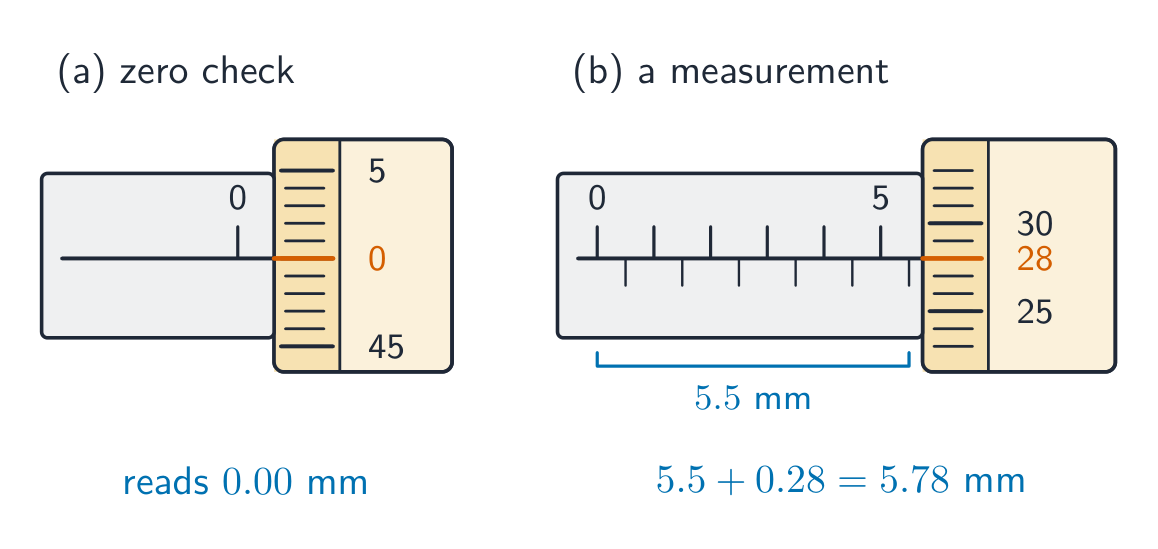
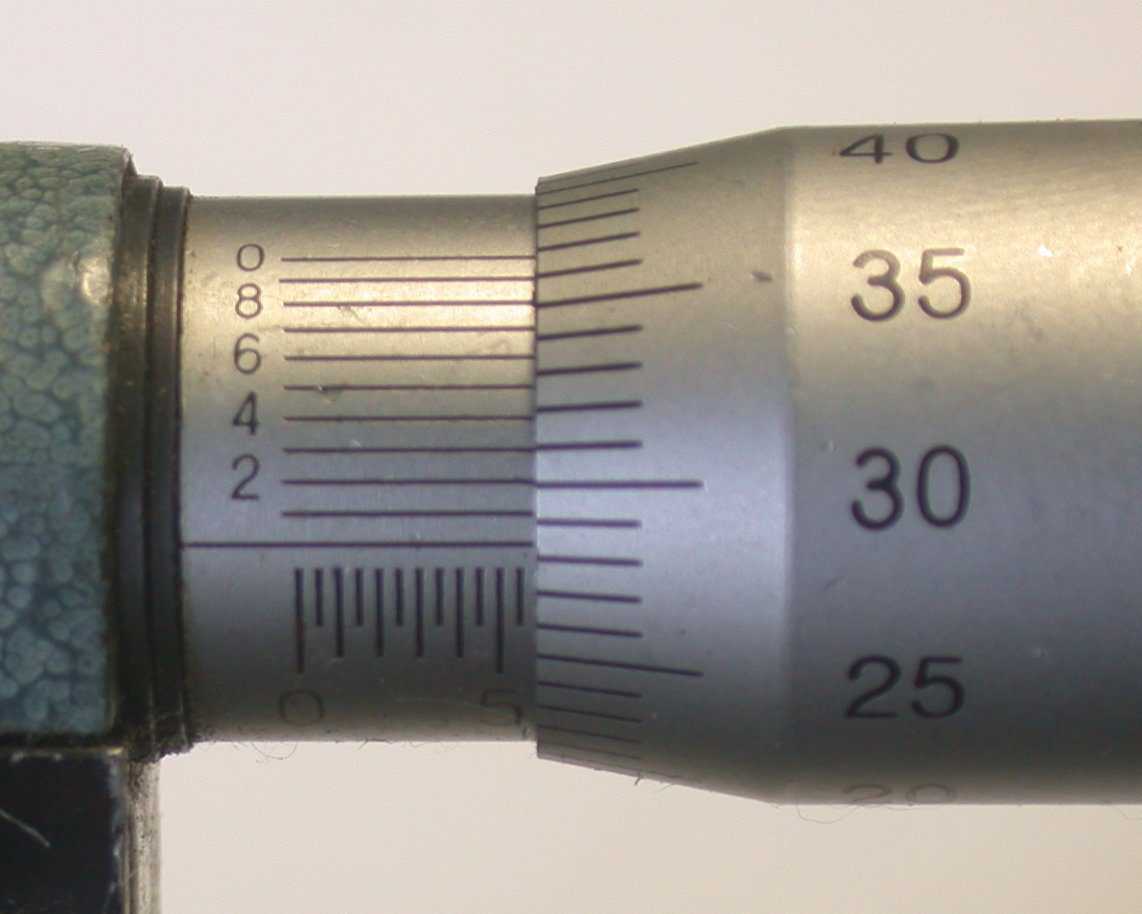
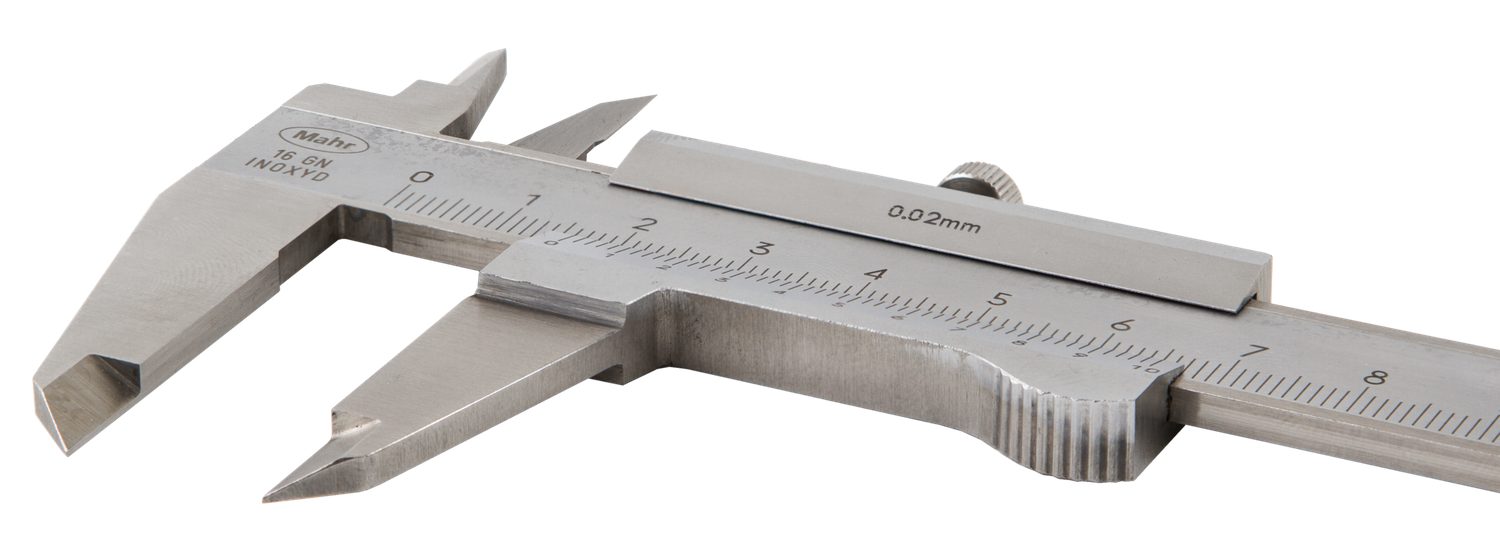

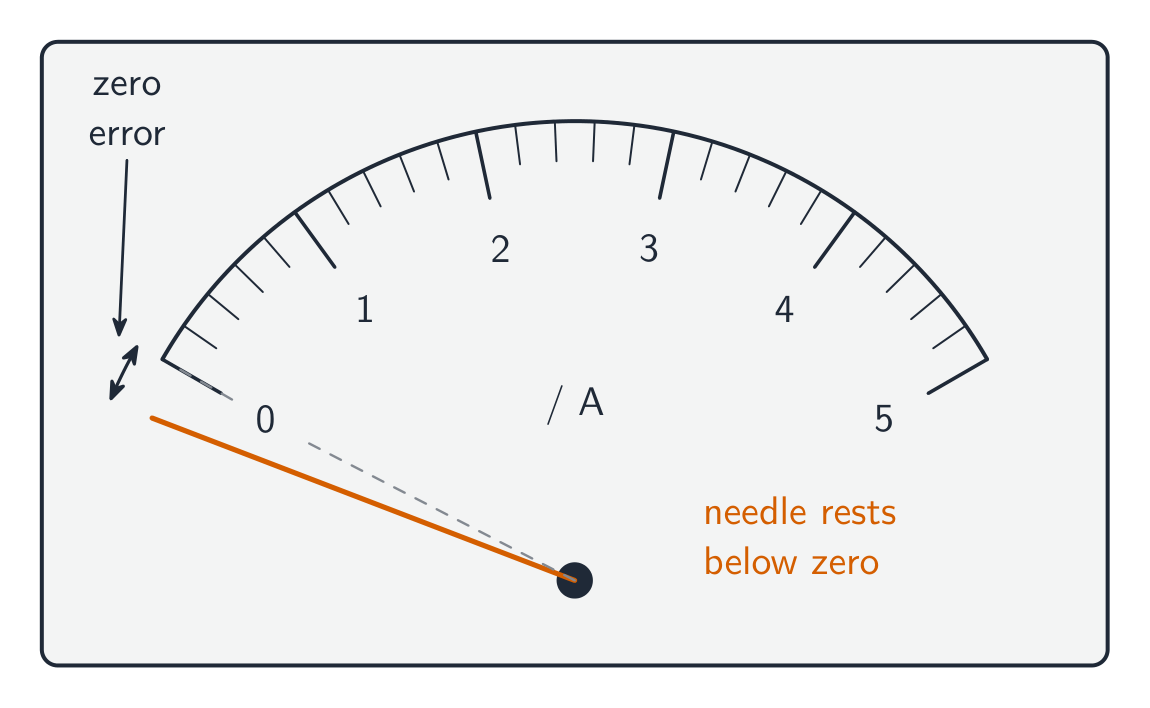

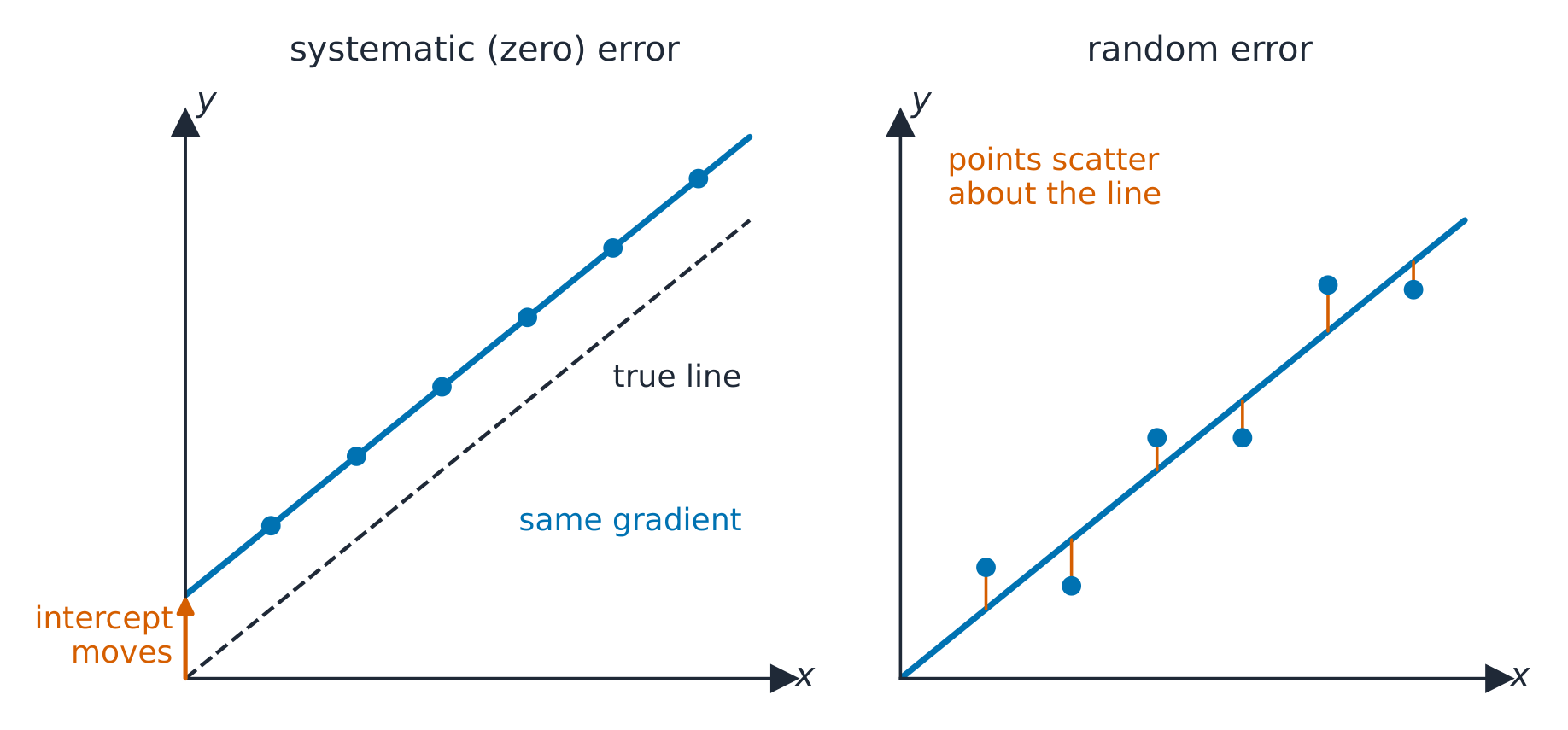

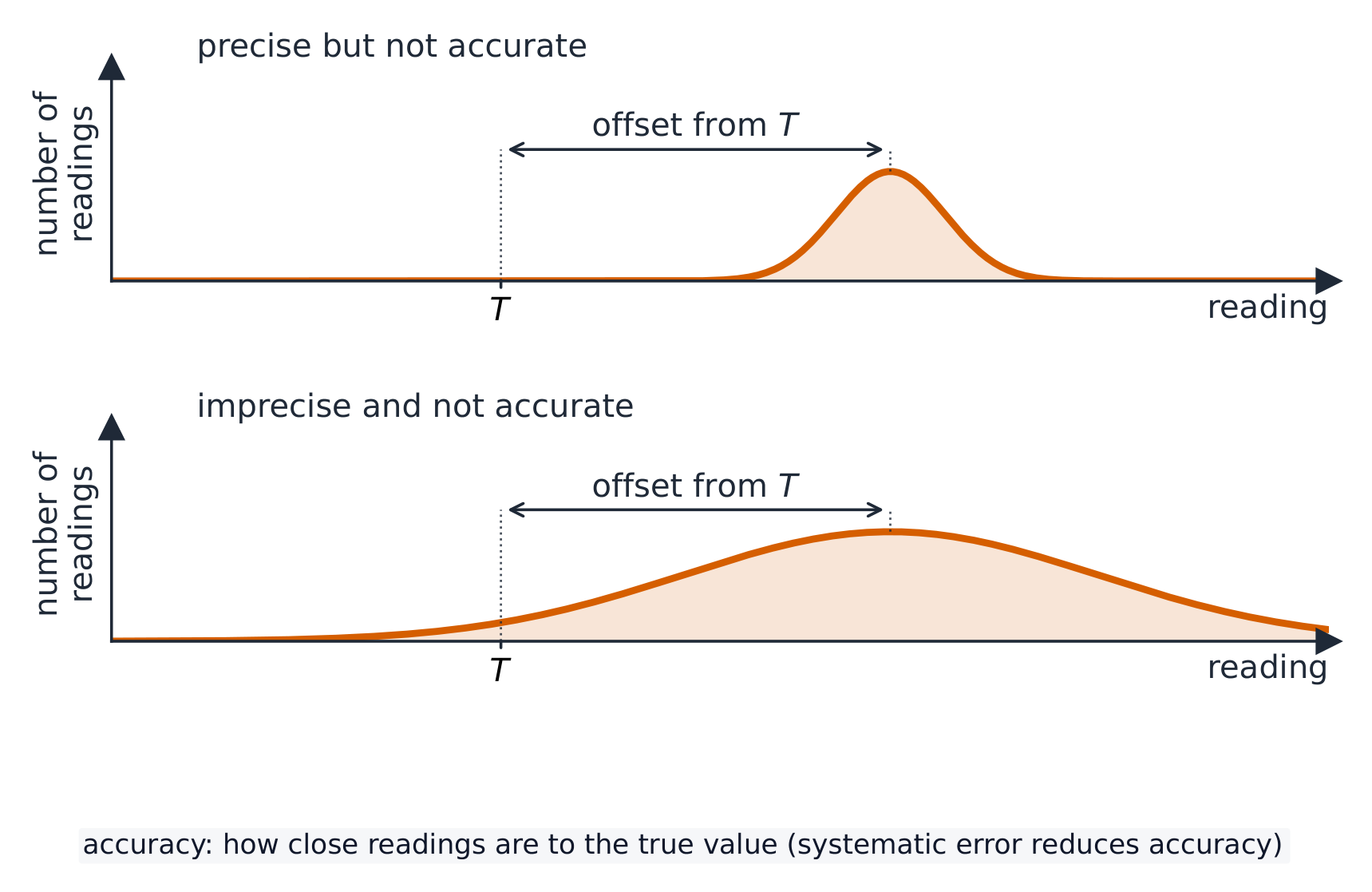
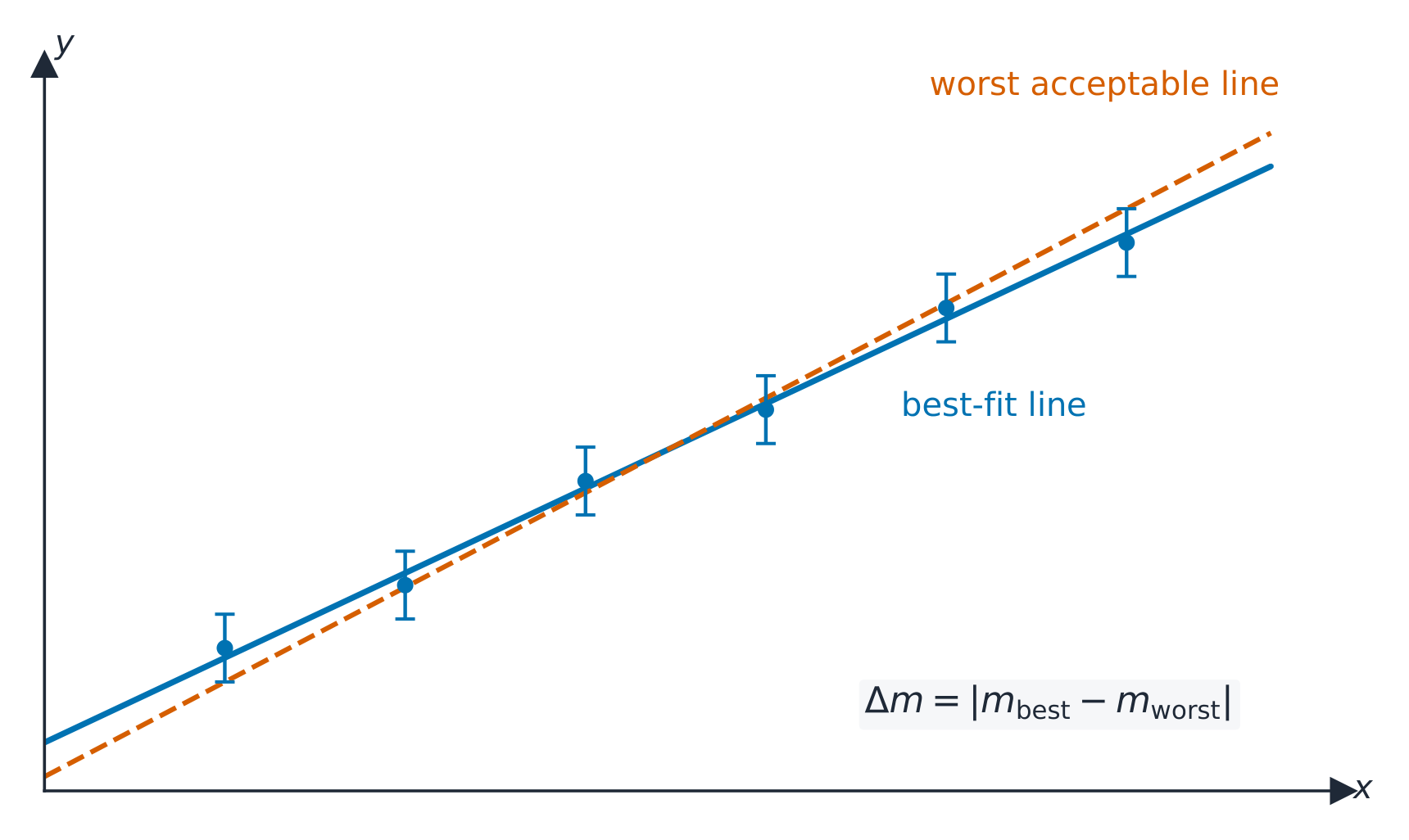

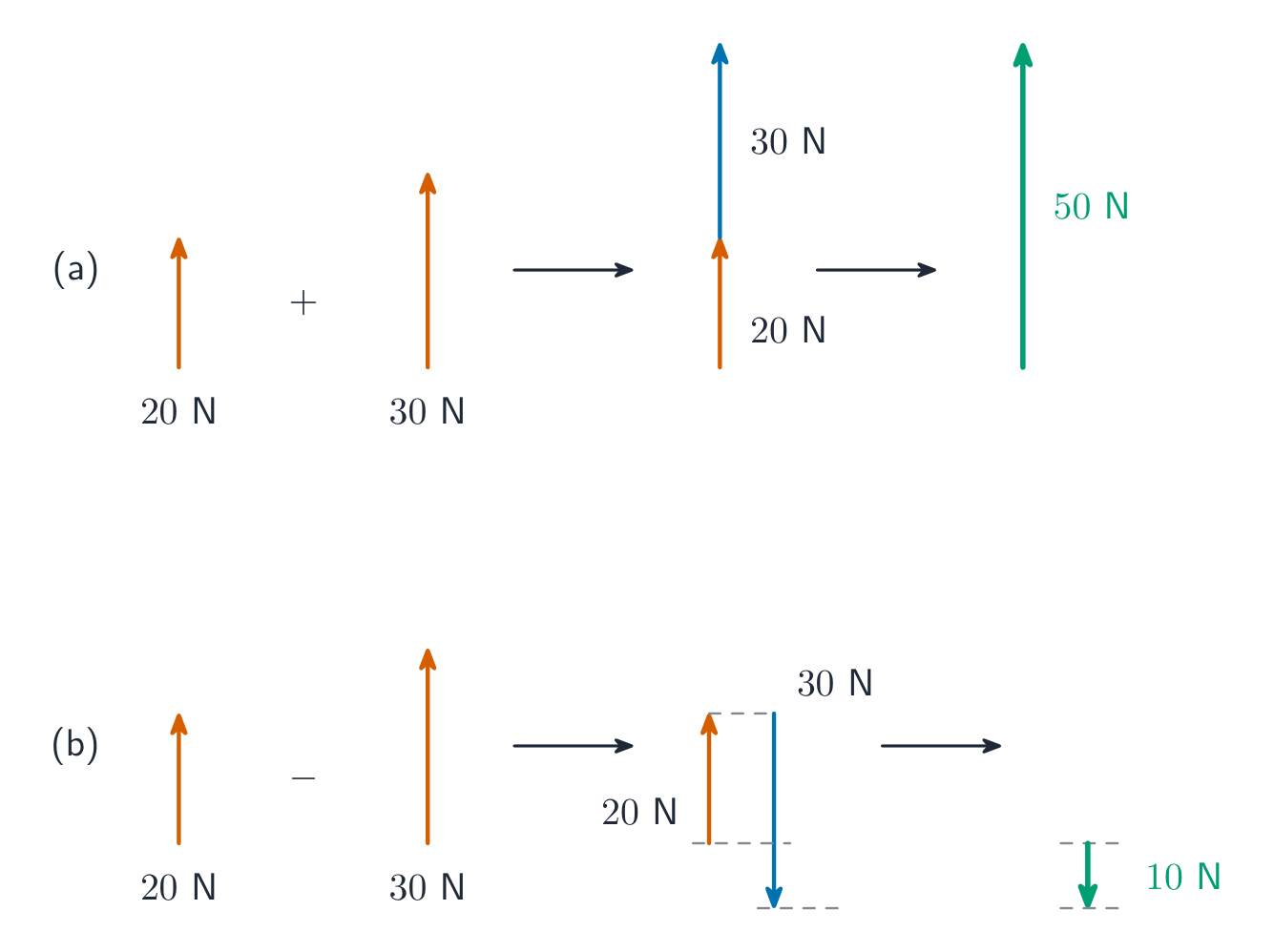
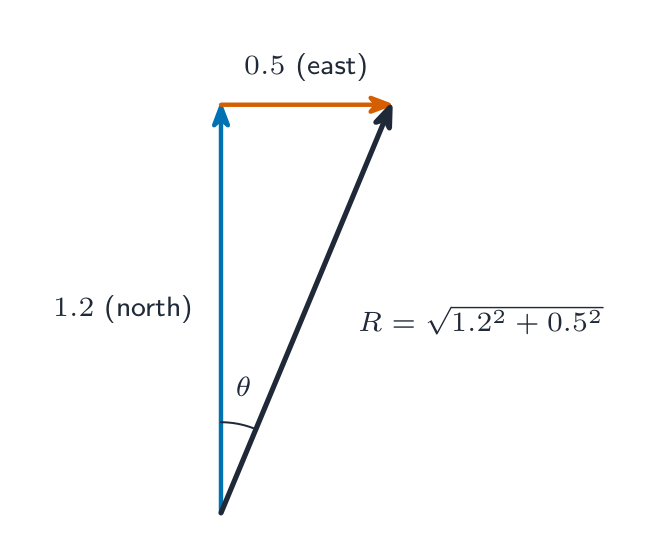
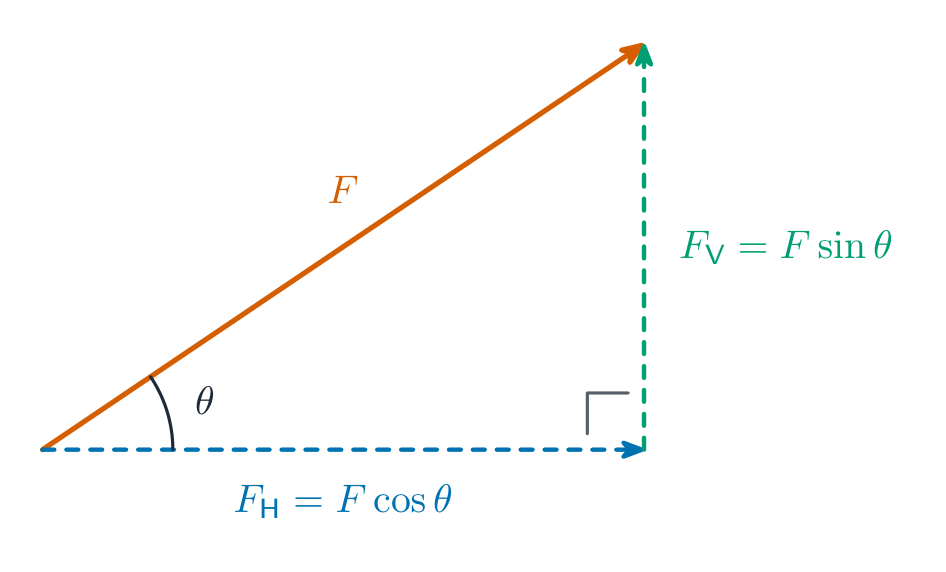
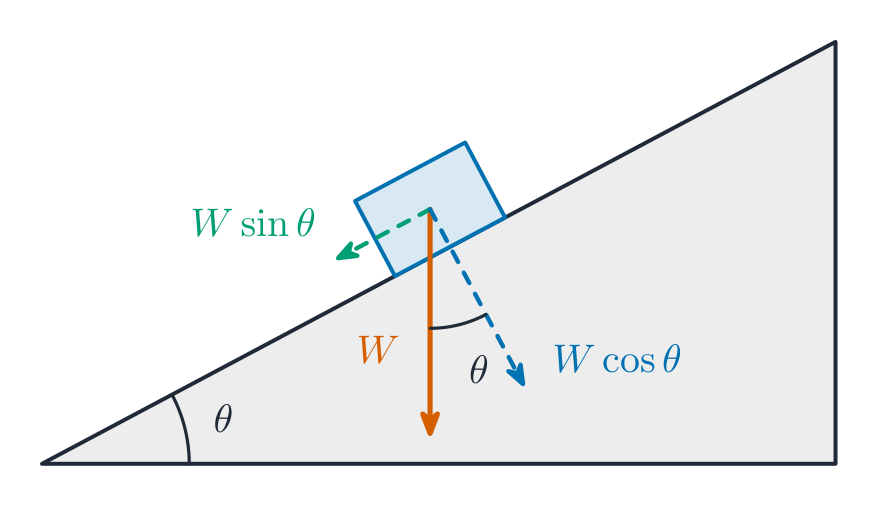

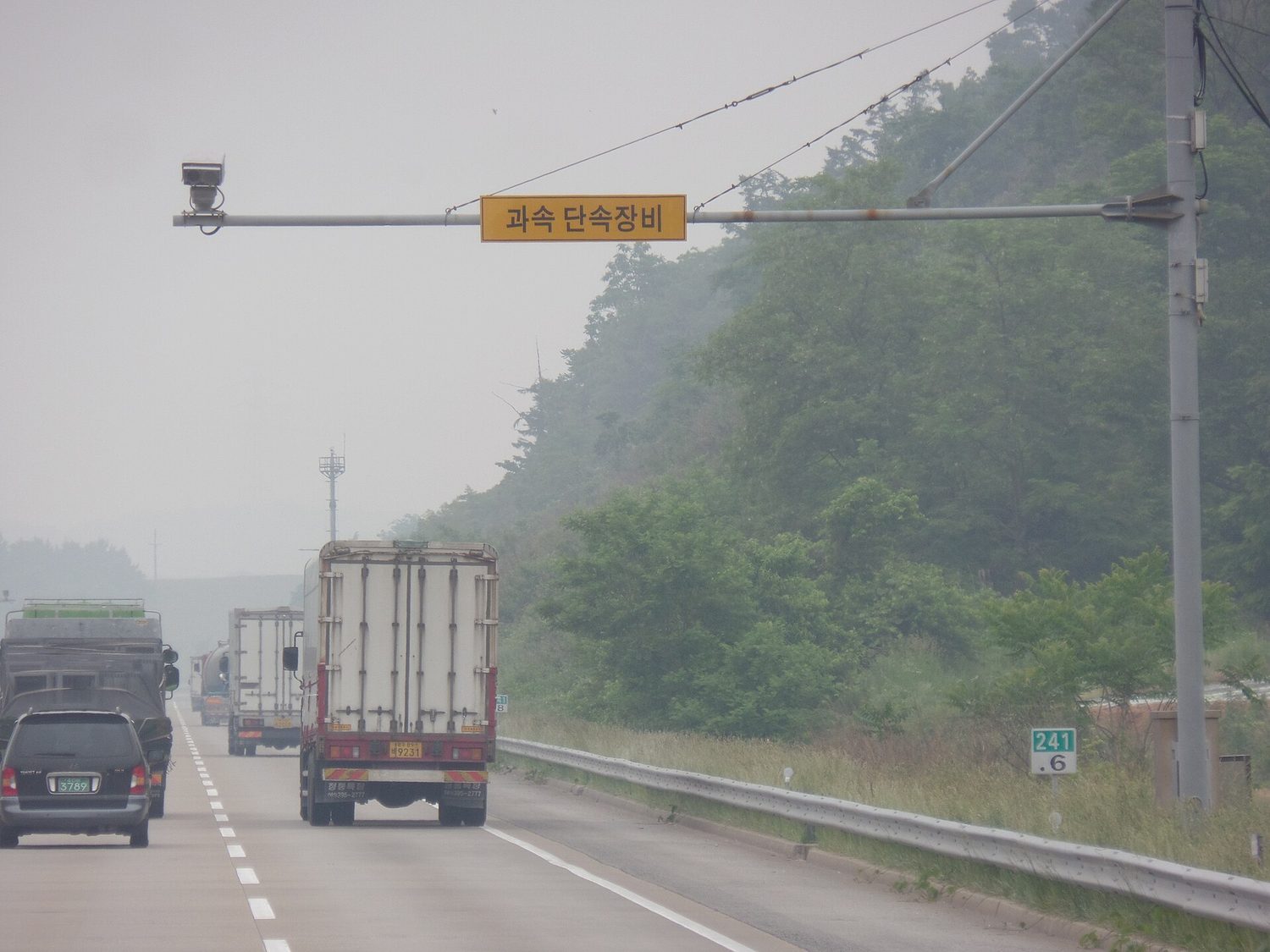


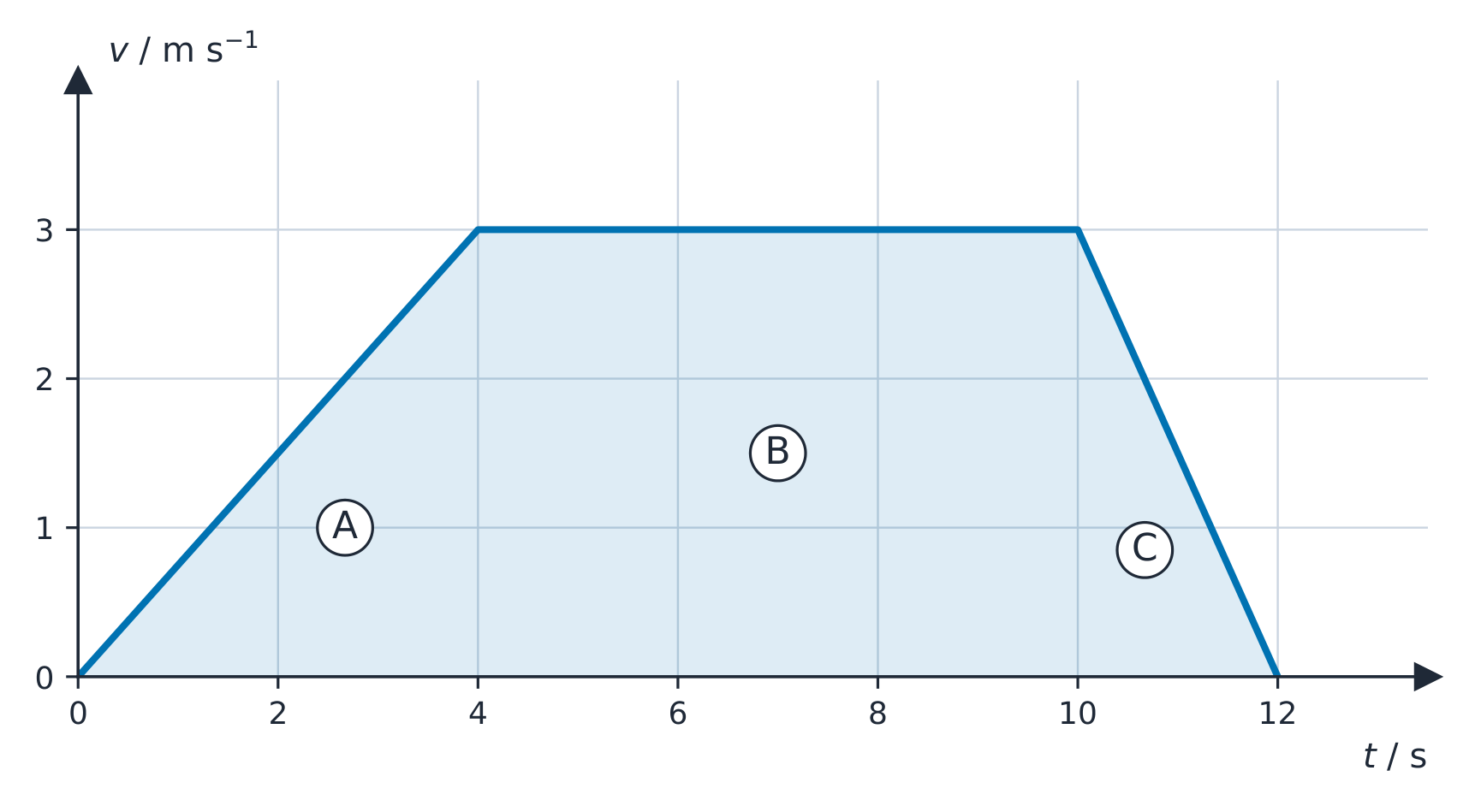


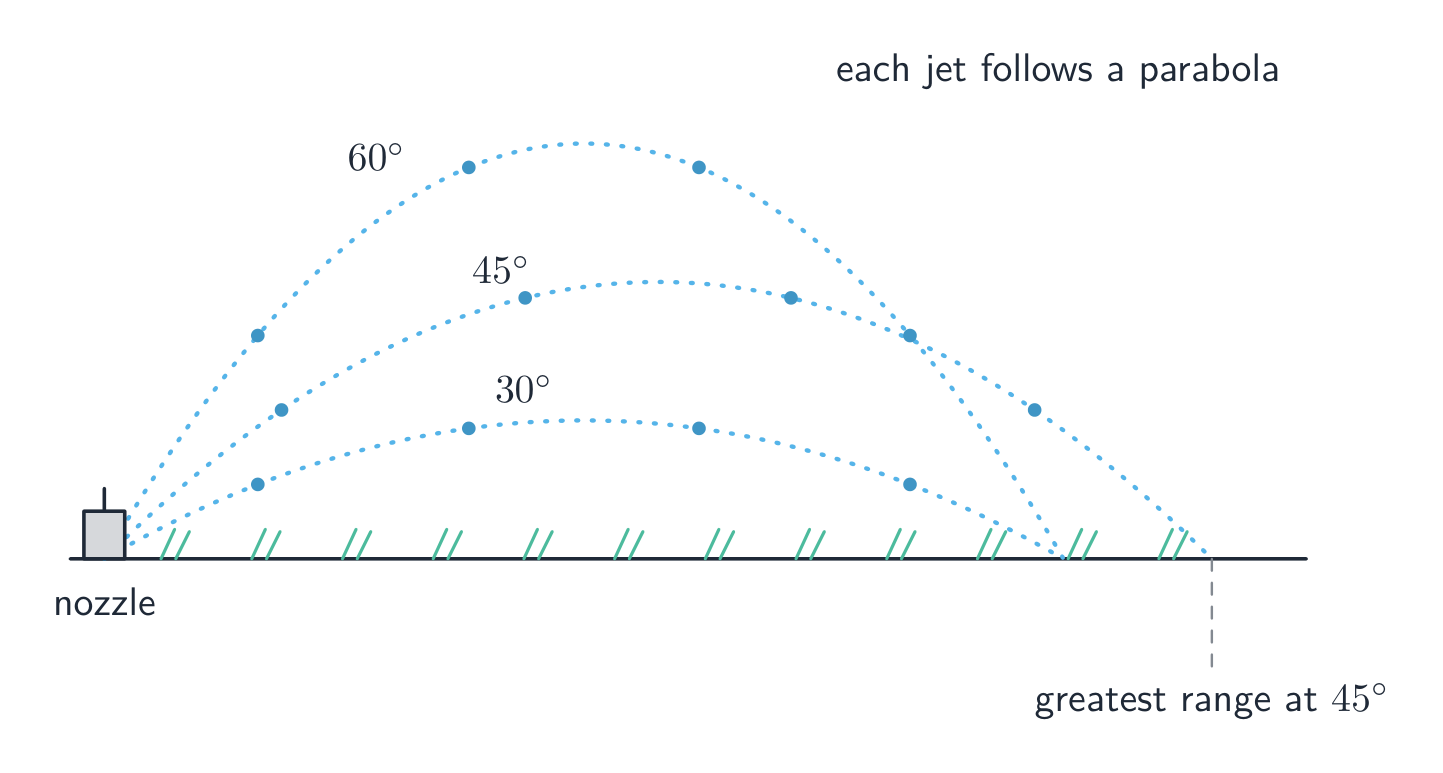

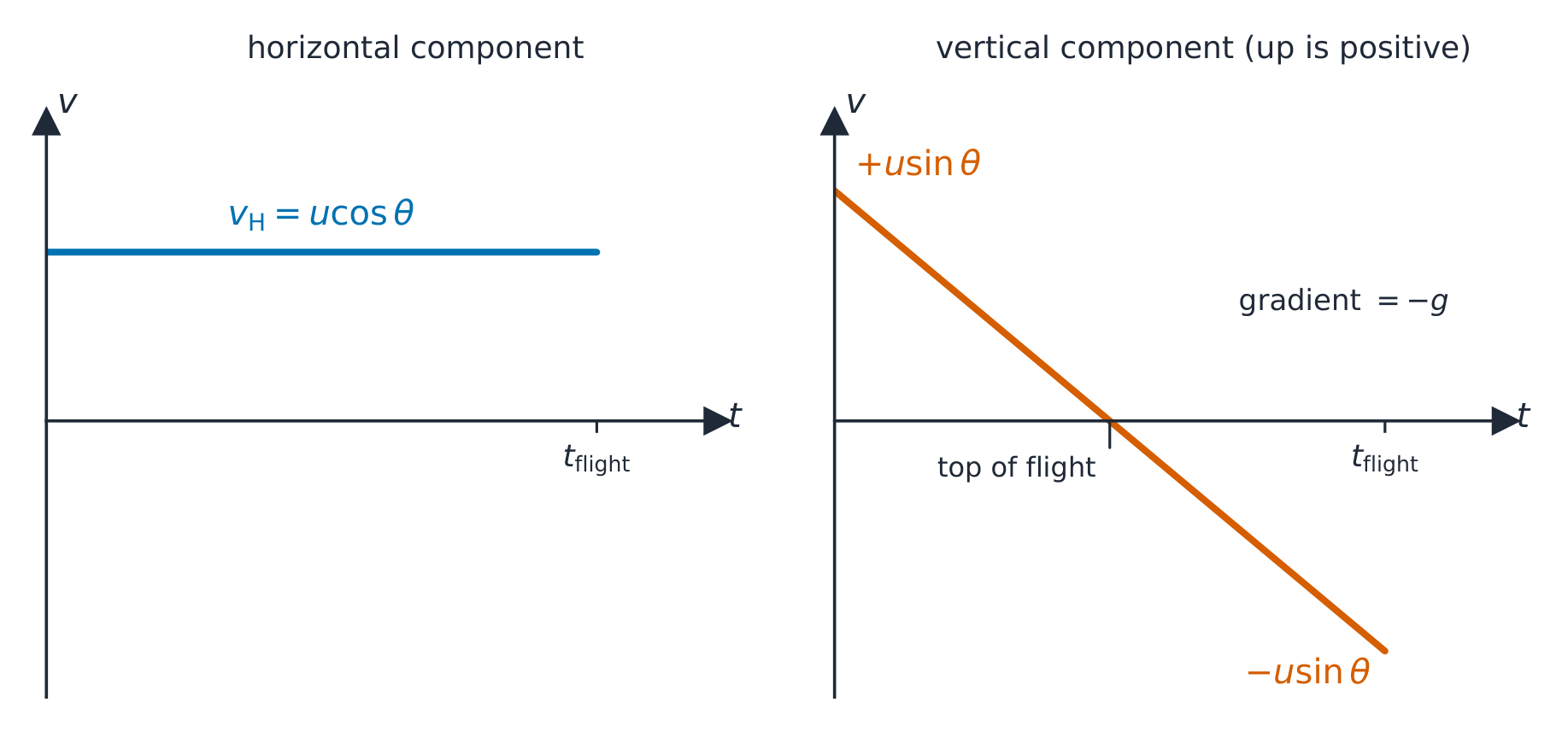
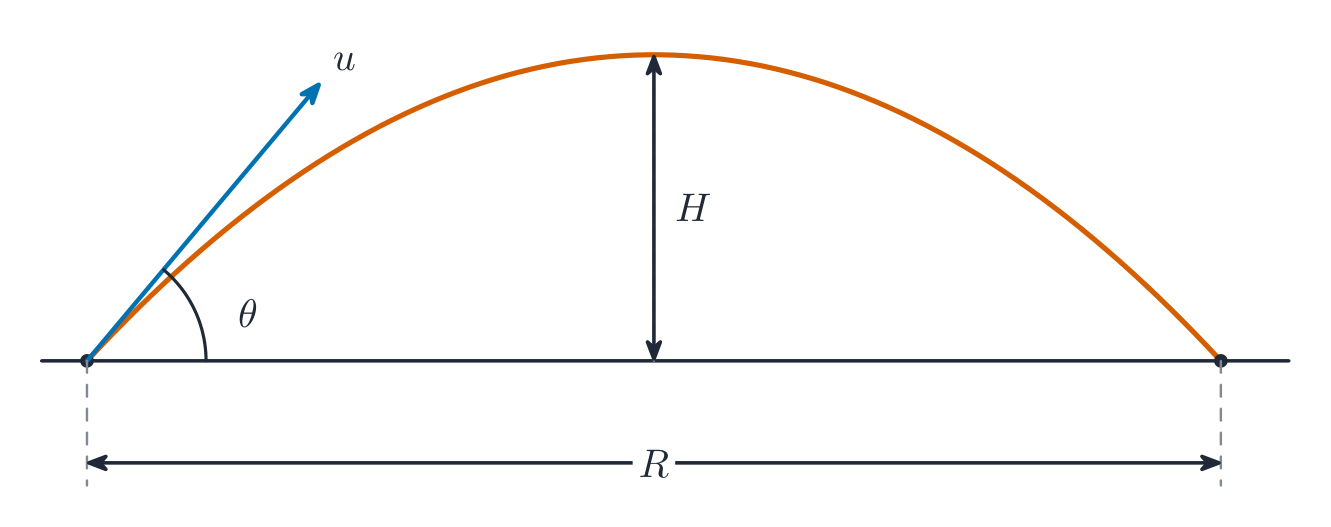
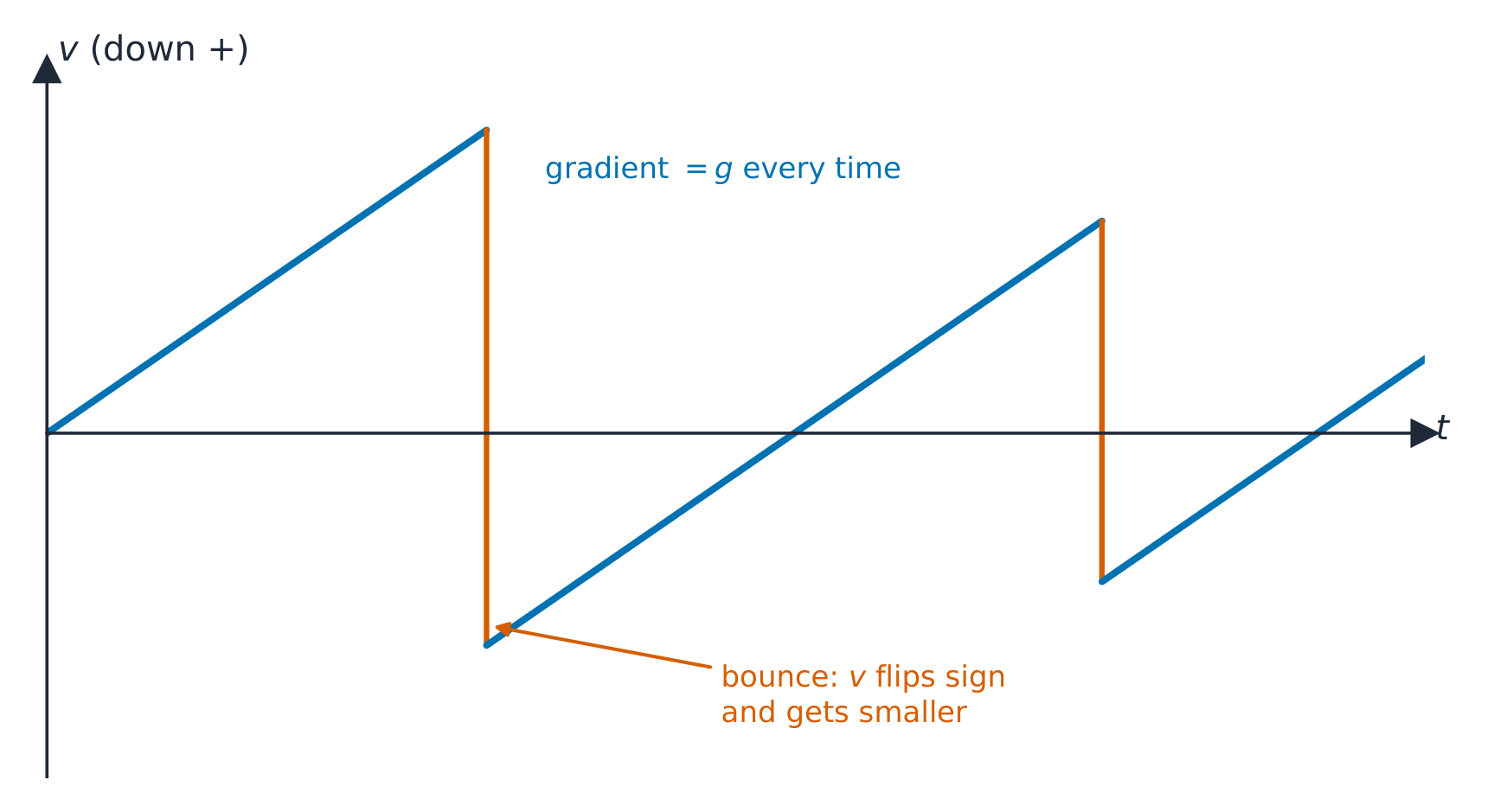
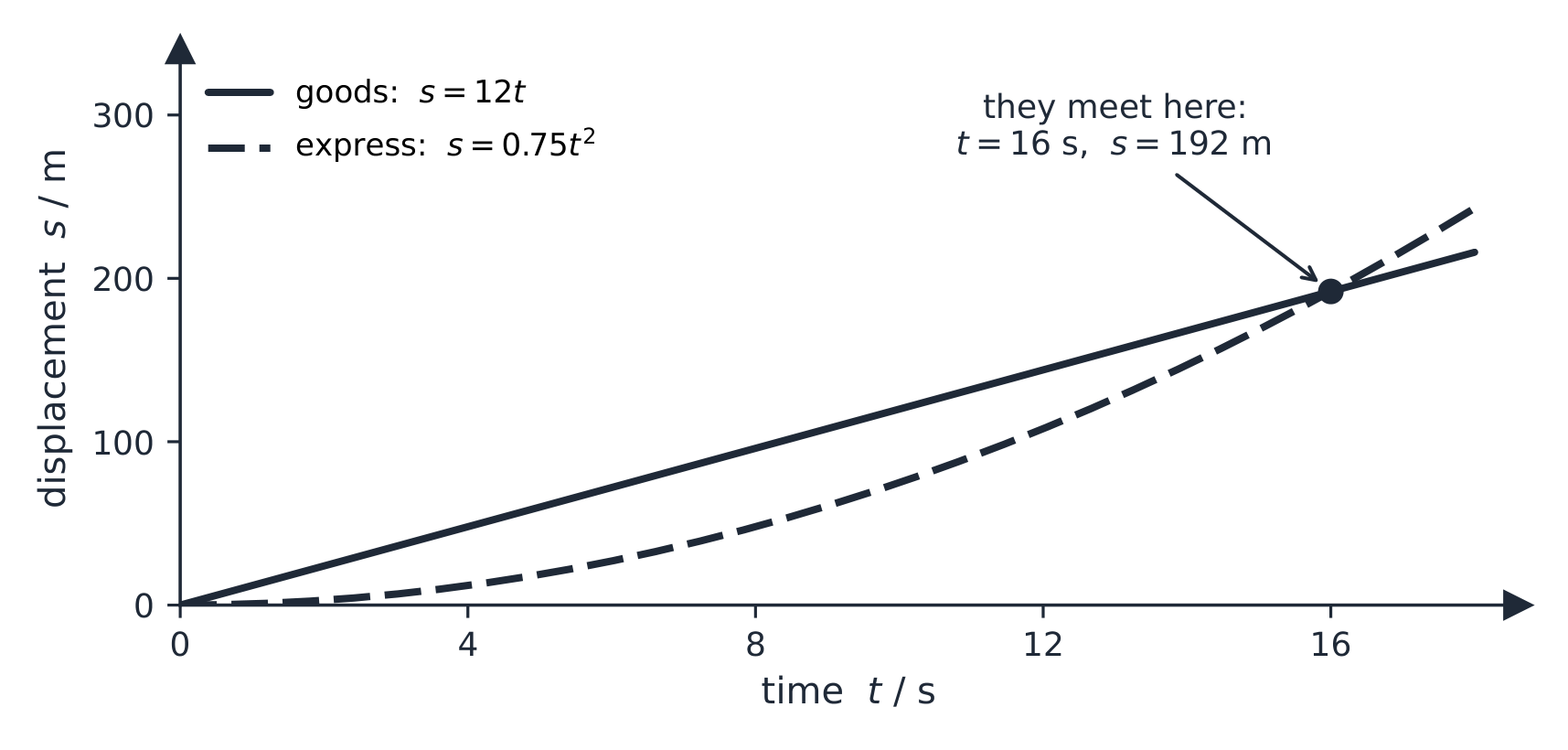
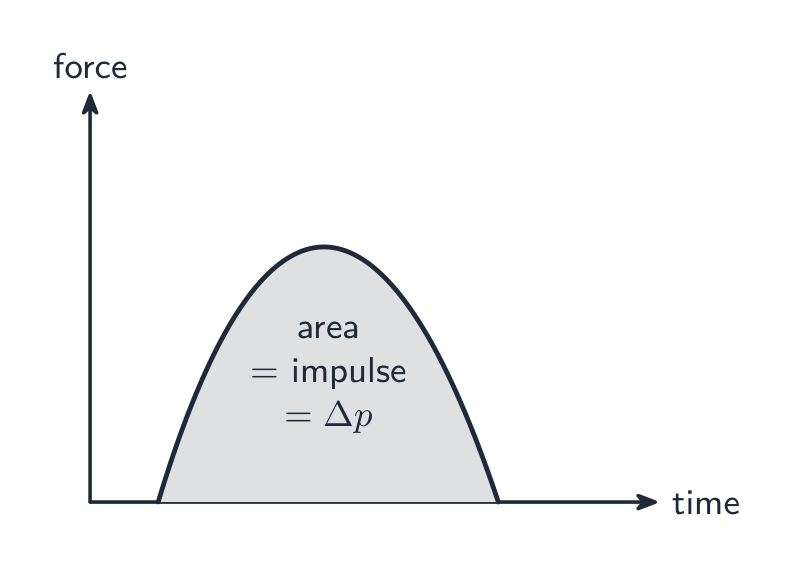
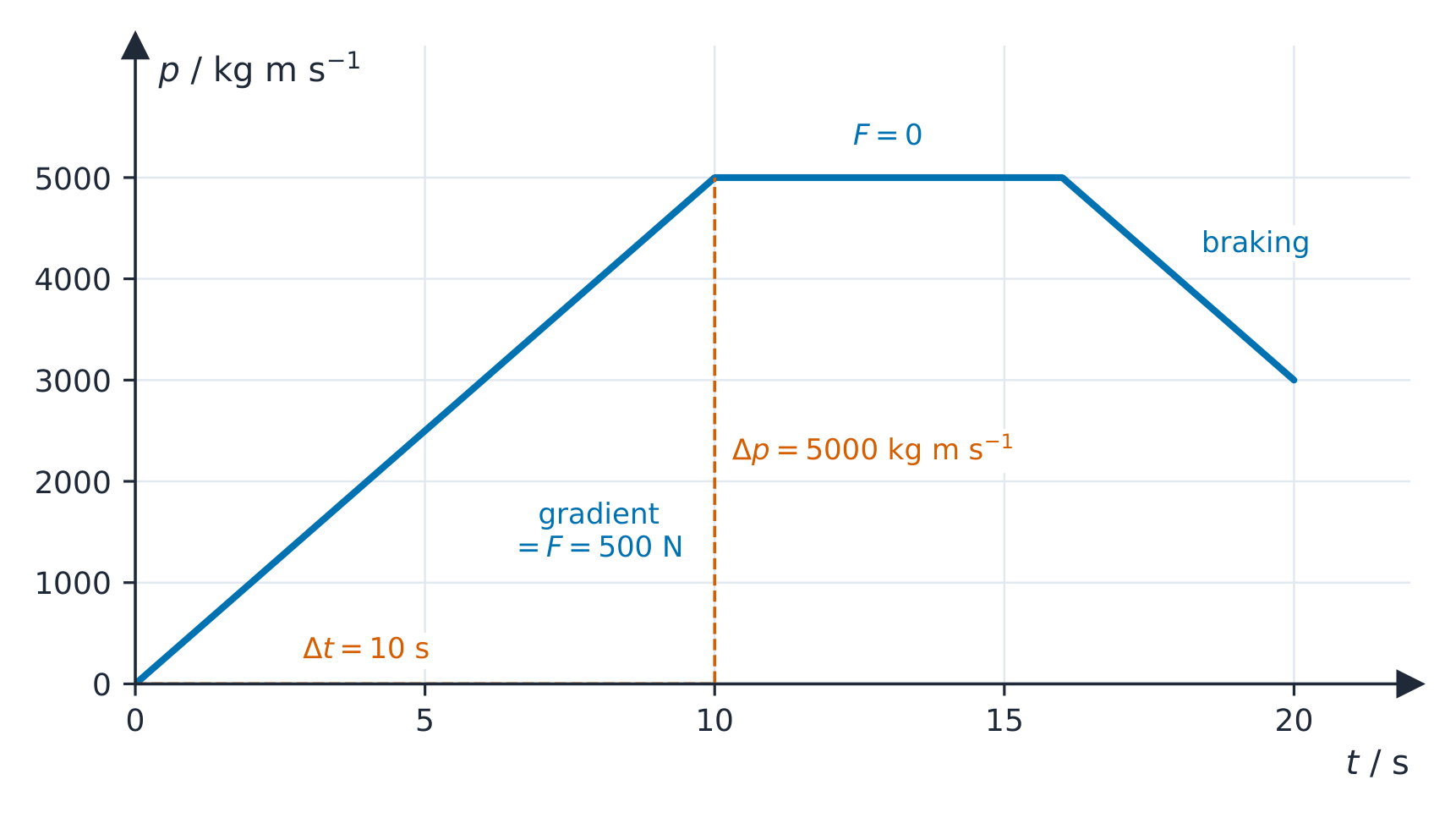


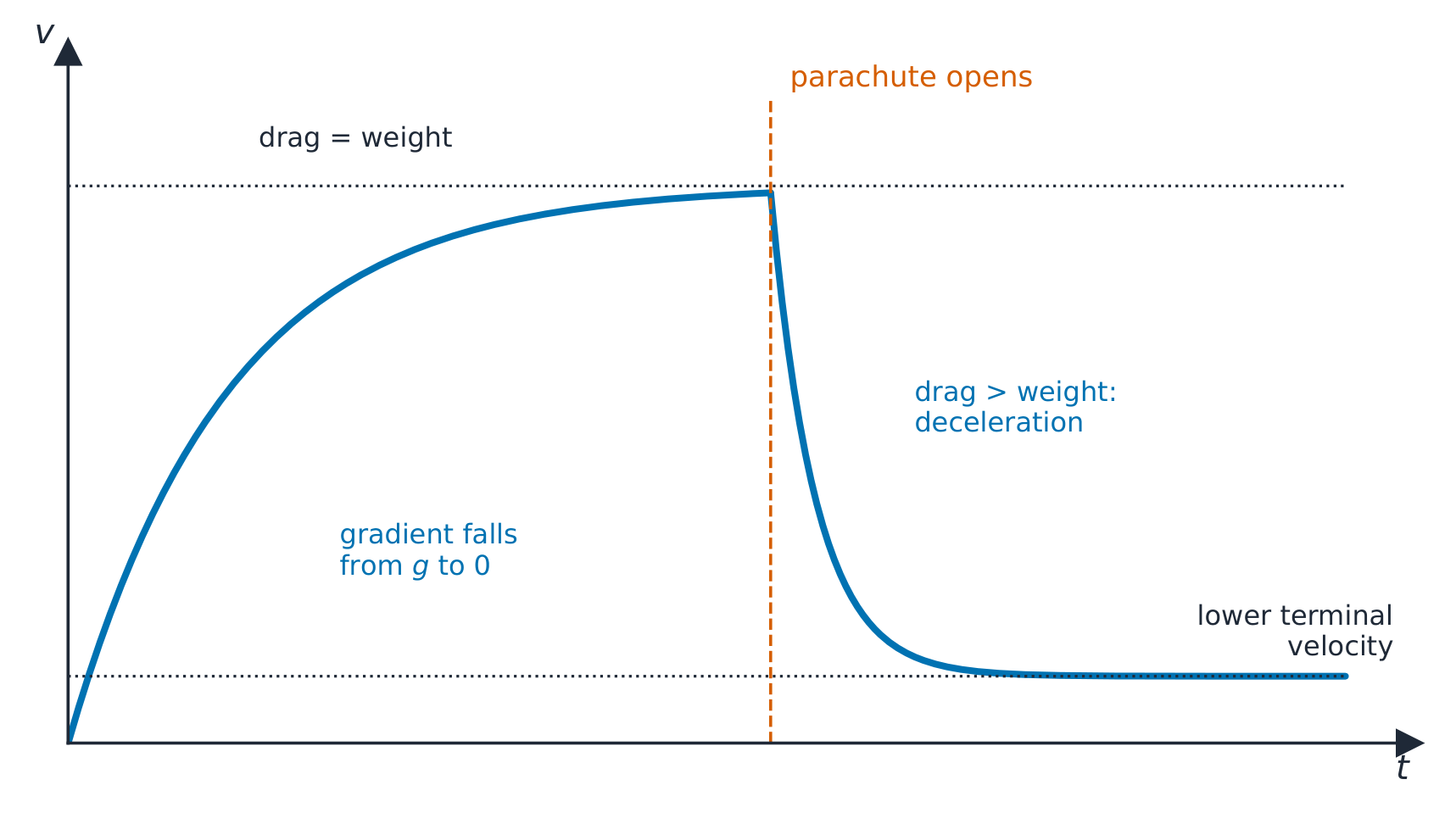


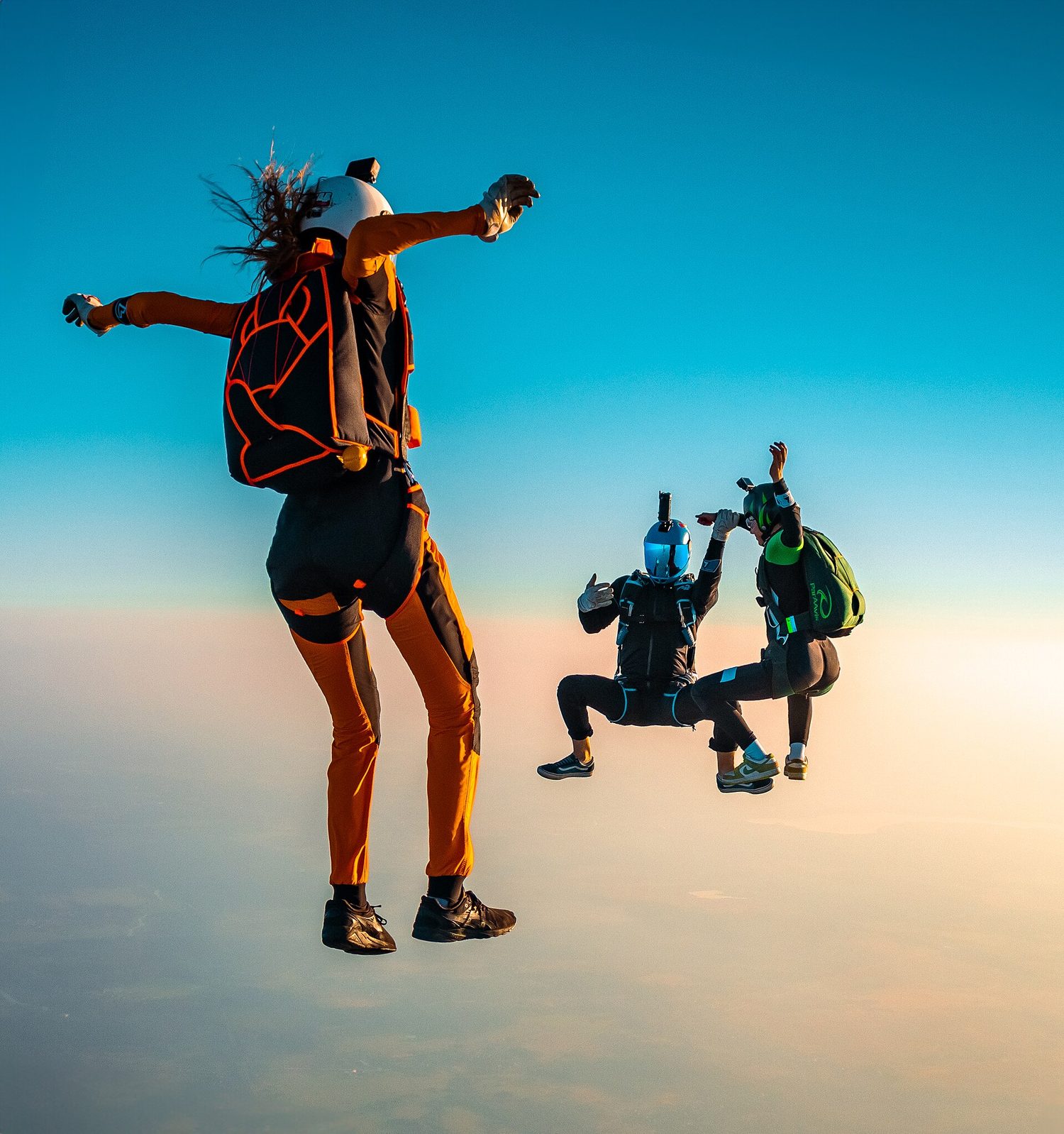


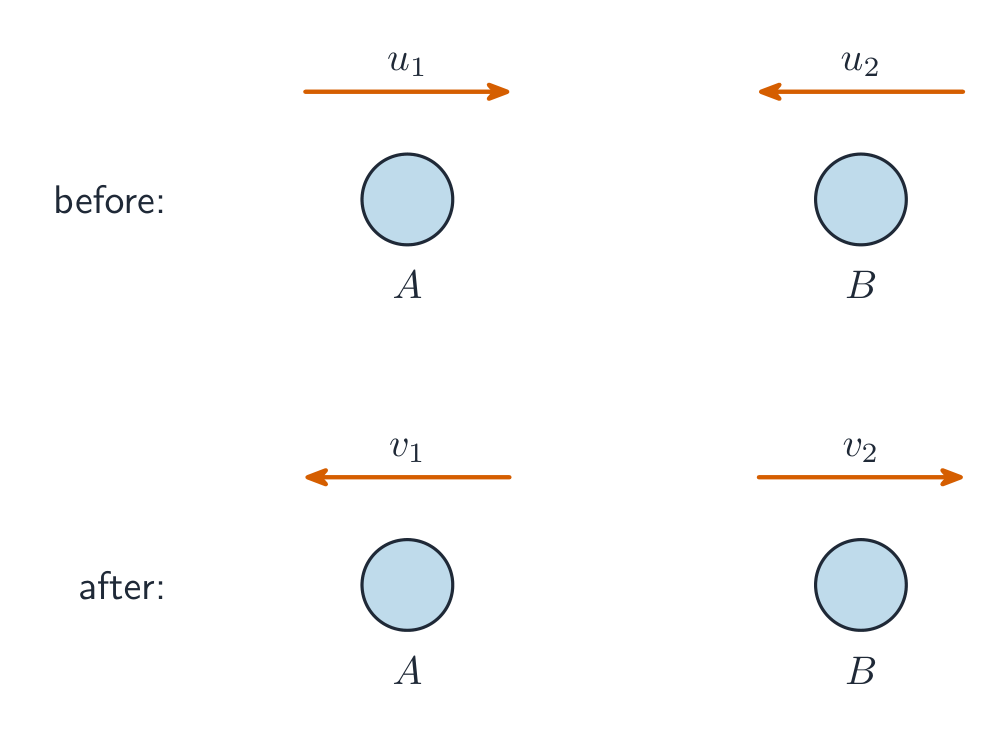

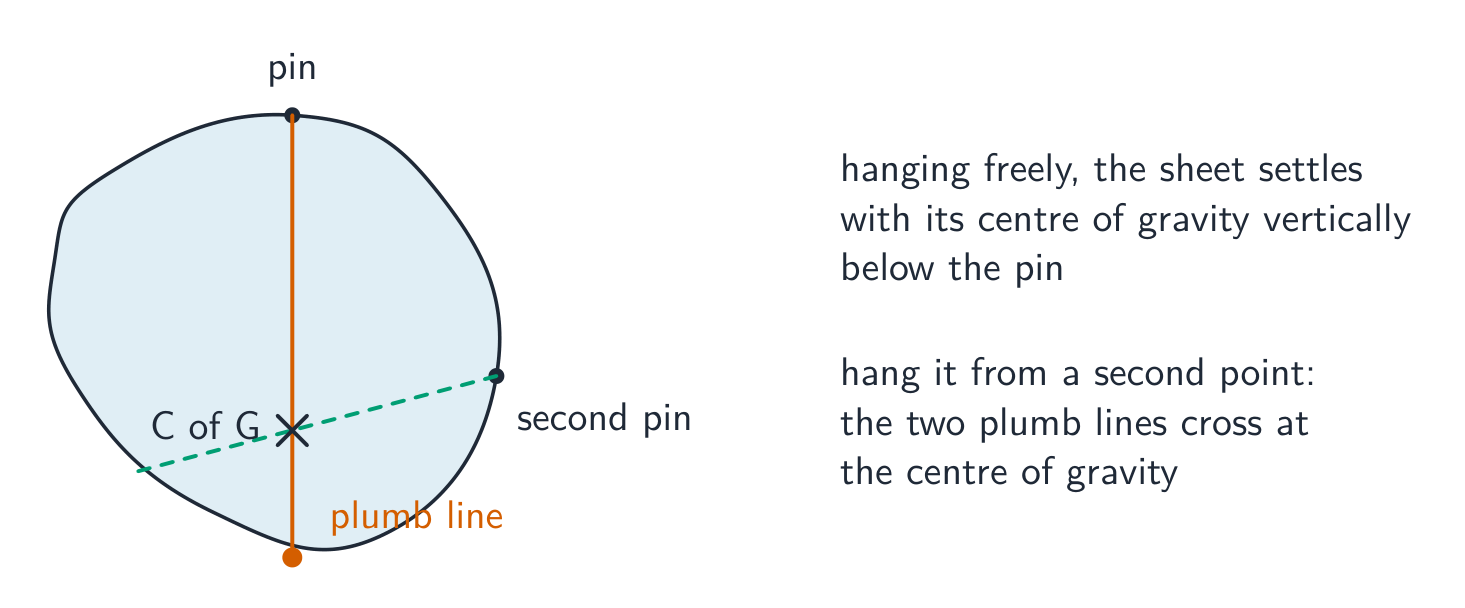


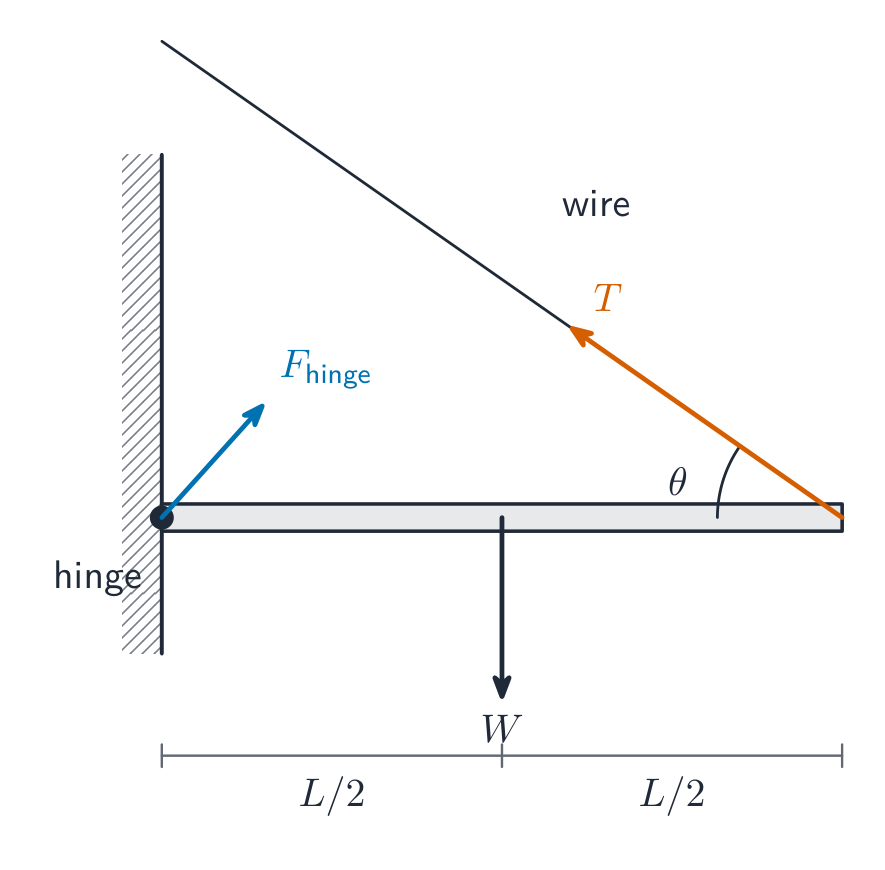
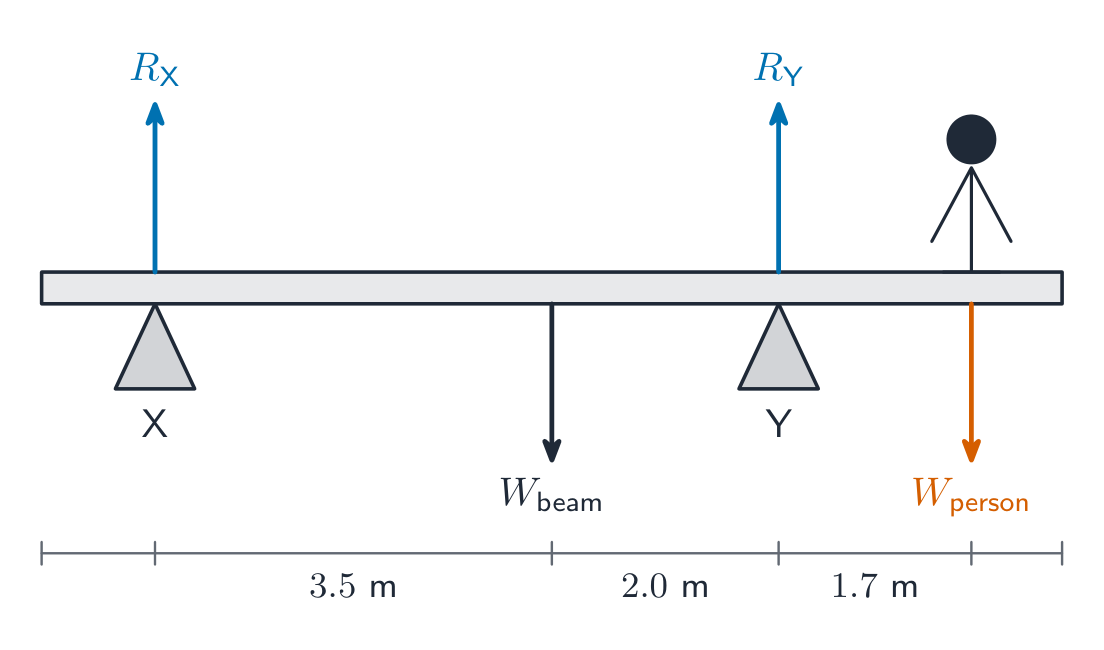
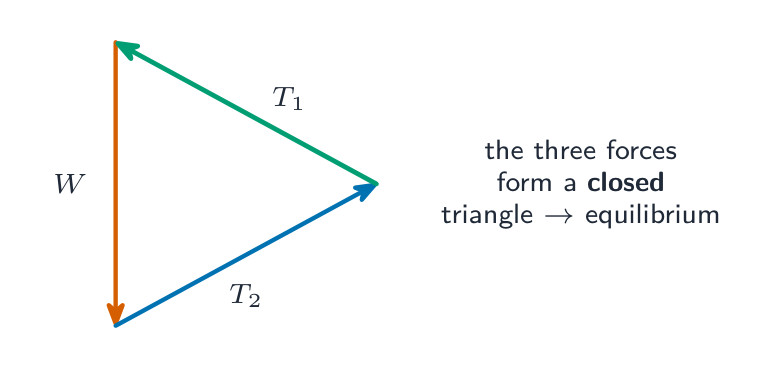
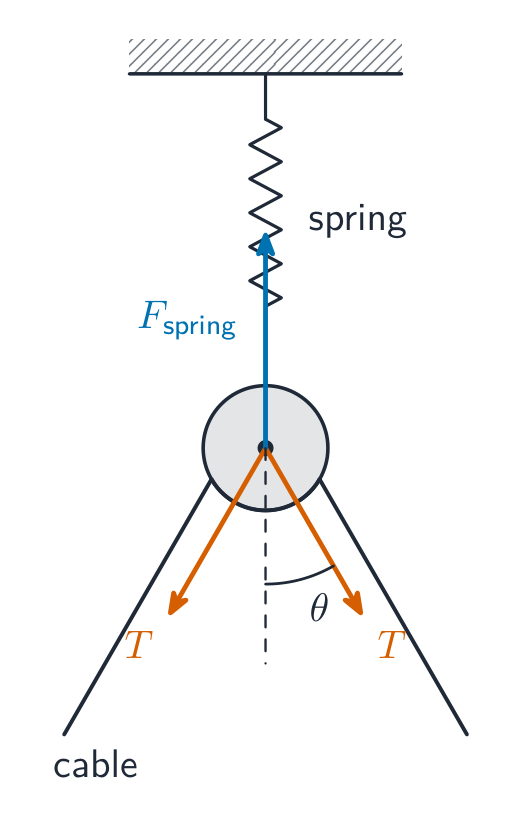


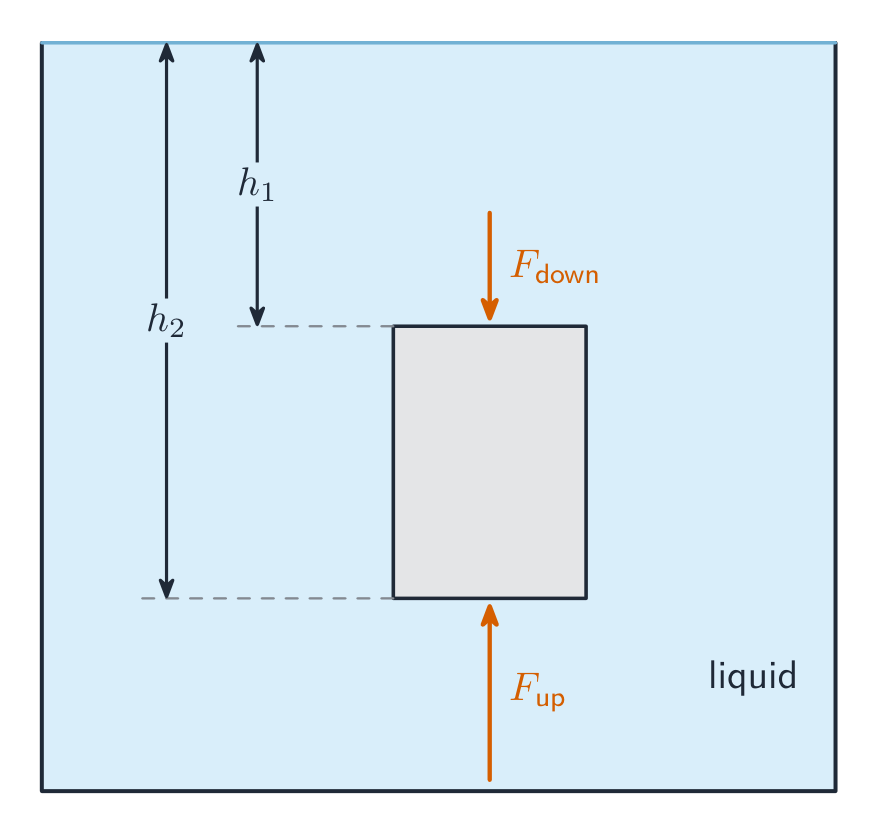
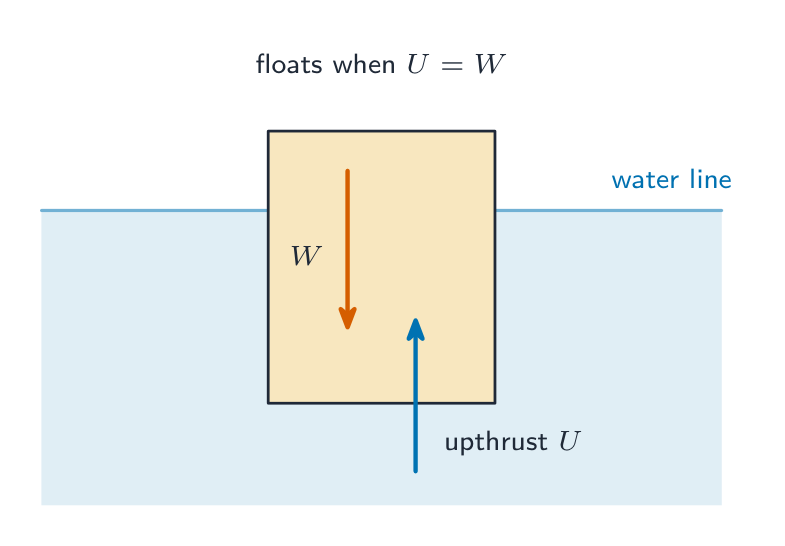


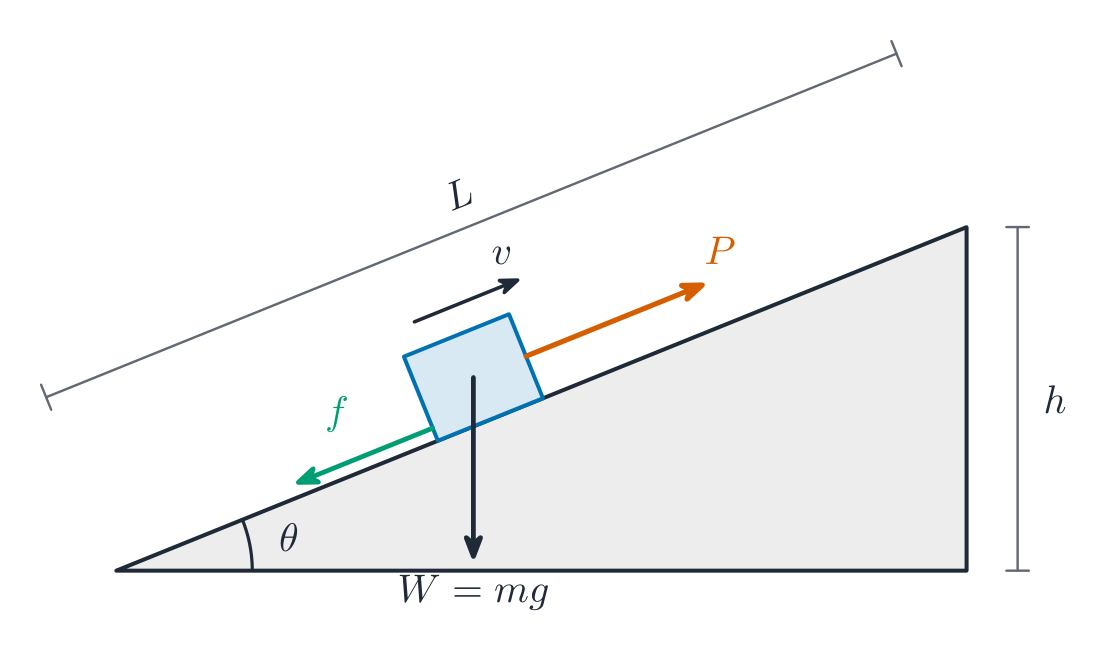
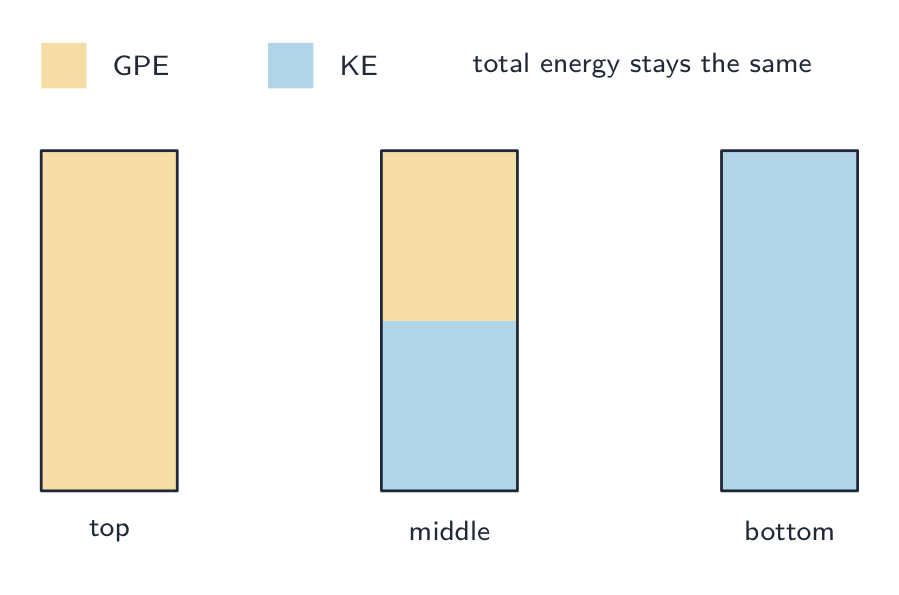 *במדרון ללא חיכוך, GPE הופכת לKE בעוד שהאנרגיה הכוללת נשארת קבועה
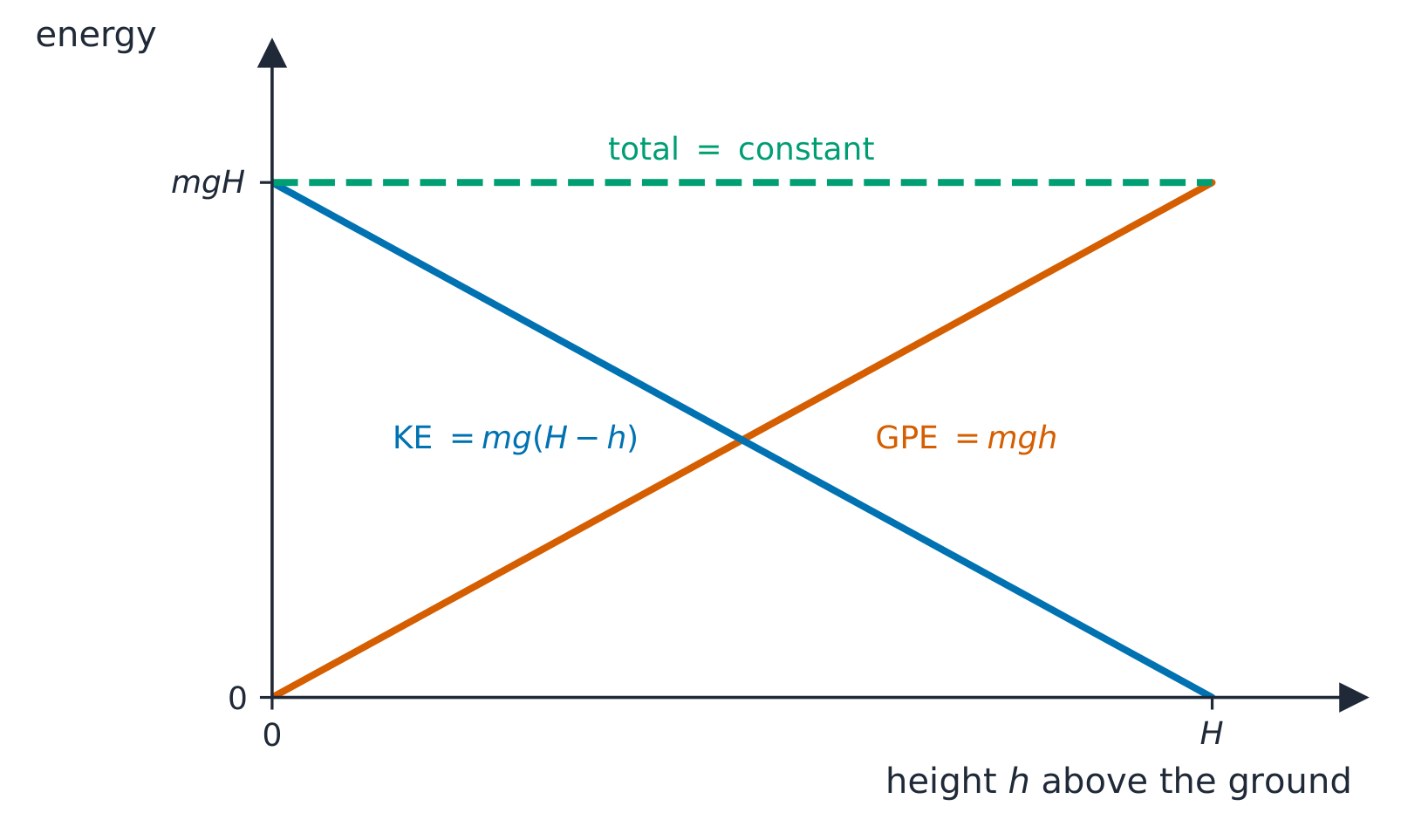 *כדור הצולל: GPE ו-KE משתנים שניהם בקו ישר לפי הגובה, והסכום שלהם הוא קבוע
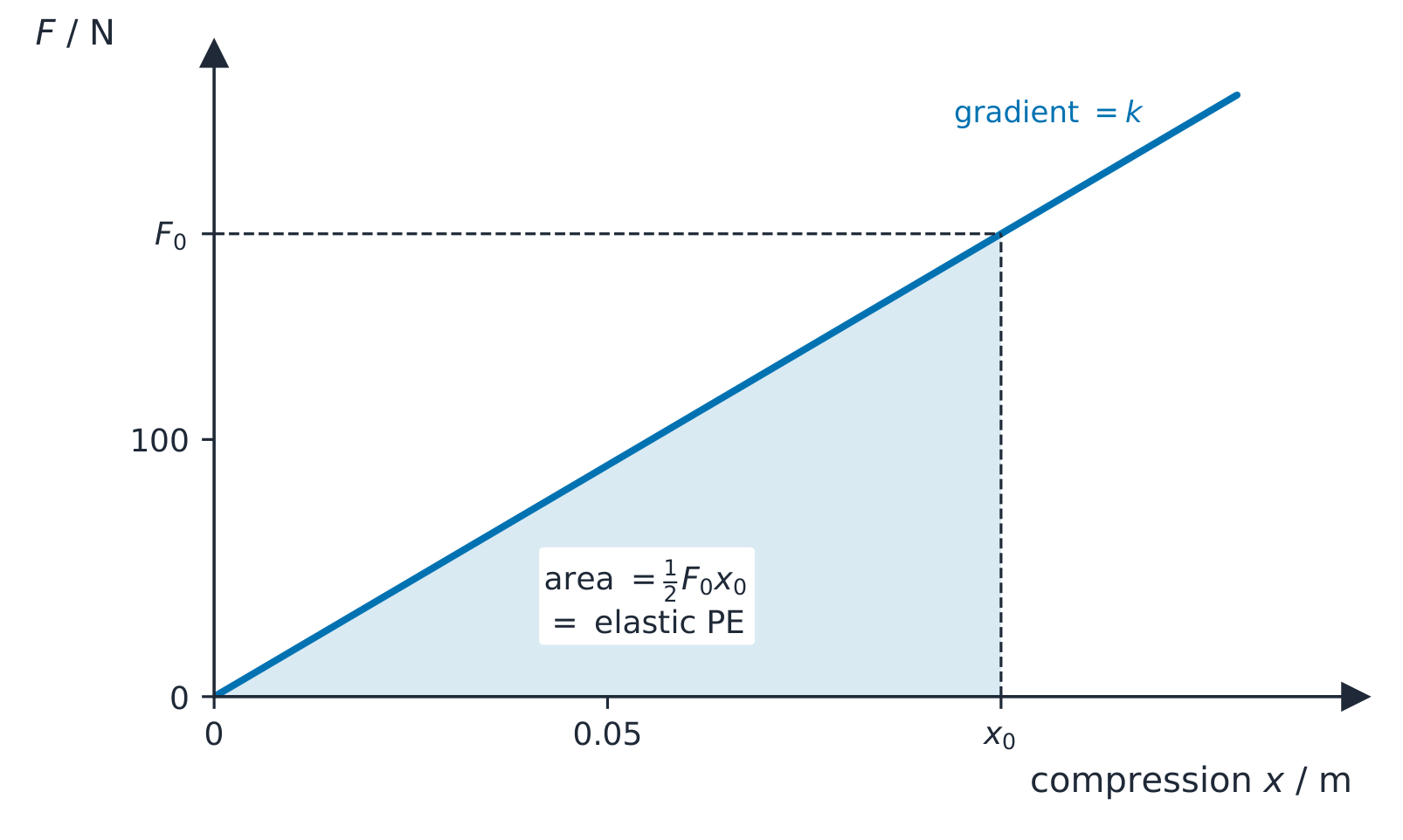 *האנרגיה המאוחסנת בקפיץ היא השטח מתחת לגרף הכוח–הלחיצה שלו: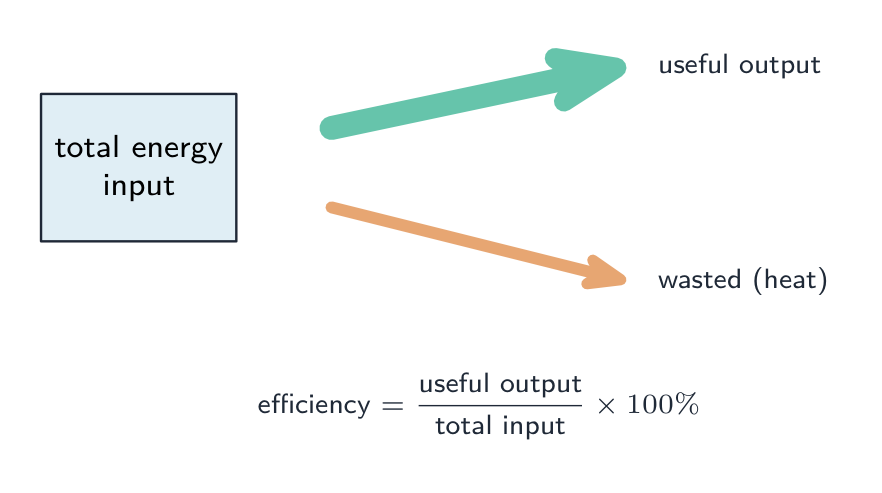




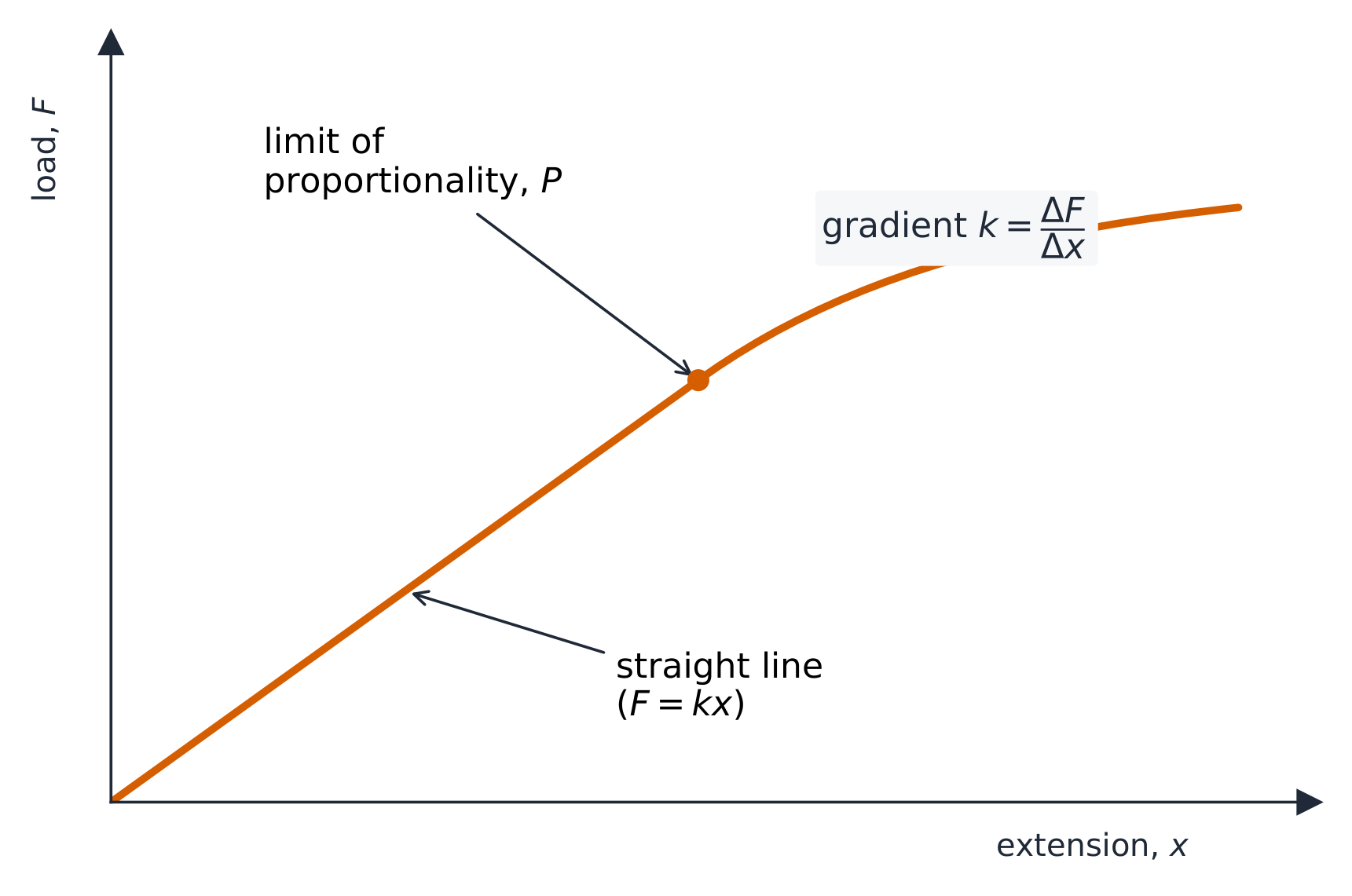
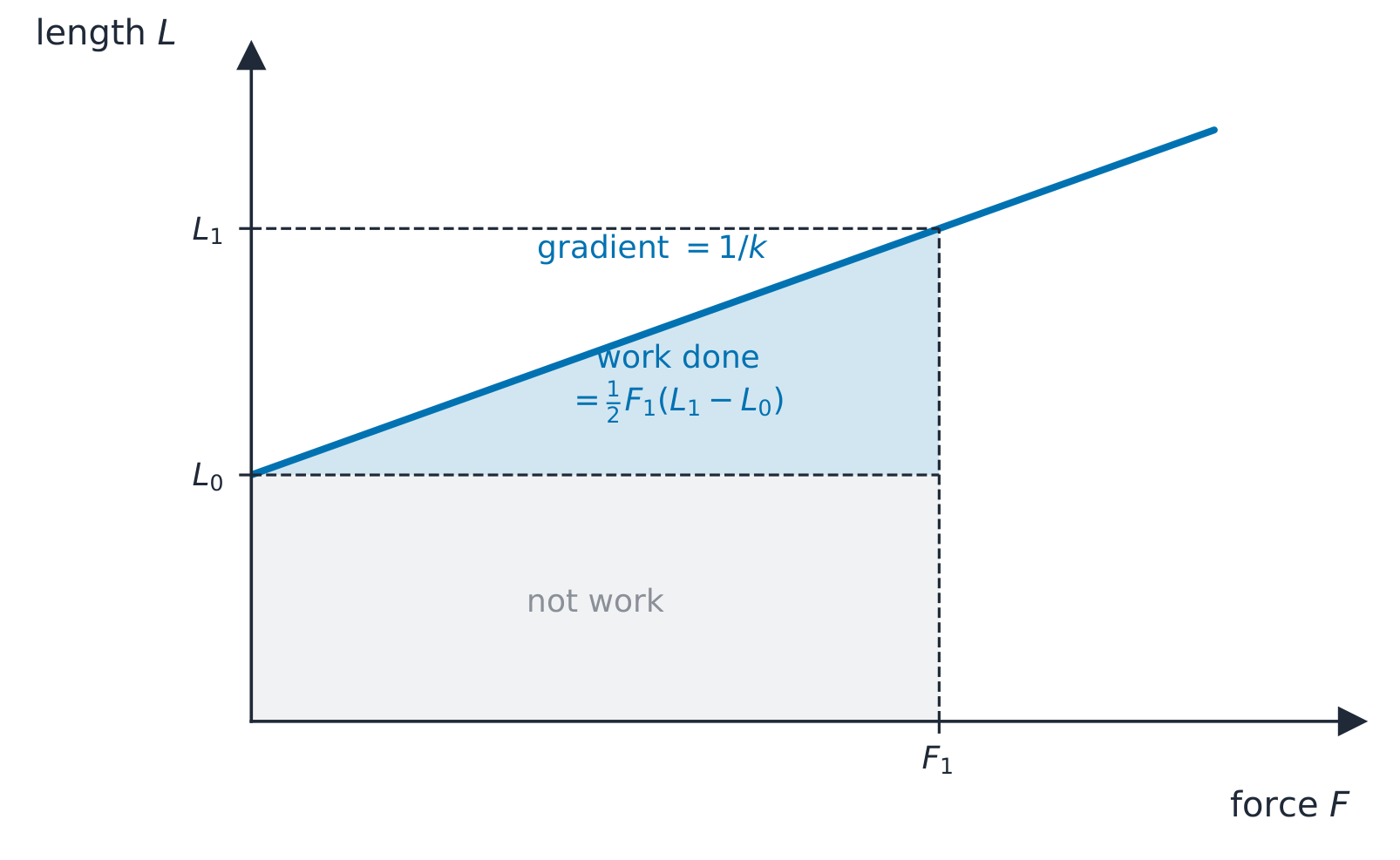

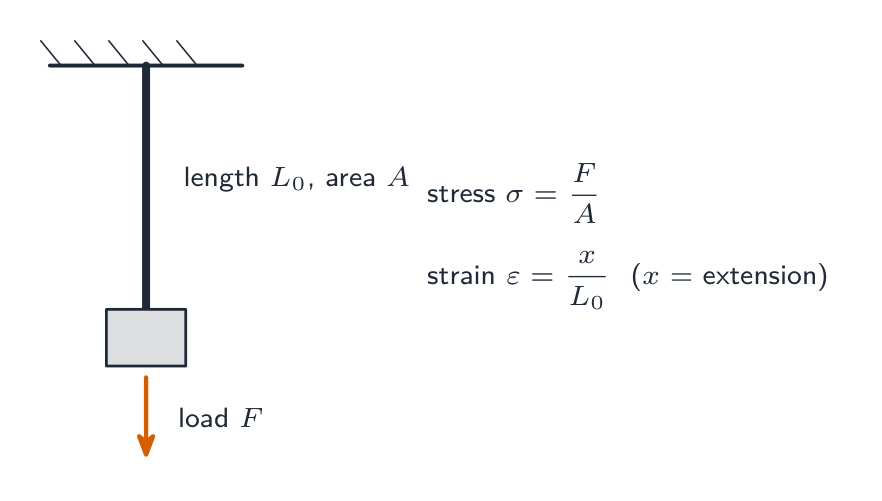

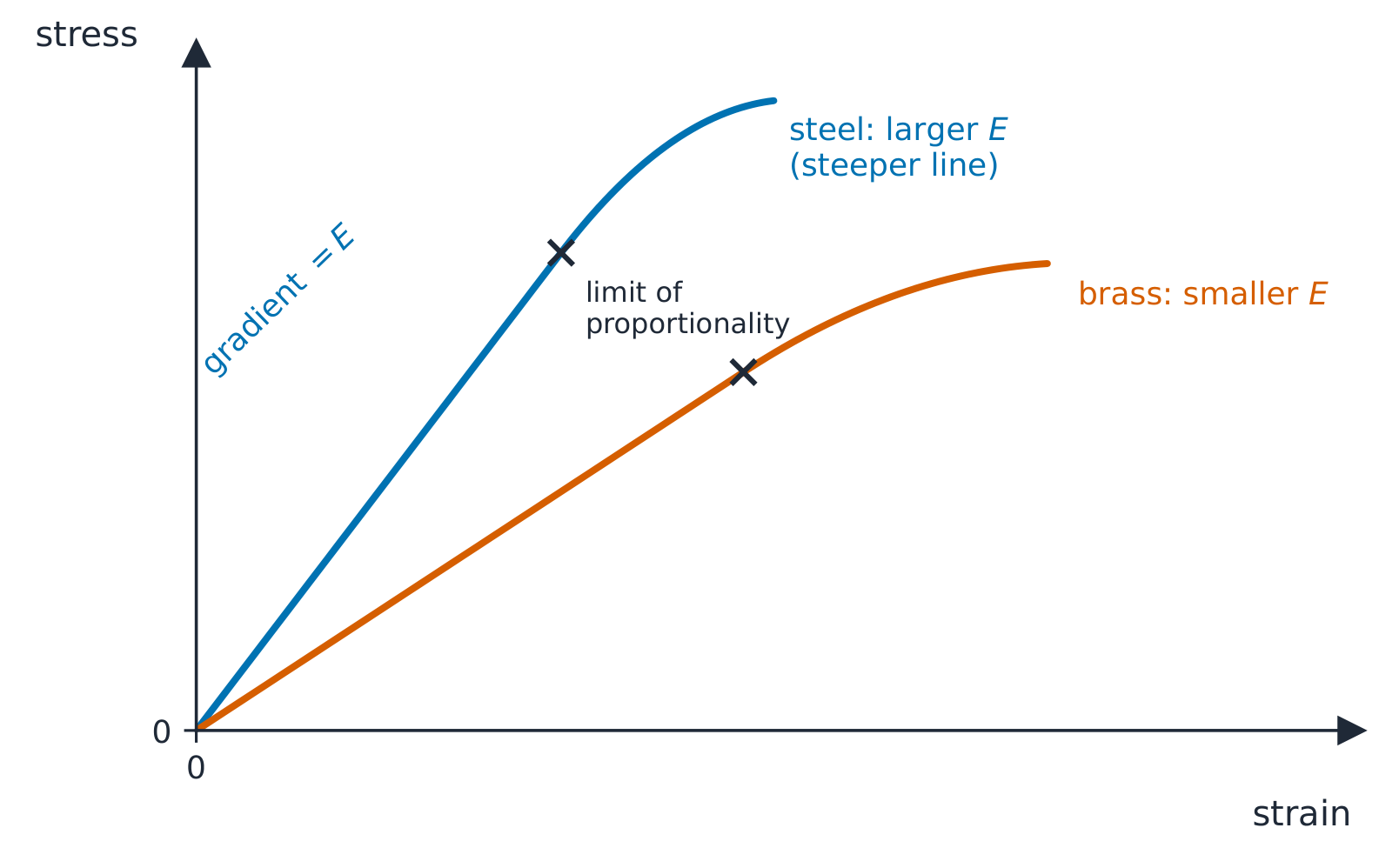


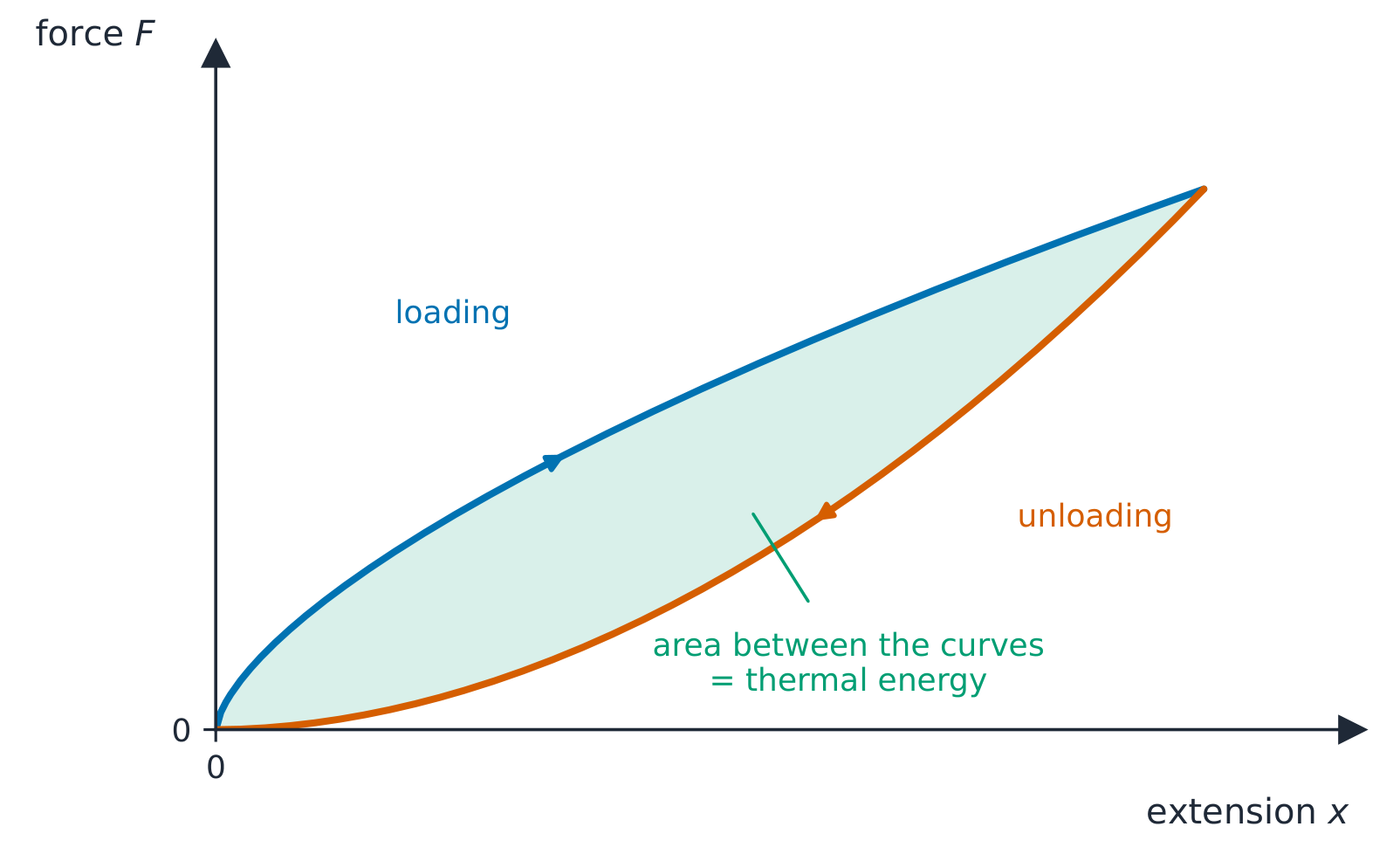
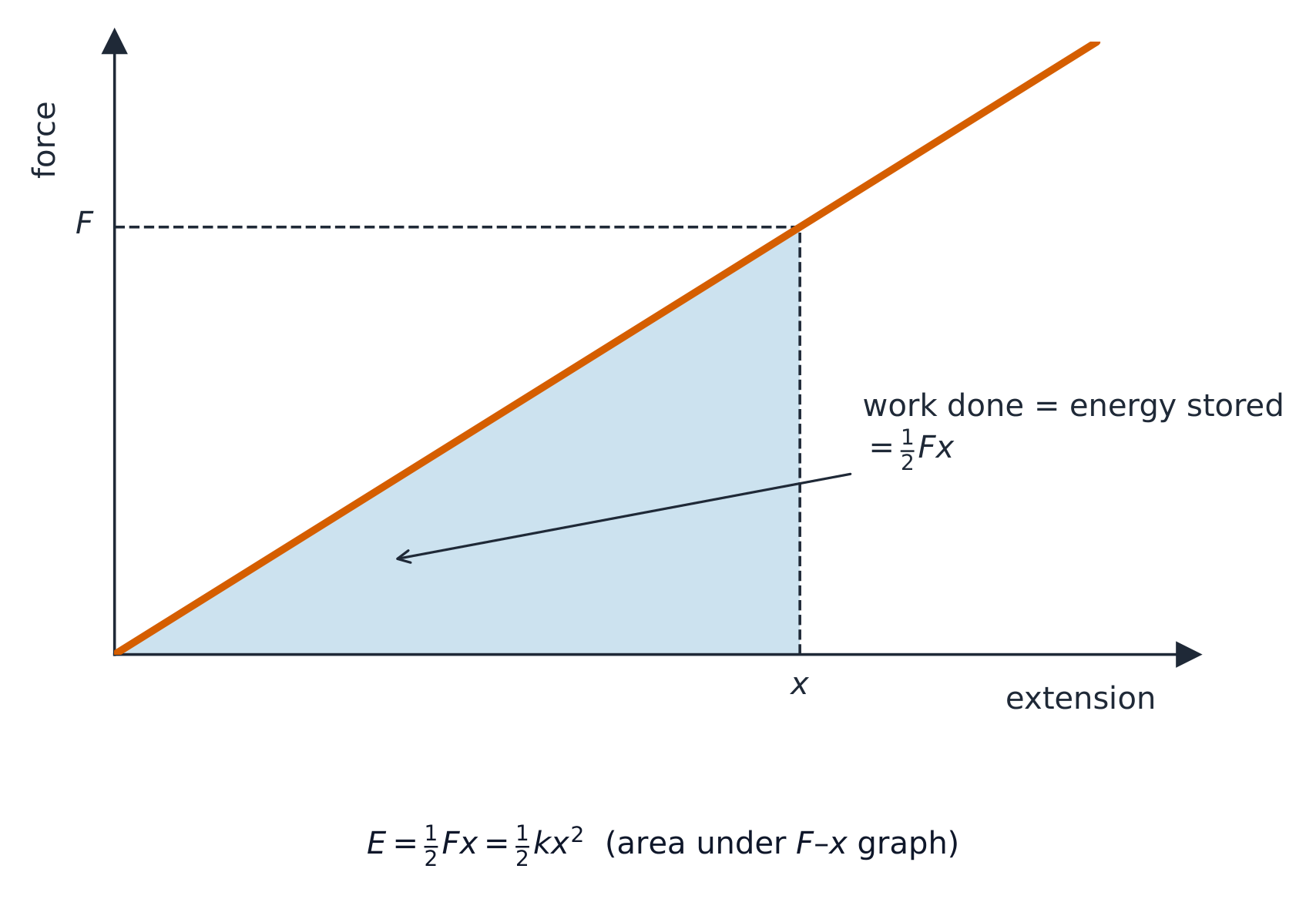

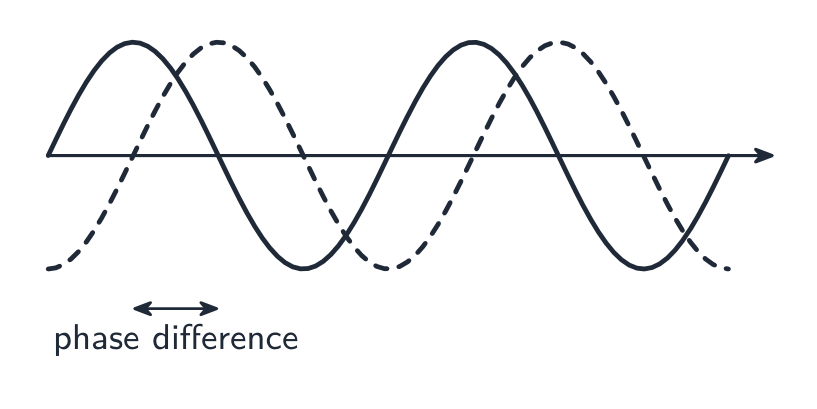
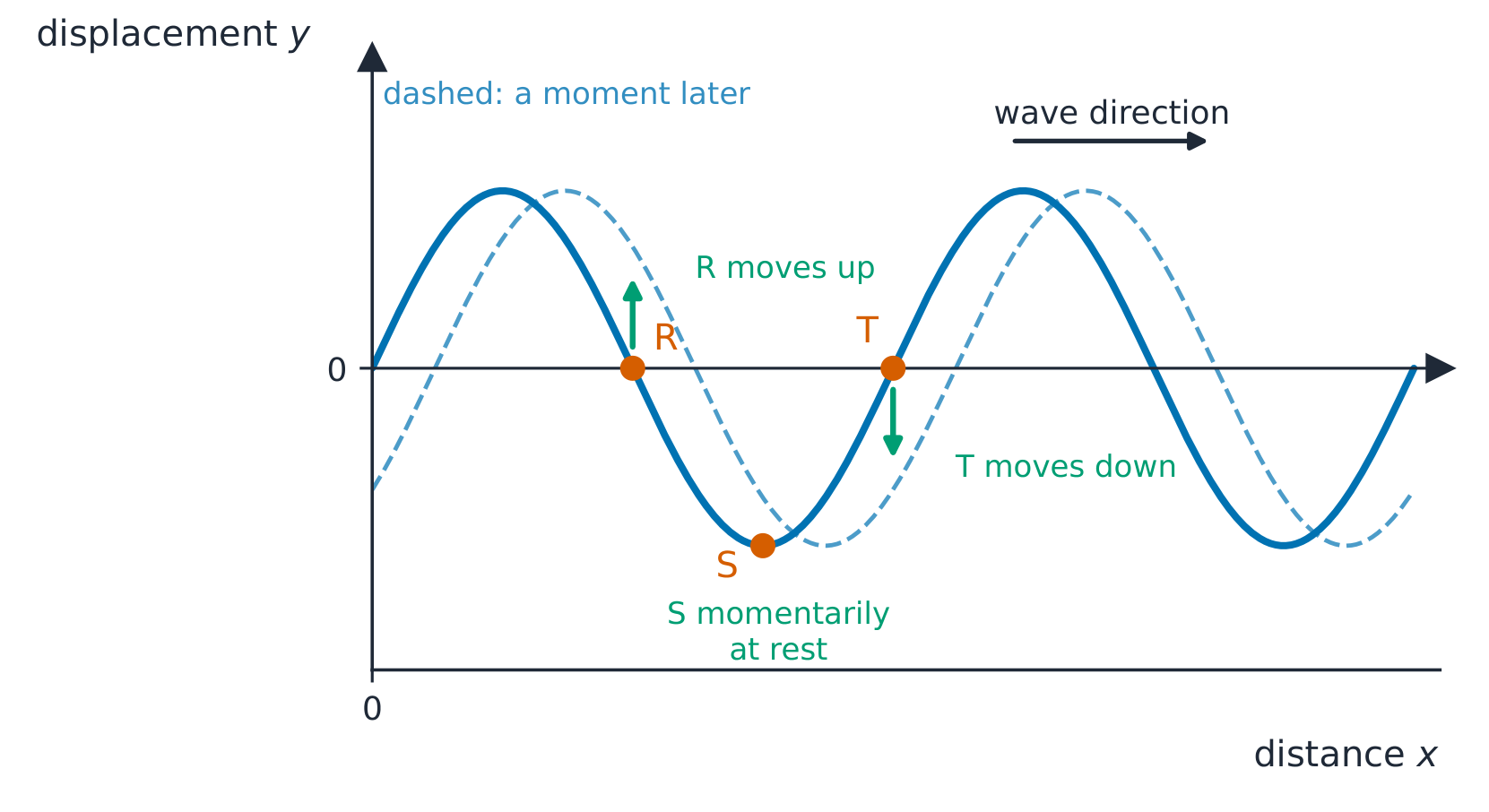
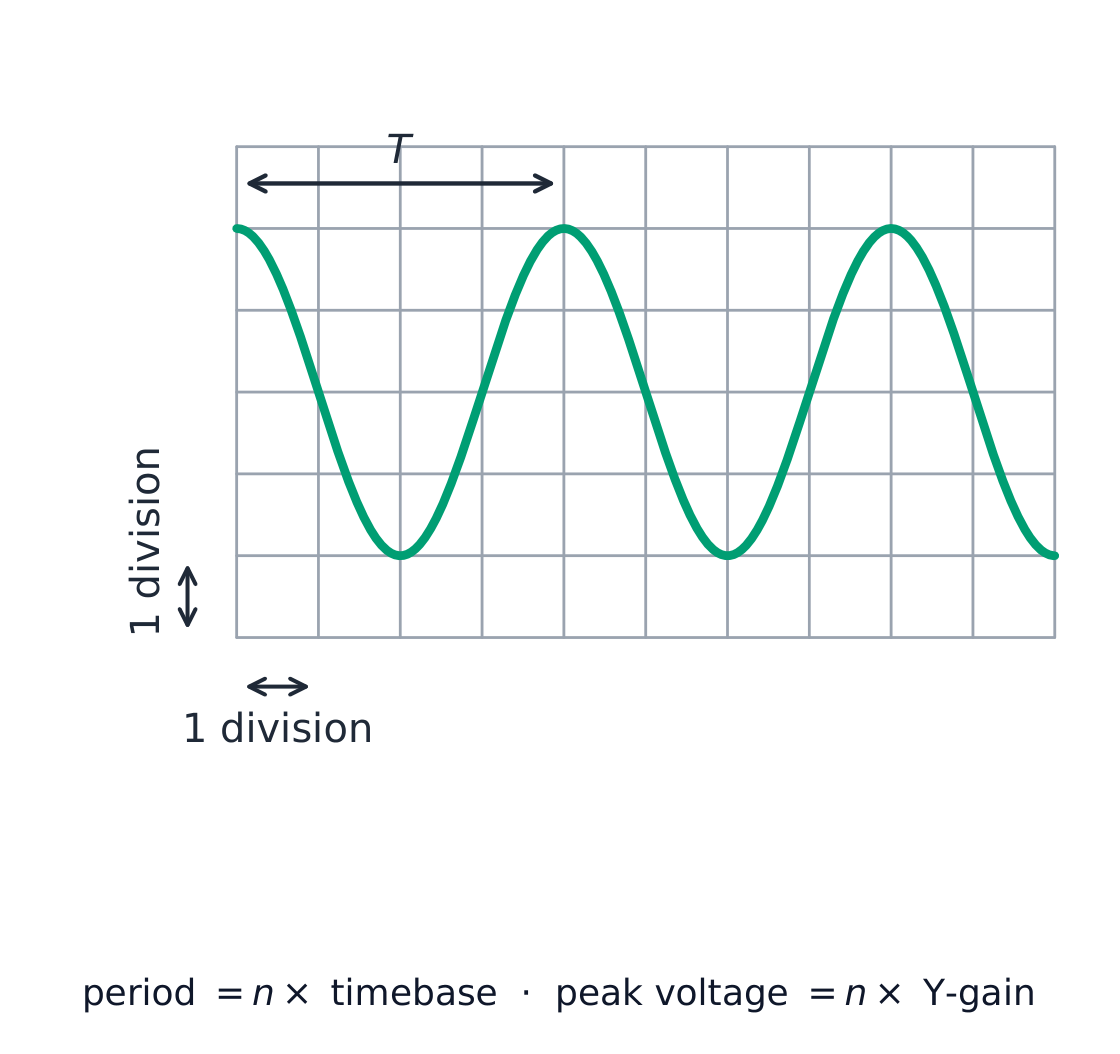


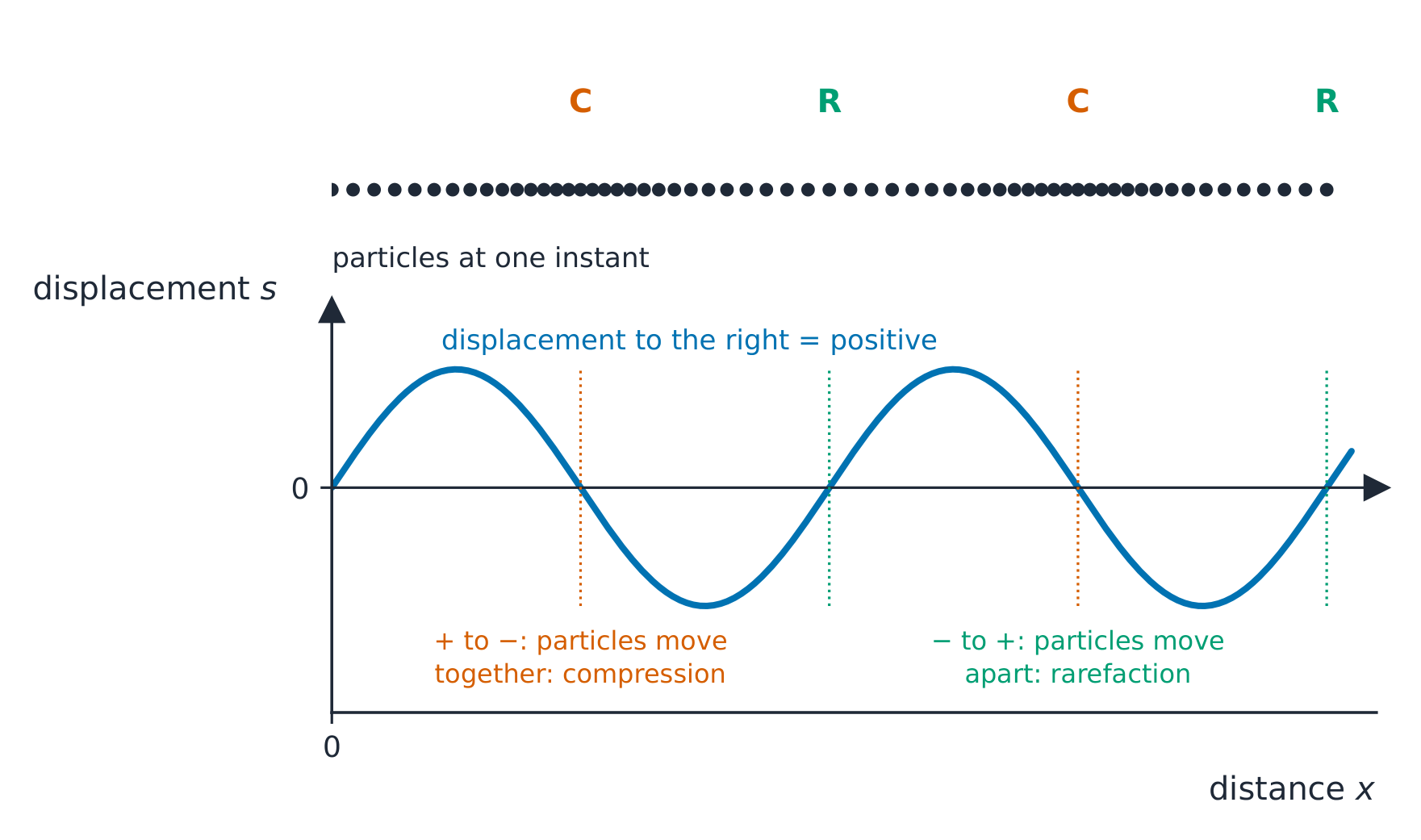


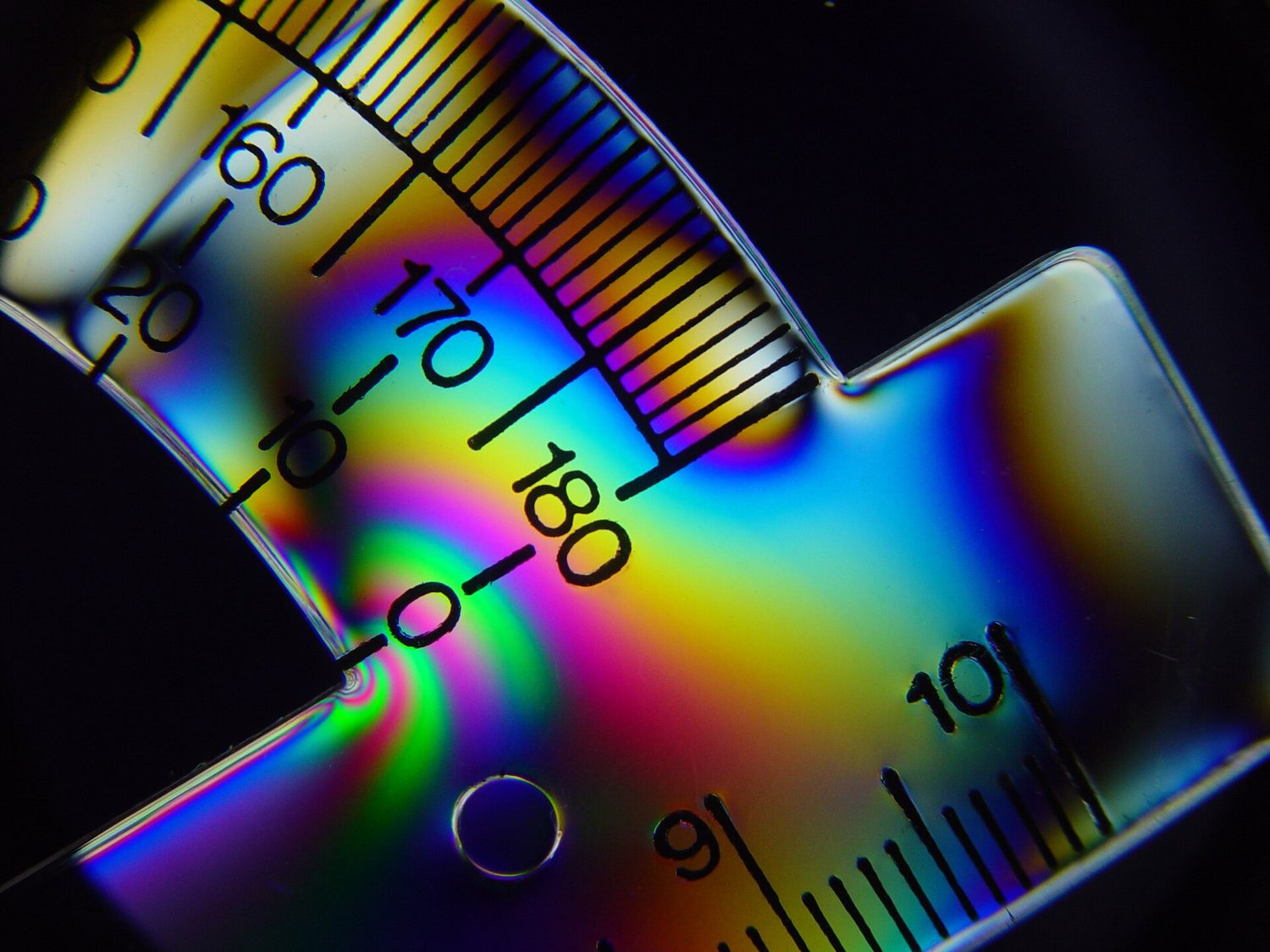
 *מסננים מצלבים (א) חוסמים את האור; מסננים מקבילים (ב) מאפשרים מעבר

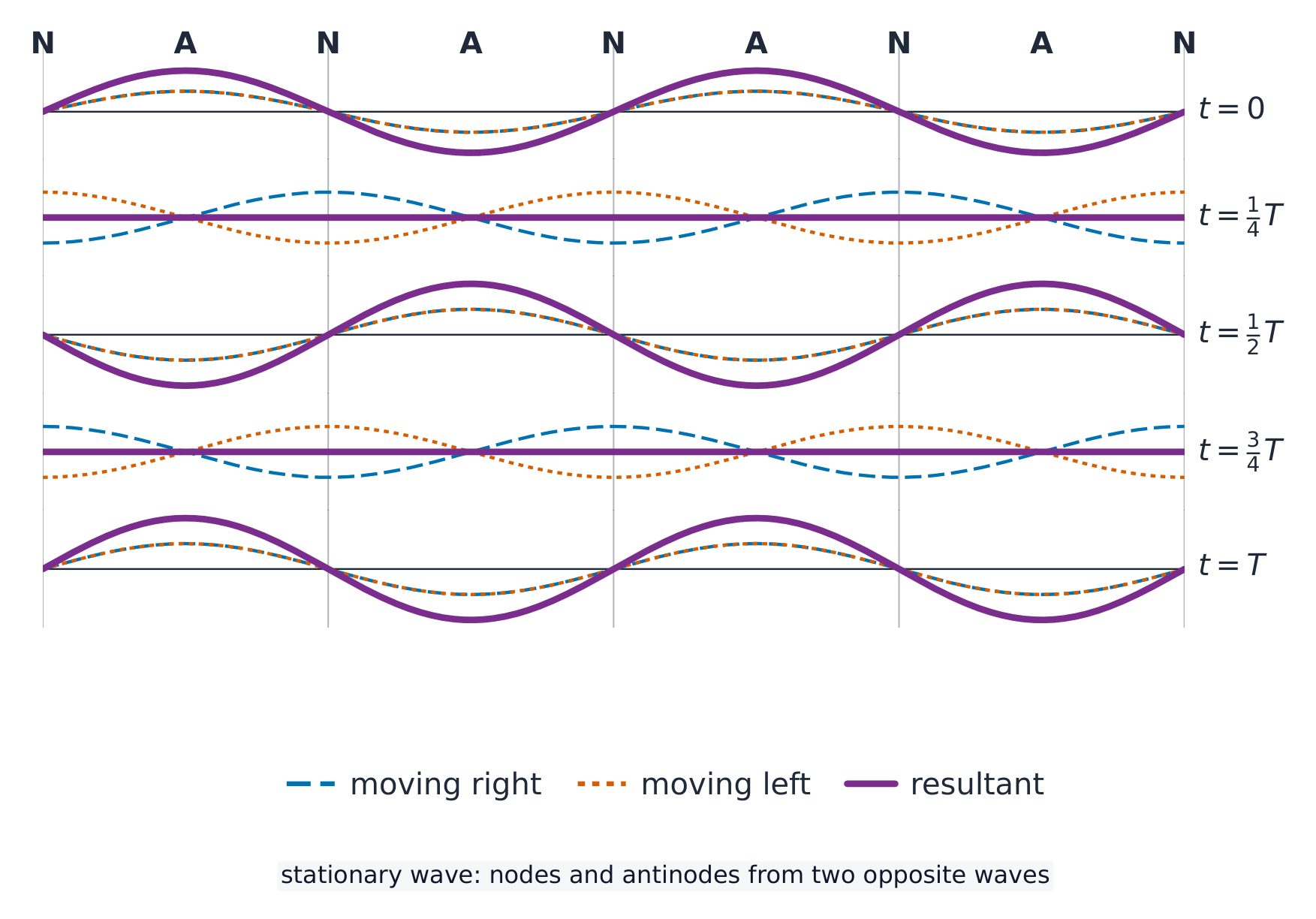
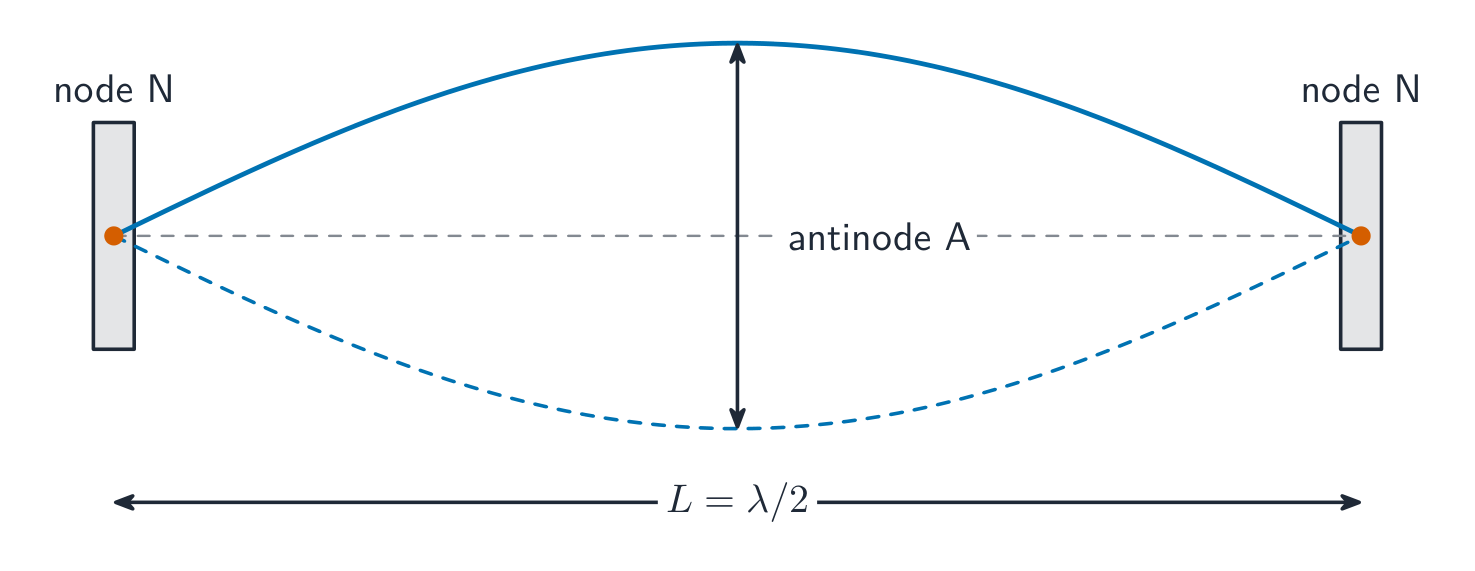
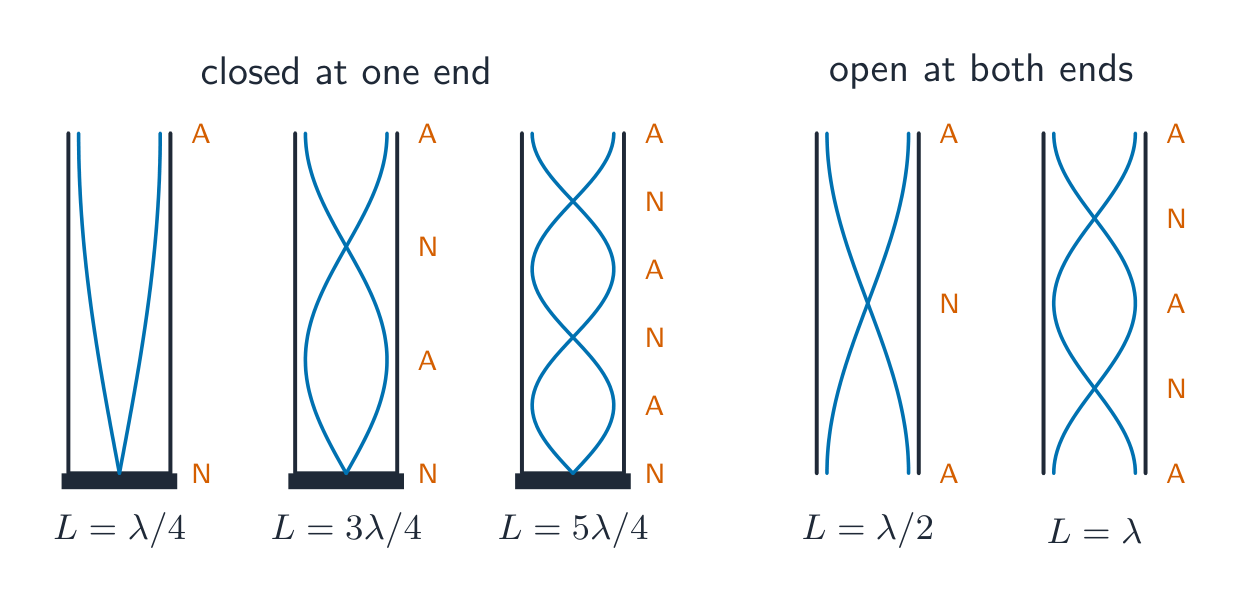
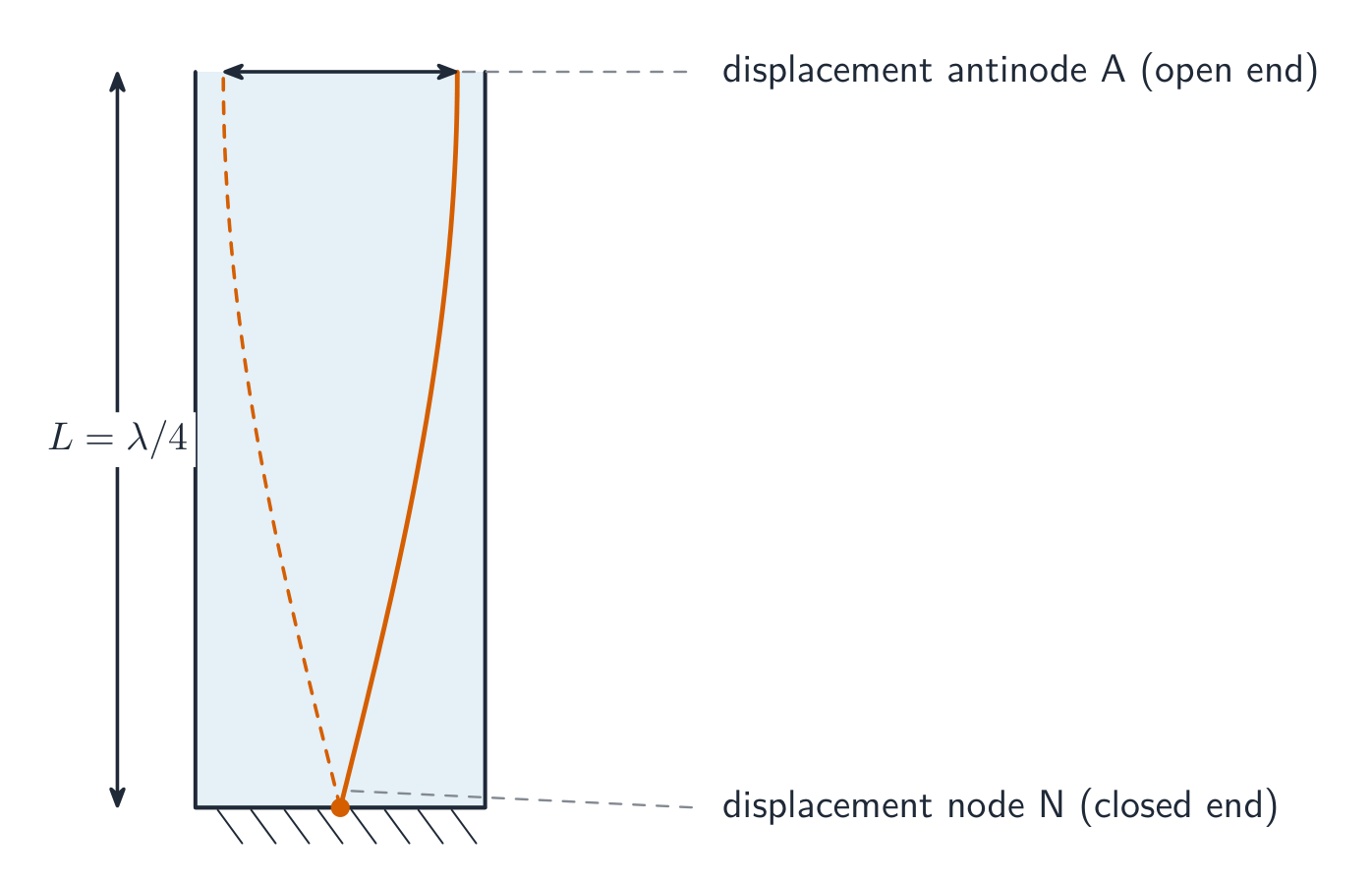
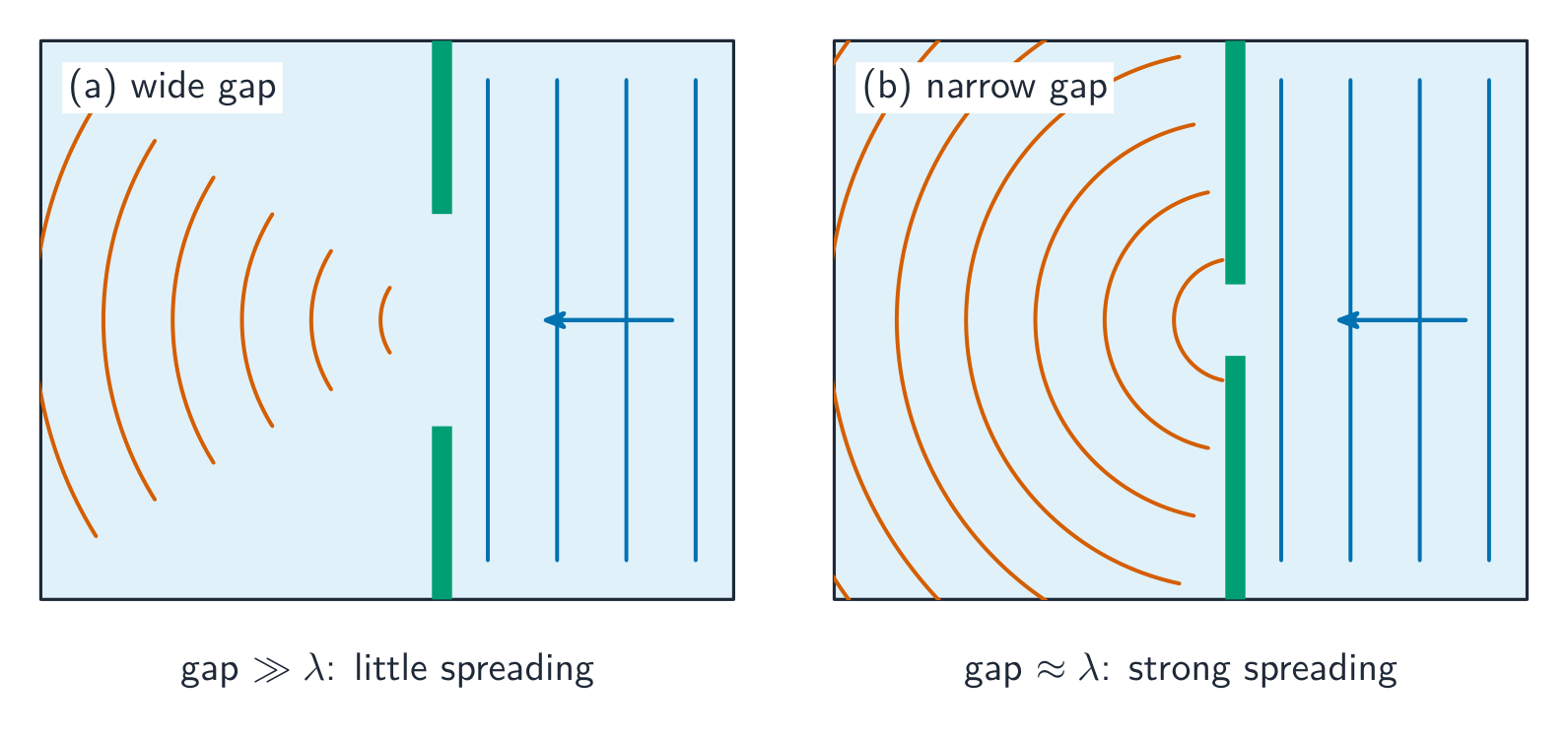

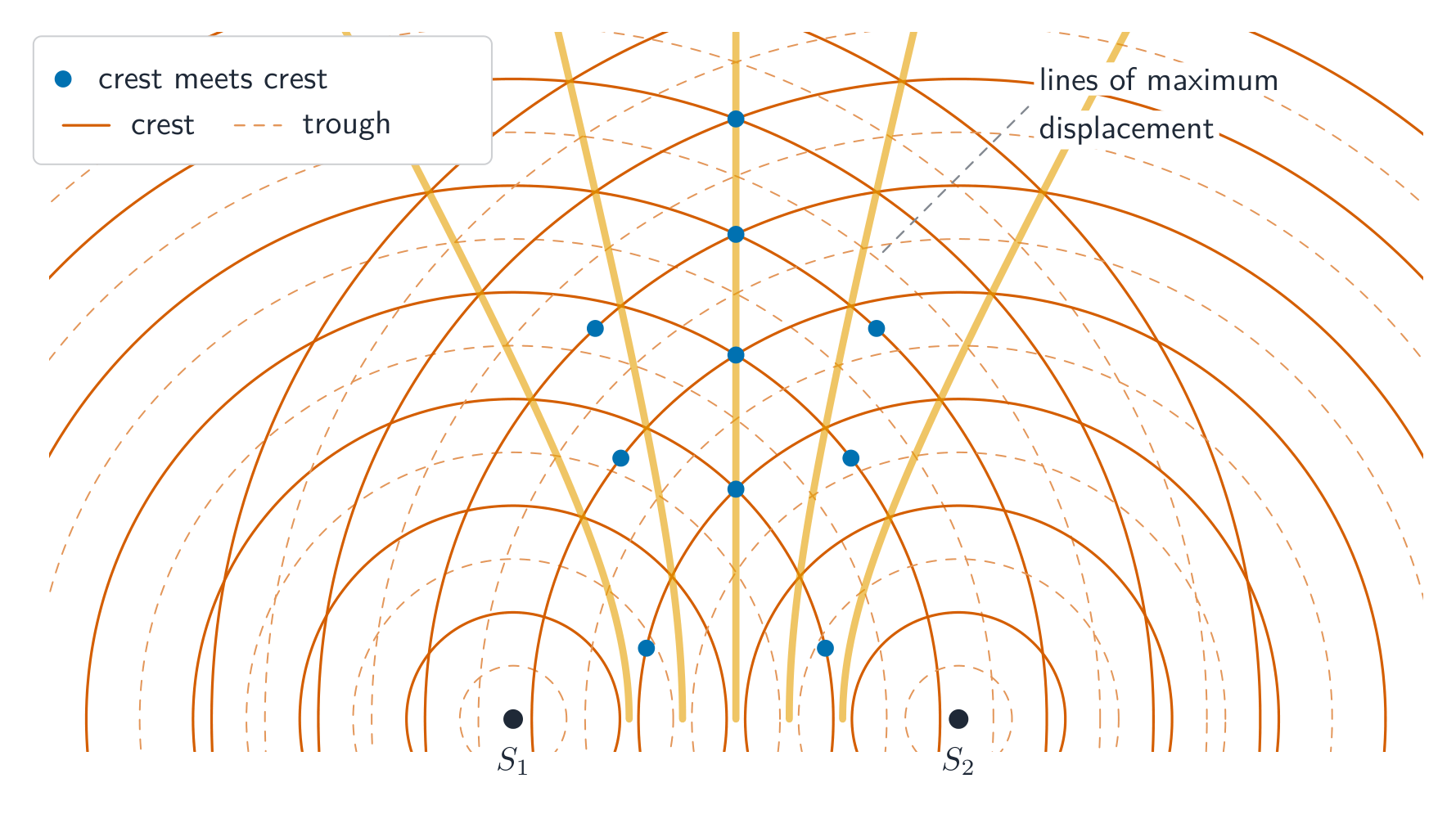

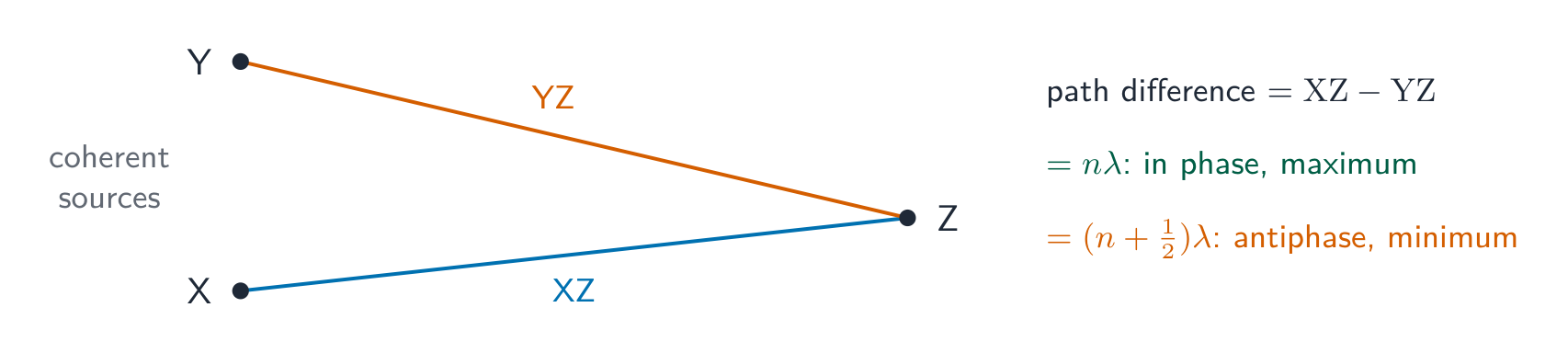

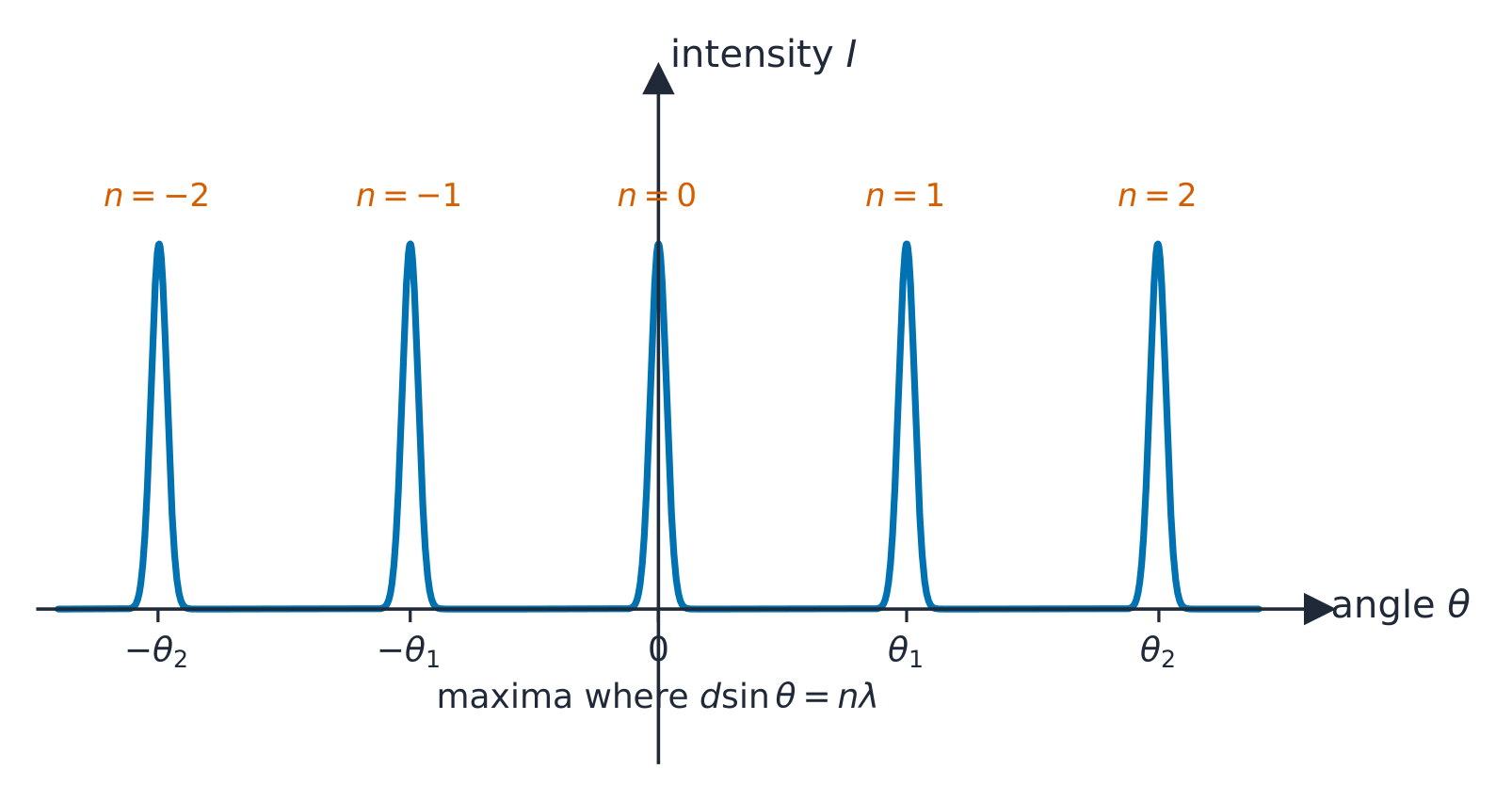
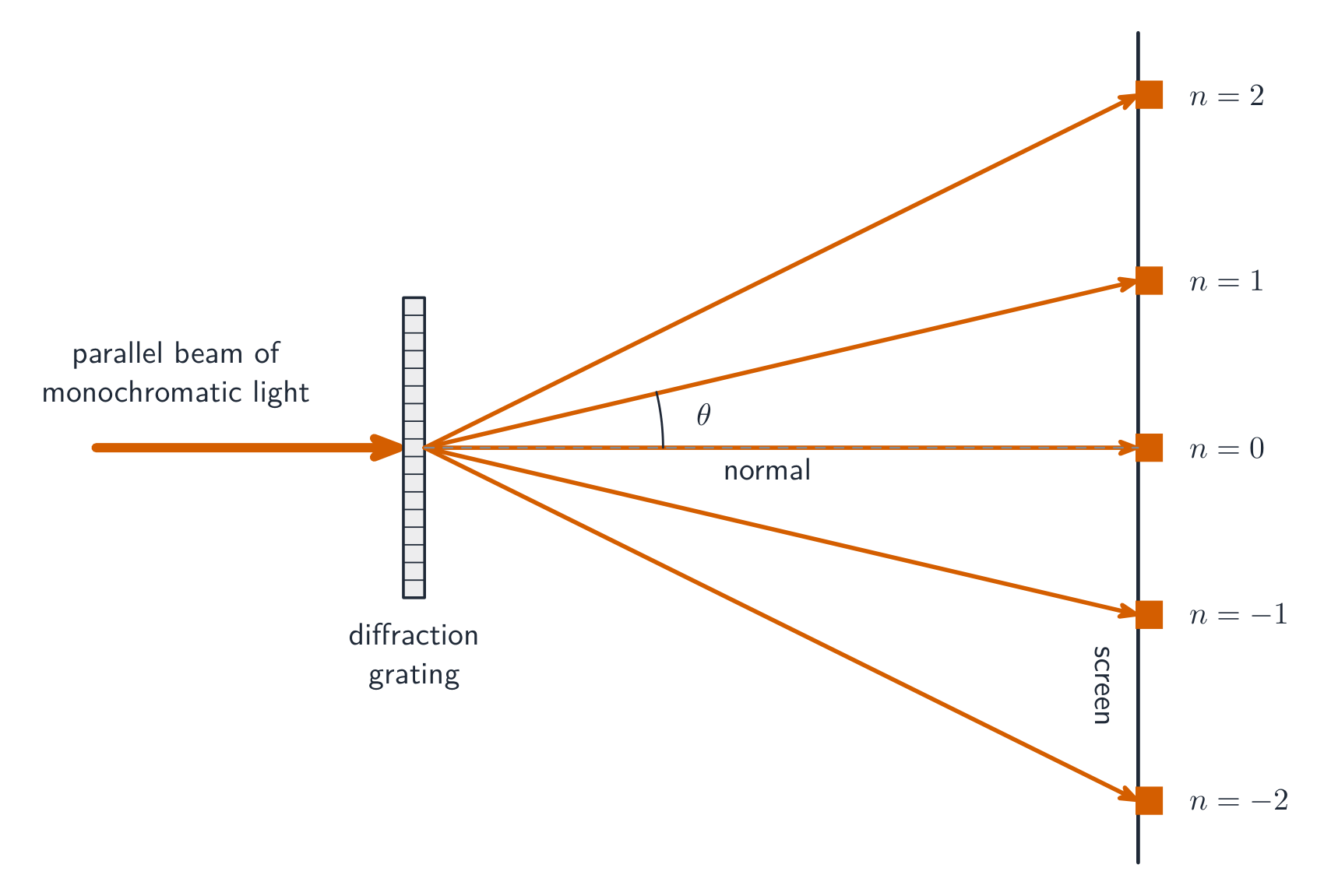

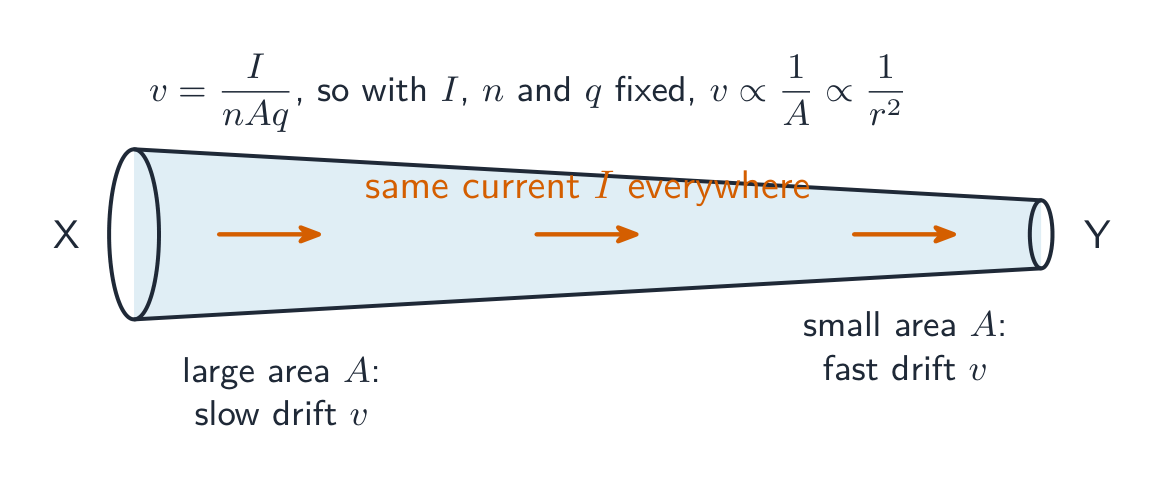

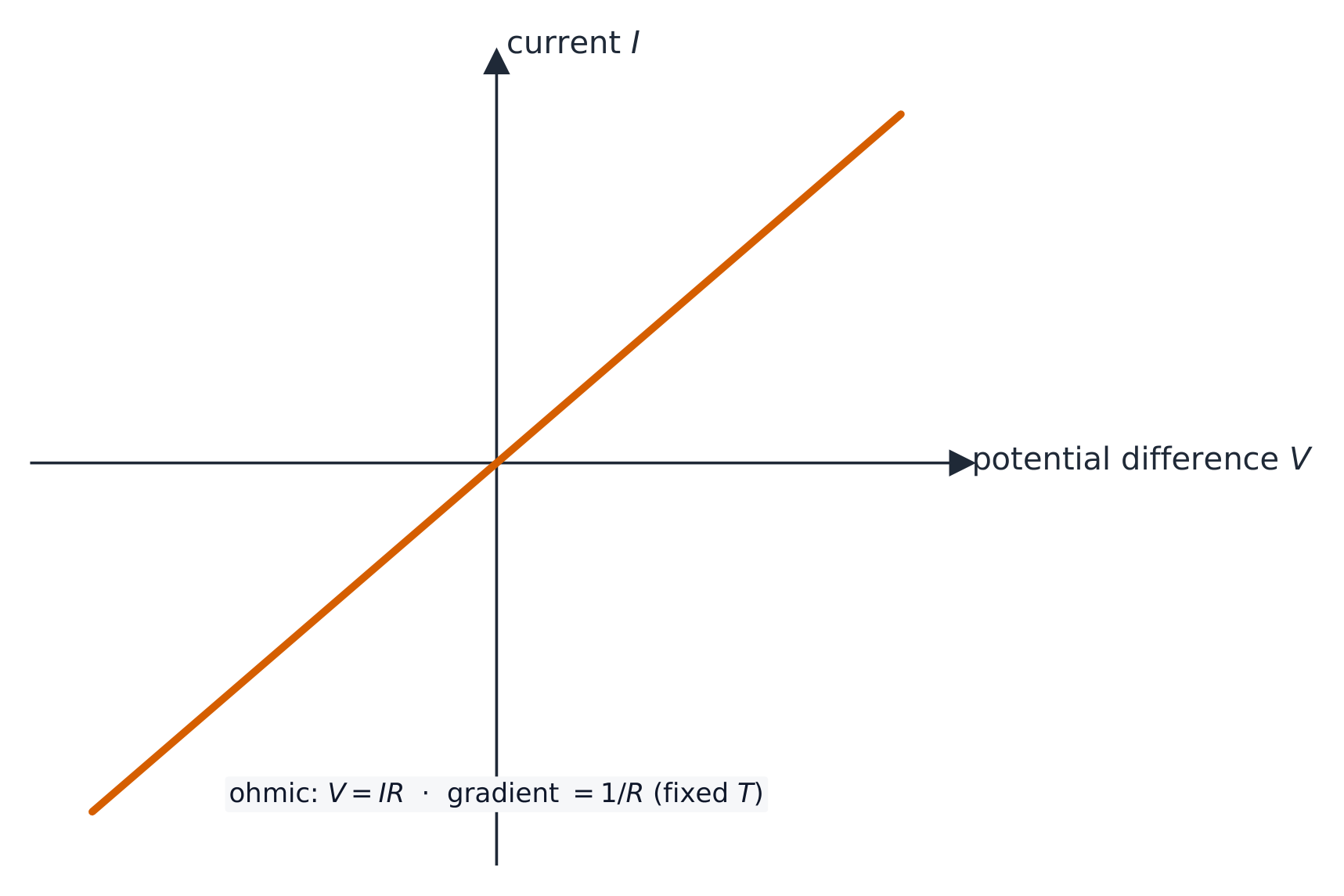
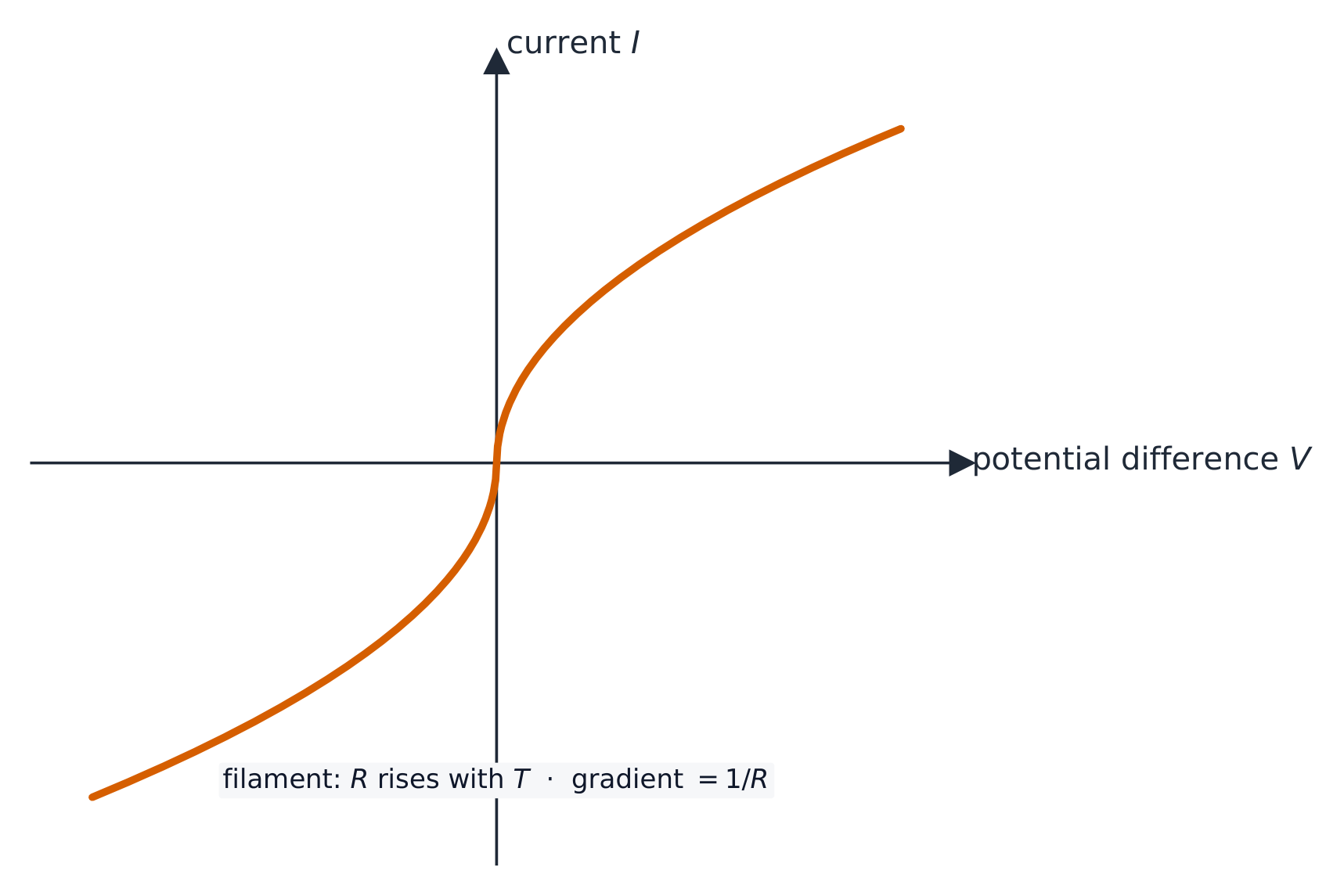


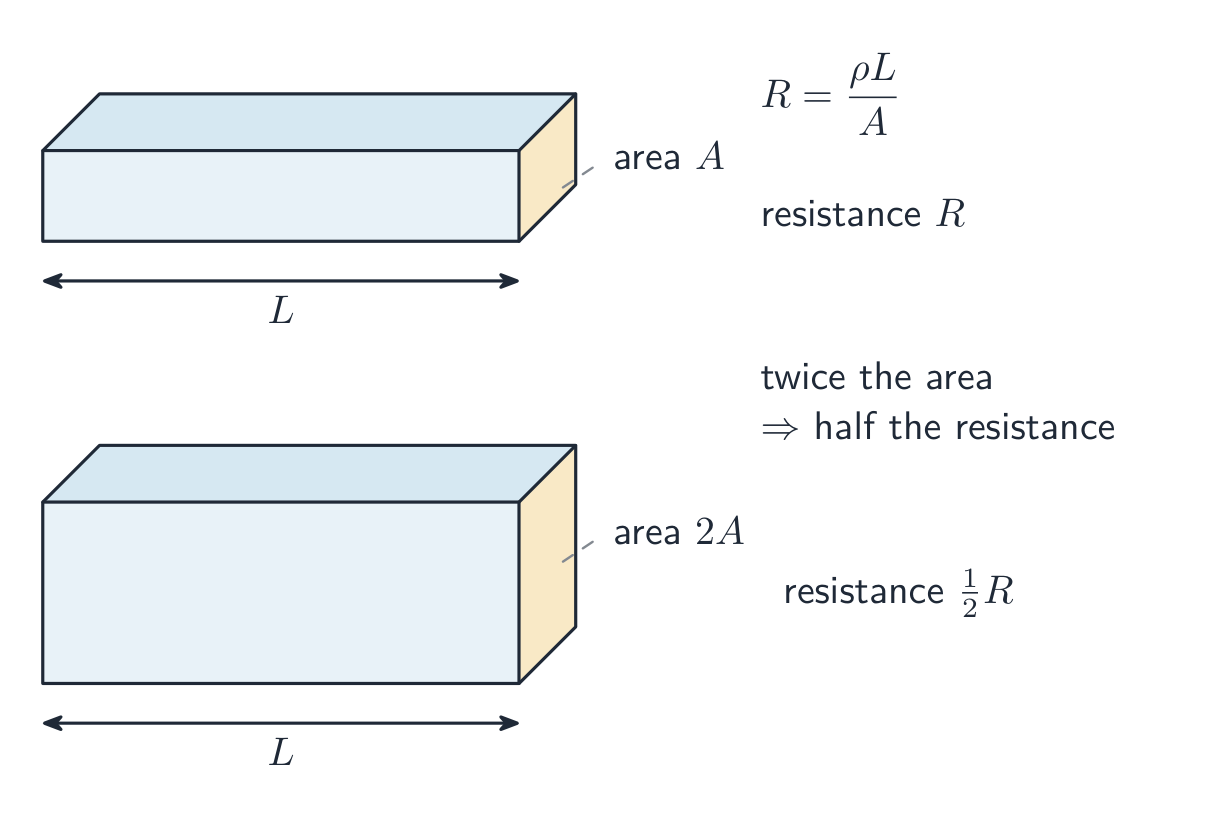
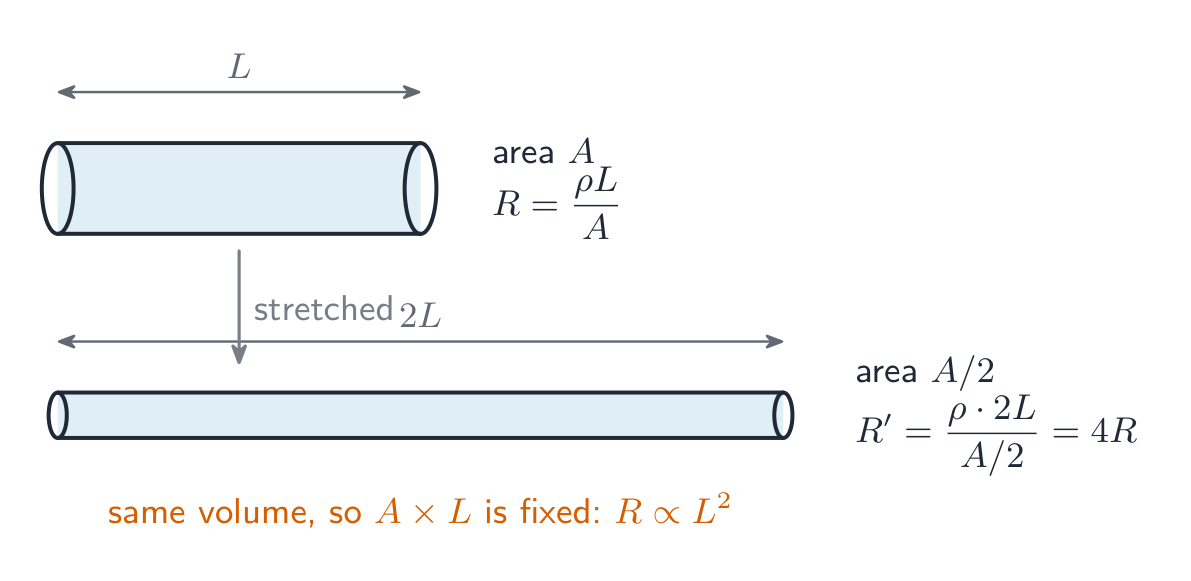
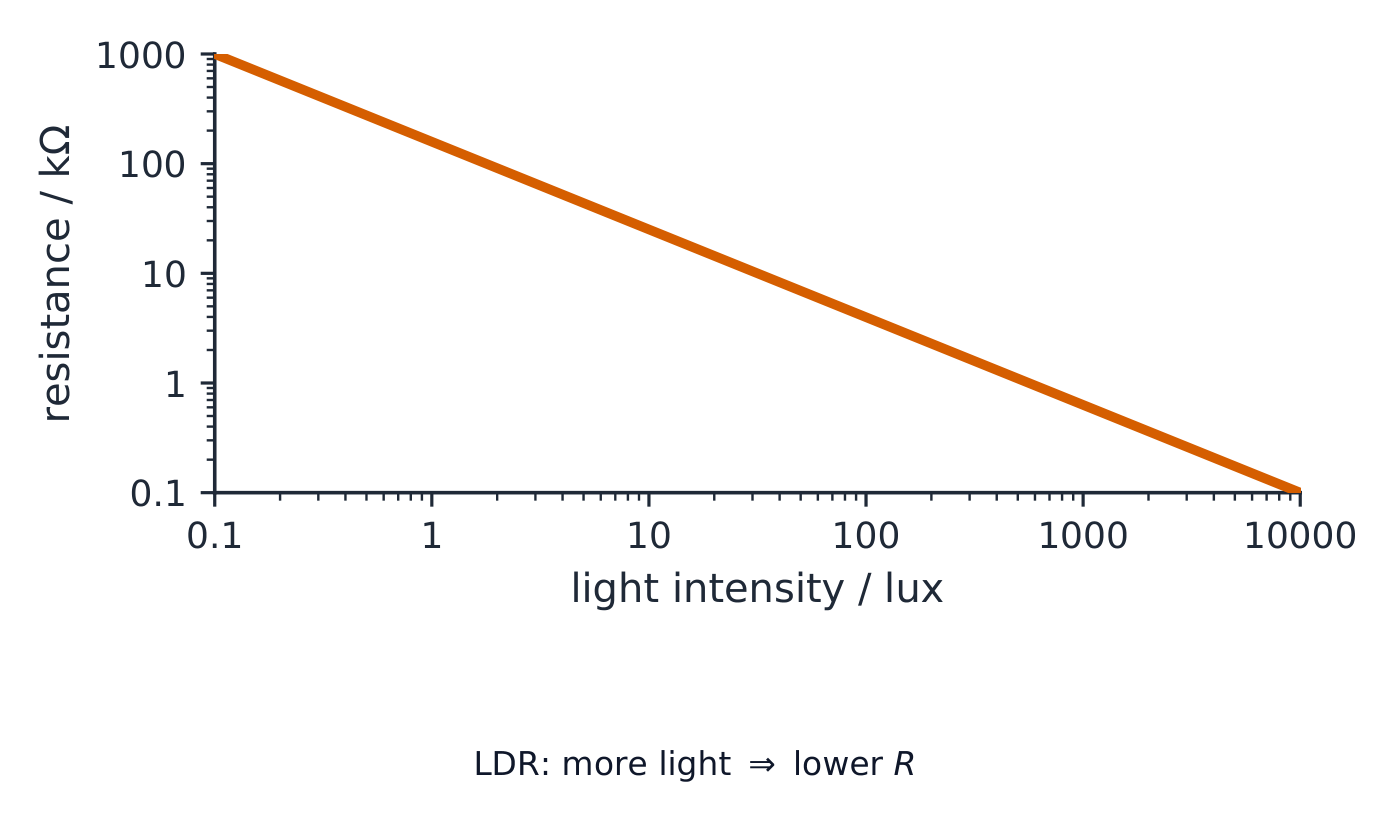


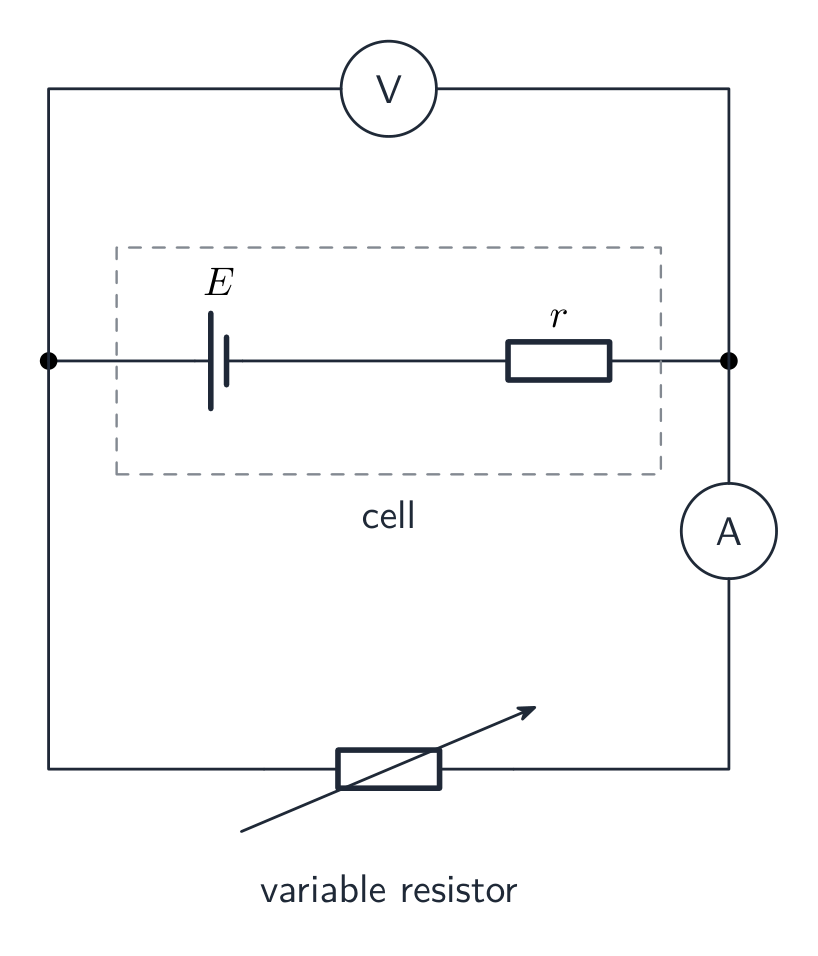
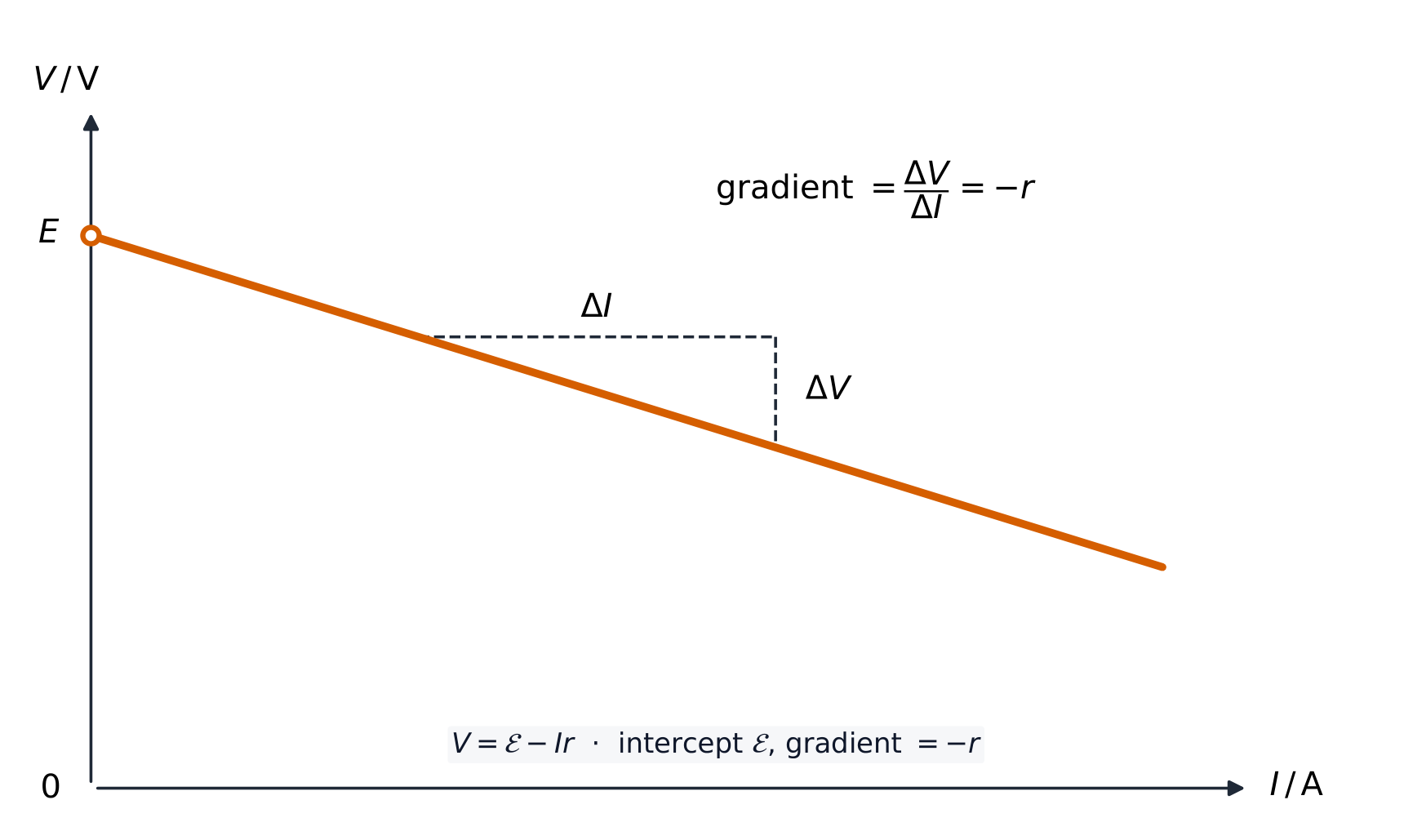
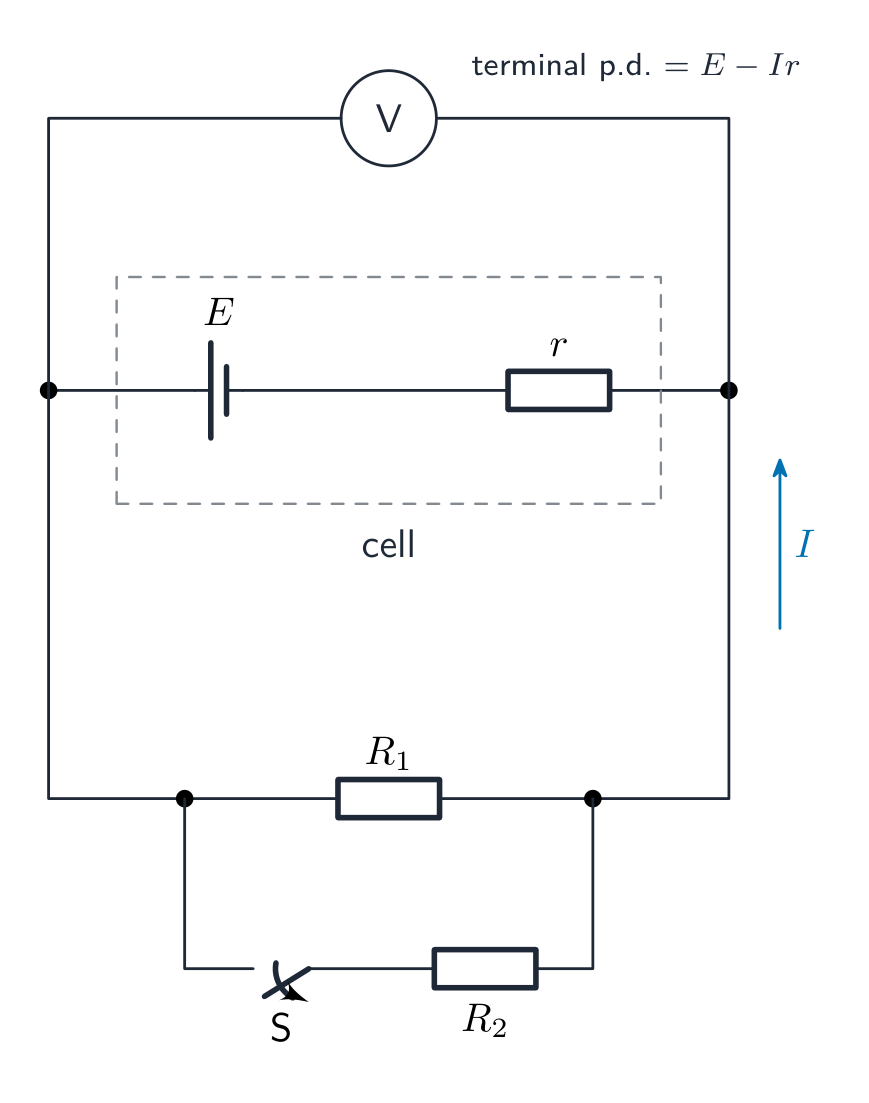

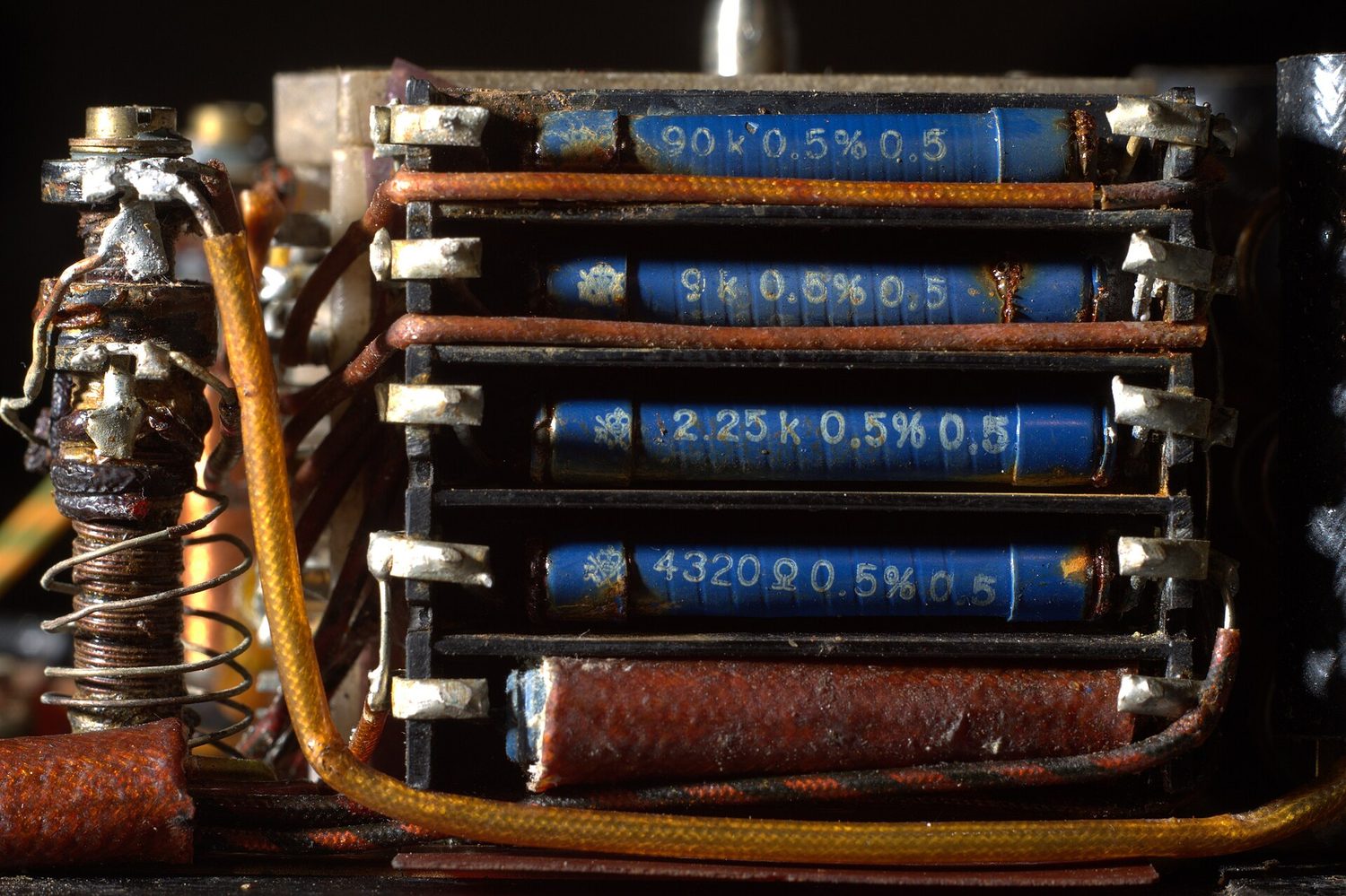
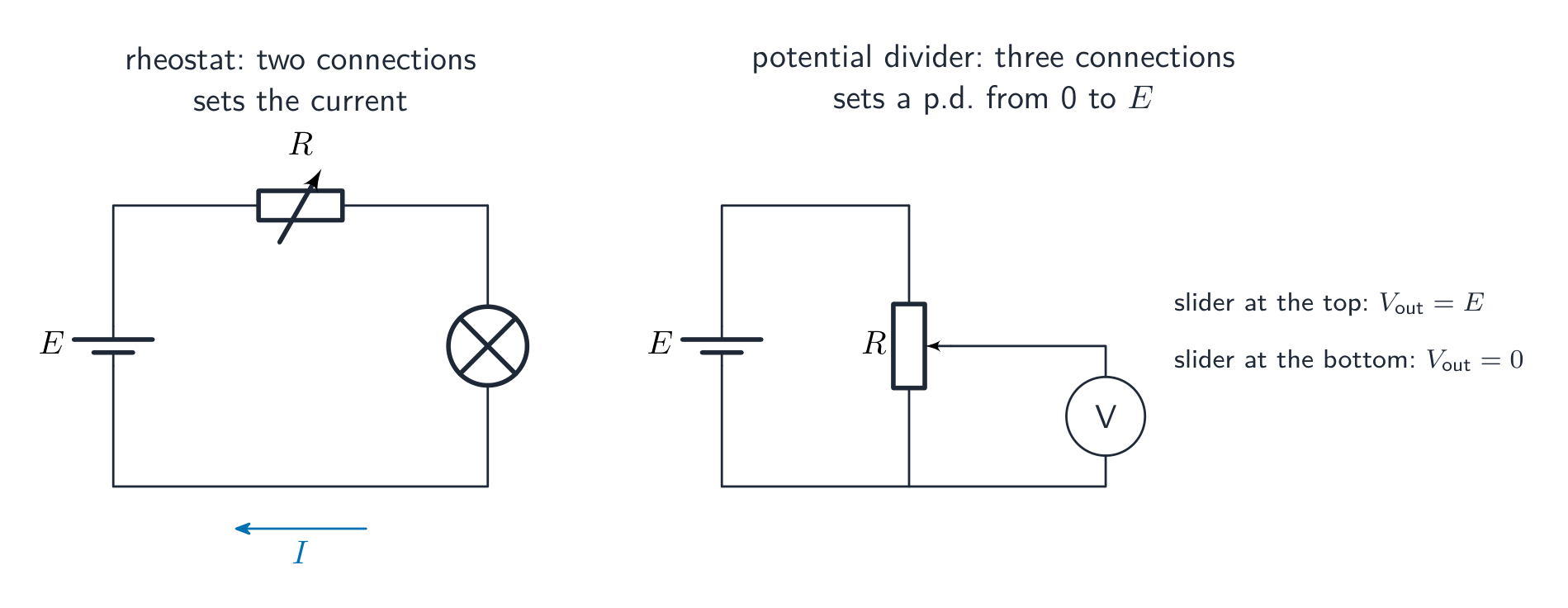
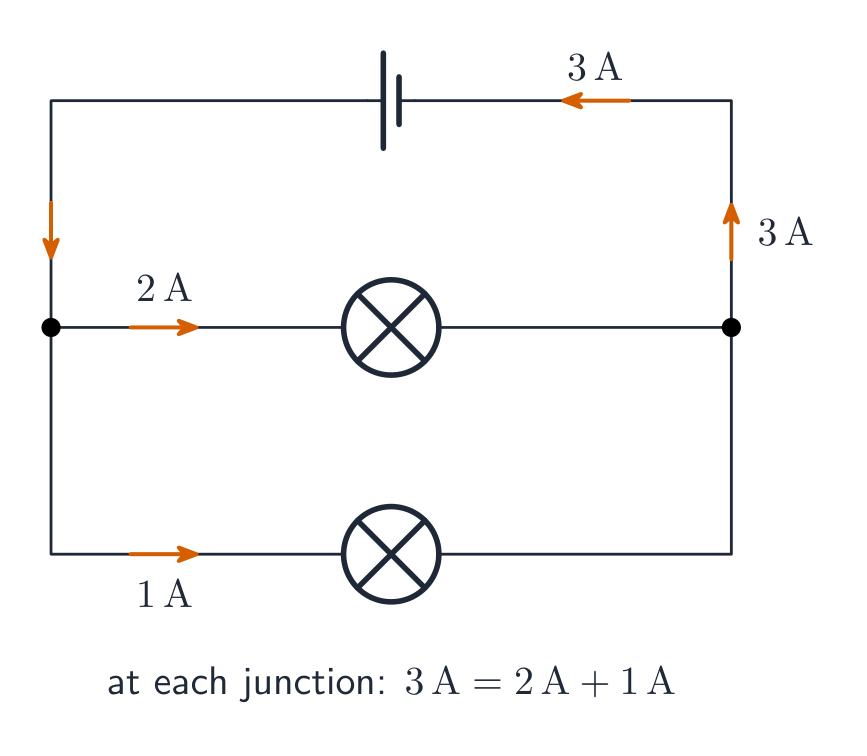

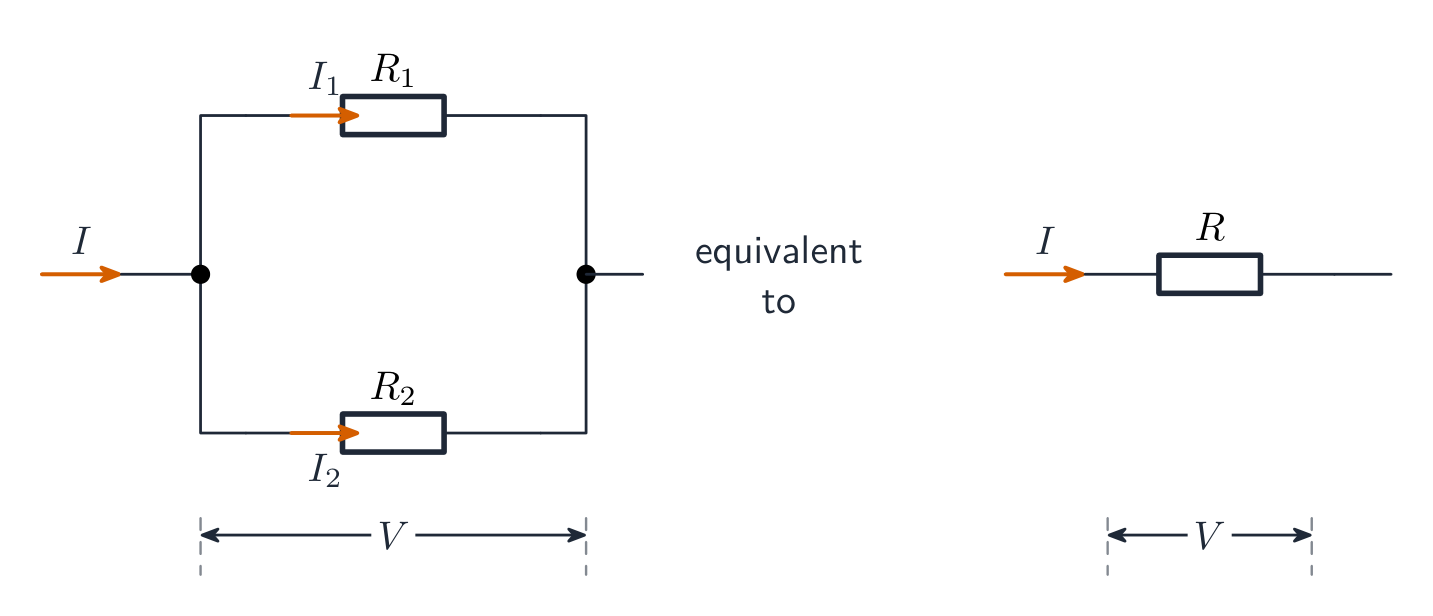
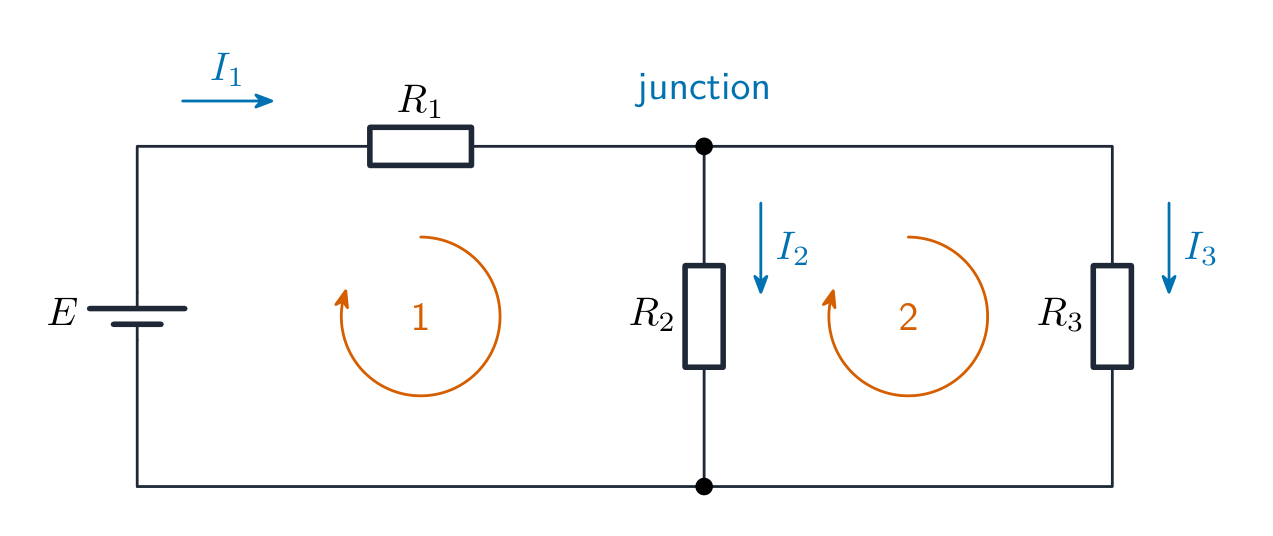
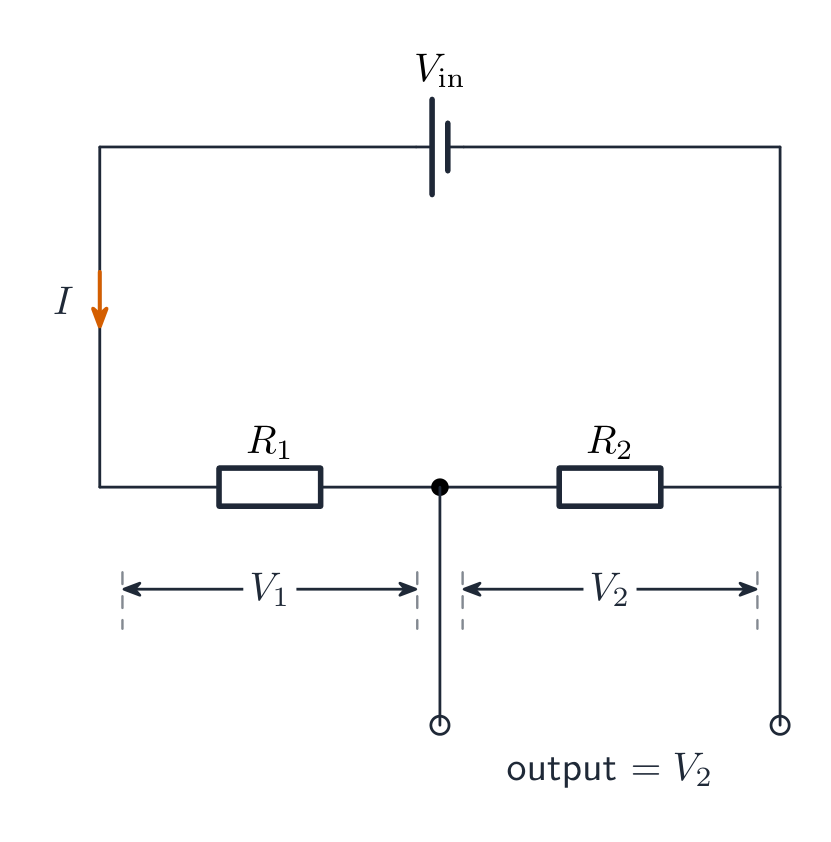

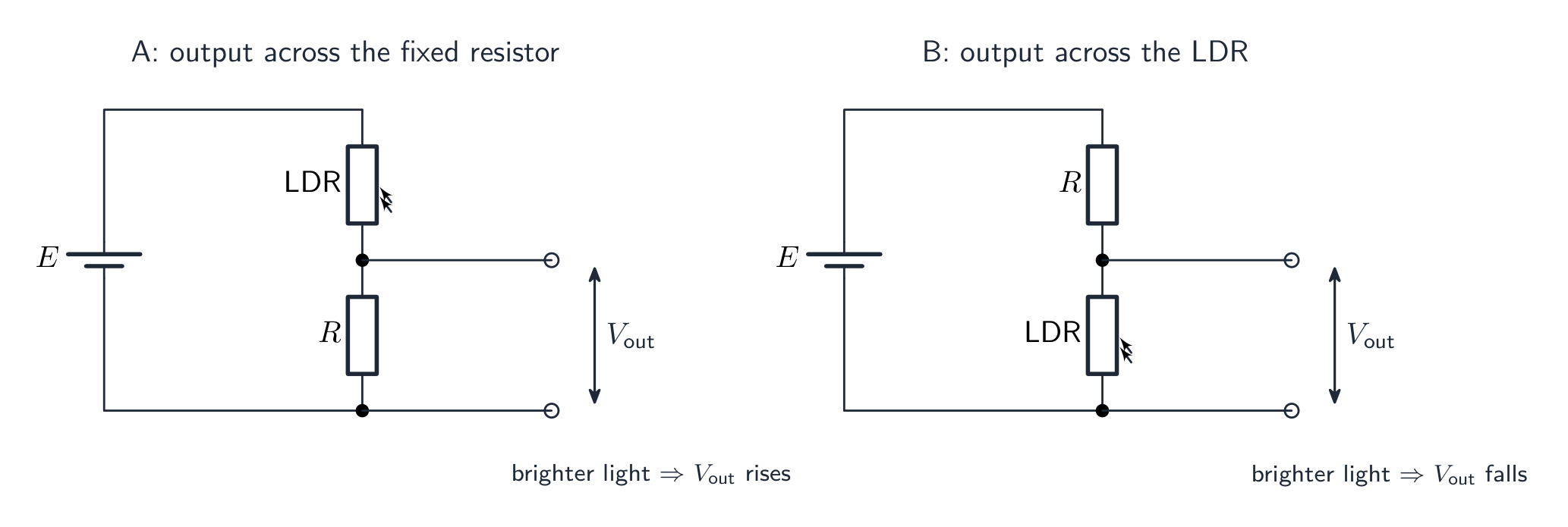

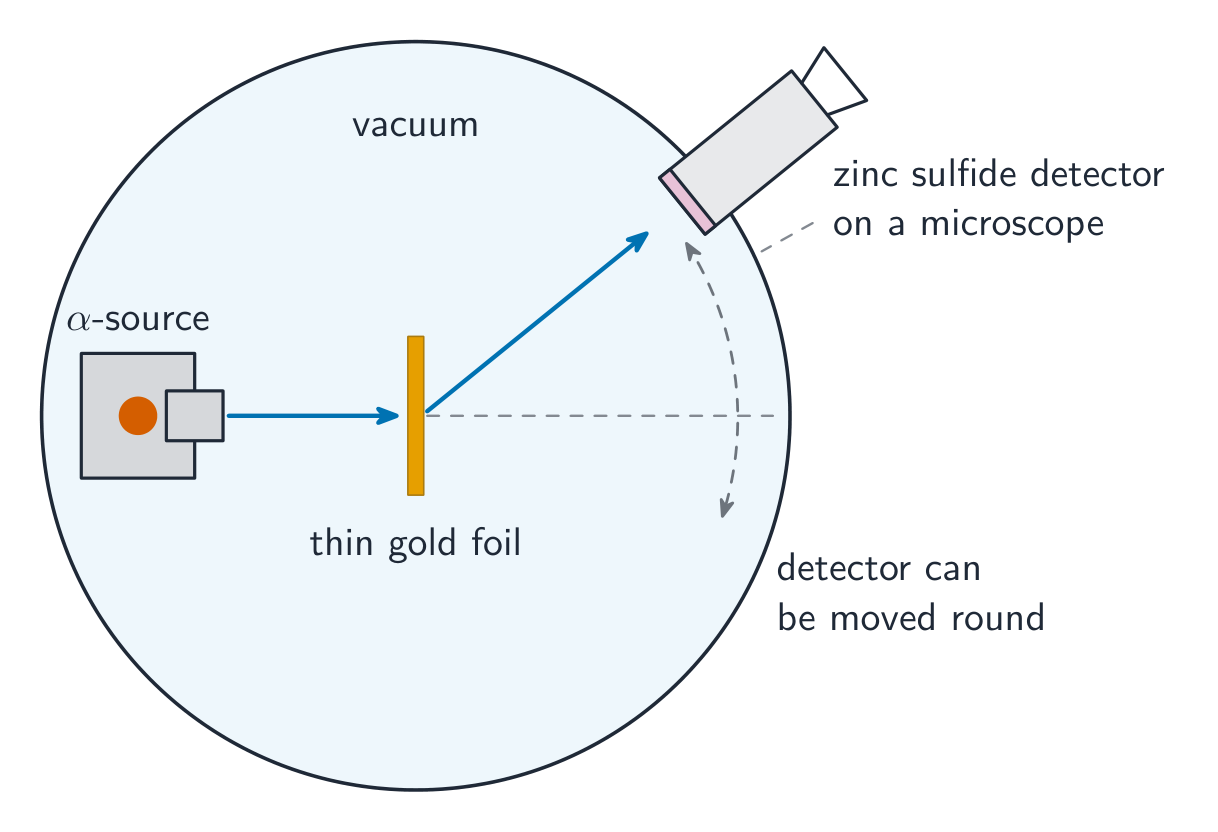


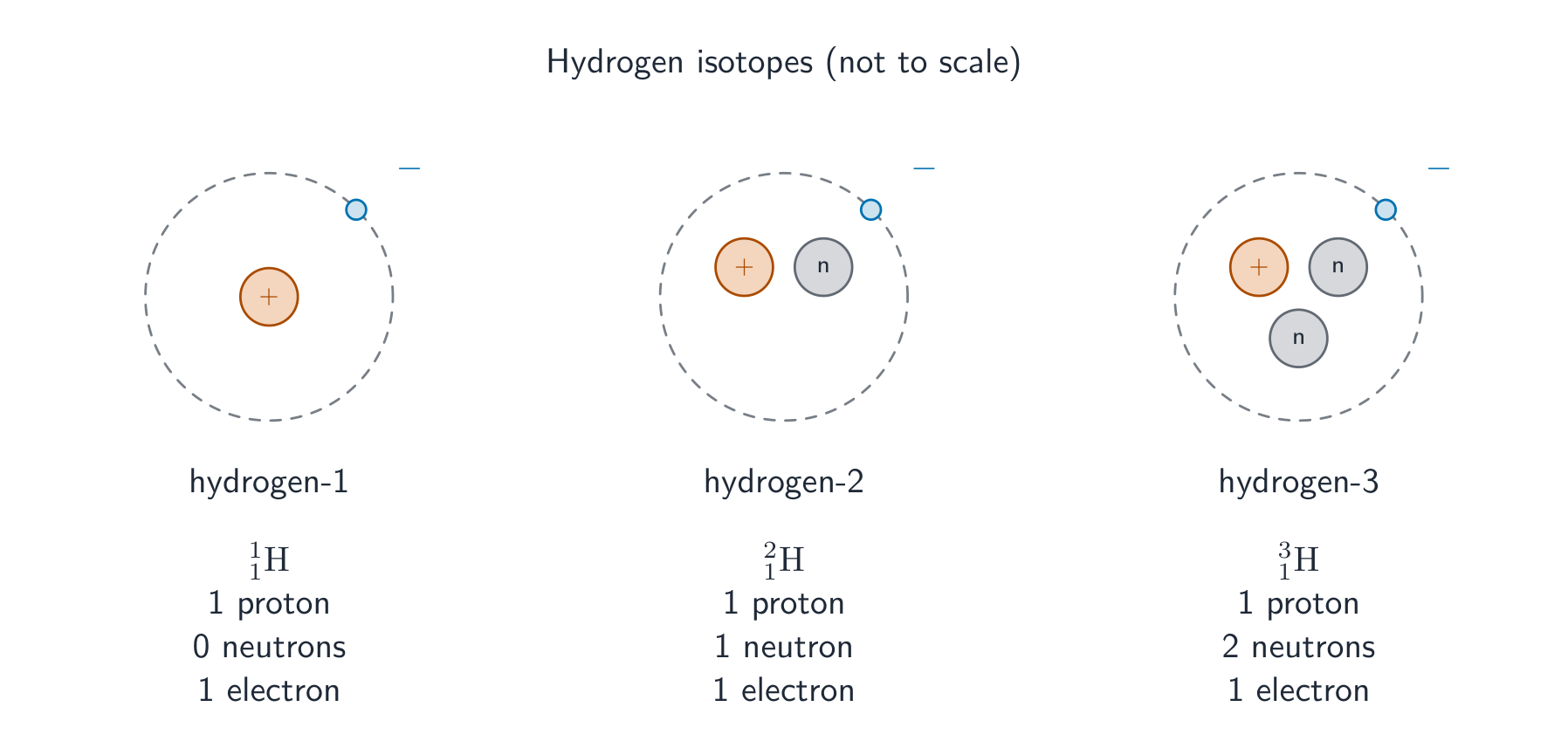
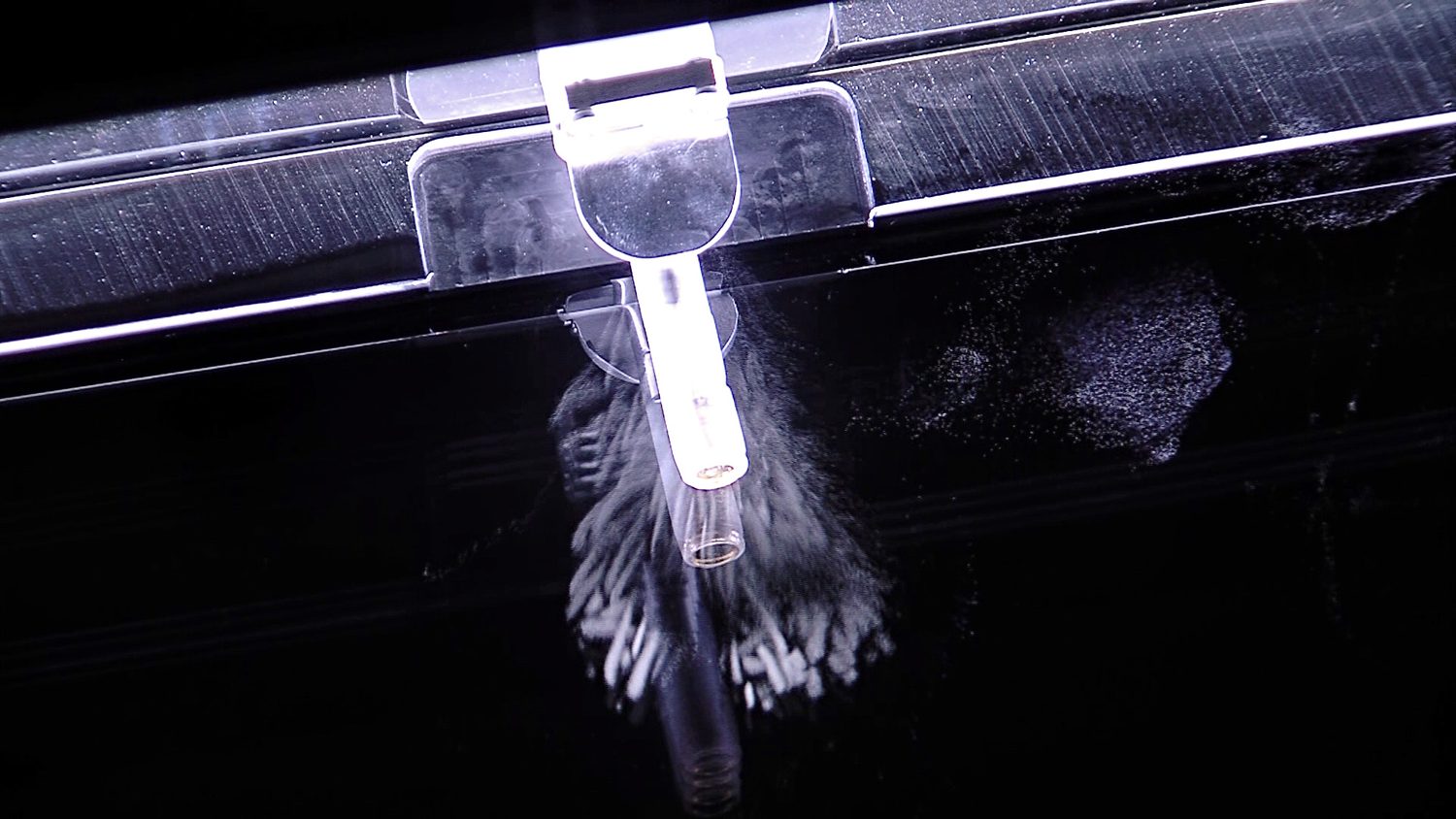
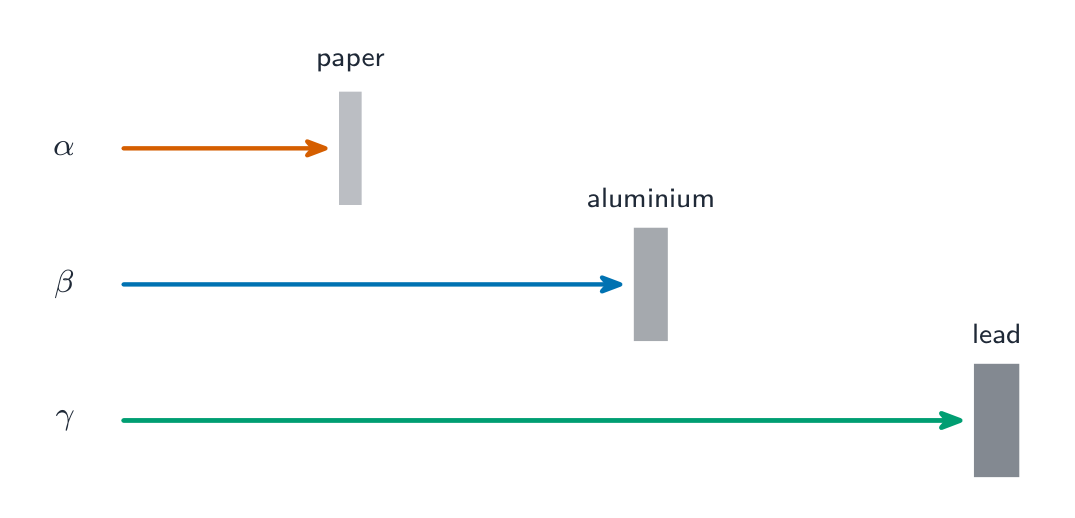
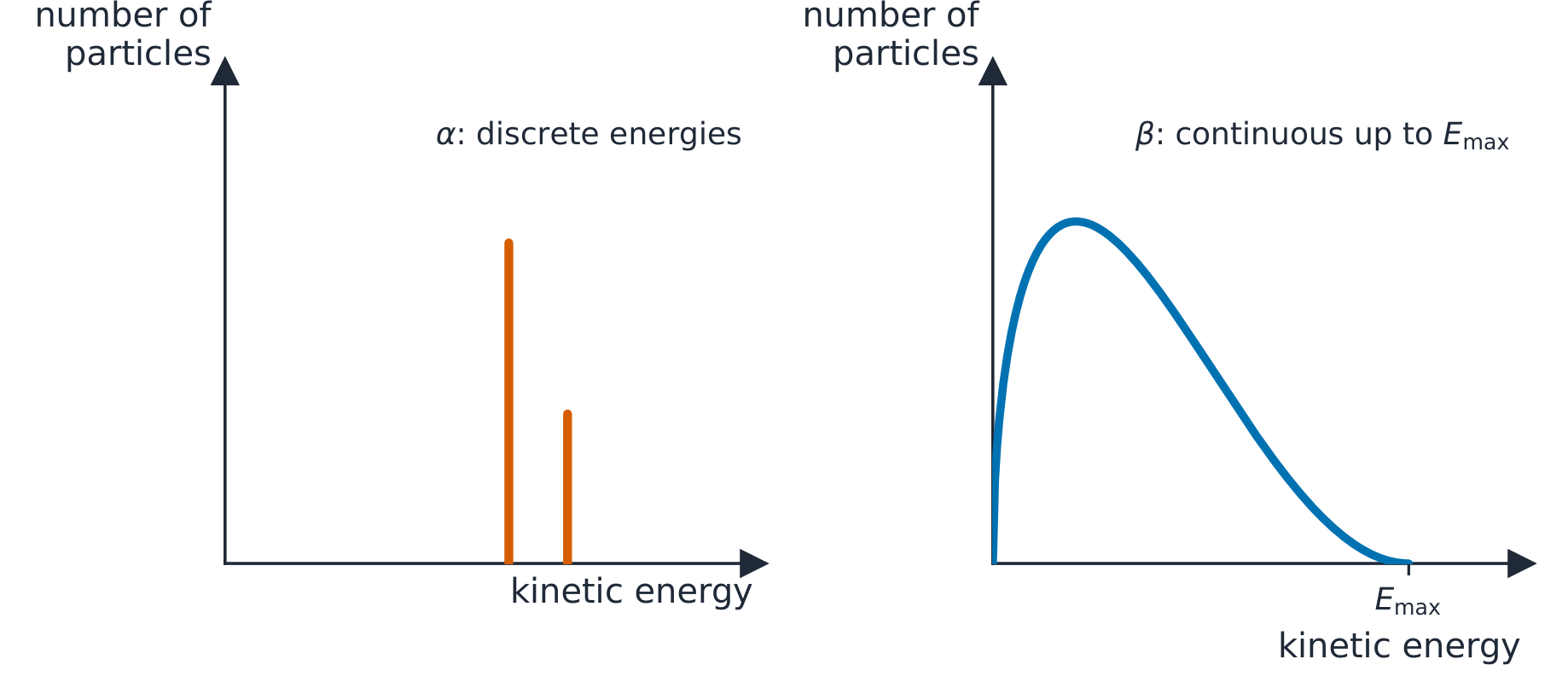
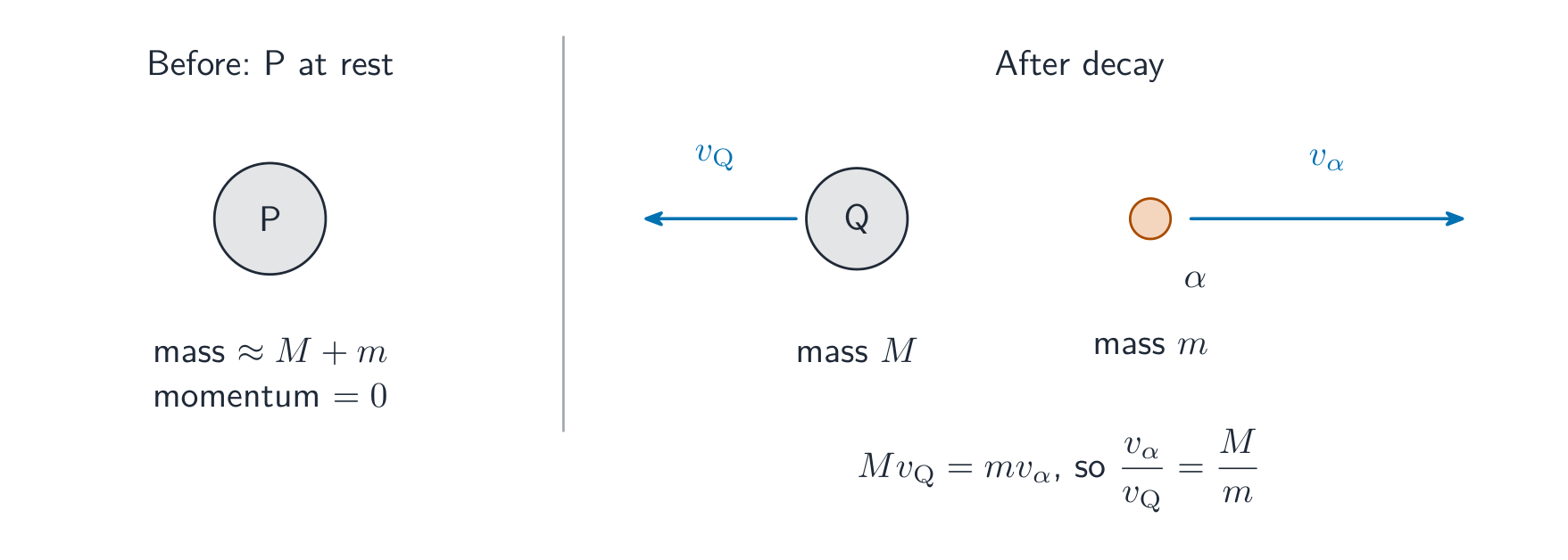


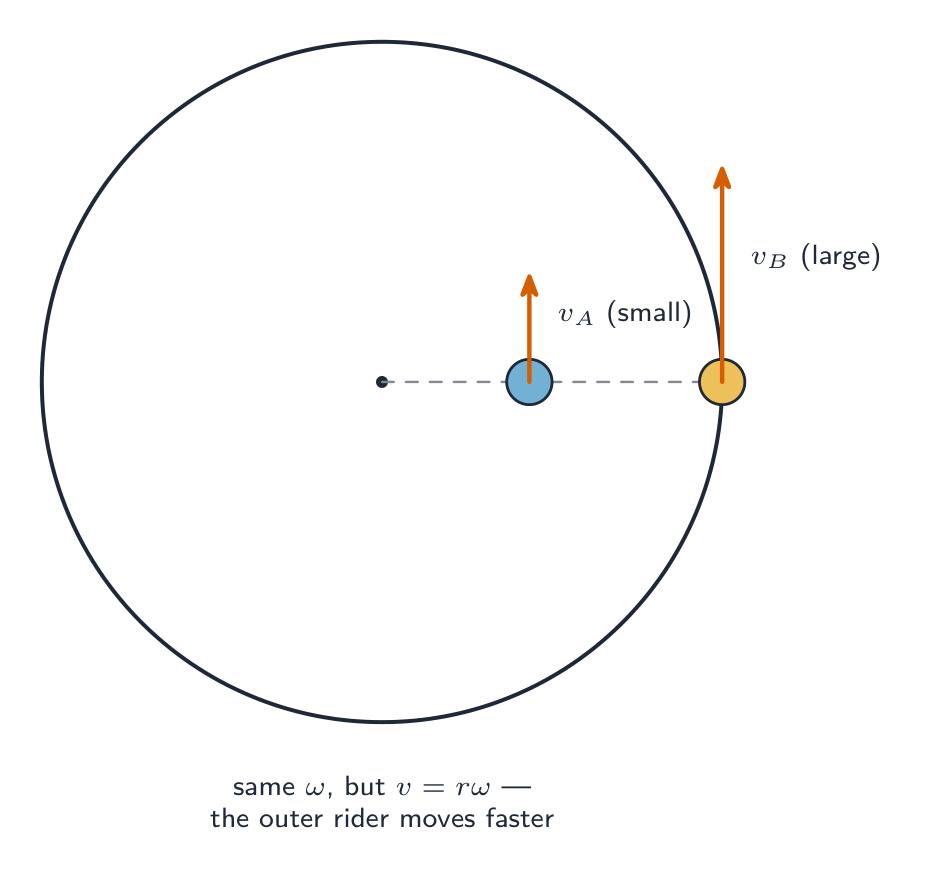
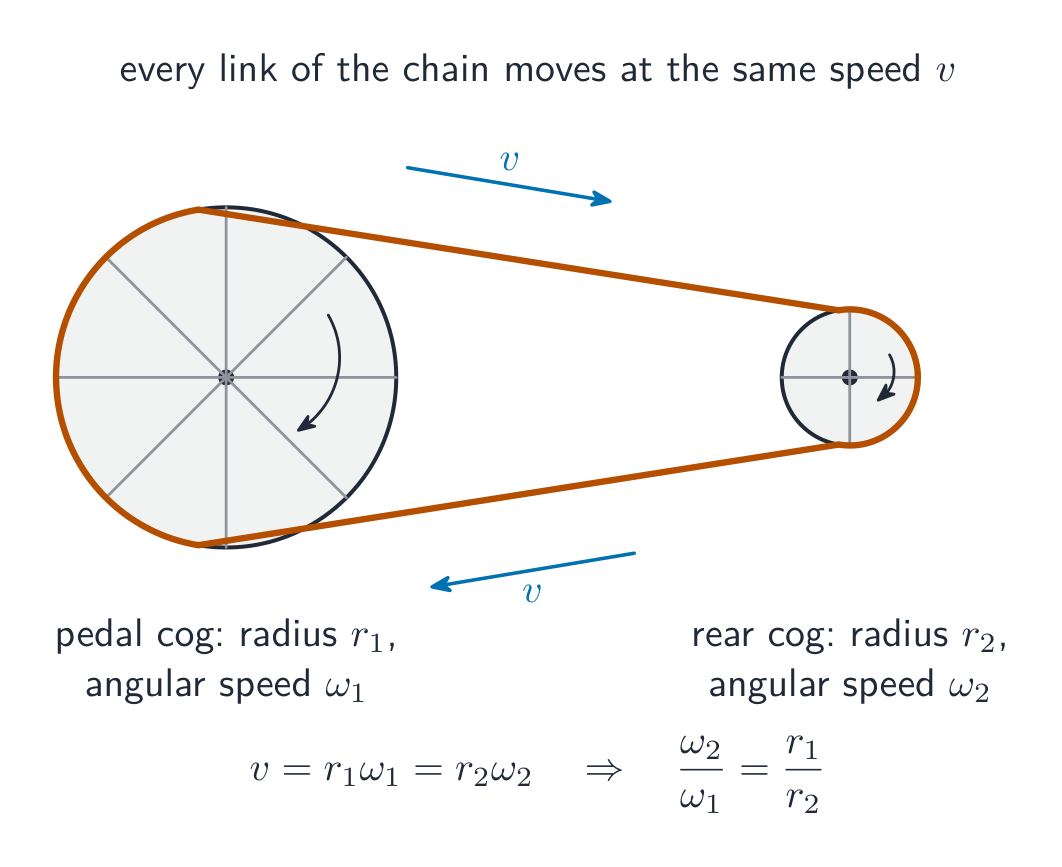


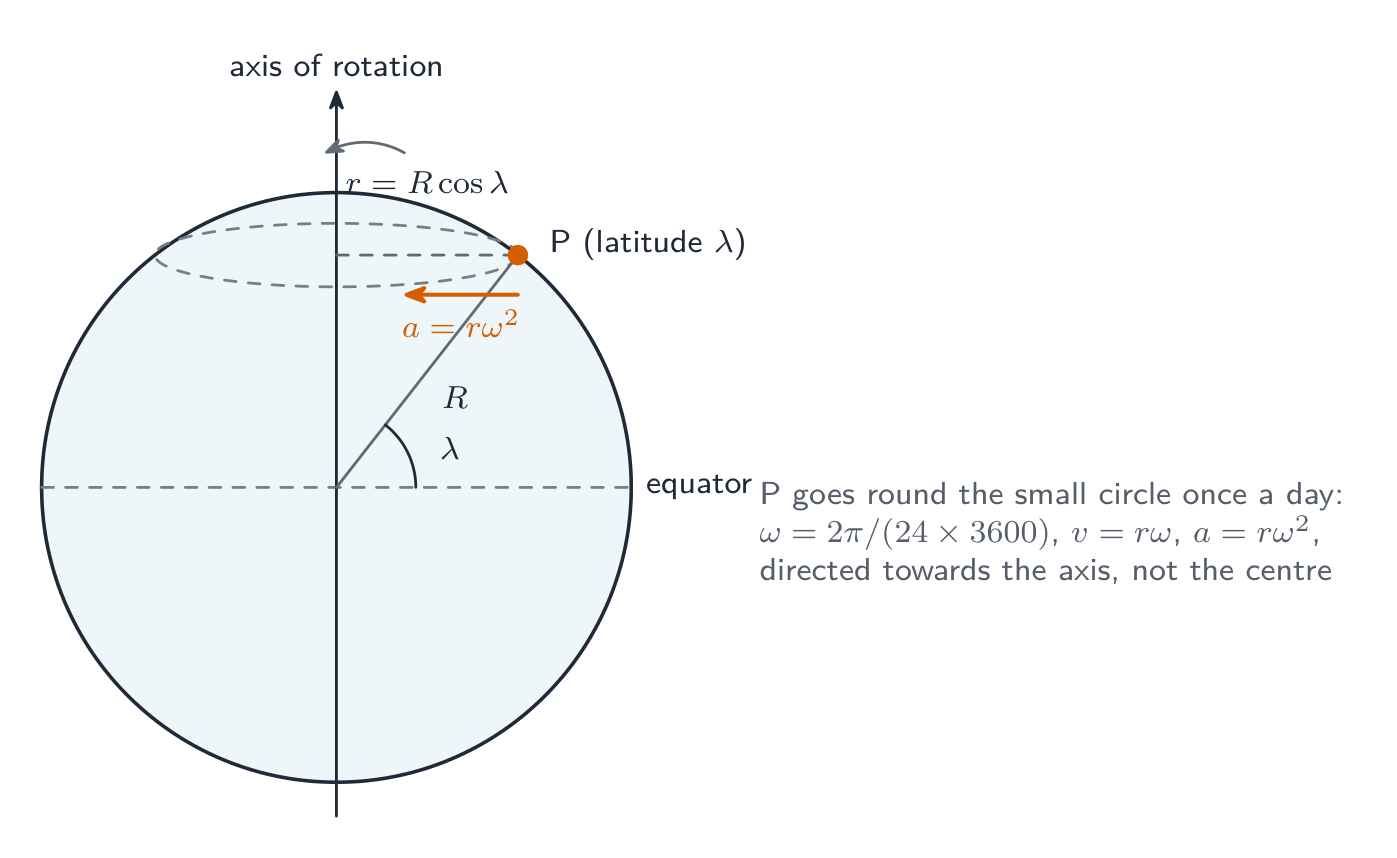


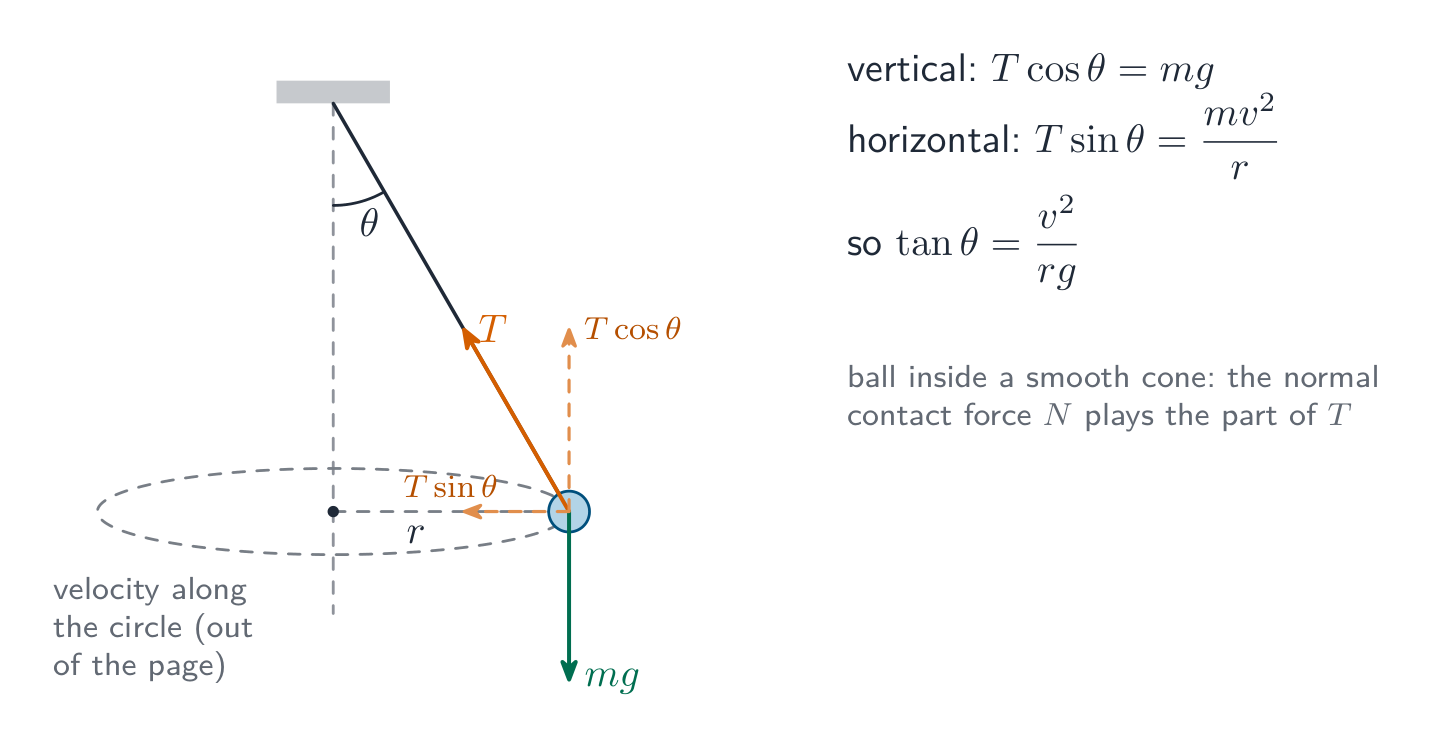


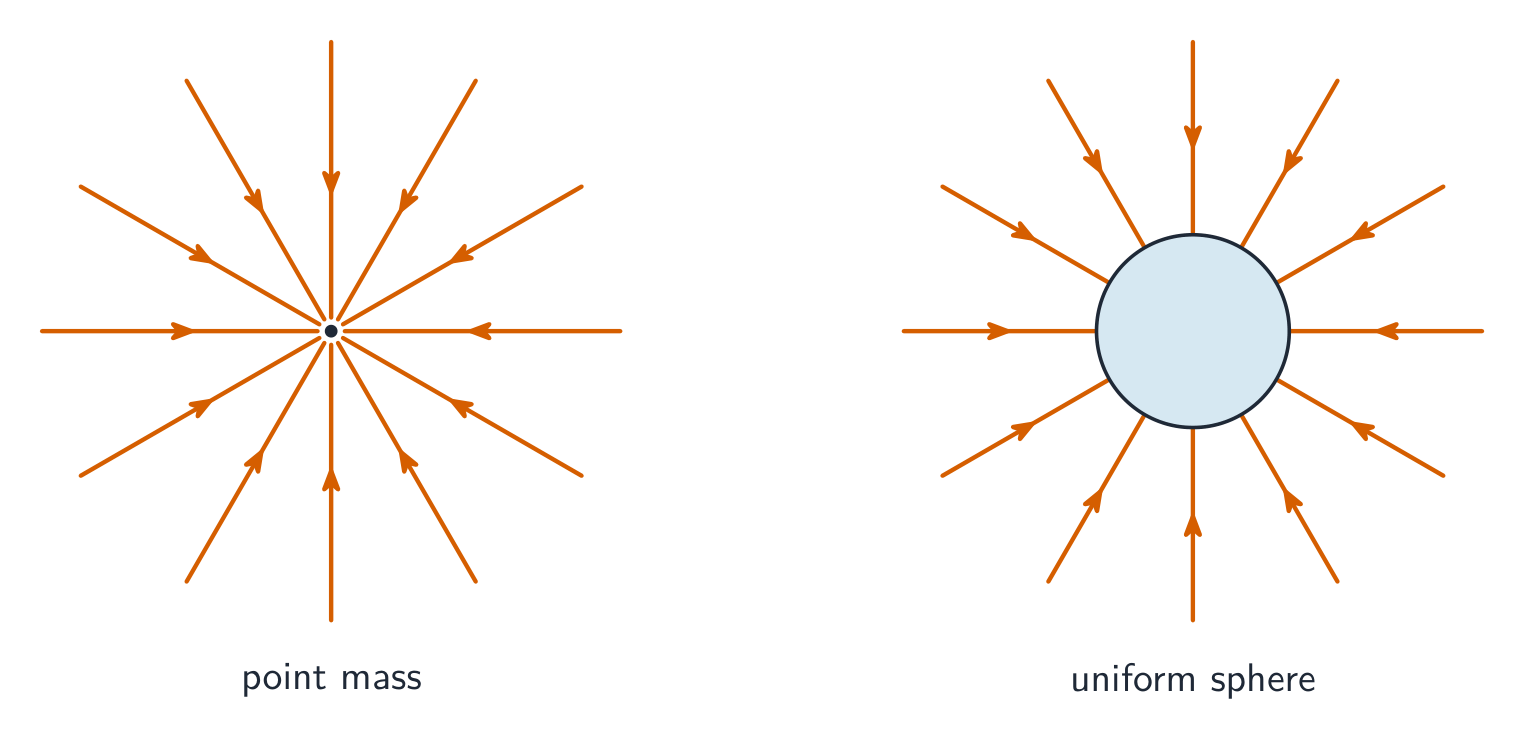
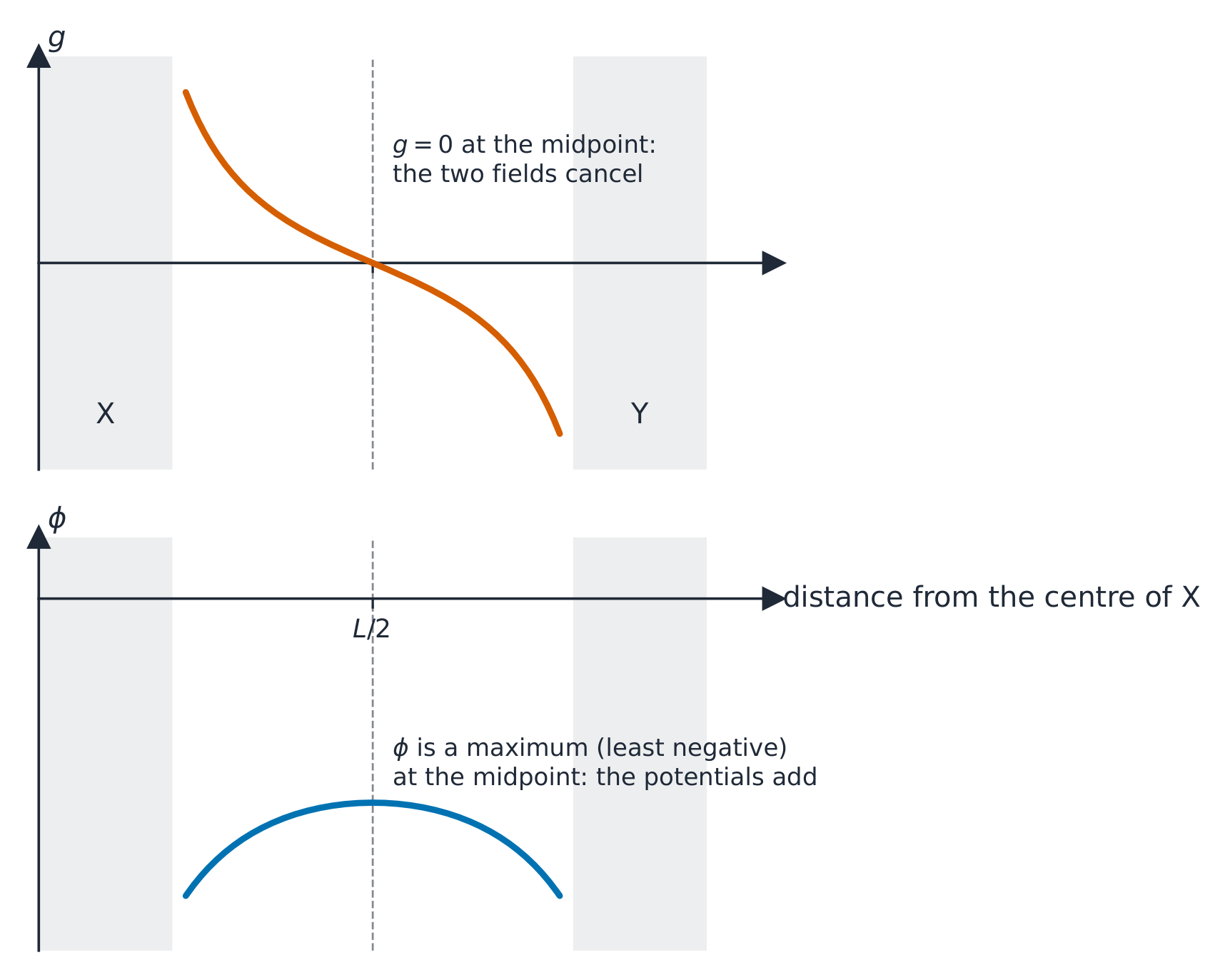



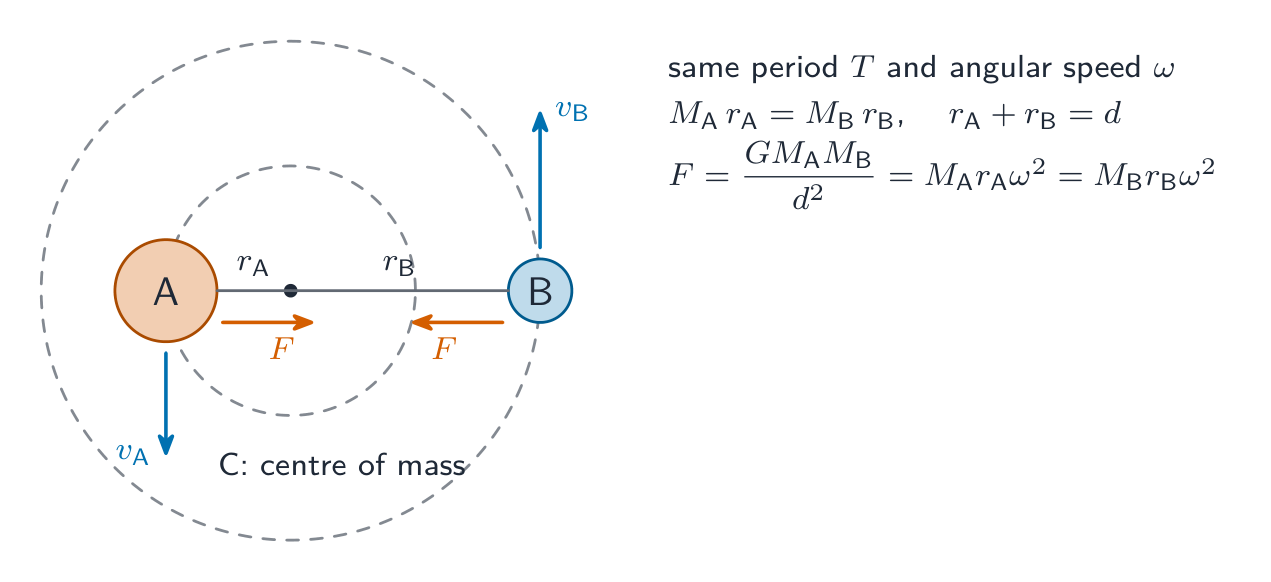
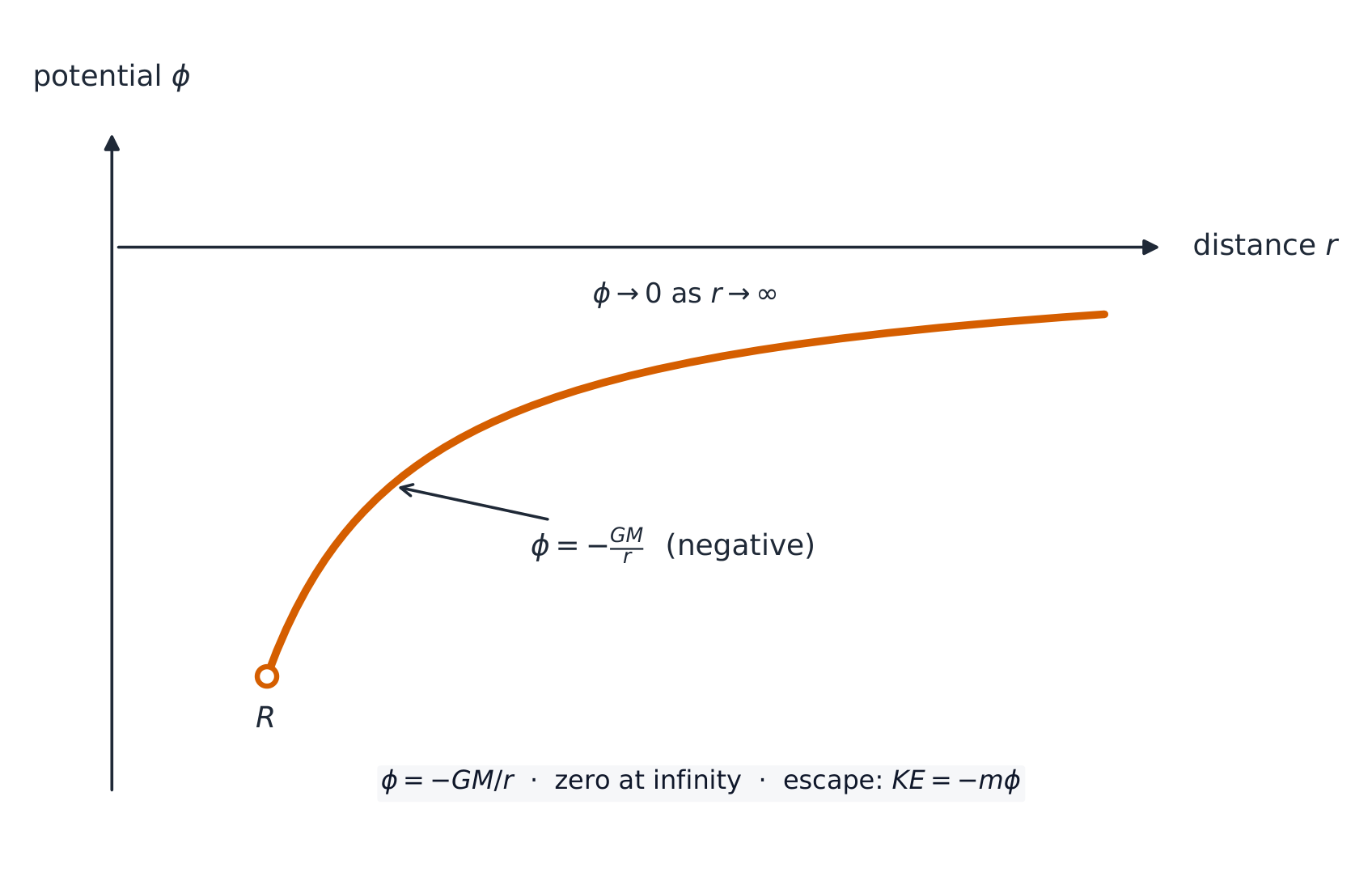
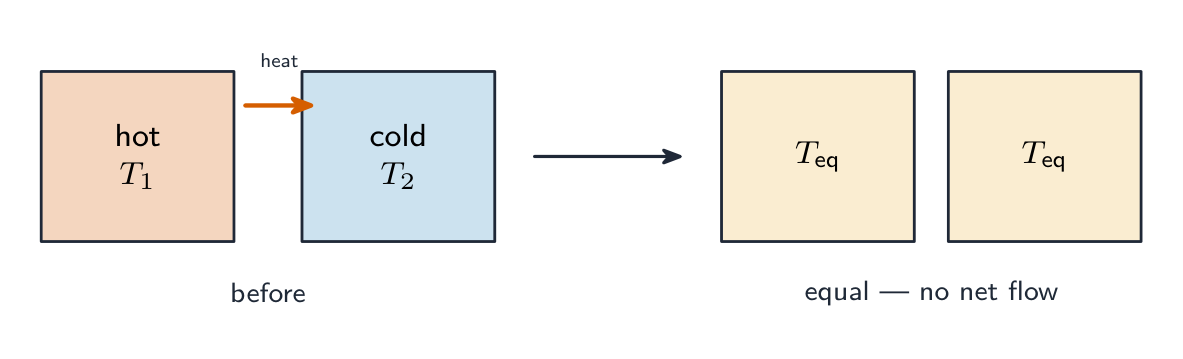

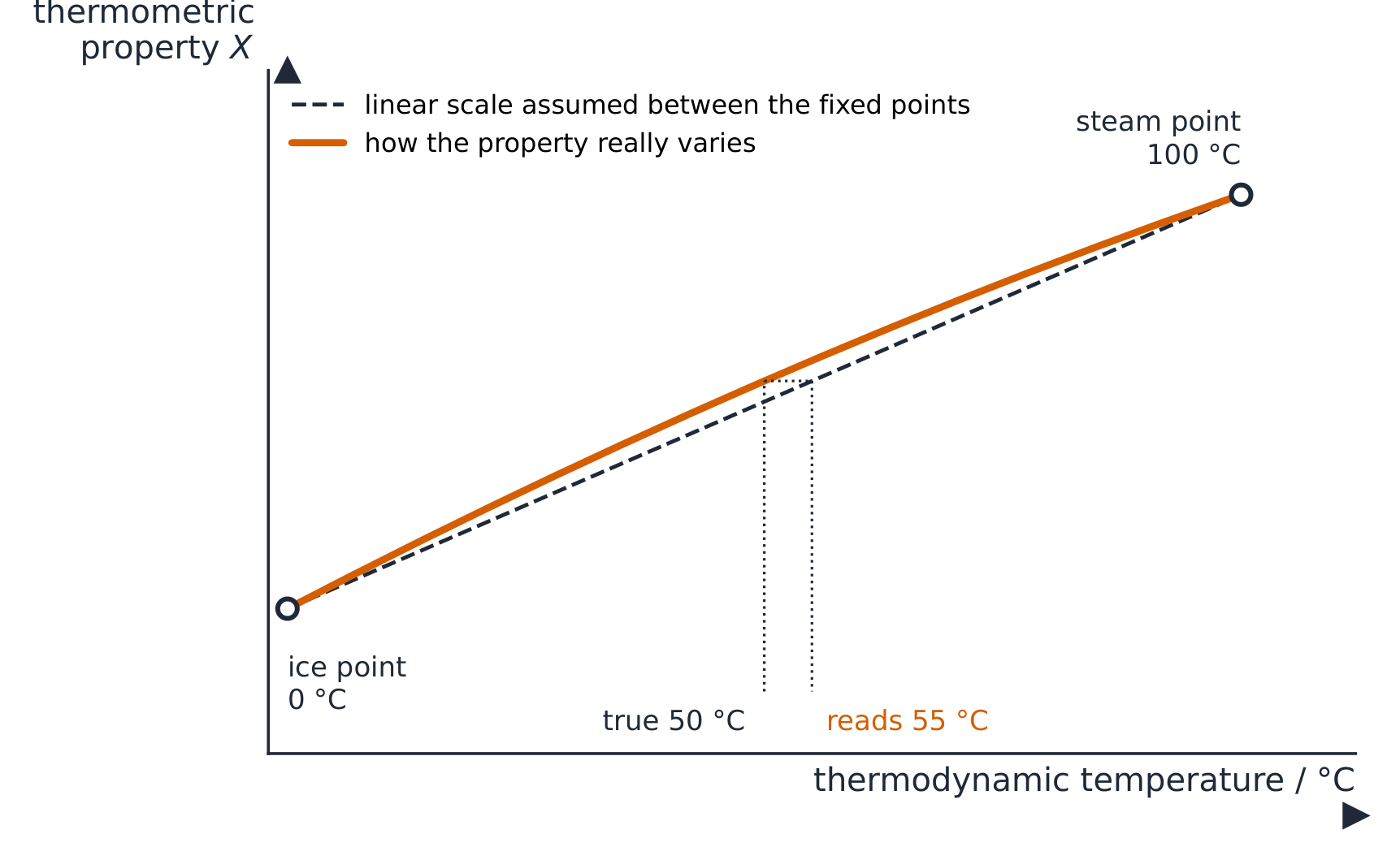
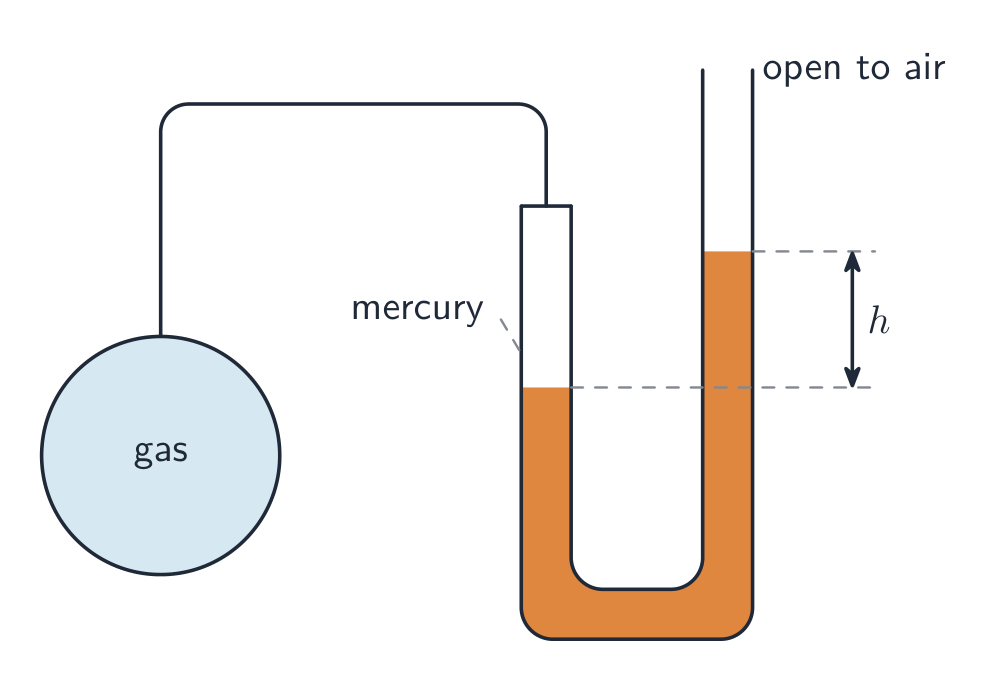


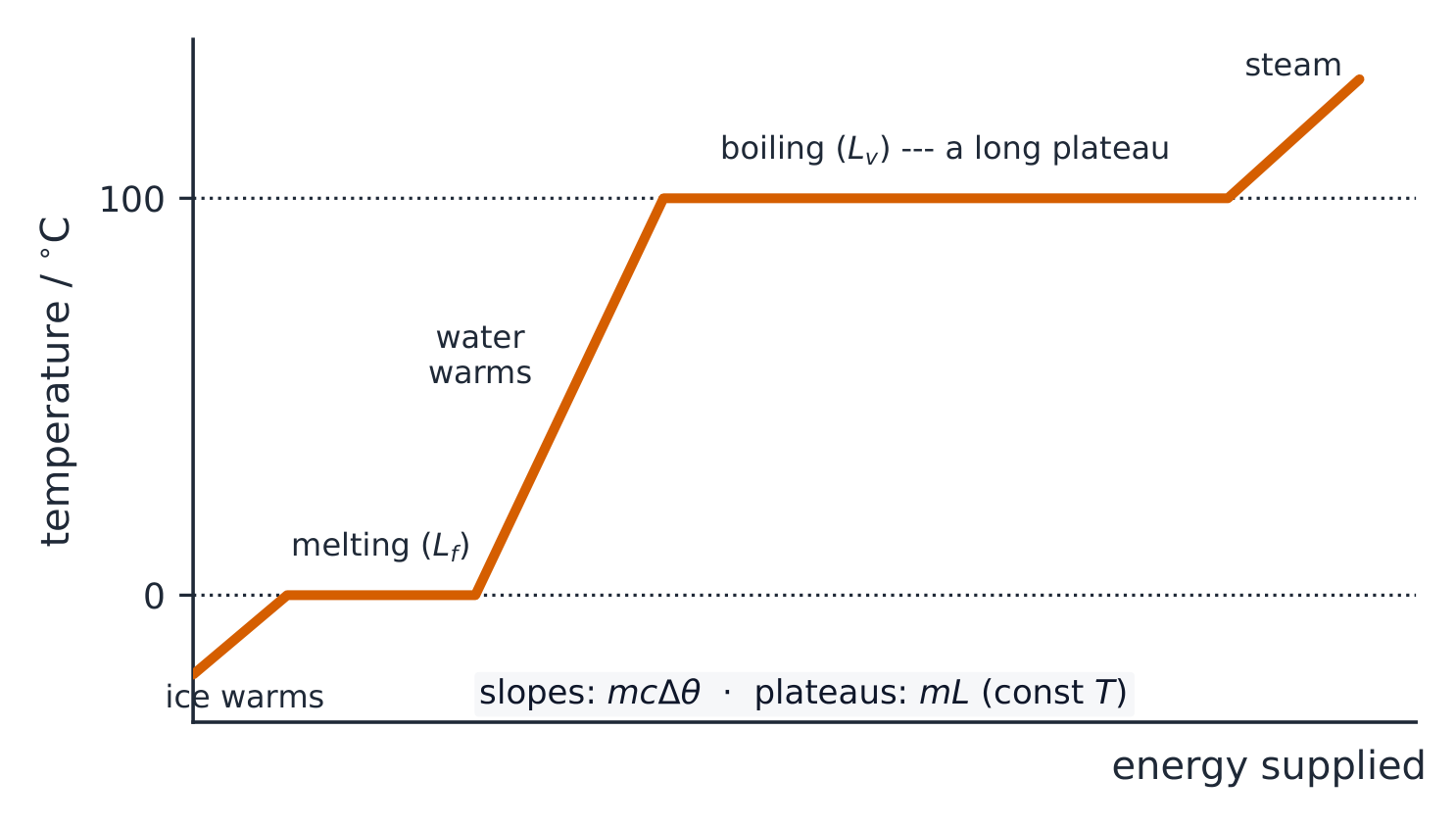
 *חלקו בעיה מעורבת לשלבים — חימום, שינוי מצב, חימום — ולאחר מכן חברו את האנרגיות

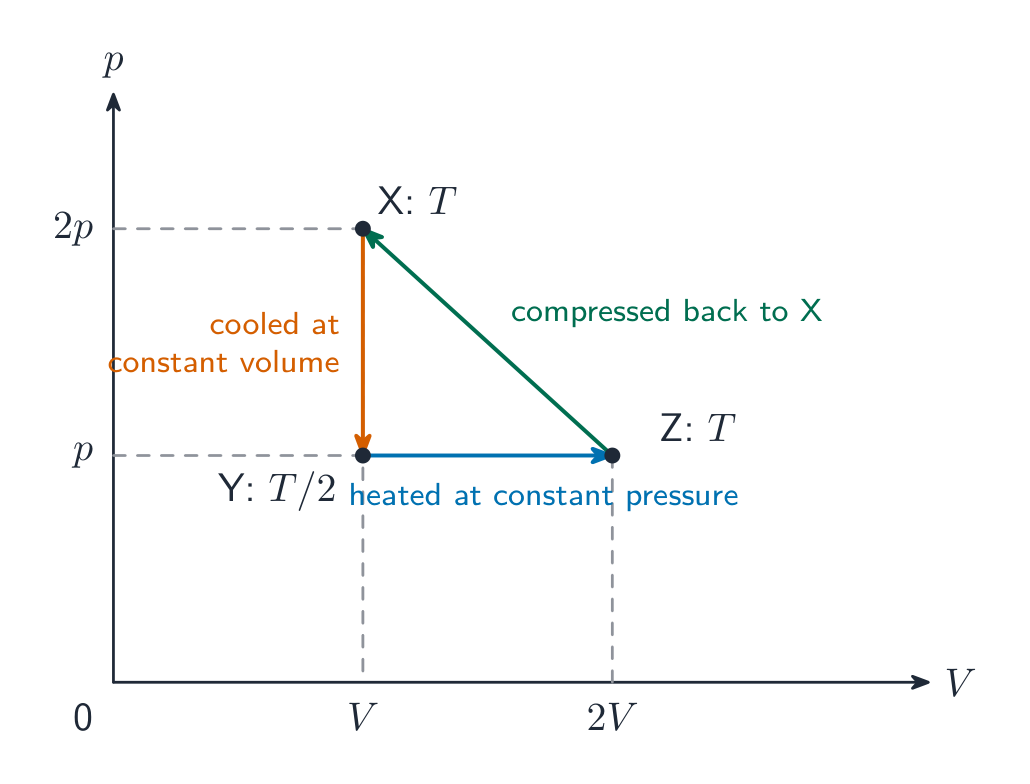
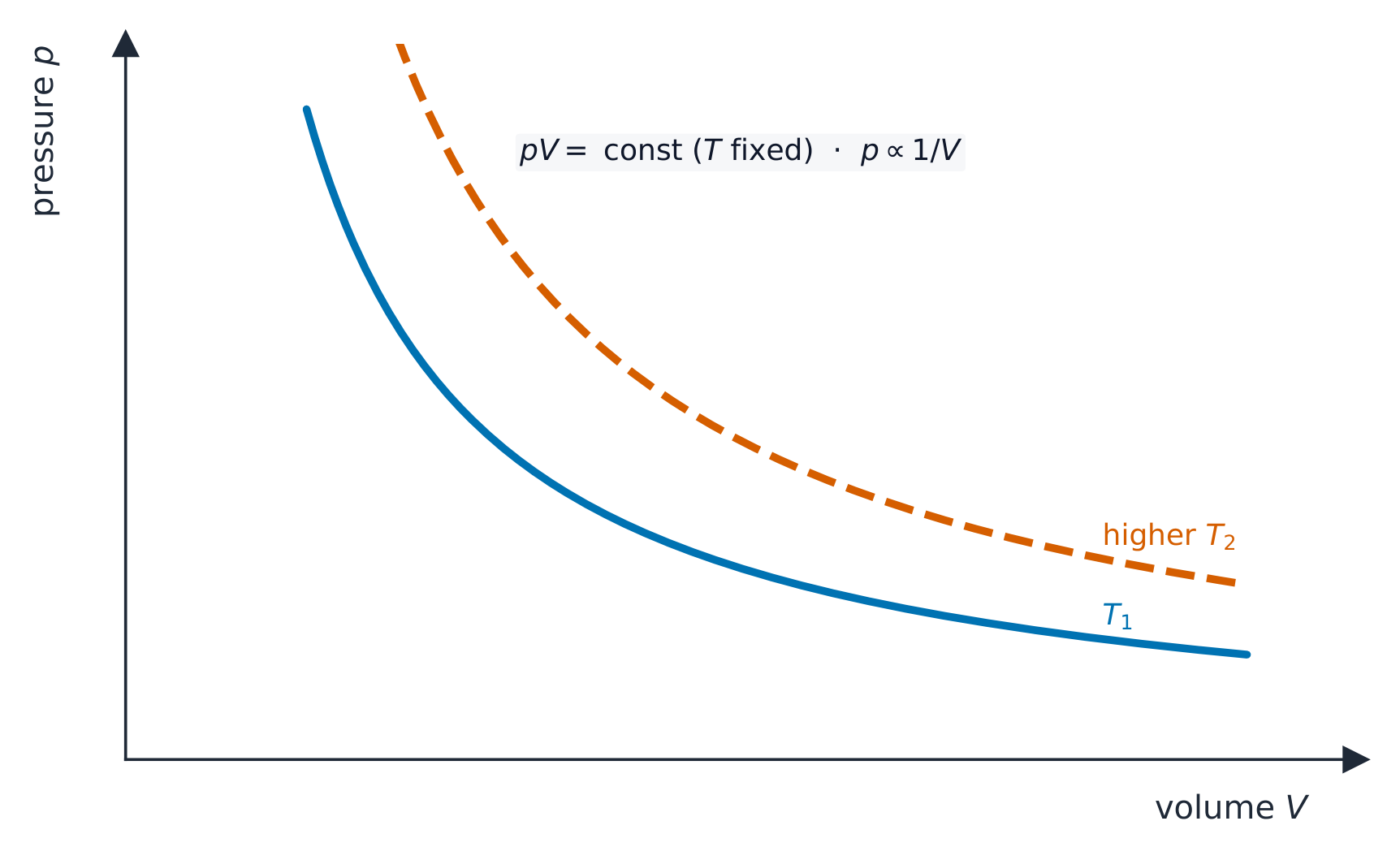

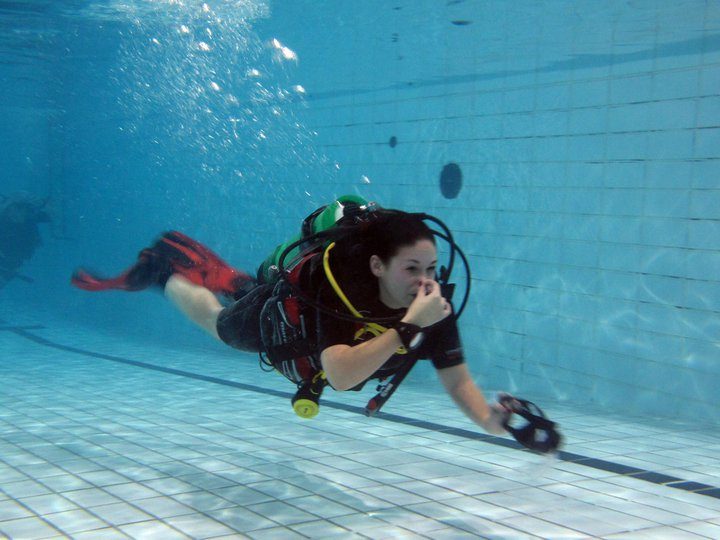
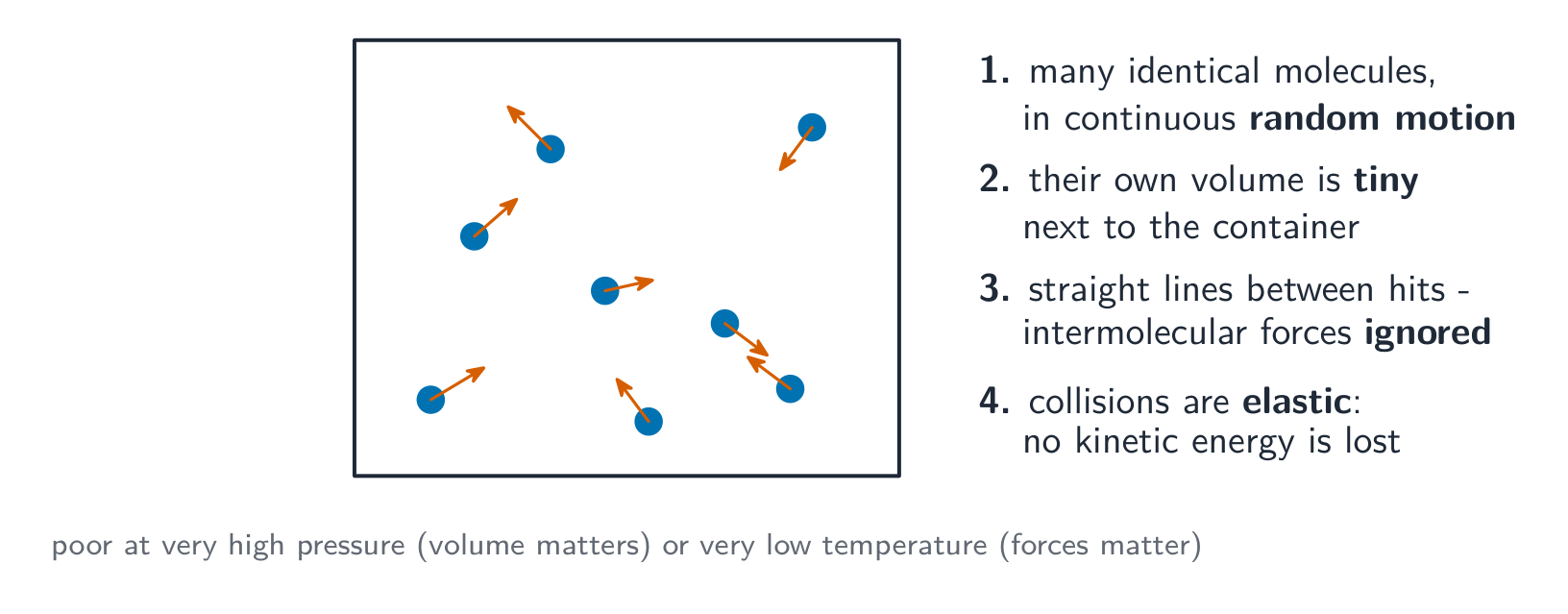
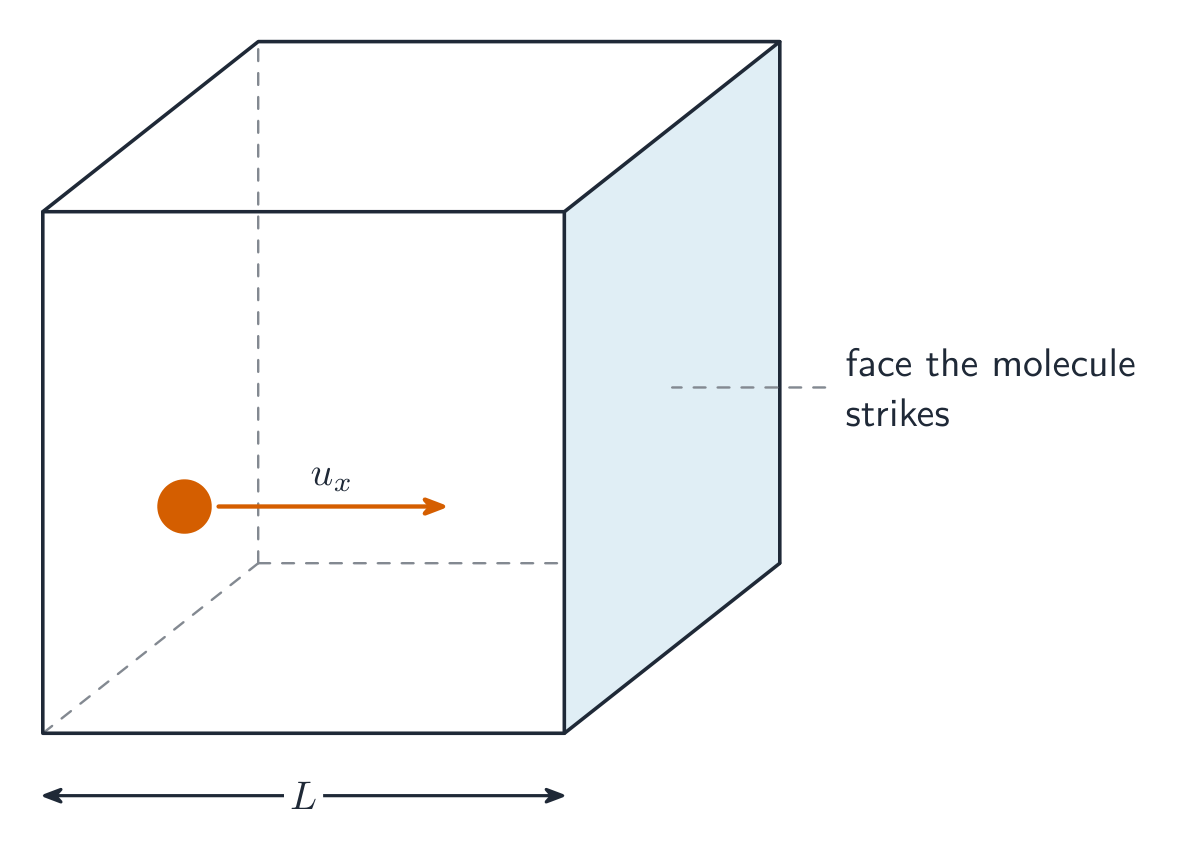


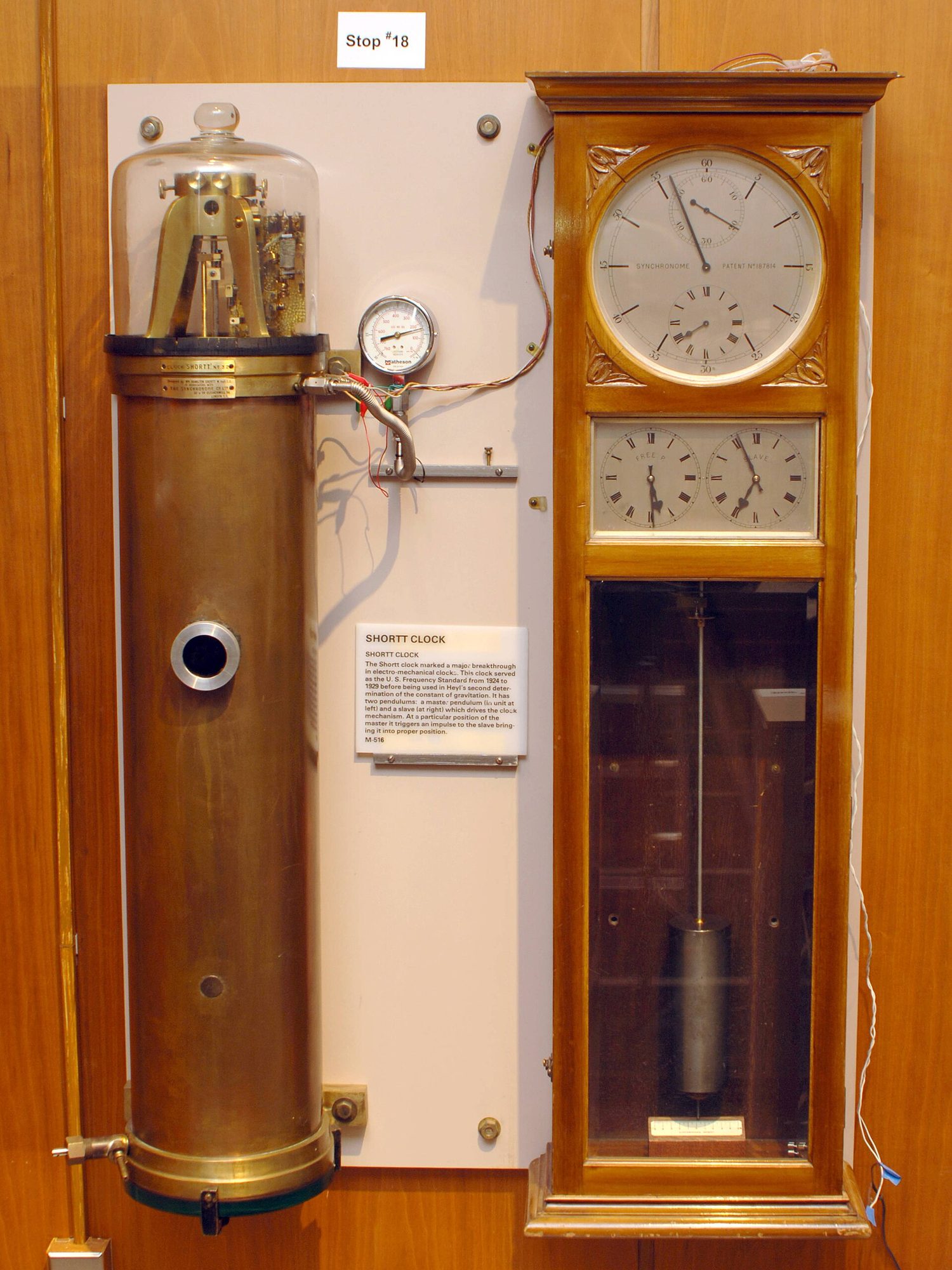
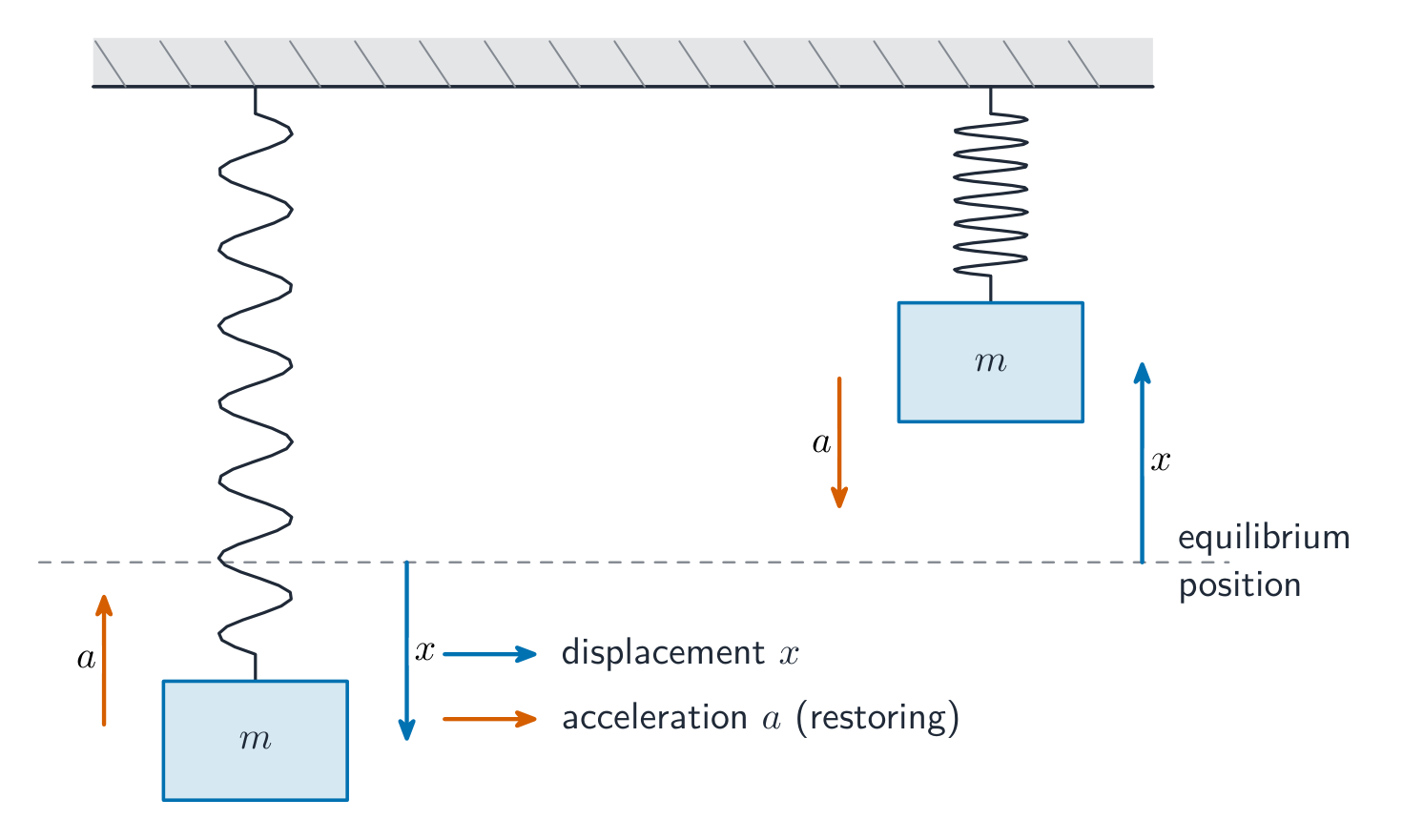
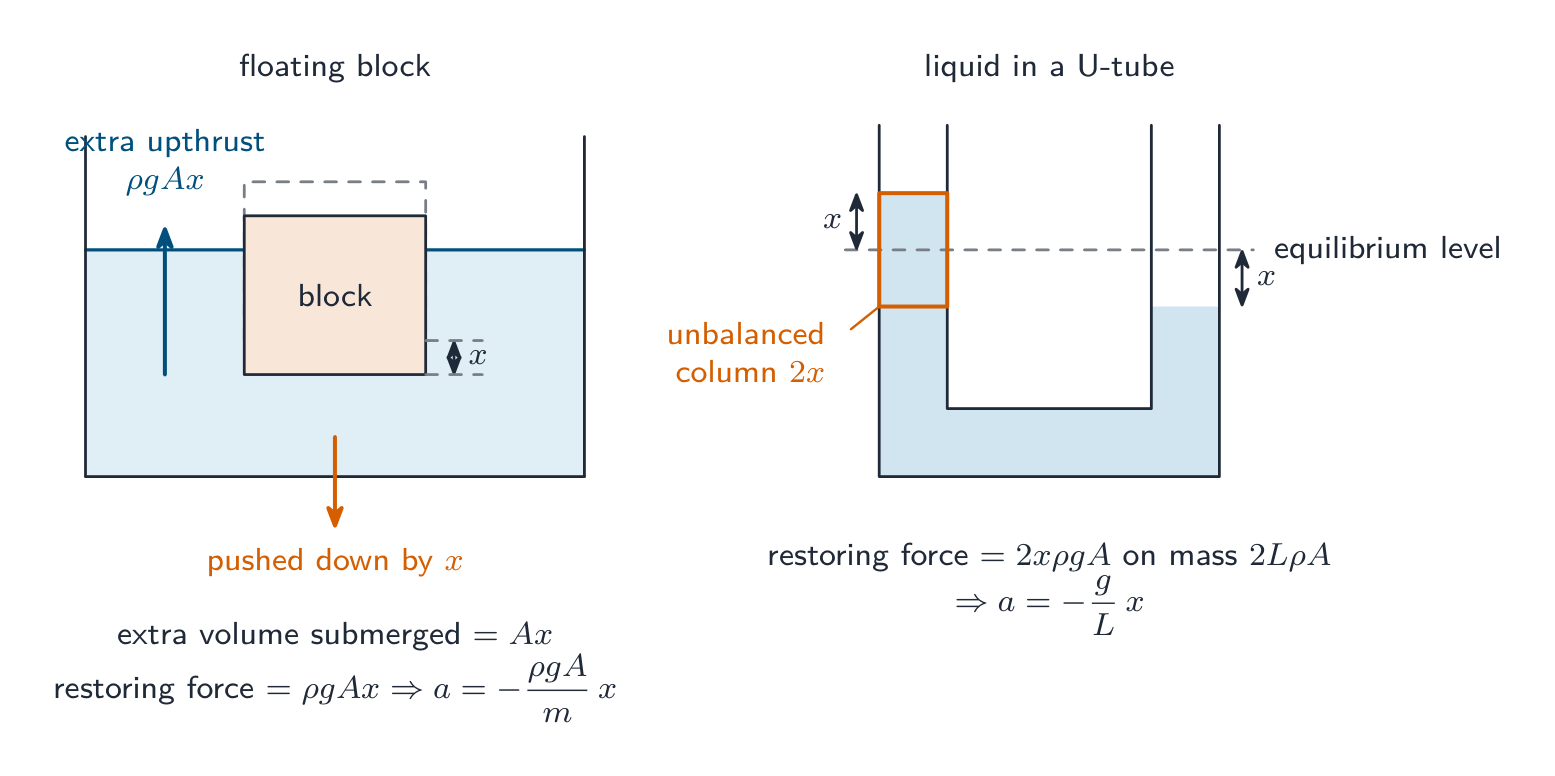 שתי סדנאות "הראו שזהו SHM": מצאו את הכוח הנוסף כאשר המערכת מוסטת ב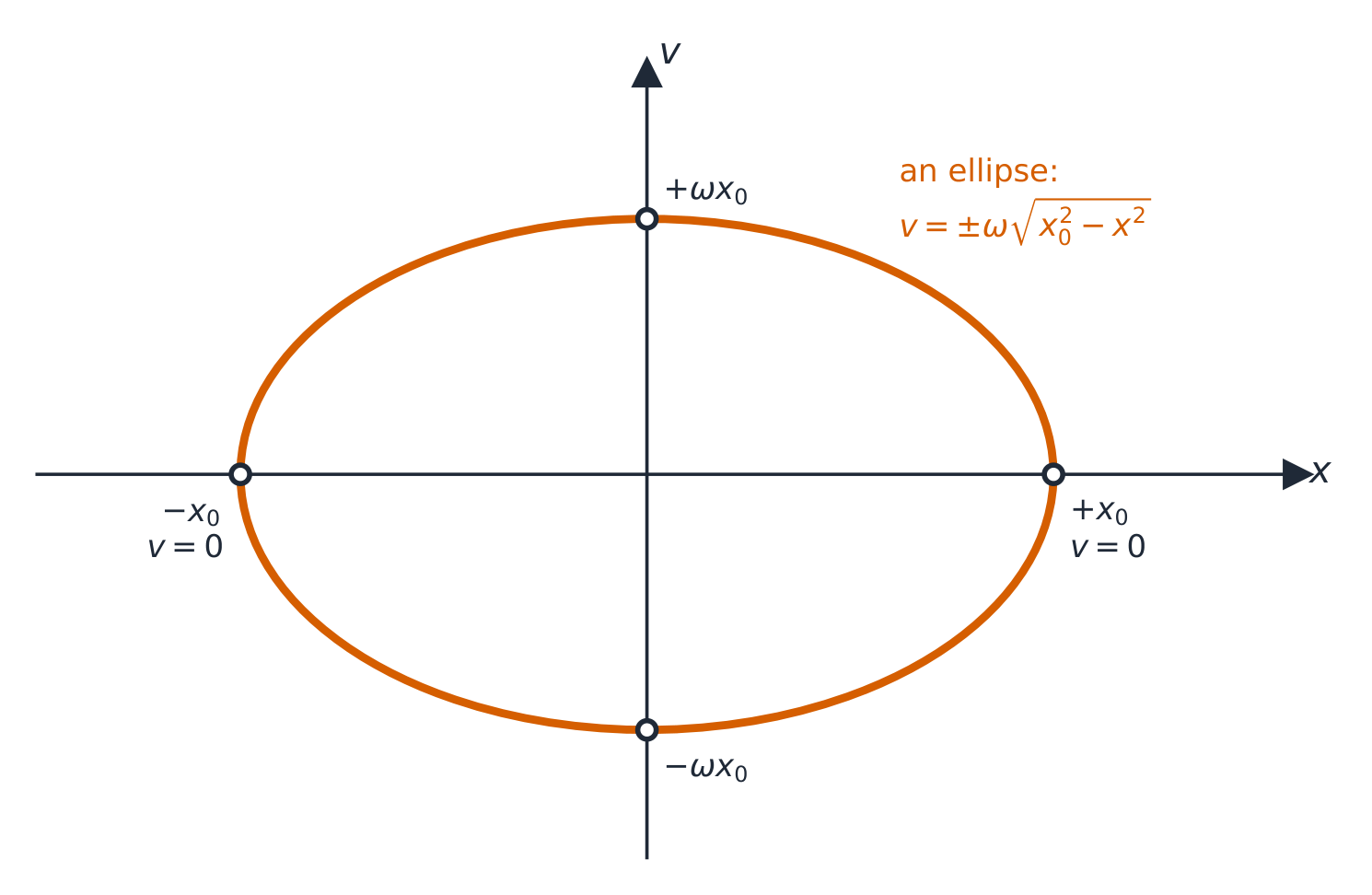
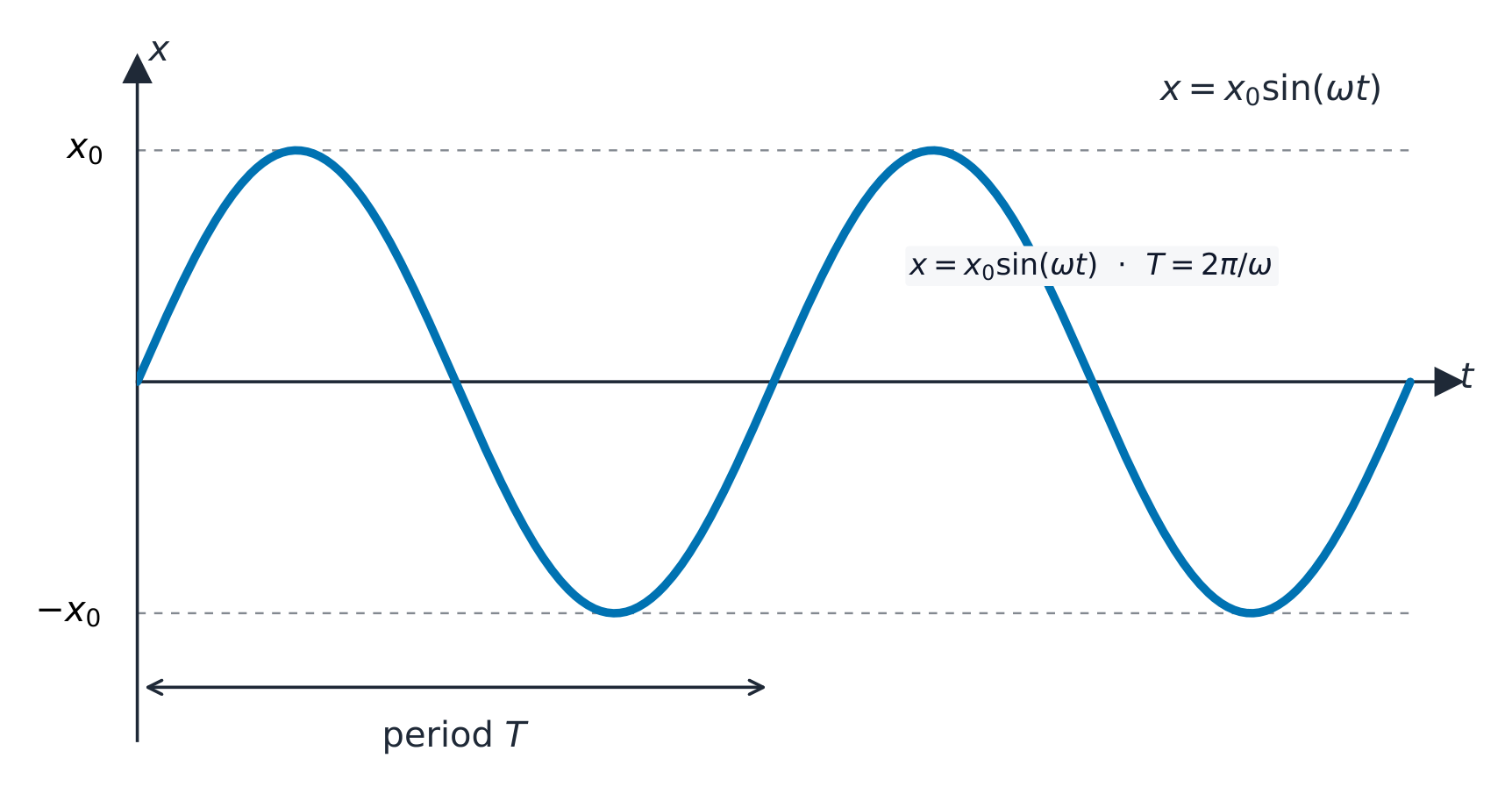
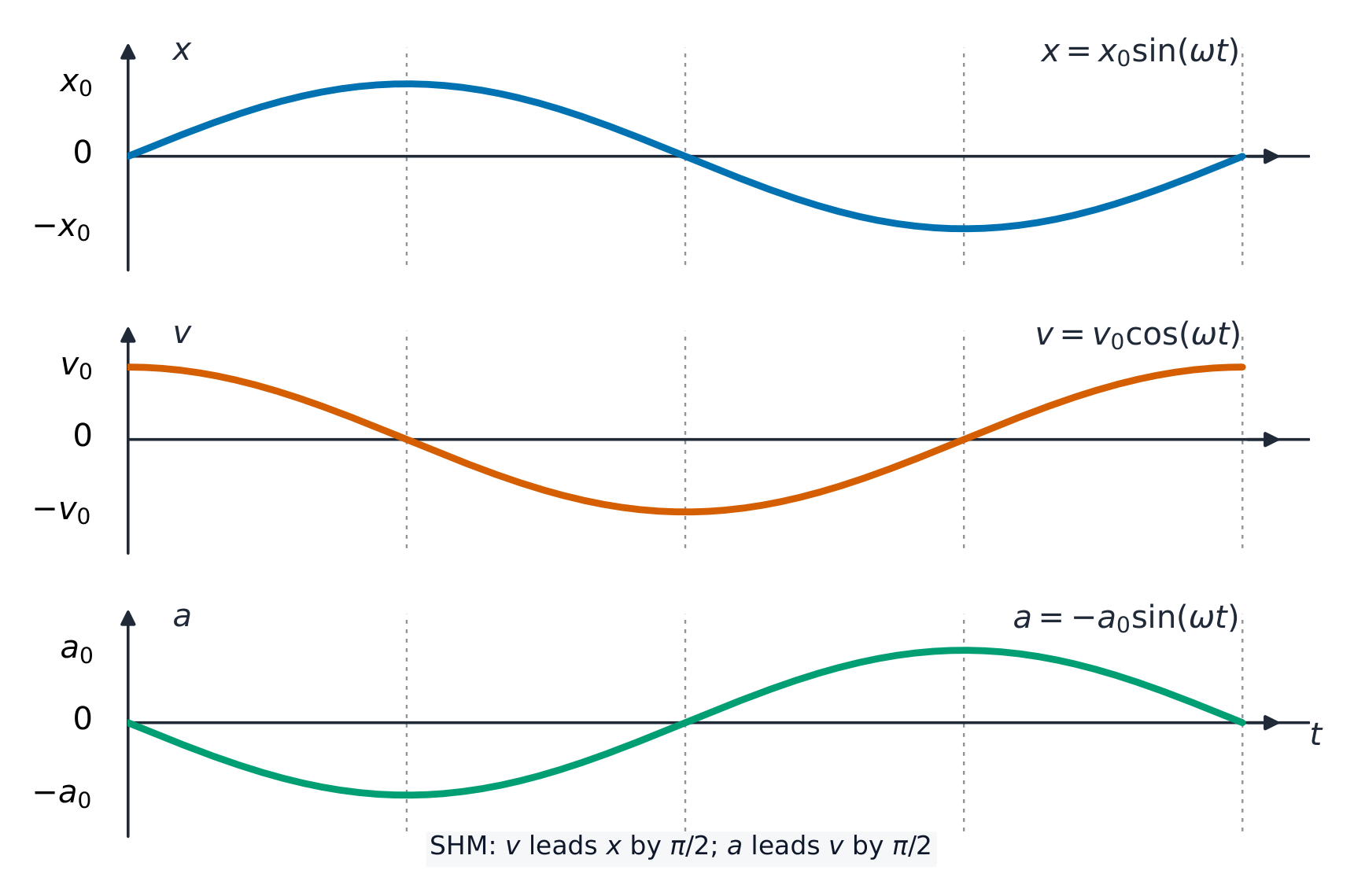
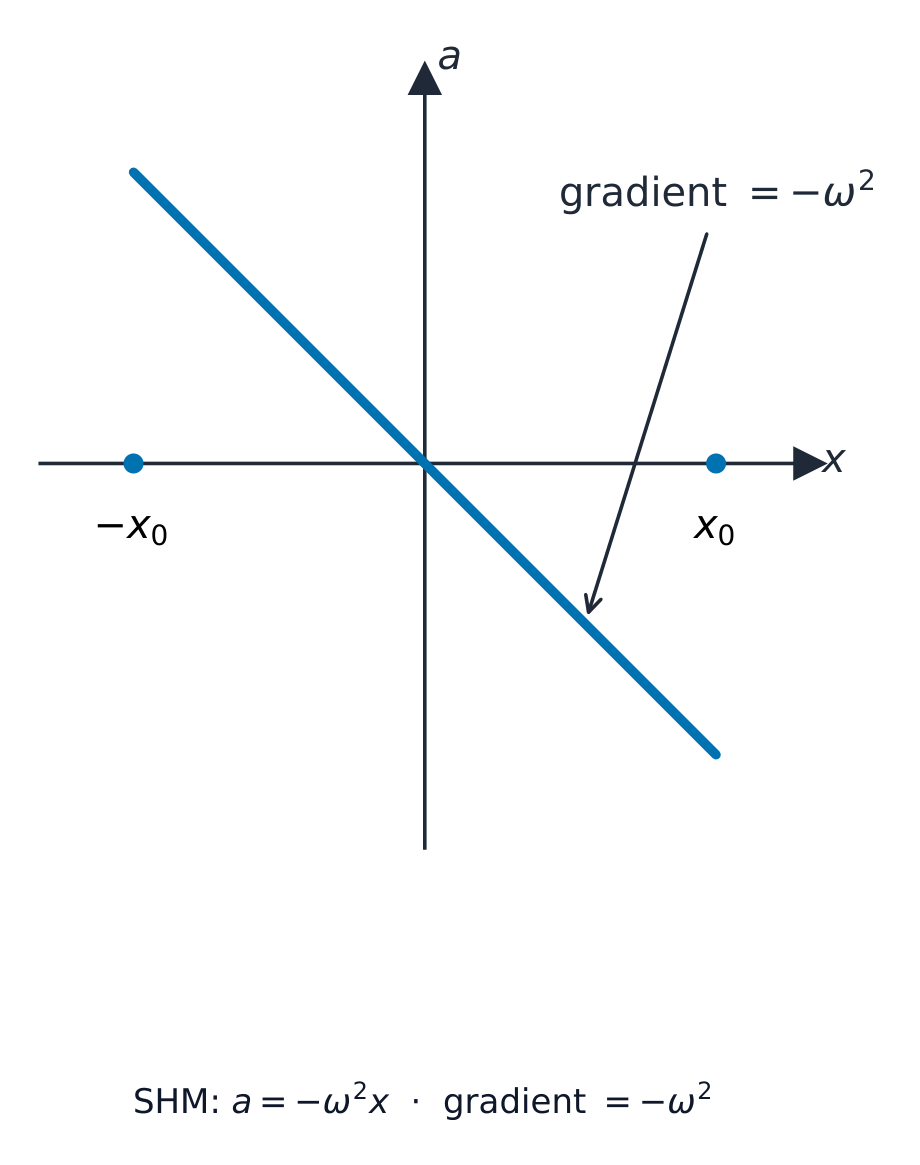

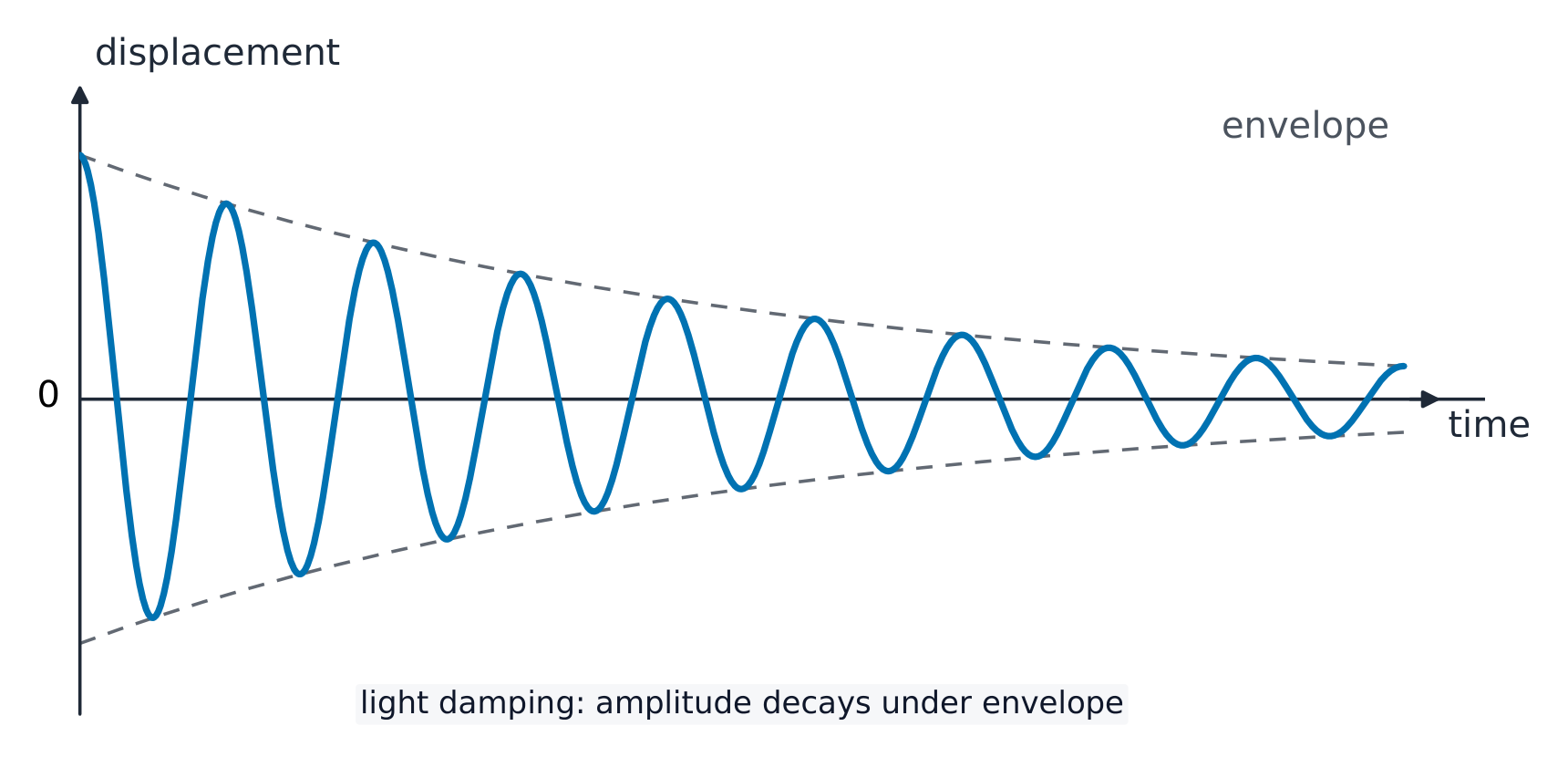

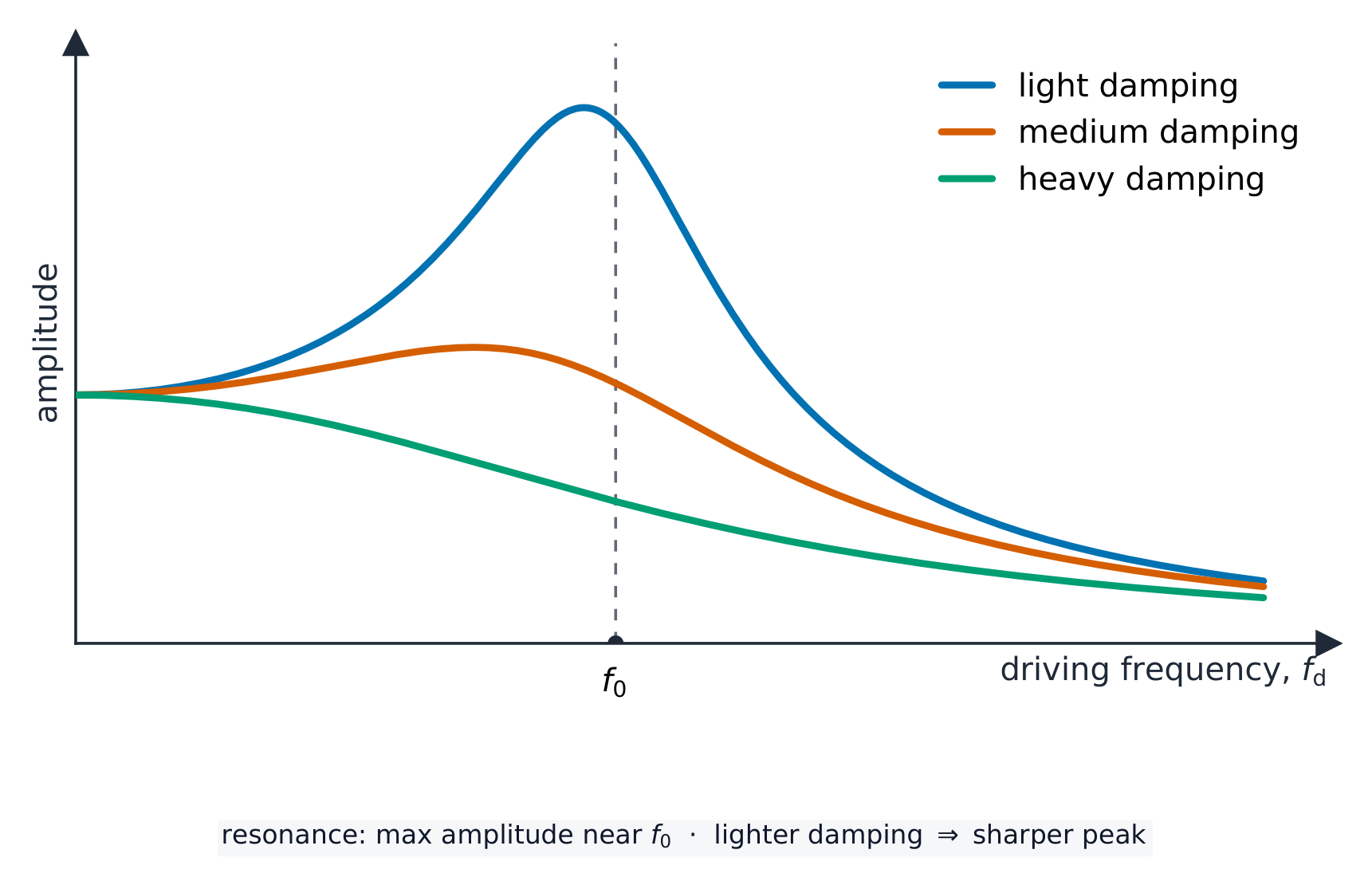
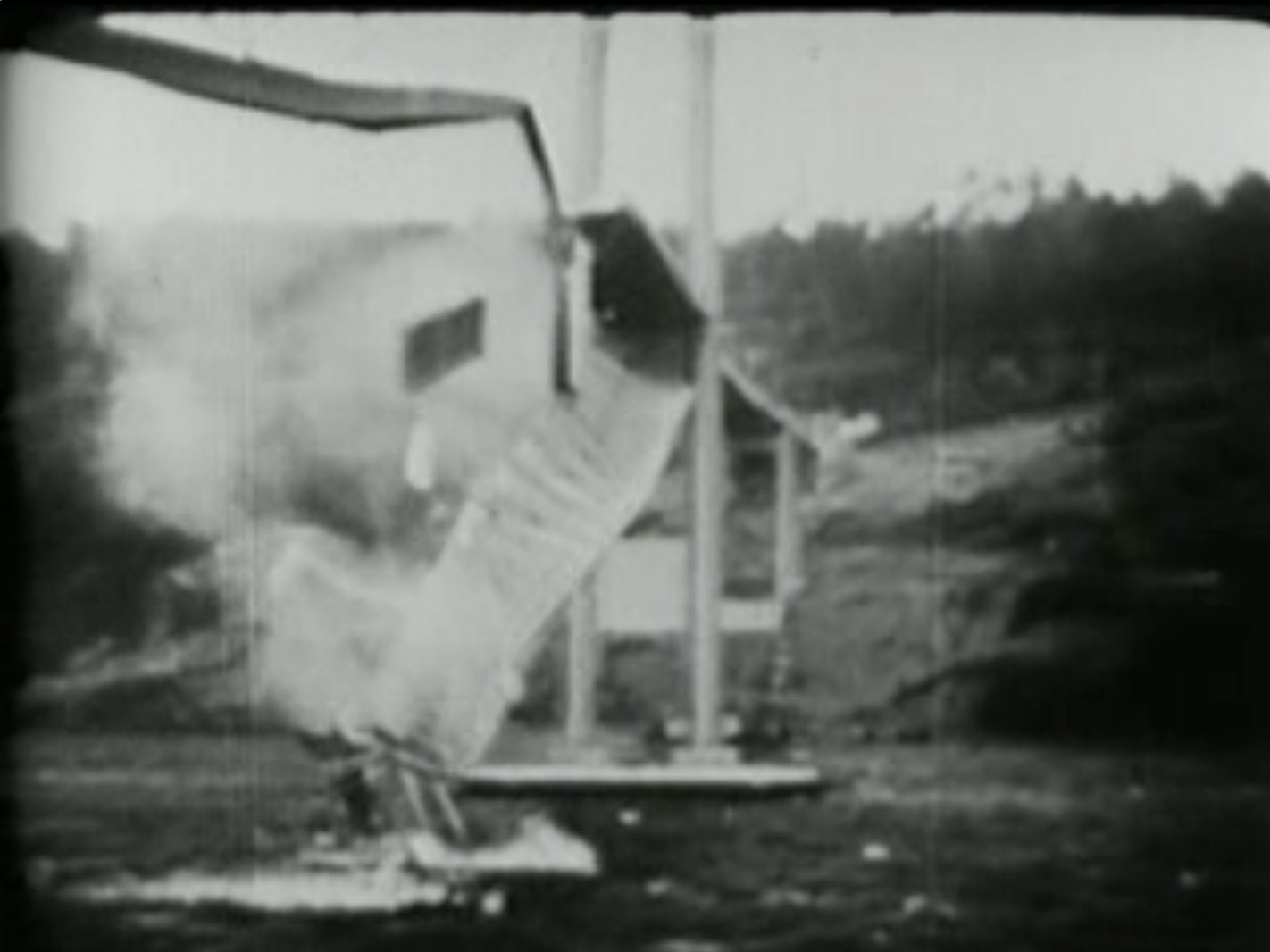


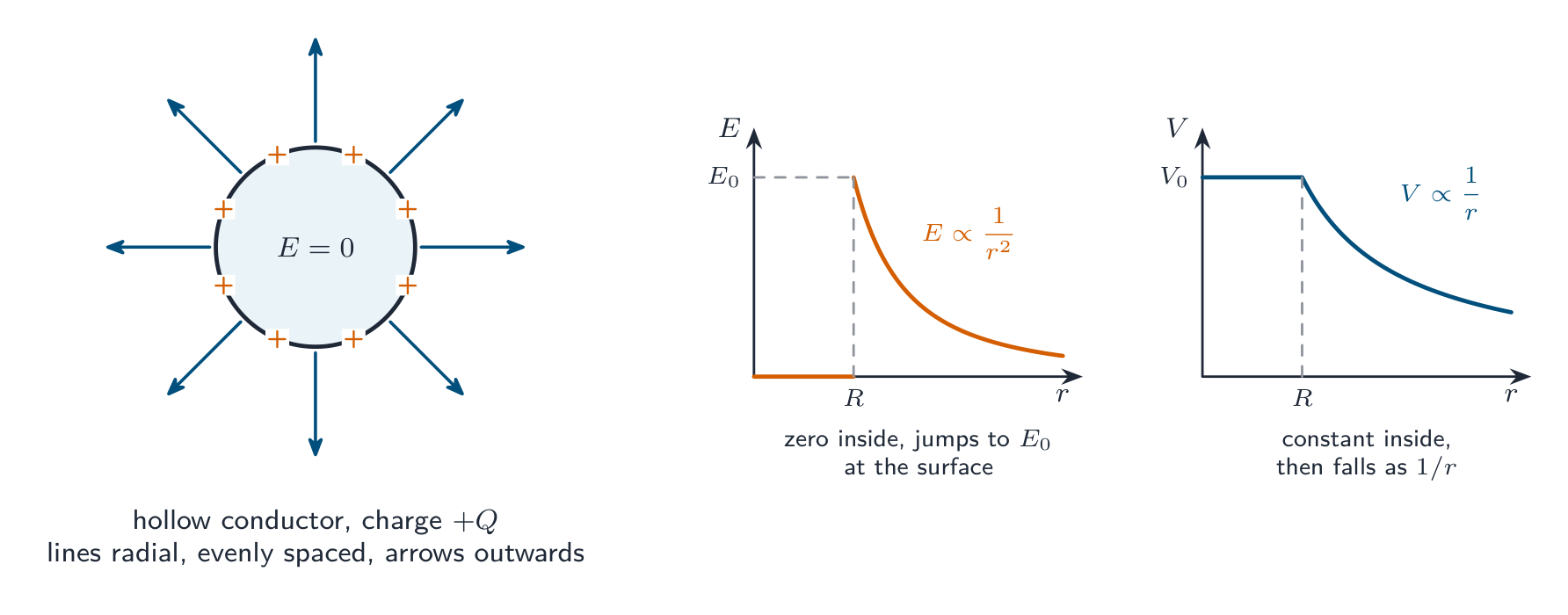


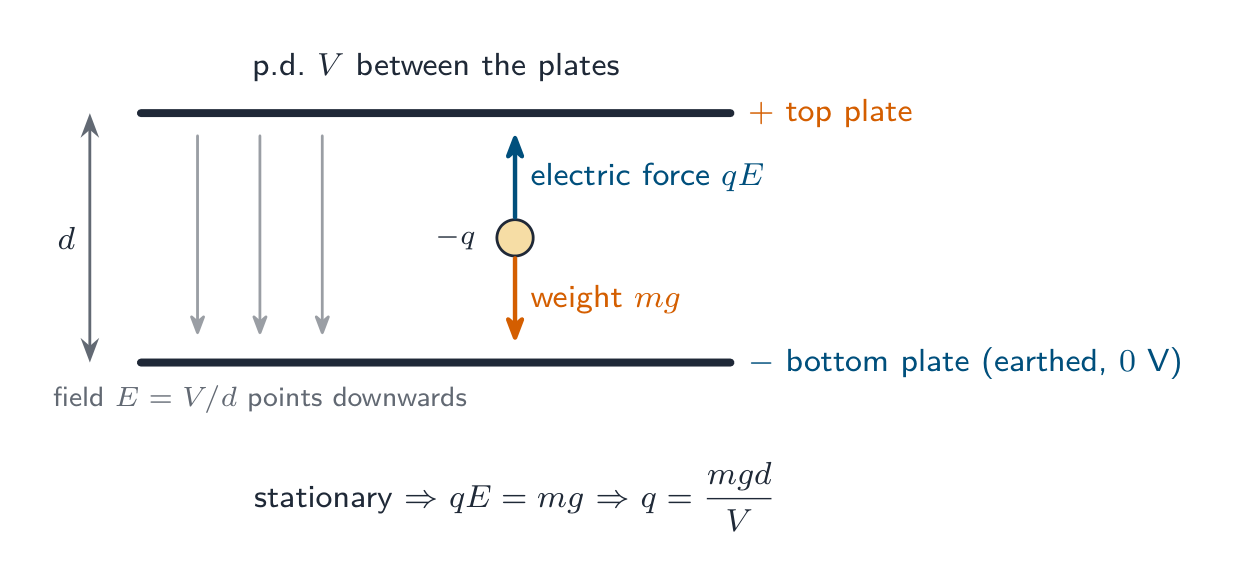
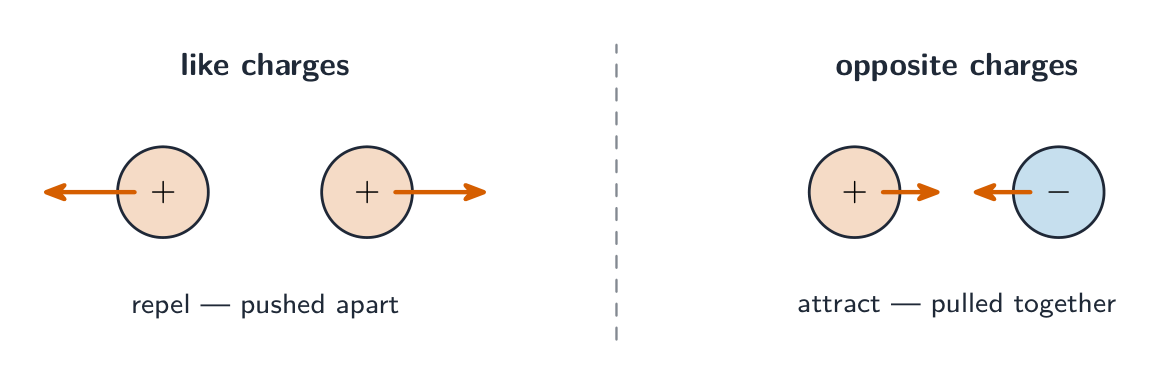
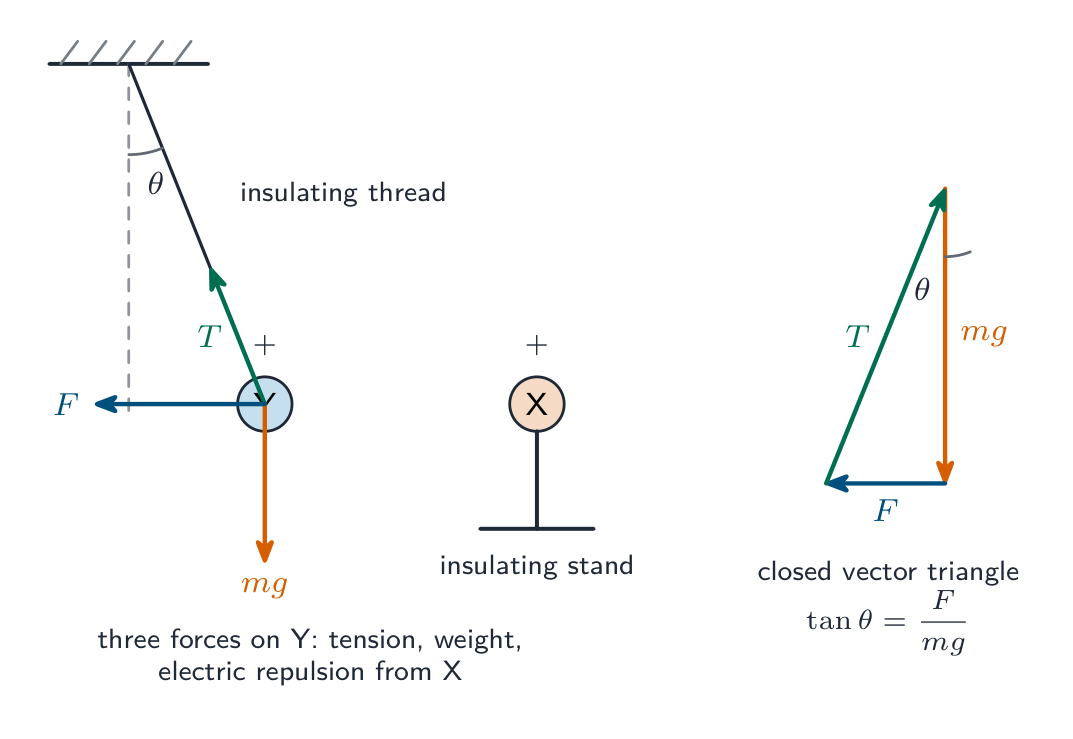



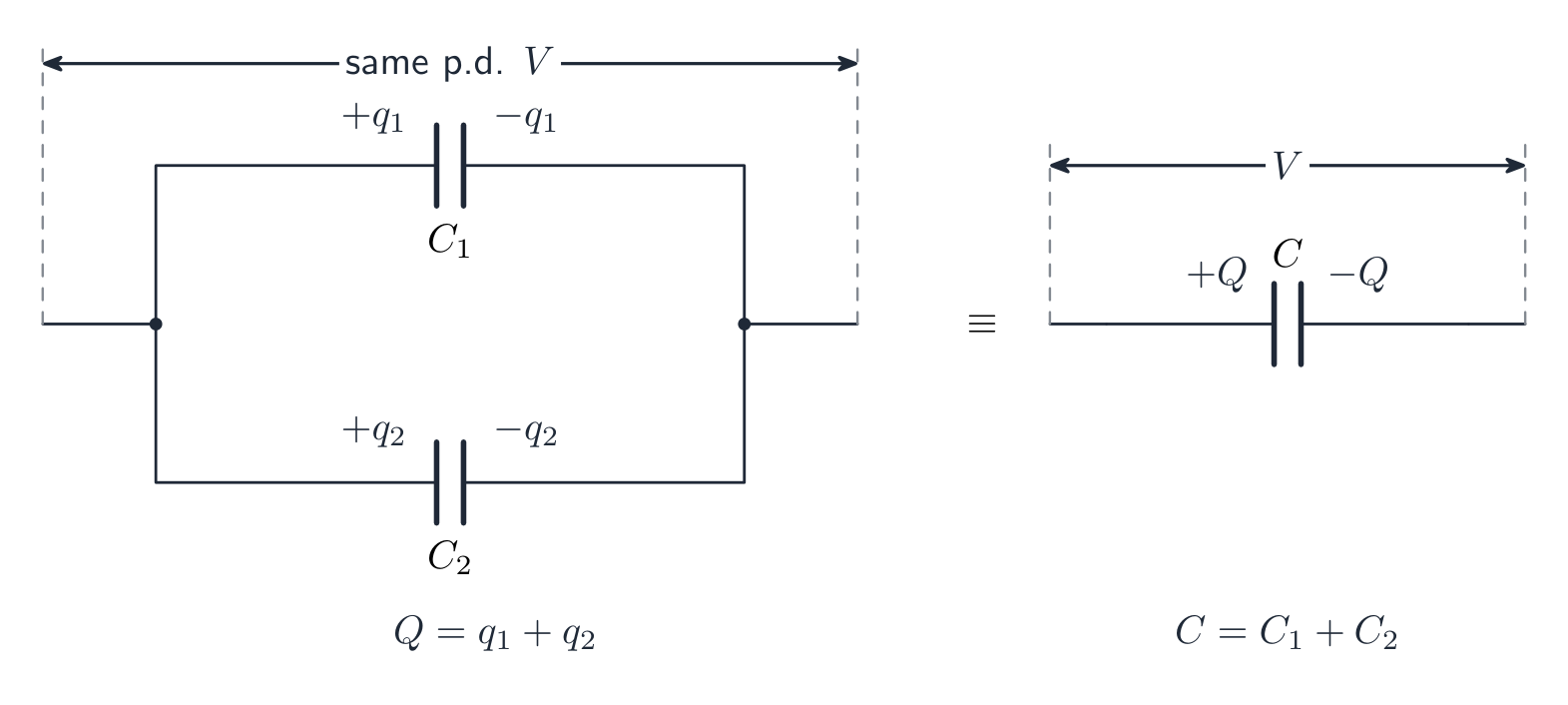
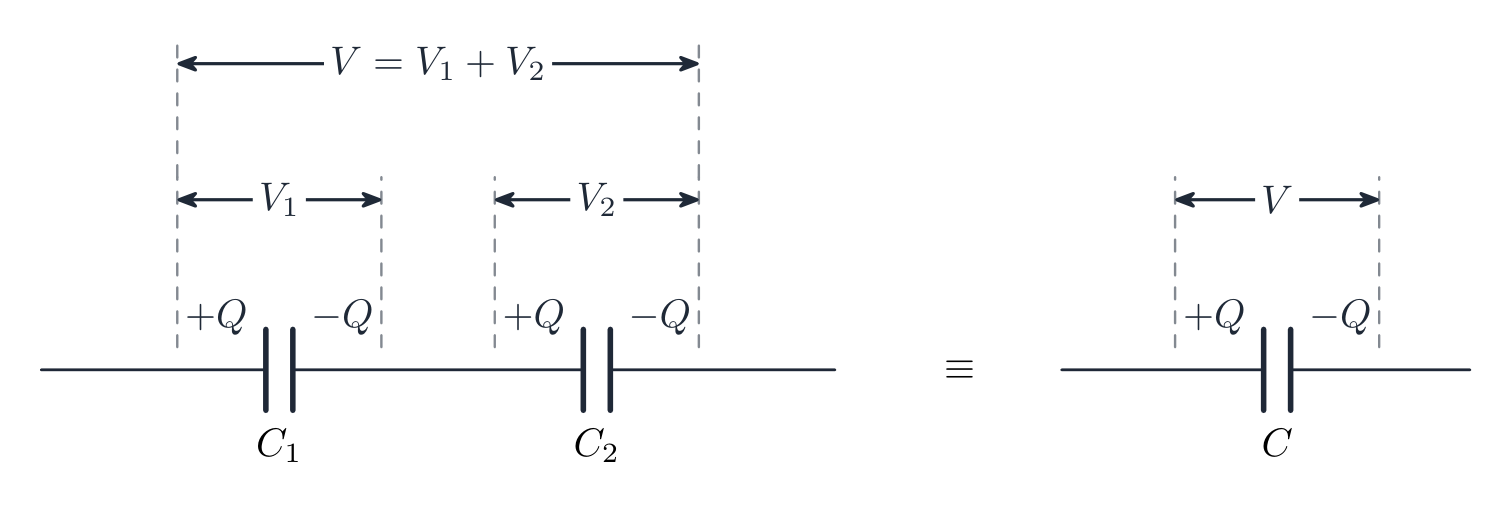
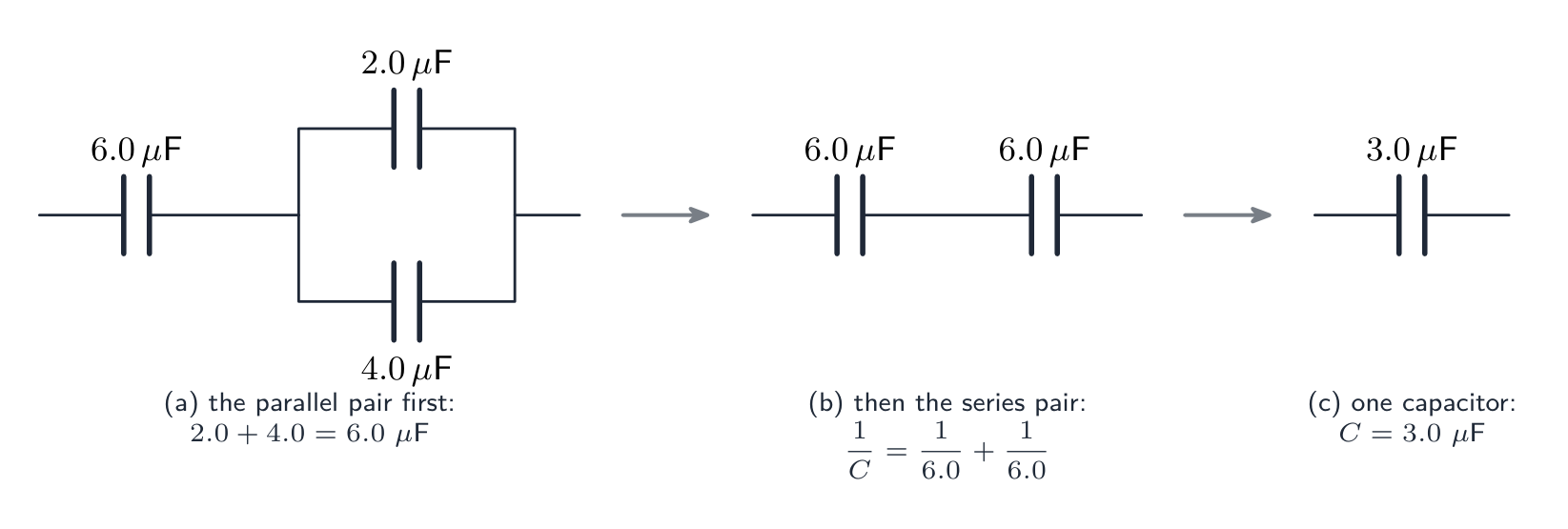

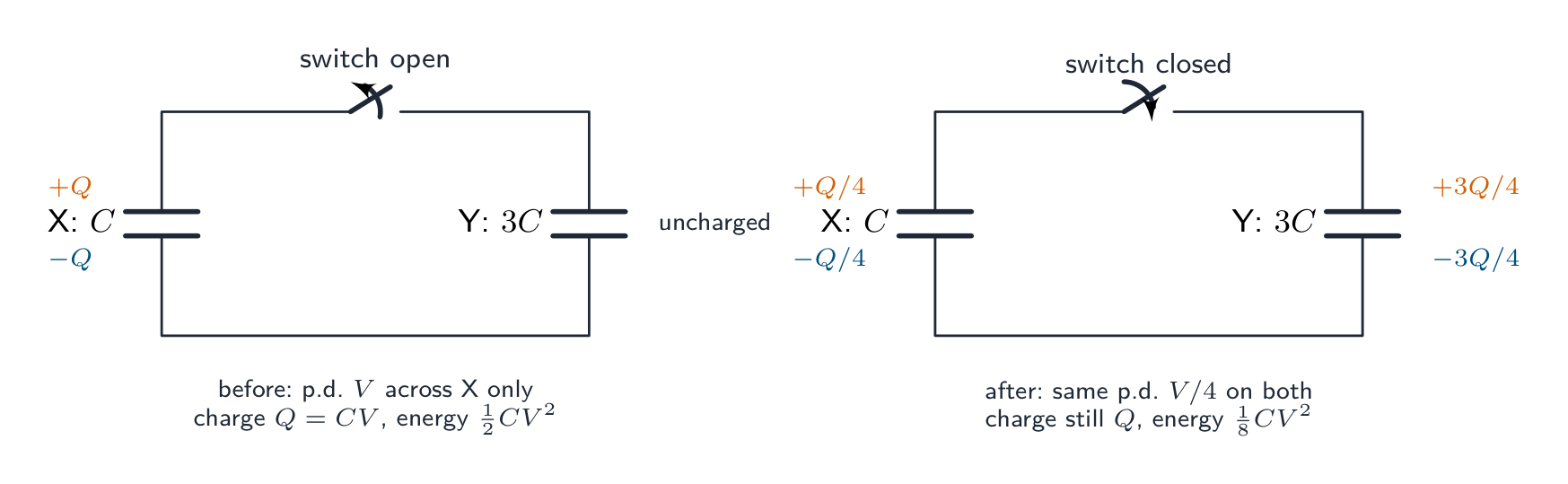
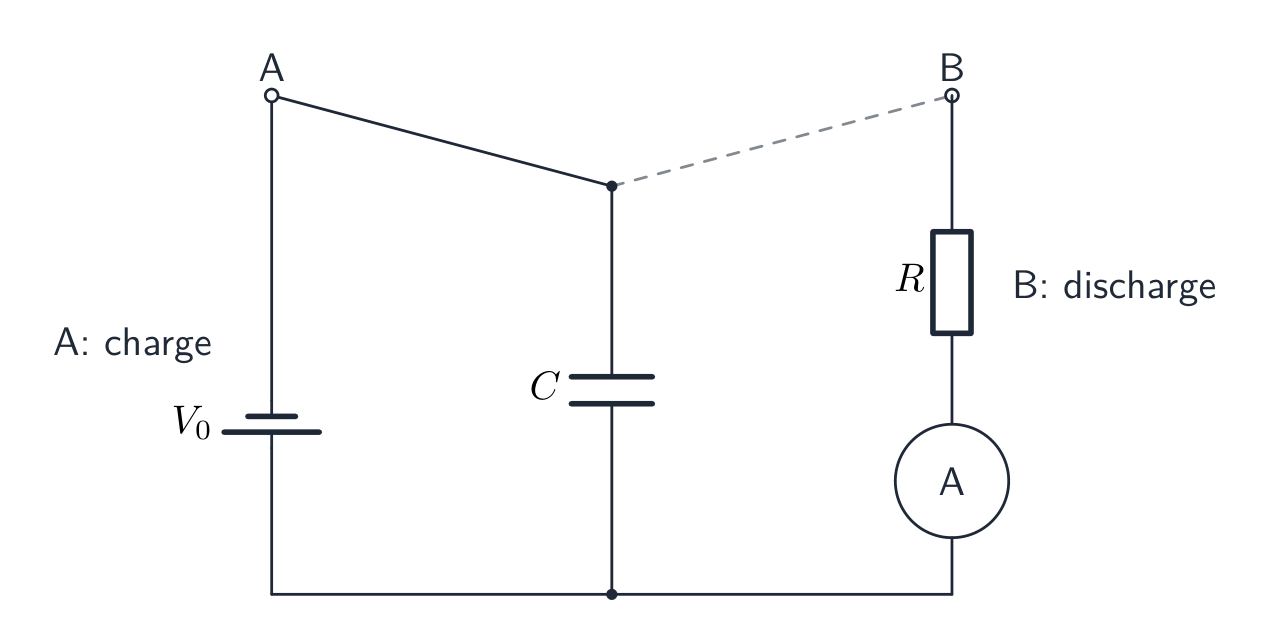
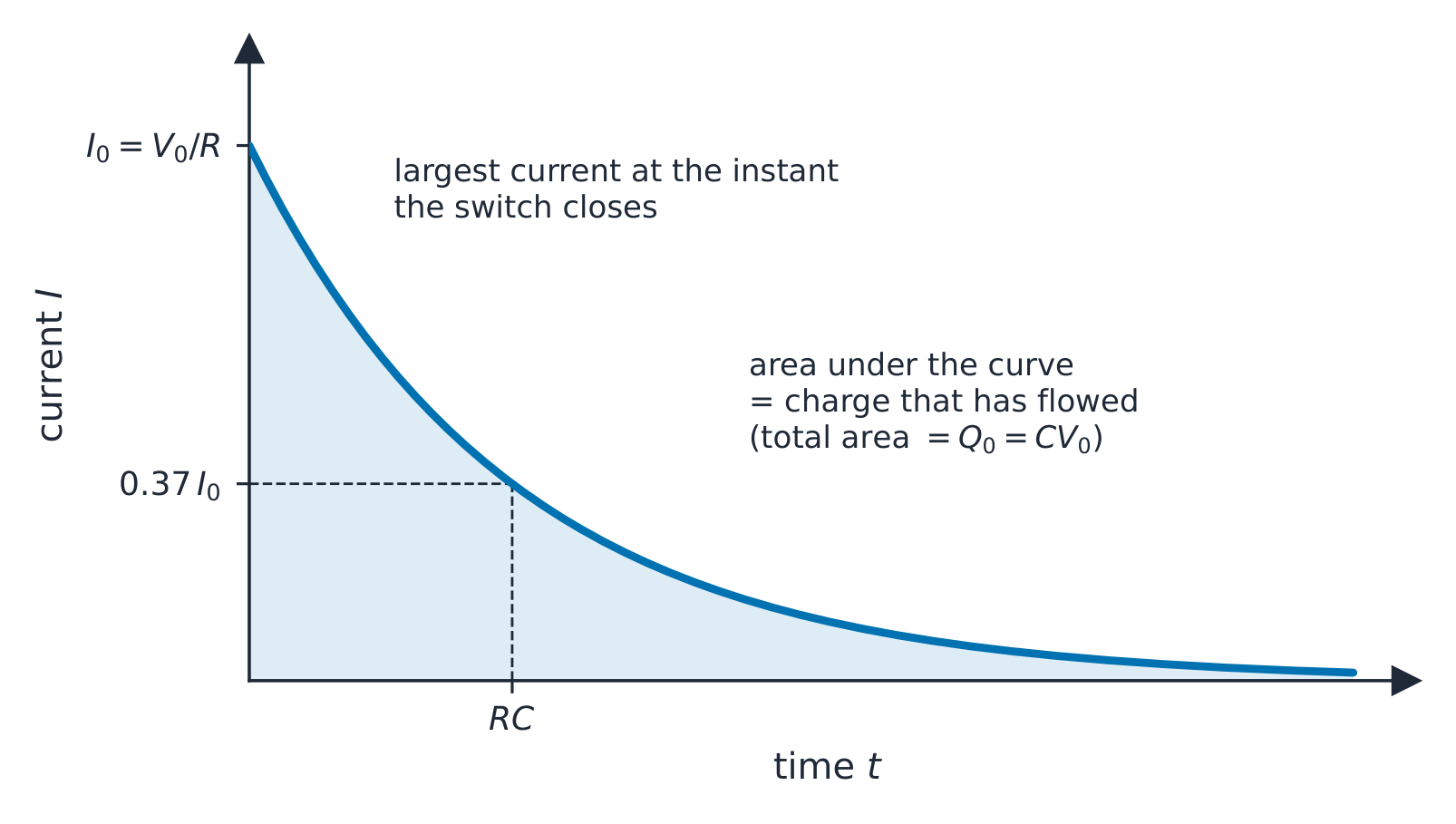

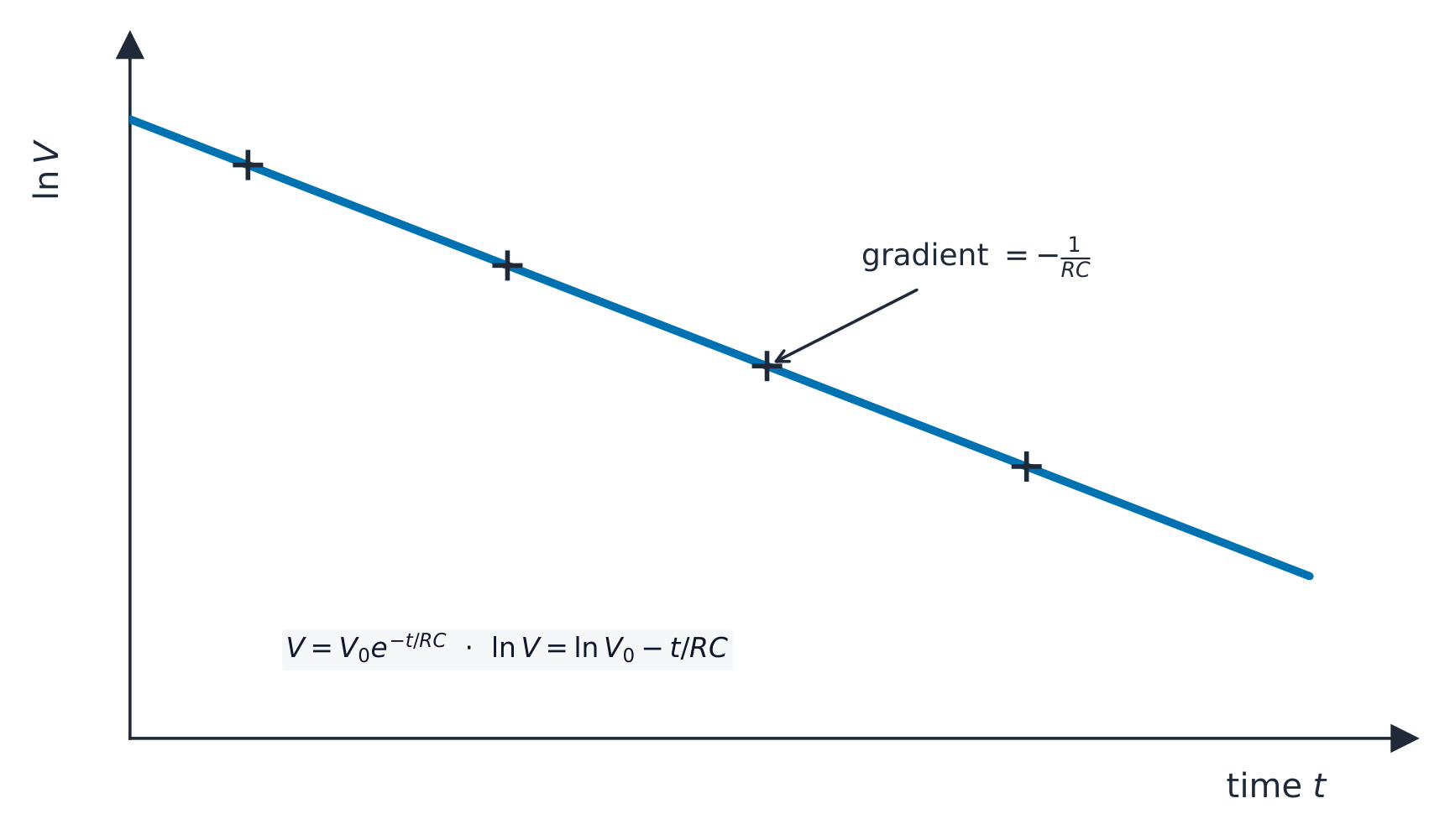
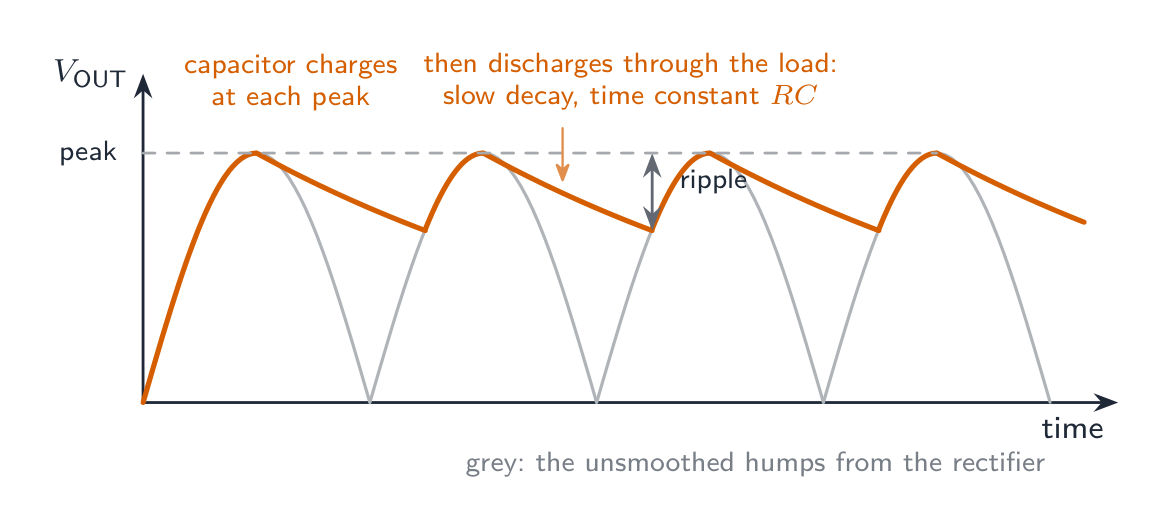
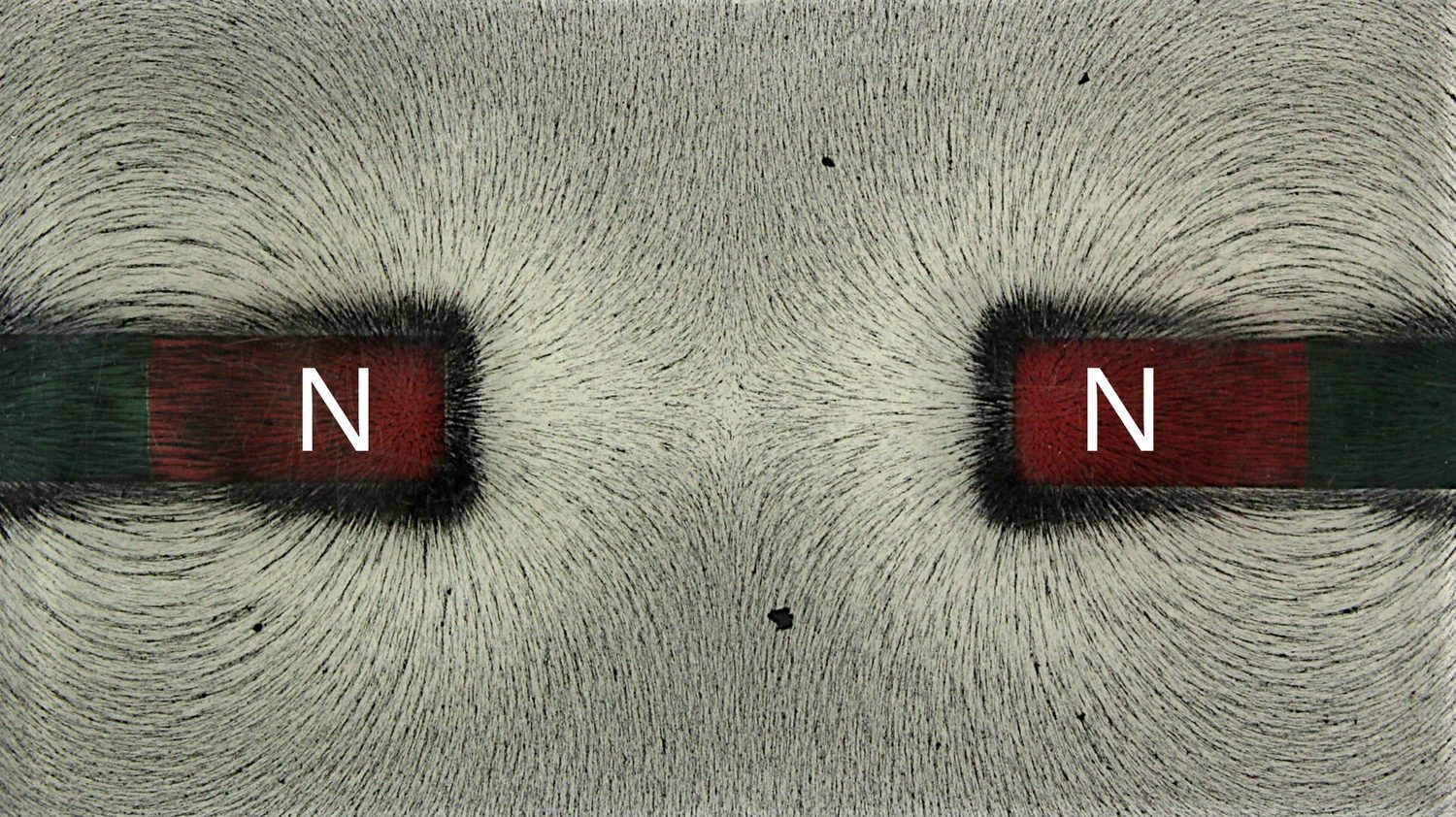


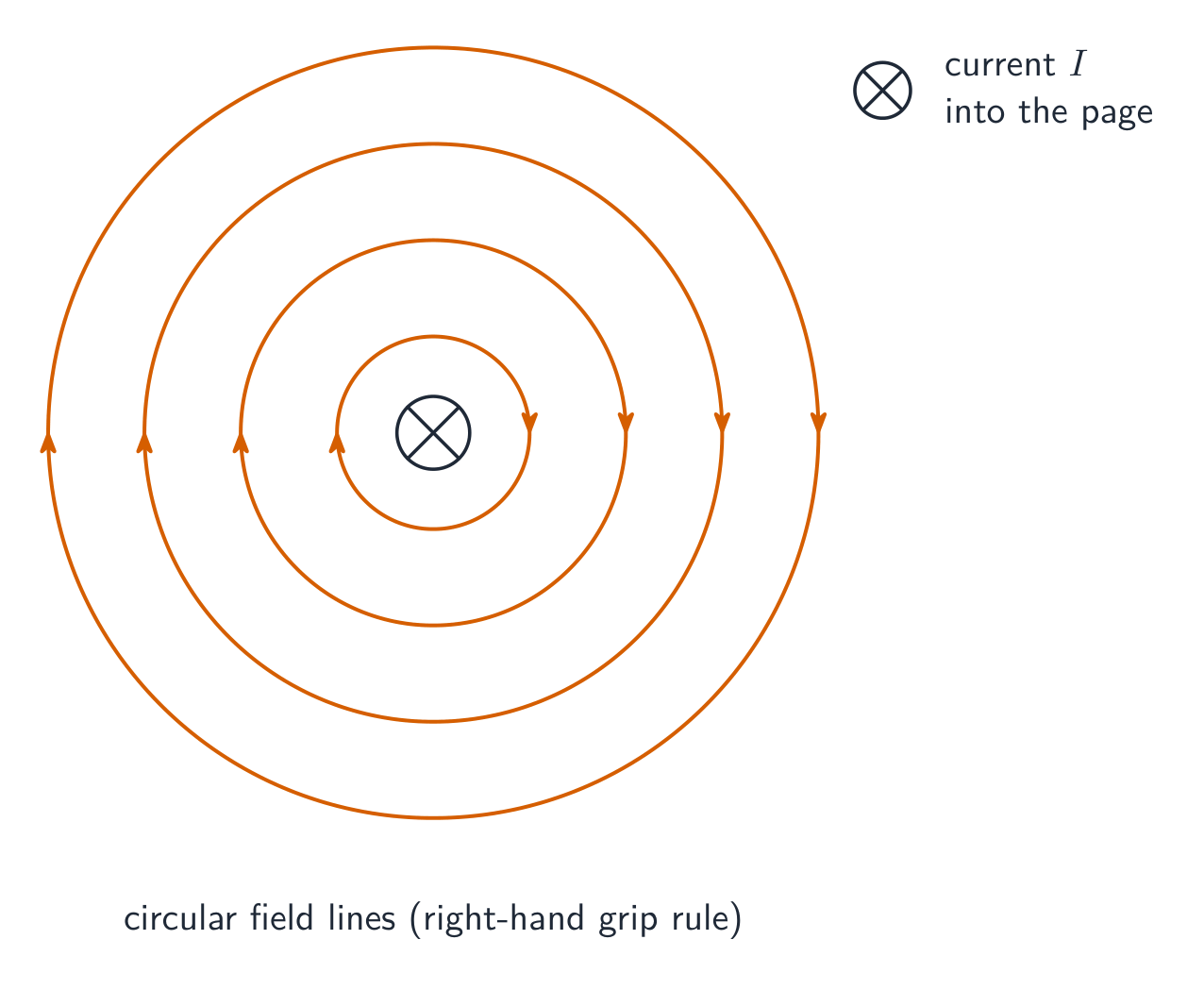

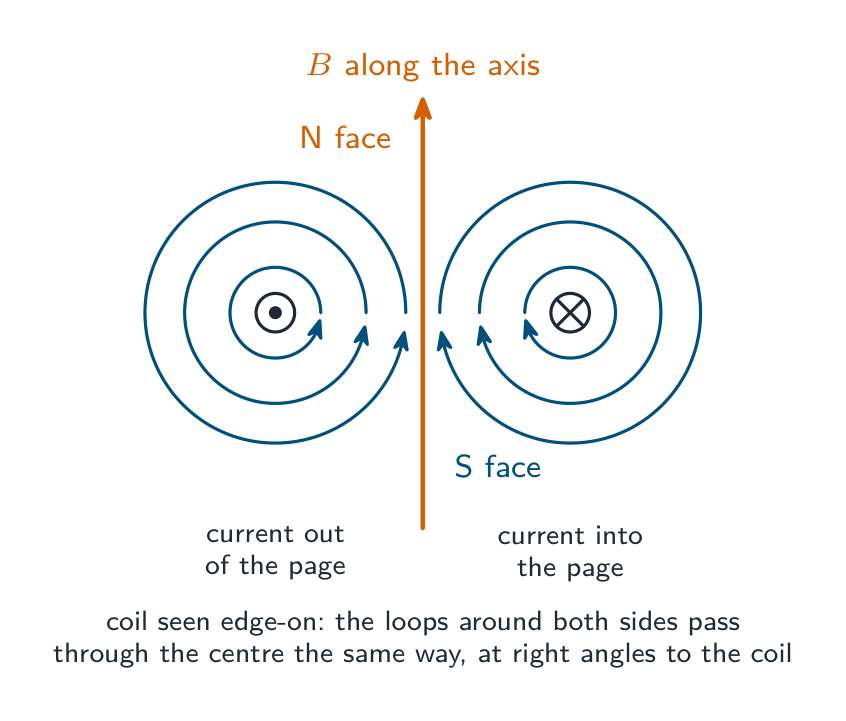
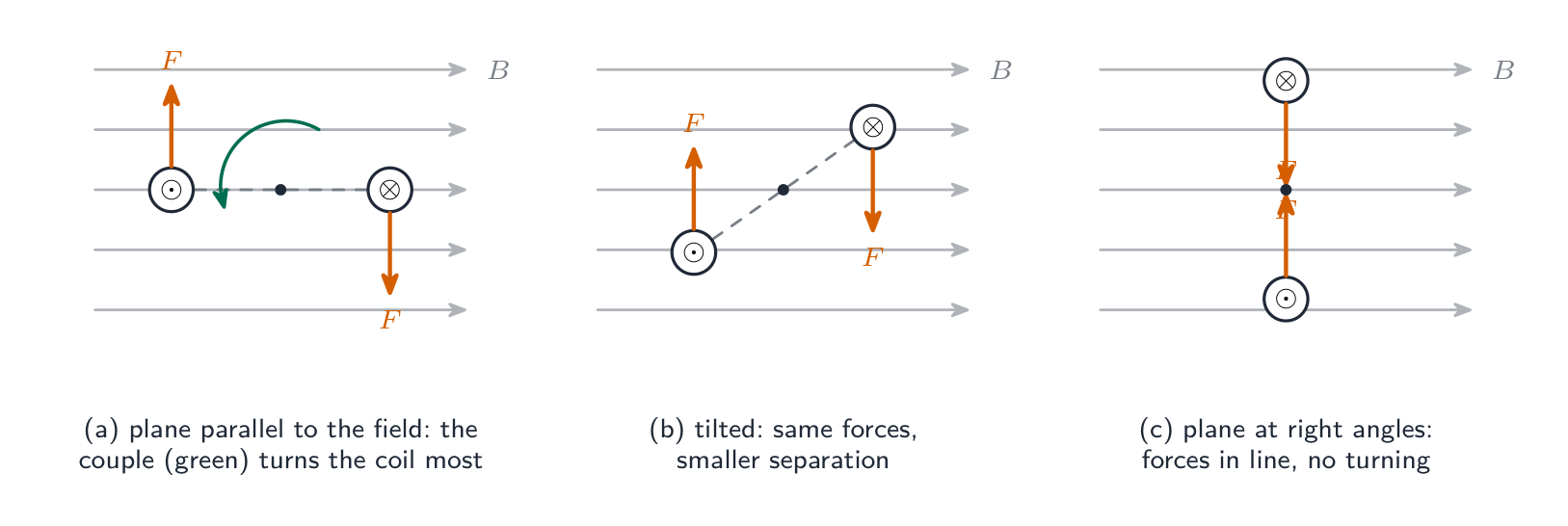


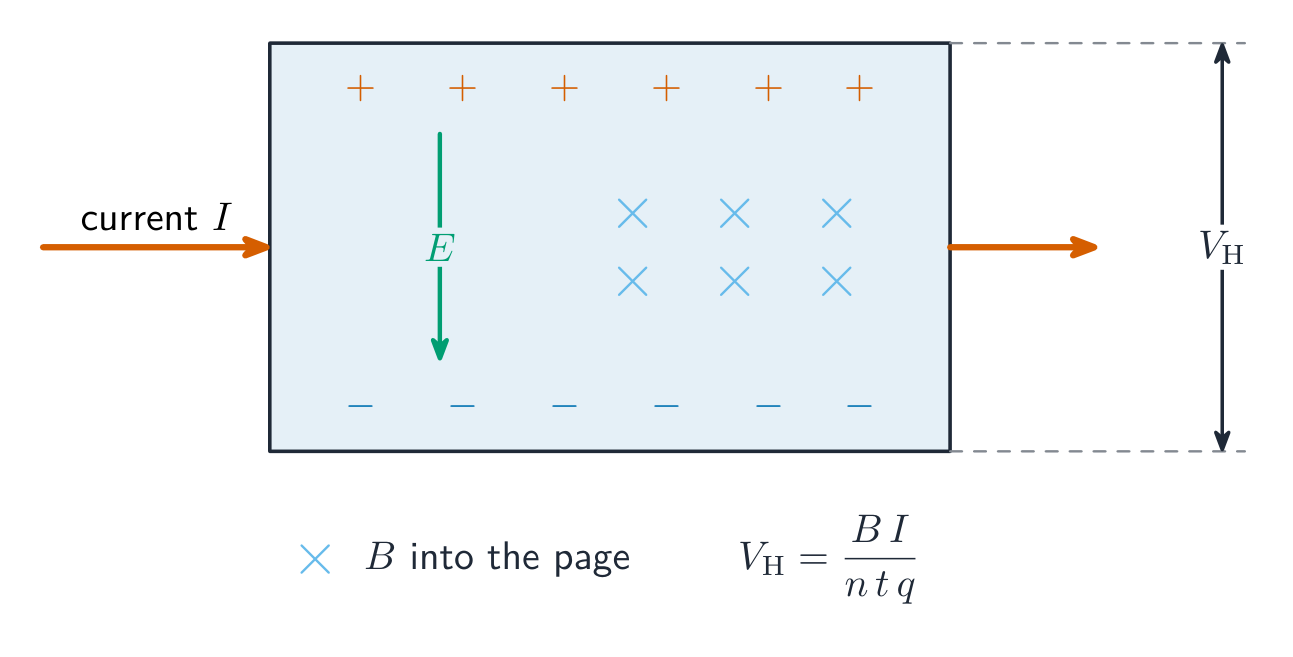

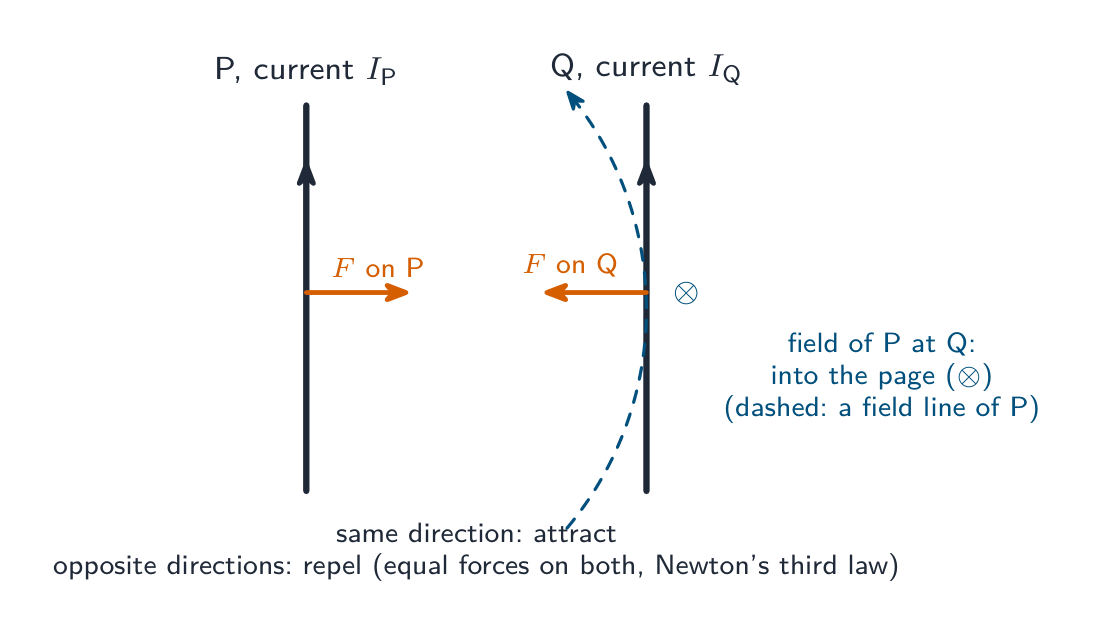
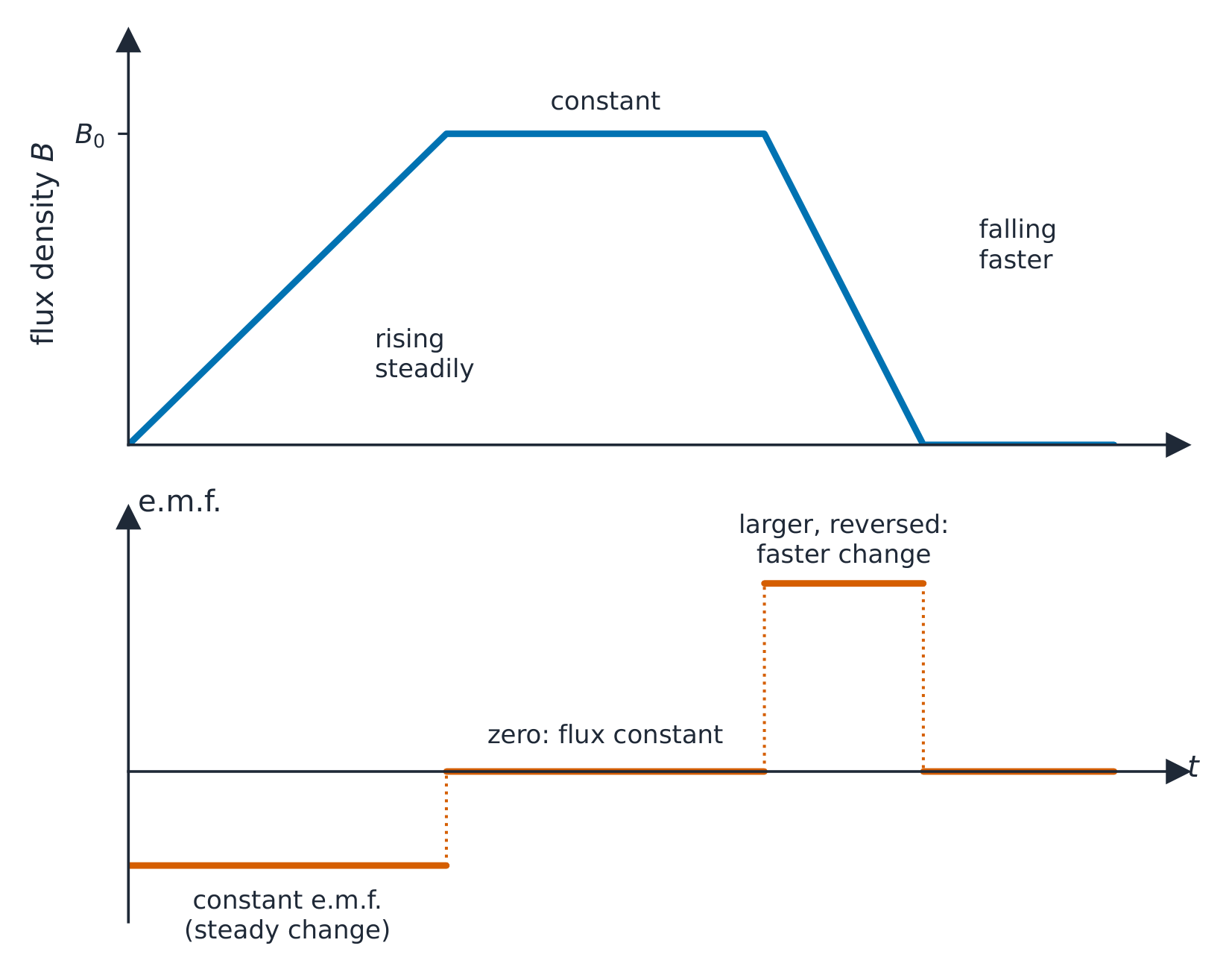

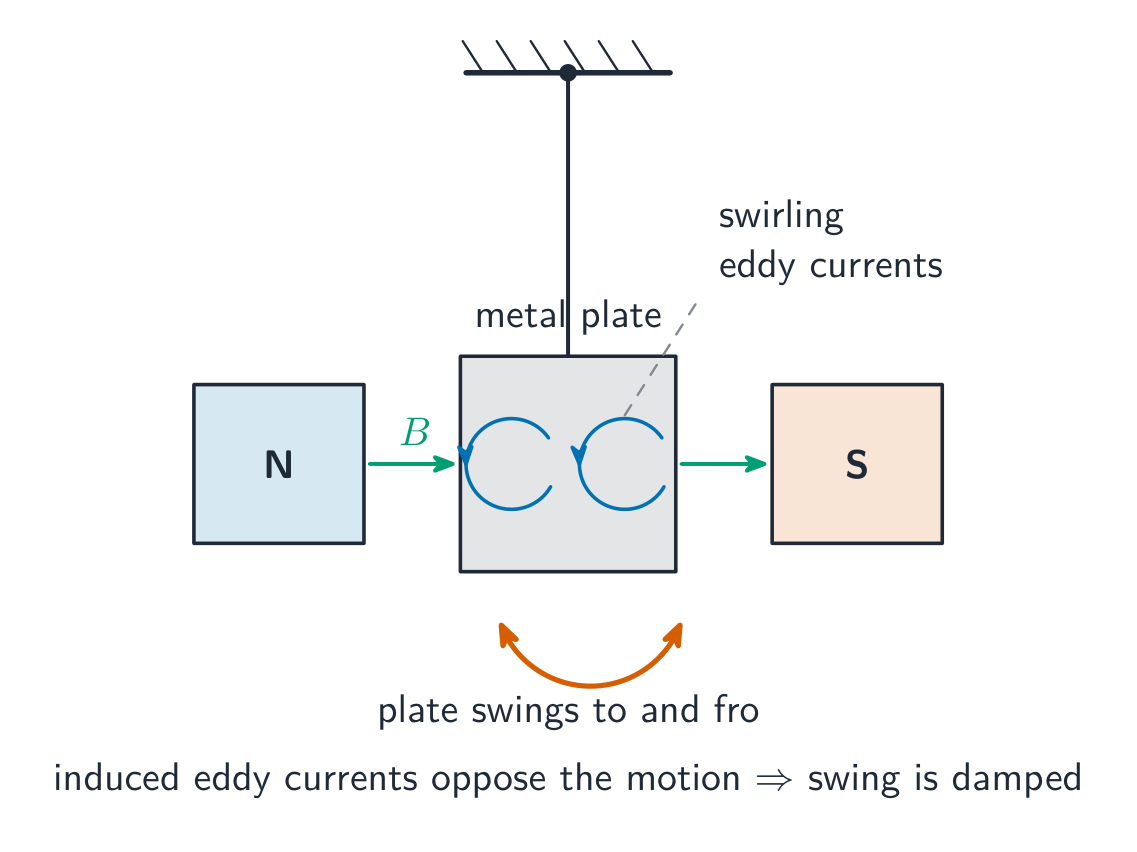
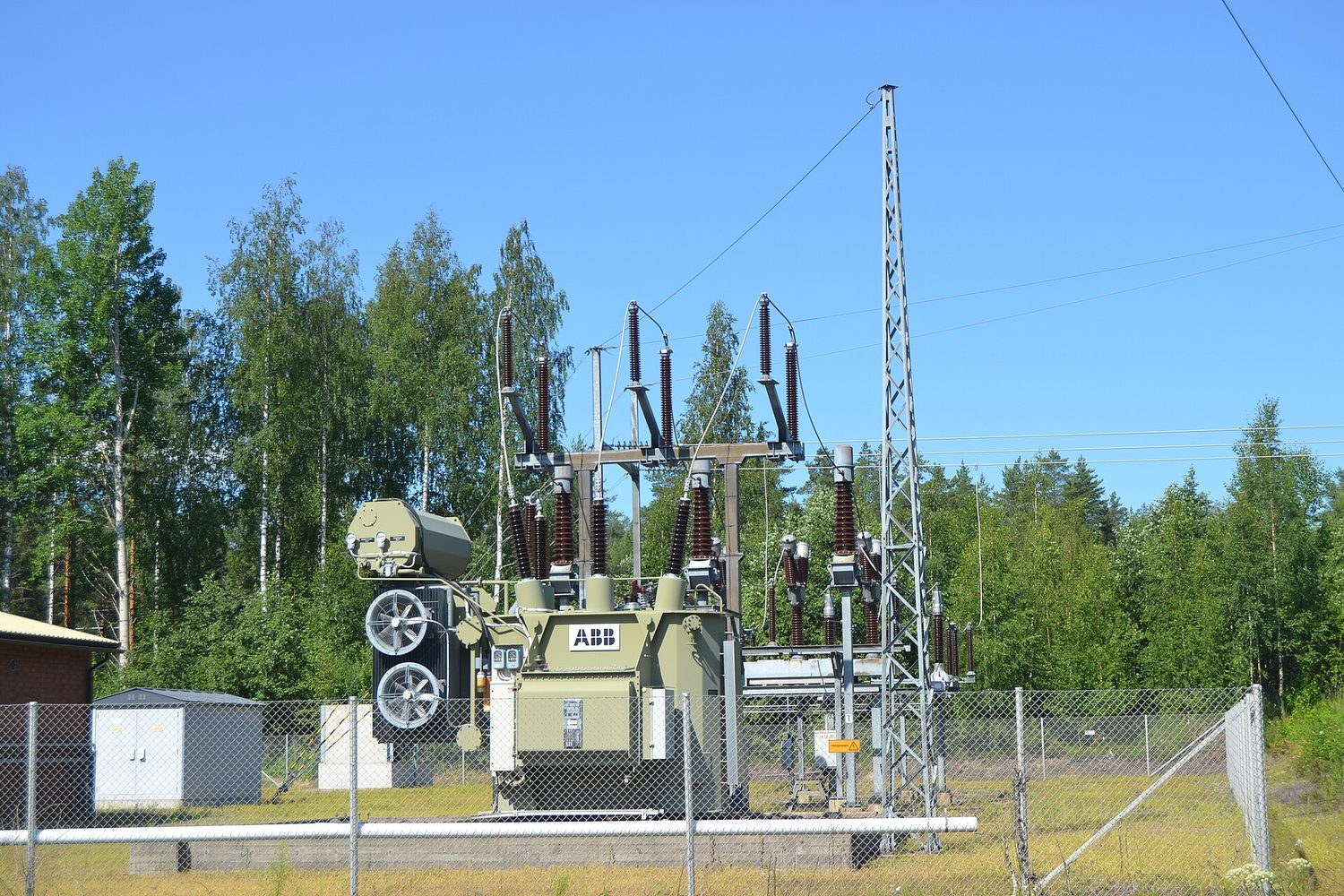


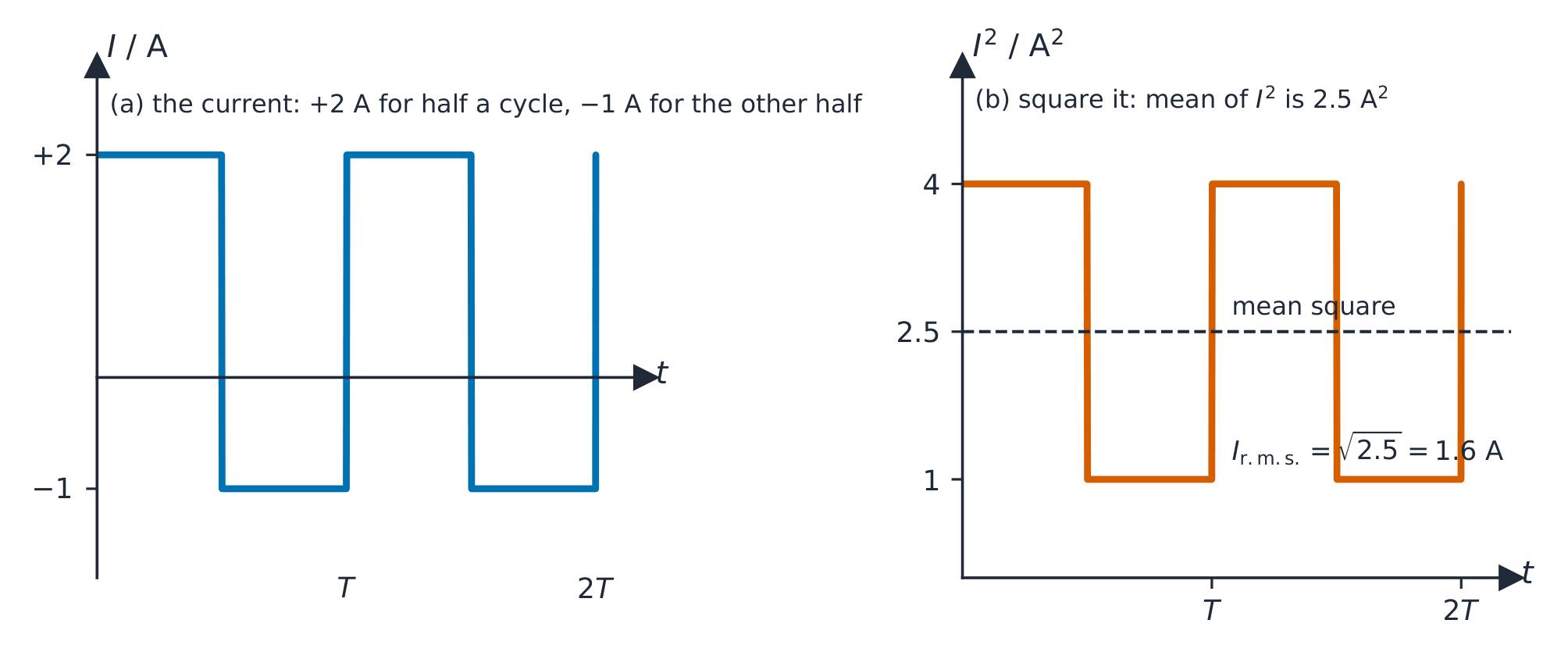
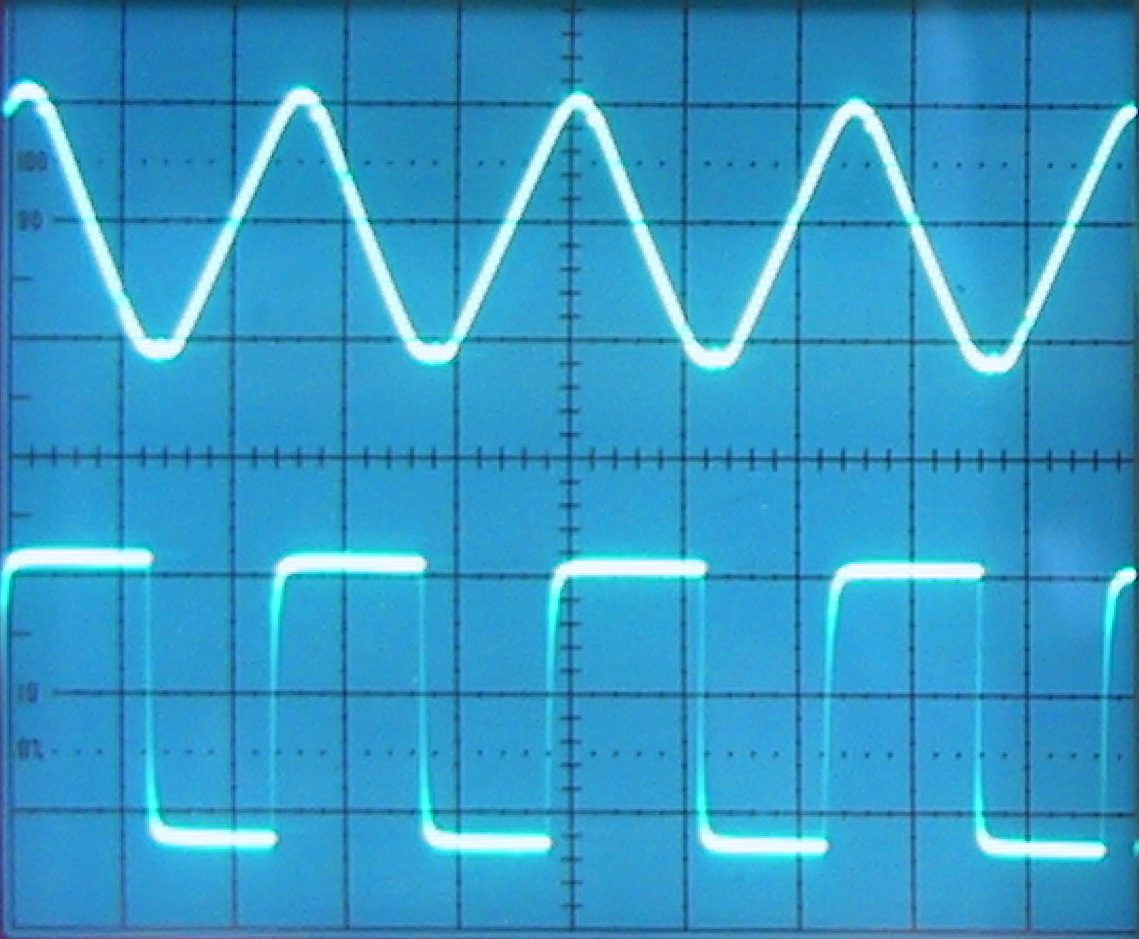




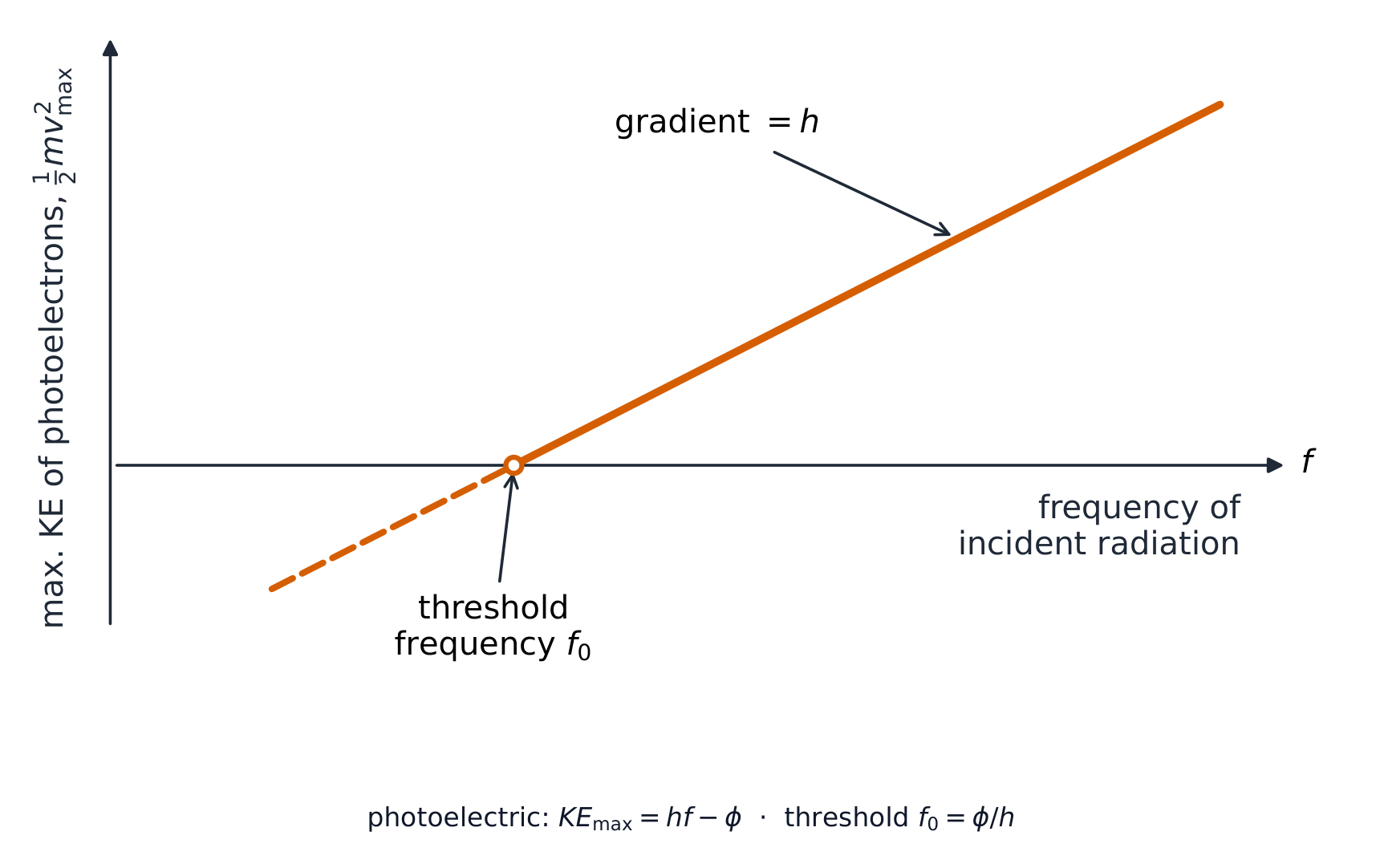


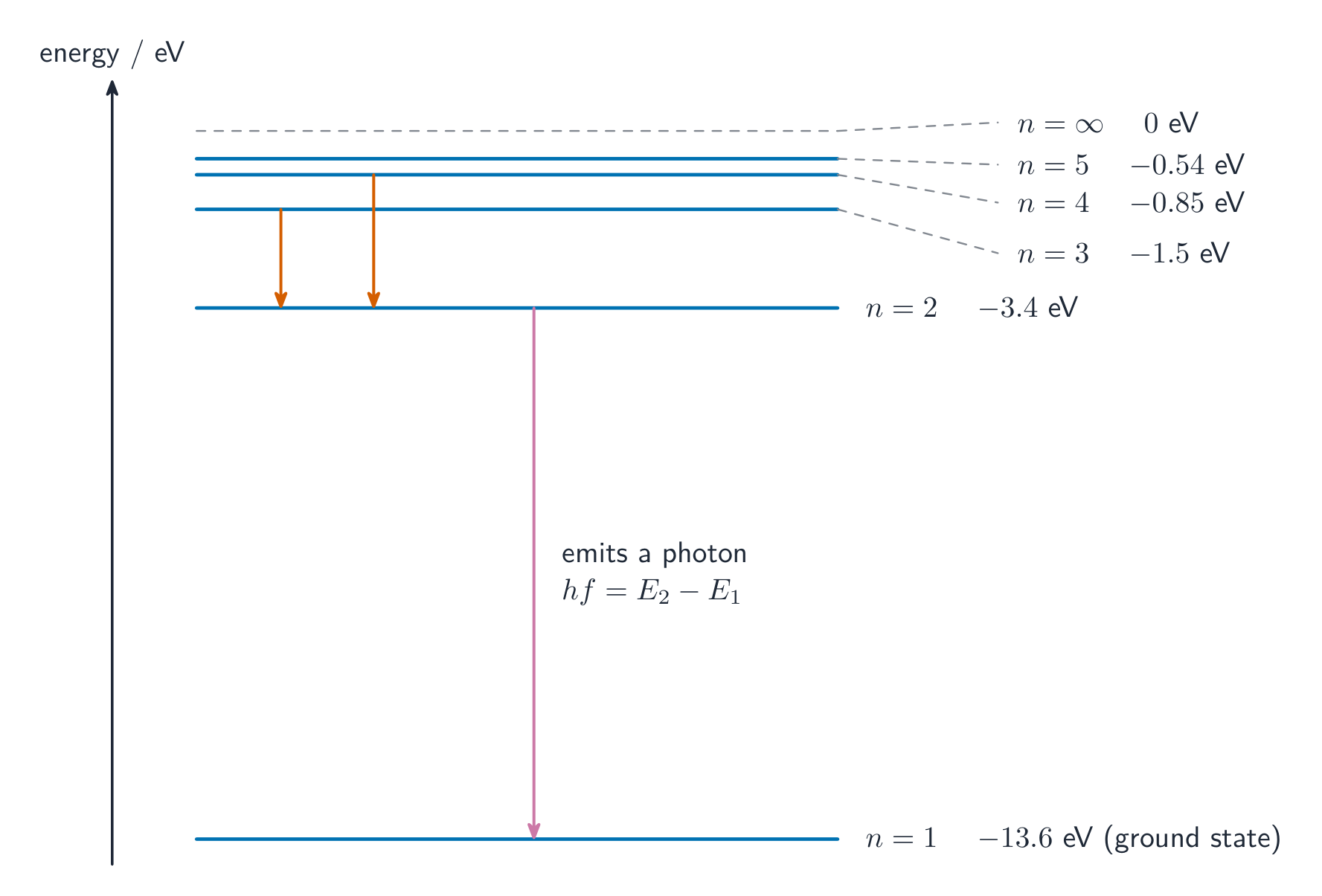
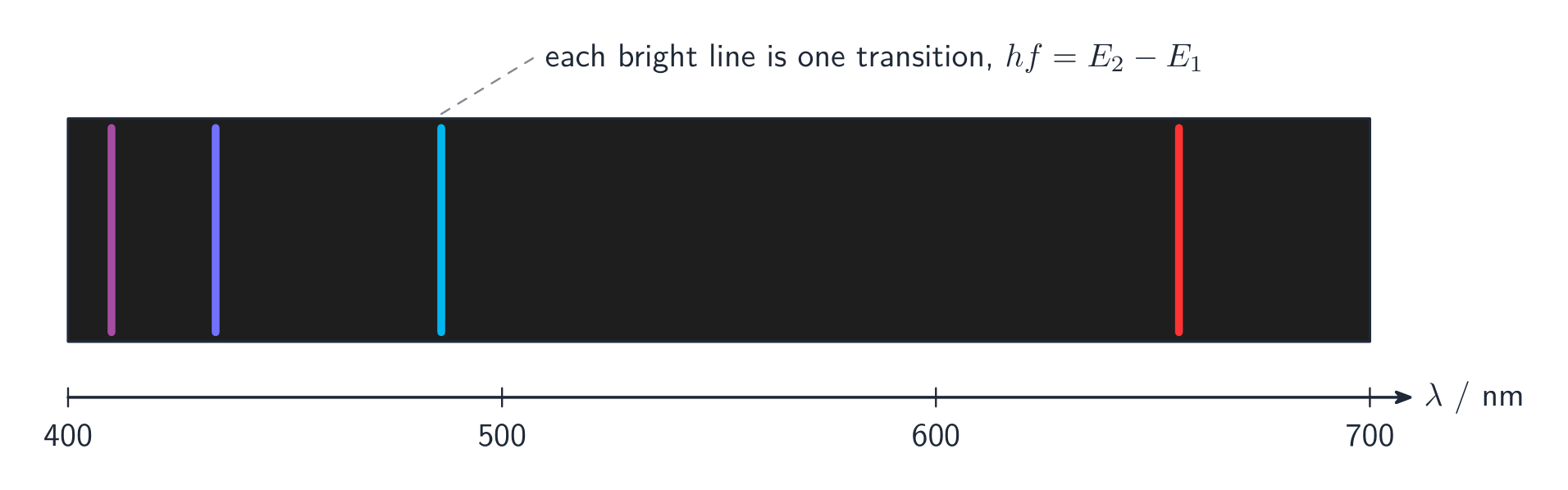
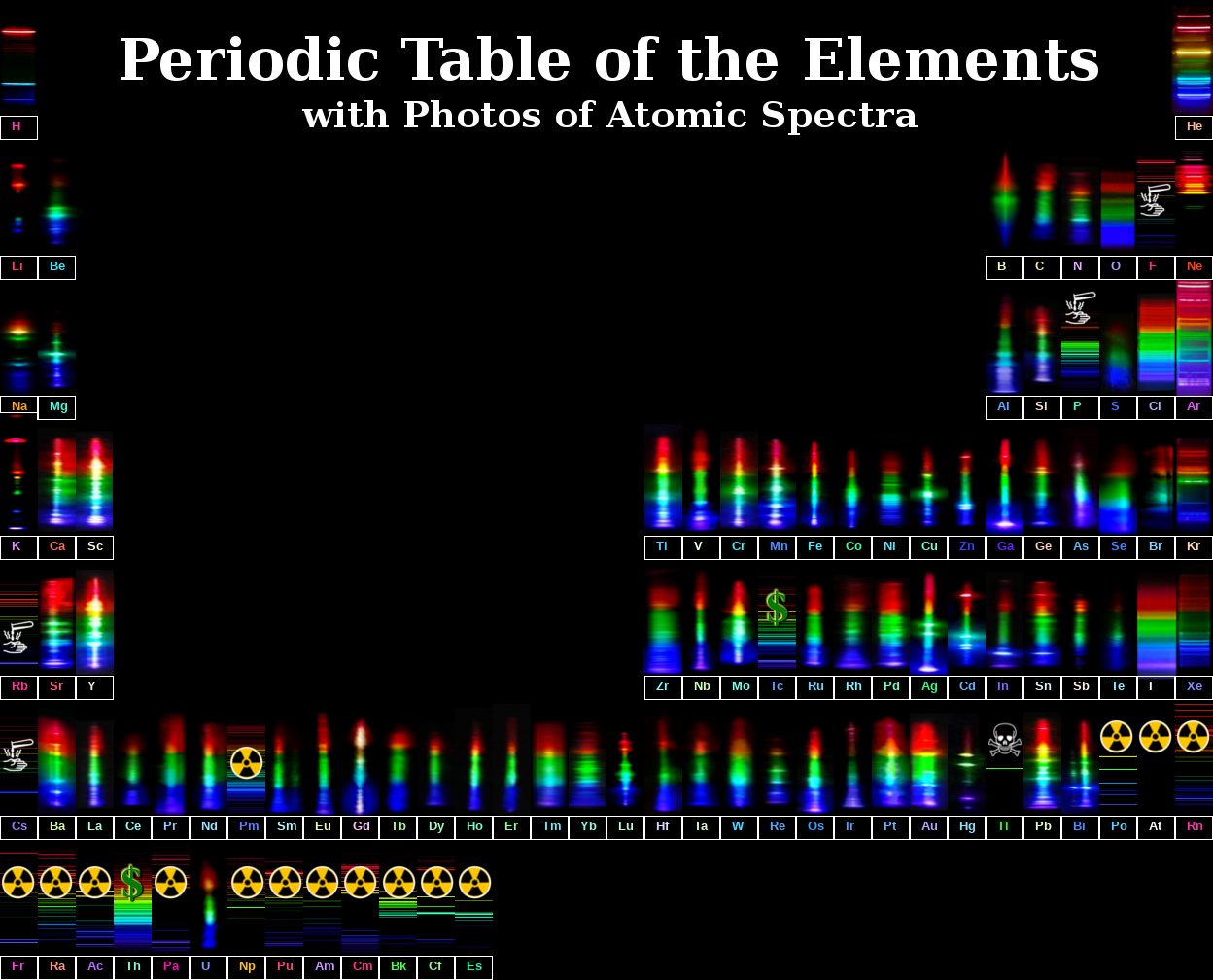
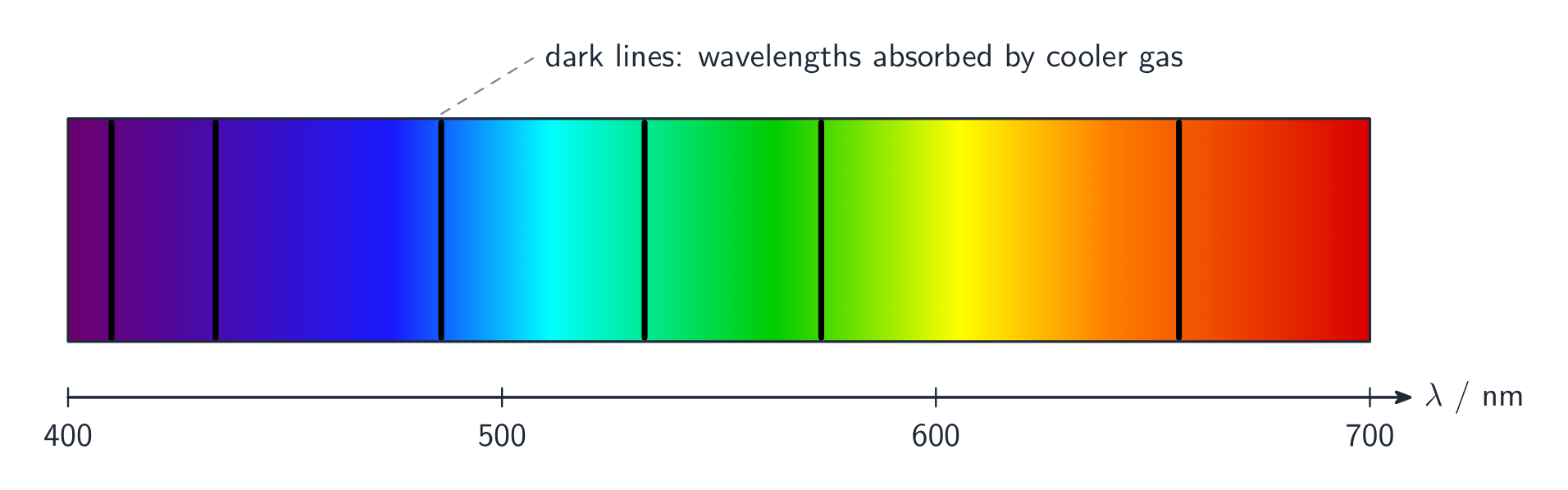
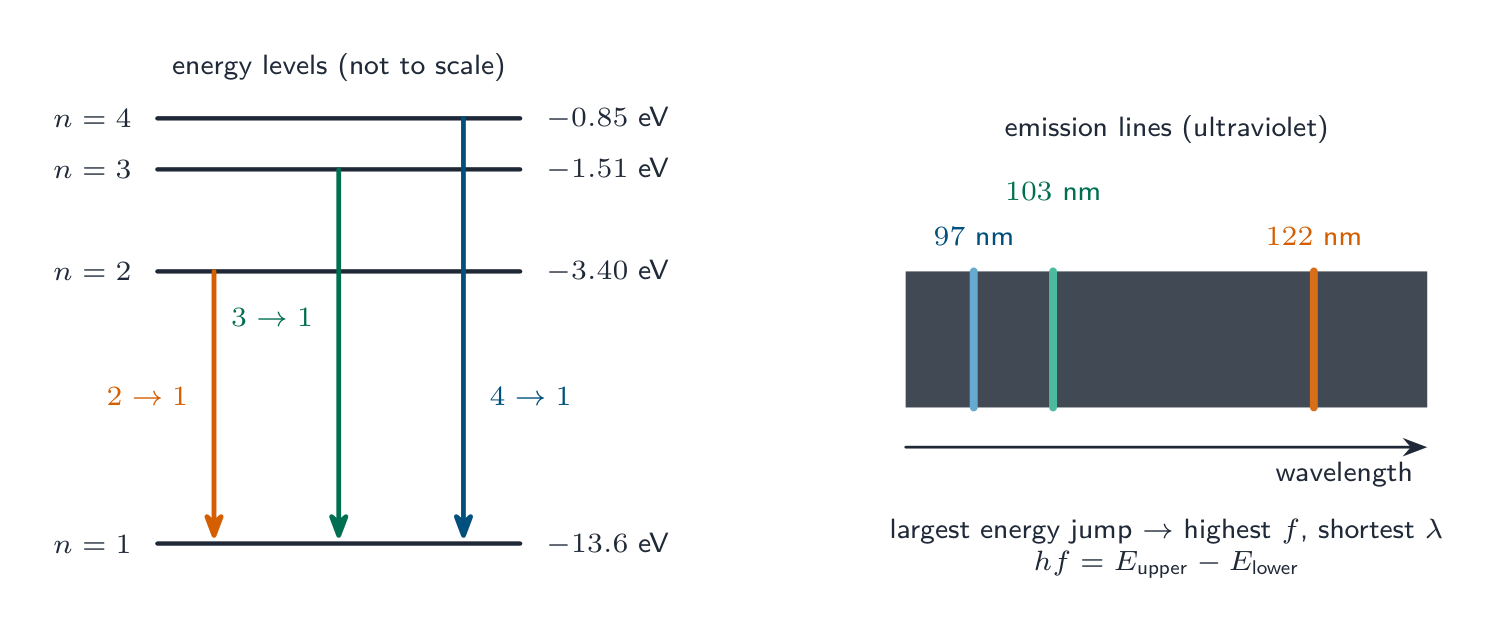


 *אנרגיית הקשר לכל נוקלאון מגיעה לשיא בסביבת ברזל (