English
This final topic covers trade imbalances, exchange rates in depth, and how countries develop and connect.
עברית
נושא זה עוסק בחוסר איזון במסחר, שיערי חילוף לעומק, ובאופן שבו מדינות מתפתחות ומתחברות.
A-Level Economics · כלכלה A-Level · Topic 11 · נושא 11
 8:57
8:57
נושאים כלכליים בינלאומיים (A-Level)
מטבע של מדינה מאבד חמישית מערכו בלילה אחד. היצוא הופך לפתאום זול, היבוא לפתאום יקר, ולכן הסכמי המסחר אמורים להיסגר מיידית. זה לא קורה.…
English narration · English + 中文 subtitles burned in · קריאת קול באנגלית · תרגום אנגלי + סינית שרוף בתוך הסרטון
This final topic covers trade imbalances, exchange rates in depth, and how countries develop and connect.
נושא זה עוסק בחוסר איזון במסחר, שיערי חילוף לעומק, ובאופן שבו מדינות מתפתחות ומתחברות.
Source: Cambridge International syllabus · מקור: הסיילבוס הבינלאומי של קמבריד'ג'
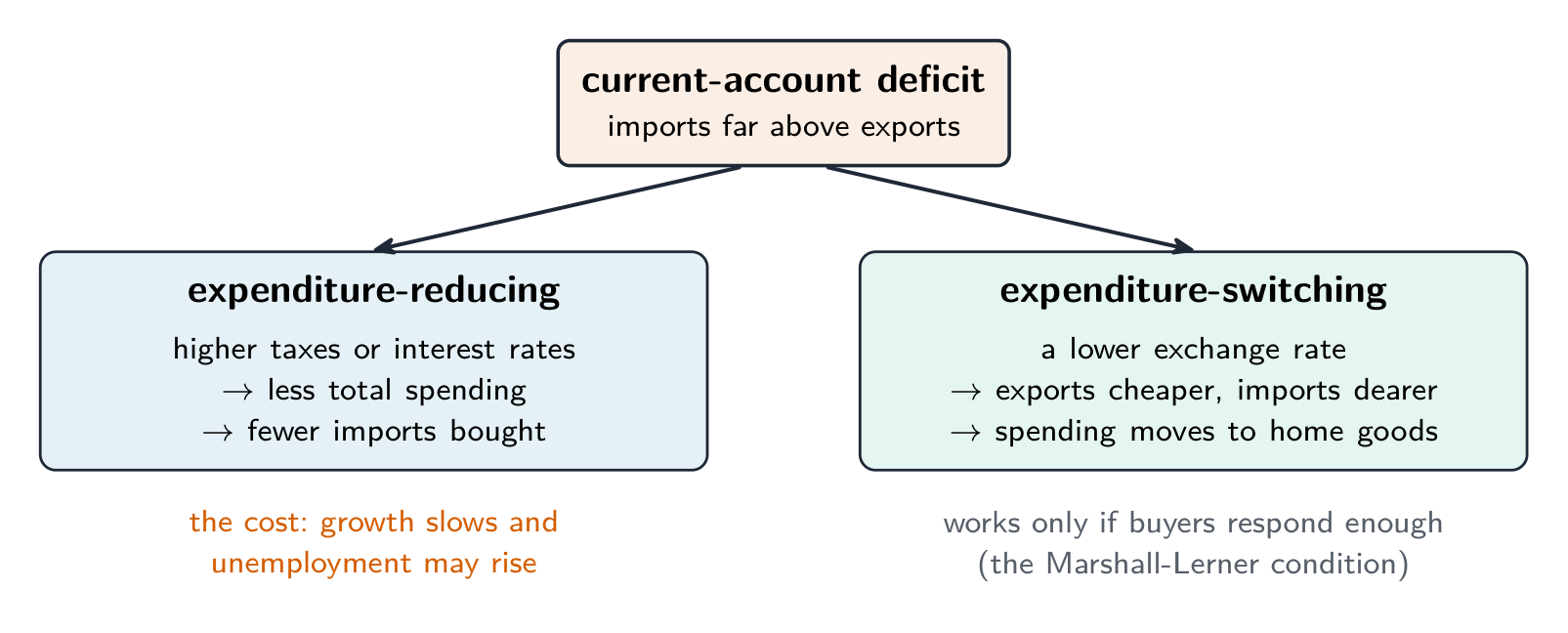
A country with a large balance of payments 国际收支 problem — usually a deficit on the current account 经常账户 — can use two kinds of policy.
A lower exchange rate only improves the current account if buyers respond enough. The Marshall-Lerner condition 马歇尔勒纳条件 says the sum of the price elasticities of demand for exports and imports must be greater than one:
Worked example. After a depreciation, the demand for a country's exports has $PED = 0.6$ and its demand for imports has $PED = 0.7$. Will the current account improve?
so the Marshall-Lerner condition is met, and the depreciation should improve the current account in the long run. (If the two elasticities had summed to less than $1$ — for example $0.3 + 0.4 = 0.7$ — a depreciation would make the deficit worse.)
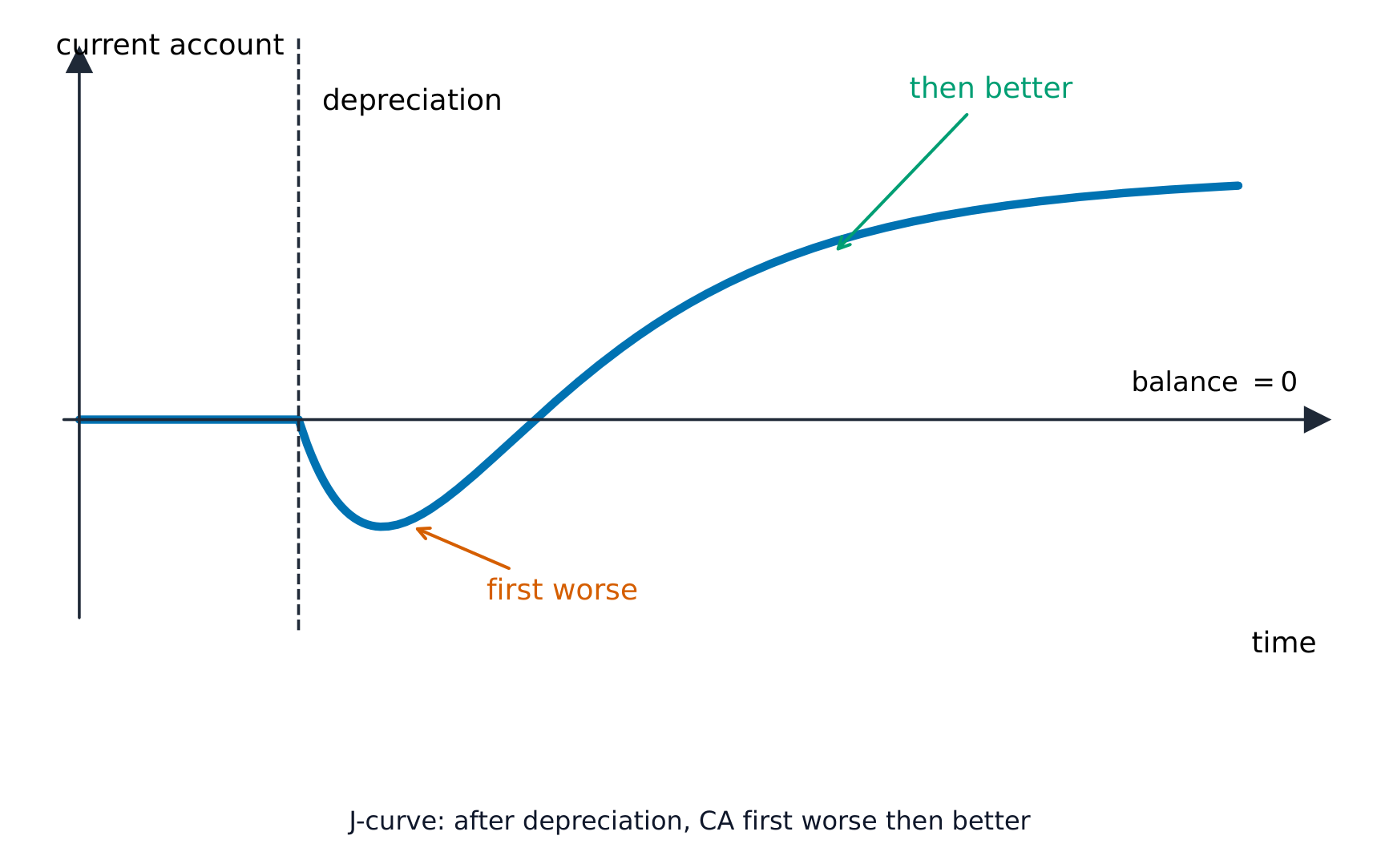
Even when this holds, the gain takes time. The J-curve effect J曲线效应 describes what happens: just after a depreciation, the current account first gets worse (imports cost more straight away, but trade volumes are slow to change), then later improves as buyers adjust — tracing the shape of a letter J.
מדינה עם בעיית איזון תשלומים גדולה — לרוב גירעון ב-חשבון הנוכחי — יכולה להשתמש בשני סוגים של מדיניות.
שיער חילוק נמוך יותר משפר את החשבון הנוכחי רק אם הקונים מגיבים מספיק. תנאי Marshall-Lerner אומר שמספר אלסטיות המחירים בביקוש ליצוא וליבוא חייב להיות גדול מאחד:
דוגמה מפורטת. לאחר שחיקה, הביקוש ליצוא של המדינה הוא $PED = 0.6$ והביקוש ליבוא הוא $PED = 0.7$. האם החשבון הנוכחי ישפר?
ולכן תנאי Marshall-Lerner מתקיים, ושחיקה אמורה לשפר את החשבון הנוכחי בטווח הארוך. (אילו שני האלסטיות היו מחשיבות לפחות מ$1$ — לדוגמה $0.3 + 0.4 = 0.7$ — השחיקה היחמירה את הגירעון).**
גם כאשר הדבר מתקיים, הרווח לוקח זמן. אפקט עקומת J מתאר מה קורה: מיד לאחר שחיקה, החשבון הנוכחי לראשונה מתחמם (היבוא עולה מיד, אך נפחי הסחר משתנים לאט), ולאחר מכן משתפר כאשר הקונים מתכווננים — ומצייר את צורת האות J.
Classify real examples by the economic idea they show. · סווג דוגמאות אמיתיות לפי הרעיון הכלכלי שהן מדגישות.
Source: Cambridge International syllabus · מקור: הסיילבוס הבינלאומי של קמבריד'ג'
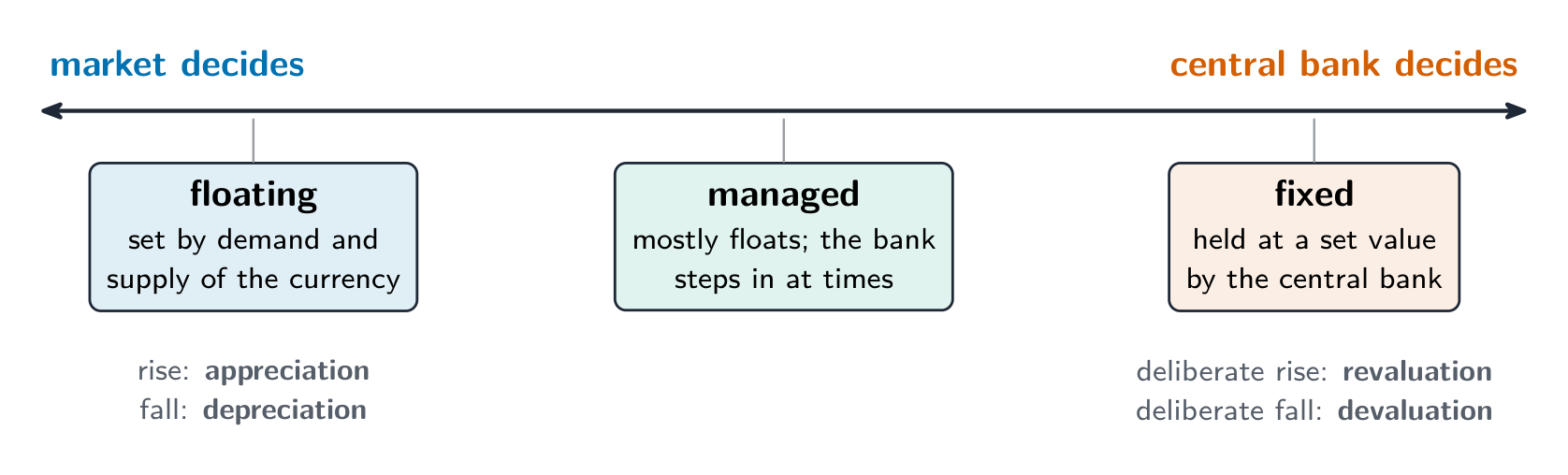
An exchange rate is the price of one currency in terms of another. There is more than one way to measure it:
Under floating rates, a rise in value is an appreciation 升值 and a fall is a depreciation. Under a fixed system, a deliberate rise is a revaluation 法定升值 and a deliberate fall is a devaluation. A weaker currency tends to raise exports and inflation; a stronger currency does the opposite.
שיער חילוק הוא המחיר של מטבע אחד ביחס למטבע אחר. קיימות יותר מדרך אחת למדידתו:
תחת שיעורי ציפה, עלייה בערך היא התחזקות וירידה היא התעלמות. תחת מערכת קבועה, עלייה מתוכננת היא שערות מחדש וירידה מתוכננת היא שערות מחדש. מטבע חלש נוטה להגביר יצוא ותאורה; מטבע חזק עושה את ההפך.
The exchange rate is set by the demand for and supply of the currency. Shift either to see the rate appreciate or depreciate. · מחיר החילוף נקבע על ידי ביקוש והיצע המטבע. הזז את אחד מהם כדי לראות את המחיר מתחזק או מתחלש.
| English | עברית |
|---|---|
| balance of payments/ˈbæləns ɒv ˈpeɪmənts/ | מאזן התשלומים |
| current account/ˈkʌrənt əˈkaʊnt/ | חשבון נוכחי |
| expenditure-reducing/ekˈspendɪtʃə rɪˈdjuːsɪŋ/ | צמצום הוצאות |
| expenditure-switching/ekˈspendɪtʃə ˈswɪtʃɪŋ/ | העברת הוצאות |
| exchange rate/eksˈtʃeɪndʒ reɪt/ | שיעור החלפה |
| depreciation/dɪˌpriːʃɪˈeɪʃn/ | הכנסת שחיקה |
| devaluation/diːˌvæljuːˈeɪʃn/ | שוויית |
| Marshall-Lerner condition/ˈmɑːʃl ˈlɜːnə kənˈdɪʃn/ | תנאי מארשל-לרנר |
| J-curve effect/dʒeɪ kɜːv ɪˈfekt/ | אפקט עקומת J |
| nominal exchange rate/ˈnɒmɪnl eksˈtʃeɪndʒ reɪt/ | החלפת שיעור המנוף |
| real exchange rate/rɪəl eksˈtʃeɪndʒ reɪt/ | שיעור החלפה אמיתי |
| trade-weighted exchange rate/treɪd ˈweɪtɪd eksˈtʃeɪndʒ reɪt/ | שיעור חלפה משוקלל סחר |
| effective exchange rate/ɪˈfektɪv eksˈtʃeɪndʒ reɪt/ | שיעור חלפה אפקטיבי |
| floating exchange rate/ˈfləʊtɪŋ eksˈtʃeɪndʒ reɪt/ | שיעור החלפה צף |
| fixed exchange rate/fɪkst eksˈtʃeɪndʒ reɪt/ | שיעור חילוף קבוע |
| managed exchange rate/ˈmænɪdʒd eksˈtʃeɪndʒ reɪt/ | שיעור חילוף מנוהל |
| appreciation/əˌpriːʃɪˈeɪʃn/ | הערכה |
| revaluation/rɪˌvæljuːˈeɪʃn/ | שערור |
| economic growth/ˌiːkəˈnɒmɪk ɡrəʊθ/ | צמיחה כלכלית |
| economic development/ˌiːkəˈnɒmɪk dɪˈveləpmənt/ | פיתוח כלכלי |
| standard of living/ˈstændəd ɒv ˈlɪvɪŋ/ | רמת חיים |
| Human Development Index/ˈhjuːmən dɪˈveləpmənt ˈɪndeks/ | מדד הפיתוח האנושי |
Source: Cambridge International syllabus · מקור: הסיילבוס הבינלאומי של קמבריד'ג'
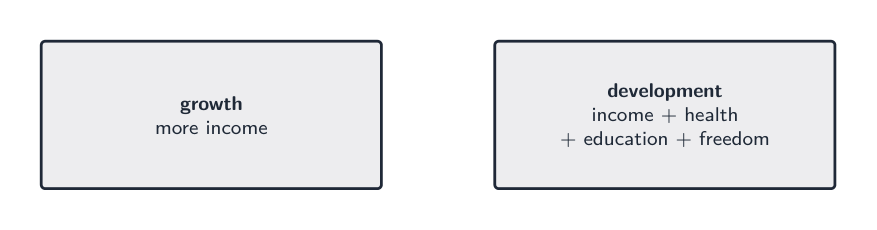
It is important not to confuse two ideas:
A country can grow without developing much (if the extra income goes to a few people). Development usually means rising incomes plus better health, more schooling, and less poverty.
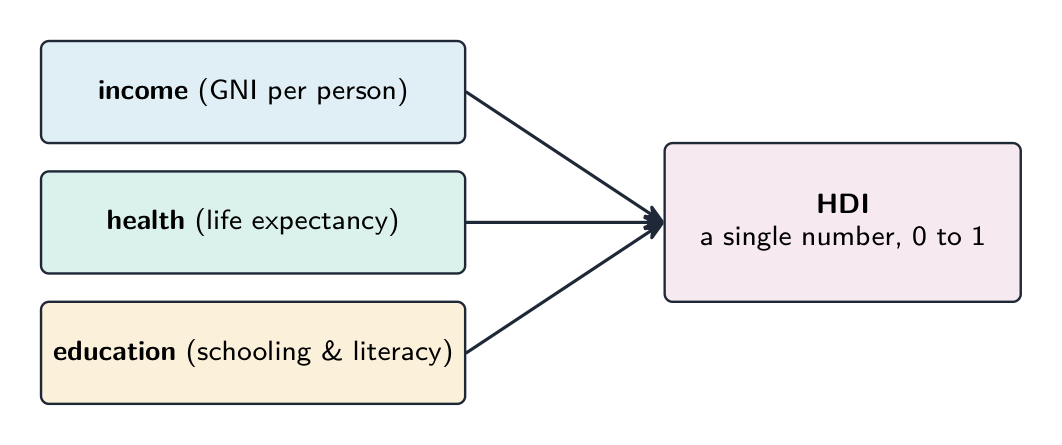
The best-known measure is the Human Development Index 人类发展指数 (HDI). It combines three things into one number between 0 and 1:
Other useful signs of development include access to clean water, the number of doctors per person, and mobile-phone and internet use.
It is important not to confuse two ideas:
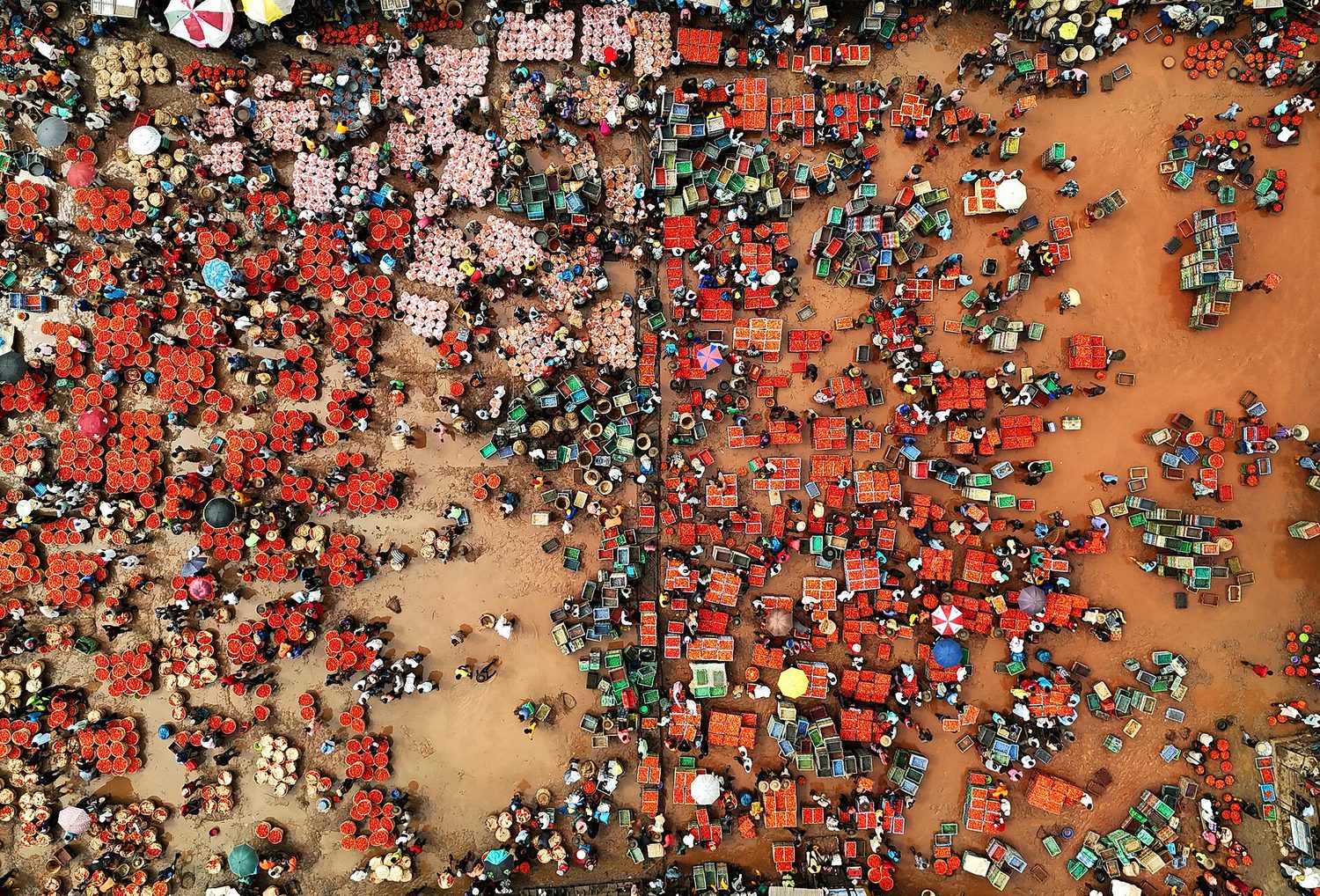
מדינה יכולה לצמוח מבלי לפתח הרבה (אם ההכנסה הנוספת הולכת לקבוצה קטנה של אנשים). פיתוח בדרך כלל משמעו עלייה בהכנסות ב plus בריאה טובה יותר, לימודים מוגברים, ואבטלה פחותה.
מדד המפורסם ביותר הוא מדד הפיתוח האנושי (HDI). הוא משלב שלושה דברים במספר אחד בין 0 ל-1:
סימנים אחרים מועילים להתפתחות כולל גישה למי שתייה נקי, מספר הרופאים לאדם ומשתמש בטלפון נייד ובאינטרנט.
Follow how policy and resources can change living standards. · עקבו אחר כך המדיניות והמשאבים יכולים לשנות את רמת החיים.
| English | עברית |
|---|---|
| life expectancy/laɪf ekˈspektənsi/ | תוחלת חיים |
| years of schooling/jɪəz ɒv ˈskuːlɪŋ/ | שנות לימודים |
| developed country/dɪˈveləpt ˈkʌntri/ | מדינה מפותחת |
| developing country/dɪˈveləpɪŋ ˈkʌntri/ | מדינה מתפתחת |
| birth rate/bɜːθ reɪt/ | קצב לידה |
Source: Cambridge International syllabus · מקור: הסיילבוס הבינלאומי של קמבריד'ג'
We often compare a developed country 发达国家 (high income, like Germany) with a developing country 发展中国家 (lower income, like Kenya). They differ in clear ways:
| Feature | Developed | Developing |
|---|---|---|
| income per person | high | low |
| birth rate 出生率 and population growth | low | often high |
| life expectancy | high | lower |
| share of workers in farming | small | large |
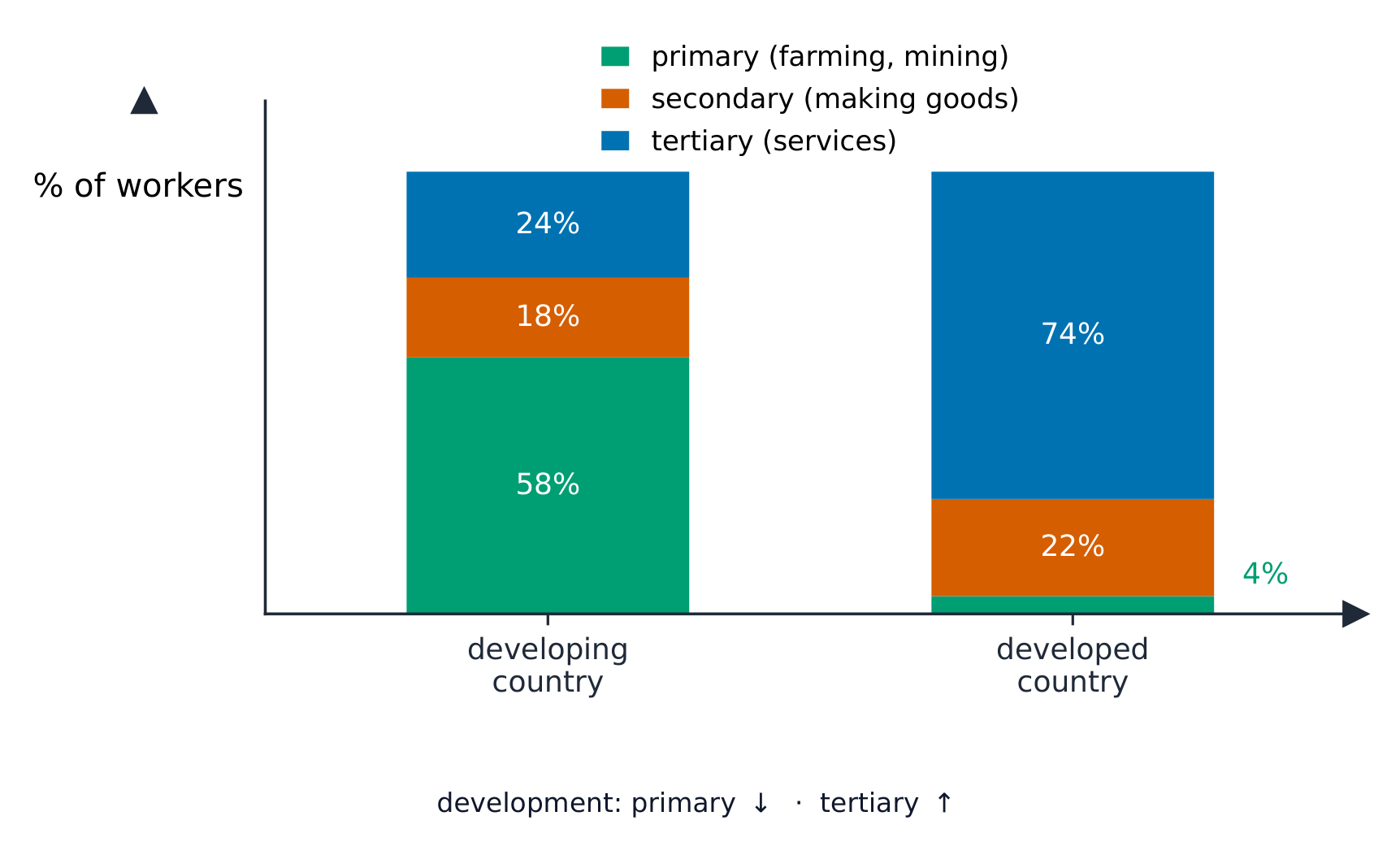
The employment structure 就业结构 also differs. As a country develops, workers move out of the primary sector 第一产业 (farming and mining), into the secondary sector 第二产业 (making goods), and later into the tertiary sector 第三产业 (services).
Many things shape development: savings and investment, the quality of education and health, infrastructure, stable government and law, and access to world markets.
אנו משווה לעיתים קרובות מדינה מפותחת (הכנסה גבוהה, כמו גרמניה) ל-מדינה מתפתחת (הכנסה נמוכה יותר, כמו קניה). הן נבדלות בברור:
| מאפיין | מפותחת | מתפתחת |
|---|---|---|
| הכנסה לאנש | גבוהה | נמוכה |
| קצב לידה וגודל האוכלוסייה | נמוך | לעיתים קרובות גבוה |
| תוחלת חיים | גבוהה | נמוכה יותר |
| חלק העובדים בחקלאות | קטן | גדול |
גם מבנה התעסוקה שונה. כשמדינה מתפתחת, עובדים עוברים מה-תחום הראשוני (חקלאות וכרייה), לתוך התחום השני (ייצור סחורות), ולאחר מכן לתוך התחום השלישי (שירותים).
דברים רבים מעצבים את ההתפתחות: חיסכון והשקעה, איכות החינוך והבריאות, תשתיות, ממשלה יציבה וחוק, וגישה לשווקים עולמיים.
Classify real examples by the economic idea they show. · סווג דוגמאות אמיתיות לפי הרעיון הכלכלי שהן מדגישות.
| English | עברית |
|---|---|
| employment structure/emˈplɔɪmənt ˈstrʌktʃə/ | מבנה התעסוקה |
| primary sector/ˈpraɪməri ˈsektə/ | המגזר הראשוני |
| secondary sector/ˈsekəndəri ˈsektə/ | תחום משני |
| tertiary sector/ˈtɜːʃjəri ˈsektə/ | תחום שלישי |
| aid/eɪd/ | סיוע |
| debt/det/ | חובות |
| foreign direct investment/ˈfɒrən daɪˈrekt ɪnˈvestmənt/ | השקעה ישירה מרחבית |
| multinational corporation/ˌmʌltɪˈnæʃənl ˌkɔːpəˈreɪʃn/ | חברה רב-לאומית |
| migration/maɪˈɡreɪʃn/ | הגירה |
| remittances/rɪˈmɪtənsɪz/ | שלוחות |
Source: Cambridge International syllabus · מקור: הסיילבוס הבינלאומי של קמבריד'ג'
Richer and poorer countries are linked in several ways, each with good and bad sides.
מדינות עשירות ועניות קשורות זו בזו בדרכים שונות, לכל אחת מהן יש צדדים טובים ורגעים רעים.
Classify real examples by the economic idea they show. · סווג דוגמאות אמיתיות לפי הרעיון הכלכלי שהן מדגישות.
Source: Cambridge International syllabus · מקור: הסיילבוס הבינלאומי של קמבריד'ג'
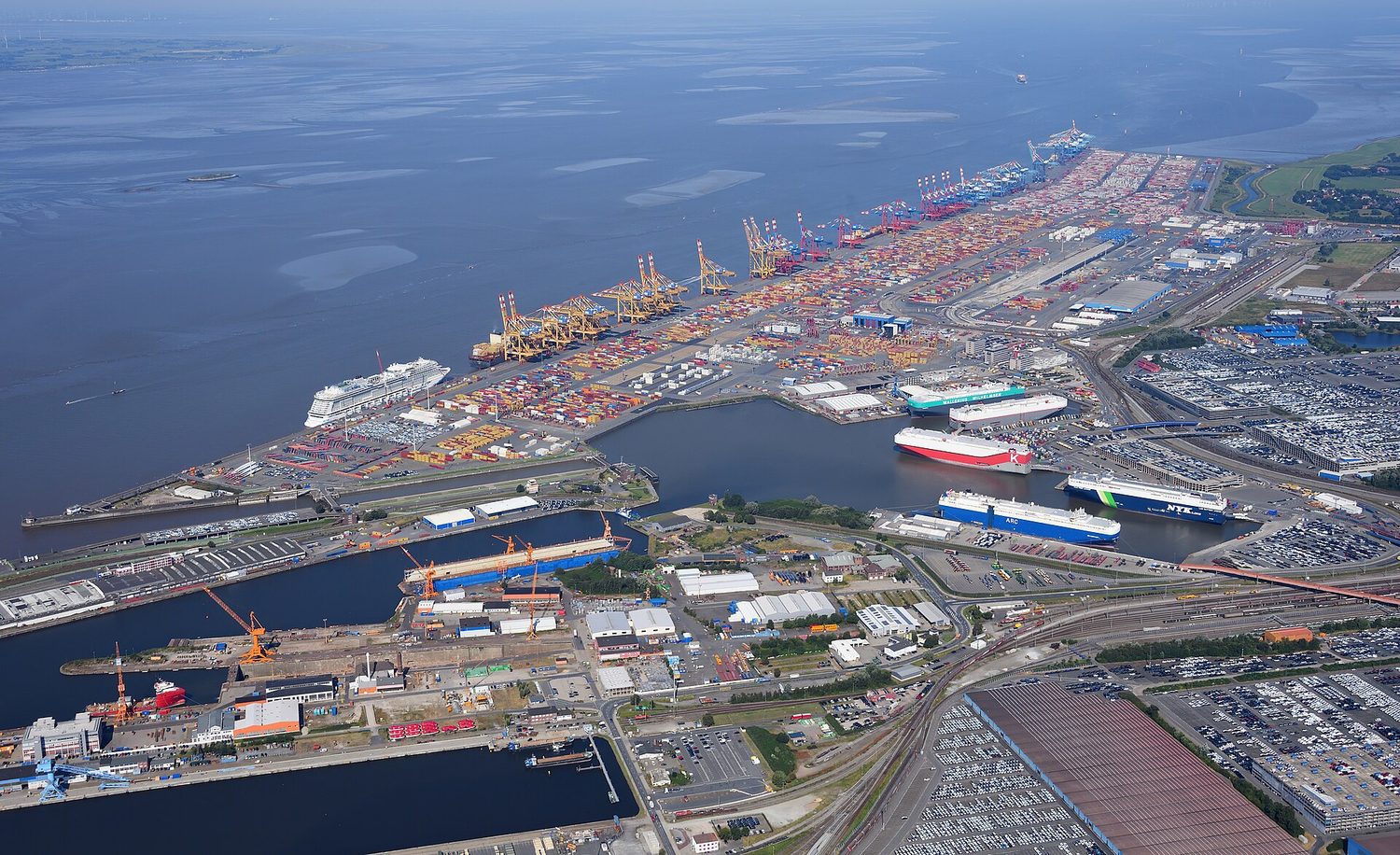
globalisation 全球化 is the growing links between countries — in trade, money, technology and people — so that the world acts more like one market. Its causes include cheaper transport and communication, free trade 自由贸易 agreements, and the spread of multinational firms.
Countries often join a trade bloc 贸易集团 — a group that trades freely among themselves (like the European Union).
| Benefits | Costs |
|---|---|
| lower prices and more choice | some industries and jobs are lost to cheaper countries |
| faster growth and technology transfer | the gap between rich and poor can widen |
| larger markets for firms | more pollution and use of resources |
| poorer countries can industrialise | powerful multinationals may avoid tax and dodge protectionism 贸易保护主义 rules |
Globalisation helps developed and developing economies in different ways, but the gains are not shared evenly, which is why it remains so argued about.
העולמization היא החיבור הגובר בין מדינות — במסחר, כסף, טכנולוגיה ואנשים — כך שהעולם פועל יותר כמו שוק אחד. הסיבות לכך כוללות תחבורה ותקשורת זולה יותר, הסכמי מסחר חופשי, והתפשטות חברות רב-לאומיות.
מדינות לרוב מצטרפות לבלוק כלכלי (או בלוק מסחרי) — קבוצה המסחרת בחופשיות זו עם זו (כמו האיחוד האירופי).
| benefits | עלויות |
|---|---|
| מחירים נמוכים ובחירה מוגברת | חלק מתעשיות ומשרות אבדו למדינות בעלות עלויות נמוכות יותר |
| צמיחה מהירה והעברת טכנולוגיה | הפער בין עניים לעניים יכול להתרחב |
| שווקים גדולים יותר לחברות | זיהום מוגבר וצריכה של משאבים |
| מדינות עניות יכולות לתעשיין | חברות רב-לאומיות חזקות עשויות להימנע מתשלום מיסים ולעקוף כללי הגנה |
העולמization מסייעת לכלכלות מפותחות ולוחצות באופן שונה, אך הרווחים אינם חלוקים באופן שווה, ולכן היא עדיין נושא למחלוקת רבה.
See how trade or exchange-rate pressure changes domestic outcomes. · הבן כיצד לחץ מסחר או שער החילוף משנים תוצאות מקומיות.
| English | עברית |
|---|---|
| globalisation/ˌɡləʊbəlaɪˈzeɪʃn/ | גלובליזציה |
| free trade/friː treɪd/ | סחר חופשי |
| trade bloc/treɪd blɒk/ | איחוד סחרי |
| protectionism/prəˈtekʃənɪzəm/ | פרוטקציוניזם |
Work through it step by step, with instant-check exercises. · לעבור על הדברים צעד אחר צעד, עם תרגילים לבדיקה מיידית.
Loading subjects… · טוען נושאים…