Flowers and pollination · Fleurs et pollinisation
| English | Français |
|---|---|
| pollination/ˌpɒlɪˈneɪʃn/ | pollinisation |
| stamen/ˈsteɪmen/ | étamine |
| anther/ˈænθə/ | anthère |
| carpel/ˈkɑːpl/ | carpel |
| stigma/ˈstɪɡmə/ | stigmate |
| ovary/ˈəʊvəri/ | ovaire |
| cross-pollination/krɒs ˌpɒlɪˈneɪʃn/ | pollinisation croisée |
| self-pollination/self ˌpɒlɪˈneɪʃn/ | autopolinisation |
How flowering plants reproduce
- A flower is a plant's reproductive organ, built to make seeds.
- It does this through pollination 传粉 and fertilisation.
Comment les plantes à fleurs se reproduisent
- Une fleur est l'organe reproducteur d'une plante, conçu pour produire des graines.
- Elle le fait par pollinisation 传粉 et fécondation.
Pollen is produced by the: · Le pollen est produit par :
The anther (part of the stamen) makes pollen. · L'anthère (partie de l'étamine) produit du pollen.
The female part of the flower, made of stigma, style and ovary, is the ______. · La partie femelle de la fleur, constituée du stigmate, du style et de l'ovaire, est le ______.
The carpel is the female reproductive part. · Le carpel est l'organe reproducteur femelle.
Parts of a flower
- Male parts (stamen 雄蕊): the anther 花药 (makes pollen) on a filament.
- Female parts (carpel 雌蕊): the stigma 柱头, style and ovary 子房 (holds ovules).
A real lily: the long stamens make pollen and the central stigma receives it
An insect-pollinated flower: the male stamens and the female carpel
Parties d'une fleur
- Parties mâles (étamine 雄蕊) : l'anthère 花药 (produit le pollen) sur un filament.
- Parties femelles (carpel 雌蕊) : le stigmate 柱头, le style et l'ovaire 子房 (contient les ovules).

Un vrai lis : les longs étamines produisent du pollen et le stigmate central le reçoit
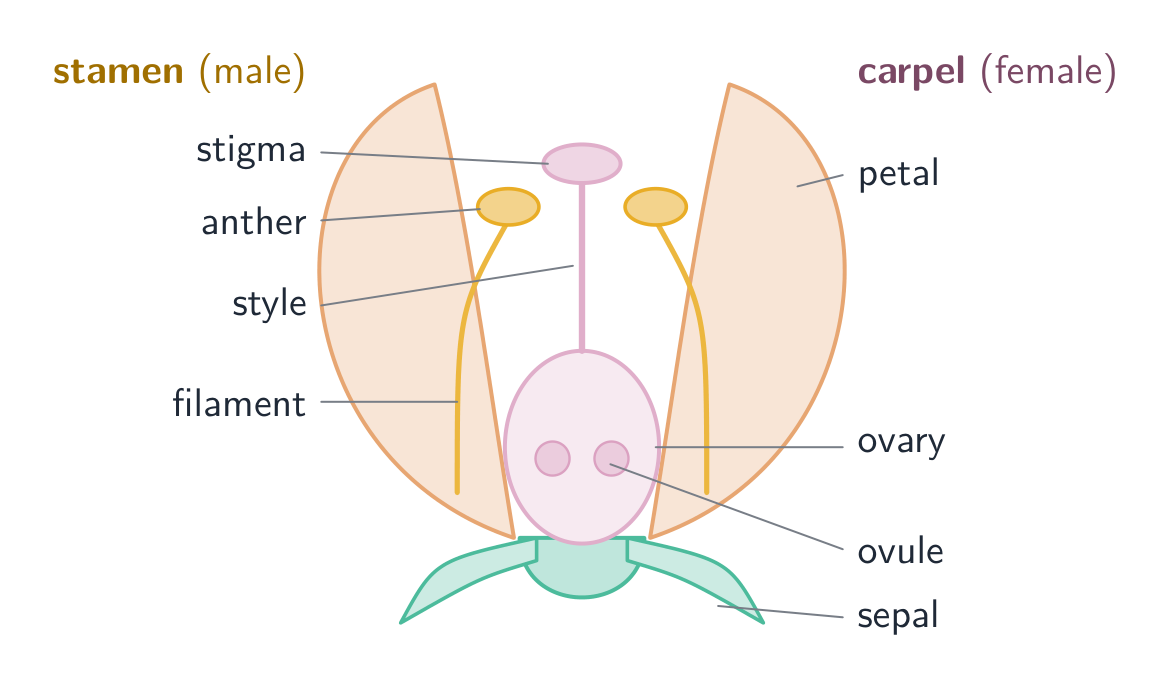
Une fleur pollinisée par les insectes : les étamines mâles et le carpelle femelle
Pollination and fertilisation · Pollinisation et fécondation
Pollination delivers pollen to the stigma; a pollen tube then carries the male nucleus to the egg. · La pollinisation dépose le pollen sur le stigmate ; un tube pollinique transporte ensuite le noyau mâle vers l'ovule.
Pollination is the transfer of pollen from an anther to a: · La pollinisation est le transfert de pollen d'une anthère vers un :
Pollen moves from anther to stigma. · Le pollen se déplace de l'anthère au stigmate.
Insect-pollinated flowers are usually: · Les fleurs pollinisées par les insectes sont généralement :
Bright, scented flowers attract insects. · Les fleurs vives et parfumées attirent les insectes.
Pollination
- Pollination is the transfer of pollen from an anther to a stigma.
- Insect-pollinated flowers are bright and scented; wind-pollinated flowers have feathery stigmas and dangling anthers.
Pollen grains under an electron microscope: their spiky coats help them stick to insects
Pollinisation
- La pollinisation est le transfert du pollen d'une anthère vers un stigmate.
- Les fleurs pollinisées par insectes sont colorées et parfumées ; les fleurs pollinisées par le vent ont des stigmates plumeux et des anthères suspendues.
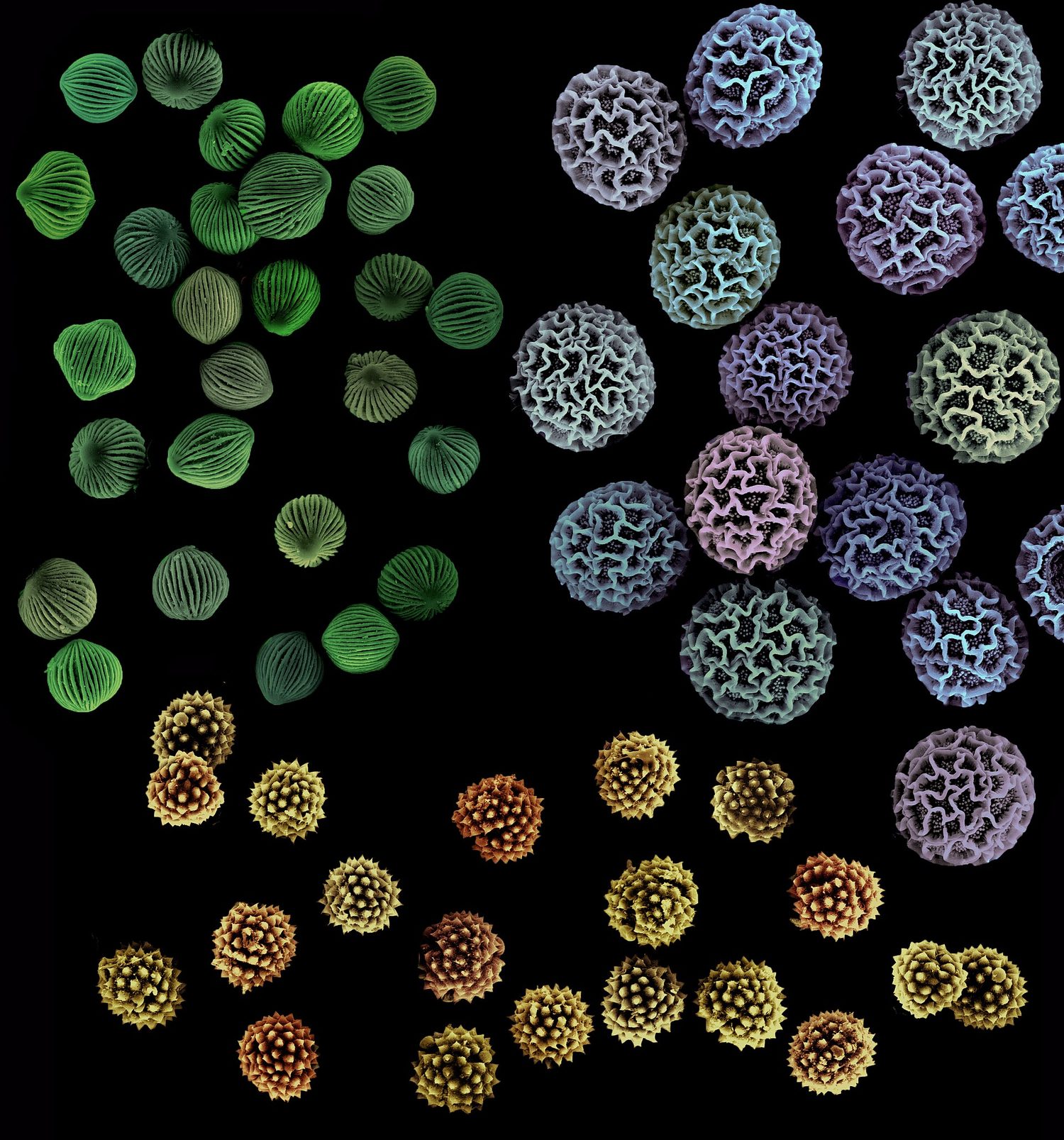
Grains de pollen sous un microscope électronique : leurs revêtements épineux les aident à adhérer aux insectes
Cross-pollination produces more variation than self-pollination. · La pollinisation croisée produit plus de variation que l'autofécondation.
Mixing genes between plants increases variation. · Le mélange génétique entre plantes augmente la variabilité.
Self vs cross pollination 异花传粉
- Self-pollination 自花传粉: pollen lands on the same plant — less variation.
- Cross-pollination: pollen reaches a different plant — more variation.
Worked example. A bee visits a bright, scented flower for nectar, brushing against the anther. It carries pollen to the next flower's stigma — insect cross-pollination, which mixes genes between plants.
Auto-pollinisation vs pollinisation croisée 异花传粉
- Pollinisation auto 自花传粉 : le pollen atterrit sur la même plante — moins de variation.
- Pollinisation croisée : le pollen atteint une plante différente — plus de variation.
Exemple résolu. Une abeille visite une fleur colorée et parfumée pour le nectar, frottant contre l'anthère. Elle transporte le pollen vers le stigmate de la fleur suivante — pollinisation croisée par insectes, mélangeant les gènes entre plantes.
You've got it
- stamen (anther + filament) is male; carpel (stigma, style, ovary) is female
- pollination = pollen moved from anther to stigma (by insects or wind)
- cross-pollination gives more variation than self-pollination
Vous avez compris
- étamine (anthère + filament) est mâle ; carpel (stigmate, style, ovaire) est femelle
- pollinisation = pollen déplacé de l'anthère vers le stigmate (par insectes ou vent)
- pollinisation croisée offre plus de variation que la pollinisation auto