Enthalpy change and reaction pathways · Variation d'enthalpie et voies réactionnelles
| English | Français |
|---|---|
| enthalpy change/enˈθælpi tʃeɪndʒ/ | variation d'enthalpie |
| exothermic/eɡzəˈðɜːmɪk/ | exothermique |
| endothermic/ˌendəʊˈθɜːmɪk/ | endothermique |
| activation energy/ˌæktɪˈveɪʃn ˈenədʒi/ | énergie d'activation |
| standard conditions/ˈstændəd kənˈdɪʃnz/ | conditions standards |
| combustion/kəmˈbʌstʃn/ | combustion |
| neutralisation/ˌnjuːtrəlaɪˈzeɪʃn/ | neutralisation |
Enthalpy change 焓变, ΔH
- Every reaction takes in or gives out energy.
- That energy change (at constant pressure) is the enthalpy change, $\Delta H$.
- Its sign tells you the direction of energy flow.
Variation d'enthalpie 焓变, ΔH
- Toute réaction absorbe ou libère de l'énergie.
- Ce changement d'énergie (à pression constante) est la variation d'enthalpie, $\Delta H$.
- Son signe indique la direction de l'écoulement d'énergie.
A reaction that releases heat to the surroundings has a negative value of ______. · Une réaction qui libère de la chaleur vers l'environnement a une valeur négative de ______.
Exothermic reactions have ΔH < 0. · Les réactions exothermiques ont ΔH < 0.
Exothermic 放热 vs endothermic 吸热
- Exothermic: gives out heat → products lower than reactants → $\Delta H < 0$.
- Endothermic: takes in heat → products higher → $\Delta H > 0$.
- The "hill" between them is the activation energy 活化能 — the least energy needed to react.
Exothermique 放热 vs endothermique 吸热
- Exothermique : libère de la chaleur → produits plus bas que les réactifs → $\Delta H < 0$.
- Endothermique : absorbe de la chaleur → produits plus hauts → $\Delta H > 0$.
- La "colline" entre eux est l'énergie d'activation 活化能 — l'énergie minimale nécessaire pour réagir.

Reaction energy profiles · Profils énergétiques des réactions
Ea = barrier · ΔH = products − reactants · Ea = barrière · ΔH = produits − réactifs
The hump is the activation energy; whether products sit below or above reactants sets ΔH. · Le pic est l'énergie d'activation ; si les produits sont en dessous ou au-dessus des réactifs, cela fixe ΔH.
In an exothermic reaction: · Dans une réaction exothermique :
Exothermic reactions release heat; products sit below reactants, so ΔH is negative. · Les réactions exothermiques dégagent de la chaleur ; les produits sont en dessous des réactifs, donc ΔH est négatif.
The activation energy is: · L'énergie d'activation est :
Activation energy is the height of the "hill" — the minimum energy needed to start the reaction. · L'énergie d'activation est la hauteur de la "colline" — l'énergie minimale nécessaire pour démarrer la réaction.
Standard conditions 标准条件 and types
- Values are compared under standard conditions ($298\ \text{K}$, $101\ \text{kPa}$), shown by $^{\ominus}$.
| Symbol | Enthalpy change of |
|---|---|
| $\Delta H_f^{\ominus}$ | formation — 1 mole of compound from its elements |
| $\Delta H_c^{\ominus}$ | combustion 燃烧 — 1 mole burns completely in oxygen |
| $\Delta H_{\text{neut}}^{\ominus}$ | neutralisation 中和 — 1 mole of water from acid + alkali |
An instant cold pack uses an endothermic reaction that takes in heat
Conditions standards 标准条件 et types
- Les valeurs sont comparées sous conditions standards ($298\ \text{K}$, $101\ \text{kPa}$), notées $^{\ominus}$.
| Symbole | Variation d'enthalpie de |
|---|---|
| $\Delta H_f^{\ominus}$ | formation — 1 mole de composé à partir de ses éléments |
| $\Delta H_c^{\ominus}$ | combustion 燃烧 — 1 mole brûle complètement dans l'oxygène |
| $\Delta H_{\text{neut}}^{\ominus}$ | neutralisation 中和 — 1 mole d'eau produite par acide + base |
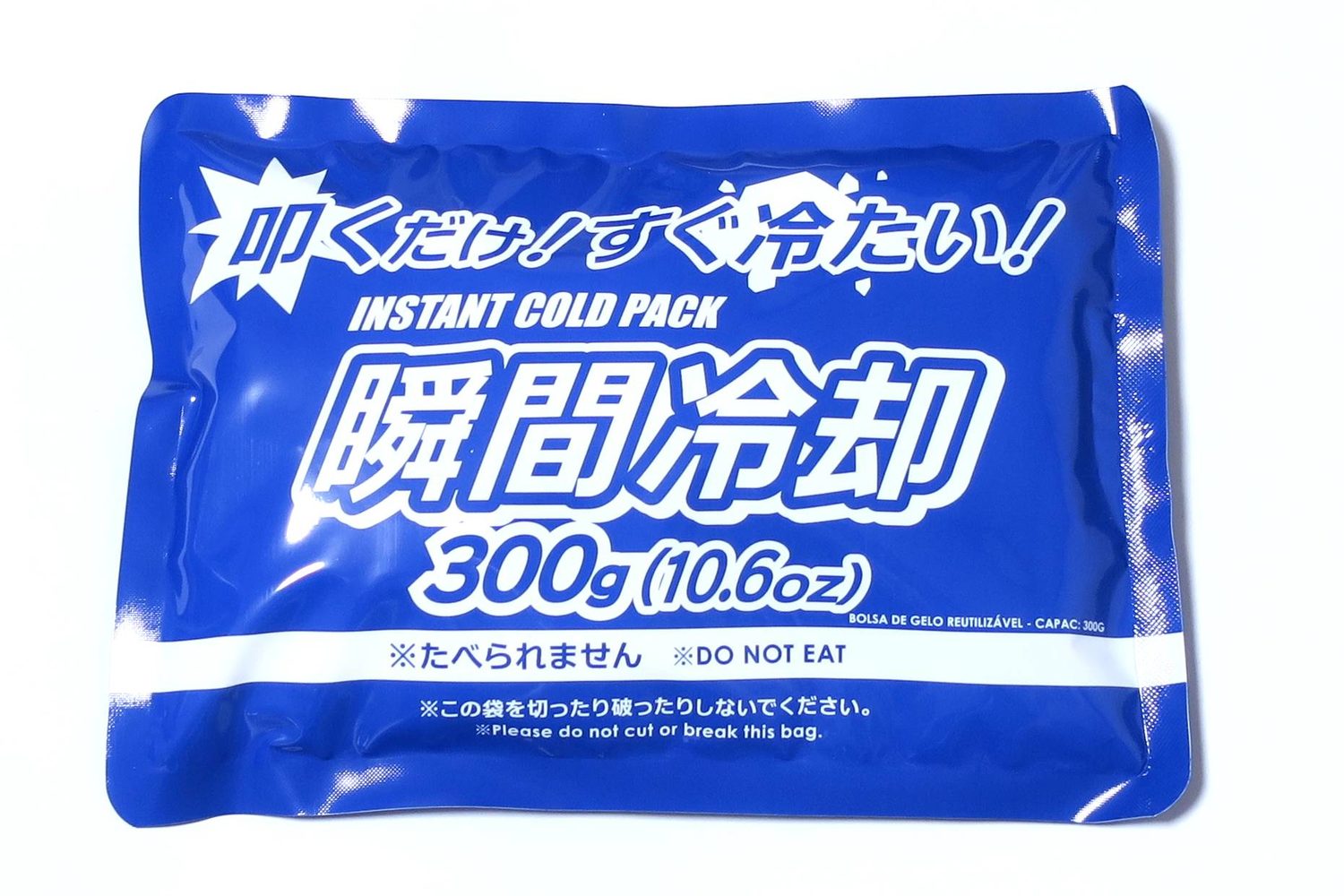
Une poche froide instantanée utilise une réaction endothermique qui absorbe de la chaleur
The standard enthalpy change of combustion is for: · La variation d'enthalpie standard de combustion concerne :
ΔHc is per mole of substance burned completely; ΔHf is formation from elements; ΔH_neut makes one mole of water. · ΔHc est par mole de substance brûlée complètement ; ΔHf est formation à partir des éléments ; ΔH_neut produit une mole d'eau.
Standard conditions for enthalpy values are: · Les conditions standards pour les valeurs d'enthalpie sont :
Standard conditions are 298 K and 101 kPa, with each substance in its normal state (symbol ⊖). · Les conditions standards sont 298 K et 101 kPa, avec chaque substance dans son état normal (symbole ⊖).
Mind the sign of ΔH
- Exothermic reactions release heat and have a negative ΔH; endothermic are positive.
- ΔH is measured per mole and quoted under standard conditions.
Exothermic reactions release energy; endothermic reactions take it in
Attention au signe de ΔH
- Les réactions exothermiques dégagent de la chaleur et ont un ΔH négatif ; les endothermiques sont positives.
- ΔH est mesuré par mole et indiqué sous conditions standards.

Les réactions exothermiques libèrent de l'énergie ; les réactions endothermiques l'absorbent
Match each enthalpy term to its meaning. · Reliez chaque terme d'enthalpie à sa signification.
Each item links the term to its correct meaning. · Chaque élément relie le terme à sa signification correcte.
You've got it
- exothermic $\Delta H < 0$ (products lower); endothermic $\Delta H > 0$ (products higher)
- activation energy = the energy hill, the least needed to react
- standard conditions: 298 K, 101 kPa ($^{\ominus}$)
- types: formation ($\Delta H_f$), combustion ($\Delta H_c$), neutralisation ($\Delta H_{\text{neut}}$)
Vous avez compris
- exothermique $\Delta H < 0$ (produits plus bas) ; endothermique $\Delta H > 0$ (produits plus hauts)
- énergie d'activation = la colline d'énergie, le minimum nécessaire pour réagir
- conditions standards : 298 K, 101 kPa ($^{\ominus}$)
- types : formation ($\Delta H_f$), combustion ($\Delta H_c$), neutralisation ($\Delta H_{\text{neut}}$)