Flowers and pollination · Flores y polinización
| English | Español |
|---|---|
| pollination/ˌpɒlɪˈneɪʃn/ | polinización |
| stamen/ˈsteɪmen/ | estambre |
| anther/ˈænθə/ | antera |
| carpel/ˈkɑːpl/ | carpelo |
| stigma/ˈstɪɡmə/ | estigma |
| ovary/ˈəʊvəri/ | ovario |
| cross-pollination/krɒs ˌpɒlɪˈneɪʃn/ | polinización cruzada |
| self-pollination/self ˌpɒlɪˈneɪʃn/ | autopolinización |
How flowering plants reproduce
- A flower is a plant's reproductive organ, built to make seeds.
- It does this through pollination 传粉 and fertilisation.
Reproducción de las plantas con flor
- Una flor es el órgano reproductivo de una planta, diseñado para producir semillas.
- Lo hace mediante la polinización y la fecundación.
Pollen is produced by the: · El polen es producido por:
The anther (part of the stamen) makes pollen. · La antera (parte del estambre) produce polen.
The female part of the flower, made of stigma, style and ovary, is the ______. · La parte femenina de la flor, formada por estigma, estilo y ovario, es el ______.
The carpel is the female reproductive part. · El carpelo es la parte reproductora femenina.
Parts of a flower
- Male parts (stamen 雄蕊): the anther 花药 (makes pollen) on a filament.
- Female parts (carpel 雌蕊): the stigma 柱头, style and ovary 子房 (holds ovules).
A real lily: the long stamens make pollen and the central stigma receives it
An insect-pollinated flower: the male stamens and the female carpel
Partes de una flor
- Partes masculinas (estambre): la antera (produce polen) sobre un filamento.
- Partes femeninas (carpelo): el estigma, el estilo y el ovario (contiene óvulos).

Un lirio real: los largos estambres producen polen y el estigma central lo recibe
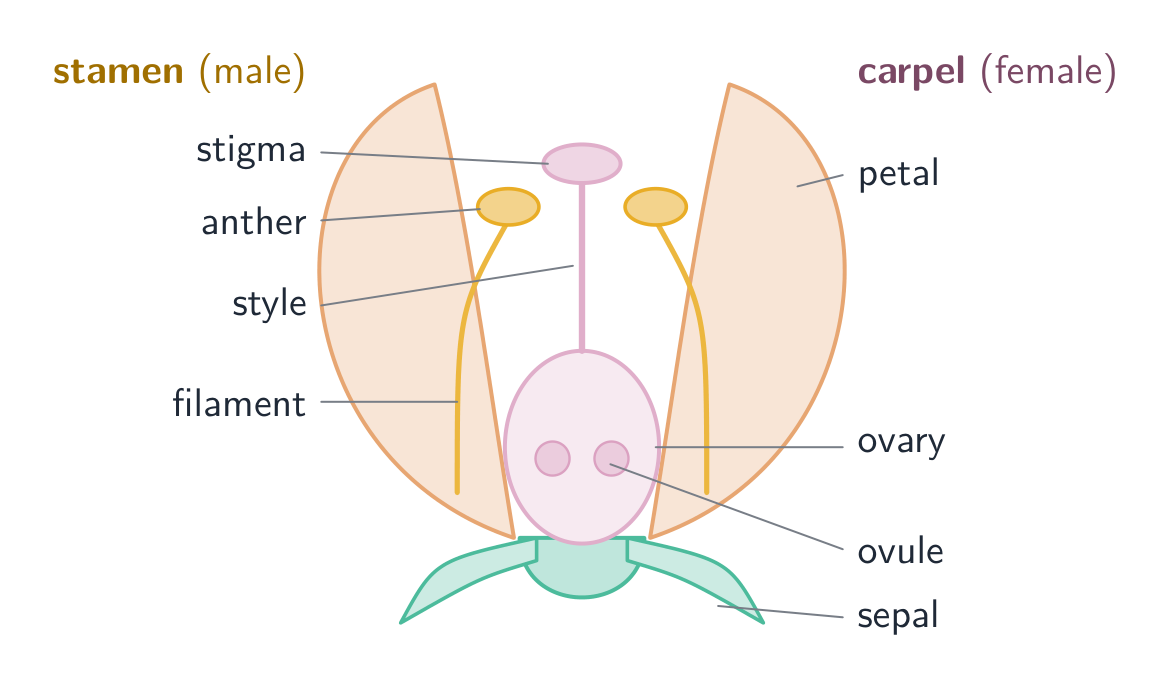
Una flor polinizada por insectos: los estambres masculinos y el carpelo femenino
Pollination and fertilisation · Polinización y fecundación
Pollination delivers pollen to the stigma; a pollen tube then carries the male nucleus to the egg. · La polinización transporta el polen al estigma; luego un tubo polínico lleva el núcleo masculino al huevo.
Pollination is the transfer of pollen from an anther to a: · La polinización es la transferencia de polen desde una antera hacia un:
Pollen moves from anther to stigma. · El polen se mueve de la antera al estigma.
Insect-pollinated flowers are usually: · Las flores polinizadas por insectos suelen ser:
Bright, scented flowers attract insects. · Las flores brillantes y perfumadas atraen a los insectos.
Pollination
- Pollination is the transfer of pollen from an anther to a stigma.
- Insect-pollinated flowers are bright and scented; wind-pollinated flowers have feathery stigmas and dangling anthers.
Pollen grains under an electron microscope: their spiky coats help them stick to insects
Polinización
- La polinización es la transferencia de polen desde una antera hacia un estigma.
- Las flores polinizadas por insectos son brillantes y aromáticas; las flores polinizadas por viento tienen estigmas plumosos y anteras colgantes.
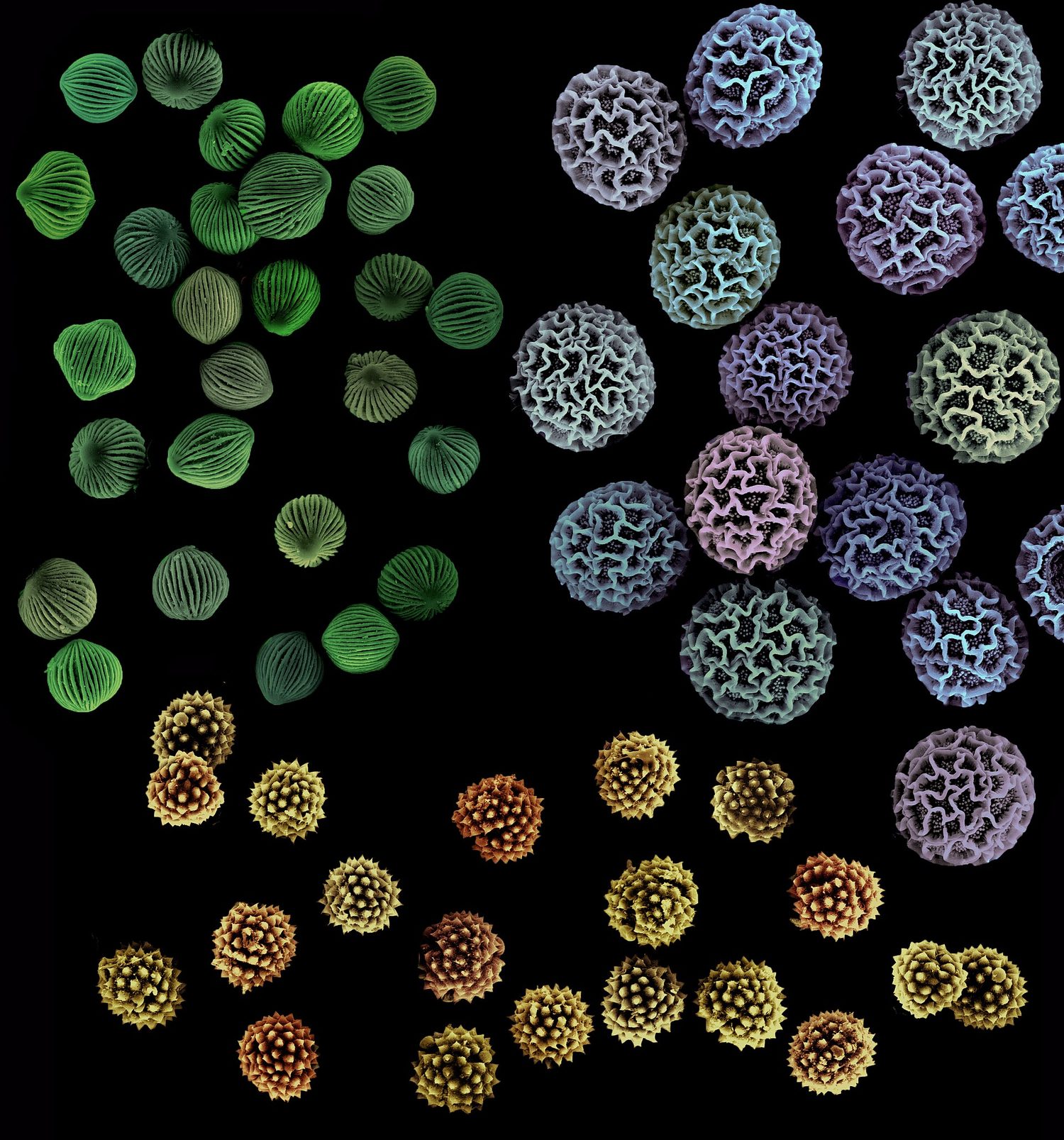
Granos de polen bajo un microscopio electrónico: sus cubiertas puntiagudas ayudan a que se peguen a los insectos
Cross-pollination produces more variation than self-pollination. · La polinización cruzada produce más variación que la autopolinización.
Mixing genes between plants increases variation. · La mezcla de genes entre plantas aumenta la variación.
Self vs cross pollination 异花传粉
- Self-pollination 自花传粉: pollen lands on the same plant — less variation.
- Cross-pollination: pollen reaches a different plant — more variation.
Worked example. A bee visits a bright, scented flower for nectar, brushing against the anther. It carries pollen to the next flower's stigma — insect cross-pollination, which mixes genes between plants.
Polinización cruzada vs. autopolinización
- Autopolinización: el polen cae en la misma planta — menor variación.
- Polinización cruzada: el polen llega a una planta diferente — mayor variación.
Ejemplo resuelto. Una abeja visita una flor brillante y aromática en busca de néctar, rozando la antena. Transporta el polen al estigma de la siguiente flor — polinización cruzada por insectos, que mezcla genes entre plantas.
You've got it
- stamen (anther + filament) is male; carpel (stigma, style, ovary) is female
- pollination = pollen moved from anther to stigma (by insects or wind)
- cross-pollination gives more variation than self-pollination
Ya lo tienes
- El estambre (antena + filamento) es masculino; el carpelo (estigma, estilo, ovario) es femenino
- La polinización = movimiento del polen desde la antera al estigma (por insectos o viento)
- La polinización cruzada produce más variación que la autopolinización