Planning a synthetic route · Planificación de una ruta sintética
| English | Español |
|---|---|
| target molecule/ˈtɑːɡɪt ˈmɒlɪkjuːl/ | molécula objetivo |
| starting material/ˈstɑːtɪŋ məˈtɪərɪəl/ | material de partida |
| reagent/rɪˈeɪdʒənt/ | reactivo |
| by-product/baɪ ˈprɒdʌkt/ | subproducto |
| yield/jiːld/ | yield |
From start to target
- A target molecule 目标分子 is built in several steps.
- The trick is to work backwards from the target.
- You also analyse a given route step by step.
De inicio a objetivo
- Una molécula objetivo se construye en varias etapas.
- El truco es trabajar de forma regresiva desde el objetivo.
- También se analiza una ruta dada paso a paso.
Synthetic route planning lab · Laboratorio de planificación de rutas sintéticas
Follow how a target molecule is planned backwards then made forwards. · Siga cómo se planifica una molécula objetivo hacia atrás y luego se sintetiza hacia adelante.
A good synthetic route uses few steps and gives a high overall yield. · Una buena ruta sintética utiliza pocos pasos y da un alto rendimiento global.
Fewer steps means less loss of product. · Menos pasos significan menos pérdida de producto.
Planning a route
- compare the target with the starting material 起始材料 — what changed (the group, the number of carbons)?
- work backwards: which single reaction could make the target, and from what?
- repeat until you reach the starting material.
- write each step with its reagent 试剂 and conditions.
- To add a carbon, the KCN step is the key (the only chain-lengthening AS reaction).
Plan a synthesis backwards — from the target, step by step, to the starting material
Medicines are built up by multi-step organic synthesis.
Planificar una ruta
- comparar el objetivo con el material de partida — ¿qué ha cambiado (el grupo, el número de carbonos)?
- trabajar hacia atrás: ¿cuál reacción simple podría obtener el objetivo y a partir de qué?
- repetir hasta llegar al material de partida.
- escribir cada etapa con su reactivo y condiciones.
- Para añadir un carbono, la etapa con KCN es clave (la única reacción orgánica que alarga la cadena).
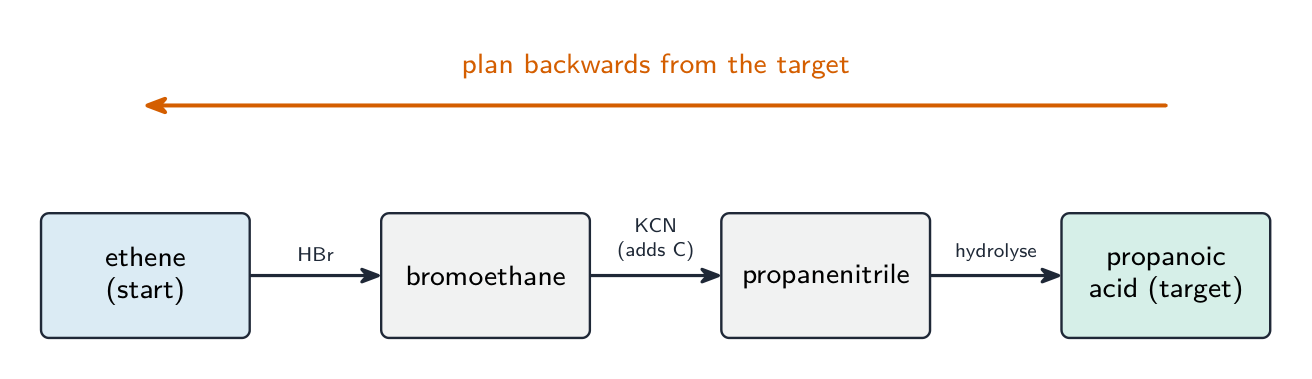
Planifica una síntesis de forma regresiva — desde el objetivo, paso a paso, hasta el material de partida
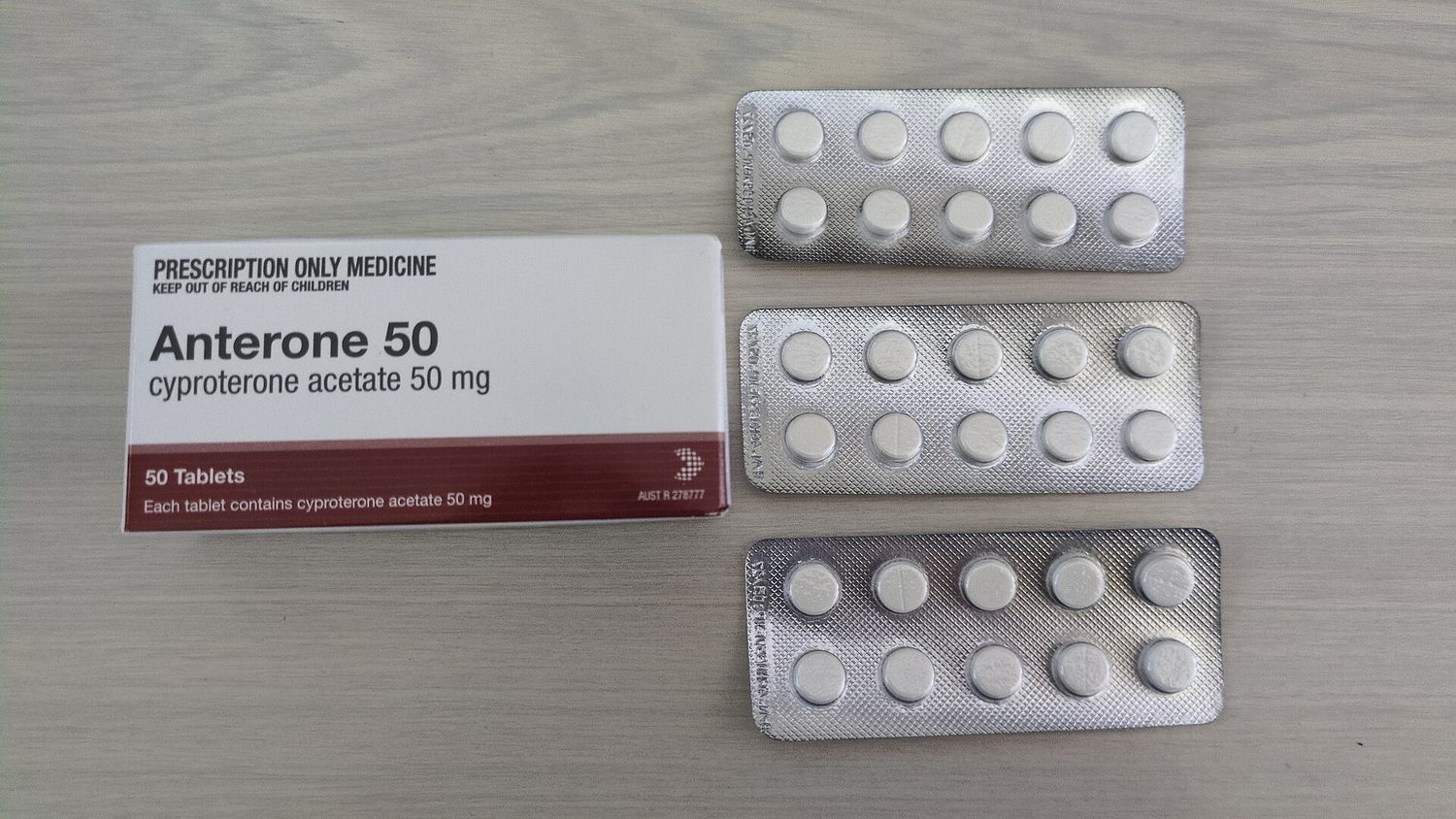
Los medicamentos se elaboran mediante síntesis orgánica multietapa.
The best way to plan a multi-step synthesis is to: · La mejor manera de planificar una síntesis multietapa es:
Working backwards from the target finds which reaction makes it, and from what, step by step. · Trabajar hacia atrás desde el objetivo encuentra qué reacción lo produce y de qué sustancia, paso a paso.
If your route needs to add a carbon atom, the key step is: · Si su ruta necesita añadir un átomo de carbono, el paso clave es:
KCN is the only AS reaction that lengthens the carbon chain. · KCN es la única reacción AS que alarga la cadena de carbonos.
Match each synthesis idea. · Empareje cada idea de síntesis.
Each item links the term to its correct meaning. · Cada elemento vincula el término con su significado correcto.
Analysing a route
- For each step, state the type of reaction (oxidation, reduction, substitution, addition, elimination) and the reagent.
- Think about by-products 副产物 — e.g. making an amine from a halogenoalkane also gives further-substituted amines, so the yield 产率 of the simple amine is low.
Analizar una ruta
- Para cada etapa, indica el tipo de reacción (oxidación, reducción, sustitución, adición, eliminación) y el reactivo.
- Piensa en los subproductos — p. ej., al obtener una amina a partir de un haluro de alquilo también se forman aminas más sustituidas, por lo que el rendimiento de la amina simple es bajo.
When analysing each step of a given route, you should state: · Al analizar cada paso de una ruta dada, debe indicar:
Identify the reaction type (oxidation, substitution, etc.) and the reagent/conditions for each step. · Identifique el tipo de reacción (oxidación, sustitución, etc.) y el reactivo/condiciones para cada paso.
Why is the yield of a simple amine from a halogenoalkane low? · ¿Por qué el rendimiento de una amina simple a partir de un haluro de alquilo es bajo?
The amine is itself a nucleophile, so it reacts again — a by-product mixture lowers the yield. · La amina es en sí misma un nucleófilo, por lo que reacciona de nuevo; una mezcla de subproductos reduce el rendimiento.
Judging a route
- Prefer routes with few steps and high yield, using safe, cheap reagents.
- Each extra step loses product, so the overall yield falls quickly.
Evaluar una ruta
- Prefiere rutas con pocas etapas y alto rendimiento, usando reactivos seguros y económicos.
- Cada etapa adicional reduce la cantidad de producto, por lo que el rendimiento global disminuye rápidamente.
You've got it
- plan by working backwards from the target (compare groups and carbon count)
- write each step's reagent + conditions; use KCN to add a carbon
- to analyse a route, give each step's reaction type and reagent, and watch for by-products
Ya lo tienes
- planifica trabajando hacia atrás desde el objetivo (compara grupos y conteo de carbonos)
- escribe el reactivo + condiciones de cada etapa; usa KCN para añadir un carbono
- para analizar una ruta, indica el tipo de reacción y el reactivo de cada etapa, y vigila los subproductos