English
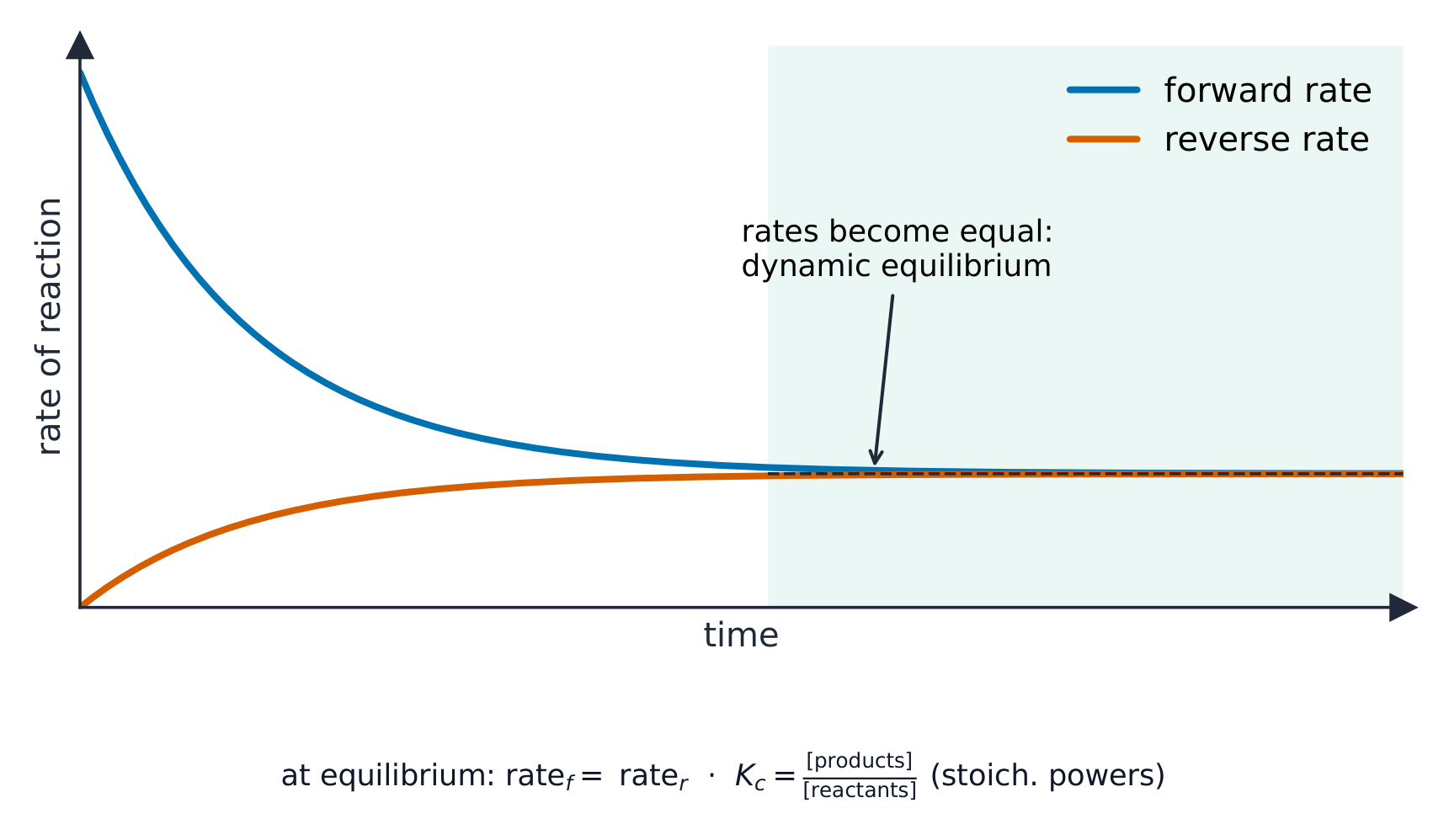
- (a) understand what is meant by a reversible reaction (b) understand what is meant by dynamic equilibrium in terms of the rate of forward and reverse reactions being equal and the concentration of reactants and products remaining constant (c) understand the need for a closed system in order to establish dynamic equilibrium
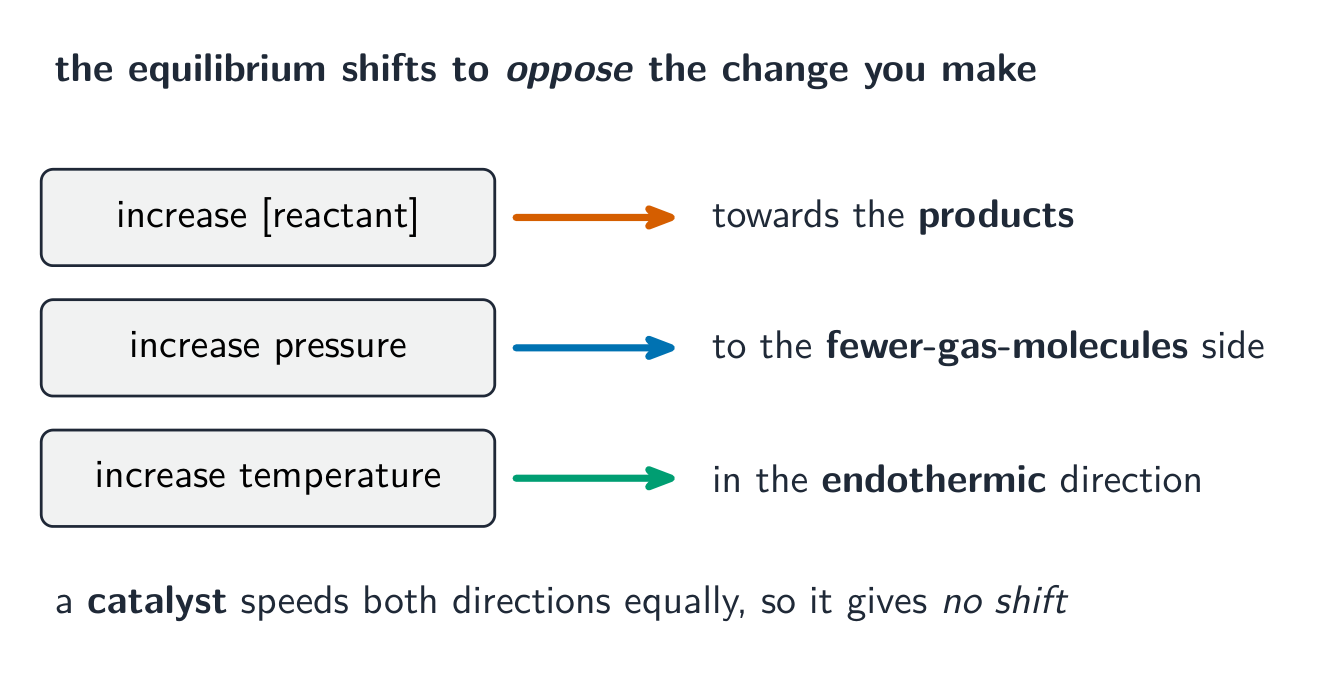
- define Le Chatelier’s principle as: if a change is made to a system at dynamic equilibrium, the position of equilibrium moves to minimise this change
- use Le Chatelier’s principle to deduce qualitatively (from appropriate information) the effects of changes in temperature, concentration, pressure or presence of a catalyst on a system at equilibrium
- deduce expressions for equilibrium constants in terms of concentrations, $K_c$
- use the terms mole fraction and partial pressure
- deduce expressions for equilibrium constants in terms of partial pressures, $K_p$ (use of the relationship between $K_p$ and $K_c$ is not required)
- use the $K_c$ and $K_p$ expressions to carry out calculations (such calculations will not require the solving of quadratic equations)
- calculate the quantities present at equilibrium, given appropriate data
- state whether changes in temperature, concentration or pressure or the presence of a catalyst affect the value of the equilibrium constant for a reaction
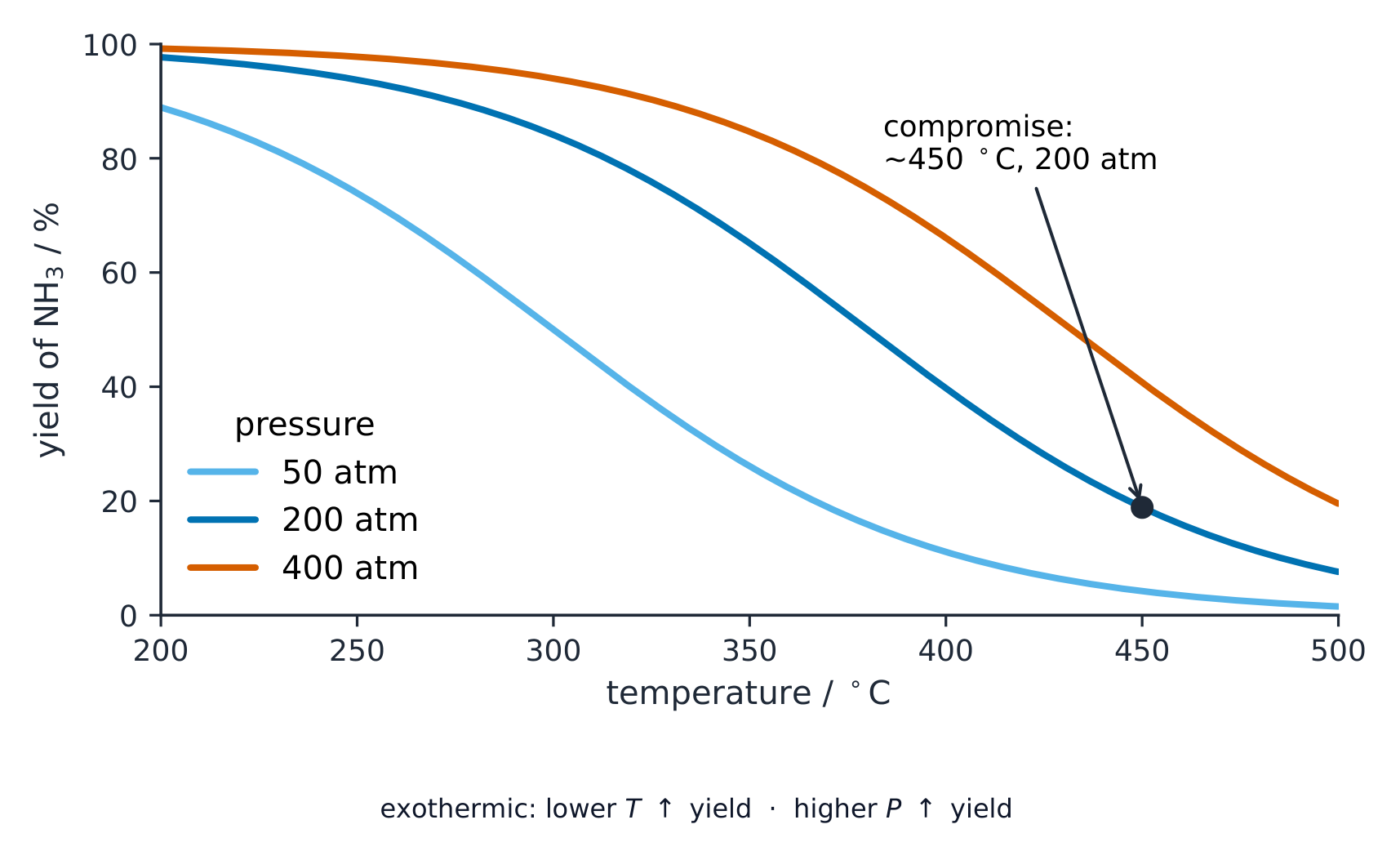
- describe and explain the conditions used in the Haber process and the Contact process, as examples of the importance of an understanding of dynamic equilibrium in the chemical industry and the application of Le Chatelier’s principle
العربية
- (أ) فهم المقصود بـالتفاعل العكوس (ب) فهم المقصود بـالاتزان الديناميكي من حيث تساوي معدل التفاعلات الأمامية والعكسية وثبات تركيز المتفاعلات والنواتج (ج) فهم ضرورة وجود نظام مغلق لإقامة الاتزان الديناميكي
- تعريف مبدأ لوشاتلييه على النحو التالي: إذا تم إحداث تغيير في نظام عند الاتزان الديناميكي، فإن موضع الاتزان يتحرك لتقليل هذا التغيير
- استخدام مبدأ لوشاتلييه لاستنتاج تأثيرات تغيرات درجة الحرارة والتركيز والضغط أو وجود عامل حفاز بشكل نوعي (من المعلومات المناسبة) على نظام عند الاتزان
- استنتاج تعابير ثوابت الاتزان بدلالة التركيز، $K_c$
- استخدام مصطلحي الكسر المولي والضغط الجزئي
- استنتاج تعابير لثوابت الاتزان بدلالة الضغوط الجزئية، $K_p$ (لا يُشترط استخدام العلاقة بين $K_p$ و$K_c$)
- استخدام تعابير $K_c$ و$K_p$ لإجراء العمليات الحسابية (لن تتطلب هذه الحسابات حل المعادلات التربيعية)
- حساب الكميات الموجودة عند الاتزان، بناءً على بيانات مناسبة
- تحديد ما إذا كانت تغيرات درجة الحرارة أو التركيز أو الضغط أو وجود عامل حفاز تؤثر على قيمة ثابت الاتزان للتفاعل
- وصف وشرح الظروف المستخدمة في عملية هابر وعملية التلامس، كمثالين على أهمية فهم الاتزان الديناميكي في الصناعة الكيميائية وتطبيق مبدأ لوشاتلييه