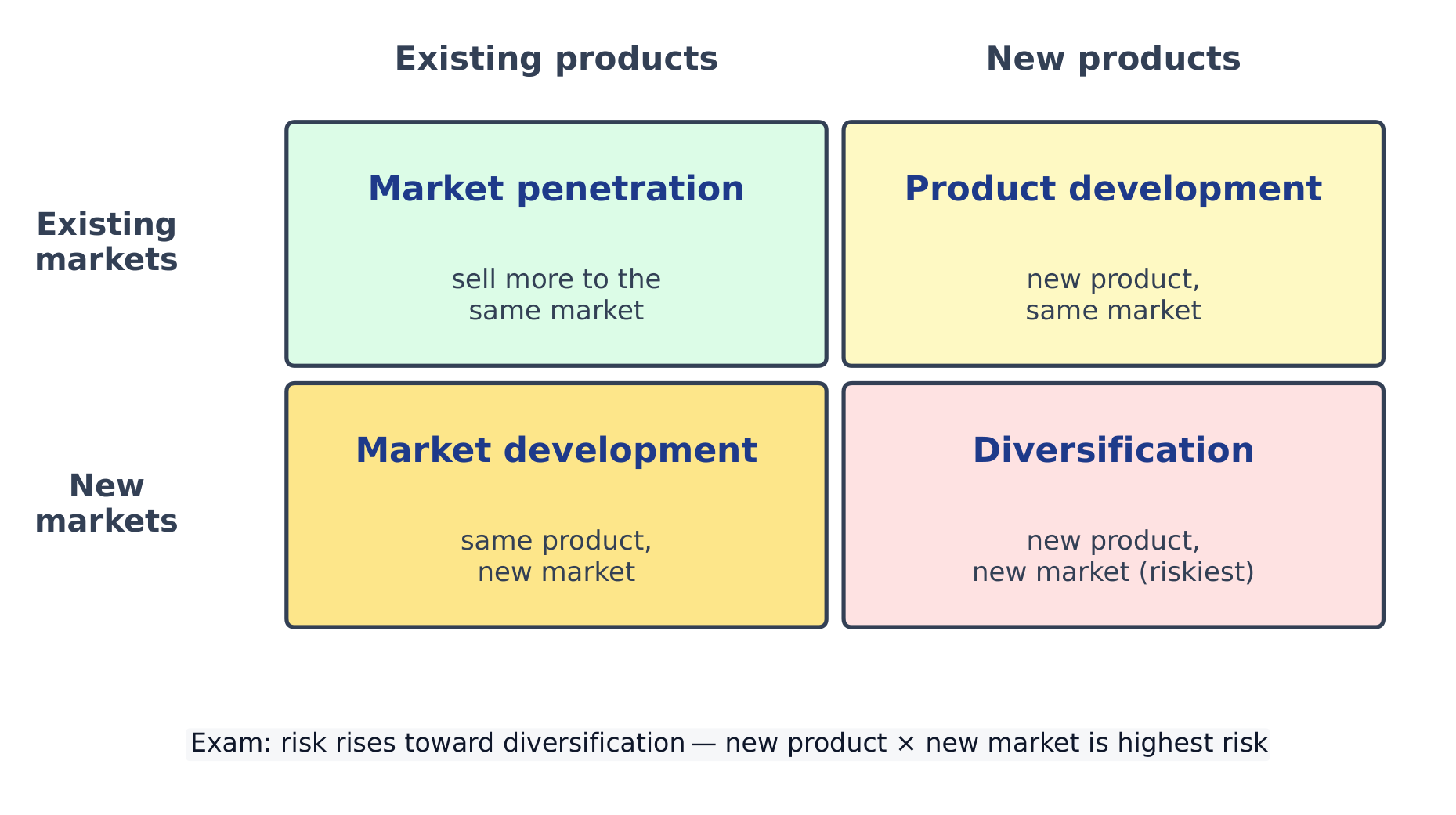
يتناول منهج أ-ليفل في الأعمال التجارية (9609) خمسة مجالات — الأعمال وبيئتها، الموارد البشرية، التسويق، العمليات، والمالية المحاسبة — أولاً على مستوى AS، ثم مرة أخرى على مستوى أ-2، حيث تنظر إلى نفس المجالات الخمسة استراتيجياً بدلاً من وصفياً.
كل علامة فوق الأولى سياقية. دراسة الحالة ليست زينة: إجابة حول "شركة" عامة تحصل على علامة المعرفة وتتوقف. نفس الإجابة المرتبطة بهوامش تلك الشركة أو سوقها أو قوتها العاملة تحصل أيضاً على علامات التطبيق والتحليل.
النطاق العلوي دائماً يطلب حكماً سببه, وليس قائمة بالمزايا والعيوب.
explain the purpose of business activity, the concept of adding value and the role of the entrepreneur and intrapreneur
explain the characteristics of successful entrepreneurs and the importance of enterprise to a country (business start-ups)
explain the contents and purpose of a business plan
العربية
اشرح غرض النشاط التجاري، ومفهوم إضافة القيمة، ودور رائد الأعمال ورياد الأعمال الداخليين
اشرح خصائص رواد الأعمال الناجحين وأهمية المؤسسات للبلد (مشاريع ريادة الأعمال)
اشرح محتويات وهدف خطة العمل
Source: Cambridge International syllabus · المصدر: منهج كامبريدج الدولي
English
People have needs 需要 (things you must have, like food and shelter) and wants 欲望 (things you would like, like a phone or a holiday). A business exists to meet these needs and wants by making goods 商品 and services 服务.
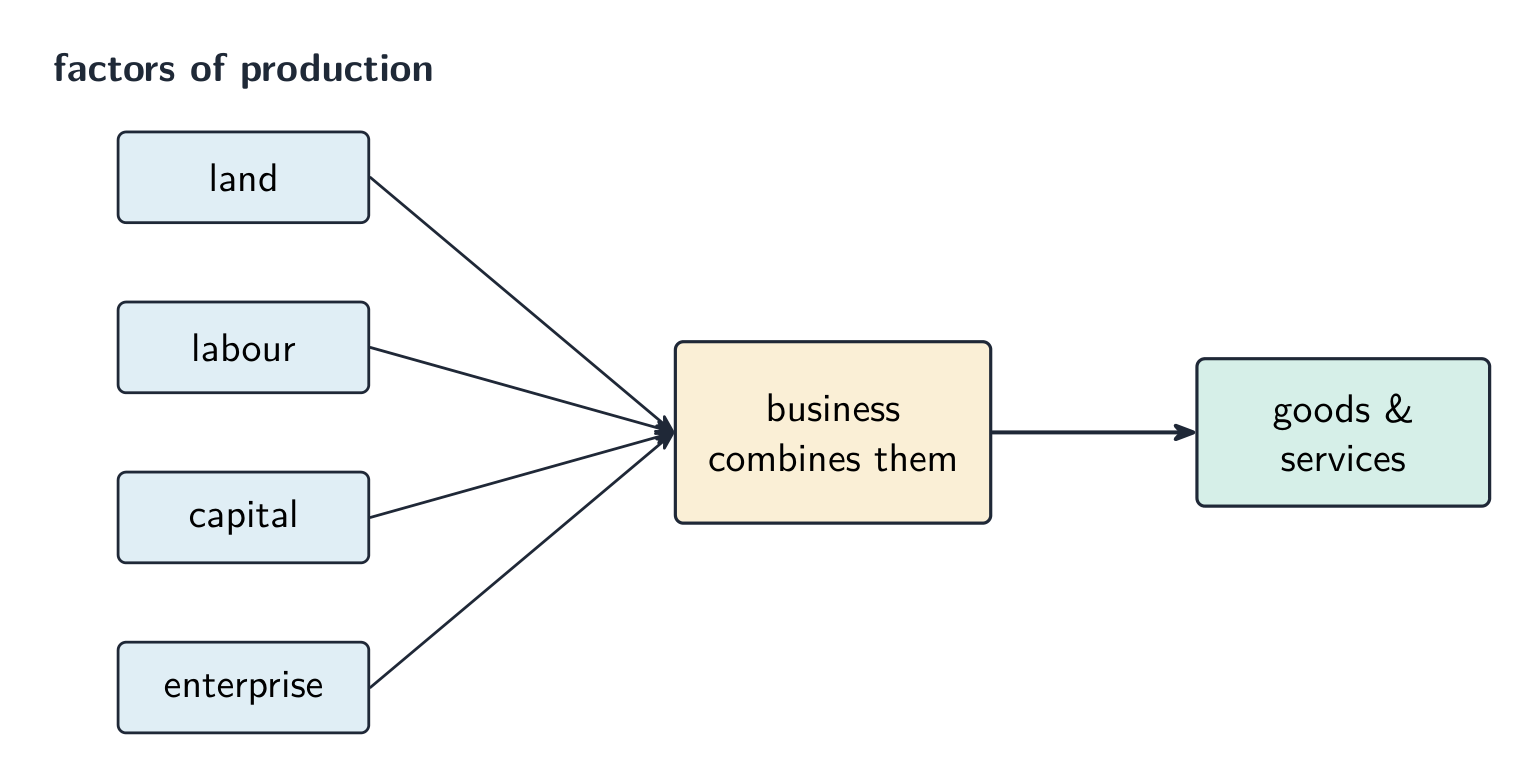
To do this, a business uses resources 资源. We sort resources into four factors of production 生产要素:
land 土地 — natural things, such as soil, water and minerals.
labour 劳动力 — the work done by people.
capital 资本 — the machines, tools, buildings and money used to produce.
enterprise 创业精神 — the skill of bringing the other three together and taking the risk 风险 to start a business.
Resources are scarce 稀缺 — there are not enough to meet everyone's wants. So every business must choose how to use them well.
العربية
للناس احتياجات (أشياء يجب عليك امتلاكها، مثل الطعام والمأوى) وملامح رغبة (أشياء تتمنى الحصول عليها، مثل الهاتف أو العطلة). توجد الشركة لتلبية هذه الاحتياجات والرغبة من خلال إنتاج سلع وخدمات.
محلات تتنافس على شارع رئيسي — السوق الذي تعمل فيه الشركة.
لتحقيق ذلك، تستخدم الشركة موارد. نصنف الموارد إلى أربعة عناصر إنتاج:
الأرض — الأشياء الطبيعية، مثل التربة والمياه والمعادن.
العمل — العمل الذي يقوم به البشر.
الرأس المال — الآلات والأدوات والمباني والأموال المستخدمة في الإنتاج.
المبادرة — مهارة دمج العناصر الثلاثة الأخرى وأخذ المخاطرة لتأسيس شركة.
الأرض والعمل ورأس المال والمبادرة هي العناصر الأربعة التي تجمعها الشركة لإنتاج سلع وخدمات
الموارد نادرة — لا يوجد ما يكفي منها لتلبية رغبات الجميع. لذلك يجب على كل شركة أن تختار كيفية استخدامها بشكل جيد.
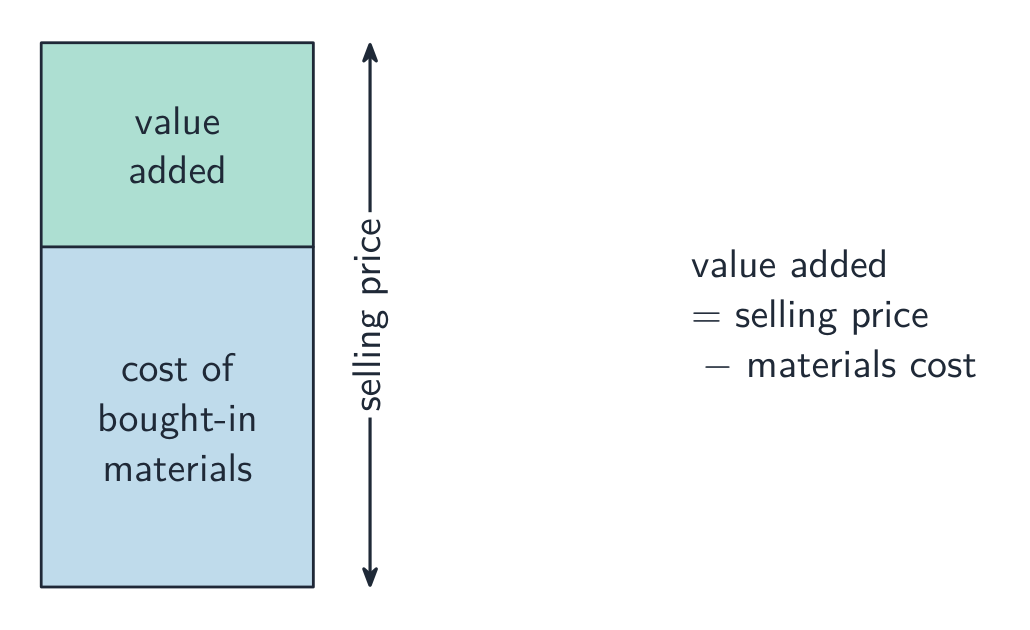
Adding value 增值 means the selling price of a product is higher than the cost of the inputs 投入 (the bought-in materials) used to make it.
$$\text{value added} = \text{selling price} - \text{cost of bought-in materials}$$
A business can add value by branding 品牌, better quality, good design, fast service, or convenience. More value added can mean more profit 利润, but only if costs stay under control.
العربية
إضافة القيمة تعني أن سعر بيع المنتج أعلى من تكلفة المدخلات (المواد المشتراة) المستخدمة في تصنيعه.
$$\text{value added} = \text{selling price} - \text{cost of bought-in materials}$$
إضافة القيمة هي سعر البيع ناقص تكلفة المواد المشتراة
يمكن للشركة إضافة قيمة من خلال العلامة التجارية، أو جودة أفضل، أو تصميم جيد، أو خدمة سريعة، أو سهولة الوصول. قد تؤدي زيادة القيمة المضافة إلى زيادة الأرباح، ولكن فقط إذا بقيت التكاليف تحت السيطرة.
Explore · استكشف
Value added lab · مختبر إضافة القيمة
Change the bought-in cost, the selling price and other costs to see exactly where value added — and profit — come from. · غيّر تكلفة المشتريات وسعر البيع والتكاليف الأخرى لرؤية مكان إضافة القيمة — والأرباح — بدقة.
1.1
Entrepreneurs and intrapreneurs · رواد الأعمال ورواد الأعمال الداخليون
English
An entrepreneur 企业家 is a person who takes the risk to set up and run a business. They have the idea, organise the factors of production, and make the decisions. If the business fails, they can lose their money.
An intrapreneur 内部创业者 is an employee inside a larger business who acts like an entrepreneur. They build new ideas, products or ways of working, using the company's resources.
Characteristics of successful entrepreneurs
Successful entrepreneurs are usually:
innovative 有创新精神的 — full of new ideas.
willing to take risks, but in a careful way.
hard-working and determined 有决心的 — they do not give up easily.
self-confident 自信的 and good at making decisions.
good leaders who can plan ahead and manage money.
Why enterprise matters to a country
When people start new businesses (business start-ups 初创企业), the whole country can gain:
new jobs are created, which lowers unemployment 失业.
more goods and services are made, which raises output 产出 (and the country's GDP 国内生产总值).
more competition 竞争, giving customers lower prices and more choice.
some firms grow and export 出口, bringing money into the country.
economic growth 经济增长 and a higher standard of living.
العربية
رائد الأعمال هو شخص يتحمل المخاطرة لإنشاء وتشغيل عمل تجاري. يمتلك الفكرة، وينظم عوامل الإنتاج، ويتخذ القرارات. إذا فشل العمل التجاري، فقد يخسر أمواله.
رائد الأعمال الداخلي هو موظف داخل شركة كبيرة يعمل كرائد أعمال. يقوم ببناء أفكار جديدة، أو منتجات، أو طرق عمل، باستخدام موارد الشركة.
الشاحنة المتنقلة هي مشروع يمكنك رؤيته. لاحظ المالك فجوة في السوق، وأنفق مدخراته الخاصة على الشاحنة والمخزون، ويواجه الآن مخاطرة تشغيلها يومياً — وهو جوهر كونك رائد أعمال
سمات رواد الأعمال الناجحين
عادةً ما يكون رواد الأعمال الناجحون:
مبتكرين — مليئين بالأفكار الجديدة.
مستعدين للمخاطرة، ولكن بطريقة حذرة.
مجتهدون ومتصممون — لا يستسلمون بسهولة.
واثقون بأنفسهم وجيدون في اتخاذ القرارات.
قادة جيديون يمكنهم التخطيط مسبقاً وإدارة المال.
لماذا ي يهم النشاط الريادي بالبلد
عندما يبدأ الناس أعمالاً تجارية جديدة (مشاريع ناشئة)، يمكن للبلد بأكمله أن يحقق:
خلق وظائف جديدة، مما يقلل من البطالة.
إنتاج سلع وخدمات أكثر، مما يرفع الإنتاج (والناتج المحلي الإجمالي للبلد).
مزيد من المنافسة، مما يوفر للعملاء أسعاراً أقل ومزيداً من الخيارات.
نمو بعض الشركات والتصدير، مما يجلب الأموال إلى البلاد.
Sectors of business activity · قطاعات النشاط التجاري
Syllabus · المنهج
English
explain the classification of business activity (primary, secondary, tertiary, quaternary sectors) and the private and public sectors
describe the legal structure of business: sole trader, partnership, private and public limited company, franchise, joint venture, social enterprise
explain limited and unlimited liability
العربية
اشرح تصنيف النشاطات الاقتصادية (القطاع الأولي، الثانوي، الثلاثي، الرابع) والقطاعات الخاصة والعامة
صف الهيكل القانوني للعمل: المالك الفردي، الشراكة، شركة مساهمة خاصة وعامة، الإسناد التجاري، المشروع المشترك، المؤسسة الاجتماعية
اشرح المسؤولية المحدودة وغير المحدودة
Source: Cambridge International syllabus · المصدر: منهج كامبريدج الدولي
English
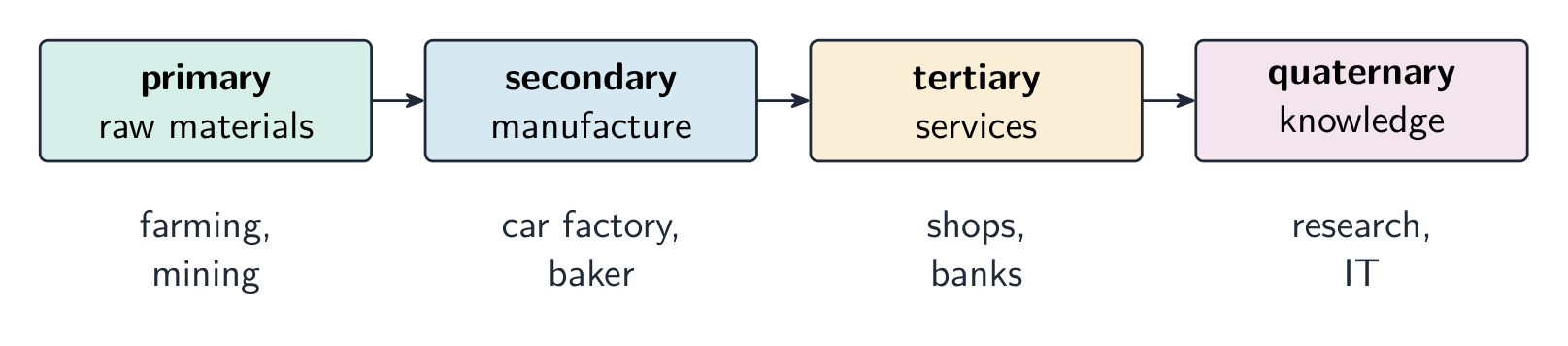
Every business works in one of four sectors:
Sector
What it does
Example
primary sector 第一产业
takes raw materials from nature
farming, mining, fishing
secondary sector 第二产业
makes (manufactures) goods
car factory, baker
tertiary sector 第三产业
provides services
shops, banks, transport
quaternary sector 第四产业
knowledge and information services
research, IT, consulting
Here raw materials 原材料 are the natural inputs a business starts with, and to manufacture 制造 means to make goods in large amounts. As a country develops, it usually moves from mostly primary work towards more tertiary and quaternary work.
العربية
كل عمل تجاري يعمل في أحد القطاعات الأربعة:
القطاع
ما يفعله
مثال
القطاع الأولي
استخراج المواد الخام من الطبيعة
الزراعة، التعدين، الصيد
القطاع الثانوي
تصنيع السلع
مصنع سيارات، خبازية
القطاع الثالثي
تقديم الخدمات
المتاجر، البنوك، النقل
القطاع الرباعي
خدمات المعرفة والمعلومات
البحث، تكنولوجيا المعلومات، الاستشارات
يبدأ النشاط التجاري من القطاع الأولي حتى يصل إلى القطاع الرباعي
هنا المواد الخام هي المدخلات الطبيعية التي تبدأ بها الشركة، والتصنيع يعني制作 السلع بكميات كبيرة. ومع تطور البلد، ينتقل عادةً من العمل الأولي بشكل رئيسي نحو المزيد من العمل في القطاعين الثالثي والرباعي.
Explore · استكشف
Classify business activity · تصنيف النشاط التجاري
Sort real firms by the sector they mainly belong to. · صنّف الشركات الحقيقية حسب القطاع الذي تنتمي إليه بشكل رئيسي.
Private and public sectors · القطاع الخاص والقطاع العام
English
The private sector 私营部门 is made up of businesses owned by private people. Their main aim is usually profit.
The public sector 公共部门 is made up of organisations owned by the government, such as state schools and public hospitals. Their aim is usually to provide a service, not to make profit.
العربية
القطاع الخاص يتكون من شركات يملكها أشخاص خاصون. هدفهم الرئيسي هو عادة تحقيق الربح.
القطاع العام يتكون من مؤسسات يملكها الحكومة، مثل المدارس الحكومية والمستشفيات العامة. هدفهم عادة هو تقديم خدمة، وليس تحقيق الربح.
1.2
Legal structures of business · الهياكل القانونية للأعمال
English
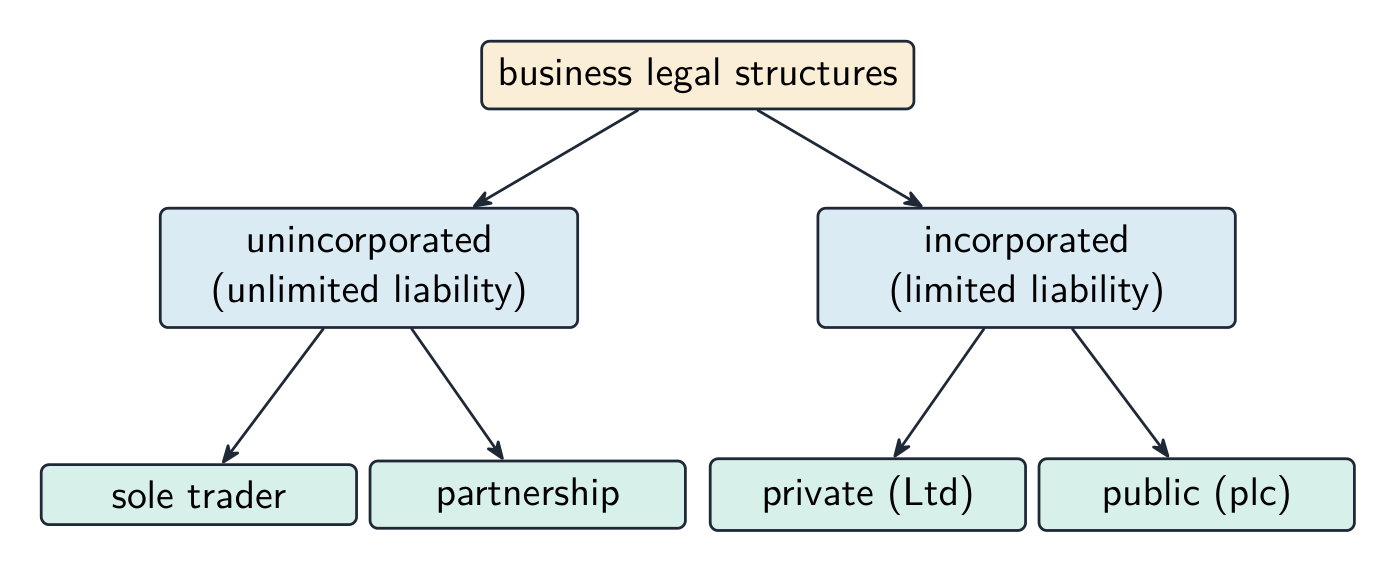
A business must choose a legal form. The main ones are below.
A sole trader 个体经营者 is owned by one person. It is easy to set up and the owner keeps all the profit, but raising money is hard.
A partnership 合伙企业 is owned by two or more partners who share the work and profit. They often sign a deed of partnership 合伙协议 that sets out each partner's share.
A private limited company 私人有限公司 (Ltd) sells shares 股份 to a small group, such as family and friends. Its owners are shareholders 股东. Its shares are not sold to the public.
A public limited company 上市公司 (plc) sells its shares to the public on the stock exchange 证券交易所. It can raise large amounts of money, but it must follow more rules and faces the risk of a takeover 收购.
A franchise 特许经营 lets one firm use another firm's brand and business model. The franchisor 特许方 owns the brand; the franchisee 加盟方 pays a fee and a royalty 提成 to run a branch.
A joint venture 合资企业 is when two businesses join to run one project and share the costs and risks.
A social enterprise 社会企业 trades like a normal business but aims to do social or environmental 环境 good, and reinvests most of its profit.
العربية
مقر شركة: تتراوح الأعمال من أصحاب الأعمال الفردية إلى الشركات المساهمة العملاقة.
يجب على العمل اختيار شكل قانوني. الرئيسية منها موضحة أدناه.
صاحب العمل الفردي يملكه شخص واحد. من السهل إنشاؤه ويحتفظ المالك بجميع الأرباح، لكن جمع المال يصعب.
الشراكة يملكها شريكان أو أكثر يشاركون العمل والأرباح. غالباً ما يوقعون عقد شراكة يحدد حصة كل شريك.
الشركة الخاصة المحدودة (Ltd) تبيع أسهماً لمجموعة صغيرة، مثل العائلة والأصدقاء. مالكوها هم مساهمون. أسهمها لا تُباع للعامة.
الشركة المساهمة العامة (plc) تبيع أسهمها للعامة في بورصة الأسهم. يمكنها جمع كميات كبيرة من المال، لكنها يجب أن تتبع قواعد أكثر وتتعرض لخطر الاستحواذ.
الامتياز التجاري يسمح لشركة واحدة باستخدام علامة تجارية ونموذج عمل لشركة أخرى. المُمنح الامتياز يملك العلامة التجارية؛ المُمنح الامتياز يدفع رسومًا وبدل امتياز لتشغيل فرع.
الشراكة المشتركة هي عندما تنضم شركتان لإدارة مشروع واحد وتشارك التكاليف والمخاطر.
المؤسسة الاجتماعية تتداول مثل الشركة العادية لكنها تهدف لتحقيق منفعة اجتماعية أو بيئية، وتعيد استثمار معظم أرباحها.
الهياكل القانونية مقسمة حسب المسؤولية: غير مدرجة (غير محدودة) ومدرجة (محدودة)
Explore · استكشف
Choose the ownership form · اختر شكل الملكية
Compare ownership, control and liability in real business types. · قارن الملكية والسيطرة والمسؤولية في أنواع الشركات الحقيقية.
1.2
Limited and unlimited liability · المسؤولية المحدودة وغير المحدودة
English
Liability 责任 means who must pay the business's debts 债务 if it cannot pay them itself.
limited liability 有限责任 — the owners can only lose the money they put in. Their personal things, like a house or car, are safe. Companies have limited liability.
unlimited liability 无限责任 — the owners are personally responsible for all the debts. They could lose personal things. Sole traders and most partnerships have unlimited liability.
A company is a separate legal identity 独立法人 — it can own things, owe money, and be taken to court in its own name, apart from its owners.
العربية
المسؤولية تعني من يجب عليه دفع ديون العمل إذا لم يتمكن من سدادها بنفسه.
المسؤولية المحدودة — المالكون يخسرون فقط الأموال التي استثمروها. أصولهم الشخصية، مثل المنزل أو السيارة، آمنة. الشركات تتمتع بمسؤولية محدودة.
المسؤولية غير المحدودة — المالكون مسؤولون شخصياً عن جميع الديون. قد يفقدون أصولاً شخصية. أصحاب الأعمال الحرة ومعظم الشراكات لديهم مسؤولية غير محدودة.
الشركة ذات هوية قانونية مستقلة — يمكنها امتلاك ممتلكات، وتحمل ديون، ومقاضاة في محكمة باسمها الخاص، منفصلة عن مالكيها.
المسؤولية المحدودة تخاطر فقط بالمال المدخل؛ المسؤولية غير المحدودة تخاطر بالأصول الشخصية للمالك أيضاً
separate legal identity/ˈseprət ˈliːɡl aɪˈdentɪti/
هوية قانونية منفصلة
employees/emˈplɔɪiːz/
موظفون
revenue/ˈrevənjuː/
الإيراد
capital employed/ˈkæpɪtl emˈplɔɪd/
رأس المال المعتمد
market share/ˈmɑːkɪt ʃeə/
حصة السوق
market capitalisation/ˈmɑːkɪt ˌkæpɪtəlaɪˈzeɪʃn/
القيمة السوقية للسهم
communities/kəˈmjuːnɪtiz/
مجتمعات
internal growth/ɪnˈtɜːnl ɡrəʊθ/
النمو الداخلي
external growth/ekˈstɜːnl ɡrəʊθ/
النمو الخارجي
1.3
The size of a business · حجم العمل التجاري
Syllabus · المنهج
English
explain how the size of a business is measured and the significance of small businesses
explain internal and external growth (mergers and takeovers — horizontal, vertical, conglomerate) and the reasons for and problems of growth
explain economies and diseconomies of scale
العربية
اشرح كيفية قياس حجم العمل وأهمية الصغائر
اشرح النمو الداخلي والخارجي (الاندماجات والاستحواقات — الأفقي، الرأسي، التنوع) وأسباب ومشاكل النمو
اشرح اقتصاديات وضرائب الحجم
Source: Cambridge International syllabus · المصدر: منهج كامبريدج الدولي
English
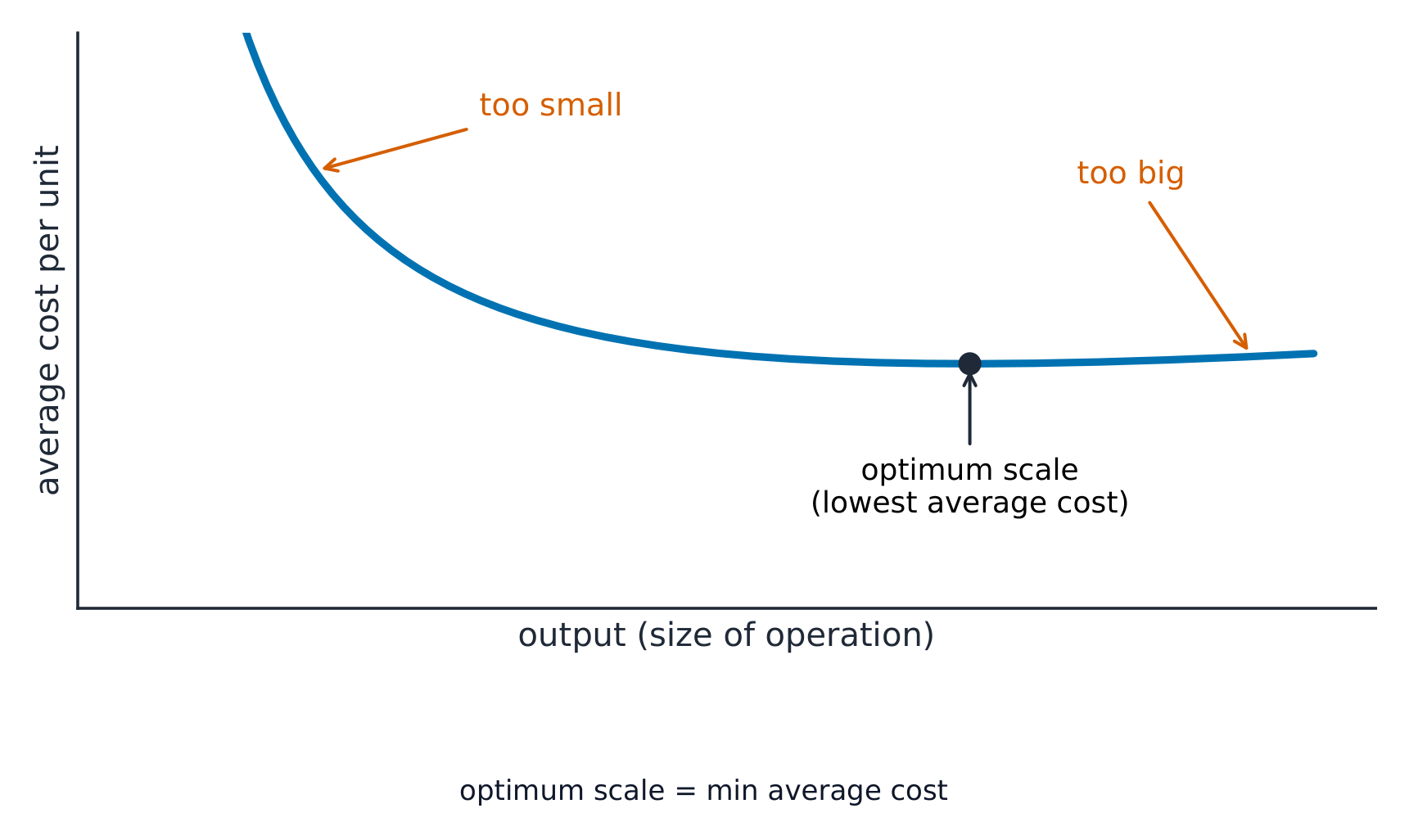
Economies of scale: average cost falls
There is no single best way to measure how big a business is. Common measures are:
the number of employees 员工.
revenue 营业收入 (also called sales turnover) — the value of what it sells.
capital employed 所用资本 — the total money invested in the business.
market share 市场份额 — the firm's sales as a percentage of the whole market.
market capitalisation 市值 — the total value of a company's shares (for a plc).
Different measures can give different answers, so it is best to use more than one.
Why small businesses matter
Small businesses create jobs, serve local communities 社区, give personal service, react quickly to change, bring new ideas, and supply parts and services to large firms.
العربية
وفورات الحجم: انخفاض التكلفة المتوسطة
لا توجد طريقة واحدة مثالية لقياس حجم عمل تجاري. من القياسات الشائعة:
عدد العاملين.
الإيرادات (تُعرف أيضاً بدوران المبيعات) — قيمة ما يتم بيعه.
الأموال المستثمرة — إجمالي الأموال المستثمر في العمل التجاري.
حصة السوق — مبيعات الشركة كنسبة مئوية من السوق بأكمله.
القيمة السوقية للسهم — القيمة الإجمالية لأسهم الشركة (بالنسبة للشركات المساهمة).
قد تعطي القياسات المختلفة إجابات مختلفة، لذا يُفضل استخدام أكثر من قياس واحد.
خمس طرق لقياس حجم العمل التجاري؛ استخدم أكثر من واحد
أهمية الأعمال الصغيرة
تخلق الأعمال الصغيرة فرص عمل، وتخدم مجتمعات محلية، وتقدم خدمة شخصية، وتتفاعل بسرعة مع التغيير، وتقدم أفكاراً جديدة، وتوفر قطع غيار وخدمات للشركات الكبيرة.
Explore · استكشف
Business case lab · مختبر الحالة التجارية
Classify real decisions so the main business concept becomes concrete. · صنّف القرارات الحقيقية حتى تصبح الفكرة التجارية الرئيسية ملموسة.
Internal growth 内部增长 (organic growth) — the business grows by itself: selling more, opening new branches, or adding new products. It is slower but lower risk.
External growth 外部增长 — the business joins with another firm. This is called integration 整合, and it happens by:
a merger 合并 — two firms agree to join together as one.
a takeover — one firm buys control of another.
There are three types of integration:
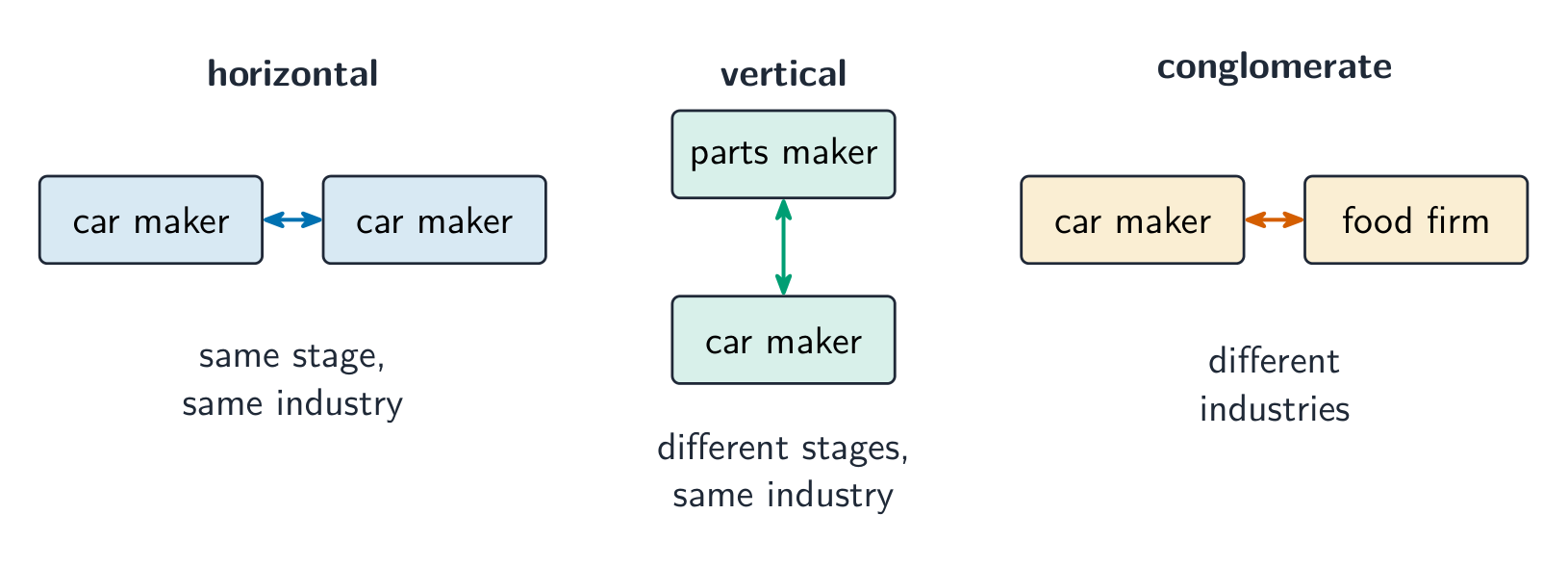
horizontal integration 横向整合 — joining a firm at the same stage in the same industry (e.g. two car makers).
vertical integration 纵向整合 — joining a firm at a different stage in the same industry. Forward integration 前向整合 is towards the customer (e.g. buying a shop); backward integration 后向整合 is towards the supplier (e.g. buying a parts maker).
conglomerate integration 混合整合 — joining a firm in a completely different industry. This spreads risk, which is called diversification 多元化.
Firms grow to lower their costs, win a bigger market share and more market power 市场支配力, raise profit, and spread risk. But growth also brings problems: higher average costs, harder management and communication, different company cultures 企业文化 that may clash, and a need for a lot of finance.
العربية
يمكن للعمل التجاري أن ينمو بطريقتين.
النمو الداخلي (النمو العضوي) — ينمو العمل التجاري بنفسه: بزيادة المبيعات، أو فتح فروع جديدة، أو إضافة منتجات جديدة. وهو أبطأ ولكنه أقل مخاطرة.
النمو الخارجي — يندمج العمل التجاري مع شركة أخرى. هذا يسمى التكامل، ويحدث عبر:
دمج — تتفق شركتان على الاندماج لتكوين كيان واحد.
استحواذ — تشتري شركة واحدة سيطرة على شركة أخرى.
هناك ثلاثة أنواع من التكامل:
التكامل الأفقي — الاندماج مع شركة في نفس المرحلة في نفس الصناعة (مثلاً: مصنعان للسيارات).
التكامل الرأسي — الاندماج مع شركة في مرحلة مختلفة في نفس الصناعة. التكامل الأمامي يتجه نحو العميل (مثل شراء متجر)؛ التكامل الخلفي يتجه نحو المورد (مثل شراء مصنع لقطع الغيار).
تكامل المجموعات — الاندماج مع شركة في صناعة مختلفة تماماً. هذا يقلل المخاطر، وهو ما يسمى التنوع.
*الأنواع الثلاثة للتكامل عندما تنضم شركة إلى أخرى
تنمو الشركات لتقليل تكاليفها، وحصد حصة سوقية أكبر وقوة سوقية أعلى، وزيادة الربح، وتوزيع المخاطر. لكن النمو يجلب أيضاً مشاكل: ارتفاع التكاليف المتوسطة، وصعوبة الإدارة والاتصال، وثقافات شركات مختلفة قد تتصادم، والحاجة إلى تمويل كبير.
Economies and diseconomies of scale · وفورات وعيوب الحجم
English
Economies of scale 规模经济 are the cost savings a business gets as it grows larger. The average cost 平均成本 of each unit falls as output rises. The main types are:
Type
How it lowers cost
purchasing
buying in bulk 大批量 earns discounts
technical
large machines are more efficient
financial
large firms borrow at lower interest 利息
managerial
the firm can employ expert specialist managers
marketing
advertising cost is spread over more units
Diseconomies of scale 规模不经济 happen when a firm grows too big and the average cost starts to rise again. The usual causes are:
communication 沟通 becomes slow and unclear.
the coordination 协调 of many departments is hard.
workers may feel unimportant and lose motivation 激励.
Worked example. A factory making 10,000 units has fixed costs of £200,000 and variable costs of £6 per unit. It expands to 50,000 units, and bulk buying cuts the variable cost to £5. Find the unit cost at each output and explain the fall. Unit cost = total cost ÷ output. At 10,000: total = 200,000 + (10,000 × 6) = £260,000, so the unit cost is 260,000 ÷ 10,000 = £26. At 50,000: total = 200,000 + (50,000 × 5) = £450,000, so the unit cost is 450,000 ÷ 50,000 = £9. Two economies of scale are at work: the fixed costs are spread over far more units (£20 down to £4 each), and purchasing economies cut the variable cost. Note that the fixed cost total does not change - only the fixed cost per unit falls. Writing "fixed costs fall" is the error that loses the mark.
العربية
وفورات الحجم هي توفير التكاليف الذي تحصل عليه الشركة كلما كبرت. تنخفض التكلفة المتوسطة لكل وحدة مع زيادة الإنتاج. الأنواع الرئيسية هي:
النوع
كيف يقلل التكلفة
المشتريات
الشراء بـ كميات كبيرة يحقق خصومات
تقنية
الآلات الكبيرة أكثر كفاءة
مالية
تقترض الشركات الكبيرة بأسعار فائدة أدنى
إدارية
يمكن للشركة توظيف مدراء متخصصينExperts
تسويق
تكلفة الإعلان تُوزع على وحدات أكثر
عيوب الحجم تحدث عندما تكبر الشركة بشكل مفرط وتبدأ التكلفة المتوسطة في الارتفاع مرة أخرى. الأسباب المعتادة هي:
تصبح الاتصالات بطيئة وغير واضحة.
يكون تنسيق الأقسام العديدة أمراً صعباً.
قد يشعر العمال بأنهم غير مهمين ويفقدون الدافع.
*التكلفة المتوسطة للوحدة تنخفض (وفورات الحجم) ثم ترتفع (عيوب الحجم) مع نمو الشركة
مثال محلول. مصنع ينتج 10,000 وحدة، تكاليثه الثابتة 200,000 جنيه sterling، وتكاليفه المتغيرة 6 جنيه sterling للوحدة. يتم التوسع لإنتاج 50,000 وحدة، وقضاء الشراء بالكميات الكبيرة على التكلفة المتغيرة لتصبح 5 جنيه sterling. أوجد تكلفة الوحدة عند كل مستوى إنتاج واشرح سبب الانخفاض. تكلفة الوحدة = التكلفة الكلية ÷ الإنتاج. عند 10,000: التكلفة الكلية = 200,000 + (10,000 × 6) = 260,000 جنيه sterling، إذن تكلفة الوحدة هي 260,000 ÷ 10,000 = 26 جنيه sterling. عند 50,000: التكلفة الكلية = 200,000 + (50,000 × 5) = 450,000 جنيه sterling، إذن تكلفة الوحدة هي 450,000 ÷ 50,000 = 9 جنيه sterling. يعمل نوعان من وفورات الحجم: التكاليف الثابتة موزعة على وحدات أكثر بكثير (انخفضت من 20 جنيهاً إلى 4 جنيه sterling لكل وحدة)، ووفورات المشتريات قللت التكلفة المتغيرة. لاحظ أن إجمالي التكلفة الثابتة لا يتغير - فقط التكلفة الثابتة لكل وحدة تنخفض. كتابة "تقلل التكاليف الثابتة" هو الخطأ الذي يؤدي لفقدان الدرجة.
Explore · استكشف
Economies of scale · اقتصاديات الحجم
y = ax² + bx + c
Average cost falls then rises — economies, then diseconomies, of scale. · ينخفض التكلفة المتوسطة ثم يرتفع — economies of scale, ثم diseconomies of scale.
Aims, objectives and mission · الأهداف والغايات والرسالة
Syllabus · المنهج
English
explain the importance of, and influences on, business objectives (mission statement, aims, objectives, SMART objectives, strategy and tactics)
explain objectives such as profit maximisation, growth, survival, social and ethical objectives and corporate social responsibility (CSR)
العربية
اشرح أهمية الأهداف وتأثيرها على أهداف العمل (بيان الرؤية، الغايات، الأهداف، الأهداف الذكية، الاستراتيجية والتكتيكات)
اشرح أهدافاً مثل تعظيم الربح، النمو، البقاء، الأهداف الاجتماعية والأخلاقية والمسؤولية الاجتماعية للشركات (CSR)
Source: Cambridge International syllabus · المصدر: منهج كامبريدج الدولي
English
A mission statement 使命宣言 is a short sentence that says why the business exists and what it wants to be. It guides everyone in the firm.
From the mission come aims 目的 (broad, long-term goals), and then objectives 目标 (the specific targets that help reach the aims).
Good objectives are SMART — the first letters of:
Specific 具体的 — clear and exact.
Measurable 可衡量的 — you can check it with numbers.
Achievable 可实现的 — it is possible to reach.
Realistic 现实的 — sensible for the resources you have.
Time-bound 有时限的 — it has a deadline.
A strategy 战略 is the long-term plan to meet objectives. Tactics 策略 are the short-term actions that carry out the strategy. Objectives are shaped by the size and age of the firm, who owns it, the company culture, and conditions in the market.
العربية
بيان الرسالة هو جملة قصيرة تصف لماذا يوجد العمل التجاري وما يطمح أن يصبح عليه. إنه يرشد الجميع في الشركة.
من الرسالة تنشأ الأهداف (أهداف واسعة طويلة الأمد)، ومن ثم المعايير (الأهداف المحددة التي تساعد في تحقيق الأهداف).
تتصاعد الأهداف وتصبح أضيق وأكثر تحديدًا على طول التسلسل الهرمي: الرسالة الواسعة تصبح أهدافًا، ثم أهدافًا SMART، ثم تكتيكات يومية
الأهداف الجيدة تكون SMART — الحروف الأولى من:
محددة (Specific) — واضحة ودقيقة.
قابلة للقياس (Measurable) — يمكنك التحقق منها بالأرقام.
قابلة للتحقيق (Achievable) — يمكن الوصول إليها.
واقعية (Realistic) — معقولة بالنسبة للموارد المتاحة لك.
محددة بوقت (Time-bound) — لها موعد نهائي.
الاستراتيجية هي الخطة طويلة الأجل لتحقيق الأهداف. أما التكتيكات فهي الإجراءات قصيرة الأجل التي تنفذ الاستراتيجية. تتشكل الأهداف بناءً على حجم الشركة وعمرها، ومالكها، وثقافة الشركة، وظروف السوق.
Explore · استكشف
Business objectives lab · معمل أهداف العمل
Match business examples to the objective they reveal. · صل أمثلة تجارية بالأهداف التي تكشف عنها.
Types of business objective · أنواع الأهداف التجارية
English
Objective
What it means
profit maximisation 利润最大化
making the largest possible profit
growth
getting bigger — more sales, more branches
survival 生存
staying in business, vital for new firms and in hard times
market share
winning a larger share of the market
social and ethical 道德 objectives
doing what is morally right, such as fair pay
Corporate social responsibility 企业社会责任 (CSR) is the idea that a business should act in the best interests of society and the environment, not just make profit. Examples are treating workers fairly, cutting pollution 污染, and helping the local community.
A firm's objectives can change over time. A new firm may aim to survive; later it may aim to grow; a large, safe firm may focus on profit or CSR.
العربية
الهدف
ماذا يعني
تعظيم الربح
تحقيق أكبر ربح ممكن
النمو
التوسع في الحجم — زيادة المبيعات، فتح فروع أكثر
البقاء
الاستمرار في العمل، وهو أمر حيوي للشركات الجديدة وفي الأوقات الصعبة
حصة السوق
الفوز بحصة أكبر من السوق
أهداف اجتماعية وأخلاقية
القيام بما هو صحيح أخلاقيًا، مثل الأجور العادلة
أهداف SMART: محددة، قابلة للقياس، قابلة للتحقيق، واقعية، مقيدة بوقت
المسؤولية الاجتماعية للشركات (CSR) هي الفكرة القائلة بأن يجب على الشركة أن تعمل لصالح المجتمع والبيئة، وليس فقط تحقيق الربح. ومن الأمثلة على ذلك المعاملة العادلة للعاملين، وتقليل التلوث، والمساعدة في المجتمع المحلي.
يمكن أن تتغير أهداف الشركة بمرور الوقت. قد تهدف الشركة الجديدة إلى البقاء؛ لاحقًا قد تهدف إلى النمو؛ وقد تركز الشركات الكبيرة والآمنة على الربح أو المسؤولية الاجتماعية.
1.5
Stakeholders · أصحاب المصلحة
Syllabus · المنهج
English
identify internal and external stakeholders and their objectives
explain how and why the objectives of stakeholders may conflict and how conflicts can be managed
العربية
حدد أصحاب المصلحة الداخليين والخارجيين وأهدافهم
اشرح كيف ولماذا قد تتعارض أهداف أصحاب المصلحة وكيف يمكن إدارة هذه التعارضات
Source: Cambridge International syllabus · المصدر: منهج كامبريدج الدولي
English
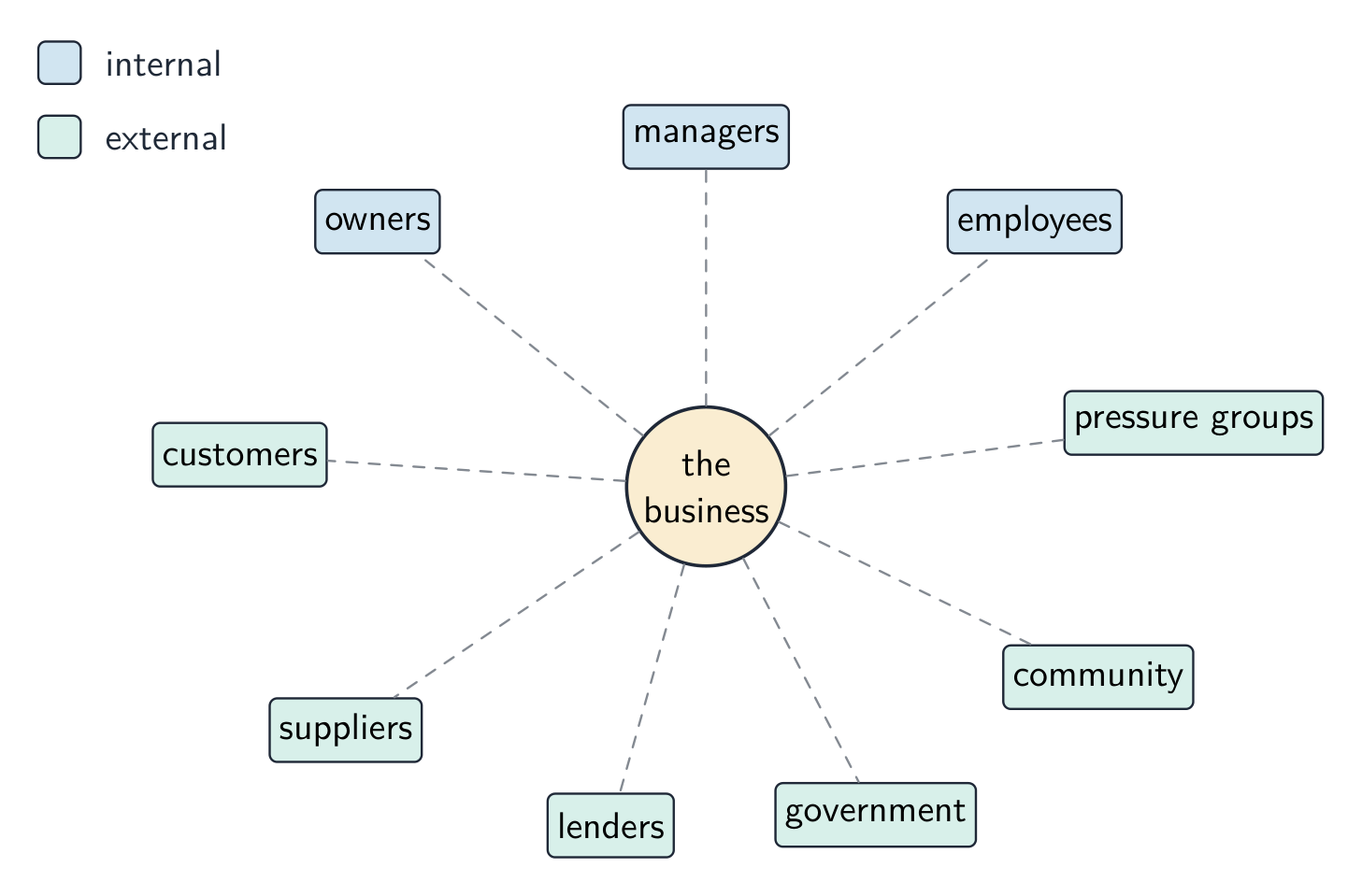
A stakeholder 利益相关者 is any person or group with an interest in a business and how well it does.
Internal stakeholders 内部利益相关者 are inside the business:
owners and shareholders — want profit and a good return.
managers 管理者 — want growth, job security and bonuses.
employees — want fair pay, safe work and job security.
External stakeholders 外部利益相关者 are outside the business:
Stakeholder
Main objective
customers 顾客
good quality at a fair price
suppliers 供应商
regular orders, paid on time
lenders 贷款方 (banks)
to be repaid with interest
the government
tax, jobs, and that the firm obeys the law
local community
jobs, but little pollution or noise
pressure groups 压力团体
to protect a cause, such as the environment
Why stakeholder objectives conflict
Stakeholders often want different things, so their objectives can conflict 冲突 (clash). For example:
owners want higher profit, but employees want higher pay — and higher pay lowers profit.
customers want low prices, but owners want a high profit margin.
the local community wants less pollution, but cutting pollution can raise costs.
How conflict can be managed
keep good communication with every group.
compromise 妥协 — give each group part of what it wants.
negotiation 谈判 — talk until the groups reach an agreement.
decide which stakeholders matter most for each decision, and act on that.
العربية
صاحب المصلحة هو أي شخص أو مجموعة لديه اهتمام في شركة ما وكيفية أدائها.
أصحاب المصلحة الداخليون والخارجيون جميعهم لديهم مصلحة في المؤسسة
أصحاب المصلحة الداخليون يوجدون داخل الشركة:
الملاك والمساهمون — يرغبون في الربح وعائد جيد.
المديرون — يرغبون في النمو، والأمان الوظيفي والمكافآت.
الموظفون — يرغبون في أجر عادل، بيئة عمل آمنة، والأمان الوظيفي.
أصحاب المصلحة الخارجيون يوجدون خارج الشركة:
صاحب المصلحة
الهدف الرئيسي
العملاء
جودة جيدة بسعر عادل
المزودون
طلبات منتظمة، مدفوعة في الوقت المحدد
الدائنون (البنوك)
استرداد الأموال مع الفائدة
الحكومة
الضرائب، فرص العمل، وامتثال الشركة للقانون
المجتمع المحلي
فرص عمل، ولكن بتلوث وضوضاء قليلين
جماعات الضغط
حماية قضية ما، مثل البيئة
لماذا تتعارض أهداف أصحاب المصلحة
غالبًا ما يرغب أصحاب المصلحة في أشياء مختلفة، لذا يمكن أن تتعارض أهدافهم (تتصادم). على سبيل المثال:
الملاك يريدون ربحًا أعلى، لكن الموظفين يريدون أجورًا أعلى — وأجور أعلى تقلل من الربح.
العملاء يريدون أسعارًا منخفضة، لكن الملاك يريدون هامش ربح مرتفع.
المجتمع المحلي يريد تلوثًا أقل، لكن تقليل التلوث قد يزيد التكاليف.
كيفية إدارة التعارض
الحفاظ على تواصل جيد مع كل مجموعة.
التنازل (Compromise) — منح كل مجموعة جزءًا مما تريد.
التفاوض (Negotiation) — الحديث حتى تتوصل المجموعات إلى اتفاق.
تحديد أصحاب المصلحة الأكثر أهمية لكل قرار، والتصرف بناءً على ذلك.
Explore · استكشف
Stakeholder interest lab · معمل اهتمام أصحاب المصلحة
See how different stakeholders judge the same business decision. · انظر كيف يحكم أصحاب المصلحة المختلفون نفس القرار التجاري.
What human resource management does · ما تفعله إدارة الموارد البشرية
Syllabus · المنهج
English
explain the purpose and roles of human resource management (HRM): workforce planning, recruitment and selection, training and development
explain redundancy and dismissal, employer/employee rights and the management of change in HR
calculate and interpret labour turnover and labour productivity
العربية
اشرح غرض ودور إدارة الموارد البشرية (HRM): تخطيط القوى العاملة، التوظيف والاختيار، التدريب والتطوير
اشرح الإعفاء من العمل والفصل، حقوق صاحب العمل/العامل وإدارة التغيير في الموارد البشرية
احسب وفسر معدل دوران العمالة وإنتاجية العمالة
Source: Cambridge International syllabus · المصدر: منهج كامبريدج الدولي
English
Human resource management 人力资源管理 (HRM) is the part of a business that looks after its people. Good HRM makes sure the firm has enough staff, with the right skills, who are well trained and motivated.
The main roles of HRM are:
workforce planning 人力规划 — working out how many staff, and what skills, the business will need in the future.
recruitment 招聘 and selection 甄选 — finding people to apply for jobs, then choosing the best.
training 培训 and development 培养 — improving staff skills now and helping them grow for the future.
العربية
إدارة الموارد البشرية (HRM) هي الجزء المسؤول عن رعاية العاملين في الشركة. تضمن إدارة الموارد البشرية الجيدة امتلاك الشركة عددًا كافيًا من الموظفين، بالمهارات المناسبة، والمدربين جيدًا والمحفزين.
يخطط المديرون وينظمون القوى العاملة — وهو جوهر إدارة الموارد البشرية.
الأدوار الرئيسية لإدارة الموارد البشرية هي:
تخطيط القوى العاملة — تحديد عدد الموظفين والمهارات التي ستحتاجها الشركة في المستقبل.
التوظيف والاختيار — إيجاد أشخاص للتقديم على الوظائف، ثم اختيار الأفضل.
التدريب والتطوير — تحسين مهارات الموظفين حاليًا ومساعدتهم على النمو للمستقبل.
Explore · استكشف
Human resources decision lab · معمل قرار الموارد البشرية
Classify HR actions by the job they do inside the workforce. · صنف إجراءات الموارد البشرية حسب الوظيفة التي تقوم بها داخل القوى العاملة.
Workforce planning, recruitment and selection · تخطيط القوى العاملة، والتوظيف، والاختيار
English
Workforce planning looks at the firm's plans, then at the staff it already has, to find the gap. The gap may be filled by hiring, training, or moving staff.
To recruit, the firm first writes:
a job description 职位描述 — the title, duties and tasks of the job.
a person specification 人员规格 — the skills, qualifications 资格 and qualities the right person should have.
The firm can recruit from inside or outside:
internal recruitment 内部招聘 — filling the job with someone who already works there. It is cheaper and faster, and the person is known, but no new ideas come in.
external recruitment 外部招聘 — hiring someone from outside. It brings new skills and ideas, but costs more and is slower.
Selection methods include reading application forms and CVs, interviews 面试, tests, and group tasks.
العربية
يبحث تخطيط القوى العاملة في خطط الشركة، ثم في الموظفين الحاليين، لتحديد الفجوة. يمكن سد هذه الفجوة بالتوظيف، أو التدريب، أو نقل الموظفين.
التوظيف: وصف الوظيفة، الإعلان، ثم اختيار المتقدم الأفضل
للتوظيف، تكتب الشركة أولاً:
وصف الوظيفة — العنوان، المهام، والمهام الخاصة بالوظيفة.
مواصفات الشخص — المهارات، المؤهلات، والسمات التي يجب أن يتصف بها الشخص المناسب.
يمكن للشركة التوظيف من الداخل أو الخارج:
التوظيف الداخلي — شغل الوظيفة بشخص يعمل بالفعل هناك. إنه أرخص وأسرع، والشخص معروف، لكن لا تأتي أفكار جديدة.
التوظيف الخارجي — توظيف شخص من خارج المنظمة. يضيف مهارات وأفكاراً جديدة، لكنه مكلف وبطيء.
تشمل طرق الاختيار قراءة نماذج الطلبات والسير الذاتية، والمقابلات، والاختبارات، والمهام الجماعية.
الاختيار: المقابلة هي المرحلة التي يجتمع فيها معظم المتقدمين، وهي الأكثر اختباراً في الامتحان
redundancy 裁员 happens when the job itself is no longer needed — for example, when a machine replaces it. It is not the worker's fault.
dismissal 解雇 happens when a worker is made to leave because of poor work or bad behaviour.
العربية
أحياناً يضطر العامل إلى مغادرة الوظيفة.
التسريح يحدث عندما لا يعود هناك حاجة للوظيفة نفسها — على سبيل المثال، عند استبدالها بآلة. وهو ليس عيباً من العامل.
الفصل يحدث عندما يُطرد العامل بسبب سوء الأداء أو السلوك السيئ.
2.1
Rights and managing change · الحقوق وإدارة التغيير
English
Both sides have rights and duties. The employer 雇主 must follow the law on pay, safety, working hours and unfair dismissal. The employee 雇员 must work as agreed and follow safe, fair rules. These rights 权利 protect both sides.
Businesses change often — new technology, new markets, or restructuring 重组. The management of change 变革管理 in HR means planning the change, explaining it clearly, training staff for new roles, and listening to worries, so staff accept the change instead of resisting it.
العربية
للطرفين حقوق وواجبات. يجب على صاحب العمل الالتزام بالقانون المتعلق بالأجور والسلامة وساعات العمل والفصل غير العادل. ويجب على الموظف العمل كما اتفق واتباع قواعد آمنة وعادلة. تحمي هذه الحقوق الطرفين.
تتغير الشركات كثيراً — تقنيات جديدة، أسواق جديدة، أو إعادة هيكلة. تعني إدارة التغيير في الموارد البشرية التخطيط للتغيير، وتوضيحه بوضوح، وتدريب الموظفين على الأدوار الجديدة، والاستماع للقلق، بحيث يقبل الموظفون التغيير بدلاً من معارضته.
2.1
Measuring the workforce · قياس القوى العاملة
English
Two simple measures help managers judge how the workforce is doing.
Labour turnover 员工流失率 shows the percentage of staff who leave in a year:
$$\text{labour turnover} = \frac{\text{number of staff leaving}}{\text{average number employed}} \times 100\%$$
High labour turnover can mean low pay, poor motivation or weak management. It raises the cost of recruiting and training.
Worked example. A firm employs $200$ people on average, and $30$ leave during the year. Find its labour turnover.
اشرح أهمية التحفيز ونظريات التحفيز الرئيسية (تايلور، مايو، ماسلو، هرزبرغ، ماكليتلاند، فروم)
اشرح الحافز المالي (الأجور، الراتب، دفع القطعة، العمولة، المكافأة، مشاركة الأرباح، الأداء المرتبط بالراتب، الامتيازات غير النقدية)
اشرح الحافز غير المالي (تثري الوظيفة، دوران الوظيفة، توسيع الوظيفة، تمكين العمال، العمل الجماعي)
Source: Cambridge International syllabus · المصدر: منهج كامبريدج الدولي
English
Motivation 激励 is the desire to work hard and do a good job. Motivated staff produce more and better work, take fewer days off, stay longer, and give better service. So motivation lowers costs and raises quality.
العربية
الدافعية هي الرغبة في العمل بجد وإنجاز عمل جيد. الموظفون المحفزون ينتجون عملاً أكثر وأفضل، ويغيبون عن العمل لأيام أقل، ويبقون لفترة أطول، ويقدمون خدمة أفضل. لذا تقلل الدافعية التكاليف وترفع الجودة.
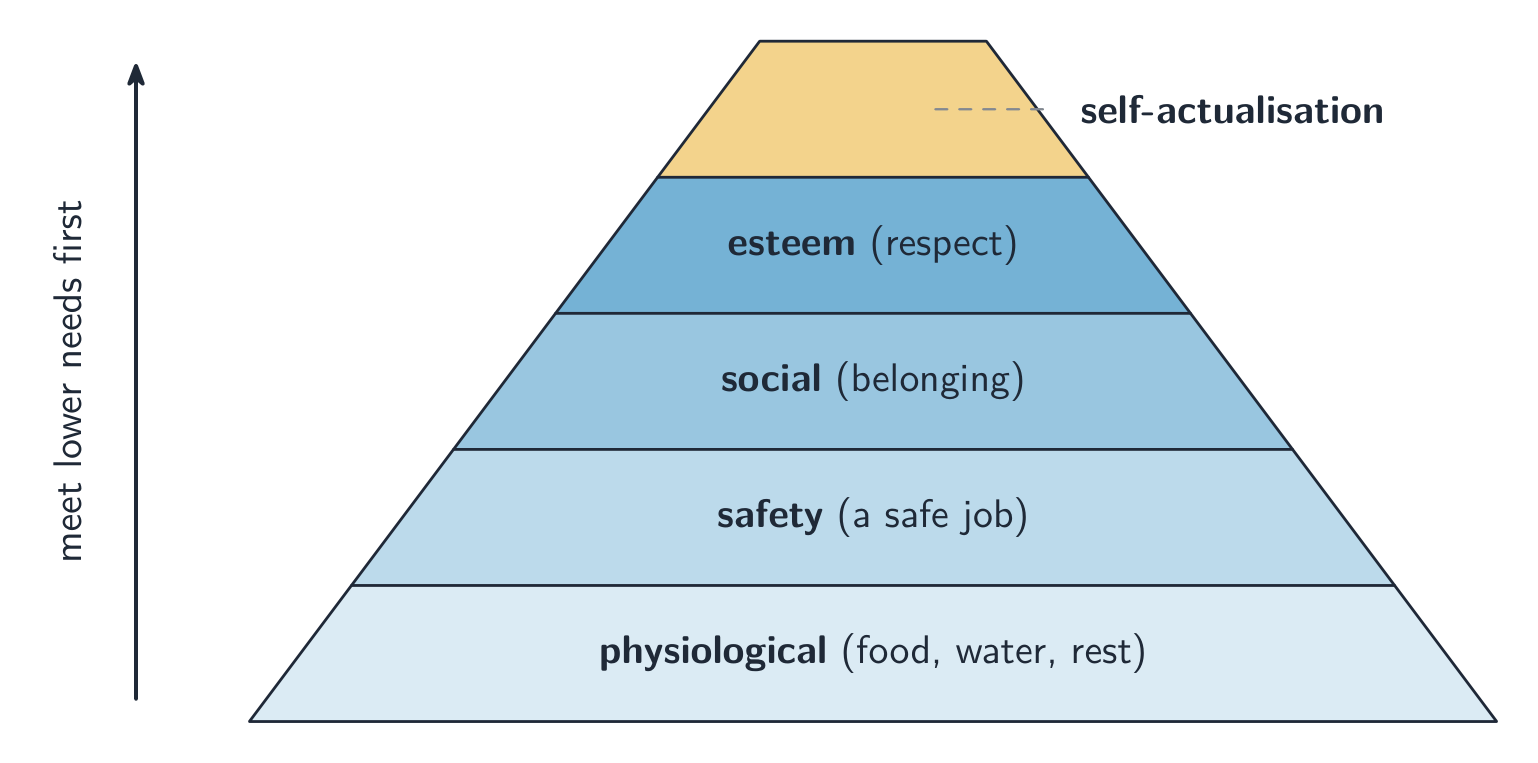
هرماسلو للاحتياجات: يلبي الناس الاحتياجات الأدنى قبل الأعلى
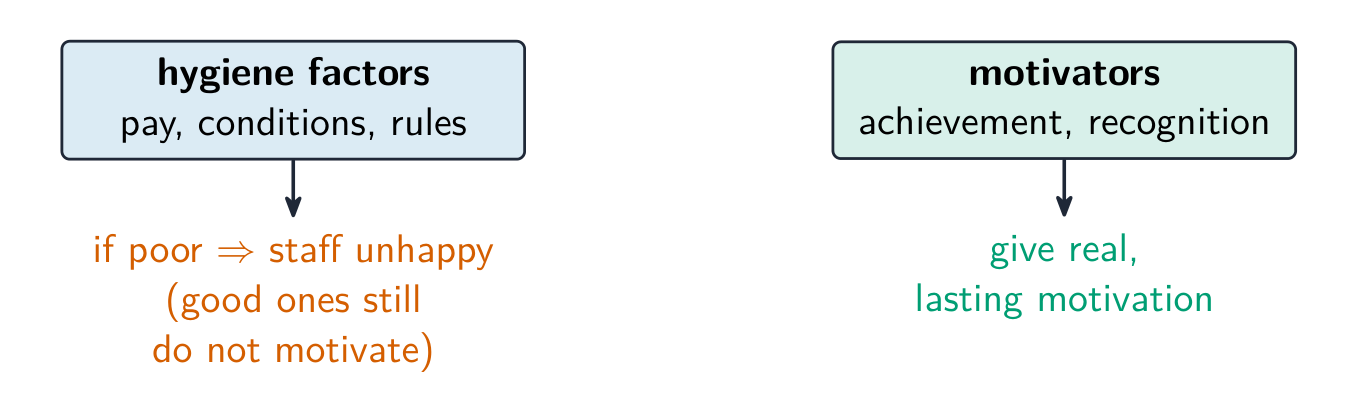
العاملان لهيرزبرغ
عوامل النظافة — أشياء مثل الأجر، والظروف، والقواعد. إذا كانت سيئة، يكون الموظفون غير سعداء؛ لكن إصلاحها لا يحفز حقاً.
العوامل المحفزة — أشياء مثل الإنجاز، والمسؤولية، والتقدير. هذه تعطي دافعاً حقيقياً ودائماً.
عوامل النظافة تمنع عدم الرضا؛ فقط العوامل المحفزة تعطي دافعاً حقيقياً ودائماً
Explore · استكشف
Maslow's hierarchy of needs · هرم الحاجات لماكلوف
Maslow said people are motivated by needs in order — satisfy the lower ones first, then they aim higher. · قال ماكلوف إن الناس محفوزون بالحاجات بالترتيب — إشباع الأدنى أولاً، ثم السعي للأعلى.
2.2
Financial motivators · المحفزات المالية
English
Financial motivators 经济激励 are rewards paid in money:
wages 工资 — pay by the hour or week, often for manual work 体力劳动.
salary 薪水 — a fixed yearly amount, paid monthly.
piece rate — pay for each unit made.
commission 佣金 — pay based on how much you sell.
bonus 奖金 — an extra payment for good results.
profit sharing 利润分享 — staff get a share of the firm's profit.
performance-related pay 绩效工资 — extra pay for those who meet targets.
fringe benefits 附加福利 — non-cash extras, such as a company car or health care.
العربية
المحفزات المالية هي مكافآت تُدفع نقداً:
الأجور — الدفع بالساعة أو الأسبوع، غالباً للعمل اليدوي.
الراتب — مبلغ سنوي ثابت، يُدفع شهرياً.
نظام القطعة — الدفع مقابل كل وحدة منتجة.
العمولة — دفع يعتمد على كمية المبيعات.
المكافأة — دفعة إضافية عن النتائج الجيدة.
مشاركة الأرباح — يحصل الموظفون على جزء من أرباح الشركة.
الأجر المرتبط بالأداء — أجر إضافي لمن يحقق الأهداف.
الامتيازات — بدائل نقدية، مثل سيارة الشركة أو الرعاية الصحية.
Explore · استكشف
Motivation methods lab · معمل طرق التحفيز
Compare financial and non-financial ways to raise effort. · قارن الطرق المالية وغير المالية لرفع الجهد.
2.2
Non-financial motivators · المحفزات غير المالية
English
Non-financial motivators 非经济激励 reward staff without extra money, by making work more interesting and giving more control:
job enrichment 工作丰富化 — giving more challenging tasks and responsibility.
job rotation 工作轮换 — moving between different tasks to reduce boredom.
job enlargement 工作扩大化 — adding more tasks at the same level.
empowerment 授权 — letting staff make their own decisions about their work.
teamworking 团队合作 — organising staff into teams that share goals.
العربية
محفزات غير مالية تُكافئ الموظفين بدون نقود إضافية، من خلال جعل العمل أكثر إثارة وإعطاء مزيد من السيطرة:
إثراء الوظيفة — إعطاء مهام أكثر تحدياً ومسؤولية.
تدوير الوظائف — التنقل بين مهام مختلفة لتقليل الملل.
توسيع الوظيفة — إضافة مهام أكثر على نفس المستوى.
تمكين الموظفين — السماح للموظفين باتخاذ قراراتهم الخاصة بشأن عملهم.
العمل الجماعي — تنظيم الموظفين في فرق تشارك الأهداف.
المحفزات إما مالية (نقد) أو غير مالية (عمل أفضل وأكثر شمولاً)
explain the role and functions of management (Fayol, Mintzberg)
explain leadership versus management and the importance of effective management
العربية
اشرح دور ووظائف الإدارة (فايول، مينتزبيرغ)
اشرح القيادة مقابل الإدارة وأهمية الإدارة الفعالة
Source: Cambridge International syllabus · المصدر: منهج كامبريدج الدولي
English
Management 管理 means getting work done through other people to reach the firm's objectives.
Fayol said managers carry out five functions:
Function
What the manager does
planning 计划
set objectives and decide how to reach them
organising 组织
arrange people and resources
commanding 指挥
give clear instructions and guidance
coordinating 协调
make sure all parts work together
controlling 控制
check results against the plan and correct problems
Mintzberg said managers also play ten roles 角色 in three groups: interpersonal (working with people), informational (sharing information), and decisional (making decisions). This shows that real management is busy and varied, not just the five neat functions.
العربية
الإدارة تعني إنجاز العمل من خلال أشخاص آخرين للوصول إلى أهداف الشركة.
فانول قال إن المدراء يمارسون خمس وظائف:
الوظيفة
ما يقوم به المدير
التخطيط
تحديد الأهداف والقرار حول كيفية تحقيقها
التنظيم
ترتيب الأفراد والموارد
التوجيه/الأمر
إصدار تعليمات وتوجيهات واضحة
التنسيق
التأكد من أن جميع الأجزاء تعمل معاً
الرقابة
التحقق من النتائج مقابل الخطة وتصحيح المشاكل
وظائف الإدارة الخمسة لفانويل تشكل دورة متكررة
مينتزبرغ قال إن المدراء يلعبون أيضاً عشر أدوار في ثلاث مجموعات: شخصية (العمل مع الناس)، معلوماتية (مشاركة المعلومات)، وقرارية (اتخاذ القرارات). هذا يظهر أن الإدارة الحقيقية مشغولة ومتنوعة، وليست فقط الخمس وظائف المرتبة.
Explore · استكشف
Leadership style lab · معسل نمط القيادة
Pick the management style that fits each situation. · حدد نمط الإدارة الذي يناسب كل موقف.
Leadership versus management · القيادة مقابل الإدارة
English
Leadership 领导 and management are not the same.
a manager plans, organises and controls the day-to-day work.
a leader sets a vision 愿景, inspires people, and guides change.
The best managers are also good leaders. Effective management matters because it raises productivity, keeps good staff, helps the firm adapt to change, and turns plans into real results.
العربية
القيادة والإدارة ليسا متطابقين.
المدير يخطط وينظم ويراقب العمل اليومي.
القائد يضع رؤية، ويُلهم الناس، ويوجه التغيير.
المدير يدير العمل اليومي؛ القاد وضوضاء اتجاه ويُلهم — أفضل الأشخاص يقومان بال الاثنين
أفضل المدراء هم أيضاً قادة جيدون. الإدارة الفعالة مهمة لأنها ترفع الإنتاجية، وتحافظ على الكفاءات الجيدة، وتساعد الشركة على التكيف مع التغيير، وتحوّل الخطط إلى نتائج فعلية.
Source: Cambridge International syllabus · المصدر: منهج كامبريدج الدولي
English
Elastic vs inelastic demandDemand shifts right: P and Q rise
Marketing 市场营销 is the job of finding out what customers want, then making and selling products that meet those wants at a profit. Good marketing links the business to its market 市场 (all the buyers and sellers of a product).
A business can be:
product-orientated 产品导向 — it focuses on the product first and hopes customers will buy it. This suits new or technical products.
market-orientated 市场导向 — it finds out what customers want first, then makes it. This lowers the risk of failure.
Customer relationship marketing 客户关系营销 (CRM) means building long-term links with customers so they come back again. Keeping a customer is cheaper than finding a new one.
العربية
الطلب المرن مقابل غير المرنانتقال الطلب لليمين: السعر K quantity يرتفعان
التسويق هو مهمة اكتشاف ما يريده العملاء، ثم تصنيع وبيع منتجات تلبي تلك الاحتياجات بربح. التسويق الجيد يربط المنشأة بـسوقها (كل المشترين والبائعين لمنتج معين).
يمكن للمنشأة أن تكون:
موجهة نحو المنتج — تركز على المنتج أولاً وتتوقع أن يشتريه العملاء. هذا يناسب المنتجات الجديدة أو التقنية.
موجهة نحو السوق — تكتشف ما يريده العملاء أولاً، ثم تصنعه. هذا يقلل من خطر الفشل.
تسويق علاقات العملاء (CRM) يعني بناء روابط طويلة الأمد مع العملاء حتى يعودوا مجدداً. إبقاء عميل موجود أرخص من finding one جديد.
Explore · استكشف
Marketing mix lab · مختبر المزيج التسويقي
See which part of the marketing mix changes in each real decision. · انظر إلى أي جزء من المزيج التسويقي يتغير في كل قرار حقيقي.
If the whole market grows but the firm's sales stay at £4 million, its market share falls — so a firm can sell the same amount yet lose ground to faster-growing rivals.
العربية
حجم السوق — إجمالي مبيعات جميع الشركات في سوق ما، بالقيمة أو بعدد الوحدات.
نمو السوق — سرعة كبر市场规模، مُعبّرة كنسبة مئوية.
حصة السوق — مبيعات شركة واحدة كنسبة مئوية من إجمالي السوق:
إذا نما السوق بالكامل لكن بقيت مبيعات الشركة عند 4 ملايين جنيه، فإن حصتها في السوق تنخفض — لذا يمكن لشركة أن تبيع نفس الكمية ومع ذلك تفقد أرضيتها أمام منافسين ينمون بشكل أسرع.
Mass and niche markets · الأسواق الشاملة والأسواق المتخصصة
English
a mass market 大众市场 is large, with products aimed at most buyers (e.g. soft drinks). Sales are high, but competition is strong.
a niche market 利基市场 is a small part of a market with special needs (e.g. left-handed tools). Competition is weaker, but sales are smaller.
العربية
السوق الشامل كبير، مع منتجات موجهة لمعظم المشترين (مثل المشروبات الغازية). المبيعات عالية، لكن المنافسة قوية.
السوق المتخصص جزء صغير من السوق له احتياجات خاصة (مثل أدوات اليمينى يسرى). المنافسة أضعف، لكن المبيعات أصغر.
السوق الجماعي يستهدف الجميع؛ السوق المتخصص يخدم مجموعة صغيرة متخصصة
3.1
Market segmentation · تقسيم السوق
English
Market segmentation 市场细分 means splitting a market into groups (segments 细分市场) of buyers who are alike. Common ways to segment are by age, income, gender, location, and lifestyle. Segmentation lets a firm aim the right product and message at each group, which raises sales and cuts waste.
العربية
مساحة الرف قرار تسويقي: قسم، وضع الموضع، ثم حدد السعر وعرض Product
تقسيم السوق يعني تقسيم السوق إلى مجموعات (شرائح) من المشترين المتشابهين. الطرق الشائعة للتقسيم هي حسب العمر، الدخل، الجنس، الموقع، ونمط الحياة. التقسيم يسمح للشركة بتوجيه المنتج والرسالة المناسبة لكل مجموعة، مما يرفع المبيعات ويقلل الهدر.
تقسيم السوق إلى قطاعات حسب العمر والدخل ونمط الحياة
Demand, supply and elasticity · الطلب والعرض والمرونة
English
Demand 需求 is how much of a product buyers will buy at each price. Supply 供给 is how much sellers will offer at each price. Usually, when price falls, demand rises.
Elasticity 弹性 measures how strongly demand reacts to a change. You should know three types.
Price elasticity of demand 需求价格弹性 (PED) measures how demand reacts to a price change:
$$\text{PED} = \frac{\%\ \text{change in quantity demanded}}{\%\ \text{change in price}}$$
if PED is greater than 1, demand is price elastic 富有弹性 — a small price cut raises sales a lot, so lowering price can raise revenue.
if PED is less than 1, demand is price inelastic 缺乏弹性 — demand changes little, so raising price can raise revenue.
Income elasticity of demand 需求收入弹性 (YED) measures how demand reacts to a change in customers' income. Luxury goods react strongly; basic goods react weakly.
Cross elasticity of demand 需求交叉弹性 (XED) measures how the demand for one product reacts to a price change of another. It is positive for substitutes 替代品 (e.g. tea and coffee) and negative for complements 互补品 (e.g. cars and fuel).
Elasticity is useful because it helps a firm predict how a price change will affect sales and revenue.
العربية
الطلب هو كمية المنتج التي سيشتريها المشترون عند كل سعر. العرض هو الكمية التي سيقدمها البائعون عند كل سعر. عادة، عندما ينخفض السعر، يرتفع الطلب.
تلتقي العرض والطلب عند سعر التوازن في السوق
المرونة تقيس مدى استجابة الطلب للتغير. يجب أن تعرف ثلاثة أنواع.
مرونة الطلب السعرية (PED) تقيس مدى استجابة الطلب لتغير السعر:
$$\text{PED} = \frac{\%\ \text{change in quantity demanded}}{\%\ \text{change in price}}$$
إذا كانت PED أكبر من 1، يكون الطلب مرناً بالنسبة للسعر — انخفاض بسيط في السعر يرفع المبيعات كثيراً، لذا فإن خفض السعر يمكن أن يزيد الإيرادات.
إذا كانت PED أقل من 1، يكون الطلب غير مرن بالنسبة للسعر — لا يتغير الطلب كثيراً، لذا فإن رفع السعر يمكن أن يزيد الإيرادات.
انخفاض نفس السعر يرفع الكمية كثيراً عندما يكون الطلب مرناً، وقليلاً عندما يكون غير مرن
مرونة الطلب الدخلية (YED) تقيس مدى استجابة الطلب لتغير دخل العملاء. السلع الفاخرة تستجيب بقوة؛ السلع الأساسية تستجيب بضعف.
مرونة الطلب المتقاطعة (XED) تقيس كيف يستجيب طلب منتج واحد لتغير سعر منتج آخر. تكون إيجابية لـ السلع البديلة (مثل الشاي والقهوة) وسلبية لـ السلع المكملة (مثل السيارات والوقود).
المرونة مفيدة لأنها تساعد الشركة على التنبؤ بكيفية تأثير تغير السعر على المبيعات والإيرادات.
Price is set where demand meets supply. · يُحدد السعر حيث الطلب يلتقي بـالعرض.
Explore · استكشف
Demand and supply · الطلب والعرض
Shift the curves to see how price is set in a market — and how elasticity decides how much quantity responds. · حرك المنحنيات لرؤية كيفية تحديد السعر في السوق — وكيفية قرار المرونة بكمية الاستجابة.
distinguish primary and secondary market research and qualitative and quantitative data
explain sampling methods and the reliability of data; present and interpret market research findings
العربية
ميّز بين أبحاث السوق الأولية والثانوية والبيانات النوعية والكمية
اشرح طرق أخذ العينات وموثوقية البيانات؛ قدم وفسر نتائج أبحاث السوق
Source: Cambridge International syllabus · المصدر: منهج كامبريدج الدولي
English
Market research 市场调研 is collecting and studying information about customers, competitors 竞争对手 and the market.
primary research 一手调研 — new information you collect yourself, by surveys, interviews or observation. It fits your exact needs, but costs more and takes time.
secondary research 二手调研 — information that already exists, such as reports, websites and sales records. It is cheap and quick, but may be old or not exactly right.
Data can be:
quantitative data 定量数据 — facts in numbers (e.g. "60% buy weekly"). Easy to compare.
qualitative data 定性数据 — opinions and reasons (e.g. "why people like the brand"). Gives deeper understanding.
Sampling and reliability
A sample 样本 is the small group of people asked, chosen to stand for the whole market. Sampling 抽样 methods include:
random sampling 随机抽样 — everyone has an equal chance of being picked.
quota sampling 配额抽样 — set numbers from each group are asked.
stratified sampling 分层抽样 — the sample copies the make-up of the whole market.
A larger, well-chosen sample gives more reliable 可靠的 results. Poor sampling can cause bias 偏差, which makes the findings wrong. Results are often shown in tables and charts, then read carefully to guide decisions.
العربية
أبحاث السوق هي جمع ودراسة المعلومات حول العملاء والمنافسين والسوق.
بحث أولي — معلومات جديدة تجمعها بنفسك، عبر الاستبيانات أو المقابلات أو المراقبة. يناسب احتياجاتك بدقة، لكنه مكلف ويأخذ وقتاً.
بحث ثانوي — معلومات موجودة بالفعل، مثل التقارير والمواقع وسجلات المبيعات. رخيص وسريع، ولكنه قد يكون قديماً أو غير دقيق تماماً.
يمكن أن تكون البيانات:
بيانات كمية — حقائق بالأرقام (مثل "60% يشترون أسبوعياً"). سهلة المقارنة.
بيانات نوعية — آراء وأسباب (مثل "لماذا يحب الناس العلامة التجارية"). تعطي فهماً أعمق.
العينات والموثوقية
العينة هي المجموعة الصغيرة من الأشخاص الذين يتم سؤالهم، تم اختيارهم لتمثيل السوق بأكمله. تشمل طرق العينة: *
العينة العشوائية — لكل شخص فرصة متساوية للاختيار.
العينة المجدولة — يتم سؤال أعداد محددة من كل مجموعة.
العينة الطبقاتية — تعكس العينة تركيب السوق بأكمله.
العينة الأكبر والأفضل اختياراً تعطي نتائج أكثر موثوقية. العينة السيئة قد تسبب تحيزاً، مما يجعل النتائج خاطئة. غالباً ما تُعرض النتائج في جداول ومخططات، ثم تُقرأ بعناية لتوجيه القرارات.
البحث الأولي → بيانات كمية توجه قرارات التسويق
Explore · استكشف
Market research cycle · دورة بحث السوق
Follow how a business turns customer data into a marketing decision. · تابع كيف تحول المؤسسة بيانات العملاء إلى قرار تسويقي.
المكان والترويج: قنوات التوزيع، الترويج فوق خطي وتحت خطي، والتسويق الرقمي/التجارة الإلكترونية
Source: Cambridge International syllabus · المصدر: منهج كامبريدج الدولي
English
The product life cycle
The marketing mix 营销组合 is the set of choices a firm makes to sell a product. It is often called the 4Ps:
P
Question it answers
product 产品
what are we selling?
price 价格
how much do we charge?
place 渠道
where and how do customers buy it?
promotion 促销
how do we tell customers about it?
The four parts must work together. For example, a high price needs high quality and a good image. Making the parts fit each other is called integration 整合.
العربية
دورة حياة المنتجنافذة متجر تحمل علامة تجارية — العلامة التجارية والمكان يساعدان في بيع المنتج.
المزيج التسويقي هو مجموعة الخيارات التي تتخذها الشركة لبيع منتج. يُطلق عليه غالباً 4Ps:
P
السؤال الذي يجيب عنه
المنتج
ماذا نبيع؟
السعر
كم نفرض؟
المكان
أين وكيف يشتريه العملاء؟
الترويج
كيف نخبر العملاء به؟
مزيج التسويق يجمع بين الـ 4 P
يجب أن تعمل الأجزاء الأربعة معاً. على سبيل المثال، يتطلب السعر المرتفع جودة عالية وصورة جيدة. جعل الأجزاء تتناسب مع بعضها يسمى التكامل.
Product development 产品开发 is the work of designing and improving products to meet customer needs and beat rivals.
The product life cycle
The product life cycle 产品生命周期 shows the sales of a product over time, in four stages:
introduction 引入期 — launch; low sales, high promotion cost.
growth 成长期 — sales rise quickly.
maturity 成熟期 — sales reach their peak and level off.
decline 衰退期 — sales fall as tastes change.
To keep sales up in maturity, firms use extension strategies 延长策略, such as new packaging, new uses, or selling in new markets.
The product portfolio (Boston Matrix)
The product portfolio 产品组合 is the full range of products a firm sells. The Boston Matrix 波士顿矩阵 sorts products by market share and market growth:
High market growth
Low market growth
High share
stars 明星产品
cash cows 现金牛
Low share
question marks 问题产品
dogs 瘦狗产品
Stars need investment but may become cash cows. Cash cows bring steady profit. Question marks are risky. Dogs are usually dropped.
Branding
Branding 品牌 gives a product a name, design and image that customers recognise. A strong brand builds loyalty 忠诚度, lets the firm charge more, and makes new products easier to launch.
العربية
المنتج الجيد هو قلب المزيج.
تطوير المنتج هو العمل المتمثل في تصميم وتحسين المنتجات لتلبية احتياجات العملاء وتجاوز المنافسين.
دورة حياة المنتج
دورة حياة المنتج تظهر مبيعات منتج ما عبر الزمن، في أربع مراحل:
مبيعات منتج عبر مراحل حياته الأربع، مع استراتيجية توسيع في مرحلة النضوج
للحفاظ على المبيعات في مرحلة النضوج، تستخدم الشركات استراتيجيات التوسيع، مثل التغليف الجديد، الاستخدامات الجديدة، أو البيع في أسواق جديدة.
محفظة المنتجات (مصفوفة بوسطن)
محفظة المنتجات هي المجموعة الكاملة للمنتجات التي تبيعها الشركة. مصفوفة بوسطن تصنف المنتجات حسب الحصة السوقية ونمو السوق:
نمو سوق عالي
نمو سوق منخفض
حصة عالية
نجوم
أبقار cash cows
حصة منخفضة
علامات استفهام
كلاب
مصفوفة بوس顿 تصنف المنتجات حسب الحصة السوقية ونمو السوق
النجوم تحتاج استثماراً ولكن قد تصبح أبقاراً. الأبقار تجلب أرباحاً مستقرة. علامات الاستفهام محفوفة بالمخاطر. عادةً ما تُستبعد الكلاب.
العلامة التجارية
العلامة التجارية تمنح المنتج اسماً وتصميماً وصورة يعترف بها العملاء. تبني العلامة التجارية القوية الولاء، وتسمح للشركة بفرض أسعار أعلى، وتسهق إطلاق منتجات جديدة.
Explore · استكشف
The product life cycle · دورة حياة المنتج
Most products pass through four sales stages over time — from launch to decline. · تمر معظم المنتجات بأربع مراحل مبيعات بمرور الوقت — من الإطلاق إلى الانخفاض.
Explore · استكشف
Balance the product portfolio · وازن محفظة المنتجات
Pick a product and drag its market share and growth — it re-classifies live, and Play walks one product through its whole life across the matrix. · اختر منتجًا واسحب حصته في السوق ونموه — سيتم إعادة تصنيفه فوريًا، وسيرشدك برنامج Play بمنتج واحد خلال دورة حياته الكاملة عبر المصفوفة.
Choosing a price is a key decision. The main methods and strategies are:
Method / strategy
How it works
cost-plus pricing 成本加成定价
add a fixed profit margin to the unit cost
penetration pricing 渗透定价
set a low price to enter a market and win share
price skimming 撇脂定价
set a high price first for a new, special product, then lower it
competitive pricing 竞争定价
set a price close to rivals' prices
price discrimination 价格歧视
charge different prices to different groups (e.g. peak vs off-peak)
dynamic pricing 动态定价
change the price often as demand changes
psychological pricing 心理定价
use prices like $9.99 that feel lower
The best price depends on costs, competitors, the product's life-cycle stage, and how price elastic demand is.
العربية
اختيار السعر قرار حاسم. الطرق والاستراتيجيات الرئيسية هي:
الطريقة / الاستراتيجية
كيفية عملها
تحديد الأسعار بناءً على التكلفة
إضافة هامش ربح ثابت إلى تكلفة الوحدة
أسعار الاختراق
تحديد سعر منخفض للدخول في السوق وحجز جزء منه
استراتيجية استخلاص القيمة
تحديد سعر مرتفع أولاً لمنتج جديد ومميز، ثم خفضه لاحقاً
التسعير التنافسي
تحديد سعر قريب من أسعار المنافسين
التسعير المتمايز
فرض أسعار مختلفة على مجموعات متنوعة (مثل الذروة مقابل غير الذروة)
التسعير الديناميكي
تغيير السعر بشكل متكرر مع تغير الطلب
التسعير النفسي
استخدام أسعار مثل $9.99 التي تبدو أقل
يعتمد أفضل سعر على التكاليف والمنافسين ومرحلة دورة حياة المنتج ومدى مرونة الطلب على السعر.
استراتيجيتان للإطلاق عبر الزمن: يحدد التسعير الاختراق سعراً منخفضاً لحجز الحصة؛ ويحدد استخلاص القيمة سعراً مرتفعاً أولاً ثم يخفضه
Explore · استكشف
Marketing mix lab · مختبر المزيج التسويقي
See which part of the marketing mix changes in each real decision. · انظر إلى أي جزء من المزيج التسويقي يتغير في كل قرار حقيقي.
3.3
Place and promotion · المكان والترويج
English
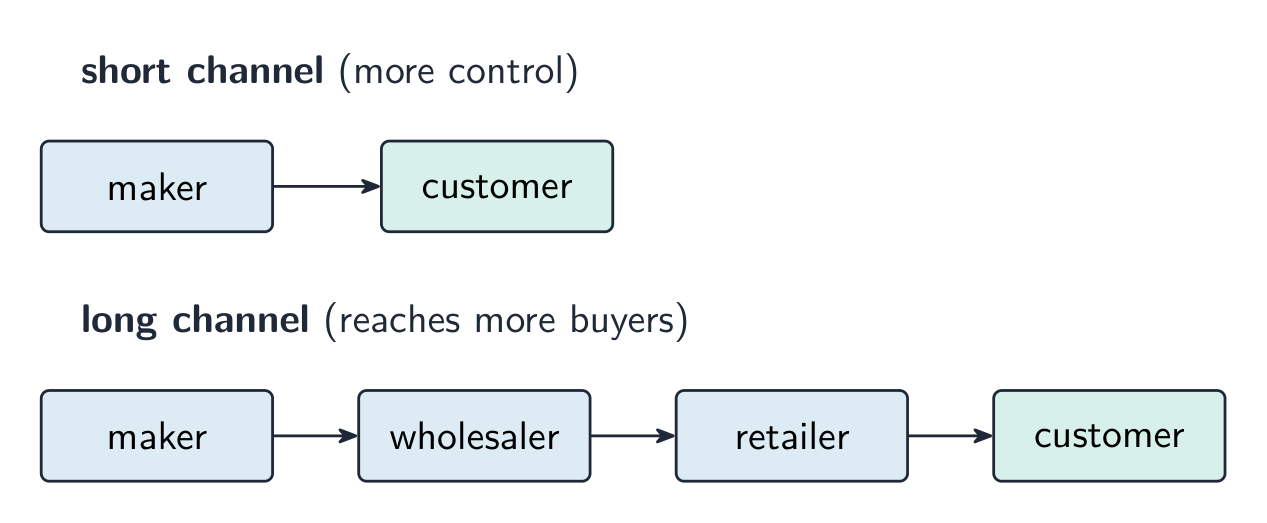
Place is how the product reaches the customer, through a distribution channel 分销渠道. A short channel (maker → customer) gives more control; a longer channel (maker → wholesaler 批发商 → shop → customer) reaches more buyers.
Promotion tells customers about a product and persuades them to buy. It is split into:
above-the-line promotion 大众媒体广告 — paid advertising 广告 in mass media, such as TV and online ads, aimed at a wide audience.
below-the-line promotion 直接促销 — targeted methods the firm controls, such as discounts, free samples and direct mail.
Digital marketing 数字营销 and e-commerce 电子商务 (buying and selling online) now play a huge role. They let small firms reach world markets cheaply, target adverts to the right people, and sell at any time of day.
العربية
الإعلان على الشاشات الضخمة - الترويج هو جزء من المزيج التسويقي.
المكان هو الطريقة التي يصل بها المنتج إلى العميل، من خلال قناة توزيع. القناة القصيرة (الصانع ← العميل) تمنح تحكماً أكبر؛ أما القناة الأطول (الصانع ← جملة ← متجر ← العميل) فتصل إلى عدد أكبر من المشترين.
القناة القصيرة تمنح تحكماً أكبر؛ والقناة الأطول تصل إلى عدد أكبر من المشترين
الترويج العلوي — إعلانات مدفوعة في وسائل الإعلام الجماهيرية، مثل الإعلانات التلفزيونية والإنترنت، موجهة لجمهور واسع.
الترويج السفلي — أساليب مستهدفة تتحكم فيها الشركة، مثل الخصومات والعينات المجانية والبريد المباشر.
التسويق الرقمي والتجارة الإلكترونية (الشراء والبيع عبر الإنترنت) تلعبان دوراً كبيراً الآن. فهي تسمح للشركات الصغيرة بالوصول إلى الأسواق العالمية بتكلفة منخفضة، واستهداف الإعلانات للأشخاص المناسبين، والمبيعات في أي وقت من اليوم.
What operations management does · ما تقوم به إدارة العمليات
Syllabus · المنهج
English
explain operations as the transformation of inputs into outputs and the concept of adding value
explain productivity, efficiency, capital- and labour-intensive operations and methods of production (job, batch, flow, mass customisation)
explain sustainability of operations and the use of technology in operations
العربية
اشرح العمليات كـ تحويل المدخلات إلى مخرجات ومفهوم إضافة القيمة
اشرح الإنتاجية، الكفاءة، العمليات المكثفة لرأس المال والعمل وطرق الإنتاج (العمل الوظيفي، الدورات، التدفق، التخصيص الضخم)
اشرح استدامة العمليات واستخدام التكنولوجيا في العمليات
Source: Cambridge International syllabus · المصدر: منهج كامبريدج الدولي
English
Operations 运营 is the part of a business that makes the product. Operations management 运营管理 is the job of turning inputs 投入 into outputs 产出 well.
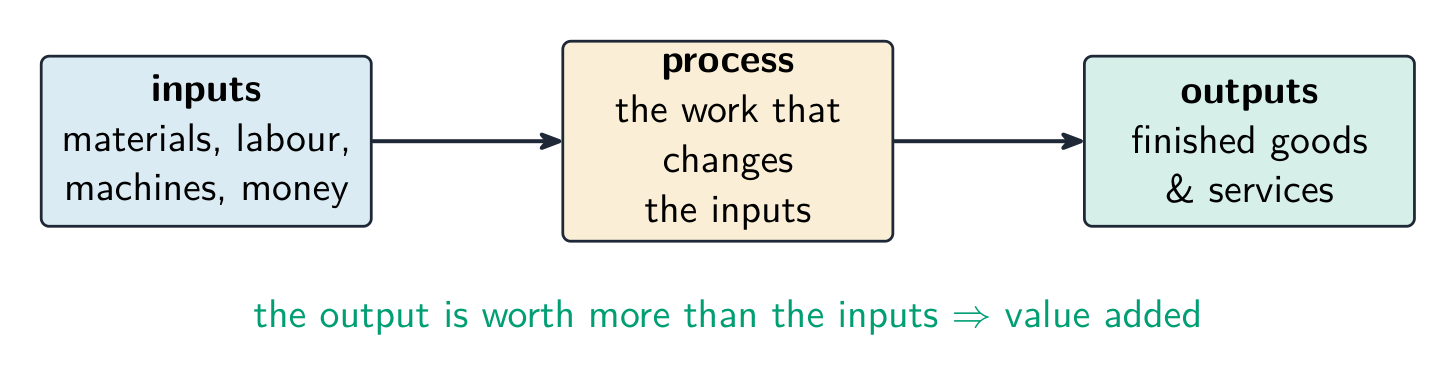
This is the transformation process 转化过程:
inputs — raw materials, labour, machines and money.
process — the work that changes the inputs.
outputs — finished goods and services for the customer.
Good operations add value 增值: the output is worth more than the inputs used to make it. Using raw materials 原材料 (the basic materials a business starts with) well is a big part of this.
العربية
العمليات هي الجزء من الأعمال الذي يصنع المنتج. إدارة العمليات هي مهمة تحويل المدخلات إلى مخرجات بكفاءة.
مركز توزيع: إدارة العمليات تحول المدخلات إلى سلع جاهزة للعملاء.
هذه هي عملية التحول:
المدخلات — المواد الخام، العمالة، الآلات والأموال.
العملية — العمل الذي يغير المدخلات.
المخرجات — السلع النهائية والخدمات للعميل.
تحويل العمليات المدخلات إلى مخرجات، بإضافة قيمة على طول الطريق
تضيف العمليات الجيدة قيمة: المخرجات تكون أكثر قيمة من المدخلات المستخدمة في تصنيعها. الاستخدام الجيد لـالمواد الخام (المواد الأساسية التي تبدأ بها الشركة) هو جزء كبير من ذلك.
Operations management turns inputs into finished goods or services through a transformation process. · تحوّل إدارة العمليات المدخلات إلى سلع أو خدمات نهائية من خلال عملية تحويل.
Efficiency 效率 means making products with as little waste of time, materials and money as possible. Higher productivity and efficiency lower the cost of each unit, so the firm can charge less or earn more.
Worked example. A factory of $20$ workers makes $800$ units in a day. Find the output per worker.
$$\text{productivity} = \frac{800}{20} = 40 \text{ units per worker per day}.$$
If training raised output to $1000$ units with the same $20$ workers, productivity would rise to $50$ units each — the same staff cost now spread over more units, so each unit is cheaper to make.
العربية
الإنتاجية تقيس مقدار المخرجات التي تحصل عليها من مدخلاتك:
الكفاءة تعني إنتاج سلع بأقل قدر ممكن من الهدر في الوقت والمواد والأموال. إن ارتفاع الإنتاجية والكفاءة يقلل من تكلفة الوحدة الواحدة، مما يسمح للشركة بفرض أسعار أقل أو تحقيق أرباح أعلى.
مثال محلول. مصنع يعمل فيه $20$ عمال ينتج $800$ وحدة في يوم واحد. أوجد الإنتاج لكل عامل.
$$\text{productivity} = \frac{800}{20} = 40 \text{ units per worker per day}.$$
إذا أدى التدريب إلى رفع الإنتاج إلى $1000$ وحدات بنفس $20$ عمال، فسترتفع الإنتاجية لتصبح $50$ وحدة لكل عامل — نفس تكلفة العمالة الآن موزعة على وحدات أكثر، لذا تصبح تكلفة كل وحدة أرخص في التصنيع.
خط تجميع: الإنتاجية هي المخرجات لكل عامل (أو لكل ساعة) — ارتفاع الإنتاجية يقلل من تكاليف الوحدة
Capital- and labour-intensive operations · عمليات مكثفة لرأسمالية وكثيفة للعمالة
English
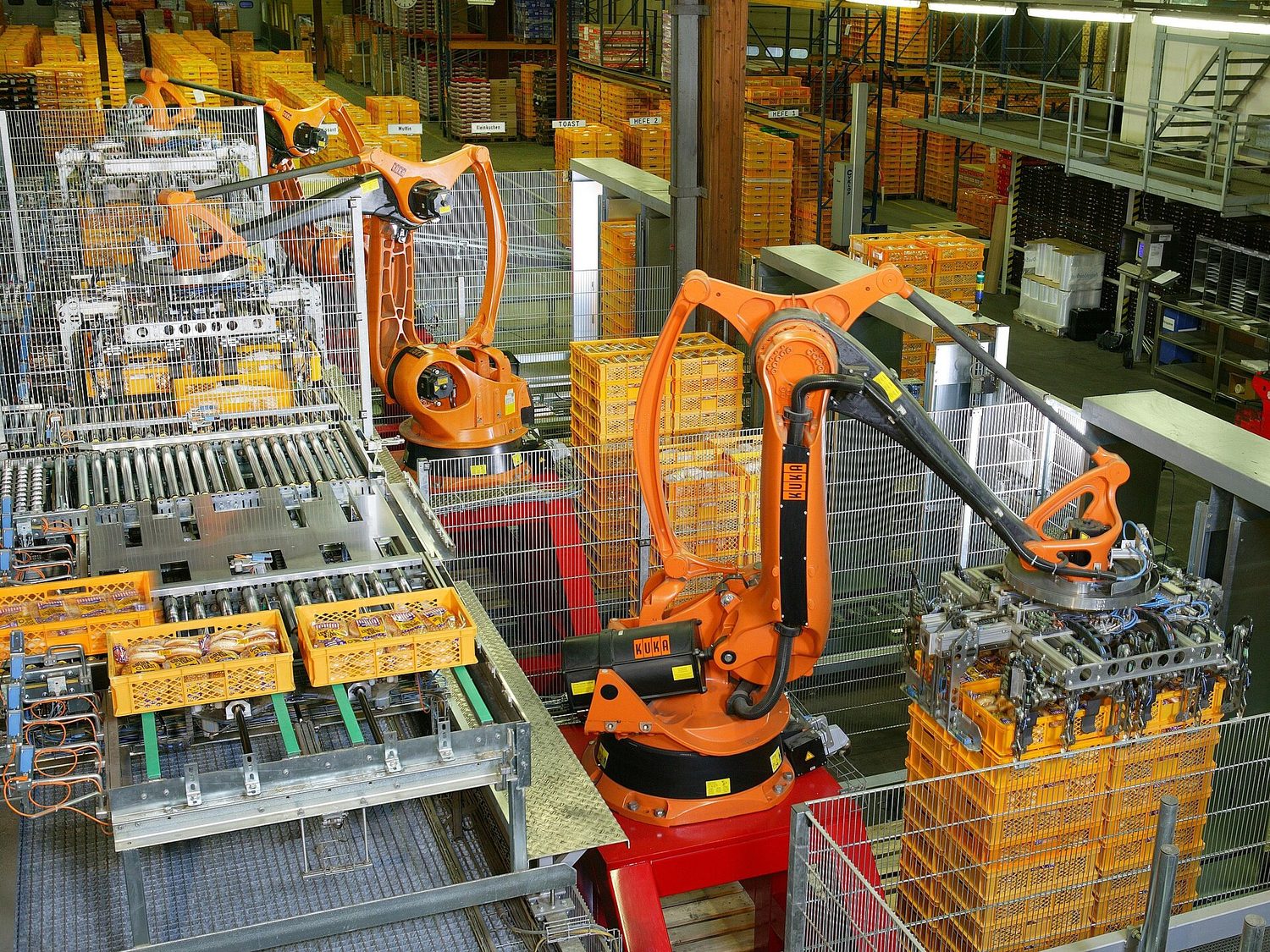
a capital-intensive 资本密集型 operation uses mostly machines (e.g. a car factory). It has high set-up costs but low cost per unit, and is good for large amounts.
a labour-intensive 劳动密集型 operation uses mostly people (e.g. a hair salon). It is flexible and good for personal service, but quality can vary.
العربية
العملية الرأسمالية الكثيفة تستخدم الآلات بشكل أساسي (مثل مصنع سيارات). لها تكاليف إعداد عالية ولكن تكلفة وحدة منخفضة، وهي مناسبة للكميات الكبيرة.
العملية الكثيفة للعمالة تستخدم الأشخاص بشكل أساسي (مثل صالون تجميل). إنها مرنة ومناسبة للخدمات الشخصية، لكن الجودة قد تتفاوت.
روبوتات المصنع: الإنتاج الرأسمالي الكثيف يستخدم آلات أكثر مقارنة بالعمالة
4.1
Methods of production · طرق الإنتاج
English
A firm chooses how to organise production to suit its product and demand.
Method
What it is
Best for
job production 单件生产
making one unique item at a time
a wedding cake, a bridge
batch production 批量生产
making a group of the same item, then switching
bread in flavours
flow production 流水线生产
making items non-stop on a line
bottled drinks, cars
mass customisation 大规模定制
a flow line that still lets customers choose options
cars with chosen colours
Job production is flexible but costly per unit. Flow production has a low unit cost but needs high, steady demand.
العربية
تختار الشركة كيفية تنظيم الإنتاج لتناسب منتجها والطلب عليها.
خط تجميع سيارات: إنتاج خطي لوحدات متطابقة، مرحلة تلو الأخرى
الطريقة
ما هي عليه
الأنسب لـ
الإنتاج الوظيفي
制作 قطعة فريدة واحدة في كل مرة
كعكة زفاف، جسر
الإنتاج الدفعة
تصنيع مجموعة من نفس الصنف، ثم التبديل
خبز بنكهات
الإنتاج المتدفق
تصنيع منتجات بشكل متواصل على خط إنتاج
المشروبات المعبأة، السيارات
التخصيص الجماعي
خط إنتاج متدفق يسمح للعملاء باختيار الخيارات
سيارات بألوان مختارة مسبقاً
الطرق الثلاثة للإنتاج
الإنتاج بالقطعة مرن لكنه مكلف للوحدة الواحدة. أما الإنتاج المتدفق فيتميز بتكلفة وحدة منخفضة ولكنه يتطلب طلباً عالياً ومستقراً.
Explore · استكشف
Methods of production · طرق الإنتاج
Firms choose how to produce depending on the product and the order size. · تختار الشركات كيفية الإنتاج بناءً على المنتج وحجم الطلب.
4.1
Sustainability and technology · الاستدامة والتكنولوجيا
English
Sustainability 可持续性 means meeting today's needs without harming the future or the planet. Sustainable operations cut waste, use less energy, recycle, and use materials that can be replaced.
Technology 技术 is widely used in operations. Automation 自动化 (machines and robots doing tasks) raises output, improves quality and lowers cost, but it has a high set-up cost and can replace jobs.
العربية
الاستدامة تعني تلبية احتياجات اليوم دون الإضرار بالمستقبل أو الكوكب. العمليات المستدامة تقلل النفايات، وتستهلك طاقة أقل، وتعيد تدوير المواد، وتستخدم مواد قابلة للاستبدال.
التكنولوجيا مستخدمة على نطاق واسع في العمليات التشغيلية. الأتمتة (الماكينات والروبوتات التي تقوم بالمهام) ترفع الإنتاجية، وتحسن الجودة وتخفض التكاليف، لكنها تتطلب تكلفة إعداد عالية وقد تحل محل الوظائف.
4.2
Inventory and why it matters · المخزون ولماذا هو مهم
Syllabus · المنهج
English
explain the purpose of inventory and the costs of holding inventory
interpret inventory control charts (re-order level, buffer inventory, lead time) and explain just-in-time (JIT) and just-in-case approaches
العربية
اشرح غرض المخزون وتكاليف احتفاظه
فسر مخططات التحكم في المخزون (مستوى إعادة الطلب، المخزون الاحتياطي، وقت الانتظار) واشرح نهجي الوقت المناسب (JIT) والوقت الحذر
Source: Cambridge International syllabus · المصدر: منهج كامبريدج الدولي
English
Stock control: the sawtooth chart
Inventory 库存 (stock) is the goods a business holds: raw materials, part-finished goods, and finished goods waiting to be sold.
A firm holds inventory so it can keep producing and meet customer orders quickly. But holding inventory has costs:
holding costs 持有成本 — storage, insurance, and money tied up in stock.
the risk that goods go out of date or are damaged.
Holding too little stock is also risky: the firm may run out and lose sales.
العربية
التحكم في المخزون: الرسم البياني المسنن
المخزون (المواد الخام) هو البضائع التي تحتفظ بها الشركة: مواد خام، سلع غير مكتملة، وسلع نهائية جاهزة للبيع.
تمسك الشركة بالمخزون لكي تستمر في الإنتاج ولتلبية طلبات العملاء بسرعة. لكن الاحتفاظ بالمخزون له تكاليف:
تكلفة الاحتفاظ — التخزين، التأمين، والأموال المقيدة في المخزون.
خطر انتهاء صلاحية البضائع أو تلفها.
الاحتفاظ بمخزون قليل جداً يحمل أيضاً مخاطرة: قد تنفد الشركة من البضائع وتفقد المبيعات.
Explore · استكشف
Leadership style lab · معسل نمط القيادة
Pick the management style that fits each situation. · حدد نمط الإدارة الذي يناسب كل موقف.
4.2
Inventory control charts · مخططات التحكم في المخزون
English
An inventory control chart 库存控制图 shows how stock rises when an order arrives and falls as it is used. Key terms:
re-order level 再订货水平 — the stock level at which a new order is placed.
lead time 交货周期 — the time between placing an order and receiving it.
buffer inventory 缓冲库存 — a minimum "safety" stock kept in case of delays or extra demand.
maximum inventory 最大库存 — the most stock the firm wants to hold.
العربية
مخطط التحكم في المخزون يوضح كيف يرتفع المخزون عند وصول الطلب وينخفض مع استخدامه. المصطلحات الرئيسية:
مستوى إعادة الطلب — مستوى المخزون الذي يتم عنده تقديم طلب جديد.
وقت الانتظار — الوقت بين تقديم الطلب واستلامه.
مخزون الأمان — حد أدنى من "مخزون الأمان" يُحتفظ به في حال التأخير أو زيادة الطلب.
أقصى مخزون — أكبر كمية مخزون ترغب الشركة في احتسابها.
يُستهلك المخزون، ثم يُعاد ملؤه عند وصول طلب جديد بعد وقت الانتظار
inventory control chart/ˈɪnvəntri kənˈtrəʊl tʃɑːt/
مخطط التحكم في المخزون
re-order level/riː ˈɔːdə ˈlevl/
مستوى إعادة الطلب
lead time/liːd taɪm/
وقت الرهن
buffer inventory/ˈbʌfə ˈɪnvəntri/
مخزون العزل
maximum inventory/ˈmæksɪməm ˈɪnvəntri/
أقصى مخزون
just-in-time/dʒʌst ɪn taɪm/
في الوقت المناسب
just-in-case/dʒʌst ɪn keɪs/
للحالة الطارئة
4.2
Just-in-time and just-in-case · الإنتاج عند الحاجة بالضبط والإنتاج احتياطياً
English
There are two main ways to manage stock.
just-in-time 准时制 (JIT) — stock arrives only as it is needed, so almost no inventory is held. This cuts holding costs and waste, but a late delivery can stop production.
just-in-case 备货制 — extra stock is held in case of problems. This is safer but costs more to store.
العربية
هناك طريقتان رئيسيتان لإدارة المخزون.
الإنتاج عند الحاجة بالضبط (JIT) — تصل البضائع فقط عند الحاجة إليها، لذا لا يُحتفظ بمخزون تقريباً. هذا يقلل تكاليف الاحتفاظ والنفايات، لكن تأخر التسليم يمكن أن يوقف الإنتاج.
الإنتاج احتياطياً (JIC) — يتم احتجاز مخزون إضافي كاحتياطي لمشاكل محتملة. هذا أكثر أماناً لكنه أغلى تكلفة للتخزين.
الإنتاج عند الحاجة بالضبط يحتفظ بمخزون شبه معدوم (تكلفة منخفضة، لكنه محفوف بالمخاطر في حال تأخر التسليم)؛ والإنتاج احتياطياً يحافظ على مخزون أمان (أكثر أماناً، لكنه أغلى في التخزين)
4.3
Capacity utilisation · معدل استغلال السعة
Syllabus · المنهج
English
calculate and interpret capacity utilisation and explain the problems of under- and over-utilisation
explain outsourcing and its benefits and drawbacks
العربية
احسب وفسر استغلال السعة واشرح مشاكل الاستخدام دون الكافية والفائض
اشرح التعهيد وفوائده وعيوبه
Source: Cambridge International syllabus · المصدر: منهج كامبريدج الدولي
English
Capacity 产能 is the most a business can produce with its current resources. Capacity utilisation 产能利用率 shows how much of that capacity is being used:
$$\text{capacity utilisation} = \frac{\text{actual output}}{\text{maximum possible output}} \times 100\%$$
under-utilisation 产能利用不足 (a low figure) means resources sit idle, so the fixed cost spread over each unit is high.
over-utilisation 产能过度利用 (very close to 100%) leaves no time for repairs, can tire staff, and may lower quality.
Most firms aim for a high but not full level, around 85–90%.
Worked example. A factory can make $5000$ units a week but currently makes $4000$. Find its capacity utilisation.
This leaves $20\%$ spare. Winning an order for another $500$ units a week would lift utilisation to $90\%$, spreading the fixed costs over more units without needing new machines.
العربية
السعة هي أقصى ما يمكن للشركة إنتاجه باستخدام موارد ها الحالية. معدل استغلال السعة يوضح مقدار ما تم استخدام هذه السعة منه:
استغلال السعة: مقدار الاستخدام من إجمالي الإنتاج الأقصى
$$\text{capacity utilisation} = \frac{\text{actual output}}{\text{maximum possible output}} \times 100\%$$
عدم الاستغلال الكامل (رقم منخفض) يعني بقاء الموارد بلا عمل، مما يجعل التكلفة الثابتة المنسوبة لكل وحدة مرتفعة.
الاستغلال الزائد (قريب جداً من 100%) لا يترك وقتاً للصيانة، قد يؤدي إلى إرهاق الموظفين، وقد يخفض الجودة.
تهدف معظم الشركات إلى مستوى عالٍ لكن ليس كاملاً، حوالي 85–90%.
مثال محلول. مصنع يمكنه صنع $5000$ وحدة أسبوعياً لكنه يصنع حالياً $4000$. أوجد معدل استغلال السعة.
هذا يترك $20\%$ قدرة إضافية. الفوز بعقد لإنتاج $500$ وحدة إضافية أسبوعياً سيرفع معدل الاستغلال إلى $90\%$، مما يتوزع عليه التكاليف الثابتة على وحدات أكثر دون الحاجة لآلات جديدة.
Outsourcing 外包 means paying another firm (a supplier 供应商) to do work the business used to do itself, such as cleaning, IT or making parts.
Benefits: it can be cheaper, lets the firm focus on what it does best, and adds flexibility. Drawbacks: less control over quality, possible delays, and the risk of sharing secrets with another firm.
العربية
التعاقد الخارجي يعني دفع شركة أخرى (مورد) لإنجاز عمل كانت الشركة تقوم به بنفسها سابقاً، مثل التنظيف، تكنولوجيا المعلومات، أو تصنيع الأجزاء.
الفوائد: قد يكون أرخص، ويسمح للشركة بالتركيز على ما تفعله أفضل، ويضيف المرونة. العيوب: قلة السيطرة على الجودة، احتمالية التأخير، وخطر مشاركة الأسرار مع شركة أخرى.
4.3
Exam tips · نصائح للامتحان
English
Calculate capacity utilisation and productivity; high utilisation spreads fixed costs but leaves no slack for breakdowns or new orders.
Read an inventory control chart (re-order level, lead time, buffer stock, maximum stock).
Compare JIT vs JIC (low holding cost but delivery risk vs security of supply but higher cost).
Match the production method (job, batch, flow) to the product and the size of the order.
العربية
احسب معدل استغلال السعة والإنتاجية; الاستغلال العالي يوزع التكاليف الثابتة لكن لا يترك هامشاً للأعطال أو الطلبات الجديدة.
اقرأ مخطط التحكم في المخزون (مستوى إعادة الطلب، وقت الانتظار، مخزون الأمان، أقصى مخزون).
قارن JIT vs JIC (تكلفة احتفاظ منخفضة لكن خطر تأخر التسليم مقابل ضمان التوريد لكن بتكلفة أعلى).
طابق طريقة الإنتاج (بالقطعة، دفعة، متدفق) مع المنتج وحجم الطلب.
Why a business needs finance · لماذا تحتاج الشركة إلى التمويل
Syllabus · المنهج
English
explain the need for business finance (capital expenditure and revenue expenditure, working capital)
distinguish the meaning of cash and profit
العربية
اشرح ضرورة التمويل التجاري (الإنفاق الرأسمالي والإنفاق التشغيلي، ورأس المال العامل) ⟦number⟧
ميّز بين معنى النقدية والربح ⟦number⟧
Source: Cambridge International syllabus · المصدر: منهج كامبريدج الدولي
English
Business finance 企业资金 is the money a firm needs to start, run and grow. A new firm needs money to buy premises 经营场所 and equipment; a growing firm needs money for new projects; and every firm needs money to pay day-to-day bills.
العربية
تمويل الأعمال هو المال الذي تحتاجه الشركة للبدء والتشغيل والنمو. تحتاج الشركة الجديدة مالاً لشراء مقر ومعدات؛ وتحتاج الشركة النامية مالاً لمشاريع جديدة؛ وتحتاج كل شركة مالاً لدفع الفواتير اليومية.
البنوك مصدر خارجي رئيسي للتمويل، من خلال القروض والذمم السلبية.
Explore · استكشف
Sources of finance lab · مختبر مصادر التمويل
Choose the best type of finance by time, risk and ownership. · اختر أفضل نوع من التمويل حسب الوقت والمخاطر والملكية.
5.1
Capital and revenue expenditure · الإنفاق الرأسمالي والإنفاق التشغيلي
English
Spending falls into two types:
capital expenditure 资本性支出 — money spent on fixed assets 固定资产 that last a long time, such as machines, vehicles and buildings.
revenue expenditure 收益性支出 — money spent on day-to-day running, such as wages, rent and raw materials.
العربية
ينقسم الإنفاق إلى نوعين:
الإنفاق الرأسمالي يشتري أصولاً ثابتة؛ والإنفاق التشغيلي يغطي نفقات التشغيل
الإنفاق الرأسمالي — المال spent على الأصول الثابتة التي تدوم طويلاً، مثل الآلات والمركبات والمباني.
الإنفاق التشغيلي — المال spent على التشغيل اليومي، مثل الأجور والإيجار والمواد الخام.
5.1
Working capital · رأس المال العامل
English
Working capital 营运资本 is the money a firm has for its daily needs. It is found from the balance sheet 资产负债表:
Here current assets 流动资产 are things that become cash within a year (cash, inventory, money owed by customers), and current liabilities 流动负债 are debts due within a year. Too little working capital is dangerous — the firm may not be able to pay its bills.
العربية
رأس المال العامل هو المال الذي تمتلكه الشركة لتلبية احتياجاتها اليومية. يتم حسابه من قائمة المركز المالي:
هنا الأصول المتداولة هي ما يتحول إلى نقدية خلال سنة (نقدية، مخزون، ديون العملاء)، والخصوم المتداولة هي الديون المستحقة خلال سنة. قلة رأس المال العامل خطرة — قد لا تتمكن الشركة من سداد فواتيرها.
النقدية هي رأس المال العامل: تحتاج الشركات إلى أصول سائلة كافية لسداد الفواتير اليومية
Cash is not the same as profit · النقدية ليست نفس الربح
English
This is a key idea.
profit 利润 is what is left when total costs are taken from total revenue over a period.
cash 现金 is the money the firm actually has right now to spend.
A firm can be profitable but still run out of cash — for example, if it sells goods but customers have not paid yet. Many firms fail not from low profit, but from running out of cash.
العربية
هذه فكرة جوهرية.
الربح هو ما يتبقى عند خصم التكاليف الإجمالية من الإيرادات الإجمالية خلال فترة ما.
النقدية هي الأموال التي تمتلكها الشركة فعلياً الآن للنفقات.
يمكن أن تكون الشركة ربحة ومع ذلك تنفذ من السيولة النقدية — على سبيل المثال، إذا باعت البضائع ولكن العملاء لم يدفعوا بعد. تفشل العديد من الشركات ليس بسبب انخفاض الربح، بل بسبب نفاد السيولة النقدية.
الربح والنقدية مختلفان: قد تبدو الشركة رابحة نظرياً لكنها لا تملك نقداً لسداد فواتيرها — ولهذا السبب تفشل العديد منها
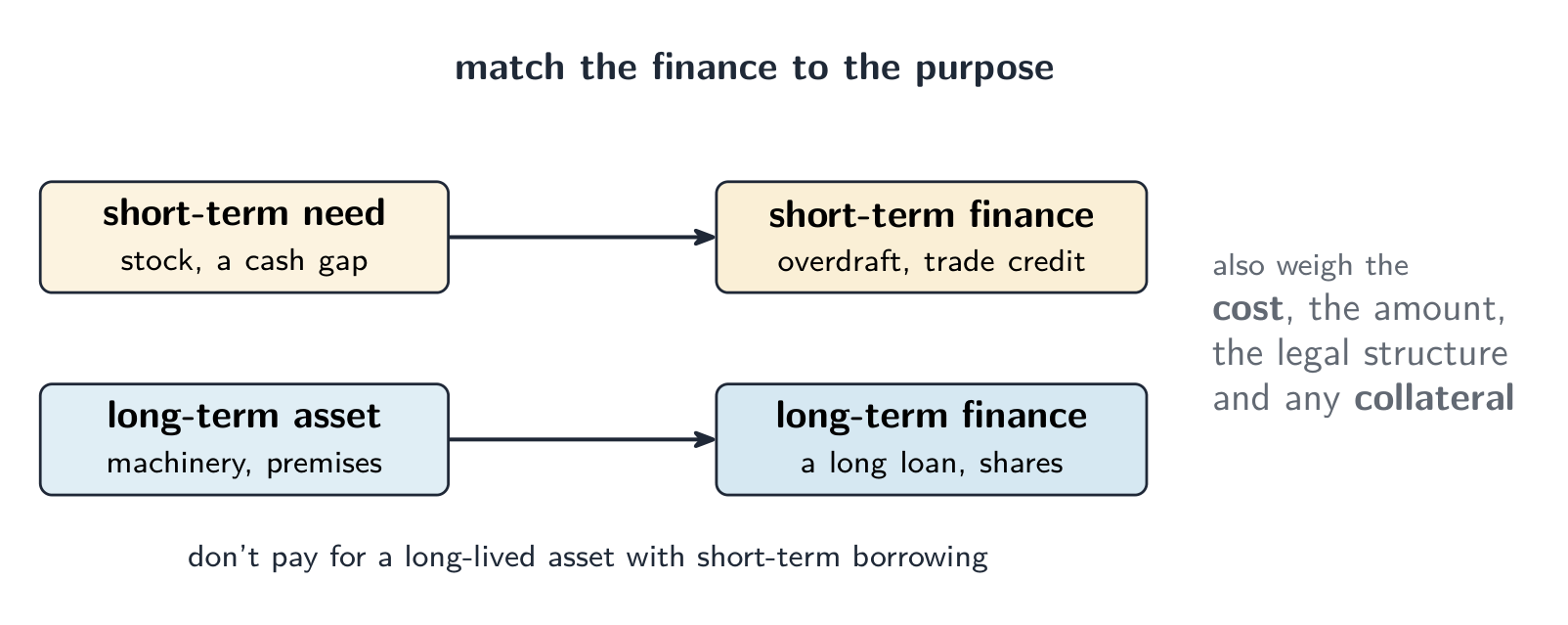
describe internal and external, short- and long-term sources of finance (retained profit, sale of assets, share capital, loans, debentures, overdraft, leasing, hire purchase, trade credit, venture capital, crowdfunding, microfinance)
explain the factors affecting the choice of source of finance
العربية
صف المصادر الداخلية والخارجية، قصيرة وطويلة الأجل لـمصادر التمويل (الأرباح المحتجزة، بيع الأصول، رأس المال المساهم، القروض، سندات الاستدانة، التجاوز في الحساب، الإيجار، الشراء بالإقراض، الائتمان التجاري، رأس المال المغامر، التجميع المالي الجماعي، المالية المصغرة) ⟦number⟧
اشرح العوامل المؤثرة على اختيار مصدر التمويل ⟦number⟧
Source: Cambridge International syllabus · المصدر: منهج كامبريدج الدولي
English
Finance can come from inside the business (internal sources 内部来源) or from outside (external sources 外部来源). It can also be short-term 短期 (paid back within a year) or long-term 长期.
Source
Type
What it is
retained profit 留存利润
internal, long
profit kept in the business instead of paid out
sale of assets 出售资产
internal
selling items the firm no longer needs
share capital 股本
external, long
money raised by selling shares
loan 贷款
external, long
borrowed money repaid with interest
debenture 公司债券
external, long
a long-term loan certificate sold by a company
overdraft 透支
external, short
the bank lets the account go below zero for a short time
leasing 租赁
external
renting an asset instead of buying it
hire purchase 分期付款
external
buying an asset by paying in instalments
trade credit 商业信用
external, short
paying a supplier later (e.g. after 30 days)
venture capital 风险资本
external, long
money from investors into risky young firms
crowdfunding 众筹
external
small amounts raised from many people online
microfinance 小额信贷
external
small loans for people with little access to banks
العربية
سوق الأسهم: ترفع شركات المساهمة العامة تمويلها عن طريق بيع الأسهم.
يمكن أن يأتي التمويل من داخل العمل التجاري (مصادر داخلية) أو من خارجه (مصادر خارجية). كما يمكن أن يكون قصير الأجل (يُرد خلال سنة) أو طويل الأجل.
المصدر
النوع
الوصف
أرباح محتجزة
داخلية، طويلة
أرباح تُحتفظ بها في العمل بدلاً من توزيعها
بيع الأصول
داخلية
بيع عناصر لم تعد الشركة بحاجة إليها
رأس المال السهمي
خارجية، طويلة
أموال تُجمع عبر بيع الأسهم
قرض
خارجية، طويلة
أموال مقترضة تُرد مع الفائدة
سندات استئذان
خارجية، طويلة
شهادة قرض طويل الأجل تبيعه الشركة
إفراط في السحب
خارجية، قصيرة
يسمح البنك للحساب بالهبوط تحت الصفر لفترة وجيزة
التأجير
خارجية
تأجير أصل بدلاً من شراؤه
الشراء بالتقسيط
خارجية
شراء أصل بدفع أقساط متتالية
ائتمان تجاري
خارجية، قصيرة
دفع المورد لاحقاً (مثلاً بعد 30 يوماً)
رأس المال المغامر
خارجية، طويلة
أموال من مستثمرين لشركات ناشئة عالية المخاطر
التمويل الجماعي
خارجية
جمع مبالغ صغيرة من عدد كبير من الناس عبر الإنترنت
المالية الصغيرة
خارجية
قروض صغيرة للأشخاص الذين يفتقرون إلى الوصول إلى البنوك
مصادر التمويل تأتي من داخل العمل التجاري (داخلية) أو خارجه (خارجية)
Explore · استكشف
Sources of finance lab · مختبر مصادر التمويل
Choose the best type of finance by time, risk and ownership. · اختر أفضل نوع من التمويل حسب الوقت والمخاطر والملكية.
The opening balance 期初余额 is the cash at the start of the month. Adding net cash flow gives the closing balance 期末余额, which becomes next month's opening balance.
العربية
توقع تدفق نقدي
توقع التدفق النقدي يتوقع النقود الداخلة والخارجة شهرياً. يساعد الشركة على اكتشاف النقص مبكراً.
التدفقات النقدية الداخلة — الأموال الواردة، غالباً من المبيعات.
التدفقات النقدية الخارجة — الأموال الصادرة، مثل الأجور والإيجار.
صافي التدفق النقدي — المدخلات ناقص المخرجات خلال الفترة.
الرصيد الافتتاحي هو النقد في بداية الشهر. بإضافة صافي التدفق النقدي نحصل على الرصيد الختامي، الذي يصبح الرصيد الافتتاحي للشهر التالي.
يتتبع توقع التدفق النقدي الرصيد الختامي كل شهر، وينبه من النقص مبكراً
Explore · استكشف
A cash-flow forecast · توقع التدفق النقدي
A cash-flow forecast tracks money in and out each month — to spot a shortfall before it happens. · يتتبع توقع التدفق النقدي الأموال الداخلة والخارجة شهرياً — للكشف عن أي نقص قبل وقوعه.
Cash-flow problems and how to fix them · مشاكل التدفق النقدي وكيفية حلها
English
Common causes of cash-flow problems are: too many sales on credit, holding too much stock, buying too many assets at once, and overtrading 过度交易 (growing too fast for the cash available).
Ways to improve cash flow:
bring cash in sooner — ask customers to pay faster, or offer discounts for quick payment.
delay cash going out — agree longer trade credit with suppliers.
arrange an overdraft or short loan to cover a gap.
hold less stock to free up cash.
Good working capital management keeps enough cash to stay safe without holding so much that money sits idle.
العربية
من الأسباب الشائعة لمشاكل التدفق النقدي: كثرة المبيعات على الائتمان، احتجاز مخزون زائد، شراء الكثير من الأصول دفعة واحدة، والتداول المفرط (النمو أسرع مما تتحمله السيولة المتاحة).
طرق لتحسين التدفق النقدي:
تسريع ورود النقود — اطلب من العملاء الدفع بسرعة، أو قدم خصومات للدفع السريع.
تأخير خروج النقود — وافق على ائتمان تجاري أطول مع الموردين.
ترتيب إفراط في السحب أو قرض قصير لتغطية الفجوة.
تقليل المخزون لتحرير سيولة.
إدارة جيدة لـرأس المال العامل تحافظ على نقود كافية للسلامة دون الاحتفاظ بالكثير بحيث تظل الأموال بلا استخدام.
Drag the monthly cash in, cash out and the one-off purchase — find the month that closes in the red, then fix it before it happens. · اسحب التدفق النقدي الشهري الداخلاً والخارجي والشراء مرة واحدة — حدد الشهر الذي ينتهي بخسارة، ثم قم بإصلاحه قبل وقوعه.
5.4
Costs and how we classify them · التكاليف وتصنيفاتها
Syllabus · المنهج
English
classify costs (fixed, variable, direct, indirect, marginal, average) and use cost information for decision-making
construct and interpret break-even analysis (break-even point, margin of safety, contribution) and explain its limitations
العربية
صنف التكاليف (ثابتة، متغيرة، مباشرة، غير مباشرة، هامشية، متوسطة) واستخدم معلومات التكلفة لاتخاذ القرارات ⟦number⟧
أعد بناء وتفسير تحليل نقطة التعادل (نقطة التعادل، هامش الأمان، المساهمة) واشرح قيودها ⟦number⟧
Source: Cambridge International syllabus · المصدر: منهج كامبريدج الدولي
English
Break-even analysis, built line by line
A cost 成本 is money the business spends to make its product. We sort costs in several ways:
fixed costs 固定成本 — costs that do not change with output, such as rent.
variable costs 可变成本 — costs that rise and fall with output, such as raw materials.
direct costs 直接成本 — costs clearly linked to one product, such as its materials.
indirect costs 间接成本 (overheads) — costs not linked to one product, such as manager salaries.
marginal cost 边际成本 — the cost of making one more unit.
average cost 平均成本 — the cost per unit, found by total cost ÷ number of units.
Cost information helps managers set prices, choose what to make, and control spending.
العربية
تحليل نقطة التعادل، مبني سطراً بسطر
التكلفة هي المال الذي تنفقه الشركة لإنتاج منتجها. نصنف التكاليف بطرق متعددة:
التكاليف الثابتة — تكاليف لا تتغير مع الإنتاج، مثل الإيجار.
التكاليف المتغيرة — تكاليف ترتفع وتنخفض مع الإنتاج، مثل المواد الخام.
التكاليف المباشرة — التكاليف المرتبطة بوضوح بمنتج واحد، مثل مادته الخام.
التكاليف غير المباشرة (المصروفات العامة) — تكاليف لا ترتبط بمنتج واحد، مثل رواتب المدراء.
التكلفة الحدية — تكلفة إنتاج وحدة إضافية واحدة.
متوسط التكلفة — التكلفة لكل وحدة، وتُحسب بقسمة إجمالي التكاليف على عدد الوحدات.
إجمالي التكلفة = التكلفة الثابتة + التكلفة المتغيرة؛ فقط التكلفة المتغيرة ترتفع مع الإنتاج
تساعد المعلومات التكلفة المدراء في تحديد الأسعار، واختيار ما يجب إنتاجه، ومراقبة الإنفاق.
Explore · استكشف
Costs · التكاليف
y = ax + b
Total cost = fixed cost (intercept) + variable cost per unit (gradient). · التكلفة الكلية = التكلفة الثابتة (المقطع) + التكلفة المتغيرة لكل وحدة (الميل).
Contribution 贡献 is how much each sale adds towards paying the fixed costs:
$$\text{contribution per unit} = \text{selling price} - \text{variable cost per unit}$$
Break-even 盈亏平衡 is the point where total revenue equals total costs, so profit is zero. The break-even point 盈亏平衡点 in units is:
$$\text{break-even point} = \frac{\text{fixed costs}}{\text{contribution per unit}}$$
The margin of safety 安全边际 is how far current sales are above the break-even point:
$$\text{margin of safety} = \text{actual output} - \text{break-even output}$$
Worked example. A product sells for £20 with a variable cost of £12 per unit. Fixed costs are £40,000, and the firm makes 6,000 units. Find the contribution per unit, the break-even output and the margin of safety.
A large margin of safety means sales can fall a lot before the firm makes a loss. Break-even analysis is quick and useful, but it has limitations 局限性: it assumes the selling price and costs stay the same, and that everything made is sold.
العربية
المساهمة هي مقدار ما يضيفه كل بيع نحو تغطية التكاليف الثابتة:
$$\text{contribution per unit} = \text{selling price} - \text{variable cost per unit}$$
نقطة التعادل هي النقطة التي يساوي فيها الإيراد الكلي التكاليف الكلية، وبالتالي يكون الربح صفراً. نقطة التعادل بالوحدات هي:
$$\text{break-even point} = \frac{\text{fixed costs}}{\text{contribution per unit}}$$
نقطة التعادل هي حيث يساوي الإيراد الكلي التكلفة الكلية — يسارها خسارة، ويمنها ربح
هامش الأمان هو المسافة بين مبيعات الحالية ونقطة التعادل:
$$\text{margin of safety} = \text{actual output} - \text{break-even output}$$
مثال محلول. يُباع منتج بسعر 20 جنيهاً، مع تكلفة متغيرة قدرها 12 جنيهاً للوحدة. التكاليف الثابتة 40,000 جنيه، وتنتج الشركة 6,000 وحدة. أوجد المساهمة لكل وحدة، وإنتاج نقطة التعادل، وهامش الأمان.
هامش الأمان الكبير يعني أن المبيعات يمكن أن تنخفض كثيراً قبل أن تحقق الشركة خسارة. تحليل نقطة التعادل سريع ومفيد، لكن له قيود: فهو يفترض ثبات سعر البيع والتكاليف، وبيع كل ما يتم إنتاجه.
Explore · استكشف
Break-even chart · مخطط نقطة التعادل
Add a revenue line to the fixed-cost and total-cost lines. Where revenue meets total cost is the break-even point; beyond it the firm makes a profit. · أضف خط إيرادات إلى خطوط التكلفة الثابتة والتكلفة الكلية. حيث يلتقي الإيراد بالتكلفة الكلية تكون نقطة التعادل؛ وما وراءها تحقق الشركة ربحاً.
Explore · استكشف
Break-even analysis · تحليل نقطة التعادل
Break-even is where total revenue crosses total cost. · نقطة التعادل هي حيث تتقاطع الإيرادات الكلية مع التكلفة الكلية.
explain the purpose of budgets and types of budget (incremental, zero-based)
calculate and interpret variances (favourable and adverse) using variance analysis
العربية
اشرح الغرض من الميزانيات وأنواعها (التدريجية، قاعدة الصفر) ⟦number⟧
احسب وتفسير الفروقات (إيجابية وسلبية) باستخدام تحليل الفروقات ⟦number⟧
Source: Cambridge International syllabus · المصدر: منهج كامبريدج الدولي
English
A budget 预算 is a financial plan for the future — a target for income or spending. Budgets help a firm plan, control money, and check performance. Two types are:
incremental budget 增量预算 — last year's budget changed by a small amount.
zero-based budget 零基预算 — every cost must be explained from zero each year.
A variance 差异 is the difference between the budgeted figure and the actual figure:
Show that cash is not profit — a profitable firm can still fail from a cash-flow shortage.
For break-even: contribution per unit $=$ price $-$ variable cost; break-even $=$ fixed costs $\div$ contribution; margin of safety $=$ actual $-$ break-even output.
Match a source of finance to the need (short-term for cash flow, long-term or equity for assets) and to the type of business.
Calculate a variance and label it favourable or adverse (actual against budget).
العربية
أثبت أن النقدية ليست ربحاً — الشركة الرابحة قد تفشل بسبب نقص التدفق النقدي.
بالنسبة لـ نقطة التعادل: المساهمة لكل وحدة $=$ السعر $-$ التكلفة المتغيرة؛ نقطة التعادل $=$ التكاليف الثابتة $\div$ المساهمة؛ هامش الأمان $=$ الفعلي $-$ إنتاج نقطة التعادل.
طابق مصدر التمويل مع الحاجة (قصير الأجل للتدفق النقدي، طويل الأجل أو حقوق الملكية للأصول) ونوع النشاط التجاري.
احسب الاختلاف وسمّه مواتياً أو ضاراً (الفعلي مقابل المخطط).
6
Business and its environment (A Level) · المؤسسة وبيئة عملها (A Level)
External influences on business · المؤثرات الخارجية على النشاط التجاري
Syllabus · المنهج
English
explain the impact of economic factors (business cycle, interest rates, exchange rates, inflation, taxation, unemployment) on business
explain the impact of political, legal, social, technological, environmental and ethical influences on business
العربية
اشرح تأثير العوامل الاقتصادية (الدورة التجارية، أسعار الفائدة، أسعار الصرف، التضخم، الضرائب، البطالة) على الشركات ⟦number⟧
اشرح تأثير العوامل السياسية والقانونية والاجتماعية والتكنولوجية والبيئية والأخلاقية على الشركات ⟦number⟧
Source: Cambridge International syllabus · المصدر: منهج كامبريدج الدولي
English
A business cannot control everything. External influences 外部影响 are forces outside the firm that affect how it works. The firm must watch them and adapt. We group them into economic factors and wider (political, legal, social and other) factors.
العربية
لا تستطيع الشركة التحكم في كل شيء. المؤثرات الخارجية هي قوى خارجية تؤثر على عملها. يجب على الشركة مراقبتها والتكيف معها. نصنفها إلى عوامل اقتصادية وعوامل أوسع (سياسية، قانونية، اجتماعية وغيرها).
الحاويات المكدسة: العولمة تسمح للشركات بالتجارة والإنتاج عالمياً.
Inflation 通货膨胀 is a general rise in prices over time. High inflation raises a firm's costs (materials and wages), makes planning harder, and can cut what customers can afford to buy. Low, steady inflation is usually best for business.
العربية
التضخم هو ارتفاع عام في الأسعار بمرور الوقت. يرفع التضخم المرتفع تكاليف الشركة (المواد والأجور)، ويجعل التخطيط أصعب، ويمكن أن يقلل من القدرة الشرائية للعملاء. عادةً ما يكون التضخم المنخفض والمستقر الأفضل للأعمال التجارية.
Taxation 税收 is money the government takes from people and firms.
a direct tax 直接税 is taken from income or profit (e.g. income tax, corporation tax).
an indirect tax 间接税 is added to spending (e.g. sales tax on goods).
Higher taxes leave people and firms with less money to spend, so demand falls.
Unemployment 失业 is the number of people who want work but cannot find it. High unemployment lowers demand, but it also makes workers easier and cheaper to hire.
Worked example. A house-builder has £8m of variable-rate loans. The central bank raises interest rates from 2% to 5%. Explain the effect on this business. Answer on both sides. On costs: annual interest rises from 8m × 0.02 = £160,000 to 8m × 0.05 = £400,000, so £240,000 comes straight off profit. On demand: mortgages become dearer, so fewer buyers can afford a house - and because houses are bought on credit and are a postponable purchase, demand falls sharply. Both effects strike this firm at once, which is why a highly geared house-builder is unusually sensitive to interest rates. Always give the cost of borrowing and the demand effect, and tie the size of the demand effect to whether the product is bought on credit - the same rate rise barely touches a firm selling cheap everyday goods with no debt.
العربية
الضرائب هي الأموال التي تأخذها الحكومة من الأفراد والشركات.
الضريبة المباشرة تُسحب من الدخل أو الربح (مثل ضريبة الدخل، وضريبة الشركات).
الضريبة غير المباشرة تُضاف إلى الإنفاق (مثل ضريبة المبيعات على البضائع).
الضرائب الأعلى تترك للأفراد والشركات أموالًا أقل للإنفاق، وبالتالي ينخفض الطلب.
البطالة هي عدد الأشخاص الذين يرغبون في العمل لكنهم لا يجدونه. تقلل البطالة المرتفعة من الطلب، لكنها أيضًا تجعل من السهل والأرخص توظيف العمال.
مثال محلول. يمتلك مهندس بناء قروضًا متغيرة الفائدة بقيمة 8 ملايين جنيه إسترليني. رفع البنك المركزي أسعار الفائدة من 2% إلى 5%. اشرح تأثير ذلك على هذه الشركة. أجب عن كلا الجانبين. من حيث التكاليف: يرتفع Interest السنوي من 8م × 0.02 = 160,000 جنيه إسترليني إلى 8م × 0.05 = 400,000 جنيه إسترليني، مما يعني خصم 240,000 جنيه إسترليني مباشرة من الأرباح. من حيث الطلب: تصبح الرهن العقاري أغلى، sehingga fewer buyers يمكن للمشتريين تحمل سعر منزل - وبما أن المنازل تُشترى على الائتمان وهي عملية قابلة للتأجيل، ينخفض الطلب بشكل حاد. كلا التأثيرين يضرب هذه الشركة في وقت واحد، ولهذا السبب يكون مهندس البناء عالي الديون حساسًا بشكل غير عادي لأسعار الفائدة. يجب دائمًا ذكر تكلفة الاقتراض و تأثير الطلب، وربط حجم تأثير الطلب بما إذا كان المنتج يُشترى على الائتمان - نفس ارتفاع السعر يكاد لا يؤثر على شركة تبيع سلعًا رخيصة يومية دون ديون.
6.1
Political, legal and social influences · التأثيرات السياسية والقانونية والاجتماعية
English
political 政治 — government decisions, trade rules and stability affect how firms plan.
legal 法律 — firms must obey legislation 法规 on employment, consumer safety, competition and the environment. Breaking the law brings fines and bad publicity.
social 社会 — changes in society, such as ageing populations or new tastes, change what people buy.
العربية
فروع الشركات متعددة الجنسيات تبدو متطابقة حول العالم — علامة تجارية عالمية تعمل عبر إعدادات قانونية واجتماعية متنوعة.
سياسي - قرارات الحكومة وقواعد التجارة والاستقرار تؤثر على كيفية تخطيط الشركات.
قانوني - يجب على الشركات الالتزام بـ التشريعات المتعلقة بالتوظيف، وسلامة المستهلك، والمنافسة، والبيئة. انتهاك القانون يجلب غرامات وسمعة سيئة.
اجتماعي - التغيرات في المجتمع، مثل شيخوخة السكان أو الأذواق الجديدة، تغير ما يشتريه الناس.
6.1
Technological, environmental and ethical influences · التأثيرات التكنولوجية والبيئية والأخلاقية
English
technological 技术 — new technology can create new products and cut costs, but firms must keep up or fall behind.
environmental 环境 — firms face pressure and rules to cut pollution and waste, and to act in a sustainable way.
ethical 道德 — acting in a morally right way (fair pay, honest selling) builds trust, even if it costs more.
Together these wider factors are often studied with a PESTLE analysis 宏观环境分析, which checks Political, Economic, Social, Technological, Legal and Environmental forces.
العربية
تكنولوجي - يمكن للتكنولوجيا الجديدة إنشاء منتجات جديدة وتخفيض التكاليف، لكن يجب على الشركات مواكبتها أو المخاطرة بالتراجع.
بيئي - تواجه الشركات ضغوطًا وقواعد لتقليل التلوث والنفايات، والتصرف بطريقة مستدامة.
أخلاقي - التصرف بطريقة صحيحة أخلاقيًا (أجر عادل، بيع صادق) يبني الثقة، حتى لو كان ذلك بتكلفة أعلى.
معًا، تُدرس هذه العوامل الأوسع غالبًا باستخدام تحليل PESTLE، الذي يفحص القوى السياسية والاقتصادية والاجتماعية والتكنولوجية والقانونية والبيئية.
يقوم تحليل PESTLE بتجميع القوى الخارجية الأوسع الستة التي تؤثر على الشركة
6.2
What strategy means · ماذا تعني الاستراتيجية
Syllabus · المنهج
English
explain the meaning of strategy and strategic management
use strategic analysis tools (SWOT analysis, and other planning tools) to inform business decisions
العربية
اشرح معنى الاستراتيجية والإدارة الاستراتيجية ⟦number⟧
استخدم أدوات التحليل الاستراتيجي (تحليل سوت)، وأدوات التخطيط الأخرى لإعلام قرارات الشركة ⟦number⟧
Source: Cambridge International syllabus · المصدر: منهج كامبريدج الدولي
English
A strategy 战略 is a long-term plan to reach the firm's main objectives. Strategic management 战略管理 is the work of setting that plan, putting it into action, and checking it. Good strategy aims to build a competitive advantage 竞争优势 — a reason customers choose you over rivals, such as lower cost or a better product.
العربية
الاستراتيجية هي خطة طويلة المدى لتحقيق الأهداف الرئيسية للشركة. الإدارة الاستراتيجية هي عمل وضع تلك الخطة وتنفيذها ومراجعتها. تهدف الاستراتيجية الجيدة إلى بناء ميزة تنافسية - سبب يختار العملاء الشركة عليك بدلاً من المنافسين، مثل انخفاض التكلفة أو منتج أفضل.
Explore · استكشف
SWOT strategy lab · مختبر استراتيجية SWOT
Sort strategy evidence into internal and external factors. · رتب أدلة الاستراتيجية إلى عوامل داخلية وخارجية.
A SWOT analysis SWOT分析 studies a firm's position under four headings:
Internal (inside the firm)
External (outside the firm)
strengths 优势 — what it does well
opportunities 机会 — chances to grow
weaknesses 劣势 — what it does poorly
threats 威胁 — dangers it faces
A firm should use its strengths to take opportunities, and fix or protect against its weaknesses and threats.
العربية
تحليل SWOT يدرس وضع الشركة تحت أربعة عناوين:
داخلي (داخل الشركة)
خارجي (خارج الشركة)
نقاط القوة - ما تفعله جيدًا
فرص النمو - فرص للنمو
نقاط الضعف - ما تفعله بشكل سيء
التهديدات - المخاطر التي تواجهها
تحليل SWOT: نقاط القوة والضعف الداخلية، والفرص والتهديدات الخارجية
يجب على الشركة استخدام نقاط قوتها للاستفادة من الفرص، وإصلاح نقاط ضعفها أو حمايتها ضد التهديدات.
6.2
Other planning tools · أدوات تخطيط أخرى
English
Firms use other tools to make decisions, such as decision trees (weighing choices by their likely results) and the matrices you meet later in marketing and operations. Every planning tool turns information about the business and its environment into a clearer choice.
العربية
تستخدم الشركات أدوات أخرى لاتخاذ القرارات، مثل أشجار القرار (وزن الخيارات بناءً على نتائجها المحتملة) والمصفوفات التي ستلتقي بها لاحقًا في التسويق والإدارة العملياتية. كل أداة تخطيط تحول المعلومات حول الشركة ومحيطها إلى قرار أكثر وضوحًا.
تزن شجرة القرار كل خيار بناءً على احتمالية وعوائد نتائجه
Explore · استكشف
Decision tree & EMV lab · مختبر شجرة القرار والقيمة المتوقعة (EMV)
Drag the probability and payoffs — the tree rolls back to an expected value for each option, and the losing branch gets the exam cut marks. · اسحب الاحتمالات والعوائد — تعود الشجرة إلى قيمة متوقعة لكل خيار، وتُخصم علامات الامتحان من الفرع الخاسر.
6.2
Exam tips · نصائح للامتحان
English
Explain how a change in interest rates, the exchange rate or inflation affects a firm on both the cost and the demand side.
A stronger exchange rate makes exports dearer and imports cheaper (SPICED / WPIDEC).
Use SWOT correctly: strengths and weaknesses are internal, opportunities and threats are external.
Support a strategy with a PEST/PESTLE scan of the external environment.
العربية
اشرح كيف يؤثر تغيير في أسعار الفائدة، معدل الصرف أو التضخم على الشركة من جانبي التكلفة والطلب.
ارتفاع سعر الصرف يجعل الصادرات أغلى والواردات أرخص (SPICED / WPIDEC).
استخدم SWOT بشكل صحيح: نقاط القوة والضعف داخلية، والفرص والتهديدات خارجية.
دعّم استراتيجية بفحص بيئي خارجي PEST/PESTLE.
7
Human resource management (A Level) · إدارة الموارد البشرية (A Level)
explain organisational structures (hierarchy, chain of command, span of control, centralisation, decentralisation, delayering, matrix structures)
explain delegation, accountability and the impact of structure on business performance
العربية
اشرح الهياكل التنظيمية (التسلسل الهرمي، سلسلة القيادة، مدى التحكم، المركزية، اللامركزية، إزالة الطبقات، الهياكل المصفوفة) ⟦number⟧
اشرح التفويض، المساءلة وتأثير البنية على أداء الشركة ⟦number⟧
Source: Cambridge International syllabus · المصدر: منهج كامبريدج الدولي
English
An organisational structure 组织结构 shows how a business arranges its people: who reports to whom, and who does what. A good structure makes roles clear and helps the firm meet its objectives. It is often drawn as an organisation chart.
العربية
تُظهر الهيكل التنظيمي كيف ينظم العمل موظفيه: من يُبلِّغ لمن، وما هو دور كل شخص. الهيكل الجيد يجعل الأدوار واضحة ويساعد الشركة على تحقيق أهدافها. يرسم عادةً في شكل مخطط تنظيمي.
Explore · استكشف
Choose the ownership form · اختر شكل الملكية
Compare ownership, control and liability in real business types. · قارن الملكية والسيطرة والمسؤولية في أنواع الشركات الحقيقية.
7.1
Key terms in structure · مصطلحات رئيسية في الهيكل
English
a hierarchy 层级 is the set of levels in a firm, from the top managers down to the shop-floor workers. A "tall" structure has many levels; a "flat" structure has few.
the chain of command 指挥链 is the line along which orders pass down, from the top to the bottom.
the span of control 管理幅度 is the number of staff one manager is directly in charge of. A wide span means many staff per manager; a narrow span means few.
A tall structure has narrow spans and a long chain of command, so messages travel slowly. A flat structure has wide spans, so managers must trust staff more.
العربية
التسلسل الهرمي هو مجموعة المستويات في الشركة، بدءًا من المدراء الأعلى وصولاً إلى عمال خط الإنتاج. الهيكل "الطويل" يحتوي على مستويات كثيرة؛ الهيكل "المسطح" يحتوي على القليل منها.
سلسلة الأوامر هي الخط الذي تنتقل عبره الأوامر من الأعلى إلى الأسفل.
نطاق الإشراف هو عدد الموظفين الذين يديرهم المدير مباشرة. نطاق واسع يعني العديد من الموظفين لكل مدير؛ ونطاق ضيق يعني القليل منهم.
يعرض المخطط التنظيمي سلسلة الأوامر ونطاق الإشراف لكل مدير
الهيكل الطويل له نطاقات إشرافية ضيقة وسلسلة أوامر طويلة، لذا تتحرك الرسائل ببطء. الهيكل المسطح له نطاقات إشرافية واسعة، لذا يجب على المدراء الوثوق بالموظفين أكثر.
الهياكل الطويلة لها مستويات عديدة ونطاقات ضيقة؛ الهياكل المسطحة لها مستويات قليلة ونطاقات واسعة.
Centralisation and decentralisation · اللامركزية والتمركز
English
centralisation 集权 — most decisions are made at the top. This gives strong control and quick, consistent decisions, but ignores local knowledge.
decentralisation 分权 — decisions are shared out to lower levels and local branches. This speeds up decisions and motivates staff, but control is weaker.
Most firms sit somewhere between the two.
العربية
التمركز — تُتخذ معظم القرارات في القمة. هذا يمنح سيطرة قوية وقرارات سريعة ومتسقة، لكنه يتجاهل المعرفة المحلية.
اللامركزية — تُوزَّع القرارات على المستويات الأدنى والفروع المحلية. هذا يسرع اتخاذ القرارات ويحفز الموظفين، لكن السيطرة تكون أضعف.
المركزية: القرار من القمة. اللامركزية: الفروع تتخذ القرارات
Delayering and matrix structures · إزالة الطبقات والهياكل المصفوفية
English
Delayering 精简层级 means removing one or more levels of management. It cuts cost and shortens the chain of command, but it gives the remaining managers more to do.
A matrix structure 矩阵结构 groups staff by both their department and the project they work on, so a worker may report to two managers. It is good for teamwork across departments, but the two-boss system can cause confusion.
العربية
إزالة الطبقات يعني إزالة مستوى واحد أو أكثر من الإدارة. يقلل التكلفة ويختصر سلسلة الأوامر، لكنه يعطي المدراء المتبقين مهام أكثر.
الهيكل المصفوفي يجمع الموظفين حسب قسمهم والمشروع الذي يعملون عليه، لذا قد يُبلِّغ العامل بمديرين. إنه جيد للعمل الجماعي عبر الأقسام، لكن نظام المديرين الاثنين قد يسبب ارتباكاً.
في الهيكل المصفوفي يُبلِّغ العامل بمديرين — مدير وظيفة ومدير مشروع
Explore · استكشف
Business case lab · مختبر الحالة التجارية
Classify real decisions so the main business concept becomes concrete. · صنّف القرارات الحقيقية حتى تصبح الفكرة التجارية الرئيسية ملموسة.
Delegation and accountability · التفويض والمحاسبة
English
Delegation 授权 means a manager gives a task, and the power to do it, to a more junior worker. It frees the manager's time, develops staff, and motivates them.
But a manager who delegates is still accountable — the accountability 问责 for the result stays with them. So managers must delegate to people they trust, and still check the outcome.
Worked example. A firm has 5 levels of hierarchy and a span of control of 4. It delayers to a span of 8. What changes, and what is the risk? A wider span means each manager handles more subordinates, so fewer managers are needed at each level and the structure becomes flatter and wider. Communication improves, because a message now passes through fewer levels, and the wage bill falls. The risks are real too: each manager now supervises 8 people instead of 4, so there is less time per subordinate and weaker control; workloads rise; and the staff who remain lose promotion rungs, which can demotivate. Link the span of control to the number of levels - for the same workforce, a wider span always gives a flatter structure - and present the trade-off as speed and cost against control and supervision.
العربية
التفويض يعني أن يعطي المدير مهمة، والسلطة لتنفيذها، لموظف أدنى منه رتبة. هذا يحرر وقت المدير، developing الموظفين، ويحفزهم.
التفويض ينزل بالمهمة والسلطة؛ بينما تبقى المسؤولية في الأعلى
لكن المدير الذي يفوّض يظل محاسباً — المحاسبة عن النتيجة تبقى معه. لذلك يجب على المدراء التفويض لأشخاص يثقون بهم، ولا يزالون يتحققون من النتائج.
مثال محلول. شركة لديها 5 مستويات تسلسلية ونطاق إشرافي قدره 4. تقوم بإزالة طبقات لتصبح النطاق الإشرافي 8. ما التغييرات، وما هو الخطر؟ نطاق أوسع يعني أن كل مدير يتعامل مع مرؤوسين أكثر، لذا نحتاج إلى مدراء أقل في كل مستوى ويصبح الهيكل أكثر مسطحاً وأوسع. تتحسن التواصل، لأن الرسالة تمر عبر مستويات أقل، وينخفض فاتورة الأجور. المخاطر حقيقية أيضاً: كل مدير يشرف الآن على 8 أشخاص بدلاً من 4، لذا هناك وقت أقل لكل مرؤوس وسيطرة أضعف؛ ترتفع أحمال العمل؛ ويفقد الموظفون المتبقون درجات الترقية، مما قد يحبطهم. اربط نطاق الإشراف بـ عدد المستويات — لنفس القوى العاملة، يعطي النطاق الأوسع دائماً هيكلاً أكثر مسطحاً — وعرض المقايضة على أنها سرعة وتكلفة مقابل سيطرة وإشراف.
explain the process, methods and importance of effective communication
explain barriers to communication and how to improve communication in a business
العربية
اشرح عملية وطرق وأهمية التواصل الفعال ⟦number⟧
اشرح عوائق التواصل وكيفية تحسينه في بيئة العمل ⟦number⟧
Source: Cambridge International syllabus · المصدر: منهج كامبريدج الدولي
English
Communication 沟通 is the passing of a message from one person to another. Effective communication follows a clear path:
a sender 发送者 has a message.
the message is sent through a medium 媒介 (e.g. a meeting, email or notice).
a receiver 接收者 takes in the message.
feedback 反馈 shows the message was understood.
Good communication raises motivation, cuts mistakes, and speeds up decisions. Methods can be verbal (spoken), written, or visual; the best method depends on the message, the cost, and the need for a record.
العربية
التواصل هو نقل رسالة من شخص إلى آخر. التواصل الفعال يتبع مساراً واضحاً:
المرسل لديه رسالة.
تُرسَل الرسالة عبر وسيط (مثل اجتماع، بريد إلكتروني، أو إعلان).
المستقبل يستقبل الرسالة.
التغذية الراجعة تظهر أن الرسالة تم فهمها.
تتدفق الرسالة من المرسل إلى المستقبل، والتغذية الراجعة تؤكد فهمها
التواصل الجيد يرفع الدافع، ويقلل الأخطاء، ويسرع اتخاذ القرارات. يمكن أن تكون الطرق شفهية (منطوقة)، مكتوبة، أو بصرية؛ تعتمد الطريقة الأفضل على الرسالة، والتكلفة، والحاجة إلى سجل.
Explore · استكشف
Communication route lab · مختبر مسار التواصل
Watch a message move from sender to feedback and see where noise can enter. · شاهد رسالة تنتقل من المرسل إلى التغذية الراجعة ورأى أين يمكن أن يتداخل الضوضاء.
A barrier 障碍 is anything that stops a message getting through clearly. Common barriers are:
a message that is too long or unclear.
a poor medium (e.g. a noisy phone line).
too many levels in the hierarchy, so the message is changed on the way.
language or cultural differences, and lack of trust.
To improve communication, a firm can shorten the chain of command, choose the right medium, keep messages short and clear, and always ask for feedback.
العربية
العائق هو أي شيء يمنع وصول الرسالة بوضوح. العوائق الشائعة هي:
رسالة طويلة جداً أو غير واضحة.
وسيط سيء (مثل خط هاتف صاخب).
الكثير من المستويات في التسلسل الهرمي، بحيث تتغير الرسالة أثناء مرورها.
اختلافات لغوية أو ثقافية، وقلة الثقة.
لتحسين التواصل، يمكن للشركة تقصير سلسلة الأوامر، واختيار الوسيط المناسب، والاحتفاظ بالرسائل قصيرة وواضحة، وطلب التغذية الراجعة دائمًا.
7.3
Leadership styles · أساليب القيادة
Syllabus · المنهج
English
explain leadership styles (autocratic, democratic, paternalistic, laissez-faire) and theories of leadership
explain emotional intelligence and the importance of effective leadership in managing change
العربية
اشرح أساليب القيادة (الديكتاتورية، الديمقراطية، الودية/الأمومية، التحررية) ونظريات القيادة ⟦number⟧
اشرح الذكاء العاطفي وأهمية القيادة الفعالة في إدارة التغيير ⟦number⟧
Source: Cambridge International syllabus · المصدر: منهج كامبريدج الدولي
English
A leadership style 领导风格 is the way a leader 领导 makes decisions and treats staff. Four styles are:
Style
How decisions are made
autocratic 专制型
the leader decides alone and tells staff what to do
democratic 民主型
the leader asks staff for ideas before deciding
paternalistic 家长式
the leader decides, but in what they see as the staff's best interests
laissez-faire 放任型
the leader gives staff freedom to decide for themselves
No style is always best. The right one depends on the task, the staff, and the time available — an urgent crisis may need an autocratic style, while skilled staff may work best under a democratic or laissez-faire one.
العربية
القادة يحددون الاتجاه ويحفزون الناس، مما يشكل المنظمة بأكملها.
أسلوب القيادة هو الطريقة التي يتخذ بها القائد القرارات ويعامل الموظفين. أربعة أساليب هي:
الأسلوب
كيفية اتخاذ القرارات
استبدادي
Decide القائد وحده ويخبر الموظفين بما يجب عليهم فعله
ديمقراطي
يطلب القائد أفكار الموظفين قبل اتخاذ القرار
سلطوي
يتخذ القائد القرار، ولكن بما يراه في مصلحة الموظفين
تحرري (laissez-faire)
يمنح القائد الموظفين حرية اتخاذ قراراتهم بأنفسهم
تشكل الأساليب طيفاً متصلاً: يحافظ الأسلوب السلطوي على السيطرة الكاملة للقائد، بينما يمنح الأسلوب التحرري الموظفين أكبر قدر من الحرية
لا يوجد أسلوب واحد هو الأفضل دائماً. يعتمد الاختيار الصحيح على المهمة، والموظفين، والوقت المتاح — فقد يتطلب أزمة طارئة أسلوباً سلطوياً، بينما قد يعمل الموظفون المهرون بشكل أفضل تحت نظام ديمقراطي أو تحرري.
Explore · استكشف
Leadership style lab · معسل نمط القيادة
Pick the management style that fits each situation. · حدد نمط الإدارة الذي يناسب كل موقف.
Emotional intelligence and leading change · الذكاء العاطقي وقيادة التغيير
English
Emotional intelligence 情商 is a leader's skill in understanding their own and other people's feelings, and managing them well. Leaders with high emotional intelligence build trust and handle conflict better.
This matters most when leading change. People often resist change because they fear losing their job or status. A good leader explains why the change is needed, involves staff, and supports them through it.
العربية
الذكاء العاطفي هو مهارة القائد في فهم مشاعره ومشاعر الآخرين وإدارتها بفعالية. يقود القادة الذين يتمتعون بذكاء عاطفي مرتفع بناء الثقة والتعامل بشكل أفضل مع النزاعات.
يصبح هذا الأمر بالغ الأهمية عند قيادة التغيير. غالباً ما يعارض الناس التغيير خوفاً من فقدان وظائفهم أو مكانتهم. القائد الجيد يشرح سبب الحاجة إلى التغيير، ويشرك الموظفين، ويدعمهم خلال هذه المرحلة.
7.4
Hard and soft HRM · إدارة الموارد البشرية الصلبة والناعمة
Syllabus · المنهج
English
explain hard and soft HRM and the use of workforce planning
explain the management of change, employer-employee relations and the role of trade unions
العربية
اشرح إدارة الموارد البشرية الصلبة والناعمة واستخدام تخطيط القوى العاملة ⟦number⟧
اشرح إدارة التغيير، وعلاقات صاحب العمل بالموظف ودور النقابات العمالية ⟦number⟧
Source: Cambridge International syllabus · المصدر: منهج كامبريدج الدولي
English
There are two broad approaches to human resource management 人力资源管理 (HRM):
hard HRM 硬性人力资源管理 treats staff as a resource like any other — to be used at the lowest cost. It uses tight control and short-term contracts.
soft HRM 软性人力资源管理 treats staff as the firm's most valuable asset — to be developed and motivated. It uses training, involvement and long-term careers.
Both link to workforce planning 人力规划: working out the staff the firm will need, and how to get them.
العربية
هناك نهجان واسعان لـ إدارة الموارد البشرية (HRM):
إدارة الموارد البشرية الصلبة تعامل الموظفين كمورد كأي مورد آخر — لاستخدامه بأقل تكلفة ممكنة. وتعتمد على الرقابة الصارمة والعقدا القصيرة الأجل.
إدارة الموارد البشرية الناعمة تعامل الموظفين كأثر قيم لدى الشركة — لتطويرهم وتحفيزهم. وتعتمد على التدريب، والمشاركة، والمسارات المهنية طويلة الأجل.
كلاهما يرتبط بـ تخطيط القوى العاملة: تحديد عدد الموظفين الذين ستحتاجهم الشركة وكيفية الحصول عليهم.
Explore · استكشف
Human resources decision lab · معمل قرار الموارد البشرية
Classify HR actions by the job they do inside the workforce. · صنف إجراءات الموارد البشرية حسب الوظيفة التي تقوم بها داخل القوى العاملة.
Employer-employee relations and trade unions · علاقات صاحب العمل والموظف والنقابات العمالية
English
The management of change 变革管理 works best when employer-employee relations 劳资关系 (the link between bosses and workers) are good.
A trade union 工会 is an organised group of workers that speaks for its members. Through collective bargaining 集体谈判, the union and the employer negotiate pay and conditions for the whole group, instead of one worker at a time. If talks fail, workers may take industrial action 劳工行动, such as a strike 罢工 (stopping work). Good relations and fair negotiation avoid this and keep the business running.
العربية
يعمل إدارة التغيير بشكل أفضل عندما تكون علاقات صاحب العمل والموظف (الرابطة بين الرؤساء والعاملين) جيدة.
النقابة العمالية هي مجموعة منظمة من العمال تتحدث باسم أعضائها. من خلال التفاوض الجماعي، تتفاوض النقابة وصاحب العمل على الأجور والشروط لمجموعة كاملة، بدلاً من عامل واحد في كل مرة. إذا فشلت المحادثات، قد يتخذ العمال إجراءً صناعياً، مثل الإضراب (التوقف عن العمل). تجنب العلاقات الجيدة والتفاوض العادل لهذا ويحافظ على استمرارية العمل.
7.4
Exam tips · نصائح للامتحان
English
Read an organisation chart: span of control, chain of command and levels of hierarchy.
Compare tall vs flat structures and centralisation vs decentralisation (tight control vs local responsiveness).
Distinguish hard vs soft HRM (workers as a cost versus as an asset).
Explain how trade unions and good communication shape employer-employee relations.
العربية
قراءة مخطط تنظيمي: نطاق الإشراف، وسلسلة القيادة، ومستويات الهرمية.
مقارنة الهياكل الطويلة مقابل المسطحة والمركزية مقابل اللامركزية (الرقابة الصارمة مقابل الاستجابة المحلية).
التمييز بين إدارة الموارد البشرية الصلبة مقابل الناعمة (العاملين كتكلفة مقابل أثرة).
شرح كيف أن النقابات العمالية والاتصالات الجيدة تشكل علاقات صاحب العمل والموظف.
explain elasticity (price, income, cross) and its use in marketing decisions
العربية
استخدم التحليل التسويقي الكمي: توقع المبيعات، تحليل السلاسل الزمنية (المتوسطات المتحركة، الاتجاه، التباين الموسمي)، الارتباط ⟦number⟧
اشرح المرونة (السعرية، الدخلية، المتقاطعة) واستخدامها في القرارات التسويقية ⟦number⟧
Source: Cambridge International syllabus · المصدر: منهج كامبريدج الدولي
English
Marketing analysis 营销分析 means using data to understand the market and to make better marketing decisions. At A Level you study some numbers tools: sales forecasting, time-series analysis, correlation, and elasticity.
العربية
سوبر ماركت: يستخدم التجار البيانات للتنافس على السعر، وتنوع المنتجات، وتجربة العميل.
تحليل التسويق يعني استخدام البيانات لفهم السوق واتخاذ قرارات تسويقية أفضل. في مستوى A-Level، تدرس بعض أدوات الأرقام: التنبؤ بالمبيعات، وتحليل السلاسل الزمنية، والارتباط، والمرونة.
Sales forecasting 销售预测 is predicting future sales from past data and market knowledge. Good forecasts help a firm plan production, staff, stock and cash.
Time-series analysis 时间序列分析 studies past sales recorded over time to find a pattern. It has two main parts:
the trend 趋势 — the general direction of sales over the long run (up, down or flat).
the seasonal variation 季节性波动 — the regular rise and fall within a year (e.g. ice cream sells more in summer).
To find the trend, firms use a moving average 移动平均, which smooths the ups and downs by averaging several periods in a row. The seasonal variation is then how far the actual figure sits above or below the trend:
A forecast extends the trend into the future (called extrapolation 外推) and then adds the usual seasonal variation. This works only if past patterns continue, so forecasts are never certain.
العربية
التنبؤ بالمبيعات هو التنبؤ بالمبيعات المستقبلية بناءً على بيانات سابقة ومعرفة بالسوق. تساعد التوقعات الجيدة الشركة على تخطيط الإنتاج، والقوى العاملة، والمخزون، والأموال النقدية.
تحليل السلاسل الزمنية يدرس المبيعات السابقة المسجلة عبر الزمن للعثور على نمط. له جزأان رئيسيان:
الاتجاه العام — الاتجاه العام للمبيعات على المدى الطويل (صاعد، هابط، أو ثابت).
التذبذب الموسمي — الارتفاع والانخفاض المنتظم خلال السنة (على سبيل المثال، تُباع المزيد من الآيس كريم في الصيف).
لإيجاد الاتجاه العام، تستخدم الشركات المتوسط المتحرك، الذي ينعم التقلبات عن طريق حساب متوسط عدة فترات متتالية. ثم يكون التذبذب الموسمي هو الفرق بين الرقم الفعلي والاتجاه العام:
تتذبذب المبيعات الفعلية موسمياً حول اتجاه أساسي أملس
تمتد التوقعات الاتجاه نحو المستقبل (ما يسمى الاستقراء) ثم تضيف التذبذب الموسمي المعتاد. هذا لا يعمل إلا إذا استمرت الأنماط السابقة، لذا فإن التوقعات ليست مؤكدة أبداً.
الارتباط القوي يساعد الشركة على التنبؤ، لكنه لا يثبت أن شيئاً ما يسبب الآخر. قد تكون هناك عوامل أخرى تعمل.
Explore · استكشف
Correlation and the line of best fit · الارتباط وخط أفضل ملاءمة
Change the strength of the relationship. A line of best fit lets a business spot a trend and forecast from it. · غيّر قوة العلاقة. يسمح خط أفضل ملاءمة للشركة بملاحظة اتجاه والتنبؤ بناءً عليه.
Using elasticity in marketing decisions · استخدام المرونة في قرارات التسويق
English
Elasticity 弹性 measures how much demand reacts to a change. Three types guide marketing decisions.
price elasticity of demand 需求价格弹性 (PED) — for a price elastic 富有弹性 product, cutting the price raises total revenue; for a price inelastic 缺乏弹性 product, raising the price raises total revenue.
income elasticity of demand 需求收入弹性 (YED) — tells a firm how sales will change as incomes rise or fall, which helps plan for booms and recessions.
cross elasticity of demand 需求交叉弹性 (XED) — tells a firm how a rival's price change, or the price of a partner product, will affect its own sales.
So elasticity helps a firm set prices, choose products, and predict the effect of a competitor's move.
Worked example. Quarterly sales run Q1 100, Q2 140, Q3 180, Q4 120, then next Q1 108. Find the four-quarter moving-average trend centred on Q3, and the seasonal variation for Q3. Average the first four quarters: $(100 + 140 + 180 + 120) \div 4 = 135$. Average the next four: $(140 + 180 + 120 + 108) \div 4 = 137$. A four-period average falls between quarters, so centre the two: $(135 + 137) \div 2 = 136$, the trend at Q3. The seasonal variation is actual minus trend: $180 - 136 =$+44, so Q3 runs about 44 units above trend, and next year's Q3 forecast is the projected trend plus 44. The centring step is the one most answers drop: with an even number of periods the average lands between two quarters and must be centred before it can be compared with an actual figure.
العربية
المرونة تقيس مدى استجابة الطلب للتغير. ثلاثة أنواع توجه قرارات التسويق.
الطلب المرن مسطح؛ الطلب غير المرن حاد
مرونة الطلب السعرية (PED) — بالنسبة لمنتج مرن سعرياً، خفض السعر يزيد الإيرادات الكلية؛ أما بالنسبة لمنتج غير مرن سعرياً، رفع السعر يزيد الإيرادات الكلية.
مرونة الطلب الدخلية (YED) — تخبر الشركة كيف ستتغير المبيعات مع ارتفاع أو انخفاض incomes، مما يساعد في التخطيط للازدهار والكساد.
مرونة الطلب البينية (XED) — تخبر الشركة كيف سيؤثر تغيير سعر المنافس، أو سعر منتج شريك، على مبيعاتها الخاصة.
لذا فإن المرونة تساعد الشركة في تحديد الأسعار، واختيار المنتجات، والتنبؤ بتأثير قرار المنافس.
مثال محلول. مبيعات الربع الأول Q1 تساوي 100، والربع الثاني Q2 يساوي 140، والربع الثالث Q3 يساوي 180، والربع الرابع Q4 يساوي 120، ثم الربع الأول القادم Q1 يساوي 108. أوجد اتجاه المتوسط المتحرك لأربعة أرباع مركزاً على الربع الثالث Q3، والتباين الموسمي للربع الثالث Q3. اجمع الأربعة quarters الأولى: $(100 + 140 + 180 + 120) \div 4 = 135$. اجمع الأربعة quarters التالية: $(140 + 180 + 120 + 108) \div 4 = 137$. المتوسط الرباعي يتساقط بين الأرباع، لذا قم بمركزتها معاً: $(135 + 137) \div 2 = 136$، وهو الاتجاه عند Q3. التباين الموسمي هو الفعلي ناقص الاتجاه: $180 - 136 =$+44، أي أن Q3 أعلى من الاتجاه بحوالي 44 وحدة، وتوقع Q3 للعام القادم هو الاتجاه المتوقع زائد 44. خطوة المركزية هي التي يفوتها معظم الإجابات: عندما يكون عدد الفترات زوجياً يسقط المتوسط بين quarterين ويجب مركزته قبل مقارنته بالقيمة الفعلية.
8.2
Marketing planning and strategy · التخطيط التسويقي والاستراتيجية
اشرح كيف يتم تكييف الاستراتيجية التسويقية للدخول في الأسواق الدولية ⟦number⟧
Source: Cambridge International syllabus · المصدر: منهج كامبريدج الدولي
English
A marketing strategy 营销战略 is the long-term plan for how marketing will meet the firm's objectives. Marketing planning 营销规划 is the work of setting that plan: studying the market, choosing target customers, and deciding the marketing mix. Two tools shape strategy: Ansoff's matrix and product portfolio analysis.
العربية
الشاشات الإعلانية الرقمية — التسويق يحدث بشكل متزايد عبر الإنترنت وعلى الشاشات.
الاستراتيجية التسويقية هي الخطة طويلة المدى لكيفية تحقيق التسويق لأهداف الشركة. التخطيط التسويقي هو العمل المتمثل في وضع تلك الخطة: دراسة السوق، واختيار العملاء المستهدفين، وتحديد المزيج التسويقي. أداتان تشكلان الاستراتيجية: مصفوفة آنسوف وتحليل محفظة المنتجات.
Explore · استكشف
Ansoff strategy lab · مختبر استراتيجية أنسوڤ
Sort growth choices by product and market risk. · رتب خيارات النمو حسب مخاطر المنتج والسوق.
Ansoff's matrix 安索夫矩阵 shows four ways to grow, by mixing existing or new products with existing or new markets. The risk rises as you move away from what you know.
Existing products
New products
Existing markets
market penetration 市场渗透 (sell more to current buyers)
product development 产品开发 (new products for current buyers)
New markets
market development 市场开发 (current products to new buyers)
diversification 多元化 (new products and new markets)
Market penetration is the safest; diversification is the riskiest because both the product and the market are new.
العربية
مصفوفة آنسوف: أربع استراتيجيات للنمو، حيث يرتفع الخطر نحو الأسفل-يمين (التنوع).
مصفوفة آنسوف تظهر أربع طرق للنمو، بدمج منتجات حالية أو جديدة مع أسواق حالية أو جديدة. يزداد الخطر كلما ابتعدت عما تعرفه.
منتجات حالية
منتجات جديدة
أسواق حالية
اختراق السوق (بيع المزيد للمشترين الحاليين)
تطوير المنتج (منتجات جديدة للمشترين الحاليين)
أسواق جديدة
تطوير السوق (منتجات حالية لمشترين جدد)
التنوع (منتجات جديدة وأسواق جديدة)
اختراق السوق هو الأقل خطورة؛ التنوع هو الأعلى خطورة لأن كلًا من المنتج والسوق جديدان.
Product portfolio analysis 产品组合分析 looks at the firm's whole range of products together, using a tool like the Boston Matrix. It checks the balance: a firm needs some steady earners to fund its risky new products. The aim is a healthy mix, so the firm is not left with only ageing products.
العربية
تحليل محفظة المنتجات ينظر إلى مجموعة المنتجات الكاملة للشركة معًا، باستخدام أداة مثل مصفوفة بوسطن. يتحقق من التوازن: تحتاج الشركة إلى بعض المنتجات ذات العوائد المستقرة لتمويل منتجاتها الجديدة عالية المخاطر. الهدف هو مزيج صحي، بحيث لا تتبقى الشركة فقط مع منتجات قديمة.
Explore · استكشف
Balance the product portfolio · وازن محفظة المنتجات
Drag each product's share and growth — a healthy portfolio keeps a cash cow funding the stars and question marks that will replace it. · اسحب حصة ونمو كل منتج — المحفظة الصحية تحافظ على
8.2
Entering international markets · الدخول في الأسواق الدولية
English
To grow, many firms sell abroad. Globalisation 全球化 (the world becoming more connected) has made this easier. A firm can enter a new country by exporting 出口, by setting up a joint venture 合资企业 with a local partner, or by opening its own branch there.
But a strategy that works at home may need changes. Localisation 本地化 means adapting the marketing mix to the new market — for example, changing the product, the language, the price, or the way it is sold to suit local tastes, laws and incomes.
العربية
للنمو، تبيع العديد من الشركات في الخارج. جعلت العولمة (تصبح العالم أكثر ترابطًا) هذا الأمر أسهل. يمكن للشركة الدخول في بلد جديد عن طريق التصدير، أو إنشاء مشروع مشترك مع شريك محلي، أو فتح فرع خاص بها هناك.
أوضاع الدخول توازن بين الالتزام والسيطرة: التصدير أقل مخاطرًا، والفرع الخاص يعطي أكبر قدر من السيطرة لكنه يكلف ويخاطر بالأكثر
لكن استراتيجية تعمل في الداخل قد تحتاج إلى تعديلات. التوطين يعني تكيف المزيج التسويقي مع السوق الجديد — على سبيل المثال، تغيير المنتج، أو اللغة، أو السعر، أو طريقة البيعه لتناسب الأذواق والقوانين والدخل المحليين.
Explore · استكشف
International market lab · مختبر السوق الدولي
See how access to world markets changes quantity and price pressure. · انظر كيف يغير الوصول إلى الأسواق العالمية ضغط الكمية والسعر.
8.2
Exam tips · نصائح للامتحان
English
Read time-series data: separate the underlying trend from seasonal variation, and extrapolate with caution.
Interpret correlation (strength and direction) but never assume it proves causation.
Use Ansoff's matrix to classify a growth strategy and judge its risk (diversification is riskiest).
Use elasticity values to justify a pricing or promotion decision numerically.
العربية
اقرأ بيانات السلاسل الزمنية: افصل الاتجاه الأساسي عن التباين الموسمي، واستنتج بحذر.
فسّر الارتباط (القوة والاتجاه) لكن لا تفترض أبدًا أنه يثبت السببية.
استخدم مصفوفة آنسوف لتصنيف استراتيجية النمو وتقييم مخاطرها (التنوع هو الأكثر خطورة).
استخدم قيم المرونة لتبرير قرار تسعيري أو ترويجي عدديًا.
9
Operations management (A Level) · إدارة العمليات (A Level)
explain the factors influencing the location and relocation of a business (including international location)
explain the optimum scale of operation and the significance of economies and diseconomies of scale
العربية
اشرح العوامل المؤثرة على الموقع وإعادة التوطين للشركة (بما في ذلك الموقع الدولي) ⟦number⟧
اشرح الحجم الأمثل للعمل وأهمية اقتصاديات ومكاسب الحجم ⟦number⟧
Source: Cambridge International syllabus · المصدر: منهج كامبريدج الدولي
English
Where a business sits affects its costs, its sales and its staff. Choosing a place is called location 选址; moving to a new place is relocation 迁址.
Factors that influence the choice fall into two groups:
quantitative factors 定量因素 — things you can measure in money, such as rent, wages, transport costs and government grants.
qualitative factors 定性因素 — things that are harder to measure, such as the skills of local workers, nearness to customers or suppliers, and the owner's own wishes.
A firm picks the place where the benefits, money and non-money together, are greatest.
العربية
موقع عمل ما يؤثر على تكاليفه ومبيعاته وموظفيه. اختيار مكان يسمى تحديد الموقع؛ الانتقال إلى مكان جديد يسمى إعادة التوطين.
العوامل التي تؤثر على الاختيار تنقسم إلى مجموعتين:
عوامل كمية — أشياء يمكنك قياسها بالنقود، مثل الإيجار والأجور وتكاليف النقل ومنح الحكومة.
عوامل نوعية — أشياء يصعب قياسها، مثل مهارات العمال المحليين وقربهم من العملاء أو الموردين ورغبات المالك نفسه.
تختار الشركة المكان الذي تكون فيه المنافع والنقد وغير النقدي معًا في أعلى مستوياتها.
قرار الموقع يوزن عوامل النقد والعوامل الأصعب في القياس، ثم يختار المكان ذو أقصى منفعة كلية
Explore · استكشف
Location factor lab · مختبر عامل الموقع
Classify why a business chooses one site over another. · صنف لماذا تختار شركة موقعًا معينًا بدلاً من آخر.
Many firms now locate abroad. Moving production to another country is offshoring 离岸外包. The reasons are often lower wages, nearness to new markets, fewer rules, or government help. The risks are longer supply lines, language and culture differences, and possible damage to the firm's image.
العربية
تقوم العديد من الشركات الآن بتحديد مواقعها في الخارج. نقل الإنتاج إلى بلد آخر يسمى التسويق الخارجي (Offshoring). الأسباب غالبًا ما تكون أجورًا أقل، وقربًا من الأسواق الجديدة، وقواعد أقل، أو مساعدة حكومية. المخاطر تشمل سلاسل إمداد أطول، و differences لغوية وثقافية، وإمكانية إلحاق الضرر بصورة الشركة.
The optimum scale of operation · الحجم الأمثل للعمل
English
As a firm grows, its average cost first falls (from economies of scale) and later rises (from diseconomies of scale). The optimum scale 最优规模 is the size at which the average cost per unit is at its lowest.
economies of scale 规模经济 — cost savings from being larger (e.g. bulk buying).
diseconomies of scale 规模不经济 — rising average cost when a firm grows too big (e.g. poor communication).
A firm should try to grow up to its optimum scale, but not beyond it.
العربية
مع نمو الشركة، تنخفض متوسط التكلفة أولاً (بسبب اقتصاديات الحجم) ثم ترتفع لاحقًا (بسبب عدم اقتصاديات الحجم). الحجم الأمثل هو الحجم الذي يكون فيه متوسط التكلفة للوحدة في أدنى مستوى له.
اقتصاديات الحجم — توفير التكاليف الناتج عن الكبر (مثل الشراء بالجملة).
عدم اقتصاديات الحجم — ارتفاع متوسط التكلفة عندما تكبر الشركة بشكل كبير جدًا (مثل سوء التواصل).
يجب على الشركة محاولة النمو حتى حجمها الأمثل، ولكن ليس فوقه.
الحجم الأمثل هو الإنتاج الذي يكون فيه متوسط التكلفة للوحدة في أدنى مستوى
explain the importance of quality and methods of managing quality (quality control, quality assurance, total quality management, benchmarking)
العربية
اشرح أهمية الجودة وطرق إدارتها (مراقبة الجودة، ضمان الجودة، إدارة الجودة الشاملة، المعايير المرجعية) ⟦number⟧
Source: Cambridge International syllabus · المصدر: منهج كامبريدج الدولي
English
Quality 质量 means how well a product meets the customer's needs. Good quality wins repeat custom, lets the firm charge more, protects its brand, and cuts the cost of waste and returns. Poor quality loses customers and damages the firm's name.
العربية
الجودة تعني مدى استجابة المنتج لاحتياجات العميل. الجودة الجيدة تجذب العملاء المتكررين، وتسمح للشركة بفرض أسعار أعلى، وتحمي علامتها التجارية، وتقلل من تكاليف الهدر والمرتجعات. أما الجودة الرديئة فتؤدي إلى فقدان العملاء وتضر بسمعة الشركة.
Explore · استكشف
Leadership style lab · معسل نمط القيادة
Pick the management style that fits each situation. · حدد نمط الإدارة الذي يناسب كل موقف.
check finished products and remove the faulty ones at the end
quality assurance 质量保证
build quality into every stage, so faults are prevented, not just found
total quality management 全面质量管理 (TQM)
every worker takes responsibility for quality, aiming for zero faults
benchmarking 标杆管理
compare the firm's methods with the best firms, and copy what they do well
Quality control finds faults late, after money is already spent. Quality assurance and TQM try to stop faults happening, which is usually cheaper in the long run.
العربية
الطريقة
كيفية عملها
رقابة الجودة
فحص المنتجات النهائية وإزالة المعيبة في المرحلة الأخيرة
ضمان الجودة
دمج الجودة في كل مرحلة، بحيث تُمنع الأخطاء لاكتشافها فقط
إدارة الجودة الشاملة (TQM)
يتحمل كل عامل مسؤولية الجودة، بهدف الوصول إلى أخطاء صفرية
المعايير المرجعية
مقارنة طرق الشركة بأفضل الشركات ونسخ ما يقومون به بشكل جيد
تكتشف رقابة الجودة الأخطاء متأخراً، بعد إنفاق المال بالفعل. بينما تحاول ضمان الجودة والإدارة الشاملة منع وقوع الأخطاء، وهو أمر يكون عادةً أقل تكلفة على المدى الطويل.
مراقبة الجودة تتحقق في النهاية؛ ضمان الجودة تبني الجودة في كل مرحلة
total quality management/ˈtəʊtl ˈkwɒlɪti ˈmænɪdʒmənt/
إدارة الجودة الشاملة
benchmarking/ˈbentʃmɑːkɪŋ/
القياس المعياري
lean production/liːn prəˈdʌkʃn/
الإنتاج النحيف
waste/weɪst/
النفايات
capacity management/kəˈpæsɪti ˈmænɪdʒmənt/
إدارة الطاقة الإنتاجية
technology/tekˈnɒlədʒi/
تكنولوجيا
critical path analysis/ˈkrɪtɪkl pæθ əˈnæləsɪs/
تحليل المسار الحرج
nodes/nəʊdz/
العقد
earliest start time/ˈɜːlɪɪst stɑːt taɪm/
أول وقت بدء
latest finish time/ˈleɪtɪst ˈfɪnɪʃ taɪm/
آخر وقت انتهاء
9.3
Operations strategy: lean production · استراتيجية العمليات: الإنتاج النحيف
Syllabus · المنهج
English
explain operations decisions: lean production, capacity management, and the use of technology
use critical path analysis (CPA) to plan and manage projects (EST, LFT, total float, critical path, minimum project duration)
العربية
اشرح قرارات العمليات: الإنتاج النحيف، إدارة السعة، واستخدام التكنولوجيا ⟦number⟧
استخدم تحليل المسار الحرج (CPA) لتخطيط وإدارة المشاريع (أقصر وقت بدء مبكر، أحدث وقت انتهاء متأخر، إجمالي الطفو، المسار الحرج، أقل مدة للمشروع**) ⟦number⟧
Source: Cambridge International syllabus · المصدر: منهج كامبريدج الدولي
English
Lean production 精益生产 means making products with the least possible waste 浪费 — of time, materials, space and effort. Methods like just-in-time and continuous improvement cut waste, lower cost, and raise quality. Less money is tied up in stock, and problems are fixed quickly.
الإنتاج النحيف يعني تصنيع المنتجات بأقل قدر ممكن من الهدر — من الوقت والمواد والمساحة والجهد. تقلل أساليب مثل الإنتاج في الوقت المناسب والتحسين المستمر من الهدر، وخفض التكاليف، ورفع الجودة. كما يتم ربط مبلغ أقل في المخزون، ويتم حل المشكلات بسرعة.
Explore · استكشف
SWOT strategy lab · مختبر استراتيجية SWOT
Sort strategy evidence into internal and external factors. · رتب أدلة الاستراتيجية إلى عوامل داخلية وخارجية.
Capacity management and technology · إدارة الطاقة الإنتاجية والتكنولوجيا
English
Capacity management 产能管理 means matching what the firm can produce to the demand it faces. If demand is higher than capacity, the firm may add shifts, hire staff or outsource; if demand is lower, it may cut output or find new orders. New technology 技术, such as automation and data systems, helps a firm produce more, to a higher standard, at a lower cost.
العربية
إدارة الطاقة الإنتاجية تعني مطابقة ما يمكن للشركة إنتاجه مع الطلب الذي تواجهه. إذا كان الطلب أعلى من الطاقة الإنتاجية، قد تضيف الشركة وردات عمل أو توظف عمالة أو تستعير خدمات؛ وإذا كان الطلب أقل، قد تقلل الإنتاج أو تبحث عن طلبات جديدة. تساعد التكنولوجيا الجديدة، مثل الأتمتة وأنظمة البيانات، الشركة على إنتاج المزيد، بمعايير أعلى، بتكلفة أقل.
9.3
Critical path analysis · تحليل المسار الحرج
English
Critical path analysis 关键路径分析 (CPA) is a tool for planning a project made of many tasks. It draws the tasks as a network of arrows and nodes 节点 (circles), in the order they must happen. For each task it works out timings:
the earliest start time 最早开始时间 (EST) — the soonest a task can begin, once earlier tasks are done.
the latest finish time 最晚完成时间 (LFT) — the latest a task can finish without delaying the whole project.
From these comes the total float 总浮动时间 — the spare time a task has before it delays the project:
The critical path 关键路径 is the chain of tasks with zero float. These tasks cannot be late, or the whole project is late. Adding up the times along this path gives the minimum project duration 最短项目工期 — the shortest time the project can take.
CPA helps managers find the tasks that matter most, order resources for the right time, and see where delays would hurt. But it is only as good as the time estimates it is built on.
Worked example. A task has an EST of 6 days, a duration of 4 days, and an LFT of 14 days. Find its total float, and say whether it lies on the critical path. Use the formula: total float = LFT − duration − EST = $14 - 4 - 6 =$4 days. So the task could start up to 4 days late, or overrun by 4 days, without delaying the project - and because its float is not zero, it is not on the critical path. Only tasks with zero float are critical. Two points carry the marks: float is the spare time on that task, so using it up makes the task critical; and shortening a non-critical task like this one does not shorten the project at all, because only the critical path sets the minimum project duration.
العربية
تحليل المسار الحرج (CPA) هو أداة لتخطيط مشروع مكون من مهام عديدة. يرسم المهام كشبكة من الأسهم والعقد (دوائر)، حسب ترتيب حدوثها. لكل مهمة، يحسب التوقيتات:
أقرب وقت بدء (EST) — أسرع وقت يمكن أن تبدأ فيه المهمة، بمجرد انتهاء المهام السابقة.
أحدث وقت نهاية (LFT) — آخر وقت يمكن أن تنتهي فيه المهمة دون تأخير المشروع بأكمله.
من هذه النتائج ينتج الفارق الكلي — الوقت الإضافي الذي تتمتع به المهمة قبل أن تتسبب في تأخير المشروع:
المسار الحرج هو سلسلة المهام ذات الفارق الصفري. لا يمكن لهذه المهام أن تتأخر، وإلا سيتأخر المشروع بأكمله. جمع التوقات على طول هذا المسار يعطي أقل مدة للمشروع — أقصر وقت يمكن أن يستغرقه المشروع.
المسار الحرج هو سلسلة الأنشطة ذات الفارق الصفري — فهي تحدد طول المشروع
يساعد CPA المدراء على تحديد المهام الأكثر أهمية، وترتيب الموارد في الوقت المناسب، ورؤية أين قد تضر التأخيرات. لكنه لا يكون أفضل مما بُني عليه من تقديرات زمنية.
مثال محلول. مهمة لها EST يساوي 6 أيام، ومدة 4 أيام، وLFT يساوي 14 يومًا. أوجد فارقها الكلي، وحدد ما إذا كانت تقع على المسار الحرج. استخدم الصيغة: الفارق الكلي = LFT − المدة − EST = $14 - 4 - 6 =$4 أيام. إذن يمكن للمهمة أن تبدأ متأخرة حتى 4 أيام، أو تتجاوز موعدها بـ 4 أيام، دون تأخير المشروع - ولأن فارقها ليس صفراً، فهي ليست على المسار الحرج. فقط المهام ذات الفارق الصفري هي حرجة. نقطتان تحملان العلامة: الفارق هو الوقت الإضافي على تلك المهمة، لذا فإن استهلاكه يجعل المهمة حرجة؛ وقصر مهمة غير حرجة كهذه لا يُقصِّر المشروع على الإطلاق، لأن المسار الحرج فقط هو الذي يحدد أقل مدة للمشروع.
Explore · استكشف
Critical path analysis · تحليل المسار الحرج
CPA finds the sequence of tasks that decides the shortest time a project can take. · يحدد CPA تسلسل المهام الذي يحدد أقصر وقت يمكن أن يستغرقه المشروع.
Explore · استكشف
Find the critical path · إيجاد المسار الحرج
Drag the durations — the network rolls forward and back, the floats update, and the critical path jumps to whichever route is longest. · اسحب المدد — تدور الشبكة للأمام والخلف، يتم تحديث الفجوات، وينتقل المسار الحرج إلى أي مسار هو الأطول.
explain the purpose and content of the income statement and the statement of financial position (balance sheet)
explain depreciation and how financial statements are used by stakeholders
العربية
اشرح الغرض والمحتوى لـ قائمة الدخل وقائمة المركز المالي (الميزانية العمومية)
اشرح الإهتلاك وكيفية استخدام أصحاب المصلحة للقوائم المالية
Source: Cambridge International syllabus · المصدر: منهج كامبريدج الدولي
English
Financial statements 财务报表 are the official records that show how a business is doing with money. You study two of them: the income statement and the statement of financial position. By law, companies must publish these each year.
العربية
القوائم المالية هي السجلات الرسمية التي تظهر أداء الشركة المالي. تدرس اثنين منها: قائمة الدخل وقائمة المركز المالي. والقانون يفرض على الشركات نشر هذه القوائم سنوياً.
القوائم المالية والنسب تسمح لأصحاب المصلحة بحكم أداء الشركة.
Depreciation 折旧 is the way the cost of a non-current asset is spread over the years it is used, instead of all in the year it was bought. For example, a £10,000 machine used for five years may lose £2,000 of value each year. Depreciation lowers the asset's value on the statement of financial position and counts as an expense on the income statement, so profit is not overstated.
العربية
الإهلاك هو الطريقة التي يُوزع بها تكلفة الأصل غير المتداول على السنوات التي يُستخدم فيها، بدلاً من تحميلها جميعًا في سنة الشراء. على سبيل المثال، قد تفقد آلة ثمنها 10,000 جنيه إسترليني قيمة قدرها 2,000 جنيه سنويًا لمدة خمس سنوات. يقلل الإهلاك قيمة الأصل في قائمة المركز المالي ويُعدّ مصرومًا في قائمة الدخل، مما يمنع المبالغة في الربح.
الإهلاك الخطي يخفض قيمة الأصل بنفس المبلغ كل عام
Explore · استكشف
Stakeholder interest lab · معمل اهتمام أصحاب المصلحة
See how different stakeholders judge the same business decision. · انظر كيف يحكم أصحاب المصلحة المختلفون نفس القرار التجاري.
How stakeholders use financial statements · كيف يستخدم أصحاب المصالح القوائم المالية
English
Different stakeholders 利益相关者 read these statements for different reasons:
owners and investors check the profit and the return on their money.
lenders check whether the firm can repay its loans.
managers use them to make decisions and set budgets.
the government checks the tax due; suppliers check the firm can pay.
العربية
تقرأ المصالح المختلفة هذه القوائم لأسباب مختلفة:
يتحقق المالكون والمستثمرون من الربح والعائد على أموالهم.
يتحقق المقرضون من قدرة الشركة على سداد قروضها.
يستخدم المديرون القوائم لاتخاذ القرارات ووضع الميزانيات.
يتحقق الحكومة من الضرائب المستحقة؛ ويتحقق الموردون من قدرة الشركة على الدفع.
كل مصلحة تقرأ القوائم لسبب مختلف
10.2
Ratio analysis · تحليل النسب
Syllabus · المنهج
English
calculate and interpret profitability, liquidity, efficiency and gearing ratios
use ratio analysis to assess and compare business performance and explain its limitations
العربية
احسب وفسر نسبات الربحية، السيولة، الكفاءة والرافعة المالية
استخدم تحليل النسب لتقييم ومقارنة أداء العمل واشرح حدوده
Source: Cambridge International syllabus · المصدر: منهج كامبريدج الدولي
English
A single number means little on its own. Ratio analysis 比率分析 links two figures from the statements to judge performance, and lets you compare one year with another, or one firm with another.
العربية
رقم واحد بحد ذاته لا يعني الكثير. تحليل النسب يربط رقمين من القوائم لتقييم الأداء، ويُمكّنك من مقارنة سنة بأخرى، أو شركة بأخرى.
A higher gross profit margin 毛利率 or operating profit margin 营业利润率 means more profit is kept from each sale. The key overall measure is return on capital employed 资本回报率 (ROCE), which compares profit with the money invested:
Here capital employed 所用资本 is the total long-term money in the business. A higher ROCE means the money is being used well.
Worked example. A firm has revenue of £500,000, gross profit of £200,000, operating profit of £80,000 and capital employed of £400,000. Find its gross profit margin, operating profit margin and ROCE.
يعني ارتفاع هامش الربح الإجمالي أو هامش الربح التشغيلي احتفاظ بمزيد من الربح من كل عملية بيع. المعيار الكلي الرئيسي هو عائد رأس المال المُستعمل (ROCE)، الذي يقارن الربح بالأموال المستثمرة:
$$\text{acid test ratio} = \frac{\text{current assets} - \text{inventory}}{\text{current liabilities}}$$
The current ratio 流动比率 of about 1.5–2 is usually safe. The acid test ratio 速动比率 is stricter because it removes inventory, which can be slow to sell. Too low is risky; too high may mean cash is sitting idle.
Worked example. A firm has current assets of £60,000 (including £24,000 of inventory) and current liabilities of £30,000. Find its current ratio and acid test ratio.
$$\text{acid test ratio} = \frac{\text{current assets} - \text{inventory}}{\text{current liabilities}}$$
عادةً ما تكون النسبة الحالية البالغة حوالي 1.5–2 آمنة. بينما نسبة اختبار الحمض أكثر صرامة لأنها تستبعد المخزون، والذي قد يكون بطيئًا في البيع. الانخفاض الشديد يحمل مخاطر؛ والارتفاع الكبير قد يعني أن النقد راكد.
مثال محلول. تمتلك شركة أصولًا متداولة بقيمة 60,000 جنيه إسترليني (بما في ذلك 24,000 جنيه من المخزون) والتزامات متداولة بقيمة 30,000 جنيه. أوجد النسبة الحالية ونسبة اختبار الحمض.
Efficiency and gearing ratios · نسب الكفاءة والرافعة المالية
English
Efficiency 效率 ratios show how well the firm uses its resources — for example, inventory turnover 存货周转率 measures how many times a year the firm sells and replaces its stock. Faster turnover usually ties up less cash.
Gearing 杠杆比率 shows how much of the firm's long-term money comes from borrowing rather than from owners:
Below 50%, so the firm is low-geared — it relies more on owners' money than on borrowing.
العربية
نسب الكفاءة تُظهر مدى استخدام الشركة لمواردها بكفاءة — على سبيل المثال، يقيس دوران المخزون عدد المرات التي تبيع فيها الشركة وتجدد مخزونها سنويًا. عادةً ما يرتبط الدوران السريع بتقليل tying cash (تعليق النقود).
الرافعة المالية تُظهر مقدار الأموال طويلة الأجل للشركة التي تأتي من الاقتراض بدلاً من الملاك:
accounting rate of return/əˈkaʊntɪŋ reɪt ɒv rɪˈtɜːn/
معدل المحاسبة للعائد
net present value/net ˈprezənt ˈvæljuː/
القيمة الحالية الصافية
10.2
Limitations of ratio analysis · قيود تحليل النسب
English
Ratios are useful but limited. They use past data, which may not predict the future. They ignore non-money factors like staff morale and brand strength. And a fair comparison needs firms of similar size in the same industry.
العربية
النسب مفيدة لكنها محدودة. فهي تستخدم بيانات تاريخية قد لا تتنبأ بالمستقبل. وتتجاهل العوامل غير المالية مثل معنوية الموظفين وقوة العلامة التجارية. كما تتطلب المقارنة العادلة شركات مماثلة في الحجم وفي نفس القطاع.
10.3
Investment appraisal · تقييم الاستثمار
Syllabus · المنهج
English
calculate and interpret investment appraisal methods: payback period, accounting rate of return (ARR) and net present value (NPV)
use investment appraisal to make and evaluate investment decisions
العربية
احسب وفسر طرق تقييم الاستثمار: فترة الاسترداد، معدل العائد المحاسبي (ARR) وصافي القيمة الحالية (NPV)
استخدم تقييم الاستثمار لاتخاذ قرارات استثمارية وتقييمها
Source: Cambridge International syllabus · المصدر: منهج كامبريدج الدولي
English
Investment appraisal 投资评估 is the study of whether a big spending project (such as a new machine or factory) is worth it. Three methods are used.
العربية
تقييم الاستثمار هو دراسة ما إذا كان مشروع إنفاق كبير (مثل آلة جديدة أو مصنع) يستحق التكلفة. تُستخدم ثلاث طرق.
the net present value 净现值 (NPV) recognises that money in the future is worth less than money today. It uses discounting 折现 to shrink future cash flows back to today's value, then takes away the initial cost. A positive NPV means the project adds value.
Each method has strengths: payback is simple and focuses on risk; ARR shows profitability; NPV is the most complete but needs a chosen discount rate.
العربية
فترة الاسترداد هي الوقت اللازم لكي تعوض التدفقات النقدية للمشروع التكلفة الأولية. فترة الاسترداد الأقصر تُعتبر أكثر أمانًا.
فترة الاسترداد هي الوقت الذي يرتفع فيه التدفق النقدي التراكمي إلى الصفر
معدل العائد المحاسبي (ARR) يُظهر متوسط الربح السنوي كنسبة مئوية من الأموال المستثمرة:
صافي القيمة الحالية (NPV) يدرك أن المال في المستقبل أقل قيمة من المال اليوم. يستخدم الخصم لتقليص التدفقات النقدية المستقبلية إلى قيمتها اليوم، ثم يطرح التكلفة الأولية. صافي القيمة الحالية الإيجابية تعني أن المشروع يضيف قيمة.
الخصم، وهو المبدأ وراء صافي القيمة الحالية: نفس الـ 100 جنيه إسترليني تكون أقل قيمة كلما طالت مدة انتظارك لها، لذا يتم تقليص التدفقات النقدية المستقبلية إلى قيمتها اليوم
كل طريقة لها نقاط قوة: فترة الاسترداد بسيطة وتركز على المخاطر؛ ومعدل العائد المحاسبي يظهر الربحية؛ وصافي القيمة الحالية هو الأكثر شمولاً لكنه يتطلب تحديد معدل خصم.
Explore · استكشف
Will the machine pay for itself? · هل ستغطي الآلة تكلفتها بنفسها؟
Drag the cost, yearly inflow and useful life — the cumulative line crosses zero at the payback period, and ARR is compared with the bank's rate. · اسحب التكلفة والإدخال السنوي والعمر المفيد — يتقاطع الخط التراكمي مع الصفر عند فترة الاسترداد، ويتم مقارنة ARR بمعدل البنك.
Finance and accounting strategy · استراتيجية التمويل والمحاسبة
Syllabus · المنهج
English
explain the use of financial data and budgets in strategic decision-making
evaluate the financial implications of strategic decisions
العربية
اشرح استخدام البيانات المالية والميزانيات في اتخاذ القرارات الاستراتيجية
قِيم الآثار المالية للقرارات الاستراتيجية
Source: Cambridge International syllabus · المصدر: منهج كامبريدج الدولي
English
At the top level, managers use financial data and budgets to choose between strategies. Before a big decision, they ask: can we afford it, how will it affect profit, cash flow and gearing, and what is the likely return? Financial information turns a risky guess into a reasoned choice — but numbers are only part of the picture, and must be weighed with the market, the staff and the firm's objectives.
العربية
في المستوى الأعلى، يستخدم المدراء البيانات المالية والميزانيات لاختيار بين الاستراتيجيات. قبل اتخاذ قرار كبير، يتساءلون: هل يمكننا تحمل تكلفته، وكيف سيؤثر على الربح والتدفق النقدي والرافعة المالية، وما هو العائد المتوقع؟ تحول المعلومات المالية التخمين المحفوف بالمخاطر إلى اختيار مبرر — لكن الأرقام ليست سوى جزء من الصورة، ويجب وزنها مع السوق والموظفين وأهداف الشركة.
Explore · استكشف
Sources of finance lab · مختبر مصادر التمويل
Choose the best type of finance by time, risk and ownership. · اختر أفضل نوع من التمويل حسب الوقت والمخاطر والملكية.
Calculate and interpret the key ratios — gross/net profit margin, current ratio, gearing, ROCE — always against a benchmark or a trend.
For investment appraisal know payback (time to recover), ARR (average % return) and NPV (discounted; a positive NPV means accept).
A current ratio of about 1.5–2 is healthy: too high wastes resources, too low risks liquidity problems.
State the limitations of ratios (historical figures, no qualitative factors) in your evaluation.
العربية
احسب وفسّر النسب الرئيسية — هامش الربج/صافي الربح، نسبة السيولة، الرافعة المالية، ROCE — دائماً مقارنة بمعيار مرجعي أو اتجاه تاريخي.
بالنسبة لتقييم الاستثمار، تعرف على فترة الاسترداد (الوقت اللازم للاسترداد)، وARR (متوسط العائد المئوي) وNPV (بعد الخصم؛ صافي القيمة الحالية الإيجابية تعني القبول).
نسبة السيولة تبلغ حوالي 1.5–2 تعتبر صحية: إذا كانت عالية جداً تهدر الموارد، وإذا كانت منخفضة جداً تخاطر بمشاكل السيولة.
اذكر قيود النسب (أرقام تاريخية، عدم وجود عوامل نوعية) في تقييمك.
Pick one and the site follows you — notes, papers, videos and practice all open on it. · اختر واحدًا وسيتبعك الموقع — الملاحظات، الأوراق، الفيديوهات والتدريب جميعها تفتح عليه.
Type to search notes, lessons, code, vocabulary and past-paper questions across every subject. · اكتب للبحث عن ملاحظات، دروس، أكواد، مفردات وأسئلة امتحانات سابقة عبر جميع المواد.