Current account of the balance of payments · 国际收支经常账户
| English | 中文 | Pinyin · 拼音 |
|---|---|---|
| balance of payments/ˈbæləns ɒv ˈpeɪmənts/ | 国际收支 | guó jì shōu zhī |
| current account/ˈkʌrənt əˈkaʊnt/ | 经常账户 | jīng cháng zhàng hù |
| exports/ˈekspɔːts/ | 出口 | chū kǒu |
| imports/ɪmˈpɔːts/ | 进口 | jìn kǒu |
| deficit/ˈdefɪsɪt/ | 赤字 | chì zì |
| surplus/ˈsɜːpləs/ | 过剩 | guò shèng |
| competitiveness/kəmˈpetɪtɪvnəs/ | 竞争力 | jìng zhēng lì |
A country's spending diary
- Just as a household tracks money in and out, a country records every payment to and from the rest of the world.
- The record is the balance of payments 国际收支, and its heart is the current account 经常账户.
一个国家的支出日记
- 正如一个家庭追踪钱的进出,一个国家记录与世界其余部分的每一笔支付。
- 这个记录是国际收支(balance of payments),而它的核心是经常账户(current account)。
Current account flow · 经常账户流量
Track exports, imports and income flows into the current account. · 跟踪进入经常账户的出口、进口和收入流量。
Which are part of the current account? (Select all that apply.) · 哪些项目属于经常账户?(多选)
The current account covers goods, services, income and transfers. · 经常账户涵盖货物、服务、收入和转移支付。
What's in the current account
- Trade in goods: exports 出口 and imports 进口 of physical products.
- Trade in services: tourism, banking, shipping.
- Income (from investments abroad) and transfers (aid, remittances).
A floating exchange rate and a depreciation
经常账户里有什么
- 货物贸易(trade in goods):实物产品的出口和进口。
- 服务贸易(trade in services):旅游、银行、航运。
- 收入(来自国外投资)和转移(transfers,援助、汇款)。
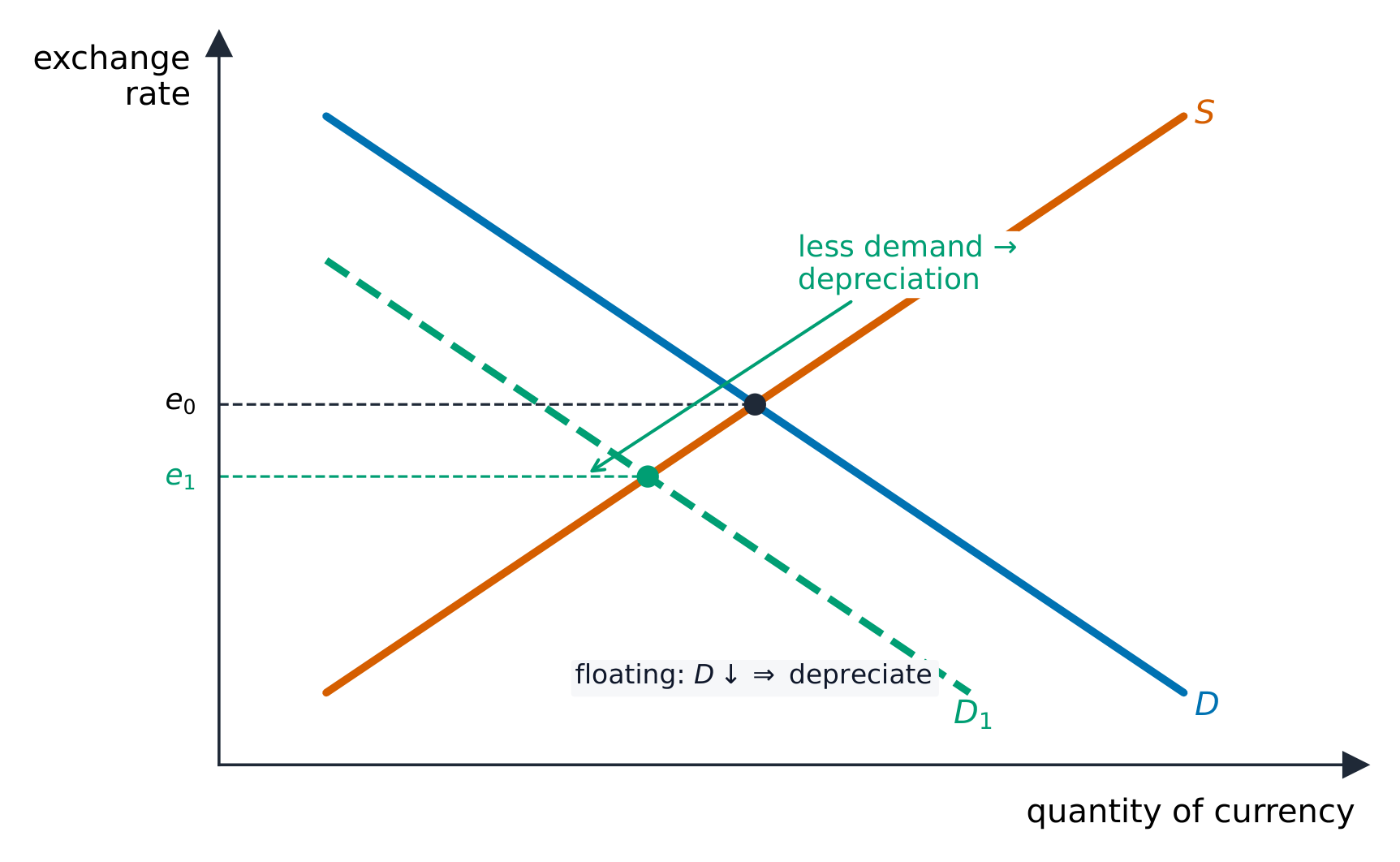
一个浮动汇率和一次贬值
A country exports 120 and imports 150 of goods and services. What is the deficit? · 某国出口货物和服务为120,进口为150。赤字是多少?
150 − 120 = 30 deficit. · 150 − 120 = 30 赤字。
A current-account surplus means a country: · 经常账户盈余意味着该国:
A surplus means receipts exceed payments. · 盈余意味着收入超过支出。
When a country imports more than it exports overall, its current account is in ______. · 当一国总体进口大于出口时,其经常账户处于______状态。
Payments exceed receipts. · 支出超过收入。
Deficit 赤字 and surplus 过剩
- A deficit: the country pays out more than it earns (imports > exports, broadly).
- A surplus: it earns more than it pays out.
Worked example. A country exports 80 of goods and services but imports 100. Its current account shows a deficit of 20 — it is buying more from abroad than it sells.
Exports above imports is a surplus; below is a deficit
赤字和盈余
- 一个赤字(deficit):这个国家支付的比它赚的多(大体上进口 > 出口)。
- 一个盈余(surplus):它赚的比它支付的多。
例题。 一个国家出口 80 的货物和服务但进口 100。它的经常账户显示一个 20 的赤字——它从国外买的比它卖的多。
A large, persistent current-account deficit must be financed by borrowing or selling assets. · 长期且巨大的经常账户赤字必须通过借款或出售资产来融资。
It cannot continue indefinitely without funding. · 若无资金来源,这种情况无法持续。
Why it matters
- A large, lasting deficit must be funded by borrowing or selling assets — not sustainable forever.
- Causes include low competitiveness 竞争力, a strong currency, or high domestic demand for imports.
A deficit isn't automatically "bad". A growing economy may import heavily for a while. The worry is a large, persistent deficit that has to be financed by ever more borrowing.
为什么它重要
- 一个大的、持续的赤字必须由借款或出售资产资助——不能永远持续。
- 原因包括低竞争力、一种强货币,或对进口的高国内需求。
一个赤字不自动是"坏"的。 一个增长的经济可能暂时大量进口。担忧是一个必须由越来越多的借款融资的大的、持续的赤字。
You've got it
- the current account records trade in goods and services, plus income and transfers
- a deficit = paying out more than earning; a surplus = the reverse
- a large, persistent deficit is the real concern — it must be financed
你掌握了
- 经常账户记录货物和服务的贸易,加上收入和转移
- 一个赤字 = 支付的比赚的多;一个盈余 = 相反
- 一个大的、持续的赤字是真正的担忧——它必须被融资