Specialisation and free trade · 专业化与自由贸易
| English | 中文 | Pinyin · 拼音 |
|---|---|---|
| trade/treɪd/ | 贸易 | mào yì |
| specialisation/ˌspeʃəlaɪˈzeɪʃn/ | 专业化 | zhuān yè huà |
| free trade/friː treɪd/ | 自由贸易 | zì yóu mào yì |
| economies of scale/ɪˈkɒnəmiz ɒv skeɪl/ | 规模经济 | guī mó jīng jì |
| over-dependence/ˈəʊvə dɪˈpendəns/ | 过度依赖 | guò dù yī lài |
| domestic industries/dəˈmestɪk ˈɪndʌstriz/ | 国内产业 | guó nèi chǎn yè |
Why countries trade 贸易
- No country makes everything it needs. Japan imports food; Saudi Arabia imports cars; everyone trades.
- The reason is specialisation 专业化 — and it makes the whole world richer.
为什么国家进行贸易
- 没有国家制造它需要的一切。日本进口食物;沙特阿拉伯进口汽车;每个人都进行贸易。
- 原因是专业化(specialisation)——而它使整个世界更富裕。
Specialisation means a country concentrates on producing: · 专业化意味着一个国家专注于生产:
It focuses on its most efficient products and trades for the rest. · 它专注于它最高效的产品并贸易换取其余的。
After specialising, countries ______ with each other to get the rest of what they need. · 在专业化之后,国家彼此______以获得它们需要的其余的东西。
Specialisation only works alongside trade. · 专业化只在与贸易并行时有效。
Specialisation
- Specialisation means concentrating on what you produce best (most efficiently).
- Countries specialise, then trade for the rest — just as workers specialise in jobs.
A container port: countries specialise and trade huge volumes of goods by sea
Each country makes what it is best at, then trades
专业化
- 专业化意味着专注于你生产最好(最高效)的东西。
- 国家专业化,然后贸易换取其余的——正如工人在工作中专业化。
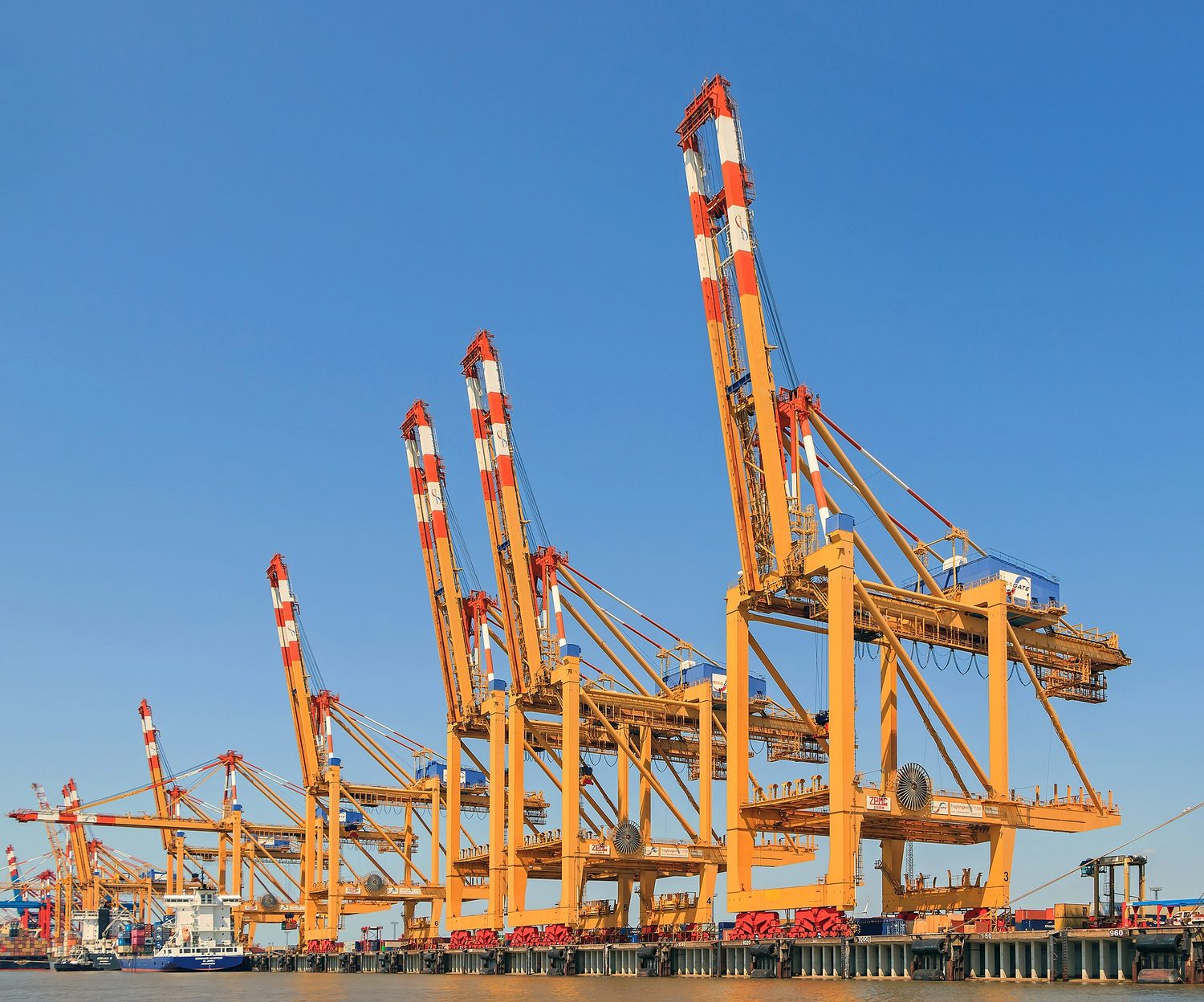
一个集装箱港口:国家专业化并通过海运贸易巨量的物品
Specialisation and trade · 专业化与贸易
By specialising where its opportunity cost is lowest and trading, a country can consume beyond its own frontier. · 通过在它机会成本最低的地方专业化并贸易,一个国家能消费超过它自己的前沿。
Which are gains from free trade? (Select all that apply.) · 哪些是自由贸易的收益?(选择所有适用的。)
Trade lowers prices and widens choice; higher prices is not a gain. · 贸易降低价格并扩大选择;更高的价格不是一个收益。
Specialisation and trade can make both trading countries better off. · 专业化和贸易能使两个贸易国都更好。
Each gets more than it could by producing everything alone. · 每个都得到比各自制造一切更多的东西。
The gains from free trade 自由贸易
- Lower prices and more choice for consumers.
- Bigger markets and economies of scale 规模经济 for producers.
- Access to resources and technology a country lacks at home.
Worked example. A country with ideal coffee-growing land specialises in coffee and trades it for cars it cannot make cheaply. Both it and its trading partner end up with more of both goods than if each made everything alone.
Cargo ships carry goods between countries — international trade in goods
自由贸易的收益
- 为消费者带来更低的价格和更多的选择。
- 为生产者带来更大的市场和规模经济。
- 进入一个国家在国内缺乏的资源和技术。
例题。 一个有理想的咖啡种植土地的国家专业化于咖啡,并用它贸易换取它无法便宜制造的汽车。它和它的贸易伙伴最终都拥有比各自制造一切更多的两种物品。
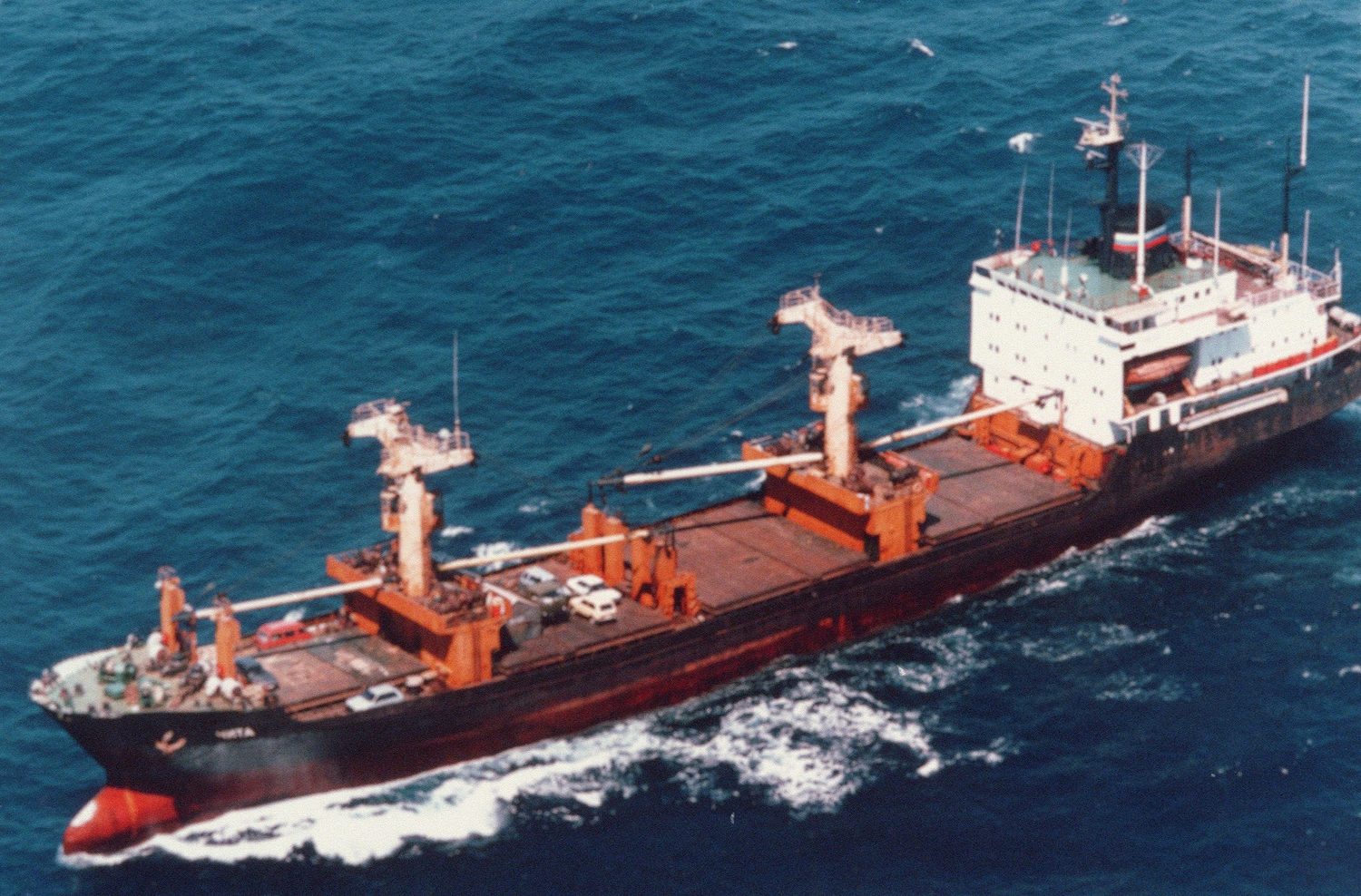
货船在国家之间运送物品——国际货物贸易
A risk of specialising heavily in one export is: · 大量专业化于一种出口的一个风险是:
Relying on one export is dangerous if its world price falls. · 依赖一种出口在它的世界价格下降时是危险的。
The risks
- Over-dependence 过度依赖 on one export or one partner is risky if prices crash.
- Some domestic industries 国内产业 and jobs may be lost to foreign competition.
Specialise where you're relatively best, not at everything. Even a country good at making everything gains by specialising in what it does most efficiently and trading for the rest.
The four main methods of trade protection: tariff, quota, subsidy and embargo
风险
- 过度依赖(over-dependence)一种出口或一个伙伴在价格暴跌时是有风险的。
- 一些国内产业和工作可能输给外国竞争。
在你相对最好的地方专业化,不是在一切上。 即使一个擅长制造一切的国家也通过专业化于它做得最高效的并贸易换取其余的而获益。
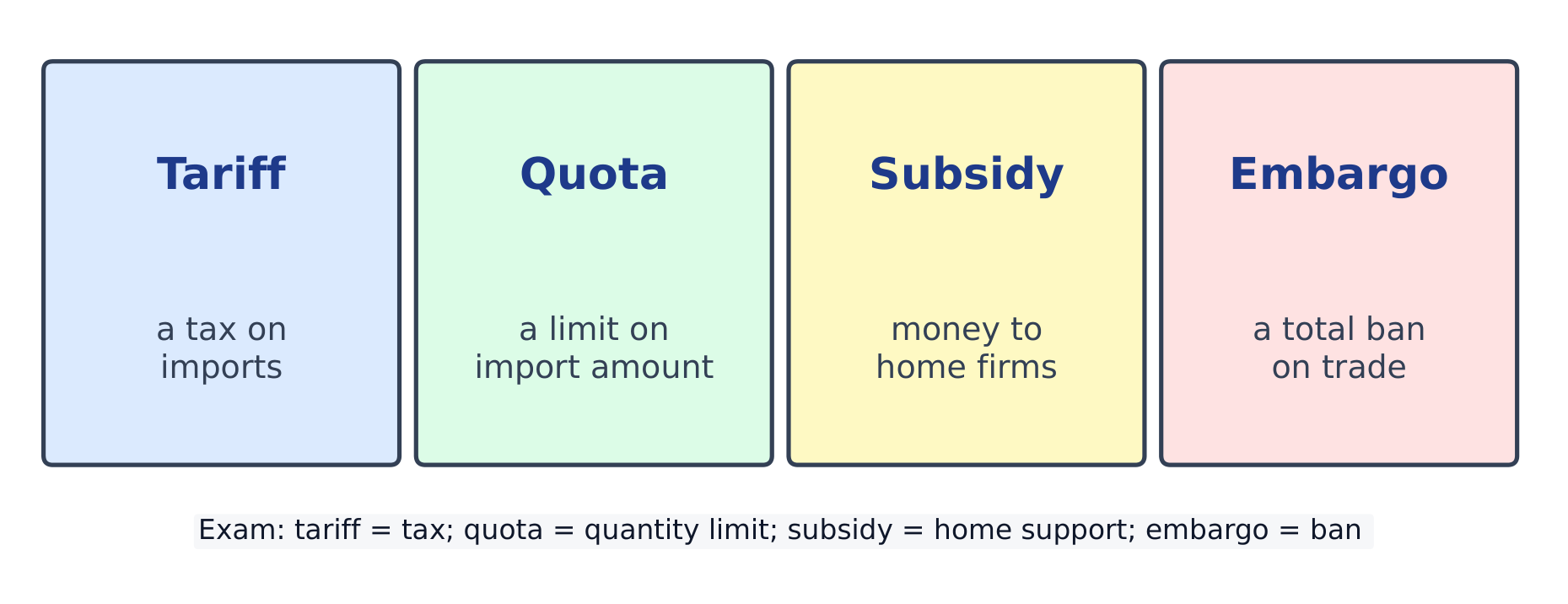
四种主要的贸易保护方法:关税、配额、补贴和禁运
You've got it
- specialisation = concentrate on what you produce best, then trade
- free trade brings lower prices, more choice and economies of scale
- risks: over-dependence and lost domestic industries
你掌握了
- 专业化 = 专注于你生产最好的,然后贸易
- 自由贸易带来更低的价格、更多的选择和规模经济
- 风险:过度依赖和失去的国内产业