Firms · 企业
| English | 中文 | Pinyin · 拼音 |
|---|---|---|
| sole trader/səʊl ˈtreɪdə/ | 个体经营者 | gè tǐ jīng yíng zhě |
| partnership/ˈpɑːtnəʃɪp/ | 合伙企业 | hé huǒ qǐ yè |
| company/ˈkʌmpəni/ | 公司 | gōng sī |
| shareholders/ˈʃeəhəʊldəz/ | 股东 | gǔ dōng |
| limited liability/ˈlɪmɪtɪd ˌlaɪəˈbɪlɪti/ | 有限责任 | yǒu xiàn zé rèn |
| economies of scale/ɪˈkɒnəmiz ɒv skeɪl/ | 规模经济 | guī mó jīng jì |
| market share/ˈmɑːkɪt ʃeə/ | 市场份额 | shì chǎng fèn é |
| merging/ˈmɜːdʒɪŋ/ | 合并 | hé bìng |
| niche/niːʃ/ | 利基 | lì jī |
From market stall to multinational
- Some businesses are one person with a van; others employ a hundred thousand people across the globe.
- Their legal form and their size shape what they can do.
从市场摊位到跨国公司
- 一些企业是一个人带一辆货车;另一些在全球雇用十万人。
- 它们的法律形式和它们的规模塑造它们能做什么。
Firm objective lab · 企业目标实验室
Classify real firm decisions by the objective they reveal. · 根据揭示的目标对真实的企业决策进行分类。
Limited liability means that, if a company fails, shareholders: · 有限责任意味着,如果公司倒闭,股东们:
Their loss is limited to their investment. · 他们的损失仅限于投资额。
A sole trader has unlimited liability for the business's debts. · 个体经营者对企业债务承担无限责任。
A sole trader is personally liable, unlike a company shareholder. · 个体经营者承担个人责任,这与公司股东不同。
Types of business
- Sole trader 个体经营者: one owner, easy to set up, unlimited liability.
- Partnership 合伙企业: a few owners share capital and risk.
- Company 公司: owned by shareholders 股东, with limited liability 有限责任 (they can lose only what they invested).
In a competitive market many firms sell similar goods, so each must keep prices low and quality high to win customers
企业类型
- 个体经营者(sole trader):一个所有者,容易设立,无限责任。
- 合伙企业(partnership):几个所有者分担资本和风险。
- 公司(company):由股东拥有,带有限责任(limited liability,他们只能损失他们投资的部分)。
在一个竞争市场中许多企业出售相似的物品,所以每个都必须保持价格低、质量高以赢得顾客
A main reason firms grow larger is to gain: · 企业规模扩大的主要原因是为了获得:
Larger scale spreads costs and lowers average cost. · 大规模运营分摊成本并降低平均成本。
When two firms join to form one, this is called a . · 当两家公司合并成一家时,这被称为。
A merger (or takeover) is external growth. · 合并(或收购)属于外部增长。
Why firms grow
- Bigger firms gain economies of scale 规模经济 — lower average cost — and a larger market share 市场份额.
- They grow internally (more output) or by merging 合并 with / taking over other firms.
The three types of integration: horizontal (same stage), vertical (supplier or customer), conglomerate (unrelated)
为什么企业成长
- 更大的企业获得规模经济(economies of scale)——更低的平均成本——和一个更大的市场份额。
- 它们内部成长(更多产出)或通过与其他企业合并/收购它们。
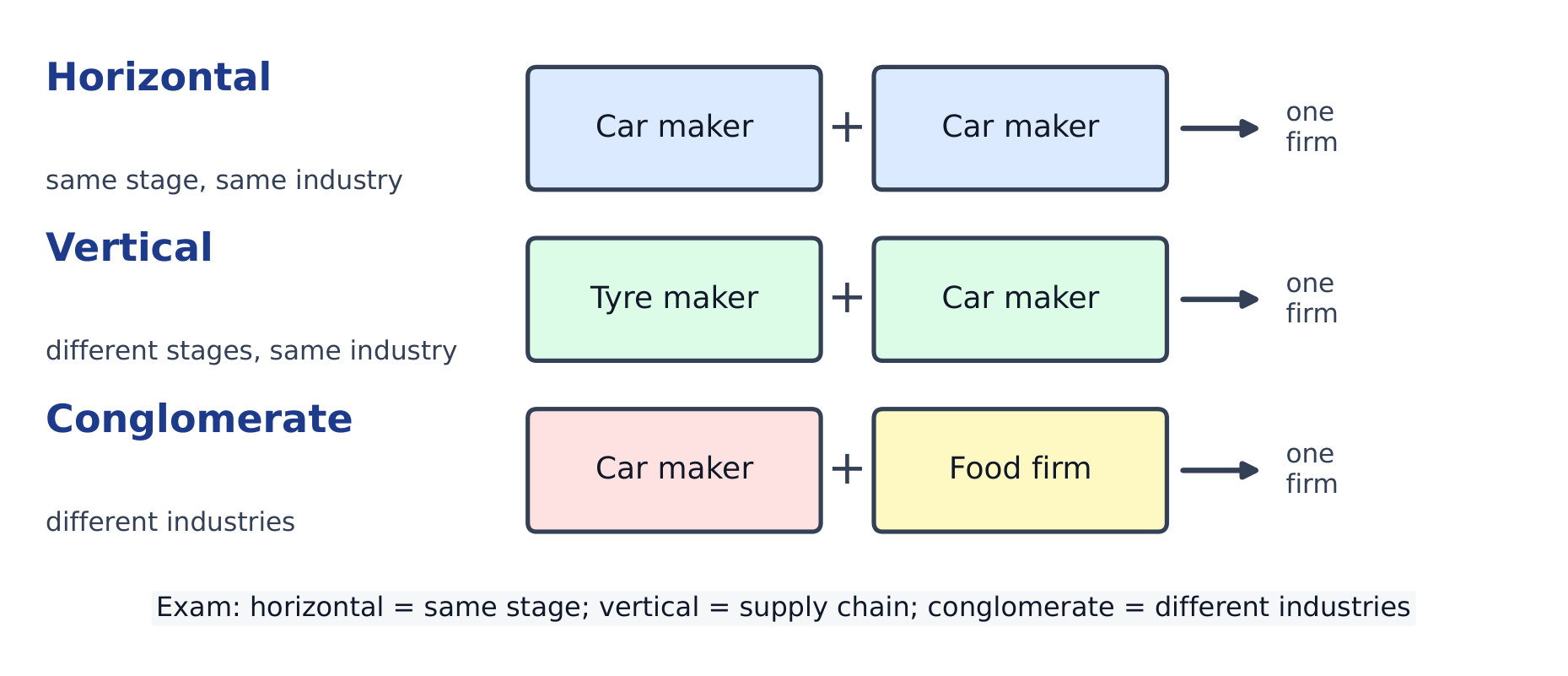
三种整合类型:横向(同一阶段)、纵向(供应商或顾客)、混合(不相关)
Small firms are most likely to survive where: · 小公司最有可能在以下哪种情况下生存:
Local, niche or personal-service markets favour small firms. · 本地、利基或个人服务市场有利于小公司。
Why some stay small
- Small firms survive where markets are local, demand is niche 利基, or personal service matters.
- Some industries simply don't reward size.
Limited liability protects owners, not the firm. If a company fails, shareholders lose only their investment — their personal homes are safe. A sole trader has no such shield.
为什么有些保持小规模
- 小企业在市场是本地的、需求是利基的,或个人服务重要的地方生存。
- 一些行业根本不奖励规模。
有限责任保护所有者,不是企业。 如果一家公司失败,股东只损失他们的投资——他们的个人住宅是安全的。一个个体经营者没有这样的盾牌。
You've got it
- business forms: sole trader, partnership, company (with limited liability)
- firms grow for economies of scale and market share, internally or by merger
- small firms survive in local, niche or personal-service markets
你掌握了
- 企业形式:个体经营者、合伙企业、公司(带有限责任)
- 企业为了规模经济和市场份额而成长,内部地或通过合并
- 小企业在本地、利基或个人服务市场生存