Opportunity cost · 机会成本
| English | 中文 | Pinyin · 拼音 |
|---|---|---|
| opportunity cost/ɒpəˈtjuːnɪti kɒst/ | 机会成本 | jī huì chéng běn |
| next best alternative/nekst best ɔːlˈtɜːnətɪv/ | 次优选择 | cì yōu xuǎn zé |
| consumers/kənˈsuːməz/ | 消费者 | xiāo fèi zhě |
| producers/prəˈdjuːsəz/ | 生产者 | shēng chǎn zhě |
| trade-off/treɪd ɒf/ | 取舍 | qǔ shě |
Every choice has a cost
- Spend your savings on a holiday and you can't also spend it on a bike. Choosing one means giving up the other.
- That sacrifice — the opportunity cost 机会成本 — is one of the most important ideas in economics.
每个选择都有一个成本
- 把你的储蓄花在一个假期上,你就不能也把它花在一辆自行车上。选择一个意味着放弃另一个。
- 那个牺牲——机会成本(opportunity cost)——是经济学中最重要的概念之一。
Opportunity cost is: · 机会成本是:
It is the single next-best alternative sacrificed. · 它是被牺牲的那一个次优替代品。
Opportunity cost is the value of the ______ best alternative given up. · 机会成本是放弃的______优替代品的价值。
The single next-best alternative. · 那一个次优替代品。
What opportunity cost is
- Opportunity cost = the next best alternative 次优选择 you give up when you make a choice.
- It applies to everyone: consumers 消费者, producers 生产者 and governments.
Worked example. A government spends its budget on a new hospital instead of a new school. The opportunity cost is the school it gave up.
Points on, inside and outside the production possibility curve
机会成本是什么
- 机会成本 = 当你做一个选择时放弃的次优替代品。
- 它适用于每个人:消费者、生产者和政府。
例题。 一个政府把它的预算花在一所新医院而不是一所新学校上。机会成本是它放弃的学校。
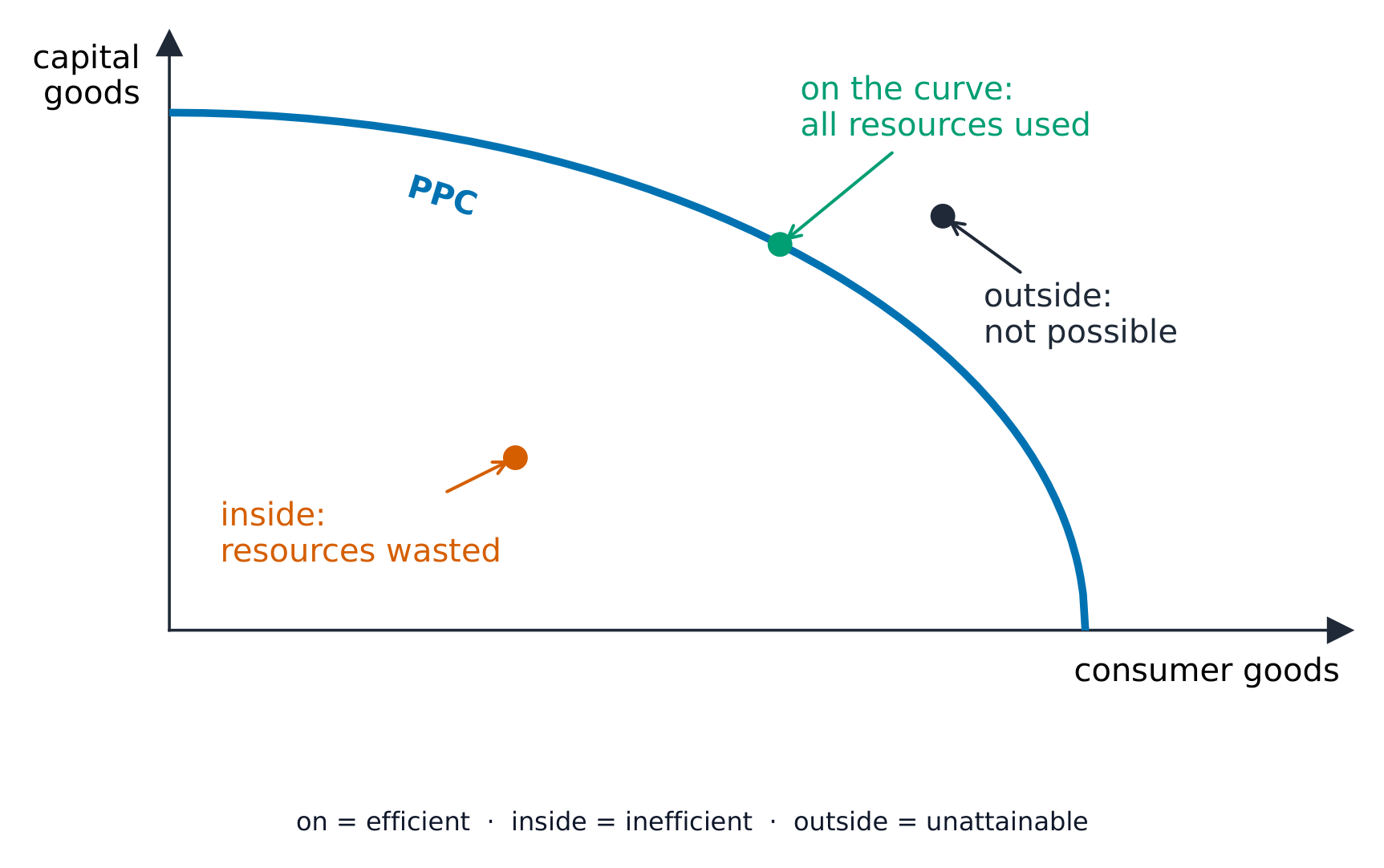
生产可能性曲线上、内和外的点
Opportunity cost on the frontier · 前沿上的机会成本
Moving along the frontier, gaining more of one good always means giving up some of the other — that sacrifice is the opportunity cost. · 沿前沿移动,获得更多一种物品总是意味着放弃一些另一种——那个牺牲就是机会成本。
A government builds a hospital instead of a school. The opportunity cost is: · 一个政府建一所医院而不是一所学校。机会成本是:
The opportunity cost is the next best use of the budget — the school. · 机会成本是预算的次优用途——学校。
Opportunity cost for everyone
- Consumers: a phone vs a holiday.
- Producers: making cars vs making trucks with the same factory.
- Governments: hospitals vs schools with the same budget.
Choosing one thing means giving up the next best alternative
每个人的机会成本
- 消费者:一部手机对一个假期。
- 生产者:用同一个工厂制造汽车对制造卡车。
- 政府:用同一个预算建医院对学校。
Opportunity cost applies to consumers, producers and governments. · 机会成本适用于消费者、生产者和政府。
Anyone making a choice with scarce resources faces an opportunity cost. · 任何用稀缺资源做选择的人都面对一个机会成本。
Why it matters
- Thinking in opportunity cost forces you to compare the real trade-off 取舍, not just the money price.
- Good decisions weigh what you gain against what you give up.
Opportunity cost is the single best alternative, not all of them. If you skip studying to watch a film, nap or walk, the cost is just the one you'd most have wanted — not all three.
为什么它重要
- 用机会成本思考迫使你比较真实的权衡,不只是货币价格。
- 好的决定权衡你得到的与你放弃的。
机会成本是单一最佳替代品,不是所有的。 如果你跳过学习去看一部电影、小睡或散步,成本只是你最想要的那一个——不是所有三个。
Opportunity cost is useful because it measures: · 机会成本有用,因为它衡量:
It compares what you gain with what you give up. · 它比较你得到的与你放弃的。
You've got it
- opportunity cost = the next best alternative given up
- it applies to consumers, producers and governments alike
- it captures the real trade-off, not just the money price
你掌握了
- 机会成本 = 放弃的次优替代品
- 它同样适用于消费者、生产者和政府
- 它捕捉真实的权衡,不只是货币价格