The nature of the basic economic problem · 基本经济问题的本质
| English | 中文 | Pinyin · 拼音 |
|---|---|---|
| scarcity/ˈskeəsɪti/ | 稀缺性 | xī quē xìng |
| wants/wɒnts/ | 欲望 | yù wàng |
| resources/rɪˈzɔːsɪz/ | 资源 | zī yuán |
| finite/ˈfaɪnaɪt/ | 有限的 | yǒu xiàn de |
| opportunity cost/ɒpəˈtjuːnɪti kɒst/ | 机会成本 | jī huì chéng běn |
| free good/friː ɡʊd/ | 自由物品 | zì yóu wù pǐn |
| economic good/ˌiːkəˈnɒmɪk ɡʊd/ | 经济物品 | jīng jì wù pǐn |
| consumers/kənˈsuːməz/ | 消费者 | xiāo fèi zhě |
| producers/prəˈdjuːsəz/ | 生产者 | shēng chǎn zhě |
You can't have it all
- There is never enough — enough money, time, or stuff — for everyone to have everything they want.
- That simple fact, scarcity 稀缺性, is where economics begins. It forces everyone to choose.
你不能拥有一切
- 从来没有足够的——足够的钱、时间或东西——让每个人拥有他们想要的一切。
- 那个简单的事实,稀缺(scarcity),是经济学开始的地方。它迫使每个人选择。
The basic economic problem
- Wants 欲望 are unlimited; resources 资源 are finite 有限的 (limited).
- So every society must decide: what to produce, how to produce it, and for whom.
The economic problem: unlimited wants and scarce resources cause scarcity, which forces choice, and every choice has an opportunity cost 机会成本
基本经济问题
- 需求(wants)是无限的;资源(resources)是有限的。
- 所以每个社会都必须决定:生产什么、如何生产,以及为谁生产。
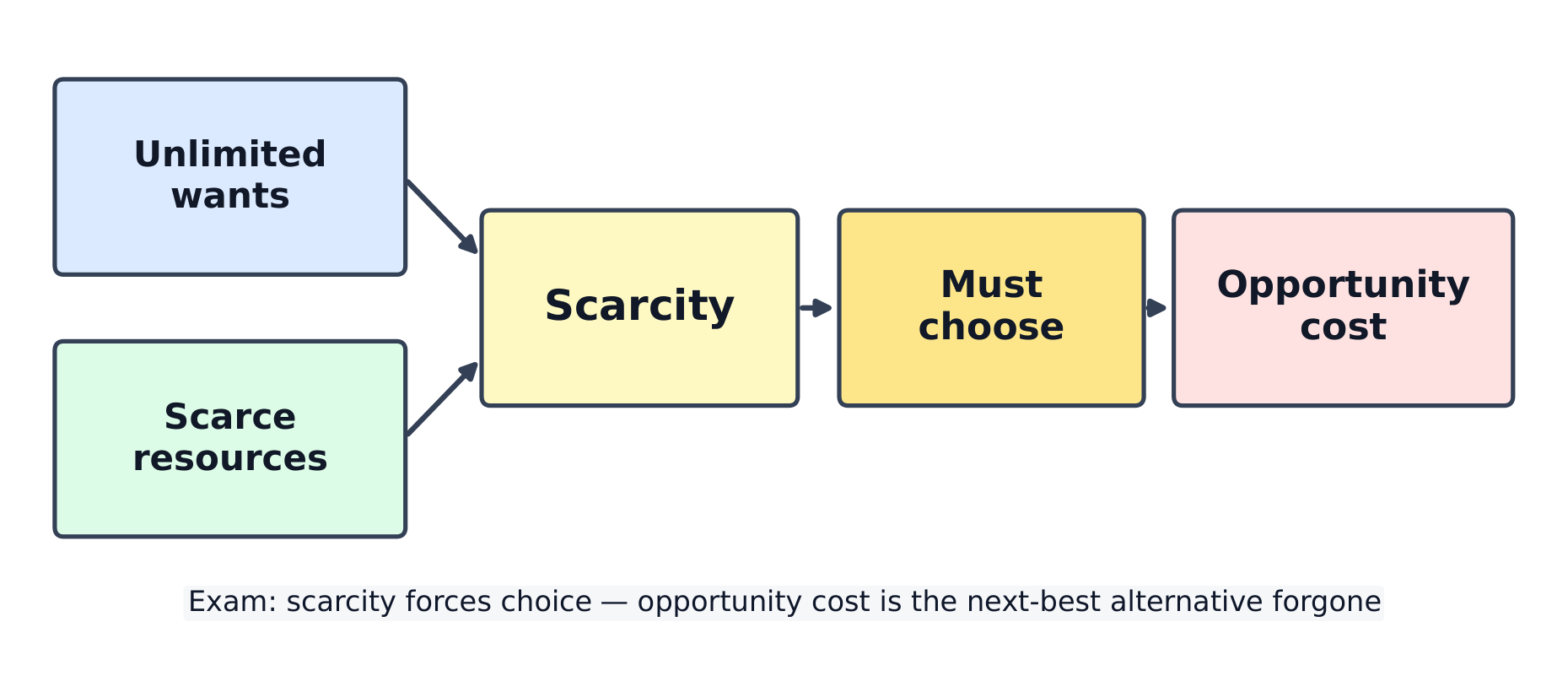
经济问题:无限的需求和稀缺的资源造成稀缺,稀缺迫使选择,而每个选择都有一个机会成本
Scarcity and choice · 稀缺与选择
Limited resources mean producing more of one good costs some of the other — the opportunity cost, shown by the frontier. · 有限的资源意味着生产更多一种物品要花费一些另一种——机会成本,由前沿显示。
The basic economic problem exists because: · 基本经济问题存在是因为:
Scarcity = unlimited wants meeting finite resources. · 稀缺 = 无限的需求遇到有限的资源。
Every economy must decide what to produce, how to produce it, and for whom. · 每个经济体都必须决定生产什么、如何生产,以及为谁生产。
These three questions follow from scarcity. · 这三个问题由稀缺产生。
Economic vs free goods 自由物品
- An economic good 经济物品 is scarce, so it has an opportunity cost and a price (a phone, a sandwich).
- A free good is not scarce — using it costs nothing (air, sunlight). Almost everything is an economic good.
Consumers 消费者 choosing what to buy at a busy market — scarcity forces everyone to make choices
经济物品对免费物品
- 一个经济物品(economic good)是稀缺的,所以它有一个机会成本和一个价格(一部手机、一个三明治)。
- 一个免费物品(free good)不稀缺——使用它不花费任何东西(空气、阳光)。几乎一切都是经济物品。
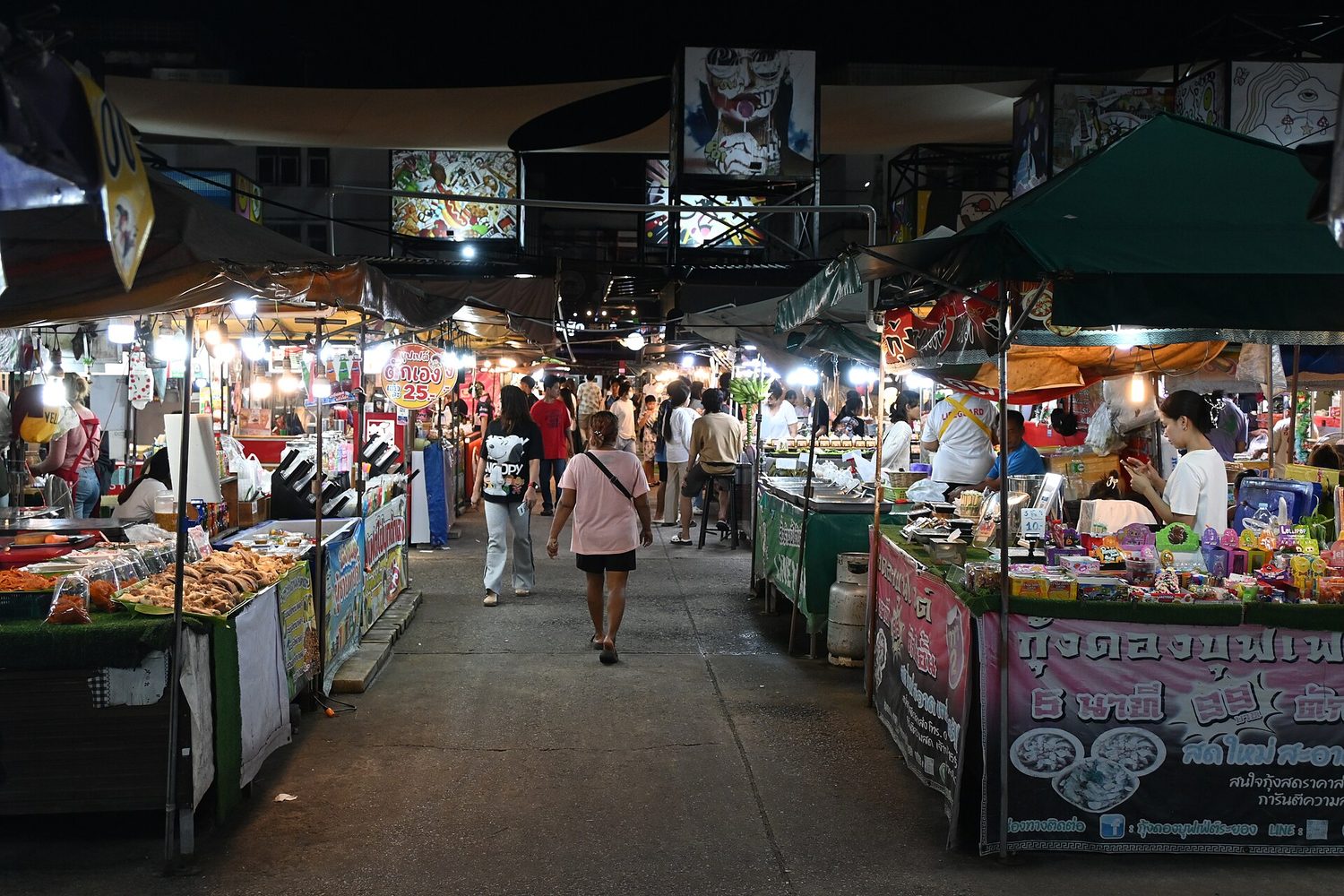
在一个繁忙的市场选择买什么的消费者——稀缺迫使每个人做选择
Which is a free good? · 哪个是一个免费物品?
Air is not scarce, so it has no opportunity cost — a free good. · 空气不稀缺,所以它没有机会成本——一个免费物品。
A good that is scarce and so has an opportunity cost is an ______ good. · 一个稀缺并因此有机会成本的物品是一个______物品。
Economic goods are scarce; free goods are not. · 经济物品是稀缺的;免费物品不是。
Who faces the problem?
- Consumers choose how to spend limited income.
- Producers 生产者 choose what to make with limited resources.
- Governments choose how to spend limited tax revenue.
Scarcity isn't poverty. Even a rich country faces scarcity — its resources are still limited relative to everything its people want. Scarcity is universal.
谁面对这个问题?
- 消费者(consumers)选择如何花有限的收入。
- 生产者(producers)选择用有限的资源制造什么。
- 政府(governments)选择如何花有限的税收收入。
稀缺不是贫穷。 即使一个富裕的国家也面对稀缺——它的资源相对于它的人民想要的一切仍然是有限的。稀缺是普遍的。
Match each decision-maker to its choice. · 把每个决策者匹配到它的选择。
Scarcity forces choice at every level. · 稀缺在每个层面迫使选择。
You've got it
- scarcity: unlimited wants vs finite resources → the basic economic problem
- every society decides what, how, for whom to produce
- an economic good is scarce (has a cost); a free good is not
你掌握了
- 稀缺:无限的需求对有限的资源 → 基本经济问题
- 每个社会决定生产什么、如何生产、为谁生产
- 一个经济物品是稀缺的(有一个成本);一个免费物品不是