Redox · 氧化还原
| English | 中文 | Pinyin · 拼音 |
|---|---|---|
| redox/rɪˈdɒks/ | 氧化还原 | yǎng huà huán yuán |
| oxidation/ˌɒksɪˈdeɪʃn/ | 氧化 | yǎng huà |
| reduction/rɪˈdʌkʃn/ | 还原 | huán yuán |
| reducing agent/rɪˈdjuːsɪŋ ˈeɪdʒənt/ | 还原剂 | huán yuán jì |
| oxidising agent/ˈɒksɪdaɪzɪŋ ˈeɪdʒənt/ | 氧化剂 | yǎng huà jì |
| respiration/ˌrespɪˈreɪʃn/ | 呼吸作用 | hū xī zuò yòng |
| displacement/dɪˈspleɪsmənt/ | 置换 | zhì huàn |
Electron bookkeeping
- Many reactions involve electrons moving from one substance to another.
- These are redox 氧化还原 reactions — short for reduction and oxidation.
电子记账
- 许多反应涉及电子从一种物质移到另一种。
- 这些是氧化还原(redox)反应——reduction(还原)和 oxidation(氧化)的简称。
In terms of electrons, oxidation is: · 就电子而言,氧化是:
OIL: Oxidation Is Loss of electrons. · OIL:氧化是失去电子。
Oxidation and reduction: · 氧化和还原:
Electrons lost by one are gained by another. · 一个失去的电子被另一个获得。
The memory aid for redox is OIL ______. · 氧化还原的记忆辅助是 OIL ______。
Oxidation Is Loss, Reduction Is Gain. · 氧化是失去,还原是获得。
Oxidation 氧化 and reduction 还原
- Oxidation Is Loss of electrons; Reduction Is Gain of electrons (OIL RIG).
- The two always happen together: if one substance loses electrons, another gains them.
Electrons pass from the substance that is oxidised (loses them) to the one that is reduced (gains them) — OIL RIG
A hydrogen fuel cell runs on a redox reaction: hydrogen is oxidised and oxygen is reduced
氧化和还原
- 氧化是失去电子;还原是获得电子(OIL RIG)。
- 这两个总是一起发生:如果一种物质失去电子,另一种获得它们。
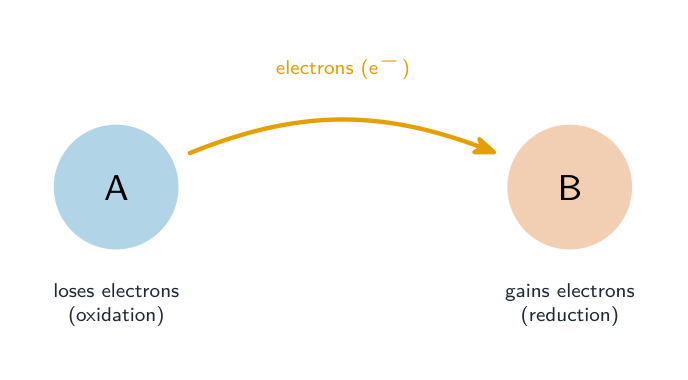
电子从被氧化的物质(失去电子)传给被还原的物质(获得电子)——OIL RIG
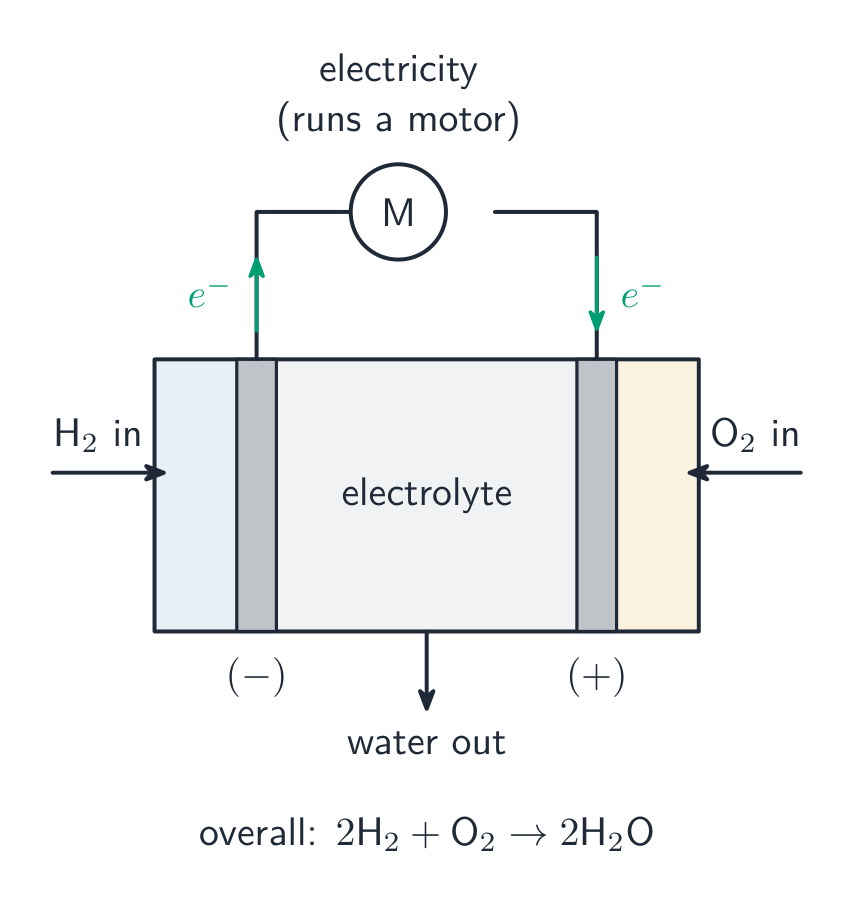
氢燃料电池靠一个氧化还原反应工作:氢被氧化,氧被还原
Oxidation and reduction happen together · 氧化和还原一起发生
Step through a redox reaction. One substance loses electrons while another gains them — you can never have one without the other. · 逐步看一个氧化还原反应。一种物质失去电子而另一种获得它们——你永远不能有一个而没有另一个。
A reducing agent: · 一个还原剂:
A reducing agent donates electrons. · 一个还原剂捐出电子。
Oxidising and reducing agents 还原剂
- An oxidising agent 氧化剂 takes electrons (so it is itself reduced).
- A reducing agent gives electrons (so it is itself oxidised).
氧化剂和还原剂
- 一个氧化剂(oxidising agent)拿走电子(所以它自己被还原)。
- 一个还原剂(reducing agent)给出电子(所以它自己被氧化)。
In terms of oxygen, oxidation is the gain of oxygen. · 就氧而言,氧化是获得氧。
Reduction is loss of oxygen; oxidation is gain. · 还原是失去氧;氧化是获得。
Redox in the world
- Many everyday reactions are redox: combustion, rusting, respiration 呼吸作用, and displacement 置换.
- In terms of oxygen, oxidation is gain of oxygen and reduction is loss of oxygen.
Worked example. When magnesium burns: Mg loses electrons (oxidised) and oxygen gains them (reduced). Magnesium is the reducing agent; oxygen is the oxidising agent. One reaction, both processes.
世界中的氧化还原
- 许多日常反应是氧化还原:燃烧、生锈、呼吸作用和置换。
- 就氧而言,氧化是获得氧而还原是失去氧。
例题。 当镁燃烧时:Mg 失去电子(被氧化)而氧获得它们(被还原)。镁是还原剂;氧是氧化剂。一个反应,两个过程。
You've got it
- redox = reduction + oxidation, always happening together
- OIL RIG: Oxidation Is Loss, Reduction Is Gain of electrons
- an oxidising agent gains electrons; a reducing agent loses them
你掌握了
- 氧化还原 = 还原 + 氧化,总是一起发生
- OIL RIG:氧化是失去,还原是获得电子
- 一个氧化剂获得电子;一个还原剂失去它们