Catalysts and measuring rate · 催化剂与测量速率
| English | 中文 | Pinyin · 拼音 |
|---|---|---|
| catalyst/ˈkætəlɪst/ | 催化剂 | cuī huà jì |
| enzymes/ˈenzaɪmz/ | 酶 | méi |
| Haber process/ˈheɪbə ˈprəʊses/ | 哈伯法 | hā bó fǎ |
Speeding reactions without using anything up
- Some substances make a reaction go faster yet are not used up themselves.
- These are catalysts 催化剂, and they work by lowering the activation energy.
不消耗任何东西就加快反应
- 一些物质使一个反应进行得更快,然而它们自己不被消耗。
- 这些是催化剂(catalysts),它们通过降低活化能起作用。
A catalyst speeds up a reaction by: · 一个催化剂通过以下加快一个反应:
A lower Ea means more successful collisions. · 一个更低的 Ea 意味着更多成功的碰撞。
After the reaction, a catalyst is: · 反应之后,一个催化剂是:
Catalysts are regenerated and reused. · 催化剂被再生和重复使用。
A catalyst provides a pathway with a lower ______ energy. · 一个催化剂提供一条带更低______能的路径。
Lower Ea lets more collisions succeed. · 更低的 Ea 让更多碰撞成功。
How catalysts work
- A catalyst speeds up a reaction by providing a pathway with a lower activation energy.
- It is not used up, so a small amount can be reused again and again.
A catalyst lowers the activation-energy hill, so more collisions succeed and the reaction speeds up.
催化剂如何起作用
- 一个催化剂通过提供一条带更低活化能的路径加快一个反应。
- 它不被消耗,所以一小量能被一次又一次地重复使用。
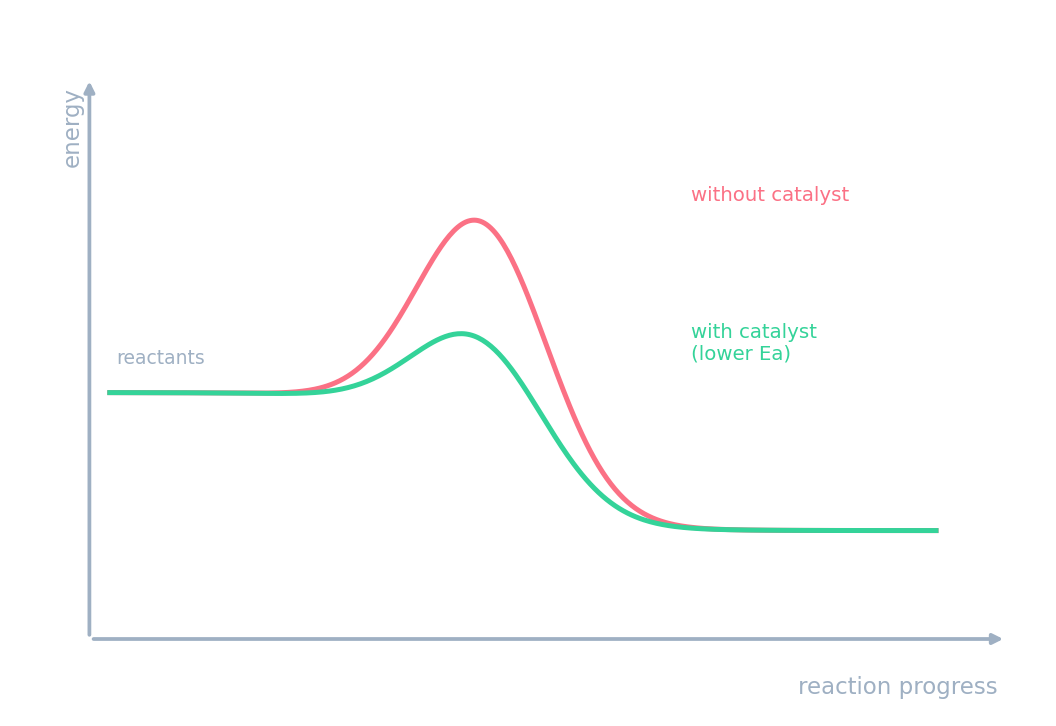
一个催化剂降低活化能山,所以更多碰撞成功而反应加快。
Catalysts & measuring rate · 催化剂与测量速率
conc = c₀·bᵗ · 浓度 = c₀·bᵗ
A catalyst · 催化剂 speeds the fall in concentration. · 一个催化剂加快浓度的下降。
Biological catalysts found in living things are called: · 活物中发现的生物催化剂被称为:
Enzymes are biological catalysts. · 酶是生物催化剂。
Catalysts in action
- Enzymes 酶 are biological catalysts in living things.
- Industry uses catalysts (e.g. iron in the Haber process 哈伯法) to speed reactions and save energy.
A gas syringe measures the volume of gas given off at regular times
催化剂在行动
- 酶(enzymes)是活物中的生物催化剂。
- 工业使用催化剂(例如哈伯过程中的铁)来加快反应并节省能量。
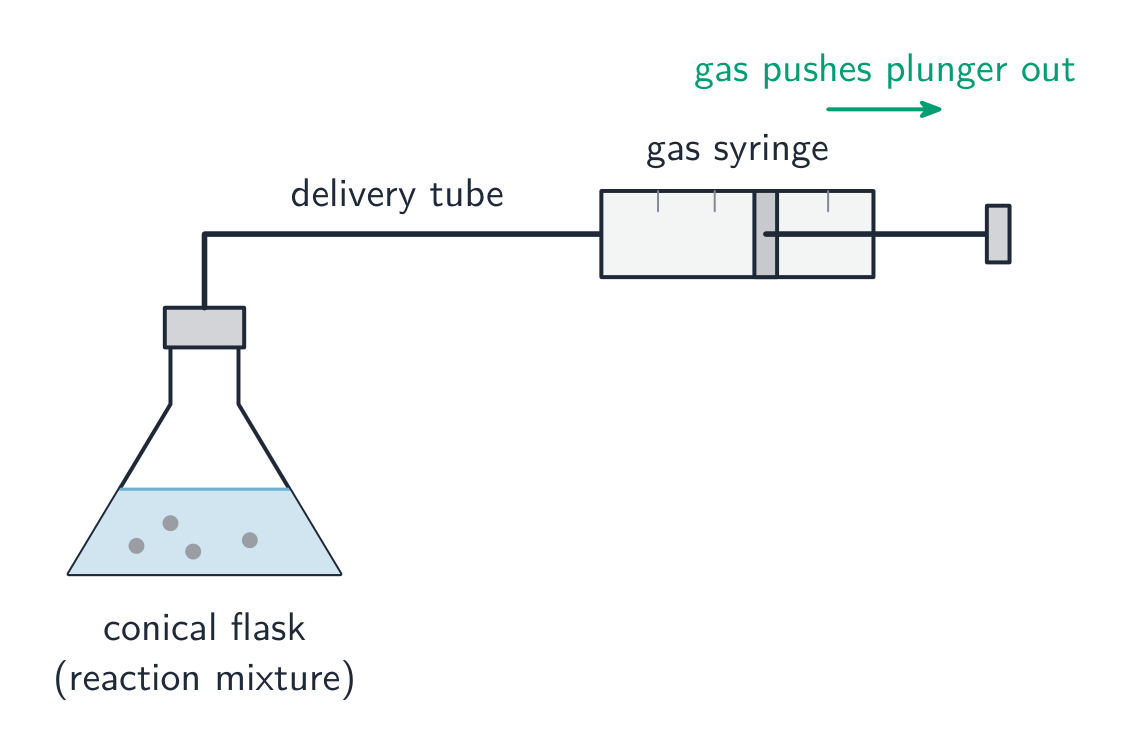
一个气体注射器在规则的时间测量放出的气体体积
A steeper gradient on a rate graph means a faster reaction. · 一张速率图上一个更陡的斜率意味着一个更快的反应。
Gradient measures rate. · 斜率测量速率。
Measuring rate
- Rate can be found from the gradient of a graph (e.g. gas volume vs time).
- A steeper gradient means a faster rate; the line flattens when the reaction finishes.
A catalyst is not used up. It takes part in the reaction but is regenerated, so the same catalyst keeps working. That's why only a small amount is needed.
测量速率
- 速率能从一张图的斜率(gradient)求出(例如气体体积对时间)。
- 一个更陡的斜率意味着一个更快的速率;线在反应结束时变平。
一个催化剂不被消耗。 它参与反应但被再生,所以同一个催化剂持续起作用。那就是为什么只需要一小量。
You've got it
- a catalyst speeds up a reaction by lowering the activation energy
- it is not used up, so a little is reused many times
- enzymes are biological catalysts; rate = the gradient of a rate graph
你掌握了
- 一个催化剂通过降低活化能加快一个反应
- 它不被消耗,所以一点被重复使用许多次
- 酶是生物催化剂;速率 = 一张速率图的斜率