Copper sulfate and electroplating · 硫酸铜与电镀
| English | 中文 | Pinyin · 拼音 |
|---|---|---|
| copper sulfate/ˈkɒpə ˈsʌlfeɪt/ | 硫酸铜 | liú suān tóng |
| electroplating/ɪˌlektrəʊˈpleɪtɪŋ/ | 电镀 | diàn dù |
| corrosion/kəˈrəʊʒn/ | 腐蚀 | fǔ shí |
Useful electrolysis
- Electrolysis isn't just a lab curiosity — it purifies metals and coats objects.
- Two important uses are electrolysing copper sulfate 硫酸铜 and electroplating 电镀.
有用的电解
- 电解不只是一个实验室的好奇——它提纯金属并给物体涂层。
- 两个重要的用途是电解硫酸铜和电镀。
Electrolysing copper sulfate with copper electrodes is used to: · 用铜电极电解硫酸铜被用来:
The impure copper anode dissolves; pure copper deposits on the cathode. · 不纯的铜阳极溶解;纯铜沉积在阴极上。
Coating an object with a thin layer of metal using electrolysis is called . · 用电解给一个物体涂上一薄层金属被称为。
The object is the cathode. · 物体是阴极。
Electrolysis of copper sulfate
- With carbon electrodes, copper forms at the cathode and oxygen at the anode.
- With copper electrodes, the anode dissolves and copper is deposited on the cathode — used to purify copper.
Electrolysis of molten lead bromide: ions move to the electrodes and are discharged
硫酸铜的电解
- 用碳电极,铜在阴极形成,氧在阳极。
- 用铜电极,阳极溶解而铜沉积在阴极上——用来提纯铜。
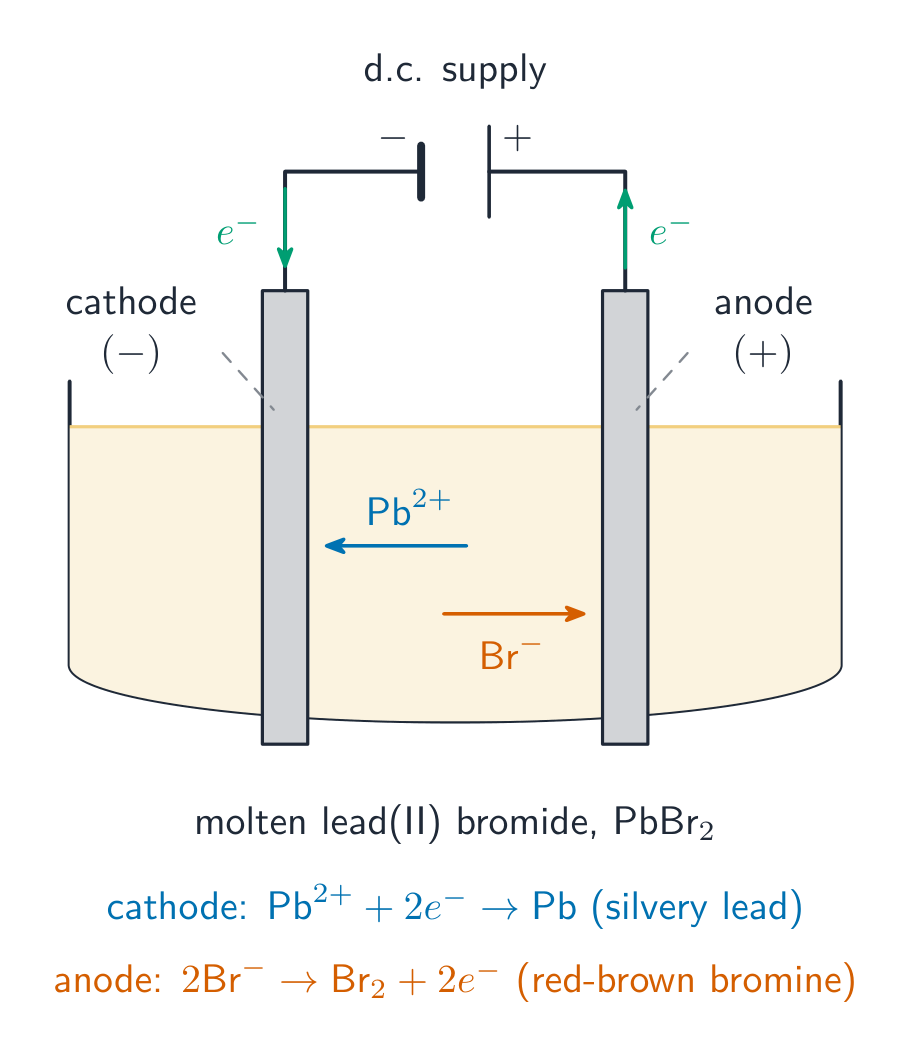
熔融溴化铅的电解:离子移到电极并被释放
Electrolysis of copper(II) sulfate · 硫酸铜(II)的电解
Cu²⁺ ions move to the cathode and are discharged as copper metal, which plates onto it — exactly how electroplating coats an object with copper. · Cu²⁺ 离子移到阴极并作为铜金属被释放,它镀在上面——正是电镀如何用铜给一个物体涂层。
In electroplating, the object to be coated is the: · 在电镀中,要被涂层的物体是:
The object is the cathode, where metal is deposited. · 物体是阴极,那里金属被沉积。
In electroplating, the plating metal forms the anode. · 在电镀中,电镀金属形成阳极。
The anode supplies the metal that coats the cathode. · 阳极提供涂在阴极上的金属。
Electroplating
- Electroplating coats an object with a thin layer of metal using electrolysis.
- The object to be plated is the cathode; the plating metal is the anode.
To electroplate, make the object the cathode and the plating metal the anode, in a solution of the plating-metal ions
An electrolysis cell splits a compound using electricity
电镀
- 电镀(electroplating)用电解给一个物体涂上一薄层金属。
- 要被电镀的物体是阴极;电镀金属是阳极。
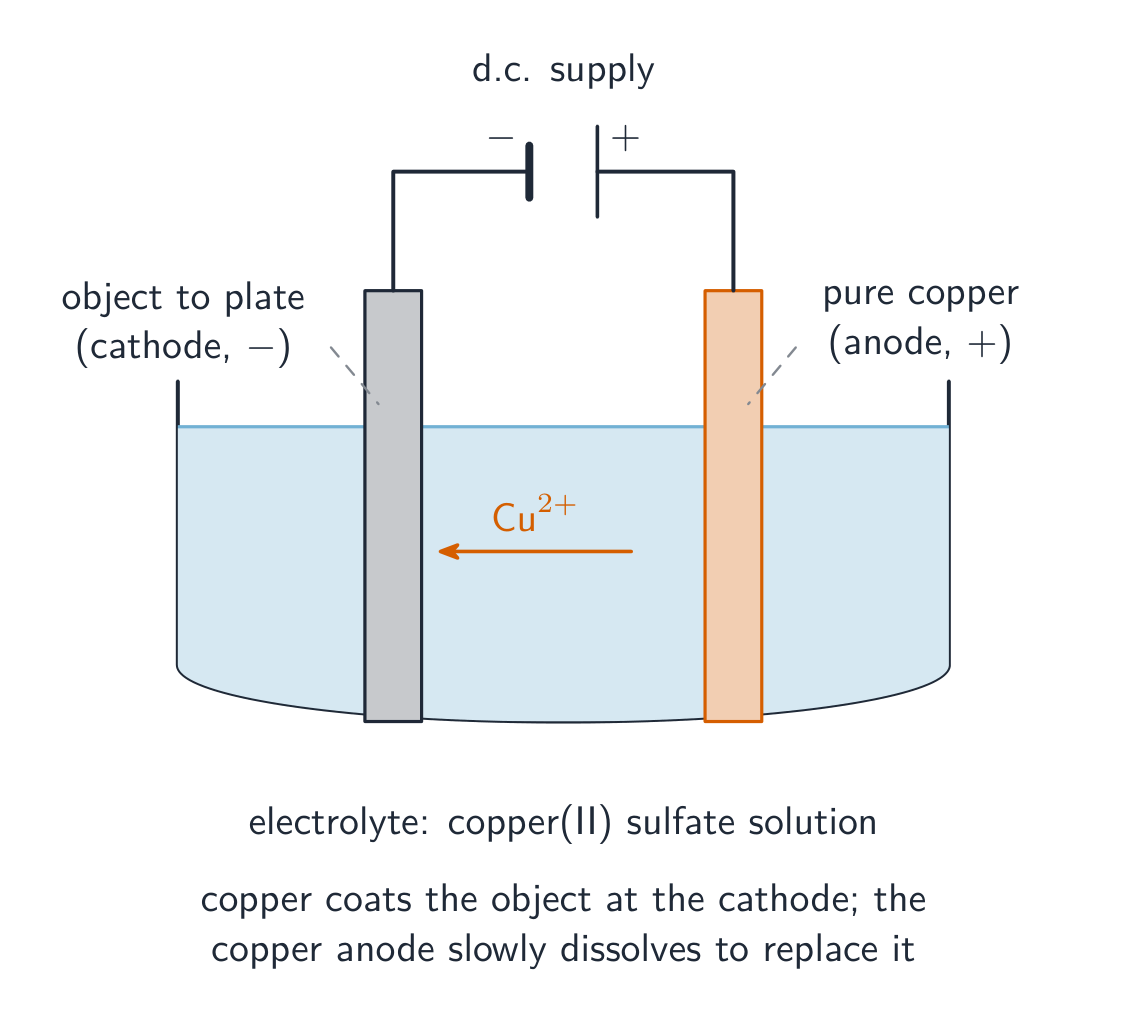
要电镀,把物体作为阴极,电镀金属作为阳极,在一个电镀金属离子的溶液中
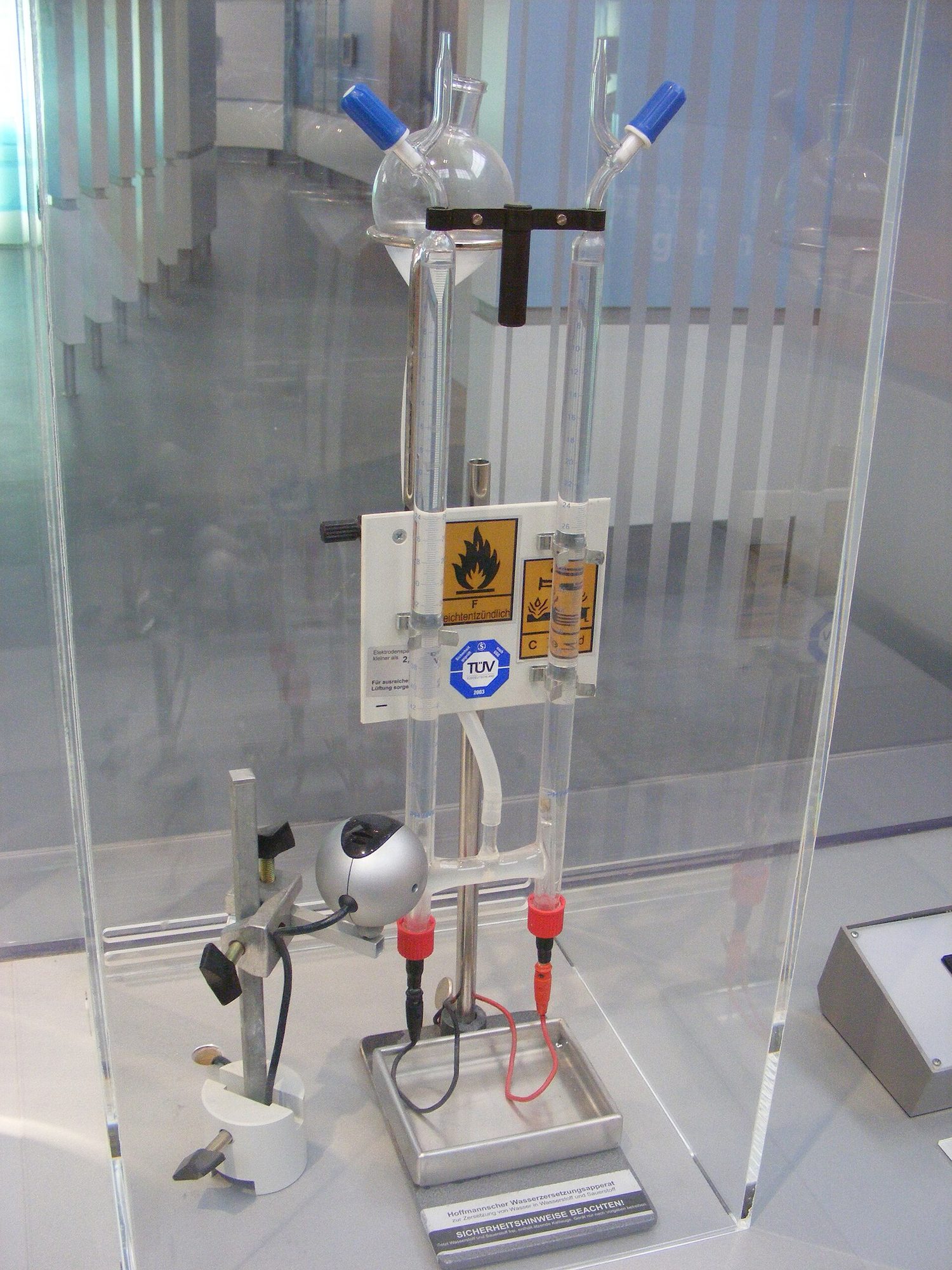
一个电解池用电分裂一个化合物
Why is electroplating used? (Select all that apply.) · 为什么使用电镀?(选择所有适用的。)
Electroplating coats, not melts. · 电镀涂层,不熔化。
Why electroplate
- To improve appearance (e.g. silver-plated cutlery) or to protect from corrosion 腐蚀.
- A thin coat of an expensive or resistant metal does the job cheaply.
Worked example. To silver-plate a spoon, the spoon is the cathode and a bar of silver is the anode, in a silver-salt solution. Silver dissolves from the anode and coats the spoon.
为什么电镀
- 为改善外观(例如镀银餐具)或保护免受腐蚀。
- 一薄层昂贵或耐蚀的金属便宜地完成这个工作。
例题。 要给一把勺子镀银,勺子是阴极而一根银棒是阳极,在一个银盐溶液中。银从阳极溶解并涂在勺子上。
You've got it
- electrolysing copper sulfate with copper electrodes purifies copper (anode dissolves, cathode gains)
- electroplating coats an object with metal: the object is the cathode, the metal the anode
- it improves appearance and protects against corrosion
你掌握了
- 用铜电极电解硫酸铜提纯铜(阳极溶解,阴极获得)
- 电镀用金属给一个物体涂层:物体是阴极,金属是阳极
- 它改善外观并保护免受腐蚀