Electrolysis · 电解
| English | 中文 | Pinyin · 拼音 |
|---|---|---|
| electrolysis/ɪlekˈtrɒləsɪs/ | 电解 | diàn jiě |
| electrolyte/ɪˈlektrəlaɪt/ | 电解质 | diàn jiě zhì |
| electrodes/ɪˈlektrəʊdz/ | 电极 | diàn jí |
| cathode/ˈkæθəʊd/ | 阴极 | yīn jí |
| anode/ˈænəʊd/ | 阳极 | yáng jí |
| reduction/rɪˈdʌkʃn/ | 还原 | huán yuán |
| oxidation/ˌɒksɪˈdeɪʃn/ | 氧化 | yǎng huà |
Splitting compounds with electricity
- Some compounds are so stable that heat alone won't break them — but electricity can.
- Electrolysis 电解 uses an electric current to break down an ionic compound.
用电分裂化合物
- 一些化合物如此稳定,以致光靠热不会打破它们——但电能。
- 电解(electrolysis)用一个电流分解一个离子化合物。
Electrolysis is the breaking down of a compound using: · 电解是用以下分解一个化合物:
An electric current decomposes the electrolyte. · 一个电流分解电解质。
The molten or dissolved ionic compound being broken down is called the . · 被分解的熔融或溶解的离子化合物被称为。
The electrolyte supplies the free-moving ions. · 电解质提供自由移动的离子。
The set-up
- The compound (molten or dissolved) is the electrolyte 电解质, holding free-moving ions.
- Two electrodes 电极 dip in: the cathode 阴极 (negative) and the anode 阳极 (positive), connected to a power supply.
Positive ions move to the cathode; negative ions move to the anode.
装置
- 化合物(熔融或溶解)是电解质(electrolyte),含有自由移动的离子。
- 两个电极(electrodes)浸入:阴极(cathode,负)和阳极(anode,正),连接到一个电源。
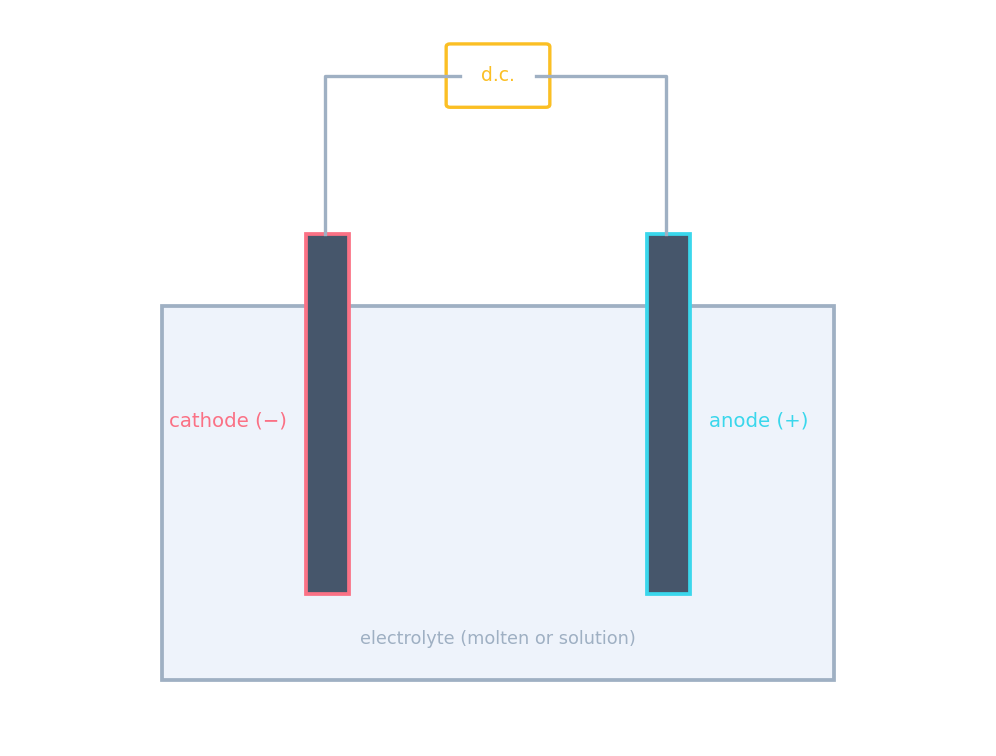
正离子移到阴极;负离子移到阳极。
Positive ions move towards the: · 正离子移向:
Opposite charges attract: positive ions → negative cathode. · 相反的电荷吸引:正离子 → 负阴极。
Negative ions move towards the positive anode. · 负离子移向正阳极。
Anions are attracted to the anode. · 阴离子被阳极吸引。
Where the ions go
- Positive ions (cations) move to the negative cathode.
- Negative ions (anions) move to the positive anode.
Electrolysis of water: gas bubbles off at each electrode and collects in the tubes above
离子去哪里
- 正离子(阳离子)移到负的阴极。
- 负离子(阴离子)移到正的阳极。
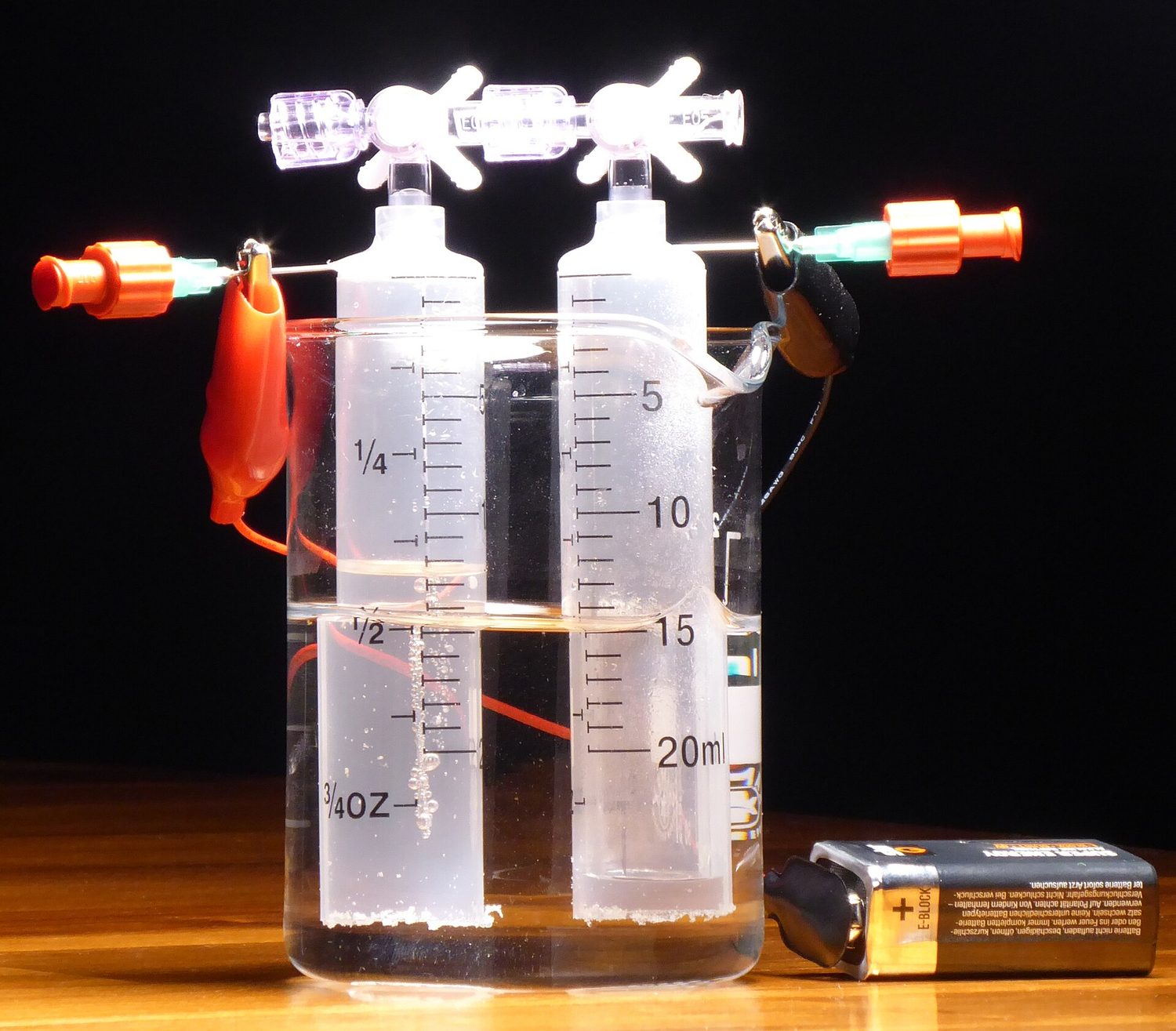
水的电解:气体在每个电极冒泡并收集在上面的管子里
Follow the ions through the cell · 跟随离子穿过电解池
Step through it: the molten compound's free ions drift to the oppositely-charged electrode, then are discharged into the two elements — lead at the cathode, bromine at the anode. · 逐步看:熔融化合物的自由离子漂移到带相反电荷的电极,然后被释放成两种元素——铅在阴极,溴在阳极。
For electrolysis to work, the electrolyte must be: · 为使电解起作用,电解质必须是:
Free-moving ions are essential. · 自由移动的离子是必不可少的。
What happens there
- At the cathode, positive ions gain electrons (reduction 还原).
- At the anode, negative ions lose electrons (oxidation 氧化), and elements are released.
Electrolysis needs free-moving ions. A solid ionic compound won't work — its ions are locked in place. It must be molten or dissolved so the ions can move to the electrodes.
那里发生什么
- 在阴极,正离子获得电子(还原)。
- 在阳极,负离子失去电子(氧化),而元素被释放。
电解需要自由移动的离子。 一个固体离子化合物不会起作用——它的离子被锁在原处。它必须熔融或溶解,这样离子能移到电极。
You've got it
- electrolysis breaks down a compound using electricity; the compound is the electrolyte
- positive ions → cathode (−); negative ions → anode (+)
- it needs the electrolyte molten or dissolved so ions can move
你掌握了
- 电解用电分解一个化合物;化合物是电解质
- 正离子 → 阴极(−);负离子 → 阳极(+)
- 它需要电解质熔融或溶解,这样离子能移动