Giant covalent structures · 巨型共价结构
| English | 中文 | Pinyin · 拼音 |
|---|---|---|
| giant covalent/ˈdʒaɪənt ˈkəʊvələnt/ | 巨型共价 | jù xíng gòng jià |
| diamond/ˈdaɪəmənd/ | 金刚石 | jīn gāng shí |
| graphite/ˈɡræfaɪt/ | 石墨 | shí mò |
| silicon dioxide/ˈsɪlɪkən daɪˈɒksaɪd/ | 二氧化硅 | èr yǎng huà guī |
| lubricant/ˈluːbrɪkənt/ | 润滑剂 | rùn huá jì |
Covalent giants
- Not all covalent substances are small molecules. Some are vast networks of atoms — giant covalent 巨型共价 structures.
- Their endless web of strong bonds gives remarkable properties.
共价巨人
- 不是所有共价物质都是小分子。有些是原子的巨大网络——巨型共价(giant covalent)结构。
- 它们无尽的强键网给出非凡的性质。
Giant covalent lab · 巨型共价结构实验
Compare giant covalent structures by bonding and properties. · 通过键合和性质比较巨型共价结构。
A giant covalent structure has: · 巨型共价结构具有:
It is a continuous network of covalent bonds. · 它是一个连续的共价键网络。
Giant covalent structures
- A giant covalent structure has millions of atoms joined by covalent bonds in a continuous network.
- Examples: diamond 金刚石, graphite 石墨 and silicon dioxide 二氧化硅 (sand).
In a covalent bond atoms share pairs of electrons so each reaches a full outer shell
巨型共价结构
- 一个巨型共价结构有数百万个原子,在一个连续的网络中由共价键连接。
- 例子:金刚石(diamond)、石墨(graphite)和二氧化硅(silicon dioxide,沙子)。
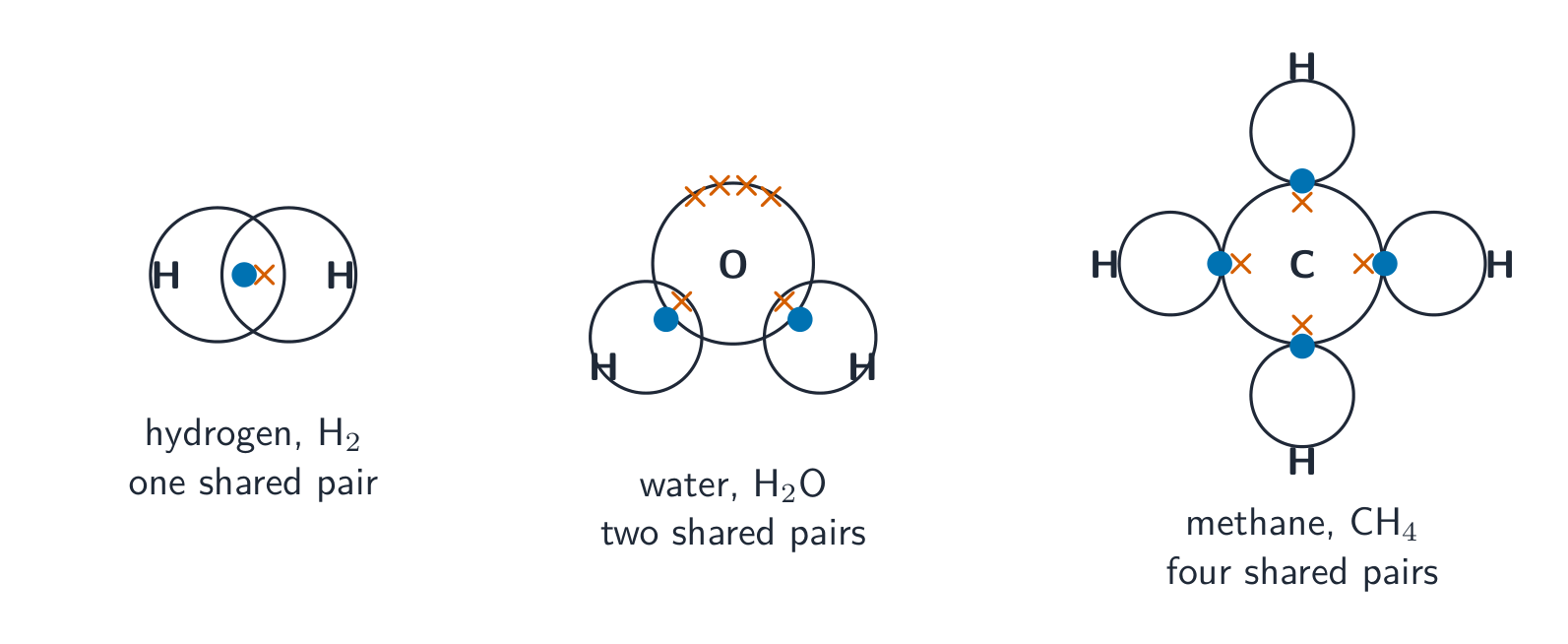
在一个共价键中原子共享电子对,所以每个达到一个满的外层
In diamond, each carbon atom is bonded to how many others? · 在金刚石中,每个碳原子与多少个其他原子键合?
Four bonds make diamond a rigid, hard lattice. · 四个键使金刚石成为刚性、坚硬的晶格。
Because each carbon forms four bonds in a rigid lattice, diamond is extremely . · 由于每个碳原子在刚性晶格中形成四个键,金刚石极其。
The rigid 3D network makes diamond hard. · 刚性3D网络使金刚石坚硬。
Diamond
- In diamond, each carbon atom bonds to four others in a rigid 3D lattice.
- This makes diamond extremely hard with a very high melting point.
金刚石
- 在金刚石中,每个碳原子在一个刚性的 3D 晶格中与四个其他碳键合。
- 这使金刚石极其坚硬,有一个非常高的熔点。
Graphite can conduct electricity and is soft because it has: · 石墨能导电且质软,因为它具有:
Three bonds leave free electrons; layers slide. · 三个键留下自由电子;层间可滑动。
Diamond and graphite are both made of pure carbon. · 金刚石和石墨都是由纯碳制成的。
Different bonding arrangements give different properties. · 不同的键合排列导致不同的性质。
Graphite
- In graphite, each carbon bonds to three others, forming layers that can slide.
- This makes graphite soft (a lubricant 润滑剂) and able to conduct electricity (free electrons between layers).
Diamond and graphite are both pure carbon: diamond's 3D lattice is hard, graphite's layers slide and conduct
Diamond and graphite are both pure carbon. Same element, but a different arrangement of bonds gives completely different properties — hard and non-conducting (diamond) vs soft and conducting (graphite).
石墨
- 在石墨中,每个碳与三个其他碳键合,形成能滑动的层。
- 这使石墨软(一种润滑剂)且能导电(层之间的自由电子)。
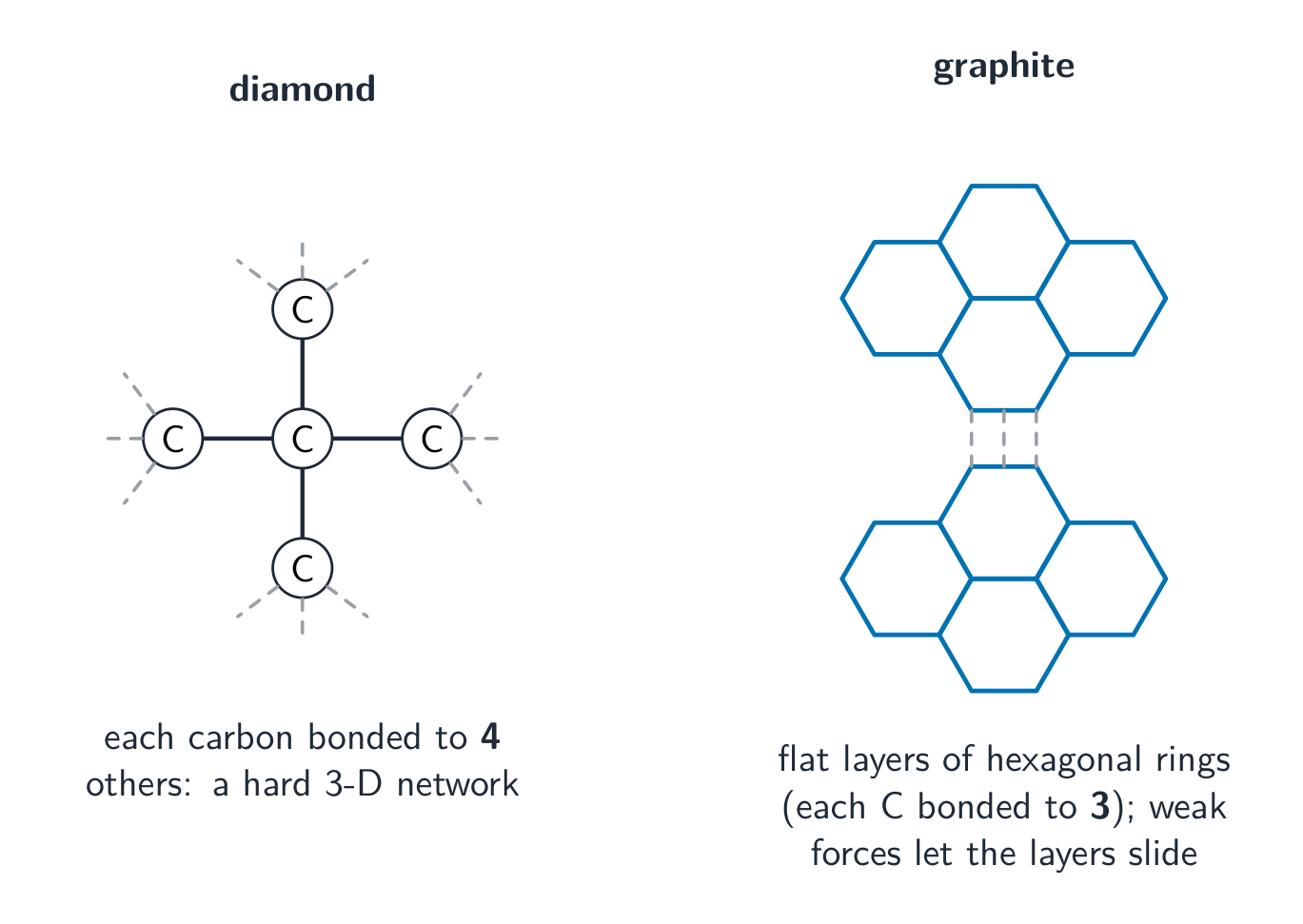
金刚石和石墨都是纯碳:金刚石的 3D 晶格硬,石墨的层滑动并导电
金刚石和石墨都是纯碳。 同一元素,但键的不同排列给出完全不同的性质——硬且不导电(金刚石)对软且导电(石墨)。
You've got it
- giant covalent structures are huge networks of covalently bonded atoms (high melting points)
- diamond: 4 bonds per carbon → very hard, doesn't conduct
- graphite: 3 bonds, sliding layers → soft and conducts electricity
你掌握了
- 巨型共价结构是共价键合原子的巨大网络(高熔点)
- 金刚石:每碳 4 个键 → 非常硬,不导电
- 石墨:3 个键、滑动的层 → 软且导电