Marketing, competition and the customer · 营销、竞争与客户
| English | 中文 | Pinyin · 拼音 |
|---|---|---|
| marketing/ˈmɑːkɪtɪŋ/ | 营销 | yíng xiāo |
| customer needs/ˈkʌstəmə niːdz/ | 客户需求 | kè hù xū qiú |
| demand/dɪˈmænd/ | 需求 | xū qiú |
| market share/ˈmɑːkɪt ʃeə/ | 市场份额 | shì chǎng fèn é |
| market-oriented/ˈmɑːkɪt ˈɔːrɪəntɪd/ | 市场导向 | shì chǎng dǎo xiàng |
| product-oriented/ˈprɒdʌkt ˈɔːrɪəntɪd/ | 产品导向 | chǎn pǐn dǎo xiàng |
| mass market/mæs ˈmɑːkɪt/ | 大众市场 | dà zhòng shì chǎng |
| niche market/niːʃ ˈmɑːkɪt/ | 利基市场 | lì jī shì chǎng |
More than advertising
- Marketing 营销 isn't just adverts — it's finding out what customers want and making sure the business provides it.
- Get it right and customers come to you.
不只是广告
- 营销不只是广告——它是查明顾客想要什么并确保企业提供它。
- 把它做对,顾客就会来找你。
Marketing mix lab · 营销组合实验室
See which part of the marketing mix changes in each real decision. · 查看每个实际决策中营销组合的哪一部分发生变化。
Marketing is best described as: · 营销最准确的描述是:
Marketing meets customer needs at a profit. · 营销以盈利满足客户需求。
What marketing does
- Marketing identifies and satisfies customer needs 客户需求 profitably.
- Its goals: understand customers, build demand 需求, and grow market share 市场份额.
Segmentation splits a market into groups of similar buyers
营销做什么
- 营销(marketing)有利可图地识别并满足顾客需要(customer needs)。
- 它的目标:理解顾客、建立需求(demand),并扩大市场份额(market share)。
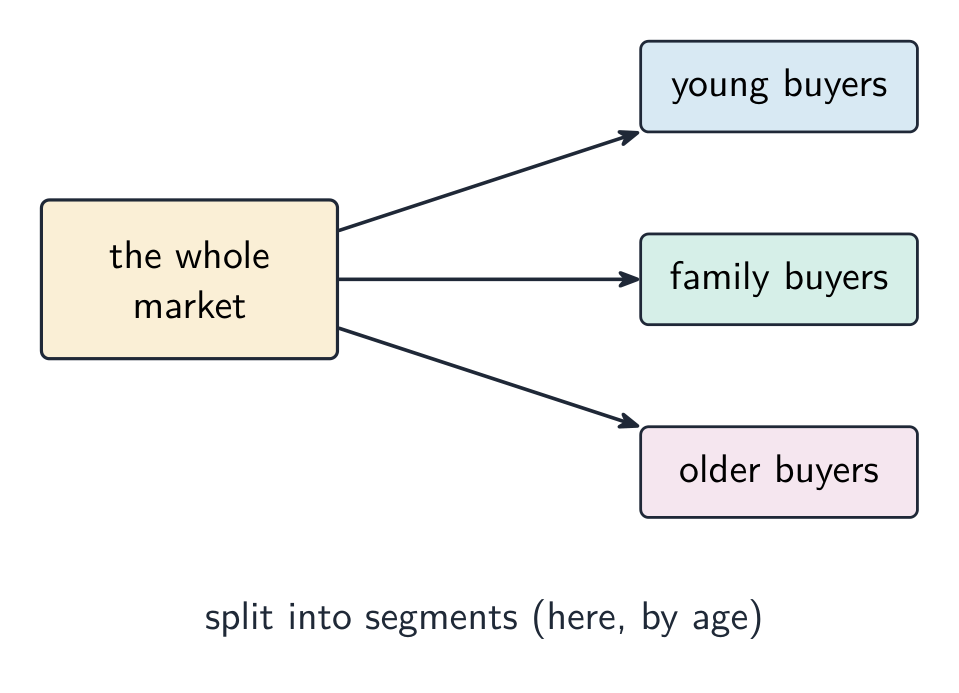
市场细分把一个市场分成相似买家的群组
A market-oriented business starts by: · 市场导向型企业首先:
Market orientation puts customer needs first. · 市场导向将客户需求放在首位。
A business that designs a product first, then looks for buyers, is ______-oriented. · 先设计产品再寻找买家的企业是______导向型。
Product orientation is riskier than market orientation. · 产品导向比市场导向风险更高。
Market vs product orientation
- Market-oriented 市场导向: start from what customers want, then make it. Lower risk.
- Product-oriented 产品导向: start from the product, then find buyers. Higher risk.
A branded shop window: branding helps a product stand out
市场导向对产品导向
- 市场导向(market-oriented):从顾客想要什么开始,然后制造它。风险较低。
- 产品导向(product-oriented):从产品开始,然后寻找买家。风险较高。

一个有品牌的橱窗:品牌化帮助一个产品脱颖而出
A firm sells 20m in a market worth 80m. What is its market share (%)? · 一家企业销售 20m,在一个价值 80m 的市场中。其市场份额为多少(%)?
20 / 80 × 100 = 25%.
A niche market is a small, specific segment of a larger market. · 利基市场是更大市场中一个特定且规模较小的细分领域。
Niches face less competition than mass markets. · 利基市场的竞争少于大众市场。
Niche vs mass markets 大众市场
- Mass market: a large, broad market (everyday products) — high sales, much competition.
- Niche market 利基市场: a small, specific segment — less competition, often higher prices.
Worked example. Market share = a firm's sales ÷ total market sales × 100. A firm selling 30m in a 150m market has a 20% market share — a key sign of marketing success.
利基市场对大众市场
- 大众市场(mass market):一个大的、广泛的市场(日常产品)——高销量、激烈竞争。
- 利基市场(niche market):一个小的、特定的细分市场——竞争较少,常常价格较高。
例题。 市场份额 = 一个公司的销售额 ÷ 市场总销售额 × 100。一个在 150m 市场中卖出 30m 的公司有 20% 的市场份额——营销成功的一个关键标志。
You've got it
- marketing identifies and satisfies customer needs profitably
- market-oriented (customer-first) is lower-risk than product-oriented
- mass markets are large & competitive; niche markets are small & specific
你掌握了
- 营销有利可图地识别并满足顾客需要
- 市场导向(顾客优先)比产品导向风险更低
- 大众市场大而竞争激烈;利基市场小而特定