Motivating employees · 激励员工
| English | 中文 | Pinyin · 拼音 |
|---|---|---|
| motivated/ˈməʊtɪveɪtɪd/ | 有积极性的 | yǒu jī jí xìng de |
| productivity/ˌprɒdəkˈtɪvɪti/ | 生产率 | shēng chǎn lǜ |
| recognition/ˌrekəɡˈnɪʃn/ | 认可 | rèn kě |
| hierarchy/ˈhaɪərɑːki/ | 层级 | céng jí |
| self-actualisation/self ˌæktʃuːəlaɪˈzeɪʃn/ | 自我实现 | zì wǒ shí xiàn |
| financial/faɪˈnænʃl/ | 金钱激励 | jīn qián jī lì |
| bonuses/ˈbəʊnəsɪz/ | 奖金 | jiǎng jīn |
| commission/kəˈmɪʃn/ | 佣金 | yòng jīn |
| non-financial/nɒn faɪˈnænʃl/ | 非金钱激励 | fēi jīn qián jī lì |
| job enrichment/dʒɒb enˈrɪtʃmənt/ | 工作丰富化 | gōng zuò fēng fù huà |
Why motivation matters
- A motivated 有积极性的 worker turns up on time, works hard and stays. An unmotivated one is slow, careless and soon leaves.
- Keeping staff motivated lifts productivity 生产率, quality and loyalty — so every business cares about it.
为什么激励重要
- 一个有动力的工人准时到岗、努力工作并留下来。一个没动力的工人迟缓、马虎,很快就离开。
- 保持员工有动力(motivated)提升生产率、质量和忠诚度——所以每个企业都关心它。
A well-motivated workforce is likely to have: · 一支有良好动力的员工队伍可能有:
Motivation raises productivity and retention. · 激励提高生产率和留存率。
Why people work
- People work for money, but also for security, belonging, recognition 认可 and achievement.
- Understanding these needs helps managers motivate staff.
Maslow's hierarchy 层级: people meet lower needs before higher ones
Motivated workers work harder, raising output
人们为什么工作
- 人们为钱工作,但也为安全感、归属感、认可和成就。
- 理解这些需要帮助经理激励员工。

马斯洛的层次:人们在满足更高需要之前先满足更低的需要
Maslow's hierarchy of needs · 马斯洛的需求层次
People are motivated by a ladder of needs — a business motivates staff by helping them up it. · 人们被一个需要的阶梯激励——一个企业通过帮助员工往上爬来激励他们。
In Maslow's hierarchy, which need must be met first? · 在马斯洛的层次中,哪个需要必须先被满足?
Basic needs come first in the hierarchy. · 基本需要在层次中排在最前。
Maslow arranged needs in a , with basic needs at the bottom. · 马斯洛把需要排列成一个,基本需要在底部。
Each level must be met before the next motivates. · 每个层级必须在下一个激励之前被满足。
Maslow's hierarchy of needs
- Maslow said needs come in a hierarchy, lowest first.
- Once a level is met, the next becomes the motivator — up to self-actualisation 自我实现.
Lower needs must be met before higher ones motivate.
马斯洛的需求层次
- 马斯洛(Maslow)说需要以一个层次(hierarchy)出现,最低的在前。
- 一旦一个层级被满足,下一个就成为激励因素——直到自我实现(self-actualisation)。

更低的需要必须在更高的需要激励之前被满足。
Which are financial methods of motivation? (Select all that apply.) · 哪些是财务的激励方法?(选择所有适用的。)
Praise is non-financial; the others are financial. · 表扬是非财务的;其他的是财务的。
Job enrichment is a non-financial method of motivation. · 工作丰富化是一种非财务的激励方法。
It motivates by making work more rewarding, not by pay. · 它通过使工作更有回报来激励,而不是通过报酬。
Ways to motivate
- Financial 金钱激励: wages, salaries, bonuses 奖金, commission 佣金, piece rates, profit-sharing.
- Non-financial 非金钱激励: praise, job rotation, job enrichment 工作丰富化, teamwork, promotion.
Money is not the only motivator. Once pay is enough, factors like recognition, responsibility and good teamwork often matter more. The best approach mixes financial and non-financial methods.
Maslow's hierarchy of needs, with workplace examples at each level
激励的方式
- 财务的:工资、薪水、奖金、佣金、计件工资、利润分享。
- 非财务的:表扬、工作轮换、工作丰富化、团队合作、晋升。
钱不是唯一的激励因素。 一旦报酬足够,像认可、责任和良好的团队合作这样的因素常常更重要。最好的方法混合财务和非财务的方法。
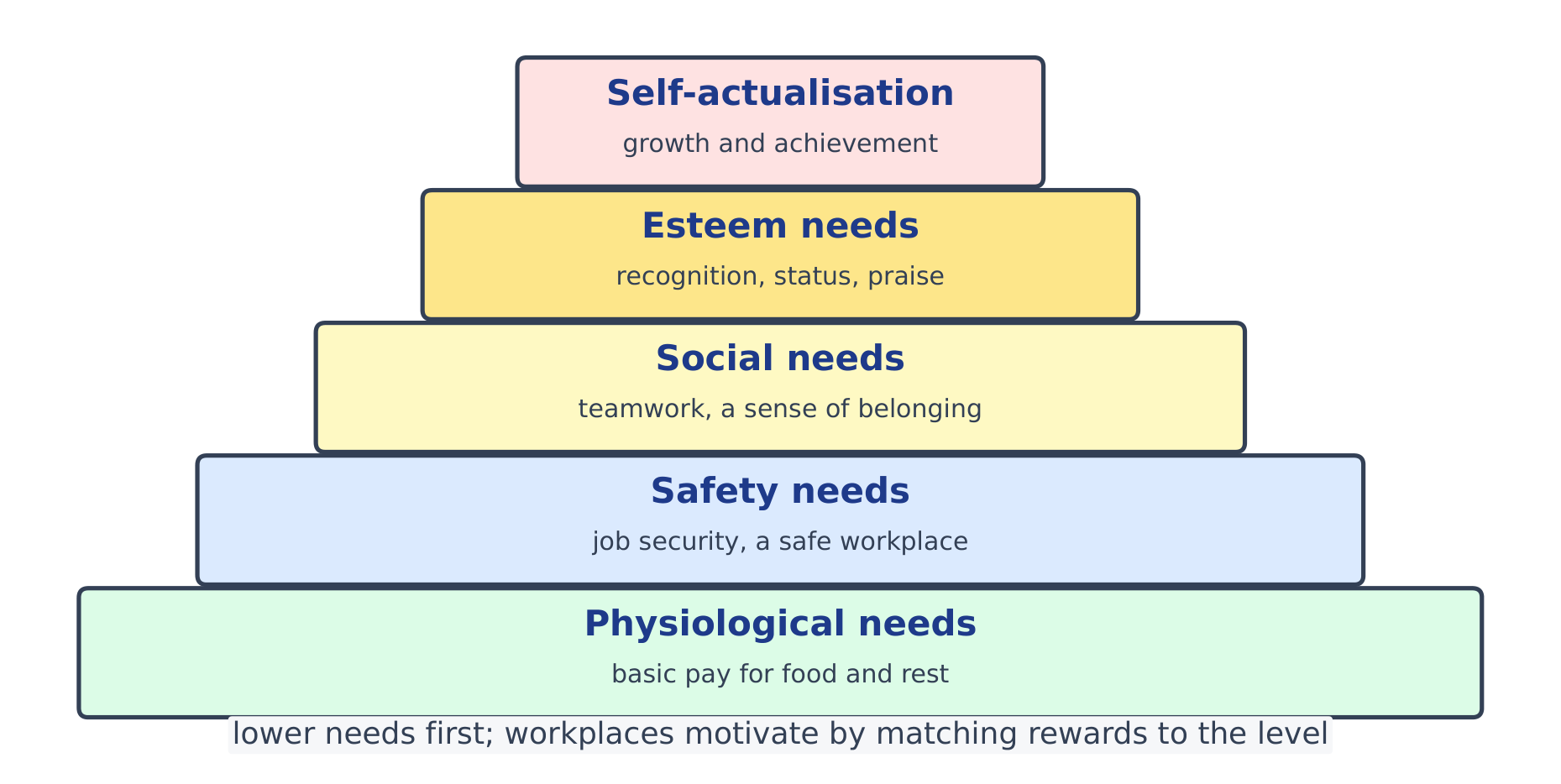
马斯洛的需求层次,每个层级有工作场所的例子
You've got it
- motivation lifts productivity, quality and loyalty
- Maslow's hierarchy: lower needs first, up to self-actualisation
- motivate with financial (pay, bonus) and non-financial (praise, enrichment) methods
你掌握了
- 激励提升生产率、质量和忠诚度
- 马斯洛的层次:更低的需要在前,直到自我实现
- 用财务的(报酬、奖金)和非财务的(表扬、丰富化)方法激励