Variation · 变异
| English | 中文 | Pinyin · 拼音 |
|---|---|---|
| variation/ˌveərɪˈeɪʃn/ | 变异 | biàn yì |
| continuous/kənˈtɪnjuːəs/ | 连续的 | lián xù de |
| discontinuous/dɪskənˈtɪnjuːəs/ | 不连续的 | bù lián xù de |
| mutations/mjuːˈteɪʃnz/ | 突变 | tū biàn |
No two alike
- Look around a classroom: everyone is different. Even the same species shows differences.
- These differences are variation 变异, and they come from genes and the environment.
没有两个一样
- 看看一个教室:每个人都不同。即使同一个物种也显示差异。
- 这些差异是变异(variation),它们来自基因和环境。
Variation lab · 变异实验室
Classify examples of variation by pattern and cause. · 根据模式和原因对变异示例进行分类。
Which is an example of genetic variation? · 哪一项是遗传变异的例子?
Blood group is determined by genes; the others are environmental. · 血型由基因决定;其他均为环境因素。
Genetic and environmental variation
- Genetic variation comes from your genes (e.g. eye colour, blood group).
- Environmental variation comes from your surroundings (e.g. a scar, a language you speak).
- Most variation is a mix of both (e.g. height).
Continuous 连续的 variation is a smooth range; discontinuous 不连续的 variation falls into separate groups
遗传和环境变异
- 遗传(genetic)变异来自你的基因(例如眼睛颜色、血型)。
- 环境(environmental)变异来自你的周围环境(例如一个疤痕、你说的一种语言)。
- 大多数变异是两者的混合(例如身高)。
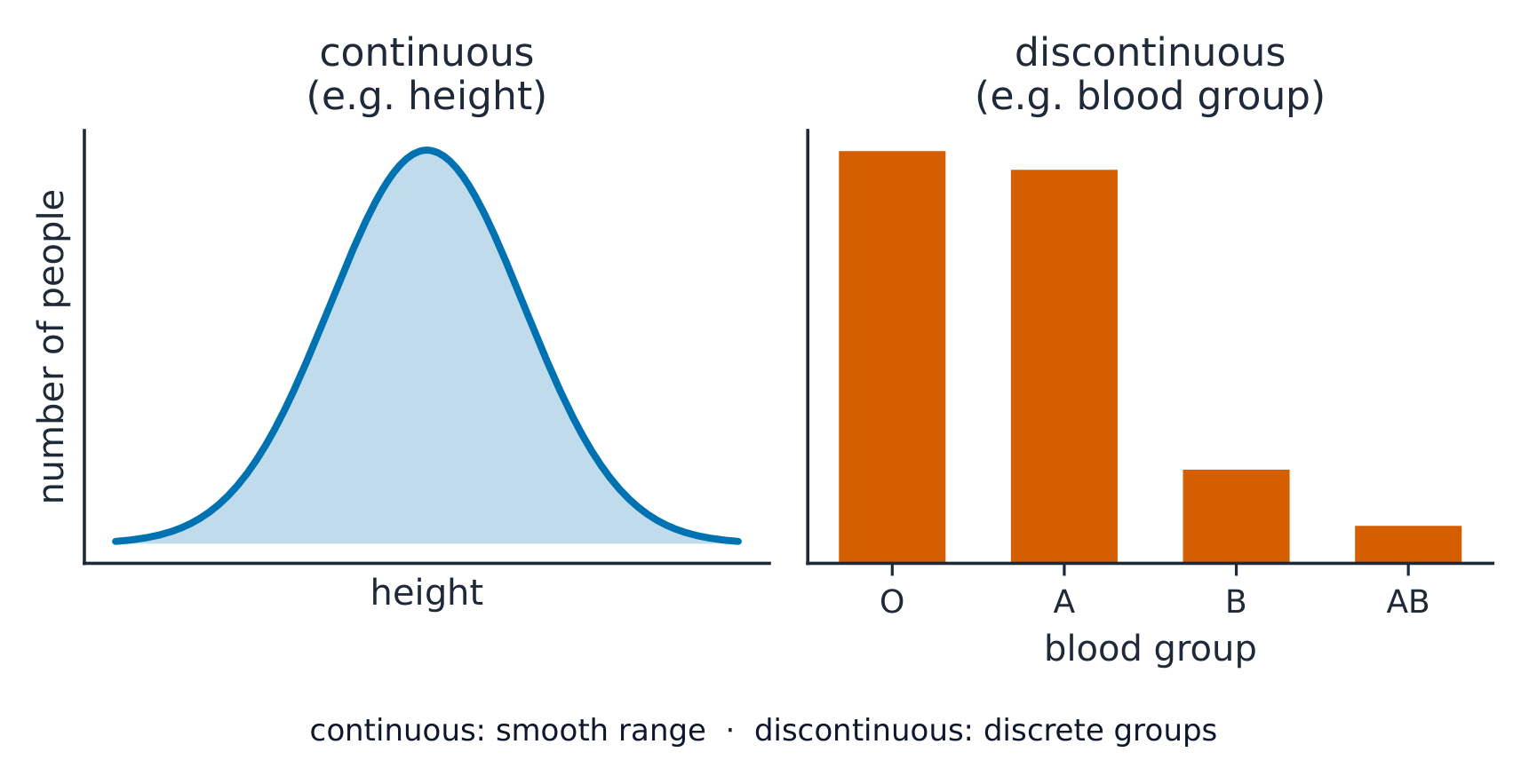
连续变异是一个平滑的范围;不连续变异落入分开的组
Which shows continuous variation? · 哪一项显示连续变异?
Height varies over a continuous range. · 身高在一个连续范围内变化。
Continuous and discontinuous
- Continuous variation: a range of values (height, mass) — shown on a graph as a smooth curve.
- Discontinuous variation: distinct categories (blood group, tongue rolling).
The dark (melanic) form of the peppered moth — the form favoured on soot-darkened bark
连续和不连续
- 连续(continuous)变异:一个范围的值(身高、质量)——在图上显示为一条平滑的曲线。
- 不连续(discontinuous)变异:不同的类别(血型、卷舌)。
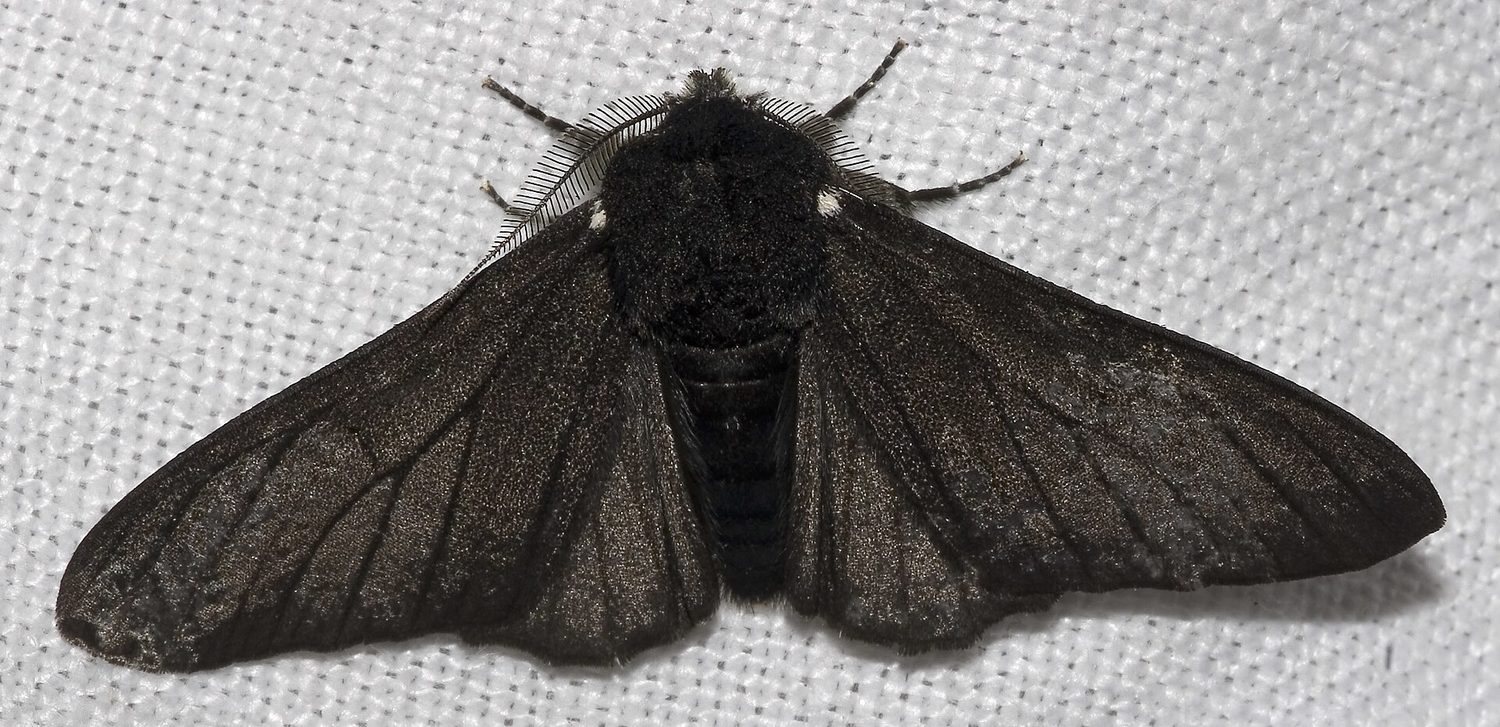
桦尺蛾的黑色(黑化)形态——在被煤烟染黑的树皮上受青睐的形态
Which create genetic variation? (Select all that apply.) · 哪些因素创造了遗传变异?(选择所有适用项。)
Meiosis, fertilisation and mutations create variation; diet is environmental. · 减数分裂、受精和突变创造变异;饮食属于环境因素。
Variation is the raw material that natural selection acts on. · 变异是自然选择作用的基础材料。
Without variation there could be no natural selection. · 没有变异就没有自然选择。
A random change to DNA that can create a new allele is a . · DNA的随机改变,可能产生新等位基因,这被称为。
Mutations are the source of new alleles. · 突变是新等位基因的来源。
Where genetic variation comes from
- Meiosis and fertilisation mix alleles, creating new combinations.
- Mutations 突变 (random changes to DNA) create brand-new alleles.
Variation is the raw material for evolution. Without differences between individuals, natural selection would have nothing to act on. Variation makes adaptation possible.
遗传变异从哪里来
- 减数分裂和受精混合等位基因,创造新组合。
- 突变(mutations,对 DNA 的随机改变)创造全新的等位基因。
变异是进化的原材料。 没有个体之间的差异,自然选择就没有东西可作用。变异使适应成为可能。
You've got it
- variation comes from genes, the environment, or both
- continuous = a range (height); discontinuous = categories (blood group)
- genetic variation comes from meiosis, fertilisation and mutations
你掌握了
- 变异来自基因、环境或两者
- 连续 = 一个范围(身高);不连续 = 类别(血型)
- 遗传变异来自减数分裂、受精和突变