Gametes, fertilisation and pregnancy · 配子、受精与妊娠
| English | 中文 | Pinyin · 拼音 |
|---|---|---|
| embryo/ˈembrɪəʊ/ | 胚胎 | pēi tāi |
| implants/ˈɪmplænts/ | 植入 | zhí rù |
| placenta/pləˈsentə/ | 胎盘 | tāi pán |
From gametes to a baby
- A new human life begins when two tiny cells meet, and then grows protected inside the mother.
- The journey runs from gametes to fertilisation to pregnancy.
从配子到一个婴儿
- 当两个微小的细胞相遇时,一个新的人类生命开始,然后在母亲体内受保护地生长。
- 这个旅程从配子到受精到怀孕。
Fertilisation to pregnancy · 从受精到妊娠
Follow the route from gametes to implantation. · 追踪从配子到植入的路径。
Compared with the egg, the sperm cell is: · 与卵细胞相比,精子细胞是:
Sperm are small and motile; eggs are large with food. · 精子小而能运动;卵细胞大且含有食物。
Sperm and egg
- The sperm is small, has a tail to swim, and carries little food.
- The egg is much larger and contains a food store for the early embryo 胚胎.
The uterus lining thickens, an egg is released at day 14, and a period follows if there is no pregnancy
精子和卵
- 精子(sperm)小,有一条尾巴来游动,携带很少食物。
- 卵(egg)大得多,含有给早期胚的食物储存。
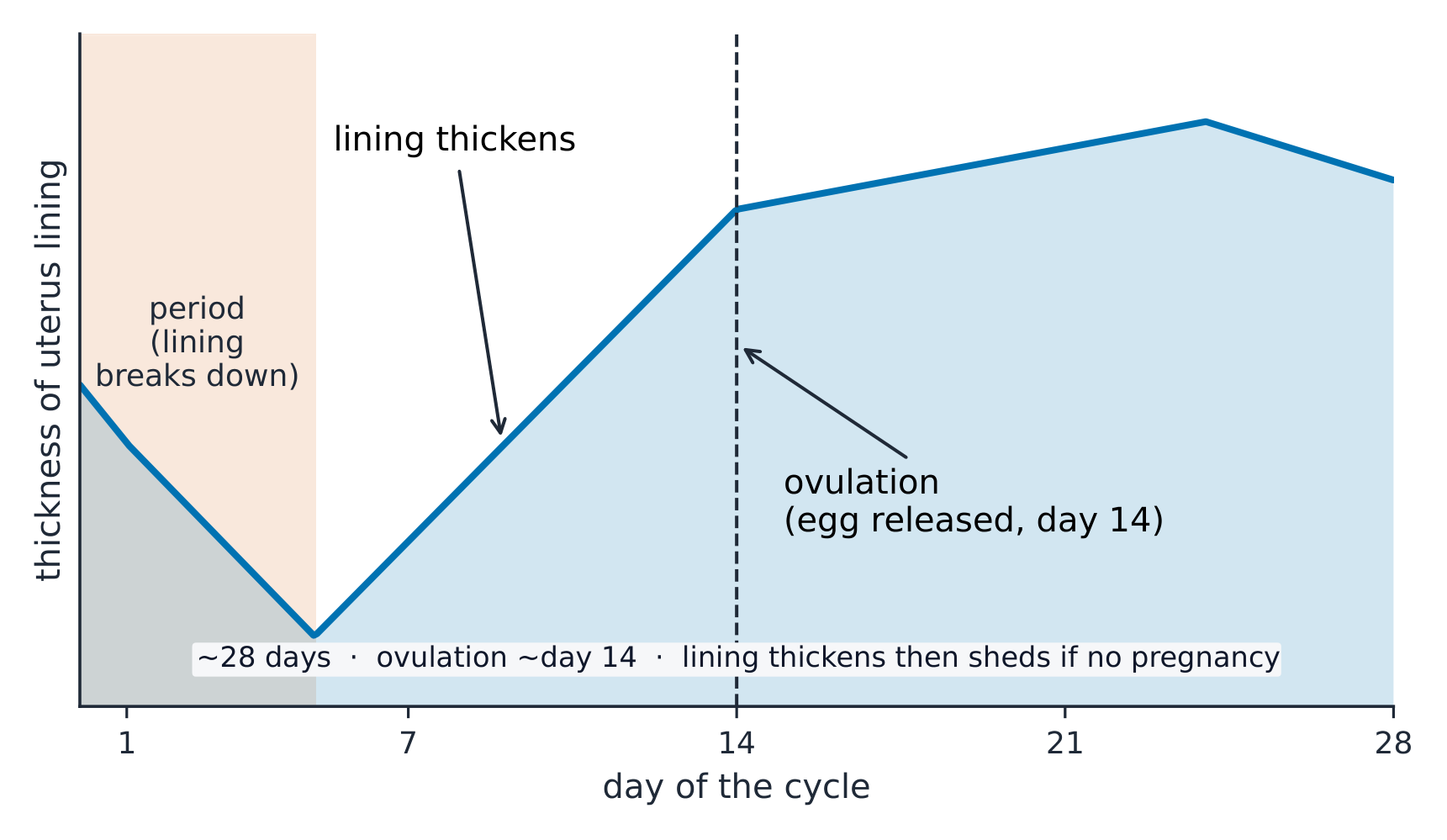
子宫内膜增厚,一个卵在第 14 天被释放,如果没有怀孕,月经随之而来
Put these stages of early development in order. · 将这些早期发育阶段按顺序排列。
Gametes fuse → zygote → embryo → implantation. · 配子融合 → 合子 → 胚胎 → 植入。
The embryo settles into the lining of the uterus in a process called . · 胚胎定居于子宫内壁的过程称为。
Implantation begins pregnancy. · 植入标志着怀孕的开始。
Fertilisation and implantation
- A sperm fuses with the egg → a zygote, which divides to form an embryo.
- The embryo implants 植入 in the lining of the uterus and continues to grow.
受精和着床
- 一个精子与卵融合 → 一个受精卵(zygote),它分裂形成一个胚(embryo)。
- 胚在子宫内膜中着床(implants)并继续生长。
The placenta allows the baby to receive: · 胎盘使婴儿能够获得:
Oxygen and nutrients diffuse across; waste passes back. · 氧气和营养物质扩散通过;废物回流。
In the placenta, the mother's and baby's blood flow close but do not mix. · 在胎盘中,母体和婴儿的血液流动紧密但不混合。
Substances pass by diffusion across a barrier. · 物质通过屏障进行扩散传递。
The placenta 胎盘
- The placenta exchanges substances between the mother's blood and the baby's.
- Oxygen and nutrients pass to the baby; carbon dioxide and waste pass back — by diffusion.
The fetus develops in the uterus, joined to the placenta by the umbilical cord
The mother's and baby's blood don't mix. They flow close together in the placenta, but substances pass by diffusion across a barrier. Mixing would be dangerous because their blood types may differ.
胎盘
- 胎盘(placenta)在母亲的血液和婴儿的血液之间交换物质。
- 氧和营养素传给婴儿;二氧化碳和废物传回——通过扩散。
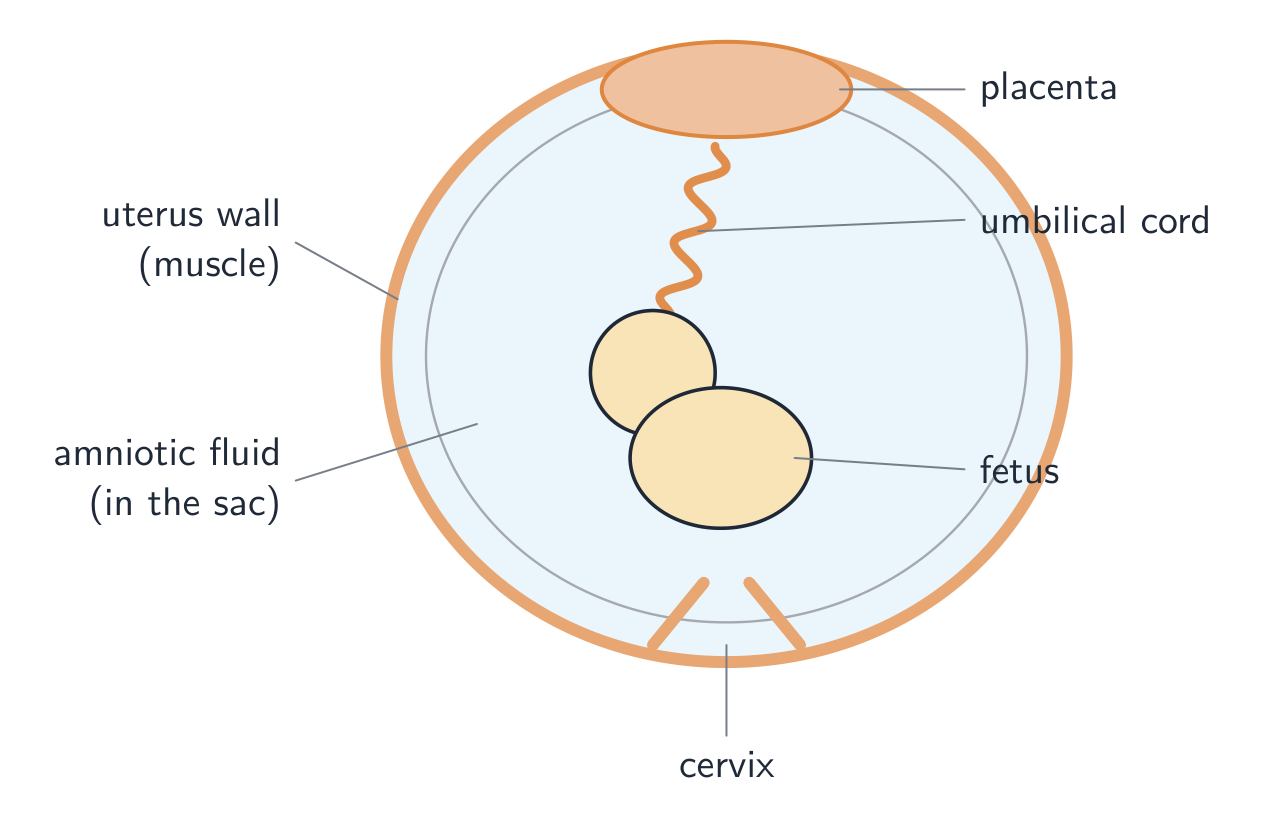
胎儿在子宫中发育,通过脐带与胎盘相连
母亲和婴儿的血液不混合。 它们在胎盘中靠近一起流动,但物质通过跨一个屏障的扩散传递。混合会很危险,因为它们的血型可能不同。
You've got it
- the sperm is small with a tail; the egg is large with a food store
- fertilisation → zygote → embryo, which implants in the uterus
- the placenta exchanges oxygen/nutrients and waste by diffusion (blood doesn't mix)
你掌握了
- 精子小,有尾巴;卵大,有食物储存
- 受精 → 受精卵 → 胚,它在子宫中着床
- 胎盘通过扩散交换氧/营养素和废物(血液不混合)