Flowers and pollination · 花和传粉
| English | 中文 | Pinyin · 拼音 |
|---|---|---|
| pollination/ˌpɒlɪˈneɪʃn/ | 传粉 | chuán fěn |
| stamen/ˈsteɪmen/ | 雄蕊 | xióng ruǐ |
| anther/ˈænθə/ | 花药 | huā yào |
| carpel/ˈkɑːpl/ | 雌蕊 | cí ruǐ |
| stigma/ˈstɪɡmə/ | 柱头 | zhù tóu |
| ovary/ˈəʊvəri/ | 子房 | zi fáng |
| cross-pollination/krɒs ˌpɒlɪˈneɪʃn/ | 异花传粉 | yì huā chuán fěn |
| self-pollination/self ˌpɒlɪˈneɪʃn/ | 自花传粉 | zì huā chuán fěn |
How flowering plants reproduce
- A flower is a plant's reproductive organ, built to make seeds.
- It does this through pollination 传粉 and fertilisation.
开花植物如何繁殖
- 一朵花是一棵植物的生殖器官,建造来制造种子。
- 它通过传粉(pollination)和受精做到这一点。
Pollen is produced by the: · 花粉由以下哪个产生:
The anther (part of the stamen) makes pollen. · 花药(雄蕊的一部分)制造花粉。
The female part of the flower, made of stigma, style and ovary, is the . · 花的雌性部分,由柱头、花柱和子房构成,是。
The carpel is the female reproductive part. · 心皮是雌性生殖部分。
Parts of a flower
- Male parts (stamen 雄蕊): the anther 花药 (makes pollen) on a filament.
- Female parts (carpel 雌蕊): the stigma 柱头, style and ovary 子房 (holds ovules).
A real lily: the long stamens make pollen and the central stigma receives it
An insect-pollinated flower: the male stamens and the female carpel
一朵花的部分
- 雄性部分(雄蕊,stamen):在花丝(filament)上的花药(anther,制造花粉)。
- 雌性部分(心皮,carpel):柱头(stigma)、花柱(style)和子房(ovary,容纳胚珠)。

一朵真实的百合:长长的雄蕊制造花粉,中央的柱头接收它
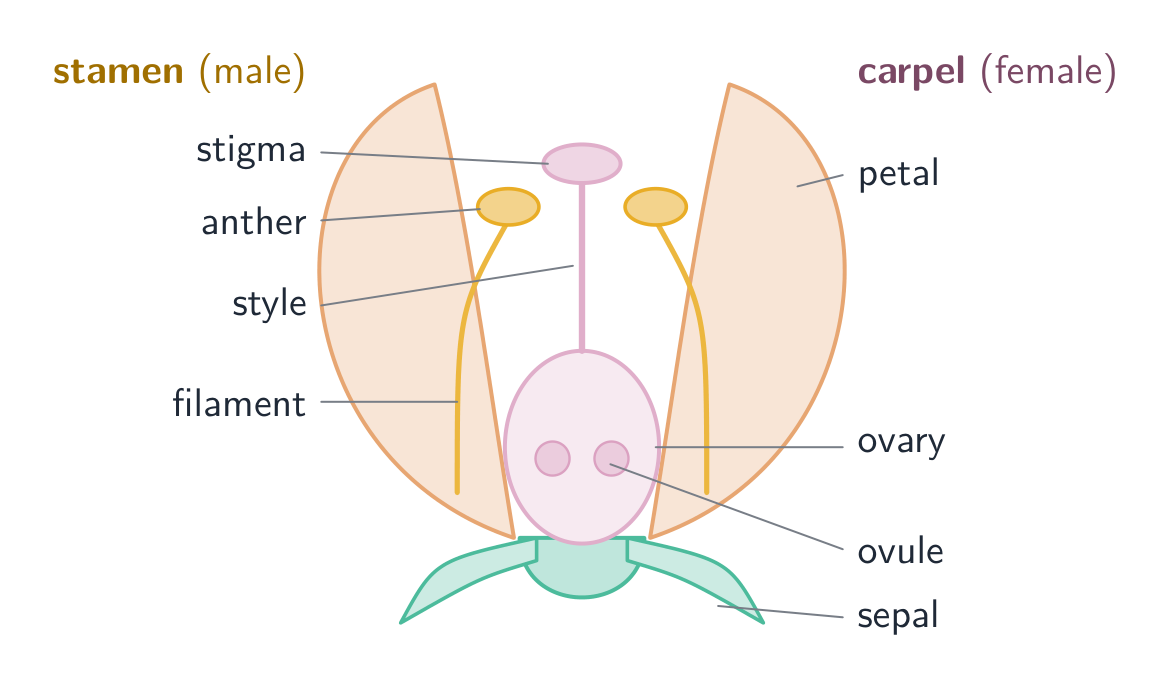
一朵虫媒花:雄性雄蕊和雌性心皮
Pollination and fertilisation · 传粉和受精
Pollination delivers pollen to the stigma; a pollen tube then carries the male nucleus to the egg. · 传粉把花粉送到柱头;然后一根花粉管把雄性核携带到卵。
Pollination is the transfer of pollen from an anther to a: · 传粉是花粉从一个花药到以下哪个的转移:
Pollen moves from anther to stigma. · 花粉从花药移到柱头。
Insect-pollinated flowers are usually: · 虫媒花通常是:
Bright, scented flowers attract insects. · 鲜艳、有香味的花吸引昆虫。
Pollination
- Pollination is the transfer of pollen from an anther to a stigma.
- Insect-pollinated flowers are bright and scented; wind-pollinated flowers have feathery stigmas and dangling anthers.
Pollen grains under an electron microscope: their spiky coats help them stick to insects
传粉
- 传粉是花粉从一个花药到一个柱头的转移。
- 虫媒(insect-pollinated)花鲜艳有香味;风媒(wind-pollinated)花有羽毛状的柱头和悬垂的花药。
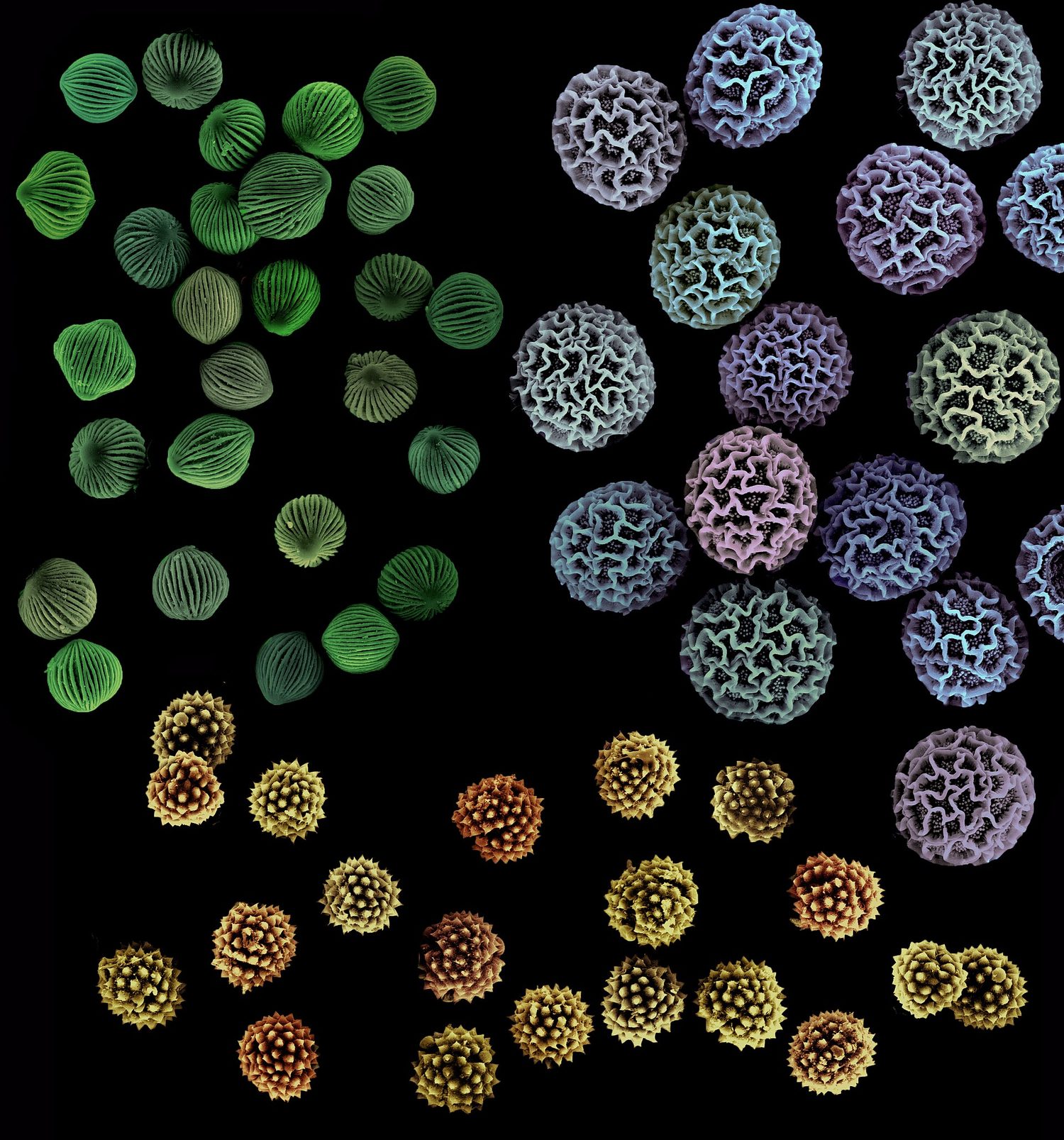
电子显微镜下的花粉粒:它们带刺的外壳帮助它们粘在昆虫身上
Cross-pollination produces more variation than self-pollination. · 异花传粉比自花传粉产生更多变异。
Mixing genes between plants increases variation. · 在植物之间混合基因增加变异。
Self vs cross pollination 异花传粉
- Self-pollination 自花传粉: pollen lands on the same plant — less variation.
- Cross-pollination: pollen reaches a different plant — more variation.
Worked example. A bee visits a bright, scented flower for nectar, brushing against the anther. It carries pollen to the next flower's stigma — insect cross-pollination, which mixes genes between plants.
自花对比异花传粉
- 自花传粉:花粉落在同一棵植物上——更少变异。
- 异花传粉:花粉到达一棵不同的植物——更多变异。
例题。 一只蜜蜂为花蜜拜访一朵鲜艳、有香味的花,擦过花药。它把花粉带到下一朵花的柱头——虫媒异花传粉,在植物之间混合基因。
You've got it
- stamen (anther + filament) is male; carpel (stigma, style, ovary) is female
- pollination = pollen moved from anther to stigma (by insects or wind)
- cross-pollination gives more variation than self-pollination
你掌握了
- 雄蕊(花药 + 花丝)是雄性;心皮(柱头、花柱、子房)是雌性
- 传粉 = 花粉从花药移到柱头(由昆虫或风)
- 异花传粉比自花传粉给出更多变异