The nervous system and reflexes · 神经系统和反射
| English | 中文 | Pinyin · 拼音 |
|---|---|---|
| nervous system/ˈnɜːvəs ˈsɪstəm/ | 神经系统 | shén jīng xì tǒng |
| reflex/ˈriːfleks/ | 反射 | fǎn shè |
| central nervous system/ˈsentrəl ˈnɜːvəs ˈsɪstəm/ | 中枢神经系统 | zhōng shū shén jīng xì tǒng |
| spinal cord/ˈspaɪnl kɔːd/ | 脊髓 | jí suǐ |
| neurones/ˈnjuːrəʊnz/ | 神经元 | shén jīng yuán |
| sensory/ˈsensəri/ | 感觉的 | gǎn jué de |
| motor/ˈməʊtə/ | 运动的 | yùn dòng de |
| effector/ɪˈfektə/ | 效应器 | xiào yìng qì |
Lightning-fast messages
- Touch something hot and your hand jerks back before you even feel pain.
- Your nervous system 神经系统 carries electrical messages at high speed — and reflexes 反射 are the fastest of all.
闪电般快速的信息
- 摸到烫的东西,你的手在你甚至感到疼之前就缩回去。
- 你的神经系统(nervous system)以高速携带电信息——而反射是所有中最快的。
The central nervous system (CNS) consists of the: · 中枢神经系统(CNS)由以下哪个组成:
The CNS is the brain and spinal cord. · CNS 是脑和脊髓。
The nervous system
- The central nervous system 中枢神经系统 (CNS) is the brain and spinal cord 脊髓.
- Neurones 神经元 (nerve cells) carry electrical impulses to and from the CNS.
The brain coordinates the body through the nervous system
神经系统
- 中枢神经系统(CNS)(central nervous system)是脑和脊髓(spinal cord)。
- 神经元(neurones,神经细胞)携带电冲动往返于 CNS。
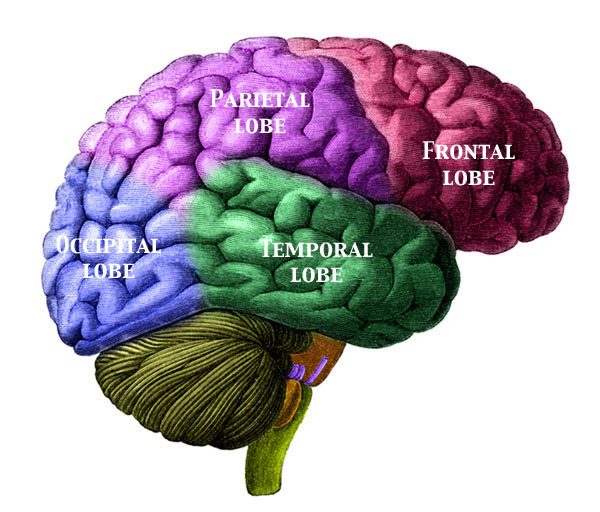
脑通过神经系统协调身体
The reflex arc · 反射弧
A reflex is a fast, automatic response — the signal takes a short cut through the spinal cord. · 一个反射是一个快速、自动的反应——信号通过脊髓走一条捷径。
A motor neurone carries impulses: · 一个运动神经元携带冲动:
Motor neurones go from the CNS to muscles or glands. · 运动神经元从 CNS 到肌肉或腺体。
The neurone carrying impulses from a receptor to the CNS is the ______ neurone. · 把冲动从一个感受器携带到 CNS 的神经元是______神经元。
Sensory neurones carry signals into the CNS. · 感觉神经元把信号携带进 CNS。
Three types of neurone
- Sensory 感觉的 neurones carry impulses from receptors to the CNS.
- Relay neurones pass them on inside the CNS.
- Motor 运动的 neurones carry impulses from the CNS to effectors 效应器 (muscles/glands).
三种神经元
- 感觉(sensory)神经元把冲动从感受器携带到 CNS。
- 中继(relay)神经元在 CNS 内部传递它们。
- 运动(motor)神经元把冲动从 CNS 携带到效应器(肌肉/腺体)。
Put the reflex arc in order. · 把反射弧按顺序排列。
Stimulus → receptor → sensory → relay → motor → effector → response. · 刺激 → 感受器 → 感觉 → 中继 → 运动 → 效应器 → 反应。
A reflex action is fast and automatic, not consciously controlled. · 一个反射动作是快速而自动的,不是有意识地控制的。
Reflexes protect the body before conscious thought. · 反射在有意识的思考之前保护身体。
The reflex arc
- A reflex is a fast, automatic response that protects the body.
- The impulse travels: stimulus → receptor → sensory → relay → motor → effector → response.
A reflex follows a fixed pathway — fast and automatic, bypassing conscious thought.
Reflexes don't wait for the brain to decide. The signal goes through the spinal cord and back, so the response happens before you consciously think — which is what makes reflexes so fast and protective.
反射弧
- 反射(reflex)是一个保护身体的快速、自动的反应。
- 冲动行进:刺激 → 感受器 → 感觉 → 中继 → 运动 → 效应器 → 反应。
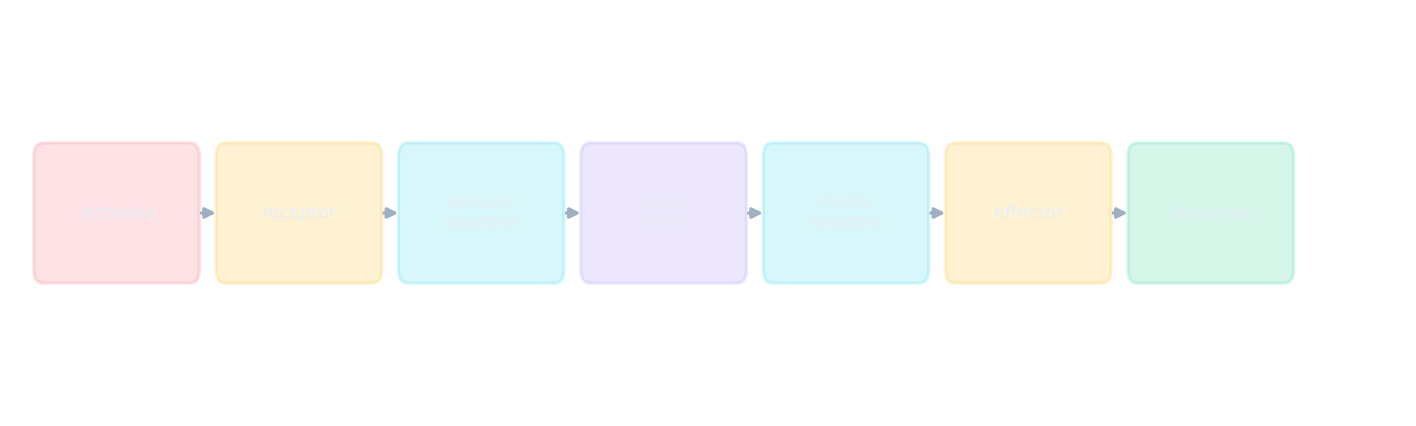
一个反射遵循一个固定的途径——快速而自动,绕过有意识的思考。
反射不等脑来决定。 信号经过脊髓再返回,所以反应在你有意识地思考之前就发生——这就是使反射如此快速和保护性的原因。
You've got it
- the CNS = brain + spinal cord; neurones carry electrical impulses
- three neurones: sensory (in), relay (CNS), motor (out)
- a reflex arc: stimulus → receptor → sensory → relay → motor → effector → response
你掌握了
- CNS = 脑 + 脊髓;神经元携带电冲动
- 三种神经元:感觉(进)、中继(CNS)、运动(出)
- 一个反射弧:刺激 → 感受器 → 感觉 → 中继 → 运动 → 效应器 → 反应