Anaerobic respiration · 无氧呼吸
| English | 中文 | Pinyin · 拼音 |
|---|---|---|
| anaerobic respiration/ˌæneəˈrəʊbɪk ˌrespɪˈreɪʃn/ | 无氧呼吸 | wú yǎng hū xī |
| lactic acid/ˈlæktɪk ˈæsɪd/ | 乳酸 | rǔ suān |
| fermentation/fɜːmənˈteɪʃn/ | 发酵 | fā jiào |
| oxygen debt/ˈɒksɪdʒn det/ | 氧债 | yǎng zhài |
Respiration without enough oxygen
- During hard exercise, muscles need energy faster than oxygen can be delivered.
- They switch to anaerobic respiration 无氧呼吸 — releasing energy without oxygen.
没有足够氧的呼吸作用
- 在剧烈运动期间,肌肉需要能量比氧能被递送更快。
- 它们切换到无氧呼吸(anaerobic respiration)——不用氧释放能量。
Anaerobic respiration in human muscles produces: · 人类肌肉中的无氧呼吸产生:
Glucose → lactic acid in muscles. · 在肌肉中葡萄糖 → 乳酸。
Compared with aerobic respiration, anaerobic respiration releases: · 与有氧呼吸相比,无氧呼吸释放:
Anaerobic respiration is much less efficient. · 无氧呼吸效率低得多。
In muscles
- In animals: glucose → lactic acid 乳酸 (+ a little energy).
- It releases less energy than aerobic respiration and produces lactic acid, which causes fatigue.
A hard sprint relies on anaerobic respiration, building lactic acid
在肌肉中
- 在动物中:葡萄糖 → 乳酸(+ 一点能量)。
- 它释放比有氧呼吸更少的能量,并产生乳酸(lactic acid),这引起疲劳。
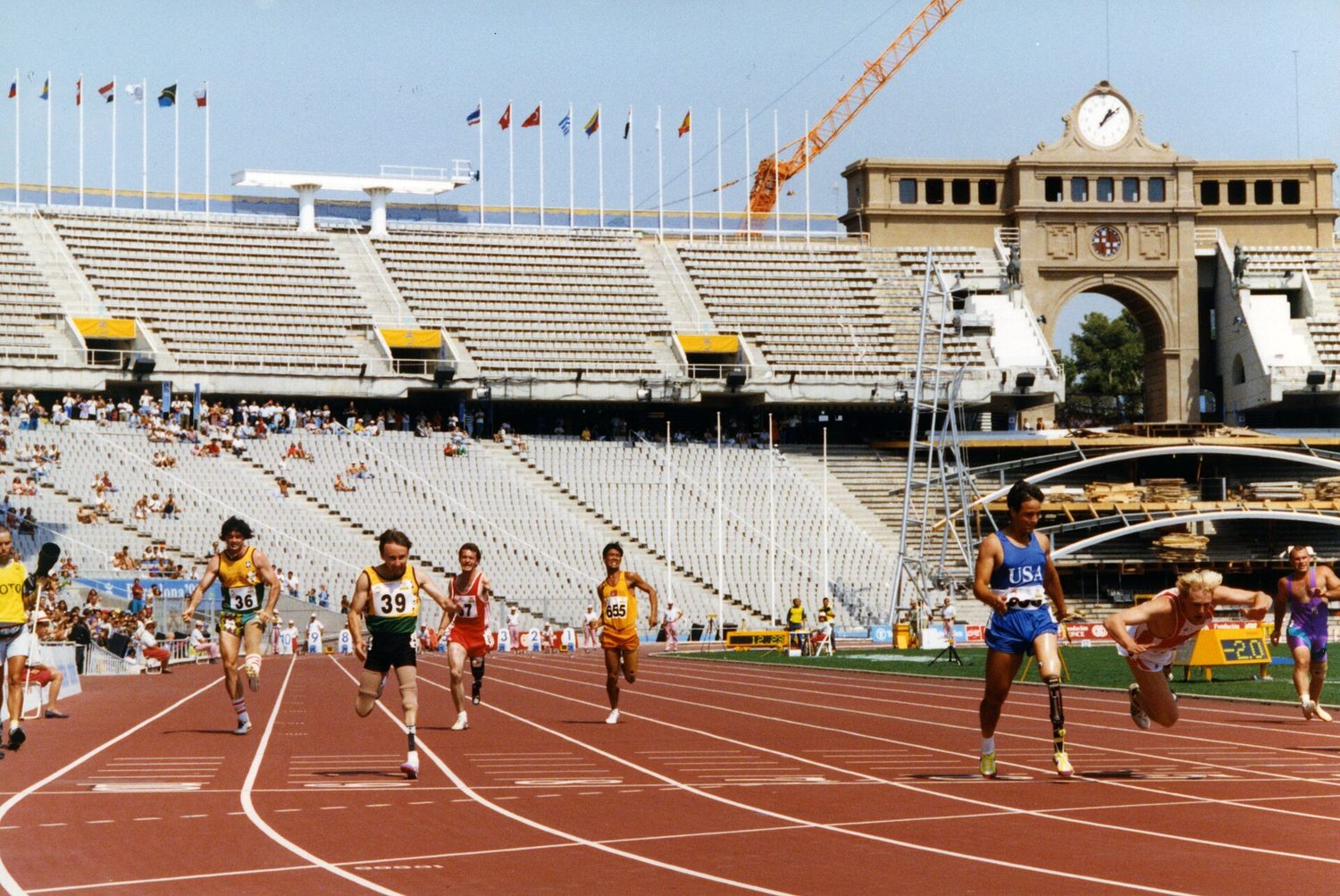
一次剧烈的冲刺依赖无氧呼吸,积累乳酸
Anaerobic respiration · 无氧呼吸
Without oxygen, glucose is only partly broken down — far less energy, and a different waste product. · 没有氧,葡萄糖只被部分分解——少得多的能量,以及一个不同的废物产物。
Anaerobic respiration in yeast produces: · 酵母中的无氧呼吸产生:
Yeast fermentation gives alcohol + CO₂. · 酵母发酵给出酒精 + CO₂。
Anaerobic respiration in yeast, used in baking and brewing, is called . · 酵母中的无氧呼吸,用于烘焙和酿造,叫做。
Fermentation produces CO₂ (bread) and ethanol (drinks). · 发酵产生 CO₂(面包)和乙醇(饮料)。
In yeast (fermentation 发酵)
- In yeast: glucose → alcohol + carbon dioxide (+ energy).
- This fermentation is used to make bread (the CO₂) and alcoholic drinks (the ethanol).
Lactic acid from anaerobic respiration is broken down later, using extra oxygen
在酵母中(发酵)
- 在酵母中:葡萄糖 → 酒精 + 二氧化碳(+ 能量)。
- 这种发酵(fermentation)用于制造面包(二氧化碳)和酒精饮料(乙醇)。
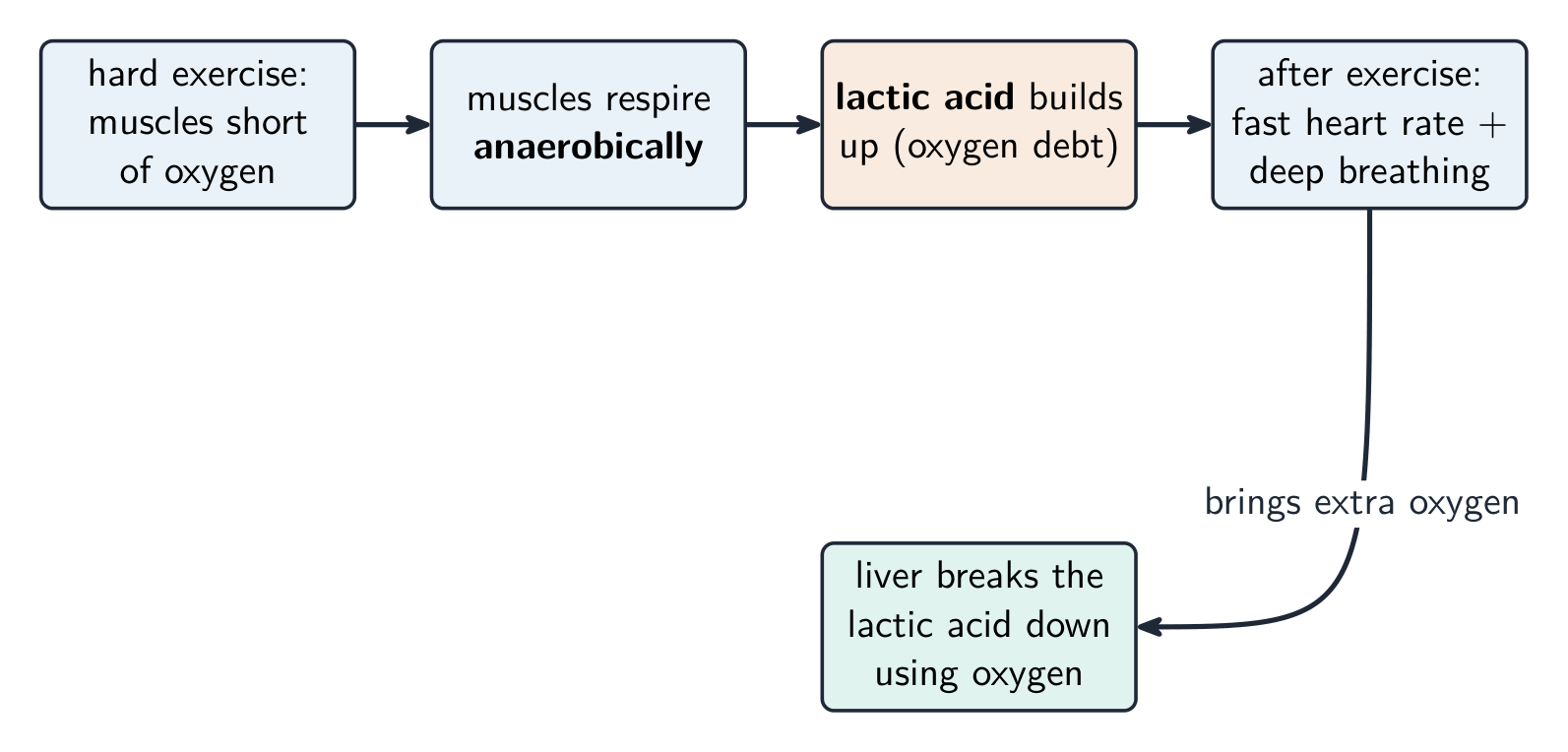
来自无氧呼吸的乳酸之后被分解,使用额外的氧
After hard exercise, oxygen is needed to break down the lactic acid built up (the oxygen debt). · 剧烈运动后,需要氧来分解积累的乳酸(氧债)。
This is why you keep breathing hard after stopping. · 这就是为什么你停止后继续剧烈呼吸。
Oxygen debt 氧债
- The lactic acid built up must later be broken down using oxygen — the oxygen debt.
- This is why you keep breathing hard after exercise stops.
After exercise, oxygen uptake stays high to break down the lactic acid — repaying the oxygen debt.
Anaerobic respiration releases far less energy. It's a fast, short-term backup — but it produces lactic acid and gives little energy per glucose. Aerobic respiration is far more efficient.
氧债
- 积累的乳酸之后必须使用氧来分解——氧债(oxygen debt)。
- 这就是为什么你在运动停止之后继续剧烈呼吸。
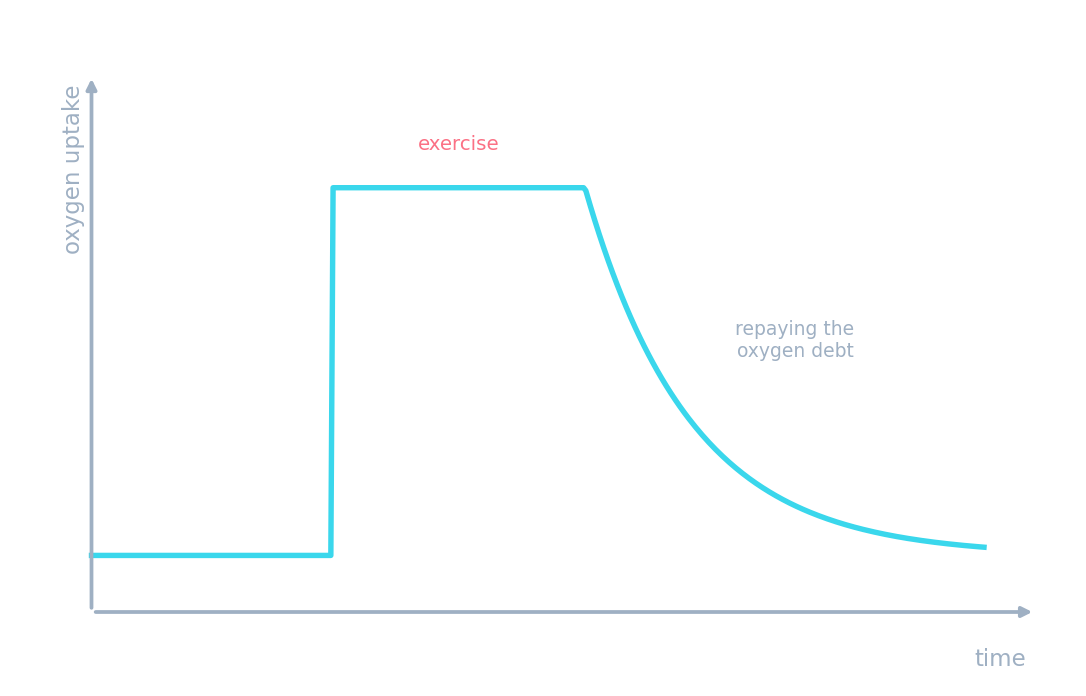
运动后,氧的摄取保持高以分解乳酸——偿还氧债。
无氧呼吸释放少得多的能量。 它是一个快速、短期的备用——但它产生乳酸并每个葡萄糖给出很少能量。有氧呼吸高效得多。
You've got it
- anaerobic respiration releases energy without oxygen (and less of it)
- in muscles: glucose → lactic acid; in yeast: glucose → alcohol + carbon dioxide
- lactic acid creates an oxygen debt, repaid by breathing hard after exercise
你掌握了
- 无氧呼吸释放能量而不用氧(并且更少)
- 在肌肉中:葡萄糖 → 乳酸;在酵母中:葡萄糖 → 酒精 + 二氧化碳
- 乳酸产生一个氧债,运动后通过剧烈呼吸偿还