The heart · 心脏
| English | 中文 | Pinyin · 拼音 |
|---|---|---|
| atria/ˈeɪtrɪə/ | 心房 | xīn fáng |
| ventricles/ˈventrɪklz/ | 心室 | xīn shì |
| deoxygenated/diːˈɒksɪdʒeneɪtɪd/ | 脱氧的 | tuō yǎng de |
| oxygenated/ˈɒksɪdʒeneɪtɪd/ | 含氧的 | hán yǎng de |
| valves/vælvz/ | 瓣膜 | bàn mó |
The pump that never rests
- Your heart beats about 100,000 times a day, pushing blood around your whole body.
- It is a muscular double pump with four chambers.
从不休息的泵
- 你的心脏一天跳动大约 100,000 次,把血液推遍你的整个身体。
- 它是一个有四个腔的肌肉双泵。
The upper chambers of the heart that receive blood are the: · 心脏接收血液的上部腔是:
Atria receive; ventricles pump. · 心房接收;心室泵送。
The right side of the heart pumps blood to the: · 心脏的右侧把血液泵送到:
Right side → lungs (deoxygenated blood); left side → body. · 右侧 → 肺(脱氧的血液);左侧 → 身体。
The lower chambers that pump blood out of the heart are the . · 把血液泵出心脏的下部腔是。
Ventricles pump; atria receive. · 心室泵送;心房接收。
Four chambers
- Two upper atria 心房 receive blood; two lower ventricles 心室 pump it out.
- The right side handles deoxygenated 脱氧的 blood (to lungs); the left side handles oxygenated 含氧的 blood (to body).
The heart has four chambers; the left ventricle wall is thickest because it pumps to the whole body
四个腔
- 两个上部的心房(atria)接收血液;两个下部的心室(ventricles)把它泵出。
- 右侧处理脱氧的血液(到肺);左侧处理含氧的血液(到身体)。
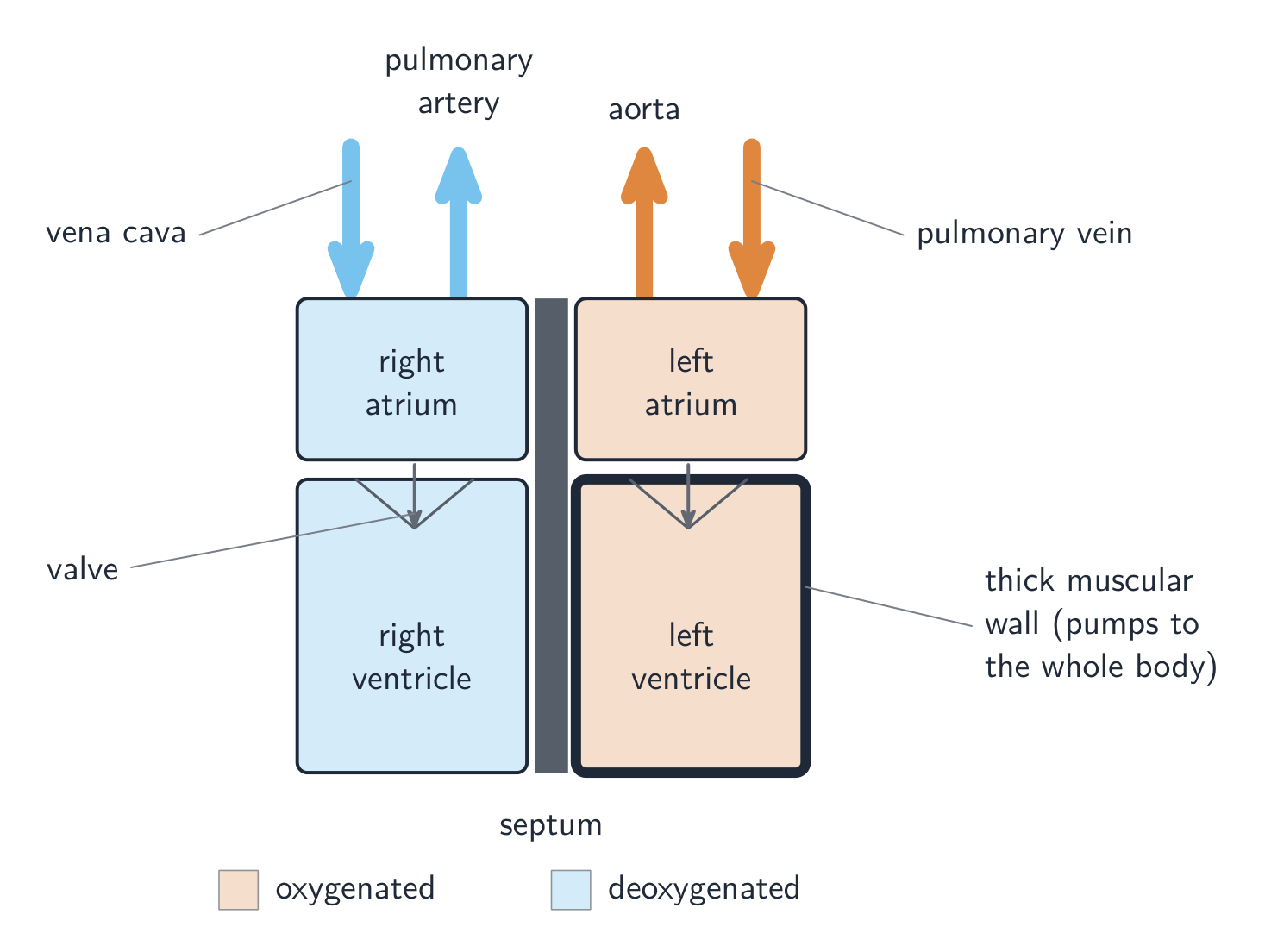
心脏有四个腔;左心室壁最厚,因为它泵送到整个身体
Blood flow through the heart · 血液流过心脏
The four chambers and their valves keep blood moving one way — deoxygenated to the lungs, oxygenated to the body. · 四个腔和它们的瓣膜保持血液单向移动——脱氧的到肺,含氧的到身体。
The valves of the heart: · 心脏的瓣膜:
Valves ensure one-way flow. · 瓣膜确保单向流动。
Valves 瓣膜 keep blood one-way
- Valves between the chambers and in the vessels stop blood flowing backwards.
- They make a "lub-dub" sound as they snap shut.
瓣膜保持血液单向
- 腔之间和血管中的瓣膜(valves)阻止血液向后流动。
- 它们在啪地关闭时发出"扑通"声。
The heart (double circulation) · 心脏(双循环)
Follow the blood: blue comes back from the body, the right side pumps it to the lungs (it turns red), and the left side pumps it out to the body — a double circulation. · 跟随血液:蓝色从身体返回,右侧把它泵送到肺(它变红),左侧把它泵出到身体——一个双循环。
The left ventricle has a thicker muscular wall than the right. · 左心室有一个比右心室更厚的肌肉壁。
It pumps blood to the whole body at high pressure. · 它以高压把血液泵送到整个身体。
The left side works hardest
- The left ventricle has a thicker muscular wall than the right.
- It must push blood all the way around the body, at high pressure.
The left ventricle is thicker, not bigger in volume. Both ventricles pump the same volume, but the left has a much thicker muscle wall because it pumps blood to the whole body, not just the nearby lungs.
左侧工作最努力
- 左心室有一个比右侧更厚的肌肉壁。
- 它必须把血液一路推遍身体,以高压。
左心室更厚,而不是体积更大。 两个心室泵送同样的体积,但左心室有一个厚得多的肌肉壁,因为它把血液泵送到整个身体,而不只是附近的肺。
You've got it
- the heart has four chambers: two atria (receive) and two ventricles (pump)
- the right side serves the lungs; the left side serves the body
- valves prevent backflow; the left ventricle has the thickest wall
你掌握了
- 心脏有四个腔:两个心房(接收)和两个心室(泵送)
- 右侧服务肺;左侧服务身体
- 瓣膜防止回流;左心室有最厚的壁