Transpiration · 蒸腾作用
| English | 中文 | Pinyin · 拼音 |
|---|---|---|
| stomata/ˈstəʊmətə/ | 气孔 | qì kǒng |
| transpiration/trænspəˈreɪʃn/ | 蒸腾作用 | zhēng téng zuò yòng |
| humidity/hjuːˈmɪdɪti/ | 湿度 | shī dù |
| guard cells/ɡɑːd selz/ | 保卫细胞 | bǎo wèi xì bāo |
The price of open pores
- To let carbon dioxide in, a leaf must open its stomata 气孔 — but water vapour escapes at the same time.
- This loss of water is transpiration 蒸腾作用.
开孔的代价
- 为了让二氧化碳进入,一片叶必须打开它的气孔——但水蒸气同时逸出。
- 这种水的流失是蒸腾作用(transpiration)。
Transpiration is the loss of: · 蒸腾作用是以下哪种的流失:
Transpiration is water vapour loss, mainly through stomata. · 蒸腾作用是水蒸气流失,主要通过气孔。
Most water vapour is lost through pores called ______. · 大部分水蒸气通过叫做______的孔流失。
Stomata are the main route for transpiration. · 气孔是蒸腾作用的主要途径。
What transpiration is
- Transpiration is the loss of water vapour from a plant's leaves, mainly through the stomata.
- It pulls the transpiration stream of water up from the roots.
蒸腾作用是什么
- 蒸腾作用是水蒸气从一棵植物的叶流失,主要通过气孔。
- 它把水的蒸腾流从根向上拉。
The transpiration stream · 蒸腾流
Water is pulled up the plant in a continuous stream, from the roots to the leaves where it evaporates. · 水以一个连续的流被向上拉到植物,从根到叶,在叶中它蒸发。
Which increase the rate of transpiration? (Select all that apply.) · 哪些增加蒸腾作用的速率?(选择所有适用项。)
Higher humidity slows transpiration; the others speed it up. · 更高的湿度减慢蒸腾作用;其他的加快它。
Increasing the humidity of the air around a leaf will: · 增加一片叶周围空气的湿度将:
Moist air reduces evaporation, slowing transpiration. · 潮湿的空气减少蒸发,减慢蒸腾作用。
Factors affecting the rate
- Transpiration speeds up with more light, higher temperature, more wind, and lower humidity 湿度.
- Each makes evaporation from the leaf faster.
Each environmental factor that speeds up evaporation raises the transpiration rate.
影响速率的因素
- 蒸腾作用随更多的光、更高的温度、更多的风和更低的湿度加快。
- 每个都让从叶的蒸发更快。
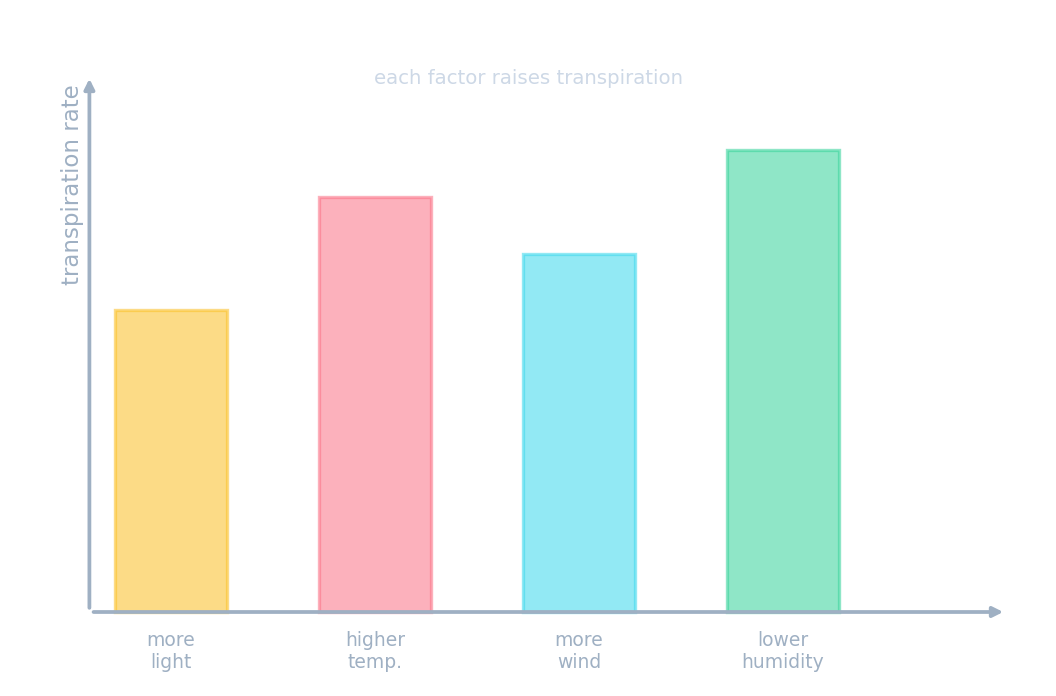
每个加快蒸发的环境因素都提高蒸腾速率。
A plant wilts if it loses water faster than it can take it up. · 如果一棵植物失水比它能摄取水更快,它就枯萎。
Flaccid cells can no longer support the plant. · 松弛的细胞不再能支撑植物。
Wilting and control
- If a plant loses water faster than it takes it up, cells become flaccid and it wilts.
- Guard cells 保卫细胞 can close the stomata to reduce water loss.
Higher humidity SLOWS transpiration. When the air is already moist, there's less difference between the leaf and the air, so less water evaporates. Dry, windy, hot, bright conditions speed it up.
枯萎和控制
- 如果一棵植物失水比它摄取水更快,细胞变得松弛,它就枯萎(wilts)。
- 保卫细胞能关闭气孔以减少水分流失。
更高的湿度减慢蒸腾作用。 当空气已经潮湿时,叶和空气之间的差异更小,所以更少的水蒸发。干燥、有风、炎热、明亮的条件加快它。
You've got it
- transpiration = loss of water vapour from leaves (through stomata)
- rate rises with more light, higher temperature, more wind, lower humidity
- excessive loss causes wilting; guard cells close stomata to reduce it
你掌握了
- 蒸腾作用 = 水蒸气从叶流失(通过气孔)
- 速率随更多的光、更高的温度、更多的风、更低的湿度上升
- 过度的流失导致枯萎;保卫细胞关闭气孔以减少它