Biological molecules · 生物分子
| English | 中文 | Pinyin · 拼音 |
|---|---|---|
| biological molecules/ˌbaɪəˈlɒdʒɪkl ˈmɒlɪkjuːlz/ | 生物分子 | shēng wù fèn zǐ |
| carbohydrates/ˌkɑːbəʊˈhaɪdreɪts/ | 碳水化合物 | tàn shuǐ huà hé wù |
| proteins/ˈprəʊtiːnz/ | 蛋白质 | dàn bái zhì |
| lipids/ˈlɪpɪdz/ | 脂质 | zhī zhì |
| glucose/ˈɡluːkəʊs/ | 葡萄糖 | pú táo táng |
| starch/stɑːtʃ/ | 淀粉 | diàn fěn |
| glycogen/ˈɡlaɪkədʒn/ | 糖原 | táng yuán |
| amino acids/əˈmiːnəʊ ˈæsɪdz/ | 氨基酸 | ān jī suān |
| fatty acids/ˈfæti ˈæsɪdz/ | 脂肪酸 | zhī fáng suān |
| glycerol/ˈɡlɪsərɒl/ | 甘油 | gān yóu |
The molecules of life
- Living things are built from a small set of biological molecules 生物分子, made by joining tiny units into big ones.
- Three groups matter most: carbohydrates 碳水化合物, proteins 蛋白质 and lipids 脂质 (fats).
生命的分子
- 活的东西由一小组生物分子(biological molecules)构成,通过把微小的单元连接成大的来制造。
- 三组最重要:碳水化合物、蛋白质和脂质(脂肪)。
Biological molecules lab · 生物分子实验
Classify food molecules by their main job in cells. · 根据其细胞内的主要功能对食物分子进行分类。
Carbohydrates are made of which three elements? · 碳水化合物由哪三种元素组成?
Carbohydrates contain C, H and O. · 碳水化合物包含C、H和O。
Many glucose units join together to make the storage carbohydrate ______ in plants. · 许多葡萄糖单元结合形成植物中储存碳水化合物的______。
Plants store glucose as starch; animals store it as glycogen. · 植物以淀粉形式储存葡萄糖;动物以糖原形式储存。
Carbohydrates
- Made of carbon, hydrogen and oxygen.
- Small sugars (like glucose 葡萄糖) join to make large carbohydrates (starch 淀粉, glycogen 糖原, cellulose).
Large molecules are built by joining many small units together
碳水化合物
- 由碳、氢和氧构成。
- 小糖(像葡萄糖)连接形成大碳水化合物(淀粉、糖原、纤维素)。

大分子通过把许多小单元连接在一起构建
Proteins are built from smaller units called: · 蛋白质由称为______的小单元构建而成:
Proteins are chains of amino acids. · 蛋白质是氨基酸链。
Lipids (fats) are made from fatty acids and: · 脂质(脂肪)由脂肪酸和______组成:
A lipid is fatty acids joined to glycerol. · 脂质是脂肪酸连接在甘油上形成的。
Proteins and lipids
- Proteins are long chains of amino acids 氨基酸 — used for growth, repair, enzymes and antibodies.
- Lipids (fats and oils) are made of fatty acids 脂肪酸 and glycerol 甘油 — used for energy storage and insulation.
Starch grains from a potato, seen under a microscope
蛋白质和脂质
- 蛋白质(proteins)是氨基酸的长链——用于生长、修复、酶和抗体。
- 脂质(脂肪和油)(lipids)由脂肪酸和甘油构成——用于能量储存和保温。

一个马铃薯的淀粉粒,在显微镜下看到
Proteins contain nitrogen, but carbohydrates and lipids do not. · 蛋白质含氮,但碳水化合物和脂质不含。
The nitrogen in amino acids distinguishes proteins. · 氨基酸中的氮区分了蛋白质。
Small units, big molecules
- Big molecules are built from small building blocks: sugars → starch, amino acids → proteins, fatty acids + glycerol → lipids.
- The same few elements (C, H, O, and N in proteins) make all of them.
Starch, glycogen and cellulose are all made of glucose. They differ in how the glucose units are joined, which gives each a different job — storage (starch/glycogen) or structure (cellulose).
DNA is a double helix; the bases always pair A-T and C-G
小单元,大分子
- 大分子由小的构建块(building blocks)构建:糖 → 淀粉,氨基酸 → 蛋白质,脂肪酸 + 甘油 → 脂质。
- 同样的几种元素(C、H、O,以及蛋白质中的 N)构成所有它们。
淀粉、糖原和纤维素都由葡萄糖构成。 它们在葡萄糖单元如何连接上不同,这给每个一个不同的工作——储存(淀粉/糖原)或结构(纤维素)。
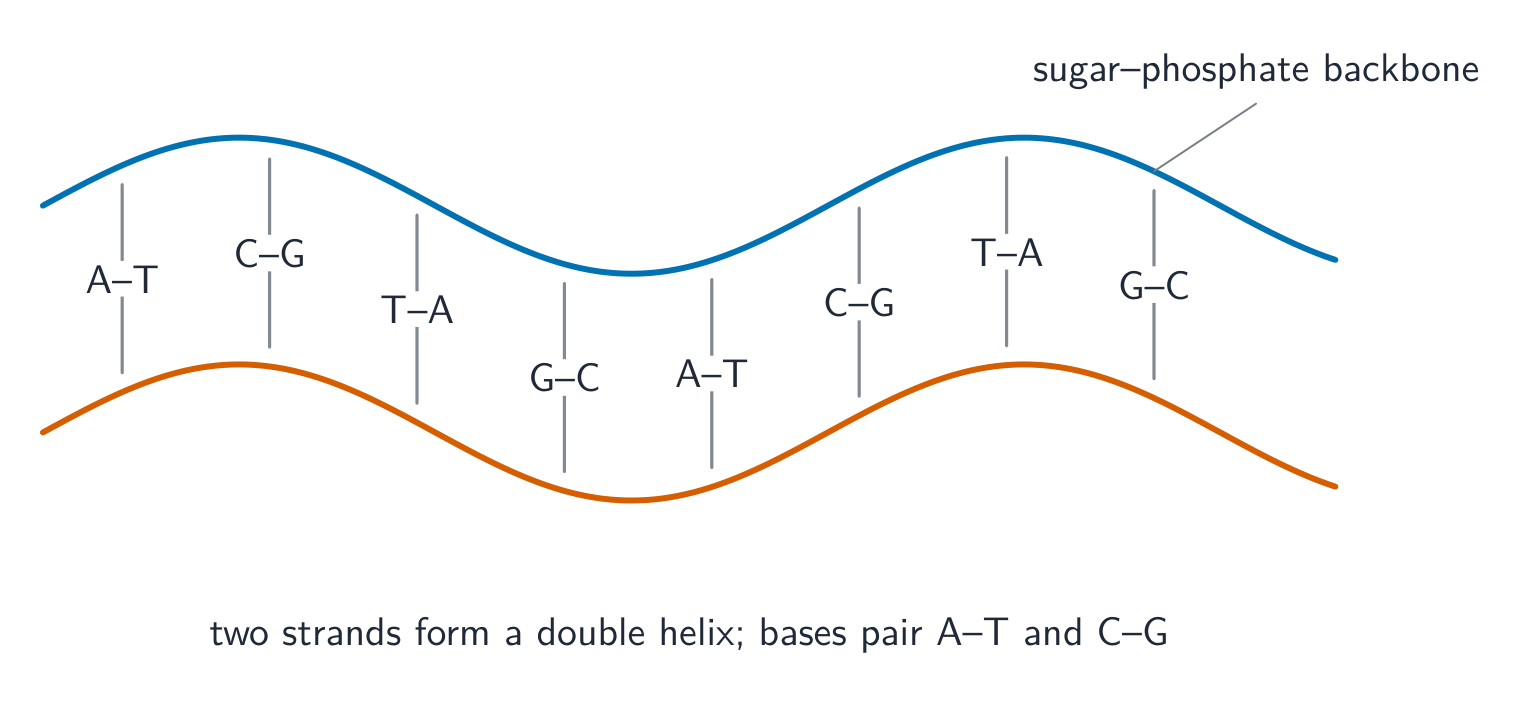
DNA 是一个双螺旋;碱基总是配对 A-T 和 C-G
You've got it
- three key groups: carbohydrates, proteins, lipids
- carbohydrates = sugars → starch/glycogen/cellulose; proteins = amino acids; lipids = fatty acids + glycerol
- proteins also contain nitrogen (N), unlike carbohydrates and lipids
你掌握了
- 三个关键组:碳水化合物、蛋白质、脂质
- 碳水化合物 = 糖 → 淀粉/糖原/纤维素;蛋白质 = 氨基酸;脂质 = 脂肪酸 + 甘油
- 蛋白质也含有氮(N),不像碳水化合物和脂质