Groups of organisms · 生物类群
| English | 中文 | Pinyin · 拼音 |
|---|---|---|
| kingdoms/ˈkɪŋdəmz/ | 界 | jiè |
| photosynthesis/ˌfəʊtəʊˈsɪnθəsɪs/ | 光合作用 | guāng hé zuò yòng |
| fungi/ˈfʌŋɡi/ | 真菌 | zhēn jūn |
| bacteria/bækˈtɪərɪə/ | 细菌 | xì jūn |
| protoctists/ˈprəʊtəʊktɪsts/ | 原生生物 | yuán shēng shēng wù |
| vertebrates/ˈvɜːtɪbreɪts/ | 脊椎动物 | jǐ zhuī dòng wù |
| invertebrates/ɪnˈvɜːtɪbreɪts/ | 无脊椎动物 | wú jǐ zhuī dòng wù |
| prokaryotes/ˈprɒkərɪəʊts/ | 原核生物 | yuán hé shēng wù |
| eukaryotes/ˈjuːkərɪəʊts/ | 真核生物 | zhēn hé shēng wù |
The great kingdoms 界 of life
- A mushroom, an oak tree, a tiger and the germs that make you ill are all living — but profoundly different.
- Biologists sort all life into a few huge groups called kingdoms.
生命的大界
- 一个蘑菇、一棵橡树、一只老虎和让你生病的细菌都是活的——但深刻地不同。
- 生物学家把所有生命分成几个叫作界(kingdoms)的巨大的组。
Groups of organisms lab · 生物类群实验
Compare organism groups by the feature that identifies them. · 根据识别特征比较生物类群。
Which of these are kingdoms of living things? (Select all that apply.) · 下列哪些是生物界?(多选)
Rocks are not living. The kingdoms include animals, plants, fungi, bacteria and protoctists. · 岩石不是生物。生物界包括动物界、植物界、真菌界、细菌界和原生生物界。
The five kingdoms
- Animals: many cells, no cell walls, feed on other organisms.
- Plants: many cells, cell walls, make food by photosynthesis 光合作用.
- Fungi 真菌, bacteria 细菌 and protoctists 原生生物 make up the rest.
A dichotomous key: each step gives two choices until you reach the organism
五个界
- 动物(animals):许多细胞,没有细胞壁,以其他生物体为食。
- 植物(plants):许多细胞,有细胞壁,通过光合作用制造食物。
- 真菌(fungi)、细菌(bacteria)和原生生物(protoctists)构成其余的。
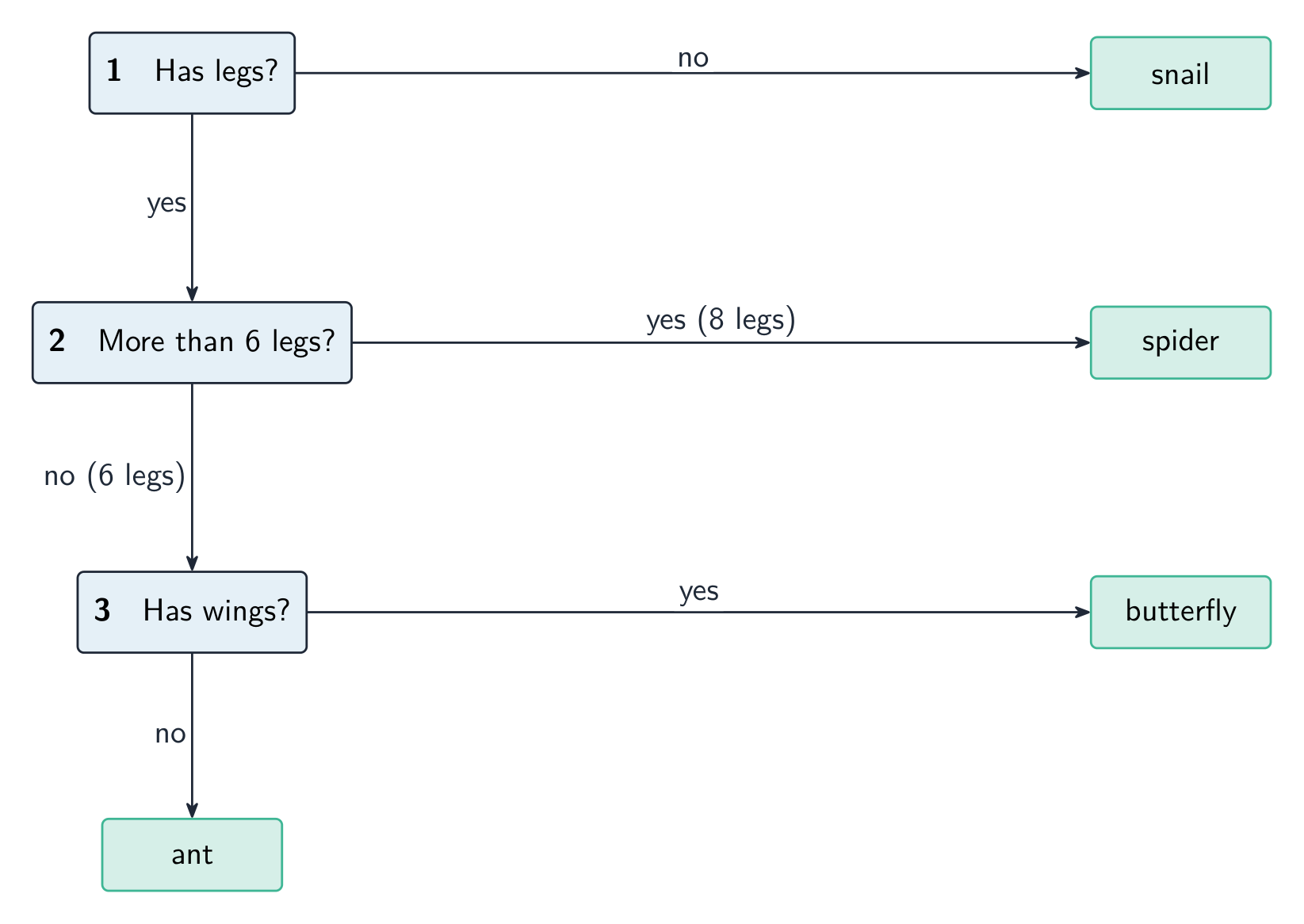
一个二歧检索表:每一步给出两个选择,直到你到达生物体
Which feature do plant cells have that animal cells do not? · 植物细胞具有而动物细胞不具有的结构是什么?
Plant cells have a cell wall, chloroplasts and a large vacuole. · 植物细胞具有细胞壁、叶绿体和大液泡。
Plants make their own food by the process of ______. · 植物通过______过程制造食物。
Plants are producers; animals must eat other organisms. · 植物是生产者;动物必须摄取其他生物。
Animals vs plants
- Plant cells have a cell wall, chloroplasts and a large vacuole; animal cells do not.
- Plants make their own food (photosynthesis); animals must eat other organisms.
A virus has just two parts: a protein coat around its genetic material
动物对植物
- 植物细胞有一个细胞壁、叶绿体和一个大液泡;动物细胞没有。
- 植物制造它们自己的食物(光合作用);动物必须吃其他生物体。
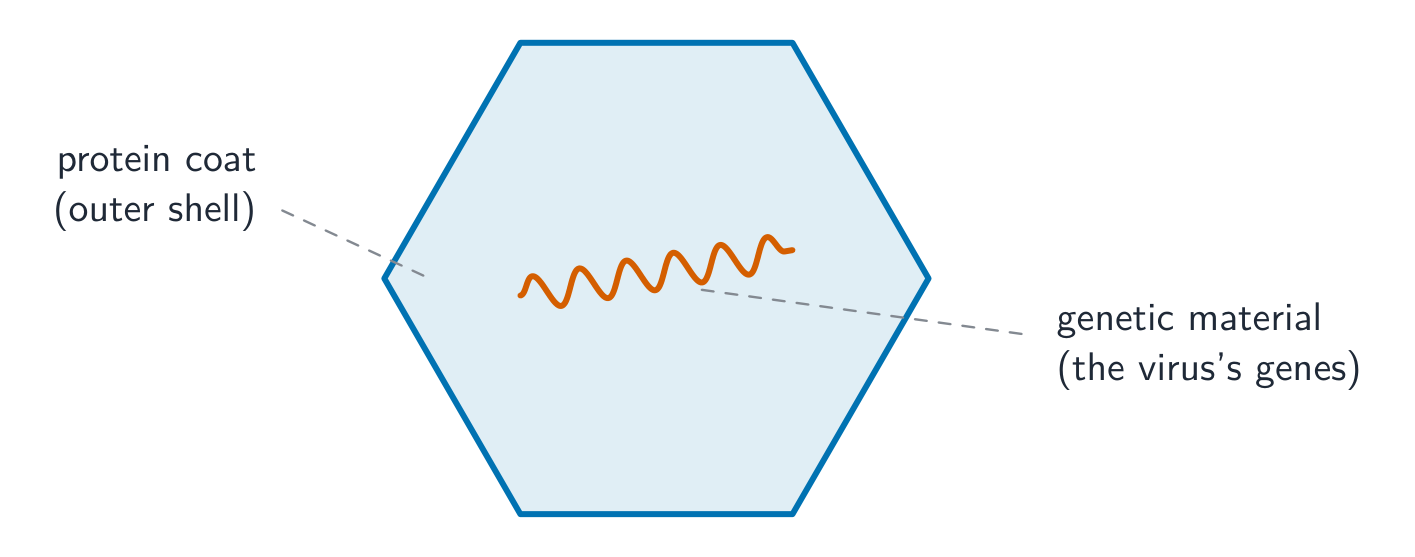
一个病毒只有两部分:围绕它遗传物质的一个蛋白质外壳
Which group are vertebrates? · 哪一组属于脊椎动物?
Mammals have a backbone; insects, spiders and worms do not. · 哺乳动物有脊柱;昆虫、蜘蛛和蠕虫没有。
Bacteria are prokaryotes, meaning their cells have no proper nucleus. · 细菌是原核生物,意味着它们的细胞没有真正的细胞核。
Bacteria lack a nucleus; the other kingdoms are eukaryotes. · 细菌缺乏细胞核;其他生物界都是真核生物。
Vertebrates 脊椎动物 and invertebrates 无脊椎动物
- Vertebrates have a backbone: fish, amphibians, reptiles, birds, mammals.
- Invertebrates have no backbone: insects, spiders, worms, molluscs.
Bacteria are different from the rest. Bacteria are prokaryotes 原核生物 — their cells have no proper nucleus. Animals, plants, fungi and protoctists are eukaryotes 真核生物, with a nucleus. This is a fundamental divide.
脊椎动物和无脊椎动物
- 脊椎动物(vertebrates)有一根脊柱:鱼、两栖动物、爬行动物、鸟、哺乳动物。
- 无脊椎动物(invertebrates)没有脊柱:昆虫、蜘蛛、蠕虫、软体动物。
细菌与其余的不同。 细菌是原核生物(prokaryotes)——它们的细胞没有真正的细胞核。动物、植物、真菌和原生生物是真核生物(eukaryotes),有一个细胞核。这是一个根本的分界。
You've got it
- life is sorted into kingdoms: animals, plants, fungi, bacteria, protoctists
- plant cells have a cell wall, chloroplasts and a vacuole; animal cells don't
- vertebrates have a backbone, invertebrates don't; bacteria have no nucleus
你掌握了
- 生命被分成界:动物、植物、真菌、细菌、原生生物
- 植物细胞有一个细胞壁、叶绿体和一个液泡;动物细胞没有
- 脊椎动物有一根脊柱,无脊椎动物没有;细菌没有细胞核