Cost-Benefit Analysis · 成本收益分析
| English | 中文 | Pinyin · 拼音 |
|---|---|---|
| cost-benefit analysis/kɒst ˈbenɪfɪt əˈnæləsɪs/ | 成本收益分析 | chéng běn shōu yì fēn xī |
| opportunity cost/ɒpəˈtjuːnɪti kɒst/ | 机会成本 | jī huì chéng běn |
| sunk cost/sʌŋk kɒst/ | 沉没成本 | chén mò chéng běn |
| sunk-cost fallacy/sʌŋk kɒst ˈfæləsi/ | 沉没成本谬误 | chén mò chéng běn miù wù |
The $50 ticket you should ignore
- You already paid $50 for a concert ticket.
- On the night you feel ill and would honestly rather stay home.
- Should you drag yourself out just to "get your money's worth"?
- Economics gives a sharp answer — and the $50 has nothing to do with it.
那张你该忽略的 50 元门票
- 你已经花了 50 元买了一张演唱会门票。
- 到了当晚,你觉得不舒服,说实话更想待在家里。
- 你要不要硬撑着出门,只为了"把票钱赚回来"?
- 经济学给出一个干脆的答案——而这 50 元跟答案毫无关系。
Weigh benefit against cost
- Cost-benefit analysis 成本收益分析: take an action only when its benefit is at least as large as its cost.
- Weigh what you gain against what you give up, then decide.
- If benefit ≥ cost, do it; if not, don't.
权衡收益与成本
- 成本收益分析(cost-benefit analysis):只有当一个行动的收益至少不小于它的成本时,才去做。
- 把你得到的和你放弃的作比较,然后再决定。
- 收益 ≥ 成本,就做;否则,就不做。
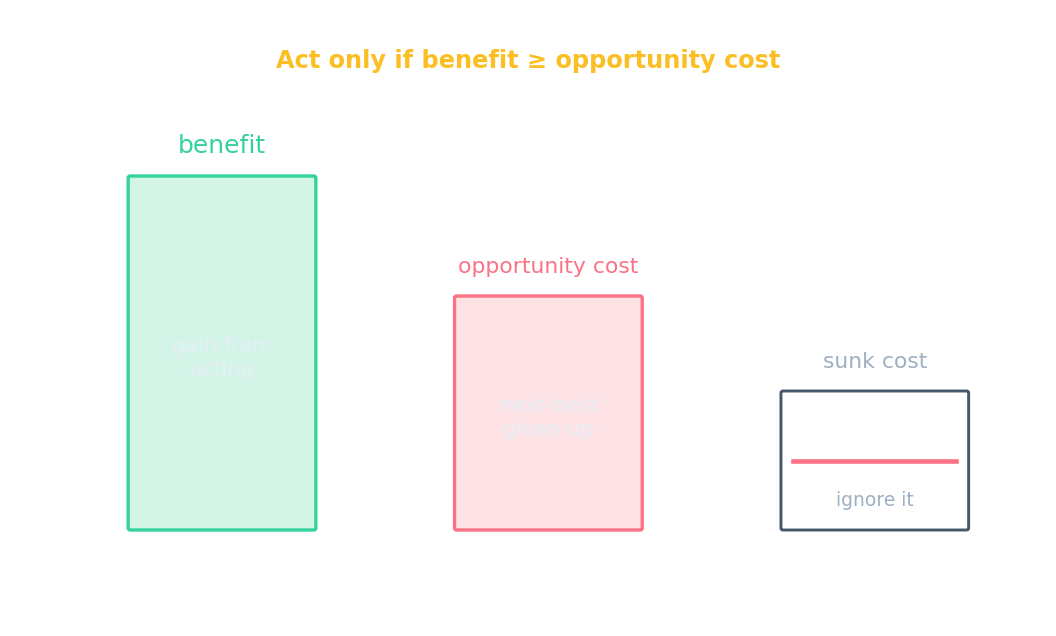
Cost-benefit analysis says to take an action when: · 成本收益分析说,在什么时候应该采取一个行动?
Act only when benefit ≥ cost — comparing what you gain with what you give up. · 只有当收益 ≥ 成本时才行动——比较你得到的和你放弃的。
The real cost is opportunity cost
- The cost that matters is the opportunity cost 机会成本 — the best alternative given up — not just the money spent.
- A dollar figure often misses the real cost.
- The true cost of a year at university is not only tuition, but also the wages you could have earned instead.
真正的成本是机会成本
- 真正要紧的成本是机会成本(opportunity cost)——你放弃的那个最好替代选项——而不只是花掉的钱。
- 用金额来算,常常漏掉真正的成本。
- 上一年大学的真实成本,不只是学费,还有你本可以赚到的工资。
Which costs count? · 哪些成本要算?
A good decision weighs future · 未来 benefits and costs. Money already spent — a sunk cost — is gone and should be ignored. · 好的决策权衡未来的收益与成本。已经花掉的钱——沉没成本——是收不回的,应当忽略。
The true cost of a year at university is best measured as: · 上一年大学的真实成本,最好这样衡量:
Opportunity cost includes the wages given up, not just the money paid. · 机会成本还包括放弃的工资,而不只是付出的钱。
Match each idea to its meaning. · 把每个概念与它的含义配对。
Decisions use opportunity cost and cost-benefit analysis; sunk costs are ignored. · 决策用机会成本和成本收益分析;沉没成本被忽略。
Ignore sunk costs
- A sunk cost 沉没成本 is money already spent that you cannot get back.
- Only future costs and benefits should affect a decision — the past is gone either way.
- Back to the ticket: the $50 is spent whether you go or not, so ignore it and just choose what you now prefer.
- Going only "to get your money's worth" is the sunk-cost fallacy 沉没成本谬误.
忽略沉没成本
- 沉没成本(sunk cost)是已经花掉、再也拿不回来的钱。
- 只有未来的成本和收益才应影响决定——过去反正都已经过去。
- 回到门票:去不去,这 50 元都花了,所以忽略它,只选你现在更想要的。
- 只为了"把票钱赚回来"而去,就是沉没成本谬误(sunk-cost fallacy)。
You should factor in money already spent (a sunk cost) when deciding what to do next. · 在决定接下来做什么时,应该把已经花掉的钱(沉没成本)也算进去。
Sunk costs are gone either way — only future costs and benefits should affect the choice. · 沉没成本无论如何都收不回——只有未来的成本和收益才应影响选择。
Money already spent that cannot be recovered is a ______ cost. · 已经花掉、无法收回的钱是一种______成本。
A sunk cost should never influence a forward-looking decision. · 沉没成本绝不应影响一个着眼未来的决定。
You paid $50 for a ticket but now feel ill and would prefer to stay home. What should you do? · 你花 50 元买了票,但现在不舒服,更想待在家。你该怎么做?
Going just to "use" the sunk $50 is the sunk-cost fallacy. Choose by future benefit vs cost. · 仅仅为了"用掉"那沉没的 50 元而去,就是沉没成本谬误。要按未来的收益与成本来选。
Cost-benefit analysis: act only when benefit ≥ cost. The right cost is the opportunity cost (the best alternative given up), not just money. Ignore sunk costs — money already spent — because only future costs and benefits should change your choice.
成本收益分析:只有收益 ≥ 成本才行动。正确的成本是机会成本(放弃的最好替代选项),而不只是金钱。忽略沉没成本——已经花掉的钱——因为只有未来的成本和收益才应改变你的选择。