Environmental Impacts on Enzyme Function · 环境对酶功能的影响
| English | 中文 | Pinyin · 拼音 |
|---|---|---|
| optimum/ˈɒptɪməm/ | 最适 | zuì shì |
| denature/ˈdenətʃə/ | 变性 | biàn xìng |
Enzymes are fussy
- An enzyme works fast only under the right conditions.
- Change the temperature or the pH and its speed changes too.
- Push those conditions too far and the enzyme stops for good.
- This is why your body keeps its inside so carefully controlled.
酶很挑剔
- 酶只有在合适的条件下才工作得快。
- 改变温度或 pH,它的速度也随之改变。
- 把那些条件推得太远,酶就彻底停下来。
- 这就是你的身体如此小心地控制内部环境的原因。
Temperature: up to a point
- Warming things up speeds most reactions — molecules collide more often.
- So enzyme rate rises with temperature up to the optimum 最适.
- Past the optimum, more heat starts to break the enzyme apart.
- The rate then crashes as the enzyme is destroyed.
温度:到一定程度为止
- 加热让大多数反应加快——分子碰撞得更频繁。
- 所以酶的速率随温度上升,直到最适(optimum)。
- 超过最适,更多的热开始把酶拆散。
- 随着酶被破坏,速率随之骤降。
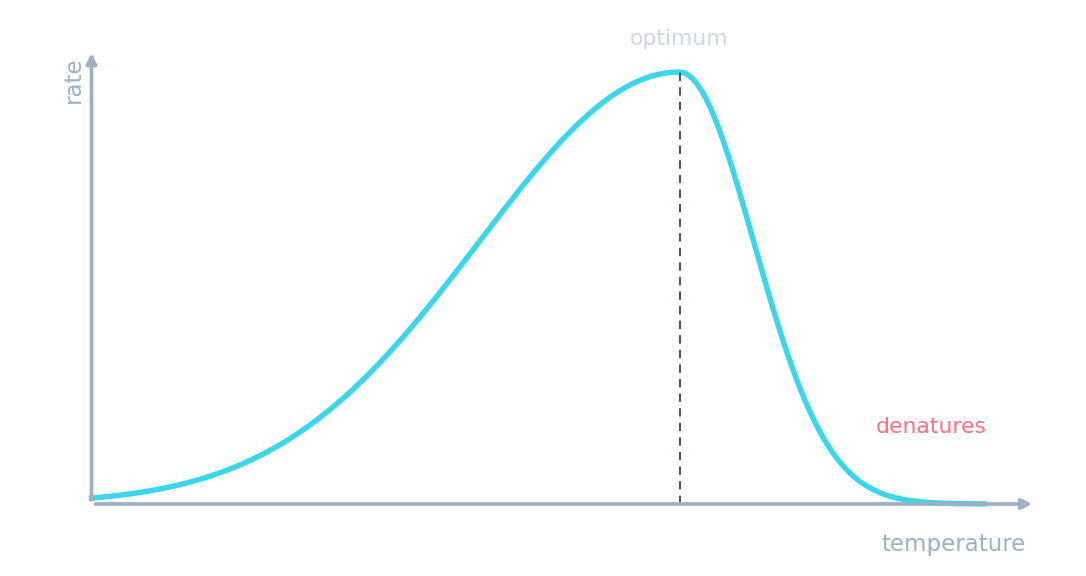
The temperature at which an enzyme works fastest is its… · 酶工作最快时的温度是它的……
Each enzyme has an optimum · 最适值 temperature where it works fastest — often around body temperature. · 每个酶都有一个工作最快的最适温度——常常在体温附近。
pH matters too
- Each enzyme also has a best, or optimum, pH.
- Too acidic or too alkaline and the active site changes shape.
- Stomach enzymes like acid; gut enzymes like a mild base.
- Away from its optimum pH, an enzyme slows and then fails.
pH 也重要
- 每个酶还有一个最佳的、或者说最适的 pH。
- 太酸或太碱,活性位点就改变形状。
- 胃里的酶喜欢酸;肠道里的酶喜欢温和的碱。
- 远离它的最适 pH,酶就变慢,然后失效。
What happens if the temperature rises far above the optimum? · 如果温度升到远高于最适,会发生什么?
Too much heat breaks the bonds holding the enzyme's shape — it denatures and the active site is lost. · 太多的热打断维持酶形状的键——它变性,活性位点丢失。
Each enzyme also has an optimum pH at which it works best. · 每个酶还有一个它工作得最好的最适 pH。
The wrong pH also changes the active site's shape, so each enzyme has a best pH too. · 错误的 pH 也会改变活性位点的形状,所以每个酶也有一个最佳 pH。
Denaturation
- Extreme heat or wrong pH makes an enzyme denature 变性.
- The bonds holding its fold break, and the active site loses its shape.
- The substrate no longer fits, so the enzyme cannot work.
- Denaturation is usually permanent — the shape does not come back.
变性
- 极端的热或错误的 pH 让酶变性(denature)。
- 维持它折叠的键断开,活性位点失去形状。
- 底物不再合适,所以酶不能工作。
- 变性通常是永久的——形状回不来了。
What happens to the enzyme? · 酶会怎么样?
Sort each condition by its effect on how fast the enzyme works. · 按照每种条件对酶工作速度的影响,给它们分类。
When heat or pH destroys an enzyme's shape, we say it has ____. · 当热或 pH 破坏酶的形状时,我们说它已经____了。
A denatured · 变性 enzyme has lost its active-site shape, so the substrate no longer fits. · 变性的酶失去了它活性位点的形状,所以底物不再合适。
Select all · 所有 true statements about conditions and enzymes. · 选出关于条件与酶的所有正确说法。
Past the optimum, more heat makes it worse (denatured), not better. The other three are correct. · 超过最适之后,更多的热让它更糟(变性),不是更好。其余三条正确。
Past the optimum, hotter is worse, not better. It feels like more heat should mean more speed, but above the optimum the enzyme denatures and the rate falls off a cliff. There is a sweet spot, not "the more the merrier".
超过最适之后,更热是更糟,而不是更好。感觉上更多的热应该意味着更快的速度,但在最适之上,酶变性,速率如坠悬崖。有一个甜蜜点,而不是"越多越好"。
Two enzymes, two pH homes:
- Pepsin works in your stomach, which is strongly acidic (about pH 2).
- Enzymes in your small intestine work in a mild base (about pH 8).
- Each is denatured by the other's home — the right pH is part of the design.
两个酶,两个 pH 的家:
- 胃蛋白酶在你的胃里工作,那里强酸(约 pH 2)。
- 你小肠里的酶在温和的碱里工作(约 pH 8)。
- 每一个都会被对方的家所变性——合适的 pH 是设计的一部分。
An enzyme works fastest at its optimum temperature and pH. Below the optimum it is slow; far above it, heat or the wrong pH makes the enzyme denature — its active site loses shape and it stops working. Conditions must stay in a narrow, controlled range.
酶在它的最适温度和 pH 下工作最快。低于最适它就慢;远高于最适时,热或错误的 pH 让酶变性——它的活性位点失去形状,停止工作。条件必须保持在一个狭窄、受控的范围内。