Exchange rates · 汇率
| English | 中文 | Pinyin · 拼音 |
|---|---|---|
| fixed/fɪkst/ | 固定的 | gù dìng de |
| floating/ˈfləʊtɪŋ/ | 浮动的 | fú dòng de |
| managed float/ˈmænɪdʒd fləʊt/ | 管理浮动 | guǎn lǐ fú dòng |
| depreciation/dɪˌpriːʃɪˈeɪʃn/ | 贬值 | biǎn zhí |
| appreciation/əˌpriːʃɪˈeɪʃn/ | 升值 | shēng zhí |
| speculation/ˌspekjʊˈleɪʃn/ | 投机 | tóu jī |
The price that links economies
- The exchange rate quietly sets the price of every import and export — and a government must decide whether to let it float or hold it fixed 固定的.
- Its movements ripple through inflation, trade and growth.
连接经济的价格
- 汇率悄悄决定每一项进口和出口的价格——而一个政府必须决定是让它浮动还是保持固定。
- 它的移动通过通货膨胀、贸易和增长泛起涟漪。
A fixed exchange rate is maintained by: · 一个固定汇率通过以下维持:
A peg is defended with foreign-exchange reserves; a floating rate is market-set. · 一个钉住用外汇储备捍卫;一个浮动汇率由市场决定。
A managed float is mostly market-determined but with occasional central-bank intervention. · 一个管理浮动大部分由市场决定但带有偶尔的中央银行介入。
It blends floating with discretionary intervention. · 它把浮动与酌情的介入混合。
Exchange-rate systems
- Floating 浮动的: set by market demand and supply for the currency.
- Fixed: pegged by the central bank, which buys/sells reserves to hold it.
- Managed float 管理浮动: mostly market-driven, but the central bank intervenes at times.
In a floating system the currency's demand and supply set the rate; a fixed rate needs reserves to defend it.
汇率制度
- 浮动(floating):由货币的市场需求和供给决定。
- 固定(fixed):由中央银行钉住,它买/卖储备以保持它。
- 管理浮动(managed float):大部分由市场驱动,但中央银行有时介入。
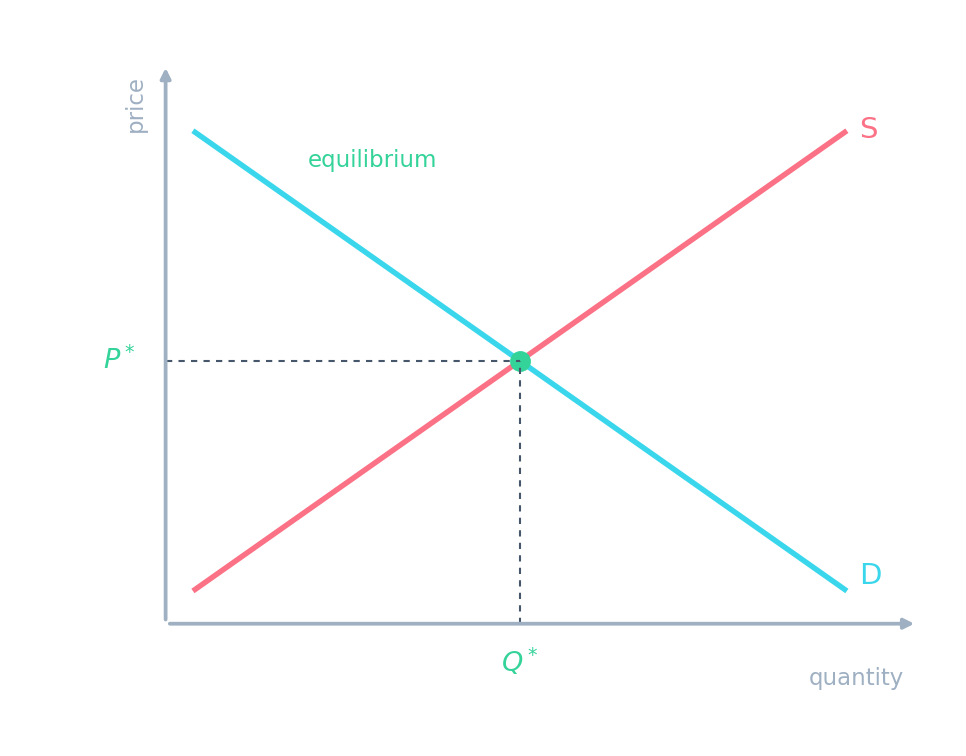
在一个浮动系统中,货币的需求和供给决定汇率;一个固定汇率需要储备来捍卫它。
Exchange rates in the FX market · 外汇市场中的汇率
The exchange rate is set by the demand for and supply of the currency. Shift either to see the rate appreciate or depreciate. · 汇率由货币的需求和供给决定。移动任一以看汇率升值或贬值。
If 1 pound = 1.25 dollars, how many dollars is 400 pounds? · 如果 1 英镑 = 1.25 美元,400 英镑是多少美元?
400 × 1.25 = 500 dollars. · 400 × 1.25 = 500 美元。
A currency depreciation tends to: · 一次货币贬值倾向于:
A weaker currency lowers export prices abroad and raises import prices at home. · 一种更弱的货币降低国外的出口价格并提高国内的进口价格。
A depreciation improves the current account only if the Marshall–______ condition holds. · 一次贬值只在马歇尔–______条件成立时才改善经常账户。
PED of exports + PED of imports > 1. · 出口的 PED + 进口的 PED > 1。
Effects of a change
- Depreciation 贬值/devaluation: exports cheaper, imports dearer → can improve the current account (if Marshall–Lerner holds) but raises import-price inflation.
- Appreciation 升值/revaluation: the reverse — cheaper imports (lower inflation) but dearer exports.
After a depreciation the current account first worsens, then improves — the J-curve
Worked example. If 1 pound = 1.25 dollars, then 400 pounds converts to 400 × 1.25 = 500 dollars.
一个变化的影响
- 贬值/货币贬值:出口更便宜、进口更贵 → 能改善经常账户(如果马歇尔–勒纳成立)但提高进口价格通货膨胀。
- 升值/货币升值:反过来——更便宜的进口(更低的通货膨胀)但更贵的出口。
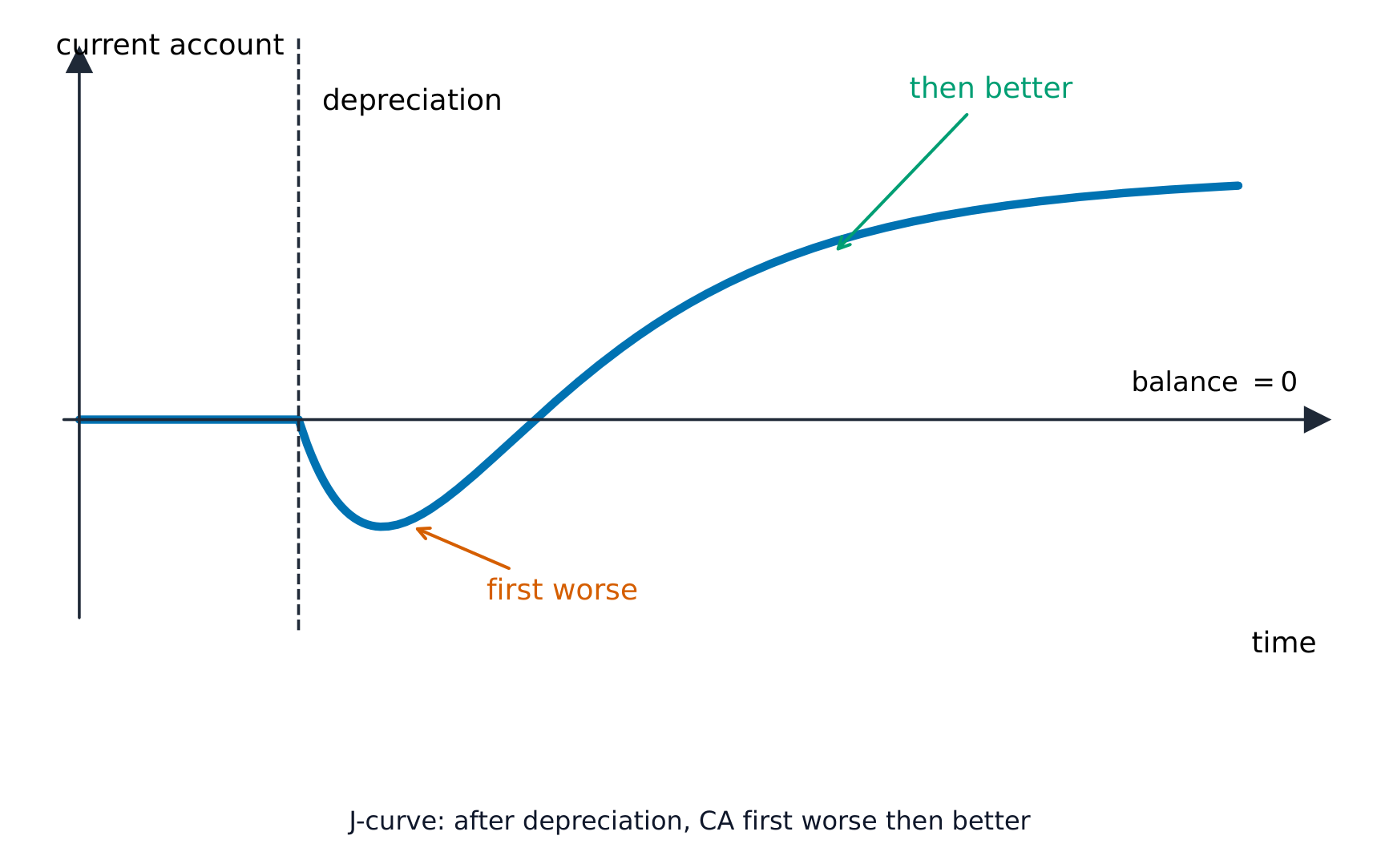
在一次贬值之后,经常账户先恶化,然后改善——J 曲线
例题。 如果 1 英镑 = 1.25 美元,那么 400 英镑兑换为 400 × 1.25 = 500 美元。
What moves a floating rate
- Demand for exports (raises demand for the currency), interest rates (higher rates attract savers), investment inflows, and speculation 投机.
- Central banks may intervene to smooth or steer the rate.
什么移动一个浮动汇率
- 对出口的需求(提高对货币的需求)、利率(更高的利率吸引储蓄者)、投资流入和投机。
- 中央银行可能介入以平滑或引导汇率。
You've got it
- systems: floating (market), fixed (pegged with reserves), managed float (mostly market + intervention)
- depreciation → cheaper exports/dearer imports (helps trade, raises inflation); appreciation is the reverse
- improvement from depreciation depends on the Marshall–Lerner condition
你掌握了
- 制度:浮动(市场)、固定(用储备钉住)、管理浮动(大部分市场 + 介入)
- 贬值 → 更便宜的出口/更贵的进口(帮助贸易,提高通货膨胀);升值反过来
- 来自贬值的改善取决于马歇尔–勒纳条件