Carboxylic acids (A2) · 羧酸(A2)
| English | 中文 | Pinyin · 拼音 |
|---|---|---|
| alkylbenzene/ˈælkɪlbenziːn/ | 烷基苯 | wán jī běn |
| acyl chloride/əˈkɪl ˈklɔːraɪd/ | 酰氯 | xiān lǜ |
| benzoic acid/benˈzəʊɪk ˈæsɪd/ | 苯甲酸 | běn jiǎ suān |
| electron-withdrawing/ɪˈlektrɒn wɪθˈdrɔːɪŋ/ | 吸电子 | xī diàn zi |
| inductive effect/ɪnˈdʌktɪv ɪˈfekt/ | 诱导效应 | yòu dǎo xiào yìng |
Acids, revisited
- Carboxylic acids can be made from alkylbenzenes 烷基苯 and turned into acyl chlorides 酰氯.
- Two of them can be oxidised further.
- Their acidity depends on how the charge is spread.
酸,再访
- 羧酸可以从烷基苯制造并变成酰氯。
- 它们中的两个可以进一步氧化。
- 它们的酸性取决于电荷如何分散。
Carboxylic acid A2 map · 羧酸 A2 图谱
Follow carboxylic acids through acyl derivatives and salts. · 跟随羧酸通过酰基衍生物和盐。
Carboxylic acids react with carbonates to release carbon dioxide. · 羧酸与碳酸盐反应释放二氧化碳。
A test for the acid group. · 酸基团的一个测试。
Making and oxidising
- an alkylbenzene (e.g. methylbenzene) is oxidised by hot alkaline $\text{KMnO}_4$ (then acid) → benzoic acid 苯甲酸 (the whole side-chain becomes –COOH).
- a carboxylic acid + $\text{PCl}_3$/$\text{PCl}_5$/$\text{SOCl}_2$ → an acyl chloride.
- two acids oxidise further: methanoic acid (HCOOH) and ethanedioic acid (HOOCCOOH) → carbon dioxide.
Acidity order: alcohol, phenol, carboxylic acid
制造和氧化
- 一个烷基苯(例如甲苯)被热碱性 $\text{KMnO}_4$ 氧化(然后酸化)→ 苯甲酸(整个侧链变成 –COOH)。
- 一个羧酸 + $\text{PCl}_3$/$\text{PCl}_5$/$\text{SOCl}_2$ → 一个酰氯。
- 两个酸进一步氧化:甲酸(HCOOH)和乙二酸(HOOCCOOH)→ 二氧化碳。
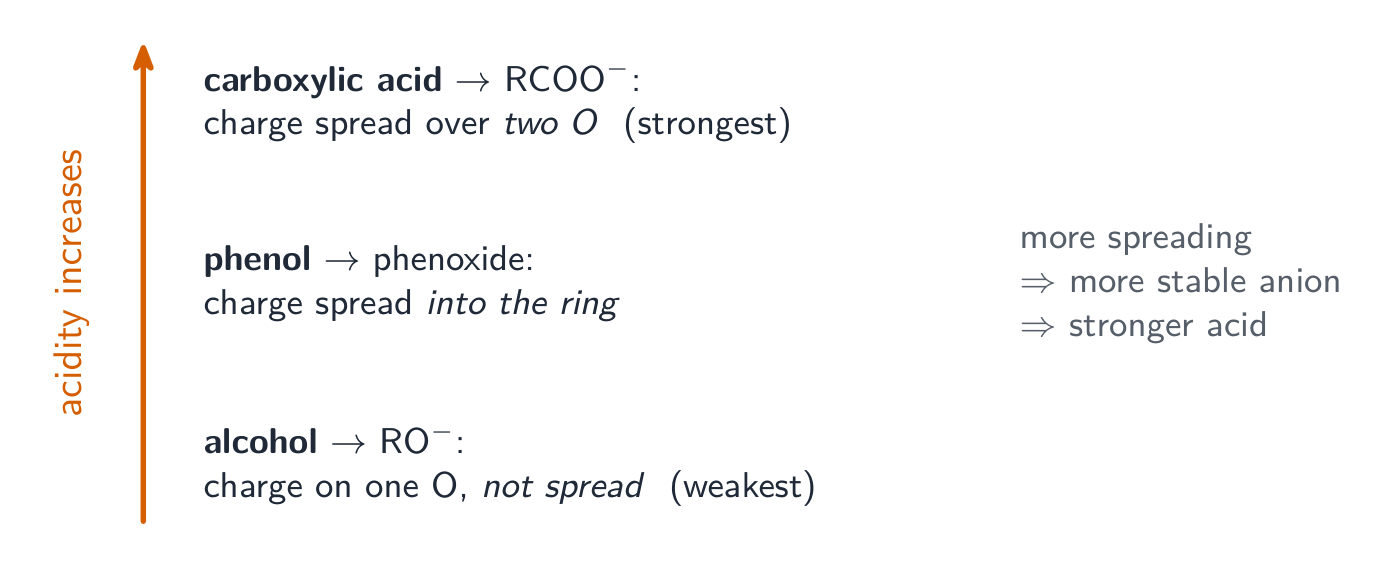
酸性顺序:醇、苯酚、羧酸
Oxidising methylbenzene with hot alkaline KMnO₄ gives: · 用热碱性 KMnO₄ 氧化甲苯给出:
The whole side-chain is oxidised to a –COOH group, giving benzoic acid. · 整个侧链被氧化成一个 –COOH 基团,给出苯甲酸。
Which carboxylic acid can be oxidised further? · 哪个羧酸可以进一步氧化?
Methanoic and ethanedioic acids can be oxidised further (e.g. to CO₂); most carboxylic acids cannot. · 甲酸和乙二酸可以进一步氧化(例如成 CO₂);大多数羧酸不能。
Match each term to its meaning. · 匹配每个术语和它的含义。
Each item links the term to its correct meaning. · 每一项把术语链接到它正确的含义。
Relative acidities
- A carboxylic acid is strongest because its anion spreads the charge over two oxygens.
- Chlorine atoms make it more acidic — they are electron-withdrawing 吸电子 (inductive effect 诱导效应), spreading the charge further.
Citrus fruits are sour because they contain citric acid, a carboxylic acid.
相对酸性
- 一个羧酸最强,因为它的阴离子把电荷分散在两个氧上。
- 氯原子使它更酸——它们是吸电子的(诱导效应),把电荷分散得更远。
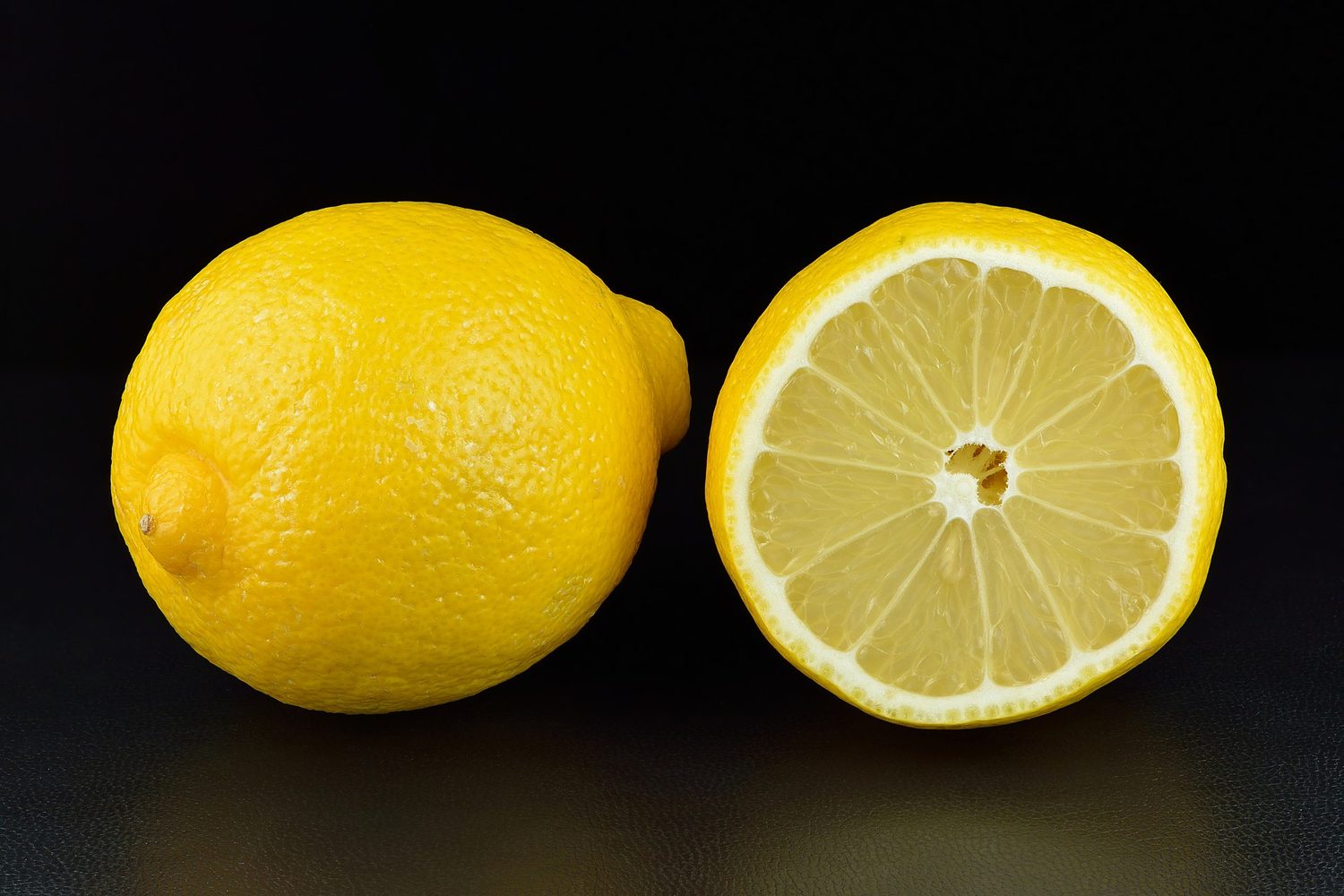
柑橘类水果是酸的,因为它们含有柠檬酸,一种羧酸。
Why is a carboxylic acid more acidic than a phenol or alcohol? · 为什么一个羧酸比一个苯酚或醇更酸?
Spreading the charge over two oxygens stabilises the carboxylate ion most, so it is the strongest acid. · 把电荷分散在两个氧上最稳定羧酸根离子,所以它是最强的酸。
Adding chlorine atoms near the –COOH group makes the acid: · 在 –COOH 基团附近加氯原子使酸:
Electron-withdrawing chlorine pulls charge away, stabilising the anion, so the acid is stronger. · 吸电子的氯把电荷拉走,稳定阴离子,所以酸更强。
Reactions to remember
- Carboxylic acids react with metals, bases and carbonates to form salts.
- The CO₂ test with carbonates confirms the acid group.
要记住的反应
- 羧酸与金属、碱和碳酸盐反应形成盐。
- 与碳酸盐的 CO₂ 测试确认酸基团。
You've got it
- alkylbenzene → benzoic acid (hot alkaline KMnO₄); acid → acyl chloride (PCl₅/SOCl₂)
- methanoic and ethanedioic acids can be oxidised further to CO₂
- acidity: alcohol < phenol < carboxylic acid (charge over two oxygens); Cl atoms make it stronger
你掌握了
- 烷基苯 → 苯甲酸(热碱性 KMnO₄);酸 → 酰氯(PCl₅/SOCl₂)
- 甲酸和乙二酸可以进一步氧化成 CO₂
- 酸性:alcohol < phenol < carboxylic acid(电荷在两个氧上);Cl 原子使它更强